19. Physiology and Care During the First Stage of Labour
Defining Labour
The Onset of Spontaneous Physiological Labour
Physiology of the First Stage of Labour
Recognition of the First Stage of Labour
Initial Meeting With the Midwife
Subsequent Care in the First Stage of Labour
Assessing the Wellbeing of the Woman
Assessing the Wellbeing of the Fetus
Women’s Control Of Pain During Labour
First Stage of Labour: Vaginal Breech at Term
Prelabour Rupture of the Membranes at Term
Preterm Prelabour Rupture of the Membranes
The Responsibilities of the Midwife
20. Physiology and Care During the Transition and Second Stage Phases of Labour
The Nature of The Transition and Second Stage Phases of Labour
Recognition of The Commencement of The Expulsive Phase of Labour
Phases and Duration of The Second Stage
Maternal Response to Transition and The Second Stage
The Mechanism of Normal Labour (Cephalic Presentation)
Midwifery Care in Transition and The Second Stage
Vaginal Breech Birth at Term
Record-Keeping
Conclusion
21. Physiology and Care During the Third Stage of Labour
Physiological Processes
Caring for a Woman in the Third Stage of Labour
Completion of the Third Stage of Labour
Complications of the Third Stage of Labour
Conclusion
22. Prolonged Pregnancy and Variations of Uterine Action
Prolonged Pregnancy
Incidence
Plan of Care for Prolonged Pregnancy: The Debate and Controversy
Induction of Labour
Slower Than Expected Progress and Prolonged Labour
Midwifery Approaches When Labour Progress Slows or Ceases
Obstructed Labour
Precipitate Labour
Making Birth a Positive Experience
23. Malpositions of the Occiput and Malpresentations
Introduction
Occipitoposterior Positions
Face Presentation
Brow Presentation
Shoulder Presentation
Unstable Lie
Compound Presentation
24. Operative Births
Assisting a Vaginal Birth
Indications for Ventouse or Forceps
Contraindications to an Instrumental Vaginal Birth
Prerequisites for any Operative Vaginal Birth
Birth by Ventouse
Birth by Forceps
Caesarean Section
25. Maternity Emergencies
Introduction
Communication
Vasa Praevia
Presentation and Prolapse of the Umbilical Cord
Shoulder Dystocia
Rupture of the Uterus
Amniotic Fluid Embolism
Acute Inversion of the Uterus
Shock
Drug Toxicity/Overdose
26. Recognition of the Acutely Unwell Woman: Maternal Collapse and Resuscitation
Introduction
Recognizing Acute Illness
The Abcde Approach to Managing Critical Illness
Sbar Communication Tool
Critical Illness and Specific Clinical Conditions Pertinent to Pregnancy, Labour and Birth
What are the physiological and anatomical changes in pregnancy that affect resuscitation?
Summary
Section 5. Puerperium
27. Optimal Infant Feeding
Introduction
The Breast and Breastmilk
The Baby Friendly Initiative
Effective Positioning
Feeding Behaviour
Care of the Breasts
Difficulties With Breastfeeding
Feeding Difficulties Due to the Baby
Complexity and Breastfeeding
Feeding With Formula Milk
The Healthy Start Initiative
28. Physiology and Care During the Puerperium
The Postnatal Period
Historical Background
Framework and Regulation for Postnatal Care
Midwives and Postnatal Care
Physiological Changes and Observations
Expectations of Health
Fertility Awareness (Natural Family Planning)
Record-Keeping and Documentation
Transition to Parenthood
The 6–8 Week Postnatal Examination
29. Physical Health Issues and Complications in the Postnatal Period
The Need for Woman-Focused and Family-Centred Postpartum Care
Potentially Life-Threatening Conditions and Morbidity After the Birth
Immediate Maternal Complications Following the Birth of the Baby
Postpartum Complications
Midwifery Care After an Operative Birth
Emotional Wellbeing
Woman/Midwife Relationship
30. Perinatal Mental Health
Part A: Pregnancy, Childbirth, Puerperium: The Psychological Context
Transition to Parenthood
Role Change/Role Conflict
The Ideology of Motherhood
Social Support
Emotional Changes During Pregnancy, Labour and the Puerperium
Postnatal ‘blues’
Distress or depression?
Conclusion
Part B: Perinatal Psychiatric Conditions
Types of Psychiatric Disorder
Psychiatric Disorder in Pregnancy
Psychiatric Disorder After Birth
Treatment of Perinatal Psychiatric Disorders
Service Provision
Prevention and Prophylaxis
Conclusion
31. Perinatal Loss and Bereavement in Maternity Care
Introduction
Grief and Loss
Forms of Loss and Bereavement During Childbirth
Termination of Pregnancy
Relinquishing a Baby
The Baby With a Disability
Loss in Healthy Childbearing
Perinatal Mortality – the Contemporary Picture
Managing Perinatal Loss
Bereavement Care
The Postnatal Period
Considerations Following Perinatal Loss
The Death of a Mother
Support for the Healthcare Professional
Conclusion
Section 6. The Neonate
32. Recognizing the Healthy Baby at Term Through Examination of the Newborn Screening
The First Examination of the Newborn Following Birth
The Daily Examination of the Baby Screening
Full Systematic Physical Examination of the Newborn/Newborn and Infant Physical Examination
Neurological Examination
Newborn Screening Tests
Communication and Documentation
33. Resuscitation of the Healthy Baby at Birth: The Importance of Drying, Airway Management and Establishment of Breathing
Another random document with no related content on Scribd:
return. The men to solve the manufacturing problems of the future will be chemical engineers. Broadly speaking, comparatively little has been done in this field in the United States, and its possibilities are incalculable.
In the laboratory, day and night, a corps of chemists is constantly engaged in the study of questions that arise in connection with the operation of the various departments. Polarizations for account of buyers and sellers of all raw sugars purchased, are made and checked there; hundreds of samples of liquors and syrups are tested daily for control work, as the purity of both must be known at all times and a record kept of their temperatures and densities. Samples of all the sugars entering the refining process, as well as of the finished product, are carefully analyzed, and upon these analyses are based elaborate calculations regarding yield and efficiency. The wash waters from the char filters are examined and tested frequently, the bone-char is tested every twenty-four hours as a check upon the process of revivification in the kilns, and once a month the bone-char is completely analyzed to determine the deterioration that has taken place in it.
Tests are made of materials used in the refining process, such as lime, soda, acids and lubricating oils; of the feed water for the steam boilers; of the fresh water used throughout the plant; and of the fuel, whether coal or oil. Even the gases from the fires under the boilers are tested as they pass through the smokestack, in order to determine whether or not the firemen perform their duties properly.
Taking all this in conjunction with frequent tests and experimental work on driers, condensers, evaporators and other apparatus, it will be seen that there is plenty to keep a large staff of chemists fully occupied.
In refinery work, what is to be feared more than anything is the house becoming “sour.” Raw sugars and sugar liquors, and particularly the sweet waters, have a tendency to ferment, and fermentation, like fire, if not checked and brought under control before it gains much headway, soon pervades the entire
establishment, affecting all the liquors and syrups, thus turning the sucrose or sugar into glucose, which cannot be recrystallized. In a refinery of two million pounds daily capacity, there is double this quantity of sugar in the house in the form of liquors, syrups, sweet water, massecuite and raws. If all of this four million pounds turned “sour,” the money loss, with raw sugar worth four cents a pound, would be about one hundred and sixty thousand dollars. Such a contingency, while remote, clearly demonstrates that chemical control is an absolute necessity.
COST OF REFINING
In concluding that part of the story that deals with refining, some reference may be made to the refining cost and to the price at which refined sugar is sold.
The cost of refining sugar varies in different parts of the United States on account of the difference in the cost of commodities entering into the refining process, such as labor, fuel, cotton, burlap, containers, bone-char, etc. On the Pacific coast nearly all these items are higher than in New York, and consequently the cost of refining is probably greater.
In 1911 nearly all the sugar refiners of the United States appeared before the Hardwick Congressional committee at Washington and the testimony given by them before that body showed that the cost of refining ranged from 60 cents to 65 cents per 100 pounds.
On the day the Congressional committee began its investigation, raw sugar was selling in New York for 3.86 cents per pound, and the testimony regarding the cost of refining was no doubt based on this price for the raw sugar entering the refining operations.
It is therefore fair to assume that under normal conditions, with raw sugar at about 3¾ cents, the average cost of refining in the United States is 62½ cents per 100 pounds. This includes every item from the time the raw sugar is landed on the dock until the refined is loaded on the cars or boats for shipment. It includes the selling and
overhead expenses, but not the transportation charges after the sugar leaves the refinery.
During the last six years (1909-14 inclusive) the actual differential in the United States between the purchase price of raw sugar and the selling price of refined has been 82½ cents per 100 pounds. The difference between this figure and the cost of refining represents the refiner’s gross profit; in other words, about 20 cents per 100 pounds, out of which he must pay for all additions and improvements to his plant. The remainder is available for returns on capital invested. This difference varies with the time of year and in different localities, but the average will probably hold good.
A refiner of cane sugar buys his raw product in the open market and must pay for all his operating and administration expenses and obtain his profit from the margin between the buying price of raw and the selling price of refined sugar. The cost of refining is not constant, as it varies with the fluctuating values of fuel, containers, labor, and particularly the cost of raw sugar. If it costs 62½ cents per 100 pounds to refine sugar with raws at 3.86 cents per pound, it will cost about 82½ cents per 100 pounds with raw sugars at 6 cents, assuming that such items as fuel, containers, labor, etc., remain constant. This is due to the greater value of the raw sugar lost in refining, to the heavier insurance premiums and higher interest charges. With high-priced raws, the margin between raws and refined must be proportionately greater to offset the increased cost of refining.
The refiner, like the consumer, would prefer to see sugar selling on a low basis, while the producer always hopes for the opposite.
SHIPPING DEPARTMENT
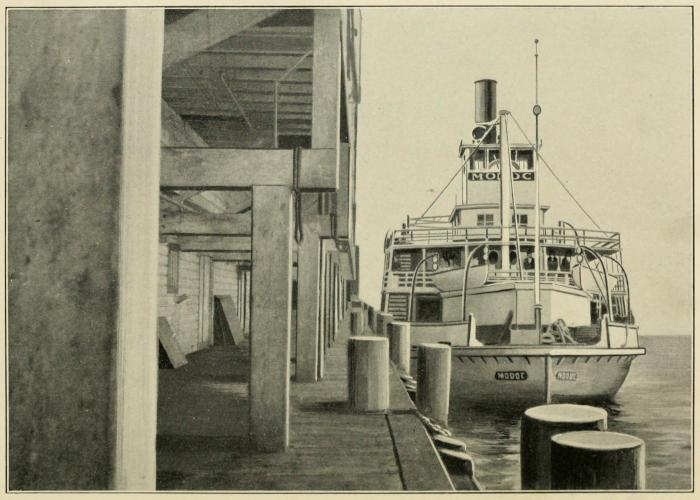
Here will be found every modern convenience for the rapid loading of cars and steamers. Adequate railway trackage is provided for the handling of shipments moving by rail, and on the waterfront side of the warehouses there is ample berth room for steamers that carry the sugar to cities and towns on the inland waterways and the seacoast, together with points tributary thereto. Facilities are also at hand for local delivery by drays.
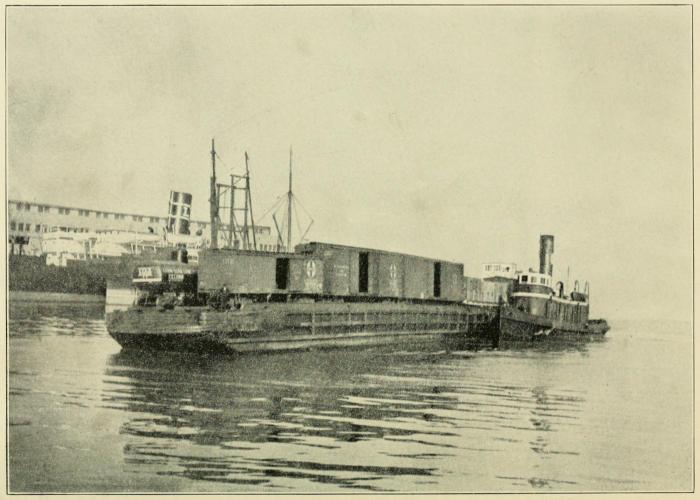
Railroad cars are sometimes sent to refineries by water, on car barges, to be loaded with sugar and then towed to what are known as railroad terminals, where the cars are taken from the barges and started on their journey to destination. The capacity of a car varies from twenty-four thousand to one hundred thousand pounds. If an amount of sugar equal to that consumed in the United States in 1915 were loaded into cars containing 1000 sacks of 100 pounds each, it would require 81,087 cars, which would make up a train 768 miles long.
A large part of the product is delivered direct from the packingroom conveyors into the waiting cars and steamers, thus avoiding unnecessary handling. A single shipment frequently includes a number of different styles of package, and great care must be exercised to insure accuracy in count and description.
As dry granulated sugar readily absorbs moisture, every precaution must be taken to make the storage rooms thoroughly damp-proof, so that the sugar may always be in good condition when shipped from the refinery.
Shipments are made only on written orders from the sales department to the head of the shipping department. These orders set forth the name of the buyer, the kinds and quantity of sugar desired, the point to which the sugar is to go, the route by which it is to travel, the date on which it is to be shipped, and the terms of
sale. At the proper time the sugar is loaded, shipped, and in due course delivered to the buyer.
INLAND-WATERWAY STEAMER LOADING SUGAR AT REFINERY DOCK
CAR-FLOAT ARRIVING AT REFINERY DOCK
MARKETING
The amount of sugar used in the United States in 1915 was 4,257,714 short tons. Of this, 3,389,175 tons were raw cane, the remainder consisting of 861,568 tons of domestic beet and 6,971 tons of foreign refined cane and beet. Of the 3,389,175 tons of raw cane, 150,000 tons were consumed in the raw state, and from the remainder, 3,239,175 tons, about 3,044,825 tons of refined sugar were produced. The per capita consumption was 83.83 pounds, and was made up of:
SHORT TONS PER CENT
Refined made from raw cane 3,044,825 74.94
Domestic and foreign beet 862,694 21.23
Foreign refined cane 5,845 .14
Consumed in the raw state 150,000 3.69 4,063,364 100.00
Among articles of food that contain a large percentage of sugar are jams, jellies, chocolate, canned fruits, condensed milk, confectionery, chewing gum and cordials. It is estimated by Willett & Gray that in 1915 the direct per capita consumption was 31.43 pounds, and that the remaining 52.40 pounds were used in various prepared or manufactured foodstuffs. Over ninety-nine per cent of all the cane sugar consumed in the United States is refined in New York, Boston, Philadelphia, New Orleans and San Francisco. The beet comes chiefly from California, Colorado, Michigan, Utah and Idaho; the maple from the New England states, Ohio and Canada; and the small amount of full duty-paying foreign cane from Java, Peru, Mexico, Central America and Santo Domingo.
During the past eleven years the consumption in the United States has grown at an average rate of 3.57 per cent per annum. In 1911,
on account of the abnormally high prices, the increase was practically nil.
The annual per capita consumption of sugar in some of the other countries of the world is as follows:
The sale and distribution of large quantities of refined sugar is a serious problem and just as important as the production and the refining of the raw product. Competition is so keen, and the questions involved so complex, that the sale of the product really results in commercial warfare.
To dispose of the output of a large plant successfully requires great intelligence, a broad grasp of business principles, strict honor and integrity, and prompt, decisive action in times of fluctuating markets.
Sales managers of the sugar-refining companies of the United States command high salaries, for the success of the business depends to no small extent upon their ability and judgment. Their knowledge of human nature must be broad and sound and it is tested to the utmost in their selection of assistants and brokers, for representatives always reflect the ideals, principles and methods of the parent authority.
The selling of sugar by the refiner direct to the consumer has not been found practicable, as an organization complete enough to keep in touch with consumers in every city, town and village of the country would be so top-heavy and costly to maintain that the price of the commodity to the consumer would be needlessly increased.
As matters stand, people living in the frozen valleys of Alaska, in the scarcely accessible regions of the Rocky mountains and in the lumber and mining settlements of the West, many miles from railroads, can obtain their supply of sugar with almost the same facility as the residents of New York or San Francisco. A system of distribution that makes this possible leaves little to be desired, and a word or two concerning it will be timely at this point.
Sugar is sold by the refiner to the wholesale grocer through the medium of the refinery’s broker. From the wholesaler it goes to the retailer, who in turn delivers it to the consumer.
Brokers are important factors in distribution. In every large city and consuming center, each refinery is represented by its own brokers, who keep in constant touch with all the wholesale grocers and manufacturers of their district.
A thorough knowledge of men and methods, sound business principles, diplomatic talents of no mean order and the capacity to act rapidly, but coolly, in business crises are found combined in the
successful broker. He occupies a position between the seller and buyer, and it is just as much his prime duty to see that in all transactions full justice is accorded to both as it is to sell the sugar.
Every refinery having its own broker in each consuming center, it follows that the competition for business among the brokers is very keen. When a broker obtains an order from a jobber or manufacturer, he telegraphs it to his principal. The order is usually confirmed and the goods shipped promptly. For his services the broker receives three cents for every one hundred pounds of sugar sold. This compensates him for the services of his salesmen and himself, his office expenses and cost of telegrams, which is heavy.
Manufacturers of foodstuffs of which sugar is an ingredient, buy their supplies through brokers. They do not resell the sugar as such, but use it only in the manufacture of their own special products.
Wholesale grocery jobbers, of whom there are about twenty-five hundred in the United States, are also very important factors in the distribution of sugar. As a rule, they are located in the large centers of population, and have efficient organizations for the purchase and resale of all kinds of foodstuffs. They deal in as many as three thousand different commodities, and their expense of doing business is apportioned over all of these items, thus reducing to a minimum the expense of handling any one of them. Generally speaking, they have large establishments where stocks of all kinds of goods are carried ready for immediate distribution. The aggregate capital tied up in these stocks throughout the country is enormous, but necessary, as the jobber must at all times be ready to deliver to the retailer whatever is wanted in any of his lines. Wholesale jobbers occupy a unique position in the scheme of things. They are to the commerce of the country what the bankers are to its finances. In other words, they are the bankers of commodities. Their operating staff consists, first, of the buyers, and, second, of the salesmen.
The buyers are men possessing special knowledge concerning the various articles handled by the house. For instance, in the grocery line one will buy nothing but teas and coffees, another canned
goods, another sugar, and so on. These men as a rule have devoted years of study to the particular commodity which they are delegated to buy. They are shrewd, keenly alert and always ready to take advantage of market fluctuations in their favor. The margin of profit between the buying and selling price of any commodity is usually so small that the acumen of the buyer is an important factor in the final results.
The salesmen are trained, tactful, tireless and efficient. They travel from town to town and place to place, visiting every nook and corner where human beings congregate, in order to sell the goods carried by the firm. While his calling is a most useful one, the life of a “knight of the grip” is not always pleasant, as he meets with many deprivations and discomforts.
To compensate him for capital invested, for the expense of doing business and for the losses he incurs in bad debts and declining markets, the jobber probably obtains a gross return of fifteen cents on each one hundred pounds of sugar he sells.
The next important link in the chain is the retailer. It is roughly estimated that there are three hundred thousand retail grocers in the United States, many of whom handle and distribute almost as many articles as the jobber. Their lot on the whole is not cast in pleasant places, because of the severe competition they meet in selling their goods.
Competition is a word regarded almost with affection by the buyer, but for the seller of goods it is probably the most unpleasant one in the English language. There is an old axiom which reads: “Competition is the life of trade.” It may be so, but the expression was no doubt coined by a buyer.
Among sellers, competition is in direct proportion to the number engaged in any particular business. It therefore follows that as there are three hundred thousand retailers in the United States, and hundreds in each of all the large cities, the struggle to keep on their feet and continue their various enterprises must be severe. The
number of failures occurring every year amply substantiates this assertion. Reckless and unscrupulous men engage in every business, and the competition thus forced on all others in their line is not only unfair, but positively dishonest. Any individual can break a price or introduce new and expensive experiments in selling terms, which must be followed with equally attractive terms by the other sellers, thus resulting in great loss to all. It is no satisfaction that such men finally fail and go out of business, for the losses sustained in the interim can never be recovered.
Another grave difficulty with which the retailer has to contend is the fact that the average individual to whom he delivers his wares is apt to be rather callous when pay-day comes around. It is sad, but true, that those best able to pay are sometimes the most unsatisfactory customers of the retail grocer.
A retailer’s expense of doing business is proportionately much greater than that of the wholesaler, and his losses, due to bad or uncollectible accounts, are much heavier. The cost of delivering goods to the consumer’s door is high, and a fact that should be remembered, but which is frequently overlooked, is that it costs the grocer just as much to deliver a five-pound package of sugar as a wagon-load. Householders are proverbially careless, and telephone calls for late and urgent deliveries are a source of great annoyance and expense.
To create a pleasing impression, the grocer must keep a clean, sanitary store, and the expense incident to attractive window and shelf displays to invite attention is an important item. Department and other stores in his town or neighborhood often advertise “leaders” to attract the buying public, in the hope of selling with these leaders other goods at a profit, or because they are overstocked with a particular commodity. Every retailer must, as a rule, meet this unfair competition or lose his trade.
Sugar more than any other staple article is used as a leader, and, as a result, the retail grocer’s profit on it is very small. What remains to him out of the selling price of one hundred pounds of sugar does
not exceed thirty-five cents, and more than likely it has cost him twenty-five cents to sell it. It is the retail grocer’s employé who delivers sugar in the quantity desired to the housewife at her door, and through her hands the pure, glistening crystals reach the family table.
BEET SUGAR
SHORT REVIEW OF THE HISTORY OF BEET SUGAR
The extraction of sugar from beets dates back to 1747, when Andreas Marggraf, professor of physics in the Academy of Science of Berlin, discovered the existence of a sugar in beets similar in its properties to that obtained from cane.
The discovery was little utilized at first, however, and the manufacture of sugar from beets did not attain commercial importance for over half a century, when Franz Karl Achard, a pupil of Marggraf, made discoveries which led to the construction of the first beet-sugar factory in the world, in Silesia, in the year 1799.
The work of Achard soon attracted the attention of Napoleon Bonaparte, who appointed a commission of scientists to go to Silesia to investigate Achard’s factory. Upon their return, two small factories were constructed near Paris. Although these two factories were not altogether a success, the results attained greatly interested Napoleon, and in 1811 he issued a decree appropriating one million francs ($200,000) for the establishment of sugar schools, and compelling the farmers to plant a large acreage to sugar beets the following year. He also prohibited the further importation of sugar from the Indies after January 1, 1813.
As a result of these and other drastic decrees, three hundred and thirty-four factories were erected in France during the years 1812 and 1813, and their production was seven million seven hundred thousand pounds of sugar, or an average of eleven and one-half tons to the factory.
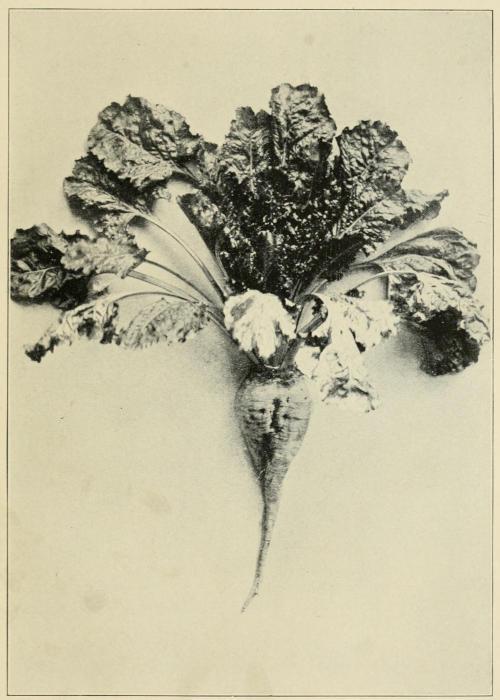
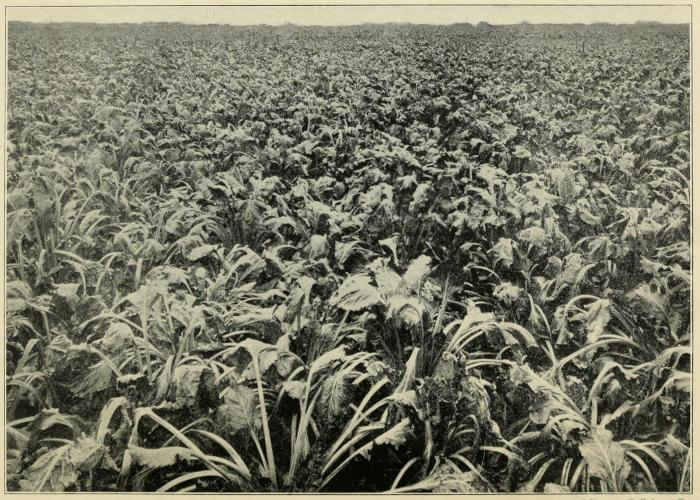
Bypermission ofTruman G. Palmer, Esq. SUGAR BEET
Bypermission ofTruman G. Palmer, Esq.
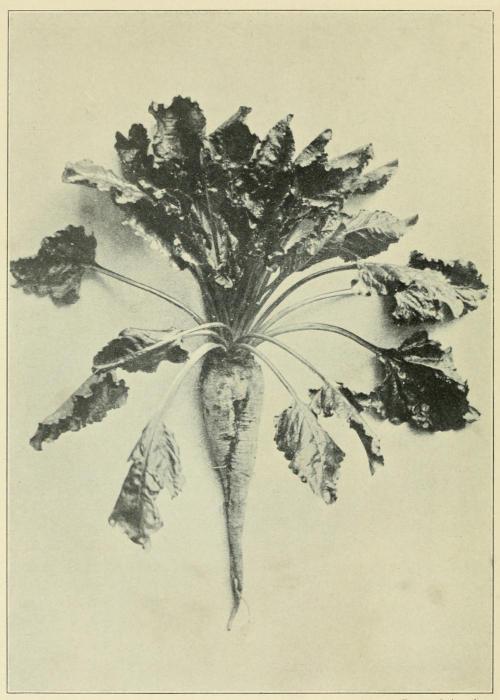
ANOTHER TYPE OF SUGAR BEET
With the fall of Napoleon Bonaparte, disaster came upon this, one of his greatest achievements, and but one factory survived. The industry was destined to flourish again, however, under the reign of
Louis Philippe. In 1836-37 there were five hundred and forty-two factories in France, producing thirty-five thousand tons of sugar, as compared with fourteen hundred and eight tons in Germany, which country had only recently begun the culture of beets.
When Napoleon III became emperor, he so stimulated the industry that in 1853 the French output had doubled. Meanwhile the Germans were making rapid strides, and in 1880 the German output of sugar exceeded that of France. As a result of legislative encouragement, Germany today is the largest beet-sugar producer in the world.
The first successful beet-sugar factory in the United States was constructed by E. H. Dyer, at Alvarado, California, in 1879. The next successful factory was erected at Watsonville, California, in 1888, by Claus Spreckels. The Oxnard brothers followed with the construction in 1890 of a factory at Grand Island, Nebraska, one at Norfolk, Nebraska, and a third at Chino, California, the last built in 1891.
From this it will be seen that the commercial production of beet sugar in the United States really dates back to about 1890, since only three factories of small capacity had been established prior to that date. The development of the industry since the year 1892 has been rapid, and the general results of the beet industry in the United States in 1915 showed the following:
Factories in operation
67
Acres of beets harvested 611,301
Average yield of beets per acre 10.10 short tons
Beets worked 6,150,293 ” Sugar manufactured 874,220 ”
The season of 1916 promises a notable increase in tonnage.
THE SUGAR BEET
The botanical name of the sugar beet is Beta vulgaris. It grows exclusively in the temperate zone, and with satisfactory soil and climatic conditions a yield of thirty tons per acre has resulted. The average yield in the United States, however, is slightly over ten tons per acre. There are many varieties of beets, some of which do better in one locality than another, so that great care must be used in the selection of the seed.
The beet, unlike sugar cane, grows below the ground, is white in color and shaped like the ordinary carrot, but larger. The beets vary greatly in size, depending upon variety, soil and climatic conditions, the average weight ranging between one and two pounds.
The foliage has a rich, brilliant green color and grows to a height of about fourteen inches. The leaves are numerous and broad and grow in a tuft from the center or crown of the beet, which is usually level with or just above the ground surface.
The average composition of a sugar beet is about as follows:
The value of the beet to a factory depends on the amount and purity of the sugar content. Factories as a rule decline to purchase beets containing less than twelve per cent of sucrose, as it is unprofitable to handle them. In order to induce the farmer to devote particular care and attention to the culture of his fields and thus increase the sugar content, the factories pay a premium for beets containing over fifteen per cent of sugar. The premium is usually twenty-five cents per ton of beets for each additional one per cent of sugar. Encouraged by this bonus, the California grower has improved the quality of his beets, until today they contain on an average about eighteen per cent of sugar of a purity from eighty to eighty-four.
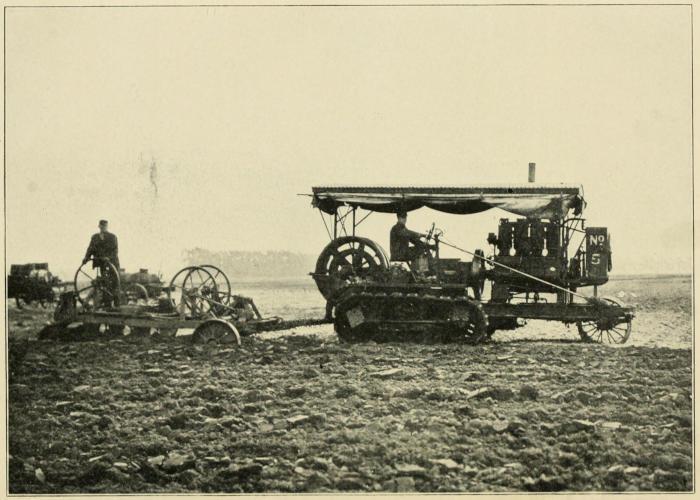
Bypermission ofTruman G. Palmer, Esq. PLOUGHING WITH CATERPILLAR ENGINE
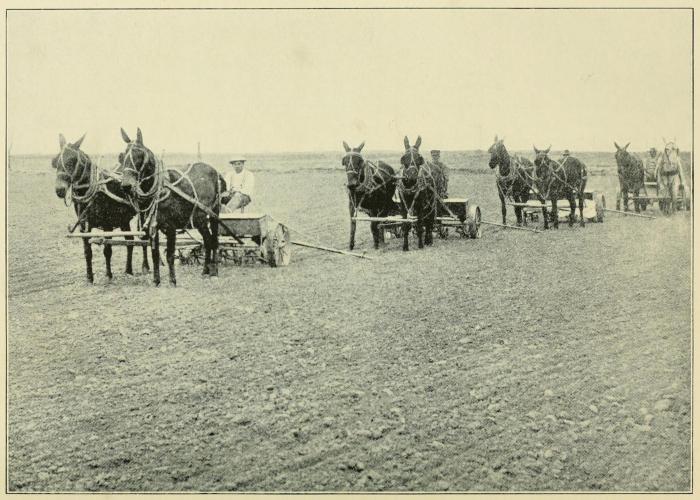
Bypermission ofTruman G. Palmer, Esq. PLANTING BEET SEED
SELECTION OF THE SOIL
The sugar beet, like sugar cane, needs a peculiar soil and climate for its successful cultivation. The most important requirement is that the soil shall contain a large supply of plant food, be rich in humus and have the property of retaining a great deal of moisture. A certain amount of alkali is not necessarily detrimental, as sugar beets are not especially susceptible to injury from this salt. The ground should be fairly level and well drained, especially where irrigation is practiced.
While the physical character is of secondary importance, as generous crops are grown in sandy soil as well as in heavy loams, still the ideal soil is a sandy loam, i.e., a mixture of organic matter,
clay and sand. A subsoil of gravel, or the presence of hard-pan, is not desirable, as cultivation to a depth of from twelve to fifteen inches is necessary to produce the best results.
Climatic conditions, temperature, sunshine, rainfall and winds have an important bearing upon the success of beet culture. A temperature ranging from 60 degrees to 70 degrees Fahrenheit during the growing months is most favorable. Sixteen inches of rainfall are necessary to raise an average crop of beets without irrigation. High winds are very harmful, as they generally crust the land and prevent the young beets from coming through the ground. The best results are obtained along the coast of southern California, where warm, sunny days succeeded by cool, foggy nights seem to meet every requirement. Sunshine of long duration but not of great intensity is the most important factor in the successful cultivation of sugar beets. The nearer the equator is approached, the poorer the beets become in sucrose because of the shorter days and the greater heat of the sun. Beets have never been raised with success in the hot interior valleys, as the hot days followed by warm, dry nights sap the vitality of the plant. In the elevated Rocky mountain region of Colorado and Utah, where the temperature is high during the daytime but where the nights are cool, the quality of the beet is excellent.
In Michigan the long summer days and the influence of the great lakes result in satisfactory climatic conditions for sugar-beet culture, and the crops raised in that state are large.
In order to cultivate beets successfully the land must be properly prepared. Deep ploughing is the first principle of beet culture. It allows the roots to penetrate the subsoil without much obstruction, thereby preventing the beet from growing out of the ground, besides enabling it to extract considerable nourishment and moisture from the lower soil. If the latter is too hard, the roots will not penetrate it readily and, as a result, the plant will be pushed up and out of the earth during the process of growth. A hard subsoil is impervious to water and prevents proper drainage. It should not be too loose,
however, as this allows the water to pass through more freely than is desirable.
The character of the surface soil is equally important. Careful preparation by harrowing should be done to afford a finely pulverized and clean bed for the seed.
To sum up, the soil should be deep, fairly fine and easily penetrable by the roots. It should also be capable of retaining moisture and at the same time admit of a free circulation of air and good drainage.
PLANTING
The preliminary preparation of the ground finished, the seed should be put in as soon as the soil is firm enough to allow it to germinate readily and the young plants to grow normally. The time of planting varies according to climatic conditions. In California planting begins as a rule in December and ends in March, while in Utah, Colorado and Michigan it ranges from March until May.
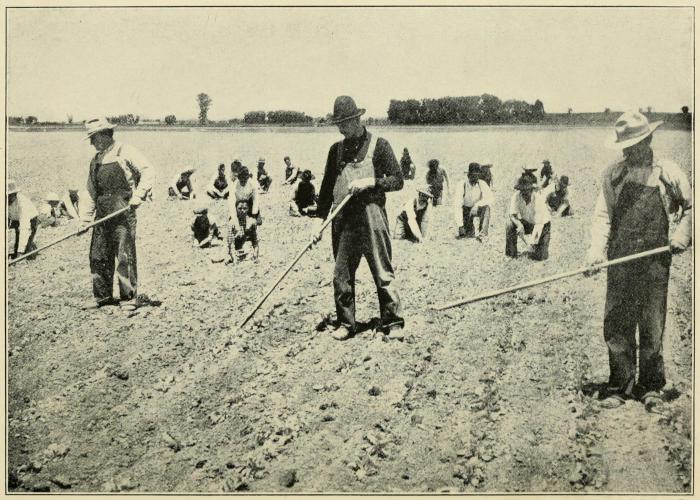
Bypermission ofTruman G. Palmer, Esq. THINNING
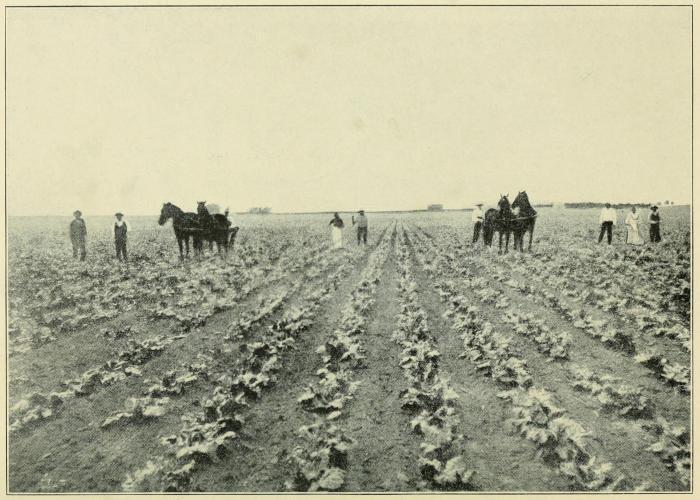
Bypermission ofTruman G. Palmer, Esq. CULTIVATING
About twenty pounds of seed to the acre are required to produce a satisfactory stand. The seed is planted in rows, about eighteen inches apart, and is drilled in solidly to a depth of from threequarters to one and a half inches. The latter is the maximum, as any greater depth than this weakens the plant and should, therefore, be avoided. The soil around the seed is well packed by the planter in order to draw the moisture necessary for germination.
The production of beet seed presents many problems; the chief one is to obtain the particular kind of seed that will bring forth a hardy beet containing a large percentage of sugar of a high purity. The beets from which the seed is produced are selected with the greatest care, and for nearly a century the Luther Burbanks of Europe have devoted their time and skill to improving the quality. Until recently, practically all of the beet seed used in the United
States was imported from Europe. Since the outbreak of the great war in 1914, however, the difficulties attendant upon securing a supply have caused the beet growers to turn their attention to raising seed in this country. Their efforts have been rewarded with a fair measure of success, and while the cost is greater than that of European seed, the germinating properties have proven to be excellent. The best results have been obtained in Idaho. Owing to the fact that the culture of the beets and the picking and sorting of the seed are done chiefly by hand, labor enters largely into the cost of production, and consequently, under normal conditions, the growers in the densely populated countries of Europe have a great advantage over those in the United States, where the main difficulty is securing labor for the field work.
Like sugar cane, beets are subject to plant diseases of various kinds, as well as to injury by insect pests, and great care has to be exercised to ward off these dangers.
Probably no other crop exhausts the soil so rapidly as beets, and, if they are planted for many years in succession, they deteriorate year by year. On the other hand, if crops are rotated so that beets are grown in the same ground every third year, peas, beans or grain being raised the other two years, it is a remarkable fact that all of these crops will improve each year. This is due to the intensive cultivation of the beets and to the humus left in the ground in the form of rootlets. Experience has taught the farmer that no other crop is so beneficial to the soil as beets grown in the right rotation and with proper care.
THINNING
As soon as the beets are up and the rows clearly defined, thinning becomes necessary. This is one of the most important features of beet culture and is a tedious and expensive operation. It consists of cutting out the plants so that individual roots remain, spaced about eight inches apart. The work is done by hand, a hoe being used to
block out the spaces, and the roots surrounding the one which it is desired to retain are pulled up. Due partly to faulty germination, but principally to defective thinning of the beets, in which operation a great many of the small, tender beet plants are injured or killed, very much less than the theoretical number of mature beets are secured per acre. With rows eighteen inches apart and a plant every eight inches in the row, 43,000 beets per acre should be obtained, which, at an average weight of one and one-half pounds per beet, would mean 32.25 tons. Owing, however, to the facts just mentioned and to other causes, the actual yield is always much less. The average in California for a number of years past has been only 10.68 tons per acre.
Bypermission ofTruman G. Palmer, Esq. FIELD OF RIPE BEETS
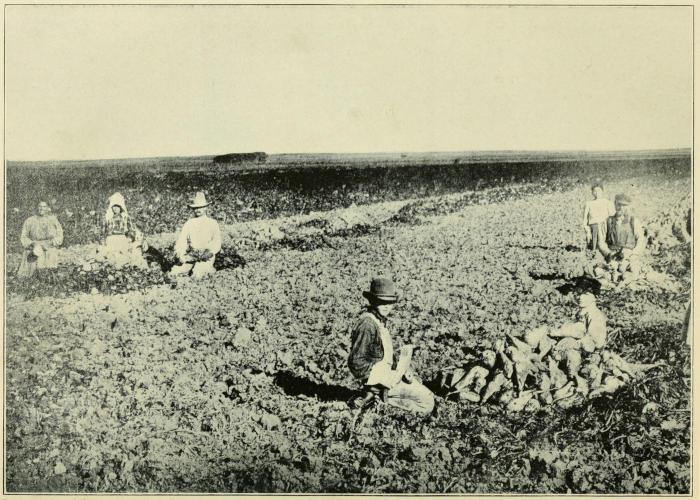
Bypermission ofTruman G. Palmer, Esq. TOPPING BEETS
CULTIVATION
The purpose of cultivation is two-fold; first, to retain the moisture in the soil, and, second, to destroy the weeds and grass, as in the early stages of the growth of the beets weeds might spoil the stand by choking the plants.
Cultivation should be continued until the plants have attained such a size that the leaves cover the ground. It increases the fertility of the soil by opening the land to the atmosphere, thus facilitating the penetration of oxygen and absorption of air moisture and the resulting decomposition and assimilation of nutritious elements.
HARVESTING AND TOPPING
The time when harvesting takes place depends on the many factors that influence the growth and maturing of the beet. In the colder countries the harvesting lasts from September until the ground becomes frozen, while in warmer climates like that of California, where the seed is planted early, harvesting begins about July first and lasts for a period of from seventy-five to ninety days.
The beets are first loosened by means of a specially shaped plough, called the “puller,” which lifts them from the ground. They are then picked up by hand and the crown of each beet, together with the leaves, is cut off with a large knife. The leaves contain no sugar, and are, therefore, not taken into the factory, but are utilized for stock feeding, being quite valuable for this purpose. The sugar contained in the crown is accompanied by so many organic salts that it does not pay to extract it.
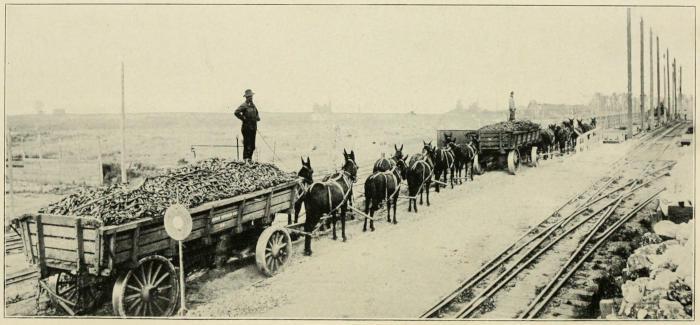
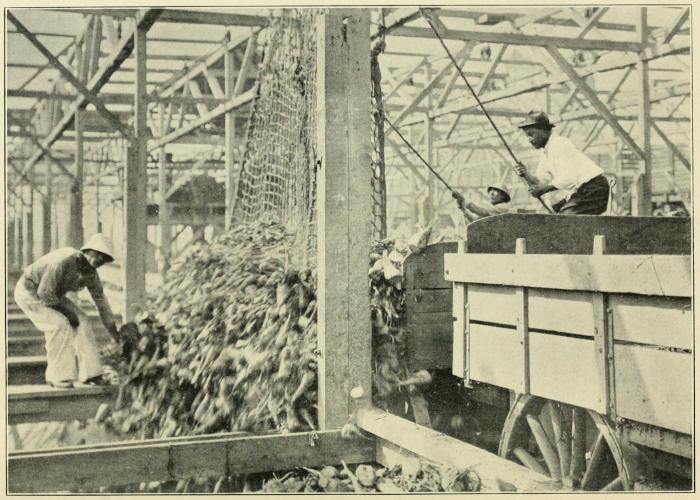
The topped beets are then loaded into wagons or railroad cars and transported to the factory, at which point they are carefully weighed. In this country most of the beets are raised by farmers and sold under contract to the factories, at so much per ton, so that the determination of the exact weight and sucrose content is important. For the season of 1915 the average price paid to the farmers for beets was $5.67 per ton.
On arrival at the factory a certain number of beets are taken from every wagon- or car-load, and these represent a fair average of all the beets of that particular delivery. They are sent to the laboratory and their exact weight ascertained, after which they are trimmed of all adhering roots, leaves and parts of the crown, if not properly topped in the field. Any remaining soil is carefully brushed off and the beets thoroughly cleaned. They are then reweighed and the difference between this and the first weight is the tare. This difference represents a certain percentage of the total of the sample beets weighed, and that small percentage is deducted from the gross weight of the total load. In this way the exact net weight of beets delivered by the farmer is determined and he is paid according to this net weight.
The sugar content of the beet and the purity of the juice must now be ascertained, for the price paid the farmer varies according to the amount of sugar the beet contains. As in the case of weighing, sampling and polarizing raw cane sugar, representatives of both parties—the farmer and the factory—are present when all weights are taken and tests made. There are several different methods for determining the percentage of sugar in the beet and the purity of the juice, but the following gives a fair idea of the general practice.
The sample beets having been cleaned, are cut into quarters, onequarter of each beet being taken for the general sample. This general sample is placed in a grinding or shredding machine, the beets are disintegrated to a fine pulp and thoroughly mixed. A specific amount of this fine pulp is then accurately weighed and placed in a copper pan or dish called a capsule. A small quantity of dilute lead solution is introduced to assist in clarifying, and sufficient water added to bring the volume up to 200 cubic centimeters. It is then heated for about twenty minutes and vigorously agitated, so that the sugar-bearing juice of the beet will mix evenly with the water that was added. The mixture, after being allowed to stand for several minutes, is filtered through paper and a certain amount placed in the observation tube of a polariscope. The instrument will show the amount of sugar in the solution, and by multiplying the reading by two the per cent of sugar in the beets will be found. If in preparing the sample only sufficient water had been added to bring it to a volume of 100 cubic centimeters, the polariscope would give a direct reading of the percentage of sugar in the beets. Practice has demonstrated, however, that the method described is the more accurate.