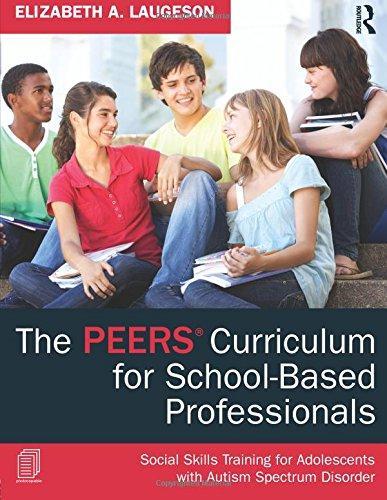
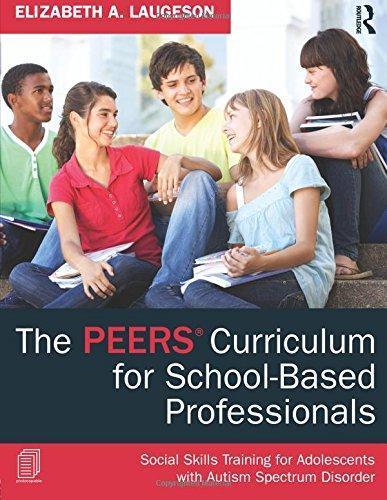
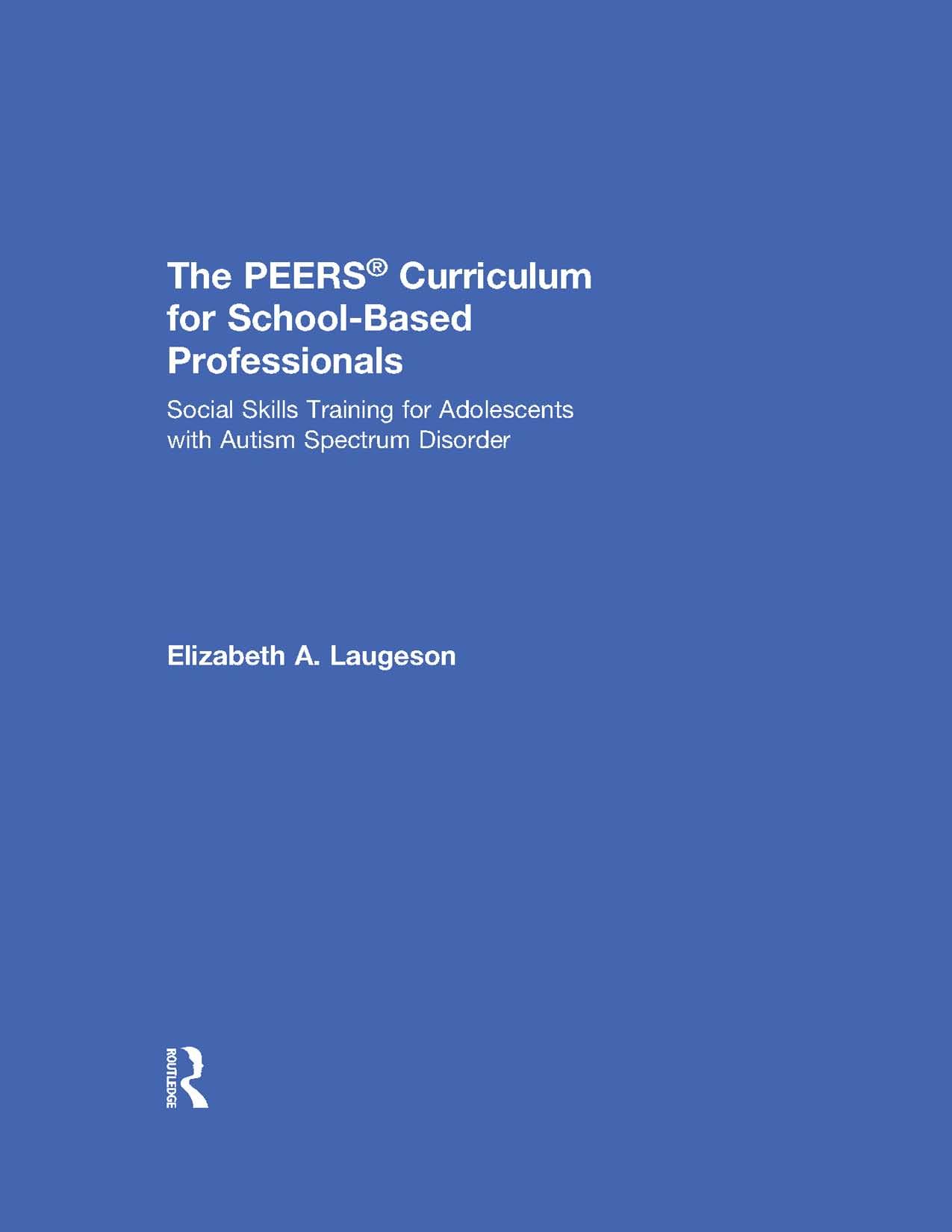
Dr. Elizabeth Laugeson is a licensed clinical psychologist and an assistant clinical professor in the Department of Psychiatry and Biobehavioral Sciences at the UCLA Semel Institute for Neuroscience and Human Behavior. Laugeson is the founder and director of the UCLA PEERS® Clinic, which is an outpatient hospital-based program providing parent-assisted social skills training for teens and young adults with Autism Spectrum Disorder (ASD), Attention-Deficit/Hyperactivity Disorder (ADHD), depression, anxiety, and other social impairments. She is also the director of The Help Group – UCLA Autism Research Alliance, which is a collaborative research initiative dedicated to developing and expanding applied clinical research in the treatment of children and adolescents with ASD.
As a principal investigator and collaborator on a number of research studies, she has investigated the effectiveness of social skills training for youth from preschool to early adulthood, and is the co- developer of the Program for the Education and Enrichment of Relational Skills (PEERS®), an evidence-based social skills intervention for teens and young adults. This program has been translated and disseminated in over a dozen countries to date. The author of two additional books, Social Skills for Teenagers with Developmental and Autism Spectrum Disorders: The PEERS Treatment Manual (Laugeson & Frankel, 2010) and The Science of Making Friends: Helping Socially Challenged Teens and Young Adults (Laugeson, 2013), she is considered one of the world’s leading experts in evidence-based social skills training.
Laugeson received her doctorate in clinical psychology from Pepperdine University in 2004, and completed a pre- doctoral psychology internship and a post- doctoral research fellowship at UCLA in 2004 and 2007, respectively. She regularly conducts national and international training seminars for educators and mental health professionals on her evidence- based social skills programs, and has presented her research at conferences throughout the world. Her work has been featured on national and international media outlets such as People Magazine, Los Angeles Times, New York Times, Washington Post, USA Today, CBS, NBC, and Channel 4 in the United Kingdom.
In this current work, Laugeson shares her research-supported strategies for teaching social skills to adolescents with ASD in the school setting.
PREFACE
This manual is based upon the original work, Social Skills for Teenagers with Developmental and Autism Spectrum Disorders: The PEERS Treatment Manual, which is a parent-assisted social skills program for adolescents with Autism Spectrum Disorder (ASD) and other social challenges. The research upon which the original work was conducted was funded through a Ruth L. Kirschstein National Research Service Award, through the National Institutes of Health Training Grant NIH T32-MH17140 (Andrew Leuchter, Principal Investigator). The research upon which this derivative work was conducted was funded through grants from the Nathan and Lily Shapell Foundation, the Shapell and Guerin Family Foundation, and The Friends of the Semel Institute at UCLA.
This manual includes several adaptations of the original PEERS Treatment Manual, replacing the original parent-assisted outpatient model with a teacher-facilitated school-based model. Using the new curriculum, social skills groups that were once facilitated by mental health professionals in clinical settings are now taught in the classroom by school personnel, much like we would teach math or science. One benefit of the current approach is that we teach social skills in one of the most natural adolescent social settings of all: the school. Parents are provided with Parent Handouts outlining the lessons and corresponding homework assignments each week, but concurrent parent groups are not offered in this manual. School personnel wishing to include parent groups as part of their program are encouraged to do so by using the Parent Therapist Guides found in the original PEERS Treatment Manual
Another departure from the original manual is that this curriculum utilizes a daily lesson format rather than a once weekly format. School personnel present the curriculum daily in the classroom for 30–60 minutes at a time, 4–5 days per week, as opposed to once a week for 90 minutes. School personnel wishing to conduct weekly 90-minute groups should use the suggestions for modifying this curriculum described in Chapter 1 or refer to the original PEERS Treatment Manual
This manual is also different from the original manual in that it includes 16 weeks of lessons, as opposed to the 14 weeks offered in the parent-assisted program. The supplement of two additional weeks of material includes an added lesson on strategies for handling cyber bullying, as well as the separation of didactic lessons on handling physical bullying and changing a reputation, which were combined into one lesson in the original manual. The additional didactic lesson on cyber bullying was developed as an outgrowth of greater research in this area since the publication of the original manual in 2010. The separation of lessons on handling physical bullying and changing a reputation was the result of feedback from teachers involved with the implementation of the PEERS® curriculum in the school setting during two large research trials.
In an effort to stay current with the evolving research in social skills, this manual also includes additional lesson content above and beyond handling cyber bullying. New ecologically valid social skills have been added to nearly every lesson, including new lessons on starting individual conversations and exchanging contact information, for example. Dozens of additional rules, steps, and buzz phrases of social behavior have also been added to the lessons, such as don’t police others during conversations, use a prop when entering group conversations, and stay near an adult when the bully is around, to name a few.
Just as the didactic content for PEERS® has evolved, so too have the role-play demonstrations, which highlight the targeted skills. New and updated role-play demonstrations of appropriate and inappropriate social behavior are offered in this manual to help facilitators provide a means for teaching the skills. New role-play demonstrations include humorous examples of policing and getting too personal during conversations, inappropriate use of eye contact and body boundaries, and tactics for handling rumors and gossip, just to highlight a few. New and revised role-play demonstrations will provide facilitators with additional tools for providing fun and engaging delivery of the lesson content.
Another significant addition to this manual includes the use of Perspective Taking Questions throughout the lessons. The UCLA PEERS® Clinic (the place in which this curriculum was originally developed and tested) uses Perspective Taking Questions as a matter of standard practice in our research and clinical groups for teens and adults. These questions follow good and bad roleplay demonstrations of targeted social skills in order to improve social cognition. Perspective Taking Questions include, “What do you think that was like for that person?” “What do you think they thought of the other person?” and “Do you think they’ll want to talk to the other person again?” Appropriate responses are provided at the end of each series of Perspective Taking Questions to enhance teaching and promote discussion. These questions have been added to this manual given research fi ndings suggesting improved social cognition following treatment, in addition to overall improvements in social skills and friendships.
While the overarching content of this curriculum is based upon the original PEERS® Treatment Manual, it is expected that the change in format from weekly lessons to daily lessons, the supplement of new lessons and didactic content, as well as the addition of new role-play demonstrations and perspective taking questions, will provide new users and even seasoned experts of the PEERS ® curriculum with useful new strategies for teaching social skills in the school setting.
ACKNOWLEDGEMENTS
The research and clinical work upon which this manual is based is a huge collaborative effort. I wish to thank our amazing team of clinicians, researchers, and graduate students for their hard work and dedication to what we fondly call Team PEERS®. Most particularly, a special thanks to my clinical team: Shannon Bates, Mina Park, Jennifer Sanderson, Jessica Hopkins, and Enjey Lin—your clinical gifts are the backbone of our program and your dedication to our families is truly inspiring. To my research team: most especially Lara Tucci, Yasamine Bolourian, Ruth Ellingsen, Josh Mandelberg, and Ashley Dillon—thank you for giving credence to our work and allowing me to geek out with you on the data. To my editorial team: Jason Tinero, Melissa Wasserman, Lyndsay Brooks, Meagan Cronin, and Rohini Bagrodia, most of whom masquerade as graduate students when they’re not busy copy-editing social skills treatment manuals—thank you for always going the extra mile. To our friendly army of research assistants and behavioral coaches: thank you for being the legs on which we stand—without your contributions, we would not get far.
To my friends and colleagues at UCLA: I wish to thank Peter Whybrow and Jim McCracken for their support of this work and my research; Fred Frankel, Mary O’Connor, and Blair Paley for introducing me to the wonderful world of social skills research; and Andy Leuchter for being the kind of inspirational and supportive mentor I aspire to be.
A special thanks to my colleagues and collaborators at The Help Group. I am most particularly indebted to Barbara Firestone, Susan Berman, Philip Levin, Pamela Clark, and all of the amazing teachers at Village Glen School for their steadfast support of our research efforts. Thank you for giving PEERS® a welcome home in your schools and allowing us to do this important research.
I also wish to thank our generous donors and funders for making possible the research on which this manual is founded. To my dear friends Vicky Goodman, Patty Evans and Sally Weil at The Friends of the Semel Institute at UCLA, thank you for your continual support of our research program—it’s nice to be a friend of The Friends. To Vera Guerin and the Shapell and Guerin Family Foundation, thank you for your unwavering support of our research with PEERS ® in the school setting. Without your generosity, we would not be where we are today.
No list of thanks would be complete without acknowledging the love and support of my family and friends. To my husband, Lance Orozco, thank you for your constant encouragement and patience through the endless writing retreats. To my mother, Janet Tate, thank you for giving my creativity a home and for helping me become who I am. To my besties, Jennifer Wilkerson, Carrie Raia, and Dan Oakley, thank you for your friendship. In PEERS®, we often say friendship is a choice — I’m glad we chose each other.
Finally, to the amazing families we have had the privilege and pleasure of working with, thank you for inspiring this work and giving meaning to all we do. You have touched our hearts, challenged our minds, and made us better for knowing you—you are the gift in the giving.
This page intentionally left blank
GETTING STARTED
Use of the PEERS® Curriculum
The Program for the Education and Enrichment of Relational Skills (PEERS®) was originally developed as a parent-assisted intervention focusing on teens in middle school and high school who were having difficulty making and keeping friends. The program has been field-tested extensively with teens and young adults with Autism Spectrum Disorder (ASD), and to a lesser extent with teens diagnosed with Intellectual Disabilities (ID), Fetal Alcohol Spectrum Disorders (FASD), and Attention-Deficit/Hyperactivity Disorder (ADHD). PEERS® is also used clinically with teens and young adults with depression, anxiety, and other social challenges.
The curriculum is intended for higher functioning adolescents without significant intellectual disabilities, focusing on skills related to making and keeping friends and managing peer confl ict and rejection. Lessons include having two-way conversations, entering and exiting conversations, electronic forms of communication, choosing appropriate friends, using humor appropriately, being a good sport, having successful get-togethers, managing arguments with friends, and handling teasing, physical bullying, and other forms of social rejection. Rules and steps of social behavior are created from research evidence regarding: (1) the common social errors often committed by those with ASD, (2) the core social skills needed to make and keep friends, and (3) the ecologically valid ways in which socially accepted teens handle peer confl ict and rejection.
The PEERS® curriculum is meant to be used as a complete program in its entirety. Lessons are intended to be delivered in the order they are presented, as each skill builds upon the last. The orientation of the manual is cognitive-behavioral in the sense that material is presented as a series of rules or steps to be followed by teens. Didactic lessons are based upon ecologically valid social skills known to be used by socially successful teens. The techniques used, such as role-play demonstrations, behavioral rehearsal exercises, and homework assignments have been shown to improve social skills outcomes through research.
The curriculum has been used in public and nonpublic schools, as well as outpatient mental health programs and residential programs, both in North America and abroad. The effectiveness of the curriculum was initially established through our research at the UCLA PEERS® Clinic, where we have conducted multiple research trials and social skills groups in the school and hospital settings with over 700 adolescents. The effectiveness of the program has been further validated through multiple studies conducted inside and outside of the United States by research teams
unaffi liated with UCLA. At present, the PEERS® intervention has been translated and used in over a dozen countries around the world.
Delivery methods for instruction have been modified over the past eight years, based upon therapist and educator feedback. The current school-based curriculum and techniques reflect many years of research, and clinical and educational practice with teens with social skills challenges. School personnel need not have much experience running social skills groups in order to use the curriculum effectively, but they should have background knowledge in working with teens with ASD.
Organization of the Manual
PEERS® is conducted as a structured class focused on teaching teens the social skills necessary to make and keep friends and improve their reputation among peers®. An overview of the curriculum is presented in Table 1.1.
This manual is intended to serve as a step-by-step outline for each lesson. Through our work with educators, we have found that an outline rather than a narrative script facilitates a more spontaneous-sounding presentation of the material, and is easier to follow as it allows the instructor to ad-lib with material consistent with each lesson. This manual is meant to be used at the time of each class. Memorization of the curriculum is neither required nor encouraged. Students seem comfortable with instructors having the manual open in front of them as they guide the class through the skills. The rationale for following the manual closely is that the instructor needs to be sure to cover all the necessary elements of the skills being taught.
Chapter 1 provides an introduction to the curriculum and includes information about the organization of the manual, composition of classes, required personnel, teaching methods, and behavioral management techniques. Chapter 1 also includes information about what you can expect and how to track progress. Chapters 2 –17 include daily lesson guides highlighting the 16-week PEERS® curriculum. The material includes information about preparing for the lessons, how to conduct homework reviews, how to present didactic lessons, role-play demonstrations, and behavioral rehearsal exercises, as well as guidelines for conducting teen activities.
Daily Lesson Format
In Chapters 2–17 of the manual, the curriculum is presented using a daily lesson format such that lessons are taught daily in the classroom for 30–60 minutes at a time, 4–5 days per week, over a 16-week period. The first day of the week generally includes a review of the socialization homework assignments from the previous week (with the exception of week one, which includes an introduction to the class). Day two of the week involves the presentation of a didactic lesson, sometimes including role-playing exercises to be demonstrated by the instructors. Day three involves a brief review of the lesson from the previous day and a behavioral rehearsal exercise in which the teens practice the newly learned skill. Days four and five involve a teen activity in which students practice newly learned social skills through a socialization activity. Skills presented in the daily lesson format are identical to those taught in the weekly lesson format found in the original PEERS® Treatment Manual.
Another random document with no related content on Scribd:
Many of these symptoms often come from ordinary indigestion. The only way to decide what really lies behind the symptoms is to have the stools examined. The worms themselves will not be found in the stools, but the eggs can be detected by the aid of a microscope.
The most common form of worms is the thread-worm, which looks like small broken pieces of white thread, from one-third to one-half inch long. The roundworm and tapeworm are rarely found.
No mother should attempt to treat this trouble, either before or after she has learned that the child has worms. She must never administer patent medicines, but must turn her child over to the care of a physician, who will prescribe medicine.
Rickets is one of the most serious ailments which attack the young baby. It is not an acute but a chronic disease due to malnutrition. It overtakes the baby gradually, between six months and two years, and seems to strike chiefly at the bones. The first symptoms are fretfulness, sleeplessness, pallor, and sweating of the head. The child threatened with rickets wears off the hair at the back of the head, in its restlessness, and its pillow is always wet from perspiration. Gradually the abdomen becomes enlarged and out of proportion to the child’s other measurements. The teething is delayed, and the baby cannot sit up or walk as early as a normal child should. The little baby is usually constipated and suffers from general intestinal trouble. It is subject to colds, and it may have convulsions. If the condition is neglected the mother suddenly discovers that the child looks deformed. Some of the bones become enlarged; the chest is barrel-shaped; and when the baby begins to walk he is bow-legged because the bones are so soft.
If the child survives the illness it is often so deformed that it is marked for life. If the disease is discovered and treated promptly the child becomes strong and outgrows most of the defects.
Rickets is generally caused by improper feeding, by proprietary foods without the needed amount of fresh milk, or by fresh milk and
foods that do not contain enough fat or cream. The prolonged use of boiled or sterilized milk, also, will cause rickets.
The cure lies with the diet, which should be changed immediately, under the direction of a physician, who will generally stop all proprietary, condensed, and boiled milk, and give whole milk, modified to suit the baby’s age. After the child has passed the first year the physician will order fresh eggs, beef juice, broths, and, possibly, cod-liver oil in emulsion. The little invalid must sleep in a well-aired room and be kept out of doors whenever the weather is pleasant.
Scurvy is another disease which can be traced to the use of proprietary foods without fresh milk, sterilized, pasteurized, or boiled milk, and it generally attacks a child between the seventh and tenth month. Among the symptoms are these:
Baby cries when handled; when the diaper is being changed; or, in severe cases, when any one touches the bed or bedding. The knee and ankle joints swell and are very tender, but they are not hot to the touch nor inflamed. The baby suffering from scurvy will generally lie on his back with the knees slightly drawn up and held far apart. If he has teeth the gums will swell and turn purple in color, or bleed easily. In some cases there is also bleeding from the nose and from the bowels. A physician should be called at once; but the real treatment is in the hands of the mother, who will give her baby fresh cow’s milk properly modified, and strained orange juice or thin apple-sauce once a day.
If the child has passed his first year when attacked by scurvy, he may have potatoes, mashed very fine and beaten light with milk, and other fresh vegetables, cooked very tender and pressed through a vegetable sieve. All this treatment must be given under the direction of the family physician.
There are certain ailments which no mother should neglect or attempt to treat. One of these is swollen glands behind and under the jaw and below the ear. These may be due to the presence of
infectious diseases, to decayed teeth, enlarged tonsils, malnutrition, or marasmus. They may indicate tuberculosis. Sometimes the growth is gradual; sometimes they appear quite suddenly and disappear without making any great trouble. Occasionally they require incision to let out the pus. This is a simple operation, and recovery is almost always complete in a young child.
For retention of urine give the child a hot bath, raising the temperature from 100° to 105° F. If this does not have the desired effect put the child in bed and lay a compress over the region of the bladder. If the child is still unable to pass urine and there is inflammation of the parts, or a slight yellow discharge, a physician should be summoned.
Vaccination is still a mooted question among persons who argue that smallpox is now so rare that vaccination is unnecessary. This is a mistaken idea. Smallpox is rare because vaccination is commonly practiced. The healthy, normal baby should be vaccinated when he is about six months of age, and subsequently once in five years. If at any period between these dates he is exposed to the disease, he should be vaccinated immediately. Parents who object to compulsory vaccination in the schools can avoid this by having their children vaccinated at home by the family physician. If the latter is conscientious in selecting the vaccine, and the wound is kept clean until it is healed, there is absolutely no danger from infection of any kind. Occasionally one hears of a case where vaccination has been followed by some form of poisoning. This can almost invariably be traced to carelessness in the care of the wound, not to the quality of the vaccine used.
CHAPTER XIV
NURSERY EMERGENCIES
CONTAGIOUS DISEASES: SYMPTOMS, TREATMENT AND QUARANTINE CROUP AND ITS TREATMENT CONVULSIONS WHEN PALLS ARE DANGEROUS BURNS AND CUTS POISONS AND THEIR ANTIDOTES
THE modern mother is prepared to meet emergencies in the nursery far more capably than was your mother or mine. The open discussion, in the public press, of contagion and of accidents and their treatment, has educated the modern woman to cope with them. Thus women are learning how to provide against emergencies, how to protect their children from contagion, and how to guard against accident.
Most of us can look back to the day when the child was expected to “catch” a certain number of contagious diseases; it was part of normal development, like the cutting of teeth and the learning to walk; and the sooner they had them and got over them the better for all concerned. We have learned that a child can grow up without having a single contagious disease, and that men and women live and thrive and attain a ripe old age without contracting measles, scarlet fever, whooping-cough, any more than they must necessarily have pneumonia or typhoid.
Contagious disease is not a normal feature of a child’s growth. It is an emergency, and as such it is placed in this chapter. With each disease under consideration I am giving the period of quarantine prescribed by the Health Board of New York City. Every mother should respect these tables, whether she lives in a city, where quarantine is enforced, or in the country districts where it is not even recognized. None of us has the right to spread disease just because we have had it in our own household.
Immediately a mother discovers symptoms of contagious disease in her child she must quarantine the little patient, no matter what sacrifice this may entail on herself or on other members of the household. The room should be located in a remote corner of the house, provided this is one of the big, old-fashioned homes which are peculiar to the suburban or country town. In a smaller house or in an apartment it should be the most quiet room and the one farthest removed from family activities. This insures quiet for the patient, and less danger of contagion for the other members of the family. The room should be sunny and well ventilated.
For some contagious diseases it is not necessary to strip the room to what may be termed hospital conditions. Doctors hold that measles and whooping-cough cannot be carried on fabrics; but the germ of scarlet fever has been known to live in hangings, rugs, and clothing for many months, even years. So, after all, as the change involves little trouble, it is just as well to take up carpets, and remove the hangings and curtains. Washable rugs may be used. The bureau should be stripped of fancy fittings to make room for the practical equipment required by the nurse. There should be no upholstered furniture, especially with scarlet fever; and the cushions used on wicker or wooden chairs should be covered with washable material.
There should be a screen to surround the bed while the room is being aired; and, above all things, the bed must be so placed that the sun will not strike in the child’s eyes at any time. There should be a comfortable cot for the mother or trained nurse or member of the family assigned to the care of the invalid. No visitors or other members of the family should be admitted. Their presence cannot lessen the danger of the child, and it may endanger their lives and the lives of other people.
If possible, there should be separate dishes, and a complete outfit for rinsing out clothing in this room. If the room is small these conveniences should be placed in an adjoining room which, like the sick room, should be barred to other members of the family.
Remember that some contagions can be carried on cotton clothes. The mother’s or the nurse’s outer garments, aprons, towels, and bedding, all should be soaked in a solution of carbolic acid—one-half ounce to each gallon of water—before they are sent any place else to be laundered. After they have been soaked in this solution they can be washed by any one without danger of contagion. Nevertheless, it is better to have all the laundry work done separately.
The three most common contagious diseases in the nursery are whooping-cough, measles, and scarlet fever. In infancy the most dreaded disease is whooping-cough. A normal, healthy baby under six months of age can hardly survive this disease; and there is nothing more pitiful than to see the family baby, who has caught this racking ailment from older children, slowly but surely choke up as it becomes too weak even to cough. I regard it as nothing short of criminal to expose a healthy baby to whooping-cough. As many babies die of whooping-cough, in New York City, as from measles, scarlet fever and diphtheria combined. Never allow any child with a cough to come near your baby.
The cause of whooping-cough has never been discovered. In older children it consists of terrible paroxysms of coughing, marked with a sound which can be described only by the word “whoop.” The little sufferer struggles for breath, the face turns red, the food is often vomited, and the paroxysm is followed by great prostration. Young infants are not strong enough to whoop, as the doctors express it, but they cough and hold their breath in a most distressing fashion; the face becomes blue, and the baby may have convulsions.
No cure for whooping-cough has ever been found; and no mother should administer patent medicines exploited for that purpose. The family physician may prescribe sedatives which will give the little patient relief, but the disease will generally run its course of six to twelve weeks. It is no respecter of seasons, and an epidemic in a certain neighborhood will be just as bad in summer as in winter.
The patient should have plenty of fresh air day and night; and should be given regular, nourishing meals, for he will require all the strength he can command to combat the paroxysms of coughing.
The child should be quarantined as long as it coughs, and should not be permitted to mingle with other children until the family physician has given his permission.
Measles is one of the most contagious of juvenile diseases, and it is carried by clothing, toys, and animals. It appears about ten to fourteen days after exposure. The first symptom is redness and running of the eyes. The child seeks a dark corner, claiming that the light hurts his eyes. There is a discharge from the nose; and the child appears to have a severe cold with a dry cough. He is not hungry; and his temperature may rise from 100° to 104° F. A rash appears on the face and behind the ears about the third or fourth day. It consists of groups of small, dull red, raised spots, accompanied by itching, and lasts about three or four days in the average case.
Upon the appearance of the first symptoms the baby should be given a hot bath and be put to bed in a well ventilated room. The shades must be drawn, for the eyes are extremely sensitive to the glare of sunlight. Artificial light should be carefully shaded. The eyes must be bathed three or four times a day with warm boric acid solution—one-half teaspoonful of the boric acid to one pint of water. The bottle-fed baby will need to have his milk diluted. The baby who is eating solid food should be placed on a fluid diet. The bowels must be kept open. If the temperature is very high, an ice-cap or a wet compress may be applied to the head. A doctor should be asked to look the child over; but he generally prescribes nothing more than a simple cathartic and the remedies named above. The chief danger from measles, in little babies, is the complication of pneumonia. Therefore, the child should be kept in bed at least three days after the temperature has dropped to normal. Quarantine should last for two weeks after the temperature becomes normal.
Scarlet fever is another contagious disease which can be carried by clothing or any article that has been in contact with a patient. The child exposed to this contagion may be taken ill within a few hours after coming in contact with it, or not for a week. The symptoms of scarlet fever are more violent than in measles. There is immediate loss of appetite, with vomiting, constipation, restlessness, sleeplessness, and headache. The breathing is hurried; the temperature runs up to 103°, 104°, or 105° F.; the throat is sore and shows inflammation; there is difficulty in swallowing; the tongue is coated in the center but red at the tip and edges. The rash, which appears within twenty-four hours on the neck and chest, spreads rapidly all over the body. It starts with small red points, which may be isolated or blended into a dull red flush. It lasts from five days to a week; then the skin peels off in fine flakes, which are seen especially on the palms of the hands and the soles of the feet. This peeling, which marks the most contagious stage of the disease, may last from two to six weeks, during which time nobody must be permitted to come in contact with the patient except the nurse and the doctor. The doctor only is qualified to raise the quarantine in the case of scarlet fever.
As inflammation of the kidneys and of the ears is apt to follow scarlet fever, a physician should be in constant attendance. No mother should attempt to treat scarlet fever without the help of a doctor.
Chickenpox is a less serious contagious disease, but may make a child most uncomfortable. The rash varies greatly in size, starting with red spots, developing into pimples, small blisters, and, finally, blackish crusts. The temperature rarely goes beyond 102° F. The child suffers from loss of appetite. The little patient should be kept in bed for a few days until the rash passes. Mild cathartics should be administered. Cotton undergarments should be used instead of woolen to relieve the itching, which can also be allayed by the use of carbolated ointment. If possible, keep the child from scratching the eruption, in order to prevent scars from forming.
Last, but not least, in this list of contagious ailments, may be mentioned the mumps—a disease which affects the salivary glands. The first symptom is nausea, followed by chill, drowsiness, and high temperature; the latter varies from 100° to 103° F. The child complains of pain in the mouth and the jaw; the face looks distorted. Soon a swelling appears below and in front of one ear, pushing the lobe outward. Sometimes this swelling attacks both ears. It usually lasts about a week. The child should be kept in bed to prevent taking cold. Mild cathartics will do no harm; and a fluid or semi-fluid diet should be supplied while there is temperature. The swelling can be covered by an ordinary cotton-batting bandage, unless the pain is very severe, when it can be soothed by hot compresses. Quarantine should be maintained for three weeks from the appearance of the swelling.
Among the nursery emergencies which are not contagious croup may be mentioned first, because it is the most common. This is the spasmodic contraction of the larynx, and may accompany a severe cold or may manifest its presence before the mother realizes that the child has taken cold. Some babies go through their nursery days without a single attack of this terrifying malady. Others are subject to it.
Usually the patient wakes suddenly, gasping for breath. The mother who has once heard the sound never fails to recognize it in its first stages. The breathing is slow, noisy, and heavy. The patient is greatly distressed. Sometimes there is a metallic, barking cough; again this may be missing.
Mothers who are experienced in handling this ailment keep on hand what is known as a croup-kettle, which can be purchased either at houses which deal in physicians’ supplies or through firstclass druggists or house-furnishers. When the mother does not have this convenient utensil at hand she can use other forms of treatment.
First, take a piece of soft cloth, cotton or linen, wring it out very dry in cold water about 60° F., and fold it in six or eight thicknesses.
Lay this under the chin, covering the neck from ear to ear. Cover it with a strip of very heavy waxed paper, or a piece of oiled silk, and tie it all on with a big handkerchief. Change this in half an hour, when it will be found that the folds of cloth are hot. Have ready fresh folds of cloth dipped in cold water. If the attack of croup is light this treatment will generally control it. If not, the mother or nurse must rig up a croup-kettle.
A sheet must be arranged over the crib or bed like the top of a tent. Close to the crib, so that the spout will be under the improvised tent, rig up your tea-kettle, filled with water and kept at the boiling point by an alcohol or gas stove. The stove can be set on a table beside the bed. The steam pouring out of the spout of the kettle relieves the croup. The child begins to feel easier immediately this steaming process starts. But the mother must be very careful not to have the stove near enough to set fire to the bed clothing. If she will bear in mind that croup is not a very serious ailment and that it seldom results fatally, she will be clear-headed enough to relieve her baby in a very short time.
If neither the cold compresses nor the steaming process bring relief, then the mother may give syrup of ipecac—from one to two teaspoonfuls, according to the age of the child. This will cause vomiting. It is especially effective if the ordinary croup is accompanied by indigestion, as it is frequently. The next day the mother should have a doctor look the child over and decide on what treatment she shall use during another attack.
There is no emergency so terrorizing to a mother as convulsions. As the child becomes unconscious the mother, who has never seen a child pass through convulsions, believes that her baby is dying. In reality convulsions are a symptom rather than a disease, and the cause is easily traced and removed. They represent, first, an irritation of the nervous system. Back of this may lie disturbances of the digestive organs, rickets, and, in boys, tight foreskin. They occur with whooping-cough, and sometimes indicate the approach of an acute fever, such as accompanies pneumonia, scarlet fever, etc.
Though it is commonly supposed that both teething and worms will cause convulsions, they can rarely be traced to such causes. If they occur during teething they are due not to the normal process of teething but to indigestion from which the child suffers, regardless of teething.
Convulsions have no preliminary symptoms and give the mother little warning. The first change in the child’s appearance is a sudden rigidity, with the hands clenched. The face turns pale; the eyes roll up or back and are fixed; and, although the child is apparently unconscious, the muscles of the face, arms, and body twitch in a way that horrifies the mother. The convulsion may pass in a few seconds or it may last several minutes. In the latter case the child breathes feebly; the lips take on a ghastly bluish tone; the forehead is moist and chill. After the convulsion passes the child is greatly exhausted; and often before it has time to react and become normal a second convulsion follows.
To prevent this the first convulsion should be treated promptly; and it is especially essential that in this emergency the mother maintain her self-control. Many a child in no real danger from a light convulsion has been seriously burned by the frightened mother’s plunging it into hot water. A physician should be summoned immediately; but in the meantime the mother will act for herself.
A hot bath should be prepared, with water at a temperature of 105° F. If there is no thermometer the mother must test the water by thrusting her bared elbow into it. If she cannot bear the heat of the water she may be sure that her child will suffer if immersed in water of such high temperature. If she uses the ordinary bathtub made for infants she should add to the warm water a tablespoonful of dry mustard, dissolved in a cup of warm water. If there is no small bathtub and she uses the family bathtub, the water should be six inches high, and the same amount of mustard should be added to it. The little patient should then be held under the water from five to ten minutes, the water being kept at the same temperature. While the mother rubs his body and limbs under the water, her assistant
should dip a small towel or piece of old linen in cold water and lay it on the top of the child’s head and forehead.
After the bath he should be patted, not rubbed, dry; wrapped in warm blankets; and tucked into bed, with a hot-water bottle or bag near the feet. Be very careful that the hot-water bag is not hot enough to blister the flesh. The baby, in the state of prostration which follows the convulsion, will not know enough even to withdraw his feet from the surface of the bag or bottle.
If the convulsion is a symptom of illness like scarlet fever, where the temperature is high, the baby cannot be put in a hot bath. A cold compress is laid on his head, and the body and limbs are sponged gently with cool water—not hot. If, after the sponging, the feet are cold, a hot-water bottle may be placed near them. If the child is fully dressed when the convulsion comes on, be sure to loosen the clothes, and take off the shoes and stockings. If there is an ice-cap in the house use that in place of the cold compress for the head.
If the convulsion comes from indigestion give an enema of warm soapsuds, and as soon as the child is able to swallow give him a large dose of castor-oil.
When a baby has a fall this may or may not attain the dignity of a nursery emergency. A child can escape real injury in what may first appear to the mother as a very bad fall. The effect of a fall most to be dreaded is injury to the spine or brain. I recall one particular case where a child was dropped by its nurse and it made very little outcry; in fact, it became listless, dull, and apathetic. It dozed, off and on, for twenty-four hours; and then suddenly the mother discovered that the child had lost the use of its legs. The blow to the spine had caused paralysis.
When a child strikes the head in falling, and develops listlessness and drowsiness, or makes no outcry, does not even talk, the mother should have it examined by a physician, even though the baby may not become unconscious. There are cases on record where children
of three and four years were counted as defective and idiots, when a surgical examination developed the fact that a bit of bone was pressing on the brain and making all the trouble. The fracture could be traced to a fall during infancy, to which no attention had been paid. The pressure removed, the child has regained the use of its faculties and developed into a normal being. The mother who suspects that the brain is even slightly affected by a fall should have her baby examined immediately.
Where the arm or leg is hurt the child may stop crying and resume its playing in a short time, merely shielding the injured member. If, at the end of several hours, he continues to play without using the hand or foot affected, the mother will do well to have him looked over by a doctor. An astonishing number of children will resume playing despite a broken arm, leg, collar-bone, or rib.
One of the common emergencies of childhood is the burn. I know of nothing which will make a child cry more terrifyingly or give the mother more alarm than a burn, whether from actual flame or from steam or boiling water. Too much care cannot be taken to ward off this emergency. Hot water should not be left standing around where a child can tumble or dip into it. Lamps, candles, etc., should be placed beyond reach. Matches should never be left where a child can strike them. However, careful as the mother may be, children will burn themselves, and a mother should be prepared for the emergency.
Keep on hand gauze bandages in several widths and a bottle of sweet-oil and lime water in equal proportion. This is effective if the skin is merely reddened or inflamed. If the burn destroys the first layer of skin, causing blisters to arise, there is danger of infection. Cover the burn with a piece of gauze soaked in a weak antiseptic solution—one teaspoonful of creolin to one quart of water.
The same antiseptic treatment may be used for the more severe burns where the flesh is actually seared. In that case, after applying the antiseptic solution and gauze, the child should immediately have the care of a physician.
Infection, lockjaw, and intense suffering, if not death, may result from a neglected burn.
When a child chokes never strike it on the back while in an upright position. Turn it over on your lap, head downward, or even let it hang by its heels, when slapping it on the back.
A cut is never too slight to require the attention of the mother. The ordinary cut should be washed at once with warm water, using absorbent cotton or old, soft, clean linen. Unless the cut is very deep and bleeds so profusely as to exhaust the child, or unless an artery is cut, cleaning it and binding it up with sterile gauze is sufficient. But when the wound comes from broken glass or wood, and the mother is not sure that she has removed all the splinters, and especially if it comes from a rusted nail, she should take the child to a doctor and have the wound sterilized. If a doctor is not at hand she should wash out the wound with hot antiseptic solution. This may be made by dissolving one corrosive sublimate tablet or one teaspoonful of creolin to one quart of water. A piece of sterile gauze, soaked with the same solution, is then laid over the wound, and it is bandaged, and left undisturbed until the wound is healed; unless on the arrival of the physician he thinks it necessary to investigate, and treat the wound.
In case of slight hemorrhage a piece of sterile gauze should be bound tightly over the cut with the bandage. In case of a serious hemorrhage from a wound on the leg or arm, make a tourniquet of a rope or a strip of strong cloth twisted tightly around the leg or arm at a point between the wound and the body. It must be held firmly until the bleeding stops or until the physician arrives to take charge of the case.
Acute nose-bleed is not a common emergency in the nursery. It is more apt to be slight and habitual, in which case it indicates adenoids or ulcerations on the inside of the nose. These should receive treatment at the hands of a specialist. In case of acute and serious nose-bleed, which exhausts the child, try to keep him quiet in an upright position, with a piece of ice held at the back of the
neck. The mother can also hold the child’s nose firmly between her thumb and forefinger.
When a child thrusts some small object like a bean or a pebble into the ear or nose, the mother must be very careful not to try to remove the foreign body with her finger. In case of the nose she may press the empty nostril firmly with her finger and induce the child to blow his nose vigorously. In most cases the foreign body will be expelled. If not, she should send for a doctor.
In the case of the ear, unless the obstruction can be easily seized with the finger-tips, it should be permitted to remain until a physician arrives with the proper instruments to remove it. In a mother’s effort to dislodge it, she may push it farther against the canal or drum of the ear.
Earache is one of the most trying emergencies in the nursery. It is an exquisite form of torture. It keeps both mother and child awake. It may be accompanied by fever; and in the infant who cannot locate the pain for the mother, it is indicated by irritation, restlessness and drowsiness, loss of appetite and nausea. The child tosses the head from side to side, not restlessly but violently, according to the intensity of the pain. The tiny hands make constant but futile efforts to reach the seat of the pain. If the attack is recurrent a specialist should be consulted, as sometimes an incision of the drum is necessary to relieve the pain. This does not affect the hearing of the child if properly done.
In the meantime, heat may give some small relief. This may be applied with hot compresses, a bag containing hot salt, or even a hot-water bottle wrapped in flannel. The ear may be irrigated with hot boric acid solution in the proportion of one teaspoonful of boric acid to a pint of water. This may be poured into a fountain syringe, which is held two feet above the child’s head, the small nozzle of the syringe may then be held from one-quarter to one-half inch from the opening in the ear. It should never be pressed far enough into the ear to touch the drum. This warm water injection may be repeated every three or four hours, and where the ear discharges, either
because of the incision made by the doctor or when the drum has burst of its own accord, the injection should be given three times a day as long as the discharge lasts.
The best solution of the poison emergency in the nursery is to keep poisons of every kind out of the reach of children. This includes Rough-on-Rats, corrosive sublimate tablets, carbolic acid, oxalic acid, laudanum, and strychnine.
Rough-on-Rats is full of arsenic.
Oxalic acid is kept in the house to take out stains, particularly of ink; carbolic acid and corrosive sublimate for disinfecting; laudanum for toothache.
They should all be plainly marked for the protection of adults, and should be placed absolutely beyond the reach of baby hands.
If, however, a child does swallow any of these, use the following antidotes:
Carbolic acid: If taken internally, give epsom salts in large doses, soap; but no sweet-oil or castor-oil. For external burns apply alcohol.
Oxalicacid: Give an emetic, such as tepid mustard water, followed by a dose of chalk or whiting or vinegar. Follow this with soothing drinks, like warm milk. Never give potash or soda in any form.
Ammonia: Children have been known to drink ammonia with fatal results. Give vinegar or lemon juice, immediately followed by warm milk or sweet-oil.
Rough-on-Rats or Paris Green: Give an emetic of mustard water, chloride of iron, or magnesia, or baking soda, or water of ammonia. Follow this with white of egg, sweet-oil, or milk. Later give castor-oil to keep the bowels open.
Corrosivesublimate: Administer emetic of mustard water, followed by white of egg or milk. Castor-oil to open the bowels. Try first the emetic of mustard water. If it does not work send to the nearest
druggist for permanganate of potash, diluted. Give a dose of four or five grains with strong coffee.
Matches: Give the emetic; and then permanganate of potash, diluted, four or five grains; following this with epsom salts or magnesia to open the bowels. Never give milk, sweet-oil, castor-oil to a child who has eaten matches.
In order to meet these various emergencies, the mother should have the following supplies in or near the nursery:
Package of sterile gauze (5 yards).
Sterile gauze bandages ½ dozen in assorted lengths.
1 lb. absorbent cotton, in small rolls.
1 bottle corrosive sublimate tablets (7½ grains).
1 bottle of creolin.
1 bottle of sweet-oil.
1 bottle of castor-oil.
1 jar of vaseline, or lard.
Mustard flour for making an emetic.
The various antidotes mentioned in connection with poisons.
This represents a comparatively small investment, yet it is invaluable for the mother to use while waiting for the arrival of the physician.
One of the real terrors of the nursery is the realization that the baby has swallowed something more or less dangerous to his digestive organs—safety-pins, tacks, pennies, buttons, etc. Nature provides to a certain extent for carrying such things off. Food and juices form a coating around these foreign objects. Do not make the mistake of administering drastic cathartics. It is far better to give the child coarse food, such as bran, whole wheat, graham-flour bread, oatmeal, and other coarse cereals, and plenty of potatoes. Watch the stools, and if an object, like a safety-pin or a tack, does not pass within a reasonable time, take the baby to an X-Ray specialist and the foreign body will be located. This does not always mean an operation. Very frequently, if the object is not passed off in the bowels, it is located in some part of the child’s anatomy where it will do no harm.
The most careful of mothers have to face nursery emergencies in raising their children. The most important thing to remember is that coolness and courage are as useful in saving the child’s life as the remedies named in this chapter. This is particularly true in cases like croup, convulsions, or poisons, when, in the excitement of the moment, the mother may scald her child, or give what she thinks is an antidote but which in reality hastens the fatal action of the poison.
Children pass successfully through many of these emergencies; the mother should never give up hope until the family physician has told her that there is nothing more to be done.
CHAPTER XV
DIET FOR OLDER CHILDREN
MILK FOR GROWING CHILDREN EGGS, MEAT AND FISH BREADSTUFFS AND CEREALS RECIPES FOR NOURISHING DISHES
THE emphasis laid on correct diet for babies throughout this book has doubtless impressed its readers with the realization that on good digestion the health and happiness of a child are built. The vigilance which guarded the bottle feedings and the diet of the child under three years of age should become a guard against indiscretions in feeding between his third year and his adolescence. By the time the boy passes into his teens he should be thoroughly grounded in good habits of eating—the careful mastication of food, the avoidance of extremes and excesses, regularity in meals; and let us hope that he has learned the folly of eating between meals, especially sweets. He should have a normal taste for normal, wholesome food; and he should still be eating lightly before he goes to bed. Even in the big cities, where dinner is eaten at night so that father may enjoy one good meal a day with his family, the young child should have his heaviest meal at noon, and a light supper.
From the fourth to the tenth year milk should still play a considerable part in the child’s diet. It should be served once between breakfast and dinner, or dinner and supper. A glass of milk with the meal is much better than water. Tea and coffee should never be given to the growing child. He may have, all told, from one pint to one quart of milk daily; and to this may be added thin cream on his cereal and with certain simple desserts, such as baked apples.
Eggs are a dependable food for the growing child. They may be soft-boiled, poached, coddled, or shirred, the latter being eggs baked in a dish that has been lightly buttered. Children should never
be given fried eggs or omelets. If eggs agree with a child—and they agree with nearly all human beings—they may be given twice a day, one for breakfast and one for supper.
The best meats for children are beefsteak, roast beef, roast lamb, broiled mutton chop, broiled chicken, roast young turkey. Shad, bass, and other delicate white fish may be given to the child between four and twelve years of age. Meats must be cut up fine, and fish must be freed from all bones before it is given to the child. Either meat or fish should be served with the noon meal.
Plate gravy, especially from beef, is nourishing; but thickened gravy made from flour and grease or drippings, with milk or stock added, is too rich for the average juvenile stomach.
Ham, bacon, pork, sausage, liver, kidneys, dried and salt meat are to be avoided, and such fish as cod, halibut, and mackerel are altogether too strong for a child until he enters his teens.
White potatoes are a standby for growing children; they may be boiled, baked, or mashed; but no child should be allowed to eat fried potatoes of any sort.
The best vegetables for very young children are peas, asparagus tips, string beans, carrots, squash, spinach, and very young beets. All these vegetables must be well cooked to be easily digested. Baked sweet potatoes, which children like very much, cauliflower, onions, and turnips may be permitted at rare intervals; but, even with a child in good health, they should not be served until he is six or seven years old.
A very good combination for children is carrots and peas. The carrots are first boiled in salted water until tender; then canned or fresh peas are added; and, finally, milk which may be thickened slightly with flour and butter rubbed smooth.
Salads, which are considered so important in the diet of grownups, should not be given to children until they have passed the tenth year.
Well-made soup is important in the child’s diet. Mutton and chicken broths should be the foundation for most of these soups. After the meat has been strained out, the broth may be thickened with rice, barley, or a little cornstarch or flour. Tomato soup should not be given to very young children; but purées made of peas, spinach, celery, or asparagus, rubbed through a sieve, may be given to children seven years old or more.
In preparing cereals for children, bear in mind that the coarser cereals are the more nourishing. The ready-to-serve cereals do not give out the strength which the old-fashioned food-stuffs do. Oatmeal, cracked wheat, rice, or hominy should be cooked in a double-boiler for hours; and even those cereals which are advertised as “prepared” or partly cooked should be recooked thoroughly, and well salted, and be served with top milk, or cream and milk, or a little butter.
No child should be given hot breads of any kind, griddlecakes, shortcake, nor even newly made bread. Homemade zwieback is the best possible bread-stuff to offer children; next to that stale bread cut thin and dried in the oven until it is crisp. Cornbread, split and toasted or dried until crisp, is very desirable as a luncheon and supper dish. Oatmeal, graham, or gluten crackers are better than plain white wheat crackers.
Desserts form a very important item in the dietary of the child, because they contain starch and sugar, important to the up-building of the system. Custards, junket, rice pudding without raisins, and an occasional dish of pure ice-cream should be the desserts up to six or seven years. These can be varied by stewed fruit, or ripe fruit in season, making sure that all the seeds and stems are removed.
No young child should be given pies or pastry of any description, rich preserves, nuts, or candy. The child who has not been given candy in his babyhood grows up with very little taste for it. Food, like fresh air and sleeping, is very much a habit.
Fruits form a considerable and important part of the diet. Up to the time a child is five years old he should have fruit juices; then solid fruit. Sweet oranges yield up the best juice; but grape-fruit rubbed through a sieve, fresh pears, strawberries, and raspberries, crushed through a coarse sieve, may also be used.
Orange or prune juice can be given after seven or eight months of age. Before the second bottle in the morning two teaspoonfuls may be given, gradually increasing to one or two ounces at one year.
Apples, baked or stewed, are extremely healthful. Prunes well prepared and rubbed through a sieve, pears stewed or baked until tender, peaches and apricots pealed or stewed, are all worth places in the diet of a child. Pulp in either fresh or cooked fruits should be avoided.
Children should never be given green fruit of any kind; and, in hot weather, if they cause a tendency to diarrhea, fresh fruits must not be permitted in the child’s diet, but all sorts of stewed fruits can be substituted for them.
A word of warning about cocoa. This is an excellent beverage for a young child, but it is a mistake to think that it must be made rich with cream. A good quality of whole milk and just as much cocoa as the recipe on the box demands should be used for young children. Whipped cream on the cocoa is not necessary. If your children want ice-cream, cold drinks, treats of any sort, make these at home. Know what your children eat.
A few recipes for preparing food that children can easily digest follow:
Albumen Water—Divide the white of one fresh egg in several directions with a sharp steel knife; to this add one pint of cold boiled water, and a little salt. Shake well and give cold from bottle or with spoon.
Rice Water Take one tablespoonful of rice; wash well; soak over night. Add one pint of water and a little salt. Boil until grains are soft
—three to four hours. Add water from time to time to keep quantity to one pint. Strain through muslin.
BakedMilk—In a jar put two quarts of fresh milk; cover this with white paper, tied down tightly. Bake ten hours in a moderate oven.
EggLemonade—Beat the yolks of two eggs light; add the juice of two lemons, and sugar to taste. Thin slightly with water, and turn all into one cup of snow or pounded ice. Whip the whites of the eggs to a stiff froth, and beat all together as quickly as possible. Serve immediately.
Egg-nog—Separate one egg, and beat the yolk and white lightly. To one glass of cold milk add the yolk, one tablespoonful of sugar, and vanilla or nutmeg to taste. Lastly, add the beaten white of the egg and stir lightly.
Beef Juice—One pound of round steak cut thick. Broil slightly, press out juice with meat-press or lemon-squeezer; add a little salt.
BeefJuiceNo. 2—Chop finely one pound of steak; place it in a jar; pour in sufficient cold water to cover the meat; add a pinch of salt. Cover the jar and place on the ice for six hours; shake from time to time. Strain through a piece of muslin. This is very nourishing.
MuttonorChickenBroth—Cover one pound of meat, free from fat, with one pint of cold water; add a little salt; let it simmer for three or four hours. Add water from time to time, and cook down to onehalf pint. Strain, and remove fat when cold. Serve hot or cold in jelly form, as desired.
Chicken BrothNo. 2—Cut fowl in small pieces; lay in salted water for one hour; then place in cold water, bringing it slowly to a boil. Boil gently until liquor has diminished one-third. Remove chicken. Season liquor; bring to boil; and strain. Stir cup of hot milk slowly into two beaten eggs; add mixture to broth, stirring slowly.
Clam Broth—For this use two separate pots, one for clams and one for milk. Twelve clams to one pint of milk. Bring to a boil the clams and liquor, removing the scum; bring the milk to a boil,
seasoning with pepper and butter. Strain the liquor from the clams and turn into the milk. Serve hot at once.
Split-peaSoup—Take one cup of split-peas; wash well; and soak in two quarts of water over night. In the morning put into kettle, with one quart of soup stock and small piece of salt pork. Allow the whole to boil slowly or simmer for about five hours. Strain; and return to fire, with small lump of butter, salt and pepper.
Potato Soup Take one cup of mashed potatoes well seasoned with salt and pepper. Heat one quart of milk; thicken with flour. Stir in the potatoes, with two tablespoonfuls of butter. Strain; and then beat in one egg. Serve hot.
Gruels:Rice, Barley, Wheat, Oats If made from flour use two to four tablespoonfuls to one pint of water.
If made from the grains soak over night two tablespoonfuls, and then cook four hours. Strain, and if milk is added stir in immediately after removing the gruel from the fire.
Farina—Stir slowly four heaping tablespoons of farina into one pint of boiling water or milk. Boil ten or fifteen minutes; salt to taste. This can be served cold or hot, with syrup, sugar and cream or butter and sugar.
Chicken Jellied—Cover a small chicken with water; boil until meat comes off the bones, and the water is reduced to about a pint. Take off the meat in good-sized pieces, removing fat and bones. Skim fat from liquor; add salt and pepper to taste, together with half an ounce of gelatine. When dissolved pour over meat. Liquor can be seasoned highly, as meat absorbs much of the flavor. Place mixture in deep bowls to form, and keep cool.
Scraped Beef—Slightly broil a small piece of sirloin steak. With a dull knife scrape or shred this, taking the pulp only for use. A tablespoonful may be given with salt.
Milk Toast—Remove the crusts from the toast; slash the edges with a knife, and dip the edges in hot salted water. Make a cream of
milk thickened with cornstarch; season with salt and butter. Pour over toast. Serve hot.
PoachedEggs—Break an egg into a cup, taking care not to break the yolk. Turn into pan of boiling, salted water, and with spoon pour water over egg, until there is a film over the top and the white is firm. Serve on buttered toast.
Boiled Rice Wash the rice. Cook in double-boiler with five times its measure of cold, salted water for about one hour and a half, or until tender.
Creamed Potatoes—Cut freshly boiled potatoes into squares. Cover with milk, and boil up once or twice. Season with butter, salt, and pepper. Thicken with a little flour and water.
Creamed Macaroni—Boil in one quart of salted water twenty minutes ten or twelve sticks of macaroni broken into one-inch lengths. Strain through colander and drain. Add one tablespoon of butter and flour rubbed smooth to one and one-half cups of hot milk. When thickened season and return the macaroni to heat. Add a little grated cheese before serving.
DESSERTS
Escalloped Apples—Butter a deep dish. Sprinkle with cinnamon, sugar, and small bits of butter, and cover with layer of peeled, sliced apples. Another layer of the cinnamon, sugar, and butter; adding a little flour sprinkled over. Continue this process until dish is full; cover, and bake one hour. Serve hot or cold.
Apple Tapioca Take one-half cup pearl tapioca, three apples, pared and cored, one-fourth cup of sugar, one pint water, one-half teaspoon salt, cinnamon and grated nutmeg.
Cover tapioca with one and one-half cups warm water, and soak five or six hours. Pack apples in deep dish, filling cores with sugar, and pour over them the tapioca, water, cinnamon, and nutmeg. Bake
one hour, or until apples are soft. Serve hot, with cream or hard sauce.
AppleSnow—One large apple, peeled and grated; sprinkle over it one cup of powdered sugar. Into this break the whites of two eggs and beat in large bowl constantly for half an hour. Heap in glass dish and pour over it a fine, smooth custard.
Baked Custard—Beat four eggs light and mix well with one quart of milk. Add sugar and salt to taste, one teaspoon vanilla, and grate nutmeg on top. Bake in moderate oven until a rich brown.
ChocolateBlancMange—Heat one quart of milk in a double-boiler with one ounce of gelatine, dissolved first in cold water; add four tablespoons grated chocolate and three-fourths cup of sugar; mix all until smooth. Cook until dissolved; then boil five minutes and strain into mold, adding one teaspoon vanilla. Serve with whipped cream. Individual molds are very pleasing for children.
Floating Island—Heat one quart of milk in a double-boiler; stir in two tablespoons of cornstarch dissolved in a little cold milk. Add sugar and vanilla to taste, together with one whole egg and the yolks of three eggs; when the custard is thick like cream turn into dish to cool. When ready to serve beat the whites of three eggs into stiff froth and drop spoonfuls on the top of the custard.
Bread and Butter Pudding—Take six thin slices of buttered bread and place in a dish; pour over the bread three gills of milk and three eggs beaten together with sugar and nutmeg added to taste—a few raisins or currants may be added if desired. Bake in slow oven one hour. Serve with or without sauce.
PrunePudding—One pound of prunes cooked until tender. Remove stones and pick into small pieces. Dissolve two tablespoons of gelatine and two-thirds cup of powdered sugar in one cup of cold water, and stir into prunes. Add the whites of four eggs beaten to a froth. Bake twenty minutes. Serve with cream.
PrunePulp—Cook one pound of prunes slowly in a little water until they are quite soft. Strain and rub through a coarse sieve.
Junket—One quart of fresh hot milk, sweetened to taste, and allowed to cool slightly; add two tablespoons liquid rennet. Place on the ice in wet molds. Do not stir or strain it. Serve cold with sweetened cream.
Whey—One pint of fresh milk warmed, but not above 100° F. Add two teaspoons liquid rennet or essence of pepsin; stir slightly, then allow it to stand until jellied; break up the curd with a fork and strain off the whey through muslin. Place on ice.
Bran Biscuits—One pint of flour, one quart of bran, one teaspoon baking soda, twelve tablespoons molasses, one teaspoon salt, one pint of milk. Mix and bake in muffin rings.
Good Luncheon Dish—Butter a small baking dish lightly; spread over bottom of dish finely broken crackers (not cracker dust) and moisten slightly with rich milk; break an egg carefully on this, and then cover with more broken crackers moistened with the milk, and salted. Bake a couple of minutes in oven so that the egg is about as firm as a well poached egg. This is a most nourishing dish.
The mother who guards her child’s diet not only during that danger period of teething and weaning but during those years when he seems to sprout like a young human weed, demanding the very highest form of nourishment, may feel assured that she is laying the foundation for his future health and happiness. You cannot make good citizens out of dyspeptics. You cannot rear a generation of sturdy mothers from girls who drink soda-water instead of milk, who eat candy instead of custards, rich fried potatoes instead of nourishing baked ones, fancy dishes of meat, gravy, and pastry instead of wholesome beefsteak and mutton chops. It is a mistake to think because a child who is growing will eat almost anything, that almost anything will nourish a growing body.
Better babies mean better children in the public schools; but neglect in the matter of diet will soon turn those better children into sickly citizens.
The vigilance of the mother in the matters of diet, hours of sleep, bathing, and fresh air should not relax until after her children have passed successfully through the period of adolescence and have been launched into strong, sturdy men and women, with their habits so firmly fixed that the maternal influence in food as in morals goes out into the world with them.
*** END OF THE PROJECT GUTENBERG EBOOK BETTER BABIES AND THEIR CARE ***
Updated editions will replace the previous one—the old editions will be renamed.
Creating the works from print editions not protected by U.S. copyright law means that no one owns a United States copyright in these works, so the Foundation (and you!) can copy and distribute it in the United States without permission and without paying copyright royalties. Special rules, set forth in the General Terms of Use part of this license, apply to copying and distributing Project Gutenberg™ electronic works to protect the PROJECT GUTENBERG™ concept and trademark. Project Gutenberg is a registered trademark, and may not be used if you charge for an eBook, except by following the terms of the trademark license, including paying royalties for use of the Project Gutenberg trademark. If you do not charge anything for copies of this eBook, complying with the trademark license is very easy. You may use this eBook for nearly any purpose such as creation of derivative works, reports, performances and research. Project Gutenberg eBooks may be modified and printed and given away—you may do practically ANYTHING in the United States with eBooks not protected by U.S. copyright law. Redistribution is subject to the trademark license, especially commercial redistribution.