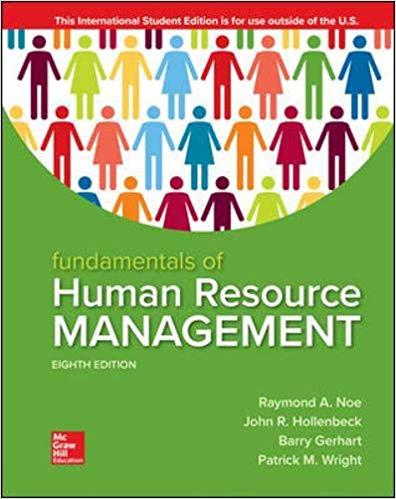
About the Authors
Raymond A. Noe is the Robert and Anne Hoyt Designated Professor of Management at The Ohio State University. Before joining the faculty at Ohio State, he was a professor in the Department of Management at Michigan State University and the Industrial Relations Center of the Carlson School of Management, University of Minnesota. He received his BS in psychology from The Ohio State University and his MA and PhD in psychology from Michigan State University. Professor Noe conducts research and teaches all levels of students from undergraduates to executives in human resource management, training and development, performance management, and talent management. He has published articles in the Academy of Management Annals, Academy of Management Journal, Academy of Management Review, Journal of Applied Psychology, Journal of Vocational Behavior, and Personnel Psychology. Professor Noe is currently on the editorial boards of several journals including Personnel Psychology, Journal of Applied Psychology, Journal of Management, and Human Resources Management Review. Professor Noe has received awards for his teaching and research excellence, including the Ernest J. McCormick Award for Distinguished Early Career Contribution from the Society for Industrial and Organizational Psychology. He is also a fellow of the Society of Industrial and Organizational Psychology.
John R. Hollenbeck holds the positions of University Distinguished Professor at Michigan State University and Eli Broad Professor of Management at the Eli Broad Graduate School of Business Administration. Dr. Hollenbeck received his PhD in Management from New York University in 1984. He served as the acting editor at Organizational Behavior and Human Decision Processes in 1995, the associate editor of Decision Sciences from 1999 to 2004, and the editor of Personnel Psychology from 1996 to 2002. He has published over 90 articles and book chapters on the topics of team decision making and work motivation. According to the Institute for
Scientific Information, this body of work has been cited over 4,000 times by other researchers. Dr. Hollenbeck has been awarded fellowship status in both the Academy of Management and the American Psychological Association, and was recognized with the Career Achievement Award by the HR Division of the Academy of Management (2011), The Distinguished Service Contributions Award (2014), and the Early Career Award by the Society of Industrial and Organizational Psychology (1992). At Michigan State, Dr. Hollenbeck has won several teaching awards including the Michigan State Distinguished Faculty Award, the Michigan State Teacher-Scholar Award, and the Broad MBA Most Outstanding Faculty Member.
Barry Gerhart is Professor of Management and Human Resources and the Bruce R. Ellig Distinguished Chair in Pay and Organizational Effectiveness, School of Business, University of Wisconsin–Madison. He has also served as department chair or area coordinator at Cornell, Vanderbilt, and Wisconsin. His research interests include compensation, human resource strategy, international human resources, and employee retention. Professor Gerhart received his BS in psychology from Bowling Green State University and his PhD in industrial relations from the University of Wisconsin–Madison. His research has been published in a variety of outlets, including the Academy of Management Annals, Academy of Management Journal, Annual Review of Psychology, International Journal of Human Resource Management, Journal of Applied Psychology, Management and Organization Review, and Personnel Psychology. He has co-authored two books in the area of compensation. He serves on the editorial boards of journals such as the Academy of Management Journal, Industrial and Labor Relations Review, International Journal of Human Resource Management, Journal of Applied Psychology, Journal of World Business, Management & Organization Review, and Personnel Psychology. Professor Gerhart is a past recipient of the Heneman Career Achievement Award, the Scholarly Achievement Award, and (twice) the International Human Resource Management Scholarly Research Award, all from the Human Resources Division, Academy of Management. He is a Fellow of the Academy of Management, the American Psychological Association, and the Society for Industrial and Organizational Psychology.
Patrick M. Wright is the Thomas C. Vandiver Bicentennial Chair and the Director of the Center for Executive Succession in the Darla Moore School of Business at the University of South Carolina. Prior to joining USC, he served on the faculties at Cornell University, Texas A&M University, and the University of Notre Dame. Professor Wright teaches, conducts research, and consults in the area of strategic human resource management (SHRM), particularly focusing on how firms use people as a source of competitive advantage and the changing nature of the chief HR officer (CHRO) role. He is the faculty leader for the Cornell ILR Executive Education/NAHR program, “The Chief HR Officer: Strategies for Success,” aimed at developing potential successors to the CHRO role. He served as the lead editor on the recently released book, The Chief HR Officer: Defining the New Role of Human Resource Leaders, published by John Wiley and Sons. He has published more than 60 research articles in journals as well as more than 20 chapters in books and edited volumes. He is the Editor at the Journal of Management. He has coedited a special issue of Research in Personnel and Human Resources Management titled “Strategic Human Resource Management in the 21st Century” and guest edited a special issue of Human Resource Management Review titled “Research in Strategic HRM for the 21st Century.” He currently serves as a member on the Board of Directors for the National Academy of Human Resources (NAHR). He is a former board member of HRPS, SHRM Foundation, and World at Work (formerly American Compensation Association). From 2011 to 2015 he was named by HRM Magazine as one of the 20 “Most Influential Thought Leaders in HR.”
Preface
Managing human resources is a critical component of any company’s overall mission to provide value to customers, shareholders, employees, and the community in which it does business. Value includes profits as well as employee growth and satisfaction, creation of new jobs, contributions to community programs, protection of the environment, and innovative use of new technologies.
Our Approach: Engage, Focus, and Apply
Following graduation, most students will find themselves working in businesses or not-for-profit organizations. Regardless of position or career aspirations, their role in directly managing other employees or understanding human resource management (HRM) practices is critical for ensuring both company and personal success. Therefore, Fundamentals of Human Resource Management, Eighth Edition, focuses on human resource issues and how HR is a key component of any company’s overall corporate strategy. Fundamentals is applicable to both HR majors and students from other majors or colleges who are taking an HR course as an elective or a requirement.
Our approach to teaching human resource management involves engaging students in learning through the use of real-world examples and best practices; focusing them on important HR issues and concepts; and applying what they have learned through chapter features and end-of-chapter exercises and cases. Students not only learn about best practices but are actively engaged through the use of cases and decision making. As a result, students will be able to take what they have learned in the course and apply it to solving HRM problems they will encounter on the job.
Each chapter includes several different pedagogical features. “Best Practices” provides examples of companies whose HR activities work well.
“HR Oops!” highlights HRM issues that have been handled poorly. “Did You Know?” offers interesting statistics about chapter topics and how they play out in real-world companies. “HRM Social” demonstrates how social media and the Internet can be useful in managing HR activities in any organization. “Thinking Ethically” confronts students with issues that occur in managing human resources. Each feature includes questions to assist students with critical thinking and to spark classroom discussions. Fundamentals also assists students with learning “How To” perform HR activities, such as applying HR data to solve business problems, devising plans for workplace flexibility, and making incentive pay part of a totalrewards package. These are all work situations students are likely to encounter as part of their professional careers. The end-of-chapter cases focus on corporate sustainability (“Taking Responsibility”), managing the workforce (“Managing Talent”), and HR activities in small organizations (“HR in Small Business”).
page ix
Organization of the Eighth Edition
Part 1 (Chapters 1–4) discusses the environmental forces that companies face in trying to manage human resources effectively. These forces include economic, technological, and social trends; employment laws; and work design. Employers typically have more control over work design than over trends and equal employment laws, but all of these factors influence how companies attract, retain, and motivate human resources. Chapter 1 discusses why HRM is a critical component to an organization’s overall success. The chapter introduces HRM practices and the roles and responsibilities of HR professionals and other managers in managing human resources. Chapter 2 looks at current trends that impact human resources in the workplace, including automation, robots, artificial intelligence, and people analytics. Chapter 3 provides an overview of the major laws affecting employees and the ways organizations can develop HR practices that comply with the laws. Chapter 4 highlights how jobs and work systems determine the knowledge, skills, and abilities employees need to perform their jobs and influence workers’ motivation, satisfaction, and safety at work.
Part 2 (Chapters 5–8) deals with acquiring, training, and developing
Part 3 (Chapters 9–11) focuses on assessing and improving performance. Chapter 9 sets the tone for this section by discussing the important role of HRM in creating and maintaining an organization that achieves a high level of performance for employees, managers, customers, shareholders, and the community. Chapter 10 examines the strengths and weaknesses of different performance management systems. Chapter 11 discusses how to maximize employee engagement and productivity and retain valuable employees as well as how to fairly and humanely separate employees when the need arises.
Part 4 (Chapters 12–14) covers rewarding and compensating human resources, including how to design pay structures, recognize good performers, and provide benefits. Chapter 12 discusses how managers weigh the importance and costs of pay to develop a compensation structure and levels of pay for each job given the worth of the jobs, legal requirements, and employee judgments about the fairness of pay levels. Chapter 13 covers the advantages and disadvantages of different types of incentive pay, including merit pay, gainsharing, and stock ownership. Chapter 14 highlights the contents of employee benefits packages, the ways organizations administer benefits, and what companies can do to help employees understand the value of benefits and control benefits costs.
Part 5 (Chapters 15–16) covers other HR topics including collective bargaining and labor relations and managing human resources in a global organization. Chapter 15 explores HR activities as they pertain to employees who belong to unions or who are seeking to join unions. Concluding Part 5, Chapter 16 focuses on HR activities in international settings, including planning, selecting, training, and compensating employees who work overseas. The chapter also explores how cultural differences among countries and workers affect decisions about human resources.
page x human resources. Chapter 5 discusses how to develop an HR plan. It emphasizes the strengths and weaknesses of different options for dealing with shortages and excesses of human resources. Chapter 6 emphasizes that employee selection is a process that starts with screening applications and résumés and concludes with a job offer. Chapter 7 covers the features of effective training systems. Chapter 8 demonstrates how assessment, job experiences, formal courses, and mentoring relationships can be used to develop employees for future success.
Content Changes in the New Edition
Three new features have been added to the Eighth Edition of Fundamentals:
Video Conversations with Chief HR Officers (CHROs): Created by the Center for Executive Succession at the Darla Moore School of Business, University of South Carolina, video conversations with CHROs from top organizations such as Accenture, Bank of America, Boeing, GE, HP, Merck, and others are tied in to pertinent chapters. In addition, the videos are featured in Connect, along with questions related to chapter content.
HR Analytics & Decision Making: These new features throughout the book highlight an evidence-based approach to HR management and focus on people, employees, and human capital.
Self-Assessment Exercises: Appearing at the end of the chapter and in Connect, these exercises help students gather information about themselves as it relates to topics covered in each chapter.
In addition to new or updated chapter pedagogy and real-world examples, the text contains the following content changes to help students and instructors keep current on important HR trends and topics:
Chapter 1 includes a detailed discussion on the skills required for HRM professionals as defined by the Society for Human Resource Management (SHRM) and an expanded discussion on HR certification programs and professional HR development programs by various professional organizations. Table 1.2 has been updated to highlight the top qualities employers are now looking for when recruiting potential employees. Figure 1.6 has been revised to reflect current median salaries for various HRM positions.
Chapter 2 provides current workforce statistics, including projections for the number of workers over the next several years, as well as a discussion on various age, gender, and ethnic groups within the U.S. labor force. Illustrations have been updated to reflect current labor force data. Other trends discussed include the increased use of teams within the service sector to foster a flexible approach to work; the top occupations expected to gain the most jobs in the coming decade; the significant slowdown in layoffs as the economy continues to thrive; and the increased use of
technology to automate various HR tasks. In addition, a new section on People Analytics has been added that highlights important advances in artificial intelligence, which may impact various components of HRM within organizations large and small.
Chapter 3 has been updated to include discussions and features on sexual harassment (including the #MeToo movement); the impact of the opioid crisis on federal occupational safety and health standards; and protection from gun violence in the workplace. In addition, illustrations have been updated to reflect current statistics on age discrimination, types of charges filed with the EEOC, and rates of occupational injuries and illnesses.
Chapter 4 includes new discussions on the emergence of bots in the workplace to do monotonous tasks so freed-up workers can focus their time on resolving problems, and on the increasing importance of automation in everyday work tasks that can help enhance not eliminate workers’ jobs.
Chapter 5 covers the process of HR planning, which includes forecasting, goal setting, and strategic planning. A new discussion about trends affecting labor demand today includes advances in technology such as robots, 3D printing, and artificial intelligence, which are making it possible for businesses to increase productivity. The section on recruiting human resources has been refreshed to include a discussion about the importance of building an organization’s positive image as a way to attract and retain key professionals. In addition, the section on job search and networking platforms has been revised and expanded.
page xi
Chapter 6 includes a new table that provides examples of the kinds of questions appropriate for both a situational interview and a behavior description interview, as well as coverage of how some companies are using AI as part of the interview process and analysis.
Chapter 7 provides an updated discussion on the increased use of simulations in employee training; the need for additional training when it comes to basic skills; and how LinkedIn Learning has become the corporate training center with short, video-based courses in several languages.
Chapter 8 includes a detailed discussion on engaging male employees to consider their role in maintaining a workplace that draws fully on the contributions of female as well as male workers. In addition, a look at why
today’s fast-paced business environment is forcing organizations to take a different approach to succession planning over a shorter timeline has been added.
Chapter 9 opens with a feature on how Amazon introduced employee surveys whose statistics are used by managers to help improve the work environment. In addition, a discussion has been added about the significance of critical thinking and knowledge sharing as more routine worker tasks become automated.
Chapter 10 provides an expanded discussion about how some organizations are rethinking their approach to performance reviews emphasizing ongoing performance feedback conversations between employees and their supervisors rather than an annual recap.
Chapter 11 includes a new table highlighting the HR practices that support effective separation and retention of employees. In addition, new real-world examples underscore the importance of employers recognizing that even their top employees may be looking for new jobs elsewhere and how to retain them.
Chapter 12 provides updated earning data for women, men, and minorities and suggests strategies companies can use to close the pay gaps. In addition, a new section highlights the legal requirement that companies must report the ratio of CEO pay to the pay of a typical worker in the organization.
Chapter 13 focuses on recognizing employee contributions with pay, including new examples of how businesses are rethinking their approach to bonuses and tying them to company performance.
Chapter 14 updates information on employee benefits as a percentage of total compensation, Social Security information, and taxes paid by both employers and employees.
Chapter 15 presents information on current trends and statistics in union membership and discusses the recent U.S. Supreme Court decision on whether unions infringe on individual rights when they require membership and/or dues.
Chapter 16 highlights trends in managing human resources globally, including the impact of recent tariffs imposed by the United States that will affect both domestic and foreign businesses, as well as the U.S.
immigration plan that may prevent much-needed foreign workers from coming to the United States. In addition, an updated discussion on the Brexit plan, the UK’s departure from the European Union, highlights some of the issues that will affect human resources both in the UK and elsewhere.
page xii
The author team believes that the focused, engaging, and applied approach of Fundamentals distinguishes it from other books that have similar coverage of HR topics. The new Eighth Edition has timely coverage of important HR issues, is easy to read, has many features that grab the students’ attention, and gets students actively involved in learning.
We would like to thank those of you who have adopted previous editions of Fundamentals, and we hope that you will continue to use upcoming editions. For those of you considering Fundamentals for adoption, we believe that our approach makes Fundamentals your text of choice for human resource management.
Acknowledgments
The Eighth Edition of Fundamentals of Human Resource Management would not have been possible without the staff of McGraw-Hill Education. Anke Weekes deserves kudos for ensuring that we continue to improve the book based on the ideas of both adopters and students. John Weimeister, our former editor, helped us develop the vision for the book and gave us the resources we needed to develop a top-of-the-line HRM teaching package. We would also like to thank Cate Rzasa who worked diligently to make sure that the book was interesting, practical, and readable and remained true to the findings of human resource management research. We also thank Kelsey Darin for her efforts on behalf of this new edition.
We would like to extend our sincere appreciation to all of the reviewers whose thoughtful input helped make this text one of the market’s leading textbooks.
Mihyang An University of Wisconsin–Stout
Leyner D. Argueta
Georgia Northwestern Technical College
Paul J. Bagdan
Johnson & Wales University
Mark Barton
Scottsdale Community College
Graceful Beam
Georgia Northwestern Technical College
Cydna Bougae
Montclair State University
Apryl Brodersen
Metropolitan State University of Denver
Brian K. Chupp
Purdue University
Suzanne Crampton
Grand Valley State University
Marcia Simmering Dickerson
Louisiana Tech University
Michael Dinger University of South Carolina Upstate
Timothy R. Durfield
Citrus College
Ibrahim Firat
Houston Community College
Elena Gitter
Cornell University
Xuguang Guo
California State Polytechnic University, Pomona
Huh-Jung Hahn
Winona State University
Michael B. Harari
Florida Atlantic University
Todd C. Harris
Bridgewater State University
Jeanne J. Holmes
North Carolina A&T State University
Uma Kedharnath
University of Wisconsin–Whitewater
Megan Kragness
University of Minnesota Crookston
page xiii
Bin Ma
Baruch College, City University of New York, University of Missouri, Columbia
Stephanie D. McKenzie
Houston Community College
Eivis Qenani
California Polytechnic State University, San Luis Obispo
Jim Russell
Purdue University
Joanna Shaw
Tarleton State University
David M. Sikora
Georgia Southern University
Paula Kirch Smith
Cincinnati State
Kris Sperstad
Chippewa Valley Technical College
Robert (Scott) Taylor
Moberly Area Community College
Gary Valcana
Athens State University
Yingchun Wang
University of Houston Downtown
Bruce A. Western
Western Illinois University
T. Craig Williams
East Carolina University
Nina E. Woodard
California State University, San Marcos
Weichu Xu
East Stroudsburg University
Raymond A. Noe
John R. Hollenbeck
Barry Gerhart
Patrick M. Wright
Students study more efficiently, retain more and achieve better outcomes. Instructors focus on what you love teaching.
SUCCESSFUL SEMESTERS INCLUDE CONNECT
FOR INSTRUCTORS
You’re in the driver’s seat.
Want to build your own course? No problem. Prefer to use our turnkey, prebuilt course? Easy. Want to make changes throughout the semester? Sure. And you’ll save time with Connect’s auto-grading too.
65%
Less Time Grading
They’ll thank you for it.
Adaptive study resources like SmartBook® help your students be better prepared in less time. You can transform your class time from dull definitions to dynamic debates. Hear from your peers about the benefits of Connect at
Another random document with no related content on Scribd:
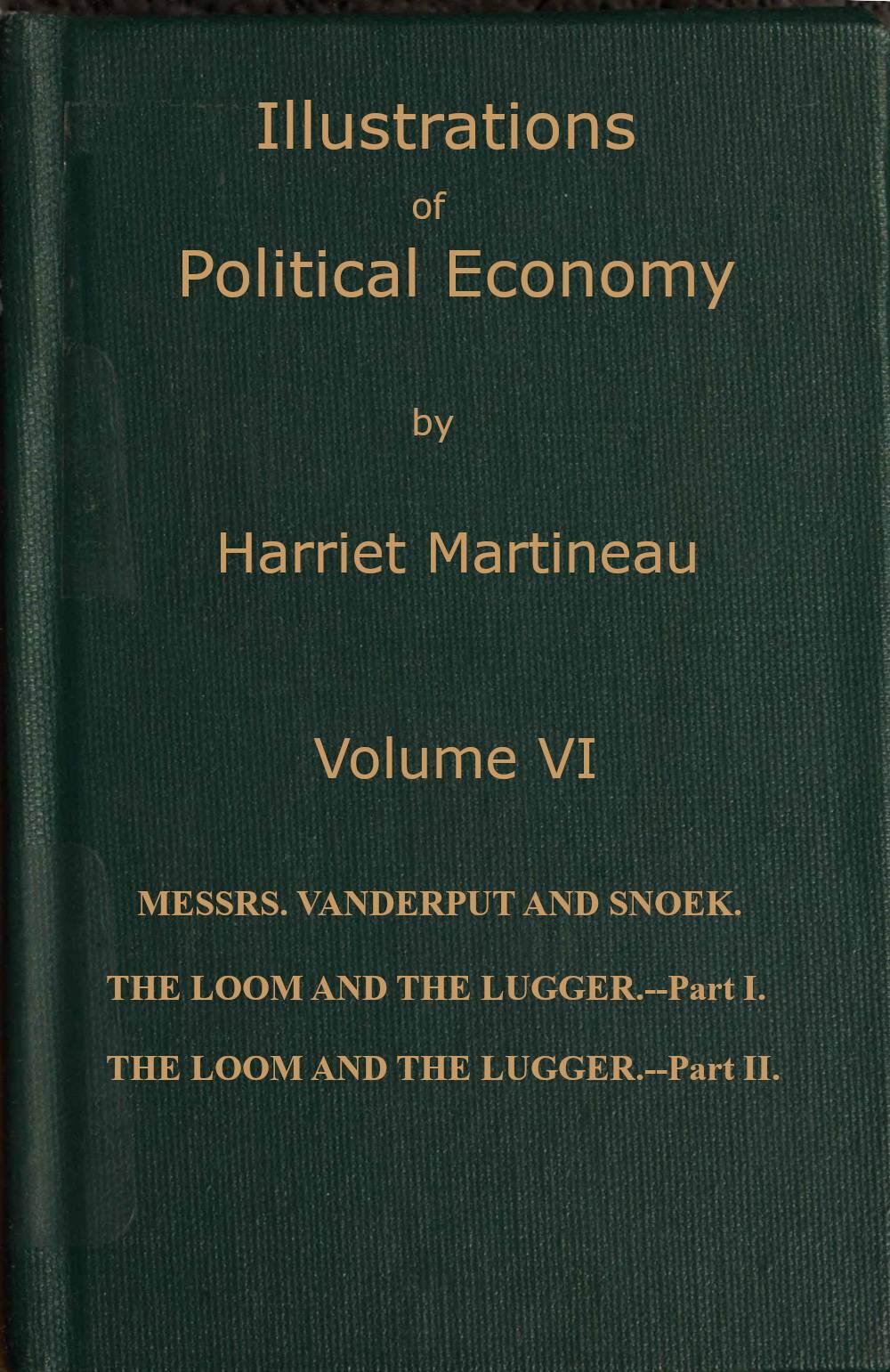
The Project Gutenberg eBook of Illustrations of Political Economy, Vol 6 (of 9)
This ebook is for the use of anyone anywhere in the United States and most other parts of the world at no cost and with almost no restrictions whatsoever. You may copy it, give it away or re-use it under the terms of the Project Gutenberg License included with this ebook or online at www.gutenberg.org. If you are not located in the United States, you will have to check the laws of the country where you are located before using this eBook.
Title: Illustrations of Political Economy, Vol 6 (of 9)
Author: Harriet Martineau
Release date: February 10, 2024 [eBook #72923]
Language: English
Original publication: London: Charles Fox, Paternoster-Row, 1834
Credits: Emmanuel Ackerman, KD Weeks and the Online Distributed Proofreading Team at https://www.pgdp.net (This file was produced from images generously made available by The Internet Archive) *** START OF THE PROJECT GUTENBERG EBOOK ILLUSTRATIONS OF POLITICAL ECONOMY, VOL 6 (OF 9) ***
Transcriber’s Note:
The volume is a collection of three already published texts, each with its own title page and pagination.
Minor errors, attributable to the printer, have been corrected. Please see the transcriber’s note at the end of this text for details regarding the handling of any textual issues encountered during its preparation.
The image of the blank front cover has been cleaned up and enhanced with basic data from the title page, and, so modified, is placed in the public domain.
Any corrections are indicated as hyperlinks, which will navigate the reader to the corresponding entry in the corrections table in the note at the end of the text.
ILLUSTRATIONS OF POLITICAL ECONOMY.
BY HARRIET MARTINEAU.
MESSRS. VANDERPUT AND SNOEK. THE LOOM AND THE LUGGER.--PART I. THE LOOM AND THE LUGGER. PART II. INNINEVOLUMES.
VOL. VI.
LONDON: CHARLES FOX, PATERNOSTER-ROW. MDCCCXXXIV.
LONDON:
Printed by WILLIAM CLOWES, Duke-street, Lambeth.
MESSRS. VANDERPUT AND SNOEK
MESSRS. VANDERPUT AND SNOEK.
A Tale.
BY HARRIET MARTINEAU.
LONDON:
CHARLES FOX, 67, PATERNOSTER-ROW. 1833.
PREFACE.
In planning the present story, I was strongly tempted to use the ancient method of exemplification, and to present my readers with the Adventures of a Bill of Exchange, so difficult is it to exhibit by example the process of exchange in any other form than the history of the instrument. If, however, the transactions of Messrs. Vanderput and Snoek should be found to furnish my readers with a pretty clear notion of the nature and operation of the peculiar kind of currency of which this Number treats, I shall readily submit to the decision that the present volume has little merit as a specimen of exemplification. Though the working of principles might be shown in this case, as in any other, it could not, I think, be done naturally in a very small space. If I had had liberty to fill three octavo volumes with the present subject, an interesting tale might have been made up of the effects on private fortunes of the variations in the course of the Exchange, and of the liabilities which attend the use of a partial and peculiar representative of value. As it is, I have judged it best to occupy a large portion of my confined space in exhibiting a state of society to which such a species of currency is remarkably appropriate, in order that light might be thrown on the nature and operation of bills of exchange by showing what was being done, and what was wanted by those who most extensively adopted this instrument into their transactions.
In case of any reader questioning whether Dutchmen in the seventeenth century could advocate free trade, I mention that the principle has never been more distinctly recognized than at a remoter date than I have fixed, by countries which, like Holland, had little to export, and depended for their prosperity on freedom of
importation. Every restriction imposed by the jealousy of those from whom they derived their imports was an unanswerable argument to them in favour of perfect liberty of exchange. As their herrings and butter were universally acknowledged to be the best herrings and butter in existence, and yet were not enough for the perfect comfort of the Dutch, the Dutch could not resist the conclusion, that the less difficulty there was in furnishing their neighbours with their incomparable herrings and butter, in return for what those neighbours had to offer, the better for both parties. The Dutch of the seventeenth century were therefore naturally enlightened advocates of the free trade. Whether their light has from that time spread among their neighbours equally and perpetually, my next Number will show.
MESSRS. VANDERPUT & SNOEK.
CHAPTER I. MOURNING.
During the days when the prosperity of the United Provinces was at its height,--that is, during the latter half of the 17th century,--it could hardly be perceived that any one district of Amsterdam was busier than another, at any one hour of the day. There was traffic in the markets, traffic on the quays, the pursuit of traffic in the streets, and preparation for traffic in the houses. Even at night, when the casks which had been piled before the doors were all rolled under shelter, and dogs were left to watch the bales of merchandize which could not be stowed away before dark, there was, to the eye of a stranger, little of what he had been accustomed to consider as repose. Lights glanced on the tossing surface of the Amstel, as homeward-bound vessels made for the harbour, or departing ships took advantage of the tide to get under weigh. The hail of the pilots or the quay-keepers, or of a careful watchman here and there, or the growl and bark of a suspicious dog, came over the water or through the lime avenues with no unpleasing effect upon the wakeful ear, which had been so stunned by the tumult of noon-day as scarcely to distinguish one sound from another amidst the confusion.
One fine noon, however, in the summer of 1696, a certain portion of the busiest district of Amsterdam did appear more thronged than the rest. There was a crowd around the door of a handsome house in the Keiser's Graft, or Emperor's-street. The thickly planted limes were so far in leaf as to afford shade from the hot sun, reflected in gleams from the water in the centre upon the glaring white fronts of the houses; and this shade might tempt some to stop in their course, and lounge: but there were many who were no loungers flocking to the spot, and making their way into the house, or
stationing themselves on the painted bench outside till they should receive a summons from within.
The presence of one person, who stood motionless before the entrance, sufficiently explained the occasion of this meeting. The black gown of this officer, and his low cocked hat, with its long tail of black crape, pointed him out as the Aanspreeker who, having the day before made the circuit of the city to announce a death to all who knew the deceased, was now ready to attend the burial. He stood prepared to answer all questions relative to the illness and departure of the deceased, and the state of health and spirits of the family, and to receive messages for them, to be delivered when they might be supposed better able to bear them than in the early hours of their grief. Seldom were more inquiries addressed to the Aanspreeker than in the present instance, for the deceased, Onno Snoek, had been one of the chief merchants of Amsterdam, and his widow was held in high esteem. The officer had no sooner ended his tale than he had to begin it again;--how the patient's ague had appeared to be nearly overcome; how he had suffered a violent relapse; how the three most skilful French apothecaries had been called in, in addition to the native family physician; how, under their direction, his son Heins had opened the choicest keg of French brandy, the most precious packages of Batavian spices in his warehouse, for the sake of the sick man; how, notwithstanding these prime medicaments, the fever had advanced so rapidly as to prevent the patient from being moved even to the window, to see a long expected ship of his firm come to anchor before his own door; how he seemed to have pleasure in catching a glimpse of her sails through the trees as he lay in bed; but how all his endeavours to live till morning that he might hear tidings of the cargo, had failed, and rather hastened his end, insomuch that he breathed his last before dawn.
Among the many interrogators appeared a young man who was evidently in haste to enter the house, but wished first to satisfy himself by one or two questions. He wore the dress of a presbyterian clergyman, and spoke in a strong French accent.
"I am in haste," he said, "to console my friends, from whom I have been detained too long. I was at Saardam yesterday, and did not hear of the event till this morning. I am in haste to join my friends; but I must first know in what frame the husband,--the father,--died. Can you tell me what were the last moments which I ought to have attended?"
The officer declared that they were most edifying. The patient's mind was quite collected.
"Thank God!" exclaimed M. Aymond, the divine.
"Quite collected," continued the officer, "and full of thought for those he left behind, as he showed by the very last thing he said. He had most carefully arranged his affairs, and given all his directions in many forms; but he remembered, just in time, that he had omitted one thing. He called Mr. Heins to his bed-side, and said, 'my son, there is one debtor of ours from whom you will scarce recover payment, as I never could. Meyerlaut has for many months evaded paying me for the last ebony we sold to him. Let him therefore make my coffin.--Stay!--I have not done yet.--You will, in course of nature, outlive your mother. Let her have a handsome coffin from the same man; and if it should please Heaven to take more of you, as our beloved Willebrod was taken, you will bear the same thing in mind, Heins, I doubt not; for you have always been a dutiful son.'"
"This is the way Heins told you the fact?" asked Aymond. "Well, but were these the last,--the very last words of the dying man?"
Heins had mentioned nothing that was said afterwards; so the divine pursued his way into the house with a sad countenance. Instead of joining the guests in the outer apartment, he used the privilege of his office, and of his intimacy with the family, and passed through to the part of the house where he knew he should find the widow and her young people. Heins met him at the door, saying, "I knew you would come. I have been persuading my mother to wait, assuring her that you would come. How we have wished for you! How we----"
Aymond, having grasped the hand of Heins, passed him to return the widow's greeting. She first stood to receive the blessing he bestowed in virtue of his office, and then, looking him calmly in the
face, asked him if he had heard how God had been pleased to make her house a house of mourning.
"I find dust and ashes where I looked for the face of a friend," replied the divine. "Can you submit to Heaven's will?"
"We have had grace to do so thus far," replied the widow. "But whether it will be continued to us when----"
Her eyes filled, and she turned away, as if to complete her preparations for going forth.
"Strength has thus far been given according to thy day," said Aymond. "I trust that it will be thus bestowed for ever." And he gave his next attention to one whom he was never known to neglect; one who loved him as perhaps nobody else loved him,--Heins's young brother, Christian.
Christian had suffered more in the twelve years of his little life than it is to be hoped many endure in the course of an ordinary existence. A complication of diseases had left him in a state of weakness from which there was little or no hope that he would ever recover, and subject to occasional attacks of painful illness which must in time wear him out. He had not grown, nor set a foot to the ground, since he was five years old: he was harassed by a perpetual cough, and in constant dread of the return of a capricious and fearful pain which seldom left him unvisited for three days together, and sometimes lasted for hours. When in expectation of this pain, the poor boy could think of little else, and found it very difficult to care for any body; but when suffering from nothing worse than his usual helplessness, his great delight was to expect M. Aymond, and to get him seated beside his couch. Aymond thought that he heard few voices more cheerful than that of his little friend, Christian, when it greeted him from the open window, or made itself heard into the passage,--'Will you come in here, M. Aymond? I am in the wainscoat parlour to-day, M. Aymond.'
Christian had no words at command this day, He stretched out his arms in silence, and sighed convulsively when released from the embrace of his friend.
"Did I hurt you? Have you any of your pain to-day?"
"No; not yet. I think it is coming; but never mind that now. Kaatje will stay with me till you come back. You will come back, M. Aymond."
When the pastor consented, and the widow approached to bid farewell to her child for an hour, Christian threw his arms once more round Aymond's neck. His brother Luc, a rough strong boy of ten, pulled them down, and rebuked him for being so free with the pastor; and little Roselyn, the spoiled child of the family, was ready with her lecture too, and told how she had been instructed to cross her hands and wait till M. Aymond spoke to her, instead of jumping upon him as she did upon her brother Heins. Christian made no other reply to these rebukes than looking with a smile in the face of the pastor, with whom he had established too good an understanding to suppose that he could offend him by the warmth of an embrace.
"I am sorry you cannot go with us, my poor little Christian," said Heins, who had a curious method of making his condolences irksome and painful to the object of them. "I am sorry you cannot pay this last duty to our honoured parent. You will not have our satisfaction in looking back upon the discharge of it."
"Christian is singled out by God for a different duty," observed the pastor. "He must show cheerful submission to his heavenly parent while you do honour to the remains of an earthly one."
Christian tried to keep this thought before him while he saw them leaving the room, and heard the coffin carried out, and the long train of mourners, consisting of all the acquaintance of the deceased, filing away from the door.--When the last step had passed the threshold, and it appeared from the unusual quiet that the crowd had followed the mourners, Christian turned from the light, and buried his face in one of the pillows of his couch, so that Katrina, the young woman who, among other offices, attended upon him and his little sister, entered unperceived by him. She attracted his attention by the question which he heard oftener than any other,--'the pain?'
"No," answered the boy, languidly turning his head; "I was only thinking of the last time----" Either this recollection, or the sight of Katrina's change of dress overcame him, and stopped what he was
going to say. The short black petticoat, measuring ten yards in width, exhibited its newness by its bulk, its plaits not having subsided into the moderation of a worn garment. The blue stockings, the neat yellow slippers had disappeared, and the gold fillagree clasps in the front of the close cap were laid aside till the days of mourning should be ended. While Christian observed all this, contemplating her from head to foot, Katrina took up the discourse where he had let it fall.
"You were thinking of the last time my master had you laid on the bed beside him. It will always be a comfort to you, Christian, that he told you where he was departing."
"He did not tell me that," said the boy; "and that is just what I was wondering about. He said he was going, and I should like to know if he could have told where."
"To be sure he could. He was one of the chosen, and we know where they go. So much as you talk with the pastor, you must know that."
"I know that it is to heaven that they go, but I want to know where heaven is. Some of them say it is paradise; and some, the New Jerusalem; and some, that it is up in the sky among the angels. But do all the chosen know where they are going?"
Certainly, Katrina believed. The dying believer was blessed in his hope. Christian was not yet satisfied.
"I think I shall know when I am dying," said he. "At least, I often think I am dying when my pain comes in the night; but I do not know more about where I am going then than at other times."
Katrina hoped his mind was not tossed and troubled on this account.
"O, no; not at all. If God is good to me, and takes care of me here, he will keep me safe any where else, and perhaps let me go about where I like. And O, Kaatje, there will be no more crying, nor pain! I wish I may see the angels as soon as I die. Perhaps father is with the angels now. I saw the angels once, more than once, I think; but once, I am sure."
In a dream, Katrina supposed.
"No, in the broad day, when I was wide awake. You know I used to go to the chapel before my cough was so bad; as long ago as I can remember, nearly. There are curious windows in that chapel, quite high in the roof; and I often thought the day of judgment was come; and there was a light through those windows shining down into the pulpit; and there the angels looked in. I thought they were come for me, unless it was for the holy pastor."
"But would you have liked to go?"
"Yes: and when the prayer came after the sermon, instead of listening to the pastor, I used to pray that God would send the angels to take me away."
Katrina thought that if Christian had lived in another country, he would have made a fine martyr.
"I don't know," said the boy, doubtfully. "I have thought a great deal about that, and I am not so sure as I used to be. If they only cut off my head, I think I could bear that. But as for the burning,--I wonder, Kaatje, whether burning is at all like my pain. I am sure it cannot be much worse."
Katrina could not tell, of course; but she wished he would not talk about burning, or about his pain; for it made him perspire, and brought on his cough so as to exhaust him to a very pernicious degree. He must not talk any more now, but let her talk to him. He had not asked yet what company had come to the funeral.
Christian supposed that there was every body whom his father had known in Amsterdam.
Yes, every body: and as there were so many to drink spirits at the morning burial, her mistress chose to invite very few to the afternoon feast. Indeed her mistress seemed disposed to have her own way altogether about the funeral. Every body knew that Mr. Heins would have liked to have it later in the day, and would not have minded the greater expense for the sake of the greater honour.
"I heard them talk about that," said Christian. "My mother told Heins that it was a bad way for a merchant to begin with being proud, and giving his father a grand funeral; and that the best honour was in the number of mourners who would be sure to follow an honest man, whether his grave was filled at noon or at sunset.
My mother is afraid of Heins making a show of his money, and learning to fancy himself richer than he is."
Katrina observed that all people had their own notions of what it was to be rich. To a poor servant-maid who had not more than 1000 guilders out at interest----
"But your beautiful gold chain, Kaatje! Your silver buckles! I am sure you must have ten pair, at the least."
"Well, but, all this is less than many a maid has that has been at service a shorter time than I have. To a poor maid-servant, I say, it seems like being rich to have I don't know how many loaded ships between China and the Texel."
"They belong as much to Mr. Vanderput as to us, you know. Is Mr. Vanderput here to-day?"
"To be sure. He is to be at the burial-feast; and Miss Gertrude----."
"Gertrude! Is Gertrude here?" cried Christian, sitting up with a jerk which alarmed his attendant for the consequences. "O, if she will stay the whole day, it will be as good as the pastor having come back."
"She crossed from Saardam on purpose. She will tell you about the angels, if any body can; for she lives in heaven as much as the pastor himself, they say."
"She is an angel herself," quietly observed Gertrude's little adorer. Katrina went on with her list.
"Then there is Fransje Slyk and her father. He looks as if he knew what a funeral should be, and as grave as if he had been own brother to the departed. I cannot say as much for Fransje."
"I had rather have Fransje's behaviour than her father's, though I do not much like her," said Christian. "Mr. Slyk always glances round to see how other people are looking, before he settles his face completely."
"Well; you will see how he looks to-day. These are all who will stay till evening, I believe, except Mr. Visscher."
"Mr. Visscher! What is he to stay for? I suppose Heins wants to talk to him about this new cargo that came too late. O, Kaatje, I never can bear to look through the trees at that ship again. I saw the white sails in the moonlight all that night when I lay watching
what was going on, and heard Heins's step in and out, and my mother's voice when she thought nobody heard her; and I could not catch a breath of my father's voice, though I listened till the rustle of my head on the pillow startled me. And then my mother came in, looking so that I thought my father was better; but she came to tell me that I should never hear his voice any more. But O, if she knew how often I have heard it since! how glad I should be to leave off hearing it when I am alone----."
Poor Christian wept so as not to be comforted till his beloved friend Gertrude came to hear what he had to say about those whom he believed to be her kindred angels.
Heins was missed from the company soon after the less familiar guests had departed, and left the intimate friends of the family to complete the offices of condolence. Heins was as soon weary of constraint as most people, which made it the more surprising that he imposed on himself so much more of it than was necessary. All knew pretty well what Heins was, though he was perpetually striving to seem something else; and his painful efforts were just so much labour in vain. Every body knew this morning, through all the attempts to feel grief by which he tried to cheat himself and others, that his father's death was quite as much a relief as a sorrow to him; and that, while he wore a face of abstraction, he was longing for some opportunity of getting out upon the quay to learn tidings of the ships and cargoes of which he was now in fact master. The fact was that Heins was as much bent on being rich as his father had been, but he wanted to make greater haste to be so, and to enjoy free scope for a trial of his more liberal commercial notions. For this free scope, he must yet wait; for his partner, Mr. Vanderput, was as steady a man of business, though a less prejudiced one, than the senior Snoek had been; and then there was Mrs. Snoek. She was not permitted, by the customs of the country, to meddle in affairs relating to commerce; but she knew her maternal duty too well not to keep an eye on the disposal of the capital which included the fortunes of her younger children. It was to be apprehended that she would be ready with objections whenever a particularly grand enterprize should demand the union of all the resources of the firm.
Some liberty had, however, been gained through the obstinacy of the fever which would not yield to French brandy and Oriental spices; and there were many eyes upon Heins already, to watch how he would set out on his commercial career.
Some of these eyes followed him from his mother's door to the quay, and back again, when he had concluded his inquiries among the captains. It was remarked that there was, during the latter transit, a gloom in his countenance which was no mockery.
On his re-appearance in his mother's parlour, the cause was soon told, first to his partner, next to his mother, and then (as there were none but intimate friends) to all present. The result of the communication was an outcry against the English, as very troublesome neighbours, while the widow's first thought was of thankfulness that her husband had died without hearing news which would have caused him great trouble of mind. Heins appealed to all who understood the state of Dutch commerce, whether Great Britain had not done mischief enough long ago, by prohibiting the importation of bulky goods by any ships but those which belonged to the exporting or importing country.
"That prohibition was evidently aimed at us Dutch," observed Vanderput. "We were carriers to half the world, till Great Britain chose that we should no longer carry for her. She might punish herself in that manner, and welcome, if she could do so without punishing us; but it is a serious grievance,--difficult as it now is to find an investment for our capital,--to be obliged to lay by any of our shipping as useless."
"We did all we could," said Heins piteously. "Since we could not carry the produce of the East and West into the ports of Great Britain for sale, we brought it here, that the British captains might not have far to go for it. But it seems that Great Britain is jealous of this; for there is a new prohibition (if the report be true) against importing any bulky produce purchased anywhere but in the country where it is produced."
"I hope this is too bad to be true," observed Visscher.
"Nothing is too bad to be attempted by a jealous country against one which has been particularly successful in commerce," observed
Snoek. "The tonnage of this country is more than half that of all Europe; and Great Britain thinks it time to lower our superiority. Whether she will gain by doing so, time will show."
"I think Great Britain is very illnatured and very mean," observed Christian, who had generally something to say on every subject that was discussed in his presence. "I think I shall call her Little Britain, from this time. But, Heins, what will you do with all the things you have bought, as you told me, in Asia and America, and in France and Italy? You must send back your cinnamon to Ceylon, and----O, but I forgot that other people may buy them, though the English will not. But I hope you have not bought too much for the present number of your customers. There is another large ship coming from one of the American islands, I heard----."
He was checked by the remembrance of who it was that told him this. Heins related, with a deep sigh, which might be given to the memory of either the ship or its owner, that the vessel had been wrecked, and was now at the bottom of the sea. This was the other piece of bad news he had to tell. At least two-thirds of his hearers asked after the crew, while the rest inquired for the cargo. The cargo was lost, except a small portion, which had been preserved with difficulty. The crew had been picked up, only one sailor-boy being missing. It was from two of them who had found their way home that Heins had received the tidings of his misfortune.
"One sailor-boy!" repeated Christian. "Do you know how he was lost? Was he blown from the yards, do you think? Or was he washed overboard? or did he go down with the ship?"
Heins did not know any particulars of the sailor-boy. But where? But how? But when did this happen?
It happened where many shipwrecks had happened before, and many would again, and in the same manner. The vessel had struck on the Eddystone rock on a stormy night. This was another nuisance for which the Dutch were indebted to the English. This fatal rock----.
"Did the English make the Eddystone rock?" little Roselyn inquired, in a low voice, of the pastor. "I thought it was God that broke up the fountains of the deeps, and fixed the everlasting hills." Her wiser brother Christian enlightened her.
"God made this rock; but perhaps he made it so that it might be of use to us, instead of doing us harm, if the English would make the best use of it. Is not that what Heins means, M. Aymond?"
M. Aymond believed that what Mr. Vanderput had just said was true; that the English were about to build a light-house on this dangerous rock, which might thus be made to guide ships into a British harbour, instead of causing them to perish. He trusted that it would appear that Heins was mistaken in saying that many more ships would be lost on that rock; and he hoped that men would learn in time to make all God's works instruments of blessing to their race. Christian carried on the speculation.
"And then, perhaps, man's works may not perish by accident before they are worn out, as this ship did. But yet this was what happened with one of God's works too,--that sailor-boy. He perished before he was worn out. But why do people ever wear out, M. Aymond? Whether a person is drowned at fifteen or dies worn out at eighty, does not much signify, if God could make them live a thousand years. Only think of a person living a thousand years, M. Aymond! He would see cities grow as we see ant-hills rise, while the sea roared against the dykes as it did at the beginning. He would see the stars move so often that he would know them all in their places. He would know almost everything. O! why do not men live a thousand years? and why does God let a young sailor-boy be lost?"
Gertrude whispered, "All the days of Methuselah were nine hundred, sixty and nine years; and he died."
"Yes," added the pastor, gravely meeting the kindling eyes of Christian; "death comes sooner or later; and whether it came soon or late would be all in all if we were to live no more. But as man's life is never to end----"
"Ah! I see. If his life is never to end, it does not signify so much when he passes out of one kind of life into another. I was going to ask why there should be any death at all. If I made a world, I would----"
Christian had talked too eagerly, and now was prevented by his cough from speaking any more at present. When he recovered his voice, the pastor turned his attention from the lost sailor-boy to the
lost ship, asking whether it had not answered its purpose in making several voyages; whether the skill and toil of the artificers had not been repaid. Christian thought not; and he went on to exhibit as much as he could of the worked up knowledge and labour which had in this instance been engulphed by the waves. He seemed so much irritated, however, by his imperfection in the knowledge of shipbuilding, that Gertrude proposed that he should pay her a visit at Saardam, where he might look down from a window upon the dockyard, and witness nearly the whole process without being moved from his couch. She almost repented the proposal when she saw the poor boy's rapture; but, happily, no one perceived any objection to the plan. The little voyage of seven miles could be made perfectly easy to invalids; and it was quite certain that Christian would be happy with Gertrude, if anywhere. Heins and the pastor contended for the charge of Christian, and old Mr. Slyk, the most punctilious of mourners, allowed that such an indulgence might,--especially with a view to increased knowledge,--be extended to a sufferer like Christian, within the days of strict mourning, provided the mother and the younger children staid at home. Luc clenched his fist on hearing this, and Roselyn pouted; but their jealousy of their brother soon vanished when his dreaded pain came on, and they were put out of the room by their mother, as usual, that they might not become hardened to the expressions of agony which they could not relieve.
They were heartily glad when the day was nearly over;--when there was an end of going from the melancholy burial feast in one room, into the apartment where Gertrude was describing to the now passive Christian spectacles which they were not to see, and pleasures which were held to be incompatible with the mourning of which they already required to be reminded. They were not, however, allowed to retire in this state of forgetfulness of the occasion. The pastor's closing prayer, the solemn looks of the servants, and their mother's silent tears when she laid her hand upon their heads, left them no disposition for complaint as they stole away to their beds.
CHAPTER II. AN EXCURSION.
"One, two, three,--five of you going with me to Saardam!" cried Christian, as he saw Heins and the pastor follow the children and Katrina into the boat: the children who, in Mr. Slyk's absence, had prevailed on their mother's good nature to let them go with their brothers. "And Mr. Visscher is coming before the afternoon. What a party to belong to me!"
It was very natural that Christian should overrate his own importance, passing his life, as he did, in a little circle where every one was eager to give him pleasure: but never was he more mistaken than in supposing that he was any thing more than a convenient pretence to some of his friends for visiting Saardam. There was an attraction there which would have taken two of them thither every day, if as good an excuse had offered as that of which they now took advantage. Heins felt that at Saardam resided one who would make as perfect a wife for a rich Amsterdam merchant as could be imagined, if she had but a little more gaiety. She was pretty; she was amiable; she was rich; and she and his mother would suit admirably; and the children were fond of her. The pastor's feelings about Gertrude are less easily described; but they tended to the same object as those of Heins. These two were aware of each other's intentions; but there was as little enmity in their rivalship as there was present satisfaction in their pursuit. Aymond was perfectly convinced that Gertrude could never love Heins; but he was nearly as certain that she did not yet love himself: and Heins found that he made no progress in the lady's good graces, while he trusted that his friendly hints to her brother would prevent her throwing herself away upon a poor refugee minister of religion, whose tender