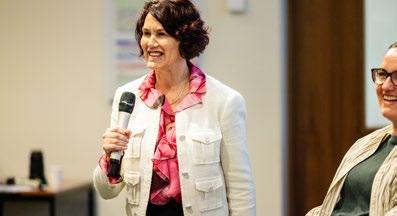
Rangi Ruru manukura role helps students step into their future
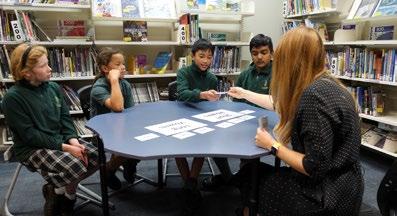
Tails, tales and tuakanateina learning connects Southland community
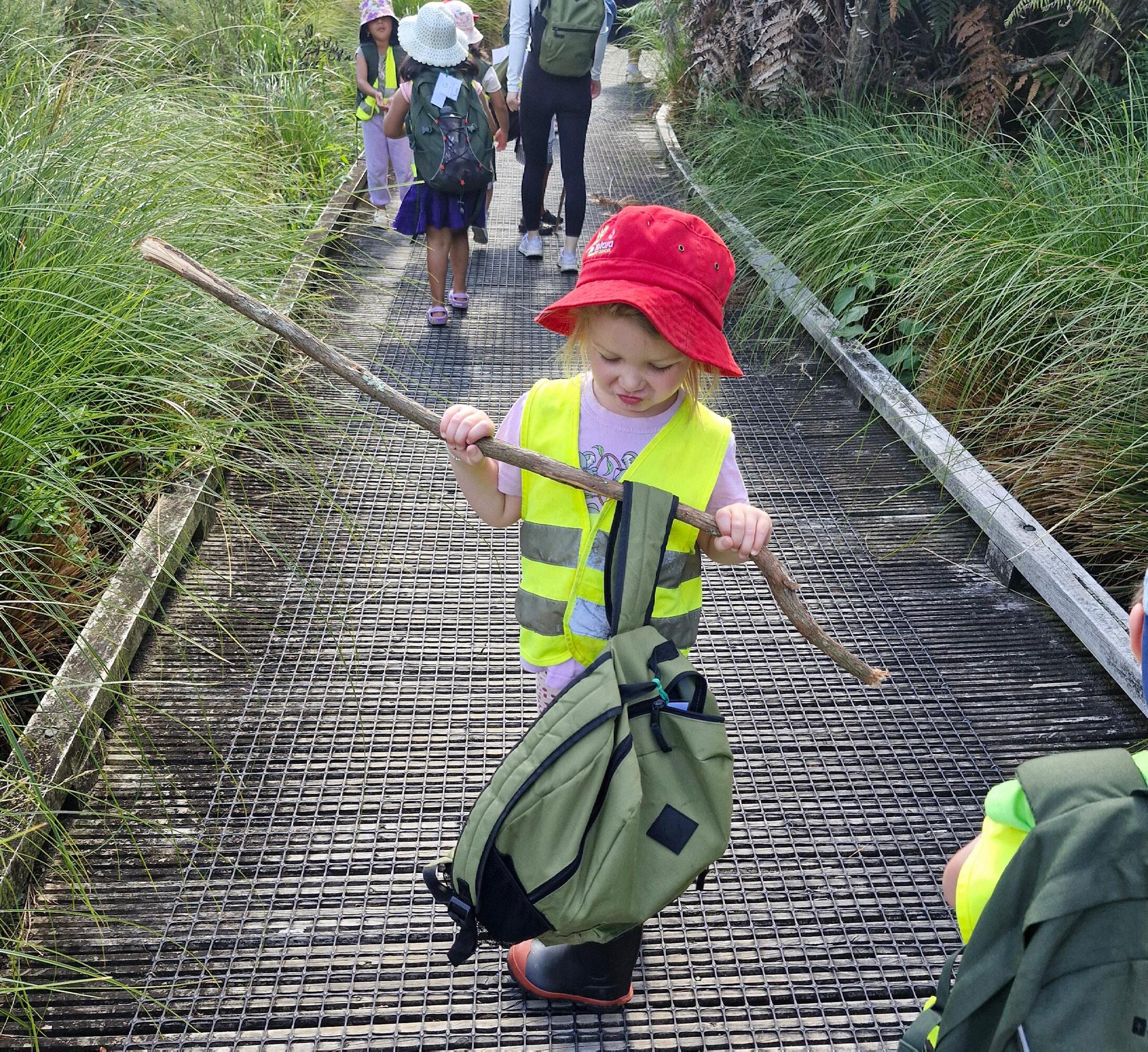
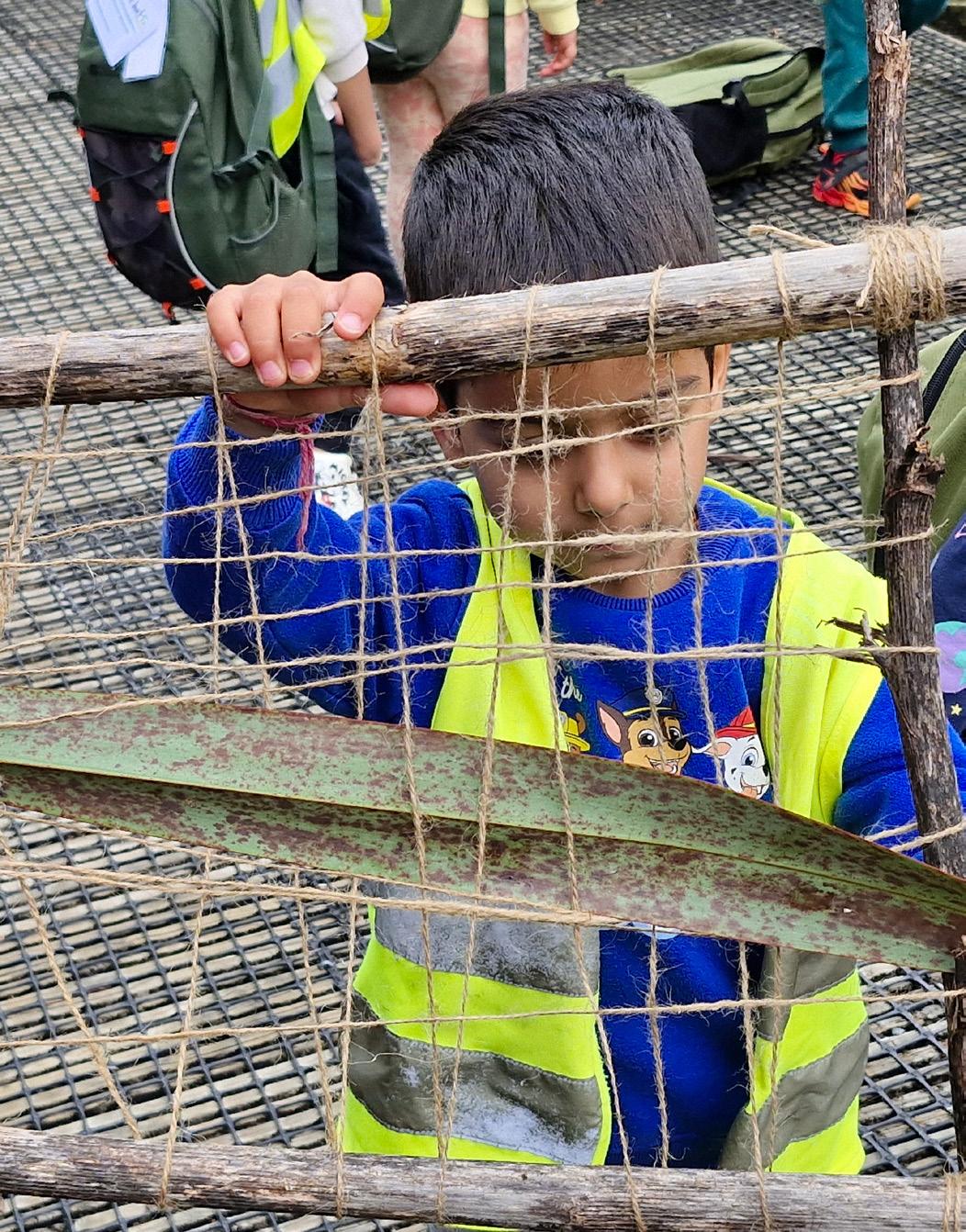
Students become hands-on stream scientists in Porirua
You & Tahatū
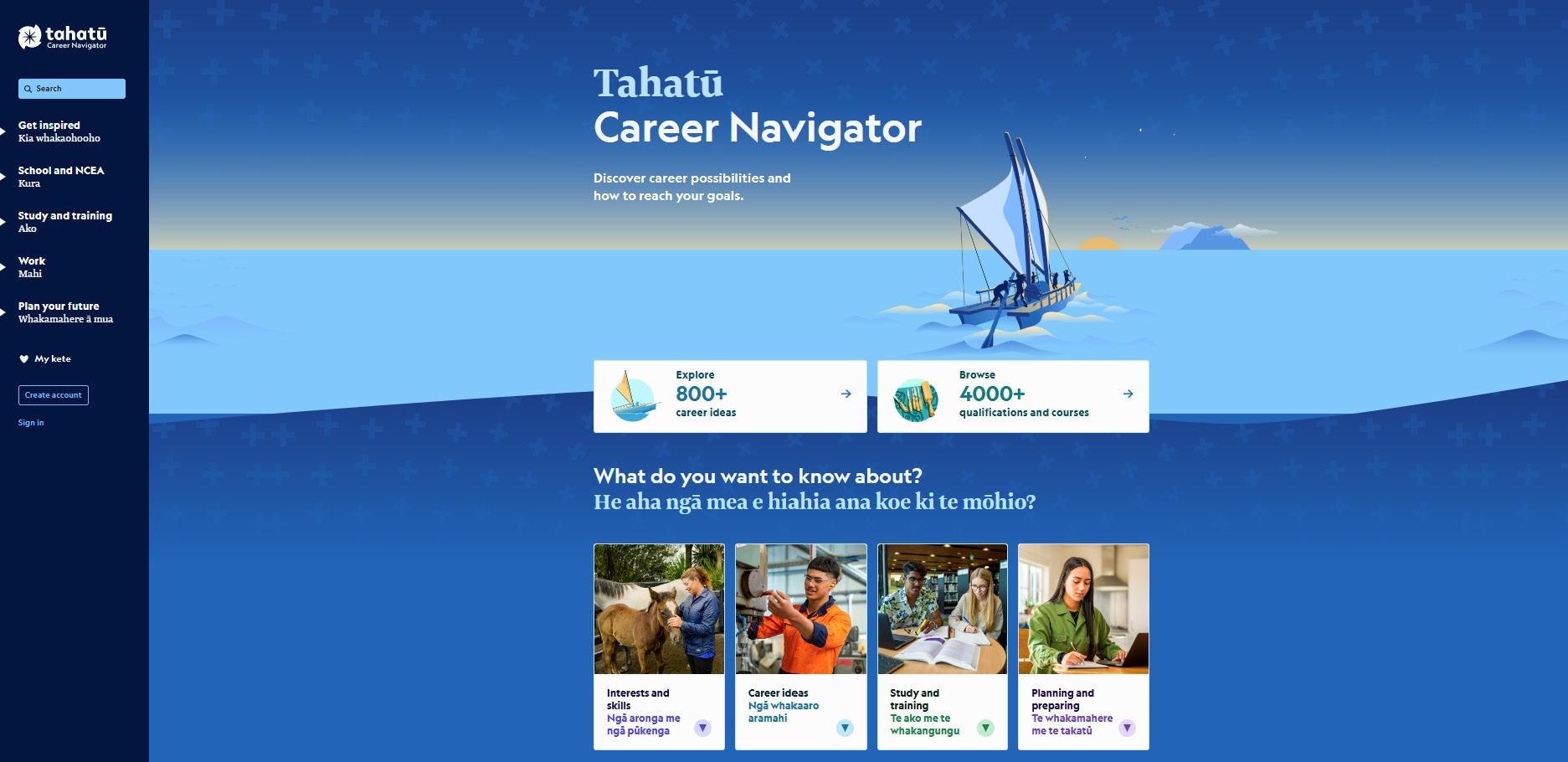
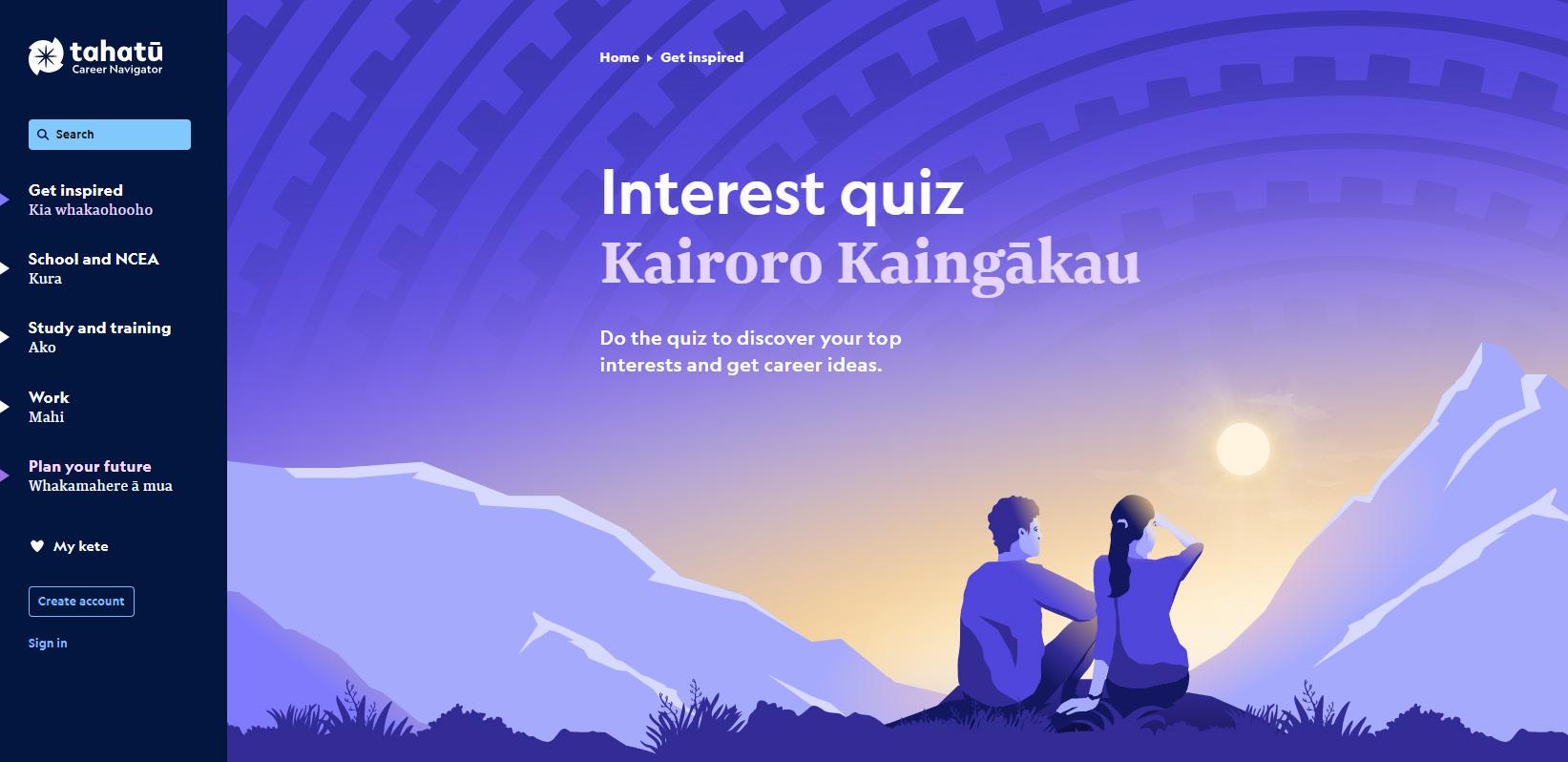
Tahatū is your new career planning website. It gives your students easy-to-use tools, like the Interest quiz that identifies personal interests and matches them with 800+ job options. They can build a path through 4,000+ qualifications, watch job profile videos, and save information in My kete. Get started and help them discover a future they’re proud of.
In this issue
Editor’s note
This issue, we look at learning that’s been happening beyond the classroom walls.
We visit schools that are planting gardens, connecting communities and age groups through art and culture, and head into the school library to highlight the magic librarians weave into these special environments every day.
If you’re in need of summer reading inspiration, Hauroko Valley Primary School has published a book about pets with local author Ruth Shaw that celebrates literacy, identity and rural life.
Learning opportunities are everywhere, early learning educator Helen Upson reminds us, hoping to inspire those kaimahi who will continue to teach throughout the warm weeks of summer.
We also feature two Rangi Ruru manukura in Ōtautahi Christchurch as they reflect on the lessons and opportunities that come with student leadership and their futures beyond school.
Our own leaders, too, offer their thoughts on 2025 and the power that purposeful leadership has in shaping thriving learning communities.
Next year the Gazette will look a little different. We’re removing third-party advertising, leaving more room for the voices and images of our kura, kaimahi and ākonga to shine.
You can still find and list vacancies, notices and professional development opportunities on the Education Gazette website.
Thank you for your continued support of Education Gazette | Tukutuku Kōrero this year. Enjoy our quiz!
Ngā mihi o te Kirihimete me te tau hau, Maike van der Heide
Ētita | Editor
JOIN US ONLINE
Get the latest vacancies, notices, and stories: gazette.education.govt.nz
Follow us on Instagram: @edgazettenz
PUBLISHED BY
Education Gazette is published by the Ministry of Education PO Box 1666, Wellington. ISSN 2815-8423 (online)
On the cover
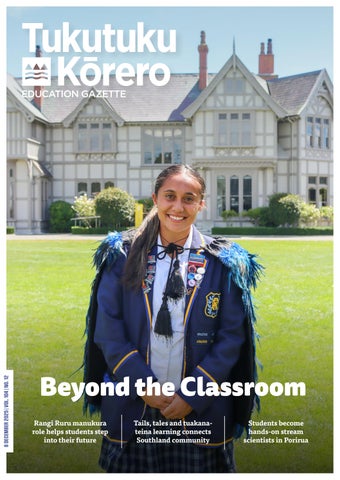
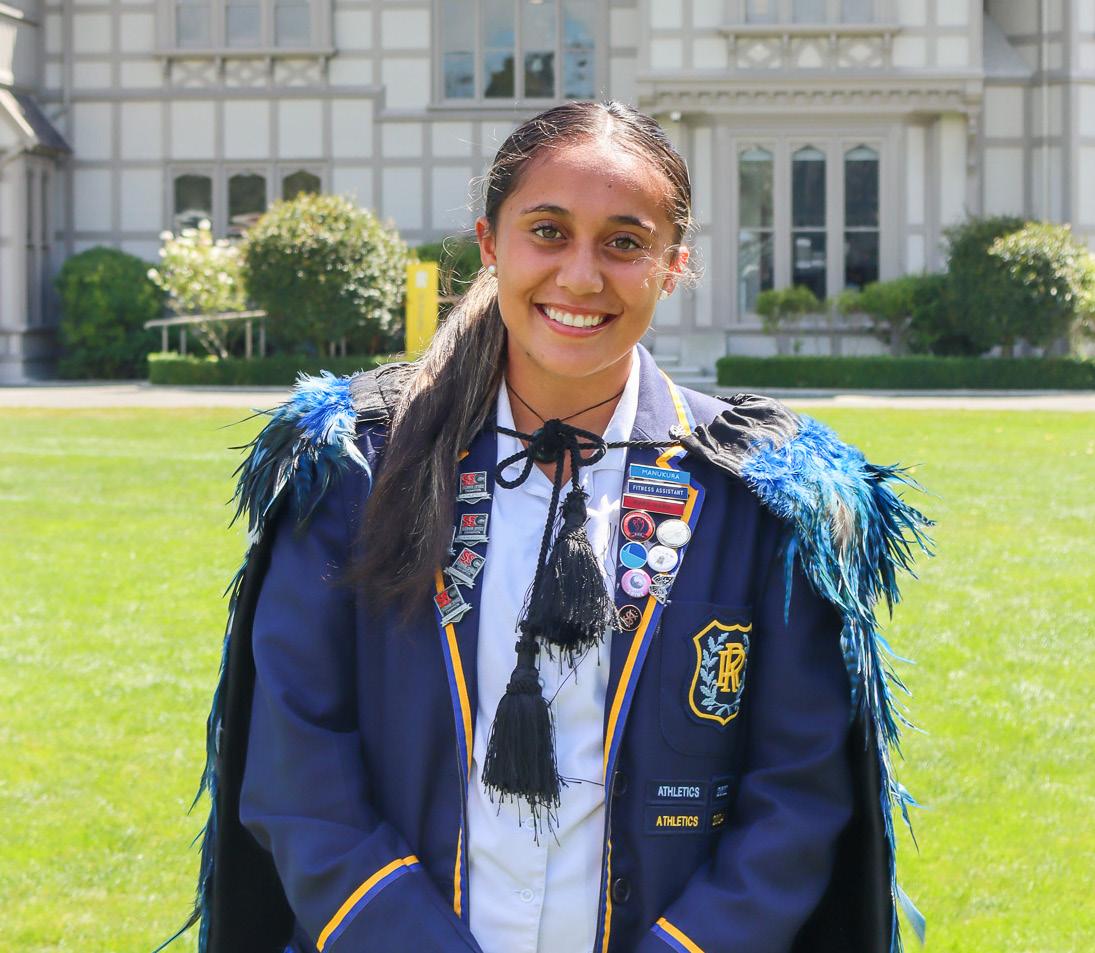
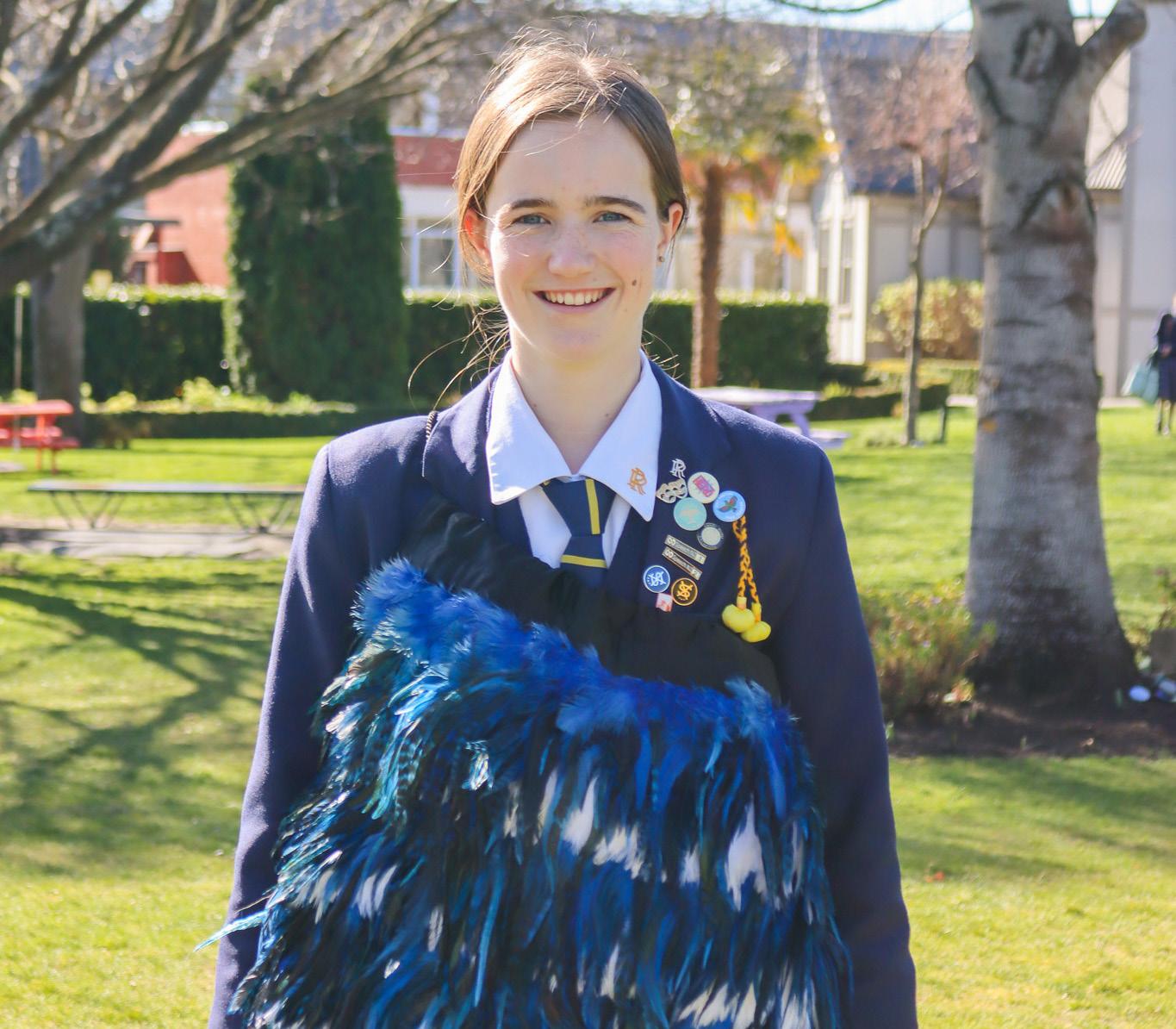
Year 13 student Ava was manukura at Rangi Ruru Girls’ School for 2025. Read about how her student leader role will help her step into life beyond school empowered and with confidence on page 8.
The Education Gazette office will be closed from 12pm Friday 19 December to 9am Monday 5 January 2026. No online vacancies and notices will be processed during this period.
We welcome your ideas and feedback. If you have a story in mind, email us a brief outline (50–100 words). gazette@education.govt.nz
Vacancies and notices listings Vacancies@edgazette.govt.nz
0800 GAZETTE (0800 429 3883)
MESSAGE FROM THE SECRETARY FOR EDUCATION
Retrospective of the year 2025
Kia ora koutou
As 2025 comes to a close, I want to thank you for the extraordinary mahi you do across our education system.
Lifting attendance and strengthening achievement are goals we all share, and I have seen inspiring examples through this year’s Gazette of how they are being brought to life.
In early learning, you continue to create rich, playbased environments that foster oral language, selfregulation and early literacy and numeracy. You are supporting tamariki to begin their learning journey with curiosity, confidence and a sense of belonging.
Structured approaches to literacy and numeracy are being embedded across the motu. Phonics checks and Hihira Weteoro are helping Year 1 learners build strong foundations, while refreshed curricula and achievement standards are supporting more consistent, high-quality learning.
Teachers are embedding structured approaches to help ākonga build a strong foundation. We’ve seen this in action, through the Gazette, in places like Whangaparāoa College and Kaikohe West School where they are using explicit, systematic literacy teaching in both English and te reo Māori to lift reading and writing achievement.
To strengthen attendance and engagement, the Gazette has highlighted areas where you’ve re-engaged rangatahi at risk of leaving education, connecting them with mentors and community role models. Many schools have also adopted stepped response plans, attendance teams and community partnerships to highlight that every day at school counts.
You have also been working to strengthen learning support so that all students can thrive. The Gazette has shown how Franz Josef Glacier School has turned isolation into opportunity through digital learning and community partnerships and how the MacLean Centre at Mount Roskill Grammar School has brought specialist expertise and whānau together to support ākonga with complex needs.
This year, you told us what you value most about the Gazette. We heard that you value this channel as a
trusted place to share good work and celebrate educators across Aotearoa; a publication by teachers, for teachers. Looking to 2026, we will continue to make sure your voices and success remain at the heart of this publication. I encourage you to explore the Gazette’s 2026 edition themes and consider sharing the progress unfolding in your own early learning service, school or kura.
On behalf of the Ministry of Education, thank you for your leadership and your dedication.
Ngā mihi nui
Ellen MacGregor-Reid Te Tumu Whakarae mō te Mātauranga Secretary for Education
Insights to inspire: Leadership advisors look back on 2025
As 2025 draws to a close, we speak with three Ministry of Education leadership advisors to reflect on the year that was. They share their highlights, lessons learned and advice for school leaders preparing for 2026.
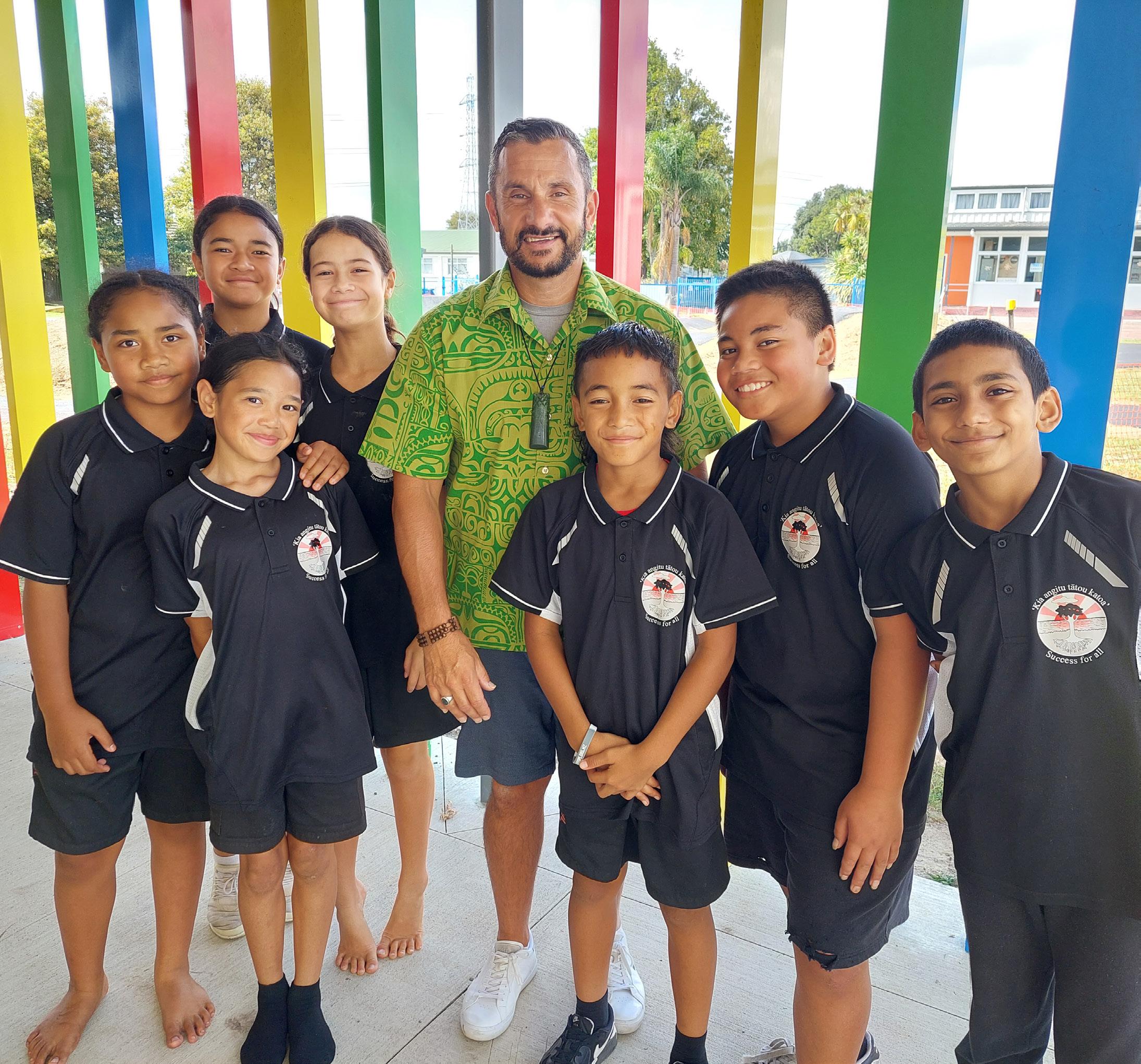
Banapa Avatea with students at his school, Flat Bush School.
“At the heart of every decision has been a steadfast commitment to do what’s best for our tamariki.”
Regan Orr
Regional Leadership Advisor
It’s been an absolute privilege to serve as a leadership advisor alongside our principals this year. As seconded principals with ‘skin in the game’, we bring lived experience that resonates with our colleagues. Many have said, “it’s great being able to talk to you, because you just get it”. This relatability has let us cut through the noise and help tumuaki focus on what truly matters.
Supporting principals with strategic thinking, professional growth and rich conversations around leadership and learning has been incredibly rewarding. My greatest highlight has been the relationships and whanaungatanga formed across the Taranaki/Whanganui/Manawatū region. I’ve genuinely enjoyed working with every principal and feel honoured to have contributed to their development and strategic direction.
It’s been especially fulfilling to support newer principals as they navigate the complexities of the role – helping them focus on what they can control and not sweat the small stuff.
Challenges, opportunities and inspiration
This has been a year of significant change and implementation, and our principals deserve recognition for the way they’ve led through it. At the heart of every decision has been a steadfast commitment to do what’s best for our tamariki.
Despite the demands – from applying for structured literacy professional learning and development (PLD), managing staffing and resources, attending PLD cohorts, to implementing revised reporting to parents – principals have led with mana and made sure learners remain the central focus.
Every principal I’ve worked with has inspired me in their own unique way. They are deeply committed to achieving the best outcomes for their tamariki and understand their contexts well.
Over the past two years, I’ve witnessed passionate tumuaki working tirelessly for their communities. Their dedication and resilience continue to motivate me.
Regan Orr.
Time and space to look ahead
This secondment has given me the space to reflect and think differently – time that’s often hard to come by in principalship. I’ve learned the importance of boundaries and that it’s OK not to be connected or responsive 24/7. Prioritising time for ourselves and our whānau is essential.
I’ve also found great value in coaching, mentoring and facilitating professional learning groups, and I’m excited to explore how these practices can be woven into my leadership next year.
As tumuaki, you know your learners and whānau best. Keep the vision of your kura front and centre – what are you trying to achieve, and what will help you get there?
Focus on the core business and strip away anything that doesn’t serve your vision. As I often say to principals, “distinguish between what’s required and what’s encouraged”. Knowing the difference is a powerful time-saver.
School leaders can continue to build cultures that are both responsive to change and grounded in strong values by:
» staying anchored to your school’s vision – ask yourself, “how does this change support the aspirations we hold for our kura and our tamariki?”
» recognising that change is constant, but how you respond sets the tone for your entire school
» being measured and intentional in your change management approach and taking people with you by clearly communicating the ‘why’ behind the change
» aligning new initiatives with your strategic plan and vision for coherence strengthens implementation.
“One of the most powerful insights this year has been the strength and resilience of our leaders.”
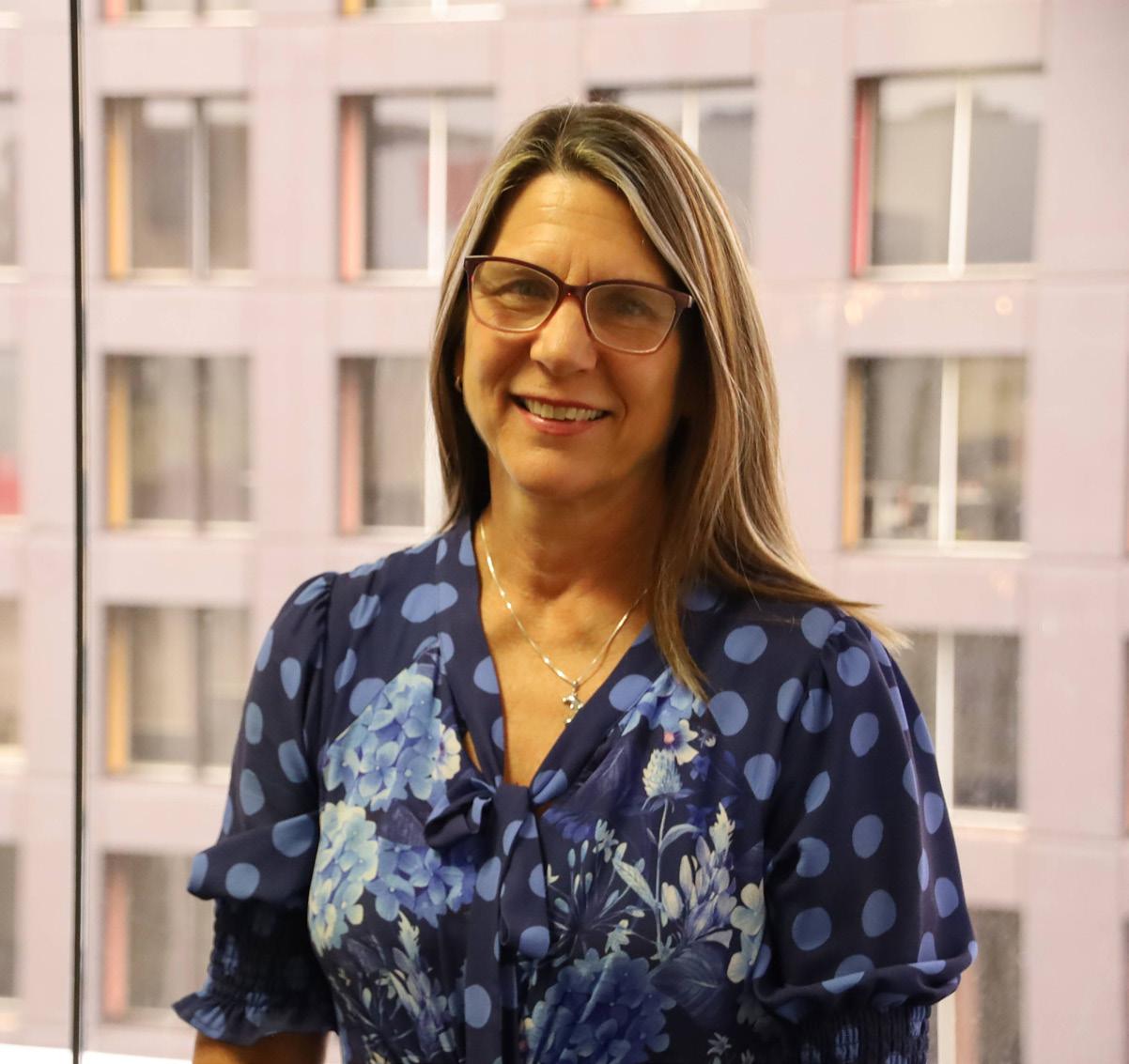
Amy Hacker Regional Leadership Advisor
Schools are working hard to meet the needs of an increasingly diverse range of learners. There’s a desire for flexible, inclusive and engaging approaches that feel personalised and relevant.
In 2025, a number of long-serving principals came to the end of their careers. That has left a gap in experience but allowed for a reset in some places. It also gave a chance to rethink leadership approaches, especially around how schools are responding to the needs of their learners.
I have spent time this year helping schools align their site-specific board goals with broader Government priorities and changes. I’ve really valued the opportunity to work with principals to develop strategies to strengthen the teaching of literacy and numeracy across all learning areas.
That focus is not just in the traditional sense, but really digging into how we best support students who struggle to access the rest of the curriculum. Leaders have been prioritising targeted support and looking at how to build capability across the board.
An impactful area for me has been supporting strategic planning to make sure senior secondary programmes are genuinely preparing young adults for a rapidly evolving workplace.
There’s been a strong focus on designing authentic learning experiences that go beyond academic achievement. These are programmes that intentionally build the soft skills employers are looking for like communication, collaboration and adaptability.
Building authentic leadership capability
Looking out for staff and students starts with good leadership fundamentals – principals who listen, take on feedback and create space for honest conversations. That kind of authentic
leadership is really important in embedding a culture where wellbeing is taken seriously.
A focus for me this year has been helping to think strategically about how to build leadership capability among middle leaders, a key area many schools seem to be working on.
There has been a noticeable increase in specific wellbeingfocused initiatives. Things like staff wellbeing days built into PLD, regular morning teas, lunches, flu jabs and funded EAP services might seem small, but cumulatively represent an increased awareness of wellbeing. Principals are also acknowledging those who go above and beyond, both privately and publicly.
For students, more funding has been put toward counselling services to address a rise in complex needs including neurodiversity, behavioural challenges, economic hardship and trauma. Some schools are also supporting learners through the Northern Health School, which shows a growing awareness of the need for flexible, wraparound support.
Leading from a position of learning
I have noticed a gap in principal wellbeing. Principals carry a lot and often put themselves last. There’s a real need to encourage them to ‘put their own oxygen mask on first’ – to prioritise their own wellbeing so they can continue to lead effectively. This is something we need to keep talking about and actively supporting.
The advice I would give to support secondary school leaders is:
» Breathe. Focus on two to four priorities.
» Build up your staff who have a direct line of sight to outcomes for learners.
» Find joy in what you do every day.
» You are the most important learner at your school –position yourself that way.
» Change is the constant, so try not to let it keep you up every night.
» Build your networks of support.
We have the most amazing, resilient and inspiring young people. We are a safe, globally embedded and diverse country. School leadership will continue to drive highly relational learning with aspirational expectations that every young person becomes their best version of themselves.
Banapa Avatea
Pacific Leadership Advisor
This year has been a year of deep connection, courageous leadership and culturally sustaining practice. As a Pacific leadership advisor, I’ve had the privilege of walking alongside tumuaki across Tāmaki Makaurau – leaders from Pacific, Māori and mainstream backgrounds – each committed to
Amy Hacker.
serving their communities with integrity, compassion and vision.
One of the most powerful insights this year has been the strength and resilience of our leaders. Whether they are beginning principals or seasoned navigators, they are leading with heart, humility and a deep sense of service. I’ve seen leaders intentionally build school cultures that reflect the identities of their ākonga. Their leadership is not just strategic. It’s relational, restorative and rooted in values like alofa, manaakitanga and whanaungatanga.
Across the motu, Pacific leadership values have been making a tangible difference. Schools are embedding practices that honour language, culture and identity. From the expansion of bilingual units to the intentional use of Talanoa Ako and culturally located practice, we are seeing a shift towards leadership that is both affirming and aspirational. Importantly, these shifts are being championed not only by Pacific leaders, but also by non-Pacific principals who recognise the importance of culturally sustaining leadership for all learners.
Culturally sustaining leadership has stood out in many forms. In some schools, mana-enhancing teaching and learning underpins restorative practices and builds strong cultural inclusion. In others, leaders are using internal evaluation to drive improvement in attendance and achievement. I’ve seen leaders dismantling outdated systems and rebuilding school cultures that value every learner. These leaders are not just responding to challenges – they are reimagining what success looks like for Pacific, Māori and mainstream ākonga alike.
Charting a course
As I prepare to return to principalship in 2026, I carry with me the wisdom and courage of the leaders I’ve worked with. This year has reminded me that leadership is not a solo journey – it’s a collective voyage. The theme I’ve been reflecting on is ‘Moana-nui-a-Kiwa – Navigating Our Future’. It speaks to the role of the tautai, the navigator, who charts a course not just for themselves, but for their crew, their community and the generations to come.
My advice to school leaders working to strengthen Pacific success and belonging is simple: start with relationships. Know your people. Honour their stories. Create spaces where Pacific ākonga and whānau feel seen, heard and valued. Use tools like Tapasā and Talanoa Ako not just as frameworks, but as ways of being. And remember, culturally sustaining leadership is not an initiative, it’s a commitment.
To all school leaders, as you reflect on 2025 and prepare for the year ahead, I encourage you to be quietly relentless. Keep pushing for what matters. Keep building cultures of care and excellence. And keep asking, “who are we serving, and how are we serving them well?”
Leadership is a privilege. Let’s continue to lead with purpose, with people at the heart, and with the courage to navigate new waters together.
STUDENT LEADERSHIP
Leading through language, culture and identity at Rangi Ruru
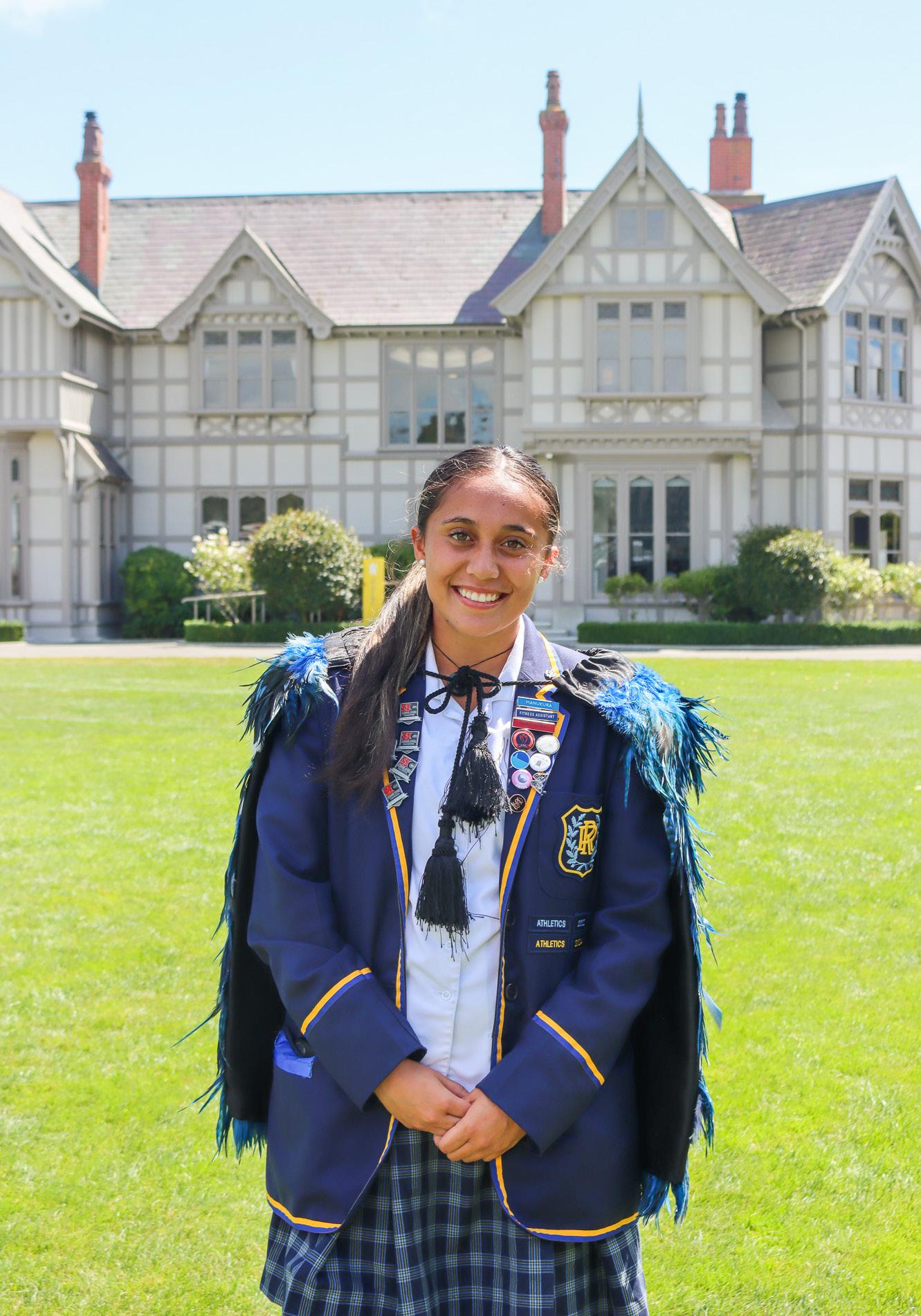
When young Māori ākonga can see themselves reflected in leadership positions, they too aspire to stand in those manukura roles in the future. Year 13 student Ava led this powerful belief as Rangi Ruru Girls’ School manukura for 2025.
Rangi Ruru manukura for 2025, Ava.
Ava became manukura at her Ōtautahi Christchurch school in January and, throughout the year, grew and strengthened her identity as a young Māori wāhine. One of her aims for the year was to promote te reo Māori around the kura, where she introduced a ‘kupu o te wiki, word of the week.’ Students were provided with a simple word to learn each week.
“This helped normalise and revitalise te reo Māori as part of everyday discussions,” explains Ava.
She sees the student leader role as a way to foster a deep sense of belonging for Māori ākonga in her school.
“I am very passionate about incorporating my culture into my school as it only takes a generation to lose the language and three generations to reclaim it back,” says Ava. “It’s extremely important Māori hear, see and feel that their culture is valued and respected, so they can thrive.”
Along the leadership journey, Ava worked with other students as part of the whānau komiti, a group that advocates for Māori ākonga attending Rangi Ruru.
“I have learned that not all leaders have to lead from the front,” she says.
Ava worked to strengthen the voices of her fellow rangitahi and learn from them as well. She helped run a Matariki breakfast, to celebrate the Māori new year.
“It was an opportunity to strengthen whanaungatanga, celebrate highlights of the past year and set aspirations for the new year,” explains Ava, a practice she says she will continue into her university years.
Te Wiki o Te Reo Māori was where Ava’s leadership shone, and she saw ākonga across the school enthusiastically participate in wider school activities across the week. Students tried kai like fried bread, and many promoted Māori culture by buying ribbons and mini poi to wear on their blazers.
“Students across the school had an openness to explore and engage in Māori culture,” says Ava.
There was a huge turnout to Kī-o-Rahi, a quick-paced traditional ball game combining elements of netball, rugby and handball. Ākonga learned commands and participated in the kemu (match), she says. “Māori sports aren’t often showcased, so this was another opportunity to celebrate my culture.”
Stepping out with confidence
Rangi Ruru te reo Māori teacher Sherrilee Herangi-Harrison says the manukura role helps student leaders step into their future outside of school with confidence and power. They learn to meet deadlines as a whānau komiti and plan events collaboratively with senior school staff, she adds. Inclusive communication is also a big part of the role, as the manukura addresses large audiences during chapel and other kura hui, growing their public speaking skills.
Ava says the manukura role has included developing her communication style.
“I have built confidence speaking publicly, which will help me advocate for myself when I move away from home next year,” she says. “I can get along with a variety of different
people, meaning I am approachable and can develop authentic relationships quickly.”
In 2026, Ava will head to Ōtepoti Dunedin to start at Otago University on a Māori Entrance Scholarship. She will continue her Māori studies and also study health, with a long-term goal to improve Māori health equity.
To the legacy she leaves behind, Ava hopes Kupu o te Wiki will grow to become whakatauki and sentences of the week.
“I want to see more students confidently speaking te reo Māori, knowing it’s OK to make mistakes and grow from them,” she says. “I hope I have inspired the next generation of rangatira to embrace their identity, language and culture with pride.”
“I hope I have inspired the next generation of rangatira to embrace their identity, language and culture with pride.”
A unique way to see the world
Next year, Florence will be leading Rangi Ruru as the 2026 manukura. She put her hand up for the role to give back to the kaupapa that has given so much to her and to support other ākonga in their educational and identity haerenga.
At the beginning of her high school journey, Florence picked te reo Māori as her first subject choice.
“What I didn’t expect was that it would become so much more than just a language,” she says. “Through my experiences and the support of my whānau, I’ve learned that te ao Māori offers a unique way of seeing the world that’s grounded in manaakitanga, kotahitanga and being true to yourself.”
Even outside of Māori spaces, Florence says she will carry those core values with her, which have helped build her confidence.
Weaving te ao Māori into the everyday
Florence says a school manukura makes sure te ao Māori is not just acknowledged but actively uplifted and woven into the Rangi Ruru community.
“Many schools already have values that they encourage students to uphold, which often reflect the same tikanga rooted in Māori culture,” she says. “By recognising these values, we can bring tikanga Māori into everyday school life in a way that feels meaningful for everyone.”
“I’ve learned that te ao Māori offers a unique way of seeing the world that’s grounded in manaakitanga, kotahitanga and being true to yourself.”
Sherrilee believes each year the initiatives of the whānau komiti have helped champion te reo Māori, with other school leaders inspired to voice their own ideas. Rangi Ruru clan leaders started the school’s first ever ‘clan haka’ competition, while teacher Owen Flattery developed a game application for Matariki. A group of Year 11 students also created a Māori Language Team which designs te reo posters with phrases and kupu.
“Māori terms of address are used far more frequently among many students, and in general many ākonga are exhibiting growing confidence in using te reo,” Sherrilee
says. This helps strengthen students’ confidence as they complete the school’s Te Ara programme, which aims for all ākonga to graduate with language skills, correct pronunciation, local knowledge and mātauranga Māori.
Hoping to build on Ava’s 2025 foundations, Florence wants to create more opportunities for students to engage with te reo and tikanga. Her ideas include kōrero and group activities.
“I want to contribute to making te ao Māori more than just a subject choice, and to extend it to become part of everyday life in our kura.”
Rangi Ruru manukura for 2026, Florence.
Printmaking project bridges classrooms and communities
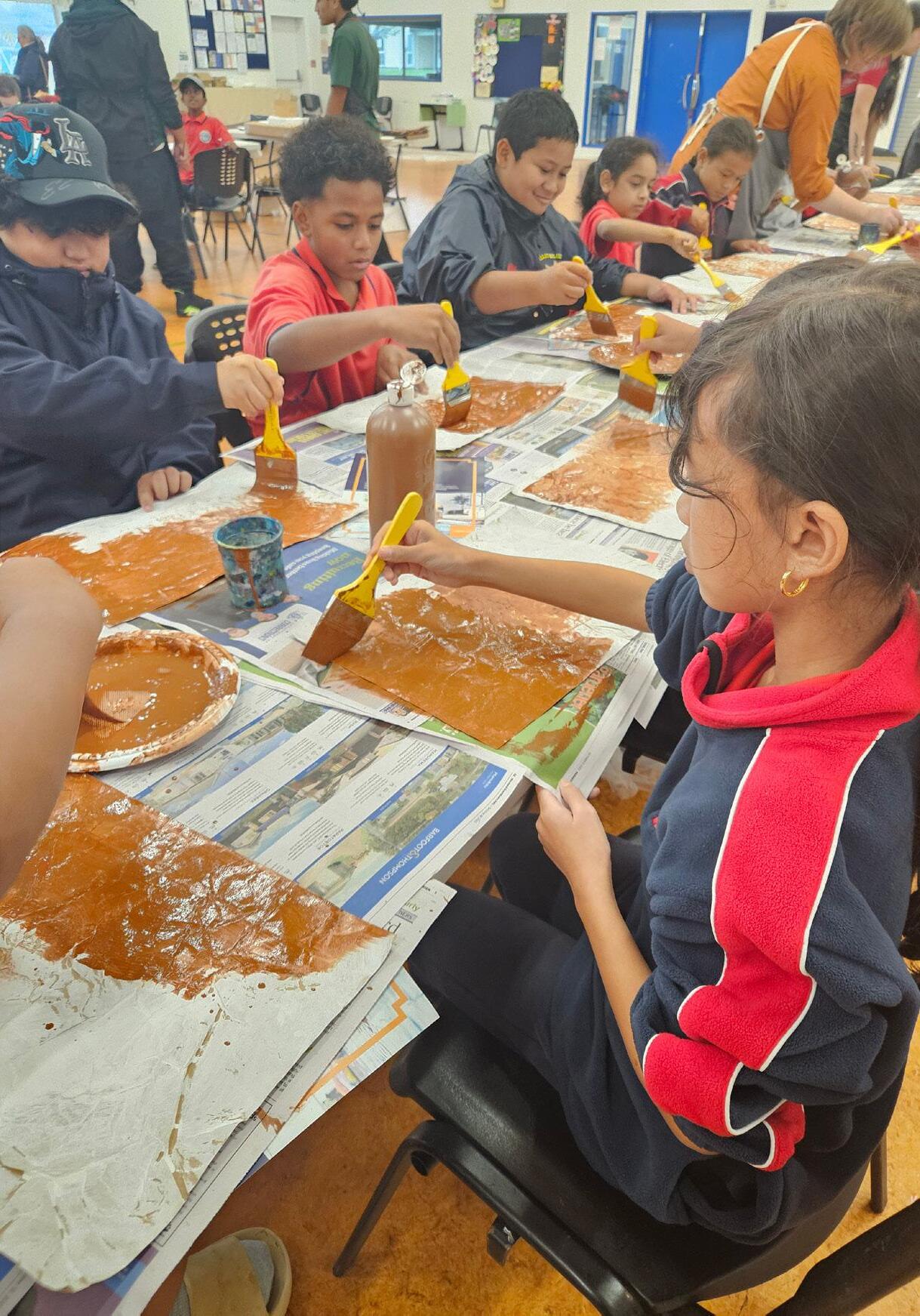
When students from Papakura High School arrived at Glen Taylor School with ink rollers in hand and foam boards ready to go, they weren’t just bringing art supplies. They were bringing leadership, cultural pride and a shared sense of purpose.
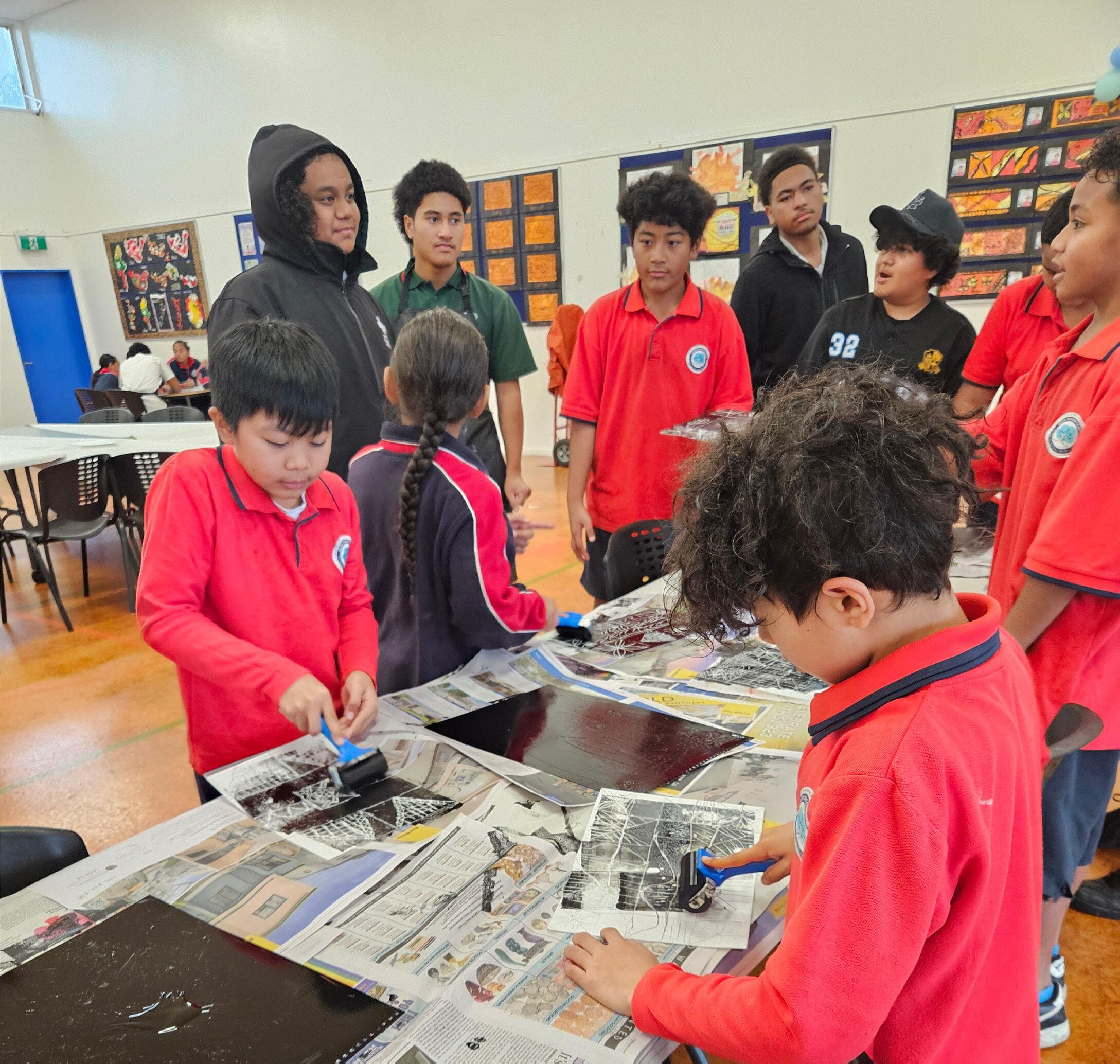
Junior students were guided in each step of the printmaking process by senior students.
Earlier this year, a vibrant tuakana-teina exchange brought together Year 4–8 students from Glen Taylor School and visual arts students from Papakura High School. Rooted in cultural identity and hands-on learning, the ‘I Am a Printmaker’ workshop extended far beyond the classroom walls. It fostered creativity, it built connection and it inspired pride in heritage.
The workshop was proposed by Papakura High to strengthen ties between the two school communities through the arts. With predominantly Māori and Pacific student populations, both schools recognised the importance of nurturing identity, creativity and community.
The idea for the workshop began with a conversation between graphic designer Reuben Shalome before he began working as Year 5/6 teacher at Glen Taylor School this year, and Bernadette van Dalen, visual arts teacher at Papakura High School.
As a first-year teacher, Reuben says he had little knowledge on how a school collaborates with other schools. “For me, it seemed a logical idea for high school students to team up with primary school students.”
Bernadette suggested bringing a fully resourced workshop into the school that focused on being an artist and exploring different printmaking processes – intaglio, relief, collagraph and monoprint.
“I wanted to expose students to printmaking as a potential vocation, giving them access to creative pathways they might not normally encounter in the classroom.
“For my senior students, this would also be a valuable opportunity to learn how to teach, to collaborate as a team, and to lead and share their knowledge. We both felt this project was a great fit, especially given the similar demographics and shared values of our schools. A win-win situation.”
A shared purpose and space
Glen Taylor was chosen as the host school to offer students this new experience, which coincided with Samoan Language Week.
Glen Taylor principal Nick Johnston says the workshop clearly aligned with the school’s vision to embed an integrated curriculum that reflects and supports the identities, languages and cultures of their community.
“What stood out most was the genuine sense of partnership – a tuakana-teina exchange that valued both creativity and cultural connection. The opportunity for our students to work alongside older peers who shared similar backgrounds made it a powerful and authentic learning experience.”
The printmaking activities were kept simple and accessible. The ink was one colour, the paper a single size and the press operated by the senior students.
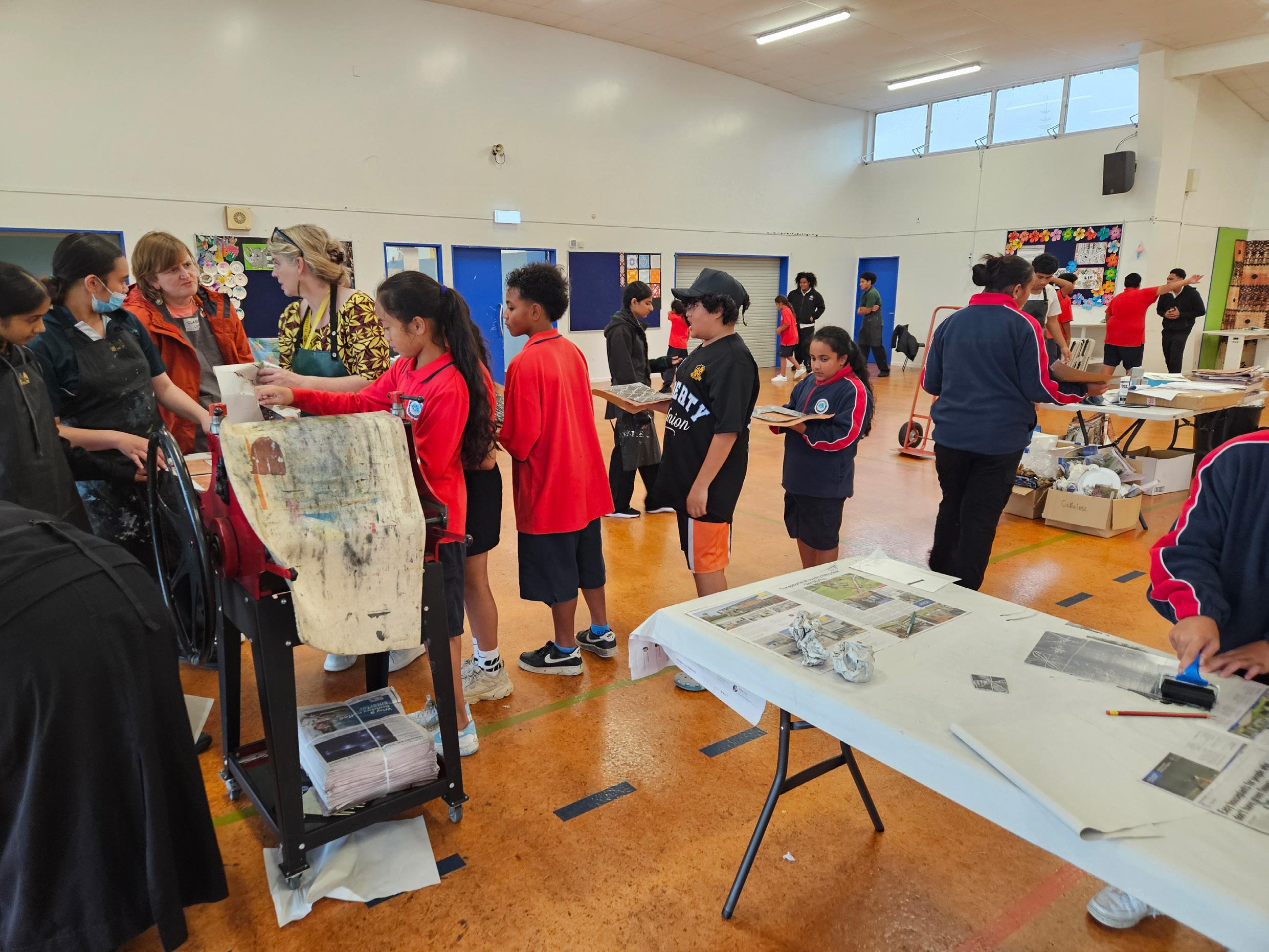
The senior students practised running the process with juniors in class, says Bernadette. “We organised everything carefully – packing the press, rollers, papers, inks and tables –and arranged for a second Papakura High School art teacher, Sarah Dhillon, to assist on the day. With three classes of around 20 students each, we set up three stations to make the experience more manageable and engaging for everyone.”
She says it was wonderful to see her students step into the role of teachers and be positive role models for the Glen Taylor ākonga.
“They really rose to the occasion, creating a warm and supportive environment – it almost felt like a brother-sister relationship developing between the groups.”
Reuben agrees the high school students were well-versed in their roles and the younger students were energised by the experience.
“The tamariki were buzzing for days afterwards about the event. I thought, this was what made it so special and memorable for the students. Their peers really enjoyed reaching out to a new community and sharing their knowledge.”
Creative and cultural impact
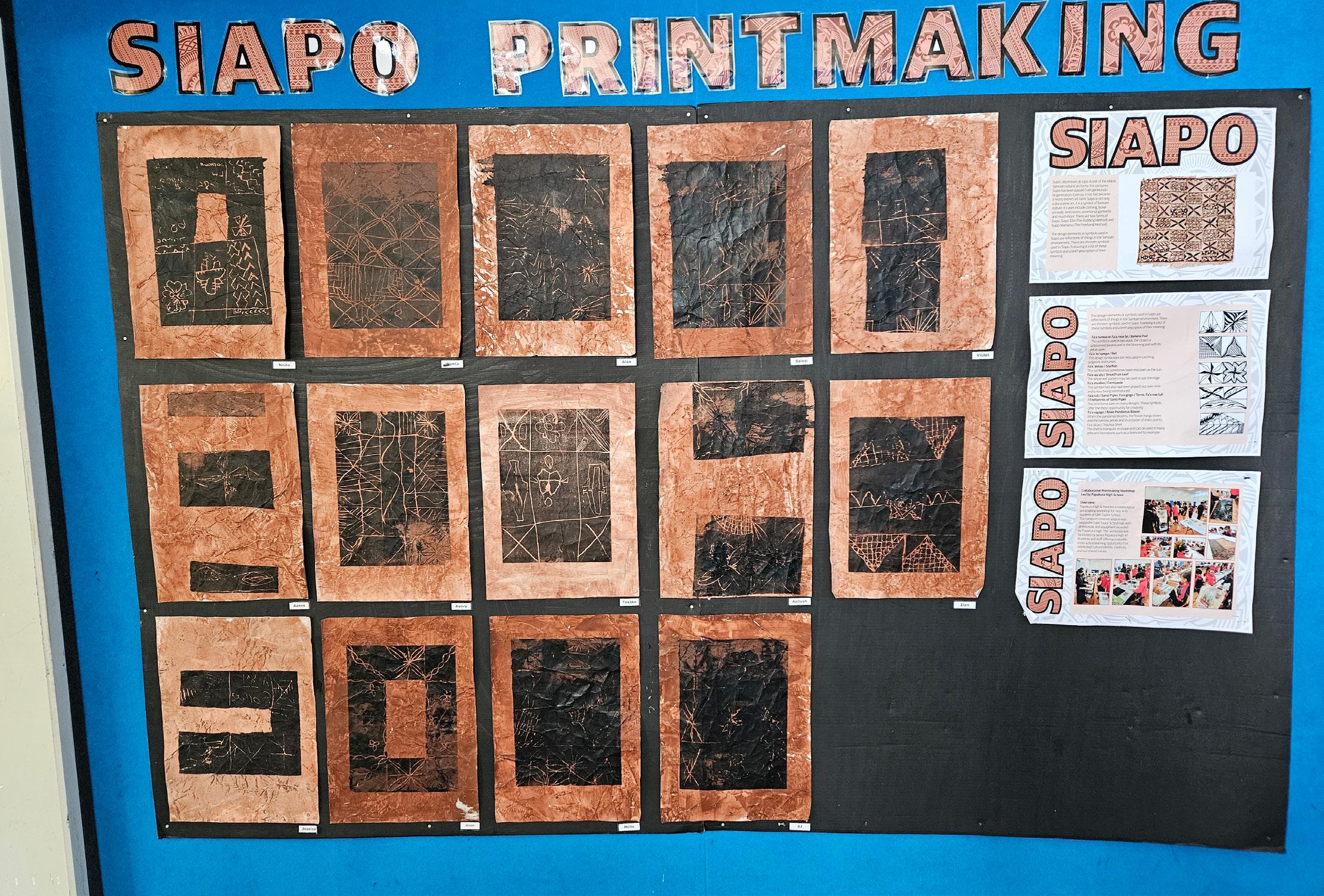
Before the workshop, Bernadette researched Siapo patterns and provided exemplars for students to reference.
“They were encouraged to replicate these traditional designs or incorporate their own patterns inspired by their personal or cultural backgrounds. This approach made the process accessible while maintaining strong cultural relevance and authenticity.”
Nick says the workshop reflected Glen Taylor’s school values of fun, integrity, respect, and excellence in action.
“It was hands-on, creative, and community-driven –bringing joy to learning while promoting respect for cultural heritage. The workshop also built teacher capability and fostered integrated, culturally responsive learning.”
Reuben adds that the workshop demystified high school for younger ākonga.
“It broke down a lot of mental barriers in terms of high school being this big, scary place. But in fact, it was filled with students just like them.”
The impact of the workshop extended well beyond the school day, he adds.
“The following week I had my students show me work they had done at home recreating Siapo prints. It also helped the large demographic of Samoan students to learn more about
“My students came away feeling proud and inspired, already asking when they could do it again.”
their culture and take pride in their heritage.”
Nick says school staff appreciated the collaborative spirit and the professional learning that came from observing the tuakana-teina model in action.
“Students were deeply engaged – they spoke about how inspired they felt to see older students leading confidently and creatively. Many shared their pride in learning more about their cultural designs and even recreated artwork at home. Whānau expressed gratitude that their children’s identities and heritage were celebrated through such an innovative learning experience.”
Workshop sparks confidence and future pathways
Bernadette wanted her students to learn how to run a workshop from start to finish – something they could one day do themselves as practising artists to generate their own income.
“They learned how much planning and organisation is involved, how to build relationships with participants, and how to support learners effectively within a short timeframe. Most importantly, they learned to be fully present, adaptable and professional throughout the workshop experience.”
Taylor School’s students.
The printmaking activities were kept simple and accessible.
She recalls one particularly moving moment, watching three senior students working one-onone with younger students, showing patience and encouragement.
“At the end of the workshop, the Glen Taylor students were each gifted hand-printed cards made by our Papakura Projects Programme, called ‘Misprint 2024’. The younger students were so thrilled that they asked our seniors to sign their prints, treating them like stars. It was such a joyful and affirming moment. My students came away feeling proud and inspired, already asking when they could do it again.”
The workshop supported future pathways by building positive experiences between primary and secondary students and raising aspirations for junior students. Reuben sees huge potential in this model of collaboration.
“I would love to see this implemented nationwide. It takes time to organise. But it is so worthwhile.”
Nick is also keen to repeat the experience, which has opened doors for joint projects that could expand into other curriculum areas.
“This experience showed how powerful cross-school collaboration can be in building confidence, connection and continuity in learning.”
His advice to other schools: Go for it.
“Arts-based partnerships provide an authentic platform to celebrate culture, creativity and connection. Success relies on strong collaboration, clear communication and shared values. Start with a common purpose – like cultural identity – and build from there.”
Bernadette has already had discussions with other teachers about developing a model that could be replicated by other schools.
“Many of my students said the experience made them think seriously about taking on leadership roles in 2026. They recognised that this workshop had given them a chance to demonstrate their leadership, communication and mentoring skills in a real-world context. It also deepened their sense of identity as artists and as contributors to their community.
“The success of this workshop has shown the value of connecting through the arts – it’s a powerful way to build community, nurture creativity and strengthen relationships between primary and secondary learners.”
A selection of the Siapo prints created by ākonga.
Ako Mātātupu building teachers, lifting rangatahi
The Ako Mātātupu Teach First NZ Programme offers an additional pathway for careerchangers. By complementing traditional teacher education routes, the programme meets prospective teachers where they are at in their life. Two teachers illustrate how the Ako Mātātupu approach empowered them to make the change.
The Ako Mātātupu programme’s mission is simple: build equity through education by equipping community connected teachers to lift up rangatahi and help them thrive.
Chris Doak, former qualified builder and volunteer firefighter, is now a dean at Paeroa College in the Hauraki District of Waikato.
Before teaching, he spent years on construction sites.
“A mate asked if I could come in one day a week and teach
building skills to the kids,” says Chris. “I loved it. It felt like coaching.”
When the school offered him a full-time position, Chris was hesitant.
“My wife and I had just bought a house, and we had young kids. There was no way I could afford two years at university doing a traditional teaching degree with little to no income. The earn-while-you-learn model made it possible. Without that, I would have never become a teacher.”
he became a teacher.
Chris Doak as a semi-professional rugby player, before
Building new futures
The programme provides structured support for participants, balancing family and study commitments without compromising academic requirements.
For tradespeople and career-changers, that professional support has proven key. Participants complete intensive training aligned with national teaching standards and ongoing classroom-based assessment to result in quality teaching.
“I was part of a small gateway group of builders, engineers and teachers who did not have a university degree but had the skills,” says Chris, adding that Ako Mātātupu “helped us bridge that gap”.
He remembers the “summer intensive” was long hours and included hands-on workshops and real-time teaching practice.
“It was not just sitting in a lecture. You learned something in the morning and used it in your class that afternoon.”
Six years later, Chris leads pastoral care as a dean. He recalls one student who came to him saying he had not eaten in two days.
“That hit me. You realise teaching is not only about credits – it is about noticing, connecting and acting. Sometimes the first lesson is hope.”
In Paeroa, Chris’s goal is to broaden young people’s idea of success.
“Education is a ticket to choices – to travel, to a trade, to stability. That is what I’m trying to teach.”
Providing the tools for success
When Ruiha Epiha received a call from her former principal at Tāmaki College in Glen Innes asking her to fill a te reo Māori role, she had been working as a receptionist at Māori Television.
Initially hesitant, she says, “when I got approached to step into being a teacher, I thought, why not give it a go?”
Her first year in teaching at the East Auckland school was in 2020 at the height of Covid-19 lockdowns.
“It was baptism by fire,” says Ruiha. “I was creating resources from scratch, teaching online, and just trying to stay afloat.”
Then she joined Ako Mātātupu.
“The programme changed everything for me. The seven-week intensive at the beginning of our training was full-on. We were in workshops every day, handing in assignments every week, and learning from incredible educators. They did not just teach theory, they modelled the kind of teaching they wanted us to do – relational, inclusive, with culture, and with heart.”
Ruiha says what stood out was how the programme’s structure reflected Pacific and Māori values.
“Our programme mentors understood our lives – that many of us care for children, elders and whānau.”
“The earn-while-you-learn model made it possible. Without that, I would have never become a teacher.”
Ruiha Epiha, te reo Māori teacher at Tāmaki College.
Paeroa College dean Chris Doak used to work as a builder.
Alongside building confidence and cultural identity, Ako Mātātupu supports teachers to strengthen literacy and numeracy skills, making sure students leave school with the tools for success.
The programme looks for educators who combine strong subject knowledge with empathy and commitment to student success. In her classroom, Ruiha created a safe space for all students to “breathe the values, language and history of the culture, feeling like it was a superpower”.
“When I got approached to step into being a teacher, I thought, why not give it a go?”
“The way I dress, the way I speak, the way I carry myself – it is all to show them what Māori can look like. Once they feel they belong, the learning happens naturally.”
In the fast-pace age of internet and social media, Ruiha also has to consider how to best reach her students.
“I have gone back to pen and paper, games and quick challenges. No devices for my juniors. You must meet them where they are.”
Her proudest moments come from small shifts.
“One of my students said: ‘Whāea, I dreamed you left and I cried because I wanted to keep learning te reo Māori and study it after school.’ When they start using and breathing pride for their language and culture outside of school, that is everything.”
Teachers with heart
Chris and Ruiha both highlight what makes Ako Mātātupu unique: the kind of people it attracts.
“Our cohort had doctors, physicists, tradies and te reo Māori teachers. You had to lift your game. It felt like a team that really cared about the future of our students.”
Ruiha now helps select new participants in the growing Ako Mātātupu programme.
“At the Ako Centre, we assess candidates while they teach a 10-minute lesson and work through a team scenario. In our assessment, we are looking for a heart of service. You can teach content, but you cannot teach heart.”
She believes mindset is essential.
“Students do not just need teachers. They need mentors, aunties, uncles, people who genuinely care.”
Chris agrees when he says, “sometimes the biggest impact you have is just showing up every day, steady and kind. You do not have to be perfect – you just have to believe in them.”
Looking ahead
Both teachers see their roles evolving beyond the classroom.
Chris wants to connect more students with apprenticeships and community projects. “Real pathways that show them where education leads.”
Ruiha hopes to grow senior te reo Māori courses and mentor the next generation of Māori and Pacific educators.
“Ninety percent of our Māori and Pacific kids are in mainstream education. That is where we are needed most.”
For Chris and Ruiha, the future of the Ako Mātātupu programme is clear: Creating a sense of belonging, alongside strong basic foundations, helps students engage deeply and achieve across the curriculum.
For more information about the Ako Mātātupu programme, visit their website.
Ako Mātātupu Teach First NZ — Growing Leaders for Change
Chris Doak, dean at Paeroa College.
Nyra Marshall, kaihautū teacher educator at Ako Mātātupu (left), and Ruiha Epiha, te reo Māori teacher at Tāmaki College.
For the love of books: Whangārei school libraries celebrate reading, belonging and imagination
“Reading books, like playing the clavichord or travelling in horse drawn carriages, could easily be consigned to history.” Inspired by visits to school libraries across Whangārei, retired teacher Kathryn Hunt explores why these libraries – and their librarians – are so crucial for learners in today’s digital age.
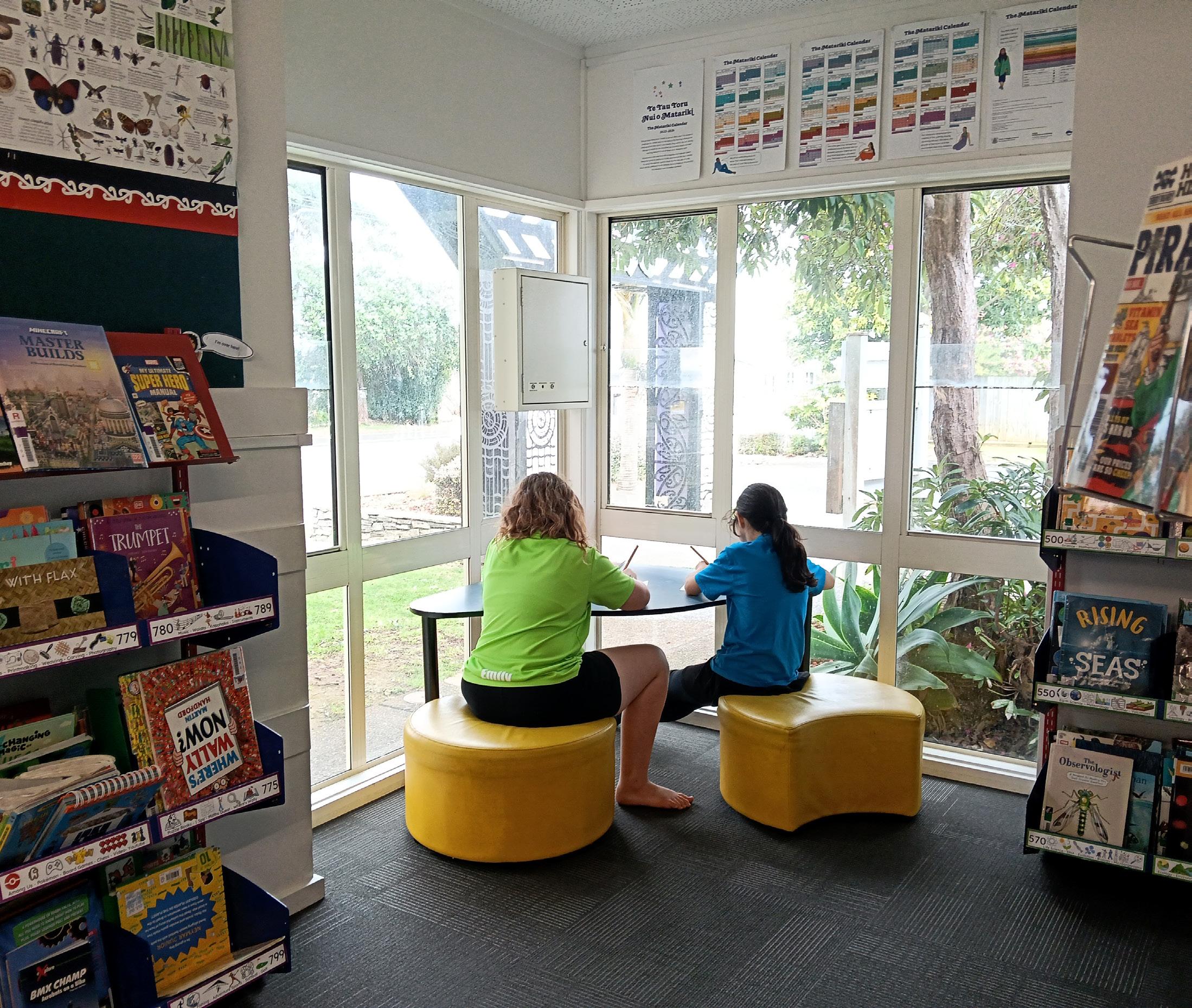
A quiet place to study in the Onerahi Primary School library. Photo: Kirsty Oliver.
Busy working parents have less time to read to their children. Screens demand our limited time. It’s an inescapable fact that print media are dwindling as online content blossoms. For schools, on the frontline, the task of introducing young students to the joys of reading books and maintaining interest for older students, while also encouraging reading skills, is more important than ever. Not every printed source is available online, and we crucially need curious learners who go beyond Wikipedia or their favourite search engine.
In schools, in the best possible way, we have a captive audience where libraries are crucial theatres, leading students to magical worlds, wonder and knowledge. As the School Libraries Association of New Zealand Aotearoa (SLANZA) so aptly puts it: they transform.
Schools without libraries are like restaurants without kitchens. Yes, we can all order takeaway meals online, but is that the future we really want for Aotearoa? Schools can foster habits which students will take into adult life, visiting the over 300 public libraries in New Zealand. What better habit to ingrain than joining our 1.4 million public library users? This is lifelong learning at its best.
I can still remember my infant school library from six decades ago, where I sat daily on an old leather sofa, accompanied by the caretaker’s cat, Doctor Seuss, waiting for my teacher dad to drive us home. I was never bored, surrounded by books. It’s where my lifelong love of books and libraries began. I spent many hours on that sofa.
A space to belong
On a recent visit to Onerahi Primary School in Whangārei, I found students enjoying their spacious library during morning break.
Student Finley shares, “I like the different types of books and the nice calm environment”. Maddie adds that she enjoys the books and the comics. Skylah says, “it’s nice and relaxing,” and she comes into the library most breaks. George says he likes the library “because I can sit down quietly and read books, but today I’m drawing”.
Librarian Kirsty Oliver believes the library she has run for six years is important because it’s a space where every student can feel they belong.
“Ākonga get excited when they find a book that connects with them.”
Every class has a 40-minute session per week where Kirsty is available to support the class teacher. The library is also open before school, and during breaks.
Kirsty has a team of student librarians plus a community volunteer, Mark, who helps in mending books, shelving, stock-taking and a myriad of other essential tasks. The Onerahi Primary School library also welcomes visiting authors and even a therapy dog, Brooke. It is a space where ākonga learn about a variety of issues from visiting speakers, such as train safety and adventures with Young Ocean Explorers.
“Modern libraries are about so much more than books.”
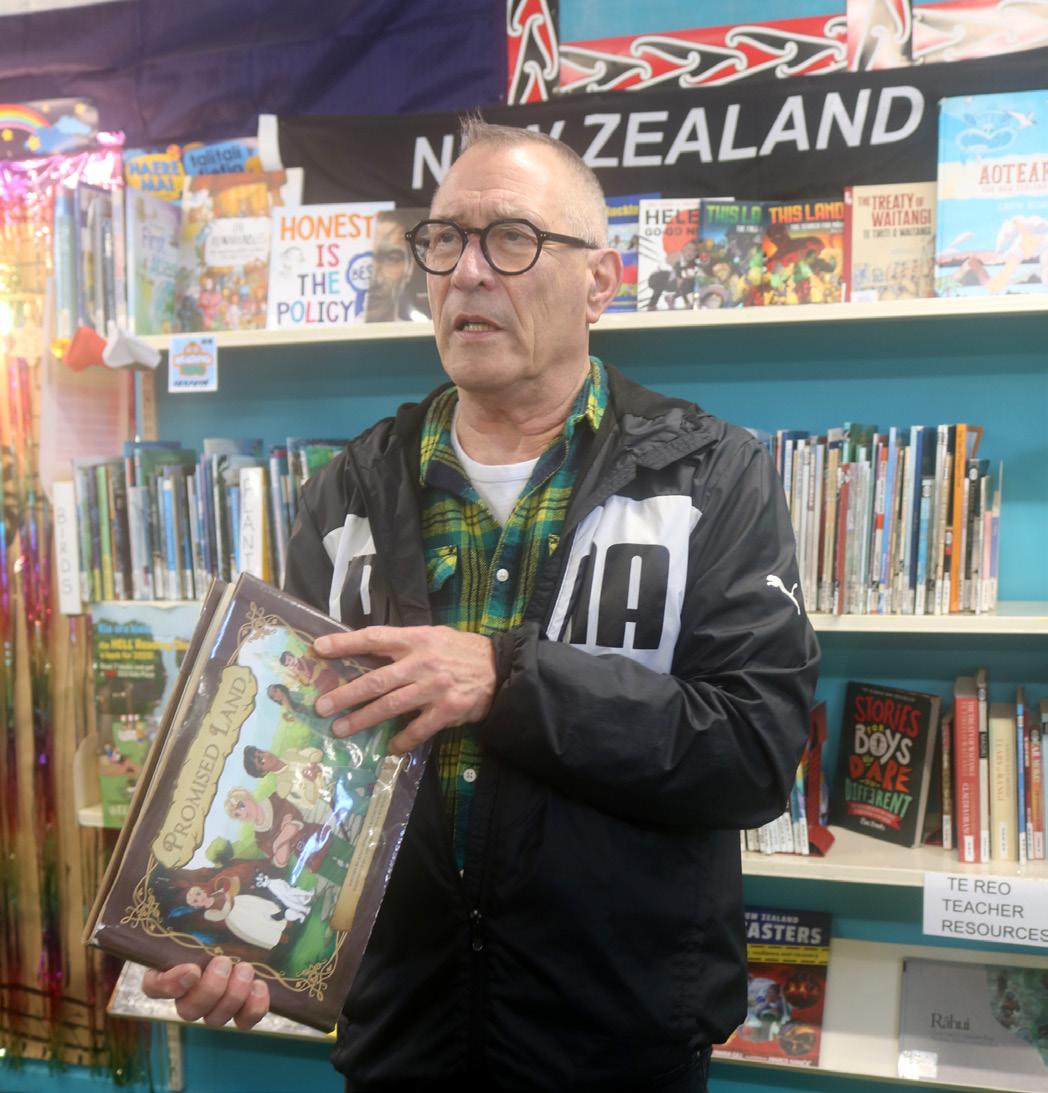
Whangārei Intermediate School librarian Grant Smith. Photo: Kathryn Hunt.
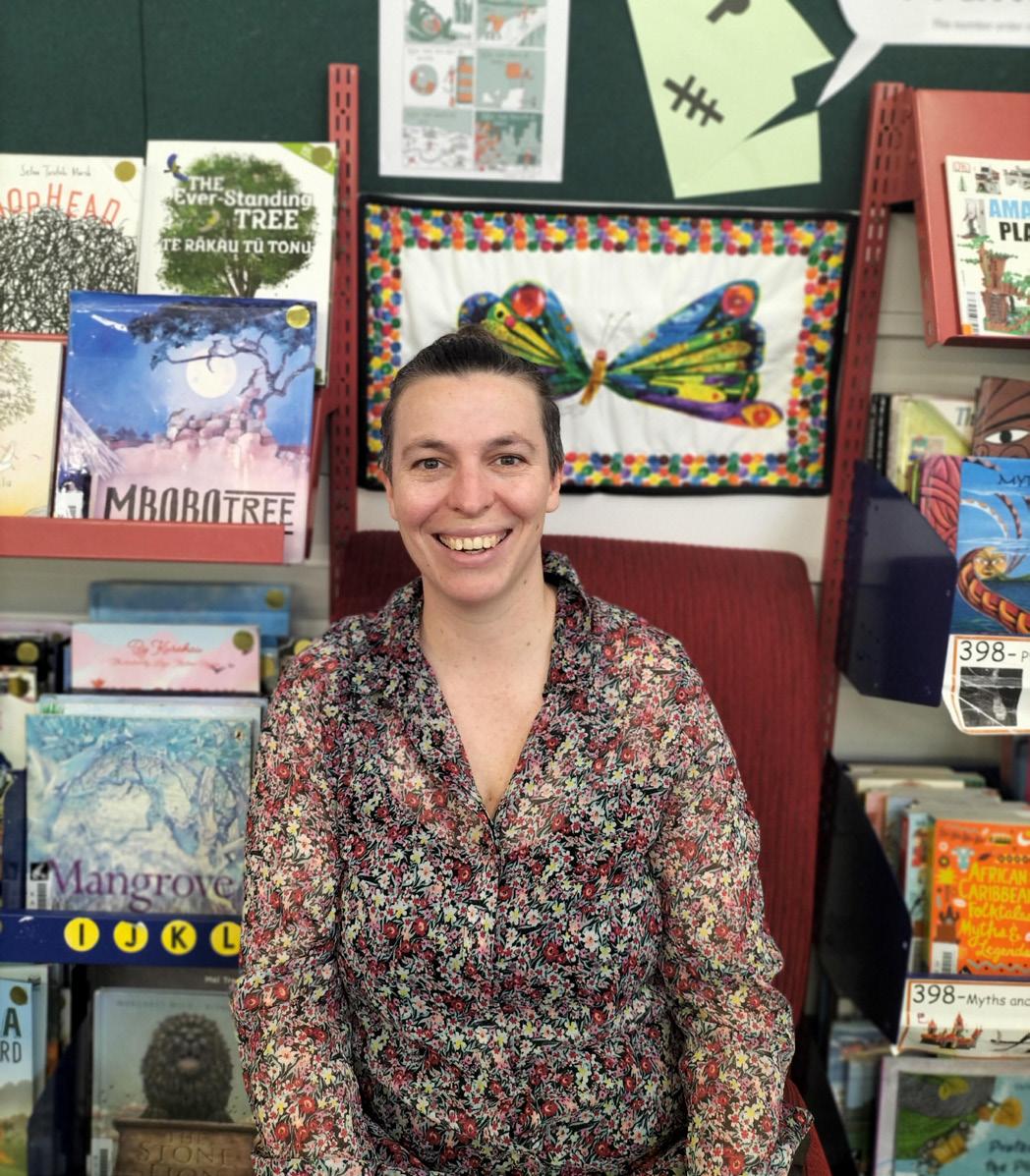
Kirsty Oliver, librarian at Onerahi Primary School in Whangārei. Photo: Kirsty Oliver.
A magic, multisensory experience
The same love of books is being fostered at the Whangārei Intermediate School library. Librarian Grant Smith is a fully registered teacher, working full-time as the school librarian.
Students here enjoy regular lessons in this magical space, a multisensory experience with exciting sounds, flashing lights and sweet treats. They are likely to find Grant camouflaged as a book character, not just annually on Book Character Day, but regularly during assembly where he will be pitching the latest volumes, or during scheduled library lessons reinforcing the fortnightly theme.
Even in August, Grant was already planning for Halloween. He told me that his next theme was likely to be ‘fantasy’, complete with dragon drapes. Students can move between the spacious fiction and non-fiction rooms, searching for cleverly hidden clues to complete a treasure hunt, one of many activities Grant sets to awaken students’ interest in reading and in books. Grant has led students through many topics, including dystopia, New Zealand stories, and superheroes.
The school’s mission statement for its 584 students is ‘to create a positive, caring learning community’. It could not be better fulfilled than in their gorgeous school library.
Beyond the books
Modern libraries are about so much more than books. At Whangārei’s Morningside School, students can enjoy working with EPro8 Construction kits in their new, colourful space.
Candice Kemp, who acts as librarian while also teaching a full timetable, says the space is still evolving after a recent relocation. The future looks bright for these lucky students and their enthusiastic librarian, who was super excited about planning an upcoming Scholastics Book Fair.
Huanui College in Glenbervie has converted a shipping container into their new library space. With a spacious, covered outdoor deck, it’s a popular spot with the 330 students, ranging from Years 7 to 13. Librarian Sarah Cook, also a full-time teacher, can often be found in the library at weekends. She and her team of student librarians have recently changed to displaying books under genres, rather than alphabetically. With a small space, they regularly switch books, using the National Library Schools Lending Service to augment stock. On a recent visit, I was impressed by the variety of spaces on offer in this mini library: lounging space, games and puzzles areas and a study workbench.
During her years as a student librarian at Huanui College, student Indigo Tomlinson and her colleagues trained Lit Quiz teams, ran quizzes at lunchtime, organised events for Book Week and helped to judge student speech contests. As Indigo so aptly sums up, “I have a strong belief that any space which promotes, without judgement, both the acquisition of knowledge and the wonders of human imagination, is one that must be treasured. School libraries provide that space to students, and their significance should not be underestimated.”
It’s clear that in these Whangārei school libraries, the love of reading and books is alive and well.
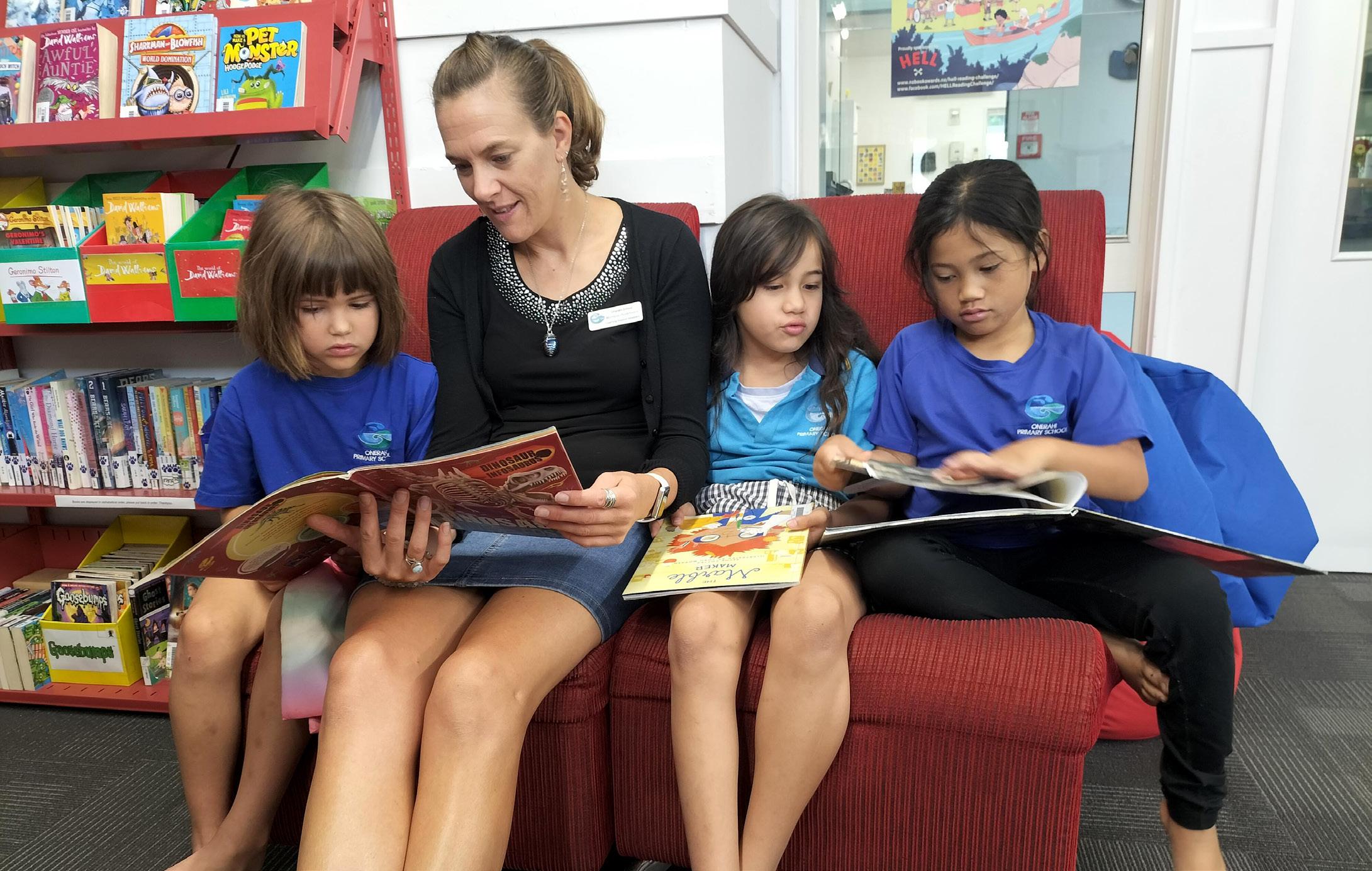
Onerahi Primary School teacher Monique reading with students Anna, Anahata and Anja-Del. Photo: Kirsty Oliver.
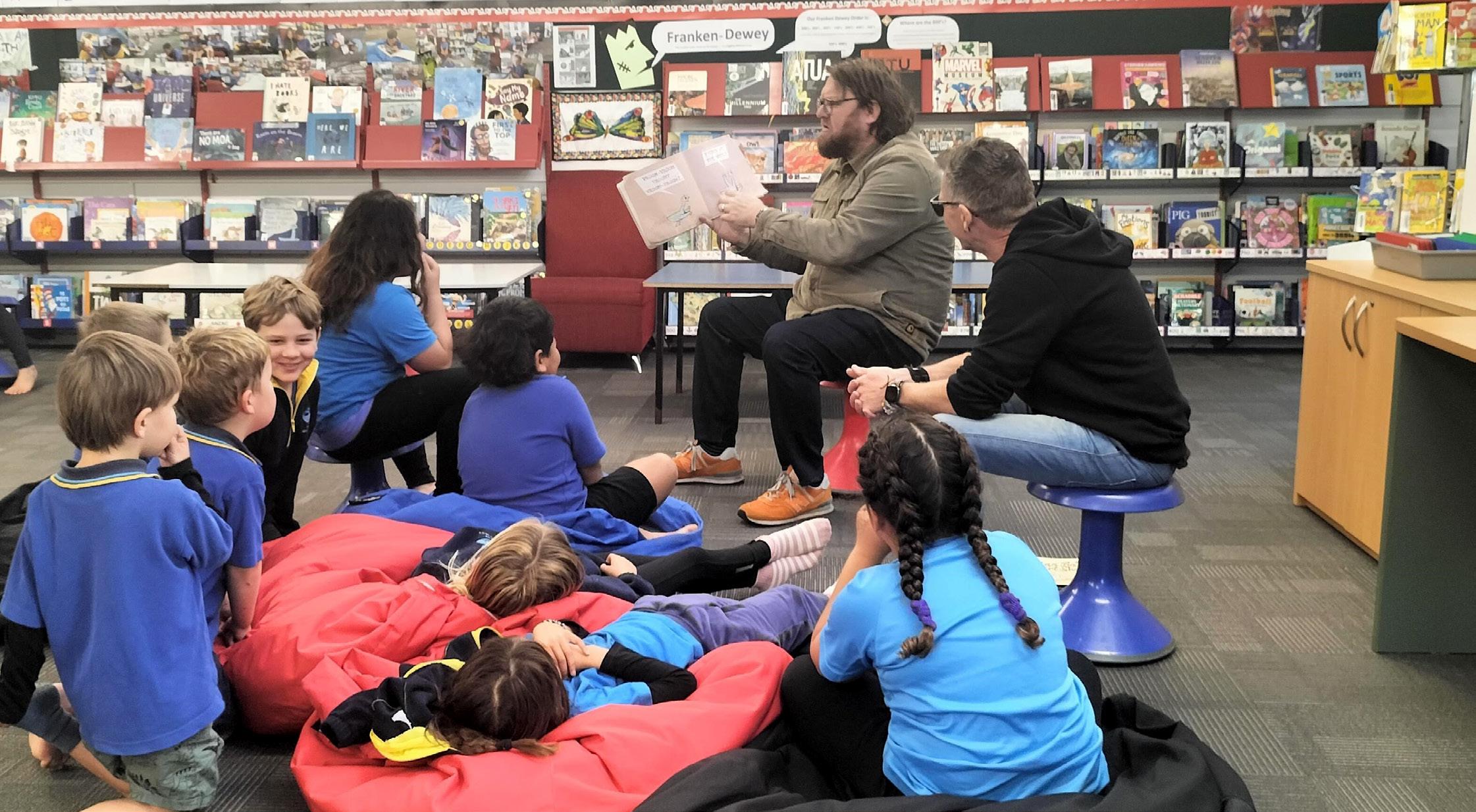
Onerahi Primary School deputy principal Danny and teacher Jake reading stories in the library at break time. Photo: Kirsty Oliver.
LITERACY
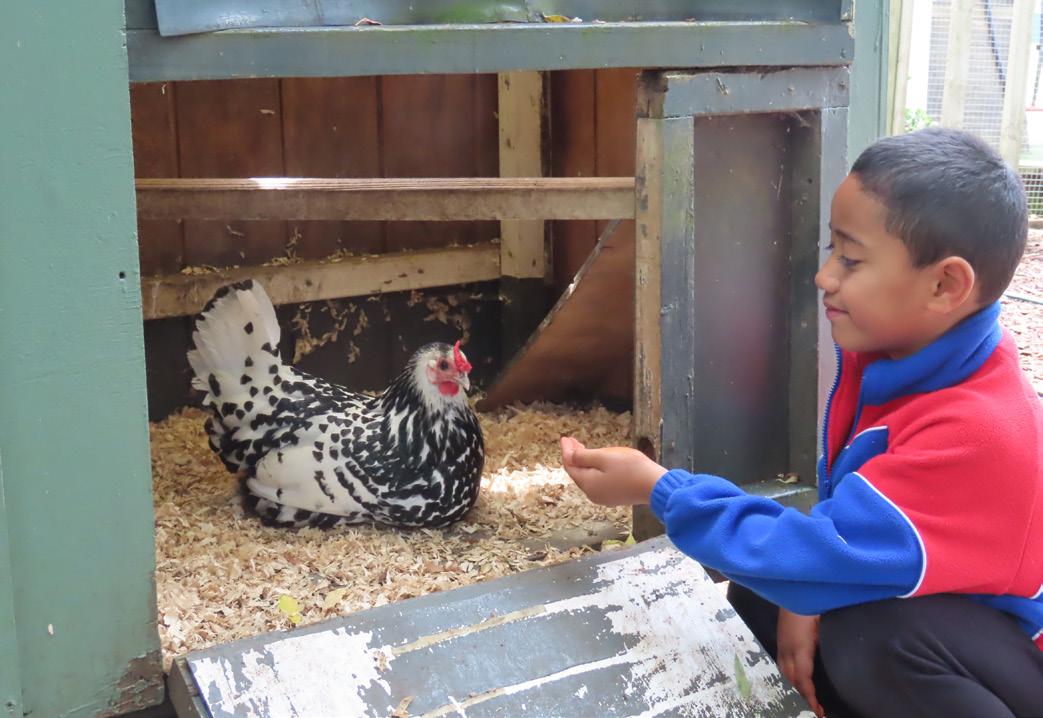
Tails, tales and tuakana-teina learning brings Hauroko Valley Primary’s stories to life
In the heart of Southland, where farmland meets forest and the skies stretch wide towards the end of the world, Hauroko Valley Primary School has created a collection of stories that is as warm and wonderful as the community that inspired it.
PetsattheEndoftheWorld is a heartwarming collection of Hauroko Valley Primary School students’ stories written in collaboration with beloved local author Ruth Shaw.
The book is filled with tales of treasured pets – many of them farm animals – and the deep bonds between tamariki and their furry companions. But this wasn’t just a writing project. It was a celebration of kāinga-kura partnership, tuakana-teina learning, and the magic that happens when storytelling meets real-world purpose.
The idea began in a classroom, when teacher Alice Harris read Ruth Shaw’s Bookshop Dogs to her senior students. The
stories of beloved dogs who visited Ruth’s Wee Bookshops in Manapouri struck a chord.
Curious and inspired, Alice reached out to Ruth, and soon a ‘Dog Day’ was arranged. Students travelled to Manapouri to meet Ruth and many of the dogs and owners featured in her book. That visit sparked something special.
“The students told Ruth stories of their beloved pets,” explain Alice and school principal Julia Waikato.
“She decided the stories would make a fabulous book. From there, a relationship formed and she asked if we would like to write a book together. We, of course, said, ‘yes please!’”
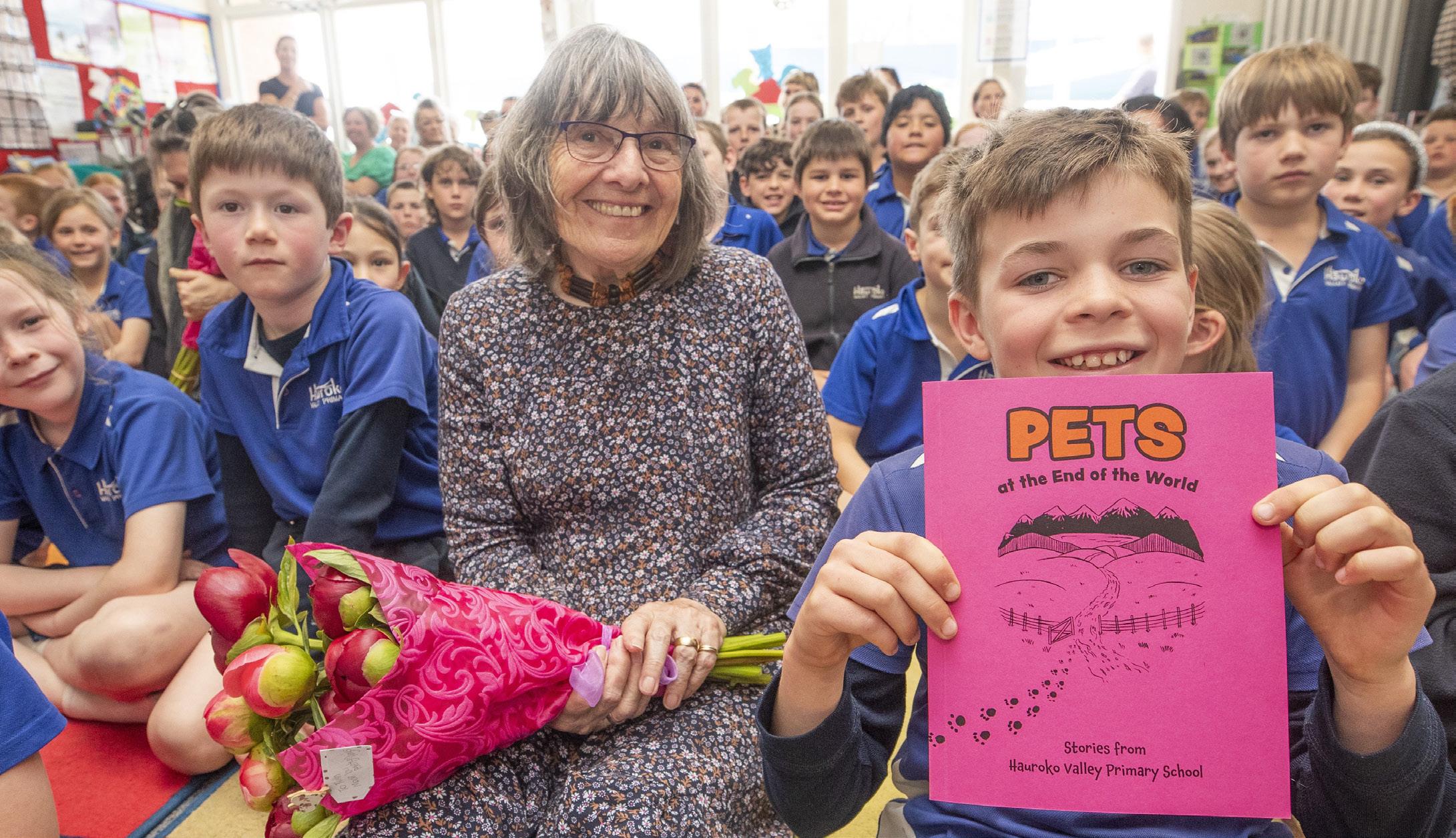
Manapouri author Ruth Shaw and Angus with Pets at the End of the World. Photo: Southland Times.
Writing
and learning together
To make sure every student could be involved, the school chose to write in family groups. Siblings and cousins collaborated on shared stories, reinforcing tuakanateina relationships and creating an inclusive writing environment.
“It was great to watch sibling and cousin groups collaborate,” say Alice and Julia. “For many, the family groups had the same stories with the same pets. It was a unique opportunity for our students to work together in a way that felt natural and meaningful.”
The writing process was rich with learning. Students developed their voice and identity by sharing stories that mattered deeply to them. They drafted, edited, recast ideas and shared aloud. They listened to each other, laughed and learned.
“Having a genuine purpose for writing with an intended audience was key,” reflect Alice and Julia.
“We focused on sharing our pets and their lives with our friends and families. By doing this, we learned more about ourselves and came to understand and appreciate more about other people and the world around us.”
The project aligned beautifully with the refreshed curriculum framework. Students engaged with authentic contexts for reading and writing. They developed confidence, storytelling skills and a deep sense of connection to place and people.
A landscape that shapes learning Nestled near the Takitimu maunga, Waiau awa and Lake Hauroko, the school draws strength from its surroundings. The stories in the book are infused with the rural charm, resilience and love that define this part of Aotearoa.
“Our pets are more than animals,” says student Libby. “They are part of our family. They help us on the farm, play with us after school and are with us every day. Writing about them felt really important.”
For many students, the project was a chance to share their world with others and learn more about each other, too.
“We got to share experiences about our pets from the country,” says fellow student Stanley. “It was amazing to share this with people in cities and towns.”
Angus echoes this, saying, “the best part was reading about others’ stories. You found out more about each other. This was a once-in-a-lifetime opportunity!”
Many students were thrilled by the creative process itself, with Toni saying, “I can’t believe we got to illustrate and write a book that goes around the world”.
“It was quite interesting, the stages involved in writing and publishing a book,” reflects Louie. “The process involved going back and forth between editing and getting the final result.”
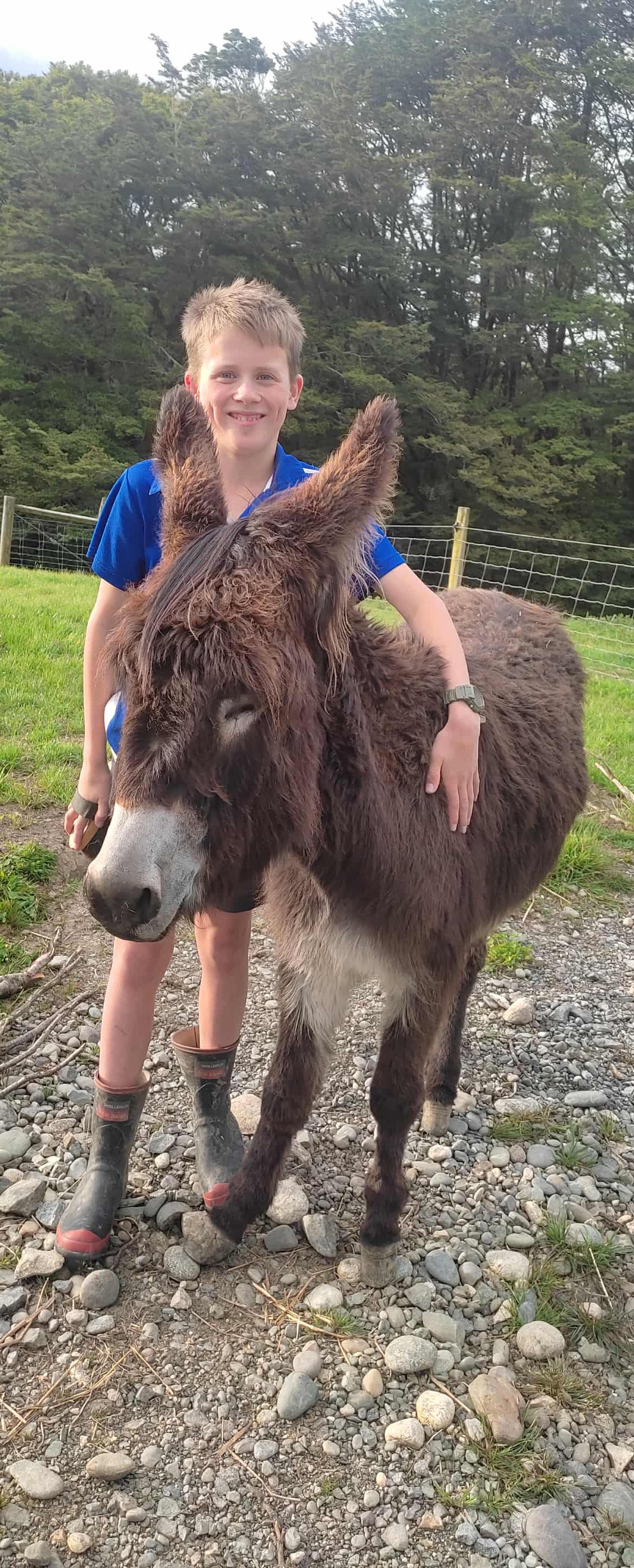
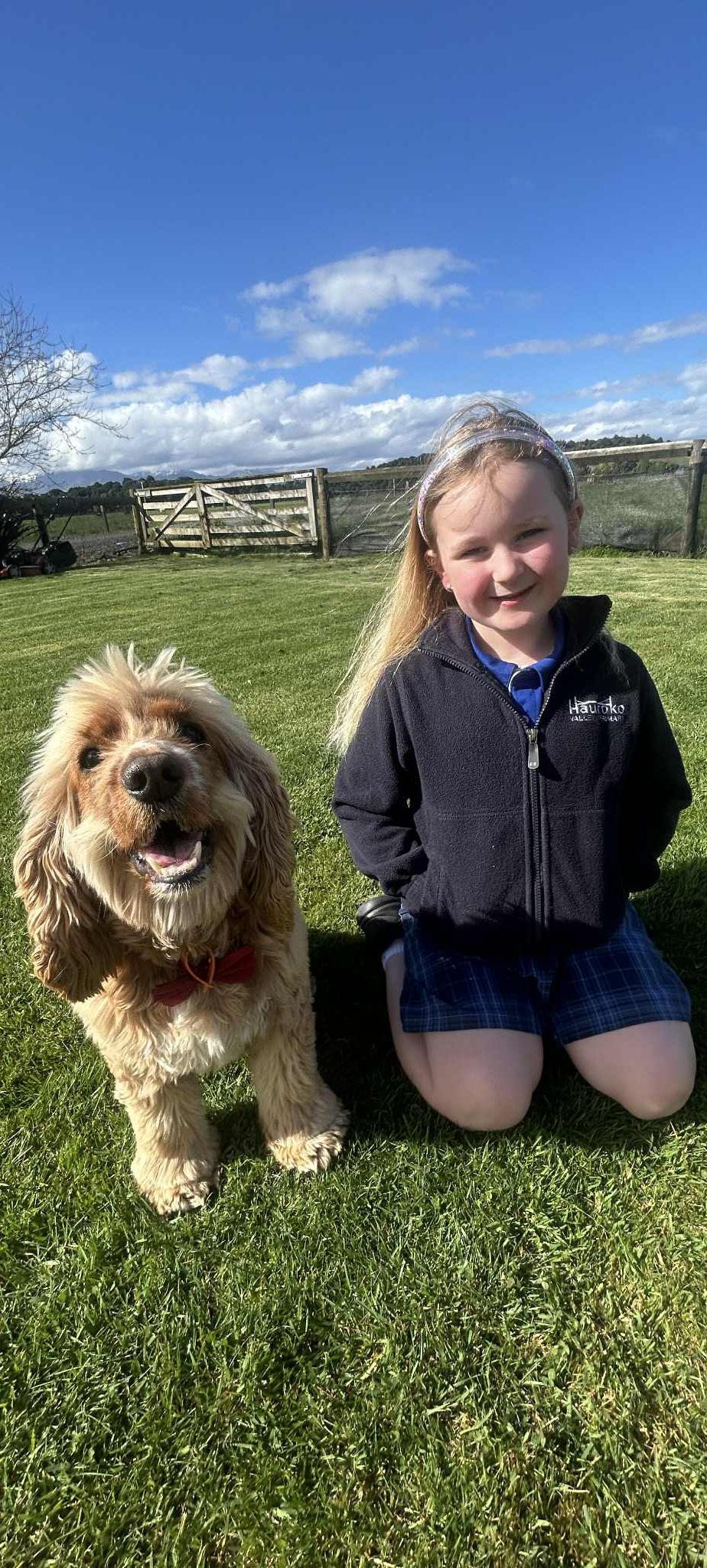
Angus and Sultan the donkey, who are in Hauroko Valley Primary’s newly published book.
A real author, a real book, and real pride
Working alongside Ruth gave students a rare opportunity to experience the full publishing process from idea to printed page.
“Ruth had all the impact,” says Alice. “She is passionate about what she does and urged the children to tell their stories. She gave them the belief that anyone can be a writer.”
The result was more than a book. It was a taonga for the school and the wider community. Families felt seen. Students felt proud. And the school saw the power of authentic, place-based learning.
“I was surprised by the impact of publishing a book,” reflects Julia. “There was immense pride, first in each individual, then in each family group, then in each other, and finally in what we as a home and school partnership were able to share beyond our classes and school.”
A ripple effect across Southland, and beyond
The book has travelled far. Copies have sold through the school and Ruth’s bookshops. Visitors from across Southland – and even Australia – have taken it home.
“A teacher from Australia was visiting the Wee Bookshops and took a copy of Pets at the End of the World home to read to her class,” says Alice.
“Those who have read our children’s stories have found the book to be more than about pets. It’s about the trials and tribulations of life.”
The relationship with Ruth continues. Students and their families call in to see her in Manapouri. The connection is real and lasting.
“Another standout moment is the ongoing relationship the school and students have with Ruth,” say Alice and Julia. “She has been out to visit frequently and is keen to be involved in our students’ learning.”
More than a book
Backed by a passionate team of kaimahi, a supportive board and deeply involved families, this Hauroko Valley Primary School project is a shining example of literacy learning that goes beyond the classroom.
Pets at the End of the World is a celebration of literacy, storytelling and the spirit of Southland. As the pages turn, they reveal not just stories about pets, but about aroha, belonging and the richness of rural life.
“This is our place, our people, our pets,” say the students. “We’re proud of who we are.”
If you would like to learn more about Hauroko Valley Primary School or order a copy of the book, please contact the school office: office@haurokovalley.school.nz
Pets at the End of the World featured Lucy and her dog Daisy.
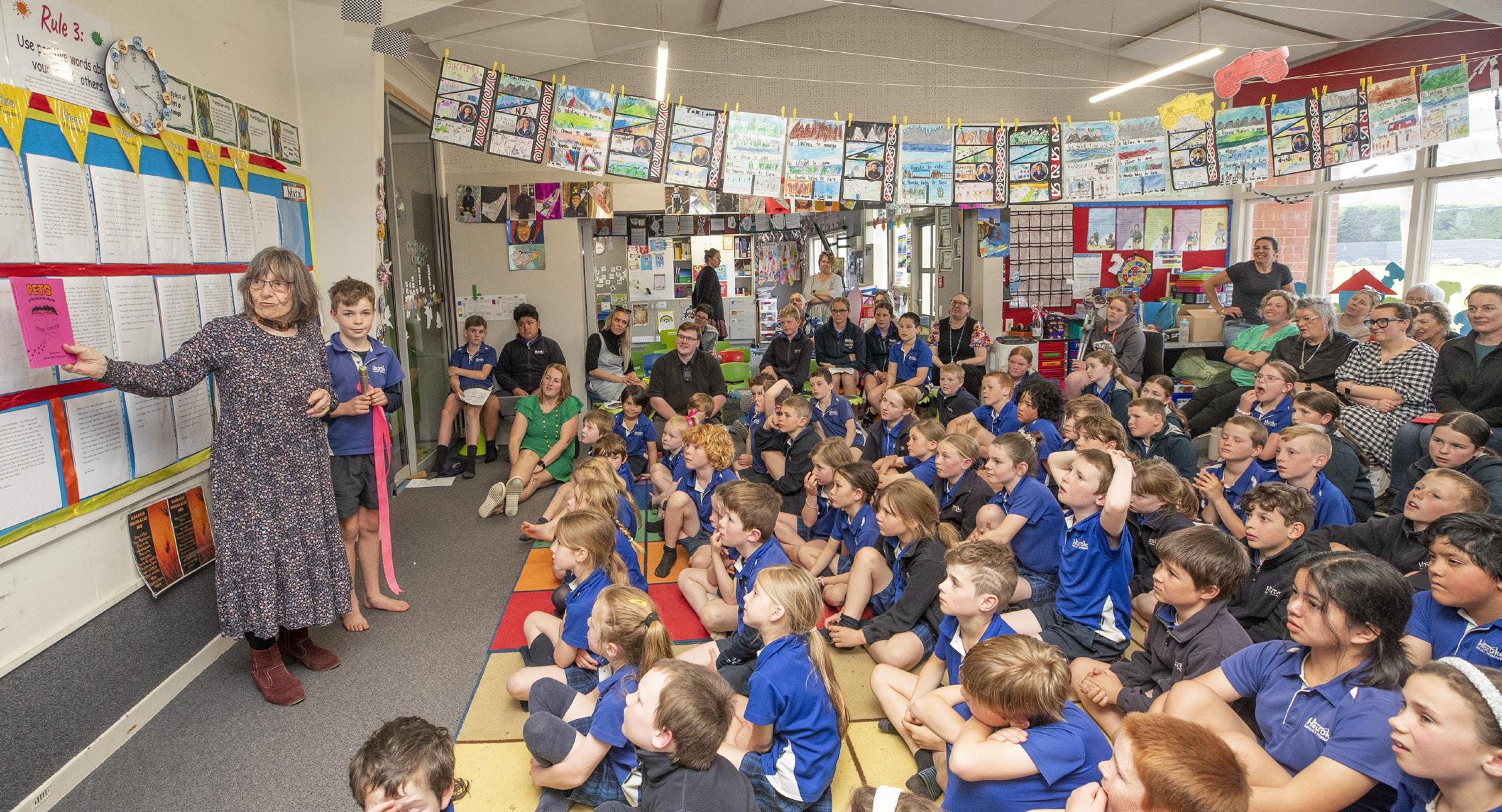
Author Ruth Shaw shows the book Hauroko Valley Primary students wrote with her. Photo: Southland Times.
SCHOOL GARDENS
School gardens sprout new connections to learning
Oke Charity is on a mission to cultivate a love of learning and healthy living by building outdoor classrooms where primary-aged tamariki grow plants as surely as they grow themselves.
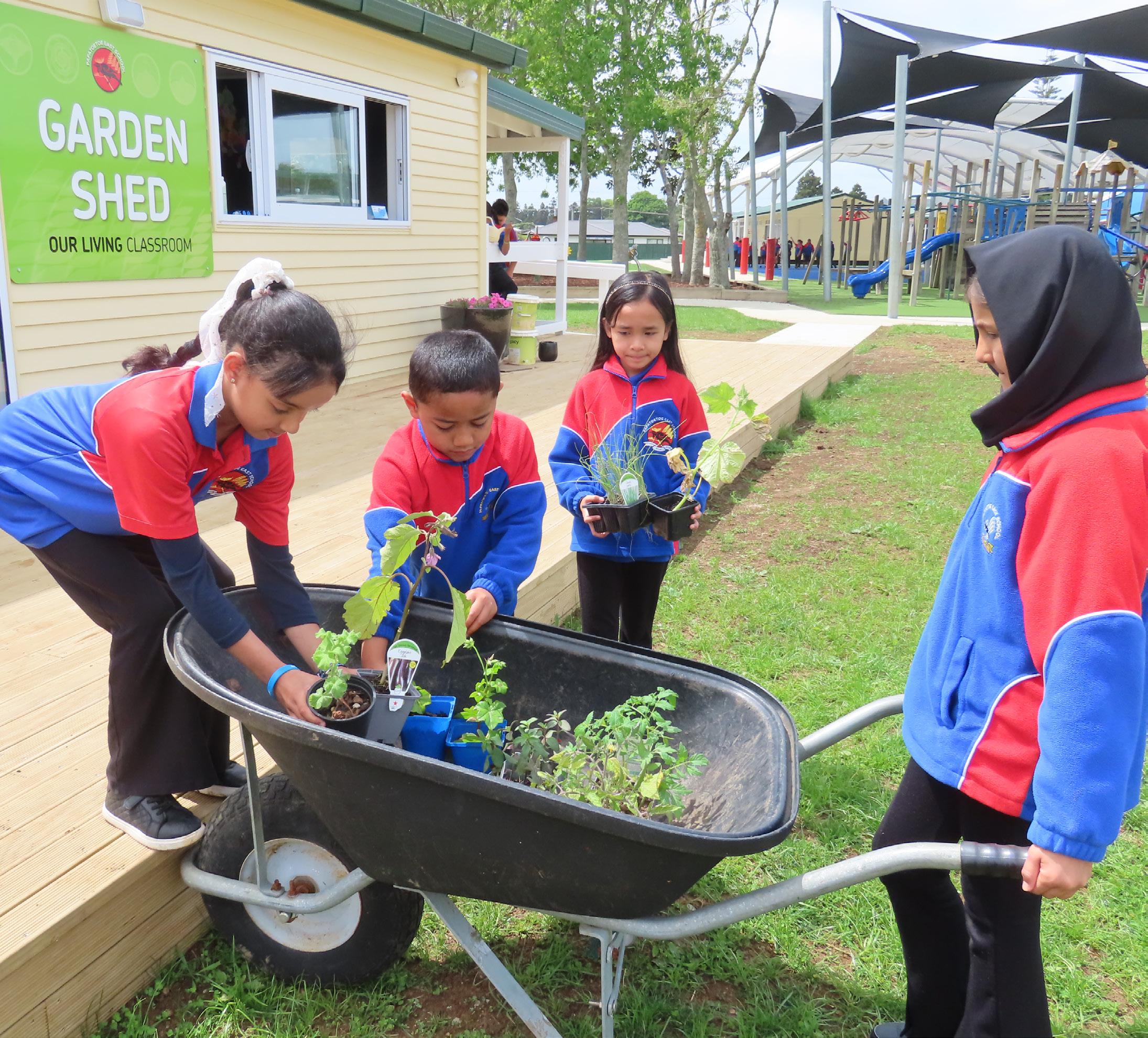
Ākonga prepare to plant at Papatoetoe East School.
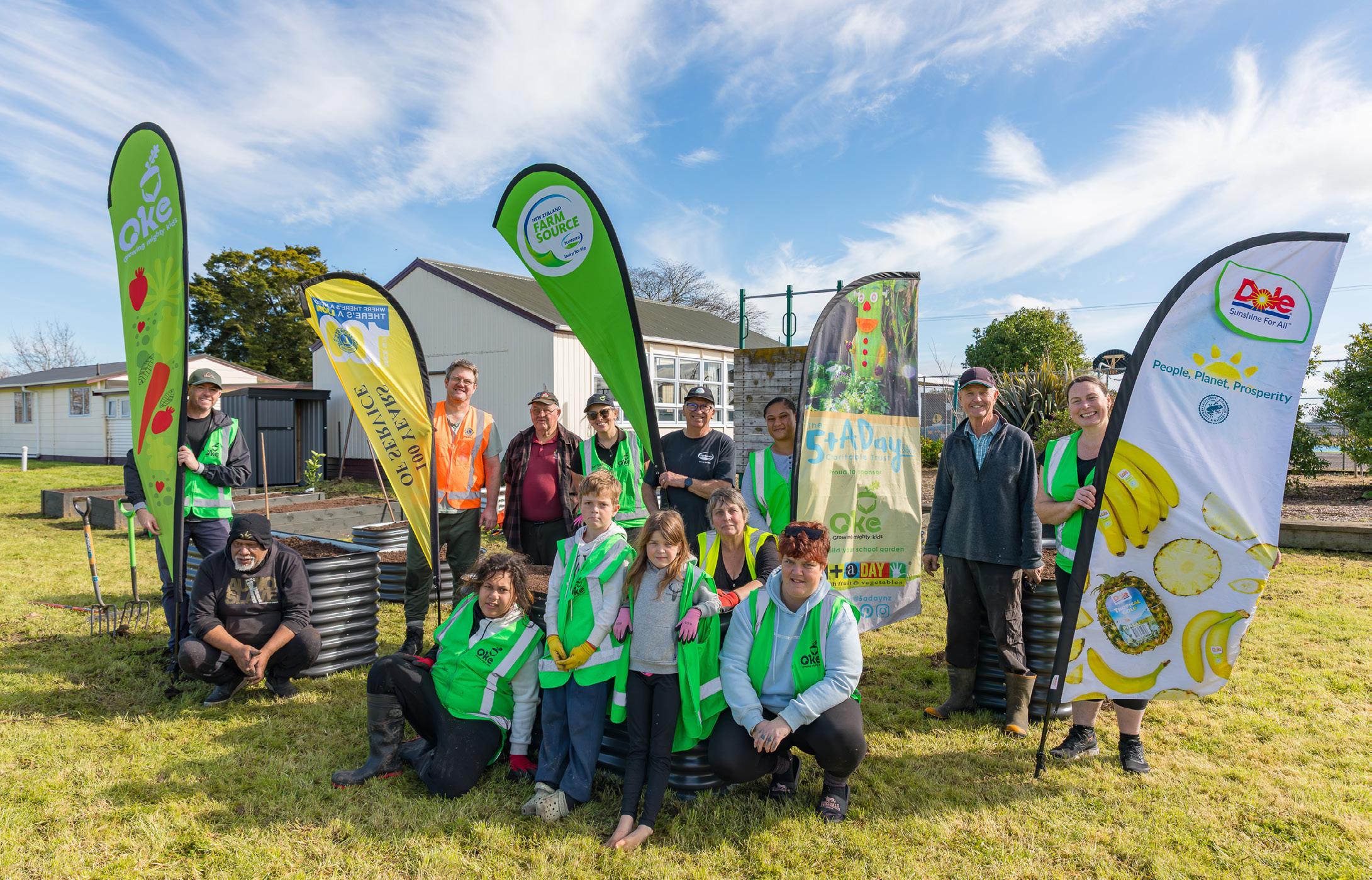
Oke is nurturing students’ interest in STEM, practical skills and wellbeing, the Kiwi way. Through their ‘Growing a Future’ initiative, a full garden is built for sponsored schools in just one day, with local and corporate volunteers pitching in alongside sponsors and funders.
Each build is designed to last, providing schools with everything they need to sustain their garden for years to come – from raised beds, a greenhouse, composting systems, seedlings, irrigation, tools for students and teachers, to expert guidance about growing fruit trees, vegetables and herbs.
Michelle Turner, chief go-getter at Oke, says they design each garden with the school and community.
“Students build the beds, wheel in the soil, and plant the seedlings. That early ownership keeps them invested.”
Papatoetoe East School: Learning that grows with the land
At Papatoetoe East School in South Auckland, the first Oke build in 2016 sparked what principal Nicola Eley calls “a transformation in how we think about learning”.
“We are proud to be the first Oke outdoor classroom in New Zealand,” she says.
“Before being a part of the initiative, we had already begun restoring a piece of land beside our stream, planting thousands of native trees. When Oke helped us add vegetable beds, it became a true living classroom – a space that connects science, wellbeing and community.”
All students participate in the school’s environmental programme, led by a specialist teacher.
“Our younger students explore plant life cycles and the water cycle, while our older students test stream water quality and study conservation. It is inquiry-based and practical – they are learning by doing.”
The gardens now include worm farms, composting stations, a greenhouse, fruit trees, beehives, chickens, and guinea pigs. A new purpose-built classroom with kitchen benches allows students to cook what they grow.
“We wanted students to see the full cycle – from seed, soil, harvest to kai,” says Nicola.
“We have a student who struggles socially in class but absolutely thrives in the garden. He cares for the animals, manages tasks responsibly, and even mentors others. His
confidence has soared.
“When learning happens side-by-side, not face-to-face, it clicks for some kids. You can teach fractions by dividing strawberries, or creative writing by asking them to imagine life as a butterfly. The curriculum becomes tangible.”
Nicola has witnessed first-hand how the school’s outdoor classroom has nurtured hauora just as much as academic growth.
“Students tell us it calms them down and gets them ready to learn. One student who settled in New Zealand as a refugee said our outdoor classroom was the only thing that felt familiar, as he used to garden with his grandfather in his home country,” she says.
Kopuarahi School: Small school, big growth
Chris Patel, principal at Kopuarahi School, located in the Hauraki Plains, says it made sense for their small kura to use their land for learning.
“Oke helped us turn an unused patch into a thriving garden. It gave our community confidence that we could do something powerful together,” she says.
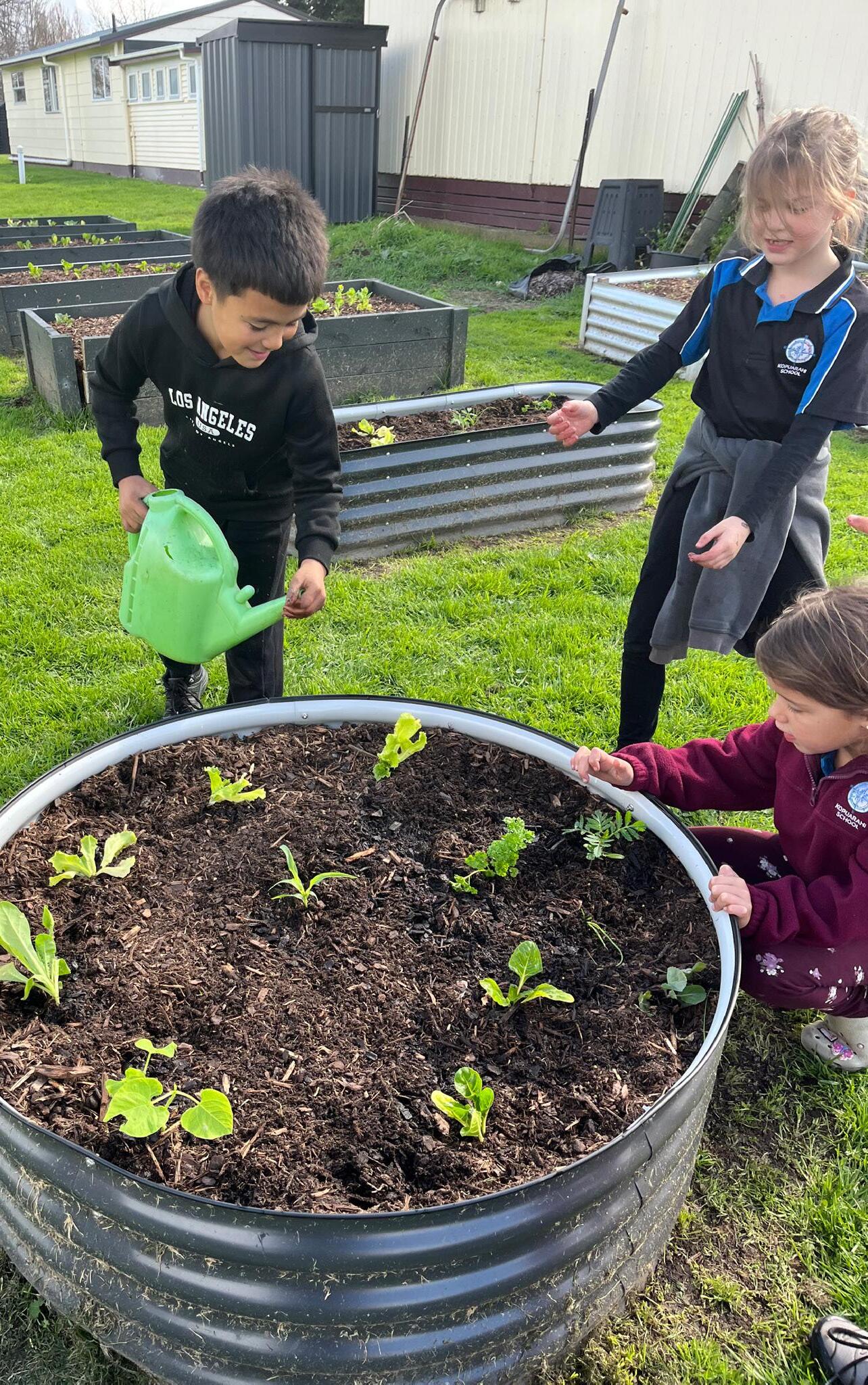
Students there manage the full operation, from composting and soil health to planning and harvest.
“We have run market stalls. In the future, we plan to sell herbs and seedlings and then reinvest the earnings. This teaches our students financial literacy, teamwork and the satisfaction of seeing something through.”
From soil science to social connection
Every Oke outdoor classroom is a living textbook. Students explore pollination, photosynthesis, weather patterns and soil ecosystems – often without realising they are doing science.
They learn efficiency through rainwater harvesting, problem-solving through garden maintenance, and communication through teamwork.
“Gardening was once used as punishment at school,” reflects Chris. “Now it is something kids look forward to. They come to school on garden days – that is how motivating it is.”
And at Papatoetoe East School, it is evident the benefits of an outdoor classroom reach far beyond lessons.
“Our school gardens bring people together.
“You can teach fractions by dividing strawberries, or creative writing by asking them to imagine life as a butterfly. The curriculum becomes tangible.”
Grandparents from our Pacific community helped us plant a taro garden and cared for it alongside our students. When we harvested it, everyone shared kai and stories – it was beautiful,” says Nicola.
Even simple actions, like sharing surplus vegetables with families or donating to a local South Auckland food bank, have deepened students’ sense of belonging.
“Our students at Papatoetoe East School are learning about service and empathy – that is as important as any test result.”
The bigger picture
Behind each outdoor classroom is a web of collaboration.
Oke operates with a tiny core team, made up of founder Paul Dickson and go-getters Michelle Turner and Alisi Kivalu. They also have a network of sponsors and partners across the country.
“Oke works hard all year to raise enough funds so our ‘Growing a Future’ gardens are a minimal cost to supported schools,” says Michelle.
“Each project is worth over $25,000, so we are grateful to work with amazing sponsors and funders like Dole, 5+ A Day and the Education Partnership and Innovation Trust, and over 20 other organisations who make this possible.
“Our corporate partners contribute volunteers from local infrastructure firms, councils and businesses to towards our build days.
“This creates intergenerational links between workplaces and schools, showing students that learning does not stop at the school gate.”
Principals at Oke’s contributing schools agree on the transformational impact on tamariki that comes from seeing engineers, tradies and corporate professionals working alongside them as volunteers in the school garden.
“It sends a message that being able to nurture produce and understand the ecosystem around them matters,” say principals Nicola and Chris.
Launch of the Oke outdoor classroom at Kopuarahi School in August 2025, with the support of local sponsors and volunteers.
Above: Papatoetoe East School students enjoy the many tasks involved in keeping the garden up to scratch.
Growing together in Wellington outdoor classroom
The ‘Grow Together’ initiative, supported by The Gas Hub, is helping students connect science, sustainability and kaitiakitanga in a hands-on way.
At Boulcott School in Lower Hutt, learning took root through a thriving vegetable garden built on the school grounds. During the winter months of 2025, six-year-old students rolled up their sleeves to bring their school garden to life. For many, it was their first time digging or planting.
What began as a patch of soil is now a living outdoor classroom filled with planter boxes, seedlings and eager young gardeners.
The project is part of The Gas Hub’s ‘Grow Together’ initiative, which helps schools link sustainability and science to real-world contexts.
Through the initiative, students are learning how organic waste, from food scraps to garden clippings, can be turned into compost and biogas using anaerobic digestion (a process that produces renewable energy).
The school says it has been amazing to see their students connect the dots between food, waste and energy. Using bio bottle kits and daily observation, students explore how natural systems work together. The garden has already sparked class discussions, home conversations and a new awareness around reducing food waste.
At Boulcott School, their garden has become a source of pride and teamwork, with volunteers regularly helping to build planter boxes and sharing kai they have grown alongside students in celebration.
Numicon Conference
Raising our results for a deeper maths learning
April 15–16 2026, Christchurch Register through Edushop
Keynotes:
Carla McNeil
Pania Te Maro
Audrey Tan
Margi Leech
The Oke outdoor classroom at Kopuarahi School.
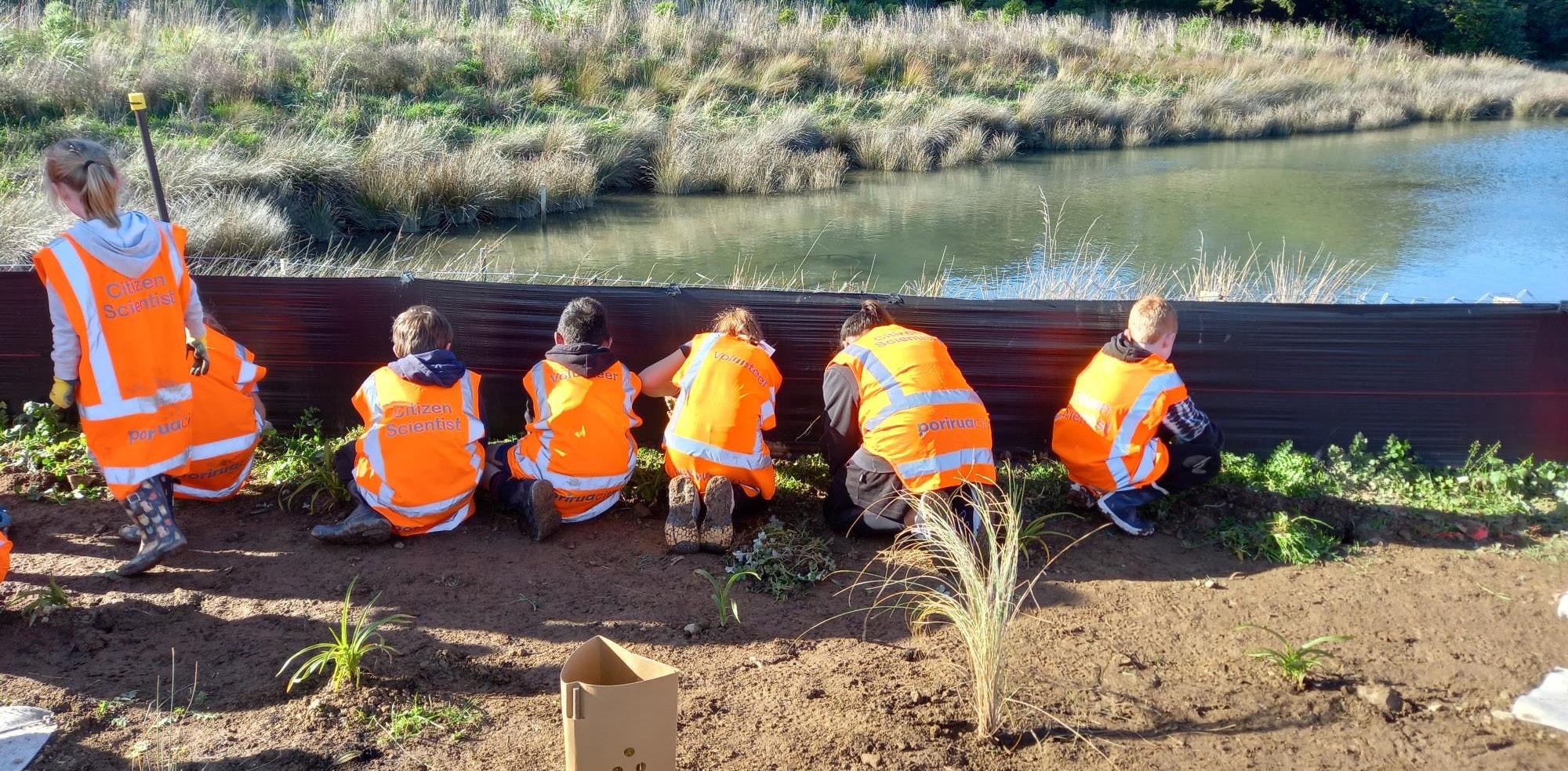
Ākonga become stream scientists in hands-on Porirua restoration project
In Porirua, the Streamside Education Initiative aims for tamariki to become kaitiaki of their environment. From tree planting to beach cleanups and biology, they are drawing schools into a 30-year effort to restore Te Awarua-o-Porirua Harbour.
Like many towns throughout Aotearoa, the Porirua coast suffers ecological damage through sedimentation, pollution and species loss.
Natalie Packer, Porirua City Council’s parks education advisor and passionate environmental educator, has seen the environmental decline firsthand.
“I get out [into the harbour] in the waka and I have to stay in the channels because the beach has filled in,” says Natalie. “There used to be flounder, there used to be cockles... there has been significant, significant decline.”
Now, Natalie is working hard to turn that around with the help of future generations, in her role as lead of the council’s Streamside Education Initiative.
Natalie believes ākonga are the key to both restoring and future-proofing Te Awarua-o-Porirua. In 2024, the Streamside
Education Initiative, now in its fifth year, involved more than 30 schools across the city. A trained teacher, Natalie leads classes alongside kaimahi and a wide range of experts including park rangers, scientists and iwi representatives.
Classes attending Streamside education days can expect variety. Beyond tree planting and beach cleanups, Natalie and associates lead classes outdoors – mostly to waterways – to explore the biological basics of their neighbourhood.
From curriculum learning to environmental kaitiakitanga
Ruth Mahupuku-Kelly, teacher and deputy principal at Porirua East School, appreciates how many subjects she can fold into the Streamside initiative.
“We integrate a lot of our curriculum,” says Ruth. “For
Paremata School ākonga plant along the tidal wetland at Papakowhai Reserve to support healing the mauri of Te Awarua-o-Porirua, the harbour.
example, it works with our writing curriculum. The children can write an account of what they did, or they can do a complex scientific report... we can suit a range of students.”
Beyond enhancing their learning, Ruth says the programme has helped her students imagine themselves as kaitiakitanga.
“It’s a way for them to understand that what they do at school can impact not just themselves, but their families, their communities, Porirua and even New Zealand,” says Ruth.
Tania de Bazin, teacher at Windley School and keen supporter of the Streamside programme, says Natalie took ākonga to an environmental day at Titahi Bay. Part of that was a beach cleanup.
“We took that rubbish back to school and we did an audit. We talked about what all those little bits were and how long they would have been in the sea.”
Tamariki connected with that, says Tania.
“When they go down to Titahi Bay, they’ll dive and fish and now they remember all those little things that they leave behind. The fishing line, the tackle and the bits of flipper that come off. Tamariki do understand their impact.”
Most importantly, however, Tania says the programme teaches students that their actions matter.
“[Tamariki] talk about how depressing pollution and the state of the world is, and you can get really down about how much rubbish there is down at the beach,” reflects Tania. She says the Streamside programme has helped students understand their positive agency, here and now.
Sharing new knowledge
Porirua East School students Isaac, Kathreen and Hiztory are coming to the end of another year with the Streamside Education Initiative. They’ve learned a lot from their trips to their creek.
“My favourite part was looking for different plants, because most of the plants we saw were plants that I didn’t know about,” says Isaac. “But the most interesting part was when the stream has a problem. It changes colour, like it goes from purple to red.”
Hiztory says she enjoyed the planting days. “My favourite part was digging around the plant so that it can grow naturally,” she says. “We learned a lot about our natural habitat, like how plants can help make the [stream] more healthy.”
Hiztory tells her parents about what she’s learning with the Streamside initiative. Recently, she embodied her role as kaitiakitanga by gathering her whānau and clearing rubbish from gutters near the local high school.
Her classmate Kathreen shares a similar story.
“[My whānau] went to the beach and we saw a lot of rubbish, so me and my siblings went and collected it,” says Kathreen, now a member of her school’s climate change group.
Learning for the future
Porirua East Primary ākonga start going to the stream with Natalie as five-year-olds, says their deputy principal, Ruth.
“By the time they reach Year 5 and 6, they have so much knowledge, so much understanding, and they’re getting more and more involved.
“They’re not just popping in and doing the programme for a year. Every year, they’re continually revisiting, and as they revisit they build more knowledge and develop more student agency.”
Ruth adds that the programme provides important, authentic context in an area of their community that could otherwise be seen as quite mundane.
Natalie says if tamariki and rangatahi don’t have that connection with their local environment, they may not look after it “because it won’t mean anything to them”.
Taking action also helps rangatahi who feel anxious about climate change, she says.
“It calms their fears, gives them comfort and helps them realise they’ve done something to help.”
Natalie believes ākonga are central to the Porirua City Council’s 30-year plan to clean up their harbour.
“Without students, we fail,” says Natalie. “It’s their land, their future, their home. This planet belongs to our children and it’s my job to help them form a relationship with it.
“Do I think we’re changing every single child’s mind? Absolutely not, but that’s teaching. Still, there’s no reason to have this programme if we’re not involving the students. It’s all for them, and for their broader understanding of what’s going on with their local environment and where it needs to be.”
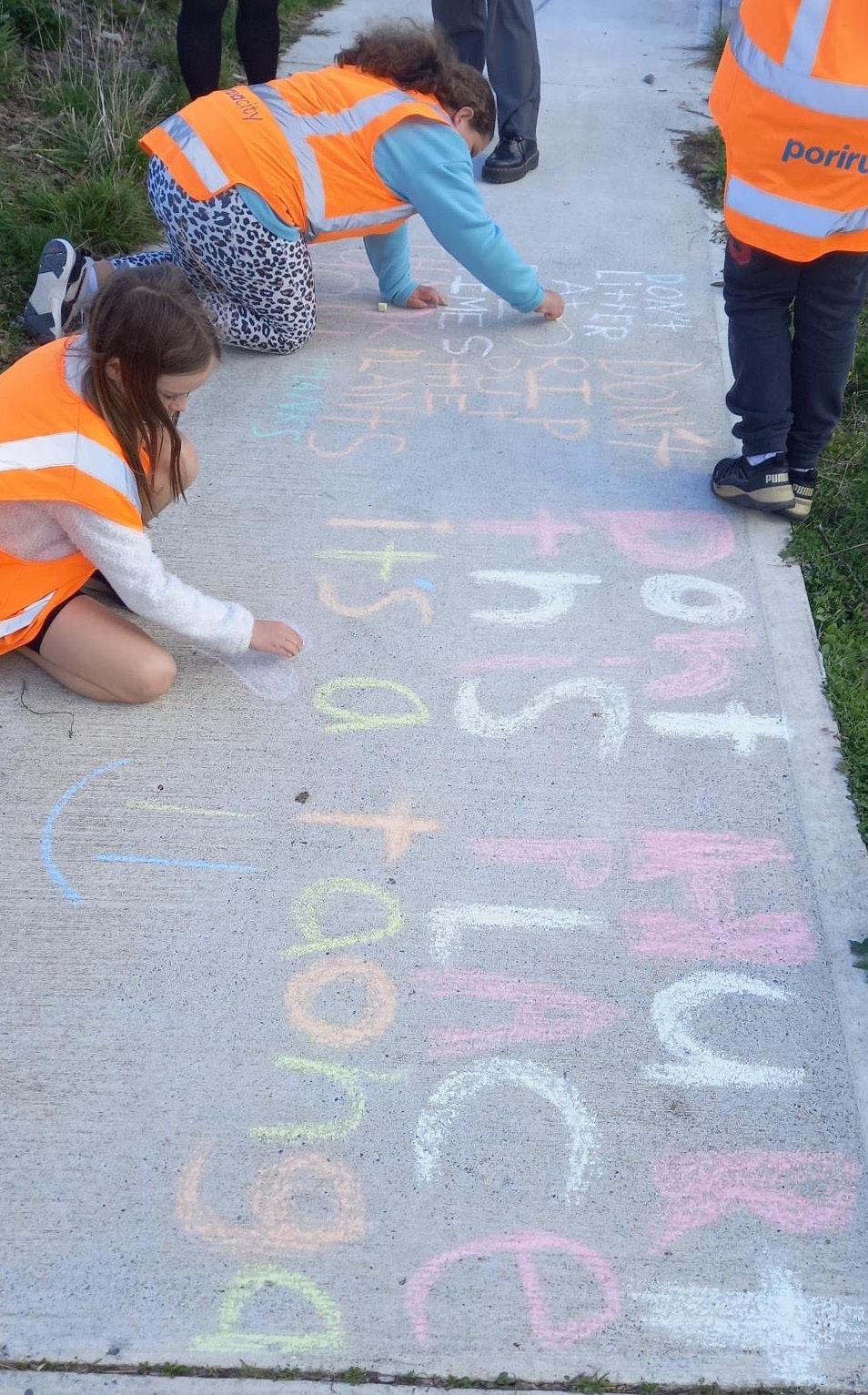
Ākonga write persuasive messaging about their local wetland, Tukukuwai o Toa, urging everyone should look after such precious taonga.
“Without students, we fail. It’s their land, their future, their home. This planet belongs to our children and it’s my job to help them form a relationship with it.”
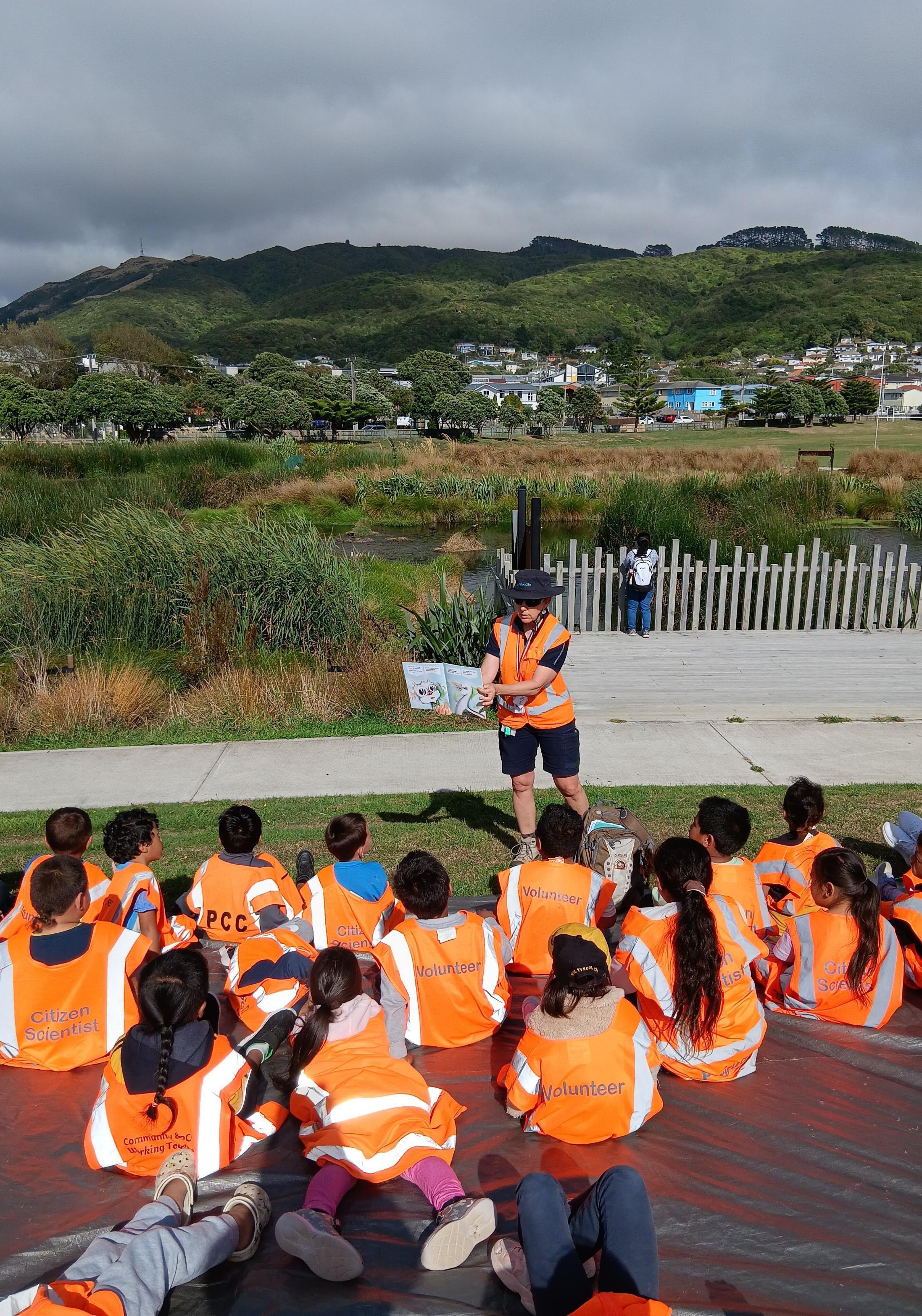
Natalie Packer, Porirua City Council’s parks education advisor, reads a book to a group of ākonga ready to learn about their local wetland.
Empower every learner with evidence-based literacy teaching
Elevate your teaching with the Better Start Literacy Approach (BSLA)
Targeted & Tailored Course – a premium professional learning opportunity designed to build your expertise in advancing the success of struggling readers in years 0-6.
Delivered by world-renowned experts, this course blends cutting-edge research with practical classroom tools to help you deliver meaningful outcomes for Tier 2 (targeted) and Tier 3 (tailored) learners.
WHY CHOOSE BSLA TARGETED & TAILORED?
► University-accredited: Earn 30 points at postgraduate level from the University of Canterbury – a valuable step towards a postgraduate qualification in literacy or education.
► Innovative learning app: Experience our new digital tool designed to make structured literacy learning engaging and accessible.
► World-class resources: Access comprehensive teaching manuals and resources, assessment tools and video exemplars.
► Culturally responsive design: Developed for Aotearoa New Zealand’s learning context.
► Led by experts: Learn from leading education researchers and practitioners, including Professor Gail Gillon and Professor John Everatt –international experts in dyslexia.
► Funding flexibility: Available as Ministry of Education–funded targeted and tailored PLD or as a self-funded university course option.
WHO SHOULD ENROL?
Teachers, literacy specialists and anyone seeking advanced training in structured literacy to better support learners with reading, spelling, and oral language challenges.
APPLY NOW:
Find out more or register at betterstartapproach.com/teacher-pld/targeted-and-tailored or email askBSLA@canterbury.ac.nz
The everyday items that make learning magical for tamariki
A stick isn’t just a stick. In the hands of a curious child, it becomes a measuring tool, a building material, a magic wand and a doorway to new worlds. One kaiako is on a mission to show how the humblest of tools and everyday items can unlock wonder, creativity and deep learning for tamariki when paired with nature and imagination.
Amelia demonstrates how a stick can become a useful tool.
After more than 20 years as an early childhood educator, Helen Upson has learned that the simplest tools can spark the richest learning experiences when tamariki are given the freedom to explore.
Helen leads a forest programme in Mangaiti Gully, Hamilton, where she invites tamariki to slow down, step outside and discover the world around them. Her blog, Creativity Beyond the Classroom, shares practical ideas for any kaiako to try.
The idea for the blog began when Helen noticed a gap in outdoor learning experiences among student teachers who joined her forest sessions.
“I often heard comments like, ‘our centre doesn’t do walks’, or ‘I’ve never experienced anything like this before.’ It made me realise that many of our next generation of kaiako might not have had opportunities to explore nature or build confidence in it,” she says.
“I had a lot of practical ideas, stories and encouragement to share, so I decided to start writing.”
This approach to learning aligns beautifully with Te Whāriki, the early childhood curriculum, especially the strands of:
» Exploration | Mana aotūroa engaging with the natural world.
» Communication | Mana reo – using tools, symbols and storytelling.
» Contribution | Mana tangata – working together and respecting others.
» Wellbeing | Mana atua – creating safe, inclusive spaces for play.
» Belonging | Mana whenua – making connections to people, places and things.
“Tamariki are endlessly creative, no matter where they are,” says Helen. “But today’s world is fast-paced. They live in busy homes, attend busy centres and are surrounded by busy environments.
“With all this hustle and bustle, how do we give them the space and time to notice beauty, to be curious and to create?”
Her answer is simple: nature.
Helen keeps a couple of tote trays filled with tools like rulers, tape measures, Sellotape, scissors, pencils and notebooks – simple resources that encourage curiosity and creativity.
Before heading into the gully, she always asks, “What do you want to do today?” This supports tamariki to make choices, take ownership and lead their own learning journeys.
The magic wand of tools
In many early learning settings, sticks might be seen as a challenge associated with unsafe play. But Helen believes that when tamariki are guided to use sticks with purpose and respect, they become incredible tools for learning, exploration and creativity.
During her forest sessions, tamariki collect sticks of all shapes and sizes. They use them to measure how deep the
mud is, compare heights and estimate lengths.
Questions like, “How many sticks tall are you?” or “Can we find a stick longer than your leg?” introduce mathematical language and concepts in playful ways.
Sticks also become art materials. Ngā tamariki arrange them into shapes, letters, or nature looms, often combining them with leaves and flowers. They build miniature huts, bug hotels and tepees, all while learning about balance, stability and teamwork. And in imaginative play, sticks transform into fishing rods, walking sticks, or dinosaur bones, encouraging storytelling and role play.
One moment that stands out for Helen is when a child proudly asked, “Helen, can we carry this stick on the bus?” She says it was a small but beautiful sign of their excitement and connection to the adventure.
To support safe exploration, Helen has developed simple stick safety guidelines:
» Sticks are tools.
» We use them gently and not to hurt.
» Keep sticks below shoulder height.
» Ask for help with big sticks.
» Be aware of your space and others.
“By shifting the narrative around sticks, we not only support development but also build a stronger connection to the natural world,” says Helen.
Maths in the wild
Helen brings rulers and measuring tapes into the forest. These tools, sometimes confined to classroom tables, become instruments of discovery in the hands of curious tamariki.
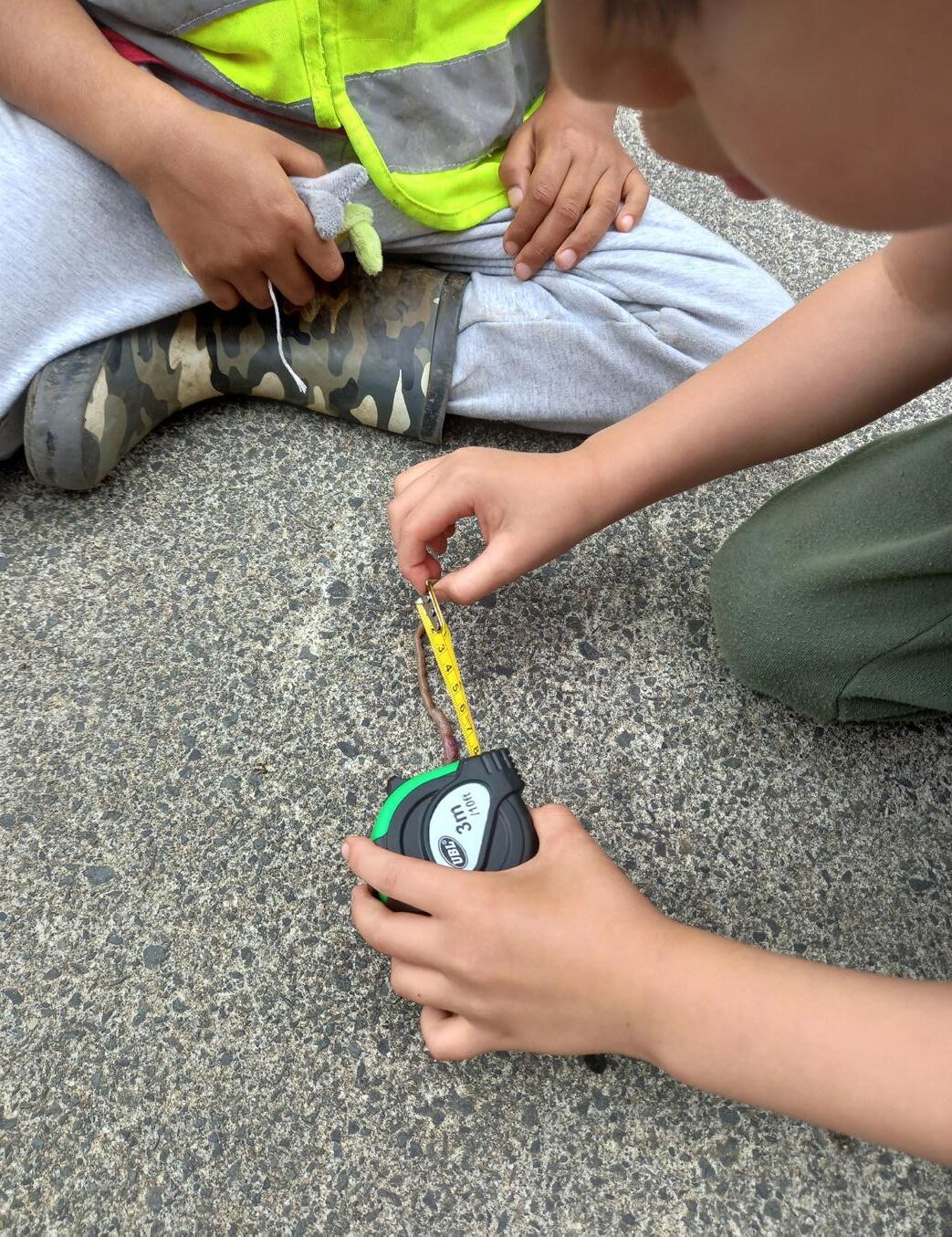
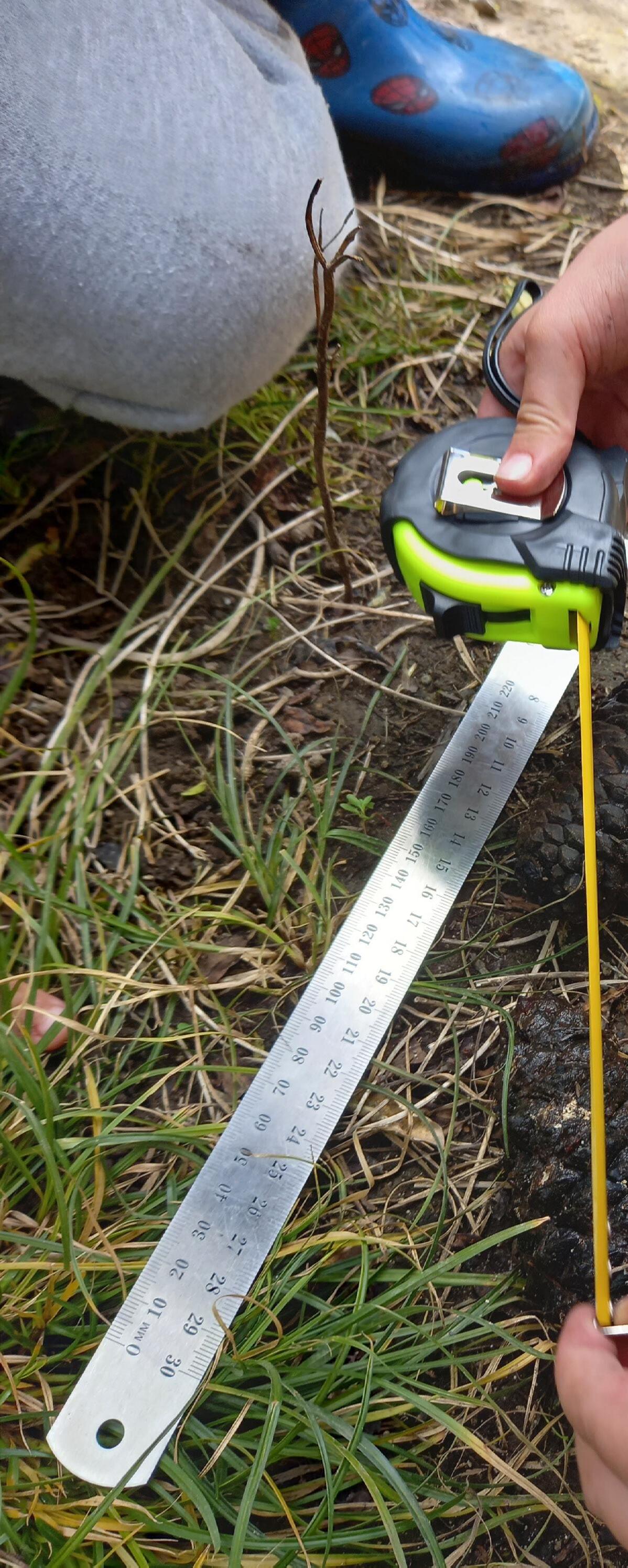
They measure trees, pinecones and even each other. They compare the width of a leaf to the length of a stick or estimate the circumference of a tree trunk. Through this hands-on exploration, tamariki engage with early maths concepts like length, width, estimation and comparison in ways that are meaningful to them.
“There were no rules or limits on what they could measure. If it sparked their curiosity, it was worth exploring,” says Helen.
These experiences spark rich conversations around numbers and measurement, using terms like longer, shorter, wider, taller and even perimeter and circumference. The learning is real, relevant and rooted in play. The online Kōwhiti Whakapae glossary has more maths language that supports learning.
Creativity that sticks
Even Sellotape finds new life outdoors, says Helen.
One example is wrapping tape around wrists – sticky side out – to create nature bracelets. As tamariki walk through the forest, they collect leaves, petals, feathers, and tiny twigs from the forest floor, pressing them onto the tape to create wearable art.
Top left: Raghavv enjoys some hands-on exploration with natural materials.
Bottom left: When paired with a measuring tape, a worm provides a natural maths lesson.
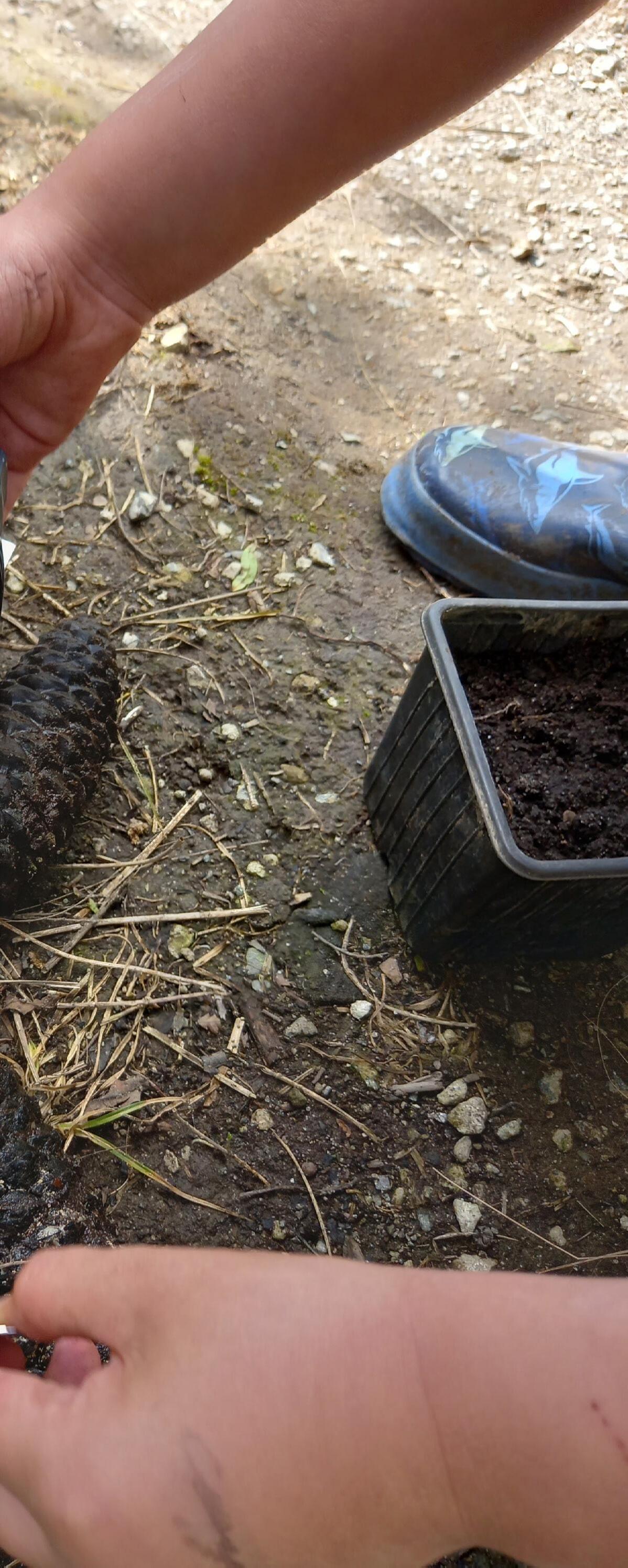
Right: Pinecones line up to be measured by tamariki.
Kōwhiti Whakapae online and printed resource can support kaiako to strengthen children’s interest and knowledge to use maths.
This includes practices and progress examples to help notice, recognise and respond to tamariki. The maths area of learning includes space and measurement, number and measurement, patterns and relationships and create and communicate maths.
Go to the Kōwhiti Whakapae website: kowhiti-whakapae.education.govt.nz
You can also see Te Whāriki Online on Tāhūrangi: tewhariki.tahurangi.education.govt.nz
The activity changes with the seasons. In summer, bracelets bloom with buttercups and daisies. In autumn, they glow with red and gold leaves. In winter, tamariki find textures like bare twigs and seed pods. Spring brings fresh green leaves and blossoms.
For tamariki who prefer not to wear bracelets, Helen offers alternatives: nature bookmarks sealed between strips of tape, or decorated hat brims that spark conversation and pride.
These activities support fine motor skills, sensory exploration and seasonal awareness. They also encourage creativity and appreciation for the natural world.
Helen says tamariki have been learning how they can be kaitiaki of their natural environment by working alongside the Department of Conservation to plant native species back into Mangaiti Gully.
“We also support the health of the gully by picking up rubbish, helping to maintain the environment and caring for the eels, which we feed regularly. Tamariki have also been learning about the pest species that live in the gully and how these impact the ecosystem.”
Sharing the joy
Helen’s blog is more than a collection of activities – it’s a call to rediscover the beauty of slow, creative learning. She hopes her ideas will inspire other educators to look beyond the classroom walls and see the learning potential in everyday tools and natural places.
“You don’t need a forest programme to explore these tools,” she says. “A simple walk around your local community or park can offer plenty of inspiration and opportunities for learning.”
Helen collaborates mostly with kaiako in her centre, but she also connects with others across her centre network through Storypark.
“This is the start of my journey,” she says. “I would like to connect with kaiako all over New Zealand.”
Her advice to educators who feel unsure is: “Start small and go at your own pace. You don’t need to plan something big”.
Helen encourages kaiako to be prepared and flexible and to trust that tamariki will guide kaiako with their curiosity.
“The more you go out, the more confident you’ll become. It’s not about perfection; it’s about being present, observing and learning alongside the children.”
As Te Whāriki states: “Children learn through play: by doing, asking questions, interacting with others, devising theories about how things work and then trying them out and by making purposeful use of resources. As they engage in exploration, they begin to develop attitudes and expectations that will continue to influence their learning throughout life.”
The Associate Minister of Education has announced his intent to re-shape the funding system for early childhood education (ECE). The Ministerial Advisory Group (MAG) tasked with providing advice and recommendations wants to hear the voices and views of everyone connected to ECE, from across New Zealand.
There’s still time for parents and caregivers, early childhood education (ECE) sector employees and businesses, to share their views with the Ministerial Advisory Group (MAG) tasked with reviewing the ECE funding system.
The Associate Minister of Education, David Seymour, established the group in June as an independent body with support and secretariat provided by the Ministry of Education.
The group has already established base knowledge of the sector. This includes a discovery phase to hear about what’s working well, what the challenges are, and where there are opportunities for change.
As part of this, more than 40 meetings have been held with the sector and interested parties, and more sessions are planned. Submissions for this discovery phase are open until 12 December. MAG chair Linda Meade is keen to encourage anyone with an interest to feed in at both this initial phase and later during consultation on recommendations.
“As the Ministerial Advisory Group reviewing early childhood funding, we knew we would need to hear from the many people who care passionately about the positive impacts of participation in quality early childhood education to children, their families and the wider community.”
Finding future improvement for positive impact
Linda, an experienced director and early learning service owner, is one of seven appointees to the MAG.
She says the group has so far met with a wide variety of people who care passionately about ECE.
“This includes owners, managers, teachers from across multiple service types, as well as wider stakeholders such as providers of contracts – for example, Engaging Priority Families – parents, board members and sector group representatives.”
MAG chair Linda Meade and members Melissa Glew and Simon Laube attended a number of hui in Christchurch as part of their discovery process to hear from the sector.
MAG members have been presented with the real-life implications of the funding system, seeing firsthand where improvements can be made,” says Linda.
“Funding is complicated and individual situations can vary considerably. It has been striking, the different challenges between areas, even within the same region and between different service types.”
Linda adds that a common challenge for many has been the complexity of the frequent absence rules.
“These are especially challenging for services in disadvantaged and transient communities. For others, the issues boil down to financial sustainability and income covering costs when income is lost.”
Next steps
A summary of feedback the MAG has received will be shared in the new year, with formal consultation on options being considered starting in autumn 2026.
The MAG will submit a final report in September 2026, with fiscally neutral recommendations for redesigning the ECE funding system.
The Associate Minister of Education and Cabinet will then make any decisions about possible next steps.
“I know the positive impact consistent participation in quality ECE can have on children and families,” says Linda.
“The challenge is making sure all New Zealand households have access to affordable, quality ECE services now and in the years to come.”
Have your say
You can make an online submission or find out more about the work of the MAG on the Ministry of Education website.
Ministerial Advisory Group – early childhood education funding system review – Ministry of Education
“The challenge is making sure all New Zealand households have access to affordable, quality ECE services now and in the years to come.”
Ministerial Advisory Group members, back row from left: Dr Kane Meissel, Linda Meade (chair), Simon Laube. Front row, from left: Kylie Eagle, Melissa Glew, Kelly Seaburg, Sarah Hogan.
Part detective, part engineer: A day with N4L’s security analysts
When it comes to cyber security, it’s easy to feel like you’re facing a moving target. For school principals and leaders, the challenge isn’t just keeping up with evolving threats – it’s knowing where to turn for support. While systems and tools are critical, it’s the people behind them who make the real difference. Meet the cyber security team at Network for Learning (N4L).
At the heart of N4L’s Managed Network is a dedicated team of security analysts. These experts continually monitor network activity across hundreds of schools to detect and respond to cyber threats quickly and efficiently.
N4L’s approach is proactive. They don’t just wait for an incident – they continuously scan, detect and intervene to protect schools before threats escalate.
N4L has also strengthened services by integrating with the National Cyber Security Centre’s Malware Free Networks and Phishing Disruption Service. This means they can detect and block harmful activity – like phishing campaigns and malware threats – in near real time, at no extra cost or effort for schools.
A day in the life of an N4L security analyst
Addressing online safety and security risks requires collaboration. Schools, including boards, kaiako and ākonga,
information technology (IT) and technology providers like Google and Microsoft, and N4L all work together to minimise risks.
The work of a security analyst at N4L is part detective, part engineer and part communicator – combining problemsolving, tech skills, and the chance to help others. A typical day includes:
» checking alerts for suspicious activity using tools such as security incident and events management (SIEM) and firewall logs
» investigating potential threats, such as phishing, malware and business email compromise
» contacting schools if something doesn’t look right
» monitoring systems using advanced tools like SIEM, firewall, and email protection.
Not every alert signals a serious threat. The team rely on their experience to separate real risks from background noise.
N4L’s cyber security team, from left: Akshay Nehate, Sithara Fernando, Jayson Cacdac, Hayden Brown and Ryan Lim.
“The faster we can respond, the better we can protect your data.”
Some threats need deeper investigation. When N4L detects something noteworthy, analysts review logs for suspicious data, check threats against global databases and work with the school’s IT provider.
“If there’s a high priority incident, like a business email compromise or major attack, we’ll reach out to your school straight away by phone and email,” says security analyst Sithara Fernando.
“Make sure your principal, IT lead and office staff know what to do and who to contact. The faster we can respond, the better we can protect your data.”
If your school can’t be reached, the team escalates the incident through the school’s N4L relationship manager to guide next steps.
From detection to resolution: inside a school’s MacOS malware case
One school helped by N4L recently discovered not all devices are as safe as they seem.
N4L’s managed network detected that a school MacBook, infected with Mac-specific malware and connected to the staff VLAN, was quietly trying to connect with a suspicious website.
It was part of a malicious command-and-control (C2) network. Left unchecked, this could have made the device part of a botnet, ready to download harmful payloads or launch attacks when disconnected from N4L’s secure firewall.
An initial alert of suspicious activity was triggered by the SIEM when the device attempted to access more than 50 malicious sites in one hour. This prompted a deeper investigation.
Fortunately, the school had N4L’s Secure Access, a product that securely authenticates and authorises individual school network users and devices onto the network. It meant the security analyst could identify the MacBook’s details and the user’s email. Without Secure Access, detection would have been slower and less precise.
The analyst contacted the school’s IT lead and recommended a straightforward but effective fix – reset the device to factory settings. Once the technician completed this, the security analyst confirmed the device was no longer attempting to connect to malicious domains, meaning the infection was cleared.
N4L’s Cybersecurity Services team shared key takeaways from this case:
» Act fast. The sooner a school responds to an alert, the lower the risk to the broader network.
» Trust the alerts. Even if the firewall blocks activity, the
underlying compromise remains a risk once the device leaves the secure network.
» Stay aware. Staff should be cautious about clicking links, enabling browser notifications, or installing unknown software.
» Be prepared. Have a plan to rebuild devices quickly if malware is found.
Thanks to N4L’s proactive monitoring and the school’s quick response, the threat was contained before it could cause harm – helping to keep students, staff and school data safer.
Practical cyber security tips for your school from N4L security analysts
As a school leader, your decisions shape how well your community responds to cyber threats. By fostering awareness, making sure there are robust processes and partnering with N4L, you protect not just your school’s systems but the trust, safety and wellbeing of your entire kura.
To protect your school from threats, our security analysts recommend the following:
» Strengthen password security. Encourage staff and students to use strong, unique passwords – and never share them. A password manager can help.
» Turn on two-factor authentication (2FA). This adds an extra layer of protection. Even if someone guesses your password, they won’t get in without your second form of ID.
» Create a simple incident response plan. Make sure everyone knows what to do if something suspicious happens, who to tell, and how to report it.
To find out more, visit N4L’s website: n4l.co.nz/protect
If something seems off, or if you’re unsure about a possible security issue, contact N4L customer support.
Freephone: 0800 532 764
Email: support@n4l.co.nz
Inspiring the Future
Tertiary Education Commission deputy chief executive Nina Ive hopes the Inspiring the Future Programme – where adults visit schools and share what it’s like to work in their job – can be used alongside Tahatū.
Once the ‘role models’ visit a school class, the ākonga can then search for the occupation of the role model who inspired them on Tahatũ. Or, the teacher could provide students with a research task, such as investigating the qualifications for a specific role model’s job.
“It would be an opportunity for students to do more self-learning,” says Nina.
The long-term opportunity is to have an option where students can link with a role model for a chat or shadow them at their workplace for a day, she adds.
Inspiring the Future’s UK founder, Nick Chambers, believes that exposing students to the world of work from primary school age and onwards means they will be better prepared to enter the workforce once they leave school.
Tahatū Career Navigator empowers students to think big about their future
The Tertiary Education Commission’s new career planning website, Tahatū Career Navigator, has been publicly launched after a successful secondary school rollout in June. A one-stop career shop, it links students’ interests and values to potential careers.
Tahatū Career Navigator is the next generation of the 20-year-old careers.govt.nz, profiling almost 100 school subjects, over 4,000 qualifications and more than 800 career ideas.
“Users will have fun discovering their next potential career on Tahatū,” says Tertiary Education Commission (TEC) deputy chief executive Nina Ive.
It provides a database of jobs to explore, alongside the pathway to achieving that job. That includes the subjects ākonga should study at school and the skills and qualifications they will need.
“It’s a really good repository of information for young
people to make decisions about their future,” says Nina.
The original careers website had around four million visits each year, with 80 to 85 percent of users surveyed finding the information useful. TEC wants to extend this as much as possible with Tahatū.
“There are some ākonga who absolutely know what they want to do after school and they’re away,” says Nina. “But for a strong majority, they just don’t know what’s next for them.”
Broader opportunities
To reach that goal, in the early days of the website’s redevelopment the TEC worked closely with teachers, careers
The new Tahatū Career Navigator website.
advisors and students. A recurring theme in the feedback from this education community was to not narrow down career options too early.
“On the old website, you’d answer quiz questions and it would generate a list of individual jobs you could do,” explains Nina. “But if the first job was something that, say, a 15-year-old boy didn’t like the sound of, you’d lost him.”
Careers advisors and teachers told the TEC that the website should provide broader opportunities so students could conduct their own research and narrow it down themselves.
The resulting new new ‘Interest Quiz’, takes less than 10 minutes to complete and provides a profile of students’ characteristics.
“Young people are loving that because they can see themselves on Tahatū in ways they haven’t been able to articulate,” says Nina. “Especially if the young person knows what their potential interests are, the quiz matches this to work areas rather than individual jobs.” By looking at the work area, a student can then decide what they like the sound of.
Matching skills and values to career paths
Several Auckland schools were involved in the Tahatū pilot. Te Hīkoi Alternative Education head of careers
Debra Pene likes that the Interest Quiz first links students to their interests and values before listing potential careers.
Debra says she typically works with students who look to their parents for career ideas, but a limitless worldview provides the opportunity to build aspirations.
“If students don’t know their own individual values, and don’t know their personal qualities or what interests them, they might spend thousands of dollars on tertiary education, coming out as, say, a dental technician and then realise, ‘oh I don’t want to look at people’s mouths all day,’” she says.
Manurewa High School head of pathways Joy Williams agrees that students need to have a good understanding of themselves, their beliefs and values before they move on to thinking about a potential career.
“Students can connect what they’re good at with what they could do via the Interest Quiz,” she says.
“Students can connect what they’re good at with what they could do via the Interest Quiz.”
The Interest Quiz links students to their interests and values before listing potential careers.
“If the young person knows what their potential interests are, the quiz matches this to work areas rather than individual jobs.”
Some of the feedback the TEC used when developing their new career finder website.
Building confidence and aspiration
Each school can use Tahatū in the way that fits best. Usually, a student would start with the Interest Quiz. They learn about their profile, create a list of careers or work areas they’re interested in and then work with the school’s career advisor to make a plan.
“That’s what has been lacking previously, applying the learning to work,” says Nina. “Sometimes you’re learning something in maths, and you think, ‘well, what’s the point of this?’ But if you can actually make that real, and give it some meaning career-wise, it really helps a lot of people with their learning too.”
Joy’s school piloted the programme with its Year 9 and 10 students. They loved watching videos of workers in specific careers describing their day-to-day life on the job.
Adapting Tahatū to her school environment, Debra would start with career education, teaching students how to understand their own values. Then she would take them to a career expo to demonstrate what careers are available.
“They can go to Tahatū and look up a career they’re interested in and see what skills and qualifications they need,” she says. “Tahatū is aspirational building.”
Nina says Tahatū can help build confidence by providing all the information to show students what their career options are and encouraging discussions with friends and family.
“It actually helps build a strong sense of self for the future.”
Visit Tahatū Career Navigator: tahatu.govt.nz
QUIZ
2025 Education Gazette quiz
How well have you kept up to date with the Education Gazette in 2025?
Q1) According to young drivers at the apex of road safety education, what was the 2025 Road Safety Week theme?
A: Drive to survive
B: Be a road safety hero
C: Share the road
D: Zero harm starts here
Q2) In 2025, Girls with Hi-Vis marked which milestone year?
A: 5th
B: 7th
C: 10th
D: 15th
Q3) The new daily attendance dashboard went live on:
A: 1 February 2025
B: 10 February 2025
C: 20 February 2025
D: 10 March 2025
Q4) What’s the name of the Ministry-produced podcast series – covered by the Gazette – that supports beginning and aspiring principals?
A: Leading Today
B: The Principals
C: Tumuaki Talks
D: School Voices
Q5) In English-medium settings, the new Phonics Checks occur at which two initial milestones of schooling?
A: 15 and 30 weeks
B: 20 and 40 weeks
C: 40 and 80 weeks
D: Year 2 only
Q6) By April 2025, approximately how many schools had taken part in the new maths PLD?
A: About 70
B: About 300
C: Nearly 700
D: Over 1,500
Q7) In 2025, Te Wiki o te Reo Māori marked which milestone?
A: 25 years
B: 40 years
C: 50 years
D: 60 years
Q8) What’s the name of the Wellington exhibition – hosted at Massey University’s design school – that the Gazette showcased for weaving textiles, technology and te ao Māori?
A: ToiTech
B: Kohara2Shine
C: Design Live
D: Fibre Futures
Q9) How many articles did Education Gazette publish in 2025?