Five of the best Peruvian resturants near El Camino College
Stressed more over hidden fees than my finals
Designing dreams: El Camino College alum becomes toy maker for Hello Kitty and Friends, Barbie and more
Pack your bags, sis, we’re leaving again!
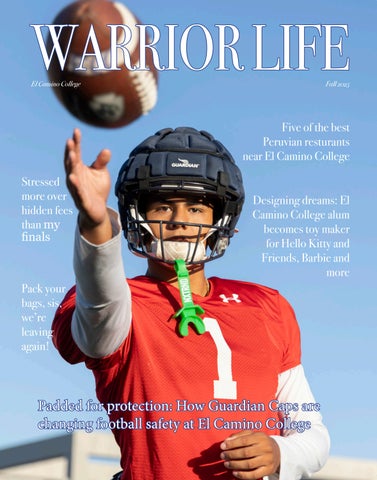
Padded for protection: How Guardian Caps are changing football safety at El Camino College
What’s Inside
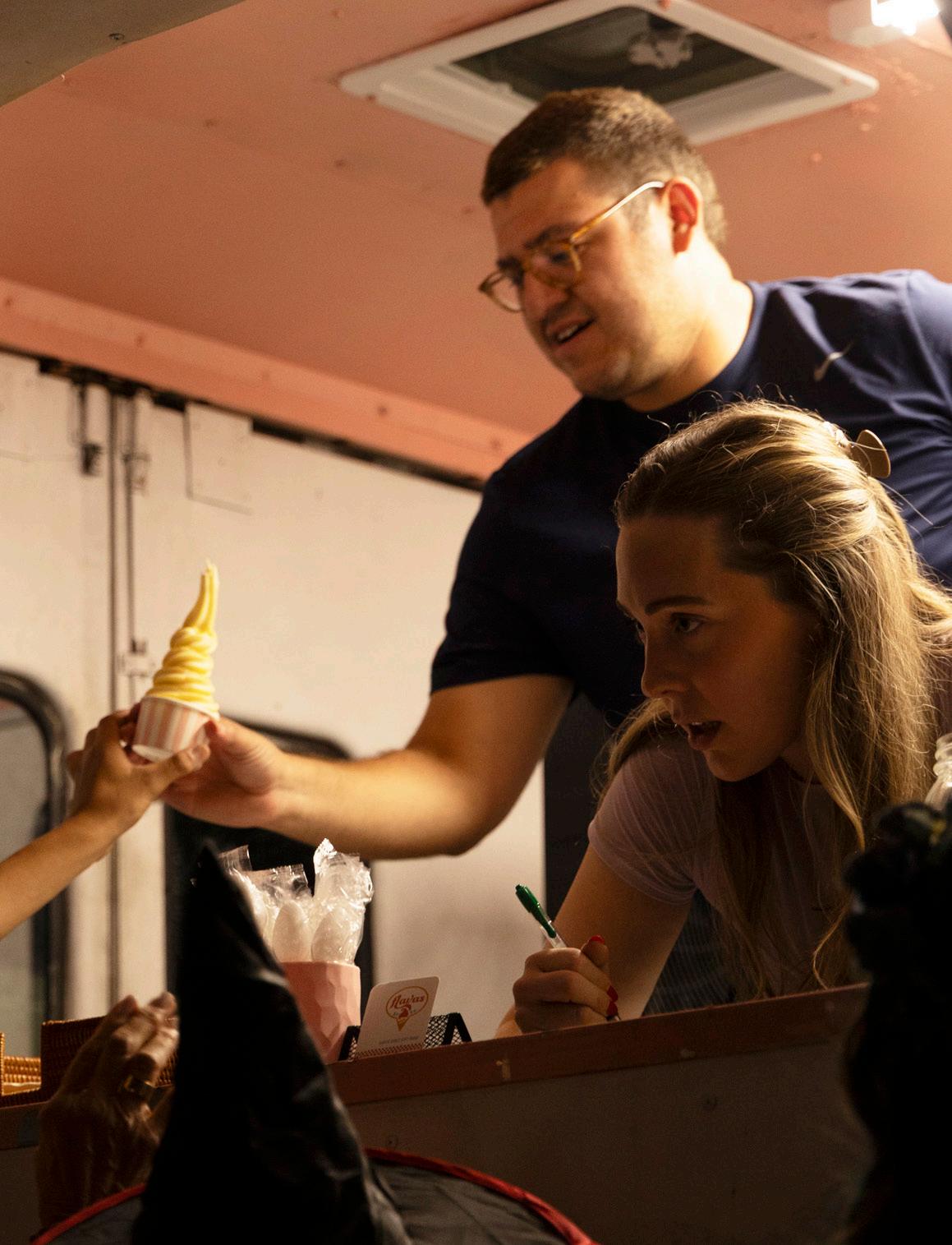
Former El Camino College journalism alum Eddie Garcia and his fiance Caroline Levich sell soft serve ice cream to customers out of their Flavas by Ed truck at Holy Trinity Catholic School on Saturday, Oct. 25, for their Halloween night event. Garcia said this is his second year selling at the school as stdents and parents came back for seconds and even thirds during the event.
To read the entire story, visit the website at ECCUnion.com and look for Warrior Life magazine.
Illustrators : Daniela Ortiz-Miranda, Drex Carratala, Nikki Yunker, Chelsea Alvarez, Moon Khalfani, Sofia Flores
Advisers: Stefanie Frith, Kate McLaughlin, Nguyet Thomas
Cover photo by Oriana de Quay Back cover photo by Nikki Yunker
Special thanks to Angel for helping out
The 5 bags redefining the semester
They're more than school bags, they are fashion pieces.
Story and photos by Kaitlyn Gochez
Everystudent depends on a bag or backpack to carry their everyday essentials.
According to Boston University, more than 79 million students across the United States cram in textbooks, binders, notebook computers, pencils, pens, erasers, craft supplies, lunches, extra clothes for gym class to make the trek to class. Choosing the right school bag is important to remain organized, comfortable and fashionable. Different types of bags are making a statement for students to take their supplies and belongings to the classroom. Here are the top five trendiest, most comfortable and durable bags students at El Camino College are wearing.
1 2
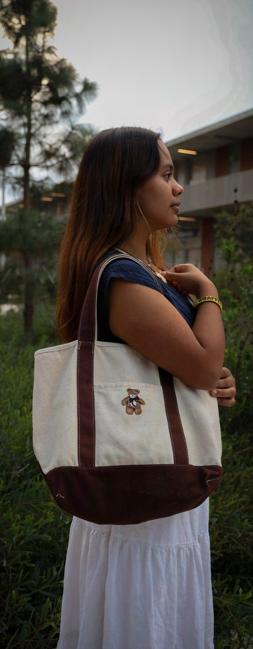
Christine Huston, 19, a communications major styles her tote bag with her outfit.
Canvas tote bags are perfect for students’ laptops, heavy text books and more. Starting at $10, these heavy duty bags are made from cotton. Christine Huston, 19, a communication major, said these tote bags are small enough to carry and go with her outfits.
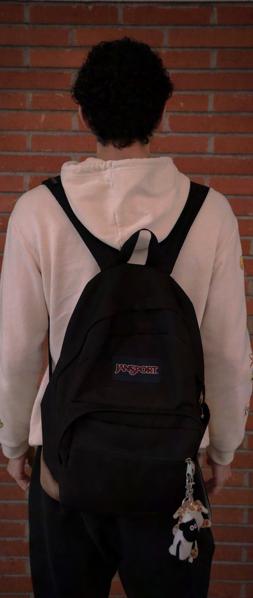
Stephen Treutlein, 20, mechanical engineering, wears his black Jansport
The classic Jansport backpack is popular among students at El Camino College. "The Jansport backpack is protective," Stephen Treutlein, 20, a mechanical engineering major said. Students can rely on the Jansport backpack for everyday use, as its durable and made from polyester fabric.
3 4 5
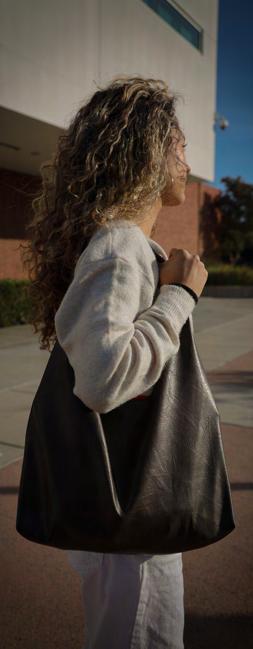
Stacy Wilkinson, 19, psychology major said her bag is spacious and cute.
Slouchy bags are the newest bag trends. These hand bags made of different soft materials such as, suede or leather, are comfortable to carry. Slouchy bags can be paired with any students’ outfit creating an effortless look. These bags are mostly oversized, which is great for student materials.
Isaiah Torres, 19, film major wears a cotton tote bag.
Cotton tote bags are a staple. “Tote bags are great for school because they are easy to carry, fashionable, and fit all the essentials you need for class,” Bethany Melgar, 22, a nursing major said. These eco-friendly bags are favored by students because of their comfort, lightweight and durability.
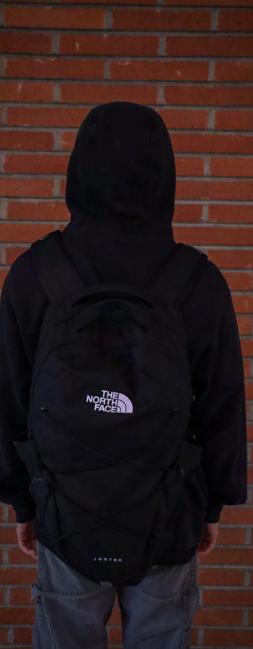
Ulises Renteria, 20, computer engineering major said the Northface backpack is spacious.
The classic Northface backpack, is perfect for all kinds of students. The backpack can carry up to 15 inch laptops. The multiple compartments make it easier for students to remain organized and its light weight design keeps students feeling comfortable throughout the school day.
Designing Dreams
El Camino College alum becomes toy maker for Hello Kitty and Friends, Barbie and more
Story and photos by
Nikki Yunker
For Elena Velasquez, work is play.
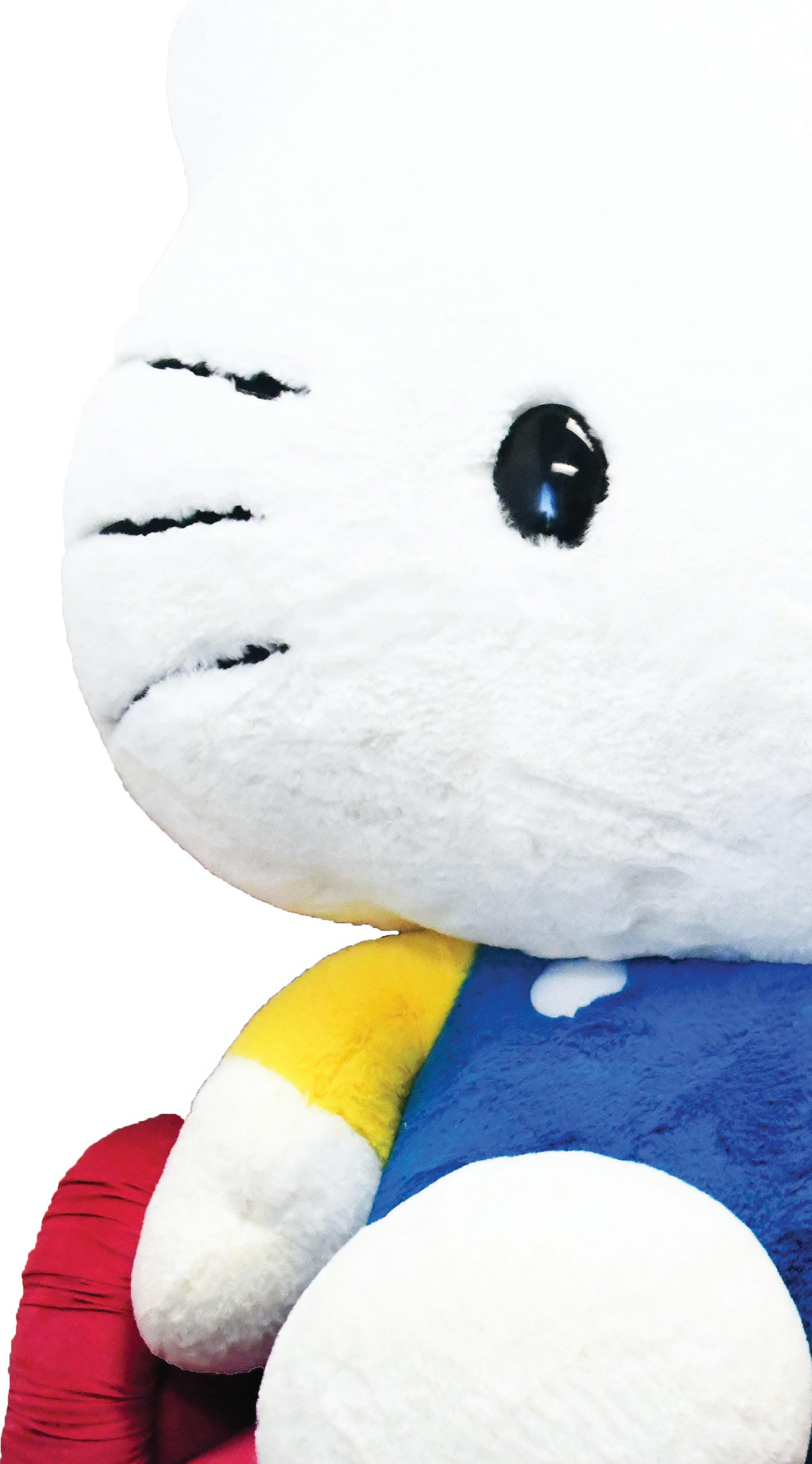
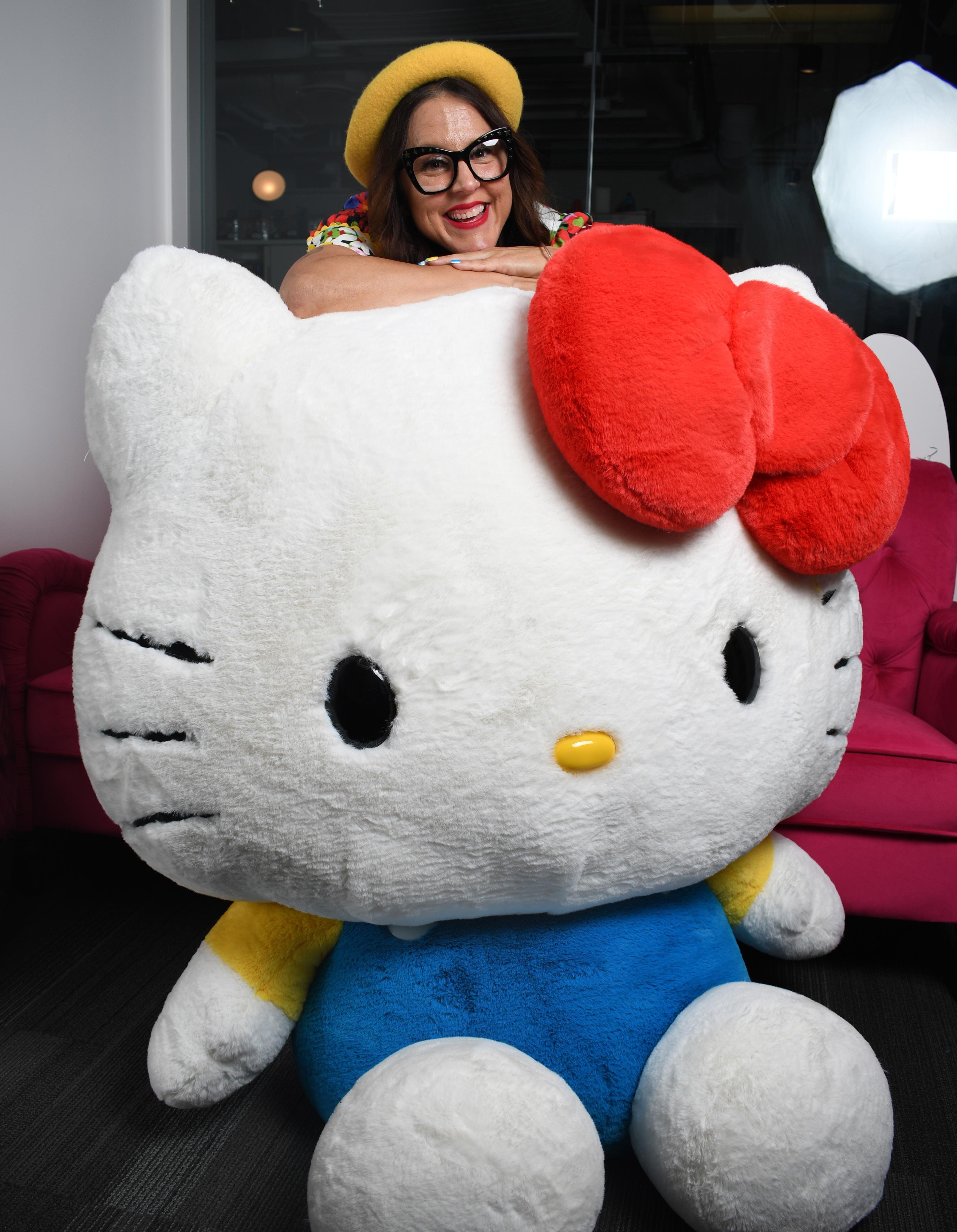
A giant Hello Kitty plush sits in her Culver City office and watches as she writes emails, reviews designs and meets with designers from a laptop clad in kawaii stickers.
Velasquez, who is the vice president of design for dolls and collectibles at Jazwares, never expected that her childhood love of toys would grow into a career within a multi-billion dollar global industry.
She originally became a Hello Kitty fan when her mom took her to the company’s Gardena store in the 1980s.
Now, Velasquez does store checks in Japan for Sanrio, which gave Jazwares the master license to produce North American toys for their brand Hello Kitty and Friends.
“[Being a toy designer] did really give me an opportunity to see the world in a way that I would have never been able to,” Velazquez said.
Small but mighty, toys represent about 0.5% of the entire retail market in the
Front: Elena Velasquez, vice president of design for dolls and collectibles at Jazwares, and a 4-foot-tall Hello
sit together for a picture in her office at Jazwares’ Culver City location Thursday, Oct. 9.
Background: Mattel’s headquarters in El Segundo, as seen during the afternoon Thursday, Oct. 9. Mattel produces toys including Barbie, Monster High, Polly Pocket and American Girl.
Kitty
U.S., making $42 billion in sales in 2024, according to The Toy Association. Globally, the toy industry is valued at around $120 billion in a multi-trillion dollar market.
Jennifer Lynch, senior manager of creative communications at the Toy Association, said licensed toys, which are typically when branded characters are paired with a product, make up a rising third of all U.S. toy sales.
“There is such [an] alliance between entertainment and the content that kids are consuming,” Lynch said. “It’s a way for kids and grown-ups — obviously fandom is everywhere — to tap into those fandoms and really just purchase the toys for those needs.”
Lynch said more adults are collecting toys, and that the industry started to emphasize this demographic, called “kidults,” around 2019.
As a collector who fills her Redondo Beach home with decades worth of toys, from Dodgers-game special edition Hello Kitty plushies to employee-exclusive Hot Wheels cars, Velasquez often feels like she designs for herself.
“I used to drive by Mattel, and to think that I would like work there one day was pretty incredible,” Velasquez said. “All of the nostalgic brands that I grew up with, I’ve been able to work on and relaunch.”
People aged 18 years and up are the primary demographic growing the market now, according to research from The Toy Association.
“So I still play. I mean, people joke and say when they come to my house that it looks like a museum just because I have so many toys,” Velasquez said. Growing full circle
Velasquez, now 45, has also been a designer for brands including Polly Pocket, Monster High, Strawberry Shortcake, Flutterbye Fairies and Barbie. Growing up, she dreamed the most of owning Barbie toys.
However, Dreamhouses and cars were expensive, and her mom — who focused on activity toys including drawing and building sets — thought the doll was more about fashion instead of education.
“It’s interesting, [having worked] on the brand, it’s so much more than that… It helps girls communicate and build stories, it’s amazing,” Velasquez said.
As a child at home in Hawthorne, shoe boxes and fabric scraps in young Warrior Life | 8
The 2023 blockbuster film “Barbie” features a Dreamhouse with a slide inspired by the one first designed by Elena Velasquez’s team in 2019.
Always wanting but never owning Barbie’s Dreamhouse as a
Velasquez’s hands transformed into dollhouses and furniture.
“I guess I was a toy designer as a kid and not even realizing it, building my own little toy sets,” she said.
Never owning a Dreamhouse as a kid, she had a full circle moment at Mattel.
When it came time for Barbie’s mansion to receive its triennial renovation in 2019, her team released the first one to feature a slide.
That slide inspired the one on the Dreamhouse in the 2023 film “Barbie,” which starred Margot Robbie and Ryan Gosling and made over $1.4 billion in worldwide releases, according to IMDb.
“Barbie’s Dreamhouse is one of the biggest toys in the entire industry… so it’s a really huge project and she [Velasquez] brought great innovation to [it],” Kim Culmone, Mattel senior vice president and global head of design for dolls including Barbie and American Girl, said.
Velasquez’s background designing for Polly Pocket helped bring the slide idea to life.
“Polly is very toyetic and fun and adventurous, which I wanted to merge that kind of whimsy-ness of Polly and bring my experience of that to Barbie,” she said.
Her team’s 2018 reimagining of Barbie’s younger
“II guess I was a toy designer as a kid and not even realizing it, building my own little toy sets.”
sister Chelsea’s purple tree house made a cameo in the film as the only non-pink structure in Barbieland.
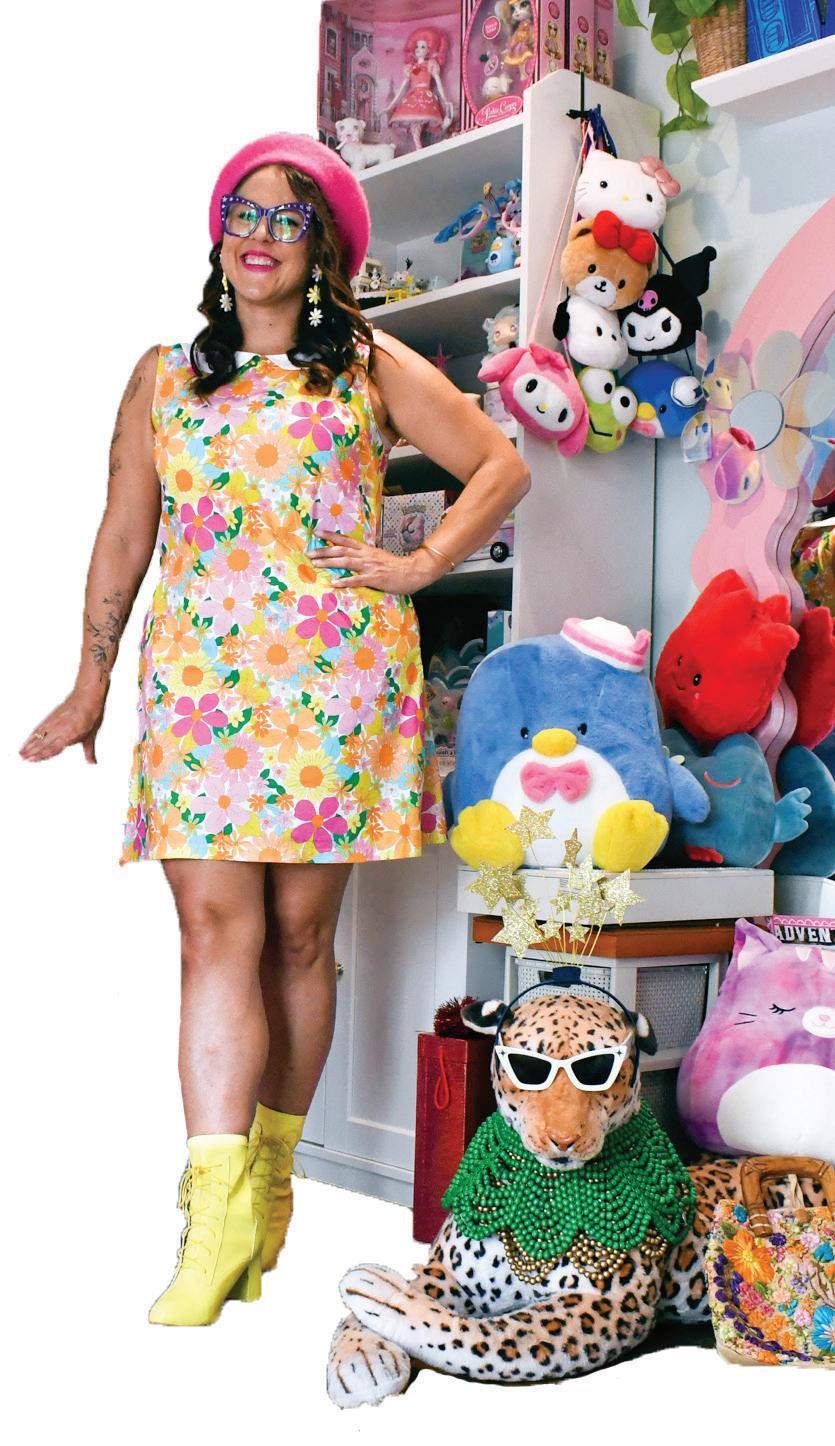
Beyond being immersed in toys, Velasquez’s fashion style brings to mind a doll that’s just walked out of a perfectly-packaged box.
Petticoat dresses in vibrant colors and prints, accented by eccentric accessories, comprise her day-to-day look.
“Just being able to walk by and see someone smile just because of what I’m wearing is like, it’s fun,” she said.
The size of her wardrobe rivals that of her toy collection. Other than her glasses, her favorite accessory is a vivid beret.
— Elena Velasquez Vice president of design Dolls and collectibles, Jazwares
Learning the industry
Yet Velasquez — whose star-studded cat eye glasses punctuate her bright, brown eyes and shore her brunette waves — didn’t always see toys in her future.
Velasquez’s journey began in 1998 as a first generation college student at El Camino College, equipped with only the thought of working in a creative field. She enrolled in art classes after graduating from Hawthorne High School and was open to seeing where they would lead her, upon encouragement from her mom Janina Velasquez, who served as the executive director of the ECC Federation of Teachers from 2000 until about 2017.
“I just loved El Camino, too, just because it gives you the opportunity to kind of figure out what you want to do,” she said.
One of her professors, Andrea Micallef, suggested she consider attending Otis College of Art and Design in Westchester and offered to help her create a portfolio.
Micallef, who retired in June after teaching at El Camino since the late 1980s, taught two-dimensional design.
“I felt like she was the kind of person who felt she could learn something from everyone,” Micallef said.
She said Velasquez was one of the last students to sit down after a class critique, examining all the art for what worked.
9 | Warrior Life
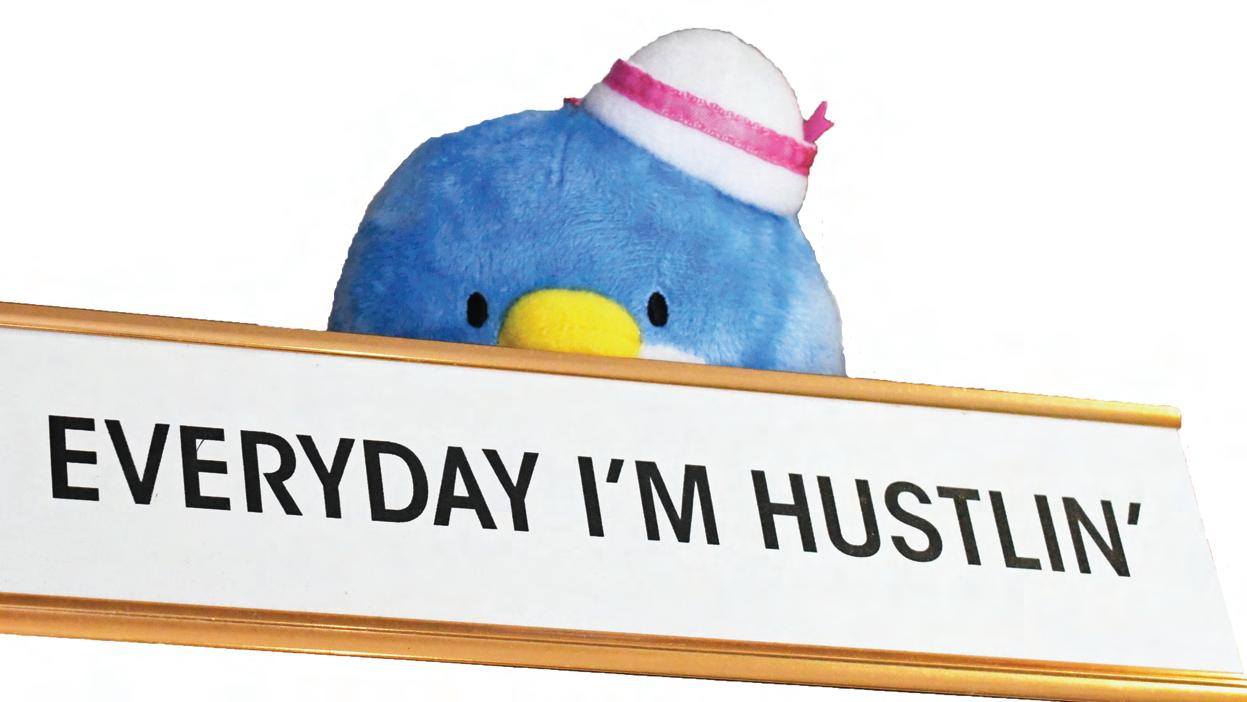
Right: Elena Velasquez, vice president of design for dolls and collectibles at Jazwares, stands in her Redondo Beach home office Friday, Oct. 10. Bottom: A mini Tuxedo Sam plush toy sits behind a placard on a shelf in her office Friday, Oct. 10.
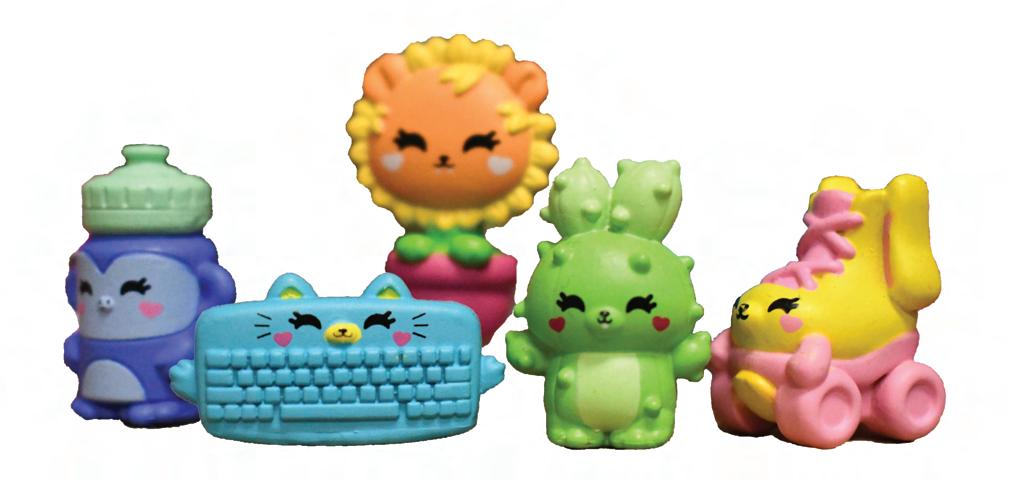
Kutie Kups figurines sit in Elena Velasquez’s Culver City office Thursday, Nov. 6.
child, Velasquez’s experience designing Polly Pocket toys informed her approach to Barbie’s brand.
2024 43%
Year that toy purchases for consumers aged 18 and older surpassed preschoolers, adding $1.5 billion in sales during the first quarter.
Number of U.S. adults that purchased a toy for themselves in 2023-24, for reasons including “socialization, enjoyment and collecting.“
Source: Circana, reports from January to May 2024
“I I had no idea that you could have a job, you know, as a toy designer, although literally Mattel was down the street .”
Velasquez graduated from ECC in two years with an associate degree in studio art and was accepted to Otis as a transfer in 2000.
— Elena Velasquez
Vice president of design Dolls and collectibles, Jazwares
At the time, she didn’t know the institute offered a toy program. She initially wanted to learn set design, but the program had been cut.
“I was like, ‘Oh, this is so interesting.’ Like, I love working with my hands. I love building stuff,” Velasquez said. “I had no idea that you could have a job, you know, as a toy designer, although literally Mattel was down the street.”
Just two years before she transferred, Otis became one of the first universities in the world to offer a baccalaureate program in toy design.
It was intimidating for Velasquez to study at Otis as she felt less trained in art than her peers.
“If you attend there [Otis], I mean, there’s incredible artists who have literally been drawing since they’ve been like two or [could] hold a pen or a pencil,” she said.
Jennifer Caveza, chair of Otis’ toy design program, said about 10% to 15% of students in the program are transfer students, and that there are over 350 toy design alumni in total.
Work as play
A feature of Otis’ program is paid internships with companies in the toy industry.
When Velasquez was there, she applied to Mattel for Barbie, but didn’t get the internship.
“But I ended up finding a different route,” Velasquez said.
At Otis, she was
placed with Equity Marketing, Inc., where she designed toys found in Burger King’s “King Jr.” kids’ meal boxes.
She received full federal financial aid to attend Otis, but worked while she was a student at a mobile portrait studio and at Trader Joe’s, which is still one of her favorite jobs.
Her first role out of college was as a project manager of girl’s toys for Playmates Toys in Costa Mesa, a company known for producing licensed toys including Teenage Mutant Ninja Turtles.
Mark Taylor — who was a co-creator of and main toy designer for the “Masters of the Universe” or He-Man series — hired Velasquez, where she helped launch new scented Strawberry Shortcake dolls.
The redesign involved a wardrobe makeover, ditching costume-like outfits for friendly, everyday girls’ wear.
“To be a little bit more fashionable,” Velasquez said.
After four years in Orange County,
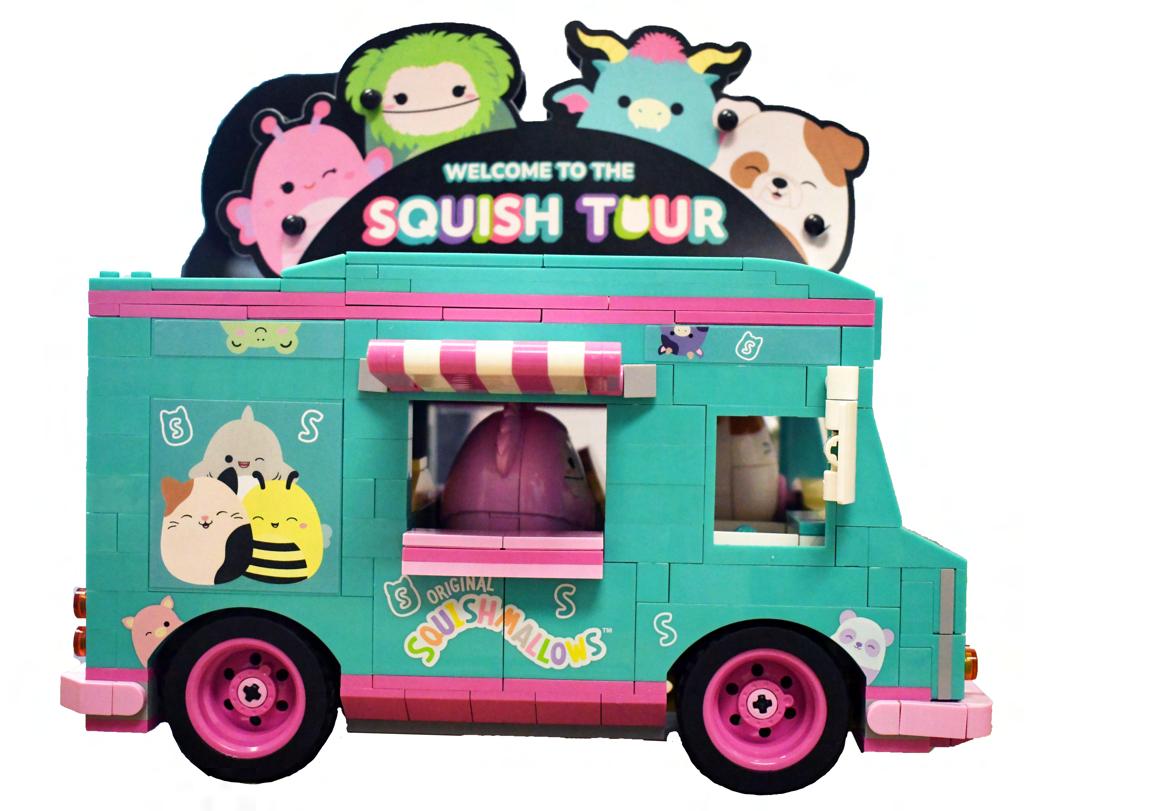
Bottom left: A September-released BLDR Squishmallows “Squish Tour” van set could be found on Elena Velasquez’s desk at Jazwares’ Culver City office Thursday, Nov. 6.
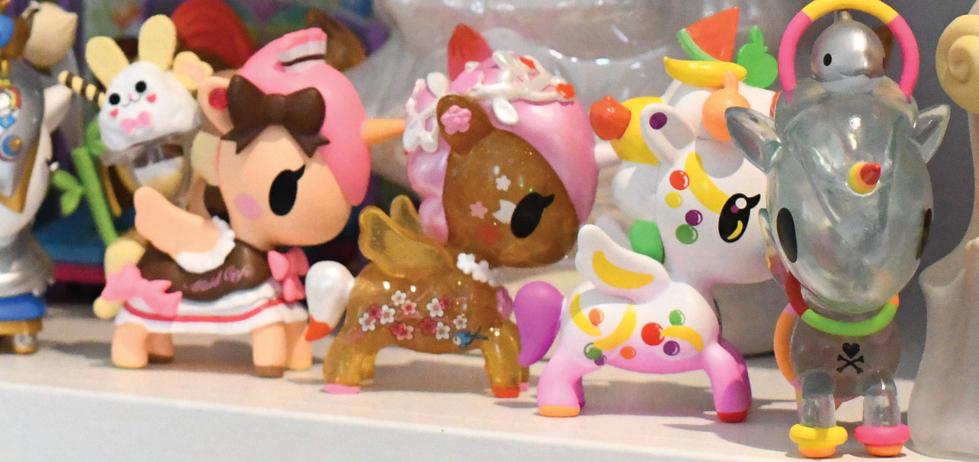
Middle: Plastic Unicorno Tokidoki figures line a shelf at Elena Velasquez’s home office in Redondo Beach on Friday, Oct. 10. Jazwares has held a master license for producing Tokidoki toys for the Los Angeles-based company of the same name, known for its Japanese-inspired designs and collectibles, since February.
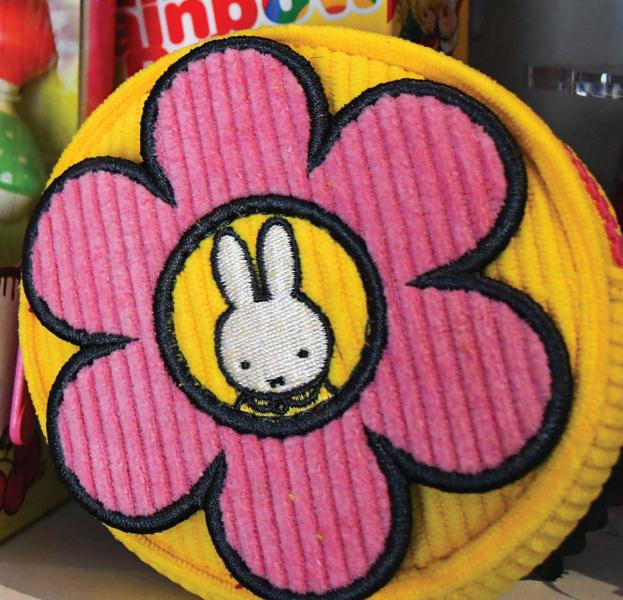
Bottom right: A Miffy-character corduroy coin purse stands on a shelf at Elena Velasquez’s home office in Redondo Beach on Friday, Oct. 10. Velasquez said she collects kitsch, cute and nostalgic items.
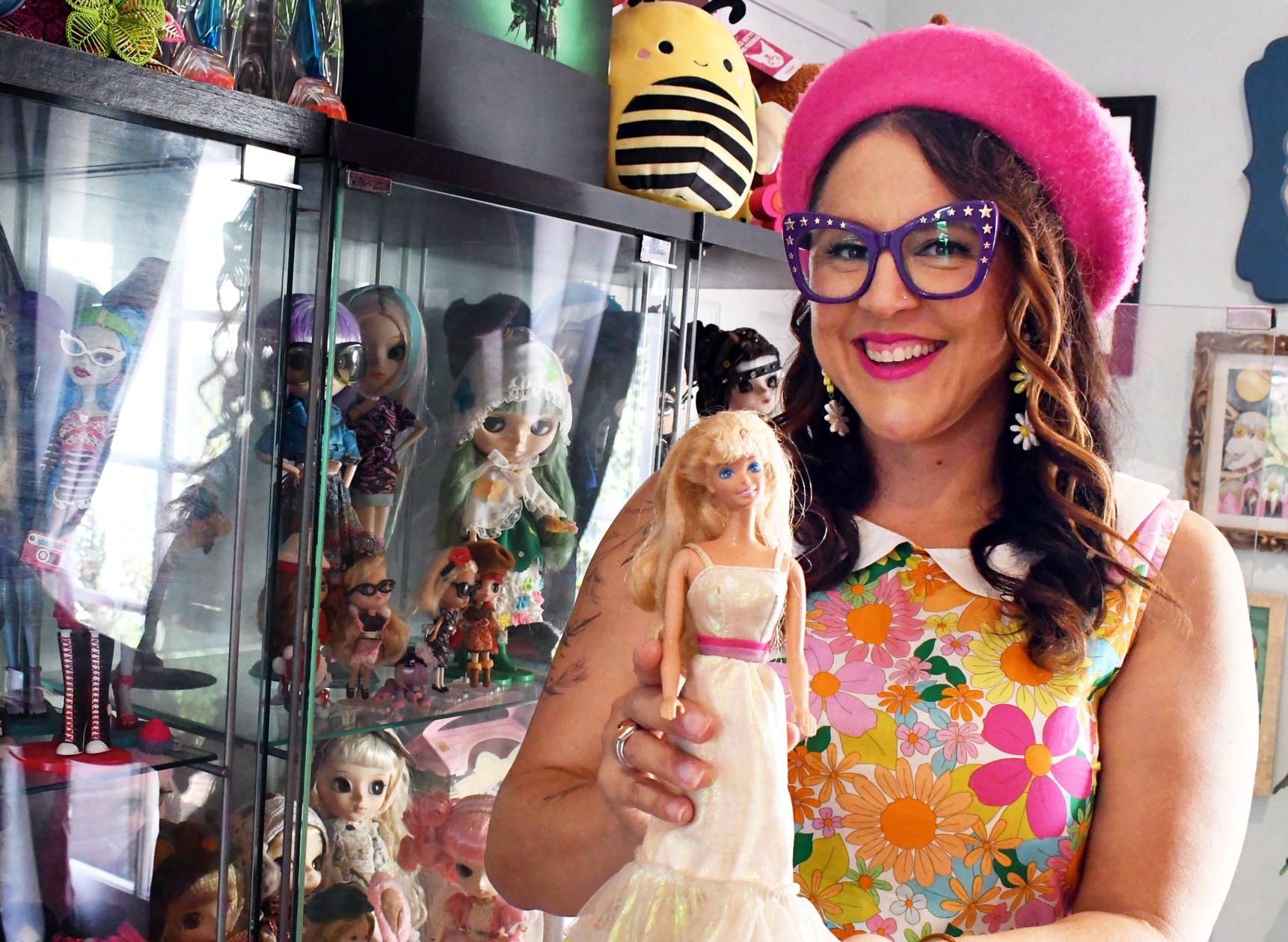
Top: Elena Velasquez, vice president of design for dolls and collectibles at Jazwares, holds the first Barbie doll she ever had as a child in her Redondo Beach home office Friday, Oct. 10. The doll, a 1984 Crystal Barbie, was a gift from her mom.
Velasquez missed her friends, family and the food in Los Angeles.
This time, when she applied to Mattel in El Segundo, she got the designer job — on Polly Pocket’s play sets.
At the time, she was also designing accessories for the newly-released Monster High brand, and her boss was the doll’s creator, Garrett Sander.
“That was an exciting time just to work and be next to my manager,” Velasquez said.
In 2011, three years after returning to Mattel, she made another change and became a product designer and manager in LA at Spin Master, a company founded in 1994 that was taking off, designing play sets for brands including Zoobles and Flutterbye Fairies,. Back to Barbie
After three years at Spin Master, in 2014, she returned to Mattel and wanted to work in a leadership position.
The then-vice president of design for Barbie, Culmone, interviewed Velasquez to be a design manager in 2015.
In the role, Velasquez oversaw a team focused on Barbie Entertainment, creating toys for the animated films.
“A lot of times they were building the story as we were designing the product. So, we were actually building product[s] that would be in the movie, which is a lot of fun,” she said.
Mattel, Inc.
Project designer-senior director, 2014-2022
Jazwares, LLC
Vice president of design, girls’ division, 2022-present
“I She’s a super innovative thinker, so her ability to think beyond the expected, to bring newness ... was really powerful.” — Kim Culmone
Redesigning and relaunching Velasquez later became a senior director of product design for Barbie and Monster High.
Senior vice president, global head of design Barbie and American Girl, Mattel
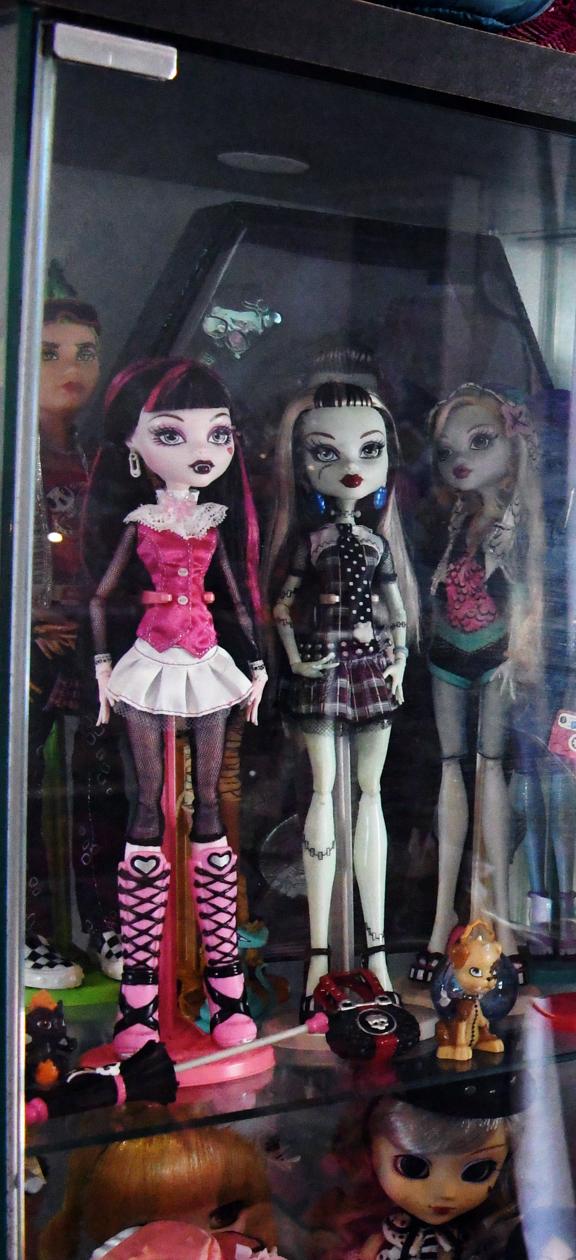
She directed the 2020 relaunch of Monster High, giving them a new look a decade after they originally appeared on store shelves.
“We didn’t want to lose sight of the amazing fans… we were really passionate about staying true to what the original Monster High was,” Velasquez said.
She said that as Barbie added more diversity, it was important that Monster High also represented a new body type.
“I think in dolls there is a lot more pressure because… when you’re looking at a doll, versus like an action figure, for some reason, dolls get judged so much more,” Velasquez said. “So you do have to take all of that into account when you’re designing.”
Culmone and Velasquez shared a similar trajectory at Mattel as both started as product designers before becoming senior directors.
“Elena really lives her life really immersed in toys,” Culmone said. “She’s a super innovative thinker, so her ability to think beyond the expected, to bring newness to the line, was really powerful and I loved having her on our team.”
V e l a s q u e z l e a p t upwards from Mattel and onto Jazwares’ ladder after being called in 2022 to build a girl’s toy division.
New business
Florida-based Jazwares, LLC was founded in 1997 by CEO Judd Zebersky.
After being acquired by billionaire Warren Buffett’s Berkshire Hathaway in 2022, Jazwares earned $1 billion in 2023, according to Time.
The company makes Squishmallows and toys for several popular licenses, including Pokemon, Harry Potter, Care Bears, Stranger Things, Fortnite, Five Nights at Freddy’s, Avatar: The Last Airbender and more.
Velasquez’s domain, the girl’s division, is a space where Hello Kitty meets new friends from Squishmallows’ Squish-alongs, Tokidoki and others, all designed by Velasquez’s team of about 30 people situated locally and across the nation in Pennsylvania.
When she’s not leading designers for top toy brands, she can be found gathering inspiration at craft fairs and vintage markets in LA or announcing new toys at San Diego Comic Con.
From her Hawthorne bedroom covered in Strawberry Shortcake to her toy museum at home in Redondo Beach, the littlest things in Velasquez’s life eventually became the largest.
“It’s just been really fun, and a way for me to just stay a kid,” she said.
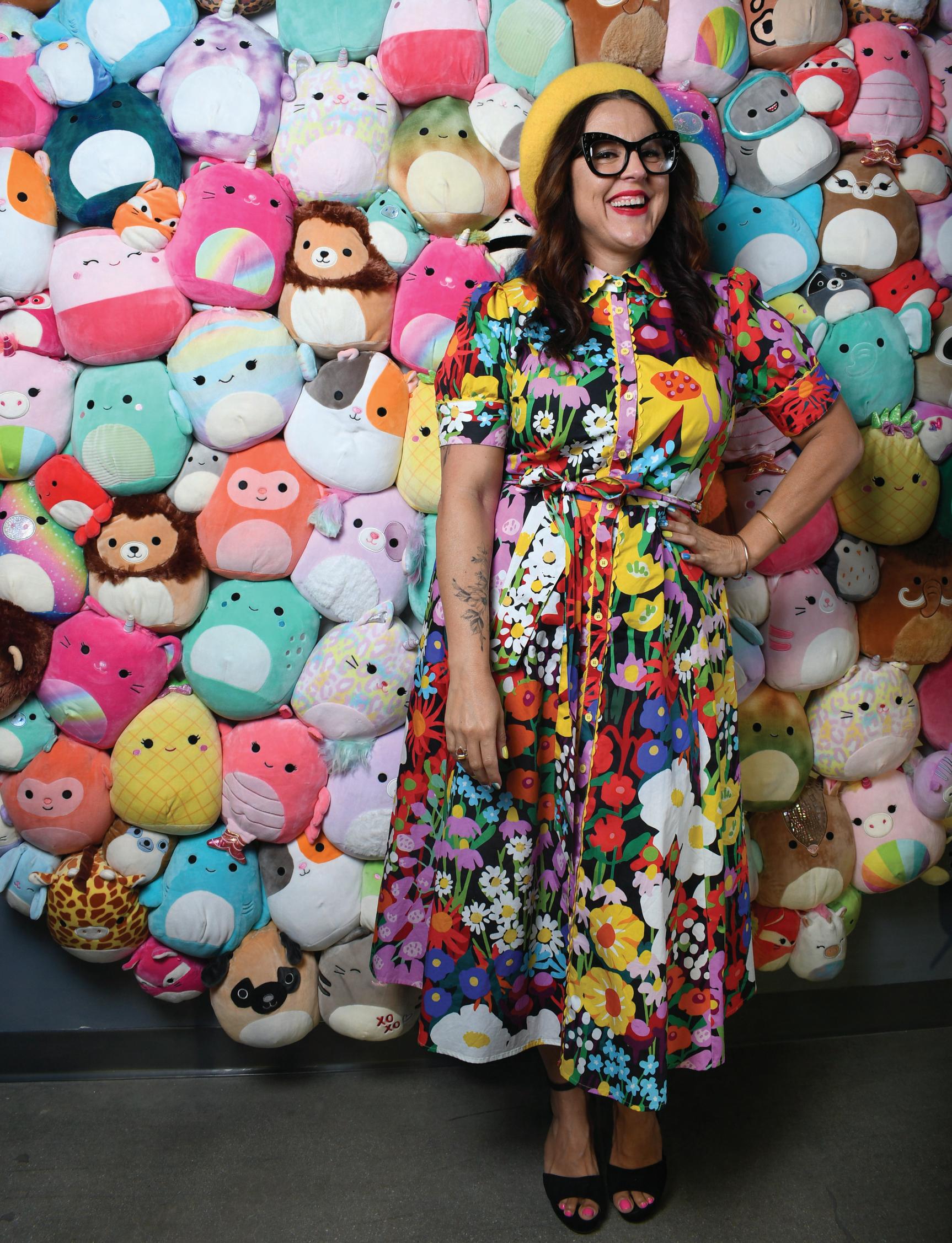
Right: Elena Velasquez, vice president of design for dolls and collectibles at Jazwares, stands near where a collection of Squishmallows hug a wall in Jazwares’ Culver City office Thursday, Nov. 6.
Left: Dodgers-game special edition Hello Kitty plushies sit together in Velasquez’s Redondo Beach home office Friday, Oct. 10. 13 | Warrior Life
Pack your Bags, sis, we’re leaving again.
The persistance of the relationship with my sister
Story by Oriana de Quay Illustrations by Daniela Ortiz-Miranda and Oriana de Quay
If I could only put one thing in my life’s first-aid-kit, I would shove my sister Chiara in there.She understands all of me because we both front-lined the others traumas.
Chiara and I have been moved from house to house, and country to country. Our upbringing was a never-ending goose chase starting with the Great Recession of 2007-2009.
In February of 2009, towards the end of the recession nearly 300,000 workers were laid of, according to the Bureau of Labor Statistics.
My parents tried to hold on to their real estate jobs, but the ripple of the recession cost them their positions, and led them to bankruptcy. We lost our house in Santa Clarita and the two cars, depleted our savings and gave our dog
was ten. Chiara experienced my parents’ poor financial choices and losing her safety net more deeply than I experienced it. She developed an anxious personality from it, along with the arguments she overheard my parents had. My parents wanted to leave it all behind, so we left.We were on a fight to Spain.
Chiara and I didn’t have time to focus on our life altering event because we were living in luxury watching movies and sipping on unlimited ginger ale on the plane.
First stop
Our first stop was a small town in coastal Barcelona called Sitges, a city of
Mom stayed at home for the most part doing the cleaning and cooking. She would step out for her yoga down the street early in the mornings, or for groceries.
I viewed her as the Asian-American mom that she was, which was ndependent, nonchalant, and Westernized.
It was awkward seeing her fulfilling the domestic role dad pushed onto mom. Perhaps the idea of the home he always wanted for himself. I waited to see how long mom could put up with that role. Despite that, It was a great little year in Spain for me. I didn’t see the rough bits where dad was falling short on rent.
Instead, I saw Chiara. She stood up for me and took care of me while my parents kept busy.
Dad had Spanish nationality, so we acquired Spanish
Dad speaks Spanish, mom does not. Dad was the only breadwinner of the family. The only bread mom was making was mushy Açorda stew, made up of old bread, our most expensive meal given the fact mom splurged on the
The thought of plunging my spoon into a gooey bowl
She and I would walk to school together, help me shower and brush my teeth, she packed my lunches and helped me with homework.
I would join her for her occasional playdates, which I formally invited myself to.
And at night, we would rest our sleepy heads on our flimsy, spontaneously collapsing beds.
Dad said Barcelona was full of dishonest clients that didn’t compensate him and stole his web design work, So one year in Spain later and we were leaving again.
Another Fresh Start
We took a fight to Portugal. Dad was born there and he speaks the language.
We left Spain and with it all its “problems” , but they followed us, just like they would to the next place we would end up in.
My exhausted dad, the sole income for the family, started to hold his money
My favorite part about school was sitting by the wire fence, like a patient dog, waiting for the familiar face of Chiara to appear and walk past with her friends.
I would yell her name the fence excitedly.
“Chiara!”“Chiara!”“Chiara!”
Embarrassed, she barked at me to fnd my own friends, and to stop coming to the fence.
So, I stopped. That was the push I needed to find my own friends and embrace the people I had in my new life in Portugal.
Chiara didn’t struggle finding her people, but she did struggle keeping up in class.
English is our first language. The other languages came easier to my flexible toddler brain, but Chiara was learning at the same level as fuent Spanish and Portuguese natives.
She was being taught Don Quixote, the Shakespeare of Spanish literture, and while learning algebra and bilogy in a foreign She said, “Everyone was 20 pagesahead ofme.”
When my dad discovered that my mom had been receiving money from her parents, my dad lost trust in my mom.
He saw it as making us struggle on purpose, as selfish, and he saw conversing with her mother at all as a conniving efort against him.
There was no more trust in their relationship, so the only thing that made sense was to end their marriage.
Chiara’s last semester was coming to an end.
My parents sat my sister and I down and they explained to me that we are moving back to California where Chaira will attend university and that they were separating. I went along with it despite my silent objections.
Mom and I left first. We would be going to live with my grandmother in Granada Hills.
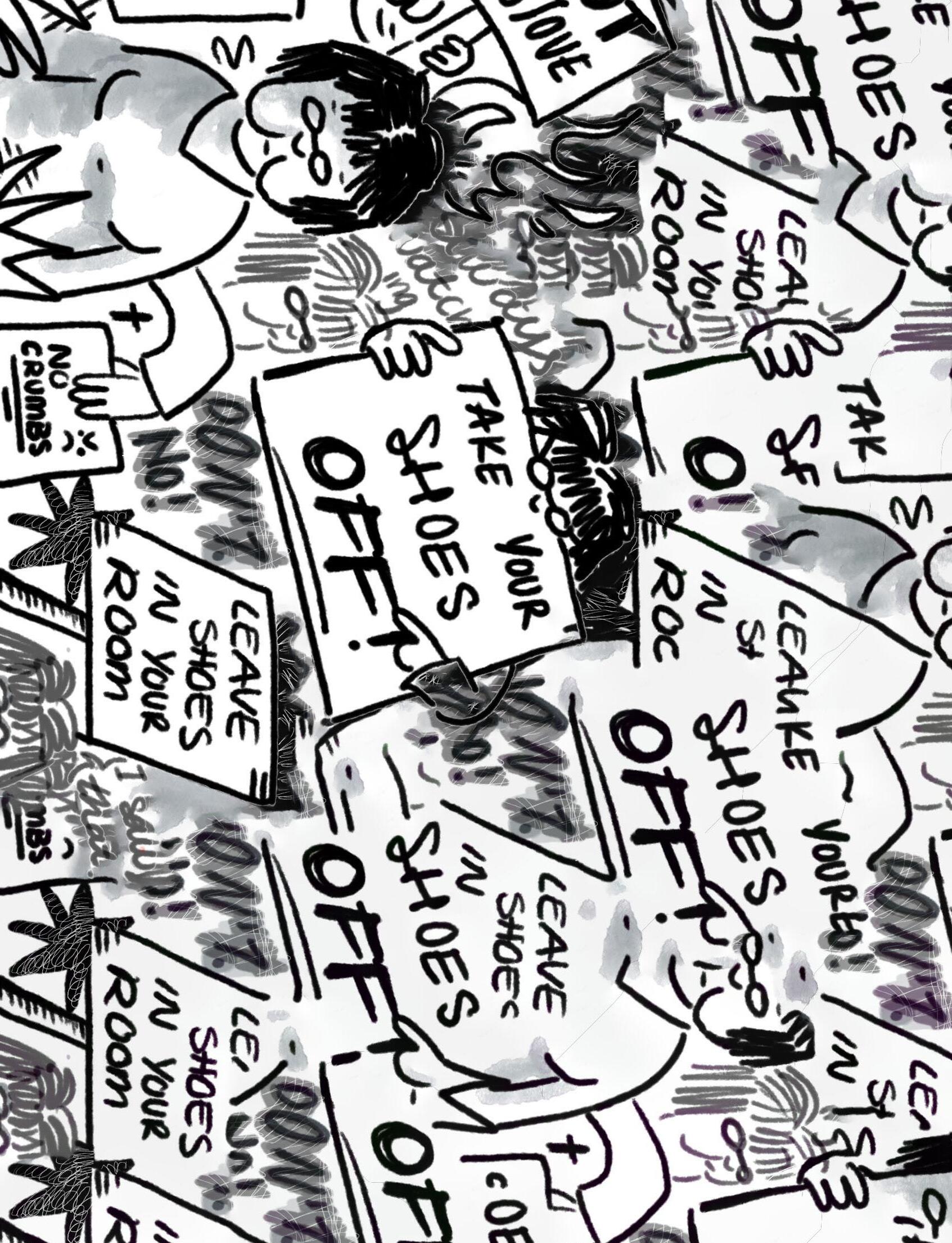
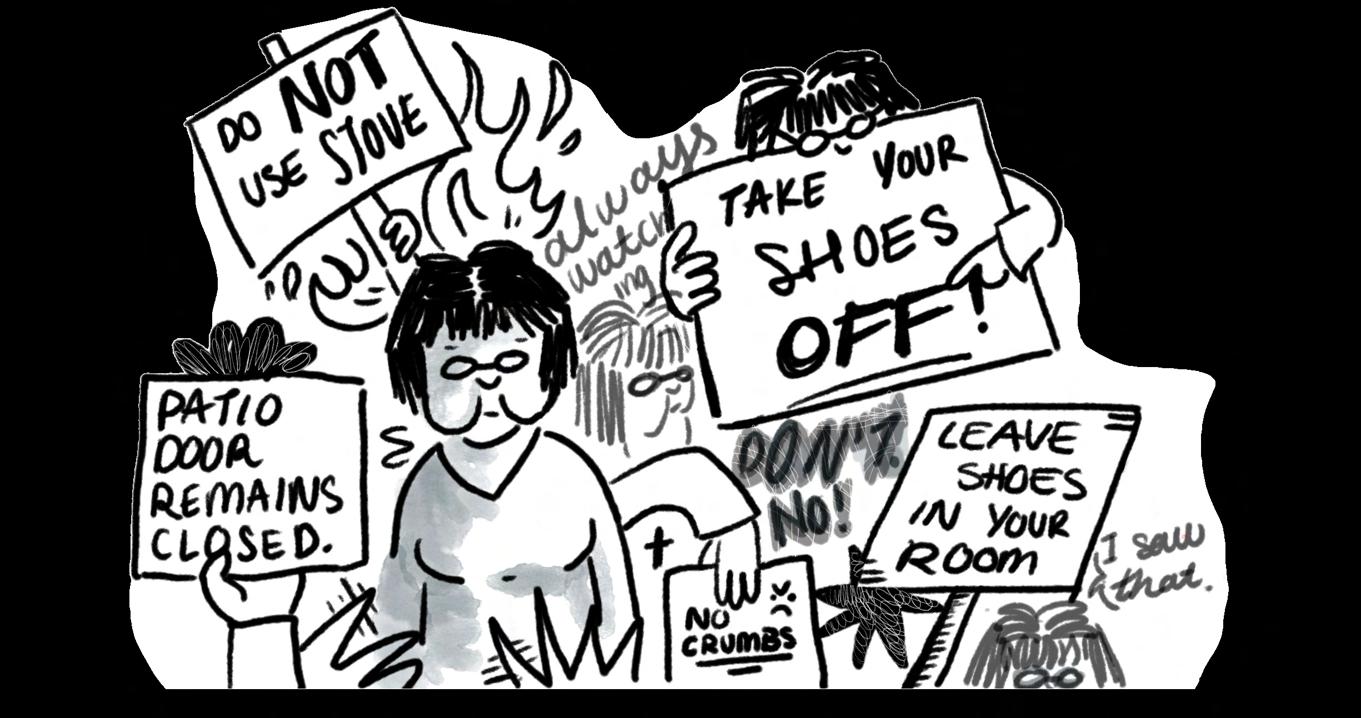
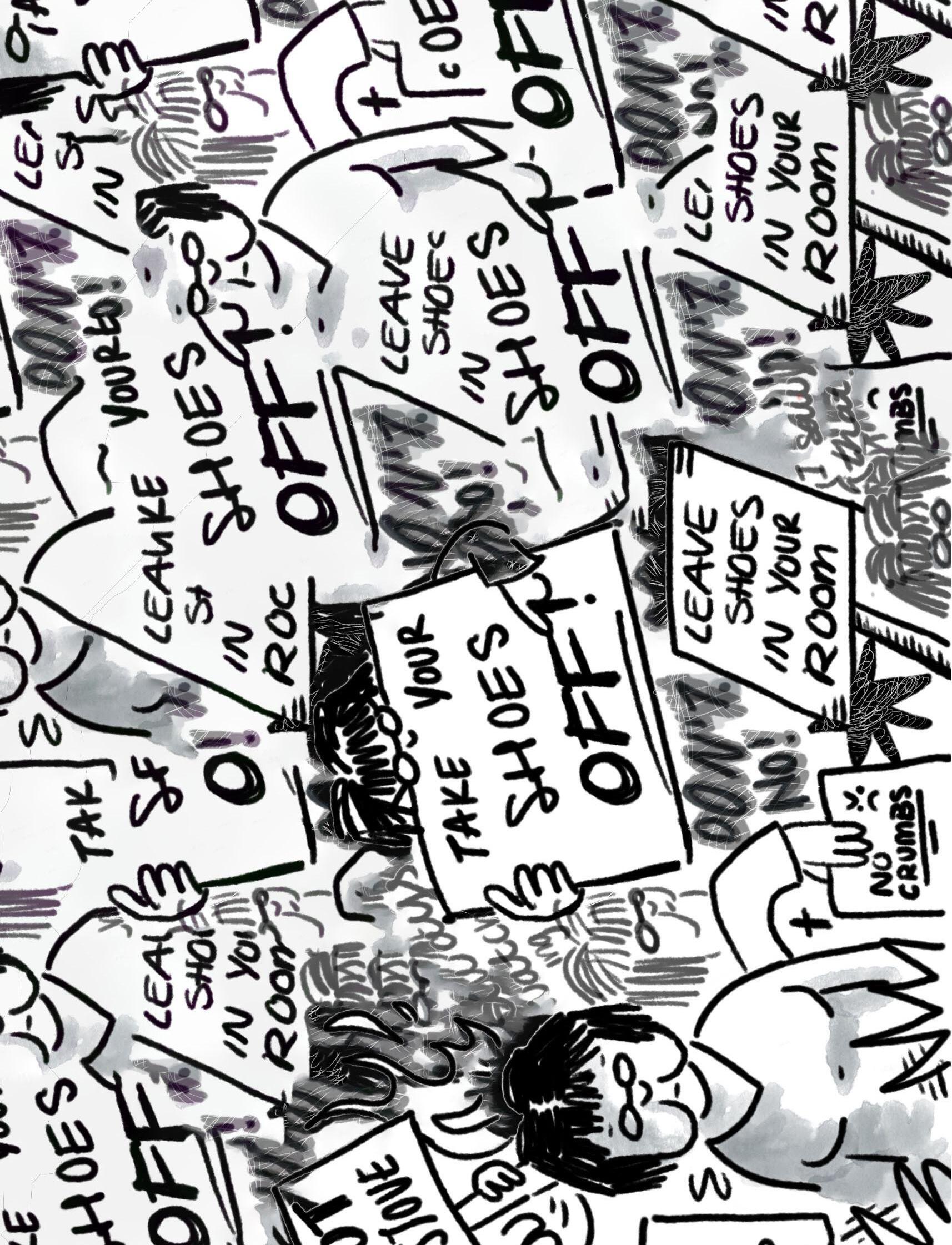
Mom was used to it, and I made it make sense for me, but when Chiara eventually joined us at grandma’s house a few months after, she was confused why grandma was cold, opposite of how we imagined her those years we were away. We tip-toed around the house out of fear. Usually when we made a “mistake” grandma did not waste any time posting a sign addressing it:
“Do NOT use the stove.”
“Shut the patio door!” “Shoes OFF!”
“Use Your Slippers!”
Chiara was a daddy’s girl just waiting for her dad to come rescue her. She snuck away into corners of the house and walked out to the alleyway and made calls overseas to our dad. Usually the conversation consisted of when are you coming, and how is Macey, our dog.
my mother had a love-hate relationship, and there was no time to make amends because mom and I were leaving.
Chai ra felt there was order in our family. So, she made up for it by striving for good grades. This is how she would help the family, she thought.
We hired useless tutors which only frustrated her more.
We put her in a private American Catholic school called Saint Anthony in Estoril, Portugal. She fnished up her last year in private school, while I stayed in the Spanish school with my friends. Dad was too busy for friends. He talked to his kids forgetting that we were 11 and 16.
Chiara absorbed a lot of the resentment dad had toward mom. She began speaking to my mother rudely, with more frequency.
Dad and Chiara were staying in Portugal until they could aford to fy to the States.
”It hurt coming to the apartment [in Portugal] and no one was there,” Chiara told me, ”It hurt to know you were gone.”
Chiara and dad arrived at an empty apartment, looked at one another, and went to their separate rooms to cry.
Going to grandma’s house
Mom and I moved into her old roostarted going to mom’s former middle school George K. Porter on Kingsbury Street.
Grandma’s house ran a tight ship.
We didn’t speak to our grandparents about our lives because we didn’t get the impression they cared.My grandma would veer the conversation to why have you gained weight or what’s all the hair on your arms.
Chiara has been plotting her escape from my grandma’s house. Once my dad was able sell the last of our old belongings, he came back to the U.S., and Chiara left to go live
I seldom saw Chiara after she moved in with dad. I saw my dad every other weekend, which meant I saw Chiara every other weekend in a little apartment in Venice Beach—also limited on space and privacy. I was in high school while Chiara worked part-time jobs and attended classes at Santa Monica College. We all started living independent lives from one another. The visits felt like a courtesy not a natural instinct. The reality is that the family was ofcially divided. There was no going back now.
I missed the family structure I used to have, and I missed the connection I used to share with my sister, but we shared jovial moments in small windows of time throughout my four years in high school. Eventually, Chiara got into the University of California, Davis, in Northern California.
To be Home Schooled or Not to be
Homeschooling was this for me and I enjoyed it....
By: Teresa Galvez
Iturned 3 years old, looking
the size of a small 2 year old. My mom dropped me off school and my tears dropped looking at her from a distance while my older sister was not anywhere around. I started crying so loud that the teacher sent me to the office of the Mother Superior and I immediately hid under her desk because I thought no one will fnd me.
Sometimes the older students would look for me and lift me up and say, “she is so little.” This happened several times. But it did not last long. While feeling spoiled and at the same time I was afraid and scared of not seeing my mom again.
When my mom took me home and thanks to my dad, we all moved to the Northern area of Peru closer to Ecuador.
My mom did not fnd a good school, so she hired a home tutor for myself and not for the rest of my siblings.
Homeschooling was the best idea my parents had for me.
My father was interested in helping me with math and writing, which led to be home schooled for 10 years.
I also read Agatha Christie’s biography and much like me she was also home schooled but unlike me, she was forbidden to read until she was 8 years old.
Christie was curious and she learned to read when she was 4 years old. My level of curiosity was less than her, because my father never forbade me to learn something new while living at
home.
Christie said that she hated both radio and television. She believed that television would lead to the decline of the family. She feared that television would replace books and prevent people from learning. I was more interested in watching TV than being serious with my studies.
My parents separated when I turned 10 and my homeschooling stopped.
Like Thomas Edison, while being home schooled. Thomas was the seventh and last son of Samuel Edison and his mother Nancy Elliot who was a former school teacher.
She taught him how to read, write and do math. Later, Edison ended classes for only a few months. He learned mostly by reading on his own.
Later, when I was 15 years old while living with my dad, he enrolled me at a well-known school that students went performed well.
It was not challenging for me, while being quiet and bored. The school was for those who could aford the tuition for their children.
While living with my father my selfesteem dropped, feeling smaller I made friends with everyone even with some of my classmates that seemed to be excluded from our group.
To my surprise, some of my classmates would engage in conversations while the teacher was lecturing.
It was not easy to listen to the teacher. A student would throw an egg at the blackboard. When the teacher saw this
and got upset, my head would go down on the desk and cry.
It was about adult students misbehaving in their classroom while the instructor had a hard time dealing with them. That show my mom did not let me watch it again.
The next chapter of my life was trying to fnd a career. I enjoyed reading mostly on my own about famous people that were home schooled.
He read Thomas Paine. In Paine’s book “Common Sense” said, “In America the law is king.”
The most important part about becoming a citizen of the United States was the diference between my country, Peru, and the laws they have in place in America.
Here it is more orderly, because people are more serious about obeying the laws, compared to Peru where the laws have not been updated.
There is no country in the world that I heard was founded by God”s laws.
My homeschooling was at the time just perfect for me. While being home schooled, I got a chance to live at home and it made me appreciate my parents eforts and concern about my education.
I liked being home schooled because I can concentrate and have no interruptions when I study .
In the end, learning about diferent subjects in school and writing and reading on my own was the solution to my education.
Illustration by Sofa Flores
Stressed more over hidden fees than my finals
Extra costs for textbooks and course materials puts unnecessary stress and struggle on students
Story and Illustration by Drex Carratala
As a student of El Camino College and an employee at Pavilions, the cost of textbooks would be more bearable if they can be factored into the cost of a class itself.
With student tuition and the rising cost of education, I believe that several colleges have not taken the measures necessary to alleviate student expenditures.
I’ve found costs for class materials to always be just another way of pushing students into spending more money on required reading.
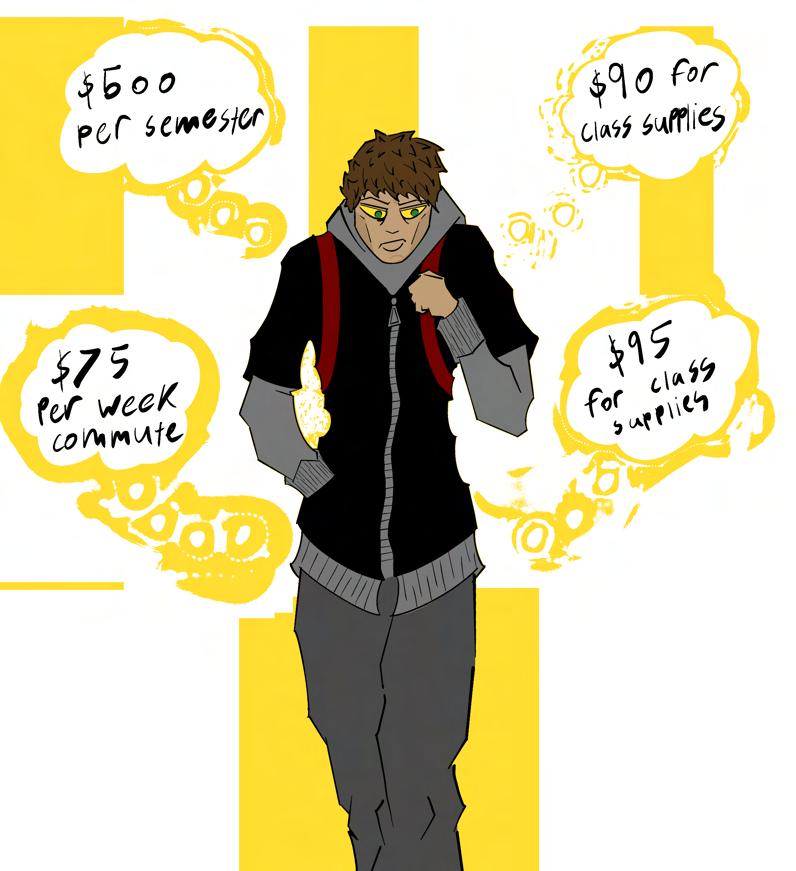
This semester, I signed up for three classes with each unit costing $46 per unit for California residents. However, with other required fees it adds up. Before even factoring in extra course material.
While, this is more affordable when in comparison to private colleges, there is always room for improvement in terms of transparency with where student’s money is being spent.
Over my time at El Camino I’ve enrolled for several classes and more often than not the textbooks are nearly a quarter of the cost of the course.
It never gets any less jarring each time to find out the cost of the materials after getting the syllabus.
If this were factored into the upfront cost of a class, then students would have more of a clear receipt for the cost of their classes.
I’m not always someone who has $90 to just whip out for a textbook if other methods of obtaining material are available.
This does not mean I am not willing to not spend money on course material; the issue arises in the way that the
expense is given to the student as an afterthought.
I do not see a reason for required course materials to not be factored into the cost of tuition per semester.
It seems like a necessary expense in order to participate.
But this does not have a very good reason to not be available to students before they sign up for the class.
I know that students who are in lower income brackets struggle with these added expenses and would appreciate the upfront full cost of tuition with these expenses’ factors in.
A more transparent bill of what the real total of a class would cost.
Currently “59% of undergraduate students at El Camino Community College District received financial aid through grants or loans in 2023. This represents a growth of 5.36% with respect to 2022, when 56% of undergraduate students received financial aid.” per Data USA in relation to ECC.
This should be something that the school should be able to supply itself. Students are obligated to pay for these classes
These materials that are necessary for participation should be factored into the cost of a class and the money given to the school for enrollment should go towards ensuring professors can provide these resources to students.
If the option was there then students who opt in for it can take a bit of a higher Price while coming to class with no worry about various extra expenses they have to get independently from tuition.
El Camino College has shown itself to be an institution that is interested in financial saving opportunities for its student body in other ways.
Students at ECC spend $6,694 less compared to a student at a CSU with the same General Education classes.
If students had an option to factor the cost of textbooks into their tuition per unit for the sake of a more clear price.
I believe that the student body would be appreciative of this, having more transparency of what it is their paying for rather than having to pay for it after their enrollment.
1. Rocoto
2. Pollo Inka
3. Inca Gourmet
4. Kotosh
5. Inka Wasi
Five of the Best Peruvian Restaurants near El Camino College
By Teresa Galvez
PTraditional, typical and tasty dishes
eruvian food is the most savory, satisfactory, surreal meal that works for any occasion and is especially perfect for celebrations now that the holidays are around the corner. While trying this amazing variety of Peruvian dishes, you will discover how Peruvians eat at home. Big portions mean having leftovers the next day.
El Camino students get a 10% discount with college ID. They have another location in Huntington Beach. Tacu Tacu is $29 and includes of steak, one egg, fried banana
Accompanied by mixed rice and bean dish and onion
Salad. The most wanted traditional Peruvian dish is the Tacu Tacu.
Address: 1356 W. Artesia Blvd. Gardena, CA 90247
Phone: 310-7688768
Hours: Monday -Friday:11 a.m. to 8:30 p.m.
Saturday: 9 a.m. to 9 p.m. and Sunday: 9 a.m. to 8:30 p.m.
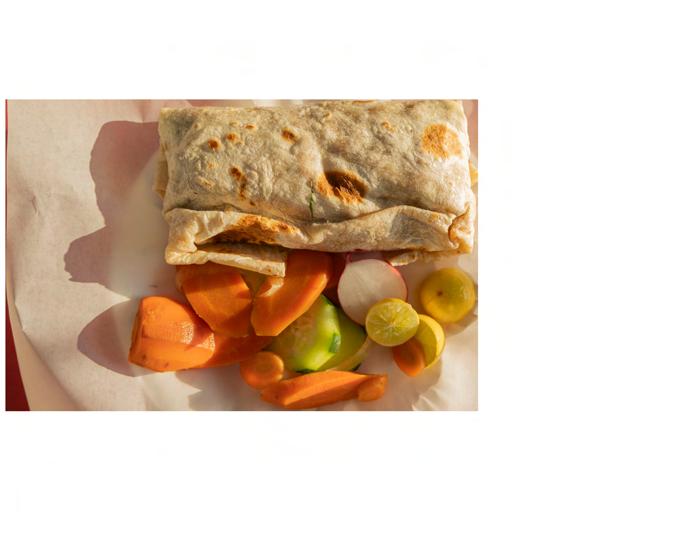
The lomo saltado, one of the most traditional must try dishes.
El Camino students get a 20% discount with college ID. Lomo saltado is a must try dish: lean beef, sauteed onions, cilantro, tomatoes and green onions with french fries all for $20. Address: 1425 W. Artesia Blvd,.Gardena, CA 90248
Phone: 310-5167378
Hours: MondayThursday: 10:30 a.m. to 9:30 a.m. Friday: 10:30 a.m. to 1 p.m.
Saturday: 11 a.m. to 1 p.m. Sunday: 11 to 9:30 p.m.
The prices are reasonable for the aji de gallina is $12 or $17.99 for all you can eat homemade Peruvian food. At this restaurant is where you can taste different popular and traditional dishes that Peruvian people cook in different regions of Peru.
The most traditional Peruvian choice is the aji de gallina: shredded chicken Address: 15651 Hawthorne Blvd.
Phone: 310-9736476
Hours: Monday through Sunday 10:30 a.m. 6:30 p.m.
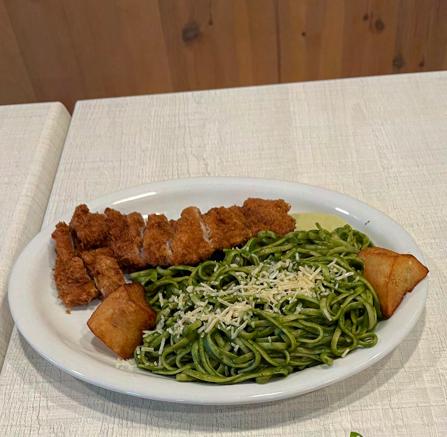
One of the most popular Peruvian and suchi restaurant, this is one of the five best restaurants to relax and enjoy their delicious foods. People are friendly and you do not have to wait long for your food. For $22 a good choice is the delicious tallarin verde, spaghetti with spinach, cheese basil sauce with choice of chicken katsu.
Address: 2408 Lomita Blvd.
Phone: 310-2571363
Hours: Monday through Saturday 11 a.m. to 9 p.m.
Sunday 11 a.m. to 8 p.m.
For $21 try steak montado. This is a traditional dish, a must try Peruvian food suited for all food lovers. It comes with a thin steak, a fried egg and platanos, served with white rice and salad.
This restaurant offers El Camino students a 10% discount with college ID. Address: 5 Peninsula Center, Rolling Hills Estates, CA 90274
Phone: (310) 5416900
Hours: SundayThursday: 11 a.m. to 8:30 p.m.
Friday-Saturday: 11am to 9 p,m,
Padded for Protection
How Guardian Caps Are Changing Football Safety at El Camino College
By Sydney Sakamoto
It’s a sweltering August afternoon at Murdock Stadium, and the El Camino College Warriors are deep into fall camp. The sound of cleats digging into the turf is familiar, as are the whistles slicing through the heat.
But one sound is noticeably different.
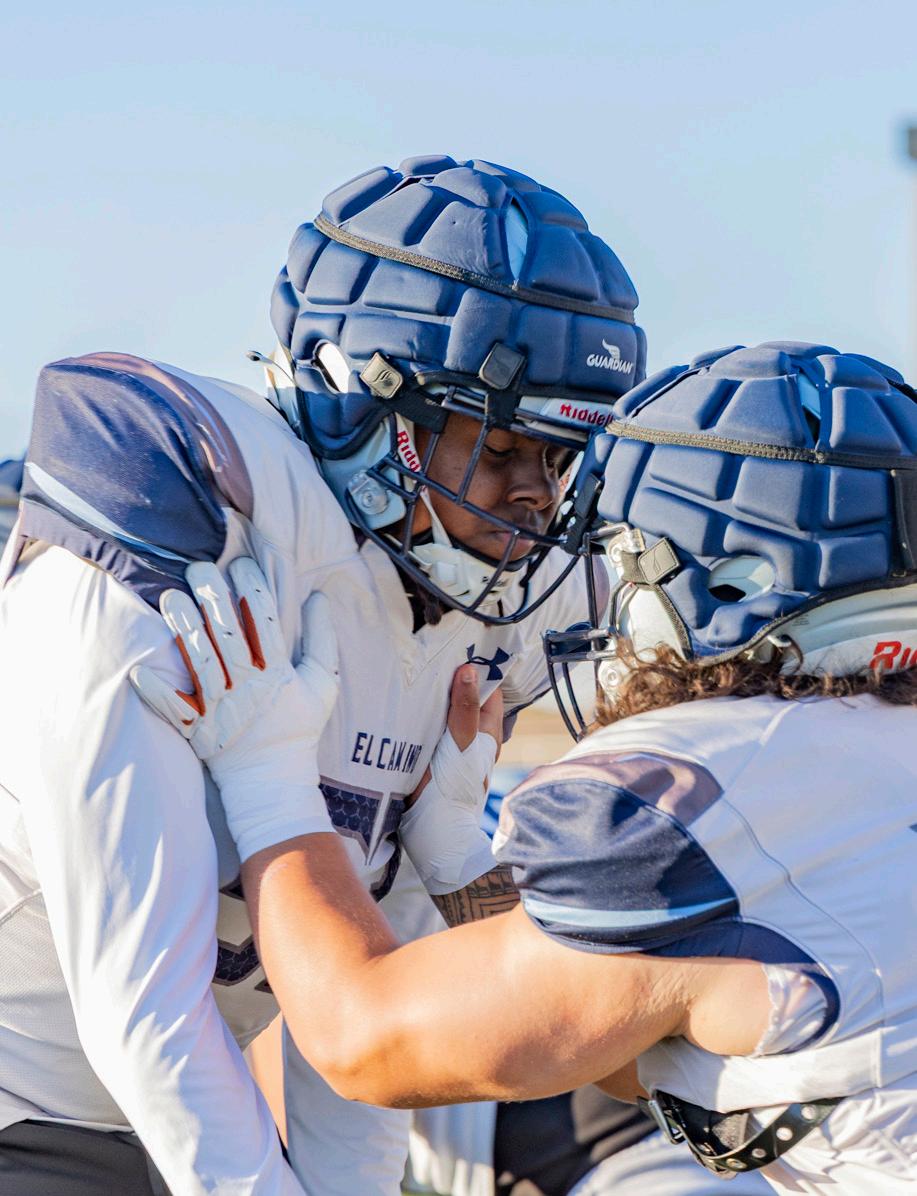
The familiar metallic crack of helmeton-helmet collisions is softer, almost muted.
The change is not the result of a new drill or a quieter approach to practice. Nearly every Warrior on the field is wearing a Guardian Cap, a thick layer of padded protection strapped onto the outside of the helmet. And whether players think about them or not, that extra layer represents a cultural shift happening not only at El Camino but across football nationwide.
For coach Gifford Lindheim, who is going into his ninth season, prioritizing safety is no longer an optional part of coaching. It stands alongside conditioning, film study and game strategy as a central part of the job.
“It’s become the norm in football,” Lindheim said. “And the bonus is that it protects the helmet and helps preserve it longer.”
Equipment manager Chris Nielsen sees Guardian Caps as one piece of a larger commitment to athlete safety.
“Technology keeps advancing,” Nielsen said. “As it does, we’re going to continue to support student-athletes and protect them as best we can.”
The decision to use Guardian Caps came after staff observed a noticeable drop in concussion-related injuries during practices. The caps are not used in games yet, but trainers and staff agreed that reducing practice-related risks was a crucial step.
“They’re easy to attach, easy to maintain and most players don’t even notice them after a while,” Nielsen said. “They don’t weigh much at all.”
Athletic trainer Rangel Angel sees the results of helmet impacts every season, and he often uses visual metaphors to describe what a cap can and cannot do.
“I always describe it as kind of like a fish in a fishbowl,” Angel said. “The fish is the brain, and it still moves. You put a cushion around the bowl, but if the bowl is shaken, the fish will still move.”
Angel emphasizes that Guardian Caps do not eliminate concussions, and research has not shown that they prevent them outright. But the caps reduce the impact forces that occur during collisions, which can lessen the likelihood of certain injuries such as skull fractures and high-acceleration impacts.
“Football is a collision-heavy sport,” Angel said. “The caps reduce some impact and reduce some acceleration on the head. There’s evidence for that with the athletes here.”
Angel estimates that while concussions remain possible, the overall risk in certain situations can drop from a theoretical 100% to somewhere near 90%. Even small reductions can matter across the hundreds of hits an athlete absorbs over the course of a season.
Some players at El Camino use a second protective device: the Q-Collar. The collar wraps around the neck in a horseshoe shape and sits just above the collarbone.
Angel explains the science behind it carefully because the concept is less intuitive than helmet padding.
“The idea behind the collar is that it semi-occludes the venous return of blood from the brain,” he said. “It keeps a little more blood inside the skull. The environment becomes more viscous, which creates less room for the brain to move.”
The goal is to reduce “slosh,” the movement of the brain inside the skull during impact. Q-Collars cost more— typically between $200 and $300—and not every player chooses to wear one. Some simply find them uncomfortable.
El Camino College Warrior wide receiver
Mark Baker on Wednesday Oct. 22 at Murdock stadium before practice. Photo by Oriana de Quay
El Camino College Warriors football defensive players run drills in practice on Wednesday, Oct. 22. Photo by Oriana de Quay
Still, the collars represent another step in the growing toolbox of football safety technology.
The rise of Guardian Caps can be traced back to Guardian Sports, a company founded in 2011 by Erin and Lee Hansen. The Hansens, known for their engineering and innovation background, began developing products that addressed safety concerns in athletics. Their son, Jake Hanson, now serves as CEO.
“Everything the company does operates around seeing a need and figuring out what can be done in terms of health and safety,” Matt Seiler, the West Coast representative for the company said. “It’s about creating better opportunities for athletes to play the sports they love and to do it in a healthier way.”
The idea for Guardian Caps came when Lee Hansen started questioning how to reduce force during collisions.
“He said, ‘What can I do to reduce force and impact from helmet-to-helmet hits and helmet-to-ground hits?’” Seiler said. “That’s where the concept started.”
Early designs were focused entirely on protection rather than appearance. Over time, the company improved the caps by strengthening straps, adjusting Velcro systems and developing new models with flatter sides that can better accommodate decals.
“It was not about aesthetics,” Seiler said. “It was about making a difference and protecting athletes.”
The commitment to protection remains at the core of the product.
“We will never sacrifice the integrity of the product,” Seiler said. “It might not always look the best, but it will perform the best.”
Guardian Sports follows a philosophy of transparency regarding product testing. The company does not run its own studies, a decision Seiler said helps avoid conflicts of interest.
“We don’t do our own studies, and that’s a healthy way to approach this,” Seiler said. “We don’t want to be controversial or biased. We let independent researchers do the work.”
Guardian Caps have been tested and evaluated by a range of organizations, including Stanford, Rutgers, Virginia Tech and NFL-affiliated research groups. Studies have examined their ability to reduce force, impact and head acceleration.
Research shows that for youth and college players, Guardian Caps can reduce impact forces by roughly onethird. In the NFL, the introduction of Guardian Caps in practice has coincided with significant reductions in concussion rates.
During the 2022 preseason, the position groups required to wear the
caps saw more than a 50 percent reduction in concussions compared to the previous three-year average. In 2023, training camp concussions reached a seven-year low.
NFL data indicates that when one athlete in a collision is wearing a Guardian Cap, at least 10% of the impact force is absorbed. When both athletes are wearing them, the reduction increases to at least 20%.
Seiler said the company is comfortable with the numbers because they come from third-party studies rather than internal testing.
“The data is done by other individuals, and that’s important,” he said.
Guardian Caps have had a rapid expansion across the sport. More than 500,000 athletes worldwide have used them. At the collegiate level, over 500 programs incorporate them into practices, including nearly every team in the SEC and most in the Power Five.
Twenty-four of the top 25 teams in the final AP Poll have used Guardian Caps. More than 5,000 high schools and over 1,000 youth programs use them as well, and some high schools have begun using the caps in games rather than just in practice.
The Canadian Football League also mandates the caps, joining the NFL in requiring the gear for certain position groups during all contact practices. 21 | Warrior Life
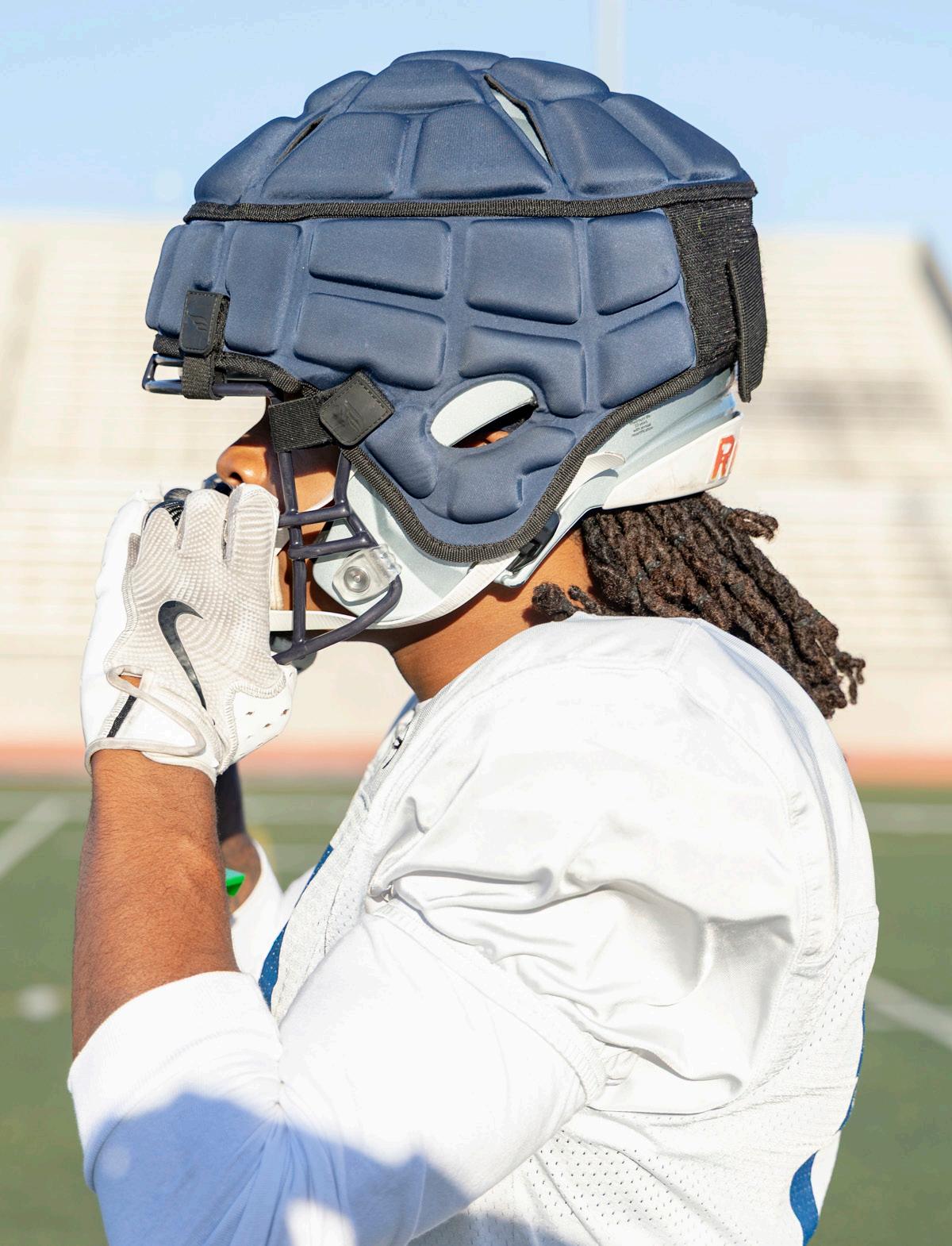
Ronaldinho Rose wears his helment with the Guardian cap on Wednesday, Oct 22
Photo by Oriana de Quay
Seiler said adoption continues to grow internationally, including among military bases and youth programs in Europe.
While Guardian Caps offer measurable benefits, cost remains one of the primary barriers for many programs. Community colleges face especially tight budgets. With caps retailing between about $70 and $135, outfitting an entire team requires a significant investment.
Seiler emphasizes that durability offsets the initial expense.
“Guardian Caps will last two to four years,” he said. “They’re a long-term financial investment for a program. They don’t need to be purchased every year if they’re taken care of.”
Seiler often breaks the cost down even further for administrators.
“If a school buys one hundred caps and
takes care of them over three or four years, the cost works out to about 32 cents per player per practice,” he said.
Guardian Sports maintains a clear stance: Guardian Caps are not concussion-proof. The company avoids making claims that could mislead coaches or parents.
“We’re never going to say an athlete isn’t going to suffer a concussion,” Seiler said. “It’s football. Anything can happen. What we do is based on data around force and impact.”
He said some skepticism within the football community comes from misunderstanding or inflated expectations.
“Some of the hesitation is that people assume a product like this should erase concussions,” he said. “But that’s not the intent. The goal is to reduce the force of a
blow.”
Athletic Director Abi Francisco, a former athletic trainer, believes Guardian Caps fit into a broader philosophy of incremental safety improvements.
“They reduce some impact,” Francisco said. “Football is a collision-heavy sport. The caps help prevent injuries like skull fractures and reduce some acceleration on a player’s head. There’s evidence behind that with the athletes here.”
Francisco is careful to separate impact reduction from concussion prevention.
“As a former athletic trainer, I’ll say there’s not a lot of evidence that Guardian Caps prevent concussions,” she said. “But they do reduce the force of collisions and the force on the skull. That matters.”
Francisco also noted that safety improvements are rarely about one piece of equipment.
“There’s no single fix,” she said. “But each step supports long-term health for student-athletes.”
During Warriors practices, the effects of the Guardian Caps are visible and audible. Players collide with less recoil. Drills that typically produce sharp metallic noise are muted. Helmets collect less wear and tear. And the staff feels a degree of reassurance that did not exist in previous seasons.
Players generally adjust quickly. The caps feel light and blend into the practice routine. Some even forget they are wearing them.
Other equipment enhancements — such as occasional Q-Collar use — add layers of protection depending on player preference.
The combination of protective gear, careful monitoring by trainers and ongoing education contributes to an environment where athlete health is considered at every step.
Guardian Sports is continuing to refine its products. Newer models aim to improve appearance without sacrificing safety, and the company is exploring designs for additional sports. Seiler said future versions may become even more common in practice settings, and some organizations are considering the possibility of game-day use.
“It’s about serving and creating healthier ways to play the sports people love,” Seiler said.
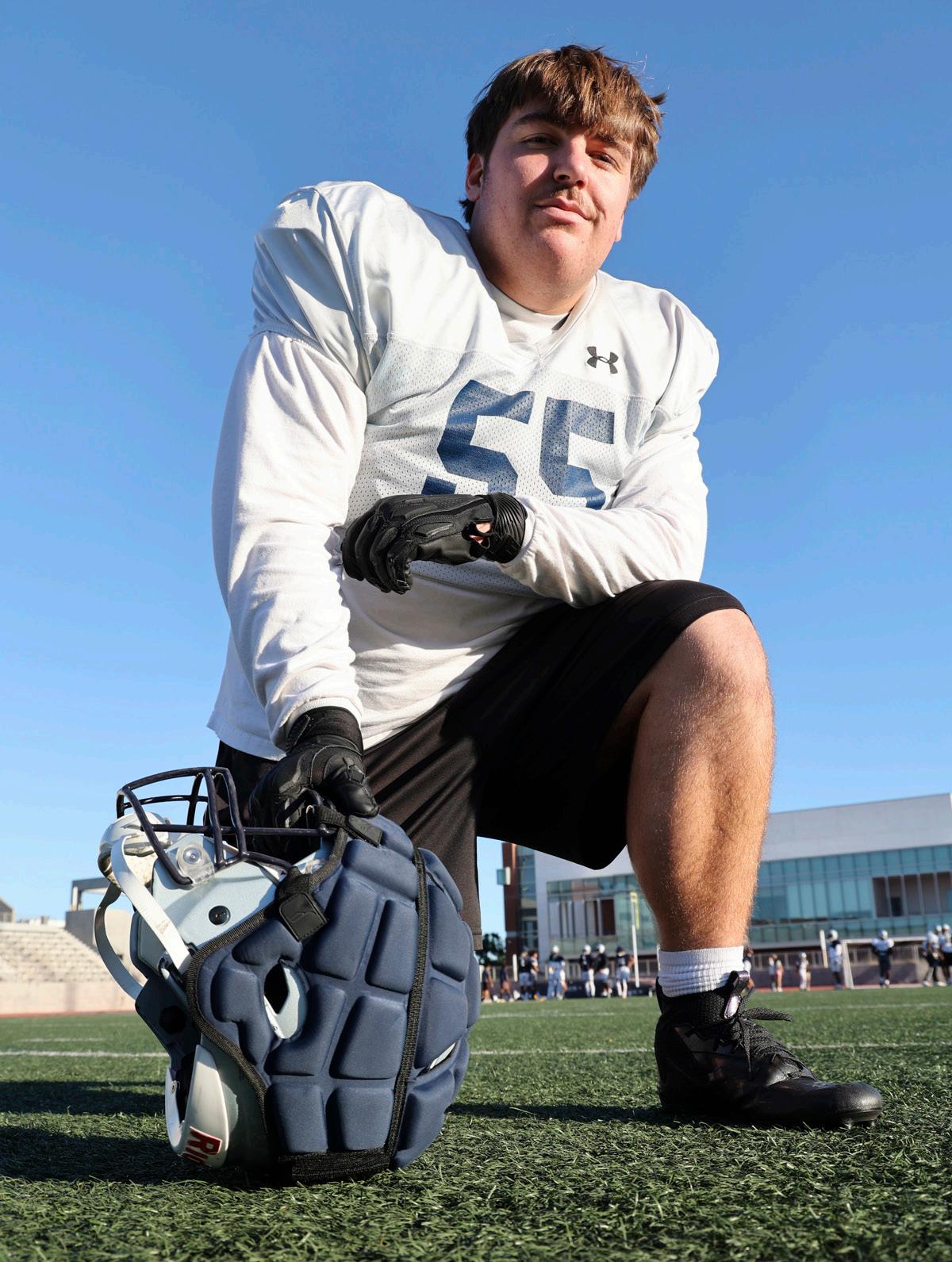
Levi Pape poses with the Guardian cap at practice on Wednesday, Oct 22.
Photo by Oriana de Quay
El Camino College Warriors football wide receiver Triston Thomas adjusts his helmet with Guardian Cap protective gear on at Murdock stadium on Wednesday, Oct. 22. Photo by Oriana de Quay
STREET
TAKEOVER
Five unmissable spots in theSouthBayto seeart by anElCaminoCollegestudent
StoryandphotosbyNikkiYunker
TAKEOVER
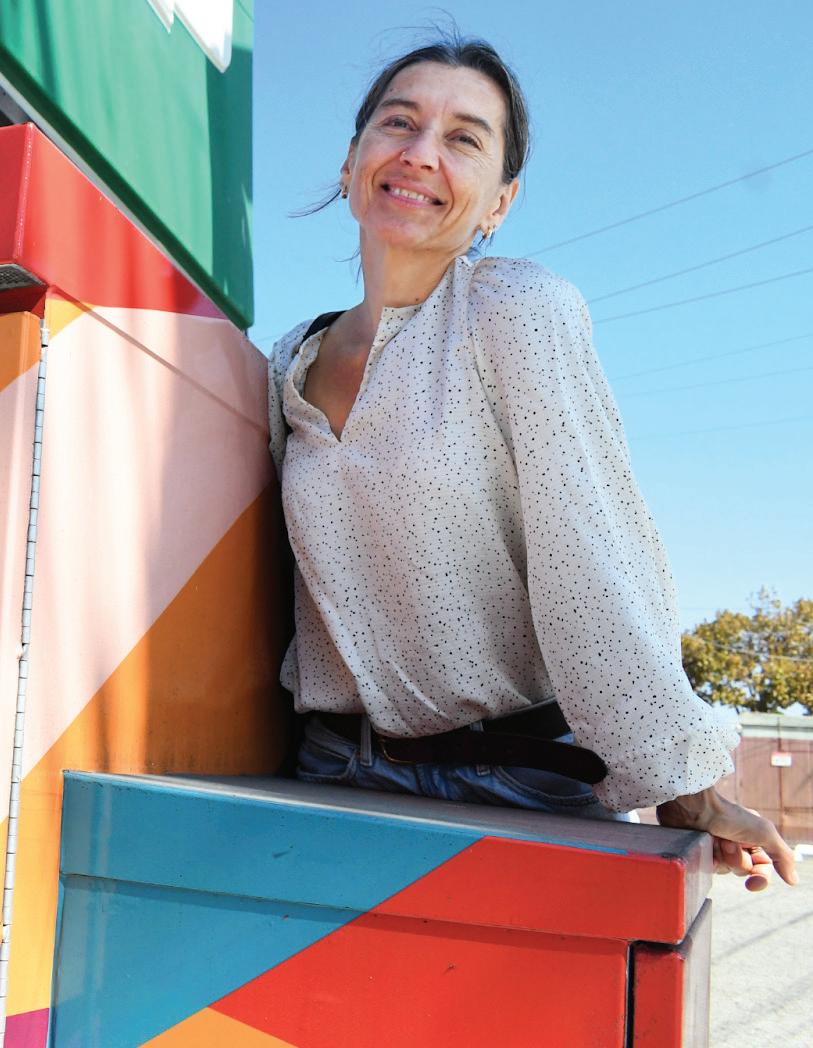
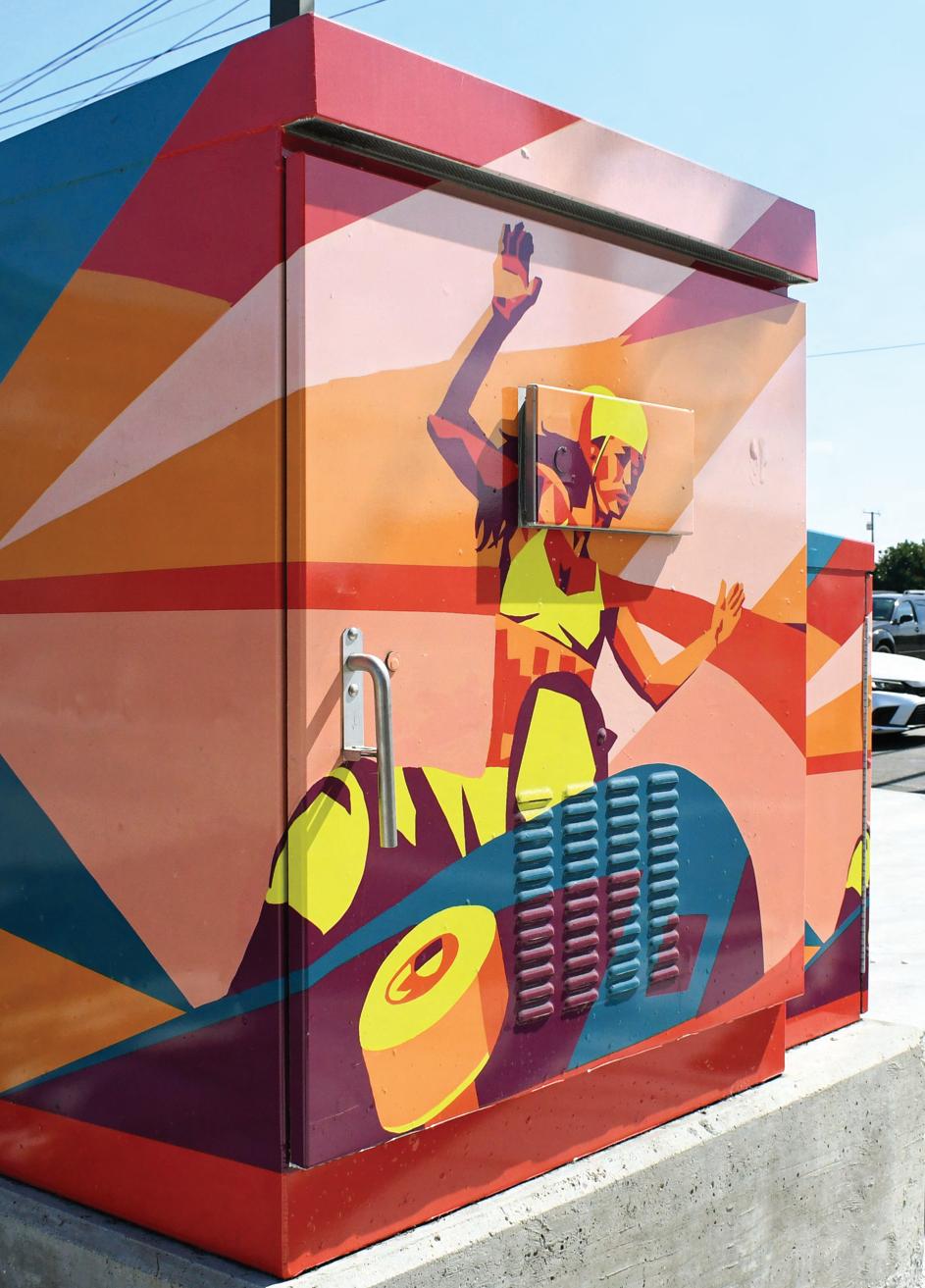
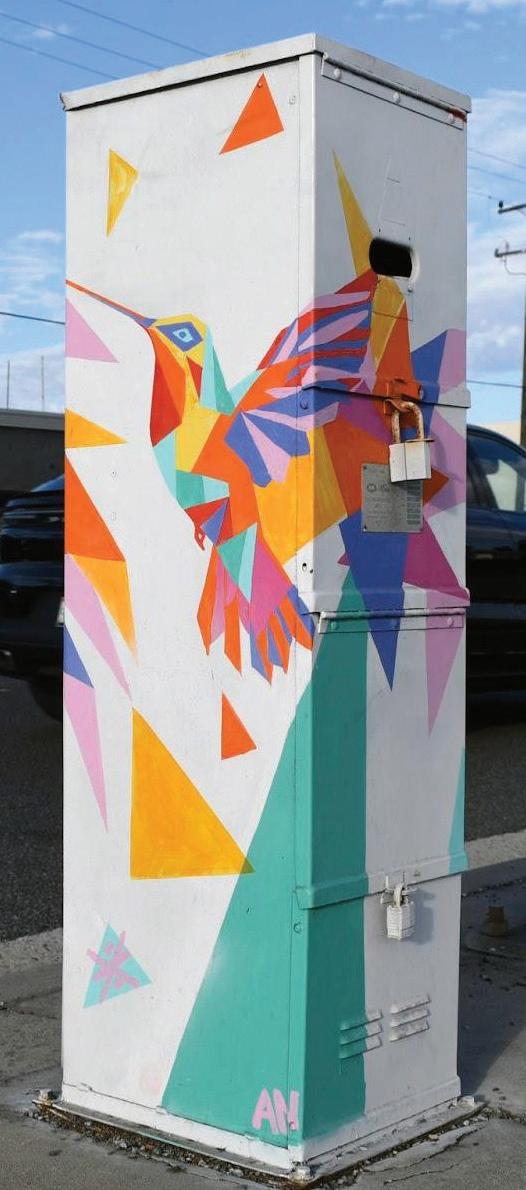
Studio art major Armelle Ngo, 52, stands near her most recent utility box mural Tuesday, Oct. 7. Originally from France, the Hermosa Beach-based artist said Southern California skater culture inspired the design.
“My art’s essentially women-oriented, just because I feel that it’s very inspiring to push boundaries and also to never take things for granted,” Ngo said. Photo by Nikki Yunker
Add gallons worth of color to your day with these fve street artworks by studio art major Armelle Ngo.
Viewed by car or on foot, each location is fve miles away or less from ECC.
Quick stops: Murals and boxes
1
3
Location: Near 16520 Crenshaw Blvd, Torrance
Just steps away from campus and in front of the 7Eleven on Crenshaw Boulevard stands Ngo’s most recent, and largest utility box design, which was wrapped by the City of Torrance at the end of April. Artists receive a $500 stipend from the city for selected designs.
Location: Near 2510 Pacifc Coast Highway, Hermosa Beach
5
2
Seemingly hovering by, a hummingbird mural painted on a utility box provides futters of inspiration as cars speed past. “They are a sign of good fortune, and I want to have them nearby because they are like guardian angels to me,” Ngo said. She got $1,000 for the box, painting it within two days during August 2024.
Location: Near 1130 N. Sepulveda Blvd, Manhattan Beach
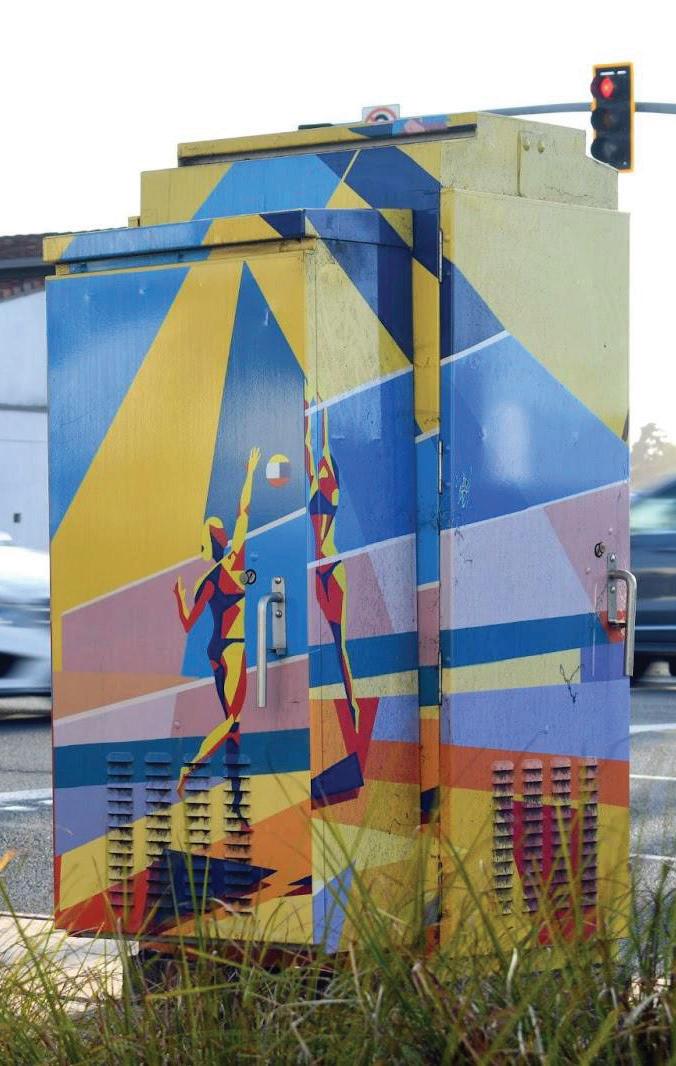
Vinyl-wrapped around December 2023, the box features elements from two of Ngo’s previous paintings, “Sunday Morning” and “Chilling.”
Artists whose designs are chosen for a Manhattan Beach box receive $600 stipends, funded by a 1% city tax on development.
Location: Near 1100 N. Harbor Drive, Redondo Beach
4
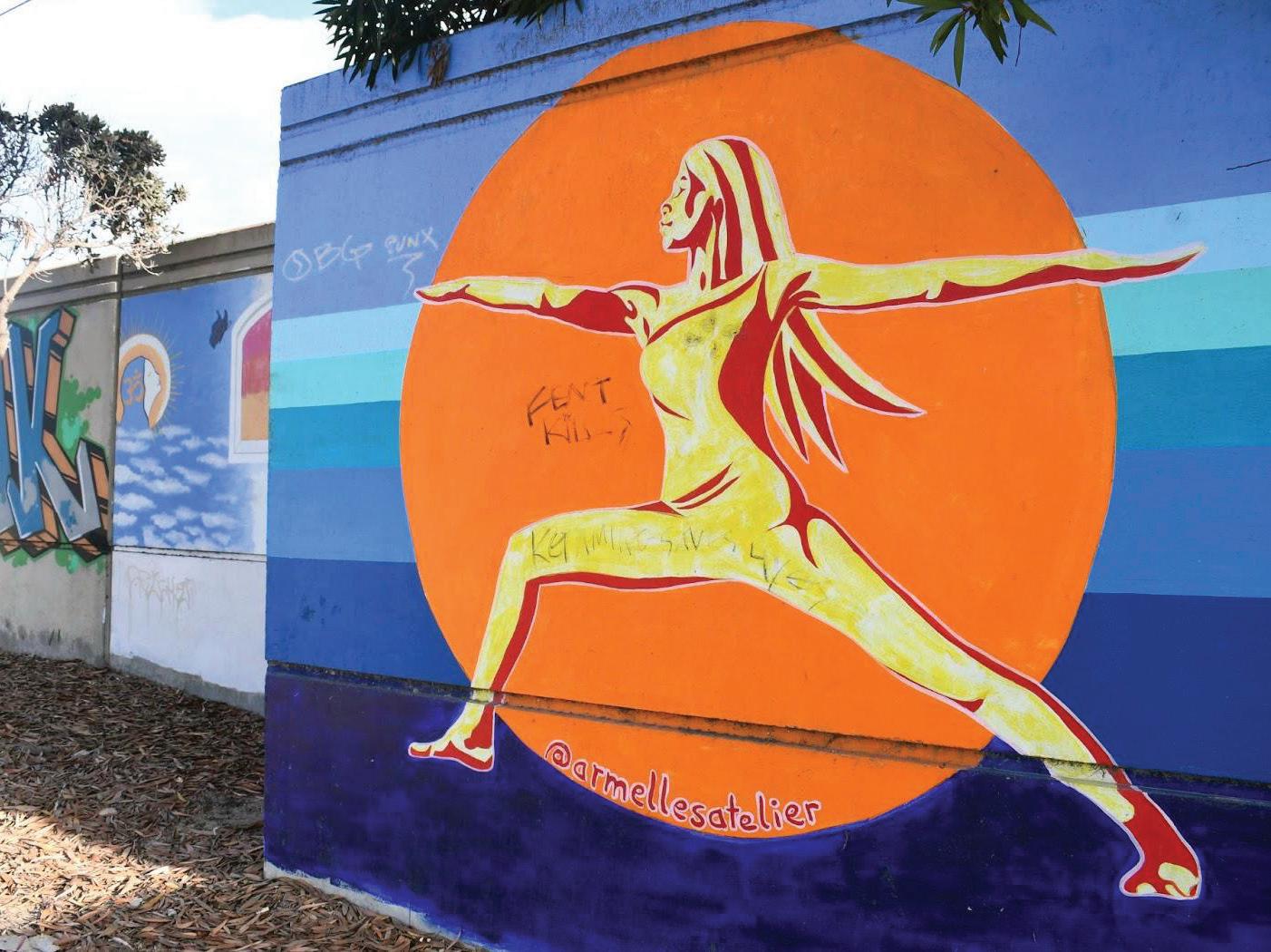
Ngo’s first public mural, the “Warrior Princess,” holds a stretching pose across a 20-square foot space that’s seen by hundreds of dog walkers and drivers alike, 24 hours a day. She completed the mural in October 2022 for publicity.
Featuring a young skateboarder, a volleyball player and a giant wave, this 640-square foot mural makes a splash across the Manhattan Heights CommunityCenter. The Manhattan Beach City Council selected Ngo’s design and awarded her $40,000 to create the mural, which was completed in March 2024 after about a month of painting.
For more information about Ngo and her art, and to view an interactive map with access to an additional location, visit the website at ECCUnion.com and look for Warrior Life magazine.
The Sweet Smell of Creativity
El Camino College’s art gallery director is on a mission to make the world a better place one sachet at a time
By Teresa Galvez
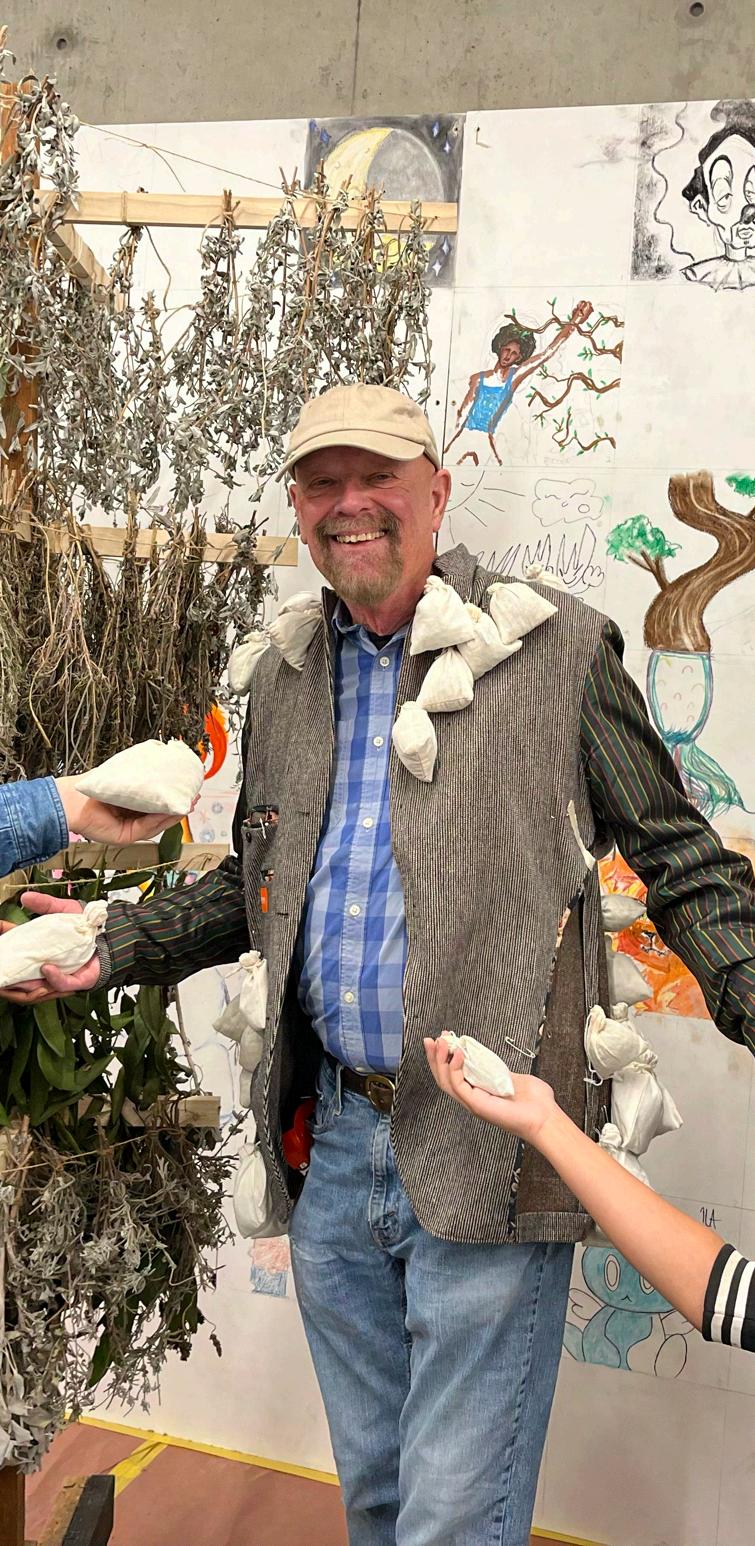
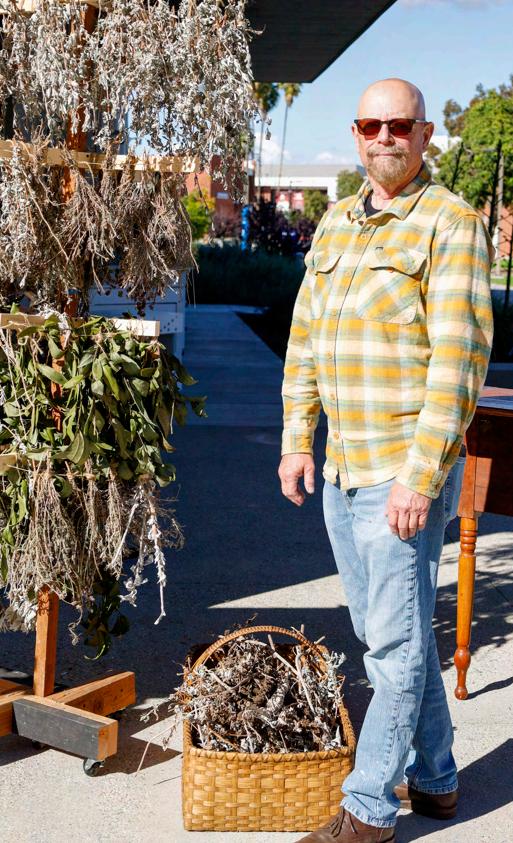
On Friday morning at his place in Hollywood, Michael Miller is outdoors with his gardener. He is proud of all his California native plants that he labels for his friends and neighbors to see. He uses his plants to make his potpourri for the strong scent they make and to give their sachets away. He makes sure all his students gets his perfume Californians native plants.
Miller has worked at El Camino College Art Gallery since 1997.
In 2008, he did the theme of “Ancestral Memory,” at Art Gallery. The showing lasted for four weeks in honor of his parents, grandparents, great grandparents, he was very proud.
Miller built a twelve foot long dinner table with his carpenter skills which he learned from his father and grandfather. His mother and grandmother he taught him how to bake. At the end of 4 weeks he baked fortyfour cakes: a lemon cake, chocolate cake and apple sauce pound cake. After all this he appreciated all the work his mother did for him, she cake, fresh cookies, candy, for all the family once a week.
Miller was born in Covington, Virginia, at the crossroads of Appalachia and the Shenandoah Valley. His father, Abe, was a carpenter who built his own home.
His father was a carpenter so Miller learned the trade. His dad had a second job working at the local paper mill.
“When I was 8 years old, I asked my dad to build a replica of Thomas Jefferson’s bedroom, at Monticello,”
As a result, he helped his father build his own bedroom and learn about carpentry so the replica of the room at Monticello was built in his childhood basement.
“This is where I store collections of mineral fossils, horticultural plants and insects,” he said.
In addition, his father gave him words of wisdom.
“My dad said, ‘If you can help someone then do it,’”Miller said. “My favorite memories were visiting and staying with my grandparents, discovering a fossil bed when I was 11 while riding my bike with my dog Tyke and camping with the Boy Scouts.”
His background knowledge from his parents became important to his life because directed him into science, geology and paleontology and the world of art.
Miller has always been an artist and enjoys connecting to other people through art. He makes his
Miller shares all his potpurri with his students that comes from his California native dry perfume plants that he grows at his home in Hollywood, and likes to share his own display of dry aromatic plants with his students. Photo by Teresa Galvez
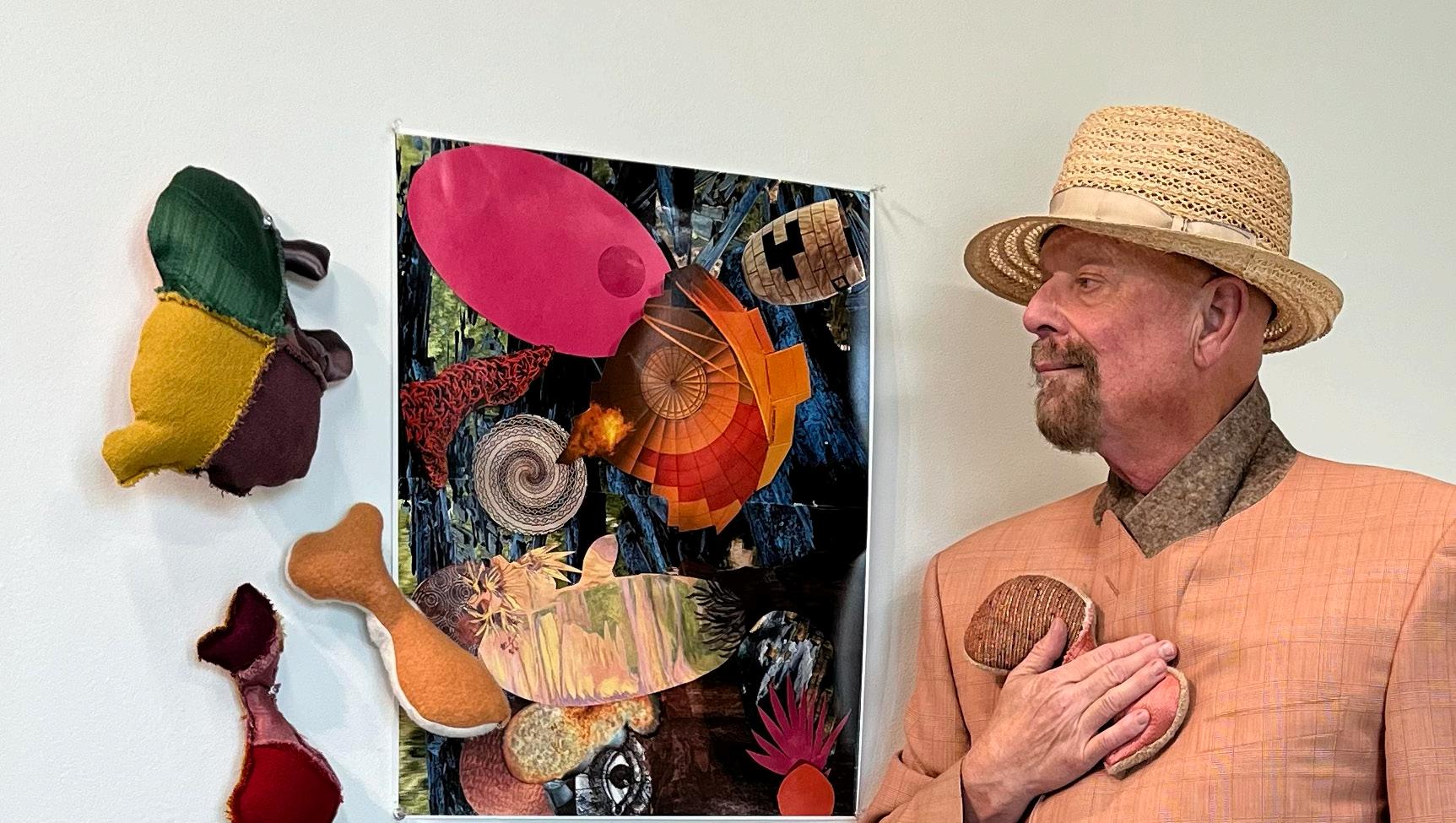
is showing one of his collages that he keeps in
own art and collects art from other students. Miller’s mom simultaneous complemented with his family.
“She sang in the choir, was a cook, singer, baker, made Christmas quilts, blankets and textile artist. She loved Christmas and art,” he said.
His only brother Gary died in Vietnam in 1969 after attending two years of college. He died saving his platoon and was awarded the Congressional Medal of Honor. All my family have passed.”
When Miller was a kid, he made extra money picking cherries off his grandmother’s cherry tree and selling them. He also had his first job working for a florist that paying him 10 cents an hour. Kind just thrown in the middle of the story add how his family helped him with the art
“I learned about 3-D Design, focal point, repetition, variation, symmetry, The elements and principles of design,” Miller said.
When he went to college, he paid his tuition by selling his paintings. He was a self-taught painter, and entered at a local contest at Virginia Tech.
“I was told that my painting was too good for a student category so I had to enter the professional category,” Miller
said.
While at Virginia Tech, he won an award for the Best in Show, Best Still Life, Best Landscape, and the people’s choice award that was a painting of a local historical residence.
“When I got into grad school, I thought that painting would not achieve my goals to communicate with my audience, so I decided to do interactive art. Letting the audience touch, handle, smell, food, and taste,” Miller said.
At home, he planted sages that give good fragrance. He created sachet bags from dried California native plants.
“One of my future proposals for a native plant garden would be in Spring of 2027, because it is important for the ECC environment that these indigenous plants save water and do not require fertilizer or special soil to do well in California climate,” he said.
Miller has a bachelor’s degree in Geology from Virginia Tech and M.S. in Geology from the University of Kentucky and an MFA from USC.
After Cal State Bakersfield in 1987 he went into the masters of fine arts program at the University of Southern California and received a teaching assistantship.
As an artist he was mentored by Joyce Kohl, a ceramic professor. Instead of payment for helping her, she gave him a room at her house. At El Camino College, Susanna Meier became another mentor.
August 1997 he started working at El Camino College. Then in 2022, he was interviewed and was hired as the director of gallery and museum programming.
Michael was hired to teach Art Gallery Management and special assignments as the Art Gallery exhibit manager.. In addition, Miller taught 3-D design, drawing, portfolio and transfer preparation for artists and designers. Miller was also enrolled in drawing at Inglewood Honors High School. Also, he was a full time Exhibition Manager for the City of Los Angeles Department of Cultural Affairs and program. Miller supports all the clubs on campus. Also, the Art Gallery supports the clubs with programming in the Art Gallery or Anthropology Museum, giving the students the space and technical support.
He was hired by president Brenda Thames, ”She rocks” he said.
In addition, he is planning a new project.
Miller
his office at the art building Photo by Teresa Galvez
“My vision for the Art Gallery program has included turning over much of the programming to students, so we are student centered programming, and the idea that we can take art to every place on campus so that every student benefits from engaging in the art creative practice,” he said.
He wants El Camino College to be known as the most creative community college in California.
“Many of the exhibitions that we have in the gallery and the Anthropology Museum are focused on mentoring students.”
“Michael is a great leader, a boss, a teacher for more than 25 years. He supports, encourages all of us at
the gallery. When a student comes with an idea or concern. He follows the process until the project is done. At the gallery he is the incubator of creativity,” said Dulce Stein, anthropology major.
Carrie Lockwood works part-time for Miller.
“When she was a student in 2013. Michael supported all the students in the class while being generous with his time, information, and directions, he loves interactions with the students of art. He works one to one and in groups with the students, and gives each person the time and knowledge for success in the art work,” Lockwood said.
Miller is visualizing his future
projects for the art gallery.
“Since becoming a director, I am excited about the depression summit exhibition titled Kieva Campbell: A Tribute to My Sister, April Savino, because I have family members suffering from depression,” he said.
Miller is going to have over twenty three professional speakers to talk about how to deal with depression or if anyone has a family member who has dealt with depression. Gallery.
In previous galleries, Miller had activities of singing, dancing, photography and art, even a radio show in the gallery.
Once a rancher from Highland Park brought his chickens to the Gallery and taught about what it’s like to raise
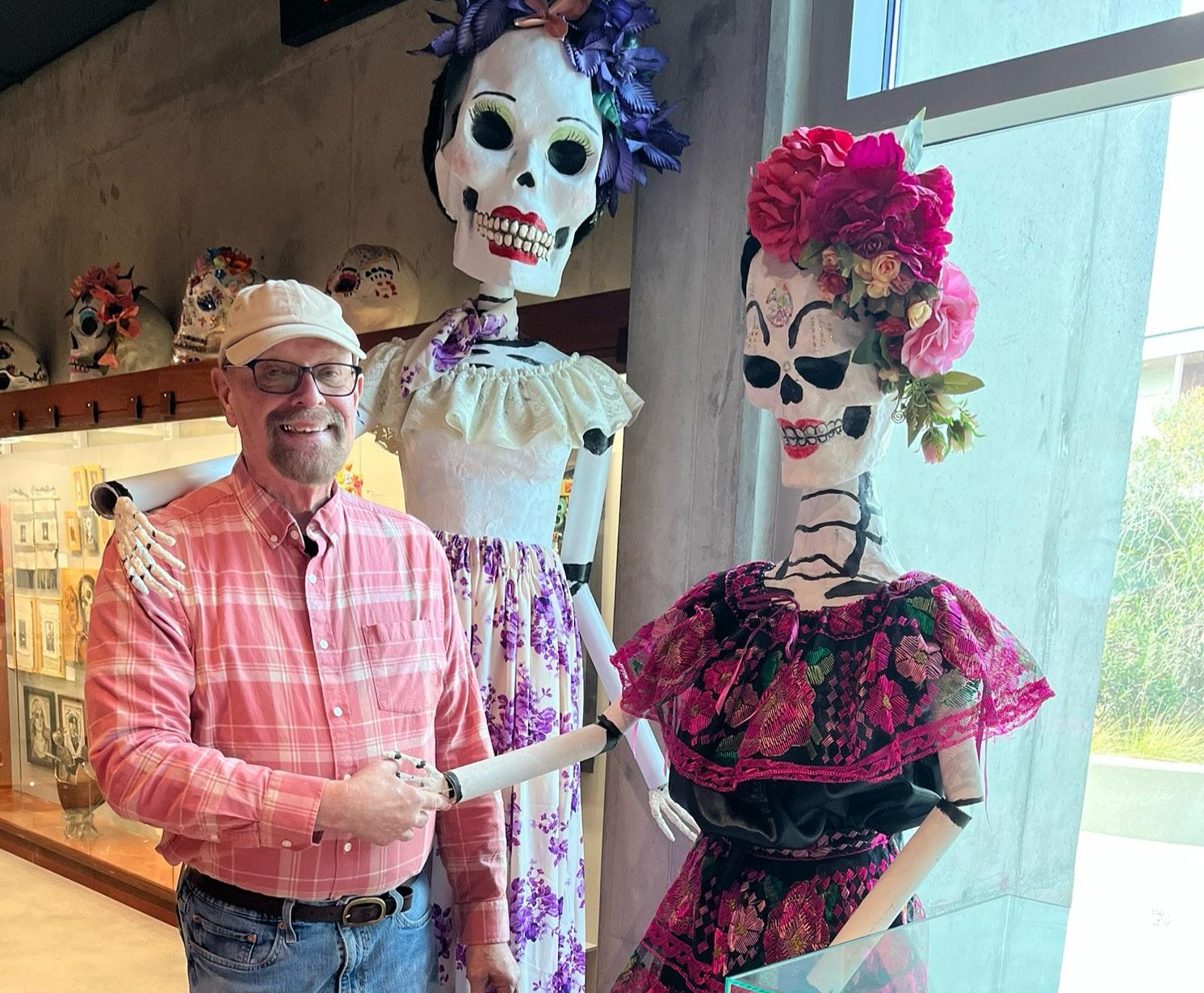
The Katrinas are very well know in Mexico City and Miller is welcoming them in preparation for Dia De Los Muertos at the Anthropology Museum. Photo by Teresa Galvez
organic chickens and eggs.
In the meantime, he is busy with art students, supporting them in their fields.
“I am a performance artist and many of my costumes are my performance gear that I wear to interact with my audience,” Miller said.
Moreover, at home he is keeping his family together.
He is married to Ken Coon a photographer who records LBGTQIA+ life and events. They have three dogs Rocket, Makki and Cocoa.
One of his hobbies is singing. He usually starts the Karaoke club event singing Elvis Presley’s “Can’t help Falling in Love.”
He enjoys singing different songs from rock, folk music, and classical. His favorite singers are: Christine Aguilera, Matt Bellamy (Muse) Rufus Wainwright, and of course Elvis.
When it comes to his preference in movies, he likes documentaries, science fiction, horror, and drama.
Miller’s also a performance artist. He had a solo exhibition in 1997 and 2017.Michael Lewis Miller presented a Survey 1989 to Present, Norco College,
Norco, CA
In addition, he had exhibitions with other artists. He thinks that adding all day classes and on weekends can attract more students to ECC as they can use the Art Gallery or the Anthropology Museum.
He enjoys eating chocolate cake, hiking along a stream in the forest, hanging out with his dogs and friends, and visiting artists’ studios. His job requires seeing their plays, concerts, movies, and exhibitions
He would like to keep helping others all his life in what he does best for the students and for himself.
If he can do it for the rest of his life. This is his motto. “Life is good.” He said.
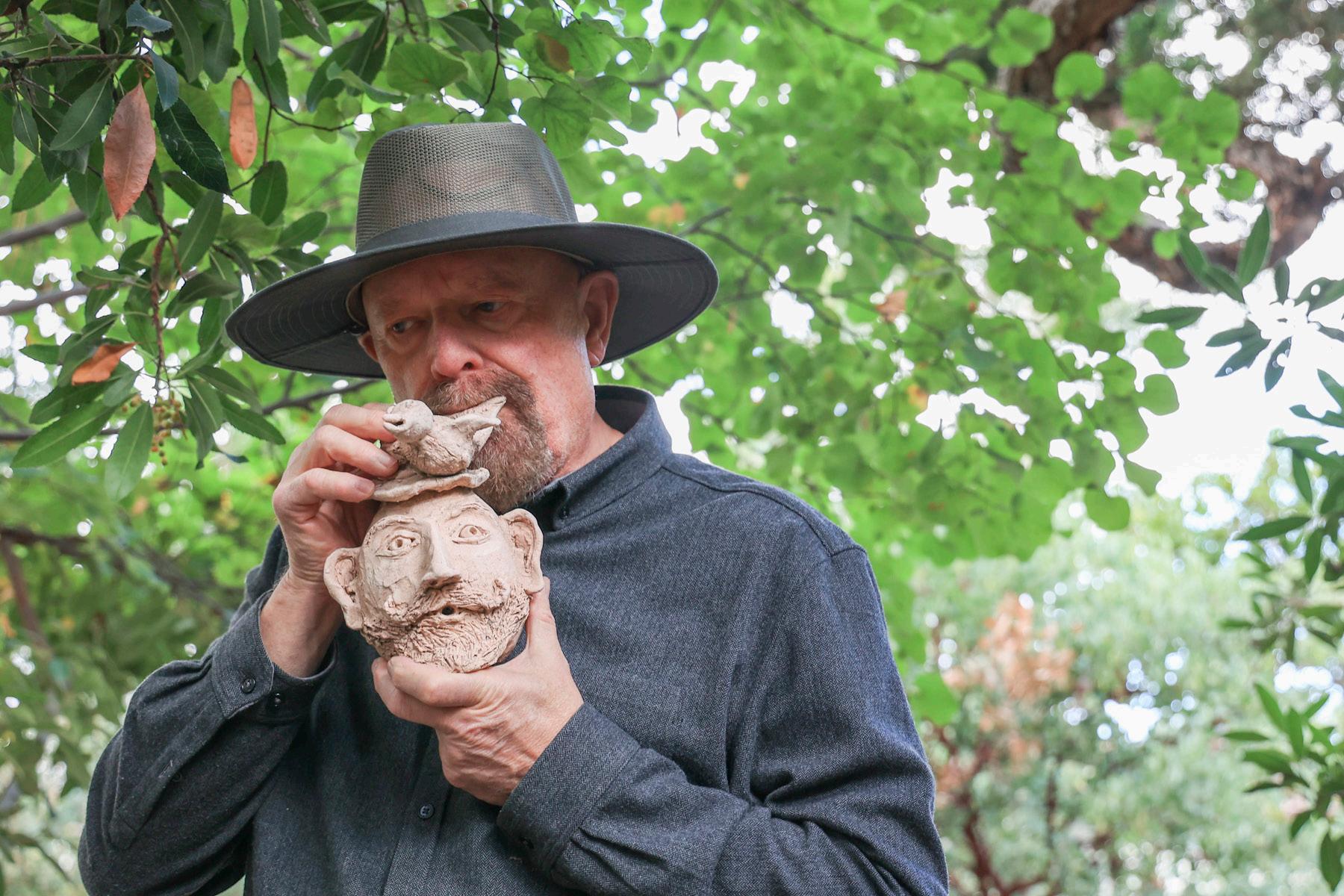
Miller keeps in his garden some ceramics, like this one that makes sounds like a flute that one of his students made.
Photo by Oriana de Quay
Micheal Miller standing with his plants at El Camino College Photo by Seph Peters
Top 5 art centers near El Camino College
Story and photos by Drex Carratala
For El Camino artists that want a way to connect with other artists in the surrounding Torrance community. Narrowing it down to 5 art centers in Torrance Warrior Life hopes to connect El Camino artists with like-minded individuals in the area.
El Camino College values community involvement with it’s students. And artists have always been a very strong connector of these attributes, able to make works that are able to bring together people from all walks of life. Listed below are several varying art centers for those seeking these connections or simply just inclusive spaces to meet others and learn new skills from.
1. Big Dick’s Hardware
Big Dick’s Hardware is a store that specializes in street art and spray paints. With paints produced both inhouse at an affordable pricing option being their most popular items.
Big Dick’s prides itself on being a pillar of street art and community within North Torrance, keeping the tradition of street art as a legitimate form of expression. Offering a gateway into the realm of street art to local youth and artists interested in participating. 15618 Main St, Gardena, CA
2. Classic Artist Canvas
Operating out of Torrance for over 17 years, this business has served local artists fruitfully while fighting to maintain ownership of their skillset and company ownership for the duration of it’s operation. A local business ran by Carlos and Angie Palacios that focuses on the art of canvas stretching and formatting per commission. Their mission is to take the artwork that is brought to them and stretch it to be fit for display to the public. 17824 S Western Ave, Gardena, CA
3. Destination Art
Destination Art is a communal outreach and art center with a focus on providing art lessons, education and community to the Torrance community. Destination: Art offers various classes available to anyone interested in participating. With classes in pastel, mixed media, oil painting and more open to the public. Taught by award winning artists in small classes. 1815 213th St #135, Torrance, CA
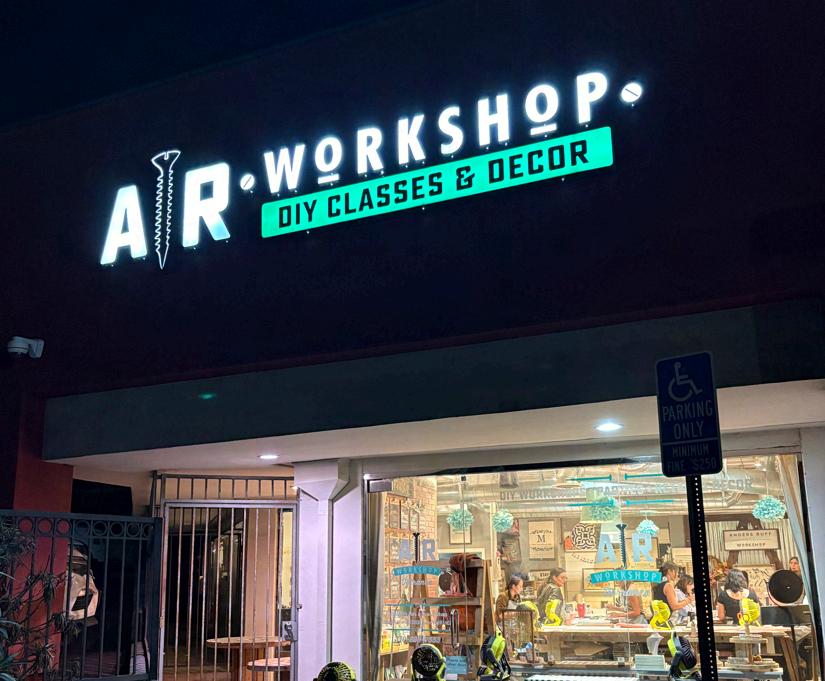
AR workshop in Torrance. This store has lots of art supplies
4. AR Workshop
AR Workshop is a franchised chain of DIY focused workshops. Starting out online initially with DIY projects they eventually gained enough of a brand to open up a brick and mortar store for in person classes. Offering various courses such as workshops for woodwork, canvasing, embroidery and more. The repertoire of available experiences covers several different mediums for students to participate in. 24046 Vista Montana, Torrance, CA
5. Creative Joy Art Studio
The studio has several different interests for adults and children alike to explore their creative energy. With children the studio seeks to nature and develop artistic skills and teamwork. With various parties and camps, kids are given the space they need to explore their craft. Adult events are hosted as well giving, with events specifically for women being available to hangout and freely create with friends. Creative Joy allows for a loose and flexible expression that gives attendees the tools and lets them run wild. 3525 W Carson St, Torrance, CA
For most of my life, the idea of having a dog was only a dream. Growing up in apartments where pets weren’t allowed, I longed for the companionship of a furry best friend.
When I started dogsitting in the seventh grade, it flled that gap.
I didn’t realize was that caring for dogs would also teach me lessons about responsibility, time management and most importantly, boundaries.
Walking a stubborn husky named Rocco or managing Pepper—a fery 20-pound dog who believes he’s a mastif, gave me plenty of hands-on training.
Their quirks tested my patience, but they also pushed me to build structure into my days.
How dog-sitting taught me boundaries
support from a friend, mine came on four legs.
Suddenly, I had to wake up early, plan meals and medications and stay focused even when I felt tired or distracted.
Nothing tested my patience more than potty training puppies.
Cleaning up accidents became part of the routine, but it also forced me to slow down and accept that progress doesn’t happen overnight.
Puppies don’t learn on my timeline— they learn on theirs.
Waiting outside in the frigid cold or oppressive heat for a stubborn miniature golden doodle, Strawberry, to fnally not use the fake grass and go potty in her designated area was rewarding.
They all remind me that consistency and remaining calm work better than frustration. In many ways, those moments mirrored my own life: when I rush or lose patience with myself, I make more mistakes.
When I stay steady, I see growth.
The dogs became accountability partners.
An adult once introduced me to the idea of having an “accountability buddy,” someone who helps keep you on track, to manage ADHD.
While most people look for that
The dogs didn’t let me snooze through the morning or skip responsibilities. Their needs kept me grounded when I couldn’t ground myself.
But the work wasn’t always rewarding.
Over Labor Day weekend, I agreed to watch seven dogs across multiple households.
Seven.
My days were sliced into 3-minute increments as I raced from house to house like a shuttle driver.
Instead of feeling accomplished, I ended the weekend drained and frustrated — angry at myself for saying “yes” to so much.
Money and people-pleasing were part of the problem.
When my frst client booked me on Rover this summer - I was surprised because online all said that it would take a month for me to get any bookings on Rover so when I had my frst client.
So when I fnally did, I jumped at the opportunity and gave him a discounted rate as my frst non-family client.
When his neighbor, living in a house as secure and as big as Fort Knox — demanded the same “discount,” I caved again, even though I clearly stated my rate of $20 per 30-minute check-in.
In trying to be fexible, I devalued my
own work.
That overcommitted weekend cost me more than energy.
Friendships sufered, too.
While racing between dogs, I ignored texts, canceled plans and barely had time for school or my leadership role at the campus magazine.
I was physically present for the dogs, but absent everywhere else.
That imbalance made me realize saying “yes” to everyone else often means saying no to myself.
Now, limits are non-negotiable.
I cap myself at three or four dogs across no more than three households — often stopping at two. The change isn’t because I can’t handle more, but because I’ve learned I don’t want to.
Protecting time and energy isn’t selfsh. It’s survival, especially as a student balancing classes, deadlines and leadership roles.
Boundaries used to feel like walls shutting people out.
Now they feel more like guardrails, keeping me from crashing out.
Saying “no” isn’t rejection—it’s respect: for myself, my commitments and the people I care about.
The dogs will never know they’ve been my teachers, but they’ve shown me the importance of balancing care for others with care for myself.
Illustration by Chelsea Alvarez
Story by Sydney Sakamoto
Enchantment veryday
Story and illustrations by
Nikki Yunker
Taking a mandatory class led me to discover the magic in our minds
Wham.
Turning to my left and looking down, there it was: seven years of bad luck.
I never imagined breaking a mirror. At the time, it was like the world itself had shattered.
Nearly a decade of misfortune was a sentence too long and too soon for my 13-year-old self.
Looking through the splintered glass, the mirror’s damaged facade now reflected only the fear I felt inside.
Yet, superstitions had never worried me before.
Thinking twice about where to step was less fun than the risk of stepping on a crack in the pavement.
And opening an umbrella inside was a better deal than being drenched seconds after going outside in the pouring rain.
After discarding the mirror, I hoped my memory of the event would follow suit so as to not doom the years ahead.
Only two years ago — six after the broken mirror — did the opportunity
appear for me to better understand everyday superstition by enrolling in a magic class.
No, the Hogwarts School of Witchcraft and Wizardry did not send me an acceptance letter, nor was I invited to the Magic Castle.
Unlike infamous magician Harry Houdini, who could seemingly escape anything from strait jackets to milk jugs, I couldn’t get out of completing my general education requirements at El Camino College.
By sheer luck, I took a course I read about in The Union four years prior — Anthropology 11: The Anthropology of Religion, Magic and Witchcraft, taught by professor Angela Mannen.
Slowly brewing over the course of the semester, as we learned about various cultural practices and religions, the third and final unit of the online course delved into magic.
Now, defining magic is no simple trick.
The word might conjure up images of playing cards, fancy wands and white rabbits — all which the class better defines as illusion.
On the other hand, magic involves spells, potions and black cats.
also found in once-a-year things, including blowing out birthday candles.
If you make a wish, you’ll have to keep quiet and blow out all the candles at once — lest the wish fails and doesn’t come true.
I’d always felt a pang of disappointment when one candle’s flame remained.
Both circumstances, superstitious in nature, exemplify magical thinking.
As students learn in the class, magic always works.
“ Thankfully, knowing the trick behind the magic made me free to choose whether to suspend my disbelief or not. ”
There, magic generally refers to the innumerous methodologies humans use to supernaturally
No matter the description, most Americans are certain that it isn’t real.
Seventy percent do not believe spells, curses or other magic can influence their lives, a 2025 study from the Pew Research Center revealed.
While I hadn’t known much about magic before taking the class, it’s clear to me now that it does have a real presence in everyday life.
Despite keeping my eyes peeled my entire life, it was only when I was 17 that my first four-leaf clover found me.
Of course, its “luckiness” comes from its rare mutation, but to me, finding one meant I must be lucky, too. It became my own little good luck
As I learned in the class, this is known as “contagious magic,” where one item’s perceived power will transfer onto another object or a person. Beyond the everyday, magic is
20th century science fiction author Arthur C. Clarke.
“Any sufficiently advanced technology is indistinguishable from magic,” his most widely known adage says.
Thus, anything that defies our better understanding appears to be magic.
Understanding of the human mind is elusive — which makes it magical, too.
Our minds have a profound impact on how we perceive reality, which can be underestimated in daily life.
Even scientific trials have to account for the placebo effect, where a person’s belief in the efficacy of a treatment can
If a birthday wish doesn’t come true, it’s either because the wisher made an error or there was counter-magic where another person wished for failure.
From this, my own definition of magic materialized: It is cast every day by
A person’s outlook manipulates reality by creating placebos and nocebos — which is where negative expectations can result in something as real as physical illness. Beyond the sharp shards and the loss of its use, the broken mirrors’ greatest harm to me was limited to how it shaded
Magical thinking and superstitions most often appear where success is critical but not necessarily within a person’s control.
Sports fans and players, including retired tennis player Serena Williams, have held superstitions to the extent where ignoring them leads to worse outcomes due to self-doubt.
Williams shared with the Evening Standard in 2012 that whenever she lost, it was not because she didn’t play well but because she didn’t perfectly follow her routines, including tying her shoelaces perfectly.
So, when it counts, it might not hurt to do something a little extra to create confidence and hopefully tip the odds in your favor.
One other definition of magic is from
Believing in its curse would bring me
If I didn’t, there would be no bad luck.
Thankfully, knowing the trick behind the magic made me free to choose whether to suspend my disbelief or not.
Broken mirrors and black cats don’t faze me.
But I’ll let a good luck charm bring me confidence.
Night Owl’s Guide to Late Night
Top 5 restaurants in the South Bay open past midnight
Story and Photos by Oriana de Quay
Many establishments in the South Bay close around 9 p.m. There aren’t many hours left in the night to take advantage of outside of your home.
Here is the solution—restaurants that close after midnight.
Here are restaurants, that are not bars,
2
Chon Dak Address: 15915 S Western Ave A, Gardena Hours: Mon.-Fri. 3 p.m.–2 a.m. Sat. & Sun. 12-2 p.m. Fresh Daily Pho and Grill
3 1
3
Ricos Tacos El Tio
Inc.
Address: 2150 W El Segundo Blvd, Gardena, Hours: Sun.-Thu. 9 a.m.-1a.m.
Address: 1441 W Knox St C-400, Torrance Hours: 11 a.m.-4 a.m.
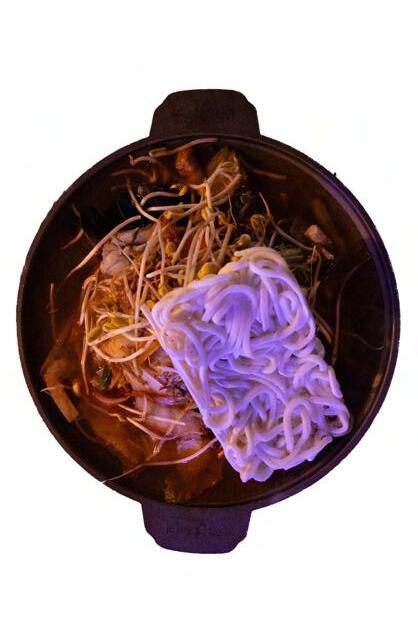
Fresh Daily Pho is a safe haven devoid of judgement. No customers are criticized for grabbing a bowl of pho at 3 a.m. and late-working individuals can recharge themselves.
Opened April 23, Pho Daily Pho has quickly become a hidden gem tucked into industrial Torrance, sitting in a plaza beside the railroads.
Open until 4 a.m., the restaurant serves steaming bowls of pho, fried rice, egg rolls, and vermicelli noodles to a steady stream of late-night diners.
The service is fast and efficient. Servers drop off a short two-page and a simple and flavorful bowl of soup arrives at your table within minutes.
Server Rigoberto Gomez, who has worked at Fresh Daily Pho since opening day, says the night shifts can be tiring.
However, reggaeton, house, and techno blasting through the speakers, and coworkers sipping beers between
2
Located just four minutes from El Camino College, Chon Dak is the go-to spot for large-portioned Korean and Asian dishes served family-style until 2 a.m.
Owners Jenny Lee and her husband Danny Kim have decades of experience, first opening their Korean BBQ restaurant KKO KKO Yang-Gopchang 23 years ago on Redondo Beach Boule vard. They opened Chon Dak 10 years ago.
The most popular dishes include pork belly barbecue, seafood noodle soup, and rotisserie chicken. Lee said the three are big enough for six or seven people, best with beer or soju. Inside, the dim lighting and constant flow of K-pop and pop hits give diners privacy to talk, laugh, and unwind.
Being in Gardena for 23 years Lee knows who her regulars are, and what they like to eat.
3
Ricos Tacos keeps a tight and steady operation, serving cus tomers from 9 a.m. to midnight at the storefront and running a drive-thru until 1 a.m, sometimes 2a.m.
4
The last batch of tourists has gone home.The Redondo Beach Pier is dark except for the dim glow of the Cinco de Mayo Mexican Grill order window. The building has stood on the pier since the 1960s, previously home to spots including Pretzelmaker and the Olympic Restaurant before becoming Cinco de Mayo. Brothers Froylan and Oscar Santiago Arellanes took over the space in August 2019 and signed a new five-year lease extension in June 2024.
The colorful store-front is image heavy of all the potential dishes to satisfy your middle-of-the-night hunger.
Some of the most popular dishes include the birria tacos, the quesatacos, and deep fried tilapia as well as sundaes and funnel cake. It checks every late-night joint box: cheap, filling, flavorful food, and a peaceful walk along the pier. Locals come back for more.
A late-night staple, 3355 Asian Grill caters to the after-work crowd.
5
The outdoor seating is lively, social and smoking-friendly.Customers are able to have an absolute feast with their extensive menu and shareable portions.
Opened in 2009, the business was founded by the current owner Jose Gomez’s father. He credits their success to strong customer service and loyal employees, some of whom have been with the business for
Aguas frescas are available to taste, no questions asked.
Gomez prides himself on taking care of his workers.
Gomez said he tries to work even harder than his worker.
Ricos stands by its original menu offerings tacos, burritos, and goat birria, but since Gomez took over, they’ve added tilapia tacos, nachos, and weekend menudo.
They marinate their own meat, make their aguas frescas, and prepare their pickles and salsas in-
”My dad had the taste buds, and now I
Dishes are rich and flavorful. It defi satisfies spice-lover’s itch with the Korean chili at the base of a lot of sauc es and dishes.
Some favorite are the whole chicken, kimchi fried rice, chicken wings, the short ribs, the rice cakes and Korean Army soup amongst other menu items. The price is not the cheapest, reported as $30-50range on Google, butgiventheshareableplatesand largerportions,itisfair.
A: I started when I was 18. It was a family team that my brother was on, like, doing lessons for them before Cooperstown, a New York tournament for 12-year-olds. I charged $25 for each kid for an hour. The year when I came back from Oregon State University, I was 19, that was when I started doing camps and clinics at Clarkfeld in Hermosa Beach.
Q: What was the jump from local academy baseball teams to international ones?
A: So 19, right? Travel ball team, clinics, kind of like building this idea of an academy. On top of that, my high school, became the number one team in the [state] for baseball, and that built more of a repertoire for me. An old coach [Andy Gonzales] that I played for knew I had this Academy going, said, ‘I have this client that’s from Peru, and I think that it would be a good opportunity to connect you guys, because I feel like you guys could make something bigger out of this.’