



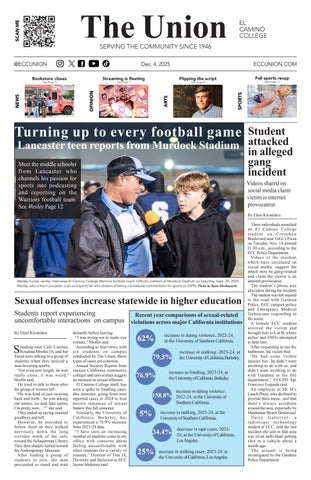



Meet the middle schooler from Lancaster who channels his passion for sports into podcasting and reporting on the

Students report experiencing uncomfortable interactions on campus
By Eleni Klostrakis
S
tanding near Cafe Camino, Rosalina Morfin,18, and her friend were talking to a group of students when they noticed a man hovering nearby.
“Not even arm length, he was really close, it was weird,” Morfin said.
He tried to talk to them after the group of women left.
“He was kind of just swaying back and forth…he was asking our names, we said fake names I’m pretty sure,... ?” she said.
They ended up saying strained goodbyes and left.
However, he preceded to follow them as they walked nervously down the long corridor north of the cafe, toward the Schauerman Library. They then sharply turned toward the Anthropology Museum.
After finding a group of students to join, the man proceeded to stand and wait
distantly before leaving.
“I was trying not to make eye contact,” Morfin said.
According to interviews with six students on campus conducted by The Union, these types of cases are common.
Annual Security Reports from various California community colleges and universities suggest an increase in sexual offenses.
El Camino College itself, has seen a spike in fondling cases this semester, going from zero reported cases in 2024 to four known instances of sexual battery this fall semester.
Similarly, the University of California, Berkeley, has experienced a 76.9% increase from 2023-24 data.
“I have seen an increasing number of students come to my office with concerns about feeling uncomfortable with other students for a variety of reasons,” Director of Title IX, Diversity and Inclusion at ECC Jaynie Ishikawa said.
Recent year comparisons of sexual-related violations across major California institutions
2022-24,
increase in stalking, 2023-24, at the University of California, Berkeley.
increase in fondling, 2023-24, at the University of California, Berkeley.
increase in dating violence, 2022-24, at the University of Southern California.
increase in stalking, 2023-24, at the University of Southern California.
decrease in rape cases, 202324, at the University of California, Los Angeles.
increase in stalking cases, 2023-24, at the University of California, Los Angeles.

Videos shared on social media claim victim is internet provocateur
By Eleni Klostrakis
Three individuals assaulted an El Camino College student on Crenshaw Boulevard near GiGi’s Pizza on Tuesday, Nov. 18 around 11:30 a.m., according to the ECC Police Department. Videos of the incident, which have circulated on social media, suggest the attack may be gang-related and claim the victim is an internet provocateur.
The student’s phone was also taken during the incident.
The student was left injured in the road with Gardena Police, ECC campus police and Emergency Medical Technicians responding to the scene.
A female ECC student assisted the victim and brought him to Lot B, where police and EMTs attempted to help him.
After requesting to use the bathroom, the victim fled.
“He had some visible injuries but...he didn’t want anything to do with us, and didn’t want anything to do with Gardena or the fire department,” ECCPD Sgt. Francisco Esqueda said.
An employee at Mr. H’s Lunch Place, who declined to provide their name, said that there’s always accidents around the area, especially by Manhattan Beach Boulevard.
Daisy Gutierrez, a radiologic technology student at ECC, said the last incident she saw in that area was of an individual getting shot in a vehicle about a month ago.
The assault is being investigated by the Gardena Police Department.
By Nikki Yunker
Sugar plum fairies and toy soldiers will not take center stage at El Camino College in December as the company behind the longtime tradition is pivoting to a smaller production this season, the director said.
Artistic Director Elijah S. Pressman said Ballet California, which has produced “The Nutcracker” performances since 2004 and at the Marsee Auditorium since 2005, has seen a roughly 50% decrease in dancers due to internal changes.
“We are doing a small, members-only production this year,” Pressman said. “We love the Marsee and would certainly like to be there in the future.”
Pressman said that the whole organization is adapting to the planned retirement of Diane Lauridsen, founding director emeritus, and that dancers left amid the transition to secure memberships at other professional companies.
Ballet California’s production of “The Nutcracker,” which highlights the classical 1892 score by composer Pyotr Ilyich Tchaikovsky and features dancers of all ages, will instead debut at the company’s Torrance studio. Due to seating and space limitations in the studio,
Ballet California — formerly known as South Bay Ballet — can only accommodate its members and their families at the production.
“The Marsee has been a
Robert Mack and Natalie Chinn rehearse their duet for “The Nutcracker” on Nov. 23, 2019, at the Lauridsen Ballet Centre in Torrance.

By Madison Moody
The Union publishes police beats online with each newspaper release. Visit eccunion.com to read more.
Wednesday, Nov. 12, 11:39 a.m.
A trespass warning was issued at the Schauerman Library. No arrests were made. The case is now closed.
Sunday, Nov. 16, 7:26 p.m.
Graffiti vandalism was reported at the old Art and Behavioral Science Building. The case is now closed.
Monday, Nov. 17, 12:59 p.m.
Motor vehicle theft involving an e-bike was reported at the Math Business and Allied Health Building. The case is still open.
Tuesday, Nov. 18, 11:37 a.m.
Grand theft and aggravated assault were reported at the intersections between Crenshaw Blvd and El Camino Way. The crime was marked as an “Outside Agency Assist,” in which an ECC police officer responded to the scene and helped assist another agency because the incident took place off campus and out of the college’s jurisdiction. The case is currently being investigated by the Gardena Police Department.
‘The Nutcracker’ performances in the South Bay
San Pedro City Ballet
Friday, Dec. 12 @ 7:30 p.m.
Saturday, Dec. 13 @ 2 p.m. and 7:30 p.m.
Sunday, Dec. 14 @ 2 p.m.
James R. Armstrong Theatre
Tickets are available at: https://www.torrancearts.org/shows/ nutcracker-(san-pedro-ballet)
Palos Verdes Ballet Company
Saturday, Dec. 20 @ 7 p.m.
Sunday, Dec. 21 @ 1 p.m. and 5 p.m.
Norris Theatre
Tickets are available at: https://app.arts-people. com/?show=302901
Long Beach Ballet
Saturday, Dec. 13 @ 2 p.m. and 7:30 p.m.
Sunday, Dec. 14 @ 2 p.m.
Saturday, Dec. 20 @ 2 p.m. and 7:30 p.m.
Sunday, Dec. 21 @ 2 p.m.
Terrace Theater
Tickets are available at: https://www.ticketsales.com/longbeach-ballet-tickets?regionId=29&utm_source=google&utm_ medium=cpc&utm_campaign=18759220718&utm_ placement=&utm_network=g&gad_source=1&gad_
By Giselle Jimenez
Three months after El Camino College implemented Honk Mobile to sell and manage parking permits, campus parking enforcement has entered a new phase that faculty say is overdue.
Beginning Monday, Nov. 17, the El Camino College Police Department increased patrols in the staff parking lots, including Lots J and K, in response to rising complaints of students taking employee spaces.
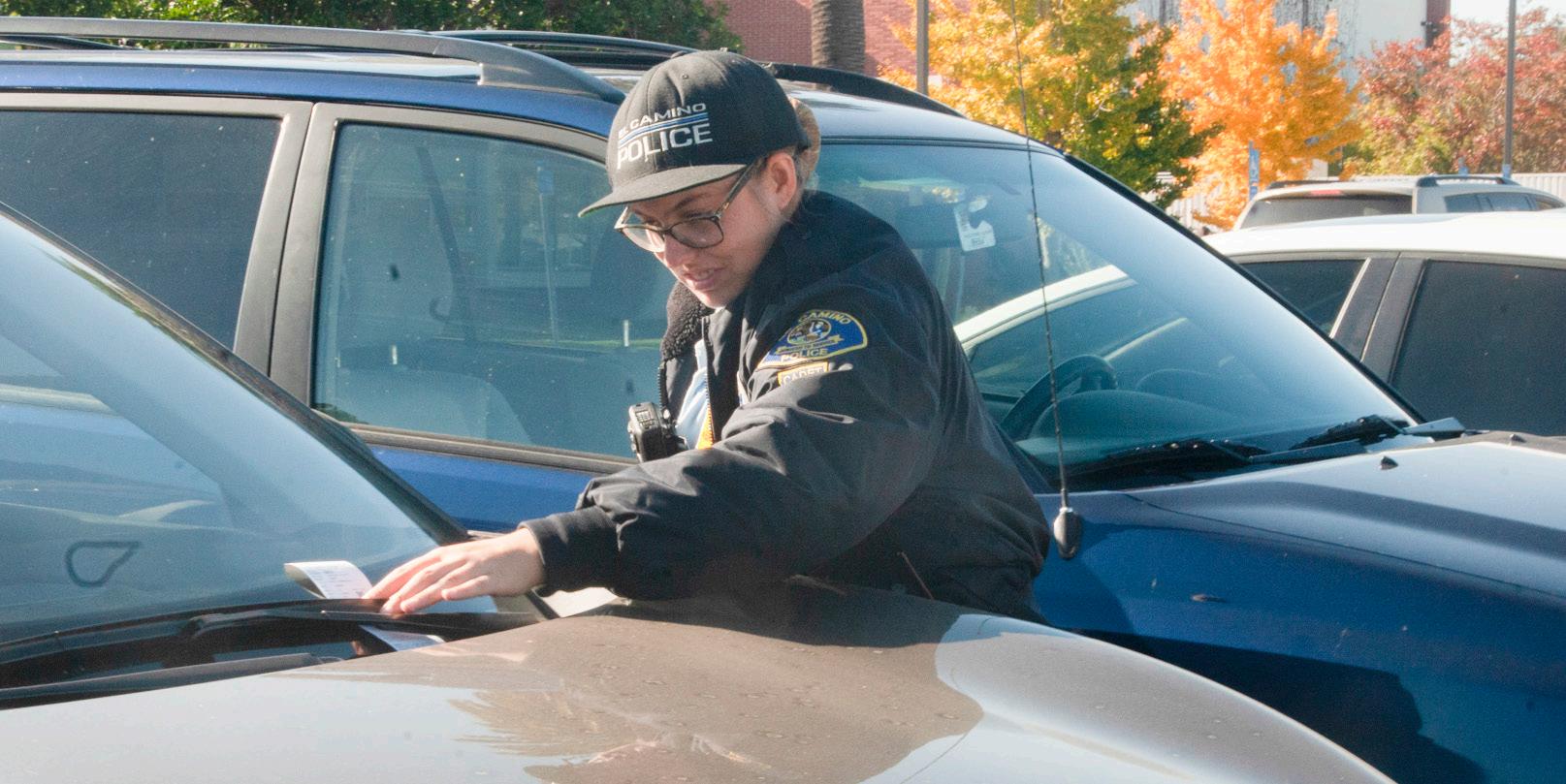
Officers and cadets are now ticketing vehicles that do not have valid staff permits registered with the new system.
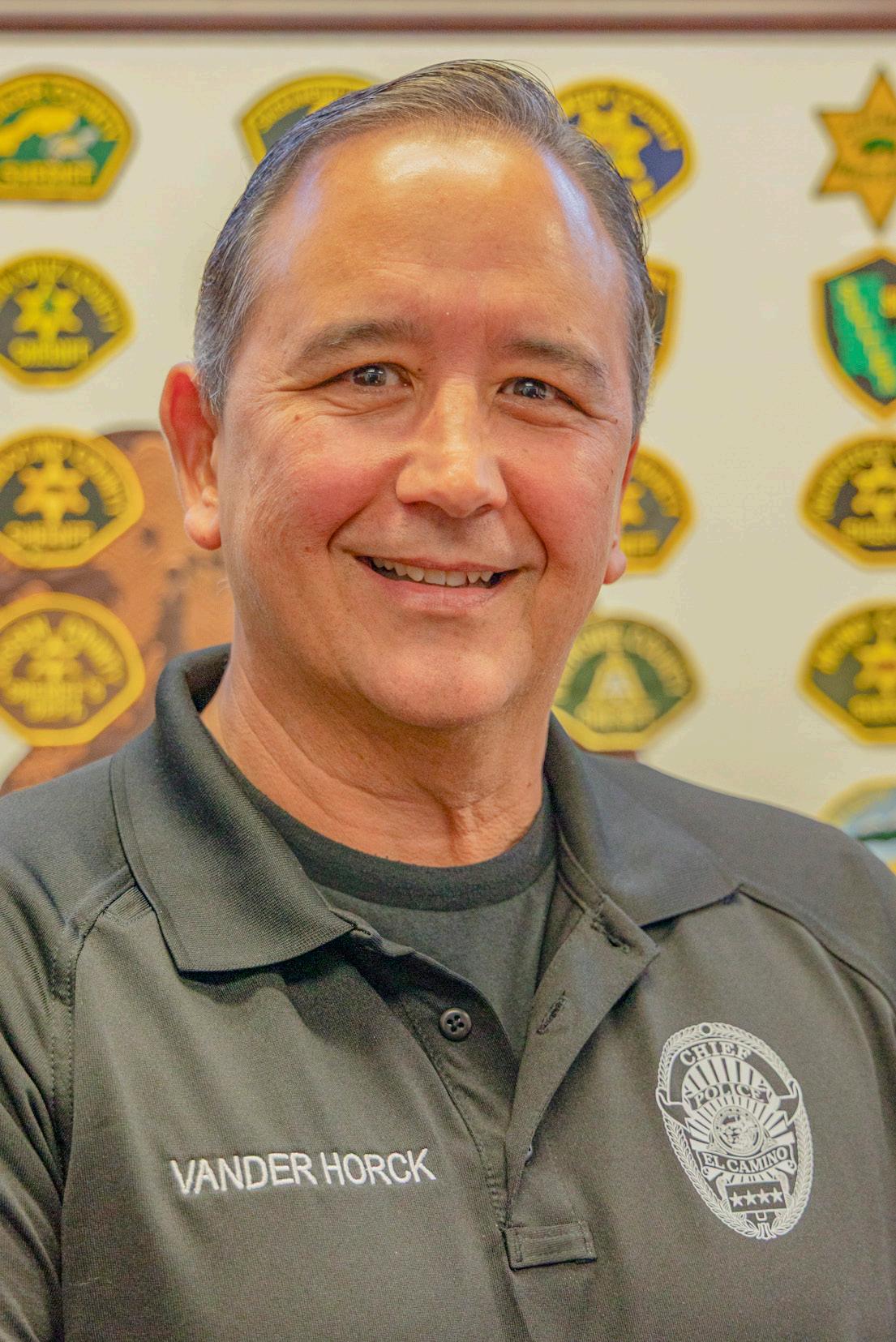
ECC Police Chief Matthew Vander Horck said that while Honk Mobile changes how permits are purchased and tracked, the biggest shift is the technology backing the new parking enforcement.
“The enforcement itself hasn’t changed,” Vander Horck said. “But the process is much easier now.”
Before Honk, cadets had to walk through lots checking for physical hangtags. They also had to verify the expiration date on each pass, a process Vander Horck described as “very time consuming.” Now cadets use Park Loyalty’s handheld license-plate recognition devices, which scan plates and instantly determine whether a
Dec.
vehicle is registered.
“If a car isn’t in the system, they write a citation,” Vander Horck said. “Instead of physically checking every mirror, the software does the work.”
Some faculty initially received warnings because they did not realize they needed to register their plates, despite having year-long permits. The department issues warnings for nearly a month before writing citations, part of what Vander Horck called a deliberate grace period to let the campus adjust.
But the grace period also created problems. “Students were parking in faculty spots longer than they should have been,” Vander Horck said.
Complaints increased as employees struggled to find parking, prompting ECCPD to begin actively enforcing stafflot restrictions this week.
Christopher Glover, a fulltime English instructor, said parking for staff became “more challenging this semester than last.” The switch to Honk Mobile hasn’t caused him personal issues, but he believes the lack of visible permit stickers makes it harder to identify who belongs in staff areas. “I’ve noticed more people who appear to be students parking in staff spaces,” Glover said.
Glover said the situation affects instruction. “I know faculty who have been late to
class or missed class because they couldn’t find parking,” he said.
Students, meanwhile, are still adjusting. Psychology major Mariana Gomez, 21, said the system can be confusing. “I heard something about parking permits, but navigating where to get one is difficult,” Gomez said.
Vander Horck expects enforcement to increase even further once ECCPD rolls out a vehicle-mounted scanning system in the spring. “You just drive through the lot, and the cameras scan everything,” he said. “It’s going to make enforcement a lot more efficient.”
By Eleni Klostrakis
Metro’s proposed light rail service project that would link the Redondo Beach Station to the Torrance Transit Center, providing stops along LAX will help connect communities, according to Metro officials.
“This is an important project for the South Bay, but also for the region in connecting people across Los Angeles to schools including El Camino…students would be able to easily come from various parts of the region,” Senior Director at Metro Georgia Sheridan said.
However, many Lawndale residents have voiced safety and environmental concerns if the project passes Metro’s Board of Directors to be built.
“Not only will we lose our biggest source of public trees and grass, but we, as residents, will be exposed to the environmental and safety externalities and harms of this
Alternative proposed Metro light rail routes:
1) A new, mostly ground level rail line using Metro’s existing right-of-way
2)Put parts of the line below ground to reduce neighborhood and traffic impacts along Metro’s existing right-of-way
3)Build the rail line along Hawthorne Boulevard
project, tree removal, lots of noise, toxic dust, and extreme proximity to family homes,”
April Williams, an El Camino College student and Lawndale resident, said.
The project’s route to connect the Redondo Beach Station, LAX and other rail lines would pass through Lawndale neighborhoods, close to homes, and destroy community green space areas.
“Metro basically wants to tear out every single tree in our neighborhood… all the green space… there’s a freight train line they want to move closer to homes… and then they’re going to put two Metro tracks next to it,” Lawndale resident John Schreiber, 39, said.
In response, Lawndale residents formed the South Bay Environmental Justice Alliance, a grassroots organization advocating the protection of the right-of-way and the surrounding community.
As part of the planning process, Metro was required to study multiple routes and design alternatives before selecting the Locally Preferred Alternative plan.
Lawndale residents support the alignment that would run along the median of Hawthorne Boulevard.
“Lawndale City Council said they were also yes on Hawthorne, and our argument is that if you put it down

Hawthorne, it’s going to benefit the business…no homes would be affected because we’d run down the center of a commercial corridor instead… of going through people’s backyards,” Schreiber said.
Yet, Metro’s Final Environmental Impact Report notes key challenges with the Hawthorne Option, including a higher cost, extensive utility work, increased property acquisitions and lack of direct connection to the Redondo Beach Transit Center.
“The right-of-way would be built on Metro owned property. The Hawthorne alignment requires building in the center of Hawthorne, as well as along
the 405 freeway, and requires several turns which we would need to acquire properties,”
Sheridan said.
Supporting the right-of-way plan is South Bay Forward, a grassroots group of South Bay residents that advocates for expanding public transportation and housing, including promoting the benefits it would bring to the area.
“The Hybrid Alternative is a really thoughtful solution that makes the rail right-of the way…much safer and upgrades and modernizes it,” Briana Eagan, chapter chair of South Bay Forward and head of the Transportation Advocacy Project, said.
South Bay Forward is currently contracted as a community-based organization with Metro, tasked with disseminating information about the project.
According to Eagan, the funding they receive for this work is strictly operational.
“We don’t get paid or receive, any salary from Metro, it’s… essentially reimbursement for materials,” Eagan said.
Eagan said the project would help connect communities, and potentially bring more students to ECC.
“It makes transit connections possible,” Egan said.
To read more of this story, visit eccunion.com.
By Jaylen Morgan
The Bookstore, El Cappuccino and other spaces in the Bookstore Building will remain closed into December for air quality cleaning, over a month after two fires broke out in October.
On Sunday, Oct. 5, an arson attack took place on the loading dock outside the Bookstore.
Then on Monday, Oct. 29, a small fire was reported at El Cappuccino when a backpack burst into flames.
After the Oct. 5 arson attack, El Camino College hired ServPro to conduct cleaning and restoration work. As part of the clean up effort, ServPro hired TRUST Environmental Solutions to run an air quality test, which looks for combustion byproducts such as soot, ash and char.
“We got a call on Oct. 24 saying the test was lost in transit by TRUST Environmental, so another test had to be done,” Interim Vice President of Administrative

Services Loïc Audusseau said.
According to Board Docs on Monday, Oct. 27, the Board of Trustees reviewed a $1.6 million emergency contract for ServPro’s cleaning services.
The findings from the tests confirmed limited surface residues above the firm’s three percent “action” threshold, which it is not clear whether it is safe to go inside the building as it is now a safety issue and an indicator for cleaning.
The college wants to make sure the building is clean before people can go inside.
Since Oct. 5, the Bookstore and El Cappuccino remained open until an email was sent out on Sunday, Nov. 19, announcing that they will be closing for two weeks.
An additional email sent on Tuesday, Nov. 25 later extended the closure through December.
The faculty working in the Bookstore and in the offices on
the second floor, including the Cashier’s Office, have been relocated across campus.
According to an email sent out by ECC on Tuesday, Nov. 25, the Cashier’s Office was moved to the second floor of the Student Services Building.
“It’s not a small campus, so finding space for the employees was not the biggest challenge,” Audusseau said.
The student store was moved to Room 205 in the
Communications Building. Student workers employed at the Bookstore were moved to different areas on campus and will continue to be paid until the Bookstore repopens.
Digital Media and Communications Coordinator
Paul Rosales said he’s moved around four times since his office, which is located on the second floor above the Bookstore, closed.
“I have a bunch of equipment; I’ve been in the Administration Building, the Foundation Office, the library basement, and the Facility Rental Office,” Rosales said.
The Union attempted to reach Director of Facility Rentals Bridget Delahunt multiple times for more information about the building’s closure.
“I only found out a few days ago about the cafe being closed, I was bummed because I take my lunch there and it’s easy to access,” psychology major Jenifer Ramos, 29, said, adding that she wasn’t aware of El Cappuccino closing.
→ A SSAULT FROM PAGE 1
Most of these instances are interpersonal conflicts between students, but there is a growing concern among students of outside people coming and harassing individuals.
Biochemistry major Christina Robinson, 20, said she experienced an instance where a homeless individual made her feel uncomfortable just outside the Schauerman Library in the afternoon.
“I think I’ve seen him twice on campus, but that was the first time he engaged,” Robinson said.
As different colleges take proactive measures against sexual offenses, ECC offers students escorts to their vehicles
at night and other services.
“I do like my officers to be more visible when it gets dark, we do offer rides [and] transport to anybody who doesn’t feel safe,” ECC Police Chief Matthew Vander Horck said.
Santa Monica Community College has a newly implemented service for students which allows dispatchers to watch them as they walk to their cars.
The service is offered on their safety app, Corsair Alert. Dispatchers are able to track students through two digital buttons, one for an emergency and another for signaling when the walk has ended, according to Chief of Police at Santa Monica College Johnnie Adams.
Recent incidents of sexual offenses at universities University of Southern California
• Sept. 15, 2025: Student Iris Kim sues for alleged sexual harassment and assault from Marshall professor Choong Whan Park
• Oct. 15, 2025: USC graduate student Sizhe Weng is accused of drugging and raping three women over several years University of California, Los Angeles
• July 6, 2024: 41-year old Jeffery Brewer reportedly broke in and sexually assaulted a student in her dorm room
• April 29, 2025: Early care and education center teacher Christopher Rodriguez was found guilty on nine counts of child sexual abuse between July 1 and Dec. 15, 2023.
Source: ABC News, LA Public Press, K-ABC7 and lacity.gov.
At ECC, there are currently discussions of expanding some of the services Rave Mobile Safety offers, according to Sergeant Ruben Lopez.
“There are talks of expanding some of the programs that we have here at the college...that’s something we could use here at the college, that would benefit our students,” Lopez said.
At University of California campuses such as UC Riverside, UC Irvine, UC San Diego and UCLA, preventive talks take place for students, primarily outlining the dangers of being under the influence of drugs and alcohol.
Adams mentions these talks are in response to current trends with sexual offense crimes, based on his prior experience working in UCLA and USC’s police department.
“Many of the crimes that we found when we had sexual offenses, it usually was with somebody they knew, and it usually had to do with substance abuse or alcohol,” Adams said.
Safety personal alarms such as She’s Birdies, or fixed digital panic buttons, have been increasingly utilized across college campuses.
A study from Campus Safety Magazine on 2024 Panic Alarms and Mobile Duress Systems and Apps finding that 49% of colleges and universities
are in the market for these types of tools.
“What you’re trying to do is draw attention to the attacker,” Vander Horck said.
It’s important that students
know what kinds of services are available if an incident of this nature occurs, as often these crimes are underreported, Ishikawa said.

Some students unaware of online training despite multiple email being sent from the college
By Heather Austin
l Camino College students are required to annually complete sexual violence awareness training, beginning Sept. 1, 2024, according to
All students receive an email from Kennan SafeColleges, which attaches the link to the
“The training is actually mandatory,” Jayne Ishikawa, director of Title IX and Equal Employment Opportunities Compliance Office at ECC said. However, the ECC administration and its Title IX and Equal Employment Opportunities Compliance Office cannot force students to take the Sexual Violence Awareness Training, nor is there a penalty for not
Ishikawa said that the training is assigned to each student, and they can take it whenever, but it must be completed in a certain
California community college students must take sexual violence awareness
training six months from the start of the academic year, according to Assembly Bill 2683, which became law in September 2022.
Colleges can allow students to “self-certify” their completion of the training, according to the law.
ECC employees are also required to take the sexual violence awareness training, in addition to completing sexual harassment training every two years, according to the college’s 2025 Annual Security Report.
However, student opinions are split on whether the training should be mandatory for students to complete as there are no penalties for not completing the training.
Business major Sheriff Abdraheem, 18, said that he didn’t see the sexual violence training message in his email but added that he thinks “it should be mandatory.”
Film and video major Laura Vallejos, 23, was unaware of the sexual violence training link being emailed to ECC students.
“I don’t see it in my email,” Vallejos said.
She believes more could be done to make students more
aware of the training, such as having an orientation or group meetings to talk about the training and to share their thoughts on it.
Psychology major Daniya Khan, 18, said that flyers should be posted around campus and the college should arrange activities to make students more aware of the training.
“I’ve been studying so much that I don’t have time to look through my emails,” Khan said.
Khan added that ECC’s Title IX and Equal Employment Opportunities Compliance Office has an advisory committee which students can attend and share their thoughts about how to make the sexual violence awareness training more visible.
Although, Ishikawa said the advisory committee does not have a set meeting time due to varying schedules but recommends anyone interested in attending a meeting to reach out to her office.
“We’re always looking to work with students and… anybody, who’s interested,” Ishikawa said.

Illegal substance use on campus closes restrooms and causes ECC authorities to take preventative measures
By Oriana de Quay
Associated Student Organization member Edgar Moreno witnessed alcoholism from his dad when he was young.
Moreno recalls being 6 years old and fetching his dad beers during functions, drinking half on his way from the fridge so his dad wouldn’t over drink.
He said there isn’t a substance abuse issue at El Camino College, however various liquor and drug violation arrests on campus have been reported since 2022, according to ECC’s Annual Security Report.
Illicit drugs and alcoholic beverages are not allowed on campus, according to federal law and campus policies.
On-campus drug, liquor and weapon violations happen a couple times a year at ECC.
While drug violations were reported as being at its highest in 2019, with seven incidents reported, arrests have decreased by 42.85% since then.
It is not uncommon for a cloud of marijuana smoke to pass students while walking outdoors, in walkways and in secluded areas of campus such as stairwells and bathrooms.
While recreational marijuana was legalized by California voters in 2016 for people aged 21 and up, it is not legal to use on campus.
The 2025 Annual Security Report shows four incidents of drug use, with two incidents being reported the year prior.
Other public colleges such as Pierce, Cerritos and Santa Monica have managed to keep their drug, liquor and weapons violation arrests at nearly zero since 2021, although SMC has seen a spike in liquor violations in its latest safety report.
Previously, there were no liquor violations; however, this year the college reported three separate incidents.
“[Students] come here with a purpose and then they leave,”
SMC Police Chief Johnnie Adams said.

It’s usually homeless who come onto campus and make the violation, he said.
Similarly, ECC Police Chief Matthew Vander Horck said non-students on campus may commit crimes.
On Monday, Oct. 6, an ECC student was battered in front of the Math Business and Allied Health Building.
The perpetrator was not a student and was described to have had a white substance under his nose, according to the crime report.
Campus police arrested him two weeks later for misdemeanor cocaine possession, and was since released.
Cocaine, methamphetamine, heroin, Phencyclidine (PCP) offenses were reduced from felonies into misdemeanors in 2014 by Proposition 47, downgrading “non-serious” and “non violent crimes,” according to the bill.
Instances where students break campus drug laws and are caught for it are rare, with the exception of one liquor violation reported by Student Development Office Director Ricardo Gonzales during June’s Commencement ceremony, Vander Hock said.
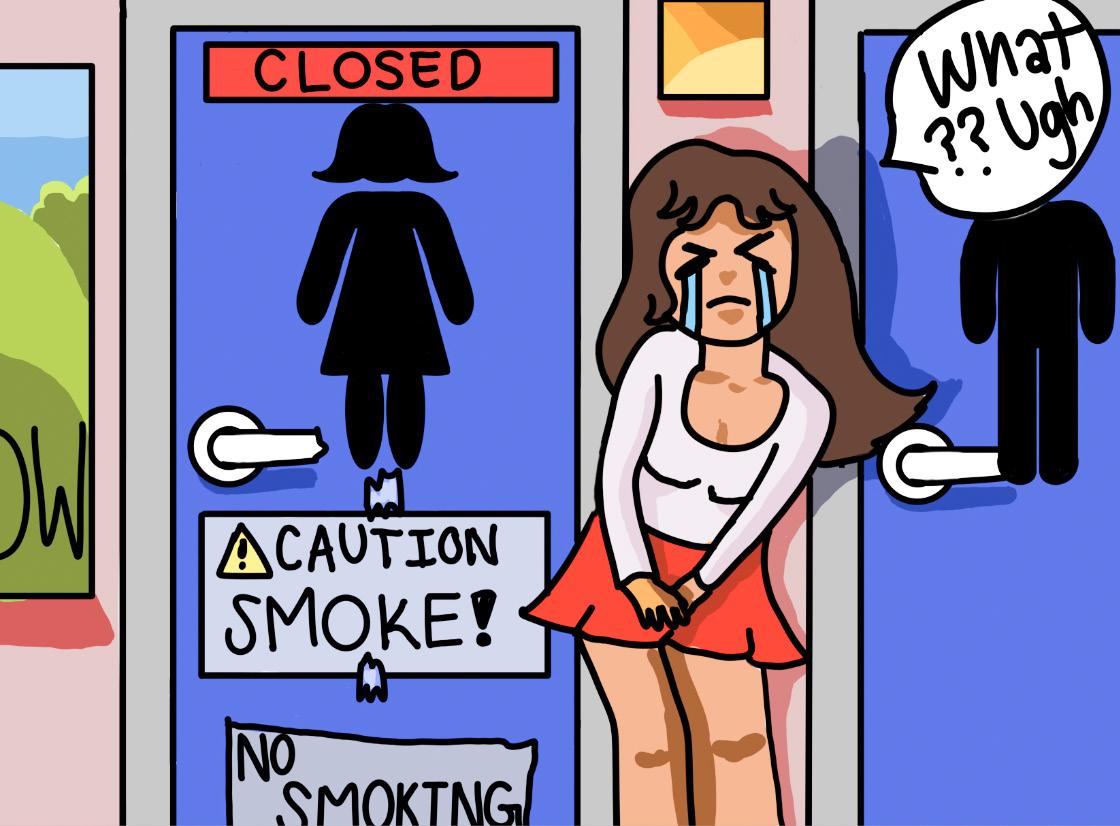
More recently, in November, Schauerman Library staff closed its basement bathrooms due to smoking.
Student library staff members refused to comment, however Director of Tutoring and Academic Support Sheryl Kunisaki said the closure was due to repeated smoking incidents reported by staff.
“We can’t monitor [basement bathrooms] very well,” Kunisaki said. ”[Closing the bathrooms] minimizes the secluded locations.”
Library and Learning Resources Tech II Steve Dao manages the E-Sports computers and the Makerspace program in the Schauerman Library’s East Basement.
Dao said students reported
Drug, liquor and weapon violations across California two and four-year institutions
Source: Institutional Annual Security Reports, 2024-25
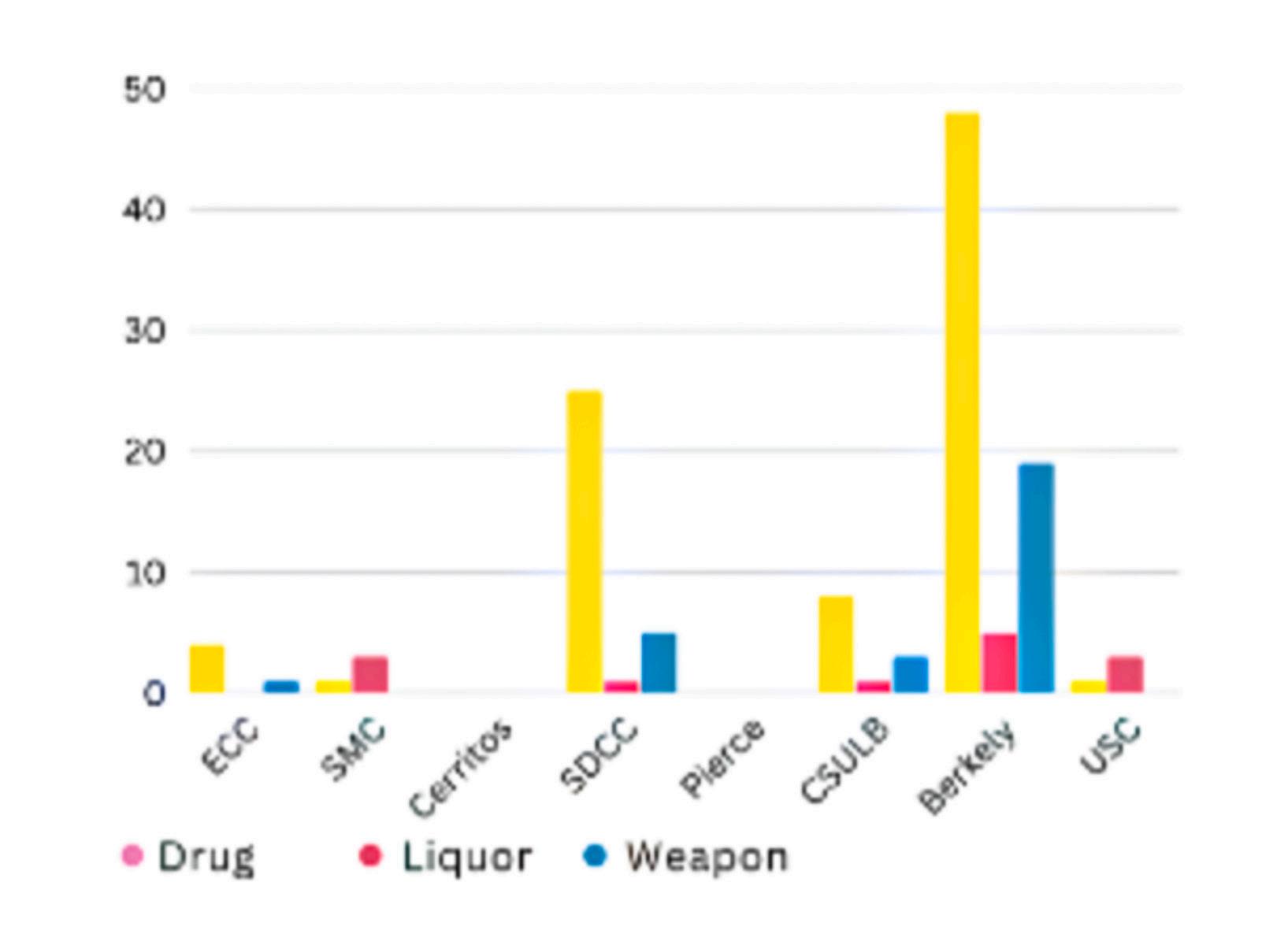
that individuals were smoking in the bathroom and some claimed it could be marijuana.
He said library staff smelled fruity scents in the basement bathrooms, possibly from a vape pen or an attempt to mask smoke with fragrances.
In instances of student misconduct, offenses and academic dishonesty, staff can make reports using Maxient software. These reports are later referred to the authorities, either campus police or the Student Development Office to which students may be penalized under, according to the severity of their actions.
Dao said Maxient reports were sent out, yet students were not identified.
Dao has worked at ECC for a total of 16 years, and he said he’s noticed patterns of drug use among students coming into college from high school.
Moreno, a psychology major, thinks that students shouldn’t be smoking indoors.
“[Students] got to respect [campus spaces] if it’s not [their] property,” he said.
Moreno has been sober from weed for 12 years and alcohol for 10. He said he wouldn’t have been able to pursue his degree if he didn’t stop his substance use.
It is hard to say what influences individuals and their choices in taking substances,
said Steven Sussman, a professor at the University of Southern California and researcher of substance abuse in adolescents.
“Adverse childhood experiences influence [substance abuse behavior vulnerability],” Sussman said. Vander Horck said there are no predictive policing patterns, “At the end of the day, it is a person’s choice,” he said.
Fall 2025 drug, liquor and weapon violations at ECC
•Nov. 4: Weapons law violation in the Gymnasium
•Nov. 18: Aggravated assault between Crenshaw Blvd and El Camino Way.
• Oct. 13: Drug violation was reported in the Schauerman Library
•Oct. 20: Drug violation and trespassing reported near the Behavioral and Social Sciences Building.
•Oct. 6: Two battery cases near Administration Building
• Oct. 7: Assault near Administration Building.
Smoking
By Union Editorial Board
Restrooms in El Camino College’s Schauerman Library’s East Basement have been closed for more than a month due to student smoking.
While this is a preventive measure to deter students from doing so, it hurts student accessibility, especially for individuals who have disability accommodations as the only restroom available is up the flight of stairs and across the lobby.
ECC should do more to ensure its restrooms are smokefree, clean and accessible to all students, including by increase maintenance and surveillance in the East Basement’s restrooms and other problematic locations, as students smoke in them even if they are closed.
The East Basement is home to the Makerspace and the Warriors Esports Center, where students have access to a variety of technological services like 3D printing, gaming desktops, virtual reality headsets and more.
Library and Learning Resources Technician II Steve Dao said there have been four to five incidents of students using the bathrooms and corridors to smoke.
While it’s not confirmed if students typically smoke marijuana, it`s allegedly both vaping and the drug.
Administration of justice major Janelly Almonte, 20, said that students are still continuing to use the spaces to smoke, underlining the ineffectiveness of the bathrooms being closed.
Lack of surveillance in the basement’s hallways and corridors also contribute to smoking being a prevalent issue in those spaces.
Director of Tutoring and Academic Support Sheryl Kunisaki confirmed that the bathrooms being closed are
also due to low maintenance.
Kunisaki said that because it’s not an easily monitored location, the basement restrooms were closed to deter students elsewhere.
While Kunisaki said the bathrooms would likely be open next semester, ECC should increase surveillance in the East Basement so the situation won’t repeat itself.
Andy Potter, a student worker in the Makerspace, said that in week five of the restrooms being closed, they briefly tried to reopen when the smoking incidents kept happening, so they shut it down.
Broadly, the situation shows how ECC takes a reactive approach to limiting student smoking, rather than taking proactive measures such as by increasing surveillance or staffing to limit the issue.
“A lot of students have been complaining, especially some girls with feminine hygiene products,” Almonte said.
A part time employee in the Makerspace, Jay, who declined to provide his last name. said they have been told how to approach students who are suspected of smoking in the restrooms.
“We`ve been told by supervisors just to keep it neutral, so that way we’re not trying to accuse them of doing something... we ask for the student ID, it’s their responsibility whether they show it or not and they usually decline, so you can’t really do much,” Jay said.
Kunisaki said if it’s known who the students are that are smoking, Maxient reports are filed.
Almonte said that she just wants the bathrooms to be reopened, and The Union has the same stance.
Food trucks near the Bookstore Building having high prices and limited, inconsistent hours.
Some clocks around campus still being out of time and not updated to Pacific Standard Time since Sunday, Nov. 2.


Student staff still being able to work on campus despite the Bookstore Building’s closure.
The campus bells being corrected to chiming on the hour, every hour.
EDITORS
Hailey Adams
Jonathan Aldana
Savannah Anderson
Heather Austin
Ananya Iamcharoen
Chelsea Alvarez Philip Kozel-Lopez
Frankie Jimenez Kai Lambert
Taheem Lewis
Dasean Catchings
Katie Dang
Kaitlyn Estrada
Ana Gamez
Donovan Harris
Paula Cunningham Axel Hernandez
Juan Carlos Cardoso Benjamin Hernandez
Daisy Hurtado
Joseph Marshall
Michelle Claire Pentreath
Samuel Pizzati
Isaac Ramirez
Conner Reoch
Lynelle Sarpong
Ryan Hirabayashi Angel Stormborn
Lillian Yamada
Ashlyn Zeutzius
Michelle Bergdahl Chelsea Alvarez Farimah Dahaki
Joseph Figueroa
Zuri Godwin
Special to The Union
EDITOR-IN-CHIEF gburkhart@elcamino.edu
Christol Nguyen
Elsa Rosales Sydney Sakamoto
STUDENT MEDIA ADVISER
Stefanie Frith sfrith@elcamino.edu
PHOTO ADVISER Nguyet Thomas nthomas@elcamino.edu
ADVERTISING MANAGER
Jack Mulkey elcounionads000@yahoo.com
Gerard Burkhart Joseph Difazio
INSTRUCTIONAL ASSISTANTS jdifazio@elcamino.edu
Jessica Martinez
Kate McLaughlin kmclaughlin@elcamino.edu jemartinez@elcamino.edu
CORRECTION POLICY: The Union takes corrections and clarifications very seriously. If a correction is needed, email The Union at eccunion@gmail.com for all corrections and inquiries pertaining to a story.
EDITORIALS: Editorials represent the views of the The Union’s editorial board. Columns represent the views of the writer. Neither are representations of what the newspaper staff, other students, our advisers, faculty or the administration think.
LETTERS AND GUEST COLUMN
POLICY: No more than two guest columns from the same person will be considered for publication or online use in the same semester, and 60 days must elapse before a second column is published. Guest columns should generally run 300-450 words. Letters to the editor should generally run no longer than 200 words. All columns and letters are subject to editing for length, grammar and style. They must be free of libel and in
Counselors should step-in to assist with student debt
By Giselle Jimenez
When talking to El Camino College students, an issue that stands out is a lack of knowledge about where to find help with scholarships.
While counselors are available for academic planning, students say getting assistance for financial aid and scholarships is confusing and often inaccessible.
Counselors at ECC should be regularly sharing scholarship and financial aid advice, offering personalized guidance about what students qualify for and connecting them with resources.
Not many students have money lined up to continue their education or know who to turn to for support.
Outstanding student-loan debt totals roughly $151.5 billion in California, with nearly four million borrowers carrying an average balance of $38,000, according to SoFi, the Student Borrower Protection Center and SmartAsset.
California’s student debt represents one of the highest totals in the nation.
Beyond paying for tuition and class materials, commuting and transportation costs add another layer of pressure.
Getting to campus can

become a financial barrier with rising gas and parking permit prices.
On-campus resources at the Basic Needs Center, including the free Metro U-Passes which are offered, can help.
The issue is students at ECC often do not know how to access those opportunities.
ECC can make resources more visible through classroom visits, fairs dedicated to financial planning, newsletters and making information easier to find online.
Counselors don’t talk about
scholarships often, but they share how to access ASSIST, a tool that shows how courses transfer between community colleges and four-year universities.
Using ASSIST helped me avoid unnecessary classes, saving money and time.
Counselors play an essential role in helping students map their future educational goals. But guidance should also include financial planning, especially when most community college students fall within lower-income ranges.
From my own experience, meeting with a counselor early in the semester helped me stay on track, including by reviewing my degree plan.
But students can also take initiative by using campus resources themselves, as long as these resources are easy to find.
Scheduling counseling appointments, attending a workshop, visiting the financial aid office and asking questions including, “Can you show me how to use ASSIST to plan my transfer?” and “What scholarships am I eligible for?”
can make a difference.
For many students, debt is unavoidable but receiving scholarships and being supported by financial assistance programs eases the burden.
Providing better financial guidance is not just about money but about giving students a fair chance of success. By helping alleviate these challenges, ECC would be supporting students’ dreams of graduating, transferring and building a comfortable future without overwhelming debt.
By Erica Lee
We live in an era where anything we could ever want is just a click away.
But that privilege can easily be taken away by a higher authority or an expired copyright license.
With physical media, your favorite movies and shows can’t disappear if you own them.
Over the summer, fans of the 2004 television show “Lost” were dismayed to learn that it would be leaving Netflix.
The top response from Reddit user throwaway483949839 in a forum thread dedicated to the show suggested that Losties, as fans are known, should “just buy physical copies!”
While there hasn’t been a study examining how many members of Gen Z are now collecting CDs and DVDs, film industry legends are eagerly encouraging the trend.
In response to Christopher Nolan’s concerns that films could easily disappear if they

were only available for streaming, director Guillermo del Toro posted on X.
“If you own a great 4K HD, Blu-ray, DVD etc etc of a film or films you love… you are the custodian of those films for generations to come,” del Toro wrote.
I couldn’t have agreed more.
The average American spends $508 on streaming services a year, according to reviews.org.
That’s almost the cost of two classes at El Camino College.
Not only is it easy to find the first few seasons at any thrift store, but there are so many benefits to jumpstarting your own physical media collection.
You’re free from the stress of having to carve out an afternoon to binge watch the first season when you find out it will be moving to yet another streaming service that you
would have to waste more money on.
For the price of a month’s subscription of Netflix or Hulu, you can buy a couple of DVDs or a season boxset of your favorite show.
Goodwill, Salvation Army, Book Off and Savers all sell DVDs for under $5.
When owning your copy, it gives you the freedom to watch it as many times as you want.
Earlier this year, I hit the jackpot at my local Savers when I got five of the first 10 seasons of “The Simpsons.”
When I showed off my haul to friends and online, everyone was quick to point out that I now had the banned episode — season three’s “Stark Raving Dad,” which is not available on Disney Plus because of sexual abuse allegations against guest star Michael Jackson.
Collecting physical media means the freedom to curate what I want my DVD stash to be. My little clutch of zombie movies, “Futurama” boxsets and British comedies are an extension of who I am.
These DVDs save me the hassle of trying to find them online on streaming services.
When you have the copies on hand, you don’t have to waste money on a streaming service you’ll use only a handful of times a month.
Between going to school and working full-time, I don’t have the free time to sit down and binge watch “Futurama.” Not now, and not until I graduate. My time and money have become more precious than ever. But my DVDs will be waiting for me.

From ‘True
By Eleni Klostrakis
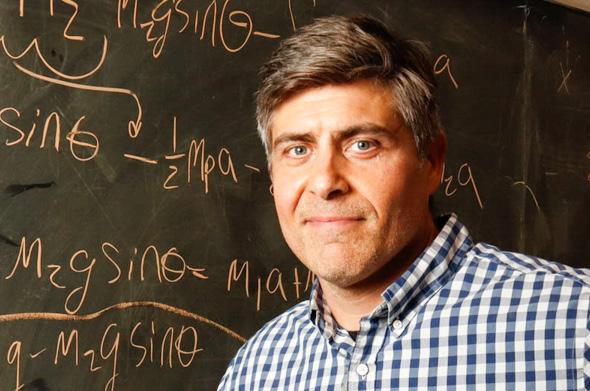
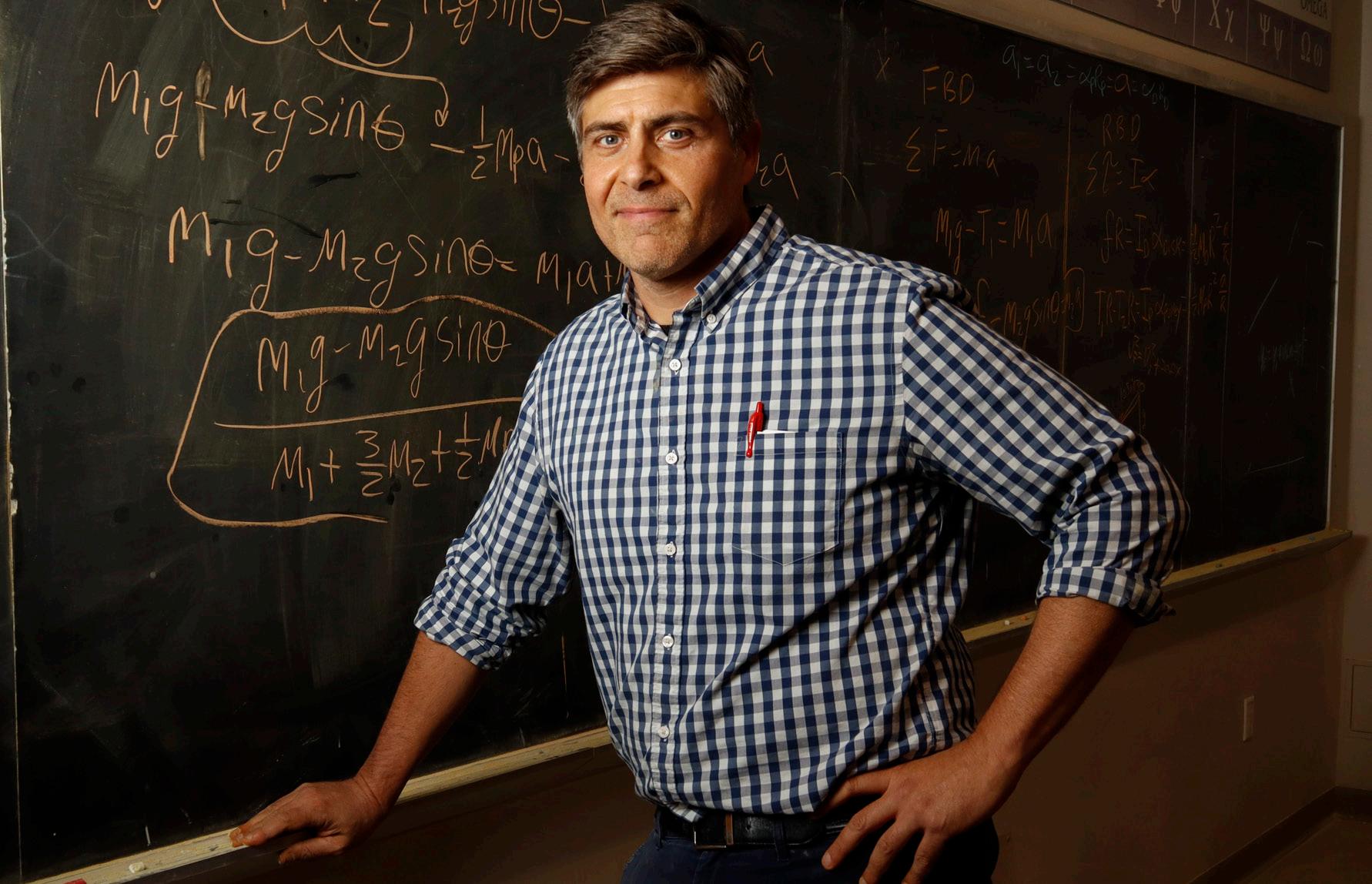
On the set of “Jane the Virgin”, Dr. Bennett, played by El Camino College physics professor Paul Haitkin, told Rogelio De La Vega and Xiomara Villanueva, played by Jaime Camil and Andrea Navedo, that he has done vasectomies for many other celebrities before.
This is just a snippet of Professor Haitkin’s past life, who, prior to teaching was an actor, playing small roles in productions like “True Blood,” “Saved by the Bell,” “Castle,” and many more.
“It was an accident, and it just really clicked,” Haitkin said.
Haitkin found his spark for acting while studying for a doctorate in theoretical particle physics at the University of California, Los Angeles.
Initially, he enrolled in acting to find balance, as he was feeling overwhelmed with physics classes, but ended up focusing solely on acting.
“My last semester at UCLA I wasn’t taking any physics classes” he said. “I was living in the theater department and just like teacher’s assistant in the physics department.”
He went on to book multiple gigs, with a favorite role of his being when he played both a father and son, in Nick Salamone’s playwright titled “The Sonneteer.”
While a tragic play, Haitkin said how the director, Salamone, changed the script and the mannerisms of the
characters depending on the actors and actresses who played the cast.
“That was so exciting for me, to think that somebody was writing for me...Because I happen to be the person in that role,” Haitkin said.
He turned to teaching, after leaving graduate school with a masters degree, when the pandemic hit in 2020.
“I think it’s a misconception that physics is not a creative discipline.”
-Paul Haitkin, physics professor
After working as a part time instructor at Mt. San Antonio College from 2020-25, Haitkin got a job at ECC just last year as a full time faculty member.
“I just transitioned to being an adjunct at various different places, but I found that I really loved teaching...teaching is performance, it’s sales and it’s performance,” Haitkin said.
Growing up in New Jersey, he didn’t have a lot of interest in acting, but has always expressed a passion for the arts.
“I’ve always been drawn to arts, I did a lot of creative
writing when I was younger and when I was in undergrad,” Haitkin said.
His family, also has ties to the acting industry with his uncle being famous cinematographer, Jacques Haitkin. He met his wife, Henree Alyse through an acting class after graduate school. She has played on a number of hit shows including: “Pretty Little Liars,” “Grey’s Anatomy,” “Criminal Minds,” “Dexter” and many more.
While Haitkin did take a few roles after the pandemic, he doesn’t express interest in rejoining the industry unless special conditions prove otherwise.“Unless Paul Thomas Anderson calls in which case I’ll come out of retirement,” Haitkin said.
Computer science majors including Arahim Kabir, 20, and Isaac Seydel, 23, who are both taking his class, described Haitkin to be charismatic and “absolutely a joy to have as a professor.”
“He’s probably my favorite teacherthatI’vehadsofar,he’s very good at just explaining concepts and giving good examples,” Seydel said.
Students said he makes concepts easy to understand.
“I think it’s a misconception that physics is not a creative discipline. I really do, I think that physics is as creative as journalism, or as creative as acting or as creative as painting,” Haitkin said.
To read more of this story, visit eccunion.com

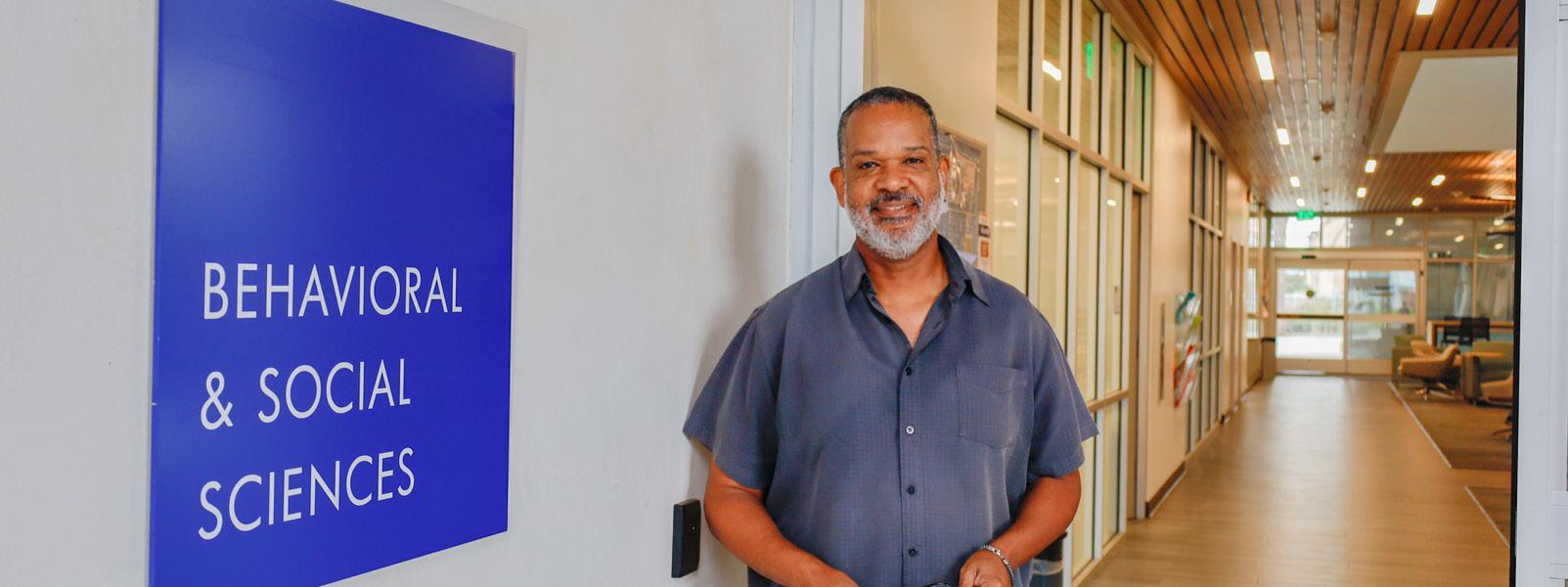
Top: Part-time El Camino College political science professor Van Chaney, 57, removes his glasses at the entrance of the ECC Behavioral and Social Sciences Building on Friday, Oct. 3. Chaney has been working parttime at ECC for 20 years, among other community colleges in Cerritos, Los Angeles, Compton and Maricopa.
Photos by Madison Moody
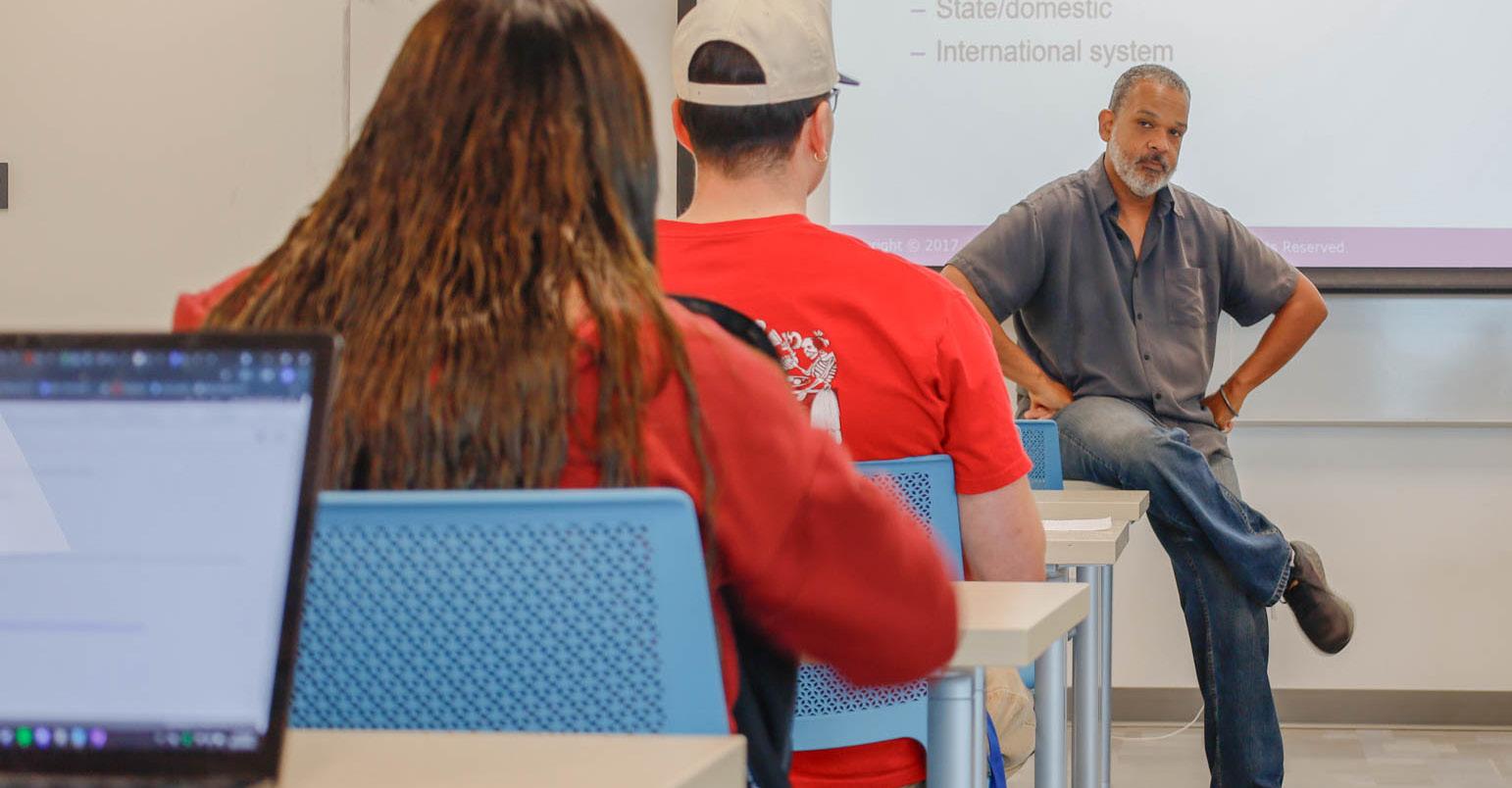
Left: As students work on an exam, professor Van Chaney, 57, makes himself available for any questions in relations to the material given Friday, Oct. 3. Chaney started his first teaching position at Southwest College
in spring 2006. In fall 2006 he continued at Southwest, but started teaching at Pierce college and El Camino College.
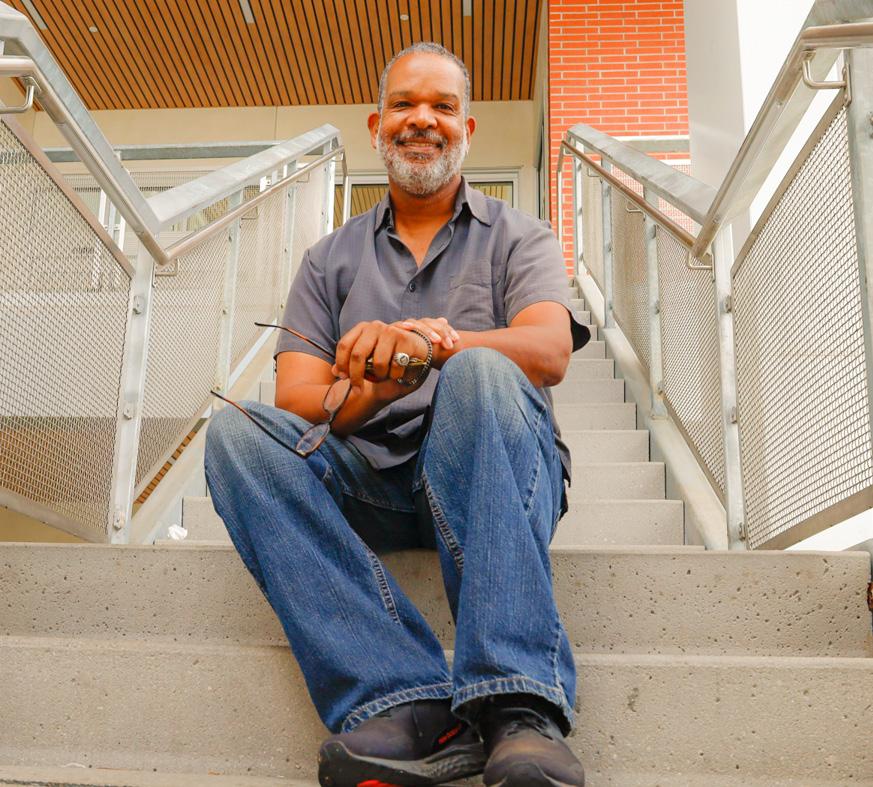
Center: Political science professor Van Chaney, 57, sits at the steps of El Camino College’s Behavioral and Social Science Building. Chaney said he became interested in the field at a young age after seeing Richard Nixon on TV. Chaney’s mother did early childhood education as a nursery instructor, and his father delegated with united auto workers in Los Angeles working in the aerospace industry.
By Samuel Pizzati
Bored as a kid, flipping through an encyclopedia of politicians and former U.S presidents including Robert Kennedy, Richard Nixon and Lyndon Johnson, Van Chaney’s passion for politics strengthened the more he turned each page.
Van Chaney is a part-time political science professor at El Camino College and his love for politics was discovered when he was just 5 years old. He has been focused on learning and working with it ever since then.

His father being a union representative and his mother being also in the teaching field when he was younger and their habit of keeping up with the news helped him pursue his passion for politics.
During his years in high school at Daniel Murphy Catholic High School in Los Angeles, which Chaney graduated from in 1985, he showed a lot of interest in political issues.
Chaney read up on Nixon and how he dealt with China and the Soviet Union. He even went to the lengths of subscribing to two newspapers, the Los Angeles Times and USA Today, to stay in the loop.
After highschool, Chaney began college at West Los Angeles College and in the same year became the Associated Students Organization president.
by chance, we were talking one day and he told me he had just taken a test with the FBI. I never thought about it. It literally did not even cross my mind,” Chaney said.
That same evening, he called
Later on, while still working for the FBI, he took night classes at Southwestern Law School located in Los Angeles.
“The first one [first assignment in the organized crime investigation division]
It was at West Los Angeles College, where a work-study counselor came into the ASO offices one day. It was here that Chaney got the chance to talk to him and was able to get an internship as a field office intern for former U.S. congressman Mel Levine.
“Anyway, that’s [during his time as an intern] where I found out by another student at West Los Angeles College, who,
the FBI to learn more and was told there would be a test the next day and he was invited to come back the following day.
The test was measured as pass or fail and was an aptitude test to join the federal bureau.
Chaney passed, and at only 19-years-old in 1987, he began working at the FBI’s Organized Crime Investigation Division.
During this same year, he transferred to Loyola Marymount University.
I did was an undercover wiretap,” Chaney said.
“And in that time frame, it was an investigation whether or not organized crime had connections with the Hollywood industry.”
His task during this assignment was to listen to code words and take record of them. Chaney remembered many very early morning arrests he had to make. Along with the multiple encounters with gang squads, which is a law enforcement unit dealing with gang-related crime.
“He was outgoing, he was friendly, he likes to talk with everybody,” Lorne Stevenson, a former FBI worker who worked with Chaney, said.
Both Chaney and Stevenson used to be professional support positions at the FBI, and these positions included conducting background checks on new applicants. Stevenson joined the FBI a year later than Chaney in 1988.
“I was looking for another career path, because I really wasn’t looking as far as the agent,” Chaney said.
Chaney later began teaching with a program known as Project Match which was run under the Los Angeles Community College District.
He taught for the program from summer 2005 until he started his position at ECC during the fall of 2006.
Project Match is an instructional development and professional learning program that offers mentorship and more to increase the quality instruction and diversity in community college teaching, according to Project Match’s website. This program is still available today.
Ready for a career change, in 2005, he also started working with another professor at Southwestern Law School.
In the following year, a position opened up at ECC which Chaney applied for, beginning his journey at ECC in 2006.
Since then, Chaney has become a dedicated and committed educator whose passion for politics is recognized in every class.
“He’ll just go into certain topics and you can tell that he’s pretty passionate about what he’s talking about,” Jaclyn Bruce, a 19 year old, political science major and a student of Chaney’s Political Science 10 class, said.
Moments during the semester, captured by student photojournalists, were framed by the common and not-so-common framing perspectives on campus with the skills they learned throughout this fall.

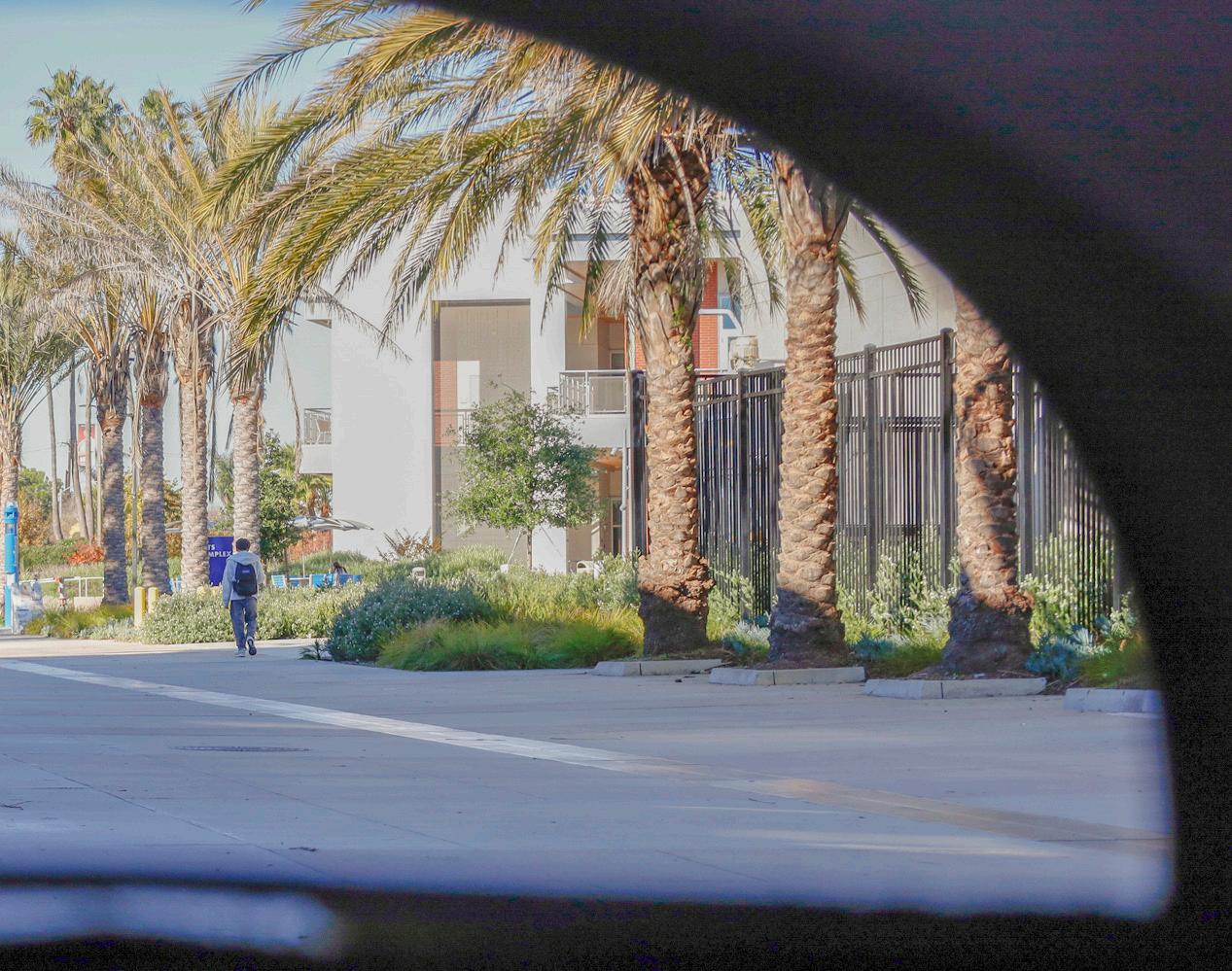



Students and faculty find that it may be more than a classmate beside them. Animals and critters that reside on our campus grounds give new layer of life to the college experience.





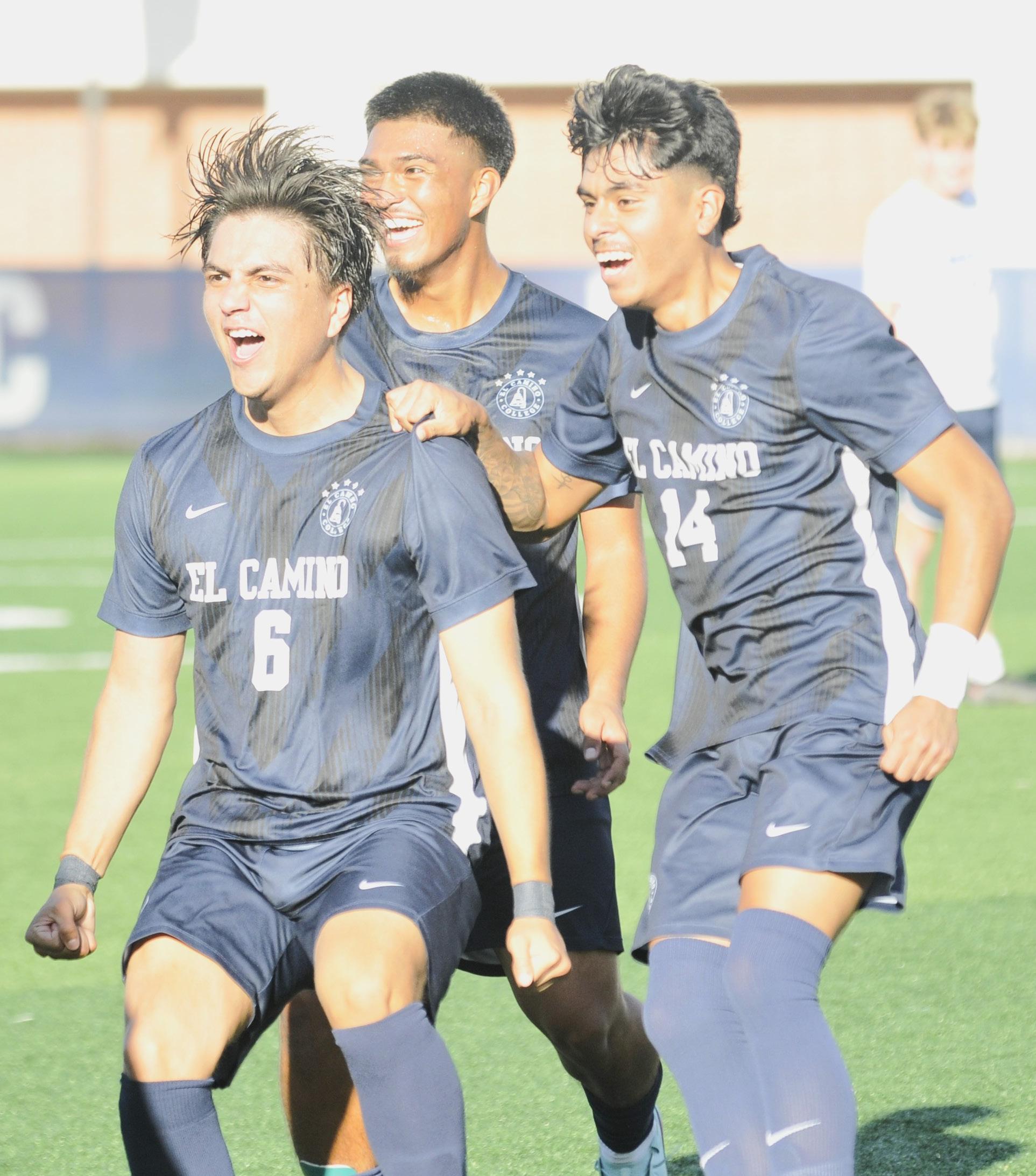
Looking at the results of football, men’s soccer, women’s soccer and other sports this season

volleyball (top): El Camino College Warriors outside hitter Yasmine Itani jumps up for a hit while two LA Harbor Seahawks attempt to block on Friday, Oct. 10, in the ECC Gymnasium. El Camino College secured three of the five sets. The Warriors women’s volleyball team will play Compton College next, on Wednesday, Oct 15 at ECC. The Warriors finished (13-12) record and finshed third in the South Coast Conference .



Warriors football team opens up arms to guide him on his journey and dreams
By Jaylen Morgan
Crouching on one knee in the back of the end zone on Featherstone Field gripping his black GoPro, Wesley Turner is determined to capture all the action of the El Camino College Warriors football team anywhere they play.
Along the sideline, he squeezes through to get all the angles he can for his video. When the Warriors score a touchdown he darts to them and leaps to the air making contact and high fives the team. A huge smile takes over his face when he’s on the field.
Wesley Turner isn’t a freelancer for any publications. Or part of The Union as a reporter or an editor. Or not even the local TV station. Neitheris he an employee at ECC athletic’s department. He’s working for himself. And he’s just 13.

The Lancaster eighth grader aspires to be a sports journalist or reporter one day.
“I love football, ever since my dad introduced me to the game I fell in love with it. My knowledge of the game has grown, and my family told me to pursue it,” Wesley said.
Last season at the Antelope Valley College’s game against the Warriors in Lancaster, Wesley was there to interview the Antelope players and coaches but said he was shunned by the team.
“My knowledge of the game has grown, and my family told me to pursue it. ” -Wesley Turner, 13
That’s when Warriors kicker Ryan Geesler noticed him and invited him to talk to ECC’s football players.
“I didn’t think much of it at first, I told him to come interview some of our guys and I wanted to help and do him a favor. Once I saw him kept coming I knew he was dedicated to what he was doing,” Geesler said.
Warriors football coach Gifford Lindheim helps Wesley get onto the field by waving to

him and his dad to get field access for the games.
Since Wesley and his father drive from Lancaster for every Warriors’ football game, Wesley does chores such as mowing lawns, trimming leaves off trees, and taking the trash out to help his dad cover the cost of gas.
“You want to be able to help him on his journey, we know the sacrifice he makes coming to our games and he’s doing a great job,” Lindheim said.
Wesley attends Joe Walker Middle School, is currently in the eighth grade, and plans to attend Quartz Hill High School in Lancaster next year. His favorite subjects in school are math and history.
“Those two subjects are very interesting, for history I like learning about what came before and math is my strong point,” he said.
He’s also played football and has many positions such as quarterback, wide receiver, running back and safety.
Wesley’s dad Matthew Turner, 42, who is an electrician and plumber, introduced him to the world of sports.
His dad played football for Quartz Hill High and played quarterback and free safety.
“I noticed a different type of interest for his age, he gets in detail way more than I ever did,” Matthew Turner said.
At the Warriors football games, Wesley’s eyes beam like a fire, ready to get any type of video content he can for him and his dad’s YouTube channel, Focus Capture Time-Travel (FCT Photos), which has 72 subscribers and counting.
Matthew helps Wesley with the editing because he also is a videographer for weddings and online commercials.
On YouTube, Wesley conducts film of the highlights of the football game and posts interviews of the Warriors coaches and players.
The players on the field embrace him as family and give him handshakes and jump into him after a touchdown.
'He’sforsureoneoftheguys,” Geesler said. “The team shows him love and I’m happy to see that. He has a bright future and he can go a long way if he keeps pursuing it.”
Wesley is not only interested in football but he also enjoys baseball and basketball as well.
“If you give him the name of an athlete he’ll give you their stats, he’s so passionate and dedicated I want him to keep going,”hismomAshleyTurner, 39,amedicalassistantatValley Orthopedic Institute, said.
To read more of this story, visit eccunion.com.