


DUNDALK NATIVE Kate O’Connor announced herself on the world stage as she secured an historic silver medal in the heptathlon at the World Athletics Championships in Tokyo. In doing so she became the first ever Irish athlete to win a multi-events medal at a global outdoor championship. She also became just the sixth Irish athlete ever to win a medal at the World Championships joining Irish legends Eamonn Coghlan, Sonia O’Sullivan (two medals), Gillian O’Sullivan, Olive Loughnane, and Rob Heffernan.
O’Connor has enjoyed a stellar year to date under the guidance of her father and coach Michael, collecting three medals this year: pentathlon bronze at the European Indoors, silver at the World Indoors, and heptathlon gold at the World University Games. Continued on Page 2.


Continued from Page 1
However, despite her stellar year, O’Connor wasn’t widely regarded as a medal prospect going into the games with the official preview from World Athletics prior to the games focusing on Nafi Thiam who was seeking to restore her dominance with a third world title,
Katarina Johnson-Thompson who was defending her crown and aiming for back-to-back world titles and this year’s world leader Anna Hall who arrived in Tokyo chasing her first global title.
In the end only Hall could beat O’Connor with the American finishing on 6888 points, just over 150 points clear of the Dundalk athlete. The 24 year old St Gerards AC athlete unbelievably recorded o less than five personal bests in her seven events. After capturing lifetime bests in the 100m hurdles, high jump and 200m to establish herself as a medal contender on Friday, O’Connor’s only real setback occurred on Saturday when she suffered an injury scare following the long jump where she injured her knee. The injury restricted her to just one practice throw before the javelin. Remarkably, she posted a personal best of 53.06 in the javelin to all but secure a medal with only the 800 metres remaining in the competition. Coming out with a bandage on her knee may have given her competitors hope but the Dundalk athlete finished as she started with yet another PB of two minutes, 9.56 seconds to secure an historic silver.
Speaking after today’s medal winning display, O’Connor said: “It’s insane, words can’t describe the way that I feel or the year that I’ve had. My indoor season was a complete dream, and I wanted to carry that form into the outdoors. I’ve never come to a championship before and had as much pressure as
Every Wednesday 8.00pm Market Square, Dundalk
Show Your Support For The People of Palestine
Please Come and Join Us
I’ve had on my shoulders this week. I expected big things from myself, and I knew I was in with a shot of winning a medal.”
“I enjoyed every single second of the competition yesterday, but today not so much as I hurt my knee in the long jump, and it was just a real fight to the line in every event. The team around me have filled me with so much confidence today and it was just pure grit and determination that I managed to pull myself through.”
Chatting about her thoughts heading into the final 800m event, O’Connor said: “Going into that 800 meters, I told myself I wasn’t going to pass up this opportunity and I was never going to just settle for a bronze medal which was probably the easy option. I was always going to fight 100% to the line and I managed to pull out a PB (in the 800m).”
“My expectations for myself changed this year and they’ve probably changed again now. I think I’ve set myself up really well for the next three years leading up to the Olympics and I’m prepared to put my head down and work really hard. I’m so happy that I can represent my country on a global stage and win global medals which hasn’t been done in a long time,” concluded Kate.
National Record Summary (6,714 pts)
• 100m Hurdles: 13.44 PB
• High Jump: 1.86m PB
• Shot Put:14.37m
• 200m: 24.07 PB
• Long Jump: 22m
• Javelin: 06m PB
• 800m: 2:09.56 PB

LOUTH COUNTY Council would like to send its warmest congratulations to Kate O’Connor following her silver medal in the women’s heptathlon at the World Athletics Championships in Tokyo.
The St Gerard’s AC star made history by becoming the first ever Irish multi-event athlete to win a global outdoor medal, producing a sensational performance across all seven events to finish on 6,714 points - a new Irish record.
The 24-year-old delivered five personal bests, in the hurdles, high jump, 200m, javelin, and the deciding 800m, where she sealed the silver with a determined run on Saturday afternoon.
This latest milestone adds to an already exceptional year for the Dundalk native who previously won European Indoor bronze, World Indoor silver, World University Games gold.
Earlier this year, Louth County Council honoured Kate with a Civic Reception in County Hall, Dundalk, recognising her trailblazing success and inspirational role in Irish sport.
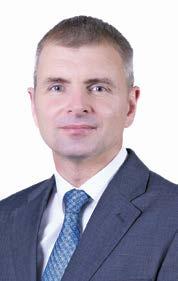
Cllr Seán Kelly, Cathaoirleach of
Louth County Council, said: “Kate O’Connor has once again made history and brought immense pride to Dundalk, to Louth, and to Ireland. Winning silver at the World Championships is a remarkable achievement, and to do so with such resilience and heart makes it even more special. We were honoured to celebrate her at a Civic Reception earlier this year, and we are even prouder now as she takes her place on the world stage as one of Ireland’s greatest athletes - and a role model for every young girl and boy around the county.”
David Conway, Chief Executive of Louth County Council, added: “Kate’s performance in Tokyo is yet another example of her hard work, sacrifice, and dedication. She has consistently shown that Irish athletes can compete and succeed at the very highest level. This silver medal is a historic milestone, not just for Kate but for Irish athletics. We congratulate her, we celebrate her, and we look forward to all she will continue to achieve in the future.”






3’0










By Darren Crawley
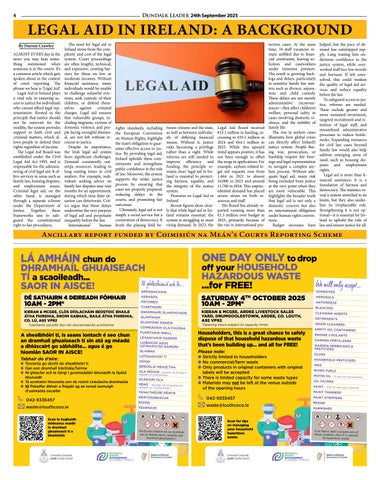
ALMOST EVERY day in the news you may hear something mentioned when someone is in the courts. It’s a common article which gets spoken about in the context of court reporting. The phrase we hear is ‘Legal Aid’. Legal Aid in Ireland plays a vital role in ensuring access to justice for individuals who cannot afford legal representation. Rooted in the principle that justice should not be reserved for the wealthy, the system provides support in both civil and criminal matters, which allows people to defend their rights regardless of income.
The Legal Aid Board was established under the Civil Legal Aid Act 1995, and is responsible for the administering of civil legal aid. It offers services in areas such as family law, housing disputes, and employment issues.
Criminal legal aid, on the other hand, is managed through a separate scheme under the Department of Justice. Together, these frameworks aim to safeguard the constitutional right to fair procedures.
The need for legal aid in Ireland stems from the complexity and cost of the legal system. Court proceedings are often lengthy, technical, and expensive, creating barriers for those on low or moderate incomes. Without financial assistance, many individuals would be unable to challenge unlawful evictions, seek custody of their children, or defend themselves against criminal charges. Legal aid ensures that vulnerable groups, including migrants, victims of domestic violence, and people facing wrongful dismissal, are not left without recourse to justice.
Despite its importance, the Irish legal aid system faces significant challenges. Demand consistently outstrips resources, leading to long waiting times in civil matters. For example, individuals seeking advice on family law disputes may wait months for an appointment, during which time their situation can deteriorate. Critics argue that these delays undermine the very purpose of legal aid and perpetuate inequality before the law.
International human

rights standards, including the European Convention on Human Rights, highlight the state’s obligation to guarantee effective access to justice. By providing legal aid, Ireland upholds these commitments and strengthens public confidence in the rule of law. Moreover, the system supports the wider justice process by ensuring that cases are properly prepared, reducing delays in the courts, and promoting fair outcomes.
Ultimately, legal aid is not simply a social service but a cornerstone of democracy. It levels the playing field be-
tween citizens and the state, as well as between individuals of differing financial means. Without it, justice risks becoming a privilege rather than a right. While reforms are still needed to improve efficiency and funding, the principle remains clear: legal aid in Ireland is essential to protecting fairness, equality, and the integrity of the justice system.
Pressures on Legal Aid in Ireland
Recent figures show clearly that while legal aid in Ireland remains essential, the system is struggling to meet rising demand. In 2023, the
Legal Aid Board received €53.1 million in funding, increasing to €59.1 million in 2024 and €64.1 million in 2025. While this upward trend appears positive, it has not been enough to offset the surge in applications. For example, asylum-related legal aid requests rose from 1,464 in 2021 to almost 10,000 in 2023 and around 11,700 in 2024. This unprecedented demand has placed severe strain on both resources and staff.
The Board has already reported running more than €1.3 million over budget in 2025, primarily because of the rise in international pro-
tection cases. At the same time, 34 staff vacancies remain unfilled due to financial constraints, leaving solicitors and caseworkers under immense pressure. The result is growing backlogs and delays, particularly in sensitive family law matters such as divorce, separation, and child custody. These delays are not merely administrative inconveniences—they affect children’s welfare, personal safety in cases involving domestic violence, and the stability of family life.
The rise in asylum cases illustrates how global crises can directly affect Ireland’s justice system. People fleeing war, persecution, or hardship require fair hearings and legal representation to navigate a complex asylum process. Without adequate legal aid, many risk being excluded from justice at the very point when they are most vulnerable. This highlights the broader truth that legal aid is not only a domestic concern but also an international obligation under human rights conventions.
Budget increases have
helped, but the pace of demand has outstripped supply. Long waiting lists undermine confidence in the justice system, while overworked staff face low morale and burnout. If left unresolved, this could weaken the quality of legal aid services and reduce equality before the law.
To safeguard access to justice, reforms are needed. These include greater and more sustained investment, targeted recruitment and retention of legal staff, and streamlined administrative processes to reduce bottlenecks. Expanding resources for civil law cases beyond family law would also help address emerging areas of need, such as housing disputes and employment rights.
Legal aid is more than financial assistance; it is a foundation of fairness and democracy. The statistics reveal a system stretched to its limits, but they also underline its irreplaceable role. Strengthening it is not optional—it is essential for Ireland to uphold the rule of law and ensure justice for all.

Ní ghlacfaimid ach le...
GREAMACHÁIN
DÉ SATHAIRN 4 DEIREADH FÓMHAIR 10AM - 2PM*
ADHESIVES

KIERAN & MCGEE, CLÓS DÍOLACHÁIN BEOSTOIC BHAILE ÁTHA FHIRDHIA, DROIM GABHAIL, BAILE ÁTHA FHIRDHIA, CO. LÚ, A92 VP92
*Uaireanta oscailte faoi réir teorainneacha acmhainne
A shealbhóirí tí, is seans iontach é seo chun an dramhaíl ghuaiseach tí sin atá ag méadú a dhiúscairt go sábháilte... agus é go hiomlán SAOR IN AISCE!
Tabhair do d’aire:
● Teoranta go docht do shealbhóirí tí
● Gan aon dramhaíl tráchtála/feirme
● Ní ghlacfar ach le táirgí i gcoimeádáin bhunaidh le lipéid bhunaidh
● Tá acmhainn theoranta ann do roinnt cineálacha dramhaíola
● Ní fhéadfar ábhair a fhágáil ag an ionad lasmuigh d’uaireanta oscailte


AERASÓIL
FRITHREO
TUARTHÓIRÍ
GNÍOMHAIRÍ GLANTACHÁIN
GLANTAIGH
GLANTÓIRÍ DRAEIN
COIMEÁDÁIN OLA FOLMHA
FUARTHÁIN INNILL
LEASACHÁIN GAIRDÍN
LUIBHICÍDÍ
LOTNAIDICÍDÍAGUSGAIRDÍN
GLIÚNNA
LOTNAIDICÍDÍ TÍ DÚIGH
BREOSLAÍ MEASCTHA
OLA MÓTAIR - teorainn de 25 lítear in aghaidh an chustaiméara
SCAGAIRÍ OLA
PÉINT – teorainn de 10 gcannaí in aghaidh an chustaiméara
TANAITHEOIRÍ PÉINTE
PÉINTDÍOBHACHA
ROISÍN
VEARNAISÍ

4TH OCTOBER
10AM
KIERAN & MCGEE, ARDEE LIVESTOCK SALES YARD, DRUMGOOLESTOWN, ARDEE, CO. LOUTH, A92 VP92

AEROSOLS
ANTIFREEZE
BLEACHES
CLEANING AGENTS
DETERGENTS
DRAIN CLEANERS
EMPTY OIL CONTAINERS
ENGINE COOLANTS
GARDEN FERTILIZERS
GARDEN

Má tá aon cheann de na siombailí seo ar lipéad earra, meastar gur dramhaíl ghuaiseach í.







THE CASE of Dundalk man John McNeela, who was denied a Defence Forces’ pension following the death of his son Michael died while on UN duty, was raised again with Tánaiste and Minister for Defence, Simon Harris, by Louth TD Ruairí
Ó Murchú during the Dáil’s first week back after summer recess.
Before the summer break, Minister Harris had committed to exploring new legislation so that Mr McNeela could continue to receive the small pension payment given by the
State to his late wife following the 1989 death in Lebanon of his son.
The case was first raised earlier this year by the Sinn Féin TD who brought it directly to Minister Harris again on Thursday.
Deputy Ó Murchú said: “Regarding the
Army pensions case involving John McNeela, whose son Michael made the ultimate sacrifice in Lebanon while peacekeeping, we all know that the allowance paid to John’s wife when she died was not transferred to him.
“The Tánaiste prom-
ised to update the legislation. Is there a possibility of finding an administrative solution? Could we have a timeline on that? It is right that we do right by the memory and families of those who have made the ultimate sacrifice in peacekeeping”.


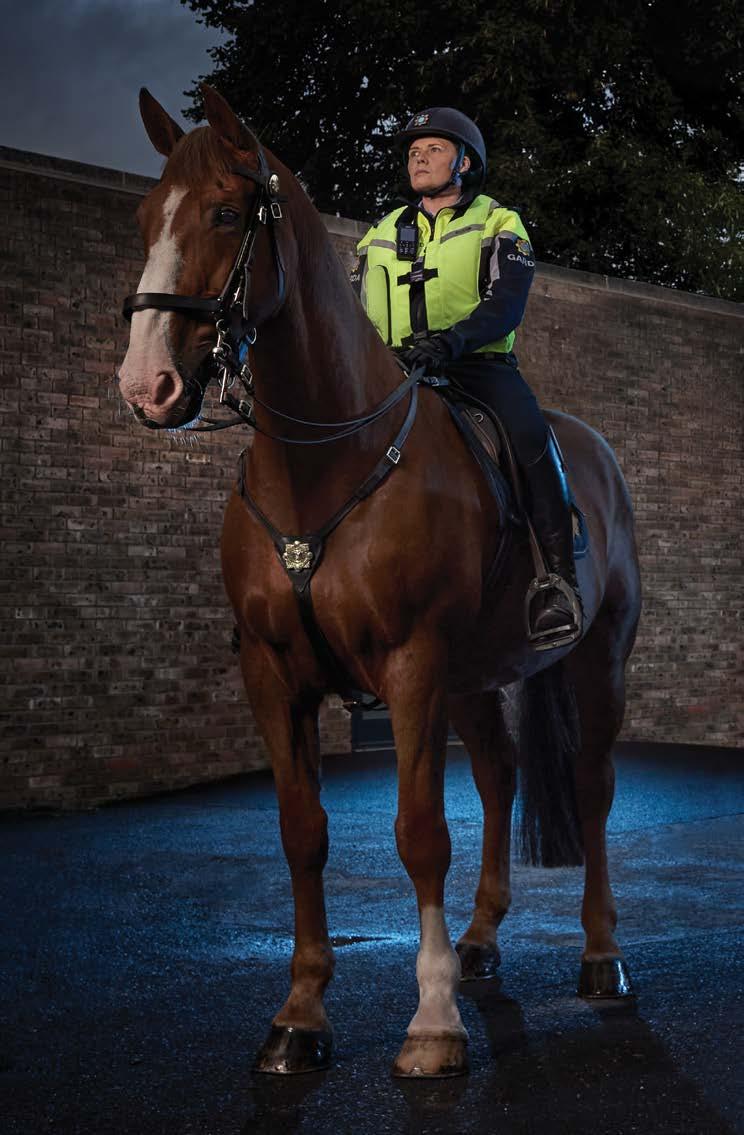
Teastaíonn teacht aniar, misneach agus obair foirne le bheith i do Gharda. Na scileanna a fhoghlaimeoidh tú, na heispéiris a bheidh agat agus na cairde a dhéanfaidh tú, fanfaidh siad leat go deo. Is féidir leis an obair a bheith contúirteach agus deacair, ach tá sí fiúntach agus tabharfaidh sí sásamh duit. Is post deacair é a bheith i do Gharda. Ach is post é gur fiú a dhéanamh.
Déan iarratas roimh 3in ar an 9 Deireadh Fómhair 2025 ag publicjobs.ie

Minister Harris said he had the honour of meeting Mr McNeela during the National Day of Commemoration in July.
mary legislation and I spoke to my Secretary General in recent days about this. It will need to be changed through primary legislation.
cial Protection.
“I will try to come back to the Deputy with a timeline in the next couple of weeks as to how we can move this forward. It does not necessarily have to wait for defence legislation. Other legislation could move more quickly”.
Minister Harris said:
“We are committed to rectifying this in pri-
“I am not sure there is an administrative solution but I have asked for the quickest bill into which to insert this amendment. If it can be a vehicle other than a defence bill, I am open to that. We are engaging with the Office of the Attorney General and the Department of So-
On the issue of whether the pension could be retrospective, Minister Harris said he would check with the Attorney General on that issue.
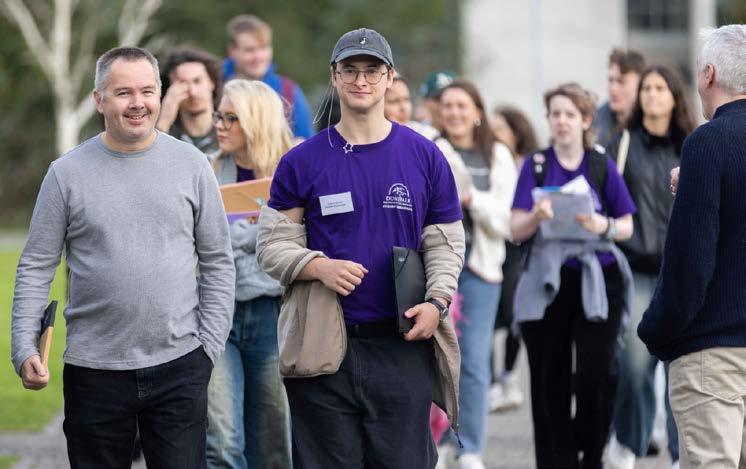



AS STUDENTS across the country take the next stage of their education, Dundalk Institute of Technology (DkIT) has welcomed nearly 1,400 first-year students to its campus for college induction. The programme marked the start of their academic journey across a diverse range of degree courses. Throughout the induction, students explored the campus on guided tours and attended presentations by staff and the Students’ Union, gaining
an introduction to the wide range of support services and opportunities available at DkIT.
CAO course acceptances rose by 7% this year, with programmes such as Engineering, Construction and Nursing seeing notable increases in popularity. Part-time courses also saw a large rise in acceptances, with an increase of 18% on the same period in 2024.
Top choices here included Business, Agriculture and Animation.
DkIT President Dr Diarmuid
O’Callaghan said:
“It’s fantastic to welcome so many new students to DkIT. We’re delighted you’ve chosen us for the next step of your educational journey and I hope your time here is both successful and fulfilling. It’s wonderful to see growing interest in our wide range of courses and I look forward to hearing about all that our students accomplish as they progress in their chosen fields.”

Planning & Development Acts 2000 (as amended) Planning & Development Regulations 2001 (as amended) Planning and Development (Strategic Environmental Assessment) Regulations, 2004 (as amended)
Notice of Intention to review the Louth County Development Plan 2021-2027 and to prepare a new Louth County Development Plan 2027-2033
Notice is hereby given pursuant to Section 11(1) of the Planning & Development Act 2000 (as amended) of the intention of Louth County Council to commence its review of the existing Louth County Development Plan 2021-2027 and to prepare a new Louth County Development Plan for the period 2027-2033.
The preparation of the new County Development Plan shall be strategic in nature for the purposes of developing objectives and policies to deliver an overall strategy for the proper planning and sustainable development of the area of the Development Plan and the Core Strategy. Strategic Environmental Assessment (SEA) and Appropriate Assessment (AA)
The Planning Authority will carry out a Strategic Environmental Assessment (SEA) as part of the review process, pursuant to Article 13B of the Planning and Development (SEA) Regulations 2004 (S.I. No. 436 of 2004), as amended by the Planning and Development (SEA) (Amendment) Regulations 2011 (S.I. No. 201 of 2011).
For this purpose, the Planning Authority will prepare an environmental report of the likely significant effects on the environment of implementing the new plan. The provisions of Articles 13C to 13J of the SEA Regulations (as amended) shall apply while undertaking the SEA. Stage One Appropriate Assessment (AA) Screening (and Stage Two AA, if required), pursuant to Article 6 of the Habitats Directive 92/43/EEC and the Planning and Development Act 2000 (as amended), and Strategic Flood Risk Assessment, in compliance with “The Planning System and Flood Risk Management Guidelines for Planning Authorities” (2009), will also be carried out as part of the review process.
Public Consultation & Strategic Issues Paper
Members of the public are invited to make submissions/observations during the public consultation period for the review of the Louth County Development Plan 2021-2027 and the preparation of the NEW Louth County Development Plan 2027-2033 from Tuesday 23rd September to 4.00pm on Friday 21st November 2025 (both days inclusive).
In order to stimulate debate and encourage participation in this process, a Strategic Issues Paper will be available for inspection to view or download during normal opening hours from Tuesday 23rd October to 4.00pm Friday 21st November 2025 (both dates inclusive) at the following locations:
Louth County Council, County Hall, Millennium Centre, Dundalk A91 KFW6
Louth County Council Offices, Town Hall, Crowe Street, Dundalk A91 W20C
Louth County Council Offices, Fair Street, Drogheda A92 P440
Louth County Council Offices, Fairgreen, Ardee A92 RYT2
All libraries in County Louth (Dundalk, Drogheda, Ardee, Dunleer and Carlingford) and also on our website at www.louthcoco.ie (please check your local library for opening times)
A series of public consultation meetings shall be held across the County. Here the public will have the opportunity to discuss, with Planning Officers, relevant issues relating to the Development Plan Review. Venues, Dates & Times of Public Consultations are as follows:
Venue
Carlingford Library, Newry Street, Carlingford A91 N226
Tuesday 14th October, 2025 6 pm -8pm Dunleer Library, Station Road, Dunleer A92 DRV0
Tuesday 21st October, 2025 6 pm -8pm Dundalk Library, Roden Place, Dundalk A91 RC44
Wednesday 22nd October, 2025 5pm -7.30pm Drogheda Library, Stockwell Lane, Drogheda A92 PY20
LOUTH LIBRARY Service will join libraries across Ireland on Saturday, 27th September to celebrate National Public Libraries Open Day 2025.
The nationwide campaign invites the public to “Take a Closer Look” at the modern, inclusive, and vibrant services libraries offer. It highlights the evolving role of libraries in Irish society as places of entertainment, learning, connection, creativity, and community support.
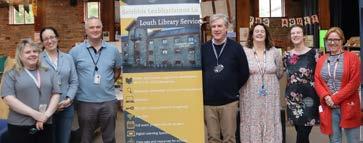
To mark National Public Libraries Open Day 2025, Louth Library Service is holding a number of events including an open day in Ardee Library with ukelele music, storytelling, face painting and balloon modelling.
event. We warmly welcome everyone to visit us on Public Libraries Open Day and at any time to explore all that Louth Library Service has to offer.”
“At Louth Library Service we see every day how libraries are community spaces where people connect, form friendships, and feel part of something bigger,” said Amanda Branigan County Librarian & Head of Cultural Services.
National Public Libraries Open Day 2025 coincides with the inaugural Lit Lú festival. The festival continues over the weekend with author Claire Coughlan in conversation with local author Florence Gillan at 3pm in Carlingford Library.
Wednesday 5th November, 2025 5pm -7.30pm Ardee Library, Market Square, Ardee A92 XH22
Making a Submission
Thursday 6th November, 2025 5pm -7.30pm
Submissions and observations in relation to the review of the Louth County Development Plan 2021-2027 and the preparation of the new Louth County Development Plan 2027-2037 are invited during the initial public consultation period, from Tuesday 23rd September to 4.00pm on Friday 21st November 2025 (both dates inclusive). Submissions/Observations must include the name and address of the person/organisation making the submission/observation and may be made in the following ways: Consultation Portal: https://consult.louthcoco.ie, or
In writing to Development Plan Review, Forward Planning Unit, Town Hall, Crowe Street, Dundalk, Co Louth A91 W20C
Submissions should be clearly marked “Development Plan Review”. Please note that late submissions cannot be accepted. All such submissions lodged within the above period will be taken into consideration prior to the preparation of the Draft County Development Plan.
In respect of making a submission please note the following: Submissions/observations should include your name and may include address, a map (for identification purposes) and, where relevant, details of any organisation, community group or company etc., which you represent.
• Submissions/observations regarding objectives and policies to deliver an overall strategy for the proper planning and sustainable development of County Louth may be made within the specified period. Submissions/observations at this stage of the overall Planmaking process should be strategic in nature and focus on ‘big picture’ issues. Children, or groups or associations representing the interests of children, are particularly encouraged to make submissions or observations regarding the foregoing.
• As the overall Plan-making process advances the Planning Authority intends to review the zoning of the area of the Development Plan, for the purposes of developing objectives and policies to deliver an overall strategy for the proper planning and sustainable development of (i) the area of the Development Plan, and (ii) the Core Strategy. Requests or proposals for the zoning of particular land, for any purpose, cannot be considered at this Pre-Draft stage of the County Development Plan. These matters will be considered during the Draft Plan stage of the overall process.
Please be advised that all submissions received will be published online in accordance with the requirements of the Planning and Development Act 2000, as amended, and will be summarised in the Chief Executive’s Report, which will be published. You should ensure that no vexatious, libellous or confidential information, including confidential information relating to a third party (in respect of which the third party has not, expressly, or impliedly in the circumstances, consented to its disclosure) is included in your submission. The Planning Authority reserves the right to redact any submission or part thereof that does not comply with this requirement. Please be advised that the submission will be published in full.
Please make your submission by one medium only i.e. in writing or online. This will avoid the duplication of submission reference numbers and will streamline the process.
• Louth County Council is subject to the provisions of the Freedom of Information (FOI) Act (as amended). If you consider that any of the information supplied by you is either commercially sensitive or confidential in nature, this should be highlighted and the reasons for its sensitivity specified. In such cases, the relevant material will, in response to FOI requests, be examined in light of exemptions provided for in the FOI Act.
Louth County Council is subject to the provisions of the Data Protection Act (as amended) and General Data Protection Regulation (GDPR). In order to assist us in complying with Data Protection and GDPR please include your name and contact details on a separate sheet to the content of your submission/observation.
Thomas McEvoy, Director of Services, Louth County Council
Dated 23rd September 2025
County
This year’s campaign highlights that library membership is free and open to all, while raising awareness of the wide range of services available. In addition to a wide range of books, today’s libraries offer free access to eBooks, eAudiobooks, eNewspapers, eMagazines, and eLearning courses, alongside programmes of events for all ages, access to printing services, creative and study spaces. Public libraries are welcoming, accessible, inclusive community spaces that offer services and spaces to children and adults who are neurodiverse, while fostering wellbeing, life-long learning, and connection for everyone.
“We’re proud to offer a welcoming, inclusive space for everyone in our community, from toddlers discovering story time to retirees joining book clubs, students preparing for exams, and jobseekers using our digital resources. Libraries help people feel less isolated and more empowered, whether through a quiet moment with a book or a lively community
Dunleer Library will host a food writing panel at 7pm with Kristin Jensen, Blanca Valencia and Tara Walker. Please email libraryhelpdesk@ louthcoco.ie or telephone Carlingford Library at 042 9324113 or Dunleer Library at 041 6859016 to book your place.
For more information on National Public Libraries Day 2025, follow Louth Library Service on Facebook and Instagram or visit www. louthcoco.ie.
THE COUNTY Museum, Dundalk will host two very different but linked talks on 1920s Ireland next week.
On Tuesday September 30th, Dr. Samuel Beckton will launch his new book ‘The Unbroken Covenant: Could Ulster Unionists have controlled a nine-county Northen Ireland 1920-1945?’.
Whilst history deals with the facts of the past this book examines the ‘what-if’ of Irish history asking the question what would have happened if the entire province of Ulster had been partitioned? In doing so a variety of ‘what if’ scenarios are presented and examined including – if Ulster Unionists could have controlled a nine-county Northern Ireland, what would the knock-on effects have been on the border counties.
The book also looks at whether Border County Unionists could have returned representatives to Stormont and how a nine-county Northern Ireland might have influenced the Battle of the Atlantic during World War II.
The following evening, Wednesday October 1st, Dr. Gareth Prendergast
will give a lecture on his new book, ‘Clear – Hold – Build: How the Free State won the Irish Civil War’.
In Prendergast’s own words: “What was achieved by the Free State during the Irish Civil War was remarkable. Within a period of less than a year they raised and equipped a standing National Army of nearly 60,000 soldiers, defeating an insurgency by the anti-Treaty elements of the IRA. Using the counterinsurgency framework of Clear-Hold-Build and concentrating on the Civil War actions of the National Army in Munster. I will explain how the Free State managed to attain this remarkable achievement.”
Prendergast is a serving Colonel in the Irish Defence Forces and has completed seven tours of duty, including the Middle East, the Balkans and Mali.
Both events will commence at 7 p.m. with light refreshments being served. Admission to is FREE but prior booking is advised.
For more information contact the County Museum at 042 9392 999.
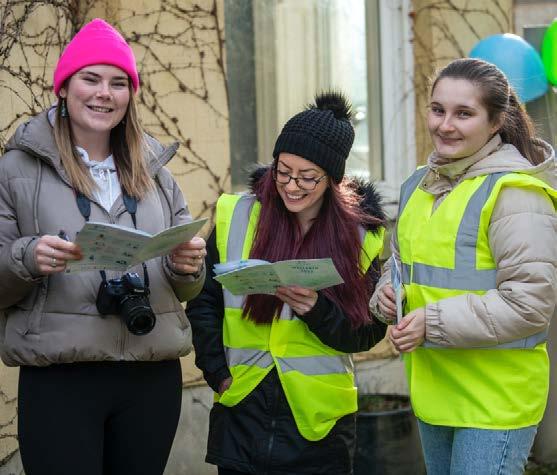
LOCAL PEOPLE are being invited to help shape Ireland’s new National Volunteering Strategy (2026–2030), with consultation sessions taking place in Dundalk and Drogheda next week.
Organised by Louth Volunteer Centre, the events are open to everyone — current volunteers, those interested in getting involved, community groups, funders, and the general public.
The Strategy is Ireland’s five-year plan to recognise, promote, and grow volunteering, supporting the vital contributions volunteers make to society. Led by the Department of Rural and Community Development & the Gaeltacht, it will guide government policy and community supports until 2030.
Two consultation sessions will take place: North Louth — Dundalk, Tuesday 30th of September 2025, 6:00
–7:30pm, Creative Spark Downtown Hub, Clanbrassil Street. South Louth — Drogheda, Thursday 2nd of October 2025, 6:00 –7:30pm, The Marcy Hotel, 29 West Street.
“This is a unique opportunity for people across County Louth to
have their say on how volunteering is supported and celebrated in Ireland,” said Kayleigh Mulligan, Manager of Louth Volunteer Centre. “Whether you currently volunteer, would like to start, or work with organisations that involve volunteers, your views
matter. The Strategy will shape supports for the next five years, so it’s vital that local voices are heard.”
Volunteering benefits communities in many ways, from arts and heritage to health, sport, education, and supporting vulnerable groups.




By DARAGH SMALL
DUNDALK GOLFER
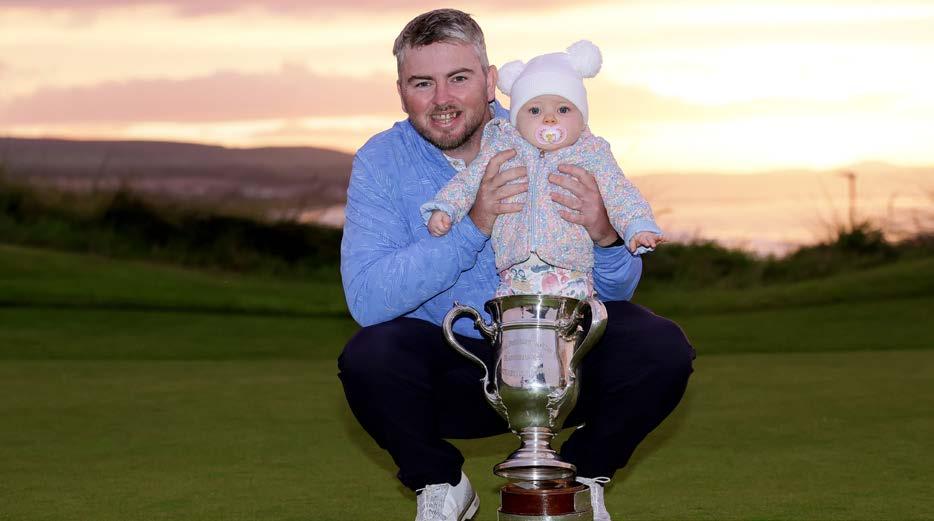
Caolan Rafferty completed the career Grand Slam as he added the North of Ireland Amateur Open title at Portstewart on Friday.
The 32-year-old had previously been crowned champion in the South (2018), West (2019) and East (2024) and became the first person in history to win all four regional championships.
Rafferty, who will represent Ireland at the World Amateur Team Championships in Singapore next month, lead all the way from Round 1 and ended up claiming a one-shot win over Ben Willis (Hunstanton) and Andrew Mulholland (Castlerock) on the links.
He had already finished ninth at the East and runner-up in the South this summer, but held his composure in the closing stages here, bouncing back from a bogey on 15 to birdie the difficult 17.
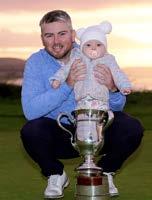
Rafferty sealed a memorable and historic win before celebrating with his family and his daughter Maisie.
“I can’t believe that’s the first time it’s been done,” said Rafferty.
“It’s a nice feeling, got to look over and see her (Maisie) in the corner, little hoodie, look like a teddy bear. I was laughing.
“She’s not going to have any idea what’s
going on but there will be plenty of pictures to show her the first trophy that daddy won.
“It just takes my mind away from what you’ve done, there’s a lot more to life now than golf as well. It’s always nice to have that moment afterwards to just walk away and get a little cuddle.”
Rafferty was tied at the top of the standings with Cathal MacCanna (Carton House) at the beginning of the third round, with their playing partner Dylan Shaw-Radford (Huddersfield) just one shot behind on one-under. He was T3 alongside the only other players who were under-par, David Shiel (Enniscrone) and David Kitt (Athenry).
Last year’s East of Ireland champion used his vast links experience to keep himself at the head of the standings, they began their rounds on the back nine and he birdied 11, 13 and 15 to quickly move to fiveunder.
However, he dropped two shots on the last two holes of his front nine, and a further bogey at the sixth meant he finished with a third round of 71, and a three-under par total.
At that stage ShawRadford was still well in contention on level par, while MacCanna was one shot worse off after a third round of 74.
South of Ireland winner, Jonathan Keane (Lahinch), had emerged
from the chasing pack with a stunning round of 66, which included six birdies and an eagle. However, Rafferty was one ahead with 18 holes remaining and he began the front nine with eight pars and one birdie for 35 shots on the way out.
Shaw-Radford and Dylan Keating (Seapoint) closed in, on one-under just two shots in arrears, but while many faltered in behind, Rafferty kept his cool throughout the back nine.
There was a blip at 11, where his par putt slipped just by but he hit back with a birdie on 13 and while Willis and Muholland finished their weeks on two-under, it left three tied at the top.
Rafferty had to dig deep and he did that on 17, with a brilliant birdie meaning he had two putts to secure his piece of history on the 18th green.
“We had a great birdie on 13 and then it was just a sloppy iron shot into 15 that put me under pressure, actually hit a good putt, thought I held it,” said Rafferty.
“But to finish the way I did and probably the hardest hole that we played out there this week. Birdie it to get myself back in the lead and then it’s just a case of let’s make four down the last.
“Easy on a normal day but a little bit more stressful when you know what it’s for.”
THE ANNUAL Hospice Coffee Morning will take place on Thursday, 25th September, from 9:15 AM to 1:00 PM in Ravensdale Community Centre, in aid of the North Louth Hospice Dundalk.
This is always a wonderful com-
munity gathering and a chance to enjoy a cup of coffee or tea, a friendly chat, and to support the vital work of hospice care. Everyone is warmly welcome, and every donation, big or small, will make a real difference. We would be delighted to see you there.
A GENTLE TIME of reflection, comfort, and hope St. Nicholas Parish Church, Dundalk (The Green Church) Monday, 6th October 2025 7:30 PM
This service offers a safe and supportive space to honour and remem-
ber all babies lost through miscarriage, stillbirth, or infant death. All are welcome
As part of International Pregnancy and Infant Loss Awareness Month, we gather in love, healing, and remembrance
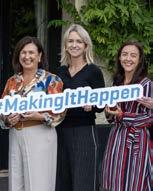
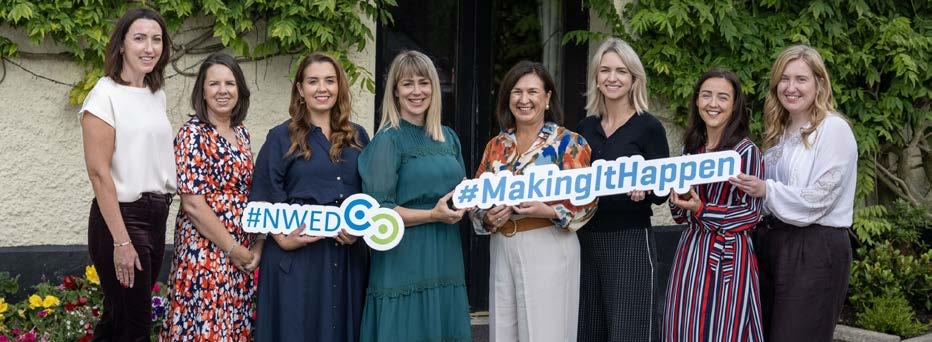
NATIONAL WOMEN’S Enterprise Day 2025 takes place on Thursday 16th October, 9am–2.30pm. Co-hosted by the Local Enterprise Offices in Louth and Meath, the event will once again take place in The Monasterboice Inn, Drogheda.
Hosted by coach Lorraine Murphy it will feature a keynote by best-selling author and advocate Dr. Katriona O’Sullivan. A panel discussion will follow with two exceptional local entrepreneurs, Ali Molloy of High Tide Event and Experience Agency and Kate Scott of HoloToyz.
“This much-anticipated event is designed for women at every stage of their entrepreneurial journey, from those considering a start-up to established business owners seeking to grow and innovate,” said Nikki Campbell, Head of Enterprise at Local Enterprise Office (LEO) Louth. “It’s an opportunity to connect with others, learn from experienced speakers, and gain practical tools to move your business forward.”
David Conway, Chief Executive, Louth County Council explains “Sup-
porting female entrepreneurship is vital to the economic and social development of Louth County Council.
National Women’s Enterprise Day gives us the opportunity to celebrate and promote our commitment to inclusivity, innovation, and community empowerment. We are proud to stand behind Louth women who are driving change, creating opportunities, building resilient and businesses that strengthen our local economy.”
Tickets, priced at €30, including lunch, are now available from www. localenterprise.ie/louth
National Women’s Enterprise Day is an annual event dedicated to supporting and celebrating women in business. Organised by Local Enterprise Offices across Ireland, it brings together influential speakers and successful entrepreneurs to empower women in their business endeavours.
Local Enterprise Offices Louth and Meath join forces to co-host this annual celebration of female entrepreneurship and it always delivers valuable insights and networking opportunities for all attendees.
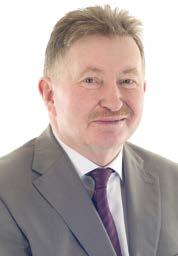
SINN FÉIN Councillor
Pearse McGeough is advocating for Salterstown to be designated as an official ‘bathing area’ in order to implement enhanced safety protocols at the pier.
Cllr McGeough stated, “Salterstown has become increasingly popular among sea swimmers in recent years; however, this rise in popularity has also led to an increase in reported incidents involving individuals experiencing difficulties.
In 2022, to commemorate National Water Safety Awareness Week in June, I undertook several initiatives aimed at enhancing safety measures in the area. These included the installation of two life buoys to facilitate immediate assistance for swimmers and the implementation of improved traffic management strategies during peak times, which continue to be effective and are well adhered to by the public. Despite these measures, I remain conscious of water safety and have formally requested Louth County Council to meet with
Water Safety Ireland, the Irish Coastguard, and other relevant agencies. The objective is to conduct a comprehensive assessment of existing safety protocols and identify additional precautions that could further mitigate risks associated with water activities in the area.
Cllr McGeough was ‘shocked’ upon learning that there are often 7 to 8 incidents reported weekly to the Coastguard, highlighting the ongoing safety challenges in the region.
He remarked, “Given that Salterstown is not classified as a traditional beach, the deployment of a lifeguard is not deemed appropriate. However, it is evident that additional safety measures are necessary.
Currently, the public is encouraged to swim only within designated bathing waters, and Salterstown does not fall under this category. Therefore, I am calling on swimmers, local residents, and interested stakeholders to support the initiative of designating Salterstown as an official bathing water area. Contributions can be made through submissions to the ongoing consultation process, which remains open until 26th September. Details are available on the Louth County Council website, and I will also share relevant information and links via my Facebook page.”
Furthermore, Cllr McGeough emphasised, “Local residents have been swimming at Salterstown for many years, and they are unlikely to stop simply because the area is not officially designated as a bathing water. Our priority should be to ensure their safety through appropriate measures, and establishing a designated bathing water status is a crucial first step in this direction.”

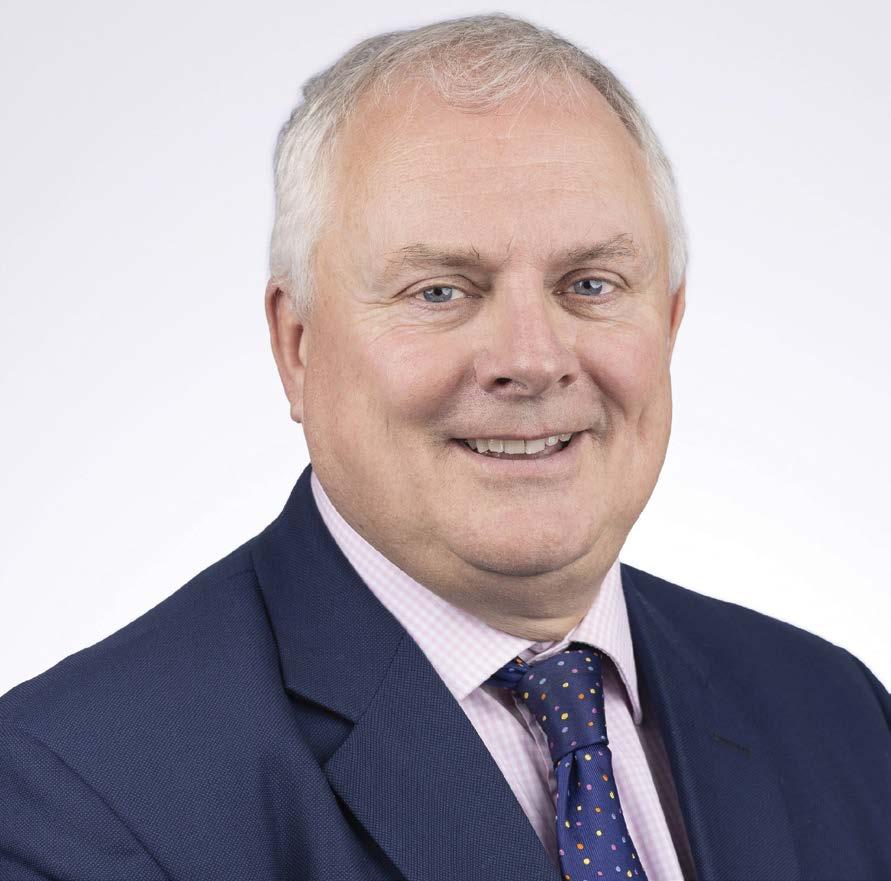
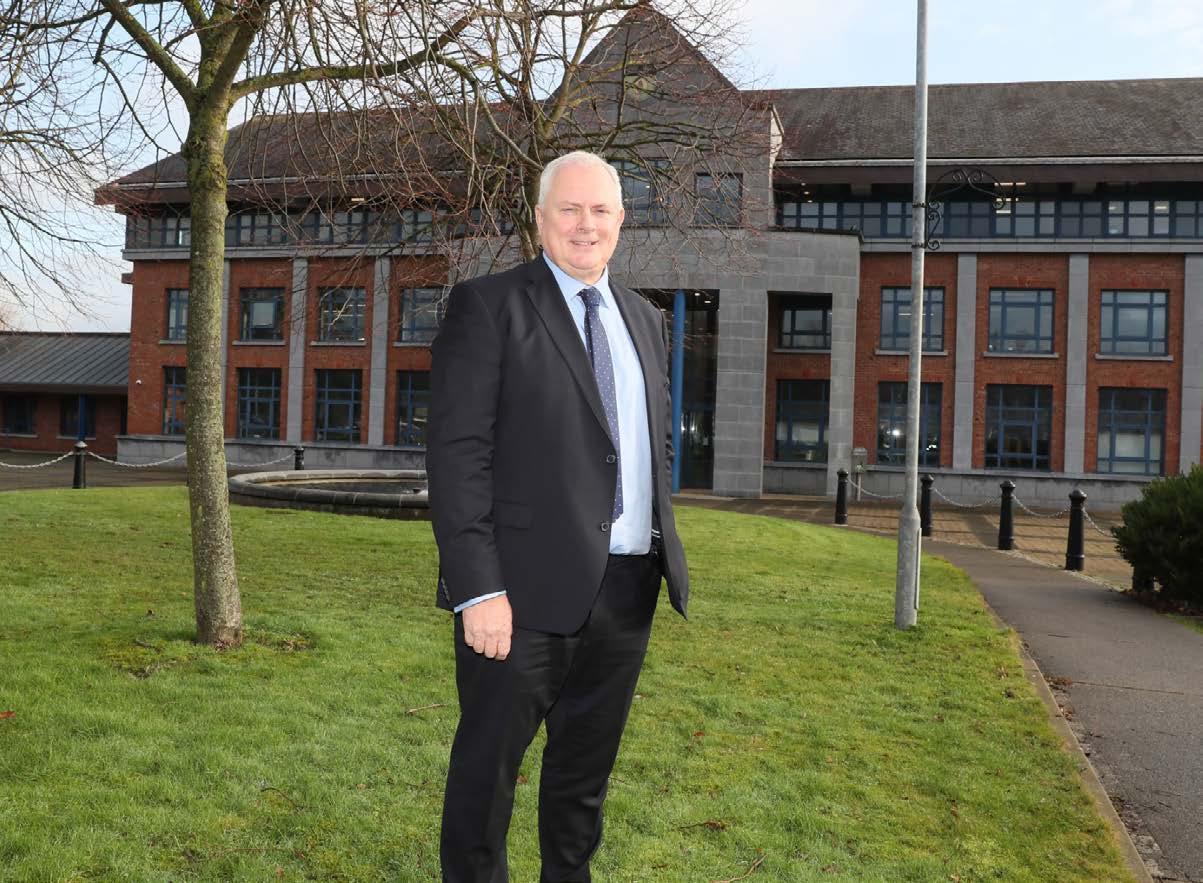
WHEN DAVID CONWAY made his decision to take up the role of Chief Executive of Louth County Council he was assured by his then Chairman Conn Murray that he would do just fine in his new role. And given the fact that Conn had previously served as Chief Executive of Louth Council between 2007 and 2012 those words held plenty of weight.
“He told me I’d do just fine,” states David. “He understood what I had to do and he told me that it is a great place to work, and that the people are fantastic as I’m witnessing now for myself. While we may be small in nature and size we actually pack a very strong punch in terms of economic delivery and in terms of our density and Conn told me it would be absolutely like Mother’s milk here and that I’d love it and thank God that has come true.
David’s strong track record in delivering major projects made him a standout candidate for the task of replacing Joan Martin who retired from her role as Chief Executive last year. A Limerick native, he is former CEO of the National Sports Campus Development Authority responsible of the delivery of Ireland National Sports Campus which involved developing and operating the National Sports Campus, the National Aquatic Centre and National Indoor Arena. He then became Chief Executive Officer and Board member of Limerick Twenty Thirty DAC and charged with delivering the single largest programme of investment in real estate outside of Dublin for commercial, public and residential facilities. Since his appointment to Limerick Twenty Thirty, Conway has overseen the completion of the €30 million Gardens International building on Henry Street, the sale of the former Dell Factory as a repurposed space for film making and he’s advanced the €300 million Opera Square project through planning, demolition, enabling and commencement works. He’s also completed the masterplan for the Riverside Cleeves 500 million euro project which will go to planning in 2025. After seven years in that role, David felt it was time for change and given the fact he has lived in Meath for a number of years he jumped at the chance to take up a job closer to home.
“I have been living in Skryne in County Meath, close to the Hill of Tara for the last 26 years and I had been on the road to Limerick for a good part of eight years while working with Project 2030. So I thought it was time to get back to my roots and then this position came up and I went for it and I’ve been blessed ever since I arrived into Louth,” states David.
Having been in the role officially since January, David has had a chance to look at the organisation as a whole and the last nine months has seen him figure out what is working and what can be improved.
“I believe in change but I believe in
organised change because you don’t want to throw the baby out with the bathwater. I have been very impressed with what I’ve seen in Louth County Council and I’m not just saying that because I’m here doing an interview with you. I was reading data the other day which shows we are the most competitive in the pricing of purchasing houses, we’re ahead of schedule in terms of our stock, our strategic location is brilliant on the Belfast to Dublin economic corridor, our work force comes from both sides of the border which is really helpful. We’ve got fantastic tourism opportunities with our natural resources. Housing is obviously a big issue and we’re not always where we want to be but we’re going in the right direction and all in all we have fantastic people here in the organisation that just needed proper leadership.
“What I am focusing on at the moment is values in the organisation. You can see that in our corporate plan which I was lucky enough to have some input into before I took up this role. The corporate plan value system is very interesting in terms that it is citizen-centric.
Anything that the executive do, with the support and help of the councillors is done with a view of being citizen-centric. And what I mean by
that is that every decision they make has to be for the good of the citizens. We need good governance because if we don’t have good governance we don’t have good protection around ourselves.
“Innovation is also very important and when I say that I’m not talking about new computers or something like that. It’s about a new way of doing things, it’s as simple as that. I’m asking the staff and the teams here how to do things a little bit differently. For example I’ve already changed the directorates since I’ve come in. We had a directorate for Operations and Major Capital Projects and in month four I split that and each of those have their own directorate now.
“One thing I’ve noticed is that we are doing great work on the ground but I don’t think that we are communicating them enough to our stakeholders, be they councillors or the general public and that’s why it’s great to have the media involved in terms of spreading the word of what we are doing. In January we expanded our communications department. We’ve added another person in there and maybe there’s a role for a third person in terms of our social media and our information gathering.
“Almost immediately after I started the job we had to deal with Storm Eo-
phrase ‘Eye on the prize’. What’s the prize here? The prize is to make Louth a better place for people to live, work and play. We are all on the same ship and although we won’t always agree and there will be disagreements, that’s ok as long as the debates are respectful in terms of that relationship. I respect the councillors in terms of their functions and their roles and responsibilities and they have to be respectful in terms of the people that deliver in terms of the executive.
“And so far it’s been a good healthy relationship. So far I think I’ve spoken to nearly every councillor, be it one to one or socially or whatever and that respect is there,” added David.
With regards to tourism David believes it is key for Louth to utilize their plum location between Dublin and Drogheda and give motorists driving on the motorway between those two cities a reason to stop in Louth.
“We are in the middle of our tourism strategy at the moment and I have asked that they make sure we do a few things. The first one is that we do it through a lens of international best practice. Not to be naval gazing and do what we’ve always done. What’s working in Europe that could work here in an Irish climate? The other thing I’ve asked is that we work with our neighbours because I think collectively we could work better together like for instance what they are doing with the Boyne Valley and the various offerings they have their for tourists.
wyn and we had to get those stories out and the red warnings and so on and thanks to local media we got the word out far and wide.
“Everything we do moving forward has to have a leg of sustainability to it. Recently we had 22 new electric vehicles in our fleet and that has helped us decarbonise the fleet which is essential for us to reach targets that have been set for us by government. We have to be smart even with the smaller things when it comes to sustainability. Are we using too much paper? Are we turning off the lights? How can we recycle better?
“Equality is also hugely important in Louth County Council and we need to make sure everybody is treated the same. You don’t look up, you don’t look down no matter creed, race religion we are all the same. We treat people with respect and dignity,” states David.
Working with councillors is a key part of David’s role and while the relationship between some councillors and the Chief Executive hasn’t always been rosy down through the years, David believes it is important to have a good relationship with the elected representatives of Louth.
“I am a great believer in working with people in a spirit of partnership and collaboration. We all know the
“We should explore more themes that are unique to Louth and build tourism around those themes. Recently we had the St Oliver 400 Festival in Drogheda and that was happening all over the town including a fantastic museum that was put on display in Fair Street. Why can’t we attract tourists using for instance St Brigid. Isn’t that a theme we could explore further? There’s a few strategic themes that Dundalk and Louth are famous for and I want our tourism strategy to develop those themes and attract more tourists to this area.
When asked how he approaches resistance from certain sections of the community when working on projects like the Carlingford Greenway, David notes that he has inherited that process but that it’s a process he believes is a good one.
“I think that is one of several projects that Louth County Council are involved in to help enhance the county. There was a process I inherited there which I think is a good process. They will have preferred options for the Greenway route coming out in the next few weeks. That will go out in terms of consultation and from there we will see what is the best route forward.
“There’s other great projects going on at the moment too like our partnership with Dundalk Tidy Towns which has seen huge improvements in our town - continued on next page.....
centre and alongside that you have BIDS who are helping to improve what our town centre looks like and they have done an amazing job in terms of shop fronts and so on. I had the pleasure of sitting down for coffee with my operations team outside Panama Coffee Shop at Market Square last week and I took a photograph of the Square and you could have been anywhere in Europe. It looked fantastic. And then you have all the work that is being done down in St Nicholas Quarter which will energise the North end of town.
“And the other thing that amazes me from a Dundalk perspective is that when property goes up for sale it gets sold very fast. That’s a great sign. That wasn’t happening in Limerick. And that’s because people want to live, work and play in the town and we have got to give them the opportunity to do that. We are blessed with the stock that we have and we are blessed with some fabulous restaurants and bars like Mo Chara which are hugely popular with people in town.
“We want the town to be looking the best it possible can be and we have done some good work previously but maybe that hasn’t been maintained as well as it might have been. There’s been great work done from the Courthouse up and now we need to do a bit on the Ramparts to improve that area of town.
We’ve now got the tenders in for the CCTV, that is one mechanism we have at our disposal to reduce dumping. It’s something that you won’t be able to completely eradicate but in fairness to the litter wardens in the latest national results we had a number of convictions that were good so we are kind of leading the charge in that. I think the schools have done a fair amount of in helping us with that in terms of spreading that kind of culture awareness that dumping and littering are not acceptable. There’s always the serial dumpers and the diesel laundering that goes on and all we can do is hopefully eradicate that as best we can. Everybody has a part to play in that.
Population boom and keeping up infrastructurally
“One of the roles of the council is to make things happen. While we might not be the delivery agent we can definitely advise and give our views of what is needed locally. We do have regular meetings and we now have a director for infrastructure helps us to keep up to speed on what is needed as our town grows. Uisce Eireann is no longer our brief and we have to leave that to them but our road structures and our infrastructure is very much our brief and we need to be planning ahead in the next round of the County Development Plan to make that happen. We produce probably between 1200 and 1400 units every year in terms of housing stock. We are a commute belt and there’s good things hap-
pening such as the DART coming in as far as Drogheda now. We have an educated population and a fantastic third level college in DkIT that is very attractive for foreign investment. We have access to two international airports, we have a port company that again went into profit last year so there’s a lot of good things happening.
“But we know you always have to be planning for long term ten years ahead or medium term five years ahead and I’m always telling my team that we need to live in all three tenses. Past-what it has taught us. Presentwhat we need to do. And the future, where we want to get to so in a nutshell my role is to ensure we use those three tenses for the County’s benefit.
“Our elderly population is increasing so we have to look at how we are housing people when they are older. We want to make sure that all our facilities are age friendly and hat they have access to technology. We have a scheme in Drogheda where 48 units are being built for age friendly accommodation where older people are downsizing and being adaptive in terms of care.
“Getting funding for all these projects can be hard but I don’t like the word can’t. I’m a glass half full person and you built on what you have and
you beg, borrow or steal to get what you want. I didn’t build a National Sports Campus without having those intrinsic belief systems and I’m not trying to be big head saying that. It’s not about David Conway, it’s about the citizens of Louth and what we can build for them. Baby steps help you sometimes when you don’t have funding and then funding comes along so we leverage what we can from government sources and then see what we can add to that from our own resources.
“The challenges we face are making sure our infrastructure is there and our housing stock is there and you have to link those two in and make sure you have a community that provides you with somewhere to live, somewhere to shop, somewhere your kids go to school, somewhere to get medical care and somewhere that has recreation activities for all. That is what community looks like to me and we have to ensure when we are building that all these services are provided.
I think generally misinformation around a lot of subjects and particularly this one is a challenge. I don’t do social media as I like to deal with facts. And an expression I like is that when the facts are in front of you,
sometimes there are no need for words. The beneficiaries of international protection has worked well I think because it has given us extra employment opportunities and so on. We just need to make sure that processing it happens at a faster rate. If you look at the employment numbers at the moment they are pretty static, maybe they’ve gone up by a tiny percentage point over the summer. For a functioning economic society we need to have multi-functional, we need to have languages, we need an educational workforce and a lot of the Ukrainians who came to Ireland are now working in jobs and they have brought skills, knowledge and experience to Dundalk. The Irish emigrated when we had to back in the day. During the 60’s it was to England mainly and before that America so I think we have benefitted as a nation with emigration and now it’s time to balance that as well.
SPORTS Construction has started on a new athletics track and I’m glad to see Dundalk Grammar School got planning for a new track as well. I think sports facilities by their nature is trying to make them as multi-functional as possible and what I mean by that is that a lot of people can use them ie the dressing rooms and so on because
that’s where the big money is spent. Louth winning the Leinster Championship was fantastic this year and to see the new GAA stadium being built in Dundalk is fantastic. We’ve asked them to be age friendly when building that stadium as well, again linking the dots which is part of my role and responsibility. The more people that participate in sport and recreational activity and given them the amenities to do those recreational activities is very important and very necessary,” stated David.
As Chief Executive of Louth County Council David leads 844 staff in the local authority with that huge team helping to make the County function in a vast array of different sections. He calls himself part of that team and credits his fantastic staff who help deliver the services around the county throughout the year. He calls it a well -oiled machine which just needs to become a bit more efficient.
“I think we’re in a great place. I think we can do a lot more. I think we just need to think strategically as a team in Louth and I think it will move in a really positive direction particularly in terms of tourism and economically and I think Louth can become an even better place to live,” concluded David.
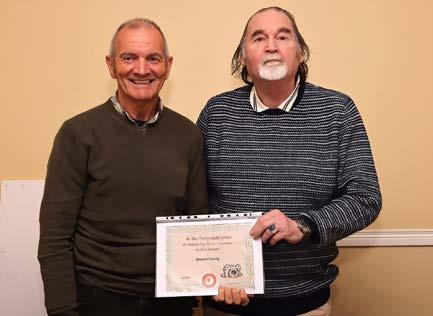
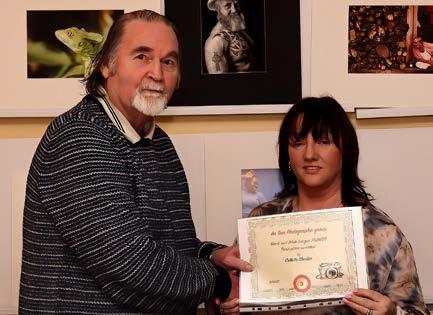
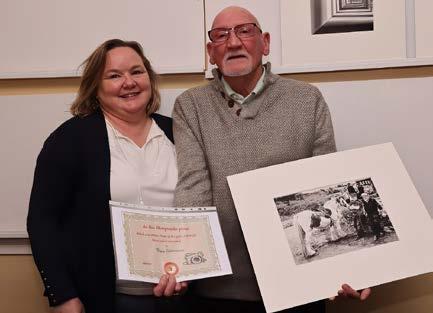
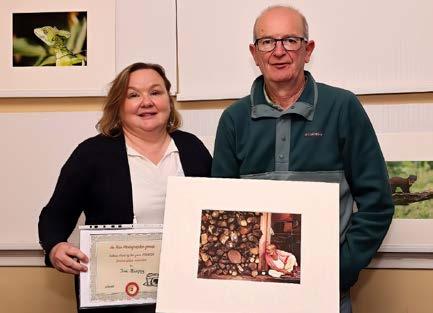
An Tain Photographic Group are a Camera Club based in the Clan na Gaels GFC Clubhouse. We meet every Monday night at 8pm (except Bank Holidays). Join us as we kick off a new season on the 22nd of
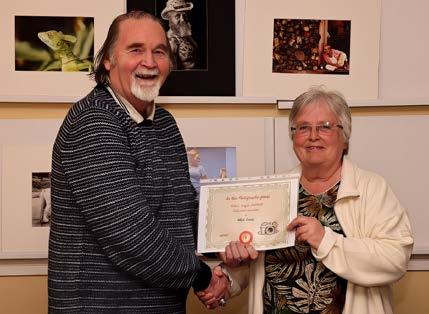
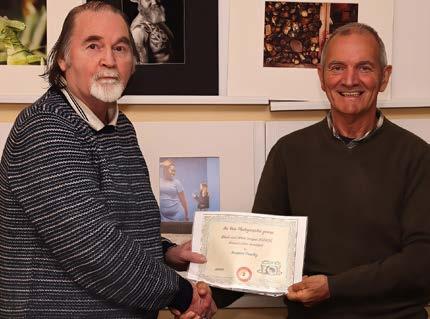
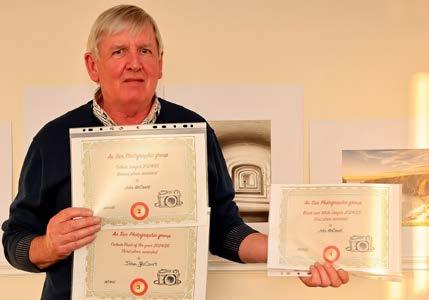
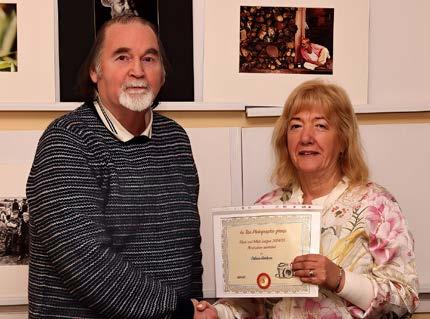
September. If you are a seasoned photographer or just starting out our club is the place to be. Come along and meet our members, share ideas and knowledge and get inspired by what you see.
KAVANAGH
Mark Maxi
1st Anniversary
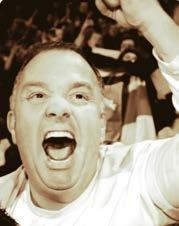
First anniversary of my son Mark who died on the 27th of September 2024.
I just want you to know Mark that I talk about you every day.
I miss your daily visits 7 days a week.
Nothing will ever be the same.
Rest easy with your dad and your sis-
ter Caroline and brother Andrew.
My heart is just broke.
Love you loads from your mam
Angela XXX
BROTHER
To me you were someone special
What more can I say
I only wish with all my heart
That you were here today
Mine is just a single prayer
That God will keep you in his care.
From Gerard, Fiona & Family.
BROTHER
As we mark your 1st anniversary
I pray for your soul, peace and tranquillity.
You brought so much joy into our lives brother
You’re missed every single day.
From Sean and sister-in-law Mags
BROTHER
Mark, thank you for being my role model,
My mentor and my best friend.
Thank you for your love and the laughter and the countless memories.
Lots of love from Michael, Nora & kids.
BROTHER
Mark, just to let you know you are sadly missed, love and miss you loads
From Darren & Grace
Mark’s 1st Anniversary mass will be celebrated in the Redeemer Church this Saturday 27th September at 10am.
NOVENA TO THE SACRED HEART
Dear Heart of Jesus, in the past I asked you for many favours. This time, I ask for this special favour (mention it). Take it, dear Heart of Jesus and place it within your own broken heart, where your Father sees it. Then in his merciful eyes, it will become your favour, not mine. Amen. Say this prayer for 3 days. Promise publication and favours will begranted. (Never known to fail) CK
McELROY Hugh (Hughie) 2nd Anniversary
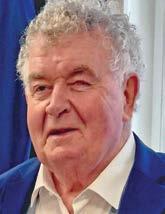
Late of Wolfe Tone Terrace, Dundalk, Drogheda and
Our hearts are filled with memories that we gathered through the years. All the happy times we shared and treasured souvenirs.
Always in our hearts and prayers. Sadly missed by partner Bridie, son Paul, Michelle, Jade and Kyle, John, Brian, Adam, Leo and families and the McElroy-Rogers and O’Hare families. Anniversary mass- Sunday 28th September @12pm in St Nicholas Church.
Mairead 10th Anniversary
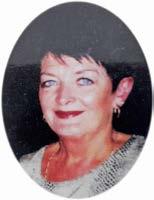
In loving memory of Mairead Rice, late of McSwiney Street, whose 10th anniversary occurs on September 29th.
The world changes from year to year, Our lives from day to day, But the love and memory of you, Shall never pass away. Always loved and remembered John.
NOVENA TO THE SACRED HEART
Dear Heart of Jesus, in the past I asked you for many favours. This time, I ask for this special favour (mention it). Take it, dear Heart of Jesus and place it within your own broken heart, where your Father sees it. Then in his merciful eyes, it will become your favour, not mine. Amen. Say this prayer for 3 days. Promise publication and favours will begranted. (Never known to fail) MD

SELL IT THROUGH A CLASSIFIED
Only €5 for one week up to 20 words. 042 93 20888. The Dundalk Leader
ATTENTION LANDLORDS. We supply furniture & Beds for any rental properties you have. Beds from €180, Bedroom Furniture Sets from €249 Call us today www.bedstore.ie , Coes Rd, Dundalk Tel 042 932 0927
PROFESSIONAL GENTLEMAN
seeking to rent 2/3-bedroom accommodation in Dundalk, Carlingford, Blackrock, Castlebellingham areas, HAP approved with excellent references, All enquiries please contact 083 0098695
Special Services
CHIMNEY & STOVE CLEANING
10kg bags of Beech and Olive (hardwood) for sale. Tel Paul McArdle 087 6660094 / 042 9332491 Email:tribalky@yahoo.com.
CHIMNEY CLEANER - The Clean sweep, clean & tidy, no dust. Brush & Vac. Also gutter cleaning. ContactCathal 087-225-9799
ADVERTISE YOUR SERVICE to over 60,000 readers for only €5 per week up to 20 words Phone Dundalk Leader 042 932 0888
WE CAN DISTRIBUTE your leaflets from €75 + vat per thousand Phone Dundalk Leader 042 932 0888
GRIMLEY’S DUBLIN ST.
DUNDALK— Televisions, TV aerials, satellite, Freeview & Saorview, new installations, sales, service & repairs. Free estimates 042 935 4343.
DUNDALK GARDEN SERVICES – Tree topping, felling, hedge trimming, grass cutting & strimming. Rubbish Removals Garage clearance, House & Garden refuse. Permit holder. Contact : Ben 085-840-7707
FORTUNE TELLER - Available for appointment, private or group bookings. Tel. Alison 042 933 5102 or 08767-51229
ROOF LEAKS MASTER : We repair all types of roof: tile, slate, bangor blues. Repair torch on roofs, scrape & clean, chimneys & chimney pots, chimney bird guards, gutter facia & soffits. All work guaranteed, 25 years experience. Tel. 086 8184827
CARPENTRY & JOINERY, maintenance and repairs, roofing, 1st & 2nd fix carpentry, sash window repairs. No job too big or small. Contact Seandon Carpentry 087 298 5110
PROPERTY MAINTENANCE—Repairs, building, plumbing, painting, roof repairs, tiling, bathroom refurbishments, plastering, gardening, power washing, PVC facia and soffits, Over 20 yrs experience. References available. Whatsapp or Tel 085-7623758 for quotation.
CARPET & OVEN CLEANING : Carpet, upholstery & specialist oven cleaning available. Call MVI Cleaning Dundalk on 042 94 21300 or visit www.mvicleaning.ie
MOBILE HOME TRANSPORT : Transported throughout 32 Counties. Contact : Eugene 086-607-1702
TAKE THE HASSLE out of your garden. I do it all. Grass cutting, Hedge Cutting, Weeding, Strimming, Power washing, Gutter Cleaning, Fence Painting, General DIY, Flat Pack Assembly, Removals. Contact Catriona 087 3172109
ROOFING AND BUILDING contractor available. Repairs and new builds. Fully insured. Contact Mark Carney on 087 1302040 for enquiries.
TREE SERVICES. Tree surgery, stump grinding, wood chipping & pruning. Conifer hedge reduction and ash die back removal. Fully Insured & Certified. Contact Chambers on 087 2750825 Email: rchambers2008@ yahoo.ie
FIFI’S ALTERATIONS Longwalk S.C. (formerly A-Alterations) Tel 083 011 8728. Zips, hems, clothes taken in or let out, also Dry Cleaning Service. Open Mon – Fri 9.30 – 5.30pm & Sat 10-2pm
DMC GARDEN maintenance services . Hedge, shrub trimming, shaping or removal. Large lawns mowed ride on mower strimming weeding beds, weedkilling, moss removal, control demolition, removal of old sheds fencing etc and more. All works to a very high standard at keen rates. Free quote 0877019178
MAN WITH A VAN. Hedges, tree topping, painting, facia & Soffit, patios, concreting, garage clear-outs, outside taps. Call Kevin for a free & honest quote 089-4016728
PAINTING SERVICES available, interior and exterior plus Wallpapering, also sprayed and hand painted kitchens, all work carried out by professional trades men. Tel Brian 087 7558506
ALL IN ONE PROPERTY maintenance, painting & decorating, general building maintenance carried out , domestic or commercial, gutter cleaning , dust free sanding , no job too big or too small , quality but affordable, contact Ian 0874158238
ALL SEASONS GARDENING Services. Gardens cleaned and cleared, tree felling, hedge cutting, stone, gravel, chippings. Steam cleaning roofs & driveways. Roof repairs. Local, professional, fully insured Tel Sean 087 349 5477
CHARA COUNSELLING, 20 years’ experience, currently taking appointments. Supporting you with emotional intelligence for relationship issues, your mental health, grief, all addictions & past traumas. For a strictly private consultation call Martin today on 083 3402766. CARPET AND UPHOLSTERY Cleaning – Trusted for over 30 years. Expert care, sparkling results. Call Patrick on 0872492325 or visit www.carpetcleaningservices.ie
GAS BOILER SERVICE & Repairs, RGI registered, 20 years’ experience. Contact Brendan, Northeast Gas Services, Tel 086 3919890
WILLS GARDEN SERVICES - power washing, grass cutting & strimming, gardens cleaned & cleared, hedge cutting, painting, van removals/deliveries. Call Will 0858604048.
SEEKING OLD FURNITURE. New
York company looking for old country furniture, Old Kitchen dressers, Old presses, Old chest of drawers, Old kitchen tables, Old Enamel signs, Old Creamery cans, Old Shop counters. Contents of houses. Must be old. No Time Wasters. Contact Roger 085 1481222
PAT THE PAINTER. Indoor & outdoor decorating. Wallpapering, Power Washing, Picture, Mirror and Curtain Pole Hanging, Painting Kitchen Units & Furniture, DIY. Free quotations Email patthepainter1@gmail.com Mob 087 2951047
FABSOFT. CARPET / upholstery & leather suite cleaning by professionals. Soft chemical steam cleaning. Eco friendly and ultra hygienic. Call: 0874752809 Email: fabsoft77@ gmail.com
DIAMOND SHARPENING Service –
Sharpening scissors, dog & equestrian blades, chef and household knives. Fast turnaround, Dundalk. Call/Text 085 130 6646 or find us on Facebook @DiamondSharpeningService.
SPECIAL NOTICES
LEGION OF MARY – Bus to Knock
Sunday 28th September. Speaker Fr John Harris OP. An outstanding and Inspiring speaker. For details contact either Katrina 087 9903154 , Gerry 087 6480845, Angela 087 6566892.
Cost €30.00
CLASSES & COURSES
GET FIT THE FUN WAY and learn to dance, the Waltz, Quickstep, Foxtrot and Jive, now taking place in the Lisdoo, Dundalk Tuesday’s from 8pm –10pm, no partner required. First wedding dance lessons and private lessons also available. Contact 086 357 3271 for further information.
DRUM LESSONS INCLUDING BODHRAN. For adults & children aged 8 years upwards. One to one lessons. Phone 087 414 4228.
LINE DANCING Beginners classes on every Tuesday night at 7pm starting 9th September in Dowdallshill GAA Hall , Newry Rd. Phone 087 2618773
ENHANCE YOUR communication parenting and relationship skills with courses beginning late September. For details phone Maisie 087 2100620
ARE YOU AN INTROVERT or Extrovert, Thinker, Feeler, Leader, Helper, Achiever, Peacemaker? Discover your personality type through courses beginning late September. For details phone Maisie 087 2100620
ENGLISH LANGUAGE teacher available for private tuition, all levels, also available for study skills, leaving cert English, History and Geography. Contact Padraig 086 3114889
SITUATIONS VACANT
OLDER PEOPLE NEED YOUR HELPCan you spare one hour a week to visit or phone an Older Person ? Volunteers are needed in your area.
If so, please contact ALONE 0818 222 024 or Fiona 086 1366539 or email fiona.boyle@alone.ie
CLEANER REQUIRED for general house cleaning on a regular bases in Ravensdale/Mountpleasant area, good rates, own transport necessary Tel 086 6062740
QUALIFIED CARER with over 20 years experience available for full time caring including weekends. Phone 089 4083699
LOUTH COUNTY COUNCIL - I,
Fearghal Malone intend to apply for Outline Permission for development at Ballynamaghery, Riverstown, Dundalk, Co. Louth. The development will consist of: A dwelling house, wastewater treatment system and associated site development works. This planning application may be inspected or purchased at a fee not exceeding the reasonable cost of making a copy, at the offices of Louth County Council, Town Hall, Crowe Street, Dundalk, from 9. 30 am to 4.30 pm Monday to Friday. A submission or observation in relation to the application may be made in writing to the planning authority on payment of the prescribed fee €20.00 within the period of 5 weeks beginning on the date of receipt by the authority of the application, and such submissions or observations will be considered by the Planning Authority in making a decision on the application. The planning authority may grant permission subject to or without conditions, or may refuse to grant permission. Signed: P. Herr & Associates, Block 4, Third Floor, Quayside Business Park, Mill Street, Dundalk, Co. Louth. A91 KA9R. Tel. 042-9330019. E-mail info@pherr.ie. LOUTH COUNTY COUNCIL - We Gavin and Sandra Greene intend to apply for Retention Permission for development at 23 Tudor Grove, Mullagharlin Road, Dundalk, Co. Louth A91 YT1K. The development will consist of: Retention of the conversion of the original attached domestic garage to habitable accommodation, a single storey rear extension and associated site development works. This planning application may be inspected or purchased at a fee not exceeding the reasonable cost of making a copy, at the offices of Louth County Council, Town Hall, Crowe Street, Dundalk, from 9. 30 am to 4.30 pm Monday to Friday. A submission or observation in relation to the application may be made in writing to the planning authority on payment of the prescribed fee €20.00 within the period of 5 weeks beginning on the date of receipt by the authority of the application, and such submissions or observations will be considered by the Planning Authority in making a decision on the application. The planning authority may grant permission subject to or without conditions, or may refuse to grant permission. Signed: P. Herr & Associates, Block 4, Third Floor, Quayside Business Park, Mill Street, Dundalk, Co. Louth. A91 KA9R. Tel. 042-9330019. E-mail info@pherr.ie.
LOUTH COUNTY COUNCIL – I, Brenda Blair, intend to apply for full permission for demolition of attached outbuildings (stores) and a detached garage building, construction of various extensions and alterations to the existing dwelling house, new waste water treatment system / percolation area, soakaways, alterations to the existing vehicular entrance and all associated site development works at Carrickaneena, Mountpleasant, Dundalk, County Louth. The planning application may be inspected, or purchased at a fee not exceeding the reasonable cost of making a copy, at the offices of the planning authority during its public opening hours and that a submission or observation in relation to the application may be made to the authority in writing on payment of the prescribed fee within the period of 5 weeks beginning on the date of receipt by the authority of the application, and such submissions or observations will be considered by the planning authority in making a decision on the application. The planning authority may grant permission subject to or without conditions or may refuse to grant permission. C/o Bernard Dowdall - MRIAI - Architect - Carrickedmond, Kilcurry, Dundalk, Co. Louth. Tel. (042) 9429558; (087) 6657148; E-mail - bernard@dowdallarchitects.ie
LOUTH COUNTY COUNCIL - We Deeside Motors Ltd intend to apply for Retention Permission for development at The Drogheda Road, Ardee, Co. Louth. The development will consist of the following: 1. The retention of a 40sq.m building to be used for valeting purposes and vehicle/ stock photography, 2. Minor alterations to the vehicle display area along the Drogheda Road frontage, 3. Modifications to the boundary wall treatment along the Drogheda Road area inclusive of all associated site development works. This planning application may be inspected or purchased at a fee not exceeding the reasonable cost of making a copy, at the offices of Louth County Council from 9.30am to 4.30pm Monday to Friday. A submission or observation in relation to the application may be made to the Authority in writing within a period of 5 weeks from the date of receipt by the Authority of the application and on payment of the prescribed fee of €20.00. Signed: Mark Keenan LOUTH CO. COUNCIL - We, Mary and Michael Woods intend to apply for Outline Planning Permission for two dwellinghouses and all associated site works at Greenore Road, Carlingford, Co. Louth. This planning application may be inspected or purchased at a fee not exceeding the reasonable cost of making a copy, at the offices of Louth County Council from 9.30am to 4.30pm Monday to Friday. A submission or observation in relation to the application may be made to the Authority in writing within a period of 5 weeks from the date of receipt by the Authority of the application and on payment of the prescribed fee of €20.00.
LOUTH CO. COUNCIL - FURTHER INFORMATION. I Catherine Ward have submitted to the planning authority significant Further Information in relation to planning application Ref: 24198 for permission consequent on grant of outline planning permission ref: 21904 for new dwellinghouse, effluent treatment plant and percolation area and all associated site works at Drummullagh, Omeath, Co. Louth. The significant further information comprises a revised house design. The significant further information in relation to the application has been furnished to the planning authority, and is available for inspection or purchase at a fee not exceeding the reasonable cost of making a copy, at the offices of the authority during its public opening hours, and a submission or observation in relation to the further information may be made in writing to the planning authority on payment of the prescribed fee of €20.00, not later than two weeks after receipt of this newspaper notice and site notice by the planning authority.
LOUTH COUNTY COUNCIL - We Alzach Ltd intend to apply for Full planning permission for Demolition of an existing commercial building and boundary walls and construction of a multi-storey apartment complex containing 20 dwelling units in a mix of 1no. three bedroom, 15no. two bedroom and 4no. one bedroom units at John Street, Dundalk, Co. Louth.
Full permission includes for waste storage rooms, bicycle storage room and bulky store area, external landscaping, communal garden area, new boundary treatments, connection to public services and all associated site development works.
This planning application may be inspected or purchased at a fee not exceeding the reasonable cost of making a copy, at the offices of Louth County Council from 9.30am to 4.30pm Monday to Friday. A submission or observation in relation to the application may be made to the Authority in writing within a period of 5 weeks from the date of receipt by the Authority of the application and on payment of the prescribed fee of €20.00
LOUTH COUNTY COUNCIL - I Adena O Hanlon intend to apply for Permission for development at Brohatna, Ravensdale, Co. Louth. The development will consist of a single storey type dwelling house, a waste water treatment system and domestic garage, inclusive of all associated site development works.
This planning application may be inspected or purchased at a fee not exceeding the reasonable cost of making a copy, at the offices of Louth County Council from 9.30am to 4.30pm Monday to Friday. A submission or observation in relation to the application may be made to the Authority in writing within a period of 5 weeks from the date of receipt by the Authority of the application and on payment of the prescribed fee of €20.00 Signed: Adena O Hanlon-
LOUTH COUNTY COUNCIL – We, Peter & Ann Fitzpatrick, intend to apply for full permission for single storey extensions and alterations to an existing single storey dwelling, new soakaway system and all associated site development works at Seafield Lodge, Seafield Road, Blackrock, County Louth, A91 V1W7. The planning application may be inspected, or purchased at a fee not exceeding the reasonable cost of making a copy, at the offices of the planning authority during its public opening hours and that a submission or observation in relation to the application may be made to the authority in writing on payment of the prescribed fee within the period of 5 weeks beginning on the date of receipt by the authority of the application, and such submissions or observations will be considered by the planning authority in making a decision on the application. The planning authority may grant permission subject to or without conditions or may refuse to grant permission. C/o Bernard Dowdall - MRIAI - Architect - Carrickedmond, Kilcurry, Dundalk, Co. Louth. Tel. (042) 9429558; (087) 6657148; E-mail - bernard@dowdallarchitects.ie
LOUTH COUNTY COUNCIL – I, Ronan Costello, intend to apply for full permission for a change of use of an existing single storey garage to a family accommodation unit (granny flat), alterations to the existing elevations, new SUDs measures and all associated site development works at 01 Emer Terrace, Castletown Road, Dundalk, County Louth. The planning application may be inspected, or purchased at a fee not exceeding the reasonable cost of making a copy, at the offices of the planning authority during its public opening hours and that a submission or observation in relation to the application may be made to the authority in writing on payment of the prescribed fee within the period of 5 weeks beginning on the date of receipt by the authority of the application, and such submissions or observations will be considered by the planning authority in making a decision on the application. The planning authority may grant permission subject to or without conditions or may refuse to grant permission. C/o Bernard Dowdall - MRIAI - Architect - Carrickedmond, Kilcurry, Dundalk, Co. Louth. Tel. (042) 9429558; (087) 6657148; Email - bernard@dowdallarchitects.ie
LADY LOOKING for single gentleman. Age between 40’s and 50’s. Preferable in the countryside . Please phone 089 9434345.





ALL TYPES OF BLINDS SUPPLIED & FITTED CHOOSE IN THE COMFORT OF YOUR OWN HOME, WE CALL, MEASURE AND SHOW YOU SAMPLES The Professionals Reaghstown, Ardee (Over 30 years in business) Whatsapp/Text/Phone 087 2134490 E:dave@theprofessionals.ie























For a free no obligation quotation
Callsave: 1850 774455
Tel. 042 9333513
Web: www.senatorwindows.ie Email. senatordundalk@gmail.com
Or Visit our Showrooms on Ard Easmuinn Road, Dundalk. OPENING HOURS

Mon-Fri 9- 5 & Sat 10-2 After hours by appointment Is it time to upgrade or replace your Velux Windows?
THE DUNDALK Active Retirement Group have returned following their summer break and they marked their return with a day trip to Glendalough in Co. Wicklow which was attended by 33 members.
The group travelled to Glendalough with Pat Keenan coaches and all members would like to thank Pat for safely getting them to Wicklow and home again. As well as taking in the breathtaking scenery around Glendalough the group also enjoyed a wonderful meal in the Wicklow Heather Restaurant close to Glendalough.
The next meeting for Dundalk Active Retirement will take place in the Carroll Meade Community Hall on Monday 29th of September at 2:30pm. On the day members can test their knowledge with the return of Una’s quiz. New members are always welcome.
THE PRICE of the average second-hand three-bed semi in county Louth has risen by 9.7pc in the last year, according to a national survey by Real Estate Alliance.
The average selling price of a three-bed semi-detached is now €310,000 across the county, a rise of 0.8pc in the past three months, with homes taking an average of three weeks to reach sale agreed.
The REA survey also found that properties in Louth with a BER rating of A commanded an average 20pc premium over Crated stock – reflecting the rising attractiveness of retrofitted homes.
In Drogheda, average prices this quarter rose 1.6pc with 80pc of sales to first-time buyers, the REA Average House Price Index shows.
“The majority of first-time buyers are opting to purchase new build homes and avail of green mortgages funding under the First Home and Help To Buy schemes,” said Darina Collins of REA O’Brien Collins, Drogheda.
The average price in Dundalk has stayed static this quarter at €295,000 – an 11.3pc annual increase, with enquiries slowing in a quieter Q3 according to Michael Gunne of REA Gunne Property, Dundalk.
The REA Average House Price Index concentrates on the sale price of Ireland’s typical stock home, the three-bed semi, giving an accurate picture of the second-hand property market in towns and cities countrywide.
The announcement of a nationwide rent pressure zone has triggered a sharp increase in landlords exiting the housing
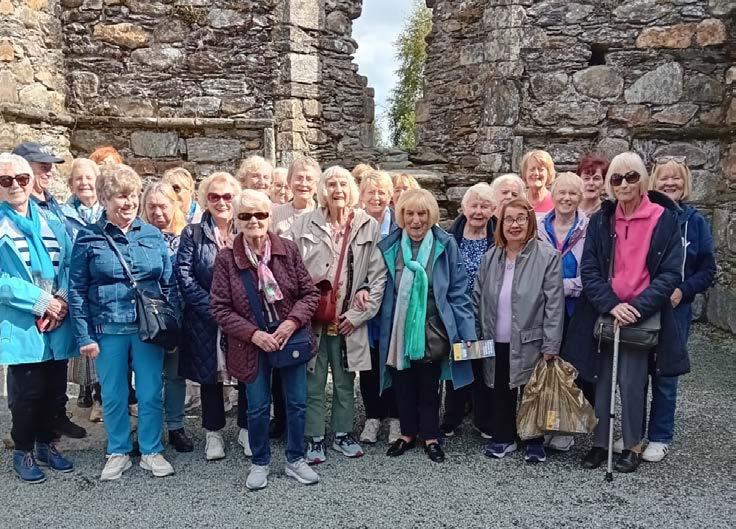
market, the survey showed.
The Government’s announcement in June was followed by an immediate spike in landlord sales in many areas now includ-
ed in the legislation.
Selling prices in Ireland’s major cities outside Dublin rose by 2.2pc to an average of €368,492 – an 8pc annual increase.

Homes in the country’s large towns continue to show growth nationwide, 2.2pc this quarter and 10.7pc on last September to an average of €269,199.