Ericsson Regional Connect | Issue 12 – Winter 2025
Featured articles
The role of 3GPP standards in advancing non-terrestrial networks (NTN)
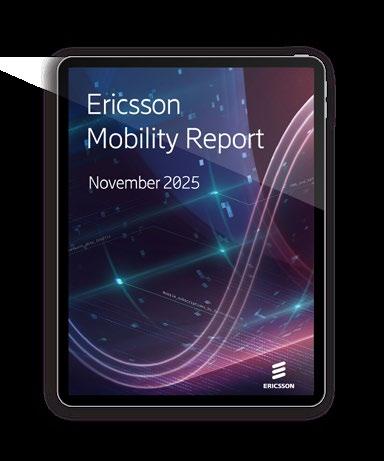
Ericsson Mobility Report
Navigating new threats to cellular utility networks
Customers and partners,
Welcome to the Winter 2025 issue of Ericsson’s Regional Connect Magazine.
I am excited to address you as the new Head of Customer Unit Regional Customers & Hyperscalers. I’ve spent my career across five continents, with the last decade here in the US, and most recently, I led UScellular and Major Account Sales within the customer unit. I’m now stepping into the role with a clear focus: Help our customers deliver inclusive connectivity and mission-critical communications with secure, reliable and future-proofed networks, while ensuring a sustainable business model.
As I step into this new role, I look forward to meeting many of you over the coming weeks and visiting the markets you serve. We have momentum. Let’s build on it together.
Connect
Meet the team at Nex-Tech Wireless as they celebrate 20 years serving customers in Hays, Kansas, and the surrounding areas.
Share
Explore the emerging industry trends in the latest Mobility Report, where you’ll find insights on the world’s highest 5G adoption rate and projections that mobile data usage will nearly double by 2031.
In our Utilities Spotlight, we also highlight how utilities decision-makers are navigating both the threats and the opportunities shaping the year ahead.
Serve
We recognize the volunteers and first responders, including members of our Ericsson team, who supported communities in Hunt, Texas, following the July 4 flash floods.
Here’s to the next chapter, filled with fresh ideas, steady progress and shared success.
Per Wahlén
Senior Vice President and Head of Customer Unit Regional Customers & Hyperscalers, Ericsson Americas
Ericsson. What America’s mobile networks are made of.
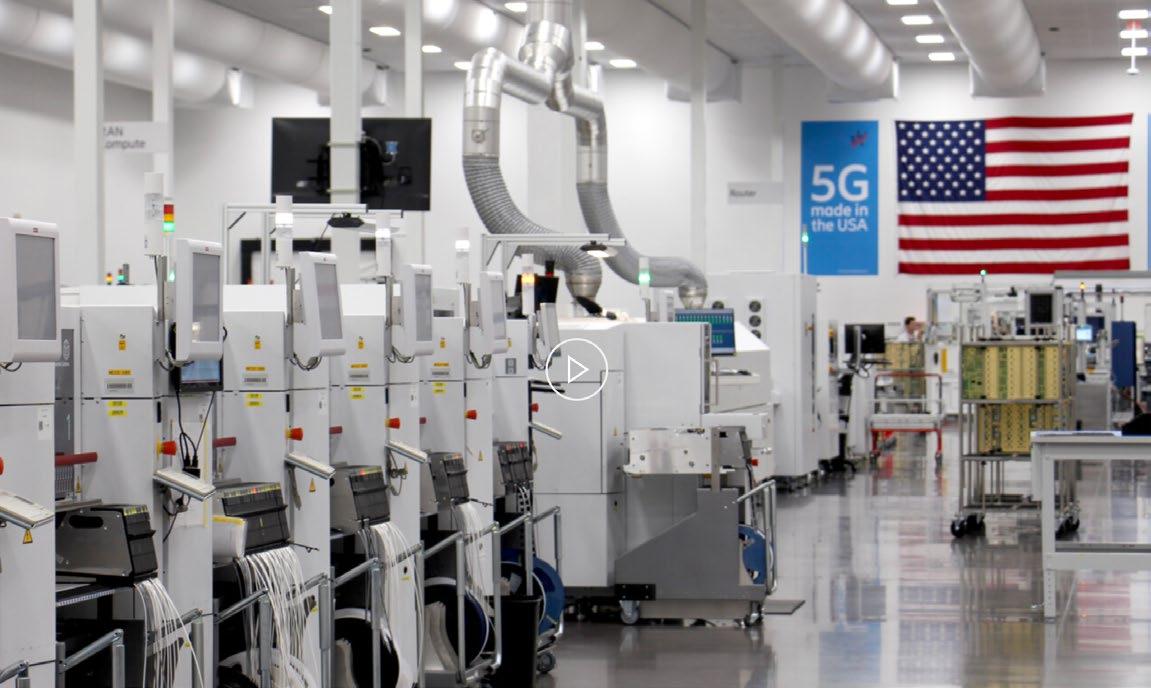
60 percent of mobile network traffic in the US runs through Ericsson equipment. We are committed to providing trusted and secure networks that will power US innovation today and into the future. We are also celebrating five years of production at our 5G Smart Factory in Texas. Meet some of our employees in this video.
Connect
Meet the expert
In this edition of Meet the Expert, we sit down with Per Wahlén, the new Head of Customer Unit Regional Customers and Hyperscalers. Wahlén shares a bit about his background and why regional networks matter to him.
He also outlines the opportunities ahead: helping utilities modernize their ecosystems, unlocking new use cases, strengthening resilience and supporting regional carriers with predictable investments and efficient adoption of the latest technologies.
Q: What opportunities do you see for regional customers and utilities?
A: Ericsson can help utilities evolve their ecosystem. From expanding device availability and enabling new use cases to moving beyond legacy mission-critical push-to-talk. There’s huge potential in areas like prevention, resiliency and edge-grid applications. For regional carriers, the focus is on helping them build and sustain healthy businesses as they face competition from tier-one operators. Our role is to give them investment predictability and ensure that adopting the latest technologies doesn’t increase their operating costs.
Q: What’s one thing that people would be surprised to know about you?
A: Not many people know this, but Wahlén is a self-described aviation geek. One of the best parts of moving to the United States, he says, was finally earning his pilot’s license. So when he’s not at Ericsson helping build networks, he’s in the air, flying his plane. And flying it to meetings? He wishes.
Watch the full interview to learn more about Per Wahlén, including all the continents he’s called home.
Fourth
Collaborative connectivity: Ericsson Regional Connect Summit
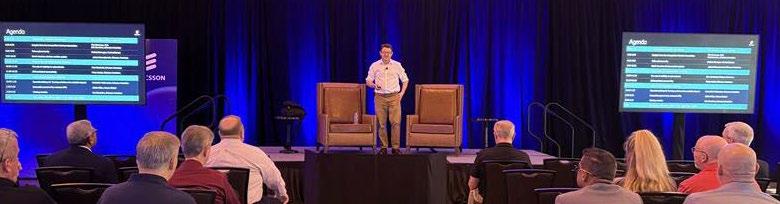
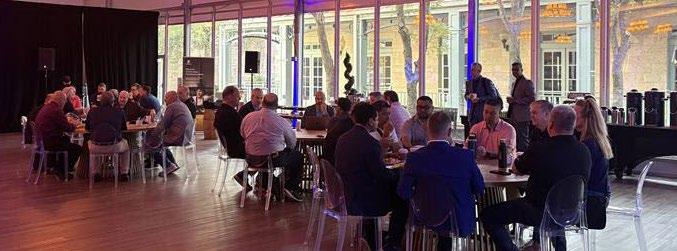
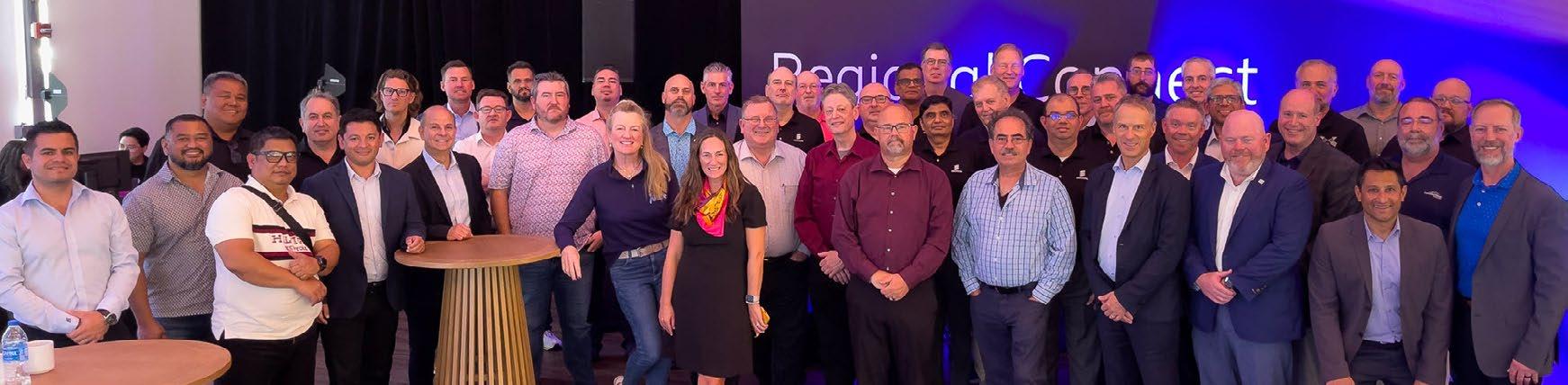
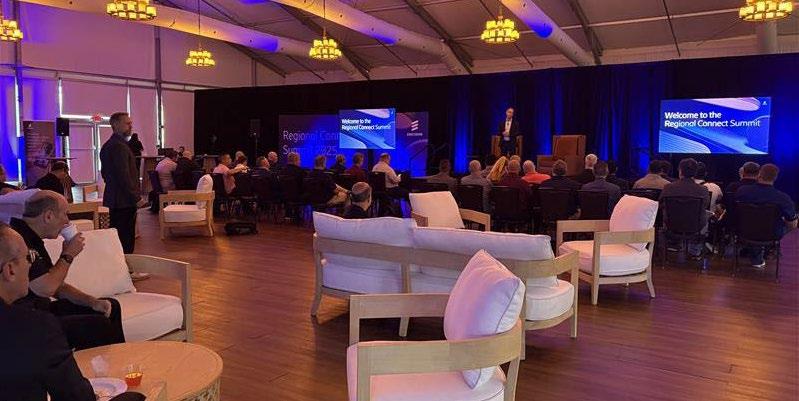
On September 18, leading regional carrier executives from all over the country, including GCI, Appalachian Wireless, Carolina West Wireless and Nex-Tech Wireless, gathered for the fourth annual Regional Connect Summit.
Brought together by a shared dedication and collaborative spirit, industry leaders and partners focused on key priorities such as closing connectivity gaps in underserved rural areas, strengthening cybersecurity through zero-trust architecture and exploring new opportunities to monetize next-generation mobile networks.
Advocating for the collective
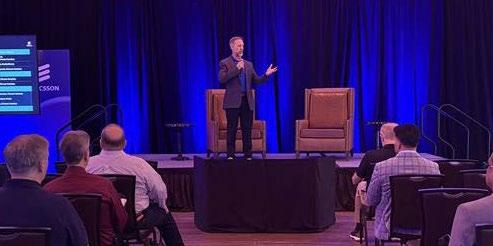
Eric Boudriau, Ericsson’s former Head of Customer Unit Regional Customers and HCPs, underscored the critical importance of collaboration in driving innovation.
“The Regional Connect Summit allows us to share how we’re elevating solutions with regional carriers while providing a platform to amplify their voices,” said Boudriau.
Tim Donovan, CEO of the Competitive Carriers Association, shared insights into the latest public policy shifts and advocacy efforts that directly impact regional carriers. His fireside chat highlighted the importance of addressing rural challenges in national policy discussions to ensure regional carriers remain competitive and well-supported.
Live demos and AI insights
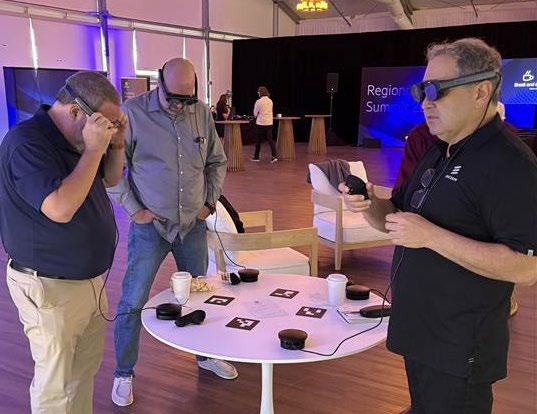
Ericsson’s hands-on experiences showcased cutting-edge solutions designed to empower regional carriers:
• Differentiated Connectivity that enables businesses in rural areas to thrive through tailored solutions
• Mission-Critical Communications to ensure reliability and high performance for essential applications
• Ericsson Security Manager, a tool enhancing network visibility and fortifying cybersecurity against emerging threats
Kristoffer Heikensten, Head of Strategic Projects, Transformation and AI at Ericsson, shared practical insights into operationalizing AI for efficiency and growth. Regional carriers were encouraged to embrace AI’s transformative potential to simplify processes and unlock new opportunities.
United we thrive
The summit underscored the strategic importance of deepening partnerships with regional carriers to tackle emerging challenges in cybersecurity, network innovation and AI adoption. Ericsson’s commitment to empowering rural connectivity remains the cornerstone of its vision for the future, ensuring that regional carriers are equipped with solutions to enhance their networks and better serve their communities.
Connecting Kansans: Celebrating two decades of connectivity and community
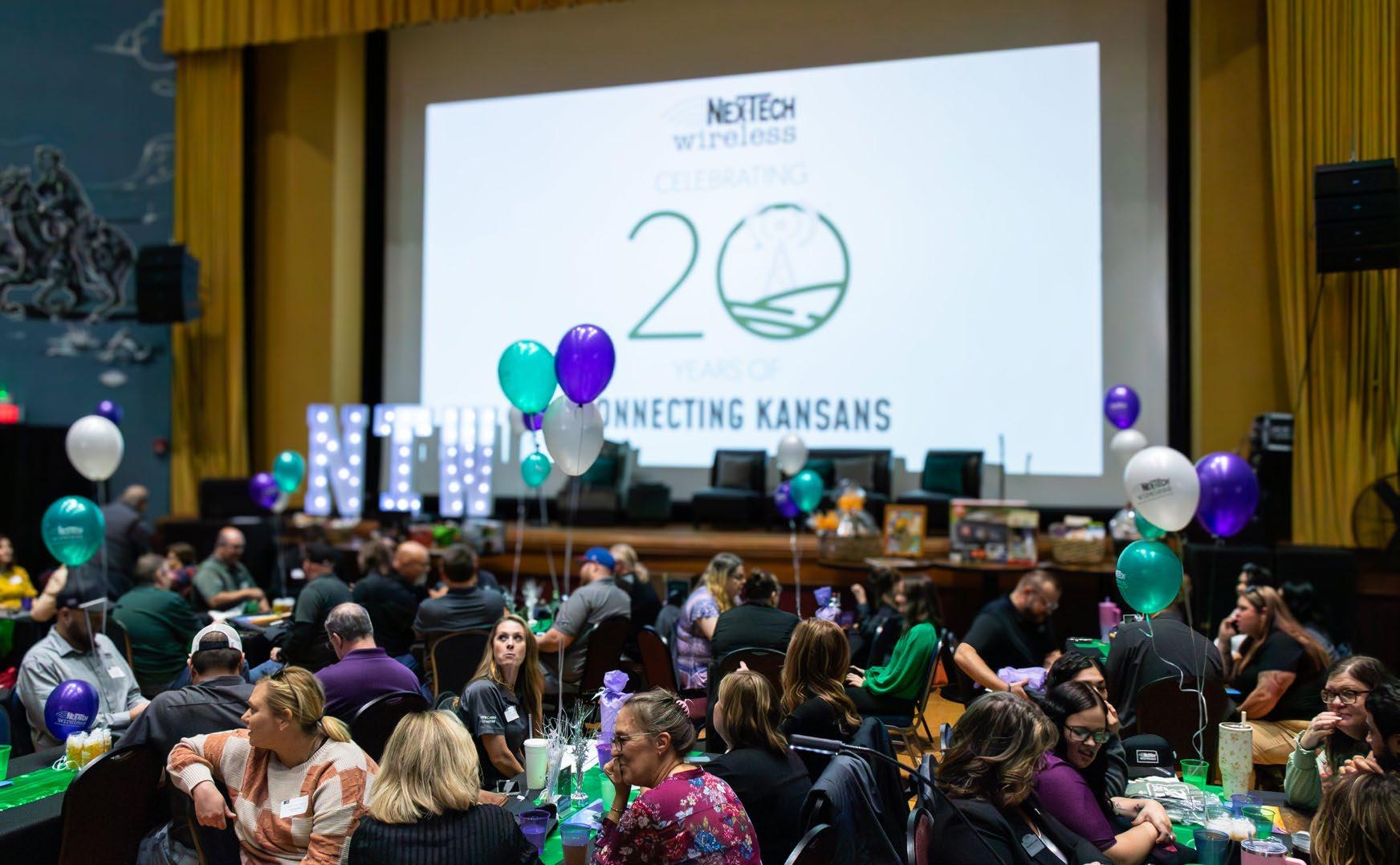
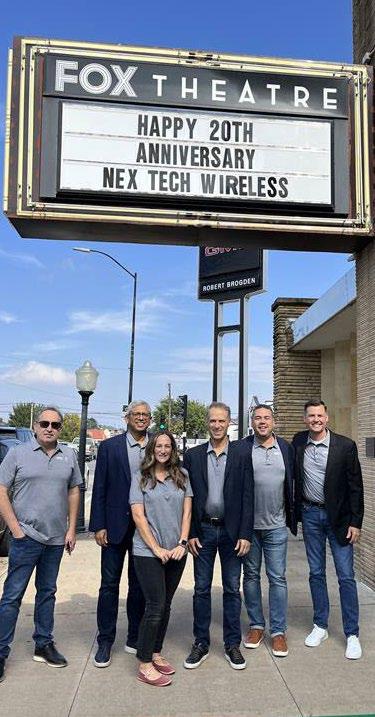
A true representation of the heartland, Kansas pride runs deep, and Nex-Tech Wireless proudly marks 20 years of calling Hays home.
From the rolling prairies and wheat fields to the small-town main streets that define western Kansas, Nex-Tech Wireless has kept rural communities across the Sunflower State connected for two decades. And to celebrate this milestone 20 years in the making, around 150 employees gathered in Hays, Kansas—with Ericsson proudly joining the celebration. This landmark moment exemplifies how partnerships drive progress, not just in telecommunications, but in enriching the lives of the communities they serve.
The two-day event was more than a look back; it was a rallying call for the future. As the telecom industry shifts to meet growing demands for seamless connectivity, Nex-Tech Wireless has remained both visionary and deeply rooted in its heritage.
Looking back. Moving forward.
The event kicked off in true local fashion: with a bit of neighborly conversation. Jon Lightle, President and CEO of Nex-Tech Wireless, and several leadership team members spoke about turning challenges into opportunities. They reflected on how far both the company and the industry have come—from the days when customers simply made calls to a world driven by mobile browsing, video streaming and instant connectivity. Tracing the journey from 2G to 5G, the team emphasized not just the technology, but the people and perseverance that have powered progress across Kansas and beyond.
Local flavors infused every aspect of the celebration—from lively dueling piano performances to Waves of Grain, a custombrewed beer crafted with wheat sourced from Salina, Kansas. The event stood as a heartfelt tribute to Nex-Tech Wireless’s roots and the community it proudly calls home.
Ericsson joined in the celebration with four interactive tech demos that offered a glimpse into the world of tomorrow. Guests lined up to try the AI photo booth, where their photos were transformed into imaginative, AI-inspired scenes from superheroes to artistic portraits. Nearby, the Render-bot drew crowds as a robotic arm, guided by artificial intelligence, sketched caricaturelike portraits of attendees and the smart AR desktop showcased how projected augmented reality can enhance interactive repair, inspection and hands-on training. Rounding out the experience was the 5G-enabled quadruped, an agile, four-legged robot that demonstrated how advanced connectivity can power real-world applications in agriculture, security, remote monitoring and even delivery.
Ribbon-cutting and community
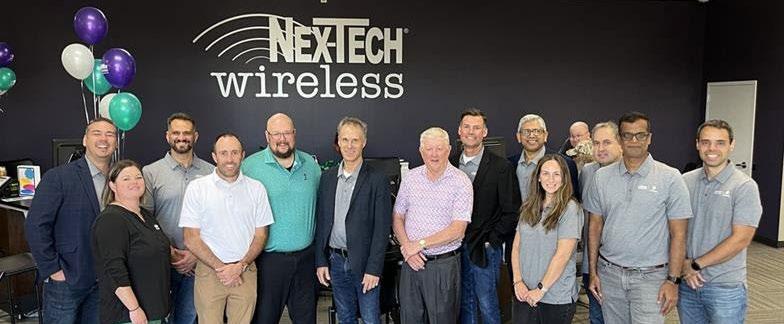
With the Chamber in Hays, KS, in attendance, Nex-Tech Wireless welcomed customers and community members to its Hays retail location for a ribbon-cutting and celebration. The event served as both a nod to the company’s milestones and a showcase of its ongoing commitment to innovation and customer connection. Guests explored the latest devices, interacted with Ericsson’s cutting-edge tech demos and celebrated the progress made possible through stronger, smarter networks across Kansas.
Home on the range
Ericsson’s participation in Nex-Tech Wireless’s anniversary went beyond technology; it was about making real-world connections. By empowering regional partners like Nex-Tech Wireless to thrive, Ericsson continues to help shape the future of telecommunications in ways that resonate both locally and globally. Together, the two companies are not only advancing connectivity, but also building networks that transform lives and strengthen communities across rural America.
Share
Ericsson Mobility Report
As 2025 winds to a close, the US telecom market is entering a powerful new era. With the highest 5G adoption rate in the world and mobile data use expected to nearly double by 2031, the nation is shifting into a phase defined by faster networks, smarter devices and a surge of new digital services.
High-capacity mid-band 5G, the rapid rise of fixed wireless access (FWA) and the rollout of 5G standalone networks are all redefining what connectivity means for consumers and businesses alike.
This Ericsson Mobility Report looks at how the technology is evolving and how these changes are creating new opportunities for service providers, users and the broader digital ecosystem.
Key insights
North America is leading the world in 5G adoption
5G penetration reaches 79 percent in 2025 and climbs past 90 percent by 2031. That pace is pushing continuous investment in network upgrades everywhere, from dense cities to rural communities, boosting both speed and reliability.
FWA becomes a major broadband lifeline
As fiber buildout remains slow outside major metros, 5G FWA is filling the gap. With global FWA connections projected to reach 1.2 billion by 2031, US rural communities are turning to FWA for fast, reliable home internet that supports remote work, telemedicine, education and modern digital life.
Mobile data demand is exploding Americans’ smartphone data use will surge from 25 GB/month in 2025 to 49 GB/month by 2031. This growth drives carriers to upgrade infrastructure, deploy more spectrum and improve backhaul, even in sparsely populated or previously underserved regions.
Sunsetting 2G and 3G creates pressure in rural markets
As legacy networks retire, rural areas face a greater need to replace older devices, sensors and equipment still dependent on outdated technologies. Communities and businesses, especially in agriculture and logistics, must begin migrating to LTE and 5G-ready IoT systems to stay compatible.
US market strategic snapshot
More than 90 percent of US mobile subscriptions will be 5G by 2031
5G FWA is now the fastest-growing broadband option in rural America
Mid-band 5G covers the majority of the US population
Uplink demand is taking off as AI, drones and connected devices reshape network needs
Monthly mobile data use will jump from 25 GB to 49 GB by 2031
Want the full picture?
To stay ahead in a fast-changing landscape, regional carriers need clear, timely insights. Download the report to get a deeper look at what’s next for 5G, FWA and the utilities sector, including:
• Practical tips for building customer loyalty and unlocking new business opportunities
• Increasing global momentum in commercial differentiated connectivity services
• How 5G is powering the next generation of sports technology
Download the report
The role of 3GPP standards in advancing non-terrestrial networks (NTN)
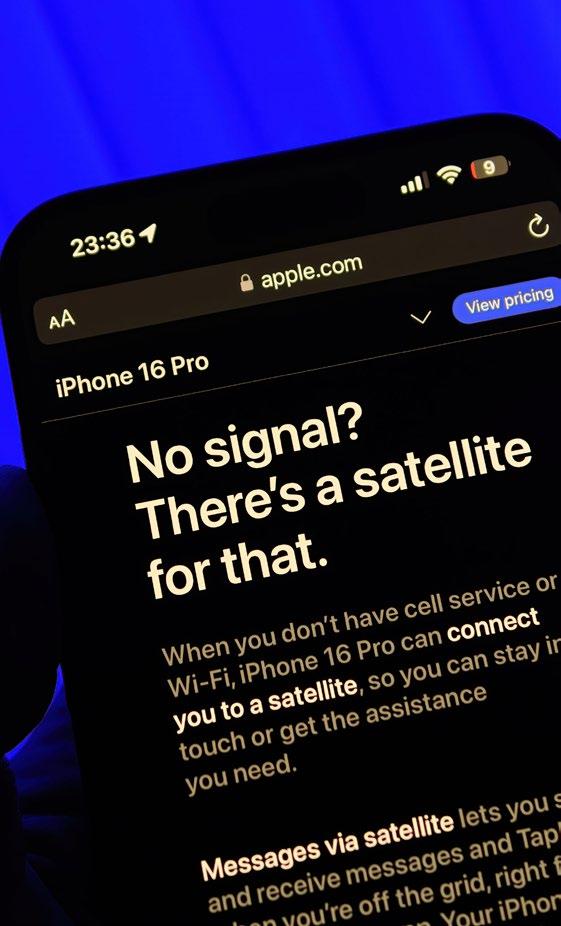
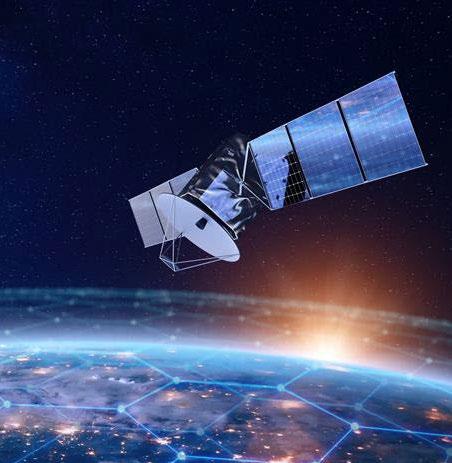
A revolution is underway in the skies, as satellite operators and CSPs rapidly shift to meet demand for remote connectivity and differentiated services.
Neri Customer Solutions Director, Regional Customers and HCPs, Ericsson Americas
The 3rd Generation Partnership Project (3GPP) specifications for satellite connectivity are creating new opportunities for terrestrial CSPs and satellite operators to build a global non-terrestrial network (NTN) ecosystem. By integrating terrestrial and satellite systems, this platform can deliver worldwide value through global coverage. Mobile terrestrial networks reach roughly 96 percent of the global population today but cover less than 40 percent of Earth’s land (12 percent of the planet).
3GPP standardization efforts are showcasing groundbreaking advancements in both radio access network (RAN) and core network (CN) features and capabilities. From Release 17 to Release 20, these developments have created a solid foundation for NTN, securing and expanding its role in 5G and paving the way for seamless terrestrial and non-terrestrial network unification in 6G.
As a result, satellite operators are increasingly integrating with mobile networks. SpaceX, already challenging fixed broadband networks through Starlink, has entered the direct-to-cell market. In September 2025, it agreed to buy Echostar’s AWS-4 and PCS H-block spectrum for $17 billion, then announced plans to acquire its unpaired AWS-3 licenses for $2.6 billion.
The growing importance of NTN in closing connectivity gaps is evident in the latest round of the Broadband Equity, Access, and Deployment (BEAD) program. Satellite players, including SpaceX and Amazon
Leo (formerly Amazon’s Project Kuiper), are positioned to receive more than 20 percent of the awarded funds.
In the near term, satellite connectivity is not expected to match the performance of terrestrial networks due to limitations in capacity, power, processing and coverage densification. However, satellites remain a valuable complementary solution for areas where terrestrial coverage is sparse, and technological advances in the coming decades may significantly enhance their efficiency and mobile connectivity capabilities.
This article reviews NTN standardization from 3GPP Releases 17 through 20, highlighting key innovations and services that pave the way for full 6G NTN integration.
3GPP Release 17: Defining the NTN framework
Release 17 (Rel-17) began integrating NTN into the 5G framework by adding satellite support to the New Radio (NR) protocol stack. It addressed challenges like Doppler and time drift by enabling user equipment (UE) to use satellite position data (via SIB19) and its own GPS location to calculate distance and relative speed. The UE then preadjusts timing and frequency to offset long travel times and Doppler shifts, maintaining connectivity at speeds up to 8 km/s.
Transparent (“bent pipe”) payloads on GEO and LEO satellites handle only
RF processing with radio operations and network interfaces terminated on the ground.
Furthermore, tracking area (TA) handling must change because satellites move. Unlike static TAs in traditional networks, NTN features both moving users and moving cells, which would normally trigger frequent TA updates. To avoid this, 3GPP keeps TAs logically fixed while satellites broadcast different TACs depending on the region they cover.
For mobility in RRC_CONNECTED mode, 3GPP Rel-17 introduces timebased (condEventT1) and location-based (condEventD1) triggers for conditional handover (CHO). CHO preconfigures potential target cells, making it highly effective for NTN scenarios where satellite movement is deterministic.
Additionally, 3GPP Rel-17 introduced dedicated FDD spectrum bands 255 and 256 for NTN, operating in L band (1600 MHz) and S band (2100 MHz) spectrum with channel bandwidths ranging from 5 to 20 MHz. These bands support both LEO and GEO satellite constellations.
IoT work centered around exploring how satellite networks could potentially support narrowband IoT (NB-IoT) and enhanced machine-type communications (eMTC) in areas with limited ground-based networks, with both protocols being enhanced in similar ways as 5G NR (many updates closely mirrored the 5G NR specifications).
Nicola
3GPP Release 18: Location verification and uplink enhancements
In 3GPP Release 18 (Rel-18), a key improvement is related to the UE location verification capability. NTN systems gain enhanced mechanisms to ensure the correct UE geographic location so the network can select the appropriate public land mobile network and route traffic to the correct national core. These enhancements combine UE-assisted measurements (such as satellite timing, Doppler and ephemeris data) with beam-footprint mapping that links each satellite beam to specific countries or regulatory zones. Rel-18 also introduces network-verified location procedures and country-aware mobility handling to prevent inadvertent roaming as beams move across borders. Together, these features allow NTN deployments to meet regulatory obligations and ensure that users are anchored to the correct core network based on where they physically are on Earth.
Uplink performance received enhancements through advanced message repetition strategies and demodulation reference signal bundling aiming to improve coverage in challenging transmission conditions. This is particularly critical for GEO systems affected by high pathloss due to the large distance to satellites of more than 36,000 km.
Lastly, Rel-18 introduces S and L band support for IoT NTN operations.
3GPP Release 19: The leap to regenerative payload
Release 19 (Rel-19) introduced regenerative payload, allowing satellites to host gNB functions onboard and evolve from mere signal reflectors into active and intelligent network nodes.
Satellites are enabled to autonomously manage communication streams and buffer data using a new “store-and-forward” (S&F) capability, enabling them to handle delays for non-real-time services such as IoT. This is made possible by a redesigned architecture in which key Evolved Packet Core (EPC) functions, such as the Mobility Management Entity (MME), reside either partly or completely onboard the satellite.
The new architecture also supports inter-satellite links, enabling coordination of resources like load balancing and alternative routing paths, creating a more resilient and flexible network.
Rel-19 strengthens NTN downlink performance through enhanced repetitions on selected channels and improved support for beam-hopping techniques. These features help satellites better manage limited onboard power and feeder-link bandwidth, directing energy more efficiently and extending coverage, especially for users at the edge of service areas.
On the uplink, Rel-19 introduces multiplexing via orthogonal cover codes (OCC) for increased uplink capacity, allowing multiple users to share resources with reduced interference, boosting spectral efficiency and network uplink throughput.
The standard defines new UE categories with ≥26 dBm transmit power, improving data rates, coverage and connection stability in NTN environments, while enhancing resilience against jamming for government and critical communications.
3GPP Release 20: GNSS-less operations
Release 20 (Rel-20), expected to be completed by mid-2027, is further raising the bar, with the intent to introduce GNSS-free operation for UE, promising greater resiliency across diverse device landscapes. This capability mitigates reliance on navigation satellite systems and strengthens NTN’s service availability in challenging environments.
Additionally, GEO satellites will begin supporting voice-over-IMS services, allowing seamless voice functionality over extended latencies and low-bandwidth satellite links.
Toward 6G NTN integration
Looking forward, 6G NTN is poised to unify terrestrial and non-terrestrial communication networks. GNSS-free operations for heightened system resiliency is a particular focus area, where the findings from the Rel-20 studies will be considered. Equally important, 6G should account from day one for the unique characteristics of satellite communications, such as long propagation delays, significant Doppler shifts and the inherent mobility of network nodes, to ensure a faster and truly native integration between terrestrial and spacebased systems.
Additionally, novel use cases such as airspace-integrated NTN functionality will empower ultra-reliable communications in remote areas and enable next-generation mobility solutions.
Conclusion
NTN advancements are enabling remote IoT use, expanded broadband coverage and new satellite applications. As connectivity demands grow, the commitment to 3GPP standardization enables NTN to complement terrestrial networks and expand global communication horizons creating new opportunities for industries and consumers worldwide. Satellite beams cover vast areas with many users sharing the same beam, limiting capacity since coverage cannot be densified like terrestrial networks. Coupled with other technological limitations, such as restricted power, heat management, radiation-hardened but slower processors and weight constraints, satellite networks cannot match the performance of terrestrial networks. For these reasons, they should be regarded as complementary rather than competing solutions. However, the benefits of NTN, as an extension of terrestrial networks, must be defined for every application.
Ask the experts
The communications landscape is evolving at a rapid pace. Utilities and regional service providers are navigating a new mix of policy shifts, technology options and strategic decisions that will shape their networks for decades to come. In this edition of “Ask the Experts,” two of Ericsson’s best and brightest break down the developments influencing today’s broadband and utility modernization efforts.
First, Ravindra Dongre, Senior Director of Technology and Solutions, lays out the latest updates to the BEAD program. Then, Customer Solutions Director Ricardo Omana discusses the expanding spectrum choices that support a smarter, more resilient grid.
Ravindra Dongre Senior Director, Technology and Solutions, Regional Customers, Ericsson Americas
Q: What are the recent updates to the Broadband Equity Access and Deployment (BEAD) program?
A: The National Telecommunications and Information Administration (NTIA) released a new policy notice in June that reshapes parts of the $45.2 billion BEAD program. The update brings a handful of changes that really shift the landscape for anyone planning to compete for BEAD funding. Instead of favoring one access technology over another, the agency has leveled the playing field with fully performancebased standards: 100/20 Mbps, ≤100 ms latency and a clear ability to scale. If a technology can meet those standards, it qualifies as “priority broadband.” That’s a big deal for fixed wireless access (FWA), especially for providers with access to mid-band spectrum. It signals that alternative technologies like FWA are now in the running for BEAD-funded builds, not just fiber.
NTIA also simplified how it scores applications. Cost per location is now the one mandatory metric, with secondary factors, like deployment speed, considered only if competing proposals are within 15 percent of each other. This puts solutions with lower upfront costs and faster rollout timelines, like FWA, in a very strong competitive position.
Want to ask our experts to shed light on a certain topic? Submit your questions by contacting your Ericsson account representative.
Another important update is the removal of several compliance-heavy requirements. Detailed labor standards, workforce development plans and climate-resilience documentation are no longer part of the BEAD application burden. Providers now simply certify that they comply with federal labor and employment laws. That change alone could make BEAD participation more accessible for smaller ISPs.
All of this is happening against the backdrop of fewer BEAD-eligible unserved and underserved locations. According to the Advanced Communications Law & Policy Institute at New York Law School, continued ISP investment and earlier commitments from programs like Rural Digital Opportunity Fund and state American Rescue Plan Act grants have significantly reduced the number of locations still lacking adequate broadband. While that means fewer potential subscribers, it also means more funding available per remaining location, improving the economics for providers that can deliver high-performing, cost-efficient solutions.
Ricardo Omana
Customer Solutions Director, Regional Customers and HCPs , Ericsson Americas
Q: What spectrum options are available to utilities, and what makes each one uniquely suited for different grid applications?
A: When utilities talk about modernizing the grid, we often jump straight to devices, sensors or automation. But behind all of that is something just as essential: choosing the right spectrum. In the US, utilities typically look at three segments: low-band, mid-band and high-band. Each has its own strengths and sweet spot.
Low-band spectrum (600 MHz to 1 GHz)
Bands like 900 MHz (Band 106), 850 MHz (Band 26) and 600 MHz (Band 71) travel far, handle rough terrain and don’t mind going indoors up to a certain point. That’s why they’re ideal for sprawling service territories and mission-critical tasks: smart meters, outage alerts, fault detection and the millions of lowdata sensors that keep the grid humming.
You don’t get huge bandwidth here (typically 3 to 7 MHz duplex), but you do get rock-solid coverage. For utilities, low-band is the essential foundation layer.
Mid-band spectrum (1 GHz to 6 GHz)
Mid-band is perfect for utilities that need to move more data, more quickly: think workforce communications, drones, video feeds or real-time grid operations. Licensed mid-band, like 2.5 GHz (Band 41) or AWS-3 (2100 MHz), delivers higher speeds and lower latency with strong device ecosystem support. And even shared options such as CBRS (3.55 to 3.7 GHz) have become a practical on-ramp for private LTE and 5G, especially for utilities that need flexibility or face spectrum constraint. Mid-band essentially bridges the leap from traditional IoT to more advanced, data-intensive applications.
High-band spectrum (24 GHz to 39 GHz)
High-band, better known as millimeter wave, is the speed racer of the spectrum stack. Blazing fast, incredibly low latency and designed for precision. Of course, like a race car, it doesn’t love long distances or obstacles. But in the right environment, automated substations, AR/VR inspections and high-speed analytics, millimeter wave delivers capabilities that simply aren’t possible elsewhere.
A layered approach
As utilities introduce more automation and edge intelligence, high-band will increasingly power targeted, future-forward applications. Utilities don’t need to choose one spectrum lane, they need the right mix. A layered strategy is emerging as the gold standard:
• Low-band for broad, reliable coverage
• Mid-band for higher-capacity, fast-growing operational needs
• High-band for cutting-edge, localized innovation down the road
When the spectrum strategy matches the operational strategy, utilities set themselves up for a grid that’s smarter, tougher and ready for what comes next.
For a deeper dive into device ecosystem considerations, carrier aggregation approaches and an overview of US band availability, check out the full paper: Building resilient grids in the United States: Spectrum strategy for utility modernization.
The next wave of mobile innovation
Advanced mobile infrastructure accelerates industry transformation in economies with high aspirations.
5G as an economic engine: Infrastructure, policies and diffusion
5G has an optics problem. Despite a 42 percent increase in global subscribers last year, only 26 percent of operators have invested in the standalone architecture required to unlock the technology’s full potential. As a result, many enterprises remain on the threshold of transformation, and much of 5G’s power remains untapped. The real value of 5G lies in how deeply it becomes embedded within the industries it serves. The economies that make a deliberate push to integrate the technology, from policy frameworks to industrial adoption to workforce development, will be the ones that pull ahead, translating connectivity into lasting economic value.
Connected healthcare
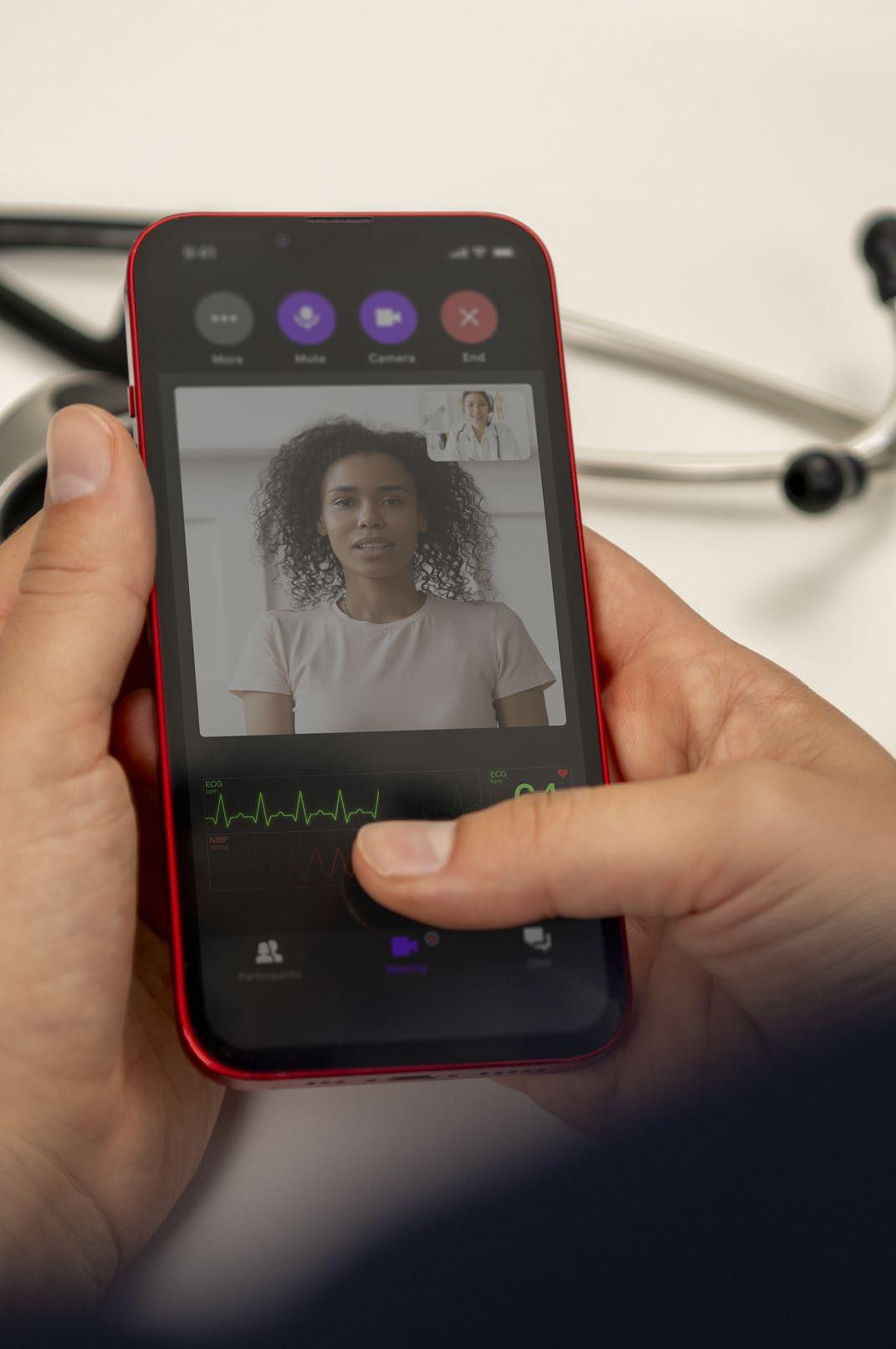
Hospitals are using 5G to deliver greater care by improving access, efficiency, and patient experiences. The National University Hospital (NUH) in Singapore demonstrates how advanced connectivity can strengthen operations and help address staff and resource shortages. With reliable, high-capacity 5G networks, hospitals can stay connected across departments and even reach patients at home—enhancing availability and responsiveness. Partnering with innovators like Ericsson, NUH shows how connected healthcare can bridge gaps and bring quality care within reach for more communities.
Learn more in the full report: See how 5G empowers hospitals to deliver greater care and connect patients, providers and technology.
5G for first responders
Upgraded 5G networks are transforming how US first responders communicate. Nationwide initiatives give responders priority access, broader reach and support for data-rich tools like video and real-time coordination. With hardened devices, battery-backed sites and near-complete US coverage, mobile infrastructure is proving essential for mission-critical operations and setting the standard for other industries, such as utilities and rail, that also depend on reliability and speed.
Learn more in the full report: See how next-gen networks are empowering emergency services with mission-critical connectivity.
There’s more to this story. Explore how 5G is transforming industries around the globe and shaping the future of connectivity, efficiency and economic growth.
Download the full report
Journey to the next-gen smart grid: How 5G mission-critical networks empower utilities
The grid is entering a new era as utilities embrace LTE and 5G mission-critical networks to strengthen reliability and modernize operations. With smart spectrum planning and next-gen IoT connectivity, utilities can unlock better visibility and more sustainable performance. By investing in 5G today, they’re paving the way to meet the energy needs of tomorrow.
A smarter, stronger grid
As utilities modernize their systems, one piece of technology is quickly becoming essential: mission-critical networks (MCN). These private wireless networks, built on LTE today and evolving toward 5G, are transforming how utilities keep the lights on—literally.
From
LTE
foundations to a resilient 5G grid
Private LTE networks provide the reliable foundation for utilities’ digital transformation, offering proven performance and scalability while paving the path to 5G. As grids grow more complex, MCNs ensure secure, resilient communication even during outages.
Spectrum: The heart of MCNs
Licensed, dedicated frequencies provide predictable reliability and low interference — vital for mission-critical operations. Utilities must plan carefully to secure access across frequency bands:
• Sub-1 GHz for wide coverage and low-bandwidth applications
• Mid-band for higher data throughput for more advanced services
• High-band for ultra-low latency and high-capacity use cases
A thoughtful spectrum strategy is fundamental to an adaptable, future-ready grid.
The power of 5G for utilities
If LTE built the groundwork, 5G delivers intelligence. Key benefits include:
• Real-time operational visibility and data control
• Advanced authentication and integrity protection
• Sub-meter asset positioning for safety and efficiency
• Network slicing for dedicated priority communication lanes With 5G, utilities gain a communications backbone built to evolve alongside the grid.
IoT evolution and hybrid connectivity
More than 90 percent of utility devices are IoT endpoints. LTE-based NB-IoT and LTE-M already connect millions of sensors and controllers. 5G RedCap and eRedCap expand options for lightweight, longlife devices, cutting costs and improving sustainability. Hybrid architectures with public network fallback ensure continuous coverage, while 5G slicing maintains priority traffic even on shared infrastructure.
Looking ahead
The transition from LTE to 5G represents a transformation of how power systems connect, communicate and adapt. As spectrum access and device maturity improve, utilities will accelerate adoption of private 5G MCNs, unlocking realtime visibility, AI-driven maintenance and automation at scale. By investing today, utilities are building the intelligent, sustainable energy networks of tomorrow.
Want the full story?
Read Journey to the next-gen smart grid for an in-depth analysis.
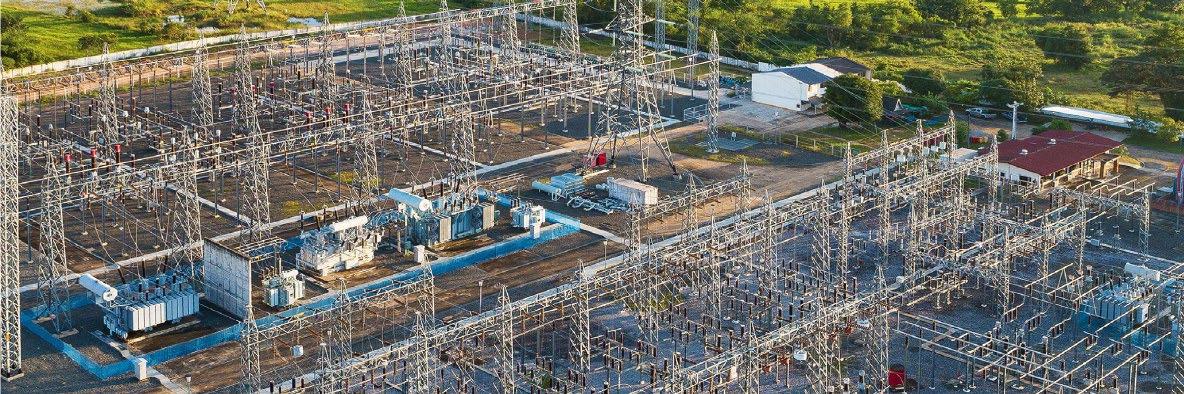
Navigating new threats to cellular utility networks
In the world of 007, shadow networks, covert intrusions and hidden adversaries lurk around every corner. For utilities, that spy thriller fiction is starting to feel uncomfortably familiar. Protecting high-value targets like grids now requires following the first rule of modern espionage: Assume the intruder is already inside.
Salt Typhoon’s infiltration of US telecom networks didn’t just raise alarms; it shattered confidence in traditional defenses. The Chair of the Senate Intelligence Committee went so far as to call it “the worst telecom hack in our nation’s history,” warning that previous cyberattacks now look like “child’s play” by comparison.
For utilities deploying cellular networks to power critical infrastructure, from smart grids to remote asset monitoring, it’s past time to throw out the old castle-and-moat security playbook. In today’s operating environment, a true zero-trust mindset is the new normal. But what does zero trust actually mean? At its core, it’s the assumption that nothing, inside or outside your network, can be inherently trusted. Every packet, every device and every connection has the potential to be compromised.
Zero-trust protocols
To secure your networks, your priorities are as follows:
1. Encrypt everything, in transit and at rest. No exceptions. It’s not just customer information at stake; it’s the stability of the entire power grid.
2. Authenticate and authorize every connection. Human, machine, sensor and meter. Each must readily prove its identity every time.
3. Implement strict segmentation. Keep management, control and user domains fully separated so even if attackers breach one layer, they’re blocked from moving deeper into the grid.
4. Monitor continuously. Real-time visibility into logs, flows and packet data is critical to identifying anomalies.
The right security strategy
Utilities face a pivotal decision when implementing advanced cellular security: Build capabilities in-house or purchase them from established vendors. Developing custom tools offers maximum control but requires deep expertise in complex telco protocols, containerized environments and continuous monitoring architectures. Buying vendor solutions accelerates deployment and leverages built-in knowledge of proprietary logging formats and telemetry, though it introduces longterm dependencies. Whatever strategy you choose, the message is clear: With threat actors moving faster than traditional defenses, adopting architecture built for today’s realities is no longer option; it’s an operational requirement.
For a deeper breakdown of in-house versus vendor options and help determining the best fit for your organization, read the blog
Serve
Connected by hope: Recovery response in Hunt, Texas
It takes a village to rebuild after a natural disaster. And when communities face their darkest hours, a sense of shared purpose and swift action can make all the difference. This was especially evident after the devastating flash floods that hit Hunt, Texas, on July 4. In just three hours, 10 inches of rain fell, causing the river to rise more than 20 feet and sweep away trees, homes and vehicles.
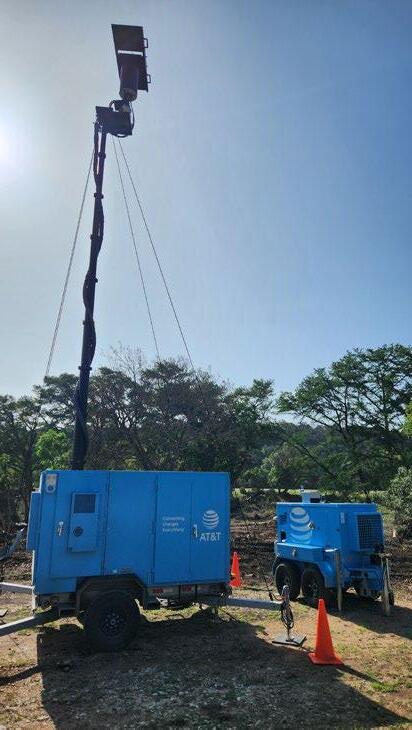
Recognizing the extent of the devastation and urgent need for communication, Ericsson partnered with a Tier 1 CSP to update the configuration of deployed mobile network units near Camp Mystic to open the communication channels for rescue teams and emergency personnel during search and recovery efforts.
Challenges on the ground
In the days following the disaster, a surge of volunteers arrived in Hunt. Among them was Ericsson Service Delivery Manager Sean Lee, who arrived on July 9 to offer humanitarian aid. He identified a critical issue: Despite the mobile network units, many volunteers still faced connectivity problems in the hardest-hit areas. This gap hampered coordination of rescue operations, delivery of aid and support for affected families.
Ericsson and the service provider immediately set to work. Ericsson enlisted the provider’s advanced network support team, and within 24 hours, the mobile network units were optimized to add an additional coverage layer, significantly improving performance and restoring connectivity where it was needed most.
Signal of resilience
The results were transformative. Enhanced mobile service improved coordination among first responders and volunteers, resulting in safer conditions during critical operations. With connectivity restored, the community experienced a more effective and responsive relief effort. Ericsson’s team also joined the search and aid efforts, witnessing firsthand how communication technology drives life-saving action.
Technology in service of people
This response is a powerful example of what collective action can achieve. Ericsson and the Tier 1 provider’s partnership made a real impact on people’s lives. The Kerr County community and volunteers who came to their aid experienced firsthand how dependable connectivity strengthens an emergency response. At its core, Ericsson is about people—guided by empathy and fueled by innovation. Together with trusted partners, Ericsson steps up to help communities faced with the unimaginable. More than technical expertise; it’s about creating connections that strengthen and support humanity in times of crisis.
Why Ericsson?
Regional focus, global expertise
Ericsson’s high-performing networks provide connectivity for billions of people every day. For nearly 150 years, we’ve been pioneers in creating technology for communication. We offer mobile communication and connectivity solutions for service providers and enterprises. Together with our customers and partners, we make the digital world of tomorrow a reality.
149 years of enabling communication
Global Headquarters: Stockholm, Sweden
26,744 R&D employees*
89,898 employees*
60,000+ patents
180+ Operates in 180+ countries
194 live 5G networks globally *
*As of December 2025
North American Headquarters: Plano, Texas
30+ US locations
6 live 5G networks in the US*
6,200 US employees*
70+ regional carrier customers
$100M 5G smart factory investment in Lewisville, TX
*As of December 2025
About Ericsson Regional Connect
Regional carriers are unique enterprises. They are an integral part of the communities they serve as much as they are businesses seeking growth and sustainability. The Ericsson Regional Connect program was born out of Ericsson’s recognition that regional carriers across the US are united by these common values—and by common challenges: Values we share and challenges our global solutions are perfectly suited to meet.
With an array of live and virtual events, online forums and tools, Ericsson Regional Connect comprises a unique community that brings regional carriers together in an unprecedented way:
Connect—Ericsson Regional Connect facilitates a wide range of opportunities for professionals in the industry to meet and partner with their peers.
About Ericsson
Share—Regional carriers will have access to Ericsson’s global technological leadership and expertise. And they will have a forum for sharing knowledge, ideas and best practices with one another.
Serve—Apply what you gain from Ericsson Regional Connect to better serve your customers, connect the unconnected and give back to your communities.
Ericsson’s high-performing networks provide connectivity for billions of people every day. For nearly 150 years, we’ve been pioneers in creating technology for communication. We offer mobile communication and connectivity solutions for service providers and enterprises. Together with our customers and partners, we make the digital world of tomorrow a reality. www.ericsson.com
Ericsson
6300 Legacy Drive | Plano, Texas 75024
Telephone (General inquiries): (972) 583-0000 | Telephone (Ericsson US digital sales): (833) 374-7253 www.ericsson.com