GREEN TOOLKIT
Ireland’s for Business Events
A practical guide for event organisers and professionals

A practical guide for event organisers and professionals
Ireland’s Green Toolkit for Business Events offers practical guidance to event organisers and anyone involved in the planning and delivery of business events in Ireland—whether preparing a bid, coordinating logistics, or managing on-site execution. The toolkit helps organisers to reduce emissions, limit environmental impact, and ensure business events align with Ireland’s national climate objectives.
Ireland’s Green Toolkit for Business Events is especially useful for:
Strengthening proposals with clear environmental commitments Aligning with Ireland’s national sustainability goals Delivering confident, credible, low environmental impact business events
Packed with fresh ideas, top tips, practical checklists, and inspiring case studies, this toolkit makes it easy to embed sustainability into any business event—from planning to delivery. It also highlights a range of sustainability supports available from Fáilte Ireland, helping organisers create impactful, environmentally responsible business events.
Keep an eye out for Top Tips and Resources!
At Fáilte Ireland, we recognise that the future of Ireland’s tourism sector depends on our collective commitment to sustainability.
As custodians of the environment and stewards of Ireland’s global reputation as a leading destination for business events, we are taking proactive steps to embed sustainable practices into each event that is hosted in Ireland.
In 2025 Ireland unveiled a bold new vision for its business events sector with the launch of Business Events 2030; a national strategy that represents a fundamental shift in how Ireland approaches business events.
Business Events 2030 is a product of collaboration between the Department of Enterprise, Tourism and Employment, Fáilte Ireland, Tourism Ireland and industry leaders. It is a strategy that is rooted in sustainable development, taking full account of its current and future economic, social and environmental impacts, addressing the needs of visitors, the industry, the environment, and host communities. It aims to make optimal use of environmental resources, respect the sociocultural authenticity of host communities, and ensure viable, long-term economic operations.
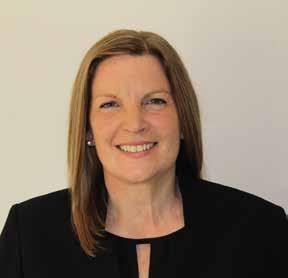
Caroline Bocquel CEO Fáilte Ireland
The Irish business events sector can become industry leaders by aligning with the government’s environmental policy commitments across a variety of platforms including climate action; sustainability; reducing carbon emissions etc. Recognising environmental sustainability as a primary legacy outcome for events underscores its importance as a core value.
Fáilte Ireland is committed to empowering its stakeholders to plan and deliver events that minimise the environmental footprint. Together, we can ensure that Ireland remains not just a destination of choice but a destination of conscience for business events worldwide.
“Business Events 2030 not only enhances Ireland’s reputation as a responsible and attractive destination for business events, while generating economic returns and driving employment, but it also aligns with global expectations for sustainable practices, thereby increasing Ireland’s competitiveness in the market”
As part of the SDG Ambassadors Programme led by the Department of Climate, Energy and the Environment, Fáilte Ireland demonstrates leadership in advancing the United Nations Sustainable Development Goals (SDGs) across tourism. Recognised as an SDG Champion for 2023-2024, Fáilte Ireland now serves as a SDG Ambassador - embedding sustainability into its strategy and operations.
Fáilte Ireland’s key contributions to the SDG agenda:
Advocacy: Promoting awareness and adoption of the SDGs across the tourism sector.
Support: Assisting tourism businesses in implementing sustainable practices.
Integration: Aligning strategic programmes and initiatives with the SDGs.
Vision: Positioning Ireland as one of Europe’s most sustainable tourism destinations.
Aligned with Ireland’s business events strategy - Business Events 2030, the focus areas outlined below reflect the most relevant environmental and tourism-related ambitions.

Section 1: Ireland’s environmental advantage
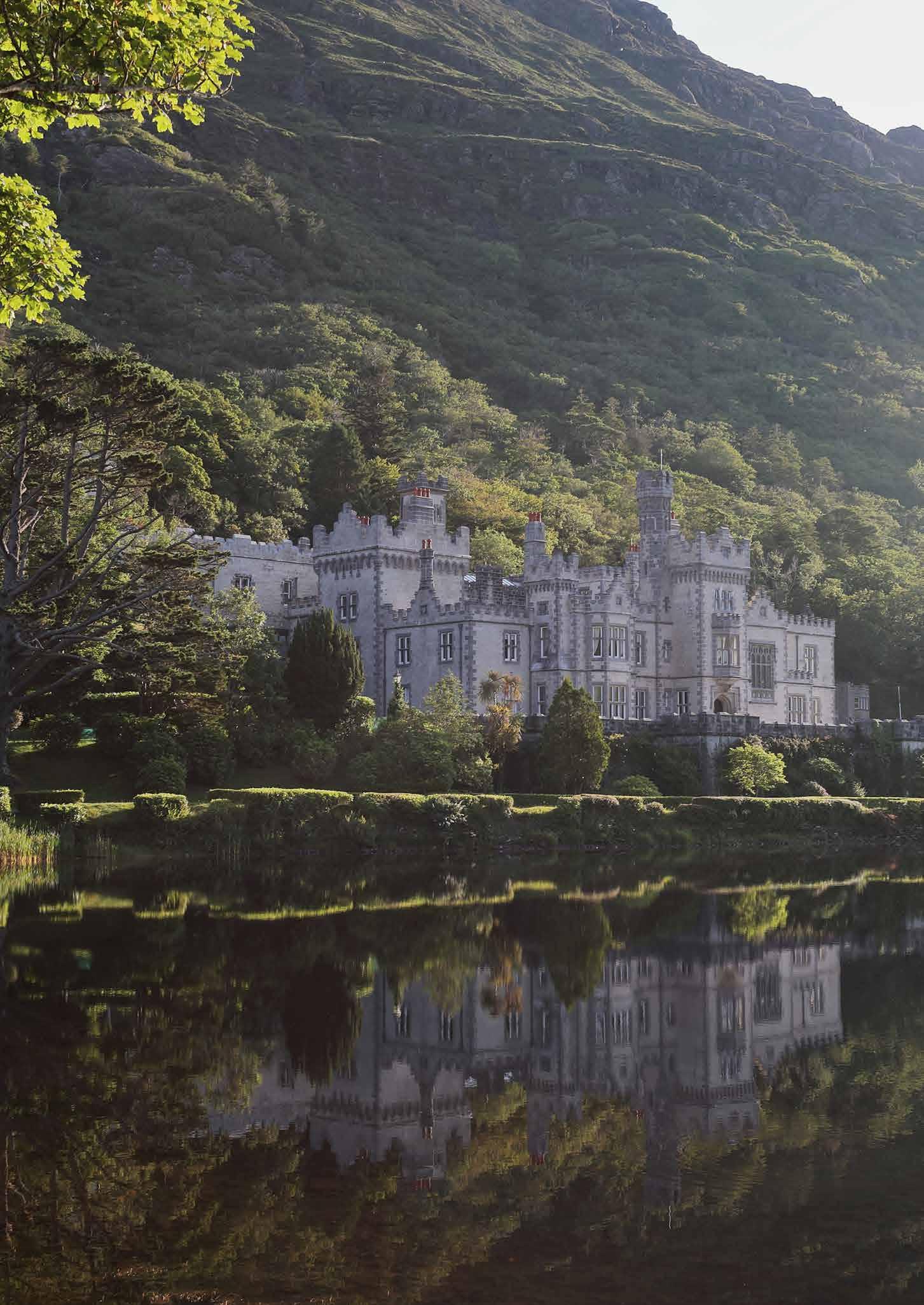
Ireland offers a compelling blend of natural beauty, progressive sustainability policies, and community-driven tourism initiatives. Known as the ‘Emerald Isle’, its lush landscapes, rugged coastlines, and rich biodiversity provide an inspiring backdrop for naturealigned events.
Backed by its business events strategy, Business Events 2030, Ireland’s commitment to sustainability is reflected in strong government and industry collaboration, high environmental standards, and practical and financial supports for event organisers.
With access to sustainable venues, green transport options, and eco-conscious suppliers, Ireland makes it easier to plan and deliver impactful business events that align with climate goals.
Sustainability is now a key factor in how business event proposals are evaluated and how destinations are selected. Clients increasingly expect clear, practical demonstrations of environmental responsibility. For organisers in Ireland, this presents a valuable opportunity to align with both client expectations and national climate goals. By integrating environmental priorities into bids and proposals - highlighting Ireland’s unique sustainability strengths - organisers can showcase a competitive edge and contribute meaningfully to climate action.
Section 1: Ireland’s environmental advantage
8 National Parks and 600+ Natura 2000 sites protecting land and marine biodiversity
430+ Special Areas of Conservation and 166+ Special Protection Areas
89 Blue Flag Beaches and 10 Blue Flag Marinas (2025) – a European leader
500 kilometres of Greenways and 4 blueways
5 Business Events Hubs rank in top 40 GDS-Index
3 UNESCO Global Geoparks Burren and Cliffs of Moher, Copper Coast, Cuilcagh Lakelands
Food Waste Charter A successful government backed initiative Sustainable Certification 100% of Ireland's convention centres have achieved environmental certification
Wind and Solar Energy 2nd in Europe for wind and solar energy production per capita
Home to Bord Bia's Origin Green Sustainability Programme Pioneering sustainable food and drink
Home to ⅓ of the world's golf links courses
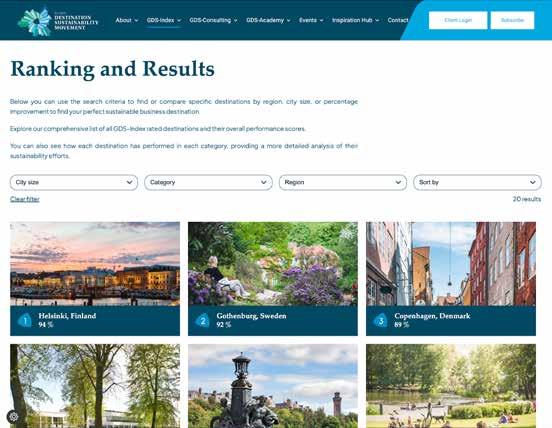
Ireland has established itself as a leader in sustainable business events, with its business events hubs (Dublin, Cork, Kerry, Shannon Region and Galway) all ranked in the top 40 sustainable destinations on the Global Destination Sustainability Index (GDS-Index), demonstrating a commitment to sustainable tourism.
This prestigious index evaluates cities and regions worldwide on their sustainability performance, assessing factors such as environmental policies, carbon reduction efforts, circular economy initiatives, and community engagement.



Section 1: Ireland’s environmental advantage
University of Galway is a UN SDG Champion
Atlantic Technological University (ATU) hosts a sustainability observatory
84% hotels/ attractions hold sustainability certifications
Galway is part of the UNESCO Creative Cities Network
Home to UNESCO Global Geopark, one of three in Ireland.
Pioneered Ireland’s Geopark Code of Practice for Sustainable Tourism



Ireland’s first certified sustainable tourism destination (GSTC)
Home to Ireland’s first carbon-neutral and B-Corp Certified hotels
Gateway to the Wild Atlantic Way, one of the longest defined coastal routes in the world
Awarded the European Green Leaf (2020) for air quality and noise levels
Smarter Travel Project - encouraging more sustainable, lowcarbon transport
University of Limerick holds a Green Flag Award (An Taisce)

Home to the longest section of the Wild Atlantic Way
Section 1: Ireland’s environmental advantage
Ireland’s first International UNESCO Dark Sky Reserve
Home to Skellig MichealUNESCO World Heritage Site
The Convention Centre Dublin is the world’s first carbon-neutral convention centre
Member of the EarthCheck Sustainable Destinations programme

A designated UNESCO biosphere, and only capital city biosphere in Europe
Killarney National Park - 500 kilometres of woodland, wildlife and ecology
Dublin Airport is carbon-neutral since 2020
Awarded Mission Label by European Commission for Climate Action Plan

Cork Airport is committed to achieving Net Zero carbon emissions by 2050
Sustainability
Certification held by over 70% of Cork Hotels
Cork was shortlisted in the 2024 European Capital of Smart Tourism Competition

Sustainability is a thread that runs through every stage of successful event planning.
This 7-step roadmap mirrors the natural rhythm of event delivery, offering structure, shared language, and practical focus areas. At each step, sustainability is integrated intentionally, supporting better outcomes for delegates, clients, communities, and the destination.
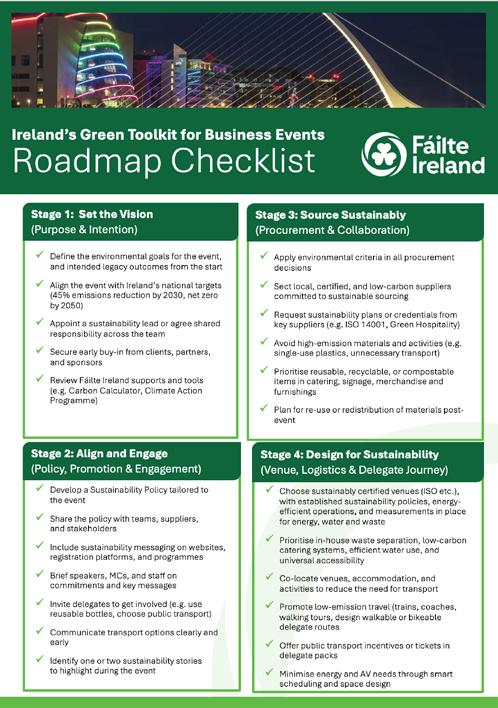
Purpose and Intention
Establish the event’s sustainability vision from the outset. Clarify what success looks like, align with Ireland’s climate ambition, and embed environmental and social goals into the event’s core purpose.
Create and share an event sustainability policy to set the tone. Clear, consistent messaging builds trust with clients, delegates, suppliers, and internal teams, and lays the groundwork for powerful engagement and storytelling.
Choose suppliers and procure with purpose. Sustainable procurement is a strategic tool for reducing event footprint, supporting local enterprise, and delivering meaningful ESG outcomes.
Make sustainability visible through smart design. Prioritise certified venues, low-carbon transport, efficient layouts with accessibility in mind, reduced materials, and circular approaches that enhance the delegate experience.
Turn plans into action. Empower delivery teams and suppliers to follow through on commitments. Make sustainability efforts visible, inclusive, and tangible throughout the live event experience.
Track outcomes and report transparently. Use data, case studies, and delegate feedback to capture learning and legacy, strengthening future planning and positioning the business event as a sustainability leader.
Clear communication of sustainability efforts and achievements builds trust, inspires engagement, and amplifies impact. Plan how to share the story - through social media, newsletters, video, or other channels - and link it to the relevant SDGs to help promote global progress.
Policy, Promotion and Engagement
Procurement and Collaboration
Venue, Logistics and Delegate Journey
On-Site Delivery and Implementation
Measurement and Reporting
Telling the Sustainabilty Story
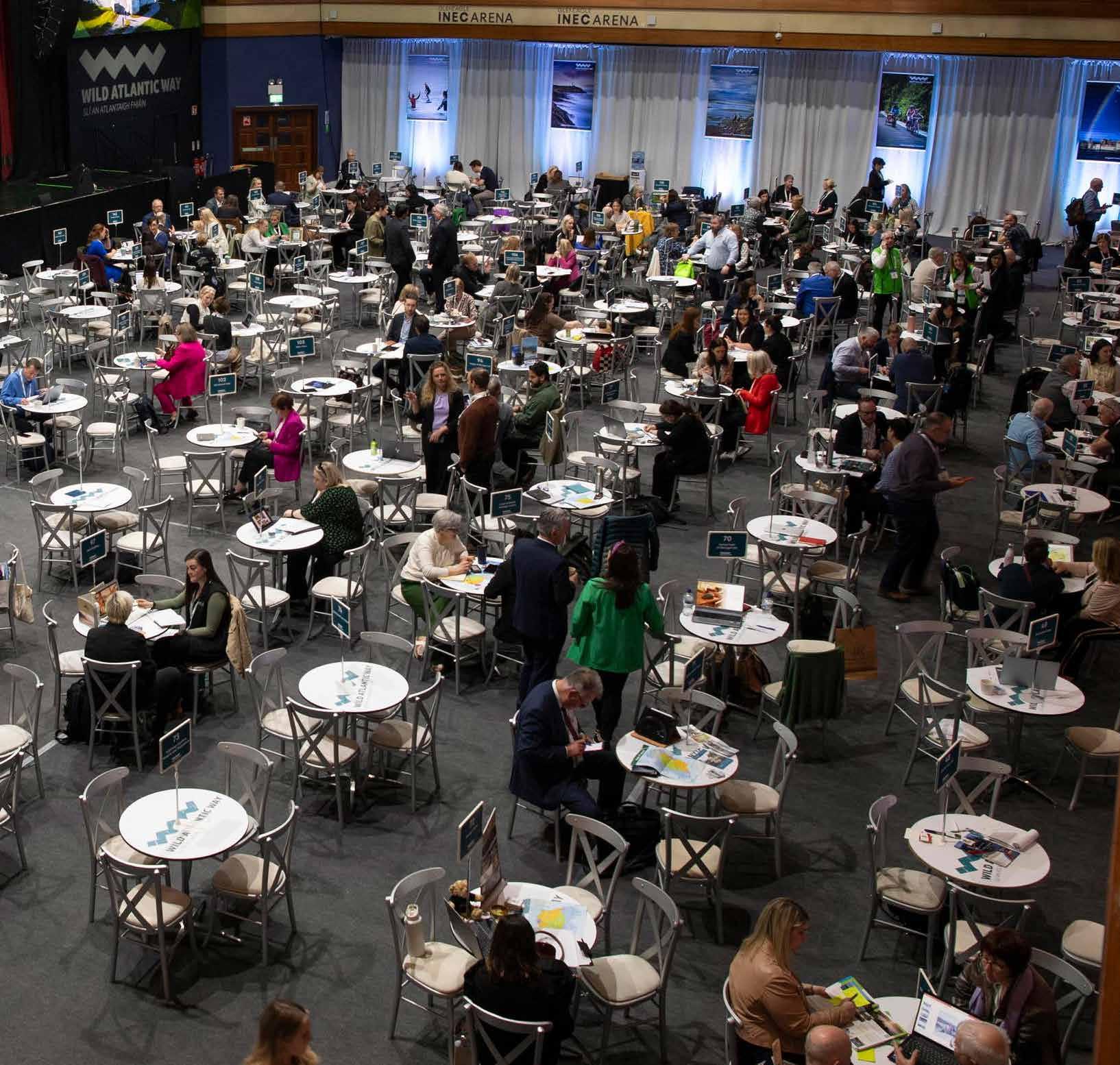
Meitheal is Fáilte Ireland’s flagship tourism trade event, bringing over 250 international buyers from more than 20 countries together with over 380 Irish tourism businesses. In recent years, Meitheal has become a live demonstration of how the 7-Step Sustainable Event Strategy can be applied in practice, with an ambition to become the most sustainable business event of its kind in Ireland. Section 2:
Section 2: The 7-Step
• A three-year Sustainability Policy drives Meitheal’s ambition, with year-on-year improvement a core principle.
• Vision anchored in Ireland’s business events strategy and national climate targets.
• Aligned with 7 UN Sustainable Development Goals.
• Collaborated with EarthCheck on a sustainable event verification process.
Step
• Meitheal Sustainability Policy communicated to suppliers, venues, and partners.
• Supplier engagement based on verified sustainability credentials (e.g., ISO 20121, ISO 14001, Origin Green).
• Sustainability messaging integrated into delegate communications and on-site signage.
• Secondary school students hosted on-site for a sustainability-focused project.
Step
• Killarney chosen as host destination for its GDS-Index Top 20 ranking.
• Key venues hold recognised sustainability certifications (e.g., INEC Arena ISO 20121, ISO 9001, ISO 14001, ISO 45001; The Europe Hotel Green Hospitality Silver Award and strong local sourcing, including produce from an owned local farm; The Brehon Hotel enrolled in Fáilte Ireland’s Climate Action Programme).
• 75% of food and beverage served at Meitheal sourced locally.
• Partnerships with sustainable transport, AV, signage, and materials suppliers.
Step
• Coach transfers to Meitheal encouraged instead of short-haul flights to reduce emissions.
• Familiarisations trips designed with sustainability criteria, certified attractions, and low-carbon activities.
• Reuse of event assets such as printed backdrops from previous years.
• Venues designed to accommodate accessibility requirements
• Visible waste separation stations and recycling points.
• Refillable water stations and measures to minimise single-use plastics.
• Venue energy and water conservation policies fully applied during the event.
• Carbon footprint measured using the Fáilte Ireland Business Events Carbon Calculator.
• Benchmarking against Meitheal 2024 to target per-delegate emissions reduction.
• Local sourcing % recorded; KPIs such as euros per kilogram CO₂ considered.
• Waste measured by type and reported via external consultants.
• Post-event sustainability reporting is part of the commitment.
• Generated awareness of Meitheal’s sustainability story through communication channels.
Section 2: The 7-Step
Sustainability is now a central pillar of event design and delivery. Alongside this shift comes a growing responsibility to communicate environmental actions clearly, credibly, and accurately. Evolving national and European legislation is designed to tackle greenwashing and ensure that any environmental claims made in the marketplace are clear, verifiable and evidence-based.
Greenwashing is when a company claims, through its marketing communications, to be more environmentally conscious and responsible than it actually is in practice. Greenwashing misleads customers through exaggerated claims of the environmental benefits that derive from products, services or company actions.
Section 2: The 7-Step Sustainable Event
Focus on measurable, specific claims
Avoid vague or unqualified statements such as “eco-friendly” or “green event.” Instead, reference specific standards or verified outcomes. For example: “This event is hosted in a venue certified to ISO 20121, 80% of event waste was diverted from landfill through composting and recycling.”
Prioritise mitigation over offsetting
Claims based on carbon offsetting alone are no longer sufficient. Organisers are advised to first demonstrate how emissions were reduced at source - through choices around venue, transport, food and procurement.
Use recognised standards and third-party data
Environmental claims are most credible when supported by verified sources. These can include:
Independent certifications (e.g. ISO 14001, GDS-Index ratings)
Supplier-provided data (e.g. venue energy usage, waste diversion rates)
Use of recognised tools, such as the Fáilte Ireland Business Events Carbon Calculator
Be transparent and accessible
Any sustainability claims made in bids, proposals, websites, or promotional materials should be backed by documentation or reports that can be reviewed by clients, delegates or stakeholders.
If a claim is made, be ready to prove it. If it can’t be proved, don’t say it.

Section 3: Designing Business Events for Impact
Sustainable event planning has traditionally focused on minimising harm - reducing emissions, cutting waste, and conserving resources. While these efforts remain essential, today’s leading events also consider their handprint: the positive impact they leave behind. An event’s footprint reflects what it consumes; its handprint reflects what it contributes—to communities, the environment, and long-term sustainability.
The chart on the following page outlines examples of activities that support sustainable event design while also creating a positive, lasting legacy. These dual goals - reducing environmental footprint and increasing positive handprint - can be achieved simultaneously. The decisions made across key areas will shape how visible, tangible, and measurable the event’s sustainability impact becomes.
Section 3: Designing Business Events for Impact
Examples of activities that support sustainable event design – leaving a lasting legacy
Section 3: Designing Business Events for Impact
Minimise footprint Maximise handprint
Reducing travel emissions
Eliminating single-use plastics
Minimising food waste
Lowering venue energy use
Printing less
Consolidating logistics
Choosing green venues
Tracking carbon
Diverting waste
Using fewer materials
Limiting water use
Avoiding delegate gifts
Funding biodiversity projects
Partnering with social enterprises
Designing plant-forward menus
Co-investing in energy upgrades
Enabling digital engagement
Using hyper-local suppliers
Hosting sustainability training
Sharing carbon reports
Piloting circular models
Creating re-usable signage
Supporting water conservation
Donating to local causes
35th International Geographical Congress 2024
When: August 2024
Where: Dublin City University
Theme: ‘Celebrating a World of Difference’
Objective: Promote interdisciplinary research and encourage collaboration across different geographic disciplines and related fields
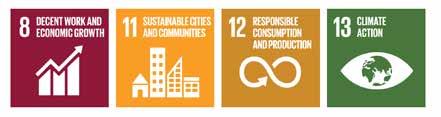
This conference was aligned with the following UN SDGs:

Sustainability was core to the event planning and here are some of the environmental highlights:
▪ Public engagement: The Congress included a Public Engagement Programme with events, interactive workshops, and outreach initiatives. Events like the City Climate Walk and Mapping Ireland through Time engaged almost 300 members of the public, adding societal impact to the Congress. A core goal was to bring the Congress beyond the university campus to generate wider educational benefits
▪ Carbon mitigation: The conference was hosted in DCU which is part of the Dublin City Council de-carbonising zone. The event raised funds through an optional environmental levy for delegates, which
will support carbon insetting initiatives on university campuses in Ireland as a legacy project.
▪ Hybrid event: An innovative hybrid event was co-hosted with the Royal Geographical Society in London.
▪ Water and Waste Management: Delegates were encouraged to bring their own water bottles, and water refill stations were provided, eliminating the use of single-use plastics. Managing food waste by requiring pre-notification if delegates did not require lunch resulted in minimal food waste.
Read the full case study
When: September 2022
Where: Munster Technological University, Cork
Theme: ‘What matters now to the global tourist?’
Objective: Address challenges facing the tourism and leisure industries
This conference was aligned with the following UN SDGs:
The Atlas International Tourism Conference had a significant environmental impact and below are some of the key highlights and outcomes:
▪ The newly extended reach of ATLAS as an advocate worldwide for sustainability was a major step forward, particularly driven by the presence of so many new members coming together in Cork.
▪ Responsible consumption was practiced, including the eradication of single use plastics, with food waste measures put in place such as preordered food and the sourcing of locally produced and sustainably accredited food where possible.
▪ A ‘Leave No Waste’ slogan was communicated with delegates and other stakeholders.
▪ A conference partnership with Cork city bikes was forged, with bicycles provided at The Kingsley Hotel.
▪ Diversity, inclusion and equity was a focus area and as a direct output of the conference, a new ‘Inclusive Access to Education’ programme was developed.
▪ The conference organisers kept the local community at the core of the conference and aligned their programme to Cork City’s SDGs, exemplifying how SDGs set at a regional level can filter to create sustainable business events.
Read the full case study

Section 4: What Fáilte Ireland can offer
Fáilte Ireland offers a comprehensive suite of supports to help event organisers deliver impactful, environmentally responsible events that align with global sustainability standards.
Whether bidding for an international conference, designing lowcarbon delegate experiences, or measuring and communicating environmental impact, event organisers can access a range of tools and programmes for guidance.
From destination subvention to carbon footprint tracking and tailored climate action planning, these supports empower organisers to create events that leave a meaningful legacyfor attendees, communities, and the environment.
Section 4: What Fáilte Ireland can offer
Fáilte Ireland offers a range of tailored destination supports for international business events to help organisers deliver exceptional events. Financial assistance during the bidding process enables event organisers to create and present winning bid documents and presentations. Site inspection funding is also available to support costs associated with travel and accommodation for key decision makers to attend site inspections.
In addition, Fáilte Ireland has introduced a new Destination Subvention Framework, designed to incentivise conferences that generate positive economic, social, and environmental impacts. Aligned with Ireland business events strategy, Business Events 2030, this funding model encourages event organisers to go beyond traditional metrics and deliver conferences that create a positive impact on communities and support sustainability.
Conference organisers have the potential to unlock up to €30 per international delegate for conferences that;
Align with key priority sectors and themes
Promote regionality, seasonality and extended duration
Demonstrate clear potential for leaving a lasting legacy
Show strong commitment to sustainability
Engage and support local suppliers.
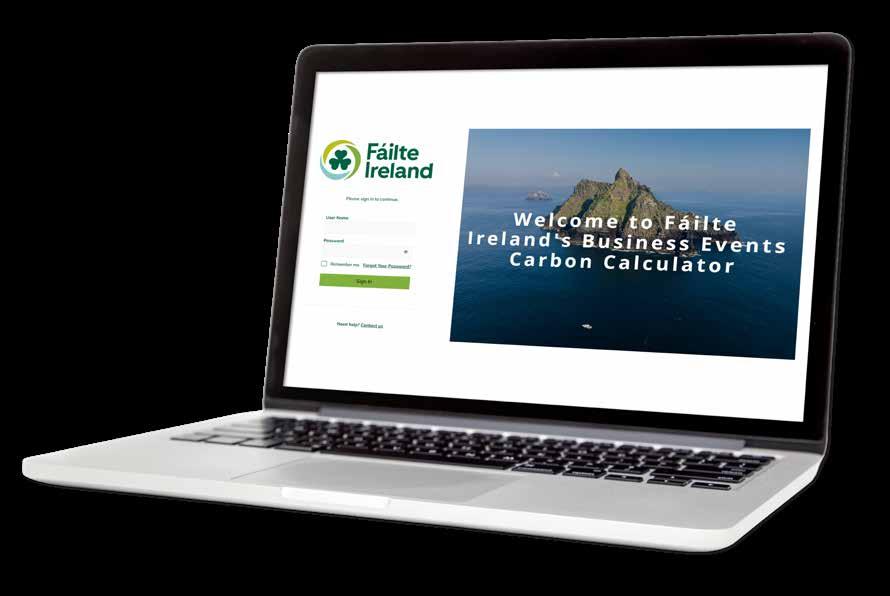
In a world of rising expectations, measuring an event’s environmental impact is a strategic and reputational essential. That is why Fáilte Ireland has created the Business Events Carbon Calculator - a practical event-specific tool that helps event organisers understand, reduce, and report on their carbon footprint.
Whether bidding, planning, or reporting on a business event in Ireland, this tool provides a credible, internationally-aligned foundation for environmental accountability.
Created in partnership with EarthCheck and aligned with the Greenhouse Gas Protocol, the calculator ensures that the data and approach is consistent with internationally recognised standards.
What does the Business Events Carbon Calculator track?
Delegate Travel
Distance travelled, and type of transport used
Meals and Catering
Menu design and number of meals served
Venue Energy Use
Energy performance of the main event venue
Accommodation
Emissions associated with overnight stays for delegates
By analysing these areas, organisers can identify opportunities to reduce emissions, operational costs and enhance the sustainability of their events.
Fáilte Ireland’s Climate Action Programme provides hands-on support and investment advice for tourism businesses aiming to become more sustainable.
As part of the Climate Action Programme, businesses receive an expert Advisor, who is fully subsidised by Fáilte Ireland for three years. This dedicated Advisor will mentor businesses on a one-to-one basis and help to develop a sustainability action plan that is tailored to each unique need and goal.
Cut costs through reduced consumption and improved efficiency
Get ongoing expert Advisor support and resources
Boost your brand’s image and reputation
Lower emissions to meet national targets
Upskill your team with bespoke training
Get help navigating the complete already for your business
For event professionals, enrolling in the programme offers a distinct strategic advantage. It will help businesses navigate this complex area, lower emissions and increase competitiveness.