How can you support children during separation or divorce?
Mercy on wheels arrives at Gresford Catherine Keenan’s building confidence, one story at a time
VIETNAM EXPLORER
$2,625 15 Day Tour Dep. May 13 & Oct 19
Flying Singapore Airlines into Saigon and out of Hanoi plus 2 flights within Vietnam. 4 nights Saigon, 4 nights Hanoi, 4 nights Hoi An, 1 night Halong Bay with cruise.
INSIDE VIETNAM
$3,985 20 Day Tour Dep. June 7 & Nov 16
Flying Singapore Airlines into Saigon and out of Hanoi. 18 day coach & air tour of Vietnam. For this tour there is no extra charge for travellers requiring a single room.
VIETNAM OVERLAND
$3,815 3 Week Tour Dep. July 25 & Nov 7
Flying Singapore Airlines into Saigon and out of Hanoi. 20 day tour of the coast of Vietnam.
ITALY
$6,985 18 Day Tour Dep. June 3
Flying Cathay Pacific into Rome. 14 day first class tour of Italy visiting Rome, Pisa, Florence, Milan, Lugarno, Venice, Assisi, Sorrento, the Isle of Caprice, & the Italian Lakes. 2 day Hong Kong stopover.
SWITZERLAND
$4,995 13 Day Tour Dep. July 15
Flying Qatar Airways into Zurich. 11 day tour of Switzerland. Tipping included. Twin share available for anyone requiring it.
THAILAND MOUNTAIN & BEACHES
$3,275 2 Week Tour Dep. Aug 3
Flying Thai into Bangkok plus 3 flights within Thailand. Visits Bangkok, Chiang Rai, Chiang Mai & Phuket. First class accommodation.
U.S.A. NATIONAL PARKS
$4,925 18 Day Tour Dep. July 19
Flying United into Denver & out of Las Vegas. Visits Deadwood, Yellowstone, Grand Teton, BryceCanyon, Zion & Grand Canyon national parks and Las Vegas.
SCANDINAVIA & THE ARCTIC CIRCLE
$7,265 22 Day Tour Dep. Aug 18
Flying Thai into Stockholm & out of Oslo. 17 day tour of Finland, Lapland, the Arctic Circle & Norway. 3 days Thailand at a beachfront resort hotel.
U.S.A. & CANADA
$6,995 4 Week Tour Dep. Sep. 2.
Flying United into Los Angeles & out of New York. 12 day tour of western U.S.A. & 15 day tour of N.E. U.S.A. & Canada.
GREECE & THE GREEK ISLANDS
$5,785 18 Day Tour Dep. Oct 7
Flying Emirates into Athens. 11 day Greece tour, 4 day cruise of the Greek Islands of Mykonos, Patmos, Rhodes, Crete & Santorini. 2 nights Dubai stopover.
EASTERN TURKEY & THE BLACK SEA
$5,985 18 Day Tour Dep. Oct 5
Flying Singapore Airlines into Istanbul, plus a flight within Turkey. 15 day tour of eastern Turkey & the Black Sea coast. Optional extension to West Turkey 7 Gallipoli. Tipping included.
VIETNAM LUXURY TOUR
$4,999 20 Day Tour Dep. Oct 10
Flying Singapore Airlines into Saigon & out of Hanoi, plus 2 flights within Vietnam. 19 day tour of the coast of Vietnam plus the Sapa hill tribe area. Superb 4-5 star accommodation. Tipping included.
NEW ZEALAND GARDEN TOUR & FESTIVAL
$4,139 11 Day Tour Dep. Oct 26
Flying Air N.Z. into Auckland & out of Wellington. Visits 7 outstanding gardens & Taranaki Garden Festival. Tour lead by a gardening expert.
SRI LANKA (CEYLON)
$4,385 16 Day Tour Dep. Sep 19
Flying Singapore Airlines into Colombo. 14 day coach rail tour of Sri Lanka, visiting most places of interest in this beautiful country.
CHINA HIGHLIGHTS
$3,290 13 Day Tour Dep. Oct 13
Flying China Eastern into Shanghai & out of Beijing plus 2 flights within China. 12 day China tour visiting Shanghai, Xian, Hangzhou, Suzhou & Beijing. No single room supplement for solo travellers.
WEST TURKEY
$5,490 18 Day Tour Dep. Oct 19
Flying Singapore Airlines into Istanbul. 15 day tour of Turkey including Gallipoli & Ephesus. 1 day Singapore. Tipping included.
EUROPE IN DEPTH
$8,795 34 Day Tour Dep. Nov 2
Flying Cathay Pacific into London & out of Paris. 31 day European tour visiting 11 countries. 2 nights Hong Kong. Tipping included.
BRITISH PALACES, CASTLES & GARDENS TOUR
$8,675 17 Day Tour Dep. Sep 20
Flying Qatar Airways (world’s best airline 2015) into London & out of Edinburgh. Inside visits to Buckingham, Hampton Court, Edinburgh & Holyrood Palaces and Windsor, Cardiff, Kenilworth & Ainwick Castles & the Royal Yacht Brittania, plus many historical sites & buildings with all entrance fees & tips payed.
CENTRAL ASIA
$9,275 26 Day Tour Dep. Oct 6.
Flying Asiana Airlines into Almaty & out of Tashkent plus 4 flights within central Asia. 22 day land, air & high speed train tour of Kazakhstan, Kyrgystan, Uzbekistan, Tajikistan & Turkmenistan. Korea stopovers. Tips included.
SOUTH AMERICA
$10,995 22 Day Tour Dep. Oct 9
Flying Qantas & Lan Airways into Santiago plus 7 flights within South America. 20 day tour of Chile, Peru, Bplivia, Brazil & Argentina by plane, coach, rail & boat. Optional extensions to Galapagos Islands and to the Amazon.
SPAIN, PORTUGAL & MOROCCO
$5,195 20 Day Tour Dep. Oct 11
Flying Cathay Pacific into Madrid. 17 day tour of Spain, Portugal & Morocco. 1 day Hong Kong stopover.
AROUND TAIWAN
$3,345 9 Day Tour Dep. Nov 2
Flying Cathay Pacific into Taipei. 8 day Taiwan tour including spectacular Taroka Gorge. Tipping included. No single room supplement for solo travellers.
JAPAN AUTUMN LEAVES
$6,195 13 Day Tour Dep. Nov 8
Flying Cathay Pacific into Tokyo & out of Osaka. 12 day Japan tour. Nearly all meals and tips included.
INDIA
$5,265 19 Day Tour Dep. Nov 17
Flying Singapore Airlines into Delhi and out of Bombay. 16 day coach, air & boat tour of India including the Taj Mahal. 2 day Singapore stopover. Tips included.
LAOS, NORTH VIETNAM & THE GOLDEN TRIANGLE
$4,590 24 Day Tour Dep. Sep 1
Flying Thai into Chiang Mai & out of Hanoi. 5 day tour of Golden Triangle, 7 day Laos tour including 2 days cruising the Mekong River, 10 day North Vietnam tour including Halong Bay cruise.
MEXICO & CUBA
$8,975 18 Day Tour Dep. Nov 7
Flying Qantas, American Airlines & Aeromexico into Dallas & out of Havana. 8 day Mexico tour, 7 day Cuba tour, Dallas stopover. Tips included
THAILAND SHOPPING TOUR
$2,495 10 Day Tour Dep. Nov 30
Flying Thai into Bangkok. 5 nights Bangkok, 3 nights Hua Hin in centrally located hotels. Tips included. Twin share accommodation guaranteed for anyone requiring it.
VIETNAM HIGHLIGHTS
$2,895 11 Day Tour Dep. Jan 16
Flying Singapore Airlines into Saigon & out of Hanoi plus 2 flights within Vietnam. Optional extension to Angkor Wat.
The prices listed mainly include return air fares from Sydney, Melbourne & Brisbane, airport taxes & fuel levies, good twin share accom., many meals, all transfers, Australian tour leader & local tour guides.
Music
What’s happening in our cutting edge classrooms? 5
awards recognise community efforts 6
Creating stories that are out of this world 8
Life with a purpose/Pints with a Purpose 11
exhilarating experience of Mercy 12
Mercy! Merci! 14
We’re here to create the good news stories 17
the five shilling donation 18
Is there room for a child in your home? 19
Just because change is normal, doesn’t mean it’s easy 20
It’s my story and my journey
since the last edition I have been particularly reminded of how Aurora can have an impact in the community – in simple ways like bringing old, but valuable, newspapers to light – and in weightier matters, like telling stories that are hard to hear and harder to live.
the honesty of the woman who was a victim of domestic violence struck a chord with a number of readers who contacted me, and the cover story, advocating mercy in our attitudes and actions towards refugees and asylum seekers, was well received.
John sandy, whose story was featured, shared gratifying feedback. He wrote, “Lots of people ring me from the community about my story. People from schools, organisations, the shopping centres, the Nuns of st Joseph, the sisters of Mercy, colleagues and lots of friends. the clients are all excited to see and read my stories. Honestly I’ve become so popular in the community, and that’s given me more sense of
Contact Aurora
Next deadline 7 April 2016
Aurora enquiries should be addressed to t he e ditor tracey e dstein
e aurora@mn.catholic.org.au
P o Box 756 Newcastle 2300 P 4979 1288 | F 4979 1119
Subscribe editor@mn.catholic.org.au
Advertising Fairfax Media Phone 4979 5259
value and belonging. I am so proud because it’s my story and my journey and who I am.”
this month I share my encounter with Catherine Keenan, australian Local Hero 2016 and the woman who gave birth to the sydney story Factory. Her philosophy, and that of Aurora , coincide: stories matter, and giving people opportunities to tell their story matters.
I am delighted to report that several readers have donated copies of The Sentinel , the newspaper of the diocese from 1931-1968, following the request in the February edition. While we are yet to unearth two missing copies, october 1964 and May 1968, the diocesan archives have been augmented. Further donations are welcome!
Laurie Bowman, John Harrison and Mary Ferry each contacted me regarding the photo of Hamilton Marist Brothers students marching on st Patrick’s Day in Maitland. accompanying the students is Br anselm saunders fms, uncle
Aurora online
Good news! you can still catch up with Aurora online, via MNNews.today.
mnnews.today/aurora-magazine
www.facebook.com/mnnewstoday
@mnnewstoday
@mnnewstoday
of Mary Ferry. It seems that at least some of the students belong to the Leaving Certificate class of 1959.
If you have been reminded of photos or artefacts you have that relate to the diocesan story of the last 150 years, you may wish to offer them (on loan) for the ‘pop up’ museum which will appear in Maitland in July. For details, please contact the editor.
Do you enjoy reading? Do you have an interest in the broad areas of spirituality and religion? From time to time, Aurora needs book reviewers. If you are interested, please contact the editor.
May the new life that the season of easter promises touch your life.
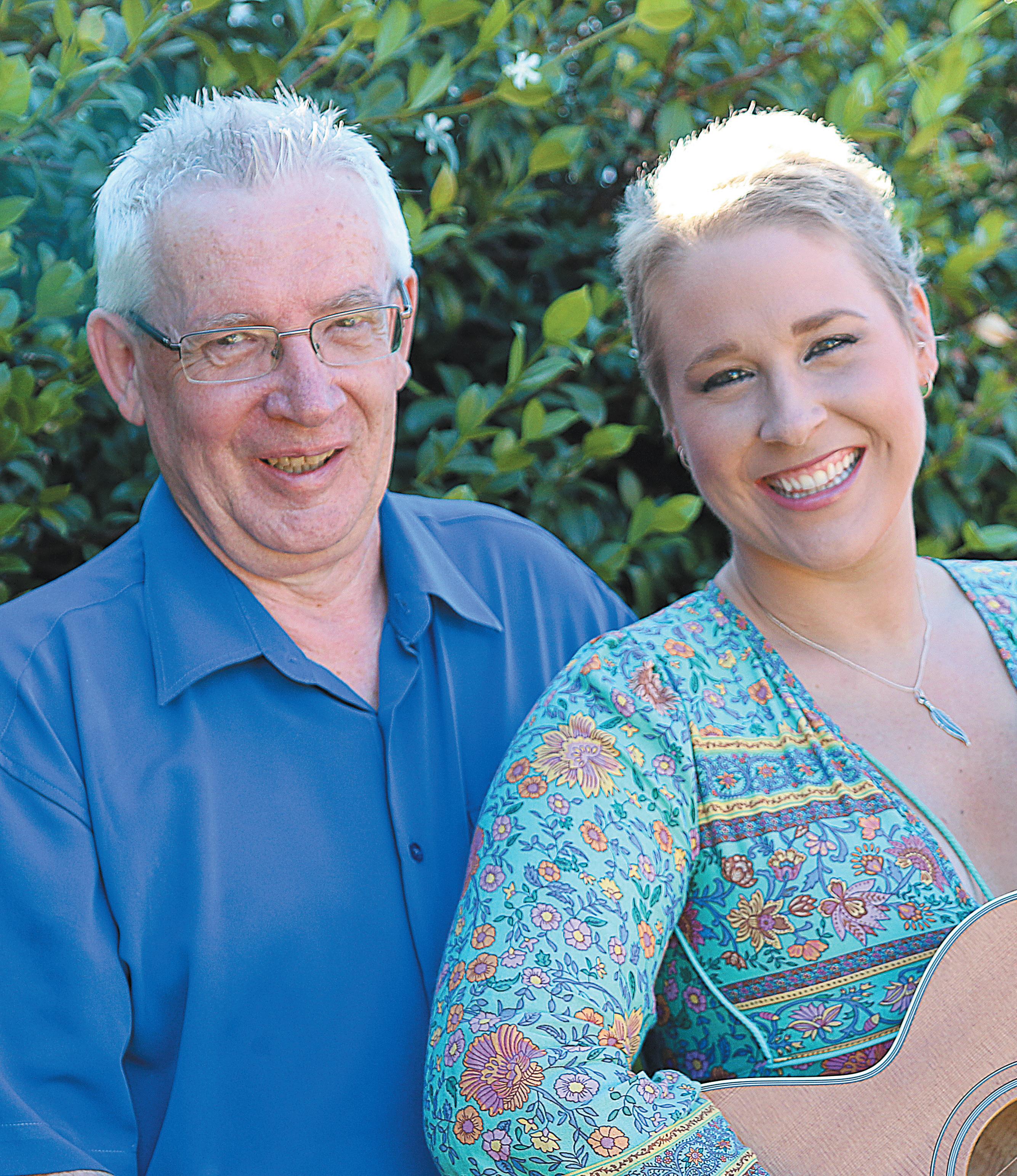
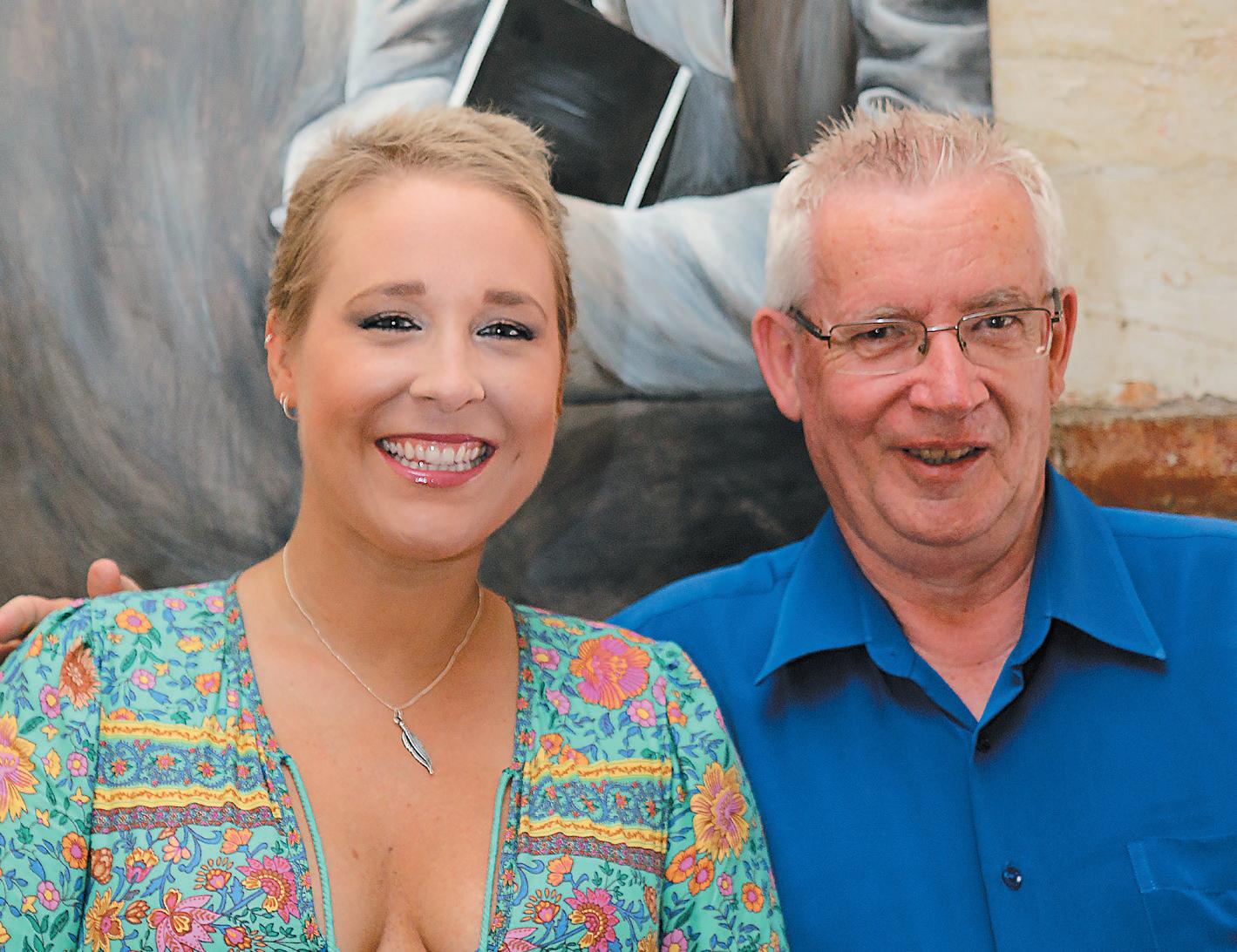
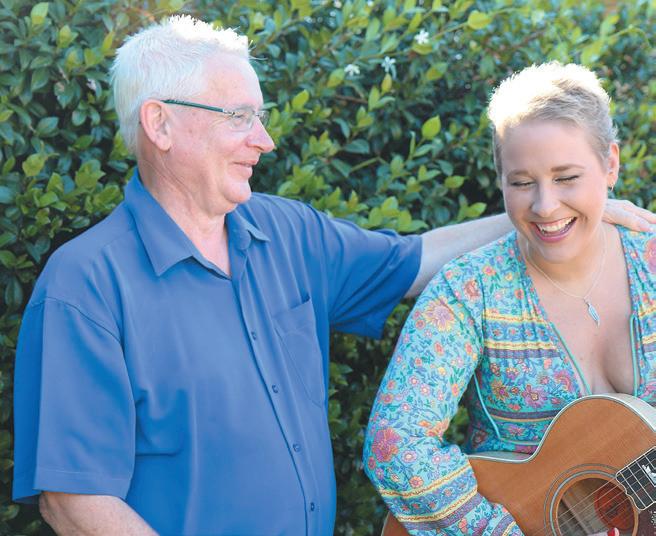
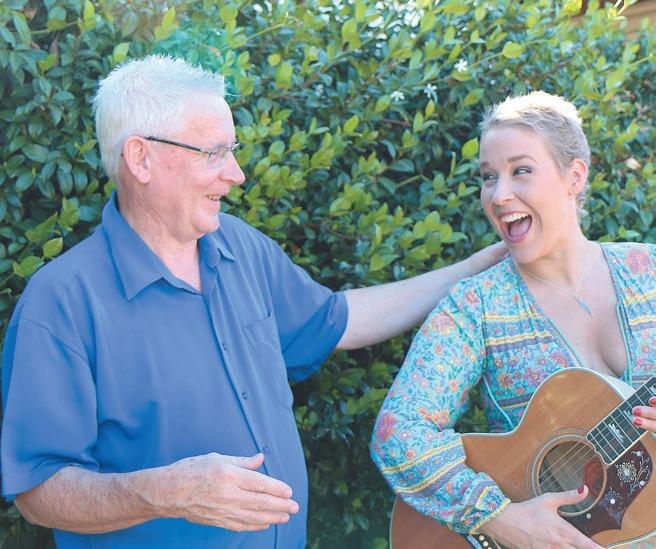
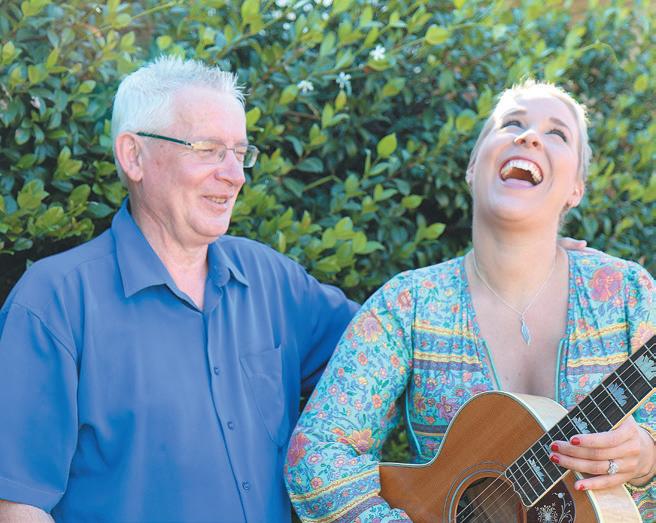
‘encyclopaedia’ steve Britt and Golden Guitarwinning daughter Catherine are singing from the same songbook in so many ways. see story page 10. Photograph courtesy of Geraldine Williams.
He would not lose his ‘soul’, even in the face of death.
Dying to live the Good News
I hope you had a happy e aster celebration in your family and community, and that it was a time of grace as well as joy, especially in this year of Mercy, as we open ourselves to new encounters with the r isen Christ, the ‘face’ of the loving and merciful Father.
t he days around e aster make up the greatest Christian festival. t hey also point us, indeed almost drive us, into consideration of the most profound insights that our faith offers about human experience, because e aster is all about how we see life and what we are to make of death.
I have sometimes begun my Good Friday homily with the short statement, “Jesus did not want to die.” It is surprising how often believers find that a novel thought, how often we lapse into the ancient heresy of thinking of Jesus as the s on of God walking around pretending to be like us. But no, he was a young man of thirty-something. He was deeply engaged in life: travelling, teaching, healing, sharing meals all over the place, delighting in company and, at times, in solitude. We see how he observed nature and human foibles, watching the lilies of the field, the habits of farmers, the changes of the seasons, weaving these bits of everyday life into his teaching as parables. a nd, of course, he had a great sense of having a mission to complete. a nyway, we hear it from him in the garden, “Father, if it
be possible, let this cup pass me by.” He did not want to die. His passionate way of living reminds us that just being alive is a great gift of God, and that it entails many other great gifts like friends and home, the beauty of nature, the experience of love and kindness. Death is a massive loss of good things. Death, especially untimely death, is a personal disaster.
a nd yet, Jesus was prepared to die. He said to his disciples once, “Do not fear those who kill the body but cannot kill the soul.” t here is more to being alive, then, than just breathing. t he word ‘soul’ has a quaint ring to it today, but we still realise that there is something to ‘me’ that makes me the person I am, some ‘self’ that I can lose, can betray, can sell short. Jesus, when the time came, retained his integrity, which is pretty close to the meaning of ‘soul’. He would not deny his life’s work, recant his teaching, back down from his truth. He didn’t want to die, but he believed there really was ‘a fate worse than death’. He would not betray his God, his own beliefs, the truth he had lived by. He would not lose his ‘soul’, even in the face of death.
a nd, of course, the message of e aster Day itself is that Jesus was right. God raised him from death. We are not just fragile bodies subject to destruction by violence or disease or the sheer wearing out of our flesh and bones. We are more than that. a nd that
‘more’, that ‘me’ that is mind and heart and spirit and person, is in the hands of God, whether my body lives or dies. Not everyone can believe this. Not everyone believed it in Jesus’ time, either. But it is the message of e aster, the message passed on by those who, to their great surprise, encountered Jesus again after his death.
We live at a time when people question what makes life worth living. We tend to undervalue the things that money can’t buy and to have exaggerated hopes that the things we can buy will one day deliver happiness. We go to extraordinary lengths to make our bodies last a few years or months longer, but we won’t think or talk about death itself, almost superstitiously believing that if we ignore it, it will go away. yet we are still faced with the ancient human questions: What gives meaning to life? What is a good life? What might be worth dying for? What is death, and is it all there is in the end? Christians believe that the life, death and rising of Jesus are highly significant to our deepest human ponderings. We call his history simply ‘the Good News’.
What’s happening in our cutting edge classrooms? Education
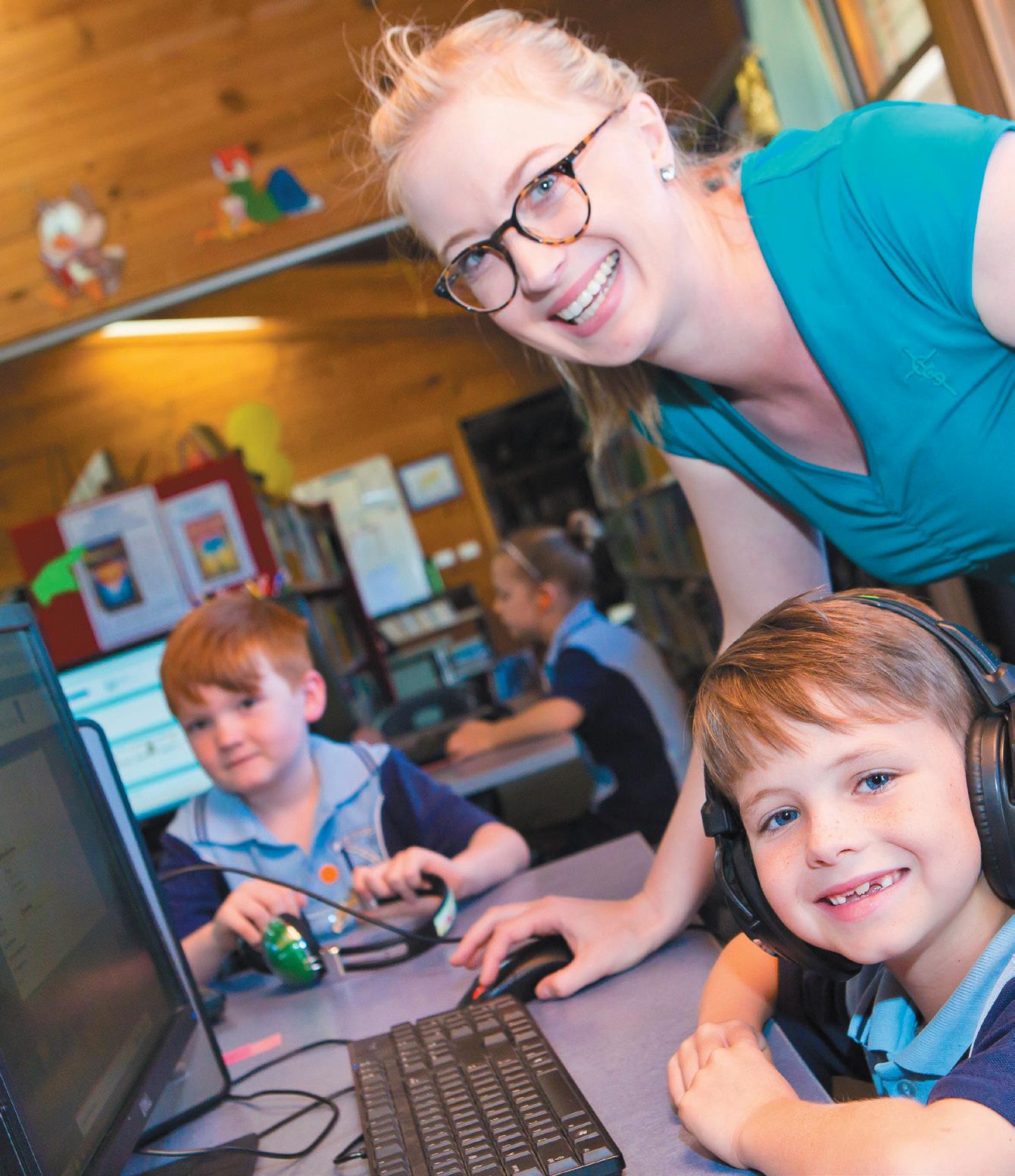
Learning about technology
t he current generation of students was born into a highly technological world. t hese students occupy, navigate and communicate with a society which is both technology-rich and information-rich. Families increasingly use technology for learning, leisure and communication. technologies are cheaper, more mobile and able to be used by learners of all ages. o ur students’ worlds are increasingly shaped by their abilities to acquire, communicate, access and manipulate information using technology, and respond creatively to emerging technologies. e ducation systems have responded to these needs, acknowledging that IC t (Information and Communications technologies) capabilities are essential for participation in today’s world.
t he Board of s tudies, teaching and e ducational s tandards (B ostes ) N s W, whose role includes the development of syllabuses for Kindergarten to year 12, has included “Integrating IC t Capability” in its new syllabus documents¹. t hey recognise the fact that students do not just learn how to use technology simply because they have access to it. In the N s W s yllabus documents, B ostes discusses the idea that the integration of IC t in teaching, learning and assessment in N s W syllabuses can lead to enhanced outcomes for students and assist in the development of the knowledge, skills, understanding, attitudes and behaviours needed to assist students to live and work successfully. teachers are asked to plan for a variety of opportunities where students are encouraged to develop analytical, organisational and problem-solving skills. Learning with technology
In developing its new curriculum, the a ustralian Curriculum a ssessment and r eporting a uthority sought to build a “worldclass curriculum for the 21st century” where “students need to develop a set of skills,
behaviours and dispositions, or general capabilities that apply across subject-based content and equip them to be lifelong learners able to operate with confidence in a complex, information-rich, globalised world”². a n important consideration in using technology in the classroom is how it can reshape not only what is learned, but how it is learned. John Hattie’s concept of ‘expert teachers’ paints them as those who “see the surface and the deeper understandings of the subjects that they teach, as well as their beliefs about how to teach and understand when students are learning and have learned the subject”³. In the technologically rich classrooms of 2016, this means considering the impact that technology can have on teaching and learning.
Following are some examples of how technology is changing the way teachers teach and students learn in the classroom.
Blended learning
Blended learning involves the delivery of content and teaching and learning activities in the physical classroom and in the digital learning spaces. For many years, teacher and students have been blending learning, most recently with online tools such as o neNote which allows for anywhere, anytime, anyhow learning. teacher Liz s tokes of s t Joseph’s Lochinvar notes that most key learning areas (KL a s) have embraced technology due to its ability to provide, eg, instantaneous feedback and the capacity for students to collaborate on projects. a cross the road at s t Patrick’s, it’s a similar story where Dennis Nolan is part of a primary school blended learning project using o neNote in year 4. He notes that the students are “motivated, engaged, focused and enthusiastic”.
Flipped learning
Flipped learning is a form of blended technology, in which the instructional components of the lesson are ‘flipped’, while the lesson time becomes focused on classroom activities. t he flipped component can be delivered at home or in class, with the latter solving the problem of teachers having to be in two places at once. t he flipped component is usually delivered through the use of online video and other learning technologies. a s Cherie Borger of s t Pius X High s chool, a damstown, indicates, she wanted a “more interactive class environment that encourages students to solve problems and be more creative”. In Cherie’s secondary classroom, ‘flipping’ facilitated this by moving the content out of the normal classroom space and into the homework space, while for others it is about recording content for students to watch while the teacher is focused on helping another group of students.
Coding, programming and computational thinking
Coding is a fairly recent term to refer to those activities long associated with computer programming. u nderpinning any form of coding or programming is computational thinking or a method of solving problems or designing systems with computers. In addition to the kind of programming being done in specialist H s C courses, several schools are involved in activities such as the international Hour of Code. Further, students at s t Mary’s, Gateshead, and s t Joseph’s, a berdeen, recently received a grant for a Quberider. t he schools will program a scientific experiment that will be loaded aboard a rocket to be launched by N asa later
in the year. s tudents from many schools, such as s t Catherine’s, s ingleton, and s t Pius X, a damstown, are programming with robotics, using s pheros bots. Meanwhile, at s t Joseph’s, Merewether, kindergarten students are learning to count with basic programming of Beetlebots.
Maker movement
t his is a term used to describe a technological and creative movement using new tools and technologies like 3D printing, robotics, microprocessors, wearable technology, smart materials and programming, alongside more traditional tools from sewing machines to jigsaws used to tinker, make, engineer and invent. s tudents often go through a design process making ‘things’ for a specific purpose and audience. Many schools are designing maker spaces where students can learn to design and create objects and items. s t Mary’s Gateshead has a strong maker movement with everything from Makey Makeys to 3D printing to Little Bits.
Gamification
t he term ‘gamification’ refers to applying aspects of game-based play to classroom teaching and learning. a n example of a type of gamification – game-based learning – has been the use of Minecraft in a range of subject areas. a t s t t herese’s, New Lambton, Lynette Barker notes how Minecraft impacts on learning. “ t hey’re excited, they ask questions and most importantly, they collaborate and help each other to solve problems.” s imilar excitement can be found at our newest school, s t a loysius, Chisholm. a cross our diocese, schools are both learning about technology and learning with technology. With it come opportunities for students and teachers alike.
Shannon Hall and Andrew Cornwall are Education Officers (Learning Technology) at the Catholic Schools Office.
two educators, shannon Hall and andrew Cornwall, offer a window into the variety of teaching and learning approaches employed in contemporary classrooms.
By EMMA BLACKFORD
s ix young people, including five from Catholic schools in the Diocese of MaitlandNewcastle, were recognised recently at the Bishop’s Catholic youth Mass and Catholic s chools Week Mass with a Bishop’s award. t he awards, presented in collaboration with, and following an initiative by, the Federation of Parents & Friends a ssociation, seek to recognise publicly the efforts of students and young people within the diocese who have contributed to the community through their parish, church group or church agency. t his may include involvement in groups or agencies such as Caritas, youth Ministries, s t Vincent de Paul s ociety, Mini Vinnies or similar groups.
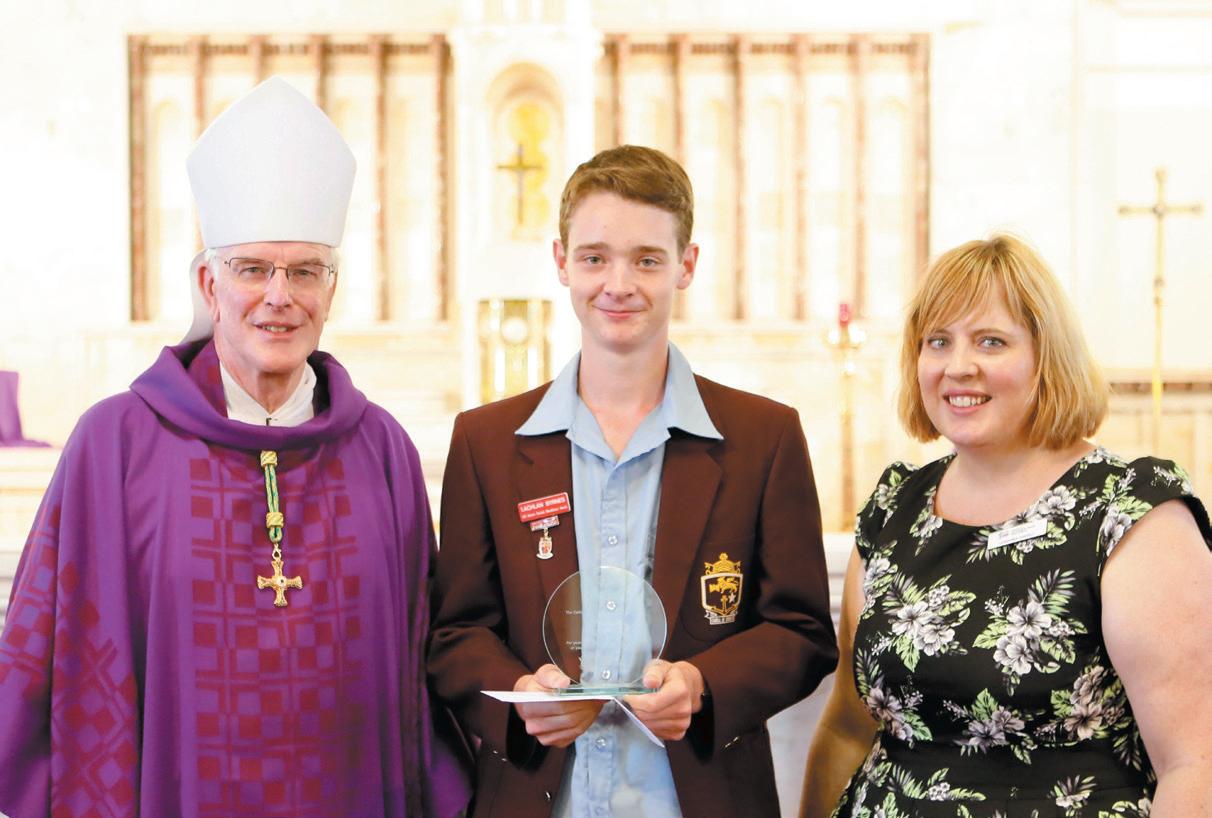
Lachlan Byrnes, from s t Pius X, a damstown (pictured), was recognised for his
Bishop’s Awards recognise community efforts of young Catholics
outstanding contribution to the life of his parish and school community. Lachlan developed a program to support the welcoming and training of altar servers including the organisation of rosters and training materials, and is developing an app to enhance training further. Lachlan has also supported the development of initiatives to encourage involvement of young people in his parish. He is a member of his school’s Vincent de Paul team and a recipient of the Diamond award at his school for community and parish work.
Lachlan joined four other students receiving a Catholic s chools s tudent’s award, including r ebekah Leslie ( s t Paul’s, Booragul), e lijah Doherty ( s t Clare’s, taree), Clare Melville ( s PX, a damstown) and Johanna s oo ( s an Clemente, Mayfield).
a new category, the Catholic young People Bishop’s award, was open to young people from year 12 up to age 25. s amantha Hill received this award for her involvement in the youth movement with many parishes
in the Chisholm (Maitland) region. s am was also recognised for her work with the Diocesan Council for youth Ministry and
Maitland - Newcastle contingent. Congratulations to all! For more information on each of the award
Prepay your funeral with Australia’s leading funeral plan.
It makes sense to prepay a funeral with Australia’s leading prepaid funeral plan. Protect loved ones financially by paying a funeral in today’s prices. Speak to John Mascord from our Belmont location to learn more about how being involved in your own goodbye will benefit you and your family.
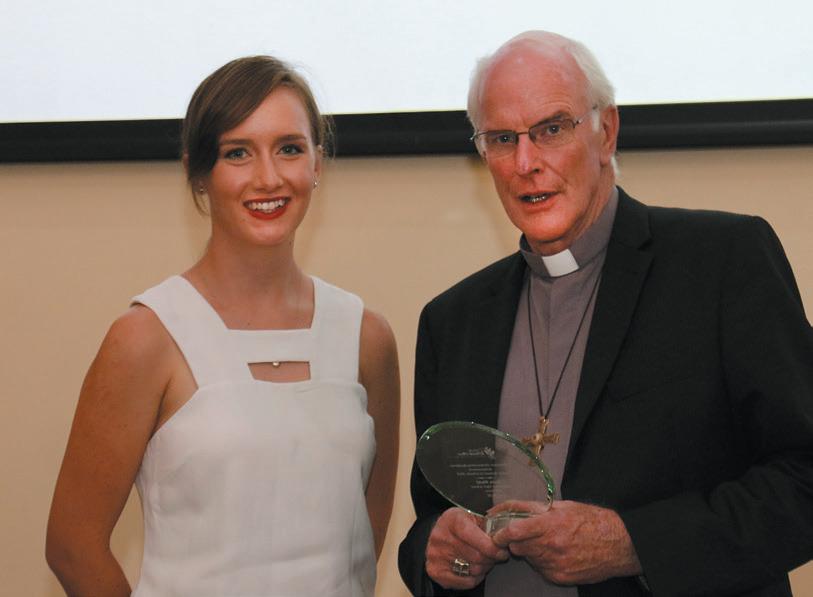
Bishop Bill, Lachlan Byrnes and President of the Federation of Parents and Friends, Giavanna angeli.
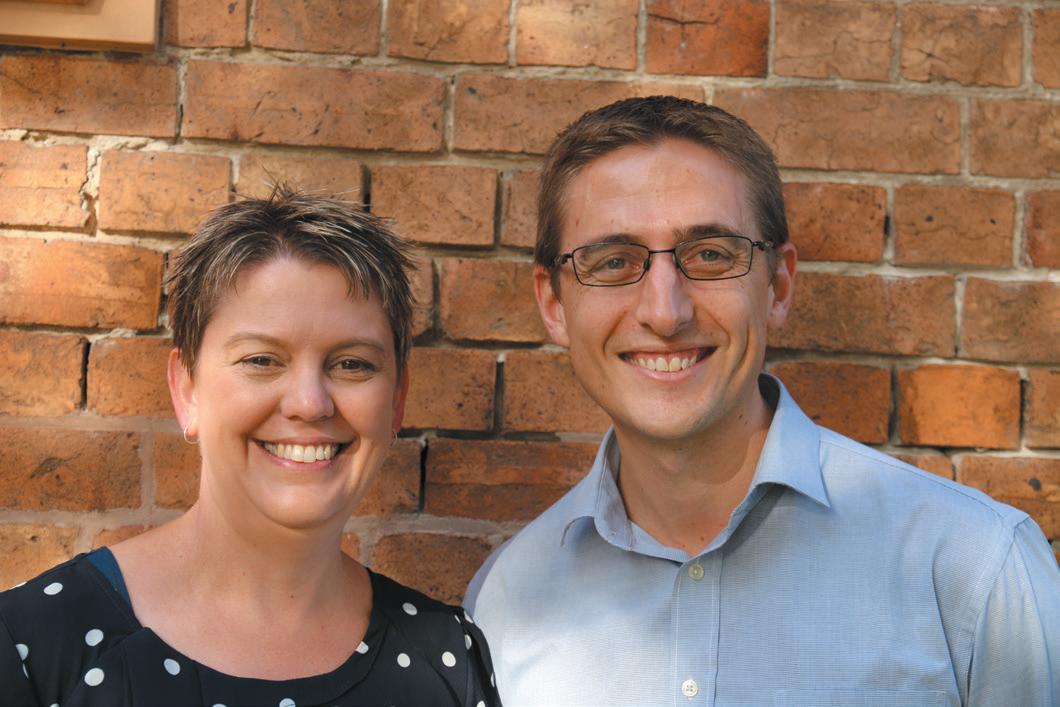
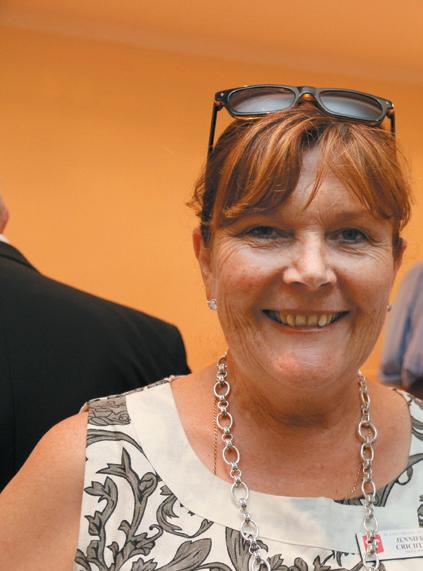
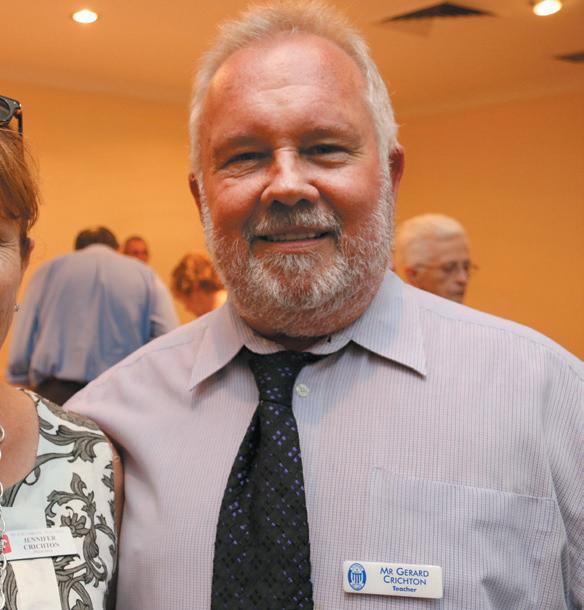
Jenninfer and Gerard Crichton.
Ceremony of Recognition acknowledges teaching staff Katrina Dawson
In an era where career change is common, it’s particularly special to acknowledge and recognise employers who have dedicated their lives to a particular field such as teaching.
t he Catholic s chools o ffice in the Diocese of Maitland-Newcastle each year recognises 25 years of service to education at the Called to s erve Mass.
t he staff of Catholic schools, the Catholic s chools o ffice and members of the Catholic s chools Council pledge “to serve the mission of God in the
ministry of Catholic school education”.
t his year a Ceremony of r ecognition for staff who have contributed 35 or more years of service to Catholic schools was hosted by Bishop Bill Wright and Director of s chools, r ay Collins. t he ceremony was a wonderful occasion for teaching staff to come together, reminisce and most importantly, be publicly acknowledged for the contribution this group of teachers and teaching staff has made to education and to generations of families.
r ay Collins said, “ t he acknowledgement of the recipients of 35+ years of service recognised the considerable contribution these staff members have made to Catholic schools in the Diocese of MaitlandNewcastle and in other dioceses. s uch service will have witnessed many changes in the nature of schools and the requirements of teachers. t he staff members will have impacted on the lives of thousands of students in that time and we appreciate not only the length of this service but the individual commitment it requires.”
Foundation scholarship
Katrina Dawson was a highly-respected barrister and a loving mum and wife, but is remembered by most australians as one of three people killed in the Lindt Café siege of December 2014.
to honour Katrina’s memory and ensure something positive emerged from tragedy, the Katrina Dawson Foundation was established by her family and former Governor-General, the Honourable Dame Quentin Bryce aD, CVo the foundation is about “finding, funding and mentoring inspiring young women” and, through a scholarship program, aims to remove barriers and create opportunities for exceptional young women to fulfil their potential. this year, one of the recipients of the first Katrina Dawson Foundation scholarships is the current Dux of st Joseph’s High school aberdeen, Kate Field.
In the 2015 HsC, Kate received an atar
in March with Bishop Bill Wright). she was chairperson of st Joseph’s student representative Council, a National ambassador for ozGreen and Lions youth of the year in 2014 and 2015. this year, Kate plans to use her scholarship to study at the Women’s College and the university of sydney to help her complete a Bachelor of architecture & environment which, she says, will combine her “passion for the environment with my personal ambition to reinvent urban design in australia, developing more sustainable and eco-friendly cityscapes”.
Aurora looks forward to following Kate’s journey.
Crichton.
By TRACEy EDSTEin
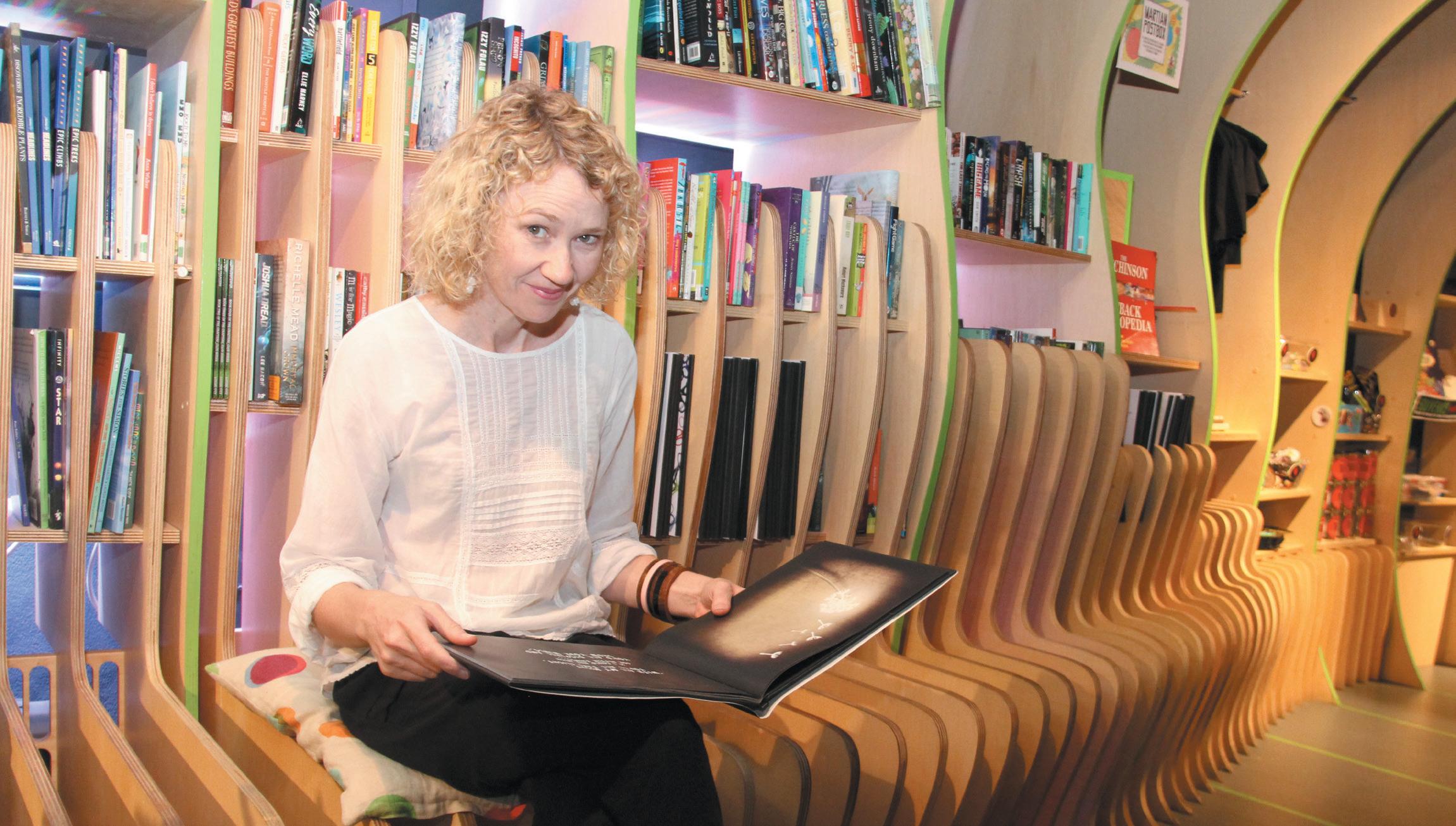
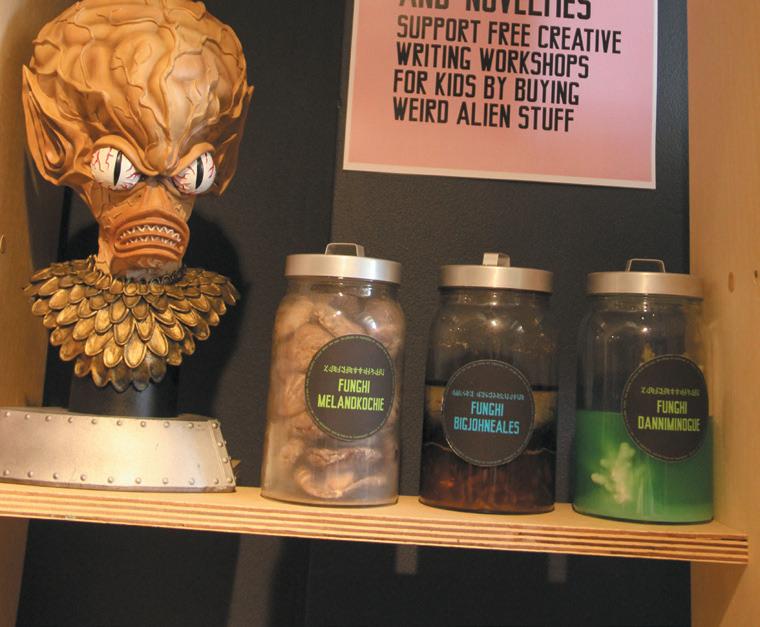
you enter the story Factory at redfern through the portal of the Martian embassy; “only earth children and committed creative brains allowed past this point.” If you qualify, you enter an enticing world of flying saucer repair kits and birds’ nests, manual typewriters and weird alien stuff – and books, books and more books!
the story Factory owes its origin to a renowned teD talk by novelist Dave eggers (see below) about 826 Valencia, a writing centre for young people in san Francisco founded in 2002. Catherine recalls, “I thought it was fantastic − I sent it to my mate t im and we started thinking about whether there was anything like this in sydney. there wasn’t, so we started asking people what they thought. We went to san Francisco, adapted the model of 826 Valencia and brought it back here.”
Hence the story Factory was born. since that time, the centre has operated according to its mission. every day, we set out to:
run innovative and fun creative writing programs, with expert teaching and one-onone tutoring.
encourage young people to communicate ideas, giving them more confidence in their skills, themselves and each other.
Create and sustain a vital contribution to the community, by respecting and giving voice to the stories around us.
the focus of a small number of staff and an enormous number of volunteers (1200 and counting) is young people from marginalised backgrounds: foster children, children of refugees, indigenous young people, children in institutional care.
“We find we get a lot of kids here who are not
Creating stories that are out of this world
considered to be good at writing, and they don’t like writing. then they come here and all of a sudden, it’s − oh, this is much more fun than I thought it was and it turns out that I’m a much better writer than I thought I was”, says Catherine.
she recalls her own classroom experience. “I always enjoyed writing and I had a couple of teachers who identified that as something I was good at and that made a big difference to me.
“I always read and I always wrote. I read indiscriminately. Not ‘capital L’ literature as a child - trixie Belden, Nancy Drew, enid Blyton….Mum said I had the annoying habit of reading street signs aloud!”
While Catherine acknowledges that the classroom can’t always allow the one-to-one process that brings optimum results, she is confident that every student has many stories to tell. “It’s not hard to get them to tell those stories, you just have to give them the freedom and it will come.
“there are three big things that make a difference. the first one is the volunteers. Normally a student would work ‘one on one’ or maybe in a group of two or three with a volunteer. Writing is hard, and there are lots of points where writers get stuck − you don’t know what to do and you’ve lost a bit of interest − but here is a volunteer who says, ‘I really like what you started here with this guy and I want to know what happens next.’ you have a conversation and the student continues the story. In a classroom, when they get stuck they often stop, because of course the teacher can’t talk individually to every child every time. the volunteer – and they range from retired journalists to uni students − is someone who’s really interested in their ideas and that’s such a positive, empowering thing.
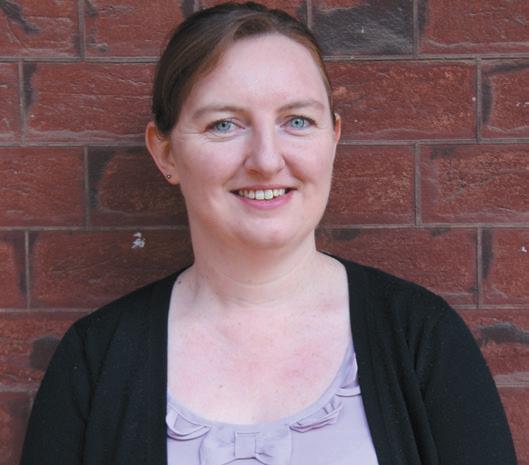
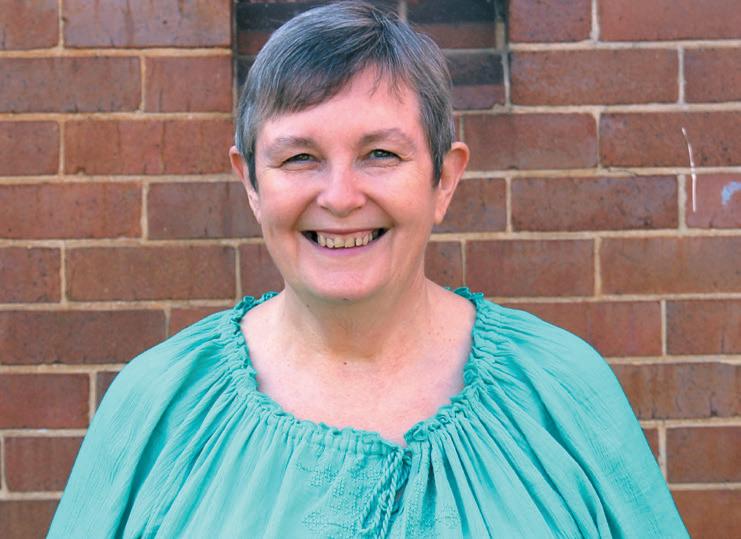
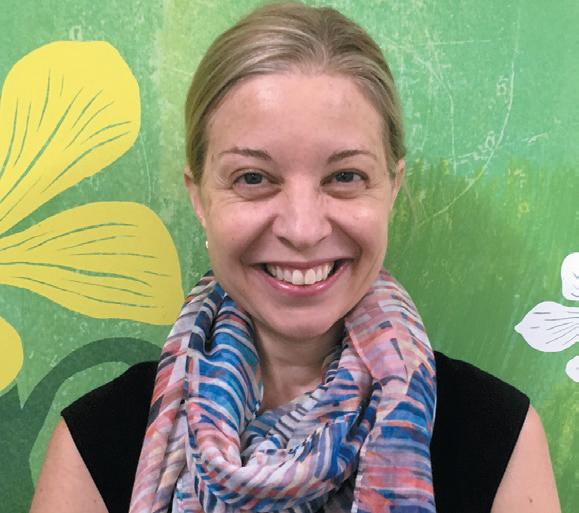
For many years journalist Catherine Keenan was writing other people’s stories. Now, as 2016 Australian Local Hero, she is the story. Her passion gives young people the tools to tell their stories. Tracey Edstein visited Catherine’s ‘baby’, The Sydney Story Factory.
“the second thing is that we provide this amazing space. the students are not being assessed and they’re given the freedom to write about things they’re interested in. It’s very hard to write about something you’re not interested in. Here they have that creative freedom.
“Finally, at the end of every program, whether it’s a two-hour workshop or every week for a term, we give the students back their finished piece of writing. all those black binders you see are students’ work. It’s something they can hold on to and be proud of.”
Indeed the story Factory includes the Martian embassy Library which stocks published student works as well as plenty of young adult fiction.
the programs are offered to class groups at school and to individuals after school, on sundays and during holidays. there are programs for teachers and special projects involving film, radio, dramatic monologue, photography and community writing.
When I visited, there was a constant stream of would-be volunteers being interviewed by experienced volunteers.
Lenard Gadil, a student in the final semester of his Bachelor of arts/education degree, hopes to become a history teacher. His motivation to volunteer encapsulates the mission of the story Factory. “What attracted me is the same thing that attracted me towards a career in education: a chance to make a positive impact on the community and inspire young people to learn, think and ultimately hope. It’s a chance to be the person I needed when I was younger. someone capable of inspiring others to realise that the world isn’t what we are given but what we make of it…we have the power to write our own stories. It took me a long time to learn that.”
Catherine Keenan’s dream of promoting the joy of storytelling has led to opportunities for thousands of children. However, as she says, “the downside of running a creative writing centre is that I write a lot less than before!” Enter the amazing world of the Story Factory by visiting www.sydneystoryfactory.org.au.
To encourage a young person to write: ask lots of questions.
Listen to the story they are telling you now.
encourage them to write it down.
Don’t worry too much about spelling and grammar.
remind them that all writers, especially the very good ones, edit – revise –rewrite. there can be a temptation to think that when the first draft is finished, it’s finished – and it’s not!
Come back to the story...”I’ve been thinking about...tell me more....” the more you talk to the writer about the story, the better the story will be.
type the story, design a cover, present it to family and friends, honour it.
read to children, have books lying around, join and visit libraries, and share stories, oral and written.
Driving presents an opportunity to create or refresh stories, all in your own Martian capsule!
Read the signs of burnout and compassion fatigue
By TAnyA RUSSELL r egistered Psychologist
CatholicCare's Counselling team
Leader, registered psychologist tanya r ussell, will address an issue each month.
t he advice provided is general in nature and does not replace ongoing support and advice from your health professional.
To talk to someone about counselling support, P 4979 1172. Call Lifeline 24/7 on 131 114.
Do you have a question for Tanya?
e mail your question to aurora@mn.catholic.org.au or write to a urora-Care talk P o Box 756 Newcastle 2300.
Q I have worked as a senior nurse for the past 15 years and have mostly enjoyed it. However, over the past 12 months, I have become increasingly frustrated as there are petty workplace issues that are unresolved. also, I feel I care too much, and sometimes I carry my sadness and frustration home with me. one of my colleagues suggested I might be “burning out”. I don’t think I am depressed but I find it increasingly difficult to go to work each day. Could ‘burnout’ explain what is going on with me? A
two terms come to mind when I read or hear about situations similar to yours: burnout and compassion fatigue. Nurses are particularly vulnerable, due to their intense working environments and the fact they are required to provide compassionate care, on a daily basis, to people who are ill, in pain, vulnerable or dying.
Burnout and compassion fatigue share similar features but develop slightly differently.
Burnout arises over time and is related to stress and conflict in the work environment. Factors could include high workload, lack of resources, team conflict, dissatisfaction with salary, long hours. People may go through different stages before reaching burnout: enthusiasm, stagnation, frustration and finally, apathy. Burnout can give rise to decreased empathy and withdrawal, and many people end up resigning.
Compassion fatigue can build up over time or be caused by one incident. Compassion fatigue is directly related to the emotional aspect of a caregiver role. Nurses witness
patient tragedy, trauma, injury, sickness, life and death. t his necessary compassion also extends to families, further engaging nurses in the emotional world of others. Compassion fatigue can result in continued “giving” despite increased suffering for the caregiver/ nurse, blurred boundaries and finding it difficult to balance empathy and objectivity (ie making ‘emotional’ decisions rather than fully professional and ‘objective’ decisions). Many people also leave their job, even if they love what they do.
Burnout and compassion fatigue can involve a variety of symptoms, features and behaviours across all personal and professional domains. s ymptoms include anger, irritability, apathy, low mood, preoccupation with work issues and patients’ issues, concentration difficulties, weakened attention to detail, lack of energy, physical exhaustion regardless of sleep pattern, social withdrawal, loss of interest in previously pleasurable activities, loss of spirituality or questioning your purpose in life, absenteeism, desire to quit and making errors at work.
t he impact of burnout and compassion fatigue can extend to the wider team, organisation, the caregiver’s family and even patients. It is important to know your triggers and to be aware of the signs of burnout and compassion fatigue. you do not have to manage this alone – there are personal steps you can take to look after yourself, but your organisation should also provide some support as well. Find small ways to replenish yourself – be a little bit selfish. r eflect on the healthy things you are no longer doing that made you feel calm and relaxed and start doing something small for yourself daily. a lso, talk to your manager who can provide you with advice on workplace support. your workplace may have an e mployee a ssistance Program (free counselling for staff and/or family members) and your manager may be able to come up with some practical ways of improving your working conditions as well. Do not ignore your feelings – you know that something needs to change and now is the time.
By MiCHAEL O’COnnOR
The school counsellor’s daughter
Golden Guitar winner, Catherine Britt, and her father, s teve, were rivals when I first viewed them together in 2008. r ocKwiz was the arena.
t he s B s program pits two teams of three against each other, competing for supremacy in their knowledge of the popular music scene.
Catherine was the celebrity centrepiece of one team. Max Merritt headed the other. t he remaining four spots were allotted to audience members with a flair for rock history. s teve was one. t he show’s producers set Catherine and her father on opposing sides.
Catherine anticipated a trouncing. s he knew her father’s encyclopaedic knowledge of all things musical. s teve’s passion helped launch Catherine on her trajectory to star status in the country music world. But s teve revelled in all areas of popular music.
By contrast, they were relaxing side by side when I interviewed them recently. Not rivalry, but a comfortable and affectionate father and daughter relationship was before me. t his was at the house Catherine shares with husband, James, in a suburb of her home town, Newcastle.
I know s teve through his important contributions to adult faith formation in the Diocese of Maitland-Newcastle. His skills as psychologist are especially valued in programs of the tenison Woods e ducation Centre. His day job is school counsellor. What part did s teve play in Catherine’s rise to prominence as singer/songwriter in the a ustralian and a merican country music scenes?
Importantly, she didn’t get her voice from s teve. Nor from a nne, her mother, or elsewhere in the family. s teve seems perplexed, but proud. “How did Catherine get to have one of the best voices in a ustralian
country music? It came out of nowhere.”
In childhood Catherine was exposed to much and varied music. s he tried several musical instruments, until parental wisdom recognised that the perfectly pitched instrument she possessed was the one to foster.
Catherine was the designated singer in primary school days at s t Joseph’s, Charlestown. s he was called upon to render “Happy Birthday” regularly − a far cry from her 2012 recording “Charlestown r oad” which laments her long-gone family home.
Nowadays Catherine solos in grander settings like tamworth’s a ustralian Country Music Festival where this year she collected a fourth Golden Guitar – her third as Female a rtist of the year.
Why country when s teve had introduced various musical styles?
o n a family holiday, aged 9 or 10, Catherine was greatly moved by The Coal Miner’s Daughter, the film about Loretta Lynn. o thers, like Dolly Parton, came to inspire her as well. “ o r was it that my voice was country-sounding?” she muses. t he voice had told her parents it was the talent to promote. Now the character of that voice was telling her which style was her natural fit.
birthday. s teve was born on the actual day Hank died. s ome channelling, perhaps?
Catherine’s success was rapid. e lton John heard her, loved her voice, championed her, made connections. s he had a record contract with a top a merican label before setting foot in the us – an a ustralian first.
Whisked to the s tates with s teve in tow, Catherine recalls, “it was the craziest five days. I was in high school, then I was in a merica.” a uditioning, recording, meeting and working with ‘greats’ in the game – even a specially arranged performance on the hallowed stage of Nashville’s Grand o le o pry.
For s teve, too, it was “overwhelming and exciting”, and quite surreal to be in a café and look over to see Kenny r ogers at another table.
He inherited from his mother, and has in turn passed on to Catherine, a pragmatic approach to any challenge...
t he ladies first inspired Catherine, but it was Hank Williams who became, and remains, her favourite. Why? “I don’t think there’s ever been an honesty like his…not to that extent. People hold back.” Holding back on honesty is not Catherine’s way either. a sampling of her performances available on the internet makes that apparent.
t here are other fascinating connections between Catherine, s teve, and Hank. Catherine and her father share the same
a fterwards came the dawning reality:
“Catherine could end up moving to a merica.” t his realisation ached in a father’s heart. s he did move, of course. Catherine’s career has her dividing time between the u nited s tates and a ustralia – Nashville and Newcastle. “ a merica is a second home,” says Catherine, “but very much secondary.”
Her home town has been the stage for Catherine’s recent well known challenge. Breast cancer has been comprehensively treated with surgery, chemotherapy and radiation at Calvary Mater Hospital.
t he daring bald woman who received her Golden Guitar in January boldly displays that baldness in her video clip “We’re a ll Waiting”, filmed around Newcastle’s foreshore. Devastated and in shock for some days after diagnosis, Catherine then switched gear.
s teve shared his daughter’s reaction. First he was overwhelmed. He, too, switched gear. He inherited from his mother, and has in turn passed on to Catherine, a pragmatic approach to any challenge: “ t his is the situation. What are we going to do about it?”
t he best wide-ranging treatments have resulted in Catherine feeling positive and well. t he return of her hair signals hope for complete wellness. s he hasn’t been stopped, just slowed a bit – and only for a short while.
Nine days after surgery Catherine was back touring in Queensland.
a s well, she and James recently celebrated their marriage in Newcastle.
a nd, as if that was not enough to occupy them, the family has become owner of the music magazine Rhythms e ach is now responsible for an aspect of a full-on publishing venture which embraces the music scene so central to their identity.
What impact has the encounter with cancer had on Catherine? “My outlook on life is completely different,” she volunteers. s teve elaborates: “ s he’s much more mature in the way she looks at things. Now she doesn’t get upset easily.” Catherine nods in agreement.
In light of this current picture of parent/child harmony, you may be wondering how things turned out when father and daughter were rivals on r ocKwiz.
s teve’s encyclopaedic recall was impressive. Catherine, however, was heading up a team including a man whom s teve assured me was autistic, providing an unfair advantage. From this human hard-drive data storage and retrieval system came quick-fire answers. t he show ended with the closest of scores.
Catherine was victorious and jubilant.
P s a nne and James don’t feature in this two by two story, but figure greatly in real life.
By BROOKE ROBinSOn
Life with a purpose/Pints with a Purpose
on the first Monday night of each month Pints with a Purpose hosts talks by a variety of speakers to encourage thoughtful discussions and a deeper understanding of the Catholic faith. the venue is the Northern star Hotel, Hamilton.
Pints is free and encourages all adults, particularly those 18-35 years, to come along and listen to guest speakers, meet new people and discuss issues and ideas in an informal atmosphere. arrive at 6.30pm and get some pub grub prior to the talk which kicks off at 7.30pm.
this month, May 2016, Pints hosts Fr Morgan
Batt. Fr Morgan Batt is a priest of the archdiocese of Brisbane.
Fr Batt was ordained a Catholic priest on 29 November 1991. His appointments have been to several Brisbane parishes with extra appointments to Bishop’s Committees for youth and education. Fr Batt was also Parish Priest of st John’s richmond and Port arthur, tasmania, during the 1996 massacre which has been a life-changing time for him. Fr Morgan also served as chaplain to the australian Catholic university in Brisbane for six years. He has studied in spain, Belgium, Palestine and usa on 11 March 2002 Morgan Batt enlisted in the army reserve as Chaplain. His first posting was to the 2nd Combat engineer regiment, Brisbane. after three years, he was asked to enlist full-time. His postings have been to Darwin 1st armoured regiment, then to the 5th and 7th royal australian regiment (rar), and 2008 posted to the Warrant officer and NonCommissioned officer academy – Northern territory Wing and later the 1st aviation regiment. He has served on two deployments: australian stabilisation Forces in t imor Leste in 2006, and overwatch Battle Group 3 (West) Iraq and the Middle east in 2007. During his time in Iraq he worked closely with the usa troops and was awarded the us army Commendation Medal for his services − the first australian army
Chaplain to receive this medal. Currently Fr Batt is the army Headquarters staff Chaplain for the Queensland region.
Fr Morgan is also a well-known outdoor adventurer. He is a noted international alpine mountaineer, having summited the North Face of everest and climbed on thousands of mountains around the world. His aim in mountaineering is to summit the highest peak of every nation and major territory in the world. the list of mountains has seen Fr Morgan visit every continent in the world and to date he has summited 176 of his 268 countries and territories.
Fr Morgan Batt has also been entered as a magistral chaplain in the sovereign Military order of st John of Jerusalem, rhodes and Malta. today Fr Morgan’s ministry is as Vocations Director of the archdiocese of Brisbane, Director of Discernment Canali House, and Holy spirit seminary Director of Pastoral studies.
as a priest for 25 years, an army chaplain, and a mountaineer, there are some great stories to be told that will touch the human heart and soul – he will make you laugh and make you cry! In this year of Mercy, Fr Morgan tells the tenderhearted story of his life with a purpose at Pints with a Purpose.
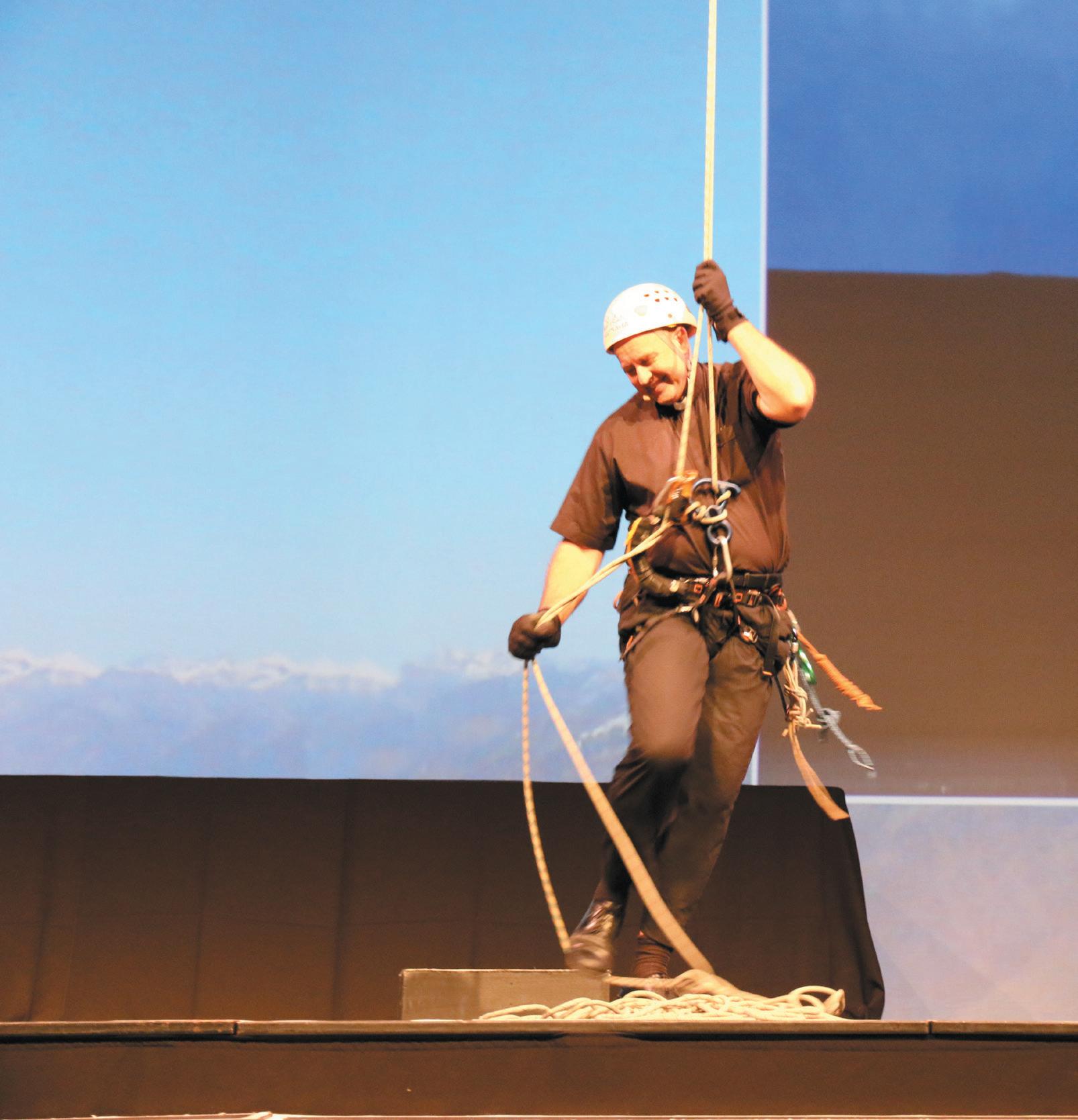
Fr Morgan Batt abseiling into view at the a ustralian Catholic youth Festival, a delaide, late last year. Photo courtesy of Geraldine Williams.
By TRiSH BOGAn
With the great foresight of Bishop Bill Wright and the wisdom and guidance of our Missionary of Mercy, Fr richard shortall sj, Gresford Parish has personally experienced Pope Francis’ extraordinary Jubilee year of Mercy first hand. our MoM (Missionary of Mercy) has left us a lasting spiritual legacy. I must declare I have an interest in this country parish; it has been my home for the past 27 years.
the MoM’s task is to visit each parish within the Diocese of Maitland-Newcastle without a resident priest, a significant challenge with many merged and outlying parishes within our geographically spread borders. He generously gifted himself to these communities for ten months to carry out this unique papallyendowed ministry.
Exhilarating Mercy experience
In preparation for his visit, sr Maureen salmon rsj travelled to Gresford to explain Pope Francis’ document through a visual presentation of his reasons and hopes for this year of Mercy. sister outlined the document’s main paragraphs and presented parishioners with a booklet and prayer card, with the distinctive year of Mercy logo.
st Helen’s, Gresford, and sacred Heart, summer Hill, were the second churches blessed to experience richard’s enthusiasm and dedication, his mobile home parked close to st Helen’s church for all the locals to see. the parish has not had a ‘live-in’ parish priest for many years, so it was with joy and expectation that we greeted richard warmly for his six-day ‘residency’.
on the morning of his arrival it was discovered
two days later with parishioners, offering special prayers as he walked with us and sprinkled holy water throughout the sacred grounds, blessing the graves of our ancestors. It wasn’t on his original agenda, but his actions have helped us heal.
He encountered us during daily Mass at st Helen’s or sacred Heart. Many availed themselves of Father’s offered private time, wherein, “He listened with his ears, as well as his heart.” richard led a deeply expressive and reflective Guided Prayer of Healing and Mercy. He visited the housebound and sick and presided at an anointing Mass. It was an amazing coincidence that many of the readings
centred on mercy. Naturally, many meals and morning teas were shared throughout his stay, allowing extra opportunities to continue our conversations.
the week passed far too quickly and we farewelled richard with some sadness. the opportunity to have a priest actually living within our midst had been a huge bonus, a time we will remember for bringing our parish together in such a profoundly holy and meaningful sense. Parishioners described his stay as “enriching”, “uplifting” and “life giving”.
Fr richard shortall is the epitome of the Face of Mercy; in offering his services to Bishop Bill and our diocese he has undertaken an arduous journey. Pope Francis would be full of pride that this particular MoM is personally “demonstrating the love of Christ”.
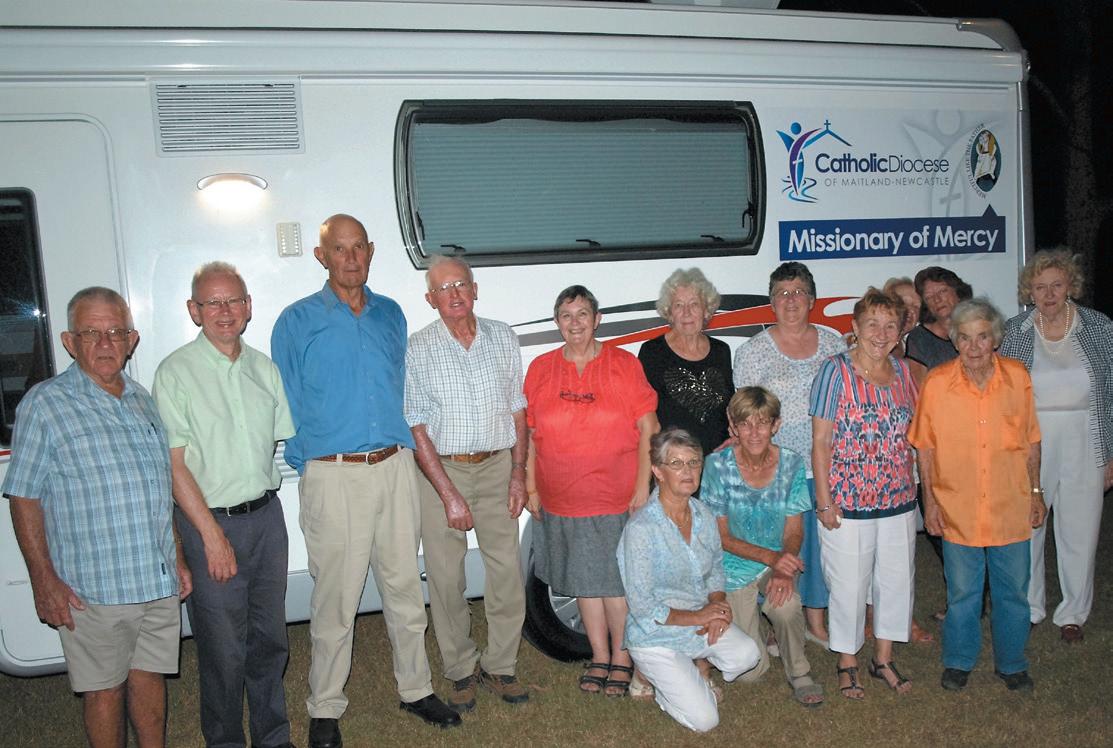
ichard s hortall (second from left) with parishioners at Gresford.
By MELinDA PHiLLiPS
Supporting children and young people through separation and divorce
e mma was finding it hard to cope. Her parents had separated earlier in the year, and her father was making plans to move again – this time with his new partner. e mma’s mother was doing ok, working full-time again but holding it together, and her parents could have sensible conversations with each other about e mma and her little sister, Lucy – so e mma wondered why she felt this way. a t 15, shouldn’t she be able to cope too?
In a ustralia nearly one in two marriages ends in separation and divorce. t his directly impacts many children and young people in our schools, our communities and our own families. Coping with the changes that result can be challenging for all involved. Having some understanding of what children and young people are dealing with can help us to provide the right kinds of support, when and where it helps.
Children’s reactions to separation and divorce are as unique and varied as kids themselves. t hese responses can be more easily understood if we look at separation and divorce as a process rather than a single event. Children’s ages and personalities, their life experiences, the families and friends around them, and how their parents are managing all affect how children react and cope.
e mma’s experience reminds us that the comments below are only a general guide. e very child’s experience is unique, even within the same family. Paying attention and noticing how each child manages change is a very important role adults can play as they guide and support young people.
Children in the preschool years may notice they are seeing one parent less frequently or differently, and they may imagine fearful outcomes. young children can regress in some areas, such as toilet habits, language
and play, and may also show feelings such as anxiety and fear through their actions, including clinginess and tantrums.
Children in the primary school years may understand more but may still hold unrealistic fears about the future and possibly blame themselves. Children can also experience change physically, with sickness, headaches or tiredness and show their feelings in a range of ways, being overly co-operative or lashing out in anger.
young people in the secondary school years may feel a sense of loss similar to other adults involved. t hey might worry about finances, and experience changes in their family as unique, so feel different and alone. young people can be unwilling to be a part of family arrangements they feel don’t suit, and may feel angry, anxious, sad and overwhelmed. s ome might engage in risky behaviours as a way of dealing with their feelings.
Children and young people often feel caught in the middle. e ven though it can be hard and confusing, it is good to know the majority of children cope with the help of family and friends, and adjust to their changed lives. young people can also be encouraged to try the following:
read picture books and novels or watch appropriate movies that feature family separation and divorce, to understand they are not alone and other children are dealing with similar issues
talk to their parents about their feelings and experiences
talk to interested, supportive adults and friends about how they are feeling
visit child-focused websites for relevant, child and youth-friendly information about separation and divorce.
How can parents help?
Parents may be just coping with the changes and losses and can feel overwhelmed in supporting their children. t here is no one ‘right way’ as each family has unique needs and circumstances. Children are different too, and what will work for e mma at 15 might not work for Lucy at ten. t hrough trying different approaches, parents will work out what is best for their children. o ne of the best things parents can do is look after themselves – parent wellbeing is key to children coping well.
Parents can also help by:
finding time and space to spend with their child/ren
letting children and young people have a say in decision-making
maintaining routines that are constant, warm and reassuring
ensuring children are eating and sleeping well and exercising
notifying the school so other adults can support their child
working to parent co-operatively, postseparation
accepting help from others (whether to mind the children for some parent time out, someone to laugh or cry with, or a trusted adult for children to turn to).
How can other adults help?
t here are often many adult care-givers in a child’s life, including grandparents, relatives, family friends, teachers and other school staff. e ach can play a role by:
providing security and support
helping children and young people feel competent and in control
maintaining expectations and consistent rules and consequences
keeping lines of communication open
responding appropriately, with understanding, if behaviour issues arise. schools and family support agencies may also offer small group support to children, young people and their parents. “seasons for Growth” is a loss and grief education program that promotes the social and emotional wellbeing of children, young people and adults as they manage family change and loss. the program is delivered in small age-appropriate groups by a trained “Companion” – a teacher, counsellor or parent volunteer. See story on page 20. a new program, the seasons for Growth Parent Program, is now available too. the program has two separate components, one for supporting children following separation and divorce, and the second for supporting children following the death of someone they love. these short parent programs consist of 2 x 2 hour sessions, and take the children’s perspective – what is going on for them? this allows parents to explore and learn about how best to support their children through these lifechanging events.
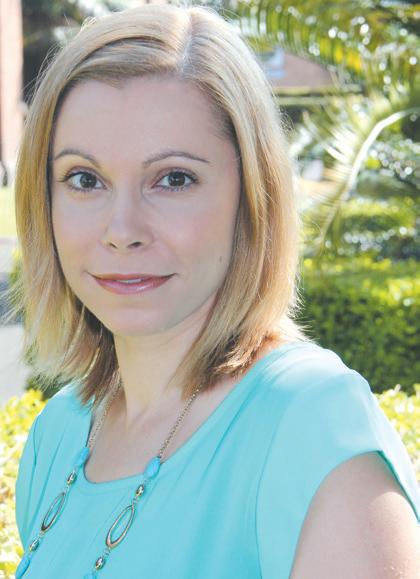
Melinda Phillips is General Manager, Good Grief Ltd; www.goodgrief.org.au. For more information about Seasons for Growth please E Co-ordinator Benita Tait, seasonsforgrowth@mn.catholic.org.au or P 4979 1355.
By MiCHAEL O’COnnOR
Napoleon is a great historical figure. He was so great he crowned himself e mperor. o ur parish priest, Father tony Brady, tells a story about his true greatness.
a mother approached Napoleon begging for mercy, a reprieve for her son facing execution. Napoleon looked into the matter. He came back saying her son was justly condemned and did not deserve mercy. t he woman responded, “If he deserved it, it would not be mercy.” Napoleon spared her son.
I don’t know if this story is true. If so, it is the greatest thing I know about Napoleon.
For us humans, justice is one thing and mercy is something else.
In God’s take on reality, I suspect that justice and mercy are one and the same. I suspect a profound encounter with mercy brings true justice to bear in one’s heart. t he experience can be excruciating for anyone confronting his
Mercy! Merci!
or her own wretchedness in the presence of a loved one’s mercy and forgiveness.
Perhaps divine justice is exacted through the anguish experienced in the initial, devastating confrontation with Mercy – before the recipient of pardon is engulfed in gratitude and joy.
For us creatures, who distinguish between justice and mercy in daily life, the relationship between the two is complex. Both are forms of love, justice being the lowest level.
a nything less than justice is not love. If I pay less than a just wage I fail to love.
Mercy goes in the opposite direction. t he more you give to another, beyond what they deserve, the more you love freely, soaring above the restraints of strict justice.
s ome thoughts come to mind in this year of Mercy.
I think of times past (if only!) when tribes destroyed enemies mercilessly as vengeance for injury to one of their own. I then consider the ancient Jewish advance in morality when they accepted “an eye for an eye and a tooth for a tooth” as just payback. t his
was revolutionary progress for humankind, retribution restricted to exacting only equivalent damage and suffering.
t hen I ponder the hyper-revolutionary teaching and example of the God-man, Jesus, who declared “ you have heard it said, ‘an eye for an eye…’, but I say to you: turn the other cheek; go the extra mile; forgive seventytimes-seven times; welcome home the prodigal degenerate; Father, forgive them…; Be merciful….” He commanded us to love as he did, not just be just.
Mercy doesn’t make sense to the legalistic and self-righteous. It is wisdom and joy for those who know themselves to be weak and fallible, imperfect and in great need – and who know that everyone else is just the same. Perfect people in a perfect society would not need mercy. r eal people in this world do.
I find it encouraging that Luke records Jesus telling us to “be merciful as your heavenly Father is merciful” rather than Matthew’s more static “be perfect as your heavenly Father is perfect”. I feel more attracted by mercy than by perfection, both as qualities of God and qualities to seek in myself and others.
Mercy is essential in relationships, more realistic than perfection, and more likely to achieve perfection. Forgiveness proceeds from mercy and is love in action. “I am sorry” and “I forgive you” are three-word variants of “I love you”.
Mercy begets gratitude and, in turn, pays mercy forward.
r egard the mercy paid forward in Les Misérables . Jean Valjean was radically changed by experiencing the mercy of Bishop Myriel whose hospitality he had violated by stealing his candlesticks. Instead of being destroyed by Javert’s (and life’s) remorseless condemnation, Valjean was graced with conversion and redemption. His life found its fulfilment as he re-gifted mercy and love to Fantine and Cosette.
t he mother who rejoiced at Napoleon’s mercy would have been devoted for the rest of her life to the ultimately humbled e mperor. s he would earnestly have desired for him, not the just exile and inglorious death exacted by the victors, but that which he had gifted her boy – the fullness of mercy. “ Merci, mon Seigneur! t hank you, my Lord!”
The Way We Were: Sr Margaret rocks
Murray
Have you ever had the experience of beginning kindergarten − twice? In 1969 I was employed by the sisters of Mercy to teach at st aloysius’ Girls’ High school. I was young, energetic, determined to make a difference − but almost totally ignorant of the nuns alongside whom I was to teach. I was to come to marvel at the faith, hope and love which marked their service.
regarding the Parry street site, how was one to cope with a school for 400 students that covered a mere .68 of an acre? and having been using with great enthusiasm the spirit duplicator purchased to run off lesson aids at home, how was one to convince some of
the sisters that one was not a drunkard? these were some of my apprehensions − and one remains indelibly in my mind.
school assembly. I’m at the rear of the hall. sr Margaret enters via the back door. two students on a bench observe sister’s approach and shuffle sideways, leaving space for her. their consummate good manners mean that as sister descends, the students simultaneously arise in respect. Gravity makes no distinction between saints, sisters or sinners. Down goes sr Margaret, avoiding injury but landing upon her back and remaining in the undignified attitude of a pious black and white tortoise,
rocking ever-so-slightly on its carapace. What does one do? the voices of my upbringing are screaming at me to be the gentleman, to lift... all students momentarily turn to the source of the kerfuffle and my hovering, ineffectual presence. Now sr aquinas, who is conducting the assembly, uses her eyes to miraculously reassert control until the students’ attention is again riveted upon the stage. t ime stretches impossibly into an eternity of red-faced inertia. sr Margaret rocks on...beads of perspiration pop from my forehead. then the impasse is broken! a smile flickers across student heads swivel towards the circus at the rear and the hall reverberates with giggles and guffaws.
all my indecision falls away and I flee the scene, to seek advice on how one should handle holy personages.
How poor sr Margaret was returned to the upright world remains unknown. I could never bring myself to ask. I had much to learn...in my second kindergarten.
Contributed by John
By DEniS EDWARDS
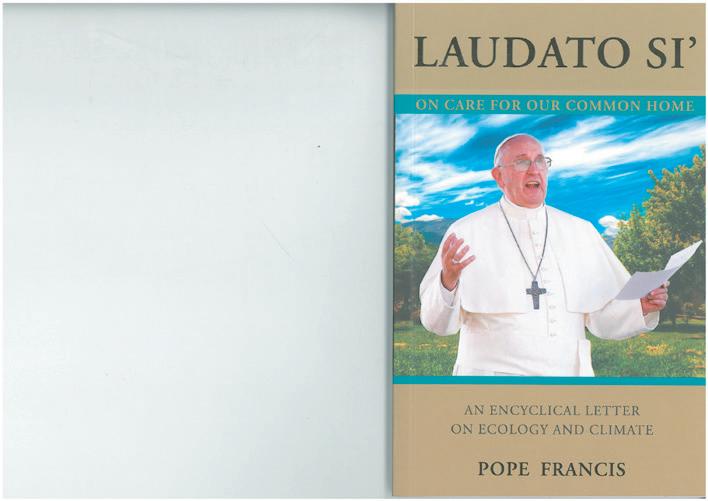
e very time I read Laudato Si’ I discover fresh insights into the relationship between God and the planetary community of life on e arth, our common home. I find myself renewed in hope, taken by joy at the beauty of Francis’ vision, sobered by the challenges we face and summoned again to see my life as an ecological vocation, radically committed to e arth and all its creatures.
t his encyclical represents a new moment in Catholic social teaching. s ince the 1980s Pope John Paul II and Pope Benedict XVI have made important contributions that call the church and the world to an ecological conversion. But with this far more developed work of Pope Francis, the protection of God’s creation is now formally and permanently brought to the centre of Catholic social teaching, along with the church’s long - standing commitment to inter-human justice and peace. In what follows, I will highlight some key theological positions taken by Pope Francis.
A theology grounded in what is happening to our ‘common home’
Laudato Si’ begins with a clear-eyed discussion of what is happening to our planet. Pope Francis sees e arth as our common home, to be shared by humans and other creatures, a home for future generations. It’s a home we are meant to care for and protect,
Pope Francis’ Laudato Si’ : Hope for our Common Home
but one we have treated with violence.
In particular Pope Francis offers a careful analysis of major issues, particularly pollution and global warming, the looming crisis of fresh water and the loss of biodiversity, along with a decline in the quality of human life, the breakdown of society and global inequality.
The way of dialogue
a striking feature of Laudato Si’ is that it consistently puts into practice the way of dialogue advocated by the s econd Vatican Council’s Pastoral Constitution on the Church in the Modern World t he encyclical is fully dialogical in both structure and content. Pope Francis writes, “Now, faced as we are with global deterioration, I wish to address every living person on this planet…In this encyclical, I would like to enter into dialogue with all people about our common home” (par 3).
The Universal Communion of Creation
In his second chapter, Pope Francis turns to the Bible to articulate a theology of the whole of creation as one interrelated community before God. Here he offers us a new theology of the natural world, involving three aspects.
Firstly, he insists that other creatures have meaning and value not simply because of their use to human beings, but in themselves.
t hey have intrinsic value. Why? Because God is present to each of them, God loves each of them, and each has a future in God.
s econdly, each creature is a word of God to human beings. Creation is a kind of revelation, a manifestation of God, a book of God alongside the s criptures. “Nature is filled with words of love.”
t hirdly, human beings are part of nature, and together with other creatures we form a sublime communion in God. a s s t Francis has shown, other creatures are our kin. “ e verything is related, and we human beings are united as brothers and sisters on a
wonderful pilgrimage, woven together by the love God has for each of his creatures and which also unites us in affection with brother son, sister moon, brother river and mother earth” (par 92). Francis tells us that the risen Christ is already present to the whole creation, bringing it to its final fulfilment.
i ntegral Ecology
Integral ecology is at the centre of Pope Francis’ encyclical. e cological commitment and commitment to our human brothers and sisters, above all the poor, are held together in one vision. t hese two commitments are united as aspects of one ecological vocation. o ur response to the crisis we face will need to be holistic, based on a broad vision of reality that involves not only plants, animals, habitats, the atmosphere, rivers and seas, but also human beings and their culture. We find inspiration for this kind of integration in s t Francis of a ssisi, in his love for the poor and his love for the other creatures of the natural world.
From his first homily as pope, Pope Francis has made this same link clearly and strongly, calling us to protect creation and our human brothers and sisters; above all, those who are poor and excluded. In his new encyclical he writes, “ e verything is interconnected. Concern for the environment thus needs to be joined to a sincere love for our fellow human beings and an unwavering commitment to resolving the problems of society” (par 91).
a n integral ecology involves love and respect for animals and plants, but also for human history, art and architecture. Integral ecology involves protecting the cultural treasures of humanity. It involves respect for the cultures of indigenous peoples, “ t hey are not merely one minority among others, but should be the principal dialogue partners, especially when large projects affecting their land are proposed. For them land is not a commodity
but rather a gift from God and from their ancestors who rest there, a sacred space with which they need to interact if they are to maintain their identity and values (par 146).
Political and Personal Action
Pope Francis prophetically engages political leaders in dialogue, asking them to accept responsibility for protecting the environment and calling them to support international agreements to lift people out of poverty, limit carbon emissions and protect biodiversity. He also points to the fundamental importance of “civic and political love”, including the indispensable role of ecological education in our families and schools. He insists on the importance of embracing ways of acting, “such as avoiding the use of plastic and paper, reducing water consumptions, separating refuse, cooking only what can reasonably be consumed, showing care for other living beings, using public transport or car-pooling, planting trees, turning off unnecessary lights” (par 211).
Pope Francis calls us all to an ongoing ecological conversion, to a spirituality of love and respect for animals and their habitats, for the land, the seas, the rivers, in the one community of life on e arth. a ll of this culminates in our s unday of rest and in the e ucharist that embraces all creation and is a source of light and motivation.
Rev Denis Edwards is a Professorial Fellow in Theology at Australian Catholic University and a priest of the Archdiocese of Adelaide. His teaching is in the areas of God the Trinity, Christology, Ecclesiology and the Theology of Faith and Revelation. He has been engaged in the dialogue between science and religion and in contributing to the developing field of ecological theology.
Seasons of Mercy
By JOHn MURRAy
From the time I was quite young, I loved the magical story of the prophet e lijah who, having fled for his life from Queen Jezebel’s wrath, was hiding in a cave on Mount Horeb. a ccordingly, yahweh “passed by”, the visitation being accompanied by earthquake, wind and fire. a pparently confounding e lijah’s expectation, yahweh was “in” none of these manifestations but was found in the following lull, in “a still, small voice”. Here was the voice of silence speaking to e lijah and directing him.
I was charmed by many aspects of this encounter: by the notion of the Lord “dropping in”, as it were; by yahweh communicating with humanity as a friend; by the God of truth emanating from the propitious silence and either reaching into, or coming from, the very depths of the prophet’s personhood. a nd this God was not a thundering wielder of a ll-Power but a nurturer, a gentle leader beckoning a follower; a kind of conscience. I love the notion that there exists such a God of gentle persuasion. I dared to think and hope, as I still do, that such a being might dwell close to all who seek him.
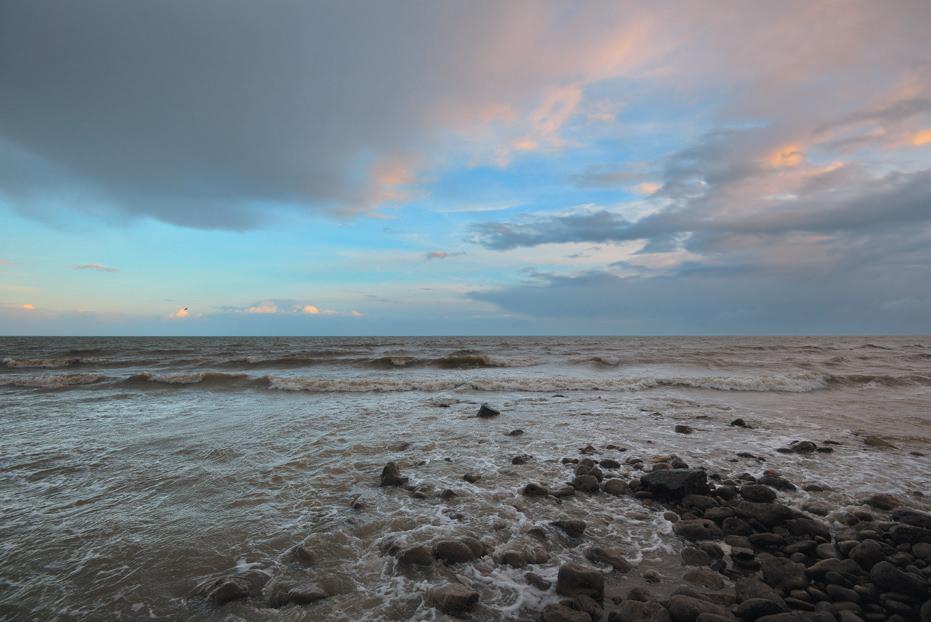
s ome time ago my wife Cathie and I spent several days in Cornwall, near Land’s e nd. o ur accommodation was a stone cottage, a kilometre or so from t intagel, near steepling cliff-faces where the on-rushing lunge of a tlantic breakers revealed a raw power. a westward view over the ocean stretched, unimpeded, towards the a mericas. Here were wild waters and buffeting winds, awesomely beautiful turbulences, in a place where such elements were best lived with, for they had not only endured down the ages but had imposed their will upon the treeless
Passing by
As the Year of Mercy unfolds, John Murray shares a lyrical recollection of a journey to a place infused with the immanent God.
slopes. t his is a place riddled with almost inaccessible coves, evocative of smugglers, pirates and ghostly schooners that came sailing out of those childhood images seeded by r obert Louis s tevenson; a place where your back, pampered and caressed one instant by sun as you shelter behind a roughly-hewn wall of slate, was cruelly carved by freezing gusts and driving rains the next. Wonderful!
a n escarpment high over trebewith Cove held my senses captive; a precipitous place where my vulnerability and utter smallness were accentuated; a place in which the mighty power of creation must surely obliterate all other distractions. Its words came reverberating as if the whole cosmos was about to descend. yet the feelings of trepidation and wonder were soon enough reduced to familiar obscurities; the cataclysmic intimidations to mere mumbles on the winds.
Here the majesty of the created world loomed like a gigantic postcard.
I found myself lost in an earth-bound world of a hedge-row in close-up: in a tangle of briar, gorse, green tussocks, stone and soil revealing occasionally a patch of sky − a patch of fractured light.
s uch was Land’s e nd, one of those places that stimulates all sorts of romantic notions and so many emotional responses. Here the majesty of the created world loomed like a gigantic postcard. We stayed. We saw. t hen, we passed by, crossing the tamar r iver heading northwards.
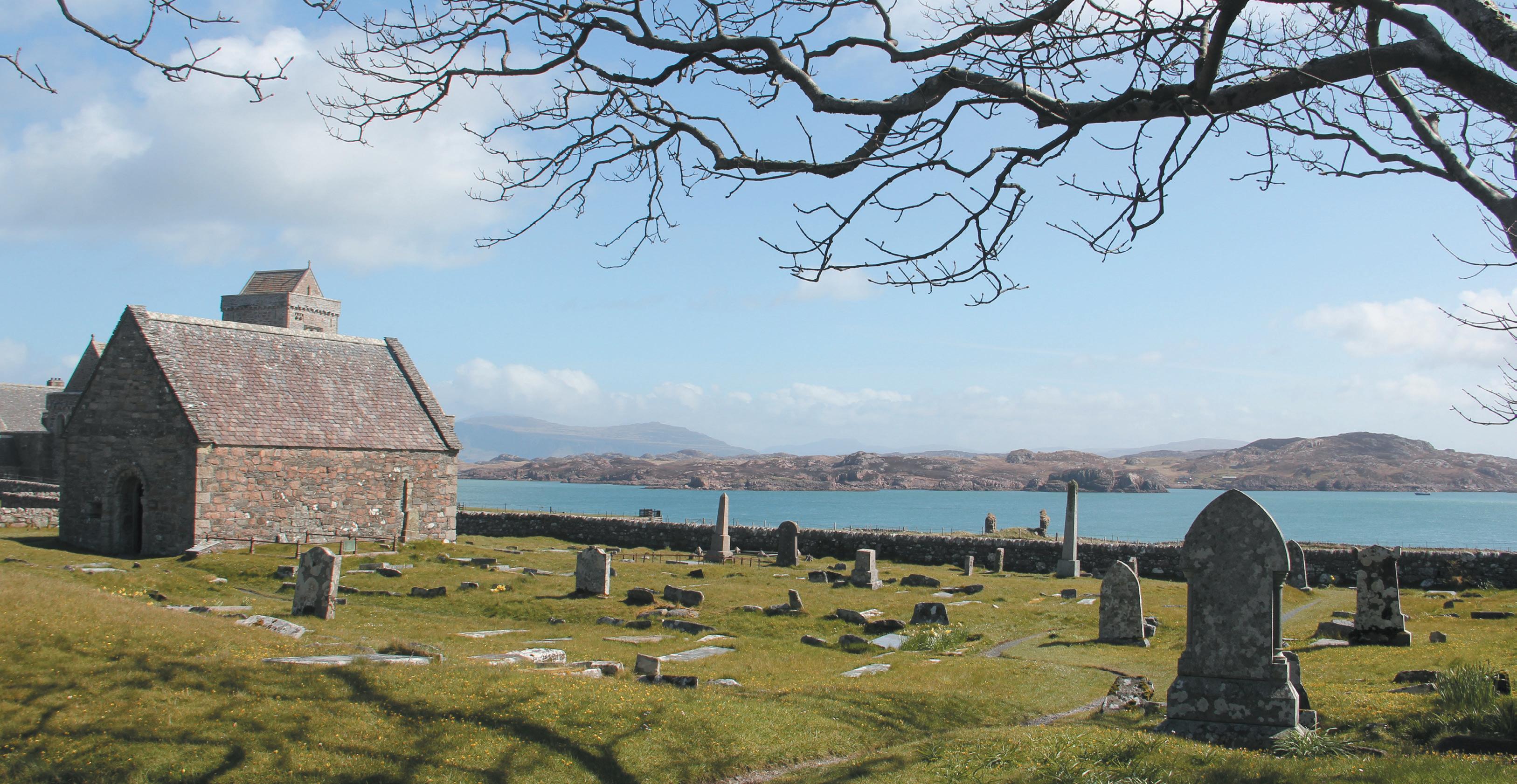
o ur journeying ended on the s cottish isle
of Iona − no random destination. prior, I had gone there and found the experience indelible, its call mesmeric. t he curious sense of being welcome there was beyond reason but undeniably real. When my feet touched the quay, my excitement and anticipation resolved into an abiding calm; the profound serenity of the place, in contrast to its location, again enveloped me. Iona’s western coast is a jagged razor, constantly gouged by rearing, spuming seas. s ome 1500 years ago, s t Columba and his band of monks drove a sea-lane through the ocean’s jaws to make landfall here. Its eastern shore looks over the s ound of Mull which, like a massive ironclad serpent, rips out its channel far and away to the outer isles.
Iona has a granite spine, hatched that morning by constantly changing patterns of shadow and light. o n its lee side, facing east, the soil is somehow life-sustaining, the climate moderate and there is the luxury of flowers. White cottages and daffodils dot the gentle slope that undulates towards the monastery.
Iona is old; the medieval monastery may well be upon the site of s t Columba’s original church. Nearby is a graveyard which might be the last repose of several ancient s cottish kings. s aint Columba himself is believed to be buried on Iona. In what remains of the a ugustinian nunnery, some of the dreaming stones of old stand; others, like those holy women, gone without
t hat morning of our arrival, as the sun wrapped shoulders like the arm of a celestial friend, these perplexities arose. What was the secret power of this place? Why, having been drawn here, did I have a sense of homecoming?
a thought arose that I cannot label random. t he story of e lijah came into focus, at least, that part of the story, a key point, which I had glossed over. e lijah was fleeing from his God! a nd it was his God who found him. Perhaps, in my very insignificant and ‘unprophet-like’ life, there was a ‘God moment’ imminent; a moment in which the s pirit might choose to pass by.
Minutes later, in a pamphlet near the a rgyll Hotel, was an explanation concerning the meanings and origins of the names ‘Iona’ and ‘Columba’. t he former in Hebrew, meant ‘dove’, as did the latter in Latin. In the instant the clouds of morning burnt anew with clarity: the two were one, inseparable and indivisible. t he good man whose remains lie here is that beneficent spirit, the bringer of that aura of peace, which, as a matter of knowing and acceptance rather than of reasoning or of etymological proof, will dwell deep in this place till the end of time. t hese precious knowings became so beautifully apparent: in the world there is a special, and, in the deepest sense, ‘sacred’, place – Iona. Island of Peace. Island of the Dove. Warm heart of the nest.
HAVE yOUR SAy /mnnewstoday @mnnewstoday
In 2012 the role of the Parish Family Liaison officer was conceived. the overall objective was to provide support to families in the Blackbutt region by connecting them to the liturgical lives of their parish and their school community. this objective would lead to the initiation of new forms of family ministries as well as co-ordinate and strengthen existing family networks which would lead to deeper relationships between parishes and schools. the 12-month pilot scheme enjoyed a degree of success and was expanded to include the City region.
Fast forward to 2015 when a Catholic schools office (Cso) stakeholder Consultation report received from the Council of Priests identified a perception that the Catholic school as an instrument of the church was “a community in its own right”. Further, it was reported that Catholic schools were “not badged as a work of the
We are here to create the
good news stories
Regular contributor Helene O’Neill updates readers on a diocesan initiative linking families, parishes and schools.
By HELEnE O’nEiLL
church and the connection between parish and parents was missing”.
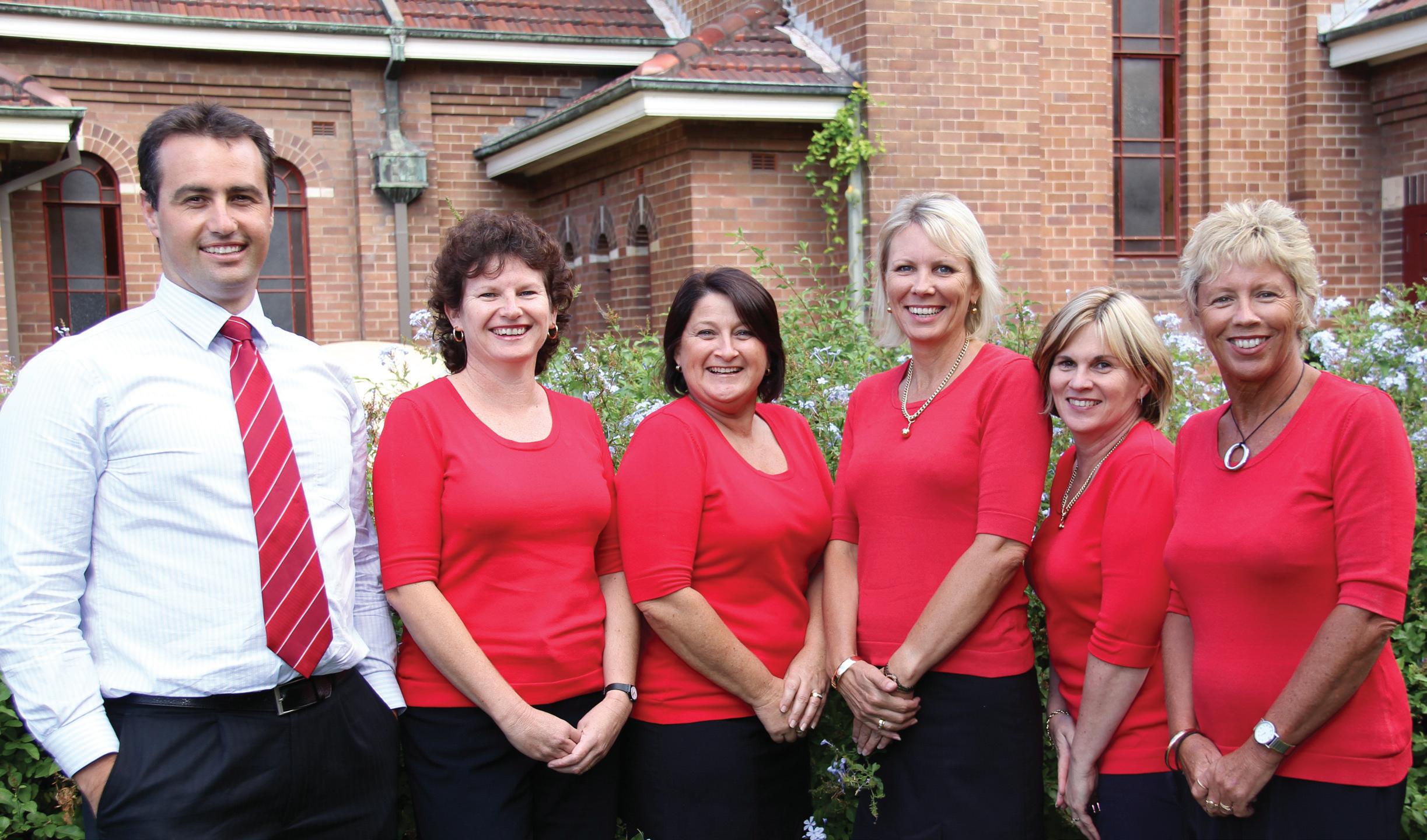
Moving along to 2016, when the role of Family Community Faith Co-ordinator was born, encompassing the Parish Family Liaison role I had held and expanded to include Melissa Fenech and samantha Hill as team members. the diocese was divided into three areas with one assigned to each member. My summary of the ministry is that we are here to create the good news stories.
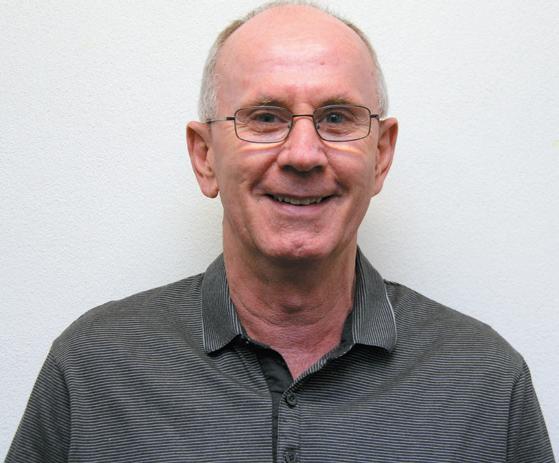
Melissa Fenech was born and raised in sydney and relocated to Maitland three years ago where she worked as a youth ministry co-ordinator for the Chisholm Pastoral region. Her particular focus and interest area is assisting volunteers to be an integral part of the church where lay leaders administer the parish.
Mel views her role as “a wonderful opportunity to
connect with and support the Catholic parishes and schools in the Myall and Watagan Deaneries.
I am enjoying learning from the parishioners and leaders of each parish and Mass community I visit. I am trying to carry the spirit of Mary MacKillop with me in my travels and ‘never see a need without doing something about it’.
the Hunter Deanery is supported by samantha Hill, former youth Group co-ordinator in the Chisholm Pastoral region. sam epitomises the country lifestyle and appreciates the tyranny of distance of her region as well as having an understanding of the strong camaraderie that exists in smaller communities.
“the breadth and diversity this role brings are exciting. I’m enjoying the challenge and am looking forward to the continued engagement with the Hunter Deanery,” she adds.
Meanwhile, I cover the coastal regions of the
Newcastle Deanery stretching from stockton to swansea, where the predominantly city lifestyle influences faith and its practice in a secular culture. “the challenge is to meet the people where they are and parallel their lifestyle with faith practices.”
Despite the uniqueness of each deanery and each team member, the desired outcomes are the same. We strive to explore new models and embrace existing ideas to support a shared mission across the diocese. We will each face significant challenges but we are there to support (not take over!) parish ministry.
the key to our roles is to connect − perhaps reconnect − using strategies to support parents as primary educators in faith of their children and to enhance the faith life of parents, schools and parishes. our ministries in the field challenge us to maintain the spirit of our work.
samantha Hill, Helene o’Neill and Melissa Fenech pictured at the youth Mass on 5 March.
By FRAnCES DUnn
The five shilling donation
It all began with John e dmonds’ donation to s t John’s Building Fund in 1843, and it ends (hopefully not literally!), with his great, great granddaughter, currently a volunteer member of the working group planning celebrations around the 150th anniversary of Bishop Murray claiming s t John’s Church as his cathedral, and the restoration of s t John’s.
a nd therein lies my family story, from e dmonds to e dmunds to o ’Byrne to Dunn.
Five shillings doesn’t sound like a huge sum, but the recorded donor, John e dmonds, was a newly ‘ticket of leave’ convict, a Protestant on arrival in the colony aged 16, and at the time of this donation, married to another newly ‘ticket of leave’ convict, r osina s mith. t hese two lives, both presumably forged in dislocation from e nglish roots were both (presumably) attempting to rise above that unforgiving stain, ‘convict’.
John and r osina were my great, great grandparents.
r osina at 16 had been transported, noted as Protestant, but in her short time at the Parramatta Female Factory had come into contact with the first five s isters of Charity beginning their ministry. r ecords hint that it was here r osina became a Catholic. From their 1841 marriage onwards, nine of their ten children were baptised at s t John’s Maitland, most married at s t John’s, one grandson became Fr George o ’Byrne, parish priest at Carcoar, and a granddaughter entered the s isters of Charity. Down the succeeding years my family tree became festooned with teachers in both systems, Catholic and state.
s o let’s surmise that this donation constituted one of John and r osina e dmonds’ early connections, within their means, to the Maitland Catholic community, bringing their growing family into its fold, and maybe gaining some respectability. r ecords show that John e dmonds in 1846, now with three young children, also donated one shilling to the Irish r elief Fund. a picture emerges for me of John and r ose established, prospering and belonging in Maitland.
For me, the most important fact was that their eldest child, e sther, married Gerald o ’Byrne, a newly-arrived Irish free settler. trained at the Irish National Board of e ducation in Dublin, he and his brother had responded following connection with John (Dean) Grant during recruiting drives aimed at encouraging both religious and lay to emigrate and take up the challenge of improving education standards in the early Catholic schools. Following the 1866 arrival of James Murray to take up the bishopric of Maitland and the imminent end to financial aid for Catholic schools, a more insistent call was made to Irish and e nglish congregations, resulting in Bishop Murray’s legacy to the Maitland Diocese. For the religious congregations indeed came, striving with sacrifice, wisdom and courage to build lasting foundations of education. t hey made a difference, but that’s another story.
Gerald’s unfolding story is yet another, typical for Catholic lay educators of the day.
Gerald had arrived in 1858, and taught within the Catholic system for short periods at a berglasslyn, then Morpeth in 1861, and, following marriage to e sther e dmunds in s t John’s Maitland in 1862, became head master of s t Mary’s Cathedral Model s chool,
s ydney. But the writing was on the wall. t he end of government financial aid followed closely upon the Public Instruction a ct of 1880, giving lay educators little choice but to leave Catholic education. Gerald certainly did. a fter acting positions within the state system he eventually settled in Wagga, becoming the s tate Inspector of s chools. Here twelve o ’Byrne children were raised, with the third child, George Henry, being my grandfather. Gerald died in Wagga in 1893 aged 63; my only photo is of unknown date, but the family resemblance down the male line is unmistakable
From Wagga, this son George somehow ended up in Wellington, married Johanna Clements, and their eldest child, Gerald, was my father.
s o, skipping over the 100 years from Gerald in Wagga, there I find myself, all of 19 years, fresh from s t Joseph’s teachers College, s ydney, in 1963 the first lay teacher at s t Mary’s e rskineville and one of the early wave of lay educators into Catholic schools following the reinstatement of financial aid. s kip another umpteen years, to my husband, Kevin, and I, retiring from s ydney lives, becoming parishioners of s t John Vianney, Morisset, and my accepting an invitation from the Diocese of Maitland-Newcastle to belong to the working group alluded to above. t hen that memorable moment − one document − ‘Donors to s t John’s Building Fund’ − one entry stood out: John e dmonds – he just had to be my great, great grandfather!
Full circle indeed, from s t John’s, Maitland to lay educators, and back to s t John’s, Maitland!
i f you have any diocesan memorabilia or copies of The Sentinel to donate or offer on loan, please contact the editor.
Frankly Spoken
I do not know if I truly love Jesus. I try to love him, but I am sure that He loves me. I’m quite certain of this.
to children in r ome February 24.
By KiM CREiGH
Is there room for a child in your home?
CatholicCare believes that every child deserves a loving, caring home and is currently seeking carers to ensure children in the Hunter-Manning get just that. CatholicCare’s Foster Care Recruitment and Support Manager, Kim Creigh, to learn more about Out Of Home Care
Foster care is required when children and young people are unable to live with their own families for a variety of reasons. Caring for vulnerable children can be both challenging and rewarding. It does not require the perfect parent but certainly requires dedication and energy. CatholicCare provides training and carer and financial support, enabling carers to make a real difference for a child.
What types of care are available?
Respite care supports and provides relief to full-time carers, their families and children in care. A respite carer cares for a child, for example, one weekend per month or in holidays. People who would like to assist children but cannot commit to medium or long-term care can make a difference through
respite care. During these periods carers might take the child on outings or teach him/her a skill or hobby.
Short to medium-term care is usually provided for 6-9 months. The child may then return to living with family or move into long-term care.
Long-term care is provided to children who can no longer live with their parents or family and need a family until their family’s circumstances change or they turn 18.
What are the day-to-day responsibilities of a carer?
Carers are required to provide day-to-day care for children including health, education, identity, family and social relationships, emotional and behavioural development and self-care skills.
Do carers have any say in whom they would like to care for?
Carers can make choices about the age and gender of the children. We have a particular need for families available to care for groups of siblings and for older children and young people.
Are there selection criteria for carers?
Carers can come from all sorts of backgrounds and we accept applications from all, whether married, single or de facto couples. Applicants may be employed full or part-time, must be in good physical and mental health and have adequate and safe accommodation. What is the process for becoming a carer?
Becoming a carer involves several steps and you can withdraw at any time. We will send an information pack and ask that you return a Registration of Interest form. You will then be invited to attend a session, where you will have an opportunity to meet staff and experienced
carers. We will introduce you to the reasons children need OOHC and what families need to know. You will need to undertake checks, including health/medical, background/ criminal and personal references. You will be asked to begin training and commence competency-based assessment interviews. We will prepare recommendations for the panel and if successful, you will become an authorised carer. The process is designed to ensure children are placed with people who will provide sound care and that carers are well prepared and supported.
To learn more, P 4944 0700 to speak to a member of the CatholicCare Recruitment and Support Team, E becomeafostercarer@catholiccare.org.au or visit www.catholiccare.org.au.
By CATHERinE O’BRiEn
Just because change is normal, doesn’t mean it’s easy
I began working at s t Peter’s Campus, a ll s aints College, Maitland as a clerical assistant in 1994. In 2008 I undertook a new direction and became a Pastoral Care Worker for the College, under the National s chools Chaplaincy Program. o ne of my first challenges in this role came when I undertook training to be a Companion in the s easons for Growth Program.
s easons for Growth is for those who have experienced a significant change and loss in their lives and are dealing with grief. It is based on the belief that “change, loss and grief are a normal and valuable part of life”. However, just because it’s normal, doesn’t mean it’s easy.
Before becoming a Companion, I needed to participate in a s easons for Growth a dult Program and I understood the reasoning for this. I had lost my little girl, Danielle, to cot death in 1985 when she was just three months old. In my head, I knew that I needed to recognise and own my feelings and emotions about her death before journeying with our young people through their grief, so I went along very confident that I would be revisiting my little one’s death and the grief I went through. Instead, what surfaced was totally unexpected. two years earlier, I had travelled to s ydney with my family to farewell our son as he left for e ngland for two years. It was an exciting adventure and one we wholeheartedly supported. a fter waving him off, we drove around to the domestic airport and said goodbye to our youngest boy who was flying to Queensland to study film at university. o ur eldest son was staying in s ydney as he had joined the N s W Fire Brigade. I was upset driving home but I knew
the boys were all doing wonderful things and in my head, I knew that this was right. t hese boys were experiencing life in the best way. However, two weeks later I became sick and I struggled, mentally, emotionally and healthwise, for some weeks.
s easons for Growth brought me to the realisation that I had been grieving! t he significant changes, although good for my boys, meant that my role as a mother had changed. We experience change all through life. Life does not stand still, nor would we want it to, but change can bring loss and loss can cause grief. I learned that grief can be experienced in many different ways, including sickness.
t he s easons for Growth program is grounded in J William Worden’s grief theory and further developed around the imagery of nature’s seasons. t here are so many wonderful elements to this program. It provides a safe environment where you can share your story. Listening to others’ stories gives you a sense that you are not alone; that there are effective ways of coping, new ways of thinking. It helps you identify feelings and gives you a language to describe all of this. It looks at the big question: how can we learn to live with these experiences and then how can we grow through them?
We begin with a utumn. We spend autumn getting to know each other, sharing what we know about the seasons and talking about the changes in nature and change in general in our lives.
Winter is a time when we sit with our stories. We listen; we share; we learn about possible reactions to change and loss and how others experience these.
s pring is often referred to as a time of hope, so our task here is to develop skills to assist us in processing our grief.
a nd in s ummer we look at ways we can move forward.
We listen; we share; we learn about possible reactions to change and loss and how others experience these.
t his process is based around peer groups of six to eight students. It runs for eight sessions, although my sessions may run longer depending on the needs of the young people. It is tailored for different age groups, from infants pupils through to senior students. t here is also an adults’ program and a program for parents who are separated or divorced.
young people are facing. Death, suicide, divorce and relocation are some of the causes for grief in our groups. Being sole carer for an ill parent is another.
I have had many beautiful testimonials from young people telling me that s easons is what got them through the year.
o ne student joined a group but didn’t share his story until we were well into s pring. When he finally opened up, it was like a dam had burst! t he other students just opened their hearts to him and the relief on his face was heart-breaking to see.
o ne group of year 10 girls was very unhappy at school. t hey were disconnected from the other students and were struggling in so many ways. t hey were definitely not going to the year 10 dinner dance. However, after spending time together, listening to each other’s stories, talking about their struggles, they no longer felt disconnected. t hey felt supported and more importantly they felt like they weren’t alone. t hey all turned up at the dance and thoroughly enjoyed their special night together.
We finish our sessions with a Celebration and the promise of gathering again in a later reconnector.
s easons for Growth has adapted Worden’s tasks and, following a wonderfully illustrated, beautifully written handbook, we journey through the seasons.
I work with high school students in stage 4 of the program. s tudents are identified and referred to me but I also promote the program at school assemblies. I find sending an invitation to all students, so that everyone is writing their name and ticking a box − ‘yes’ to attend a group or ‘no thank you’ − allows students to come forward themselves.
s ometimes we are unaware of the difficulties
Companioning young people through s easons for Growth is an honour and a privilege.
Catherine O’Brien is the Pastoral Care Worker at All Saints College, St Peter’s Campus, Maitland, and St Joseph’s Campus, Lochinvar. Please visit mn.catholic.org.au/church-community/ change-loss-grief.
Living Waters Meditation Centre offers a four-week course, “Christian meditation: contemplating the face of Christ” on Mondays at 5.15-6.15pm on 4, 11, 18 and 25 April (latter may need to be negotiated). Cost $20. e Carmel Moore carmel.moore@ssjl.org.au or P 0412 122 297.
Private Retreat at Mercy Spirituality Centre
From 4-11 April you are invited to “come aside and rest awhile” − a time of silence for personal reflection for 2-6 nights. Fully catered, $80/night. For further details P 4959 1025 or e mercytoronto@mercy.org.au.
Ecumenical prayer in the spirit of Taizé these services are held on the second sunday of every second month; 10 April, 12 June, 14 August, 9 October and 11 December at st Columban’s Catholic Church, Church street, Mayfield, 7-8pm, followed by light supper, gold coin donation. everyone is welcome.
P anna & John Hill, 4967 2283.
St Patrick’s Women’s Guild the Guild at singleton will be celebrating 50 years of ministry on 16 April with Mass at st Patrick’s Church at 11am, followed by lunch at singleton Diggers. t ickets $25, P elaine thomas, 6573 2966 or 043 2870 012.
Sacred Spaces Fine Music Concert Series the next in the series is Café of the Gate of salvation: an afternoon of foot-stompin’ gospel featuring australia’s premier gospel a cappella choir, sunday 17 April , Convent Chapel, Queen street, singleton at 2pm. t ickets $25 include afternoon tea, $5 school students. P 6572 2398 or e office@sacredspaces.org.au.
A day of seminars with Fr Richard Leonard sj thursday 28 April Fr richard will present three seminars at st Joseph’s school Hall, 140 Wangi road, Kilaben Bay. Cost $30 per seminar or $70 for three. seminar 1: 10-11.30am Making the Best Choices in my Life in the Light of Faith; seminar 2: 1-2.30pm What are we doing on earth for Christ’s sake? seminar 3: 7.30-9pm From Darkness into the Light: Holding to faith through the tough times. to book or enquire, P sr anne r yan 4959 1025 or e mercytoronto@mercy.org.au.
Directed retreat 2-9 May this retreat will allow for quiet, contemplative time with one’s God and
daily sessions with director Colleen rhodes rsm. Cost $540. seminar: Does God sneak into your dreams? tuesday 10 May 7-9pm at Mercy spirituality Centre, 26 renwick street, toronto. Presented by sue Collins. an engaging and interactive evening encouraging us to stop and listen to the guidance we can discover in so many ways. Cost $30. For the two events above, P 4959 1025 or e mercytoronto@mercy.org.au.
Come and Journey with L’Arche L’arche supports in community people living with intellectual disability. share time together on 30 April from 2-5pm, Diocesan offices, 841 Hunter street Newcastle. the program includes sharing your Journey – storytelling. rsvp 21 april. P Kath Bourke 0447 696 505 or Bev rigby 0404 654 155 or e KathleenBourke@live.com.au.
For Mercy’s Sake…
…continuing the conversation with those who have come across the seas. NsW association of Pastors, Pastoral associates and Parish Workers will hold a conference on tuesday 3 May at Lidcombe to which all are invited. Keynote speaker is Maryanne Loughry rsm aM, a highly qualified voice for refugees and asylum seekers. to enquire, P Greg Byrne 0427 918 568 or e greg.byrne@ mn.catholic.org.au. register at www.trybooking.com/KIrs
Before We Say i Do Program
Course 3 14 and 21 May, singleton Course 4 23 and 30 July, Newcastle (toohey room, Diocesan offices, Newcastle West) Course 5 10 and 17 September, Newcastle Course 6 5 and 12 november, Newcastle all courses are on saturdays, 9.30am-4.30pm. Please P robyn 4979 1370.
Fr Rob Galea in Concert
Fr rob is a singer-songwriter who works with young people. He will be visiting taree Parish on 2, 3 and 4 June and will perform at the Manning entertainment Centre on 3 June at 8pm. everyone is invited! t ickets $5 students/$15 adults. P Parish office 6552 1084 or e administration@tareeparish.org.
Walk the Camino! Catholic Mission’s pilgrimages from Leòn to
Community Noticeboard
santiago de Compostela balance walking, simple hospitality, silence, reflection and prayer. Walk 5 May-3 June or 15 September-4 October small groups will be led by experienced guide, sr Veronica rosier oP. P sr Veronica 0451 387 901 or visit www.catholicmission.org.au.
The Francis Effect ii you are invited to a colloquium on Laudato Si’ on saturday 14 May, 9am-4.30pm. For details, watch this space! see story on page 15.
TWEC Annual Dinner
the annual dinner of the tenison Woods education Centre will be held on Friday 17 June, therry Centre, east Maitland. the guest speaker will be former Governor of NsW, Dame Marie Bashir, aD CVo. Further details coming!
Grieve Writing Competition you are invited to enter. Write a 500 word story or a poem up to 36 lines, entries close on 26 June to enter visit www.hunterwriterscentre.org/grieve-project.html.
Seasons for Growth
Companioning training: Children & young People’s training, taree 26-27 July and Newcastle 16-17 november. adult training, Newcastle 27-28 April and 17-18 August this training is essential for those wishing to facilitate the seasons for Growth program with children/young people or adults.
P Jenny or Benita 4947 1355 to learn about becoming a Companion. enrolments for training are completed at www.goodgrief.org.au. see story on page 20.
Attention all Pilgrims!
as part of the Diocese of Maitland-Newcastle’s 150 year celebrations, there will be a guided pilgrimage in the footsteps of Bishop James Murray who arrived in Maitland in 1866. the pilgrimage will occur on saturday 29 October, 8am-3pm, over 12.4 kms for average ability walkers. the route will begin at Morpeth, head to st Joseph’s east Maitland and end triumphantly at st John’s Chapel. Pilgrim registration will be required for safely and hospitality; there is no charge. Watch this space!
For your diary
6 International Day of s port for Development and Peace
8 National youth Week begins.
Bishop Bill confers confirmation in parishes of Dungog and Gresford.
10 t hird s unday of e aster
17 Fourth s unday of e aster
World Day of Prayer for Vocations
18 World Heritage Day
23 Confirmation/first Holy Communion at Beresfield with Bishop Bill World Book and Copyright Day
24 Fifth s unday of e aster
25 a NZ a C Day
29 – 1 May Bishop Bill visits parish of e ast Lake Macquarie.
May
1 s ixth s unday of e aster s t Joseph the Worker International Workers Day
3 World Press Freedom Day
For more events please visit mn.catholic.org.au/calendar and mn.catholic.org.au/community.
Aurora on tour
Aurora was snapped at Petra, a renowned archaeological site in Jordan’s southwestern desert, dating to around 300 BC.
Soul food
to be a saint means to be myself. t herefore the problem of sanctity and salvation is, in fact, the problem of finding out who I am and of discovering my true self.
t homas Merton, New Seeds of Contemplation 1949.
Review
By MAR i E CRADDOCK rsj
Issued in 1965, the Vatican II document Perfectae Caritatis laid down principles on which would be based renewal and adaptation in religious life. Perfect Charity, published in 2014, tells the stories of 14 women from across ten religious congregations whose post-conciliar ministries embody those principles in a remarkable way.
From her formative years as a Missionary sister of service in tasmania, the renewal of a ‘Caravan sister’ led her through outback australia to Peru, east timor and to australian Catholic religious against the trafficking of Humans. seeing the pastoral needs of her congregation, a Presentation sister suggested an inclusive governance structure suited to its ageing communities. a Mercy sister helped her congregation move from near-monastic enclosure in a rural setting to an eco-justice outlook that embraced the whole of creation.
When Blessed sacrament sisters did away with the grille, they took their founder’s charism to a wider eucharistic way of life.
a Loreto sister’s renewal led to an enrichment of the liturgical life of the Church through her internationally acclaimed musicianship. From a novitiate “almost bereft of intelligent discussion at any level”, a sister of Charity went on to teaching theology and ministry in a prestigious overseas college as well as in australia. In 1957, a sixteen-year-old Irish girl boarded a ship, bound for a Josephite religious life in australia.
Asparagus and bocconcini frittata
Method
Preheat oven to 140–150°C degrees. Crack eggs into a bowl and mix with a fork. Season with salt and pepper. Stir in parmesan, asparagus and parsley.
Heat the olive oil in an ovenproof non-stick 22cm frypan over low-medium heat.
Pour in the egg mixture and cook until it starts to form a light crust. Place bocconcini balls evenly throughout the pan. Place carefully into the oven for 30 minutes. If mixture is still not firm, cook for a further 10 minutes. Remove from the oven and allow to sit in the pan for 20 minutes.
Invert frypan and tip frittata onto a serving plate and allow to come to room temperature. Slice and serve with your favourite salad.
It was she who became the first woman president of the Canon Law society of australia/ New Zealand.
one of its sisters helped set up BasP, her Brigidine congregation’s asylum seekers support project. a Good samaritan sister responded to the laity’s hunger for faith development courses. When a practising psychologist entered a Benedictine contemplative order, she found a depth of silence that prepared her for a new listening, not only to God and to her community, but to the cry of the world for prayer and guidance.
the book gives much fuller accounts of the ministries of these and other sisters, and provides the reader with a short history of their respective congregations. the sisters researched and revitalised the charism of their founders. they fostered the Church’s initiatives in biblical, liturgical, dogmatic, pastoral, ecumenical and social matters. they read the signs of the time in the spirit of Perfectae Caritatis. Perfect Charity does well in recognising their significant contribution to the adaptation and renewal of religious life.
Perfect Charity: Women Religious Living the Spirit of Vatican II is edited by Mary Ryllis Clark, Heather O’Connor & Valerie Krips (Morning Star Publishing 2014).
Bart’s culinary gifts can be enjoyed at The Cathedral Café, 843 Hunter St