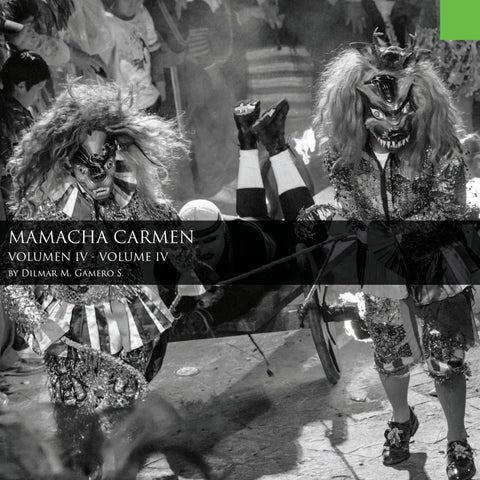
MAMACHA CARMEN VOLUMEN IV - VOLUME IV by Dilmar M. Gamero S.
Mamacha Carmen
6
DEDICATORIA
DEDICATION
A todos mis amigos paucartambinos que me han abierto las puertas de
To all my Paucartambo friends who have opened the doors of their
sus casas y las de su corazón, en especial a mis ahijados y compadres.
homes and those of their hearts, especially to my godchildren and
A mis amigos peruanos que me han acompañado en este itinerario por
“compadres.”
varios años.
To my Peruvian friends who have accompanied me on this journey for
A mis amigos que han cruzado fronteras para conocer a la Mamacha
several years.
de quien tanto he hablado y a los que aún no han llegado por allá pero
To my friends who have crossed borders to meet the Mamacha Carmen
comparten el sentimiento y la emoción que me embarga cuando hablo
of whom I have spoken so much and those who have not yet arrived
de Paucartambo y la Mamacha Carmen.
there but share the feelings and emotions that overwhelm me when I
A todos los que han apoyado este proyecto que aún no termina.
talk about Paucartambo and Mamacha Carmen. To all those who have supported this project that has not yet ended.
7
8
Prologo
Prologue
En Julio, el pueblo de Paucartambo en los Andes peruanos, celebra a
In July, the village of Paucartambo in the Peruvian Andes, celebrates its
la Virgen del Carmen: “La Mamacha Carmen”. Por más de 300 años,
miracle mother: “Mamacha Carmen.” For over 300 years, groups of
grupos de danzantes enmascarados se reúnen para celebrar su devoción
masked dancers gather to celebrate their devotion to the “Mamacha” by
a la Mamacha, cantando, bailando y rezando juntos.
singing, dancing and praying together.
Después de más de trece años participando de este ritual, he des-
After more than thirteen years of participating in this ritual, I dis-
cubierto que el verdadero milagro de la ¨Mamacha Carmen¨ es que
covered that the real miracle of “Mamacha Carmen” is that it reveals the
ella revela el sincretismo religioso de la región, y también asombra y
religious syncretism of this region, as it amazes and engages everyone
compromete a todos (participantes y visitantes) con el color, movimiento
(participants and observers alike) with color, movement and devotion
y devoción de los danzantes y sus familias. Por esa razón, mi compromiso
by the dancers and their families. For that reason, my commitment to this
con esta celebración ha inspirado la edición de este libro.
celebration inspired me to work on a richly illustrated book.
Durante las procesiones los devotos llevan unas ¨demandas” (“cajas
During the processions the devotees carry “demandas” (spiritual
con contenido espiritual”) que contienen pequeñas figuras de la
religious boxes) that contain the sacred figure of the “Mamacha.” This
¨Mamacha Carmen¨. Este libro es una metáfora de esas “demandas” que
photobook is a metaphor of those “demandas” that celebrate the mys-
celebran el viaje místico de los danzantes y el mío también, equilibran-
tical journey of myself alongside the dancers; it balances my experience
do mi experiencia como contador de historias outsider e insider en el
as a storyteller who is both an outsider and an insider to the community
pueblo y en la celebración. En esta historia trato de ser el puente que
and celebration. In this story I am a bridge that connects these different
conecta esos mundos diferentes y complementarios.
and complementary worlds.
Trabajar con herramientas digitales y procesos alternativos en la
Working with digital tools and alternative traditional printing pro-
edición de estos cinco volúmenes que conforman el libro de mi historia
cesses in a book edition to tell my story, this photobook becomes a
en Paucartambo, ha sido una experiecia mística que también evoca
mystic experience that evokes symbols from the current rituality as well.
ritos actuales. Además de cada volumen del libro, este proyecto también consiste
Besides the book, this project consists of five altarpieces (boxes), each representing one of the major groups of dancers and the “Cargo Mayor”
en cinco altares portátiles (cajas), que son mi interpretación de esas
(people who are responsible of the celebration). Each altarpiece contains
“demandas” (cuatro representan a los diecinueve grupos de danzantes y
one volume of the book and five unique Platinum/Palladium prints. The
la otra representa al “Cargo Mayor”, gente responsable de la festividad).
warm color of the Platinum/Palladium prints create the unique feeling of
Cada caja contiene un volumen del libro y cinco impresiones en platino/
an old and sacred process of transformation; images and texts connecting
paladio. El color cálido de las impresiones en platino/paladio ha creado un
earth with heaven.
sentimiento único hacia un viejo y sagrado proceso de transformación; imágenes y textos conectando el cielo con la tierra. Dilmar Mauricio Gamero Santos
9
10
Indice / Contents Prólogo / Prologue
9
Volumen IV / Volume IV
13
Capítulo 7: 17 de julio / Chapter 7: July 17th
17
Bibliografía y Referencias / Bibliography and Notes
147
11
12
VOLUMEN IV
VOLUME IV
13
14
17 de julio: Romería al Cementerio Bendición - Guerrilla
July 17th: Pilgrimage to the Cemetery Blessing - Guerrilla
Después de las celebraciones del día central, el 17 de julio es un día con
After the central day of celebrations, July 17th is a day filled with many
muchas emociones encontradas por los pasos de cargo, mucha adrenalina,
emotions because the “cargos” are transferred to the next year ones. There is a
recogimiento y regocijo a la vez.
lot of adrenaline, piety and rejoicing as well.
El día empieza temprano:
The day starts early:
7.00 am Misas en honor a la Mamacha Carmen a devoción de los carguyoc e
7.00 am Masses in honor of Mamacha Carmen because of the “carguyoc”
integrantes de las diferentes danzas. 8.00 am Tradicional romería al cementerio por parte del “cargo mayor” y las diferentes danzas. 2.00 pm Solemne procesión de la Mamacha Carmen al puente Carlos
and dance groups devotion. 8.00 am Traditional pilgrimage to the cemetery by the “cargo mayor” and the dance groups. 2.00 pm Solemn procession of Mamacha Carmen to the Carlos III bridge,
III, bendición a los cuatro puntos cardinales y entrega de la demanda a los
blessing of the four cardinal points and transfer of the “demanda mayor” to the
nuevos carguyoc.
new “carguyoc.”
4.00 pm Tradicional guerrilla en la plaza de armas con la participación de todas las danzas y población en general.
4.00 pm Traditional “guerrilla” in the main square with the participation by all the dance groups and the public.
7.00 pm Wataskama o despedida
7.00 pm Wataskama or farewell
9.00 pm Fiesta popular en la plaza de armas.
9.00 pm Popular celebration in the main square.
15
17 de julio - july 17th CAPÃTULO 7 - CHAPTER 7
18
7.00 am Misas de Danzas
7.00 am Dance Groups’ Masses
Las danzas organizadas en grupos de 4 aproximadamente se
The dance groups are organized into 4 groups and gather in the
reúnen en el templo para su misa respectiva.
church for their respective mass.
Uno de los momentos más emotivos se da al finalizar la
One of the most emotional moments occurs at the
misa. El “carguyoc” saliente transmite el “cargo” al “carguyoc”
end of the Mass. The outgoing “carguyoc” transmits the
entrante. Este momento se simboliza con la entrega de la deman-
“cargo” (responsibility of the dance group organization) to the
da. Cada comparsa entrega a los asistentes un recordatorio que
incoming “carguyoc.” This moment is symbolized by the transfer
generalmente es alusivo a cada danza.
of the “demanda” (spiritual box). After that, each dance group
Danzantes y “carguyoc” salientes realizan muestras de afecto y agradecimiento. Las lágrimas de pena de los “carguyoc” salientes por entregar el cargo y la demanda emociona a los asistentes.
gives to the audience a souvenir that is usually symbolic to each dance group. Dancers and outgoing “carguyoc” show affection and gratitude.
Después de todo, ser “carguyoc” es un gran honor, es un signo de
The tears of grief from the outgoing “carguyoc” when they transfer
devoción y cariño a la Mamacha Carmen.
the “cargo” and the “demanda” thrills the attendees. After all, being a “carguyoc” is a great honor; it is a sign of devotion and affection for Mamacha Carmen.
19
20
21
Los danzantes esperan su turno en la puerta del templo para la misa de su comparsa. The dancers wait their turn at the door of the church for the mass of their dance group.
22
23
24
Los carguyoc de las diferentes danzas esperan la bendición de los recuerdos en la misa. Luego serán entregados a los danzantes y público en general. The “carguyoc” of the dance groups awaits the blessing of the souvenirs during the mass. They will give them to the dancers and the attendees.
25
26
Paso de cargo Qhapac Negro Transfer of the “cargo� Qhapac Negro
27
28
29
30
Los Qhapac Qollas hacen su paso de cargo por la noche y toman nota de todas las ofrendas que los devotos realizan para su danza. The Qhapac Qollas made their “cargo� transfer during the evening and they register all the offerings that the devotees make for their dance group.
31
32
9.00 am Romería al Cementerio Durante la visita al cementerio los danzantes recuerdan a sus seres queridos. Una forma de mantener viva su memoria es compartiendo con ellos la comida y cantando y bailando la danza que los representa. Delante de las tumbas de los danzantes importantes los nuevos miembros prometen devoción y cariño a la Mamacha Carmen. Los caporales de cada danza bautizan y dan la bienvenida oficial a sus candidatos dándoles unos azotes como señal de compromiso.
9.00 am Pilgrimage to the Cemetery During the visit to the cemetery the dancers remember their loved ones. One way to keep their memory alive is by sharing food with them and dancing the dance that represents them. In front of the tombs of the important dancers, the new members promise devotion and affection to Mamacha Carmen. The leaders of each dance group baptize and officially welcome their candidates giving them some whips as a sign of commitment.
33
34
35
36
37
38
39
40
41
42
43
44
45
46
47
48
49
50
Durante los bautizos, casi siempre, primero les echan cerveza en el trasero y luego el caporal azota a los nuevos miembros. Cada danza tiene su estilo. During the baptisms, they usually throw beer on the candidate’s butts and then the dance group leader lashes the new members. Each dance has its own style.
51
52
53
54
2.00 pm Bendición de la Mamacha Carmen en el Puente Carlos III
2.00 pm Blessing of Mamacha Carmen on the Carlos III Bridge
Suenan las campanas y la Mamacha Carmen sale en su último
The church bells ring and the Mamacha Carmen goes out on her
recorrido hasta el puente Carlos III para dar su bendición a todo el pueblo. Es la procesión de bendición. El recorrido es más corto. Una vez la Mamacha Carmen está ubicada en el medio del puente Carlos III las cuadrillas de los Qhapaq Negros y los Qhapac Qollas realizan sus alabanzas, y cánticos de esperanza y despedida. Luego se procede al compromiso de la Mamacha Carmen de permanecer un año más en Paucartambo y se renueva el cargo del prioste. Una vez finalizado este momento, la Mamacha Carmen imparte su bendición a los 4 puntos cardinales. Es impresionante como en este momento todas las personas guardan silencio y respeto. La emoción embarga a todos los asistentes. En el retorno de la procesión participan todas las danzas y cuadrillas cargando las andas de la Mamacha Carmen por pequeños tramos, con excepción de los Saqr’as que están ubicados en los tejados y balcones cubriendo su mirada con sus garabatos.
last procession to the Carlos III bridge to give her blessing to the whole town. It is the procession of blessing. The route is shorter. Once the Mamacha Carmen is in the middle of the Carlos III bridge, the Qhapaq Negros and Qhapac Qollas perform their praises and songs of hope and farewell. Then there is the Mamacha Carmen’s commitment to stay one more year in Paucartambo and the “prioste” position (responsible of the next year organization) is renewed. Once this moment is over, Mamacha Carmen imparts her blessing to the 4 cardinal points. It is impressive how, at this moment, all the people keep silent and respectful. Joy overwhelms all attendees. In the return of the procession to the church, all the dance groups participate, carrying to Mamacha Carmen by small sections, with the exception of the Saqr’as dancers who are located on the roofs and balconies covering their eyes with their “garabatos.”
55
56
57
58
59
60
61
62
63
64
65
66
67
68
69
70
71
72
4.00 pm La Guerrilla
4.00 pm The “Guerrilla”
Una vez la imagen de la Mamacha Carmen ha regresado al templo
Once the image of Mamacha Carmen has returned to the church
después de la bendición en el puente Carlos III, empieza la guerrilla
after the blessing on the Carlos III bridge, the guerrilla starts in the
en la plaza de armas de Paucartambo.
main plaza of Paucartambo.
La gente se alista y ubica en los lugares asignados. Todos han
People get ready and locate their assigned places. Everyone has
conseguido ponchos para la lluvia porque saben que con la
ponchos for the rain because they know that there will be a lot
guerrilla habrá mucha harina tirada por los Panaderos, mucha
of flour thrown by the Bakers, a lot of beer spread by the Qhapac
cerveza roceada por los Qhapac Qollas y los Majeños, latigazos de
Qollas and the Majeños, whips of the Maqt’as, hits the bags of the
los Maqt’as, golpes con las talegas de los Chucchus y el toro Waca
Chucchus, and the Waca Waca bull will attack anyone who crosses
Waca embestirá a todo el que se cruce en su camino.
its path.
La guerrilla es la representación de la disputa por la
The “guerrilla” is the representation of the dispute over the
Mamacha Carmen entre los Qhapac Chunch’us que desean que la
Mamacha Carmen between the Qhapac Chunch’us, who want
Mamacha Carmen se quede en Paucartambo y los Qhapac Qollas
Mamacha Carmen to stay in Paucartambo, and the Qhapac Qollas
que quieren llevársela a la zona del Qollao.
who want to take her to the Qollao area.
La Imilla (danzante varón vestido de mujer, que usa una tela
The Imilla (male dancer dressed as a woman, who wears a black
negra en el rostro y representa a la mujer del alcalde de los
cloth on her face and represents the wife of the mayor of the
Qhapac Qollas) es a la que deben cuidar, y está resguardada por el
Qhapac Qollas) is the one they must protect and is sheltered by
alcalde de los Qollas en el centro de la plaza.
the mayor of the Qollas in the center of the main plaza.
Los Qhapac Qolla usan como arma de batalla sus hondas,
The Qhapac Qollas use as battle weapons their slings, “chonta”
cruces de chonta y espejos pequeños. Los Qhapac Chunch’us usan
crosses (hard wood) and small mirrors. The Qhapac Chunch’us use
sus lanzas de chonta.
their “chonta” spears.
La guerrilla empieza con la entrada de las danzas, así como
The guerrilla begins with the entrance of the dance groups, as
la muerte del embravecido toro de los Waca Waca. Luego los
well as the death of the Waca Waca raging bull. Then the Qhapac
Qhapac Qollas cierran los tres accesos de la plaza realizando
Qollas close the three entrances to the plaza performing rituals
pagos a la tierra y quemando ají para aturdir a la gente. Los
to the Mother Earth and burning chili to stun people. The Maqt’as
Maqt’as participan parodiando situaciones sociopolíticas del país
participate by parodying sociopolitical situations of the country or
o sucesos importantes para las personas de Paucartambo. El Rey
important events for the people of Paucartambo. The Chunch’u
Chunch’u organiza a sus soldados y contraataca.
King organizes his soldiers and counterattacks.
Poco a poco los Qhapac Qollas van cayendo en batalla, saliendo
Little by little the Qhapac Qollas fall in battle, and the Saqras
los Saqras a recoger a los muertos y llevárselos al infierno en el
pick up the dead Qollas, taking them to hell in the “nina carro” or
nina carro o carro de fuego.
chariot of fire.
Como resultado de esta batalla siempre ganan los Qhapac
The result of this battle is that the Qhapac Chunch’us always
Chunch’us, que al final de la guerrilla matan al alcalde de los Qollas,
win, and at the end of the “guerrilla,” they kill the mayor of the
cuyo cadáver es paseado en medio del llanto de sus paisanos y
Qollas whose corpse is carried amid the crying of his people and
finalmente conducido al infierno por los Saqras.
finally driven to hell by the Saqras.
Los Qhapac Chunch’us, como símbolo de victoria, se llevan a la Imilla de los Qollas, que representa a la Mamacha Carmen.
The Qhapac Chunch’os, as a symbol of victory, take the Imilla of the Qollas, which represents Mamacha Carmen.
73
Los Panaderos entran echando harina a todos los que se encuentran en la plaza.
74
The Bakers throw flour to all the people who are in the plaza.
75
76
Un Kachampa travieso secuestra a una visitante. A mischievous Kachampa kidnaps a visitor.
77
Los MajeĂąos entran a la plaza esparciendo cerveza entre los asistentes. The Majenos enter the plaza spreading beer among the attendees.
78
79
80
Cuando los Chucchus entran a la plaza se abren paso golpeando a la gente con sus sacos de tela. When the Chucchus enter the plaza, they make their way beating people with their cloth sacks.
81
Los Maqt’as hacen su entrada y todo es jolgorio. A su paso satirizan con la problemática política y económica del país. Sus bromas siempre han ido cargadas de un profundo sentido social. Ellos son el preámbulo para que entre el toro de los Waca Waca. The Maqt’as make their entrance and everything is fun. While they walk around the plaza they satirize the political and economic situation of the country. Their jokes have always been charged with a deep social sense of justice. They are the preamble to the Waca Waca bull entrance.
82
83
84
85
86
87
88
89
90
La Muerte del Toro Waca Waca
The Death of the Waca Waca Bull
Cuando el toro Waca Waca entra en la plaza, la adrenalina
When the Waca Waca bull enters the plaza, the adrenaline
aumenta ente la gente y los miembros de la danza.
increases among the people and members of the dance group.
El toro embiste a todos, está enfurecido, no piensa, solo se tumba sobre la gente. Los toreros entran decididos a matar al toro. Las “cholas” tratan de controlarlo, pero no pueden. Los toreros atacan al toro con la lanza y él se enfurece mucho más. Finalmente llega el matador, que con un cuchillo mata al toro. Las “cholas” lloran de pena la muerte del toro mientras lo sacan de la plaza. Para muchos la muerte del toro siginifica el inicio del fin de la fiesta de la Mamacha Carmen. La algarabía y el júbilo están llegando a su fin.
The bull attacks everyone, he is angry, he does not think, he only falls on the people. The bullfighters enter determined to kill the bull. The “cholas” try to control him, but they can not. The bullfighters attack the bull with the spear and he becomes much more enraged. Finally the killer arrives. He kills the bull with a knife. The “cholas” cry out of grief while the bull is taken out of the square because he has died. For many people, the death of the bull signifies the beginning of the end of the Mamacha Carmen festival. The joy and happiness are coming to an end.
91
92
93
94
95
96
97
98
99
100
101
102
Qhapac Qollas vs Qhapac Chunch’us
Qhapac Qollas vs Qhapac Chunch’us
Los Qhapac Qollas empiezan a tomar las esquinas de la plaza
The Qhapac Qollas start to take control of the corners of the
haciendo el pago a la tierra.
plaza performing a Mother Earth ritual.
Ellos han preparado ají en sus ollas de barro para aturdir a la gente. Poco a poco van tomando la plaza molestando a la gente y derramando cerveza sobre los asistentes. Los Qhapac Chunch’us hacen su entrada, contraatacan a los Qhapac Qollas, los van matando a todos mientras los Saqras llevan a los muertos al infierno en el nina carro. Finalmente el Rey Qhapac Chunch’u logra matar al “alcalde”
They have prepared chili in their clay pots to stun the people. Little by little, they take over the square bothering people and spilling beer over the audience. The Qhapac Chunch’us make their entrance, they counterattack the Qhapac Qollas, they kill them all and the Saqras take the dead bodies to hell in the chariot of fire. Finally, the Qhapac Chunch’u King kills the “Qhapac Qolla alcalde” and takes the Imilla as a sign of triumph.
Qhapac Qolla y toma a la Imilla como signo de triunfo.
103
Pago a la tierra Mother Earth ritual
104
105
106
Quema de ajĂ Chili burning
107
Los Qollas hacen travesuras y juegan con los asistentes. Es el espíritu de la “guerrilla”. The Qollas make mischief and play with the assistants. It is the spirit of the “guerrilla.”
108
109
110
111
112
113
114
Cuando los Qhapac Chunch’us entran en la plaza en formación de batalla, la “guerrilla” llega a su punto crucial. La confrontación es inminente. When the Qhapac Chunch’us enter the plaza in battle formation, the “guerrilla” reaches its crucial point. The confrontation is imminent.
115
Los Qhapac Qollas atacan con los signos del cristianismo. La creencia es que los Qhapac Chunch’us por ser salvajes no cristianos la cruz y el espejo (reflejo del alma y sabiduría) los abatirá. Los Qhapac Chunch’us atacan con sus lanzas de chonta. The Qhapac Qollas attack with Christian symbols. As the Qhapac Chunch’us are not Christians, the belief is that the cross and the mirror (reflection of the soul and wisdom) will defeat them. However the Qhapac Chunch’us attack with their chonta spears.
116
117
Cuando los Qhapac Chunch’us matan a los Qollas los marcan con un palos pequeños (chunch’u niguas) para reconocerlos. When the Qhapac Chunch’us kill the Qollas they mark them with small sticks (chunch’u niguas) to recognize them.
118
119
120
Una vez muertos los Qhapac Qollas, son los Qhapac Chunch’us quienes danzan alrededor de sus cuerpos inertes como signo de victoria. Once the Qhapac Qollas are dead, the Qhapac Chunch’us dance around their dead bodies as a sign of victory.
121
Los Saqras se encargan de llevar al infierno a los Qhapac Qollas muertos en combate. Van al infierno por pretender raptar a la Mamacha Carmen para llevarla a su regiรณn en el Qollao. The Saqras take the Qhapac Qollas killed in combat to hell. They go there because they pretend to kidnap Mamacha Carmen to take her to their region in the Qollao.
122
123
124
Los Saqras llevan a los Qollas al infierno en el “Nina Carro” o carro de fuego. Es impresionante como la teatralidad de la guerrilla está llena de detalles que evocan las tradiciones de esta región. The Saqras take the Qollas to hell in the “Nina Carro” or chariot of fire. It is impressive how the theatricality of the guerrilla is full of details that evoke the traditions of this region.
125
126
127
128
129
130
131
132
Mientras la guerrilla continúa y los Qhapac Qollas son derrotados, el Rey Chunch’u logra capturar a la Imilla y presentarla como trofeo de guerra. La Imilla en el imaginario paucartambino representa a la figura de la Mamacha Carmen.
While the guerrilla continues and the Qhapac Qollas are defeated, the Chunch’u King manages to capture the Imilla and present her as a war trophy. The Imilla in the Paucartambo imaginary represents the figure of Mamacha Carmen.
133
El fin de la “guerrilla” sucede cuando una vez capturada la Imilla, el “alcalde” de los Qollas muere a manos del Rey Chunch’u y sus soldados, quienes celebran la victoria. Los Saqras se encargarán de llevar al infierno al “alcalde Qhapac Qolla” dando primero un recorrido por la plaza principal. The end of the “guerrilla” happens once the Imilla is captured, the “alcalde” (leader) of the Qollas is killed by the Chunch’u King and his soldiers, who celebrate the victory. The Saqras will take the Qhapac Qolla “alcalde” body to hell, but first he is taken around the plaza.
134
135
136
7.00 pm Primer Watascama o Despedida
7.00 pm First Watascama or Farewell
Una vez terminada la “guerrilla”, las danzas se dirigen al templo
Once the “guerrilla” is finished, the dance groups are directed
para darse el abrazo del “watascama”. Luego retornan a la plaza sin caretas, con el uso de pañolones y a sones musicales de despedida en dirección a sus casas de cargo para la cena. El “watascama” es una experiencia emotiva, cargada de mucho afecto. Uno se contagia de emoción cuando los danzantes se despiden de sus compañeros hasta el próximo año. Si bien aún les queda un día más de fiesta, muchos devotos y danzantes emprenden el camino de retorno a sus casas porque sus obligaciones laborales no les permiten más tiempo fuera. La fiesta de la Mamacha Carmen poco a poco va llegando a su fin.
to the church to give the embrace of “watascama.” Then they return to the plaza without masks, with the use of “pañolones” and farewell songs in the direction of their “cargo” houses for dinner. The “watascama” is an emotional experience full of affection. One becomes emotional when the dancers say goodbye to each other until next year. Although they still have one more day of celebration, many devotees and dancers take the road back to their homes because their work obligations do not allow them more time off. The celebration of the Mamacha Carmen little by little is coming to an end.
137
138
139
140
141
142
143
144
145
146
Bibliografia y Referencias
bibliography and notes
En este volumen los textos están inspirados en el libro: “Plan de
In this volume the texts are inspired by the book: “Safeguarding
Salvaguarda de la Mamacha del Carmen” publicado por el Crespial
Plan of the Mamacha del Carmen” published by Crespial and the
y el Ministerio de Cultura (2012) y varios testimonios recogidos de
Ministry of Culture (2012) and testimonies collected from dancers
algunos danzantes y gente del lugar.
and Paucartambo people.
Otros textos han sido tomados de las leyendas del Museo de la
Another group of texts have been taken from the captions of
Dirección Desconcertada del Cultura del Cusco en Paucartambo
the Museum of the Direction of Culture of Cusco in Paucartambo,
que a su vez ha recopilado la información de los responsables de
that compiled the information from the people responsible for
cada danza.
each dance group.
Los textos en inglés han sido revisados por Peter Wool a quien estoy eternamente agradecido por su ayuda en este proyecto.
The English translation have been reviewed by Peter Wool to whom I am eternally grateful for his help in this project.
147
148