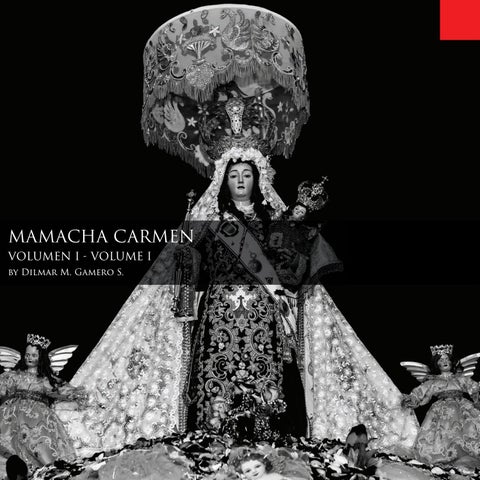
MAMACHA CARMEN VOLUMEN I - VOLUME I by Dilmar M. Gamero S.
Mamacha Carmen
6
DEDICATORIA
DEDICATION
A todos mis amigos paucartambinos que me han abierto las puertas de
To all my Paucartambo friends who have opened the doors of their
sus casas y las de su corazón, en especial a mis ahijados y compadres.
homes and those of their hearts, especially to my godchildren and “com-
A mis amigos peruanos que me han acompañado en este itinerario por
padres.”
varios años.
To my Peruvian friends who have accompanied me on this journey for
A mis amigos que han cruzado fronteras para conocer a la Mamacha
several years.
de quien tanto he hablado y a los que aún no han llegado por allá pero
To my friends who have crossed borders to meet the Mamacha Carmen
comparten el sentimiento y la emoción que me embarga cuando hablo
of whom I have spoken so much and those who have not yet arrived
de Paucartambo y la Mamacha Carmen.
there but share the feelings and emotions that overwhelm me when I
A todos los que han apoyado este proyecto que aún no termina.
talk about Paucartambo and Mamacha Carmen. To all those who have supported this project that has not yet ended.
7
8
Prologo
Prologue
En Julio, el pueblo de Paucartambo en los Andes peruanos, celebra a
In July, the village of Paucartambo in the Peruvian Andes, celebrates its
la Virgen del Carmen: “La Mamacha Carmen”. Por más de 300 años,
miracle mother: “Mamacha Carmen.” For over 300 years, groups of
grupos de danzantes enmascarados se reúnen para celebrar su devoción
masked dancers gather to celebrate their devotion to the “Mamacha” by
a la Mamacha, cantando, bailando y rezando juntos.
singing, dancing and praying together.
Después de más de trece años participando de este ritual, he des-
After more than thirteen years of participating in this ritual, I dis-
cubierto que el verdadero milagro de la ¨Mamacha Carmen¨ es que
covered that the real miracle of “Mamacha Carmen” is that it reveals the
ella revela el sincretismo religioso de la región, y también asombra y
religious syncretism of this region, as it amazes and engages everyone
compromete a todos (participantes y visitantes) con el color, movimiento
(participants and observers alike) with color, movement and devotion
y devoción de los danzantes y sus familias. Por esa razón, mi compromiso
by the dancers and their families. For that reason, my commitment to this
con esta celebración ha inspirado la edición de este libro.
celebration inspired me to work on a richly illustrated book.
Durante las procesiones los devotos llevan unas ¨demandas” (“cajas
During the processions the devotees carry “demandas” (spiritual
con contenido espiritual”) que contienen pequeñas figuras de la
religious boxes) that contain the sacred figure of the “Mamacha.” This
¨Mamacha Carmen¨. Este libro es una metáfora de esas “demandas” que
photobook is a metaphor of those “demandas” that celebrate the mys-
celebran el viaje místico de los danzantes y el mío también, equilibran-
tical journey of myself alongside the dancers; it balances my experience
do mi experiencia como contador de historias outsider e insider en el
as a storyteller who is both an outsider and an insider to the community
pueblo y en la celebración. En esta historia trato de ser el puente que
and celebration. In this story I am a bridge that connects these different
conecta esos mundos diferentes y complementarios.
and complementary worlds.
Trabajar con herramientas digitales y procesos alternativos en la
Working with digital tools and alternative traditional printing pro-
edición de estos cinco volúmenes que conforman el libro de mi historia
cesses in a book edition to tell my story, this photobook becomes a
en Paucartambo, ha sido una experiecia mística que también evoca
mystic experience that evokes symbols from the current rituality as well.
ritos actuales. Además de cada volumen del libro, este proyecto también consiste
Besides the book, this project consists of five altarpieces (boxes), each representing one of the major groups of dancers and the “Cargo Mayor”
en cinco altares portátiles (cajas), que son mi interpretación de esas
(people who are responsible of the celebration). Each altarpiece contains
“demandas” (cuatro representan a los diecinueve grupos de danzantes y
one volume of the book and five unique Platinum/Palladium prints. The
la otra representa al “Cargo Mayor”, gente responsable de la festividad).
warm color of the Platinum/Palladium prints create the unique feeling of
Cada caja contiene un volumen del libro y cinco impresiones en platino/
an old and sacred process of transformation; images and texts connecting
paladio. El color cálido de las impresiones en platino/paladio ha creado un
earth with heaven.
sentimiento único hacia un viejo y sagrado proceso de transformación; imágenes y textos conectando el cielo con la tierra. Dilmar Mauricio Gamero Santos
9
10
Indice / Contents Prólogo / Prologue
7
Volumen I / Volume I
13
Historia / History
15
Capítulo 1. Mamacha Carmen y Sus Danzas / Chapter 1. Mamacha Carmen and Her Dances
17
Capítulo 2. Puente / Chapter 2. Bridge
103
Capítulo 3. Despierto / Chapter 3. The Awakening
135
Bibliografía y Referencias / Bibliography and Notes
169
11
12
VOLUMEN I
VOLUME I
13
14
HISTORIA
HISTORY
Entre los días 15 y 19 de julio de cada año se celebra la fiesta de la Virgen del
Between July 15th and 19th of each year the festival of the Virgen del Carmen
Carmen (llamada por lo general en su forma quechua como “Mamacha Car-
(usually called in its quechua form as “Mamacha Carmen”) is celebrated in the
men”) en el pueblo de Paucartambo. La devoción a la Mamacha Carmen está
village of Paucartambo. The devotion to Mamacha Carmen is intimately linked
íntimamente vinculada a la identidad, devoción, reciprocidad, solidaridad, me-
to the identity, devotion, reciprocity, solidarity, memory and local pride of the
moria y orgullo local de Paucartambo como pueblo. La forma primordial de la
Paucartambo people. The primordial form of the expression of this identity is
expresión de esta identidad tiene como protagonista a la danza. A través de ella
the dance. It is mainly through the dance that the Mamacha is worshiped. The
se rinde culto a la Mamacha. La danza se organiza en cuadrillas y es el medio
dance is organized into groups and it is the ritual medium through which the
ritual a través del cual los paucartambinos fortalecen su identidad, y constituye
Paucartambo people strengthen their identity, and constitutes in itself a prayer,
en sí misma una plegaria, una ofrenda a la Mamacha.
an offering to the Mamacha.
Pero, ¿cómo llega la Mamacha Carmen a Paucartambo?
But how did Mamacha Carmen arrive at Paucartambo?
Son muchas las versiones que he escuchado. Unas más fantásticas y milagro-
There are many versions that I have heard. Some are more dramatic and
sas que otras. Históricamente desde 1700 aproximadamente, los españoles llegaron a
miraculous than others. In the early 1700’s the Spaniards arrived in the forest of Kosñipata and as was
la selva de Kosñipata y como era tradición para ellos, la conquista llegó de
the tradition for them, with a conquest came the Catholic religion. Paucartam-
la mano de la religión Católica. Paucartambo es un punto estratégico que
bo is a strategic point that connects the Andean Highlands of Cusco with the
comunica la Sierra Andina del Cusco con la Selva, convirtiéndose en un
Jungle, being an important geographical place and a fertile land for agriculture.
lugar geográfico importante para la conquista, además de ser una tierra fértil para la agricultura.
One tradition tells that the Virgin del Carmen (Mamacha Carmen) was taken by a landowner who snatched it from the slaves of his haciendas and then the
Una tradición cuenta que la Virgen fue tomada por un hacendado que la
Chunch’us (natives from the jungle) who fought against the Spaniards shoot her
arrebató a los esclavos de sus haciendas y que luego los Chunch’us al pelear
with three arrows, believing that it was a person. When they found it was a sta-
con los españoles, y creyendo que era una persona, le disparan tres flechazos y
tue, they declared it as a war trophy. Many people in Paucartambo say that they
luego la ofrecen como trofeo de guerra. Mucha gente del pueblo comenta que
have seen the holes caused by the arrows. Then, the story says, that the people
ha visto los huecos causados por las flechas. Luego la gente de la Selva cayó
of the Jungle fell ill and the Chunch’u king in one of his dreams saw a woman
enferma y el Rey Chunch’u en uno de sus sueños ve a una mujer que lo llama
who called him to Paucartambo and coincidentally that woman was the image
a Paucartambo y que coincidentemente era la imagen de la Mamacha Carmen,
of Mamacha Carmen. So the Chunch’u king and his soldiers enter triumphantly
así que el Rey Chunch’u y sus soldados entran triunfalmente y curados se
and were healed. At that moment he declared himself and his troops protec-
declaran protectores y guardianes de la Mamacha Carmen.
tors and guardians of Mamacha Carmen.
Otra historia narra que la figura de la Mamacha fue hallada por los Qhapac
Another story tells that the figure of the Mamacha Carmen was found by
Qolla en una de las cargas de los camélidos provenientes del Qollao y por
the Qhapac Qolla in one of the loads of their camelids on the route from the
eso la veneran y reclaman, pero al final es voluntad de la Mamacha quedarse
Qollao area and for that reason they venerate and claim it as theirs. But in the
en Paucartambo. Esta lucha por la tenencia de la Mamacha es representada
end it is the Mamacha Carmen’s will to stay in Paucartambo. This fight for the
en la guerrilla entre los Qhapac Chunch’us y los Qhapac Qollas durante los
possession of the Mamacha Carmen is represented in the guerrilla (little war)
días de fiesta.
between the Qhapac Chunch’us and the Qhapac Qollas during the festival.
Lo importante en estas historias y sus múltiples versiones, es resaltar la
The important thing in these stories is to highlight the Mamacha Carmen’s
voluntad de la Mamacha de quedarse en Paucartambo cuidando de sus pobla-
willingness to stay in Paucartambo taking care of its inhabitants. This is the
dores, es por eso que en estas fechas la máscara y los símbolos que llevan los
reason why at this time of the year the mask and the symbols worn by the
danzantes los convierten en soldados de la Mamacha, ya no hay distinciones
dancers turn them into her soldiers; there are no distinctions between poor
entre pobres y ricos, más bien, buscan generar lazos colectivos y recíprocos que
and rich, rather, they all seek to generate collective and reciprocal bonds that
renuevan cada año el favor de la Mamacha.
renew each year the favors of the Mamacha Carmen.
15
Mamacha Carmen y sus Danzas Mamacha Carmen and her Dances CAPĂ?TULO 1 - CHAPTER 1
18
Mamacha Carmen y sus Danzas
Mamacha Carmen and her Dances
Escribir sobre Paucartambo y la Mamacha Carmen es hablar sobre
Any writing about Paucartambo and Mamacha Carmen must begin
sus 19 danzas que año tras año le celebran, rezando, cantando y
by talking about her 19 dances which year after year celebrate her
bailando.
by praying, singing and dancing.
Mis primeros años en Paucartambo estaba mucho tiempo con
My first years in Paucartambo I spent a lot of time with the
los Qhapac Negros por mi ahijado Jose Ignacio que forma parte
Qhapac Negros because my godson Jose Ignacio is part of
de la cuadrilla. Después con los Qhapac Qollas por mis otros com-
this group. Then with the Qhapac Qollas because I have some
padres, y poco a poco he ido conociendo más de las otras danzas
“compadres” there, and little by little I have grown closer to more
y estrechando vínculos afectivos con sus miembros.
of the other dances and strengthened emotional ties with their
Con cada danza he ido aprendiendo el valor de la amistad y el respeto a las tradiciones paucartambinas. Sus demandas son fieles testigos de esa unión y devoción que conecta la ritualidad milenaria con el amor y cariño a la Mamacha Carmen.
members. In every dance I have grown to appreciate the true friendship and respect for Paucartambo traditions. Their “demandas” (spiritual boxes) are faithful witnesses of the union and devotion that connects the historic rituals with the love and affection to Mamacha Carmen.
19
20
Mamacha Carmen
Mamacha Carmen
Cada año la Mamacha luce diferentes trajes y sombrillas.
Each year the Mamacha Carmen wears different costumes and
En el 2018 Saúl Gil elaboró con paciencia y devoción los bordados en oro que adornan a la Mamacha Carmen.
umbrellas. In 2018, Saúl Gil made, with patience and devotion, the embroidery in gold that adorns her.
21
22
23
24
Qhapac Chunch’u La coreografía presenta varios pasos. En la “mudanza” se narran
Qhapac Chunch’u The choreography presents a series of different steps. In the
los sucesos históricos de los Chunch’us de Kosñipata en su travesía
“mudanza” (move) the historic events of the Chunch’us of Kosñi-
hacia el poblado de Paucartambo. En el “alabado” se proclama
pata are depicted as they journey towards the town of Paucar-
el juramento de eterna devoción de los Qhapac Chunch’u a la
tambo. In the “alabado” (praising) the Qhapac Chunchu’s’ path of
Mamacha Carmen. El tercer movimiento muestra la coronación
eternal devotion to Mamacha Carmen is proclaimed. The third
del Rey Chunch’u por sus soldados. En el “chontaquiro” el Rey y
movement shows the crowning of the Rey Chunch’u (king) by his
sus soldados juramentan lealtad y bravura ante la Mamacha Car-
soldiers. In the “chontaquiro” the King and his soldiers swear loyal-
men. En el “balance” resalta la exitosa travesía de los Chunch’us y
ty and courage to Mamacha Carmen. The “balance” highlights the
su triunfo ante los Qollas. Finalmente, en el “chankiriy” se desbor-
successful journey of the Chunch’us and their triumph before the
da la alegría por todos los sucesos.
Qollas. Finally, in the “chakiriy” all are overcome with joy because
Ellos siempre estarán a los pies de la Mamacha y son sus eternos guardianes.
of the events. They will be always next to Mamacha Carmen and they are her eternal guardians.
25
26
27
28
Qhapac Qolla Es una de las danzas protagonistas de la festividad de la Mama-
Qhapac Qolla This is one of the main dances of the Mamacha Carmen festival.
cha Carmen. Tiene un fuerte componente histórico y social. Se
It has a strong historical and social component. It refers back to
remonta a las redes de integración social presentes entre el Qolla-
the networks of social integration between the Qollasuyu and the
suyu y el Antisuyu, en la época prehispánica.
Antisuyu, in the prehispanic period.
Hasta hace algunos años piaras de camélidos provenientes del
Up until a few years ago, herds of llamas from the Qollao
Qollao atravesaban las frías rutas de los caminos incas hasta llegar
crossed the cold routes of the Inka roads to reach Paucartambo,
a Paucartambo, donde los Qollas accedían a productos inexis-
where the Qollas had access to products that were not available in
tentes en su zona mediante el intercambio y el trueque. La historia
their area, by means of exchange and bartering. The story tells that
popular narra que la Mamacha Carmen fue hallada en una de las
the Mamacha Carmen figure was found in one of the loads carried
cargas de los camélidos durante uno de sus viajes. De allí proviene
by the llamas during one of their journeys. That is the origin of the
el origen de la danza y su relevancia en la festividad. Su coreografía,
dance and its relevance in the festival. Its choreography, with eleven
con once movimientos, demuestra actividades pastoriles de los
movements, shows pastoral activities of the men from the Altipla-
hombres del Altiplano y su devoción a la Mamacha. Su vestimenta
no and their devotion to Mamacha Carmen. They wear a gown
es adornada con una valiosa montera, con el waq’ollo y lliklla con-
that is adorned with a valuable headdress; a “waq’ollo” and a “lliklla”
feccionadas de fibra de vicuña; y el q’epi, que contiene una vicuña
or “mantilla” made of vicuna fiber; and the “q’epi” or package that
disecada. La danza es conducida por el Alcalde Jefe, dos capitanes,
contains a desiccated vicuña.
un llamero, la Imilia (esposa del Alcalde que generalmente es un
The dance is led by the “Head Mayor,” two captains, a llama
varón con una tela negra en la cabeza) y el hijo de ambos llamado
herder, the Imilia (mayor’s wife who usually is a man with a black
“Qollita”. Los cánticos de contenido social, festivo y devocional
cover on his head) and their son, called “Qollita.” The songs, with
tienen gran belleza y profundidad.
social, festive and devotional content, are beautiful and profound.
29
30
31
32
Qhapac Negro Esclavos negros llegaron del África a Paucartambo pasando
Qhapac Negro Black slaves arrived from Africa to Paucartambo, having first
primero con sus penas por Lima y Potosí (Bolivia). En Paucar-
passed through Lima and Potosí (Bolivia) with their hardships. In
tambo encontraron a la hermosa filigranita (Mamacha Carmen).
Paucartambo they found the precious jewel (Mamacha Carmen).
Desde esos días hasta hoy y la eternidad, sustentan en la Mamacha
From those days till now and for all eternity, their life, faith, and
Carmen vida, fe y esperanza. El Qhapac Negro ora rezando, ora
hope are sustained in Mamacha Carmen. The Qhapac Negro prays
cantando, ora bailando.
when he prays, prays when he sings, and prays when he dances.
La danza es conducida por el Guiador. Sus cantos, mezcla
The dance is led by the “Guiador.” Their songs, a mix of
de quechua y español, encarnan la devoción y cariño que los
Quechua and Spanish, embody the devotion and affection that the
Paucartambinos tienen a la Mamacha Carmen. Junto a los Qhapac
Paucartambo people have for the Mamacha Carmen. Along with
Chunch’us y los Qhapac Qollas son una de las principales danzas
the Qhapac Chunch’us and the Qhapac Qollas, they are one of
dentro de la festividad.
the main dances within the festival.
33
34
35
36
Saqra
Saqra
Esta danza es interpretada en Paucartambo desde inicios del
This dance has been performed in Paucartambo since the
siglo XX. La palabra Saqra proviene del idioma quechua y quiere
beginning of the 20th century. “Saqra” is a Quechua word that
decir “travieso”, “saltarín”, “alegre” y “bromista”. En definitiva esta
means “mischievous,” “agile,” “merry,” “joker,” “little devil.” Indeed,
danza alegra la fiesta.
this dance brightens up the festival.
El Saqra representa al personaje que con hábiles y entreteni-
The Saqra represents the character who, with skillful and enter-
dos movimientos, realizados en los balcones y techos de las casas,
taining movements, performed on the balconies and roofs of the
procura tentar a la Mamacha Carmen, pero cuando ella pasa en
houses, endeavors to tempt the Mamacha Carmen, but when she
procesión frente a ellos, los Saqras se cubren los ojos con sus
passes in front of them during the procession, the Saqras cover
garabatos o bastones multicolores.
their eyes with their “garabatos” or colorful canes.
37
38
39
40
Maqt’as Los Maqt’as de Paucartambo son danzantes alegóricos que
Maqt’as The Maqt’as of Paucartambo are allegorical dancers who
representan con gracia y picardía al habitante oriundo de los
represent with grace and mischievousness the native inhabitants
Andes. Con un estilo personal, los Maqt’as satirizan el estado
of the Andes. With their personal style, the Maqt’as satirize the
de ánimo ferviente y jocoso característico de la fiesta de la
fervent and jocular spirit that characterizes the festival of the
Mamacha Carmen.
Mamacha Carmen.
Maqt’a es vocablo quechua que significa joven, mozo, soltero, casadero. Como danza simboliza la cultura nativa prehispánica. Los Maqt’as inician con jolgorio la fiesta de la Mamacha Carmen al mediodía del 15 de Julio. A su paso exteriorizan la
Maqt’a is a Quechua word that means youngster or boy, a single and marriageable man. The dance symbolizes the native Pre-Hispanic culture. The Maqt’as start the Mamacha Carmen festival with revelry
presencia humorística del folklore paucartambino. Se caracterizan
at noon on July 15th. As they pass by, they act out the humoristic
por su soberbio “Yawar Unu”, osado ritual en el que las parejas
folklore items of Paucartambo.
intercambian fuertes azotes con sus warak’as (hondas), demostrando coraje, habilidad, valentía y talento. Los Maqt’as participan en la fiesta de la fe y el folklore en grupos de danzarines, de manera individual y/o en parejas, integrando cada una de las comparsas o cuadrillas paucartambinas.
A typical performance is their superb “Yawar Unu,” a daring ritual during which the couples thrash each other with their “warak’a” (slings) showing courage, skill, bravery, and talent. The Maqt’as take part in the festival of faith and folklore either in groups of dancers, or individually, or in couples, each forming a part of the Paucartambo dance groups.
41
42
43
44
Qoyacha Es una danza mestiza de origen republicano, ejecutada por
Qoyacha This is a mestizo dance, originated in the Republican times,
jóvenes solteros de ambos sexos, quienes son rigurosamente
performed by single young men and women, who are rigorously
seleccionados. A los varones se les llama “Waynas” y a las
selected to be a part in it. The young men are called “Waynas” and
mujeres “Qoyachas”.
the young women are “Qoyachas.”
Es una danza de salón y está inspirada en las faenas agrícolas.
It is a ballroom dance but inspired by the farming tasks. It
Representa la alegría de los jóvenes y sus propósitos amorosos
represents the joy of the youngsters and their amorous intentions,
de los que nacen nuevos matrimonios. Las Qoyachas danzan
which lead to new marriages. The Qoyachas dance gracefully and
derrochando valor, gracia, coquetería y alegría, pues esta danza
flirtatiously, with great merriment, because this dance represents
representa a la juventud y el amor floreciente. La danza Qoyacha
youth and burgeoning love.
está conformada por 16 parejas, subdivididas en 4 grupos, las que
The Qoyacha dance is made up of 16 couples divided into
forman una cuadrilla. La coreografía, interpretada alegremente al
four groups, each one forming a “cuadrilla” or dance group. The
compás de la orquesta, tiene diez melodías y diez pasos: pasacalle,
choreography, interpreted in a lively way to the band music, has ten
pastor, huaylas, cachi cachischay o coronación, pantirhuay o pasa
melodies and ten steps: pasacalle, pastor, huaylas, cachi cachischay
puente, tusuycusun, k’aswa, polka o vals, pasacalle y kacharpari.
or coronación, pantirhuay or pasa puente, tusuycusun, k’aswa, polka
El paso más representativo es el Cachi Cachischay o Coronación de la Mamacha Carmen, a quien las Qoyachas y Waynas veneran.
or vals, pasacalle and kacharpari. The most representative step is the “Cachi Cachischay” that symbolizes the coronation of the Mamacha Carmen, venerated by all the Qoyachas and Waynas.
45
46
47
48
Majeño Danza de la época republicana, creada en Paucartambo para
Majeño This is a dance from the Republican time, created in Paucartam-
representar a los arrieros locales que se dedican al traslado del
bo to represent the local muleteers who transported the brandy
aguardiente producido en el Valle de Kosñipata. Durante la festivi-
produced in Kosñipata valley. During the festival of the Mamacha
dad de la Mamacha del Carmen, los arrieros del Valle de Majes de
Carmen, the muleteers from the Majes valley in Arequipa traded
Arequipa intercambiaban sus productos (vino, chancaca y otros)
their products (wine, molasses, and others) with those muleteers
con los arrieros de Paucartambo. Luego de la transacción ambos
of Paucartambo. After the transactions, the two groups feasted
grupos festejaban con sus respectivas bebidas. De esta costumbre
with their respective drinks. From this custom arises the Majeño
nace la danza Majeño, gentilicio otorgado por un paucartambino,
dance, named by a person from Paucartambo, who also created
quien además creó la danza para agasajar a la Mamacha Carmen.
the dance in honor of Mamacha Carmen.
49
50
51
52
Chucchu Esta danza, de origen selvático, es una sátira al paludismo o
Chucchu This dance, which originated in the jungle region, is a satire of
malaria, una enfermedad que adquieren las personas de los Andes
malaria or yellow fever, a sickness acquired by Andean people
cuando realizan actividades agrícolas en la selva de Kosñipata, y que
while doing agricultural work in the jungle of Kosñipata, which
causa en los pacientes continuos temblores corporales debido a
causes continuous shivering due to the high fevers and chills. The
las fiebres altas y los escalofríos. Los Chucchus vienen a Paucar-
Chucchus come to Paucartambo during the festival to receive the
tambo durante la fiesta para recibir la bendición de la Mamacha
blessing-healing of the Mamacha Carmen and go back to the jungle
y regresar a la Selva totalmente curados. La danza está integrada
fully cured. The dance group has a Machu or Caporal (the leader),
por un Machu o Caporal, dos capitanes y sus soldados, enfermeras,
two captains and their soldiers, nurses, mosquitos, and two Maqta’s.
mosquitos y dos Maqt’as.
53
54
55
56
Waca Waca “Waca” es la pronunciación en quechua de la palabra española
Waca Waca “Waca” is the Qhechua word for the Spanish “vaca” (cow). The
“vaca”. La coreografía de esta danza, recreada por la memoria
choreography of this dance, recreated from the collective memory
po- pular de los paucartambinos, es una parodia de las celebra-
of the Paucartambo people, is a parody of the Spanish bullfighting
ciones españolas de tauromaquia. Los protagonistas son el Maqt’a
celebrations. The protagonists are the Maqt’as (peasant man from
(hombre campesino de las alturas de Paucartambo), la P’asña o
the highlands of Paucartambo), the P’asña or chola (sheperherd-
chola (mujer pastora) y los toreros (personajes de linaje español).
ess), and the toreros (bullfighters of Spanish lineage). This dance
Esta danza expresa fe y devoción a la Mamacha del Carmen, pero
expresses faith and devotion to the Mamacha Carmen, but it also
además simboliza la unión artística de dos tradiciones culturales: la
symbolizes the artistic union of two cultural traditions: one from
de Sevilla en España y la de Paucartambo en Perú.
Seville in Spain, and the other from Paucartambo, in Peru.
57
58
59
60
Panadero Danza satírica de la época republicana. Aunque su origen se puede rastrear desde la Colonia. En honor y devoción para la Mamacha Carmen, la comparsa es-
Bakers This is a satirical dance of the Republican times, although its origin can be traced back to the Colonial era. In honor and devotion to the Mamacha Carmen, the dance
cenifica el proceso de elaboración del pan al compás de la música
group plays out the process of making the bread to the rhythm of
y la parodia. Es ejecutada por jóvenes solteros de ambos sexos,
the music. It is performed by unmarried young people (male and
quienes representan a los panificadores, una ocupación extendida
female), who represent the bakers, an occupation widespread in
en la provincia de Paucartambo.
the Paucartambo province.
61
62
63
64
K’achampa Tusuq Danza representativa de las huestes de la época Inca. Represen-
K’achampa Tusuq This dance represents the armies of the Inka period. The
ta a los guerreros del ejército incaico que regresaban triunfantes,
warriors of the Inca army would come back in triumph, dancing
bailando alegremente después de haber derrotado al enemigo
joyfully after their victory over the enemy (the Spanish invaders).
(invasor español). Ciertamente no es posible establecer la fecha
It is not possible to determine the date of its appearance, but it is
de su aparición, pero es una de las danzas más antiguas de Paucar-
one of the oldest dances of Paucartambo.
tambo.
65
66
67
68
Misti K’anchi Fue fundada en 1947 en ocasión de la fiesta de la Mamacha
Misti K’anchi Founded in 1947 on the occasion of the festival of the Mamacha
Carmen de Paucartambo. Es una danza representativa de la
Carmen of Paucartambo, Misti K’anchi is a typical dance from the
provincia de Canchis en su periodo colonial. Es una expresión
Canchis province in its colonial period. It is an expression of my-
de origen mítico, pues manifiesta la adoración de la diosa del
thical origin, expressing adoration of the maize goddess, mother of
maíz, madre y alimento básico de las comunidades originarias de
basic foodstuff of the native communities of Canchis. Misti K’anchi
Canchis. En definitiva, Misti K’anchi es una danza embajadora can-
is a dance that is an ambassador of Canchis, founded by the people
china fundada por los paucartambinos para la Mamacha Carmen,
of Paucartambo to make Mamacha Carmen happy.
poniéndola más alegre y feliz. La danza es mixta y está dirigida por un Alcalde (también llama-
The dance is a mixed one (male and female), led by a “Mayor” (also called Varayuq or Andean authority), and two “Captains.”
do Varayuq o autoridad andina) y dos Capitanes.
69
70
71
72
Auqa Chileno Esta danza tiene su origen en la época republicana y en caste-
Auqa Chileno This dance originated in the Republican times. In English it
llano quiere decir: “chileno enemigo”. Su coreografía es una sátira
means “Chilean Enemy.” Its choreography is a satire of the Chilean
a las huestes chilenas quienes causaron desmanes en la población
soldiers who caused havoc among the Peruvian population during
peruana durante la guerra del Pacífico.
the Pacific War.
El Machu, acompañado de su dama, dirige a la cuadrilla de solda-
The Machu (leader of the group), accompanied by his lady
dos mientras que el Maqt’a esparce alegría. El vestuario está con-
heads the group of soldiers, while the Maqt’a spreads good cheer.
formado por un sombrero de paja estilo mestizo, una máscara de
The costumes are composed of a mestizo-style straw hat, a
yeso, una camisa y chaleco para el torso, roncadoras y pantalones
plaster mask, a shirt and vest, and riding breeches with large spurs
de montar con polainas.
and leggings.
73
74
75
76
Danzaq Palabra de origen castellano adaptada al quechua que significa
Danzaq This is a Spanish word adapted to Quechua, meaning dancer or
bailarín o el que danza con frenesí. La danza exalta el ciclo vital del
person who dances with frenzy. The performance exalts the life
hombre, reverencia su relación con la naturaleza y sella su vínculo
cycle of man, reverences his relationship with nature, and seals his
con la cosmogonía andina. Son representación viva de la fecundi-
link with Andean cosmogony. They are the living representation of
dad, de la unión entre el Kay Pacha (aquí), el Hanan Pacha (arriba)
fecundity, of the union between Kay Pacha (here), Hanan Pacha
y el Uhu Pacha (adentro). El Danzaq aspira a saltos y maniobras
(above), and Uhu Pacha (within). The Danzaq aspires to leaps and
que retan la fuerza de la gravedad como queriendo alcanzar las
maneuvers that challenge the force of gravity as if he wants to
estrellas.
reach the stars.
77
78
79
80
Chunch’acha
Chunch’acha
Es una danza de origen selvático conformada por donce-
This was originally a jungle dance, performed by single young
llas solteras de la etnia Wachiperi del valle de Kosñipata. Las
ladies of the Wachiperi ethnic group from the Kosñipata Valley.
Chunch’achas ejecutan su coreografía con pasos enérgicos y al
The Chunch’achas dance their choreography energetically to the
compás de los cascabeles que suenan para ahuyentar los peligros
rhythm of the bells that are rattled to ward off the dangers of
de la selva.
the jungle.
En su colorida vestimenta representan la riqueza de la flora y
Their colorful costumes represent the wealth of flora and fauna
la fauna que les brinda la naturaleza, entre ellas semillas y frutos
that nature has given them, including seeds and fruits that are used
utilizados para comercializar o intercambias con productos de
for bartering with products from other villages.
otros pueblos.
81
82
83
84
Contradanza Es una danza de pastores que en tiempos de la era republicana
Contradanza This is a dance of shepherds who, in Republican times inhabited
llegó a instituirse en algunas ciudades del país y también en la pro-
some of the cities and the Paucartambo province. It is made up
vincia de Paucartambo. Está compuesta por un Caporal o Machu,
of a “Caporal” or “Machu,” who leads the group, and two lines of
quien dirige la cuadrilla, y por dos filas de soldados acompañados
soldiers accompanied by a “Maqt’a.” They all dance with faith and
por un “Maqt’a”. Todos bailan con fe y devoción para rendir home-
devotion to give homage to Mamacha Carmen.
naje a la Mamacha.
85
86
87
88
Paukartampus Esta danza narra el rapto de Kukuli, una hermosa mujer joven
Paukartampus This dance narrates the abduction of Kukuli, a beautiful young
de las alturas de Paucartambo, por Yuco, un misterioso personaje
woman from the highlands of Paucartambo, by Yuco, a mysterious
mitad oso y mitad hombre que también vive en las alturas. Duran-
character who is part bear and part human, who also lives in the
te las festividades Kukuli visita a la Mamacha del Carmen con Alaco,
highlands. During the festival, Kukuli visits the Mamacha Carmen
su fiel compañero. Yuco, enamorado de la joven, mata a Alaco y
with Alaco, her faithful partner. Yuco, in love with the young girl,
rapta a Kukuli para llevarla de nuevo a las alturas, donde pueda
killed Alaco and took Kukuli back to the highlands to live there
vivir con ella. La gente de Paucartambo, enterada del suceso, busca
with her. The people of Paucartambo, when they found out, went
a Yuco para darle fin a su vida y así vengar a Kukuli.
to search for Yuco to take his life and thus avenge Kukuli.
89
90
91
92
Negrillos
Negrillos
Esta danza representa a los jóvenes negros de las haciendas, que
This dance represents the young black men from the haciendas
con sus coloridas vestimentas visitaban a la Mamacha Carmen para
who, with their colorful costumes, visited the Mamacha Carmen to
contarle y quejarse de sus penas, así como agradecerle por los
tell her about their troubles and to thank her for the benefits they
favores concedidos.
have received.
Los jóvenes negros se dedicaban a la recolección y proce-
The black men worked gathering and processing grapes and
samiento de la uva y de la caña de azúcar, de donde se elabora
sugar cane from which the wine and cane liquor were prepared.
el vino y la caña respectivamente. En las noches, en las barracas,
At night, in their huts, resting after a long’s day work, the black
mientras se descansa de la jornada, los negrillos se reúnen para
workers would get together to sing and dance happily, expressing
cantar y bailar alegremente, expresando sus labores cotidianas.
joy for their daily tasks.
En las fechas importantes los negrillos vestían colores llamativos.
On important dates these people wore bright colors. To the
Al compás de sus instumentos de percusión ejecutaban danzas
rhythm of their percussion instruments they performed happy
alegres y con muchos saltos, en donde satirizaban las actitudes de
dances, jumping and leaping, and satirizing the attitudes of their
sus patrones y al mismo tiempo trataban de imitar los bailes de la
employers. At the same time they tried to imitate the dances of
región, como el huayno.
the region, such as the “huayno.”
93
94
95
96
Wayra Danza de profundo significado social. Los Wayras satirizan a las
Wayra This dance has a profound social significance. The Wayras
autoridades españolas que vinieron durante la colonia como jue-
satirize the Spanish authorities who came in the colonial times to
ces, gobernadores, abogados, fiscales, tinterillos, escribanos y otros
be judges, governors, lawyers, prosecutors, registrars and others
quienes perseguían a los naturales con sus leguleyas. En la danza,
who persecuted the local people with their legalisms. In the dance,
los Wayras hacen arrodillar a los naturales y rodeándoles cual
the Wayras make the local people kneel and surround them like
buitres a su presa, les preguntan en quechua sobre sus pertenen-
vultures around their prey, they question them in Quechua about
cias, sus bienes muebles e inmuebles, su dinero o si conocen los
their belongings, their goods and chattels, and their money or
lugares donde están los tesoros escondidos. También preguntan
whether they know the places where treasures are hidden. They
acerca de la edad de sus esposas e hijas. A cada pregunta realizada
also ask about the ages of their wives and daughters. Each ques-
en forma jocosa, los personajes incluyen el estribillo: ¡Wayra!
tion, asked in a jocular way includes the refrain: “Wayra.”
97
98
99
100
101
PUENTE - BRIDGE CAPÍTULO 2 - CHAPTER 2
104
MUNAY CHAKA PAUCARTAMBO
BEAUTIFUL PAUCARTAMBO BRIDGE
Dicen que las buenas historias unen, conectan.
It is said that good stories unite and connect.
Por más de 300 años, el puente Carlos III ha conectado el mundo con Paucartambo, lugar de ensueño. La sierra y la selva del Cusco han estrechado lazos en Paucar-
For more than 300 years the Carlos III Bridge has connected the world with Paucartambo, a dreamy place. The mountains and jungle of Cusco Province have strengthened
tambo que con sus calles y plazuelas atrae feligreses y devotos a la
their connection in Paucartambo. With its streets and squares
fiesta de la Mamacha Carmen.
it attracts parishioners and devotees to the Mamacha Carmen
El camino que actualmente dura 3 horas y que lleva desde la ciudad del Cusco hasta este lugar de balcones azules y calles an-
celebration. The road from the city of Cusco currently takes 3 hours to
gostas a más de 2900 m.s.n.m. está lleno de espacios sagrados que
reach this place of blue balconies and narrow streets. It rises more
conectan el mundo espiritual y el terrenal.
than 9300 feet above sea level and this road is full of spaces that
Aún recuerdo el mes de Julio de 2007 cuando fuimos por primera vez con José Ignacio (mi ahijado), Chobi y Ciro en una aventura que marcaría nuestras vidas por muchos años. En ese año el camino no estaba asfaltado aún y el polvo que ingresaba por las ventanas de la camioneta nos asfixiaba. Por varios años muchos feligreses viajaban en los techos de los camiones ansiosos por cruzar el río Qenqo Mayu y saludar a la Mamacha Carmen.
connect the spiritual and the earthly world. I still remember the month of July 2007 when I first went with José Ignacio (my godson), Chobi and Ciro on an adventure that marked our lives for many years. In that year the road was not yet asphalted and the dust that entered through the windows of the truck suffocated us. For many years most of the parishioners and devotees traveled on the roofs of trucks anxious to cross the Qenqo Mayu River and greet the Mamacha Carmen.
105
106
107
El Puente HuambutĂo es el primer puente que une la ciudad del Cusco con la localidad de Paucartambo. Huambutio Bridge is the first bridge that connects the city of Cusco with the province of Paucartambo.
108
109
NINAMARCA A 40 minutos de Paucartambo, sobre los 3000 msnm, estas 23 torres funerarias de la cultura Lupaca contemplan todo el valle y se convierten en el puente que une el mundo de los vivos con el de los muertos. NINAMARCA 40 minutes away from Paucartambo, at 9800 feet above sea level, there are 23 funerary towers of the Lupaca culture. They see and protect the entire valley and become the bridge that unites the world of the living with the world of the dead.
110
111
112
113
114
PAUCARTAMBO significa “colorido lugar de descanso”.
PAUCARTAMBO means: “Colorful and restful place.”
De Agosto a Junio sus casas blancas con balcones azules de
From August to June, its white houses with blue wooden
madera, sus calles estrechas y caminos empedrados convierten
balconies, its narrow streets and cobblestone roads turn this
este paisaje en un lugar de contemplación. Como dice la canción
landscape into a place of contemplation. As the song we repeat
que repetimos muchas veces: “... hermosa tierra, tierra bendita”.
says: “... beautiful land, blessed land.”
115
116
117
“Hermoso puente Paucartambo quiero dejarte mi suerte y que las aguas sepulten este corazón amante”. (Letra y música: Los Campesinos) “Beautiful Paucartambo bridge I want to leave you my luck and that the water bury this loving heart.” (Lyrics and music: Los Campesinos)
118
119
120
121
La PLAZA PRINCIPAL es un patio enorme con palmeras que parecen sombrillas y una fuente con imágenes en bronce de todos las danzas que acompañan a la “Mamacha Carmen” en su fiesta. The MAIN SQUARE is a huge patio with palm trees that look like umbrellas and a fountain with bronze images that represent the dancers that accompany the “Mamacha Carmen” in her celebrations.
122
123
PLAZA “LOS CAMPESINOS”. En el año 1966, tres músicos y cantantes paucartambinos se unieron para dar vida al alma de la fiesta. Con sus huaynos de amor y conquista, y de orgullo por su tierra, Jorge y Adolfo Núñez del Prado y Wilfredo Quintana han inmortalizado un sentimiento que para Paucartambo se han vuelto un ícono de generaciones. PLAZA “LOS CAMPESINOS.” In 1966, three Paucartambo musicians and singers came together to give life to the soul of the “fiesta.” With their huaynos (Andean songs) of love, conquest and pride for their land, Jorge and Adolfo Núñez del Prado and Wilfredo Quintana have immortalized deep feelings for Paucartambo and they have become icons for generations to come.
124
125
126
IGLESIA DE “NUESTRA SEÑORA DEL ROSARIO”
CHURCH OF “LADY OF THE ROSARY”
Cuenta la historia que en el S. XVI los religiosos Dominicos llega-
History says that in the sixteenth century members of the Domini-
ron a Paucartambo y nombraron a la “Virgen del Rosario” como
can religious order came to Paucartambo and named the “Lady
patrona del pueblo siendo la primera imagen religiosa en llegar a
of the Rosary” as patron of the town, becoming the first religious
esta Iglesia.
image in this village.
Durante todo el año la imagen de la “Virgen del Rosario” que
Throughout the whole year the figure of the “Lady of the
mide 1.35 mts. se encuentra en el altar mayor, mientras que la
Rosary,” which measures 4.4 feet tall, is located on the main altar.
Mamacha Carmen se encuentra en una de las capillas laterales y
The Mamacha Carmen figure is in one of the side chapels and only
solo en el mes de Julio se ubica en el Altar mayor y sale en pro-
during the month of July she is relocated to the main altar and
cesión para bendecir a todos sus devotos y cuadrillas de danzantes.
goes out from there in processions to bless all her devotees and
Cuando se llega a Paucartambo lo primero que se hace es entrar al templo y saludar a la Mamacha Carmen y a la “Virgen
crews of dancers. When you arrive in Paucartambo the first thing you do is enter
del Rosario”. Todas las veces que he llegado a Paucartambo (“la
the church and greet to Mamacha Carmen and the “Lady of the
tierra”) y he respirado la devoción impregnada en los muros de la
Rosary.” Every time that I have gone to Paucartambo (“la tierra”)
Iglesia, solo me ha quedado postrarme de rodillas y dar gracias por
and breathed the devotion steeped in the church’s walls, I have
todo el bien recibido y todo el cariño compartido.
remained on my knees to give thanks for all the goodness and affection received.
127
128
129
130
131
132
133
DESPIERTO - THE AWAKENING 1ro. de julio - July 1st
CAPÍTULO 3 - CHAPTER 3
136
EL DESPIERTO - 1ro. de Julio
the awakening - july 1st
Cuando uno se enamora hace de todo para estar con
When you fall in love, you do everything to be with that special
esa persona especial. Lo mismo pasa con Paucartambo y su gente. He preparado todo para salir rumbo a Paucartambo el 29 de Junio, y quien diría que cada año estaría haciendo maletas, esperando ansioso que llegue el mes de Julio para ver a los amigos y a la gente que cariñosamente me ha adoptado y acogido en sus familias. En Paucartambo este mes es de la Mamacha Carmen, por eso empezamos a celebrarla desde el 1ro. de Julio con la “Misa del Despierto” a las 4:30 am. Es una celebración más íntima, con menos gente de la que asiste a la Fiesta Central desde el 14 al 19 de Julio. La Misa la cantan los Qhapac Negros (uno de los 19 grupos de danzantes) vestidos de civil, la gente se congrega sin importarle el frío de la madrugada, y después de terminada la Misa, la Mamacha Carmen sale en procesión y recibe el primer amanecer de su mes de fiesta. Esta misa me recuerda mucho el año 2007. A las 2.00 am con José Ignacio, Chobi, Ciro y LuisMi (mi otro ahijado) salimos a Tres Cruces. Un lugar de ensueño muy cercano a Paucartambo, camino a la Selva del Manu, a 3800 m.s.n.m. Este lugar tiene la particularidad de mostrar un espectáculo natural hermoso. El sol sale del Oriente como una bola de fuego que revolotea en el espacio, la vista se extiende y se pierde sobre el horizonte de la Selva Cusqueña. Esa misma sensación de sentir los rayos del Sol acariciando la tierra en las madrugadas congelantes de este paraje, es la misma que he sentido al ver a la Mamacha Carmen después de un año de espera. Es la alegría de verse iluminar Paucartambo (¨la tierra¨) con la presencia de la Mamacha. Los Carguyoc o Cargo de las danzas (devotos de la Mamacha que asumen la responsabilidad de proveer todo lo necesario para que las comparsas y cuadrillas de danzantes puedan bailarle a la Mamacha) preparan las demandas (retablos que contienen imágenes de la Mamacha y algunos detalles típicos de cada danza con un alto valor religioso y devocional) para participar de todos los ritos y acompañar a la Mamacha Carmen y al pueblo
person. The same goes for Paucartambo and its people. I have prepared everything to leave for Paucartambo on June 29, and who would have know that every year I would be packing, waiting anxiously for the month of July to see friends and people who have lovingly adopted me and welcomed me into their families. In Paucartambo the month of July is for Mamacha Carmen. That’s why we start celebrating it on July 1st. with the “Mass of the Awakened” at 4:30 am. This is a very intimate celebration, with fewer people than the many who attend the Central Celebration from July 14 to 19. The Mass is sung by the Qhapac Negros (one of the 19 groups of dancers) dressed in civilian clothes. People gather without caring about the cold of dawn, and after the Mass is over, the Mamacha Carmen goes out in procession and receives the first sunrise of her celebration month. This Mass reminds me of the year 2007. At 2:00 a.m. I, with José Ignacio, Chobi, Ciro and LuisMi (my other godson) went to Tres Cruces. This is a dream place very close to Paucartambo, on the way to the rainforest (Selva del Manu), 12400 feet high. This special place shows a beautiful natural spectacle. The sun comes out like a ball of fire that flutters in space, the view extends and loses itself over the horizon of the Cusco Jungle. That sensation of feeling the rays of the Sun caressing the earth in the freezing dawn of this place is the same one that I feel when I see Mamacha Carmen after a year waiting. It is the joy of seeing Paucartambo illuminated (“la tierra”) with the presence of the Mamacha. The “Carguyoc” or ”Cargo” of the dance groups (devotees of the Mamacha who assume the responsibility of providing everything necessary so that the devotees can dance to the Mamacha) prepare the “demandas” (altarpieces containing images of the Mamacha and some typical details of each dance with a high religious and devotional value) to participate in all the rites and accompany Mamacha Carmen and the people of Paucartambo.
de Paucartambo.
137
138
139
La noche previa al Despierto los devotos se preparan para celebrar en la Plaza Principal con mĂşsica y fuegos artificiales. The night before the Awakening devotees prepare to celebrate in the Main Square with music and fireworks.
140
141
4:30 AM Los devotos comienzan a reunirse en el templo. Ni el frĂo ni el sueĂąo son impedimentos para que empiecen a celebrar el mes de la Mamacha Carmen.
142
4:30 AM The devotees begin to gather in the church. Neither cold nor lack of sleep is an impediment to start celebrating the month of Mamacha Carmen.
143
144
145
146
147
148
Cuando la Misa ha terminado los devotos llevan a la “Mamacha” en
When the Mass ends, the devotees take the “Mamacha” in
procesión por las calles principales de Paucartambo para que ella
procession through the main streets of Paucartambo, and she
empiece a bendecir a su pueblo.
starts to bless her people.
La Mamacha Carmen sale junto a su pueblo a recibir los
She goes out to her village to receive the first rays of the Sun
primeros rayos del Sol del mes de Julio. Así como el Sol vibra y
of the month of July. As the Sun vibrates and flits in the dawns of
revolotea en los amaneceres de Tres Cruces, ella sale a saludarlo e
Tres Cruces, she goes out to greet it and radiate “the earth” with
irradiar “la tierra” con su presencia.
her presence.
149
150
151
Margot y sus hijos son Paucartambinos. Devotos y danzantes de la Mamacha Carmen. En el 2016 ella junto a su familia y los “Carguyoc” de la Fiesta Central encabezaron la procesión porque asumieron el cargo de la Misa del Despierto. Margot and her children are “Paucartambinos.” They are devotees and dancers of the Mamacha Carmen. In 2016 she, her family and the “Carguyoc” of the Central celebration led the procession because they assumed “el Cargo” (people in charge) of the Awakened Mass.
152
153
154
155
En el 2018 el Sr. Raul Aranibar y su familia asumieron con devoción el Cargo Mayor de la fiesta y también de la Misa del Despierto. Año tras año siempre hay algún devoto que generosamente desea agradecerle a la Mamacha Carmen asumiendo esta responsabilidad. Igualmente los devotos de las diferentes danzas se presentan con sus demandas para participar del inicio de la Festividad. In 2018 Mr. Raul Aranibar and his family assumed with devotion the “Cargo Mayor” (responsibility of the whole festival) of the Celebration and also of the Awakened Mass. Year after year there is always a devotee who generously wishes to thank the Mamacha Carmen by assuming this responsibility. Likewise, the devotees of the different groups of dancers participate with their “Demandas” at the beginning of the Festival.
156
157
158
159
160
161
162
LA ESPERA
THE WAIT
Durante los dĂas siguientes la Mamacha permanece en el altar
During the following days the Mamacha remains on the high
mayor y los feligreses preparan, con misas y rezos, la llegada de la
altar. The devotees prepare, with masses and prayers, the arrival
Fiesta Principal, donde todos volverĂĄn a estar reunidos para cantar,
of the main celebration, where everyone will be reunited to sing,
bailar y rezar a la Mamacha Carmen.
dance and pray to Mamacha Carmen.
163
164
165
166
167
168
Bibliografía y Referencias
Bibliography and Notes
Capítulo 1: Los textos que describen las danzas están tomados
Chapter 1: The dance descriptions have been taken from the
de las leyendas del Museo de la Dirección Desconcertada de
captions of the Museum of the Direction of Culture of Cusco
Cultura del Cusco en Paucartambo que a su vez ha recopilado la
in Paucartambo, that compiled the information from the people
información de los responsables de cada danza.
responsible for each dance.
Capítulos 2 y 3: Los textos están inspirados en canciones del
Chapters 2 and 3: The texts are inspired by songs of the musical
grupo musical los Campesinos (grupo musical Paucartambino), el
group Los Campesinos (musical group from Paucartambo), the
“Plan de Salvaguarda de la Mamacha del Carmen” publicado por el
book: “Safeguarding Plan of the Mamacha del Carmen” published
Crespial y el Ministerio de Cultura (2012) y testimonios recogidos
by Crespial and the Ministry of Culture (2012), and testimonies
de algunos danzantes y gente del lugar.
collected from dancers and Paucartambo people.
Los textos en inglés han sido revisados por Peter Wool a quien estoy eternamente agradecido por su ayuda en este proyecto.
The English translation have been reviewed by Peter Wool to whom I am eternally grateful for his help in this project.
169
170