SRC election process nearing its end
FLAVIA DAVIDS


With the start of the second semester came the beginning of election season at Stellenbosch University (SU). The two-stage process for the election of a new Student Representative Council (SRC) for the 2023/2024 term continues. As the highest representative structure recognised by the SU Statute, the SRC is key to the functioning of the SU student body, and its primary purpose is the representation and promotion of student interests during discussions with SU administration, management and executive bodies. In terms of s 18, the university’s Student Constitution provides for the hosting of a free and fair general election process to take place during the third academic term. The election process is governed by the university’s Electoral Commission, headed by chairperson Bridget Massey, a third year LLB student at SU. As relayed to Die Matie in its article published on 16 August, the voter turnout for the 2022 SRC amounted to a mere 8.83% of the student population. The first stage of the election process was kicked off on 24 July with the opening of nominations for candidacy. After the closing of a second round of candidate nominations, which closed 08 August respectively, 21 candidates
for the SRC were nominated by the student body. These candidates include outgoing members Phiwokuhle Qabaka, who served as secretary-general & student financial access portfolio holder, Abongile Quthu, who served as manager of the transformation portfolio, as well as Brady Deveroux, who held the sports manager position for the SRC.
Mzwakhe Bolotina and Reagan Johnson, who serve as the deputy chairs of administration and media and publicity of the Democratic Alliance Student Organisation (DASO) respectively, are also in the running for a position on the SRC. The rest of the candidates include Bradley Grovers, Fatima Mahouassa, Xolisa Mdzoyi, Marothi Kgothatso Motshekga, Solomzi Mphambo, Londani Mpharalala, Nokwanda Ncwane, Daisy Ndebele, Nompumelelo Success Sibeko, Khanyisile Sibisi, Siphosihle Silamsi,
Amahle Sityata, Ampitsa Thipa, Ongezwa Qiqa Tshazi, Asanda Vilakazi and Richard Visagie.
The second leg of the election process began on 22 August with the beginning of the caucuses. During the caucuses, the candidates were expected to participate and share their thoughts surrounding a variety of issues that affect the campus community, including racial transformation and multiculturalism, gender-based violence and the eradication of academic and financial exclusion at SU. The topic of financial exclusion was especially significant against the backdrop of the National Student Financial Aid Scheme’s (NSFAS) R45 000 accommodation funding cap crisis and the issues surrounding the scheme’s direct payment system.
Sibabalwe Manyifolo, a third year LLB student at SU, expressed her hopes that the newly elected
EcoMaties raise funds for Cape honey bee
AURELIA MOUTON
In collaboration with the SRC Social Impact and Sustainability portfolio manager, Aphiwe Sithole, and the Honeybee Heroes, a Cape honey bee conservation organisation, EcoMaties launched the ‘Bee a HERO: Cape honey bee fundraiser’ on 24 August at Die Stal. EcoMaties co-chairperson, Anaïs Breytenbach, hosted the evening. The fundraiser secured two sponsors, Toco and Buxeros Capital. Those attending the fundraiser could donate towards the ‘Bee A HERO’ cause using Toco.
Tips for when the lights are out
The event included a rapidfire trivia quiz, in teams, on the Apis mellifera capensis, better known as the Cape honey bee. The Cape honey bee is integral to the maintenance of biodiversity and the flowering of the plant population of the Cape floral kingdom as it one of the primary pollinators of the region. The development of agricultural land and monocropping are depriving the Cape honey bee of its valued fynbos food resources.
Members of the winning team received a jar of honey and a

Honeybee Heroes bucket hat each. Representatives from Honeybee Heroes, Tamara du Plessis and Charné Rossouw, as well as representatives from the sponsors were in attendance.
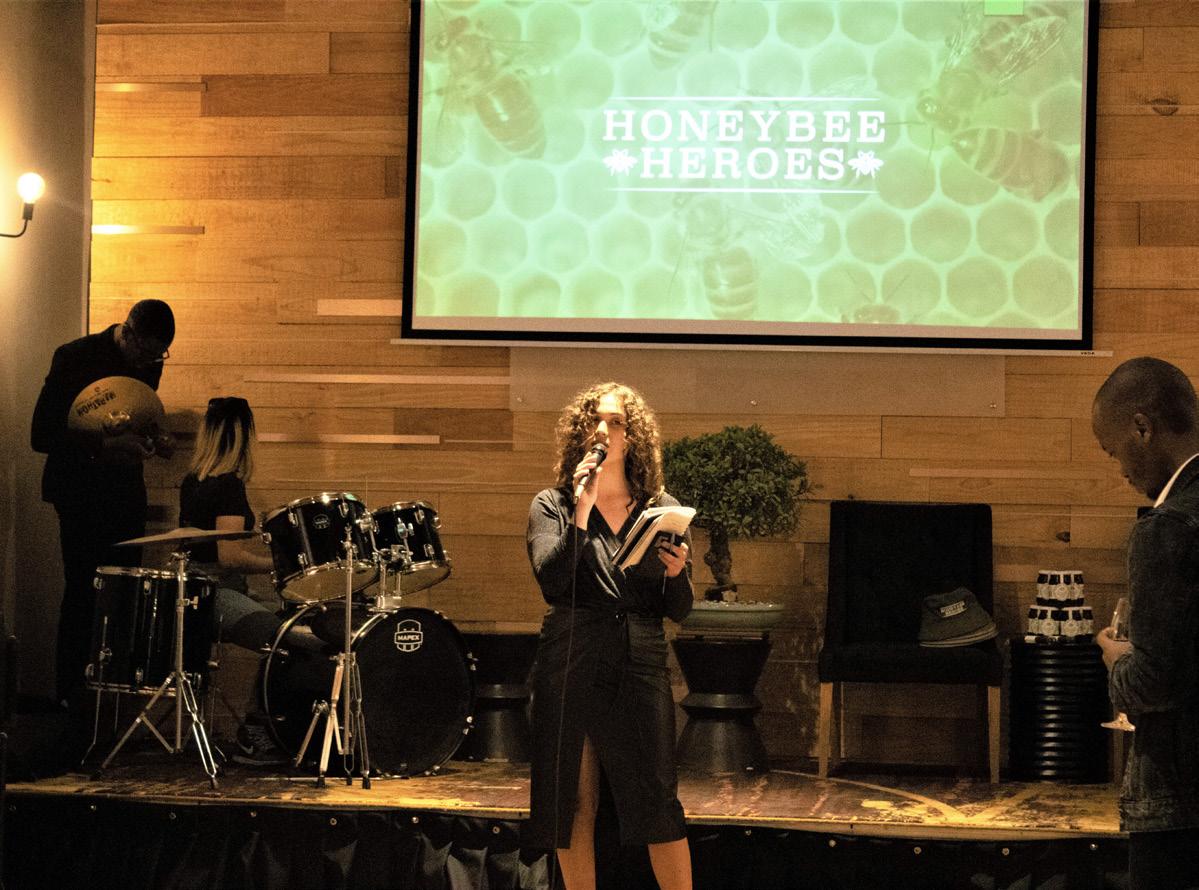
Breytenbach said, “While the fundraiser, aimed at funding a number of bee hives in the Overberg area, has a praiseworthy and laudable goal, EcoMaties could likely do more to bring to students’ attention what it is that we should be doing as a society to adopt more bee-friendly practises in our daily activities.”
SRC will serve the interests of SU students, especially surrounding issues such as food insecurity and obstacles in sourcing affordable accommodation. “One thing that I hope for is that the [elected candidates] actively advocate for students when it comes to meeting with management and for student needs. I hope that they involve students in everything, that they are transparent, and that they are open to accountability,” she explained. “I hope that they lead with their hearts and that they tackle student issues.”
The final caucus for the 2023 SRC elections is expected to take place on 31 August. The voting period opened on 24 August and will close on 31 August at 23:59. Registered students at SU are encouraged to vote and will be able to select up to 9 candidates using the mySUN voting platform, which can be found under the “Campus” tab.

The electricity crisis is frustrating and can be difficult to manage. It is imperative that Stellenbosch University (SU) students are safe and can continue their studies with as little disruption as possible. With that in mind, here is a guide to some of the dos and don’ts of load shedding. The Electricity Crisis Contingency Committee (ECCC) have warned that the crisis has led to “opportunistic criminal behaviour.” They strongly encourage that during loadshedding at night one should: Use the routes that remain illuminated and always walk around campus or town in groups. Make use of the Campus Security walk-with service by contacting an officer with 021 808 2333 or 021 808 4202 and they will escort you.
Remember to charge your devices when you have the opportunity and make use of the charging ports throughout the buildings on campus.
Donotlistentomusicwhilewalking during load shedding so you can remain aware of your surroundings. You might be tempted to use your phone light when you are walking in Stellenbosch at night during load shedding. However, exposing your phone is dangerous and could indicate that you are alone. Campus Security suggests the use of a rechargeable flashlight instead of a phone. Following these tips will ensure your safety when managing the electricity crisis. Make sure to spread the information.
30 AUGUST 2023
Amptelike studentekoerant van die Universiteit Stellenbosch I Official student newspaper of Stellenbosch University Iphephandaba elisemthethweni labafundi beYunivesithi yaseStellenbosch I Gestig in 1941
I Established in 1941
Anaïs Breytenbach, EcoMaties co-chairperson. PHOTO: Aurelia Mouton
EMMA GILES
SRC caucusses are open to the student community.
PHOTO: Emma Cochrane
Swifties are you ready for it?
pg. 7
Canola Fields Forever pg. 6
Lydia v Electorial Commission: Case Closed pg. 2
2023 Varsity Netball Tournament pg. 11
SU drops R30 mil on rectory
MARTHINUS BOTES AND LIENKE NORVAL
In May of 2023, Stellenbosch University (SU) finalised the purchase of a luxury manor house in Coetzenburg Street at an estimated value of R30 million. This four bedroom property, known as House Beauclair, was acquired in order to serve as the official private residence for the prospective new rector of 2024.

Owning and maintaining an official rectory remains a long-held tradition by many South African universities and some high schools, including the University of South Africa (Unisa), the University of Cape Town (UCT) and the University of Witwatersrand (Wits). House Beauclair will serve as the first rectory SU has provided for university leadership since 1993.
Despite the historical precedent and potential economic value, the reasoning behind returning to such a lavish tradition has been questioned by several students. In 2023, spending R30 million of SU’s budget on real estate seems superfluous when contrasted against far more pressing issues. In a time where affordable housing options for students are scarce, the energy crisis is dire and the cost of living seems to be precipitously climbing every day, the acquisition of the Beauclair House pales in comparative urgency.
“It makes me wonder where my university funds are really going,” says Hester Erasmus, second-year BA (Humanities) student.
Ocean Postman, another second-year student, has similar concerns, specifically regarding efficient student transportation. “The university is yet to address the issue of providing adequate transport during
exam season for students who live further from campus,” she deliberates.
Postman worries that this may be indicative of SU’s overarching priorities. This level of opulence definitely reads as tone-deaf when placed into a larger context. The confusion surrounding the University’s misguided priorities is shared by many other students, including Nicola Kroese, a BA student. “It definitely doesn’t seem like a good allocation of funds, especially if you look at something like how poor the interior of the BA building is,” Nicola said. “I feel embarrassed. Like, if someone that wasn’t from Stellenbosch told me about this I’d definitely feel embarrassed.”
Nutmeg, a third year BA Humanities student who had been personally affected by the NSFAS accommodation cap, stated that the decision to buy such an expensive house for the next rector is sure to widen the rift between students and University administration, especially considering the accommodation issues that still affect so many SU students. “The University could do a lot better,” Nutmeg
said. “It’s not a good move for the next rector to get a 30 million rand house during a housing crisis. Symbolically, that just seems like a spit in the face”. Although the purchase of Beauclair House is explicitly to provide a residence for Rector Wim de Villiers’ successor, the acquisition of the house may additionally act as a real estate investment for SU. In addition to the house’s utility, the purchasing of property within Stellenbosch Central may be a convenient way for SU to develop its balance sheets. International universities such as Oxford and Cambridge, for example, are also in possession of billions of pounds of real estate. This makes them some of the largest private landowners in the United Kingdom. While it may seem ridiculous to compare the acquisition of Beauclair House to the thousands of hectares owned by some universities across the globe, viewing the house’s purchase as an investment — rather than just a place for the future rector to put up her feet may make the hefty price tag easier to swallow.
Generating more problems?
LIENKE NORVAL
No less than 16 years after the onset of the South African energy crisis, citizens across the nation are still faced with exponentially worsening load shedding. At Stage 4, South Africans experience an average of six hours every day without electricity. Statistics show that we have already endured more hours of load shedding in 2023 than over the entire course of 2022. It has become undeniably clear that the current course of action is not a viable option, nor does it constitute a solution of any kind. The devastating impact that prolonged blackouts have had on the already-mangled South African economy cannot be understated. Without being able to depend on Eskom for a reliable source of electricity, South African businesses have been forced to turn to alternative power sources to avoid further haemorrhaging of capital and investments. While some have examined options in sustainable energy as a substitute, the vast majority have invested in diesel-powered or gasoline-powered generators. However, the acquisition and frequent usage of generators that run on fossil fuels is an untenable expenditure for most businesses and pose concerning issues with regards to environmental safety. The hum of generators that has become all but white noise to most South Africans is not only an annoyance, but also emit highly

NSFAS: The fight for the right to education
LAURA MUTYAMBIZI
On the 16th of August, the Stellenbosch University Student Representative Council [SU SRC] marched to the Parliament of South Africa in Cape town to submit their petition against the financial budget cuts that the National Student Financial Aid Scheme [NSFAS] has implemented. According to William Sezoe, an SU SRC member stated that the SRC “submitted a petition to the Parliament of South Africa, and will further submit the petition to the Portfolio for Higher Education before they are set to meet NSFAS on 6 September 2023.”
The SRC noted in their memorandum of demands that NSFAS has made decisions that have been detrimental to the student body as this has left many beneficiaries of NSFAS in “a state of limbo and uncertainty, even at this advanced stage of the year.” The failure of adequate funding by NSFAS has left a distressing effect on students as they are unable to cover their rent which has resulted in squatting or disengagement of their studies, and this has directly infringed students’ constitutional right to education. Additionally, the NSFAS crisis has led to food insecurity within the student community due to the scheme’s inability to provide monthly allowances as promised.
The petition urges NSFAS to have transparent consultation between the Department of
Higher Education and Training and various SRC bodies across South Africa as the previous approach of relying on the South African Union of Students [SAUS] does not represent the voices of countless students. Allowing the SRC to be party of these consultations will better reflect the needs and perspective of the entire student body. Additionally, the petition demands for: a special investigative Unit to investigate the processes of NSFAS, the decentralization of NSFAS that will allow for direct access to the scheme which will pave way for resolving issues such as appeals, the immediate review to the defunding of students, dismantle the NSFAS accommodation cap, embrace and empower the missing middle, the rejection of the 60 credit policy which denies students funding if they have 60 credits or less and lastly, reject the NSFAS direct payments mandate which perpetuates excessive fees.
The SRC demanded acknowledgment of the memorandum within 24 hours or in the next 7 working days of submission from the office of Dr. Blaze Ndzimande and the Office of Nompedulo Thobile Mkhwatshwa, and in that acknowledgment that there must be a detailed plan of action. Lack thereof will result in a continued fight towards the injustices created by NSFAS and to ensure accountability.
pollutant and toxic carbon monoxide gas.
In January 2021, Executive Mayor Advocate Gesie van Deventer released a statement declaring her goal of establishing Stellenbosch as the first municipality in South Africa sans load shedding. Although it was announced that solar panels were installed at key municipal buildings throughout town in April 2022, it is objectively clear in 2023 that Van Deventer’s goal has yet to be realised.
However, in the wake of the 15th BRICS summit held in Johannesburg on 23 August 2023, promises of extensive Chinese intervention regarding the South African energy crisis have emerged. As announced by Chinese President Xi Jinping at the summit, South Africa will be receiving R500 million worth of load shedding mitigating
equipment from China. According to Kgosietsho Ramokgopa, incumbent Minister of Electricity, this donation will provide over 500 public institutions with petrol and diesel generators, as well as batteries to ensure a stable source of power during scheduled blackouts. Although this donation has come at what feels like the fever-pitch of the electricity crisis, and relief is needed more urgently than ever, the focus does not seem to be on finding an eco-friendly or sustainable solution to our predicament.
The impact that this donation will have on the lives of the average South African is yet to be determined, but one thing is certain: Throwing more money into a burning pit of coal will do nothing to mitigate the energy crisis in the long run — no matter where the money comes from.
On Friday 4 August 2023, the hearing for the Electoral Commission and Another v Lydia Ladies Residence and another was set down. The hearing took place in the Old Main Building at Stellenbosch University (SU).
The case started on 18 October 2022 where the applicants first approached the court. The preliminary judgement of this case was handed down on Friday 31 March. The issue at hand was whether Section 53 of Lydia Residence’s Policy on Election of the House Committee during COVID-19 was consistent with the Student Constitution of SU in 2021.
On 12 May, the Appeal Court laid down a judgement in respect of an appeal to the preliminary judgement. The Appeal Court held that the decision of Student Court is not appealable, therefore the appeal and the cross appeal were dismissed.

After 11 months of being in student court, a judgement has been handed down — on 25 August. The following order was made in respect of the matter. The court found that section 128 of the Student Constitution did not require the publication of
full election results, inclusive of vote totals, but it did require that each residence has an internal mechanism to afford constituents to access electoral results thus affording transparency. Within the case, the applicant placed particular reliance on clauses 1(1), 1(4) and 1(5) which emphasised that election process are to allow “‘maximum accessibility to information 1 Schedule 2 of the Student Constitution regarding candidates and the election process,’ that are ‘free and fair,’ and that are ‘relevant and transparent.’”
Section 53 of the Lydia Residence Election Policy is found to not be in one with the Student Constitution, particularly section 128, thus deemed constitutionally invalid. There was further an inquiry into the Election Regulations, and it was found that paragraph 9(2) is ultra vires and is wholly set aside. Paragraph 9(3) is ultra vires and was adapted to ensure that election results are readily available to their constituents and at the request of the electoral commission. In closing, the Electoral Commission is to be provided with election results of all residences, inclusive of vote totals, whether it be confidential or otherwise.
NEWS 2
AMBER APRIL
Lydia v TEC: case closed
PHOTO: Abigail Baard
PHOTO: Emma Olivier
Going International: The Stellenbosch University Choir

JANI ROUX
The Stellenbosch University (SU) Choir recently traded in their gig at the Endler Hall for the International Sports Value Summit in Japan. The choir left for Japan on Sunday, 6 August. They were invited by Dr Haruhisha Handa, Chairperson of the International Sports Promotion Society and Philanthropist. The choir made their debut at the gala dinner of the Summit where they performed for over 3000 Japanese audience members. They also performed for a starstudded panel of members including legendary New Zealand fly-half Dan Carter, the Duke of Sussex Prince Harry, world class polo player Nacho Figueras, Dr Handa and our very own Rector, Prof. Wim de Villiers. The choir also performed at the RitzCarlton Hotel, where they had the opportunity to meet the Duke of Sussex in person. During this encounter, where they were asked
about Stellenbosch and what living in our beautiful town is like. Oneang Modiba, first-year BA (International Studies) student, reminisces about the meeting and encourages students who might be interested in joining the SU choir, “I don’t think I would have ever had that opportunity if it was not for the choir. [...]
I really hope this encourages anyone who has been thinking of joining the choir [to] just do it.”
In between these exciting events the group also had the chance to go sight-seeing. One of the many highlights of the trip for Francois du Toit, member of the choir and MBChB fourth-year, was seeing the Shibuya Crossing in Tokyo.
It is known as the world’s busiest pedestrian crossing, where as many as 3000 people cross at a time. Besides the architecture, du Toit also added that the culture in Japan is interesting in the sense that, ”Japan is quite an introverted country and that it is respectable to stay silent in public spaces, so we as a group
learned this and had to adapt to it.”
Some chosen members of the choir also performed at the Headquarters of Toyota,were one of the head sponsors of the summit, to show their gratitude for the generosity of all involved in inviting them and sponsoring the choirs’ stay in Japan. Alexia Duvenahange, 2nd year data science student, adds that her most memorable part of Japan was their generosity. “Whether that was the companies and foundations that dedicated themselves to enriching the livelihoods of communities through building schools and hospitals, or the people that guided us through the streets of Tokyo with the utmost patience, explaining the significance of each place we visited.
The Choir Returned to South Africa on Saturday, August 12th leaving the Maties and the rest of South Africa wondering, ‘where to next for the SU Choir?’
Maats! Die Matie here, and welcome back! It’s been quite the week...


<3 The sun is shining and the birds are chirping but it’s A1 season and evryone’s academic anxiety is crippling.


<3 But with A1 season comes bib season, so be safe out there and try not to fall in love with that random bib crush we know you have ;)
<3 And pro tip: don’t go to the bib bathrooms after 5pm, it’s nasty...
<3 Good luck to all the Maties, we hope that you postpone the parties to the 8th of September!
Hi
STUDENT LIFE 3
PHOTO:SUPPLIED
For the foodies: new restaurants in the Bosch
A Goal for your Bae: Sharing a bagel
of Neelsie staples Nca’kos and Jeff’s Place — Muller Du Plessis steps away from his prolific rugby career to pursue his passion: coffee.
“Travelling overseas, playing rugby, I love to go to coffee shops. That’s like [the] highlight of going on tour — going to a coffee shop and meeting people,” Du Plessis explains.
On 23 August the doors to 4 Plein Street flung open to crowds of curious pedestrians taking a peek at the newest shop on Stellenbosch’s culinary block. After much anticipation, BaeGoals hosted their Open Day
from 10:00 to 13:00, welcoming approximately 300 customers with the sweet enticement of a free coffee from their personal brand, Trust Coffee Co. Taking inspiration from his brother, JP Du Plessis — the owner

Du Plessis believes Stellenbosch’s renowned food and beverage scene is the perfect environment to start off his Trust Coffee journey, as he lays the company’s roots with hopes to expand in future. Trust Coffee Co. and BaeGoals are two separate companies, both owned by Du Plessis, MB, Matthew, and Kevern (partners of BaeGoals). They are confident that this collaboration will fill the gap in the market as a space for locals and students alike to enjoy premium coffee reliably paired with quality food. When asked what sets Trust’s
‘At Dusk We Dine’
of the space is to bring back what should be the forefront of a fine dining restaurant — the food. They’ve done away with views and theatrics and brought the focus back onto the food itself.
coffee apart from the masses already available in the area, Du Plessis assured — from a devoted coffee-lover’s perspective — that the blend is smooth and accessible to everyone without an unpleasant bitter aftertaste or weak wateriness. They have a 60:40 South American and African ratio of beans which is served at a medium roast. The care taken by their roastery to perfect the coffee is elegantly apparent. Du Plessis enthuses, “It’s more than coffee, it’s the culture that we have. [...] That friendship that you build is what some franchises do not always have and that’s what we want to thrive on.”
The passion they have for the coffee is shared in kind with their approach to the food. Featuring traditional boiled bagels made with quality ingredients, these bagels — prepared by a skilled chef — are guaranteed to satisfy your hunger. A lot of time has
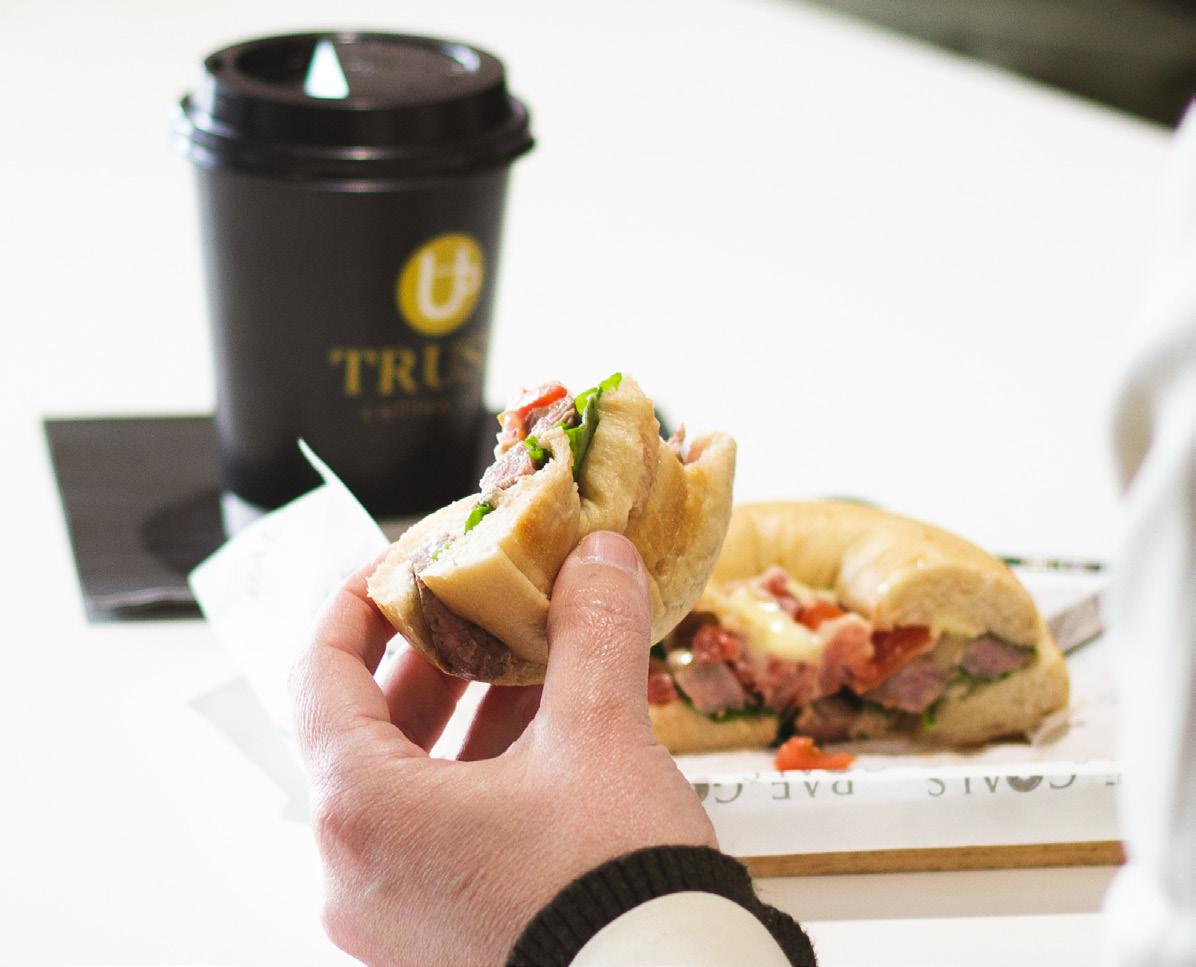
been devoted to ensuring that the taste is perfect and that the limited options are more than enough to satisfy your desires. Fear not, for if you want perfect coffee but do not feel like a bagel, they also have a selection of pastries and tarts available. Pop by to spend time with family and friends, or to simply spread love as you are welcomed by friendly staff and warm surroundings. Maybe even try the Du Plessis order of a flat white and a salmon cream cheese or steak bagel.
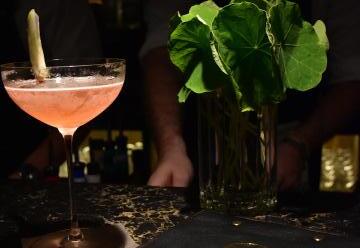
The title speaks volumes about the experience once you step foot into Dusk Restaurant, on Plein Street. Callan Austin and Darren Badenhorst have taken the understanding of ‘fine dining’ to a whole new level. You are guaranteed to have an enthralling experience as you enter into a relatively small dining room and an open-plan kitchen with dark walls and interestingly enough — no windows. You find yourself surrounded by
a number of tables. However, when you take a seat at yours an intimacy descends over the space.
Dusk is as moody and grungy a space as one can get but manages to maintain an elegance and class, with the use of classical music, that is rare to find in other spaces. One of the key features of the restaurant is the feature spotlights that cast directly onto the food, leaving everything else shrouded in darkness.
The genius behind the design
The two partners, Austin and Badenhorst, go back a decade, with Austin working under Badenhorst at two restaurants, both of which he owns. When the space became available, Badenhorst immediately jumped on the opportunity to work with Austin in establishing Dusk and Nocturne as we know it today. Dusk, having been open for almost a year before its sister bar, Nocturne, became available. One would automatically be impressed to hear that Dusk has already been adorned with awards, Badenhorst mentioned that they won “best new restaurant in the country.” They have gained exposure both locally and on an international level.
In bringing this journey to life in Stellenbosch, the partners
researched heavily into the space, with many people referring to Stellenbosch as being where “Franshoek was 10 years ago.” This makes it the perfect space to start entering into an era of fine dining and high-end food. Badenhorst describes what they are doing at Dusk as something entirely unique, stating that “there’s pretty much nothing like it.”
Their target audience has been identified as mostly tourists and people with high expendable incomes, but Badenhorst does mention that “you’ll be amazed at how many younger people come [..] Younger people who come with their parents, for example.” So, Dusk has not entirely been ruled out as a no-go for students. Both Dusk and Nocturne have an incredible way of maintaining sustainability. With both places becoming “symbiotic” with each other, as Austin stated. The by-products of each space are the products of the other, which ensures that as little waste is accumulated as possible.
On top of Nocturne and Dusk, Badenhorst has another restaurant in Stellenbosch, called Gochu Gang which is the perfect student hub for affordable Asian-style street food. Badenhorst describes the space as “fast, affordable, [and] fun.” Badenhorst also mentions plans to add a stage to their space for live-entertainment. “The space has developed to be fun [and] fast-paced,” Badenhorst says, making it clear that the space is one designed for everyone to enjoy. Both spaces have big plans for Stellenbosch. Whether it be laidback Asian street food, or a fine dining experience unlike anything you’ve ever seen before with wine pairings and fermentation libraries all being available at your fingertips as part of the experience. Go check out the Instagram accounts of all three spaces: @dusk_restaurant_; @ nocturne_stellenbosch and @ gochu_gang_stellenbosch and be utterly awestruck at what is on offer at these boundarypushing, risk taking spaces.
STUDENT LIFE 4
CIARA SHAYE SEAMAN
HANNAH DEL CUORE
PHOTO: Cheyenne Britten
PHOTO: Sebastian Whithward
PHOTO: Cheyenne Britten
Canola fields forever: a where to guide
 JANI ROUX
If you’re seeing pictures on Instagram of people living their best flower girl/boy life, but don’t know where to go stop and smell the Canolas then allow me to take you on a little roadtrip to Canola fields in this where to guide:
The first stop on our little roadtrip is going to be at the Morale Coffee stop on R44 on the way to Wellington where you can enjoy a good coffee or tea overlooking a sea of yellow.
Other popular places where the flowers are in full bloom are :
Swellendam
Malmesbury
Philadelphia
Greyton
and of course the West Coast National Park
From Gym-Goer to Gym Owner
Ever walked into the gym and thought: wow, I want to own this place. If not, you are like most of us but you are not like student entrepreneur Matt Luddit.
Matt Luddit, 3rd year Bcom Investment Management student, started his personal trainer (PT) journey in 2021 and saw a gap in the Stellenbosch fitness scene. His goal with starting his fitness brand, Become Elite, was to provide a holistic approach to fitness in the Stellenbosch active scene. Today, Matt manages 3 gyms in all the Stellenbosch Myspace locations.
His brand expands to include training plans, nutrition and all other things fitness related. For Matt, it makes sense to combine his Bcom degree and his passion for fitness. But being upgraded from gym-rat to gym-cat isn’t all fun and games. “Starting a business is hard work and discipline. If you’re doing it for the money, you will be disappointed.” says Luddit.
Luddit’s advice to any aspiring student entrepreneur is to do what they are passionate about and to keep at it even if your motivation starts lacking.
Matt prides himself on creating a private and inclusive workout space where no one has to
feel like they don’t belong. He encourages everyone to try and live a healthy lifestyle even if the Stellenbosch gym scene can be a bit intimidating. “You might think that everyone is judging you, but in reality most people are focused on themselves and feel self-conscious too.” He also believes that students can live a fun and healthy life, it doesn’t have to be one or the other. His suggestion is to follow the 80/20 rule. Live healthy 80% of the time and do what you want with the other 20%. “It’s important to make space for fitness in your student life, especially since it’s so easy to get caught up in activities that
aren’t necessarily healthy.” Those unhealthy activities can take the spotlight all too easily (shoutout to the DCM donuts and 2am pizza at NY slice), keep them at 20%.
Matt hopes to soon expand his gym to more locations in central Stellenbosch. He wants to keep helping people reach their goals, big or small. “Don’t worry about coming to the gym and not knowing what to do, that’s why I’m here: to help you figure it out!” Come on, Maties! Dust off those training shoes, dig out that stray sport bra in your cupboard and confidently go pick up the 2kg weights. We all need to start somewhere.
STUDENT LIFE 5
PHOTO: Jani Roux
ALMÉ HUGO
To date or not to date?
To date, or not to date, that is the question. Everyone has an ‘ick’ faculty that they’d rather not take their chances with. Is stereotyping just a human habit we use for self protection? Die Matie asked students their opinions on this and this is what they said:

“The biggest red flag [faculty] seems to be Sciences, with specific warning given out to anyone looking to date a BSc (CompSci) or BDatSci student, they’re reasoning being, ‘They’re just too busy.’”Then, hesitation rings out when Engineering is mentioned. “They always think they’re the coolest on campus,” Pieter van der Merwe, a second-year BA (Development and Environment) student testified.There also seems to be a sentiment to not date too close to home. Qhayiya Hillie, a second-year BA (Humanities) student said “I wouldn’t date BA, because I’m in BA and it’s too close.”While everyone seems to have their own preferences, most people cited the reason to stay away from their degree as “the vibes,” but most seemed to have no real hard feelings against anyone, after all, beauty is in the eye of the beholder.
“Regte,
niceste persoon nie.”
“Theology, cause, I don’t know — it’s just like a red flag.”
“BCom (Economics) […] no reasons.”
Timo Lindt: BCom (Finance III)


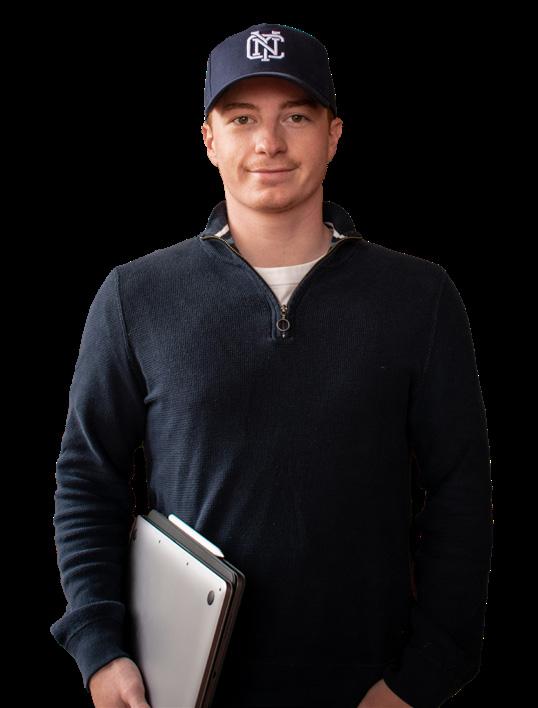
“Engineering, it sounds so nerdy.”
Pieter van der Merwe: BA (Development and Environment) II
“Ingenieurs, hulle dink net hulle is die coolste ouens op kampus, bietjie harregat. Die meisies is beter, though.”
Vuyo Sally Dambuza: BA (Humanities) II [Pictured left]

“Agriculture [or] AgriScience Pointblank. It’s just Afrikaans people […] Actually also BA, I don’t want to see you too often.”
Kelly
“BSc, I don’t have any reasons.” She later agreed that it is, in fact, just the vibes.
HOMELESS CULTURE ON CAMPUS

Stellenbosch University is home to one of the most beautiful and developed campuses in South Africa. However, Stellenbosch is still in a developing country. A developing country strife with impoverished settlements and homeless people. Stellenbosch being no exception. It’s easy for students to just try and avoid homeless people, whether it be for the very real safety reasons or wanting to remain ignorant of the harsh realities of our home. Every student has had their own experience with homeless people. Some benign and some more scary. You might want to help, but because of the ever present safety threat you don’t know how to do so safely. Often as students it’s hard to actually know how we can help or if it is even safe to help. How do we know that the money we give won’t be used for things
other than what is completely necessary? We don’t, then how can we as students help in a way that actually makes a difference in a safe and meaningful way?
Stellenbosch Night Shelter gives all homeless people a place to stay and two meals per day, with the only requirement being that whoever is being admitted be sober. They do have a second facility which does not require you to be sober called the Annex.
In addition to a place to stay, food, ablution stations they also provide social work services.
For helping the homeless find and keep jobs, by teaching skills and offering talks with insightful information. The admission fee is only R8 and R13 for those who do have a job or a grant. An ID document is also required and the time that admittance is taken is between 17:30 and 18:30 every day all year round.
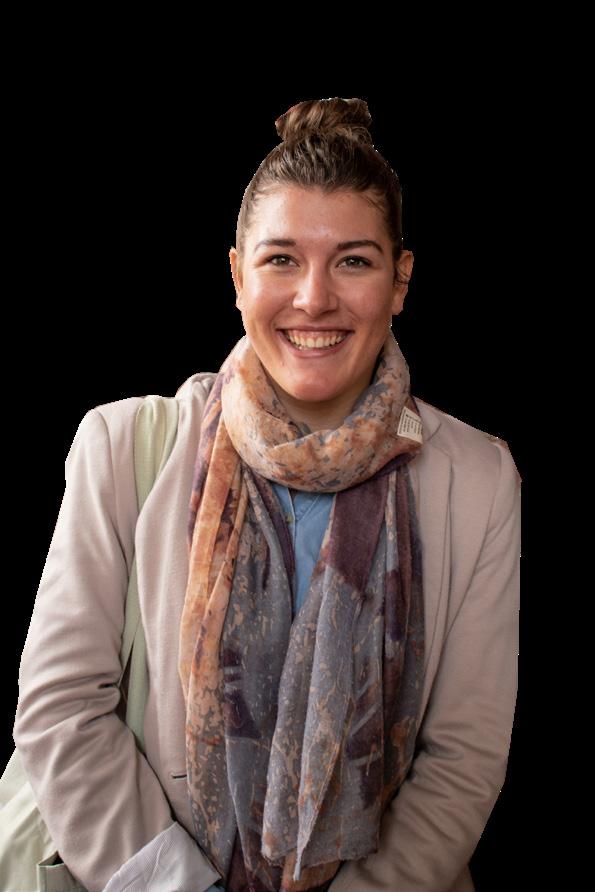

How students can help is by instead of giving homeless money and putting oneself at risk in doing so you can give them tickets to the Night Shelter which can be bought at these locations:
At WWWWthe Night Shelter
BP garage in Dorp Street
Fidders in Andringa Street
The Night Shelter can be found on 3 Tennant Street Stellenbosch 7600. Their number and email address is as follows, (021) 886 6173/066 164 3377 and info@ stellenboschnightshelter.co.za
Let’s all try to keep mindful of the people around us. How to stay safe. How to help those in need and be kind to those who don’t have the privileges we have like being able to attend our beautiful university.
PHOTO: KRIS BENCE
LIAM JEAN-PIERRE
ek bly daar weg. Ek ken hierdie een outjie wat daar is en hy’s nie die
Taro Samuelson and Nadia Swart
Hannah Olivier: first year BSc (Sport Science)
Louis Hunziker: final-year BCom (Finance)
Hainsworth: B (SocialWork) I
PHOTOS: CHARLOTTE MOSS
Jemma Pyper: BDatSci II
STUDENT LIFE 6
ARTS
AND

ENTERTAINMENT KUNS EN VERMAAK
CHEF KD IS LIVING HIS DAISIES DREAMS
From his first gig at an impromptu block party at Academia in 2019 to joining the Rocking The Daisies 2023 lineup, Stellenbosch based DJ Khanya Dilima, better known as Chef KD, is on the rise and making a name for himself. His selection as part of the annual music festival’s lineup, which takes place from 6 - 8 October, will have him join fellow South African and international musicians such as Bongeziwe Mabandla, Ami Faku, and British rapper and singersongwriter Stormzy in performing for up to 10 000 people. Die Matie was fortunate enough to get in conversation with Dilima about his achievement, which he describes as a dream come true. “It’s a great feeling,” said Dilima.
“It’s something I didn’t really expect to have happened so early in my DJing career, but I’m very excited and ready to go. It’s a huge honour and privilege to be part of that kind of lineup in one of the biggest festivals in Africa.” His achievement has given him the opportunity to reflect on the road to Daisies, and the journey that has brought him to where he is now. The world of DJing opened up to him when he was part of DJ duo K.O. with Oliver Schuurmans. From their infamous first gig at Academia, K.O. performed many gigs and gave them both an opportunity to deepen their love of performing. After the duo’s mutual decision to focus on the curation of music as individual performers in 2021,
Dilima focused his energy into crafting his personal style as an Afro House and Deep House music selector. With finding his niche came the need to choose a stage name. Dilima chose to combine his initials, which he shares with his cousin, and a reference made by singersongwriter Drake in his song Free Smoke, which featured as part of his 2017 More Life album. Drawing inspiration from a variety of South African producers such as China Chameleon, Kid Fonque and Julian Gomes, Dilima aims to create unpredictable sets for both performer and listener to enjoy. “I love the feeling of being able to curate a set for people to enjoy. For me, one of my favourite things about being
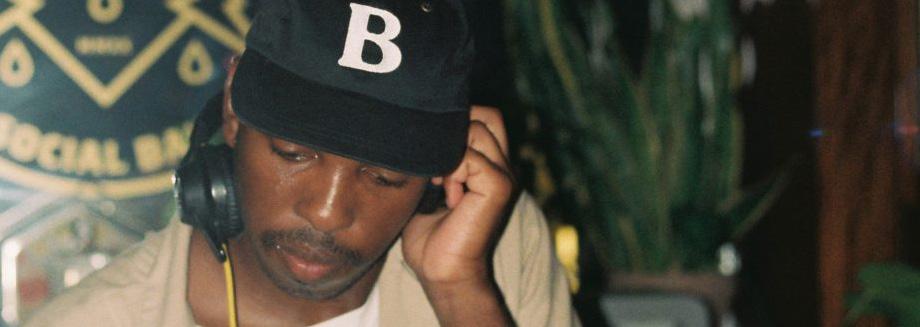
a DJ is being able to play music that [I] love for other people.” While his accolade is a huge milestone, Dilima is cognisant of the difficulties that DJs may face in chasing their dreams, and that there is much to be learned in the journey. “It’s taught me to be patient and to do it for the right reasons. It’s not always going to be busy, it’s not always going to be a great set or the perfect kind of party. Be patient, your time will come — and keep learning and growing within that.”
Dilima continues to share his love and passion for music through the hosting of collaborative events under the banner of the Pots and Pans collective, which he founded in June 2022. The collective finds a home in the Fool’s Gold Social Bar
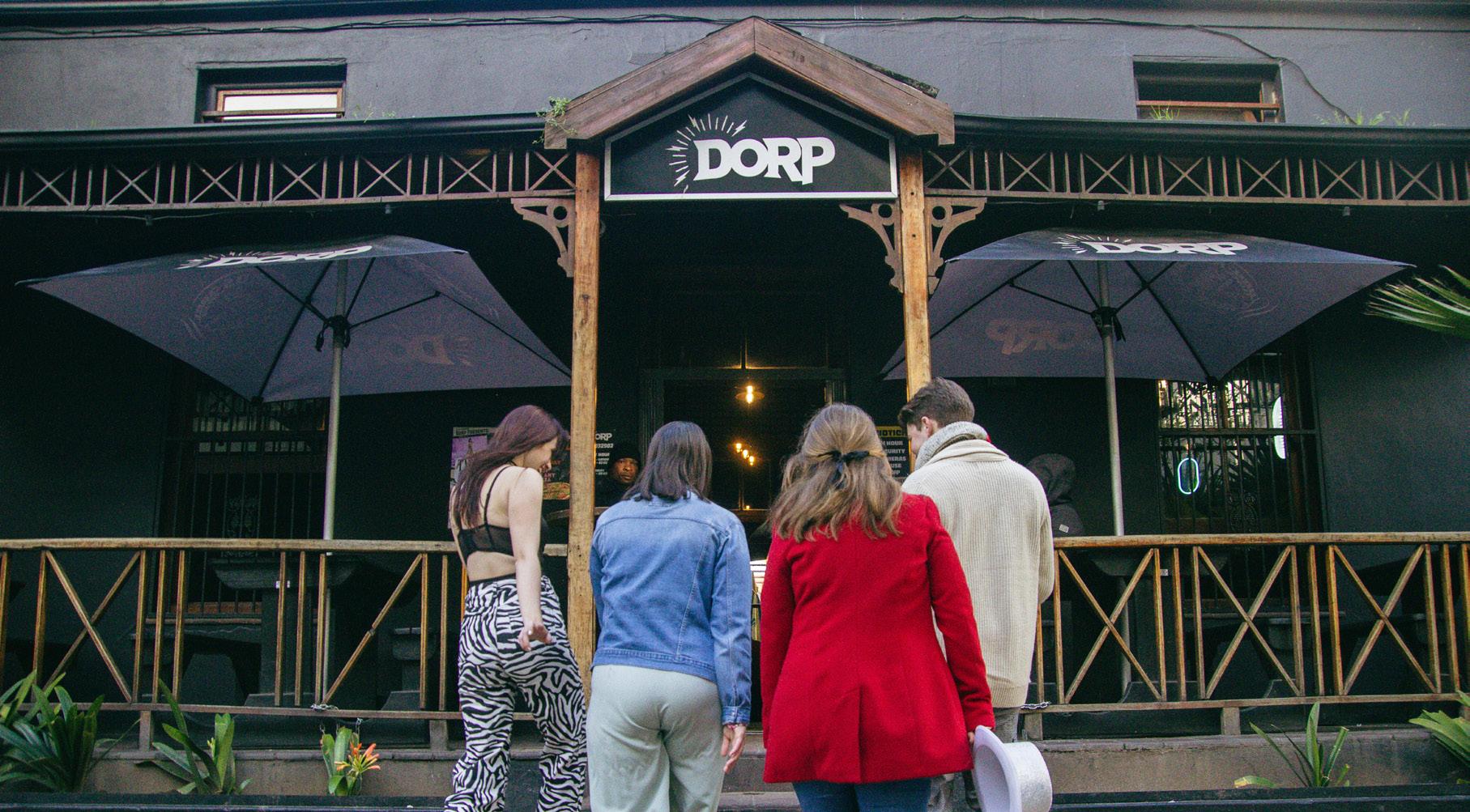
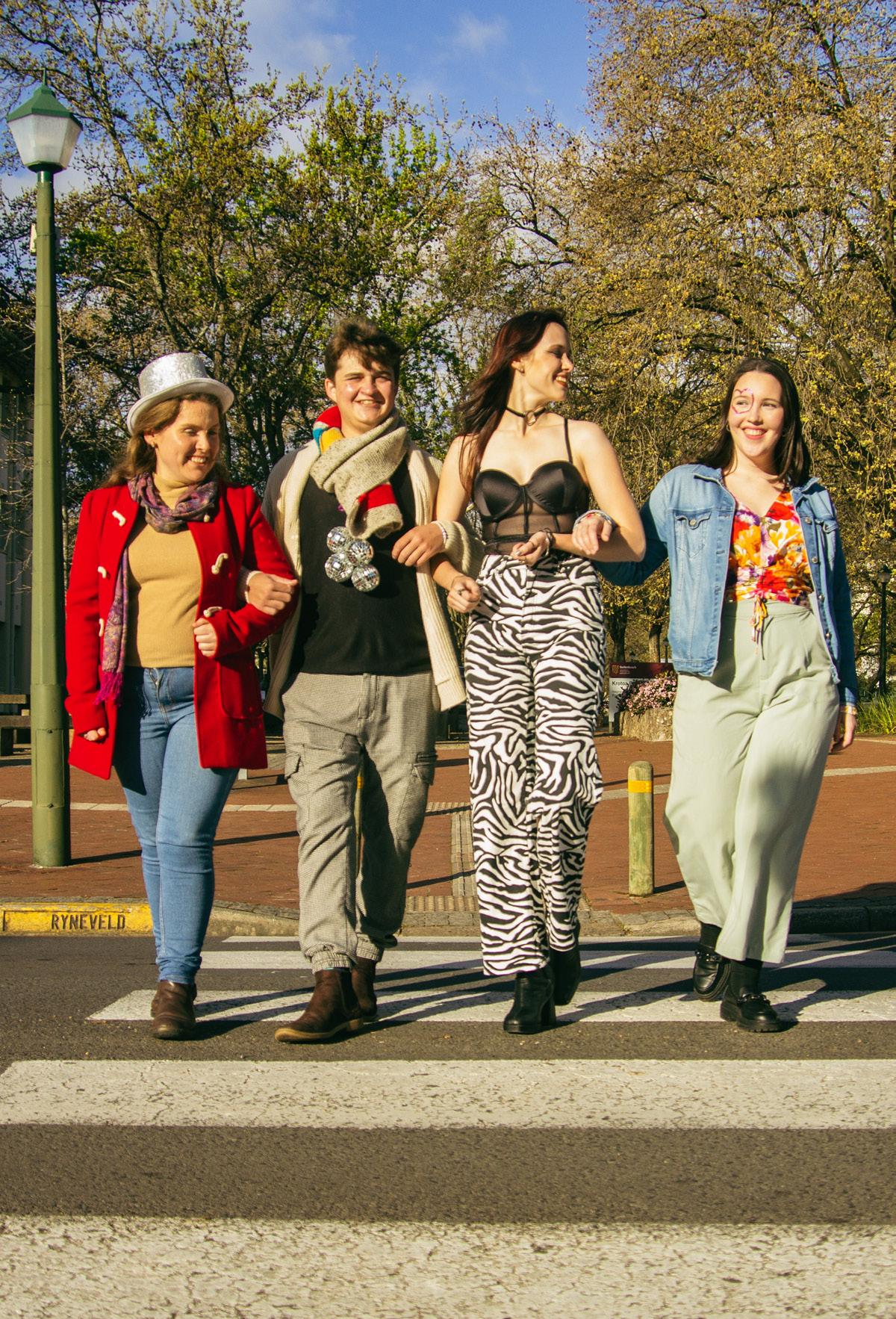
on Dorp Street. “The idea behind Pots and Pans was to do an event that was more focused on the Afro House kind of vibe that wasn’t too prominent in Stellenbosch at the time. The idea was to bring a different sound to the scene in Stellenbosch and to give more artists the platform to play that kind of music,” he explained. “It’s been great and an unbelievable journey. I’m really excited for the next few. We’re going to keep our feet on the ground and keep growing and improving.”
The next installment of Pots and Pans will take place at Fools Gold Social Bar on Friday 2 August. The lineup will feature Chef KD himself — together with DJs Bones, Shakes, Lawrence Dix and Man of Lemon.
SWIFTIES, ARE YOU READY FOR IT?
ANKE MARITZ & LENÉ VORSTER
She's the 1, a mastermind that never goes out of style. Swifties, leave a blank space on your calendars, because your wildest dreams are coming true on Friday 8 September. Dorp Bar and DJ Arnold van der Waldt are hosting a Taylor Swift party that promises a night of uninterrupted Taylor Swift music, great food, drinks, and incredible fun. The Swift phenomenon is by no means a new concept. On the
contrary, many of those who call themselves Swifties today have been bejewelled fans for years. Whether you’ve been listening since the release of Fearless, or only hum along to the chorus of
“Anti-Hero” on the radio, there is no denying that Swift is an incredible singer-songwriter. She truly has a song for any occasion — including parties where you and your friends get to shake it off.
Get together with your fellow Swifties and dress up as your favourite iconic Swift era (rumour
has it that the best dressed wins a cash prize). Dance like nobody’s watching and sing at the top of your lungs to beloved Taylor Swift hits. This event starts at 20:00 and is open to anyone and everyone, as long as you’re a Swiftie (of course) and over the age of eighteen. R50 gets you through the door. Who knows — maybe you’ll meet Mr. perfectly fine under the mirrorball. Even if you don’t, it will definitely be a night to remember. Put on your best dress, grab your cardigan and prepare to be enchanted!
DAG & NAG 7
PHOTOS: Emma-Jane Metcalf
FLAVIA DAVIDS
PHOTO: Supplied
CAMPUS COMPILATION
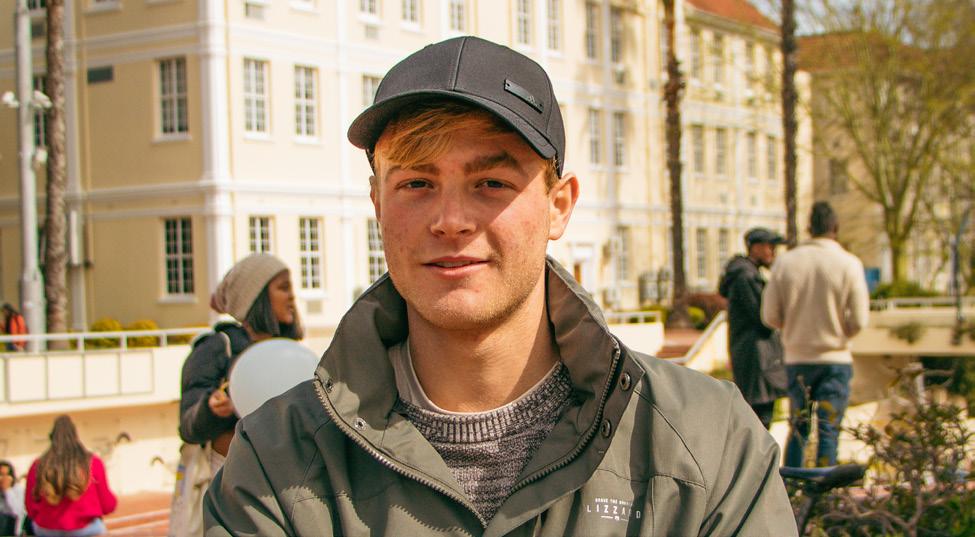
For this edition of the Dag & Nag playlist, Die Matie asked students on and around the Rooiplein to share some of their favourite songs


MUSIEK VIR DIE VOLK
VOLK is gebore om ’n gaping te vul in ’n omgewing waar Afrikaanse musiek en sokkie dikwels nie sonder mekaar genoem kan word nie. Frank Freeman, Mika Burger en Dillon Myburgh het bymekaar gekom deur hul passie vir musiek, om grense uit te daag en te bewys dat Afrikaanse musiek vir almal kan voorsiening maak.
VOLK breek weg van mainstream afrikaanse musiek en Freeman verduidelik dat hy ’n hunkering gehad het om alternatiewe afrikaanse musiek te maak. Soos hy dit beskryf, musiek wat jy nie gedink het in Afrikaans gemaak kan word nie. “Dis hoekom die band VOLK genoem is. Hierdie is my VOLK. My manier van Afrikaans wees,” verduidelik Freeman.
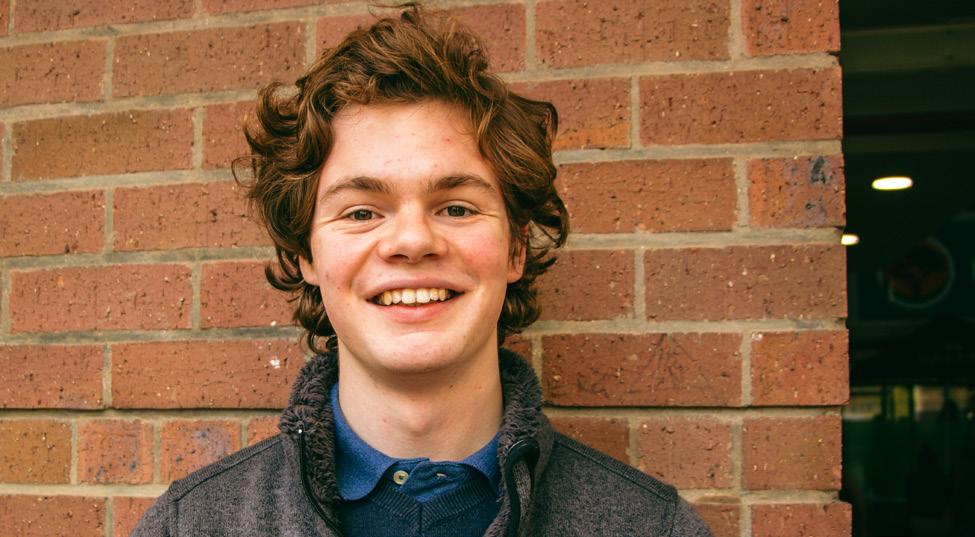
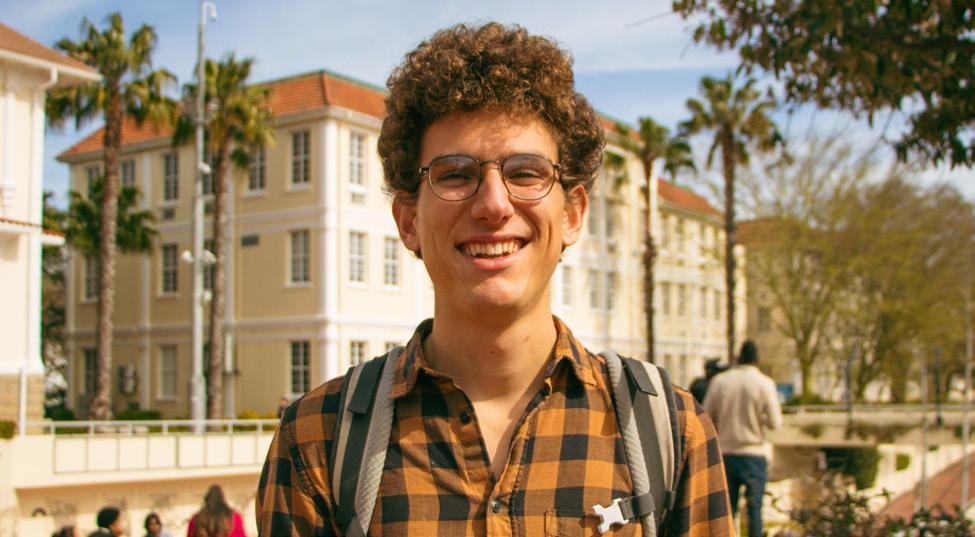
VOLK verken Afrikaans in ’n nuwe vorm en speel met genres om ’n smeltkroes van verskillende musiek te produseer. “Ons eerste twee songs wat vrysgestel was genaam Heroine en Tussen Die
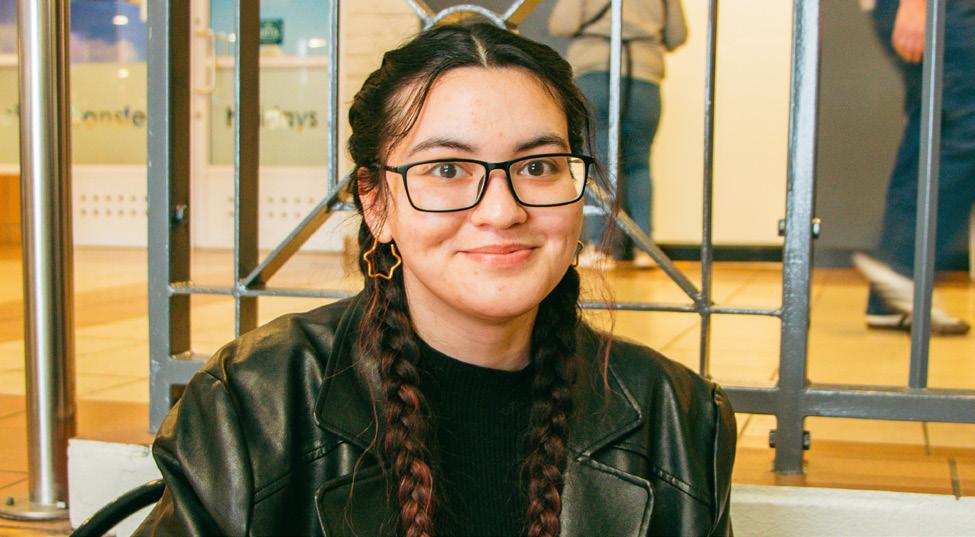
Lyne was een keer beskryf as ‘Lucas Maree wat The War on Drugs ingesluk het’, maar ons opkomende vrystellings slaan nog verder die rock n roll rigting in.”

Freeman noem dat hy musiek maak want “dit is eenvoudig net wat [hy] doen” en beskryf dit as ’n behoefte waarna hy moet omsien.
“Ons is baie trots op Tussen Die Lyne wat vroeër die jaar vrygestel is, maar ek dink die nuwe musiek wat in Oktober vrygestel gaan word, is wat my die mees excited kry. Ek is veral opgewonde oor Twak In Die Sak en Nou's Ek Blind.”
“Die VOLK trein het pas die stasie verlaat en ons gaan kyk hoe vêr ons kan gaan voor iets of iemand ons stop,” verduidelik Freeman. Hy gaan verder en noem dat hul so veel as moontlik musiek wil vrystel, Suid-Afrika toer en hoop om musiek te kan maak met Dirk van der Westhuizen.
VOLK vat 7 September
Bohemia se band night aan en Freeman glo dit gaan “vuil wees in die mooiste manier.”
SU AND UCT SINGING IN HARMONY
On 26 August, lecturers of the Voice Division of the Stellenbosch University’s (SU) Department of Music and the University of Cape Town’s (UCT) South African College of Music (SACM) took to the stage to show their students how it’s done. This was shown with a showstopping performance at the Sing Together event in the Endler Hall of the Stellenbosch Conservatorium.
The ten singers were comprised of SU’s Minette du Toit-Pearce, Lauren Dasappa, Xander Kritzinger, Elsabé Richter and Janel Speelman-Van Rooyen and UCT’s Patrick Tikolo, Jo-Nette LeKay, Violina Anguelov-Hobbs, Aubrey Lodewyk and Paulina Malefane. The group was accompanied by SU’s Mario Nell and UCT’s Esthea Kruger on the piano.

The program boasted a stunning variety of songs, ranging from classic operatic arias, to songs from musicals sung in several languages — such as English, Afrikaans, Zulu, French, Italian and German. The lecturers not only had a chance to show off their wonderful voices but also
their performing skills. Each piece was performed within its original context, allowing for a truly memorable experience.
From touching romantic duets to passionate solos, each piece was a true delight. One standout performance was Malefane and du Toit-Pearce’s rendition of “Duetto buffo di due gatti” by Gioachino Rossini. The piece is a duet between two cats, where only the word ‘meow’ is sung. This performance had the audience in stitches!
“It is such an important example for our students to observe us in concert. To see how we apply what we teach on a daily basis, but it is also a great responsibility for us to be excellent examples to them,” stated du Toit-Pearce, who is the Head of Singing at SU.
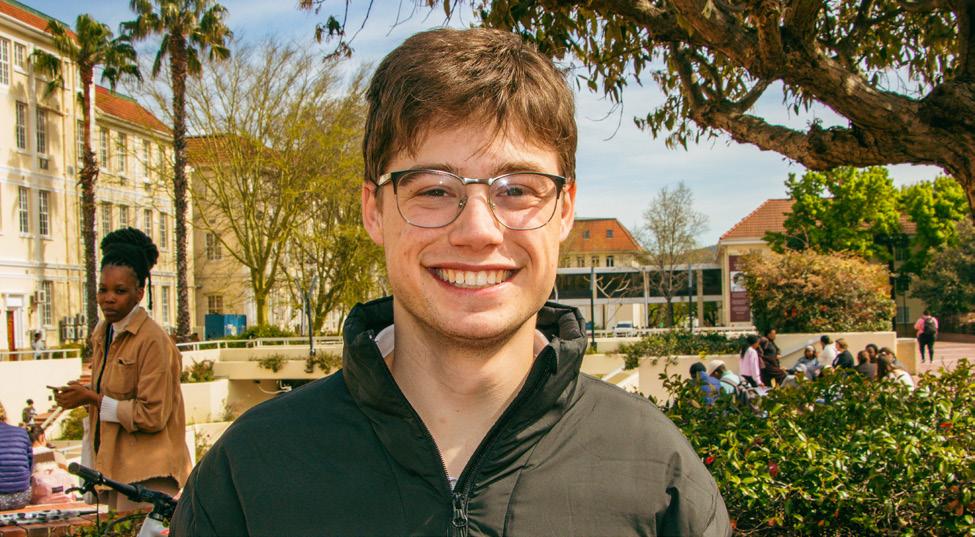

This concert truly demonstrated that these lecturers are perfect to teach singing as they are masters of their craft. The finale, a rendition of Mitch Leigh’s “To Dream the Impossible Dream”, was sung by the entire ensemble. It showed the great spirit that comes from collaborations between universities — which these two departments will hopefully continue to foster for years to come.
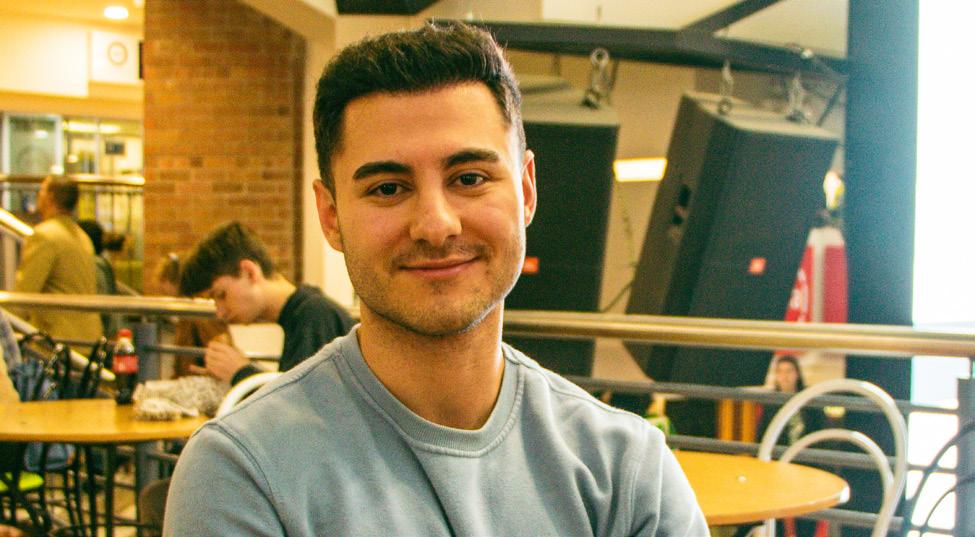
DAG & NAG 8
EMMA OLIVIER, PHOTOS BY ABIGAIL BAARD
Anke Botha Unknown / Nth - Hozier
Arnold Hattingh Rachmaninoff’s preludes
Raphael Fernandes Don’t trust me - the booyah! kids
Julian Milner Runaway - Kanye West & Pusha T
Zack Nell Homecoming - Kanye West
Boikanyo Letsoho Human Nature - Michael Jackson
Nyiko Nketane Free Mind - Tems
Matthew Newton Back In the U.S.S.R - The Beatles
Nicole Martin Motion Sickness - Phoebe Bridgers
MARGARET LOUW
PHOTO ABOVE: Margaret Louw
PHOTO LEFT: Supplied
EMMA HAMMAN
Main Editorial 2022/2023



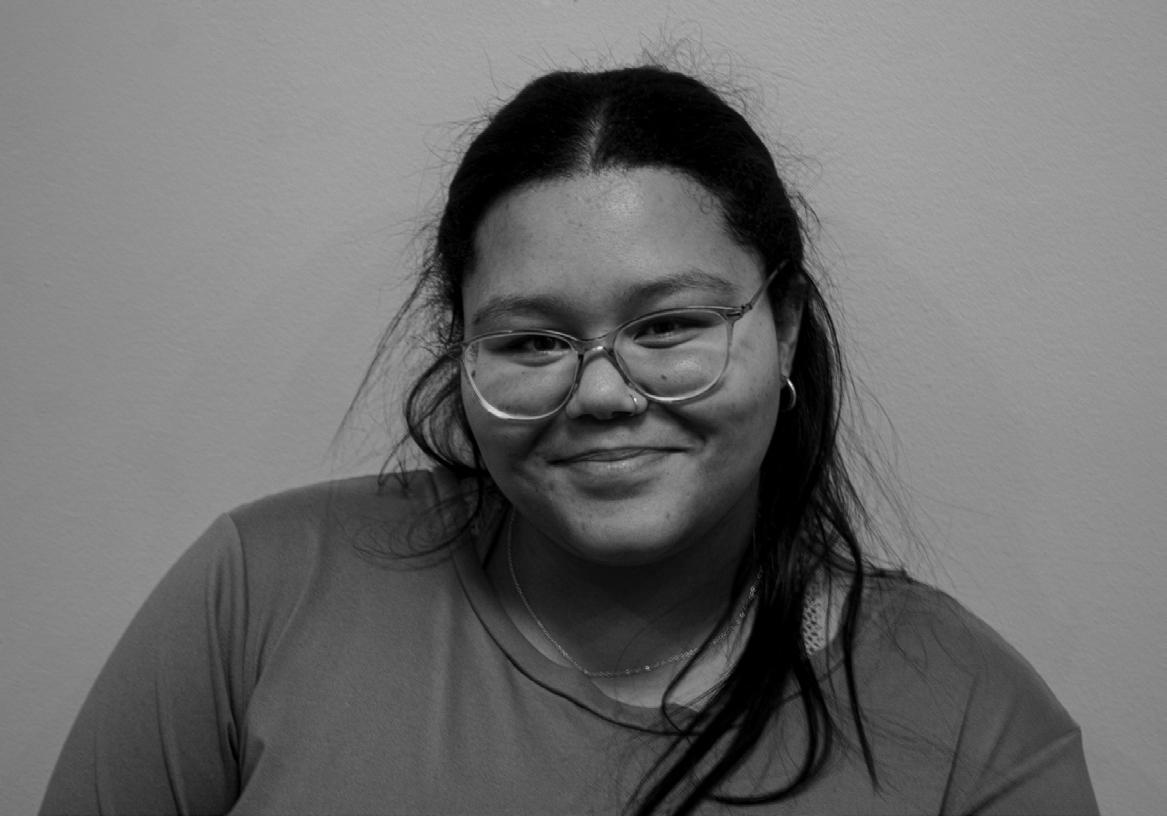








9
Emma Cochrane
Alison Hermanus
Kobus Erasmus
Kezia Daniels
Jani Roux
Emma Jane Metcalf
Tiaan Booyens
Emma Hamman
Jaime Watkins Amber April
Aurelia Mouton
Die einde kom altyd te gou en voor jy besef is dit tyd om te groet. Alles voel sentimenteel, alles voel nou belangrik. ’n Foto is nie net meer ’n foto nie, dis die laaste snapshot van oomblikke wat nou in die verlede is. ’n Koffie kry saam met ’n ou vriendin is dalk goodbye, en daai onbeplande aand op die dorp is die laaste keer wat jou beste vriende almal op een plek
Redaksioneel


bymekaar sal wees. So jy bunk daai klas en gaan sit op die Rooiplein gras, want die son skyn en almal is buite. Jy skryf dalk een van die dae jou laaste toets ooit, kry jou laaste laaste punte terug. Dis nou of nooit, doen of dood. Die toekoms is hier en kan nie meer wag nie. Tyd loop nou bietjie anders... stadig en vinnig op dieselfde tyd. Waarokal jy jouself mag bevind volgende jaar, oor vyf jaar of tien, sal jy altyd Die Matie kan oopslaan en deur memory lane loop.
Journo of the Edition: Margaret Louw
Het ek als gesê wat ek wou?
Ek hoop ek het ’n verskil gemaak, iemand iets laat voel. Ek hoop hulle noem my naam nog iewers in die toekoms, want ek was hier. Ek was hier! Ek het my hart uit geskryf en met my kamera gebieg. Ek het als gegee wat ek gehad het en meer. Ek het foute gemaak en groot oorwinnings gehad. Die hoogtepunte was om te vlieg en die laagte punte… Maar ek dink nie nou daaraan nie.
• I love reading, especially science fiction and fantasy, and my favorite book series is Terry Pratchett’s Discworld .
• I collect old and beautiful books, especially books on art history and mythology.
• I’m a big trekkie and I could probably talk about Star Trek for hours. I love spending time in nature, and nature photography is my favorite hobby.

ARGIEF / ARCHIVE
All editions of Die Matie from 1941 to 2011 are available online in PDF format as part of SUNDigital Collections on the SU Library’s website. Other editions of Die Matie are available on Issuu. Please visit https://issuu.com/diematie
Other editions of Die Matie are available on Issuu. Please visit https:// issuu.com/diematie
KLAGTEPROSEDURE EN FOUTRAPPORTERING / COMPLAINTS PROCEDURE AND REPORTING ERRORS
Die Matie is onderhewig aan ’n gedragskode wat by Studenteregering by die Afdeling Studentesake beskikbaar is.
Klagtes oor Die Matie se inhoud moet volgens die uiteengesette prosedure binne veertien dae ná publikasie aanhangig gemaak word.
Die Matie subscribes to the Press Code of Ethics and Conduct for South African Print and Online Media.

If we do not adhere to this code, please contact the Press Council of South Africa at presscouncil.org.za/https://www.
If we do not adhere to this code, please contact the Press Council of South Africa at https://www.
Ek dink aan als wat ek geleer het en wat ek nou weet. Ek weet ook nou wat ek nie weet nie. Ek dink aan vriendskap wat deur die vuurdoop van ink en papier gesmee is, en mense wat in my glo. Ek het al vergeet van die wat nie. Ek dink aan vrede maak met veilbaarheid en menslikheid en eerlikheid. Ek dink aan my voorgangers en waar hulle nou is. Ek dink aan die verlede en my toekoms. Hier kleef geskiedenis aan die mure, sypel uit die ou koerante, en staar
my in die gesig en vra “het jy als gesê wat jy moes?”

Ek sal altyd kan terug kom, maar ek sal nooit weer kan bly nie. Ek moet groet, my goed oppak en by die deur uitloop as ‘n nuwe mens…ek kan seker omkyk maar nie vir te lank nie. My pen huiwer om ’n punt op hierdie sin te sit. Ek teken af.
RAAK BETROKKE / HELP OUT KONTAK ONS /GET INVOLVED
To get involved as journalist, reach out to us on any of our social media platforms or send an email to 21801886@sun.ac.za
CONTRIBUTORS
EMAIL diematie75@gmail.com
WEBSITE www.diematie.co.za

INSTAGRAM @diematie
ADS diematieads@gmail.com
FACEBOOK www.facebook.com/diematie
Editorial staff
Editor-in-Chief Aurelia Mouton
Layout Editor Jaime Watkins
Photo Editor Emma Jane Metcalf
News Amber April
Student Life Jani Roux
Dag & Nag Kobus Erasmus
Sport Kezia Daniels
Sub-editor (Eng) Alison Hermanus
Sub-editor (Afr) Aldo Horn

Social Media Emma Hamman
Online Jani Roux
Managing Editor Tiaan Booyens
Financial Manager Emma Cochrane
LAYOUT: Helena Reid
PROOFREADERS: Abigail de Klerk Simone Christain Theodora Njati
10
Aurelia Mouton Hoofredakteur 2022/2023
WC Intervarsity Tournament: The #MaroonMachine Kicks into High Gear
OCEAN POSTMAN
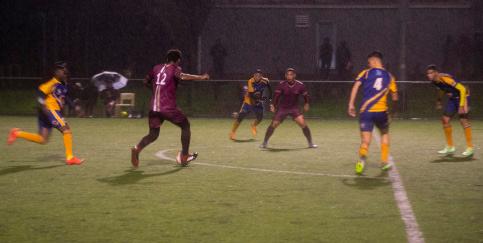
Stellenbosch Football Club (Maties FC) snagged a convincing win against the University of the Western Cape Football Club (UWC FC). The game ended 3-0 in a fastpaced opener to the Western Cape Intervarsity tournament at the Lentelus Sportsgrounds. Although the rain drenched the pitch throughout the match, it didn’t at all dampen the players’ heated gameplay — or the mood of the small but enthusiastic crowd of supporters. Maties FC’s first match of the Intervarsity league saw them coming up against UWC FC on home turf on 22 August at 19:50 — for the men’s teams. The first women’s team match of the tournament, which was to take place at 18:00, was postponed. It was around the same time last year that Maties FC beat out
the Cape Peninsula University of Technology (CPUT) and took home the trophy at the WC Intervarsity competition. Coincidentally the victory took place on the very same home ground of Lentelus, and so the pressure was on the reigning champions to start with their best foot forward. The last time these two teams faced off was at a friendly match at Lentelus just two months prior.
Although the women’s fixture was cancelled, head coach of the Maties FC women’s team, Joanne Solomons, said that they would be picking up from last year. She added that the team’s morale is high, emphasising that they would be continuing training, preparing mentally and physically going into the rest of the tournament.
While Maties FC hoped to get the Maroon Machine off to a red-hot start, the UWC FC Blue and Golds have proved they are
not a side to be underestimated, as shown by their performance in the Varsity cup thus far.
Both sides found the slick pitch to be an obstacle, but despite this Maties player, Mvikeli Mahlalela, quickly took advantage of UDubs giving up their narrow window of possession in the first half. This led to Mahlalela scoring the first goal of the match. UWC attempted a quick counter that was quickly obstructed by Maties FC defence. Maties FC took the first corner of the match. They continued to apply pressure and keep the Blue and Golds’ defenders busy.
The second goal of the match came from an assist made by Keane van de Vindt to Ronaldinho Johnson, who scored two of Maties’ three goals.
Following the match, Van de Vindt, a second-year BA (Humanities) student and Maties FC player, emphasised a strong team dynamic being vital to
their win. He added, “I think the main takeaway is the W. Three points on the board and three goals as well. Keeping a clean sheet is always a good thing.”
Head coach Desmond Crowie was pleased with their start. “I liked the spirit that the guys showed, the energy they showed, and the way they worked with one another. […] During our training camp, that’s one of the things we worked on, synergy
— the ‘we’ before the ‘I’ — and that’s what I saw tonight,” he said.
“Today I think we came up against a team that is very motivated. They played well,” commented UWC FC head coach, Msekeli Mvalo. “But it was a very good, competitive game.”
Stellenbosch FC are getting the Maroon Machine into gear for their next match set to take place on 5 September
Dié Matie-atleet in die groen-en-goud: Mirè Reinstorf

ANE HAVENGA
Die Matie-atleet, Mirè Reinstorf, maak opslae in Boedapest, Hongarye. Sy verteenwoordig Suid-Afrika by die Wêreld Atletiekkampioenskappe teen die wêreld se beste. Reinstorf skitter in paalspring en het deelgeneem tussen 19 en 27 Augustus.
Die 21-jarige het die afgelope paar dae die kans gekry om skouers te skuur met uitmuntende atlete wat al die bekende wêreldrekordhouers en Olimpiese atlete insluit. Dit was vir haar ’n ongelooflike eer. In 2021 het sy die junior Wêreld Atletiekkampioenskappe gewen, sy is ook die huidige Afrika-kampioen. Ongelukkig in Boedapest het sy nie presteer soos sy wou nie en kon sy nie die top 12 maak nie, maar dit motiveer haar om nog harder te werk en te verbeter.
Reinstorf het al in laerskool met atletiek begin met hekkies en naellope, maar eers in hoërskool die skuif gemaak na paalspring.
REPRESENTING
“Ek was eers skrikkerg, want ek het nie die sport geken nie, maar nadat ek die paal vir die eerste keer opgestel het, was ek mal oor die sport.” Sy
geniet dit om by Maties te oefen, die kampus en fasiliteite by Coetzenburg is vir haar top gehalte en sy beskou dit as ’n groot voorreg om daar te
oefen. Op 4 Augustus het Reinstorf eers gehoor dat sy gaan deelneem aan die kampioenskappe. Dit het gebeur
nadat sy op die wild card-reël ingesluit is. Reinstorf beskryf: “Ek was stomgeslaan ek kon dit eers nie glo nie. Nadat dit ingesink het, was ek so opgewonde, veral omdat ek saam met al my rolmodelle gaan deelneem.” Dit was dan ook haar hoogtepunt, “ek kon die hele dag in die semi-finaal nie my glo ek leef my droom nie. Dit was so ’n lekker kompetisie, al het ek nie bereik wat ek wou nie. Dit was so ’n goeie ervaring, veral om saam met die beste van die beste deel te neem. Ek het ook die voorreg gehad om met ’n paar van die bekendes gepraat. Hulle almal is baie vriendelik en ’n groot inspirasie vir my.” Groot drome lê vir haar nog voor en sy is reg om hard te oefen. Sy hoop om vir volgende jaar se Olimpiese Spele te kwalisfiseer. Haar doel is om uiteindelik 5 meter te spring met nog vele Wêreld Kampioenskappe en Diamond Leagues wat vir haar voorlê.
Maties Netball makes moves: 2023 Varsity Netball Tournament

REBECCA ROSSOUW
The 2023 Varsity Netball Tournament has swiftly come upon the Maroon Machine. The Maties Netball team embarks on yet another tournament — carrying the title of the ‘reigning champions.’ This tournament consists of three ‘bumper’ weekends filled with back-to-back games. The first of which took place on 20 and 21 August in Johannesburg. This was definitely a major test for the girls as they played a solid game against the University of the Witwatersrand (Wits) and fought their way to victory against the University of the Free State (UFS).
With the final score against UFS being 46-43 — the win to Maties — the girls certainly endured a tough game. Kerrin
De Nobrega (Wing Attack/WA) expresses how her team was motivated to push through, “Both the players on the court and on the bench are strongly associated with our goals. Each and every member of the team is willing to put everything on the line to achieve these goals — not only for ourselves but for one another.”
Not only was the win a great achievement, but Maties turned even more heads when the captain of the team, Syntiche Kabuya (Goalkeeper/GK) was awarded the FNB player of the match for her impressive defensive display in the match against Wits.
Kabuya says, “It is an awesome feeling to win player of the match, although sometimes I feel I don’t deserve it because the whole team puts in all of their effort too.”
The future outcome of the tournament is looking bright for Maties as the reigning champions, who smashed their first two games. However, this title comes with great pressure. De Nobrega says, “I think it is what we do with that pressure that will either put our team into a completely different category to everyone else or leave us as one-time champions.”
With two bumper weekends left to go, the Maroon Machine needs to come face-to-face with their biggest competitors yet — the University of Pretoria (UP) and the University of Johannesburg (UJ). Kabuya expresses her outcomes for the rest of the tournament, ‘I want us to play well in the tournament regardless of what the outcome is and whether it is the outcome that we wanted or not’
SPORT 11
SA Mire Reinstorf Foto: Maties Sport Instagram
VS WITS
C&C
Photo: Christiaan Kotze
Photo Agency
MAROON VS BLUE intervarsity footy Photo: Uyanda Tyushaw
Nice try!
Maties gives their predictions on the 2023 Rugby World Cup
 KEZIA DANIELS

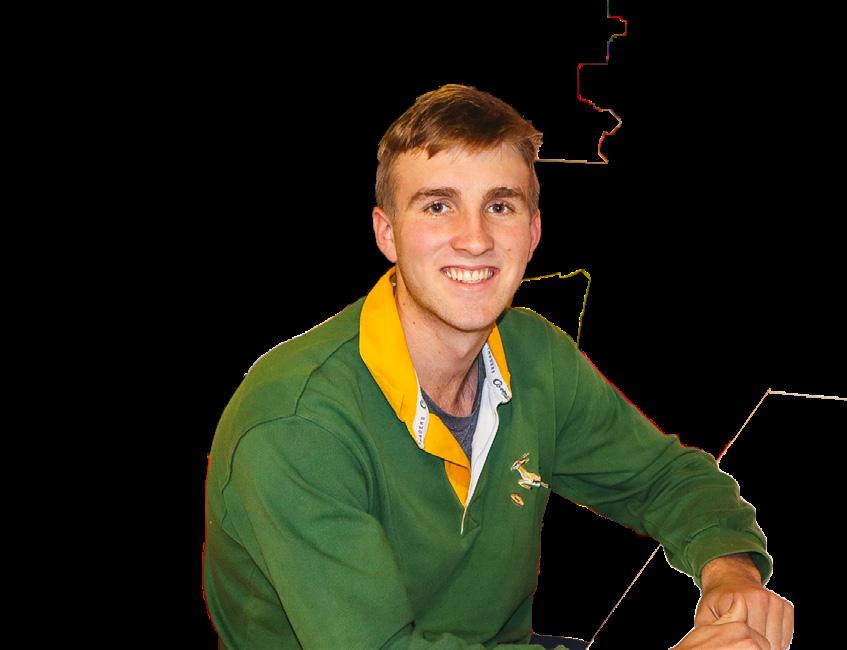
The 2023 Rugby World Cup looms and Stellenbosch University (SU) students have started showcasing the respective team’s kits on campus. As such Die Matie has decided to ask some students their thoughts and predictions on the upcoming matches and their favourite teams.
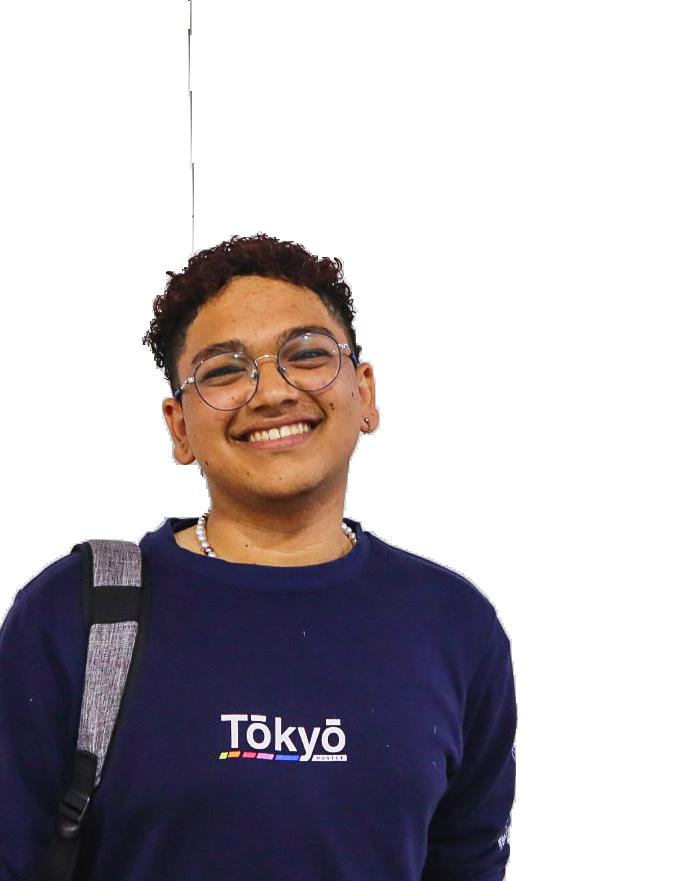
Which team do you support? "Springboks"
Which team are the Springboks most likely to lose against?
"New Zealand - All Blacks"
Who is your favourite South African team's player?
"Kurt-lee Arendse"

If you could choose only one player, from previous world cups, to play in the current one, which player would it be?
"Bryan Habana, he's just a legend"
If Faf de Klerk were to auction off his speedo, how much would you bid for it?
"My whole NSFAS allowance"
Which team do you support? "Springboks"

Which team are the Springboks most likely to lose against?
"New Zealand - All Blacks"
Who is your favourite South African team's player?
"Lukhanyo Am"

If you could choose only one player, from previous world cups, to play in the current one, which player would it be?
"It would definitely be Frans Steyn"
If Faf de Klerk were to auction off his speedo, how much would you bid for it?
" I would bid 1K — one thousand rand."
Which team do you support?
"New Zealand"
Which team are the Springboks most likely to lose against?
"New Zealand - All Blacks"
Who is your favourite South African team's player?
"Cheslin Kolbe"
If you could choose only one player, from previous world cups, to play in the current
If Faf de Klerk were to auction off his speedo, how much would you bid for
Which team do you support?
"Springboks"
Which team are the Springboks most likely to lose against? "All Blacks"
Who is your favourite South African team's player?
"Damian Willemse"
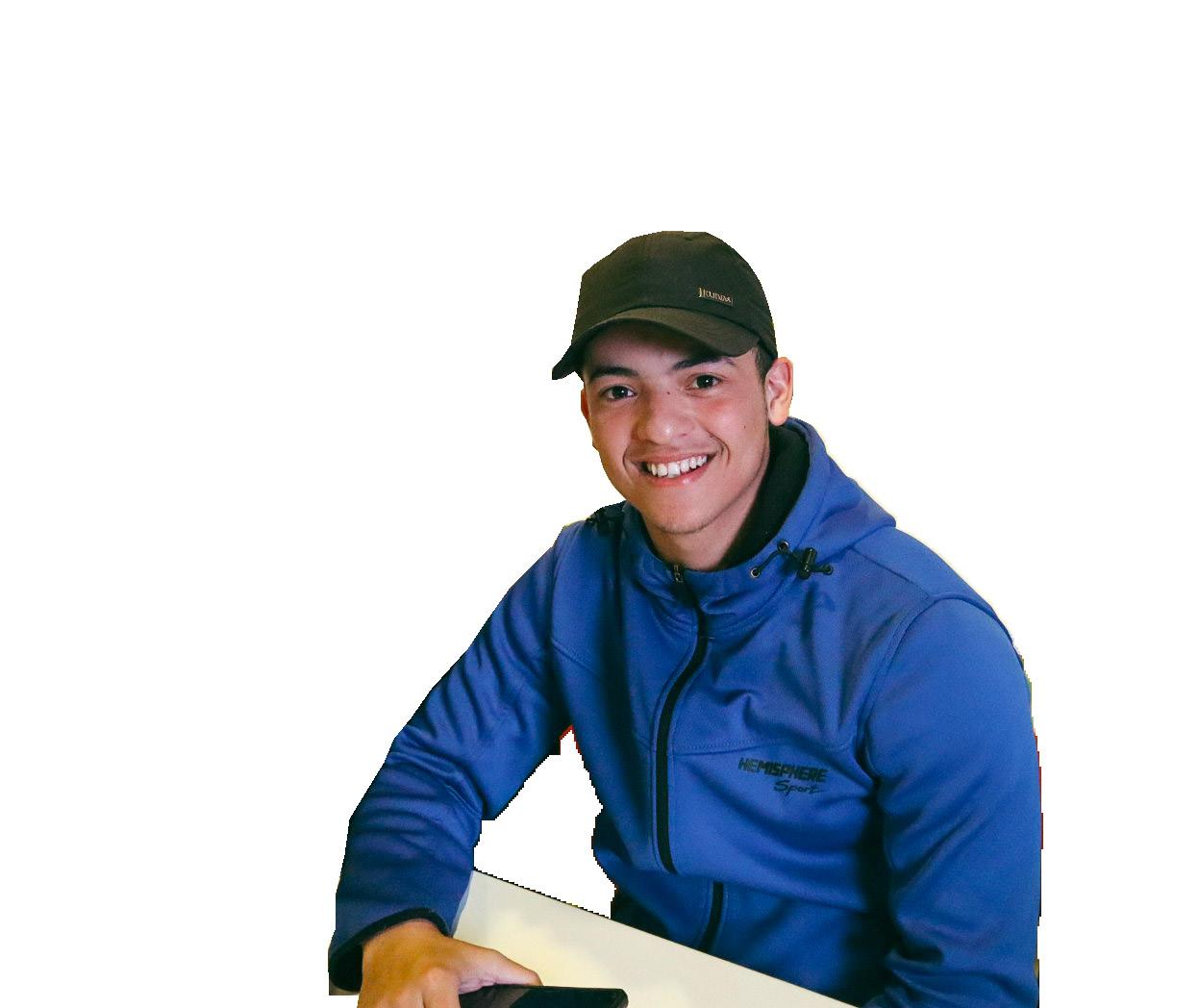
If you could choose only one player, from previous world cups, to play in the current one, which player would it be?
"It has to be Bryan Habana"
If Faf de Klerk were to auction off his speedo, how much would you bid for it?
"I would bid R1.5 million"
Which team do you support?
"The bokke - Springboks"
Which team are the Springboks most likely to lose against?
"All Blacks"
Who is your favourite South African team's player?
"Definitely Faf de Klerk"
If you could choose only one player, from previous world cups, to play in the current one, which player would it be?
"Bryan Habana"
If Faf de Klerk were to auction off his speedo, how much would you bid for it?
"I would bid R0 for his speedo"
Which team do you support?

"Bokke - Springboks"
Which team are the Springboks most likely to lose against?
"New Zealand - All Blacks"

Who is your favourite South African team's player?

"Siya Kolisi"
If you could choose only one player, from previous world cups, to play in the current one, which player would it be?
"Patrick Lambie"
If Faf de Klerk were to auction off his speedo, how much would you bid for it?
"Only R2"
SPORT 12
PHOTOS: EMMA HAMMAN
Zybian Anders Second-year BA (Humanities)
Daylan Joorst Third-year BAcc
Nicole Stols BA (Hons) in language practice
Simeon Marais Third-year BA (Humanities)
Micke Marx
Second-year BScAgric (Viticulture & Oenology)
Matthew Gray First-year BAcc
