SRC elections come to an end
FLAVIA DAVIDS & LAURA MUTYAMBIZI
In an unprecedented turn of events, election season in Stellenbosch University (SU) was still underway well into the beginning of the fourth term. The elections were saddled with difficulty relating to the disqualification of three candidates and the contestation of one candidate’s disqualification in the SU Student Court. A low participation rate of 8.82% for this year's elections was also recorded.
More than two weeks after the Electoral Commission's announcement of the Student Representative Council (SRC) team for the 2023/2024 term on 4 September, the SRC was still unable to host its internal elections following allegations that the Electoral Commission displayed procedural and substantive unfairness in the investigation of the two complaints brought against candidate Amahle Sityata, a social work student. The complaints brought against Sityata related to two undisclosed events that took place on 24 August.
As confirmed by Bridget Massey, third-year LLB student
and chairperson of the Electoral Commission, the procedures of the Electoral Commission are laid out in the Election Rules. The director of compliance and oversight will undertake the investigation by contacting all the factual witnesses, interviewing them, and collecting any records or information which may assist in finding the correct facts. After this, a decision is made based on
all the information that is before the director—a position currently held by postgraduate LLB student Yanga Keva.
After Sityata filed an urgent application to the Student Court on 7 September, and the subsequent hearing, the Student Court set aside the Electoral Commission's decision on 18 September and ordered a second investigation of the complaints
laid against Sityata. As per the Student Court order, the Electoral Commission re-investigated the matter in line with its Electoral Rules and found Sityata guilty of electoral misconduct, leading to her disqualification from candidacy. Sityata did not appeal this decision.
When approached by Die Matie for comment, the Student Court stated that they will remain
impartial and independent especially regarding matters still being considered by the relevant governance bodies. As stated by Adriaan Lourens, the Campus Liaison for SU Student Court, they "cannot make any comments about the outcome, and we motivate any interested parties to refer to the judgment on the [Student Court] website for the Court’s final view on the matter."
Massey confirmed that the SRC internal elections for chairperson could only take place after the investigation's conclusion. After the conclusion of the investigation, the internal elections were hosted on 25 September on Microsoft Teams. In a majority vote of 12, Phiwokuhle Qabaka was elected as chairperson of the SRC, whilst her opponent, Ongezwa Tshazi, received 4 votes. Qabaka's election as chairperson marks her second term on the SRC. Qabaka, who is pursuing a BCom Honours degree in transport economics, was previously the holder of the secretary-general and financial access portfolios and served as the Economic Freedom Fighters (EFF) Student Command provincial treasurer at SU.
Second complaint against NSFAS by Sezoe
The National Student Financial Aid Scheme (NSFAS) is once again the topic of controversy after the filing of a second complaint against them by Stellenbosch University (SU) final year Education student, William Sezoe. Sezoe, in his capacity as vice chairperson of the Student Representative Council (SRC), filed a complaint against the scheme at the South African Human Rights Commission (SAHRC) on 4 September. Sezoe contacted Commissioner Prof Bongani Majola, the Chairperson of the SAHRC, requesting the Commission to investigate NSFAS “for perpetuating potential human rights and constitutional rights violations against its beneficiaries.” In his complaint, Sezoe highlighted that many students have experienced difficulties with onboarding to the new system, thus making it impossible for them to receive their allowances and leaving them “at risk
of hunger” and was a violation of major and fundamental human rights. Sezoe also detailed certain experiences that students have disclosed to him regarding their struggles with NSFAS, such as food insecurity and difficulty accessing toiletries. These experiences, according to Sezoe, are “in direct conflict [with] what NSFAS ought to be doing as stated in their mandate . . . and in direct conflict [with] and violation [of] the NSFAS Act.”
When Die Matie reached out to the SAHRC for comment, Commissioner Andre Guam stated that "the Western Cape Provincial Office is currently assessing the matter. If the complaint is accepted, there are various pathways the Commission can follow: negotiation, mediation or conciliation, or an investigation, hearing or litigation.”

The SAHRC complaint is the second complaint Sezoe has made against the funding scheme. Sezoe's first complaint against
NSFAS was laid with the Office of the Public Protector on 10 July, which is now headed by acting Public Protector Kholeka Gcaleka. In that complaint, Sezoe requested the investigation of the procurement systems followed by NSFAS followed when awarding tenders to its current direct payment system partners, namely Coinvest Africa, Ezaga Holdings, Norraco Corporation and Tenet Technology. While this investigation is pending, Sezoe said that the “gross injustice systems this new payment system has brought” cannot be ignored. Sezoe hopes that the Public Protector’s office will “find that the procurement process was irregular and invalid [and] that those found guilty of chowing student funds get criminally charged for their actions and the tenders get cancelled.” The issue is currently under investigation and Sezoe is being provided with updates on its investigation every six weeks. In addition to these investiga-
tions, NSFAS started its own investigation on 21 August, led by Werksmans Incorporated. The goal of this investigation is to consider allegations of improper procurement processes in relation to the new direct payment system. In a media briefing on 18 September, Dr Blade Nzimande, the Minister of Higher Education, Science and Innovation, stated that he is “currently awaiting a final report on the NSFAS investigation into the process of the appointment of the four direct payments program partners, following public allegations on the process of their appointment.” Nzimande also insisted despite the various complaints that have been laid against NSFAS , the funding scheme is not in crisis.
“I must upfront indicate that NSFAS, insofar as it successfully services the needs to the vast majority of poor students is not in a crisis, as many of our detractors want the public to believe," said Dr Nzimande.
Dr Nzimande further claimed that these NSFAS “detractors” wish to “discredit one of the most successful schemes of [the] ANC government”.
“I must upfront indicate that NSFAS, insofar as it successfully services the needs to the vast majority of poor students is not in a crisis, as many of our detractors want the public to believe," said Dr Nzimande.
At the time of this article's publication, the investigations remain ongoing.
Amptelike studentekoerant van die Universiteit Stellenbosch I Official student newspaper of Stellenbosch University I Iphephandaba elisemthethweni labafundi beYunivesithi yaseStellenbosch I Gestig in 1941 I Established in 1941 I Lisekwe ngowe-1941 27 SEPTEMBER 2023
LESEDI MNISI
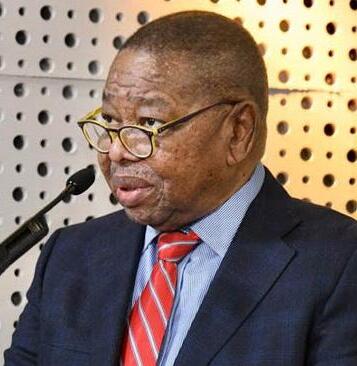
Dr Blade Nzimande.
PHOTO: SUPPLIED
SRC member Abongile Quthu in deliberation at the SRC executive internal elections on 26 September. PHOTO: Kris Bence
Celebrating Heritage Through Art
EMMA GILES
When asked about the meaning of heritage, Ras Silas Motse, a South African street and multidisciplinary artist, described his memories as such: “When I think of heritage in South Africa, I can feel the cold of the townships in winter. I can hear the laughter of the people around the townships and the voices of the people in the taxi van - chanting and talking. I can hear the sound of the vuvuzela in the stadium during the Bokke matches... that's what we are as South Africans.”
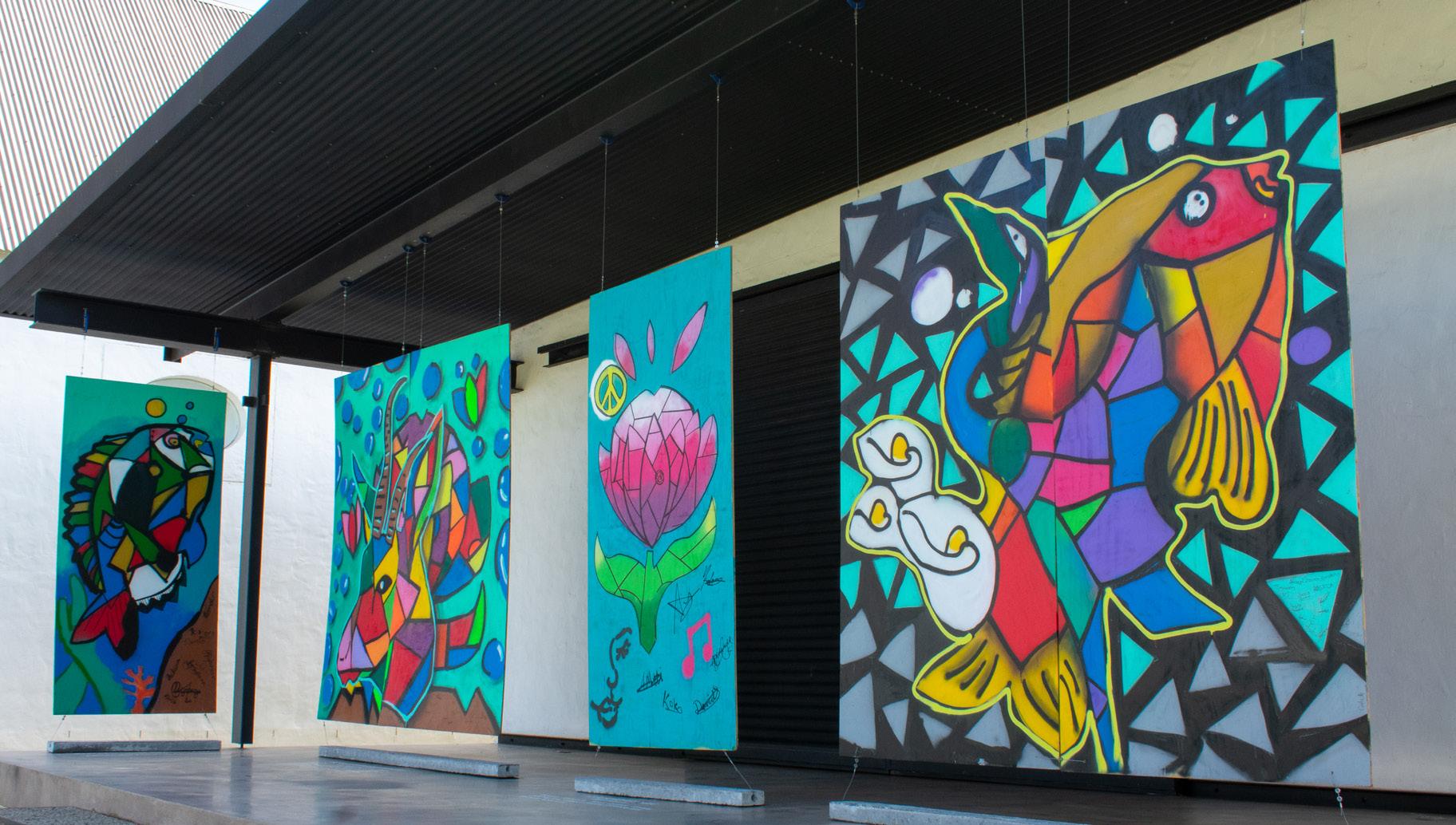
It was the meaning of heritage that inspired the Rupert Museum to have a heritage-centred exhibition this September. In order to celebrate South Africa’s annual Heritage Month, Ras Silas Motse and a group of high school students prepared and displayed an outdoor exhibition to be displayed at the Rupert Museum in Stellenbosch. Ras taught the students about graffiti art and how to use colour, line and shape to create panels representing South Africa. The schools
involved were Apex High, Eerste River Secondary, Kylemore High, Lückhoff High and Stellenzicht Secondary, located in Cape Town and Stellenbosch. The Springbuck, Blue Crane, Galjoen and Protea all featured on these panels and the South African flag’s colours were prominent.
This collaborative project was enjoyed by all who were involved, and it was considered a great learning experience. Ras enjoyed “seeing the laughing, smiling, creativity and [the students] trying to figure out what to do.” The students experienced the frustration of graffiti art
and working with a can, as the technique can be challenging, but with practice it was soon very rewarding. “I’ve worked with the Rupert Museum before . . . it’s always a privilege to be able to touch and inspire,” explained Ras. “Some of them are not always privileged to be able to learn
about art—for me it is a privilege to spark that creativity in the young minds.”
Ras hoped he could use his own personal journey to inspire the students he worked with in the project. Ras expressed: “My message, especially to young people out there, is believe in yourself. Do what you want to do. Get out there, work on what you love over and over and over and you’ll see it will take you out of where you are now. Heritage is what makes us who we are. In our lifetime - the people we live with, the food we cook - that’s our heritage.”
The Rupert Museum presents many exhibitions, free of charge, on Tuesdays to Fridays (10:0017:00) and Saturdays to Sundays (10:00-16:00). It showcases many artists and themes, beautifully presented. More information is available on their website. The Heritage exhibition will be featured until the 30th of September. The public are encouraged to vote for their favourite panel, and the school that wins the Public Favourite vote will be rewarded with art materials.

Finding the artistic side of law with the Stellenbosch Art Law Clinic
HANNAH DEL CUORE
Stellenbosch is home to many young artists who struggle with the legal considerations of sharing their art. After hosting a guest lecture in South Africa, Thomas Hoeren, of the University of Münster, recognised the possibility of expanding an art law clinic in Stellenbosch tasked with assisting artists. This was the beginning of the Stellenbosch Art Law Clinic (SALC). The clinic started with five members, one of which was Genevieve Rousseau, outgoing chairperson of the SALC.
When asked to describe the team that currently makes up the clinic, Rousseau said, “We are very family oriented. We are all super loyal to each other and super supportive.” The majority of the SALC members are women of colour, which showcases incredible diversity that Stellenbosch, and the country as a whole, needs more of.
Rousseau explained that the main idea behind the SALC is to provide legal advice to young artists and creatives, and to bridge the gap between the art world and legal world by encouraging a dialogue between the two. The main mechanism of achieving this is through research. The recent recognition of the SALC as a Stellenbosch University (SU) society has given
its members an opportunity to recognise its development.
The clinic’s overall plan is to raise the level of education in art students from a legal perspective, so that they are better equipped to go into the industry and are aware of their rights. One thing Rousseau had to say on this bridge between the art and law faculties is, “There is no cross contamination of modules [in university]. We limit ourselves to a specific faction because that’s what we think we have to do instead of taking a holistic approach to learning.”
The clinic is truly the first of its kind to showcase the potential for encouraging a bridge between different faculties within SU, as we can all learn from each other.
Rousseau emphasized the fact that this is an amazing learning opportunity for students to broaden their horizons, specifically in the legal and art fields. Being part of the clinic teaches you incredibly important skills that are likely to aid in your future endeavours. It is also a wonderful and exciting activity to add onto your CV.
In terms of what their plans are for the new year, Elke Mostert, the new chairperson of the clinic, said that there is “a lot of groundwork and planning that [they] need to do” and that their aim is “to have a really strong team and once [they’ve] got that the goal is to take on more
clients.” While everything about the clinic sounds incredibly positive and exciting, it is not without its challenges.
It is important to note that none of the individuals involved are legal practitioners yet, and so they cannot provide legal advice—which ties into the clinic’s five-year plan as they would like to get to a point where they can take on cases. The clinic has approached the Stellenbosch Law Clinic to encourage involvement, and they have been approached by numerous law firms that are interested in
assisting and providing the clinic with any knowledge that they may be lacking.
As of right now, the clinic is research based, with lecture series in the works on the regular. They are constantly advocating for increased support from the university and are hoping to see more of this in the future as they are now officially registered as a society. Mostert also mentioned that the information provided is based, and restricted, to the research that they are able to undertake as students, and that they lack the practical application
that lawyers have in terms of legal assistance. Mostert said that it is going to be essential for them to know their limits and boundaries in this regard.
Despite the challenges it may face, the SALC is making incredible strides in the legal and creative fields that exist within the university, making an impact that is remarkable to see. They are passionate and driven individuals that make up a team that is making way for a successful university society whose work will transcend the scope of university life.
NEWS 2
The panels representing South African heritage, which were created by each participating high school, on display at the Rupert Museum in Stellenbosch.
PHOTO: Charlotte Moss
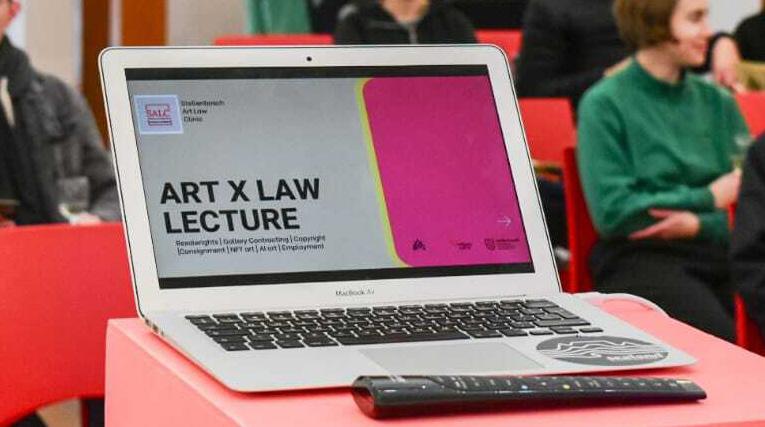
The Stellenbosch Art Law Clinic’s (SALC) first lecture series for the year was met with huge interest from artists and law students alike. PHOTO: Jocelyn Finnie
Ubhiyozo lwenkcubeko yakwaNtu kwi-dyunivesithi yase-Stellenbosch
LIYABONA MQINA
Isebe leeLwimi zaseAfrika kwiUnivesithi yaseStellenbosch libonakalise ukuzingca ngeeNkcubeko yakwaNtu ngokuthi libhiyozele usuku lwelifa leMveli (Heritage Day) ngomhla wama-22 kweyoMsintsi 2023. Imibutho ethe yathatha inkxaxheba ekubeni olusuku lube yimpumelelo ibilisebe leelwimi zesiNtu (Department of African Languages), Isebe lomculo (Music Department), Ifakalthi yezakwalizwi (Faculty of Theology), Ulwahlulo lwefuthe Loluntu (Division of Social Impact) kunye neMyuziyam yaseStellenbosch (Stellenbosch Museum).
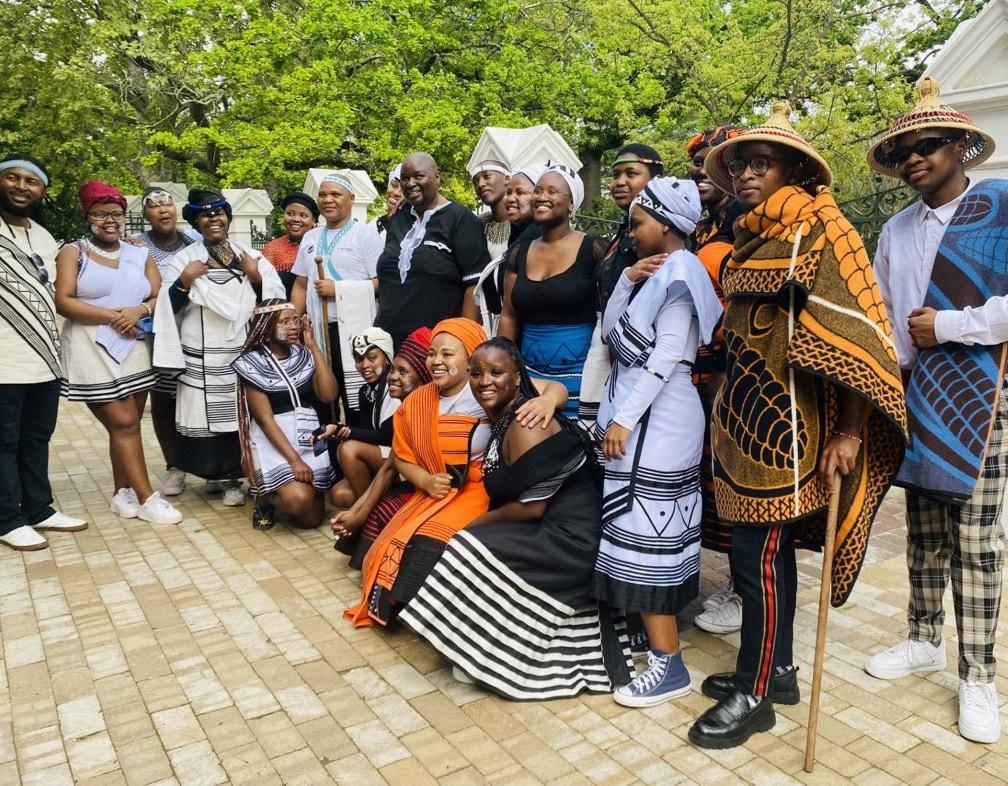
Abafundi baphume bengamanani benemincili kunye novuyo lokubona ixabiso lwenkcubeko yakwaNtu kuleUnivesithi. Uthe uMawethu Nyakatya obengumlawuli wenkqubo xa echaza injongo yolusuku wathetha wejenje: “namhlanje sifuna ukunivisa
nokunibonisa ukuba izinto zakwaXhosa zenziwa njani ukusukela kulwimi, ukutya, iziselo, imidaniso nemiculo kunye nendlela ekunxitywe ngayo.”
Phambi kokuba kwenzeke
yonke into ugqirha Sijadu uye
wanika imvelaphi emfutshane
ngolwimi lwesiXhosa esithi: “ngomhla wesi-6 kweyoMsintsi
ulwimi lwesiXhosa beludibanisa
iminyaka engama-200 ukusukela

kusuku elaqala ukubhalwa ngaso.
Umgaqo nkqubo weUnivesithi
yaseStellenbosch uthi isiXhosa
lelona lwimi lesiNtu olusetyenziswayo eNtshona koloni
nolubalaseleyo eMzantsi Afrika
ngoko ke iUnivesithi yaseStellenbosch inoxanduva lokunyusa
nokuphuhlisa isiXhosa ngokusisebenzisa kuwo onke ama-
candelo njengoko kumiselwe kwiLanguage Policy framework of Higher Education Institutions.”
Ukwamnkelwa kweendwendwe
ezibalulekileyo kwenziwe ngunjingalwazi Dlali oyintloko yesebe
leLwimi zaseAfrika eSU esazisa iindwendwe ezihloniphekileyo
nezibalulekileyo ezithe zathatha ixesha zazozibonakalisa kolubhiyozo belusenzeka. uNkosi
uBurns-Ncamashe (Aa! ZWELIYAJIKA), uNkosi uNdamase, uTat’uSgcawu noMam’uSgcawu kunye nengqonyela ibingabanye
babantu abakhulu ebebethe bandwendwele iSU. Ngenxa yokuba kukho indlela ethile yokubulisa inkosi kwaXhosa kwaye bekukho abantu abasuka kwezinye izizwe neentlanga abangenalo ulwazi lwa le nto, uNkosi Ndamase obenika amagqabantshintshi ngesithethi sembeko uNkosi Burns-Ncamashe uqale wafundisa abantu ukuba inkosi yamnkelwa njani xa ingena. Ukwenze oku ngokuba abaxelele abantu ukuba , aze athi uNkosi Burns-Ncamashe xa engena wonke umntu oyindoda akhahlele athi “Aa! ZWELIYAJIKA” baze bona abantu ababhinqileyo bayiyizele.
uNkosi Burns-Ncamashe ubesisithethi sembeko apho ebenika imfundiso ebalulekilyo ngolwimi lwesiXhosa kwaye enye yentetho ezibalulekiyo avakale ezithetha kukuba: “xa sihleli ngoluhlobo kufuneka kubekho abantu abatsha abazokuba ngumlumiso wexesha elizayo” oku kutsho ukuze izizukulwana ezizayo ziliphuhlisa zilityale ezilalini kwimilisela nemithinjana ulwimi lwesiXhosa ukuze incubeko ingatshabalali. Izinto azikhankany-
ileyo uNkosi Burns-Ncamashea
beziquka imilambo yakweli laseMzantsi Afrika, ukutya kwesiNtu kunye namanye wamagama asetyenziswayo kwaNtu xa kuthethwa. Amaqela ebekhona kwaye aye athathe inkxaxheba aquka iqela elizibiza ngoba yiThe Councouring Spirit, The Zulu Society (abafundi baseSU), abafundi abafunda isiXhosa (Home Language) kunye nabanye abafundi ababonakalise umdla abafunda kwezinye iifakhalti. Imidlalo ebisenziwa ngabafundi baseSU ibiquka imiculo, imibongo, imixhentso kubhiyozelwa olusuku lubalulekileyo.
Omnye wabafundi uUnathi
Gom owenza unyaka wakhe wokuqala kwiBA (Humanities)
uhlomhle ngelithi: “Usuku lwangolwesihlanu beluyimpumelelo kakhulu kuba, ukubona abantu abasuka kwiintlanga ezahlukeneyo bedibene bezokonwabela usuku lwenkcubeko nezithethe kundonwabise kakhulu. Bendingalindelanga ukubona abantu abaninzi kwaye isibe lelwiimi laseMzansi eSU ludlale indima enkulu ukuqinisekisa ukuba abantu bayonwaba kwaye ibintle
kakhulu into abayenzileyo. Enye into ebimnandi kakhulu kukubonakala kweeNkosi zakwaNtu zize zizobungaza olwasuku nathi kwaye lo nto indenze ndabona ukuba luninzi ubumbano xa ndijonga kwiminyaka edlulileyo. Ndicinga ukuba abantu abaninzi bazokuba nomdla wokulibhiyozela olusuku nakwiminyaka ezayo kwiUnivesithi yaseStellenbosch.” USiphosethu Yona owenza unyaka wakhe wesithathu kwiBA (Humanities) wongeze ngelithi: “Mna into ebendiyilindele kukuba kuzokubakho abafundi abafunda isiXhosa kuphela ukusekela kwabasenza kunyaka wokuqala ukuyotsho kunyaka wesithathu kunye nabafundisi bethu kuphela. Kodwa iye yandonwabisa into yokubona abantu abasuka kwiindawo ezikude bevile kwaye baza kwelitheko belisenzeka apha eSU kunye nabanye abafundi abafunda kwezinye iifalkhalti, abasuka kwezinye iintlanga kunye nezizwe. Ndinethemba ukuba ikhona into abayingcamleyo kwaye lo nto ibonise ubumbano nokwazi ukufunda ngezinye iintlanga”.
NEWS 3
PHOTO: Ricky Brecht
Student Life
Kaas, wyn en ’n modderige terrein
EMMA HAMMAN
Stellenbosch-studente sê nooit nee vir ’n fees nie –veral nie ’n fees wat toegewy is aan die Boland se beste wyne en goeie kaas nie. Oor die naweek van 23-25 September het talle feesgangers, oud en jonk, gestroom na Sandringham om die jaarlikse Kaas en Wyn fees by te woon.
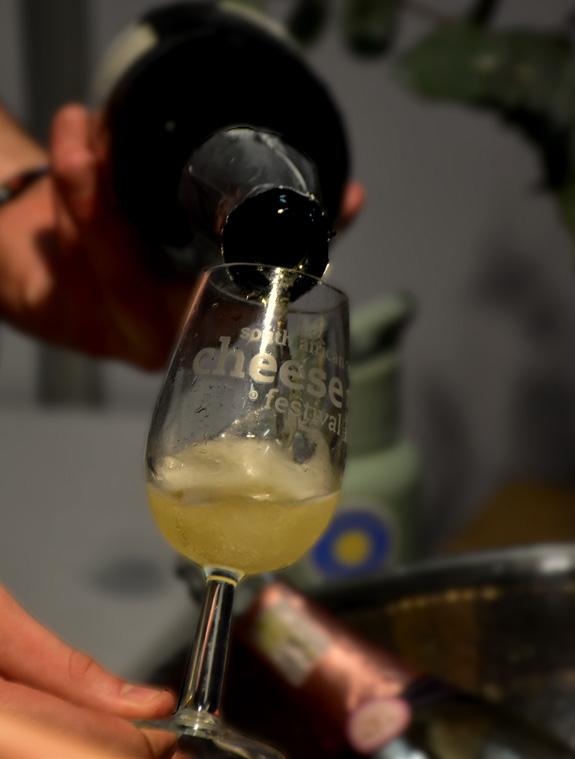
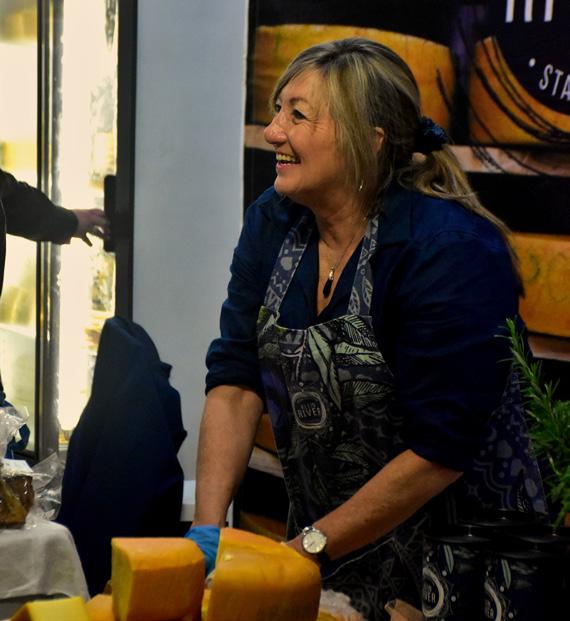
Plastieksakke is oor skoene getrek en die wit sneakers het bruin verkleur soos feesgangers probeer het om die modder wat die reenbui agter gelaat het, te navigeer.
“Ek het gedink die feit dat dit koud is, en reënerig is, en modderig is, sou maak dat mense
nie kom nie, maar ek is blown away om te sien hoeveel mense hier is en dit maak nie saak of dit koud is, of dit winderig is nie, dit gaan oor wyn, kaas en musiek, en hier is duisende mense en almal enjoy hulself so ek love dit,” verduidelik Jak de Priester, sanger en TV-persoonlikheid.
Prime Circle, Tashé en Jan Bloukaas was onder andere die kunstenaars wat opgetree het. Die fees is weens die slegte weer gekanselleer, halfpad deur die naweek en kaartjiehouers is ’n terugbetaling beloof. Sosiale media kommentaar wys na gemengde gevoelens oor die organisering en afstel van die fees.
Spring Campus Closet: What’s trending
ROSSOUW
REBECCA
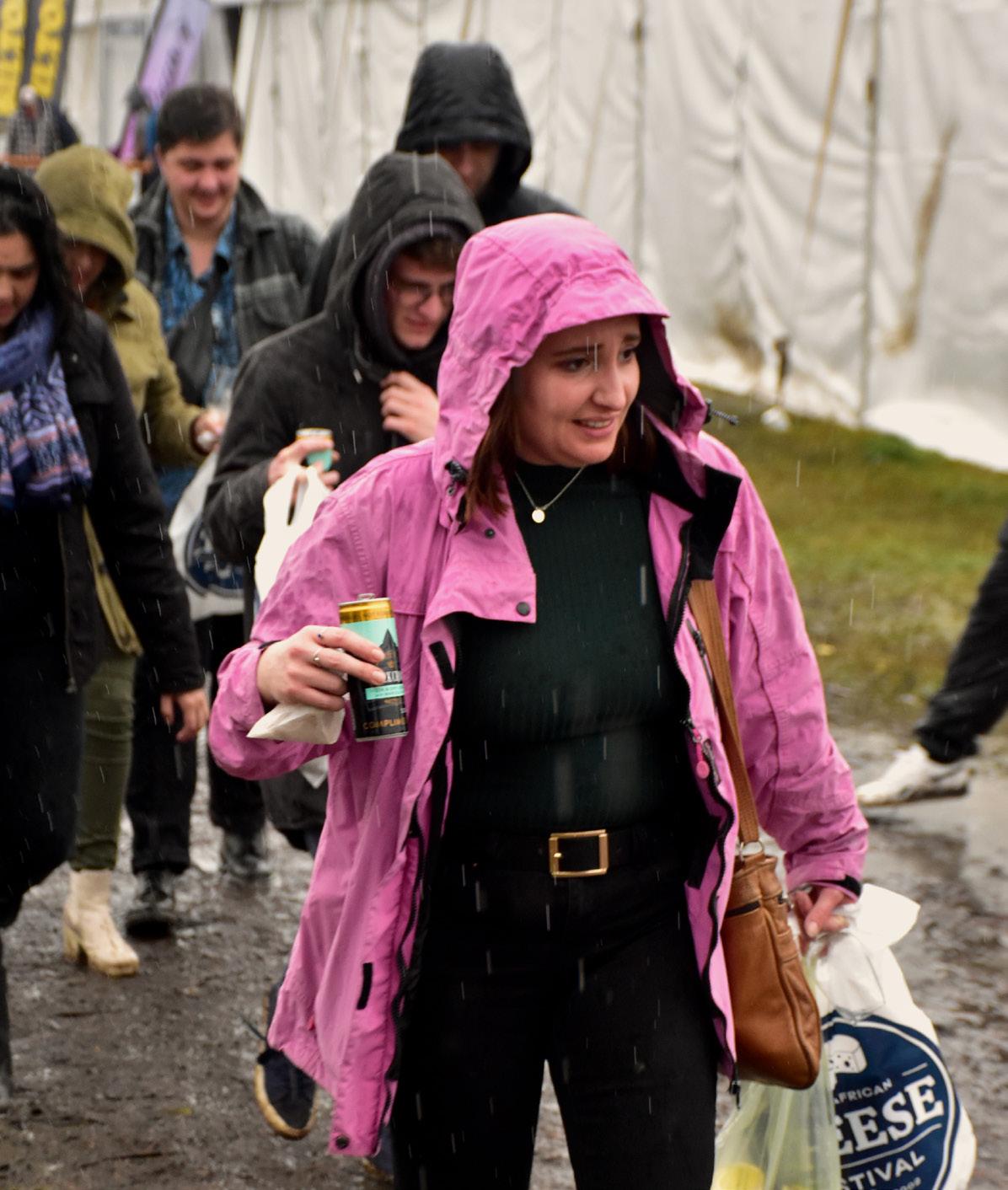
Spring season has quickly flourished on Stellenbosch campus. There has been a major shift regarding ‘klasdraf’ style among the students. From the dark and earthy colours of winter to the bright and patterned apparel that spring fashion has to offer. New inspiration for your spring closet can be seen on campus.
1
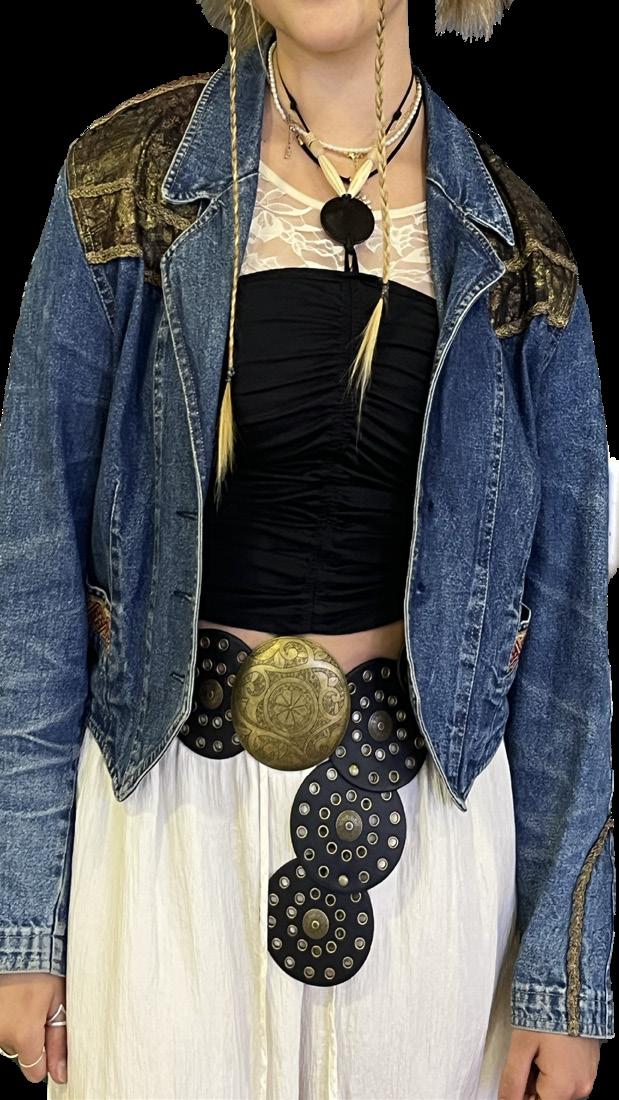
3.Don’t forget accessories!
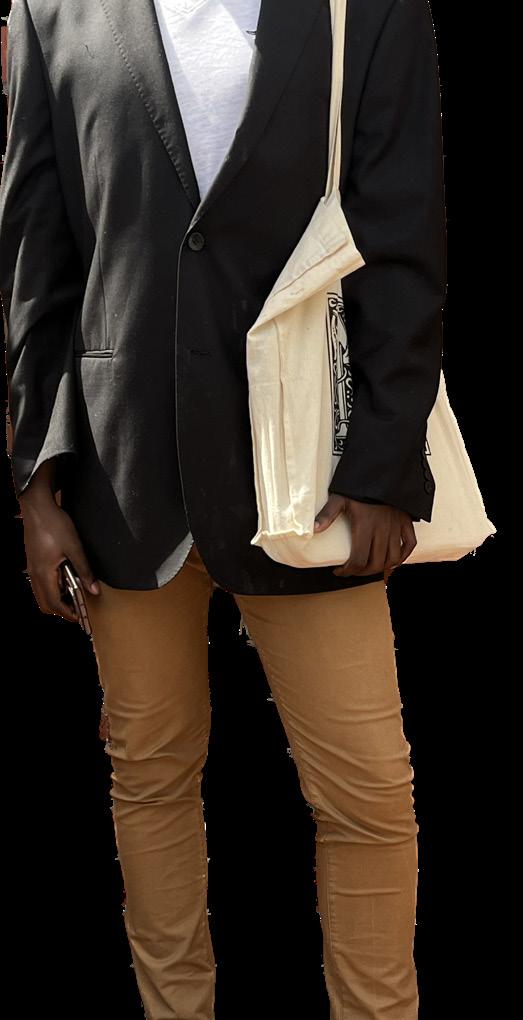
4.Blazers:
2 4
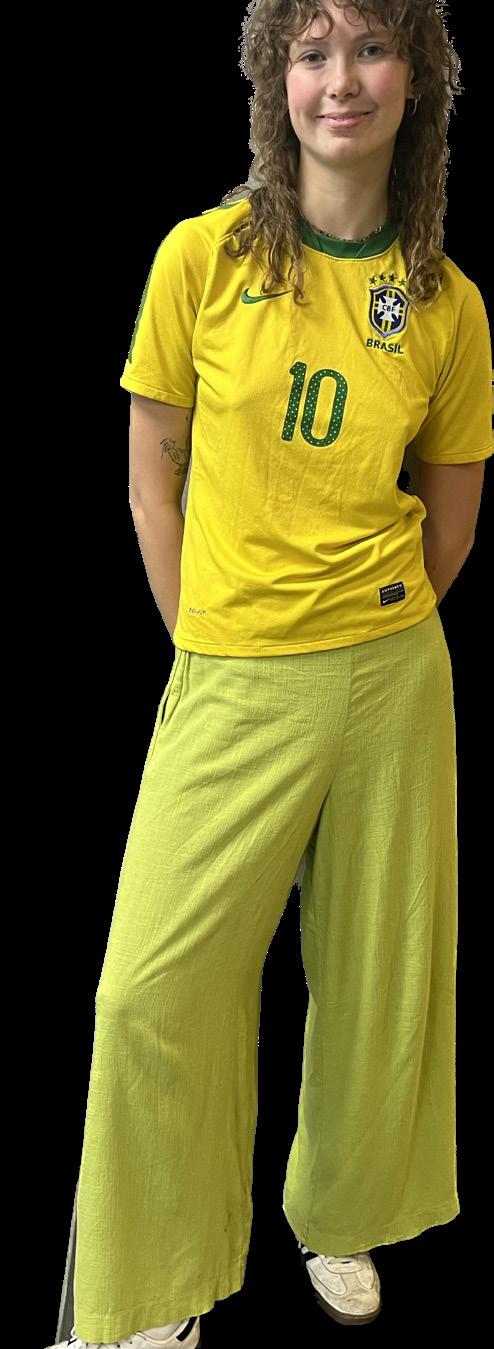
1&2. Football jerseys:
It’s evident that many of us admire our favourite football team’s kits on the pitch, but is it ‘trendy’ to strut it on campus? I think yes! If styled right, an oversized football jersey is the perfect staple for a sporty look. Keep an eye out for those vintage gems to get people interested in your outfit (also a really good way of getting your campus crush to notice you.)

Accessories are often left forgotten, but the Stellies students are not slacking when it comes to complementing their outfits with something a little extra. Chunky belts, sunnies, and flashy jewellery have featured in many of the outfits on campus. Even headphones can completely transform a basic fit into something groovy. You can also coordinate the colour of your outfit with your headphones to add a small but stylish touch.
Blazers are no longer regarded as ‘corporate’ style or men’s wear, instead they’re making their way, fashionably, to the more casual, ‘model off duty’ look. This can be achieved by styling an oversized blazer rather than one that is structured with those huge shoulder pads that can sometimes look outdated. Typically, quite simple blazers have appeared on campus, but heads are definitely turned with those bright and flashy colours too.

5.Midi skirts:
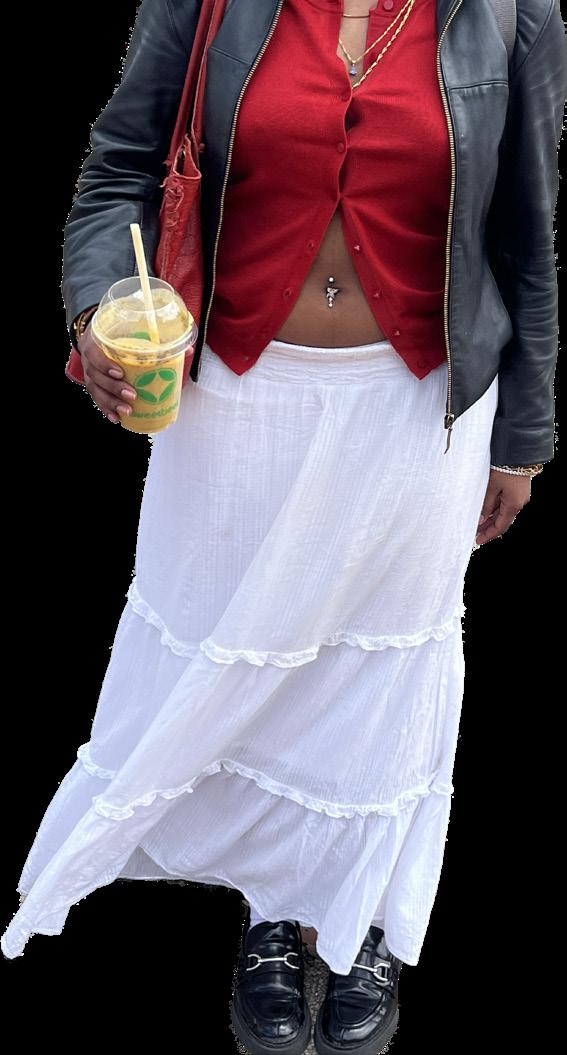
This transition from winter to summer has posed a great uproar in the fashion world. It’s a struggle every day to pick out an outfit that is not too warm or cold. Midi skirts seem to be the solution to these problems. Whether it be a denim piece or a cute floral pattern, these skirts have been very popular on campus.
STUDENT LIFE 4
5
Photos: Rebecca Rossouw
3
The hidden gems of Stellenbosch
Fourth term on Stellenbosch University (SU) campus tends to be a blur of assessments, assignments, and anguish. That is why Die Matie presents a select few special places in and around campus for students to escape their caves of studious torment and breathe some slightly fresher air.
Sometimes all you need is a change of scenery to maintain the academic grind. For the campus-bound students, CoCreate Hub and the Neelsie Absa Bank offer the perfect refuge.
The noticeably red visage of the Absa Bank branch on the bottom floor of the Neelsie Student Centre may be a familiar sight for many, but if you have dared to enter its doors you would know that its bean bags, computers, couches, alcoves, and tables with outlets make it perfect for a comfortable study space. Even with the foosball, air hockey, and video game offerings,
they maintain a quiet environment for both the employees and students. Campus WiFi is admittedly spotty in the area, but at least you have direct access to caffeine.
Alternatively, if the Neelsie is a bit too much sensory information for you, but you would still like to study with the opportunity to grab some food while you work, CoCreate Hub is close by. Marketed towards its beloved Maties, they
welcome students to indulge in quality drinks, free WiFi, and seating with access to outlets. Located at the bottom of Victoria Street, CoCreate may be overshadowed by its neighbouring Mystics and Bohemia, but their courtyard at the back is ideal for spending time with friends and indulging in the improving weather and their various food stall offerings.
As we welcome the arrival of Spring, it seems fitting to make use of our town’s extensive outdoor areas. As such, we suggest visiting the SU Botanical
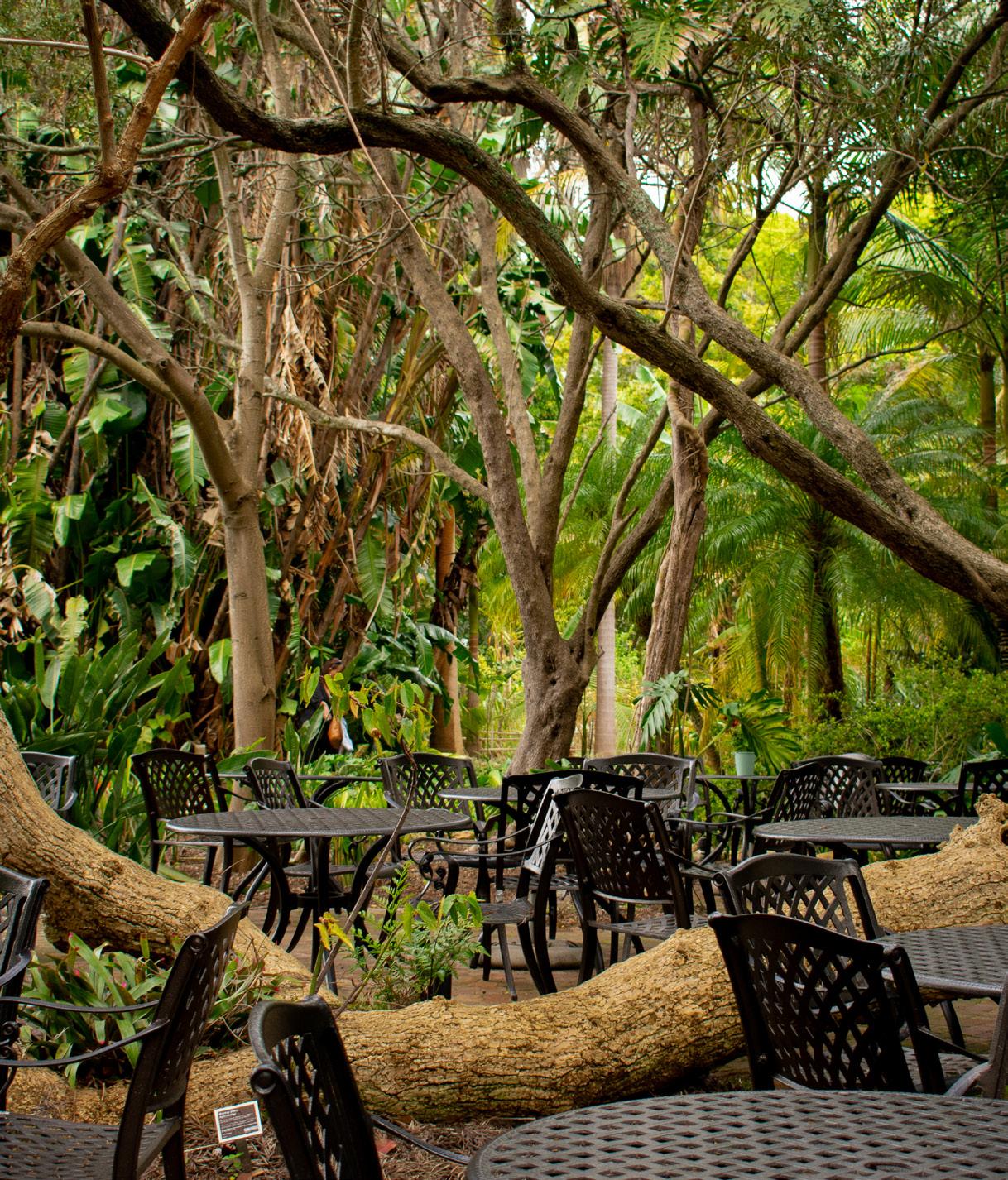
While the botanical gardens may not be a secret to most, it is easy to forget the respite to be found there. Whether you are particularly interested in nature and find the inscriptions fascinating, or whether you simply enjoy walking along paths of verdant flora, the botanical gardens
are a little slice of fairytale situated right on campus. Not only is it a lovely space to walk through, but Katjiepiering, their tea garden, hosts a selection of food and beverages for you to treat yourself with.
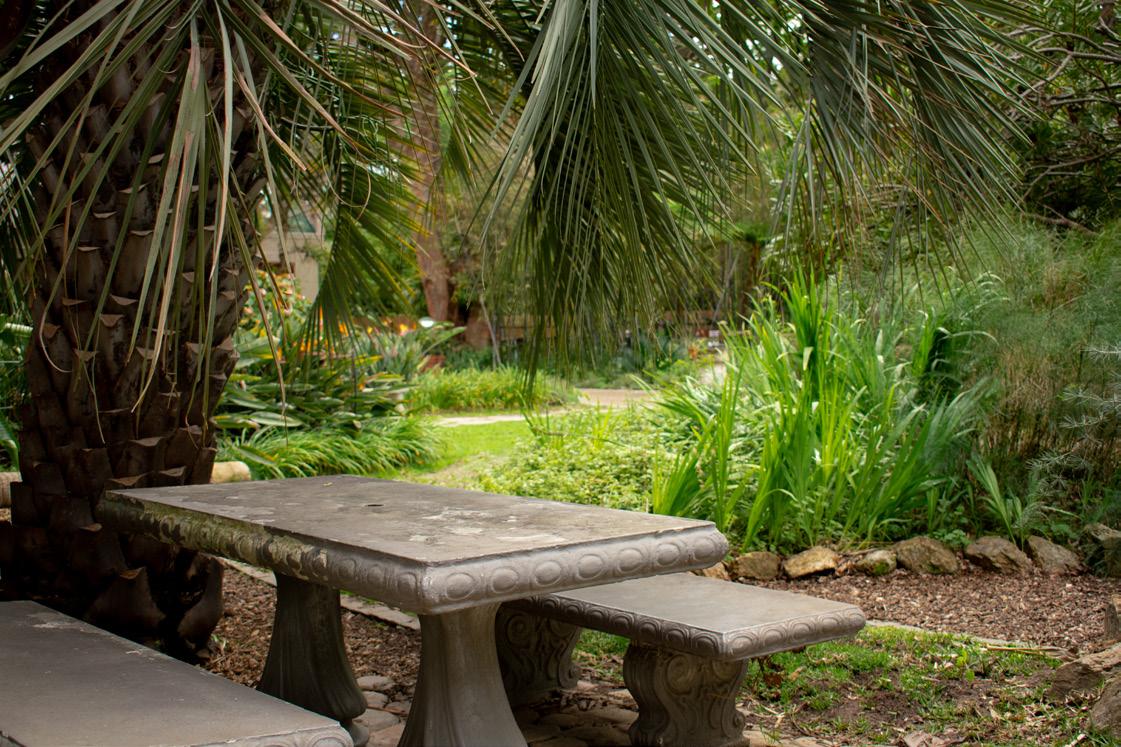
If you prefer a more expansive area to peruse, then Jan Marais Park is a great alternative. With
multiple open areas to relax amongst nature, it is perfect for spending time with friends or even studying outdoors if you so desire. The winding paths take you throughout the entire park and are an ideal respite from the walls of your study venue.
If one is willing to embark on a slight trip, Stellenbosch is filled with opportunities for campus escapees—such as the new 4Tea shop in De Wet Centre or the Rupert Museum further away.
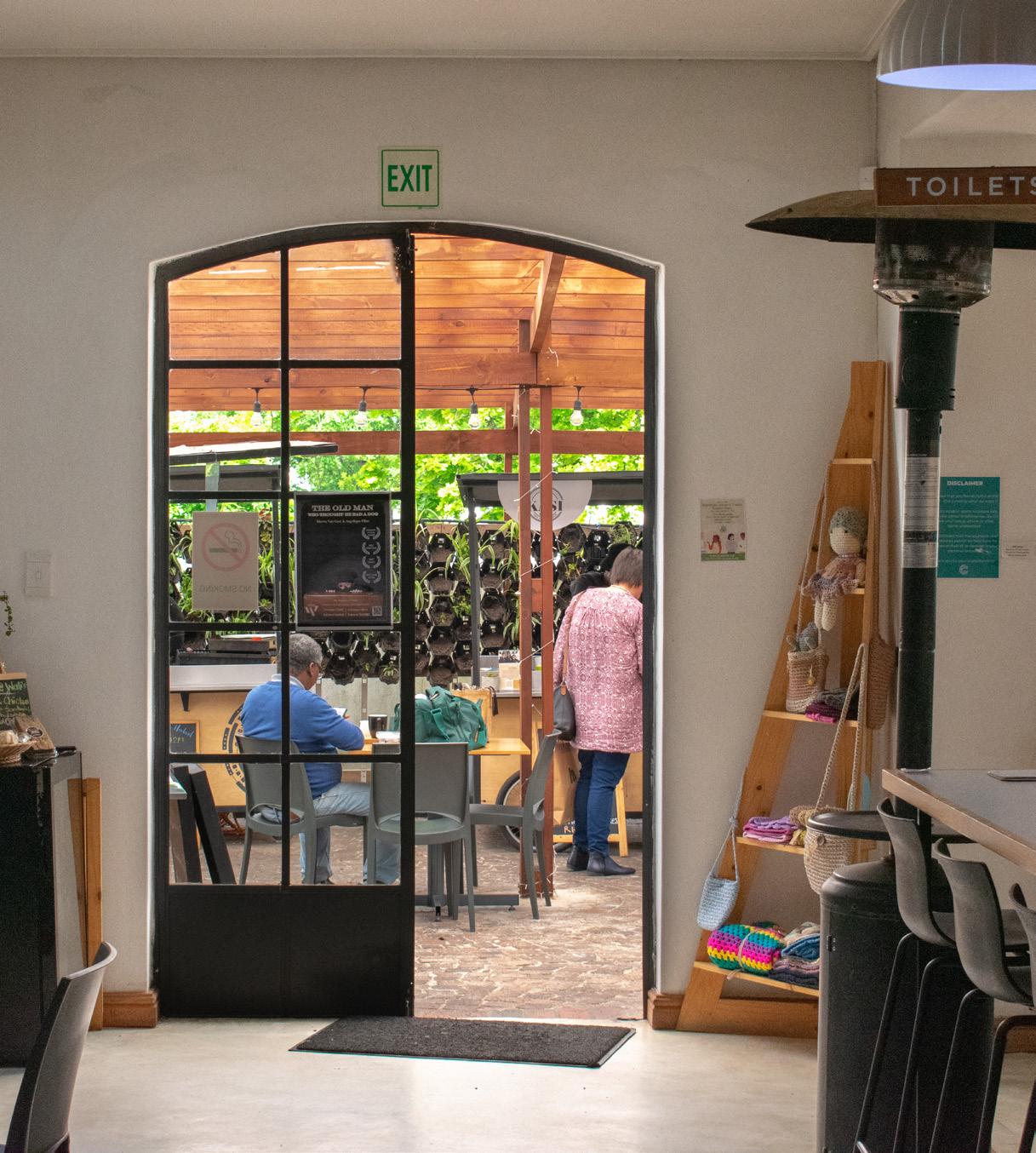
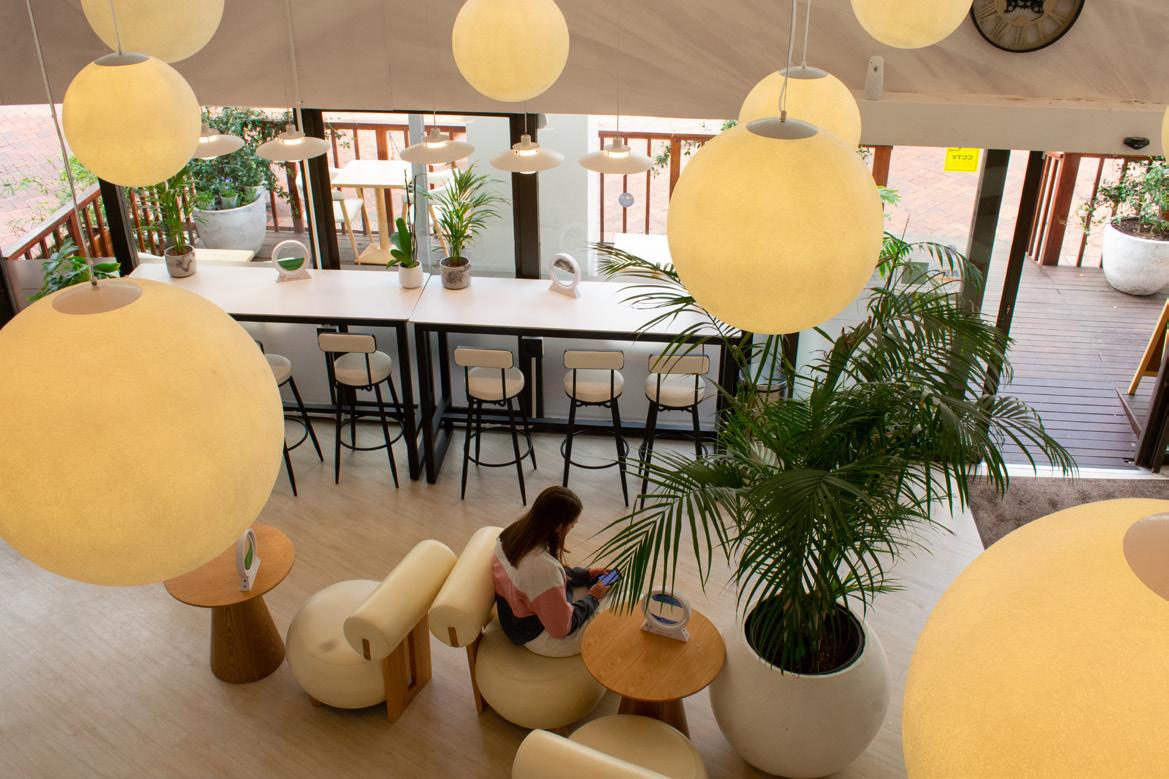
Contrary to the tiny store in the Neelsie, the 4Tea shop in De Wet Centre spans two floors with an outside seating area. The spacious environment is filled with couches, window seating, indoor plants, and their panda-typical décor to cultivate a serene space for socialising or work.
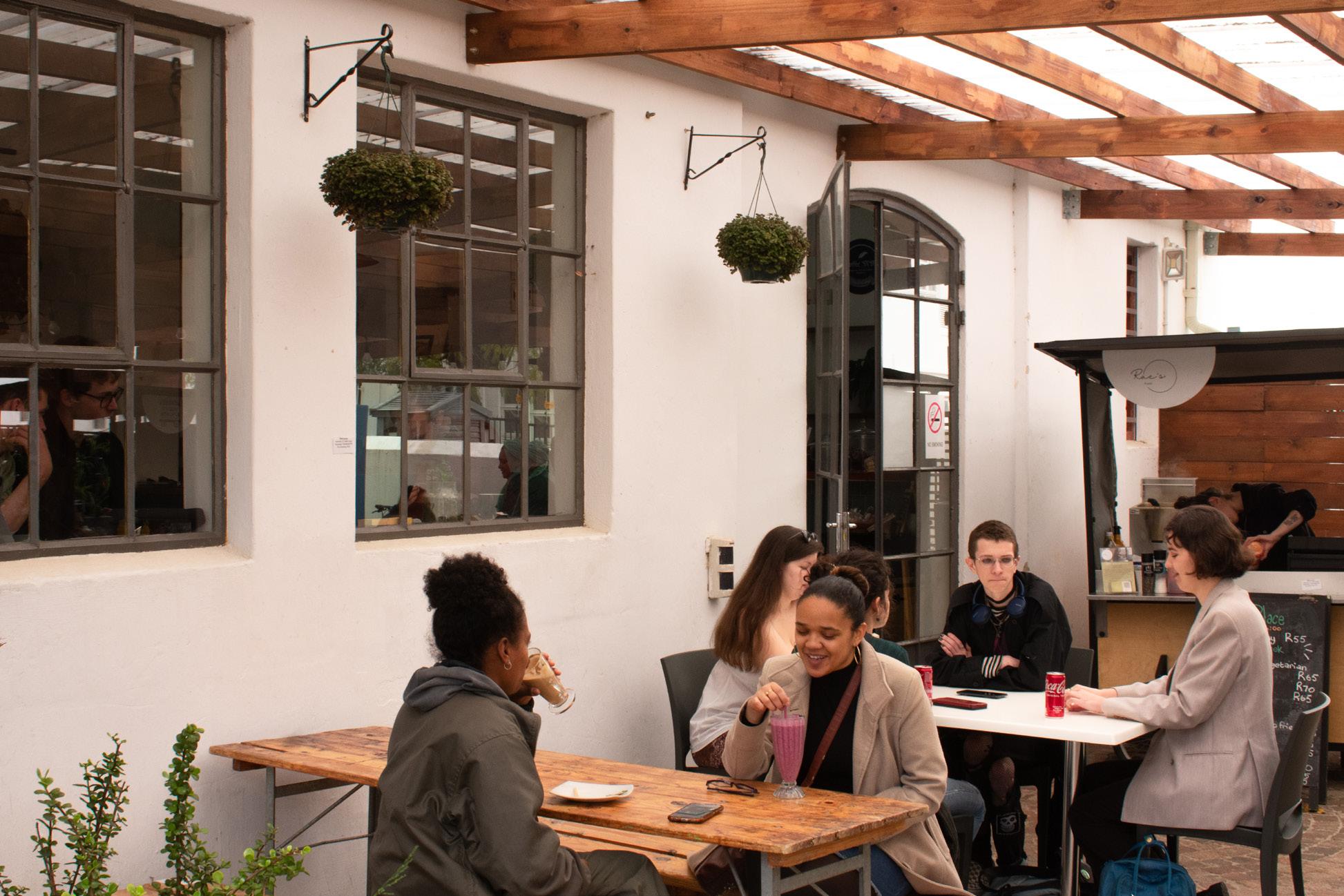
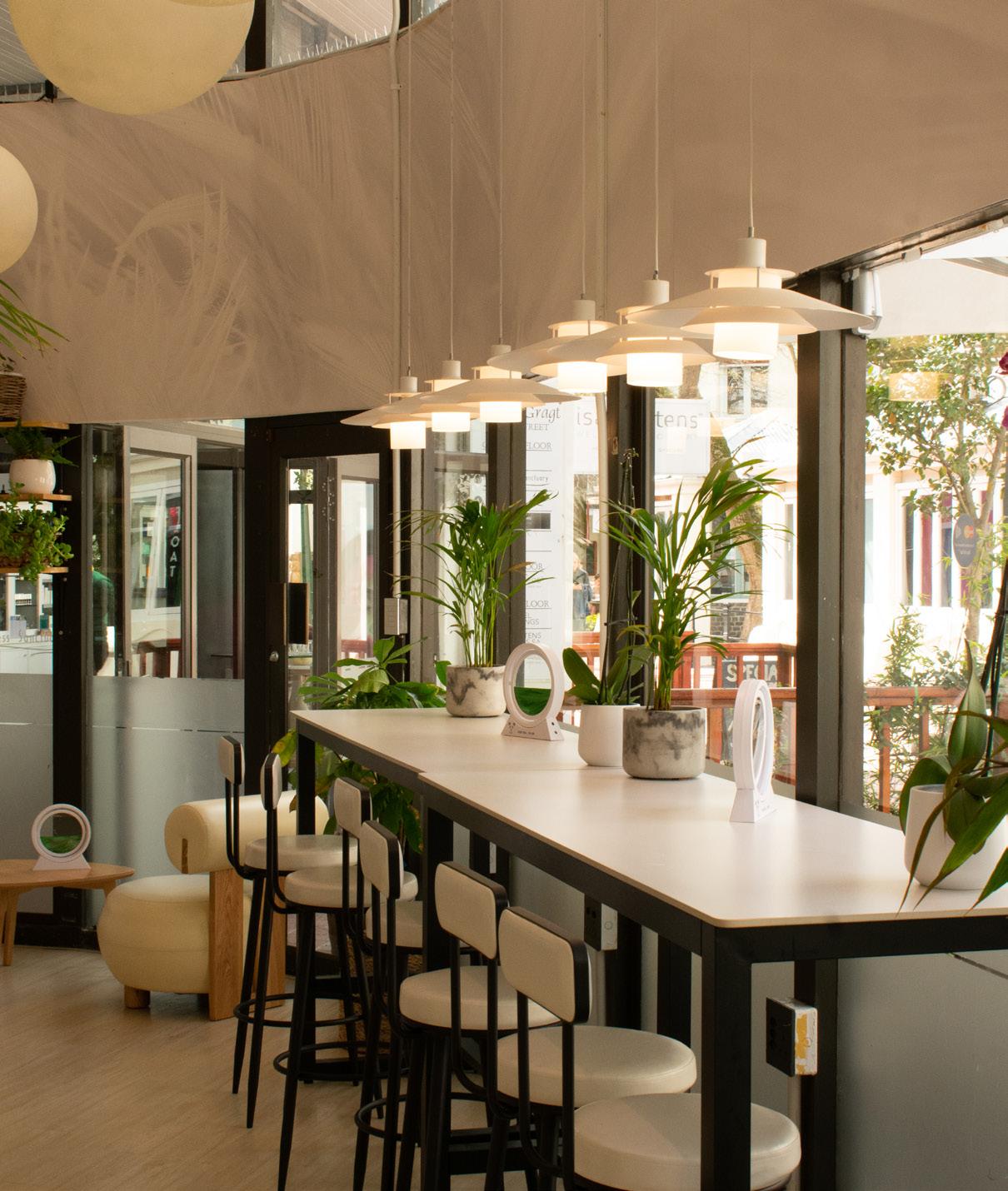
With free WiFi, outlets, and a quiet atmosphere, you can be left to your devices for hours as you enjoy the enclosed cobblestone courtyard.
Similarly, the Rupert Museum, situated on Stellentia Road, is known for its interesting exhibitions and free entrance. However, it also
welcomes students to its museum library where you can make use of their WiFi and study areas. This location is ideal if you enjoy perusing art as a break from the academics—they even have exquisite food and drinks available at their café.
So as the year rounds off and the academics potentially overwhelm, make sure to utilise all the opportunities for reprieve sprinkled through our beautiful town.
STUDENT LIFE 5
Photo: Charlotte Moss
1
2 3
Photo: Charlotte moss
Photo: Charlotte moss
CIARA SHAYE SEAMAN
Stellies students take on the world
being very different than what he is used to.
All three globetrotters have a few things in common. They all agree that an exchange program requires a lot of planning, patience, and saving, especially if your savings are in rands. The exchange rates aren’t doing aspiring South African travellers any favours. It’s also important to get your visas and travel documents in order (the Home Affairs queue will be worth it!)
Another thing they agree on is that Stellenbosch and its students are on a world-class level.
“Academic, physical, social. Stellies students can compete with the best around the world, no matter what metric you use,” says Barr.
Bonjour étudiants!
Exhilarating, challenging, and rewarding. That is how Mike Barr, fourth-year Bcom (International Business) student and chairperson of the Society of International Business would describe his exchange to the University of West Virginia in the United States. Barr has always wanted to see America but was never fortunate enough to visit. However, in his third year of study, this dream became a reality through the Stellenbosch
exchange program. He was able to have the quintessential American student experience (some of the college movies do get it right, according to him!) Sounds like the dream.
Or maybe your aura is more European. We all scrolled through the Euro Summer Instagram feeds, wishing we could sit with an Aperol Spritz in one hand and a croissant (pronounce it like the meme) in the other. What about six months in Paris? Then you
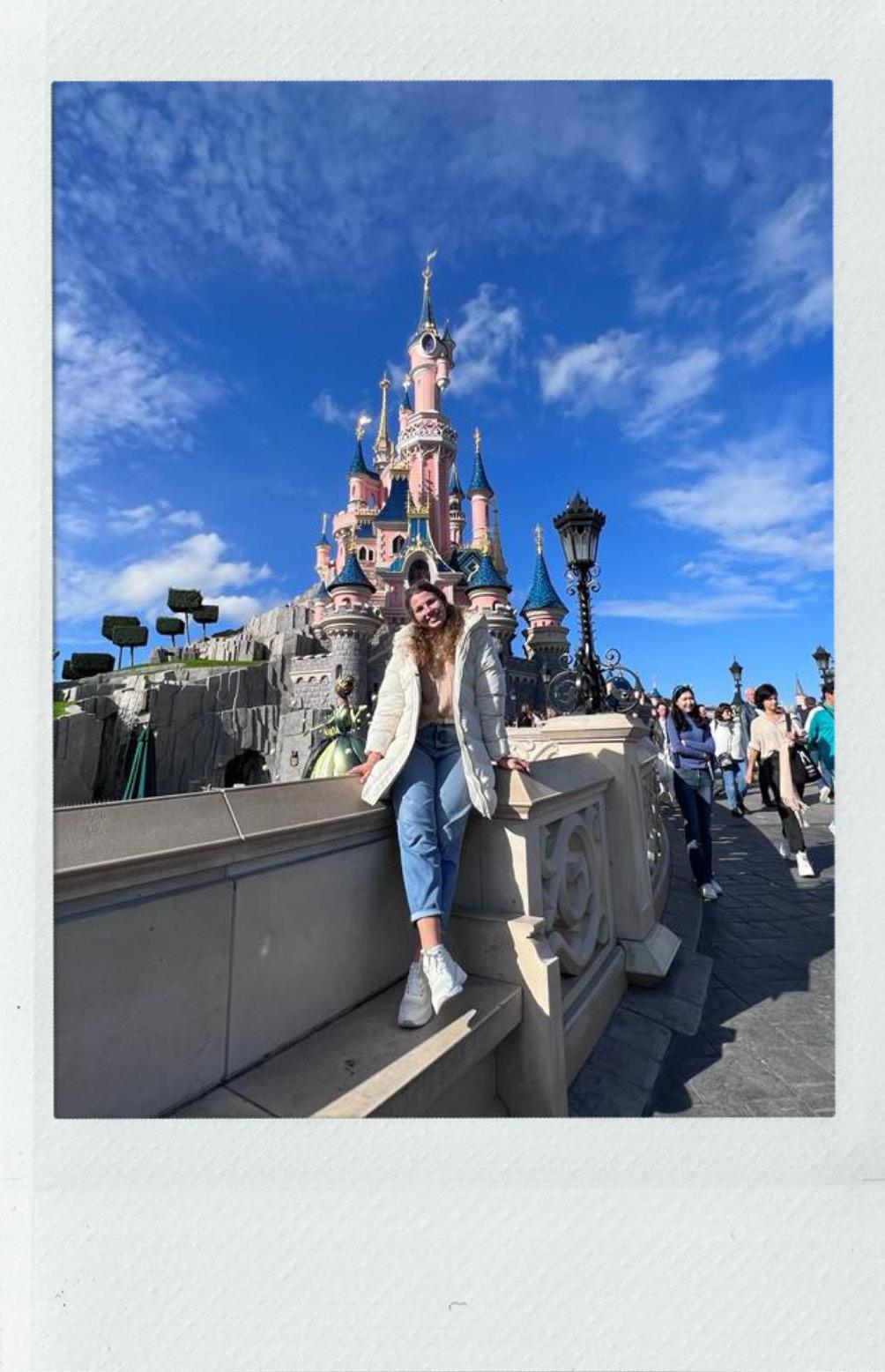
might be interested to hear about Liané Kleynhans, another BCom (International Business) student, and her exchange semester at ESSEC Business School in the French capital. Kleynhans experienced a bit of a culture shock in France, especially as she could not speak the language but felt really privileged to be able to immerse herself in the culture. Cafés and selfies with the Eiffel tower were on the daily schedule. Still, she missed the
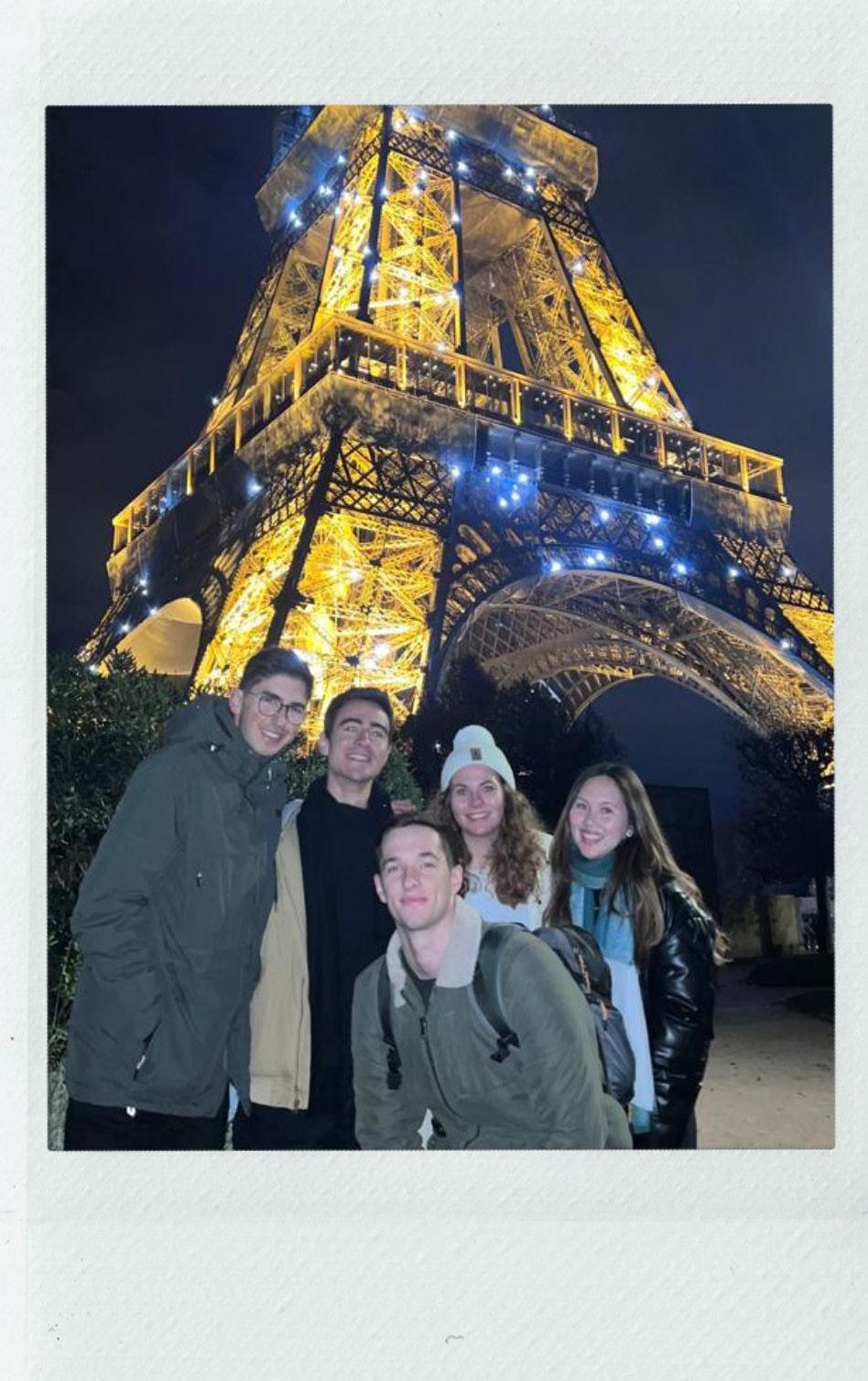

natural beauty of her hometown, Bloemfontein, and the friendly, warm people in South Africa.
The same sentiment about South Africa is shared by Beat Reiter, an exchange student from the Management Centre Innsbruck in Austria. He decided to spend his exchange semester in Stellenbosch because of South Africa’s natural beauty and the friendly and welcoming people. Reiter has come to really love the South African culture despite it
Despite the challenges (and the winter cyclone Barr was caught in in West Virginia), a semester abroad expands your horizons and allows you to build an international network. These three students did it and so can you. Just do your research thoroughly and you could be sipping tea in England or even eating sushi in Japan! It doesn't even have to be for a whole semester—Stellenbosch has several winter and summer school opportunities. It’s as easy as going on My.SUN and clicking on the Study Abroad tab. Come on! You might miss De Lapa but imagine living it up in the Berghain in Berlin. Take the shot. The world is waiting.
Day in the life of Matie Student Athletes
Balancing academics, sport, and a social life, especially as a student athlete, can be challenging. Die Matie has asked some student athletes how they juggle the demands of university living. It appears the key is to be present in the moment, following your passions, and finding a way to make the different aspects of your life work together holistically. Some student athletes shared their thoughts and experiences regarding the commitment that being a Maties athlete demands. Including many general training sessions, matches over weekends, and gym sessions up to three times a week, student athletes find themselves swamped with responsibilities and pressed for time. “Your social life definitely takes a knock,” says Gysbert Wege, cricket player for Maties and first-year BAcc student. “That is unfortunately part of the job and sacrifices you have to make.”
It is evident that a strong balance between sport and other parts of life must be made for
these athletes, especially when there is also a degree to study for thrown into the mix. Specifically in men’s residences, the interviewed players highlighted the importance of their peers’ empathy and understanding of them having to often say no to social engagements. “Most of [my] mates know the sort of schedule and understand that sometimes I can’t be a part of social things,” says Ryan Jairaj (cricket player), but he adds that it “can become hard as you start to say no to a lot of the things your friends are doing.”
Not just physical, but also mental fatigue, was mentioned as a factor to contend with. Some athletes swear by the support of close friends and family to relieve the mental strain. Others note that sport itself strengthens their mental stamina, deriving greater benefit from physical activity outside of just playing for Maties.
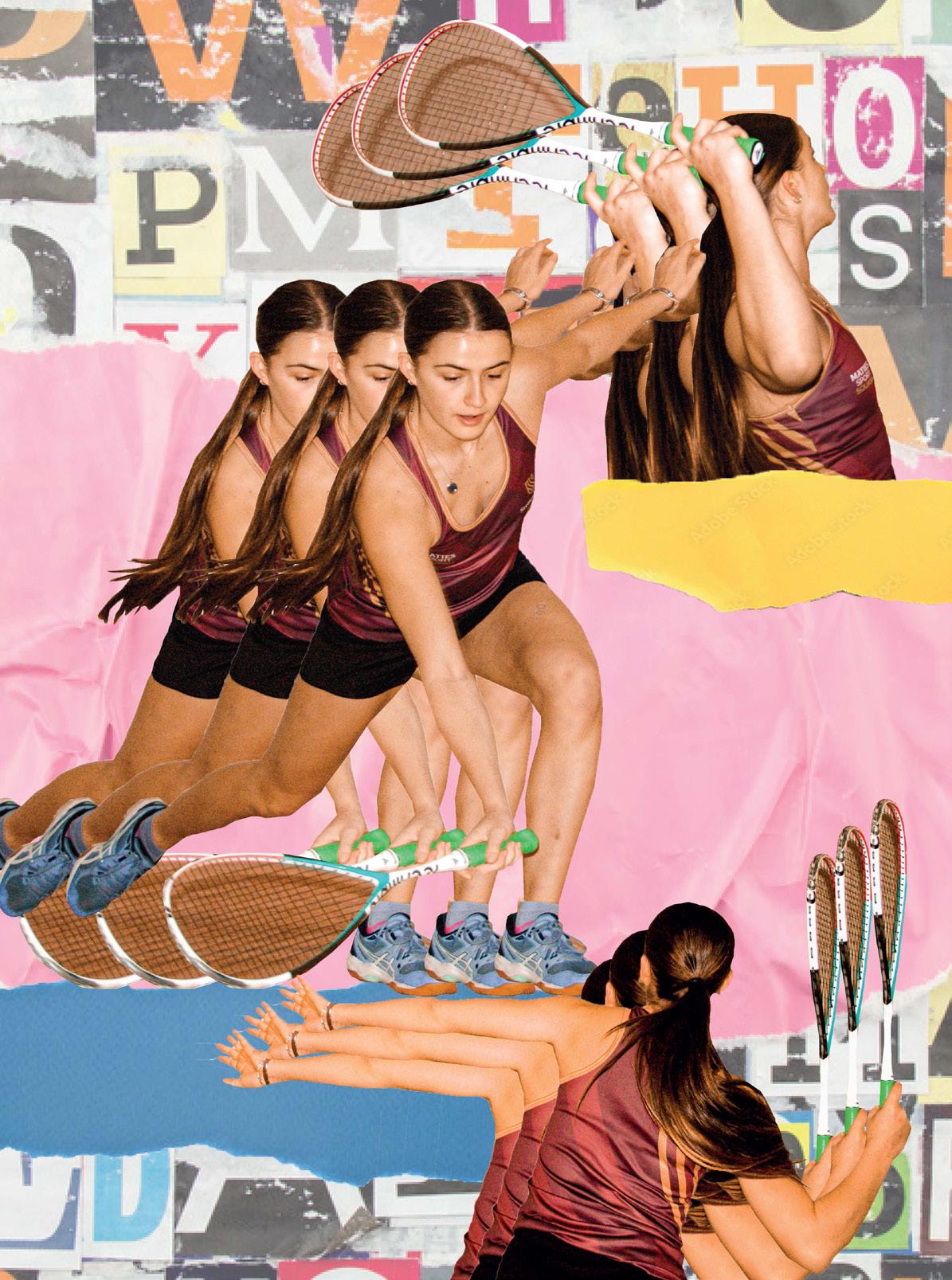
Ashton Weir, BDatSci student and Maties squash player, says, “The most important part in balancing any sphere of your life—academic, sport, or social—
is, while you’re doing the one, not to feel guilt over the others.” She encourages fellow students to view sport as a mental break, or a tool to help your academics rather than a distraction from it: “When you change your mindset about what role sport plays in your academics, it completely changes [your attitude].”
Weir adds that sport definitely contributes to her mental health as a way to maintain a positive and refreshed approach to other aspects of student life. The effect of her sport on her mind is “a high you almost can’t explain until you experience it.” She elaborates, “After a really good workout or training session, you just feel so accomplished and ready for the day. You just want to achieve more after you’ve had that feeling.”
The life of a student athlete does not have to be a torn one; it seems to depend on the approach one chooses to take. Viewing sport as one element in a holistically dynamic life, instead of a ball to juggle, is the key to balance.
STUDENT LIFE 6
ALMÉ HUGO
EMMA OLIVIER & EBEN LABUSCHAGNE
Photo: Emma Olivier
Photo edit: Emma Jane
Photo: Supplied
ARTS AND ENTERTAINMENT KUNS EN VERMAAK


A touch of madness on the Stellenbosch stage: What the Butler Saw Review
 OCEAN POSTMAN
“You’re in madhouse, unusual behaviour is the order of the day,” reads the tagline of What the Butler Saw, and it certainly delivers on the madness and then some. The two-act Joe Orton play, What the Butler Saw, was performed at the Adam Small Complex on 22 and 23 September as part of a series of plays to be directed by honours students. This particular play was directed by Honours student Suné Jansen van Rensburg. The play is a farce, which sees the audience follow the frenzied descent into madness of all the characters onstage.
As the curtains part, the audience is introduced to a rather ordinary and unassuming
scenario: a young woman named Geraldine, played by Kristen Fichardt, is being interviewed for a secretary job by a psychiatrist, Dr Prentice, played by Aiden Davies.
The set is bland, almost monochromatic, and the appropriately clinical, stark lighting bleaches the scene, where we find ourselves in the psychiatrist’s examination room. The exposition of play was at first just as unassuming as the set, and the slow pace gave way for only a few short laughs here and there.
The action of play begins with the attention-grabbing entrance of Dr Prentice’s wife, played by Zara van der Westhuizen, who arrives on the scene much to Dr Prentice surprise, just as he had been trying to seduce the naive potential secretary.
Between various attempts at seduction, multiple diagnoses of mental afflictions, and a series of mistaken and stolen identities, it all culminates in ensuing confusion and hilarity, much to the audience's delight.
The comedic timing improved going into the second act, and the ensemble work was brilliant. Each actor provided the high energy and physicality required to bring the farce to life. It would be remiss not to highlight Zara van der Westhuizen’s performance as Mrs Prentice. From the moment she arrives, she embodies Mrs Prentice’s sexuality and neuroticism to hilarious effect.
Aiden Davies whips the audience into a panic along with him and gets us to somewhat sympathise with a man who finds himself out of control in an
increasingly strange predicament.
Physical slapstick humour was when the audience really responded most. The actors slipping in and out of received pronunciation, a typical ‘posh’ British accent, was noticeable, hinting at the play’s 1960s British roots, but it didn’t draw away too much attention.
Overall, the play was wellreceived, garnering standing ovations from the audience on its opening and closing nights.
Lukhona Mkunyana, firstyear BA (Drama and Theatre Studies) student, who played Sergeant Match in the play, gave a delightful performance, adding even more comedic relief in the form of flitting and chaotic sudden entrances and exits. Mkunyana felt that their opening night was strong, and that as the
play progressed the ensemble could feed into the energy of the audience far more.
“What we did was farce, and it’s very quick paced, lots of entrances and exits,” he said, “so from that it was about trying to instil that timing in your body and then from there making sure that you and your fellow actors are constantly moving as one, but at the same time you’re on your own mission, which is one of the biggest challenges as an actor.” Farce as a genre is often underestimated in terms of how difficult it is to balance and bring to life the comedy and action of such a play. This production, however, managed to hold its own. Over-the-top, sordid, and absolutely mad—there is no better compliment for What the Butler Saw.
DAG & NAG 7
PHOTO: Supplied
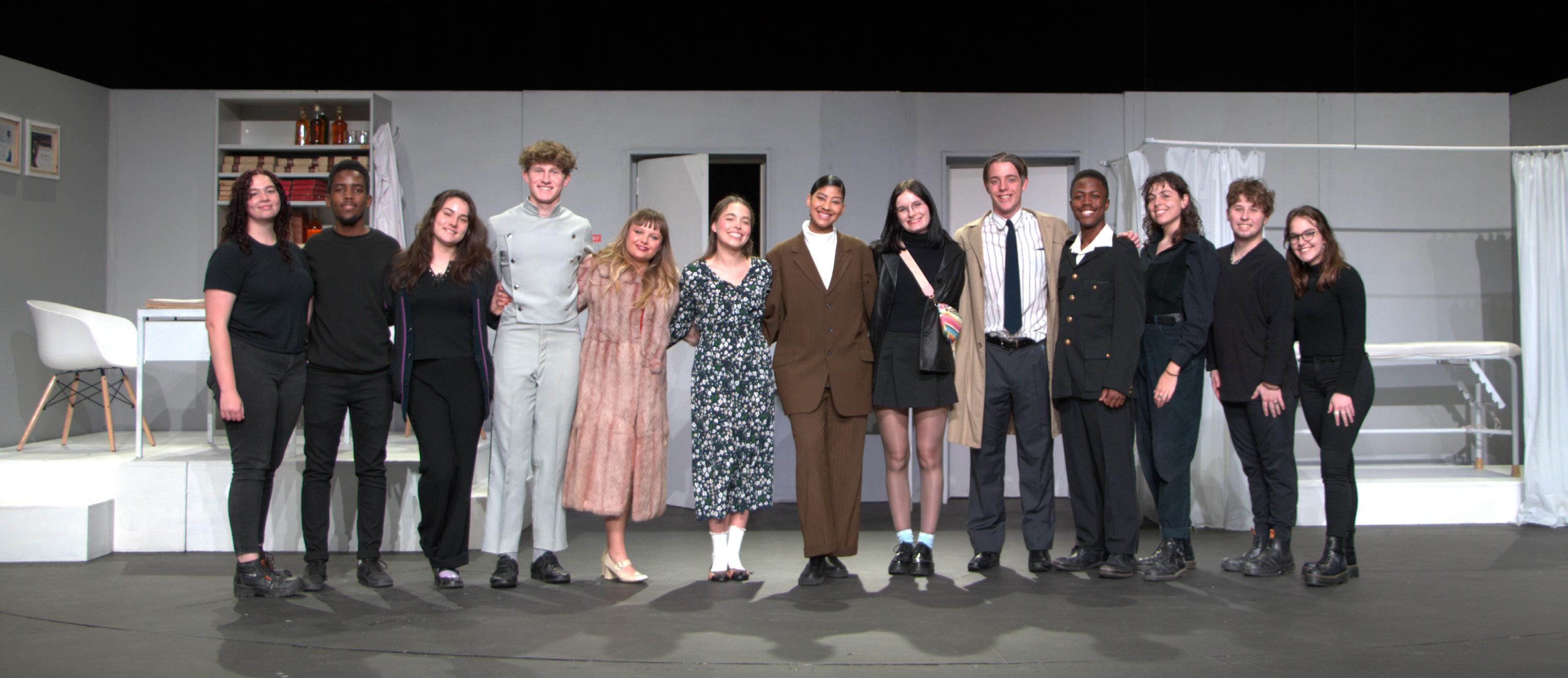
The cast and crew of What the Butler Saw
PHOTO: Abigail Baard
Toyota Woordfees 2023: Waarvoor om na uit te sien
Met die afskop van die vierde kwartaal word studente terug verwelkom met eikebome wat bot en die komende woordfees wat die strate van Stellenbosch sal vul. Die Toyota Woordfees word met ope arms terug verwelkom en die dorpie borrel met opwinding. Die fees sal van 7-15 Oktober plaasvind en Stellenbosch bederf met kreatiwiteit, kuns, en hope pret.
Talle komedieproduksies sal opgevoer word, onder andere: Dude!Wa’smyphone? op 7 en 9 Oktober. Jeremeo Le
Cordeur sal die karakter van Dean September in hierdie produksie op op die planke van HS Lückhoff sal vertolk.
Regisseur Geoffrey Hyland se produksie van die welbekende komedie AMidsummerNight’s
Dream sal hierdie jaar weer by die Oude Libertas-amfiteater vanaf 9-13 Oktober verskyn. Shimmy Isaacs sal op 13 Oktober by die Wilgenhof teatertent agter die mikrofoon inskuif om die gehoor se maagspiere te toets
met haar stand-up komedie. Île , met komediant Sophie Joans en Rob van Vuuren as regisseur, vorm ook deel van die Savannah Komedie afdeling en sal op 7, 8, en 14 Oktober in die Wilgenhof teatertent plaasvind.
Oudstudent Veronique Jephtas se Mykroonsekrank sal 7, 10, en 12 Oktober in die HMS Bloemhof skoolsaal opgevoer word en is ʼn drama wat nie misgeloop moet word nie. Fringe is ’n reeks toneelstukke wat deur die loop van die fees sal plaasvind en fokus op jong, opkomende kunstenaars. US-studenteproduksies soos
Gita Fourie se AngloAngst sal in hierdie kategorie ten toon gestel word.
Die Toyota musiekfees sal soos gewoonlik buitelug optredes deur Suid-Afrika se gunsteling kunstenaars, Stellenbosch toe bring. Bekende name soos Fokofpolisiekar, Desmond and the Tutus en Majozi sal op 11 Oktober by Nagskof Vol. 1 op die Van Der Stel sportgronde optree. Verder sal Spoegwolf die aand daarna op 12 Oktober ook by die Van Der Stel sportgronde optree.

Boschendal Opelug Aandmark
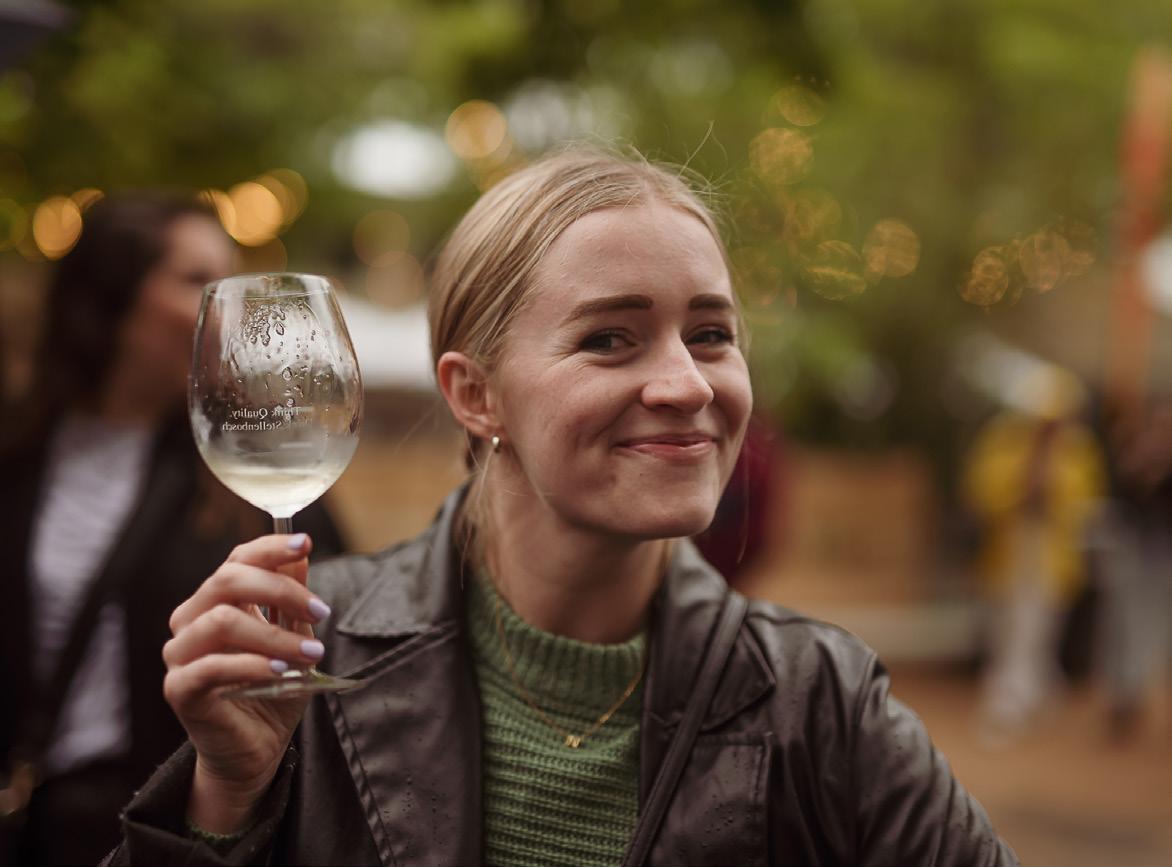
Vir diegene wat nie juis in toneel belangstel nie, is die straatsoirée op 7 Oktober in Ryneveldstraat ’n goeie geleentheid om die beste van Stellenbosch se wyne te proe. Toyota Woordfees 2023 sal een vir die boeke wees.
WD MULLER

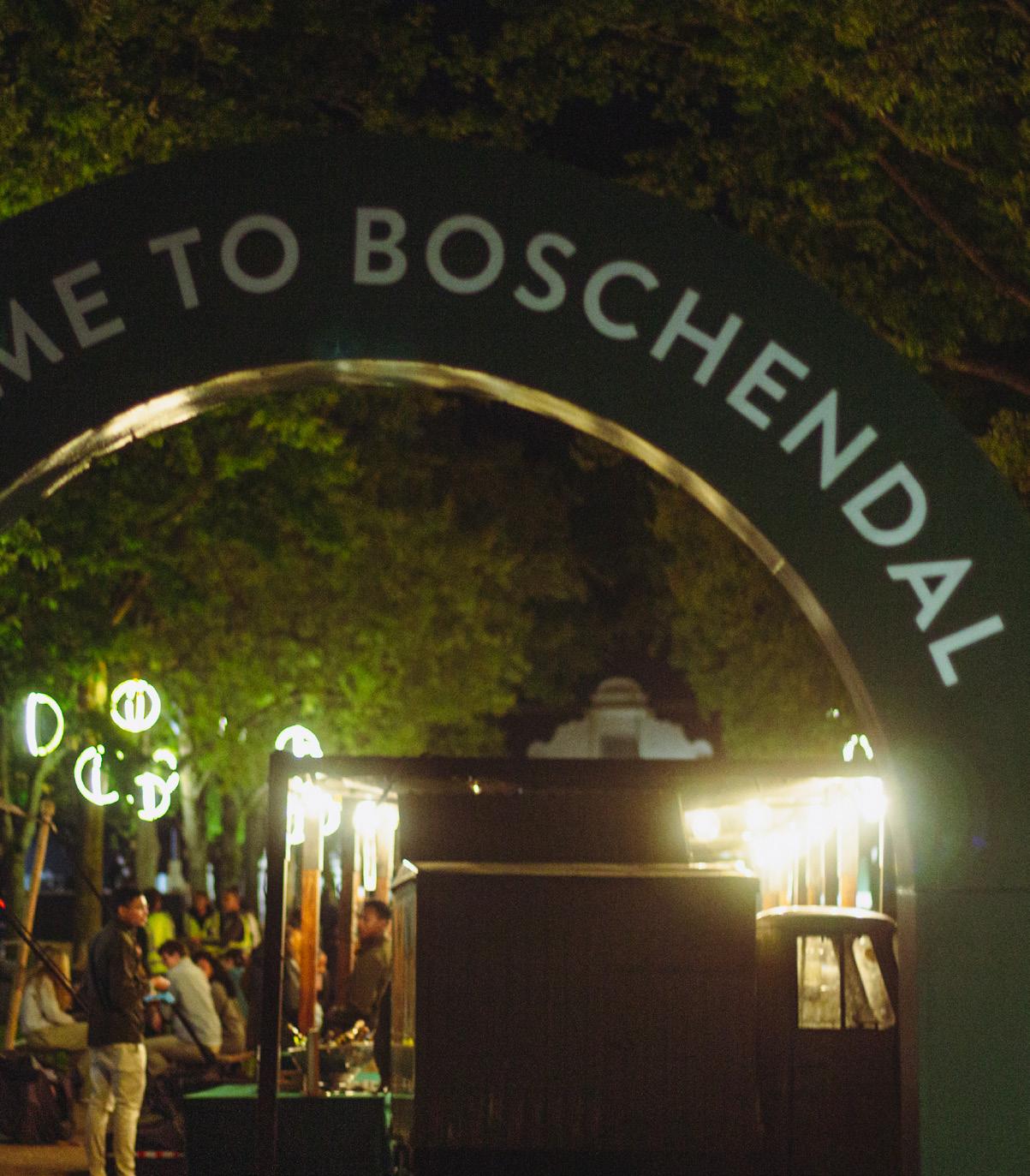
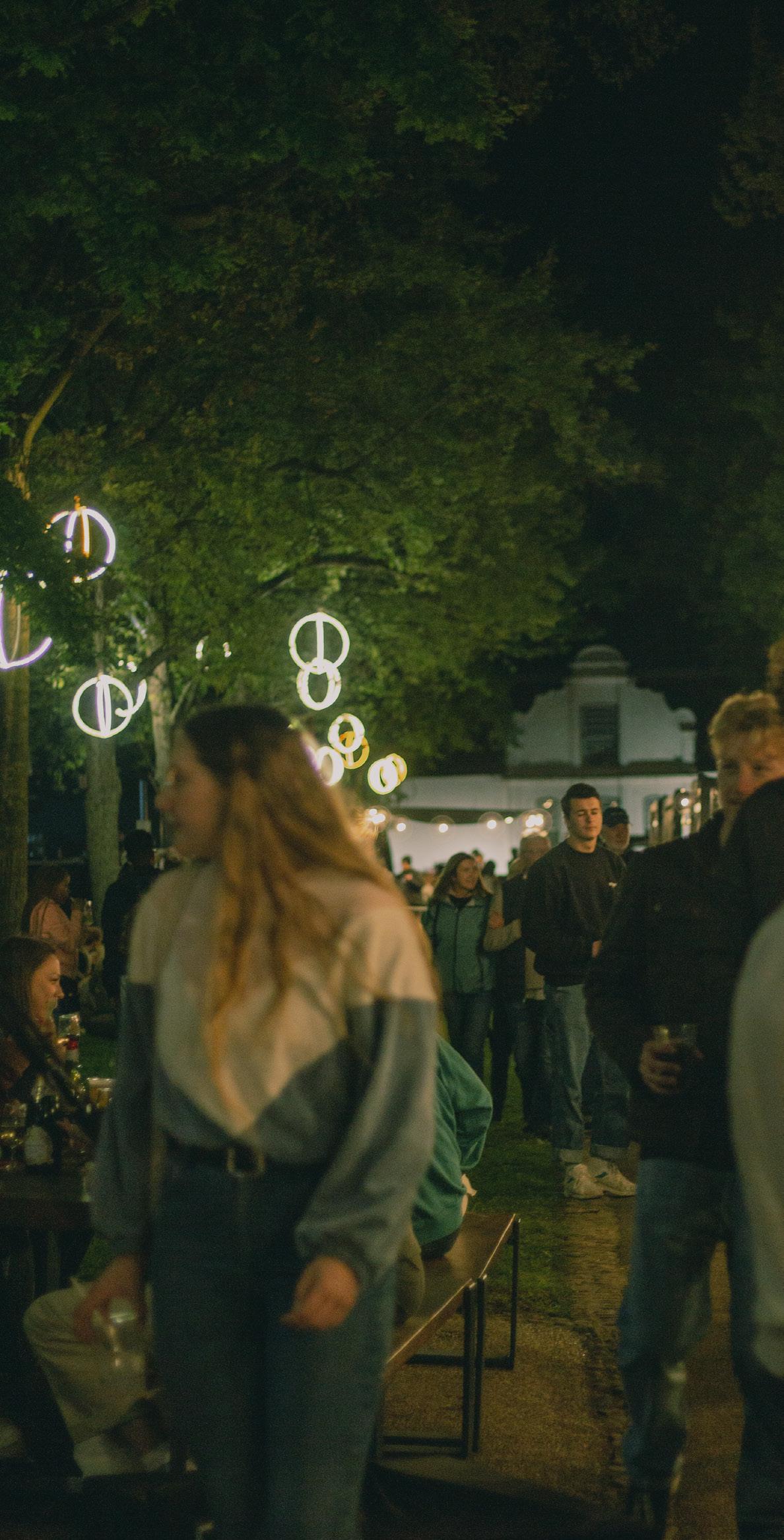
Met intrapslag vul jazz en die soet klanke van kinders se gelag die ore. Die energie is bruisend. ’n Versameling stalletjiehouers probeer die produkte van hul handewerk aan al die markgangers verkoop. Die Boschendal Night Market (Aandmark) is in volle swang. Die Boschendal Night Market word regdeur die warmer maande, mits die weer dit toelaat, tussen 17:00 en 21:00 op
Vrydagaand gehou. Die eerste mark was op die aand van die 22ste September, gehou. Die inisiatief laat besoekers toe om hulself luilekker onder die historiese, akkerbome op verskeie bean bags en piekniekkomberse tuis te maak. Dít terwyl lewendige musiekopvoerings besoekers bekoor en die heerlikste handehappies opgedis word.
Die mark bied ’n verskeidenheid kos- en drankstalletjies. Van pastéis de natas tot boereworsrolle en lifelike MMC is beskikbaar, en verseker dat selfs die mees kieskeurige eters onder ons
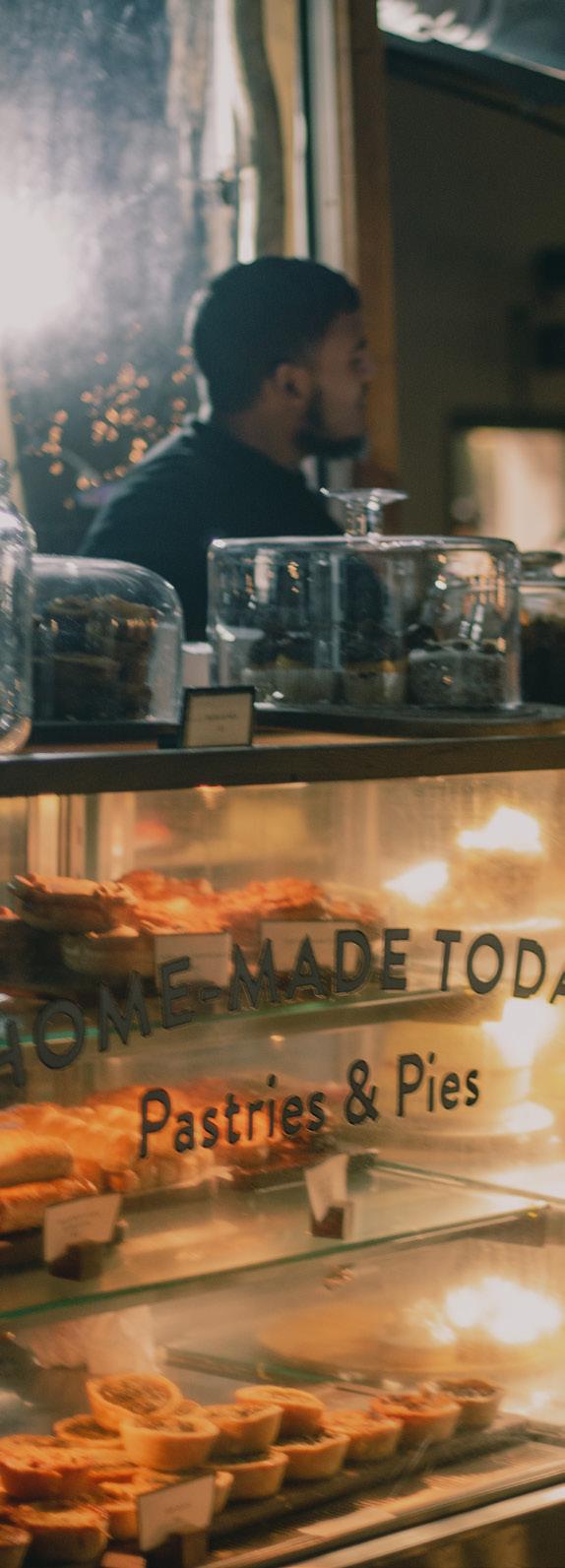
tevrede gestel sal word. Die Boschendal-handelsmerk word, soos verwag, ook goed vertoon. ’n Verskeidenheid van dié wynlandgoed se produkte is beskikbaar by uitgesoekte stalletjies en Die Plaaswinkel. Laasgenoemde verkoop onder andere handgemaakte lekkernye, vars gebakte produkte, ’n verskeidenheid wyne en vars groente en vrugte.
Die rustige atmosfeer van die markie sal vir enige iemand wat van ’n buitelug-wegbreek hou, ‘n welkom lafenis wees. Gaan vroeg en geniet ’n heerlike aand van ontspanning onder die sterre.
8 DAG & NAG
EMMA HAMMAN EN LIENKE NORVAL
Die atmosfeer van die Boschendal aandmark FOTO’S: Cheyenne Britten
PHOTOS: Supplied
Doja Cat and performative marketing
LIENKE NORVAL
American rap artist and singer Doja Cat rose to prominence in 2018 when her first hit song “Mooo!” went viral on YouTube. Today, she is known as one of the first international stars to have started their career primarily based on internet notoriety. The comical nature and inherent “memeability” of “Mooo!” cemented her unconventional image in the public eye. Her sophomore album, Hot Pink, was released in 2019, just in time for nearly every single song to go TikTok viral during the COVID-19 pandemic in an unprecedented manner. For the average radio listener or clubgoer, Doja Cat’s sphere of influence seemed inescapable between the years of 2019 to 2021.
However, in the lead-up to the release of the artist’s fourth and latest studio album, Scarlet, Doja Cat has undoubtedly received more media coverage than
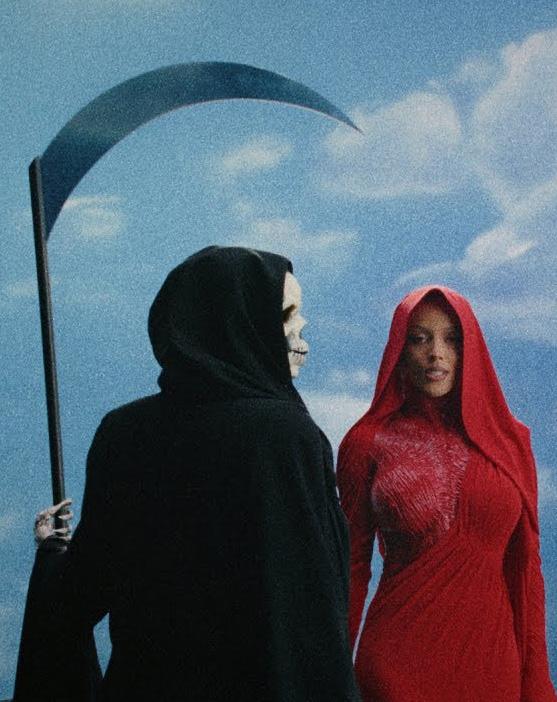
ever before in her career. This is partially due to the ways in which she has been promoting her upcoming album and the accompanying rebranding of her public image. In a sharp pivot from the bubblegum fever dream that was Hot Pink, the singer has seemingly abandoned the hyperfeminine aesthetic sensibilities she previously subscribed to. Instead, she has now opted for a much more alternative, darker style, showcasing her bald head, often adorned with horns, on her Instagram, as well as in her latest music videos. Of course, accusations of promoting satanism were quick to follow, especially after the release of her controversial song and music video “Demons”. Although some fans are outraged at her apparently blasphemous actions, many claim to see through her contentious style choices for the marketing ploy that it is.
Interestingly, the accusations regarding satanism were not the only controversy that have
Editorial Playlist

surrounded Doja Cat recently. The singer went on several internet tirades, as recently as August 2023, lamenting that she disliked the fans she had accumulated and calling them “miserable”. Although this understandably rubbed many fans the wrong way, it is safe to say that the stunt definitely drew attention to Doja Cat and the release of Scarlet. All publicity is good publicity, right?
“She knows how much Americans like to panic about satanism and she’s using that as clickbait,” says Chulumanco Schaap, a First-year Bachelor in Social Work student. Many listeners agree that it is not the satanic imagery that has turned them against Doja Cat, but rather the blatantly performative nature of her recent work. Others cite her connection to internet culture as evidence that this may all be one big case of trolling. Anja Pieterse, a Second-year student, states: “Doja Cat is and will always be a memelord at heart.”

Olivia Rodrigo’s GUTS-y new album
ALMÉ HUGO
Where were you when you first heard “Driver’s License”?
You might not remember the place, but I bet you remember the way you felt. Don’t deny it: Olivia Rodrigo speaks to something inside the young adult mind. And she has done it once again with her second studio album, GUTS Rodrigo’s debut album, SOUR, put her on the music landscape map and many doubted that she could live up to it. Although SOUR was a brilliant album in its own right, GUTS really showcases Rodrigo’s range and writing skills. With GUTS, Rodrigo starts to curate her sound and establishes the type
of listener she wants to speak to through her music. The subtle punk and grunge influences elevate each song without disorienting the average pop fan. To quote the last track from the album, “Teenage dream”: “When am I gonna stop being great for my age and just start being good?” GUTS gives the undisputed answer to this question:Rodrigo is an artist of note that deserves the spotlight. By now even casual listeners will have heard the lead single “Vampire”, which evokes imagery from the 2000’s blockbuster movie series Twilight (that is, if Twilight was about a messy break-up and had a purple filter). However, missing out on the rest of the album would be
a disservice to the pop genre. Songs like “All-American Bitch”, “Get him back” and the piece-de resistance: “Bad Idea Right?” will get stuck in your head and give you the itch to do something chaotic and unpredictable to your ex. Everyone who went through puberty will be able to relate to “Ballad of a home-schooled girl” and “Pretty isn’t pretty”. We send our deepest condolences if you can relate to “Logical” or “The grudge” (these songs are for the post-breakup Instagram stories). Truly, every song on this album deserves a thorough listen. All in all, GUTS perfectly encapsulates what it feels like to be a twenty-something teenager in the 2020’s. We look forward to hearing more of Rodrigo’s music.
DAG & NAG 9
PHOTO: Supplied
PHOTO: Supplied
Die lente kom vanjaar laat. 1.Heart -Rainbow Kitten Surprise 2.Wasted Summers -juju<3 3.Hard MF 2 Luv -Bad Sounds 4.Duvet -bôa 5.Glitter -Eliza McLamb 6.Valley of the Dolls -Santigold 7.Think Fast (feat. Weezer) -Dominic Fike 8.Too Bad -King Princess 9.9/10 -Keyboard Dog 10.Body -Briston Maroney
Editorial
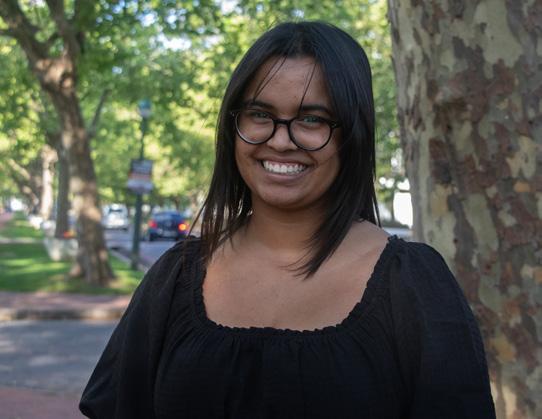
As we welcomed the fourth term the oak trees slowly woke from their winter sleep and September was supposed to bring a blossoming spring. Students excitedly started hanging up their heavy winter coats– only to take them down again, as they learned spring has not yet sprung. Impatiently waiting for social lives to defrost and the seasonal depression to release its tight grip. The new season of Die
Matie is however in full bloom, and we give a big salute to the main editorial team of 2022/2023 stepping down. As we celebrated Heritage Day on Sunday 24 September, I can only be thankful for the legacy and heritage of Die Matie passed from generation to generation. We thank Aurelia Mouton, and her team, for leaving us a paper ran with passion, commitment and late nights that didn’t
Editorial staff 2023/2024
go unnoticed. Moving from a small town in the Boland to Stellenbosch made me realize that there are different seasons of life. There are seasons of chaos and seasons of feeling content. I learned that university life is neither –it’s the season of becoming. Becoming the person you were meant to be, and finding your why. As my parents endlessly tried to explain to me growing up,
everything in life is about choices. You can either choose to stay in your comfort zone or leap to new heights and allow your passion to fuel you. So here I am, the 83rd editor-in-chief of Die Matie. I came to university not quite knowing where I will find my why, and completely fell in love with this paper. I now understand why they say you never truly get over your first love. For the editorial team all is new
and every step we take is in an unknown direction. There are so many ways our tomorrow could go, and that is what excites us most. I am already so proud of how far this team has come and the dedication they have shown for this edition.
ARGIEF / ARCHIVE
All editions of Die Matie from 1941 to 2011 are available online in PDF format as part of SUNDigital Collections on the SU Library’s website. Other editions of Die Matie are available on Issuu. Please visit https://issuu.com/diematie
Other editions of Die Matie are available on Issuu. Please visit https:// issuu.com/diematie

KLAGTEPROSEDURE EN FOUTRAPPORTERING / COMPLAINTS PROCEDURE AND REPORTING ERRORS
Die Matie is onderhewig aan ’n gedragskode wat by Studenteregering by die Afdeling Studentesake beskikbaar is.
Klagtes oor Die Matie se inhoud moet volgens die uiteengesette prosedure binne veertien dae ná publikasie aanhangig gemaak word.

Die Matie subscribes to the Press Code of Ethics and Conduct for South African Print and Online Media.

If we do not adhere to this code, please contact the Press Council of South Africa at presscouncil.org.za/https://www.
If we do not adhere to this code, please contact the Press Council of South Africa at https://www.
CONTRIBUTORS



EMAIL diematie75@gmail.com
WEBSITE www.diematie.co.za

INSTAGRAM @diematie
ADS diematieads@gmail.com
FACEBOOK www.facebook.com/diematie
To get involved as journalist, reach out to us on any of our social media platforms or send an email to
RAAK BETROKKE / HELP OUT KONTAK ONS /GET INVOLVED
24713120@sun.ac.za
LAYOUT: Helena Reid PROOFREADERS: Abigail de Klerk Simone Christain Theodora Njati
10
Emma Hamman Hoofredakteur 2023/2024
Cartoon: Nicole Salgueiro
Editor-in-Chief Emma Hamman Layout Editor Kobus Erasmus
Photo Editor Kris Bence News Flavia Davids
Student Life Jean-Miri Olivier Dag & Nag Lienke Norval
Sub-editor (Eng) Abigail De Klerk Sub-editor (Afr) Rua Mostert
Social Media Rebecca Rossouw Online Jani Roux
Managing Editor Ann Naudé
Financial Manager Christian Timmerman
‘Find out who you are and do it on purpose’ – Dolly Parton.
Women's World Cup Wows
ANÉ HAVENGA
Between 20 July and 20 August, the FIFA Women Football World Cup kicked off in Australia and New Zealand—two countries that are characterised by equality and promoting women’s sports. Fortunately, the question regarding whether the World Cup would live up to the hype of women’s sport was certainly answered. Records were shattered and new heroes were born that will inspire the next generation. This was the first time that 32 teams participated, including South Africa—as we qualified after winning the Women’s Africa Cup of Nations last year. A record 164 goals were scored during the tournament, contributing to the excitement factor. Spain ultimately scored the most goals in the tournament (18), but the goal scored by their captain, Olga Carmona, against England in the final minutes, bumping the score to 1-0, was truly what made the game for them.
These records were witnessed by further recording-breaking crowds, with the highest crowd attendance being over 75 000 people. Keeping in line with the statistical success, the prize money for the teams was a record amount; even the South African players went home with R1.2 million each, a fair amount after struggling to reach payment
agreements with the South African soccer association. South Africa’s Banyana Bayana wowed the world. Their fashion sense and team spirit, filled with dances and songs, were all over social media. Thembi Kgatlana scored the winning goal against Italy in the extra time that sent South Africa through to the last 16-round. Although the team eventually lost to The Netherlands, it made history as
the first senior South African team to reach this round in the World Cup. Another historical mark was made as the semi-final between England and Australia being their most watched Australian sport event yet, securing the Matildas as the most valuable Australian team. Weeks before the tournament, in a show of camaraderie, British media got behind the Lionesses to hype and support them in a truly charitable

move.
Jaime Swartz, final-year BA (Humanities) student and central attacking midfielder for Maties women’s football team, explains that the Women’s World Cup was interesting to watch—waiting to see who would progress this year, especially from the South African underdogs. “There is so much opportunity in this country, we just need more financial support. But the world took note of us,
all the commentators said so. Hopefully there will be some investment in the Winelands as well. Thank you for the Banyana Banyana players that fights for equality!”
Anelisiwe Ngcobo, Maties’ defensive midfielder, agrees that they have had a challenging season thus far, “Although we may not win our current league, there were a lot of positives throughout the season, and we try to focus on that for our two final games. The team will learn from the misfortune and hopefully prevent that from affecting us in the future seasons.” To her, it is beautiful that women can be physical but still vulnerable while putting up a brilliant performance. “How beautiful was it that the World Cup was in women’s month? We celebrated HER strength, HER physicality, and HER professionalism. People came out in numbers to support them. I am still in awe of the grit and spirit show[n] by the Spanish team in the final. They showed the character and hunger for the title, and they eventually got it at the end.”
With women’s sport getting more attraction and equal rights than ever, it is important to keep this energy going! The world cannot wait for the next big move in women’s sports!
Varsity-beker 2023: Semi-soet semi-finaal
ANÉ HAVENGA
Dit was ‘n jaar van gemengde resultate vir Maties se vrouenetbalspan. Vroeër die jaar het hulle op tuisbodem die USSAs gewen. Dit nadat hulle laasjaar die Varsity-beker gewen het. Dus was die verwagtinge hoog vir die dames in maroen. Ongelukkig, is hulle in 2023 se Varsity-beker in die semi-finaal uitgeskakel, wat gemaak het dat hulle nie suksesvol hulle titel kon verdedig nie.


Die Varsity-beker speel oor drie naweke af, voordat die semi-finaal en finaal gespeel word. Maties het veral in die tweede naweek,
bekend as, bumper weekend 2, klei getrap. Daar het hulle teen Noordwes-universiteit (NWU) en Tukkies verloor. Die span het wel hulle self opgetel en seker gemaak dat hulle steeds in die top 4 posisies bly. Wat natuurlik vir hulle ‘n plek in die semi-finaal beteken het. Waar hulle kragte teen Tukkies gemeet het. Maties moes die knie buig, en verloor 33-61 teen die algehele wenners van die toernooi.
Nerine Koopman, Maties netbalspeler, vertel: “Dit is fantasties dat netbal in SuidAfrika meer oor gepraat word
in die media. Dit het veral gehelp dat die netbalwêreldbeker hierdie jaar in Suid-Afrika was. Meer mense het beslis hierdie jaar netbal gevolg. Natuurlik was hierdie jaar se toernooi in die Varsity-beker effens teleurstellend. Veral die resultate en hoe ons gespeel het. Ons sal maar net moet teruggaan na die ‘drawing board’ en kyk wat werk en wat nie. Ons speel altyd vir goud, maar soms werk dinge net nie uit soos ‘n mens wil hê dit moet nie. Volgende jaar wil ons konsekwent wees in ons benadering!”
SPORT 11
PHOTOS: asem engage
PHOTO: supplied
Lisa Yssel Aces the Billie Jean Cup 2023
OCEAN POSTMAN
The Billie Jean Cup 2023 Africa Zone Group III took place on 12 to 17 June earlier this year at the Nairobi Club in Nairobi, Kenya. Stellenbosch University’s (SU) own Lisa Yssel took part in the tournament.

Just like its legendary namesake, the Billie Jean Cup symbolizes the trailblazing achievements of women in tennis, with women from several different African countries participating–including Kenya, Morocco, Nigeria, Botswana, Namibia, and Uganda. The Billie Jean Cup is a world cup level tournament, and as such is competitive in nature, as well as being an excellent display of the great talent present on the continent. Lisa Yssel’s commitment saw her advance from a non-traveling reserve in 2022 to a fully-fledged tournament player this year. She embraced the change and challenge of playing on the clay court. Despite not being in the same country as her doubles partner, Liniques Theron, who resides in Namibia, Yssel still participated in both singles and doubles matches.
When highlighting just what a historic feat it is to play in the tournament, Yssel’s reminder to young tennis players with similar ambitions was a quote she finds particularly powerful from Billie Jean King herself: “Pressure is a privilege.”

Channeling this, Yssel held her own and secured a few wins against some considerably strong opponents. Contributing to her strong performance was the preparation she underwent in training with her Maties Tennis coach, Coach Brendan Thomas. To prepare, she spent time practising on clay courts in Stellenbsosch, adapting her footwork for the transition from hard court to clay court.
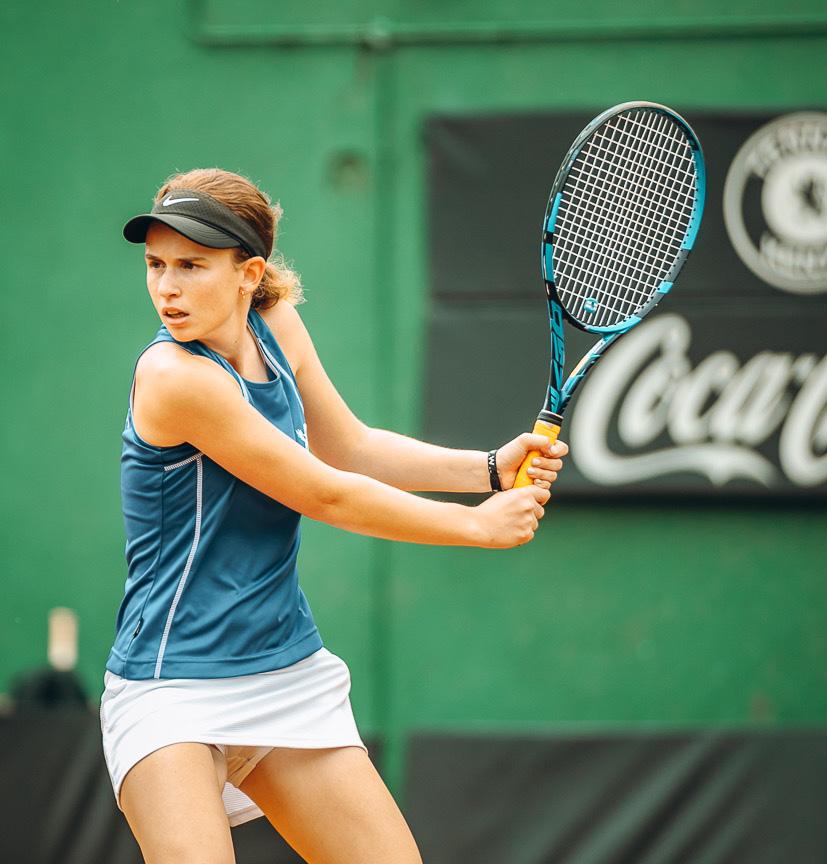
Lisa Yssel has been playing tennis for 15 years but says her solo tennis career really began upon arriving at SU, where she felt she could focus on developing as a player. Her participation in the Billie Jean Cup is a sure sign this Maties athlete is realising her potential. She credits maintaining her physical and mental health to self-discipline and remaining present, whether in the lecture hall or on the court.
She went on to participate in the Kikuxi Villas Open in Angola following the Billie Jean Cup, where her excellent performance saw her advancing to the semifinal, before unfortunately having to withdraw due to an ankle injury. She is making a recovery, and she has ambitions to attend the Student World Games and become captain of the women’s team for Namibia.
All those goals are just a part of the journey for Yssel, who, when asked about her future ambitions, says, “Somebody asked me […] what are you working towards? And I just said, ‘to go
as far as possible, to be as good as possible, and to do as much as possible.’ I’m not going to limit myself to say, ‘I just want to achieve this.’ I want to go as far as I possibly can and be the best possible tennis player that I am.”
Where to Watch the Rugby: Stellies catches Bok Fever
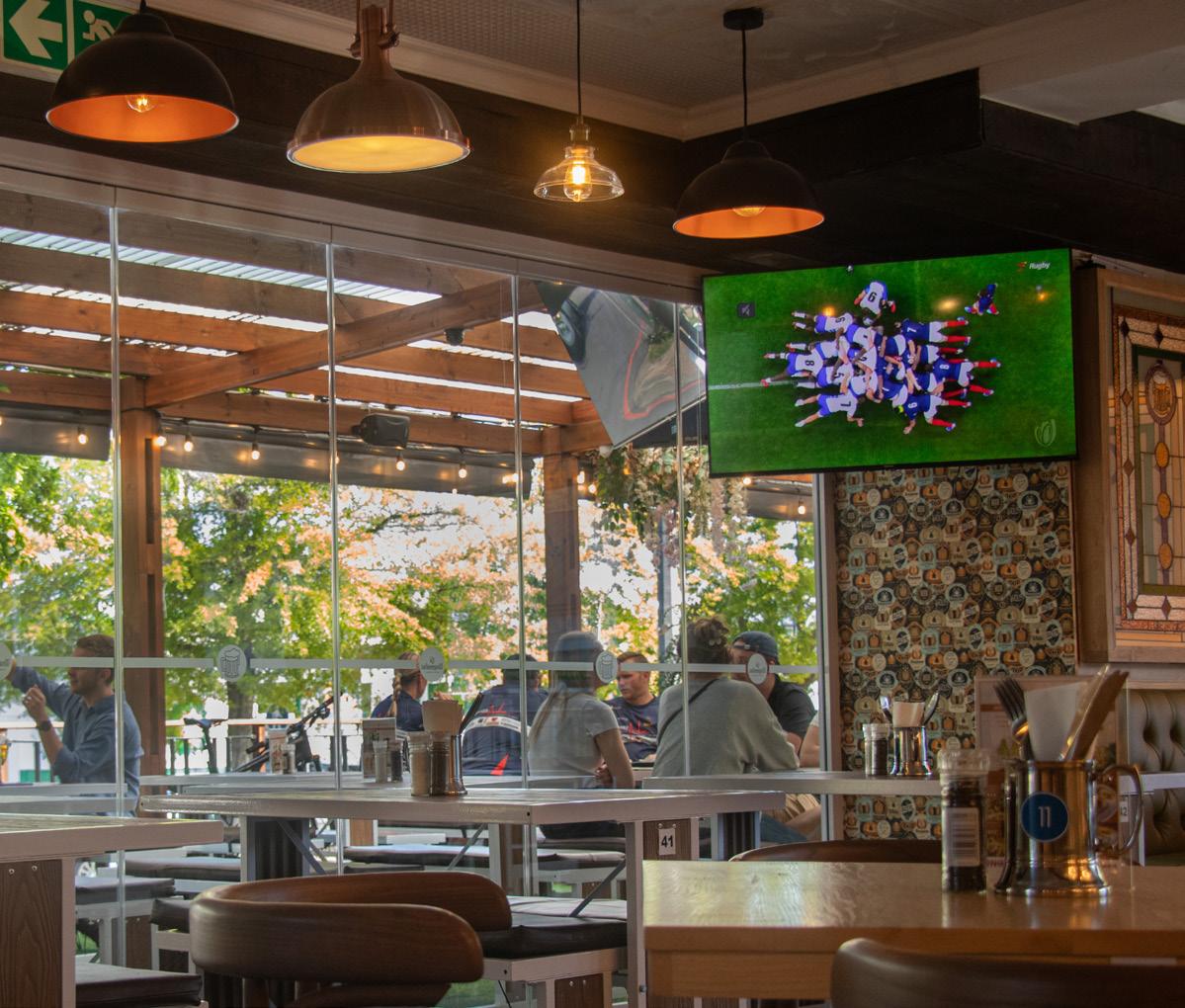
The Rugby World Cup is well underway and the Bokke are currently second in their pool following Ireland. With the World Cup Final only a month away, Bok fever has taken over Stellenbosch and game days are celebrated louder than ever.
If you’re wanting to join the masses in their green and gold shirts, Stellenbosch has many options.
Kaapstadt Brauhouse is one of the favourites on the list, with the restaurant urging students to book a table in advance. De Lapa is promising a free ‘springbokkie’ shot for the first 50 supporters
in Springbok shirts and is showing the game on 5 TV’s and a projector screen, so they also recommend booking specifically for the rugby.
Centraal is offering a handful of drink specials, including a Brooks Hard Seltzer bucket for R200 or a bottle of Pushkin with six BOS iced teas at R480 as some of their limited offers. When watching at Casa Cerveza, purchasing a 500ml Heineken gives you a chance to win a Heineken cooler filled with stock—the winner will be announced on 28 October.
Bohemia brags thematic drink specials and gives you free shots if the player selected for your table

scores, so make sure to select tables deliberately! Dorp shows the rugby upstairs, downstairs, outside, and on the dance floor; no matter where you go, your eyes never need to leave the screen.
For a more wholesome evening, join Wijnhuis on Adringa Street for a glass of wine and (not as distinguished) rugby time. Craft, across the street, is another option if you want to pair quality food with quality entertainment.
The Stellenbosch-typical enthusiasm is heightened in this season, so one might as well join the patriotism and support the town and the country.
EMMA HAMMAN
PHOTOS: supplied
PHOTO: Kris Bence
