SWT/KWS Tsavo Veterinary Unit Report for October 2025
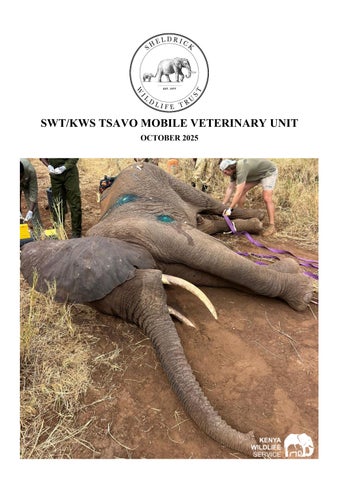
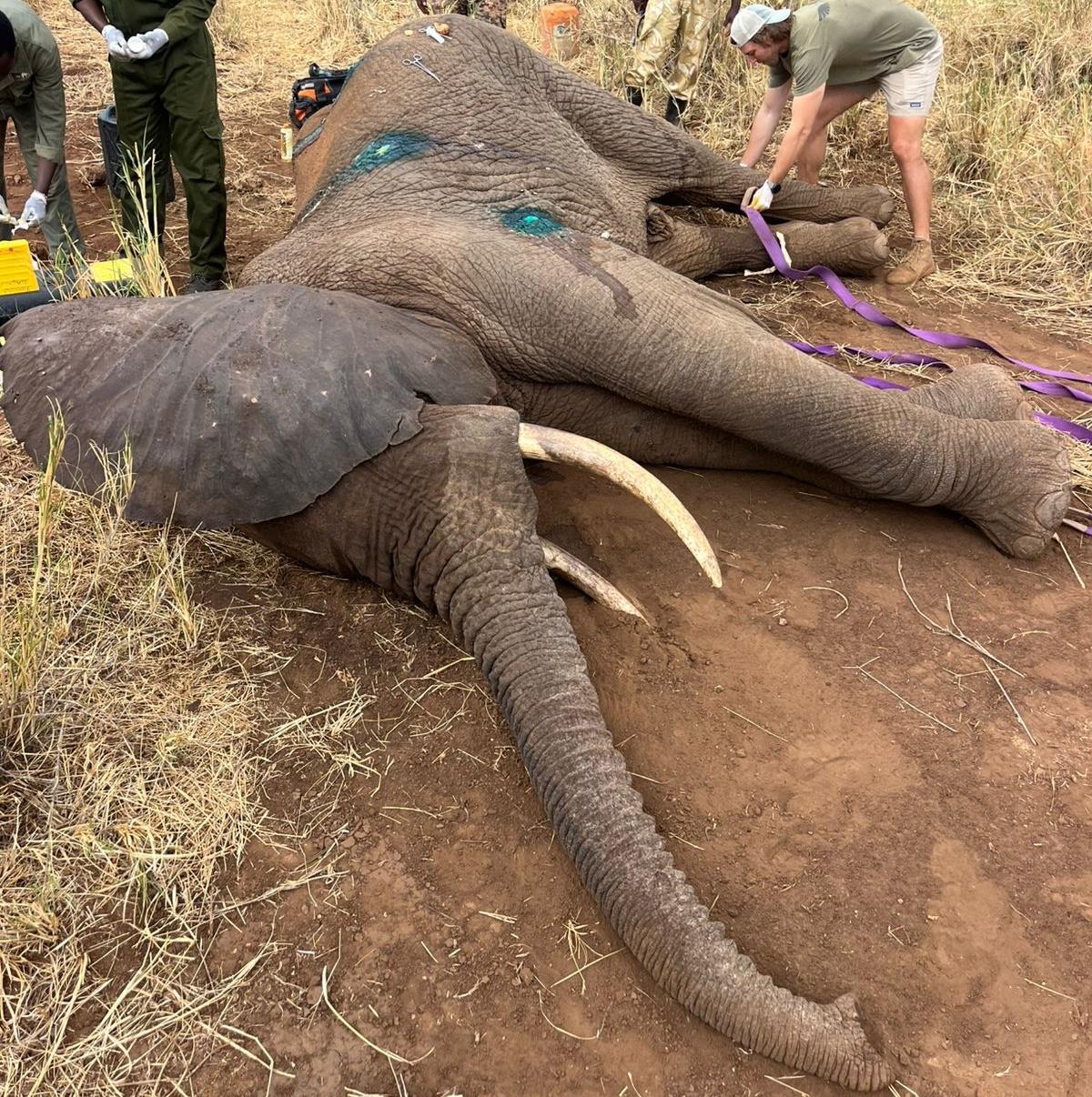
SWT/KWS TSAVO MOBILE VETERINARY UNIT
OCTOBER 2025
27 Cases in October 2025 9 Poaching Cases 21 Elephant Cases
October Report by Dr. Campaign Limo
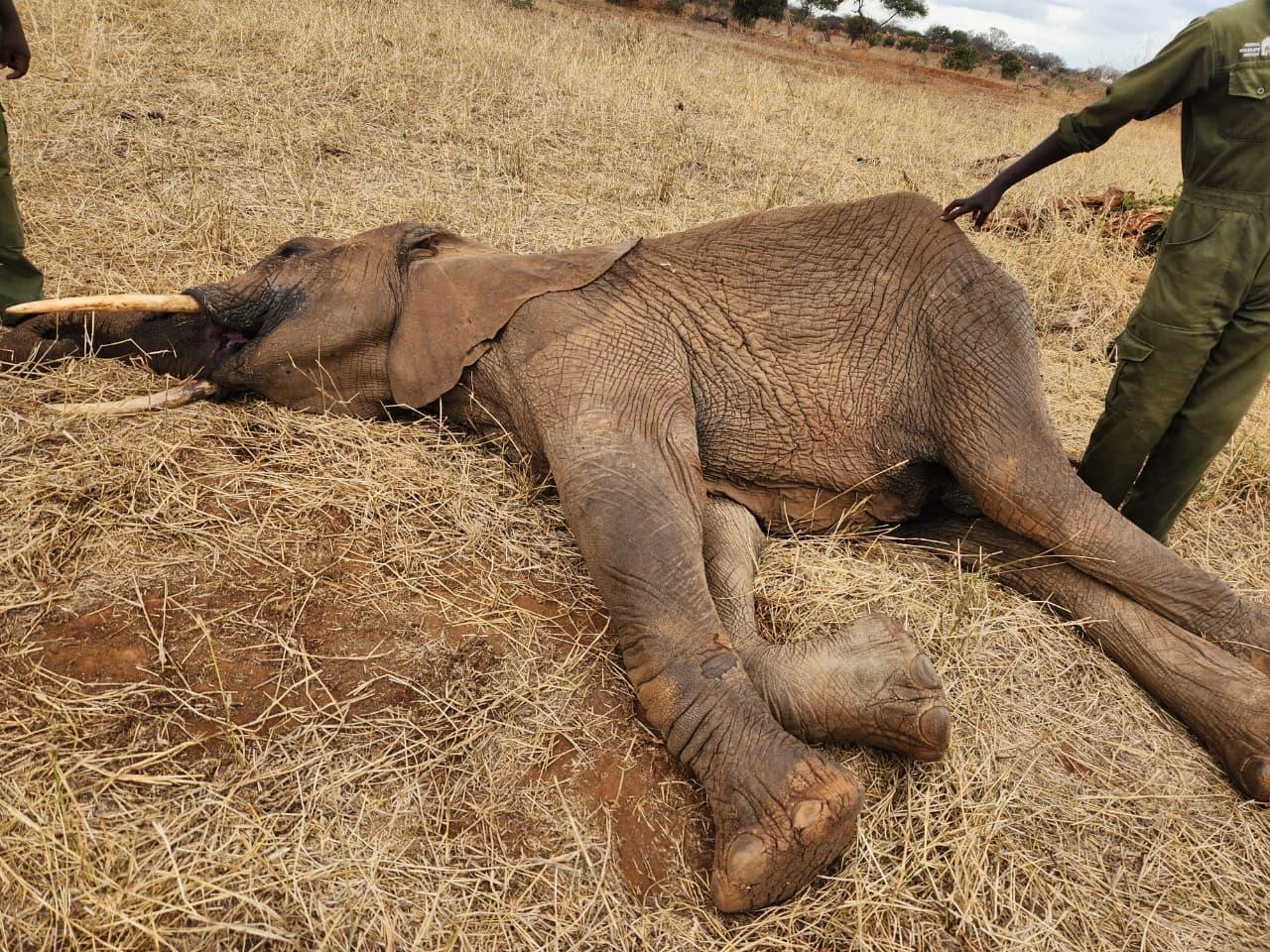
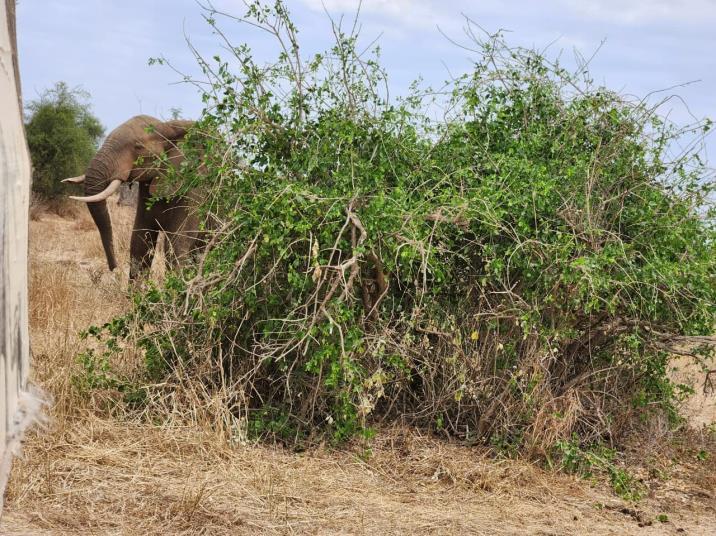
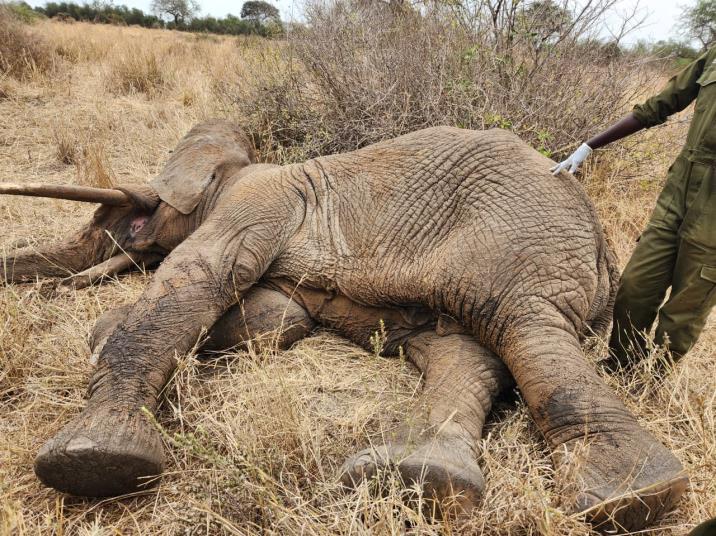
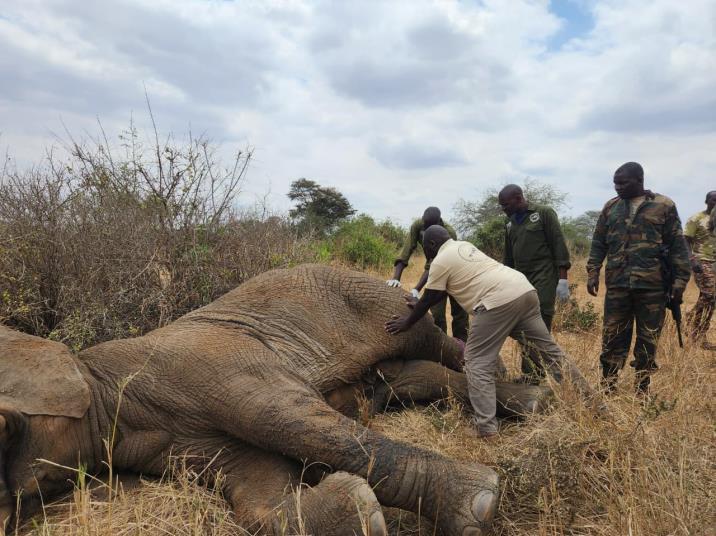
The Tsavo Ecosystem had very little rain during the month, the vegetation is drying out but the animals are still in good body condition, and some water pans are still full. The Unit attended to 27 Cases, including 21 elephants. The Ecosystem experienced a drop in poaching cases, with 9 attended too and 4 cases for Humanwildlife conflict, the rest of the cases were deemed natural.
Acknowledgement
The Tsavo Mobile Veterinary Unit would like to appreciate all stakeholders who aided in monitoring and reporting of the cases that required veterinary intervention. A big thank you to KWS management for the technical support to the unit and the SWT for their continuous facilitation to the unit.
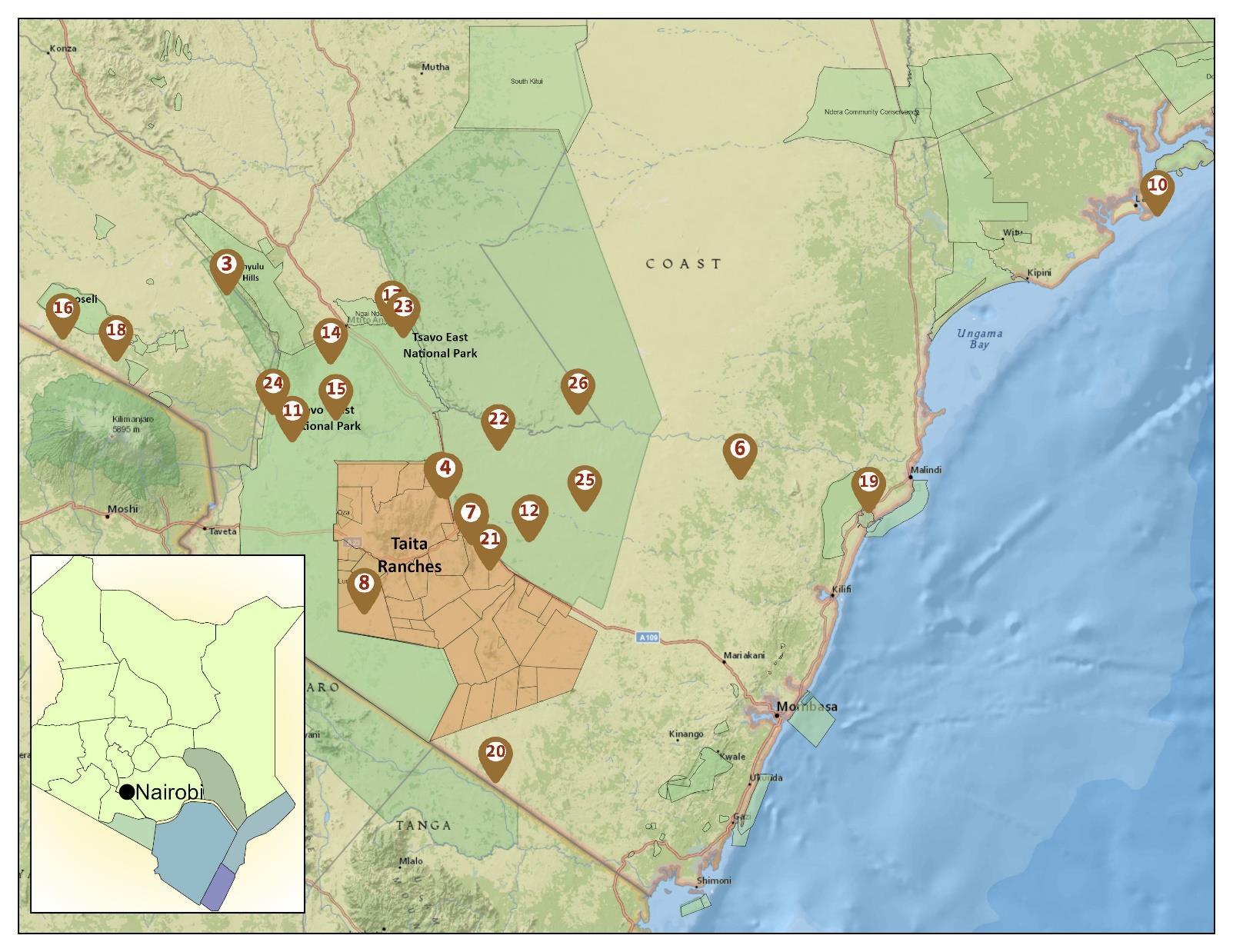
SWT/KWS Tsavo Mobile Vet Unit Treatment Locations
October 2025
Case Details
Date
Species Area Found
1-Oct-25 Lion Tsavo East NP Natural Causes Had a wound was suspected to have been inflicted by a buffalo horn Successfully Treated
1-Oct-25 Elephant Tsavo East NP Bullet Wound
1-Oct-25 Elephant Chyulu Hills
A repeat treatment on a calf that was rescued with an injured right hind limb Prognosis Poor
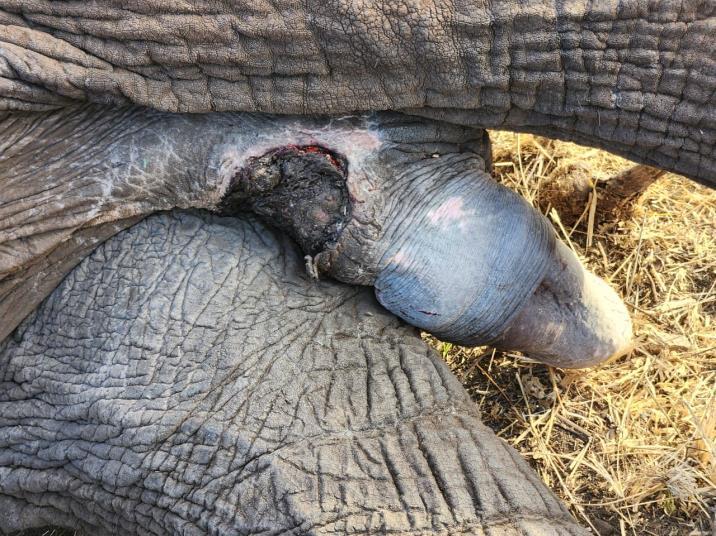
Natural Causes Examination revealed a benign tumour of the prepuce infested with maggots Successfully Treated
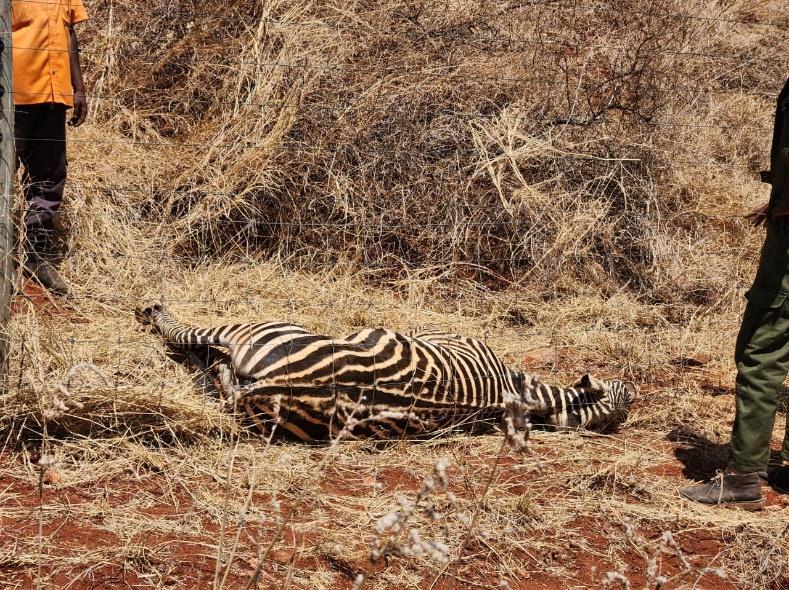
2-Oct-25 Zebra Tsavo East NP HWC
This zebra was electrocuted while trying to cross the SGR fence HWC Death
3-Oct-25 Elephant Tsavo East NP Natural Causes A deep, septic, through and through predation wound to the limb Successfully Treated
3-Oct-25 Elephant Shakahola Bullet Wound A shallow projectile wound to the chest area which appeared to have hit the ribs Successfully Treated
4-Oct-25 Elephant Tsavo East NP Postmortem
The cause of death was complications associated with non-regenerative anaemia Died
5-Oct-25 Elephant Taita Ranches Natural Causes Examination revealed a closed fracture of the left distal femur Died
5-Oct-25 Elephant Taita Ranches Postmortem It was concluded that the cause of death was debility and starvation Died
7-Oct-25 Zebra Taita Ranches HWC
8-Oct-25 Buffalo North Coast Snared
9-Oct-25 Elephant Tsavo West NP Spear
Four zebras were reported by construction to have entered into a construction site Task Successful
Examination revealed a cable wire snare on her left forelimb Successfully Treated
Examination revealed 9 deep septic spear wounds on various parts of his back Prognosis Poor
11-Oct-25 Elephant Tsavo East NP Natural Causes Examination revealed septic predation wounds on the right hind limb Successfully Treated
12-Oct-25 Elephant Tsavo East NP Arrow This adult elephant was captured and translocated to Tsavo West National Park Poaching Death
14-Oct-25 Elephant Tsavo West NP Postmortem It was concluded that the elephant succumbed due to septicaemia Died
15-Oct-25 Elephant Tsavo West NP Postmortem This adult elephant was translocated from Baringo to Tsavo West National Park Died
15-Oct-25 Elephant Amboseli NP Natural Causes This elephant was reported to be in labour with no signs of a foetus Died
16-Oct-25 Elephant Kaluku HWC This elephant was reported to have wondered into the community area Task Successful
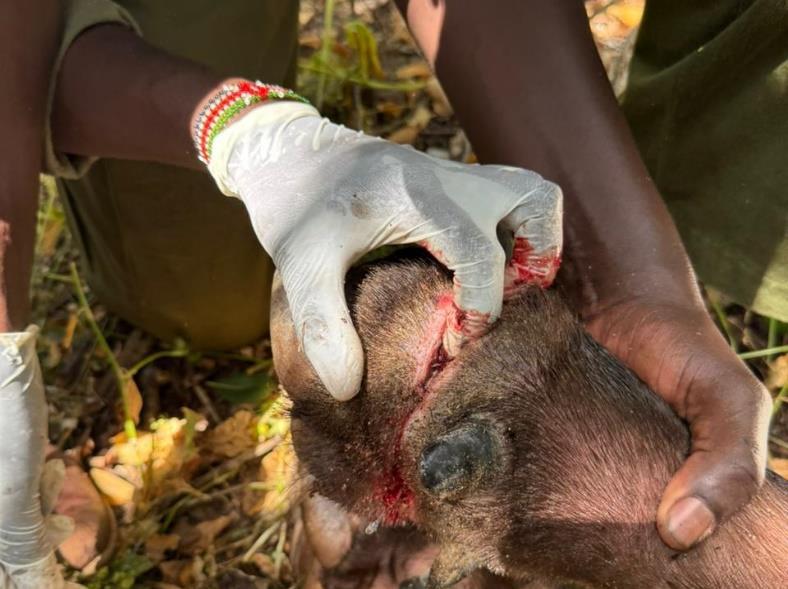
16-Oct-25 Elephant Amboseli NP Spear Examination revealed a deep septic spear wound on the right radiocarpal joint Successfully Treated
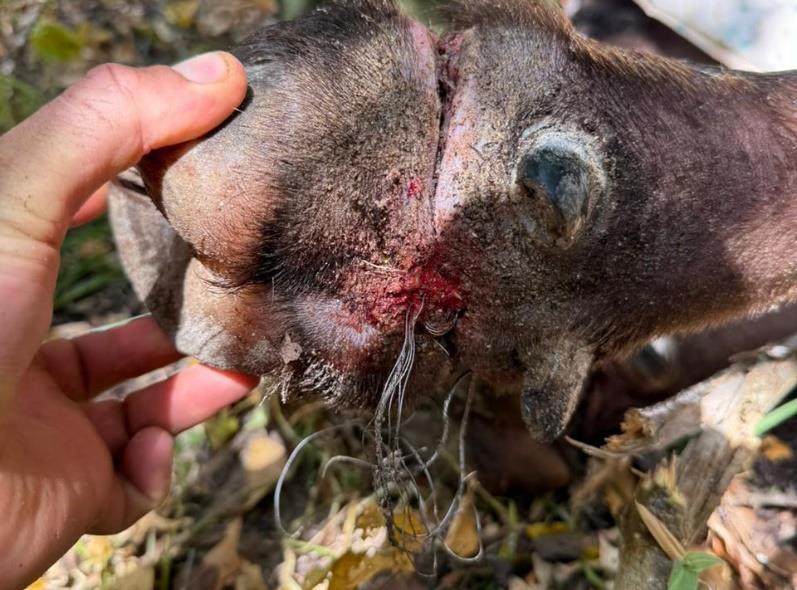
19-Oct-25 Elephant Arabuko Sokoke Snared
Examination revealed a cable wire snare on her right forelimb Successfully Treated
21-Oct-25 Elephant Taita Ranches Natural Causes Examination revealed soft tissue swelling around the right knee joint Successfully Treated
22-Oct-25 Lion
23-Oct-25 Elephant
Tsavo East NP Natural Causes Examination revealed several deep septic bite wounds on the right hip Successfully Treated
Tsavo East NP HWC
24-Oct-25 Buffalo Kaluku
27-Oct-25 Elephant
28-Oct-25 Elephant
27-Oct-25 Elephant
Causes
Tsavo West NP Spear
Tsavo East NP
This elephant was reported to be wandering into the community areas Task Successful
revealed several septic predation wounds on her body Successfully Treated
Examination revealed a spear wound on the right knee joint Successfully Treated
Causes Examination revealed septic predation wounds on her left knee joint area
Tsavo East NP Arrow Examination revealed an arrow wound on the distal right forelimb Successfully Treated
.
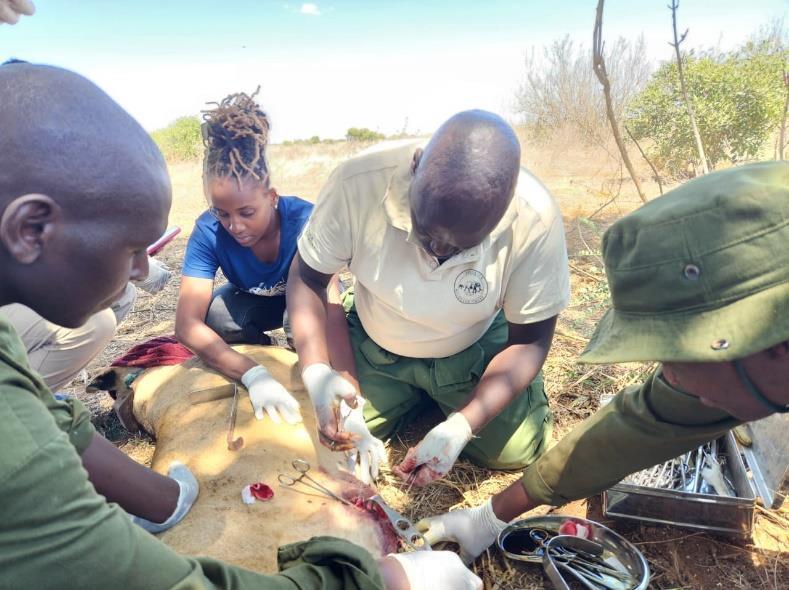
Lion Natural Causes
Aruba, Tsavo East National Park
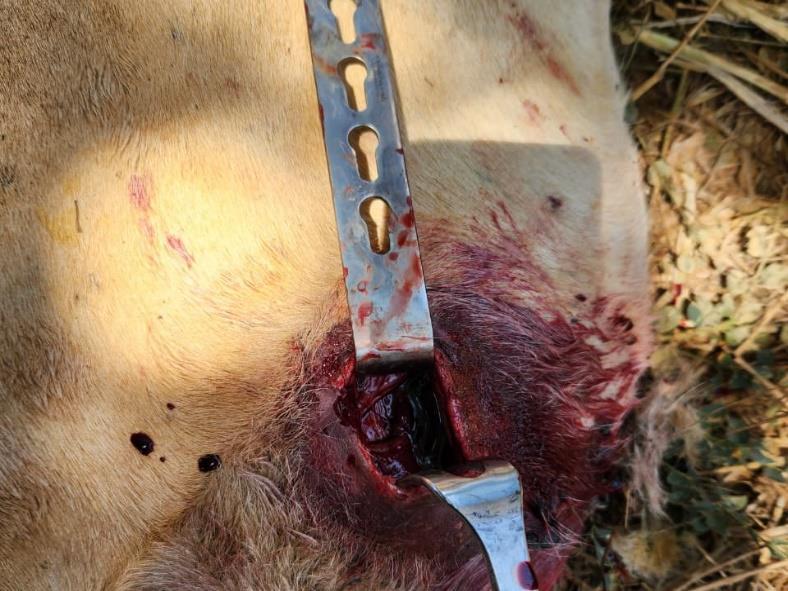
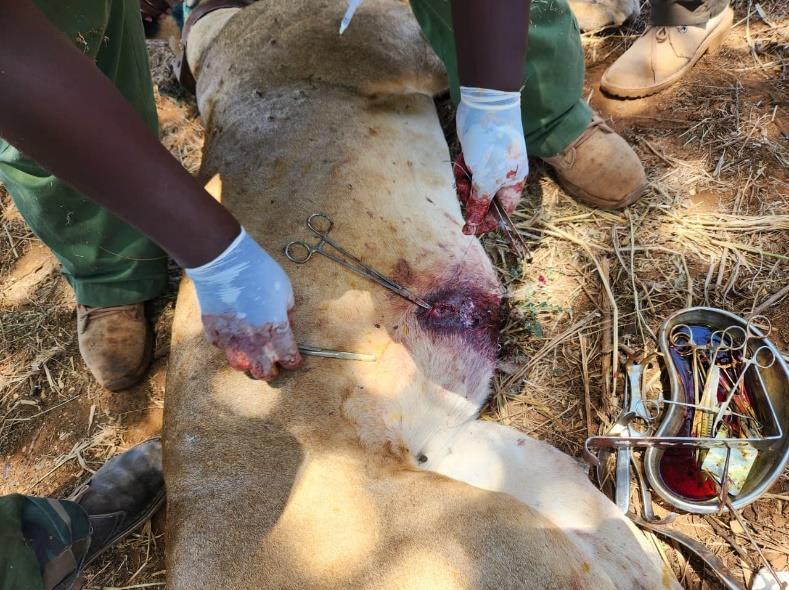
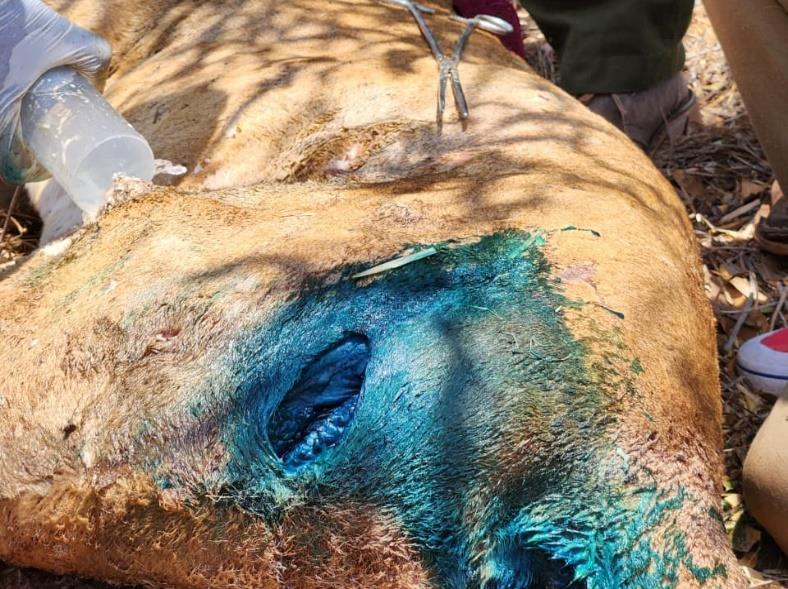
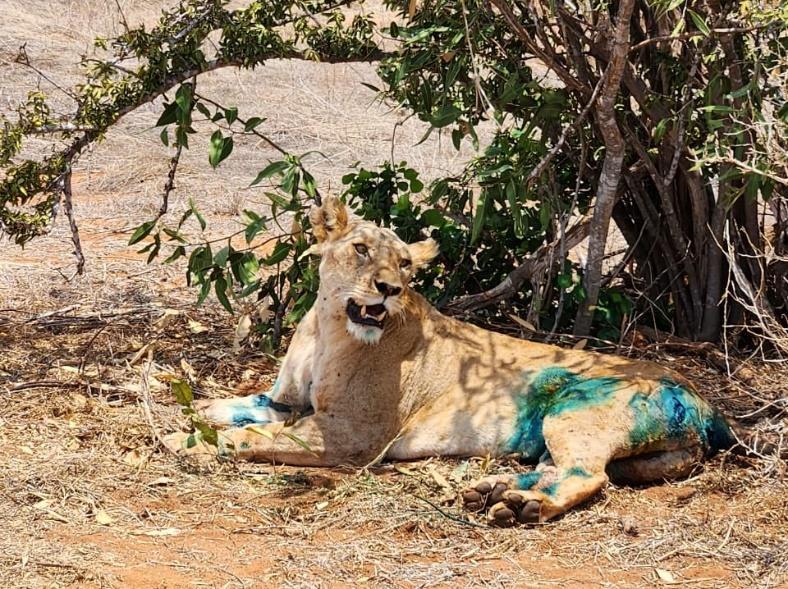
This lioness was spotted wounded on her left lower abdomen by the WRTI research team during their routine monitoring of the collard lions.
Immobilisation, examination and treatment
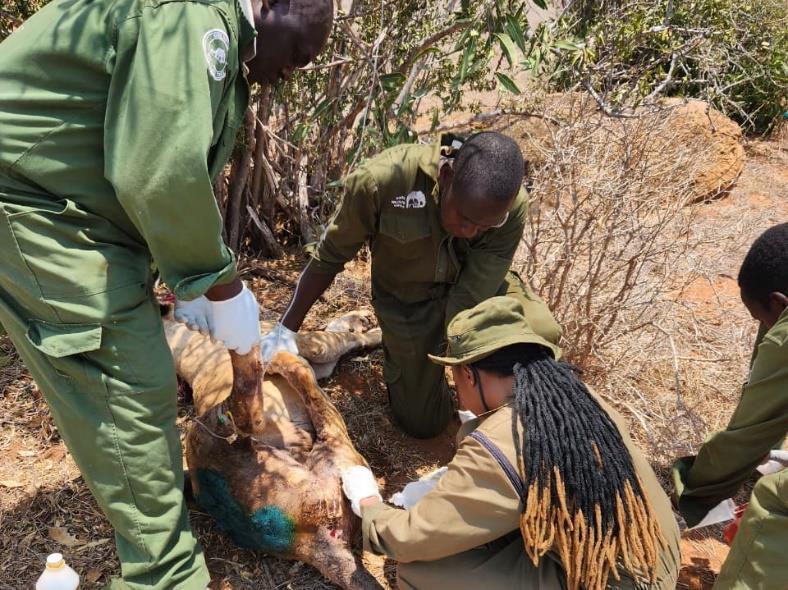
The lioness was successfully immobilized using a combination of 4.8mg Medetomidine and 200mg Ketamine. Darting was done from the vehicle, and it took 10 minutes for full anaesthesia to be achieved.
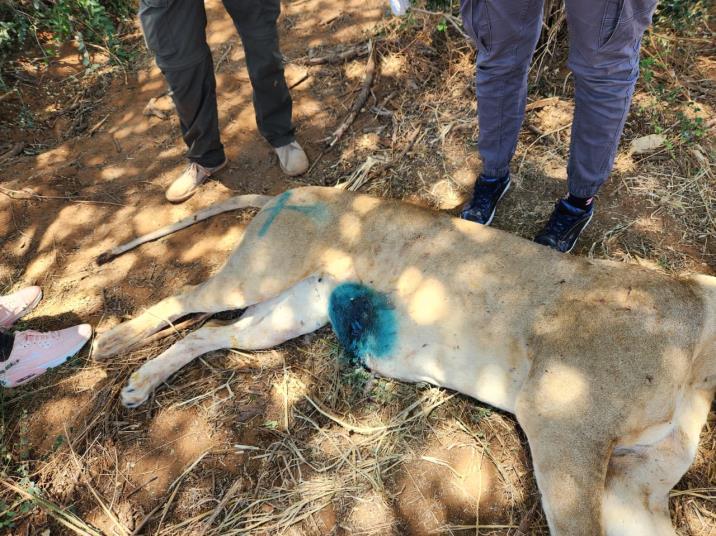
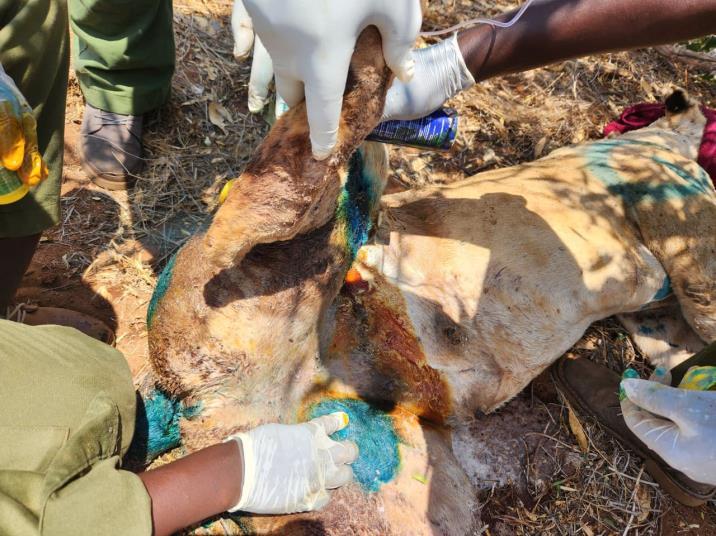
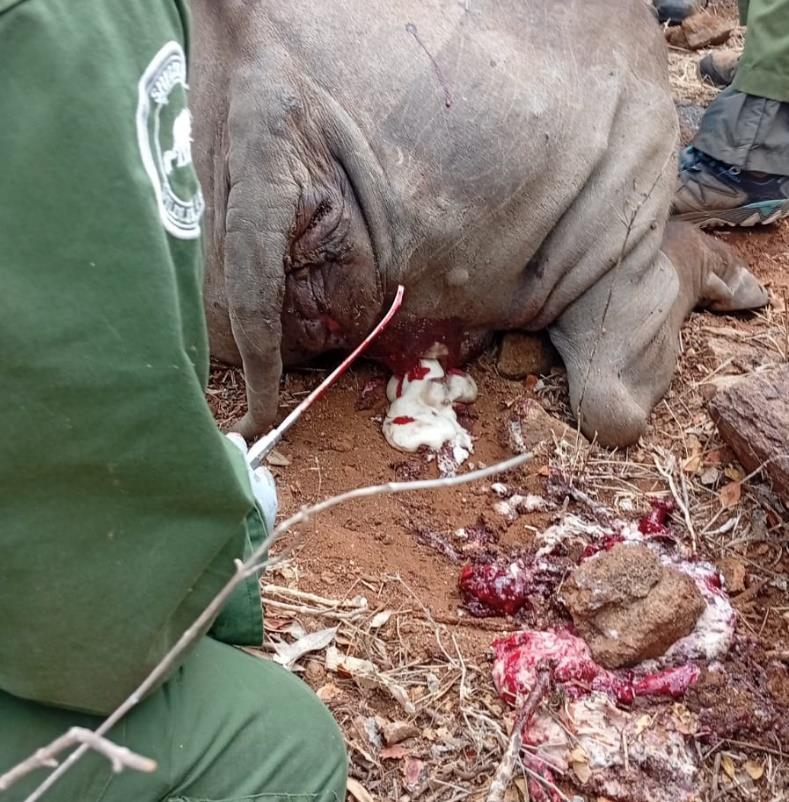
Examination revealed a deep, fresh, bleeding wound on the lower posterior abdomen which extended to the mesentery. The wound was suspected to have been inflicted by a buffalo horn in an unsuccessful hunt. The wound was thoroughly cleaned with water, tincture of Iodine, flushed with adrenaline, applied with an antibiotic ointment, sutured accordingly and then sprayed with a topical antibiotic.
Additionally, she was given adrenaline intravenously, amoxicillin antibiotics and meloxicam parenterally.
Prognosis
She was reversed from anaesthesia using 24 mg Atipamezole given intramuscularly. She rose few minutes later with a fair prognosis.
.
Case
Elephant Bullet Wound
Voi Stockade, Tsavo East National Park
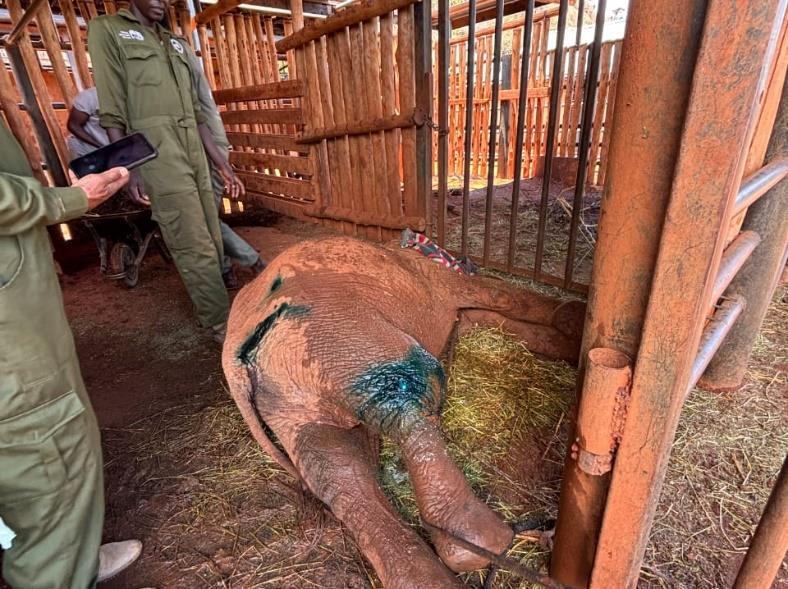
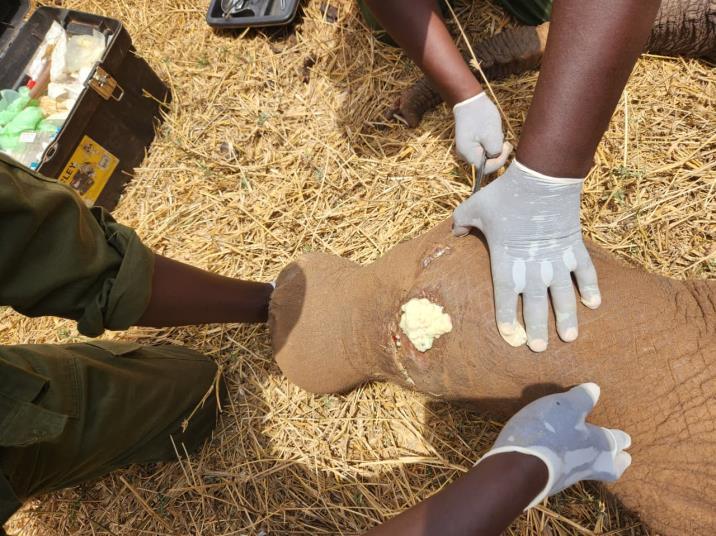
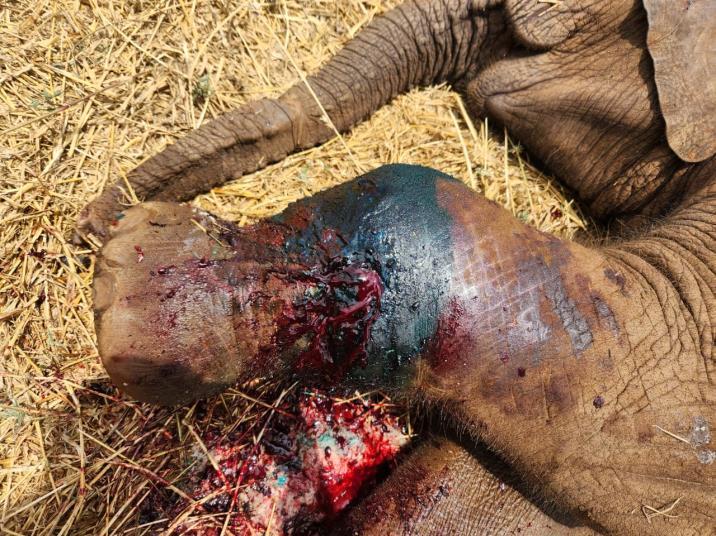
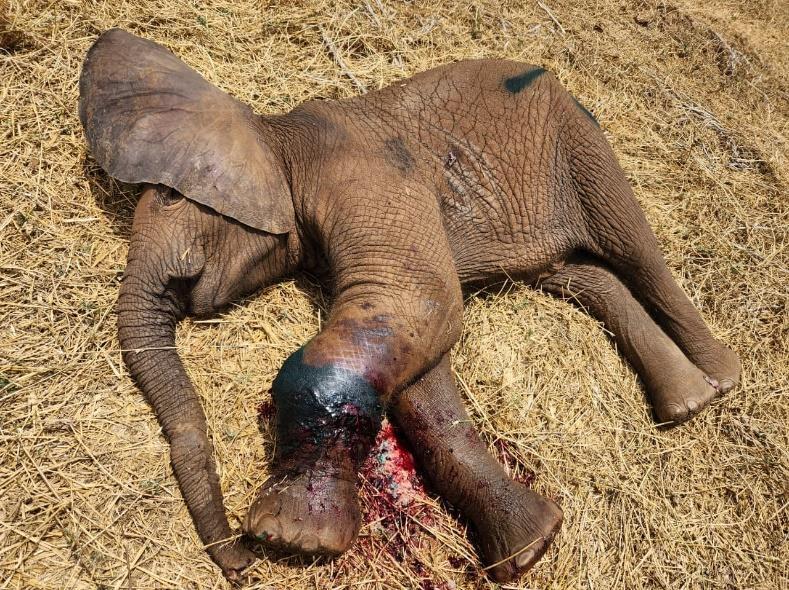
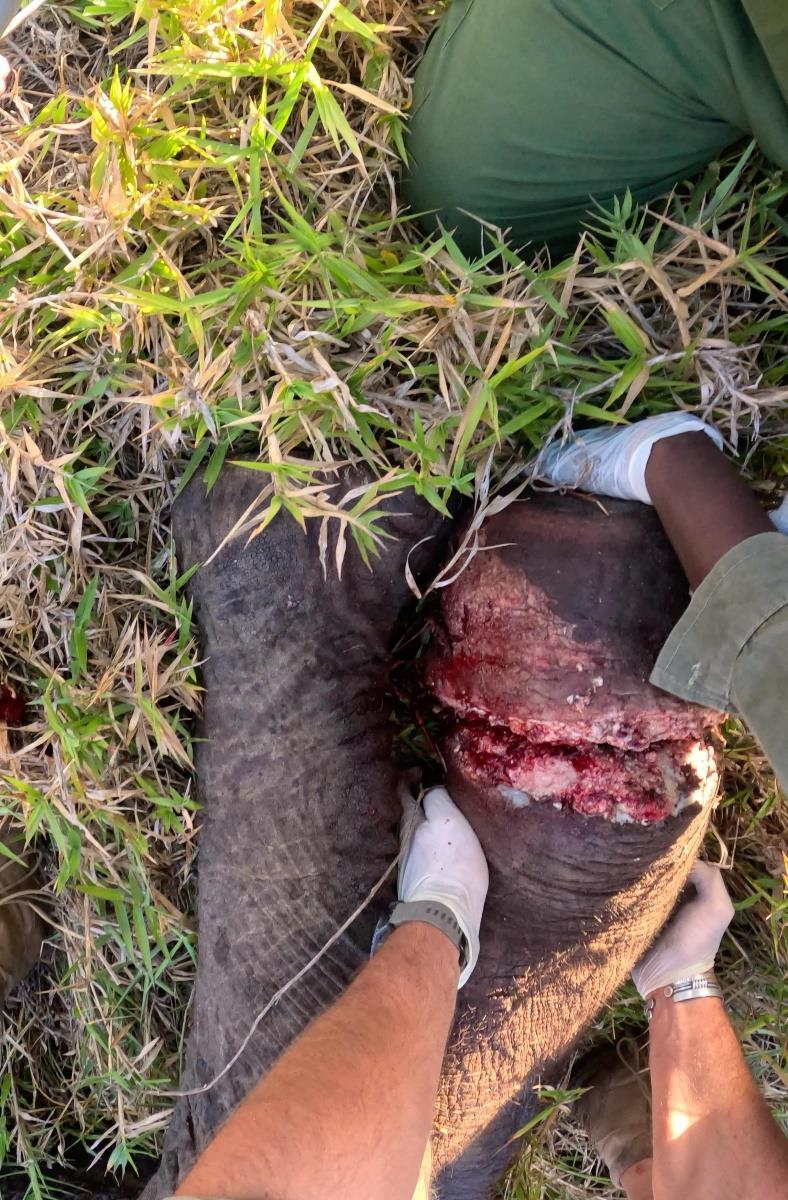
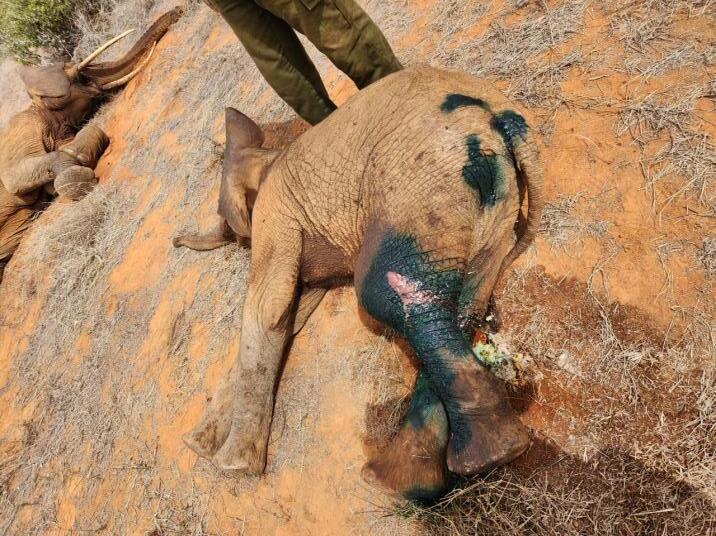
This was a repeat treatment on an elephant that was rescued from Satao area with an injured right hind limb. This calf had a through and through bullet wound at the knee joint with marked soft tissue swelling
Immobilisation, examination and treatment
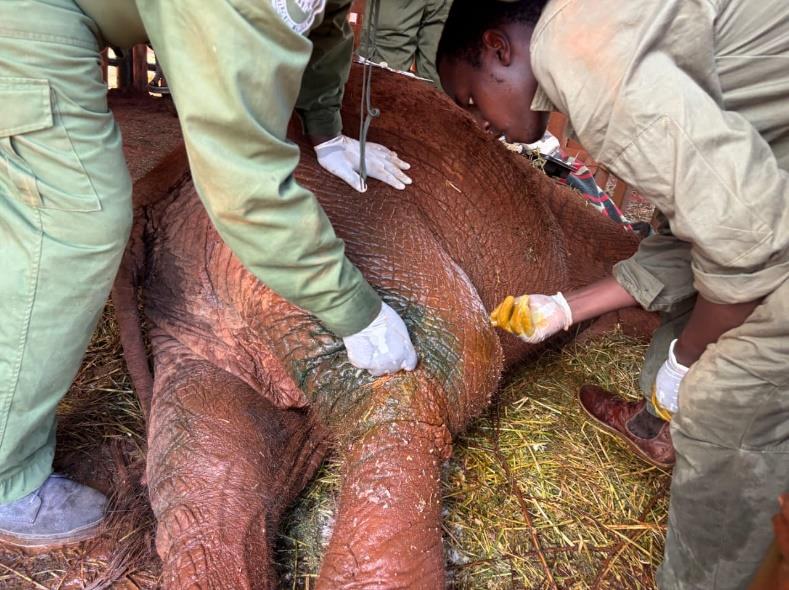
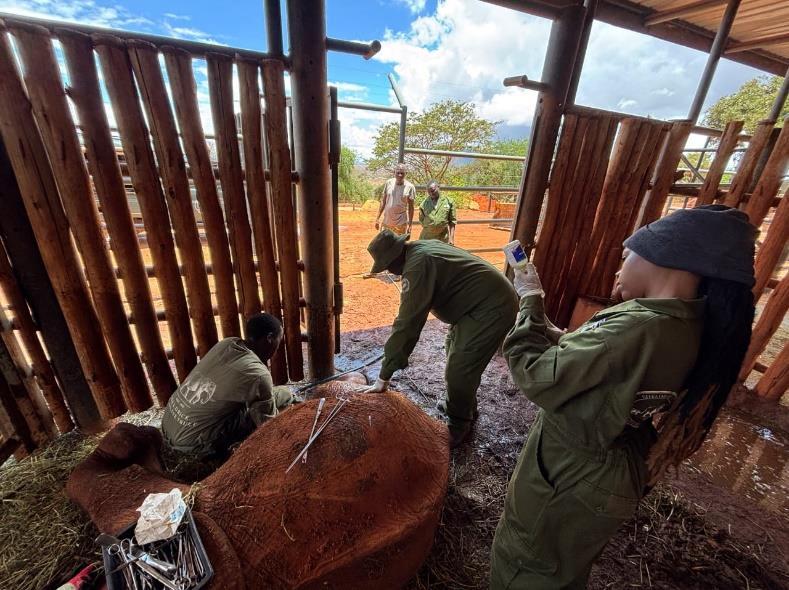
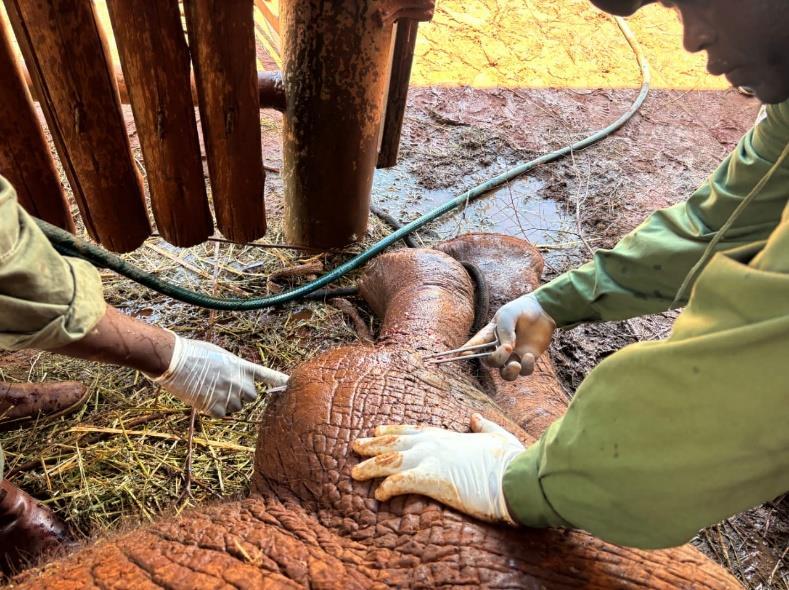
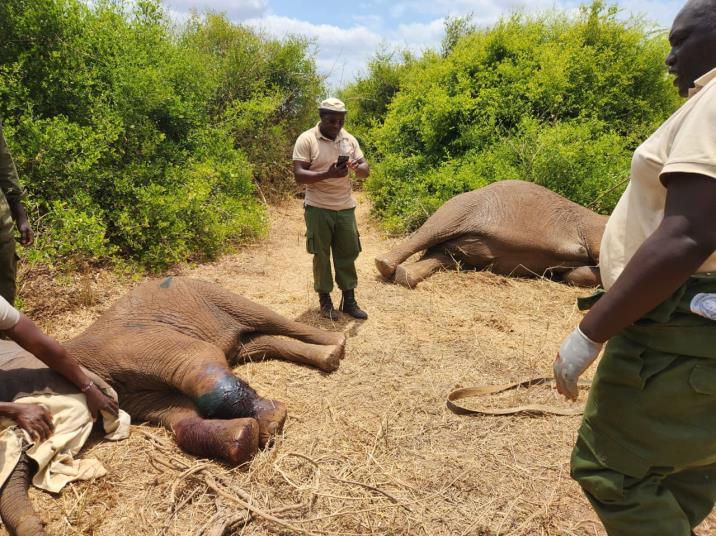
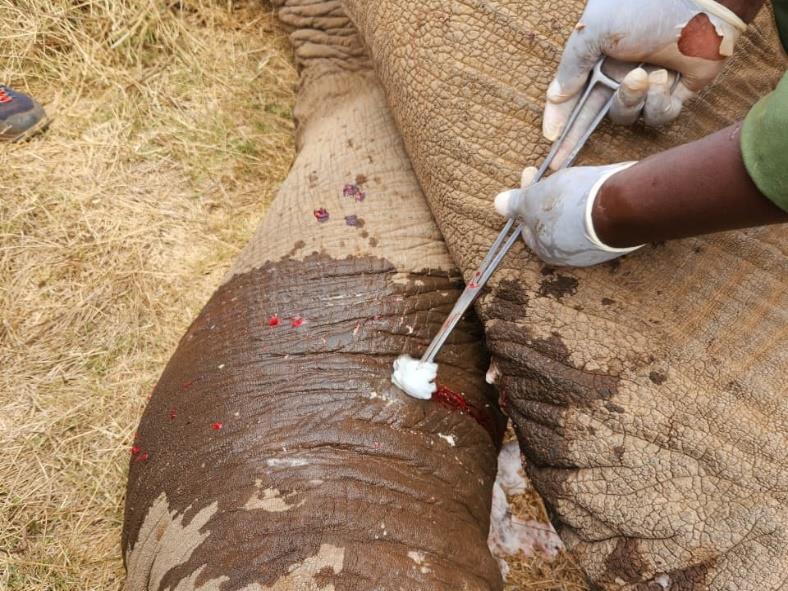
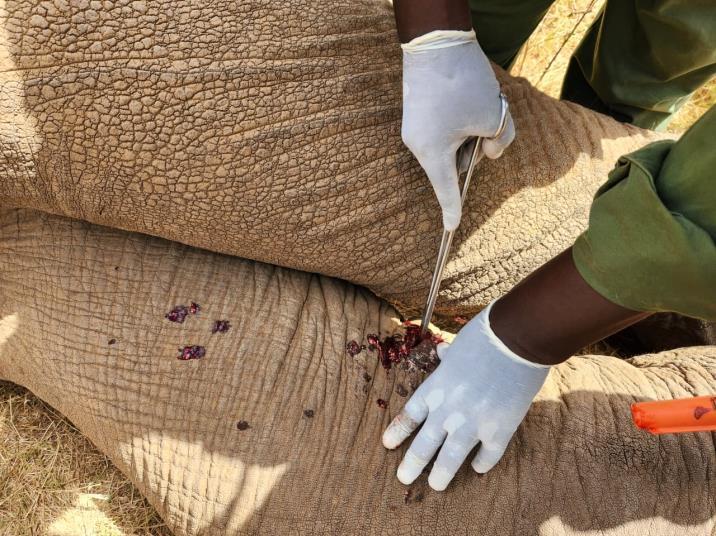
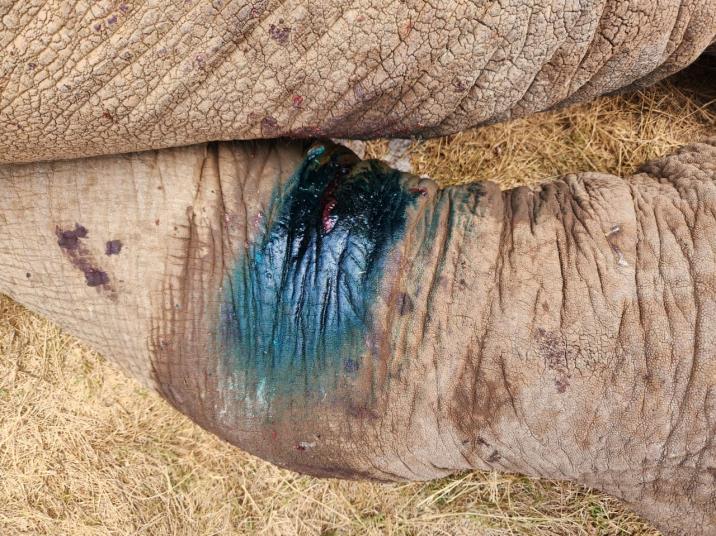
She was successfully immobilized from foot using 2.5 mg Etorphine hydrochloride. Examination revealed pus accumulation in the wound. The wound was thoroughly cleaned and pus completely evacuated. This was followed by flushing with Hydrogen peroxide, rinsing with water, infused with Iodine, packed with antibiotic pessaries and a topical antibiotic spray applied. Additionally, she received shots of Meloxicam antiinflammatory, Amoxicillin and Clindamycin antibiotics parenterally.
Another review was done on 9th October. This calf was successfully tranquillized using 65mg Azaperone Examination revealed some pus accumulation which was thoroughly cleaned, debrided, flushed as before. The wound was thereafter packed with antibiotic pessaries, and a topical antibiotic spray was applied. She also received shots of amoxicillin antibiotics and Flunixin anti-inflammatories parenterally.
Prognosis
Prognosis is guarded.
.
Elephant
Natural Causes
Oldonyo Was, Chyulu Hills
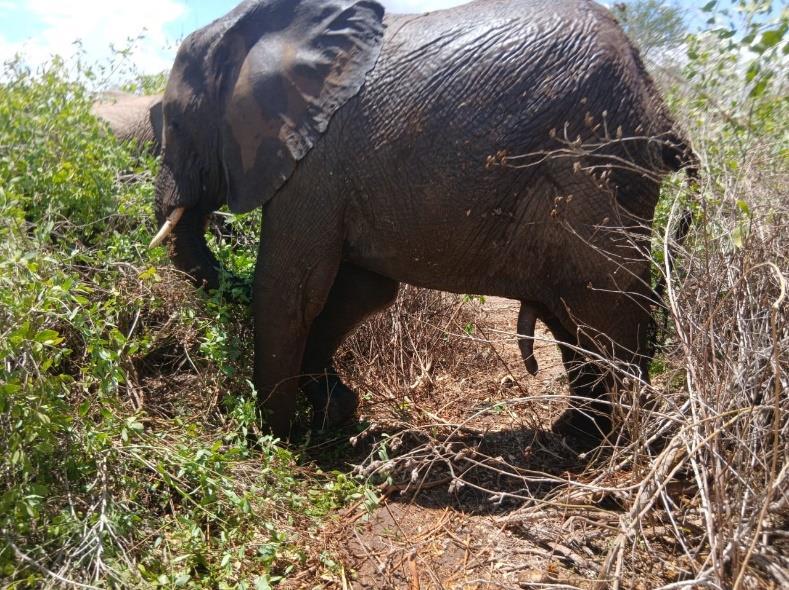
This elephant was spotted by the management of Oldonyo Was to have been wounded on the prepuce.
Immobilisation, examination and treatment
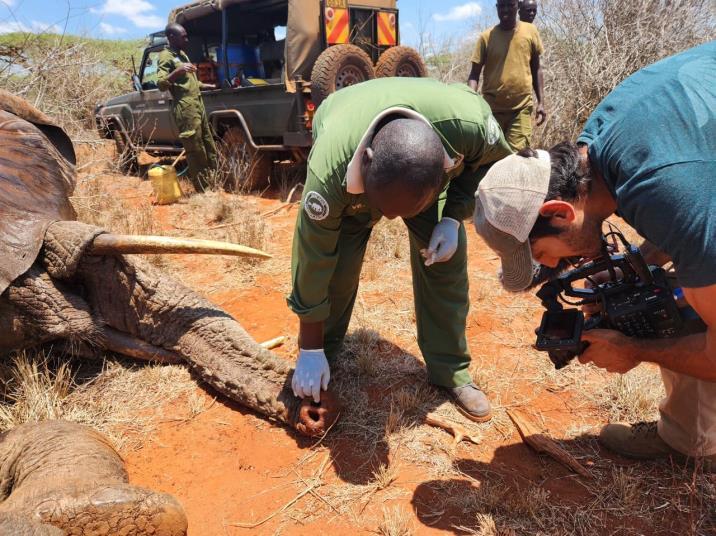
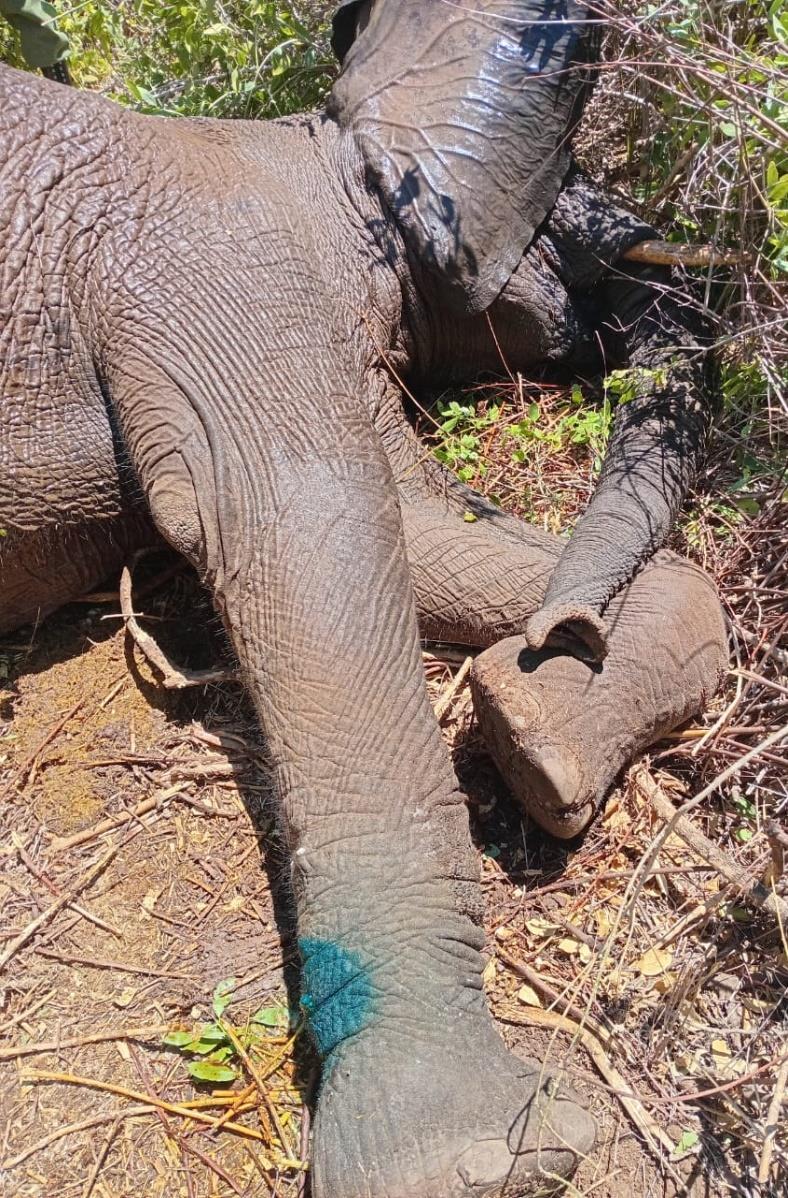
This bull was successfully immobilized using 20mg Etorphine hydrochloride delivered remotely in a 3cc Dan inject dart. Darting was done from a helicopter, and it took 10 minutes for the drug to achieve its full effects.
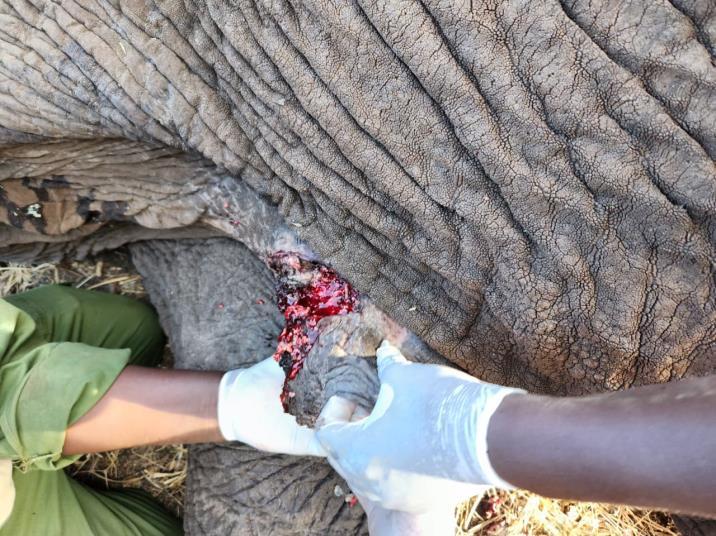
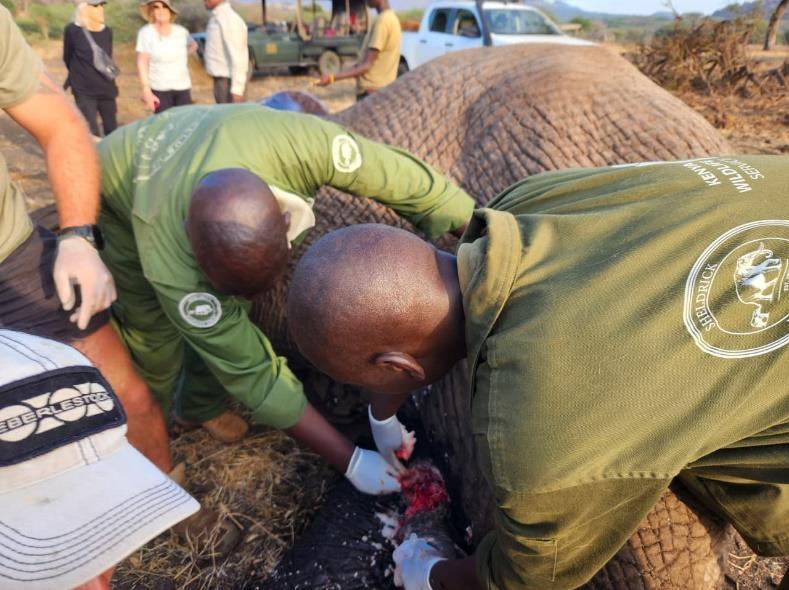
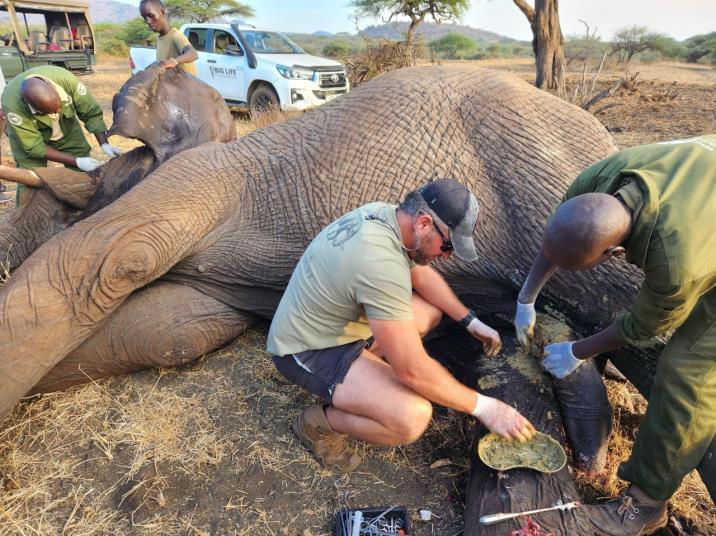
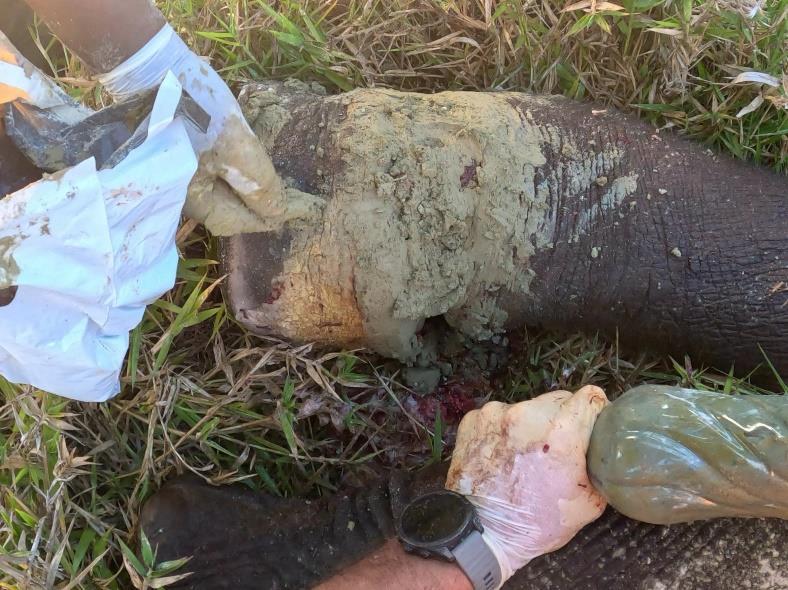
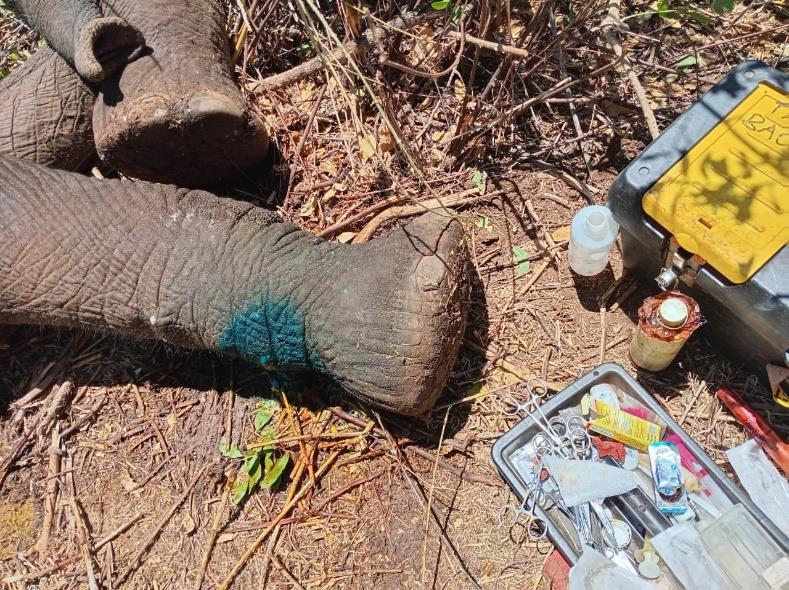
Examination revealed a benign tumour of the prepuce infested with maggots. The prepuce was cleaned, flushed with Hydrogen peroxide, infused with a tincture of Iodine, flushed with Ivermectin, packed with green clay and then sprayed with a topical antibiotic.
He was additionally given Amoxicillin antibiotics and Dexamethasone parenterally.
Prognosis
He was reversed from narcosis using 200mg of Naltrexone hydrochloride given intravenously via the ear vein. He rose few minutes later and walked away with a fair prognosis
Case
Zebra
Human-Wildlife Conflict
Ikanga SGR Station, Tsavo
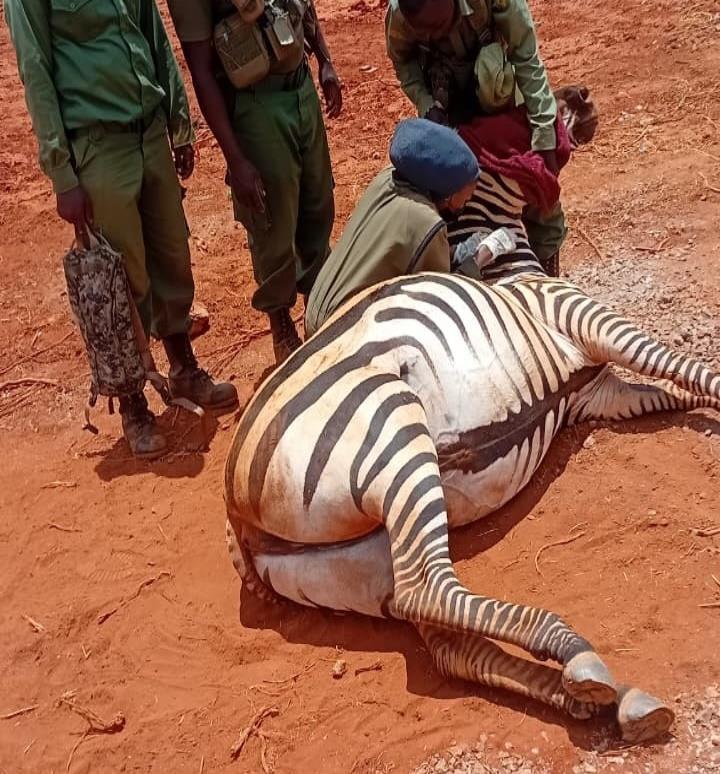
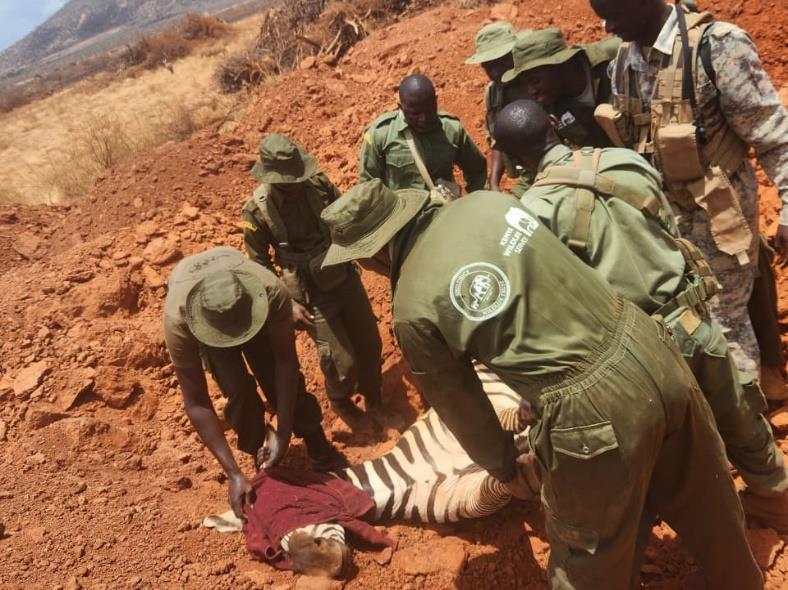
This zebra was spotted by the SGR management in Ikanga station to have been electrocuted while trying to cross the fence.
Immobilisation and examination
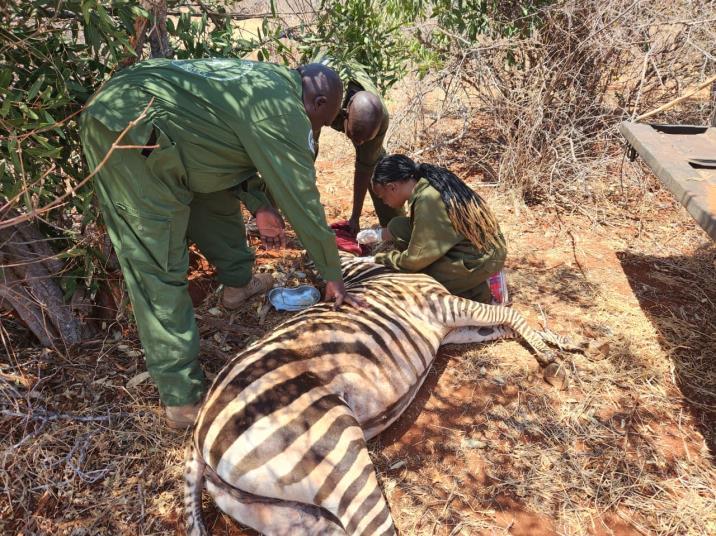
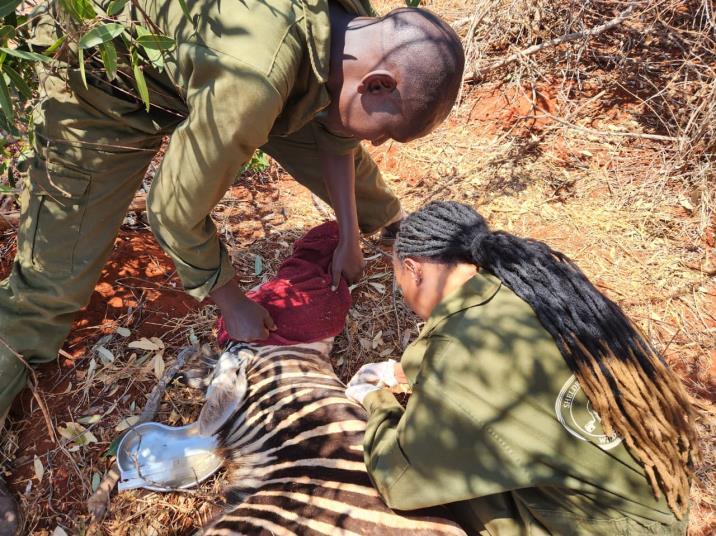
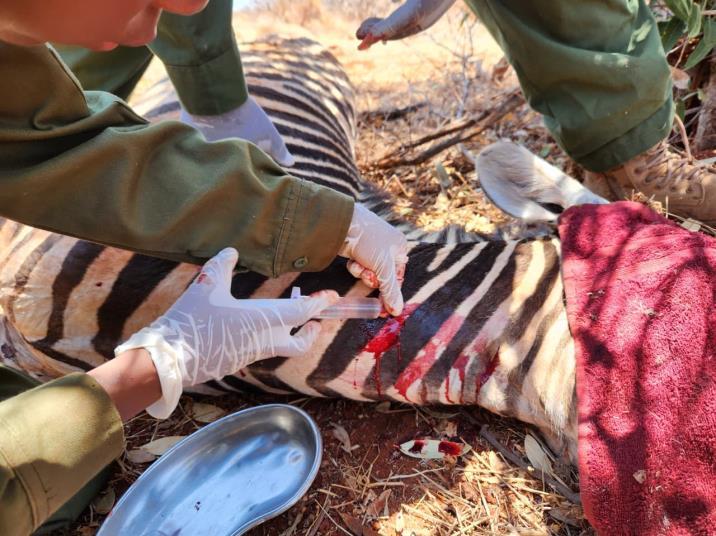
She was found on right lateral recumbency with limbs kicking on the air. She was then successfully immobilized using 7mg Etorphine hydrochloride in a syringe. She was under anaesthesia 7 minutes later.
Examination revealed a fractured cervical vertebra which was untreatable.
Prognosis and management
There was no chance of recovery so she was euthanized on animal welfare grounds.
.
Natural Causes
Voi Wildlife Lodge, Tsavo East
NP
This injured elephant was spotted by the visitors in Voi wildlife lodge limping and with a swollen left forelimb
Immobilisation, examination and treatment
She was immobilized using 2mg Etorphine hydrochloride and the mother 18mg Etorphine hydrochloride delivered remotely in a 1.5 cc and 3cc Dan inject dart respectively. Darting was done from the vehicle, and it took 9 minutes for full anaesthesia to be achieved.
Examination revealed a deep, septic, through and through predation wound on the left radiocarpal joint and other scratch wounds on that same limb. The wounds were thoroughly cleaned, debrided, flushed with Hydrogen peroxide and infused with tincture of Iodine then packed with antibiotic pessaries. Topical antibiotic spray was applied on the wound. She was additionally given amoxicillin antibiotics and flunixin anti-inflamatories parenterally.
Prognosis
They were reversed with 20mg (calf) and 180mg (mother) Naltrexone hydrochloride given intravenously via a prominent ear vein respectively. They rose few minutes later and reunited. Prognosis is fair.
Elephant Bullet Wound Shakahola, North Coast
This elephant was spotted by the SWT pilot in Shakahola area with a wound on his left chest area.
Immobilisation, examination and treatment
This elephant was successfully immobilized using 20mg Etorphine hydrochloride delivered remotely in a 3cc Dan inject dart from the helicopter and it took 11 minutes for the elephant to be fully anaesthetized.
Examination revealed a shallow, high-speed projectile wound on the left chest area which appeared to have hit the ribs. The wound was thoroughly cleaned with water, flushed with Hydrogen peroxide, rinsed with water and infused with tincture of Iodine. The wound was thereafter topically sprayed using an antibiotic.
He also received shots of Amoxicillin antibiotics and Flunixin anti-inflammatory parenterally..
Prognosis
He was reversed from narcosis using 200mg of Naltrexone hydrochloride given intravenously via the ear vein. He rose few minutes later and walked away with a good prognosis.
Elephant Postmortem
Voi Wildlife Lodge, Tsavo East NP
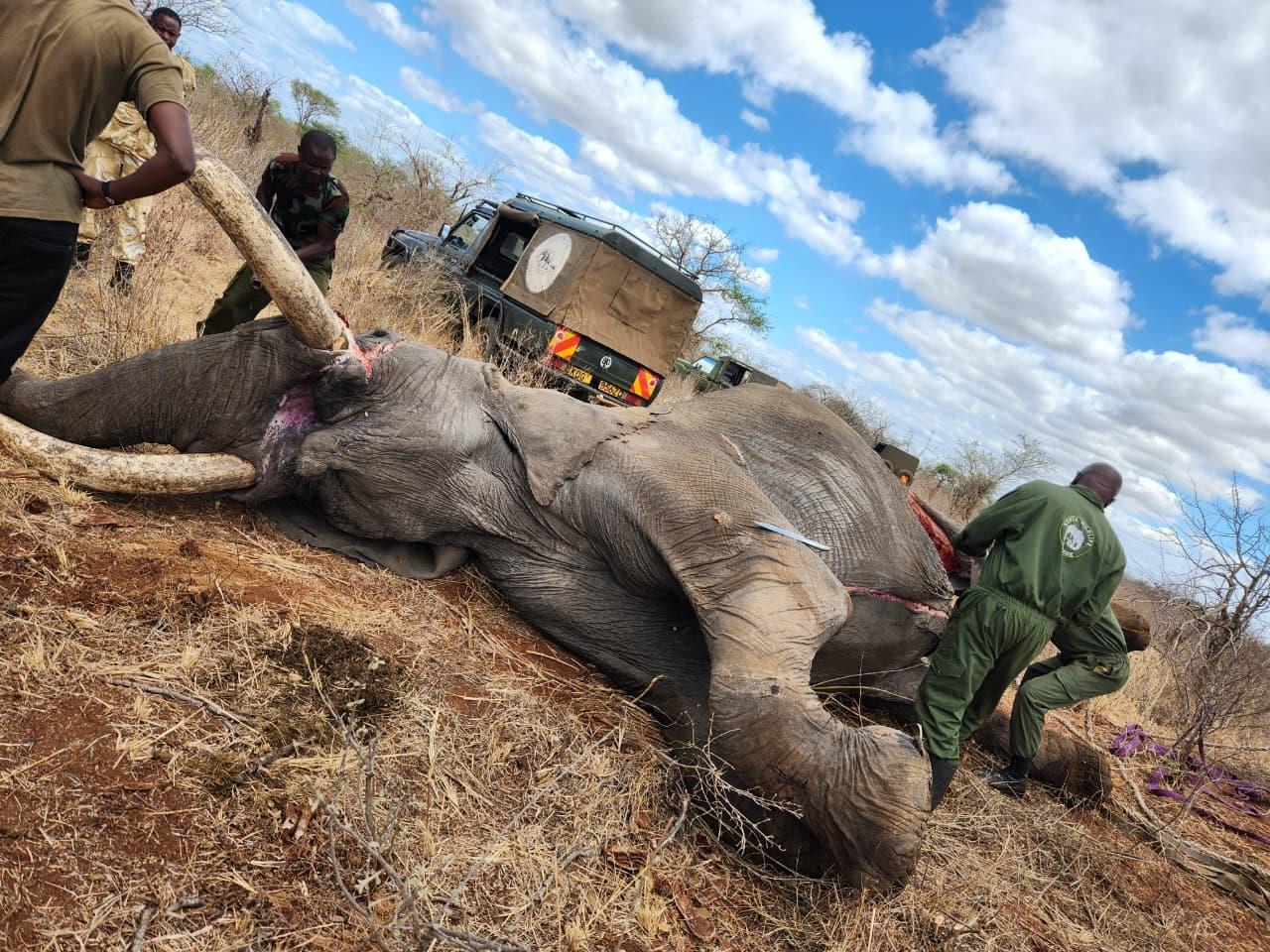
This elephant was spotted by the visitors in Voi wildlife lodge to have been lying on the ground from the evening of the previous day. At first they thought that the elephant was just resting until they found him on the same spot the following day. When TMVU arrived the next morning, the elephant was already dead.
Postmortem examination
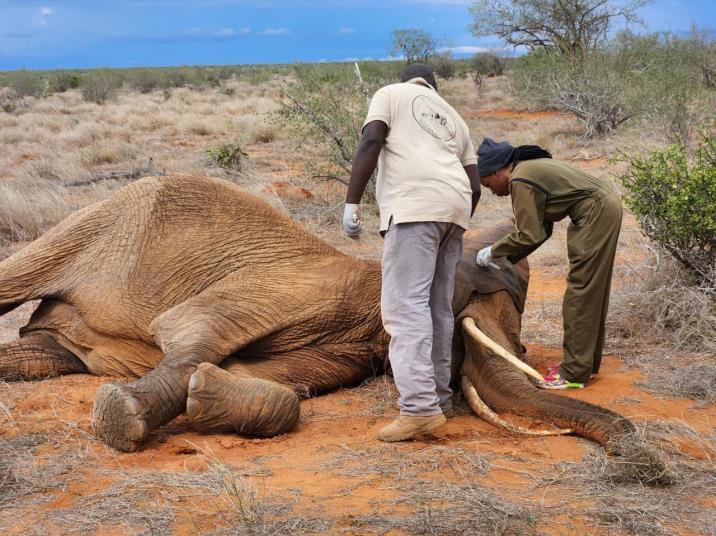
The elephant was found on right lateral recumbency. The carcass was fresh and there were no external wounds seen, however the elephant had poor body condition prior to death.
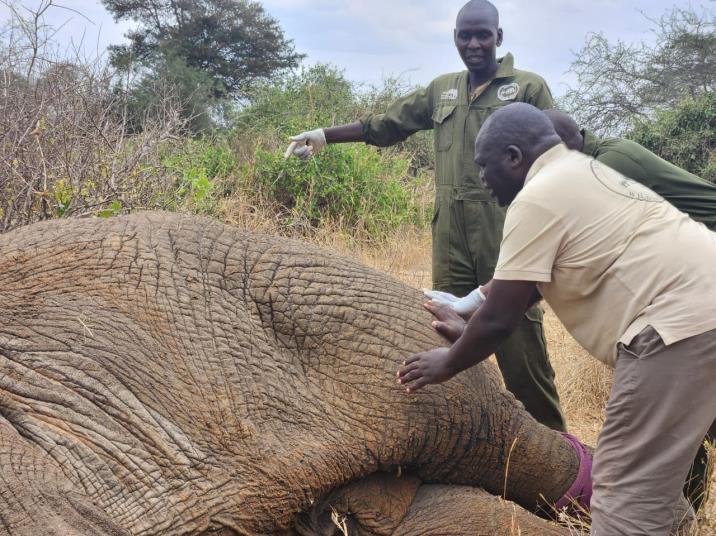
The carcass was severely dehydrated. There was severe anaemia and the spleen was pale.
Cause of death
It was concluded that the cause of death was complications associated with non-regenerative anaemia. Both tusks were intact and were taken by the KWS team for safekeeping.
Elephant
Natural Causes
Lualenyi, Taita Ranches
This elephant was spotted by the KWS rangers during their routine patrols in Lualenyi area, limping on his left hindlimb.
Immobilisation, examination and treatment
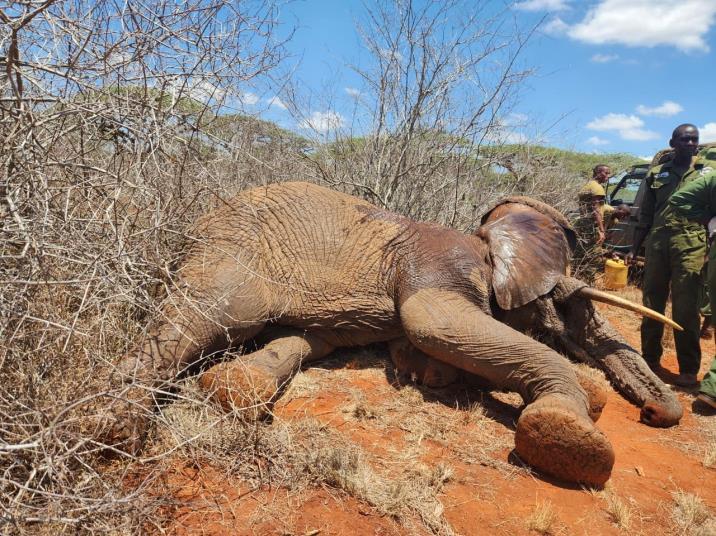
This bull was successfully immobilized using 20mg Etorphine hydrochloride delivered remotely in a 3cc Dan inject dart. Darting was done from the vehicle, and it took 10 minutes for the drug to achieve its full effects.
Examination revealed a closed fracture of the left distal femur with marked swelling around the fracture site. He received shots of Meloxicam anti-inflammatory parenterally.
Prognosis
He was reversed from narcosis using 200mg of Naltrexone hydrochloride given intravenously via the ear vein. He rose few minutes later and walked away. Prognosis is grave and the elephant is recommended for euthanasia on animal welfare grounds but will for now be continually monitored.
Case 9 – 5th October 2025
Elephant Postmortem Lualenyi, Taita Ranches
This carcass was spotted by the KWS rangers in Lualenyi area on the afternoon of 5th October.
Postmortem examination
The carcass was partially scavenged upon by vultures.
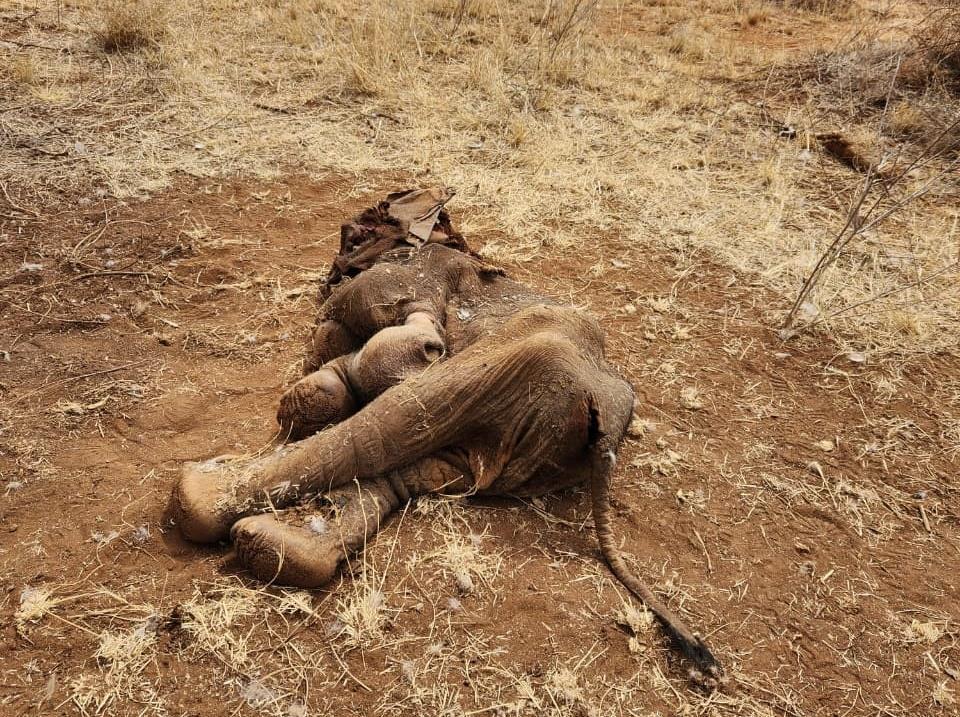
The elephant was in a poor body condition prior to death. Bony prominences were visible. The calf was extremely malnourished.
Cause of death
It was was concluded that the cause of death was debility and starvation.
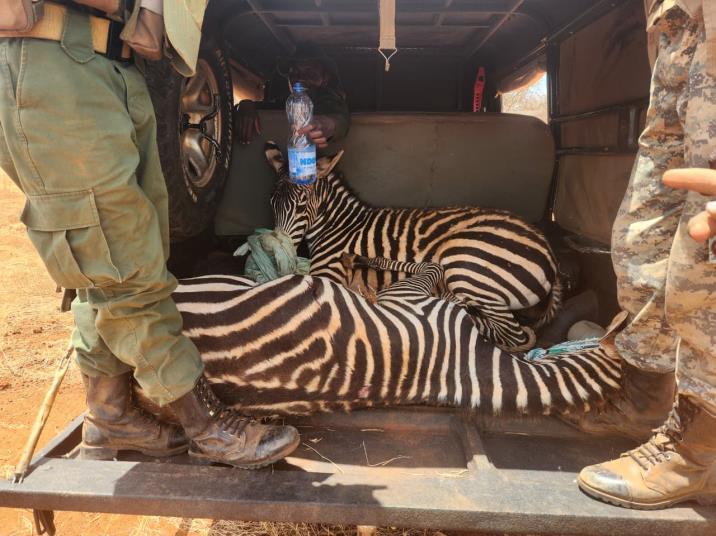
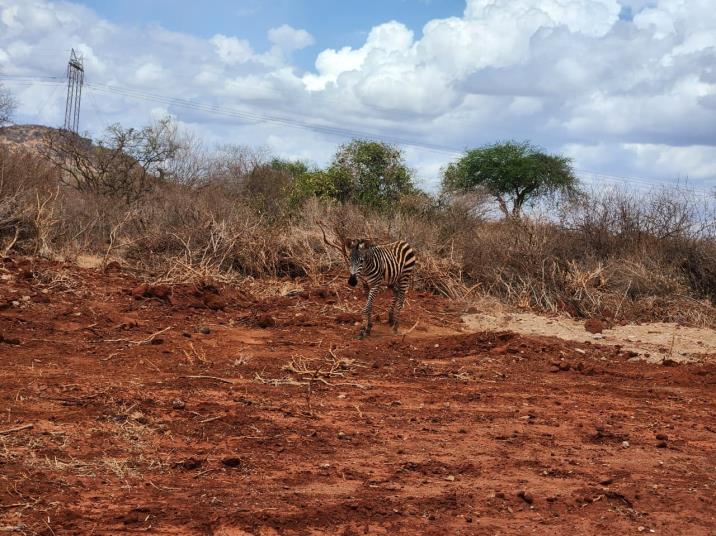
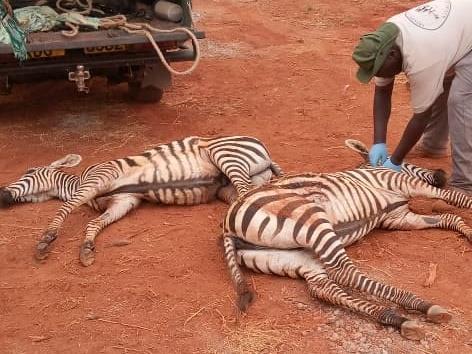
Four zebras; two adult females, one juvenile male and one juvenile female were reported by construction workers in Manga area to have entered their construction site.
Immobilisation and relocation
The adult females were successfully immobilized using a combination of 6.5mg Etorphine hydrochloride and 50mg of Azaperone while the foals were successfully immobilized using a combination of 3mg Etorphine hydrochloride and 30mg of Azaperone delivered remotely in a 3cc Dan inject dart. Darting was done from the vehicle and it took 7 minutes for the drugs to achieve its full effects.
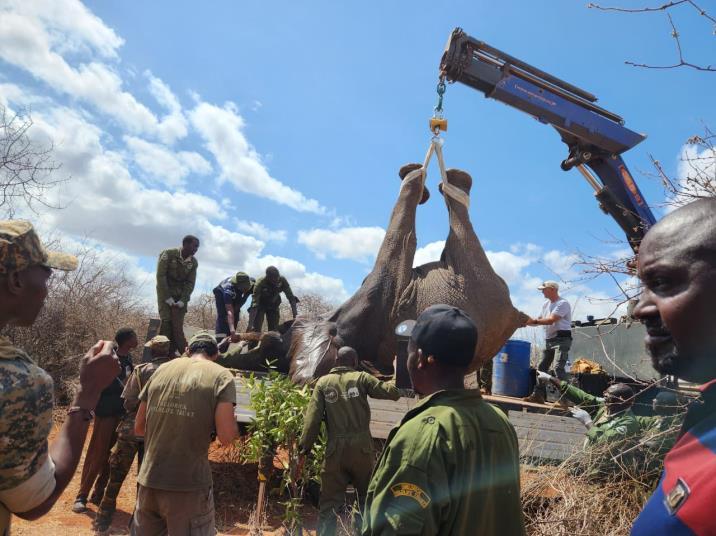
The zebras were loaded on to a vehicle and relocated to Tsavo East National Park.
Prognosis
The adults were reversed from anaesthesia using 65mg of Naltrexone hydrochloride while the foals 30mg of Naltrexone hydrochloride given intravenously via the jugular vein. They rose few minutes later and reunited.
Case
Buffalo Snared Manda Bay, Lamu
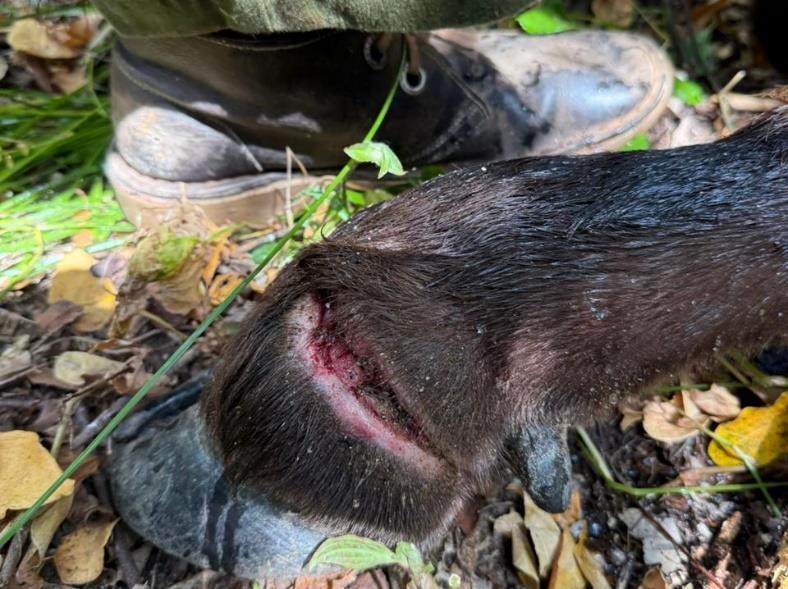
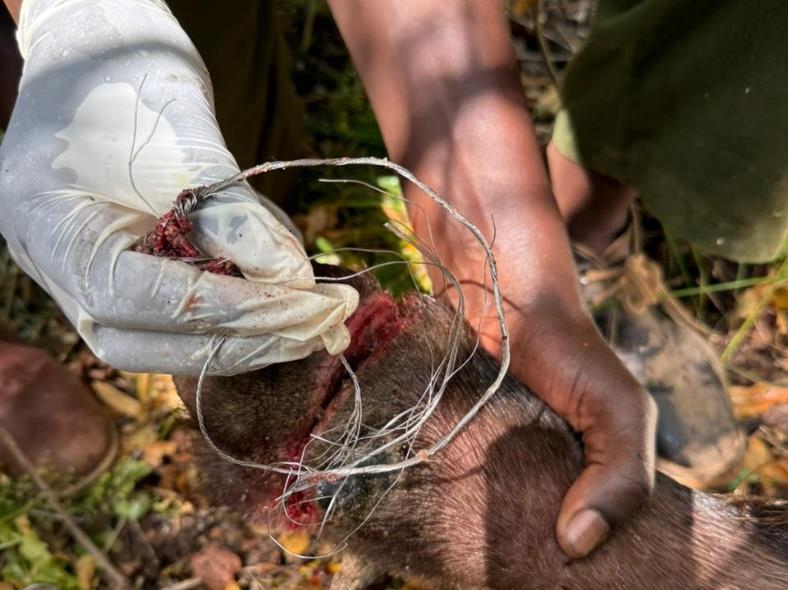
This buffalo was spotted by Manda Bay management with a wire snare on her left forelimb
Immobilisation, examination and treatment
She was successfully immobilized from a helicopter using a combination of 5mg Etorphine hydrochloride and 50mg of Azaperone and it took 7 minutes for the drugs to achieve its full effects.
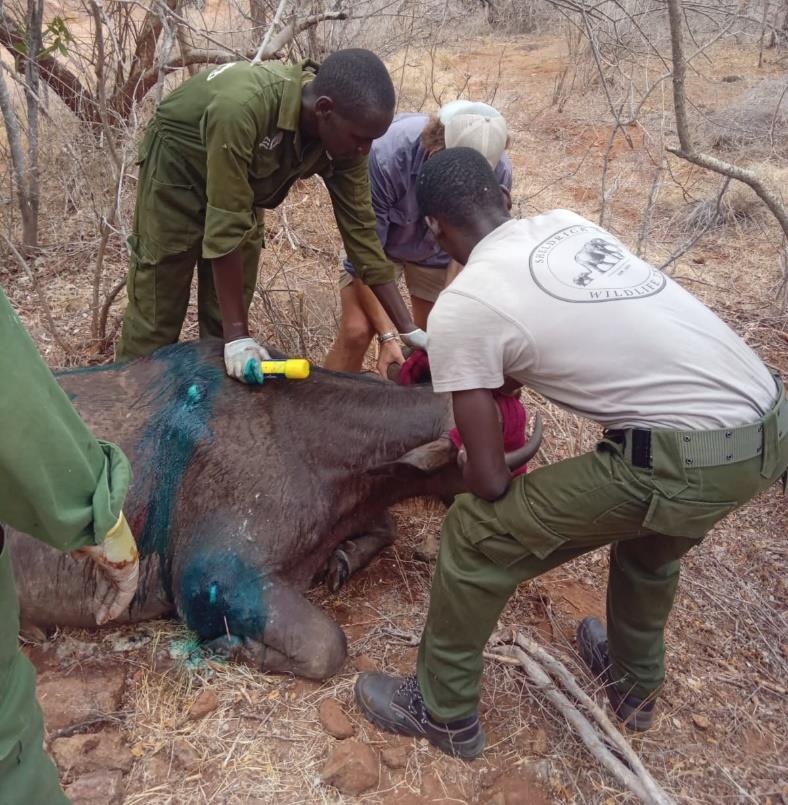
Examination revealed a cable wire snare on her left forelimb. The snare had inflicted a wound around the area. The snare was cut loose with wire cutters and the wound washed, flushed with Hydrogen peroxide and tincture of Iodine then sprayed with a topical antibiotic.
She additionally received shots of Amoxicillin antibiotics and flunixin anti-inflammatory parenterally.
Prognosis
She was reversed from anaesthesia using 50mg of Naltrexone hydrochloride given intravenously via the jugular vein. She rose few minutes later and walked away with a good prognosis.
Elephant Spear
Severin, Tsavo West National Park
This injured elephant was spotted by SWT pilot in Severin area, Tsavo West National Park limping on his right forelimb and was wounded.
Immobilisation, examination and treatment
This bull was successfully immobilized using 17mg Etorphine hydrochloride delivered remotely in a 3cc Dan inject dart. Darting was done from a helicopter, and it took 10 minutes for the drug to achieve its full effects.
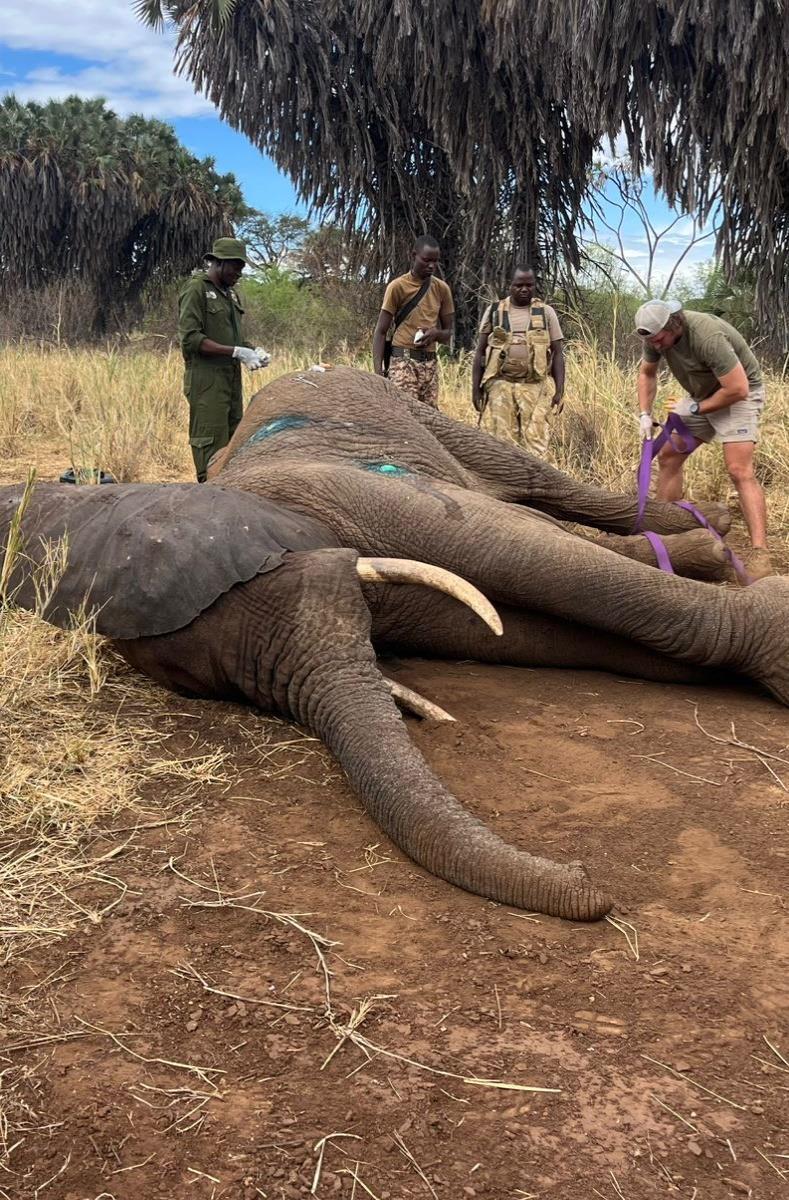
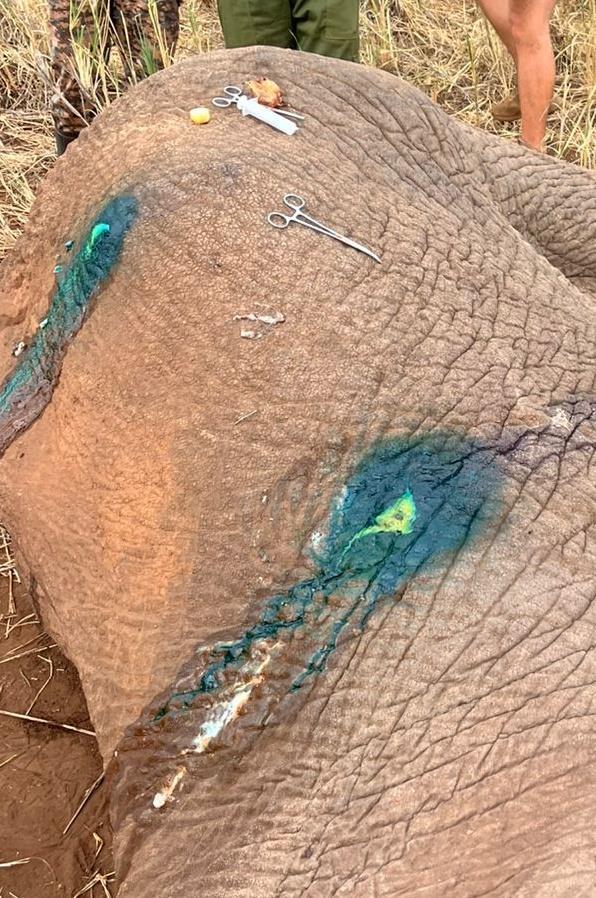
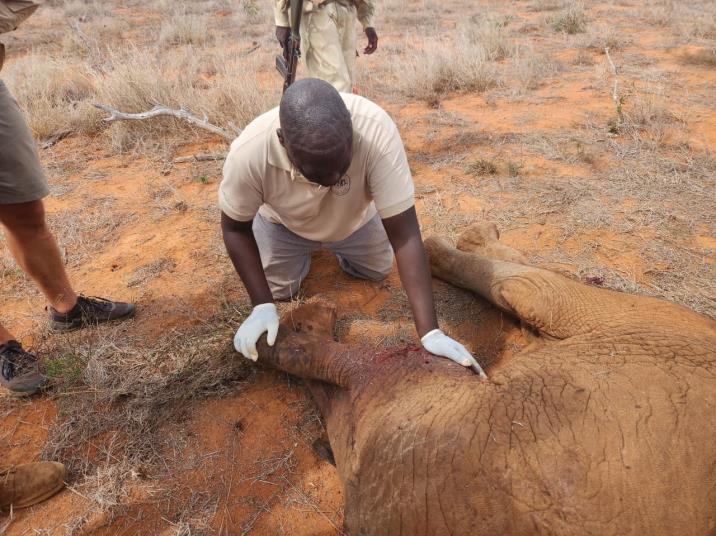
Examination revealed 9 deep septic spear wounds on various parts of his body. The right forelimb was inflamed and with a spear wound on his elbow joint. He was also in poor body condition. The wounds were thoroughly cleaned and debrided. This was followed by flushing with Hydrogen peroxide and rinsing the wounds thoroughly with water. The wounds were thereafter infused with tincture of Iodine, packed with antibiotic pessaries and topically sprayed using a topical antibiotic. He received shots of Amoxicillin antibiotics, a Metabolic stimulant and Flunixin anti-inflamatories parenterally.
Prognosis
Prognosis was guarded due to the extent of the injuries.
.
Case
Elephant
Natural Causes
Aruba, Tsavo East National Park
This calf was reported to be limping on his right hindlimb by KWS/SWT team in Aruba area. He was with his mother and the rest of the herd.
Immobilisation, examination and treatment
The adult female elephant and the calf were immobilized using 20mg and 0.6mg Etorphine hydrochloride delivered remotely in a 3cc, and 1.5cc Dan inject dart respectively. Darting was done from the vehicle, and it took 10 minutes for full anaesthesia to be achieved.
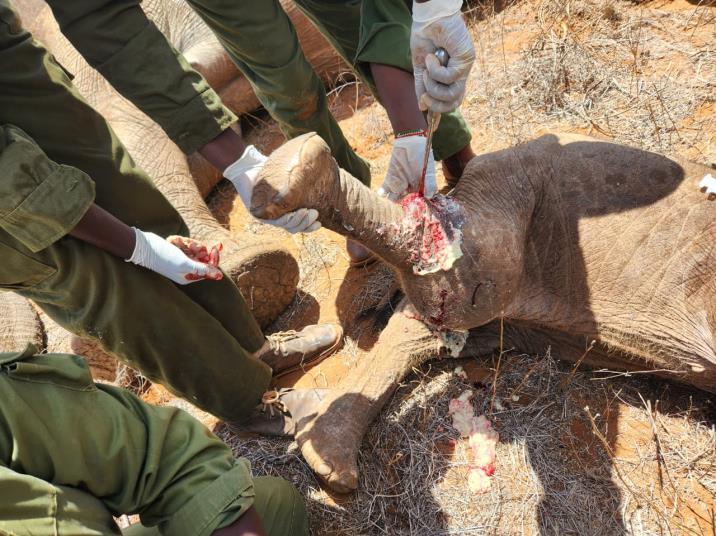
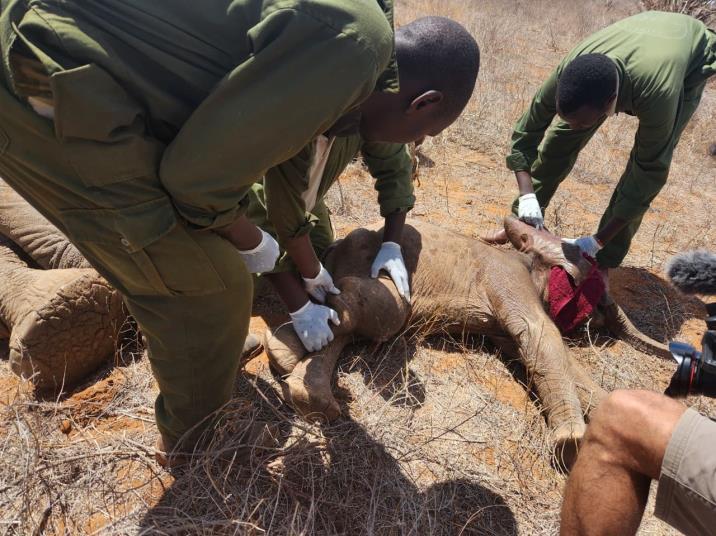
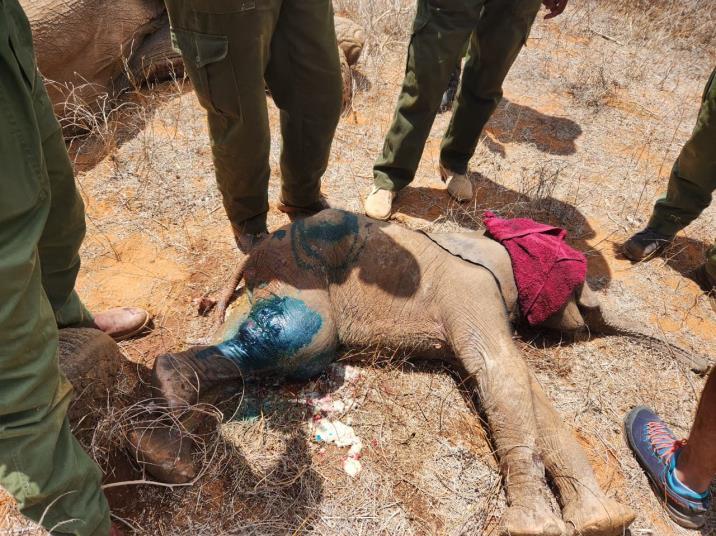
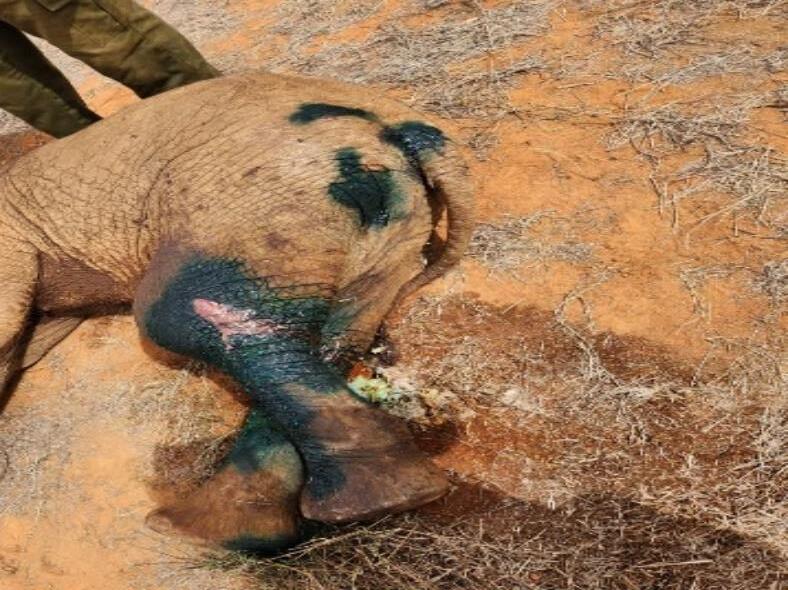
Examination revealed septic predation wounds on the right hind limb near the knee joint. The joint was not affected. The wound was thoroughly cleaned, flushed with Hydrogen peroxide, infused with tincture of Iodine and then packed with Antibiotic pessaries. Topical antibiotic spray was applied on the wound.
He was also given Dexamethasone intravenously, plus Amoxicillin and Clindamycin antibiotics parenterally.
Prognosis
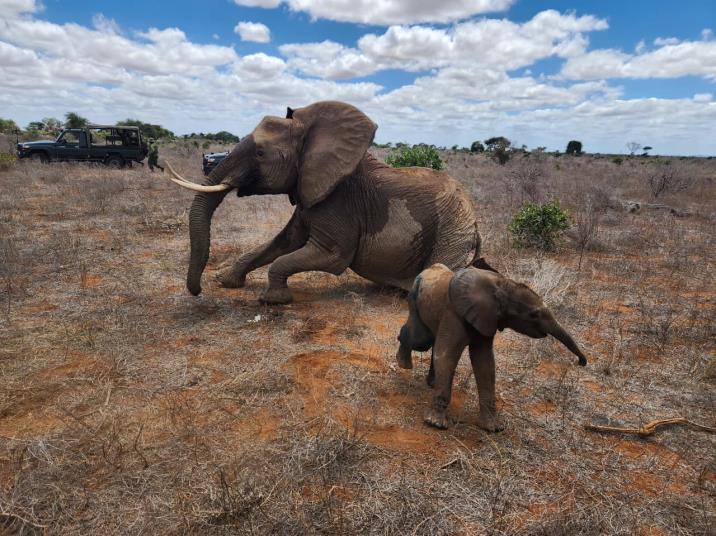
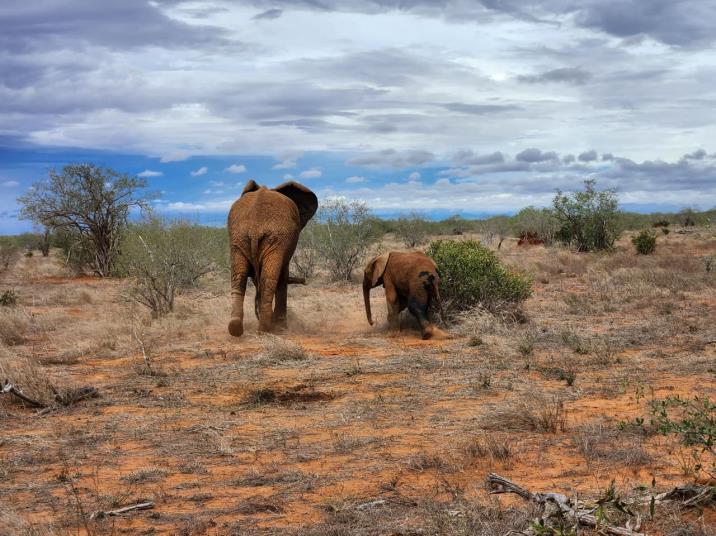
The mother and calf were reversed using 200mg and 6mg of Naltrexone respectively given intravenously via a prominent ear vein. They rose few minutes later and reunited. Prognosis is good.
Elephant Arrow Kamboyo, Tsavo East
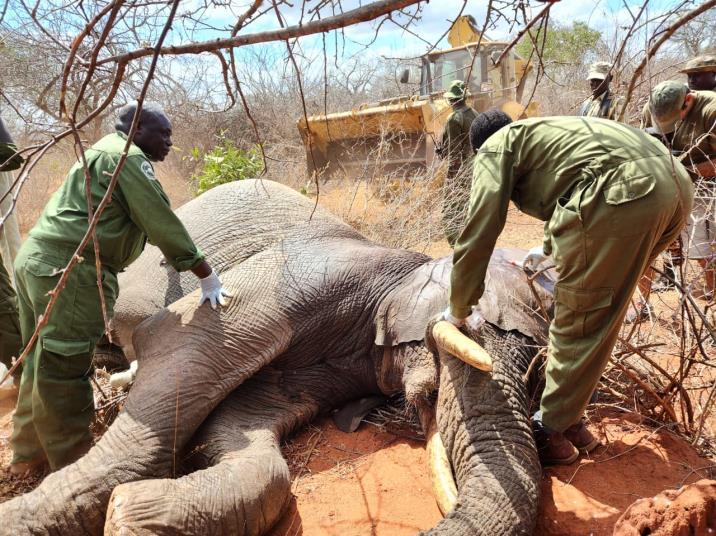
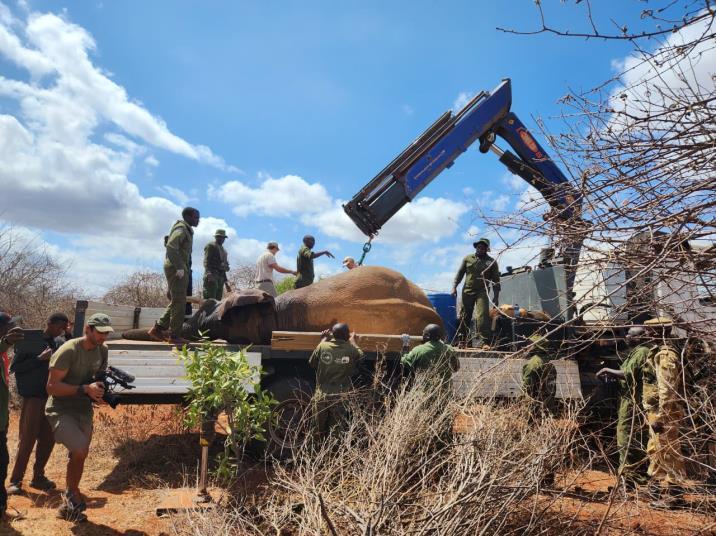
This adult elephant was captured and translocated from Mara riantha area to Tsavo West National Park. He was 45 years old. He had a collar on his neck. He succumbed during the translocated activity while on transit.
Postmortem examination
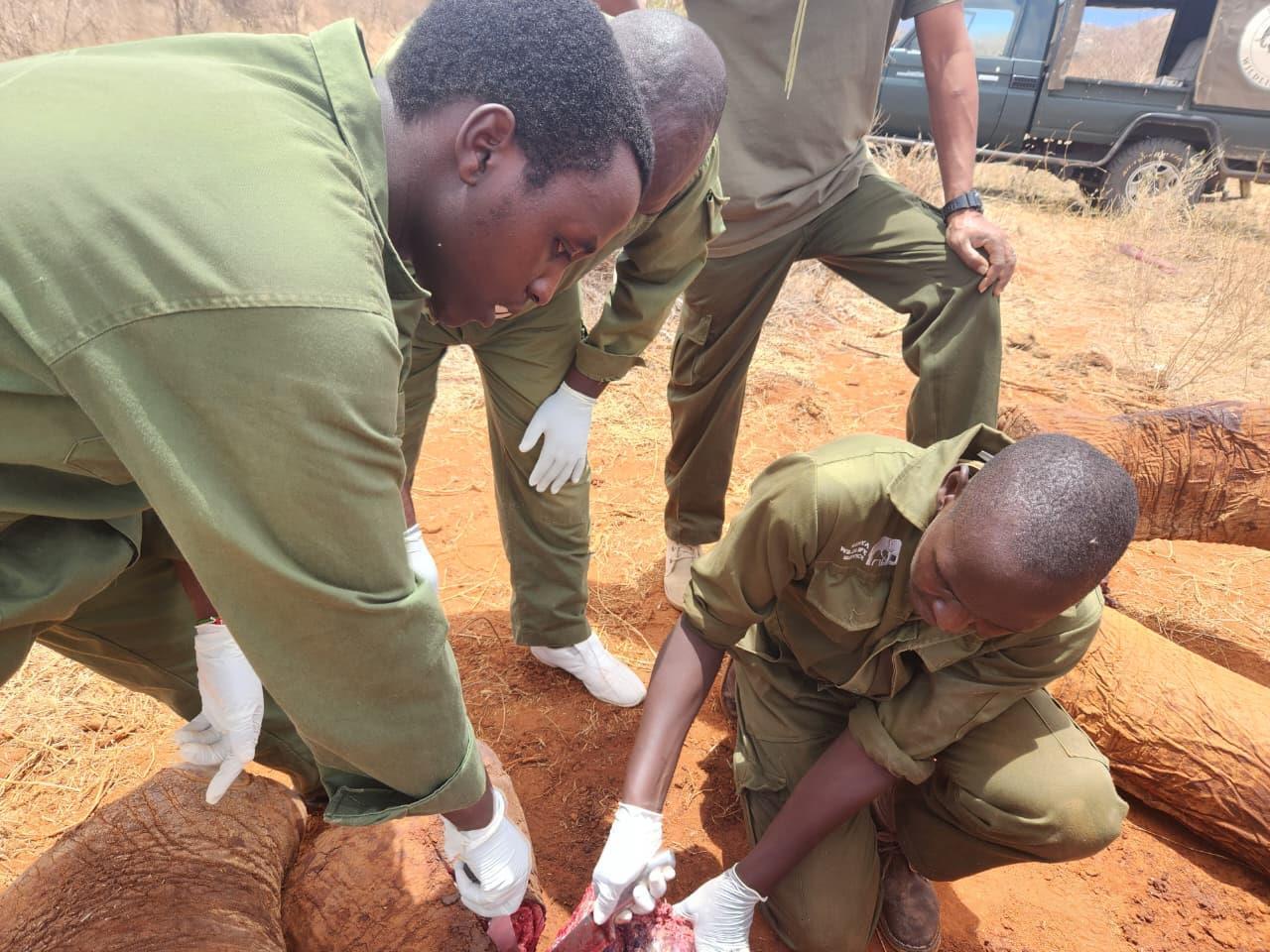
The elephant had several superficial wounds which were healing. An arrowhead was discovered superficially lodged on to the right chest area. There was extensive peritonitis and extensive haemorrhages on the serosa of the large intestines. A portion of the large intestines was ruptured and ingesta leaked into the peritoneal cavity. The spleen had multifocal black nodules. The spleen was also enlarged and gelatinized. There was a high load of intestinal worms. A portion of the colon was twisted along its horizontal axis (torsion). There was marked lymphadenitis. There were extensive petechiations on the heart’s pericardium and endocardium. The liver was swollen and congested. There was froth in the bronchioles and alveoli.
Cause of death
It was concluded that the elephant died from complications associated with large intestinal torsion and also the ruptured large intestine following the arrow injuries
Case
15 – 14th October 2025
Elephant Postmortem
Irima, Tsavo East National Park
This carcass was spotted by the KWS rangers in Irima area on the morning of 14th October. TMVU was requested to determine the cause of death.
Postmortem examination
The carcass was in a good body condition prior to death. The right tarsal was swollen.
Significant findings included complete fracture of distal tibia and fibular. Necrotized inner tissue around the fracture site. Marked soft tissue swelling around the fracture site.
Cause of death
It was concluded that the elephant succumbed due to septicaemia and complications associated with the fracture.
Case 16 – 15th October 2025
Elephant Postmortem
Tsavo West National Park
This adult elephant was captured and translocated from Baringo to Tsavo West National Park. He was emaciated and had a collar on his neck. He succumbed few hours after arriving in Tsavo west National Park.
Postmortem examination
The elephant was found on right lateral recumbency.
The mucosa of the large intestines was severely congested. A portion of the small intestines (jejunum) was ruptured and ingesta leaked into the peritoneal cavity. The liver was enlarged and filled with lots of blood.
Cause of death
It was concluded that the cause of death was gastrointestinal torsion with ruptured small intestine
Case 17 – 15th October 2025
Elephant Natural Causes
Amboseli National Park
This elephant was reported to have been labouring with no signs of a foetus coming out. She was in pain and was in a poor body condition.
Immobilisation and examination
She was immobilized using 10mg Etorphine hydrochloride delivered remotely in a 1.5 cc Dan inject dart. Darting was done on foot, and it took 8 minutes for full anaesthesia to be achieved.
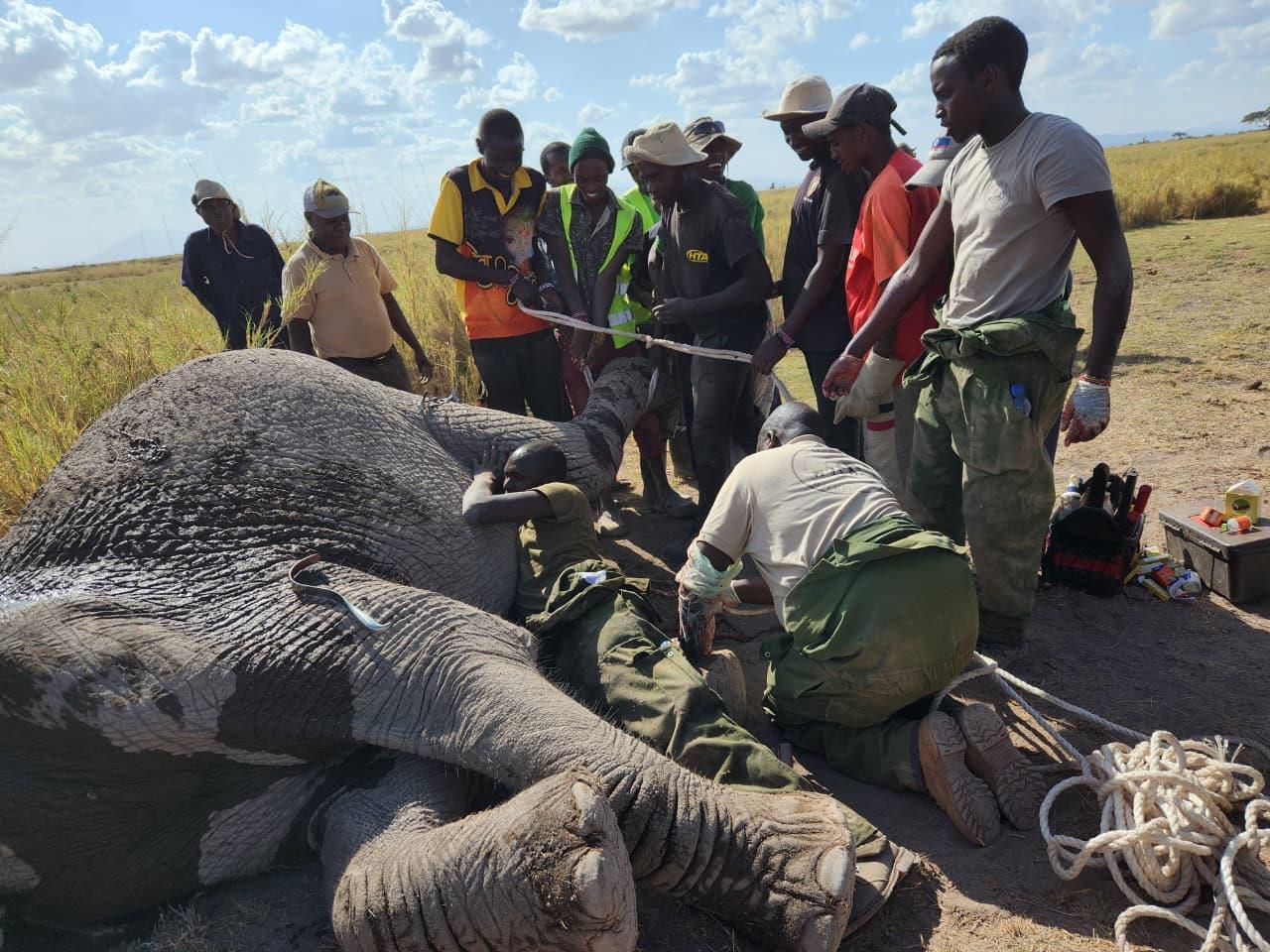
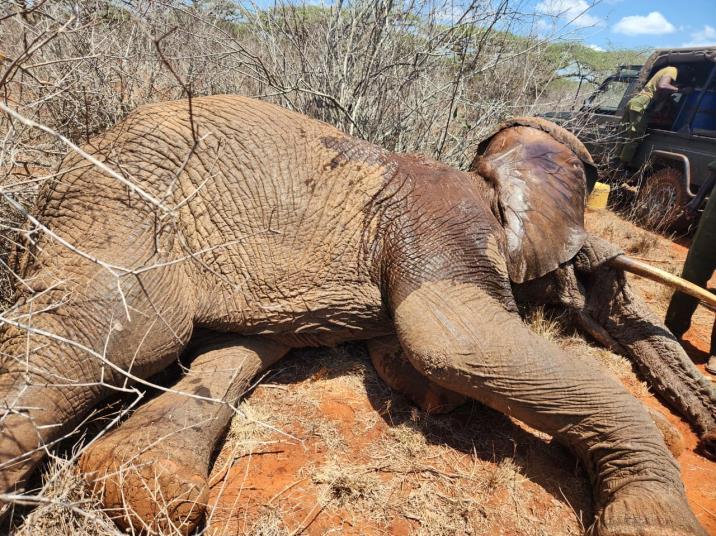
Examination revealed a dead foetus which had begun to decompose inside the animal. The foetus was in anterior presentation with the head slightly deviated to the left. Only the limbs and the head were felt, the rest of the body could not be accessed from the cervix. There was also a foul-smelling discharge coming out of the cervix. She was given Oxytocin and Amoxicillin intramuscularly. The limbs were tied with ropes and the foetus was then attempted to be pulled slowly. This was unsuccessful as the body parts kept disintegrating since the foetus was decomposing.
Cause of death
The elephant succumbed during this process. A post mortem examination revealed the dead foetus stuck along the longitudinal axis of the elephant’s uterus. The calf was fully formed and was up to term.
Elephant
Human-Wildlife Conflict
Kilalinda, Kaluku, Tsavo
This elephant was spotted and reported by SWT/KWS rangers to have wandered into the community area in Kilalinda area near Kaluku.
Immobilisation and relocation
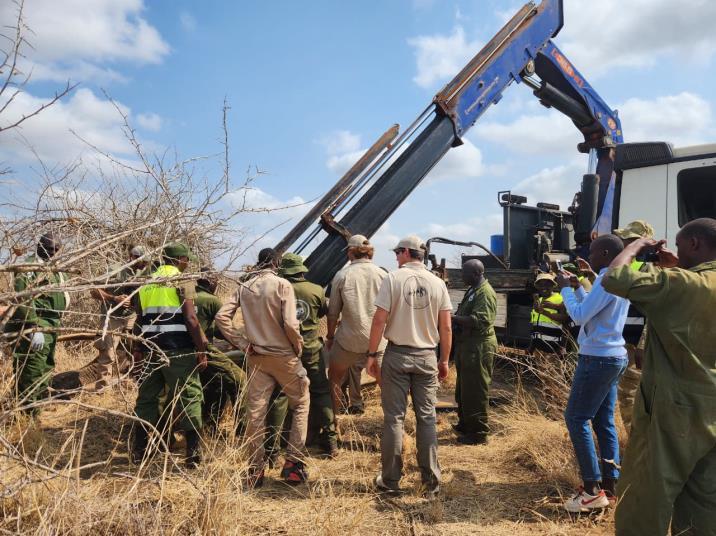
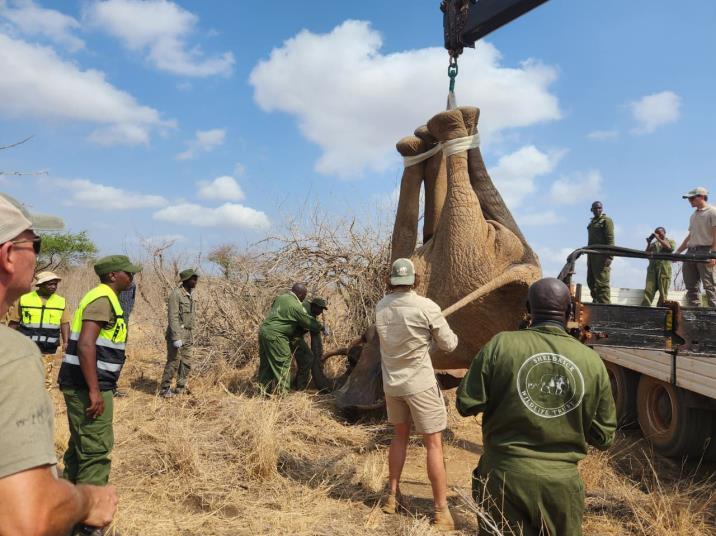
This elephant was successfully immobilized from the helicopter using 20mg Etorphine hydrochloride delivered in a 3cc Dan inject dart and it took 10 minutes for the drug to achieve its full effect.
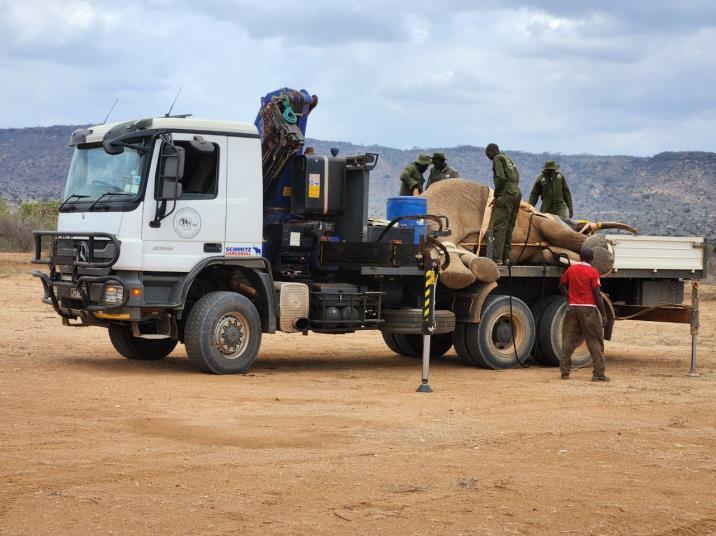
He received a shot of Dexamethasone intravenously and loaded on to the flatbed truck and relocated to Kaluku area.
Prognosis
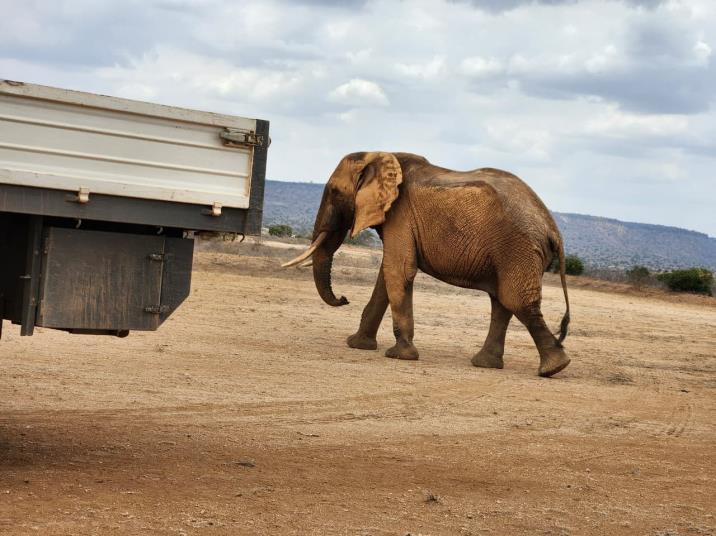
He was revived from narcosis using 200 mg Naltrexone hydrochloride given intravenously via a prominent ear vein. He rose and slowly walked away 3 minutes later. Prognosis is good.
Elephant Spear
Amboseli National Park
This elephant was spotted by KWS rangers in Amboseli area limping on his right forelimb.
Immobilisation, examination and treatment
This bull was successfully immobilized from the vehicle using 20mg Etorphine hydrochloride delivered remotely in a 3cc Dan inject dart and it took 10 minutes for the elephant to be fully anaesthetised.
Examination revealed a deep septic spear wound on the right radiocarpal joint. The wound was cleaned and debrided thoroughly. This was followed by flushing with Hydrogen peroxide, rinsing thoroughly with water and infusing with tincture of Iodine. The wound was then packed with antibiotic pessaries and topical antibiotic spray application.
Additionally, he received shots of Amoxicillin antibiotics and Flunixin anti-inflammatory parenterally.
Prognosis
He was revived from narcosis using 200mg Naltrexone hydrochloride given intravenously via a prominent ear vein. He rose and slowly walked away 3 minutes later and walked away. Prognosis is fair.
Case
20 – 19th October 2025
Elephant Snared
Arabuko Sokoke Forest
This elephant was spotted by KWS rangers in Arabuko Sokoke limping on her right forelimb.
Immobilisation, examination and treatment
She was successfully immobilized using 3.5mg Etorphine hydrochloride delivered remotely in a 1.5cc Dan inject dart. Darting was done from the vehicle, and it took 8 minutes for full anaesthesia to be achieved.
Examination revealed a cable wire snare on her right forelimb. The snare had inflicted a deep wound around the carpal area. The blood supply around the area was intact. The snare was cut with wire cutters and the wound was thoroughly cleaned with water, followed by flushing with Hydrogen peroxide and infusing with tincture of Iodine. The wound was applied with green clay and then sprayed with a topical antibiotic. She also received shots of Amoxicillin antibiotics and flunixin anti-inflammatory parenterally.
Prognosis
She was reversed from narcosis using 35 mg of Naltrexone hydrochloride given intravenously via the ear vein. She rose a few minutes later and joined the rest of the herd. Prognosis is good.
Elephant
Natural Causes
Kuranze Ranch
This elephant was spotted by KWS/SWT rangers in Kuranze area limping on his right hindlimb.
Immobilisation, examination and treatment
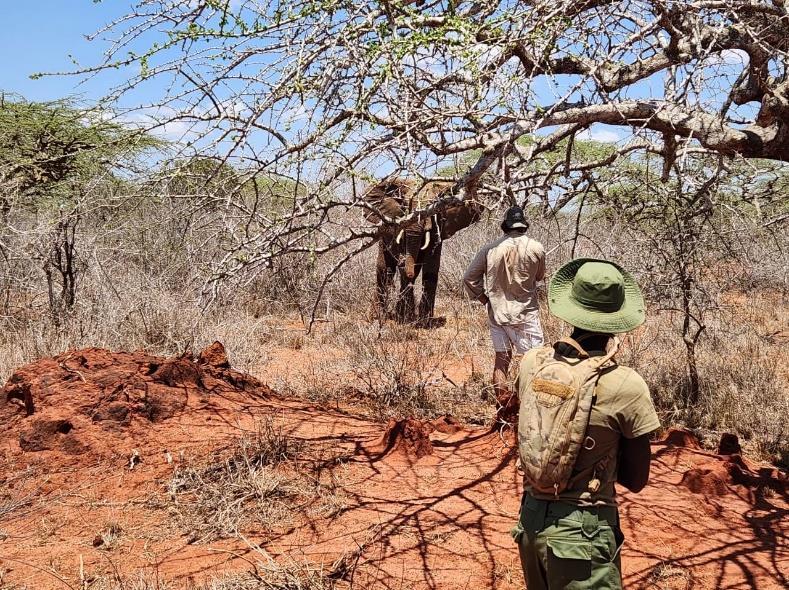
This bull was successfully immobilized using 20mg Etorphine hydrochloride delivered remotely in a 3 cc Dan inject dart. Darting was done from the helicopter, and it took 10 minutes for full anaesthesia to be achieved.
Examination revealed soft tissue swelling around the right knee joint and right above it. There was a scar formation on the area which suggested that the elephant was previously wounded. There were no discharges and the limb appeared to have healed in that way therefore no treatment was required.
Prognosis
He was reversed from narcosis using 200mg of Naltrexone hydrochloride given intravenously via the ear vein. He rose few minutes later and walked away. Prognosis for recovery is good.
Case 22 – 22nd October 2025
Lion
Natural Causes
Ngutuni, Tsavo East National Park
This lioness was spotted wounded in Ngutuni by the KWS rangers at the area.
Immobilisation, examination and treatment
The lioness was successfully immobilized using a combination of 4.8mg Medetomidine and 180mg Ketamine Darting was done from the vehicle, and it took 10 minutes for full anaesthesia to be achieved.
Examination revealed several deep septic bite wounds on the right hip, base of the tail, left gluteus and medial left and right thigh. The injuries were suspected to have been inflicted by another lion. The lioness also was in a poor body condition and dehydrated. The wounds were thoroughly cleaned with water, Hydrogen peroxide, methylated spirit, tincture of Iodine, applied with an antibiotic powder and then sprayed with a topical antibiotic.
Additionally, she was given rehydrating fluids and received shots of Amoxicillin antibiotics and Meloxicam parenterally.
Prognosis
Prognosis for recovery is fair.
Elephant
Human-Wildlife Conflict Kamboyo, Tsavo East NP
This elephant was reported by KWS rangers in Kamboyo outpost to be wondering into the neighbouring community areas, posing potential risks to the people and the crops.
Immobilisation and relocation
This elephant was successfully immobilized using 20mg Etorphine hydrochloride delivered in a 3cc Dan inject dart. Darting was done from the helicopter, and it took 10 minutes for the drug to achieve its full effect.
He received shots of Dexamethasone intravenously and intramuscularly then loaded on to the flatbed truck and relocated to Lugard area.
Prognosis
He was revived from narcosis using 200mg Naltrexone hydrochloride given intravenously via a prominent ear vein. He rose and walked away few minutes later. Hopefully he will remain in the park and not pose any further danger to the local communities.
Case 24 – 24th October 2025
Buffalo Natural Causes
Kaluku, Tsavo
This buffalo was spotted by SWT pilot during the routine patrols wounded in Kaluku area.
Immobilisation, examination and treatment
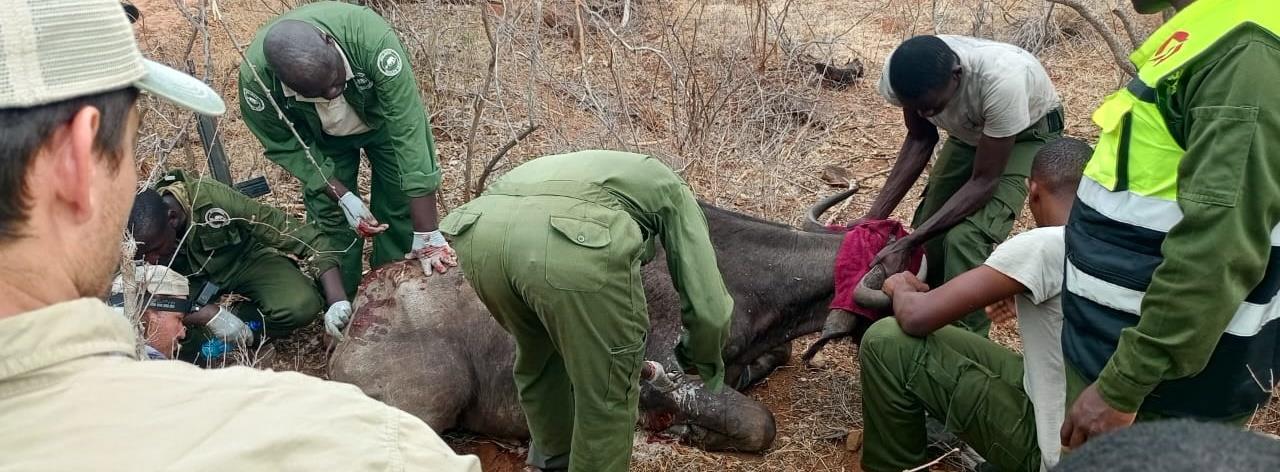
She was successfully immobilized using a combination of 7mg Etorphine hydrochloride and 50mg Azaperone. Darting was done from the helicopter, and it took 9 minutes for full anaesthesia to be achieved.
Examination revealed several septic predation wounds on her body. The wounds were suspected to have been inflicted by lions during a predation attempt. She also had a big abscess on her right thigh which was then lanced and drained of pus. The abscess pocket and the wounds were then washed, flushed with Hydrogen peroxide and tincture of Iodine then sprayed with a topical antibiotic.She additionally received shots of Amoxicillin antibiotics and Flunixin anti-inflammatory parenterally.
Prognosis
Prognosis is good.
Case 25 – 27th October 2025
Elephant Spear Finch Hattons, Tsavo West NP
This elephant was spotted by the KWS rangers during their routine patrols in Finch Hattons area with slight right hind limb abduction and limping on the same limb.
Immobilisation, examination and treatment
This bull was successfully immobilized using 17mg Etorphine hydrochloride delivered remotely in a 3cc Dan inject dart. Darting was done from the vehicle, and it took 10 minutes for the drug to achieve its full effects.
Examination revealed a spear wound on the right knee joint which appeared to have healed with slight swelling and arthrodesis of the joint.
No further treatment was necessary as it was healing but he received shots of Flunixin anti-inflammatory parenterally to manage the swelling.
Prognosis
He was reversed from narcosis using 100 mg of Naltrexone hydrochloride given intravenously via the ear vein. He rose few minutes later and walked away. Prognosis is good.
Natural Causes
Balguda, Tsavo East NP
This calf was reported to be limping on his left hind limb by the SWT pilot in Balguda area. She was with her mother and the rest of the herd.
Immobilisation, examination and treatment
The adult female elephant and the calf were immobilized using 20mg and 2mg Etorphine hydrochloride respectively. Darting was done from the vehicle, and it took 10 minutes for full anaesthesia to be achieved.
Examination revealed septic predation wounds on her left knee joint area, suspected to be inflicted by a lion. The joint was also affected. A bone fragment from the distal femur was removed. The wounds were thoroughly cleaned, flushed with Hydrogen peroxide, infused with tincture of Iodine and then packed with Antibiotic pessaries. Topical antibiotic spray was applied on the wound. She was additionally given Amoxicillin antibiotics, Flunixin anti-inflammatory and a metabolic stimulant parenterally.
Prognosis
The female adult elephant and the calf were reversed using 200mg and 20mg Naltrexone respectively given intravenously via a prominent ear vein. They rose few minutes later and reunited. Prognosis is guarded.
Case 27 – 28th October 2025
Elephant Arrow Gazi, Tsavo East NP
This elephant was spotted by the SWT pilot in Gazi area limping and had a wound on his right forelimb.
Immobilisation, examination and treatment
This elephant was successfully immobilized using 17mg Etorphine hydrochloride delivered remotely in a 3cc Dan inject dart. Darting was done from the helicopter, and it took 11 minutes for the elephant to be fully anaesthetized.
Examination revealed an arrow wound on the distal right forelimb. The wound was thoroughly cleaned with water, flushed with Hydrogen peroxide, rinsed with water and infused with tincture of Iodine. The wound was thereafter packed with antibiotic pessaries and then topically sprayed using an antibiotic.
He also received shots of Amoxicillin antibiotics and Flunixin anti-inflammatory parenterally.
Prognosis
He was reversed from narcosis using 170mg of Naltrexone hydrochloride given intravenously via the ear vein. He rose few minutes later and walked away with a good prognosis.