Operated in support of the Kenya Wildlife Service, Sheldrick Wildlife Trust's Aerial Unit monitors for illegal activity from the skies and offers rapid response assistance in anti-poaching operations, human-wildlife conict, veterinary treatments, orphan rescues, and all manner of eld emergencies.
This report details Aerial Unit activities for October 2025
27,678
Hours own: Areas patrolled:
234
Kilometres own:
32,793
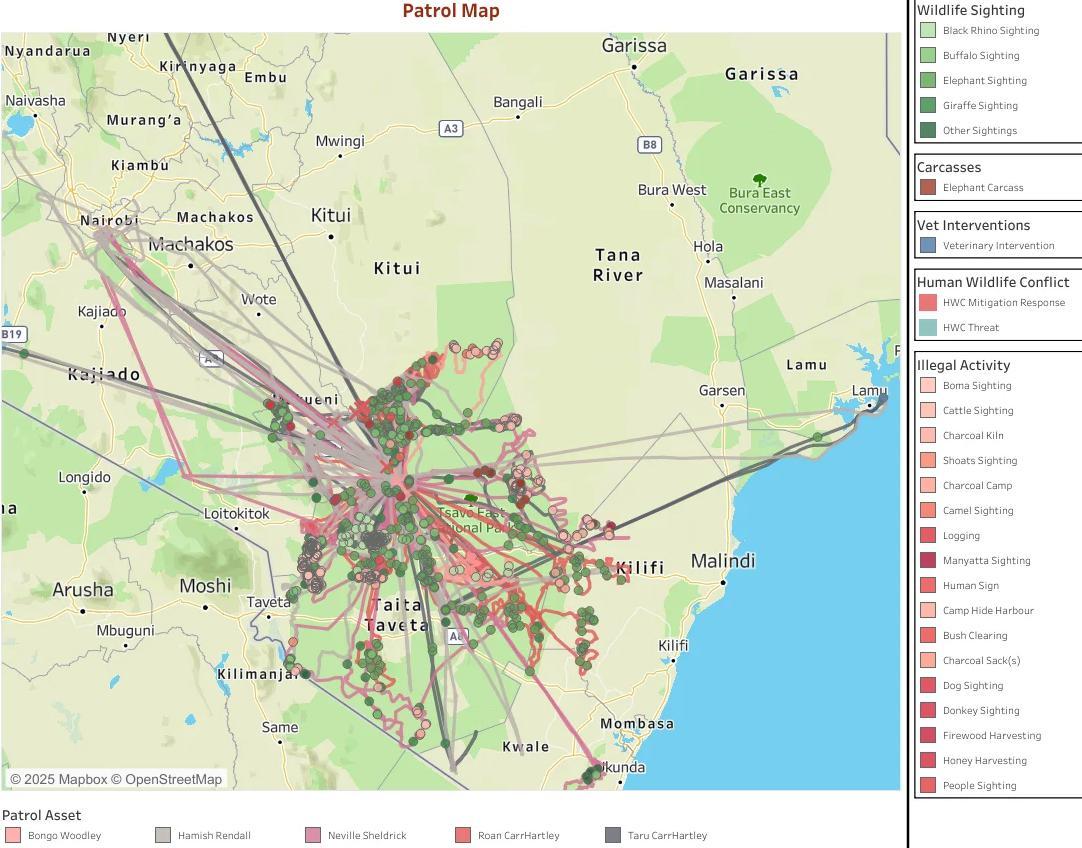
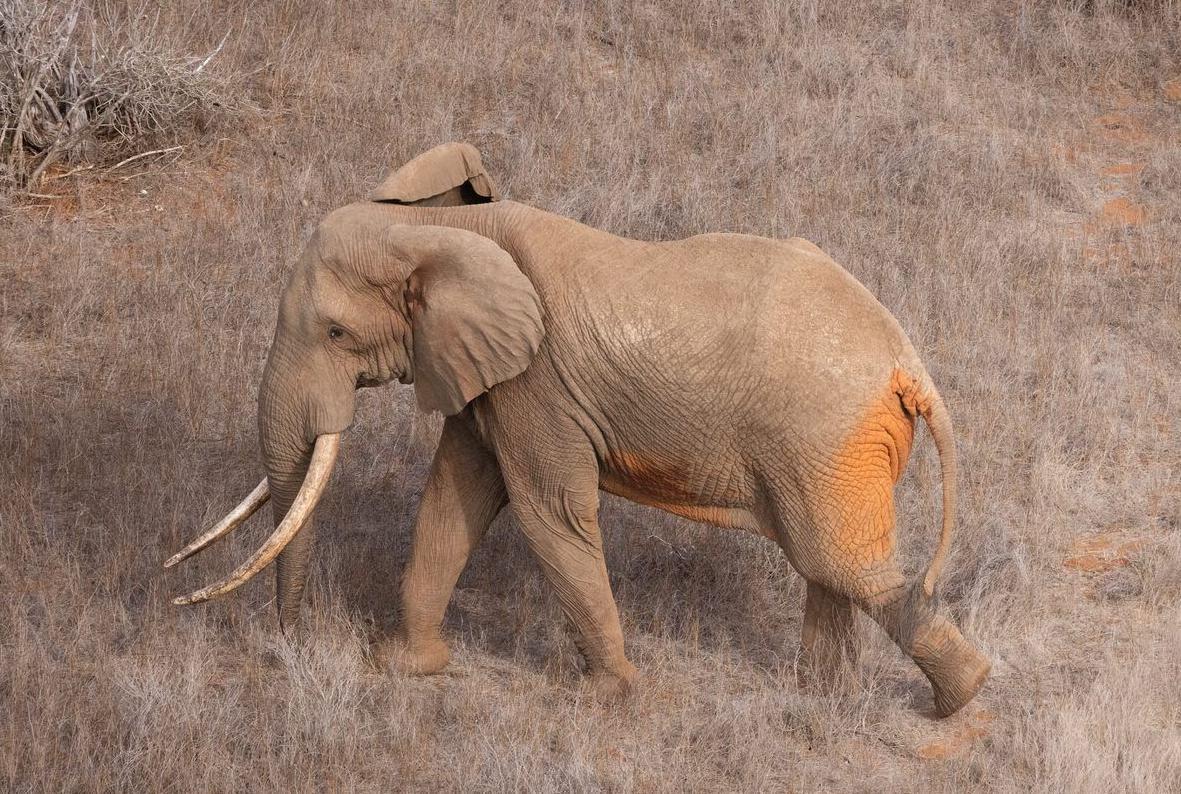
October was a very busy month for our Aerial Unit. SWT/KWS Mobile Vet Units had a full caseload, and our Aerial Unit played a crucial role both in locating injured animals and in facilitating timely, life-saving treatments. As usual, elephants made up the majority of cases The team treated a total of nine elephants for various injuries or conditions These included three elephants with spear wounds, as well as individuals suffering from a broken leg, an arrow wound, an unborn dead foetus, a benign tumour, a gunshot wound, and injuries from a lion attack. The team successfully treated all of the elephants with the exception of a young female in Amboseli with an unborn dead foetus.
Regarding that case, after receiving a report from the Amboseli Trust for Elephants, one of our pilots ew Dr. Limo from Voi to Amboseli to attend to the would-be mother, who was suspected to have experienced a failed delivery. Dr. Limo conrmed the worst and quickly darted her and attempted to extract the dead calf Unfortunately, she was already in a highly compromised state, with extreme infection setting in, and the team's best efforts were not enough to save her. After more than an hour of trying, the calf remained rmly lodged and the mother passed away.
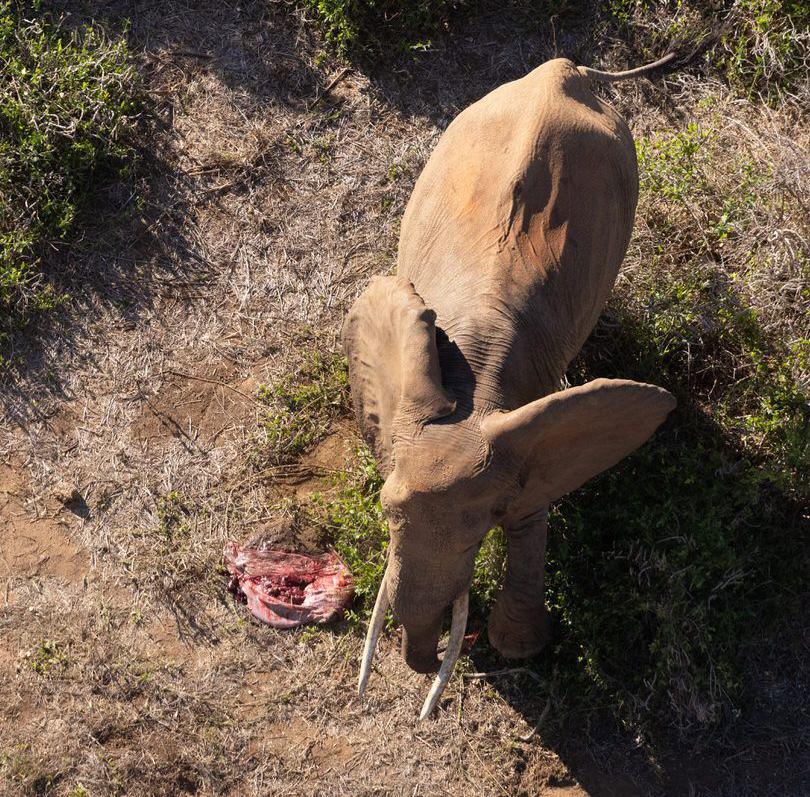
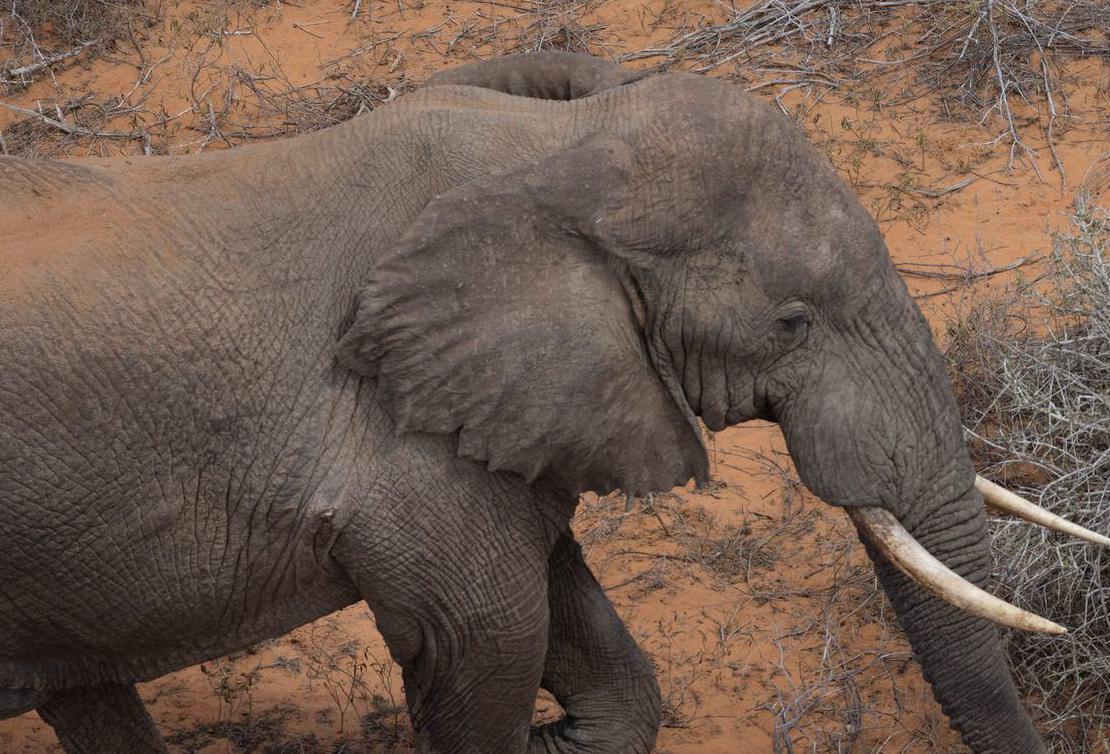
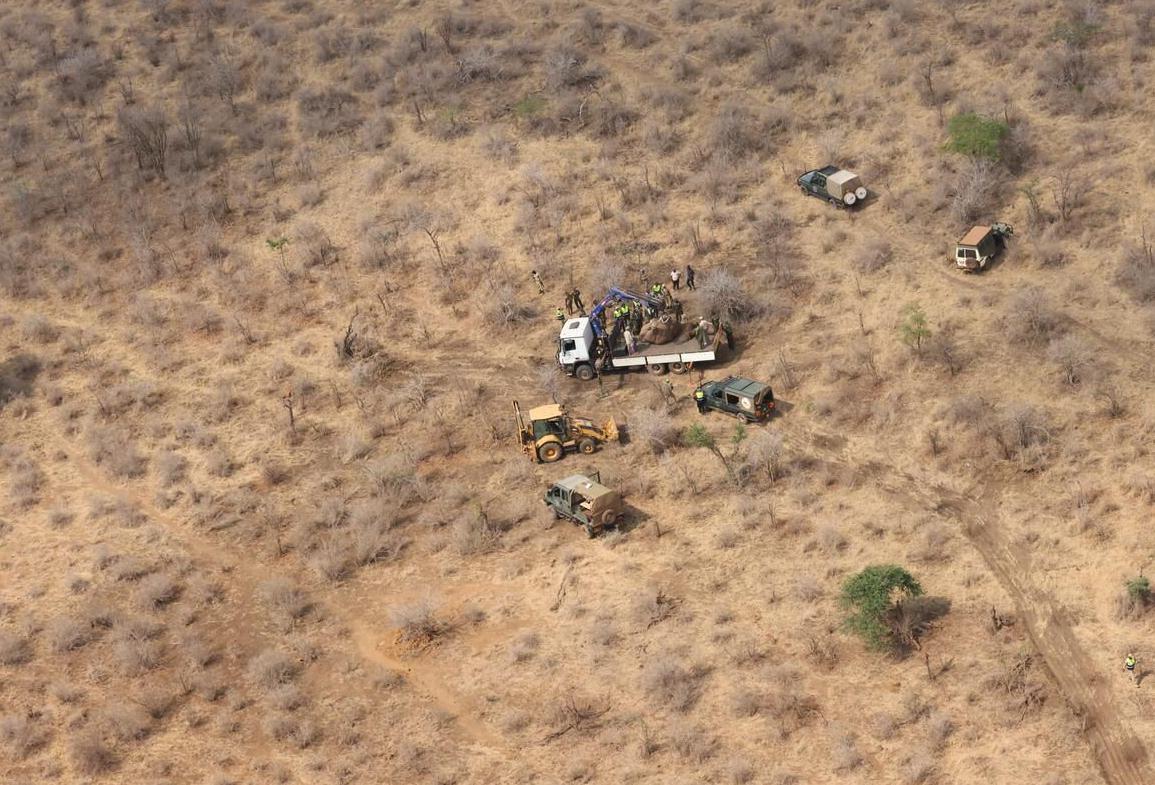
All but one of the other elephants are expected to make a full recovery, including a bull that the team found with a bullet entry wound just inches from his heart. Fortunately, the bullet had narrowly missed all vital organs after passing through the rib cage The less fortunate case was a bull discovered with a heart-breaking ten spear wounds, including one very infected wound near his knee Despite a successful treatment, infected joints are especially sensitive, and this case was no exception, warranting a guarded prognosis.
In addition to the elephants that the team treated, another four elephants were sighted during aerial patrols and were either deemed not to have life-threatening injuries or observed to be recovering from old, known injuries.
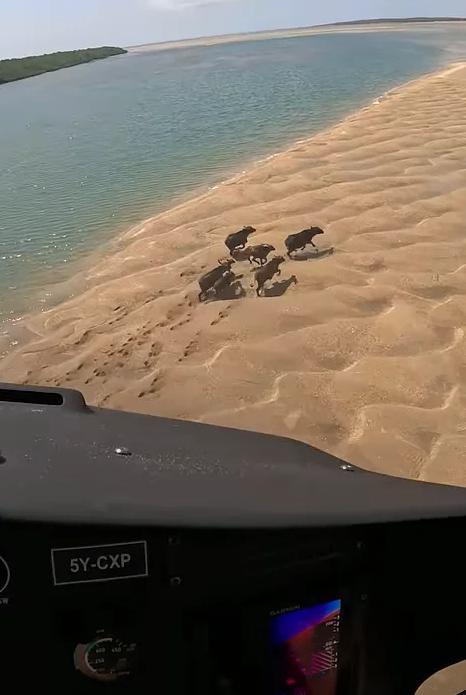
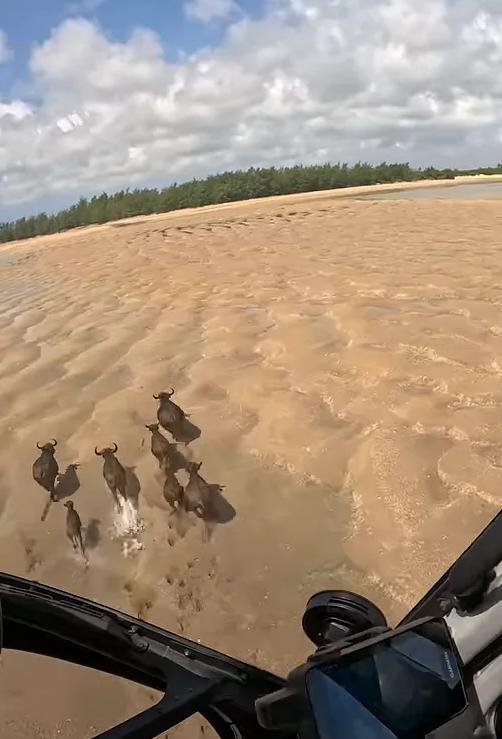
Beyond elephants, the team treated a further two buffaloes for snare injuries, including a remarkable case on Manda Island in the Lamu Archipelago Staff at Manda Bay Lodge initially saw and reported a young buffalo with a severe snare wound amongst a resident herd. Our team ew to Manda by helicopter and, on the rst day, were unable to locate the injured animal. On the second day, after receiving word that a herd of buffalo had been seen crossing a channel to a smaller island, the helicopter launched again and successfully located the herd along with the wounded calf.
A challenging and dramatic rescue followed The team darted the buffalo as it emerged from the mangrove forest and onto the beach, moments before it would have attempted to swim back to Manda Relieved to intercept and anaesthetise it before it entered deeper water, the team quickly removed the snare, cleaned the wound, and administered antibiotics.
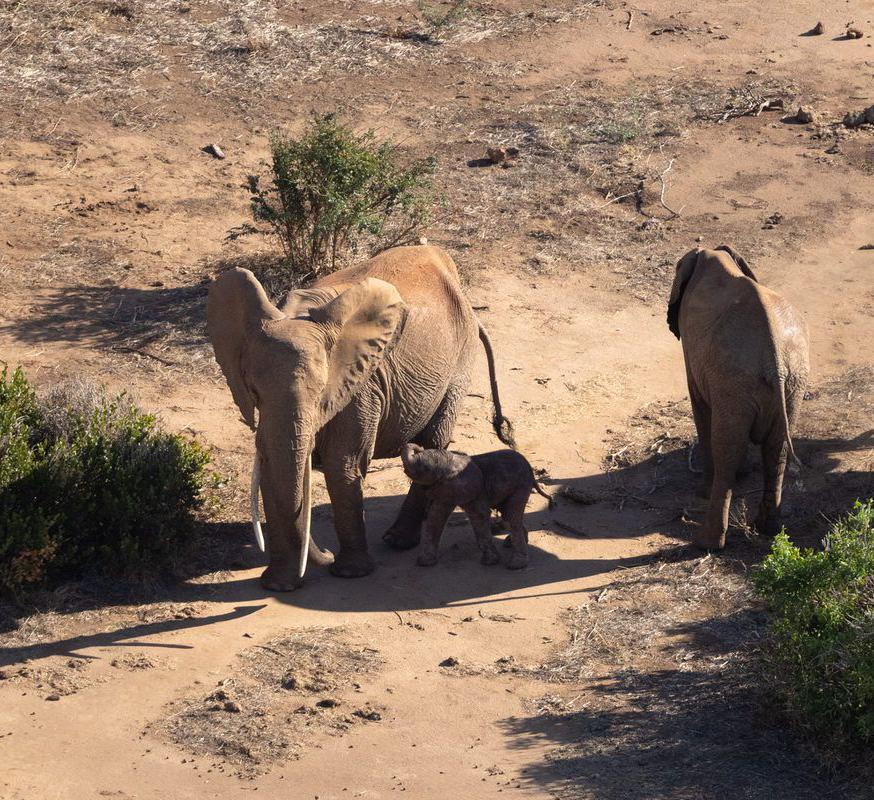
The team rescued and collected three orphaned or abandoned elephant calves by helicopter in October. One of these was a Kuranze well victim that had previously been rescued along with its mother only to later be attacked by hyenas and abandoned Another calf fell into an artisanal mine near Mwatate and, after KWS rescued it, the team collected it by helicopter and ew it to Kaluku The last was a two-week-old calf discovered abandoned on one of the southern ranches and collected by helicopter.
Human–elephant conict remained an ever-present threat Several cases required helicopter response, and the team translocated two problem elephants: one that repeatedly refused to return to the park, and another that was a habitual fence breaker. In both cases, xed-wing aircraft provided coverage overhead, whilst the team darted the bulls and ground teams assisted in loading them onto crane trucks for relocation deep into Tsavo East National Park
Livestock incursions into the park showed a denite rise in both Tsavo East and Tsavo West, with previously controlled areas coming under signicant grazing pressure from illegal herds of cattle, sheep, and goats. KWS successfully dealt with these incursions in Tsavo East, but Tsavo West remains problematic
Poaching activity that the Aerial Unit detected included one large active poachers' harbour, a smaller recent harbour, and a suspected poachers' campre. Additionally, the team found ve very old elephant carcasses in a remote part of Tsavo East and, due to the circumstances, assumed them to have been poaching victims Though previously unrecorded, the carcasses were several years old
The Aerial Unit also recorded a few logging incidents (in TENP) and charcoal-burning incidents (on Kishushe Ranch). The Aerial Unit detected no other illegal activities in October
Although the re season had largely ended, our helicopter was called out once to assist with a re in Chyulu Hills National Park The crew made a total of fteen water drops with the Bambi Bucket, and ground teams successfully extinguished the re
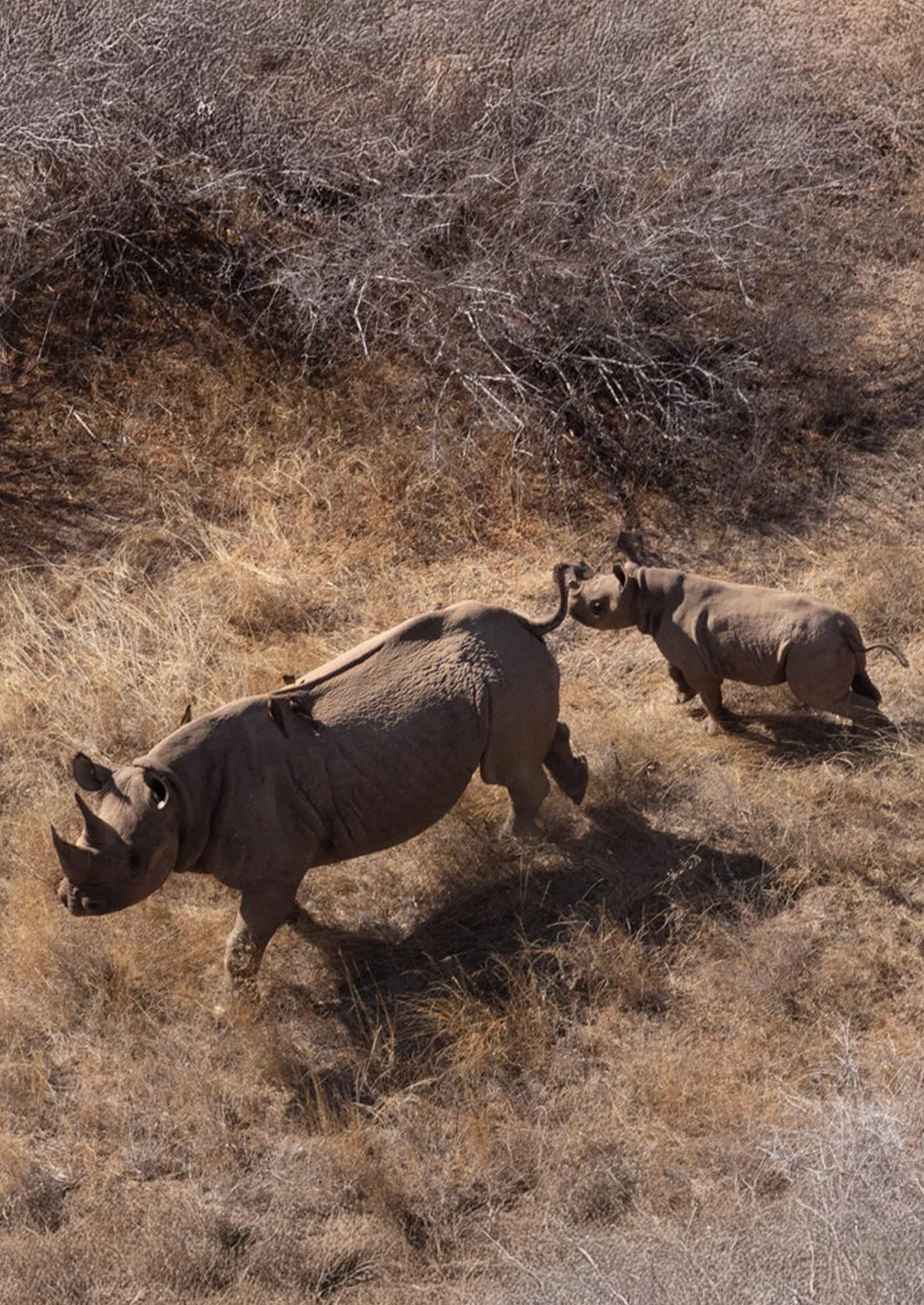
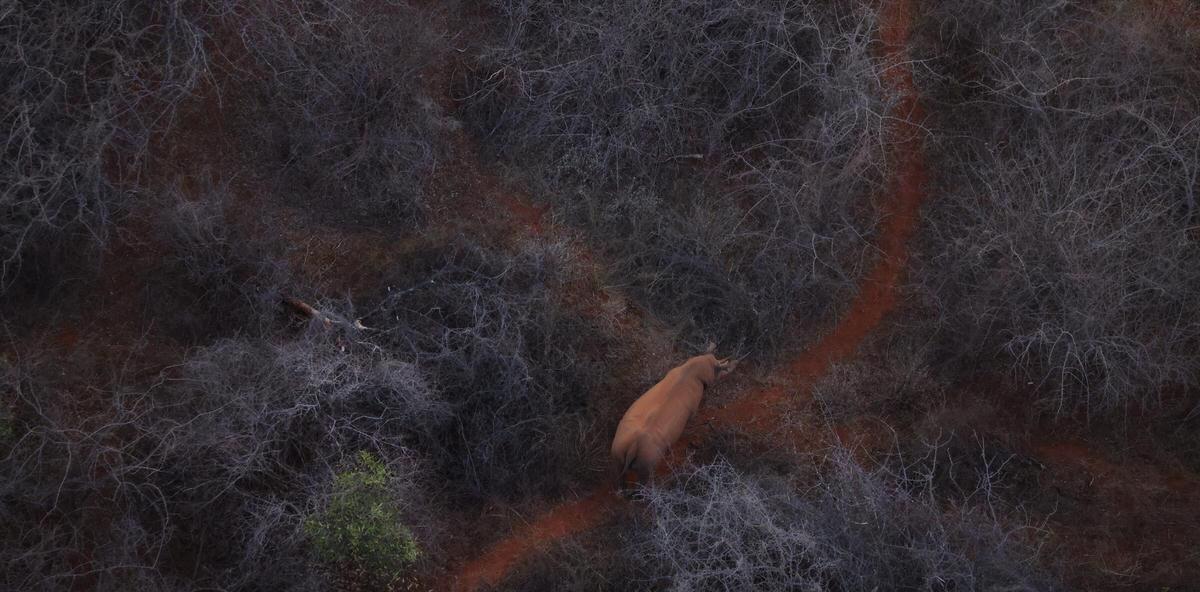
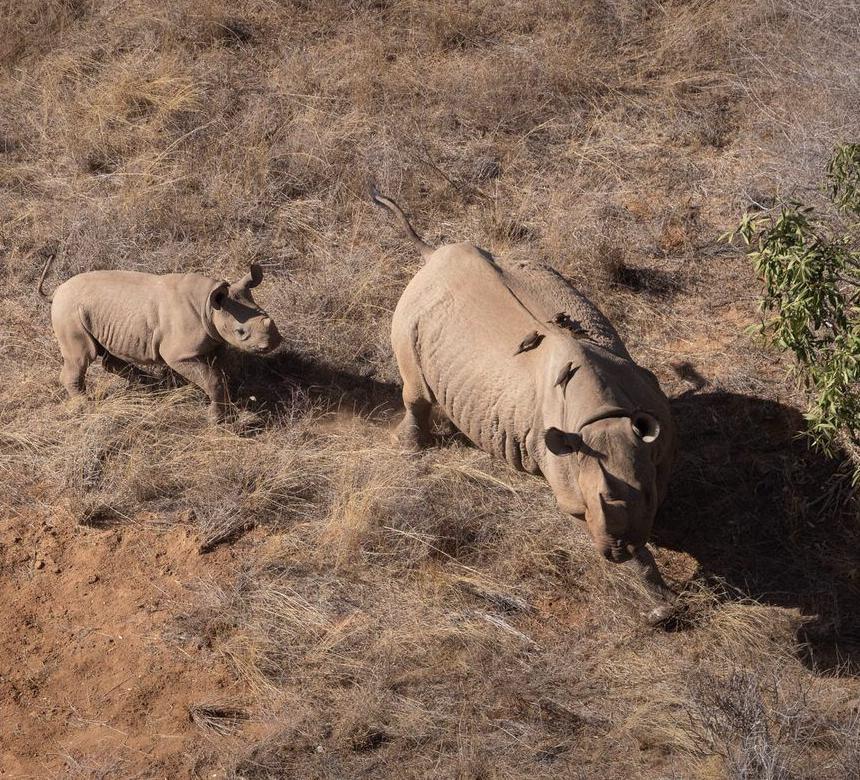
One highlight for our helicopter pilot though not an all-time record was the sighting of sixty-three rhinos in a single ight over the Ngulia Rhino Sanctuary
The Aerial Unit, as with all Sheldrick Wildlife Trust's conservation projects, is a donorfunded initiative Thank you to our global supporters, who help us secure Kenya's habitats for the future and make an impact in the eld, each and every day