

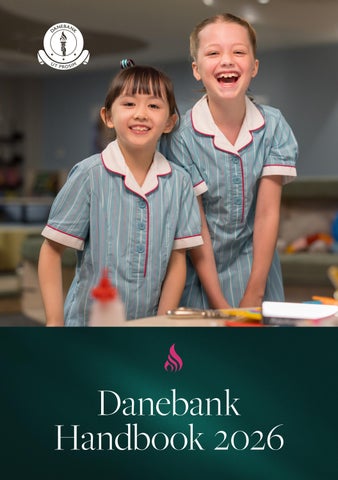
This Handbook is designed to be used as a reference guide and stepping stone to assist you and your daughter in accessing a lot of the information you need about our school. Through the use of this common information source at home and school, we can work together to support your daughter throughout her time here at Danebank.

Danebank was founded in 1933 when a group of Hurstville parents, led by the Crakanthorp family, engaged Miss Edith Roseby Ball to educate their young children. She began with five girls and boys, teaching them on the back verandah and in the backyard of the house at 104 The Avenue Hurstville. Within two years, through her hard work, energy and enthusiasm, Miss Roseby Ball had purchased the school’s first building at 86 Park Road Hurstville, starting a process of ongoing development and expansion.
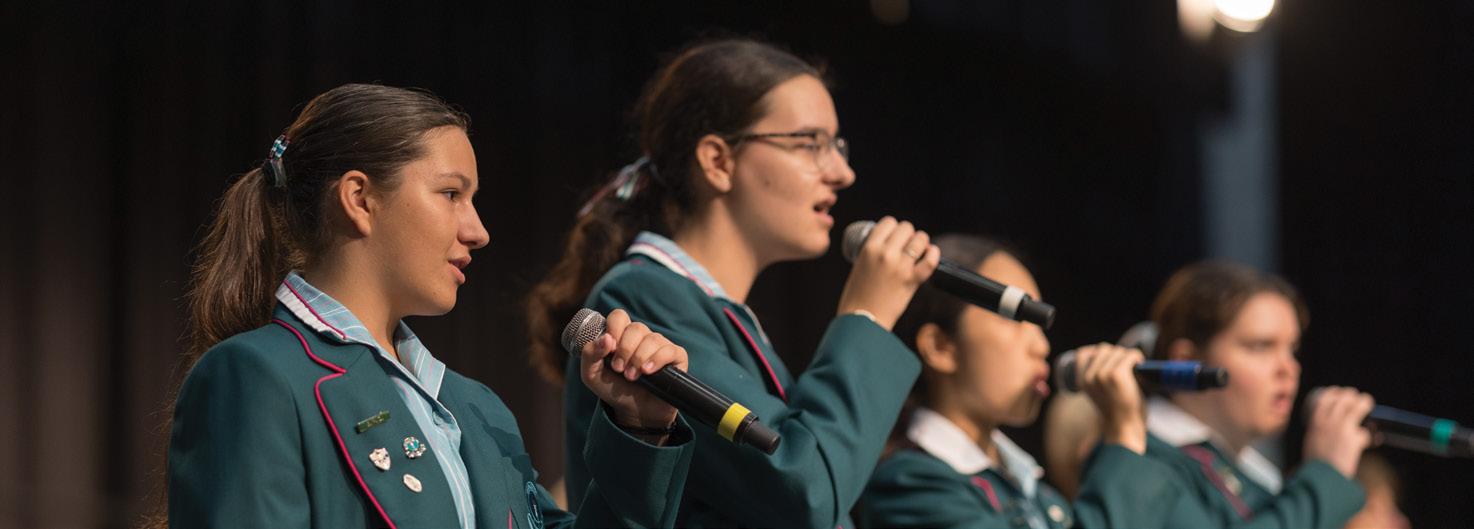
Miss Roseby Ball modelled Danebank’s ethos on Ut Prosim, meaning “That I May Serve”. Ut Prosim symbolises our school’s Christian foundations and intention: that every student be introduced to the Christian faith through the practical experience of Christian care and Bible teaching. Miss Roseby Ball’s tireless work over 17 years enabled her young pupils to thrive and is a striking example of this service.
With her compassion and high educational standards, Miss Roseby Ball established the school’s most enduring traditions:
• A Christian school where students are educated to be useful, achieving citizens
• Students inspired to achieve their best academic outcomes
• Students of all abilities are welcomed
• A learning environment that supports innovative academic programs
• The development of facilities and infrastructure continues in order to meet changing educational needs
We celebrate Founder’s Day each year, which is held on the anniversary of Miss Roseby Ball’s birthday, 7 March.
On that occasion, up to three special awards are presented to current or past students, staff or school council members who have provided outstanding compassionate or philanthropic service to the wider community.
• The Edith Roseby Ball Award for Compassion recognises those of who have acted in behalf of others less fortunate than themselves. The award is named in honour of the school's foundational teacher and first headmistress.
• The Valerie Crakanthorp Award for Philanthropy recognises those who have endeavoured to assist others through significant initiatives and/or the raising of generous funds for worthwhile causes. The award is named in honour of Mrs Valerie Crakanthorp whose generous financial support led to Danebank being established.
• The OGA Award for Citizenship recognises a current student whose mother is an alumna and who has exhibited the highest level of citizenship.
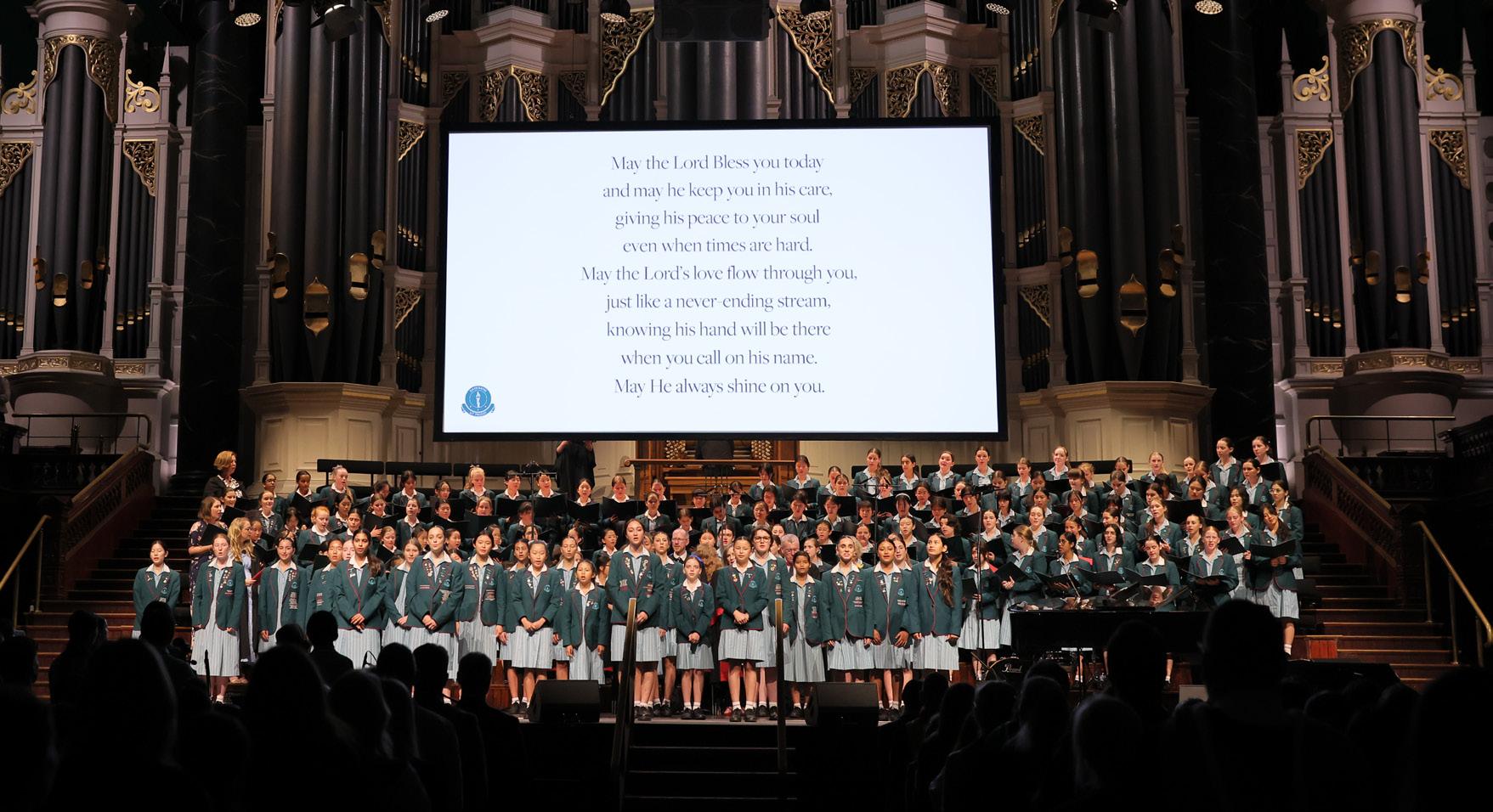
Today, Danebank’s ethos remains true to Miss Roseby Ball’s vision. This is a vibrant, passionate community of learning, where every girl matters and belongs. We’re fiercely proud of our traditional values, yet fully in step with the modern world. Our girls are empowered with faith, compassion and optimism to live out their purpose and become everything they can be. At Danebank, educational opportunities are fused with a unique culture. This is a special place where girls grow and flourish.
Where every girl belongs and every girl is becoming all she is purposed to be.
Serving Christ by equipping students for Christ’s world.
Intent
Grounded in our heritage, we are a futuresfocused Christian learning community. We nurture and inspire girls to flourish through inclusive and powerful educational opportunities.
• Compassionate Service
• Creative Collaboration
• Respectful Relationships
• Courageous Optimism
• Personal Excellence
• Loving Kindness
• Taking Responsibility
Ut Prosim - That I May Serve
Service is an important area of focus for Danebank as we seek to follow the ultimate example of service seen in Jesus. All girls, irrespective of ability, are able to contribute positively to the life of our school by supporting the motto Ut Prosim.
By participating in activities organised by Ut Prosim leaders, House Officials or Student Representative Council and by supporting charities and community service activities, our students demonstrate their personal commitment to service.
Each Danebank girl has the opportunity to become a positive force of change in the world.
Where every girl belongs and every girl is becoming all she is purposed to be. We are a Christian community of learners who nurture and inspire girls to flourish through inclusive and powerful future-focused educational opportunities.
Our students are at the heart of everything we do at Danebank. We aim to ensure each student is equipped with all they need to flourish, both today and into an unknown future. We have developed a bespoke, futures focused and holistic approach to her education, underpinned by the Becoming Framework.
• Voice: Our girls develop their voice to influence, take action, serve and shape the world.
• Faith: Our girls form a connection with Jesus that enables them to experience the fullness of life.
Danebank’s staff is passionate about learning and deeply committed to the wellbeing and growth of each girl.
Our heart to serve and vision to improve, drives our collaboration, innovation and pursuit of the best for ourselves and our community.
As a Christian learning community we are a place of connection and purpose. We focus on creating the optimal conditions of growth within our distinctive culture. Girls are encouraged to identify and develop their strengths, strive for personal excellence and develop a personal commitment to service.
• Identity: Our girls develop confidence in their unique identity and purpose.
• Wellbeing: Our girls graduate with a strong sense of wellbeing, belonging and resilience.
• Capacity to think: Our girls are not only powerful learners, they are able to draw on their knowledge to thrive.

We are a place of belonging. We are a unique Christian learning community; a place of connection and purpose. Our relationships are key to our success.
We are inclusive and work hard to ensure that every individual belongs and that our learning environment supports each girl to thrive in the adventure of becoming.
• Danebank affirms that every individual is created and loved by God and should be afforded respect, justice, dignity, and acceptance as a unique and precious person, made in God’s image.
(Genesis 1:27)
• Danebank celebrates and values diversity and responds to the simple, yet life changing command of Jesus Christ to Love
God and Love each other.
(Mark 12:31)
• Danebank affirms the rights of all members of the school community to be safe, feel safe and have a sense of belonging at school.
• Danebank acknowledges that being safe and supported at school is essential for student wellbeing and effective learning.
• Danebank is committed to a whole school, evidence based approach for a safe and supportive learning community that promotes respectful relationships and wellbeing.
• Danebank is committed to partnering with parents, carers and the wider community to sustain a school where every individual flourishes.

Our approach to learning is holistic and typified by remarkable academic results, as well as the depth of enriched learning and wellbeing programs which develop the broader base of skills, dispositions, habits of mind, values, attitudes and character that students need to flourish. There is a broad suite of learning opportunities at Danebank across a multi-faceted curriculum,
including leadership, humanities, STEM, creativity, languages, the Arts, service learning, outdoor education and extensive co-curricular opportunities.
Danebank staff are passionate about learning and deeply committed to the wellbeing and growth of each girl. Our heart to serve and vision to improve drives our collaboration, innovation and pursuit of the best for ourselves and our community.
As a Christian learning community we are a place of connection and purpose. We focus on creating the optimal conditions of growth within our distinctive culture. Each girl is encouraged to identify and develop her strengths, strive for personal excellence and develop a personal commitment to service.

Interdependence
Danebank students become powerful learners through the Danebank Approach to Learning. This means students understand how they learn and are always working to become better learners.
We do this through the five dimensions of the Danebank Approach to Learning.

Meta learning
Planning
Revising
Distilling

Courageous optimism
Compassionate service
Respectful relationships
Creative collaboration
Taking responsibility
Personal excellence
Loving kindness
Empathy / listening
Collaboration
Imitation

Strengths
Emotional management
Attention and awareness
Relationships
Coping
Habits and goals

Curiosity / wonder
Questioning
Making links
Capitalising
Reasoning
In a rapidly changing, complex and uncertain world, Danebank is a community that prioritises student wellbeing and pastoral care.
“Student safety and wellbeing are enhanced when students feel connected to their school, have positive and respectful relationships with their peers and teachers, feel confident about their social and emotional skills and satisfied with their learning experiences at school.”
(National Safe Schools framework)
For these reasons, Danebank is a Visible WellbeingTM Partner School. Designed by Professor Lea Waters (PhD), world renowned expert in positive psychology, Visible WellbeingTM (VWB) combines the science of wellbeing with the science of learning and teaching to make wellbeing visible in all classes and across cocurricular.
We believe that wellbeing is inextricably linked with learning. When students are flourishing within themselves, they are well positioned to succeed at school, make positive choices, have healthy relationships and stand prepared for the complex challenges of the world that awaits them beyond Danebank.
Student wellbeing and pastoral care is supported by both Connect teachers and Year Coordinators in the Senior School and class teachers in the Junior School. Counsellors, Chaplains, Assistant Heads of Junior and Senior (Wellbeing), Director of Academic Care and Deputy Principal Junior and Senior School are involved in more complex student wellbeing matters as required.
It’s normal to need some help with our wellbeing. It is ok to not always be flourishing. Support is always available for you.
You can:
• Speak to a parent or trusted adult in your life
• Chat with your Class Teacher, Connect teacher or Year Coordinator
• Assistant Heads of Junior and Senior School (Wellbeing)
• Meet with the Junior School or Senior School Chaplain
• You can meet with someone from the counselling team
counsellor.junior@danebank.nsw.edu.au
counsellor.senior@danebank.nsw.edu.au
We also encourage students who may prefer to discreetly reach out to a staff member, to access our Stand Up Speak Out form via idanenet or the Danebank App.
This is where students can share concerns they may have which are followed up by a staff member in the wellbeing team.
• Kids helpline 1800 55 1800 www.kidshelpline.com.au
• Lifeline 13 11 14 www.lifeline.org.au
• Beyond Blue 1300 22 4636 www.beyondblue.org.au
• Headspace www.headspace.org.au
There are also safe adults in my life that I can talk to such as teachers, relatives and friends.

SEARCH Framework: Visible Wellbeing
Strengths
Strengths are my personal characteristics, abilities or qualities that feel natural, enjoyable and energising to me.
I am created by God. I am loved and unique.
I am on a journey, learning who I am and what I can contribute to the world.
I know my best traits and I can enhance my wellbeing by growing what is already good about me.
Using my strengths will help me succeed and overcome challenges.
My strengths allow me to be the best version of myself.
I can notice and name how I am feeling. I can tune in to how others around me might be feeling.
I can reflect on what has caused me to feel a certain way.
I can express and manage my emotions in
healthy and positive ways.
I have some strategies I can use to regulate my emotions such as:
• Praying to God.
• Deep breathing.
• Choosing to focus on gratitude.
• Spending time in nature.
• Reframing negative thoughts.
• Positive self talk.
Attention and awareness
• I can pay attention and focus. When I get distracted, I can bring myself back.
• I can be present and aware of what is going on around me.
• I am tuned into joy and I can savour the good and beautiful moments in my life.
• I can focus my attention in healthy, positive directions.
• Mindfulness is one strategy I can use to help me focus, be present and settle worried thoughts.
• I can be a supportive friend and build healthy, positive relationships.
• I can look for ways to show kindness to others.
• I can strive to be a curious and active listener.
• I know I need trustworthy adults in my life who believe in me and will listen to me.
I can build resilience and grit to bounce back and cope when life gets hard.
I have resources to manage the demands of my life. Such as:
• Asking for help when I need it.
• Knowing what calms me down.
• Knowing how to reframe unhelpful feelings.
• Using my Growth Mindset.
• Handing over my worries and fears to God in prayer.
My life can have a sense of meaning, purpose and direction.
I can set goals and build healthy habits into my life that can help me progress toward my goals. Such as:
• Quality sleep - undisturbed and restorative.
• Exercise - I can regularly move my body in a way that brings me joy.
• I can make wise choices about what I put into my body.
• I can choose a balanced approach to screens.
• I can build my skills in organisation and time management to feel calm and in control.
• I can spend time growing my relationship with God through Bible reading, prayer and reflection.

Danebank is a member of the Anglican Schools Corporation which supports Anglican education and ensures Danebank’s strong financial position.
The School is guided and governed by the School Council with the aim to provide a high standard of education for Danebank students. The members, who are all volunteers, are appointed by the Anglican Schools Corporation (ASC) and come from diverse backgrounds, including education, business, law, engineering and clergy. The Council works to understand the educational environment, setting the strategic direction, guiding leadership appointments and overseeing the management and operation of the school from a governance perspective.
Mr Mark Daly BComm LLM GradDipLegPrac ATIA FFin
Ms Laura Forsyth BComm/LLB GradDipLegPrac
Mr Mark Lewis BSc(Hons) MAppFin
Mrs Lucy Lim BAcc BTh DipMin
Rev Nicholas Moll (On Leave) BBA (OrgPsychBusLaw) BDiv (Hons)
Mr Martin Smith BEc FCA JP
Mrs Toula Saffo BCom, CA, GIAdDipCA BComm

Principal
Dr Michele Benn

Head of Professional Innovation and Practice
Ms Penni Maher

Deputy Principal Junior School
Mrs Melinda Buckley

Head of Business Services
Mr Oskar Pecyna

Deputy Principal Senior School
Mrs Tiina Hufton
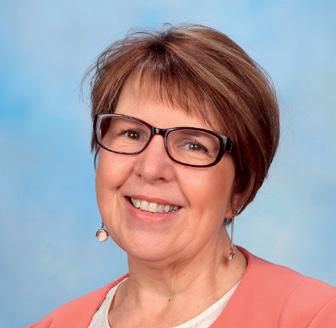
Head of Community Engagement
Mrs Ina Dorfling
Executive Assistant to the Principal / Senior Office Manager (Ex-Officio):
Ms Linda Moss
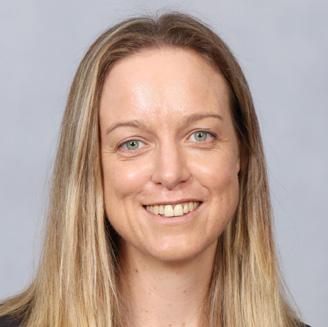
Senior School
Chaplain
Ms Kellie Thomson
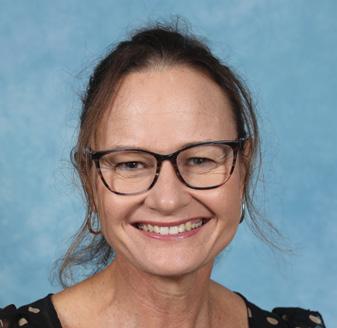
Junior School Chaplain
Mrs Liana Maze

Head of Curriculum Innovation
Ms Kate Nunn

Head of People and Culture
Mrs Nan Herlihen
All Danebank members of staff must fulfil the guidelines of the government’s Working With Children Check (WWCC). We also expect subcontractors who come on campus to provide their WWCC number. Parents who use external tutors are advised to ensure that these tutors have completed a WWCC. In Junior School all parent helpers must have a Volunteer WWCC. The number needs to be given to the school office before parents can work with students.
More Information at: ocg.nsw.gov.au/workingchildren-check
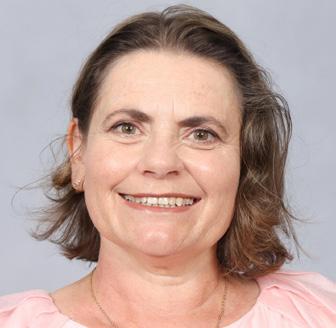
Director of Teacher Practice P–12
Ms Emma Pay

Acting Assistant Head of Senior School (Learning)
Mrs Cassie Griffiths

Director of Academic Care
Mrs Louisa Macdonald
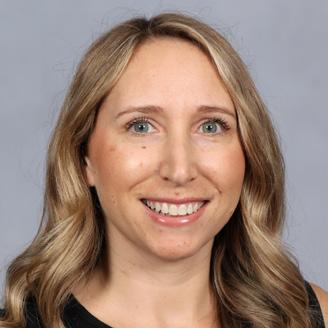
Acting Director of Teacher Practice P-12
Mrs Jaimey Thomas
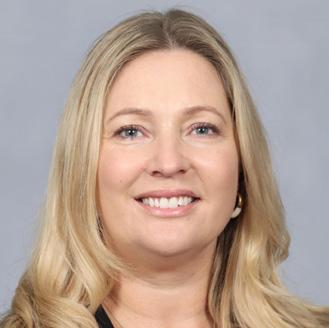
Assistant Head of Junior School (Wellbeing)
Mrs Kate Fraser

Coordinator of Strategic Projects (Student Learning)
Mr Lee Malin
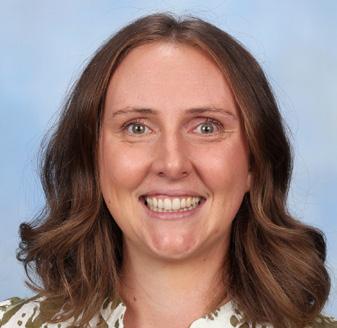
Acting Assistant Head of Senior School (Wellbeing)
Mrs Alexandra Coulton
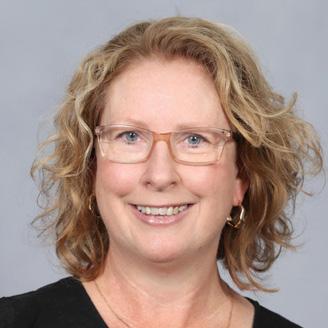
Assistant Head of Junior School (Operations & Learning)
Mrs Deborah Uebel
Coordinator of Strategic Projects (Digital Learning)
Mrs Corrie Bourke
Early Stage 1 Coordinator
Mrs Belinda Bartels
Stage 1 Coordinator
Ms Lenyia Andrews

Stage 2 Coordinator
Mrs Lena Cooper

Assistant Head of Senior School (Operations)
Mrs Anastasia Rompies
Director of Co-curricular Performing Arts P–12
Ms Emily Maguire

Director of Counselling and Psychological Services P-12
Ms Marissa Hanslow
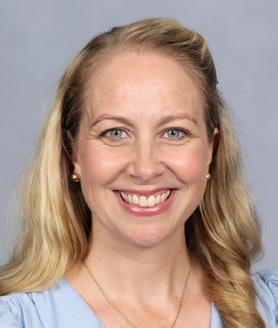
Stage 3 Coordinator
Mrs Melanie Stewart

Stage 3 Coordinator
Mrs Fiona Vula
Responsible for matters concerning their subject area. Contact them regarding curriculum issues.

Christian Studies
Miss Kirrily Foley

HSIE
Ms Aneeta Hantes
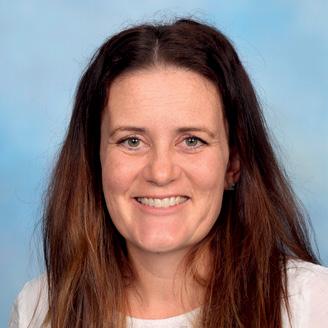
Head of Science
Ms Nikki Martel
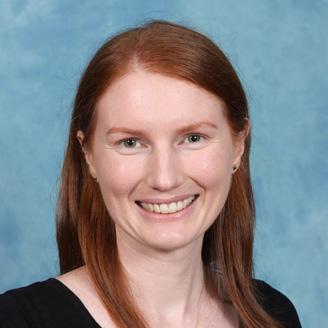
VET
Miss Karla Wootton

Languages Ms Josephine Schreuder

TAS (Acting Head)
Miss Karla Wootton
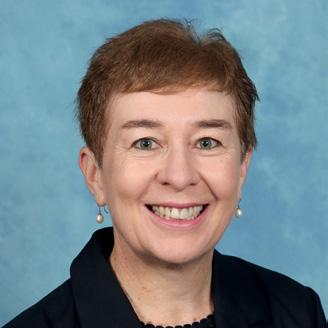
Information Resources
Ms Julia Martin

Creative and Performing Arts
Mrs Philomena Kezelos
Mathematics
Ms Grace Mandile

Learning Enrichment (7-12)
Mrs Michelle Ball
English (Acting Head)
Mrs Ashleigh Driscoll

Personal Development/ Health/Physical
Education
Mr Lee Malin
Responsible for matters concerning the year group and are the first point of contact for student wellbeing issues.

Year 7
Year Coordinator
Mrs Belinda Merrick
Year 7
Year Coordinator
Ms Kathy Cordes

Year 9
Year Coordinator
Mrs Rosaline Lynch

Year 9
Year Coordinator
Ms Karlie Cunningham

Year 11
Year Coordinator
Mrs Lisa Money

Year 11
Assistant Year Coordinator
Mrs Kate Hoare

Year 8
Year Coordinator
Mrs Sarah Wallekers

Year 8
Year Coordinator
Ms Michelle Lui
Year 10
Year Coordinator
Miss Katherine Saville
Year 10
Year Coordinator
Mrs Joanna Souroullas
Year 12
Year Coordinator
Dr Keryn Lucas

Year 12
Assistant Year Coordinator
Mrs Anastasia Rompies
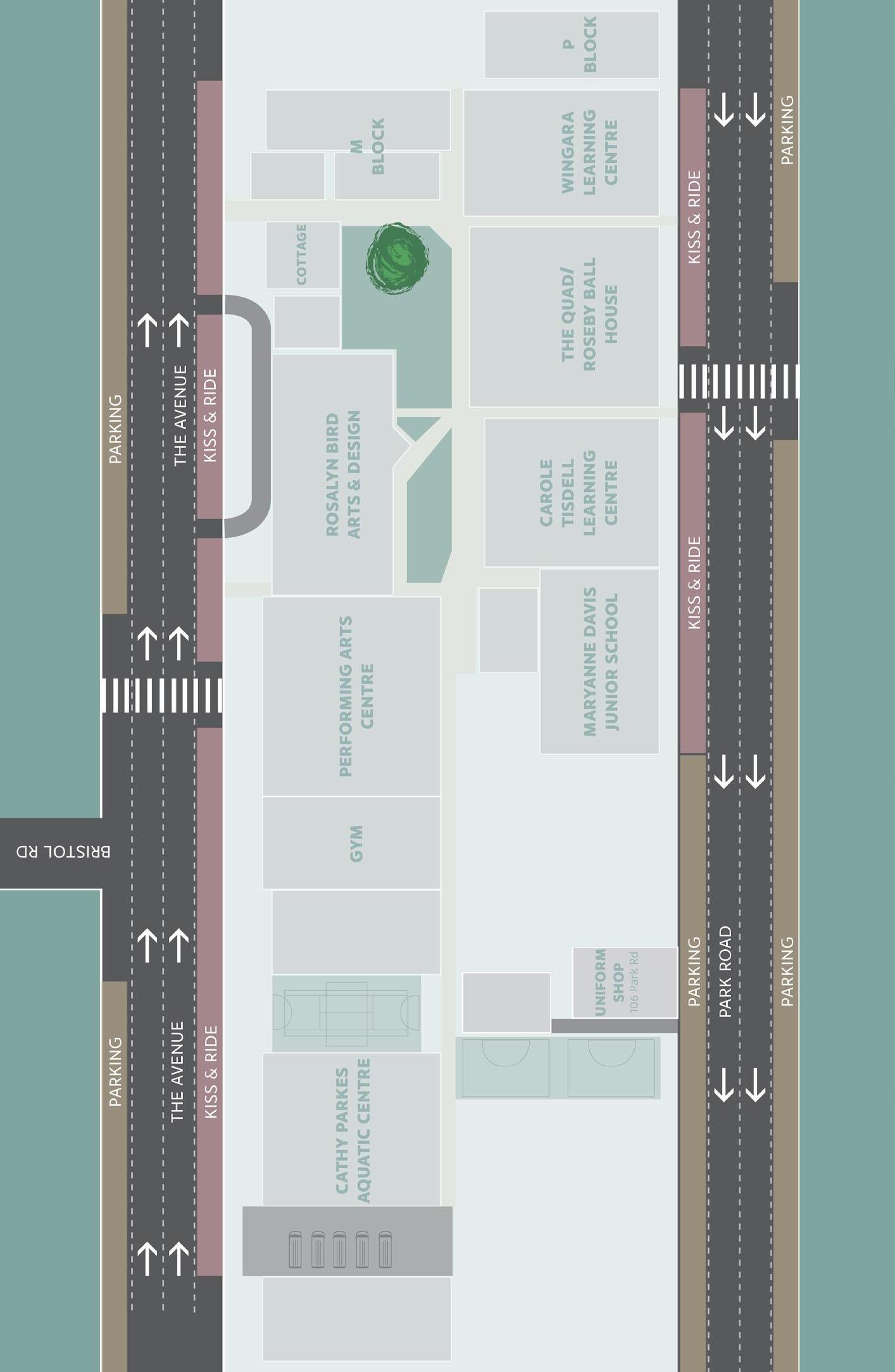
Campus map
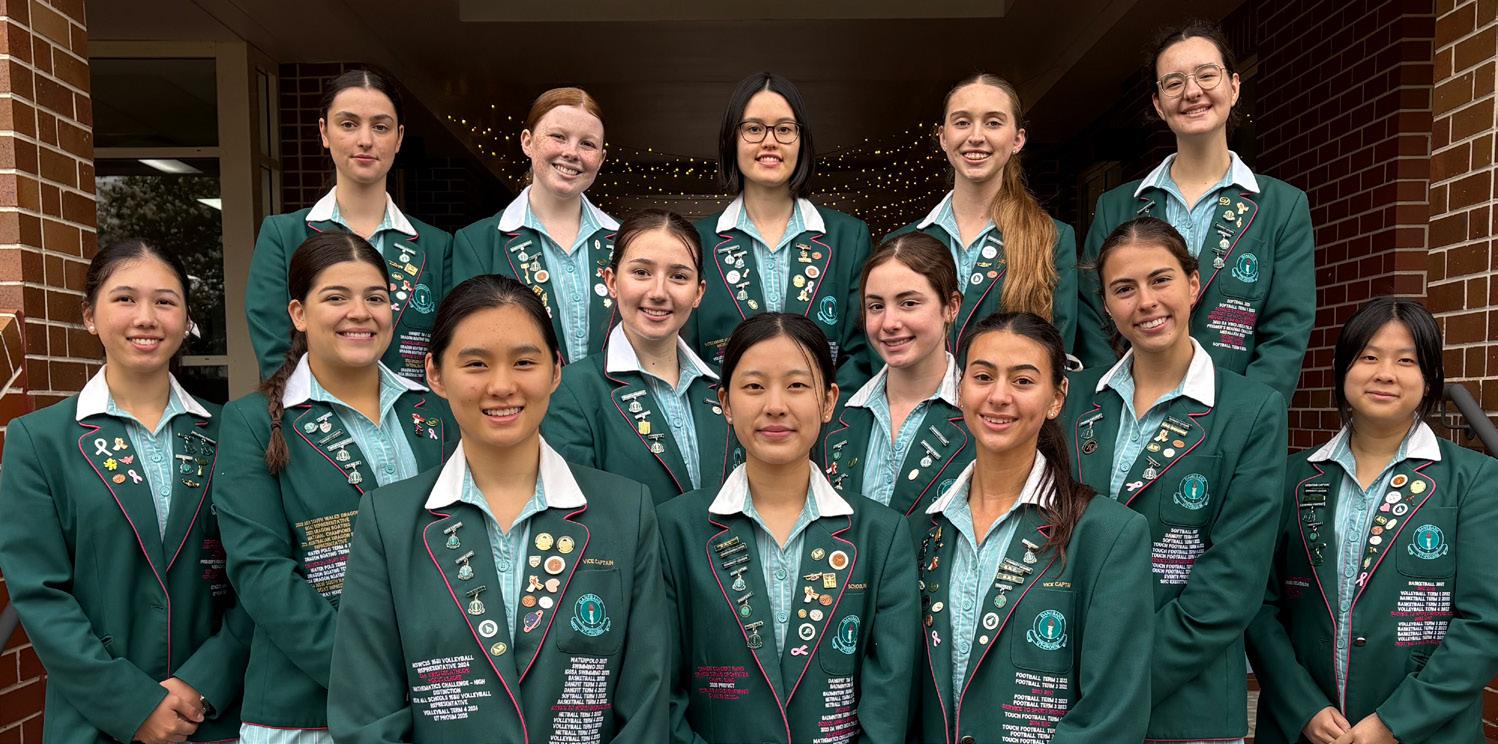
School Captain Angela Wong
Vice Captain Marie Grillas
Vice Captain Sidney Ma
Christian Leadership Clara Birrell
Christian Leadership Abigail Farah
Events Natasha Ryan
Junior School Hannah Dolan-Brown
Learning Yeisha Goh
Performing Arts Antonia Baliva
Senior School Emma Kelly
Sport Kate Grimison
Sport Eve Koutros
Ut Prosim
Sasha Campbell
Wellbeing Olivia Clonaris
prefects@students.danebank.nsw.edu.au
Prefects are elected representatives of Danebank School. They have responsibilities for building community and leading the students of the Senior School.
At Danebank, Year 11 students are selected to be Connect Leaders, mentoring students in Years 7 to 10.
The student body of each House elects four Year 11 House Officials each year. They are responsible for the organisation and implementation of the Inter-House Competition and the Term 3 House Festival Day. They also oversee House Spirit at carnivals. They report to the House Patrons.
This leadership group assists the Ut Prosim Facilitator. They work together to promote and assist with areas of service and help raise awareness of social justice issues within and outside of the school. They also select the school charities for the year and do a significant amount of the fundraising in the school.
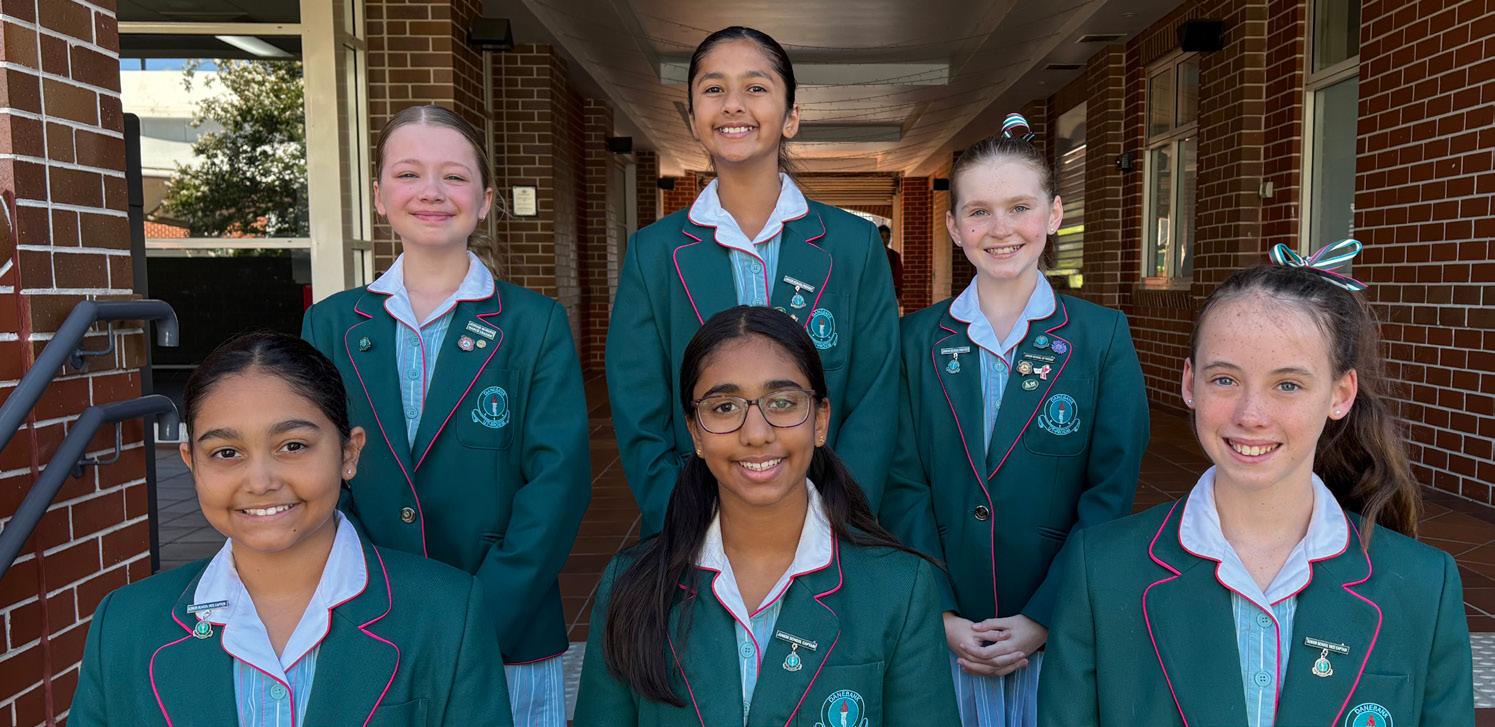
Captain Ishara Ranjan
Vice Captain Olivia Gordon
Vice Captain Anna Sungaran
Prefect Evie Hill
Prefect Ellarose Morris
Prefect Anaya Narayan
Other Junior leadership opportunities include:
• House Officials
• Co-curricular leaders: Choir, Band, Strings, Dance, Debating
• Monitors
• Ut Prosim leaders: Totally God, Go Fish
• Student Representative Council (SRC) and President
• Kindergarten Buddies
Extend is the Before School Care and After School Care service provided to our Danebank families. Extend supports your family with flexible, easy booking options to suit different family requirements. You must enrol to attend the services.
• Enrolments and bookings can be made at: extend.com.au/school/danebank-anglican-girls-school/
• Before School Care: 7:30am – 8:10am
• After School Care: 3:15pm – 6:00pm
• Extend Guide for Families: extend.com.au/families/before-and-after-school-care/
• Contact: 1300 366 437
• Email: support@extend.com.au
In addition to teachers, there are many people to assist and guide our girls throughout their schooling.
Deputy Principal Junior School
Assistant Head Junior School (Wellbeing)
Junior School Counselling
Deputy Principal Senior School
Acting Assistant Head of Senior School (Wellbeing)
Director of Academic Care
Senior School Counselling
Mrs Melinda Buckley
Mrs Kate Fraser
Ms Marissa Hanslow
Ms Denise Poulos
Mr Christos Tatsis
Mrs Tiina Hufton
Mrs Alexandra Coulton
Mrs Louisa Macdonald
Ms Marissa Hanslow
Mrs Kate Middleton (Terms 3 and 4)
Mrs Rebecca Naoum
Mr Christos Tatsis
• Each student belongs to a Connect class for her duration at Danebank.
• Connect classes aim to build connections between students, families and teachers.
Senior School Connect Teachers
• Connect teachers act as a communication link between home and relevant situations likely to affect a student’s life at school.
• Connect teachers guide parents as to who can assist best with concerns regarding their daughter.
Students in Years 7 to 12 are engaged in a Student Care model where each student is in a small Connect class, with her Connect teacher being her first point of contact. The role of the Connect teacher is as a significant adult in the life of a student. Research shows positive relationships with significant adults, who know and care for their students, add a protective factor to the wellbeing of students.
Connect teachers work to build positive relationships with each of their students and their families, supporting the delivery of wellbeing education to students. Each student will belong to a Connect class for the duration of her time at Danebank. Families will be able to meet their daughter’s Connect teacher in Term 1 at a special evening.
The Connect teacher will:
• Encourage students to live out the School’s values.
• Oversee uniform and attendance.
• Monitor student wellbeing through weekly contact and Check-In Chats each semester.
• Provide a first point of contact for families regarding any information they believe the school should be aware of, or minor concerns.
• Guide parents as to who can best assist with concerns regarding their daughter.
• Refer any significant matters to the Year Coordinator, class teacher, Head of Department, Assistant Head of Senior School (Wellbeing) or Director of Academic Care.
• Your daughter is also supported by their Year Coordinator. The Year Coordinator collaborates with academic and wellbeing staff to support your daughter’s academic, social and emotional wellbeing.
Building the whole person plays a significant part in how we help girls grow into caring individuals. Service Learning is one way they are involved in following our motto Ut Prosim, That I May Serve. Years 7 through 10 engage in dedicated Ut Prosim (That I May Serve) Service Learning Days during Term 2. These days are designed to integrate community service with creative collaboration and entrepreneurship.
• Charity Selection & Research: Each Connect group begins by researching and learning about the school's selected charities, which are chosen annually by the students themselves.
• Collaborative Design: Connect groups collaboratively design and execute creative fundraising activities to raise money for their selected charity. This phase fosters:
• Creative Collaboration: Students work together to develop innovative solutions.
• Entrepreneurial Skills: Planning, marketing, logistics, and resource management.
• Connection and Engagement: These days promote strong connection between students, provide a fun and memorable
experience, and allow students to see the tangible impact of their efforts on the wider community.
The Ut Prosim Day is a core component of the Danebank service learning curriculum, embodying our commitment to developing compassionate, engaged, and responsible community minded citizens.
Year 9 embraces those who are older by participating in a Christmas Concert for around 220 aged care residents. Year 8 makes Christmas cards for each resident. Year 9 also assists with the Roseby Class Dance which is organised by Ms Bianca Jervis for students from a number of schools.
Year 10 has a service learning day where students either support Anglicare’s Toys and Tucker Christmas Appeal or participate in Compassion's ‘Village Program'. Both experiences provide meaningful training in service, as well as provide real life opportunities to serve those outside of our community.
Year 11 serves the younger years through their leadership of Connect Groups. They also lead the Houses as well as the Ut Prosim leadership group. Year 11 Prefects have the opportunity to serve the school through their leadership.
As a Christian school in the Anglican tradition, we see coming together to learn from God’s Word, the Bible, and to pray and praise Him in song as an important and vital part of each week. We also commence and conclude each term with Chapel services. During term time, Chapel is held on Mondays. Students assist with aspects of this service, including reading the Bible, praying and leading the Chapel music.
Christian lunchtime groups run each week for students in Kindy to Year 2 (Go Fish), Years 3-6 (Totally God), Years 7-10 (Focus) and Years 11-12 (SIC - Sisters in Christ). These groups are student led (with the support of the Christian studies staff and other teachers) and involve games, music, discussions about the Bible, prayer and often yummy treats. Our Christian Lunchtime Groups are a great place for students to form friendships across different years and all students are welcome to attend.
FOCUS Years 7 - 10
SIC: Sisters in Christ Years 11 - 12
Parents should access Danebank’s online calendar regularly throughout the year to check event dates and information. The calendar can be accessed through iDanenet or the Danebank School App. It has extensive information including venues and starting times, term dates, assessments and excursions.
Student diaries are issued at the beginning of the year to all students from Years 3 to 12. The front section of the student diary contains important information relevant to students. Parents are requested to read this with their daughters and sign the parent/carer/student permissions page, acknowledging they and their daughters have read this section. Relevant school policies are also published in the diary and on the School’s iDanenet site.
Parents will be contacted by phone in the event of an emergency. SMS messages and emails may be sent as friendly reminders about events, important information about changes to sporting arrangements, as well as links to the fortnightly school newsletter. A notification about the publication of the newsletter is also posted on the Danebank School App.
We are unable to give students messages during the school day, unless they are extremely important. Messages must be from parents or carers and be directed through the School Office.
For general enquiries and notification of student absence, please contact: juniorschool@danebank.nsw.edu.au Emails will be opened by office staff and forwarded to the relevant teacher. This email address should be used for non-urgent matters. Any urgent matters should be phoned through to the Junior School Office (9580 9242).
Parents will receive a direct email address for their daughter’s class teacher. Parents may email their daughter’s class teacher directly if they have concerns about their daughter’s learning and/or wellbeing. Please note that teachers only check emails periodically throughout the day. They spend most of their time teaching and supervising students and are sometimes off site at Professional Learning courses or other duties. They will endeavour to reply as quickly as possible, however, please allow up to two school days.
A student’s Connect teacher provides a first point of contact for families regarding any information they believe the school should be aware of and will refer any significant concerns to the relevant staff member. Families will receive a welcome email from their daughter’s Connect teacher at the beginning of the year. Please note that teachers only check emails periodically throughout the day. They spend most of their time teaching and supervising students and are sometimes off site at Professional Learning courses or other duties. They will endeavour to reply as quickly as possible, however, please allow up to two school days.
Students are not allowed to email parents on their devices throughout the day, nor should parents email their children directly. If an emergency arises parents can leave messages for their daughters at Junior or Senior School reception but should not contact their daughters directly during school hours. If any significant issues arise throughout the day, parents will be contacted by the School.
Email and online interactions, whether via email, public social media such as Facebook and Instagram, or in private apps such as WhatsApp, should be respectful and not invasive of anyone’s privacy. Be mindful of the content of discussions and posts, avoiding sensitive and confidential topics. This would also include, but is not be limited to, tagging/ identifying someone or posting photographs featuring someone else’s child wearing a Danebank uniform. Parents should raise any concerns with the appropriate staff member, the Deputy Principal Junior or Senior School, or the Principal.
When writing an email please refer to our Parent Code of Conduct Policy & Guidelines
Many other updates can be viewed by parents and students via:
• Email Letters from the Principal: Important updates and information are regularly communicated to parents.
• Newsletter: A link to the Danebank News is emailed to parents and senior students during term time. This is a vital means of communication containing important updates and reports.
• Facebook: www.facebook.com/ DanebankSchool
• Instagram: www.instagram.com/danebank
• LinkedIn: www.linkedin.com/school/ danebank-anglican-school-for-girls/
• Website: www.danebank.nsw.edu.au
• Danebank App: Once downloaded, open and sign in, using your Danebank Edumate login.
• Seesaw: Junior School Class Communication
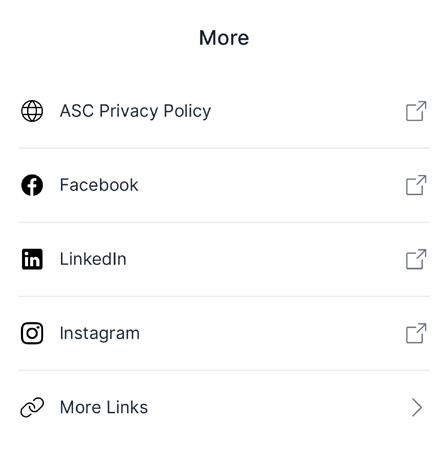
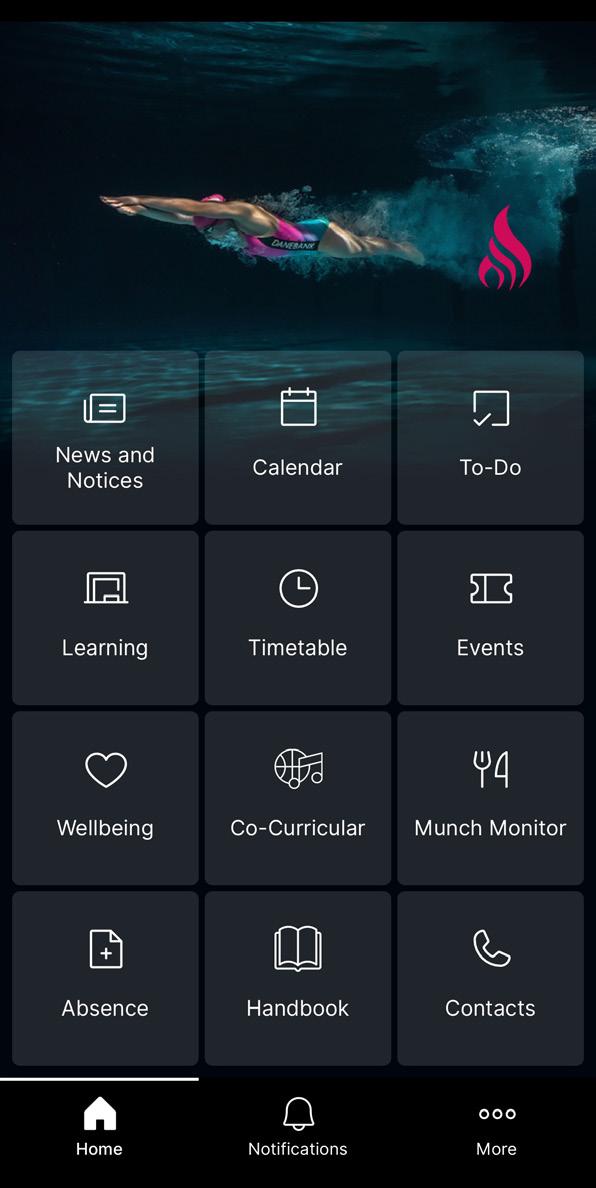
The Danebank App is our school’s primary tool for parents to access important school information. Once downloaded, open and sign in, using your Danebank Edumate login.
A series of home screen tiles on the App allow for quick access to many popular areas and the ‘More’ link at the bottom right will take you through to further information and portals.
We ask that parents continue to review and keep their details in the Edumate Parent Portal up-to-date, especially before the start of each school year. Accurate information is essential to ensure the school can contact parents quickly in any emergency situation. Parents will be issued with a username and password to access the Edumate Parent Portal. This portal gives access to information such as parent and student contact details, medical details, absence and attendance details, academic results and feedback.
Parents are asked to manage the family’s personal details and maintain updated contact information. It is vital that all changes be entered on the portal so that parents can be contacted in emergencies. idanenet.danebank.nsw.edu.au
The Danebank App is our school’s primary tool for parents to access important school information. Once downloaded, open and sign in, using your Danebank Edumate login.
The Debtor Portal is a valuable online tool designed to help families manage their school fee accounts efficiently. This portal allows you to pay fees, check balances and set up payment plans across the year. School fees will be emailed to the parents’ email addresses on file, so please ensure these are kept up-to-date. Please be advised that while the portal is accessible for viewing balances on most devices, the functionality for making payments or setting up new payment plans is currently only compatible with Laptop and Desktop computers. Unfortunately, payments cannot be processed via mobile phones or tablets at this stage. We apologise for any inconvenience this may cause and appreciate your understanding.
The Parents are to pay all Fees and Charges in advance. Payment may be made using a Corporation-approved payment method and paid either at the end of the first week of each term (where no direct debit arrangement is in place), or via a Corporation-approved direct debit arrangement, other than Fees and Charges on amended invoices raised for midterm enrolments, which the Parents are to pay
within seven days from the date of the invoice. If the Parents fail to pay an invoice for Fees and Charges within 21 days of the due date, they will be liable to pay an overdue charge which reflects (among other things) the administrative and financial cost of collecting the outstanding Fees and Charges. The Parents may enquire as to the current amount of the overdue charge at the Group Office of the Corporation.
There are several Corporation-approved payment methods available for Fees and Charges, which include:
1. Bpay®
2. Online: Log into the Parent Portal www.edumate.danebank.nsw.edu.au to pay by credit card or bank account. (Visa, Mastercard or American Express are accepted with a 0.9% surcharge on all transactions.)
3. Direct Debit arrangement, which can be set up by logging into the Parent Portal www.edumate.danebank.nsw.edu.au
This arrangement will automatically debit amounts on an agreed schedule from your nominated bank account or credit card, such that full payment is made by the end of November in each calendar year. (Visa, Mastercard or American Express are accepted with a 0.9% surcharge on all transactions.)
4. The entire year’s Fees and Charges may also be paid at the commencement of the year.
Notes
The Schedule of Fees and Charges is set each year by the School Council as part of the annual budgetary process. The Council reserves the right to vary these at any time by written advice.
The Charges covers student resources, subscriptions, activities, excursions and sport which support and enhance the learning of each student as determined by the School. Application and Acceptance Fees will not be treated as credits towards your Fees account. Please note that the Parent Portal payment facility requires the use of a laptop or desktop computer. At this time, the platform does not support transactions made via mobile telephones or tablets.
The Parents are to give at least one full term’s notice in writing to the Principal before terminating the Student’s enrolment. The notice must be given no later than the day before the first day of student attendance of the last term of enrolment. If the Parents do not give one full term’s notice of termination of the Student’s enrolment, and the School is not reasonably able to immediately fill that place for that term, the Parents must pay a School term’s Fees and Charges in lieu of notice.
School Bus
Transport of students to and from their homes to the School can be arranged in many areas. Charges and conditions are available on application to the School office.
Private Tuition
A range of private tuition programs are available at Danebank for additional cost. Details of the activities available and prices can be found on the Co-curricular Performing Arts and Sport Portals.
Other Voluntary Activities
Activities such as Duke of Edinburgh, overseas trips and other specialty matters may also be included with your Fees each term. Parents will have already been given an indication of costs prior to being billed.
Danebank School Building Fund
ABN 63 544 529 806
The Building Fund assists financially with acquiring, constructing and maintaining school buildings. The future development of the School is supported by the Building Fund. Voluntary donations to the Building Fund may be tax deductible for amounts of $2 or more. An amount of $100 per term is the suggested contribution from each family. Receipts for tax purposes will be provided after 30 June and year.
School Hours

Junior School Office Hours: 8am to 4pm
Supervision is provided for Kindergarten to Year 6 students
Monday to Friday 8:10am – 8:50am
Monday to Thursday 3:15pm – 3:45pm
Friday 2:45pm – 3:15pm

Monday to Thursday 9:00am – 3:00pm
Friday 9:00am – 2:45pm
Monday to Thursday 8:50am – 3:15pm
Friday 8:50am – 2:45pm
Senior School Office Hours: 8am to 4pm Monday to Friday 8am – 3pm Off-timetable subjects 7:15am to 5:00pm
There are some accelerated classes that run off the timetable; either before or after the regular timetable. Some subjects run as a double period after school.
Our School runs and facilitates a large number of events throughout the year and it is essential that your daughter attends. It is one of the ways that we build community and that our girls gain a sense of belonging.
Compulsory attendance for ALL students:
• Founder’s Day
• Chapel Services
• Assemblies
• Swimming Carnivals
• School Photo Day
• School Cross Country
• School Camps
• Senior School House Festival Day
• Athletics Carnivals
• Autumn Fair and Open Day
• Special Assembly
• Carols Service
• Speech Night
• Subject-specific Excursions/Incursions
Some other School events:
• Parent/Teacher/Student Learning Conferences
• School Open Mornings (held each term)
• Harmony Day
• School Socials
• Book Week events
• Music Showcase Evening
• HSC CAPA & TAS Showcase
• Extension and Society & Culture HSC Showcase
• Drama Productions and Musicals
• Picnic Day
• School Concerts
• Old Girls Association Reunions
• Mother’s and Father’s Day events
• House Charity Days

Friday 23 January 2026
• Senior School students: 8:45am - 11:00am
• Year 7 students: 8:45am - 2:45pm
This day is for all students in Year 7 as well as students new to Danebank in other senior year groups. On this day, there are not many other students on campus, making it a great time for new students to familiarise themselves with the school surroundings, meet some of their teachers and Year 11 Leaders.
• What to wear: Students should come in summer uniform (no blazer).
• What to bring: Bring recess, lunch, drink and your BYO device which will be set up on the day with help from the IT staff.
The Danebank House system allows girls to develop a sense of school spirit and contribute positively to the school, in academic work, in sporting and extra curricular activities. The Houses: Ball, Cowell, Gray and Richmond, are named after people of significance in Danebank’s history. The House Festival, held in Term 3 (Senior School), is a special celebration and a highlight of the year for students as they participate in a range of activities on the day.
Watermelon: The girls have chosen the watermelon as a symbol of the school and as a mascot. The watermelon colour reflects the school colours. Our Danebank mascot attends sporting competitions and is a great reflection of school spirit.
BALL HOUSE
Named after Miss Roseby Ball, the founding Head of the school. The emblem is the torch, coloured blue and white, representing the lighted flame. The symbol of the torch is also found on the school badge.
COWELL HOUSE
Named after Mrs Joyce C. Cowell, a former Headmistress. The emblem features “the three legs of Mann”. The design, coloured in brown and orange, was based on the national emblem of the Isle of Mann.
Junior School House Officials: Elke Rosenthal and Ivy Howell
Senior School House Officials: Ava Afonso (C), Alexia Kotevich, Elise Brealey, Gabriella Fin
GRAY HOUSE
Named after the Reverend R. Gray, a former School Chaplain. The emblem features aboriginal motifs in the form of a turtle and a boomerang and is coloured grey and red.
Junior School House Officials: Emma Ong and Portia Rizzo
Senior School House Officials: Jasmine Mostapha (C), Melissa Attwells, Tahira Amine, Christine Poulos
RICHMOND HOUSE
Named after the Reverend G. Richmond who was Danebank’s first School Chaplain. The emblem is a striped shield which is coloured green and gold.
Junior School House Officials: Elise Bosco and Emily Shi
Senior School House Official: Scarlett Burgess (C), Sienna Fisher, Alessandra Giompaolo-Ferguson, Amanda Dapas, Luella Lekias (House Assistant)
Junior School House Officials: Lois Hopwood and Bronte Milnes
Senior School House Officials: Allegra Care (C), Maya Hyasatt, Noelle Ibrahim, Zoe White
The Senior School timetable is made up of a 10day fortnight, with Week A and Week B. Each day is divided into six lessons of 50 minutes each. Bells signify lesson changes, recess and lunch breaks.
Note: Some classes may run off-line (outside of the timetable).

Period Monday - Friday
You will receive a copy of a weekly planner that clearly shows the days the girls need to wear sports uniform, or have specialist lessons that require items such as a Library bag to be brought to school.

The School Student Transport Scheme (SSTS) gives eligible students free or concession travel between home and school on public transport.
Preschool children and students who live too close to the school are ineligible. Who needs to apply?
Students who:
• Have not had a School Opal card before
• Have changed address or school
Each Senior School student is allocated a locker and a lock for the safekeeping of their personal possessions. Students should ensure that their lockers are securely locked at all times.

To apply for a School Opal Card, go to:
transportnsw.info/tickets-opal/ticketeligibility-concessions/school-student-travel
The School Opal Card will then be sent directly to the student’s nominated address.
Enquiries 131 500
Senior students will need to have their own separate Child/Youth Opal card for excursions. These can be purchased at a train station or applied for online. Please arrange for a regular top up of this card to ensure that your daughter is prepared for activities as they arise.
There are two different Opal cards that impact school age students:
1. School Opal card: For transport directly to and from school only.
2. Child/Youth Opal card: For transport to and from other venues (for senior students to use for excursions).
If there are shared custody arrangements in place, two applications need to be made, one for each eligible address.


If you lose your card or it is damaged, report it online and order a replacement School Opal card. A fee may apply. By doing this, the old School Opal card will be cancelled and a new one will be mailed to the student’s eligible address within 5-7 days. While waiting for a replacement card, you should use a Child/ Youth Opal card to travel
apps.transport.nsw.gov.au/ssts/reportPass
Parents, carers and students won’t need to reapply every year as long as they remain eligible.
Available to students 16 years and older. These cards are ordered by the school at the end of the year. They entitle students to travel on public transport at concession rates.
The Positive Behaviour Code and Policy (hereafter called the Positive Behaviour Code) applies to all Danebank students, always, including within classrooms, playground, Chapel, assembly, Library, co-curricular activities, excursions, sport, camps, travel and any other Danebank-related activity.
The Danebank values are the guiding principles that underpin the Positive Behaviour Code. These values are:
• Compassionate Service
• Creative Collaboration
• Respectful Relationships
• Courageous Optimism
• Personal Excellence
• Loving Kindness
• Taking Responsibility
Danebank aims to provide an engaged learning community in which students acknowledge their responsibility to manage their behaviour while respecting the rights of others to teach and learn within a safe and supportive environment.
The School strives to work in partnership with parents and carers, balancing disciplinary consequences and educative responses to issues of student behaviour.
Danebank recognises its responsibilities in relation to the Children and Young Persons (Care and Protection) Act 1998. In particular, the School’s approach, outlined in this policy, explicitly excludes and prohibits the use of corporal punishment in disciplining students.
All Danebank staff, students and parents are required to commit to upholding the Positive Behaviour Code.
The Danebank Positive Behaviour Code defines how we live within the Danebank community and how we interact with others.
All staff support positive student behaviour with a wide range of preventative and strengthsbased strategies, cultivating classroom climates
that encourage positive social relationships and are conducive to learning.
We take time to acknowledge and encourage instances of positive behaviour through acts of recognition and affirmation. Sometimes students may not adhere to the Danebank Positive Behaviour Code for a variety of reasons. In such instances responsive action may be taken.
This action will be underpinned by appropriate disciplinary consequences, educative responses and restorative practice. Restorative practice seeks to repair relationships that have been damaged, in partnership with the students involved. Through a set of reflective practices, the students are guided towards empathy, remorse, restorative action and forgiveness.
Danebank students:
• Show respect for themself, others, property and the Danebank community through their words and actions.
• Respect diversity and demonstrate understanding, equality, inclusion and tolerance to one another regardless of nationality, religion, beliefs, socio-economic status, gender, disability, age or sexuality.
• Maintain an open-minded attitude to Christianity and respect the Christian basis of the School.
• Are considerate, kind, caring, inclusive and compassionate in their interactions with peers and staff.
• Interact with each other in an appropriate and respectful way that does not exclude others.
Danebank students:
• Are honest and take responsibility for their actions, attitudes and behaviours.
• Are polite, prepared, punctual and engaged in school activities.
• Are learners who are courageous in embracing mistakes and learning from them.
• Strive for personal excellence.
• Actively contribute to the positive representation of the Danebank community by wearing their uniform with pride.
Danebank School Rules and Expectations are published annually in Student Diaries and provide specific information about what is considered inappropriate or unacceptable behaviour.
These rules and expectations are based on the following foundations:
• Supportive learning environments
• Respectful relationships
• Taking responsibility
• General health and safety of students
As outlined in Danebank’s Conditions of Enrolment, it is a requirement that all students abide by the School’s standards of behaviour.
At Danebank, bullying is taken seriously and is unacceptable in any form. It is essential that bullying behaviour or suspected bullying behaviour be reported to eliminate its presence at Danebank.
Any student who has been bullied or has witnessed bullying behaviour as a bystander, should report the incident to a trusted adult in the School community such as:
• Class / Connect teachers
• Stage / Year Coordinator
• Assistant Head of Junior / Senior School
• Deputy Principal Junior / Senior School
• School Counsellor
The incident will be investigated.
Parents / Carers are encouraged to contact the Year / Stage Coordinator or Deputy Principal Junior or Senior School or a trusted adult at the School, if they suspect any bullying behaviour.
Danebank subscribes to the National Definition of Bullying in schools:
• Bullying is an ongoing and deliberate misuse of power in relationships through
repeated verbal, physical and/or social behaviour that intends to cause harm.
• Bullying can happen in person or online and it can be obvious (overt) or hidden (covert). Bullying of any form can have immediate, medium and long-term effects on those involved, including bystanders. A bystander is someone who either witnesses or knows about bullying behaviour that is occurring.
• Single incidents and conflict/fights between equals, whether in-person or online, are not defined as bullying.
• Such incidents are still unacceptable and taken seriously in line with our Positive Behaviour Code.
If any bullying-type behaviours occur only once, or are part of a conflict between equals (no matter how inappropriate) this is not bullying. These behaviours alone don’t define bullying. Any harassment, intimidation or bullying concerns are addressed in accordance with Danebank‘s No Place for Bullying Policy and Guidelines.
Danebank acknowledges and applies the fundamental principles of procedural fairness and unbiased decision making when considering and applying consequences and disciplinary measures. All staff support positive student behaviour with a wide range of preventative and strengths-based strategies, cultivating classroom climates that encourage positive social relationships and are conducive to learning.
Effective and appropriate responses by the School to behavioural and disciplinary matters support the maintenance of a positive and productive learning environment for all students.
The Danebank School Behaviour Management Procedures Flow-Chart (Senior School and Junior School) outlines our approach to behaviour management, including the operating structures and steps in place to support all students to adhere to the Positive Behaviour Code.
When there is a breach or consistent breach of the Positive Behaviour Code, the steps outlined in the Danebank School Behaviour Management Procedures Flow-chart will be followed.
Please note:
As outlined in the Conditions of Enrolment, the School reserves the absolute right to proceed directly to suspension, probation or expulsion, depending on the severity of the circumstances and an individual student’s record, with due regard to procedural fairness as outlined in this policy.
When the Positive Behaviour Code is breached, Danebank is committed to:
• Developing a student’s understanding that there are consequences for actions.
• Developing a student’s understanding of the importance of taking responsibility for their actions.
• Providing the opportunity for students to make amends using restorative practice.
• Supporting students to make better choices in the future.
All consequences are subject to the determination of the Principal.
The consequences below may result from breaches of the Positive Behaviour Code. Each student and case is unique and will be handled with care, wisdom and consideration for the context and individuals involved.
Where possible, the consequence will focus on the student making amends and making better choices moving forward without condemnation. The nature of the misdemeanour will determine how the consequence is served. A reparation may be issued and this means that a student has an opportunity to repair what has been fractured within the School community.
Lunch Time Reparation (First half of lunch)
Reasons could include:
• Student not complying with the Positive Behaviour Code and Policy, expected behaviour for the classroom, playground, other school activities or at Assemblies, and Chapel or other events that may affect the School community
• Uniform: two infringements issued in a term
• Cardigan / jersey as the outer garment, outside the school grounds
• Misuse of technology: two infringements issued in a term
• Mobile phone sighted: two infringements issued in a term
• Lateness to school: three times per term without parental explanation
• Fractional truancy from school
• Loitering in bathrooms/change rooms or deliberately not being in the right place
• Chewing gum
• Mean behaviour
After School Reparation (45 minutes: 3.00pm to 3.45pm)
Reasons could include:
• Repeated non-compliance with the Positive Behaviour Code in the classroom or playground, other school activities or at Assemblies, and Chapel or other events that may affect the School community
• Non-compliance with the Positive Behaviour Code in travelling to and from school
• Non-compliance with the Positive Behaviour Code or Acceptable Use of Technology policies (including misuse of social media)
• Harassment and/or mean behaviour
• Verbal abuse towards other students or staff
• Misuse of technology (three or more infringements issued in a term)
• Mobile phone sighted (three infringements issued in a term)
• Persistent uniform infringements (three or more issued in a term)
• Damage/vandalism to school and/or
personal property
• Persistent lateness
• Instances of stealing
• Truancy from school
• Forgery
• Failure to report for a lunchtime reparation Suspension (in-school and/or out-of-school)
Reasons could include:
• Ongoing non-compliance with the Positive Behaviour Code or other school policies such as No Place for Bullying, Uniform and Acceptable Use of Technology
• Persistent truancy from school
• Fighting or physical abuse
• Significant/serious instance of stealing
• Significant damage/vandalism to school and/or personal property
• Persistent or significant verbal abuse towards other students or staff
• Serious misbehaviour in the classroom, playground, public or during any other school related activity
• Smoking, including e-cigarettes and vaping in any form, when in uniform or at school events
• Possession or use of illicit drugs, alcohol, drug paraphernalia or smoking implements, including vapes, when in uniform or at school events
• Possession or use of any kind of weapon Expulsion
Reasons for expulsion could include:
• Persistent and severe breaches of the Positive Behaviour Code or other school policies such as No Place for Bullying and Acceptable Use of Technology.
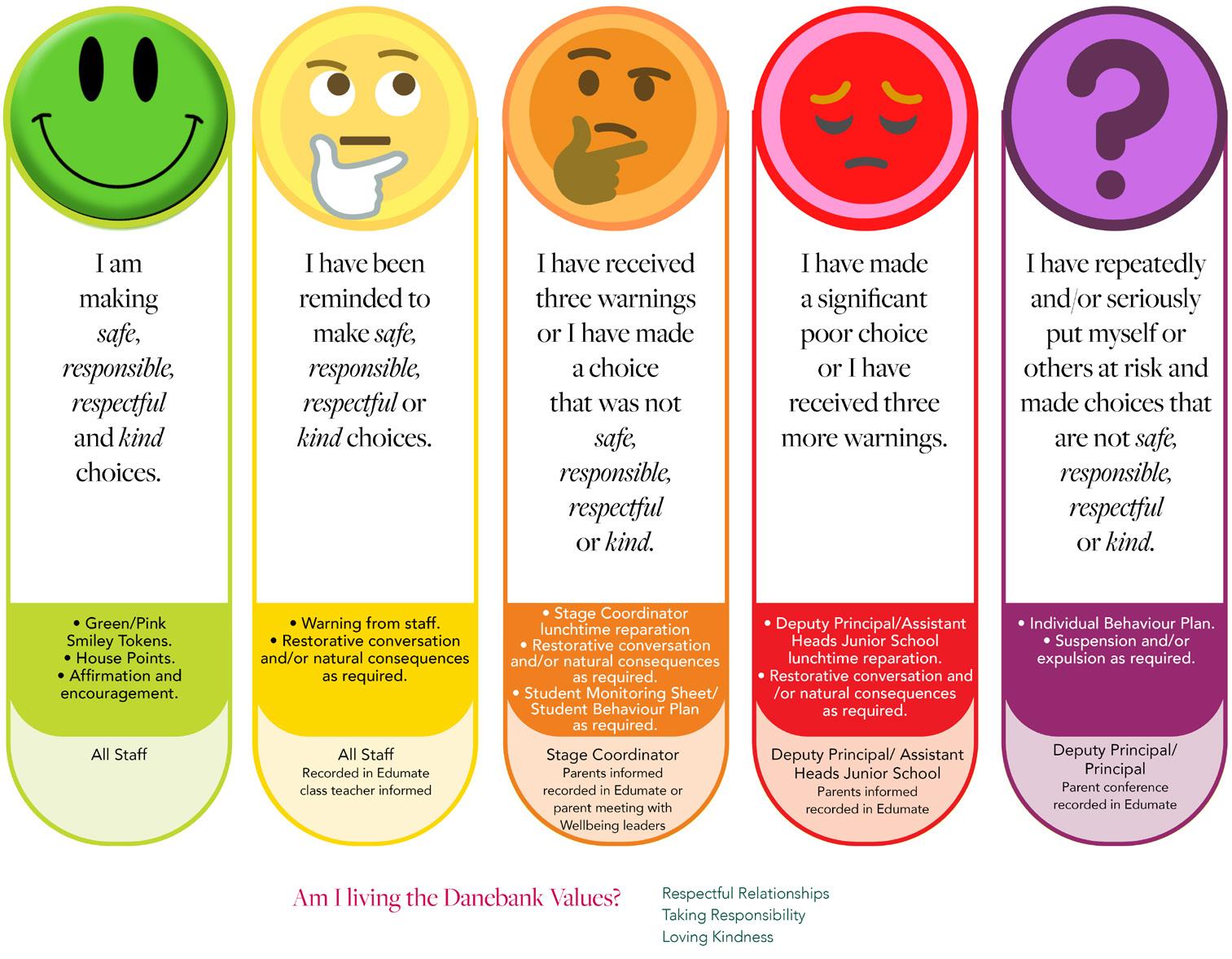
A low level misdemeanor that is tracked in Edumate under the categories of:
• Mean Behaviour
• Disrespectful Behaviour
• Misuse of Technology
• Incorrect Uniform
Staff may facilitate a restorative conversation or natural consequence as required.
• Reasons could include:
• Deliberate littering
• Unkind words to a peer
• Inappropriate language
• Disobeying a staff member's instruction
• Using a mobile phone in school hours
Three yellow level misdemeanors or a significant breach of the Positive Behaviour Code
• Stage Coordinator Lunch time Reflection
• Restorative conversation, removal of privilege and/or natural consequence may be required
Reasons could include:
• Three yellow level misdemeanors in a term
• Inappropriate physical contact
• Stealing
• Deliberately not being in the right place. (eg. loitering in bathrooms during learning time.)
An additional three yellow level misdemeanors or a serious breach of the Positive Behaviour Code
• Assistant Head Lunch time Reflection
• Restorative conversation, removal of privilege and/or natural consequence may be required
Reasons could include:
• Six yellow level misdemeanors in a term
• Bullying (verbal, physical, social, emotional, cyber)
• Vandalism
• Carrying a dangerous object
• Viewing and sharing inappropriate content at school.
Persistent and/or very serious breaches of the Positive Behaviour Code
• Deputy Principal Junior School or Principal
• Individual Behaviour Plan developed
• Probation, suspension or expulsion as required
Reasons could include:
• Use of a weapon
• Smoking, vaping, alcohol or drug use at school
• Serious instances of bullying
• Persistent and serious breaches of the Positive Behaviour Code
Procedural fairness comprises what is sometimes described as the hearing rule and the right to an unbiased decision. Consequences of a breach of the Positive Behaviour Code are based upon the seriousness of the breach and/or on prior disciplinary action. Cases are considered carefully on an individual basis when determining responses to breaches of discipline.
In this policy, procedural fairness means that, where suspension, exclusion or expulsion is being considered, the student against whom an allegation of inappropriate behaviour has been
made and their parent(s)/carer(s) have the right to know
• the process by which the matter will be considered, and
• relevant details of any allegations. They also
• are to be allowed to respond to the allegations, and
• know how to seek a review of the decision made in response to the allegations. Procedural fairness includes making available to students and parents or caregivers policies and procedures under which disciplinary action is taken.
In matters where a long suspension or expulsion is contemplated, the gravity of the circumstances requires particular emphasis to be given to procedural fairness. This includes the offer of having a support person / observer attend formal interviews.
The School may make initial enquiries into a matter without parents being present or informed of such enquiries being made.
The views of all parties will be considered. While it is generally preferable that different people carry out the investigation and decision-making, in the school setting this may not always be possible. If the Principal is conducting both the investigative and decisionmaking stages, she must be reasonable and objective. While it is difficult to combine the roles of investigator and adjudicator, it is acceptable to do so given the nature of the Principal’s responsibilities. Nevertheless, it may be preferable to have another appropriate officer, such as the Deputy Principal Junior or Senior School, carry out the investigation where possible. The review mechanism adds to the fairness of the process.
Procedural fairness will be accorded to all students and parents in the event of disagreements.
The final decision for the appropriate course of action is made by the Principal.
The School’s Complaints Handling Policy and Procedures provides further specific details about ways in which complaints are managed by the School.
The Assistant Head of Junior or Senior School and/or the Deputy Principal Junior or Senior School will discuss the student’s behaviour and use the behaviours listed in the Positive Behaviour Code as a guideline. Wherever possible, the details of the incident that may lead to the student being suspended will be discussed with the Principal. If she is not available the Deputy Principal Junior or Senior School may consult another member of the Senior Executive in order to ensure procedural fairness.
After a decision to suspend a student has been made, the Deputy Principal Junior or Senior School:
1. Contacts the parent or carer of the student to inform them of the circumstances that have led to this suspension.
2. Provides parents / carers with details of the allegation relating to the specific matter or incident and an outline of the allegations made.
3. Provides an interpreter if required by the parents / carers.
4. Instructs the Administration Assistant who undertakes the paperwork for the suspension and generates a letter to go home to the parent / carer regarding the suspension.
5. Informs the student that they have been suspended and gives them the letter to take home.
6. Arranges work from class teachers for the day.
7. Holds the suspension and arranges for the student to be seated in another location in the school if there is more than one suspension in the same day.
8. Determines the breaks for the student which are outside the normal recess and lunch times
NOTE: Wherever possible, students are internally suspended. In some circumstances they may be externally suspended.
Where students have been suspended more than once or where the incident is of a serious nature the parent(s) and student are required to
attend an interview with the Deputy Principal Junior or Senior School that may include the Principal and, where appropriate, the Year Coordinator or School Psychologist.
Reviews will not take place where parents compare what their daughter did to what another student did, in trying to determine that one girl deserves “more of a punishment” than another. This is determined by the School after Procedural Fairness has been followed.
The parent(s) / carer(s) or student may ask for a review of the decision, including for incidents that fall outside the behaviour listed above, setting out the reasons why the School should not suspend the student.
If the student or parent(s) / carer(s) have requested a review, the Principal will consider the recommendations and the reasons thus provided. The Principal will consequently decide whether to accept the recommendation of suspension from the Deputy Principal Senior or Junior School. The Principal will then advise the student and parent(s) / carer(s) of the decision.
The decision made by the Principal will be final.
For students with significant breaches of the Positive Behaviour Code and associated School Rules and Expectations, probation may be a penultimate step taken before enrolment is terminated. Probation is determined after careful consideration and in conversation with parent(s) or carer(s), the relevant Deputy Principal of School and other senior staff.
A Behaviour Management Plan will be developed for the probation period in consultation with the student and her parent(s) or carer(s). Students on probation will be monitored regularly by both the student’s parent(s) / carer(s) and the School. Support will be provided to the student by an appropriate member of the Student Care Team. Counselling and/or chaplaincy support will always be offered by the School in such circumstances, and ongoing counselling may be required as a
The School has no tolerance for incidents of students engaging in behaviour that is prohibited by law and the School will take into account any required reporting obligations that may be involved.
The School may either move directly to expulsion in the event of a major breach of discipline or when previous sanctions have been exhausted.
Where a disciplinary issue arises which may result in expulsion, the School will investigate the circumstances surrounding the issue. The Deputy Principal Junior or Senior School may direct the student not to attend school while the investigation is underway. An investigation will include the student being provided with information about the nature of the allegations and being given an opportunity to respond.
If, after receiving the results of the investigation and hearing representations from the student, the relevant Deputy Principal of School formed the view that the student should be expelled, they will recommend this to the Principal and advise the student and parent(s) / carer(s) that this recommendation has been made.
The parent(s) / carer(s) or student may appeal against that recommendation to the Principal, setting out the reasons why the Principal should not act on the recommendation. Any appeal must be provided to the Principal no later than five (5) days after the parent(s)/carer(s) have been advised of the recommendation.
If no appeal is made within the time specified, the Principal will decide whether to accept the recommendation and advise the student and parent(s) / carer(s) of the decision.
If the student or parent(s) / carer(s) have lodged an appeal, the Principal will consider the recommendations and the reasons thus provided. The Principal will consequently decide whether to accept the recommendation of the Deputy Principal Senior or Junior School. The Principal will then advise the student and parent(s) / carer(s) of the decision.
The decision made by the Principal will be final.

Director of Counselling and Psychological Services (Junior and Senior School)
Ms Marissa Hanslow
Senior School Counsellors/ Psychologists
Junior School Counsellors/ Psychologists
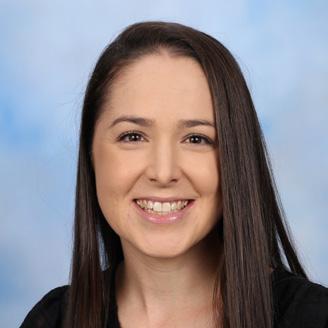
Mrs Kate Middleton
Mrs Kate Middleton
Mrs Rebecca Naoum
Mr Christos Tatsis
Mrs Denise Poulos
Mr Christos Tatsis

Our dedicated Counselling Team works to provide excellent support for our students on a daily basis. The School Counsellors are experienced in addressing a wide range of psychological and psychosocial issues including:
• Mental health concerns (e.g. depression, anxiety, eating issues/body image, grief/ loss)
• Emotion regulation, behaviour management and stress management strategies
• Academic concerns (e.g. stress, study skills, organisation and schedules, time management, goal setting)
• Social relationships
• Friendship and family concerns
counsellor.senior@danebank.nsw.edu.au
counsellor.junior@danebank.nsw.edu.au


They provide individual support, group mediation, short-term therapeutic interventions, referral options and transition support. They work collaboratively with staff across the school to develop appropriate school-based support for students and families (e.g. topic talks, social skills groups, parenting groups). There is always a School Counsellor from the Counselling Team present in the school each day, unless there are exceptional circumstances.
In the Junior School, parental consent must be obtained before a student is seen by a School Counsellor. To make a request for school counselling, parents / carers fill out a referral
form, which can be available upon request from the class teacher or counsellor. Once written consent is obtained, appointments for students are then scheduled by the School Counsellor directly with the class teacher to minimise disruption to student learning. Every effort is made to ensure the privacy of the student. In the case of urgent or crisis sessions, parental feedback will be provided post-session and permission obtained if further follow-up is required. Please email counsellor.junior@danebank.nsw.edu.au for further information and support.
In the Senior School, students can self refer to counselling or can be referred for counselling by their Year Coordinator, Assistant Head of Senior School (Wellbeing), Deputy Principal Senior School or parents. Students aged 16 to 18 years need to pass a competence assessment to consent to school counselling without parental consent. These assessments are conducted by the school counselling in the first session of counselling. Referrals for counselling can be made directly to the School Counsellors via email: counsellor.senior@danebank.nsw.edu.au
Students are allocated to a Counsellor and appointment times are arranged during school hours in term time only. The frequency of sessions is determined based on the students needs and the counsellor availability. Contact may be a single appointment, emergency session, assessment only or a short-term therapeutic intervention across a specific period of time. Referrals to external providers will be made for longer term, more intensive or complex concerns. In these circumstances the counsellors can work collaboratively with external practitioners.
Junior School counselling appointments are made via consultation with the class teacher. Senior School students can make appointments directly with their Counsellor. Appointments are entered into the electronic roll on the day of an appointment and recorded as “Appointment”. No specific details are given. If a student is
unable to attend an appointment or is absent from school, they should email their Counsellor to cancel the appointment prior to the appointment time.
If parents have concerns about their daughter, they are always welcome to call and discuss these concerns with one of the School Counsellors, regardless of whether their daughter is being seen or not.
School counselling is a confidential service, however, there are legal limits to this confidentiality to ensure duty of care to students. Students 15 years and under must have parent consent to attend school counselling. Only necessary information from school counselling is shared with parents to support their child/young person's care. Students 16-18 years may directly refer themselves for counselling services and sharing of information with staff or parents only occurs with the consent of the student. Where appropriate, the counsellor will inform the student of the information shared with parents to support collaborative care and transparency. At times, it may be necessary for the School Counsellors to communicate the contents of discussions or records to the Principal, Year Coordinator, class teacher, or Deputy Principals. Additionally, where matters of risk of harm to the student are involved, disclosure to the relevant people and/or mandatory reporting authorities, such as Police or The Department of Communities and Justice, who can keep the student safe are made in collaboration with the student and parents as much as possible, regardless of age. Disclosure will only occur in order to discharge the School’s duty of care, mandatory reporting guidelines and with a student’s wellbeing in mind.
The Counsellors maintain secure and confidential records for each student they see. In the event of significant risk of harm the Counselling Team, the Principal, or the Principal’s delegate, has authority to access the relevant information within a student’s counselling file in the interests of student safety and wellbeing.
Danebank follows the guidelines set by the NSW Compulsory School Attendance policy
Parents should notify the school if their daughter will be absent by emailing the office attendance@danebank.nsw.edu.au or by accessing the Danebank App after 9.30am and reporting it there. It is a NSW legislation requirement that all absences are explained in writing within seven days; this includes weekends and school holidays. If the student’s absence is unexplained after seven days, the absence will be listed on the student’s school report as unexplained. Parents will be notified via email if their daughter was absent.
The School day commences at 8.15am (locker time) except when students in Years 11 or 12 have a Period 0 lesson, which commences at 7.15am. Students who are late to school are expected to present to the Senior School Office on their arrival. A note of explanation from parents is required, and includes students who are late to a Period 0 class. Lateness to school can be explained up to seven days. Parents will be notified via email if their daughter had a partial absence, i.e. late arrival, without written explanation.
Exceptions to this will include any instance when there has been a confirmed public transport issue. Parents are unable to change attendance via the portal after this seven day window.
A student who needs to leave school early must present a note signed by her parent or guardian, or email attendance@danebank. nsw.edu.au to the Senior School Office before 8.15am. The student can then collect a Leaving
Early Pass from the Office before departing. The early leave slip is shown to the teacher and retained by the student.
Parents should notify the school if their daughter will be absent. This can be done by writing a note or sending an email to juniorschool@danebank.nsw.edu.au or the class teacher.
Parents will then need to access the Edumate Parent Portal through iDanenet or the Parent App and log the absence. It is a NSW legislation requirement that all absences are explained in writing within seven days. If the student’s absence is unexplained after seven days, it will be listed on the student’s school report as unexplained. Parents will be notified via email if their daughter was absent. If the absence is known in advance, please communicate this to the class teacher via a note or email.
If a student is absent for more than two days without explanation, the school will notify the parent or carer automatically and request an explanation. The school must be notified in cases of anticipated extended absences.
Students who arrive late should report to the Junior School Office with their parents. The parents are required to sign their daughter in as late. Students will then be issued with a late pass and sent to class. If a student arrives at class without a late pass, she will be sent back to the Junior Office and her parents may be contacted.
If a student needs to leave school early, parents should email
juniorschool@danebank.nsw.edu.au and the class teacher with details. Parents must come into the Junior Office and sign their daughter out.
Application for leave
(outside scheduled school holiday times)
If your daughter is away from school for an extended time of 3 days or more, parents should complete an Application for Leave at least two school term weeks in advance.
There may be times when your daughter may be away from school for an extended time due to participation in an elite sporting event or entertainment industry employment. On these occasions, parents should complete a Request for Exemption of Attendance form at least two school term weeks in advance. The form can be found on the Policy Portal under Leave Forms. If the exemption from attendance is granted to your daughter, this absence will not be included in the ‘Total Days Absent’ on her school report.
Note: Your daughter will need to organise alternative arrangements with the Head of Curriculum Innovation for any formal assessment task that will be missed while she is on leave or exempt from attendance. This must be completed and signed by the Head of Curriculum Innovation regardless of whether any assessments are due. Your daughter is also required to make contact with the IT Department to arrange computer access and
her class teachers to organise how her learning will continue while she is on leave.
Senior School Note: It is expected that all Senior School students and families will consult the Assessment Handbook before making any arrangements for leave during term time. Danebank and the NSW Education Standards Authority expect that all students will sit all assessment tasks.
Under no circumstances are Junior School students allowed to leave the school grounds unattended during school hours.
In the interests of keeping Danebank a safe and secure environment for the girls, all visitors are asked to proceed to the Junior or Senior School Office before entering the premises. You are most welcome and you will be asked to sign in. A visitors’ sticker will be provided for the duration of your stay. Visitors must return to offices to sign out before leaving the premises. Forms


We expect students to wear their uniform with pride and maintain high standards by wearing the uniform correctly. It is one way that students take responsibility and show respect. Parents are advised to make an appointment at the Ranier Uniform Shop for fittings. After that, there is an online shop where purchases can be made for new items, and there is a Facebook group for second-hand items.
Danebank’s uniform policy aims to promote a school culture that provides all students with a fundamental sense of belonging and to develop within each student a sense of personal identity that links to her commitment to the school community. The uniform reflects Danebank’s positive image that we want to demonstrate to the broader community.
• Black, plain, polished leather lace up style shoes with flat heel and plain sole.
• Danebank grey anorak – if necessary, can be worn as outer garment to and from school over the blazer.
• The jasper green hat is an optional part of the school uniform.
Summer Uniform (Terms 1 and 4)
• Regulation white with striped ankle socks.
• Years 7 - 9 Striped tunic worn at knee length. The buttons of the tunic must be done up at all times. Tran-seasonal beetroot
pink cardigan with crest buttons may be worn as the outer garment only at school.
• Years 10 - 12 Striped tunic with white collar. All buttons of the tunic must be done up at all times. Tran-seasonal jasper green cardigan with crest buttons may be worn as the outer garment only at school.
• Blazer to be worn as outer garment to and from school, if necessary.
• Cardigans or Year 12 jerseys are not to be worn to and from school, this includes all modes of travel such as car, train or bus.
• Optional: summer shorts with summer blouse and summer ankle socks.
Winter Uniform (Terms 2 and 3)
• Blazer must be worn to and from school during Terms 2 and 3.
• Winter striped tunic worn at knee length with regulation charcoal stockings or winter knee length long socks, pulled up at all times.
• Years 7 - 9 Winter blouse with green trim.
• Tran-seasonal beetroot pink cardigan with crest buttons may be worn as the outer garment only at school. Regulation jasper green scarf.
• Years 10 - 12 Winter blouse with no trim.
• Tran-seasonal jasper green cardigan with crest buttons may be worn as the outer garment only at school. Regulation beetroot pink scarf.
• Cardigans or Year 12 jerseys are not to be worn to and from school, this includes all modes of travel such as car, train or bus.
• Optional: winter pants with winter blouse and winter knee length long socks.
Junior School Uniform
Summer Uniform (Terms 1 and 4)
K-Year 6 Compulsory
• Summer tunic
• Hat
• White socks with trim
• Black school shoes
• Polar fleece blazer (K-Year 2)
• Blazer (Years 3-6)
K-Year 6 Optional
• Summer shorts
• Short sleeve white shirt
• Pink cardigan
Winter Uniform (Terms 2 and 3)
K-Year 2 Compulsory
• Winter tunic and white Kinder - 2 blouse
• Stripey tights OR long green socks with trim
• Polar fleece blazer
• Black school shoes
Years 3-6 Compulsory
• Winter tunic and white Years 3-6 blouse
• Green tights OR long green socks with trim
• Blazer
• Black school shoes
K-Year 6 Optional
• Winter shorts
• Long sleeve white shirt
• Pink cardigan
• Green scarf with pink edging
Black School Shoes
• K-Year 2: Black leather lace up or velcro style - plain only, no decoration.
• Years 3 - 6: No velcro
• Black leather lace up style.
• Danebank sport shorts and sport polo top
• Danebank track pants and jacket
• Junior or senior rugby jersey
• White socks
• Appropriate white sports shoes with white laces
• Danebank sports bag
• Danebank sports cap
• Danebank swimsuit, house cap and goggles
• Specialist sport uniform maybe required for some sports, please check permission notes Additional equipment
• Water bottle
• Danebank sport hat and sunscreen for WHS reasons
Students who have medical conditions that require medication, such as Ventolin for asthma, are to ensure that they bring this medication to practical lessons
Students with pre-existing injuries need to come prepared with their own supply of equipment to account for this injury. For example, strapping tape
Note: All clothing and equipment must be clearly labelled with the student’s name. Any student not wearing the appropriate clothing, including shoes, will not be allowed to participate in the practical lesson.
Students who do not wear their full PE uniform and/or fail to bring a note explaining their nonparticipation in the practical lesson will receive a PE uniform infringement.
Students who wear their PE uniform outside a PDHPE practical lesson will be in breach of the PE uniform policy and will receive a uniform infringement. Details of the administration of the uniform policy will apply.
Students and parents should use the following as a guide as to how Danebank expects students to present themselves.
• Hair should be neat, tied back and off the face, at all times.
• Fringes are acceptable, but should not cover the eyes.
• Inappropriate hairstyles, colours or beading are not permitted.
• Regulation ribbons: tri-striped ribbon, jade, pink, silver, red, white ribbon or scrunchie. These may be purchased from the Ranier Uniform Shop.
• Small hair clips (plain silver, black or brown) are permitted to keep hair back.
• School hair bands can be worn to keep hair off the face.
• One set of pierced earrings (one in each earlobe only). These may be small studs in gold, silver, pearl or clear stone. No other colours are allowed.
• One fine necklace may be worn with a small pendant in gold or silver that should not be visible and worn under a student's blouse. Medical necklaces may also be worn.
• No bracelets are permitted unless medical.
• A conservative watch may be worn. Should students choose to wear a ‘smart’ watch it should not be used as a communication device. If used in this way then the consequence of using a mobile phone will apply.
• Junior School: No Smart watches or FitBits allowed.
• Senior School: Students may wear one plain ring.
• Charity jewellery and accessories can only be worn for the period of the promotion. Only one approved charity item may be worn at a time.
• No nose, tongue, eyebrow or ear piercing other than the earlobe (including helix, scapha and tragus of the ear) are permitted.
• No costume jewellery is permitted.
• Colourless lip balm, for lip protection, is the only makeup allowed.
• Nails should be kept short and neat and natural in their appearance (clear nail polish only). Due to industry standards, students studying Hospitality are not able to wear nail polish.
• Junior School: Students are not permitted to wear nail polish at school.
• Students who attend school with nail polish on will be sent to the office to have it removed.
• Unobtrusive application of light foundation may be worn by Years 11 and 12 students.
• Unobtrusive application of BB cream or a tinted moisturiser may be worn by students in Years 7-10.
• Junior School: No make-up permitted.
• False eyelashes are not permitted.
• Tattoos of any kind, including henna, are not permitted on students.
• No mascara or blush is permitted.
• Green Danebank school bags are compulsory.
• No writing is permitted on the bags.
• School bags, Danebank sports bags or Danebank excursion bags must be used for excursions. No other bag permitted.
• Tote bags are not to be used outside of the school grounds, they are only to be permitted to transport materials within the school grounds.
Due to the destructive nature of chewing gum, students found to be chewing gum will receive a lunch reparation.
It is the responsibility of all students to follow the school’s uniform policies.
If a student is in breach of a Uniform Policy (school or PDHPE), where possible she will be spoken to and asked to rectify the problem. Infringements for school uniform will be recorded separately to infringements for PDHPE uniform. They will also be administered independently of each other.
On the second instance of breaching a Uniform Policy (school or PDHPE), the student will be placed on a lunchtime reparation.
On the third and any subsequent instances of breaching a Uniform Policy, a letter will be sent home to parents informing them of their daughter’s breach of the Uniform Policy and as a consequence, the student will receive a formal afternoon reparation. During this reparation the student may be asked to perform some act of service to the school community. Each term the count is reset and students start afresh.
Students who do not attend the lunchtime reparation for breaching the Uniform Policy will be placed on a formal afternoon reparation.
Students who are asked to lengthen their skirt will be given a weekend to rectify the problem. They will need to obtain a uniform pass, for the remainder of the week, from the Assistant Head of Senior School.
Students will need to remove piercings such as nose, tongue, eyebrow piercing or ear piercing other than the ear lobe immediately. Parents should be aware that if students choose to get these piercings during school holidays they will be required to remove these once the school term commences. Clear studs or band aids covering these piercings will not be permitted.

On certain occasions, students will be granted the privilege of wearing casual clothing to school. While this provides students with the opportunity to make some choice, students will still need to adhere to regulations required by WHS policies relating to student safety. Child protection and respectful decision making provide the framework for the schools’ expectations on mufti days.
Students will be required to undertake normal learning activities and their dress must afford them the same protection that their school uniform and school shoes provide. With this in mind, students should ensure that their casual dress abides by the following:
• Shoes should be enclosed
• Hair should be tied back for practical lessons
• Shorts, skirts and dresses should be no shorter than mid-thigh length
• Clothing and dress ups should not be contentious, politicised or controversial in nature. This is inclusive of text, symbols and imagery.
• Midriffs must not be shown
• Underwear should not be visible
• No singlets, strapless tops or tanks should be worn
• Uniform rules regarding make up and nail polish still apply
• Students may wear additional jewellery, with the exception of ‘dangling’ earrings or large hoop earrings
Any student involved in a speciality subject will have additional requirements. In the case that a student has a Science or TAS lesson, leather enclosed shoes are to be worn. If a sport or PDHPE lesson would normally require the student to change to sport uniform, the school sports uniform and shoes are to be worn.
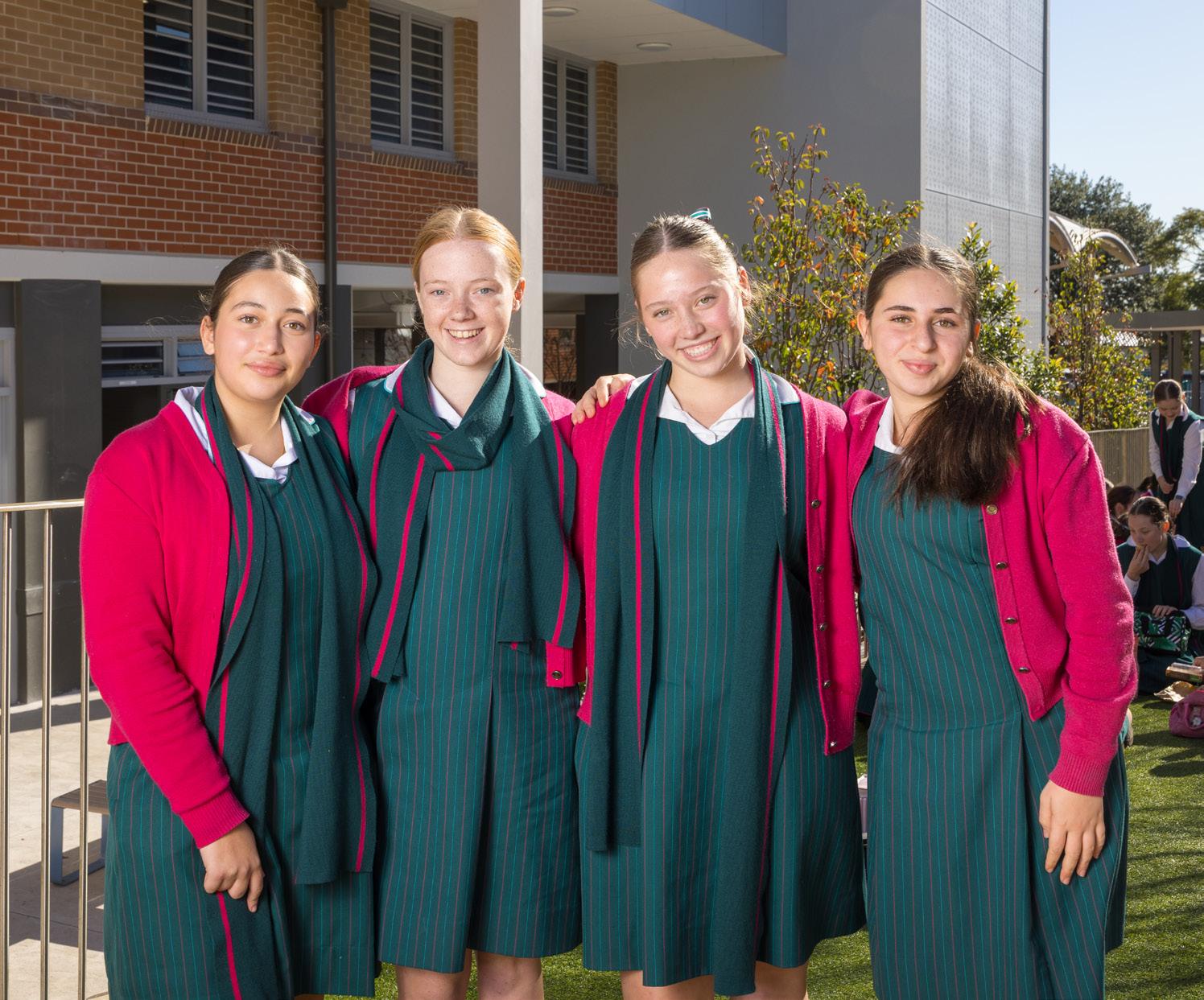
106 Park Road, Hurstville, 2220 0455 028 256
Monday 8:00am – 11:30am
Shop Hours (During School Terms)
danebank@ranier.com.au
Tuesday - Thursday 1:00pm – 5:00pm Saturday 9:00am – 1:00pm (1st Saturday of the month)
Purchase online ranier.com.au
Second-hand uniforms
Register for online purchases with an email address and password
Items can be bought and sold via a private Facebook Group: Danebank Second Hand Uniform Page facebook.com/groups/953266101492420
(Under Section 5M of Civil Liability Act 2002)
On Behalf of Danebank and IGSA.
Danebank organises many activities such as debating, mock trial, orchestra, choir and various co-curricular activities during the course of a year. Some of these are organised in conjunction with the Association of Heads of Independent Girls’ Schools NSW (AHIGS), trading as IGSA. Students participating in these activities take part in practice and in competitions.
IGSA administers and convenes inter-school activities (such as IGSA Archdale Debating, IGSA Festival of Speech, IGSA Choral Festival, IGSA Dance Festival, IGSA Chess and the Dame Enid Lyons Oratory Competition) in which many students, including students of this school, participate.
Danebank and IGSA also expect parents, spectators and other participants to behave in a safe and responsible manner, to comply with the Codes of Conduct and to set a good example for the students.
While Danebank and IGSA take measures to make the activities as safe as reasonably possible for participants, there is a risk that students can be injured and suffer loss (including financial loss) and damage as a result of their participation in these activities, whether at practice or in actual events.
Such injury can occur while the student is engaging in or watching a non-sporting activity, or travelling to and from the event. The injury may result from a student's actions, the actions of others, the state of the premises or equipment failure (e.g. a collapsed stage during a debating competition).
On some occasions, an injury can be serious (such as torn ligaments, dislocations, back injuries, concussion or broken bones). In very rare cases an injury can be life threatening or result in permanent disability.
Students could also suffer loss as a result of their personal property being lost, stolen, damaged or destroyed.
Danebank organises many individual and team sporting activities during the course of a year. Some of these are organised in conjunction with IGSA Sport, a sub-committee of the Association of Heads of Independent Girls’ Schools NSW (AHIGS), now trading as IGSA. Students participating in these sporting activities take part in practice and in competitions.
Danebank and IGSA Sport expect students to take responsibility for their own safety by wearing compulsory safety equipment, by thinking carefully about the use of safety equipment that is highly recommended and by behaving in a safe and responsible manner towards team members, opponents, spectators, officials, property and grounds.
Danebank and IGSA Sport also expect parents, spectators and other participants to behave in a safe and responsible manner, to comply with the Codes of Conduct and to set a good example for the students.
While Danebank and IGSA Sport take measures to make the sporting activities as safe as reasonably possible for participants, there is a risk that students can be injured and suffer loss (including financial loss) and damage as a result of their participation in these sporting activities, whether at training or in actual events.
Such injury can occur while the student is engaging in or watching a sporting activity, or travelling to and from the event. The injury may result from a student's actions, the actions of others, the state of the premises or equipment failure.
On some occasions, an injury can be serious (such as torn ligaments, dislocations, back injuries, concussion or broken bones). In very rare cases an injury can be life threatening or result in permanent disability. If a student has a pre-existing injury, participating in a sporting activity could result in an exacerbation of that injury.
Students could also suffer loss as a result of their personal property being lost, stolen, damaged or destroyed.
At Danebank, we take the health and wellbeing of our students very seriously. In partnership with parents and carers, we are committed to ensuring that students are cared for in the best possible way.
The School Nurse is responsible for the operation of both the Junior and Senior Sick Bays, including the administration of medication and provision of first aid. In her absence, these responsibilities are delegated to the appropriate office staff.
Students who are unwell should remain at home until they have fully recovered.
Parents of any student who receives regular medication for ongoing health management need to inform the school to ensure continuing duty of care.
Students who have anaphylaxis or diabetes may be required to wear their EpiPen/Glucometer, in a pouch bag at all times. Students who have allergies, anaphylaxis or asthma are required to submit a current management plan.
It is the responsibility of parents / carers to provide accurate and up-to-date medical information. Information regarding medication, together with changes of address, telephone numbers and parent’s/carer’s place of work or emergency contacts should be updated via the Edumate Parent Portal at the beginning of the year and when needed.
Students are not to contact their parents/ carers via phone, email or any other means, to come and collect them under any circumstance.
• If your daughter vomits or has gastro symptoms, she must not come back to school for 48 hours.
• All medications (including additional asthma puffers and EpiPens) are kept in the Junior School Sick Bay, adjacent to the Office.
• With the exception of asthma puffers, insulin and EpiPens, no student is permitted to have any medication on their person or in their school bag/locker.
• Students who require prescribed medication during the day must bring their medication from home with the completed Request from parents / carers for the school to Administer Medication to a Student form
• The medication is to be taken to the Junior School Office immediately on the student’s arrival to school
• All medications must be supplied in their original container with a pharmacy label, the student’s name and expiry date clearly visible.
• Any required 'consumables' (e.g. medicine cup or syringe) must be supplied by parents / carer, with the medication
If a student becomes unwell at school, the teacher will send the student to the Junior School Sick Bay for treatment. If a student is injured or becomes sick while on the playground the teacher on duty will assess the student. If necessary, the student will be sent to sick bay with a permission card for treatment or a call for assistance will be made, depending on the injury. If necessary, a parent will be contacted advising the nature of the injury or seeking approval to administer medication.
Mrs Rebecca Rathbone RN, BN, MN(CriticalCare), MACCCN
rebecca.rathbone@danebank.nsw.edu.au
Parents / carers of Kindergarten - Year 6 students requiring intermittent or emergency medication (i.e. asthma puffers or antihistamine) must leave their medication in the Junior School Office to be administered when necessary. Students in Years 5-6 may carry their asthma medication on them, but spare medication and a medical plan must still be provided for the sick bay.
It is the student’s responsibility to remember to come to the Junior Office for the medication at the required time. Administration of medication will be under supervision of the Junior Office staff.
When a student presents to the office, staff will assess the student to determine the most appropriate course of action. This may include, but is not limited to, providing first aid, offering a period of rest, or allowing time out.
If a student becomes ill at school she will speak to her supervising teacher who will sign the “Out of Class Log” in their student diary, to then be presented at the student services counter. Students may be allowed to rest in sick bay. If unable to return to class, parents / carers will be contacted by office staff.
It is School policy that students requiring regular medication bring the medication in its original container, with the pharmacy label attached, to the relevant School Office, along with a completed:
Permission to Administer Medication form
With the exception of EpiPens, asthma puffers and insulin, no student is permitted to have any medications on their person, in their school bag or locker.
All students who may require intermittent or emergency medication (e.g. asthma puffer, EpiPen or antihistamine) must provide this medication and valid Emergency Management Plan to the relevant office.
It is the student’s responsibility to remember to come to the office for their medication at the required time. Medication will only be administered under the supervision of staff.
Parents / carers of any student who receives regular medication must inform the School to ensure continuity of care and duty of care obligations.
Given the rising incidence of allergies, it is not possible to remove all allergens. However, the Danebank community is allergy-aware, understanding the risks associated with allergies and implementing practical, age appropriate strategies to minimise exposure to known allergens. Whilst Danebank does not claim to be ‘nut free’, we attempt to minimise exposure to particular foods containing such ingredients as peanuts and tree nuts. This includes removing nut spreads and products containing nuts from the school canteen, but does not include removing products that ‘may contain traces’ of peanuts, tree nuts or other allergens.
Junior School students are asked not to bring nut products to school such as peanut butter, nutella or muesli bars containing nuts.
Schools are required to request approved immunisation certificates for each new student who commences at the School. Such records are strictly confidential and stored securely in accordance with our Privacy Policy.
If you cannot produce this record, your daughter may still be enrolled but may be excluded from school on the direction of a public health officer for the duration of an outbreak of a vaccine-preventable disease in the School. If an unimmunised student comes into contact with a vaccine preventable disease outside school, they can also be asked to stay home during the incubation period to reduce the risk of starting an outbreak.
An approved Immunisation Certificate can be requested using your MyGov account
Please provide a copy of this certificate to the School Office where it will be uploaded and the details recorded against your daughter’s student record.
As you might expect, medical costs for a student are generally the responsibility of that student’s parent(s). Our Conditions of Enrolment clearly state: ‘The Parents / Carers are to pay all medical and ambulance expenses incurred by the School on behalf of the Student which the School is not able to otherwise recover.’
However, as you are also well aware, ‘accidents do happen’! The Anglican Schools Corporation maintains a Student Accident Insurance Policy as a supplementary service to our families. This policy covers all enrolled students who are injured as a result of an accident.
The policy is provided through AON and administered by QBE Insurance. Please note the following essential details and limitations:
• All enrolled students (including preschoolers) are covered.
• 24/7 worldwide cover is provided for accidents.
This policy does not cover illness or sickness. It only responds to injuries that are a direct result of an accident.
• A benefit for emergency transport (ambulance) is only included in the event of an accident. Ambulance transport required due to a student falling ill or sick is generally not covered.
• The policy cannot cover Medicare ‘gap’ payments (non-Medicare medical expenses are covered, subject to policy limits).
• Coverage for psychological trauma is limited to incidents occurring during school activities or organised sporting events.
Please Note that this policy provides important coverage for accidental injuries, families are strongly advised to hold private health insurance that includes comprehensive ambulance cover for non-accident related illness.
For further information or to obtain a claim form, please contact the school office.
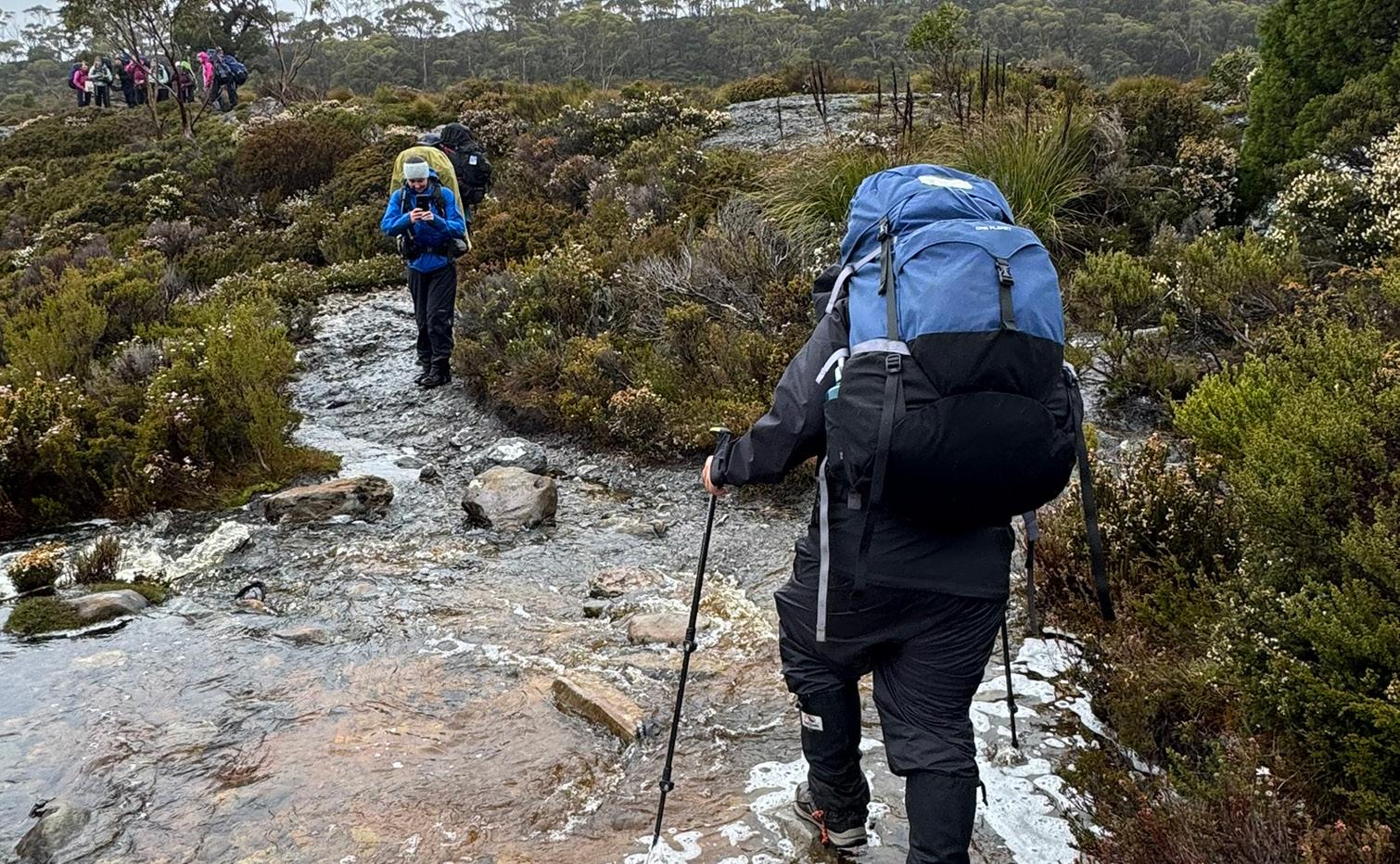

Danebank is committed to providing quality, faith-based teaching and learning that values innovation and promotes positive relationships and learning experiences.
Principal Dr Michele Benn principal@danebank.nsw.edu.au
Deputy Principal Senior School
Deputy Principal Junior School
Head of Curriculum Innovation
Director of Academic Care
Assistant Head Junior School
Assistant Head Junior School
Early Stage 1 Coordinator
Stage 1 Coordinator
Stage 2 Coordinator
Stage 3 Coordinators
Learning Enrichment P-6
Learning Enrichment 7-12
Christian Studies
Creative and Performing Arts
English (Acting Head)
HSIE
Languages
Mathematics
Science
PDHPE
TAS (Acting Head)
VET
Mrs Tiina Hufton tiina.hufton@danebank.nsw.edu.au
Mrs Melinda Buckley melinda.buckley@danebank.nsw.edu.au
Ms Kate Nunn kate.nunn@danebank.nsw.edu.au
Mrs Louisa Macdonald louisa.macdonald@danebank.nsw.edu.au
Mrs Deborah Uebel deborah.uebel@danebank.nsw.edu.au
Mrs Kate Fraser kate.fraser@danebank.nsw.edu.au
Mrs Belinda Bartels belinda.bartels@danebank.nsw.edu.au
Ms Lenyia Andrews lenyia.andrews@danebank.nsw.edu.au
Mrs Lena Cooper lena.cooper@danebank.nsw.edu.au
Mrs Fiona Vula fiona.vula@danebank.nsw.edu.au
Mrs Melanie Stewart melanie.stewart@danebank.nsw.edu.au
Mrs Jaimey Thomas jaimey.thomas@danebank.nsw.edu.au
Mrs Michelle Ball michelle.ball@danebank.nsw.edu.au
Miss Kirrily Foley kirrily.foley@danebank.nsw.edu.au
Mrs Philomena Kezelos philomena.kezelos@danebank.nsw.edu.au
Mrs Ashleigh Driscoll ashleigh.driscoll@danebank.nsw.edu.au
Ms Aneeta Hantes aneeta.hantes@danebank.nsw.edu.au
Ms Josephone Scheuder josephine.schreuder@danebank.nsw.edu.au
Ms Grace Mandile grace.mandile@danebank.nsw.edu.au
Ms Nikki Martel nikki.martel@danebank.nsw.edu.au
Mr Lee Malin
lee.malin@danebank.nsw.edu.au
Miss Karla Wootton karla.wootton@danebank.nsw.edu.au
Miss Karla Wootton karla.wootton@danebank.nsw.edu.au
Pre-K
Danebank Pre-K strives to provide an early childhood program which will develop each child to her full potential, ensuring each girl has a positive feeling of self-worth, a positive attitude towards her peers and a love of learning.
Two class options:
• Monday-Tuesday (2-day program)
• Wednesday-Friday (3-day program)
Curriculum
Our program is designed to provide appropriate learning experiences to meet the needs of each child and foster development in all aspects of their growth – physical, cognitive, social, emotional and spiritual.
Individual ‘ePortfolio’ and anecdotal records are maintained for each student along with a half yearly family conference meeting and a yearly formal report. Interviews can be arranged with your child’s teacher to discuss her development.
The Curriculum is based on the NESA (NSW Educational Standards Authority) Curriculum, set out for Early Stage One. It covers the six Key Learning Areas (KLAs) that are the basis of learning through to Year 12.
The six KLAs are:
• English
• Mathematics
• Science and Technology
• History/Geography
• PDHPE (Personal Development, Health and Physical Education)
• Creative Arts
These KLAs are all taught through integrated activities. They can be viewed at: NESA: www.educationstandards.nsw.edu.au
As we are a part of Danebank, Pre-K has access to the expertise of teachers in the following additional specialist areas.
Christian Studies
As a Christian school, we are committed to teaching the children about Jesus, using the Bible. A specialist teacher in this area guides the children each week through very valuable lessons. The children also attend a weekly Pre-K to Year 6 Chapel Service or Assembly. The learning activities are often organised and integrated around a theme or topic.
Music
A specialist Music teacher from the Junior School conducts a lesson each week in the Junior Music Room, introducing the children to rhythm, beat, pitch and tone. They explore basic percussion instruments, compose their own music and appreciate the music of others.
Sports
Lessons are planned and conducted by a teacher from the PDHPE Department of the school and play a valuable part in our grossmotor skills program. The children develop specific skills of coordination, movement and balance, using a variety of equipment both inside and outside the Gymnasium. Children take part in a Learn to Swim program at the end of Semester 2.
Library
Visits are weekly to the Library and are facilitated by the Teacher Librarian. The children look forward to a story and the opportunity to borrow two books. For this process they each need to have a Library Bag and bring it, with the books to be returned, on their allocated Library day. You are notified of this day at the commencement of Pre-K. Library bags can be purchased from the Uniform Shop.
Integrated Computer Technology
In Pre-K we use an interactive whiteboard in individual, paired and group learning experiences across all KLAs. iPad tasks are often included as part of our integrated learning centres.
• Early Stage One (Kindergarten
• Stage One (Years 1 - 2)
• Stage Two (Years 3 - 4)
• Stage Three (Years 5 - 6)
The Junior School follows the NSW curriculum developed by the NSW Education Standards Authority (NESA). The syllabuses identify the knowledge, skills, values and attitudes students are expected to develop at each stage, the outcomes and content that describe what students are expected to know and do and cross-curriculum priorities, general capabilities and other important learning for all students.
All stages in the Junior School study the following Learning Areas: English, Mathematics, Science and Technology, HSIE (includes History and Geography), Personal Development, Health and Physical Education, Creative Arts and Japanese.
Student Devices
Students in K use 1:1 iPads in the classroom and are introduced to Chromebook computers. Students in Years 1- 6 are issued with a Chromebook which they use at school. All iPads and Chromebooks remain at school.
Deputy Principal Senior School Mrs Tiina Hufton tiina.hufton@danebank.nsw.edu.au
Head of Curriculum Innovation Ms Kate Nunn kate.nunn@danebank.nsw.edu.au
Director of Academic Care Mrs Louisa Macdonald louisa.macdonald@danebank.nsw.edu.au
Stage Four (Years 7-8)
Subjects studied in Year 7:
• Christian Studies
• English
• Geography
• Mathematics
• Music
• PDHPE
• Science
• Drama
• French
• Japanese
• Visual Art
• Technology
Subjects studied in Year 8:
• Christian Studies
• English
• History
• Mathematics
• Music
• PDHPE
• Science
• French or Japanese
• Visual Art
• Technology
Stage Five (Years 9-10)
Subjects offered in Years 9 and 10 (note not all of the elective subjects run):
• Christian Studies, English, Geography, History, Mathematics, PDHPE, Science and 2 Electives chosen from:
• Drama
• Music
• Photography and Digital Media
• Visual Arts
• Commerce
• History Elective
• International Studies
• French
• Japanese
• Italian
• Physical Activity and Sport Studies (PASS)
• Design and Technology
• Food Technology
• Industrial Technology - Multimedia
• iSTEM
• Textile Technology
Stage 6 (Years 11 and 12)
Students must study a minimum of 12 or 13 Units in Year 11 and 10 Units (or more) in Year 12. English and SOR or Christian Studies are compulsory subjects, but there must be at least four subjects in total in each year. Courses studied in Year 12 must be preceded by study of the Preliminary course in Year 11.
The Australian Tertiary Admission Rank (ATAR) will be calculated based on the student’s best 10 Units, providing that at least 2 Units of English will be included.
Subjects offered for the HSC (not all subjects run)
• Christian Studies
• Studies of Religion (1 Unit)
• Studies of Religion (2 Unit)
• Drama
• Music 1
• Music 2
• Music Extension
• Visual Arts
• English
• Standard English 2
• Advanced English 2
• English Extension 1
• English Extension 2
• Ancient History
• Business Studies
• Economics
• Geography
• Legal Studies
• Society and Culture
• Modern History
• History Extension
• Italian Beginners
• French Continuers
• Japanese Continuers
• Mathematics
• Mathematics Standard 2
• Mathematics Advanced
• Mathematics Extension 1
• Mathematics Extension 2
• Health and Movement Science
• Biology
• Chemistry
• Investigating Science
• Physics
• Science Extension
• Design and Technology - Mixed Materials
• Design and Technology - Multimedia
• Food Technology
• Textiles and Design
• VET - Hospitality
• VET - Business Services
• VET - Entertainment Industry
Students have access to the Careers Facilitator, the Head of Senior School, Head of Curriculum Innovation, Department Heads and their classroom teachers for advice on subject choices. An information evening for parents and girls in Year 10 is held each year and students are given a subject information handbook.
Formal Reports are issued twice each year and they offer summaries of the students’ ongoing assessment results. The assessment results are represented in full detail on the Edumate parent portal. Additional reports can be prepared for parents who have a particular concern for their daughter, outside the usual reporting channels. These are arranged through the Year Coordinator.
These are held annually, usually in Term 2. These learning conferences are designed to enhance the partnership between school and home. Parents are encouraged to bring their daughters to these meetings to ensure a collaborative approach to learning.
Formal reports are issued twice each year, at the end of Semester One and Semester Two. These reports relay information regarding the students’ academic achievements, social development and commitment to learning.
Formal parent/teacher/student conversations are held in Term 1 where parents can book a 10 minute personal conversation with the teacher. In Term 3, parents will be invited to a 15 minute student-led conference where students will share their learning with their parents. Parents are welcome to meet with teachers throughout the year by pre-organising a time.
The Assessment Handbook and other important information can be found on the Danebank App or Edumate Parent Portal home page at the start of the year, via: Newsfeed > Broadcast > Senior School Documents and Handbooks Google folder. Students can also access these directly through Canvas.
Danebank scholars receive outstanding opportunities to discover their strengths, express their creativity and achieve their potential. Our scholars enjoy the School’s dynamic, friendly and empowering environment that believes girls can do anything. As a lighthouse school for students with unique abilities and talents, Danebank is excited to be able to offer these opportunities to new or existing students entering Year 7 in 2027.
State-of-the art facilities and advanced technological infrastructure enhance students’ capacity to pursue their learning. Staff are dedicated professionals whose care and expertise is widely acknowledged.
Our students achieve outstanding academic outcomes as a result. In recent years, Danebank students have achieved amongst the top in the state and country, receiving high distinctions in Mathematics, English, Science, Geography and History competitions.
Danebank provides a wide range of opportunities for gifted and talented or exceptional students, challenging high potential learners and supporting them in their growth. We offer high quality differentiated instruction in class and enrichment opportunities outside of class. Our students are offered opportunities to develop their talents beyond the classroom, with programs in music, drama, debating,

sports, leadership, outdoor education, and service to others. This is all supported by the strong Christian culture of the School. Christian clubs, programs and activities are also offered. Applications are invited for our expanded suite of full and half scholarships for students entering Year 7 in 2027.
• Academic
• Music
• Sporting
• All Rounder
• First Nations
• Roseby Class
• Danebank Old Girl (exclusively for the daughter of a Danebank Alumna)
• STEM/Design (Year 9 internal applicants)
Further information and application details can be found at on the Scholarship Portal linked here
Each teacher outlines their homework policy and expectations at our initial Meet the Teacher morning. If there are any concerns please contact your daughter’s teacher.
Recommended times vary according to your child’s grade needs and interest, but as a generalisation:
Kinder Daily reading with an adult
Year 1 No more than 20 minutes daily (plus daily reading)
Year 2 No more than 20 minutes daily (plus daily reading)
Year 3 Up to 30 minutes daily
Year 4 Up to 30 minutes daily
Year 5 Up to 45 minutes daily
Year 6 Up to 45 minutes daily
Home learning is vital to equip students to be effective independent learners, as well as to consolidate knowledge learned in school time. Students need to practise study skills, learn how to manage their time and ensure that revision becomes habitual rather than incidental. Home learning is especially valuable for focusing on areas of weakness that can become cemented if not addressed.
Teachers can individualise and facilitate this process if the student is able to articulate the areas in which they are struggling well before formal assessments reveal the difficulty. Home learning helps students learn how to prioritise tasks, problem solve and take responsibility for their own learning. It is also an important way for parents to be part of the learning process and to emphasise and value that learning is an ongoing endeavour.
A regular program of learning at home is essential for all Senior School students. Students are encouraged to develop a regular routine of learning at home so that all school work is completed and classroom learning is continually reinforced and consolidated. We also encourage students to develop a healthy balance between daily home learning and study commitments and family life and wellbeing activities.
Students should be engaging with home learning each afternoon in order to:
• Complete work set by teachers which will be checked in the following lesson.
• Revise the day’s learning by creating summary notes or diagrams.
• Prepare for future lessons by reading ahead.
• Work towards future assessment tasks and assignments by completing a small amount of work on these regularly (and avoid last minute completing of tasks).
If set home learning is not completed, the teacher will address this issue with the student and if the matter becomes serious, parents will be notified and reparations may be given. Year Coordinators and Connect teachers will assist students at regular times during the year with planning for study.
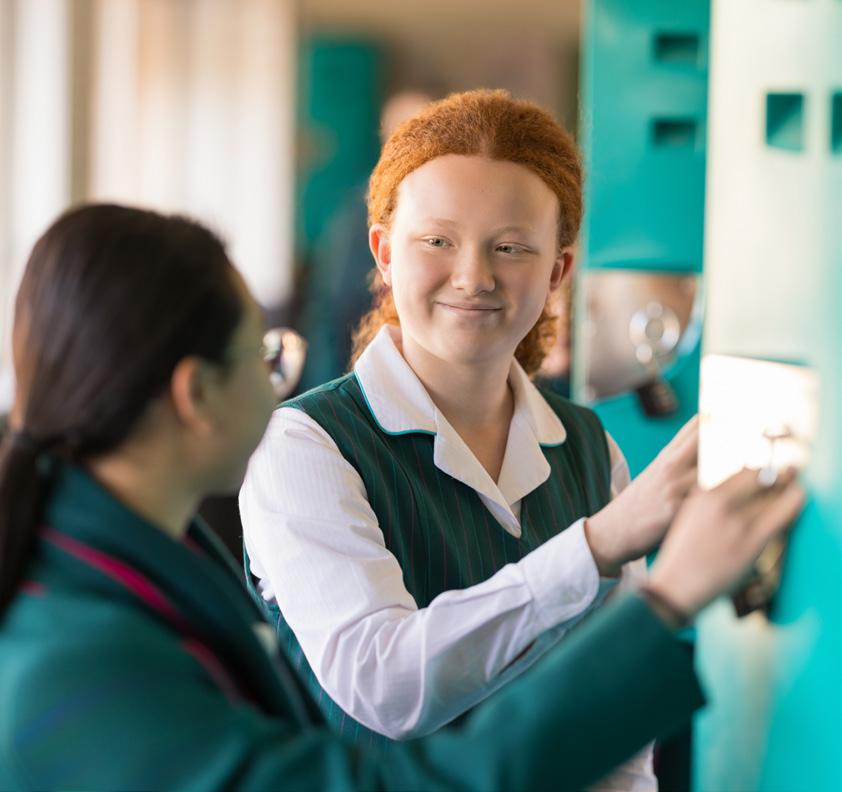
Students should read ahead in their text books, read their prescribed text or read relevant source material well before this material is addressed in the classroom. This will assist students with the content in class as the information will be more familiar.
b) Prepare study summaries
All students should prepare study summaries regularly. Some subjects have very specific content that must be learnt, and dot point summaries based on the syllabus, in these subjects can be highly beneficial. Summaries should be brief and concise, and they should be written in a way that best suits the student’s learning style. Pictures, tables, mind maps, short notes and flow charts can all be used. Simply rewriting notes without modification or adaptation is not as helpful.
These summaries should be reviewed on a regular basis so the content is lodged in the long term memory.
c) Write questions to clarify
If there are areas that need clarification, students should write down their questions so they can ask their teacher the next day.
Students in Years 7 and 8 will not be expected to do home learning during the holiday break with the exception of reading novels. Year 9 students will not be expected to do home learning, other than reading novels, during holiday time in Terms 1 and 2 but may be given work during Term 3 holidays, to help them prepare for upcoming exams.
Available one afternoon each week, all students in Years 7 to 12 are welcome to attend for support and guidance in English.
Available two afternoons each week after school to assist students from Years 7 to 12 with any questions they may have in relation to their Mathematics study.
Available one afternoon each week, all students in Years 7 to 12 are welcome to attend for support and guidance in Science.
The Danebank After School Study Centre is run in the Library. Recent Year 12 Danebank graduates, who were high achievers in the HSC and are currently studying at university, are available to students for support and advice on Tuesdays and Thursdays 3:00 - 5:00pm. Student attendance at the After School Study Centre is entirely voluntary and the support offered is directly responsive to student need.
Students may choose to complete some home study, ask for help with study strategies, plan for assessments, access advice about major work projects or simply talk to someone about how they are feeling at that moment.
The After School Study Centre is designed to run alongside and complement the teacherled Study Halls in Mathematics, English and Science.
As a result of the Academic Assessment test held in October, girls will be placed into six classes for Year 7 for the following year.
We also look at NAPLAN results, along with feedback from teacher reports, to help determine classes. Students in the most able grouping may also be invited to join a small Mathematics accelerated class based on their grading test results.
Anomalies in our class placement could emerge in the first few weeks. If that is the case, there could be further testing of individual students. Generally, once students are settled into their classes it is wise to leave them where they are for the year. This maintains their existing relationships and continuity of learning.
Results of the grading test are not disclosed to parents or students. At the end of Year 7 all students will move into Year 8 classes that have been determined by the students’ overall results in Year 7 at Danebank.
The Careers Facilitator has an office located in the Wingara Study Space and is available to assist and advise students and parents regarding careers and post-secondary school options. Miss Niranjan supports Year 10 students as they navigate the important decisions of subject selection, ensuring they pick subjects that will pave the way for future success. For Year 11 and 12 students, she offers individual guidance on a variety of exciting post-school opportunities, from exploring TAFE and university options to considering a gap year or entering the workforce.
The SWG website is designed to help you stay connected with all the latest career information, resources, and opportunities available.
The SWG Careers Hub will help you find everything you need to make a successful transition through high school, and from high school into the ‘real world’. You can also sign up to receive Pathways Newsletters, get the latest guides and book an appointment with Miss Niranjan.
Head of Information Services
Ms Julia Martin
The Joyce Cowell Library, named in honour of Danebank Principal and historian, Joyce Cowell, is a vibrant, flexible resource-rich space. Senior students from Years 7 to 12 are welcome to use this area throughout the school day, both individually or as part of class or study group. Students have access to a diverse range of physical and digital resources, many of which can be viewed from home. Printing, scanning and photocopying is available in the Library as well as temporary loans of laptop computers.
The Library is staffed by a skilled team of qualified information professionals who are on hand to assist students with all their literature and research queries. The Library manages the acquisition of physical resources, e-Books, databases, digital textbooks and online learning platforms including the digital video collection, ClickView.
Senior Library Hours:
• Monday - Thursday 7:30am - 6:00pm
• Friday 7:30am - 4:00pm (except the last day of term)
Please note: extended hours may be varied in the case of carnivals and other school events
Library
Every class from Pre-K to Year 6 has a weekly lesson with a specialist teacher librarian which complements the curriculum and fosters reading for enjoyment. Students also have the opportunity to use the library space during lunchtimes for quiet play, reading or research.
Learning + is a program for students in Years 7 to 10 which aims to foster information literacy skills across the curriculum and to develop students who are critical readers of print and digital formats. It provides an opportunity for girls to hone and refine their research skills and to gain competencies vital to becoming lifelong learners.
Students are guided through the inquiry process and discover a range of digital resources hosted by both Danebank and the State Library of NSW. As well, girls learn the principles of ethical scholarship and how to reference correctly, acknowledging sources that are not their own.
Learning + complements key learning areas, and teachers have the opportunity to schedule further lessons which focus on specific skills to be integrated into their subject areas.


Seesaw is a parent / carer communication and learning management platform through which class news can be shared with parents and other class members, as it allows students and teachers to post snapshots of the class’ learning journey. Parents receive class notifications and reminders via Seesaw. Parents have their own unique login to view this communication and class posts.
At times, teachers may post photos of the class learning. While your daughter may not appear in every post, please be assured that all girls will feature in some photographs throughout the year!
In Pre-K the communication via Seesaw includes student e-portfolios to record their learning on an individual basis.
In Kindergarten to Year 6 school announcements are uploaded to the class page.
Stationery requirements:
Junior School
Please LABEL all items with your daughter’s name.
Kindergarten:
• Danebank art smock (remains at school)
• School hat - “no hat, play in the shade”
• Danebank library bag for library day
• Wired headphones in a labelled ziplock bag
• Additional items supplied at school.
Year 1:
• 4 x 2B lead pencils per term (all triangular grip or with a pencil grip)
• 1 pencil sharpener (with container attached for shavings)
• 2 glue sticks per term
• 2 plain white erasers (no white out or tapes)
• 2 different coloured highlighter markers
• 1 pair of scissors (correct size and comfortable to use)
• 1 small pencil case to fit the above items
• Coloured pencils (set of 12 colours is plenty)
• Twistable crayons (set of 20-24 packs are best)
• a second small sized pencil case for coloured pencils (no Textas or pens)
• Danebank art smock (remains at school)
• Wired earphones in a labelled ziplock bag (AUX plug, NOT iPhone plug- no large novelty headphones)
• Danebank library bag for library day.
• School hats: both the round hat and sports cap - “no hat, play in the shade” (remains at school)
Year 2:
• 1 x clear plastic A4 book cover
• 4 x HB lead pencils per term
• 4 x green ballpoint pens
• 1 x pencil sharpener (with container attached for shavings)
• 2 x glue sticks per term
• 1 x plain white eraser (no white out or tapes)
• 1 x pair of scissors (correct size and comfortable to use)
• 30cm plastic ruler clear
• 1 x small pencil case to fit the above items
• 2 x different coloured highlighter markers
• A set of coloured pencils (set of 12-24 colours is plenty)
• A second small sized pencil case for coloured pencils (no textas or coloured pens)
• Wired earphones in a labelled ziplock bag (AUX plug, NOT iPhone plug- no large novelty headphones)
• A pack of whiteboard markers 1.5mm (replenish as required)
• Danebank art smock (remains at school)
• Danebank library bag for library day
• School hats: both the round hat and sports cap - “no hat, play in the shade” (remains at school)
• 4 x HB pencils
• 4 green pens (2 per Semester)
• pencil sharpener (with container attached for shavings) (not electric)
• 2 large glue sticks per term
• 1 large white eraser per term
• 2 different coloured highlighters
• 30cm ruler
• small scissors
• 1 pencil case to hold the above items
• Pack of coloured pencils (good range of colours for art use)
• 1 pencil case for coloured pencils
• 8 x dark blue or black whiteboard markers
• School hat
• Zip up folder/bag for Homework (large enough to fit sheets and 2 books inside)
• Wired earphones in a labelled ziplock bag
• Danebank library bag for library day
Year 4:
• 4 x HB pencils
• pencil sharpener
• 2 glue sticks
• white eraser
• Set of 2 highlighters
• scissors
• 30cm ruler
• coloured pencils and textas
• 1 large pencil case
• 2 green pens
• School hat
• 2 black permanent markers - 1 fine point , 1 thicker Sharpie
• 4 x dark blue erasable pens for when students earn their pen licences
• 8 x dark blue or black whiteboard markers
• calculator
• Danebank art smock (remains at school)
• homework folder (min A4 size)
• wired earphones in a labelled ziplock bag (and a cheaper spare set of headphones)
• Danebank library bag for library day.
Year 5:
• 1 Danebank pink cap (for camp)
• Danebank library bag for library day.
• School hat
• Danebank excursion bag
• 4 blue pens
• 4 black pens
• 2 red pens
• 1 green pen
• 1 "Sharpie' Fine Permanent Marker Black
• 8 x dark blue or black whiteboard markers
• 4 lead pencils
• Small set of coloured pencils
• 4 highlighters
• 4 glue sticks
• Pencil eraser
• Sharpener
• 30cm ruler
• Scissors
• Small calculator
• Wired earphones in a labelled in a small ziplock bag (and a cheaper spare set of earphones)
• Whiteout tape (no liquid paper to be brought to school)
• Homework folder to carry notes and homework books
• 1 small pencil case to hold stationery (a separate pencil case may be used for items used less frequently)
• Please label all equipment with students name or initials
Year 6:
• 1 clipboard
• 4 blue pens or black pens (these may need to be replenished throughout the year)
• 2 red pens (these may need to be replenished throughout the year)
• 2 green pens (these may need to be replenished throughout the year)
• 1 ‘Sharpie’ fine permanent marker black
• 4 lead pencils (these may need to be replenished throughout the year)
• Set of 3 highlighters (these may need to be replenished throughout the year)
• 8 dark coloured whiteboard markers
• 3 glue sticks (these may need to be replenished throughout the year)
• Pencil eraser
• Sharpener (with container attached for shavings)
• 30cm ruler
• Scissors
• Maths set (protractor, compass & set squares)
• Wired earphones in a labelled ziplock bag
• Whiteout tape (no liquid paper to be brought to school)
• Homework folder (min A4 size) to carry notes and homework sheets
• Pencil case/s to hold stationery
• School bucket hat (for days when wearing school uniform & excursions)
• School sports hat (for days when wearing PE uniform)
• Small set of coloured pencils
• Danebank excursion bag
• Danebank library bag for library day
• Please label all equipment with students name or initials
• Pencil case (with pens, pencils, eraser, ruler, pencil sharpener, highlighter etc.)
• Sturdy A4 ring binder with dividers for each subject.
• The School will provide students in Year 7 with A4 exercise books for English, Geography, Languages, Mathematics, PDHPE and Science.
• USB stick and a USB adaptor if your device doesn’t have a standard USB port.
• Visual Arts diary 11” x 14” for Years 8 to 11 Visual Arts students, to be purchased from the Senior Office. A Visual Arts diary will be supplied to Year 7 students by the School.
• Mathematics geometry set (details provided by Mathematics teachers in Week 1).
• Mathematics: Purchase a CASIO fx-8200 AU calculator.
• Headphones compatible with her BYO Device.
• Technology: 1 x A4 Display Folder.
• Apron: A requirement of the Technology course is that students wear a food safe apron during all practical cooking lessons. To meet this requirement, we ask that each student purchase a school approved apron from the uniform shop. The apron will be used in the Food Technologies unit in Year 8 Technology and throughout Stage 5 and 6.
• Science: Apron and safety goggles (optional - for purchase from the uniform shop.) If individual PPE is not purchased, shared items are available in class.
Teachers will notify the girls in class about any other exercise book requirements.
• Students enrolled in the Roseby Class are provided with a book pack.
• Pencil case (with pens, pencils, eraser, ruler, pencil sharpener, highlighter etc.)
• Headphones compatible with her BYO Device.
• Students in the Roseby Class do not need to purchase any textbooks or equipment other than: Visual Arts diary 11” x 14” for Years 8 to 11 Visual Arts students, to be purchased from the Senior Office. A Visual Arts diary will be supplied to Year 7 students by the School.
At Danebank we use the Box of Books (BoB) platform to purchase and deliver digital textbooks and other course content for your daughter. Parents / carers will be emailed details in November/early December with instructions on how to access the website and purchase your daughter’s required textbooks.
Once purchased, your daughter’s digital textbooks will be accessible immediately via the Box of Books site, with the exception of Year 7 who will have access at the start of Term 1. Edrolo and other digital subscriptions will be available at the start of Term 1.
It is necessary for you to access the Box of Books platform and place your order in early December so that any physical textbooks arrive in time and your daughter is prepared for the start of the academic year. Late orders of physical textbooks may not be delivered prior to the start of Term 1.
Note: There will be an additional charge made to parents for English novels which is separate to the Box of Books textbook purchases they will be required to make.
At different stages of their education, students need access to different hardware. The details below will assist you in understanding what provisions are made at school, or should be made by you, for your daughter.
Our Bring Your Own Device (BYOD) program requires students to own their own device that meets the following minimum requirements:
• Weight: Less than 2kg
• Battery: 8 Hours (sufficient to last the entire school day)
• Screen size: 13” to 15”
• Processor: i5 or equivalent
• Memory: 8GB RAM
• Storage: 256GB SSD
• Operating System: Windows 11 or MacOS 15
• A robust carry case
Note: Windows laptops with ARM processors are not supported.
The school will provide students with the following software to meet their core educational needs:
• Google Apps Suite
• Microsoft Office 365
• Adobe Creative Cloud (Photoshop, Illustrator, InDesign, After Effects)
• Google Drive File Stream
• Sparkvue
• Box of Books (Offline Reader Software)



iPad's and PC's will be provided at school for student use.
Kinder
Years 1-6
At home, students will need access to a Mac or PC computer for homework.
1:1 Chromebooks will be provided at school for student use.
At home, students will need access to either a Mac or PC to login to Google Chrome and access all their school files for homework and assignments.
Note: All K-6 students will need to have access to a computer at home to complete homework tasks. An ipad is not suitable to complete homework.
Your daughter will be required to bring a laptop or hybrid tablet as her primary device.
Years 7-12
Please refer to the BYOD requirements listed as a guide to the minimum requirements for your daughters BYOD.
Danebank is committed to supporting the educational needs of all students. Students with additional learning needs, which includes high potential and gifted learners, those who require learning assistance, and those for whom English is an additional language or dialect (EAL/D), are supported by a team of dedicated staff.
The Learning Enrichment Department, composed of highly qualified and experienced specialist teachers and Learning Support Assistants, aims to provide support that empowers our students to achieve their full potential. Our staff take pride in their reputation for nurturing and caring for students, and accommodating their special learning needs whether they require assistance in a particular area/s, are learning English as a second language (EAL/D), or are high potential and gifted learners.
Our team adopts a collaborative approach, ensuring communication and sharing of expertise between each other, as well as with classroom teachers, School Counsellors and outside agencies. Together with parents, in a team-based approach, we work to design programs and learning experiences that match each student’s individual learning needs.
Students with special learning needs are identified early. Classroom teachers are able to refer students to our highly experienced team of Learning Support, Literacy and Numeracy Specialists who work across the school Pre-K - 12. Referred students are assessed using a range of diagnostic tools to identify very specific areas of difficulty. Learning Support staff value effective parent-school relationships and recognise the importance of open and honest communications regarding students’ learning needs.
A team-based approach is adopted to determine how these difficulties might best be addressed and remediated in a supportive and responsive manner. A culture of collaboration between specialist staff and classroom teachers is established to ensure that students are provided with engaging programs that are curriculum aligned. Where possible, assistance
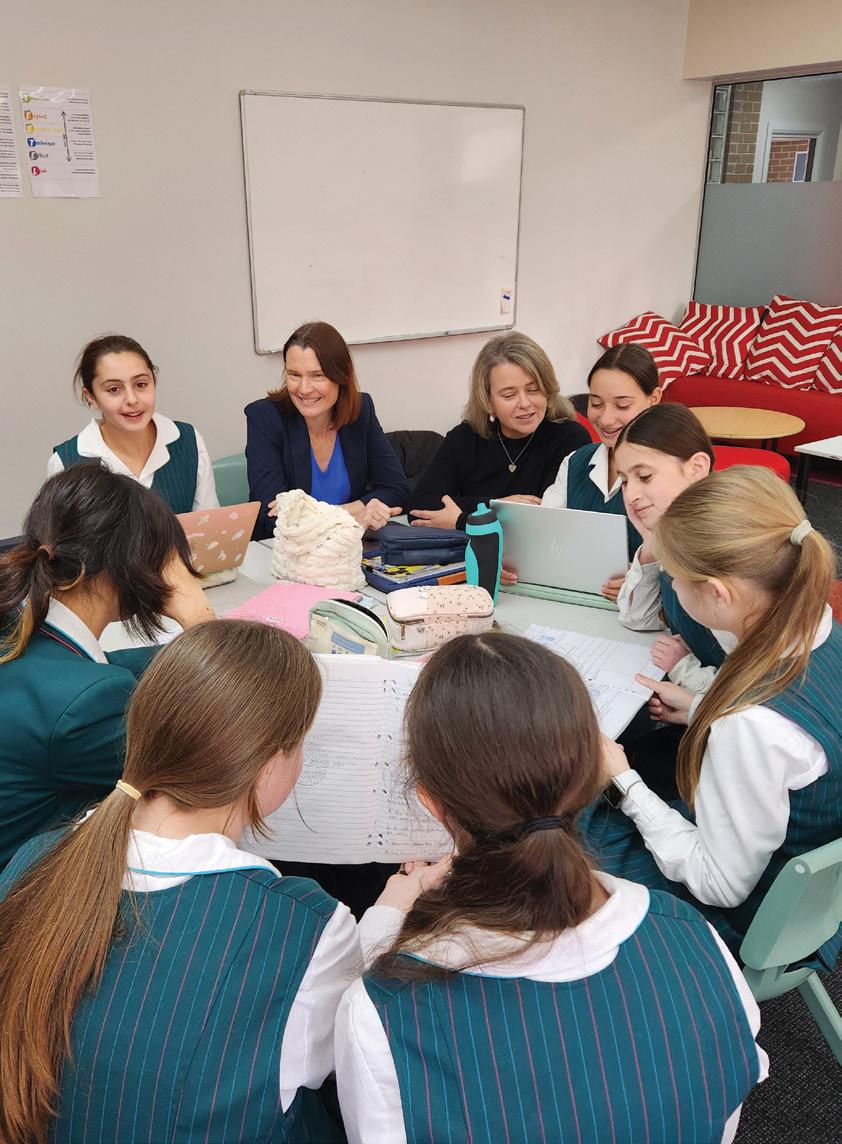
is provided by specialist teachers, learning support assistants or counsellors, either within the classroom or as part of a short-term intervention on a withdrawal basis. This may be in either a small group or one-to-one setting. Sometimes extra assistance needs to be offered long term and individual learning adjustment plans may be designed to support students in accessing the curriculum.
Support services are also available to classroom teachers via the Learning Enrichment team, in the form of specialist advice and professional learning with a view to best support the learning of our students.
English as an Additional Language/Dialect
A specialist EAL/D teacher identifies students who speak an additional language to English at home, as they enter Danebank. They are provided with a support program, on the basis of an EAL/D assessment, that is designed to align with the classroom teaching methods and programs across all key learning areas, while simultaneously moving them along the EAL/D progressions of learning English. Withdrawal EAL/D support is also offered to students in Senior School according to need.
Students with greater needs are also given the opportunity to work alongside learning support assistants during specific lessons in the classroom. For students who are newly arrived to Australia, an intensive program will be offered on a short-term basis.
Translation and interpreting services are also available for school notes, student reports, parent/teacher interviews, student counselling and other school/home interactions.
The High Potential and Gifted Education approach is a framework to develop the talent and potential of high potential and gifted students at Danebank, helping her to become all she is purposed to be. Equity and excellence guide our approach as we prioritise:
• Knowing and cultivating the gifts, talents and passions of every girl so they may flourish
• Developing inspired learners who will serve and shape our world
• Ensuring challenge and stretch within, across and beyond the curriculum
• Providing tailored learning experiences facilitated by staff with expertise in gifted education.
The approach promotes engagement and challenge for every student, while explicitly identifying and addressing the learning needs of high potential and gifted students. The overriding principle in this policy is equity and excellence. High potential learners require
opportunities and differentiated teaching and learning practices to ensure their specific learning needs are met.
Gifted and talented students also enjoy competing in many academically challenging competitions and attending special workshops. Students are selected to participate in gifted and talented opportunities for the application of knowledge beyond the curriculum. These activities include the Da Vinci Decathlon, Gateway 8, Australian RACI Chemistry Quiz, Scientia, Australian Museum Science Expo, Academy Conferences, University of Wollongong Learning Labs, ICAS Mathematics, Science and English competitions, Australian Mathematics Challenge, National Youth Science Forum, the Science and Engineering Challenge, AHIGS Festival of Speech, St George Eisteddfod, Australian Problem Solving Mathematical Olympiad, Alliance Française Competition, Share Market Game, AMP Economics competition, Australian History and Geography competitions and Bandfest.
Gifted mathematicians entering Year 7 can be selected for the Danebank accelerated Mathematics class which gives students the opportunity to move through the mathematics syllabus at a faster rate, culminating in Extension Mathematics HSC courses.
Acceleration for exceptional students can also be offered in relevant Senior School subject areas. Exceptional students who wish to extend or accelerate their studies outside the Danebank curriculum are assisted in courses offered through the Open High School.
Students are required to attend and to participate in Personal Development, Health and Physical Education (PDHPE) and sports carnivals. Students are expected to wear full PDHPE uniform for all PDHPE activities.
Expectation of students participation in PDHPE practical lessons
Students are expected to change into their PDHPE uniform in break times before PDHPE practical lessons if that lesson is immediately after a break (before school, recess or lunch). For example, students who have PDHPE in period 1 are to change into their PDHPE uniform before school. For period 3, they change at recess, for period 5 at lunchtime.
Students are not permitted to attend Assembly and Chapel in their PDHPE uniform. All students are to change back into their school uniform before leaving school regardless of whether they are being picked up at the end of the day or are catching public transport home.
For students in Years 7 to 10, practical lessons are a compulsory component of the PDHPE syllabus and participation is essential to meet NESA requirements. As such it is important for all students to take part in these lessons. In the exceptional circumstances where students cannot participate, notes are to be provided by parents. The note from parents is to be addressed to the student’s PDHPE teacher and given to them at the beginning of the lesson.
These notes are to indicate clearly the date, student name, reason for non-participation, parent contact number and must be signed by a parent/carer. Failure to do so will result in a uniform infringement.
Students who provide a note will not be allowed to participate in any form of physical activity in the lesson unless stated by the parent for minimal participation. For instances where students will not be participating for more than one lesson, notes are to include the estimated period of time of non-participation. For example, days or weeks and a date when they will be able to return to physical activity. Where this non-participation period is longer
than two weeks, a medical certificate from a GP is required. (Medical certificates written by a family member cannot be accepted.)
Those students unable to participate in PDHPE lessons may be given work sheets that support the lesson content. Parents may be contacted by the Head of PDHPE if their daughter is in danger of not meeting NESA requirements for PDHPE due to lack of participation.
For students in Years 7 to 10, practical lessons are a compulsory component of the PDHPE syllabus and participation is essential to meet NESA requirements. As such it is important for all students to take part in these lessons.
Students are to report all injuries to the PDHPE teacher before the conclusion of the lesson to ensure adequate and accurate recording of the situation.
Junior School:
Expectation of students participation in PDHPE practical lessons
All students are expected to arrive at PDHPE lessons changed and ready for the session. Students in Kindergarten - Year 6 may wear their sport uniform all day at school PE practical days. They do not need to change into their school uniform. The exception to this is when they are scheduled to swim; they wear their swimming costume under their summer school uniform and bring underwear to change into after the lesson.
For students in Kindergarten - Year 6, practical lessons are a compulsory component of the PDHPE syllabus and participation is essential to meet NESA requirements. As such it is important for all students to take part in these lessons. In the exceptional circumstances where students cannot participate, notes are to be provided by parents.
The note from parents is to be addressed to the student’s class PDHPE teacher and given to them at the beginning of the lesson. These notes are to indicate clearly the date, student name, reason for non-participation, parent contact number and must be signed by a parent/carer. Students who provide a note will
not be allowed to participate in any form of physical activity in the lesson unless stated by the parent for minimal participation.
For instances where students will not be participating for more than one lesson these notes are to include the estimated period of time that the student will not be participating. For example, days or weeks and a date when they will be able to return to physical activity. Where this non-participation period is longer than 2 weeks, a medical certificate from a GP is required. (Medical certificates written by a family member cannot be accepted.)
Those students unable to participate in PDHPE lessons may be given worksheets that support the lesson content.
IPSHA & IGSA Swimming Carnival
Senior Tennis - School Championship
IGSA Tildesley Shield Tennis
IPSHA & IGSA Cross Country
IPSHA & IGSA Athletics Carnival
IPSHA & IGSA Gymnastics
One
One
One
One & Two
Three
Four
Ms Bianca Jervis
roseby@danebank.nsw.edu.au
Our Roseby Class students follow programs that are individually appropriate in a welcoming and encouraging classroom environment. We place strong emphasis on resilience and social skills, with girls developing the skills to help them establish independence and work-readiness.
Who is the Roseby Class program for?
Roseby Class programs cater for students with mild to moderate intellectual disabilities.
There are two classes, one group studying in Years 7 to 10 and the other in Years 11 to 12. Each student follows a program to meet individual goals that satisfies a NESA syllabus titled Life Skills. The programs are developed in consultation with staff, parents, students and relevant external experts.
The Danebank Environment
Students undertake wellbeing programs through our Connect program, sports lessons and attend activities with their year group. Students contribute to all whole-school events, such as Year group activities, Sports Carnivals and House Festival Day, as well as extra curricular activities and clubs.
Students are well accepted and mix within the broader school community. The friendships that result lead to the development of social skills and confidence in our students.
The students in the Roseby Class learn about the Danebank Approach to Learning. The students are taught to understand how they learn and are encouraged to improve their learning.
Students follow programs that are individually appropriate so that each student can work and achieve to the best of her ability. Each student under-goes individual and ongoing assessment. On the completion of Year 10, students receive a RoSA and Year 12 the HSC. Many girls who have graduated from the Roseby class have successfully entered the workforce through a job agency or continued their learning with further study.
Careful consideration is given to the academic and social needs of each student and an Individual Education Plan is developed with each student and their family, focusing on academic, social and transition goals. While programs are designed to meet individual goals, there is also an emphasis on the
development of interpersonal skills and respect for others through a social skills program that links to our Danebank values.
Subject areas for Years 7 to 10 include English, Mathematics, History, Geography, Drama, Science, Visual Art, Languages, Technology, Christian Studies, PDHPE and Music. Years 11 and 12 students study English, Maths, Work and Community, Technology, PDHPE, Christian Studies and Science.
Students attend their year group camp with appropriate support. Students also enjoy an annual Roseby Camp experience. The camping program maintains the emphasis on developing independence, resilience and social skills.
Students in Years 11 and 12 attend work experience one day a week, providing them with a range of workplace experiences and travel training opportunities. Students and their families are introduced to job agencies at the end of their schooling to assist in the development of work-ready skills in the future. Work experience is an essential part of the program.
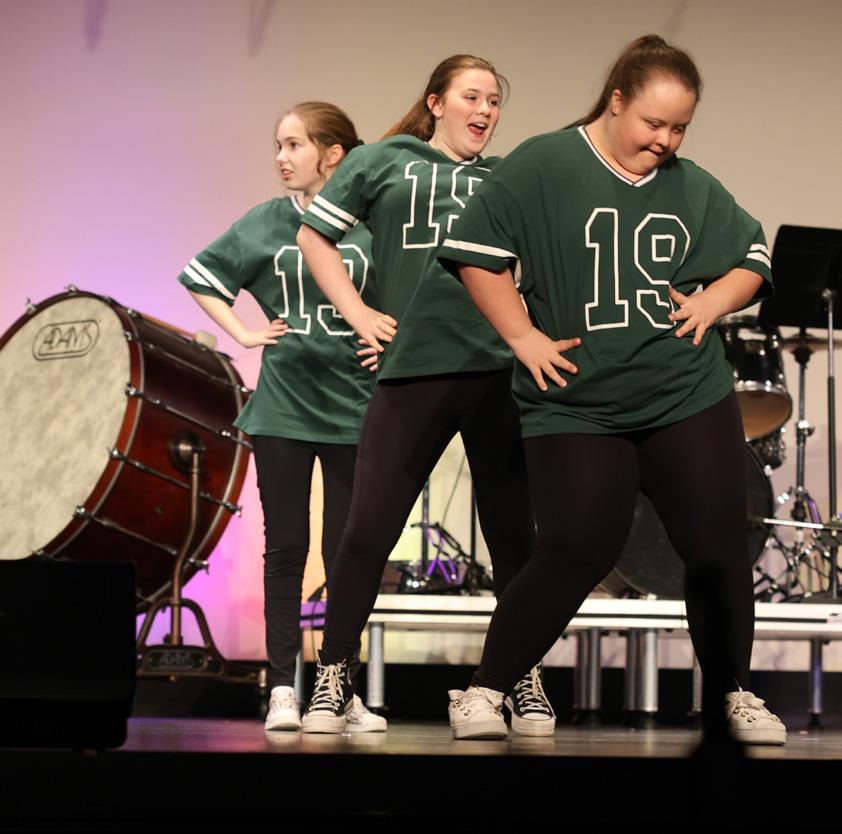
At all times, Danebank seeks an active partnership with parents and caregivers, encouraging them to be involved in the various stages of the program. Each student has a collaborative Individual Education Plan Meeting where learning and individual goals are set. There is ongoing review and monitoring throughout the year. Communication between home and school is ongoing through the school diary, class blog, email and face-to-face meetings.
Roseby Class Coordinator, Ms Bianca Jervis holds a Bachelor of Education (Special Education) and has a background in nursing. She is committed to providing each student with the opportunities and experiences needed to move her along the pathway towards being a contributing member of society.
Mrs Carly Brown holds a Bachelor of Physical and Health Education and a Post-Graduate Certificate in Inclusive Education. She believes in providing an opportunity for all students to be successful by creating meaningful educational experiences through tailoring programs so every student has the opportunity to flourish.
Ms Karlie Cunningham holds a Bachelor of Exercise Science and Human Movement and a Graduate Diploma in Education. She is passionate about creating a safe, supportive, and welcoming learning environment where students feel empowered to explore and embrace their unique learning styles. Karlie is deeply committed to helping students achieve individual educational success, with a strong focus on nurturing their overall wellbeing as the foundation for growth and achievement.
The Roseby Class teachers teach English, Mathematics, Work and Community, HSIE, PDHPE and Social Skills.
Specialist, expert teachers teach the Roseby Classes in Science, Music, Technology, Visual Art, Drama, Languages and Christian Studies. Our Learning Support Assistants assist staff and students in all lessons and play an important role in the work-experience program. All staff members are deeply committed to our students.
The Danebank Sports Program encourages widespread participation and offers a broad array of sports for students to enjoy and compete in. Danebank is dedicated to providing opportunities for all students—whether beginners, intermediates, or advanced athletes to get involved in its activities. Sport at Danebank is not compulsory, however strongly encouraged!

The Sports Program aims to:
• Encourage enjoyment and skill development
• Advocate for fitness, wellbeing and a healthy lifestyle
• Cultivate cooperation and dedication
• Support personal responsibility and team building
• Facilitate healthy competition and help students reach their sporting potential
• Foster a sense of pride and community
Sports Program Overview
Danebank is a member of the Independent Girls Schools’ Association (IGSA) and much Senior School sport is based around the IGSA Sport Calendar. IGSA have over 30 schools involved, including country schools such as Frensham, NEGS and PLC Armidale. It offers Saturday sport per term, as well as carnivals for Athletics, Cross Country, Gymnastics, Swimming and Tennis (Tildesley).

Sport
Kerrie Banfield Francesca Taliano Ella Boudakian
kerrie.banfield@ danebank.nsw. edu.au
francesca.taliano@ danebank.nsw. edu.au
ella.boudakian@ danebank.nsw. edu.au
Katrina Moir
katrina.moir@ danebank.nsw. edu.au
Michael Garrett-Meade
michael. garrettmeade@ danebank.nsw. edu.au
Basketball
Hockey
Volleyball Tennis
Registration takes place throughout the year and students and parents/carers are informed of this via email from the Head of Sport, Mr Cameron Morrissey. Parents receive an email from the Head of Sport in order to register for sports in which they wish to participate.
Once registrations for each term close, the relevant Sport Facilitators will be in communication with students and parents/ carers to inform them of trial dates, and subsequent training sessions.
Attendance at trials for each sport is compulsory.
Selections will be made based on skill level, fitness, attitude and understanding of the game. Every girl registered by the registration closing date will be placed in a team.
Once teams have been selected, an Information Booklet for each sport will be distributed via email from the relevant Sport Facilitator which will include: teams, coaches, venue information, training schedule, draw, contact information.

Players are expected to attend all training sessions and games unless they are absent from school.
Training is conducted before school (6:45am to 8:00am) or after school (3:30pm onwards). Teams train once per week, and those playing in top IGSA or equivalent grades have a second training session each week.
Saturday morning games for all IGSA Sports take place between 8:00am and 12:00pm at various venues across Greater Sydney. All students must arrive at the venue at least 30 minutes before the game to sign on, warm up and prepare for their game.
All girls are expected to communicate to the relevant Sport Facilitator if they cannot attend a game or training session via the NonAttendance Form at a minimum three days prior.
Each Sport requires a specific uniform which can be found here. Danebank ONLY uniform must be worn to, from and during sporting events and training sessions.
IPSHA Code of Conduct
Players’ Code of Behaviour
• Play by the rules.
• Never argue with an official.
• Control your temper. Verbal abuse of officials or other players, deliberately distracting or provoking an opponent is not permitted in any sport.
• Work equally hard for yourself and/or for your team. Your team will benefit, so will you.
• Be a good sport. Applaud all good plays, whether they be by your team, opponent or the other team.
• Treat all players as you would like to be treated. Do not interfere with, bully or take unfair advantage of another player.
• Cooperate with your coach, teammates and opponents. Without them there would be no competition.
• Place in proper perspective the isolated incidents of unsporting behaviour rather than make such incidents the ‘highlight’ of the event.
• If a player is sent off during the game, a one-week suspension is recommended.
Spectators’ code of behaviour
• Children play organised sports for fun. They are not playing for the entertainment of spectators only, nor are they miniature professionals.
• Applaud good performances and efforts from each team. Congratulate all participants upon their performance regardless of the game’s outcome.
• Respect the officials’ decision.
• Never ridicule or scold a child for making a mistake during a competition.
• Positive comments are motivational.
• Condemn the use of violence in any form, be it by spectators, coaches, officials or players.
• Show respect for your team’s opponents. Without them there would be no game.
• Encourage players to follow the rules and the officials’ decisions.
• Demonstrate appropriate social behaviour by not using foul language, harassing players, coaches or officials.
• Comments should not interfere with the running of the game.
Praise
• Praise is encouraged at all levels. Complaints
• Complaints concerning the conduct of games should not be made during or after the game. They should be referred to the Head of the School and any action should be left to his/her discretion.
• UNDER NO CIRCUMSTANCES should parents contact schools directly.
• All grounds must be kept clean – litter must be placed in the bins provided.
AHIGS Association of Heads of Independent Girls’ Schools ahigs.nsw.edu.au
IGSA Independent Girls School Sport Association igsa.nsw.edu.au
IPSHA Independent Primary School Heads of Australia ipsha.org.au
CIS NSW Combined Independent Schools Sports Council cis.nsw.edu.au/sports
AHIGS Code of Conduct available on the IGSA website.
https://igsa.nsw.edu.au/wp-content/ uploads/2025/01/IGSA-Sport-Code-ofConduct-2025.pdf
Please make sure all players, parents, coaches and umpires are aware of the Code of Conduct. An AHIGS Incident Report must be completed for any breaches of this code.
AHIGS Summary Code of Conduct For InterSchool Sport
WHY: The Summary Code of Conduct is designed to provide a brief outline of the rules, guidelines and principles governing inter-school sport. It is a quick reference document only and does not replace the AHIGS Code of Conduct. In the event of a perceived conflict between the two, the latter will prevail.
WHO: The Summary Code of Conduct applies to anyone participating in IGSSA Sport including students, staff, coaches, umpires, officials, parents, spectators and volunteers.
WHAT: The Code of Conduct covers four areas: principles, expectations, authority and rules.
Principles
• Participation in inter-school sport is important for all girls: it fosters social, emotional, personal and physical development.
• Winning is less important than cooperation, team spirit and good sportsmanship.
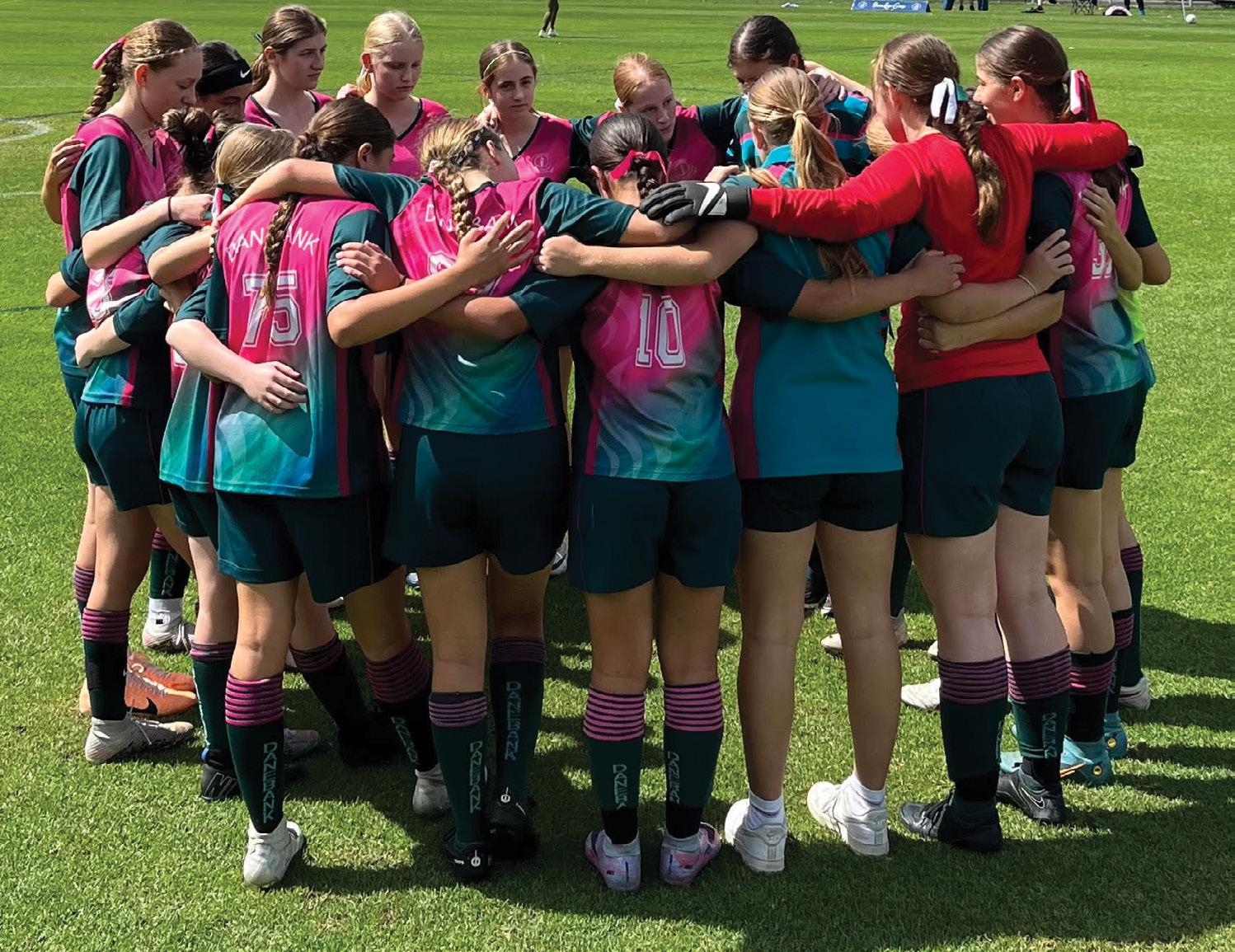
• All participants, regardless of their role, will be expected to treat others with respect, courtesy and encouragement. Disparaging comments will not be tolerated nor will aggressive, abusive or offensive language or behaviour.
• Should disputes arise, resolve them in a calm and constructive manner.
• There will be no argument with or criticism of the referee. If you disagree with a decision, refer to the AHIGS Complaints Policy available on the website.
• Harassment will not be tolerated in any form.
Authority
• The match officials have complete control of the game. In matters regarding play and the rules of the game, their decision is final.
• The venue convener has responsibility for all other aspects of the game such as safety at the venue.
• The referee and venue convener will work together to achieve a fair outcome. They may also consult staff members present.
• In the event of misconduct, the match officials may caution, suspend or send off the offender. In extreme circumstances they may stop play or terminate the game. Rules
• Unacceptable conduct is outlined in the Code of Conduct and includes any behaviour that might reasonably be expected to damage the self esteem of another or the reputation of an individual, school or the independent school sector generally. This includes derogatory remarks, dangerous behaviour, property damage, inciting violence, verbal or physical abuse or harassment.
• Players engaging in unacceptable conduct may be cautioned, suspended or sent off. Anyone else engaging in unacceptable conduct will be cautioned and if this fails, asked to leave.

Danebank Swim School provides high quality Learn to Swim lessons and Squad sessions for the Danebank community. We cater for age groups from three years in our Learn to Swim program, all the way through to competitive/elite swimmers.
All new Learn to Swim and Squad students are assessed prior to enrolment into the Swim School to ensure they are enrolled into the appropriate swimming group for their ability. Students are continually assessed during their lessons or squad sessions with a view to advancing to the next level.
Monday and Thursday mornings at 9am, duration 30mins, teaching safety, getting your toddler familiar with the water and getting ready for our LTS Program, from 6 months through to 3 years
Learn to swim lessons are conducted in the Learners Pool. Lessons are taught by enthusiastic AUSTSWIM qualified instructors. Learn to Swim lessons are 30 minutes with the higher level Dolphins are 45mins in duration and are conducted after school on weekdays and on Thursday and Saturday mornings.
Swim squads are conducted in the main pool. Squad sessions are coached by highly qualified and experienced swimming coaches. Squads are conducted before and after school, depending on available pool space.
• Mini Squad 1 Hour
• Sparks Squad 1.25 Hour
• Open Squad 1 Hour
• Flames 1.5 Hours
Adult Squad is designed to increase the endurance and fitness levels of adults as well as stroke correction to improve swimming technique. Adult Squad is 1 hour in duration.
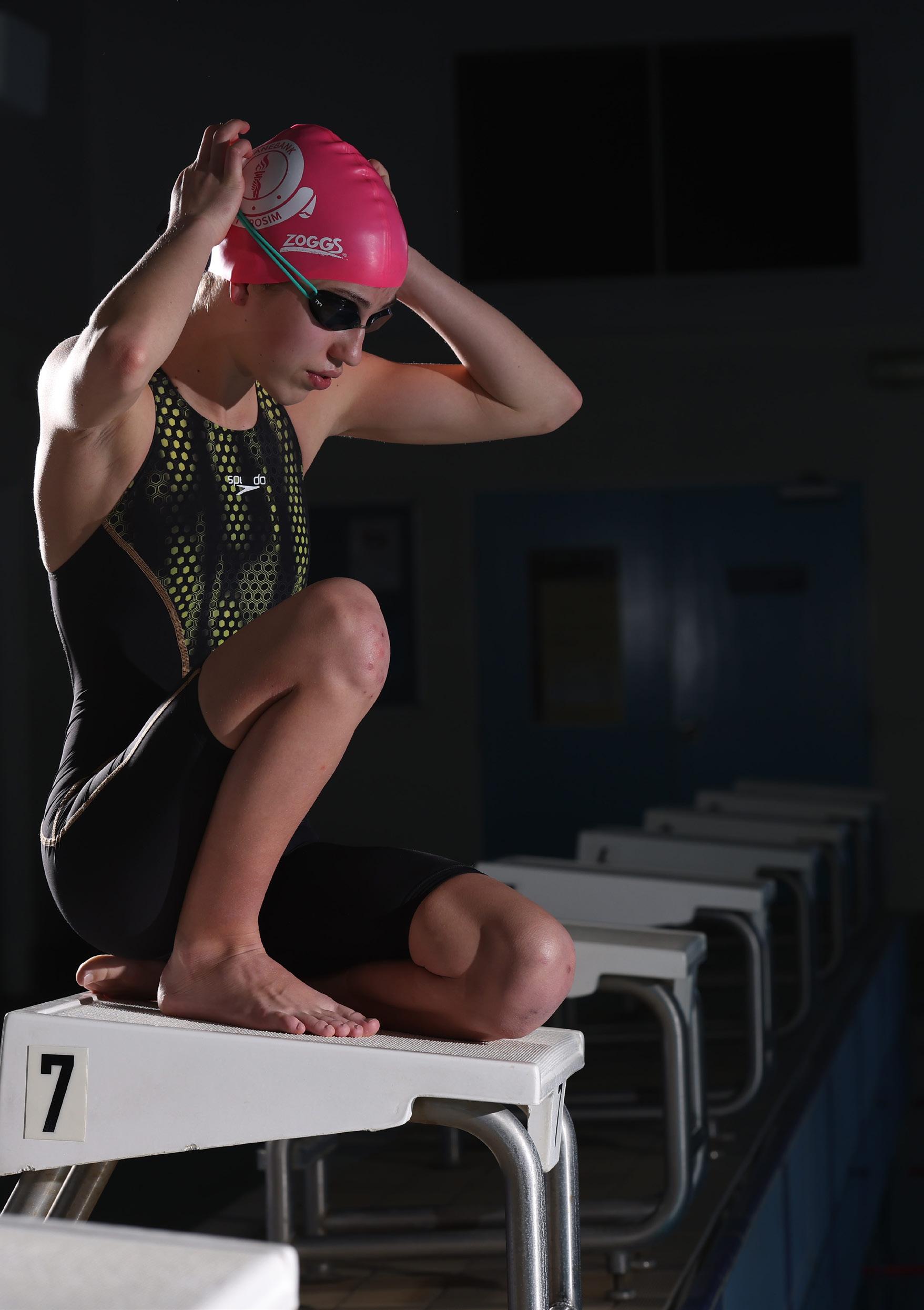

We encourage each girl to participate in some of the wide range of co-curricular activities listed below. This is a great way for girls to make friends as well as learn new skills and follow their interests.
Here are some of the many reasons we run camps at Danebank.
• It encourages students to try new things. Camp pushes students out of their comfort zone and exposes them to new activities and experiences that they may not be familiar with.
• It helps to develop social skills. Camp teaches students to communicate, to work together as part of a team and to be a leader. Leadership is developed by asking campers to fulfil responsibilities that may not be expected of them in day to day life.
• It encourages students to face challenges and learn the value of hard work. Because they feel safe at camp, students are more comfortable taking healthy risks and setting personal goals.
• It helps to build character. In addition to making new friends, campers also develop an appreciation for the qualities required to cultivate and strengthen these relationships.
• To foster independence. At camp, students learn the responsibility of making their own decisions with the safety net of insightful camp leaders and teachers in a safe environment.
Every camp at Danebank has a slightly different focus, but at every camp we seek to empower the student, build confidence, grow leadership and independence and expose students to different environments.
Learning to take healthy risks builds perseverance and resilience and ultimately gives the students a great sense of achievement. All of these skills aid students when they are back at school.
Annual camps are held for Years 3-11. Excursions and incursions are held throughout the year by various faculties for Pre-K to Year 12.
Year 4 Camp CRU site Galston Gorge
Year 5 Camp Youthworks Waterslea
Year 5 Excursion
Year 6 Camp
CRU site Lake Macquarie
Year 6 Excursion Canberra
Year 7 Camp
Year 8 Camp
Year 9 Camp
CRU site Galston Gorge
CRU site Lake Macquarie
Youthworks Waterslea
Year 10 Camp The Tops Conference Centre
Year 11 Camp Retreat Long Point Conference Centre
SIC and FOCUS Camp Youthworks Deer Park
Roseby Class Camp Teen Ranch
Music Camp (Years 2 - 12)
Year 10 Visual Arts Camp

The Duke of Edinburgh’s International Award is available to all students 14 years (Year 9) and above. The Award is comprised of three levels each progressively more challenging:
• Bronze (14 years and over)
• Silver (15 years and over)
• Gold (16 years and over)
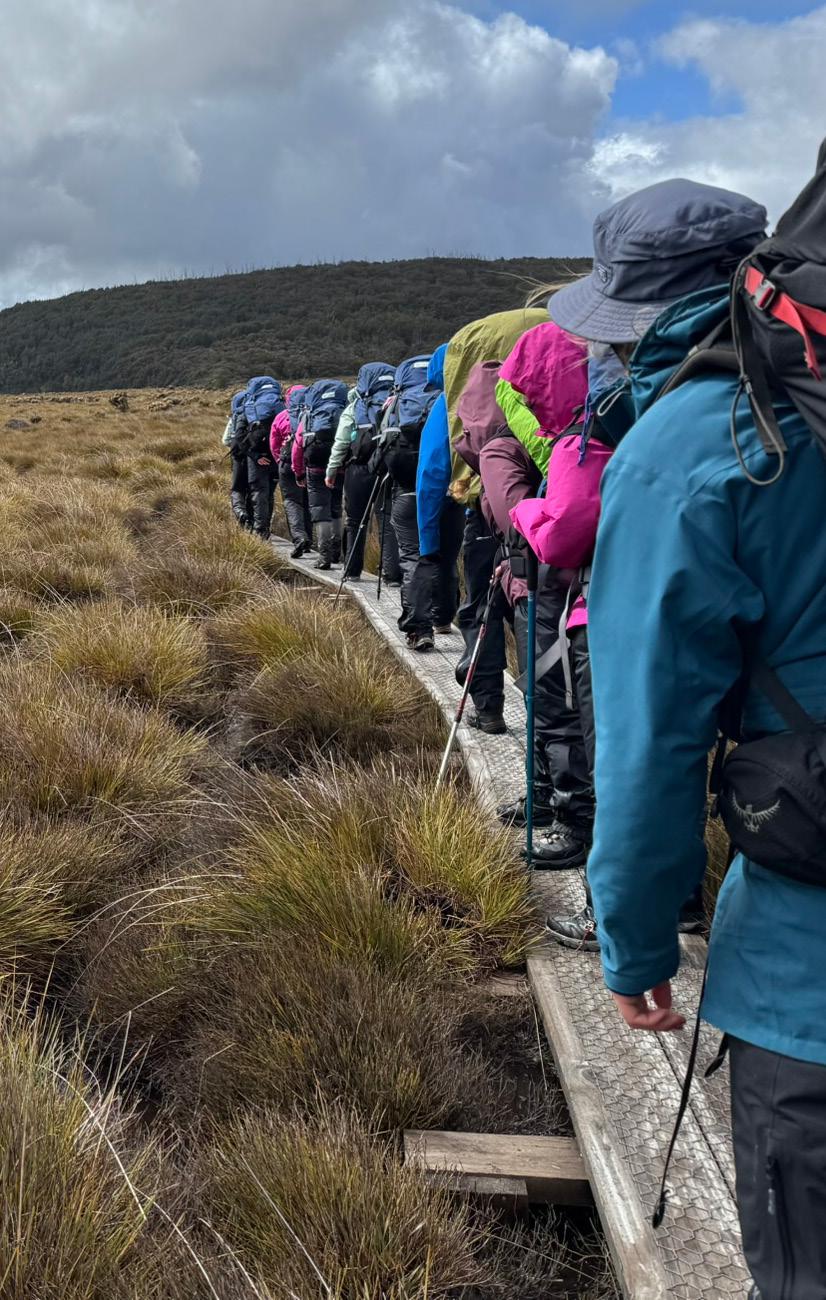
The Duke of Edinburgh’s International Award participants are required to complete four sections at each level: Service, Skill, Physical Recreation and Adventurous Journey. In Gold level, participants also complete a Residential Project.
Girls at Danebank are very involved in the The Duke of Edinburgh’s International Award. Those who take part develop great leadership and organisational skills as well as making a valuable contribution to the wider community. They also learn to persevere and step outside of their comfort zones.
Danebank is one of the top schools delivering the Award, globally, when measured by completion rates and participation. The number of girls who receive awards, bronze, silver and gold, is extraordinary. Gold Awards are presented by the Governor of NSW.
By participating in The Duke of Edinburgh’s International Award students embark on the education continuum that is a life changing journey embedded in personal growth, challenge, connection to peers, life skills, and service.
We offer a number of international trips every year. Here are some of our previous and upcoming trips:
• Europe (History)
• Japan (Languages + TAS)
• Borneo / Vietnam (Gold Duke of Edinburgh)
• Cambodia Service Trip
• France (Languages)
• Tasmania (Gold Duke of Edinburgh)
A wide range of Co-curricular activities in Music, Drama and Dance are available for students who wish to pursue their talents beyond classroom learning. More information about all of our programs can be found on the iDanenet/Co-curricular Performing Arts Portal.


Singing has always been a strong tradition at Danebank and each year we see our vocal and choral programs reach great heights through public performance at Speech Night, Open Day, Chapel Services, Eisteddfods, Choral Festivals and the like. We encourage all keen singers and aspiring vocalists to investigate our programs. Our specialist teachers will be looking to advise, guide and extend them throughout their years of participation. These programs not only create public performance opportunities and personal advancement for students within the programs themselves, but also serve as a wonderful skills building resource for those who wish to pursue singing for their HSC exams and/or beyond.
Students are offered opportunities to sing through our 5 different choirs and vocal ensembles across Years 2– 12.
• The Melodies Choir (Years 2 - 3)
• Park Road Singers (Years 4 - 6, audition requirement)
• Senior Choir (Years 7 - 12)
• RISE Senior Vocal Ensemble (Years 7 - 12 audition requirement)
Danebank offers diverse and rich opportunities in instrumental and ensemble playing for students who are learning musical instruments. Whether it be strings, woodwind, brass or percussion, our dedicated instrumental staff seek to foster a love of playing while developing sound technique and building ensemble skills.
Each year, we see our instrumental ensembles reach great heights through public performance at Speech Night, Open Day, Chapel Services, Eisteddfods, Instrumental Festivals and the like. These programs not only create public performance opportunities and personal advancement for students within the programs themselves, but also serve as a wonderful skillsbuilding resource for those who wish to pursue
instrumental performance for their HSC exams and/or beyond.
In total there are several different instrumental ensembles and programs offered to students across the school.
Years 2 to 6
• Junior Band (Years 3 to 6)
• Junior intermediate Strings Ensemble
• Junior Advanced Strings Ensemble. Years 7 to 12.
• Senior Concert Band (Years 7 to 12)
• Senior String Orchestra (Years 7 to 12)
• Senior Bellringers
• RISE Advanced Instrumental Ensemble (Years 5 to 12) - audition
• RISE Chamber String Ensembles (targeting gifted senior string players) - audition
• RISE Wind Consort (targeting gifted wind and brass players) - audition
• RISE Percussion Collective (targeting gifted percussion, mallet and keyboard players)audition
Private Instrumental and Vocal Music Lessons
Danebank also offers private music lessons to students who wish to learn to sing or play an instrument. Staffed by highly qualified instrumental and vocal specialists, this program is offered to any beginning students, or to students who are already learning outside of school but would like the convenience and cost effectiveness of learning on campus during the school day.
Private music lessons occur as pull-out, half hour lessons during the school day. The students are scheduled on a rotating schedule so they are not always missing the same class.
Instrument Hire
A range of instruments are available for hire through the school. For prices and policies please see our Instrument Hire page on the CoCurricular Performing Arts P-12 Portal.
Students involved in many of our Co-Curricular Ensembles are invited to participate in our
annual music camp. An enriching and team building experience that brings Co-Curricular Ensembles together from across the junior and senior campuses, immerses students in musical learning experiences and prepares repertoire for performance.
Danebank Theatre Company runs as an after school club and explores the many aspects of theatre work, from acting and performing (across theatrical and musical genres) to lighting, backstage work and theatre sports. In addition, talented performers who are committed to the group may be selected to compete at inter school theatresports competitions. For these competitions Teams are made up of no more than five players and they play a series of improvisation games of between one to three minutes which is then judged by a panel of three judges. Danebank enters the Interschool Theatresports Competition every year and competes against various schools.
Every year, Danebank stages a production. These productions range from plays to musicals and are an excellent way for students to work collaboratively across year groups and forge friendships. Musicals are held in both the Senior and Junior Schools and occasionally we combine for a large scale production involving both Senior and upper Junior students. We announce the School production early in the year and hold auditions. *Rehearsals are Mondays 3:00 to 5:00pm and Tuesdays 3:00 to 5:30pm. (days are subject to change each year).
Danebank offers co-curricular dance opportunities through our Dance Troupe program which seeks to develop technique, expose the students to a range of choreography styles and prepare for performance opportunities both in school and in the wider community through eisteddfods and the like. Danebank currently offers three senior Dance Troupes which run both before and after school hours, Lyrical, Jazz, RISE Extension Dance Troupe (targeting gifted and talented dancers by audition).
Event
Archdale Debating
Art Club
Senior School
Junior School
Bellringers Senior School
Cafe Club Senior School
Ceramics Classes
Senior School
Chess Club Junior School
Da Vinci Decathlon (selected students)
Years 7-11
Dance Troupe Whole School
Danebank Theatre Company Whole School
Drama Production/Musical Whole School
Duke of Edinburgh
English Study Hall
Years 9-12
Years 7-12
Extend Junior School
Festival of Speech
Floral Design Club
FOCUS
Games Club
Go Fish
Years 7-11
Senior School
Years 7-10
Senior School
Kinder - Year 2
Gymnastics Whole School
Instrumental Program
Junior Advanced Strings (experience required)
Junior Concert Band (experience required)
Junior Debating (by application)
Junior Intermediate Strings (experience required)
Years 3 - 5
Junior School
Years 3 - 6
Years 5 - 6
Junior School
Knitting Club Senior School
Makerspace
Mathematics Study Hall
Mock Trial (Legal Studies)
Years 4-12
Senior School
Year 11
Event
Model United Nations
Park Road Singers (audition)
Philosophy
Public Speaking
Ready to Work Club
RISE Advanced Instrumental Ensemble (audition)
RISE Chamber Strings (by audition/by selection)
RISE Extension Dance (by audition/by selection)
RISE Percussion Collective (by audition/by selection)
RISE Wind Consort (by audition/by selection)
Year Group
Senior School
Years 4-6
Senior School
Senior School
Senior School
Years 5-12
Years 5-12
Senior School
Years 5-12
Senior School
Robotics Whole School
Roseby Class Dance Group
Science Study Hall
Senior Choir
Senior Concert Band
Senior String Orchestra
Senior Vocal Ensemble (audition)
SIC (Sisters in Christ)
Slime Science Club
SRC (Student Representative Council)
Student Wellbeing Group
Sustainability Council
Senior School
Senior School
Senior School
Senior School
Senior School
Senior School
Years 11-12
Year 6
Junior and Senior School
Senior School
Senior School
Swim Squads Whole School
Tech Angels
Years 5-6
Tennis Coaching Whole School
The Melodies
Theatresports Company
Totally God
Tournament of the Mind
Years 2-3
Senior School
Years 3-6
Senior School

Danebank Old Girls are a special part of our Danebank family.
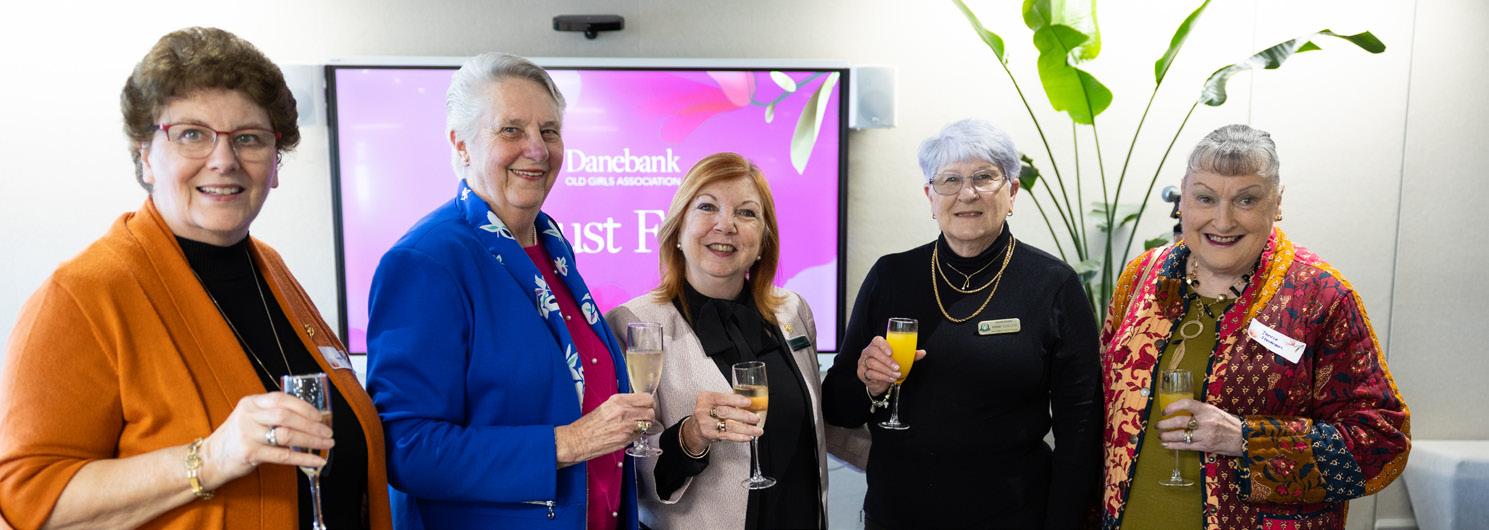
Many Old Girls are welcomed for school visits each year. Some return to have a look around and see how the school has changed. Others return to coach sporting and debating teams. Still others return for special events such as the Autumn Fair and Open Day or a reunion held at the school. All are welcome to enrol their daughters. The Old Girls Association is an active organisation that fosters Old Girls’ interests. It aims to maintain links with former students and to foster interest in the school.
Old Girls wishing to organise a reunion for their year group can contact the Old Girls Association and/or the school for help with reaching members of their year group. We will assist in advertising your reunion to your year group.
Enrolment benefits for daughters of Alumna
• The usual Enrolment Application Fee is waived for daughters of Alumna.
• Year 7 eText allowances are paid by the Old Girls Association.
• An Old Girls Academic Scholarship is awarded annually to a student entering Year 7. This is usually for 50% of the tuition costs and continues throughout Years 7-12.
• The Old Girls Association gives an annual Citizenship Award for the daughter of an Alumna attending Danebank. The award is 25% of the school fees for one year.
The school has an archival collection and we welcome donations of interesting memorabilia.
We acknowledge the wonderful achievements of our Old Girls. Many have achieved astounding academic and personal success. Some have been specially acknowledged by Danebank and have received notable school awards. Others have returned to speak at special events, providing current students with great role models and motivating them to strive for their best.
Danebank Old Girls Association alumnae@danebank.nsw.edu.au
President Associate Professor Noelene Weatherby-Fell
Vice President Kylie Farah
Secretary/Treasurer Melissa Frost
Committee Members
Justine Sealey
Natasha Mitchell
Anne Cullen
Our parent community is a highly valued part of the school as they volunteer and assist with fundraising and other activities throughout the year.
Becoming involved helps the school and also provides parents with friendships that develop as their daughters move through the various stages of their schooling.
A variety of Danebank branded merchandise can be purchased online.


Welcome to Parents Cocktail Evening
Friday 6 February 2026, 6.30pm
An opportunity to welcome new families into our Danebank community in a casual atmosphere.
Chat with staff and other parents, both new and existing.
Saturday 9 May 2026
The Autumn Fair is the biggest fundraiser of the year. It is a massive undertaking, held in conjunction with the school’s Open Day in May each year.
All families are asked to support this major event. Please keep the date free and gear up to assist.

Other Fundraising Opportunities:
• Mothers’ Day Stall (Junior School)
• Fathers’ Day Stall (Junior School)
• Birthday Book Program (Pre-K to Year 7)
The Birthday Book Program (Pre-K to Year 7)
Parents are invited to purchase a book for the Library in their daughter’s name, in celebration of her birthday. An acknowledgment of the gift is made through a book plate. The program continues all year till late November. Parents can arrange this online on at:
trybooking.com/388027
minibus@danebank.nsw.edu.au
Danebank’s minibuses provide transport for some Junior School students to and from school. The buses serve families who live in various locations in the surrounding suburbs.
• Region 1: Georges River and Bayside
• Region 2: Canterbury – Bankstown (east) and Inner West (south)
• Region 3: Sutherland Shire Fee of $12 (+GST) per trip, not per day
Minibus Application Form
Where vacancies allow, and under special circumstances, casual/emergency or short term bookings may be arranged. These will be charged at a flat rate of $15 (+GST) per trip to cover the cost of administration.
Please contact Mrs Lauren Stewart in the Danebank Senior Office on 9580 1415 or minibus@danebank.nsw.edu.au for more information on availability. Bus drivers are not to be contacted directly for casual days or with requests to take older siblings home: please contact the school in the first instance.
Should you need to cancel the service, two weeks notice is required in writing or a $20 cancellation fee will be charged to your account. Please contact Mrs Lauren Stewart (9580 1415 or minibus@danebank.nsw.edu.au) when you need to cancel the service.
The school canteen is fully staffed by the school. We have a healthy-food policy and the canteen is open for breakfast, recess and lunch every day, providing a variety of nutritious foods. The canteen is cashless, so all walk-up purchases are made by the green student ID card. A MunchMonitor account is required for this and must be pre-loaded with funds allocated to the students MunchMonitor account.
All lunch orders are processed online through MunchMonitor on iDanenet or via the school app. Orders can be placed four weeks in advance. Orders are best placed the night before, or by 7.30am on the day of order.
You need to register a login and password at the MunchMonitor website
munchmonitor.com
• User name: danebank
• Password: munch2220
• Contact: help@munchmonitor.com 1300 796 190

An extensive listing of Danebank School Policies can be found on our website or the parent policy portal.
That I may serve In daily duty fervent Without reserve Be willingly a servant Following Him Who laid aside His glory And came to earth that He might serve.
The lighted flame Keep always keenly burning Uphold our name By higher standards learning To God and School And our beloved country Show loyalty –Help us to serve.
Heed ‘Ut Prosim’ Respect our noble motto Hear our Danebank hymn Endeavour then to follow The paths of usefulness Of kindness, love and virtue In cheerfulness –May we all serve.
Almighty Father who has given us this school, wherein to grow to the beauty of noble life, we thank you. Grant to us all that, in the sunshine of your presence, and by the guidance of our teachers, themselves taught by you we may grow in body, mind and spirit, unspoilt and blameless, ready for perfect service wherever you shall call us, to the honour of our school and the glory of your name, through Jesus Christ our Lord. Amen