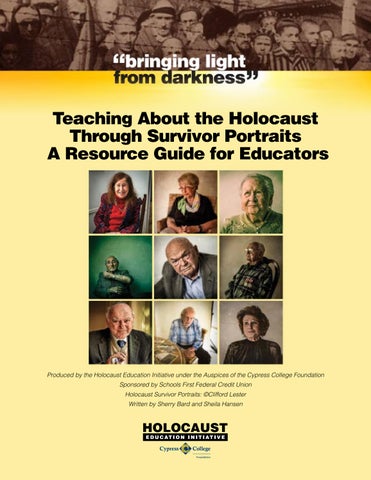
Teaching About the Holocaust Through Survivor Portraits
A Resource Guide for Educators
Produced by the Holocaust Education Initiative under the Auspices of the Cypress College Foundation
Sponsored by Schools First Federal Credit Union
Holocaust Survivor Portraits: ©Clifford Lester
Written by Sherry Bard and Sheila Hansen
INSIDE FRONT COVER ( heavier paper stock)
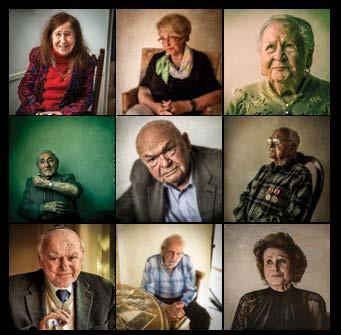
Leah Bernstein
Joe Alexander
Leon Weinstein
Eva Schneider
Dr. Edgar Moran
Lou Fogelman
Desiree Engel
Colonel Erwin Levy
Edie Klar
The guide was designed for online use, with resources accessible through the digital version. In the printed text, type that is bold and blue represents links found in the guide, which is available free on these websites: www.cypresscollege.edu/holocaust-education-initiative; www.remembertheholocaust.org; and [still need to get you the URL for the Teachers Pay Teachers website]. Links are accurate as of November 2025; however, organizations do move or eliminate material on their websites, which could result in links not working. We apologize in advance if certain information is no longer available. Also, some links may require “Ctrl+click” for access.
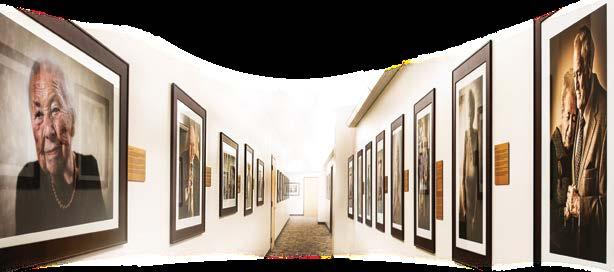
Ursula Lowenbach Foster Holocaust Survivor Portrait Gallery at Cypress College. Holocaust Survivor Portraits © Clifford Lester
Introduction
About the Guide
Holocaust survivors play a vital role in Holocaust education by providing a human connection to history When they share their personal experiences, whether in person or through online platforms, they give history a “face” that can resonate deeply with learners These encounters allow students to form a personal and emotional connection to these individuals and the events of the Holocaust, fostering a more profound and empathetic understanding of its complexities and human impact
The guide honors this approach by offering a unique entry point to learning about the Holocaust—through an exploration of a collection of photographs of Holocaust survivors that are part of the Ursula Lowenbach Foster Holocaust Survivor Portrait Gallery, located on the campus at Cypress College, in Cypress, California (See Addendum page 49) These portraits serve as the centerpiece of this guide and a visual record of individuals who have lived through unimaginable circumstances They were taken by acclaimed photographer, professor emeritus at Cypress College, and son of Holocaust survivors, Clifford Lester, and are accessible on the Remember the Holocaust: A Photographic Journal of Survivors website
The title of this guide, Bringing Light from Darkness, has nuances of meaning, one of which refers to photographing Holocaust survivors in simple, well-lit settings, directing the viewer to experience the subjects’ souls and inner emotions as they relate their experiences during the Holocaust In that way, portrait photography serves as a springboard to teach about the Holocaust by inviting students to see, to understand, and to connect to these individuals and their stories The featured survivors’ portraits ultimately serve as a living embodiment of light through messages of love, hope, courage, perseverance, gratitude and resilience
Throughout the guide, words such as subject or sitter are used to characterize the individuals featured in the collection Another word frequently used is portrait One definition of a portrait is that it is a visual art form that tells a story To best understand each “story,” students might consider the subject’s emotions, body language, and other characteristics, as well as the photographer’s intention Further, survivor subjects have unique personal histories, aspects of which appear alongside their portraits to add context By closely examining both the portraits and the available narratives, students can gain insights about the Holocaust and the impact it had on individuals
This guide is designed as a resource for educators at the middle school, high school, and community college levels who teach subjects such as art, English/language arts, social studies, social sciences, Holocaust and genocide studies, and media literacy In addition to providing lessons and resources focused on teaching the Holocaust through survivor portraits, the guide offers essential foundational guidance, along with recommended key themes and topics to explore (See page 30), to support and enhance effective Holocaust education These materials and lesson plans are tailored for educators at all experience levels—whether they are new to teaching about the Holocaust or have years of expertise in the subject
Along with the original materials created for this guide, the guide includes selected texts (reprinted with permission) and provides links to relevant resources and online activities from other organizations Notably, these include Echoes & Reflections—a partnership of the Anti-Defamation League, USC Shoah Foundation, and Yad Vashem—and the United States Holocaust Memorial Museum, both recognized as preeminent leaders in Holocaust education
To support the educational use of the survivor portraits, this guide includes the following components:
• Pedagogical principles for effective Holocaust instruction – Following pedagogical principles is essential when teaching about the Holocaust It is strongly recommended that all readers of this guide review the principles (See page 8) They offer guidance for how to approach this sensitive topic using methodology that is responsible, age-appropriate, and encourages empathy for victims by focusing on the human story The principles also highlight the importance of helping students understand the complex historical context as well as the moral dilemmas and choices individuals faced
• Unique lesson plans that feature the survivor portraits – There are six scalable lesson plans featuring the survivor portrait collection on the Remember the Holocaust: A Photographic Journal of Survivors website (See page 10) Even as the content builds from one lesson to the next, each is designed for flexibility and adaptive teaching and can stand on its own The lessons contain activities and strategies such as analyzing portraits, thinking about identity, examining courage and fear, and interacting with texts to connect to survivors and their portraits
• Links to resources on a range of themes and topics about antisemitism and the Holocaust – In addition to providing historical context to the lesson plans, the linked resources in this guide (See page 30) enable students to understand how history unfolded, while highlighting the dangers of prejudice, hatred, and the abuse of power . They also focus on the critical role of antisemitism and how prejudice can escalate to genocide The resources underscore how Nazi ideology led to the atrocities committed against the Jewish people and other victims of the Holocaust
• Recommendations of books about the Holocaust – The curated list of books, organized by grade level (See page 39), includes those that are historically sound and offer diverse perspectives on this complex historical event While some fictional titles are included, many of the books are biographical, which provide a more personal understanding of the Holocaust, honoring the memory of victims through a variety of experiences
• Links to organizations that offer professional development opportunities –Educators who are seeking to expand their knowledge about the Holocaust and focus on best practices can find links to organizations (See page 41) that are national leaders in the field and offer these opportunities
Why Teach About the Holocaust?
The Holocaust was one of the most violent and destructive events in human history
Studying this history, along with the portraits and experiences of Holocaust survivors, can inspire students to see themselves as responsible citizens and empower them to take a stand against antisemitism and other forms of hate
According to a recent report that examined the relationship between Holocaust knowledge, education and antisemitism, published by the Anti-Defamation League (2023), education on the Holocaust instills more in students than just facts and figures . Holocaust education aims to teach moral lessons on empathy and educate on the fragility of democracy, the role of antisemitism as Nazi ideology, and the importance of bearing witness to the past .
The report concluded that individuals who have had education on the topic of the Holocaust show higher rates of critical thinking and a greater willingness to challenge intolerant behavior Collectively, this helps to build a better society
“ We tell these stories because perhaps we know that not to listen, not to want to know, would lead you to indifference and indifference is never an answer. ”
Holocaust State Mandates
While Holocaust education requirements vary by state, school districts and educators across the country can include Holocaust education in their curriculum with or without a state policy As of 2025, in the United States, 30 states mandate Holocaust education, five have permissive statutes (legislation that is not a requirement), 17 support a Holocaust education commission or task force, and 10 have no legislation regarding Holocaust education For more information, visit Echoes & Reflections
In particular, the California Education Code requirement for teaching about the Holocaust was passed in 1985 Section 51220 prescribes that the adopted course of study for grades 7 to 12 include age-appropriate instruction on human rights issues, with particular attention to the study of the inhumanity of genocide and the Holocaust
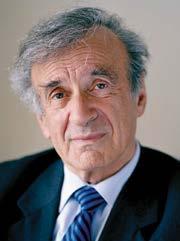
Elie Wiesel Days of Remembrance Address, 2001
Credit: Elie Wiesel Foundation and Sergey Bermeniev, photographer
Portraits
Portrait Project Background
Artist/photographer Clifford Lester is the son of Harry Lester and Ursula Lowenbach Foster Both Holocaust survivors, they taught Clifford from a young age to practice gratitude, compassion, and remembrance Combining that with an eye for authenticity and natural light, plus an affinity for the photographic styles of Yousuf Karsh and Richard Avedon, Clifford developed a vision for what has become Remember the Holocaust: A Photographic Journal of Survivors, which is his most significant photographic project, located in a gallery at Cypress College in Cypress, California, and online at Remember the Holocaust: A Photographic Journal of Survivors
Clifford’s goal in photography sessions is to capture and isolate one moment to compel viewers to want to know more about the survivor’s life story, experiences and message to the viewers, both current and future generations To that end, he, like his influencer Karsh, spends time prior to sessions learning what he can about his sitters Whether it is watching interviews or reading memoirs, he is compelled to use the photographic medium to draw viewers to these gripping stories of survival He also leverages Avedon’s simplicity and use of white backgrounds to ensure that the focus, where possible, is on the sitters and not the environment which surrounds them As such, he often captures hundreds of images with each sitter as they share firsthand their experiences of the Holocaust with him Then the formidable deliberation process begins — choosing which image best conveys a poignant moment relative to their story, journey, message, or lesson for potential audiences to connect with Powerful, sometimes competing dynamics exist among sitters, photographers, and viewers For example, how do sitters see themselves? How do viewers see themselves? How do viewers see sitters? And, crucially, in the middle striking a balance are the artists whose choices and viewpoints affect the outcomes
Clifford’s hopes for the photography collection are to preserve Holocaust memory and tap into the tremendous potential to influence how we as viewers see the world and how we relate to one another Tipping the scales viewer by viewer for better understanding, gratitude, and compassion would be a gratifying legacy of the collection
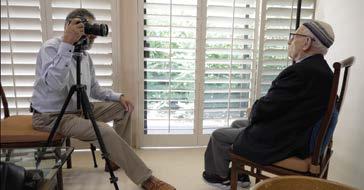
Clifford captures the portrait of Holocaust survivor Dr. Jacob Eisenbach Photo © Wyman Gentry
Portrait Photography as a Primary Source
Primary sources are defined by the Library of Congress (LOC) as “the raw materials of history — original documents and objects that were created at the time under study ” In essence, primary sources reflect the human experience and everything that entails . One such primary source is portrait painting, which has a long and rich history For more than a century, viewers have gazed in wonder upon such famous portraits as Leonardo da Vinci’s Mona Lisa, Johannes Vermeer’s Girl with a Pearl Earring, or Vincent van Gogh’s portraits or self-portraits In a BBC article journalist Cath Pound wrote, “By looking at who was portrayed, and how, we are able to gain insights into social, cultural and political history that no other type of painting can offer . The fact that it offers an opportunity to connect with individuals who were, or are, living breathing human beings just like us, also makes it one of the most accessible and popular [genres]… ” Pound then quoted chief curator of the London National Portrait Gallery, Dr . Alison Smith, who called portraits the “intersection between portrait, biography and history ”
Much of the same is true for photographic portraits, which are a closely related type of primary source According to the LOC, in 1839, Frenchman Louis Daguerre invented an early photographic process aptly named daguerreotype and later that same year Philadelphian Robert Cornelius used it to produce what is considered to be the first selfportrait photograph From there photography took off rapidly in popularity and with it, enduring considerations and the occasional debate about it as a discipline and a medium . The genre of portrait photography sits at a juncture of popular art and primary source and continues to grow and evolve Entire museums and galleries are devoted to and/or feature portrait photographs, such as the Smithsonian’s National Portrait Gallery, which “tells the story of America through individuals who have shaped its culture .” Other public and private portrait photography collections with similar missions are housed in museums, galleries, and other institutions across the country Additionally, and equally important are the digital technologies which provide online access to a variety of portrait photography collections Such is the case with Remember the Holocaust: A Photographic Journal of Survivors, the specialized collection for which this guide was created
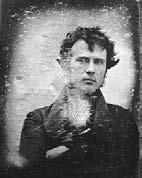
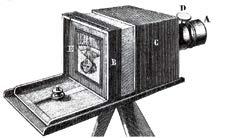
Robert Cornelius is considered to be the first to create a self-portrait using the daguerreotype process. Credit: Library of Congress, © Robert Cornelius, Self Portrait, 1939
How to Teach About the Holocaust: Pedagogical Principles
Teaching about the Holocaust requires educators to be sensitive to the maturity level of their students and to consider how best to present this topic in ways that will be meaningful and effective The following nine Pedagogical Principles for Effective Holocaust Instruction were developed by Echoes & Reflections and serve as a roadmap for educators as they consider how to plan and implement their Holocaust education programs in an age-appropriate and pedagogically sound manner
In fact, the guide’s lesson plans were designed to reflect the use of these pedagogical principles . As educators review the principles and then the lessons, they might consider where and how the lessons model best practices such as these
1. Define terms
In addition to terms like antisemitism, Holocaust, and genocide, review key terms and phrases necessary to fully understand the content being studied (Visit the Echoes & Reflections’ glossary)
2. Provide background on the history of antisemitism
Ensure students understand the role that antisemitism played in allowing the Holocaust to occur
3. Contextualize the history
Help students understand what happened before and after a specific event, who was involved, where the event took place, etc ; this helps to reinforce that the Holocaust wasn’t inevitable but rather was the result of choices and decisions made by individuals, institutions, and nations over years .
4. Teach the human story
While connecting people and events to the larger story, educators should:
Translate statistics into personal stories; use survivor and witness testimony whenever possible, emphasizing, however, that survivor voices are the exception
Highlight examples of how victims attempted to retain their humanity in the face of dehumanization (efforts to maintain identity and continuity of life, expression of values/beliefs, forms of resistance) .
Stress the “choiceless choices” of the victims with limited or no power to escape .
Introduce victims’ prewar life/return to life to provide context for their choices, dilemmas, and actions
Focus on small and large decisions made by individuals who had the ability and the opportunity to choose between morally right and morally wrong decisions prior to, during, and after the Holocaust, including bystanders, collaborators, perpetrators, and rescuers
5. Use primary source materials
Enrich students’ understanding of the Holocaust by providing an abundance of print and digital resources from a variety of perspectives
6. Make the Holocaust relevant
Connect what students are learning to contemporary events, while distinguishing between the unique history of the Holocaust and what can be learned from this history .
7. Encourage inquiry-based learning and critical thinking
Support students’ sharing of ideas and asking questions of themselves and others
8. Foster empathy
Challenge students to understand people and their attitudes and actions in a historical context using sound approaches and strategies, refraining from the use of simulation activities
9. Ensure a supportive learning environment
Guide students “safely in and safely out” of this study; use age-appropriate materials and always be mindful of the social and emotional needs of individual students .
For additional exploration of effective teaching approaches, visit the Video Toolbox “Teaching about the Holocaust in Today’s World ”
The United States Holocaust Memorial Museum also publishes Guidelines for Teaching About the Holocaust
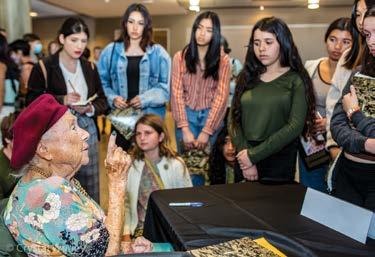
Gerda Seifer, Holocaust survivor, interacting with students at Cypress College Yom HaShoah commemoration.
Photo © Crystal Worley
Lesson Plans
The following lesson plans feature survivors and their portraits from the Remember the Holocaust: A Photographic Journal of Survivors website These lessons highlight the intersection between the art form of portrait photography and Holocaust history Even though one lesson builds on another, the lessons can stand alone or be adapted as mini-lessons by choosing only the content that adds dimension to teachers’ existing disciplinary units
Furthermore, while lessons have suggested grade levels, subject areas, and completion times, each and all can be easily adapted to meet the needs of students, learning objectives, and time available
Lesson 1
How Does Portrait Photography Speak to Us?
Description: In this lesson, students are provided with a brief introduction/history of portrait photograph They then explore how to extrapolate various meanings by examining images of Holocaust survivor Ursula Lowenbach Foster and her family
Grade Levels: 6-12+
Subject Areas: Art, English/Language Arts, Social Sciences, Holocaust and Genocide Studies, Media Literacy
Estimated Time: 45+ minutes
In this lesson, students will:
• identify previous learning about the terms photograph and portrait photography
• build knowledge and devise a working definition of portrait photography
• assess types of photographs by comparing/contrasting images
• investigate historical context and thinking by examining a particular image
• synthesize connections to images, history, and self
Directions:
1. Ask students to define the term photograph and then ask if it is the same or different from the term portrait photograph If different, how and why?
• Have students then view a three-min , 40 sec video, “Art Explainer: What Is a Portrait?” from the U K ’s National Portrait Gallery, asking students to focus on photography examples .
• Build on that concept by sharing information from the National Gallery of Art which notes that prior to the 1800s, photographic portraits primarily focused on capturing the subject’s likeness and societal status Encourage students to examine how,
starting in the 19th century, photographers endeavored to capture more indelible elements of a person’s identity, such as their attitudes and disposition
2. Devise a working definition of photo portraits with students
• Have students consider such questions as, why do portrait photos exist? In what ways are they different now than in centuries past? Where and how are they utilized then and now? How is a portrait photo the same/dfferent from school photos, identification photos, or candid shots of a person or family? Are portrait photos an art, evidence, or something else?
• If time permits, consider introducing the Smithsonian’s National Portrait Gallery’s (NPG) Elements of Portrayal to help guide students’ thinking .
3. Have students navigate to Dedication: Remember the Holocaust: A Photographic Journal of Survivors and read the brief biography of Ursula Lowenbach Foster, a Holocaust survivor who, along with her parents, immigrated to America after WW II
• Ask students if they would consider the image of her at the top of the webpage a portrait photo and why or why not
4. Invite students to examine two of the three images on the webpage for similarities and differences
• If time permits, use the NPG’s Venn Diagram and also refer to the Elements of Portrayal as necessary Students should then share observations
5. To extend students’ thinking about historical context, have students concentrate on the second of the three images on the webpage
• Project the National Archive’s Analyze a Photograph handout and use the initial section, “Meet the photo,” to help students think about and discuss the image .
• With further analysis ensure students detect and discuss the Star of David badge barely visible on the breast pocket of Ursula’s father’s jacket for historical meaning and context Additionally, prompt observations/evidence about style and mood
6. As the lesson’s summative task, ask students to think of themselves as the photographer of that second image on the webpage .
• Consider adapting NPG’s Jump In! graphic organizer as a guide . In the role of photographer, students will be able to think deeply and connect with the solemnity of the image, its historical context, and the thoughts/feelings evoked
Optional Add-On: Share with students the definition of antisemitism on page 25 of this guide and ask them how the Star of David badge exemplified Nazi antisemitism.
Lesson 2 Who We Are: Portrait Photography and Identity
Description: In this lesson, students will analyze Holocaust survivor portrait photos/narratives from the perspective of identity Students can then assess how the identity of the survivor (alternately called the sitter or subject), photographer, and individual viewers all contribute to the meaning of portrait photographs
Grade Levels: 6-12+
Subject Areas: Art, English/Language Arts, Social Sciences, Holocaust and Genocide Studies
Estimated Time: 45+ minutes
In this lesson, students will:
• identify previous learning about the term identity
• build knowledge to devise a working definition of identity
• formulate ideas about photographer Clifford Lester’s identity which in turn inspired his portrait photography collection
• compare/contrast two portrait photographs from the collection and then propose how identity was conveyed in a chosen portrait(s) from the collection
• identify aspects of their own identities they hope would be captured in a portrait photograph
Directions:
1. Ask students to brainstorm what they think the word identity means .
• To create a working definition, prompt students with questions such as, how do we see ourselves? How do we project ourselves publicly/privately to either strengthen or weaken how we see ourselves? How much does what others think of us affect our identity?
• Request that students quickly and without much thought list five characteristics that identify them/create their identity Ask students if they could list more If so, how and why? Have students share out examples
2. State that according to the National Portrait Gallery (NPG), a definition of identity includes “beliefs, qualities, and personality traits that are essential to an individual .” NPG’s definition also indicates identity is shaped in many ways including a person’s surroundings, past, and culture
• Have students revisit their list of five characteristics and quickly add to each characteristic what might have helped shape that characteristic . Share out again .
3. Introduce students to photographer Clifford Lester’s brief biographical sketch (See page 6: Portrait Project Background), which comes from an interview with him in the summer of 2024 Students locate and share from the sketch a few of the personal and professional influences on Clifford’s identity
• Then ask students further questions on page 4 from NPG about identity and if they believe there is one “true” identity and why or why not . Viewers of portrait photographs need to consider how 1) sitters/subjects see themselves 2) how the artist sees the sitter/subject 3) how we, the viewers, see the portrait photograph All these points of view come together to convey the portrait photograph’s identity .
4. Have students navigate to Remember the Holocaust: A Photographic Journal of Survivors Direct students to scroll through the thumbnail images on the webpage —without clicking to read stories—and choose two images that inspire their curiosity Hover mouse over thumbnails to identify the names of the survivors (alternatively termed sitter/subject) they choose
• Using NPGs Compare and Contrast Top Hat as a guide, students should write the names of the two images they will be using for this activity
• Do not have students attempt to identify the year or size found in the handout and further adapt organizer as needed, e g consider having students start with the question, “Why did you choose these two artworks to compare and contrast?” instead of ending with it Encourage students to share the portrait photographs they chose and why
5. Direct students to click on one of the two thumbnails to reveal the complete portrait photo and read the adjacent narrative
• Ask students to answer questions such as, how does the individual story (life journey, and/or messages) conform to or differ from their initial perceptions of the portrait photo thumbnail? In their opinion, what aspect of the survivor’s identity did photographer Clifford Lester capture in the portrait photo? Do students feel they would have tried to capture something else or something additional? If so, what and why?
• If time permits, have students Think, Share, Pair which portrait photograph in conjunction with the narrative was most impactful and why
6. As the lesson’s summative task, have students think about their own identity and how they might be portrayed by an artist
• Direct students to record/draw what they--as potential sitter/subjects-hope an artist/photographer might “see” in them (i e their identity) in a portrait photo
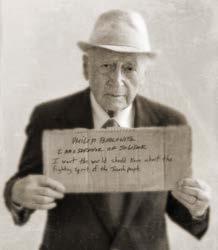
Philip Bialowitz, was a Polish Holocaust survivor and resistance fighter. He was transported to Sobibor in April of 1943 and quickly heard that his sisters and niece had been murdered there. In October of 1943, he and his brother joined a rebellion, overpowered the Nazis and freed 300 prisoners. During the revolt, Bialowitz heard one of the leaders shout, “If you survive, bear witness! Tell the world about this place!” Later in life, as one of only 50 escapees to survive, he traveled around the world lecturing about the Holocaust. Portrait © Clifford Lester
Lesson 3
Marthe Cohn: “The Reason in Their Hearts”
Description: In this activity, students are provided with a brief introduction/review of the elements in portrait photography and the role of identity from Lessons 1 and 2 respectively These will serve as the initial context for Marthe (pronounced Mart) Cohn’s portrait photograph and narrative Additionally, quotations from Marthe’s memoir are presented to investigate the connotations and meanings of courage, bravery, fear and cowardice
Grade Levels: 8-12+
Subject Areas: Art, English/Language Arts, Social Sciences, Holocaust and Genocide Studies
Estimated Time: 30-45 minutes
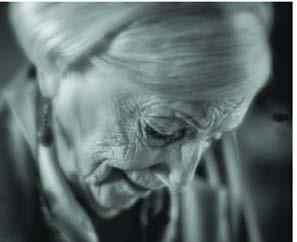
“ War taught me many things, among them that, like anyone, I could be a coward one minute and brave the next, depending entirely on circumstance.”
In this lesson, students will:
• identify elements of portrayal in Marthe Cohn’s portrait photograph and how they and other factors shape her identity in the image
• appraise how the narrative adjacent to Marthe’s portrait photo modifies viewers’ initial beliefs about her identity .
• define and analyze the words courage, bravery, fear, and cowardice to evaluate how the featured quotations from Marthe’s memoir further define the meaning/connotations of the words
• relate instances in their own lives when any/all of the four words influenced their actions and/or a result
Marthe Cohn, Holocaust survivor Portrait © Clifford Lester
Directions:
1. Share with/Remind students that in photographer Clifford Lester’s brief biographical sketch (See page 6: Portrait Project Background), he emphasizes the importance of gaining knowledge about the survivors (sitters/subjects) prior to photographing them and keeping portrait photos simple with the emphasis on the survivor, all to best “capture one moment . ”
• The National Portrait Gallery’s (NPG) descriptions of and questions about identity should be consulted and discussed to introduce or remind students that a portrait photo’s meaning is influenced by the collective identities of sitter/subject, artist, and viewers .
2. Instruct students to navigate to Remember the Holocaust: A Photographic Journal of Survivors to Marthe Cohn’s portrait
• Ask students to look closely at her portrait using the NPG’s Elements of Portrayal to think about what elements in the image might provide clues to Marthe’s identity and share out some ideas
• Then remind students that what we see also reflects the photographer’s identity and our own as viewers Ask questions including which detail might a viewer notice first and/or most? (facial expression, prominence of skin, hair color/style, downcast eyes, blur of the background, extreme of the close-up, or something else?) How does that initial observation reflect aspects of the viewer’s identity as well as the photographer’s? What do you imagine Marthe, her family and friends might see in the portrait photo?
3. Have students click on Marthe Cohn’s thumbnail portrait to open the webpage devoted to her and read the narrative which accompanies her full portrait photo
4. In Marthe’s memoir Behind Enemy Lines: The True Story of a French Jewish Spy in Nazi Germany, she wrote often about bravery, courage, fear and cowardice Have students think about these four words; consider using a four-per-page vocabulary graphic organizer to stimulate thought and deduce interrelationships Then share out as desired
5. Present students with the following quotations from her memoir:
• “Everyone was always running somewhere. We didn’t dare stay anywhere too long, in case people who knew we were Jewish were arrested and tortured and told the Gestapo where we were. It wasn’t a case of a breach of trust. If someone is tortured long enough and well enough, they’ll talk. None of us knows how we’d react under torture, but I suspect most of us would crack. You can be a hero one day and a coward the next. I know. I’ve been both.” (p 120)
• “…my pride got the better of me. Even stronger than my desire to escape was my determination that my fellow soldiers shouldn’t see how frightened I was. Looking into their pale faces, I suspected they were trying to do the same. I resolved never again to pronounce judgment on other people’s response to fear. In that moment, I realized courage or cowardice depends entirely on circumstance and one’s state of mind.” (p 159)
• “My own experiences had taught me not to judge other people for what they do or don’t do. Only they know the reason in their hearts. I could so easily have been accused of cowardice when I was too frightened to lift myself out of that field that day I crossed into Germany. I only did it in the end because the fear of being called a coward was worse than the fear of dying.” (p 235)
• Ask students to describe ways the quoted passages reinforce or alter their previous ideas about the four words Direct students to return to the portrait photo of Marthe Cohn Is there anything they “read” differently in or from her portrait photo now that they better understand her history, journey, and message? If so, what do such revelations tell us about how we can better relate to and empathize with others?
6. As the lesson’s summative task have students think about instances in their own lives where bravery, courage, fear, and/or cowardice shaped their actions or impacted a result . Where, when, how or what might have changed the outcome? Share out or provide an alternate method for students to express their feelings, such as journaling
Optional Add-On: Using the Holocaust as a lens, students are often presented with these terms: perpetrator, victim, rescuer, and bystander. Refer to the United States Holocaust Memorial Museum’s Holocaust Encyclopedia’s article on Bystanders to better identify the nuances of the word bystanders and how those nuances relate to Marthe’s experiences and observations. Additionally, share with students the topic of Jewish resistance on page 36 of this guide and ask students in what ways Marthe and/or her family resisted the Nazis and their French collaborators.
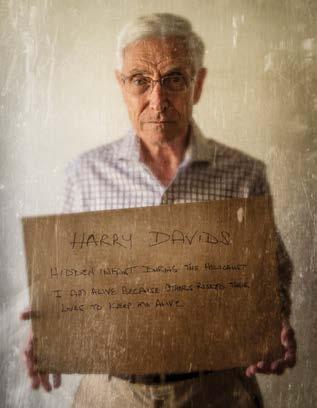
Today, Harry refers to himself not as a Holocaust survivor, but a lottery winner. He is blessed with a wonderful life thanks to those who risked their lives to save his. He speaks out fervently about four groups of people: perpetrators, victims, bystanders and upstanders. Without the upstanders, many more thousands would have died during the war, so one of Harry’s missions in life is to create upstanders instead of bystanders.
Portrait © Clifford Lester
Lesson 4
Entering the Frame:
The Righteous Among the Nations
Description: In this lesson, students will focus on a subset of survivors from the portrait photo collection Remember the Holocaust: A Photographic Journal of Survivors These individuals were rescued during the Holocaust by non-Jews who have since been honored as The Righteous Among the Nations .
Grade Levels: 6-12+
Subject Areas: Art, English/Language Arts, Social Sciences, Holocaust and Genocide Studies
Estimated Time: 45-50+ minutes
In this lesson, students will:
• demonstrate understanding of The Righteous Among the Nations’ purpose to recognize non-Jews who rescued Jews in the Holocaust
• analyze a survivor’s portrait photo/narrative and identify descriptors and details
• construct a character relationship poster with supporting evidence from the portrait photograph and narratives
Directions:
1. To decide how to introduce the concept of The Righteous Among the Nations to students, consider Unit VIII of Echoes & Reflections: Rescue and Righteous Among the Nations Particularly relevant and useful are two handouts and their associated questions: Those Who Dared To Rescue, and Yad Vashem Criteria for “Righteous Among the Nations.” Also recommended for teachers is a reading from Facing History: Understanding What the Scholars Say, which contains scholarly perspectives on the motivation of rescuers followed by connections and questions for potential use
2. Once teachers decide what elements from Step 1 to use as an introduction, have students navigate to the Remember the Holocaust: A Photographic Journal of Survivors collection which contains portraits of survivors whose rescuers have been formally recognized by Yad Vashem as The Righteous Among the Nations
3. The following table highlights some of these stories Assign a survivor portrait photo to groups as class numbers dictate, preferably 2-4 students per group .
Survivor Portrait Photo
Narrative by Photographer Clifford Lester
Philip Bialowitz
Betty Cohen (Rebecca Corper)
Marte Cohn (Hoffnung-Glutgluck)
Harry Davids
Lou Fogelman
Gabriella Karin
Zenon Neumark
Ludmila Page
Sara Schweitz (Barouh)
Leon Weinstein
Dora Zipper (Kremnitser)
Rescuer (Righteous Among the Nations Recipients) Narratives by Yad Vashem
Michał and Maria Mazurek
Romviel Dirk
Odile Teyssendier (de Morin)
Berend Philip and Jeltje Bakker (Woudsma)
Johan Lam and Hendrika Lam-Kok
Karol Blanár, Vincent and Katarína Blanár
Stefan, Zofia, and Lucja Szokalski
Oskar and Emilie Schindler (Pelzl)
Yiorgos Kaloyeromitros and Yiorgios Pianas
Czesława, Antoni Imiołek, and Marianna Gajowniczek (Imiołek)
Grigoriy and Mariya Vovkotrub
(Note: Names that appear in parentheses in this chart are either maiden or alternative names used by that person.)
4. Each group will make a poster featuring the assigned survivor and rescuer(s)
• Provide each group with a large piece of paper or easel pad paper and markers
• Have students examine the portrait photo of the survivor they’ve been assigned prior to reading the narrative adjacent to the linked portrait Instruct students to list 10+ words they feel describe the survivor in the portrait Each member should feel free to list what they’re seeing/feeling granted they do so respectfully
• Next each group should read the narrative about the survivor then revisit the list to see what members might add and/or remove For example, if an initial descriptor was fragile but after reading the narrative students have changed their minds, they can strike out the word and replace it with a dfferent word . They should agree on at least five words to describe the survivor via the portrait photo/narrative
• After that, groups should read the corresponding rescuer narrative which explains what the survivor’s rescuer(s) did to save the survivor (and likely others) Students should extrapolate at least the name(s) of the rescuer(s), and the circumstances of why and how they came to rescue plus the degree of risk they faced, and the date they were honored by Yad Vashem
5. Students will take this information along with a printed copy of their survivor’s portrait photo and that of the rescuer(s) if available and create their poster . Students should include what they saw and read but also how they feel, meaning what they “hear” from both the images and the narratives Encourage students to include on their posters any words of wisdom or messages imparted by the survivor so classmates can benefit from them too
6. As the lesson’s summative task, have a facilitated whole class share-out session where groups present their posters and their findings Teachers might end with some questions about the act of rescue in general . Are rescuers heroes, ordinary people who performed heroically, or something else? Why do these stories matter?
Add-On: Share with students from the section on Rescue Efforts on page 37 of this guide to support responses in #6 above.
Name of Survivor: Marthe Cohn

“
Because of you, I have been so many things. I have not wasted a minute of the life you gave me. And I have thought of you every day. Thank you.
Name(s) of Rescuers: Noël Degout
Motivation to rescue: Humanitarian
Profession: Farmer
Risk: High and Often
Noël and his sons repeatedly helped Jews trying to cross his property to get into the unoccupied zone in France for a chance at freedom. This saved not only members of the Cohn family but also those the Cohns themselves were helping.
Recognized as Righteous Among the Nations on June 14, 2011
Sample poster
Lesson 5
Elly Gross: “Did I Do Wrong?”
Description: In this activity, students will be introduced to Yad Vashem’s online exhibit
The Auschwitz Album along with two images from the album They will then connect the images to brief excerpts and emotions from Elly Gross’ portrait and her memoir, Elly: My True Story of the Holocaust
Grade Levels: 8-12+
Subject Areas: Art, English/Language Arts, Social Sciences, Holocaust and Genocide Studies
Estimated Time: 45-50 minutes
In this lesson, students will:
• analyze two images using a graphic organizer to stimulate thinking
• activate historical thinking via information about The Auschwitz Album
• relate the images to Elly Gross’ portrait and memoir excerpts
• revise earlier predictions from new information and connections to material
Directions:
1. Print a See–Think–Wonder handout from Echoes & Reflections and distribute to students
2. Right click and copy to a document this image from The Auschwitz Album, in order to remove any references to what it is or from where it comes Scroll and add a second page to the document, right click and copy this image, also from the album .
3. Instruct students to silently complete the graphic organizer as they examine the first image and then do a two- or three-minute Think–Pair–Share
4. Prior to identifying the image, scroll down to reveal the second image and ask students to add thoughts to their graphic organizers
5. Ask students to share their thoughts about the first image and then how the second image helped them gain more perspective about the first image as an example of how important context is to understanding Explain that the two images are from Yad Vashem’s online exhibition, The Auschwitz Album, and share at least the following information culled from the exhibition landing page, emphasizing Hungarian Jewry:
• Only surviving visual evidence of the process leading to the mass murder at Auschwitz-Birkenau
• Photos taken at the end of May or beginning of June 1944; in less than a two-month span, around 440,000 Jews from Hungary were deported mostly to Auschwitz-Birkenau and murdered upon arrival
• Photos in the album mostly were taken on the “ramp” and depict the life or death “selection” process
• Photos reflect early summer 1944 as the apex of the deportation of Hungarian Jewry
• The rapid deportation of Hungarian Jews led to a special rail line being extended from the railway station outside the camp to a “ramp” inside Auschwitz, just a few minutes’ walk to the gas chambers
• Violence and death are not in the photos but loom just outside the frames; viewers also cannot hear the heartbreaking, chaotic cacophony or feel the ruthless, relentless speed or pace
• The photographers, either Ernst Hofman or Bernhard Walter, were members of the SS, so these photos are taken from the perspective of perpetrators
• Purpose of the album remains a mystery, probably for an official report to higher Nazi authorities
6. Have students navigate to Remember the Holocaust: A Photographic Journal of Survivors then click on the portrait of Elly Gross Ask students to look at her portrait as if they have no prior knowledge and describe her appearance and demeanor in the portrait They might also hypothesize why the photographer chose that photo as the portrait out of potentially hundreds of photos taken during the photo shoot
7. Explain to students that Elly Gross and her family were from Simleu Silvaniei, part of Northern Transylvania, Romania (see map for visual reference) In 1940, this part of Romania was absorbed into Hungary, providing clarity as to how Elly, her mom, and her brother were characterized and deported to Auschwitz-Birkenau as “Hungarian Jewry ”
8. In her book, Elly: My True Story of the Holocaust, she wrote about her family’s arrival at Auschwitz-Birkenau
“On Friday, June 2, 1944, the train suddenly halted and the doors were opened Men in striped rags jumped into our boxcar . One whispered to me, ‘Say you are eighteen,’ and to my mother, ‘Give the boy to someone ’ I thought, Are these men lunatics? …Mother asked, ‘What should we do?’ I said, ‘We cannot give my brother to strangers He is five years old, and I am fifteen .’ It happened as fast as lightning; there was no time to think . I was pushed to the right My mother, holding my brother in her arms, remained on the left As I ran to reach the others, I waved to them They looked in my direction I relive this moment all my life . We had arrived at the Auschwitz-Birkenau concentration camp in Poland,” (pp 33-34)
9. Return to the photo from The Auschwitz Album and this time focus on the center of the image . Share with students that the woman with her head partially covered, looking away, while holding the little boy wearing a cap and looking at the camera are Elly’s thirty-seven-year-old mother, Irina Berkovits, and Elly’s five-year-old brother, Adalbert Ask students if the meaning or impact of the image has changed with the additional contextual information
10. Have students return to the portrait of Elly (either projected or on student devices) Read aloud these sentences from her book while they look at her portrait: “During my life…I am tormented with remorse Why did I not say to my mother, ‘Give my brother to anyone and come with me?’ Why do I feel guilt that Mother was sent to the left? In my life, tragedies poured on me . I was robbed of my father at age thirteen When I was fourteen, he perished in a forced-labor camp When I was fifteen, my mother and brother were taken from me Was I selfish by not speaking up at that moment? By not saying, ‘Mommy, try to come with me?’ You, Reader, be the judge Did I do wrong?” (p 34)
11. Ask students to reflect again on her words and Elly’s portrait If and how do her words and portrait impact their original thoughts about her and her portrait, and how does the presence or absence of context shape our thinking about the content?
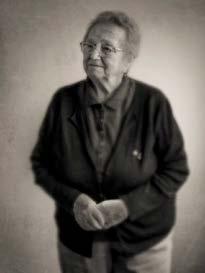
12. As the lesson’s summative task, print a full-page copy of Elly’s portrait photo and attach it in a central location Provide students with a sticky note and have them write a sentence or two in response to her questions and place them in a cluster around her portrait photo Because some students’ replies might strike a chord with their peers, consider retaining the display for a time
Optional Add-On: Share with students the photo from the “Final Solution” section on page 35 of this guide. Ask them to reflect on the photographer’s choices, particularly the perspective used and how it portrays the subjects.
Portrait of Elly Gross, Holocaust survivor. Portrait © Clifford Lester
Lesson 6
Ellen Nebel and Arthur Weil: Which Way to Freedom?
Description: In this lesson, students will learn about the Kindertransport and the “One Thousand Children” from the childhood experiences of two featured survivors in the Remember the Holocaust: A Photographic Journal of Survivors collection
Grade Levels: 6-12+
Subject Areas: Art, English/Language Arts, Social Sciences, Holocaust and Genocide Studies
Estimated Time: 45+ minutes
In this lesson, students will:
• discover two survivor stories, one on the Kindertransport and the other from the “One Thousand Children,” as experienced by survivors in the portrait photography collection .
• build upon existing knowledge and historical context about organized rescue efforts of children in the Holocaust
• identify and interpret facial expressions or elements in two portrait photos to support/ connect to lines from a poem and then relate to self
Directions:
1. Navigate to Remember the Holocaust: A Photographic Journal of Survivors Tell students they will be focusing on the portrait photos of two survivors who were part of rescue operations as children
2. Consider the article Background: Kindertransport from Echoes & Reflections to provide students with general historical context of the Kindertransport Clarify for students that some of the Kindertransport were routed through other countries, including Amsterdam, The Netherlands, as was the case for survivor Ellen Nebel (née Weinberg)
3. Direct students to Ellen Nebel’s portrait photo page to examine both her portrait photo and read the adjacent narrative
• Share the additional information that Ellen and her brother, Peter, were on a January 1939 transport to Holland Once she and her brother arrived in Amsterdam, they were first quarantined for several weeks and then moved to the orphanage called Burgerweeshuis They lived there until May 14, 1940, which was four days after Germany invaded The Netherlands Although they eventually arrived safely in England, it was a dangerous gamble for all involved
• If students have previously learned about The Righteous Among Nations, introduce them to recipient Geertruida (Truus) Wijsmuller-Meijer, who orchestrated the daring escape which probably saved Ellen’s life
4. Now direct students to Arthur Weil’s portrait page and ask that they examine his portrait photo and read his adjacent narrative .
• Add the additional contextual information that his journey to freedom was somewhat different than Ellen’s Explain that Arthur boarded a ship from Hamburg, Germany, to America, arriving in New York on July 22, 1938 As such, his journey is often described as that of the “One Thousand Children . ”
• Share that many of those considered as the “One Thousand Children” were long unaware that it was an orchestrated rescue mission and that they were part of a larger group Although called the “One Thousand Children,” there were closer to 1,400 than 1,000 children brought to America under the auspices of this early rescue effort
• Arthur was shuttled among foster families until he was reunited with surviving family Eventually he became a teacher and published books of poetry
• One poem, entitled “Subtle Expression,” starts with the lines, “There is poetry in all of us/the wrinkles in our faces,” and ends with, “Each a touch on the canvas of life/each unique/accomplished feat/There’s poetry in all of us indeed ”
5. Ask students to brainstorm what they think Arthur might mean by, “There’s poetry in all of us indeed ” Prompt with questions such as, what is poetry and what are its purposes? Is Arthur being literal, figurative or both? How might readers interpret “wrinkles in our faces” as an example of “a touch on the canvas of life”? How and why might readers differ on what they think the meaning is of “poetry in all of us”? Why is that okay?
6. As the lesson’s summative task, either independently or in groups, have students look back at the portrait photos of Ellen Nebel and Arthur Weil and for each, pick a “subtle expression” or some other portrait element that they believe expresses the unique poetry inside of each of them and share out with the larger class
• If time permits, have students divide paper into three columns and label with Now, Middle Life, and Later Life Use the columns to answer the question: What might the “poetry inside of me” look like “on the canvas” in each of these three stages of their lives? Share out as appropriate
Optional Add-On: To learn more about the Kindertransport, have students read The Children of Willesden Lane, written by Mona Golabek and Lee Cohen, as noted in the Recommended Books section of this guide on page 39.
Antisemitism and the Holocaust
“ Do not think that this attack is only about Jews. It may start with the Jews, but it never ends there. And conversely, it may start with others– Muslims, African Americans, LGBTQ identifying folks – but it will ultimately reach Jews. ”
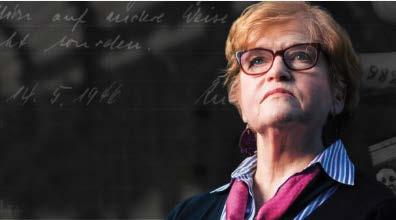
When teaching about the Holocaust, it is necessary to incorporate lessons about antisemitism because it is fundamental to understanding the context in which discrimination, exclusion and, ultimately, the destruction of European Jews took place The Organization for Security and Co-operation in Europe (OSCE) reminds us that stereotypes that fed ideologies that culminated in the Holocaust still exist today Teaching this topic can also serve as an entry point to consider contemporary antisemitism, racism and other human rights issues . By discussing how antisemitism is expressed in the world today, students can gain an understanding of the interconnectedness of groups and how prejudice and bias can harm individuals and society when attitudes go unchecked
Antisemitism Definition
Due to its many and evolving forms, antisemitism has no singular, exhaustive definition Even so, the International Holocaust Remembrance Alliance (IHRA) working definition has become the preeminent and most widely accepted definition and learning tool used around the world when it comes to understanding manifestations of antisemitism today No other definition is as widely endorsed and utilized .
Working definition: “Antisemitism is a certain perception of Jews, which may be expressed as hatred toward Jews Rhetorical and physical manifestations of antisemitism are directed toward Jewish or non-Jewish individuals and/or their property, toward Jewish community institutions and religious facilities .”
For examples of how antisemitism can be expressed in today’s world, visit the IHRA website
Deborah Lipstadt, Former Historian and Special Envoy to Monitor and Combat Antisemitism, in reference to the Tree of Life Synagogue shooting on October 27, 2018, in Pittsburgh, Pennsylvania Credit: Photo courtesy of David Levene
Online Student Activities and Lesson Plans about Antisemitism
The following student-facing activities and lesson plans can be used to further explore both historical and contemporary antisemitism
• What is Antisemitism? - In this IWitness activity, authored by Echoes & Reflections, students use a variety of interactive tools to develop an understanding of antisemitism as a historical concept, and understand the impact of antisemitism in Nazi Germany
• Why Didn’t Antisemitism End After the Holocaust? - In this IWitness activity, authored by Echoes & Reflections, students explore manifestations of antisemitism in today’s society, and how to communicate the presence and the harm it causes in society
• How Did Propaganda Fuel the Holocaust? - In this IWitness activity, authored by Echoes & Reflections, using the historic lens of Nazi propaganda, students will develop an understanding of media literacy and consider its power to impact individuals and societies
• Gringlas Unit on Contemporary Antisemitism – In this unit developed by Echoes & Reflections, students learn about the persistence of antisemitism in its contemporary forms . They investigate the ways in which old ideas about Jews and Judaism have given rise to new expressions of antisemitism and consider the interconnectedness of all forms of oppression
• Responding to Antisemitism in the Classroom - Educators can use these tools, developed by Facing History and Ourselves, to help students understand the impact of antisemitism and standing up to hate
Holocaust Definition
According to the United States Holocaust Memorial Museum, the Holocaust was the systematic, state-sponsored persecution and murder of six million Jews by the Nazi regime and its allies and collaborators . It took place between 1933 and 1945 In 1933, more than nine million Jews lived in Europe (1 .7% of the total population) By 1945, the Germans and their allies and collaborators had killed nearly two out of every three European Jews Nazi policies also led to the discrimination, persecution, and murder of millions of others
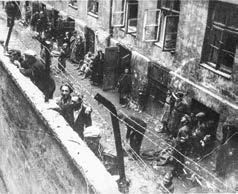
Jewish youth use a ladder to peer over the ghetto wall in Warsaw, Poland, October 15, 1941.
Credit: United States Holocaust Memorial Museum
In addition to perpetrating the Holocaust against the Jews, the Nazis targeted people as members of the following groups (listed in alphabetical order)
1. Black people in Germany
2. Civilians (non-Jewish) accused of disobedience, resistance, or partisan activity
3. Gay men, bisexual men and other men accused of homosexuality in Germany
4. Jehovah’s Witnesses
5. People with disabilities
6. Poles
7. Political opponents and dissenters in Germany
8. Roma and other people derogatorily labeled as “Gypsies”
9. Social outsiders in Germany derogatorily labeled as “asocials” or “professional criminals”
10. Soviet prisoners of war
Online Student Activities and Lesson Plans that Define the Holocaust
The following student-facing activities and lesson plans can be used to further explore the definition of the Holocaust
• Studying the Holocaust - In this unit, developed by Echoes & Reflections, students are introduced to vocabulary for studying the Holocaust and establishing a rationale for the importance of learning about instances of mass atrocity and genocide
• What was the Holocaust? - In this IWitness activity, authored by Echoes & Reflections, students explore and analyze definitions of the Holocaust and create their own working definition to share with classmates
Holocaust Timelines
When teaching about the Holocaust, it is essential to provide students with the opportunity to examine and explore a timeline, which allows them to gain an understanding of the sequence of historical events in chronological order It also highlights how history unfolded and the patterns and connections among individuals, events, places and policies .
The following timeline, from the United States Holocaust Memorial Museum, summarizes the events before and during the Holocaust For more information and a more detailed timeline, visit the Timeline of Events .
Timeline of Events
1933 to 1938: Prewar Nazi Germany and the Beginnings of the Holocaust
Following Adolf Hitler’s appointment as German chancellor on January 30, 1933, the Nazis and their allies transformed Germany from a multi-party republic into a one-party dictatorship The Nazi dictatorship implemented radical racial, political, and social policies During the first six years of Hitler’s rule, German Jews felt the effects of legislation that transformed them from “citizens” to “outcasts ” In the 1930s, the regime also targeted a variety of alleged “enemies of the state” within German society
1939 to 1941: World War II and the Mass Killing of Jews
On September 1, 1939, Nazi Germany unleashed World War II by invading Poland The war radicalized Nazi policies, leading to brutal occupations of conquered territory . German authorities in occupied Poland established ghettos for Jews They also introduced harsh measures against non-Jewish Poles Inside Germany and in occupied Polish territories, German physicians and SS staff (Schutzstaffel; Protection Squadrons) used gas chambers to kill institutionalized persons with disabilities . In June 1941, German troops invaded the Soviet Union, unleashing a “racial war” that led to the mass murder of Soviet Jews and Soviet prisoners of war In the weeks and months that followed, Nazi Germany’s leaders decided to carry out the systematic mass murder of Europe’s Jews
Credit: National Archives and Records Administration
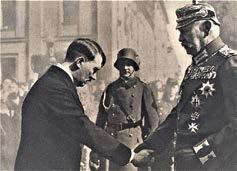
On August 19, 1934, Adolf Hitler abolished the office of President and declared himself Führer, an absolute dictator. Here he is pictured with former German President Paul von Hindenburg, who had passed away two weeks prior to Hitler becoming Führer.
Credit: United States Holocaust Memorial Museum, courtesy of B. I. Sanders
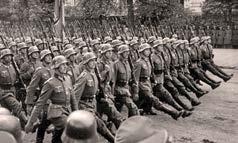
Following almost a month of German assault, the Warsaw garrison surrendered on September 28 and the “disintegration” of the Polish state was formally concluded in Moscow by the signatures of Russian foreign secretary Molotov and German foreign minister von Ribbentrop on September 29, 1939. In this photo, German troops parade through Warsaw after the surrender of the Warsaw garrison. September 28-30, 1939.
1942 to 1945: Intensification of Mass Killings
In early 1942, Nazi Germany stood at the height of its power . Germany and its allies controlled most of Europe and even parts of North Africa The SS had established 31 special killing centers with large gas chambers, expanding the “Final Solution,” the mass murder of European Jews . The perpetrators counted on the cooperation of government agencies, local collaborators, and the support or acquiescence of the general population Even as the war turned against Germany, the Nazi leadership continued its murderous policies By May 1945, when the war ended, the Nazis and their allies had killed about six million Jews Millions more people had suffered grievous oppression or death under Nazi tyranny .
After 1945: End of WWII: Aftermath of the Holocaust, and Genocide after 1945
As Allied troops drove German troops towards defeat, they uncovered Nazi camps and massive evidence of Nazi crimes The war had uprooted millions of “displaced persons” (DPs) waiting for repatriation to their home countries For tens of thousands of Holocaust survivors, the choices were limited and daunting Allied occupation forces faced enormous responsibilities: housing and feeding DPs, denazifying and democratizing Germany, and bringing those responsible for Nazi crimes to justice
Interactive Timeline of the Holocaust
Another timeline, designed as a resource for students, is the interactive Timeline of the Holocaust, developed by Echoes & Reflections It chronicles key dates in the history of the Holocaust from 1933 to 1945 . This interactive timeline contains a range of primary and secondary sources including maps, photographs, images of artifacts, visual history testimony and more
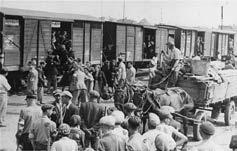
Jews from the Lodz Ghetto are loaded onto freight trains for deportation to the Chelmno killing center. Lodz, Poland, between 1942 and 1944.
Credit: National Museum of American Jewish History, Philadelphia
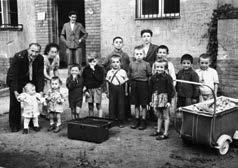
Jewish DP children pose outside a building in the Mariendorf displaced persons camp in Berlin, Germany.
Credit: United States Holocaust Memorial Museum, courtesy of Mayer & Rachel Abramowitz
Themes and Topics: Links to Resources
When preparing to teach about the Holocaust, educators can refer to the themes and topics outlined on the following pages Although not exhaustive, this list provides a broad overview of essential aspects of the Holocaust
Included are links to primary and secondary sources from leading Holocaust education organizations, offering a curated selection of materials . These resources can assist educators in examining key events and the underlying factors that led to the Holocaust
These links are intended to provide supplementary content not included in the Lesson Plans section of the guide, as well as materials that enhance or further support the lessons . They begin with sources that examine life before the Holocaust, to highlight the devastating impact of the Holocaust by revealing the rich and diverse lives of Jewish communities that were destroyed Effective Holocaust education should focus on the people behind the statistics, which can enhance students’ understanding of the depth of the loss caused by the Holocaust In addition, there are resources that delve into the rise of the Nazi party, the establishment of ghettos and camps, and details about anti-Jewish policy and Nazi propaganda, which served to amplify and spread hate that eventually led to what became known as the “Final Solution to the Jewish Question ” Also included are resources about rescue efforts While those who risked their lives to help Jews during the Holocaust were the exception rather than the rule, studying examples can help students understand the power of individuals and groups and the human capacity to choose to act with courage, even in the face of extreme danger Educators can also find resources on liberation, which offer a lens into the extent of Nazi atrocities and highlight the complex challenges faced by survivors in the aftermath Overall, the resources offered in this section shed light on the consequences of inaction and the importance of standing up against oppression and hate .
For additional guidance, educators can review the United States Holocaust Memorial Museum’s article An Overview of the Holocaust: Topics to Teach.
For middle and high school educators looking for recommendations of how to get started teaching about the Holocaust, visit the United States Holocaust Memorial Museum’s resource, Holocaust Teaching Guide: Getting Started .
Life Before the Holocaust
Jews have lived in Europe for thousands of years Prior to Hitler coming to power, it is estimated that nine million Jews lived in 21 countries The largest Jewish populations were concentrated in Eastern Europe, including Poland, the Soviet Union, Hungary, and Romania To understand what was destroyed or lost during the Holocaust, studying about Jewish life allows students to understand the history, culture and vibrancy of these communities and to see the victims as individuals .
• “What Came Before” - Teaching about Jewish Life Before the Holocaust” Article, Yad Vashem
• Jewish Life in Europe Before the Holocaust Holocaust Encyclopedia article, U S Holocaust Memorial Museum
• Jewish Life Before the Holocaust Lesson plan, Facing History and Ourselves
• Profiles of Teenagers in Prewar Europe Student handout, Echoes & Reflections
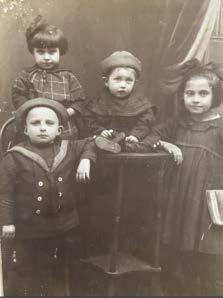
Members of the Zylbersztajn family, Grójec, Poland. Circa 1920. Credit: Silberstein family
Antisemitism
Antisemitism has often been referred to as the “longest hatred,” having existed for more than 2,000 years While this hatred has morphed over time, depending on political, economic and social factors, some of the themes and motifs have persisted, such as Jews being in league with the devil and their quest for world domination Learning about the origins of antisemitism encourages students to analyze, evaluate and think critically about contemporary examples that persist today .
• Summary of Antisemitism
Student handout, Echoes & Reflections
• Why the Jews: History of Antisemitism
Video, United State Holocaust Memorial Museum
• Antisemitism
Video, Echoes & Reflections, produced by Yad Vashem
• Protocols of the Elders of Zion Holocaust Encyclopedia article, United States Holocaust Memorial Museum
• Antisemitism Uncovered: A Guide to Old Myths in a New Era Guide, Anti-Defamation League
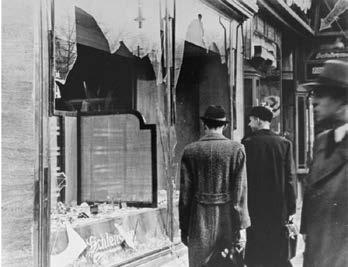
Germans pass by the broken shop window of a Jewish-owned business that was destroyed during Kristallnacht. November 10, 1938. Credit: United States Holocaust Memorial Museum, courtesy of National Archives and Records Administration, College Park
The Rise of the Nazi Party
The National Socialist German Workers’ Party—better known as the Nazi Party—was founded in 1919 With the rise of the Nazis, antisemitic and racist ideas that had been gaining traction in Europe since the last decades of the 19th century were activated, expanded, and implemented in Germany When Hitler came to power in 1933, he transformed Germany into a dictatorship and institutionalized antisemitism by enacting oppressive laws and policies that targeted Jews . The Nazis used propaganda effectively to transmit their ideas and to gain the support of the German people
• The Nazi Rise to Power Holocaust Encyclopedia article, United States Holocaust Memorial Museum
• How Did Adolf Hitler Happen?
Article, The National WWII Museum, New Orleans
• The Weimar Republic and the Rise of the Nazi Party Student handout, Echoes & Reflections
• Nazi Germany and Anti-Jewish Policy Student handout, Echoes & Reflections
• Nazi Propaganda Examples and Nazi Propaganda Analysis Graphic Organizer Student handouts, Echoes & Reflections
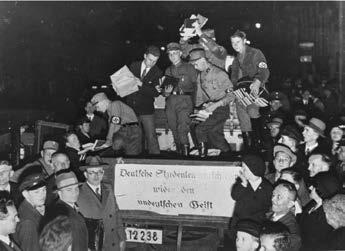
Nazi students unload confiscated materials for the public book burning that is to take place on the Opernplatz in Berlin. The banner on the back of the truck reads: “German students march against the un-German spirit.” May 10,1933.
Credit: United States Holocaust Memorial Museum, courtesy of National Archives and Records Administration, College Park
The Ghettos
The establishment of the ghettos was a way for the SS and other German occupation authorities to control, confine and weaken Jewish populations Ghettos were usually enclosed areas that separated Jews from the rest of the population . Conditions in ghettos were often terrible with severe overcrowding and limited access to food and medical care Starvation and disease were common The Germans established at least 1,143 ghettos in the occupied eastern territories . However, although common, not all victims experienced life in the ghettos
• Ghettos
Holocaust Encyclopedia article, United States Holocaust Memorial Museum
• The Ghettos Student handout, Echoes & Reflections
• Excerpt from the Diary of Dawid Sierakowiak Diary excerpt, Echoes & Reflections
• The Ghettos Video, Echoes & Reflections, produced by Yad Vashem
• Life in the Ghettos
Holocaust Encyclopedia article, United States Holocaust Memorial Museum
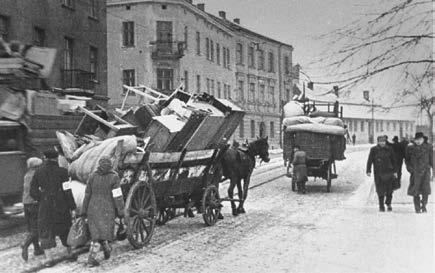
Jews move their belongings into the Krakow Ghetto in horse-drawn wagons. Circa 1940. Credit: United States Holocaust Memorial Museum, courtesy of State Archives in Krakow
The “Final Solution”
The term “Final Solution to the Jewish Question” was a euphemism used by Nazi Germany’s leaders to refer to the mass murder of Europe’s Jews It brought an end to policies aimed at encouraging or forcing Jews to leave Germany and other parts of Europe Those policies were replaced by the plan for systematic annihilation, which was to murder every Jewish man, woman and child It was the last stage of the Holocaust and took place from 1941 to 1945 . Though many Jews were killed before the “Final Solution” began, the majority of Jewish victims were murdered during this period
• “Final Solution”: In Depth
Holocaust Encyclopedia article, United States Holocaust Memorial Museum
• The “Final Solution” Video, Echoes & Reflections, produced by Yad Vashem
• The “Final Solution” Student handout, Echoes & Reflections
• Victims by Country Student handout, Echoes & Reflections
• Some Were Neighbors
Online exhibition, United States Holocaust Memorial Museum
• The Auschwitz Album Online resource, Yad Vashem
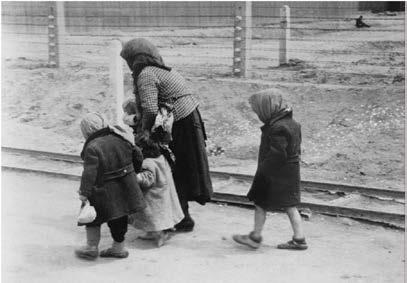
A Jewish woman walks towards the gas chambers with three young children and a baby in her arms, after going through the selection process on the ramp at Auschwitz-Birkenau. Photo from The Auschwitz Album Credit: United States Holocaust Memorial Museum, courtesy of Yad Vashem (Public Domain)
Resistance
A common misconception about the Holocaust is that Jews did not resist However, that was not the case; Jews actively resisted the Nazis in numerous ways Some engaged in armed resistance, fighting with weapons and explosives . Examples of this include the Warsaw Ghetto Uprising, the prisoner revolt at Auschwitz-Birkenau, and efforts of various partisan groups, who organized and lived in the forests and fought against the Germans, often through surprise attacks . Jews also resisted in both cultural and spiritual forms, by practicing clandestine religious rituals and ceremonies and preserving their faith while in the ghettos and camps
• Jewish Resistance
Holocaust Encyclopedia article, United States Holocaust Memorial Museum
• Armed Resistance in the Ghettos and Camps
Student handout, Echoes & Reflections
• Cultural and Spiritual Resistance
Student handout, Echoes & Reflections
• Jewish Resistance during the Holocaust
Video, Echoes & Reflections, produced by Yad Vashem
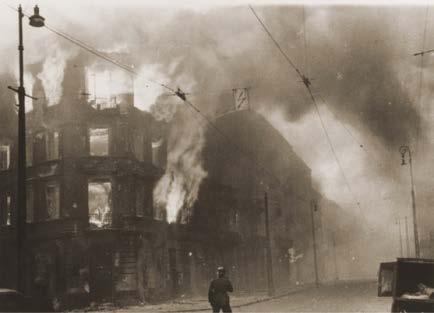
A housing block burns during the suppression of the Warsaw Ghetto Uprising. Credit: United States Holocaust Memorial Museum, courtesy of National Archives and Records Administration, College Park
Rescue Efforts
Individuals in every European country and from all religious backgrounds risked their lives to help Jews Rescue efforts ranged from the isolated actions of individuals to organized networks both small and large However, “indifference” was the norm so those who participated in rescue efforts were the exception rather than the rule, indeed, a very small portion of the population While many attempts to provide rescue and aid were successful, most attempts failed and the victim, and in some cases both the rescuer and the victim, were murdered when they were caught . Regardless of the outcome, these efforts serve as an example of individuals and groups making choices to help others and to stand up for what is right and just
• Rescue
Holocaust Encyclopedia article, United States Holocaust Memorial Museum
• Those Who Dared to Rescue
Student handout, Echoes & Reflections
• Anne Frank’s Legacy Student handout, Echoes & Reflections
• Rescue in Denmark
Student handout, Echoes & Reflections
• The Righteous Among the Nations Website, Yad Vashem
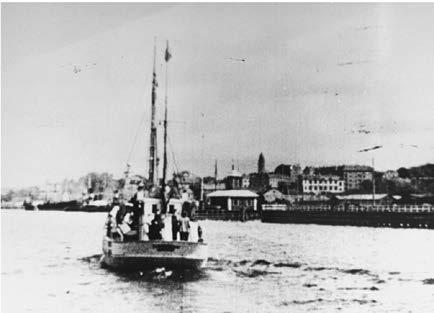
Jews on a rescue boat bound for Sweden, October 1943 Credit: United States Holocaust Memorial Museum, courtesy of Frihedsmuseet, Copenhagen
Liberation
For those who survived the Holocaust, liberation was often a bittersweet experience, with the knowledge that, as survivors, they would be living their lives without members of their families who were murdered What’s more, these survivors were often weak and ill and needed to heal both physically and emotionally Liberation also took a toll on those who liberated the camps, many of whom were shocked to witness the immense depravation and conditions
• Liberators and Survivors, the First Moments Video, Echoes & Reflections, produced by Yad Vashem
• Liberation
Holocaust Encyclopedia article, United States Holocaust Memorial Museum
• Liberation of Nazi Camps
Holocaust Encyclopedia article, United States Holocaust Memorial Museum
• First Letters After Liberation Student handout, Echoes & Reflections
• Displaced Persons Student handout, Echoes & Reflections
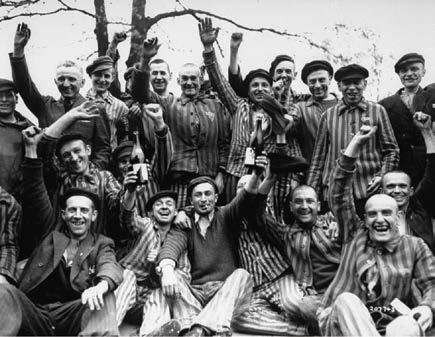
Polish prisoners in Dachau toast their liberation from the camp.
Credit: United States Holocaust Memorial Museum, courtesy of National Archives and Records Administration, College Park
Additional Resources and Opportunities
Educators can use the following resources to define key terms and to respond to the most frequently asked questions students have about the Holocaust In addition, there are a variety of national or regional contests for students to showcase their knowledge and skills while also providing opportunities for students to develop voice and agency For example, educators can register their schools to participate in The Sala and Aron Samueli Holocaust Art & Writing Contest, presented by Chapman University and The 1939 Society The contest challenges students to reflect upon the contest’s annual theme by watching a full-length Holocaust testimony and expressing their responses through art, poetry, prose or film .
• Audio Glossary Echoes & Reflections
• “Students’ Toughest Questions” Echoes & Reflections
Recommended Books
The following selected list of fiction and non-fiction texts aligns with the guidelines referenced in this guide Educators may find some of these texts are best used for reference or as sources for research projects In any case, educators should always consider the maturity level of their learners, as well as their existing knowledge, when choosing which books to share and assign to students
Middle School
• Beyond Courage: The Untold Story of Jewish Resistance during the Holocaust by Doreen Rappaport
• The Boy on the Wooden Box: How the Impossible Became Possible...on Schindler’s List by Leon Leyson
• The Boy Who Dared by Susan Campbell Bartoletti (fiction)
• The Children of Willesden Lane, Young Readers Edition by Mona Golabek and Lee Cohen
• Code Name Verity by Elizabeth Wein (fiction)
• Diary of a Young Girl: Definitive Edition by Anne Frank
• Games of Deception: The True Story of the First U.S. Olympic Basketball Team at the 1936 Olympics in Hitler’s Germany by Andrew Maraniss
• Hana’s Suitcase by Karen Levine
• Hitler Youth: Growing Up in Hitler’s Shadow by Susan Campbell Bartoletti
• Hitler’s War Against the Jews—The Holocaust: A Young Reader’s Version of the War Against the Jews 1933-1945 by Lucy Dawidowicz
• The Holocaust: A History of Courage and Resistance by Bea Stadtler
• I Never Saw Another Butterfly: Children’s Drawings and Poems from Terezin Concentration Camp, 1942-1944, Hana Volavkova, ed.
• Milkweed by Jerry Spinelli (fiction)
• The Nazi Hunters: How a Team of Spies and Survivors Captured the World’s Most Notorious Nazi by Neal Bascomb
• Number the Stars by Lois Lowry (fiction)
• Prisoner B-3087 by Alan Gratz (fiction)
• Rescue: the Story of How Gentiles Saved Jews in the Holocaust by Milton Meltzer
• Salt to the Sea by Ruta Sepetys (fiction)
• Tell Them We Remember: The Story of the Holocaust by Susan Bachrach
• When Hitler Stole Pink Rabbit by Judith Kerr (fiction)
• Whitebird: A Wonder Story by R. J. Palacio (fiction)
High School/Community College
• All But My Life by Gerda Weissmann Klein
• Art from the Ashes: A Holocaust Anthology, Lawrence Langer, ed.
• Between Shades of Gray by Ruth Sepetys
• The Book Thief by Markus Zusak (fiction)
• The Complete Maus by Art Spiegelman
• Defiance by Nechama Tec
• Dry Tears: The Story of My Lost Childhood by Nechama Tec
• The Edelweiss Pirates: Teenage Rebels in Nazi Germany by Dirk Reinhardt (fiction)
• Eva’s Story: A Survivor’s Tale by the Stepsister of Anne Frank by Eva Schloss
• From the Ashes of Sobibor: A Story of Survival by Thomas Toivi Blatt
• Girl in the Green Sweater by Krystyna Chiger
• Images from the Holocaust: A Literature Anthology by Jean Brown, Elaine C. Stephens, Janet E. Rubin, eds.
• Leap into Darkness: Seven Years on the Run in Wartime Europe by Leo Bretholz
• Night by Elie Wiesel
• Salvaged Pages by Alexandra Zapruder
• Sources of the Holocaust (Documents in History, 8) by Steve Hochstadt
• Survival in Auschwitz: If This Is a Man by Primo Levi
• Survivors Club: The True Story of a Very Young Prisoner of Auschwitz by Michael Bornstein
• White Rose by Kip Wilson (fiction)
• The World Must Know by Michael Berenbaum
When choosing a book of fiction, read the blog Let’s Talk About “The Boy in the Striped Pajamas,” written by Deborah Batiste (Echoes & Reflections, 2016), which highlights the importance of sharing books that accurately align with the historical record
Learning Opportunities for Educators
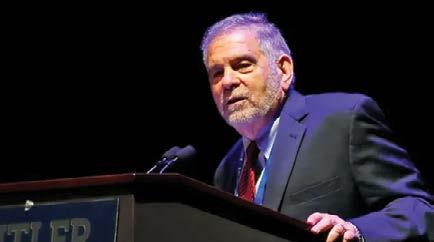
“ One cannot undo what has happened. Historians can answer the question how; theologians, writers, artists, poets and philosophers have not answered the question why. Yet we can answer the question of what to do with this history. Embrace it, study it, wrestle with it and ultimately transform it into a weapon for the human spirit to enlarge our sense of responsibility, to alleviate human suffering and strengthen our moral resolve, and to recognize the process and stop it when it starts. ”
Michael Berenbaum, The Times of Israel Blog, “Can a museum – any museum – ‘eliminate hate?’,” August 16, 2024 Credit: Photo courtesy of Kelly Wilkinson
Many educators who study the Holocaust agree that it can be a lifelong learning process . How does one develop an understanding and make sense of an event of such magnitude and evil? As scholars and researchers in the field discover new sources and develop fresh insights, educators can also continue learning and staying current with the latest historical research Professional development can also focus on evolving classroom practice, as it strives to meet the needs of the moment, especially by helping students to recognize and counter antisemitism and other forms of hate and prejudice that are present in today’s world
The following organizations provide ongoing professional development programs that are either free or offered at low cost for educators Many of these opportunities offer certificates that can be used for creditable professional development hours .
• Echoes & Reflections offers webinars, online courses, live programs and advanced learning programs for educators on a range of topics For a list of opportunities visit Programs for Educators to check the schedule and to register
• The United States Holocaust Memorial Museum offers the annual Arthur and Rochelle Belfer National Conference for Educators . This virtual conference is its flagship professional development opportunity for secondary educators across the country The conference invites participants to engage with current historical research and instructional best practices .
• The Rodgers Center for Holocaust Education at Chapman University offers both in-person and online workshops for educators whose middle and high school students participate in The Sala and Aron Samueli Holocaust Art & Writing Contest Educators learn techniques to prepare students to watch an eyewitness Holocaust testimony and respond to the contest prompt by creating a work of art, prose, poetry or film
• Facing History and Ourselves provides Professional Learning opportunities in various formats from in-person seminars and workshops to synchronous online courses and webinars
• USC Shoah Foundation’s online learning platform IWitness, which provides access to testimony-based teaching tools and resources, offers live and on-demand webinars and in-person programs
Acknowledgements
The Holocaust Education Initiative’s Advisory Council wishes to thank the following individuals and organizations for contributing to the development of this guide:
First, we recognize Holocaust survivor Ursula Lowenbach Foster, of blessed memory, for being the courageous inspiration behind the work of her son, photographer Clifford Lester, in creating the remarkable portraits that make up the Ursula Lowenbach Foster Holocaust Survivor Portrait Gallery, located at Cypress College These images, which inspire us to carry their messages of a hopeful future forward and to invest in the education of young people to learn about antisemitism and the Holocaust in order to build a more just society, serve as the centerpiece of this guide
Our immense gratitude also goes to the Holocaust survivors who gave of their precious time to sit for the portraits in the gallery and shared their stories
We deeply appreciate the support of Schools First Federal Credit Union, which sponsored the development of this guide
We also want to express our gratitude to the administration of Cypress College: President Emeritus JoAnna Schilling, whose early support of our mission was strong and unwavering; Dr Scott Thayer, current president, who has continued Dr Schilling’s support; Dr Paul de Dios, vice president of student services; Howard Kummerman, executive director of the Cypress College Foundation; and Marc Posner, director of campus communications
Furthermore, we want to thank the following organizations who work tirelessly in the field of antisemitism and Holocaust and genocide education and research for graciously allowing us to link, reference, and reprint text from their websites . Their resources, lesson plans and learning opportunities provide invaluable guidance to educators as they navigate this sensitive and challenging topic
• Anti-Defamation League
• Echoes & Reflections (a partnership of the Anti-Defamation League, USC Shoah Foundation and Yad Vashem)
• Facing History and Ourselves
• International Holocaust Remembrance Alliance
• IWitness (online learning platform from USC Shoah Foundation)
• Jewish Partisan Educational Foundation
• Museum of Jewish Heritage – A Living Memorial to the Holocaust
• National Gallery of Art, London
• National Portrait Gallery, London
• National Portrait Gallery—Smithsonian
• National World War II Museum, New Orleans
• Organization for Security and Co-operation in Europe - OSCE
• The Rodgers Center for Holocaust Education at Chapman University
• United States Holocaust Memorial Museum
• USC Shoah Foundation
• Yad Vashem – The World Holocaust Remembrance Center
We are particularly grateful for the hard work, research, creativity, expertise, and vision of our educators, Sherry Bard and Sheila Hansen, for developing this guide We are also indebted to Bill Madrid for his creativity in providing the guide’s graphic design
Special thanks and gratitude go to the individual members of our council, who volunteer their time to raise awareness of the Holocaust and its impact in today’s world:
Clifford Lester, second generation Holocaust survivor, chair of the HEI Advisory Council and Professor Emeritus of the Cypress College Photography Department
Raul Alvarez, Executive Director, Cypress College Foundation, retired
Karen Cant, Vice President, Administrative Services, Cypress College, retired
Margie Lewis, President Emeritus, Cypress College
Richard Rodriguez, video producer, Orange County Department of Education, retired
Gail Taylor, Executive Director, Cypress College Foundation, retired
References and Links
This section provides a more detailed identification of the linked sources used in the guide to assist users in locating referenced information
“A Closer Look at the Relationship between Holocaust Knowledge, Education and Antisemitism.” Center for Antisemitism Research, Anti-Defamation League. 2023. https://www.adl.org/resources/blog/closer-look-relationship-between-holocaustknowledge-education-and-antisemitism
“U.S. State Legislation Map.” Echoes & Reflections, 2005-2024 https://echoesandreflections.org/interactive-map/
“Addressing Anti-Semitism through Education: Teaching about Anti-Semitism through Holocaust Education, Teaching Aid 5.” Organization for Security and Co-operation Europe (OSCE). 2019. https://www.osce.org/odihr/441104
“About the IHRA Working Definition of Antisemitism.” Anti-Defamation League. 2021, updated 2024.
https://www.adl.org/resources/backgrounder/about-ihra-working-definition-antisemitism
“Timeline of the Events.” Holocaust Encyclopedia, United States Holocaust Memorial Museum.
https://encyclopedia.ushmm.org/content/en/timeline/holocaust
“What Groups of People Did the Nazis Target?” Holocaust Encyclopedia, United States Holocaust Memorial Museum.
https://encyclopedia.ushmm.org/content/en/article/what-groups-of-people-did-thenazis-target
“Pedagogical Principles for Effective Holocaust Instruction.” Echoes & Reflections.
https://echoesandreflections.org/pedagogical-principles/. 2005-2024. Reprinted with permission from Echoes & Reflections Partnership ©. All rights reserved.
“The Rise of the Nazi Party and the Third Reich.” Museum of Jewish Heritage – A Living Memorial to the Holocaust. 2019.
https://mjhnyc.org/blog/the-rise-of-the-nazi-party-and-the-third-reich/ “Ghettos.” Holocaust Encyclopedia, United States Holocaust Memorial Museum. https://encyclopedia.ushmm.org/content/en/article/ghettos
“’Final Solution’: Overview.” Holocaust Encyclopedia, United States Holocaust Memorial Museum.
https://encyclopedia.ushmm.org/content/en/article/final-solution-overview
“Those Who Dared to Rescue.” Echoes & Reflections, Unit: Rescue and Righteous Among the Nations. 2005-2024. https://echoesandreflections.org/wp-content/uploads/2021/07/08-01-05_StudentHandout_Those-Who-Dared-Rescue.pdf
Lesson 1
“Analyze a Photograph.” National Archives. 2024. https://www.archives.gov/education/lessons/worksheets/analyze-a-photograph-intermediate
“Art Explainer: What Is a Portrait?” National Portrait Gallery, London. https://www.youtube.com/watch?v=RFek8WOryDU
“Compare and Contrast.” National Portrait Gallery— Smithsonian Institution. https://npg.si.edu/sites/default/files/comparecontrast.pdf
“Dedication.” Remember the Holocaust: A Photographic Journal of Survivors. 2017. https://www.remembertheholocaust.org/dedication
“Elements of Portrayal: Definitions.” National Portrait Gallery—Smithsonian Institution. 2024.
https://npg.si.edu/sites/default/files/elements_of_portrayal_definitions.pdf
“The Introduction of the Yellow Badge in the Netherlands.” Anne Frank House. 2024. https://www.annefrank.org/en/timeline/126/the-introduction-of-the-yellow-badgein-thenetherlands/
“Jump In!” National Portrait Gallery—Smithsonian Institution. 2024. https://npg.si.edu/sites/default/files/NPG_Jump_In.pdf
Lesson 2
“Bio.” Remember the Holocaust: A Photographic Journal of Survivors. 2017. https://www.remembertheholocaust.org/bio
“Compare and Contrast Top Hat.” National Portrait Gallery—Smithsonian Institution. 2024.
https://npg.si.edu/sites/default/files/top_hat.pdf
Google Arts and Culture Learn Together: Individual Identity Presentation. National Portrait Gallery—Smithsonian Institution. 2024, PowerPoint Presentation, slide 4.
https://npg.si.edu/sites/default/files/gac_individual_identity_0.pdf
Remember the Holocaust: A Photographic Journal of Survivors. 2017. https://www.remembertheholocaust.org/
“Think, Pair, Share.” Project Zero. Harvard Graduate School of Education. 2002. https://pz.harvard.edu/sites/default/files/Think%20Pair%20Share.pdf
Lesson 3
“Bystanders.” Holocaust Encyclopedia. United States Holocaust Memorial Museum. https://encyclopedia.ushmm.org/content/en/article/bystanders
“Elements of Portrayal: Definitions.” National Portrait Gallery—Smithsonian Institution. 2024.
https://npg.si.edu/sites/default/files/elements_of_portrayal_definitions.pdf
“Frayer Model-4 Per Page.” The Teacher Toolkit. https://rb.gy/uk254t
Google Arts and Culture Learn Together: Individual Identity Presentation. National Portrait Gallery—Smithsonian Institution. 2024. PowerPoint Presentation, slide 4. https://npg.si.edu/sites/default/files/gac_individual_identity_0.pdf
Marthe Cohn. Behind Enemy Lines: The True Story of a French Jewish Spy in Nazi Germany. Crown/Archetype, 2006, pp. 120, 159, 235.
“Marthe Cohn.” Remember the Holocaust: A Photographic Journal of Survivors. 2017.
https://www.remembertheholocaust.org/
Lesson 4
Remember the Holocaust: A Photographic Journal of Survivors. 2017. https://www.remembertheholocaust.org/
The Righteous Among the Nations Database. Yad Vashem. 2024. https://collections.yadvashem.org/en/righteous
“Those Who Dared to Rescue.” Echoes & Reflections. 2005-2024. https://rb.gy/5b96nd
“Understanding Rescue: What Scholars Say.” Facing History and Ourselves. 2024.
https://www.facinghistory.org/resource-library/understandingrescue-what-scholars-say
“UNIT VIII: RESCUE AND RIGHTEOUS AMONG THE NATIONS.”
Echoes & Reflections. 2005-2024.
https://echoesandreflections.org/unit-8/?state=open#content
“YAD VASHEM CRITERIA FOR ‘RIGHTEOUS AMONG THE NATIONS.’”
Echoes & Reflections. 2005-2024.
https://rb.gy/vrf4k5
Lesson 5
The Auschwitz Album. Yad Vashem. 2024.
https://www.yadvashem.org/yv/en/exhibitions/album_auschwitz/index.asp
https://www.yadvashem.org/yv/en/exhibitions/album_auschwitz/images/arrival/268_12.jpg
https://www.yadvashem.org/yv/en/exhibitions/album_auschwitz/images/arrival/268_6-9.jpg
Elly: My True Story of the Holocaust. Scholastic, 2007.
“Elly Gross.” Remember the Holocaust: A Photographic Journal of Survivors. 2017. https://www.remembertheholocaust.org/
“Romania 1933, Northern Transylvania Indicated.” Holocaust Encyclopedia. https://encyclopedia.ushmm.org/content/en/map/romania-1933northern-transylvania-indicated
“See-Think-Wonder.” Echoes & Reflections. 2005-2024. https://echoesandreflections.org/wp-content/uploads/2020/09/04-01-04-02StudentHandout_See-Think-Wonder.pdf
“Think-Pair-Share.” McCormick Teaching Excellence Institute. Cornell University. 2024.
https://mtei.engineering.cornell.edu/teaching-resources/active-learning/think-pair-share/
Lesson 6
“Arthur Weil.” Remember the Holocaust: A Photographic Journal of Survivors. 2017.
https://www.remembertheholocaust.org/
“BACKGROUND: KINDERTRANSPORT.” Echoes & Reflections. 2005-2024. https://echoesandreflections.org/wp-content/uploads/2021/07/08-0207_Student-Handout_Background-Kindertransport.pdf
“Burgerweeshuis, Amsterdam, Netherlands.” Children’s Homes. 2024. https://www.childrenshomes.org.uk/AmsterdamWeeshuis/
“Ellen Nebel.” Remember the Holocaust: A Photographic Journal of Survivors. 2017.
https://www.remembertheholocaust.org/
“Jewish Children Taken to England at the Last Moment.” Anne Frank House. https://www.annefrank.org/en/timeline/63/jewish-children-taken-to-england-at-thelastminute/
“One Thousand Children.” YIVO Institute for Jewish Research. 2024. https://onethousandchildren.yivo.org/Our-Story
Weil, Arthur. “Subtle Expressions.” Reflections of the Moment. 2001.
“Wijsmuller Gertruida (Meijer).” Yad Vashem. 2024. https://collections.yadvashem.org/en/righteous/4018228
Addendum
Holocaust Education Initiative Description
The Holocaust Education Initiative (HEI), located at Cypress College, is a volunteer, donor-supported effort to plan and implement Holocaust education activities These activities include an array of efforts to help spread awareness of the Holocaust—and the lessons to be learned from it—among the students and faculty of the college and within the communities which the college serves
The Holocaust Education Initiative began in Spring 2016, when Clifford Lester, Cypress College Photography Professor Emeritus and the son of two Holocaust survivors, secured college approval to establish a gallery of Holocaust survivors’ portraits Shortly thereafter the college agreed to sponsor an annual Yom HaShoah Holocaust Day of Remembrance event on campus
Holocaust Education Initiative Mission
Through the lens of the Holocaust, the Holocaust Education Initiative educates our community about the dangers of intolerance, while empowering its citizens to stand against antisemitism, bigotry and hate by safeguarding the dignity of all people
Holocaust Education Initiative Components
The Ursula Lowenbach Foster Holocaust Survivors Portrait Gallery, dedicated in memory of Clifford’s mother, showcases more than 50 portraits of Holocaust survivors and is at the heart of the Holocaust Education Initiative In addition, the HEI includes the following components:
• Docent-led tours of the gallery
• Bringing Light from Darkness: Teaching About the Holocaust Through Survivor Portraits, A Resource Guide for Educators, an online resource providing strategies for how educators can use the survivors’ portraits to engage students in learning about the Holocaust
• An annual Yom HaShoah Holocaust Day of Remembrance event, which welcomes students, faculty and staff, and community members to a program that honors Holocaust survivors and their families
• On-site presentations of the portrait gallery at schools and community venues
• Professional learning workshops for educators that guide them in their efforts to include Holocaust education in their curriculum .
• History 120C, History of the Holocaust, a transfer-level Cypress College course offered by the History Department
Please consider a donation to support the Holocaust Education Initiative
