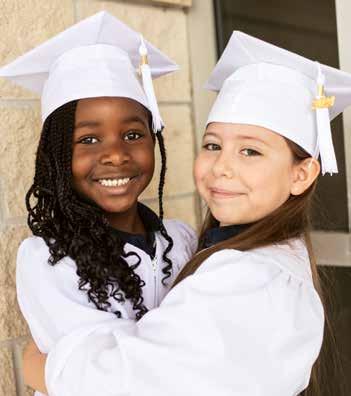
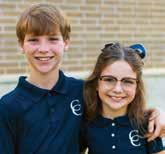
EARLY ELEMENTARY Kindergarten
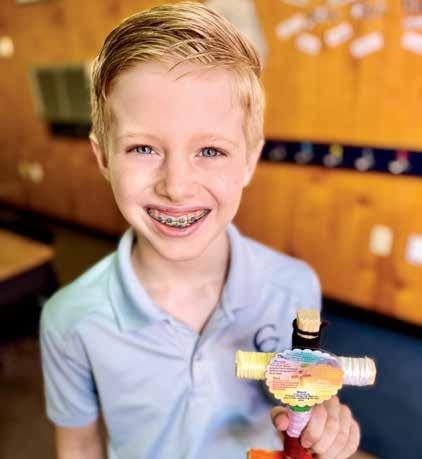
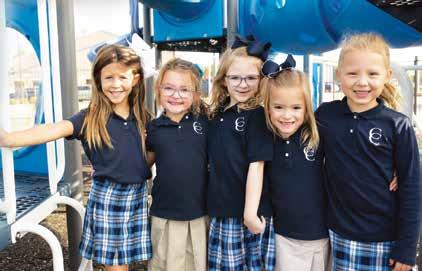
• All subjects taught from a biblical worldview
• Caring, committed, certified Christian educator in every room
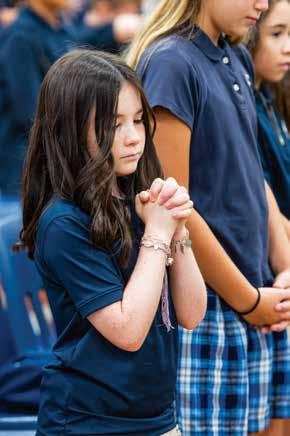
• Daily Bible lessons, Scripture memory and prayer
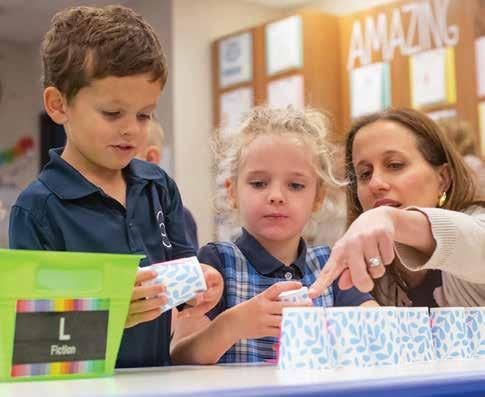
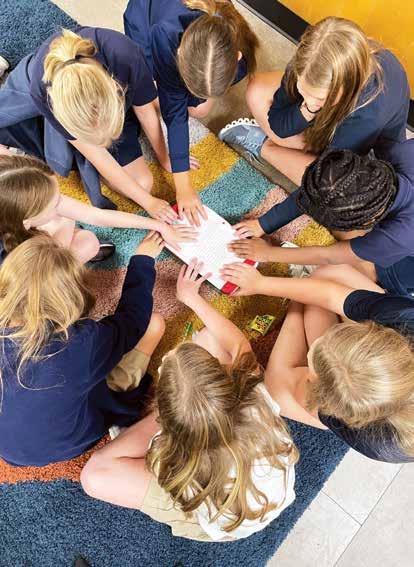
• Multi-sensory, hands-on curriculum
• Literacy program focuses on individualized and phonics-based reading
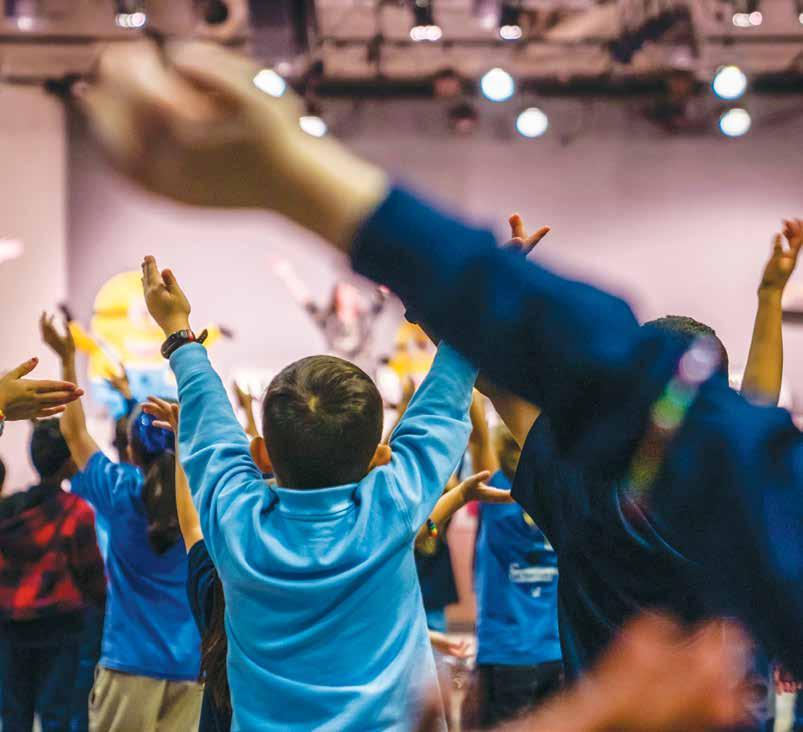
• Weekly chapel service
• Daily folders and weekly emails to enhance communication between school, teachers and parents
• Elementary sports: soccer (fall) and baseball/softball (spring)
• Subjects covered: reading, writing, math, phonics, handwriting, Bible, social studies and science
“Being a part of CCS has been an incredible blessing to our family. We have been thankful for an environment that partners with us in educating and discipling our kids. This community succeeds in cultivating a culture where children can develop a curious love for learning, excel academically and grow a sincere and steadfast love for Jesus. It’s been an answered prayer for our family.”
Anthonie and Corlischa Badenhorst
At Cypress Christian School, our thoughtfully-chosen curriculum challenges elementary and secondary students while upholding the Christian values we strive to instill. Daily Bible classes teach scriptural truths, seamlessly integrating them into every academic discipline in a practical and transformative manner.
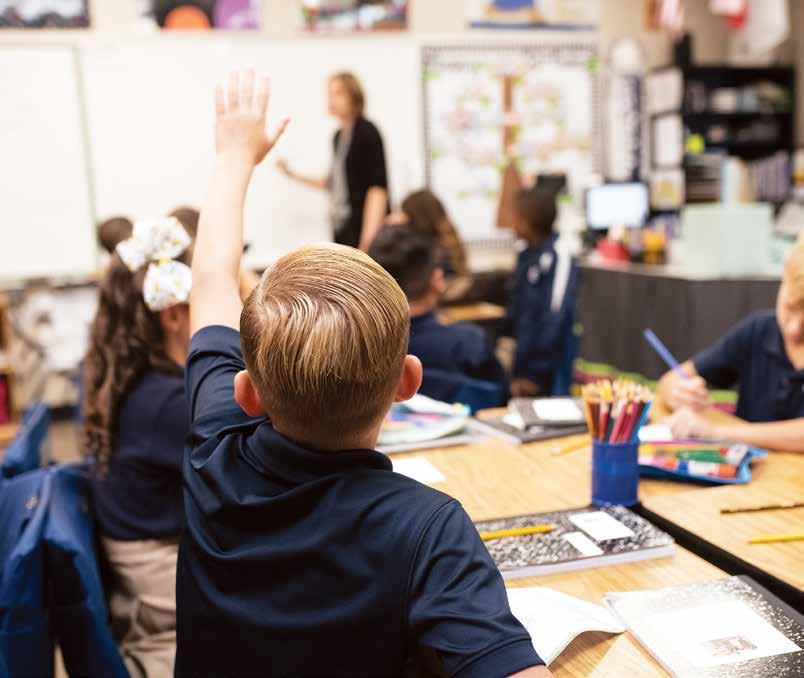
The teachers are passionate about their role and work hard to ensure that each student receives personalized attention and engaging, hands-on instruction within a biblically integrated classroom environment. This nurturing approach is essential for fostering academic success while grounding students in biblical truth.
Elementary students enjoy a well-rounded education that includes daily lessons in Bible, mathematics, English language arts, handwriting, science, social studies and spelling—all delivered with a focus on academic excellence and a biblical perspective. This holistic approach cultivates lifelong learners from the very start of their educational journey.
ELEMENTARY SCHOOL Grades 1-5
HIGHLIGHTS OF ELEMENTARY SCHOOL
• Guided reading with small group instruction
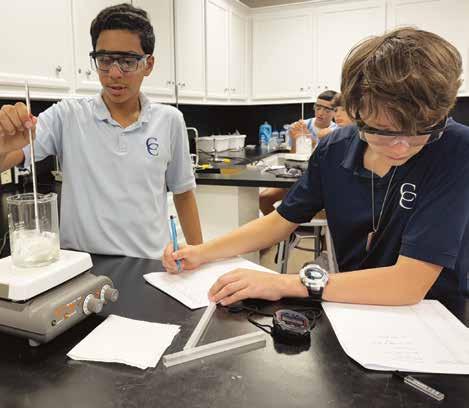
• Exploratory science program for hands-on learning
• Process-based writing instruction
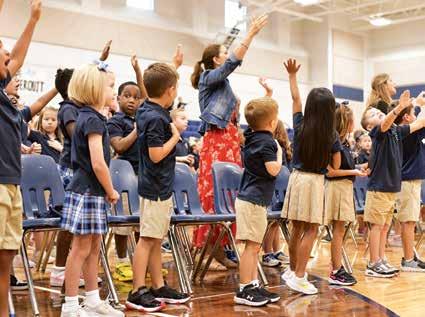
• Weekly elementary chapel services
• Specials include science lab, art, P.E., P.E. lab, music, technology and library
• Biblical integration within all subject areas
ELEMENTARY EVENTS AND CO-CURRICULAR ACTIVITIES
• Elementary Sports programs including soccer, basketball and baseball/softball
• Math Olympics
• Spelling Bee
• Junior Ambassador program
• Tribal Wars
• Run-4-Fun
• Daddy/Daughter Dance
• Mom/Son Game Night
• Christmas Program... and more!
CCS ADVANTAGE
• Teachers are degreed and certified born-again believers who model spiritual and academic excellence
• Teachers build upon foundational knowledge by teaching students higher-order thinking skills
• Students learn to recognize their strengths and build upon them while addressing their weaknesses
• CCS provides a loving, encouraging atmosphere
• Local and statewide competitions for academics
• Grade-level mission projects
• Online access to grades and assignments for parents and students
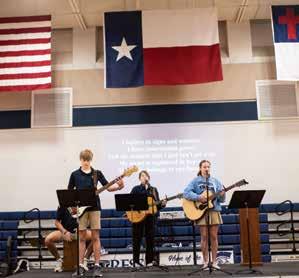
• Middle school chapel every Wednesday with student-led worship team
• Research-based teaching practices in each subject area.
• Teachers incorporate whole group, small group and individual practice into each lesson
• Heavy emphasis on the writing process through various forms of writing
• Various field trip opportunities that expand learning in the classroom
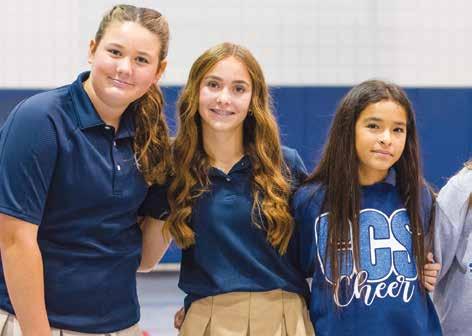
Middle school students are full of expectation, yet they face many risks. What a difference it makes when young preteens and teens are part of an educational community that strives to follow the biblical model and promotes a Christian worldview. The team of middle school teachers at CCS is committed to making a difference in the lives of these precious students. We want to help them to answer the question, “What does it mean to live for Jesus?”.
Middle school students need the right preparation for their unique race that lies ahead. Culture pushes its values on teens
“We chose CCS for middle school because it offers academic challenge in a community of supportive staff who work every day to share the love of Jesus Christ with our children. We love that CCS provides a safe environment where teachers
in many ways. Teachers must be clear and direct as they demonstrate the application of scriptural principles in relevant ways. Christian teachers orchestrate discussions that cause students to consider the consequences of choices that lead away from God’s plan. Perhaps these discussions can come from a question posed in Bible class, a current event mentioned in history class or a scientific breakthrough discussed in science. The middle school years are a unique challenge, but together we can see an emerging generation of Warriors being honed by God.
know each child personally and care deeply about their academic success, as well as the growth of their Christian faith and strong character.”
Ethan and Hillary Brown
MIDDLE SCHOOL Grades 6-8
MIDDLE SCHOOL CO-CURRICULARS
• ACSI Math Olympics
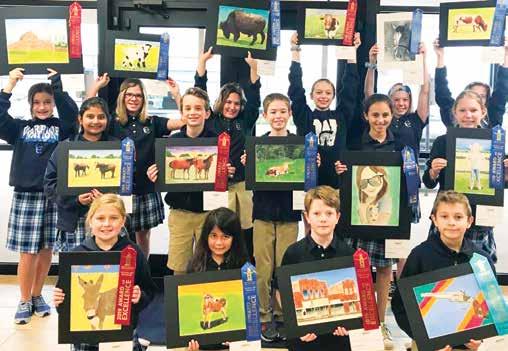
• Houston Livestock Show and Rodeo Art Competition
• ACSI Art Festival
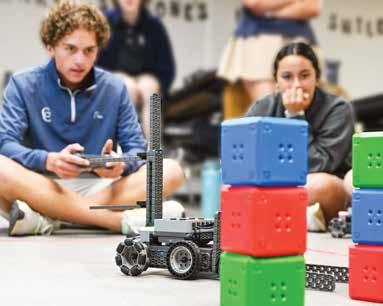
• 4-H Robotics
• 4-H Archery
• Drumline
• Praise and Worship Team
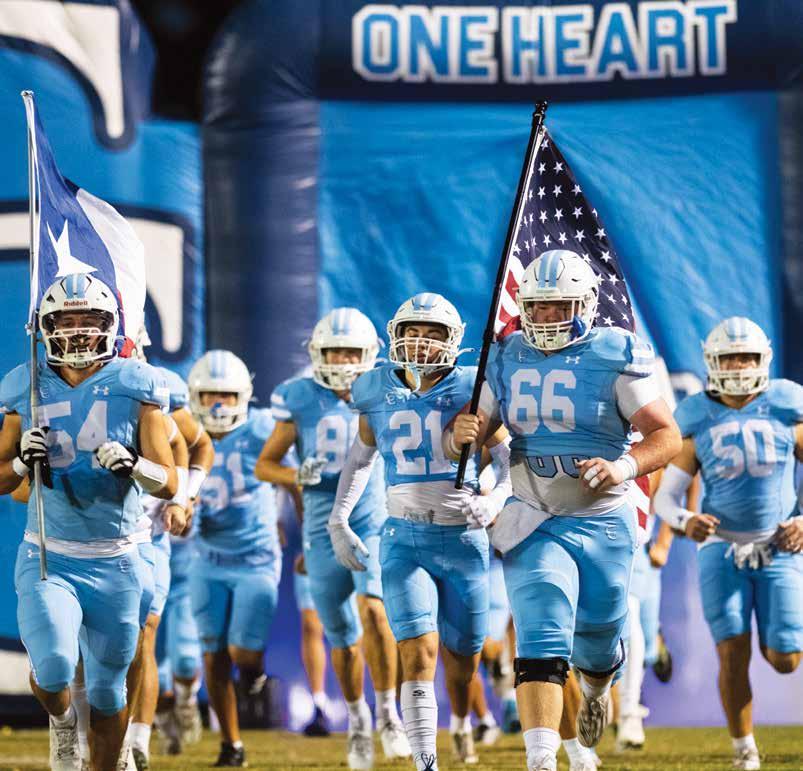
• Fall, Winter and Spring Athletics
• Student Ambassadors
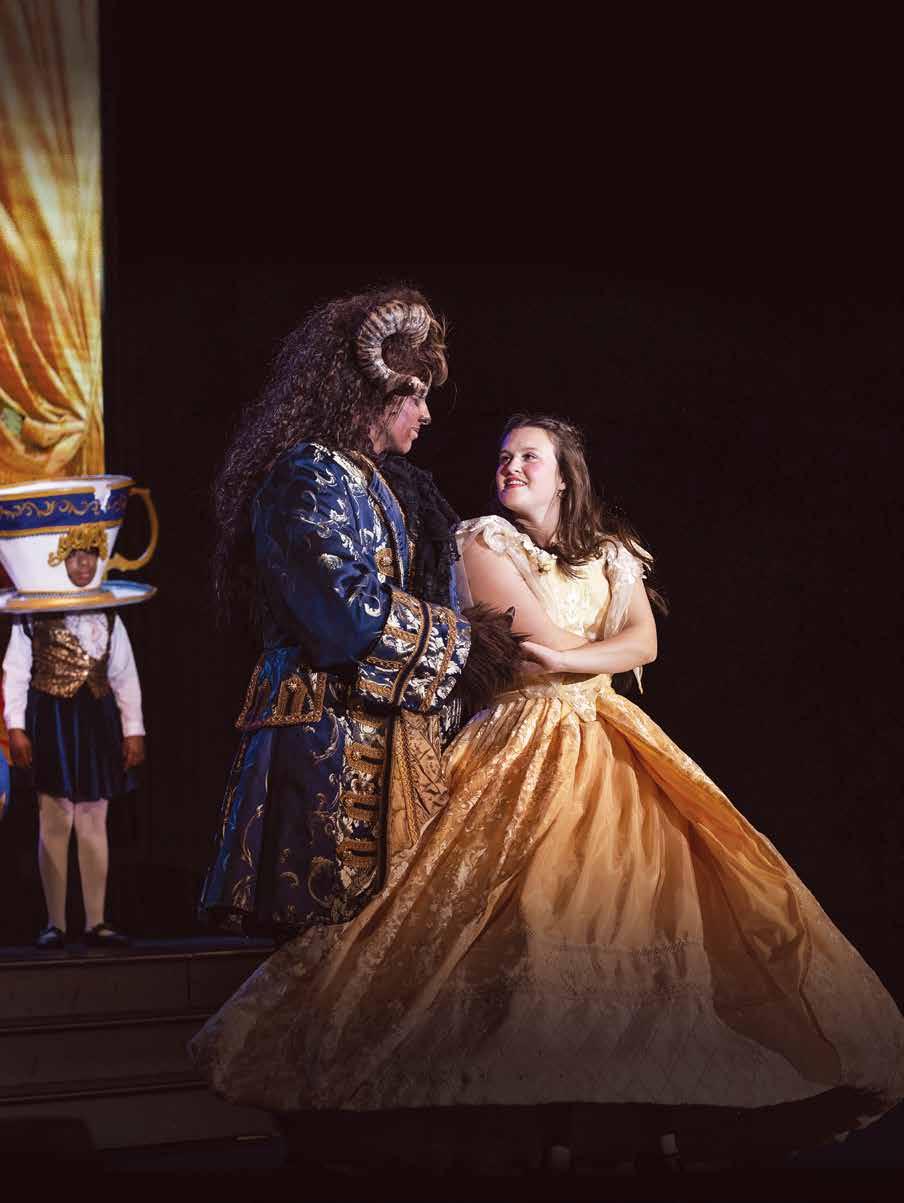
• Theater
• Choir
• Book Clubs
• Chess Team
• Middle School Yearbook
• Middle School Newspaper
High school is not just about the four years of classes taken or “getting into a good college.” It is also the continuation of building a firm foundation on the Lord and preparing the student to be a contributing member of society as an adult.
With those goals in mind, at CCS, we strive for excellence in faith formation, discipleship and academic rigor. All our employees on campus, not just our Bible teachers, are mature believers who have been called by God to walk alongside our students and reinforce and support the biblical values of the students’ parents. Whether a student is rehearsing for a play, practicing a sport or purchasing lunch, (s)he will be surrounded by the love of Christ reflected through the staff. Beyond modeling Christ, once a year we set academics aside and take students off campus to intentionally spend time with God and reflect on the health of their relationship with Him at our annual high school retreat.
In the classroom, students will be academically challenged by experts in their field. Our teachers focus on much more than just memorizing facts and figures. They guide students in learning how to reflect, analyze and discover the “why” so they will be prepared for college. One hundred percent of our students are accepted to college. Because of this, we take all our freshman to several different colleges to tour and start the discovery process of finding the college that may be the right fit for them.
CCS ADVANTAGE OF HIGH SCHOOL
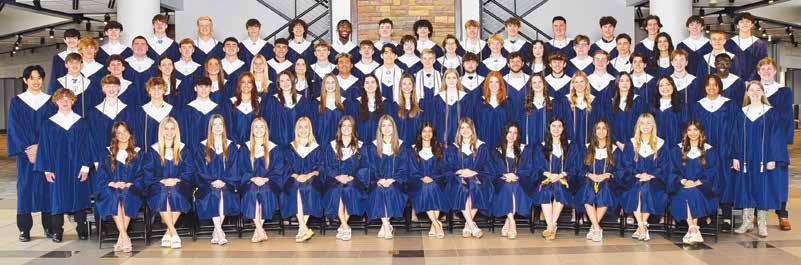
Over $10.4 million in scholarships offered to the 78 graduates of the Class of 2025
Over 26 AP and Honors courses offered, with all high school students taking at least one AP course
100% of CCS students graduate with a distinguished level of achievement diploma
Nationally recognized as a platinum AP Capstone School
All courses at CCS high school are taught at the Honors/AP-Level
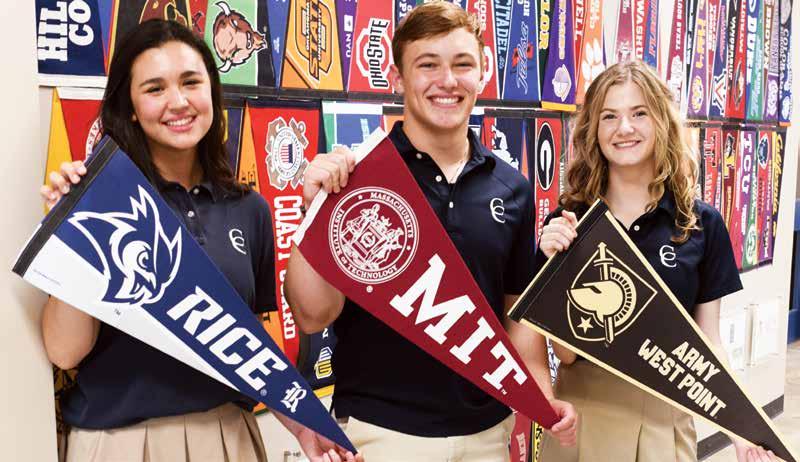
College acceptances to MIT, Rice University, Duke University
“I love CCS because it is a place of genuine Christian community filled with students who desire to learn and teachers who have a true passion for helping the next generation. I can always count on the teachers for encouragement and know they are always available for prayer or a hug. There is also a wide variety of rigorous courses available that greatly prepare us for college and teach us the value of hard work and determination.”
Audrey Fransen, Class of 2025
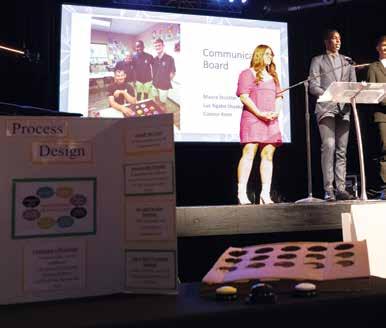
Capstone Engineering class develops real-world projects for clients of local ministry
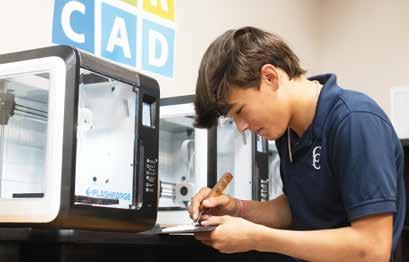
Robust STEM program including robotics, engineering and 3D printing
Multiple graduates accepted to prestigious military academies
Grade-level mission projects through Bible classes
HIGH SCHOOL Grades 9-12
HIGH SCHOOL LEADERSHIP AND CO-CURRICULARS
• National Honor Society
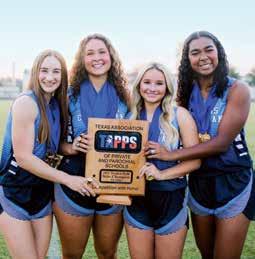
• TAPPS Academic Team
• Bible Study Leadership
• Lemonade Day Leadership
• Houston Livestock Show and Rodeo Art Competition
• Praise and Worship Team
• 4-H Archery
• Ambassador Council
• Warrior Leadership Academy
• Student Leadership University
• Theatre/Choir
• Drumline
• National Thespian Society
• National Art Honor Society
• Tribal Wars Leadership
• Chess Team
Biblical integration infused into every subject and weekly chapel with studentled worship team
All freshmen enrolled in Pre-AP classes
The Cypress Christian School Warrior Leadership Academy participates in the Student Leadership University (SLU) program. SLU’s mission is to develop and equip student leaders to think, dream and lead. We strive to instill future tense thinking, character-driven decision-making, ownership of biblical values and a commitment to influence through service.
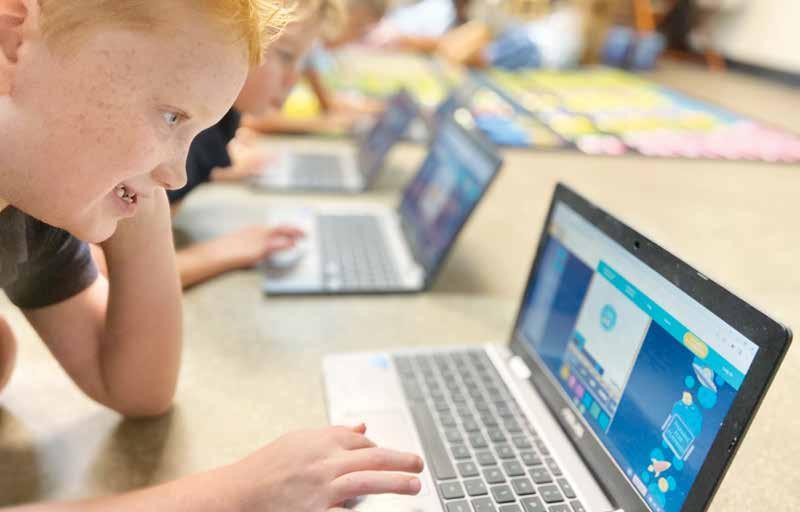
At Cypress Christian School, our cohesive technology program equips students with the skills and wisdom to thrive in today’s digital world. Rooted in a biblical worldview, our approach to technology encourages students to engage with 21st-century skills through creativity, collaboration, communication and critical thinking, all while honoring God and using their talents to serve others. Technology is a powerful tool to enhance the instruction of the classroom teacher and we emphasize the responsibility to use it with integrity, purpose and stewardship.
By integrating technology with faith, Cypress Christian School prepares students to become lifelong learners who are equipped to serve and lead with purpose in a world that is increasingly
TECHNOLOGY WITH BIBLICAL WORLDVIEW
Creativity and Innovation
Our students are taught to use technology creatively to solve problems and express themselves in ways that honor God. We encourage innovation, understanding that creativity is a gift from the Creator.
“For we are God’s handiwork, created in Christ Jesus to do good works, which God prepared in advance for us to do.”
— Ephesians 2:10
Collaboration and Communication
We prepare students to collaborate and communicate effectively, using technology to work together and share ideas with respect and grace.
“Therefore encourage one another and build each other up, just as in fact you are doing.”
— 1 Thessalonians 5:11
Digital Responsibility and Stewardship
We emphasize the importance of integrity and stewardship, understanding that each online action has an impact. Students are encouraged to use digital tools to uplift others and make wise choices in all digital spaces.
“Whatever you do, work at it with all your heart, as working for the Lord, not for human masters.”
— Colossians 3:23
Critical Thinking and Discernment
Navigating today’s vast amount of information requires discernment. Our students are trained to analyze information, seek truth and make wise choices, building a foundation for sound decisionmaking in all areas of life.
“Test everything; hold fast what is good.”
— 1 Thessalonians 5:21
digital, all while staying grounded in their faith.
“An intelligent heart acquires knowledge and the ear of the wise seeks knowledge.”
–Proverbs 18:15
SPIRITUAL EMPHASIS
Biblical Worldview
At CCS, an intentional plan to develop a Biblical Worldview is built into the very fabric of the school. Students are engaged weekly with the principles of God’s Word through both our chapel and our student character development programs. The mandate of academic excellence within our mission statement, cannot be separated from an education based upon biblical values. Whether in athletics, the arts or in AP English Literature, CCS students are immersed in a Biblical Worldview environment that challenges them to think, desire and act in ways that are consistent with the truth of God’s Word.
“The community here at CCS can only be created by unity in the Spirit with like-minded believers. Through the shared values of the CCS family and our commitment to biblical education, our
students are empowered to have an authentic relationship with the Lord and grow closer to Him by virtue of being a Warrior!”
Kris Hogan, Director of Culture
#1
God is transcendent, is spirit and always acts in accordance with His loving and just nature. In addition, God in His Word places an eternal emphasis upon life.
(Romans 11:36, II Corinthians 4:18, I John 2:15-17)
#2
Men, and thus children, are created in the image of God and have unbounded potential to mirror the qualities and character of Jesus Christ. Further, man is born with a sin nature that has marred but not ruined God’s image in man. Finally, we believe that man’s greatest need is redemption through Jesus Christ and not education.
(Genesis 1:27, Psalm 8:3-6, Romans 3:23, Jeremiah 17:9)
#3
Jesus Christ reflects truth: truth about the nature of God, truth of man’s need to be rightly related to God and truth about the world He created.
(John 14:6, John 17:7, Matthew 7:24-27, Psalm 19:1, I Corinthians 2:15, John 8:26, II Timothy 3:16)
#4
The Bible is inerrant and authoritative. Because God both created the universe and appointed the writing of Scripture, no academic truth (man discovered truth) can rightly be in conflict with God’s Word.
#5
Although man may not perceive truth in particular circumstances, truth is unchangeable and not relativistic.
#6
Biblical education focuses on what a person becomes rather than on what he knows. Therefore, knowledge is the basis for the development of wisdom and character. Furthermore, the end of education is not the acquisition of status but to glorify God and fulfill His mandate to subdue and have dominion over God’s creation.
#7
Education is the prerogative and responsibility of parents. The Christian school is in partnership with the home to provide support and assistance in shaping a Christ-like view of truth and reality.
THESE BELIEFS ARE A PART OF EVERY ASPECT OF THE EDUCATION OFFERED AT CYPRESS CHRISTIAN SCHOOL. What We Believe
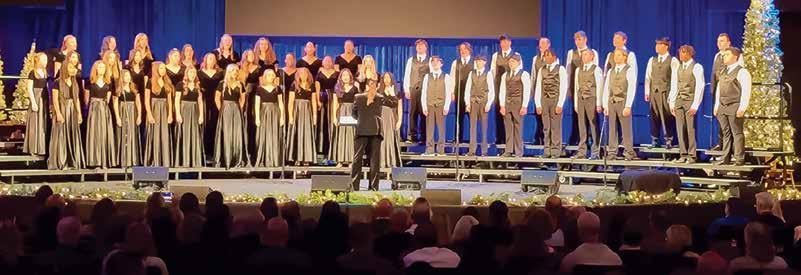
The choir program fosters a sense of community and worship, where students sing not only for artistic expression but also to honor God, often incorporating hymns and sacred music that deepen their faith.
By integrating biblical principles with their artistic endeavors, students are inspired to see their work as both an offering to God and a means of sharing His love and truth with the world.
SECONDARY ARTS OPPORTUNITIES
• City on a Hill (Student-led worship band)
• Choral Program
• Warrior Band & Drumline
• Theatre
• Art (including AP Art)
• Photography
• Yearbook
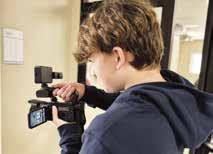
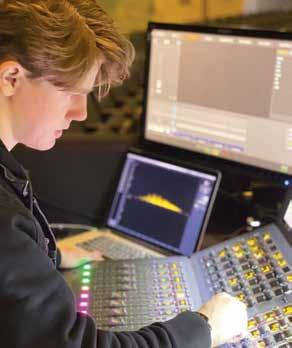
• Audio-Visual Production
ELEMENTARY FINE ARTS
• Elementary art
• Elementary music
COMPETITION OPPORTUNITIES
• National Art Honor Society
• Houston Livestock Show and Rodeo Art Competition (K-12)
• TAPPS One Act Play
• Tommy Tune Awards
• TAPPS Vocal Solo and Ensemble regional competition
• TAPPS State Vocal Large Ensemble competition
• TAPPS Academic and Speech competition
• TAPPS Photography Contests
• TAPPS Drumline Competition
• ATPI Photography Contests
CURRICULUM GUIDE
Cypress
Christian School
Language Arts
Learning through phonemic awareness, auditory discrimination, multi-sensory book experiences, interactive read-a-louds, shared reading, CVC word blending with sound isolation, rhyming, an introduction to sight words, emergent writing skills that include fine motor development.
TK has an emphasis on listening, speaking, vocabulary, the reading/writing connection and personal and school readiness.
Social Studies
Units of study that incorporate read-a-louds, dramatic play, speaking skills and special events. Thematic units include all about me, family, community, five senses, plants, helpers to our community, Bible stories, seasons and holidays that include: Thanksgiving, Christmas and Easter.
Mathematics
One-to-one correspondence to 20, number recognition 0-20, more/less, counting aloud by 1’s and 10’s to 100, positions and directionality, 2D/3D shapes, AB, AAB, ABB, ABC, AABB patterns, measurement, graphing, sorting and matching by different attributes while utilizing manipulatives and calendar math
Science
Multi-sensory science exploration through reada-louds, sensory play and science tools. Units include five senses, healthy habits, insects, plants, space, properties of matter and the engineering design process. Students go to the science lab for hands-on science investigations.
Bible
Learn about God and the life of Jesus through major Old and New Testament Bible stories, prayer, Scripture memorization and worship songs.
Art
Create original art works, explore various materials, learn about color and shapes through the daily illustration unit. Special focus on fine and gross motor skills.
Music
Introduce various movement activities and games, sing songs, foster an enjoyment of music and worship, perform in the Christmas program, Grandparents and Special Friends Day, Mother’s Day Chapel and TK Promotion.
Language Arts
Learning through phonemic awareness, interactive reada-louds, reading mini-lessons, shared reading, phonics lessons, guided reading and independent reading through whole group and small group instruction. Students will learn 100 sight words.
Writing process skills like brainstorming, drafting and editing through whole group and individual conferencing with a focus on mechanics such as capitalization and punctuation. Types of writing include personal narratives, how to, opinion, fairy tales, research while incorporating the writing process. Students will focus on manuscript handwriting skills
Social Studies
Will be incorporated into language arts and Bible curriculum through writing and seeing these aspects of our world through a biblical lens. Learn about historical figures and events, identify American and Texas symbols. Learn map skills, understand authority and rules, recognize similarities and differences among people and learn the Christian perspective of holidays.
Mathematics
Recognize, write, order and compare numbers, compare and sort objects, describe position, patterns, construct and use graphs, compare measurements, tell time, identify money, identify and describe geometric shapes, model addition and subtraction, recognize and understand place value with an emphasis on problem-solving.
Teachers utilize whole group, small group, math stations and calendar math for individualized instruction.
Science Inquiry-based Investigations
Processes and skills include observing, classifying, estimation, designing experiments, collecting data, comparing, generalizing and problem-solving.
Units of study: exploring design, pushes and pulls, the human body, sunlight and weather, insects, engineering design process. Students go to the science lab for hands-on science investigations.
Bible
Learn about God through major characters in Bible stories through the Old and New Testament. Discuss and apply biblical principles with an emphasis on Scripture memorization.
Art
Create original works of art using various materials, develop an enjoyment of art experiences with an emphasis on fine motor skills.
Music
Introduce simple music vocabulary, play music games, sing songs, develop listening and singing skills, experience percussion instruments, foster an enjoyment of music and worship, perform in the Christmas program, Grandparents and Special Friends Day, Mother’s Day Chapel and Kindergarten Graduation.
STEM
STEM
Basic introduction to technology terms, keyboarding, mouse manipulation, problemsolving and the engineering design process through using Beebots.
Language Arts
Learning through phonemic awareness, interactive reada-louds, reading mini-lessons, shared reading, phonics lessons, guided reading and independent reading through whole group and small group instruction. Students will learn 100 new sight words.
Writing process skills that incorporate grammar mechanics and handwriting. Writing is taught through whole group and individual conferencing. Types of writing include personal narratives, how to, opinion, fairy tales, realistic fiction, non-fiction, persuasive and poetry units. Focus on listening, speaking, vocabulary, fluency and comprehension plus individualized library experiences.
Social Studies
Students will discuss laws and rules within schools, home and community. Students will understand how historical figures shape the nation, learn about the State of Texas and understand the origins of holidays and celebrations. All units are taught with a biblical worldview.
Mathematics
Addition and subtraction with two and three-digit numbers, number sense, comparing geometric shapes, measurement, counting and grouping units, number patterns and relationships, problemsolving, place value, graphs, base ten, greater than and less than, math terminology, math facts fluency, money, time and basic fractions.
Teachers utilize whole group, small group and math stations for individualized instruction utilizing manipulatives and math games.
Science Inquiry-based Investigations
Processes and skills include active observing, discovery, shared exploration and problem-solving.
Units of Study: properties of matter, light and sound, living and nonliving things, space (seasons and weather changes) and the engineering design process. Students go to the science lab for hands-on science investigations.
Bible
Focus on the Old Testament and the gifts from God through His love such as faithfulness, creation and grace. Focus and discussion of character traits, application of biblical principles and an emphasis on Scripture memorization.
Art
Create original works using a variety of media including paint, watercolors, pastels, digital art, two-dimensional objects and collage projects.
Music
Explore simple rhythms, sort instruments into families, play music games, sing songs, experience jazz music, develop listening skills through Solfege, foster an enjoyment of music and worship, perform in the Christmas program, Grandparents and Special Friends Day and Mother’s Day Chapel.
Language Arts
Learning through phonemic awareness, interactive reada-louds, reading mini-lessons, shared reading, phonics/word study lessons, guided reading, independent reading, process writing skills.
Focus on listening, speaking, vocabulary, fluency and comprehension plus the reading/writing connection through whole group/small group instruction and individualized library, research skills, literature studies.
Social Studies
Study the basics of geography, basic map skills, economics and citizenship in the context of a local community. Students learn about early America and will be exposed to the principles that made our country great and be challenged by a heritage of faith and character, as well as the story of God’s grace and guidance found in America’s history.
Mathematics
Number sense, number relationships, patterns, place value, addition, subtraction, money, time, fractions, measurement, geometry, money, personal financial literacy, graphs, data analysis, problem-solving, multiplication and division, math fact fluency and real-world applications.
Teachers utilize whole group, small group and math stations.
Science Inquiry-based Investigations
Processes and skills include active observing, discovery, shared explorations.
Units of study: properties of matter, the changing Earth, living and nonliving things and the engineering design process. Students go to the science lab for hands-on science investigations.
Bible
Focus on the four gospels of the New Testament by studying the life, death and resurrection of Jesus Christ. Students read the Bible, look up verses, apply biblical principles, learn about Christian character and dive deeper into their faith through the study of apologetics and Scripture memorization.
Art
Create original works using a variety of media including paint, watercolors, pastels, digital art, two-dimensional objects and collage projects.
Music
Explore musical notation and more complicated rhythms, dive deeper into instrument families, determine the form of musical selections, continue developing listening and singing skills through Solfege, foster an enjoyment of music and worship, perform in the Christmas program and Grandparents and Special Friends Day, perform STOMPstyle worship at Mother’s Day Chapel.
Language Arts
Learning through phonemic awareness, interactive read-alouds, reading mini-lessons, shared reading, phonics/word study lessons, guided reading, independent reading, process writing skills.
Focus on listening, speaking, vocabulary, fluency and comprehension plus the reading/ writing connection through whole group/small group instruction and individualized library, research skills, literature studies.
Social Studies
Study of how heroic men and women have changed their communities and the world. Students will explore several pioneers, Founding Fathers, inventors, missionaries, presidents and the effects they have had on communities, past and present. Students learn about how these American figures made important choices, overcame obstacles and sacrificed for the betterment of others. Strong emphasis on map skills, geography and study of how children live in different societies. This course is taught through a biblical worldview to understand how God has shaped our early years as a nation and how we still see God’s hand at work in our present day.
Mathematics Place value, understanding whole numbers, solving one and two-step problems involving addition and subtraction, multiplication and division. Compose and decompose numbers. Understand and represent fractions as numbers and equivalent fractions. Geometry and measurement, elapsed time, area and perimeter, data analysis. Geometry, data and financial literacy. Teachers utilize whole group, small group and math stations.
Science Inquiry-based Investigations
Processes and skills include active observing, discovery, shared explorations
Units of study: forces and interactions, lifecycles, habitats and interdependency, weather, space and the engineering design process. Students go to the science lab for hands-on science investigations.
Bible
Old Testament studies that highlight early Israel and the stories of Creation, Abraham, Isaac, Jacob and Saul. Students will explore many topics that include: Creation and the Fall, Abraham visited by angels, Abraham and Isaac, Sodom and Gomorrah, Jacob and Rachel, The Burning Bush, Wilderness Wanderings, The Life of Saul, David and Goliath, Daniel and the Lion’s Den and God is Spirit. All units focus on biblical principles and Scripture memorization.
Art
Fine tune art skills using a variety of media including digital art, clay, watercolor, acrylic, specialty papers. An emphasis is placed on expressive line design with specialty art projects.
Music
Explore more musical notation and more complicated rhythm patterns, experience syncopation in music, recognize melody and harmony and sing both, sing various rounds, continue developing listening and singing skills through Solfege, foster an enjoyment of music and worship, perform in the Christmas program and Grandparents and Special Friends Day, lead worship with puppets at Mother’s Day Chapel.
LIBRARY, TK–5TH GRADE: WEEKLY CLASS VISITS FOR LIBRARY LESSONS THAT EXPLORE A VARIETY OF LITERATURE AND
Use of technology terms, keyboarding, mouse manipulation, problem-solving, coding and the engineering design process through using Scratch Jr.
PE – Skill Stations
STEM
Use of technology terms, word processing, PowerPoint, keyboarding, mouse manipulation, problem-solving, coding and the engineering design process through using Scratch Jr.
Progressive skill development and social interaction, emphasis on balance, sequencing, tracking, body/spatial awareness, laterality, gross motor, kinesthetic awareness, hand-eye/footeye coordination. Kindergarten and first grade students are offered P.E. lab for additional body movement and skill development.
STEM
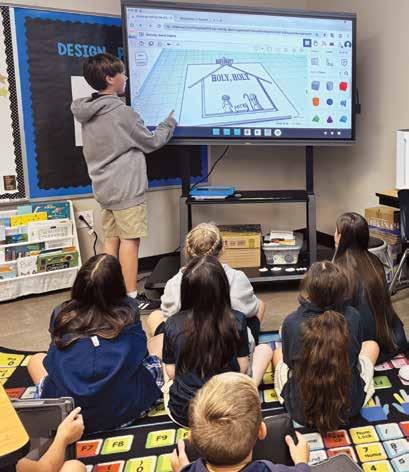
Use of technology terms, word processing, PowerPoint, spreadsheets, publishing with Canva, master keyboarding, Chromebook skills, problemsolving, coding and the engineering design process through using Scratch.
PE – Skill Stations
Continue sequential and spiraling skill-building curriculum, emphasis on fair play, cooperation and positive social interaction.
STEM
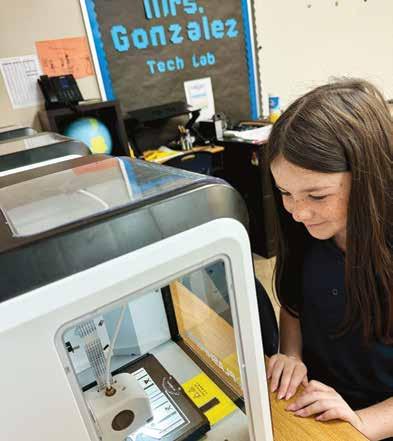
Use of technology terms, word processing, PowerPoint, spreadsheets, publishing with Canva, master keyboarding, Chromebook skills, problemsolving, 3D printing, coding and the engineering design process through using Scratch.
Students will improve phonemic awareness by using: interactive read-a-louds, reading mini-lessons, shared reading, phonics word study lessons, guided reading and independent reading. Students will focus on listening, speaking, vocabulary, fluency and comprehension skills. Students will build stamina and improve comprehension skills focusing on both explicit and implicit understanding.
Students use the writing process to create personal narratives, research informational essays, opinion/persuasive essays, create poetry and fictional stories and learn to write friendly letters. Within the writing process, students use grammar mechanics to edit and revise their work. This requires students to learn organization of ideas, specific writing styles for different purposes and tailor their writing to the correct audience.
History
Students will study Texas history beginning with colonization through the Civil War. The student will understand the importance of the Texas Revolution, the Republic of Texas and the annexation of Texas to the United States, along with political, economic and social changes in Texas during the last half of the 19th century. Students will study geography skills as it pertains to Texas such as the regions and geographic factors. Students will analyze and explain important ideas in historical documents of Texas and the U.S. Through discussions and projects, students will analyze how faith has influenced the state’s history and identity, fostering a deeper understanding of the lessons that can be drawn from our past.
Mathematics
Topics include addition, subtraction, multiplication, division fluency, application of money, time, geometry, measurements, angles, fractions, decimals, numeric patterns and problem-solving. Students will utilize math software for fluency and skill practice.
Teachers utilize whole group, small group and math stations.
Science Inquiry-based Investigations
Processes and skills include active observing, discovery, shared explorations.
Units of study: properties and characteristics of matter, energy conversion and collision, ecosystems, landforms, weathering, erosion and deposition, earth-sun-moon cycles, human body systems, scientific vocabulary and the engineering design process. Students go to the science lab for hands-on science investigations.
Bible
New Testament studies that highlight the early church and Paul’s teachings. Students will explore many topics that include: The Great Commission, Believers and Persecution, Phillip and the Ethiopian Servant, The Conversion of Paul, Paul’s Second Missionary Journey, Paul and the Thessalonians & Ephesians, Christmas, Easter, Jesus is the Son of God, Roman’s Road to Salvation and Jesus teaching on Prayer. All units focus on biblical principles and Scripture memorization.
Art Explore composition and design skills, careful observation, color theory applied to a variety of media including digital art, drawing, painting, collage and hand-building techniques.
Music
Students build on rhythm and notation concepts learned and add sixteenth notes, combinations of sixteenth notes and eighth notes, dotted rhythms and compound time. Students are introduced to Solfege through games, mastering the diatonic scale through Solfege by end of year. Students use knowledge of pitch through Solfege to read melodies on the treble music staff. Students begin playing the recorder. Students learn through the use of games, simple songs, videos, movement and various percussion instruments.
ELA 5
Students will use integrated reading, grammar and spelling to improve their reading skills. Students will focus on thinking skills, speaking, vocabulary, fluency, comprehension and research skills. Students will continue to build stamina through reading and will build comprehension skills with a strong focus on implicit understanding of what is being read.
Students use the writing process to create personal narratives, research informational essays, opinion/ persuasive essays and create poetry. Within the writing process, students use grammar mechanics to edit and revise their work. This requires students to learn organization of ideas, specific writing styles for different purposes and tailor their writing to the correct audience.
History
Students survey the history of the U.S. from 1565 to the present through periods including the colonial period, the American Revolution, the establishment of the U.S. Constitution, westward expansion, the Civil War and Reconstruction and the 20th and 21st centuries. Students explain the aspects and benefits of the free enterprise system and describe economic activities in the U.S. Students identify the important ideas in the Declaration of Independence and the U.S. Constitution. Students study the fundamental rights guaranteed in the Bill of Rights. Students explain symbols, traditions and landmarks that represent American beliefs and how that ties our nation back to Christian principles.
Mathematics
Topics include place value concepts, numerical expressions, operations with decimals, operations with fractions, algebraic reasoning, graphing, units of measure, patterns in the coordinate plane, volume and two-dimensional shapes. Heavy focus on math fact fluency with addition, subtraction, multiplication and division.
Teachers utilize whole group, small group and math stations.
Science
Inquiry-based Investigations
Processes and skills include active observing, discovery, shared explorations.
Units of study: scientific method, properties and reactions of matter, electrical energy, Earth’s water and interconnected systems (nitrogen, carbon and water cycles), space (seasons and Earth’s tilt), plant and animal cells and the engineering design process. Students go to the science lab for hands-on science investigations.
Bible
Old Testament studies that highlight many examples of God’s goodness, including Creation, our families, our friends and the work of Jesus Christ. Students will explore many topics that include: the gifts of Creation, special promises God made to people in the Old Testament, the gift of worship, the ministry and sacrifice of Christ, the Ten Commandments, how to share the Gospel, God’s love for His children, special blessings for those who follow God and eternal life in Heaven. All units focus on biblical principles and Scripture memorization.
Art
Explore composition and design skills, careful observation, color theory applied to a variety of media including digital design, drawing, painting, collage and hand-building techniques. Students develop and present a final elementary art portfolio.
Music
Expand on rhythm and notation concepts learned while adding triplets, combinations of sixteenth notes, eighth notes, dotted rhythms and mixed time. Solfege through games and songs using the Kodaly method, mastering the diatonic scale. Students use knowledge of pitch to read four-bar melodies on the treble music staff. Students begin playing the ukulele and various percussion methods. Students develop vocal technique through proper use of head voice and breath support with emphasis placed on singing on pitch and tune.
INTRODUCE RESEARCH USING BOTH PRINT AND DIGITAL RESOURCES.
STEM
Use of technology terms, word processing, PowerPoint, spreadsheets with charts and graphs, publishing with Canva, master keyboarding, Chromebook skills, problemsolving, 3D printing, coding and the engineering design process through using Scratch.
ELA 6
Students learn to integrate reading and writing, allowing students to explore the power of language from both perspectives. Through engaging with complex highinterest texts, students will learn to think and write critically, analyzing, synthesizing and defending ideas. They will build stamina for focused, independent reading, develop comprehension skills for challenging texts and expand their vocabulary. Employing the writing process to craft a personal narrative, literary analysis and research paragraph, students will become skilled writers who focus on the significance of revision. Writing tasks will enhance communication skills by emphasizing clear organization, appropriate style and effective mechanics tailored to purpose and audience. By defending their ideas with textual evidence, improving sentence structure through grammar-inwriting and making personal connections to texts.
World Cultures
This course exposes students to the concept of studying history and the tools used by historians. Students will examine the beginnings of ancient river valley civilizations such as Mesopotamia, Egypt, the Indus Valley and China. Students will also examine the cultures of Greece, Rome, the Renaissance and Reformation period. Students will compare the polytheistic belief system of these cultures with the origins, foundational beliefs and spread of Christianity. In each case, students will learn key terms and events, asking what each of these histories add to our own as well as how God’s hand has moved making it all His story.
Math 6
Topics include numerical expressions, positive rational numbers, integer operations, ratios and rates, percents, equations and inequalities, algebraic representation, geometry, data and statistics and financial literacy.
Earth Science
Lab-based Curriculum
Students will develop their knowledge of God by studying earth science through introducing earth, rocks, minerals, plate tectonics, weathering, soil, erosion, deposition, energy, water, the solar system, stars, galaxies, the universe, physics and chemistry. Students will develop scientific literacy using scientific knowledge, skills and attitudes to identify and solve sciencerelated problems.
Bible
Walking with God and His People
New Testament studies that include birth, death and resurrection of the Messiah, Acts, the Apostle Paul and expansion of Christianity.
Electives
Sixth-grade students move through a rotation of five exploratory classes. These classes include:
Art – Explores different art techniques to give students a good base for seventh and eighth-grade art: watercolor, drawing and other media.
Choir – Worship through singing, basic music theory, sight-reading, performing in concerts
Drama – Explores basic terminology for stage, audience etiquette, stage presence, confidence, basic acting skills and working collaboratively.
Applied Digital Skills – Develop organizational competency by elevating digital proficiency through advanced MS Word, MS Excel and coding applications. 21st-Century skills are infused throughout the course that will transfer across all academic domains.
ELA 7
Students learn to integrate reading and writing, allowing students to explore the power of language from both perspectives. Through engaging with increasingly complex, high-interest texts, students will learn to think and write critically, analyzing, synthesizing and defending ideas. They will build stamina for focused, independent reading, develop comprehension skills for challenging texts and expand their vocabulary. Students will use rhetorical strategies and persuasive techniques, enhancing their ability to read and respond to more sophisticated texts. Writing tasks will enhance communication skills by emphasizing clear organization, appropriate style and effective mechanics tailored to purpose and audience. Through defending their ideas with textual evidence, employing advanced sentence structure through grammar-in-writing and making personal connections to texts.
Texas History
This seventh-grade Texas History course explores the rich cultural heritage, geography and political development of Texas from early Native American civilizations to modern times. Students will examine key events such as Texas’ independence, statehood and role in major U.S. events while developing critical thinking through primary source analysis and project-based learning. The course emphasizes understanding of Texas’ unique identity, its influence on national and global history, while understanding history through a biblical perspective.
Math 7
Topics include mastering basic skills, real and rational numbers, integers, algebraic expressions, solving equations and inequalities, percents, proportionality, geometry, measurement, probability, financial literacy and graphing.
Pre-Algebra
Topics include real and rational numbers, algebraic expressions, multi-step equations, inequalities, graphing, statistics, probability, geometry, functions, linear relationships, ratios, proportions, percents, monomials and measurement.
Life Science
Lab and Project-based Curriculum
Students will learn about the observations, analysis and discoveries that scientists have made about the living things that make up God’s world. Units of study include cell structure and function, genetics, reproduction of organisms, plant and animal diversity, plant structures and the human body.
Bible
Old and New Testament survey covers the major stories Genesis to Revelation and applying these Bible stories to God’s plan for our lives and salvation.
Middle School Electives
Intro to Art – Explores different art techniques: colored pencil, watercolor, acrylic, drawing, collaging and other media.
Choir – Worship through singing, basic music theory, sight-reading, performance opportunities
Intro to Theater – Explores basic terminology for stage, audience etiquette, stage presence, confidence, basic acting skills and working collaboratively. Students in this class will cultivate performance opportunities.
Spanish Culture and Language – Students will be introduced to various vocabulary, syntax, grammar, spelling and conversation skills. This class will also introduce the cultures of Spanishspeaking countries.
Computer Science Discoveries – Explores computer science through coding concepts like loops, conditions, variables, functions and operators, while applying physical computing in robotics.
STEM
Use of technology terms, word processing, PowerPoint, spreadsheets with charts and graphs, publishing with Canva, master keyboarding, Chromebook skills, problem-solving, 3D printing, coding with Scratch and the engineering design process through Robotics.
PE – Skill Stations/Introduction to Sports Students in grades 3–5 work on developmentally-appropriate introduction to sports offered at CCS, emphasis on skill development, sportsmanship, team building and intramural play, focus on flexibility, conditioning and core strength development. Sports units: football, basketball, soccer, track, softball, baseball, gymnastics, jump rope, fitness and volleyball.
Spanish Culture and Language –Students will be introduced to various vocabulary, syntax, grammar, spelling and conversation skills. This class will also introduce the cultures of Spanish-speaking countries.
Math: You Can Do It – Through direct instruction, practice and IXL, students will attack problem areas in math to build math confidence and success. This elective supports all levels of seventh and eighth grade math.
6th–8th Competitive Athletic Sports Programs
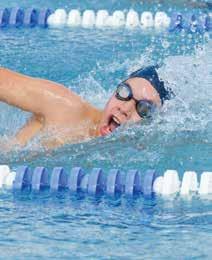
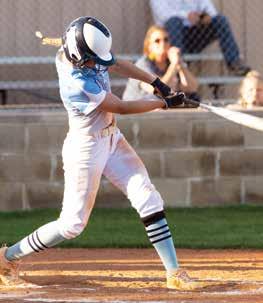
Girls: basketball, cheerleading, cross country, soccer, softball, swimming, track and field, volleyball
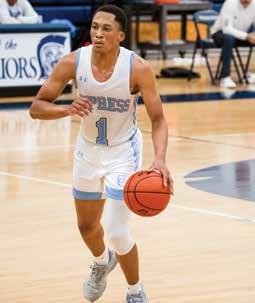
Boys: baseball, basketball, cross country, football, soccer, swimming, track and field
ELA 8
Students learn to integrate reading and writing, allowing students to explore the power of language from both perspectives. Through engaging with increasingly complex, high-interest texts, students will learn to think and write critically, analyzing, synthesizing and defending ideas. They will build stamina for focused, independent reading, develop comprehension skills for challenging texts and expand their vocabulary. In eighth grade, students will expand on these skills by incorporating argumentative writing, learning to deftly manipulate language to develop and defend their own arguments. Writing tasks will enhance communication skills by emphasizing clear organization, appropriate style and effective mechanics tailored to purpose and audience. Students will defend their ideas with textual evidence, employ advanced sentence structure through grammar-in-writing and build personal connections to texts.
U.S. History
Students will learn about the foundational events, figures and principles that shaped the United States from early colonization through reconstruction. Students will explore topics such as the American Revolution, the Constitution, westward expansion and the Civil War, using critical analysis of historical documents and events. The course emphasizes the development of democratic ideals, civic responsibility and the diverse cultural influences that contributed to the nation’s growth. Students will develop the skill of examining U.S. history through a biblical lens.
Math 8
Topics include integers, real and rational numbers, algebraic expressions, solving algebraic equations, solving systems of equations, functions, Pythagorean Theorem, transformations, measurement, geometry and graphing.
Advanced Algebra I
Topics include rational numbers, solving equations and inequalities, graphs and functions, linear and quadratic equations, systems of equations, exponents and exponential functions.
Physical Science
Lab-based Curriculum
Students conduct laboratory and field investigations, use scientific methods and make informed decisions using critical thinking and scientific problem-solving. This course integrates the disciplines of chemistry and physics in the following topics: matter, atomic structure, bonding, chemical reactions, force, motion, energy, electricity and magnetism and waves.
Bible
Intro to Worldviews
Exploration of major worldviews (theism, atheism & pantheism) with the goal of developing and defending the biblical worldview.
Middle School Electives (Continued)
Intro to Yearbook – Through hands-on projects, students will develop skills in digital editing, storytelling and project management as an introduction to yearbook production.
Building Reading/Writing Skills – Students will build confidence and improve their communication skills in both reading and writing with different genres.
STEM – Explore computer science through coding concepts like loops, conditions, variables, functions and operators, while applying physical computing in robotics.
Strategic Games – Strengthening problemsolving and strategic skills through challenging strategic games. Risk, Ticket to Ride, Clue, Catan, Checkers, Chess, Connect Four and The Game of Life are among the games used to enhance logic, mental math and creativity.
Money Management – Students will learn about managing their finances now and in the future. Students will also explore careers and learn to manage personal finances in a specific job.
Growing Into a Leader – Students will learn timeless biblical principles of leadership and apply those ideas throughout campus and the CCS community.
ELA 9
Students develop analytical skills by reading various types of literature and communicating their thoughts in academic modes including collaborative and individual assignments. Research, MLA guidelines, SAT vocabulary, grammar, public speaking and the process of writing are ongoing elements of this course. Students will use current research and publishing tools to develop these skills.
History
World Geography
Students will examine the physical and human geography of the world’s regions, focusing on the relationships between people, places and environments. Students will explore themes such as population, culture, economics, political systems, literature, visual arts and ideas which form Western Civilization from Antiquities to Middle Ages. This course follows a Pre-AP framework.
Mathematics
Algebra I Geometry
Biology
Pre-AP Biology
Bible
Old Testament Survey
An overview of the story, people and themes of God’s Word in the Old Testament (Genesis – Malachi) with the aim of understanding God’s plan of redemption preparing the way for Christ.
World Languages
Spanish I Spanish II Spanish II Honors ASL I
ELA 10
Students continue to develop analytical skills by reading various types of literature and communicating their thoughts in academic modes including collaborative and individual assignments. Writing assignments emphasize literary analysis and the evaluation of literary criticism as well as argumentative modes. Research, MLA guidelines, SAT vocabulary, grammar, public speaking and the process of writing are ongoing elements of this course. Students will continue to increase their competencies from English 9 with the use of current research and publishing tools.
History AP World History/World History
Students will explore global history through key themes such as trade, religion, politics and technology. Students will study civilizations from ancient times to the present, examining historical events and their connection to current issues, while learning about the various civilizations since Creation and how God has intervened in and has been revealed throughout history.
Mathematics
Geometry
Algebra II
Chemistry
AP Chemistry
Honors
Bible
Chemistry
New Testament Survey
An overview of the story, people and themes of God’s Word in the New Testament (Matthew – Revelation) with the aim of understanding God’s redemption accomplished by Christ and applied by the Holy Spirit.
World Languages
Spanish II
Spanish II Honors ASL II
ELA 11
Students explore a critical study of American literature and focus on the understanding and application of rhetorical choices, author’s purpose and literary analysis skills. Research, MLA guidelines, SAT vocabulary, grammar, public speaking and the process of writing are ongoing elements of this course. Students will continue to increase their competencies from English 10 with the use of current research and publishing tools. This course serves as a challenging preparatory class for AP Language and Composition.
AP Seminar
Students will develop their skills in research, critical thinking, collaboration and effective communication through the analysis of complex topics and the construction of evidence-based arguments. This course serves as the first of a two-year AP Capstone certification.
AP English Language and Composition
Students study the rhetorical analysis of nonfiction texts and the development and revision of well-reasoned, evidence-centered analysis and argumentative writing. Students will write and study various kinds of analytic and persuasive essays. Upon completion of the course, students will have the opportunity to gain college credit through the AP Language and Composition Exam administered by the College Board. This course is most aligned to a university freshmen rhetoric and composition course.
History AP US History/US History
Students will study the development of the United States from the colonial period to the present, examining the nation’s founding principles through a lens of Christian values and biblical influence. Students will analyze major events, political movements and social changes, with a focus on how faith and morality have shaped American identity and build an understanding of the nation’s challenges and its role in global history.
Mathematics
Algebra II
Precalculus/ AP Precalculus
Business Math
Physics
AP Physics
Physics
Bible
Elective Options Course
Junior options are designed to help students explore various chosen topics within Christianity at a deeper level:
• How to Study the Bible
• Spiritual Disciplines
• Reason and Imagination –Apologetics
• Tools for Discipleship
World Languages
Spanish III Honors AP Spanish IV
Visual Arts 9–12 (Grade-level and prerequisite requirements may apply)
Audio/Video Production, Art I, Art II, Art III, Art IV, Photography Honors courses: AP 2D Art / AP Drawing
AP Literature and Composition
Students will read, analyze and write about imaginative literature (fiction, poetry, drama) from various periods. Students taking this course should be prepared to study literature of various periods and genres while using this wide reading knowledge in discussions of literary topics.
AP Research
Students will design, plan and conduct a scholarly research project, culminating in a written dissertation and a presentation, while fostering skills in inquiry, analysis and synthesis of information. This course serves as the final year of the AP Capstone certification.
History AP Government/AP Economics Government/ Economics
Survey course that will focus on the biblical foundational principles as declared by the Founding Fathers of our nation. Students will learn about the structures and functions of the various branches, agencies and offices of the U.S. government as well as the various types of state and local governments.
Mathematics
AP Calculus AB AP Calculus BC
AP Statistics
Honors Calculus
Science Electives
AP Biology
AP/DC Chemistry
Honors Anatomy & Physiology
Careers in Health Science Forensics
Bible
First trimester – Apologetics; Second trimester – Ethics; Third trimester – Worldviews Course aimed at preparing the senior for life in college and beyond by developing a holistic Christian worldview in pursuing truth, goodness, beauty and justice
World Languages AP Spanish IV
Performing Arts 9–12 (Grade-level and prerequisite requirements may apply)
Music: Chamber Choir
Theater Arts: Drama I, Intermediate Drama, Advanced Drama
Computer Science/Technology/Computer Applications
Computer Science (via web-based App Inventor and Visual Studio)
Computer Science 1 – basics of coding and introduction to Python
AP Computer Science Principles – Advanced Python and an introduction to modern computing
9th–12th Competitive Athletic Sports Programs
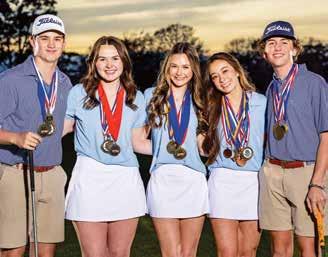
Girls: basketball, cheerleading, cross country, dance team, golf, soccer, softball, swimming, track and field, volleyball
Boys: baseball, basketball, cross country, football, golf, soccer, swimming, track and field
Through a cohesive approach to academics and strong co-curricular activities, students are personally known by faculty who are passionate about God, dedicated to teaching and experts in their fields. They will thrive in a supportive environment that challenges them academically, fosters a spirit of risk-taking and equips them to defend their faith.