




• Well Child Visits
• Sick Child Visits
• Vaccine & Immunization Schedule
• 2025-2026 Guide to the Flu
• Autism Spectrum Disorder
• Vaccines & Immunizations
• ADHD Testing & Treatment
• Asthma Symptoms & Treatment
• Urinalysis
• Strep and Mono Screen
• Vision and Hearing Tests
• School, Sports, & Camp Physicals
• Breastfeeding Support
Jose Buenaseda, MD, FAAP
Leamor Buenaseda, MD, FAAP
Sreelekha Sashidhar, MD, FAAP
Christine Arnold, CPNP-PC
Melanie Pitts, DNP, NP-C
Beverly de La Rosa, CPNP-PC
Danielle Trigg, CPNP-PC
Rachelle Olson, FNPC
Ashley Monroe, PA-C
Sarah Lewis, PA-C
Brooke Phelps, PA-C Pediatric Services We Provide Check Ups, Sick Child Visits & More in Raeford and Fayetteville
Marlena Syvertsen, CPNP-PC




FEBRUARY 2026
Publisher Kyle Villemain
Editor-in-Chief Matt Hennie
Magazine Editor Valeria Cloës
Editorial Assistant Maydha Devarajan
Contributing Editor Katie Kosma
Director of Operation & Sales Talmadge Rogers
Operations Coordinator Caitlin Malson
Social Media Manager Grace McFadden
Photographers
Christina Martin
James Throssel
Matthew Wonderly
Tony Wooten
Paul Woolverton
Contributing
Writers
Matt Hennie
Daniel Johnson
Claire Mullen
Trey Nemec
Diane Parfitt
Erin Pesut
Teri Saylor
Tim White
Claudia Zamora
Graphic Designer
Annette Winter
Distribution
Jennifer Baker
Wayne Robinson
Sales Team Leader Dawn Denham





On the cover: Handmade Valentine's Day cards made by Fayetteville local Erika Gee-Harris. Photo by Tony Wooten
Phyllis McCroskey, recipient of the 2025 Fayetteville Area Habitat for Humanity Veterans Build, is an example of persistence, perseverance, and community love.
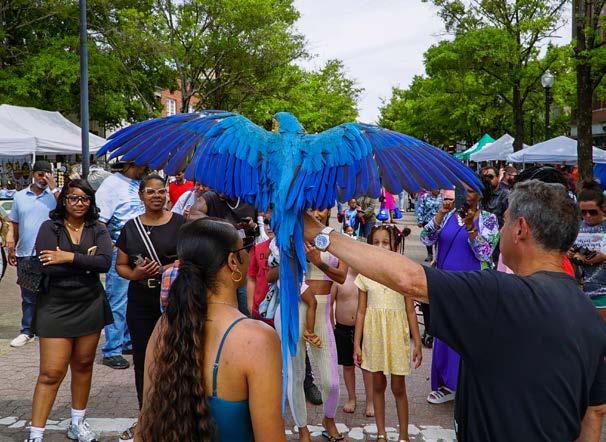
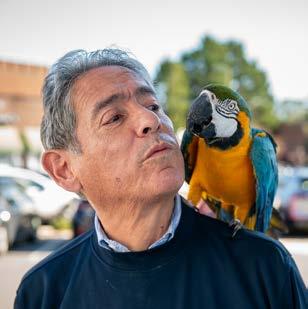
Robert Lints brought Macy the Macaw home in 1991. Thirty-five years later, the colorful pair is a beloved mainstay in the Fayetteville community.
Explosive Ordnance Disposal technicians have the highest rate of suicide and illness-related deaths in the service. Despite increasing awareness, veterans say there’s been little progress made to protect them.
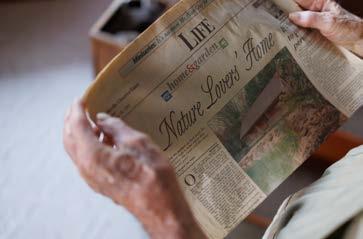
New heart valve gives 93-year-old kayaker a second wind.
BY VALERIA CLOËS
It’s only natural to think of love during February. Grocery stores fill with red- and pink-wrapped candies and heartshaped cakes. TV and streaming services are flooded with ads of couples on romantic dates, promoting Valentine’s Day specials.
While it’s normal to associate love with romance, we want to remind you that love also shows up in other places: friendships, family, community, hobbies, and more. CityView ’s February magazine highlights our community’s love for our veterans, for our pets, and for our health.
The Fayetteville Area Habitat for Humanity selected U.S. Army veteran Phyllis McCroskey for its 2025 Veterans Build. The annual event brings awareness to the housing challenges veterans face after service and gathers community volunteers to renovate veterans’ houses. The program highlights our town’s capacity for love, support, care, and acceptance.
Ten years ago, CityView wrote about a popular duo who regularly stroll Hay Street, meeting—and perching on— new friends. Robert Lints and his pet Macy the Macaw are still regularly seen dining downtown (yes, even Macy) and strolling through local festivals. We caught up with them to see how they’ve been this past decade. Spoiler alert: the love for his animal companion has stayed strong.
Just in time for American Heart Month, Omer Register, an avid kayaker who lives in Hoke County, recounts his experience receiving a transcatheter aortic valve replacement (TAVR) at Cape Fear Valley Cardiovascular and Thoracic Surgery. In a sponsored feature by Cape Fear Valley Health, doctors from the hospital system explain the procedure and more.
Plus, our partners at The Assembly analyzed data from the Department of Defense, showing that U.S. Army Explosive Ordnance Disposal technicians die by suicide and illness at a higher rate than other soldiers. The Assembly spoke with a facilities manager and an EOD captain at Fort Bragg, which is home to the 192nd Ordnance Battalion. Our columnists this month explore their connections to love and Black History Month: The first is from CityView ’s new Editor-in-Chief Matt Hennie, a veteran reporter and editor who has made his way back to the South and to local reporting. The next writes about his many loves—

For comments, questions, feedback, or to submit story ideas, email vcloes@cityviewnc.com. EDITOR ’ S
his family, dogs, and Fayetteville. Another writes about what “’til death do us part” looks like in her marriage. Our bilingual columnist writes an open letter for Valentine’s Day, reminding you to love yourself, too. And the last recommends eight books to read and learn about Black history in honor of Black History Month.
Our To-Do List this month is jam-packed, of course, with Valentine’s Day events at Scented Wicks Candle Bar, Cape Fear Botanical Garden, The Sip Room, and Crown Complex, as well as arts and entertainment events by The Arts Center and the Fayetteville Symphony Orchestra, plus sports events at Methodist University.
However you choose to express and experience love this month, I hope this magazine shows you how abundant it is in our beloved community.
Thanks for reading!
Editor’s note: The “New Year, New Skills” story in the February “New Year, New You” magazine misidentified a partner with the Airframe and Powerplant Systems License Prep Course at Fayetteville Technical Community College. The article has been updated to reflect that Heroes MAKE America initiative and Cape Fear Aviation Maintenance are collaborating with FTCC.

Valeria Cloës
Magazine Editor
Say hello to a child of the South and journalist of nearly three decades tasked with leading CityView in its next chapter.
One thing that’s remained constant throughout my journalism career: change.
And with the start of a new year, there’s change afoot at CityView. I’m excited to introduce myself as CityView ’s new editorin-chief. For me, it’s a return to a local newsroom deeply committed to the community it serves.
BY MATT HENNIE

For CityView, it means building on our history of award-winning coverage by continuing to hold public officials and institutions accountable and making them more accessible. It also means providing practical information to help our readers navigate their daily lives, celebrating the things going well in Cumberland County, and highlighting community leaders and people on the frontlines of making positive change in our community. Make no mistake. CityView doesn’t pull its punches when it comes to covering local government. That won’t change. But to keep building trust with you, we’ll also make sure to showcase Fayetteville’s diversity, history, and people.
I’m excited to lead our scrappy newsroom that regularly punches above its weight. Like you, we call Fayetteville home and experience the city the same way you do. We’re deeply connected to the people we cover.
That’s important, especially in this age of remote work and social media. You’ll see me in the community, attending civic meetings, grabbing a bite to eat, enjoying
the nightlife, talking to residents, and officiating high school basketball games. We can’t write stories about the issues facing Cumberland County residents if we’re not out there living alongside you.
Despite my Yankee birth—I was born in Euclid, Ohio—I’m a product of the South and have been visiting family in Fayetteville and Moore County for more than two decades. I grew up in Savannah, Georgia and came of age during the 1980s as a latchkey kid, which means that during summer break, as long as I was home before dinner, I was free to roam as far as my bike would take me. That freedom to explore and entertain myself helped develop my inquisitive side, a skill that’s the foundation of my journalism and passion for asking questions. It took root in middle school when I worked on the school paper and the first big story I recall pursuing was about a possible controversy with the annual holiday food drive. In high school, I edited the school paper and caused a stink with a story about the sad condition of the school’s restrooms.
In college, I joined the newspaper staff during my studies at Furman University in Greenville, South Carolina. I felt like I found my people, and I’ve been hooked on journalism since. My first full-time job took me 45 minutes up Interstate 85 to Gaffney, where I covered public safety and education for a family-owned newspaper. Same for
my second gig in a suburb east of Atlanta, which started a nearly 25-year stay in that sprawling metro region at a handful of locally-focused newsrooms.
At the time, I didn’t understand the relationship between education and crime, and how the lack of quality public schools creates a pipeline to the criminal justice system. I’m a proud K-12 public school graduate and benefited from a number of energized, committed, and caring educators along the way.
CityView ’s commitment to covering education was one of the factors in my pursuing the job. Of the three reporters in the newsroom, one of them is dedicated fulltime to that beat. It’s a pillar of our coverage and shows how highly we value education, including Cumberland County Schools, charter and private schools, and local colleges.
Also, it makes sense. Since I started with CityView on January 5, education usually pops up in my conversations with stakeholders around the county. They highlight classroom innovation and express worries about whether students are receiving the education they need to drive their success after graduation. Fayetteville can’t succeed without a thriving, educated workforce.
Another staple of our coverage is local government, from the county courthouse and Fayetteville City Hall to Hope Mills, Spring Lake, and Godwin. Decisions by local elected officials touch nearly everything, and we want to make sure we explain what’s happening, how their
decisions impact you, and how you can participate and push for change.
All of what we do is supported by my belief that our journalism should meet you where you are. That’s why we publish our reporting in several ways—a website, a morning newsletter Sunday through Friday, a monthly magazine, and social media—and engage the community through events. Planning is already underway for our next “Ladies Night Out,” and we’ll soon share details on get-togethers where you can meet our team—and me—in person.
All of our journalism is free to read, but it’s not free to produce. We’ve got big plans for 2026, and your help will fuel CityView ’s growth. You can make a tax-deductible donation to the News Foundation of Greater Fayetteville, which financially supports CityView and helps ensure that our coverage remains free to everyone.
Have thoughts on how we’re doing and what we should be covering? Email me at mhennie@cityviewnc.com, or find me on LinkedIn and Twitter (@mahennie).

Matt Hennie Editor-in-Chief
Connect with me at mhennie@ cityviewnc.com.
You swiped the cards and spread some cheer—now your statement’s here. ‘Tis the season to dominate debt!

Get a 0% intro APR for the first 12 months on balances transferred to a new Platinum card within 60 days of account opening. After that, a variable APR between 10.24% and 18% applies. Plus, no transfer fees!1 Navy Federal is federally insured by NCUA. 1As of 2/2/2026, rates range from 10.24% APR to 18.00% APR, are based on product type and creditworthiness, and will vary with the market based on the U.S. Prime Rate. ATM cash advance fees: None if performed at a Navy Federal branch or ATM. Otherwise, $0.50 per domestic transaction or $1.00 per foreign transaction. Balance transfer offer: Application must be submitted by 3/31/2026. Offer valid for balances transferred from non-Navy Federal credit cards within 60 days of account opening. Balance transfers are not eligible to earn rewards. Maximum total transfer amount is limited to your available credit line. Balance transfers using convenience checks are excluded from this offer. If you transfer a balance with this offer, interest will be charged on purchases made with your credit card unless your purchases have a 0% APR or you pay the entire balance, including any transferred balances, in full each month by the payment due date. Offer excludes Navy Federal Business, Home Equity Line Platinum, and cashRewards Secured credit cards. Limit of one promotional offer at account opening. 2Message and data rates may apply. Visit navyfederal.org for more information. © 2025 Navy Federal NFCU 14300 (12-25)
Scan the QR code2 or visit navyfederal.org/DominateDebt to get started on your transfer today.
BY TIM WHITE
I’m in the mood for love
Simply because you’re near me Funny, but when you’re near me I’m in the mood for love
Nat King Cole sang it. So did Julie London. And Rod Stewart. All memorably. So have thousands of other singers, from the great to the unknown. We all can relate to it. We all fall in love.
But not always in the ways we might expect. As we wander through this month with a big heart in its middle, pop culture will do its best to focus us on the wonders (and pains!) of romance.
Most of us can relate. We’ve lived that part of life, from the first crush on that cute redhead in third grade to the long-time partner who’s at our side as we wake up in our eighth or ninth decade of life.
I’ve fallen in love more times than I probably should have, with results from bad to good to glorious. And I’m lucky to have spent the last quarter century in that last category. (Happy Valentine’s Day, Rachel!)
But loving isn’t just about your romantic partner—at least it shouldn’t be. I sure did fall in love with my son when I saw him open his eyes in the world for the first time. I fell in love with the ocean, over and over, when I lived near it, and I still carry a full cargo of salt water in my heart.
And dogs—have I ever bored you with stories about the amazing dogs who have filled all of my adult life? Every one of them has a unique personality, so different

from the ones that came before or after. And every one has brought love that keeps me afloat, no matter how challenging life might be.
Or places—how many times have I fallen in love with a beach, a mountain, a lake, a town? Just before the turn of the century and millennium, I fell in love with Fayetteville when a mid-career move brought me to this place so unlike anywhere I’d lived before.
It wasn’t love at first sight. Downtown was still a crumbled mess then and way too much of the city was a testimonial to the drabness of urban sprawl. No, it wasn’t physical love—not at first anyway. It was the people— warm, welcoming, helpful, polite. Neighbors quickly became friends. I was welcomed into places where I’d never expect warmth or openness. It was a mixture of Southern hospitality and a military community where departures and arrivals happened quickly and constantly, where friendships have to be made fast because time is precious.
I fell in love, too, with the essential optimism of the place. Oh sure, Fayetteville has its share of dour, can’t-do souls. But they’re mostly outnumbered and overpowered by a powerful belief that we can be better. In election after election, Fayetteville chooses leaders who believe we can fix what’s broken and become something greater than the sum of our parts. Even if the struggle lasts for decades (as the revival of downtown has), the believers refuse to back down, refuse to let the Negative Nellies win. The Nellies are
fond of proclaiming that “Fayetteville is Fayetteville,” by which they mean we should never expect to become a place as vibrant and attractive as some of North Carolina’s other, thriving metro areas.
But the winning team believes otherwise. And they keep pressing onward. Look at downtown today. Look at the new medical school. Look at the county’s increasing investment in public education. Look at the stunning growth of both of the city’s universities and the community college. Look at the ever-improving quality of the city’s cultural life—the poster child of the moment being the Cape Fear Regional Theatre’s stunning expansion.
It’s been 27 years since I visited Fayetteville for my first job interview. Although I’ve seen more than a few community missteps, I’ve mostly seen a city and county moving forward, getting better every year.
One of the things you come to realize after you’ve loved and lost a few times is that there are no perfect partners in life. Idealized dreams don’t come true. Nothing in life is perfect, and that includes the people and places we love. We learn, eventually, to embrace the foibles along with the beauty. So it is for my love affair with Fayetteville. The city is still a monument to sprawl, and don’t even think about long walks on safe sidewalks, let alone solving the city’s wrenching poverty problems. But all of that is still on the to-do list of optimistic leaders and believers. The solutions will come because Fayetteville is the kind of place that won’t quit and refuses to do anything but improve.

Tim White is the former editorial page editor of The Fayetteville Observer.
Winter Conservation Tip # 14

If it’s cold outside, your heating system works overtime to keep things warm and cozy inside. A higher bill can result when outdoor temperatures differ greatly from your thermostat setting. Visit FayPWC.com for tips to help you manage your energy use.
BY CLAIRE MULLEN
My husband and I have been together for a long time. As a married couple, almost 18 years. And if we count the years we spent dating as high school sweethearts, 26 years, which is more than half of both of our lives. When you coexist with someone for so many years, you tend to hit a familiar stride. You may find that you begin to anticipate each other’s needs, predict their moods, know what they are about to say next, or maybe even be willing to share a toothbrush in a pinch.
While I can only speak for myself, I imagine (and hope) that my husband would tend to agree that when you’ve been with someone as long as we have, it’s difficult to imagine what life would be like without what romantics like to call our “other half.” It goes without saying that the loss of your life partner would involve a massive emotional upheaval, but would also entail the inevitable logistical nightmare that tends to happen when 50% of a pair ceases to exist.
our affairs would be in order in the event that something catastrophic happened to one or both of us. We have had conversations with one another about our end-of-life wishes. While my eternally optimistic, glass-half-fullminded husband tends to not like to put a whole lot of thought into these matters—oftentimes making those conversations a little one-sided—I, on the other hand, have instructed him in great detail on the arrangements I have already made for myself in the event that my time comes before his.
For example, I’ve directed him that under absolutely no circumstances should he allow a funeral home cosmetologist to make me up beyond recognition, and that, as a matter of fact, I should probably be buried exactly as everyone would remember me, in my favorite baggy gray sweatpants and an oversized hoodie, with a messy topknot and no makeup aside from a couple dabs of whatever brand of foundation is on sale at the Walgreens and a
I sure hope that my husband and I have many more Valentine’s Days together. Many more years of happiness. I think we’ve planned all that we really need to, and maybe I’ll adopt his philosophy of a lot less worrying about the ’what ifs.’
Although when we say our wedding vows, we promise to love each other “‘til death do us part,” of course no one wants to think too hard about existing in the eternal absence of their beloved, especially not this time of year when everything is supposed to be hearts, cupids, and boxes of chocolates, but it’s something that every semi-responsible family unit surely needs to plan for. Coincidentally, my husband and I both lost our mothers unexpectedly at young ages, and I’m sure that navigating this experience with my family contributed to my tendency to think a little too much about the “what ifs.”
After my husband and I started our own family, we invested in life insurance policies. We met with an attorney and drew up all the legal documents necessary to ensure that our children would be taken care of and
quick swipe of cherry ChapStick. He knows that I’d like a bluegrass band to play at my funeral, which will not really be a funeral at all, rather, a big outdoor party catered by Parker’s Barbecue, with an iced coffee fountain, a massive carrot cake, unlimited dirty martinis, and some sort of costume theme for the guests that my kids can choose.
On a recent road trip during which my husband and I had a 2-hour stretch of car time without our two usual backseat passengers, I took this rare opportunity to announce to him the good news that, in my further planning, I had picked out the person he should immediately pursue if something should happen to me. As we both ate lunch out of brown paper McDonald’s bags, I rationalized why this particular person would be the perfect match for him. I explained that he had my full permission to immediately

move this process along after about 7 to 10 business days of appropriate mourning, because No. 1: I cannot bear the thought of him being lonely. And No. 2: I cannot bear the thought of my children existing on a rotation of Eggo waffles, easy mac, and frozen chicken nuggets, and I happen to know that this person has a convenient penchant for cooking nutritious food.
As my husband drove down Interstate 95, he shook his head and chuckled while I rambled on between bites of Quarter Pounder and french fries about how he and this person shared mutual interests and would make a cute couple. Suddenly, a bit of one of my fries became quite lodged in my throat. While I pounded on my chest and frantically tried to wash the blockage down with swigs of Diet Coke, I began to have visions (maybe because of the onset of lack of oxygen to my brain) of the person that I was mere seconds ago trying to betroth to my husband moving into my home and keeping it much tidier than I ever could. Putting my family’s laundry away the same day she folds it. Alphabetizing my spices. Filling my bathroom drawers with dermatologist-endorsed cosmetics from somewhere fancier than Walgreens. Lining my closet shelves with Size 4 lululemon leggings and matching tank tops. Discovering my hidden stash of Little Debbie Christmas Tree Cakes in the high cabinet behind the cereal boxes. And worst of all, having the restraint to throw them out instead of housing two of them back-to-back like the lady who came before her would have. I looked over wide-eyed at my husband and imagined
that the person beside him was not me, his middle-aged wife, currently fighting for her life against a mouthful of fast food, but a younger, fitter partner who would probably have packed her own banana, protein bar, and vitaminwater.
“I’m choking! I don’t think I’m breathing!” I proclaimed.
“Babe, first of all, calm down,” he said. “Since you’re talking, you’re probably breathing. Do you need me to pull over?”
And then with one final whack of my palm to my sternum and an extra big swallow of soda, the offending french fry finally became dislodged.
Once I realized I was back to breathing normally and was not going to meet my maker by way of choking on McDonald’s on the side of the highway, I looked at my husband and said, “Forget everything I just said. I’m not going anywhere. At least not right now.”
I sure hope that my husband and I have many more Valentine’s Days together. Many more years of happiness. I think we’ve planned all that we really need to, and maybe I’ll adopt his philosophy of a lot less worrying about the “what ifs.”
And when my time does come, you all are invited to the party. I hope that you like iced coffee and carrot cake.
Claire Mullen can be reached at clairejlmullen@gmail.com.
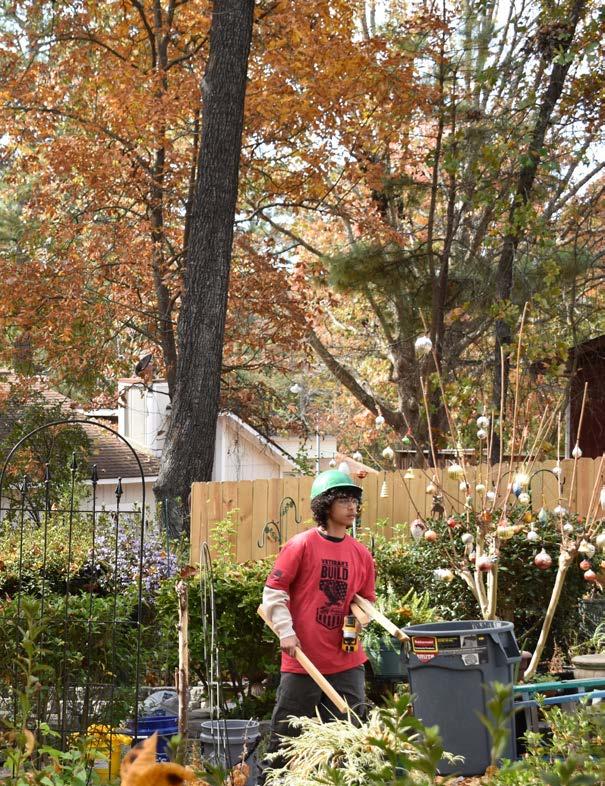
Phyllis McCroskey, recipient of the 2025 Fayetteville Area Habitat for Humanity Veterans Build, is an example of persistence, perseverance, and community love.
BY TREY NEMEC
CONTRIBUTED PHOTOGRAPHY BY FAYETTEVILLE AREA HABITAT FOR HUMANITY
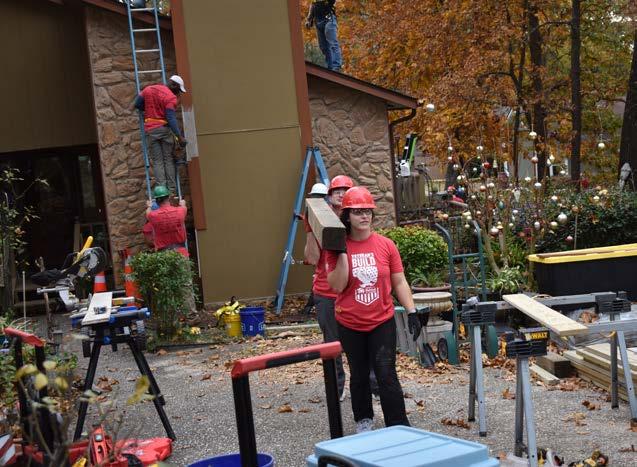
WWith hammers clattering, power drills whirring, and lumber clunking into place, passing by the home of Phyllis McCroskey last fall would have been a noisy, but joyful event.
Throughout the fall and early winter, McCroskey’s home was undergoing critical repairs at the hands of Fayetteville’s branch of Habitat for Humanity, a national faith-based nonprofit organization that provides construction services for those in need.
McCroskey, a veteran of the U.S. Army who served 13 years, was the 2025 recipient of Fayetteville Area Habitat for Humanity’s Veterans Build, a program that brings together community members and a herd of volunteers to repair the homes of local veterans and make our community stronger—and more loved—in the process.
McCroskey joined the Army in 1981, a time when military service was difficult for women—especially Black women. She told CityView that she encountered fellow service members and higher-up leadership who didn’t think women should be allowed to serve at all.
Nevertheless, McCroskey persisted and successfully served for over a decade. Following her military service, McCroskey began to volunteer for Fayetteville Area Habitat for Humanity in 1993. She told CityView that her passion for community service began with her mother, a beacon of volunteer work and community engagement throughout her childhood.
“She volunteered at a lot of stuff. So that kind of trickled down to her children,” McCroskey said, a tenderness in her voice. “We’d volunteer, or we’d adopt a family, or we’d do stuff for the Salvation Army. It’s always been a part of me and my other siblings to do the same thing.”
McCroskey is also a master gardener. With her green thumb and attentive care, she has worked throughout Cumberland County, teaching classes with the N.C. Cooperative Extension’s Cumberland County Center, giving lectures at libraries throughout the city, and working in the garden at the North Carolina Veterans Home off Ramsey Street prior to its closing in early 2024
McCloskey said she often shares the fruits of her labor in the garden with community members, neighbors, and the folks at the Fayetteville Area Habitat for Humanity. She
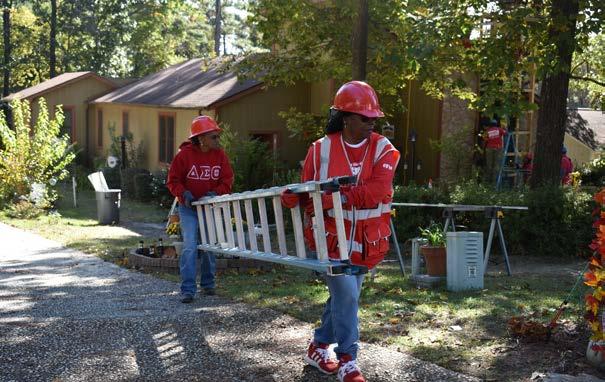
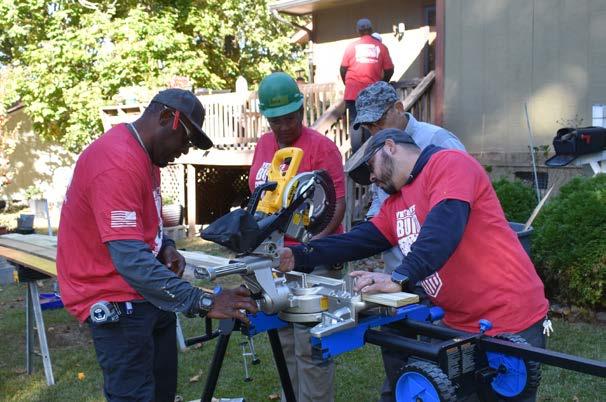
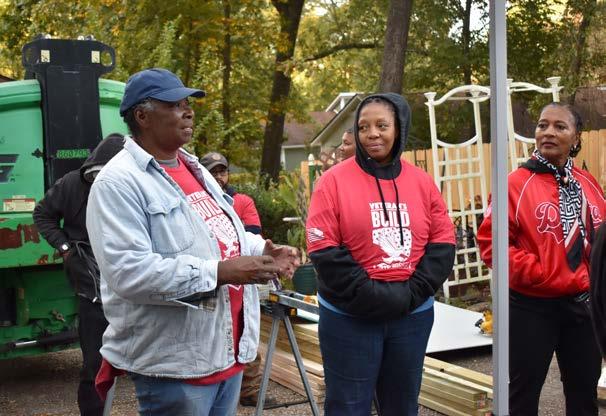
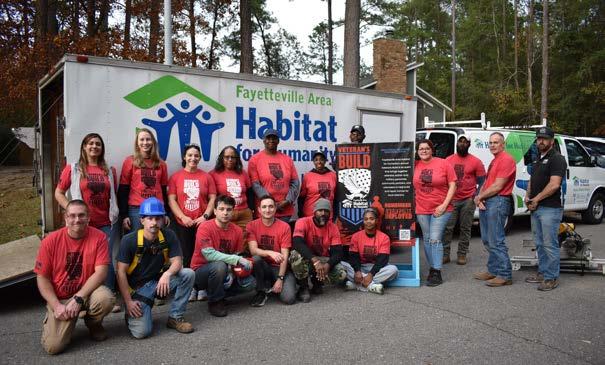
Fayetteville Area Habitat for Humanity’s Veterans Build is a program that brings together community members and a herd of volunteers to repair the homes of local veterans.
recalls, with a chuckle, giving them advice about their lessthan-thriving office plants.
Fayetteville Area Habitat for Humanity CEO Brandon Price told CityView that the organization has been participating in the Veterans Build program for about the last five years, and that the program is just one aspect of a larger critical home repairs branch of their mission.
“During the month of November, where we honor our veterans,” Price said, “we always choose a veteran who is deserving of certain home repairs, and we raise money. It’s veterans helping veterans.”
To qualify for the Veterans Build program, recipients must own their home, McCroskey said, and go through a lengthy and thorough application process.
Price told CityView that often, the materials and labor for critical home repairs, like in McCroskey’s case, are all sponsored, donated, or funded through partnerships, meaning veterans like McCroskey can receive repairs that they may otherwise not be able to afford.
The length and depth of the application process gave
McCroskey reservations about asking for help. Price noted that McCroskey’s giving spirit also gave her pause.
“‘I really don’t want to take from someone else,’” Price recalls McCroskey saying. He remembers her saying she was just happy to be serving her community.
“She’s just going to give you everything she has, and that’s why it made too much sense for us to step in and help.” Price said.
One thing is certain about Phyllis McCroskey—she is a giver, not a taker.
Her devotion to community service runs deep and led her to volunteer for previous Fayetteville Area Habitat for Humanity builds. On one particular build in 2023, it was anything but a normal day. Three days earlier, McCroskey suffered an accidental fall into a tank buried beneath her yard that landed her in the emergency room. When she spoke with Fayetteville Area Habitat for Humanity staff members, who urged her to stay home and recover from her frightening experience, she told them no.
“‘I told y’all I was coming, so I’m here,’” McCroskey recalls saying. Dedicated to serving her community and persisting through hardship, again McCroskey persisted.
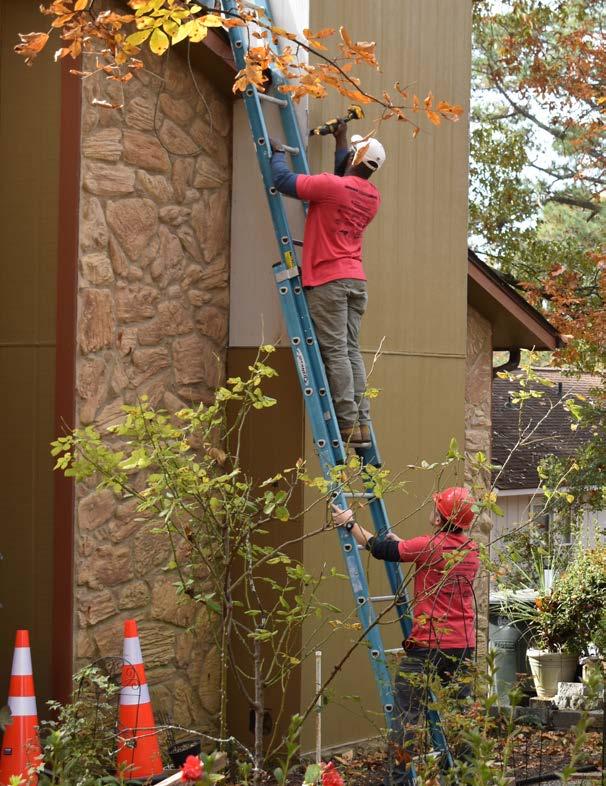
Volunteers work on the house.
During that build in 2023, she was convinced to apply for the Veterans Build program, despite her apprehension. Following a year-long wait for approval of her application, work was able to begin on McCroskey’s home last fall.
Rick Callaway, Fayetteville Area Habitat for Humanity’s critical home repair specialist, told CityView that the team of volunteers, clad in their matching red T-shirts, was able to complete several badly needed home repairs, including electrical work and structural repairs to the home and deck—something McCroskey was afraid would fall through. They also poured new septic tank covers, fixed a rotted and badly compromised chimney that was allowing water to seep into the house, and weatherized her home to prevent any further damage from our frequent North Carolina storm systems.
Kelly Rodriguez, Fayetteville Area Habitat for Humanity’s director of volunteer services for the organization and a veteran herself, said that being able to support and serve the community, much like McCroskey, Callaway, and over 52,000 other veterans in Cumberland County did during military service, has been a rewarding experience.
“This has been one of the greatest gifts I’ve ever received,” Rodriguez said of the work with Fayetteville Area Habitat for Humanity.
Price, calling on the organization’s faith-based roots, told CityView that they strive to uphold lessons learned
in that faith.
“We just try to be the hands and feet of Christ in the housing arena,” he said. “Because we believe that everybody, every hardworking citizen of our community deserves a safe and affordable place to call home.”
Phyllis McCroskey, a pillar of community service in our city, had to be told to sit down and let others serve her during the build on her home. She said it was difficult, but that she was grateful to the community, neighbors, and longtime friends who showed up for her. Through her own work, her frequent stops into the Fayetteville Area Habitat for Humanity office just to chat, and her unwavering commitment to persist through hardships and help others, she has hand-crafted a community where she feels supported.
“Not just supported,” McCroskey corrected, her sweet voice carrying through the air. “Loved and accepted and cared for.”
Trey Nemec is a contributing writer for CityView. He is a Fayetteville State University alumnus, and holds a bachelor’s degree in communication and media studies.
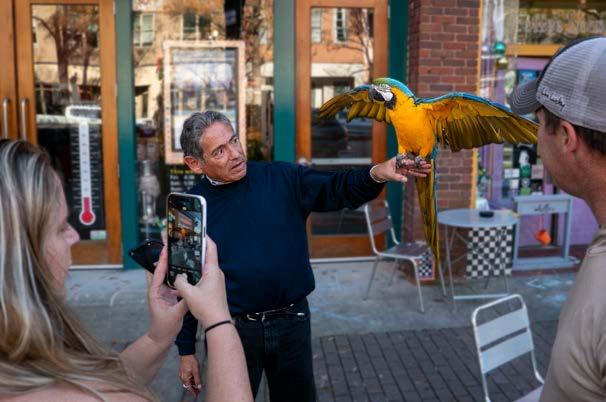
Robert Lints brought Macy the Macaw home in 1991. Thirty-five years later, the colorful pair is a beloved mainstay in the Fayetteville community.
BY ERIN PESUT & TREY NEMEC | PHOTOGRAPHY BY JAMES THROSSEL
In 2016, CityView published the story “Bird & Man Animal Companions,” written by Erin Pesut, about the unlikely duo that delights Cumberland County residents. A decade later, we caught up with the pair to see how life has been for them since we last had a chat.
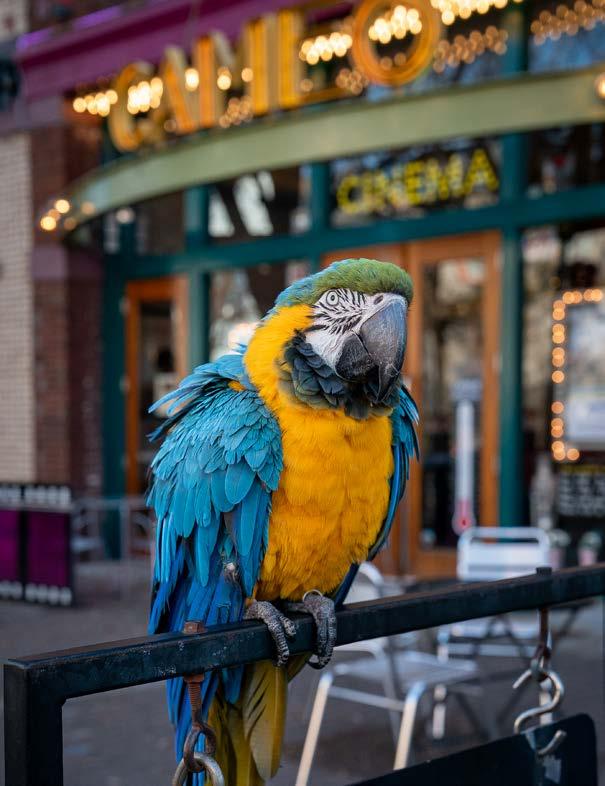
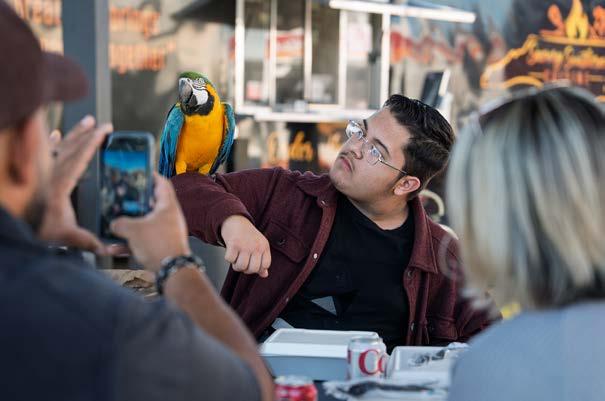
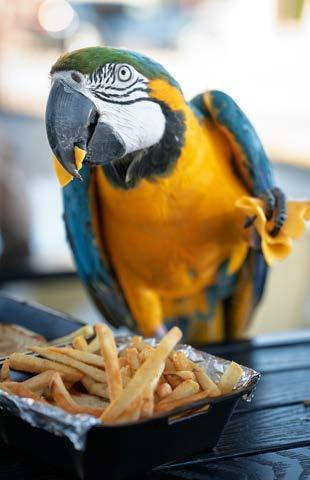
OOn a warm November afternoon, Macy the Macaw sat perched on a metal patio table outside Haymount Truck Stop. His gold and blue feathers rustled gently in the breeze as the large bird grasped a cheeseburger between his talons and took a bite.
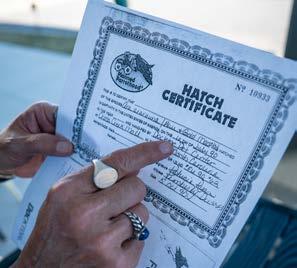
“That’s 300 pounds of body pressure per square inch,” Robert Lints, Macy’s human companion, said of the bird’s biting power. Lints told CityView that Macy only eats “people food” when they are out in public, something that’s more common in the warmer months, as the bird rustled through his paper plate of french fries. The bird will be 36 years old on July 6, Lints explained, handing over a photocopied “hatch certificate.” Macy and Lints have been together for 35 years.
In those years, Lints and his blue and gold Macaw companion have become local celebrities and mainstays in the Fayetteville community. The vibrant tropical bird is not a common sight in North Carolina, more apt to call the rainforests and savannahs of Central and South America home. But despite the drastic differences between tropical climates and the weather in Fayetteville, Robert and Macy have been happy since the day Lints brought his pal home in October 1991.
“I knew how to court him, and he’s beautiful,” Lints said, speaking to the process of getting the animal to trust him in the pet store back in 1990. “I wanted to give him as good a life as I could. I just knew that nobody else would.”
And Macy has a good life indeed. On top of the semiregular cheeseburgers and occasional sips of Lints’ beer, while chatting with CityView at the Haymount hotspot, Macy enjoys his own room at home and regularly meets his adoring fans throughout the city.
Certain elements of this story have been updated, such as time frames and ages, for current accuracy, but one simple fact remains the same: Robert loves Macy, and they’ll be pals for life.
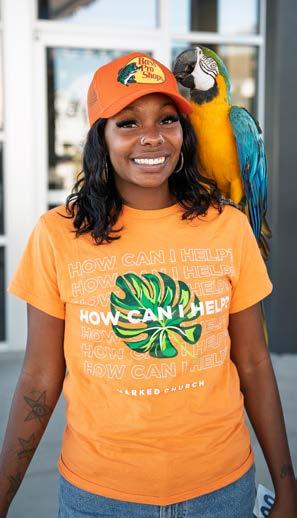
Look for the man strolling down Hay Street, dining al fresco, or meandering through Festival Park with a blue and gold macaw perched atop his shoulder: Robert Lints is a celebrity. The bird isn’t tethered or leashed and could fly away whenever it wanted to, but it doesn’t. They stay together because they are a pair, companions for a lifetime.
Lints shows off Macy’s hatch certificate, noting he was purchased at Cross Creek Mall in 1990.
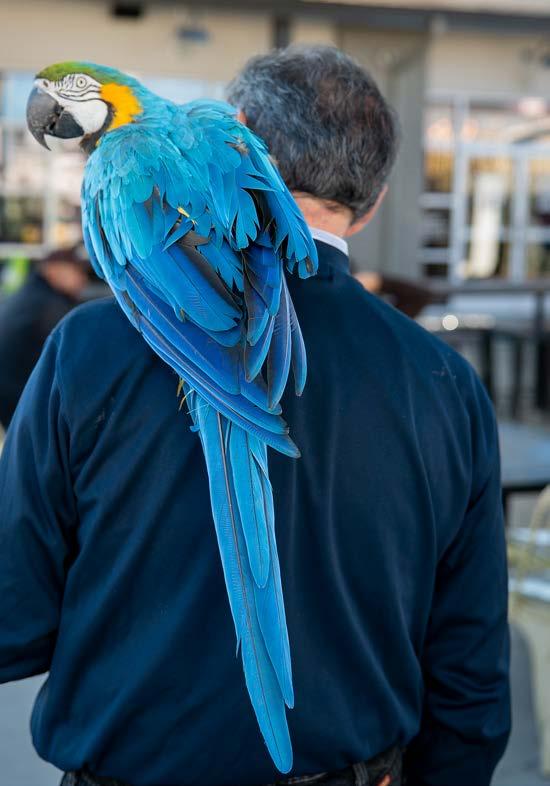
In the wild, a bird like Macy, a South American macaw, may only live to be 20 to 30 years old. Out in the jungle, there are predators and disease, but here in Fayetteville, under Lints’ care, Macy may live to be 60 or even 80 years old. Oftentimes, a bird like Macy may have seven to 10 owners in its lifetime, but Lints doesn’t plan on parting with Macy anytime soon. He understands the serious commitment of owning a bird. It’s not typical. It’s not an ordinary “pet” by any means, but he feels that bond makes responsibility a delight.
These two kindred spirits met 35 years ago while Robert worked as a jeweler. On his lunch break, he’d frequent the pet store, admiring Macy, and one day, the pet store owner admitted to Lints that Macy wasn’t bonding with anyone else. If anyone else handled him, Macy would bite or scream. With Lints, he’d kiss the salt above his lip, leftover from his perspiration. Lints realized what he had to do.
Macaws, the largest birds of the parrot family, are flock animals. They mate for life. They develop deep and trusting relationships. If Indigenous peoples in South America, migrating up the coast from Paraguay to Panama, were to find a macaw chick in the forest, it would be like finding a child. The macaw would fly above them as they travelled during the day. At night, they would all rest together, like a family. Lints and Macy had developed that same kind of bond. And so, Lints brought the bird home.
Considering the average lifespan of a dog is 10 to 12 years, and a cat, a smidgen more at 15 years, Macy has already been around longer than a domesticated canine or feline. And the way you can train a dog to spend time in a crate or let the cat sleep in the window all day, it’s not like that with Macy.
“He’s never in a cage,” Lints said. “And he has a whole room in my house, full of bird toys and things to chew on.” A whole room! Lints also has two dogs, a Beagle mix named Baxter and a Dachshund named Dexter, and they all go for walks together.
“He can fly,” Lints added, meaning he could fly, but he doesn’t. His wingspan of 33 inches would be impressive. And Lints doesn’t clip his wings either. Instead, he saves Macy’s molted feathers and donates them to the Native Americans at the International Folk Festival, who use the bright aqua, bold green, and luminous golden feathers for crafting their ceremonial fans and woven paintings.
Since North Carolina law prohibits animals, other than service dogs, from going inside, you will often find these two dining alfresco.
“He’s eaten at every restaurant on Hay Street,” Lints said. Macy especially loved the chicken wings from Huske—which closed in April 2024—spaghetti from Pierro’s Italian Bistro, and for dessert, some vanilla or strawberry frozen yogurt. He can’t eat chocolate or avocado, and Robert even avoids Teflon pans in his home because they produce a harmful gas that is deadly to his bird. These two are often stopped as they go. Whether it’s curious children asking questions (like, “What kind of bird is that? How old is it going to get? Does it talk? Is it a boy or a girl?”) or curious passersby wanting to pose for a picture with Macy on their shoulder, Robert is generous in sharing and educating the public about his friendly bird.
“I always refuse money,” he explained in regards to people’s inclination to pay, “ ... but if they want to buy him a burger or some French fries ... ” He offered a cheerful smile, a warm twinkle in his eye.
Because of their close bond, these two don’t spend much time apart. While it may be easier for Robert to leave—birds often don’t go on vacation—he decides not to travel much. It’s not like he could take his bird to the kennel. They mostly stay together in Cumberland County.
“I worry as much about his psychological health as I do his physical health and since he has the intelligence of a 1- to 4-year-old, it’s like a child,” Lints said. “Macaws are truly like Peter Pan. They never grow up.”
Trey Nemec is a contributing writer for CityView. He is a Fayetteville State University alumnus, and holds a bachelor’s degree in communication and media studies.




Explosive Ordnance Disposal technicians have the highest rate of suicide and illness-related deaths in the service. Despite increasing awareness, veterans say there’s been little progress made to protect them.
BY DANIEL JOHNSON PHOTOGRAPHY BY TONY WOOTEN
IIn a narrow alley in Afghanistan’s Ghazni Province, Army technician Jeffrey Truex worked cautiously to disarm an improvised explosive device, a pressure cooker packed with homemade explosives.
Boxed in by concrete walls and wearing 80-pound suits, Truex and his three-person team, members of a U.S. Army Explosive Ordnance Disposal (EOD) unit, were soaked in sweat. Their job is methodical: First, they send in a robot to try to destroy the charge remotely. When the robot reaches the limit of its abilities, Truex and his fellow technicians move in to place charges to neutralize the device, carefully connecting wires and explosives. Every step is measured. Every breath, controlled.
Then they fall back to what they hope is a safe distance.
But on that day in 2009, the explosion was bigger than expected. The blast funneled through narrow passageways, amplifying its force. Debris and toxic dust ricocheted off the concrete walls, a surge strong enough that the team could feel it even within their armored truck about 100 meters away.
The metallic roar shook their bones, invading their skulls with a deafening ring.
“That blast wave just gets channeled right into you,” Truex said. “There’s things you can’t account for.”
While Truex’s team escaped without obvious signs of injury, that kind of blast can contribute to traumatic brain injuries, exposure to chemicals, and high levels of overall job stress. Many EOD techs believe those occupational hazards are contributing to high rates of behavioral health disorders and illnesses showing up among members of the military who work closely with explosives.

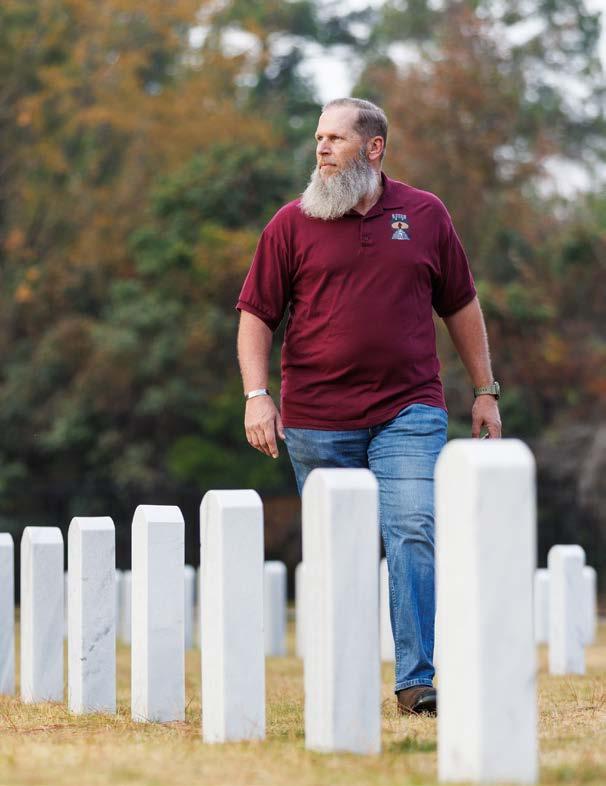
What happens when the healthiest people you know—who ate clean, trained hard, never smoked—start getting lung cancer, brain cancer, thyroid disorders?
– Joshua Jenkins, former Army EOD technician
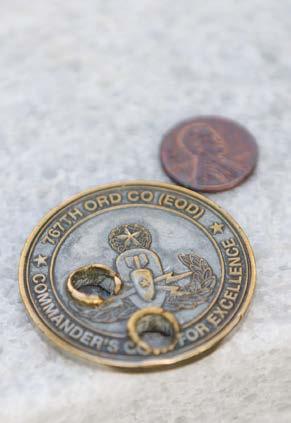
Truex’s challenge coin, next to a penny left by a cemetery visitor.
There is growing evidence that these hazards raise suicide and mortality risk. From 2001 to 2024, Army EOD technicians died by suicide at a rate up to two times higher than other soldiers, and four times as high as the national population, according to data The Assembly obtained from the Department of Defense in response to a public records request.
The data shows EOD techs are dying of illnesses at a rate higher than all other jobs in the Army. And it’s not due to age: The average age of the deceased in the jobs compared was just under 28, at the prime of their lives. EOD techs weren’t much older, at 30–still within what should have been the peak of health.
The Assembly ’s analysis appears to be the first detailed breakdown of the Army’s data. North Carolina is one of the military’s largest hubs for EOD units, home to the National Guard’s 430th EOD Company, Fort Bragg’s 192nd Ordnance Battalion, and Camp Lejeune Marine EOD.
Truex, now in his 50s and living just outside Fort Bragg, believes these outcomes are avoidable. He can list the names of those lost off the top of his head: two explosive ordnance disposal technicians who were killed in the line
of duty while disarming explosives and 19 more who came home, only to die by suicide or from chronic illnesses years later. Most of them were young.
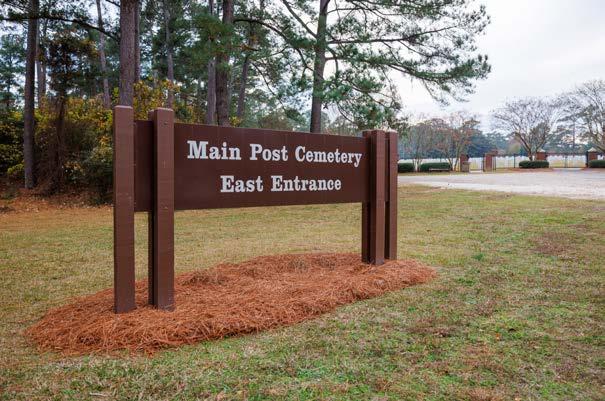
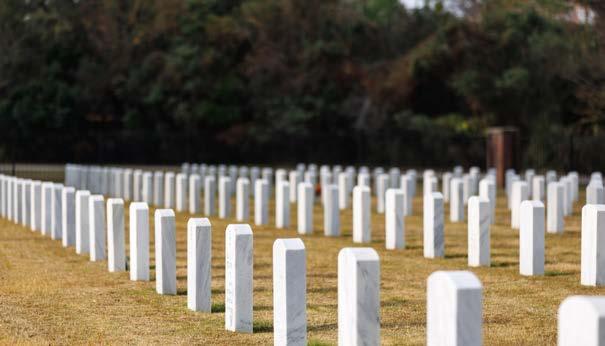
Truex leads small gatherings of EOD veterans who now lay flowers on their graves and trade quiet stories about their lives. It’s a reminder of how heavy the work still weighs on them.
“The shitty thing is, we’re one of the smallest military communities as well,” he said. Even at its peak, the Army’s EOD personnel numbered less than its Special Forces.
The symptoms his fellow veterans describe often take on a surreal edge. Some speak of seeing shadowy figures and ghostly children, or being unable to shake the feeling of being watched—threatened even—by something that isn’t there.
Others explain it in more physical terms: digestive issues, irregular heart rhythms, persistent pain no doctor can explain. They recount being overtaken by panic, feeling a crushing pressure on their chest, and waking up soaked in sweat.
It feels like something monstrous is hunting them, a predator without a name or face that followed them home from foreign battlefields and training sites and is now stalking them from inside their own bodies.
Truex wasn’t shocked to learn the Army’s data backs up his own experiences. But he feels there’s been little effort to do anything about it. Last year, a bill requiring the Pentagon to produce a report on suicide rates and brain injuries among EOD techs was introduced but died quietly. Political headwinds, generally, seem to be blowing against improving access to veteran care.
Truex founded After the Long Walk, a support group of active-duty and veteran EOD technicians, in 2015. The group runs a 24/7, peer-led volunteer crisis line.
He juggles leading the group with his day job as a facilities manager at Fort Bragg. His calendar is stacked with weekend retreats, local gatherings, and late-night calls that would exhaust most people. In addition to providing peer support, he engages with Army leadership and the broader defense community about the issues facing EOD personnel.
But it never seems to wear him down. If anything, it sharpens his sense of purpose.
“The bottom line is that we want to stop EOD techs from killing themselves and build a network of EOD techs that can manage a crisis … before it becomes a crisis,” Truex said. “We provide an outlet and work with other organizations who are trying to help our community.”
Staffed entirely by volunteers, the crisis line has never missed a shift.
“Often, it’s just about reaching people at the right time,” Truex said. “We’ve lost some guys who called the hotline. At one point, the Army was afraid of us. … It was all about liability. But over time, some senior leaders came to see the value. Getting the word out is tough. Some people know about us—but not enough.”
The training to become an EOD technician is relentless. In every new class of technicians, only one in four will make it to graduation. The unforgiving pace, the precision the work demands, and the constant reminders that a single mistake can be fatal are often enough to push trainees away.
Those who endure become part of a small, tight-knit community. Whether it’s disarming a roadside bomb in combat, securing a stadium for a visiting dignitary, or responding to reports of explosive devices at home, EOD techs stand at the intersection of courage and calculation.
But despite the reputation for high-stakes action in movies like The Hurt Locker, EOD work is often quieter, more grueling, and emotionally exhausting.
The Army’s peak of more than 2,000 technicians in the 2010s was barely enough to meet demand, according to a U.S. Government Accountability Office report. Today, there are just over half that, and the demand for their specialized skills is pushing many techs beyond their limits.
“Our competency is our greatest detriment,” said an EOD technician in North Carolina with nearly a decade of service in the field who asked to remain anonymous for fear of career repercussions. “We’re stretched beyond our
replenishment capability, leading to extreme burnout, lack of basic proficiency, and fractured families.”
In 2019, the GAO released a report confirming what techs had been saying for years: Their units were overtasked and understaffed.
The Pentagon failed to account for mission requirements when deciding how many EOD personnel were needed, the report stated, reaching a crisis point by 2016, when the man-hours spent on missions increased dramatically. “The U.S. Army as a whole lacks the forethought to plan EOD manning before or after any crisis,” the technician said. “Only when something goes wrong and catastrophe strikes.”
From 2017 to 2021, the deaths of EOD techs in the Air Force, Marine Corps, and Army began to stack up quietly, then relentlessly, according to The Assembly ’s data, which doesn’t include the Navy.
Causes of death are listed in cold, clinical terms: “Contact range gunshot wound through head.” “Hanging. Strangulation. Suffocation.” Sixteen suicides in four years among active-duty EOD techs—an increase even as the total number of techs was decreasing.
Research from 2021 found that EOD techs have higher rates of post-traumatic stress disorder and insomnia
than other military jobs. Many techs stay silent about the impacts of the job out of fear that asking for help could lead to losing their clearance.
Joshua Jenkins, who was an Army EOD tech for seven years, knows that pressure intimately.
“It was always said … ‘If you go to behavioral health, you’re going to be sidelined,’” Jenkins said. “You’re basically scaring the shit out of people.”
Jenkins now works as a registered nurse in hospitals and clinics in the Fayetteville area. The Assembly ’s data confirms something he’s quietly observed for years but feels few are willing to confront: an unusually high rate of unexplained illnesses among EOD personnel, alongside a suicide crisis.
“What happens when the healthiest people you know— who ate clean, trained hard, never smoked—start getting lung cancer, brain cancer, thyroid disorders?” Jenkins asked. “Rare and obscure diseases that I heard about in nursing school? These are people who shouldn’t have more than slightly elevated blood pressure. But that’s not what we’re seeing. And it’s not a coincidence.”
The Assembly ’s data analysis found that from 2011-2024, EOD techs on active duty died from cancers, heart attacks, and other illnesses at a rate higher than all other jobs in the Army: 29 per 100,000, compared with 11 per 100,000 in non-blast-exposed roles.
Similar patterns are emerging among other blast-
exposed roles: artillery personnel, mortar personnel, and tank crews. Like EOD techs, the rates of suicide and illnesses are significantly higher rates than for peers in non-blast-exposed jobs.
“We’re wearing bomb suits for hours and taking multiple X-rays of suspicious devices, irradiating ourselves in the process,” Jenkins said. “Then, going straight into blast craters to collect evidence. When something explodes and releases unknown compounds, we’re the ones standing in the middle of it, breathing it all in. It’s death by a thousand cuts.”
Jenkins’ father was an Air Force EOD technician. As his father aged, Jenkins watched him deteriorate, developing mysterious health issues no one else in the family had. He struggled for years to prove to the VA that his illnesses were connected to his service.
“When you really stop and think about cumulative exposure, it’s terrifying,” Jenkins said.
Now Jenkins sees the cycle is repeating itself with his friends. “So if someone was more likely to develop chronic illness with high rates of pain,” asked Jenkins, “wouldn’t it increase the odds of them committing suicide beyond the risk factors already associated with the job?”
Truex, and a growing number of experts, believes exposure to blast overpressure—the force that shook his bones back in 2009 in Afghanistan—plays a role, too. Research published in the journal Military Medicine in 2023 showed EOD personnel exposed to blasts reported worse mental health symptoms.
Department of Defense data show that EOD techs are dying of illnesses at a rate higher than all other jobs in the Army.

Truex founded a support group for active-duty and veteran EOD technicians. The group runs a volunteer crisis line.
“There’s enough headaches and migraines,” Truex said. “I can personally speak to the irritability, and that can cause a lot of downstream effects.”
There are also the unexplained deaths, like Robert Latham, a 32-year-old EOD captain at Fort Bragg who, despite appearing to be perfectly healthy, died suddenly of a heart attack during a run in 2021.
A study published in October in Military Medicine also tied repeated blast exposure to significant gut and digestive issues. Across the Atlantic, researchers at King’s College London this year found EOD techs there have a five times higher rate of developing bladder cancer compared with the general population.
A 2022 VA analysis of data from more than 2.5 million post-9/11 service members found that veterans with traumatic brain injuries faced significantly higher mortality rates, including a higher risk of dying from cancer, cardiovascular disease, and even accidents.
Stephen Xenakis, a retired brigadier general, psychiatrist, and senior adviser to the Pentagon on neurobehavioral conditions, has long suspected that blasts were doing more than just rattling the brain. He believes they disrupt the body’s command center: the autonomic nervous system, which quietly regulates vital functions like heart rate, digestion, and immune responses.
A disrupted nervous system could lead to a variety of physical health problems in previously healthy individuals, a potential outcome that has led Congress to introduce a bill in December that would call on the VA and DOD to do more research into the subject.
“Blasts affect the entire body,” Xenakis said. “The brain regulates essential systems, including the immune system.”
He also believes more research must be done. “The DOD and VA must systematically collect data on these service members,” he said. “Saying ‘We don’t know’ isn’t acceptable.”
Navy EOD veteran Bryan Walton’s own exposures run the gamut—blasts, shrapnel, radiation, and chemical weapons.
While he doesn’t wear the uniform anymore, he’s still in the fight as a member of the advisory committee for the VA’s Complex Exposure Threats Center of Excellence, focusing specifically on the unique risks EOD techs face.
“EOD veterans are taking care of each other, which makes me both proud and sad,” Walton said. “The only help we can get is from the guy who had our back in uniform. When techs reach out for help, the VA has no idea what they went through.”
• Class begins April 21 and ends May 28
• Meets Tues/Wed/Thurs from 5-6 p.m.
• About the class: Prepare to take the industry certifications Security+ and Network+.
• Course focuses on repairing, servicing & upgrading computers and peripherals, network theory & network security basics
• Course must be held in the last 180 days of service for transitioning service members.
• Students should attend scheduled appointment & funding appointment (if applicable) with Transition Tech staff.
• Students should complete the command packet as instructed by Transition Tech staff.
• Funding may be provided to qualifying transitioning service members. Contact transtech@faytechcc.edu or call (910) 486-3626 to enroll.



The Assembly ’s data analysis for this story includes only active-duty troops; the VA doesn’t track suicide rates by the job a veteran performed during their service. And neither the Army nor the VA appears to track rates of specific illnesses by job category.
The Army did not respond to multiple requests for comment about the data and our analysis.
Last year, the bipartisan Congressional EOD Caucus introduced a bill requiring the DOD to report on suicide rates and TBIs among EOD personnel, but the bill stalled and never made it into the annual National Defense Authorization Act.
However, in the committee report for the bill, the DOD was asked to produce the report no later than April 2025. They missed the deadline, but in September, after The Assembly reached out about its data, they produced a report looking at the last five years of suicide data among EOD personnel.
They found no heightened risk of suicide among EOD techs, the report stated, and that the EOD techs who died of suicide on active duty in all four branches had no reported cases of PTSD or TBI.
The Pentagon did not look at longer term trends like The Assembly ’s analysis or a 2024 DOD report that pointed to higher-than-average rates of suicide among military EOD personnel from 2011-2022.
Richard Hudson, who represents North Carolina’s 9th Congressional District, which includes Fayetteville and Fort Bragg, is part of the caucus. Emerging research “only reinforces the urgent need for clear, timely data, and decisive action” to help EOD technicians, he told The Assembly via email.
For veterans like Walton, it was another disappointment. He pointed to the VA’s acknowledgement last year that troops in Iraq had been exposed to chemical warfare and an announcement that it was launching a study.
Walton was among those troops
exposed to mustard agents in Iraq that left him with painful blisters over almost a quarter of his body. But the VA, he said, has provided little information to those who are potentially affected. “From the many hard questions I have personally asked during VA town halls, there’s no answer, because we don’t know how to test for it,” he said.
Even though the center for which he serves on the advisory board is part of the VA, the department “barely knows it exists,” he said. “Even though the referral process is on the VA’s website, providers often deny EOD techs access to these programs.”
EOD technicians have explored treatments for brain injuries with varying support from the VA and DOD, he said, including neurofeedback, which uses auditory or visual signals to help regulate brain activity; psychedelic-assisted therapy for depression and PTSD; and hyperbaric oxygen therapy, which was authorized for N.C. veterans in 2019 by the North Carolina General Assembly.
But there’s still no definitive treatment protocol for EOD techs and the illnesses they develop. Walton believes the path forward will likely mirror other toxic exposure cases: slow and bureaucratic, but possible.
The center has made tremendous progress, he said. “But it’s not fast enough. For those of us who beat the clock on every deployment, our clock is still ticking.”
Truex also feels that urgency. It has led him to commission independent studies with EOD veterans and their families. One, done in partnership with Brigham Young University, surveyed 698 EOD techs for validated suicidal risk factors. Respondents who reported feeling like a burden to others, reported moral injury, or had diminished need for selfpreservation had significantly increased suicide risk, the study found.
And for those for whom the risk has grown too great, the hotline is still available.
“It’s both hard and easy to know how effective we are. Our wins are generally very private,” Truex said. “But when we have a guy call our hotline 15 times in a year and eventually he is able to volunteer to take those calls, we know we’re winning. We only have to save one guy to make it worthwhile.”
Daniel Johnson is a Ph.D. graduate of the Hussman School of Journalism and Media at the University of North Carolina at Chapel Hill. He was a journalist for the U.S. Army in 2016 in Iraq, and has reported for The New York Times and The Washington Post Work he contributed to on blast overpressure injuries was a finalist for the Pulitzer Prize in national reporting in 2024.
The Assembly and CityView submitted a Freedom of Information Act request to the Pentagon seeking data on all U.S. Army active-duty noncombat deaths from 2011 through 2025. In response, the Department of Defense provided a spreadsheet detailing 5,285 U.S. Army deaths over the 14-year period categorized by rank, military occupation, and cause of death. The latter was classified as either illness, self-inflicted, accident, pending, or undetermined.
However, even the official data includes inconsistencies. For instance, the 2017 death of a soldier in Kentucky is listed as “undetermined” despite a murder confession from her husband. Similarly, a soldier who died of a brain aneurysm was categorized under “undetermined” rather than “illness” or “natural causes.” Some jobs, like EOD, were listed under multiple codes, which required additional research to understand.
We combined this dataset with a previously published report from the DOD covering 2001 to 2010, which included an additional 952 Army suicides. Our analysis also pulled in estimates and reports from the Army Times, the DOD, the GAO, and RAND to build the most comprehensive look to date at 24 years of job-specific data on both suicides and illness. While the DOD has released its own estimate of suicide rates in 2024, it was not broken out by specific occupations (contrary to congressional guidance). There is no publicly available equivalent data for Army veterans, nor has such an analysis been done for the Navy, Air Force, or Marines.
For comparative purposes, we adopted DOD and academic definitions of “blastexposed” occupations to include artillery personnel, tank crews, EOD technicians, combat engineers, and mortar personnel, against those not primarily exposed to blasts per this definition: jobs such as infantry soldiers, medical personnel, human resources techs, and others.
We tested the statistical significance of our findings using chi-square analysis to test whether the differences occurred by chance or were likely to be due to actual differences within populations.
Morgan Casey contributed reporting.
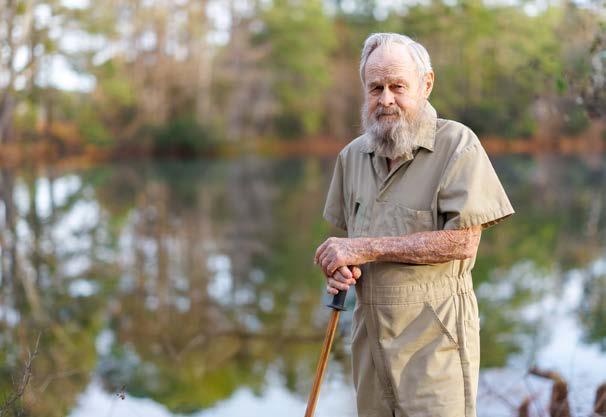
Omer Register underwent a transcatheter aortic valve replacement (TAVR) at Cape Fear
Thoracic
BY TERI SAYLOR
IIf Omer Register felt any symptoms that signaled a valve in his heart was failing, he paid them no mind.
And in the days leading up to his transcatheter aortic valve replacement (TAVR) last year, he says he felt fine until one weekend in April 2024 when he became disoriented after completing a six-hour kayaking trip on the Little Pee Dee River in South Carolina.
It’s a trip he’s made dozens of times with the Lumber River Canoe Club.
“We usually paddle two to three miles,” Register said. “But that trip was long, and afterwards, we worked
cleaning up and packing, but I really didn’t have any trouble at all.”
Register, who lives in Hoke County, is 93.
He spent the next day doing yardwork and his normal household chores. The following morning he woke up early and went outside to retrieve some belongings from his van. That’s when everything changed.
“The running board in the van’s about this high from the ground,” he said, using his hand to demonstrate about 18 inches. “I went to put my foot up, and all of a sudden, it felt like the world wasn’t here anymore.”
Register says that while he didn’t faint, he knew something was wrong. Feeling disoriented, he went inside his house and called 911.
He ended up at Cape Fear Valley Medical Center, where his cardiologist, Dr. Matthew A. Daka determined he needed a valve replacement. Doctors monitored him for a couple of days before the procedure was performed at Cape Fear Valley Medical Center by the TAVR team. Afterwards, Register says he felt like a new man, and about 10 days after his surgery, he was paddling again.
“The procedure wasn’t as simple as getting a haircut, but really, it wasn’t that bad,” he said.
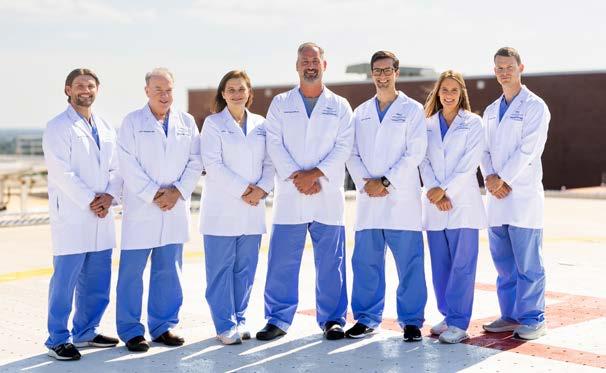
Dr. Ryan Huttinger is a cardiothoracic surgeon with Cape Fear Valley Health, which means he specializes in heart and lung surgery. While he was not the surgeon who performed Register’s TAVR, he has done the procedure many times on other patients and marvels at the ease in which patients come through it.
He described TAVR, which is also called TAVI or transcatheter aortic valve implantation.
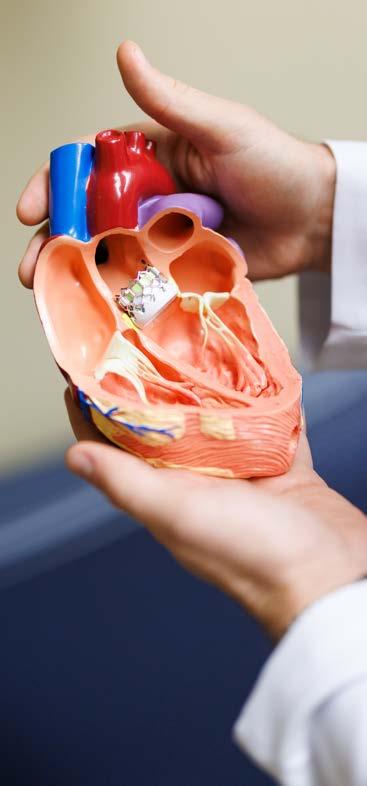
“Basically, it’s a procedure in which we go in with a catheter through a patient’s peripheral vessels, usually arteries in the groin, and run it up to the heart where we can place a new aortic valve,” Dr. Huttinger explained. Typically the new valve is made from cow or pig heart tissue.
Patients receive TAVR for severe aortic stenosis, which occurs when the valve narrows, blocking blood flow. Symptoms include shortness of breath, chest pain, and fatigue.
Dr. Huttinger was already a familiar face at Cape Fear Valley Health before he joined the cardiothoracic surgery team last September. He had served a five-year residency in general surgery there, but fell in love with cardiothoracic surgery. He was a fellow in East Carolina University’s Department of Cardiovascular Sciences before returning to Cape Fear Valley Health. He was drawn to heart and lung surgery for its complexity and challenges.
“This surgical specialty is a dynamic
field to be in and requires a lot of me,” he said. “I find that challenge to be very cathartic.”
Traditionally, valve replacement was done via openheart surgery, according to the American College of Cardiology.
The first TAVR procedure on a human was in 2002, and was originally reserved for patients who were too sick or frail to undergo open-heart surgery, according to the American College of Cardiology. But over the last 15 years, TAVR has become an emerging alternative to open-heart surgery for many patients, even those who are low risk.
Dr. Huttinger can’t point to any single condition that would lead to stenosis of the aortic valve. For some patients, arteries become narrow due to calcium build-up caused by conditions like high cholesterol, high blood pressure, diabetes, and others. Often, stenosis comes with age.
But one type of procedure doesn’t fit all, and Dr. Huttinger says whether a patient undergoes TAVR or open-heart surgery depends on their individual condition and advice from their cardiologist, who works in conjunction with the surgeon.
“I always tell patients that I can do both procedures,” he said, “and we can choose the best way to approach the valve from a whole patient perspective.”
Dr. Huttinger, who says he performs about 5-10
TAVR procedures a month, adds that the surgery itself generally lasts from one to two hours, and many patients, like Register, recover and quickly return to their normal activities.
“Typically, we expect patients to be in the ICU for one night following surgery, and then the next morning we test to make sure the valve looks good, and if it does, we send them home,” he said.
The process for receiving TAVR usually starts with a primary physician who examines the patient to determine the cause of their symptoms.
“If the doctor detects an abnormality, then the patient will get an echocardiogram or ultrasound, which may show that the valve is narrowed or leaking, or if the heart is not functioning well,” Dr. Huttinger said.
From there, the patient usually visits a cardiologist for further testing and a referral to the TAVR team if needed. After the procedure, they are monitored regularly to ensure the new valve is functioning properly.
One of 10 children born during the Great Depression, Register was raised on a tenant farm in Wayne County. He grew up poor and pursued a career in the military.
He met his wife, Dorothy, in Portsmouth, Virginia, during
his military service, and after retiring, they moved to Hoke County where Dorothy had roots. He farmed the land and raised a son and daughter. Dorothy died last August.
Register, who had a triple heart bypass about 20 years ago, visited his cardiologist for regular checkups, and the cardiologist had begun encouraging him to undergo testing for heart valve stenosis.
But Register, insisting he felt fine, kept putting it off. The episode after his paddling trip confirmed his need for valve replacement.
He compares his health scare to a flat tire.
“It’s like you see somebody running on a nearly flat tire, and they need a new one, but they just don’t change it,” he said. “I never thought I needed the new valve either.”
When Dr. Huttinger contemplates the reasons he became a cardiothoracic surgeon, patients like Register spring to mind.
“In this fast-paced dynamic specialty, we have an immediate impact on patients who may be between life and death, and I feel like that’s where I can do the most good,” he said.
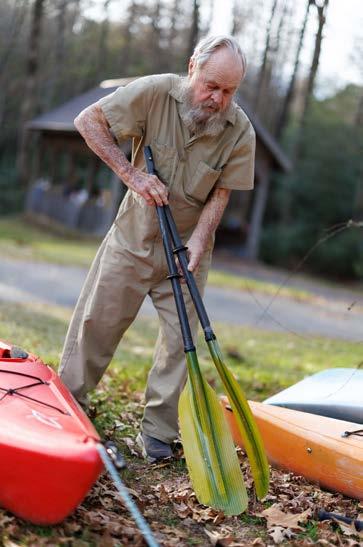
Register listens to his doctors now and enjoys a healthy lifestyle. He still kayaks on the rivers and streams in eastern North Carolina almost every weekend, year-round. His paddling adventures routinely add up to about 600 miles a year, and one year he even racked up 1,000 miles.
He also works out three times a week, for 45 minutes per session at the Cape Fear Valley HealthPlex , and he continues to marvel over the ease and speed at which he received his new aortic valve.
“To me, it’s just a miracle what doctors and hospitals can do these days,” he said.
Teri Saylor is a freelance writer based in Raleigh.
In this fast-paced dynamic specialty, we have an immediate impact on patients who may be between life and death, and I feel like that’s where I can do the most good.
BY CLAUDIA ZAMORA
Valentine’s Day evokes a range of emotions. For some, it is a day of celebration, while for others, it is a day that weighs heavily.
There are people who arrive carrying grief, or loneliness, or the exhaustion of pretending everything is fine. Others arrive with a partner yet feel their hearts filled with questions. And many walk into this day unsure of what to expect.
That is why this letter is not about roses or perfect dinners. It is about real love, the kind that does not need a stage to exist. The love that appears in quiet moments that soothe, in hands that steady you, in glances that understand without a single word.
Love does not always come in the shape of a couple. Sometimes it shows up as a friend who lifts you when life gets heavy, as a neighbor who cooks so you will not miss a warm meal, as a coworker who listens without rushing you, as a child whose hug reminds you that tenderness still lives in this world, or as a community that gathers when someone needs support.
That love counts too, and that love saves.
We grew up believing love had to be found outside of us, in approval, in being chosen by someone else.
But there is a more intimate, more honest love that begins within. A love that asks for no masks, that does not hide out of fear, that learns to care for you when everything feels out of place. That love brings you back to yourself with a little more peace.
This Valentine’s Day, I want to honor all the connections that rarely make it onto a postcard. The quiet affections that hold your days together. The helping hands when strength is missing. The messages that arrive at the perfect

There is always someone to offer love to, and many times, that someone is you.
moment. The embrace that softens the hurt. The solidarity that rises in our community and reminds us that we are never walking alone.
I also want to celebrate the tenderness of seeing yourself with less harshness. That moment when you recognize you are worthy of affection, even with your scars. The gentle shift that begins to grow when you learn to treat yourself with more kindness.
Happy Valentine’s Day, whether you have a partner or not, whether you have plans or simply the wish to breathe a little deeper.
There is always someone to offer love to, and many times, that someone is you. With your story. With your way of enduring. With your quiet and luminous way of loving the world and your community, even on the days when loving yourself feels like the hardest thing to do.

Claudia Zamora is an Argentinian author, mental health and wellness coach, and passionate community advocate. Since 2011, she has made Fayetteville, North Carolina, her home, uplifting the Hispanic community.


Thursday, April 9, 4 - 8 pm at The Carolina Barn, Spring Lake NC

Join us as Cape Fear Valley Health presents CityView Media’s
sixth annual Ladies’ Night Out April 9 at the Carolina Barn at McCormick Farms. You and your besties are invited for a fun evening of food, wine and entertainment. We’ll have vendors for shopping, music, and demonstrations.
Vendor applications open now – email cmalson@cityviewnc.com for more information.




BY DIANE PARFITT






February is the month of hearts and Valentine’s Day. It’s also Black History Month, which makes it a good time to stop and consider the contributions of African Americans to the growth and development of our country. In order to do this, we need to read the history of Black Americans.
So, I’m sharing some books to help you learn more. We can all take pride in following Black history to where we all are today. These books teach us some history, but they are beautiful examples of stories that can be an inspiration to all of us.
1. The ABCs of Black History by Rio
Cortez (Author), Lauren Semmer (Illustrator)
Although this is a children’s book, it is a wonderful one to read aloud with the whole family to learn a little more about a story that spans centuries of heartbreak and triumph, creativity, and joy, and then brings us to today. Told in rhyming text from A-Z with fun illustrations, we learn letter by letter about history, the events and culture, and the people who made them happen.
2. Black AF History: The Un-Whitewashed Story of America by Michael Harriot
Both humorous and heartbreaking, this well-researched and insightful examination of American history challenges longstanding myths and presents a more accurate account of the experiences of Black Americans. Many aspects of America’s history are bathed in mythology—from George Washington’s cherry tree to images of happy enslaved people. In his more accurate telling of American history, Harriot uses the work of pioneering Black historians and his own research and gift for telling a story to present a truer picture of our past. The accurate history of Black Americans may not be what we were taught in school, but it should be what we know to be true.
3. A Soldier’s Life: A Black Woman’s Rise from Army Brat to Six Triple Eight Champion by Edna
W. Cummings
Retired Army Col. Edna W. Cummings reflects on her incredible journey to leadership and her advocacy for the 6888th Central Postal Directory Battalion (the Six Triple Eight), a pioneering African American Women’s Army Corps unit. Her memoir, A Soldier’s Life, highlights both her personal achievements and her campaign to honor the Six Triple Eight, who, thanks to her efforts, received the Congressional Gold Medal in 2022—the only women’s unit to earn this distinction.

Looking back on her remarkable career, Cummings can justly say that “the odds ain’t good, but good stuff happens.” City Center Gallery & Books had the pleasure of hosting her in January for an author event.
4. The Path Made Clear: Discovering Your Life’s Direction and Purpose by Oprah Winfrey
Everyone knows Oprah, either from her television show, her movies, or her book club. She inspires us in many ways, and her book starts with this quote, “Your real job in life is to figure out as soon as possible what that is, who you are meant to be, and begin to honor your calling in the best way possible.” She starts us on our journey by asking us to look inside to see our best vision of ourselves and to work towards it. She shares stories from famous people today—Ellen DeGeneres, Lin-Manuel Miranda, Elizabeth Gilbert, Jay-Z, and Eckhart Tolle—who talk about the journey that filled their lives with purpose. Accompanying these stories are over 100 beautiful photographs to illuminate the wisdom of the lessons.
5. The Dark Maestro by Brendan Slocumb
Brendan Slocumb inspires us with his journey by delivering his third book. Raised in Fayetteville, he went on to study music and is an internationally known musician. His life is a great example of a journey to success. His skill as a writer has made him one of today’s most popular authors. His newest book, The Dark Maestro, is the story of Curtis, a child musical prodigy who struggles with the repercussions of his father Zippy’s life as a drug dealer. When Zippy tries to get out of the business, the whole family is threatened with the consequences. Can they survive and go on with their lives, and can Curtis still make the beautiful music he was destined to make?
6. Take My Hand by Dolen Perkins-Valdez
I was drawn to this book because it was about a nurse from my generation, even though our journeys are quite different. When Civil Townsend, a Black nurse, graduates from nursing school, she hopes she will make a difference for women in her community in Montgomery, Alabama, in 1973. But nothing in her training could prepare her for the poverty and destitution so many faced. Inspired by true events, this story presents a picture of the injustices in post-segregation Alabama, even in health care.
7. It’s Not All
From
A Novel by Terry McMillan
I love the title of this book and the premise. Loretha Curry has had a full life, and as she turns 68, she doesn’t expect that to change. With the help of her group of lifelong friends, she sets out to prove to the naysayers that her best years are not behind her. But she soon finds out she can’t control everything, and when an unexpected loss upends her carefully planned life, she has to draw on her inner strength to live the joyful life that she has always strived for.
Tangy Mae Quinn is the sixth of 10 children in this novel, set in the 1950s in Georgia. Their mother, Rozelle, has a violent way of disciplining her children. She takes them out of school when they are 12 for them to get a job and contribute to the family. Tangy is the brightest of her siblings, and when she has an opportunity to be a part of the first integrated class in the white high school, she sees a chance to change her life. Can she break free from Rozelle and do it?
— James Baldwin

Diane Parfitt owns City Center Gallery & Books in downtown Fayetteville. She can be reached at citycentergallerybooks@gmail.com.
FEBRUARY 2026
Here are just some of the things happening in and around Fayetteville this month. Scan the code with your phone for more events, additional information, and to post your event on our website. Events are subject to change. Check before attending.
February 11
DIY Greenhouse Seminar
Cape Fear Botanical Garden 536 N. Eastern Blvd. capefearbg.org
February 11
Methodist University Women’s Tennis vs. Barton College
Clayton Tennis Center
Methodist University 5400 Ramsey St. methodist.edu
February 12
Art After Hours: Kindred Visions
Arts Council of Fayetteville/ Cumberland County
The Arts Center
301 Hay St. wearethearts.com
February 14
Valentine’s Candle-Making & Charcuterie Board Workshop
Scented Wicks Candle Bar
3109 N. Main St., Suite 102, Hope Mills scentedwickscandlebar.com
February 14
Garden After Dark: Wild at Heart Adults-Only Adventure
Cape Fear Botanical Garden 536 N. Eastern Blvd. capefearbg.org
February 14
Monster X Tour
Crown Coliseum
Crown Complex
1960 Coliseum Drive crowncomplexnc.com
February 14
Valentine’s Day Brunch Party
The Sip Room
106 Hay St. eventbrite.com
February 14
The Sweethearts Dinner
Crown Expo
Crown Complex 1960 Coliseum Drive crowncomplexnc.com
February 18
Greenhouse Seed Starting Workshop
Cape Fear Botanical Garden
536 N. Eastern Blvd. capefearbg.org
February 20
Amy Grant
Crown Theatre
Crown Complex
1960 Coliseum Drive crowncomplexnc.com
February 20
Kids Night Out: Bobcats and Coyotes
Cape Fear Botanical Garden 536 N. Eastern Blvd. capefearbg.org
February 21
Fayetteville Marksmen vs. Pensacola Ice Flyers: Heroes Night
Crown Coliseum
Crown Complex
1960 Coliseum Drive marksmenhockey.com
February 22
Menopause the Musical 2
Crown Theatre
Crown Complex
1960 Coliseum Drive crowncomplexnc.com
February 22
Methodist University Baseball vs. Hanover College
Armstrong-Shelley Field
Methodist University
5400 Ramsey St. methodist.edu
February 23
Resume Refresh
Fort Bragg Education Center
4520 Knox St. - FTCC Building I-3571
Wing F, Fort Bragg faytechcc.edu
February 26
Candlemaking Workshop
Cape Fear Botanical Garden
536 N. Eastern Blvd. capefearbg.org
February 28
A Night on the Town
Fayetteville Symphony Orchestra
Seabrook Auditorium
Fayetteville State University
1200 Murchison Road fayettevillesymphony.org
February 28
Cumberland Polytechnic
High School Speech & Debate Tournament
Tony Rand Student Center
Multipurpose Room
Fayetteville Technical Community College
2201 Hull Road faytechcc.edu


“Truly, if it wasn’t for them and God, I would not be here.”
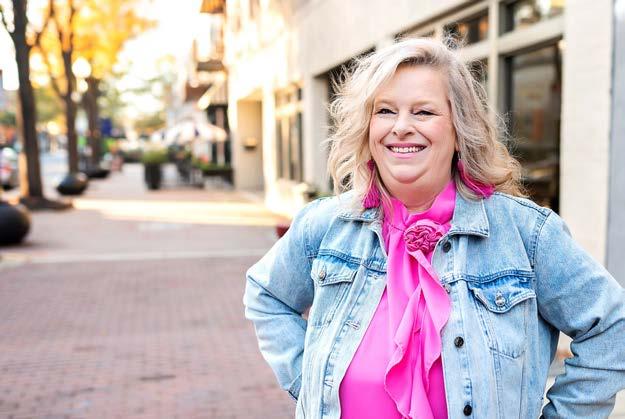
Last spring, Tina McKinnie was counting down the days until the arrival of her first grandchild. After surviving a heart attack in 2021, she had lost 70 pounds and embraced a healthier lifestyle. So when familiar chest discomfort returned, she initially dismissed it as stress. But after a stress test revealed a blockage, her symptoms worsened—and one Sunday morning, Tina called 911 and learned she was having another heart attack.
What began as a plan for stents quickly turned into triple bypass surgery. Though frightened at first, Tina says her surgeon, Adam Celio, MD, and
a compassionate nursing team helped ease her fears by clearly explaining each step and lifting her spirits. Even after postoperative complications and a brief return to the hospital, her gratitude never wavered. “They always explained everything step by step,” she said. “They were just superb.”
While the setbacks were frustrating, she believes her healthy habits saved her life. “Now I may be starting over,” she said, “but I’m not stopping. I live by the words, ‘You are here for a reason.’”
If you think you’re having an emergency, don’t wait — call 9-1-1 immediately!
Learn more about Tina’s story at capefearvalley.com/heart