Curious Publishing is a fiscally sponsored project of The Arts Area. The Arts Area is a 501c(3) Non-Profit Organization. Tax identification number: 81-3551663.
The Arts Area
2910 S Archibald Ave #A145, Ontario, CA 91761
Lopez Urban Farm
A Community Wellness project of COMMUNITY PARTNERS 4 INNOVATION, a 501c(3) Non-Profit Organization. Tax identification number: 81-2258167
All rights reserved, including the right to reproduce this book or portions thereof in any form whatsoever.
Curious Publishing First Edition December 2025 Manufactured in the United States of America
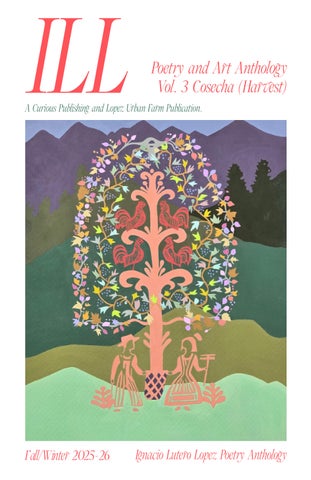
ILL
Poetry and Art Anthology
Vol. 3 Cosecha (Harvest)
Edited by, Peter Lechuga
Designed by, Rebecca Ustrell
Contents
When a Wasp Loves a Fig by, Consuelo
你食飯了嗎? by, Fi Lau
When ICE sits down for dinner by, Anonymous1
ABUELITA MAKES THE LAST TAMAL by Angélica M. Yañez
prayer emøji by, david moses diaz
Late night over Coronas with Gramps: by, shayne
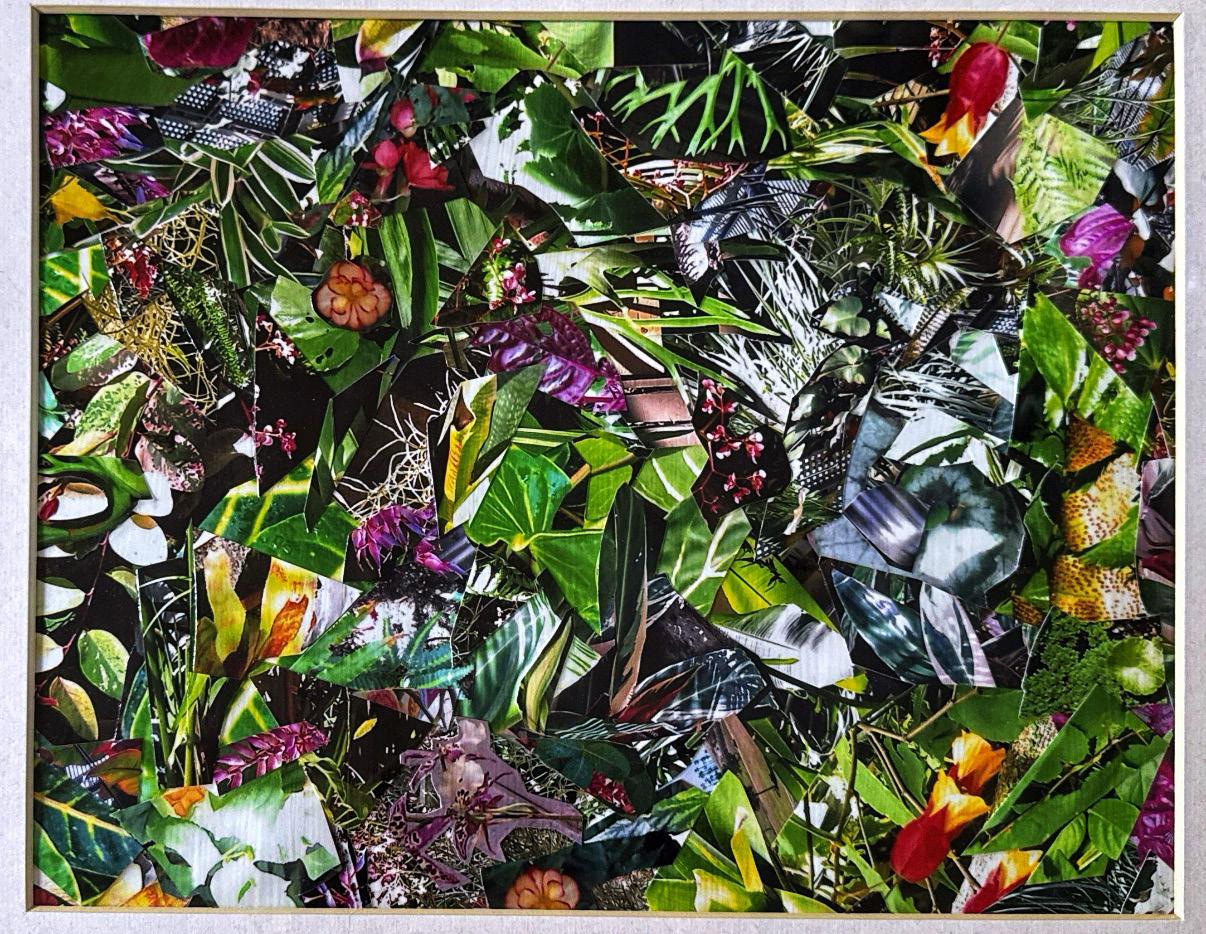
Total Immersion 1 by, marilyn grell-brisk
“Eghnoyotea in Kanonage” (Existing in Autumn) by, Brittany Kiertzner (Arisawe)
Mend by, Yesenia Barron Reyes
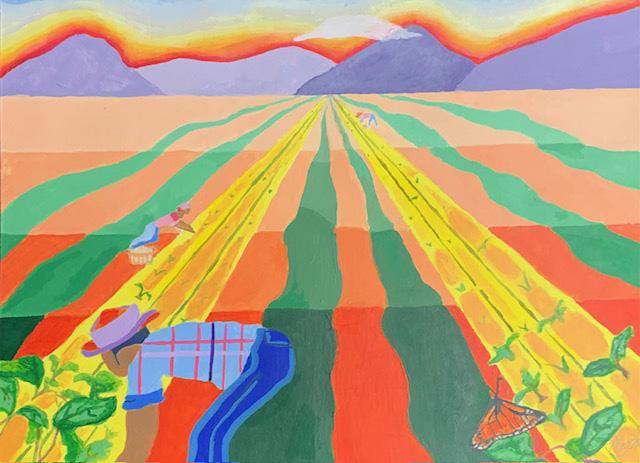
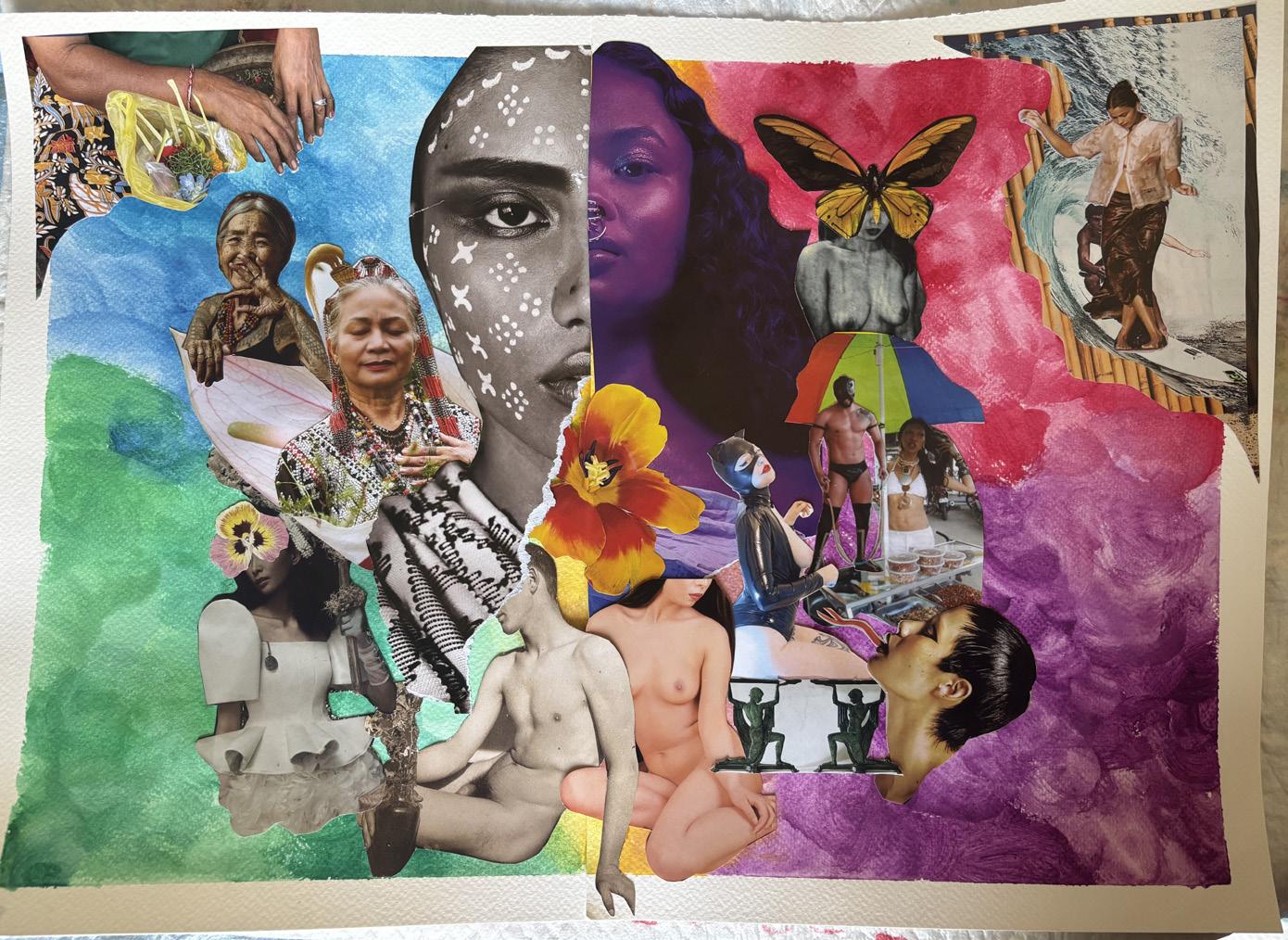
Colores de la Tierra by, Alejandra J. Lopez
Feast by, Alexis Jaimes
Remember by, Jesenia Chavez
And the Trees Told the Farmer, Take Action, and the Farmer Listened by, Mindy Kober
Una Letra a Las Mariaposas by, Erick R. Aguinaldo
“Sino ka ba?”(“Who are you?” in Tagalog) by, Allyson Castro Libao
LATE NIGHT RENDEZVOUS WITH MY GIRL By, Nakedpoet aka Mariana Franco
Yn Nextli; Xochitl by, James Ojeda
Word Reaper by, Carlos Ornelas
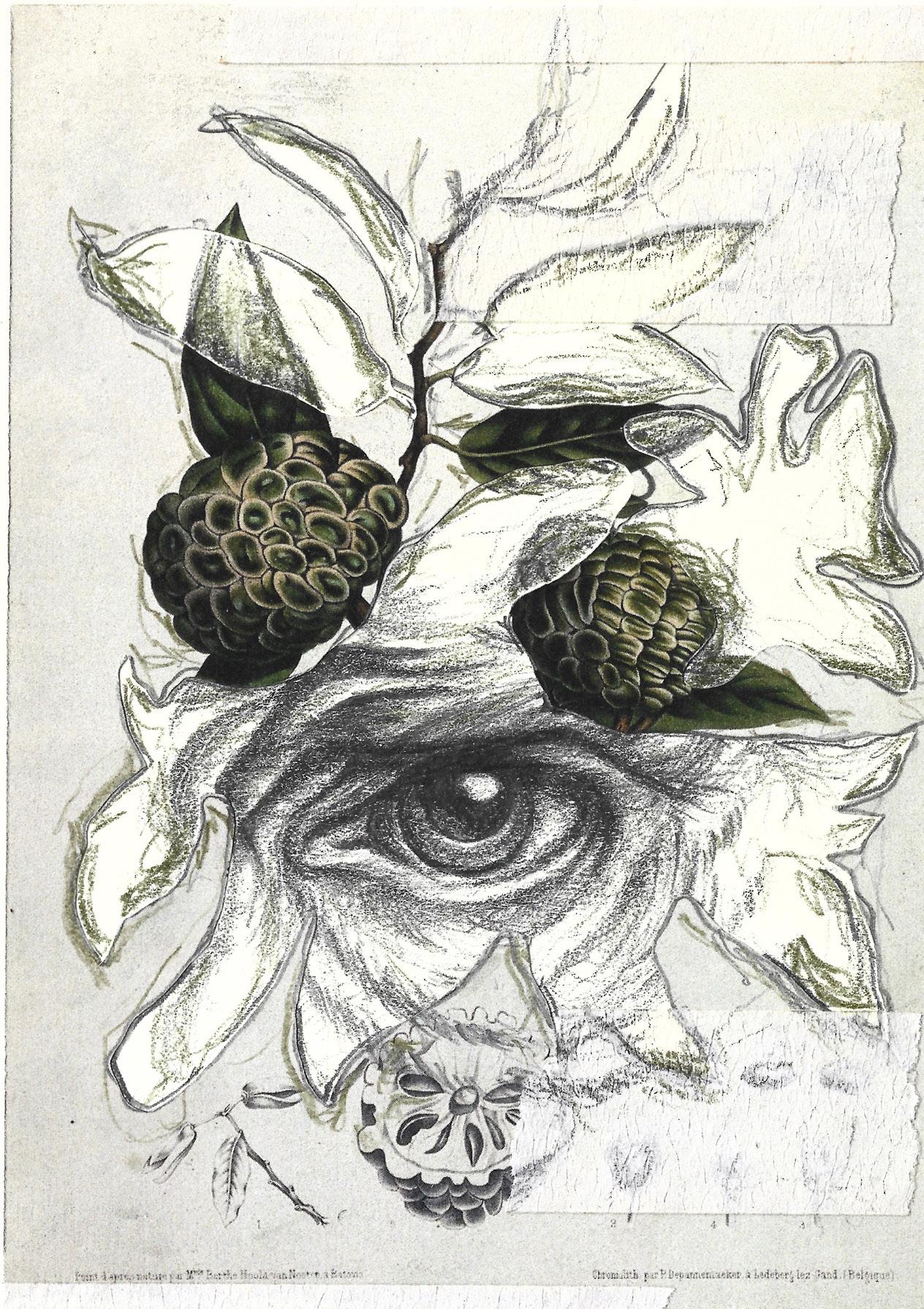
Ancestral Sensemaking 4 by, marilyn grell-brisk
Chosen Family by, Lara Foy
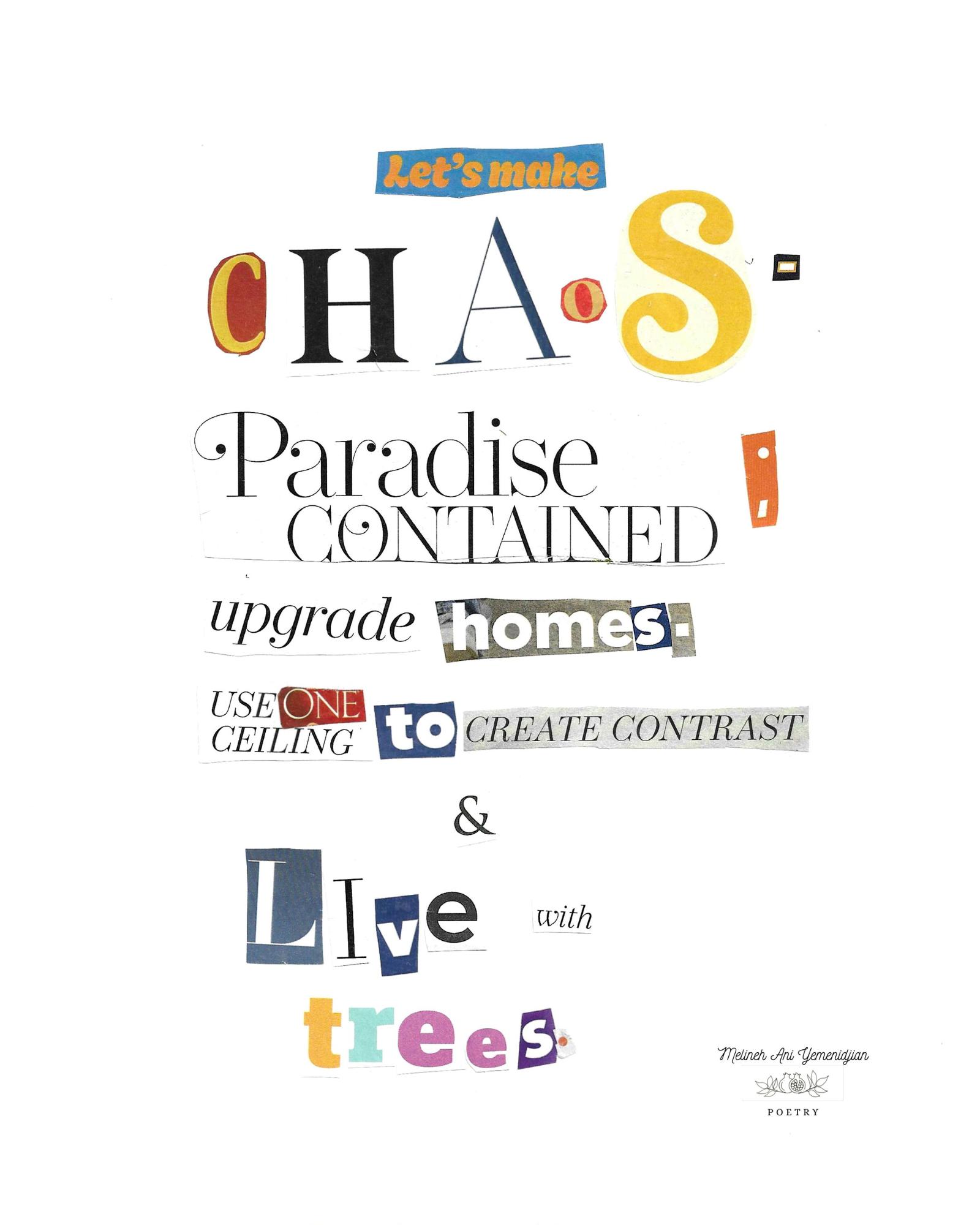
Chaos by, Melineh Ani Yemenidjian
Zinnias and their Stories by, Christiane Williams-Vigil
On Ramiro’s 95th Birthday by Maia Vik Villa
Untitled by, Erica Castro
His Garden by, Peter Lechuga
West Anaheim Will Protect Me by, Jesus Cortez Leal
Bonfire by, James Hull
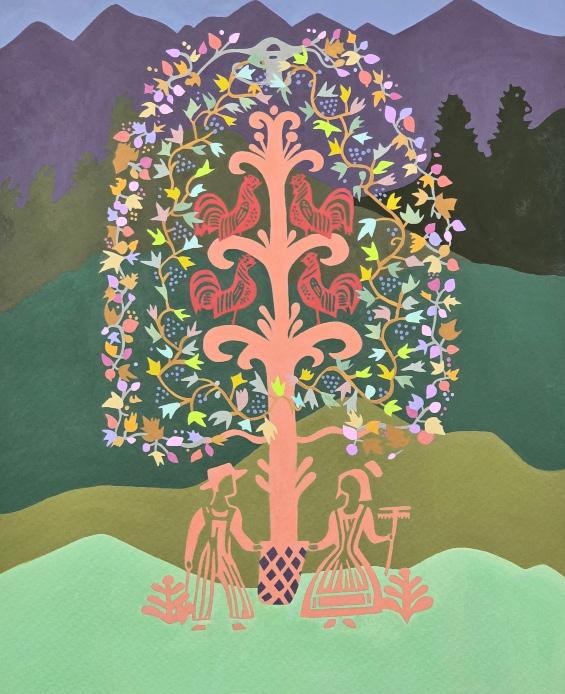
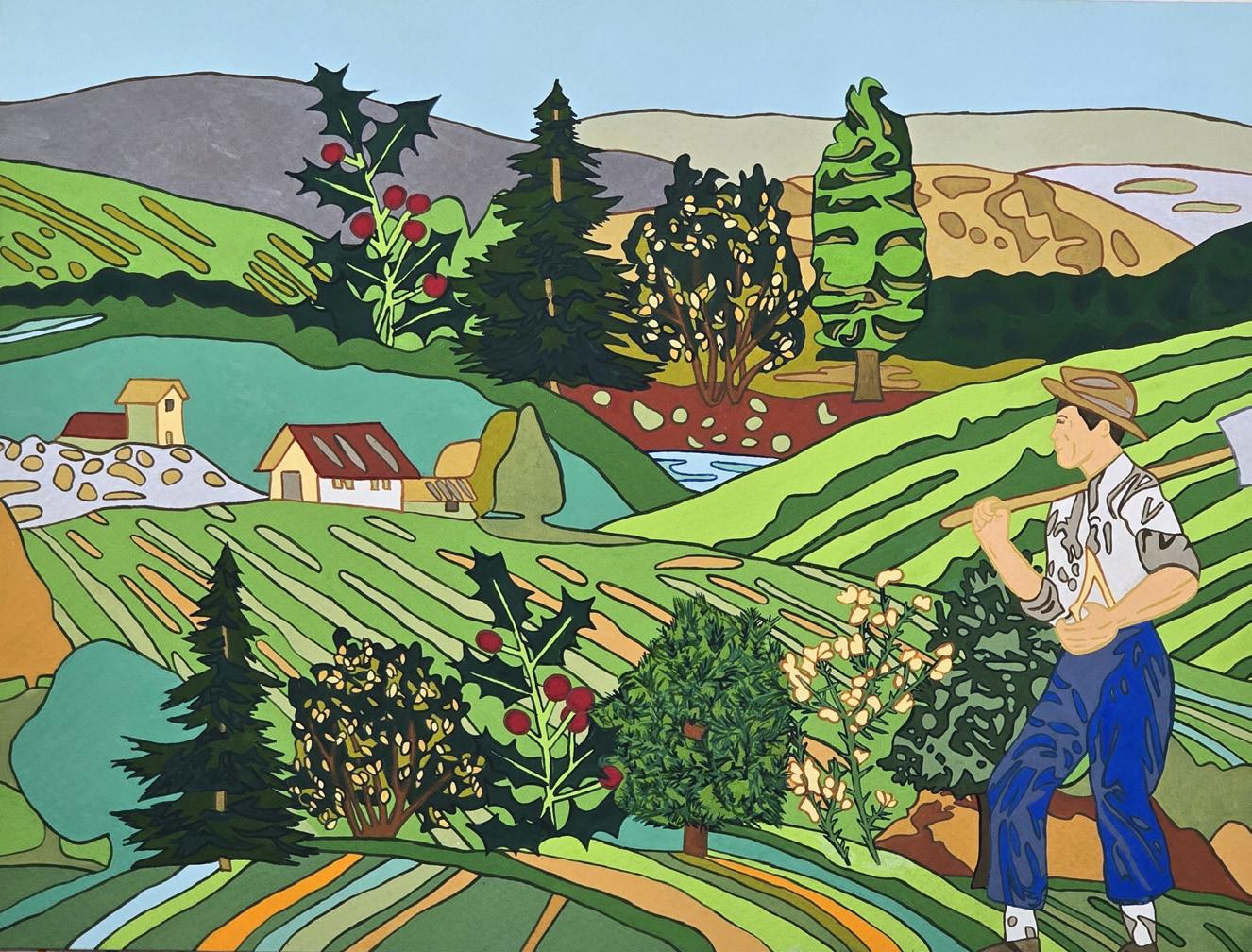
Harvest (Art) by, Mindy Kober
Gratitude by, Michelle Gonzalez
Orange in Green by, Julián Angel Ibañez Mandujano
Naming an Afternoon by, Hope Cerna
loverboy by, Sofia Aguilar
Cosecha by, C Francisco Martinez
Desgranando Maiz by, Donato Martinez
Rhizome Two Spirit by, J. Saravia
Frame by Frame by, Melanie Walden
Consubstantiation by, Tim Lewis
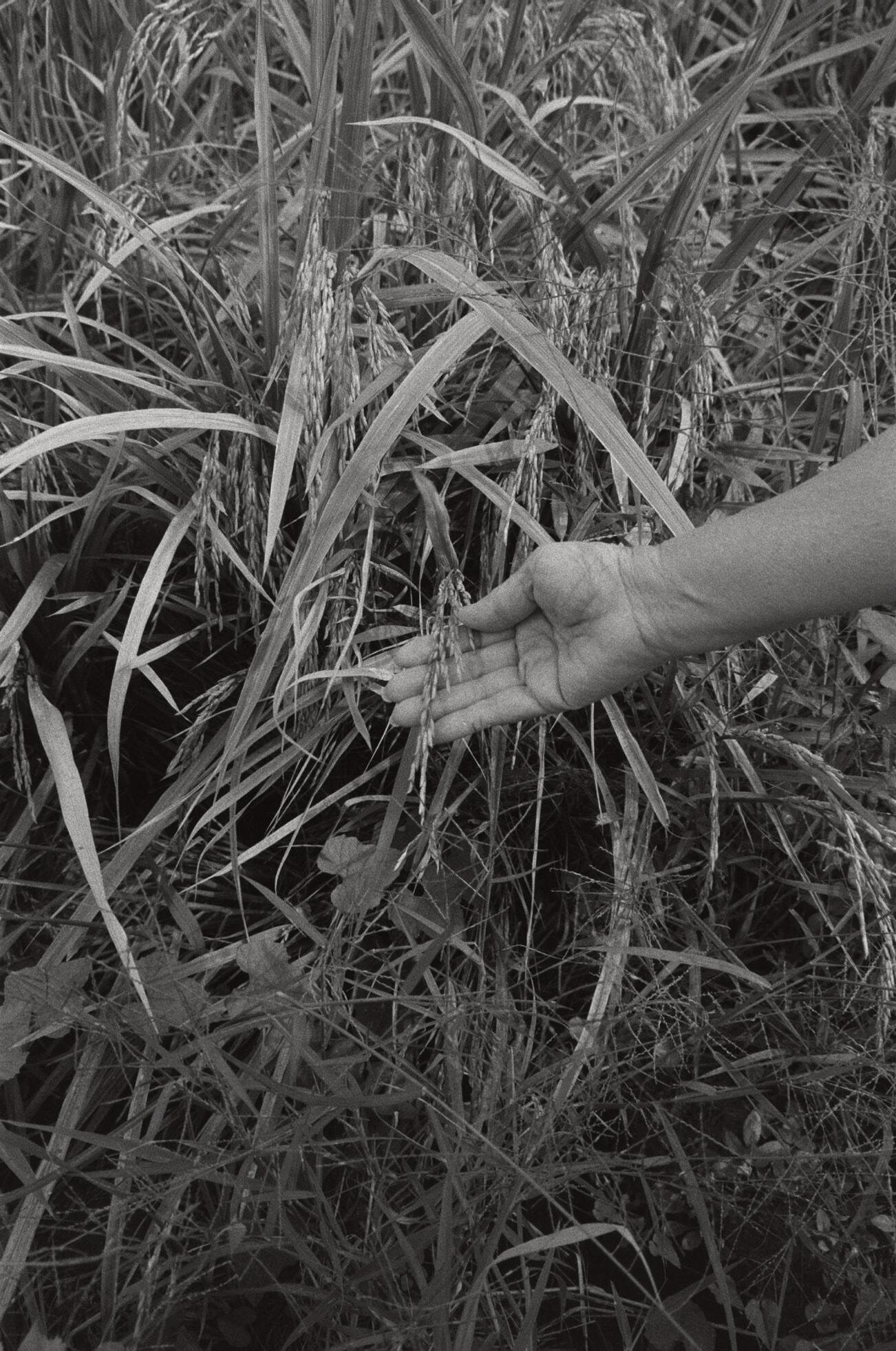
My Teacher Is a Farm: Finding Community at Lopez Urban Farm by, Tye Iverson with Photography by August Koskoff
Author
When a Wasp Loves a Fig
by, Consuelo
A wasp crawled inside me to lay her eggs and die— we are mothers in the fruit and seed.
My womb is a thousand prayer arms extended to her eggs. Our children sync in the pulse of a woman fading into pollination twilight. Once a wasp is barren does man still fear her sword slinging abdomen? And when I carry our children to term, and they leave me to remember her ached body will the hum her name in flight? We have nothing left to unhaul onto this world. All I had was hers, and now it’s gone...‘cept her body. I’ll take her into me. Nestle her with the pulp of my flesh until our bodies congeal into one sweet and tender fruit.
Fi Lau, 你食咗飯未呀, 35mm, shot w/ canon sureshot tele on ilford delta max 400, Taishan Guangdong province, China, October 2024
When ICE sits down for dinner
by, Anonymous1
When ICE sits down for dinner
Do they gather round the table
Are the children called in from playing
Fold hands for praying
Give thanks for food
Do they talk about their day
How it went, what lessons learned
No talk of those they preyed on
Then feast on boiled potatoes
Braised carrots
Sautéed green beans
Garden salad
When ICE sits down for dinner
After a long day of kidnapping children
Disappearing fathers trying to make a living
Stealing mothers planting flowers
Shoved into dark unmarked cars
Their bidding in black masks
What does mother serve them that hasn’t been picked by brown hands
Extracting these hands needed
Kneading dough for tortillas
Bite the hand that feeds them birria
Immigrant hands sown seeds in fertile soil
Broken skin that bleeds from toil
Can they taste their sweat mixed in
The after taste of Mexican braceros brought here to help when needed
Every dry good that lines the shelf
Carries the labor of a close neighbor
Every bite at dinner savored
Every plate from kitchen to table
Its flavor
Criticizes ICE behavior for just doing a job
ICE cant have their dessert and eat it too
Either immigrants are wanted or they’re not
Treated like burros in the field
Measured only by proximity to the work they fill
We’ll take their churros, their alote, their bacon wrapped dogs
Then send em back like perros
Blue collar heroes
Less than human
Machinery
Mechanic
Line cook
Factory worker
Day laborer
The invisible made visible by orange reflective vests
You say they are physiologically designed for this
Clay figures of a Mexican at siesta
Redlined into barrios
Con fuerza
Pushed face down into jobs a cracker dont fuck with Cuz white skin burns easily
Turnt up white collars work easier
When ICE sits down for dinner
Every bite is a contradiction
Fork and knife don’t go together
Their family’s never had it better
On a tax payers salary immigrants have paid into
By day they rob themselves of those they depend on
By night, they forget what they heard on Sunday
Love thy neighbor as thy self
Bless the hands that grew your food
Washed your car on Monday
Turned back your bed on vacation
Pumped your gas in stations
Brewed your coffee at 7 eleven
Raspberry Slurpees for your children
Every stud in the house you live in
Erected by those you round up on weekends
Each nail you depend on
Hang your tactical belt on
Established a home on
The table you eat on
Now want them all gone
Never realizing
Zip ties made by the hands you brutalize
We all crossed a border to get here
When ICE sits down for dinner
To wind down the end of their day
Kids in from play
Does the family pray to a savior
Once a regal alien child in Egypt
Or have they conveniently forgotten that narrative
Their lives are ill gotten
Dining on the rotten assumptions
That folks can be illegal
That they are merely needed
Essential brown jobs
Always stealing white jobs
Valued for their employment
Cheap labor is their enslavement
Send em back to where they came from
The domino effect of who’s next
Show me your papers
A Real ID Card database
What’d you expect
When the lines so long
Your number never comes up
Doors always shut
Its easier to swim and turn dollars back to pesos
ICE never had it so hard tho
Never forced to climb fences
Never stood by the river watching lights from El Paso
When deciding to cross is the best of two choices
Whispering voices calling for coyotes
When ICE sits down for dinner
They enjoy the freedom others have paid for
Fat salary bonus buys more
Filet Minon from the butcher, the real chingon
Jesus pushes a mower cross your OC front yard
In church on Sunday, rosary fumbled through mama’s fingers
Kids down the block throwing rocks through ICE cruisers
Waiving the Mexican flag, chanting Chinga la Migra
Some will never make it home for dinner
ABUELITA MAKES THE LAST TAMAL
by Angélica M. Yañez
I sit at a round table of maple wood, five generations of women, next in line for something money cannot buy her touch, her skill, her legacy
Our matriarch— soft brown, wrinkled hands, calloused and wise, that know the roadmap of masa, nixtamal, a sacred alchemy
La hoja, the corn husk, soaked and pliable
La cuchara, spoon full of masa, pressed and smoothed with care
A dollop of filling— puerco con chile rojo, o pollo con chile verde
Fold, wrap, tuck
Un arte antiguo—an ancient art
The family tamalada, our voices rise and fall in laughter
My grandmother leads, her eyes shining, her voice soft but steady And me—I want to hold on to this, this ritual, this gathering of hands and stories
Decades have passed since she made her last tamal
Her hands, swollen with time, cannot knead or fold as they once did
If only I had known that hands expire
I would have savored every bite, cherished every meal with more reverence
But in my youth, I thought her food would forever warm the table
In my adult life, I’ve searched for tamales like hers, fluffy, full, rich with flavor
But something is always missing In restaurants across the U.S., on street corners in el Zócalo of Mexico City, even in tiny villages across the motherland— too dry, not enough filling, or the flavor doesn’t taste the same
Her measurements were never exact
Un puño de esto, así no más, una pizca, justo así
Her hands held knowledge no recipe could translate Her favorite were the sweet ones— de piña, canela y pasas
Soft, golden masa wrapped with love
She’d hum a song as she worked, her voice a melody of memory and tradition
I have traveled to border towns, mountains, and seashores, north, south, and central Mexico— but I’ve resigned myself to the truth: my abuelita made the last tamal
It was not just food, it was her soul, her hands, her story
Now, as I sit at this table, La hoja in my hand, I try to remember every step, to mimic her touch But the masa feels different
The flavor—off by a lost generation
Still, I wrap and fold, praying that some part of her lives on in each bite I pass down She smiles softly She knows, I am trying my best to honor her legacy
prayer emøji by, david moses diaz
the next phase is a series of off-white self-help notes hidden in a mole skine for 14 years ; hi8 tapes and old CD-Rs with cat piss on their faces as final living testaments frozen still saved memory with no adapter a chorus of 66 mortal mouths lick and whisper in your ear split end to end to tear you apart like love, Liza, marmalade tint in hi-fi
“here lies a redacted/abridged chicken soup for the teen’s barely latino soul forever worse and sloppy his tortillas blended instead of on the side to be rolled & soaked with no hot sauce & no lime or character 0 mouth feel loving son and quitter”
: monday you realize you’re just an adjunct mexican american in the wrong blue jeans a guaranteed wreck by thursday
in the same ripped button-up that reminded you of grandpa’s eyes & made you handsome—
*orange bug caught in lifeless ephemera molds you thr ough a loo king glass or peep hole, from outside though because everything feels huge & looks so smallhere*
often, in the middle of the warmest may unsmelled since pepsi blue neck and arm hairs blush like first kiss or watching your cousin’s ghost walk into the other room
eyes peeled on dying apple tree and aging red of early porch light wet frontyard sinks me in like princess bride pulls me to earth to keep me there
the part that knows i’m fine but won’t let the other parts believe it
— finally press play on a cracked flipphone from a time of Andy Milonakis and Lost to construct lore vignettes stippled in 1.5 megapixels slightly changed with each playback dialogue lined up less each pass
one of 5-13 important (mostly missed) climaxes w/ moments of ego death/extreme cringe/epiphany/nothing
stopbath rare months into chapters filed in negative pages sick with loved one and friends in single-family dwelling behind west-facing windows i hadn’t worn since fourteen soon to be distorted in g l i tc hy videos on a dr ow s y waterlogged SD card buried in my quilted brain
now every time i write a poem, i cry.
Morrison said when you remove the i from everything you’ve finally got a poem
but i couldn’t remove me if i wanted & it was only Jim, not Toni
...
there’s a video of a talking head in a trailer wearing sacred flannel unfolded from a drawer beneath a blooming prayer plant her sister hypoestes leaned freckled around warm breeze that pink night
Late night over Coronas with Gramps: by, shayne
I don’t have a story like theirs, which to them means I do not have a story.
You say it was different back then. You could pretty much come and go as you pleased. Or at least as you labored, I think.
And no one told them (you) they (you) could be anything other than what they (you) were.
Baptized in gasoline, sweating Zyklon B, showered in DDT,
they (you) must be the pollution in the air, and a helpless golden king’s gotta breathe.
You pronounce it Chechimeca
But Wikipedia says: Chichimeca means barbarian and refers to all nomadic animal sacrificers.
I guess there are only a few of us left, and we live in the state of Guanajuato, though you tell me your mother was from Coahuila.
I’ve seldom left California.
Singing rancheras on horseback you buried yourself alive leaving us unknowing, wanting but not hoping
to be the ones to dig you up.
My DNA is down there, I said, holding Nana’s hand as they lowered my father’s body. It’s different when it’s your DNA down there. A literal part of you. It feels different.
I’d love to believe they couldn’t take that away but goddammit if they haven’t exhausted themselves trying.
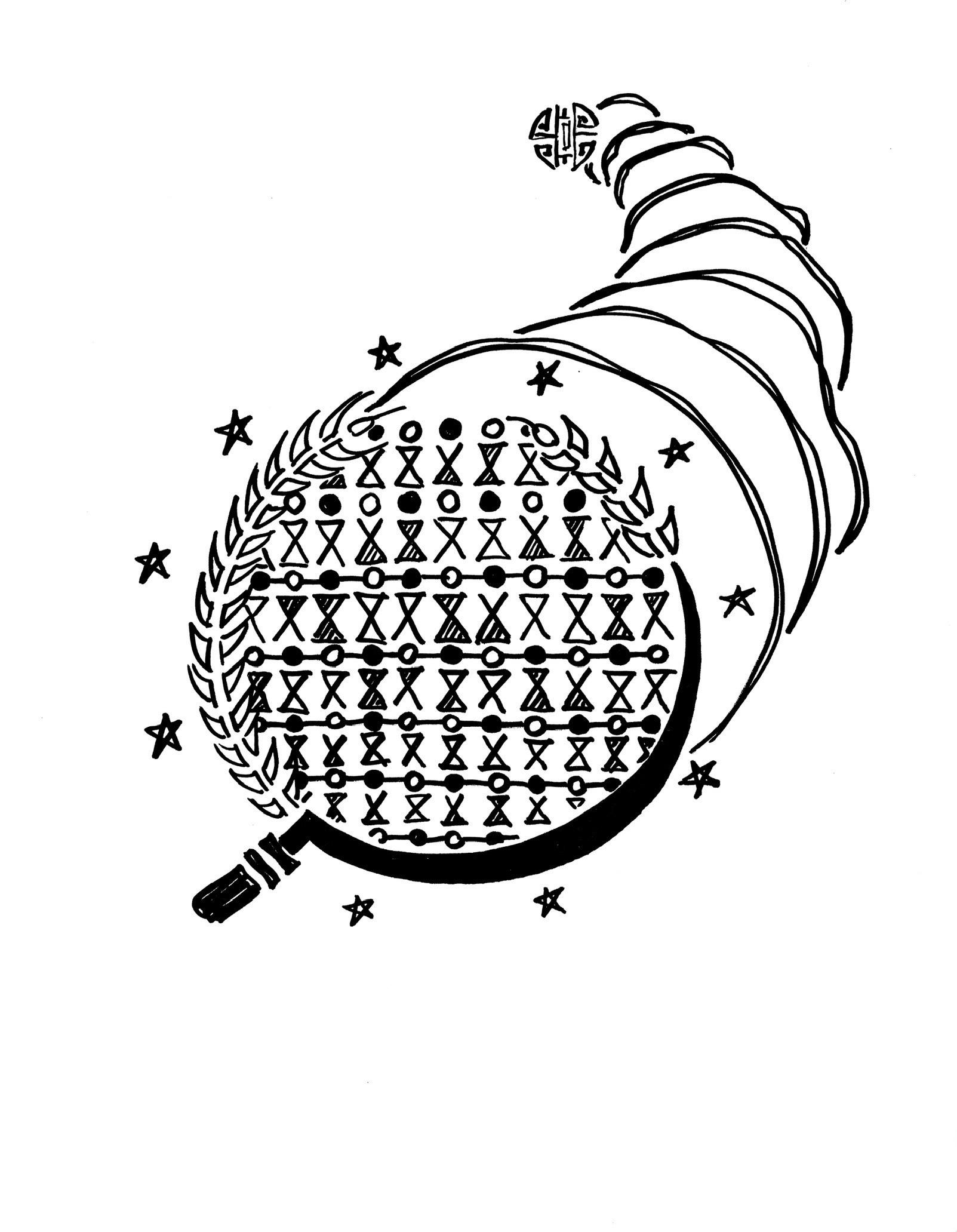
marilyn grell-brisk, Total Immersion 1
“Eghnoyotea
in Kanonage” (Existing in Autumn)
Brittany Kiertzner (Arisawe)
Etho ok wa’katerihwatkwé:ni (this is the best I can do) the wind sighs incarnated in the revolution. Turning its focus, Kanonage (autumn) colors within the withdrawing— To the long retreat and the hush that follows— when names no longer hold the same shapes in the mind.
Oh nahò:ten yontátya’ts? (what is her name?), I ask with my eyes. I have watched this season like Karonghyage (heaven). And there in the captivity I saw there is a circle, old as breath, marked in lines to form the shape and crossing the reddening skies–bruised by the grasping of many hands. Hands still holding up the skies that remember what the mind tries to explain.
Teiotiokwaonhaston— the wampum circle—a map of presence of many breaths.
I enter it with my gaze and with trembling—not as a guest, but as one of many who forgot they belonged. Kanonage reminds harshly and lays the bare arithmetic of what remains. Nothing left now—no metaphors of gold in my eyes–only the raw structure of time. Still—Eghnoyotea begins anew–a held breath in a lovers grip between erosion and emergence. I think often (Eayonontonyeawe)— as if thought might save me. Or even you. But thought is for a moment in the ancestral Kanonage. Kneeling once, outside the circle. Believing myself unworthy–
As many hands reach down stirring the skies to say—not in words— you were already inside.
Etho ok wa’katerihwatkwé:ni (this is the best I can do) repeated.
And the circle holds.
mend by, Yessenia Barron Reyes
in a tuft of grass in a serene pond in loose gravel my heart mends
I tear apart at the perfection.
in the still, small voice in a lovable landscape in a delicate river my heart mends
I cut away the shame.
in a tender moment in soft surrender in gentle soil my heart mends
I surrender every wound.
in a pile of woven leaves in the cradle of your arms in the hiding place
I continue to mend.
Yessenia Barron Reyes, mend
by, Alexis Jaimes
your eyes on what you have done choke on the consequences of your inactions does it taste salty or metallic as your response? devour while the children pang while they dream of crumbs with mouths wide open and eyes clamped shut
Alejandra J. Lopez, Colores de la Tierra
Feast
the civilized people aren’t concerned with the hunger of others as long as their plate is full
famine is no accident: a crisis built on intentions
the result of eager incisors selfish claws fangs in froth following the rules of capitalism the same ones they put in place
hate the player AND the game this shit is rigged from the Go to the Jail the winner isn’t us the loser is you knock the gameboard dare to be called childish by the hoarders of wealth
the only rodents that require an extermination are the ones calling for the lives of starving babies
Remember by, Jesenia Chavez
if you have a piece of dirt plant seeds grow food and flowers
nothing is wasted everything is shared
fresh fruit en el rancho luego en el barrio
see the abundance of fruit the branches hanging heavy
oranges, greens, yellows, reds in the garden of my mami’s childhood home in Dolores
seeds and fruits that made it across manmade borders naranja limas, chiles, maíz, orégano
that were planted in back yards in Huntington Park and Maywood
donde las manos suaves de mi mami de mis tías, de mi abuelita, tended to them
donde mi abuelita cortaba chiles para la salsa del molcajete
grounding the ingredients, smashing them together tomates, limones, y chiles
con un poquito de sal
feeding me reminding me
you will never go hungry
You will always have food.
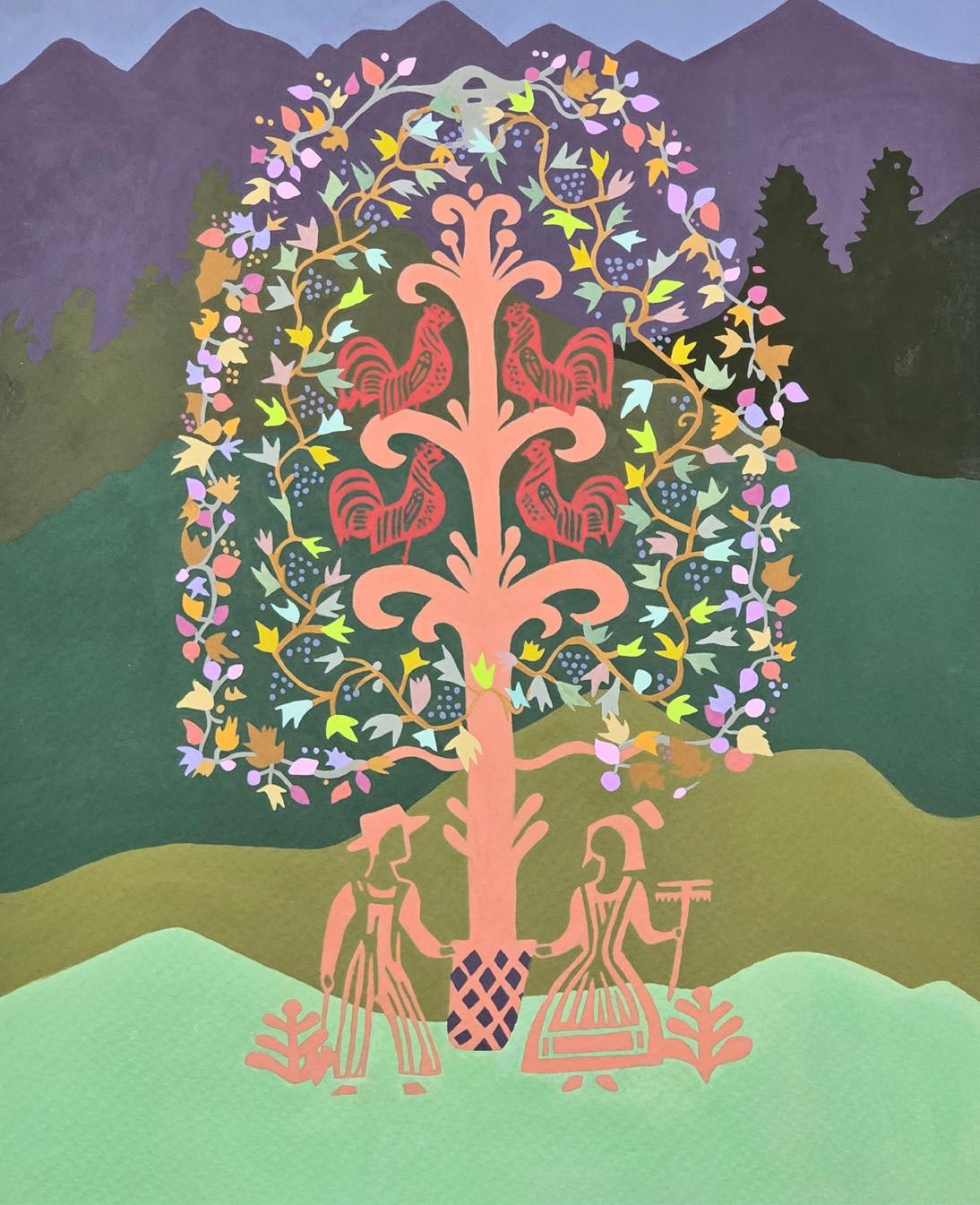
Mindy Kober, And the Trees Told the Farmer, Take Action, and the Farmer Listened
Una Letra a Las Mariaposas
In honor of Alma Rosa Azul’s book, “Mariaposa” by, Erick R. Aguinaldo
Este es una letra de amor para todas las Mariaposas que decidieron extender sus Alas aquí en Los Estados Unidos.
Las mariaposas que regresaron a la tierra de nuestros Antepasados
Para hacer sus vidas. Estos estados falsos, no te merecen.
No merecen tu trabajo, mucho menos Tu amor, tu cariño, tu compasión.
Los inmigrantes originales Los colonizadores, Dicen que no te quieren Aquí.
Pero a ustedes te valen Verga.
Ustedes siguen luchando, con brazos y corazones Abiertos, Creciendo nuestras Familias y continuando Nuestra cultura.
Lo que los colonizadores no entienden es que Aunque te mandan a México
No nos van a borrar.
En el mundo nuevo que viene
La siguiente generación de Mariaposas Van a crecer
Comiendo los huesos que quedan De todas las personas que nos trataron Eliminar.
Allyson Castro Libao
“Sino ka ba?”
(“Who are you?” in Tagalog) by,
Allyson Castro Libao
Ako ay the daughter of mango trees Juicy, sweet, bright
Ako ay the grand daughter of rice fields Cultivated, tender, patient
Ako ay the spawn of rose bushes, Protected, delicate, napintas
Ako ay the kin of fearless fishermen, Wanderers harvesting pearls of wisdom
Thru the treacherous rivers and deepest, darkest seas I remain open.
LATE NIGHT RENDEZVOUS WITH MY GIRL
By, Nakedpoet aka Mariana Franco
MOON CHASERS SHE CALLS US ME AT THE DRIVER SEAT YOUR HANDS ON THE CAMERA
FINGER ON SHUTTER SPEED CATCHING GLIMPSES OF OUR HEAVENLY GODDESS IN THE NIGHT SKY
SNEAKING PEEK A BOOS THROUGH THE TREETOPS
VANISHING THROUGH MYSTIC CLOUDS
SPARKLING WITH FIRE IN THE SKY SHE LIGHTS OUR WAY INTO THE VENTURES OF LOVE
LIGHT INTRUDING THROUGH MAKESHIFT CURTAINS
YOUR EYES DAZZLE AND I’M OPEN
EXPLODE IN MY MOUTH BEGINNING GALAXIES WITH THE CONCEIVEMENT OF OUR OWN CONSTELLATIONS
Yn Nextli; Xochitl
by, James Ojeda
Let us not forget the past! ‘Fore our wits begin to dance. Through the grit of petals & ash. Bringing together, its sacred clash, Hands and flesh in sacral class. Slashing pyric angelic mass: Unleash your fury upon the crass. Show no mercy! Where your name is passed.
Bring us back from our denigration. It is our time to rebuild our nations to the tune of cinders and growth. And we start, with a resolve, in oath. Our deepest respects:
To all of the things having taught us our wisdom, in gross. Handing the knowledge to our prospering way. Give all of your praise to the products of creation. All of our wildest relations. With teeth and fangs, different wing and life spans. All of the creatures giving us sustenances and life plans. Deep sacred structures that give us reason to puncture through the mysterious ways
that life takes us under. So, muster, your courage through the blistering grit. There is no safe voyage through any of It. Just keep up your paces and worry less. Shit. Just don’t let the worst take your mind off of what your trying to pit. A union of opposites through seeing what fits. Sometimes, it glows and others it splits. Just. Keep. on.
And remember the phoenix must burn before it can begin the next cycle. And that, If it did not shed tears then we wouldn’t be able to practice. Our sacred tradition of understanding great misery through our revival.
Word Reaper
by, Carlos Ornelas
In order for things to grow they need sun, rain, and time. I plant ideas like seeds in the soil of my mind. and water them with caffeine and late nights. every blank page is cracked earth, you don’t bulldoze or tractor it, you walk barefoot upon it. I compose like compost, Shovel-in the depths of my soil, I dig deep. I sow from the soul, scattered thoughts that I throw. planted seeds are suppressed, buried deep in my chest. Chisel-plow down to earth, never digging for dirt,
Germinate words that break through the surface, sprout into sentences, paragraphs, verses. plants begin to start rising, they bud into pages. I graft two ideas, spliced from a transplant. and thrive, with organic self-pesticide, the poison that makes words grow stronger and keep the worms away. from a flourishing poetry. to bloom in the moon. no focus on locust, just hope for the hopeless.
No mold on my gold, I have sewn, fire flowers in the cold.
irrigation of ink floods rows, and grow a blood rose. like compost, I compose compositions that decompose, compensation to keep ‘em close, every word has roots to bare ripen fruits. Now, I tend to my garden of poetry published,
I separate high-grade strain from the rubbish. harvest of chapters, chapbooks, anthologies. branches of knowledge, wisdom, agrology. I pick from the brain like stocks from the grain, the most mature produce in all the terrain. I pull and I gather, I cut and I mow, my hands on the sickle, I reap what I sow. preserve and I share the fruits of my labor, a tangy and sweet, tart, sulfurous flavor. it’s the arrow, not the Indian, es El Indio, no la Flecha. to each its own harvest, Cada quien con su cosecha.
marilyn grell-brisk, Ancestral Sensemaking 4
Chosen Family by,
Lara Foy
I call to ask what she’s doing for Chistmas and she speaks an earthquake straight into my tectonic plates, “I’m going to Hawaii. Ryan’s coming.”
It has been 18 years now of family Christmas without me. A year ago she apologized for not wanting to know anything about what happened with my father. “And I think about all the holidays.” I thought this meant the exclusion was over.
Merry fucking Christmas. I am getting older and the snow fall has turned my hair to strands of winter and I cannot care. I cannot continue. And I cannot care.
The week turns to hell. I tell my sister I’m hurt and she berates me for hours on Monday. I hit a car on Tuesday. My car breaks down on Wednesday. I am clearly in a tailspin. There is nothing to do but let go. Everyone shows up. Chelsea talks me down for hours. Mariana picks me up on the highway. An insurance adjuster gives me a ride to check out a car in Costa Mesa. “Yes, life is fucking you right now, but your karma is good and you are loved and held.” Toni reaches out and invites me over. Andrew says he’ll pick me up at the airport. Azura and Sierra show up. Somehow I am the baby that the village is raising.
My sister apologizes.
Anthony and I hug, say I love you. Shawn brings me zuchinni. New patients with bomb insurance show up. The dishes remain undone and as I feel unloved a chorus of angels surround me to say, “Not true! We love you! We love you!”
Ani Yemenidjian, Chaos
Melineh
Zinnias and their Stories
by, Christiane Williams-Vigil
The last thing my grandma put into my hands as a gift was a packet of Zinnia seeds. From her side of the family, comes a love of planting, arranging flowers, and eating everything fresh off the vines. On the outside of the packet was a picture of a Zinnia bloom, and a prayer, “the kingdom of heaven is like a grain of mustard seed which a man took and sowed in his field.” Around the time that I was given these seeds, my grandma got very sick. I stowed the packet away with my other collections of seeds and dedicated my time to try and help heal her. Her seasons on Earth ended in 2023 and with it went my will to garden. My pots dried up and endured unfertilized weeks. During my mourning, the rain refused to fall, and the sun’s rays burned everything into dried up twigs. A visual manifestation of the hurt inside of me was in my front yard for all to witness.
My grief took on a metamorphosis. I longed to feel damp earth between my fingers, but more than that, I wanted to feel my grandma’s presence close again. I rummaged through my seed collections to find that packet of Zinnias. The physical that had the pieces of her fingerprints attached. Something tangible of her. Quickly, with my heart racing, I threw the seeds into a pot, covered them with healthy soil, and generously watered. I turned the packet over to see if I did right by the sowing directions. At the bottom was an emblem made of blue and yellow cross with feathers. “St. Jospeh’s Indian School: We serve and teach, we receive and learn.”
I crinkled my nose. The Catholic Church has a running track record of horrors against Indigenous bodies. Residential schools in particular have been revealing their mass graves. Too many babies were uprooted from their homes and forced into cold dark places of assimilation. Prayers beat into them, but mercy withheld at an arm’s length. The hurt continues as communities battle for the right to be heard and to lay their ancestors to rest. So, how did my grandma, a woman from a small pueblo in Chihuahua, get in touch with a residential school in South Dakota?
Apparently, she had regularly donated a portion of her retirement
check to St. Joseph’s along with many other elderly persons throughout the years. I checked out their campus’ website to get a better understanding of who they are and why did they require frequent donations. The school earned “$51 million dollars in donations in the past year.” I don’t know exactly how much my grandma gave in total, but I know it must have been due to their earlier campaigns. The school circulated literature that showed cute Indigenous children giving testimonials on how the school saved them from cruel reservation conditions and the wrath of raging alcoholics. My grandma was a champion for children in need and sadly a victim herself of the perils of addiction. She would’ve seen it as a chance to give back in a meaningful way. However, I know had she been informed of all the horrific things residential schools had done against children, she wouldn’t have given them one cent.
St. Joseph’s mission statement on their website says they are invested in “[servicing] the educational, cultural, and spiritual needs” of their students. Their site explains that there is no requirement for children attending their campus to practice Catholicism. They post about how they have shifted focus to become more culturally driven. Some classes even offer opportunities to study the Lakota language. Also noted by them is that many of their alumni return to become teachers at the campus.
Same time that I was running my research, the Zinnas had sprouted, shooting out triangle shaped leaves and the beginnings of sweet, scented buds. I sprinkled crushed eggshells around the stems to protect them from aphids, all the while thinking over what I had learned. Maybe I was misjudging the situation. Funding a school is no easy task, of course they have to ask for funds, and isn’t it wonderful to embrace people as they are? How could a place celebrating their student’s culture be bad?
Then at the end of spring, right when the Zinna’s had bloomed to show their soft pink petals, I learned just how sinister the school’s past had been. In 2010, victims stepped forward to say several priests had sexually abused them on campus when they were students. In an article for Argus Leader by Patrick Anderson, he writes that nearly a dozen victims had stepped forward to name Father Williams Pitcavage, Brother Thomas Lind, Brother Matthew Miles, and counselor John Donadio as the predators. Research on Anderson’s part found that Brother Miles admitted to being convicted of abusing boys in Washington D.C. after moving from St. Joseph’s Indian School. “A man [takes]” should be
written on their seeds.
The school’s stance on those abuses was given to the media by their spokeswoman Mary Groski. She wrote “the religious order takes all allegations of abuse very seriously and fully cooperates with authorities in regard to such allegations. We support the efforts of St. Joseph’s Indian School to ensure a safe environment.”
Conflicted, I still kept to my watering schedule, but each time I came to my Zinnias, my eyes filled with tears. I wanted to destroy them. How could I keep tending to them when they came from an institution that affected so many people? But on the other hand, these were from my grandma. The last present. How could I throw her away? How could I let every penny she gave be fruitless? And if I uproot the Zinnias, would it put me in the same category as the people who long to hide evil under the rug and pretend it didn’t happen?
My blood struggles with imposed Catholicism and Indigenous heritage. There on my tongue is the inability to name the people I come from, but it knows to quickly mutter “si dios quiere,” when I make plans. These same dualities followed my grandma her whole life too, and maybe, this is also what prompted her to give her money without a second thought.
South Dakota’s legislation is causing struggle for the victims. There are currently no adequate protections in place for adults who report past abuse. The law is clear that “adults age 40 or older cannot recover damages for their abuse except from ‘the person who perpetrated the actual act of sexual abuse.’” Father Pitcavage is dead. I’m sure a comfort for his victims but where is their justice? After going down this knowledge journey, I made the difficult decision to keep the flowers growing. I let them spread into other pots and flow into random spots in the yard. I want them to be seen. I want attention on my flowers like I want attention on victim’s stories. That every syllable of their pain be heard and preserved in the soil. I don’t want to forget that before the seeds landed in my hand that they came ready with lessons and warnings. I leave the Zinnias growing as an offering to remember and honor the people who were wilted by residential schools. Let every petal hold a story, and let every bloom come with justice served.
On Ramiro’s 95th Birthday
by, Maia Vik Villa
Ramiro, un vecino y un león, de East Los: even though he lives on the bottom floor alone, he has his best friend Mario & his family who visit his home ...and me. i stroll downstairs, from my bachelorette pad, to say Hello. Ramiro knows from my knock, “Oooh! Maia!” & he opens his 1940’s dark wooden door with a joke, “i’m glad you didn’t catch me while i was on the throne!” Ramiro laughs & invites me to sit, so he can rest his arthritis bones.
“the doctors say my back is getting worse, but still, Life is Good. nothing wrong with 11am wine in a safe neighborhood. ooOoh, i’d still walk to the Superior Grocery if i could!” but he can’t, because of the steel mill days his body withstood.
“i love your music upstairs,” he compliments, “the guitar has good rhythm — & your big smile. i can tell you’re a good person.” i open up to him about my family, my losses, my worries & life indecision, y Ramiro, que ha vivido nueve décadas, bestows upon me his wisdom... “even when you’re sad, the good memories will help you live longer. even with my back pain, i keep moving to feel stronger — i saw my reflection & i says, ‘who’s that viejo?!’ & i stretched my shoulders & i stood taller. my sister died doing her favorite hobby — eating chocolate! i miss her every day at 5pm, when i would call her. but that’s okay, i smile knowing i’ll see her in Heaven, along with my little dog Lady & all my life’s chickens, ooOoh, they loved eating all the goodies i prepared in my kitchen, & the birds too, all the feeders i hung up on the porch for them. always remember: Life is Good!”
Ramiro brightens como un león...& i brighten with him. i regain Hope. i regain Faith. even when Ramiro is gone,
his unshakeable shuffle & his lighthearted laugh will always live through the wind en la Avenida de Rowán.
Erica Castro, Untitled
His Garden by,
Peter Lechuga
My dad is the rain his garden thirsts for nodding their leaves beneath his shadow never parched drinking sunlight from embers of newports inebriated in deep, pale puddles of bud light and oldies he can’t carry a tune but his song sprouts life resurrects what was once dead rattles the bones of our family dogs percussing to his voice shovel handles deep beneath palmfuls of tear-drenched dirt every digit of his hardened hands are careful emeralds treasures to anything green and growing he nurtures crops from mud blankets watches them sleep in baskets feeds spirits whole on wanting tongues shares them with me when I visit which isn’t often enough
My dad is the rain that feeds our concerns shaking our heads when doesn’t listen to doctors defiance in his dialogue thanks them for their time weighted while waited in waiting rooms
he knows his body best has been living this way for over sixty years denies the severity of his condition hides husks of tall cans and cigarette butts like a teenager afraid of mom’s anger the water keeps his lies growing under drunken soil until the aluminum and ash blossom from chipped concrete regret plucked by sunlight squeezing the salt from his skin his body is dry and broken sleeping in hospital bed baskets transferring place to place losing a piece of his spirit each time until he can be planted somewhere to resurrect himself with oldies and off-key choruses he can’t move his mouth the same a tongue that won’t cooperate his voice isn’t his I struggle to hear his syllables when I visit which isn’t often enough
My dad is the rain his garden misses dry dirt plot under yellow blades of grass empty of his footprints blackened rotting crops buzzing with hungry winged tongues brown leaves begging for someone to bless them with song sweet sprouts dying young before they’ve had a chance to live
to be picked by gentle hands transferred from bed to basket before they’ve had a chance to hear oldies I sing to them when I visit their spirits die under black thumbs when I visit can’t be resurrected when I visit I swear I see him in his garden when I visit which isn’t often enough
West Anaheim Will Protect Me by,
Jesus Cortez Leal
I always thought the city would deliver me from evil, I have not been one to pray to a god in the sky for years— now that my mama is gone, I pray to her and the ancients and ancestors
I have seen more guns from police pointed at me than those of enemies— the streets were/are unforgiving, they take and take, and rarely give— I am old now, and the streets feel dead, a sense of danger that is new, and more evil, dressed in a different uniform
At fourteen, on Ball Road, someone attempted to run me over with a pick-up truck— the city spared me, not a scratch, just pain
When the handcuffs cut through my wrists on Magnolia Ave, I was eventually let go, despite my big mouth— the city protected me, only the ptsd remains
I was always too late or too early to die or face arrest or see a body—
who knows how long the city will protect me.
Bonfire
by,
James Hull
Mostly cracks and cracked jokes and wax figurines sold in Anarene to the town sprouts. They could show them to cops to get off once or twice a season, convincing them of voodoo burning wicks would melt tallow inside and out.
It only works on rookies but the Ferris wheel hasn’t stopped since the sixties.
Spring stung a lot more, the frost melted faster and Sol’s light cast was sharper than last March. Requesting a trip up to the old pine that one trucker struck a year or so back gets an eyebrow raised but now everyone knows not to question it.
Before the bend, you can catch some smoke on the horizon. Stop at the tree and you’ll feel the glow.
The ripe burn of whisky still creaks from the tree as they roll down the hill, facing a clear coast ride. Bumps and bruises all around welcome the witches who stole back their pot and would be doc’s light locks of hair angrily excised took keep rockin on.
Animals, they were called before they started calling it themselves…
Everyone knows where to find them, not everyone wants to look. No smoke signals needed.
Mindy Kober, Harvest
Gratitude
by, Michelle Gonzalez
The students say thank you with bowls of pozole, hot menudo place before the teacher like gifts of warmth.
They sit at the benches outside the classroom, talking about things they don’t talk about in the class, as the don’t feel confident speaking another language.
They share food, and with it, respectrecipes traded like memories. One passes out business cards, her cupcake dreams rising fresh from the oven. Another tells of her church, where four hundred tamales were made for families, for kindness, for home.
I bring enchiladas.
They smile when I admit the red sauce came from a can.
We laugh, eat, and then depart for homeuntil the holidays pass, when they return to learn.
Orange in Green
by, Julián Angel Ibañez Mandujano
Orange is green in the eyes of a sheep, Dichromatic vision, influences what is perceived, Experience is an ocean, consciousness is a stream, Woven into the woolen fibers of each being.
Robust like a tree, phototropic tendencies, Xylems to veins, phloems to arteries, With each sapling, representing, another legacy, Thousands of critters these relatives feed.
Adventitious roots, tying thoughts to, Soiled interpretations of what is the truthSprouting ideas from heirloom dreams, How many intentions will remain seeds?
When your amendment is love, indifference is uprooted, Hatred calcifies, becoming insoluble, Emotions are the flood, a monsoon on the to-do list, Aeration of the mind, makes for better harvests.
The heart, a meristem, Grafted to a community, Nurtured by labor, In the name of justicia.
In this plain of existence, spodosol to canopy, Riding on a mycorrhizal subway train, Lies life and death in perfect harmony, An ecosystem that will, one day, fade away.
Only to be born anewThe agricultural accomplishment of the big bang, Simultaneous amalgamations of everything and nothing, Existence is only a blip, captured by the brain.
Naming an Ordinary Afternoon
by, Hope Cerna
The afternoon light streams in beautifully through my kitchen door
I remembered to sharpen this knife before slicing through the carrots, onions, and peppers. It works better than before, everything works better now.
The burble of my soup and the hiss of my roasting ham is a music sweeter than the kind that falls on ears this is music that falls on the heart
No loud rock, no obnoxious pop, no wailing heartbroken diva to assault my ears and flow into a tired brain–numbing it. A flood to drown out everything.
But today with the all the doors wide open, I can hear the clucking of my roosters. That, too, is music.
I polish off this day with rosemary and thyme. This time the herbs won’t be forgotten and left to wilt.
No, I remember now how to cook and clean
I finally figured out how to dice an onion finally figuring out that cleaning is not for anyone’s benefit but my own.
I remember that I, myself, am not a chore put on the bottom of the cleaning list kittens and chickens crowd my kitchen door curious of me, now that this house is open and awake again as I feed them and myself
I realize that this simple act of living is also music
I am music, finally tuned right.
loverboy by, Sofia Aguilar
You cut your hair once every year on my birthday. It’s tradition now, ever since I turned twenty three and you showed up an hour before the party with your soft, curly hair shorn down like a lamb’s to your neck. A surprise. A gift. I stopped short, unbelieving. It almost felt like recompense for being born too early in summer, never getting to celebrate during the school year. I could see your ears again, one slightly bigger than the other. You looked like the first time I saw you. Tender, vulnerable. When we were sixteen and looked as naive as we refused ourselves to be. I reached out a hand and gasped at the clipped fuzz against my fingers. I never once complained about its length and already missed the long locks against my palms, how it felt on the days you didn’t wash it. Suddenly, there was absence and talking about it felt like telling a ghost story. You did this for me, like everything you’ve ever done, and I still felt undeserving. * I’m almost twenty-six now and we’re a few days from August and your hair is once again wind spun into heavy black ringlets, long enough to brush your shoulders with a kiss. I could lose my hands in it. Fingers tangling themselves in the thickness. Let me make a nest there with feathers, twigs, leaves, mud, spiderwebs, cottonwood down. Let me sleep there. You toy with the idea of getting it cut next weekend to save yourself from the heat. Five days a week, you work the land and though I’ve never seen it, I picture sweat dripping down your back. But I have a better idea —turning my bathroom into a barbershop instead. I want to give you something in return. I’ve only ever taken scissors to myself, first twisting my hair into braids and securing with tiny rubber bands I can barely open up, but I imagine we could do this every year. Cutting less and less, seeing the darkness fade to grey, changing shape and texture. It is a privilege to age. I want to grow old with you and create something beautiful and be intimate, even beyond our bodies’ rise and fall and shared, quiet breath in the dark.
Cape. Comb. Spray bottle. Hair cutting scissors. My swivel chair. The cool blades close and snap like a mouth, creating a pile of clippings on the floor. Our son, ever curious, assumes the hair is wet grass, though it takes him several tries to convince himself it’s not worth trying to choke down. I’ve never touched you, your neck like this. My hands aren’t accustomed to shaking so much. Feeling strange, unsure, disconnected from the rest of my body. I want to do this right. I want to build perfection on the first try. I say sorry for everything: snagging the comb tooth on a tangle. Spraying the side of your face. Cutting one side shorter than the other. I panic, cursing, until Tía comes home and fixes the mistakes. Cut at an angle. Cut up. Compare the lengths to check for evenness. She’s raised four children from scratch and knows something about survival, loss, taking on a task without asking for help. Even now, she quells disaster. I watch her, entranced at the firm grip with which she holds your hair and envy her certainty for myself.
While she snips, I sweep up everything we’ve trimmed, like a hairdresser’s assistant. Some pieces are so small they don’t budge when I try to brush them into the dustpan, or away from your neck, your shirt, my hands. When we’re alone again, I adjust the way your hair falls in the middle now. Unpin the cape from your neck. Watch you marvel at yourself in the mirror. I kiss you on the cheek. This is the person I’m in love with. This is exactly the way it’s supposed to be. Later, we giggle at ourselves, our playing house, marriage, husband, wife. Soon, we will both turn another year older but still have so much to learn. I think I’m only just beginning to know myself. But the love, oh this love has always been something we could teach, have mastered on our own.
C Francisco Martinez, Cosecha
Desgranando Maiz
by, Donato Martinez
I watch my Mama Lupe grain corn
Her hands are wrinkled, old, and frail
But the mazorca is no match
For the secret strength in her delicate skeletal fingers
she collects the kernels as they fall gently onto the lap of her long dress in a large boiling pot, the maiz will expand and bubble up She will grind the softened kernels on her metate
She will plunge her hands into the tender dough then knead, rub, and form small balls of masa she presses this perfect roundness onto her wooden tortillera
Who will pass on this beautiful legacy?
This cosecha of love this harvest of tenderness because there is nothing more magical than a delicious, warm, corn tortilla fresh off the hot comal
This ritual this wisdom this offering this beautiful gift from our sacred spirits to our ancestors that gave birth to children that learn about curanderas and healers about the thunderous and powerful women
That rose from the ashes from the desserts of vast eternity from the large, blue mountain ranges from furious volcanoes from ravenous waters and hungry rivers
from the red, clay earth
a long line of indigenous women the marks and scars on their naked backs reveal the years of pain and hurt and abuse
this same blood, breath, and bone that runs through my mother with her healthy hands and warm Asiatic eyes she gave breath to children
Did beauty rise from what she sowed and harvested? Were her children worth the pain?
She too turned dry barren soil into healthy beautiful fields of milpa of yellow corn white corn blue corn
in the hands of children, a tortilla magically appears that reveal stories of warrior women that toiled and harvested stories of suffering and survival and resistance and great stories of love, sacrifice, and joy.
Rhizome Two Spirit
by, J. Saravia
My community is a rhizome
We shift and we grow
Reaching across and underground
Intertwining deep together
You may not always think
That you see us
But we are beautiful
We have always been here
And our children will keep being here
Holding Two Spirits
In their hearts and in their hands
The plants tell us how we must grow: Strong, tall, with the wind and with each other Water absorbs in body and skin
We sync into one
Two in one, one in many
Rhizomes, bulbs, tubes and corms
Call ourselves by different names
But still many two people
And I am in love with each one of us
For I am not one, but I am you
So we will blossom and dance and rumble
In the ground, in conjunction
The sun shines on our face
And we are ready to face
A world that was always meant For
us
Consubstantiation by, tim lewis
My final moment will involve swallowing an entire forest, a rare vegetable garden, the many healing plants of the world, and all of the most toxic flora that can be grown or seed to be found.
*
I’ll be dressed in planting cloth and loaded into the back of a pick-up truck.
I’m putting it in my Will.
*
There is a coordinate that I know of where all things grow: The driver transports me there and in exchange for digging the plot, discretion, and moving-out my refuse form, they get all else I had remaining. Nothing wasted.
*
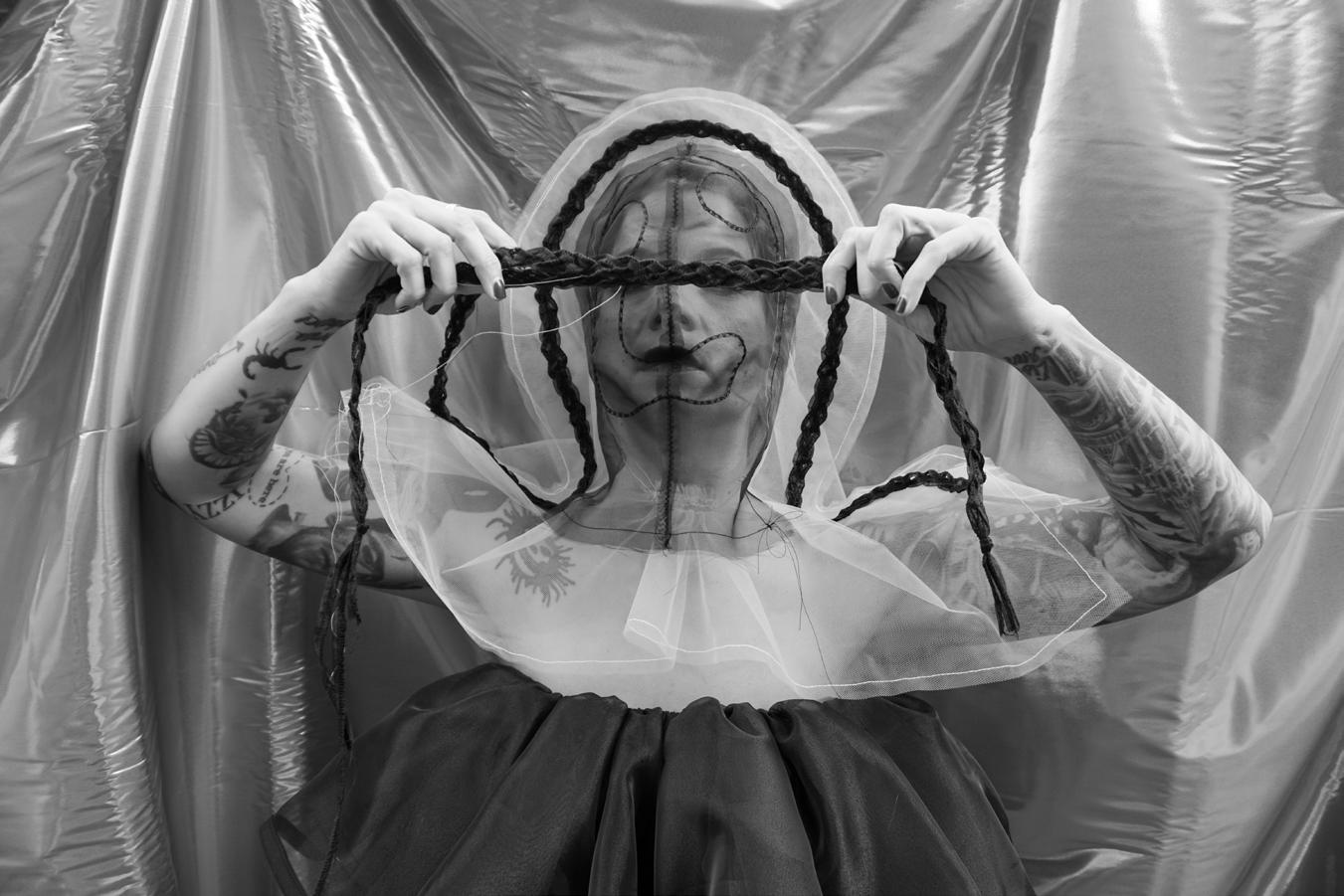
Melanie Walden, Frame by Frame
My blood will be the first water this place drinks. My bones will be the last meal this place eats.
*
In short time, white strawberries will sprout below the emerging saplings of redwood and mahogany that stand taller and taller and taller and taller each day and moon over a floor made of nettle and mushroom and hemlock and foxglove and sweetgrass and leaf litter and fruit rind and thistle and more and more seed and conifers than one could ever imagine accumulating in a single place—all together as moss and lichen cover this exhilaraingly bountiful place.
*
Eventually, the creatures will return—bees, crickets and flies first; but, soon, small birds, centipedes and even rats to chew upon vine and sample flower petals.
*
Relentless bamboo will shroud-off this place from the rest of the world until a time of absolute need arrives or the sun bursts (whichever happens first).
*
This is the harvest my love breeds both in life and death.
My Teacher Is a Farm: Finding Community at Lopez Urban Farm
by, Tye Iverson with Photography by August Koskoff
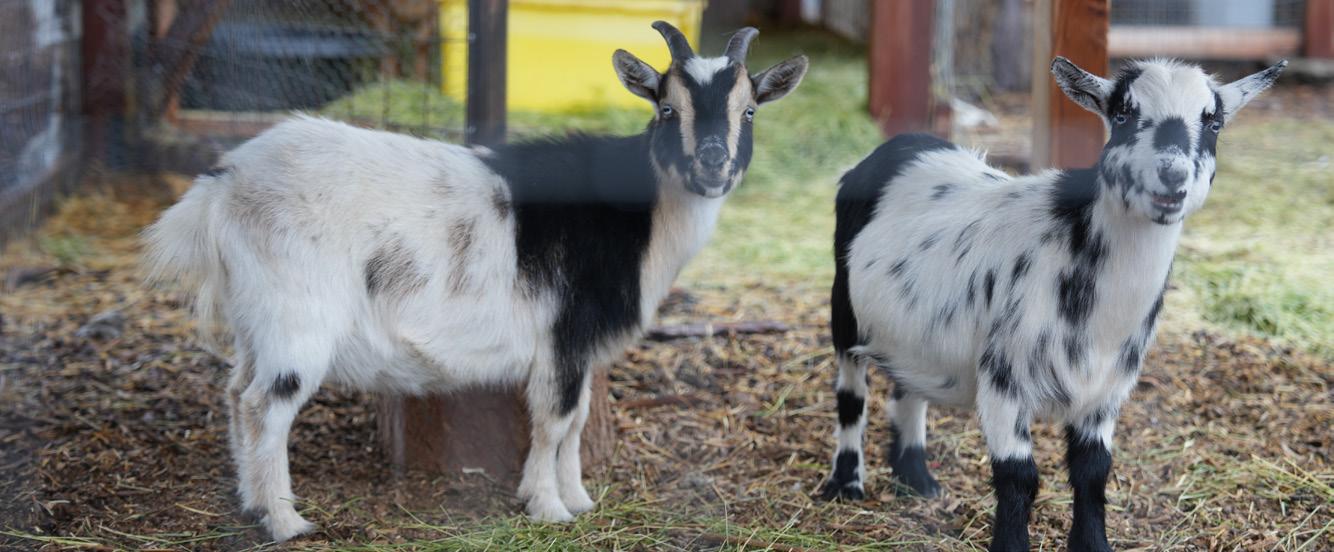
When I first stepped out of the car, began strolling along the mulch path and introduced myself to Lopez Urban Farm, there was a lingering sense of comfort. It felt as though the air itself grounded me in a community of collaboration, learning and safety. The mulch path led me to a pen of goats, where, to my surprise, there were a couple children, petting the furry animals, their giggles filling any empty spaces one could find.
I had been to plenty of farms and social spaces, yet something about Lopez Urban Farm felt different. It showed me that education works best as a lived experience, something braced by collaboration and community.
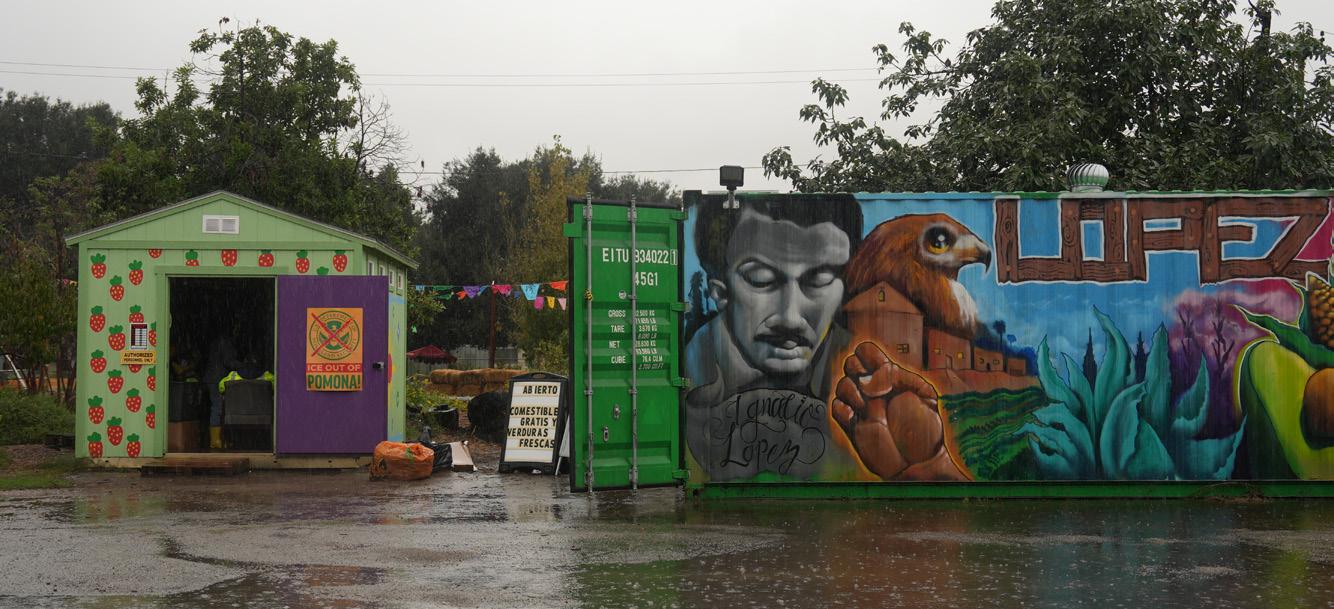
Lopez Urban Farm, established in 2020, is named after the civil rights leader Ignacio Lopez. It sits behind Lopez Elementary –– close enough that you
can hear the school bells ring. Those who run the space strive to embrace the proximity, and reflect the presence of education:
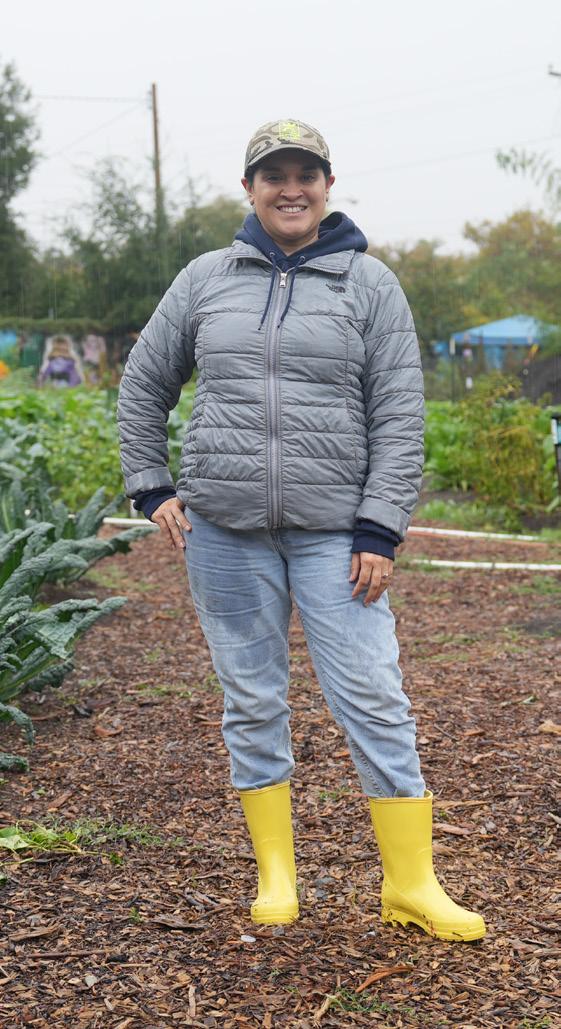
“This area belongs to the school, we belong to Lopez elementary,” Bianca Ustrell-Friend, Director of Operations at Lopez Urban Farm, said. She, along with only two other formal employees, maintain the grounds with the help of the community.
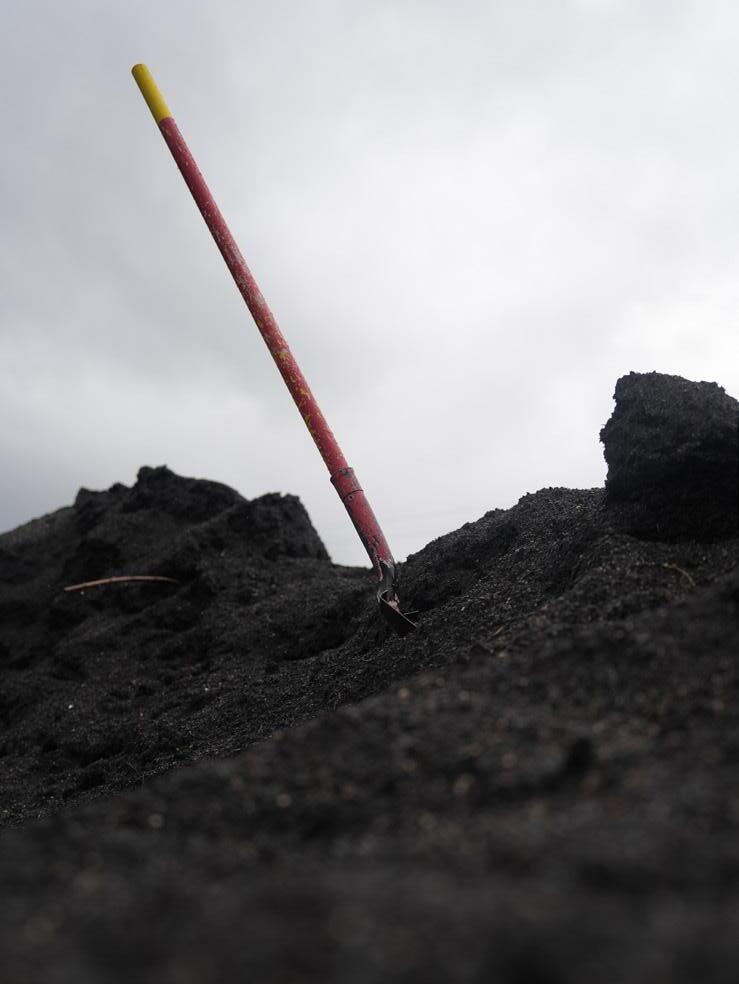
While learning about the ins and outs of Lopez Urban Farm, it became clear just how much education and learning was rooted in the soil. Lopez Urban Farm bridges a gap between academic education and lived experience. During my visit, I could see the elementary school black top across the fence, complete with playgrounds and basketball hoops. The farm and school felt as though they were merging together, developing a singular community classroom: a space to learn about environmental and food justice, not through textbooks, but through gardens, veggies and volunteers that maintain the space.
While talking with Bianca, I was able to learn about some of the programs Lopez Urban Farm holds, specifically those tailored to the youth and designed through hands-on practice. Every Thursday, close to a hundred students come to the farm and learn with the Western University Nursing School, getting insight into a wide range of topics: nature, wellness and health. Other programs, like Junior Farmers, let children try the trade themselves, going to the garden and planting, weeding and picking veggies.
“Some of them are really fixated on picking the vegetables, which is really cute,” Ustrell-Friend said. “There’s some kids who, you show them picking a carrot once, and they’re gonna be obsessed. Every time they come they’re looking for carrots –– [they’re like] how can I pick a carrot?”
These programs have sparked passion in those who pass through the gates
of Lopez Urban Farm, creating an energy that is visible through laughter, community and shared work.
As I walked around, the role of collaboration at the farm became increasingly evident to me. Nestled in between the garden, chicken coop, and goat pen lies one of the farm’s most notable features: a skate ramp. I had the opportunity of watching multiple skaters come together, teaching and cheering on one another as they practiced new tricks.
Instances like these show what Lopez Urban Farm truly has to offer. The backbone to the space, and education it offers, renders the farm as far more than just a space to learn about interesting topics. It’s a hands-on encounter, a lived experience to check-off, one where support and collaboration propel education. In a world that has become so divided, it is not simply the lessons learned, but the ways in which they are delivered and received, that counts the most.
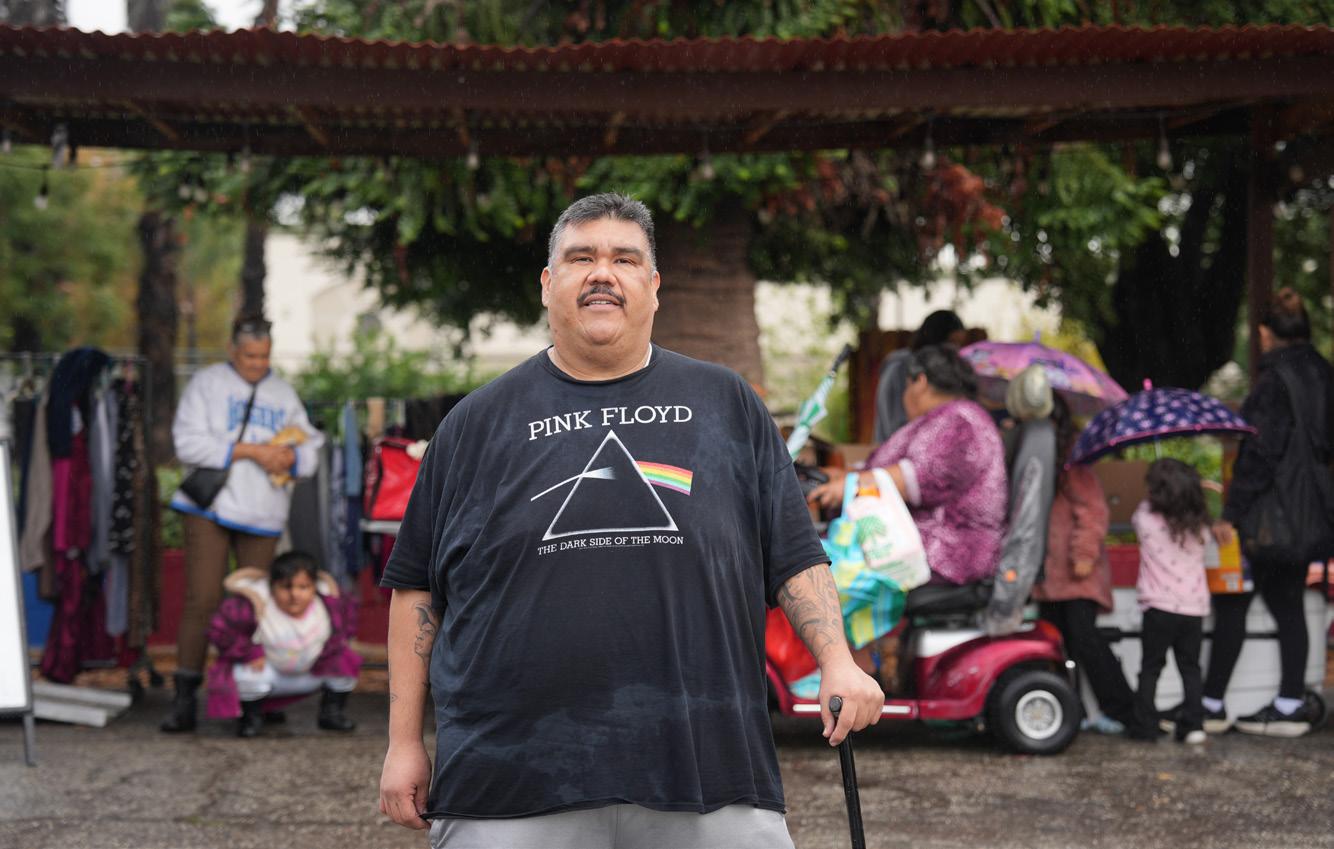
The following weekend, I came back in hopes of seeing some of the other activities and programs in action. My attention fixated on the volunteers from the Pomona Fridge who were packaging donated food to be handed in boxes to families. I had the privilege of talking to one of the volunteers, Manny, who told me how the farm not only offered itself to those in need, but also served as a space for unity:
“The farm encourages diversity; people coming together and uniting, for a good cause,” Manny said. “It’s really great, it’s amazing to see that families from different ethnicities come in here and talk to families from other ethnicities and get together.”
As Manny spoke, the thread of education and collaboration remained constant. It was clear that the farm not only brought together those local to it, but also those from other volunteering programs and spaces. By attracting individuals from a wide range of ethnic backgrounds, Lopez Urban Farm has created a space where varied perspectives and cultures can co-exist and are welcome.
Moving forward, Lopez Urban Farm hopes to inspire other communities and schools with their open and unused landscapes. Ustrell-Friend hopes to see other schools follow suit, using their spaces to promote community learning.
The enthusiasm and passion from community members such as UstrellFriend and Manny illustrates the importance of spaces like Lopez Urban Farm. Through these community outlets — places of collaboration and education –– we can not only teach others about the beauty of the natural world, but also the importance of caring for those we encounter in it.
Author Biographies
Alejandra J. Lopez
First Generation Latinx Mixed Medium Artist from Pomona, California.
Alexis Jaimes
Alexis Jaimes is a poet and educator from Santa Ana, California. The proud son of Mexican immigrants, his work explores the intersections of cultural memory, language, generational trauma, and healing. He is the author of the chapbook Corazón Coalesced published through Bottlecap Press. His work has appeared in Flowersong Press, Moon Tide Press, ILL Poetry Anthology, Black Fox Literary Magazine, Alegría Magazine, Pluto’s Zine, and San Diego Poetry Annual, as well as showcased at the Fullerton Museum Center. When he’s not writing, he teaches in a dual-language classroom, believing in the power of language in all its forms.
Allyson Castro Libao
Homegirl, Lover, Pinay.
Tender experimentalist whose creativity and existence will always be rooted in my Philippine ancestry. Yearning to find bridges that bring our diaspora and the motherland together again, using art as a tool of resistance. I’m inspired by all the different ways we can connect mind + body to help us feel and evolve. The freedom of sensuality brings me peace within myself.
Angélica
Dr. Angélica M. Yañez is an Indigenous Chicana poet, educator, and founder of The Ancestral Teachings Institute, a decolonial space for creative writing, cultural healing, and community ceremony. Her work celebrates ancestral memory, feminine power, and the everyday sacred, bridging the worlds of academia, art, and activism. Dr. Yañez’s poetry appears in Latinas: Race, Class, and Gender, Vol. 2, FlowerSong Press, The San Diego Poetry Annual, and has been featured by Planned Parenthood. Her forthcoming collection Where Women Conjure Flame will be published by Riot of Roses in 2026. To explore her upcoming workshops and writings, visit www.ancestralteach.com or follow on Instagram @ancestral_teachings_institute.
Anonymous1
Confessional/Guerilla Poet
Brittany Kiertzner (Arisawe)
Brittany Kiertzner (ARISAWE) is a multidisciplinary fine artist and an enrolled member of the St Regis Mohawk Tribe, Iroquois Nation. She holds a BFA from California State University, Fullerton. She has completed artist residencies at institutions such as Craft in America Center and Wonzimer WARP Los Angeles. Her work has been the subject of solo exhibitions and numerous group exhibitions nationally and internationally since 2007 at locations such as the Benton Museum of Art, CAMP gallery and Wonzimer Gallery. She has appeared in publications such as
Artillery Magazine, Young Space, and 13 Things by Shana Nys Dambrot. Her work is in the permanent collection of the Sasse Museum of Art and in private collections nationally. She manages her studio in Los Angeles, California at Wonzimer.
C Francisco Martinez
Francisco Martinez was born and raised in Lima, Peru. His early artistic training was with his father, who was an artist. Francisco began his formal education at Universidad San Martin de Porres in Lima Peru, where he studied Communications. He moved to the United States and was accepted to the Art Mentor Program in Santa Monica, CA. A few years later, Francisco continued his studies at CalArts, the California Institute of The Arts, where he graduated from the Art Program & Puppetry. His installations have been featured at the Pete and Susan Barrett Gallery in Los Angeles; Celebration of Fine Arts in Arizona; CalPoly Pomona, among others. He worked on the Independent Art Film “Dante’s Inferno”; and in many other collaborations such as “The Reptile under the Flower” by Automata, etc. Francisco is currently working at a nonprofit focusing on arts education at the PUSD.
Carlos Ornelas
Carlos Ornelas is a vato who believes in the necessary resurrection and resurgence of the “El Expectador”. Ornelas continues to gradually push this idea by means of submitting poetry, and manipulating bios, in order to persistently and lovingly maintain the obligation in the minds of those most closely associated with the legacy of Ignacio Lopez.
Christiane Williams-Vigil
Christiane Williams-Vigil is a Xicana writer from El Paso, Texas. Her work has been published in anthologies and various literary magazines such as Somos Xicanas Anthology, Fatal Flaw Literary Magazine, The Write Launch, La Raiz Magazine, and Latinx Literatures. Currently, she is an MFA student for the Creative Writing Program at the University of Texas at El Paso.
Consuelo
Consuelo is an IE artivist and college student. Her debut poetry book, Water Damage, is published with Riot of Roses Publishing House. You can find her at open mics across the IE and LA, experimental art shows, your local public library, or spiritual apparitions.
david moses diaz
david is a writer and educator from Los Angeles who holds an MFA from CSU Long Beach. His poetry has been published by Tia Chucha Press, San Pedro River Review, Querencia Press, and Tiny Splendor, and his freelance journalism can be found at L.A. Taco. and the Los Angeles Review of Books.
Donato Martinez
Donato Martinez was born in in small pueblo, Garcia de la Cadena, Zacatecas, Mexico and immigrated into USA at six years old. He teaches for the English Department at Santa Ana College. He has also taught classes in Chicano Studies. He has also been a
co-coordinator of the Puente Program for 24 years. He hosts and curates many artistic events that feature poetry and music at his campus or in the community. He writes about his experiences of growing up in the barrio and his Chicano identity. He is influenced by the sounds and pulse of the streets, people, music, and the magic of language. His fulllength collection of poetry, Touch the Sky, was published in 2023 by El Martillo Press. He was selected as the Distinguished Faculty of the Year in 2024-2025. He is nominated for the Orange Teacher of the Year in 2026.
Erica Castro
Erica Castro is a Xicana English high school teacher who has taught for twentyeight years. She has dedicated herself to publishing student work. She published the Oracle school anthology, and she has recently launched Daxson Publishing to publish marginalized voices.
Erick Aguinaldo
Erick Aguinaldo is a spoken word poet, professor, father, brother, fighter, and lover. He was born in LA and raised in the IE. He has some degrees from some fancy universities but has learned the most from his community. From the walls of formal education to the forced segregation of the streets, he draws strength from the resistant and resilient. For him San Bernardino is home. He embraces the good, the bad, and the ugly. He firmly believes true power is in the people.
Fi Lau (they/them)
Inheriting their first film camera at 15, Fi Lau is a Southern California-based film photographer born and raised in the San Gabriel Valley (occupied Gabrielino-Tongva land). Their work centers around themes of ritualistic practice and tradition with aims to celebrate the ubiquity of connection, care, and community that transcends languages and borders.
Hope Cerna
Hope Cerna is a San Fernando Valley native. An alumni of Cal State Northridge and the poetry program Community Literature Initiative. Her work has been published in anthologies and in online literary magazines like The Clayjar Review and Haiku Crush. Her first full collection of poetry, A Sentimental Garden, was published in 2025 by Daxson publishing. Writing since childhood, she hopes to create a space for readers to breathe, relax, and dream in her writing. When she is not writing she can be found rolling dough and frosting cakes.
J. Saravia
Jess Saravia is a Two-Spirit Xicana y Latina multimedia artist and archivist that writes about spirituality, nature and death. She is a proud daughter of a single immigrant mother who initially sparked her love of writing and all things whimsical. Her work has been published in the first and second edition of the ILL Anthology, Synchronized Chaos online magazine, Fullerton College magazine and the Homies Who Submit zine with upcoming features in the “Engendering U.S. Central American Women & Womxn’s
Testimonios” anthology and, “Those Who Think Differently: An Anthology of Stories of Indigenous Autistics from Turtle Island”. She has read her works at the Prototype Show at the Glendale Room, San Bernardino County Museum, Lopez Urban Farm Breath of Fire Staged Readings on Youtube, and many other spaces. She regularly hosts the Fresh Friday Open Mic for the LA Poet Society in Eagle Rock every first Friday of the month/ Her first solo poetry collection “Euthanasia” was released through Daxson Publishing.
When she is not writing or reading at the mic, she is busy daydreaming, spending time with loved ones and organizing for her community, including serving as one of the cochairs for the Bay Area American Indian Two Spirit powwow for the third year in a row, being out in community to boost the work of other artists and constantly editing her upcoming books.
Follow her on Instagram: @tzapotl_lit
James Hull
James Hull is a writer, photographer, and perspective teacher local to Long Beach who has spent a large amount of his life moving between the Inland Empire and South Coast of California. Most of his writing consists of narrative concepts and metaphors that not even he remembers what they were meant to be about so honestly, just take what you can from it and hopefully these poems can leave you with some sense of artistic fulfillment. If one were ever to analyse his work, James would say any conclusion that his writing is about religion or sex “...Is a pretty safe bet. I mean, what else do white men write about?”
James Ojeda
James Ojeda is a resident in the City of San Bernardino, Ca. and, in his time, has dedicated himself to supporting the arts. James gathers inspiration for his poetry from his time working in the union, in community gardens & the throes of everyday life.
Jesenia Chavez
Jesenia Chavez is a proud Chicanita, public-school teacher, poet and storyteller. Her writing is inspired by her parents’ migration to Los Angeles from Chihuahua, México #abolishice. She is the author of a poetry collection, This Poem Might Save You (me). She has an MFA in creative writing from UCR. Find more at jeseniachavez.com
Jesus Cortez Leal
Jesus Cortez is a writer, poet and photographer from West Anaheim. Through his artistic expressions, he brings forth counter narratives to those presented in the mainstream. In addition, he hopes to use his voice in contrast to those who tend to speak for his community. His work has appeared in Harvard Palabritas, the Acentos Review, Contrapuntos X Oeste, Drifter Zine, WAYF Journal and Tule Review, among other publications.
Julián Angel Ibañez Mandujano
Julián Angel Ibañez Mandujano is a Yoeme Farmer, serving as a Board Member for the
nonprofit Community Partners 4 Innovation, Chair of the Pomona Parks and Recreation Commission, Steward of the Southwest N8tv Jardín at Lopez Urban Farm, and is a current Student of Agricultural/Plant Sciences at Mt. San Antonio College. He likes food, ethnobotany, skateboarding, and sheep.
Lara Foy
Lara Foy grew up internationally, speaks several languages, and writes to stay sane in a world gone mad. She is an indigenous rights activist, an acupuncturist, and an actor. Her work is fueled by magickal practice and the dream of a better world for all. Like all of us, she is full of microplastics, in spite of getting published from time to time.
Maia Vik Villa
Maia Vik Villa is a two-spirit actor, poet, drag prince (Vik Floyd), & lifelong metalhead, most at home in East Los between taco trucks y boba tea.
Maia’s family has lived in Los Angeles since the late 1800’s – from Kohler Street in DTLA to Boyle Heights to East Los to MPK. Maia is a 5th generation American of Mexican, Rarámuri, Nahua, Comanche, Spanish, & Portuguese descent — & daydreams of taking their blue Subie “Ozzmosis” down a long, winding lineage road trip from Los Angeles through Northwest Mexico to El Paso to Chihuahua to San Luis Potosí to Guanajuato to Michoacán to Tenochtitlan to Chiapas.
Their art reclaims ancestry, resilience, loss, love, and joy. Their poems are featured in: ILL Poetry Anthology, Vol. #2 “Heat” (2025); Micro-Waves zine (2025); ZZyZx SundaZe podcast (“Day in the Life of a Poet” April 2025; “No Fear LA” August 2025); Snorted the Moon & Doused the Sun (2017). As an actor, you can catch their voice on Netflix dubbing for finalist rapper Jelecrois in Rhythm & Flow: Italia (S1). Also, in 2026, look out for the debut of their solo show, combining poetry and comedy…Vik Floyd: Be the Music.@maia.vik.villa
marilyn grell-brisk
Teacher, Black Study scholar, and mother who lives and work in community in the IE. marilyn is also a Pitzer College professor in Organizational Studies.
Melanie Walden
Excavator and artifact maker. Melanie aims to extract expressions of every sensory form into visual artifacts. Mediums such as garments, photographs, writings, prints, and found objects are some of the tools she uses to interpret the dialogue of her creativity.
Melineh Ani Yemenidjian
Melineh Ani Yemenidjian, a Pushcart Prize Nominee, is a poet and educator whose love affair with poetry is palpable—like floating through a storm. A member of the International Armenian Literary Alliance and a Student of the Year honoree with the Community Literature Initiative’s Long Beach chapter where she developed her debut poetic memoir, The Split Pomegranate, published by Daxson Publishing. Her
work appears in Jewel City Review, VoiceCatcher, and HyeBred Magazine, among other journals. You can often find her performing at open mics across Southern California, especially The Wicked Wolf and The Ugly Mug.
Michelle Gonzalez
Michelle Gonzalez lives in Riverside, California and has completed her MFA in creative writing from National University. She is the author of six chapbooks of poetry including Morning in House by the Field, Wild Chrysanthemum, and Remnants of a Full Moon. Her work has also appeared in various anthologies such as Writing From Inlandia anthology and San Bernardino, Singing. Her poems have appeared recently in other journals such as The Pomona Valley Review. Today, she continues to write about her experiences living in the Inland Empire where she lives with her family and teaches language arts.
Mindy Kober
Mindy Kober is a contemporary pop artist living in Los Angeles, and her preferred medium is gouache on paper. Her work explores themes of reconstructed memories, societal codes, and the natural world, and evokes an illustrative charm typically found in storybooks. You can find her on IG at @kobermindy.
Nakedpoet aka Mariana Franco
Nakedpoet aka Mariana Franco is Pacoima, California born. Proud Indigenous (Cucapa)/ Latinx Chingonx queer BBW. She has scattered pieces in several anthologies or publications:
Mary Ponce Literary Contest, FEMENIL 2000
Humboldt Polytechnic University, Women’s Cultural Center zine The Matrix , “I Love Women” 2010
Coiled Serpent: Poets Arising from the Cultural Quakes & Shifts of Los Angeles, “Night 1” Tia Chucha Press, 2016
Los Angeles Poets for Justice: A Document for the People, Los Angeles Poet Society, 2021
Touching Tongues: A Women’ s Erotic Anthology, Read or Green Books Press, 2021
Her voice has been prominent with the assistance of technology and social media outlets, creating open mics, exposing artist talents with additional promotions in healthy cooking alternatives, meditation, other curated events (Poerotica Slay December 2020, Ramenoetry November 2020, Walk in your Truth (2021), Speak Your Truth ( 2021). She is an organizer of a series live poetry event called Las Hijas Chingonx De Inmigrantes started in Los Angeles (2023- current) and expanding outward to other cities such as Sacramento, San Francisco, Humboldt County. She has worked and collaborated with content creators, business owners, and collectives (@gracianoenwerem of #coronaverses,
@mprompttoo @thirdhousestudios_vannuys, @thewickedwolflbc); and has published three books:
Heart of Fire, chapbook 2021; Local Gems Poetry Press
Family and Other Problems: poetry, 2021; Not Just Alphabets Press
Money Violence Death Y Resistencia Con Besos: poetry 2023; Cheers Bar Publishing
When not writing, Miss. Franco can be found exploring cities and promoting events through her business Prickly Pear Productions & Services.
Peter Lechuga
Peter Lechuga is an incendiary wordsmith, guerilla organizer, romantic, PlantBasedgod, and Karaoke King who speaks stories of the Chicano experience which touch on topics of love, loss, grief, and resistance. His work has been shared on college campuses, libraries, city halls, museums, and has been published in various literary journals, anthologies, and zines. He is the author of the poetry collection, Myth Opportunities, and co-author of the collab chapbook,Billionaires for Breakfast, which are available now everywhere. When not reading, writing, or molotoving the mic, he can be found hiking in the mountains, spitting freestyles.
Sofía Aguilar
Sofía Aguilar (she/they) is a Chicana writer, editor, teaching artist, community organizer, and library professional based on the traditional homelands of the Tongva, Kizh, and Chumash peoples (Los Angeles, California). Her work has appeared in the L.A. Times, Latino Book Review, and New Orleans Review, among other publications. She is the author of the poetry chapbook, amor. (Bottlecap Press, 2025). She is currently at work on her first novel and fourth poetry chapbook.
shayne
Cog in the commercial music industry machine by day and poet by slightly later in the day, shayne (they/them) is a writer based in Los Angeles. Their work can be read in MiddleGround Magazine, in their debut poetry collection, “I Thought I’d Be Over This By Now”, and on Instagram @shayneliza. Additional publications include EclipseLit, as well as the Santa Barbara Independent. shayne was also a Winter 2025 Roots. Wounds. Words. poetry fellow.
“Reasons No One Wants To Be My Friend” will be their second poetry collection, and has already received praise from celebrated poet José Olivarez, who said “Shayne Haskens is a writer of undeniable talent and execution…These poems feel acidic to me: they make me want to jump in a mosh pit: they make me feel alive.”
Tim Lewis
Tim Lewis is a poet and community practitioner who has lived in the San Gabriel Valley
for 30 years. Tim currently works at Pitzer College in its Community Engagement Center. Tim has authored two books with Sweat Drenched Press (Suburba(in) e Surrealism and Constellations of Bramble Thrashing). Tim’s poetry has also been published in The Fang, FEAST Literary Magazine, The Consciousness Collective, Clockwise Cat, Collision, GAMBA, ILL Anthology Vol. 1 and 2, and in the anthology book Songs for a Passbook Torch.
Yessenia Barron Reyes
Yessenia Barron Reyes is an artist, designer, and educator based in Riverside, CA. She received her BFA in Fine Art from La Sierra University in 2017. Her works have been exhibited throughout California, including the Little Gallery of San Bernardino, Brea Gallery, Ontario Museum of History & Art, Chaffey Community Museum of Art, and The Garcia Center for the Arts Library.
Her practice centers on providing her community with meaningful opportunities to create, reflect, and grow. Her work, both visual and tender, seeks to look inward and gently reflect on her own experiences, allowing for moments of personal growth. These moments of growth have helped her explore and connect with her own emotions, resulting in work that resonates with others in her community. Yessenia believes that as individuals, we’re meant to engage in reflection and growth in everything we do, guiding us to become more in tune and gentle with ourselves.
Beyond her practice, Yessenia has taught as a high school art teacher, adult special needs and disabilities art instructor, and has led workshop sessions at institutions such as the Ontario Museum of History & Art and La Sierra University. She continuously seeks to grow, connect with her community, and inspire others to nurture their creativity in any setting.
Acknowledgements
In this season of cosecha, of gathering what we’ve nurtured, of bringing to the table what we’ve collectively tended, we offer our deepest gratitude to the people whose hands, hearts, and histories made this volume possible. A harvest is never the work of one; it is the accumulation of care across seasons, generations, and communities. This anthology is no different.
To Ignacio Lopez, our eternal hometown hero, your life’s work continues to root us. In every poem, every work of art, every seed planted, every dream spoken aloud on this land, your legacy grows. You taught us that true harvest is not measured in seasonal yield but in justice, dignity, and the courage to fight for both. We honor you by continuing to gather people around the hope you championed.
To Farmer Bianca, whose creativity shapes not only the rows of the farm but the spirit of those who walk its paths. You remind us that harvest begins with imagination, visualizing abundance long before it breaks through the soil. As the farm evolves, expands, and continues to nourish the community, we recognize the artistry and dedication that make this place flourish.
To Farmer Stephen, a steward of land and people alike. You have always understood that a community’s strength is fed through service, generosity, and the unwavering belief that food is a right, not a privilege. Your hands cultivate more than crops, they cultivate culture, solidarity, and a vision of a future where everyone is fed.
To Rebecca and Curious Publishing, thank you for elevating our ideas with your skill, grace, and artistic integrity. Your belief in this anthology continues to shape each volume into something vibrant and enduring. You help transform a community’s stories into something we can hold, revisit, and share.
To Ceasar, a poet of the working class and for the working class. Through your words and your dedication to community, you help harvest stories from the soil of lived experience. This anthology was your seed, planted in the name of Ignacio Lopez, and with every volume that grows from it, his legacy continues to thrive.
To the Pomona Unified School District, thank you for nurturing the next generation of thinkers, creators, and dreamers. In every classroom, the earliest roots of future harvests take hold. Your commitment to education is a promise of abundance yet to come.
To the City of Pomona, a city built on resilience, community, and unwavering love. Even in challenging times, you rise: protecting one another, standing firm in your values, and proving that when united, we are unshakeable. You are the ground from which so much good grows. Thank you; we love you.
To Tim Lewis and the Pitzer College Community Engagement Center, we offer our heartfelt gratitude for your partnership, generosity, and belief in this work. Your support has helped make this volume possible. Thank you for investing in community-rooted art and for standing with us in the shared vision of collective nourishment. We look forward to the continued harvests ahead.
To each artist in this volume, thank you for sowing your truth into these pages. Your work is testimony, celebration, resistance, and offering. We are honored to gather your voices into this collective harvest.
To everyone who has walked the farm, whether you came to harvest your own crops, tend the land, donate time or resources, create art, skateboard, or join us in community, your presence enriches this soil. Strong communities are cultivated through participation, and you have each contributed to this shared abundance.
And to you, the reader, thank you for opening this book and joining the harvest. With every poem you read, piece of art you see, every idea you carry forward, you help continue the work of Ignacio Lopez and the many hands committed to a more just and nourishing world. By reading, you become part of this legacy, part of the land’s memory, part of its future.
May this cosecha sustain you, inspire you, and remind you that the most meaningful harvests are always communal.
With immense gratitude,
Peter Lechuga Poet – Activist - Editor
The ILL Poetry Anthology is a carefully curated collection of art and poems inspired by the life and lasting contributions of Ignacio Lopez. This anthology brings together voices that reflect his legacy in art, culture, and activism, offering a diverse range of artistic expressions that honor his profound impact on the community.
Each poem and art piece capture the essence of Ignacio Lopez’s work and spirit, encouraging readers to connect with his vision of creativity, social change, and community engagement. Through the ILL Poetry Anthology, the legacy of Ignacio Lopez is passed on, continuing to inspire and ignite new perspectives in the worlds of art, poetry, and beyond.
100% artist owned and operated since 2017, Curious Publishing is a grassroots, BIPOC Womxn founded small press and artist think tank focusing on social justice, mental health, and amplifying marginalized voices in the Inland Empire of Southern California. Curious Publishing is Fiscally Sponsored by The Arts Area, a Non-Profit 501(c)3 Organization operating out of Upland, CA.
Lopez Urban Farm is a collaborative project in partnership with the Pomona Unified School District. Its mission is to provide a thriving green space for education, community engagement, and food access—all offered freely to the Pomona community. This initiative honors the legacy of Ignacio Lopez, a trailblazing advocate for desegregation and publisher of El Espectador (1933–1960).