

Movement History & The Arts
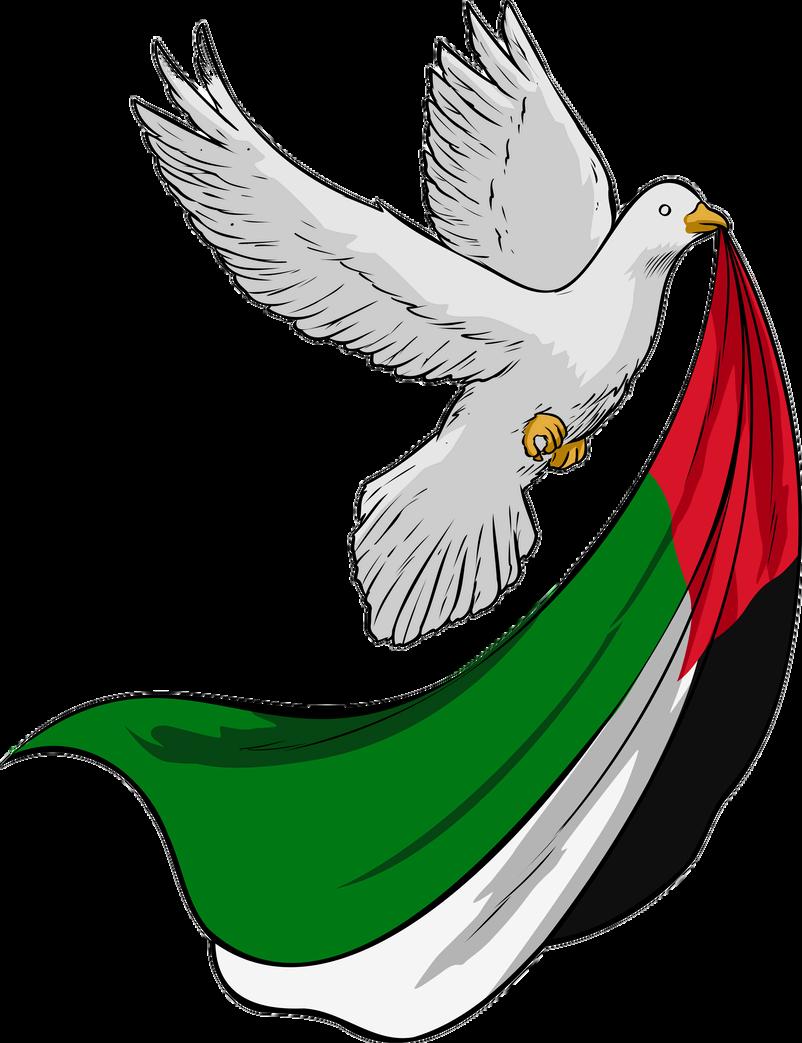
Earlier this week (January 27) commemorated International Holocaust Remembrance Day. We would like to re-share a November 2023 article, published in n+1 magazine, titled:
A Dangerous Conflation: An
open letter from Jewish writers
A group of Jewish writers drafted this letter after seeing an old argument gain new power: the claim that critiquing Israel is antisemitic. Editors at a corporate-owned magazine were prepared to publish the letter, but their lawyers advised against it. The writers share this letter in solidarity with those who continue to speak out in support of Palestinian freedom.
Read the letter tiny.cc/ADangerousConflation
The remainder of this post is an updated version of the 1st post in our Movement History & The Arts Mini-Series. This installment explores the connections between two famous poems: Claude McKay’s: If We Must Die (1919) and Dr. Refaat Alareer’s If I Must Die (2023). We have also shared a poem from Charlotte Delbo, from the collection “Useless Knowledge from Auschwitz and After” as seen in the 2018 exhibit: The Evidence Room. And, at the end of this post, you will find a small collection of resources for further education & action.
You who are passing by I beg you
Do something
Learn a dance step
Something to justify your existence
Something that gives you the right
To be dressed in your skin in your body hair
Learn to walk and to laugh
Because it would be too senseless
After all
For so many to have died
While you live
Doing nothing with your life.
Charlotte Delbo
from "Useless Knowledge" in Auschwitz and After (New Haven: Yale University Press, 1985)
Over 100 years ago, Claude McKay wrote the rousing poem “If We Must Die” in the aftermath of the “Red Summer” the summer of 1919 that saw dozens of white supremacist, terrorist attacks on Black communities across the United States.
From the Black Agenda Report: “First published in the socialist journal Liberator, then reprinted in both Cyril Brigg’s The Crusader and A. Philip Randoloph’s The Messenger, McKay’s poem was among the most famous and most militant texts of the Harlem Renaissance, and among the sharpest representations of the New Negro. The poem adopted the form of a Shakespearean sonnet, with its fourteen lines broken up into three quatrains and a concluding rhyming couplet, all carried by a taut iambic pentameter beat. But if the poem’s form was classically European, the content was not; “If We Must Die” represented a simmering Black rage directed against an obscene white violence. Mckay’s final verses are a fatalistic call to arms, death be damned.”
We have included the text of McKay’s original poem (next slide) and connected it to the work of other poets: namely Dr. Refaat Alareer and Charlotte Delbo. This is part of an ongoing series focused on Movement History & The Arts: 2 of our Core Focus Areas at CFM.
@CreatingFreedomMovements #MoreJusticeMoreJoy
If We Must Die
If we must die, let it not be like hogs Hunted and penned in an inglorious spot, While round us bark the mad and hungry dogs, Making their mock at our accursèd lot.
If we must die, O let us nobly die, So that our precious blood may not be shed In vain; then even the monsters we defy Shall be constrained to honor us though dead!
O kinsmen! we must meet the common foe! Though far outnumbered let us show us brave, And for their thousand blows deal one death-blow! What though before us lies the open grave?
Like men we’ll face the murderous, cowardly pack, Pressed to the wall, dying, but fighting back!
Claude McKay
History & The Arts: Poetry, Resistance, & Liberation
More than 100 years after McKay first wrote “If We Must Die”, we are experiencing the repeated and ongoing violence of white supremacist terror. At Creating Freedom Movements, we recognize the importance of the arts, noting the ways in which change that is provoked through the cultural sphere often precedes change taking place in the political sphere, as well as the importance of the arts in retaining cultural traditions, collective memory, pride and knowledge as well as sustaining morale & resilience.
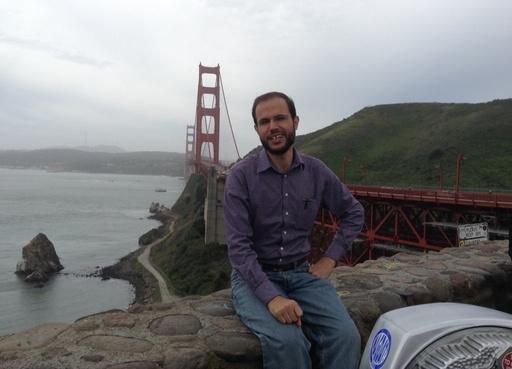
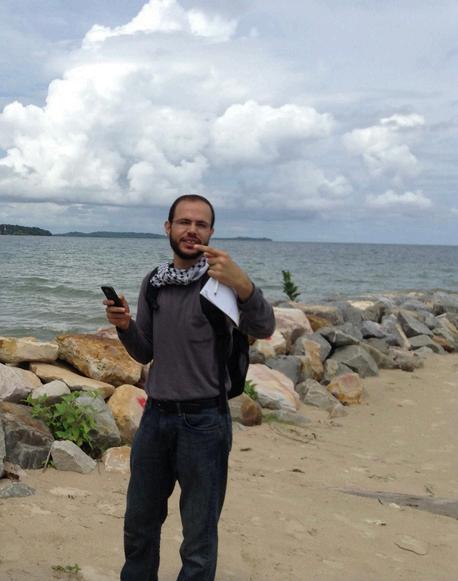
more from the Black Agenda Report: “Once again, a poet has captured both the terrible violence of the age, and the indomitable spirit of survival, resistance, and revolt. The poet is Refaat Alareer.
A Palestinian writer, activist, and professor of English literature, who taught at the Islamic University of Gaza, Alareer (along with six members of his family) was coldly, cruelly, cynically, and deliberately assassinated on December 6, 2023 when his apartment was hit by a zionist terror airstrike He was targeted, some say, because he made a morbid joke that offended the Israeli death machine.”
We have shared Dr. Alareer’s poem, If I Must Die, on the next slide as well as a translation of the poem into Hatian Creole, and some more information from the Black Agenda Report. And, again, we have collected some resources for education & action, shared at the end of this post.
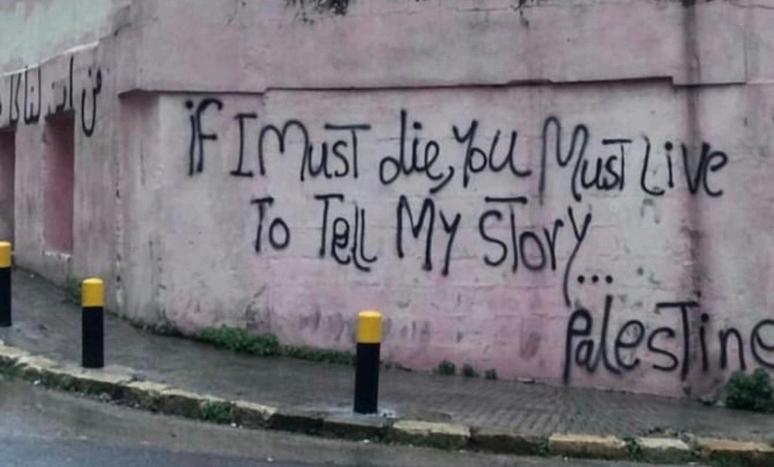
If I must die, you must live to tell my story to sell my things to buy a piece of cloth and some strings, (make it white with a long tail) so that a child, somewhere in Gaza while looking heaven in the eye awaiting his dad who left in a blaze –and bid no one farewell not even to his flesh not even to himself –sees the kite, my kite you made, flying up above and thinks for a moment an angel is there bringing back love
If I must die let it bring hope let it be a tale
Refaat Alareer
Refaat Alareer’s poem “If I must die,” riffs on McKay. In “If We Must Die, ” McKay evokes the Black militant before death; in “If I must die,” Alareer anticipates the Palestinian martyr after dying and the passing of the flame of resistance to the next generation. “If I must die,” Alareer writes, “…let it be a tale.”
via the Black Agenda Report
Please swipe for a translation, published in by Black Agenda Report from Dady Chery into Haitian Kreyol “If I must Die ” “Si se pou m mouri.” Long Live the Palestinian Resistance!
Source: blackagendareport.com/poem-if-i-must-die-refaat-alareer-2023
Dr. Refaat Alareer wrote the poem for his daughter, Shymaa, saying: “I want my children to plan, rather than worry about, their future and to draw beaches or fields of blue skies and a sun in the corner, not warships, pillars of smoke, warplanes, and guns. Hopefully, [my stories will...bring people...] together and give them consolation and solace to continue the struggle until Palestine is free. Until then, I will continue telling her stories.”
Si se pou m mouri
Ou do viv
Pou bay kont sou mwen
Pou vann zafè m yo
Pou w achte oun mòso twal
Ak fisèl
(Fè l blan ak oun gwo ke)
Konsa youn timoun ninpòt ki bò nan Gaza
K ap gade syèl lan nan zye li
K ap tann papa li ki te pati nan dife –
San li pa di pesonn adye
Pa menm kò li
Pa menm tèt li –
Ap wè sa, kap mwen an ke w te fè, k ap vole anlè
Ap panse pou oun moman ke se oun zanj kila
K ap pote lanmou
Si se pou m mouri
Kite l pote lespwa
Kite li vin oun kont
Si se pou m mouri [Haitian] Kreyòl translation of Refaat Alareer’s “If I Must Die” by Dady Chery (@DadyChery on Twitter) published by Black Agenda Report
Alareer’s words continue to touch millions around the world, over 100 translations have appeared since his martyrdom: For more information & action towards a Free Palestine check out these toolkits: All Out for Palestine — Digital Action Toolkit by Palestinian Feminist Collective bit.ly/PFCToolkit Stop Gaza Genocide Toolkit by US Campaign for Palestinian Rights (USCPR) uscpr.org/stopgazagenocide Grief Into Action published by Fat Rose — linktr.ee/griefintoaction Boycott, Divestment, Sanctions 101 via 23-24 #CFMWorkshopHighlights tiny.cc/BDS101 Swipe for more folks to follow & learn from! @CreatingFreedomMovements #MoreJusticeMoreJoy
additional translations at ifimustdie.net
Scan QR code (screenshot + visit your photos and hold down on mobile) OR visit tiny.cc/MHTA01CFM to access more information & resources including clickable links and sources for all information shared.