
Cannon Beach Bunny Rescue shares their hopes for the town’s troubled rabbit population

S
ome scenes from Cannon Beach seem to be taken straight out of a fairytale.
On any given day, head to the lush strip of grass behind the Stephanie Inn, and chances are you may encounter a ‘fluffle’ of little bunnies, whimsically playing and grazing in the sun, with Haystack Rock sitting just behind them in the distance.
Between their floppy ears and button noses, it’s hard to imagine that Cannon Beach’s rabbit population, known better as the ‘beach bunnies,’ are given anything but love and adoration from their human neighbors. But, the reality is, that the tiny creatures have not had it that easy.
While many travel to the coast just to admire Cannon Beach’s wildlife, some residents consider the rabbits a pest and will do whatever it takes to keep them out of their perfectly manicured gardens.
Five years ago, local leaders were not particularly excited about their options. City Manager Bruce St. Denis told The Astorian that the “The options are to kill them or to trap them … And then kill them.”
City Councilor Mike Benefeild acknowledged it would not be a pretty sight for the town’s brand, “I would love to see how the (Chamber of Commerce) would deal with the image of Cannon Beach: Bunny killing capital of the world.”
A coalition of residents took to Facebook to address the issue, encouraging “responsible landowners” to take matters into their own hands by obtaining permits from the Department of Fish and Wildlife to authorize the “capture and disposal of unlimited feral rabbits year long.”

Karen Anderson couldn’t take it. After working in rabbit rescue for over 15 years, she knew that the bunnies of Cannon Beach were not truly wild animals, but domes-
Projects funding options discussed at City Council
Will Chappell Gazette ReporterCannon Beach City Manager Bruce St. Denis briefed city council on the debt the city would need to take on to finance two major infrastructure projects and detailed how a raise in a tourism tax could help service that debt.
Back in 2018, locals had enough, and began asking the city to address what they described as the “bunny infestation.”
Since the rabbits are feral, they are not protected under the Oregon Department of Fish and Wildlife.
And because they are not considered livestock either, the Department of Agriculture also won’t lift a finger.
ticated rabbits that were dropped in the area and began to reproduce.
Domesticated rabbits are not designed to survive against the harsh conditions of nature and predators, let alone human opponents. Plus, without constant access to grass or hay, their molars can overgrow and cause a plethora of health complications. Not to mention, the issue of interbreed-
ing.
“I knew a lot about rabbits and domesticated rabbits that are loose outside, they shouldn’t be out there. They are at the whims of the elements,” Anderson explained. “Anytime I see a rabbit that is loose outside, I want to help them.”
After hearing the news about potential extermination, Anderson knew it was time to intervene.
“I created a petition saying ‘Don’t kill the bunnies,’ and told people about the issue and that we have a plan, so reach out to us first. That gained lots of traction and before we knew it, we had a non-profit,” she said.
Hence, the origin of Cannon Beach Bunny Rescue, a registered non-profit dedicated to raising awareness about the loose, domesticated rabbits and offering nonviolent solutions to rescue as many as possible and “stop reproduction in its tracks.”
On the organization’s website, visitors can find a submission form to alert the bunny rescue of any sick or injured rabbit sightings in the area. From there, Anderson mobilizes a rescue team to retrieve the rabbit and provide it with
immediate medical care.
Anderson’s seen it all; from bunnies suffering from parasitic infections to one’s that have developed rare skin conditions, and most recently, a poor black bunny that lost an eye as well as the surrounding tissue on one side of her face. Sometimes, the prognosis is not good.
However, for the ones that do make a recovery, the future is brighter. “What we would love to happen is for every single domesticated rabbit to be spayed and neutered and be placed in a loving indoor home where they can live life to the fullest,” she explained.
Jen Ferry, who is the Vice President of Cannon Beach Bunny Rescue, has done lots of fostering for the organization.
“I’ve got to see them go from tiny little babies to adults, and it’s really a rewarding experience to see them grow. They are all so different,” she pointed out.
Of course, her least favorite part of the job is having to let them go when they are ready to be adopted. While bittersweet, Ferry understands that this is the best possible
Lazy Susan Cafe: A Cannon Beach Favorite

Deb Atiyeh
For the Gazette
Nestled in downtown Cannon Beach next to the Coaster Theater on Hemlock Street, there is a special two-story cottage named Lazy Susan Cafe. This cozy family-owned-and-operated business is one of the favorite places to eat in Cannon Beach. Hospitality and customer service are a top priority, and it begins the moment you enter the front door, where you are greeted with a warm and friendly hello from Rosa Alvarez, the owner of the Lazy Susan Cafe. Rosa started out washing dishes and doing prep work at the Lazy Susan Cafe in 1995, working for owners Arlene Mackey and Maureen Dooley-Sroufe. About two months after starting work, the cafe was sold to Michael and Nancy Bernas.
Rosa continued working as a dishwasher; eventually becoming one of the cooks. Rosa worked for the Bernas’s until 2007, when they decided to sell the restaurant and offered it to Rosa as a business opportunity. It was a very difficult decision, but she eventually decided to buy it.
Rosa has poured everything into Lazy Susan Cafe, and she’s literally always there. Her work day starts at 3:00 AM baking fresh pastry; moving to the front counter
to greet the first customers when the door opens at 8:00 AM. Lazy Susan Cafe is a family-run business, with Rosa’s husband Aristeo Maldonado, Rosa’s sister Anita Alvarez, Rosa’s daughters Andrea Maldonado and Yazmin Maldonado, Yazmin’s husband Miguel Vega, and granddaughter Ximena Vega. Jaime Lily has worked at Lazy Susan Cafe for seven years, along with part-time helpers Maria and Alexa Nolazco. Lazy Susan Cafe’s omelettes are exceptional, along with their homemade quiche and the popular Eggs Benedict (featuring fresh crab in season) Their fresh-baked marionberry scones, accompanied by a latte, are a must. Lunches are wonderful, with salads made with the freshest of greens. Their lunch menu includes shrimp salad, chicken curry salad, hot seafood salad, seafood stew, and a broiled shrimp sandwich. Lazy Susan Cafe features daily specials which change seasonally. For the ultimate taste sensation, their gingerbread waffles topped with slices of fresh pear, lemon sauce and whipped cream are a supreme heavenly delight, and are hands-down the best waffle you have ever tasted.
During the warmer months, outdoor seating is available in the courtyard. After just one visit, Lazy Susan Cafe will become a favorite part of your trip to Cannon Beach.
six days a
St. Denis presented figures showing how a 1.5% raise in the city’s transient lodging tax could help the city fund a new city hall and the Cannon Beach Elementary School event center project.
The meeting drew a large crowd, overrunning the capacity of the city hall chamber, with additional citizens watching the meeting from an adjoining conference room.
St. Denis, who is serving as project manager for both projects, began the meeting by discussing the elementary school rejuvenation project, which has a projected budget of $12 million.
The city has already secured $4.3 million of funding for the project, leaving $7.7 million to be secured. The total annual debt service for the $12 million will be around $750,000 with $250,000 of that already funded.
The city has $231,000 of transient lodging tax (TLT) funds in its annual budget that it can put towards debt service on the elementary project. Cannon Beach’s Tourism and Arts Council has also agreed to contribute $100,000 of their transient lodging tax funding towards the elementary school project.


With all of this considered, the city council would need to generate an additional $168,750 annually to service the debt to build the project with a $12 million budget.
The new city hall’s projected budget of $25 million has a much larger funding gap, according to St. Denis’s presentation.
That budget would require $1.55 million in annual debt service from the city, of which only $900,000 is currently covered by prepared food tax revenues. St. Denis said that the city council could direct $150,000 of income from the RV park to the project’s debt service as well, but that would still leave a gap of over $500,000.

The solution that St. Denis presented to the council was a 1.5% increase in the city’s transient lodging tax. Tourism projects must receive 70% of TLT funds, while the remaining 30% can go towards general city services.
Cannon Beach currently charges a TLT of 8.5%, with 1.5% added by the state and an additional 1% going to Clatsop County. St. Denis showed a comparison with other communities on Oregon’s North Coast, and on average they charge almost 10%, while only Gearhart charges less than Cannon Beach.
A one and a half percent increase to the TLT would yield about one million dollars in additional revenue for the city. Of this, just over $720,000 would be available for the elementary project, easily meeting the debt obligation needs. The remaining $310,000 could be put towards the city hall and police station project, although that would still leave $195,000 to generate for debt service.

VOL. 47, ISSUE 7 FREE CANNONBEACHGAZETTE.COM March 31, 2023 Columns & Letters PAGES 3-4 When Nature Calls Page 2
n See BUNNY, Page 2
n See CITY, Page 3
Miska Salemann For the Gazette
Tanya (pictured on the left) contacted the team to initiate this rescue. Also pictured is Jen Ferry (middle) and Karen Anderson (right).
Photo courtesy of Cannon Beach Bunnie Rescue
This bunny enjoys a snack on some local foliage.
Photo courtesy of Chelsea Lincoln
p.m.
Lazy Susan Cafe is open for breakfast and lunch
week from 8 a.m. to 2:30
(closed Tuesday)
Rosa Alvarez, owner of th lazy Susan Cafe in Cannon Beach. Photo by Deb Atiyeh
Clatsop County law enforcement join together to bring the Clastop County Citizen’s Police Academy

Clatsop County law enforcement agencies are joining together to present the “Clatsop County Citizen’s Police Academy.” Classes will be held every Monday evening from 6 to 9 p.m., April 17th through June 6th, 2023. There will also be an optional Saturday class.

This academy is open to community members who have an interest in law enforcement, and would like to learn more about their Clatsop County law enforcement agencies. The Academy will be taught by officers, deputies, and troopers who work throughout Clatsop County.
The goal of the academy is to educate citizens about different the aspects of law enforcement and to strengthen community ties.
Participants will have an opportunity to learn about each department, tour the facilities, learn about crime scenes and criminal investigations, learn about tasers, fire different weapons, tour the jail, and participate in simulations of confrontational situations routinely experienced by officers. Participants must be at least 18 years of age, and are subject to a criminal background

check. Applications are due by April 14, 2023. The Citizen’s Police Academy is free of charge, unless participants would like to receive two college credits upon completion of the course.

For additional information, or to request an application, go to the “Services” tab on the City of Cannon Beach website or email: schermerhorn@ci.cannon-beach.or.us


Comedy Festival fills Cannon Beach Coaster Theatre with laughter


Residents and visitors to Cannon Beach were obviously craving some comedy, as young and old filled up the Coaster Theater on the Friday and Saturday evenings of March 17th and 18th. It seemed that people needed a break from the chaos of the outside world to find fun and laughter as a welcome escape.
A host welcomed four different stand-up comedians each night, filling the theater with continuous laughter. Each comedian had their own unique style that came with their own history, personality and stories, making the evening flow with a diversity of interesting and colorful characters. Each comedian was able to strike a chord and connect with the audience as they freely related to their
own truths and emotional history, feelings, confessions, conflicts, absurdities and vulnerabilities. The comedians were highly creative and varied in their approach and talents. They spoke freely about a variety of topics, including religion, politics, family, along with normally taboo subjects; making us laugh at what life presents us as we try to find meaning in it all.
forget our troubles and laugh, and find relief from the realities and suffering that exists in the world. It provides mental, physical and emotional healing and helps us cope. It creates fun when the world can feel so serious, and at times the darkest humor seemed to create the most laughter. According to the Mayo Clinic, laughter boosts the immune system, relieves stress and muscle tension, Deb Atiyeh For the Gazette
stimulates organs, increases oxygen intake, releases endorphins, lowers blood sugar, decreases pain, and improves overall mood. Who doesn’t love to laugh? It is something we would love to see more of in Cannon Beach in the future. The Comedy Festival allowed us a few precious hours to just clear our minds, laugh freely, and feel the healing power of laughter.
Deb Atiyeh For the Gazette


The Cannon Beach Gazette recently investigated the current state of public restrooms in Cannon Beach; visiting and inspecting each public restroom, and talking to some of the people responsible for cleaning and maintaining them.


Although no one really knows for sure, the Cannon Beach area very likely receives more than a million visitors every year. In 2021, the State-operated Tolovana Beach Wayside had an estimated 1,238,000 visitors.


to this tradition by inviting you to participate in our 2-week promotion. To enter, participants must identify the location of the hand-drawn real estate listing provided. Participants can submit their answers by messaging Duane Johnson Real Estate Instagram or Facebook under this contest post, or by visiting the Duane Johnson Real Estate office in person.


The lucky winner will receive a $100 gift card from Fultaon’s Pizza. Good luck to all participants!

outcome for bunnies that just aren’t cut to make it in the wild.
In addition to fostering, Ferry is now working as the organization’s adoption coordinator. That means she oversees the applications for potential rabbit owners, conducts interviews, and scopes out their living spaces.
There are currently five
bunnies available for adoption through the organization.
But Ferry’s personal plea is simple, “Please don’t get your kid a bunny for Easter.”


According to National Geographic, rabbit sales spike around the April holiday, but that doesn’t mean everyone is equipped to be a life-long rabbit owner.
“It’s not a good idea unless you’ve actually done your research and know what you’re doing because if you haven’t, then that bunny


is probably just going to end up being loose in Cannon Beach and we’re going to have to rescue them,” she noted.


For people genuinely interested in helping rabbits, fostering could be a better way to get their feet in the door. Foster parents don’t need to be experts in rabbit care to apply for the role.
Nikki-Unger Fink, admitted they didn’t have much rabbit experience prior to signing up with Cannon Beach Bunny Rescue a few years ago.
“I didn’t know anything about rabbit care at the time but for whatever reason, I knew fostering was something I’d likely enjoy doing,” they said. “The rescue was pretty new at the time too and I appreciate all the initial education they gave me before I opened my home up to my first bunny.”
The new foster parent quickly learned the ropes of rabbit care, from keeping the bunnies’ living space clean to providing them with healthy treats to chew on, and clipping their nails as well as brushing their fur. It’s not an easy job, but it’s well worth it for true animal-lovers.
As the leader of Cannon Beach Bunny Rescue, Anderson realizes that single-handedly saving rabbits on an individual basis is a hefty task, and her overarching dream would be to build something bigger.
“We are aware that something large-scale has to be done. For me, that middle-ground is like a sanctuary situation where they can kind of be indoor and outdoor in a controlled situation,” she imagined.


Her hope would be creating a bunny sanctuary which would allow tourists to stroll by and take a look at the bunnies, and might even encourage some locals to volunteer their time to help care for them, mending the tense relationship that’s developed over the years.
In the meantime, the team of rabbit rescuers will need to wait for somebody to donate a parcel of land to the cause, a gracious offer that could make for a happy ending in the wonderful fairytale of the “beach bunnies.’
March 31, 2023 2 CannonBeachGazette.com | Cannon Beach Gazette n Bunny Continued from Page 1 n See NEEDS, Page 4 Deb Atiyeh For the Gazette 11 am to 4 pm Tillamook Beekeepers Association is Presenting Bee Day Garden & Artisan Vendors Wanted Tillamook Home & Garden Show April 29 & 30 Contact us to find out about our special low rate for small businesses: 503-842-7535 headlightads@countrymedia.net H21520 Downtown Cannon Beach 256 N. Hemlock St EASTER 503-436-2641 www.brucescandy.com H63208 You can shop with us online to get all of your favorites shipped directly to you in time for Easter! Visit us at www.brucescandy.com Solid Chocolate Bunnies & ALL the Easter basket treats you might need! MULTI-USE CANNON BEACH COMMERCIAL PROPERTY $3,150,000 OCEANFRONT HOME ON (2) OCEANFRONT TAX LOTS $2,999,500 VACANT CANNON BEACH LOT, ZONED R3 $389,500 IMMACULATE OCEAN VIEW BEACH HOME $1,195,000 VACANT CANNON BEACH LOT, ZONED R3 $359,500 SOLD BEAUTIFUL 4.1 ACRE PARCEL WITH STUNNING PANORAMIC OCEANVIEWS! $4,495,000 ARCADIA VACANT LAND, 20 TAX LOTS, 9+ ACRES $1,685,000. SOLD Michael HendersonManaging Principal Broker Jeremy YoungquistBroker Liqaa RansierBroker Duane Johnson - Founder Jeff EtchisonPrincipal Broker, GRI Chris ChildressPrincipal Broker, GRI What is RMLS? As the Northwest’s largest REALTOR®-owned Multiple Listing Service(MLS), RMLS serves approximately 10,000 Real Estate Professionals in over 2,200 offices licensed in Oregon and Washington. All brokers listed with firm are licensed in the state of Oregon 296 N. Spruce St. • Cannon Beach • (503) 436-0451 www.duanejohnson.com Active Members of & A VALUED AND TRUSTED RESOURCE WITHIN OUR COMMUNITY AND THE #1 OFFICE SINCE 1990. Duane Johnson Real Estate & Fultano’s Pizza Present: Discovering Cannon Beach! Join us in celebrating the rich history of Cannon Beach with a special contest. Did you know that real estate listings used to be hand-drawn before the digital age? We want to pay tribute
H21822
NEW LISTING NEW PRICE
Comedy allows us a moment to
When nature calls: City renovating mid-town public restrooms to handle visitors’ needs
To provide for all of these visitors when nature calls, the City of Cannon Beach provides a total of 24 toilets and 10 urinals in their three public restrooms; located in downtown and mid-town, and at the north-end Les Shirley Park. The State-owned and
Games, volunteers, migratory birds & a magic tollbooth
Phyllis Bernt Library Board PresidentWe can’t be certain about the weather, but we can be sure that March is going to go out and April is going to come in with entertaining events for all ages at the library (131 N. Hemlock in downtown Cannon Beach).
It will be fun and games at 6 p.m., Friday, March 31, during the library’s first-ever Library Game Night. All ages are invited to enjoy board games, card games and games for kids. Popcorn and soft drinks will be provided.
The next day, April will get off to a cheery start with Story
Time at 2 p.m., Saturday,
April 1. The theme is Happy Hoppy Springtime. Children can celebrate the beginning of spring by listening to stories and picking up a take-home goody bag. The target age is pre-k to age eight, but all ages are welcome. All children must be accompanied by an adult.
April is National Volunteer
Month, and the library has 95 reasons to celebrate. During the past year, 95 volunteers donated 6,230 hours of their
n City
Continued from Page 1
time to the library. Their contributions of time and talent will be recognized during a Volunteer Appreciation Luncheon at 11:30 a.m. on Wednesday, April 5, in the Community Room at the Chamber of Commerce (207 N. Spruce).
The Cannon Beach Library is unique in having been a volunteer-run private library since its founding in 1927.
Volunteers check books in and out, order books, arrange talks by regional authors, provide area children with story times, worry about building maintenance, and, with the help of one invaluable, paid, part-time office manager, take care of all the other tasks necessary to running a library.
Plus, volunteers participate in fundraisers for the money needed to keep it all going.
According to Independent Sector, a nonprofit advocacy group, one hour of volunteer time in Oregon is worth $29.75, which means that this year volunteers donated $185,343 worth of effort to provide the community with a library. Anyone who has volunteered for the library this past year but has not received
If the council increased the TLT by 2%, the shortfall in city hall funding would be cut to just over $90,000.
St. Denis said that he believed the city hall’s project cost would come down as the schematic design phase advanced and that the gap could be bridged through other means.
After St. Denis completed his presentation, Mayor Barb Knopp opened the meeting to public commenters.
Around a dozen people commented, with a nearly even split between those supporting the city’s process and those questioning it.
Phyllis Berntan invitation to the luncheon is urged to call the library at 503-436-1391 or email info@ cannonbeachlibrary.org.
April marks the last meeting of the 2022-23 World of Haystack Rock Library Lecture Series. The lecture, sponsored by the Friends of Haystack Rock, will begin at 7 p.m., Wednesday, April 12.
This is both an in-person and virtual event. Participants can participate in the program at the library or enjoy the talk virtually by accessing the Friends of Haystack Rock website at https://friendsofhaystackrock.org.
Waldport resident Roy Lowe will present “Monitoring Migratory Birds in Lincoln County, Oregon
The latter group was comprised mostly of business owners and representatives who worried about raising the TLT and the effect it would have on tourists. They expressed doubts about the elementary project’s adherence to state statute’s requirement that 70% of funds be spent on tourism related activities, as they doubted the facility would appeal to tourists.
Supporters noted the urgent need for a new city hall and pointed out that past city governments had been delaying the process for more than twenty years for various reasons. They said that the elementary project would be a great addition to the community but allowed that its budget might be too high currently. After the public feedback concluded, the council began discussing their views on the matter. They were in consensus that
Through Citizen Science.”
Lowe and his fellow volunteers are documenting the status of two birds in very different situations. Thanks to recovery efforts during the past four decades, the Western Snowy Plover population has greatly increased on the Oregon coast.
On the other hand, the wintering population of the Pacific Black Brant at Yaquina Bay has been in decline since the 1980s. Citizen volunteers are providing a valuable service by monitoring these two birds.
Roy Lowe was with the U.S. Fish and Wildlife Service for more than 37 years, stationed at the Hatfield Marine Science Center for most of that time. He was the Refuge Manager of the Oregon Coast National Wildlife Refuge Complex when he retired in 2015.
The World of Haystack Rock Library Lecture Series meets on the second Wednesday of each month from November through April every year. This year’s lecture series has been dedicated to the memory of Sandi Lundy, a long-time member of both

the elementary school project’s budget needed to be trimmed, a process which can begin as the schematic design phase begins.
They also agreed that the city was in desperate need of a new city hall and police facility and encouraged commenters who questioned this fact to visit the current facility.
None of the councilors made a strong statement of support or opposition for the proposed TLT increase, noting that it was a complicated question that they were still considering.
The council will continue to discuss the funding options for the projects at meetings in April, although they did not say when they would be voting on the matter.
Please send any comments to headlightreporter@countrymedia. net.
the Friends of Haystack Rock and the Cannon Beach Library.
The following week members of the Cannon Beach Reads book club will meet at 7 p.m., Wednesday, April 19, to discuss “The Phantom Tollbooth,” by Norton Juster. This is a hybrid meeting; participants can join in person in the library or online through use of Zoom and a webcam conferencing system.
“The Phantom Tollbooth” is a fantasy adventure novel about Milo, a young boy who is bored with life until he finds a magic tollbooth in his room. The tollbooth transports Milo to the troubled Kingdom of Wisdom. The Kingdom has been in turmoil since the rulers of the kingdom banished the princesses Rhyme and Reason to the Castle in the Air.
Milo goes on a quest to return the princesses to the Kingdom of Wisdom, meeting a cast of unique characters along the way. After successfully completing his quest, Milo finds himself back home a changed boy. He now finds the world to be
an interesting place. With its extravagant use of puns and wordplay, “The Phantom Tollbooth” is more than just the story of one boy’s adventures, it’s also a treatise on the importance of education, the need for teaching methods that encourage a love of learning and the damage done by mindlessly following senseless rules.
Norton Juster was an American architect, professor of architecture and environmental design and writer. He is best known as a writer of children’s books. In addition to “The Phantom Tollbooth,” Juster’s other books include “The Dot and the Line: A Romance in Lower Mathematics,” “The Hello, Goodbye Window” and “The Odious Ogre.”
Lauren Wilson will lead the discussion of “The Phantom Tollbooth” which will begin at 7 p.m. on Wednesday evening, April 19, at the library. The Zoom link for those who cannot participate in person, is available from Joe Bernt at berntj@ohio. edu. Coffee and cookies will be provided. New members are always welcome.
$11.7 million budget projected for Cannon Beach Elementary project
 Will Chappell Gazette Reporter
New budget projections for the Cannon Beach Elementary School project estimate that the rehabilitation effort will cost just shy of $12 million, according to the team leading the project.
Ben Carlson from Bremik Construction presented a detailed breakdown of the projected budget to the city council at a meeting on March 13, also providing a timeline for project completion.
The itemized budget presented by Carlson showed that the project will cost between $11,738,817 and $11,964,499, when accounting for all parts of the project and including a contingency for cost overruns.
That projected figure is based on the preliminary development design drawings that have been completed following public feedback.
Most of the projected budget, $9,349,818, will go towards paying for construction hard costs. Just under $4 million of that will be devoted to building construction, with $2.1 million allocated for utility upgrades and $1.8 million for site development.
Another $988,700 will be required to finish the design of the project. The city has already paid $360,915 to various firms to develop the project thus far. Completing design will require further work from acoustic, landscape
March 31, 2023 Cannon Beach Gazette | CannonBeachGazette.com 3 n See PROJECT, Page 6
At the Library
Leadership desperately needed at 800 Exchange Street
Without question county government has seriously mismanaged the Short-Term Rental (STR) zoning issue. County commissioners have admitted illegally permitting STRs, aka mini motel businesses, in specific residential zones and have subse-


quently attempted to walk this error back. Their efforts to rectify their zoning violation has resulted in a costly county wide recall measure and more recently a lawsuit against the county. All this at taxpayers’ expense of course, so thank you county commissioners for that. The real issue here is not just the legality of operating STRs in certain residential zones it’s about inept county government. Commissioner
Wev appears to be the only one who understands what is transpiring here, and I guess that makes sense based her background in land use and planning. It is unfortunate the upcoming May 16th ballot form to undo the county’s illegal zoning actions will not also include a box that citizens can check to recall county commissioners, maybe it’s not too late to add one?
Jim Aalberg 5th generation Clatsop County WarrentonGet ready Cannon Beach taxpayers


During the March 20th Coffee with the Councilors, it was revealed that the school project and the new city hall and police station are projected to cost a whopping $37 million. And that additional funding will be needed beyond the current lodging tax and prepared food tax.
Are you prepared to see a potential property tax increase? Remember the water system needs to be fixed also. That means a potential residential water rate increase beyond the doubling of commercial rates that has already occurred.

Tuesday 11th Tree City USA Award Ceremony
Wednesday, 12 th Friends of Haystack Rock Lecture


Thursday 13 th Tree Planting with Cannon Beach Academy
Friday, 14th Haystack Rock Awareness Program


Saturday 15 th SOLVE Sitka Spruce Forest Reserve Work Party Composting Workshop


Sunday 16 th Guided Bird Walk Soap Making Workshop


Monday 17 th Bird Lecture by Hannah Buschert
Tuesday, 18th Haystack Rock Awareness Program

Wednesday 19 th Haystack Rock Awareness Program


Thursday, 20th Gaylord Nelson Award


Friday 21st Nudibranch Safari with HRAP Cannon Beach Shreds
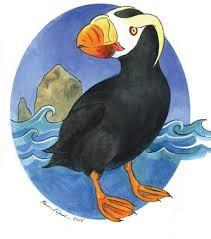
Saturday 22 nd Earth Day Parade 12 Days of Earth Day Street Fair SOLVE Beach Cleanup Puffin Welcome at Haystack Rock


We hope you'll join us by doing something in honor of our beloved earth. You can celebrate 12 Days of Earth from near or far! Please follow the QR code or web address below for the latest information.

www.12DaysCannonBeach.com


Council touts that the 60 people who attended school project events were all about it, but that price tag was $5 million. Will that support change with a $12 million cost for an old building in
the tsunami zone? If you are willing to support a village of 1400 funding part of this, then remain silent. If you do not agree, express yourself to the city council. Some city councilors appear to believe everybody is on board.
Matt Buschert Cannon BeachA Little Help
I’m asking for your help to save our neighborhood by voting yes on Measure 4-221 to repeal Clatsop County Ordinance 22-05 allowing short term rentals (STR) in all rural Clatsop County residential zones. I live in a quiet subdivision with modest homes platted in 1969 along Smith Lake. My neighbors and I walk up and down our road with little traffic with the occasional lost camper on their way to Fort Stevens. An additional STRs in our neighborhood threatens that quiet. Not long before the STR moratorium went
into effect a modest home in our subdivision was converted into a STR. The home is only 1600 square feet, including a converted garage, two bathrooms with four bedrooms on a hundred-foot by a hundred-foot lot. Before the conversion this home would have been an excellent candidate for a long-term rental, but no longer. Now it is a STR that has an approved occupancy of fourteen people, yes, fourteen people with two bathrooms, and parking for five cars. Does that sound like a good idea to you? So, I ask you to do this, close your eyes and imagine living next to an STR where a group of fourteen fishermen with a bunch of boats rent the STR for a week, then ask yourself this, would you like to live next to that STR? If your answer is no, we need your help, please vote yes on Measure 4-221 and help us save our quiet neighborhood.
Paul Putkey Warrentonoperated Tolovana Beach Wayside provides an additional 6 toilets and 2 urinals, for a grand total of 30 toilets and 12 urinals for the Cannon Beach area.
For perspective, a 2021 study released by a British bathroom supply company titled “The Public Toilet Index” reports that the United States has an overall average of eight public toilets per 100,000 people. New York City has four per 100,000. Iceland is the world’s leader with 56 per 100,000, but the population of Iceland is less than 400,000, which works out to just over 200 public toilets for the entire country. The American Rest-
Bilingual Certified Peer Support/Recovery Mentor (English/Spanish)

















F.T. 40-Hours/week Position


Tillamook Family Counseling Center is currently looking to add a bilingual peer specialist to our Prime+ program. The mission of the Prime+ program is to prevent acute life-threatening outcomes of substance use which include reducing overdose morbidity and mortality by providing harm reduction centered overdose prevention education and facilitating access to Naloxone. We also strive to reduce injection-related infections by providing harm reduction centered infection prevention education and facilitating access to safer use supplies. The Prime+ program supports linkage to care, diagnosis and treatment of substance use related conditions and substance us related infections.

This position includes training that leads to state certification according to OAR 410-180-0305 (12) and (13).


As a certified Peer Specialist, you will be a living example and role model of recovery life. As a peer you will be a provider of the life wisdom gained through your own lived experience of recovery as well as a change agent for hope.
Benefits:


Dental Vision and Medical-prescription coverage. HSA and FSA plans. 9 paid holidays a year, paid sick leave and vacation time. Vacation starts out at 8 hours a month with increases over time. Generous retirement program: non-contributory 403(b), we put in 9% of your salary and you are vested after 6 months.


To see our complete job description and to apply go to http://tfcc.bamboohr.com/jobs. Be sure to submit an online application and upload your resume. Any questions, please visit us online at http://tfcc.org or contact us at jobs@tfcc.org

room Association, a group that advocates for public restrooms, states that “we’re faced with an issue where the demand for public restrooms far exceeds the supply. This gets into who is responsible for providing public restrooms.”


The City of Cannon Beach currently has plans to renovate and expand the mid-town public restroom on Hemlock Street, which was last updated in the 1970’s. This will eliminate the need to haul in “Porta-Potties” during the busy summer months to augment that small restroom, which is inadequate to serve the increasing number of visitors to that area. Plans call for the addition of an ADA-approved “family restroom” that allows use by anyone.
Low-flow water-conserving and all stainless steel fixtures will be added as part of the renovation, which will be the same type of fixtures found in the other two City restrooms. Why stainless steel? Though not as aesthetically pleasing or comfortable as porcelain, stainless steel is more hygienic and easier to clean, resists the best efforts of vandals by being virtually indestructible, and is environmentally friendly by making use of recycled steel. New landscaping, including hydrangeas in raised planter boxes, will be part of the reno-
vation. The larger footprint of the remodeled public restroom will unfortunately require the removal of a 10”-diameter Japanese Black Pine. As this tree continues to grow, it will likely cause root intrusion and blockage of the main mid-town sewer line.
The City of Cannon Beach pays a private contractor to clean their three public restrooms daily in the low-season, and three times a day during the summer high-season. Tolovana Beach Wayside is cleaned twice daily. Annual cost for the City of Cannon Beach to supply, clean and maintain their three public restrooms? In fiscal year 2021-2022, the City spent more than $143,000. To make matters worse, incidents of vandalism and graffiti are increasing. Since the beginning of 2023, the City has had to spend more than $1,000 on graffiti-removing cleaning products. A small percentage of public bathroom users even resort to finger-painting human feces on the restroom walls. One is left to wonder if these folks do the same thing in their own homes. Cleaning it up is the responsibility of the dedicated and underappreciated workers who keep these restrooms clean and functional for all of us to use when nature calls.
Monday crash results in fatality
On Monday, March 27, at approximately 6:47 p.m., the Oregon State Police responded to a two-vehicle crash on Hwy 101, near milepost 30, in Clatsop County.

The preliminary investigation indicated a Toyota Corolla, operated by Maria Guadalupe Nolazco Luna (20) of Cannon Beach, was southbound on Highway 101, near mile post 30, at the intersection with Sunset Boulevard. While making a left turn onto Sunset Boulevard, the sedan was struck on the passenger side by a northbound Dodge Ram 2500, operated by Jeffre Cottrell (41) of Rock Springs (WY). The
operator of the Toyota declined medical transport from the scene and the operator of the Dodge was reportedly uninjured.
A passenger in the Toyota, a male juvenile (12), was transported to a local hospital where he later died of his injuries.
The highway was impacted for approximately 4 hours during the on-scene investigation. The cause of the crash is under investigation.
OSP was assisted by the Cannon Beach Fire Department, Seaside Fire Department, Cannon Beach Police Department and ODOT
March 31, 2023 4 CannonBeachGazette.com | Cannon Beach Gazette Needs Continued from Page 2 BUSINESS DIRECTORY CONSTRUCTION LANDSCAPING BoB McEwan construction, inc. Excavation • undErground utiitiEs road work • Fill MatErial sitE PrEParation • rock owned and operated by Mike and Celine MCewan Serving the paCifiC northweSt SinCe 1956 • CC48302 503-738-3569 34154 Hwy 26, Seaside, OR P.O. Box 2845, Gearhart, OR ADVERTISE YOUR BUSINESS HERE TO CREATE TOP OF-MIND-AWARENESS CALL 503-842-7535 TODAY! Laurelwood Farm Laurelwood Compost • Mulch • Planting MacMix Soil Amendments 34154 HIGHWAY 26 SEASIDE, OR 503-717-1454 YARD DEBRIS DROP-OFF (no Scotch Broom) H49573 Church Services by the Sea Cannon Beach to Nehalem Nehalem Nehalem Bay United Methodist Church 36050 10th Street, Nehalem, OR (503) 368-5612 Pastor Celeste Deveney + Sunday service 11 a.m. Food Pantry Open Friday, Saturday & Monday 10 a.m. to 2 p.m. Wednesday March - October 2 p.m. to 6 p.m. November - February noon to 4 p.m. Nehalem Senior Lunches Tuesday & Thursday served at noon email: nbumcnsl2020@gmail.com To feature your spiritual organization on this panel: Contact Katherine at (503) 842-7535, headlightads@countrymedia.net ARBORIST - TREE CARE ISA Certified Arborists ISA Board-Certified Master Arborist ISA Tree Risk Assessment Qualified Comprehensive Service, Pruning/Removal, Stump Grinding/Hazard Evaluations (503)791-0853 www.arborcarenw.com Care for Your Trees H20157 CCB#171855 WA#ARBORCI909RW LETTERS TO THE EDITOR Quote of the Week “I couldn’t imagine living in a state that didn’t reach the ocean. It was a giant reset button. You could go to the edge of the land and see infinity and feel renewed.” ~ Avery Sawyer Check out the Cannon Beach Gazette FREE Online! Keep up on the latest news at www cannonbeachgazette.com PERSONAL PROPERTY EQUITABLE DISTRIBUTION ESTATE EVALUATIONS CHARITABLE DONATIONS INSURANCE CLAIMS DIVORCE SETTLEMENTS SUMMER APPRAISAL Providing professional valuation and appraisal services on the Oregon Coast Reports are USPAP and IRS-compliant and can be entered as evidence in a court of law. Written appraisals are specifically designed for a variety of legal and taxation purposes including: summerappraisal@gmail.com summerappraisal.com 972-363-6340 PERSONAL PROPERTY EQUITABLE DISTRIBUTION ESTATE EVALUATIONS CHARITABLE DONATIONS INSURANCE CLAIMS DIVORCE SETTLEMENTS SUMMER APPRAISAL Providing professional valuation and appraisal services on the Oregon Coast Reports are USPAP and IRS-compliant and can be entered as evidence in a court of law. Written appraisals are specifically designed for a variety of legal and taxation purposes including: summerappraisal@gmail.com summerappraisal.com 972-363-6340 PERSONAL PROPERTY EQUITABLE DISTRIBUTION ESTATE EVALUATIONS CHARITABLE DONATIONS INSURANCE CLAIMS DIVORCE SETTLEMENTS SUMMER APPRAISAL Providing professional valuation and appraisal services on the Oregon Coast Reports are USPAP and IRS-compliant and can be entered as evidence in a court of law. Written appraisals are specifically designed for a variety of legal and taxation purposes including: summerappraisal@gmail.com summerappraisal.com 972-363-6340 H21629
Public Notice





March 31, 2023 Cannon Beach Gazette | CannonBeachGazette.com 5
ABOUT US CANNON BEACH GAZETTE The Cannon Beach Gazette is published biweekly by Country Media, Inc. 1906 Second Street, P.O. Box 444, Tillamook OR 97141 PHONE 503-842-7535 • FAX 503-842-8842 cannonbeachgazette.com Member Oregon Newspaper Publishers Association (ONPA) © 2023 by the Cannon Beach Gazette. No portion of this newspaper may be reproduced in any manner without prior written permission from the publisher. All rights reserved. Katherine Mace Sales 503-842-7535 headlightads@countrymedia.net The Cannon Beach Gazette is part of the Country Media family of newspapers. Joe Warren General Manager jwarren@countrymedia.net LETTER POLICY The Cannon Beach Gazette welcomes letters that express readers’ opinions on current topics. Letters may be submitted by email only, no longer than 300 words, and must be signed and include the writer’s full name, address (including city) and telephone number for verification of the writer’s identity. We will print the writer’s name and town of residence only. Letters without the requisite identifying information will not be published. Letters are published in the order received and may be edited for length, grammar, spelling, punctuation or clarity. We do not publish group emails, open letters, form letters, third-party letters, letters attacking private individuals or businesses, or letters containing advertising. Deadline for letters is noon Thursdays. The date of publication will depend on space. Email letters to jwarren@countrymedia.net OBITUARIES The Cannon Beach Gazette has several options for submitting obituaries. • Basic Obituary: Includes the person’s name, age, town of residency, and information about any funeral services. No cost. • Custom Obituary: You choose the length and wording of the announcement. The cost is $75 for the first 200 words, $50 for each additional 200 words. Includes a small photo at no additional cost. • Premium Obituary: Often used by families who wish to include multiple photos with a longer announcement, or who wish to run a thank-you. Cost varies based on the length of the announcement. All obituary announcements are placed on the Cannon Beach Gazette website at no cost. Email obituaries to classifieds@orcoastnews.com Will Chappell Reporter headlightreporter@countrymedia.net Headlight Herald Saturday, April 7 10 am to 5 pm Sunday, April 8 11 am to 4 pm FREE ADMISSION at Tillamook County Fairgrounds Tillamook Beekeepers Association is Presenting Bee Day 2018 Sat. & Sun. April 29-30, 2023 Saturday 9 am to 4 pm Sunday 11 am to 4 pm at the Tillamook County Fairgrounds Meet hundreds of potential customers in just two days. Call to reserve your booth space today! Cosponsored by Tillamook County Solid Waste 503-842-7535 H21195 & BEE DAY 2023 Tillamook Beekeeper Assoc. Keep up on Cannon Beach news at www.cannonbeachgazette.com Read the Cannon Beach Gazette FREE ONLINE HH23-62 NOTICE TO INTERESTED PERSONS Case #23PB00346 Notice: The Circuit Court of the State of Oregon, for the County of CLATSOP has appointed the undersigned as Personal Representative of the Estate of SALLY ANN HANNU, deceased. All persons having claims against said estate are required to present the same, with proper vouchers to the undersigned personal representative in care of the undersigned attorney at: 294 Warner Milne Rd. Ste. A, Oregon City, OR 97045 within four months from the date of first publication of this notice as stated below, or they may be barred. All persons whose rights may be
information
Personal Representative,
Attorney
Representative.
first published March 3, 2023. Attorney/Personal Representative: Grant Yoakum, OSB #921600, 294 Warner Milne Rd. #A, Oregon City, OR 97045 (503) 697-1009 Now
Lead Window and Soft Washing Technician Work Mon-Fri • Beautiful Coastal Setting $20/Hr, 6 paid holidays & paid time off. Health insurance (50/50 split), supplemental Aflac insurance for on and off the job. Generous bonuses. Coming soon: 401K See full job description and apply at https://seawindowsclean.com/job-listings H21761 Sea Ranch Resort NOW HIRING • Front Desk • Maintenance APPLY AT 415 Fir Street Cannon Beach, Oregon 97110 (503) 436-2815 or (503) 717-3999 H21672 H21691 Sat., Aug. 26 & Sun., Aug 27 Looking for Vendors If interested contact Patty Watson 503-201-9912 or Beverly Anderson 503-300-9013 Regular vendors $50 Food vendors $150 Bay City Pearl & Oyster Music Festival
affected by this proceeding may obtain additional
from the records of the court, the
or the
for the Personal
Dated and
Hiring
New potential site emerges in City Hall project
Will Chappell Gazette ReporterA new potential site has been identified in the project to build a new city hall and police facility in Cannon Beach, the project team told Cannon Beach City Council on March 14.
The hunt for a new site came after state building code updates rendered the location of the current city hall, which had been selected for the replacement facility, unsuitable for a police station due to tsunami concerns.
This code update came into effect in November 2022 and requires essential facilities be built outside of the inundation zone of a maximum projected tsunami.
n Project
Continued from Page 3
design, sustainability, civil engineering and other consultants.

The remaining $480,000 of the budget is devoted to soft costs, including permitting fees, archeology and geotech-
The council learned about the code update at a January meeting, and the project team said that they would discuss the new code’s impacts on the project with state regulators and begin looking at potential alternatives.
Leslie Jones, an architect from CIDA, the firm leading design of the project, said that state officials had given somewhat ambiguous answers about the specifics of which emergency facilities needed to be outside of the inundation zone. However, she said that they made it clear that the code favored building emergency facilities outside of the tsunami inundation zone.
Siting a new police department and emergency operations center at the current city hall’s location on Gower Street would require those
nical reports and construction testing. The largest soft cost was for interior fixtures, furnishings and equipment, which the budget projected will cost more than $250,000.
Carlson said that the budget included an inflation allowance of half a percent per month during the nine months between now and the beginning of construction. It
facilities be at a minimum height of 31 feet, with the structure under them capable of withstanding a tsunami.
Given the cost and impracticality of such a design, the project team began to seriously consider other properties owned by the city as potential locations for the new facility.
They identified a parcel on the east side of 101 at the south end of Cannon Beach that currently houses the Tolovana Cache site as a strong candidate. The site lies on the same piece of property as the Southwind site that had been discussed for the project but rejected because of landslide concerns. Jones detailed two general options for utilizing the site in the project, including rough budgetary estimates for each.
also contains a five percent contingency, which totaled just over $550,000.
Previously the project had an estimated price tag of $9 million and now the team will start to work on design development concurrently with exploring funding options for the project.
Cannon Beach City Manager Bruce St. Denis, who is
The first option would be to locate both the city hall and police station at the Tolovana Cache site. The second would be to construct a city hall at the Gower Street location and police department and emergency operations center at the other site. Placing all facilities at the same location would have a total cost of around $22.5 million, while dividing the project would cost just north of $25 million, according to the team’s estimates. The bulk of the cost difference would come from the hard costs of building two separate buildings, although soft costs would also be half a million dollars higher for the split option. City Manager Bruce St. Denis, who is also serving as project manager for this project, noted that, in
also serving as project manager for the elementary school project, said that the team will begin discussing the funding gap after a meeting with the city’s financial adviser on March 28.
St. Denis said that the team will look at different options in the project design to save money. They will also begin exploring different funding
addition to the cost savings, locating both at the Tolovana Cache site would leave the city with the current city hall as surplus property.
Jones said that the Tolovana Cache site would require a geotechnical report to determine what landslide risk might exist and the mitigation measure required to address it. She said that the Southwind site had been on the worst portion of the property and that their initial assessment was that the new site would have less risk. The council will decide how to proceed on the project at a meeting in April after being updated on financing options for the project on March 28.
Please send any comments to headlightreporter@countrymedia. net.

sources to supplement the transient lodging tax dollars that are primarily funding the project.


Pending city council approval, the team will begin working on design development, a process that should extend through November.
Concurrently, they will begin working on site planning and securing regulatory approv-
alI. n June they will begin construction drawings, which will be completed by February 2024.
The team hopes that by February 21, 2024, the project will break ground and that it will be completed by December 16. Please send any comments to headlightreporter@countrymedia.net.
March 31, 2023 6 CannonBeachGazette.com | Cannon Beach Gazette
Advertising that works! Contact Katherine to get started: (503) 842-7535 headlightads@countrymedia.net Contact Katherine to get started: (503) 842-7535 headlightads@countrymedia.net