INSIDE: » Coronado Christmas Parade » Honor Flight San Diego » Holidays in Oz
DECEMBER2025
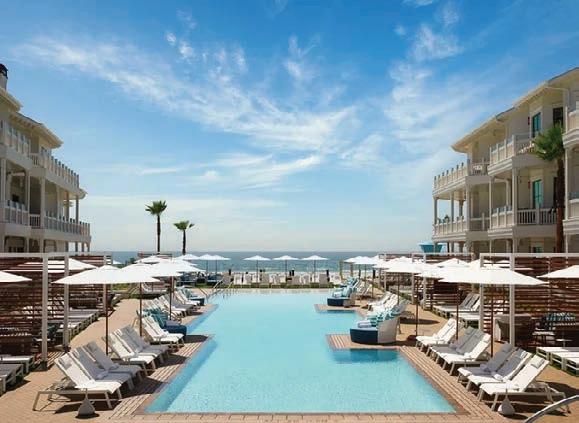
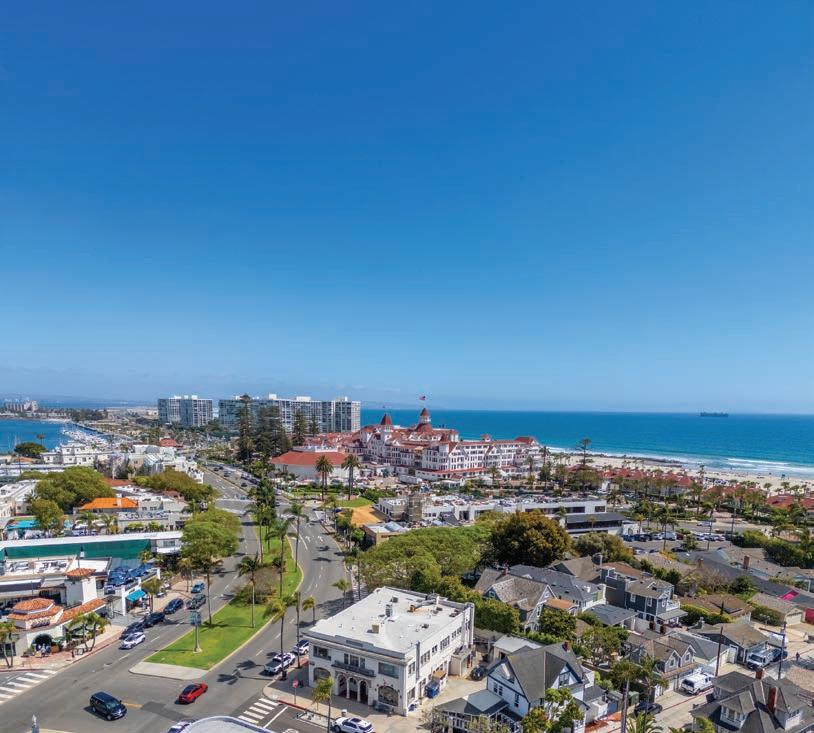
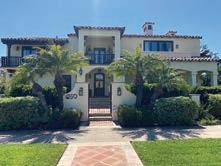
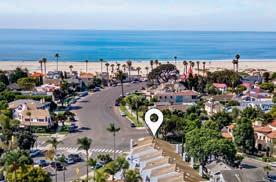
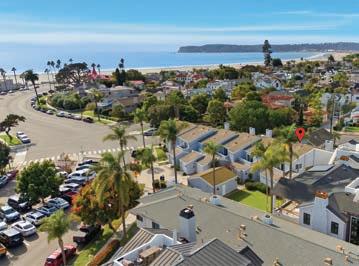
Shore House a t The Del of fers whole-ownership, limited-use in Coronado’s newes t coas t al enclave , giving owners a leg acy home t ha t also per forms as a smar t inves tment. Combining turnkey ease wit h year-round demand and limited coas t al inventor y, your residence becomes bot h a g a t hering place and a long-term asset in one of t he mos t coveted des tina tions on t he Wes t Coas t.
f o r s e r v i c e m e m b e r s a n d
t h e i r d e p e n d e n t s t o e n j o y c o m p l i m e n t a r y
s k a t i n g , p h o t o s w i t h S a n t a , g i v e a w a y s , a n d m e m o r y - m a k i n g b y t h e s e a . M I L I T A R Y S K
DECEMBER 8TH | 3:00 - 9:00 PM
Ice skating is complimentary for Active Duty/Veteran and Dependent guests with a valid Military ID, while tickets last. Photos with Santa are available from 5:00-8:00 PM.
Please pre-register at info@delcoronadorealty.com
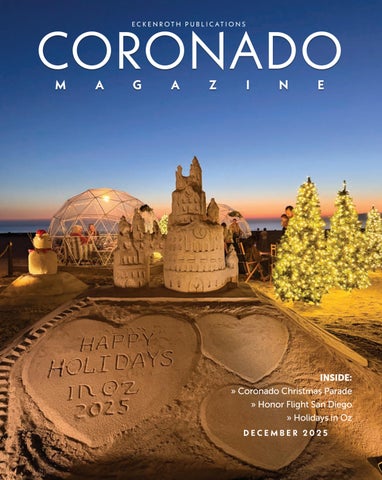
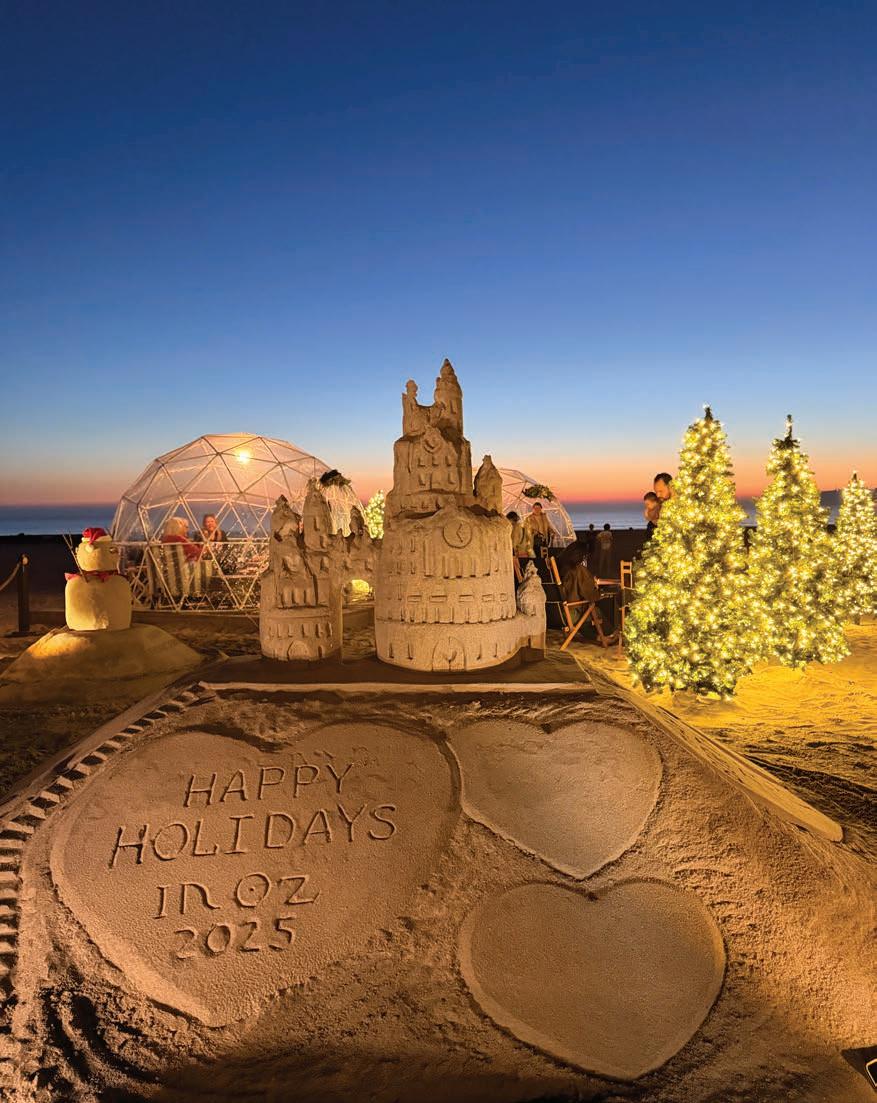
Cover photo and
photos by Sammy Johnson
When Santa Arrives It’s
Truly December ...
... granted, he may be making his way down Orange Avenue just a little early!
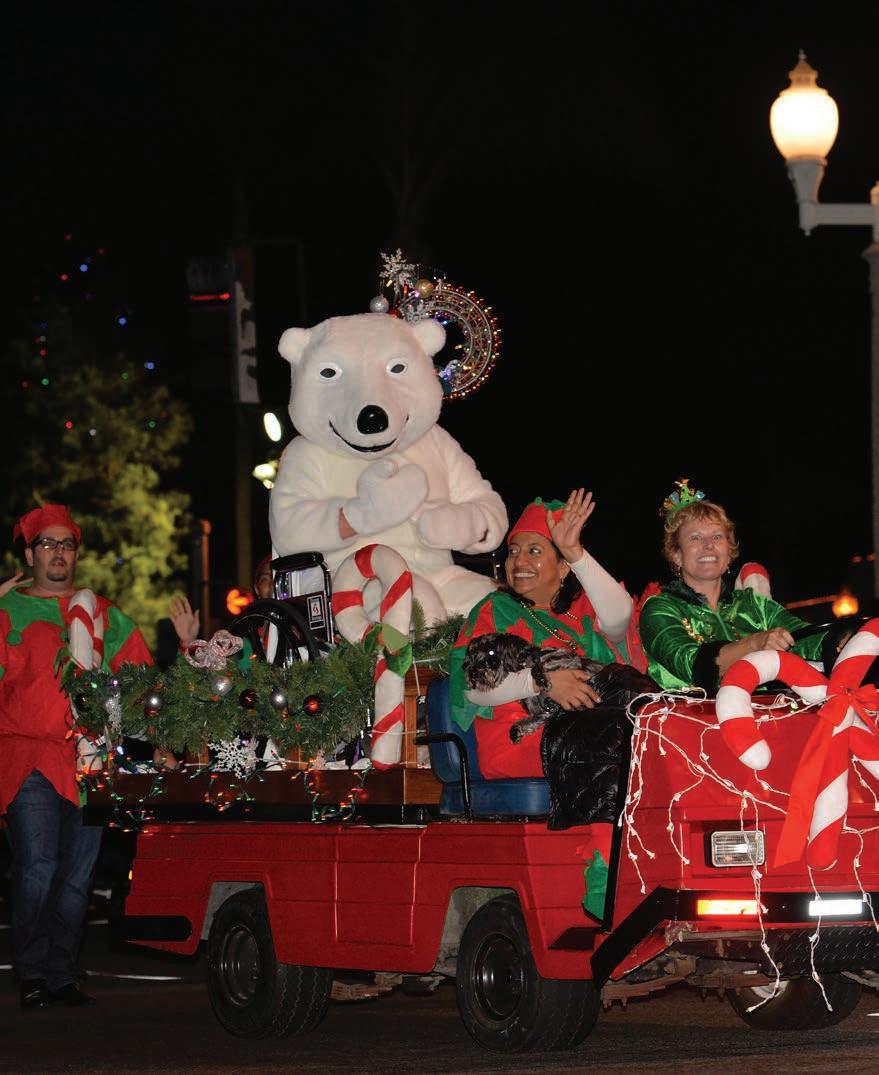
An annual tradition marks its 50th Anniversary with the Coronado Chamber of Commerce Holiday Parade & Tree Lighting. Come on out to welcome Santa Claus as he makes an early visit to town and lights the tree in Rotary Park, you’d better be on your best behavior.
It’s the most wonderful time of the year, and Hattie reminds us to slow down and enjoy the quiet moments (hopefully without a winter cold!) Chris breaks free from the comfort of Grinch-dom and offers a chilly drink for the season with options for all members of the family.
This winter, the Coronado Floral Association invites residents to join in the holiday celebrations with the first Holiday Homefront Judging. You can help bring the community to life with warmth & sparkle.
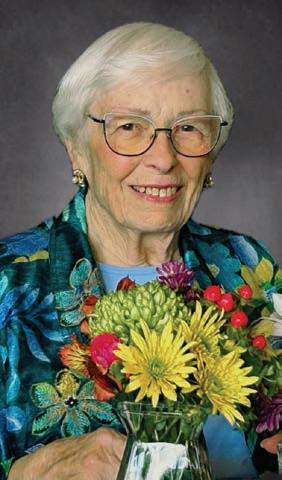
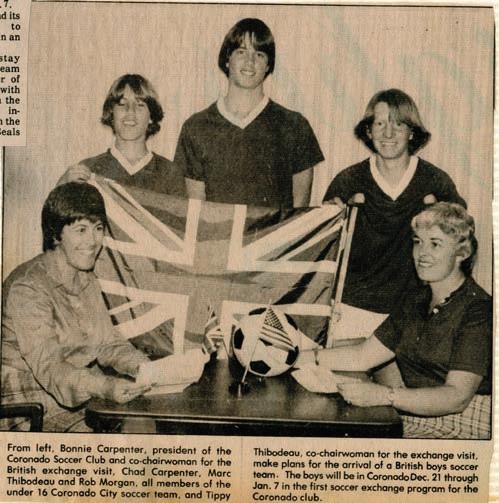
Island Icon, Tippy Thibodeau has a story many in Coronado can relate to ... a one-tour stay in Coronado ... fifty-four years later and she still lives in Coronado, may we all be so lucky!
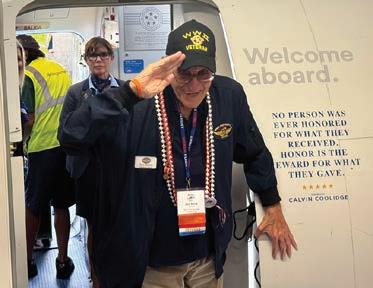
Honor Flight San Diego completed its 31st mission since 2005, and Maria was there to capture it all on camera, sharing a little of that here in the Coronado Magazine. Thank you, Maria, and thank you to all of our veterans.
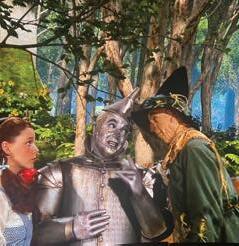
Kris travels the Yellow Brick Road from East to West (with stops in Kansas and Las Vegas along the way) Find Oz along with her, and visit the Hotel del Coronado afterwards as they celebrate “A Holiday in Oz.”
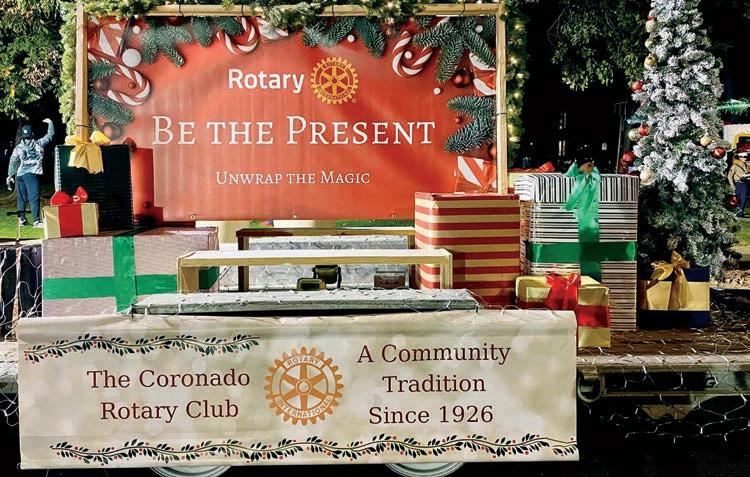
The Christmas Parade is just another slice of the pie that makes Coronado special. Take the family ... I especially suggest the grand-kids (I may have aged myself there) and be sure to enjoy Coronado’s very special kick-off to the season!
CORONADO MAGAZINE
PUBLISHER
Dean Eckenroth
publisher.eaglenews@gmail.com
ASSOCIATE PUBLISHER
Dean K. Eckenroth Jr. editor.eaglenews@gmail.com
Alessandra Selgi-Harrigan
alessandra.eaglenews@gmail.com
Lauren.eaglenews@gmail.com
kel.eaglenews@gmail.com
Christine Johnson christine.eaglenews@gmail.com
eaglenewsbrooke@gmail.com
PHOTOGRAPHER
Hattie Foote
BUSINESS DEVELOPMENT
ADVERTISING DIRECTOR
Patricia Ross
patricia.eaglenews@gmail.com
Callie Pavia
callie.eaglenews@gmail.com
PRODUCTION
Andrew Koorey
PRINTING
Reed
DISTRIBUTION
Roberto Gamez
Copyright
All
OF F I C I A L L E T T ER
H a p p y 5 0 A n n i v e r s a r y o f t h e t h
C o r o n a d o H o l i d a y P a r a d e & T r e e L i g h t i n g !
D e c e m b e r 2 0 2 5
D e a r C o r o n a d o ,
H a p p y H o l i d a y s f r o m t h e B o a r d o f D i r e c t o r s a n d S t a f f o f t h e
C o r o n a d o C h a m b e r o f C o m m e r c e ! T h e r e ’ s t r u l y n o b e t t e r p l a c e t o
c e l e b r a t e t h e s e a s o n t h a n r i g h t h e r e a t h o m e i n C o r o n a d o
T h i s y e a r m a r k s t h e 5 0 t h A n n i v e r s a r y o f C o r o n a d o ’ s H o l i d a y
P a r a d e & T r e e L i g h t i n g , a b e l o v e d t r a d i t i o n t h a t b r i n g s t o g e t h e r
o u r c l u b s , s c h o o l s , b u s i n e s s e s , m i l i t a r y , p e t s , a n d o f c o u r s e S a n t a &
M r s C l a u s W e ’ r e p r o u d t o w e l c o m e b a c k L i l ’ M a c , C o r o n a d o ’ s
r e s t o r e d 1 9 3 9 f i r e t r u c k , a n d i n v i t e y o u t o s t a y f o r t h e C o r o n a d o
C o m m u n i t y B a n d ’ s h o l i d a y c o n c e r t i m m e d i a t e l y f o l l o w i n g t h e t r e e
l i g h t i n g
O u r b e l o v e d t r e e d a z z l e s w i t h o v e r t w o m i l e s o f l i g h t s , t h a n k s t o
t h e g e n e r o u s s p o n s o r s h i p f r o m T h e C i t y o f C o r o n a d o a n d D i s c o v e r
C o r o n a d o .
A s a l w a y s , w e e n c o u r a g e y o u t o “ K e e p t h e C h e e r H e r e ” t h i s h o l i d a y
s e a s o n b y d i n i n g , s h o p p i n g , a n d c e l e b r a t i n g l o c a l l y . E v e r y p u r c h a s e s t r e n g t h e n s o u r s m a l l b u s i n e s s e s a n d k e e p s C o r o n a d o
v i b r a n t
A h e a r t f e l t t h a n k - y o u t o o u r g e n e r o u s t i t l e s p o n s o r , E D C O ,
C a l i f o r n i a A m e r i c a n W a t e r , a n d t o t h e C i t y o f C o r o n a d o , i n c l u d i n g
P o l i c e , F i r e , P u b l i c W o r k s , R e c r e a t i o n , a n d t h e C i t y M a n a g e r ’ s
O f f i c e , f o r t h e e x t r a o r d i n a r y t e a m w o r k b e h i n d t h i s m i l e s t o n e
c e l e b r a t i o n .
W a r m e s t w i s h e s f o r a j o y f u l s e a s o n a n d a b r i g h t y e a r a h e a d
T h e C o r o n a d o C h a m b e r o f C o m m e r c e
Coronado chamber of commerce presents The 50th annual Coronado chamber of commerce presents The 50th annual
CORONADO CORONADO
HOLIDAY PARADE & TREE LIGHTING HOLIDAY PARADE & TREE LIGHTING
Bring your Concert in the Park chair for the Coronado Community Band Holiday Concert immediately following the tree lighting!
Friday, DeC 5th at 6:00pM Friday, DeC 5th at 6:00pM
8Th & orange to rH DANA
8Th & orange to rH DANA
With thanks to::
Coronado Chamber of Commerce 50th Annual Holiday Parade
Coronado Chamber of Commerce
Marine Band San Diego
Coronado Police Department
Assemblymember Tasha Boerner
Mayor of Coronado, City Council and City Manager
CAT Medical Services
EDCO
Discover Coronado
Coronado High School Islander Band
Coronado High School NJROTC
Coronado Marine Corps League
Coronado School of the Arts
Coronado Historical Association
Coronado Academy of Dance
Coronado Island Realty
Noah Homes (Old Town Trolley)
Hotel del Coronado
Coronado Lacrosse Club
Coronado and Imperial Beach Girl Scouts
City Tree Christian School Band
Carefree Pet Care
One Summit
Cub Scout Pack 122
Coronado Skatepark Club
Coronado Junior Arts League
Sharp Coronado Hospital
Camp Able at Coronado
and SDSU Research Foundation
Christ Church Day School
Sacred Heart Parish School
SD Youth Aztecs Football and Cheer
Play Studios
Two Men and a Truck
Coronado Rugby Club
Coronado High School Cheer
H2A Dance Company
Goodwill San Diego
FOCUS
Coronado Youth Soccer League
Coronado Rotary Club
Island Style
Coronado Public Library
Coronado Cheer
San Diego Sharks Pro Basketball
Navy Federal Credit Union
Lincoln High School “Emeralds”
Coronado Aquatics Club
Impact Activities
Sunamis Band
Coronado Lifeguards
Little Mac with Santa Claus
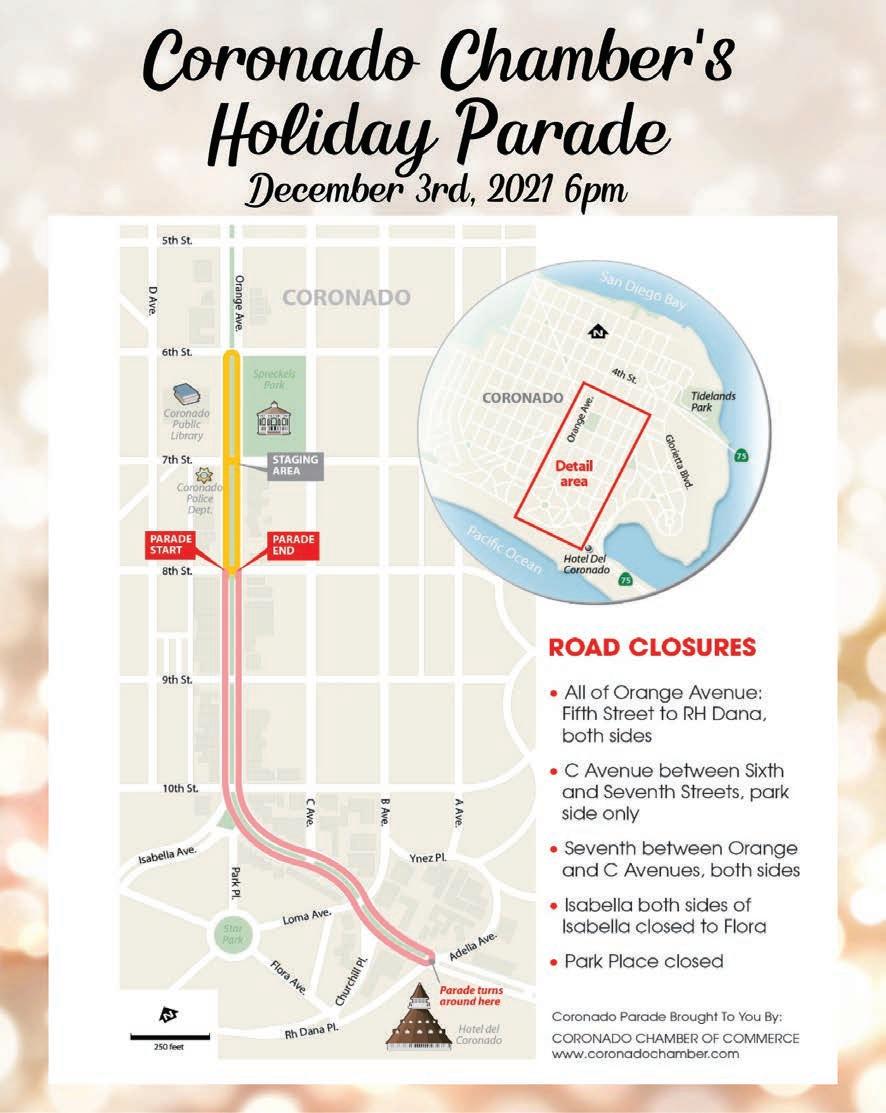
HOLIDAY PARADE ROUTE
December 6, 2024 6:00 pm
5PM-9PM
All of Orange Avenue - Sixth Street to RH Dana Parade stages on Sixth & Seventh Streets C Avenue between Sixth and Seventh Street, park side only
Seventh between Orange & C Avenue, both sides
Isabella both sides, closed to Flora Park Place closed
Fifty Years on Orange Avenue
The Coronado Holiday Parade Celebrates Its Golden Anniversary
For half a century, the Coronado Holiday Parade has transformed Orange Avenue into a corridor of lights, laughter, marching bands, and pure community joy. What began as a quiet candle-lighting procession in 1973—led by Mayor Rolland McNeely and advertised in a small column in the Coronado Eagle & Journal—planted the seeds for what would become one of Coronado’s most beloved civic traditions.
That early Christmas Eve “caroling procession,” which began at First and Orange and ended with Santa’s appearance
at Rotary Park, was simple but meaningful. Neighbors walked, sang, carried candles, and welcomed the holiday spirit together.
In 1975, the Coronado Chamber of Commerce formalized those early gatherings into the first Coronado Holiday Parade.
Today, as the parade reaches its 50th year, Coronado celebrates not only a milestone, but a half-century of memories—of cheering crowds, the glow of the Rotary Christmas Tree, marching Marines, Little League teams, twinkling lights, and the beloved arrival of Santa Claus atop the historic “Little Mack.”
This year’s parade fittingly features 50
Most of all, the parade
thrives because Coronado loves it!
entries, honoring five decades of community, creativity, and Coronado magic.
The first official Coronado Holiday Parade in December 1975 was heartfelt and humble—just the kind of event that small-town Coronado cherished. Organized by the Chamber of Commerce as a way to bring neighbors downtown and spark holiday shopping, it unfolded along a partially closed Orange Avenue where traffic continued to slip by as floats and marchers squeezed through.
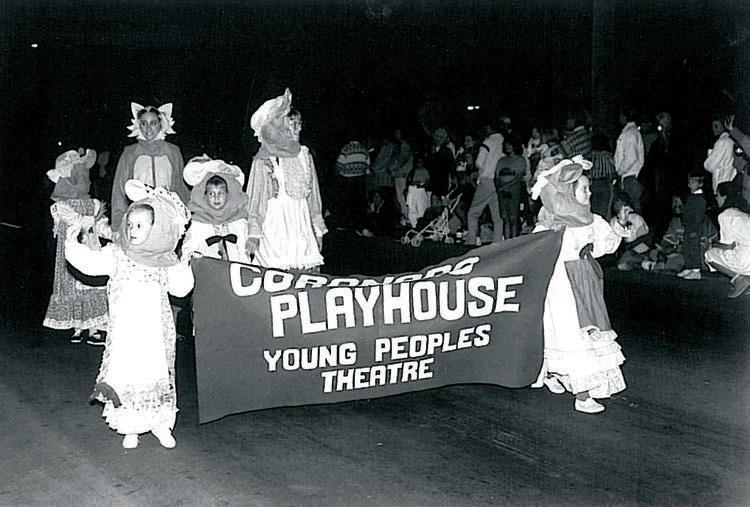
Children rode decorated bicycles. The Coronado High School band marched with pride. Navy drill teams added precision and pageantry. Homemade floats built in garages rattled their way down the avenue. It was charming, chaotic, and instantly beloved.
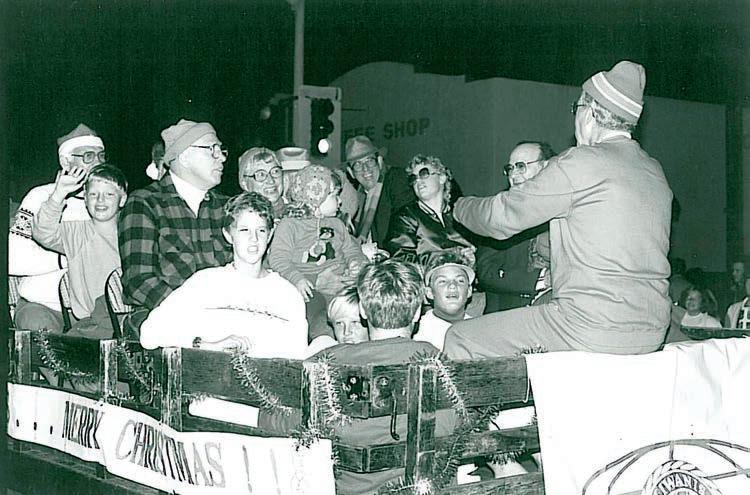
Throughout the 1980s, the parade steadily grew. The pages of the Eagle & Journal chronicled its expansion as youth sports leagues, the Optimist Club, Scouts, Navy bands, and local businesses joined the fun with increasingly elaborate entries.
By the 1990s, Coronado dance studios, gymnastics teams, neighborhood groups, and CORONADObranded business floats filled the lineup. The sidewalks swelled three and four rows deep. Orange Avenue was
no longer hosting a quaint holiday event—it was home to a full-fledged island celebration.
By the late 1990s, the parade’s growing popularity had created logistical challenges. With only half the street closed, spectators overflowed into the roadway, floats threaded past moving cars, and safety concerns mounted.
Enter local resident, Rotarian, and Chamber President Ron Beaubien.
During his presidency in 2000, Beaubien—working closely with Chamber Executive Secretary Mary Kay Forsythe—reimagined what the event could be. He championed a bold, once-unthinkable idea: close the entire length of Orange Avenue for the parade.
It would require:
• A new traffic management plan
• Expanded police and fire staffing
• Updated staging areas
• Extensive outreach to businesses
• A formalized operations plan
• And most challenging of all: approval from Caltrans
Beaubien and Forsythe made repeated trips to Sacramento, navigating red tape and pushing for a permit
that many thought impossible. Caltrans conducted a feasibility study. Merchants were approached personally. The concept evolved from daring to doable.
When the first fully closed-street parade debuted, it was a revelation—safer, smoother, and filled with the kind of magic that only a vehicle-free Orange Avenue could deliver.
Twenty-five years later, that model remains the foun dation of parade operations. And Beaubien’s vision is credited with transforming the event from a smalltown procession into one of San Diego County’s most cherished holiday traditions.
Long before crowds gathered in Rotary Plaza and chil dren counted down to Santa’s arrival, the story of Coronado’s iconic holiday tree began with one man’s dream.
Coronado Parks Director Louis Bandel believed that Coronado needed a true civic gather ing place—a central spot where fami lies could come to gether for community celebrations. Inspired by his own memories of a town square filled with music and warmth, he imagined a space at Or ange and Isabella with a towering evergreen that would one day serve as a Christmas tree.
with his neighbor, City Clerk Art Mathewson, but funding wasn’t available.
The breakthrough came when a resident requested the removal of a 15-foot Star Pine from her property. Bandel offered to take the tree—if it could be donated to the city. With the donor’s approval, he and Mathewson revived the park concept, pitching it not to the city but to the Rotary Club as a possible community service project. Rotary agreed. The tree was planted in 1936. It grew— and so did the tradition.
His son Kenneth, then a high school student, had designed a small street park at that very corner for a mechanical drawing class. Bandel shared the plans
Today, at over 120 feet tall, it stands as Coronado’s living holiday icon.
Each year, after Santa arrives at Tenth and Orange on the Little Mack, he disembarks and walks through the crowd. He, along with the Mayor flips the switch to light the tree—continuing a tradition born from Bandel’s vision, Mathewson’s advocacy, and Rotary’s enduring commit-
For generations of Coronadans, no parade moment is more anticipated than Santa Claus waving from the back of Little Mack, the Coronado Fire Department’s historic 1938 Mack fire
Red lights flash. Children squeal. Parents lift little ones onto their shoulders.
Little Mack is more than a fire engine—it is Coronado’s holiday chariot, a symbol of continuity, nostalgia,
and community love.
In 2020, for the first time in history, the Coronado Holiday Parade was canceled due to the COVID-19 pandemic. The Eagle & Journal captured the community’s heartbreak: the darkened tree, the stillness of Orange Avenue, and the absence of families gathering downtown.
Yet the cancellation only underscored how deeply the parade is woven into Coronado’s identity—and made its 2021 return all the more triumphant.
Record crowds lined Orange Avenue in 2021, cheering as the traditions they loved returned. The following year, the city undertook a major upgrade to the lighting on the Rotary tree—installing 12,000 linear feet of new, energy-efficient lights (just over two miles, the length of the Coronado Bridge). The project, funded jointly by the City and Discover Coronado, ensured the Rotary Tree shines brighter and more beautifully than ever. Last year’s participants and attendees were over 18,000. The parade continues to expand, guided by:
• The Coronado Chamber of Commerce, which coordinates entries, marketing, and operations
• The City of Coronado, which secures the Caltrans permit and provides Police, Fire, and Public Works support as well as a community grant
• Corporate and Business sponsors, Local nonprof-
its, schools, military commands, and businesses that bring the parade to life year after year
Most of all, the parade thrives because Coronado loves it—with a passion that spans generations.
What began in 1975 as a small Chamber event has become one of Coronado’s defining celebrations—a joyful, community-driven tradition shaped by families, civic organizations, businesses, and local leaders who believed in its future.
On Friday, December 5, 2025, Coronado invites residents and visitors to celebrate the 50th Annual Coronado Holiday Parade, featuring 50 entries! The Marine Corps Band lead the procession at 6:00 p.m. Santa lights the Rotary Christmas Tree with Mayor John Duncan at 7:00 p.m. followed by a holiday concert by Coronado’s Community Band at Chase Bank. There will be extended shopping hours from local businesses that support Coronado year-round. Orange Avenue will remain closed until 9:00 p.m. so bring a chair, soak in the music, enjoy the lights, and celebrate a tradition that has grown stronger with every passing year.
Here’s to the next 50 years of lights along Orange Avenue, music in the streets, Santa aboard Little Mack, and a holiday tree that continues to grow just as Coronado’s holiday spirit does—brightly, joyfully, and together.
‘Tis the Season
By HATTIE FOOTE
Last week, I was a chaperone on the 3rd-grade field trip to the San Diego Zoo, and my souvenir was disgusting germs that took me down. So here I lie writing horizontally in a robe, but that’s the life of a showgirl, babe! One darling little girl in my group did hug me and tell me I smelled like a sugar cookie, which felt like the highest compliment as we enter the holiday season! The Mrs. Claus in me was beaming! If you can believe it or not, the most wonderful time of year is upon us. I know, I know, it was just Easter, Fourth of July, Halloween, etc. Time flies! As we know, there is no shortage of holiday spirit in Coronado. I was on a group text with my friends recently, and I couldn’t help but laugh when I looked back at our planning of our annual dinner by the ice-skating rink after sky diving Santa to watch the fireworks at the Del. That’s an insane sentence to write, and it’s giving Real Housewives of the North Pole! While we are at it, get your calendars out because we can’t forget to add the Coronado Annual Holiday Parade and Tree Lighting on December 5th, the Golf Cart Parade on December 13th, and the San Diego Bay Parade of Lights on December 14th and 21st, because if there is something our village loves and does well, it’s a parade!
Some exciting news, this year Village PTO is putting on its firstever Holiday Concert on December 18th! The voices of little angels singing holiday classics, sign me up! This time of year is so magical and chaotic in elementary, I am still recovering from last year’s 2nd-grade gingerbread house party, where we had roofs collapsing from frosting overload, a few meltdowns sharing candy decor, and some design flaws. We are attempting the same party this year; fingers crossed the 3rd-graders avoid the gingerbread drama. It has been bittersweet as my daughter is now in middle school, and the days of class parties are long gone. When you are in the thick of it, the holidays can feel so overwhelming, so much to do, so many places to be. But man, does it go fast. I love every stage with my kids, but don’t be surprised to find me in the attic wearing old clothes and weeping while watching old home movies a la Clark Griswold!
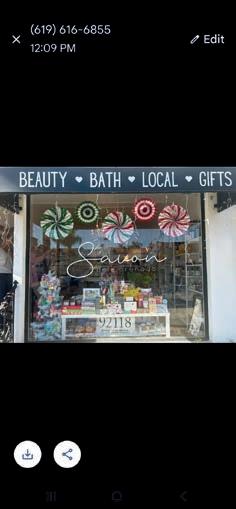
Now, my yearly reminder to shop local this season, I’m going to rapidfire ideas for all your loved ones. Kids: Geppetto’s, 5 Loaves & 2 Fish, Fuzziwigs. Teens/young adults: Savon de Coronado, Urt, Emerald City. Moms: Seaside Papery, Lumo, the True House. Dads: Coronado Fitness Club, Village Theaters, Coronado Hardware. Hostess gifts: Bungalow 56 or Pedal and Stem. Teachers’ gift: The Henry, Tartine, Saiko Sushi. And any rogue gift recipient is always happy to receive a Blue Bridge Hospitality gift certificate! Now go grab a festive drink or treat at Clayton’s Bakery and get to shopping!
I hope everyone has a chance to slow down this season and enjoy the quiet moments. I hope it’s a restful and special time with your friends and family—joy to the world, peace on earth, ho ho ho. Love you, neighbors, see you next year!
Cabbage is at its best during the colder months, making December an excellent time to enjoy this versatile vegetable. As a hardy crop, cabbage thrives even as the days grow shorter and temperatures drop, delivering heads that are crisp, sweet, and full of flavor. Not only is cabbage abundant at this time of year, but it’s also packed with nutritional benefits. Rich in vitamin C, vitamin K, fiber, and antioxidants, cabbage supports immune health, aids digestion, and can help reduce inflammation. Its low-calorie content also makes it a great addition to lighter holiday meals amid the season’s indulgences.
When it comes to preparing cabbage during the holiday season, the options are endless. You can shred it for a festive winter slaw, sauté it with apples and onions as a side dish, or make a classic braised red cabbage to pair with roasted meats. Cabbage also shines in soups and stews, adding heartiness and nutrition. For a holiday twist, try stuffing cabbage leaves with a spiced rice and nut mixture, or roast thick cabbage steaks in the oven with olive oil and herbs. Whether raw, sautéed, fermented as sauerkraut, or roasted, cabbage adds freshness, crunch, and color to holiday tables.
Photo by SAMMY JOHNSON
... Jack Frost Is Nipping At Your Nose
The winter season is upon us and with that comes the most festive month of the year. December is a time for families, celebration, religious holidays and resolutions. But no matter how hard we try and escape it, December begins with wrapping paper and bows.
I myself have spent most of my adult life as the “Grinch”. The changing of the guard from Halloween to Christmas overnight in OCTOBER has always been too much for me. It seems to take the spirit of the holiday away and shove it right in our face. Isn’t it healthier to take down the ghosts, eat some turkey in November and then break out the blow-up Santa and his reindeer for the front yard? But alas we live in Coronado and this may be the happiest and most decorated place on earth at Christmas.
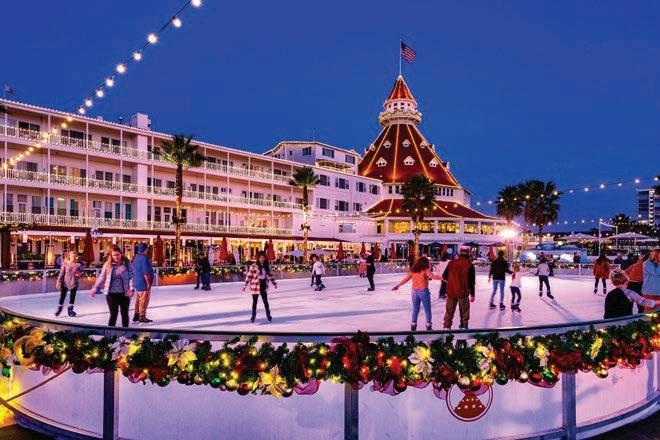
Time to dispose of the furry green suit and replace it with a red one and board the sleigh. There are so many things to enjoy on this island over the holidays. The Del Christmas lights and incredible tree with decorations a plenty. An ice skating rink right by the ocean. Hot chocolate and marshmallows in the crisp California air. And the annual drive down Candy Cane Lane to view beautiful homes decorated just to bring joy to neighbors and visitors alike.
Once the presents are wrapped and the kids have gone to sleep awaiting Santa’s arrival, here’s a treat for the adults who have done the work to make everyone’s Christmas and Hanukkah special. End the season and begin your resolutions with Jack Frost nipping at your nose. It’s a relaxing and wintery concoction sure to keep the Grinch inside away.
HAPPY HOLIDAYS!!
Frozen Jack Frost
INGREDIENTS
*2 ounces tequila
*1.5 ounces pineapple juice
*1 ounce blue curacao
*1 ounce cream of coconut
*1 cup ice
*Shredded coconut
*Simple syrup
MIXOLOGY
Place a small amount of shredded coconut on a plate
Brush the rim of your glass with a small amount of simple syrup
Roll the rim of your prepared glass in the shredded coconut (**if you don’t like coconut use sugar as a substitute)
Place tequila, pineapple juice, blue curacao, cream of coconut and ice in a blender.
Blend the drink ingredients till slushy
Pour into holiday glass trimmed with coconut (or sugar)
MIXOLOGY (no alcohol for the kids)
Pineapple juice
Cream of coconut
Drop of blue food coloring
Ice
Simple syrup
Shredded coconut (or sugar)
Blend the pineapple juice, cream of coconut, food coloring and ice in a blender. Trim the glass with simple syrup and coconut (or sugar). Pour frozen drink into a fun holiday glass.
Park Place Liquor & Deli 1000 Park Place (619) 435-0116
Peohe’s Ferry Landing (619) 437-4474
Roppongi
800 Seacoast Dr, IB (619) 631-4949
Rosemary Trattoria
1330 Orange Ave. (619) 435-8272
Swaddee Thai 1001 C Ave. (619) 435-8110
Tartine 1106 1st St. (619) 435-4323
Tavern 1310 Orange Ave. (619) 437-0611
The Henry 1031 Orange Ave. (619) 762-1022
The Little Club 132 Orange Ave. (619) 435-5885
Trident Coffee
Villa Nueva Bakery Cafe
Village Pizzeria Bayside
Elliott Lauren
W H E R E B E A U T Y
T A K E S R O O T
T H E L I V I N G H I S T O R Y O F C O R O N A D O ’ S H O M E F R O N T T R A D I T I O N
T h i s w i n t e r C F A i n v i t e s r e s i d e n t s t o b r i g h t e n t h e i r h o m e s w i t h h o l i d a y l i g h t s , b l o o m s , a n d d é c o r
f o r a c h a n c e t o e a r n t h e H o l i d a y H o m e F r o n t t i t l e R e a d o n f o r a n o v e r v i e w o f C F A ’ s H o m e F r o n t
J u d g i n g p r o g r a m t h a t e n c o u r a g e s c o m m u n i t y b e a u t i f i c a t i o n t h r o u g h t h e l o v e a n d u s e o f f l o w e r s
I n C o r o n a d o , b e a u t y i s m o r e t h a n
s o m e t h i n g w e a d m i r e I t i s s o m e t h i n g w e
c u l t i v a t e , n u r t u r e d i n w i n d o w b o x e s ,
t r a i n e d a l o n g w i n d i n g f e n c e s , a n d c a r r i e d
f r o m o n e g e n e r a t i o n t o t h e n e x t l i k e a
c h e r i s h e d f a m i l y s t o r y N o w h e r e i s t h a t
s t o r y m o r e a l i v e t h a n i n t h e C o r o n a d o
F l o r a l A s s o c i a t i o n ’ s b e l o v e d H o m e F r o n t
J u d g i n g , a t r a d i t i o n w o v e n t h r o u g h m o r e
t h a n a c e n t u r y o f i s l a n d l i f e
I t s o r i g i n w a s s i m p l e , a l m o s t h u m b l e I n
t h e e a r l y d a y s o f t h e C o r o n a d o F l o w e r
S h o w , n e i g h b o r s d r e s s e d t h e i r p o r c h e s
a n d f r o n t g a r d e n s i n t h e i r s p r i n g b e s t ,
h o p i n g t o c a t c h t h e e y e o f v o l u n t e e r
j u d g e s w h o w a n d e r e d t h e s t r e e t s w i t h
c l i p b o a r d s a n d q u i e t a d m i r a t i o n B u t t h e
m e a n i n g w a s f a r r i c h e r I t w a s a r i t u a l o f
p r i d e , o f h o s p i t a l i t y , o f s a y i n g t o t h e
w o r l d : W e c a r e f o r t h i s p l a c e a n d e a c h
o t h e r
O v e r t i m e , t h e t r a d i t i o n d i d m o r e t h a n
e n d u r e . I t e v o l v e d W h a t b e g a n a s a
c h a r m i n g a c c o m p a n i m e n t t o t h e F l o w e r
S h o w g r e w i n t o a n i s l a n d - w i d e
c e l e b r a t i o n o f c r e a t i v i t y , s t e w a r d s h i p , a n d
c o m m u n i t y s p i r i t C h i l d r e n l e a r n e d t h e
n a m e s o f f l o w e r s b y w a t c h i n g t h e i r
p a r e n t s t r i m t h e b o u g a i n v i l l e a b e f o r e
j u d g i n g d a y , t h e a r t o f p r u n i n g t h e r o s e
b u s h t o b r i n g o u t t h e b e s t b l o o m s , o r t h e
i m p o r t a n c e o f d r o u g h t - r e s i s t a n t p l a n t s .
L o n g t i m e r e s i d e n t s s h a r e d a d v i c e o v e r
f e n c e s A n d e v e r y A p r i l , C o r o n a d o
b l o o m e d i n m o r e w a y s t h a n o n e
T h e C o r o n a d o F l o r a l A s s o c i a t i o n w i d e n e d
t h e c i r c l e e v e n f u r t h e r R e c o g n i z i n g t h a t
b e a u t y i s n o t b o u n d t o a s i n g l e s e a s o n ,
C F A e x t e n d e d t h e H o m e F r o n t t r a d i t i o n
i n t o s u m m e r b y i n t r o d u c i n g t h e
c o m m u n i t y ’ s f i r s t - e v e r F o u r t h o f J u l y
H o m e F r o n t J u d g i n g R e d , w h i t e , a n d b l u e
w a v e d f r o m v e r a n d a s , g a r d e n s b u r s t w i t h
c o l o r , a n d n e i g h b o r s o n c e a g a i n
m s e l v e s t a l k i n g , l a u g h i n g ,
g , a n d c o l l a b o r a t i n g
T h i s a l l p r o v e d t h a t t h e f l o r a l s p i
C o r o n a d o t h r i v e s j u s t a s v i b r a n t t h e J u l y s u n a s i t d o e s b e n e a t h s p
c a n o p y N o w , a s w i n t e r a p p r o a c h e s , a n e w
c h a p t e r b e g i n s
F o r t h e f i r s t t i m e , C o r o n a d o w i l l c e l e b r a t e
t h e h o l i d a y s w i t h H o l i d a y H o m e F r o n t
J u d g i n g , h o n o r i n g t h e m a g i c o f s e a s o n a l
f l o r a s u c h a s e v e r g r e e n s , b e r r i e s ,
a m a r y l l i s , p o i n s e t t i a s , a n d m o r e T h i s i s a n
i n v i t a t i o n t o e m b r a c e t h e b e a u t y t h a t
t h r i v e s i n c o o l e r m o n t h s , t o l e t c r e a t i v i t y
s p i l l i n t o t h e s e a s o n o f g a t h e r i n g ,
g r a t i t u d e , a n d l i g h t
P l e a s e j o i n u s t h i s s e a s o n i n i l l u m i n a t i n g
y o u r h o m e w i t h h o l i d a y l i g h t s ,
s h o w c a s i n g y o u r w i n t e r b l o o m s , a n d
s p r e a d i n g s e a s o n a l c h e e r
T h e c o n t e s t i s f r e e a n d o p e n t o a l l
C o r o n a d o a d d r e s s e s , i n c l u d i n g s i n g l e -
f a m i l y h o m e s , a p a r t m e n t s ,
c o n d o m i n i u m s , a n d m i l i t a r y h o u s i n g
W e e n c o u r a g e e v e r y o n e t o p a r t i c i p a t e
a n d h e l p b r i n g t h e c o m m u n i t y t o l i f e w i t h
w a r m t h a n d s p a r k l e J u d g i n g w i l l t a k e
p l a c e a t d u s k t o i n c l u d e t h e g l o w o f h o l i d a y l i g h t i n g
E n t e r b y D e c e m b e r S e v e n t h
P r e l i m i n a r y J u d g i n g t a k e s p l a c e
D e c e m b e r E i g h t & D e c e m b e r N i n t h
F i n a l J u d g i n g c o n c l u d e s o n D e c e m b e r
T e n t h
T h e f i r s t f i f t y p a r t i c i p a n t s t o e n t e r w i l l
r e c e i v e a s p e c i a l c o m m e m o r a t i v e
k e e p s a k e , a n d t h e t o p h o m e w i l l e a r n t h e
i n a u g u r a l H o l i d a y H o m e F r o n t T i t l e a
n e w h o n o r c e l e b r a t i n g C o r o n a d o ’ s p r i d e ,
c r e a t i v i t y , a n d f e s t i v e c o m m u n i t y s p i r i t
t h r o u g h t h e l o v e o f h o r t i c u l t u r e a n d
f l o w e r s
V i s i t C o r o n a d o F l o w e r S h o w c o m t o e n t e r
C o l b y F r e e r , C F A C o - P r e s i d e n t
MOLLY
BROKER
619.985.2726
DRE# 01876062
MollyHainesMcKay@gmail.com
CARRIE
619.630.3570
DRE# 01999494
CarrieMickel@bhhscal.com
LINDSEY
SALES ASSOCIATE
619.405.9208
DRE# 01993229
LindseyBLyons@gmail.com
McKayandAssociatesHomes.com
Island Icon:
Tippy Thibodeau Tippy Thibodeau
By KIMBALL WORCESTER , Coronado Historical Association Volunteer
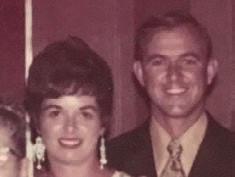
Tippy Thibodeau (née Linda Gary) arrived in Coronado from the East Coast on January 1, 1971, with four young children in tow and expecting another, who was born three months later. The idea was a one-year stay in Coronado while her husband, Navy dentist Dick Thibodeau, went to Vietnam. Fifty-four years later, Tippy still lives in Coronado.
Their first house was at 721 Coronado Ave., which they had to vacate after their first year on the island, during which the fifth and final Thibodeau child was born. With the help of neighbors and new friends, with Dick still in Vietnam, there was a bucket brigade of Thibodeau children and their belongings moving down the street to 901 Coronado Ave., which remains the Thibodeau home today. One of those great neighbors was the Smith family on Coronado Ave., who are still their great friends. Nori Smith helped manage all the children, hers and Tippy’s, on moving day.
Tippy was born in Raleigh, NC, in September 1939. Her family owned a beverage bottling company and had recently developed a new grape soda, whose slogan was “Take a tip, drink a Tip.” The hospital nurses called her the “Tip baby,” and thus she was known as Tippy ever since. Tippy recalls the war years: “As many businesses were affected during the war, because of the rationing of the sugar and the gasoline for the delivery trucks, they closed the business. They kept the patent, but they closed all the plants, and the sons went into the military, and my grandfather started another business.” Her father, Fred (always called Fred by his childrena and grandchildren), volunteered for the Navy in 1942. She thought he was a fireman because he was wearing a uniform. The family spent the war
in Alexandria, VA, a time that Tippy remembers fondly. “Washington has always been my favorite city. I love all the architecture and the museums.
On a Saturday, my father might say, ‘Well, let’s go to the Capitol and walk around a little bit.’
Like you would here go to Balboa Park. And I remember seeing senators riding in that tram with vice presidents sitting next to me. I saw Harry Truman walking up and down the street with a few Secret Service people. It was just so different than it is now.”
By 1952, the family was in Guam for several years. Then Fred was posted to Philadelphia, where Tippy graduated from high school. Next stop was North Island, and Tippy entered the San Diego College for Women (now the University of San Diego). During her senior year, her parents were posted to Yokohama, so Tippy and her spirited maternal grandmother (nicknamed “Wee”) rented an apartment together in San Diego. “One of the best years of my life, that year with her. She was the chaperone.”
Having graduated from college, Tippy joined her parents in Yokohama, where she met and married Navy dentist Dick Thibodeau in 1962. By the time the family arrived in Coronado in 1971, they had been posted in Pensacola and Bethesda. Tippy was a Vietnam Wife, raising five children in Coronado in the 1970s with the stalwart group of wives here who helped each other during demanding
times, as Navy wives do. Two of her earliest Coronado community activities began at that time: the Above Average Book Club, as co-founder in 1972, and still active, and the Coronado Navy Swim Association as a board member in the 1970s. There was volunteer work and substitute teaching at her children’s school, Sacred Heart Parish School, as well as playing tennis with her lady friends at the Hotel Del courts. Tippy’s subsequent significant contributions to
the community include, among others, the American Cancer Society, Coronado, and its “Daffodil Days” fundraiser; the July 4th Parade Committee; the Children’s Home Society, Coronado; the Sand Dollar$ Investment Club, founding member in 2000 and still active; and the Soroptimist International of Coronado since 1990. Tippy was Soroptimist of the Year, 2006. When asked about how her character developed, Tippy responds, “I am the oldest child, and I am the oldest daughter. When I grew up, I had a lot of responsibility with three siblings, younger siblings, a father who was not at home a lot during the war. And then even after the war, he traveled in the Navy a lot. So, I think I just had to kind of take charge of my life.”
Tippy is a gracious and witty individual, a vibrant intellectual who believes in making hay while the sun shines. Her family rallies around her daily and has been her rock since the death of Dick in 2023. Tippy is thought of with fondness and gratitude by those who were friends of her teenage children in the 1980s as a warm and understanding parent who welcomed everyone regardless of the shenanigans going on around her. All who know her could not think of a better Coronado Island Icon than the beloved Tippy Thibodeau.
True to its mission to serve as Coronado’s primary center for community history, the Coronado Historical Association (CHA) conducts special oral history interviews with Coronado natives and long-time residents. This special, ongoing project is called “Island Icons.” Oral history is critical to capturing local history because it helps us record information and stories that might otherwise go undocumented. Local history is not included in national textbooks or history books, so it is up to organizations like CHA to collect these important first-hand accounts and memories for the future. Island Icons stories are permanently archived at CHA. More information about the program can be found at coronadohistoryexhibit.org.
Your New Home Awaits This Holiday Season
3
5
“We can’t all be heroes. Some of us have to stand on the curb and clap as they go by,”
- Will Rogers
Mission Accomplished: Honor Flight San Diego
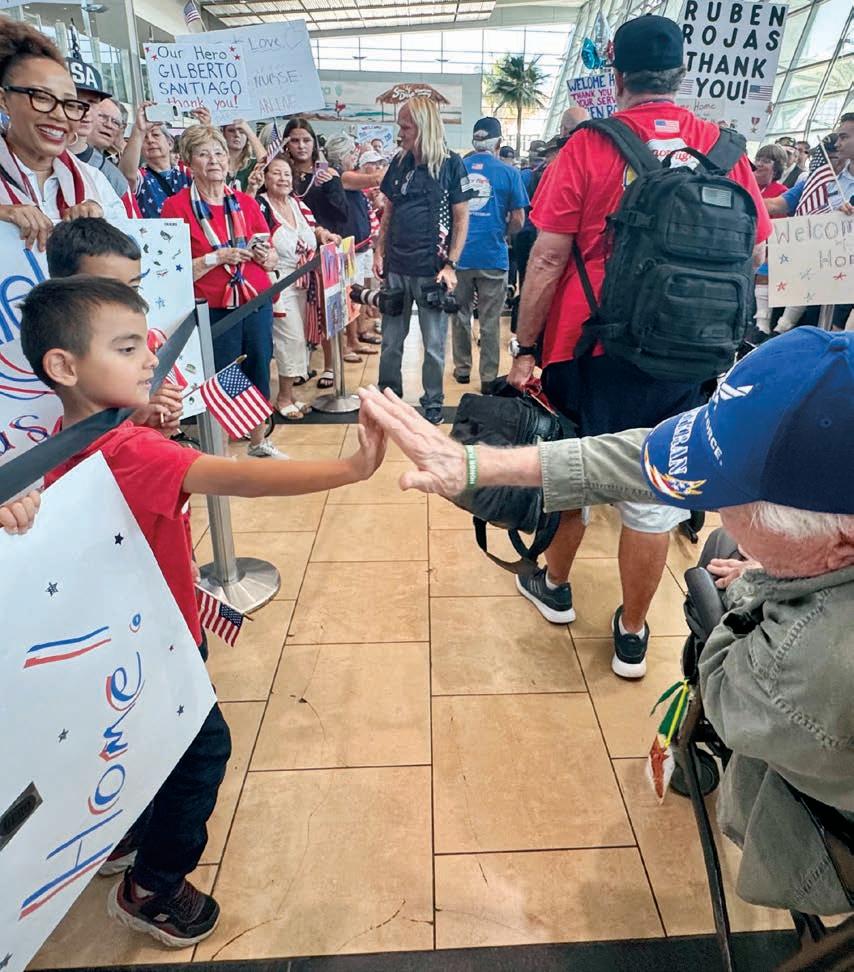
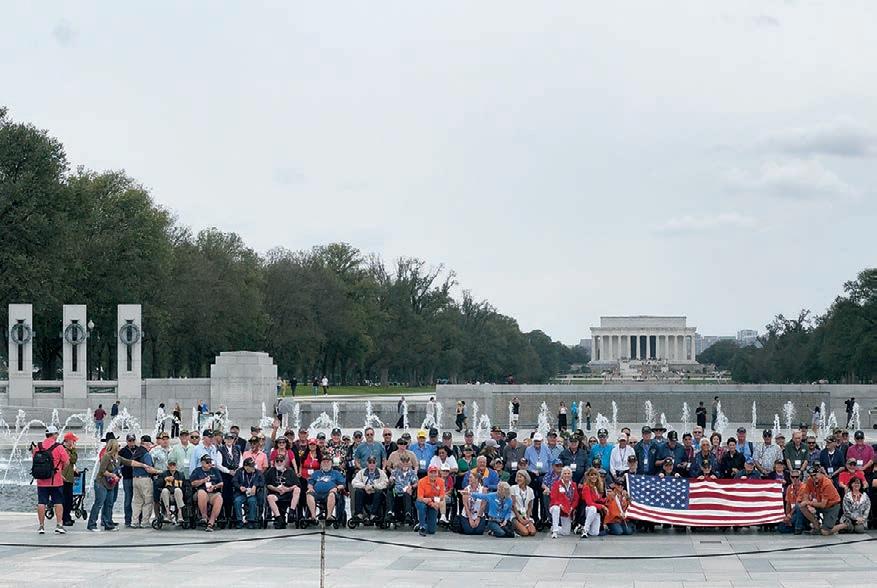
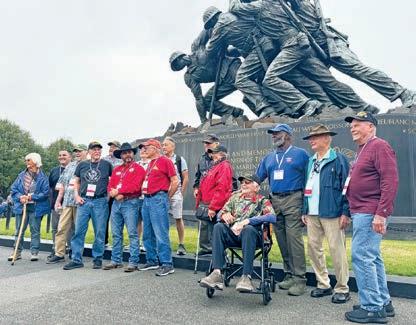
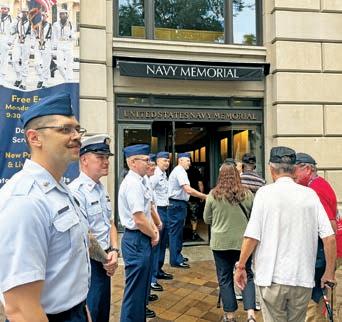
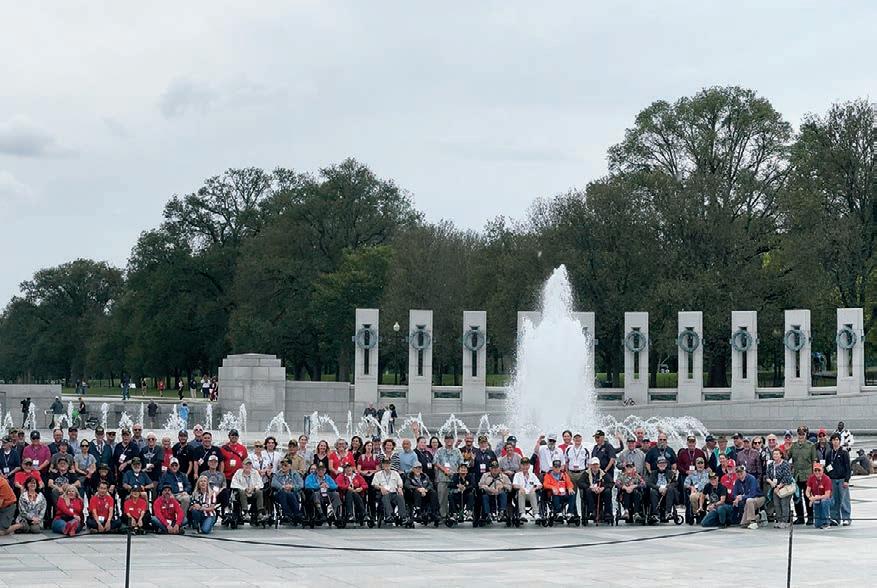
Honor Flight San Diego (HFSD), part of the national Honor Flight Network, is a volunteer-driven nonprofit that transports veterans to Washington, D.C. to visit the memorials that have been built in their honor. Each three day trip involves moving nearly 200 people across the country and requires six months of planning. HFSD organizes two trips per year, in the fall and spring, and is funded entirely by donations. Volunteers handle everything - screening veterans, coordinating medical needs, organizing over 8,000 “mail call” letters, arranging transportation and ceremonies, and ensuring a warm welcome throughout the journey. The recently completed September 2025 mission included 90 veterans, supported by more than 100 volunteers and a specially decorated Alaska Airlines plane.
31st Mission Since 2005
Coronado residents play a strong role in HFSD’s operations and were also represented among the honored veterans. Local leaders like HFSD Chairman and Flight Director Julie Brightwell and Board member Lisa Gary work year round to help manage the complex logistics, and key volunteers like Bret Gary, Bridget Stohl, Leslie Granger, and Brian Ellis provide critical trip support. Coronado veterans are almost always among those on Honor Flight trips. In September Coronado veterans Jim Callaway and Ken Wilson described the trip as profoundly meaningful.
Emotional highlights included a motorcycle escort, heartfelt mail call letters, and a flag presentation honoring two Vietnam-era nurses. The journey culminated in a powerful homecoming at the San Diego airport, where thousands of supporters welcomed the veterans as heroes, an especially poignant moment for Vietnam veterans who had never received such recognition. HFSD continues its mission with dedication and gratitude, ensuring America’s veterans are honored with the respect they deserve.
To donate, volunteer, shop, and find out more information about HFSD visit honorflightsandiego.org
Finding Oz
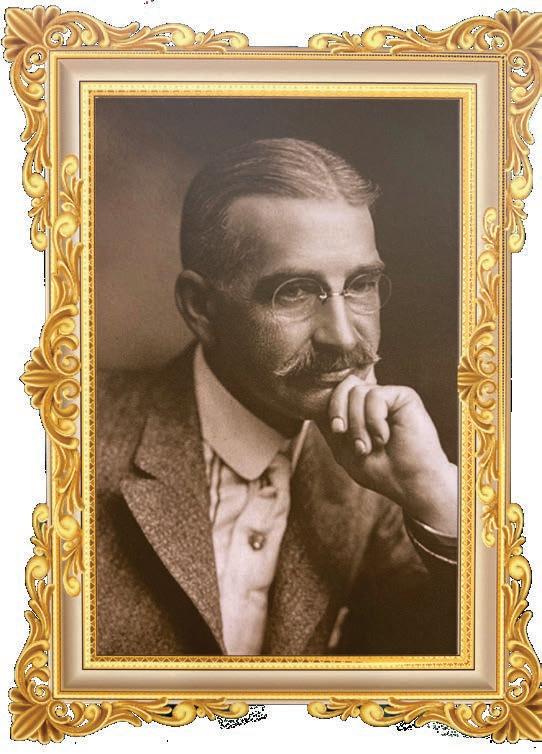
L. Frank Baum was the author of The Wonderful Wizard of Oz, 13 more Oz books and many other books, both fiction and non-fiction.
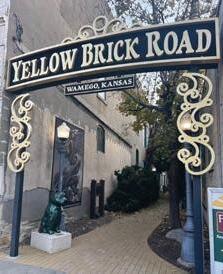
This year I “followed the yellow brick road” to L. Frank Baum’s birthplace in upstate New York, to the Oz Museum in Wamego, Kansas, to the Sphere in Las Vegas and to what he termed “Paradise” – Coronado, California.
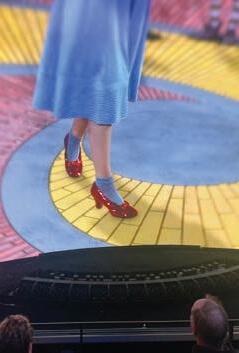
The Wizard of Oz at The Sphere enhances the story of Oz through brilliant colors, expanded set designs and special effects that bring the viewer inside the experience.
Photographs and Story by KRIS GRANT
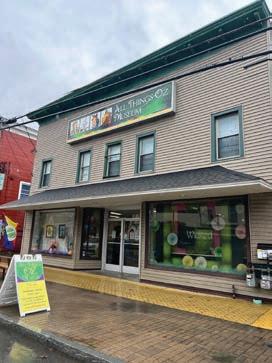
My first stop on my Finding Oz trek was at the All Things Oz Museum in L. Frank Baum’s birthplace of Chittenango, New York.
Long before Dorothy, the Scarecrow, and the Yellow Brick Road became household names, Lyman Frank Baum spent his childhood along a very real corridor of American commerce: the Erie Canal. Baum was named after his uncle, but he never liked the name Lyman and went by Frank.
In upstate New York, there lies the small village of Chittenango, with canals running through the town and the Chittenango waterfall that is taller than Niagara Falls five miles out that draws tourists from around the state and beyond. This is where L. Frank Baum was born in 1856, the seventh
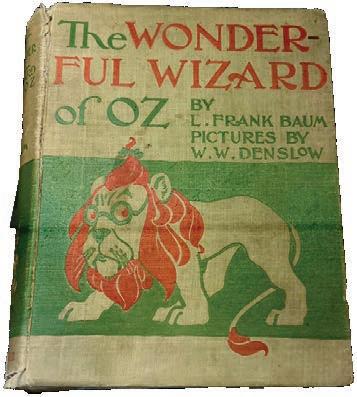
The Wonderful Wizard of Oz, published in 1900, was one of the most innovative and elaborately produced children’s books of its era. It featured 24 full-color plate illustrations, plus drawings that surrounded the text, printed in two or three colors, and different colors used to accent each chapter, such as green for Emerald City scenes and blue for Munchkin country.
of nine children, only five of whom survived to adulthood.
Frank’s father, Benjamin Ward Baum, was a hardworking craftsman who initially made barrels for butter, oil, and other canal-bound goods. It was demanding work that required skill and precision. Benjamin eventually turned his attention to oil lubricants, creating a formulation known as Baum’s Castorine, a castoroil-based product designed to keep machinery running smoothly. While this did not make the family wealthy, it elevated their standing and allowed Benjamin to purchase four acres of land in the village of Mattydale north of Syracuse. There he built a home and soon acquired an additional 80 acres and named the estate Rose Lawn.
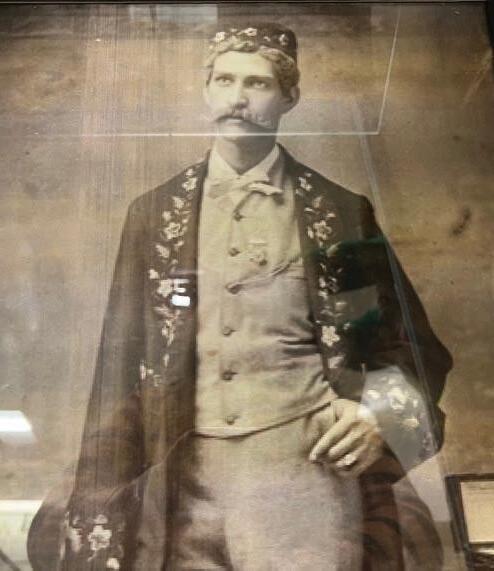
Using the stage name of Lewis F. Baum, Frank Baum launched a fairly successful playwriting and acting career as a young man.
At Rose Lawn, Frank received a gift that would change his life: a small printing press. He eagerly set type, inked plates, and published his own neighborhood paper, The Rose Lawn Home News. From the start, Frank combined entrepreneurial energy with storytelling, nurturing a lifelong passion for both words and performance. He quickly expanded from publishing into theater, producing plays with neighborhood children, siblings, and cousins, and developing the narrative instincts that would serve him throughout his life. By the way, Frank quit school around the 10th grade, his father believing that real-life experiences in commerce would provide an ample education. Frank did, however, continue to read voraciously.
As Frank moved into young adulthood, his theatrical ventures grew, and he produced, managed and acted in plays, touring towns from Syracuse to Rochester and across the Finger Lakes. In his successful play, The Maid of Arran, for which Baum wrote the script, lyrics and music and in which he acted, he also toured into the Midwest states of Indiana, Michigan and Kansas.
At the All Things Oz Museum in Chittenango I met with museum manager Allison Lehr. She told me that it was town librarian Clara Houck who first called the citizens’ attention to the fact that Chittenango was Baum’s birthplace. She organized a celebration on May 15, 1978, with children dressed up as Oz characters. They paraded around
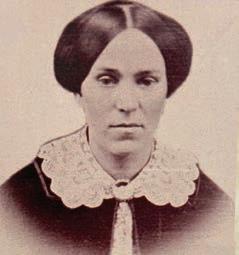
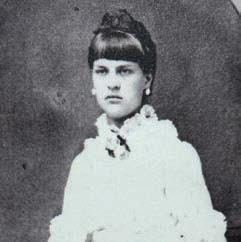
Matilda Joslyn Gage, Frank Baum’s mother-in-law, was a leader in the abolitionist and women’s rights movements. Married to successful merchant Henry Hill Gage, their home became a hub for suffragette and Underground Railroad activities. In many ways, Frank Baum received his education through his Gage relatives, and it was Matilda who encouraged him to write down his stories.
Maud Gage Baum often typed her husband’s manuscripts and accompanied him on promotional tours.
the library parking lot and then went inside and sang Happy Birthday to L. Frank Baum.
That event marked the beginning of what is now Oz-Stravaganza, a three-day festival (in 2026, the event runs June 5 – 7) that is now the largest and longest running Wizard of Oz themed festival in the world, with about 30,000 people attending each year. Many participants come from New York City, including celebrities from the Broadway production of Wicked.
The All Things Oz Museum was founded in 2011. Run by the non-profit International L. Frank Baum & All Things Oz Historical Foundation, the museum owns more than 16,000 Oz-related items, with about 1,600 displayed on a rotating basis. Highlights include first and second editions of Baum’s 14 Oz Books and costumes and props from various Oz movies and play adaptations.
“Frank Baum was a storyteller from the time he was a young man,” Lehr told me. “He was an actor, a journalist and a playwright.”
Alluding to the wavering financial success that Baum would encounter throughout his life, she said, “He was a visionary, and I think that’s part of the reason for his struggles. He had these grandiose ideas that the world was just not ready for.”
She also told me the story of how he came to meet his wife, Maud.
“It’s such a romantic story, very Jane Austin,” Lehr said. “They met at his sister’s house. Frank’s aunt wanted him to meet Maud, her daughter’s roommate at Cornell University. That these two women were students at Cornell was, in itself, quite groundbreaking. ‘I know you’re going to love her,’ his cousin told Frank.
“And then Frank meets Maud and says, ‘Good Evening, Miss Gage. Consider yourself loved.’
“Maud was the daughter of Matilda Joslyn Gage, a famous suffragette and abolitionist, quite intellectual and outspoken. Her home in Fayetteville, New York was a gathering place for suffragettes including Susan B. Anthony and Lucy Cady Stanton.
“Maud, exhibiting a similar formidable spirit, was every bit Baum’s equal and came back with, ‘I consider that a promise, Mr. Baum, and I expect you to live up to it.’”
While Maud was immediately smitten, her mother bristled. She disapproved of her daughter’s interest in a young man who toured with acting troupes, describing entertainers as financially unstable and unreliable. But Frank’s sincerity, devotion to Maud, kind demeanor and respect for her ideas won Matilda over. She came to believe in Frank’s character and talent, ultimately becoming one of his staunchest supporters.
Frank and Maud married in 1882, and life in the early years was a mix of performance, travel, and entrepreneurial ventures. In New York, Frank opened a dry goods store and submitted articles to local newspapers.
All Things Oz Museum
Open Wednesday – Sunday 10 a.m. – 5 p.m.
Admission, $9, adults; children under 10, free www.allthingsoz.org
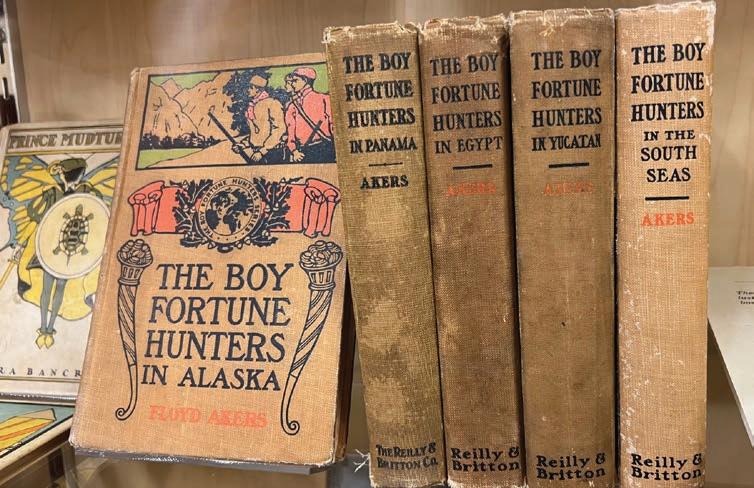
Baum often wrote under several pen names, including Floyd Akers, or, as he playfully referred to as “F. Akers.”
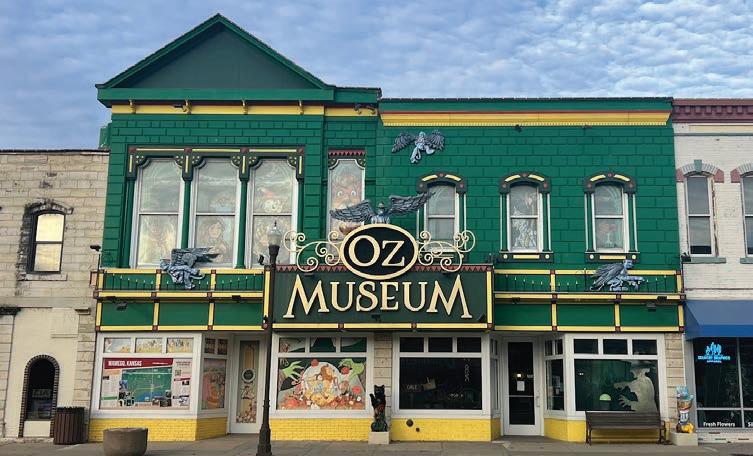
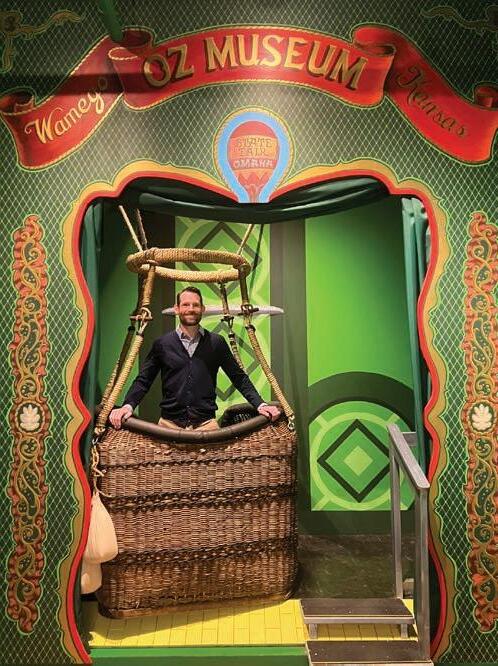
The Oz Museum, Wamego, Kansas
There’s no telling where Dorothy Gale and her family actually lived in Kansas, but Wamego would be a likely spot. Deep in the heart of the state, this is a farming town where hay, corn, beans and milo grow and the “Welcome to Wamego” sign is posted on the Firestone/Bridgestone tire store. In the center of town is Vanderbilt’s whose sign above the window reads “Work Boots – Workwear – Outerware - Hunting Boots - Casual Footwear and More.”
I met up with Oz Museum and Columbian Theatre Foundation executive director Clint Stueve, who picked up the story of Baum’s odyssey westward:
When Maud’s brother Harry and his wife Sophie moved to the emerging railroad and farming town of Aberdeen in the Dakota Territory, Frank and Maud followed, with Frank believing he could make a fortune by opening an upscale dry goods store there. He was sadly mistaken, and soon found that
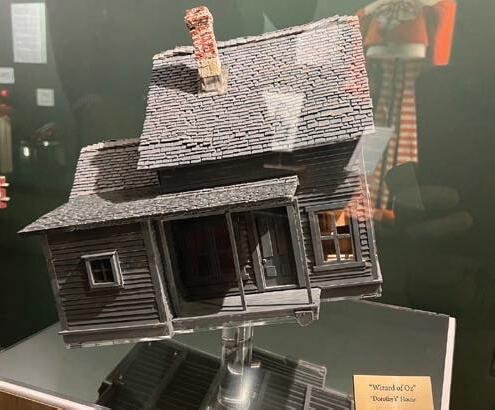
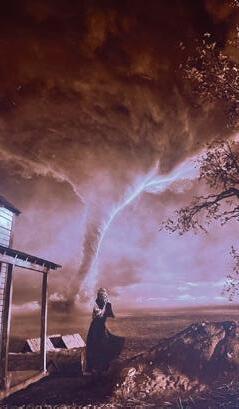
One of the exhibits at The Oz Museum was a miniature replica of Dorothy’s House used in filming the tornado scene. Production artists dropped the house onto a painting of a sky, then reversed the film to create the effect of it being lifted by the tornado.
settlers in the rural economy, beset with harsh winters and drought, could only afford basic necessities. Frank, never the businessman, extended credit and soon was encumbered with widespread debt that led to the store’s collapse. Frank briefly returned to journalism, editing the Aberdeen Saturday Pioneer, but financial stability remained elusive.
During this period, the Baums welcomed four sons—Frank Jr., Robert, Harry, and Kenneth—and Frank began telling them elaborate bedtime stories. His astute mother-in-law recognized
that Frank’s stories were rich in imagination, full of magical lands and brave good-hearted characters. Matilda encouraged him to write the tales down on paper, planting the seeds of his future as a children’s author.
With his failing frontier ventures behind him, Frank turned to selling china and crockery. He moved with his family to Chicago in 1891, just as the Columbian Exposition was beginning to take shape.
The 1893 World’s Columbian Exposition left an indelible mark on
Baum. He was captivated by the white palaces, electric lights, mechanical marvels, and exotic cultural displays. These sights—full of wonder, color, and spectacle—would resonate in his later writing, providing inspiration for the visual richness of Oz’s Emerald City.
As a traveling salesman, he covered vast territories in the Midwest, spending weeks or months away from his family at a time. The work was demanding, but the long hotel stays and train rides offered him time to think, write, and develop new stories.
Just as his barrel-making father had identified and then met a need for a new industrial product that gave his family financial stability, Frank’s work selling china led him to an entrepreneurial achievement. He recognized a shift in retail: storefronts now featured large plates of glass, and shopkeepers needed to learn how to design their windows to attract customers. Drawing on his experience with china and his theatrical background, Baum launched a trade magazine in 1897 called The Show Window: A Journal of Practical Window Trimming, giving advice to merchants on how to stage their wares. This venture proved financially successful enough that he was able to leave his grueling traveling salesman life and turn his attention to fiction. Still, he made time to found the National Association of Window Trimmers of America, and in 1900, published a book titled The Art of Decorating Dry Goods Windows and Interiors, a manual filled with tips on color, lighting, display mechanics and showmanship.
It was in Chicago that Baum began publishing seriously. His first major collaboration was with illustrator W.W. Denslow, whose bold, iconic style perfectly complemented Baum’s prose. Together they produced Mother Goose in Prose (1897) and Father Goose, His Book (1899), which became an instant bestseller. Their crowning achievement came in 1900 with The Wonderful Wizard of Oz, a book that married text and illustration in a way that had never
Clint Stueve, executive director of the Oz Museum, steps inside a balloon basket, one of several interactive exhibits at the museum.
been done before in American children’s literature.
However, the partnership eventually soured. Denslow, insisting on greater credit and royalties for his contributions, clashed with Baum over the stage adaptation and merchandising rights. After 1902, they parted ways. Denslow later attempted to sustain a career with other picture books and illustrations but struggled financially and personally, dying in relative obscurity in 1915. Baum, meanwhile, continued writing, producing a stream of Oz sequels and other works.
Stueve returns to what makes The Wonderful Wizard of Oz such a cultural phenomenon. “There’s a lot of universal themes in the story. Dorothy was kind – she found common ground with every person she met along her path, and they ended up helping her. A second theme was her search for family and friends, wrapped up in the line, ‘There’s no place like home.”
The Oz Museum was founded in 2003 and originally displayed the collection of Oz memorabilia owned by Wamego native Tod Machin. “Tod worked for Hallmark; he had written his thesis on Oz,” Stueve said. “His Wizard of Oz memorabilia numbers about 2,500 pieces. Hallmark took photos and used them for some of their merchandise puzzles and cards and displayed his collection at Hallmark’s Crown Center in downtown Kansas City, Missouri. We asked him if he would let us display it at the Columbian Theatre after we reopened it following our extensive renovation. The theatre originally opened in 1895 and contains beautiful murals and other artifacts from the Columbian Exposition in Chicago. He said yes, and it went on display a century later in the summer of 1995. Tod’s display brought in 12,000 people over the course of three months, which was pretty phenomenal for a community of just 3,800. Then, a year or so later one of our board members was vacationing
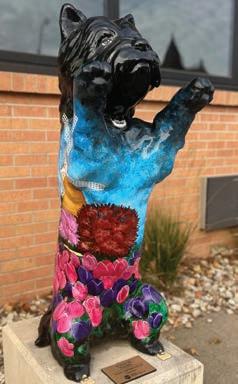
two statues of Dorothy’s
are displayed throughout
This one is covered in tulips, honoring the city’s Tulip festival held each year in mid-April.
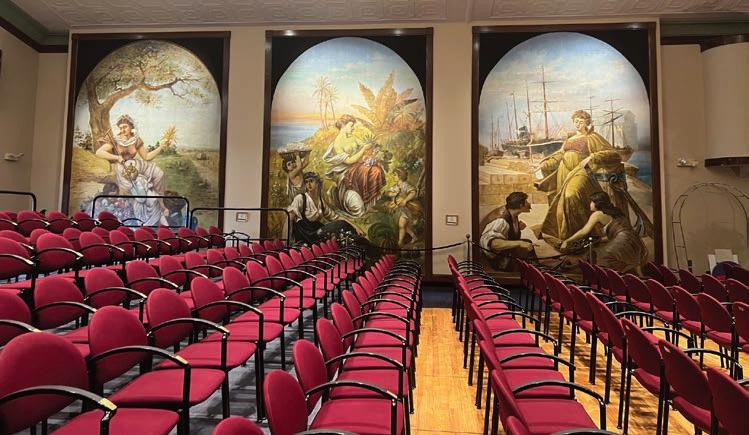
Wamego’s Columbian Theatre, opened in 1895, features six murals, three per side, purchased after the close of the 1893 World’s Columbian Exposition (the Chicago World’s Fair).
Twenty
dog, Toto,
Wamego.
in Spain and when he told people he was from Kansas, they would ask him ‘Where’s Dorothy?’ It was a lightbulb moment. The board realized Kansas needed an Oz Museum and it should be in Wamego.”
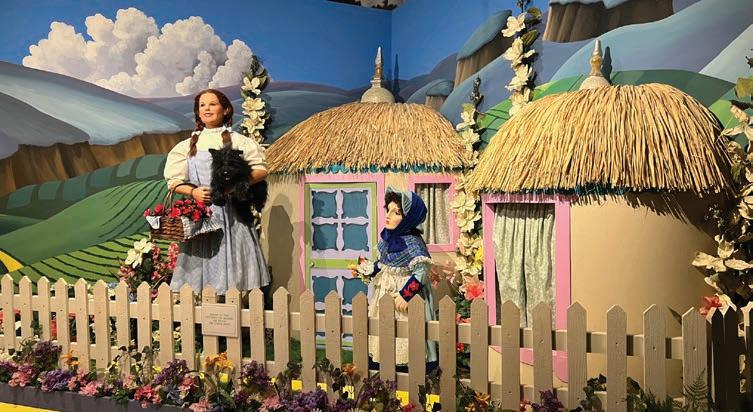
The museum opened in 2003 and housed Manchin’s collection for the first five years; it has collected additional Oz memorabilia since that time. What impressed me the most about the museum were its dioramas, and the autographs of many of the 1939 film’s actors.
Each year over the first weekend in October, the museum hosts “Oztoberfest.”
“We’ll have 5,000 to 10,000 attendees, many of whom come in costume,” said Stueve.
Stueve readily admits that the Oz Museum’s collection is fewer in number than Chittenango’s, and there’s another museum and collection in Sarasota, Florida, a Yellow Brick Road in Sedan, Kansas, and “Dorothy’s House and the Land of Oz” in Liberal, Kansas, where costumed characters lead you on a
tour of a 1907 farmhouse that has been restored and furnished to replicate the house shown in the 1939 Oz film. “But we’re all on the same friendly page of wanting to celebrate Oz,” Stueve says. Like Allison Lehr in Chittenango, Stueve likes the idea of a joint tour and possibly reciprocal loans among the museums down the road. But Stueve
Across the street from the museum, Wamego’s “Yellow Brick Road” features murals of scenes from Oz and yellow bricks along the path.
said the ultimate Oz collection belongs to a gentleman hailing from Camden, Maine: former film producer, writer, director and animator Willard Carroll’s Oz memorabilia of more than 100,000 items includes the Wicked Witch of the West’s hourglass from the 1939 film, and the Munchkin’s Lollipop Guild costumes. This private collection is not on display...yet.
Residents of the farm town of Wamego now look up to a new scene on their three-block long downtown streetscape: tours busses regularly turn off Interstate 70 on “The Road to Oz,” cross the rolling hillsides and the Kansas River and roll up to the museum. They might take the time to walk down the Yellow Brick Road and have breakfast or lunch at Friendship House at the opposite end.
Colorful dioramas are found throughout the Oz Museum.
The Road to Coronado
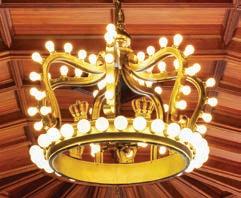
Now flush with funds, Baum began spending winters in Coronado starting around 1904; he returned regularly over the next several years. He stayed frequently at the Hotel del Coronado whose turrets and fairy-tail architecture reminded him of Chicago’s Columbian Exposition and the Emerald City depicted in his first Oz book. It has been suggested that he designed the crownshaped chandeliers in the hotel’s famous Crown Room.
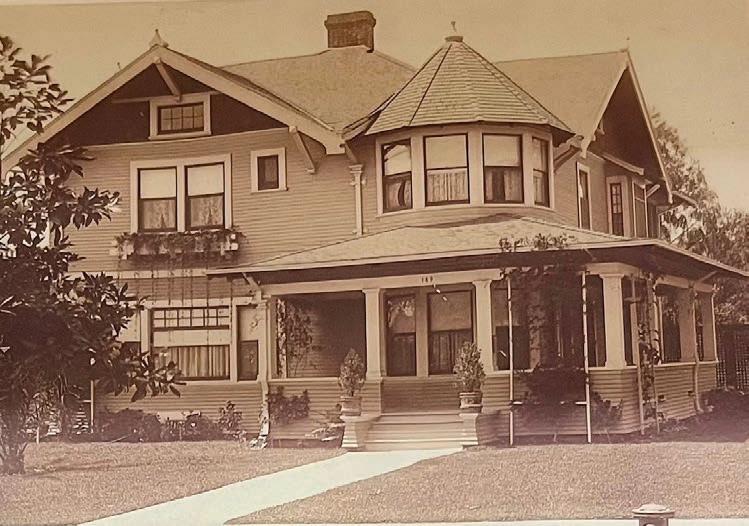
Baum and his family rented a house built in 1895 a block from the hotel on Star Park Circle. Now a Coronado Historic Resource, the home’s current owners feature a “Wizard of Oz Avenue” sign above the front door and a wicked witch doormat.
While in Coronado, Baum developed a daily writing routine: he would write in the morning, then enjoy boating on Glorietta Bay with his wife. He’d occasionally play golf at the local country club.
During his stays in Coronado, Baum wrote: Dorothy and the Wizard in Oz (1908); The Road to Oz (1909) and The Emerald City of Oz (1910). In addition, he
worked on parts of The Marvelous Land of Oz and wrote a short fantasy story, Nelebel’s Fairyland (1905) that draws on San Diego imagery.
His connection to Coronado went deeper than just inspiration: he wrote a poem “Coronado: The Queen of Fairyland” published in The San Diego Union in 1905, reflecting his enchantment with the island.
He also has been quoted as saying, “Those who do not find Coronado a
paradise have doubtless brought with them the same condition that would render heaven unpleasant to them did they chance to gain admittance.”
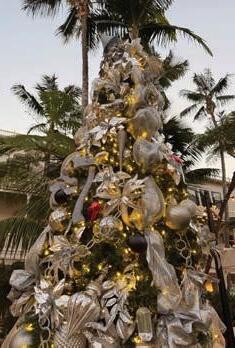
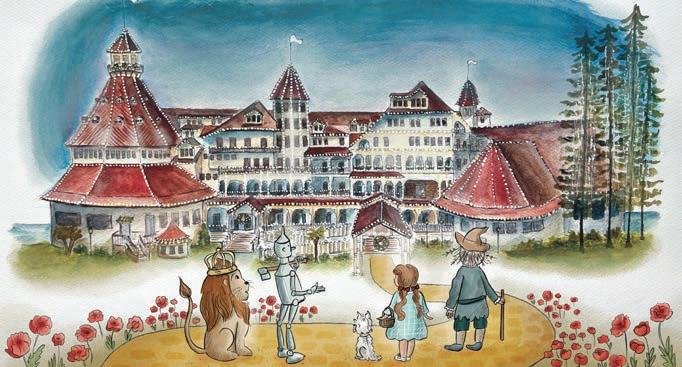
This year the Hotel del Coronado celebrates its storied connection to L. Frank Baum with its annual holiday theme “A Holiday in Oz.” The recently restored Victorian Garden Courtyard is reimagined as a whimsical passage to Oz, serving as the centerpiece for the all-new Tinsel Trail to Oz. A projected yellow brick road guides visitors through a landscape of giant glowing dandelions and electric poppies. The path is lined with four 12-foot trees, each artfully decorated to honor Baum’s characters: Dorothy and Toto, the Scarecrow, The Tin Man, and the Cowardly Lion.
Guests (and the general public) can enjoy a redesigned “Wonder of Oz” lightshow in the trees including the 1904 Norfolk pine – the world’s first electrically lit outdoor Christmas tree –along Orange Avenue. The complimentary show runs nightly every 30 minutes from 5 p.m. to 9 p.m.
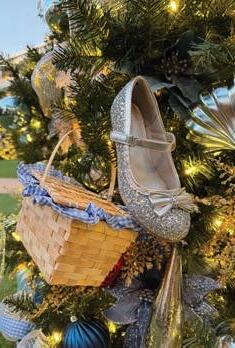
This year the Hotel del Coronado honors its frequent guest of more than a century ago with “A Holiday in Oz” theme. Throughout December, the hotel is bedecked with Christmas trees where you can pick out characters and images from the Baum’s world of Oz. Illustration courtesy of Hotel del Coronado.
The hotel’s magnificent Crown Room chandeliers were reportedly designed by Baum. Photo courtesy of Hotel del Coronado.
After declaring bankruptcy due to failed theatrical performances, most of Frank Baum’s remaining holdings were transferred to his wife, Maud. The couple moved to a home in a suburb of Los Angeles that later became Hollywood. After Frank’s death in 1919, Maud continued to live in the home until her death in 1953 at age 91.
The Hollywood Years
Despite literary success, Baum’s generosity and ambition led him into financial trouble. He invested heavily in stage productions, extravagant editions of his books, and personal projects that often failed to turn a profit. By 1911, he was forced to declare bankruptcy.
Frank and Maud then moved to a home in a Los Angeles suburb that would one day become Hollywood (the Hollywoodland sign went up in 1923 to promote a real estate development; it was shortened to Hollywood in 1949). The Baums called their home Ozcot.
At Ozcot, Baum wrote daily, producing eleven additional Oz books. Surrounded by family, he told stories to his children and neighborhood kids, keeping his imagination alive to the very end. On May 6, 1919, Frank Baum passed away at the age of 62, completing Glinda of Oz just days before. Maud continued to live at Ozcot and managed the estate and copyrights. She remained a guardian of Oz until her death in 1953.
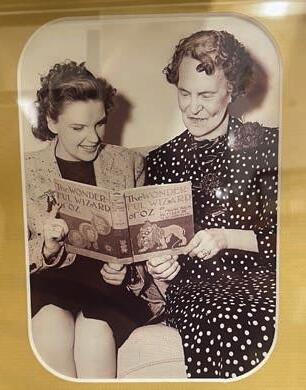
In 1939 during the filming of The Wizard of Oz, Maud Baum, in her late 70s, visited the MGM studio and chatted with Judy Garland, and reportedly told the young actress, “Take special care of Toto. He’s not just a dog; he’s part of the story.”
The Wizard of Oz at the Sphere
Let’s start by me saying: I’ve never seen anything like it! Now I have seen firsthand what AI can do and it’s out of this world. Frank Baum would have loved it.
The tornado scene alone is worth the (hefty) price of admission. It envelops you; the seats vibrate, the temperature in the auditorium changes, Dorothy’s house is spinning around and it almost appears that it’s about to bash you. Your hair is flying in all directions and dried leaves are flying by. It’s thrilling.
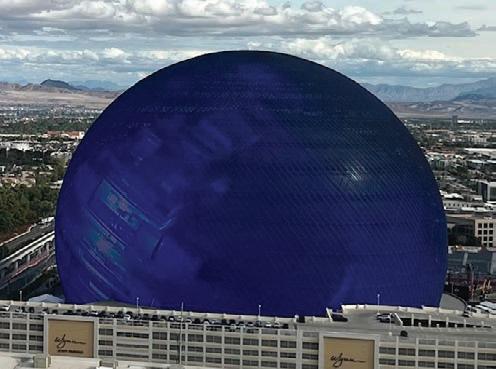
The Wizard of Oz at the Sphere is a breathtaking immersive experience housed inside an orb large enough to contain the Statue of Liberty. Covered with millions of individually programmable LED lights, the Sphere glows and animates both inside and out, acting as a living canvas for Baum’s story.
Inside, the 360-degree high-resolution projectors create the sensation of stepping directly into Munchkinland where poppies and dandelions are vibrant and huge, brilliant butterflies add to the colorscape and the background has been filled out in detail with a yellow brick road extending up and over the mountains. Inside the Haunted Forest you
can spy ants crawling up the trunk of a tree. When angry trees begin tossing apples at the Scarecrow and Dorothy, one landed on my lap. (It was made of foam.) When snow drifts across the poppy field, it also lands on the audience. And when the flying monkeys grab Dorothy and her fellow travelers, I do believe there were actual actors dressed as flying monkeys. What fun it was!
The Venetian
I chose to stay at The Venetian Resort because it was the closest hotel to the Sphere – so close, in fact, that an interior corridor seamlessly links the two. The property is undeniably on the pricey side, but it delivers a luxurious, all-in-one experience that feels worlds away from the typical hustle of the Strip. My “Sphere View” suite was opulent and exceptionally spacious, featuring a sunken living room, elegant décor, and a marble-clad bath complete with a deep soaking tub and separate glass-enclosed shower.
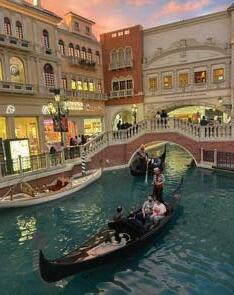
One of the great pleasures of staying at The Venetian is having The Grand Canal Shoppes right downstairs. This indoor streetscape offers an array of luxury boutiques including Louis Vuitton, Burberry and dozens more, along with additional shops that make browsing an experience in itself. Dining choices are equally abundant, ranging from Thomas Keller’s acclaimed Bouchon to a wide selection of mid-priced restaurants, cafés and bakeries.
I enjoyed a memorable meal on “St. Mark’s Square,” where bistro tables overlook the resort’s iconic canal. Watching the gondoliers serenade and escort delighted guests along the waterway, I felt transported – almost as if I’d slipped away to Venice itself, without ever leaving Nevada. www.venetianlasvegas.com
Fun Facts
Throughout my yellow brick road journey, I learned:
• MGM decided to pursue Baum’s The Wonderful Wizard of Oz book after noting the financial success of Walt Disney’s Snow White and the Seven Dwarfs, which had come out Dec. 21, 1937. It was the first full-length animated feature film in the United States.
• The first director of The Wizard of Oz, Richard Thorpe, was fired. He filmed in dark, autumnal colors, not understanding MGM’s desire for bright colors and a whimsical look. He also forced Judy Garland, whom he had decked out in long blonde curls, to repeat scenes too many times.
• Buddy Ebsen, who later portrayed Jed Clampett on The Beverly Hillbillies, the title character on the TV detective series Barnaby Jones and Doc Golightly in Breakfast at Tiffany’s, nearly died during filming. He was the actor playing The Tin Man. The problem came from his makeup, a powder made of aluminum dust to create a metallic look. After 10 days of filming, Ebsen began suffering body aches, muscle cramps and severe shortness of breath. One night he woke up with severe cramping in his fingers, toes and chest muscles. He was rushed to the hospital and spent two weeks in an oxygen tent. Upon release from the hospital, Ebsen spent the next month recuperating at Hotel del Coronado. Doctors determined the aluminum particles from his makeup had coated his lungs, preventing his blood from oxygenating. The studio replaced him with Jack Haley and reformulated the Tin Man’s makeup into an aluminum paste instead of dust.
• Maud Baum attended the grand opening of the Wizard of Oz at Grauman’s Chinese Theatre. She was still living at Ozcot, at Cherokee and Yucca, just a couple of blocks from the theatre. She loved the film.
• Judy Garland did not attend the Grand Opening. She and Mickey Rooney were on the road promoting other movies.
• At the 12th Academy Awards ceremony held Feb. 29, 1940, Judy Garland was presented a Special (Juvenile) Oscar for her outstanding performance as a screen juvenile actor over the past year specifically for her roles in The Wizard of Oz and Babes in Arms. It was presented by Mickey Rooney, who had received the award the previous year. Ahh… the studio PR gang hard at work!
• About those Ruby Slippers – they were originally silver slippers in the book. The 1939 movie used three sets of sparkly ruby slippers to show off its new Technicolor film. One is on display at the National Museum of American History (Smithsonian) in Washington, DC. A second pair, used in close-up filming, is part of the collection at the Academy Museum of Motion Pictures, Los Angeles.
• You can see Judy Garland’s hand and footprints at TCL Chinese Theatre. The only other actor from the film with hand and footprints was Jerry Maren, who played a Lollipop Guild Munchkin and whose prints were placed there on Sept. 18, 2013.
• On Nov. 3, 1956, the first television broadcast of the 1939 MGM Wizard of Oz was part of a “Ford Star Jubilee” special. The movie was 101 minutes long and CBS needed to fill out a two-hour TV slot with commercials. So, CBS added “hosts segments” to pad the telecast. The hosts were Bert Lahr (The Cowardly Lion in the film); 10-year-old Liza Minnelli (daughter of Judy Garland) and 13-year-old Justin G. Schiller, introduced as an “Oz Expert.” Personal note: I still remember my parents pulling me out of bed to come watch TV. It was a special night that I’ll never forget.
A Community Asset Rooted in Compassion PAWS of Coronado
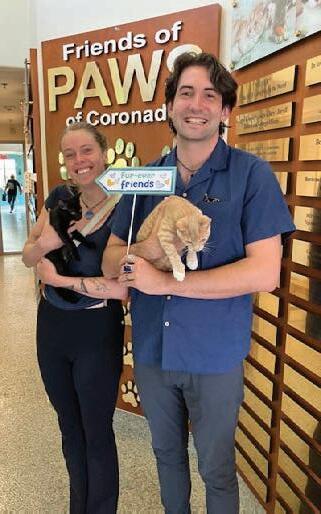
PAWS of Coronado is more than a shelter — we are a trusted community partner, deeply woven into the fabric of Coronado.
Every day, our volunteers, adopters, fosters, and supporters help enrich the lives of both animals and people, strengthening our town through compassion, connection, and shared purpose.
How Our Community Makes a Difference
• Fosters provide essential care for animals recovering from medical procedures, decompressing from stressful situations, or simply needing extra attention.
• Adopters give Coronado animals the second chance they deserve, keeping beloved pets close to home.
• Community members who share adoptable animals, attend events, or spread the word help PAWS extend its impact even further.
Together, these acts of kindness fuel the heart of PAWS.
Community Engagement
Across Coronado
Our commitment to Coronado reaches far beyond our shelter doors. PAWS proudly participates in meaningful programs and partnerships that highlight the powerful bond between animals and people, including:
• Comfort visits to Coronado Retirement Village (CRV), where PAWS dogs bring joy and companionship to senior residents.
• Supporting local schools and nonprofit fundraisers, with adoptable dogs helping raise awareness and inspire empathy.
• Partnering with local businesses, such as the Bower Hotels through their Kind Traveler Program, which welcomes visitors to give back to the Coronado community.
• Kicking off the iconic Coronado Island Film Festival (CIFF), where PAWS dogs make delightful celebrity appearances and share the spotlight at one of Coronado’s most beloved cultural events.
“Through these and many other efforts, PAWS partners with Coronado businesses, civic groups, nonprofits, schools, military organizations, and community groups to enrich and strengthen the fabric of our community.”
We are also honored to be featured in Coronado Gives as part of the Animal Welfare category, celebrating the spirit of generosity championed by the Coronado Community Foundation. This special giving opportunity — available now through December 31 — reflects Coronado’s shared commitment to compassion and collaboration.
Join Us for the Ruff Run — March 7, 2026
One of the most joyful ways to support PAWS returns this spring! The Ruff Run, held on March 7, 2026, brings runners, walkers, families, and dogs together for a day of fun, exercise, and community celebration.
Every registration and sponsorship supports lifesaving programs — from medical care and disease prevention to community outreach and animal placement services. Whether you participate, donate, or cheer along the route, you help create brighter futures for animals in need.
How PAWS of Coronado Is Funded
Although PAWS partners closely with the City of Coronado, we are an independently funded 501(c)(3) nonprofit. Our work is made possible by:
• Individual Donations — Generous community members are our largest source of support.
• Fundraising Events — Events like the Ruff Run sustain essential operations.
• Local Business Partnerships — Sponsorships and collaborations strengthen our impact.
• Grants — Grants support key programs, though they rarely cover overall operating needs
Why Every Dollar Counts
As a small nonprofit, PAWS ensures every donation makes a meaningful difference by supporting:
• Lifesaving veterinary care and medical treatment
• Behavioral support that helps pets thrive in new homes
• Microchipping and vaccination services
• Care for senior, medical-needs, and vulnerable animals
• Foster and training support programs
• Compassionate adoption and placement services
Your support protects the animals who rely on us, and strengthens the Coronado community we all call home.
A
Shared Mission for a Compassionate Community
PAWS of Coronado exists because Coronado believes in kindness. Together — with donors, volunteers, fosters, the Police Department, the City of Coronado, and caring residents — we create a safer, healthier, and more humane community for all.
Every gift matters. When you support PAWS, you help animals thrive, uplift your neighbors, and preserve the heart of Coronado.
Please donate, volunteer, foster, adopt, or share our mission today. Your compassion changes lives.
The Academy
Book Corner
WHAT PEOPLE ARE READING THIS MONTH
By Elin Hilderbrand and Shelby Cunningham
It’s move-in day at Tiffin Academy and amidst the happy chaos of friends reuniting, selfies uploading, and cars unloading, shocking news arrives: America Today just ranked Tiffin the number two boarding school in the country. It’s a seventeen-spot jump – was there a typo? The dorms need to be renovated, their sports teams always come in last place, and let’s just say Tiffin students are known for being more social than academic. On the other hand, the campus is exquisite, class sizes are small, and the dining hall is run by an acclaimed New York chef. And they do have fun—lots of parties and school dances, and a piano man plays in the student lounge every Monday night.
But just as the rarefied air of Tiffin is suffused with selfcongratulation, the wheels begin to turn – and then they fall off the bus. One by one, scandalous blind items begin to appear on phones across Tiffin’s campus, thanks to a new app called ZipZap, and nobody is safe. From Davi Banerjee, international influencer and resident queen bee, to Simone Bergeron, the new and surprisingly young history teacher, to Charley Hicks, a transfer student who seems determined not to fit in, to Cordelia Spooner, Admissions Director with a somewhat idiosyncratic methodology – everyone has something to hide.
As if high school wasn’t dramatic enough... As the year unfolds, bonds are forged and broken, secrets are shared and exposed, and the lives of Tiffin’s students and staff are changed forever.
The Impossible Fortune
By Richard Osman
Elizabeth, Joyce, Ibrahim, and Ron return in the brilliant new book by #1 bestseller Richard Osman in his record-breaking series The Thursday Murder Club. Who’s got time to think about murder when there’s a wedding to plan? It’s been a quiet year for the Thursday Murder Club. Joyce is busy with table plans and first dances. Elizabeth is grieving. Ron is dealing with family troubles, and Ibrahim is still providing therapy to his favourite criminal. But when Elizabeth meets a wedding guest who’s in trouble, kidnap and death are hot on their heels once more. A villain wants access to an uncrackable code and will stop at nothing to get it. Plunged back into action once more, can the gang solve the puzzle and a murder in time?
History Matters
By David McCullough
History Matters brings together selected essays by beloved historian David McCullough, some published here for the first time, written at different points over the course of his long career but all focused on the subject of his lifelong passion: the importance of history in understanding our present and future. Edited by McCullough’s daughter, Dorie McCullough Lawson, and his longtime researcher, Michael Hill, History Matters is a tribute to a master historian and offers fresh insights into McCullough’s enduring interests and writing life. The book also features a foreword by Jon Meacham.
McCullough highlights the importance of character in political leaders, with Harry Truman and George Washington serving as exemplars of American values like optimism and determination. He shares his early influences, from the books he cherished in his youth to the people who mentored him. He also pays homage to those who inspired him, such as writer Paul Horgan and painter Thomas Eakins, illustrating the diverse influences on his writing as well as the influence of art. Rich with McCullough’s signature grace, curiosity, and narrative gifts, these essays offer vital lessons in viewing history through the eyes of its participants, a perspective that McCullough believed was crucial to understanding the present as well as the past. History Matters is testament to McCullough’s legacy as one of the great storytellers of this nation’s history and of the lasting promise of American ideals.
The River Is Waiting
By Wally Lamb
Corby Ledbetter is struggling. New fatherhood, the loss of his job, and a growing secret addiction have thrown his marriage to his beloved Emily into a tailspin. And that’s before he causes the tragedy that tears the family apart. Sentenced to prison, Corby struggles to survive life on the inside, where he bears witness to frightful acts of brutality but also experiences small acts of kindness and elemental kinship with a prison librarian who sees his light and some of his fellow offenders, including a tender-hearted cellmate and a troubled teen desperate for a role model. Buoyed by them and by his mother’s enduring faith in him, Corby begins to transcend the boundaries of his confinement, sustained by his hope that mercy and reconciliation might still be possible. Can his crimes ever be forgiven by those he loves?
COMMUNITY: ANGELICA MOSER
Sharp Coronado Hospital Auxiliary Donates Handmade Quilts To Safe Harbor
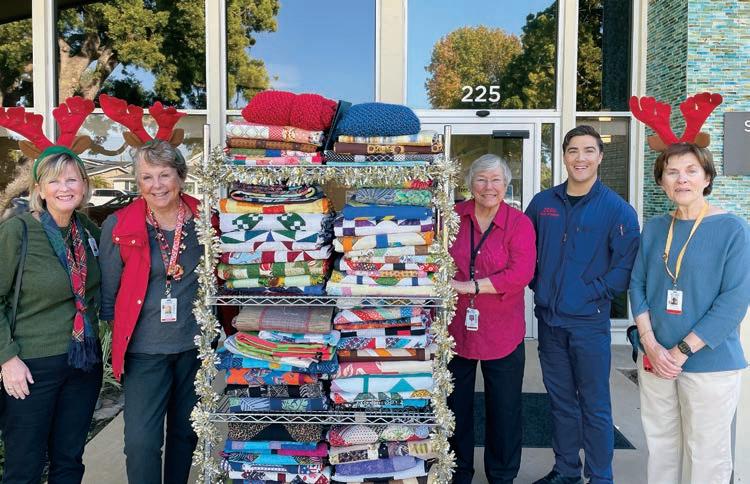
Every December, Sharp Coronado Hospital Auxiliary distributes dozens of handmade quilts to residents in the Villa Skilled Nursing Facility and the Subacute Unit. The tradition has been around for about a decade and is meant to bring comfort and warmth to patients during their stay. This year, those blankets are also making an impact outside the hospital walls through a growing partnership with Safe Harbor.
Sharp Coronado Hospital Auxiliary is a volunteer organization that has been around for 65 years and serves the Sharp Coronado Hospital and Healthcare center, its patients and the community. They have a wide range of programs which include pet therapy, Meals on Wheels, running the Gift Shop, and supporting hospital projects such as renovations and nursing scholarships.
Their quilting committee has about a dozen regular contributors who sew throughout the year and meet monthly to share progress. They typically produce between 60 and 80 quilts annually. The quilts come from donated or personally purchased fabric.
Long-term residents at the Villas are able to receive a new lap quilt each year when they turn in the one they have had from the previous year. The group also coordinates with the Advanced Illness Management Coordinator to offer lap quilts to Hospice patients and to patients in the acute hospital who are in need of comfort according to Katy Green, the Auxiliary’s president.
“When we can, we hand-deliver them and let the residents choose the quilt they want,” said Sue Gillingham, who is a member of the Auxiliary and assists the board with community awareness. “We
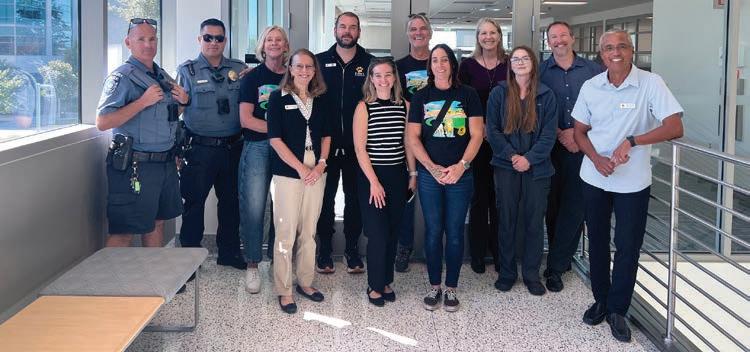
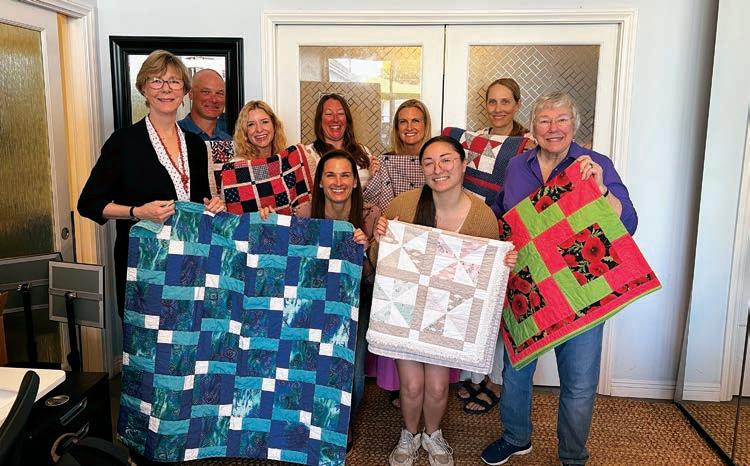
Pictured is the Sharp Coronado Hospital Auxiliary donating their hand-made quilts to Safe Harbor Coronado, a local counseling center. “These ladies are a very talented bunch and we appreciated the craftsmanship,” said Danielle Maske, Safe’s Executive Director
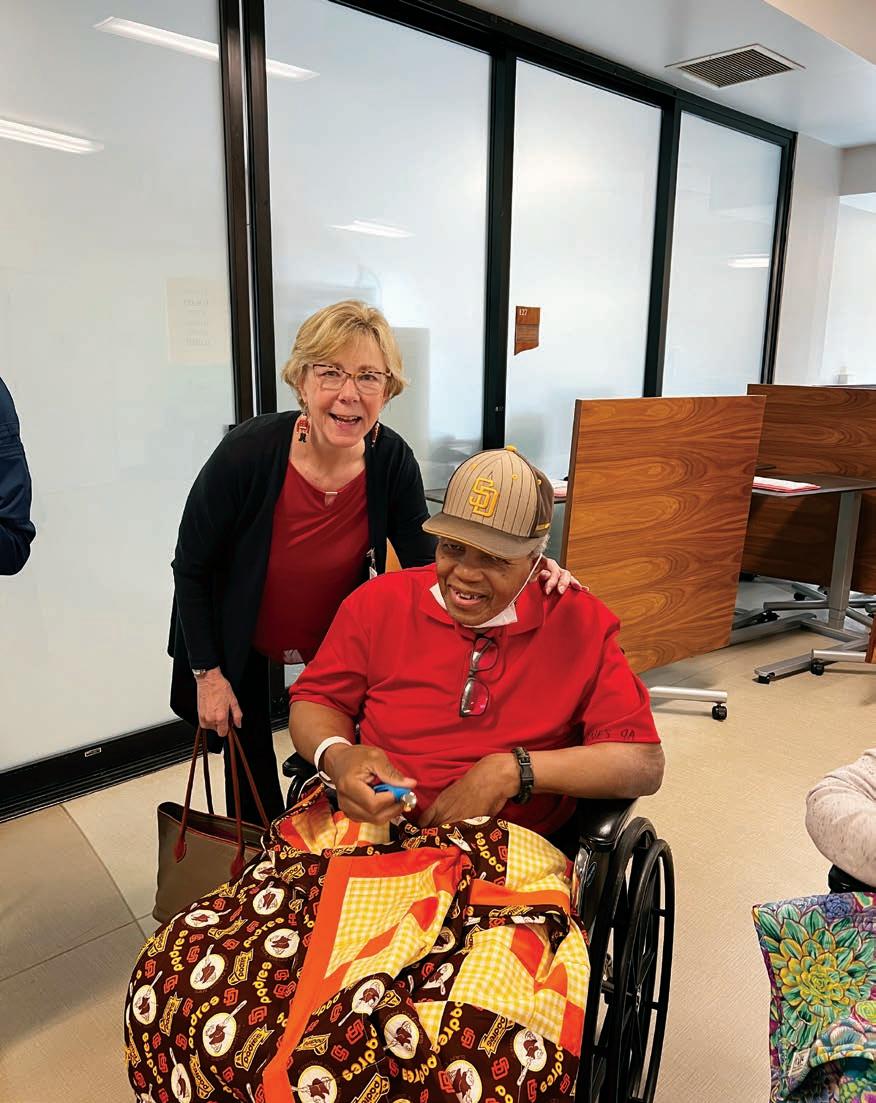
Sue Gillingham puts together Padres quilts each year for the Skilled Nursing Facility residents to enjoy. Last December, the first blanket she handed out was to a huge Padres fan and he wore the team’s hat. “When you’re making quilts, you know where it’s going and you can bring a smile and joy to folks who are in a difficult situation,” she said.
“We let the residents choose the quilt they want.”
want something colorful and homemade in every room.”
Some designs are patriotic, some use bright colors and others are themed like Gillingham’s Padres quilt that is often claimed immediately.
Green also introduced smaller fleece “lovies,” inspired by a design her sister sent from Connecticut.
The connection between the quilt makers and Safe Harbor, a local community counseling center, began last year when Green emailed Safe Harbor Executive Director Danielle Maske. After the Villas completed their annual quilt exchange, the Auxiliary had 22 extra blankets.
“They wanted to share these beautiful homemade blankets,” Maske said. “Within a month and a half, they were all gone.”
Safe Harbor counselors began offering the blankets to clients during sessions. Many clients used them for grounding or comfort while processing difficult emotions.
The blankets have become popular with younger clients, according to Maske. The lovies quickly became a favorite among Safe Harbor’s youngest clients. “[Maske] told me one girl rode up on her bike with the lovie streaming from her handlebars,” Green said. “Now, that’s comfort.”
Michael Tanori, Safe Harbor’s Counselor, said the blankets and smaller lovies are intentionally incorporated into sessions in ways that feel natural rather than assigned. “We keep the blankets and lovies visible in our offices—often draped over couches or chairs—so clients can see them and ask questions,”
he said. “When a client shows interest, or when we notice they may benefit from additional grounding tools, we talk with them about the comfort items and offer psychoeducation on how these tools can support emotional regulation.”
Tanori said most clients end up choosing a blanket on their own because the colors and textures draw their attention. Counselors offer them in situations where sensory comfort may be helpful, such as for clients who are sensitive to temperature or those who tend to rely on fidget tools to self-regulate.
“Clients who struggle with anxiety, dissociation, or high emotional arousal can also benefit, because a comfort item provides a stable sensory anchor during moments of overwhelm,” he added.
Maske said, “When you’re handling big emotions [or] when you’re in therapy, sometimes you need to feel that pressure on your legs and arms.”
The Board of Safe also enjoys the blankets themselves. “I even kept one at my desk because the colors matched Safe Harbor’s colors,” Maske added. “These ladies are a very talented bunch and we appreciated the craftsmanship.”
The Auxiliary continues to welcome volunteers for quilting and its other programs; they plan to distribute the blankets to everyone again this month. Additionally, as long as the quilts keep coming, Safe Harbor plans to keep offering them to clients.
“They’ve made a real difference for our clients,” Maske said. “It’s such a simple thing, but it means a lot.”
Every December, Sharp Coronado Hospital Auxiliary distributes dozens of handmade quilts to residents in the Villas and the Subacute Unit. The tradition has been around for about a decade and is meant to bring comfort and warmth to patients during their stay.
Look At Your Financial Situation Holistically
By Hayley Beard, CFP®, Financial Advisor
When you plan a trip, you consider not only the destination but also the climate, activities that interest you, transportation needs, anticipated costs, best time to go, and coverage for your work, home, or pets. It’s a holistic approach — looking at your trip from a variety of angles.
It’s wise to apply that same holistic thinking when you plan for your financial future — that is, bringing into the picture all elements of yourself.
Here are some things that may affect your financial strategy:
• Your views on helping your family
Your decisions about helping your family are clearly going to be a major part of your financial strategy, and this is true at virtually all stages of your life. When your children are young, you’ll need to decide if you’re going to save money for their college education, and if so, how much, and in what investments. When they’re young adults, you may also need to decide how much financial support you’re willing to provide for major expenses such as down payments on a new home or a new car. And when you’re drawing up your estate plans, you’ll need to consider how and when to distribute assets to your children, grandchildren, or other family members.
• Your personal beliefs
As someone with civic, ethical, and moral concerns, you may feel compelled to make charitable gifts throughout your life and then make philanthropy part of your legacy. To accomplish these objectives, you’ll want to include gifting techniques in your financial strategy today and your estate plans for tomorrow. Of course, for the estate-planning component, you’ll need to work with your tax and legal advisors.
• Your health
Your physical and mental health can play big roles in your financial plans and outlook. On the most basic level, the healthier you are and the better you take care of yourself, the lower your health care bills will likely be during retirement, which will affect the amount you need to put away for health care. And you also may need to prepare for the costs of long-term care, which can be enormous — in fact, a private room in a nursing home can easily cost $100,000 per year, according to Genworth, an insurance company.
• Your purpose in life when you retire
Having a purpose can bring fulfillment beyond financial security. Leading up to retirement, your purpose may involve providing for your immediate family, bringing value to your profession, or contributing to your community. When you retire and step off your career path, you’re entering a new world of possibilities. How will you define, and live out, your new sense of purpose at this stage of your life? Do you seek to broaden your
horizons by traveling around the world? Or spend more time volunteering? Can you pursue hobbies that give you a chance for self-expression? Each of these choices will carry different financial implications for how much you’ll need to accumulate for retirement and how much income you will need to take out each year from your retirement accounts, such as your IRA and 401(k).
It can be challenging to weave all these elements into a single, unified vision, so you may want to get some help from a financial professional. But, in any case, be prepared to look at your situation holistically because, when putting together a lifetime’s financial strategy, every part of your life matters.
This article was written by Edward Jones for use by your local Edward Jones Financial Advisor. Edward Jones, Member SIPC