THE 2025 RELEASES
THE 2025 RELEASES
This year, the full C&B team has been lucky enough to take turns visiting Verona. From exploring the cobbled streets and stunning vineyard views to tucking into Amarone risotto and blending our own Valpolicella.
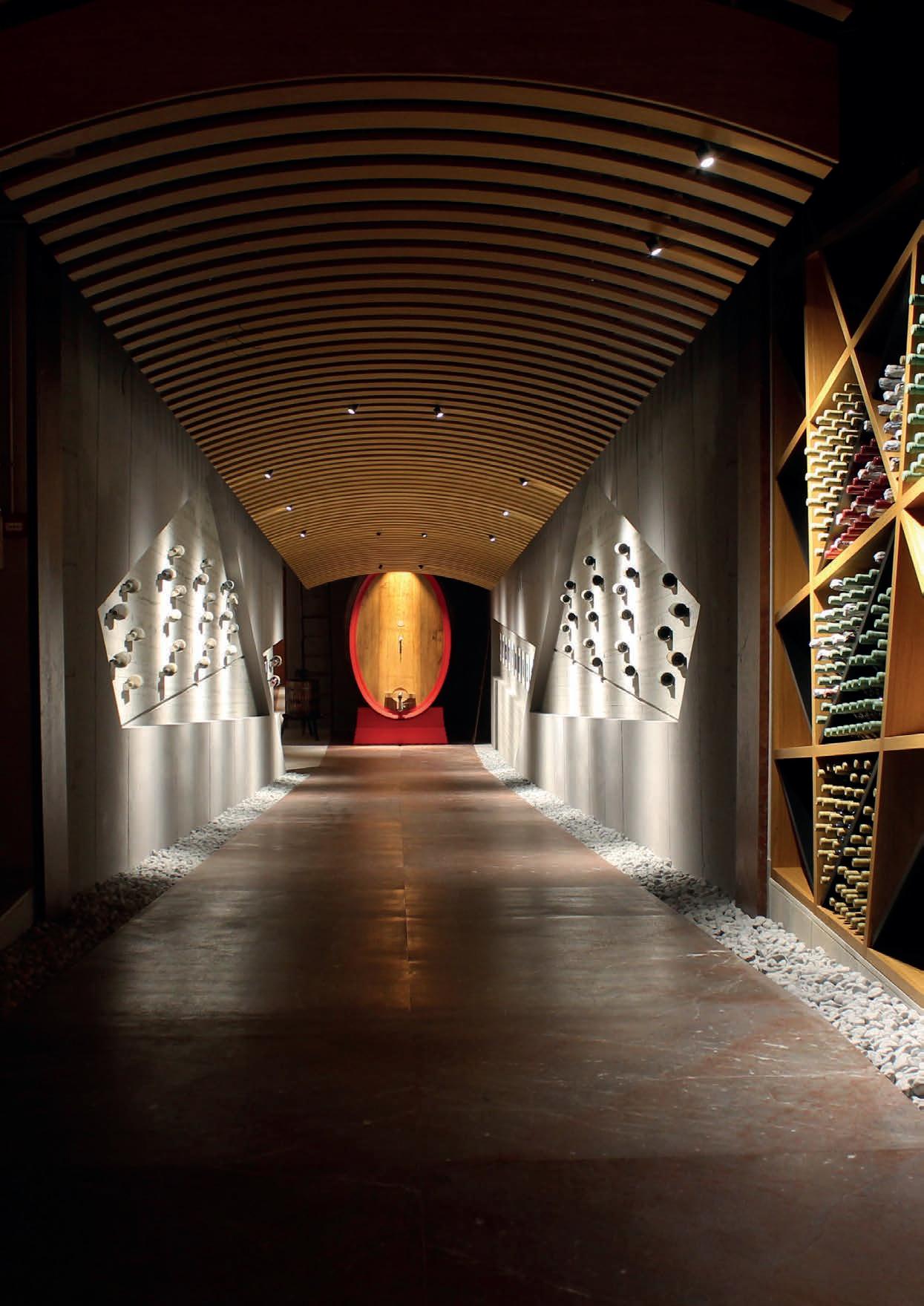
The Quintarelli estate is a short drive north of the city. It was here that a delegation of our most recent Verona travellers witnessed the intricate pergola vine trellising system, saw the grape drying in the fruttai first-hand, and got up close to the impressive carved botti — one of which inspired the front cover of this offer.
Founded in 1924, Quintarelli is the pinnacle of Valpolicella wines, serving as an unmatched benchmark to which all other estates aspire. It was taken over by Giuseppe Quintarelli in 1950 at the tender age of 22. Although inexperienced, he rapidly stepped up to the challenge of firmly placing his family’s cantina on the map — seamlessly blending tradition with innovation.
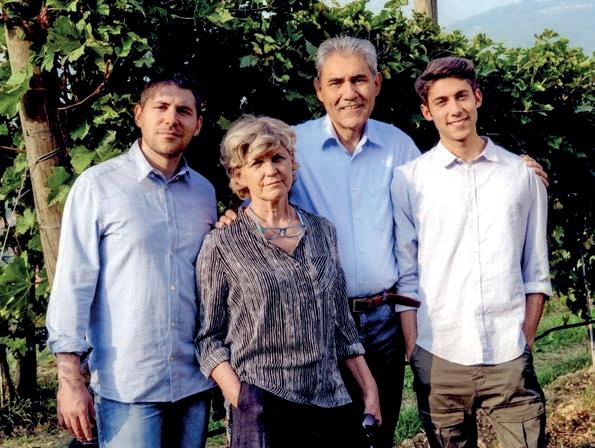
Following Giuseppe’s death in 2012, he has been ably succeeded by his eldest grandson, Francesco Grigoli. He continues the legacy of uncompromising attention to detail through labour-intensive techniques, producing a stunning range admired by wine fanatics everywhere. Francesco is assisted by his brother Lorenzo and parents Fiorenza (Giuseppe’s daughter) and Giampaolo. It’s a real family affair.
Due to each wine requiring specific but varying ageing periods, this latest release spans vintages 2015 to 2023. They are available for immediate despatch and enjoyment. See Guy Seddon’s tasting notes for all the juicy details.
These wines are never less than authentic and artisanal — the passion and dedication quite literally decanted into every bottle. Whether you pore over your glass or simply sip for pleasure, you will not taste a more perfect example of Valpolicella.

TIFFANY VERNON, FINE WINE OFFERS & BUYING
DECEMBER 2025
Literally the valley of many cellars (val-poli-cella), this charmed enclave lies to the north of Verona and the east of Lake Garda. The rugged Lessini Mountains jut out like dogs’ teeth on the horizon. On a clear day, the snowcapped peaks of the Alps are visible.
The region comprises three main valleys: the Fumane, the Marano and the Negrare. Quintarelli lies in the latter, in the comune of Negrar.
Created in 1968, the Valpolicella Denominazione di Origine Controllata (DOC) covers some 3,500 hectares, with the theoretically superior Valpolicella Classico DOCG extending to almost the same area. In this most permissive of regulatory contexts, producer is everything: there are Valpolicellas and Valpolicellas…
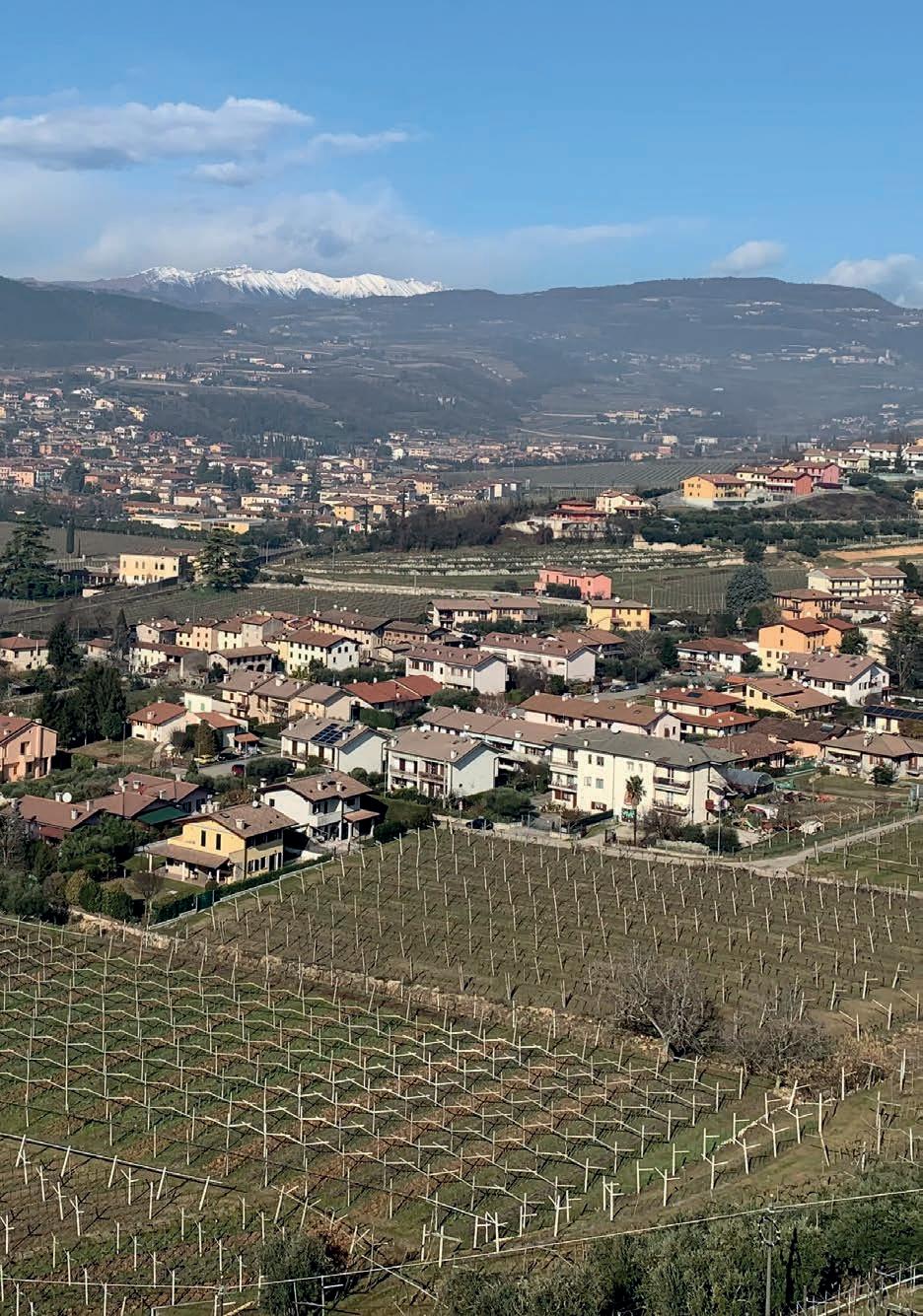
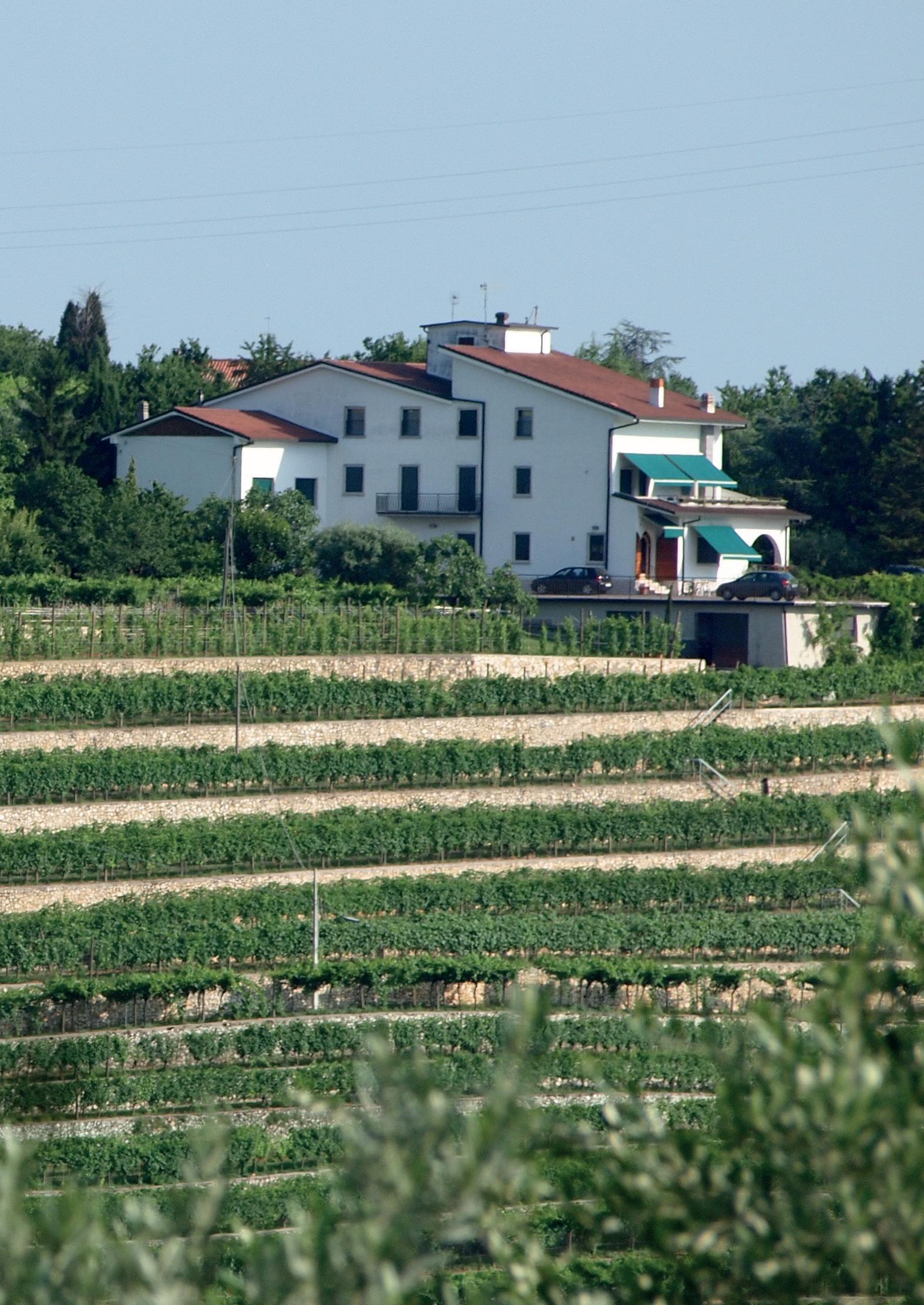
Traditional pergola trellising prevails in Valpolicella. Vines are trained high from the ground into long tunnel-like structures, inside which the grapes dangle from shady ceilings of foliage. This intricate system requires an elaborate supporting framework.
Quintarelli has 11 hectares of vines, with an average age of around 30 years, planted on limestone and basalt soils. Black grape plantings comprise the indigenous Corvina, Corvinone, Rondinella and Croatina, alongside Merlot and Cabernets Sauvignon and Franc. There is even some Nebbiolo and Sangiovese. White grapes include Garganega, Trebbiano Toscano, Sauvignon Bianco, Chardonnay and the rare local grape Saorin.
The aim is to have eight to ten bunches per vine. Picking is late, usually culminating in the first two weeks of October. A well-aerated canopy is crucial to avoid botrytis. Multiple passes through the vineyards are made. The first selection is of the best, ripest grapes, destined for the Amarone and Alzero. The berries from the second pass will become Valpolicella. The third is for grapes which will be used for the fresh young wines.
Average yields are around 8,000 kilograms of grapes per hectare, with the resulting volume of wine varying with the degree of raisining.
The appassimento method is instrumental to what makes these wines so special. It’s labour-intensive and time-consuming, but the results, well, are nothing short of exceptional and the very reason why Quintarelli is the archetypal reference for all Valpolicellas.
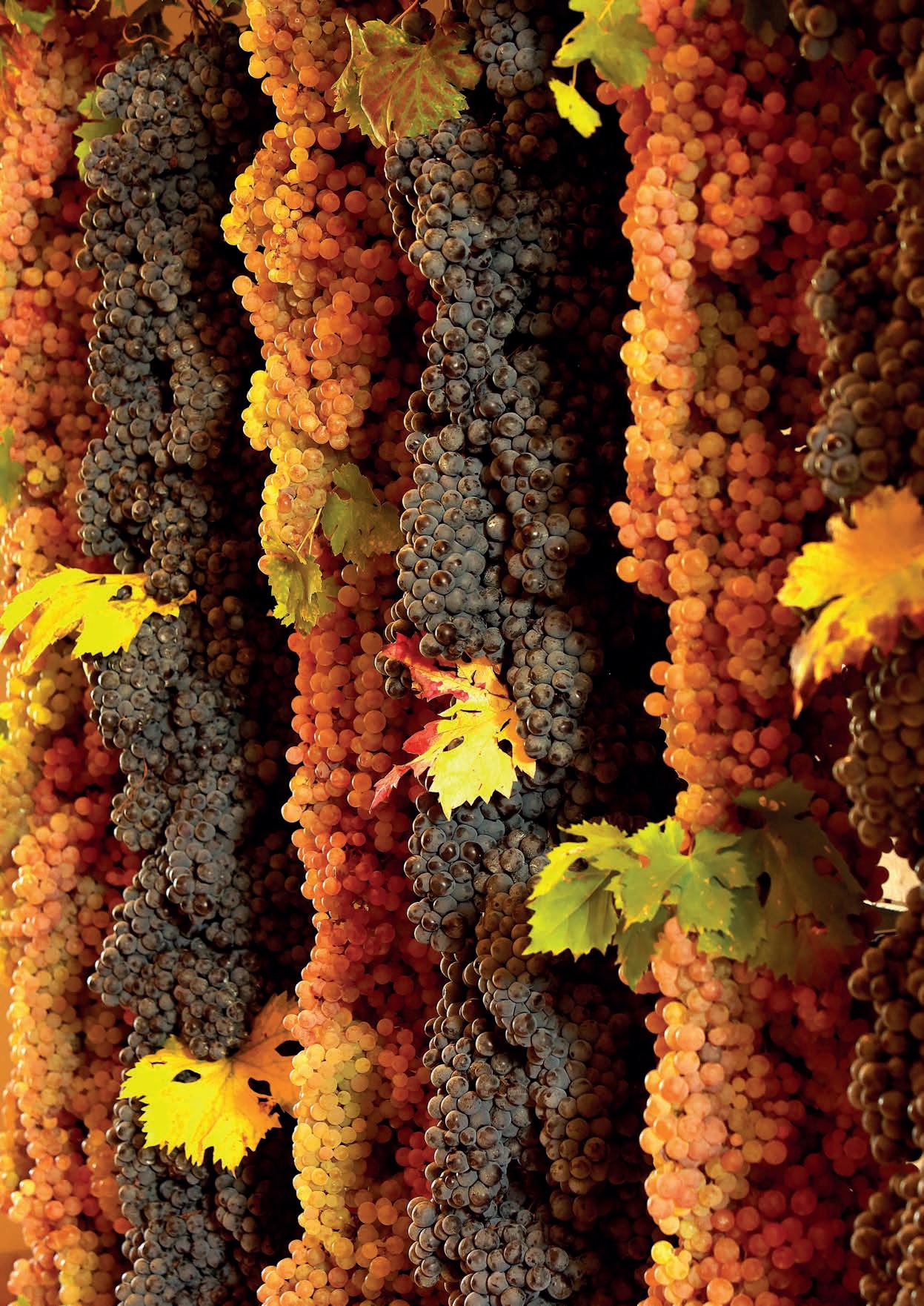
Grapes that undergo the appassimento method are hand-harvested to ensure only the healthiest, ripest grapes are chosen. They are then laid out on wooden crates, or spread out on straw matting (careful not to crush or damage individual berries), in a naturally ventilated fruttai in the upper part of Quintarelli’s cantina.
During the drying period, the grapes become dehydrated, losing up to 40% of their water content, and raisin (uva passa translates to raisin). This concentrates the sugars, flavours and acids. After weeks or months (depending on the desired wine), the grapes will then be fermented.
There are three main traditional wine styles as a result:
Legend has it that one day, a Veronese winemaker forgot about his recioto fermenting in the cellar. By the time he recalled what was sitting in his barrel, the wine had fermented to full dryness, resulting in a complex, rich and full-bodied wine. Upon tasting it, he exclaimed, “This is not amaro (bitter) but Amarone (great bitter)!”.
Owing to the concentrated sugars from the appassimento method, the potential alcohol of Amarone is high, typically reaching 15-17% abv. The alcohol kills off the yeast, usually before it has had the chance to consume all the sugar. Although some Amarones can have residual sugar of up to 12g/l, Quintarelli are well below this, with no perception of sweetness. This technique is used for the Amarone and Alzero wines, the latter of which typically has 6-7g/l residual sugar.
Freshly fermented wine that has not undergone the appassimento treatment is ‘repassed’ over unpressed Amarone skins. This kick-starts a second fermentation, which bolsters the body of the resulting wine, imparts some raisined character, and raises the alcohol content (though only marginally, by around 1% at Quintarelli). This technique is used for the Valpolicella Classico Superiore.
Grapes are dried in the fruttai over autumn and winter. Fermentation is stopped before all the sugars convert to alcohol, which results in a deliciously sweet and rich wine.
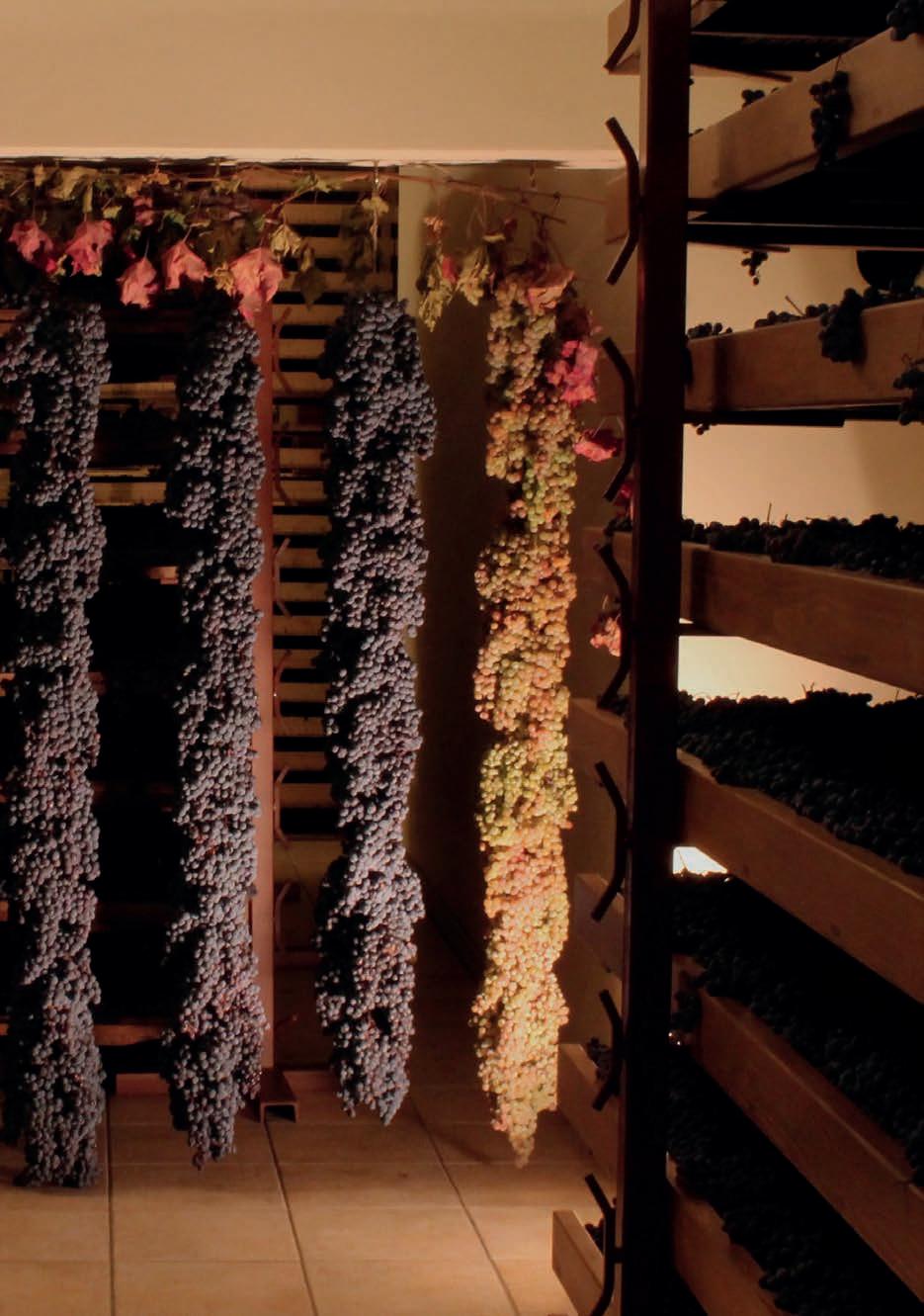
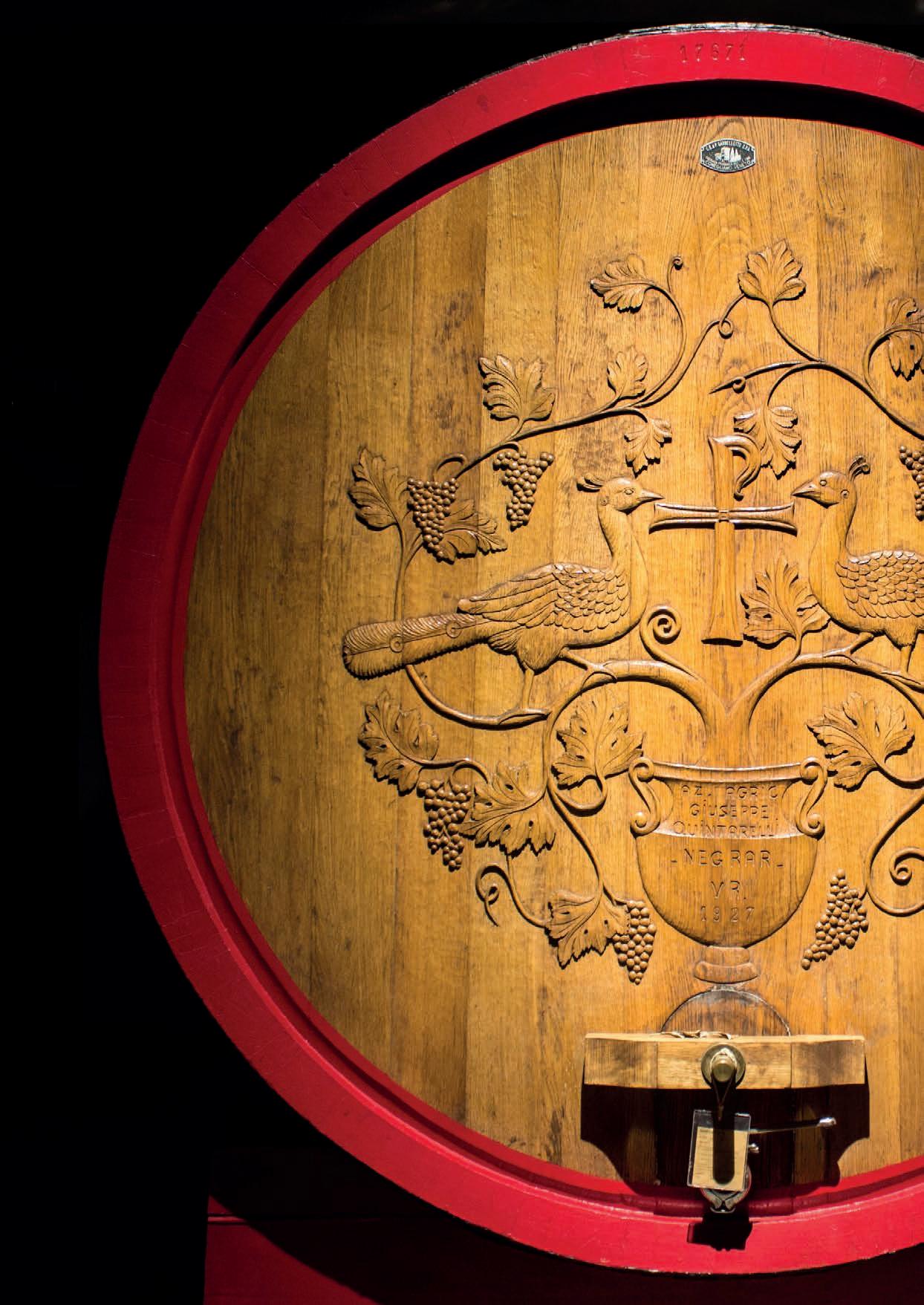
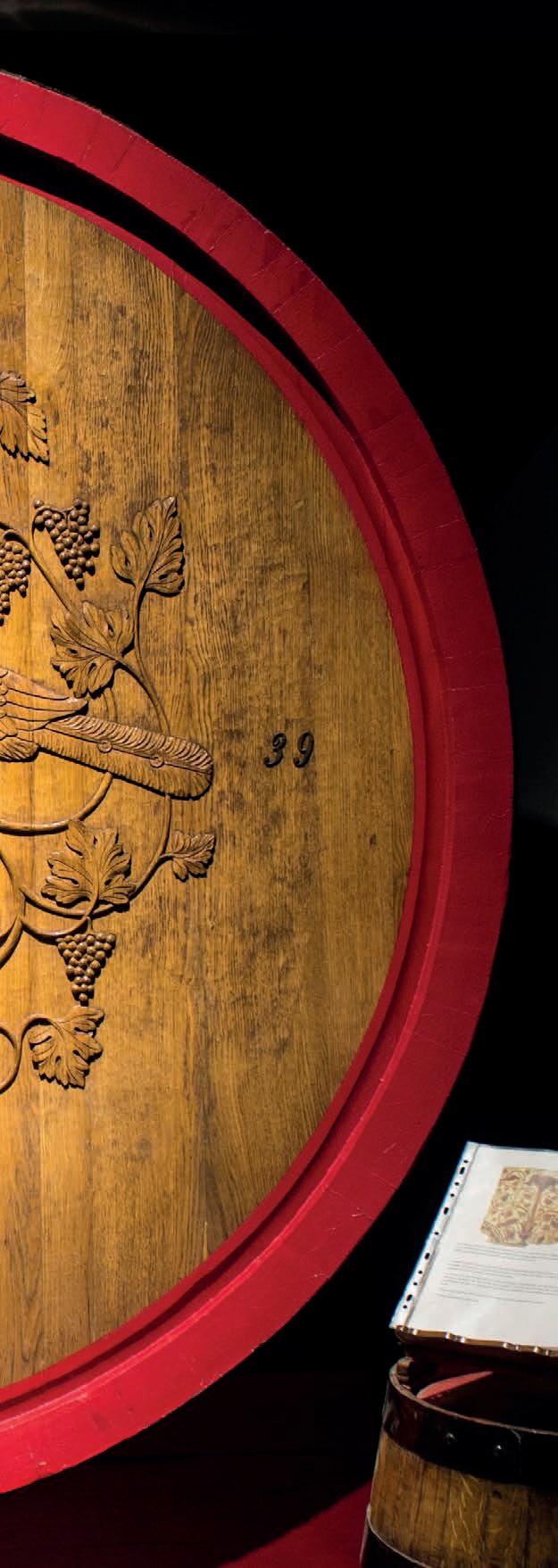
The estate buildings lie at the end of a discreet driveway. Opposite the cellar and reception area is a terrace with breathtaking views of the valley and the pre-Alpine Lessini Mountains. The three-story edifice comprises subterranean cellars, offices and a laboratory/labelling area on the ground floor, with the grape drying rooms above.
Ageing takes place in beautiful Slavonian oak botti for varying periods. The carved fascias of these large barrels are inspired by local Roman history, often depicting religious symbolism. Alongside the traditional Amarone Classico is ‘Alzero’, the estate’s unique Amarone-style blend of Cabernet Sauvignon, Cabernet Franc and Merlot. Both spend some seven years in oak. Production of these is tiny. Similarly, the estate’s Valpolicella Classico Superiore sits beside ‘Primofiore’, a half-native, half-Cabernet blend. The white Bianco Secco is made from a blend of Garganega and Saorin.
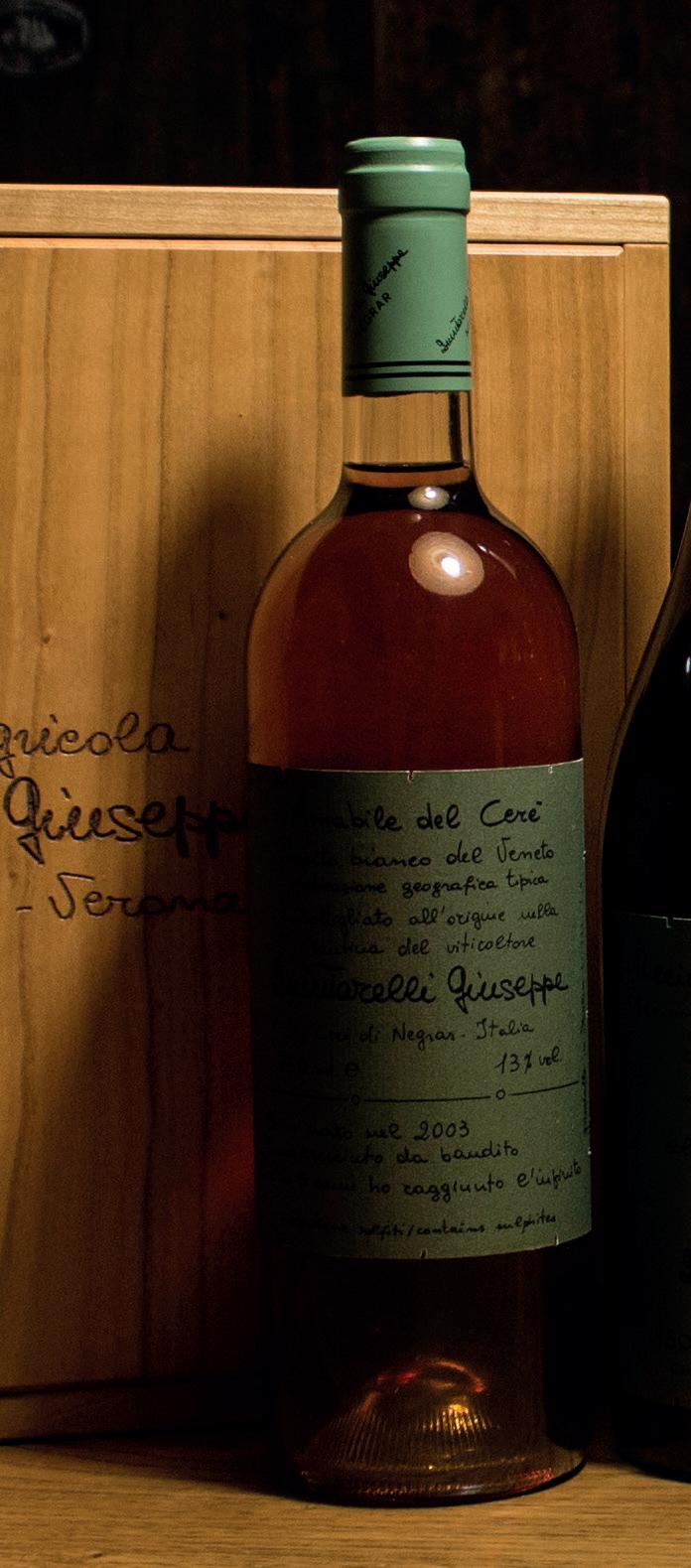
The labels were previously handwritten, a tradition which has been enshrined in the cantina’s instantly recognisable jagged-edged labels.
80% Garganega, with Trebbiano Toscano, Sauvignon Bianco, Chardonnay and Saorin, all co-fermented. Since 2021, the aim has been to revert to the ‘Garganega style’, as Francesco puts it. Aromas of white peach and orange blossom. The palate is tactile with apple skin on the entry, opening onto a fluid mid-palate of zesty tangerine fruit. Chiffon and silk… The vines for Bianco Secco are 10-40 years old, with an average age of around 25 years old. This stays 10 months on lees. There is a small (less than 1%) proportion of dried passito grapes. 15% is aged in old 15-hectolitre botti. 12.5% abv. Bottled August 2025. 1984 was the first vintage.
Corney & Barrow Score 17
Recommended drinking from 2026 - 2029
£230/CASE OF 6 BOTTLES, IN BOND UK
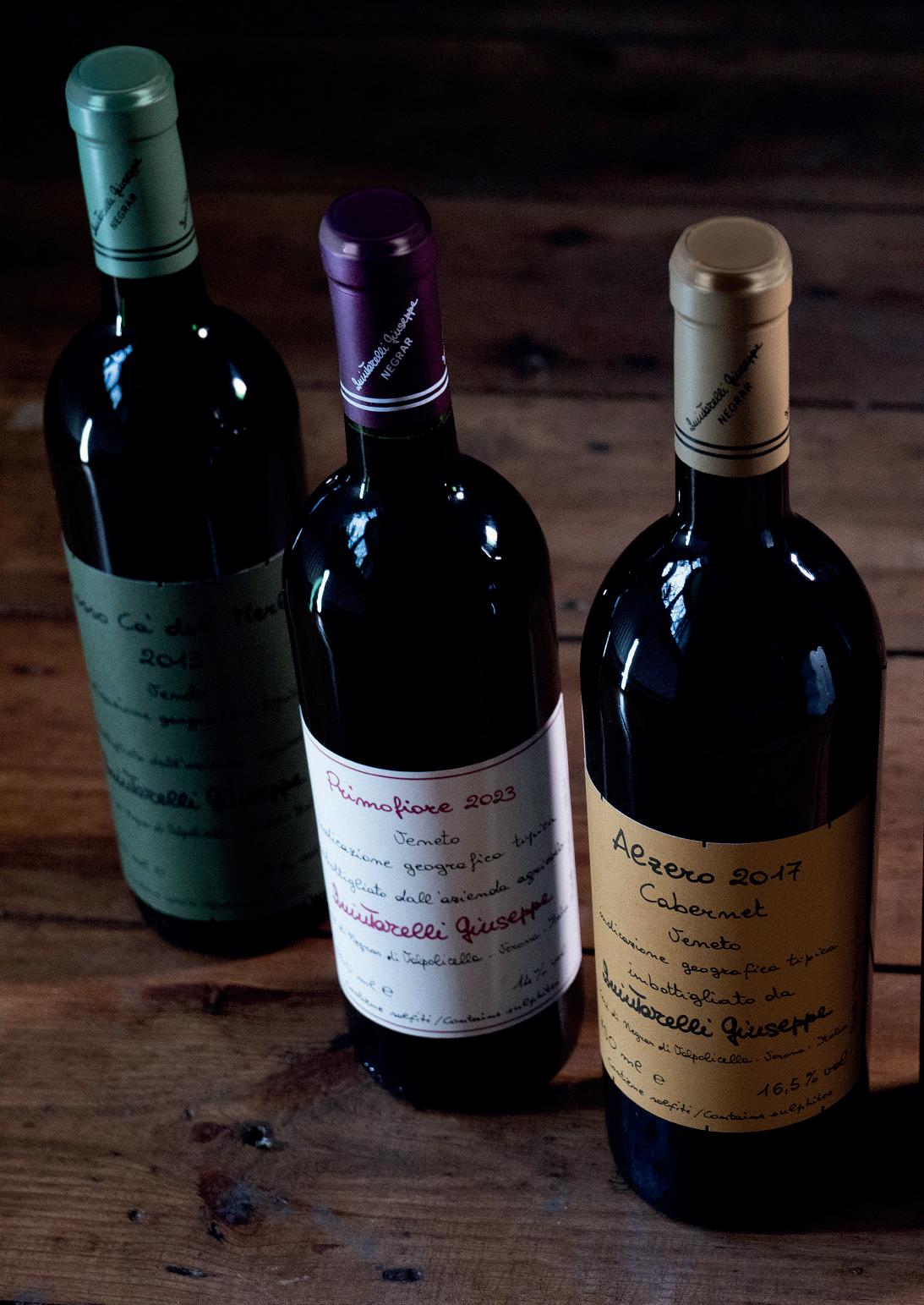
Literally “first flower”, Primofiore is 50% Corvina and Corvinone, 50% Cabernet (Sauvignon and Franc). The Cabernet grapes are dried on straw matting for two months, whilst the Corvina and Corvinone are fermented without raisining. Aged for two years in large old Slavonian oak botti. Bitter cherry aromas with mint, leather and a hint of dried herbs. The palate is savoury on the entry, opening onto brightly red- and black-fruited flavours, framed by delicate tannins. Fresh acids. 14% abv. Bottled April 2025. 1986 was the first vintage.
Corney & Barrow Score 17.5
Recommended drinking from 2026 - 2032
£325/CASE OF 6 BOTTLES, IN BOND UK
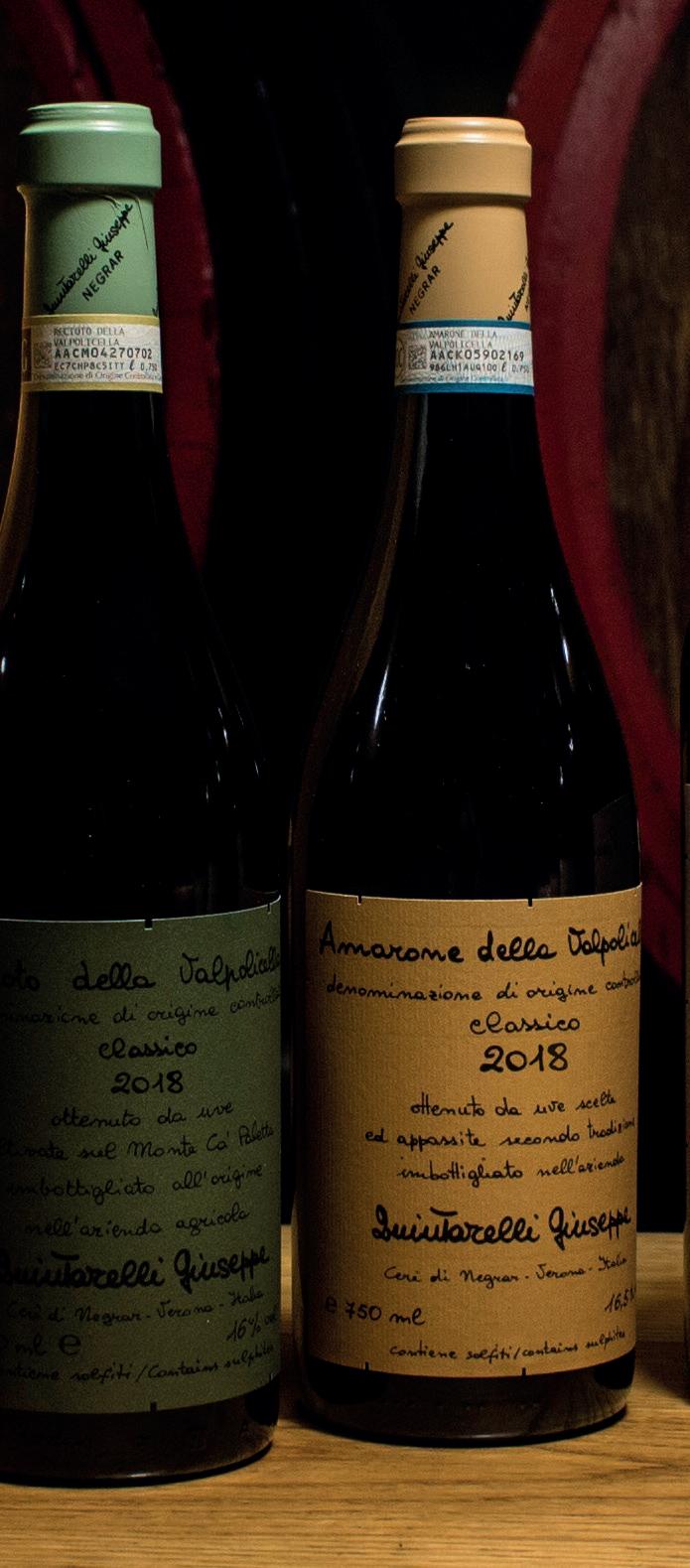
55% Corvina and Corvinone, 30% Rondinella and 15% Cabernet Sauvignon, Nebbiolo, Croatina and Sangiovese. Half-dried grapes, with half of the fermenting wine passed over Amarone skins, the traditional ripasso method, bolstering both body and raisined complexity. Dark berries on the nose, and bitter cherry, with a lifted, excitingly wild side — meaty spices and garrigue. The palate offers pure dark and red berry fruit, with orange zest and cinnamon. This is precise, energetic and focussed, framed by fine tannins with dried herb flavours lingering. This accounts for a third of the estate’s production. It spends at least six years in Slavonian oak botti. 15% abv. Bottled JanuaryFebruary 2025.
Corney & Barrow Score 18
Recommended drinking from 2027 - 2034
£525/CASE OF 6 BOTTLES, IN BOND UK
The Cà del Merlo label has been made since 1980. 80% Valpolicella blend – mostly Corvina and Corvinone, with Rondinella, then 20% split across Merlot and Cabernet (Sauvignon and Franc), with a minority proportion of Nebbiolo, Croatina and Sangiovese. Although the winemaking is the same as for the Valpolicella Classico Superiore, the Merlot component introduces a red-fruited fleshiness, making for a fresher, fruitier, more overt wine than the Valpolicella, which should also be approachable a little sooner. Francesco describes 2018 as a high-quality vintage. This opened wonderfully in the glass over the course of half an hour. Fresh mint and herby spices on the nose. It is a wine of momentum and crystalline raspberry and red cherry fruit, framed by chalky, fine tannins and lifted by bright acidity. This spends six years in medium and large sized oak botti. 15% abv. 1980 was the first vintage.
Corney & Barrow Score 17.5+
Recommended drinking from 2027 - 2034
£495/CASE OF 6 BOTTLES, IN BOND UK
Majority Corvina and Corvinone, with Rondinella. The minority component is made up of Cabernet, Merlot, Nebbiolo, Croatina and Sangiovese. Amarone is the pinnacle of Valpolicella, and this is a celebrated wine in the Quintarelli range. Aromas of dark berries, bitter cherries, damsons, dried herbs and violets, with dark chocolate. A promise of fine minerally tension too. The palate is dry and focussed, offering complex dark berry flavours, the earthy and the volatile aspects vying for position. Refreshing, vital, acidity… Again, that sense of crunchy mineral surface tension — so harmonious and energetic. Seven years in old oak botti. 16.5% abv. Bottled February-March 2025.
Corney & Barrow Score 18+
Recommended drinking from 2027 - 2044
£1,450/CASE OF 6 BOTTLES, IN BOND UK
Made three times per decade on average, this is only the second time we have released the Riserva. The grape blend is identical to that of the Amarone Classico (above), but this superior cuvée is given an additional two years’ ageing in botti, bringing the total to nine years in oak. 2015 was a warm vintage, contributing to the sweet fruit profile. 3-4 g/l residual sugar. Each bottle is numbered by hand.
As production, and therefore our allocation, of the Riserva is so tiny, we were not able to taste it at the estate. Estimated drinking from 2025 - 2040+
£532.50 PER BOTTLE, IN BOND UK
Due to the very small size of our allocation, this will be offered as loose bottles.
Alzero is a blend of 40% Cabernet Sauvignon, 40% Cabernet Franc and 20% Merlot. Alzero is a dialect term meaning ‘slope’. A fruitier nose than the Amarone, purity of dark berries and spices, with a creamy roundness. The palate is vibrant, with a leafy, menthol edge that gives focus to the fruit. Cushioned and forceful, with great elegance and freshness. To be paired with a robust main course, or even with cheese. 4,000 bottles were produced. 6-7 grams of residual sugar. 16.5% abv. Bottled April 2025.
Corney & Barrow Score 17.5+
Recommended drinking from 2027 - 2040
£1,750/CASE OF 6 BOTTLES, IN BOND UK
Our tasting notes provide full details but, at your request, we have also introduced a clear and simple marking system. We hope these guidelines assist you in your selection. For the benefit of simplicity, wines are scored out of 20. We will often use a range of scores (e.g. 16.5 to 17) to indicate the potential to achieve a higher mark. When a ‘+’ is shown it adds further to that potential. Wines from lesser vintages will, inevitably, show a lower overall score.
Wines are judged, in a very broad sense, against their peers. Why? Well, you cannot easily compare a Ford with an Aston Martin, other than they are both cars and have wheels. It is not that different with wine. A score is a summary only. The devil is in the detail, so please focus on the tasting notes and, as always, speak to our sales team.
LONDON
1 Thomas More Street, London, E1W 1YZ
T +44 (0)20 7265 2400 sales@corneyandbarrow.com
EDINBURGH
Oxenfoord Castle, by Pathhead, Midlothian, EH37 5UB
T +44 (0)1875 321 921 edinburgh@corneyandbarrow.com
NORTH OF ENGLAND
4 Park Square East, Leeds, LS1 2NE
T +44 (0)1133 400 380 northofengland@corneyandbarrow.com
EAST ANGLIA
1 Rous Road, Newmarket, Suffolk, CB8 8DH
T +44 (0)1638 600 000 newmarket@corneyandbarrow.com
AYR
8 Academy Street, Ayr Ayrshire, Scotland, KA7 1HT
T +44 (0)1292 267 000 ayr@corneyandbarrow.com