
The Corne¬ Daily Sun
BLACK HISTORY MONTH SUPPLEMENT 2026
An Expanded Narrative: BHM and Beyond
By WYATT TAMAMOTO Arts & Culture Contributor
Despite having lived my entire life in the U.S., I know disappointingly little about Black history, culture and media. So, as a freshman with both the time and inclination to expand my perspective— as well as a strong love of literature — this semester, I enrolled in ENGL 2650: “Introduction to African American Literature.” Within the past month, Professor Chelsea Mikael Frazier, a scholar in Black feminist literature and ecocriticism, has already taken the course beyond the bounds of my expectations and managed to do so with texts as entertaining as they are informative.
My revelations began on the very first day of class when Prof. Frazier pointed out that Black, and particularly African American, narratives most often begin with slavery. This framing creates the false implication that the story of Black people in the U.S. also begins with slavery, propagating the decontextualization of Blackness from its African roots. In addition, it transforms every Black story into one of uplift, advancement or catching-up to Western standards of progress and knowledge. ENGL 2650: “Introduction to African American Literature” engages this issue by expanding the bounds of the African American narrative to include novels that portray Black characters, culture and conflicts preceding the transatlantic slave trade.
In my subsequent interview with Prof. Frazier, she explained that she inherited the course from her colleague Professor Derrick Spires, so the course texts have gone through many iterations, previously including those by Black authors such as Phillis Wheatley, Harriet Jacobs, Zora Neale Hurston and Toni Cade Bambara. The current version of the course is partly the result of Prof. Frazier’s past experience with Columbia University’s core curriculum. The core curriculum is based on the premise that one needs an understanding of the ancient sources of Western thought (e.g., Greek philosophy) to understand the Western world. By extrapolating this logic to her own area of expertise, Prof. Frazier realized that “you can’t understand Blackness in America, and thus
Beyond Ivory Towers
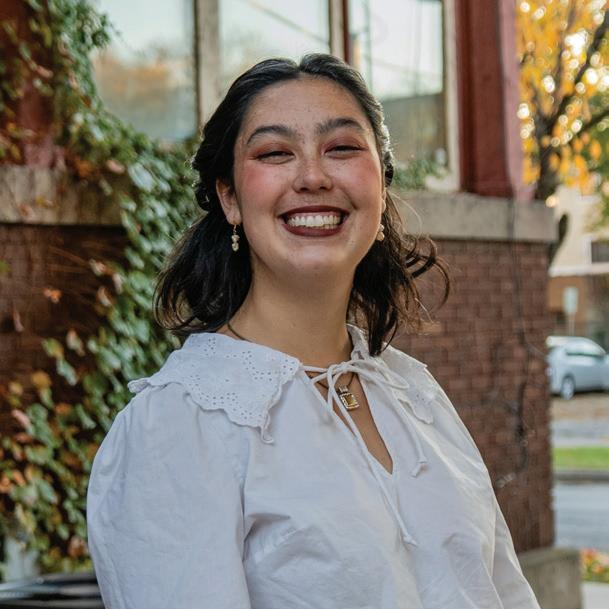
Natalia Butler M.S./Ph.D. is an Opinion Columnist from the Department of Natural Resources and the Environment. Her monthly column, Beyond Ivory Towers, explores the role of academics in the face of the climate and biodiversity crisis. She can be reached at nbutler@cornellsun.com.
“More than ever before in the recent history of this nation, educators are compelled to confront the biases that have shaped teaching practices in our society and to create new ways of knowing, diferent strategies for the sharing of knowledge.” - bell hooks (Gloria Jean Watkins), Teaching to Transgress
Tis February marks the 50th anniversary of Black History Month as a nationally recognized celebration. Martin Luther King Jr., arguably the most famous civil rights activist of the 20th century, is an example of an intersection activist with his links to the origins of the environmental justice movement.
Dr. King spoke at the Memphis Sanitation Worker’s Strike a day prior to his assassination in April 1968. Te historic strike began in response to the death of two Black garbage collectors and fought against the unfair working conditions and wages of Black workers. Tis event is often referred to as a precursor to the environmental justice movement as it highlighted how race, labor and the environment are inextricably linked. After two months of striking, numerous police attacks on non-violent demonstrators and the assassination of Dr. King, the Memphis City Council agreed to increase wages and recognize the local union. Tis connection between civil rights movements and other movements such as environmentalism is not unique to Dr. King but is shared by a host of Black activists including Fannie Lou Hamer, Benjamin Chavis and Ella Baker.
On college campuses, Black civil rights activists utilized their platform to support other causes similarly afecting their com-
Americanness, without understanding West Africa,” and designed the current version of the course to reflect this broader understanding of the African American narrative.
The first novel for the course, O.O. Sangoyomi’s Masquerade (2024), is set in a fictional 15th century West Africa almost entirely independent from the influences of Western colonialism. Masquerade follows a young woman born on the fringes of society who is kidnapped by the warrior king of the powerful Yorubaland and whisked into a world of political intrigue, dark love and calculated self-empowerment. With thunderingly resonant echoes to Western fairytale romances, Sangoyomi toys with this established canon and uses her novel’s unabashedly African cultural backdrop to refute Western exceptionalism — the belief that the West and its people possess unique traits that assert their superior position in the world — in everything from narrative form to societal conquest to sexual allure.
The course’s second text, The Healers (1979) by Ayi Kwei Armah, continues the more expansive Black narrative initiated by Masquerade. Like Masquerade, The Healers follows a young protagonist pursuing their dreams as they are thrust into the center of a tumultuous political world. However, in The Healers, Western colonialism has arrived to stand opposed to the protagonist’s efforts as it expands and exploits the divisions running rife through the African kingdoms.
It is only after these first two books that the course indulges the traditional narrative of Black American enslavement with Octavia E. Butler’s Kindred (1984) and, even then, only intermittently as the novel’s protagonist, Dana, time travels between 1976 and the pre-Civil War South. As a Black woman, Dana’s journeys into the past present a significant threat to her freedom and life; however these trips lie not within her own control, but are instead instigated by Dana’s distant ancestor: the white son of the owner of a small plantation. With Kindred, Butler examines the power of family ties and questions what it means to be moral in a world where slavery ultimately deprives everyone, Black and white, of a sense of community and of their humanity.
February is Black History Month, with 2026 marking
Black History Month’s 50th anniversary and the centennial anniversary of its forerunner, Black History Week. As an Asian American without a single bit of Black lineage, I’ve found myself questioning my role within this time of commemoration. The Introduction to African American Literature class has taught me, however, that Black history reaches far beyond Black people. For example, the narrative expansion of Prof. Frazier’s course echoes the historical and contemporary connection of the Gayogohó:no people to the land of and around Cornell University. Similarly, there is an interesting parallel between the divisions that slavery spawned and exploited within the Black community and those raised within the Japanese American community during WWII internment. Black literature, culture and history can provide an entry point and lens through which to examine other questions of racialized dynamics in the U.S. and the world at large. In the end, Black history is American history, and as American history, it is our history. With Black History Month drawing to

Wyatt Tamamoto is a freshman in the College of Arts and Sciences. He can be reached at wkt22@cornell.edu.
Academia Wants Impact?
Black History Already Wrote the Manual
munity. Tis is evident in Cornell history by the 1969 Willard Straight Hall Occupation, which arose as a result of students being punished for protesting the lack of a Black studies program. Te occupation was the catalyst for the establishment of other cultural studies programs such as the Asian American Studies program here at Cornell. Without the resistance and bravery of those Black and Latino students, Cornell would be a very diferent institution than the one we know today.
At Cornell and beyond, history is in the making every day. Te Descendants Project is an example of a modern group of Black activists who refuse to be defned by boundaries. Not only is this group fghting for environmental justice but also for intergenerational healing with the desire to “liberate Louisiana’s descendant communities from the legacies of slavery.” Tis intersectional approach is a prime example of a Black advocacy group that academia can learn from. Meanwhile, closer to Ithaca is the Brooklyn nonproft called the Center for NuLeadership on Human Justice and Healing, which has a mission to end mass incarcera tion through human centered justice. The Center for NuLeadership takes an intersectional approach focused on healing and improving commu - ected by inter- generational incarceration through combining housing, food and land justice. One project the organization is focused on is called “Te Peoples Land,” which connects New York City communities with nature to heal intergenerational trauma caused by the prison-industrial complex. Tese are only two of many organizations that are innovative and serve as intersectional approaches that academia can learn from.
Academics desire impact yet propagate isolated silos. I see this constantly within departments as professors are divided between research methods and ideology. Te world does not exist in isolated silos but rather through interconnected streams. Black activists and scholars have a long history of operating in an intersectional capacity and as such are a prime example of how
academia can break tradition and enact change in an equitable and just manner. A host of institutional barriers exist within academia that don’t allow for intersectionality to bloom.
Academia is so desper- ately missing intersectional approaches that pro mote justice-oriented problem-solving. Within Cornell, departments are divided between disciplines, departmental norms and ideologies. As a mixed-methods researcher, I am constantly walking the ne line between the quan tative and qual tative realms. Writing this article reminded me that I am not alone and following in the well-worn trail of Black activists and scholars like bell hooks who refused to be siloed.

Itis clear that Cornell University is attempting to promote intersectionality with the recent creation of the Ashley School of Global Development and the Environment in December 2025. school has the opportunity to solve the prob lems of this complex and multifaceted world with new approaches that aren’t rooted in colonialism. We can’t talk about Cornell’s School of Agriculture and Life Sciences without discussing the land grant mission and its links to land grabs and colonial ism. Cornell University is a land grant institution which profted of the dispos session of the traditional indige nous homelands. Even compared to other land grant institutions, Cornell University has profted the most signifcantly from this dispossession.

We need to accept new ways of knowing. Academia claims a desire to make an impact without the bravery to break institutional barriers. Academia needs to step down from its ivory tower and immerse itself in the unknown. While the University has taken baby steps towards accepting other ways of knowing, a marathon still lies ahead. Black activists were not afraid to restart and in the words of bell hooks in Teaching to Transgress, “Te classroom remains the most radical space of possibility in the
Natalia Butler
COURTESY

The Corne¬ Daily Sun

Cornell Cinema Revisits the Willard Straight Takeover
By AIMA RAZA Sun Staff Writer
Feb. 23 — The sound of unyielding chains rattling against the heavy oak doors of Willard Straight Hall was the first sign that the status quo had expired. Within hours, the Ivy League’s polished veneer had been stripped away, replaced by a standoff that would draw the eyes of the entire nation. The sun had barely crested over Libe Slope on April 19, 1969, when the catalytic 36-hour occupation began; it seethed into an uproar as Black students piled into Willard Straight, refusing to be subjected to the deafening silence of the administration’s passivity toward the growing chasm between the University’s liberal rhetoric and the lived reality of students of color.
High in the dark hours of April 18, the smell of kerosene sliced through the spring air outside of Wari Cooperative. A wooden cross had been hammered into the lawn and set ablaze. For the Black women inside, the crackle of the flames was a message written in fire: Even here, in the supposed safety of
an Ivy League institution, you are not welcome.
And so, if the University would not provide a fortress for its stu dents, the students would have to seize one for themselves. Decades later, the same for tress served as a living archive. Sitting in the dimly lit tiered rows of Cornell Cinema, I watched the flickering frames of Agents of Change reconstruct the 1969 occupation on a screen just a few feet away from the very doors the students had once chained shut.
To continue read ing this article, please visit www.cornellsun. com.
Aima Raza can be reached at araza@ cornellsun.com.

Ithaca is Leading New York State’s Reparation Eforts
In 2024, former Ward 1 Alderpersons Phoebe Brown and Kayla Matos (D-1st Ward) co-sponsored and passed a proposal allocating $50,000 of Ithaca’s 2025 budget to funding a study on reparations for Black residents. The proposal was a part of ongoing reparations efforts in New York state, which groups across the state continue to advocate for.
According to Brown, the reparations movement addresses “the damage[s] done to Black people … throughout history,” through monetary, systemic and struc-
“What I envision is [money] being placed in institutions that are Black-led [and]
helping educational systems,” Brown said in an interview with The Sun. “To this day, we’re still being traumatized. The damage is still hurting us.”
As part of the amendment, the City of Ithaca will appoint a research committee, hire a consultant or research firm and then define the study’s objectives. The working group — formed in November — will propose recommendations to the city council. The members will then review the recommendations and make adjustments. The city will then issue a Request for Proposals, which entails Ithaca soliciting bids from companies or organizations to cover the study’s costs.
Although she said she wishes the process could be quicker, Brown hopes the study clarifies how reparations can be best enacted in Ithaca. The budget amendment followed the establishment of the New York State Community Commission on Reparations Remedies in 2023 by Senate Bill S1163A.
To continue reading this article, please visit www.cornellsun.com.
Shubha Gautam can be reached at sgautam@cornellsun.com.
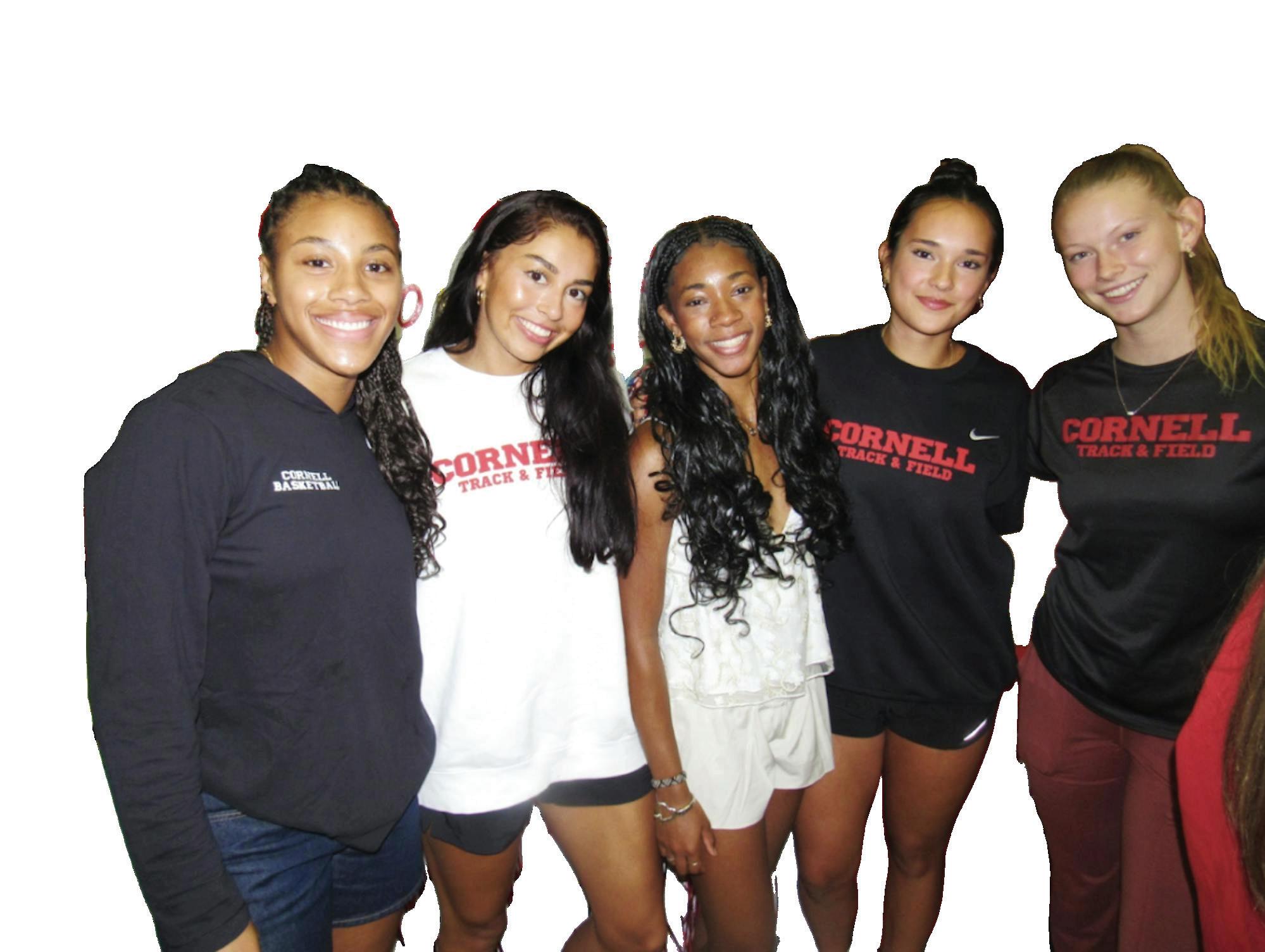
WOCA: Courts, Community,Culture
An inside look into the campus organization Women of Color in Athletics and its athletes
By BUZMAEL JOANUS Sun Staff Writer
Feb. 23 — Six years ago this month, two Cornell students — Monique Anderson ’22 and Jadyn Matthews ’22 — dared to be different.
Anderson, a track and field high jumper, and Matthews, a defender and midfielder for the women’s soccer team, made the bold decision to found a new organization on Cornell’s campus, one dedicated to supporting women of color in athletics.
The need for this sisterhood had been apparent for years. It was these two students who took action, creating a space for women who understood both the pressures of NCAA competition and the unique challenges of being student-athletes at an Ivy League institution.
“I was very grateful to have a resource like WOCA my freshman year where I could feel seen and heard as a woman of color in athletics as well as connect with people that share my experience,” said Ava Bogan ’26, a midblocker and rightside on the women’s volleyball team and WOCA’s director of internal relations.
In Summer 2020, amid the death
of George Floyd’s, Women of Color in Athletics truly began to flourish, following its formation in February 2020. It became a space for members to process their emotions and share the realities of navigating being a woman of color in the U.S.. While campus sat in a desolate stillness brought on by the pandemic, the women of WOCA did not drift apart.
If anything, they grew closer, exchang ing academic and personal resources, supporting one another from afar and forming genuine and lasting friendships.
Now, in 2026, that sisterhood has only strengthened, continuing to provide athletes with a space where they feel seen, heard and supported.
“I was a freshman and I want ed to explore more communities of color because for me, I grew up in a predominantly white com munity,” said Sade Falese ’26, a track and field jumper athlete and WOCA’s director of finance.
“I didn’t have much expo sure to a lot of people of color, more specifically, women of color … so coming here, I wanted to reach towards that identity of myself,” Falese said.
Falese’s experience is not unique. Many athletes on campus share similar sentiments, which helps explain why so many gravitate toward the organization. While WOCA serves as a space for
gain exposure to internship and career opportunities.
To continue reading this article, please visit www.cornellsun.com.
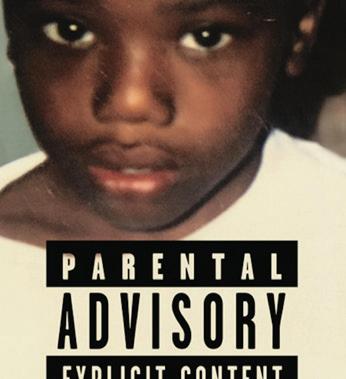
bars Brayden Rodgers reviews and analyzes Baby Keem’s second studio album, Ca$ino.
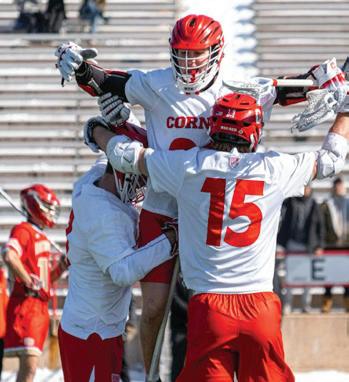
demolished No.5 men’s lacrosse made
comeback against No. 17 University of Denver to remain undefeated for the season.
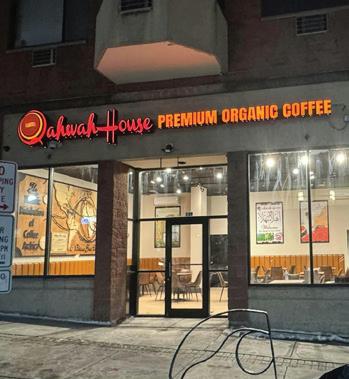
Collegetown coffee Qahwah House, a Yemeni coffee chain, will open its doors in Collegetown this week.
JULIA NAGEL/SUN FILE PHOTO
A LISTING OF FREE EVENTS ON CAMPUS AND IN ITHACA
The Corne¬ Daily Sun

Today
Snow Day: A Guide For How to Play In the Snow
8 a.m. - 5 p.m., Martha Van Rensselaer Hall, 1250 Gallery
Music of the Natural World
9 a.m. - 5 p.m., Sidney Cox Library of Music and Dance
Meet the Funder: Pew Biomedical Scholars Program 1 - 2 p.m., Virtual
Milstein Program: Student Funding Research Panel 5 - 6:30 p.m., A.D. White House, Guerlac
Traditional Southern Soul Food 5:30 - 8:30 p.m., North Star Dining Room
Tomorrow
Soup & Hope 12 p.m. - 1 p.m., Sage Chapel
Mass Spectrometry Student Society at Cornell Lunch & Learn 12 p.m. - 1 p.m., Weill Hall, 421
Better Together! Body Doubling 1:30 - 3:30 p.m., Computing and Communications Center, B08
What Professors Don’t Understand About Students Today 4:30 - 5:45 p.m., Goldwin Smith Hall, Kaufmann Auditorium
Open House: The Hum of Life 5:15 - 7:30 p.m., Johnson Museum of Art
Qahwah House Opened in Collegetown on Tuesday
By HUSSAM KHER BEK and ZEINAB FARAJ Sun Staff Writer and Sun Features Editor
Feb. 23 — Qahwah House, a Yemeni coffee shop chain, opened a new location at 139 Dryden Rd. in Collegetown on Tuesday, according to manager Anwar Albahri.
Qahwah House was founded by Ibrahim Alhasbani, who opened its first Yemeni coffee shop in Dearborn, Michigan. The chain has since grown and spread across the U.S. while also gaining national popularity. The Ithaca location will be the 28th coffee shop from the chain to open in the nation.
The coffee shop offers its popular Arabic coffee, pastries and traditional Yemeni desserts, as well as “high-quality” organic Yemeni coffee beans and spiced drinks. Albahri noted that the shop plans to offer catering services and be a place for students and Ithaca community members to host events.
In an interview with The Sun, Albahri said the decision to open Qahwah House in Ithaca was influenced by the “welcoming” nature of Collegetown and the popularity of the New York City and Michigan locations among Ithaca residents. Albahri explained that during his time working for the New York City branch, customers from Ithaca would try Qahwah House and asked about an Ithaca branch.
“We want to make sure everything serves our community,” Albahri said. “That’s number one for us, and we want people to enjoy [Qahwah House].”
According to Albahri, the opening of the coffee shop has been a work in progress for the past eight months. He has also enjoyed watching people stop by and express their excitement as the Qahwah House location developed.
He joked that Cornell seniors expressed their excitement for the opening by telling him they wished that Qahwah House had opened sooner.
“Now that the Qahwah House is happening, they are still excited to enjoy it with us for the rest of the year,” Albahri said. “We [are] not only a store, we want to support people and the community.”
Albahri told The Sun that he was excited to open Qahwah House during Ramadan, a holy month for Muslims. During Ramadan, Muslims fast, or abstain from consuming food or drink, from sunrise until sunset. He hopes that the coffee shop will serve as a social spot for students at Cornell.
What distinguishes Yemeni coffee from other types starts with the coffee beans themselves, Albahri explained. He described how they are grounded in “our Yemeni way.”
Yemeni coffee is grown using centuries-old traditional harvesting practices at extremely high altitudes, which develops its unique and deep earthy flavor. The coffee mix may also include a mix of spices that add flavor to the coffee.
Albahri noted that people can keep up with Qahwah House Ithaca through their TikTok page, where they will share updates regarding their opening.
Samiha Anjum ’28 told The Sun that while she hasn’t been to Qahwah House, she heard about it primarily through social media and is excited to try the new coffee shop.
To continue reading, please visit www.cornellsun.com.
Hussam Kher Bek and Zeinab Faraj can be reached at hkherbek@cornellsun.com and zfaraj@cornellsun.com

Student Assembly Asks Kotlikof to Enforce Anti-ICE Resolution
Renames to ‘Student Governance Assembly’
By EMMA SPINDLER Sun Senior Writer
Feb. 21 — The Student Assembly voted Thursday to rename itself the Student Governance Assembly, marking one of more than a dozen resolutions passed during a meeting that also renewed pressure on President Michael Kotlikoff to enforce a previously passed anti-Immigrant and Customs Enforcement resolution.
The meeting adjourned before all tasks on the agenda were addressed due to time constraints.
Enforcement of Anti-ICE Resolution
The Assembly passed Resolution 42: “A Resolution Enacting the Enforcement of Resolution 9,” which calls for the immediate enforcement of the previously-passed Resolution 9 in light of Kotlikoff’s failure to respond within 30 days.
Resolution 9: “Ending Career Services Collaboration with ICE,” passed on Sept. 25, called for Cornell to endCareer Services’ events with Customs and Border Protection and remove all ICE and CBP postings from the job platform Handshake.
Under the Assembly charter, the president is required to respond to conveyed resolutions within 30 days. While the Office of the President notified the Assembly that Kotlikoff’s response would be delayed, he failed to formally issue an acknowledgement until 63 days after Resolution 9 was conveyed.
“Cornell values students having the opportunity to consider a comprehensive set of possibilities for their careers after graduation, and does not screen employers on Handshake for political motivations or affiliations,” Kotlikoff wrote in his acknowledgement.
“Resolution 9 should have been enforced. They did not respond timely, so it should now be enacted,” Max Ehrlich ’26, ILR representative, said during the Thursday meeting.
Resolution 42 asserts that because the 30 day response requirement was not met, the earlier resolution should now be considered enacted.
Debate quickly turned to procedural and legal implications.
“There is a requirement to request reconsideration within 30 days,” Ehrlich said, referring to the Assembly charter. “This is, to an extent, a legal matter.”
Some members alluded to taking “further action” beyond producing resolutions, since the president broke the charter agreement — an agreement several Assembly members referred to as “binding” — through inaction.
“[Kotlikoff] is contracted to do these things,” asserted Kennedy Young ’28, vice president of diversity, equity and inclusion for the Assembly, referencing the president’s formal obligation to acknowledge Assembly resolutions in a timely manner.
Frustration was evident among some representatives who argued that inaction by the administration undermines the Assembly’s authority.
“We need to make it clear that we won’t abide by Kotlikoff stepping all over us, because that’s B.S.” Ehrlich said.
Resolution 42 ultimately passed 28-1.
Student Assembly Renamed to Student Governance Assembly
Resolution 39 proposed a name change from the Cornell Student Assembly to the Cornell Student Governance Assembly. The body’s name will not be formally changed until the resolution is approved by President Kotlikoff.
“There’s consistent confusion between … ‘SA’ meaning Student Assembly and ‘SA’ meaning sexual assault,” said Eeshaan Chaudhuri ’27, vice chair of operations for the Univeristy Assembly during the meeting. “That confusion undermines the clarity of our institution.”
Student Assembly’s new acronym will be SGA, and they will continue to use “the Assembly” when referring to the body in shorthand.
Members also framed the change as part of a broader effort to modernize the Assembly ahead of the upcoming student body election cycle.
To continue reading this article, please visit www.cornellsun.com.
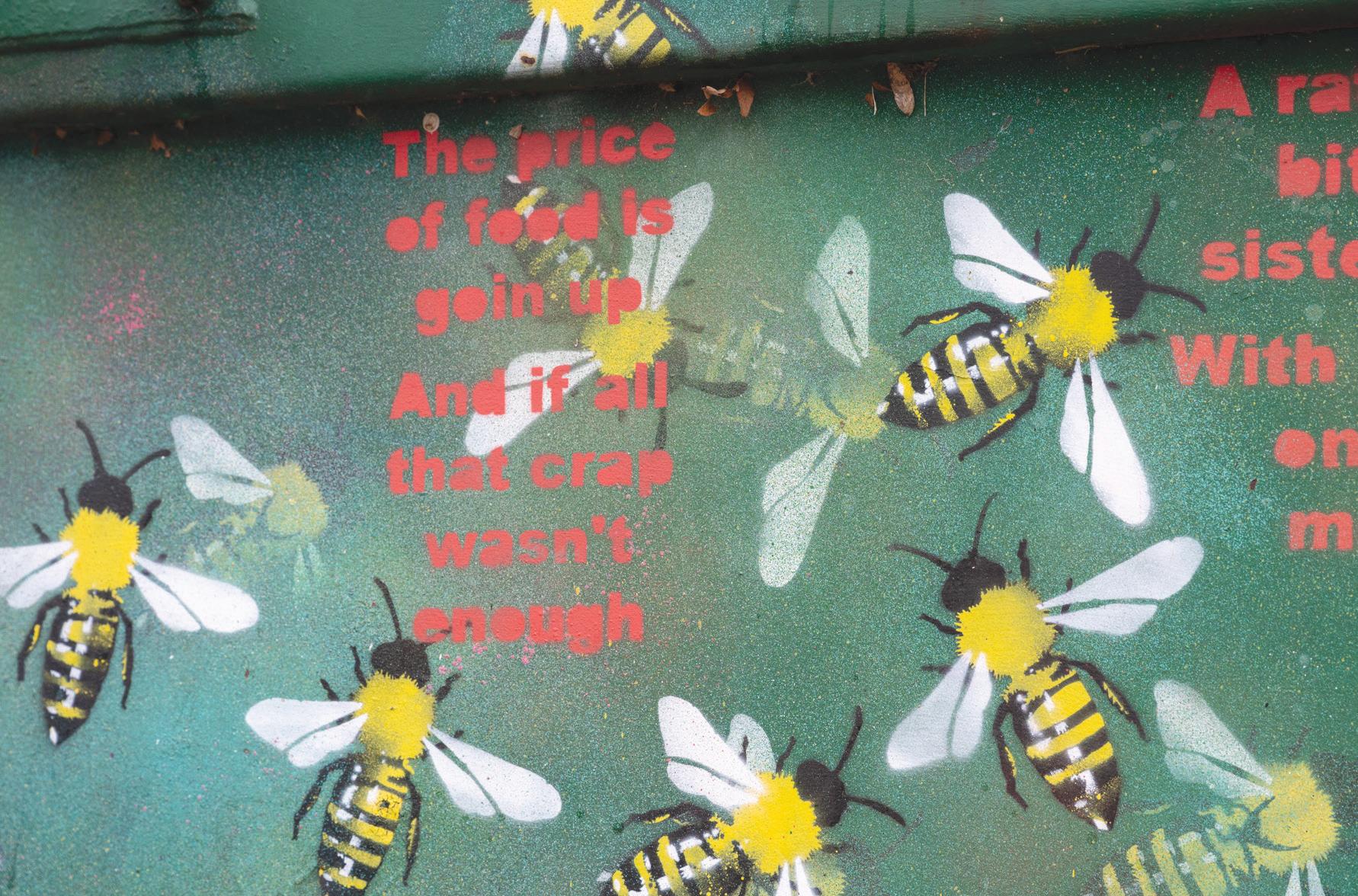
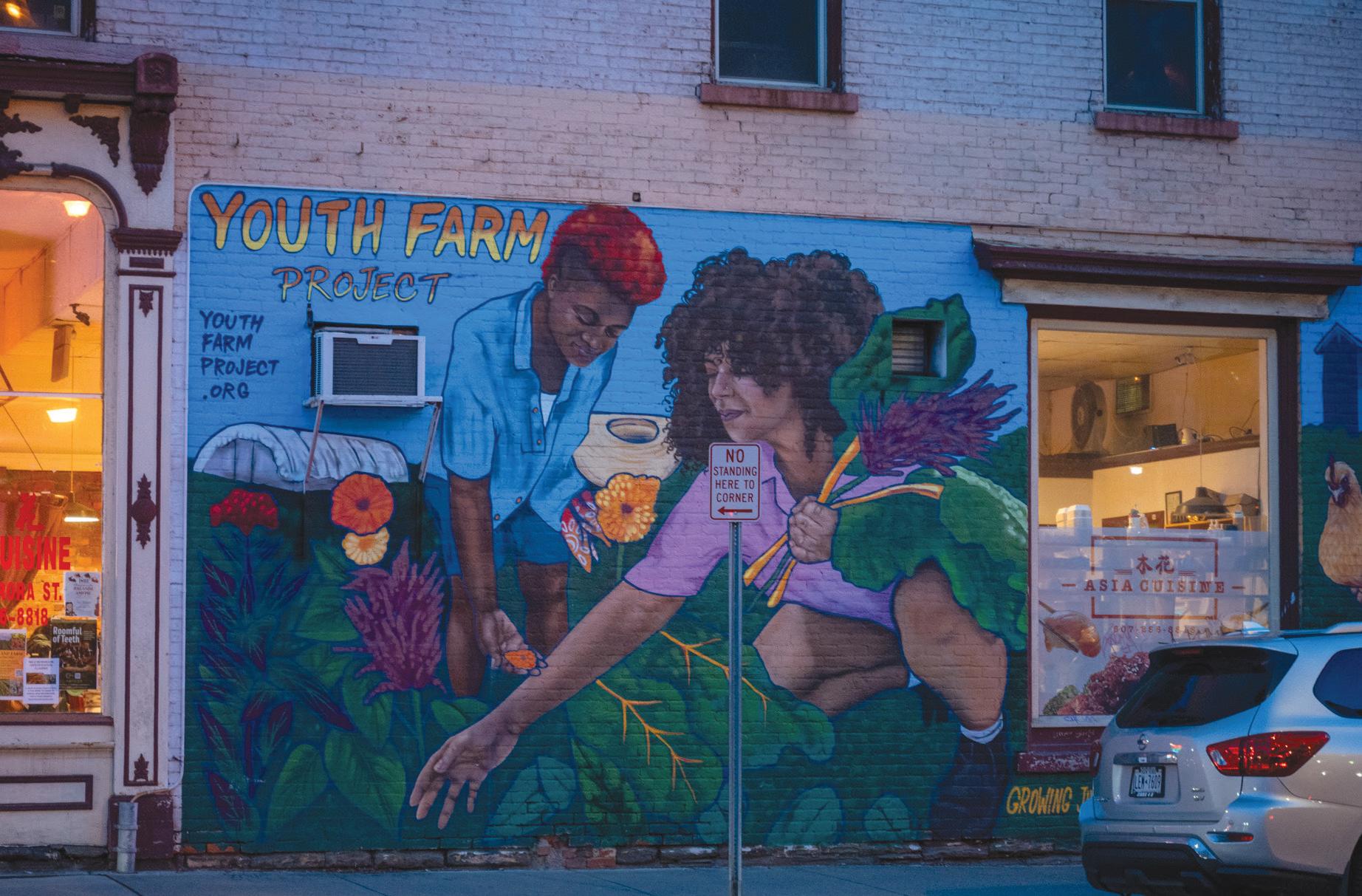
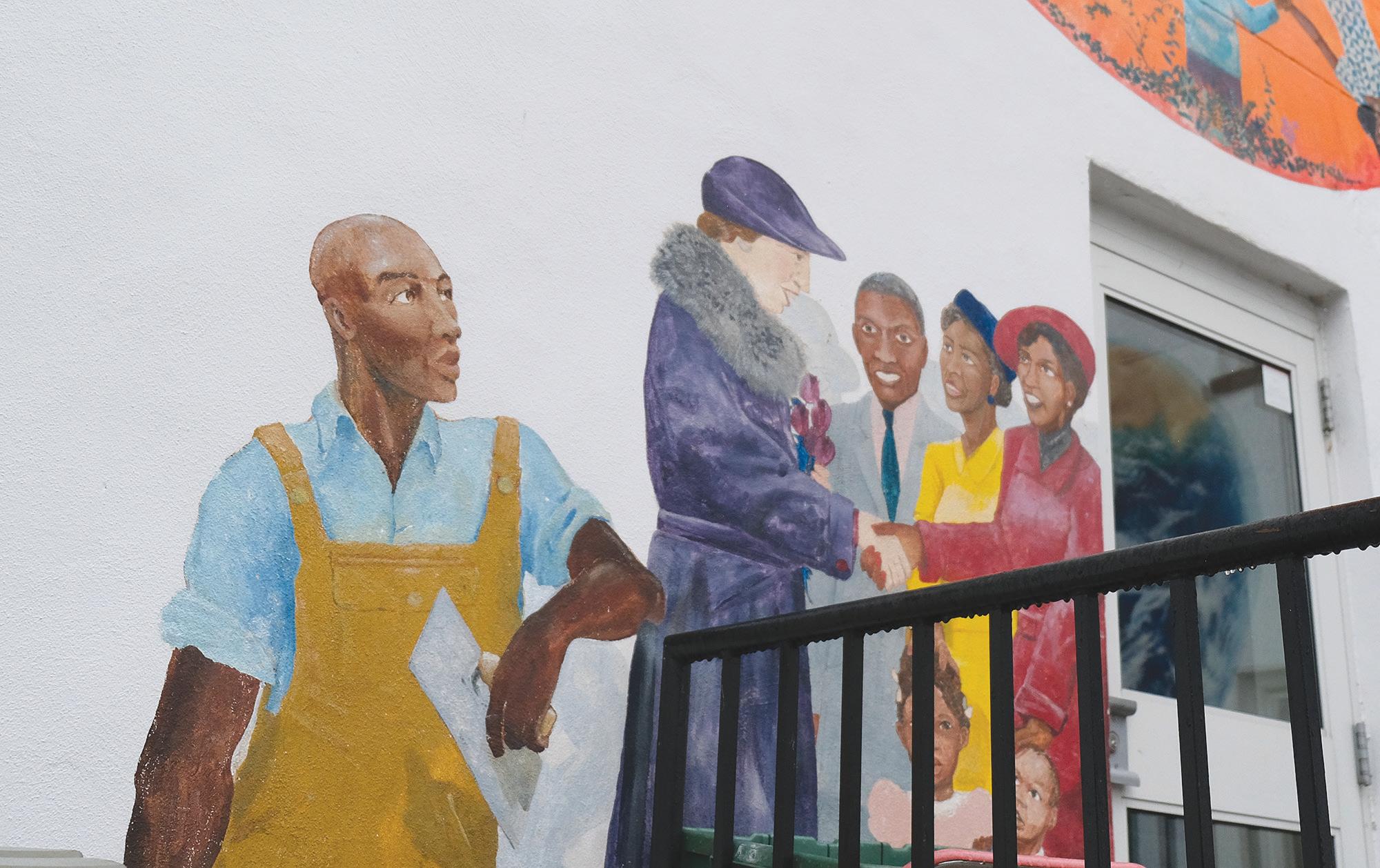
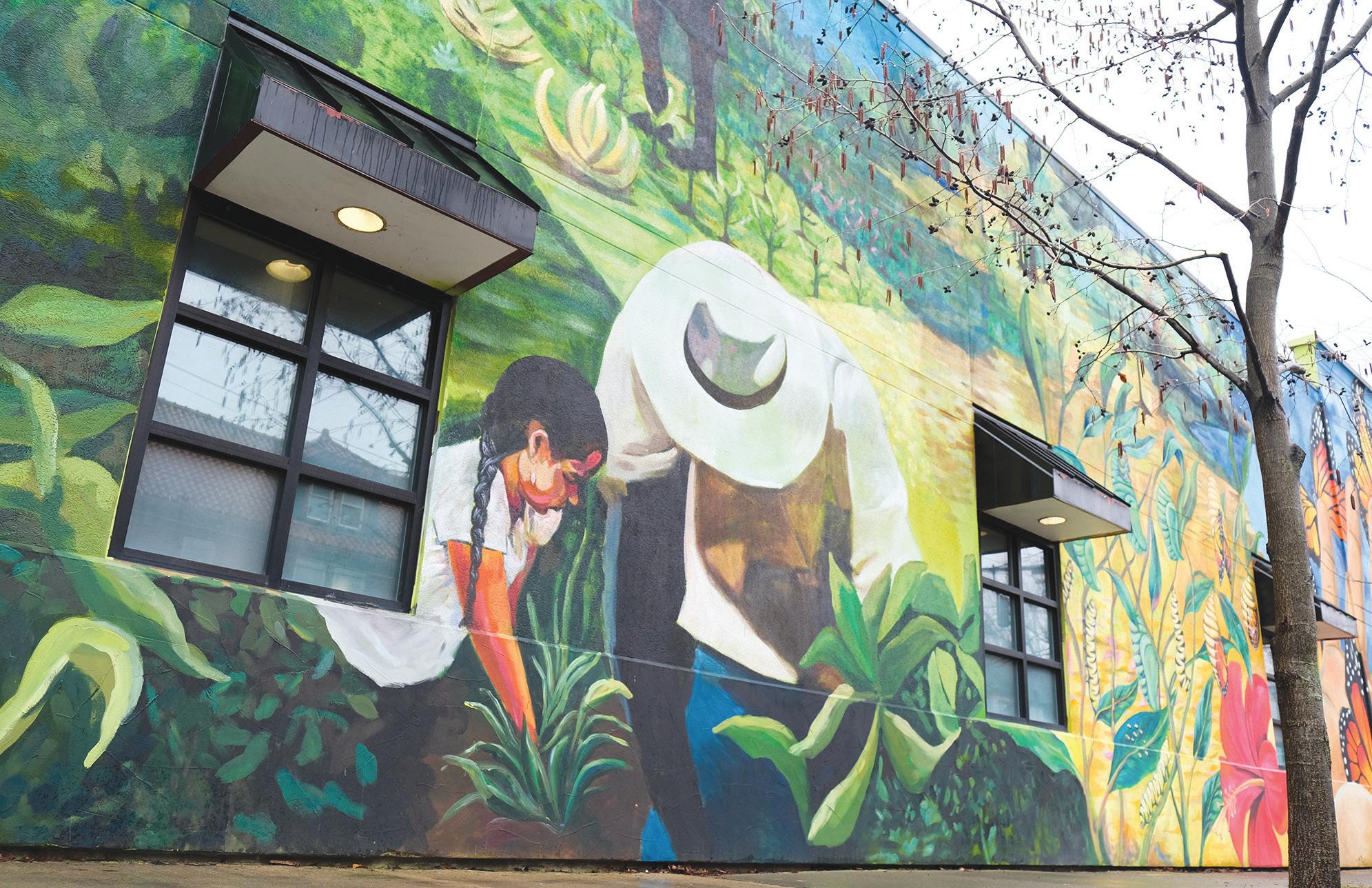
SUNBURSTS: City of Murals
Over the weekend, Sun photographers wandered downtown to capture Ithaca’s vibrant murals and highlight the artists behind the work.
By SUN PHOTOGRAPHY DEPARTMENT

RESILIENT TOGETHER | A mural by Efren Rebugio and Britt
and


Johnson commemorates COVID-19
the strength of the Ithaca community.
STINGING TRUTH | A mural located within the Southside Community Center features a statement about rising food costs.
LOOKING BACK | A reflection on a motorcycle mirror captures the mural painted by artists Betsy Casañas and Mauricio Pérez.
LINGERING GLANCE | A public-facing mural displayed in the Southside Community Center sheds light on inclusion and hope within the community.
SOWING HOPE | The mural named “The Opposite of Addiction is Connection” adorns the Cayuga Addiction Recovery Services Building.
ONE WAY | Painted scenes on electrical boxes and streetpoles brighten Ithaca’s roads.
YOUTH FARM | A vibrant mural in downtown Ithaca highlights food sovereignty, diversity and youth leadership.
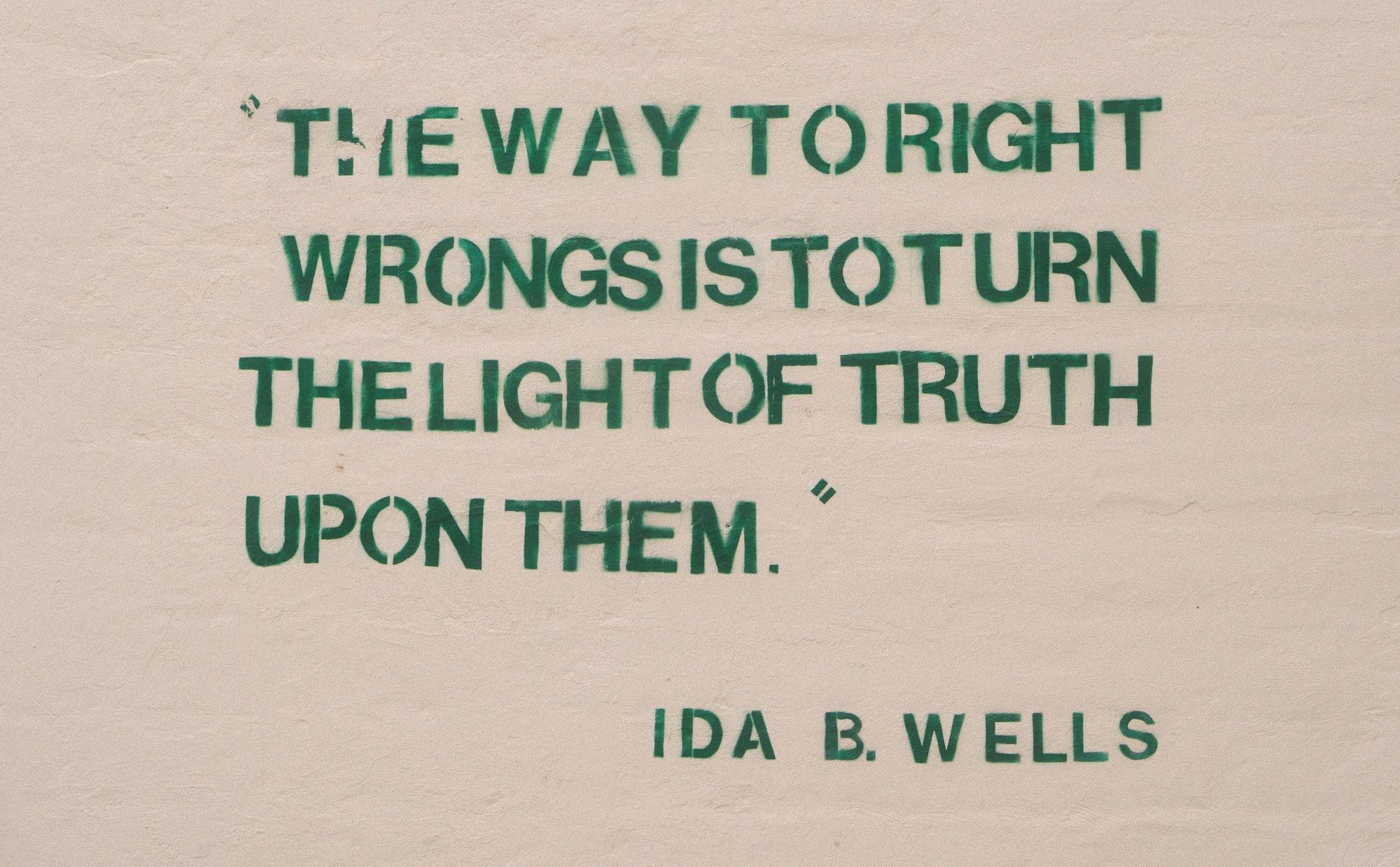
RIGHT WRONGS | A famous quote by Ida B. Wells, journalist and civil rights activist, sits beneath a mural at Ithaca’s Southside Community Center.
Nathan Bo / Sun Staf Photographer
Nathan Ellison / Sun Staf Photographer
Nathan Ellison / Sun Staf Photographer
Adelaide Chow / Sun Staf Photographer
Nathan Ellison / Sun Staf Photographer
Adelaide Chow/Sun Staf Photographer
Ming DeMers / Sun File Photo
Nathan Bo / Sun Staf Photographer
K-HOUSE Reopens in Downtown Ithaca With New Queer Space, Cafe
By SHUBHA GAUTAM Sun Senior Writer
Feb. 19 After closing its Catherwood Road location in June, K-HOUSE Karaoke & Arts Hub reopened its doors on Tuesday at 121 West Martin Luther King Jr. St. in the Ithaca Commons.
With its move, K-HOUSE is shifting from its private karaoke suite model to an expanded setting that offers a cafe, two bars and a live music venue. The space hosts daily karaoke, open mics and workshops, and visitors can book private karaoke events at partner venues in town through the business’s new “Pop-Up Club,” according to owner Alina Kim ’03.
Kim opened K-HOUSE in 2014 at 15 Catherwood Rd. Kim told The Sun that her sister first gave her the idea to open up a karaoke business in Ithaca, thinking locals would be “accepting” of a new karaoke style.
Ithaca was already “very into karaoke culture from an American standpoint,” Kim said, and K-HOUSE combined the existing culture with the “more Asian [style] of private karaoke suite[s].” The Catherwood Road location closed in June due to unresolved mold and structural issues.
With less square footage than its previous location, K-HOUSE can no longer host private karaoke suites, according to Kim. The new space at the historic Exchange Building was home to The Watershed and The Downstairs for nearly a decade, until the joint bar and music venues closed at the end of December.
The building’s two floors are split into separate bars, with the upstairs, called K-HOUSE Bar & Lounge, hosting traditional karaoke and the downstairs, called Room K, serving as a performance venue. Room K plans to host a new “designated queer space” called Q Space on certain days, Kim said. Local kitchen Farm to Feast will serve food during the daytime in the upstairs area.
By including performance art, community events and food concepts, Kim said the business is stepping out of its traditional karaoke-only service. K-HOUSE has outfitted several locations for its Pop-Up Club, implementing the same karaoke systems the original private suites had.
“Now that we don’t have the private karaoke suites onsite with our karaoke bar and lounge, we decided to take almost like an Airbnb approach, but a little bit more community driven,” Kim said. “[We are] taking existing event spaces and then helping them bring in more revenue, … more recognition and [the] opportunity to do pop-up events.”
On Friday, the first member of the PopUp Club, MIX Art Gallery, will launch an open house and host karaoke parties of up to 20 people.
Q Space
Room K is home to Q Space from 9 a.m. to 1 p.m. every Monday through Wednesday, Kim said.
Q Space will offer activities like craft workshops and guest speakers on Tuesdays, and will serve as a stomping grounds for the local LGBTQ+ community to hang out and work on Mondays and Wednesdays, Kim said.
Local drag artists Just Alex, a Ph.D. candidate in music, and Tilia Cordata run Q Space. Currently, Just Alex said the two are looking for community input to see what people want or can contribute to the space.
“You can just come hang out and be with people, and people are excited about that,” Just Alex said. “We’re excited that people are interested in sharing their skills, too, with other folks. It looks like [there is a] gap that we might be filling, which is great.”
To continue reading this article, please visit www.cornellsun.com.
Shubha Gautam can be reached at sgautam@cornellsun.com.
Miami’s First Female Mayor Eileen Higgins MBA ’89 Shares Journey
By VALENCIA MASSARO Sun Staff Writer
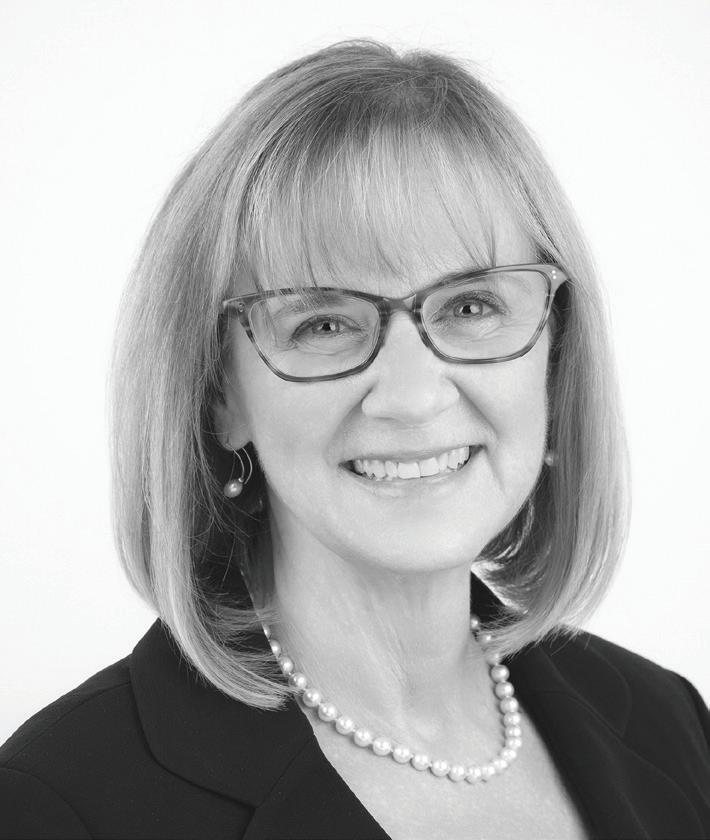
Feb. 18 — Eileen Higgins MBA ’89 made history on Dec. 9 when she was elected as Miami’s first female mayor. She is also the city’s first Democratic mayor since 1998 and its first non-Hispanic mayor since 1996.
Higgins won the mayoral election, earning 59.46% of the vote against Republican candidate Emilio T. González, who earned 40.54%. While Miami elections are typically non-partisan, both major parties were represented in this election. President Donald Trump publicly endorsed González in a Truth Social post on Nov. 16, while the Democratic National Committee helped Higgins secure funds for her campaign.
González, a Republican former city manager for Miami, publicly conceded on Dec. 9 after unofficial results from the county elections supervisor showed Higgins leading by nearly 20 percentage points. In an interview with the New York Times, he said that he called Higgins after the election to wish her the best as mayor.
Higgins’ platform focused on affordable housing, affordable healthcare, environmental sustainability, accessible transit and small businesses. But Higgins told The Sun that she saw one “top of mind crisis” for those in South Florida: current Immigration and Customs Enforcement tactics affecting immigrants.
Immigrants account for approximately 22% of Florida’s population, with an estimated 5.2% of all Florida residents being undocumented, according to data released in 2023 by the American Immigration Council.
Since Trump’s reelection, more than 20,000 people in Florida have been arrested for immigration-related charges. Under Gov. Ron DeSantis (R-F.L.), the state has allocated more than $298 million to immigration enforcement, including hiring new officers and leasing two state-run detention facilities, as well as more agreements for local and state agencies to act as federal immigration agents than any other state. Last June, Miami city commissioners voted to allow police officers to collaborate with ICE.
Higgins told The Sun that she will fight for immigrants and be a “mayor that talks about them as valuable members of the community and valuable human beings.”
Higgins has spoken against the looming elimination of Temporary Protected Status, which is the temporary immigration status granted to nationals of specifically designated countries where there are unsafe conditions.
“This move creates unnecessary fear and instability for hundreds of thousands of people who are living and working legally, raising families, and contributing to our communities,” she said in a press release. “It is cruel, and it inflicts even more uncertainty and hardship on a community that has already endured far too much.”
To continue reading this article, please visit www.cornellsun.com.
Valencia Massaro can be reached at vmassaro@cornellsun.com.
Anduril Ends ‘Tech Talk’ After Seven Minutes Amid Student Protests
Students protest against defense technology frm Anduril speaking to students in Phillips Hall
By VIVIENNE CIERSKI
Feb. 21 — Protesters filled Phillips Hall 101 on Thursday to voice their opposition to a “Tech Talk” hosted by defense technology firm Anduril, an event intended to engage with Cornell engineers and promote employment opportunities within the company.
The session, which was originally scheduled to last two hours and have a Q&A period, lasted only seven and a half minutes, after which protesters held up signs and shouted at the presenters.
As students entered the lecture hall, protesters distributed leaflets featuring one of Anduril’s newest defense technologies, the “Fury,” described on the flyers as an AI-powered, semi-autonomous unmanned combat aerial vehicle designed to operate alongside a manned aircraft, identifying threats and providing protection.
The leaflet’s caption reads, “Does this look sleek? Soon, it’ll slaughter a family.”
It goes on to state that Anduril manufactures drones and surveillance technology for use at the U.S. border, “threatening the lives of migrants fleeing violence,” and claims that President Trump has permitted the company to
sell AI-driven weaponry to what the leaflet describes as “genocidal nations like Israel and Saudi Arabia.”
At the bottom, the flyer asks some pointed final questions, “As a Cornell engineer, you have so many opportunities. Seriously? This?”
Anduril’s AI-based surveillance towers currently provide coverage across approximately 30% of the U.S. southern border for U.S. Customs and Border Protection, according to the company’s website. The towers have “directly contributed to saving lives and stopping illicit drugs from entering the U.S.” and have “identified and interdicted hundreds of thousands of border crossings,” according to the site.
The talk opened with Associate Dean of Students with Student Support and Advocacy Services Christine Nye restating Cornell’s policies on expressive activity and free speech. She emphasized that invited speakers have the right to present their views without intimidation and to be heard, while audience members who disagree may express their views as long as they do not disrupt the speaker’s ability to speak.
Presenters then moved through a brief six-slide overview of Anduril’s mission, hiring process and internship opportunities. When it became clear the presentation was ending, protesters lifted
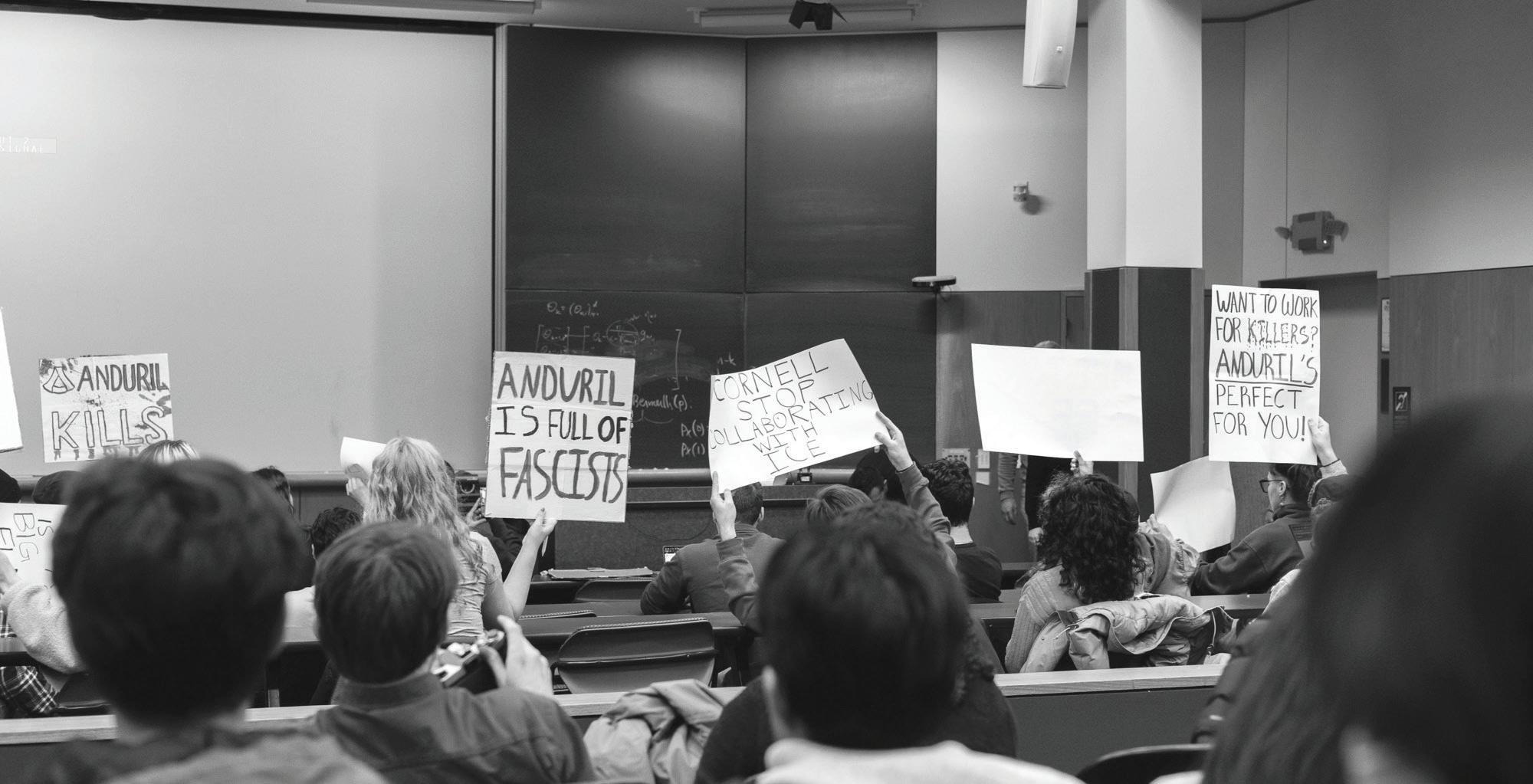
anti-ICE signs, some shouted obscenities and “shame” at the presenters while others asked why they weren’t able to ask questions they had prepared.
Students spent more than a week urging Cornell Career Services to cancel the talk, according to protest organizers and an Instagram post from Students for Justice in Palestine, Cornell Progressives, Mexican Students Association and Movimiento Estudiantil Chicanx de Aztlán de Cornell.
Adrianna Vink ’27, president of the Cornell Progressives, helped to organize the protest. She discussed the demonstra-
tion in an interview with The Sun. Vink explained that students had been “calling and emailing Career Services” because they believe Cornell should not host weapons manufacturers they view as complicit in “genocide and human rights abuses against immigrants within our country.”
To continue reading this article, please visit www.cornellsun.com.
Vivienne Cierski can be reached at vsc38@ cornell.edu
Sun Staff Writer
Tech talk | Students protest Cornell inviting Anduril recruiters for an information session.
STEPHAN MENASCHE / SUN ASSISTANT PHOTOGRAPHY EDITOR
COURTESY OF EILEEN HIGGINS
Miami’s mayor | Eileen Higgins MBA ’89 is the first Democratic and non-Hispanic mayor of Miami since the 1990s.
STEPHAN MENASCHE / SUN ASSISTANT PHOTOGRAPHY EDITOR
The Corne¬ Daily Sun
Independent Since 1880
143rd Editorial Board
JULIA SENZON ’26
Editor in Chief
ERIC HAN ’26
Associate Editor
SOPHIA DASSER ’28
Opinion Editor
SOPHIA TORRES ’26
Advertising Manager
SYDNEY LEVINTON ’27
Arts & Culture Editor
JAMES PALM ’27
Assistant Arts & Culture Editor
JENNA LEDLEY ’27
Assistant Arts & Culture Editor
MELISSA MOON ’28
Assistant Arts & Culture Editor
SOPHIA ROMANOV IMBER ’28
Assistant Arts & Culture Editor
KAITLYN BELL ’28
Lifestyle Editor
MAIA MEHRING ’27
Lifestyle Editor
KARLIE MCGANN ’27
Photography Editor
MATTHEW KORNICZKY ’28
Assistant Photography Editor
STEPHAN MENASCHE ’28
Assistant Photography Editor
MIRELLA BERKOWITZ ’27
Video Editor
JADE DUBUCHE ’27
Multimedia Editor
HANNIA AREVALO ’27
Graphics Editor
HUNTER PETMECKY ’28
Layout Editor
RENA GEULA ’28
Layout Editor
CHRISTOPHER WALKER ’26
Games Editor
ALLISON HECHT ’26
Newsletter Editor
Abigail Dubovi
DOROTHY FRANCE-MILLER ’27
Managing Editor
MATTHEW KIVIAT ’27
Assistant Managing Editor
VERA SUN ’27
Business Manager
ALEX LIEW ’27
Human Resources Manager
BENJAMIN LEYNSE ’27
News Editor
VARSHA BHARGAVA ’27
News Editor
ISABELLA HANSON ’27
News Editor
CEREESE QUSBA ’27
News Editor
REEM NASRALLAH ’28
Assistant News Editor
ANGELINA TANG ’28
Assistant News Editor
KATE TURK ’27
Assistant News Editor
GABRIEL MUÑOZ ’26
City Editor
JANE HAVILAND ’28
Features Editor
ZEINAB FARAJ ’28
Features Editor
JEREMIAH JUNG ’28
Assistant News Editor
KAITLIN CHUNG ’26
Science Editor
MARISSA GAUT ’27
Science Editor
ALEXIS ROGERS ’28
Sports Editor
MATTHEW LEONARD ’28
Assistant Sports Editor
SIMRAN LABORE ’27
Weather Editor
Abigail Dubovi, Ph.D. is a licensed psychologist and the Director of Strategic Planning and Data Analysis at Cornell Health. She can be reached at asd44@cornell.edu.
Measuring What Matters in Student Well-Being
This is a moment of challenge for universities. Critics This time of year often asks a lot of us. Academic pressure intensifies, energy wanes and even meaningful work can feel heavy. In moments like this, I return to a principle that has guided much of my work: we measure what we value, and we come to value what we measure. That idea sits at the center of why researching student well-being at Cornell matters — and why continuing to measure it, especially when things feel stretched or uncertain, is essential.
In October 2022, Cornell became a Health Promoting Campus, joining an international movement aimed at embedding health and well-being into all aspects of campus life. This work is not limited to programs or services. It includes policies, physical and social environments and the daily interactions that shape how students, staff and faculty experience the university.
From the outset, research and evaluation were not add-ons to this work; they were prerequisites, essential to defining what ‘success’ could look like and how it should be measured. To understand whether efforts were making a difference — and for whom — the Research and Evaluation team within the Health Promoting Campus Community of Practice developed a comprehensive evaluation mod -
Administration Should Run the University
My Feb. 11 copy of The Sun arrived and I read it with interest, as always. While I was reading, something occurred to me: The administration, not the students, should run the University.
It seems as if students at many of our universities expect to dictate policy to faculty and administration. Students have a right to express their opinions, as does any other American. They can petition, peacefully protest and express their opinions in the press like anyone else. However, if the University does something of which they disapprove, welcome to the real world. You do not often get your way.
When student protest becomes violent or disruptive to the educational mission of the University, those responsible should face the same consequences as in the real world. They should be prosecuted, suspended or expelled. The University should not tolerate acts of vandalism, assault of fellow students or disruption of the mission of the University. It costs a fortune to go to Cornell, and no one should be allowed to keep students from getting the world class education that they came for.
Part of the function of a college education is training students in the
Prof. Jan Burzlaff
life skills they will need to function in their respective careers. College is not high school. The freshmen that were at the top of their class in high school are now with thousands of overachievers and it is time to grow up fast. College is a good place to learn that you are not the center of the universe, despite what your parents or guidance counselor told you.
There are millions of intelligent people in this country, and they are entitled to their opinions the same as anyone else. Among this group, students have absolutely no special right to be violent or disruptive when someone disagrees with them. That is an important lesson to learn before you graduate. Try being violent or abusive at your law firm or corporation and see what happens.
Students should go to Cornell, exercise their rights, be outstanding, strive for excellence and graduate. As alumni, they should exercise their rights, be outstanding, strive for excellence and make a positive difference.
That is my opinion.
Bradford Garrigues Sr. '77 is an alumnus of the Nolan School of Hotel Administration. He can be reached at bga7347@gmail.com.
Prof. Jan Burzlaf is an Opinion Columnist and a Postdoctoral Associate in the Program for Jewish Studies. Ofce Hours (Open Door Edition) is his weekly dispatch to the Cornell community — a professor’s refections on teaching, learning and the small moments that make a campus feel human. He can be reached at profburzlaf@ cornellsun.com.
When Everything Sounds Too Smooth
Lel. Drawing from social cognitive, social ecological and organizational change frameworks, the model provides a tiered, mixed-methods approach for assessing the impact of programs, policies and cultural change on student well-being over time.
At a moment when national headlines often frame student mental health primarily through crisis, a harder question deserves attention: What actually improves well-being over time, and how do we know? The Cornell Student Well-Being Survey is central to addressing that question.
First launched in May 2023, the survey functions as an annual, population-based case study of student health and well-being. It tracks the prevalence of psychological distress and flourishing (a metric of individual and community well-being), health inequities and key risk and protective factors across the student population.
At its core, the survey helps expand our understanding of the distribution and drivers of well-being across campus: where students struggle, where they flourish and which conditions shape these experiences — so that action is responsive and guided by evidence rather than anecdote.
To continue reading this article, please visit cornellsun.com.
ast week, I asked Claude, an AI model, to summarize a scholarly article. The article was about grief — specifically, the ethics of how institutions communicate with the bereaved. It was a complicated piece, full of hedged claims and uncomfortable silences. The author kept circling back to questions she couldn’t answer, acknowledging limits in her data and sitting visibly with discomfort. There were paragraphs that didn’t resolve, arguments that trailed off into uncertainty. But Claude’s summary came back clean: five sections, a confident thesis and no friction. It read beautifully, but it also missed everything that mattered — the hesitation, the unanswered questions, the texture of someone actually thinking through something hard. The AI had smoothed the whole thing down until it was easy to grasp. This moment made me realize, once more: I no longer trust smoothness.
This semester, I’m teaching a course on memory and AI. The material is inherently difficult: 200,000 hours of Holocaust survivor testimony filled with fragmented memory, ambiguity, silence and pain. We use common AI tools not to write, but to see what remains human in the new age of generative AI. Each week, students run the same testimony through multiple models. The machines summarize, smooth and resolve contradictions that survivors left unresolved. They fill silences that were meant to stay empty. What we’ve discovered is that AI is exceptionally good at producing fluency — and that fluency
is often an illusion. Video testimony resists the kind of closure that large language models are trained to provide. And so the course has become a seminar in friction: How to sit with what doesn’t resolve, how to notice what’s been sanded away, how to read for the rough edges that make something real. My students no longer ask whether writing sounds polished; they ask whether it sounds true and loyal to the materials at hand.
I’ve started to notice this instinct everywhere now. An email arrives, perfectly worded, and I find myself rereading it for what's been sanded away. Who decided this? Who is responsible? Smooth language is not neutral. It’s a design choice — and often a moral one. Smoothness diffuses responsibility. Polished statements flatten moral differences. Seamless processes erase who bears the cost. When something sounds too polished, I suspect that something human has been removed: doubt, disagreement, slowness, accountability and the evidence of care.
To be sure, this suspicion didn’t begin with AI, which is just the most visible symptom of our culture that has long rewarded polish over risk. In education, we see this impulse constantly: Rubrics that prize ‘flow’ over intellectual courage, participation grades that reward fluency over hesitant but deep engagement, essays that sound beautiful and say almost nothing. everything feels seamless, I start to wonder what we’ve lost.
To continue reading this article, please visit cornellsun.com.
Leo Glasgow Can We Talk?
Leo Glasgow '26 is an Opinion Columnist and a student in the College of Arts & Sciences. Te Government and China & Asia-Pacifc Studies double major writes his truth about domestic and international policy as well as problems within the soul of our nation and the world. He can be reached at lglasgow@cornellsun.com
Ican’t name a single Democrat policy, they have become the anti-Trump party. Try fnding one professor on campus who supports our President. Professors preach about fascism with the assumption that none of their students support the administration, ignoring the 77.3 million people who voted red. Tis column is a broader explanation of why that support, including my own, remains strong.
Addressing the Backlash
During the 2024 election, our President promised the largest scale of deportations ever done and won the popular vote; that fact alone counters the narrative of American disapproval; people wanted what they voted for. President Trump has been consistent. Nobody celebrated the American protestors who died; President Trump himself said that those two deaths “should not have happened.” But, let’s be real: what kind of a person hits a law enforcement ofcer with their car, causing internal bleeding? In Pretti’s case: it was not peaceful protest, but instead days of shouting curses, spitting and kicking at ofcer's vehicles, all while carrying a gun.
Te right to bear arms need not mean a right to interfere with law enforcement who are traumatized by the rise in attacks against them and their families. Te two ofcers involved, Jesus Ochoa and
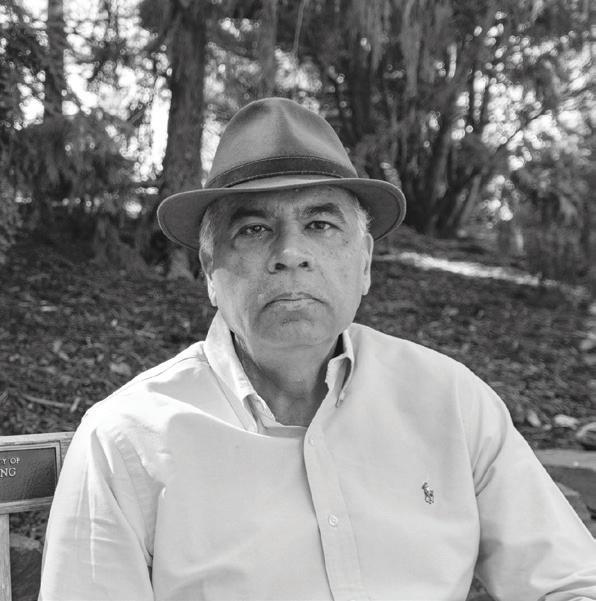
Karim-Aly Kassam Diference Matters
Karim-Aly Kassam is an opinion columnist and professor in the Department of Natural Resources and the Environment as well as the American Indian and Indigenous Studies Program. His column Difference Matters recenters critical refection and environmental justice in campus life at a time when people turn away from the painful truth. He can be reached at profkkassam@cornellsun.com.
In the summer of 2023, while on a road trip from the Rocky Mountains of Alberta to Ithaca, New York, my friend Fred MacDonald, a poet and artist from the Fort McKay First Nations, asked me to ‘talk the walk.’
We had just crossed the United States border and had been searched. As they made us wait, they glanced at us and cynically grinned.
Fred remained alert and very quiet. Silence is not something he does easily. He just wanted to get out of there. A long and continuing history of Aboriginal oppression was weighing on him. I was the opposite, irritated, I asked why we had been stopped and demanded an explanation before leaving.
Tey did not use the excuse of a random check. Instead, they said a computer error indicated we were transporting agricultural goods. It has been years since I had been stopped because they have my fngerprints and iris scan as a pre-check for security. One brown man, Indigenous with a permit to travel freely in North America, and the other, also dark, with Global Entry (TSA Pre-Check) had been stopped for no apparent reason. Even when you follow their rules to the letter, there is still a double standard.
Determined not to let this incident sour our 10-day road trip south, Fred pulled over at the nearest rest stop
Your Only MAGA Voice
Raymundo Gutierrez, refect the overlooked fact that 50% of border patrol ofcers are Latino.
3.2 million people deported under Obama, 10 million under Bush, and 12 million under Clinton; numbers President Trump has yet to surpass. Te narrative of the Trump administration creating chaos in the streets collapses with comparison. Tink critically: It’s easy not to have “chaos” and protester deaths when nobody is protesting.
Debating illegal immigrant deportations is insulting to millions of legal immigrants. People wait years for a visa and decades for citizenship; where is the fairness? Under Biden, migrants paid the cartel thousands to cross the border. A secure border is not controversial, it’s the global norm. Tink we’re on stolen land? Native Americans frequently fought wars among each other and stole each other's land.
So much attention on the Epstein fles, which have only been released thanks to this administration, but nobody talks about the 300,000 children who are missing because of the Biden border crisis. Democrats are now advocating to abolish ICE but were silent about human trafcking and the deaths of Laken Riley, Jocelyn Nungaray and the many more Americans who died because of failed immigration policy.
Policy Wins
16 Nobel Prize Winning Economists promised that President Trump’s tarifs are dangerous. Fear mongering from economic elites about the Trump tarifs was systematic, but the President made it clear that he’s “for Main Street, not Wall Street.” Tere’s a deep irony in leftists being on the side of the Hollywood and Business elites. 9 of the 10 wealthiest congressional districts are represented by Democrats. Our economy has become totally reliant on the top 10%, and that’s a problem. Te working class used to be upwardly mobile and have a larger share of the gross domestic product. But the Trump tarifs are not just about the jobs lost to globalism. Tere are industries so critical to national security that the United States should never have to depend on rivals to supply them. During COVID, we struggled to provide basic personal protective equipment.
When China decides to take back Taiwan their
domination of rare earths, battery materials, and key pharmaceutical ingredients could really hurt us; any dependencies can become leverage. Tarifs reduce strategic exposure before it’s a problem. Beyond strategy there’s morality: Why should America depend on supply chains sustained by slave wages and terrible labor practices?
It’s refreshing to live under an administration that has brought back common sense policies. Why operate on children who can’t even legally get tattoos? What’s the point of women’s sports if trans women compete? Te gender separation of sports is proof that biological men have an unfair genetic advantage. Loving trans women means loving them for exactly who they are: trans women.
It’s common sense to be anti-fraud and there should be no justifable reason to be so triggered by any attempts to fnd it, especially after millions upon millions of taxpayers dollars lost to fraud has been uncovered.
It’s also common sense to make NATO members pay for their own defenses. During his frst term, President Trump was literally laughed at by Europeans when he warned against reliance on Russian oil before Putin’s war. How can they laugh at us while relying on us to keep their countries running?
Just like with USAID, there’s no reason for America to be subsidizing the world while our own nation is sick. It’s like how illegal immigrants got free taxpayer funded housing in Times Square, while Americans were homeless.
Gas prices are down even in gas-taxing liberal states, there’s no tax on tips and social security, credit card interest rates have been capped prompting backlash from bankers, hostages held by Hamas have been brought home, the trade defcit has been reduced, mortgage rates are down, multiple peace deals have been brokered and great fraud eliminated. Democrats should be thrilled about TrumpRX, with record low pharmaceutical prices.
By ignoring these serious policy debates and branding support for President Trump as fascist, the left is mirroring the very intolerance they claim to oppose. True diversity means diversity of thought and true tolerance means tolerating a diference of opinion.
Talking Te Walk
and gave me a camera case with all the snazzy equipment. He said: “I am going to teach you photography and how to write a Haiku while we wander through this beautiful land we call home.” At dinner that night, recognizing that we are aging, we made light of our joys and sorrows.
At that moment, he called me by my Aboriginal name; thereby, creating the intimacy of brothers. He asked, “Isn’t it time for you to ‘talk your walk’? You have spent your entire lifetime ‘walking the talk!’” He wanted me to share my personal story.
It has been three years since Fred uttered those words. So, I write this article for young undergraduate students who are perceived as the outsider, the Indigenous, the ‘colored’ and even the ‘white’ Euromericans who come from rural, poor and middle-class families.
With their assumed superiority, those who judge us essentialize our identities and erase our humanity. It is amusing — if not ironic — that the outliers are the original peoples of this land and the majority of the law-abiding citizens.
When I was 12 years old, my father told me that David Suzuki’s father advised him that to be considered equal to the mainstream society, he would have to be 10 times better. Now, David Suzuki, a Canadian geneticist and conservation biologist, has rockstar prominence in Canada and Australia. When he says something, it is reported in the news.
His family was among the many families of Canadians of Japanese descent who were moved from their homes in British Columbia on the Pacifc Coast, sometimes thousands of miles to Ontario in the east to be imprisoned. Teir houses and assets were nationalized and never returned. If that was not enough, Canada kept them in internment camps four years after the end of the war.
Many years later, while on a walk with David in the prairies of Alberta between the foothills to the north and the Rocky Mountains to the west, in the presence of my two children, I narrated my father’s words and asked him if they were true.
He looked at my daughter, who was nine, and son, who was fve, while they attentively waited for his reply. Ten, he softly said, “yes!”
In 2007, after being recruited to Cornell, I was informed by what I interpret as a well-meaning mem-
ber of our department, that I was at the edge of the department, my work with ‘American Indians’ does not ft in, and they are suspicious of me because I have Muslim heritage.
While painful to digest, his observation bore itself out. Similar gossip euphemistically termed ‘hallway conversations’ about an African American colleague had the same efect of diminishing the value of a human being. Instead of focusing on their scholarly achievements, a leader in the department chose to gossip about the fact that this individual had in their youth been a cheerleader for an NFL football team. Isn’t dance a universal form of self-expression? It also makes us vulnerable because people are watching. Isn’t collaborative dance co-creation of diversity and unity at the same time? A skill to be celebrated, especially in a land grant institution!
I know of countless deans, doctors, CEOs, as well as religious and political leaders who worked as waiters, bar tenders, bouncers and other laborers in order to pay for their education. We are not entitled. Our work is legal and honest, and we are happy to toil for the rewards we receive.
Tis story is not about victimhood. Its vocabulary is neither in my culture nor my ethics. I am grateful for the life I have had because it has been thrilling and rewarding. I urge the undergraduate students to leave victimhood to those who have made an industry of it. Tey unscrupulously use it as a veneer to oppress others. Te fact that you are here at Cornell, whether you were directly admitted or transferred, testifes that you refuse to be a victim. Your presence is a witness to your courage and competence.
So returning to ‘talking the walk’, freedom does not arise from wrapping ourselves in the garments of victimhood, but from realizing the power of our own agency. Te language of victimhood inhibits our creativity. Working to release oneself from the iron cage and dismantling the social structures of oppression for the next generation is the objective.
As my narrative shows, the cruel words of the hegemon will result in painful scars. But as Rumi, the 13th Century Suf poet, said: “Te wound is the place where the light enters you.” We meet darkness with light. From those who have experienced and learned much in life, much is expected!

Mehta Research Group Seeks to Improve Global Nutrition With Precision Nutrition Technology
By DANBI LEE Sun Contributor
Feb. 21 — The Mehta Research Group in the College of Human Ecology focuses on developing nutritional strategies that can be implemented to “prevent disease, to reduce the severity of disease or to mitigate its consequences,” said the group’s principal investigator, Prof. Saurabh Mehta, nutritional sciences.
The group conducts research in improving point-of-care diagnostics, or tests that can be performed outside of laboratories to give medical insights. In the context of nutrition, point-of-care diagnostics can help diagnose nutrient deficiencies and how much of a specific nutrient a patient needs. The group currently works primarily in India, Latin America and Sub-Saharan Africa with vulnerable populations such as women, children and those suffering from illness, according to their website.
In addition to leading the research group, Mehta also serves as the founding director of the Cornell Joan Klein Jacobs Center for Precision Nutrition and Health. According to Mehta, the center was established to conduct research based on the foundational work of the Mehta Research Group. The center performs interdisciplinary research in nutrition and technology to aid the community with the products of their studies, according to their website.
Mehta stated that improving accessibility of point-of-care diagnostics plays a large role in promoting precision nutrition. Precision
nutrition is the practice of accommodating individuals’ dietary needs based on their biology, response to foods, life stage, taste preferences, culture, religion and socioeconomic status.
Point-of-care diagnostics make it possible to test individuals first, then use individualized nutrition strategies to treat different people for their different needs. Point-of-care devices for nutrition can incorporate technology, like mobile devices and apps, with tests that use blood or saliva to measure someone’s nutrient levels and determine their state of health.
According to Mehta, the group started creating point-of-care devices to measure nutritional status in partnership with Prof. David Erickson, engineering, about 12 to 13 years ago. The group hopes to further interdisciplinary collaboration at Cornell to build improved devices for nutrient delivery.
The research group was involved in developing the device AnemiaPhone, which uses a drop of blood to determine if an individual has iron deficiency, a cause of anemia — making it an essential tool to screen for the condition. In 2024, Cornell signed an agreement with the Indian government so that AnemiaPhone could be used by public health programs in India to test women and children for anemia.
Mehta elaborated on the benefits of testing for and treating iron-deficient individuals, rather than implementing a treatment for everyone.
“A, you are saving resources on that treat-

ment [and] B, you are avoiding unnecessary side effects, and you're ensuring more response and adherence to any program that you have,” Mehta said.
According to the National Institutes of Health National Research Report, malnutrition is a leading cause of death worldwide. Mehta explained how seeing nutrition as a top risk factor for mortality led him to pursue nutrition research. Since diet is a modifiable risk factor, better nutrition has the potential to largely improve public health.
“Nutrition is not easy to modify, but I felt like it's something that might be able to move the needle in terms of public health impact,” Mehta said. “And I think that's why people should pay more attention to nutrition research.”
The research group’s future goals include making sure their work in point-of-care diagnostics is “scalable and implemented,” Mehta said.
In addition, the integration of computer science and artificial intelligence in the nutrition field has the potential to improve data collection, analysis and inference in precision nutrition, according to Mehta. AI can help take into consideration the complex multimodal data collected over different disciplines in different forms that is used to determine individuals’ unique dietary needs, he added.
To continue reading this article, please visit www.cornellsun.com.
Danbi Lee can be reached at dl2274@cornell.edu.
Where Technology Meets Learning: Inside Cornell’s Future of Learning Lab
By ASHLEY KIM Sun Contributor
Feb. 22 — Most educational technology is designed to reduce friction. Prof. Rene Kizilcec, information science, thinks that is precisely the problem.
“Learning is not about feeling good,” Kizilcec said, who is the founder of the Future of Learning Lab at Cornell. “The emotion of learning is frustration. That's the emotion that's most predictive of learning.”
It is a deceptively simple observation with remarkable implications — for how universities utilize AI tools, how teachers design their courses and how an industry
came to confuse convenience with learning — and it is the driving principle behind the work of the Future of Learning Lab.
‘The Emotion of Learning is Frustration’
Founded by Kizilcec roughly seven and a half years ago, the Future of Learning Lab studies the intersection of technology, education and learning science across all age groups, from primary through post-secondary. The lab’s projects span a variety of application areas, from a national database of tutoring interactions to artificial intelligence powered clinical training tools deployed at medical schools across the country to a language-learning platform used in Cornell’s own classrooms.

The motivator of these projects is a single question: what does good teaching actually look like, and how can we effectively incorporate technology? The answer, Kizilcec argues, begins with an uncomfortable truth about learning itself: “the emotion of learning is frustration.”
That statement goes against the principle of many industries that prioritize seamlessness. Platforms such as Microsoft Copilot are engineered for “low friction” — designed to give consumers what they want, quickly — and are misapplied when universities treat them as educational infrastructure, Kizilcec argued.
“Co-pilot happily gives you the answers to all the assignments. It does not hold back.” Kizilcec said, referring to Microsoft’s AI assistant, which Cornell and many peer institutions have made freely available to students. “That is not a good tool in the education space.”
Kizilcec’s argument is not that AI has no place in learning, but that universities and institutions have an obligation to provide tools based on research and learning science. Deploying general-purpose chatbots in an educational context, he suggested, is an abandonment of that responsibility.
“What we should be giving to students is tools that are designed to support their learning,” he said. “And empower teachers to refine [these tools] so that they're aligned with the specific learning objectives of a course.”
One tool Kizilcec recommended is HiTA.ai, a specialized AI platform for education that can assist students and faculty by providing tailored, conversational
support on demand. This platform has been incorporated into courses at Cornell such as INFO 4100: “Learning Analytics” and HADM 4205: “Real Estate Financial Modeling.” HiTA helps facilitate student learning by guiding the students’ thought process with appropriate hints instead of providing direct answers to questions.
From Tutors to Tongue Twisters The Future of Learning Lab’s projects reflect the philosophy of empowering teachers in practice. One of their efforts is the National Tutoring Observatory, an attempt to build the world’s largest repository of video and transcript data about tutoring interactions.
“Co-pilot happily gives you the answers to all the assignments. It does not hold back. That is not a good tool in the education space.”
Prof. Rene Kizilcec
“Right now there is a lack of good data about what good teaching looks like,” Kizilcec said. “And if we don’t know what good teaching looks like, how can we train models to be like good teachers? How can we advance the sciences of teaching?”
To continue reading this article, please visit www.cornellsun.com.
Ashley Kim can be reached at alk282@
cornell.edu.
Diet diagnosis | The Mehta Research Group seeks to improve diagnostic methods for nutrient deficiencies.
JULIA NAGEL / SUN FILE PHOTO
lab | Prof. Rene Kizilcec, information science, directs the Future of Learning Lab at Cornell Bowers College of Computing and Information Science.
WU / SUN FILE PHOTO
ITe Cost of School Spirit: A
Look at Te Cornell Store
By Sahil Raut
Sahil
am a certified sucker. I purchased a $17 pencil case from The Cornell Store, and for what? Was it just because it had the Cornell University logo emblazoned on the front? Looking through Amazon, I see rows and rows of generic options for a fraction of the price. I know I am not alone in getting sticker shock from The Cornell Store: $80 hoodies, $50 paperweights, plushies that go up to $100. It is no secret that Cornell’s price markup for the brand alone is insane. It is difficult not to pause and consider how a logo alone can justify prices that feel unreasonable for what you’re actually buying.
I understand the appeal of school pride, and as someone who owns plenty of Cornell-branded merchandise myself, I can get behind the excitement of finding something fun in the store and feeling the urge to buy it. It increases my sense of belonging and reflects an important part of who I am, with Cornell being a meaningful aspect of my identity. However, upon stepping back for a moment, I felt the need to ask myself what is really at play here. Merch is not just a marker of what school you go to — it also reflects the pressures of fitting in, signaling status and solidifying one’s identity in a new environment. This can become especially problematic when such pricey merchandise is not accessible to all students. Nevertheless, it still functions as a silent indicator of who can afford the merch in the first place — which, while not the intent — is a consequence of hefty price tags.
From a financial standpoint, this craze also nudges students toward more expensive choices. This is not to say you should ditch your Cornell hoodies, but rather to think more critically. Do I really need that? I have been to countless events throughout the past year that hand out free notebooks, pens, water bottles and other items. Despite that, consumer culture and the pressure to keep up with other students feels rampant at Cornell. I have caught myself noticing the merch other students are carrying and immediately wanting it for myself. Then I return to the store, look at the price tag, and feel dismayed all over again. I am still learning this myself, but separating wants from needs is going to make your wallet a lot happier in the long run. As simple as that advice is, it’s one that many struggle to follow. Another reason to be more price-conscious is all of the unforeseen costs that accumulate while at school. For example, somebody threw away my toiletries bag after I left it in the bathroom one night, leading to my emergency run to The Cornell Store the following day. Items like that may not cost that much individually, but the small purchases can add up quickly. When those unexpected expenses are stacked on top of tens of thousands of dollars in tuition and housing, a $25 Cornell t-shirt starts to feel less harmless and more like money quietly slipping away from you without your notice. It is not a good feeling, and it has been hard to come to terms with
some of the decisions I have made in impulsive moments.
I will admit that there is also a bit of a showboating culture here at Cornell. Whether it is announcing your placements in clubs, bragging about how productive you are or making sure that everyone knows you are two standard deviations above the median, there is a constant undercurrent of comparison. I think a lot of that trickles down into our own spending habits as students. Buying merch becomes another way to reinforce that you belong here — that you are a part of the ‘Cornell club.’ I am not immune to this myself. Just a few weeks ago, I bought a Cornell backpack from the online store, setting me back $70. Would I say that this is the best $70 I have ever spent? Probably not. Temptation really is around every corner, especially when you are surrounded by people wearing the very things you’ve been trying to talk yourself out of buying.
I initially set out to write about overpriced Cornell merchandise, but the real issue of The Cornell Store’s prices are much broader than hoodies and hats. I think there is a larger conversation to be had when more everyday essentials are being marked up, rather than just themed goods. You have the choice to purchase phone cases and charms, but toiletries are non-negotiable.
Necessities like toothpaste, shampoo, cold medicine and school supplies are all available in one of the most central and convenient locations on campus. The underlying issue is that many of these items are significantly marked up, and students have limited alternatives. Unlike many college towns, Cornell’s campus does not have a CVS or similar drugstore within walking distance. For students without cars, especially first-years living on North Campus, The Cornell Store becomes the default option for essentials. When the prices of everyday essentials are marked up in a place meant to be convenient, it ends up taking advantage of students who have no other options. It feels like I am giving advice just as much as I am reminding myself to actually follow it. I am by no means perfect, but my relationship to school pride, consumer culture and compulsivity is steadily improving. School pride should not be tied to how much you spend. Paying more attention to that, and focusing less on buying unnecessary merch has made me feel more at ease and less caught up in trying to show that I belong.
Pride can show up in other ways anyway — showing up to programming led by the residence hall teams, cheering at sporting events and games or simply taking the time to build community and be there for one another. Pride is not always loud or performative — it is also found in the small, consistent acts. I encourage everyone to find pride in the little things that Cornell has to offer instead of basing value on a price tag.


Where Ithaca Meets Ethiopia: Deep Dive on Hawi
By Sanika Saraf
Sanika Saraf is a sophomore in the School of Industrial and Labor Relations. She can be reached at ss4353@cornell.edu.
At the start of the semester, out of the blue, my friend asked to get dinner. While I expected him to suggest a standard Collegetown spot like Collegetown Bagels, Xi’an Street Food or Pokelava, he instead recommended a restaurant, unlike any eatery offered in Ithaca: Hawi. Located in Ithaca Commons, Hawi serves traditional Ethiopian dishes. I was shocked when my friend told me that there was an Ethiopian restaurant in the area, and as I had never heard of Hawi before, we immediately went for dinner the next day.
Opened in 2015, Hawi is the only restaurant in Ithaca to serve Ethiopian food and is known around the area for its warm and comfortable atmosphere. When I entered the restaurant, I was immediately greeted with a warm aroma of chili and cumin and laughter from large groups sharing trays of food. As we waited to get seated, I stared at the colorful foods on everyone’s plates, and I immediately knew I was in for a delicious meal.
Traditionally, Ethiopian food is meant to be eaten with your hands. Every dish is served with a layer of injera, fermented flatbread, at the bottom of the dish, which is meant to be eaten along with the various meat and vegetable curries placed on top of it. While eating, you are supposed to break a piece of injera and eat it with the accompanying dishes. These dishes are large and are meant to be shared.
The menu includes various appetizers and drinks, but the true star of the restaurant is the plates they offer. Hawi serves various meat combo meals — Chicken, Beef and Lamb — where you can order a platter of two meats and three veggies. Hawi also offers veggie combos for vegetarians and vegans. These combos start at $23 for one person, though you can order a platter for up to four people to share for $76. Hawi has five meat options and seven veggie options. They also list five more “traditional” dishes that they recommend customers get on their second visit, as these dishes are more of an “acquired taste.”
My friend and I had never had Ethiopian food before this visit, so we asked our server for suggestions. He recommended we get the “Special Combo,” listed under the traditional dishes section. This dish comes with Kifto, Derek Tibs, Doro Wat, the choice of two veggie dishes and injera. They serve the dish in a mesob, a traditional basket made for storing injera. We had no clue what any of the dishes would taste like,
but based on the aromatic smell of the restaurant, my friend and I knew that this meal would be amazing. When the dish arrived, I immediately dug in, ripping a piece of injera to try the Derek Tibs. Derek Tibs is a beef dish, where beef strips are marinated in wine and sauteed with onions and jalapeños. Needless to say, I loved this dish. Smoky, rich and savory, it was unlike anything I’ve ever tried before, and the firm, juicy beef blended to create a great texture in my mouth. Paired with the sour injera, as the bread is fermented, the dish was bursting with flavor. I really enjoyed eating this dish with Ayib, Ethiopian cottage cheese, which was sprinkled throughout the mesob.
Next, I tried the Kifto. Kifto is a raw minced beef infused with butter and spices, and is known as a celebration dish for holidays and special occasions. I have to say, I had never tried raw meat before this dish, so trying Kifto was a new experience for me. I wasn’t a big fan of the texture, which I think is because I wasn’t a fan of the soft, raw meat. The flavor is the combination of rich butter and chili spice, which I liked, but I didn’t enjoy how it didn’t really have a chew. Though I was able to eat it with injera, which provided a more solid bite.
The last meat dish I tried was Doro Wat: chicken drumsticks with egg in a tomato-butter sauce. The chicken was unbelievably tender, and I loved how creamy and aromatic the sauce was. I’m a huge fan of chicken, and I found that this was one of the best chicken dishes I’ve had in Ithaca. Though I steered clear of the hard-boiled eggs (as I’m not a huge egg fan), according to my friend, the egg soaked up all the sauce, making it unbelievably creamy and savory.
The two veggie dishes we got were variations of lentil stew. In my opinion, these dishes weren’t the stars of the show, but I found that when accompanied with a meat dish and injera, the stews added a hearty bite. Of course, even when eaten by themselves, these veggie dishes were delicious.
Overall, my visit to Hawi was one of my most memorable dining experiences in Ithaca so far. From the atmosphere to its vibrant flavors, every part of the meal felt like an introduction to rich, authentic Ethiopian culinary traditions. Hawi reminded me how exciting it can be to explore new cuisines right in your own town, and I look forward to sharing conversations over a plate of delicious food with my friends at Hawi in the coming weeks.
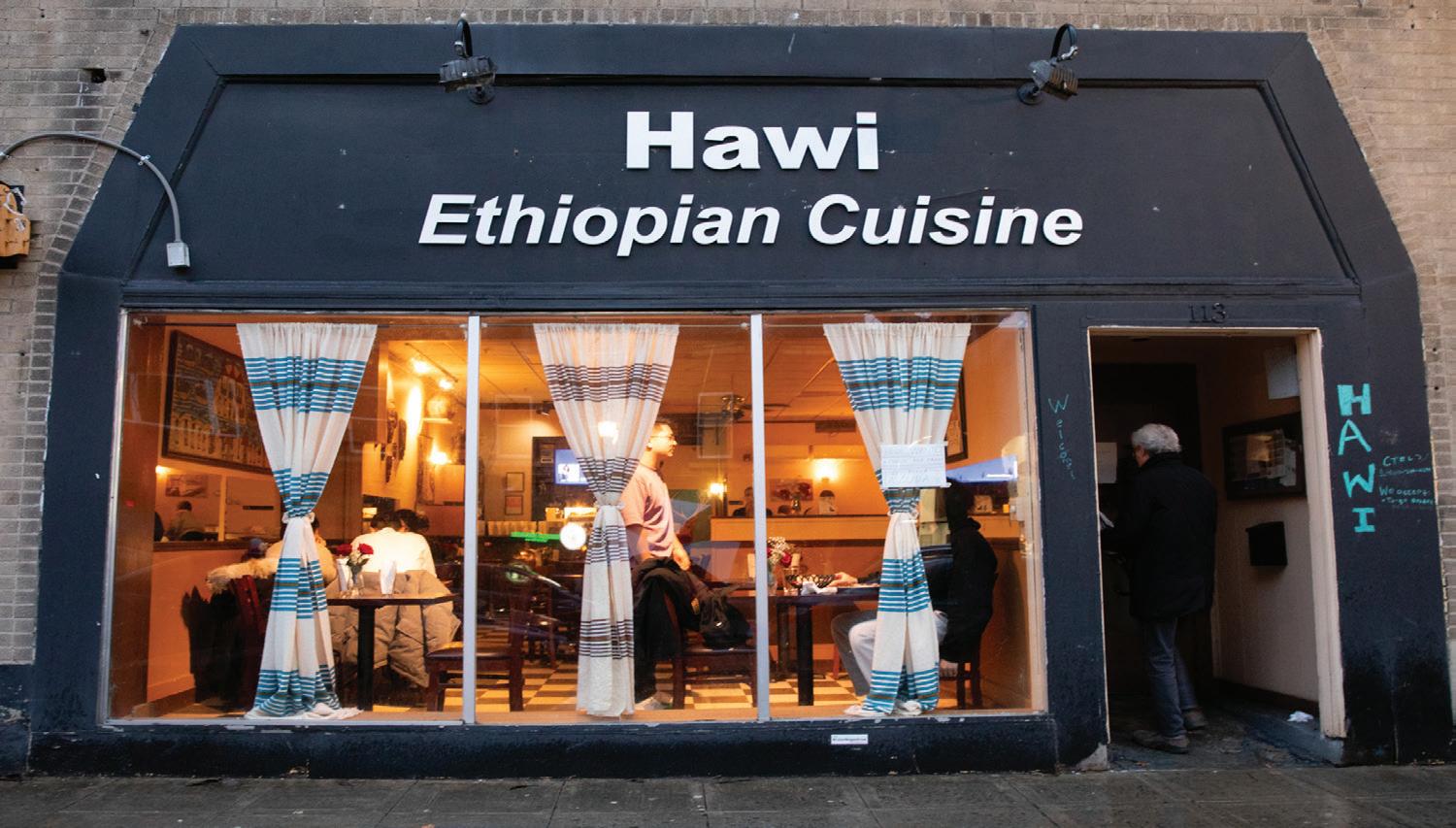
Raut is a junior in the School of Industrial and Labor Relations. He can be reached at ssr247@cornell.edu.
Protesters Gather for Second ‘ICE Out’ Rally
By BENJAMIN LEYNSE Sun News Editor
Feb. 23 Despite continuous rain, nearly 30 people gathered in the Ithaca Commons on Sunday to protest U.S. Immigration and Customs Enforcement and condemn a string of recent deaths linked to ICE activity.
The “ICE Out” rally, organized by several local organizations, including the Ithaca Club of the Communist Party USA, Finger Lakes branch of the Party For Socialism and Liberation and Cornell Graduate Students United, was announced on Friday in response to the death of Linda Davis, a special-education teacher from Savannah, G.A.. Davis was killed on Feb. 16 after a man fleeing ICE agents crashed a car into her vehicle.
Standing beneath Bernie Milton Pavilion, protesters sought refuge from the weather as they listened to speeches, held banners and chanted slogans, such as “F*ck ICE” and “Not tomorrow, now!”
Several cars passing by honked in solidarity, while at least one passerby was heard shouting their support for ICE from a moving vehicle.
Sunday’s rally was the second demonstration against federal immigration authorities to occur in Ithaca’s downtown in the past month. Another antiICE protest took place on Cornell’s campus on Feb. 6.
Compared to both prior protests, Sunday’s event was notably smaller. The first “ICE Out” rally on Jan. 31 brought in over 300 local demonstrators and students in coordination with marches across the country, while the Feb. 6 protest was attended by over 100 students. Both were organized in response to the killings of Alex Pretti and Renee Good by ICE agents in Minneapolis.
For Sam Scott, a member of Ithaca CPUSA and an organizer with the Ithaca chapter of the Democratic Socialists of America, the difference in turnout reflected a bias in the media coverage of her death.
“Women of color like Linda Davis are often disproportionately under-represented in the media and in protests when tragic and horrific things happen to them,” Scott said in an interview with The Sun.
Another speaker, Mona Sulzman, a
local activist and member of the Finger Lakes Region PSL, told the crowd that in order to act against ICE, size and solidarity mattered.
“Our movement to end ICE must grow,” Sulzman said.
Over the course of the hour-long rally, speakers highlighted actions by immigration authorities across the nation and closer to home. One speaker referenced a vehicle crash in Geneva, N.Y. that led to three ICE arrests on Friday.
After the event, rallygoers were urged by speakers to sign up and get involved with the organizing groups.
Among the groups that presented at the rally was the Ithaca Regional Rapid Response Network, an organization that tracks and responds to ICE activity in the area.
Kady Nawrocki, a representative of Ithaca Rapid Response, described to the crowd how the network staffs a 24/7 phone hotline that fields tips, investigates rumors of ICE sightings and is prepared to respond to active ICE raids as well as document the event.
In an interview with The Sun after the event, Nawrocki declined to give
specifics about the organization’s size and other logistics out of concern for the safety of the group, but re-emphasized the Ithaca Rapid Response’s mission.
“I think it’s important for folks to be aware that we exist, so that the hotline can be called when needed,” Nawrocki said. “Because we do believe that if we can work together and organize, that we can fight back against ICE.”
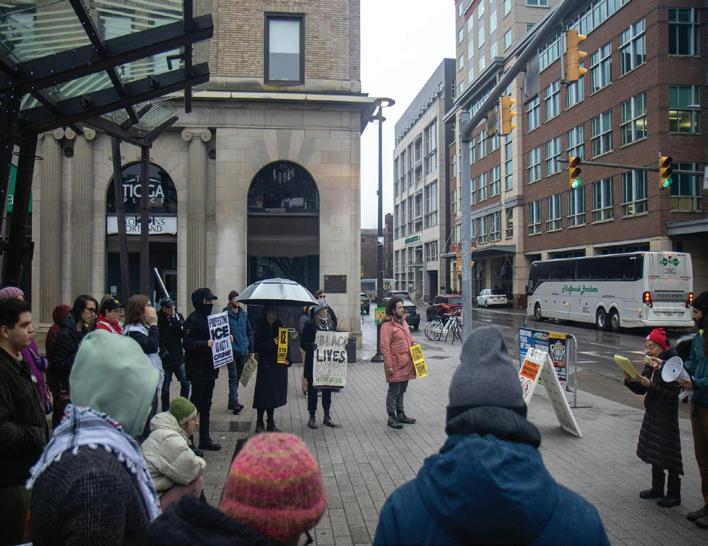

JOIN THE SUN!

THE SUN is seeking a diverse group of artists, writers, intellectuals, thinkers, photographers, problem-solvers, opinion-havers, readers, crossword-doers and everything in-between.
Sound like you? Apply at the QR code above, due March 1.
Benjamin Leynse can be reached at bleynse@ cornellsun.com.
Rainy rally | Around 30 anti-ICE protestors gathered at Bernie Milton Pavilion on Sunday.
DANTE DE LA PEÑA / SUN STAFF PHOTOGRAPHER



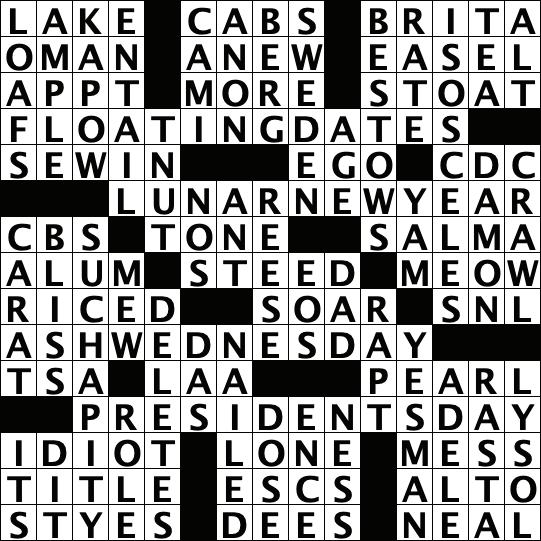
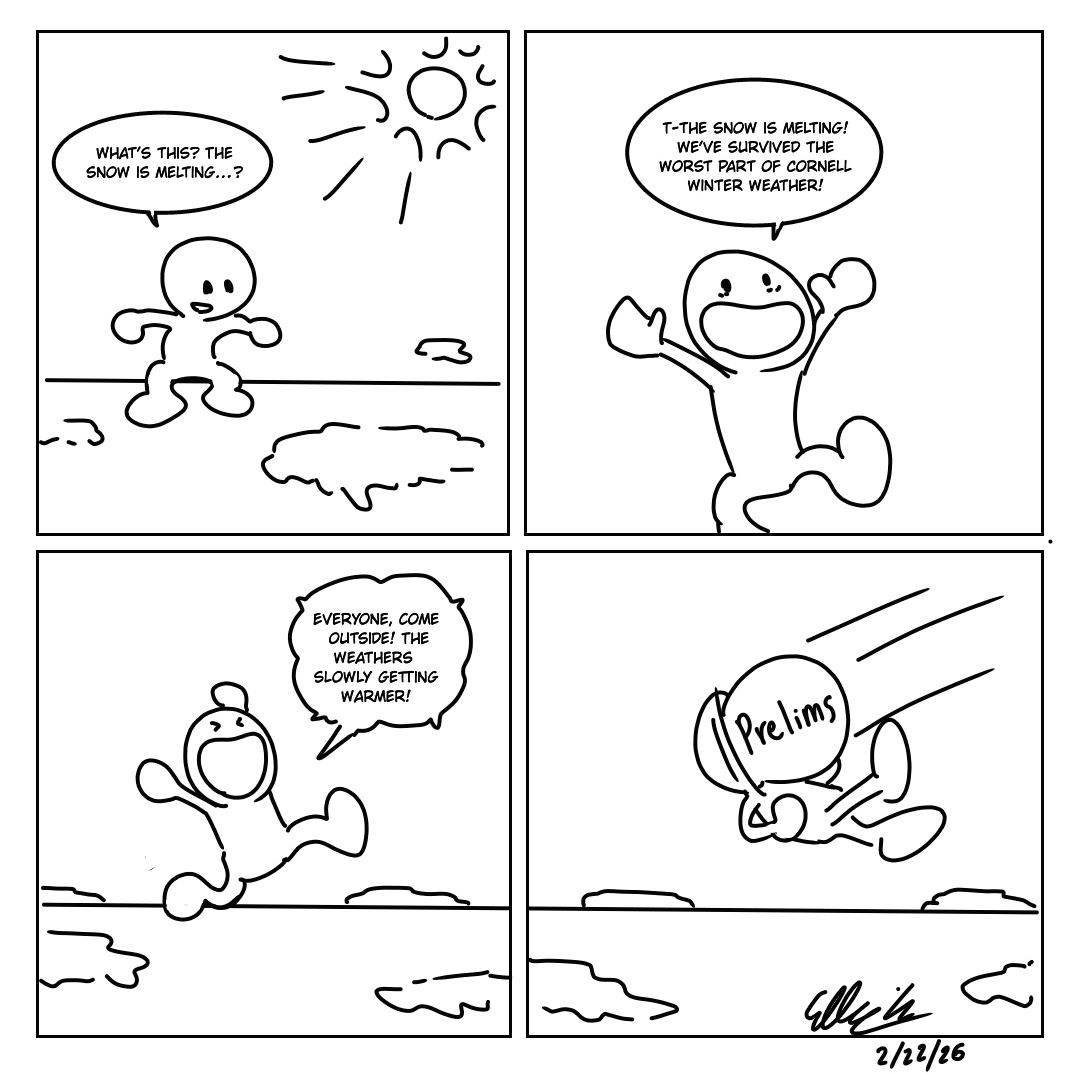
Meet Women’s Fencing’s First Ivy Individual Champion
By ZEINAB FARAJ Sun Features Editor
Feb. 16 — Heading into the Ivy League Fencing Championships, senior epee Ketki Ketkar ’26 didn’t even know that she was competing to make program history.
At the championships, which took place from Feb. 7-8, the Red competed against six other Ivy foes, with Ketkar finishing 8-1 in the epee category. On the second day, she finished with an impressive 4-1 record — good for an overall 12-2 record (85.7%). She was awarded 61 total touches and allowed 36, good for a +25 indicator, an exceedingly dominant score.
“I honestly had a bit of a tough start to the collegiate season but kept working and have been able to get some strong results, but I’m still focused on the remainder of the season for now.”
Ketki Ketkar ’26
With the victory, Ketkar became the first individual champion for women’s fencing at any conference championship.
“I was also focusing on helping the team do as best as we could,” Ketkar told The Sun. “It was an amazing feeling when I found out I won since I had been pretty close in the past years and had finally achieved my goal.”
“It was an amazing feeling when I found out I won since I had been pretty close in the past years and had finally achieved my goal.”
Ketki Ketkar ’26
Ketkar, who earned a bronze medal at the 2025 USA Fencing Summer Nationals, took on the championships while coming off a right hip and lower back injury that held her back from competing in
the past. She explained that she has been “doing a lot better” than she expected coming off the injury.
“It’s been great to achieve this result in my senior year,” Ketkar said. “I honestly had a bit of a tough start to the collegiate season but kept working and have been able to get some strong results, but I’m still focused on the remainder of the season for now.”
Overall, the Red finished last at the meet, with a notable performance from junior sabre Isabela Carvalho, who posted a 10-5 overall record in the sabre category, good for sixth overall. Carvalho will represent the Red on the All-Ivy Second Team for sabre and Ketkar will be a part of the All-Ivy First
Team for epee. Ketkar plans to continue competing “nationally and internationally” following the collegiate season. She hopes to take some time off to rest and then continue her training, using the collegiate competitions as “good preparation” for the bigger competitions. Up next for the Red, 12 competitors will be sent to the NCAA Northeast Regional on March 8. Coverage of the tournament will be available on ESPN+.
Zeinab Faraj can be reached at zfaraj@cornellsun.com.
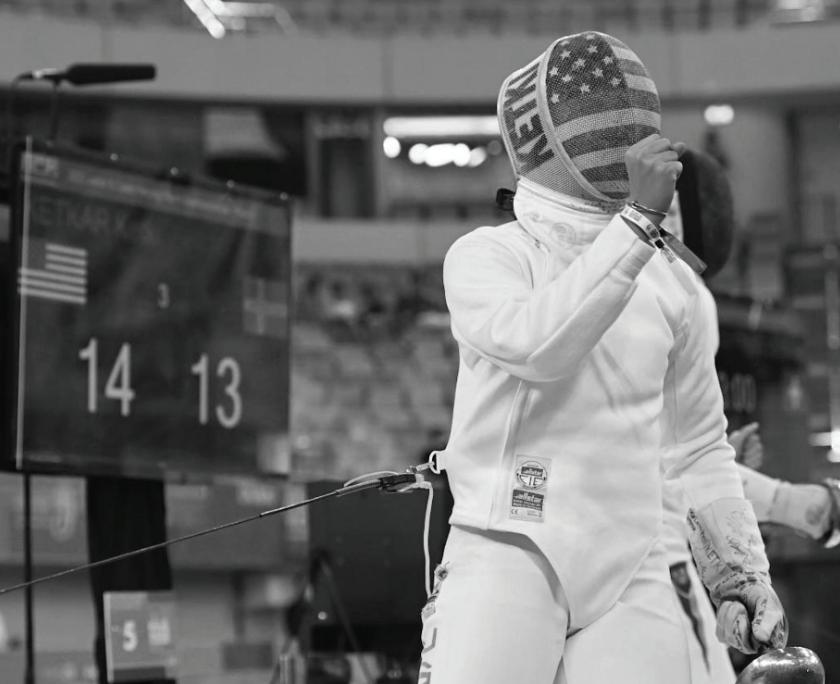
What Will The New Ashley School Look Like?
By SVETLANA GUPTA Sun Contributor
Feb. 11 — Cornell announced the creation of the Ashley School of Global Development and the Environment within the College of Agriculture and Life Sciences on Dec. 16 after a $55 million donation from Stephen B. Ashley ’62, MBA ’64. The school plans to combine the department of global development and the department of natural resources.
According to its website, the Ashley School will comprise 600 undergraduate students, 170 graduate students and 107 faculty members. The school aims to provide students with more interdisciplinary academic opportunities and offer “real-world engagement with communities” in order to “improve lives and livelihoods and promote environmental stewardship.”
The Ashley School will support two undergraduate degrees — global development and natural resources — five undergraduate minors, four master’s degree programs and two Ph.D. programs.
CALS plans to recruit at least 10 faculty members to the new school, and three of these faculty members are expected to focus on environmental economics. According to the Cornell Chronicle, these economists will have joint appointments in both CALS and the Cornell S.C. Johnson College of Business, through the Charles H. Dyson School of Applied Economics and Management.
The Sun spoke to students and
CALS administration to better understand what the Ashley School will look like.
“Early Days”: The Vision of the School and Finding a Director
Prof. John Sipple, director of undergraduate studies in global development, spoke to The Sun about these changes. Sipple said that while there is “no clear roadmap for change” right now, the Ashley School will “reinforce the global nature” of the major.
“The Ashley School came out of an idea that if we study the environment… and the economics of the world… through a much more multidisciplinary lens, we’ll learn more, and hence we can be more useful to the local community or a community across the world,” Sipple said.
By combining natural resources and global development, Sipple explained that this allows for the school to more closely explore the complicated nature of the world, “creating an environment in which social scientists and natural scientists can come together and study… everything from climate change to sustainable farming.”
Benjamin Houlton, the Ronald P. Lynch dean of CALS, explained in a statment to The Sun that the new school does not mean a new curriculum.
Faculty working groups are considering options for the school’s administrative design, aiming to adopt the best model in “pedagogy, research, and realworld applications,” Houlton wrote.
Regarding current students and faculty, Houlton explained that both
departments “will continue to function administratively and pedagogically as currently designed,” indicating that no immediate structural changes are expected. Additionally, CALS leadership told the Chronicle that there were not any new “programs, majors, or minors” currently being created.
An essential feature of the school will be the way in which it operates with “partners from the private sector, governments, NGOs, foundations, and community groups in New York state and internationally,” Houlton wrote.
Prof. Richard Stedman M.S. ’93, former chair of the department of natural resources and the environment, was appointed as interim director for the Ashley School, announced along with the launching of the new school.
“Our top priority is searching for the inaugural director of the Ashley School,” Houlton wrote, noting that the search is currently underway and interviews will be occurring over the next two months.
Once appointed, the inaugural director will be “charged with faculty recruitment in critical areas” and tasked with developing a “strategic plan to chart a bold future of impact from New York to the world and back again,” according to Houlton.
“Discussions around these topics are still ongoing and information is still evolving in real time,” Stedman wrote in an email statement to The Sun. “We do have processes moving forward about structure, funding, governance, etc., but these are still very ‘early days’ in those processes.”
Students’ Hopes and Reactions
“When I first heard about the Ashley School, I thought it was amazing, but also a little surprising,” said Hanna Lighthall ’27, who is majoring in global development.
“The major itself was formed not that long ago. It was formed as a kind of a combination of other majors, and now it’s part of this larger presence in CALS,” Lighthall said.
The global development major was first introduced to students in Fall 2022, formed by merging the pre-existing international agriculture and rural development major with the development sociology major.
The global development major currently requires a total of eight core classes, two engaged learning requirements, one internship and various electives within a chosen concentration.
Lighthall was able to complete all her required classes in two years and now is able to conduct research and take “niche classes.” She said that she hopes the Ashley School will bring more structure to the major, especially after a student finishes their requirements.
Lighthall added that she hopes that the $55 million donation will be used to “hire more professors, specifically in specialized research like global food security or gender issues.”
To continue reading, please visit www. cornellsun.com.
Svetlana Gupta can be reached at sg2622@ cornellsun.com.
Fabulous fencer | Ketki Ketkar ’26 became the first Cornellian women’s fencer to win an Ivy League individual champion title in any weapon.
PHOTO COURTESY OF KETKI KETKAR ’26
Baby Keem Hits the Jackpot
After a long hiatus, Baby Keem, born Hykeem Carter, released his second studio album, Ca$ino, on Feb. 20, 2026. On the album, the 25-year-old Las Vegas native reflects on growing up in Sin City with his grandmother, combining his unique voice and aggressive beats into a frontrunner for hip hop album of the year.
Keem, who was a contributing artist on Black Panther’s soundtrack at 17 years old, was making beats for Jay Rock at 18 and released his first mixtape the same year, has burst onto the scene as one of the most prominent young artists in hip hop. It doesn’t hurt that he’s the second cousin of music legend Kendrick Lamar. Keem’s first studio album, The Melodic Blue, was released in 2021 and earned the young artist a Grammy for Best Rap Performance. Then, Keem went silent for the next five years. His only musical contributions were a collaboration with Lamar on The Hillbillies and two ad libs on Tyler, The Creator’s most recent albums.
In tandem with the album’s release on streaming services, Keem held a listening party and concert, performing some of the songs for fans in Los Angeles and also discussing where he has been over the last five years. Keem, who was raised by his grandmother in Las Vegas, said that he watched his grandmother die in the house that he bought her less than two years ago, an event that made him go back to the drawing board for his next musical contribution. Additionally, on track nine of Ca$ino, “Circus Circus Freestyle,” Keem raps that “I almost died when I took the vaccine / I was gone for two years, down bad, reflecting,” which explains the lack of musical output directly following The Melodic Blue
After getting his apologies out of the way, Keem had the tracks begin playing. The album begins with “No Security,” a slower reflection on growing up less fortunate and now encountering fame and wealth, putting him in difficult situations with his family needing his help. The spending of his newfound wealth on cars and gambling to try and “scratch the itch” is to no avail. The melancholic vibe of “No Security” is quickly tossed aside with the title track, “Ca$ino.” The blend of trap and synth music results in a high-energy beat, shifting the messaging from reflection on the difficult money
situations he is in now to spending money recklessly to numb the pain. The high-octane song acts more as a party around Keem, “racking up bills” and feeling numb; however, having this money and fame means he is unable to complain, thinking that his feelings are invalidated by wealth.
The tonal switches continue through “Birds & the Bees” and “Good Flirts,” with a shift toward a melodic rap style and hints of R&B. “Good Flirts” features two guests, Momo Boyd and Kendrick Lamar, who interpolate Common’s “The Light.” The track is slower and more seductive, with Keem reflecting on an ex-relationship. The features from Lamar and Boyd are strongest here, with heavy inspiration from Lamar’s Mr. Morale & the Big Steppers interludes.
“House Money” returns to trap beats and harder rapping, showcasing a colder, more apathetic Keem from the past. The lyrics are egotistical and vulgar, and they discuss moving from woman to woman when one of them starts to disappoint him. “House Money” is the most decisive song on the album, featuring another guest performance from Kendrick Lamar. Enjoyment of the track depends on one’s liking of Keem’s squeaky voice, which is most prominent on this song and the Lamar feature, contrasting his earlier seductive feature with a harder, more aggressive verse.
The best track on the album and in Baby Keem’s career as a whole comes next with “I am not a Lyricist.” Despite the title, the song features Keem’s best writing of his career and a different style of rapping, very reminiscent of Andre 3000. The ironically-titled track shifts to a spoken word style with a piano-dominant beat, as Keem raps about his move from Long Beach, California, to Las Vegas. He explores his struggles growing up in Sin City, the “dirty desert” as he calls it, and the toll that it takes on the ordinary people who live in the city of casinos. Keem dedicates the song, through his lyrics, to the runaways, the underworld and the underpaid, each of these worlds being ones he and his family have come from.
The back-and-forth style of the album, from introspective and reflective to egotistical and aggressive, culminates in the final track, “No Blame.” With “No Blame,” Keem gives an autobiographical rap discussing past struggles with his mom and grandmother through touching on times in his childhood where they brought
him pain before repeating “I don’t blame you, mama.” This track continues to show the developing maturity and growth of Keem as an artist.
A five-year wait for an album makes expectations incredibly high. Baby Keem, in his sophomore appearance, exceeds all those expectations placed upon him, not being complacent with the style he developed in The Melodic Blue. Instead, Keem continues to experiment with his production, having the most unique sounding hip hop album in years. His squeakier voice is a mainstay in his work and continues here on Ca$ino, making him stand apart from other rappers. The most growth Keem shows is in his lyrics, with this album being his most personal so far and his most thematically concise. Despite the tragedies he suffered, the artist was able to channel his pain into a reflection on his upbringing with his mom and grandmother while also criticizing how he had acted in the past. With Ca$ino, Baby Keem has hit the jackpot and positioned himself as the best artist in the next generation of hip hop and rap.

Dracula in Love?
LUSINE BOYADZHYAN
The character Count Dracula has become synonymous with monsters, Halloween and various adaptations ranging from cartoons for children to horror films that have adults running out of movie theaters. Every few years, a new generation’s Dracula, or Dracula lookalike, comes along to remake Bram Stoker’s famous, and perhaps even notorious, character anew. Last year, French film director Luc Besson took on this endeavour and produced Dracula: A Love Tale
Besson takes an interesting perspective on the story. We first meet Dracula not as a vampire, but as the notorious Vlad III (also known as Vlad the Impaler) Prince of Wallachia. The story begins with his love for his wife, Elisabeta, and the crusades where he must fight off the Ottoman forces that are encroaching on his territories. Before he leaves for battle, he prays for victory but also asks one thing of God: that his wife is spared in the process of the battle. When this wish is not granted, Dracula impales a priest with a crucifix, and curses God’s name. In return, God curses Dracula to an eternal life; he spends centuries searching and hoping his true love will be reborn.
What starts out first as a story of love, turns into a very moralistic tale. Dracula spends the years after the death of his wife wandering the Earth, developing an enticing perfume and creating a legion of vampires to help him track down where and as whom his wife would be reborn. He notes again and again that the greatest punishment God ever gave him was not death, but an eternal life without the love of the woman he cares about most. He claims that God gives both life and death, and that both have equal importance to a person.
The movie jumps between what Dracula has done in the 400 years since Elisabeta’s death, and the modern day, when a priest and doctor duo — who follow the archetype of Victorian detectives – are working to rid
the world of vampires. Though the story of the two detectives is humor-filled at times, the ends to which Dracula eventually goes to in order to track down Mina, the reborn version of Elisabeta, can only be described as foul, despicable and disgusting. Yet, in the end, we cannot help rooting for him. Besson manages to create this beautiful dichotomy in a character: the embodiment of death and immorality in a man who merely wants to have love in his life. We at once cannot help but look away when he drains an entire monastery of nuns of their blood, and cannot help but cry when he must leave his beloved. It is a hard sell but is fully carried by Besson’s script-writing and the choice of the main actor.
The casting of Caleb Landry Jones as Count Dracula was perfect. He was at once seductive and aversive. You could not look him in the eye but you could not look away when he spoke. There was something deeply intriguing and forceful in the way he played his character. The other actors in the movie were notable, but nobody matched Jones’s performance in this role. He had this old world charm about him that makes it believable that he lived both in the 15th and 19th centuries.
Despite positives such as incredible costuming, powerful performances and vibrant story-telling, the movie struggled with a plot that felt very rushed. With so many jumps between tones of romance and horror, at times felt as though the film was failing to interweave both. In the end, it seemed as though Besson was also trying to make the film a moralistic tale. After Dracula complains that he killed in God’s name and only lost in return, a priest tells him that he killed in his own name and continues to do so, as he points to the corpses that surround the two men. He continues by saying that many men justify their acts by saying it was in the name of God, when in fact that is not the cause of their actions. However, even then it seemed like a rather rushed ending. There was too much time spent on gore and Victorian mystery to truly process the love and
Christian values that the film hoped to convey.
Even in the end, when Elisabeta (Mina) and Dracula finally reunite, the Christian morality comes once again to the forefront of this film. They discuss if God would forgive them, and then they decide if not then: “He can go to Hell.” In the end Jones’ Dracula realizes that not only had he cursed himself, but by continuing to live like this he had condemned the woman he loved as well. I think Besson meant to imply that death and leaving is also a form of love. Dracula realizes that he is condemning his beloved to eternal damnation, and in order to spare her, he allows himself to be staked in the heart by the priest. Once Dracula is dead, the curse is lifted. God forgives him, because in the end love was also caring about the other person’s soul, not just the love they gave you. That was his repentance.
I believe Besson tried to turn what has for generations been a character of classic horror into a story of love and faith, one which reminds us that we cannot defy God, or the forces of the world, just to meet the ends you wish for. Life and death both come at us in turn, and we are forced to meet them as we are.

ARTS & CULTURE WRITER
Brayden Rogers is a member of the Class of 2028 in the College of Arts and Sciences. He is a contributor for the Arts & Culture department and can be reached at bjr236@cornell.edu.
COURTESY OF PGLANG/COLUMBIA RECORDS
BRAYDEN RODGERS ARTS & CULTURE CONTRIBUTOR
Guilday ’25 Takes Gold at Olympics, O’Neill’s Goal Not Enough For Canada
By ELI FASTIFF Sun Senior Editor
Feb. 22 — When Rory Guilday ’25 stepped out on the ice on Feb. 5 in the U.S. women’s hockey Olympic opener, she became the first Cornellian to skate for Team USA at an Olympic Games.
Fourteen days later, Guilday was back out on the ice in Milan, this time with a gold medal around her neck. Serving as the extra defender throughout the tournament, Guilday was part of a historically dominant U.S. team, which outscored opponents 33-2 in its 7-0 campaign.
However, for nearly 40 minutes of the gold medal game, Canadian Kristen O’Neill ’20 seemed poised to be the hero of the tournament. While the U.S. thumped Canada 5-0 in the tournament’s preliminary round, the championship game was a much tighter affair.
Canada jumped out to a fast start, outshooting the U.S. 8-6 in the opening frame, before O’Neill converted on her team’s momentum 54 seconds into the second period.
With Canada shorthanded after taking a hooking penalty, a turnover in the U.S. offensive zone evolved into a two-on-one opportunity for O’Neill and Laura Stacey thanks to a misplay by an American defender. After receiving a pass on the doorstep of the U.S. crease, O’Neill quickly brought the puck to her backhand and slipped it under the pads of the American netminder.
For fans of the Red, seeing O’Neill score a shorthanded goal likely did not come as a surprise. The 27-year-old holds the Cornell record for career shorthanded goals (10) and shorthanded goals in a single season (four).
O’Neill’s goal was not enough for Canada. The U.S. tied the game with an extra-attacker goal with just over two minutes remaining in regulation, and went on to win in thrilling fashion in overtime.
Brianne Jenner ’15 joined O’Neill in earning a silver medal — Jenner’s fourth Olympic medal — which ties Rebecca Johnston ’12 (also a women’s hockey alumna) for the most Winter Olympic medals by a Cornellian.
Jenner — who spent the tournament alternating between Canada’s first and third forward lines — finished with a goal and two assists, a decrease from her nine-goal MVP performance at the 2022 Beijing Games. O’Neill conclud-
ed her Olympic debut with three goals and two assists, the fourth-most points on the team. Guilday did not record a point, but registered a plus/minus of +2 during her time on the ice throughout the tournament.
While the U.S. win over Canada was epic, it was not particularly surprising. The two teams have met in the Olympic gold medal game in all but one Games, stretching back to women’s hockey’s debut in the Olympics in 1998.
Instead, arguably the biggest surprise of the tournament was Italy’s performance. The host nation — playing in its first Games since 2006 — reached the quarterfinals thanks to wins over France and Japan. Laura Fortino ’13 — who entered the tournament as a leader on the Italian squad in previous international experience, earning gold and silver medals with Canada in 2014 and 2018, respectively, before the dual-citizen switched her national-team loyalties to Italy — was a key piece of the team’s success, serving as a top-pair defender and earning an assist.
The trio of medals brings Cornell’s all-time medal count to 73, with 26 coming from the Winter Olympics and 22 specifically from men’s or women’s ice hockey. Guilday’s gold was the first Olympic ice hockey medal won by a non-Canadian Cornell alum.
Fans of high-level women’s hockey won’t have to wait long to watch their favorite players take the ice again. The Professional Women’s Hockey League, which features eight teams and nine Cornell alumnae (including Guilday, Jenner and O’Neill), returns to action on Feb. 26, with games available in the U.S. on YouTube and regional sports networks, and on TSN in Canada.
Guilday and Jenner — members of the Ottawa Charge — will begin the second half squaring off against Jill Saulnier ’15 and the Boston Fleet, while O’Neill’s New York Sirens will take on the Montréal Victoire.
Meanwhile, the Cornell’s women’s ice hockey team returns to the ice next weekend for a best-of-three playoff series against Colgate at Lynah Rink. The Red and the Raiders will square off at 3 p.m. on Friday and Saturday, with a deciding Sunday contest to be played if needed, and all games streaming on ESPN+.
Eli Fastif can be reached at efastif@cor-
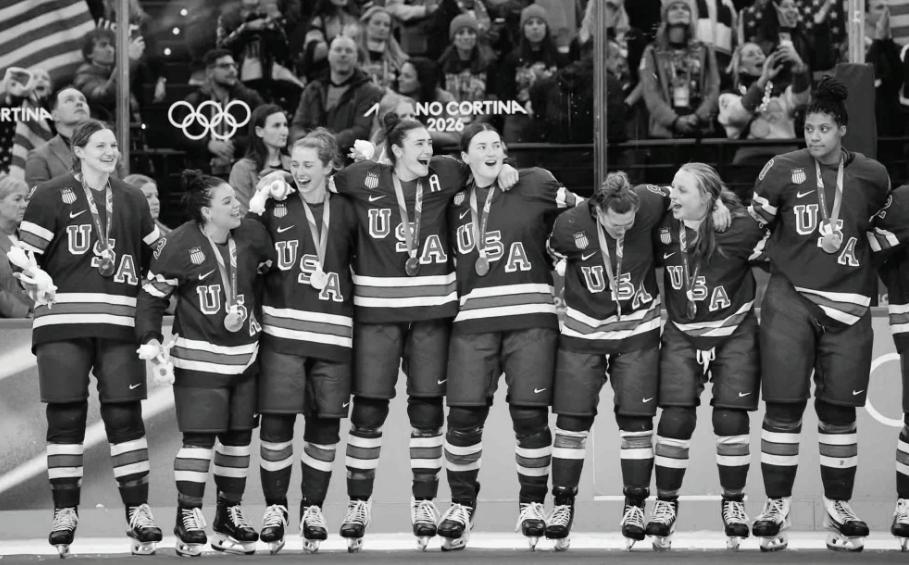

Lunar New Year Festivities Bring
‘A Sense of Belonging’ to Campus
By ROWAN WALLIN
Sun Senior Writer
Feb. 21 — Friday evening’s Lunar New Year celebration event, hosted by the Cornell Chinese Students Association and Taiwanese American Student Association, brought food, games and cultural traditions to Klarman Hall as students rang in the Year of the Fire Horse.
From 7 p.m. to 10 p.m., approximately 450 attendees rotated through activity stations featuring free food, boba tea, crafts and games. The event was entirely free and open to all, reflecting both CSA and TASA’s broader goal of cultural outreach and appreciation.
“Our main goal [of TASA] is to actually just improve awareness of Taiwanese culture,” said Luke Chang ’27, TASA co-president. “Part of the reason we host these events is to not only improve exposure for Taiwanese culture, but it’s also to just get people involved in our culture.”
Both CSA and TASA are interest-based organizations, welcoming students regardless of ethnic background.
Gianna Ou ’27 is a member of both CSA and TASA, despite not being Taiwanese herself.
“We appreciate Asian culture in any way and always, so anyone is welcome,” Ou said.
“On campus there are a lot of international students and a lot of people from California and other places of the country that [make it] really hard to get home, especially for a small break,” Chang said. “So we want to create that sense of community and that sense of welcoming, and just create a place on campus where people are able to celebrate the New Year.”
Alina Lee ’29, who traveled home to New Jersey over break, said she was grateful that the holiday aligned with time off from school.
“I was really glad that February [break] was at the same time as Lunar New Year this year,” Lee said. “If there wasn’t [a] break, I probably wouldn’t have [gone home], because it’s just too much.”
For students who remained in Ithaca over February break, the event offered a substitute for regular family traditions.
Food offerings reflected traditional Lunar New Year offerings. Chang said organizers ordered from local Asian restaurants like Ninja Chicken and Fusia Bento Bar. The spread included “over 100 orders of popcorn chicken,” vegetable lo mein, beef fried rice, gyoza, dumplings and spring rolls.
Dessert was a popular item as well. Larry Tao ’27, president of CSA, highlighted tang yuan, which he described as “a chewy rice ball with a filling inside.”
Activities at the event had cultural meaning as well. Tao explained the significance of red envelopes, which were located at a table and filled with candies.
Some special red envelopes contained raffle prizes — including horse plushies, lego sets and snacks — that winners could redeem after opening them. Other envelopes remained empty for attendees to write notes inside to give to friends.
“Red envelopes basically signify gifts,” Tao said. “It’s traditional, like gift giving, sort of like Christmas gift giving in Western culture, where basically older members of the family will gift red envelopes, typically filled with money to younger generations. And it’s basically just a way of giving back and showing your support for the rest of your family.”
One table featured Chinese calligraphy, where Michelle Ching ’28 drew a “Happy New Year” sign in Chinese.
“I’m really happy that they held this event,” Ching said, noting she had not practiced Chinese calligraphy in several years. “I do feel a sense of belonging here.”
Another station had a fishing game where participants could fish for plastic Easter eggs in water, and potentially win prizes like candy.
Small details of the event — like oranges — carried symbolic meaning as well. Ou explained, “I think oranges are for good luck. … I think [because] it’s close to red and red wards off bad luck.”
The Year of the Fire Horse has particular significance as well.
“I’ve heard that the Year of the Horse means a lot of passion and renewal,” Ou said. “It symbolizes growth, good luck and a lot of fortune.”
Other activity stations had deep meaning for international students in particular. Katie Lu ’29, from Taiwan, enjoyed being able to send a letter back home to her family.
Lu said that she felt “very grateful for anyone who organized this event,” especially because it was completely free and allowed her to easily send a handwritten note home for the New Year.
The event’s main mission was to bring a sense of home to Ithaca in celebration of culture and the New Year.
“We hope … to create a place that feels safe and feels like home, especially for people who can’t go home,” Chang said. “We also wanted to just make sure to celebrate with free food and represent both of our cultures and just create a place on campus where it’s just fun to hang out with your friends, chill out after maybe prelims yesterday and lead onto the weekend.”
Rowan Wallin can be reached at rwallin@ cornellsun.com.
nellsun.com.
Celebratory calligraphy | Students try out Chinese calligraphy at the Lunar New Year Event in Klarman Hall
EVIE KWEI / SUN PHOTOGRAPHY CONTRIBUTOR
Guilday gold | Rory Guilday ’25 (fifth from right) and her teammates celebrate after defeating Canada 2-1 in the gold medal Olympics game.
COURTESY OF ANDREA CARDIN
By MELISSA MOON Assistant Arts & Culture Editor
ARTS & CULTURE
Big Red Moon Club’s Live Dating Show
Following the famous “Is Pegging Gay?” debate on Feb. 10, many were left wondering how Cornell’s Big Red Moon Club could possibly outdo themselves. After all, they’d already achieved perfection — a packed auditorium, passionate deliberations and a powerful sense of community uniting students across campus. Other organizations would have stumbled in the afterglow — flopped, one could say — but not Moon Club. The question of what comes next was answered the very week after the pegging debate in the form of “Bisexual Pop the Balloon: A Live Queer Dating Show.”
I put it in my Google Calendar. I left my meeting early. I got a front row seat.
Moon Club upgraded the venue, opting for Goldwin Smith Hall’s G76 instead of the smaller G64, but the 200-seat auditorium wasn’t big enough to hold the massive crowd that gathered, lining the walls, bumping against the light switch repeatedly and blocking the projector with their heads. Surya Nawiana ’26 was hosting again, alongside Astrid “AJ” James ’27, a charismatic and unfiltered duo I think would thrive in an interrogation room. The premise was simple: A group of competitors lined up with balloons, all vying for the affection of the same contestant. The contestant asked and was asked a series of increasingly scandalous questions, and had the option of popping the competitors’ balloons if they didn’t like the answer. Competitors could also pop their own balloons to take themselves out of the running. Given that the event was a collaboration with Perfect Match, everyone was in the mood for love.
The first round started off strong, with 11 Cornellians in the 18–19 age bracket competing for the hand of Abhishek Gurubaskaran ’27. The questions posed to Gurubaskaran started off tame, things like: Gay son or thot daughter? (“Gay son,” he answered.) Have you ever been with anyone in the audience? (“No,” but slightly unsure-sounding.) The first popped balloon actually came from one of the competitors taking themself out of the
competition. When Gurubaskaran revealed that he was “looking to lock [himself] down,” the sound of snapping latex resounded above the cacophony of laughter and apprehensive noises. The reason? “I’m not at bisexual pop the balloon for locking down.” Facing such bitter rejection, Gurubaskaran took the next pop into his own hands, crushing the dreams of a student majoring in economics because, he said, “I don’t want a consultant.” The audience applauded that one, and I can’t fault them for it. Gurubaskaran then popped the balloon of a competitor who proposed a bookstore as a first date spot. Ostensibly, he does not read.
The next round, there were seven competitors clamoring for a date with the illustrious Linda Fu ’27, of pegging debate fame. She fielded Nawiana’s questions with the practiced ease of a true public speaker. In fact, everyone in Fu’s pool was wary of picking an actual answer, instead responding with “both,” “I’m not sure” or “I’m indecisive.” Nawiana, exasperated, lamented to the crowd, “That was the most bisexual selection of answers I’ve ever heard in my 21 bisexual years of life.”
In the end, Fu’s choice was unfortunately overshadowed by the rejects. Nawiana collected those whose balloons had been popped for a round of “Tinder in Real Life,” in which competitor Ethan Luu ’27 quizzed the other losers on their best pick-up lines and swiped right or left on them in real time. Kieri Keys ’28 won both Luu and the audience’s approval with, “I think Spotify is broken because you weren’t listed as one of today’s top hottest singles.” Keys and Luu celebrated their pairing by kissing in front of the audience — so hey, maybe Moon Club really is starting relationships here.
Nawiana ushered in the third round by gesturing to the door, yelling, “Bisexuals come out! Not out of the closet, out of there!” The bisexuals did, in fact, emerge, and they came out ready to fight for Jaimie Chen ’26. The standout moment of Chen’s round was a rather unfortunate misstep by Emilee Vincent ’28. When asked where she’d take Chen on a first date, Vincent replied, “Ice skating and to ice cream. I love ice.” Amidst deafening booing, Chen popped
Vincent’s balloon before giving her the chance to clear up that she did not mean Immigrations and Customs Enforcement. Contestant Elena Caplinger ’27, in response to the same question, threatened to take Chen to ultimate frisbee date night. It didn’t seem to perturb Chen the way it perturbed me, and Caplinger’s balloon remained intact. Having whittled the pool down to three options, Chen faced a dilemma: Each of the remaining competitors gave the same responses. “Guys, they all have the same answers,” Chen complained to the audience. Then, her eyes lit up as she came to a realization. “Ooh! Polycule?!”
They joyfully accepted Chen’s proposition and departed the stage in polyamorous bliss.
Mary Caitlin “MC” Cronin ’28 was the fourth and final prize of the evening. By this point, the audience was itching to get involved in the selection process, and they honestly seemed more interested in competitor Kingsley Aaron-Onuigbo ’27 than Cronin. “I am looking for marriage,” he said, then when Cronin went to pop his balloon, backtracked, “But obviously it is negotiable!” He then compared her to the sunlight you see after emerging from a dark tunnel, despite the fact that neither he nor Cronin can drive. After being rejected, Aaron-Onuigbo took center stage during “Tinder in Real Life,” and he had audience members scrambling down from the rows to compete for his hand. Aaron-Onuigbo ended up in a throuple of his own, upping the polycule count to two, to which Nawiana yelled, “Average bisexuals, they can’t decide on anything!” to raucous applause.
While, yes, these events that Moon Club hosts are satirical and unserious, they’re having an undeniable impact on campus. “I was really impressed by how the Big Red Moon Club, time and time again, can not just bring people out but bring people together,” Max Troiano ’28, pegging debate champion, commented. And truly, Moon Club is carving out queer spaces on campus and bringing people together, one bisexual at a time.
Melissa Moon is a member of the Class of 2028 in the College of Arts and Sciences. She is an Assistant Arts & Culture Editor on the 143rd Editorial Board. She can be reached at mmoon@cornellsun.com.
‘A Separation’: Love, Grievance, Grief
By RYE BLIZZARD Arts & Culture Contributor
Spoiler Warning: This article contains details from the plot of A Separation
Above all else, I love a book filled with commas and poetic prose. Discovering the writing of Katie Kitamura was, then, a wonderful gift; her novel A Separation excels at capturing both the mundane and the shocking with beauty.
Last fall, Kitamura held a reading at Cornell as part of the Zalaznick Reading Series. Struck by her writing’s unique and vibrant voice, I read A Separation shortly thereafter, and was not disappointed. Kitamura’s style is consistent and vivid, such that I found myself reading in the distinct cadence with which she spoke.
The novel follows an unnamed woman in search of her missing husband, Christopher, with whom she has a hushed separation. He disappeared while researching his new book in Greece, and at the behest of his mother (who knows nothing of the impending divorce) the narrator traces his footsteps. Her plan is to locate Christopher, hand him the divorce papers and fly home to her new partner, Yvan. Instead, after a prolonged stay with little progress, her husband is found on the side of a road, robbed and murdered.
The book portrays two types of grief: that for a failed marriage, and that for a lost life. The first portion is a woman who has processed her separation and is ready to move on. Among her most memorable moments is a scene at the house of a weeper, a dying profession of women who sing at funerals. It is one of many poignant images of grief
which Kitamura offers, and grows stronger as the book continues; the narrator learns only later what new mourning she’ll face.
Once Christopher is dead, the narrator’s world changes tone. Kitamura presents the reader with the struggle of moving on, the ways in which our own hearts can be so difficult to understand. His death is a loss which the narrator can’t simply overcome, not even after his body is in the ground, not even when her new partner says enough time has passed. Distance from tragedy isn’t always a cure, and the more it grows, the more sympathy and understanding from others dwindles.
Kitamura’s take on grief was compelling, while necessarily quiet and slow.
I found A Separation to be largely devoid of action and excitement, even the murder of Christopher is surprisingly matter-of-fact. It’s a story that lives in characters’ emotions first and foremost, and there are times when this can feel repetitive. Certain facets of Christopher, particularly his eye for other women, were picked clean, thought over so many times that I found they lost interest.
I expect there are readers who would find the book overly indulgent in its constant reminiscing and unrewarding in its lack of movement. While I found Kitamura successful in not crossing those lines, the criticism wouldn’t be unfounded, and I don’t recommend the novel to those who don’t enjoy books without action.
If, however, you are content to live in the mind of a peaceful, introspective character, Kitamura’s world is wonderful. I found even the side characters to be memorable; their roles were primarily
in bringing the narrator to Christopher, but they were in themselves fascinating and alive. The highly observant nature of the narrator allows her to pick apart the relationships of characters around her, notice the minutiae in their expressions to bring us into their worlds without ever overstepping with a personal question.
The fact that I finished A Separation so content with the story is a testament to Kitamura’s writing and characters, who felt so real that I neither wanted nor expected a fairytale ending. Christopher’s murder was disturbingly casual, devastating to a few but otherwise unexceptional. From the first meeting the police caution that crimes like his are unlikely to be solved, and this case proves no exception. He was robbed and murdered, and that is all they will ever know. Such an ending was at risk of being unsatisfying, but instead it crafted the impression that there is not always an explanation in life.
We can’t count on a dramatic solution; a detective picking clues from the wind, a grand speech that ties it all together, is neither assured nor likely. Things happen simply because they do, tragedy strikes just because it can. Ultimately the story is darkly real and its lack of a conclusion feels only fitting. Kitamura’s A Separation is a mesmerizing look into the mind of a life in limbo. Its primary strengths lie in well thought-out characters and the author’s distinctive voice which brings the world to life. It was a thoroughly captivating read which I highly recommend.
Rye Blizzard is a junior in the College of Arts and Sciences. She can be reached at rab538@cornell.edu.
Men’s Hockey Pummels No. 5 Quinnipiac 6-1
By JANE McNALLY Sun Senior Editor
Freshman forward Aiden Long and junior forward Jonathan Castagna each had four points in Cornell’s first regulation win in Hamden since Feb. 25, 2022. Sophomore forward Charlie Major struck twice and freshman goaltender Alexis Cournoyer — after getting pulled in against Union six days ago — stopped 24 of 25 shots to secure the victory.
“When we don’t let the game come to us and play the game the right way, that’s when we can get ourselves in a little bit of trouble, and we didn’t,” Jones said. “There was no point tonight that I felt we were pressing. We just stuck to our identity and it was good after talking about a reset this week. That was a great game for us to have.”
Both of Cornell’s first-period goals were ones Quinnipiac might have liked to have back — it took a pair of broken plays for the Red to earn its twogoal lead, including a deflection off a Bobcat skater and a near-save by Quinnipiac goaltender Dylan Silverstein.
But that is puck luck Cornell would happily accept.
“You get that bounce, and all of a sudden it’s off and running confidence-wise,” Jones said. “Good start [to] the game, and sometimes we didn’t reap the benefits of our good starts. It was nice to get out to lead.”
Freshman forward Aiden Long opened the scoring when his deceiving move atop the crease allowed the puck to deflect off a Bobcat skate blade and into the net 6:47 into the game. The eventual shot was a fortuitous bounce, but the chance was a hard-earned three-on-one rush that Cornell was finally able to capitalize.
Cornell controlled the play from then on, outshooting the Bobcats 10-6 and out-attempting them by a 18-9 margin.
Most noticeable for Cornell was its uptick in speed — after appearing a step slow against Union last weekend, the Red (18-7-1, 13-5-1 ECAC) pounced on the Bobcats (24-5-3, 15-3-1 ECAC) on Friday, stymying Quinnipiac’s chances off the rush and counteracting it with offense of its own.
Only once did Quinnipiac’s lethal Ethan Wyttenbach — the nation’s leader in points — get a high-danger chance all alone on a breakaway, which came just a few moments in the second period, and was snuffed by Cournoyer.
But that was after sophomore defenseman Luke Ashton punctuated Cornell’s strong first period with a goal with just 34.6 seconds in the frame. His wrist shot was partially stopped by Silverstein, but the puck snuck through his pads and trickled slowly into the back of the net.
Quinnipiac wound up retaliating in the second period, as Ben Riche potted his first NCAA goal to cap off a beautiful Bobcat passing play just 3:29 in.
But that was all that the Bobcats would get — Quinnipiac did edge Cornell in shots, 15-11, in the middle stanza, but the Red was able to tack on two more scores to lengthen its lead. Those two strikes came in just a 1:34 span.
Castagna made it a 3-1 game just shy of the seven minute mark, capitalizing on a nifty short through feed from Long. Castagna snuck by the Bobcat defensemen and roofed a shot over Silverstein to restore the two-goal lead.
“When we don’t let the game come to us and play the game the right way, that’s when we can get ourselves in a little bit of trouble, and we didn’t.”
Head coach Casey Jones ’90
And before Quinnipiac had time to regroup, a give-and-go passing play between sophomore forward Charlie Major and freshman forward Gio DiGiulian was finished by Major. He fired the puck into a gaping net with Silverstein out of position to make it 4-1 with 12:13 to go in the second.
“That one goal [Castagna] scored, was huge for us to get the momentum back and kind of get us rolling back on it there,” Jones said.
The third period began with desperation from the Bobcats — after all, Quinnipiac used a threegoal third period in its 4-1 win over Cornell back on Jan. 17 at Lynah Rink.
Cournoyer was forced to make his best save of the evening less than two minutes into the final frame, when a one-timer off a Bobcat stick deflected off Cournoyer’s skate to mitigate the two-on-one rush.
Cournoyer was excellent on Friday night, many of his stops coming on high-danger chances to preserve the Cornell lead.
“I think that’s what he’s been all year,” Jones said. “I think he just gives us a chance to win every night. He’s calm in there. There wasn’t a whole lot lying
around, second-chance opportunities, and that’s when he’s at his best.”
And just when it looked like Cornell was quieting down offensively, two more tallies in just 56 seconds iced any semblance of a comeback for the Bobcats.
First, freshman forward Caton Ryan — whose linemates, Castagna and Long, were already on the score sheet — fired a wrist shot that beat Silverstein on the far side to make it a 5-1 game. Major followed that up with a beautiful move to secure his second goal of the game, deking to his backhand and celebrating wildly when it sailed over the netminder.
The second line of Ryan, Castagna and Long combined for 10 points on Friday night.
“Every time they were on the ice, they were dangerous,” Jones said of the second line. “They played it right. They were at a good speed. They didn’t really give much up. So that’s the best part about it.”
Cornell’s shouts on the ice and on the bench were loud. It was 6-1 Cornell not even halfway through the third period, and M&T Bank Arena was nearly empty.
“I don’t think they’d lost at home yet, so we knew it was gonna be a tough game today coming in. And it was,” Jones said. “They were scoring at a high rate, and I just thought we were collectively dialed in to make sure that we were playing the right way to give ourselves a chance.”
Cornell held on to the final buzzer, embracing Cournoyer after its second-largest margin of victory of the year.
The win, though, might be the largest of them all.
“We needed a good game,” Jones said. “We were frustrated after last weekend. … It was a situation where it was just a good collective effort for the team [and] we want to bank that right now.”
Cornell will look to secure a weekend sweep when it takes on Princeton at 7 p.m. Saturday at Hobey Baker Rink. All action will stream live on ESPN+.
“Don’t want to savor [the win] too much as [we have] a big game tomorrow here that we have with the way the standings are going,” Jones said. “It’ll be important for us to get right back out. Be mentally tough. This trip is hard, so we gotta have some mental toughness to be prepared for Princeton.”
Jane McNally can be reached at jmcnally@cornellsun.com.
No. 5 Men’s Lacrosse Scores Comeback Win Over No. 17 Denver
By WILLIAM D. CAWLEY Sun Staff Writer
In 2024, Cornell’s trip to No. 17 Denver was not what the Red had hoped. Cornell was almost endlessly penalized, alongside five second half man-up goals from Denver put the game out of reach for Cornell, for a 17-16 final score. The standout in the game was then-freshman attackman Willem Firth, who scored four goals.
This year, Cornell made the same trip, this time toppling the Pioneers, again led by Firth.
Cornell (2-0, 0-0 Ivy) started the game strong, scoring three straight in response to Denver (3-1, 0-0 Big East)
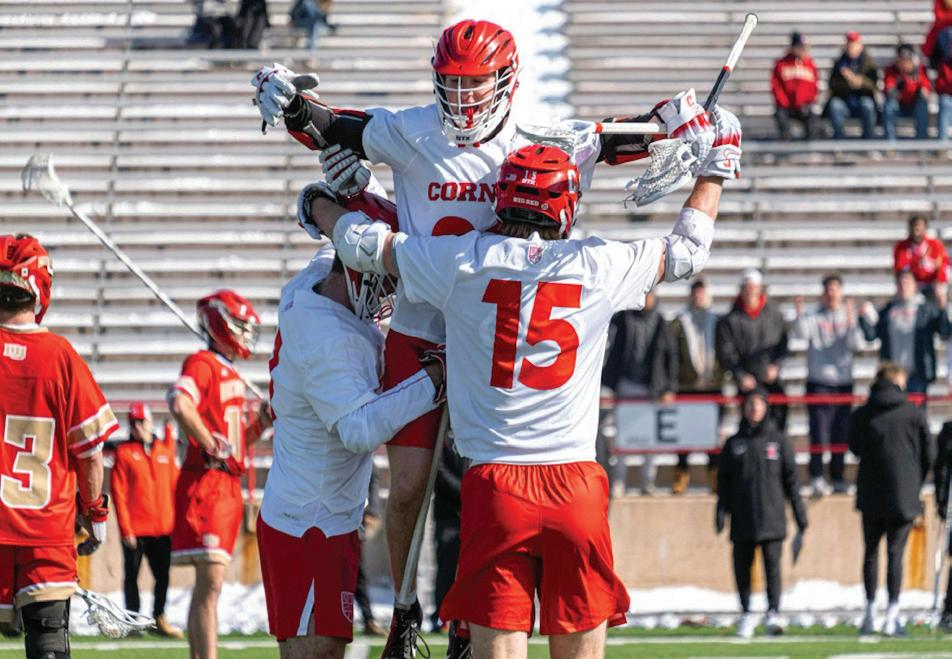
opening the scoring. Cornell continued to pile on the highly-touted Denver defense, leading 6-3 at the end of the first quarter. Denver’s first two goals were scored by Rory Graham, former midfielder for The Red. Graham scored eight goals during his time at Cornell and was a member of last year’s championship team, before transferring last summer.
Cornell’s lead slipped away, with the Denver defense hunkering down, allowing for a five goal Pioneers scoring run to sandwich halftime.
After Denver scored to put the Red behind 7-9 in the fourth quarter, senior faceoff Jack Cascadden won the draw and successfully found the back of the net.
That would be the first of six straight faceoff wins down the stretch from Cascadden and sophomore faceoff Michael Melkonian. This allowed for a six goal Cornell run to close the game in the final quarter, with four of the goals coming right after a faceoff win.
Cornell walked away with a 13-9 win, showing poise down the stretch.
The offense put up an impressive performance against a fantastic Denver defense and goalie, scoring 13 even
after being bottled up for the second and third quarters. Firth and sophomore attackman Ryan Goldstein each accumulated seven points with Firth collecting three goals and four assists, Goldstein two goals and five assists.
Alongside the standout duo was freshman Rowyn Nurry, scoring two goals while coming in to fill the spot of senior attackman Matt Perfetto, who was held scoreless against Albany. Also finding the scoresheet for the first time this season was junior midfielder AJ Nikolic, who scored after missing the Albany game with an injury.
Cornell’s faceoff room was the key to the win, winning every big faceoff down the stretch. Cascadden won 15 of 21 draws for a 71% clip. Melkonian also showed up big, winning four of five draws.
The Cornell defense held its own, with senior defender Matt Dooley also scoring a goal. Junior goalkeeper Matt Tully saved 10 of 19 shots against him, outdueling Denver’s Grayson Manning, who came into the game with a save percentage over 80%.
The Red will now fly home and quickly prepare to face Hobart in the home opener. Hobart is off to a 1-2 start this season, but the Red will need to stay focused, with a cold forecast and a two game week.
Cornell will face off against Hobart at 5 p.m. on Tuesday at Schoellkopf Field. Coverage will be available on ESPN+.
com.
Prof. Jarra Jagne Recognized for Distinguished Alumni Service
By VAL KIM Sun Science Writer
Feb. 24 — Ra College of Veterinary Medicine
Prof. Jarra Jagne DVM ’90, Public and Ecosystem Health, has been awarded the Daniel Elmer Salmon Award for Distinguished Alumni Service by the College of Veterinary Medicine. This prestigious distinction is the Veterinary College’s highest alumni honor and bestowed to only a handful of doctor of veterinary medicine graduates who have had notable achievements in their profession and community.
Jagne grew up in The Gambia, a country in West Africa bordering Senegal. From a young age, she was interested in the field of veterinary medicine. Jagne explained that Gambia relies “heavily” on both crop and animal agriculture and that she was surrounded by animals given the country’s “diverse profile” of livestock.
Jagne detailed her upbringing, which she told The Sun gave her unique opportunities to interact and become comfortable with animals. She described experiences with her accountant father, who would bring her to rural areas to buy peanuts, where she would spot livestock “all around” and develop an interest in helping and studying them by becoming a veterinarian — an uncommon career path in The Gambia then.
“There weren’t many Gambian veterinarians at
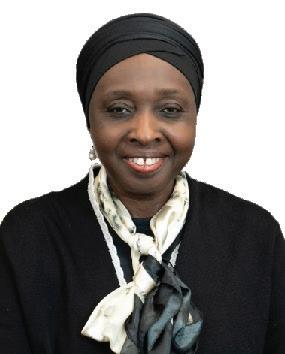
Kingdom in February 1965.
Jagne started her path to become a veterinarian at Colorado State University, where she earned her B.S. in biological sciences. She then made her way to the College of Veterinary Medicine at Cornell to get her DVM degree.
Jagne later specialized in poultry medicine and pathology at the University of Pennsylvania, a choice that was largely influenced by her time at Cornell.
“Cornell had a premier avian department,” Jagne said. “My connection to that department was the main reason I became a poultry veterinarian.”
Most notably, Jagne participated in a U.S. Agency for International Development funded project, where she directed avian influence prevention programs across Africa and Asia. As part of her work, she communicated with environmental, humanitarian and agricultural organizations to emphasize her One Health philosophy of uniting different disciplines and help prepare every part of society for avian influenza.
Jagne believes that her adaptation to life away from her home can be credited towards her resilience, gained from growing up in The Gambia.
“Growing up in West Africa made me resilient,” Jagne said. “I just had a good sense of self and who I was, being raised in an African culture. Even though I was faced with micro aggressions and discrimination that Black people face from time to time in the US, I always maintained a sense of confidence.”
Jagne has been back in Ithaca as a professor at Cornell since 2011. After experiencing various fields and countries throughout her career, she finally chose academia.
“I enjoy teaching and interacting with students,” Jagne said. “That’s one of the reasons why I came back to academia. That was a big thing, teaching students.”
Jagne’s passion for teaching led her to help the University of The Gambia launch their first veterinary school in 2025. Now, on her future plans, Jagne hopes to continue providing mentorship and support to students and poultry farmers while contributing to the future of veterinary medicine in The Gambia before she retires.
“I hope to continue mentoring students, especially women and youth groups,” Jagne said.
Val Kim can be reached at vbk@cornell.edu.
Black History Month: A Taste of Home at Cornell
By VANESSA LONG Sun Lifestyle Writer
Feb. 24 — It was an uneventful Monday dinner at Morrison Dining. My phone was in my hand as I ruminated on some nameless Canvas assignment. That’s when I heard a song I’ve only listened to in the car with my parents on one of their old CDs.
At first, I was completely shocked. When has Morrison Dining ever played “All My Life” by K-Ci and JoJo? Then another song came on, this time by The Penguins. As I walked out of the dining hall, I checked my phone, and that’s when it clicked. In the midst of the onslaught of assignments pending on Canvas, I completely missed the transition from January to February. The dining hall was playing music for Black History Month.
As a freshman last year, I was completely unaware of Cornell Dining’s tradition of celebrating Black History Month. I knew that Cornell University brought in a speaker to give the annual MLK Lecture, but I was pleasantly surprised that the dining halls also chose to commemorate Black History Month by incorporating the many cultures that shape Black identity in the United States into the dining hall menus. Many institutions make a hollow effort to acknowledge the importance of Black culture, which has shaped and defined the U.S. So, it was a wonderful surprise to sit in Morrison Dining and hear and see this celebration of the complexity of Black culture.
Still, Cornell Dining did much more than play music from various blues, jazz and Motown musicians that reminded me of the music played by my family back in Georgia; they also hosted themed
Students Discuss Shifts Two Years Post Afrmative Action
By JAMES COVIT Sun Contributor
Feb. 20 — Two years after the Supreme Court deemed race-conscious admissions for higher education institutions unconstitutional, student leaders of campus racial affinity groups have noticed changes in their communities.
When the Supreme Court ruling was first enacted for the 2027 admissions cycle, Cornell saw a dramatic decrease in the percentage of first-year Black, Hispanic and Hawaiian/Pacific Islander students, going from 25.4% of the student body to 15.7%.
Admission rates for underrepresented minorities have decreased for many top schools nationwide. Still, in August 2025, the White House accused top schools of not upholding the Supreme Court ruling.
“The lack of available admissions data from universities — paired with the rampant use of ‘diversity statements’ and other overt and hidden racial proxies — continues to raise concerns about whether race is actually used in admissions decisions in practice,” the White House said in the statement.
As part of its recent settlement with the Trump administration, Cornell was asked to disclose admissions data to the White House, including the racial makeup of the student body.
After the Supreme Court ruling was announced, Lisa Nishii, vice provost for undergraduate education and vice provost for enrollment, told The Cornell Chronicle that the University’s compliance with the ruling would not comwpromise diversity commitments.
“[W]e have been proudly committed to educating students from every background. The Supreme Court’s decision in no way undermines that fundamental commitment,” Nishii told The Chronicle.
However, some student affinity groups have noticed a shift in campus culture in the wake of the settlement.
“As people feel anxious and scared about the trembling ground that we’re all walking on right now, there are playbooks called history that we can observe where this has happened.”
Myshay Causey ’29 said that Black freshmen go to Ujaama “searching out the [Black] community, and it’s no longer as ‘Black’ as it used to be and no longer as active.”
Causey said that Cornell’s Black community differs significantly from the community once described to her by Black upperclassmen and alumni.
“When I came here, I was told Cornell had an amazing Black community,” Causey said. “People come here expecting that [but] the community is not as big, so it lets freshmen down.”
She discussed the issue that many “qualified Black applicants” feel as if Cornell and other top universities do not provide welcoming environments for Black students. She said that the perspective among Black seniors applying to elite colleges is, “Why would we want to apply when these schools are being openly racist against us?”
“This shift has already reshaped campus life with fewer first-year Black students joining organizations, and many groups struggling to sustain engagement and programming.”
Christian Flournoy ’27
Causey recently spoke at a Cornell PanAfrican Students Association event called “Where the Black People At,” in which a panel student leaders discussed issues currently facing the Black community.
Asociación de Centro Americanos Unidos President Josue Ortiz ’26 wrote in an email statement to The Sun that the end of affirmative action has empowered Latino students to become more politically active on campus.
“What has shifted … noticeably is the campus climate and the level of political engagement among Latino students following both the Supreme Court decision and, more recently, President [Michael] Kotlikoff’s deal with the Trump administration,” Ortiz wrote.
dinners that spanned across nine dining halls on West, North and Central Campus showcasing the different cultures that make up the Black identity.
The African Diaspora is often overlooked when exploring Black culture in the United States. Although racially, we’re all classed together, different countries and cultures have unique languages, food and customs that allow for separate, developed identities to exist under this umbrella in the U.S. It was humoring to realize that this complexity was being actualized by none other than Cornell Dining. As a Black student on campus, I was really excited to see which cultures they would draw inspiration from in their dishes, and how well they would execute them.
Last February, Cornell Dining hosted nine events that showcased cuisines from different African countries, North America and the Caribbean. The first event was the Sierra Leone Night held in Risley Dining, which featured beef kabobs, sunbutter sauce and banana akara. A Jamaican-themed night was held at North Star (Appel) Dining Hall, where dining workers served oxtail stew and fried plantains. There were more events such as the Trinidad Night in Morrison Dining (which served widely loved doubles — curried chickpea flatbread sandwiches), the Somali Night in Becker House Dining, the Haitian Night at William Keeton House, the Nigerian Night at Rose House Dining, the Kenyan Night at Cook House Dining and the Creole Soul Food at Okenshields.
To continue reading, please visit www.cornellsun.com.
Prof. Ambre Dromgoole
Christian Flournoy ’27, Student Assembly vice president and president of Alpha Phi Alpha, the first fraternity for Black students, detailed the impacts of this settlement on Black students in an email to The Sun.
“This shift has already reshaped campus life with fewer first-year Black students joining organizations, and many groups struggling to sustain engagement and programming,” Flournoy wrote.
Engineering clubs for marginalized communities on campus, for example, have seen a significant decrease in freshman membership.
Kankoune Yvon ’29, freshman representative for the Black Biomedical Association, reflected on conversations she has had with upperclassmen about the challenges of sustaining a vibrant Black community in light of the decreasing numbers in the association.
“The upperclassmen have [spoken about] the trouble of collecting enough Black individuals to attend their events,” Yvon told The Sun. “[They are not sure] whether it’s because Black students have lost their passion and comfort within the community, or whether it’s because of the end of affirmative action.”
Yvon also shared that Ujaama, the freshmen residential hall for students of African heritage which was once almost entirely Black, is now majority non-Black.
Ortiz said that as Latino students begin to “navigate uncertainty around representation and admissions,” he has noticed increased emphasis on “supporting one another, sharing resources and building solidarity across Latinx identities.”
Although she said the end of affirmative action will be difficult for marginalized groups on campus, Prof. Ambre Dromgoole, Africana studies, takes issue with people calling today “unprecedented times.”
“As people feel anxious and scared about the trembling ground that we’re all walking on right now, there are playbooks called history that we can observe where this has happened,” Dromgoole said. “If we look back at the first reactions to to Africana Studies, it was a shift that institutions did not want and [believed] would threaten their federal funding.”
In 1969, Cornell established the Africana Studies department and Ujaama Residential College in response to the Willard Straight Hall takeover, staged by the Cornell AfroAmerican Society after several anti-Black incidents occurred on campus, including a cross being burned outside of a Black women’s cooperative housing building.
Dromgoole emphasized that this moment does not exist in a historical vacuum and is reminiscent of past racist events. She said that it is “terrifying and scary that protections meant to recognize a student’s presence here as necessary” were terminated.
“Is it scary? Yes,” Dromgoole said. “But we’ve always had to contend with that [possibility].”
COURTESY OF THE COLLEGE OF VETERINARY MEDICINE
Refecting on the House of Alpha Leadership Institute’s First Year
By INGA WOOTEN-FORMAN Sun Contributor
Feb. 24 — Alpha Phi Alpha, the first Black Greek-letter organization in the U.S., was founded at Cornell in 1906 and comprises 90,000 current members. Cornell’s chapter established a new facility on campus that houses both a leadership institute and residence hall associated with the fraternity in October.
The facility, named the House of Alpha Leadership Institute, serves as a “destination for dialogue” and boasts a community that uplifts people of color, according to the fraternity’s web-
minorities and Black men on campus,” said Christian Flournoy ’27, president of the Cornell’s Alpha Phi Alpha chapter, in an interview with The Sun.
The house is the first of its kind for the fraternity and the entire Divine Nine, according to Flournoy. The Divine Nine are nine historically Black Greek-letter organizations, including Alpha Phi Alpha, that make up the National PanHellenic Council.
Chapter advisor Gavin Mosley and Shawn Lee, leader of the Alpha Light Fund, a nonprofit that manages HoALI, emphasized the significance of the institute in a joint statement to The Sun.
equipped with the tools to shape society,” wrote Mosely and Lee.
As the fraternity’s founding chapter, Alpha Phi Alpha at Cornell is called the “Alpha chapter.” Its members are informally called the “Alphas.”
Alpha Phi Alpha was founded at Cornell with the goal to “further brotherly love … to destroy all prejudices, [and] to preserve the sanctity of the home,” according to the fraternity’s constitution.
At the time of the chapter’s founding, Black students were excluded from fraternities, which hindered their involvement in on-campus student engagement, according to a 2019 research paper.

In response to this discrimination, seven Black Cornell students, called the fraternity’s Seven Jewels, founded Alpha Phi Alpha. Since its establishment, students have founded 686 Alpha Phi Alpha chapters at universities across the U.S. and internationally.
These chapters “recognized the need to help correct the educational, economic, political, and social injustices faced by African Americans,” according to Alpha Phi Alpha’s website.
Many prominent civil rights and social justice activists, including Martin Luther King Jr., W. E. B. Dubois and Thurgood Marshall, were members of Alpha Phi Alpha across the country and integrated the group’s values into their careers and activism.
To continue reading this article, please visit www.cornellsun.com.
Inga Wooten-Forman can be reached at irw7@cornell.edu.
Jerome Holland ’38 M.S. ’41 A Life of Service
Holland
was the frst
African American student
to play for the Cornell football team and served as a diplomat
By MATTHEW LEONARD Sun Assistant Sports Editor
Feb. 1 — Cornell was founded on the principle of being “an institution where any person can find instruction in any study.” This philosophy laid a foundation that allowed students of all different races, genders and ethnicities to obtain a higher education and become leaders throughout the world.
When it came to Jerome Holland ’39 M.S. ’41, his journey at Cornell did not follow one path — he paved multiple.
As the first African American student to play for the University’s football team, the first African American board member of the New York Stock Exchange and the president of multiple higher education institutions, Holland embodied Cornell’s founding principle. He demonstrated that any student, of any background, can overcome adversity and achieve greatness.
Holland was born on Jan. 9, 1916, in Auburn, New York, the fourth child of Robert Holland Jr. and Viola Bagby. Early in his youth, Holland worked with his father, who was a handyman and gardener. This experience inspired Holland to work hard in school to “avoid continuing such menial work into his adulthood,” according to Carlos Holmes, university historian for Delaware State University.
Holland attended Auburn High School, where he played varsity football for four years while also playing for his school’s basketball team. He lettered in both sports, an achievement reserved for a high school’s best athletes.
Photographs of the Auburn High School football team throughout Holland’s time at the school show that he was the only African American on the roster.
Around this time, Holland picked up a nickname that would stick with him for the rest of his life, “Brud.”
Holland’s siblings called him “Brudder,” eventually leading to friends and family calling him “Brud.” This
nickname is still sometimes substituted in for his first name, including in his profile for the College Football Hall of Fame.
When it came to Holland’s education after high school, Cornell was always bound to be the destination. A longstanding connection to the Tremen family, influential within Cornell affairs at the time, alongside Holland’s elite football ability ensured Holland’s enrollment within the University.
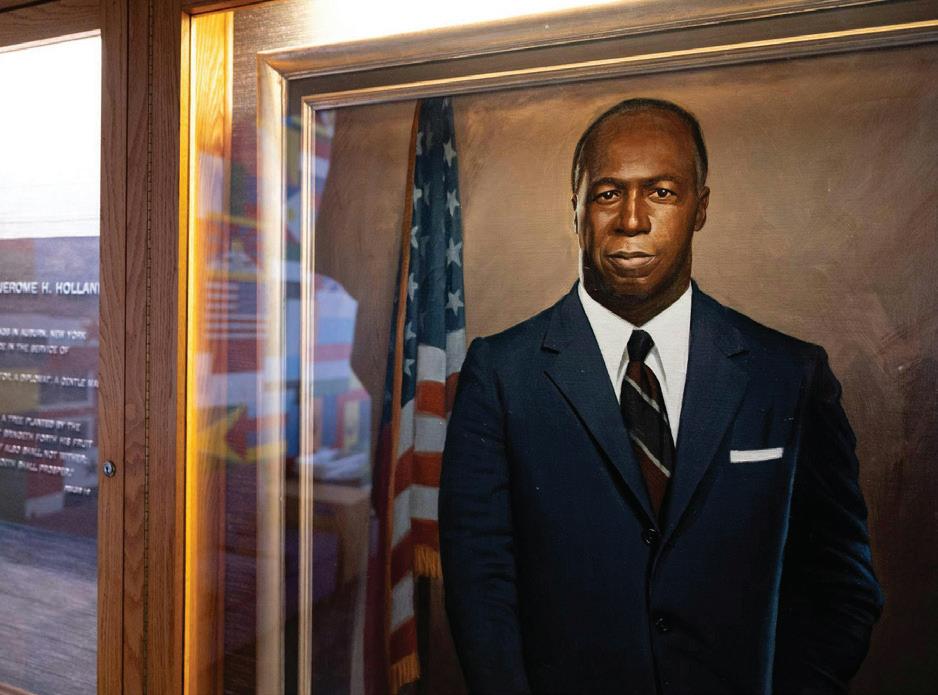
This made Holland the first-ever African American to play for Cornell’s football team.
Holland’s football career at Cornell would be one for the ages. As a three-year varsity starter, he played on both the offensive and defensive units, excelling at both. His play on the field led to him becoming a two-time All-American and First-Team All-Eastern for the 1937 and 1938 seasons.
During the late 1930s, there was little debate who was the best athlete at Cornell. When nominating Holland for All-American status in 1937, The Sun explained how remarkable of a player he was, question-
ing how he had not received the recognition in years prior.
“A sixty-minute player for two years, Cornell’s greatest star last year was shunted from the honor by the brilliant work of several players who have since passed from the scene,” wrote The Sun. “This year as a junior, he has been the outstanding Big Red player — sparkling on the defense and a heavy scorer when he carries the ball.”
While Holland was undoubtedly one of the best players in college football, a career in the NFL was stolen from him due to a 1933 vote by NFL owners that banned black individuals from playing in the NFL.
Though a career in the NFL wasn’t in the cards, Holland’s playing ability did not go unrecognized. He was inducted into the College Football Hall of Fame as a member of the Class of 1965 and into the Cornell University Athletics Hall of Fame’s inaugural class, the Class of 1978.
Holland never let barriers to the NFL stop him from achieving greatness. After finishing his Bachelor of Science in sociology, he immediately enrolled and completed a Master’s of Science, also in sociology, at Cornell. Holland then worked various jobs for a decade, such as being a social research consultant. He did this until deciding to further his education at the University of Pennsylvania, where he earned a Ph.D. in sociology.
Following the conclusion of his education, Holland continued his path in academia, becoming the president of Delaware State College in 1953. At the time of his appointment, Delaware State was struggling, having just lost its accreditation for failing to facilitate “adequate academic structure”, and faced calls for closure by state officials.
To continue reading this article, please visit www. cornellsun.com.
Distinguished alumni | Jerome Holland made history as the first African American student to play for the Cornell football team.
NATHAN ELLISON / SUN STAFF PHOTOGRAPHER
COURTESY OF JASON KOSKI / CORNELL UNIVERSITY