The Corne¬ Daily Sun

By SOFIA LOAYZA
Feb. 19 — Cornell Career Services continues to advertise U.S. Customs and Border Protection recruitment opportunities despite backlash on campus, prompting concern and fear among students.
The issue comes amid heightened national scrutiny of federal immigration enforcement, as large-scale operations have intensified in cities across the country and drawn criticism over aggressive and unconstitutional conduct by U.S. Immigration and Customs Enforcement and CBP. Scrutiny intensified following the killings of two U.S. citizens Alex Pretti and Renee Good by federal immigration officers in Minneapolis in January. The incidents sparked nationwide protests and outrage, including an ICE Out protest on campus on Feb. 4.
The Sun first reported that Cornell Career Services shared multiple positions at the Department of Homeland Security on Handshake in August. Since then, Cornell Career Services has promoted six virtual recruitment events by CBP scheduled in February. Four of the events have
already occurred — on Feb. 4, Feb. 5, Feb. 10 and Feb. 11 — with two more on Feb. 18 and Feb. 26.
Prof. Monica Cornejo, communication, argued that Cornell’s continued promotion of federal immigration enforcement careers is a political stance in itself.
“All I see is [the administration] choosing a side and then turning around and claiming that they are for ‘any person, any study,’ Cornejo said. “That is really sad, and that is their choice.”
Cornejo’s research explores the barriers that undocumented students experience in college and has been cited over 300 times. Her research found that undocumented students often live with constant anxiety about detention or deportation — both for themselves and their family members. This stress negatively affects students’ academic performance, focus and sense of safety.
To continue reading this article, please visit www.cornellsun.com.

By CORAL PLATT and EVERETT CHAMBALA Sun Staff Writers
Feb. 17 — Prof. Joseph “Joe” Halpern, computer science, died on Friday at age 72 in Ithaca following a battle with cancer.
Halpern had served as a professor in computer science at Cornell since 1996. He was the chair of the Department of Computer Science from 2010 to 2014 and was named the Joseph C. Ford Professor of Engineering in 2017. Throughout his career, Halpern received the Gödel Prize, Edsger Dijkstra Prize and the Allen Newell Award.
At Cornell, Halpern taught several courses in computer science and mathematics, and researched “the interface between game and decision theory and computer science,” as well as “reasoning about knowledge and uncertainty, and on causality,” according to his biography for the Bowers College of Computing and Information Science.
“Watching Joe in action was to see his own mind pursue knowledge in an uncertain world: In his work, he was a creator of beautiful abstractions,” said Prof. Jon Kleinberg, computer science, in an interview with the Cornell Chronicle.
While he was a member of the computer science department, Halpern’s work intersected a wide range of fields.
“I once gave a talk in the economics department at Princeton where I described myself as someone with a Ph.D. in mathematics, who calls himself a computer scientist, and is giving a talk to economists about a subject mainly studied by philosophers,” Halpern wrote in his biography. “That’s probably the best one-sentence description I can give.”
Halpern also had a passion for travel and learning about new cultures, having visited over 80 countries in his lifetime and speaking 5 languages. While traveling, he spent two years as the head of the math department at Bawku secondary school in Ghana before starting his Ph.D. Halpern also loved music and the outdoors, being an avid hiker, mountaineer and songwriter.
To continue reading this article, please visit www.cornellsun.com.
Coral Platt and Everett Chambala can be reached at cplatt@cornellsun.com and echambala@cornellsun.com.
that and it was a real close run
By JANE McNALLY Sun Senior Editor
Feb. 17 — At this moment, Cornell is the best hockey school in the Ivy League.
It took the help of out-of-town results, but the men’s and women’s hockey programs — both ranked No. 11 in the nation — earned their respective 2025-2026 Ivy League championships this past weekend.
The pair of titles brings the total to 45 earned between the two programs, dating back to 1966. This year marks the eighth time both the men and women have won the championship in the same year.
The women’s program secured the title on Friday, the final weekend of the regular season. Cornell had just defeated St. Lawrence, 4-3 in overtime, before checking the PrincetonYale score from its locker room in Canton, New York.
A 2-0 loss for Princeton clinched the program’s 18th — and third consecutive — Ivy League title.
“We needed some help here in the last week, but we did our part,” said women’s hockey head coach Doug Derraugh ’91. “I’m proud of the girls to be able to get the Ivy League Championship this year. It was a lot of teams that were competing for
ent
since anoth play — Saturday weeks the reg season, a of clinching narios were at play this past weekend.
neck with Dartmouth, the Red need ed the nation ally-ranked Big Green to collect fewer than three points against middling Yale and Brown teams to secure the champi onship outright.
shootout win over

On the men’s side, the Ivy League has not seen more than two of its teams achieve winning records in a single season since 2018-2019 (three), and four Ivies have not been above .500 in one campaign since 2015-2016. This season — though there are still some games to play — looks to change that, as four squads (Cornell, No. 14 Dartmouth, Harvard, Princeton) boast winning records heading into the final two weekends of play.
The numbers are eerily similar on the women’s side — the four Ivy League teams above .500 at this season’s conclusion (Cornell, No. 8 Yale, No. 9 Princeton, Brown) are the most since the 2019-2020 season.
It is the pursuit of the title — what it takes to get there — that makes the end result all that much more worth
“I don’t think [the Ivy League] has just returned to form. I think it’s taken another step from where it was,” men’s hockey head coach Casey Jones ’90 told The Sun earlier this season. “I think there are not only good teams, I think some of them are very good teams. That’s the exciting part.”


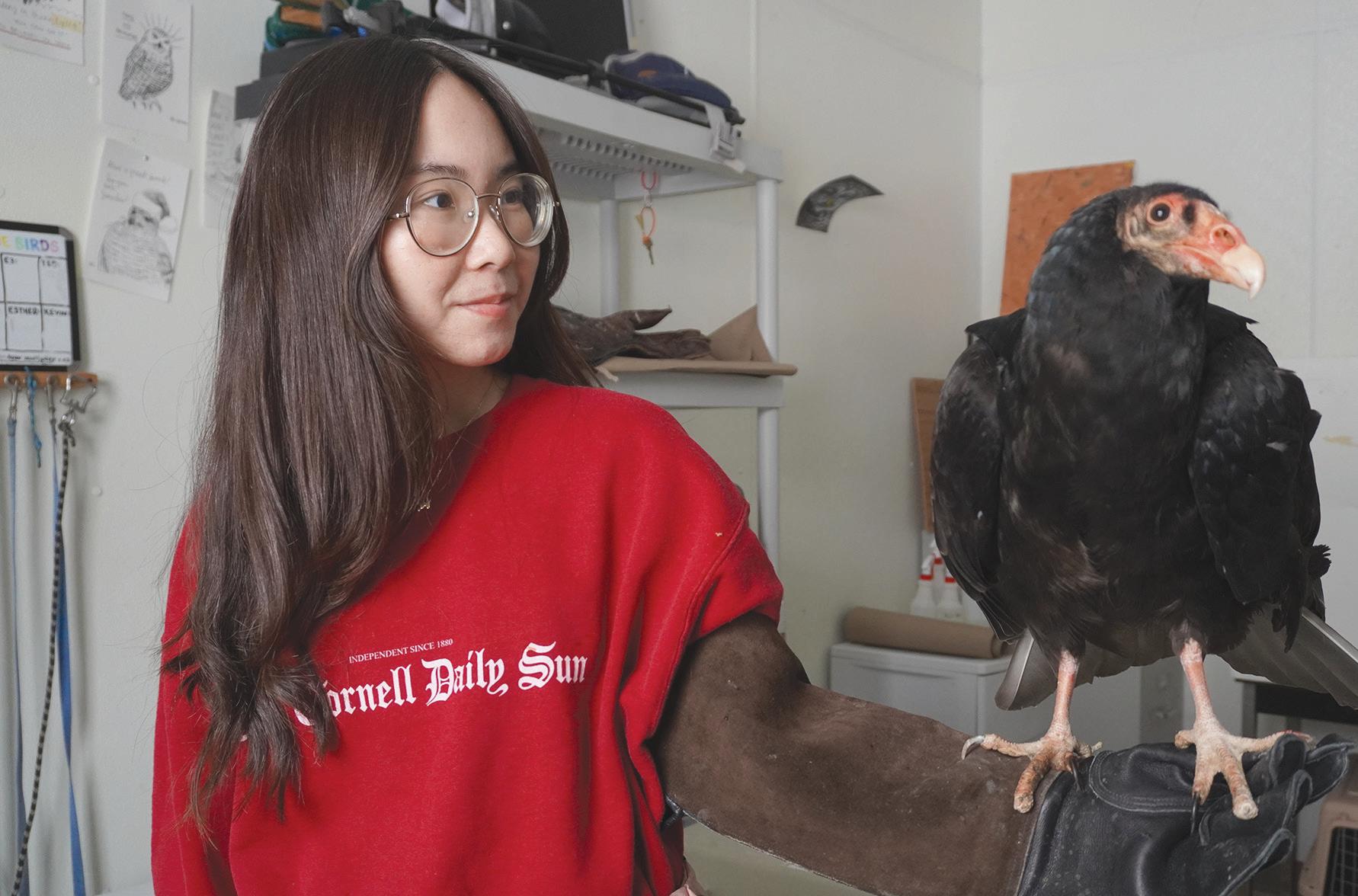
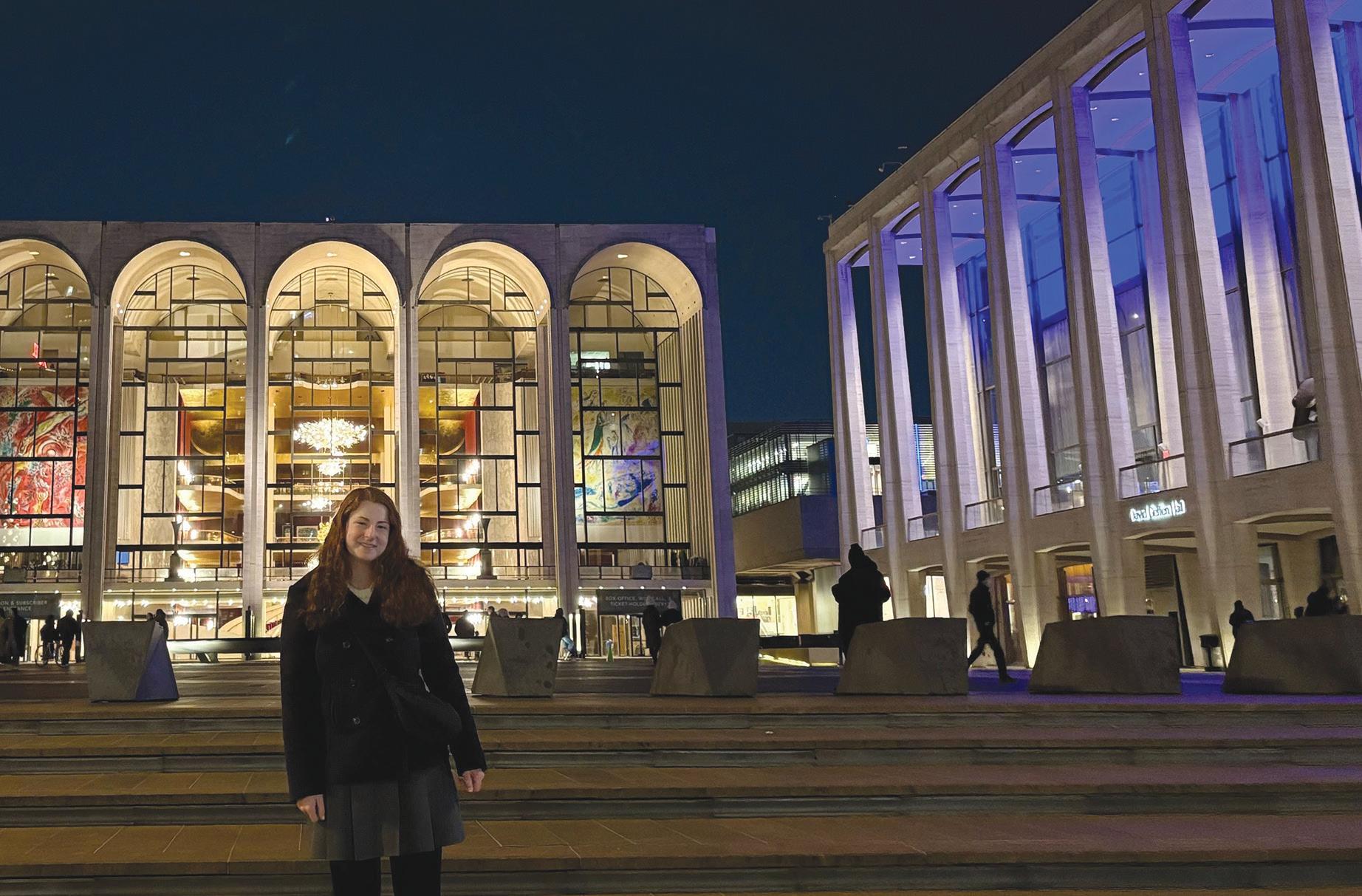
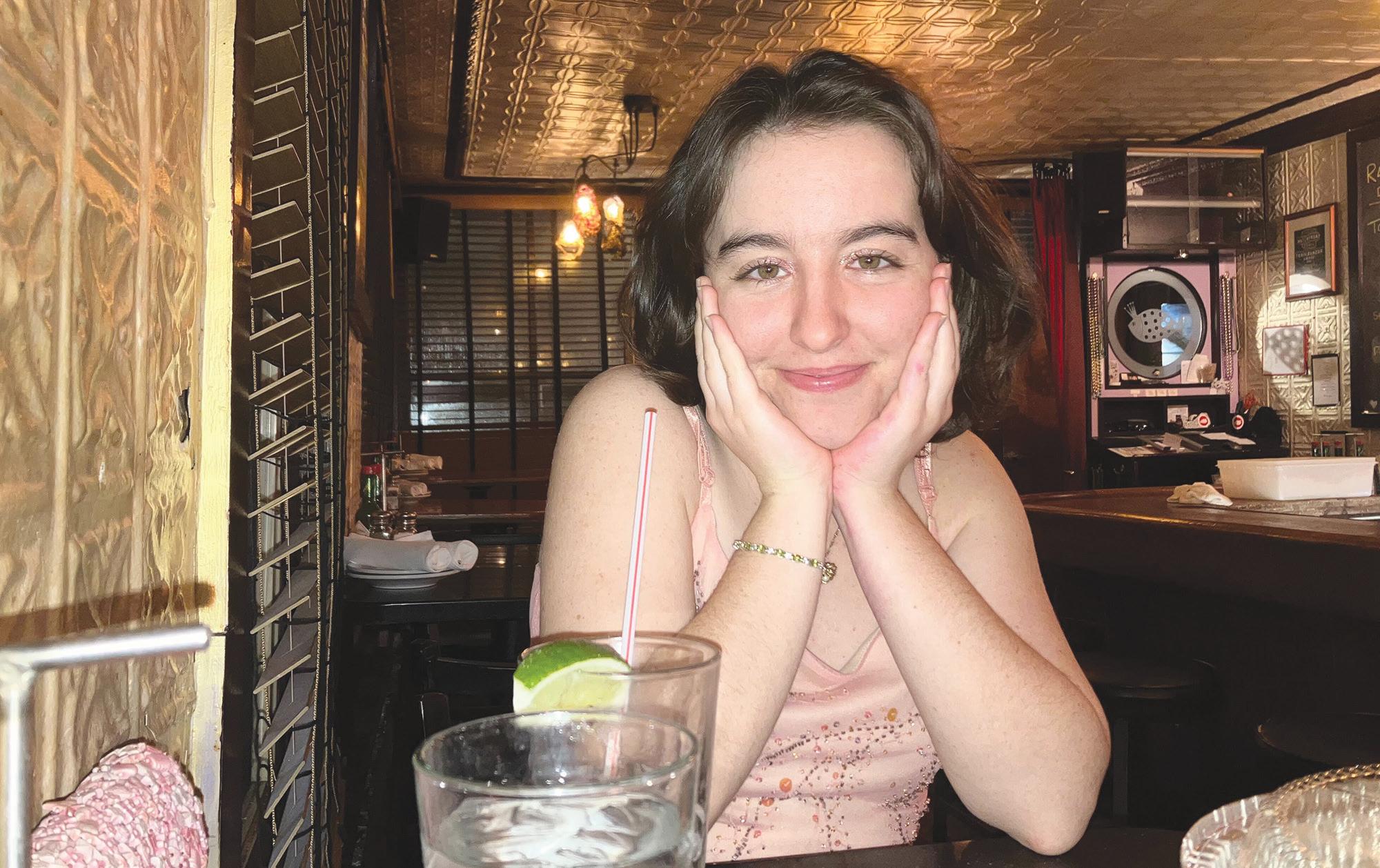
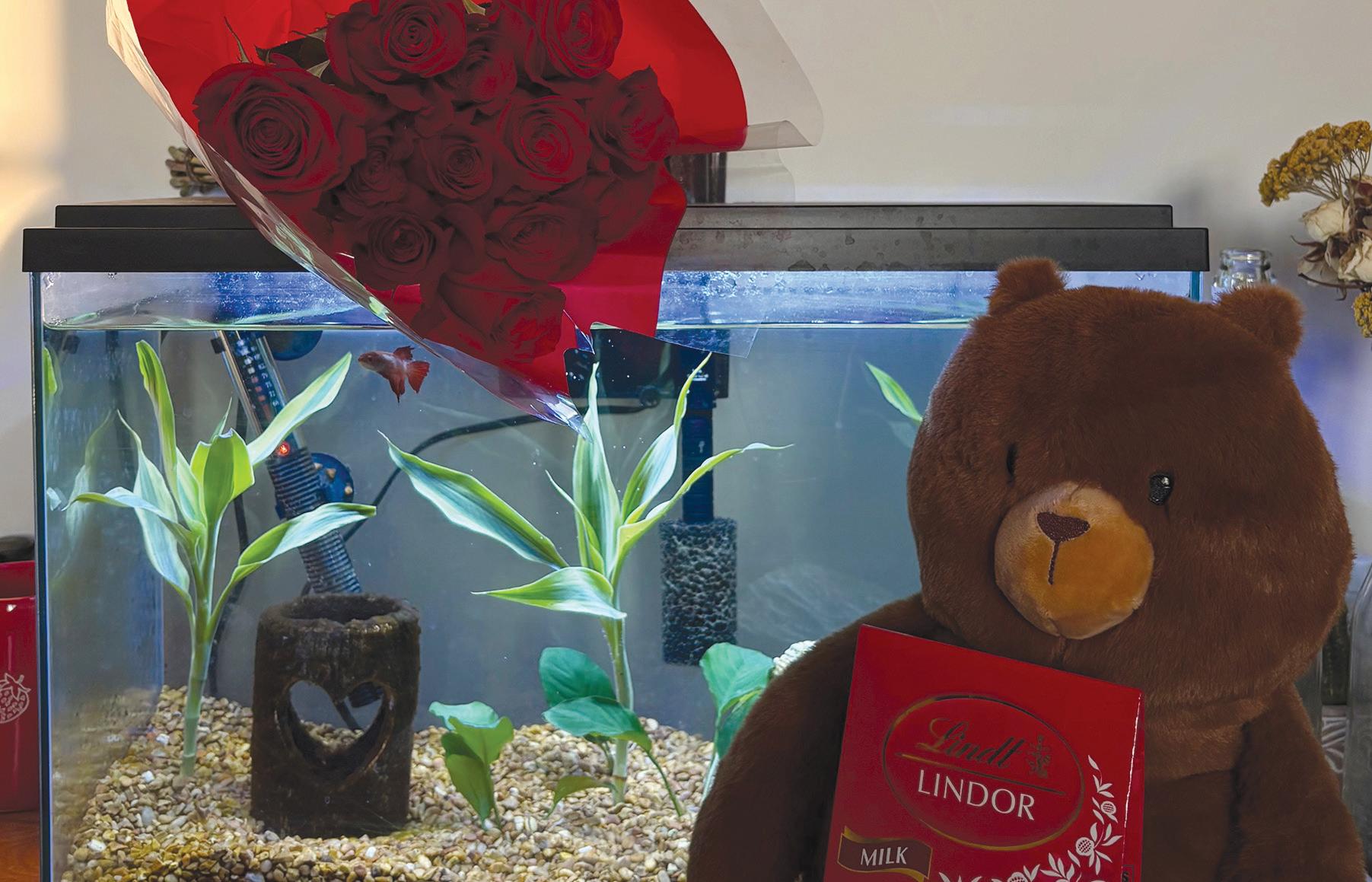
Tis February break, Sunnies put down their books, closed their laptops and spent some time outside of Cornell’s classrooms.
By SUN PHOTOGRAPHY DEPARTMENT



By AMELIA GARCIA and ZEINAB FARAJ Sun Contributor and Sun Features Editor
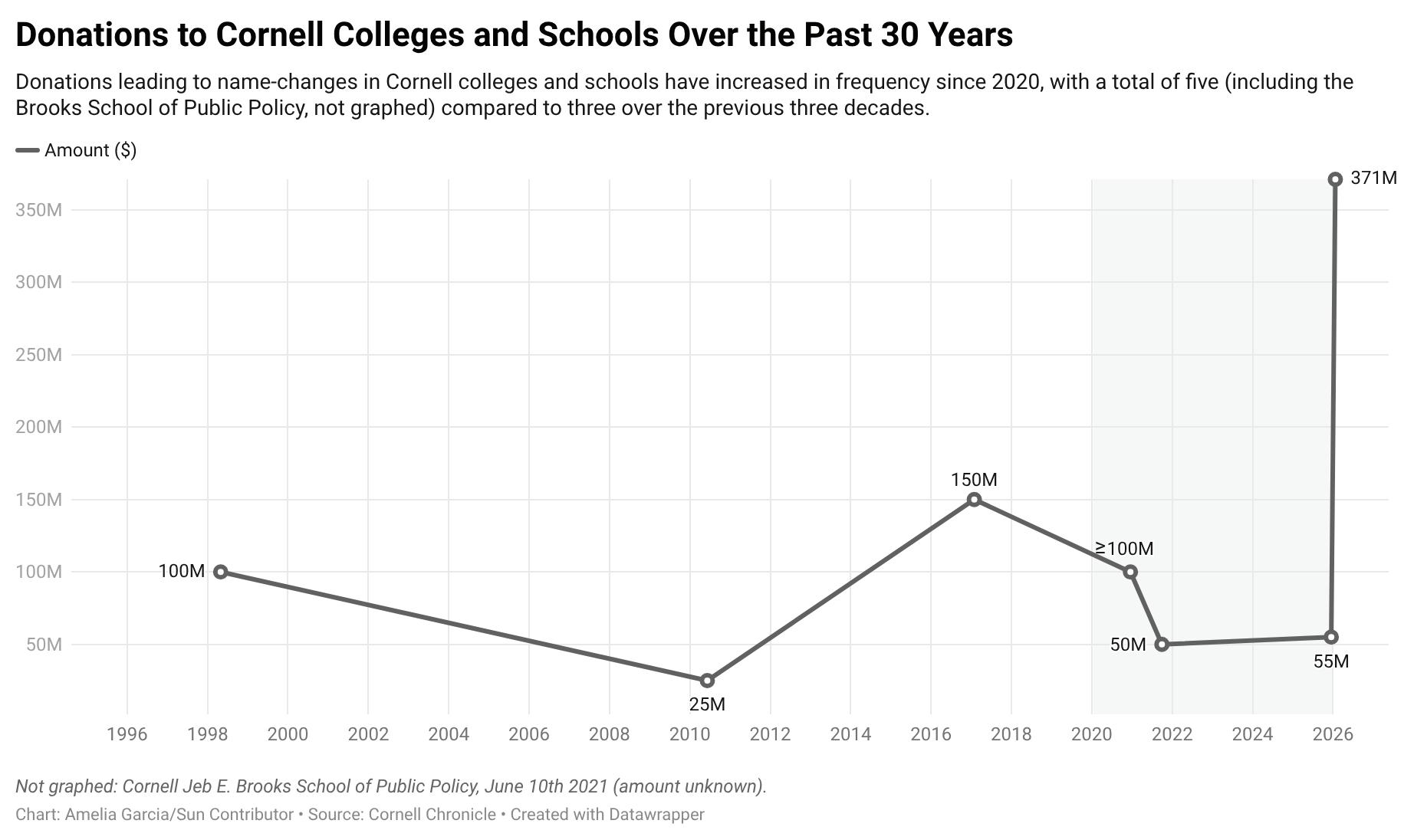
Feb. 18 — Cornell received five major donations that resulted in name changes in its colleges and schools in the past six years, exceeding the amount of similar donations in the past 30 years, according to figures published in the Cornell Chronicle.
David A. Duffield ’62 M.B.A. ’64 made a $371.5 million pledge to the College of Engineering in January, marking the single largest donation in University history and the most recent instance of the University renaming a college for a donor. Duffield’s donation is one of five large University donations in the past six years, and one of eight in the past 30 years.
The Sun timelined large donations made to the University over the past 30 years and spoke to students and the University to better under-
stand how donations impact Cornell.
Donations Through the Years
The first college renamed in the last 30 years occurred in 1998, when Cornell University Medical College, originally founded in 1898, was renamed to Weill Cornell Medicine. This renaming followed a $100 million gift to the University from Joan and Sanford I. Weill ’55.
In 2010, a $25 million donation from the family of John Dyson ’65 established the Dyson School of Applied Economics and Management.
In 2017, H. Fisk Johnson ’79 M.Eng ’80 M.S. ’82 M.B.A. ’84 Ph.D. ’86 donated $150 million to the College of Business, endowing it as the S.C. Johnson College of Business.
The past six years have marked an uptick in donations leading to namesake colleges.
See DONATIONS page 10

By CHRISTINA MACCORKLE Sun Senior Writer
Feb. 14 — Editor’s note: This article cites several emails with spelling and grammatical errors. These emails are quoted verbatim, with [sic] inserted to indicate that the error belongs to the source.
This article is part of a series on Jeffrey Epstein’s connections to Cornell University.
Real estate developer and School of Industrial and Labor Relations alumnus Russell Hernandez ’88 was hired by convicted child sex offender and financier Jeffrey Epstein in 2018 to oversee development and renovation projects on Epstein’s private island, Little St. James, and his Manhattan residences, according to files released by the Department of Justice on Jan. 30. Hernandez appears hundreds of times in the files, all after Epstein’s 2008 conviction of child prostitution, but seems to have corresponded with Epstein only in a professional capacity.
According to the first correspondence between the two in a January 2018 email, Hernandez and his company, Atlantic State Consultants, appeared to be hired by Epstein to oversee renovation projects.. Emails show that Hernandez traveled one time in January 2018 to Epstein’s island and visited Epstein’s Manhattan residence multiple times in his capacity as a consultant on construction projects .
In the 2018 email to Epstein, Hernandez stated that Atlantic State Consultants would oversee the architects, consultants, contractors and planners involved in the project from “pre-construction through its completion.” The email stated that the company charged a “pre-construction monthly fee” of $35,000 plus reimbursement for travel expenses such as airfare, car rentals, lodging and meals.
Hernandez ended the email to Epstein stating, “Jeffrey, please do not hesitate to contact me with any questions or comments, without the ‘formalities’ we will do whatever we need to do to get your project built.”
Emails between Hernandez and Epstein show that projects on the island included installing a pool and replacing floor tiles. In Epstein’s Manhattan residence, Hernandez oversaw projects including renovating a steam room, a bathroom and a master bedroom.
Files also show that around one month into Hernandez’ professional engagement with Epstein, Epstein expressed frustrations with Hernandez’ apparent lack of progress on his projects.
In a Feb. 27, 2018 email, Epstein wrote to Hernandez “you have not even been able to ge us a bid to fix a generator… though you have touted y=ur connections, and promised to deliver last friday. I am an=accountant. there are either results or not results , someone t=lling me they spend 100 hours and didnt deliveer anything they promised is the way lawyers work. :) [sic].”
Epstein and Hernandez appear to have stopped corresponding in April 2018. Epstein died by suicide in August 2019.
In April 2022, Hernandez received the Jerome Alpern Award, an ILR alumni award, “in recognition of his success and longtime dedication to the ILR School.” The press release stated that Hernandez has maintained a strong connection to the ILR school, serving on the Dean’s Advisory Council, the Development/Campaign Committee and making yearly calls to solicit gifts.
According to the ILR school’s website, “The Jerome Alpern Award was established in 1997 and named in honor of Jerome Alpern ’49, whose contributions of outstanding service and support to the ILR School, its students, and its alumni, combined with his professional accomplishments outside the field of industrial and labor relations, embody the essence and spirit of the Alpern Award.”
The Sun was unable to reach Hernandez for comment after attempts were made through contacting his firm, Atlantic State Consultants. A University Spokesperson declined to comment on this story.
By ATTICUS JOHNSON Sun Senior Writer
Feb. 17 — Weill Cornell dermatologist Monib Zirvi Ph.D. ’96 M.D. ’00 asked the U.S. Supreme Court on Jan. 23 to take up his claim accusing prominent law firm Akin Gump of malpractice. Zirvi alleges that the firm misled him on his intellectual property rights during the firm’s representation of Cornell in a 2010 suit, Cornell v. Illumina, where Zirvi was a witness.
Intellectual property rights refer to the right of someone to own something they created, representing original human thought.
Zirvi’s petition, filed in January but docketed by the Supreme Court on Feb. 6, alleges that attorneys at Akin Gump, including Matthew Pearson and Angela Verrecchio, had knowledge of but did not use key pieces of evidence for Zirvi and did not properly counsel Zirvi on his right to have his name on a patent and royalties for his work on DNA sequencing called ZipCodes during Illumina
DNA sequencing is a laboratory process used to determine the exact order of nucleotide bases within DNA molecules.
The pieces of evidence, Illumina documents that referenced ZipCode patents with Zirvi and other co-inventors’ names on them, were left unused by his lawyers, Zirvi said. Zirvi later obtained the document through a free-
dom of information request to the Securities and Exchange Commission, according to the petition.
“It’s like a prize fight going on between two major fighters, and the person who has the stronger position doesn’t win because he throws the fight,” Zirvi said.
In Illumina, settled in 2017, Cornell accused the sequencing company of patent infringement on ZipCode technology partially developed by Zirvi in the 1990s while at Cornell. The technology sped DNA sequencing up by organizing proteins, according to Zirvi.
ZipCoding was commercialized by Illumina, a DNA sequencing company, and Thermo Fisher, a medical instrument firm, and is used in 23andMe tests, DNA forensic testing and methylation testing. The revenue from these inventions is in the “billions,” Zirvi said to The Sun.
He added that the documents were known to Akin Gump, but that he did not discover its existence until after litigation in Illumina. Additionally, he said that Akin Gump attorneys told him during Illumina proceedings that he should not hire an outside counsel, as all “interests are aligned” between Thermo Fisher, Cornell and Zirvi, who were all plaintiffs suing Illumina at the time, but later told Zirvi they had no professional obligation to him.
As one of the inventors of the technology, Zirvi was a witness in Illumina and spent “hundreds of hours preparing,” according to his Supreme Court petition, and exchanged “hundreds of emails,” with attorneys, Zirvi said to The Sun. Zirvi’s petition claims that while he did not officially hire Akin Gump attorneys in Illumina, “their statements and conduct led him to believe that they were representing him personally,” including memos from 2016 and 2017 that were sent to Zirvi and other ZipCode developers titled “ATTORNEY CLIENT PRIVILEGED,” according to his petition.
“For all intents and purposes, [Matthew Pearson] was my attorney,” Zirvi said to The Sun.
Akin Gump did not respond to a request for comment. Zirvi’s current suit, originally filed in 2023, was previously dismissed by the U.S. District Court for the District of New Jersey in April 2024 and the Third Circuit Court of Appeals in October.
The New Jersey District Court ruled against Zirvi in April 2024, writing that “Zirvi’s complaint fails to plead the existence of an attorney-client relationship between himself and any of those Defendants or to even plead facts sufficient for an
assumption by Zirvi that the Attorney Defendants represented his interests.”
Zirvi previously filed a similar suit in 2018, which was dismissed in 2020, accusing Illumina of conspiring to steal his DNA technology trade secrets. The current suit is related to intellectual property claim against Illumina, but specifically focuses on the malpractice claim against Akin Gump. Malpractice claims accuse professionals of breaching their duties to a client, often deemed synonymous to professional negligence.
The current suit was rejected by the Third Circuit Court of Appeals on the grounds that Zirvi should have amended his 2018 suit against Illumina and Thermo Fisher to include malpractice claims under the doctrine of res judicata, which bars plaintiffs from suing twice for the same claim after a judgement has been reached.
After appeal, the circuit court then ruled that Zirvi’s claims should instead have been bundled into one complaint, though Zirvi argues that he was not aware of Akin Gump’s alleged malpractice until after the 2018 litigation was ongoing.
The Third Circuit decision was a “more extreme position,” University of Buffalo law professor Christine Bartholomew, who specializes in procedural law, wrote in a statement to The Sun. Other circuit courts may tend towards utilizing an operative complaint rule, meaning that the amended version of a complaint takes precedence.
“When there are such splits [between appellate courts], it is not uncommon for SCOTUS to weigh in to help settle or clarify the issue,” Bartholomew wrote. However, Zirvi’s case may not be “the kind of broad legal question the Court prefers to resolve,” Bartholomew added.
Even if Zirvi’s case is taken up by the Supreme Court, “it would be unusual,” for the Circuit Court’s ruling to be overturned, Prof. James Grimmelmann, law, wrote in a statement to The Sun.
“The Third Circuit rejected his appeal in a ‘nonprecedential’ opinion, which appeals courts use when they think that a case does not present difficult or important issues,” Grimmelmann wrote.
To continue reading this article, please visit www.cornellsun.com.
Atticus Johnson can be reached at ajohnson@cornellsun.com.
By
Feb. 19 — Editor’s note: This article cites several emails with spelling and grammatical errors, as well as some that contain profanity. These emails are quoted verbatim, with [sic] inserted to indicate that the error belongs to the source.
This article is part of a series on Jeffrey Epstein’s connections to Cornell University. Find the other pieces here.
Multiple doctors and scientists formerly and currently employed by Weill Cornell Medicine maintained ties with financier and convicted child sex offender Jeffrey Epstein, according to files released by the Department of Justice on Jan. 30.
These interactions occurred after Epstein was convicted of soliciting prostitution from a minor in 2008.
Former Weill Cornell Medicine urologist Dr. Harry Fisch met with Epstein more than 20 times and maintained frequent professional and personal communications with him from 2015 until Epstein’s death in 2019, files show.
Epstein also consulted Dr. Jeffrey Port, a current thoracic surgeon at Weill, on Port’s prospective cell therapy venture, Angiocrine Biosciences, in 2015, according to the files.
Port’s business meeting came after Epstein met to discuss cancer research funding with Weill Cornell Prof. Francis Barany, microbiology, in 2011, according to the files.
Specifically, in 2017, Javaid Sheikh, the Dean of Weill Cornell Medicine at Qatar, asked the financier to help his son find a job at a New York City hedge fund. Epstein also appeared to have helped former Weill professor Allen Chen connect a former Qatari prime minister to medical care in New York.
In a 2012 email, Epstein’s personal accountant Richard Kahn wrote that he had a check from Weill Cornell to Epstein for $465.
The Sun could not confirm the reason for the payment. A University spokesperson declined to comment on the check, citing “applicable privacy laws.”
Harry Fisch
Epstein corresponded frequently with Fisch, a celebrity urologist who worked as a clinical professor of urology and reproductive medicine at Weill Cornell until 2021, according to his LinkedIn. In his position, he focused on men’s health issues, such as male infertility and reproduction. He also operated a private practice in Manhattan, where Epstein was a patient.
Fisch is mentioned hundreds of times in the files in his capacity as both Epstein’s urologist and friend, according to the released emails.
The urologist previously hosted a weekly men’s health radio show, “The Dr. Harry Fisch Show,” on the Howard Stern channel of SiriusXM. TDuring the program covered, male medical and sexual issues were covered as listeners called in with concerns.
Emails show that Fisch provided much of Epstein’s medical care outside of traditional office visits, often coordinating lab work, communicating about prescriptions and answering medical questions over text and email. Messages between the pair show that Epstein was frequently tested for bacterial cultures in his semen and urine and expressed concerns to Fisch about a variety of conditions, including varicoceles, or enlarged veins in the scrotum, and an enlarged prostate.
The pair’s correspondences about Epstein’s medical affairs were often interwoven with evidence of a shared knowledge of Epstein’s private life. The two also texted frequently, with Fisch once sending Epstein a video of a toilet flushing, writing, “too
much Kishka results in this sound.”
Fisch’s attendance at Epstein’s dinners appears to have begun in 2015, when Epstein invited Fisch to a dinner with Woody Allen, the controversial actor-director. Fisch was a frequent guest at Epstein’s dinners and social events with Allen, and his correspondence with Epstein show evidence of him often recalling the gatherings with gratitude and amusement.
In a November 2015 email, Fisch thanked Epstein for inviting him and stated, “I almost made Woody spit up his Lactaid Milk with s=mething [sic] I said. I think I was alluding to small balls in an ‘80 year old ma=’. That could be my greatest achievement in life.”
In a 2016 email, Fisch thanked Epstein for inviting him to another dinner with Leon Black — the financier who paid Epstein $158 million — and Allen, who Fisch stated was “absolutely brilliant.”
Fisch also wrote, “Best line of the night. The woman gave herself an abortion and Woody said she use a woo=en [sic] hanger. C’mon, that is pure brilliance!” In the same email, Fisch also shared the results of Epstein’s urine test.
In 2018, Epstein introduced Fisch to Boris Nikolic, the managing director of Biomatics Capital, a venture capital firm that invests in biotechnology companies. Fisch shared a sidedeck for his company, Veru Pharmaceuticals, and appeared to be seeking investments or guidance from Nikolic.
To continue reading this article, please visit www. cornellsun.com.
143rd Editorial Board
JULIA SENZON ’26
Editor in Chief
ERIC HAN ’26
Associate Editor
SOPHIA DASSER ’28
Opinion Editor
SOPHIA TORRES ’26
Advertising Manager
SYDNEY LEVINTON ’27
Arts & Culture Editor
JAMES PALM ’27
Assistant Arts & Culture Editor
JENNA LEDLEY ’27
Assistant Arts & Culture Editor
MELISSA MOON ’28
Assistant Arts & Culture Editor
SOPHIA ROMANOV IMBER ’28
Assistant Arts & Culture Editor
KAITLYN BELL ’28
Lifestyle Editor
MAIA MEHRING ’27
Lifestyle Editor
KARLIE MCGANN ’27
Photography Editor
MATTHEW KORNICZKY ’28
Assistant Photography Editor
STEPHAN MENASCHE ’28
Assistant Photography Editor
MIRELLA BERKOWITZ ’27
Video Editor
JADE DUBUCHE ’27
Multimedia Editor
HANNIA AREVALO ’27
Graphics Editor
HUNTER PETMECKY ’28
Layout Editor
RENA GEULA ’28
Layout Editor
CHRISTOPHER WALKER ’26
Games Editor
ALLISON HECHT ’26
Newsletter Editor
DOROTHY FRANCE-MILLER ’27
Managing Editor
MATTHEW KIVIAT ’27
Assistant Managing Editor
VERA SUN ’27
Business Manager
ALEX LIEW ’27
Human Resources Manager
BENJAMIN LEYNSE ’27
News Editor
VARSHA BHARGAVA ’27
News Editor
ISABELLA HANSON ’27
News Editor
CEREESE QUSBA ’27
News Editor
REEM NASRALLAH ’28
Assistant News Editor
ANGELINA TANG ’28
Assistant News Editor
KATE TURK ’27
Assistant News Editor
GABRIEL MUÑOZ ’26
City Editor
JANE HAVILAND ’28
Features Editor
ZEINAB FARAJ ’28
Features Editor
JEREMIAH JUNG ’28
Assistant News Editor
KAITLIN CHUNG ’26
Science Editor
MARISSA GAUT ’27
Science Editor
ALEXIS ROGERS ’28
Sports Editor
MATTHEW LEONARD ’28
Assistant Sports Editor
SIMRAN LABORE ’27
Weather Editor
Ezra Galperin '27 is an Opinion Columnist and a government and Jewish studies student in the College of Arts and Sciences. His fortnightly column, "Ezra's Cornell," discusses campus politics and how they are afected by the wider political climate. He can be reached at egalperin@cornellsun.com.
Do you want your education to be funded by the same source that funds Hamas?
Whatever your opinions are on the Israeli-Palestinian conflict, I’m willing to bet the answer is no. But why even ask this question? Cornell University and Hamas have such vastly different missions. Surely, there can be no connection between “any person, any study” and “our struggle against the Jews.”
Yet, on Jan. 21, 2026, the Cornell Daily Sun reported that Cornell University received $2.3 billion from the State of Qatar in 2025, 26 times as much as from the next-largest contributor, India. This revelation surprised many, including the popular Instagram account “Cornellians Only.” However, the only real surprise is that anyone is surprised at all.
In 2020, the U.S. Department of Education found that Cornell had failed to disclose hundreds of millions of dollars in Qatari funding. The question here is simple: What does Cornell have to hide?
When Cornell, or any major university, even accepts contributions from the same country that has funneled over $1.8 billion to Hamas, tortures its LGBTQ+ communities and killed thousands of foreign workers in preparation for the 2022 FIFA World Cup, serious ethical questions arise. When the university fails to disclose those donations, those questions are amplified. And when donations not only continue but increase after all these revelations, one can only ask, ‘What the hell is going on?’
Qatar’s elites would have you believe that this funding simply relates to Weill Cornell Medicine-Qatar, Cornell’s medical campus in Ar-Rayyan. Nasser Al-
This is a moment of challenge for universities. Critics abound and public trust is low. Responding to criticism is challenging, especially when it does not appear to be in good faith. What’s the right way to respond? How do we avoid ‘capitulating’ to unreasonable demands without stonewalling useful criticism? I believe the answer is to draw on our principles and experience as scholars — in particular, our experience in responding to Reviewer #2.
The U.S. Secretary of Education’s Compact for Academic Excellence in Higher Education states that in order to foster an “intellectually open campus environment,” universities must “commit themselves to transforming or abolishing institutional units that purposefully punish, belittle, and even spark violence against conservative ideas.” I, too, am concerned about our support of diverse viewpoints, conservative and otherwise, but accusations that entire units are purposefully punishing conservative views is insulting and demeaning. To take this demand seriously feels like a fake confession to placate and capitulate to someone in power.
While reading the compact (and similar critiques), I felt anger and frustration. But this unpleasant feeling was familiar. It was the same feeling I get when reading an unfair, biased peer review of my work: the review from so-called ‘Reviewer #2.’ For those unfamiliar with academic slang, ‘Reviewer #2’ refers to an unreasonable, unfair manuscript reviewer. This is the reviewer who blithely suggests you redo your entire study or that your argument ‘isn’t new’ as a way to dismiss it out of hand. Sometimes they even accuse you of doing harm.
Instead of waging war, focus on unwavering principles. Don’t yield to critics, yield to principle. If principle compels you to accept their points, do so. If it doesn’t, don’t. I don’t exclude relevant variables from my analysis just because an aggressive reviewer demands it, but I also don’t include them just to curry favor. What makes my work worthwhile is precisely that it adheres to ideals that are beyond my control, ideals that sometimes require me to admit I’m wrong or to do things I don’t want to do.
Commitment to rigorous, principled analysis is the spirit of scholarship. It guides you through the narrow strait between the Scylla of stonewalling and the Charybdis of capitulation. It deprives the reviewer of their power. The reason I make a change in a manuscript is never because the reviewer said so. It is because the suggestion adheres to what I have already committed to.
Commitment to rigorous, principled analysis also builds trust. In the struggle between author and reviewer, or between university and critic, what is ultimately at stake is trust from a third party: the editor, the public. Earning trust demands an affirmative burden. It is not enough to show that your adversary is acting in bad faith. With rigorous, principled analysis, we earn trust by demonstrating that we make good on our commitments, even when they don’t serve our immediate interests.
Khori, a key player in the “Legacy and Social Impact” of the 2022 World Cup, left a comment accusing Cornellians Only of “misleading” their followers, claiming that the money was only for a mutually beneficial partnership between Cornell and Qatar. Yet, this is the same Qatar that claims the aid it sent to Gaza was not meant for Hamas, but to help the people of Gaza. So, why should we now believe them when they tell us why they are giving Cornell money?
Cornell’s own spokesperson failed to clarify whether Qatar’s donations would actually go toward WCM-Q’s budget. But let’s assume, for a moment, that all this money is going toward exactly what the relevant parties claim it is. Let’s assume the money is actually going to promote medical research and advancement at WCM-Q. Even with that assumption, I have trouble believing that care and innovation will be accessible to those who need it most.
According to the Institute for the Study of Global Antisemitism and Policy, similar funding projects at Texas A&M resulted in Qatar being “granted unprecedented control over academic research and standards, faculty, students, curriculum, intellectual property and budgets at Texas A&M.”
This agreement between Qatar and Texas A&M was not transparent in any sense of the word. Given that Cornell has an even greater financial relationship with Qatar than Texas A&M, I can only worry that Cornell and Qatar have a similar agreement.
To continue reading this article, please visit www.cornellsun.com.
Reading a review from Reviewer #2 is unnerving. You want to punch a wall, or to write back in ALL CAPS – “No, I am not misunderstanding, YOU ARE MISUNDERSTANDING!” But this isn’t effective, and it’s not scholarly either.
My first encounter with Reviewer #2 was as a graduate student. When we received reviews on my first first-author manuscript and were asked to revise and resubmit, I was incensed that one review felt so unprincipled, unaccountable, unscientific. It felt like the reviewer was bullying me, and the editor was allowing it. I wanted to fight back!
My senior co-authors counseled restraint. “No,” they said. “We are not fighting back. Read each comment, line by line. Where the criticism is valid, revise in response. Where it is not valid, explain precisely and specifically why not.”
“What a ridiculous solution!” I remember thinking. Why am I, the one who is rigorous, principled and correct, indulging and respecting them, the one who is cavalier and cruel? But I was a graduate student, I had no other first-author papers and thought maybe these senior scholars knew something I didn’t.
Indeed they did.
I learned that there is more than one way to resist what feels like coercion. Of course, one way is direct combat — to pit your raw strength against your opponent’s. But there is another way that not only helps you to resist, it improves your work.
I’ve also learned that with rigorous, principled analysis, I am not giving up as much as I might fear. Yes, I have exposed my work to valid suggestions from others, and thus am no longer in full control. But if I am doing my work well, I have already given up this control by yielding my personal beliefs to principles. When I go through a review line by line, the review rarely scores significant victories. And if it does, that means I didn’t do my job the first time.
Responding this way not only helps me get my work published, but it helps me interact with others, particularly in tense moments. When someone criticizes me, I try to put on my ‘scholar’ hat. It doesn’t always work, but it works better than retaliating in kind.
This is why we became scholars: the belief that we can improve our own understanding, and by extension the world, by applying rigor to our thoughts. This is what we teach our students.
We at universities would benefit from this strategy in engaging with our critics. We don’t — and shouldn’t — have the ability to simply sideline criticisms from the government and the public. But neither do we want to be compelled to do things that violate our mission. We must have an open mind about whether our own efforts, the current draft of our manuscript so to speak, really adhere to the principles we claim. And where they do not align, we should revise.
This is what we are doing as the Committee on the Future of the American University. We invite you, critics and supporters, to share your feedback with us as we evaluate the present and envision our principled future.
Francis Xavier Jaso '28 is an Opinion Columnist and a government and economics student in the College of Arts & Sciences. His fortnightly column “A Contrarian’s Calamity” defes normative, dysfunctional campus discourse in the name of reason, hedonism and most notably, satire. He can be reached at faso@cornellsun.com.
Some 500 years ago, Michelangelo broke from his chisel and hammer. Having seen enough Carrara-moulded dong to sculpt David’s stoic phallus 10 times over, perhaps blindfolded, he lurched for the real thing, penning sonnets in the hundreds and gifting superior works to a young nobleman of dashing looks who likewise possessed an eye for the arts, Tomaso de Cavalieri.
Pull the curtain back to Han China and you, peeping inquirer, might fnd an imperial tradition of encouraged fornication between emperor and scribe. And, though misrepresented by recent erotica (see: Te Song of Achilles & co.), scholarship on “Socratic love” — Greek same-sex relationships — magnifes the dignity awarded to members of elite societies still functioning in matrimony yet granted a pass on homosexual sexual civil-military afairs; a touted ‘fact’ to be later invoked by historical liberationists and waking 19th century liberals to categorize the power dynamics of ancient civilizations into psychiatric classifcations.
What was once an act or series thereof became, between the end of the Second World War and the American Civil Rights Movement, generalized into a separate, visible group of identities unrelated to man’s stature or character. Te modern conception of the ‘gay male,’ his form and habit, has not been such a curiosity among human complexes for centuries in the making, but invented, a trait inborn that’s

Kira Walter '26 is an Opinion Columnist and former lifestyle editor. Her column "Onion Teory" addresses unsustainable aspects of modern systems from a Western Buddhist perspective, with an emphasis on neurodivergent narratives and spiritual reckonings. She can be reached at kwalter@cornellsun.com.
Self-correction is survivalist. Self-monitoring is adaptive. Tere is no evolutionary beneft to self-annihilation. Yet somehow, the 21st-century college demographic reports intense levels of negative internal criticism that go beyond humility and self-deprecation. In high pressure environments, self-loathing is normalized, even attributed to a desperate scavenge for identity. It proliferates depression, anxiety and isolation. But where does it come from?
Beyond our surroundings, it's a baseless construct produced by social circumstances and temporary accidents.
Te sheer dominance of self-loathing dawned on me during a furniture bonfre, built at some Tread Magazine party in the fall of ’24. Trough my pre-abroad junior prime, I succumbed to arson most weekends we rented out Te Lodge, dallying while my ex ended shifts at the bar. Lawn chairs, scrap wood, Papa Johns pizza boxes, lighter fuid hazard season. A kerfufe of drunk strangers congregated at each past midnight. I was always with the s’mores bag and mulled wine, posing bold impertinent questions when unprompted.
“I mean, I get why she left, it's not like I’m all that …” One toasted sophomore’s drunken admission ricocheted around the campfre, then half a dozen punk-dressed party-goers staged an open consensus on why situationships fell through, all stemming from a unanimous sense of self-hatred.
At this point, I’d already denounced self-loathing as void on two accounts. First, it’s a product of external judgement,
now stratifed into groupings numbering in the hundreds. Despite the upward success of those in such catch-all categories, our cozying into West Village bars, cultural hubs, like San Francisco and Amsterdam, and leveraged attention from mega-corporations to global rights watchdogs to a fraudulent GLAAD, has pitied gay men through means of seclusion and political weaponization. Te community, since the decriminalization of sodomy and extensions of civil rights protections to sexuality, has not become more integrated with the alleged opposing group (the straights). It has been pawned, its history overwritten, morphed into a tool for suppression and containment — simply through its acceptance as an imprinted persona.
It’s argued that homosexuality displayed in its upper echelon, kept sacred, not separate from day-to-day life, is now a relic of times past. Whereas there were substantially less ofcial routes towards the contemporary goalposts in, say, marriage, mobility in labor and social life, sexual identity did not override larger facets of man’s ego. Politics, consciousness and power were foremost, with his phallic attractions in the tailwinds. Te man, not judged on tendency but aptitude or morale, was no less free than we are today.
Could it be possible that in spite of these freedoms and leaps in progress, the modern gay has been made susceptible to generalizations? Has the expanse of idiomatic sexual expressions and cultural infghting not distracted the wider American politic from pragmatic issues? And in the chronically online era, did an epidemic of radicalism, coining queer theory and dissociative identity disorder and spurring voluntary TikTok satirizations of the colorful urbanite’s seemingly universal experience instead redirect men from cultivating a persona and culture distinct from sexuality — toward culture wars stamped in rainbow mud?
To all these questions I agree: Te excessive categorization of male homosexuality, as an identity versus a slice of his personhood, has totally overwhelmed the true meaning and cultivation of consciousness among fellow brothers. Framing this perspective, which I know many of you probably have already gawked at by way of your deeply held convictions and political staunchness (‘intolerance’), allow me to paint a picture.
Imagine for yourself a ‘typical’ gay man.
He likely has an eye for good dress and ftness. Culturally, he’s entrenched in matters de l’heure, from pop
fandoms to fashion editorials, and concerns himself with the useless theatrics of his GBFs (girl-best-friends). On Tuesdays, he’s out of Equinox at the same hour he’d depart the club Tursday. And politically, he stands only for the blue party that b(r)ought him gay marriage over 10 years ago and, in a daze, heralds a Kamala Harris ’28 ticket, the sole female candidate any male subset would vote for at a disproportionally higher-than-average rate. Don’t forget the slang lexicon that has multiplied tenfold since the era of bathhouses, ballrooms and cruising grounds — ‘DL,’ ‘cunty’ and recently ‘trade’ have not only come to defne who is gay and who isn’t, but also been gamifed by girls and online cliques who want in on the fun.
If these identifers summon but a glimpse of your idealized homo, embrace the title of stereotypical. It does not come as a surprise that in typifying a group’s traits and overgeneralizing men on the basis of mere acts, one fnds themselves in contradiction with all they know to be progressive. So then, why has a double standard — the playful, yet unconsciously oppressive labeling game — been accepted as an equalizing agent to the zeitgeist?
Tough it may seem absurd to reduce this phenomenon to bare bones, resistors have struck the root of today’s mania. Foucault, philosopher and post-structuralist, recognized this plight before the parades and corporate pridewashing. Whereas pre-Christian ideals centered man’s identity on his native homeland or role in ancient hierarchy, the net cast by the Church encompassing all same-sex acts within the category of ‘sodomic’ paved the way for powers to take aim on a tightly-defned rung of citizens. Gore Vidal similarly noted that the ‘gay’ qualifer was no less than a ‘ghetto,’ shoving well-adjusted men whose lifestyles difered only in fuidity of sexuality into exploitable corners at the expense of recognition beyond sex.
I’m not suggesting that we, as a minority, regress to historical defnitions of attraction; no gay I know would trade sexual liberties for penpal exchanges, pederastic dominance ploys or keeping anal to closed quarters — though sadly many circles still exist in that light. It would be unthinkable to constrain an ever-expanding domain of sexualities, subcultures and types. But from gay to gay, I humbly ask you look beyond ‘the apps’ to counter the beasts of tyranny. You are remarkably more than your desires, and your manhood has higher traits to faunt prior to your position in bed.
picked up through mirroring and retrospective fxation. Second, it’s rooted in past mistakes, which aren’t continuous and shouldn’t become attachments.
Te realization dawned on me two years prior and became a mantra in practice until I’d undone some amount of conditioning: that self-loathing is the default predicament. I wouldn’t perpetuate a midnight riot against myself, but I aligned with the onslaught of self-doubt and resentment that follows romantic rejection.
For many, the fercest form of early external judgement comes after being dumped, ditched or uncommitted to play into the “Looking Glass Self,” a term coined by American sociologist Charles Horton Cooley. Cooley asserted self-concepts are formed by imagining how others perceive us; we fabricate both positive and negative aspects of their evaluation and internalize it as identity. At a university, where feedback is quantifed, constant and comparative, this process is exacerbated. Via resumes, grades and media-performative relationships, public opinion is obvious and inescapable.
But what Cooley brushes over is that the “looking glass” is a socially trained orientation rewarded by modern institutions. It presents more strongly in individualistic than collectivist cultures and proliferates an unrealistic understanding of self as something controlled by uncontrollable perceptions. Humans can refect without condemning, observe without internalizing and handle critique without assuming it as part of our personas.
Author Erving Gofman embellishes Cooley’s fndings by examining social life as theatrical: We see ourselves through others and sustain that image through unconscious rehearsal. Mistakes thus become dramaturgical threats to self-presentation, as they risk us breaking character. At the college level, audiences multiply and errors become exposures with little protected space for repair. Te combined consequences of aired ulterior perspectives and constant fuck-ups in the public eye collapse into identity. Here lie the grounds for the youth self-loathing epidemic.
In other less pressure-cooker-esque societies, this pattern is nearly impossible. Whereas the self is often centralized on American campuses, it is deprioritized amongst communities that place collective interest over personal importance. But beyond priorities, the entire mindset of self is diferent when it's not continuous. If the self is born anew in every instant,
it cannot be entangled with regret.
Tis ideal is embodied by anicca and anatta — a pair of intertwined concepts ingrained in old Buddhist theology. Anicca is impermanence, the devastating then grounding reality that nothing exists unchanged across time, including self. Anatta, the doctrine of non-self, declares no fxed identity exists for which one can attach wrongdoings or criticism. Impermanence and the non-self follow Buddhist cliches of relinquishing attachment. While repentance and guilt translate across other faiths, they are also absent from Buddha nature, denying the two dimensionality of ‘good’ and ‘bad’ people. Tere is no inherent payment for error, excusing karmic consequence, so previous happenings settle as storied lessons. Dharma logic provides no foundation for self-hatred. Now I’m not saying to ignore criticism or external opinions — appealing to public awareness is a key component of developing empathy. But the self is not someone’s evaluation, and at Cornell, that reality is often confused. I’m not destroying the ‘villain-hero’ extreme to erase accountability for making morally unjust decisions, but who we are in our worst or best moments is just history. Te self is an independent present form with full authority over the instant. Tat authority — the ability to work with feedback and stay open to perspective, while acting on character, moral compass and conviction — is the only determinant of true self. It isn’t narcissism, it isn’t minimalist, it’s exercising freedom of thought.
I spent regrettable amounts of time trying to mitigate self-loathing circa age 18, 19 before arriving at its restrictions. It deprives the mind of autonomy, while defying human patterns. It’s utterly unnatural in practice, not solely because it's an outside force but because of the self in development. Our lives’ work constructing identity revolves around attaching those concepts, interests and categories we appreciate to the nature of our being. To experience an inclination towards art, and become an artist. To experience a preference towards order, and become organized.
We are what we value as we pass, but around the bonfre, admitting exes and temporal faws, we disassemble the meticulous self-empire with a few bad reviews or regrettable memories. Te entire construct of self-loathing becomes contradictory — how can you defend hating the collection of what you love?

By NIYANTHA KAUSHIK and KAMARA WILLIAMS Sun Contributors
Feb. 10 — Every week, the students of PHYS 1205: The Physics of Sailing find themselves aboard a unique intersection of sailing practice and a traditional science class.
The course, taught by Prof. Georg Hoffstaetter de Torquat, physics, takes a handson approach and sails away from the typical equation-based physics lecture. Tailoring the class to students with diverse learning styles, Hoffstaetter de Torquat said he wants to make physics fun and approachable.
“I really like formulas and I learn physics from formulas, but in this class I keep the formulas to absolute minimum because most people don't like to learn by formulas,” Hoffstaetter de Torquat said.
Hoffstaetter de Torquat has led the class since it was first introduced in Fall 2024 and has creatively exposed students of various physics backgrounds to the subject for two semesters. Students are given the opportunity to practice sailing several times throughout the semester.
PHYS 1205 is intended for anyone, regardless of academic focus, Hoffstaetter de Torquat said. The course can be a fun and educational way to learn about physics for those who know little about the subject, he said, and many students who are not science or engineering majors take it as a distribution requirement.
The grading scheme of the class includes lab reports, which use measurements calculated from class sessions out on the water, adding a unique practical component to the course.
During the first portion of the semes-
ter, before the temperature drops, students spend one class session per week at the Merrill Family Sailing Center. The center’s staff, which includes Cornell student employees, help students navigate the boats and get out onto the water.
Many of the class instructors may be graduate students who were on sailing teams as undergraduate students, said Ivan Sagel, manager of the sailing center, who helps students on the water. These instructors help guide students without any sailing experience to safely learn.
“I really like formulas and I learn physics from formulas, but in this class I keep the formulas to absolute minimum because most people don't like to learn by formulas ”
Prof. Georg Hoffstaetter de Torquat
Sailing requires strong collaboration, a soft skill the course fortifies during classes on the lake. Students learn from each other and their mentors as they navigate their boats, and they form valuable connections in the process.
“You're stuck on a boat for two hours with people, so you learn, you get to know people,” Sagel said. “It's like breaking up into small groups, but then you leave the classroom and you're on the boat.”
The course’s thorough instruction combines with lecture topics to foster a deeper understanding of a sailboat’s unique design. The

dynamics of watercraft can vary significantly from what typical assumptions point to, so the class heightens students’ physical intuitions.
“The way airplane wings or sails produce lift is very misunderstood,” Hoffstaetter de Torquat said. “And then you can find on-theweb explanations ... that are totally wrong, so we go through those and try to clean up with the wrong conceptions.”
For students who have prior experience in sailing, and even for those who do not, delving into the physics of a sailboat supplements their skills as sailors of all levels. Isabelle White ’25, who joined this class with some prior sailing experience, believed this class augmented her capabilities and deepened her interest in sailing.
“Even though I had sailed in the past, I defi-
nitely didn't feel very confident sailing on my own,” White said, “But I think after this class, I would feel a lot more confident going out on the boat by myself. And I feel a lot more excited about sailing as a whole, now that I understand how it works more.”
When asked about his favorite memory from the class, Hoffstaetter de Torquat said he loves when his students become more enthusiastic about the topic.
To continue reading, please visit www.cornellsun.com.w
Niyantha Kaushik and Kamara Williams can be reached at nk725@cornell.edu and kmw257@cornell.edu.
By DANBI LEE Sun Contributor
Feb. 17 — The Cornell Grapevine Breeding Program is in its final stages of evaluation for new grape hybrids that are highly resistant to disease.
Prof. Maddy Oravec ’14, grapevine breeding, genetics and genomics in Cornell AgriTech, leads CGBP, a selective breeding program. The program’s goal is to breed new grape hybrids that can grow in the northeast, resistant to diseases and capable of producing high-quality wine.
Certain characteristics of grapevines, such as disease resistance, can be selectively bred by choosing specific grapevines that
exhibit the trait and breeding them together. The intention of selective breeding is for the offspring produced to inherit the desired trait from its parents and exhibit it.
Climate change is intensifying disease pressures in grape-growing regions, which researchers say makes disease-resistant grapevine breeding all the more important.
“In the face of a changing climate, we have new challenges for production, and so our goal is to develop new cultivars that are more productive and profitable for growers, but still produce that really high-quality wine,” Oravec said to The Sun.
Oravec described how the milder winters and more humid, wet conditions that

come with climate change increases the risk of disease for grapevines.
Breeding disease-resistant grapes is important to reduce powdery mildew, downy mildew and black rot, which can hinder the growth of grapevines and the production of healthy fruit. Powdery mildew is a type of fungi that grows on living tissue or swathes of cells, while black rot is a type of fungi that grows on both living and dead tissue, infecting living tissue and leads to dead tissue in plants. On the other hand, downy mildew is a microbial disease that travels through water.
Aliyah Brewer and Victoria Lan Cheng, Ph.D. candidates in plant breeding, research disease-resistant breeding in CGBP. Both graduate students use imaging techniques to track disease and use this data to identify disease-resistance genes in grapevines.
Cheng explained that the group has different cameras, the Blackbird and the Hyperbird, capable of detecting disease in different ways.
“With diseases, you have symptoms that you see with the human eye, and that's what's identified by the Blackbird,” Cheng said to The Sun.
On the other hand, the Hyperbird is a hyperspectral camera. It is capable of collecting data in wavelengths from 400 to 1000 nanometers, according to Brewer and Cheng, which gives them the ability to collect data about disease on grapevines beyond what they can observe with their eyes.
In addition to these disease-imaging endeavors, Brewer is bringing more downy mildew-resistance genes to CGBP. Brewer
said she ships seeds from Europe and California to obtain new resistance genes for CGBP, “measuring and characterizing the ability of the genes and then also creating genetic markers” for tracking these genes inside grapevines.
Another challenge that climate change poses to grapevine breeding is early bud break, where plants start growing and flower buds form earlier in the year than usual.
“As we have these more mild winters, our plants are coming out of dormancy sooner, and that leaves them really susceptible to this variable spring temperature,” Oravec said.
A late spring frost, for example, would kill buds on grapevines that already started growing. To prevent this, the program focuses on trying to breed grapes that do not exhibit early bud break.
Another trait researchers breed grapevines for is cold hardiness — how well the plants can survive cold temperatures. Oravec said CGBP breeds for cold hardiness by using wild grapes capable of surviving in cold climates as background material.
When wild grapevines are bred with the common grapevine, Vitis vinifera, used for many high-quality European wines and grown in warm regions, the resulting grape hybrids inherit both wine quality and cold hardiness.
To continue reading, please visit www.cornellsun.com.
By Jessi Zheng
Jessi Zheng is a first-year in the Brooks School of Public Policy. She can be reached at jz2423@cornell.edu.
Every weekend since the beginning of the Fall 2025 semester, a dormitory room on North Campus has been transformed into a makeshift nail salon: The humble setup includes a desk and two chairs supplied by Cornell Housing, and the nail supplies of McKenna Alves ’29.
Alves, better known as @manisbykenna on Instagram, is majoring in environment and sustainability in the College of Agriculture and Life Sciences. She dedicates hours of her weekends to servicing the nails of her fellow Cornellians, drawing, painting and airbrushing their requested designs.
Her nail tech journey started long before she arrived in Ithaca, when she became interested in nail art during the boredom of the COVID-19 quarantine period. She recalls watching videos of people doing nails and, due to her curious nature, decided to buy “a little kit from Amazon” to see if her interest could blossom into something more.
Alves started off her nail journey as a hobby — doing her friends and family’s nails for fun and practicing different designs she found on the internet. Her hobby turned serious after attending the Flores Institute of Nail Design during the summer before her senior year. The Flores Institute, “Arizona’s First Nail Art School,” according to their website, “certifies and prepares future nail techs to become licensed by the state [of Arizona].” In order to attend the school, Alves took on a summer job and saved up $5000 — the cost of the six-month experience — to learn from seasoned professionals and gain practical experience designing nails.
During nail school, she spent 25 hours a week attending classes, where she picked up “the basics” of nail art such as “sanitizing products [and] using proper techniques.”
At the Flores Institute, Alves worked in the salon that was attached to the school, gaining experience in the social aspect of being a nail technician while learning how to be more efficient in her service. After completing the six-month course at the Flores Institute, Alves was equipped with “the foundation [she] needed for [her] current business.”
As Alves made the transition from high school to college, her family encouraged her to continue her nail art business in Ithaca. She created her nail Instagram account while at the Flores Institute and over the summer, she began following Cornell incoming freshmen. The high demand for nail technicians in Ithaca became clear — incoming students began to book their appointments before the fall semester had even begun.
She spoke of the oversaturated nail market in her home state of Arizona that prevented her business from growing as much as it has in Ithaca. It was only when she came to Ithaca, and experienced a sudden influx of demand, that she had to create a Google Calendar to manage the appointments for her clients.
Comparing her nail tech experience in Arizona and Ithaca, Alves said,
“Now, I have to actually look at how much I’m making and put money aside to buy [nail] products and make sure I can still make a profit off of it.”
Furthermore, due to her number of clients and the limited time she has to fulfill their requests, she has been forced to master the art of efficiency in her work.
Alves’ nail appointments are limited to weekends. In September, she took on 11 clients, but her requests began to ramp up significantly in October. She credits this rise in traction to the success of her Instagram account and her clients recommendations promoting her business to their friends. Alves then took on 17 clients in October, averaging four to five clients each weekend. In November, she took on 14.
Alves acknowledged she is “still in the process” of figuring out how to balance her business while still prioritizing academics. When prelim season began, Alves found a way to kill two birds with one stone: She would ask her clients to test her using Quizlet while she was doing their nails. Moving forward, Alves noted, “I’m probably going to cut back [on nail appointments] even more than I have because things have been getting hectic and [I have] other obligations.”
Her decision to cut back on appointments, however, does not speak to a loss of passion. When talking about the role that doing nails holds in her life, Alves described it as a retreat into “her own world,” and “a way to escape academics.”
Alves finds happiness in seeing the joy her work brings to her fellow Cornellians, and is especially proud to provide an affordable way for stressed students, like herself, to “do something nice for themselves and invest in themselves.”
Her business has provided unanticipated benefits to her as well, as she highlighted the friendships she has formed with her clients: “I’ve met so many new girls that are so awesome and I’ve made a couple new friends out of [my business].”
When it comes to her personal style as a nail artist, Alves prefers to have a design to follow, but is happy to provide her input on the shape, style and length of nails, as long as the client has reference pictures to accompany their requests. While she enjoys doing a variety of designs, she crowned abstract designs as her favorite, noting, “Everyone loves a good French tip, but it’s nice to be able to tap into [my child-like], creative side.”
The abstract star nails featured on her Instagram page includes some of her favorite elements of nail design: “simple and cute, but different” at the same time.
Alves’ success in turning her hobby of creating nail art into a profitable, growing business speaks to her savviness and talent as a student entrepreneur. The powers of Instagram and word of mouth have proved to be her most useful tools for building her business, bringing the demand for beauty technicians among Cornellians directly to her doorstep.


By Ruby Goodman
Ruby Goodman is a first-year in the College of Agriculture and Life Sciences. She can be reached at rrg86@cornell.edu.
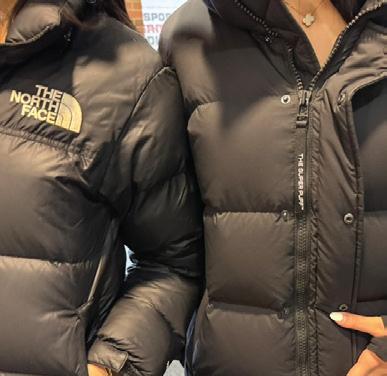
Have you ever found yourself conflicted about which coat will be the most suitable for the upcoming winter? Picking out a coat is a tedious and time-consuming process — especially for those who are new to the cold. The adjustment to this weather is intimidating and not one I tend to look forward to, but something I do enjoy is seeing all the different colors and styles of puffer jackets.
The one thing I can’t ignore during this time is the plethora of The North Face and Aritzia Super Puff logos. When the sun goes down and snow starts to fall, these two brands written in white fabric pop up everywhere. I’ve found myself wondering about the differences between these two brand names and why people end up choosing one over the other.
They both come in multiple colors, are stuffed with goose feathers and are every teenager’s go-to coat. What makes them so special? I’ve decided the only way to settle this debate — and the screeching question I keep asking myself — is to ask two people experiencing the cold for the first time how they feel about their coats.
The Super Puff
Ava Parekh ’29, grew up in Hong Kong and then lived in California, never having the need for a good winter coat until coming to Ithaca this fall. Parekh explained that her dad is a big researcher and made sure to do his research on which jacket would be the warmest before sending his daughter off to school. He went down the rabbit hole of Reddit, trying to find a coat that would be the most beneficial for his daughter during the winter months. After hours of research, he concluded that the Artizia Super Puff is the best option.
Parekh’s decision was never between the North Face or Super Puff, but rather between the Super Puff and the Canada Goose. She said that, “apparently the Super Puff is better than a Canada Goose,” due to its warmth and quality. She added that, “Canada Goose is not using real animal fur anymore,” and has declining ratings. So, after a trip to Woodbury Commons — the “ultimate luxury outlet” — Parekh found a black Aritzia puffer that fit her perfectly and came at a discounted price (truly no better feeling than that!).
After a few weeks of wearing the jacket, Parekh evaluated it by giving it a solid 9/10 rating. She appreciates the design — simple and all black with a comfortable and protected hood — and enjoys the tight fit on the inside of the coat, keep -
ing her snug during the cold and windy months. She removes one point because she feels as though the Super Puff is good for early November and December, but will not do the job as winter proceeds. Although Parekh enjoys the coat, she cannot compare it to anything because it is her first purchase.
The North Face
Like Parekh, Khady Fall ’29 has never lived in cold climates. “My parents avoid the cold,” Fall stated. Having grown up in the Middle East — in multiple countries — and finishing off high school in the Ivory Coast, Fall is just as new to the cold as Parekh is. Fall has avoided the cold her entire life — even when on vacation. While the goal to avoid the cold is definitely impressive, Fall has to now adapt to the weather in Ithaca, and is faced with the same challenge of finding a good winter coat on her own.
Fall’s adjustment to the cold was not easy due to the new way of dressing. “The idea of having to layer and find coats was really overwhelming,” Fall explained, while making her case for why she chose a North Face jacket.
Through friend recommendations, Fall gathered a wide range of coat options such as the North Face puffer, the Aritzia Super Puff and the Canada Goose. Still conflicted, Fall decided to consult her go-to source, TikTok, to see what people are wearing. She eventually reached the conclusion that the North Face seems like the most “quintessential” option. Fall speaks highly of her North Face, saying she enjoyed getting to pick a color from the large variety. She acknowledges that the jacket is warm but can also feel small, making it difficult to wear thick clothing underneath it. She wants to explore other brands, including Aritzia’s Super Puff, and is considering getting a longer jacket for better neck and leg coverage.
The only conclusion I have reached with these two coats is that they are similar in every way — even in their ratings. At the end of the day, picking a coat can be stressful and clearly time consuming, but worth it. Both options are good for early winters in Ithaca, and the choice comes down to what people have seen or heard more of depending on their sources. So, if you are conflicted about which coat to wear, go with the style you prefer, because there really is no objective significant difference between them.

By ASHLEY LEE and ZEINAB FARAJ Sun Senior Writer and Sun Features Editor
Feb. 18 — Ramadan, the holiest month of the Islamic calendar, begins at sundown on Wednesday, Feb. 18 and is expected to continue until March 19. Muslims observe the holy period through community, prayers, reflections and fasting — the act of abstaining from eating or drinking from sunrise to sunset.
For Cornellians observing Ramadan, Muslim student organizations and the Diwan Center for Muslim Life have prepared resources for those celebrating on campus. From daily Taraweeh prayers — voluntary, nightly prayers performed by Muslims during Ramadan — to suhoor meal boxes — the essential pre-dawn meal consumed by Muslims before starting their daily fast — held for Ramadan, a variety of resources are made available for students during Ramadan on campus.
The Sun detailed some of the resources available to Muslims this Ramadan around campus.
The Diwan Center
The Diwan Center for Muslim Life is a nonprofit organization funded by alumni, founded to support Muslim life on campus. Located on the third floor of Anabel Taylor Hall, the Diwan Center encompasses the Diwan lounge, prayer rooms and the Chaplain’s office.
The center will provide iftar, the post fast meal, Monday through Fridays during Ramadan as well as Saturday and Sunday during the final 10 days of the Islamic month, aligning the meal schedule with the breaking of a fast, for anyone to come and eat a halal meal.
According to the Chaplain, spiritual programs are also available on Monday, Wednesday and Thursday evenings right after iftar is served. The Chaplain also explained the events are meant to serve as a “discussion on matters of spirituality and deeper connection with God and faith” and that the best way to stay in touch with the programming is through the Diwan Center’s Instagram.
These resources and community had not always been present on campus. According to Minaj Fahad ’26, a student fellow at the Diwan Center for Muslim Life, there was no Muslim Chaplain on campus his freshman year, creating a lack of leadership in the Muslim community.
“There is very little help that Cornell themselves give, so the chaplaincy is entirely dependent on alumni donations,” said Fahad . “Having a religious leader is really important, especially if you’re away from home because he’s our spiritual leader and he’s there to guide us.”
For Fahad, planning Ramadan and iftar logistics for the Muslim community began six months ago. Fahad and Muslim student organizations have planned 24 iftars for approximately 250 people, which involved contacting local halal restaurants like Komonz Grill and obtaining funding from Muslim identity clubs.
Fahad also helped create a documentary on behalf of the Diwan center, which details the growth of the Muslim community on campus. Interviewing 20 students on campus, including Ph.D., graduate and undergraduate students, Fahad captured the opinions of Muslim students — in part for alumni to see how their donations have been used.
Halal Food and Suhoor Boxes
According to Fahad, one of the logistics he was faced with when planning for Ramadan was the “lack” of halal food, or food prepared according to Islamic meth-
ods, on campus and around Ithaca.
“There’s a few places you can get halal food [on campus] …but it’s difficult to do that when it’s prelim season, for example,” Fahad told The Sun. “The great thing about iftar is that it’s free for everyone, and that it’s open to even grad students and Ph.D. students who don’t have a meal plan and are not able to access some dining halls.”
Currently, Morrison Dining, Keeton House Dining Room and Okenshields are the only dining halls on campus — out of ten total halls — that offer halal food in exchange for meal swipes.
Cornell Dining is also providing resources for Muslim students, including “pre-fast” meal boxes for students to have for suhoor, the essential pre-dawn meal consumed by Muslims before starting their daily fast.
“‘Pre-fast’ meal boxes are available for pickup the night before for those who would like to eat before sunrise, before their daily fast begins,” the Cornell Dining website states. “Pre-fast meals are available at Cook House Dining Room, Okenshields (on weekdays), and Morrison Dining.”
Community and Taraweeh Prayers
According to Chaplain Numan Dugmeoglu, the Muslim Chaplain at Cornell, creating an environment during Ramadan where Muslim students can break fast not only helps foster a sense of community in Ithaca, but also opens spaces up for discussions on spirituality.
“The idea is that [Ramadan] becomes a time of community for us to share that meal together, so people can come and have dinner with us, free of charge,” the Chaplain told The Sun.
During the month of Ramadan, the Diwan Center will also offer the taraweeh prayer, special voluntary night prayers performed by Muslims during Ramadan. Additionally, according to the Chaplain, the last 10 nights of Ramadan will be the most spiritually significant for Muslim students on campus. The last 10 ten nights is when Laylatul Qadr, also known as the night of power, occurs. On this night, many students stay up until dawn to pray and perform acts of worship.
“You’ll find people in [Anabel Taylor Hall] overnight until sunrise,” the Chaplain said. “People break fast, hang out, do some homework, do some extra devotional practices, all the way until they have their next meal before they start their fast. Ramadan becomes a time of less sleep, less food, but more connection, more community.”
Similarly, Ayah El-Hardan ’27, president of the Muslim Educational and Cultural Association, has felt the sense of community from Ramadan and Muslim cultural organizations on campus growing throughout the years.
She explained that MECA’s events have been more “organized” and “larger scale” which has resulted in the group being able to “accommodate” more iftars and people.
“We’ve grown our community from like 20 people to more than 200 people,” El-Hardan said. “I met my community through MECA and it’s helped me feel less isolated on campus.”
According to El-Hardan, the Muslim community has visibly grown on campus, allowing them to move from the basement of Anabel Taylor Hall to the second floor auditorium.
To continue reading this article, please visit www.cornellsun.com.
By GISELLE REDMOND Sun Staff Writer
Feb. 18 — A ransomware attack on a third-party service provider is disrupting students’ ability to use City Bucks, an online currency for off-campus vendors, limiting food access for students living in South Campus.
This attack targeted BridgePay, the company that authorizes CityBucks transactions. The University assured students that they were working with BridgePay’s technical teams and considering this service interruption a “highest-priority matter,” according to an email sent to students by Cornell Dining on Feb. 10.
BridgePay cited the interruption was caused by a ransomware attack and said that they were investigating the issue with help from the FBI. They emphasized that no payment data had been compromised, and that they are continuing to make “meaningful progress” in restoring service, according to its website.
The University emailed an update on Friday, informing students that some locations, including Ithaca To Go and GreenStar, are now able to process City Bucks, but that the success of City Bucks transactions may vary based on the merchant.
Though the University first informed students of the technical difficulties through an email on Feb. 10, some students
had already begun experiencing issues with their City Bucks prior.
“I had to find out that my City Bucks were no longer working through getting denied at multiple businesses when I tried to use them,” said Cohen Fitzwater ’28, a resident at Cascadilla Hall on South Campus.
Like many other residents of South Campus, Fitzwater uses the Collegetown Meal Plan, which offers 10 meal swipes per week, $500 in Big Red Bucks per semester and $436 in City Bucks per semester.
For a student eating three meals a day, fewer than half of their meals are covered by meal swipes, making City Bucks essential for off-campus dining.
“With City Bucks being out of service, that means the majority of meals that we were eating off-campus we now have to pay for,” Fitzwater said. “It’s a really big burden to put on people.”
Other residents of Cascadilla, like Ashley Bass ’28, rely on City Bucks to buy their groceries.
Bass buys her groceries monthly from Tops at the Shops at Ithaca Mall but she said that the service disruption would delay her shopping trip until the weekend after she initially intended.
To continue reading this article, please visit www.cornellsun. com.
Giselle Redmond can be reached at gredmond@cornellsun.com
Continued from page 4
Ann S. Bowers ’59 made a nine-figure commitment in late 2020 to create Bowers College of Computing and Information Science. This donation has since been followed by a string of four more name-adopting donations in the past six years.
In 2021, the School of Hotel Administration received a $50 million donation from Peter Nolan ’80, M.B.A. ’82 and Stephanie Nolan ’84 which led to its renaming from the School of Hotel Administration to the Peter and Stephanie Nolan School of Hotel Administration. 2021 also saw a donation of an unknown amount from Jeb E. Brooks M.B.A.. ’70 and the Brooks Family Foundation, leading to the naming of the Brooks School of Public Policy, a little over a year after the school’s creation had first been announced.
In December, a new school for global development and the environment was announced and named the Ashley School of Global Development and the Environment after Stephen B. Ashley ’62 M.B.A. ’64 endowed $55 million to the College of Agriculture and Life Sciences. This contribution aligns with the growing trend of large donations being reflected in the names of colleges and schools within the University.
The Ashley school donation came
amid the $371.5 million donation to the David A. Duffield College of Engineering.
Impact of Donations and Naming Changing Process
The decision process behind naming schools is “highly individualized” and “emerge[s] gradually through collaborative discussions,” a University spokesperson wrote to The Sun. Every large donation renaming is passed through the Board of Trustees and “grounded in the long-term benefit” for students and academic programs, according to the University spokesperson.
The recent donation from Duffield was announced just three months after the University came to a settlement with the Trump administration on Nov. 7. In this settlement, the University agreed to pay $30 million to the federal government, alongside an additional $30 million contribution to agricultural research.
A University spokesperson also noted the importance of donations during periods of “financial uncertainty.”
To continue reading this article, please visit www.cornellsun.com.
Amelia Garcia and Zeinab Faraj agarcia@cornellsun.com and zfaraj@cornellsun.com.
Clorox competitor
Auditioner's goal
Two tablets, for one
Suffix with exist or depend

Wednesday, February 18th 2026 — or six weeks backwards from Easter
Org. with a lot of baggage?
California sluggers, on scoreboards 55 June birthstone
Monday, February 16th — or the third Monday in February
Nincompoop
Solitary
Clutter


By JANE McNALLY Sun Hockey Editor
Feb. 9 — It was a Tuesday evening at Lynah Rink, quiet with the exception of the Zamboni’s steady lull. The last practice of the day had concluded. Women’s hockey’s 2025-2026 senior class filed into the Harkness Room — their main study area at the rink — one after the other.
Less than 72 hours stood between the six seniors and their senior night, where they’d be honored postgame for their accomplishments and contributions to the program. After a long day of classes and skating, some were still exhausted, having stayed on the ice as long as they could. After all, practices are now numbered. A compilation of goals and moments from their four years awaited them as they sat down around the long, grey table.
Senior forward Georgia Schiff was first. She watched from the head of the table while her teammates — and best friends — oohed and ahhed around her.
“This is from the [2023] ECAC quarterfinals,” said Eli Fastiff, women’s hockey beat reporter for The Sun.
The players all laughed, Schiff especially so. The video began to play.
“Oh my god!” said senior forward Avi Adam, as pixelated versions of their freshman-year selves began skating. Adam saw herself on screen.
“Avi, are you on the ice?” Schiff asked Adam, sitting to her right.
“Yeah, we’re on together!” Adam replied. “This is our, like, second shift of the game.”
On the screen, Claudia Yu ’25 fired the puck from a sharp angle on net. Another shot yielded a juicy rebound off the Clarkson goaltender’s pads, which popped right to Schiff’s stick. She stuffed it in. When the puck finally slipped through and Schiff celebrated on the ice, her teammates joined her.
Then, on the screen, someone started
to hop.
“Who’s hopping?” I asked the group.
“Me,” admitted “Reggie,” senior defender Alyssa Regalado.
“Reggie hops at every goal,” quipped senior defender Sarah MacEachern, sitting just beside Regalado. Everyone laughed.
The players then broke into a conversation about goal celebrations — or, in hockey-speak, “cellies.”
Who cellies the hardest? Who’s the most nonchalant? Each girl had an answer for another, every argument as well-backed as the thesis statements they write for class.
When you sit down with Cornell women’s hockey’s senior class, it may seem like they’ve known each other for more than four years.
Well, that’s because they have.
Senior forward Mckenna Van Gelder was the first of the group to commit to Cornell. Then Regalado joined, before Adam made it a trifecta, and MacEachern followed suit soon thereafter.
Little did they know that they would be teammates even before they arrived in Ithaca.
Adam, Van Gelder, Regalado and MacEachern each hail from different places in Canada.
Adam’s hometown of Wolfville, Nova Scotia, is not far from MacEachern’s Canoe Cove, Prince Edward Island. Living on Canada’s east coast, the two had almost no choice but to relocate to further their hockey careers — for Canadians looking to play at the highest level, provinces like Ontario are hotbeds for recruiting and provide higher levels of hockey.
Regalado and Van Gelder hail not far from Toronto, and both played youth hockey on the same ice. Their province of Ontario ultimately served as the stomping grounds in which they, along with Adam and MacEachern, met before their Cornell
days.
The group donned the royal blue jersey belonging to the Etobicoke Dolphins, a Canadian junior team in the Ontario Women’s Hockey Association (then called the Provincial Women’s Hockey League). The four were teammates for two seasons — in grades 11 and 12 — before heading to Cornell.
But Adam, Van Gelder, Regalado and MacEachern weren’t the only players whose friendships predated their time on Cornell’s team.
Before Adam suited up for the Dolphins, she spent two years in Rochester, New York, playing for the BK Selects at Bishop Kearney High School. Her first taste of hockey living on American soil, the Selects squared off against a team a few hundred miles south — the Philadelphia Jr. Flyers.
On that team? Future Cornell teammate, senior defender Grace Dwyer.
Dwyer and Adam dueled before Adam made the move to Ontario. Hailing from Wynnewood, Pennsylvania, Dwyer spent her childhood traversing up and down the coast to play hockey, as any kid from the
Northeast typically does.
Part of those travels meant shipping up to New England. Around the same time Dwyer and Adam faced off against one another, trips to Vermont meant Dwyer was — unknowingly — clashing with another future teammate: Schiff, whose youth hockey career saw her bounce around from her home state of Vermont to Massachusetts to Pennsylvania and several others.
And when Schiff, a Montpelier, Vermont native, was merely a middle schooler, she played on a development team with the North American Hockey Academy — the club she’d ultimately finish her youth hockey career with later on in high school — for the purpose of showcasing her talents to the top Division I schools.
She didn’t know it at the time, but Schiff was introduced to her future freshman year roommate, Adam.
To continue reading, please visit www. cornellsun.com.
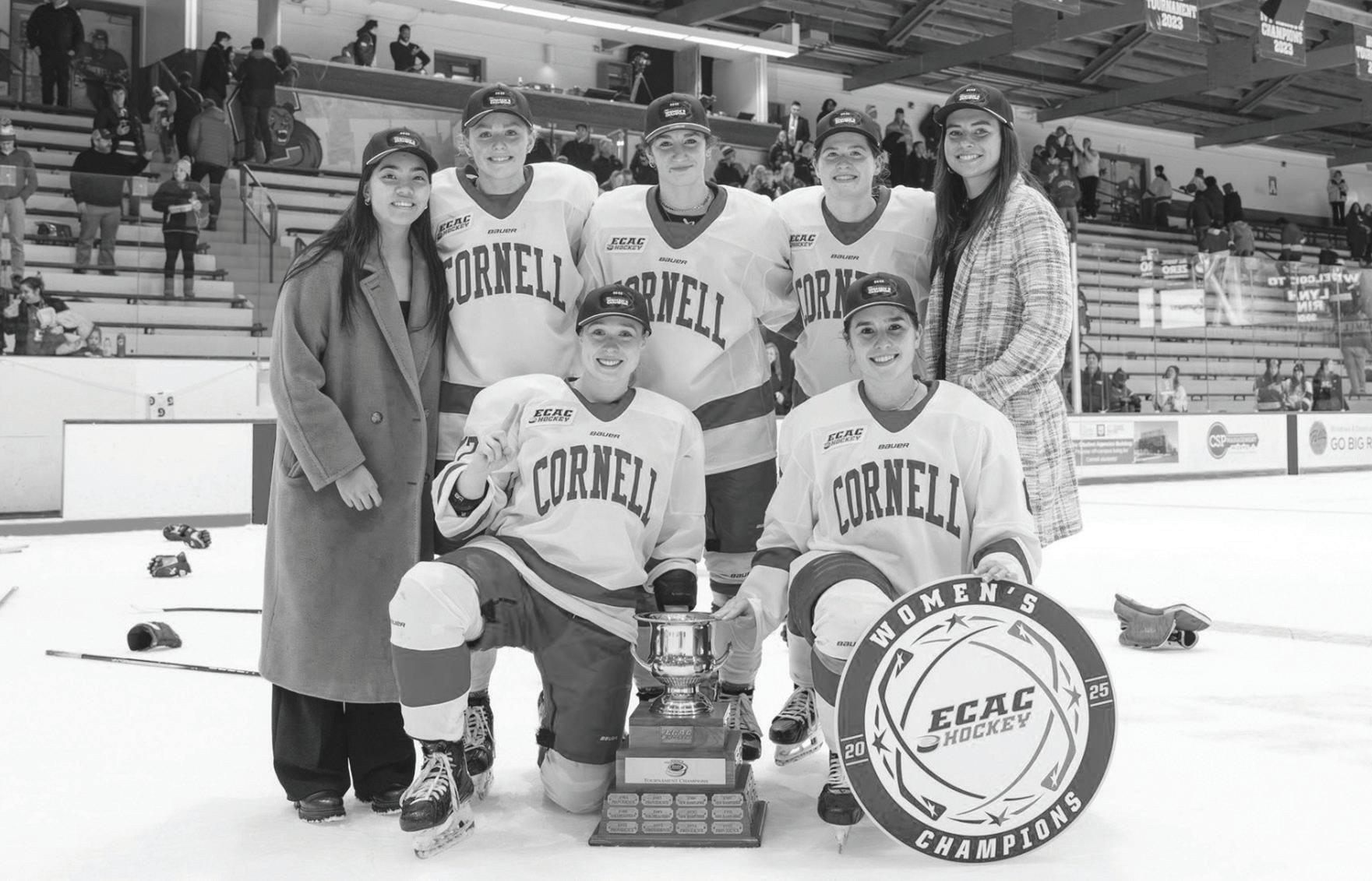
By ELIZABETH CHOW Sun Contributor
Feb. 12 — Did Cornellians invent chicken nuggets? Did The Sun previously publish details about upcoming parties? Did Ezra Cornell have nine children? AMST 2001:
“The First American University,” ranked No. 7 on The Sun’s “161 Things Every Cornellians Should Do,” answers all these questions.
Students and guests fill Uris Hall’s auditorium seats and pack its aisles to watch American studies lecturer and de facto Cornell historian Corey Earle ’07 teach Cornell’s history on Monday evenings. The high-demand class has an enrollment capacity of 441 students.
“The more we understand our history, the better we understand our present, and the better we can prepare for our future.”
Prof. Corey Earle ’07
According to Earle, the course centers around Cornell’s history, which is a valuable tool to assess current institutional challenges. Its lesson plans delve into faculty, the student body, the evolution of campus and important events and eras in Cornell history, according to its syllabus.
“The more we understand our
history, the better we understand our present, and the better we can prepare for our future,” Earle said.
“A history
class
could very easily become boring, but [Earle] continues to engage myself and fellow students.”
Skylar Cooper ’26
One student, Skylar Cooper ’26, said that the course has a nickname: “Storytime with Corey.” Earle’s conversational, casual teaching style often invites laughter during his lectures.
“I wish every professor taught like [Earle],” Cooper wrote in a statement to The Sun. “A history class could very easily become boring, but [Earle] continues to engage myself and fellow students.”
As an undergraduate student, Earle wrote for The Sun, which partly inspired him to teach the AMST 2001 course, he said. When he wrote a column for the paper, Earle said he was able to generate a sense of community by sharing fun facts and trivia questions to inform his classmates about Cornell’s historical events.
“There’s a real opportunity to help students learn more about [historical events],” Earle said. “It helps people appreciate their Cornell experience more when they know about it.”
In 2014, AMST 2001 was canceled for the 2014-2015 academic year,
which prompted students to create a petition calling for the University to bring it back. Subsequently, the class was offered as in the Spring 2015 semester.
The class takes its name from educational historian Frederick Rudolph’s description of Cornell as the “first American university.” Rudolph emphasized Cornell’s diversity of programs and students. Earle highlighted that the “first American university” also echoes Cornell’s motto, “Any person, any study,” which he said captures the versatility of Cornell’s curriculum.
The course also teaches students about Cornell’s differences from other higher education institutions.
Cornell was one of the first coeducational institutions that had no religious affiliation, Earle explained during a lecture. After being removed from the Society of Friends, or the Quakers, Cornell’s co-founder, Ezra Cornell, believed that any student regardless of their religious beliefs should be able to study at a university.
“Students can see themselves in Cornell’s history, and I think it helps them feel more of a sense of place and community and belonging.”
Prof. Corey Earle ’07
Earle also added that while higher education in 1865 was mostly only
offered to wealthy, white, Protestant men, Cornell served as a pioneer for diverse student education.
“Students can see themselves in Cornell’s history, and I think it helps them feel more of a sense of place and community and belonging,” Earle said.
“After just two lectures, I can already tell it is one of my favorite courses I have taken here in my four years at Cornell.”
Maddie Ferreira ’26
Maddie Ferreira ’26, a student in AMST 2001, agreed with Earle’s sentiment, and wrote that after just a couple classes, she “already has a greater appreciation for this university.”
Maddie’s father, Jim Ferreira ’84, was a teaching assistant for Earle’s father, who graduated from Cornell in 1967. This personal connection inspired her to take AMST 2001.
“From the very first lecture it was so obvious that [Earle] loves what he does,” Maddie wrote in a statement to The Sun. “After just two lectures, I can already tell it is one of my favorite courses I have taken here in my four years at Cornell.”
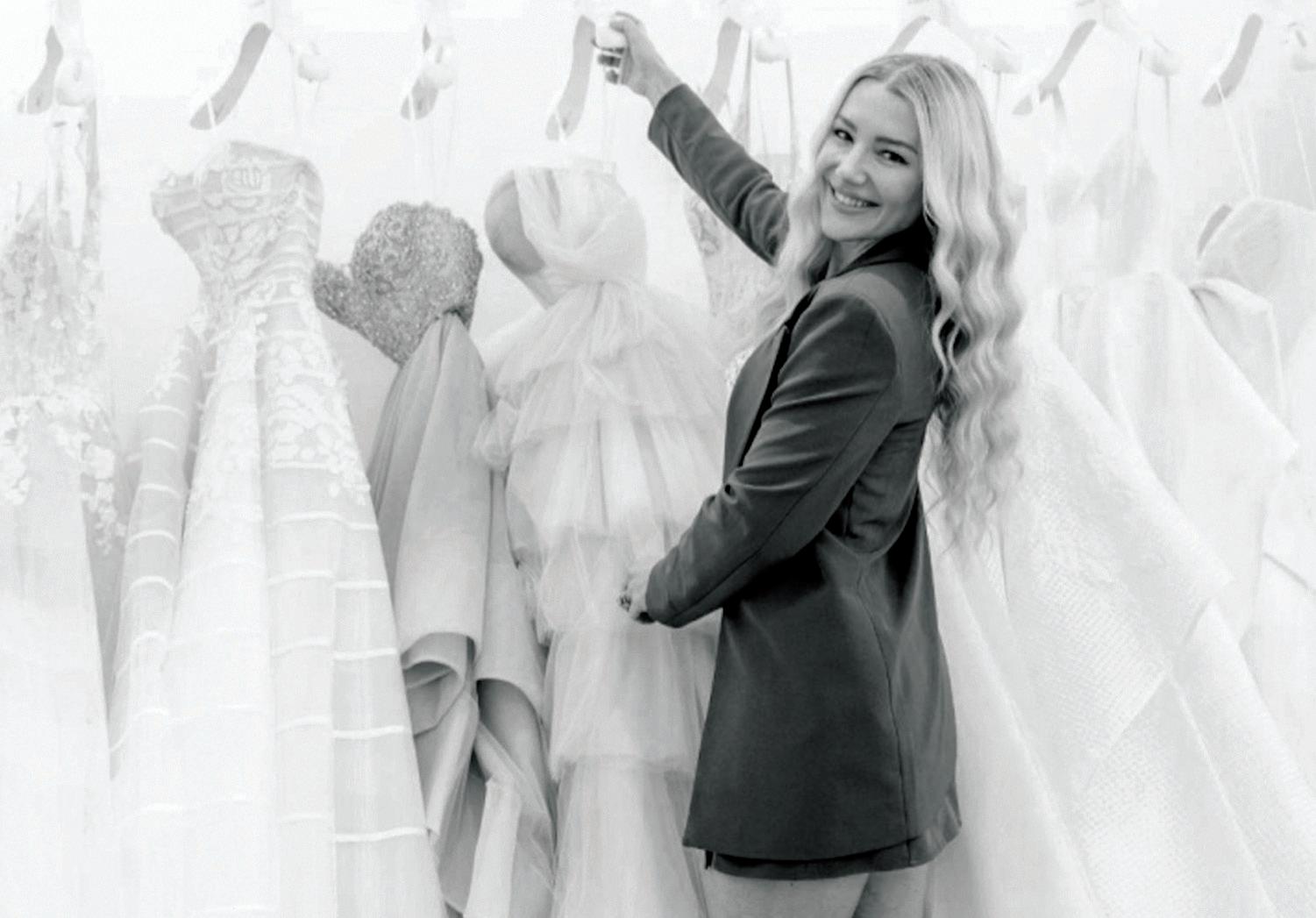

By ANJELINA GONZALEZ Sun Senior Writer
Feb. 13 — A Cornellian-designed wedding dress took center stage during Bad Bunny’s Super Bowl Halftime Show on Sunday.
“I originally thought [my design] was going to be [a part of] something performative, probably a rehearsed act of some sort,” Hayley Paige Gutman ’07 told The Sun. “But then I was told it was actually for a real bride, and that they would be getting married on the spot — on the stage at the Super Bowl — which made it so much more meaningful and exciting.”
A few weeks before the Super Bowl, the wedding dress designer’s sister, who works as a producer, connected her with a stylist who wanted to borrow some of her dresses for a “super secret project,” Gutman said.
After sending over dresses in various sizes, Gutman said she was “thrilled to hear” that the bride personally handpicked the “Becoming Jane” dress.
Gutman said she did not know how much airtime the wedding would have during the halftime show, nor what the arrangement would look like.
“It was pretty exciting to see [the wedding] kind of play out with so much joy and authenticity and people just celebrating in the love of this couple,” Gutman said. “I thought she looked really fabulous, really ethereal, and the moment just was tremendous to be a part of as a bridal brand.”
After the wedding aired on Sunday, Gutman posted a video to her now 1 million Instagram followers, capturing her live reaction to seeing the dress she designed spotlighted in a vibrant halftime show.
“A football game may have been on, but love was still the main event,” Gutman wrote in the post’s caption. “Forever grateful to be that girl who gets to cheer when another woman finds her person.… esp in a really great dress.”
At a young age, Gutman’s grandmother gifted her a Singer sewing machine. Since then, Gutman said she quickly became known as “the kid that was always making her own clothes.”
She described her time at Cornell as “intense,” as she juggled a double major in fiber science and apparel design and trained for two years on the women’s gymnastics team. As a self-prescribed “worker bee,” though, Gutman said she enjoyed the heavy workload.
“[My time at Cornell] allowed me to learn a lot more about the fabrications, … so there was that mathematical scientist side of it,” Gutman said. “I always appreciated the wedding dress industry because of its love and romance and getting to dress for that big moment, and so that all came together [in my degree].”
During her senior year, Gutman said she was discovered by a fashion designer who sat in the front row during Gutman’s senior showcase, which landed her a job working in the design sample room of Jill Stuart. After six months, Gutman transitioned to bridal design under Melissa Sweet.
In 2011, Gutman launched a namesake collection in which she said she designed wedding dresses for thousands of brides.
Gutman reached a career milestone in 2016 when she saw her work featured on “Say Yes to the Dress,” a TLC reality show following prospective brides’ wedding dress selection.
But it was not all smooth sailing from there. In December 2020, Gutman ended up involved in a federal lawsuit after a contract dispute with her former employer over intellectual property rights.
“I spent five years fighting in litigation to get my name back, and my right to design wedding dresses,” Gutman said.
Under a seven-year paid non-compete agreement, Gutman could not work with competitors or open a competing bridal business. During this period, she pivoted to launching a shoe and accessory line called “She is Cheval.”
After her previous employer filed for bankruptcy, Gutman got her intellectual property rights back in May 2024, relaunching the Hayley Paige collection in July 2025.
Now with her own bridal line, Gutman said she plans to “enjoy the present moment.” She hopes that her brand continues to reach more brides and grows organically, whether through wedding dress designs or accessories.
Gutman said she encourages Cornellians and aspiring designers to learn from her journey.
“The setbacks and the moments where you just feel a bit like you’re failing, ... those build fortitude,” Gutman said.
Through it all, Gutman said she has stayed true to her love of design despite highs and lows in her career.
“Direction is a lot more important than speed,” Gutman said while referencing achieving one’s goals. “Just hold on to your whimsy through all of the wicked moments of life.”
Gonzalez can be reached at agonzalez@cornellsun.com
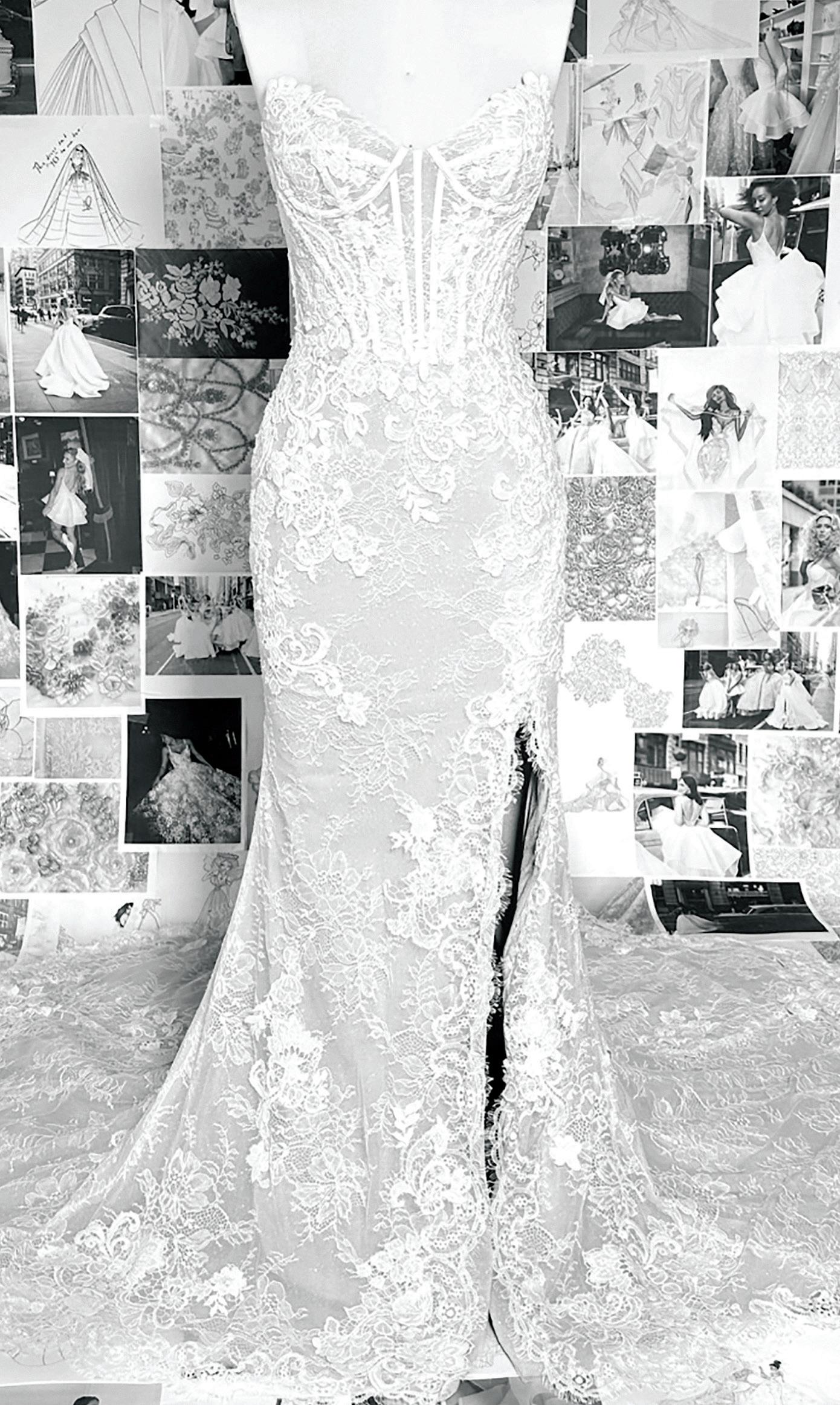
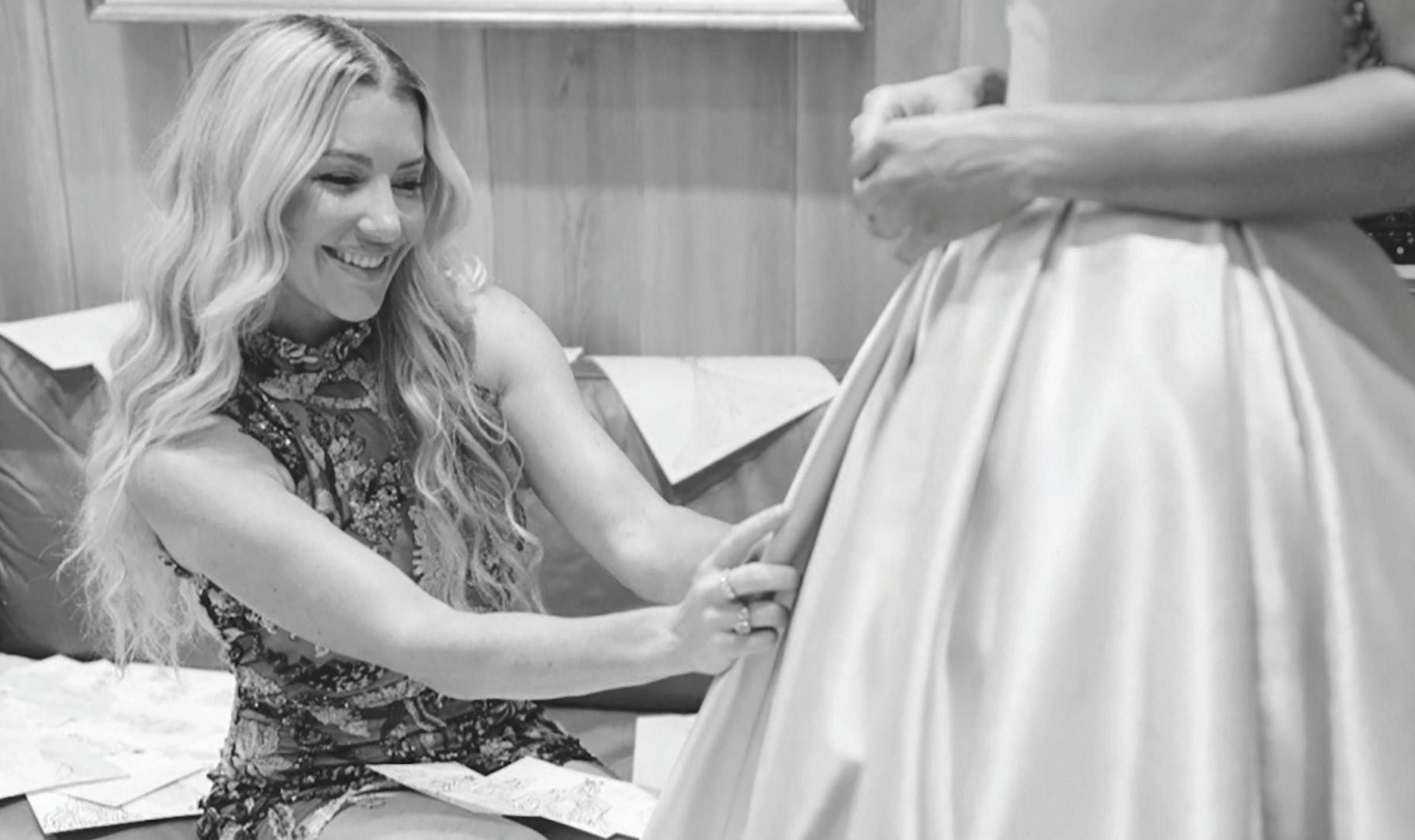
Though this year has spawned a large volume of troubling and tragic headlines, an intense level of attention on social media has been paid to a recent story of seemingly little significance. In early February, looksmaxxing influencer Clavicular visited Arizona State University and found himself “frame mogged” (physically overshadowed) by a student he encountered. Within hours, users flooded social media with content satirically exaggerating the incident’s importance. But what exactly is looksmaxxing, who is Clavicular and why should we care?
For starters, looksmaxxing refers to a process by which people attempt to achieve the greatest possible level of physical beauty. Looksmaxxing communities online propagate supposed methods to increase one’s beauty and theories regarding what traits make a person the most desirable. Methods associated with the trend range from healthy practices like increasing one’s fitness level to dangerous practices like bone smashing and drug/steroid use. Looksmaxxing theories include that of the PSL (an acronym for the incel forums PUAHate, SlutHate and Lookism) Scale, which divides people into categories like ‘Chad,’ ‘High/Mid/Low Tier Normie’ and ‘Subhuman.’
Clavicular (Braden Peters) is just one of many social media influencers who promote these ideas to niche audiences online. At only 20 years old, Clavicular represents just how young the looksmaxxing community truly is. He also embodies many of the toxic behavior and ideas associated with looksmaxxing: Clavicular has used steroids, promoted bone smashing and peptide injections and has appeared alongside problematic Manosphere/alt-right creators.
Before I continue, I should note that a small number of people (predominantly boys and young men) engage with looksmaxxing wholeheartedly. Most people use looksmaxxing terminology and speak of the Clavicular incident in jest, mocking the asinine philosophy of the community. However, it is worthwhile to thoughtfully engage with looksmaxxing’s negative effects as well as how it reflects broader harmful social conceptions.
Looksmaxxing can be particularly detrimental to young people, who may be more likely to perform troublesome looksmaxxing behavior during the intense
periods of insecurity associated with adolescence. Additionally, devoting such intense time to ‘ideal’ body types on social media can further cloud our collective concepts of what it means to be beautiful. Looksmaxxing creators often spend significant amounts of time discussing people’s level of attractiveness, which only further contributes to the dehumanizing nature of social media. By focusing on aspects of physical appearance that people have no control over, such creators contribute to a culture that encourages shame and behavior like plastic surgery in lieu of self-acceptance.
On a broader societal scale, I think that looksmaxxing reflects a more extreme version of a harmful underlying philosophy that we, at large, buy into. In The Art of Loving, social psychologist Eric Fromm theorized that, because we generally treat love as a passive attitude rather than an active art form, we engage in something he calls the “personality market.” In this market, we treat each other not as people but as commodities with abstract value. As a result, we spend our time trying to make ourselves more desirable and lovable rather than working on being better lovers. We try to improve our social standing, alter our behaviors and improve our physical appearances all for the purpose of hopefully attaining a partner with the highest “value” possible.
I see reflections of Fromm’s ideas both in more obvious forms on social media and in conversations with my friends. A few weeks ago, I mentioned to a friend that I would be going on a first date with someone, and he immediately responded with one simple question: “Is she bad?” More recently, another friend remarked that she was sad to see so many women posting Valentine’s Day photos on Instagram with men she saw as far less attractive. While mutual physical attraction obviously plays an important role in many relationships, focusing on whether a person could date someone with higher perceived attractiveness reduces love to a game of selfish greed rather than true human connection.
I don’t mean to come across with a holier-than-thou approach either. Over the past few years, I’ve spent far more time focused on improving my physique and wardrobe than time focused on dealing with my personal baggage and shortcomings. I get it. It’s tempting to focus on external improvements since they are so much easier
to see success with than internal, emotional growth. Plus, starting to deal with personal issues is daunting: It often requires acknowledging the pain you may have caused yourself or others and directly pointing out your deepest weaknesses. I don’t mean to suggest that you shouldn’t focus on fitness and external appearance at all — focusing on exercise, personal hygiene and style can provide important benefits like improved physical health and self-confidence. However, it is crucial to remember that these focus on external appearance should be done in conjunction with true personal growth, rather than in place of it.
How exactly did we reach this topic of conversation simply from discussing a stupid meme? I’m not sure. Regardless, I hope that we can all work to break down the personality market described by Fromm 70 years ago. By working toward truly loving ourselves and each other, we can shift our focus away from the toxic culture associated with looksmaxxing and push back against the commodification of human identity.
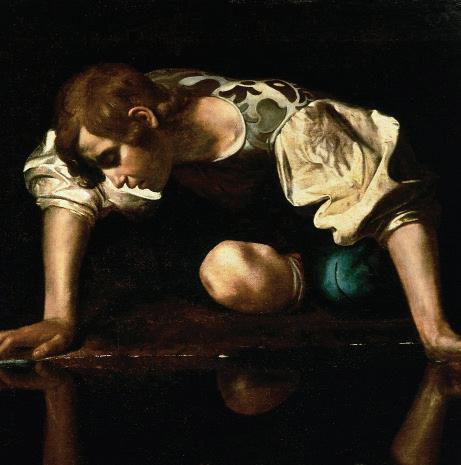
In a sea of cookie-cutter music biopics and concert films, Charli XCX’s The Moment is able to capture Brat summer in an incredibly refreshing way. The Moment is a mockumentary featuring a mix of real figures playing themselves (like Rachel Sennott, Kylie Jenner and Charli herself), as well as a cast of fictional characters. The film is a meta exploration of the battle between creative integrity and financial and social security that, while a little rough at the start, ended up feeling like a surprisingly thoughtful exploration of artistry and celebrity.
The Moment follows Charli as herself after the release of Brat , the wildly successful album that claimed an entire summer, bled into political campaigning and culminated in the coining of ‘brat’ as the Collins English Dictionary’s word of 2024. The success of Brat was massive in comparison to Charli’s earlier works, catapulting her into the mainstream. In The Moment , Charli attempts to grapple with the album’s reception. She is torn between a fear that once ‘Brat summer’ ends, so too will her time in the spotlight, and a desire to continue making art that feels authentic, rather than conforming to what’s expected of her.
This very real struggle is highlighted through a fictional character, Alexander Skarsgård’s Johannes Godwin. When Charli’s team brings in Amazon Music to produce a film of her upcoming concert, film director Godwin quickly takes creative control over Charli’s show. Godwin’s vision of a PG, family-friendly concert film is clearly at odds with Charli’s party girl branding, but a fear of slipping into obscurity convinces Charli that Godwin might be right.
The Moment is at its best when it’s exploring the complicated balance between commercial success
and full creative control, a struggle that Charli is clearly grappling with in real life. Charli is constantly asked to take on brand deals and film advertisements, opportunities which simultaneously limit her creative freedom and provide the means for her to create music and bring her work to a wider audience. It’s a fine line, and one that Charli has been criticized for not balancing well enough: Charli’s roots in the illegal rave scene have given her music and persona an authenticity that feels at odds with the sponsorships she’s taken on in recent years. There’s bravery in Charli’s ability to directly confront this in The Moment The fictional Charli we see on screen is not always sympathetic and exaggerates the flaws that fans have already pointed out in the real Charli’s character.
While the themes of The Moment are incredibly interesting, the film is held back by its slightly amateurish writing. While based on Charli XCX’s own idea, The Moment is directed by first-time filmmaker Aidan Zamiri. The first half of the film is a bit messy and doesn’t find its stylistic footing until the much stronger second act. The collaboration between Charli, Zamiri and co-writer Bertie Brandes, while imperfect, shows promise. While The Moment will inevitably receive much more attention than the average debut film because of its subject, I think that the direction is extremely strong, and I’m excited to see what comes next.
At the center of the film is, of course, Charli, who successfully holds The Moment together. While her character is slightly one-note in the first hour, it’s in the second half of the film that Charli is allowed to show a surprising amount of vulnerability as her conflict with Godwin comes to a head. The Moment is definitely a comedy, but even within the confines of a mockumentary, Charli is able to bring an emotional core that elevates the film to new heights. Charli has numerous acting
projects lined up, and between this and her brief role in last year’s 100 Nights of Hero , I’m excited to see how Charli will continue to grow as an actress and filmmaker.
While the beginning of The Moment had me nervous as to how deeply Charli was willing to delve into her own image, I was pleasantly surprised to find a genuinely vulnerable exploration of the state of artistry in 2026. If you’re growing tired of music biopics and the slew of documentaries and concert films coming to streaming this year, don’t shy away from The Moment . Zamiri’s directorial debut is a stylistically sharp, refreshingly unique delve into the world of celebrity.
By SOPHIA ROMANOV IMBER Arts & Culture Writer
Debates surrounding representation in media have pervaded pop culture conversations. Whether it is reactions to casting choices for live-action remakes or book adaptations, diversity in film or the perpetuation of stereotypes in art, we must discuss representation’s role in the media we consume. The Sun Round-Table series welcomes writers from subjective sections at The Sun to examine different perspectives on one topic; a chance for writers to stop typing and start talking. On Feb. 2, writers from Arts & Culture came together and discussed globalization, Heated Rivalry and the value of seeing yourself on screen.
Arina Zadvornaya, a graduate student in the Duffield College of Engineering, began the conversation with representation behind the camera. When the credits roll at the end of the movie, it’s easy to neglect the work of those beyond the director and screenwriter. Zadvornaya stated, “Representation behind the camera seems like such an elusive concept to me. … These roles need to be acknowledged in the first place … not just kind of background noise.” The Academy introduced the Achievement in Casting Oscar that will be awarded for the first time this March. This award recognizes the work of casting directors who often make or break a production. When we celebrate and recognize the power of behind-the-scenes representation, we make way for substantial on-screen representation.
Speaking of casting, recent choices for book adaptations were raised during the conversation. Percy Jackson and the Olympians, the Disney+ television series based on the series by Rick Riordan, caused internet outrage over the casting for Annabeth Chase. The character is white in the novel, but the actress in the TV show, Leah Jeffries, is Black. Riordan responded to the backlash by highlighting the underlying racism. The Bridgerton Netflix series, adapted from the novels by Julia Quinn, features white characters in the books, but the TV series has incorporated multiple races and ethnic identities. More recently, Emerald Fennell’s Wuthering Heights stars Jacob Elordi, a white actor from Australia, as Heathcliff, a character who is ‘othered’ in the novel, suggesting some race or ethnicity other than white. These casting changes from book to novel raise questions around the superficiality of representation.
By ARINA ZADVORNAYA Arts & Culture Writer
For a planet that has never before felt more connected, we seem to be becoming more unmoored by the hour.
Our phones open doors into the lives of friends and strangers alike. Power lines and satellites stitch continents together into a global cultural patchwork, offering scandals, news and funny animal videos at our fingertips. And yet, something about this endless access fatigues us. Tired of permeability and openness, we clam up inward, the music following close behind. Tones darken, lyrics stop detonating and begin to confess, wrapped in the gentle strokes of a singer-songwriter’s guitar or hazy bedroom-pop textures.
This transformation is perhaps most notable — and most surprising — when it pertains to metal. It is strange to imagine the genre that has long run on anger and teenage rebellion powered by anything else, or represented by anyone other than the noble lineage of ever-explosive, unpredictably charismatic frontmen. The early 2000s and 2010s offered no shortage of personalities in the arena, from Rammstein’s Till Lindemann to Bring Me The Horizon’s Oli Sykes, all embodying the same idea of a musician: a mobile pyrotechnics show, a natural disaster contained in a human body. These frontmen represented the arche-
Melissa Moon ’28 asked, “If a character is written as white originally and they’re cast as a person of color, how does that change their portrayal in the show? Can they be superimposed onto the original character without any accommodation for that cultural difference?” The room answered by identifying the “spectrum of tokenism to invisible heritage,” as Moon calls it. Forms of representation in media fall across this spectrum, rather than being distinctly ‘bad’ or ‘good.’ Zadvornaya asked, “Would it still be a valuable representation [in Bridgerton] if they were not doing such a great job differentiating between Korean and Chinese cultures? Is it better than just casting a white lead?” Bridgerton Season 4 features the female lead character, Sophie Baek, who is Korean. Zadvornaya clarified that if the production is not doing a good job of showcasing the nuances of certain cultures, it’s possibly better to go the “safe route” of just casting someone white. Moon responded that this falls on the aforementioned spectrum. She said, “If we’re talking about racial representation, there is merit to seeing people of different races on screen. Their identity does not have to be its whole plotline. I think them just being on screen is important, but at the same time, it’s the 21st century, and we have an obligation to be doing more.”
What does it mean for representation in media that we’re in the 21st century? Following the internet’s increased access to information, proper representation in media is expected. Representation takes many forms: racial, gender, neurodivergent, relationships (romantic and platonic). While online outrage may focus on race-conscious casting, many communities appreciate and value well-done representation in art. With such diversity in our communities, how can we present homogeneity in our art? Moon, who is KoreanAmerican, said, “I would only see white women on my screens [as a kid] and that informed my beauty standard and aspirations in life. … There is a very deep merit in being able to see yourself represented on screen. … I think that’s really important for informing your self-perception.” Zadvornaya called representation a “resource.” Seeing yourself on screen or on page is essential for adolescents considering their future possibilities. For example, following Heated Rivalry’s popularity as a gay romance hockey show, hockey player Jesse Kortuem came out as gay and attributed his choice to
typal unsatisfied youth reaching for more. Crying for visibility and, in many cases, political change, they were heralds and messiahs at once, offering something not typically provided by the polite everyday world — a safe space to, in the words of Tears for Fears, shout, shout, let it all out.
But as the calendar tipped into the 2020s, the restlessness soured. The children of yesterday, no longer proudly parading around in anarchy-themed shirts, grew into disillusioned adults — less eager for revolution, more afraid of losing what they already have. Inwardfacing anxiety replaced righteous rage, and slowly, heavier music genres traded the all-encompassing question of ‘Is there something wrong with the world?’ for a quieter, more naked possibility: Is there something wrong with me?
This shift marked a transformation in nearly everything, from lyrics to aesthetics. Personal narratives were slowly but surely replaced with theatrical personas and concept albums narrating imaginary empires rather than the real ones. The new wave of alternative metal bands, admittedly, barely behaves like typical bands at all. Sleep Token refuse interviews entirely and, if not for internet sleuthing, might have remained anonymous indefinitely. Bad Omens’ Noah Sebastian delivers none of the expected metal-vocalist theatrics: Half-lit by projection,
the show’s success. Representation is both reactive to environments and constructive for future generations. Tommy Welch ’26 brought in a negative form of representation. In the 1915 movie The Cheat, Japanese actor Sessue Hayakawa brands a white woman with a Japanese sign to indicate his ownership. This followed anti-Japanese sentiment in the U.S. after increased immigration from Japan to California. The California Alien Land Laws barred Japanese families from owning land. The Cheat supported these sentiments and depicted Japanese men as ‘cheats’ who would steal white women. This facilitates harmful stereotypes that may incite violence outside of the theater and affect cultural attitudes that inform policymaking. When the media supports racist and prejudiced thinking, it’s easier to normalize systemic oppression on the basis of race or ethnicity.
While there is no clear answer on how to go about proper representation in media, our writers covered why it’s valuable and important to discuss. The internet can debate whether or not Bridgerton is successful in integrating multiple cultures or if Rachel Reid properly wrote a Japanese-Canadian character in Heated Rivalry, but what’s significant is that we represent our social reality of living in diverse communities. As Welch describes, bad forms of representation can support racist policies and harmful stereotypes. The value of seeing yourself on screen, as Moon said, is undeniable. If it can happen in the book you’re reading or the show you’re watching, then maybe it can happen in your life too. That’s the point of impactful representation in media: Art can welcome all.

he sings while strolling back and forth with one hand in his pocket, as if caught somewhere between a warm-up and the formation of a private thought.
And that restraint resonated. The new wave of performers arrived at a cultural hinge moment: Older alternative metalheads grew weary of feeling out loud, while younger faithful, somewhere along their journey through the internet, became quietly convinced that feeling out loud was cringe. In this economy of emotion, a new type of artist — one who feels deeply without fully knowing how to show it — can not only exist, but thrive. Opaqueness becomes both currency and performance strategy. Even stage design reinforces the same idea. Where a vocalist was once held in a beam of light, like the centerpiece of a rich dinner table, they now often move in half-shadows, visually indistinguishable from the rest of the band. The choice reflects a broader duality of modern life: The more visibility we are granted, the less we want to reveal; the more fame expands, the less singular one feels, surrounded by pervasive stardom. But is collective anxiety productive? Where the frontman’s job was once to sublimate the crowd’s energy and detonate, it is now almost the opposite — to sit on stage and imply, without saying it outright, ‘I’m just like you.’ No longer a messiah or a herald, the musician becomes
a companion in life’s hardships rather than a guiding light or a braver alter ego. While this may cultivate a healthier relationship with fame than the early-2000s celebrity machine allowed, it offers little in the way of escape. The burden of transformation, once carried by the frontman, is now returned back to the audience, thus creating a cozy — yet ultimately not comforting — echo chamber of feeling. It may, however, also be true that the needs of a listener have simply shifted. While a performer can no longer provide salvation, they are not expected to offer it in the first place. When the public cannot trust politicians or even itself, why would it trust an artist? And yet, something is undeniably lost in the exchange. When artists stop pretending to be larger than life, the fantasy of transcendence, chased by humanity from its very inception, disappears with them. Recognition replaces transformation; companionship replaces confrontation. The modern alternative metal frontman does not promise to change the world or even himself. He promises only that he, too, is uncertain. It is a humbler offering, and, while in many ways it might be a truer one, it still leaves the audience to decide what to do with their own unrest.
Arina Zadvornaya is a graduate student in the College of Engineering. She can be reached at az499@cornell.edu.
Red beat the Great Danes, 11-10, to open its season.
By WILLIAM D. CAWLEY Sun Staff Writer
In 2025, Cornell played the University of Albany twice, handling them with ease each time. This season, a very different looking Cornell team, one that lost 16 seniors, needed a last minute goal to fend off the Great Danes.
No. 4 Cornell came out against Albany with juniors Ryan Goldstein and Willem Firth joined by senior Matt Perfetto on attack. Junior Ike Lohnes won the battle for the final spot on defense, playing alongside seniors Matt Dooley and Brendan Staub. Junior Matt Tully was between the pipes for Cornell.
With each team playing the first game of their season and poor weather conditions, the game started with a few turnovers before Albany finally opened the scoring. The Great Danes then quickly sprung out to a 4-3 lead, scoring on their first four shots of the game, with the teams alternating goals in the first quarter. Two of Cornell’s goals was the first of a career, with senior midfielder Bowie Horsman and junior midfielder Jaden Ciappara getting on the scoresheet.
Albany scored again to start the second quarter after Tully tried to clear the ball himself, avoiding a couple of checks but getting stripped of the ball on the third. Firth answered after beating an Albany short-stick defensive midfielder and getting the shot off before a slide could arrive.
With Albany in possession, Dooley did well to tie up Albany’s Jackson Palumb and take away the strong hand. However, Palumb fired a behind the back shot over his right shoulder that found the top corner of the net, to put Albany in a 6-4 lead.
Firth then won another one-on-one matchup by faking a pass before rocketing a low to high shot around his defender. Cornell earned a man-up opportunity on the next possession, but could not convert with sophomore midfielder Luke Robinson slapshotting a loose ball toward an open Albany net, but hitting
the crossbar.
Senior midfielder Brian Luzzi scored with 1:45 to go in the second quarter, and halftime came with the game tied at 6-6.
Cornell took its first lead of the game to open the second half, but was answered after Albany cashed in a man-up opportunity stemming from a seemingly clean hit from Dooley. Junior midfielder Ryan Waldman put the Red back on top 8-7 before the end of the third quarter.
A stepdown shot from Staub’s pole gave Cornell its first multi-goal lead of the game, but Palumb fired back for Albany for his fourth goal of the game.
Senior faceoff Jack Cascadden won the ensuing faceoff, his third straight, leading to a Goldstein wrap-around goal. But, once again, Albany fired back, scoring two straight goals to tie the game with two and a half minutes to go.
making the save and rocketing the ball down the field to secure the win.
The Cornell offense was not particularly impressive in the season opener. The Red had a costly 22 turnovers compared to Albany’s 13. Many of the Red’s turnovers was due to the offense being unable to create shots early in the possession, forcing bad passes with the shot clock winding down.
With Perfetto winning the final spot, Cornell does not have a player above the height of 5-foot-10, and the Cornell offense seemed as if it could have used more size and power to break through the Albany defense.
Cornell had a balanced offense, with Firth leading the way with three goals and Goldstein posting two goals and three assists.
Robinson, Waldman and Luzzi worked as the first midfield line. Horsman, Ciaparra and freshman Seamus Riordan were the second line. Although head coach Connor Buczek ’15 MBA ’17 said that junior midfielder AJ Nikolic was expected to step into a bigger role this year, the junior who has struggled with injuries during his career was not dressed for the game.
Cascadden played a fantastic game for the Red, winning 16 of 23 faceoffs for a 70% win percentage, many of the wins coming at huge moments.
Cascadden won a big faceoff to earn an extra possession for the Red, but the Cornell shot was saved, and Albany secured what appeared to be the last possession of the game. But, the Cornell ride forced a turnover.
This time, Cornell did not wait to run down the shot clock, and Firth yet again won his matchup and tucked home a shot to put Cornell up 11-10 with 37 seconds remaining.
Cascadden initially won the faceoff, but a Cornell turnover gave the ball back to Albany, who had a chance to run a set play out of a timeout with 20 seconds to go. Staub played great on ball defense, forcing a tough shot from Albany, and Tully was up to the task,
On the defensive side, the Red looked good, with Staub taking the lead by holding Albany’s top attackman to no goals. Tully struggled in the first quarter, but settled into the game and made numerous big saves in the second half. Senior midfielder Charlie Box and junior midfielder Luke Gilmartin played well in big minutes for the Red at short-stick defensive midfield.
The Red will now prepare for a cross-country flight as it faces Denver at 2 p.m. on Saturday. Coverage will be available on ESPN+.
By ERIC JOY Sun Staff Writer
The men and the women of swim and dive took on Le Moyne College at Teagle Pool on Saturday. The men, coming off a win against Brown University, looked to further their momentum with the Ivy League Championships in sight, while the women’s team sought redemption following a loss against the Bears.
After the scores were tallied, both teams emerged victorious. The men won 201-91, winning all 16 events and the women won 203-91, winning 14 of 16 events.
The women’s victory against the Dolphins was their largest since a 247-50 triumph over Calvin University in December 2016.
Men’s head coach Wes Newman ’09 said that, despite the Dolphins’ large margin of defeat, they are a program on the rise.
“Le Moyne has done a really nice job with their program in recent years,” Newman said. “They’ve recently moved to Division I, so they’re adjusting a little bit to that, but they’re continuing to improve and grow as a program.”
It was not the usual suspects owning the men’s top performances. Senior Mac Marsh, having won three gold medals throughout his entire career to this point, won four against the Dolphins. He finished first in the
50-yard freestyle, the 50-yard breaststroke, the 200yard medley relay and swam in the victorious 400-yard freestyle relay.
In the same vein, junior Michael Wywrocki’s performance also came out of left field, winning three gold medals against the Dolphins despite only having won one throughout his previous races. Wywrocki triumphed in the 100-yard backstroke, the 100-yard butterfly and the 200-yard medley relay.
Newman explained that the Red’s strategy for this meet gave less-heralded swimmers an opportunity to win big.
“We decided to swim our strongest athletes in events they don’t always swim,” Newman said. “That gives opportunities to the other guys, which is what you see in [Marsh and Wywrocki]. They both swam really well and we’re excited to see that.”
Seniors Jacques Grove, Andrew Lin and Daniel Simoes, along with sophomore Gabe Anagnoson also earned multiple gold medals. Grove won the 100-yard freestyle and swam in the winning 400-yard freestyle relay. Lin defeated all opposition in the 200-yard freestyle and also swam in the winning 400-yard freestyle relay. Simoes won the 100-yard breaststroke and anchored the winning 400-yard freestyle relay. Anagnoson emerged victorious in the 50-yard backstroke and the 200-yard medley relay.
According to Newman, Lin was happy that his
senior season was able to come to an amiable conclusion, since he had faced difficulties earlier in the season.
“[Lin] hasn’t had the best senior campaign, but he was really excited to see strong performances at the end [of the season],” Newman said. “Things kind of came together [for him.]”
The women’s team also dominated the meet.
Four notable athletes won gold medals: senior Kate Li, a seasoned winner, earned two gold medals, freshman Isabel Peng won another two golds, building her career total to three; freshman Lilla Kuziemko won one and freshman Arina Vorobyeva also won one. Li triumphed in the 100-yard backstroke and anchored the winning 200-yard medley relay. Peng won the 50-yard butterfly and the 100-yard butterfly. Kuziemko vanquished all opposition in the 1-meter dive and the 3-meter dive. Lastly, Vorobyevna bested all opposition in the 100-yard freestyle, the first win of her career.
Similar to the men’s team approach, the women team’s wins may have resulted from a change in strategy: placing the athletes in events they don’t normally compete in.
To continue reading, please