
The Corne¬ Daily Sun


Lifestyle


Weill Cornell Prof. Asked Epstein for Research Funds
By ATTICUS JOHNSON Sun Senior Writer
Feb. 10 — Prof. Francis Barany, microbiology, met with convicted child sex offender and financier Jeffrey Epstein in 2011 to discuss funding Barany’s cancer research, according to files released by the Department of Justice on Jan. 30. Barany, who works for Weill Cornell, later attempted to source funding for Ebola research through Epstein associates over email in 2014.
Both interactions occurred after Epstein was convicted of child prostitution in 2008.
Barany and Epstein were connected by Ossa Properties’ Anthony Barrett, a longtime associate of Epstein whose name appears frequently in the files. Ossa Properties is a real estate management company managed by Epstein’s brother, Mark Epstein, since 1992, according to his LinkedIn profile.
The Sun was unable to determine how Barany and Barrett initially connected.
The first documented interaction regarding Barany’s work found in the Department of Justice’s Epstein Library is from November 2009, when Barrett emailed Epstein asking him to review documents about Coferon Inc., now called BlinkBio, a biotechnology venture launched by Barany and two other scientists. The venture is focused on novel medical technologies for conditions such as cancer.
Epstein responded that “it seems gerat [sic] but the co is run by scientists, not a good sign.”
The next relevant emails come from September 2010, when Barrett and Epstein discussed Barany’s prototype medical device, with Barrett telling Epstein it “would be great for you to meet with my friend Dr. Barany sometime.” He said that Epstein would “find him very interesting even [if] you have no interest in the company.”



Men’s Lightweight Rowing Temporarily Suspended
By ZEINAB FARAJ Sun Features Editor
Feb. 6 — The men’s lightweight rowing team has been temporarily suspended, according to an email sent to the team on Wednesday evening by Director of Athletics and Physical Education Nicki Moore and obtained by The Sun.
The suspension occurred after the University became aware of a “recent incident.” The team will remain suspended until further notice to allow the University to conduct “information-gathering and review.”
“This development adds to prior concerns over the past year and reinforces the need for prompt attention,” Moore wrote in the email. “This pause allows the University to proceed thoughtfully, responsibly, and in coordination with campus partners.”
The email noted that the University is working closely with campus partners and following protocols and that the student-athletes, coaches and staff will remain “subject” to all applica-
ble University and Athletics conduct expectations.
While it is currently unclear when the suspension will be lifted, the next meet for the team is the National Collegiate Lightweight Invitational, which is scheduled for March 28 in Princeton, New Jersey.
The email also stated that the Office of Civil Rights, which addresses incidents involving bias, sexual misconduct, discrimination and protected-status harassment, will be issuing a “Care and Concern communication to encourage reporting of conduct” that does not follow the University’s standards.
“We recognize the deep care alumni, families, and friends hold for Cornell Rowing and for the young people who represent the Big Red,” Moore wrote. “We appreciate your patience and support as we work through this matter with care and responsibility. Updates will be shared as appropriate.”
Zeinab Faraj can be reached at zfaraj@cornellsun.com.
Students Rally Against ICE, Call on University to Cut Ties With Federal Immigration Agencies
By EMMA SPINDLER Sun Staff Writer
Feb. 6 — Over 100 students and community members gathered in front of Willard Straight Hall on Wednesday evening to condemn federal immigration agencies and urge the University to sever institutional ties with U.S. Immigration and Customs Enforcement
Cornell, Students for Justice in Palestine at Cornell, the Cornell American Civil Liberties Union and Black Students United, the rally blended denunciations of immigrant enforcement with broader critiques of U.S. imperialism, campus policing and the University’s relationship with federal authorities. The protesters marched to and from Day Hall, presenting speeches and agencies at both locations.
The demonstration took place amid heightened national attention on immigration enforcement with more than 300 national protests held throughout the week and a rally in the Ithaca Commons over the weekend. These events were sparked by the killings of two U.S. citizens Alex Pretti and Renee Good by federal immigration officers
dergarten student Liam Conejo Ramos by immigration authorities.
The protest also focused on recent controversies over federal recruitment efforts on college campuses, including advertisements on Cornell’s Handshake page — a career networking platform aimed at college students.
To continue reading this article, please visit www.cornellsun.com.
Emma Spindler can be reached at espindler@cornellsun.com.

Festive
Krista Faith Gonzales explores various (pink) foods to help celebrate Valentines Day.
SUNBURSTS: Falling in Love With Campus
Tis week, Sun photographers reminisced on warm weather and gathered snapshots of lovely spots on campus that will make you fall in love.
By SUN PHOTOGRAPHY DEPARTMENT







LOVE IN FULL SWING | Nestled in the heart of campus, a swinging bench captures students’ hearts from a leafy alcove.
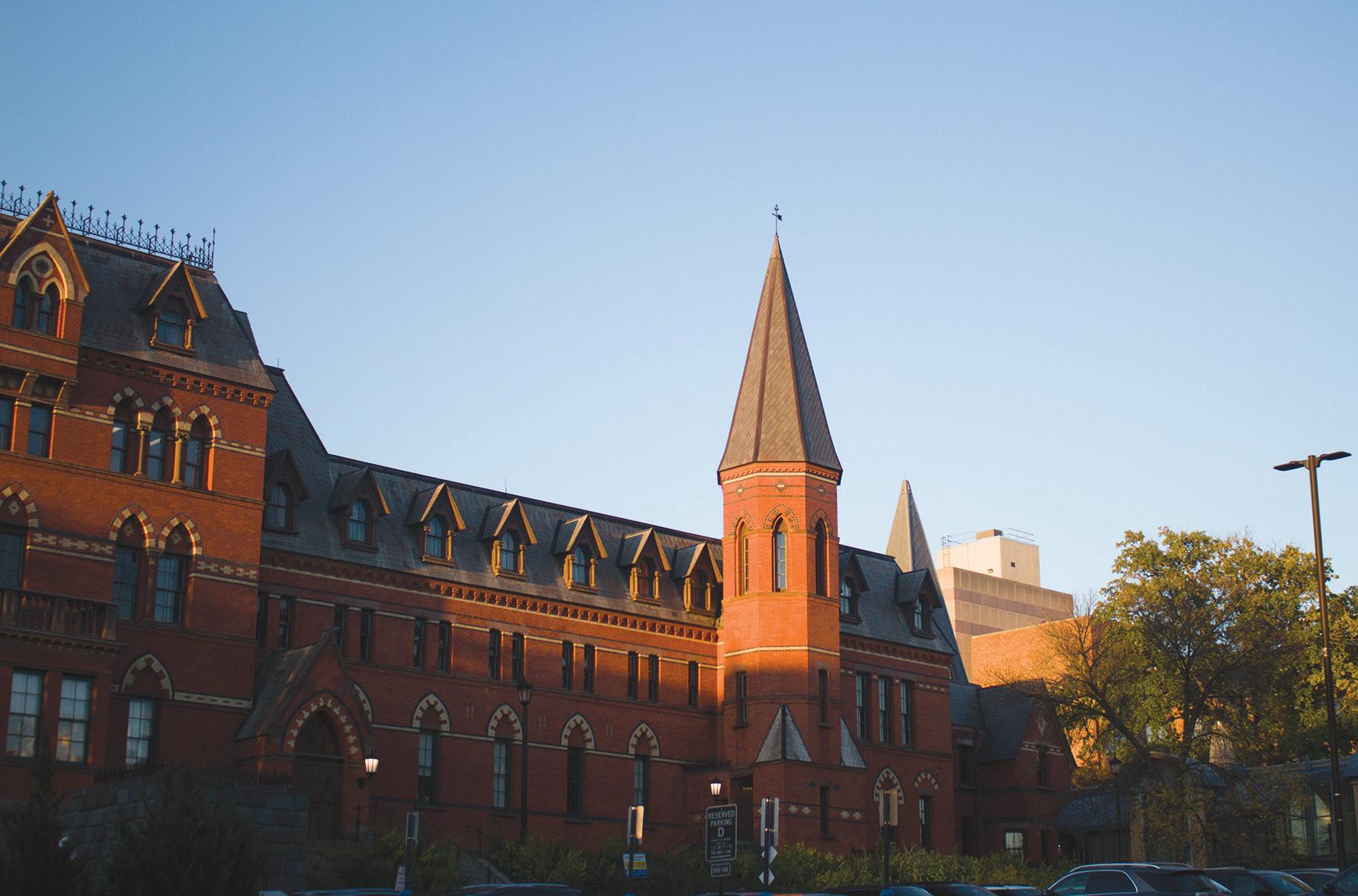
GOLDEN HOUR | Sage Hall catches an illuminating ray of the Ithaca sunset.
HEARTWARMING SIGHT | Overlooking a view that will never get old, students watch the sun set gracefully over Libe Slope.
STUDY BUDDIES | Often regarded as a magical place, students turn to the AD White Library for ambient study sessions.
FALL (C)RUSH | Water runs through Fall Creek as the foliage blooms in orange and yellow hues.
LOVELY OVERLOOK | Students and visitors gaze over the colorful foliage from the Herbert Johnson Art Museum.
Julia Nagel / Sun File Photo Photo
Karlie McGann / Sun Photography Editor
Julia Nagel / Sun File Photo
Ming DeMers/ Sun File Photo
Nathan Ellison / Sun Staf Photographer
Jedric Jizaiah Anciete / Sun Contributor
WATER UNDER THE BRIDGE | Students pass by Beebe Lake on the way to class.
LOVE SONGS | With its chiming tunes floating over campus, the clock tower glows among the bright leaves.
Julia Nagel / Sun File Photo
Julia Nagel / Sun File Photo
Toni Morrison, Rockefeller Hall Experience Flooding Task Force on Institutional Voice Releases Final Recommendations
By MARY CAITLIN CRONIN Sun Senior Writer
Feb. 10 — Two floods struck campus this week, including one in student dormitory Toni Morrison Hall on Monday and one in academic building Rockefeller Hall over the weekend. The floods and impacted areas are being addressed, according to messaging from HRL to Morrison residents and an email from the College of Arts and Sciences room reservation service obtained by The Sun.
“A freezing event” caused notable flooding in the entrance of Toni Morrison Hall early Monday morning, according to a Monday email from HRL to Morrison residents. Additionally, at least seven classrooms in Rockefeller Hall are closed due to flooding and power outages over the weekend, according to the email from CAS room reservation service.
HRL informed Morrison residents that no student rooms were affected by the flood in the Monday email. However, the lobby and entrance near the Toni Morrison Multipurpose Room will be closed while the flooding is addressed.
“A pipe in the entrance of Toni Morrison Hall (closest to the Toni Morrison Multi-purpose Room) discharged as the result of a freezing event, causing flooding localized to the vestibule and entrance to the building,” the HRL spokesperson wrote to The Sun.
Morrison is a dormitory that houses over 300 sophomores, juniors and seniors, and is home to the Toni Morrison Fitness Center and Crossings Café.
These floods come less than a month after a sprinkler main pipe burst in Morrison’s neighboring building Ganedago Hall, displacing 46 residents.
Although student rooms were not directly damaged in the Morrison flood, the flooding still impacted residents’ access to building amenities. Morrison resident Esmeralda Alverde Duarte ’28 was among the residents affected.
“I regularly use the first floor kitchen to bake cookies as it’s the only residential oven,” said Alverde Duarte. “Having to step over the sloshy floor with noisy fans trying to dry [the flooding] is not ideal.”
In the meantime, HRL instructed Morrison residents to use the entrance near Crossings Café to enter the building, and to utilize the elevator to access the fitness center and laundry room.
Rockefeller Hall, an academic building on Central campus, is home to the Asian Studies department and Feminist, Gender and Sexuality Studies program. Several classes and labs were cancelled or moved to remote instruction on Zoom due to the floods.
To continue reading this article, please visit www.cornellsun.com.
By KRISTIE TO Sun Senior Writer
Feb. 5 — The Presidential Task Force on Institutional Voice released their final recommendations on how and when Cornell should issue official statements on social and political issues, according to a statement released by University administration on Thursday afternoon.
The statement specifically called for “institutional restraint” when making decisions about when to comment on issues. The recommendations propose that Cornell limit official statements to situations that are directly connected to the University’s mission and values.
“By limiting institutional voice to matters germane to the University’s mission and to higher education, Cornell respects and protects the individual voices of faculty, staff, and students as they exercise their freedom to speak,” the statement reads.
After what top administrators described as “extensive review and discussion” with faculty members,staff, students and shared governance bodies across Cornell’s campuses, the task force released a 19 -page document on its final recommendations, which will “guide administrative responses to external events,” according to the statement.
The task force was convened to examine when and how the University should speak “institutionally on issues of social and political significance,” according to the statement. This approach, the administration stated, is intended to prevent the University from taking positions on
issues that fall outside of its academic and educational scope, according to the recommendations report.
There are certain members of Cornell leadership who, due to the nature of their position at the university, cannot meaningfully divorce their individual faculty or staff voice from their institutional voice,” the report reads. “In particular, the university’s president and provost can seldom communicate publicly on matters related to the university without speaking on behalf of the university.”
The Presidential Task Force On Institutional Voice was announced in March amid the fallout from Cornell’s Trump settlement and is led by Cornell Law School’s Dean Jens Ohlin and Deputy Provost Prof. Avery August, immunology.
Defining when the University should speak on an issue was one of President Michael Kotlikoff’s first presidential actions, announced in August.
“Administrative actions must be consistent and content neutral,” Kotlikoff wrote in an Aug. 2024 statement. “In furtherance of institutional neutrality and deference to the many and diverse views in the Cornell community, the President and Provost will refrain from opining on national or global events that do not directly impact the university.”
To continue reading this article, please visit www.cornellsun.com.
Mary Caitlin Cronin can be reached at mcronin@cornellsun.com.
Kristie To can be reached at kto@cornellsun.com.
Employee Assembly Voices Concerns Over University’s Financial Austerity
By IRIS LIANG Sun Senior Writer
Feb. 8 — The Employee Assembly responded to a presentation by Cornell’s Committee on the Future of the American University and voiced concerns for staff welfare amid the University’s ongoing financial austerity measures in a meeting on Wednesday.
“Urgent action is necessary, both to reduce costs immediately and to correct our course over time — achieving an institutional structure that enables us to balance our budgets over the long term,” wrote top administrators in an August statement, describing financial austerity measures, following a June statement that anticipated staff cuts and hiring restrictions as the University faces “profound financial challenges.”
The Cornell Contingent Academic Workers published a response to the austerity measures last fall: “[a] new wave of austerity will negatively impact all of Cornell, resulting in even more over-burdened workers, intimidated to speak out over working conditions for fear of seeming ‘inefficient.’” The piece cited rising student enrollment and lack of financial transparency among the CCAW’s concerns. Former associate dean of the College of Arts and Sciences David DeVries also published a piece arguing that austerity disproportionately targeted university staff “who have dutifully worked to keep the lights on, the water running, the students fed, the grounds and hallways clean.”
During the Wednesday meeting, several professors on the FAU, launched by Provost Kavita Bala last September, presented on the committee’s objectives. The committee discussed goals to enhance the University’s undergraduate and graduate education, research and public outreach.
The FAU formed in October amid the freezing of over $1 billion in federal funding, including $250 million in the form of stop-work orders, by the Trump administration that spring., Its goal was to address “[a] loss of public trust in higher education, the erosion of the longtime compact between universities and the federal government and rapid technological change — especially artificial intelligence,” Bala wrote in an October statement to the Cornell community.
The FAU’s presentation at the E.A. meeting was one of “more than 100” stakeholder meetings the FAU has held since November to inform its recommendations for Cornell leadership, according to FAU member Prof. Phoebe Sengers, information science. The discussions have included debates, talks, workshops and stakeholder meetings, said Senger.
“Our goal is to produce some draft recommendations by late spring, [and] we’ll bring those back to the community,” Senger told the E.A. during the meeting. “We’ll hold a series of town halls to get feedback on those, and [release] a final report over the summer.”
FAU members presented on the committee’s core missions of undergraduate education, graduate and professional education, research, scholarship and public impact. Proposed initiatives included promoting “ideological diversity” among students and faculty as well as bolstering public trust in higher education through community outreach and research communication.
“One of the reasons public trust is eroding is [due to] the ways in which we engage with the broader public around scientific advances that come out of universities,” said Prof. Ariel Avgar, industrial and labor relations told the E.A.
The presentation then opened to comments from the E.A. Jeramy Kruser, E.A. Veterans Representative At-Large, voiced concern about insufficient employee representation in the FAU’s proposals.
“Your presentation [is] almost entirely focused on faculty and students,” Kruser said to the FAU committee members. “Staff are kind of tacked on as a ‘we need staff to make this happen,’ rather than really addressing the full measure that staff bring to the student experience … This is a long cultural thing that has been in higher education forever, but I think we need to lead the way in improving it.”
Several EA members concurred, with Erika Crawley, Women’s Representative At-Large, emphasizing that staff research should be considered in the FAU’s proposals to support the University’s research, in addition to faculty research.
“A lot of us are in pursuit of Ph.Ds,” Crawley said. “We present nationally. We have papers written [by] ourselves about best practices in our field, yet we get overlooked a lot of the time. And so thinking about the future of the American university, how do we fit into that narrative?”
Kruser also raised concerns about staff welfare in Cornell’s Cooperative Extension program. CCE partners with government agencies, extension associates, agriculture specialists, educators and staff and volunteers across New York state to support local agriculture, education and other programming.
“We absolutely love to talk about our successes in the CCE in every county in the state, yet we do not consider [CCE workers] our employees,” Kruser said. “We do not give them the benefits of Cornell employees, but we take the credit for all of the work they do executing our land grant mission. … We only treat them as ours when they’re benefiting us.”
While the FAU committee did not immediately respond to the comments due to time constraints, they noted that the concerns will be taken into consideration for their draft proposals. The FAU has published several op-eds in The Sun communicating its objectives to the Cornell community.
To continue reading this article, please visit www. cornellsun.com.
Iris Liang can be reached at iliang@cornellsun.com.
S.C. Johnson College ‘Mourns the Loss’ of First-Year MBA Student
By ZEINAB FARAJ and CORAL PLATT Sun Features Editor and Sun Staff Writer
Feb. 6 — Oreoluwa Odetunde, a firstyear student pursuing a Master’s in Business Administration at the S.C. Johnson College of Business, died in her off-campus residence on Thursday.
Odetunde was an international student from Nigeria and received a bachelor’s degree in economics from the University of Lagos in 2017. At Cornell, Odetunde was involved in numerous student groups including the Johnson African Business Society, the Black Graduate Business Association and the Old Ezra Finance Club.
Odetunde was both a Forté Fellow and Sage Scholar, and participated in research and strategy analysis at several companies including Anchoria Asset Management and Greenwich Merchant Bank.
“We are devastated for Oreoluwa’s family, friends, classmates and instructors and extend our deepest condolences in this difficult time,” read a LinkedIn post from the Cornell Johnson Graduate School.
The University held a support meeting for the S.C. Johnson College community at 5:00 p.m. on Friday, Feb. 6, in the MBA Student Lounge in Sage Hall 301. An additional community meeting will also be held at 5 p.m. on Monday, Feb. 9, in the Edwards Room in Anabel Taylor Hall G14.
Individuals can have a diverse range of feelings, needs and reactions when facing loss. This information about Grief and Loss may be helpful to you or a friend. The Ithaca-based crisisline can be reached at 607-272-1616, and the 988 Suicide & Crisis Lifeline is available throughout the U.S. Additional support resources are listed at mentalhealth.cornell.edu.
Students in need of professional support can email Student Support and Advocacy Services at studentsupport@cornell.edu or call Counseling and Psychological Services at 607-255-5155. Employees can call the Faculty and Staff Assistance Program at 607-255-2673.
Zeinab Faraj and Coral Platt can be reached at zfaraj@cornellsun.com and cplatt@cornellsun.com.
Continued from page 1
Barany did not respond to a request for comment.
When The Sun asked Cornell Media Relations about Barany’s involvement with Epstein, a University spokesperson wrote, “As best as Dr. Barany can recall, when Dr. Barany was launching Coferon, there was one meeting with [Epstein] and other potential funders to present the concept of a microfluid device for detection of cancer mutations. He made no contribution to the research.”
Joi Ito — a venture capitalist, former MIT professor and director of the MIT Media Lab — asked Epstein in 2014 if his “foundation currently fund[s] Harvard or any other ‘more stuffy [t]han MIT” type institutions.’”
Epstein replied, “hasty pudding. harvard, cornell mountsinai?”
In a statement to The Sun, a University spokesperson wrote, “Cornell research administrative offices reviewed our records and could not identify funding from him or his foundation,” and that Cornell “take[s] this issue seriously and will continue our assessment.”
The Sun did not find evidence that Epstein or the Jeffrey Epstein VI Foundation has funded Cornell’s research.
Although an investigation into records by The Sun could find no direct ties between Epstein and Coferon, Barrett referenced recruiting Colin Goddard as the chairman and chief executive officer for the “biotech company” he was “involved with,” in an email sent seven months prior to Epstein and Barany’s meeting.
Barrett’s role in Coferon is not immediately apparent. Colin Goddard currently serves as the chairman and CEO of BlinkBio, formerly Coferon, according to Justice Department documents and publicly available filings.
Emails appear to show that Barrett asked Epstein on multiple occasions to meet Barany.
Specifically, Barrett collaborated with Lesley Groff, Epstein’s longtime planner, to facilitate an Oct. 22, 2011, meeting in New York with Barany and Epstein.
On Oct. 18, 2011, Groff wrote to Epstein that “We had told Anthony Barrett you could probably meet his scientist =riend, [sic] Francis (Cornell Scientist) this Sat. Oct. 22nd.”
After the meeting, Barany sent Boris Nikolic — an advisor to both Epstein and Bill Gates — a follow-up email on Oct. 24, writing, “It was a pleasure meeting you on Saturday,” and attaching “confidential documents” about Coferon’s cancer detection work.
Nikolic forwarded the message to Epstein, asking, “How close are you with him?” and “How much helpful should I be?”
Epstein responded “zero” to Nikolic.
Nikolic wrote back that he would “refer to some guy in foundation to provide some follow up (that material was received) but that will be it. That guy needs some attitude adjustment.”
To that, Epstein wrote, “ignore it,.. i dont like him, .[sic]”
Barrett told Groff that she could forward Barany’s information to Henry Jarecki, a psychiatrist and philanthropist also frequently mentioned in the files.
The released files did not include any other emails concerning Barany and Coferon until July 2012, when Barrett emailed Epstein, “We did suffer some dilution in this latest financing round, but all things considered happy to get it done,” attaching Coferon press releases summarizing the technology company’s Series B financing round. Dilution refers to the reduction in a shareholder’s ownership percentage in a company when it issues new shares.
During an October 2014 correspondence, Barany and Prof. Linnie Golightly, clinical medicine, emailed Barrett to ask for help with funding research on the early detection of Ebola, writing, “we have begun designing micro-fabricated devices that wi=l [sic] allow for electronic detection.
Golightly did not respond to a request for comment.
Barany and Golightly ended the email asking, “Would your contacts be able to help us, so in turn we may help protect o=r [sic] country?”
Barrett forwarded the email to Epstein, saying, “I know last time you and Francis did not hit=it [sic] off. Nevertheless he has been successful as a scientist and is really no= a “people’ [sic] person.”
Epstein wrote back, “ill try.”
The 2014 correspondence was the last recorded time available in the released files that The Sun could identify Barany communicating with Epstein’s associates.
The Sun was unable to locate contact information for Groff, Nikolic, Barrett or Jarecki.
The Corne¬ Daily Sun
Independent Since 1880
143rd Editorial Board
JULIA SENZON ’26
Editor in Chief
ERIC HAN ’26
Associate Editor
SOPHIA DASSER ’28
Opinion Editor
SOPHIA TORRES ’26
Advertising Manager
SYDNEY LEVINTON ’27
Arts & Culture Editor
JAMES PALM ’27
Assistant Arts & Culture Editor
JENNA LEDLEY ’27
Assistant Arts & Culture Editor
MELISSA MOON ’28
Assistant Arts & Culture Editor
SOPHIA ROMANOV IMBER ’28
Assistant Arts & Culture Editor
KAITLYN BELL ’28
Lifestyle Editor
MAIA MEHRING ’27
Lifestyle Editor
KARLIE MCGANN ’27
Photography Editor
MATTHEW KORNICZKY ’28
Assistant Photography Editor
STEPHAN MENASCHE ’28
Assistant Photography Editor
MIRELLA BERKOWITZ ’27
Video Editor
JADE DUBUCHE ’27
Multimedia Editor
HANNIA AREVALO ’27
Graphics Editor
HUNTER PETMECKY ’28
Layout Editor
RENA GEULA ’28
Layout Editor
CHRISTOPHER WALKER ’26
Games Editor
ALLISON HECHT ’26
Newsletter Editor
DOROTHY FRANCE-MILLER ’27
Managing Editor
MATTHEW KIVIAT ’27
Assistant Managing Editor
VERA SUN ’27
Business Manager
ALEX LIEW ’27
Human Resources Manager
BENJAMIN LEYNSE ’27
News Editor
VARSHA BHARGAVA ’27
News Editor
ISABELLA HANSON ’27
News Editor
CEREESE QUSBA ’27
News Editor
REEM NASRALLAH ’28
Assistant News Editor
ANGELINA TANG ’28
Assistant News Editor
KATE TURK ’27
Assistant News Editor
GABRIEL MUÑOZ ’26
City Editor
JANE HAVILAND ’28
Features Editor
ZEINAB FARAJ ’28
Features Editor
JEREMIAH JUNG ’28
Assistant News Editor
KAITLIN CHUNG ’26
Science Editor
MARISSA GAUT ’27
Science Editor
ALEXIS ROGERS ’28
Sports Editor
MATTHEW LEONARD ’28
Assistant Sports Editor
SIMRAN LABORE ’27
Weather Editor
Love, From the Editors
To me, love is peace and a sanctuary. I've come to realize that relationships don't always have to be smooth or easy, but love always will be. You know that you're in love when it's the easiest choice to keep putting in that effort and dedication into relationships.
- Amelia Garcia '27, data
Even though my best friend in high school had a boyfriend during our junior and seniorproms, she still bought me flowers both times and took me as her date. This made me realize that I don't always need romantic love when I have strong platonic love in my life.
- anon
My love life recently has taught me not to idealize people and to have faith in myself. My last breakup really made me focus on the ways in which I can be a better lover instead of focusing on how to make myself more loveable/ desireable.
- anon
I would describe my relationship to love right now as grateful and so so excited. Like Baldwin says, love truly is one of those things that holds the world together, and that's true for me too! - plus as a sidenote being in love is awesome (I love you Dot).
- Ben Leynse '27, news editor
Love is being found.
- Dot France-Miller '27, managing editor Maudlin.
- anon




In Times of Fear and Fascism, a Sanctuary Campus Comes From the Heart
Mina Petrova
As we approach Valentine’s Day, a day centered on celebrating love and togetherness, the United States is accelerating an agenda of fascism and racist hatred. The speeches of our President and MAGA officials are filled with dehumanizing rhetoric that have somehow managed to applaud public executions and excuse the kidnapping of a five-year-old pre-schooler.
So far in 2026, America’s modern-day Gestapo has murdered eight people through withholding medical aid, physical violence or straight up shootings. A record of over 70,000 people are being held in detention on any given day. The Trump Administration reported over 675,000 forced deportations and 2.2 million self-deportations for 2025. That's hundreds of thousands of families, friends and partners torn apart, forced away from their homes and loved ones into detention centers.
Of course, we can discuss how ICE has detained and even murdered American citizens, people with legal asylum cases and lawful permanent residents. We can mention that 92% of those detained since Sept. 21, 2025 have had no criminal convictions and 72% did not even have a criminal charge. However, kidnapping, terrorizing or dehumanizing any person, regardless of their citizenship status is cruel and disgusting. As the popular protest slogan puts it, “No One Is Illegal on Stolen Land.”
The fight to abolish ICE is also not just about Trump’s rampant abuse of immigration enforcement for his own purposes of ethnic cleansing. True liberation will come from dismantling an order of systemic oppression that both Democrats and Republicans uphold. After all, in his eight years as President, Barack Obama — criticised as “Deporter in Chief” — deported over 3 million people.
Cornell University, once again, is complicit in this regime of federal abuse. Cornell Career Services promotes ICE, with job postings such as “Deportation Officer” on Handshake and positions in the U.S. Department of Homeland Security on the Career Services website. Erica Kryst, executive director of Cornell Career Services, excused the University’s support of Trump’s fascist goons saying, “Cornell does not promote certain jobs over others.”
First of all, Cornell Career Services affirms that there are certain principles that companies are required to follow, “We expect our partners to recognize the powerful impact that diversity, inclusion and belonging bring to their organizations and the workforce.” ICE constantly engages in racial profiling, targeting Black and brown community members, students and workers. Agents often base their arrests off nothing more than color and accents. Obviously, wherever U.S. Immigration and Customs Enforcement is, there exists a threat to “diversity, inclusion and belonging.”
Secondly, blind deference to inclusivity without any critical thinking regarding ethics or the safety of the student body is deplorable. When a job posting entails joining a brutal law enforcement force that tears apart families, kidnaps children and murders protesters, then it is the moral respon-
sibility of the university to NOT advertise it. International students comprise 26% of the University’s undergraduate population, many of whom would be at risk if ICE ever appeared on campus. Thus, Cornell’s ‘neutrality’ actually favors facism over the safety of a quarter of its student body.
Cornell Career Services even invited Anduril, an AI-powered weapons manufacturing company, to campus on Feb. 19 at 5 p.m. in Phillips Hall 101. As the sole provider of autonomous surveillance towers to the U.S.-Mexico border, Anduril is responsible for the detaining of hundreds of thousands of migrants.
When surrounded by the constant news of kidnappings, lawless detention and death while attending a university that refuses to take a stand against such brutality, it's hard to celebrate Valentine's Day with a clear conscience. All around America, immigrant families are constantly afraid of that ‘knock on the door’ or surprise workplace raid. We cannot allow business to go along as usual without becoming complicit cogs in the Trump Administration’s fascist government.
To combat this specter of oppression that hangs over our country and University we need to become a sanctuary campus.
This means a formalized policy that clearly bans ICE from all University property and prohibits collaboration with CUPD or Cornell administration. To protect immigrant students and staff, Cornell must refuse to share any information with federal agencies unless a real and legal warrant is provided. Cornell’s administration should hold widely publicized ‘Know Your Rights’ training and distribute materials informing the Cornell community of safety protocols if encountering external law enforcement officials.
Student groups on campus are already fighting for these policies. In September 2025, the Student Assembly unanimously passed Resolution 9, which resolved that “Cornell Career Services shall cease any existing collaboration with ICE and/or Customs and Border Protection and shall not collaborate with, advertise events for, or engage in any activity promoting the efforts of ICE or Customs and Border Protection.”
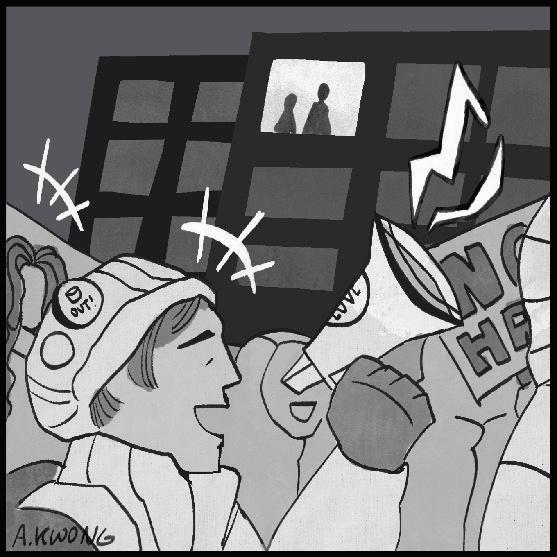
On Feb. 4, over 100 students rallied to denounce federal abuses, condemn Cornell’s complicity and express solidarity with those targeted. You can tell that the true spirit of love and togetherness lies within these struggles. Students of all backgrounds came together to proclaim, “No Hate, No Fear, Immigrants are Welcome Here.”
However, protests and Student Assembly resolutions can only us so far. ICE is still on Handshake, Anduril is still invited to recruit on campus. Kotlikoff has ignored Resolution 9. It is clear that the Cornell administration will not enact sanctuary campus policies without adequate pressure.
We need to do more and I'm certain that we can. We have shown that hundreds of students can come together to demand that the University grow a spine and a conscience. We are on the side of love and acceptance, and thus will not stop until all students can pursue their academic and political passions without fear.
Mina Petrova '29 is a Freshman in the College of Arts & Sciences studying English, History, and Government. Her fortnightly column ‘North Star’ studies the past and critiques the present, focusing on politics, protests and activism that strive toward a more equitable future. She can be reached at mpetrova@cornellsun.com.
Graphic by: Ashlin Kwong
On Valentine's
Love is in the air this week, but during a time where so much conflict and hate exists, love doesn't look the same for everyone. Here are our columnists on loving yourself, loving each other, being true to yourself and living every moment to the fullest.

Kira Walter Onion Teory
Kira Walter '26 is an opinion columnist and former lifestyle editor. Her column Onion Teory addresses unsustainable aspects of modern systems from a Western Buddhist perspective, with an emphasis on neurodivergent narratives and spiritual reckonings. She can be reached at kwalter@cor- nellsun.com.
“‘Take advantage of it now, while you are young, and sufer all you can,’ she said to him, ‘because these things don’t last your whole life’” - Love in the Time of Cholera, Gabriel García Márquez
The proliferation of incel-itis has never seen such extremes. A digital post-pandemic era has transformed the occasional disorder into a rampant virus; to be or not to be an incel is no longer an easy question. Dating apps, virtual reality and even AI chat bots deplete capacity for in-person romantic interactions: confessions, confrontations and direct ask-outs are becoming sparse.
In the aftermath of quarantine, the introvert fnds themself in the majority and harassment allegations raise the stakes for being emotionally forward. Feeling your feelings has never been riskier. But against rising trends, a loss is sufered if the league of simps should succumb to modern attitudes.
Tis was the subject of conversation at 3 a.m. in Singapore, where two weeks into exchange, my Aussie-Columbian brother-in-travel admitted his god-honest opinion about dating before 23: Serious commitments are a waste of emotional energy unless both partners are ready to settle. Over grapes and cold ovaltine, we debated the use of relationships in tropical January, and on this front I remain desperately stubborn — the onslaught of youthful romantic sufering is invaluable.
Despite stunted maturity and uncertain post-grad plans, college is the time to be an egregious, unfltered pick-me. Lust after Level B strangers, cry over freshman year exes, compro-

Paul Caruso Caruso's Compass
Paul Caruso is an Opinion Columnist and a second year MPA student in the Brooks School of Public Policy and the Founder of the Cornell Negotiation Student Society. His column, Caruso's Compass, focuses on politics, international afairs, and campus life. Te column seeks to identify issues with the status quo and provide solutions to them. He can be reached at pcaruso@cornellsun.com.
This Valentine’s Day, we will be again bombarded with various messages: blessings to those in relationships, to those who have crushes, to firtations, to those not looking for love, to those single but without a partner, and beyond. You’ve got to host galentines, you need to do this kind of Valentine’s experience, don’t forget to get them fowers and chocolate!
Tis social guilt-trip is known to be a capitalist move to keep you buying stuf. Yet, it’s been reported that 61% of Americans dread holidays for the fnancial commitment that comes with gift-buying. But that’s not my argument.
My argument is that we as a country are not doing enough to be kind, empathetic and compassionate towards each other. In order for us to live happier lives, we ought to try something new to help us get there.
Te Problem Is What we Are Not Doing
A 2025 poll shows that 61% of Americans believe that
In Defense of the Modern Simp: Why You Should Feel Your Feelings
mise dignity to unredeemable lows. If not now, the conquests are postponed until the world of employment or lack thereof. However frightening vulnerability becomes to the speculative mind, it's well worth the development.
But the frst and foremost reason I advocate engaging the romantic sphere with no restraint — besides an utter lack of self-control on my end — is regret. It is generally easier to regret action than non-action, as action yields a tangible result. Refraining from the post-lecture ask out, the skipped formal proposal or crash-out admission to a former RA gives way to an insuferable wealth of what-ifs.
Television host and comedian Trevor Noah said it best in his 2016 memoir, “We spend so much time being afraid of failure, afraid of rejection. But regret is the thing we should fear most. Failure is an answer. Rejection is an answer. Regret is an eternal question you will never have the answer to.” As the cliché goes, you miss 100% of the shots you don’t take. Having a benched player mentality in the realm of emotional expression is only the perfect recipe for pain and turmoil.
Regret may be a long-term dissociative fugue,but in the moment, denying your inner simp in bottled-up emotional tirades and haphazard journal entries can produce dastardly realtime consequences. Habitual suppression of strong romantic feelings has real cognitive costs and can even threaten academic success, especially if longing is particularly strong. Suppression prolongs emotion, creating a rebound efect in which negative feelings intensify. Pinning down pining also eats cognitive bandwidth, increases potential for distraction and weakens decision making. Tough harboring a crush seems inconsequential at times, it amplifes stress and alters risk evaluation.
Release becomes necessary when ferce romantic tension is pocketed away: Some have worthy outlets, spinning ballads out of heart-ache or shooting hoops to expend anger after tough convos. Some are unprepared to pour emotions into other sectors of life, or the extremity of love and limerence isn’t satisfed by once enjoyable pastimes. Tis is when implosion and explosion become tragic possibilities: Infatuations ignored snowball into behavioral travesties that sever friendships and dismiss interests, giving way to social doom.
It’s all doom and gloom for keeping feelings at bay, but
the undiscussed benefts of open simping is really where it's at. Regardless of my compadre’s good opinion, if you do invest in a relationship before 23, it generally benefts from emotional risk-taking. Disclosures and responsiveness facilitate trust between partners and pave the road for longevity.
A popular study invited randomly selected married couples to a vacation rental-esque environment, in which researchers took note of “bids for connection.” Bids were small, everyday attempts spouses made at afrmation, attention or engagement in laughs and jokes. Reciprocity was monitored as some acknowledged bids while others ignored them. Six years later, participants in the study were contacted again regarding their status: Pairs still married turned towards bids 86% of the time, while new divorcees only engaged in bids 33%. Noticing emotional signals in a signifcant other is the life blood of enduring connection — without risking neglection, this wouldn’t be possible.
Beyond adding months to your evolving situationship, simping loudly and proudly has the most to ofer in the feld of character development. Learning to mitigate strong feelings and turn them into positive action is a vital skill to take into the roaring twenties and beyond, impossible without a little sacrifce. Every dump and ditch, each unthinkable turn down or absence in reciprocation, is a lesson. Sufering in the instant is self-improvement at the next opportunity.
Tat popular quote by Rumi is applicable to simping too: “Te wound is the place where the light enters you.” Although post-devastation growth isn’t automatic, most survivors experience more self-confdence, stronger personal identity and awareness in the aftermath. As light enters the wound, wisdom enters the simp when the consequences of feeling, whether brilliant or insuferable, come to fruition.
So when the crossroads between emote or incel emerge with the stakes on high, abandon pride. Engage the ungodly sphere of ‘foorcest,’ DM the hockey player you root for religiously just because of his aura. Sincerely make an avowal of love for your TA. Squander the fear of freakdom and be pathetic to the max this Valentine’s season. Tere isn’t much to lose but a whole lot more to regret. And if you don’t act fast, the impossible modern simp might beat you to it.
Love Ty Neighbor
compassion in this country has decreased since 2020, and only 20% believe it has increased. Te inevitable question is: does this mean compassion is actually going down? I say it’s the same diference. If perception is going down, that’s all that matters.
Empathy and compassion are diferent things, but the average American will relate the two. Studies show that both compassion and empathy require cognitive efort, and that we are doing less of both because we’re avoiding that efort.
Te recent decrease could be attributable to multiple causes, but because the individual experience is so nuanced and the trend is observed on a national level, a culprit is difcult to fnd. However, I have a theory.
Te Modern World is Not Set Up to Increase Empathy
Te rapid rise and continued popularity of social media has brought a number of problems for us cognitively. A 2022 study found that during Facebook’s rise in popularity, student mental health deteriorated signifcantly and often impaired their overall academic performance. In 2021, a review article analyzing 50 other articles found that among the positive social and inclusion-based outcomes of social media, it also increased depression, anxiety, loneliness, poor sleep, thoughts of self-harm, body image dissatisfaction, overall life dissatisfaction and more. I fnd it compelling that these measurements coincide with our decrease in empathy.
None of this is new. We’ve known about this for years, and yet only now do we see landmark court cases attempting to hold social media companies accountable for deliberately building their platforms in addictive ways to keep your attention and push you more ads. Te point has always been to keep you enraged and engaged, coupled with the fear of missing out.
In 2025, I deleted the two social media platforms I used the most: TikTok and Instagram. Te reason for each was diferent. For TikTok, I was conscious of not only how much time I wasted on the platform, but at how angry I was all the time. Whether it was a politician, a bad take by an infuencer, a fabricated controversy, or another reminder of what I’m not doing enough of,
I found myself expressing rage and sadness because of a screen. With Instagram, it wasn’t quite rage - it was time. By getting lost in my phone for hours each day in between work meetings and classes, I was throwing away time I could’ve spent with my friends, family, work, or peacefully alone. When I saw my daily usage, I knew it was time.
I’m no saint, nor is this story particularly inspiring. However, the results are real: my mood is better, my emotional regulation has improved, I’m more productive, and I’m more satisfed with my life. How does this relate to Valentine’s Day? Absent the online frustration or time drain, I have been far more present for those I care about, productive, and kind to others.
Te Solution is to Be Kind and Give Grace
I’m not telling you to delete your social media. If you’re interested in trying it, don’t worry: I’ve never missed out on anything. I still read the news and stay informed on current events, and I don’t miss scrolling and getting lost in my phone (I should probably lay of the strategy games I play, but hey, those help forward-thinking, right?). What you do have to do is give yourself and others just a little more grace than yesterday.
Yes, my faith inspires this piece and its title, but you don’t have to be Catholic or religious to know that part of a fulflling life is to be kind to the person next to you. I’m only suggesting that you do something nice for someone you know without expecting them to do something for you.
Tis Valentine’s Day, know that the measure of love is not a dollar sign. Make an efort to do something kind for someone else and don’t tell anyone about it. Do it just because the world needs more of it. Hold doors open, buy someone a cofee, help your friend carry their things, sit with someone as they deal with something that hurt them, or pay someone a compliment.
All of us consistently spreading love will be what helps us fght the mental health crisis in this country. More often than not, you’ll make someone’s day; and what a wonderful world that would be.

Your Cornell Romance, Explained by Human Bonding Professor Elizabeth Riley
By ANDREA KIM Sun Staff Writer
With Valentine’s Day around the corner, relationships are on everyone’s mind. For Prof. Elizabeth Riley, psychology, it’s something that she discusses and studies daily through her course, HD 3620: “Human Bonding.”
The iconic Human Bonding course began with Prof. Cindy Hazan, psychology, nearly forty years ago. It started as a small 25 student class, eventually becoming one of the most popular courses on campus, taken by over 600 students each spring.
One former student said on Rate My Professor, "You will walk out of this class with knowledge that you will use for the rest of your life. If you're in a relationship or ever plan on being in one, this class is incredibly insightful.”
Another student wrote, “I swear [Hazan] is the reason I now have a boyfriend just after taking her class."
Hazan retired earlier this January, and Riley felt “greatly honored” when the Human Bonding course was offered for her to continue starting Spring 2026.
“It was a beautiful opportunity to get a chance to participate in that and to share possibly the most important thing about life,” Riley told The Sun. “I mean, there are a lot of things that are really important, but who your friends are, who you fall in love with — it's about as important as it could possibly get.”
Riley is a research associate and lecturer of psychology studying neuromodulatory systems, the neuron circuits that control brain activity and behavior. Her research focuses on
norepinephrine and its relation to cognitive aging, which can be prevented by human relationships.
Norepinephrine is a neurotransmitter — a chemical messenger that transmits signals through the body — that regulates the “fightor-flight” response and is a critical part of the nervous system. While the nervous system is an important system for survival and cognitive function, Riley explained that it accumulates Alzheimer's-related damage in the brain before any other system.
“There are a lot of things that are really important, but who your friends are, who you fall in love with — it's about as important as it could possibly get. ”
Elizabeth Riley
“When you study the correlates of neurodegeneration, you start asking yourself what protects against neurodegeneration,” Riley said. “And there are a lot of protective factors, but one of the very strongest ones is human relationships.”
Riley’s Human Bonding course covers various topics relating to social relationships, including why humans seek relationships and what factors make a relationship strong or weak.
Riley explained that humans, like other social animals, form pair bonds, strong social and emotional attachments associated with

mating and parental care. Evolutionarily, psychologists hypothesize that pair bonds allow for the better survival of human offspring.
“This is a theory, of course … but this is the idea that pair bonding is fundamentally a mechanism that allows people to provide better care for offspring,” Riley explained. Surprisingly, in psychology, pair bonding is much different from standard romantic relationships seen in society. Riley explained that a true pair bond relationship takes 18 months to form, on average. However, this timeline can vary.
“I think there's some research that suggests that if you live with your partner, the timeline is a little bit compressed, and more frequent or earlier sex also compresses that timeline,” Riley
said. “Being long-distance can increase the amount of time that it takes to form the bond.” Riley noted that while sex can compress the timeline of forming a pair bond, this is not always the case. In today’s generation, people often engage in sexual encounters without having a clear commitment, dubbed “situationships.” Hookup culture is also a prevalent social norm on college campuses, which accepts uncommitted sexual encounters without emotional bonding.
To continue reading, please visit www.cornellsun.com.
Te Shortage of College Men Didn't Break Marriage, It Rewrote It
By GABBY COLEMAN Sun Contributor
Over the last half-century, four-year colleges have shifted from enrolling predominantly men to women. While the growing scarcity of college-educated men might seem to threaten the marriage prospects of educated straight women, the data tell a different story, according to a 2025 study published in the journal Social Science Research Network.
The paper combines economic modeling and data analysis insights about how people view education, stability and partnership, showing that marriage decisions reflect both financial realities and changing social expec-
tations.
“People pitch … marriage trends and dating trends in the U.S. as a crisis among highly educated women … but in the data, that’s the group where marriage rates have remained most steady,” said Prof. Benjamin Goldman, public policy and economics, who co-authored the 2025 paper. “Whereas it's specifically for working class women without college degrees that you've seen collapse.”
Over the same period, men’s economic opportunities have narrowed. Industries that once secured stable income without degrees have declined, while new jobs increasingly reward those with formal education. At the

same time, boys and men have fallen behind women across education, from high school performance to college enrollment.
As non-college-educated men’s job prospects weakened, so did their perceived stability as long-term partners. The result isn’t just fewer marriageable men, but a widening divide between those who can offer economic security and those who can’t.
“If a man didn’t go to college but owns a local business, he can still provide a relatively good life and be a good partner.”
Clara Chambers
Faced with a shrinking pool of college-educated men, college-educated women had two options: compete harder for educated men or expand who they considered suitable partners.
“We knew college women had maintained stable marriage rates, but didn’t know whether they’d done that by increasing assortative mating or by substituting and marrying men without college degrees,” said Clara Chambers, a pre-doctoral research assistant at Yale University’s Tobin Center for Economic Policy. “It turns out it’s the latter.” Assortative mating describes people’s tendency to partner with others similar to themselves.
This shift helped keep marriage rates stable even as campus gender balances shifted. Rather than delaying or opting out of marriage, many college women started prioritizing economic stability over educational
credentials alone.
“Marriage used to be something at the start … at the beginning of when you’re setting up your adult life,” Goldman said. “One thing that’s changed culturally is [it’s] often viewed as a capstone. It’s something you do when you have everything else taken care of.”
At the same time, what people look for in a partner has also shifted.
“Education might be one thing [people care about], but it’s also a proxy for economic stability,” Chambers said. “If a man didn’t go to college but owns a local business, he can still provide a relatively good life and be a good partner.”
According to Goldman, these trends can be harder to see on elite campuses, where dating pools tend to be highly educated and economically advantaged. National marriage patterns are shaped more by broad economic and demographic forces rather than by relationship patterns at selective universities, Goldman said.
In general, marriage across education levels has not hurt college women economically. College-educated women who marry non-college men remain highly engaged in the labor force, often earning as much as or more than their spouses, according to the research paper. Increasingly, these partnerships reflect two earners rather than a single breadwinner model.
To continue reading, please visit www.cornellsun.com.
Gabby
Human happiness | The Human Bonding course discusses what makes relationships strong or weak.
JULIA NAGEL / SUN FILE PHOTO
Spouse
The Corne¬ Daily Sun
Perfect Match Won’t Find Your Cornell Soulmate
By Sanika Saraf
Sanika Saraf is a sophomore in the College of Industrial and Labor Relations. She can be reached a ss4353@cornell.edu.
Yes, I will find my future Cornell husband through answering the questions “biggest niche Cornell red flag?” and “favorite romance trope?” Wow, I sure hope my significant other also adores a “step-sibling” romance!
Perfect Match, Cornell’s matchmaking survey, is released every Valentine’s Day season, for hopeful singles to find their future significant other on campus. Using a “machine learning algorithm,” the survey sorts through every respondent’s answers and “scores compatibility” based on “participants who satisfy your main criteria,” generating optimal matches. This year, matches will be released on Feb. 12, when each participant will receive four to seven matches, which are supposed to be, as the name suggests, your Cornell “perfect match.”
As a seasoned professional in being single, I decided to venture down the Perfect Match rabbit hole for the second year in a row. In theory, Perfect Match would be amazing. As a busy Cornell student, I don’t have the time or energy to meet new people and entertain things like a ‘talking stage’ or ‘situationship,’ so Perfect Match would be the perfect solution to streamline the ‘finding a significant other process.’ Right?
Freshman year Sanika would be gravely mistaken when she was left with seven Perfect Matches, all of whom were from the School of Industrial and Labor Relations (I am in ILR) or in the 18 to 20 age range. While I’m glad they got my major and age criteria correct, I was left with matches that had nothing in common with me, other than the fact that they were all in my Sociology of Work lecture. My friends who took it with me had similar experiences. Students were paired with other students in their college.
I decided to participate again this year, not only because I’m still single, but in the hopes that the survey would be changed. But after taking the questionnaire, I was left dumbfounded. Question after question, I was left thinking, “How the hell will answering this help me find my soulmate on campus?”
Some questions are valid: “What’s the biggest green flag you look for in a partner?”, “How do you like to show affection?”, “How do you like to receive affection?” These are common-sense questions that should be asked in any matchmaking form. But some questions are just downright dumb. I have to ask, why would answering the question, “best place to lock-in?” help me find someone who truly complements my life, unless I really want my significant other to only study in the Cocktail Lounge? Similarly, what does answering “Flirt with your Professor” for the question “Next year, I want to complete this task (from 161 Things Every Cornellian Should Do)” even signal, other than an HR nightmare waiting to happen?
I am aware that some questions in the survey are meant to be silly to
make the questionnaire more entertaining, and I’ll be honest — it is fun to take. Though my qualms with Perfect Match lie in the fact that the concept of ‘matchmaking surveys’ boils down relationships into a list of multiple-choice questions. Questions cannot serve as tools to replace the lived experience of a relationship itself — meeting your partner for the first time, learning about each other’s similarities and differences, understanding your values and building trust. And if a matchmaking survey truly wants to help you find ‘the one,’ it needs to ask serious and thoughtful questions.
Take Marriage Pact, for example. Created in 2017 by Stanford students, the service is available on 109 college campuses and serves a similar purpose to Perfect Match. However, the survey asks 50 questions about students’ “deeply-held values and beliefs” to find an “honest and qualitative match” on campus. The survey asks hard-hitting questions like, “How long do you wait to have sex when you start seeing someone?” “Should abortion always be legal?” and “Is it okay that my partner does harder drugs?” These are nuanced questions revealing a partner’s lifestyle and political and ideological beliefs. Each question is carefully crafted by Marriage Pact’s team to surface core values, communication styles and relationship preferences — making matches feel substantive, not superficial. No wonder my friend at the Massachusetts Institute of Technology is in a serious relationship with her Marriage Pact from last February. Tests like Perfect Match and Marriage Pact aren’t built the same. One is a heavily researched, science-based test, while the other is a glorified Buzzfeed quiz.
Perfect Match does boast a list of testimonials on its website, where many users have reported their matchmaking success stories. I do not doubt that Perfect Match has helped some people find their significant others — my issue is that they can do better. The platform advertises that they are “Cornell’s cupid,” and will find your match, but in reality, all this does is get students’ hopes up. People are genuinely hopeful to find a significant match with the quiz, and when Perfect Match falls flat, many are left disheartened about their future romantic prospects on campus. For now, the questionnaire feels too underdeveloped to promise what its advertising suggests.
While I hate to be pessimistic when talking about Perfect Match, I have to. To anyone taking the survey and wanting to find ‘the one,’ I wouldn’t get your hopes up. The results you receive on Feb. 12 will probably be less ‘soulmate revelation’ and more ‘mildly awkward acquaintance from chemistry lecture.’ So, be sure to take your matches with a grain of salt, and if you truly want to find your soulmate at Cornell, I’d suggest giving up on Perfect Match.


Valentine’s Day, But Make it Pink (Foods)
By Krista Faith Gonzalez
Krista Faith Gonzalez is a senior in the College of Agriculture and Life Sciences. She can be reached at kfg33@cornell.edu.
Valentine’s Day is around the corner, and whether you’re celebrating with friends, a partner or simply treating yourself, food is one of the easiest ways to get into the spirit. After all, the best way to a person’s heart is through their stomach. This February, many restaurants in Ithaca are selling a wide range of special Valentine’s Daythemed, pink items — from pink drinks to festive pink velvet desserts — to spread the love all month long.
I found the best Valentine’s Day and pink-themed foods in Ithaca so you can enjoy these delicious treats all month long with someone special. The menus below feature drinks, desserts and dinner ideas — some items are limited-time specials, while others are seasonal favorites worth checking out. While not every item is 100% pink, each has the perfect touch of color that will surely bring some fun to your February.
For those looking to keep the celebration close and convenient, there are plenty of pink-themed treats on campus and in Collegetown that can satisfy your cravings:
On Campus
1. The Cornell Dairy Bar is a perfect spot to enjoy ice cream with loved ones. They feature delicious pink flavors like Bavarian Raspberry Fudge and Slippery Slope Strawberry — scoops that will satisfy your sweet tooth.
2. Stop by Bus Stop Bagels or Amit Bhatia Libe Cafe to enjoy a matcha latte topped with strawberry cold foam.
3. If you’re looking for a quick, lastminute gift, Bear Necessities sells Peelerz ‘s Gummy Peach candy.
4. For a limited time, Collegetown Bagels is selling chocolate-covered strawberries — perfect for a quick sweet treat.
5. For something more refreshing, grab a beverage at Ninja Chicken & Friends Try out pink-colored drinks like the Strawberry Cloud 9 Smoothie, Strawberry Passion Fruit Tea, Watermelon Green Tea, Strawberry Green Tea and Strawberry Palmer.
6. Jason’s Grocery and Deli has an amazing selection of froyo flavors and toppings. Get any flavor you like but make sure to top your froyo with strawberries and cherry popping boba.
Off Campus
If you’re ready to leave campus, the Ithaca Commons has tons of great spots to bring your date:
1. Enjoy a Valentine’s Day dinner at Thompson and Bleecker . It’s perfect for a romantic dinner and some great pink options to order are the pasta alla vodka and diavola pizza.
2. La Cafe Cent-Dix is another great
date location for dinner — order the steak frites to stay on theme.
3. If you’re in the mood for breakfast, Simeon’s American Bistro serves French toast topped with strawberries.
4. Allechant , one of my favorite brunch spots, is another amazing restaurant for a Valentine’s Day meal. Order the lemon soufflé pancakes topped with raspberries and French toast “eclair” topped with chocolate and raspberries.
5. Dolce Delight , a hidden gem for sweet treats, features a wide selection of pies. Try out the cherry pie!
6. Though usually known for its breakfast, Milkstand is also a great spot for milkshakes — grab a strawberry milkshake to round out your celebration. Budget Friendly
If you are looking for budget-friendly options, Ithaca’s chain restaurants offer plenty of delicious pink-themed options:
1. Chili’s’ new Strawberry Margarita will be $6 for February. Plus, they offer other refreshing pink (non-alcoholic and alcoholic) beverages like the Deep Eddy Strawberry Texas Lemonade, Tito’s Punch and Tito’s Watermelon Spritz.
2. Paris Baguette has to be one of my favorite spots on this list. They launched many Valentine’s-themed cakes like the Pink Velvet Chocolate Ganache Cake, Pink Velvet Layer Cake and XOXO Strawberry Soft Cream Heart Layer Cake. If you’re craving a pastry, pick up a Pink Velvet Cream Croissant or a Pink Velvet Croissant Crisp.
3. Playa Bowls just launched their Valentine’s-themed flavored bowls. The Tropical Crush Bowl (half Playa Pitaya and passion fruit-based) and the Bae Bowl (half Playa Pitaya and half Stupid Cupid base) are both topped with strawberries and make for a light pink treat.
4. Dunkin’ Donuts’ Valentine’s Day menu never disappoints. New menu items include the Strawberry Daydream Refresher, Raspberry Mocha Latte, Brownie Batter Donut and Cupid’s Choice Donut.
5. Finally, Panera Bread , for a limited time only, is selling their iconic Heart Cookie. This cookie makes for a beautifuly-crafted gift, if your willing to make the trek.
Whether you’re celebrating love with your partner, friends or yourself, Ithaca offers plenty of ways to enjoy the day through food. From Bavarian Raspberry Fudge ice cream to Bae Bowls, there’s something here for every kind of Valentine’s Day spirit. I hope this guide encourages you to celebrate love in your own way — whether that means enjoying bites with friends or treating someone special to a little pink sweetness.

SOPHIA CURBELO / SUN GRAPHICS STAFFER

Tompkins County
Calls on DEC to Reconsider
TeraWulf Data Center Water Use Permit
By VALENCIA MASSARO Sun Staff Writer
Feb. 1 — The Tompkins County Legislature passed a Jan. 20 resolution requesting the New York State Department of Environmental Conservation to reject the TeraWulf data center’s request to draw over one million gallons of water per day from Cayuga Lake.
TeraWulf is a company with plans to transform the former Milliken Power Plant into a 400-megawatt data center. The company has filed for a state permit to withdraw over one million gallons of water daily from Cayuga Lake, for an unspecified future use as stated in a 2021 permit.
The proposed data center has drawn mixed reviews from the community, as locals have voiced concerns that the data center will utilize a water-based cooling system, which would detrimentally affect the lake ecosystem. The data center proposed would help process and store information for online platforms and artificial intelligence systems. While potentially generating jobs and financial flow into the town, it may also increase energy costs and raise environmental concerns.
The resolution was passed 14 to one, with Legislator Michael Sigler (Eighth District) casting the only dissenting vote and Legislator Dan Wakeman (10th District) recusing himself due to his employment as a networking engineer for TeraWulf.
To Vice Chair and resolution sponsor, Legislator Deborah Dawson (Seventh District), this resolution is a means to “push the DEC to do what they are supposed to do and do it properly.”
At the meeting, Legislator Irene Weiser (13th District) discussed how the original permit dates back to 1955 and has been periodically renewed since.
“Given the age of the permit, the absence of modern monitoring requirements, the lack of reliable historical withdrawal data, and the material change in use, there is no regulatory or environmental justification for treating this as a mere modification,” Weiser said during the meeting.
This resolution urges the DEC to conduct a review of TeraWulf’s plan and either reject or reprocess the permit as a new application needing approval.
The meeting was attended by over two dozen residents who spoke about concerns regarding health, rising utility rates and the environment during the public comment portion of the meeting. They also spoke of a general distrust of TeraWulf’s claims about adhering to a closedloop cooling system, which would not draw from lake water.
Sam Poole ‘28, a member of Sunrise Ithaca
and the Ithaca Democratic Socialists of America, spoke at the meeting, expressing a lack of trust over TeraWulf’s claims that they would not draw from lake water for this project, emphasizing the need for a closer review of the permit.
Sigler argued at the meeting that he thought the current permit was sufficient, believing that with the permit in place right now, water withdrawals would not be permitted to cool the data center.
He added that it was his “understanding that the permit that is in place right now is limited to power generation, whether that be coal, natural gas, nuclear or deep earth ground source.” Sigler also mentioned TeraWulf’s transparency throughout the process, which he “appreciated.”
The passing of this resolution is the most recent development in several controversies.
In December, the Lansing Board withdrew a moratorium that would have stalled the data center project. TeraWulf has also threatened litigation against Town Board members.
Most recently, on Jan. 29, local environmental groups, Cayuga Lake Environmental Action Now and FLX Strong, filed a lawsuit against the Lansing Zoning Board of Appeals, TeraWulf, Cayuga Operating Company, Lake Hawkeye and Fred DelFavero, the applicant in TeraWulf’s site plans, over the TeraWulf data center.
This lawsuit followed the ZBA’s decision to interpret the data center’s plan as an allowed use under the county’s zoning code. There was some debate over whether the data center could be permitted, as the project proposal did not appear to neatly conform with the allowed uses of the site of the former coal plant under Lansing’s zoning code. FLX wrote in an email statement to the Sun that they saw it as “an alarming precedent for our community.”
“We bring this action to ensure that the valid concerns of Town residents and others who stand to be harmed by this erroneous decision are not disregarded by biased and inadequate governance processes,” FLX wrote to The Sun.
This lawsuit reflects a general trend as data center projects are being met with opposition across the country. Small-town municipal boards are struggling to figure out how the water and energy these centers need will fit into their zoning code.
The county legislature holds some zoning authority, with zoning regulated primarily by the town board. It is not within the legislature’s power to deny TeraWulf’s plans or force them to be transparent.
“It’s the DEC’s job to hold [TeraWulf’s] feet to the fire and make sure that whatever they’re going to use this [water] for is clear and specified,” Dawson told The Sun.
Valencia Massaro can be reached at vmassaro@cornellsun.com.
Student Assembly Approves $50k ALANA Funding, Advances Funding Requests
By VIVIENNE CIERSKI Sun Staff Writer
Feb. 5 — The Student Assembly approved $50,000 in funding for the ALANA Intercultural Board at their Feb. 5 meeting and moved forward with six other funding requests from student organizations across campus.
This action follows controversy during the fall semester, when the Assembly’s finance committee recommended reducing funding for ALANA, Cornell’s Multicultural Greek & Fraternal Council and the International Student Association. After members of these organizations and other student advocacy groups packed the three-hour-long October meeting and voiced their concerns, the Assembly ultimately rejected the committee’s proposal.
Among the applications were requests from student organizations seeking reimbursement for off-campus travel related to educational and professional activities, including the Ethiopian Eritrean Student Association, the Young Democratic Socialists, the Med-In Black Association, the Cornell Capital Club, Air and Sea Hospitality and the Speech and Debate Society.
These funding requests will be filled through the Student Assembly’s Special Projects Fund, a resource designated
to provide financial support for on-campus activities and student organizations.
The Assembly also passed a resolution to transfer an additional $10,000 to the Special Projects Fund from reserves in light of the many funding requests.
Throughout the meeting, several Assembly representatives voiced concerns over the liberal allocation of funds towards certain student organization activities, including off-campus trips, emphasizing the need to save money in the Special Projects Fund for on-campus student events.
“I do worry we’re running it dry,” commented Eeshaan Chaudhuri ’27, undergraduate representative to the University Assembly. “I do think we should be stingy with money because [student organizations are] clearly just splurging on a lot of stuff.”
Most recently, the fund was used to support a trip for Black Students United to attend the 2025 Congressional Black Caucus Retreat in Washington, D.C. and financed a similar trip for the Diverse Leaders of Tomorrow to engage in a networking conference in New York City.
To continue reading this article, please visit www.cornellsun.com.
Vivienne Cierski can be reached at vsc38@cornell.edu.
University Faculty Holds Public Feedback Session About Code of Conduct
By VIVIENNE CIERSKI Sun Staff Writer
Feb. 5 — The University Assembly held its last of three public feedback sessions on Wednesday as part of the Code and Procedures Review Committee to gather community input on the Student Code of Conduct and its enforcement procedures. During the session, University affiliates raised concerns about how the Code is structured and how its accompanying procedures are implemented in practice.
The approximately 35-minute meeting brought together around 18 participants — including faculty members, Student Assembly representatives and administrators — as part of a review process launched in Fall 2025 to evaluate the clarity, fairness and structural integrity of Cornell’s Student Code of Conduct.
This session comes after the student referendum against the University’s overhaul of the disciplinary process in
December passed overwhelmingly, with 93.5% and 91.7% of voters supporting ballot issues one and two, making Cornell’s judicial system independent and reestablishing the campus-wide code of conduct respectively.
The Student Assembly Charter requires Kotlikoff to approve or reject the referendum within 30 days of its passing, which he has yet to do.
Prof. Ashleigh Newman ’06, population medicine and diagnostic sciences, a member of the Code and Procedures Review Committee and the co-chair of the session, noted during the meeting, that the committee’s role is to “listen, gather input and share the input with the committee regarding proposed revisions to the code and its procedures.”
To continue reading this article, please visit www.cornellsun. com.
Vivienne Cierski can be reached at vsc38@cornell.edu.
Water worries | Tompkins County residents have expressed concerns over TeraWulf’s motives, with many worried about potential water harvesting which could damage Cayuga Lake’s ecosystems.
NATHAN ELLISON/ SUN STAFF PHOTOGRAPHER













Stwart Peña Feliz ’17 Leads a Plastics Revolution
By SOFIA ECHANIZ Sun Science Contributor
Feb. 6 — A new kind of entrepreneur, Stwart Peña Feliz ’17, stands poised to shake up the plastics industry. Recognized by Forbes 30 under 30 as a leader in manufacturing and industry, Peña Feliz is on a mission to reduce the more than five million metric tons of plastic polluting our waters every year.
MacroCycle Technologies, co-founded in July 2023 by Peña Feliz and Jan-Georg Rosenboom in Cambridge, Massachusetts, seeks to reduce plastic’s ecological footprint by recycling complex polyethylene terephthalate plastics and textiles at price parity to newly made plastics while achieving zero carbon emissions. However, MacroCycle is also an agent focused on systems reform, and Peña Feliz and Rosenboom are its catalysts, looking to stir up the next plastics revolution.
“If we’re able to create a pathway where capitalism cannot ignore our circularity, I think we’ve done our job.”
Stwart Peña Feliz ’17
Currently, it’s estimated that the U.S. recycles only 5% to 6% of its plastic, with 85% of plastic produced today ending up in landfills, oceans and incinerators, even when recycled. As plastics continue to be wasted and decomposed, plastic production may even surpass coalfired power plants in emissions by the end of the decade.
Textiles alone account for 10% of global greenhouse gas emissions, 20% of global water pollution and 35% of the world’s ocean microplastic pollution. Furthermore, textiles are only one
of many plastic-based materials that are wasted due to the labour and energy-intensive process of separating and recycling complex polymer blends. MacroCycle claims to have found the solution.
At Cornell, Peña Feliz majored in chemical engineering with a minor in entrepreneurship. After graduation, he began his career at ExxonMobil, where he oversaw the first recycling unit within the company’s core production system. He went on to complete his master’s in business administration at the Massachusetts Institute of Technology Sloan School of Management in June 2023, where he met co-founder Rosenboom. With funding from the Bill Gates Breakthrough Energy Fellowship, Peña Feliz set off to fulfill his entrepreneurial dreams as chief executive officer of MacroCycle Technologies.
On the scientific frontier, Rosenboom has masterminded a process that forces plastic polymers to bond with each other, forming a new, large ring-like intermediate called a macrocycle, which is then broken down to create longer chains equivalent to high-grade newly made plastic standards.
“Our competitors are breaking down the bonds of the polymer … we instead make new ones, [allowing] us to … bypass old energy-intensive steps that our competitors are required to take,” Peña Feliz said.
By harnessing natural chemical processes, MacroCycle has achieved an 80% reduction in energy consumption compared to traditional methods. According to Peña Feliz, the remaining 20% of energy consumption can also be fully electrified, bringing its emissions close to zero.
Since its founding, MacroCycle has secured over $10 million in funding, scaled from lab to pilot, and is planning to transition to a demo-industrial stage
over the next few months to reach a capacity of 1,000 tons of plastic per year. However, for Peña Feliz, plastic pollution is a global problem, and he is “planning to globalize this solution to address this crisis.” At MacroCycle, globalizing begins with a global team whose members already hail from eight different countries.
But technology alone is not enough. As Peña Feliz noted, “it is cheaper today to produce more plastics than to collect and recycle [them].”
While various policies can level the competitive playing field and facilitate sustainable market shifts, MacroCycle identifies federal Extended Producer Responsibility, where producers are held responsible for their product’s end-oflife, as critical in promoting a circular economy and incentivizing sustainable innovation.
Federal EPR programs can increase feedstock collection, enabling plastic recycling at lower input costs so that recycled materials can compete with petrochemical plastics. For example, bottle
deposits promote high recycling rates by incurring a small fee per plastic container purchased that is refunded when the container is returned.
Still, Peña Feliz believes MacroCycle must remain independent from fluctuating government policies.
“If we’re able to create a pathway where capitalism cannot ignore our circularity, I think we’ve done our job,” Peña Feliz said.
Peña Feliz believes his personal success lies in “continuing to learn and make an impact.”
Peña Feliz encourages students to take as many physical education classes as possible (he took 15), to have fun, to work hard and to learn as much as possible at Cornell.
“If you force yourself to be innovative, you might end up unhappy, [but when] you see the opportunity come up, take advantage of it, and don’t let go,” Peña Feliz said.
Sofia Echaniz can be reached at ske34@cornell.edu.

‘All About Love’: A Look Into Perfect Match
By TEJU VIJAY Sun Contributor
Feb. 10 — Every year, on Valentine’s Day eve, thousands of Cornellians log into their emails, awaiting a message from Perfect Match revealing their potentially perfect Cornell love.
Perfect Match is a student-developed matchmaking service for Cornell community members that matches participants with potential romantic partners for Valentine’s Day using a machine learning algorithm. As of Feb. 10, over 3,600 Cornellians had already submitted their Perfect Match survey, according to its website.
The survey asks participants questions about their interests, academic pursuits, relationship preferences and dealbreakers, according to Elif Yilmaz ’27, Perfect Match’s treasurer and business team lead. The matchmaking algorithm then reviews survey responses, assigns compatibility scores across users and returns top matches.
Playing Cupid for Cornellians
Founded by Jamal Hashim ’22 in 2019, Perfect Match was originally developed to uplift spirits on campus and reduce isolation among Cornell students. Seven years later, Perfect Match still reaches and connects thousands of Cornell students, alumni and faculty members through its specialized survey.
“It’s super exciting when somebody wins,” Saleet said. “They’re just glowing, and their path is set out. It’s a great moment.”
The current Perfect Match team consists of nineteen undergraduate students,
split between the engineering and business teams. The engineering team builds the website interface, tunes the matching algorithm and visualizes survey results. The business team conducts user research, reaches out to potential partners, manages Perfect Match’s image social media platforms and organizes events to increase engagement.
“[The survey questions] are fun. They tie into the community. It’s just something that’s a little more close to the heart.”
Joyce Shen ’27
The team is tight-knit, Daniel Chuang ’26, engineering team lead and data analysis subteam head for Perfect Match, said, with each member contributing to the shared goal of uplifting and connecting Cornellians. For Yilmaz, Perfect Match’s romance-driven mission and start-up energy drew her in initially.
“I wanted to be in the startup environment where it’s all about love,” Yilmaz said. “I’m a lover girl. That’s honestly why I joined.”
Chuang initially joined to apply his interest in data analysis and visualizations to an engaging and widely viewed project.
“Something that I care a lot about is if I’m putting in a lot of time to make analyses, I want people to see it,” Chuang said.
A One-of-a-Kind Experience
Perfect Match offers a unique way for Cornellians to find partners and friends
outside of more common dating services. The Perfect Match team cited how popular dating apps like Hinge and Tinder place extra emphasis on the photos that participants submit rather than personality and compatibility.
“On Hinge, you get to choose two or three prompts, and you see just answers to these three prompts, some of their lifestyle choices and their face … It doesn’t really say much about someone’s persona,” Yilmaz said. “I think one of our biggest differentiators is asking those very detailed questions, and also asking who you are looking for in a partner, and making matches based on that.”
Students might be more interested in filling out Perfect Match because it attracts a group of Cornellians that is “different than the typical dating app pool,” Chuang said. He added that Perfect Match typically gets higher participation from both females and males, which is uncommon for traditional dating apps, which are typically male-dominated.
Other college campus matchmaking services like Marriage Pact, which is an annual matchmaking survey that started at Stanford, also collect survey responses for research, but Chuang said that Perfect Match operates with the singular motive to connect Cornellians.
“We’re doing something just out of good will,” Chuang said. “It’s just to make Cornell a hopefully happier, funner place to be at.”
Crafting the Perfect Survey
The Perfect Match survey asks unconventional questions like “What is your Rice Purity Score?,” as well as Cornellspecific questions like “Biggest niche
Cornell red flag?” and “Next year, I want to complete this task (from 161 Things Every Cornellian Should Do)...” To develop these questions, the entire Perfect Match team works together to brainstorm, starting months before Valentine’s Day.
The team draws upon their own experiences to draft the survey, and prioritize asking “funny but relatable” questions, Yilmaz said. Chuang added that they think of the questions in terms of three perspectives: the algorithm, the visual analysis and the fun.
“I think [the survey questions] are quirky,” said Joyce Shen ’27, head of algorithms subteam for Perfect Match. “They’re fun. They tie into the community. It’s just something that’s a little more close to the heart.”
The team meets and brainstorms question ideas during the first semester, hoping to generate some new questions from year to year to maintain engagement and interest.
This year, the survey includes new questions to cover topics like spoken languages and expected graduation year for data analysis and visualization purposes. The 2026 survey also includes more analytical questions regarding political stance.
“Previously, one of the pitfalls I saw was that we just said politics is just ‘are you left or are you right?’ and that’s something that really doesn’t capture the nuance,” Chuang said.
To continue reading this article, please Teju Vijay can be reached at tv95@cornell.edu.
Peña Feliz on Pollution | A new kind of entrepreneur, Stwart Peña Feliz ’17, stands poised to shake up the plastics industry as he works to reduce the amount of plastic pollution.
COURTESY OF MACROCYCLE


Sage Chapel Trough the Ages: 150 Years as a Home for Religious Life and Music on Campus
By IGNA WOOTEN-FORMAN Sun Contributor
Feb. 5 — Sage Chapel, the first nonsectarian chapel at any college or university in the U.S., has celebrated higher education and served as a hub for student worship and music groups through the years.
Though now a beloved symbol of the University’s campus, Sage Chapel was commissioned during a controversial time in Cornell’s history, when the University was facing criticism from the media and the clergy for its “godlessness.”
History and Design
Ezra Cornell and Andrew Dickson White founded Cornell in 1865 as a nonreligious institution. White, who served as Cornell’s first president, described his desire to establish a university that was “‘an asylum for science … where it shall not be the main purpose of the faculty to stretch or cut science exactly to fit ‘revealed religion.’”
Trustee Henry W. Sage funded the Chapel’s construction four years after Cornell’s founding to assuage public criticism and to provide a space for members of any denomination to worship. Charles Babcock, Cornell’s first architecture professor, designed the chapel, and it opened on June 13, 1875.
Since 1875, Sage Chapel has welcomed speakers from around the world and across denominations, including Arrianna Huffington, Jane Goodall and Martin Luther King Jr..
Upon entering Sage Chapel is the mosaic frieze The Realm of Learning, which memorializes the Chapel’s celebration of higher education, displaying the University’s founding educational programs and commitment to coeducation.
Some windows also commemorate Cornell’s commitment to progressivism and reform. The most recent window memorializes Michael Schwerner ’61, Andrew Goodman and James Chaney, civil rights workers murdered by Ku Klux Klan members in Mississippi in 1964.
Student Life
The Chapel currently serves as a hub for music organizations on campus, including Cornell University Chorale, Chorus and the Glee Club — Cornell’s oldest student organization, which preceded the chapel.
Gloria Lane ’28, sales manager of the chorus, explained that the chorus thinks of the Chapel as “a symbol … for the group,” and many of their traditions revolve around the space. In fact, the chorus’s merchandise this year features one of the Chapel windows on the back of a sweatshirt.
Emeka Okereke ’28, concert manager and recruitment chair for the Glee Club, said one of his favorite traditions is decorating Sage Chapel each Christmas with Chorus and the Glee Club. He fondly remembers getting to place the star on the top of the thirty-foot Christmas tree last year.
Chorus and the Glee Club also put on a holiday show every year in the chapel where members read Bible verses and sing hymns.
Though the show is a traditionally Christian
service, Lane said that many members of the clubs who read verses come from diverse religious backgrounds.
“They were really honored to have that opportunity,” Lane said. “It was just an open space for everyone to enjoy faith.”
Lane even said that Sage Chapel represented “most of my college experience.” Spending at least two hours a week in the Chapel, she said she has the shape of the windows “ingrained” in her mind.
Okereke shared this feeling, calling Sage Chapel a “second home.”
“[The chapel] is separate from a lot of the other things I do on campus,” Okereke said, “[but] when I’m there, it’s a very special and warm and welcoming place.”
Okereke, who also sings in the chapel during Sunday mass, appreciates getting to perform in formal and informal capacities. He said that the Glee Club produces a “grander sound,” and “acoustically the sounds can be very different” during different performances with each group.
“For someone who tried to find truth, goodness and beauty at Cornell, Sage [Chapel] ... has been one of the pinnacles of beauty that I’ve been blessed to encounter.”
Joaquin Rivera ’25
The crypt is his favorite space in the Chapel, he said, “because being able to sing in there is super cool … knowing the people who made Cornell what it is today are buried there.”
Amid constant change — living in different dorms, attending different classes — Lane described her love for the Chapel.
“Sage Chapel … will always be a building that I spend a lot of time in,” Lane said. “[It is] the place I go … [to] … see all my friends.”
‘I Do’
Sage Chapel’s beauty has drawn couples to choose it as their wedding venue, particularly for couples of different backgrounds and religions.
Celia Rodee ’81 and Peter Cooper ’80 spoke to The Sun in 2024 about choosing Sage Chapel as their wedding venue.
Having met at Cornell while working in the dining hall, the University’s beautiful chapel felt like the right place to get married.
“Cornell was our connection — we met there [and] we fell in love there,” Rodee previously told The Sun. “But we thought that [since] Cornell would be a more neutral place being an interfaith couple, both families would compromise.”
Another element that set Cornell apart for the couple was Sage Chapel’s nonsectarian nature, as Rodee is Protestant Christian and Cooper is Jewish.
Shweta Modi ’19 and Neil Shah ’19 also chose to get married at Sage Chapel for sentimental reasons. Modi and Shah both have Indian heritage, so preserving their wedding traditions was import-
ant to them. They found Cornell to be accommodating during the planning process.
“Since Cornell didn’t do many Indian weddings they were so excited to learn about our traditions and make it unique to us. They were curious to learn more,” Modi previously told The Sun.
Though Jacqueline Maxon did not attend Cornell, she knew that she wanted to be married there when she visited Sage Chapel with her husband, Bob Maxon ’87.
“We had a late ceremony and it just happened that the sun set through the stained glass windows at the west end of Sage Chapel,” Jacqueline previously told The Sun. “And it was one of the magnificent settings you would imagine for a wedding. There was just something about that evening; it was just amazing.”
Religious Life
Sage Chapel also plays a large role in campus religious life, housing the Cornell Catholic Community mass and various events for other religious groups on campus.
Joaquin Rivera ’25 said that religious life “was the biggest part” of his time at Cornell. Now working in Chesterton House, a Christian residence, Rivera manages a program called Public Reading of Scripture, which meets three times a week, once in Sage Chapel.
For Rivera, running the program has been “transformative.” He loves looking at the stained glass around the Chapel and hearing Scripture out loud. Rivera described his time at the Chapel as “very restorative and relaxing.”
One of his favorite memories involving Sage Chapel occurred during Holy Week, the week before Easter, of his freshman year, where several Christian organizations on campus set up prayer tents outside Sage Chapel.
“It’s this really cool time where you pull up at 3 a.m. and people are praying together, or singing worship songs together,” Rivera said. “Some random nonreligious person passes by [and] you have an interesting conversation about faith.”
While services like the ones Rivera runs make up the day-to-day religious events in Sage Chapel, religious groups on campus also host well-attended events there, such as Ignite, a semesterly Christian celebration that features worship alongside student testimonials.
This event “brings together Christians all over campus and people who aren’t on campus anymore,” Winnie Hui ’21 previously told The Sun.
Rivera described his experiences going to Ignite celebrations held in Sage Chapel, which sometimes garner over 600 students, as “incredible moments of people from different Christian groups on campus gathering together, worshiping under the same roof.”
“For someone who tried to find truth, goodness and beauty at Cornell,” Rivera added, “Sage [Chapel] … has been one of the pinnacles of beauty that I’ve been blessed to encounter.”
Significant Sage | The Sun detailed the history and significance of Sage Chapel through the years.
SOPHIA ROMANOV IMBER / ASSISTANT ARTS EDITOR
Wonderful weddings | Throughout their wedding, Shweta Modi ’19 and Neil Shah ’19 blended their Indian heritage with Cornell traditions.
Love Stories That Are Actually Worth a Read
AVA TAFRESHI ARTS & CULTURE WRITER
Needless to say, our conceptualizations of love have deteriorated dramatically. Mainstream notions of love have morphed into an exhausting, redundant motif where bare minimum behavior is revered, and fickle BookTok-crazed tropes have abridged our expectations straight down to zero.
By reading overly emotional, highstakes narratives, we find our conceptions of love convoluted by the incongruous themes perpetuated in these novels. Through the distinctly explicit intimate scenes hidden behind childish book covers, these stories tend to place toxic standards on a pedestal and teach us to do the same.
As Valentine’s Day approaches, here is a list of books to help you see love — not as an excruciating yet coruscating chronicle, but as pure, endearing affection.
The Lion Women of Tehran by Marjan Kamali
You may have clicked on this article seeking out a list of spicy romance books filled with amorous one-liners, cringey banters and lustful infatuation. Yet, the purest, most timeless form of love is between two best friends.
While enduring her mother’s relentless bitterness toward their newfound destitution, 7-year-old Ellie seeks to alleviate her personal solitude by finding a friend. She meets Homa, an irrepressible ray of light who shares Ellie’s ambitions and playfulness. After finding themselves estranged by a poignant betrayal, they reappear in one another’s lives.
Marjan Kamali skillfully crafts a tale of these two young girls who share the dream of becoming “lion women” by breaking the generational curses plaguing their foremothers, even amid
the political turbulence in 1950s Tehran. This novel shares their coming-of-age stories as they pursue meaningful lives despite societal expectations for their tamed behavior.
The narrative beautifully depicts themes of sisterhood and fate. Kamali soulfully breathes life into these pages through her enlivening storytelling. This enduring storyline had me enmeshed in Ellie and Homa’s multidecadal evolving friendship. To me, this is a true love story — persistence and resistance in the face of turmoil.
The Joy Luck Club by Amy Tan
And, of course, love encompasses more than just friendship — it’s also family. Amy Tan crafts a potent narrative centered around the Joy Luck Club, a social group where four Chinese immigrant mothers meet weekly and play mahjong. Here, they share intimate stories of their lives and insightful experiences.
After the death of her mother, June Woo takes her place in the club, where she begins appreciating how enduring female histories and boundless love shape each woman’s identity.
Tan’s eloquent multi-perspective narration closely interweaves the lives and relationships of these four immigrant mother-daughter pairs, exploring the profundity of these intergenerational connections and ultimately depicting a new side to love — how it can lead to reconciling with the past and redefining one’s future.
A Thousand Splendid Suns by Khaled Hosseini
Khaled Hosseini’s excruciatingly beautiful world-building never fails to evoke emotions we didn’t even know we were capable of experiencing. A Thousand Splendid Suns does just that through a heartfelt illustration of the lives of Mariam and Laila, two Afghan
women intertwined by a marriage to Rasheed, a merciless, abusive man. Despite initial tensions between the two, Mariam and Laila’s relationship evolves into an unfeigned friendship as they endure parallel hardships in Kabul and at the hands of Rasheed.
While many BookTok books glamorize abusive intimate relationships, Hosseini’s novel uses an agonizing story to redefine love as a force empowered by female resilience and solidarity. He simultaneously hones in on a new side of love and family as a sentiment not bound by bloodline but by experience and sacrifice.
Honestly, this book left me drowning in a pool of my own tears (I wish that was an anecdotal over-exaggeration). I can’t promise you won’t be emotionally scarred, but trust me when I say this book is definitely worth a read — much more than Colleen Hoover’s disparaging novels.
As Long as the Lemon Trees Grow by Zoulfa Katouh I simply have to plug As Long as the Lemon Trees Grow by Zoulfa Katouh. I’ve written about this book before and will continue to scream about it from the rooftops time and time again.
Katouh contrives an engrossing tale of the Syrian civil war in Homs. The protagonist, Salama, struggles to control her mind as she confronts an internal battle between staying and saving lives at the hospital or saving her pregnant sister-in-law and best friend, Layla, by emigrating from Syria.
Amid this internal friction, Salama finds herself in an emotional entanglement with Kenan, a spirited, zealous freedom fighter who is simultaneously falling head over heels for her. Katouh brilliantly interweaves this innocent, heart-melting romance between Kenan and Salama with a tale of altruistic
love for one’s country and the emotive power of sisterhood.
All About Love: New Visions by bell hooks
Hear me out: non-fiction novels can be revitalizing. You just may not have read the right ones yet. bell hooks will inevitably change your mind (and your life, too).
In All About Love: New Visions, hooks redefines love as a multidimensional practice. To her, love is not merely a stimulating, lustful feeling but as a transformative, healing force rooted in trust, care and responsibility.
hooks astutely criticizes cultural norms that equate love with physical intimacy, asserting that infatuation often overshadows the truly vital emotional and spiritual connections in a relationship. She reintroduces the perennial phenomenon as an active emotion accessible by everyone.
Just give this book a chance, and you’ll quickly see how ungodly dangerous BookTok tropes are to the very essence of love — and, ultimately, to the very essence of human nature.
My intention with this is not to discourage the capitalistic chokehold TikTok has over all of our lives. I simply hope to open your eyes to the reality of love, which is often misrepresented in modern literature. Love is timeless, beyond mere physical intimacy and an active emotion we are inherently capable of experiencing. So, if you plan on staying home this Valentine’s Day (no shame about it), feel free to take my suggestions and enter these carefully constructed worlds of love and light to experience it for yourself.
Ava Tafreshi is a sophomore in the College of Arts and Sciences. She can be reached at atafreshi@cornellsun.com
Ranking Taylor Jenkins Reid Couples
Taylor Jenkins Reid is one of my all-time favorite authors. Best known for her hugely popular novel The Seven Husbands of Evelyn Hugo, Reid has found her niche writing about the lives of fictional celebrities, often exploring how fame affects personal relationships. In anticipation of Valentine’s Day, this article ranks some of Reid’s notable pairs of lovers, from the toxic to the transcendent. Minor spoilers ahead!
#5: Nina Riva and Brandon Randall (Malibu Rising)
When Malibu Rising begins, Nina’s husband has just left her for another woman (who is none other than Carrie Soto, the protagonist of another Reid novel). The context of their relationship, revealed later, does not improve matters. From Brandon’s infidelity and departure to his later pleas for Nina to take him back, this love story has striking parallels to Nina’s parents’ similarly disastrous relationship. Though Brandon charms Nina with loving gestures and his affection towards her siblings, he soon begins to disregard her thoughts and wishes, eventually leaving their marriage with barely an apology. The relationship between Nina and Brandon (or, equally, between Brandon and Carrie) is a perfect example of what not to look for this Valentine’s Day.
#4: Daisy Jones and Billy Dunne (Daisy Jones & the Six) Daisy and Billy, two members of the band Daisy Jones & the Six, are strong personalities who both infuriate and inspire one another. This book is packed with interpersonal drama among the band members, most of all the complex mixture of chemistry and
conflict between Daisy and Billy. Their dynamic is further complicated by the fact that Billy is married. Unlikeable as these characters are at times, Reid’s depiction of their respective internal conflicts invites the reader to empathize with them even as they make self-destructive choices. Their relationship is far from healthy, but I loved reading about how profoundly these two musicians’ feelings for each other influence the songs they write together.
#3: Carrie Soto and Bowe Huntley (Carrie Soto Is Back)
Carrie Soto is about a star tennis player who comes out of retirement to defend her world record. In the midst of Carrie’s intense pursuit of victory, she finds both companionship and training time with fellow tennis player and former lover Bowe Huntley. Despite the rocky beginning to their relationship a decade earlier, when they reunite, they find common ground in their fierce determination to keep winning despite the challenges of aging as an athlete. Playing tennis is harder in their thirties than it was in their twenties, but it seems age has also given them a healthier approach to romance. While their hot tempers occasionally clash, their ability to work through their conflicts shows the reader how deeply they care for one another.
#2: Evelyn Hugo and Celia St. James (The Seven Husbands of Evelyn Hugo)
Told from the point of view of a young journalist interviewing glamorous movie star Evelyn Hugo in order to write her biography, The Seven Husbands of Evelyn Hugo follows Evelyn’s entire life, beginning with her teenage years in the 1950s. As it turns out, the great love of Evelyn’s life was not any of her seven husbands; instead, she was deeply in love with fellow actress Celia St. James. But Hollywood is unforgiving to two women
in love, and Evelyn and Celia must balance being together with preserving their careers. Celia is at the center of Evelyn’s life story, and though their differing perspectives on how to handle the necessary secrecy of their relationship create conflict and sometimes drive them apart for years at a time, they always find their way back together. Evelyn and Celia’s relationship is beautiful because of how thoroughly they know one another and how committed they are to wanting the best for each other, even when they are apart.
To continue reading, please visit www.cornellsun.com.

RAINA LOCKWOOD ARTS & CULTURE CONTRIBUTOR
ARTS & CULTURE
¡Orgullo Latino! Bad Bunny’s Historic Halftime Show
By PAULINA DELGADO-UMPIERRE Arts & Culture Writer
Bad Bunny isn’t done making history. Last night, at Cornell’s own Latino Living Center, a collaboration between campus organizations brought our Hispanic community together for a celebration of culture and music on the country’s biggest stage: the Super Bowl halftime show. Endearingly dubbed “Benito Bowl” by the Puerto Rican Student Association, the evening had students packed into the LLC’s lounge, ready to escape — for 13 glorious minutes — to Puerto Rico’s calentón during a freezing subzero night. While I can attest that it was a night filled with singing and dancing among our community, the evening’s performance carried significance that resonated worldwide, making it a historic occasion for everyone in the Americas.
A week after becoming the first artist to win Album of the Year at the Grammys with an all-Spanish album — DeBÍ TiRAR MáS FOToS —
Bad Bunny headlined the Super Bowl LX halftime show. At the Grammys, he made political statements critiquing the Trump administration’s orchestration of the largest deportation campaign in the nation’s history — one that is actively targeting the Latino community. Statements such as “ICE out” and “We’re not aliens. We are humans, and we are Americans” left an expectation that he would echo these statements at halftime. It’s a strange time to be Latino in the United States, existing in a contradictory moment where relishing the success of Bad Bunny’s legendary career comes hand-in-hand with recognizing the grief and suffering of our community. What better way to resist oppression than to wave a flag of multicultural joy on the biggest stage of the very nation that wants you erased? And that’s just what Bad Bunny did, delivering a show-stopping performance that overflowed with pride, storytelling, symbolism, defiance and dancing. The show opened with a jíbaro (a Puerto Rican farmer), proudly exclaiming “¡Qué rico es ser Latino, hoy se bebe!” (translated: How great it is to be Latino, let’s drink today!), informing the audience that the night’s performance would center around Latino pride. A title card followed, presenting “El Espectáculo del Medio del Súper Tazón” alongside our host, Benito Antonio Martínez Ocasio (Bad Bunny). A vibrant set transformed Levi’s Stadium’s 120 yards into a mini Puerto Rico. The audience was welcomed into a sugarcane field, where Bad Bunny kicked off his performance with “Tití Me Preguntó,” singing through dancers ‘farming’ and an array of nods to
Puerto Rican culture, including a game of dominoes and piraguas. He transitioned to sing on the main stage, the famous pink casita (little house) from his residency in Puerto Rico. The casita was filled with star-studded guest appearances from Pedro Pascal, Young Miko, Cardi B, Karol G and more. The casita section of the show featured a sequence of his most popular reggaeton songs: “Yo Perreo Sola,” “Safaera,” “Party” and “VOY A LLeVARTE PA PR,” all accompanied by an ensemble of dancers keeping the vibes up. Bad Bunny broke through the casita ’s roof, shifting the show’s storytelling to

honor old school reggaeton, the formative music he grew up on. It’s here that we hear the iconic “Gasolina” by Daddy Yankee and “Pa’ Que Retozen” by Tego Calderón — and then Bad Bunny’s own “EoO,” his tribute to classic reggaeton. An ensemble of violins led him into his next song, “MONACO,” quickly pivoting from Super Bowl performance to wedding reception atop the casita . The wedding interlude was, in fact, a real wedding for two fans who had invited Bad Bunny to their wedding — truly a legendary start to marriage. The wedding party split to reveal Lady Gaga as a guest performer singing a salsa rendition of “Die With a Smile.” While some viewers wondered why Gaga was there, I found it a powerful symbol of unity, solidarity and respect among artists. Gaga — an
artist who primarily sings in English — remixing a pop ballad into salsa and participating in traditional salsa dancing was just one of the show’s many moments of cultural appreciation. Bad Bunny then spun Lady Gaga into “BAILE INoLVIDABLE,” his salsa ballad. The party erupted into energetic dancing, with exceptional camerawork threading viewers through the crowd, making nods to Puerto Rican celebrations — people of all ages dancing together. He exited the stage by trust-falling onto a crowd of “Nuyoricans” as his song “NUEVAYoL” began to play. The set shapeshifted yet again, this time into a New York City block, complete with its own bodega. It was here that he celebrated the diaspora through a phenomenal dance sequence and took a shot from Toñita, the founder of the Caribbean Social Club in Williamsburg.
In a heartwarming moment, Bad Bunny handed a little boy his Album of the Year award, as if to show him how far he’s come. The end of “NUEVAYoL” shifted the performance’s narrative: With three minutes to spare, Bad Bunny doubled down on commentary on sociopolitical issues plaguing Puerto Rico and the U.S. Musical guest Ricky Martin sang a touching performance of “LO QUE LE PASO A HAWAii,” a song about living under colonization in PR, using the cautionary tale of “what happened to Hawaii.” Bad Bunny jumped into his penultimate song of the night with “El Apagón” (the Blackout), as dancers climbed onto electrical poles, critiquing Puerto Rico’s broken power grid. During this song, he proudly carried the Puerto Rican flag, an act of pride and protest against the island’s current government and its negligence.
The halftime show began to close with “CAFé CON RON” while a parade of flags from all over the Americas graced the field. Before closing the spectacle with his No. 1 song “DtmF,” Bad Bunny exclaimed, “God bless America,” and passionately began to name every country on every continent to spread a message of unity. He finished by holding up a football that said: “Together, We Are America,” a reminder that America is not just the U.S. As he jumped out of the field, a jumbotron message quoted his own Grammys speech, reading: “The only thing more powerful than hate is love,” and, I must say, last night’s performance was an unmistakable celebration of love.
Delgado-Umpierre is a sophomore in the College of Arts and Sciences. She can be reached at pmd99@cornell.edu.
Paulina
MELISSA MOON / ASSISTANT ARTS EDITOR
No. 12 Women’s Hockey Thumps Union 5-0
Four players secure two points in final home game of season
By ELI KWAIT
Sun Staff Writer
Last season, women’s hockey lost just two games at Lynah Rink. One to Colgate, the ECAC Hockey runner-up and an NCAA tournament team. The other to Union.
This year, the Garnet Chargers came to Ithaca with only a pair of victories in conference play. One came against Rensselaer Polytechnic Institute, the 11th-place team in the conference. The other? A 4-3 overtime win over Cornell.
So when Union jumped out to an early 8-3 lead in shots on Saturday, a sense of déjà vu began to take hold of the Lynah Faithful. Would the Red’s kryptonite deal a near-fatal blow to Cornell’s hopes of a top-four finish in ECAC play?
The Red had other ideas.
“We never were defeated,” said senior forward Mckenna Van Gelder. “So we just stuck together and realized in that [first] intermission that we need to play harder. And that’s what we did. Simple as that.”
Cornell (16-10-2, 12-7-1 ECAC) quickly bounced back after its slow start, scoring a pair of power-play goals and outshooting Union (9-19-3, 2-17-1 ECAC) 43-19 en route to a 5-0 win and junior goaltender Annelies Bergmann’s sixth shutout of the season.
The first period was a tale of special teams. Both teams traded chances fiveon-five, but it was the two power plays
that saw the stanza’s best action.
Under eight minutes in, Cornell took a body-checking penalty, sending Union to the skater advantage. A Union one-timer from the slot rang off the iron and two stuff chances were denied by Bergmann. Gutsy shot blocks from senior forward Avi Adam and Van Gelder allowed the Red to clear the puck and survive a dangerous-looking Union power play.
Then, with just over six minutes remaining in the frame, the Red got a chance to break the ice after the Garnet Chargers committed a cross-checking minor penalty.
After a faceoff win, the Red’s three-defender power play unit cycled the puck around the perimeter before finding Van Gelder, who fired a shot from the high slot. Senior forward Georgia Schiff was parked in front of Union’s Emma Rhéaume and corralled the rebound before spinning the puck past Rhéaume to put the Red up 1-0.
Cornell’s atypical power play unit — which has stayed together since the start of the season — would prove to be a force throughout the afternoon, generating high chance opportunities and scoring twice on four attempts.
“We think we’ve got some defenders that are skilled offensive defenders,” said head coach Doug Derraugh ’91. “We tried to make power plays based on skill sets of players, but also based on structure. With that power play, it seemed
to make the most sense that we have the three Ds on.”
Moving into the middle frame, the Red began to take the charge out of the Garnet Chargers, hemming Union in its own zone and laying shot upon shot on Rhéaume.
Just over halfway through the period, junior forward Karel Prefontaine gathered a long stretch pass before catching an edge and hitting the ice entering the offensive zone. Coming to the aid of her linemate, Adam worked the puck past a pressing Union defender and beat a second Garnet Charger before dishing it to Van Gelder, who had a wide-open net.
“That was all Avi [Adam] and Karel [Prefontaine] on that one,” Van Gelder said. “Avi was just really generous, giving me the puck there.”
Van Gelder’s eighth goal of the season gave Cornell a two-goal lead and a score to show for a period that was dominated by the Red. Strong forechecking and efficient offensive zone cycling allowed the Red to remain in the driver’s seat heading into the third frame.
The Red ended the game in command, adding three more goals in the third period, the first of which came on the power play.
The sequence leading to Cornell’s third goal started when Van Gelder received the puck from sophomore defender Rose Dwyer on the left circle and quickly slid the puck to junior defender Piper Grober, who had found
soft space in the slot. Grober settled the puck and fired a wrist shot across the grain, off the post and in to extend the Red’s lead nine minutes into the final stanza.
“I consider myself more of an offensive defenseman, so I guess that was the mindset there,” Grober said. “Georgia [Schiff] did a great job getting netfront too, which really helped take away the goalie’s eyes.”
Just two minutes later, a strong body from Prefontaine opened up a two-onone opportunity. Shaking off a Garnet Charger defender, Prefontaine passed the puck to junior forward Beatrice PerronRoy, who roofed a snapshot glove side to beat Rhéaume and make the score 4-0 Cornell.
Cornell’s dominance continued as the Red earned a five-on-three power play, albeit going scoreless on the two-skater advantage. But, for good measure, the Red added one more goal, Van Gelder’s second goal and fourth point of w night. With a win and a series of favorable scores from around the conference, the Red moved to within 2.5 points of third in the ECAC standings.
Next weekend, Cornell will head north to face off against St. Lawrence Friday night at 6 p.m. and Clarkson Saturday afternoon at 3 p.m. Both games will be streamed live on ESPN+.
Eli Kwait can be reached at ekwait@cornellsun.com.
No. 9 Men’s Hockey Loses in Overtime to Colgate
By JANE McNALLY Sun Senior Editor
Colgate forward Isaiah Norlin skated over to the Lynah Rink student section, the remainder of his team soon joining him just in celebration beside the Cornell bench. The rest of the Red stood terribly still.
The three skaters on the ice for No. 9 men’s hockey looked at the puck, which Norlin had fired upstairs on freshman goaltender Alexis Cournoyer. Others looked at the scoreboard, reading 3-2 in favor of Colgate.
Many wondered how the game had slipped out of the Red’s grasp in the way that it did.
“It’s a tough pill to swallow,” said head coach Casey Jones ’90.
A tough pill to swallow, made all the tougher by the neck-andneck race to the top of the ECAC Hockey standings. Earning just one point in an overtime loss to a middle-of-the-pack Colgate (1114-3, 8-6-2 ECAC) team deals a severe blow to the Red’s chances at winning the Cleary Cup.
A tough pill to swallow for a sold-out crowd at Lynah Rink that left unhappy, a feeling few and far between considering the immaculate 11-1 record Cornell (17-5-1, 12-3-1 ECAC) boasted on home ice entering Saturday’s game.
But mostly, a tough pill to swallow considering Cornell had the game won, in the coaching staff’s eyes.
Junior forward Jake Kraft buried a puck into a gaping net with 3:40 left in the third period, giving
Cornell a late 3-2 lead.
But freshman forward Chase Pirtle was in the crease, making contact with Colgate netminder Reid Dyck, and that was a no-go for the referees. The goal was immediately waved off for goaltender interference, but Cornell promptly challenged the play, insisting that the Raider defenseman pushed Pirtle in and did not allow him a path out.
Unfortunately for the Red, that wasn’t how the officials saw it. No-goal for Kraft was the call and to overtime the Red would go. Norlin took matters into his own hands soon thereafter.
“I mean, the [Colgate] kid’s got his stick right up underneath [Pirtle’s] gut and pushed him right into [the goaltender],” Jones said. “So I’m going to get clarification from the league, but I don’t know. I don’t know where he was supposed to go. I don’t know.”
Digesting Saturday’s loss, there is no doubting the bad blood between Cornell and its upstate New York foe. It’s evident both in the vicious chants bellowing throughout Lynah Rink and in the box score — evident in the 45 penalty minutes between the two teams.
“I thought we lacked discipline in certain parts of the game,” Jones said. “It probably bit us tonight, losing the special teams battle because of our discipline. But [we] certainly had plenty of chances to score and didn’t convert in our power play with some good looks.”
Colgate’s two goals in regu-
lation came on the power play, hence Jones’ dissatisfaction with discipline. Those two scores came in the second period, two of the Raiders’ mere five shots on goal in the middle frame.
Both were shots from distance that Cornell’s penalty-killers failed to block. After Friday’s win, one of Jones’ qualms was his skaters’ failure to clog up the shooting lanes.
“I don’t think we did a good job of getting in shot lanes,” Jones said on Friday. “I didn’t think we did a great job with that, letting some shots get through from the point.”
Same old story on Saturday.
The first Colgate goal — Norlin’s other goal apart from his game-winner — occurred at the 10:17 mark of the second period, after a bevy of Cornell penalties sent Colgate to the man-advantage.
At the time, three skaters were in the box for Cornell, the result of a post-whistle retaliation.
“For me, it’s a disappointing way to get beat,” Jones said. “I think it’s a little bit of self-inflicted wounds.”
Norlin’s tally tied up the game after Cornell took a 1-0 lead into the second period, courtesy of freshman forward Gio DiGiulian’s wrister that beat Dyck just 6:08 into the game. The goal had come on the power play, the Red’s only successful attempt on the man-advantage all night.
That includes the five-on-three Cornell earned in the second period, lasting 1:08 and elapsing while the game was still tied, 1-1.
“I thought we had good movement on our power play,” Jones said. “The five-on-three — you got to score on that. It’s a killer when you don’t score on a fiveon-three.”
And a killer it was — Colgate scored its second goal of the game soon after Cornell’s twoman advantage expired, giving the Raiders a 2-1 lead with 2:32 to go in the second period.
The Red ultimately took six penalties — adding up to 23 minutes — in the second, including a five-minute major with just 1:18 to go. A boarding call on junior forward Jonathan Castagna was upgraded to a major penalty and a game misconduct after a review, marking the second straight game in which the Red has lost one of its players — crucial pieces down the middle, at that — to a game misconduct.
Cornell was already down its top-line center: junior forward Ryan Walsh — nabbed for a major cross-checking call the night prior — who was most likely suspended by the ECAC, the only Division I hockey conference that does not make suspension information publicly available.
Players had to step up with Walsh and Castagna — Cornell’s two Hobey Baker Award nominees — out of the lineup.
One of those players who did so was freshman forward Caton Ryan, who tied things up, 2-2, when he struck just 3:03 into the third period. Ryan pulled off a brilliant move, shimmying by the Colgate defender and finding a
seam just beneath Dyck’s glove.
“There’s a lot that I liked from that game. I thought our guys stepped up in the absence of some players,” Jones said. “We were missing the net on a lot of really good scoring chances that we had on our stick, and I thought we had enough chances to win that game.”
Cornell thought it had won the game, queuing Kraft’s scrubbedoff goal later in the third period. But circumstances out of the Red’s control would rob the team of a win.
“[It was a] frustrating weekend from an officiating standpoint, I’ll be perfectly honest with you,” Jones said. “Really frustrating. I thought our guys deserved a better fate there tonight.”
But there was also a lot that Cornell could control that barred it from deserving that better fate, like the 25 penalty minutes it accumulated and all of the Grade A scoring chances missed. That won’t fly for Cornell as it embarks on a four-game slate away from Lynah Rink, including a date with No. 5 Quinnipiac in two weeks’ time.
“I think they were trying to get under our skin, and we didn’t react properly in some areas,” Jones said. “We’re gonna have to get better at that. In college hockey, it’s one-and-done normally at this time of the year, and you certainly can’t lose a game because of discipline.”
Jane McNally can be eached at jmcnally@cornellsun.com.