Housing Websit e Crashes, Delaying Selection of Rooms
By LAUREN AVERY Sun Senior Writer
Students found themselves without housing for the next year after Cornell’s online housing portal experienced major technical problems Monday, the first day of the housing lottery Students were unable to select rooms, and in some cases, their signed house contracts were nullified
The housing portal became inoperable due to “unforeseen technical issues,” according to a notice on the Cornell Housing website An email was also sent to students with similar information and an apology from the University Monday evening
In response to the technical complications, the housing selection process will be delayed by 48 hours until the problem has been resolved, according to the housing website notification
Barbara Romano, director of residential and event services, and Carlos Gonzalez, assistant director of residential and event services, said that the system was inexplicably overloaded with student activity about 10 minutes into the beginning of the housing selection
“There are typically 200 to 250 students online at any one time, and not usually more than 350 on at once, ” Gonzalez said “At some points, there were three times as many students online The system was not expecting such an overload ”
According to Romano and Gonzalez, the portal only gives access to students who have assigned timeslots at that moment, so it is unclear why so many students were able to use the website
“We’re still figuring it out, and this is a very serious problem to us, ” Gonzalez said “We’ve never experienced anything like this in
Moving forward | President David Skorton has said that MOOCs will “facilitate the dissemination of knowledge to unprecedented numbers of people ”
Google Will Fund Cornell MO O C
‘Six Pretty Good Books’ to be available to the public for free
By JONATHAN SWARTZ Sun Staff Writer
With a $50,000 grant from Google, four Cornell professors will transform their class into a massive open online course, or MOOC, enabling them to offer the course to countless students worldwide for free, according to the University
The course, ‘Six Pretty Good Books: Explorations in Social Science,’ is taught by Prof Stephen Ceci,
human development, Prof Jefferson Cowie, labor history, Prof Jeffrey Hancock, communication and Prof Michael Macy, sociology
According to Macy, because of its integration of technology and emphasis on student participation, the course is already well-suited to become a MOOC
“We already use Skype to allow students to meet with the authors of the books,” he said “And we have
See MOOC page 5
Students Deliver Letters to Skorton, Demand That C.U. Divest
By DANIELLE SOCHECZEVSKI Sun Staff Wr ter
Students gathered outside Day Hall
Monday to present handwritten letters to President David Skorton calling for the University to divest its endowment funds from the fossil fuel industry
Jake Leiby ’16, co-president of Kyoto
Showing it off
NOW!, said the letter-writing campaign was planned in accordance with “March Forth: National Divestment Day of Action,” a national event that occurred Monday and called for collective action on divestment
The small gathering at noon outside Day Hall was arranged so that people could present their letters to Skorton together, according to Leiby He said he hoped more students would show up with letters throughout the day
The letter-writing event Monday was supposed to run last week but was postponed due to weather, according to Anna-Lisa Castle ’13, a sponsor of the divestment resolution and member of Kyoto NOW!
“While only a few people were able to make
Five Star Urgent Care Facility
Opens
in Ithaca
By SARAH CUTLER Sun Staff Writer
Five Star Urgent Care celebrated its grand opening in Ithaca Monday, promising shorter wait times than hospitals to the Ithaca community
The Ithaca center one of three Five Star Urgent Care facilities in the country has been in the works for about six months, said Dr John Radford, the company ’ s founder and owner
“We felt, looking at the number of people in the population,
Barbeito,
Milstein Hall on Monday
JOY CHUA / SUN STAFF PHOTOGRAPHER
She stood silently staring, her reflection both an enemy and an ally. The world spun around her loud as the rage of thunder that strikes fear in the hearts of the weak. Nothing would save her in a world annihilated by deceit
Their voices converge into an indissoluble white noise that breaks through her shield Until its pieces collapse, like a battering ram, too forceful
Their voices were strong yet their eyes spoke louder Severance was strategy while they locked away acceptance.
Alone she stood, mute to the world that had once welcomed her; It cast its bright, shiny smile on her yet withdrew the token as soon as she relished its comforting glow.
Who speaks of belonging in the world of silent souls For which the box is too small, And the size does not fit?
C.U. Law Profs, Students Work for Juvenile Justice
By ASHLEY CHU Sun Contributor
On behalf of 37 juveniles in South Carolina who have been sentenced to life in prison without parole, Cornell law students and professors are working to abolish sentences that may constitute “ cr uel and unusual punishment,” according to Prof John Blume, law
In August, Blume and Keir Weyble, an adjunct professor of law, founded the Cornell Juvenile Justice Clinic, a clinic that assists juvenile defendants facing life sentences, because, according to them, juvenile sentences of life without parole should be deemed unconstitutional
Even after the U S Supreme Court case of Miller v Alabama, which upheld the ruling that sentencing juveniles to life without parole is unconstitutional, juvenile offenders in South Carolina still serve life without parole sentences, according to Blume
“[Miller v Alabama] called into question the life without parole sentences that were handed down to 37 South Carolina inmates The sentencing procedures where these kids got sentenced to life without parole did not look anything like the sentencing hearing in a capital case, ” Blume said
Blume said he found the South Carolina cases particularly unfair because the judges in these cases made a decision after hearing on average less than five minutes of an argument Additionally, he said, the judges did not take into account any background evidence other than their reason for conviction
As a result, Blume said he recruited Weyble to create a juvenile justice clinic to
Let’s get digital
address the problems he observed in South Carolina’s judicial system
“These kids have a powerful story to tell, and the judge should know and take them into consideration We are not saying that they shouldn’t be punished, but in calibrating the right punishment, the judges should know more, ” Blume said
Blume whose investigation focused on five juvenile offenders in particular said each of the five seemed to have extenuating circumstances that should have been factored into their sentence: one juvenile offender was mentally retarded and sexually abused, two had mothers who abused alcohol and drugs and another was a first generation immigrant whose father died of gangrene, a condition in which the bodily tissues die and decay
“So in our ‘Legal Wishlist,’ the first goal would be to have life without parole declared cruel and unusual punishment for any juvenile If we don’t get that, the second thing we have asked for is that even if life without parole is a sentencing option, all of our clients are still entitled to new sentencing hearings,” Blume said
These new sentencing hearings should take into consideration the juveniles’ background stories and mental states in the same way a capital case does, Blume said
Five third-year Cornell Law School students participated in the clinic during the last academic year, and each were paired with one of these five juveniles to learn more about their cases and personal histories They traveled to South Carolina last year to visit the juveniles and met with their family members, coaches and teachers, according to Blume
One student on the team, Suzy
a
for
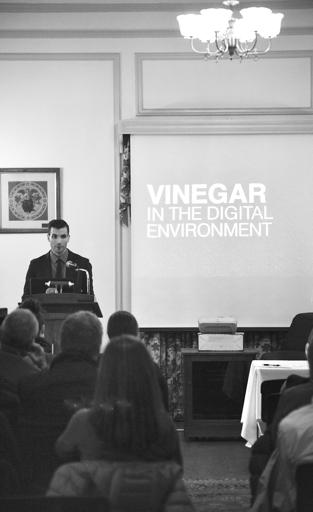
titled “Conversations in Digital Humanities: Exploring the
of
Technology and Cultural Understanding ”
Marinkovich law, said she learned how to emphasize with and interact with the clients
“I think you learn pretty quickly that your approach has to be really friendly and not ‘well, I’m a lawyer ’ You wouldn’t come in with a suit on Part of it is just having a rapport with them,” Marinkovich said
Katherine Ensler law, another student on the team, also said she had a similar experience working with clients
“The biggest challenge was learning how to at least try to minimize [the barriers between our different backgrounds], but they definitely exist I think we ’ ve all had different types of ways to work to get to know the families better and create environments where we can function the best we can to help our clients,” Ensler said
Though the law students said they hope judges would take into consideration the information they learned when and if they
reassess their sentences, Blume said he expects resistance to their efforts
“I think the biggest challenge at the moment is probably judicial resistance to the idea that you can ’ t tell a really bad kid from a kid who did a really bad thing Many judges think they have better insight into human nature and character than they probably should have,” Blume said
Despite the resistance, Jessica Hittelman law, another student in the Cornell Juvenile Justice Clinic, said the opportunity to work on this project was refreshing
“It’s exciting to be able to work on an issue that’s so fresh legally,” Hittleman said “The Miller decision just came down and almost immediately, we were working on it It’s pretty cool as a law nerd ”
Ashley Chu can be reached at ayc37@cornell edu
Cornell Study S ays Older People Less Likely to ‘ S ave the Best for Last’
By LAUREN BERGELSEN Sun Contributor
In a high-tech world with constant communication where purchases and important decisions can be made with the push of a button understanding how people arrange sequences of events can be compelling As such, when Cornell researchers investigated the value of the age-old concept of “saving the best for last,” they were led to interesting conclusions
A recent Cornell study published in Psychology and Aging reported that as people age, their tendency to save the best for last decreases
The study which aims to understand how people of different ages arrange sequences of events over time is based on an approach based on the “realization that people do not select events in isolation from each other, but create streams of experiences over time,” according to Prof Corinna Loeckenhoff, human development
“ When creating sequences, younger people tend to begin with the negative and end with the positive With age, people are more likely to intersperse positive and negative experiences, ” Loeckenhoff said Gregor y Eells, director of counseling and psychological ser vices for Gannett Health
Services, said the study results “make sense developmentally ”
“For older people, there’s not a lot of time left When you ’ re young, you are laying the foundation for the rest of your life, and that requires delaying gratification,” he said
Loeckenhoff co-authored the study with Andrew Reed Ph D ’11 and Skye Maresca ’11
According to Loeckenhoff, the team directed two studies in which about 90 adults were shown a series of photos with positive, negative or neutral content and asked participants to choose the order in which they would like to see them The younger adults preferred sequences that began with negative photos and ended with positive ones This preference, however, decreased with age, as older adults chose sequences in which different types of photos were interspersed throughout the sequence, Loeckenhoff said
The study has important theoretical implications, Loeckenhoff said, adding that although additional research is required to fully understand the mechanisms behind the order of preferences, differences in the perception of “time horizons” ––how people perceive length of life –– appear to play a role in the study Time horizons vary with age, and younger adults, who saw their future as “wide
open, ” were more likely to save the best for last, whereas older adults with more limited horizons preferred balanced sequences, she said
“Saving the best for last” is a trend Eells said he notices in many students he sees at Cornell When considering students who may sacrifice sleep to study before an exam, Eells said, “ our psyches need variability ” Rachel Samuel ’16 said she can relate to the study’s findings
“I do agree with the study because if I’m doing something fun, I’ll enjoy it less if I know that I have work that I should be doing I always get so much more satisfaction when doing things as a reward for getting all the hard things out of the way, ” she said
Aly Stein ’13 echoed Samuel’s sentiments, noting the relevance of the study to her current experiences as a senior
“By the time senior year rolls around, seniors tend to scurry to complete all of the ‘161 Things to Do ’ We feel that, in some ways, the end is nearing and that we have so much left to do,” she said “We put things off until the end because of having so much work, but by now I know I personally have re-prioritized ”
TIANZE PAN / SUN STAFF PHOTOGRAPHER
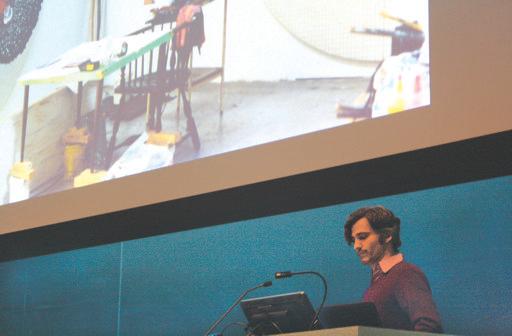
Guest speaker Ben Fino-Radin,
digital conser vator
Rhizone ArtBase, speaks at the A D White House Monday about digital curation in the first talk in a new series
Intersections
Digital
JOY CHUA / SUN STAFF PHOTOGRAPHER
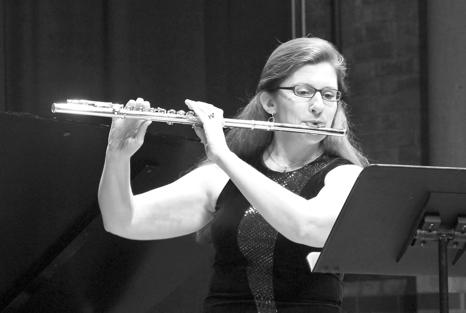
Visiting lecturer Elizabeth Shuhan performs the flute at Barnes Hall Monday night as a part of the C U Music series
the past ”
Initially, Romano and Gonzalez said that they hoped to fix the issue within 24 hours, but an email Monday night stated it will now take 48 hours to resolve
According to Gonzalez, both students and the Housing Office have expressed anxiety about the crash
Student s Voice Fr ustration at Housing Port al New Urgent Care Facility Will O f fer D ecrea sed Wait Time
“Some students have approached us, and they are concerned and surprised We share their concern and stress, ” Gonzalez said “Overall, though,
students have been great and very reasonable in working with us ”
Some students, including Kent Chan ’16, were surprised to find that although they had signed their housing contracts before the crash, the contract had been cancelled
“My friends and I were done at 5:20 [p m ], and we had signed our contracts By 5:30 [p m ], I learned that the housing portal had shut down and that my contract was void,” Chan said “I am really frustrated
Shutting down the housing portal was the right thing to do given the technical issues, but cancelling every-
thing was not ”
Other students echoed [Chan’s] sentiment, saying the issue was surprising
“It is pretty ironic because Cornell has such tech prowess, but we still have to wait [48] hours to fix the housing portal,” Avinash Murugan ’16 said
Students also noted the lack of information about the the issue and when it would be fixed
“I feel like the information they gave us in the email and on the website was insufficient and not very clear,” Chan said “It did not explain what the problems were or why they made such a
drastic decision to close the housing portal and cancel the contracts ”
Some students said they are afraid that the problem will occur again later in the housing selection process
“The email that the Housing Office sent was delayed, and it didn’t have any information about how it will be fixed I’m really afraid that this will happen tomorrow, and that everything will be pushed back even farther,” Murugan said
that Ithaca could use additional walk-in services and urgent care services,” Radford said
The company had received word-of-mouth feedback from healthcare providers in the community that there had been “logjams” with the number of people needing care, he said, adding that “ some of it’s a gut feeling” about what areas need another healthcare provider
“There was a definite need for [urgent care],” said Dr Louanne Tenkate, Five Star Urgent Care’s regional medical director, who will work at the Ithaca center According to Radford, there is only one other urgent care center in Ithaca Cayuga Convenience Care
Compared to hospital emer-
“People value their time, so our average wait time is 15 minutes to be seen by a provider, and you’re in and out within 45 minutes.”
D r J o h n R a d f o r d
gency rooms, Five Star centers offer “significantly lower” rates and wait time, according to the company ’ s website Additionally, Five Star Urgent Care aims to make its centers customer servicebased, Radford said
“People value their time, so our average wait time is 15 minutes to be seen by a provider, and you ’ re in and out within 45 minutes, ” he said “Compare that to an emergency department, where you ’ re lucky if you ’ re seen within an hour ”
Urgent Care centers like Five Star manage “ urgent but not too urgent ” conditions like respirator y infections, lacerations and dehydration, according to Tenkate
At any time of the day, the Ithaca center will be staffed with either a physician or a physician’s assistant, she said
Five Star has two other locations in Big Flats, N Y and Jamestown, N Y and will open a fourth location in Syracuse, N Y this spring
In Big Flats, the Center sees between 40 and 50 patients a day Its difficult, however, to predict how much traffic the Ithaca center will experience, Tenkate said Tenkate also said the staff for Five Star centers look forward to helping the community
“We want to make it convenient for students to come down here and get great care, ” she said
Lauren Avery can be reached at lavery@cornellsun com CARE Continued from page 1
Sarah Cutler can be reached at scutler@cornellsun com
MO O C to Teach ‘Engaging ’ Book s
developed a system for peer assessment to help students recognize their strengths and weaknesses in their ability to articulate their understanding of the books ”
Although the University has recently decided that it will join a MOOC consortium in the near future, Google will support both financially and technologically the MOOC version of Six Pretty Good Books, Macy said The course will be offered online through Google’s Course Builder platform, according to a University press release
According to Provost Kent Fuchs, after submitting a winning proposal to Google, the Cornell professors were granted the funds to enable them to rework their course into a MOOC
“I’m really pleased that these faculty put in the effort to write a winning proposal to Google,” Fuchs said “This is a wonderful opportunity to share the University course with the world ”
The course is part of the University Courses initiative, a series of classes designed to teach students to think from the perspectives of multiple disciplines, according to Macy
“The course was the original model for the University Courses [initiative] created in 2010 which called for courses that involve team teaching across disciplines that might provide a more
unified and shared educational experience for Cornell undergraduates regardless of major,” Macy said Emily Decicco ’16, who took the course last semester, highlighted the importance of using technology in lectures
“The author was projected on a giant screen in front of you [on Skype] and you got to ask him or her your personal questions about the book, which is a once-in-alifetime opportunity,” she said “Sure, you could email them, but to Skype in with New York Times’ best-selling authors is unbelievable ”
According to Macy, the course is modeled after ‘Great Books’ courses offered in the humanities; however, unlike the humanities courses, the books examined in this course are contemporary
“[The books] are highly engaging, thought-provoking, accessible, important, and written by some of the world’s most prominent and influential social scientists and science writers, including Steven Pinker, Duncan Watts, Robert Frank, Nicholas Christakis, Malcolm Gladwell and Dan Ariely,” Macy said Decicco said that the course ’ s books intrigued and entertained her
“The books you read are books that you would choose to read in your free time,” she said “To get an academic perspective on it from so many different people and the actual authors added so much to the books and made
the course unlike any other ”
Decicco said that as a MOOC with a potentially massive and diverse enrollment the course would offer the students who enroll an enhanced academic and learning experience
“The course would lend itself well [as a MOOC], because I think the more opinions and different types of people with different interests that you can get into discussions is huge,” Decicco said “The books we read would really lend well to that kind of discussion ”
According to Macy, most MOOCs to date have been in technical fields such as computer science or math Macy said that he hopes and expects to see more courses in the humanities and social sciences
“We hope to blaze the trail for more courses to follow, both at Cornell and elsewhere, especially in the social sciences,” he said “Google has transformed the ability of humans across the planet to find the answers to questions, and I think they see MOOCs as an important new contribution to that mission ”
In a Forbes piece published January, President David Skorton said that “by providing free access to anyone with an Internet connection, MOOCs facilitate the dissemination of knowledge to unprecedented numbers of people ”
DIVEST
d iv i d u a l l e a d e r s a n d c a m p u s o r g a n i z at i o n s , s u c h a s C o r n e l l O r g a n i z a t i o n f o r L a b o r A c t i o n a n d t h e Wo m e n o f C o l o r C o a l i t i o n , w h o h a ve c o m m i tt e d t o w r i t e t o Pr e s i d e n t S k o r t o n t h i s w e e k , C a s t l e s a i d “ W h i l e we ’ re s t i l l w a i t i n g t o h e a r b a c k f ro m s o m e i n d i v i du a l s a n d o r g a n i z at i o n s , we k n ow t h a t t h e re w i l l b e a l a r g e c ro s s - s e c t i o n o f t h e u n i ve r s i t y a n d s e ve r a l u n i q u e p e r s p e ct i ve s re p re s e n t e d a s p e o p l e f ro m a c ro s s c a m p u s , ” C a s t l e s a i d i n a n e m a i l C a s t l e a l s o s a i d t h a t t h e o r g a n i ze r s w i l l b e t a b l i n g a t d i f f e r e n t l o c a t i o n s o n c a m p u s t h i s we e k a n d w i l l p rov i d e m a t e r i a l s s o p e o p l e c a n s e n d c a r d s t o S k o r t o n s a y i n g re a s o n s w h y C o r n e l l n e e d s t o d i ve s t T h e s e i n d i v i d u a l m e s s a g e s w i l l b e d e l i v e r e d t o Sk o r t o n a t t h e e n d o f t h e l e t t e r - w r i t i n g e f f o r t , a f t e r s u pp o r t e r s o f d i v e s tm e n t h a v e h a d a c h a n c e t o “ s a y t h e i r p i e c e , ” a c c o rd i n g t o C a s t l e In a n i n t e r v i e w w i t h T h e Su n o n Fe b 1 5 , S k o r t o n c a l l e d o n “ s t u d e n t s t o m a k e t h e i r c a s e , [ a n d ] p u t o u t t h e i r p o i n t s o f v i e w ” o n t h e i s s u e o f d i ve s tm e n t T h e s t u d e n t s w h o h a d w r i t t e n l e t t e r s d i d j u s t t h a t , L e i by s a i d T h e s t u d e n t s g a t h e r e d o u t s i d e Da y Ha l l s a i d t h e y b e l i e ve d s t ro n g l y i n d i v e s t m e n t a n d w a n t e d t o m a k e a “ p e r s o n a l c o n n e ct i o n ” t h ro u g h t h e i r l e t t e r s “ My l e t t e r w a s w r i t t e n s o I c o u l d b e m o r e p e r s o n a l
Continued from page 1 Danielle Sochaczevski can be reached at dsochaczevski@cornellsun com
MOOC
Jonathan Swartz can be reached at jswartz@cornellsun com
HANK BAO 14 Business Manager
LIZ CAMUTI 14 Associate Editor
ANDY LEVINE ’14 Web Editor
RACHEL ELLICOTT ’13
Blogs Editor
DAVID MARTEN 14 Tech Editor
SHAILEE SHAH ’14
EMMA COURT 15
CAROLINE FLAX 15
SAM BROMER 16
& Entertainment Editor
SARAH COHEN ’15
BRYAN CHAN 15
Multimedia Editor
SCOTT CHIUSANO ’15
Assistant Sports Editor
MEGAN ZHOU ’15
Assistant Design Editor
BRANDON ARAGON 14
Assistant Web Editor
ANNA TSTENER 14 Marketing Manager
ERIKA G WHITESTONE ’15
Social Media Manager
Independent Since 1880 131ST EDITORIAL BOARD
REBECCA HARRIS 14 Editor in Chief
AKANE OTANI 14
AUSTIN KANG 15
Manager HALEY VELASCO 15
REHBERG 16
ZAHOS ’15
BORNFELD ’15
LEE 14
ARIELLE CRUZ 15
SYDNEY RAMSDEN ’14
BERMAN ’16
COOPER 15
KIM 14
POTOLSKY ’14
SHEKAR ’15
14
From the Editor
Ulysses Smith ’14 for Student Assembly President
I N T H E R AC E F O R P R E S I D E N T O F T H E S T U D E N T A S S E M B LY, t h e c h o i c e c o u l d n o t b e m o re c l e a r U l y s s e s Sm i t h ’ 1 4 i s t h e m o s t q u a l i f i e d , d e d i c a t e d a n d e n g a g i n g o f t h e t h re e c a n d i d a t e s b y a s i g n i f i c a n t m a r g i n He h a s a r t i c u l a t e d h i s a c c o m p l i s h m e n t s a n d o u t l i n e d h i s p l a n s f o r t h e C o r n e l l c o m m u n i t y w i t h e l oq u e n c e a n d p a s s i o n , l e a v i n g n o d o u b t t h a t h e i s t h e r i g h t m a n f o r t h e j o b Si n c e Sm i t h j o i n e d t h e S A h i s f re s h m a n y e a r, h e h a s s p o n s o re d t h e m o s t re s ol u t i o n s o f t h e t h re e c a n d i d a t e s He s e r v e d a s t h e S A ’ s f i r s t v i c e p re s i d e n t o f o u tre a c h a n d i s c u r re n t l y i t s f i r s t v i c e p re s i d e n t o f d i v e r s i t y a n d i n c l u s i o n T h r o u g h h i s w o r k i n t h o s e r o l e s , Sm i t h h a s d e m o n s t r a t e d h i s c o m m i t m e n t t o o u t re a c h a n d h i s a b i l i t y t o b u i l d a n d m a i n t a i n re l a t i o n s h i p s w i t h h i s c o n s t i t u e n t s In o n e o f h i s m o s t s i g n i f i c a n t p i e c e s o f l e g i s l a t i o n , Sm i t h m o re c l e a r l y d e f i n e d t h e r o l e s o f t h e
S A ’ s c o l l e g e re p re s e n t a t i v e s T h e re s o l u t i o n r a i s e d t h e b a r f o r re q u i re d o u t re a c h b y m a n d a t i n g t h a t re p re s e n t a t i v e s h o l d a m i n i m u m n u m b e r o f m e e t i n g s w i t h c o l -
l e g e d e a n s a n d s t u d e n t s e a c h s e m e s t e r I f Sm i t h i s e l e c t e d p re s i d e n t , w e w i l l b e e xc i t e d t o s e e h i m f o l l ow t h r o u g h o n t h e g o a l s h e h a s o u t l i n e d i n h i s p l a t f o r m We s u p p o r t h i s f re s h a p p r o a c h t o Un i v e r s i t y - w i d e d i v e r s i t y i n i t i a t i v e s , a s w e l l a s h i s i d e a s f o r l a t e - n i g h t s a f e t y a n d p r o g r a m m i n g i n re s p o n s e t o re c e n t s e x u a l a s s a u l t s a n d r a c i a l a t t a c k s Ad d i t i o n a l l y, w e s t a n d b e h i n d Sm i t h’s d e s i re t o s t a n d a rd i z e b y l i n e f u n d i n g a n d d e c re a s e t h e s u bj e c t i v i t y t h a t h a s p l a g u e d t h e p r o c e s s i n t h e p a s t Hi s e x p e r i e n c e w i t h t w o p re v io u s a l l o c a t i o n c yc l e s w i l l b e a v a l u a b l e a s s e t g o i n g i n t o a n o t h e r b y l i n e f u n d i n g y e a r T h o u g h St e p h e n Bre e d o n ’ 1 4 w o u l d a l s o b e q u a l i f i e d f o r t h e j o b, w e h a v e f o u n d t h a t h i s u s e o f b u z z w o rd s i n d e s c r i b i n g p a s t a n d p r o m i s e d i n i t i a t i v e s h a s n o t b e e n a c c o m p a n i e d b y c o n c re t e w a y s i n w h i c h h e w o u l d e n a c t t a n g i b l e c h a n g e We m u s t a l s o n o t e t h a t Ja y L e e ’ 1 4 d e c l i n e d T h e Su n ’ s i n v i t a t i o n t o i n t e r v i e w a s w e p re p a re d t o d e t e r m i n e o u r e n d o r s e m e n t f o r t h i s p o s i t i o n W h i l e i t i s c e r t a i n l y L e e ’ s p re r o g a t i v e t o d o s o , w e a re a l s o s t r u c k b y h i s d e c i s i o n n o t t o p a r t i c i p a t e i n s e v e ra l c a n d i d a t e d e b a t e s a n d f o r u m s t h a t t o o k p l a c e o n c a m p u s t h i s p a s t w e e k We f i r m l y b e l i e v e t h a t Sm i t h’s s k i l l s e t , e x p e r i e n c e a n d p a s s i o n f o r b e t t e r i n g o u r c a m p u s m a k e h i m s t a n d o u t n o t o n l y i n c o m p a r i s o n t o t h e o t h e r p re s i d e n t i a l c a nd i d a t e s , b u t a m o n g C o r n e l l i a n s a c r o s s t h e Un i v e r s i t y O u r o n e re s e r v a t i o n i s t h a t t h i s p a s s i o n c o u l d m a k e
t o h a v e s o m e o f C o r n e l l’s g re a t e s t m i n d s a l o n g s i d e m e o n t h e 1 3 1 s t E d i t o r i a l B o a rd a s T h e Su n c o n t i n u e s t o m ov e i n t o u n c h a r t e d d i g i t a l t e r r i t o r y In t h e l a s t y e a r, w e i n t r o d u c e d l i v e - s t re a m i n g v i d e o , b r i n g i n g c a m p u s e v e n t s s t r a i g h t t o y o u r s c re e n s We d o u b l e d o u r p r o d u c t i o n o f m u l t i m e d i a c o n t e n t , p u bl i s h i n g s e v e r a l v i d e o s p e r w e e k o n o u r w e b s i t e Fo r t h e f i r s t t i m e , w e t r a i n e d o u r t r ad i t i o n a l l y p r i n t - b a s e d s t a f f t o s h o o t v i d e o s o n t h e s p o t a n d e d i t t h e m f o r i m m e d i a t e t u r n a r o u n d A l t h o u g h w e h a v e c o n t i n u e d t o b r i n g y o u a q u a l i t y n e w s p a p e r e a c h m o r n i n g , w e a re n o l o n g e r l i m i t e d t o o u r d a i l y p r i n t e d i t i o n We l o o k f o r w a rd t o p u s h i n g f o r w a rd e v e n m o re e xc i t i n g d e v e l o p m e n t s d u r i n g o u r t e n u re , k e e p i n g y o u i n f o r m e d i n i m m e d i a t e a n d i n t e r a c t i v e w a y s o n c a m p u s , i n p r i n t a n d o n l i n e In t h e m o n t h s a h e a d , w e w i l l b e re v a m p i n g o u r b l o g s s i t e ; i n c re a si n g o u r c ov e r a g e o f e n t re p re n e u r s h i p a t C o r n e l l ; a n d b o l s t e r i n g o u r s o c i a l a n d m u lt i m e d i a p re s e n c e o n t h e w e b Fo r t h e p a s t y e a r i n d e e d , f o r t h e p a s t 1 3 2 y e a r s w e h a v e s t r i v e n t o m a i nt a i n i n t e g r i t y, a c c u r a c y a n d re l e v a n c y i n t h e c o n t e n t w e d e l i v e r t o o u r re a d e r s A l t h o u g h T h e Su n i s e v o l v i n g i n m a n y w a y s , t h a t f o u n d a t i o n a l c h a r g e w i l l re m a i n p re e m i n e n t u n d e r o u r w a t c h Yo u re p re s e n t o u r m o s t l oy a l f o l l ow e r s a n d o u r t o u g he s t c r i t i c s W h i l e w e c a n n o t p r o m i s e t h a t y o u w i l l s u p p o r t e v e r y d e c i s i o n w e m a k e , w e c a n p l e d g e t h a t e v e r y o n e w i l l b e m a d e w i t h o u r re a d e r s i n m i n d I h o p e t o h e a r f r o m m a n y o f y o u t h i s s e m e s t e r ; m y d o o r i s a l w a y s o p e n R L H
Letters
A ssessing The Sun’s journalistic integrity
To the Editor:
RE: “Cornell Student Found Dead at Watermargin Cooperative Wednesday Night,” News, Feb 27
The past few days have been extremely difficult for Watermargin and the rest of the Cornell community The ideal way to handle a situation of this severity is never clear, but there is no excuse for the manner in which The Sun has chosen to cover this tragedy
The Sun’s coverage served only to heighten emotional distress, not only among Watermargin residents, but across the entire Cornell community as well We strongly believe that the reporters of The Sun abused their journalistic privileges that night by prematurely posting an article on their website The headline “Body Found at Cornell Cooperative” left man Cornell students to speculate and panic when they deserved to find out in a more considerate and persoanl way Meanwhile, members of the Watermargin community have felt rushed to personally contact those who knew and loved Joe before they read about it in The Sun
The sensational nature of the text and image included in the final story was unnecessary and further exacerbated the emotional distress in our community We believe the tabloidlike image and inappropriate story was insensitive to the reality of this situation and its immediacy to many, if not most, members of the Cornell community The coverage lacked journalistic integrity in its misleading and unfortunate portrayal of this grave and serious loss
Upon contacting The Sun with our concerns, we received a letter that expressed condolence, but dismissed our complaints in a callous and patronizing manner Even though The Sun is an independent paper, it does not exist independently of the Cornell community The manner in which its journalists and editors investigate and report stories impacts not removed subjects, but peers and friends, and their words therefore carry a greater and more personal weight among this large, yet integrated University community
The coverage of this tragedy has been a disgrace to the nature and spirit of The Sun itself, as a student publication, by forgoing its responsibility to the hearts of the students it serves Now is the time for all of us, the members of The Sun along with the entire Cornell community to stand together in respectfully acknowledging and grieving the loss of our amazing, talented and dearly loved friend
Rebecca Ashby-Colon ’13, Morgan Michel-Schottman ’14, Royce Novak ’13, Preslava Staneva ’13, Sonny Penterman, grad, Jenny Zhao ’13, Zolzaya Enkhbayar ’15, Andrea Alfano ’14, Natanya Auerbach ’13, Casey Minella ’14, Carlos Higgins ’14, Molly Beckhardt ’14 and Clara Scholtz '15, members of the Watermargin Cooperative
My Ambitionz A s a Writah
Ta u g h t t h ro u g h o u t
h e ye a r I t h o u g h t p e o p l e w o u l d re a d t h e a r t i c l e a n d u n d e r s t a n d t h a t I w a s d e m a n d i n g m o re , n o t l e s s
Howe ve r, t o m y c h a g r i n , t h a t w a s n o t t h e c a s e T h e re
we re m a n y re s p o n s e s t o m y a r t i c l e r a n g i n g f ro m a l e tt e r t o T h e Su n t o s e ve r a l Fa c e b o o k s t a t u s e s t h a t a p p e a re d i n m y n e w s f e e d On e t h i n g I q u i c k l y n o t i c e d
w a s t h a t t h e y a l l s e e m e d t o m a k e t h e s a m e p o i n t
A s C a m e ro n F Yo u n g e r p o i n t e d o u t i n h i s l e t t e r, “ Re m e m b e r i n g t h e o r i g i n s o f Bl a c k Hi s t o r y Mo n t h , ”
b l a c k h i s t o r y h a s b e e n d i s t o r t e d t h ro u g h o u t t h e ye a r s
a n d a s a re s u l t c a n n o t b e t a u g h t w i t h w o r l d h i s t o r y
Howe ve r, I s i m p l y a s k , h a s a n y b o d y re a s o n e d t h a t
t e a c h i n g i t i n i t s ow n m o n t h a l l ow s f o r i t t o c o n t r a -
d i c t w o r l d h i s t o r y ? T h i n k a b o u t i t If b l a c k h i s t o r y we re t a u g h t w i t h w o r l d h i s t o r y, t h e c o n t r a d i c t i o n s w o u l d f o rc e t h e i s s u e , a n d s o m e t h i n g w o u l d h a ve t o
b e d o n e t o re a l i g n t h e t w o Of c o u r s e , i f “ Bl a c k
Hi s t o r y Mo n t h” n o l o n g e r e x i s t e d , i t w o u l d t a k e a l o t o f w o rk t o t e a c h t h e s t r u g g l e s o f A f r i c a n - A m e r i c a n s c o r re c t l y Howe ve r, i t w o u l d b e we l l w o r t h i t We
m u s t re a l i ze t h a t Bl a c k Hi s t o r y Mo n t h w a s n o t c re a te d a s a n e n d g a m e b u t a s t e p p i n g - s t o n e , a n d n ow t h a t i t i s t a u g h t i n s c h o o l s , i t i s t h e t i m e t o t a k e t h a t i d e a
f u r t h e r I a l s o w o u l d l i k e t o p o i n t o u t t h a t Yo u n g e r s t a t e d h e w ro t e h i s l e t t e r “ s i m p l y t o s h e d l i g h t o n t h e o t h e r s i d e o f T h o m a s ’ c l a i m t h a t b l a c k h i s -
I agree that I do ofte find myself at odds with many things th widely accepted
t o r y i s i r re l e va n t ” I w a n t t o s t a t e t h a t I i n n o w a y
c l a i m e d t h a t b l a c k h i s t o r y w a s n o t i m p o r t a n t , a n d t h a t i f s o m e h ow I d i d , I w o u l d l i k e t o a p o l o g i ze A s a c o l u m n i s t , I a l w a y s r u n t h e r i s k o f b e i n g m i s q u o t e d o r s i m p l y m i s u n d e r s t o o d It i s e a s y t o d e n y t h e t r u t h i n w h a t I ’ m t r y i n g t o c o n ve y i f s o m e o n e c a n i n t e r p re t m y
w o rd s i n a n y w a y h e o r s h e s e e s f i t Howe ve r, t h i s p u s h e s m e t o d o a b e t t e r j o b o f e x p re s s i n g m y t h o u g h t s In a Fa c e b o o k p o s t re g a rd i n g m y l a s t c o l u m n , s o m e o n e s t a t e d t h a t , a s a c o l u m n i s t , I a m “ a n e ve rp re s e n t vo i c e t h a t o b j e c t s t o a n y t h i n g w i d e l y c e l eb r a t e d by p e o p l e , j u s t b e c a u s e ” I a g re e t h a t I d o o f t e n f i n d m y s e l f a t o d d s w i t h m a n y t h i n g s t h a t a re
w i d e l y a c c e p t e d Howe ve r, I b e l i e ve t h a t t h i s i s o f t e n b e c a u s e t h i n g s t h a t h a ve e x i s t e d f o r a l o n g t i m e a re
o f t e n a c c e p t e d w i t h o u t s o m u c h a s a s e c o n d t h o u g h t
I a t t e m p t t o q u e s t i o n e ve r y t h i n g , a n d a s a re s u l t m u s t a c c e p t n o t h i n g a t f a c e va l u e A l s o , I f e e l a s i f a p a r t o f m y j o b i s t o s e e k c o n t rove r s i a l t o p i c s , n o t o n l y t o p i q u e t h e i n t e re s t o f m y re a d e r s , b u t a l s o t o h e l p p l a y a ro l e i n t h e e vo l u t i o n o f s o c i e t y I k n ow b e yo n d a d o u b t t h a t I w i l l n o t p ro m o t e c h a n g e by w r i t i n g a r t i c l e s t h a t n o b o d y d i s a g re e s w i t h T h u s , I w o u l d l i k e t o t h a n k t h o s e o f yo u t h a t d i s a g re e w i t h m e f o r p rov i n g t o m e t h a t I a m a c h i e v i n g a t l e a s t s o m e o f m y g o a l s I m u s t a l s o a d m i t t h a t a t t i m e s I e n j oy b e i n g i n t h e m i n o r i t y w h e n a r g u m e n t s a r i s e No n e t h e l e s s , d o n o t e x p e c t m e t o a r g u e a c e r t a i n w a y s i m p l y b e c a u s e i t i s t h e vo i c e o f t h e m i n o r i t y t h e c a u s e m u s t b e j u s t a n d t h e a r g u m e n t m u s t b e s o u n d If yo u t h i n k t h a t s o m et h i n g yo u b e l i e ve i s a v i e w h e l d by f e w o r t h a t i t o p p o se s a w i d e l y a c c e p t e d i d e a l , d o n o t b e a f r a i d t o s h a re yo u r b e l i e f I e n c o u r a g e yo u t o e m a i l m e i f yo u h a ve a n y o p i n i o n s t h a t yo u t h
Nicholas
Giving Publicity to Derogator y Speech
The Sun’s recent coverage of the unwelcome remarks of a speaker at a campus Muslim prayer service brings up a broader difficult question when it comes to identifying a derogatory speaker and calling out the speaker for what was said On the one hand, naming a homophobic and sexist speaker serves as a way to shame a speaker for his or her unwelcome remarks On the other hand, if a speaker is an established provocateur a la the Westboro Baptist Church or something along those lines, naming a speaker merely provides more free publicity for sexism or homophobia
Further complicating the editor’s job in determining the appropriate way to report on derogatory speech is that the role of the news section is primarily to report happenings and to save opinions for the editorial page But the editor must choose one way or the other, and neither choice is completely objective
If this wasn ’ t complicated enough, the editor must also consider the reputation of the witnesses Absent a Sun
reporter attending the event and taking notes, the editor must rely on secondhand accounts of what transpired If the witnesses mischaracterize what happened, and The Sun subsequently names the speaker, these awful remarks are tied with his or her name in print but also, and perhaps more damagingly, on the Internet for all posterity The Sun risks slandering the speaker, and may even face a libel suit While the risk of a successful libel suit against The Sun is low, and The Sun has insurance against such suits in any event, the reputation of the newspaper and the reputation of the speaker is still at risk
So what is an editor to do? In this particular case, the sources for The Sun declined to identify the speaker, and in so doing made this decision for them But what should editors do in a different situation, in which the speaker’s identity is known to the reporter and the editor? Should the editor wait to identify and name the speaker before publishing the article? I don’t think there’s a clear right or wrong
Kirat Singh | Evaluating the Discontents
AOs Washington’s odd stratagems to destroy American economic recover y reach new heights, it is high season for bashing political leadership Beyond the sequester and the President’s realization that he cannot pull off a “Jedi mind-meld,” the air appears thick with incompetence and paralysis in Japan, India and Europe In a recent piece for the American Interest, Walter Russell Mead makes his pessimistic case, contending that the “American elite is not alone in its inconsequential futility and its lack of strategic vision ” Mead exaggerates these problems and misattributes their source
Furthermore, the historical episodes he sees as inspiration for solutions probably contributed to today’s political paralysis
Mead’s critique of modern leadership extends well beyond the traditional seats of power Bureaucrats, university presidents, the heads of mammoth non-profits are all attacked for being confined thinkers, perpetually seeking a hollow consensus
His heroes, however, are a small coterie of post-World War II statesmen “ men ” like Adenauer, de Gaulle and Truman Leading civil societies that were “sobered by war and depression,” these men were able to lay foundations for economic prosperity and political stability for
Either choice has its own merits and risks
The editors should consider a balancing test if The Sun encounters this type of decision in the future They should weigh the intentions, reputation and veracity of witnesses, as well as whether naming the speaker will simply provide free publicity and attention to an unwelcome cause If the speaker’s reputation is that of a known provocateur who is likely seeking attention for his or her bigoted agenda, the editor should consider minimizing the free publicity of journalism by declining to identify the speaker Alternatively, if the speaker is engaging in conduct unbecoming of their reputation which is perhaps more common when he or she is an established member of the Cornell community naming that speaker holds the speaker more accountable for his or her words
Some will argue that such a balancing test defies the journalistic principle of objectivity in the news section This is not persuasive
The decision to publish a
ptimal Restraint
years to come While instantly appealing for its nostalgia, this picture glosses over the constrained actions of his heroes Reading Mead, one would never worr y about de Gaulle’s costly dithering over the French
I am no starry-eyed fa of legislators in D C o back home in New Delhi.
decolonization of Algeria or Truman bypassing Congress early in the Korean War
More confusingly, many instances of deep political stagnation today can be traced to the kind of leadership Mead is so partial toward Describing Europe’s political scene as a “ manmade disaster,” he appears to pin the blame on German chancellor Helmut Kohl’s illconceived dash for the Euro
This attempt at European integration, however, is just the kind of grand gesture that Mead’s argument would otherwise valorize
In chastising modern leaders for their indecision, Mead insists that human attitudes can dramatically and inexplicably change He imagines a sudden, rather arbitrar y tipping point somewhere in the late 1980s when leaders started having
speaker’s name, in order to increase the newspaper ’ s effectiveness as an accountability mechanism for hateful speech, is an editorial one
To some degree, all news coverage is shaped by editor ’ s opinions on what is important and what is not important All news organizations must decide what content to include and exclude, and it would be naïve to think that these decisions can be made in some purely objective manner The newspaper should avoid serving as a free amplifier for derogatory speech and must avoid being a willing puppet of provocateurs seeking to take advantage of free publicity Just as the speaker is free to say what he or she pleases, so too is The Sun free to decide on what to report
Nicholas Kaasik is a secondyear law student at Cornell Law School He assigns and edits submissions for Barely Legal He may be reached at public-editor@cornellsun com The Public Editor column runs monthly on Tuesdays
trouble comprehending risk and, my favorite, became “bad at estimating probabilities ” It remains unclear why the minds of the political elite suddenly became bad at doing things that psychologists now tell us humans
have been bad at doing for a while I would argue the story of increasingly constrained political and economic power, if true to the degree Mead suggests, is actually derived in large part from the slowly eroding power of the institutions that these leaders are a part of
In a more systematic analysis of the diffusion of political power that ran in The Washington Post, Moises Naim proposes three reasons for this phenomenon of diffusion An expanding global middle class, increasing migration and mobility and a normative shift in attitudes in favor of “individual freedoms and gender equality” have restrained traditional seats of power Naim suggests that these trends are behind many unpleasant impasses,
including tarrying on deficit reduction in the U S , the European Union’s incoherent economic policies and the lack of a global climate treaty On the whole, however, he rightly contends that these changes cannot be condemned as universally unwelcome Naim discusses in some detail the effects of increasingly diffused political power including reduced civilian tolerance of military casualties, shorter average tenures for CEOs and warier stock markets that punish oil drilling firms more harshly for spills While each phenomenon has its downsides, they are not worth lamenting as unambiguously as Mead does I am no starry-eyed fan of legislators in D C or back home in New Delhi I do not think, however, that they are, en masse, substantially different human beings than the ones who occupied those seats decades ago They live in a different world with greater constraints on their authority, guided by less than perfect incentives Their reduced ability to push an agenda, moreover, may actually be very welcome
ARTS & ENTERTAINMENT
BY REHAN DADI Sun Staff Writer
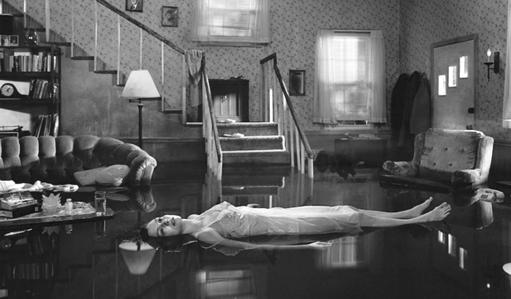
Gregor y Crewdon: Brief Encounters is an inspiring documentar y film by Ben Shapiro on the life and work of acclaimed contemporar y American photographer and Yale faculty member, Gregor y Cre wdson The title of the film is taken from a theater sign of the ver y last photograph in a long series called “Beneath the Roses,” which features photographs of life in small towns in upstate Ne w York and other locations in Ne w England Cre wdson is known for his large, complex, theatrical and staged photographs of small-town life, usually portraying ordinar y people and marginal characters
Cre wdson gre w up in Brooklyn as the son of a psychiatrist whose practice was in the basement of the family townhouse As a child, Cre wdson was intrigued by the myster y of what was happening in that basement, and he has continued to explore an enigmatic understanding of ever yday life in his mature work He was also inspired by an exhibition of the photographs of Diane Arbus whose unsettling por traits of misfits in ordinar y life had a power ful effect on him at a young age From her ar t, he realized that photography is not simply a documentar y medium; it can also be psychologically complex and indeterminate in its narrative
After some academic difficulties in college, Cre wdson took up photography in earnest, and has now become a critically acclaimed photographer, represented by major galleries and featured in museum exhibitions The Herber t F Johnson Museum is currently exhibiting one of the photographs in his “Beneath the Roses” series
Each photograph in “Beneath the Roses” is a culmination of Cre wdson’s lengthy production process First, Cre wdson explores various small town streets for a setting However, some of his photographs are not realized in an actual location, but in entire houses and rooms carefully reconstr ucted with controlled stage design Each photograph requires a full-scale production team similar to a small film cre w The successful realization of each photograph depends on cranes and lifts, massive lighting rigs and a careful search for proper clothing, furniture and other props
forming ever yday tasks These chosen “ actors ” are not idealized models, but ordinar y locals with sagging bodies, bad teeth and blotchy skin A makeup team has to dress and prepare each actor before he or she assumes a still pose Then Cre wdson’s team takes about 50 large format photographs of the same scene, with minor variations in lighting, exposure and actors ’ poses Later, he works with a post production team to digitally combine the best par ts of his takes and constr uct a final, large-scale photo
In the film, Cre wdson comes across as an easy-going person, but it is clear that he is obsessive about getting ever y detail right In his outdoor photos, he goes as far as having a pickup tr uck release fog and mist before taking a photo at dusk, simply to capture the right environmental quality of light
Ever y photograph depicts “ordinar y ” people per-
The Myth of Truth in Art
In case you haven’t heard, Zero Dark Thirty was nominated for five Academy Awards and four Golden Globes You might not have noticed, however, the political and journalistic quibbling over the film’s accuracy in portraying the lead-up to Bin Ladin’s death
As Manohla Dargis and A O Scott noted in The New York Times, much has been made of the historical accuracy (or lack thereof ) of recent films like Lincoln, Django Unchained, Zero Dark Thirty and Argo However, rather than dwelling on factchecking details themselves, Dargis and Scott raised broader questions about the relationship between art, morality and truth: “Is art supposed to make us better people, give us moral instruction, work toward the social good, or exist merely for our personal pleasure? Above all, does it have to be true?”
In asking whether art should be true, Dargis and Scott ignore a key point: Even if art wanted to be truthful, it can ’ t Art is always a representation Even when the artist tries to be “truthful,” his subjectivity always emerges even if he is a realist painter or a so-called documentary photographer No matter how realistic the painting might appear, it is always an illusion, or the artist’s interpretation of the scene before him Likewise, a photographer doesn’t need a darkroom or Photoshop to insert his subjectivity Just by taking the picture cropping this but not that, allowing more or less light to enter he has already turned it into
a representation
Perhaps Dargis and Scott should have posed the question in a slightly different way, asking not whether art should be true (it cannot) but whether art should try to be truthful Certainly, in painting a portrait for example, the artist can choose to approximate the subject’s color and proportions rather than veer towards abstraction Likewise, there is a large range of possible photographic manipulation, Photoshop effects being at the extreme end of the spectrum In the same way, Zero Dark Thirty can either stick to or abandon the historical facts at its disposal So, to rephrase Dargis and Scott’s question, should art try to be true?
Yes just not in the way Dargis and Scott define it To them, “ true ” is synonymous with “factual” and “historically accurate ” While I agree that “ true ” portrayals of historical events would include factual and
Greener on the Other Side
historically accurate information, they do not necessarily have to
Art is a slice of an incomprehensible universe, something that makes reality more relatable Sometimes, historical accuracy and
Cre wdson achieves an aesthetic in his resulting photos that is uncanny and disturbing Each feels ver y familiar They appear to be ordinar y vie ws of unremarkable individuals in a small town, but because he controls the lighting and the placement of actors and props ver y carefully, it somehow simultaneously looks like an ar tifice a frozen staging of a living narrative Because the photographs are printed on ver y large pages, one cannot help but notice ever y detail in each photo peeling wallpaper, grimy windows and the alienated looks on the faces of the actors The photographs are of ordinar y scenes, but their ar tifice and transformative light also provide a feeling of grace “For that instant, my life makes sense, ” Cre wdson noted with a wr y sense of humor
Cre wdson’s careful constr uction of his photographs renders them closer to paintings than documentar y photographs As much as his work was affected by other photogrophers such as Diane Arbus, Cre wdson is equally inspired by Hollywood staged theatricality For one photo, Cre wdson went as far as recreating the entire bathroom from Psycho This layering of ar t, historical and cinematic references adds complexity to Cre wdson’s photos and makes them more akin, if anything, to abstraction If you are looking to be creatively inspired, don’t miss Brief Encounters Brief Encounters will be shown on campus on March 5 at 7:30 p m at the Schwar tz Center
fact-checking help artists cut their slice Other times, such literalness interferes with a more relatable truth Impressionists, for example, abandoned realist painting to more accurately represent the properties of light Likewise, a cubist self-portrait might be more truthful than a snapshot showing just one expression at one point in time The goal is always to show us something new, something we hadn ’ t noticed before, about the reality we ’ ve taken for granted
The danger is not that these films abandon facts or historical accuracy for that more relatable, more meaningful truth The danger is when films claim a degree of historical accuracy (as Zero Dark Thirty does) The danger is when the government, working to promote order, monopolizes the information (sometimes for good reasons of national security), and the journalists, working to sell newspapers, spin the information to their liking The danger is when we can only get our facts from film, when Mississippi only remembers to ratify the 13th Amendment after watching Lincoln The danger is when we can ’ t tell the difference between fact and fiction, between film and real life
For me, the most chilling aspect of Zero
Dark Thirty (and there were many) was this inability to tell the difference between “film truth” and reality Thinking back two years ago to Bin Ladin’s death, I tried to compare the movie's portrayal with what was reported on the news I did lots of Googling and comparing But in the end, there was information I would never know about those events, photos I would never see and I was left with only the movie’s portrayal to fill in the gaps
That’s the art of the film that it captures the gray area between fact and fiction post 9/11 It feels “ true ” in a way a historically accurate film could not It feels like 2003 again, when Bush announced that we’d found WMDs, and everyone just nodded because there was no way of knowing otherwise We filled in the gaps then too
Emily Greenberg is a senior in the Colleges of Arts and Sciences & Art, Architecture and Planning
She can be contacted at egreenberg@cornellsun com Greener on the Other Side appears alternate Tuesdays
Emily Greenberg
Rehan Dadi is a sophomore in the College of Agriculture and Life Sciences He can be reached at rdadi@cornellsun com
I Am Going to Be Small by Jeffrey Brown
March Madness Will Be ‘Chaotic and Unpredictable’
SMITH Continued from page 16
Ohio State, has fallen off since but with the return of Ryan Kelly, they could be the most popular choice Miami has emerged as a fun choice as well and their dominance over the ACC gives reason to believe they could win it all, but they also lost by 15 to a below 500 Wake Forest team and have no NCAA Tournament experience on the squad To sum it up, there is no clear-cut favorite to win it all, and no one is a sure bet to reach the Final Four, a fact that is both good and bad for college basketball
It’s good in the sense that this tournament has the potential for an absolutely ridiculous amount of upsets At this point, it’s safe to say that no team is safe from a quick first or second round elimination, which should make the first weekend incredibly exciting The unpredictability of the NCAA Tournament is what makes it such a unique event, and this year will likely be full of Cinderella stories In my opinion, Belmont, Middle Tennessee, Creighton or several others will undoubtedly make runs to the Sweet Sixteen or Elite Eight These teams and the stories that come along with them will captivate college basketball fans around the countr y later this month
The negative about this parity though is it that favorites create polarity, and polarity draws interest For example, whether you are a die-hard Duke fan or a Duke hater, you ’ re going to watch when they play Upsets are nice as long as it’s “David vs Goliath,” but as soon as it becomes “David vs David,” the interest wanes Seeing schools like Middle Tennessee take on the Duke’s of the college basketball world is superbly entertaining, but watching Middle Tennessee play a random school from the A-10 that’s a No 8 or 9 seed and just got hot at the right time isn’t nearly as interesting
The question one must ask when looking at this season in college basketball and the parity that has taken control of the sport is, how did we get to this point? Why are the “big schools” not dominating like they usually do? The answer to this question is threefold First, there are just more quality Division 1 basketball players today than there were 20 or even 10 years ago Basketball has not just grown in the United States as a sport but has taken leaps and bounds internationally, and many schools are taking advantage of the global talent pool Secondly, the players at smaller schools who are less athletically gifted are taking more and more advantage of the three-point line The three-point shot is the great equalizer in basketball, and having several proficient shooters who can heat up at the right time makes any team, regardless of any other factors, dangerous Thirdly, and probably most importantly, is that the best players in college basketball are heading to the NBA after only one season When the NBA changed their draft rules in 2005 to ban high school players from going straight to the NBA, many thought it would be a good thing for the major college basketball programs, as they now would be able to retain the best prep talent This belief is true in years when the “one-and-done” players are actually really good A recent University of North Carolina study showed that teams with “one-anddone” players tend to make it 0 75 rounds further in the NCAA tournament However, because of this, major programs have become more reliant than ever on these “one-done-players ” In a season like this one, when the talent of the nation’s collective freshman class was sub par, the major programs have been struggling and parity is inevitable Like it or not, that’s where we ’ re at heading into March Madness I know we still have the conference tournaments to play, but it’s unlikely that in such a small window anyone will solidify their resumé to the point where we can be totally comfortable picking them to advance to the Final Four I filled out an Accenture match play tournament bracket a couple weekends ago with my friends, and to my chagrin, my bracket was completely and utterly destroyed by the massive number of upsets I never knew golf was so unpredictable, and I wasted my time because of it With March Madness, I promised myself I’m not going to make the same mistake, especially this season, and I urge you to do the same Be careful, as we could be in for one of the wackiest, chaotic versions of March Mayhem in a while
Alex Smith can be reached at asmith@cornellsun com
By SKYLER DALE Sun Staff Wr ter
The women ’ s basketball team experienced a weekend of individual accomplishment, but after being swept by Yale and Brown, Cornell has now lost eight of its last nine games
The Red (11-14, 3-8 Ivy) entered the game against Brown (9-17, 3-9) Friday after having won its last two games against the Bears on game-winning plays by senior forward Clare Fitzpatrick
Cornell began the game cold, shooting just under 26 percent from the field in the first half, while Brown was able to convert on 45 percent of its shots for a halftime score of 24-17
The Red stepped up its shooting efficiency in the second half, however, and junior guard Stephanie Long caught fire from three-point range
“When we need a three, we can count on [Long],” Fitzpatrick said “She’s what got us back in the game ”
After trailing by nine with just 1:17 left to play, Long drained two three-pointers in two consecutive possessions to cut the score to three
Though Brown was ultimately able to hit its free throws and finish the game with a 58-51 victory, Long’s performance shows how important she will be to the Red as a senior leader next year
“Obviously she’s going to be a [really] important part of what we do next season [as someone] who is smart and savvy, ” head coach Dayna Smith said
The Red returned to action against Yale (1214, 7-5) Saturday, falling again by just seven points Neither team could establish a substan-
tial lead until the end of the first half when the Bulldogs went on a seven-point run to take an 11-point lead
Cornell fought back after halftime, opening the second period with a six-point run and eventually taking a two-point lead with 8:32 left in the game The push was led, in part, by senior guard Stephanie Lane who recorded the first double-double of her career and scored a careerhigh 20 points
“Spencer had an amazing game She was a great point guard She distributed the ball,” Fitzpatrick said “She’s faster than most players in the Ivy League ”
Junior guard Allyson DiMagno also had a productive game Her 13 rebounds helped her set the school record for rebounds in a season
“Obviously she’s been someone that we ’ ve needed to rally on all season, ” Smith said “When she doesn’t have a double-double, it’s an off night ”
Despite Lane and DiMagno’s terrific performances, Yale went on another run to close the game and win 71-64
The Red will play at Dartmouth Tuesday evening to battle the Green in a game that was postponed due to Winter Storm Nemo
According to Smith, the team will need to perform the way it did against Yale in the second half when it gets to Dartmouth
“We had a very good second half against Yale We finally broke out of our shooting woes, ” Smith said “We just want to get back on the court ”
Skyler Dale can be reached at sdale@cornellsun com
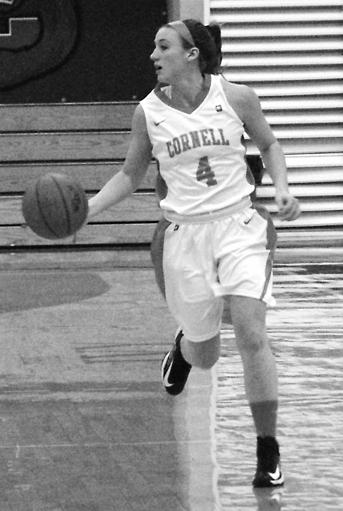
Third time’s the charm | Junior guard Stephanie Long shot two-three pointers in the Red’s loss to Brown on Friday
ENOCH NEWK RK / SUN STAFF PHOTOGRAPHER
Red Takes Second at IC4A Finals
high jump by Butler and junior Montez Blair, respectively Sophomore Stephen Mozia finished second overall in the shot put, and junior Steven Bell finished third in the long jump
After a very emotional Heps meet at Harvard, the Red headed back into competition this past weekend The men ’ s team competed in the IC4A finals and the women ’ s team competed in the ECAC finals, both hosted in Boston
The men ’ s team finished second overall behind University of Connecticut at the IC4As, which men ’ s head coach Nathan Taylor said he was content with
“I was satisfied with our performance knowing that we had gone to the well the week before and held out some of our guys from competing,” he said “UConn having the week before off was an advantage for them We didn’t double guys up like we normally would ”
Taylor also said that his team had some fantastic individual performances
“[ Junior] Tommy Butler was certainly one of the big ones, ” he said “[Senior Bruno Hortelano’s] performance was great, [and senior J D Adarquah] was fantastic J D ran the second best 60m ever by an Ivy League athlete; Bruno ran the best 200m ever ran by an Ivy League athlete ”
Taylor spoke about how old the IC4A meet is, and how much of an honor it is for the athletes to place there
“It’s the oldest collegiate track meet in the country, ” he said “It predates the NCAA, and for the first few years it was the national championship meet There are about 97 Division 1 teams in the IC4A Anyone who places is named All-East ” Notable men ’ s performances included a 1-2 finish in the
The women ’ s team finished in fifth place in the ECACs, which head coach Rich Bowman noted was the best they could do in that moment
“We performed as good as we could have,” he said “Not everyone went to the meet after the Heps [last week] It was a big emotional letdown after the Heps, so we didn’t mandate that everyone go There wasn ’ t anyone who went there who didn’t do a very good job ”
Bowman also pointed out that some of his best athletes did not compete in the meet
“Some of our best athletes didn’t go, ” he said “So [the fifth place finish] shows the depth of our team Those that came surely took it very seriously ”
Bowman explained that for the athletes who do not qualify for the NCAA Finals, the ECACs is the next best meet
“It’s the next level,” he said “A lot of the athletes we have can ’ t make the NCAA meet, so [the ECACs] is like our final meet The team atmosphere isn’t really there, so it’s really a chance to show what you can do as an individual ”
Notable women ’ s performances included senior Kate Rosettie finishing third in the 5K and senior Claire Dishong finishing fifth in the pole vault Senior co-captain Victoria Imbesi also finished fifth overall in the shot put
Juan Carlos Toledo can be reached at jtoledo@cornellsun com
C.U. Trampled by Mar yland
By EMILY BERMAN
Assistant Sports Editor
The women ’ s polo team lost its bid for an undefeated season this past weekend after dropping an 18-16 decision to the Maryland Polo Club The Red now stands at 8-1 at home and 11-1 overall, with just three weeks remaining until the regional championship tournament
The Baltimore-based MPC, which is made up of a mix of high school students and older players, was the Red’s first non-collegiate opponent
According to head coach David Eldredge ’81, while the MPC played a typically excellent game, the Red could have come out on top if the team had been more focused
“[The MPC] totally met the expectation I had that was something I was expecting out of
them,” he said “On the flip side, had we been our focused, normal self, I believe we could have won this game We had our opportunities [and] they were there; we gave them away with simple sloppy mistakes ”
This matchup was the Red’s first game in more than a month due to a horse virus in Cornell’s barn that forced the cancellation or postponement of two home games The time off which was similar in length to the break the team took for Cornell’s winter recess affected the team ’ s performance, Eldredge said
“We weren ’ t mentally ready heading into this game, ” he said “On the plus side, the girls came out of it with the whole attitude of ‘I wasn ’ t ready, I know I wasn ’ t ready [and] that is never going to happen again ’ That’s really the attitude I want out of them ”
Senior co-captain Ali Hoffman, junior co-captain Kailey Eldredge and freshman Anna Winslow started for the Red The fourth core member of the team, freshman Devin Cox, sat out this weekend due to a sprained medial collateral ligament
The first chukker started slowly for the Red, who fell behind 3-1 in the first few minutes before tying it up 3-3 MPC went on a four goal run in the second chukker to make the game 7-3, but the Red managed to find the goal again and the half ended with the Red down, 8-6
A strong opening in the third chukker saw an energized Red squad capture a slim 11-10 lead, the team ’ s only advantage during the game MPC fought back with four unanswered goals, however, to end the third with the Red behind, 14-11 Despite outscoring MPC 5-4 in the fourth, the Red was unable to overcome its deficit and dropped the match, 18-16
“They went out at a little too easy of a pace, and their focus wasn ’ t as good as it had been at other times in the year, ” Eldredge said “In some ways, I’m kind of happy this happened, because it’s going to make it evident that it’s not just a cake walk ”
Although the team had been scheduled to take on Colorado State next weekend, the game was cancelled due to high travel costs Instead, the women will play either a club from Virginia or a club from Toronto
It’s a Crazy Year
In College Basketball
Gonzaga is number 1 Let me clarify that again Gonzaga University, the Jesuit school located in Spokane, Washington with less than 5,000 students, now officially features the premier basketball team in all of the land Not Kentucky, not Duke, not UCLA, not any of the traditional Big East powers, or any of the other fifty or so major conference schools that pour millions of dollars into their basketball program each year, but Gonzaga I’m not trying to take anything away
from the Gonzaga program as I give them all the credit in the world for claiming the top spot in the polls But their rise signifies the parity in college basketball that has defined this season more than any other
With March rolling around, it’s the time of the year that most fans start searching for teams with just enough experience, reliable guard play, defensive prowess, and momentum to fill their Final Four and lead them to glory in their ESPN pool But unfortunately, finding those teams this year is going to be particularly difficult For a while we thought Indiana would be a lock, but every time they seemingly start to turn the corner they trip over their own
feet This could not have been more evident last week with their loss to Minnesota This may have been only one loss, but it was the third time they lost as the No 1 ranked team and the way Trevor Mbakwe dominated Cody Zeller in the paint should inspire fear into anyone counting on them to win it all On paper they seem like the most complete team, but if Zeller can ’ t find a way to play tougher and they don’t find a way to get Victor Oladipo the ball more, an early exit is becoming an increas-
ingly strong possibility
The bright news for Indiana fans though is that every other team is in a similar place Gonzaga may hold the No 1 spot now, but they’ve feasted off an easy West Coast Conference schedule and haven’t been forced to navigate tough opponents consecutively, something they’ll have to do in the tournament Kansas is a likeable pick and definitely has the talent to win the championship, but the inconsistent play of point guard Elijah Johnson could lead to their impending doom Duke, which started the season on fire with wins over Kentucky, Louisville, and Ohio State, has fallen off since but
Better, faster, stronger | Senior Bruno Hortleano ran the best 200m ever ran by an Ivy League Athlete this weekend.
CONNOR ARCHARD / SUN SEN OR PHOTOGRAPHER
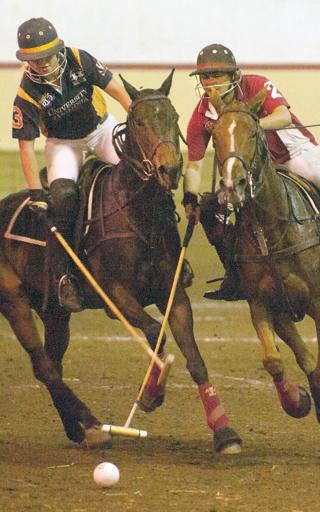
One stride behind | Although the Red outscored MPC in the fourth chukker, the team still lost by two points