Decisions, even ones to do nothing, have consequences. Our Industry News section reports that last October's vote by IMO's Marine Environment Protection Committee (MEPC) was a factor in a bulk carrier owner ordering vessels designed to burn only conventional fuels. In the face of a fog of uncertainty lying ahead it could be that owners will increasingly pull back the corporate Net Zero engine room telegraph to 'dead slow ahead' or even ring 'astern'.
This issue of World Bunkering includes an expert analysis by IBIA's representative at IMO, Dr Edmund Hughes, of where we are following the MEPC move to defer a decision whether to adopt the UN Agency's decarbonisation framework or not for a year. His assessment makes for gloomy reading for those who believe that IMO should be the sole regulator of global shipping.
His report also highlights the increasing complexity of international rule-making for the shipping industry and points to new regulations regarding low flashpoint fuel and the possibility of differing interpretations as an example of how challenging drafting succinct and precise regulations has become.
While many may still hope for a final outcome that sees IMO secure a future as the regulator of the global shipping industry and in charge of an effective decarbonisation strategy, our Industry News also contains a reminder that possibly numerous regional regulations and levies could win out. It notes that the 31 January 2026 deadline for submission of ship-specific FuelEU Maritime reports has now passed. Once again, we have uncertainty creeping in as DNV warns that unclear contractual arrangements between owners, managers and charterers could create compliance risk during the verification phase.
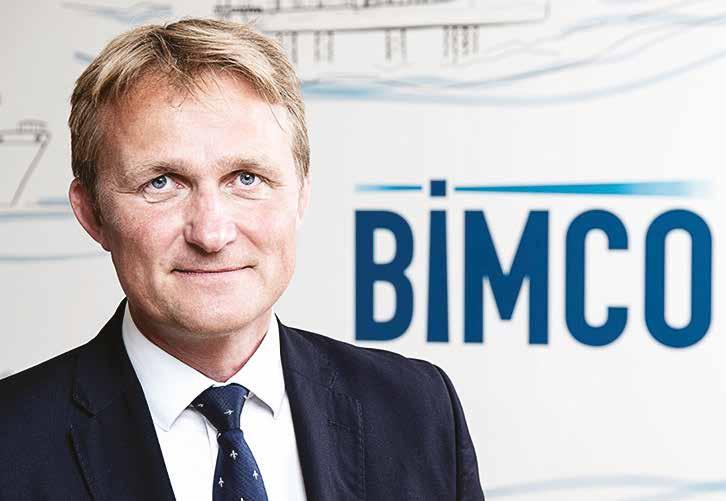
Our Interview slot features BIMCO Secretary General and CEO David Loosley who says the MEPC discussions highlighted the need to balance ambition with realism.
BIMCO, he stresses, backs the IMO’s 2050 net-zero goal but it insists that targets must remain technically and commercially feasible.
However, the BIMCO chief also covers a wide range of issues that the global body addresses and he underlines the high degree of cooperation with IBIA on many topics affecting bunkering.
Asked about its approach to AI, Loosley explains BIMCO is using this new technology in many ways to drive operational efficiency as well as providing its members with insights into the application of AI in shipping.
BIMCO will shortly launch its Digitalisation Network initiative that will include sharing experiences and knowledge about the application of AI onboard ships and shoreside.
It so happens that two of the main features this issue are IT and AI. In our IT & Bunkering pages Julie Louise Nielsen, Global Head of Bunker Sales at StormGeo, explains how, she believes, regulation and digitalisation are transforming bunker management. She asserts that, with growing regulatory complexity (something also prominent in this issue) and increasing pressure on bunker buyers to support decarbonisation, the digitalisation of the bunker industry will continue to expand over the next five to ten years.
Hard on the heels of the IT pages, our AI feature digs deep into where we are now and the potential benefits and limitations of this technology. It notes a growing consensus that the bunker organisations best placed to benefit will be those that combine disciplined data governance, sound operational practice and a clear, realistic view of what AI can and cannot do.
Our geographical reports cover the Far East, including China, Hong Kong SAR, Japan, Singapore and South Korea. As John Rickards writes, Hong Kong SAR and mainland China are now firmly pressing ahead with moves to put themselves on the leading edge of the future fuels markets. That is very much the case too with Singapore which has defied expectations of earlier last year with record bunker volumes.
Our Environmental News reports that analysis from campaign group Transport & Environment (T&E) finds Spain and Denmark are emerging as frontrunners in Europe’s push to develop green fuels for shipping but, you will probably have guessed, “regulatory uncertainty continues to slow progress”. Uncertainty has also enveloped some of the science behind climate change with the retraction of an influential climate economics paper that fed into financial risk scenarios used by some of the biggest banks. Meanwhile it has been found that the oceans absorb more CO₂ than previously thought, and this is particularly the case in rough seas.
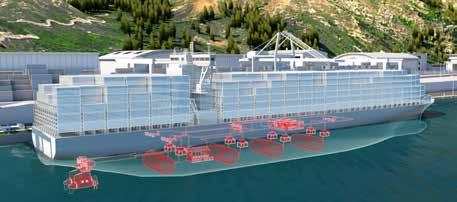
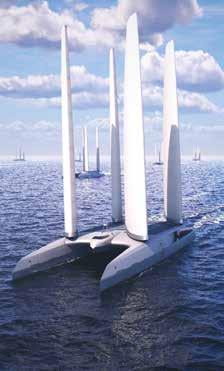
As usual we devote a number of pages to Alternative Fuels and Technologies. One eye-catching development is the proposed building of a fleet of sailing catamarans that use wind and solar power to produce hydrogen. That makes nuclear power look mundane but as we report nuclear now has strong supporters, including among the classification societies.
So, all in all, there is much food for thought in this issue that comes out in time for the IBIA Dinner, and plenty to discuss on the night. See you at the Grosvenor House Hotel!
Best wishes
David Hughes Editor
Dearfriends and fellow IBIA members,
I wish you all a happy, healthy and prosperous New Year!
Without a doubt, 2025 was a hugely successful and productive period for our Association, demonstrating that we kept our promises and followed our strategic milestones. We expanded even further, increased our visibility, practical impact, our global as well as regional influence, provided more training opportunities, and delivered events that resonated across the wider shipping and maritime energy community.
We now look ahead to what 2026 will bring, starting with our forthcoming Annual Dinner in London, on 9 February, during London’s International Energy Week. We also look forward to welcoming our new Global Board members and new officers, following another election process that continues to attract a growing number of active, voting, IBIA members. This engagement matters immensely, and we are thankful for it. We welcome them all and wish them the best of success.
In this issue of World Bunkering, readers will once again find analytical perspectives on a range of priorities; enduring ones such as fuel quality trends and developments, the continued advance of AI and digitalisation, and timely topics including the possibility of increased Suez transits, with the complexities and risks such a shift may entail.
From a governance perspective, my Chairmanship, like all IBIA’s officers’ positions, is time-limited, in line with IBIA’s governance procedures, so my term as IBIA Chair concludes at the end of this March. I view that as a strength since credible institutions are built on continuity and renewal. What matters is that the culture and strategy remain the same, with informed engagement, professional debate, and respectful behaviour.
The feeling I am therefore left with is about momentum which must be maintained. Over the past two years, the bunker and maritime energy community operated under immense pressures: intensifying regulatory demands, higher expectations around compliance and transparency, debate on future fuels’ pathways, and geopolitics that increasingly influence trade, pricing and risk. While none of these themes is new, what is new is how tightly they now interact and how quickly operational questions turn into strategic ones.
In that environment, IBIA succeeded and thrived for the benefit of the industry. Our unique role has been to convene a wide and diverse membership and translate expertise into practical understanding.
We are not an association of spectators. Our relevance depends on member participation, not passive affiliation, and the most durable value we create comes from structured work, the willingness to align on expectations, share experience, and turn complexity into something implementable. And in all this we have succeeded.
The maritime industry does not need slogans but frameworks that can be implemented everywhere: from the terminal to the bunker barge, from our offices to all decision-making centres and onboard vessels. Implementation means safety, training, infrastructure readiness, compatibility, availability. The coming period will reward those, like IBIA, who are serious about practical pathways, not just ambitious declarations.
It has been a great honour for me to lead IBIA the last two years, and I want to thank my fellow Board members, all regional boards, our Working Group contributors, our Secretariat, for their support and professionalism. I also want to sincerely thank all IBIA’s members, as they are the energy that powers our association.
The past two years have been a period of unparalleled growth for IBIA in both numbers and substance: in impact, partnerships, visibility, and strategic execution.
It has not been easy, but it has been genuinely rewarding and, I believe, practically important for our industry.
My service to IBIA will continue after March, as a full Global Board member, a member of the Executive Committee, and Chair of the Future Fuels Working Group.
I do so with a clear aim: to support continuity and help ensure IBIA remains globally relevant, reliable, and focused on outcomes.
IBIA’s value, ultimately, is not only what we say but how we convene: globally, credibly, and with purpose.
Best regards,
Constantinos Capetanakis IBIA Chair
IBIA - ANOTHER YEAR OF MOMENTUM, RELEVANCE, AND GROWTH
As we closed 2025 and entered 2026, holding this edition of World Bunkering in your hands is symbolic. It reflects not only another successful year for IBIA, but also the message we have been consistently sharing - bunkering and shipping are more interconnected than ever. This edition reaches our members and stakeholders while we gather for the IBIA Annual Dinner, the premier event of our industry.
2025 has been a strong year for IBIA by every measure. Our membership reached record numbers, underlining the trust placed in the association and the value it delivers. With growth comes responsibility, and IBIA continues to evolve to ensure we remain effective, representative, and forward-looking. Our expanding footprint and increased visibility across global maritime forums reinforce our role as a credible and influential industry voice.
Last year also marked the launch of IBIA’s new identity. Our refreshed logo - featuring two vessels in operation against a global backdrop - captures the essence of our industry and our purpose. It reflects bunkering in action, cooperation, and global reach. More importantly, this was not just a visual update. It represents a shift in tone and positioning. Clearer, more confident, and more aligned with how IBIA represents its members and the sector at large.
Our Annual Convention was a major success, during Hong Kong Maritime Week, marking the first time IBIA has placed its flagship event within a broader maritime framework. Being part of Hong Kong Maritime Week elevated the event, brought broader engagement, and reinforced IBIA’s intent to operate within the wider maritime ecosystem. The quality of discussion, participation, and attendance once again demonstrated the strength of our community and the appetite for meaningful dialogue across bunkering, shipping and energy.
It was a milestone that speaks to our growing relevance and engagement across the wider industry.
That momentum carried through the IBIA Annual Dinner. Once again, sold out, and earlier than ever before, the event welcomed more than 1,200 attendees, setting a new attendance record. The dinner has become the premier event not just for IBIA, but for the wider maritime calendar, and its continued success reflects the association’s growing importance and convening power.
This year’s transition at the Board level also marks a personal moment for me. I would like to offer a special thank you to our past Chair, Timothy Cosulich, as he steps down from the IBIA Board. Tim’s commitment and leadership have been instrumental during a pivotal period for IBIA. His late uncle, Antonio Cosulich, was the one who introduced me to IBIA as a member, and during Tim’s tenure as Chair, I was appointed Executive Director. Working alongside Tim has been a privilege, and his guidance, support, and friendship have meant a great deal to me. His leadership has shaped not only IBIA’s growth and relevance but also my own journey with the association, a connection I will always value. I hope my time leading the association has been as positive and valuable for IBIA and its members as it has been for me personally.
At the same time, we welcome four Board members, elected from a strong field of eleven candidates. This level of engagement speaks volumes and quality about IBIA’s relevance and the willingness of members to contribute their time and expertise. As a membership-led association, this involvement is not only encouraging it is essential.
On the operational side, IBIA continued to invest in tools that enhance member engagement.
The launch of our new networking platform, followed by the MyIBIA app, has been well-received, with over 100 downloads in the first month alone. These are practical steps toward a more connected and accessible association. Further upgrades are planned, alongside the launch of a new IBIA website.
Looking ahead, we are also initiating important discussions around governance and membership structures. These conversations are about safeguarding IBIA’s future, ensuring the association remains strong, relevant, and fit for purpose for years and generations to come. Member input will be vital as we shape the next phase of IBIA’s development.
As always, we encourage members to stay involved and engaged. Feedback (positive or critical) is always welcome. Our Secretariat remains open, accessible, and committed to listening. With a strong foundation and an active membership, we look forward to a dynamic and impactful 2026.
Safe travels and fair winds.
Alexander Prokopakis
IBIA Executive Director alexander.prokopakis@ibia.net
FROM CONVERSATION TO CONNECTION:
SETTING THE PACE FOR IBIA IN 2026
As the industry reconvenes after the festive break, IBIA begins the year exactly where it belongs –bringing people together, sharing practical insight and setting the tone for a busy and ambitious year ahead
Welcome back, and a very happy New Year to colleagues across the global marine fuels’ community. As ever, the calendar barely allowed us to catch our breath before we were back in conversation, and that feels entirely fitting for an industry that never truly stands still.
We kicked off the year with the IBIA European webinar, a timely and well-attended session that focused on the sweeping regulatory changes coming into force across Europe from January 2026. Chaired by Charlotte Røjgaard, the discussion explored Mass Flow Meters, ADN regulations, closed sampling requirements and RED III, with a strong emphasis on implementation timelines and realworld operational impact. What stood out, as always, was the quality of engagement – practical questions, open dialogue and a shared desire to understand not just what is changing, but how best to prepare.
These exchanges are exactly why IBIA’s regional meetings remain such an important platform for our members and the wider industry.
As you read this, we are gathered in London for the IBIA Annual Dinner – one of the highlights of our year and a moment to pause, reflect and reconnect. With more than a thousand industry colleagues in the room, the Dinner is a powerful reminder of the strength of our community and the value of meeting face-to-face. It would not be possible without the support of our generous sponsors across Gold, Bronze and advertising categories, whose commitment helps
us deliver an evening that is both memorable and meaningful for our members and their guests.
Looking ahead, 2026 promises to be an exciting and truly global year for IBIA events. In March, we will host the IBIA Americas Networking Drinks Reception in Stamford, Connecticut, alongside CMA Shipping. This relaxed evening offers an ideal opportunity to reconnect with peers and strengthen relationships across the Americas and beyond. In Asia, the IBIA Asia Gala Dinner will once again take centre stage during Singapore Maritime Week, bringing together more than 340 senior leaders from bunkering, marine energy and the wider maritime sector for an elegant and impactful evening. Later in June, we look forward to welcoming members and partners to our IBIA Posidonia Drinks Reception, marking another key moment in the Mediterranean calendar.
We are also delighted to confirm that the IBIA Annual Convention will take place in the Americas in 2026. This coincides with the announcement of our new Chair, Adrian Tolson, who is based in the region, alongside Frank Dohan as our recently appointed Regional Board Chair – Americas. Their leadership, combined with the energy of the region, makes this a particularly exciting chapter for IBIA.
Collaboration remains central to everything we do. We continue to work closely with industry events across shipping and energy – from
CMA Shipping and Singapore Maritime Week to SIBCON and many others –ensuring IBIA is present, engaged and supportive across all regions. Our aim is simple: to serve our members locally, while strengthening IBIA’s global reach.
It is shaping up to be a busy year, but an inspiring one. I look forward to seeing many of you along the way.
Tahra Sergeant Regional Manager (Africa) & Global Head, Events tahra.sergeant@ibia.net
IBIA’s Africa region has begun the year with strong engagement, uniting industry and regulators to address market challenges, recovery and Africa’s role in the global marine fuels transition
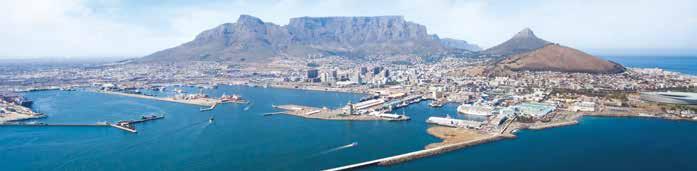
As we look ahead to an engaging and purposeful year, IBIA’s Africa region has already set a strong and constructive tone. The year began with IBIA’s active participation at a well-attended Maritime Week Africa in Cape Town in January. IBIA’s leadership played a visible and meaningful role across several sessions, reinforcing the Association’s commitment to dialogue, collaboration and practical progress across the continent’s diverse bunkering markets.
South Africa featured prominently in the programme, reflecting both its historical importance and its potential role as a leader within the African maritime sector. A dedicated session examined the regulatory framework underpinning the South African bunkering industry, moderated by Siya Maya, IBIA Regional Board Member – Africa and Managing Director of South African Marine Fuels (SAMF). Contributions from Vernal Jones of Transnet National Ports Authority, Capt. Dennis Mqadi of the South African Maritime Safety Authority (SAMSA), Gregory Marks of Turners Shipping and Capt. Thulani Dubeko of the African Harbour Master Association highlighted the critical interplay between regulation, safety, fiscal reform and institutional cooperation. Collectively, these discussions underscored the importance of aligned authorities and transparent processes in restoring confidence and supporting long-term market stability.
This was followed by a focused panel on Bunkering in South Africa, moderated by IBIA’s Regional Manager for Africa, Tahra Sergeant.
The discussion addressed the rehabilitation of the sector, acknowledging the fiscal, legal and commercial barriers that have constrained growth in recent years. Panellists Durand Naidoo (Linsen Nambi), Graham Dreyden (AMSOL), Jeremy Prain (Bowmans) and Wilhelm Wasserman (FFS Refiners) offered grounded insights into how the market may gradually recover and reposition itself as a key regional hub, provided that regulatory certainty and commercial pragmatism continue to improve.
Developments across West Africa were explored in a session moderated by Jon Hughes, Chair of IBIA Regional Board – Africa and Managing Director of DanBunkering Africa. Perspectives from the Canary Islands, Ghana, Nigeria, Angola and Namibia highlighted both the diversity and resilience of the region. Contributions from industry leaders including Airam Diaz Pastor, Brent Nartey, Mohammed Aminu Umar, Jorge Calvillo and Nazeem Stuart reflected a shared focus on infrastructure, governance and operational integrity.
North and East Africa, together with the Indian Ocean, were also examined, with insights from Egypt, Algeria, Morocco, Mauritius, Mozambique, Madagascar and Réunion. These discussions reinforced the importance of regional nuance, local partnerships and adaptive business models in markets that continue to evolve at different speeds.
The programme concluded with a forward-looking session on the fuel supply chain, quality and the energy transition, moderated by IBIA Executive Director Alexander Prokopakis.
Speakers addressed fuel quality, digitalisation, biofuels, e-fuels and green corridors, placing Africa firmly within the global decarbonisation conversation while recognising the practical realities on the ground.
Looking ahead, the IBIA Regional Board – Africa will continue to engage actively with industry stakeholders to support the continent’s bunker industry, recognising that Africa’s markets are nuanced and highly contextual.
We remain open to suggestions from members at all times, and a dedicated webinar to engage further with the African bunker industry is planned for mid-2026. Through open dialogue and collaboration, IBIA looks forward to another constructive year for Africa’s marine fuels sector.
Tahra Sergeant Regional Manager (Africa) & Global Head, Events tahra.sergeant@ibia.net
EQUIPPING THE INDUSTRY FOR CHANGE
As 2026 gets underway, IBIA has started the year with strong momentum, reinforcing its long-standing focus on training, professional development, and raising standards across the bunkering industry. Education remains a cornerstone of IBIA’s mission, and this first month has already demonstrated the industry’s appetite for practical, forward-looking learning aligned with regulatory and operational changes.
This commitment was clearly reflected on 7 January in Rotterdam, where IBIA, in collaboration with C4 Fuel, delivered the latest edition of its Mastering Mass Flow Meter (MFM) for Bunkering course. With 17 participants registered, the course marked the second sold-out MFM training in a row, underlining both the relevance of the subject matter and the industry’s determination to fully understand and adapt to new systems and requirements.
With the imminent implementation of MFM mandates at the Ports of Rotterdam and Antwerp-Bruges, the bunkering landscape in these key hubs is entering a period of significant transformation. Accuracy, transparency, and data integrity are becoming central pillars of bunker delivery, and surveyors in particular are set to play a more critical and dynamic role than ever before. Recognising this shift, IBIA’s one-day course was specifically designed to equip professionals with the knowledge and skills required to operate confidently in an MFM-enabled environment.
Developed in partnership with C4 Fuel and delivered with the endorsement of the Ports of Rotterdam and Antwerp-Bruges, the Mastering Mass Flow Meter (MFM) for Bunkering course provides participants with essential insights into both
regulatory and practical aspects of MFM deployment. Sessions cover a comprehensive regulatory overview, including the implications of MID and ISO 22192 compliance, ensuring attendees gain a clear understanding of the legal and technical framework underpinning the new requirements.
Collaboration remains central to IBIA’s training strategy. As a membersbased Association, we are always open to partnerships across the training space, working with industry stakeholders, technology providers, ports, and subject-matter experts to develop relevant, high-quality programmes. These partnerships reinforce IBIA’s commitment to supporting the industry’s growth by ensuring education remains aligned with operational realities, regulatory developments and emerging best practices.
Beyond regulation, the course explores the theory and practical operation of Mass Flow Meters, giving participants a solid grounding in how the technology functions and how it directly impacts bunkering operations. Particular focus is given to the evolving role of surveyors, examining how responsibilities are changing in an MFM-equipped industry and how professionals can enhance their service offerings in line with new expectations. Practical elements, including troubleshooting MFM systems onboard vessels and optimising bunkering processes for accuracy and efficiency, ensures the training remains firmly rooted in realworld application.
The strong turnout and engagement in Rotterdam serve as a clear signal that the industry is not only preparing for regulatory change, but actively investing in the knowledge needed to implement it effectively.
IBIA will continue to deliver MFMfocused training throughout 2026 to support stakeholders as these mandates are formally adopted and embedded across European ports.
Alongside its in-person programmes, IBIA is also looking firmly to the future of online learning. With an active and engaged Training Working Group, we are developing plans to significantly expand and refresh our digital training offering in 2026. This includes updating existing courses and introducing new modules and subject areas by mid-year, reflecting feedback and requests received throughout 2025.
These developments aim to address the needs of both new entrants to the industry and senior management, covering operational, regulatory, commercial, and strategic topics relevant to an increasingly complex marine energy landscape. By broadening the scope and depth of our online platform, we seek to provide flexible, accessible learning pathways that support professional growth at every career stage.
IBIA encourages its members to actively participate in the Training Working Group, sharing their experience and insights to help shape the future direction of industry education. Learning, after all, remains one of the most vital building blocks of a resilient, transparent, and forwardlooking sector.
For more information on all our training courses and to register, visit our website:
STARTING 2026 TOGETHER: IBIA ASIA’S FOCUS FOR THE YEAR AHEAD
As we begin 2026, I would like to sincerely thank our members for their trust, engagement, and support throughout 2025. It is this continued involvement and collaboration that underpin the strength of Asia’s marine fuels community.
Across Asia, the marine fuels sector is navigating regulatory uncertainty and increasing operational complexity. Against this backdrop of regulatory and operational demands across bunkering hubs, industry attention has shifted firmly toward practical readiness, risk awareness, and navigating change with confidence.
These developments are taking place amid ongoing geopolitical challenges, which continue to influence energy markets, trade flows, and operational decision-making. Heightened geopolitical tensions and regional uncertainties have underscored the importance of resilience, transparency, and adaptability across the marine fuels supply chain, particularly in Asia’s interconnected and tradedependent markets.
Advancing Dialogue on Alternative Fuels
Discussions around alternative fuels continue as ports, suppliers, and shipowners adapt to an increasingly diverse fuel landscape. In early 2026, conversations have increasingly focused on operational realities, including safety considerations, risk management, and the competencies required to support new fuels alongside conventional operations.
At the international level, ongoing deliberations surrounding the IMO’s proposed Net-Zero Framework under MARPOL Annex VI continue to shape industry sentiment. While global alignment remains a work in progress, these discussions reinforce the importance of preparedness, clarity, and collaboration at both regional and international levels.
IBIA Asia remains actively engaged in regional and global forums, contributing industry perspectives to help ensure that evolving policies and frameworks remain practical, proportionate, and grounded in operational experience. The emphasis remains on supporting a transition that safeguards safety, transparency, and supply reliability.
Strengthening Regional Engagement and Industry Dialogue
In Q1 2026, engagement with members, regulators, and industry stakeholders across the region remains a key focus. Open communication and constructive participation in industry platforms continue to underpin IBIA Asia’s role as a trusted and neutral voice within the marine fuels ecosystem.
Through ongoing interactions, committee work, and regional discussions, IBIA Asia supports informed exchanges on regulatory expectations, operational challenges, and the implications of an increasingly complex fuel environment, helping to keep industry voices connected and aligned.
Community Engagement and Key Milestones
Community-building remains a cornerstone of IBIA Asia’s work. Planning activities in Q1 have focused strongly on key regional milestones for 2026, including the IBIA Asia Dinner, to be held on 22 April 2026 in conjunction with Singapore Maritime Week. The dinner will once again bring together industry leaders, regulators, and stakeholders to reconnect, exchange perspectives, and strengthen relationships across the region.
IBIA also continues its active involvement as a member of the Steering Committee for the SIBCON 2026. Through this role, IBIA hopes to contribute industry insights to help shape the conference’s strategic
direction and technical focus, reinforcing its commitment to thought leadership, knowledgesharing, and alignment between policy and practice.
These platforms remain especially important at a time when the industry is navigating change and seeking clarity through shared understanding and collaboration.
Looking Ahead
In an increasingly complex fuel landscape, IBIA Asia’s role as a connector between people, policy, and practice remains more important than ever. Through collaboration, engagement, and open dialogue, IBIA will continue to support a resilient and trusted marine fuels community across Asia.
Happy New Year. I wish our members and the wider industry a safe and positive 2026, and I look ahead to the year with optimism, purpose, and gratitude for the community we continue to build together.
For those attending, I look forward to seeing you in London at the IBIA Annual Dinner. As always, I truly welcome your thoughts and feedback, please feel free to get in touch anytime. I am always available and would be very happy to hear from you.
Siti Noraini Zaini
Regional Manager, IBIA Asia siti.zaini@ibia.net www.ibia.net
Happy New Year to our members, partners, and industry colleagues across Asia
CODE OF CONDUCT
Abiding by this Code of Conduct shows that members support our common goal: to promote the widespread adoption of a common set of ethical values within our industry. We believe that when the entire industry acts with the highest ethical standards that this will be to the benefit of us all.
FAIR BUSINESS
3 We conduct our business in a fair and transparent manner
3 We will always act in the best interest of each business partner and are honest with the stakeholders involved in our business
3 We only engage in business using compliant products, and deliver the quality and quantity agreed with our business partners
3 We always act in good faith
BEST PRACTICE
3 We always act in accordance with applicable legislation, including sanctions
3 We always meet contractual obligations in a timely manner
3 We always do our best to avoid disputes and seek resolution promptly if disputes occur
3 We comply with all applicable competition and anti-corruption laws
3 We respect confidential information and do not unlawfully use any intellectual property
SOCIAL RESPONSIBILITY
3 We seek to minimise our environmental impact and the risk of environmental damage
3 We will always ensure employees’ health, safety and security
3 We offer equal opportunities, prohibit unlawful discrimination and respect human rights
3 We offer the same opportunities for professional development to all our employees
TRANSPARENCY
3 Our accounts and records are kept accurately and reflect the true state of the company and its operations
3 During audits or investigations, we fully cooperate with the authorities
3 We will not receive or give any gift or entertainment of disproportionate value
3 We are fully committed to preventing both money laundering and terrorist financing
This Code of Conduct is endorsed by the IBIA – The International Bunker Industry Association. IBIA encourages members to abide by this Code of Conduct and to endorse it.
NEW IBIA MEMBERS
CORPORATE
Finance and Banking, Financial, Digital Solutions Supplier
129Knots Pte Ltd
Saumia Bhatnagar
Asia
Bunker Fuel Supplier (Physical), Energy Industry Major, Supplier, Classification Societies
By joining IBIA, you will become part of a global network of bunker industry experts who collectively form one of the world’s leading authorities on bunkers.
Not only will you have access to a wealth of information and insight (we publish newsletters and industry updates on current issues), which offer pragmatic advice for managing the industry’s challenges; members also have the potential to shape and influence both international and local legislation. This happens through IBIA’s Working Groups, which are responsible for developing industry guidance, participating in IMO correspondence groups, solving long-term industry issues, and addressing both commercial and technical aspects.
FEBRUARY 2026
IBIA & INDUSTRY 2026 CALENDAR
3 - 4 Middle East Bunkering Convention 2026 Dubai, United Arab Emirates
9 IBIA Annual Dinner 2026 London, United Kingdom MARCH 2026
10 - 12 CMA Stamford, United States
11 IBIA Americas Drinks Reception Stamford, United States
16 - 18 The Bunkering & Sustainability Forum Tenerife, Spain
18 - 20 Green Shipping Forum 2026 Furama Hotel Dalian, China
23 - 26 The Nordic-Baltic Maritime Forum Helsinki, Finlandz APRIL 2026
15 - 16 Argus Green Marine Fuels Asia Conference | Argus Media Singapore, Asia
20 8th Annual Capital Link Singapore Maritime Forum Singapore, Asia
20 - 24 Singapore Maritime Week Singapore, Asia
22 IBIA Asia Gala Dinner Singapore, Asia 28 - 30 Argus Green Marine Fuels Conference Antwerp, Belgium MAY 2026
5 - 7 Global Maritime Decarbonisation Summit 2026 Amsterdam, Netherlands
18 - 21 Maritime Week Americas Panama
19 - 21 IBC - The International Bunker Conference Oslo, Norway 31 IBIA Posidonia Reception Athens, Greece
JUNE 2026
1 - 5 Posidonia 2026 Exhibition Athens, Greece
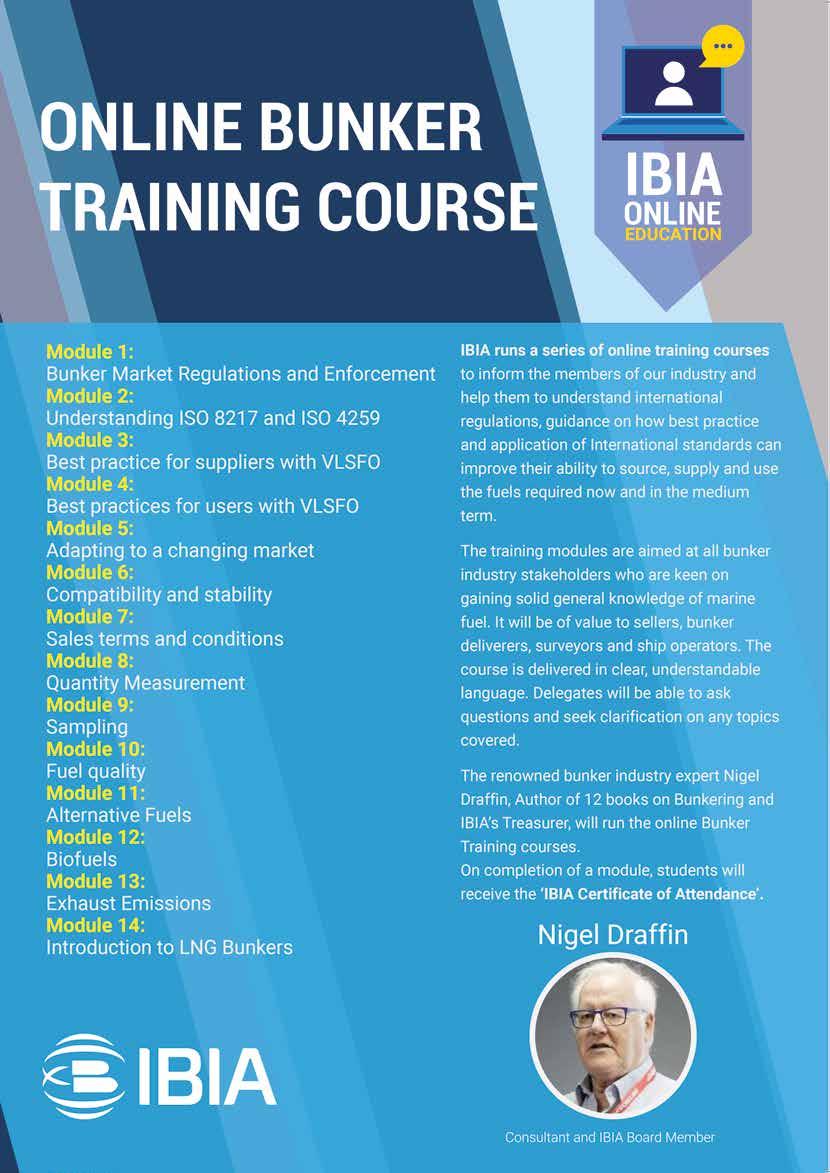
IBIA ONLINE TRAINING COURSES
ONLINE BUNKER TRAINING COURSE
MODULE 1 TO PURCHASE Bunker Market Regulations and Enforcement
MODULE 2 TO PURCHASE Understanding ISO 8217 and ISO 4259
MODULE
MODULE
MODULE
MODULE
MODULE 7 TO PURCHASE Sales terms and conditions – The purpose, structure and application of Sales terms Online at www.ibia.net
MODULE
MODULE
MODULE 11 TO PURCHASE Alternative Fuels Online at www.ibia.net
INCREASING COMPLEXITY OF RISKS CHALLENGES INTERNATIONAL REGULATION OF SHIPPING
Coincidentally, this was the same period we saw the growth of globalisation with global commerce and trade volumes inextricably rising year on year. Whilst trade does continue to grow it is clear that historic patterns, and so risks, or rather the complexity of those risks, are shifting and threatening the governance of shipping.
It has long been the mantra that shipping as a global transport sector requires global regulations to mitigate risk appropriately and effectively. Indeed, the establishment and continued existence of the International Maritime Organization (IMO), a specialist technical agency of the United Nations, demonstrates the political will of governments to regulate at the global level. This is because those governments recognise the key advantages of global shipping rules to support global commerce as it leads, as set out in Article 1 of the IMO Convention, to “the removal of discriminatory action and unnecessary restrictions by Governments affecting shipping engaged in international trade so as to promote the availability of shipping services to the commerce of the world without discrimination.”
Balancing needs and concerns However, recently, and specifically when it comes to regulating shipping to mitigate risks associated with marine environmental protection, we are beginning to see difficulties in the preparation of international rules that can address the policy goals of all governments in a way that balances the needs and concerns of those governments.
The clearest example of where we appear to have reached an impasse on international shipping regulation is on climate action. Efforts by IMO to prepare global rules to “price carbon” has led to the most damaging and disruptive IMO meeting in recent memory (ever?!). Fundamental differences in the policies of those governments attending the session for addressing climate change, and therefore the means to achieve those policies, was evident at MEPC/ES.2 last October. Whilst some governments consider the need for ambitious goals to reduce GHG emissions from international shipping as an imperative (which in turn leads to higher carbon prices to meet those goals) other governments consider the cost on trade and consumers to be more important and even question whether
IMO is the right forum for carbon pricing to be determined where there is an impact on trade and commerce.
Whether a quick solution can be found in the short-term to reconcile those differences is now open to much consideration by individual governments – it is fair to say there is nothing currently being discussed in public and there is little evidence that bi-lateral dialogue is taking place between those with different views. In other words, are governments struggling to see a way forward that will satisfy the policy concerns of all parties in a way that does not undermine their own “red lines”? Is that possible?
Mitigating risk
As complexity grows the regulations to mitigate associated risks are being continuously prepared and/or amended to try and cover all bases. Think of the introduction of alternative fuels needed for shipping to meet the GHG emission reduction goals and the need to mitigate and manage the safety risks of those fuels. Plus, there is the resulting suite of instruments developed or being developed under the International Code of Safety for Ship Using Gases or Other Low-
At the beginning of 2026 it is apparent that the period of relative geo-political calm that international shipping experienced from 1990 to 2020 has definitely come to an end
flashpoint Fuels (IGF Code), which is a mandatory code under IMO’s Safety of Life at Sea (SOLAS) Convention. Due to concerns being raised about the potential for fuels with low-flashpoint entering the marine fuel supply chain the issue of testing and reporting flashpoint was raised under both IMO’s Maritime Safety Committee and Marine Environment Protection Committee.
New SOLAS flashpoint requirements
As a consequence, amendments to Chapter II-2 of SOLAS entered into force on 1 January 2026 and include detailed flashpoint documentation requirements for suppliers, and for authorities to report off-specs. The amendments are intended to prevent the supply of oil fuel not complying with SOLAS flashpoint requirements (60°C), so enhancing the safety of ships using oil fuel. The amendments add new definitions and provisions to SOLAS regulation II-2/4 (Probability of ignition), including requiring that ships carrying oil fuel shall, prior to bunkering, be provided with a declaration signed and certified by the fuel oil supplier's representative that the oil fuel supplied is in conformity with regulation SOLAS II.2/4.2.1 and with the test method used for determining the flashpoint.
These SOLAS amendments were adopted by the 106th session of the IMO’s Maritime Safety Committee (MSC 106) in November 2022 and came about following years of discussion and are designed to prevent the supply of fuels in breach of the minimum 60°C flashpoint limit in SOLAS Chapter II-2. At the time IBIA worked hard to ensure the amendments were pragmatic and workable but like all IMO requirements they are ultimately a compromise that may lead to interpretation issues which in turn present their own risks.
Questions have arisen over the implementation of these requirements, their implications for bunker suppliers and buyers and also the relationship between these requirements under SOLAS and those for the Bunker Delivery Note required under regulation 18 and detailed in appendix V of MARPOL Annex VI. In seeking to clarify and explain the SOLAS provisions IBIA on 25 November 2022 published Flashpoint: New IMO regulations put onus on suppliers1. Further details on the specific SOLAS provisions can be found in that article and those interested are recommended to read it. However, as the article’s author Unni Einemo notes: “The amendments, which add new elements to SOLAS Chapter II-2,
are written in a way that pre-supposes knowledge of the entire regulation, such as existing definitions and other specific parts of the regulation.”
Confused?
The confusion has, in part, come about because in December 2022 the 79th session of IMO’s Marine Environment Protection Committee (MEPC 79), held a month after MSC 106 adopted the SOLAS amendments, adopted amendments to appendix V of MARPOL Annex VI to include a new item 9 in the list of information required to be provided on the Bunker Delivery Note as follows:
"The flashpoint (°C) specified in accordance with standards acceptable to the Organization,* or a statement that the flashpoint has been measured at or above 70ºC;"
* ISO 2719:2016, Determination of flash point – Pensky-Martens closed cup method, Procedure A (for Distillate Fuels) or Procedure B (for Residual Fuels)."
In other words, the new flashpoint documentation requirements for fuel oil suppliers under MARPOL Annex VI entered into force well before the SOLAS Chapter II-2 requirements.
Bunker suppliers should have already been including this information on the flashpoint of the fuel oil supplied in the BDN from 1 May 2024.
With the entry into force of the SOLAS requirements on 1 January 2026 some have questioned whether the BDN declaration/statement needs to be revised further? Another point raised is whether the use of ISO 2719:2016 as the test method for flashpoint is a mandatory requirement?
Test methods –open to interpretation?
To be clear, interpretation of IMO instruments is the prerogative of the Contracting Parties to those IMO instruments only, whether they be acting in their capacity as a flag State (ship’s Administration) or port State for enforcement. For example, the reference to the test method ISO 2719:2016 is within a footnote to the regulatory text. Footnotes in IMO instruments are not considered part of the regulatory provisions. This is made clear in IMO Assembly resolution A.911(22). As such it is not a mandatory requirement to use ISO 2719:2016 as the test method for flashpoint unless stipulated by the jurisdiction.
Other jurisdictions may have their own preferred testing standard, although it should be noted that in the SOLAS provisions (Chapter 11-2/3.24) the definition of flashpoint refers to a closed cup test. This is because it is also possible to do an open-cup test for flashpoint which will give a higher flashpoint reading than the closedcup test. The limit for flashpoint for regular oil fuels is 60°C minimum, so it must be understood that only a closedcup test is acceptable. What this means is that it is for the jurisdiction under which the bunker supplier operates to interpret the requirement and so to determine whether the test method used meets the mandatory requirement or not? Of course, should another jurisdiction consider differently then that is its prerogative to determine the equivalency of the test method used.
Importantly, as with the flashpoint test standard, it is also for each jurisdiction to interpret the wording used in the BDN declaration/statement for compliance/enforcement purposes.
In the SOLAS requirements (Chapter II2/4.2.1.6) the following provision is set out: "A bunker delivery note for the oil fuel delivered to the ship shall contain either the flashpoint specified in accordance with standards acceptable to the Organization or a statement that the flashpoint has been measured at or above 70ºC;”.
It should be recalled this text was prepared before the MARPOL amendments to the BDN were adopted and so may be the drafters had one eye on the forthcoming BDN requirements for flashpoint set out in the amended Appendix V of MARPOL Annex VI? However, the drafting of this provision is questionable as it implies the IMO, that is, “the Organization” will interpret the requirements and determine what is and what is not acceptable? As I have indicated above it is for each jurisdiction to interpret the requirements and is why the BDN item 9 only identifies the acceptable standard as a footnote only i.e., non-mandatory.
Ensuring a ‘level playing field’ In many respects regulating this one aspect of safety illustrates the growing difficulty of drafting succinct and precise regulations to mitigate the increasing complexity of risks associated with international shipping.
Furthermore, that complexity and the potential for differences in strict interpretation from one jurisdiction to another is a significant concern as it threatens different implementation and enforcement so risking distortions to the market. The ability to draft regulations that ensure the 'level playing field' prevails is critical to ensuring the successful global governance of international shipping. This is becoming increasingly challenging as governments want their specific policies to prevail over what the consensus is willing to accept.
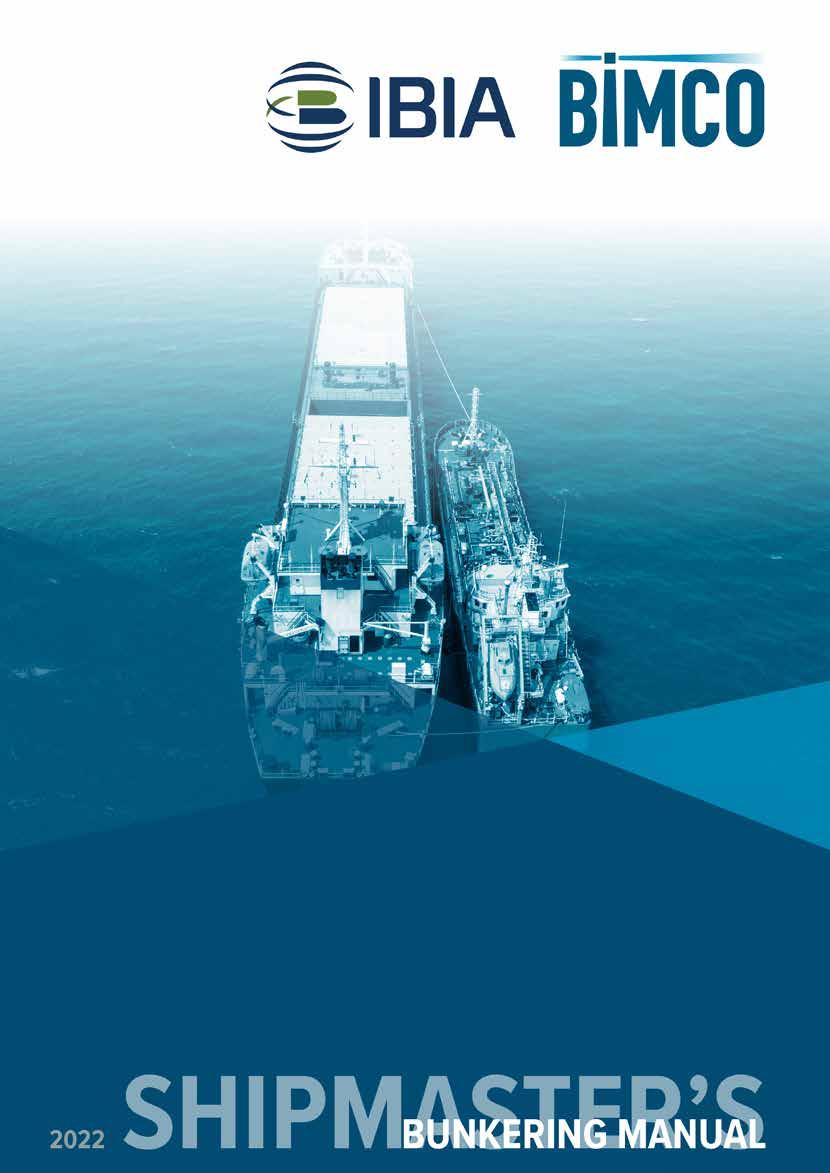
THE BIMCO & IBIA SHIPMASTER’S BUNKERING MANUAL 2022
The Shipmaster’s Bunkering Manual 2022 is the first practical industry guide for both owners and suppliers, seeking to create a common understanding of best practices when bunkering to facilitate a smoother process and safe bunkering globally.
The manual is a unique result of cooperation between IBIA and BIMCO to create insight and practical understanding of bunkering across the shipping sectors.
Bunkering operations are routine, critical and high-risk operations which require accurate planning from both the owner and supplier to ensure a safe and successful operation.
The publication consists of background information as well as checklists and key notes for the entire process for shipowners, masters and crew on how to prepare, execute and follow up on bunkering, including what to do when it goes wrong.
Totalling 4 chapters and phases of the bunkering process, the manual covers the following topics:
Chapter 1:
Background insight on fuel types and key regulation
Everything you need know from fuel oil types, safety, and environmental regulations to ISO standards and contractual issues related to bunkering.
Chapter 2:
Origin and supply chain of marinebunkers
An overview of bunker blends before the ship arrives for bunkering followed by a detailed description of the ship’s preparation and planning prior to bunkering. Advice is also given on how to handle a situation if compliant fuel is unavailable in a specific port. Paperwork including the bunker delivery note and certificates of quality are described and recommendations are given that aim to help to use them correctly.
Chapter 3:
Bunkering procedures
Bunker sampling is one of the most important aspects of bunkering. This chapter covers preparations, practical issues and what to do if something goes wrong. Details of the role each stakeholder ashore and on board undertakes during the process including actions required before, during and after the bunkering.
Chapter 4:
Calculation of bunker quantity and after completion procedures
Details on how to create a solid background for calculating the bunker quantity and determine if the ordered bunker stem has been delivered. For ships carrying equipment to undertake onboard testing of marine fuels, testing procedures are referred to and detailed description of how to interpret test results provided. Keeping an accurate and up to date oil record book is, together with the bunker delivery note, important as records for internal and external use for example during port state control.
The book is available to buy from Witherbys on this link: https://shop.witherbys.com/shipmaster-s-bunkering-manual-2022/ IBIA members receive a 20% discount on all publications. Please enter “IBIA” in the “Coupon/Gift Certificate” box to receive your 20% IBIA member discount.
WORKING TOGETHER
David Loosley's varied career stood him in good stead when he joined BIMCO as Secretary General and CEO in 2020. Before joining BIMCO, he was chief executive of the Institute of Marine Engineering, Science and Technology (IMAREST), which holds non-governmental status across the UN system, including at IMO.
Earlier roles included Director of Operations at the United Kingdom Hydrographic Office, where he led the transition from analogue to digital products for global maritime safety information. Prior to that he had been divisional managing director at a business process outsourcing company, Williams Lea.
These positions came after a career as an officer in the Royal Navy, with operational deployments in Europe and the South Atlantic.
In 2019, Loosley was appointed to the UK Government’s Maritime 2050 Experts Panel, advising on long-term strategic priorities for the maritime sector.
BIMCO represents shipowners responsible for around 62% of global tonnage and has more than 2,000 members across 130 countries.
As there are many shipping organisations I started by asking about BIMCO's relationship with them.
DH: There are many bodies representing the industry sectors, what is BIMCO’s role?
DL: BIMCO represents two-thirds of the world’s tonnage by deadweight, and our membership spans all corners of the globe and every segment of shipping. This means we are uniquely placed to advise policymakers on the likely impact of regulations across the whole industry. It is precisely because we are not constrained by geography or sector that we can offer neutral non-political technical and operational insight to policymakers. In turn we play a crucial role in assisting with the commercial implementation of policy decisions by developing contracts and clauses to ensure our members and the industry understand and meet their regulatory obligations. Our aim is to translate complexity into clarity and to fulfil our role as the practical voice of shipping.
To take a recent example, we developed a dedicated USTR clause to help the industry manage the commercial consequences in response to the US Trade Representative’s fees on Chinese-built ships.
The clause provides a clear mechanism for allocating risk and responsibility in charter parties, allowing businesses to proceed with clarity and confidence. We also addressed the Chinese port fees affecting US vessels and developed a portfolio of carbon clauses to help our industry decarbonise. These examples reflect BIMCO’s capability to equip the industry with timely, effective, real and practical solutions to geopolitical disruptions.
DH: Shipping has numerous sectoral representative organisations, including of course IBIA, and two overarching ones, BIMCO and ICS. How are efforts coordinated among these bodies?
DL: At BIMCO we believe our industry stands stronger when we have a broad representation and work together to strengthen the voice of the shipping industry. The Round Table of International Shipping Associations is a good example. In February last year, the Round Table met in Athens to discuss topics including greenhouse gas reduction and the impact of geopolitics on our industry. However, by far the most important topic on the agenda was how the shipping industry, and the international community, can help limit and put an end to a rise in unjust treatment and criminalisation of its seafarers.
World Bunkering's editor David Hughes talks to BIMCO Secretary General David Loosley
The meeting was chaired by BIMCO’s President at the time, Nikolaus H Schües, and at the meeting, we unanimously agreed to raise awareness of seafarer safety, rights and treatment both inside and outside of the shipping industry.
DH: What are the current major challenges facing shipping and how is Bimco responding?
DL: As trade tensions and regulatory landscapes continue to shift, this offers both challenges and opportunities for shipping.
Our focus remains firmly on supporting our members, the wider industry, regulators and Member States with practical tools and wellinformed guidance.
While trade barriers and tariffs pose challenges, our industry has a remarkable way of adapting and finding new routes when others meet resistance.
The journey to decarbonisation will be long and demanding and BIMCO will remain committed to supporting the industry and members as they navigate this transition.
DL: There is one challenge that has zero upside, however, and that is when our seafarers are in danger.
A 2025 report from the International Maritime Bureau concluded that 2024 saw a decline in piracy but a rise in the number of seafarers taken hostage.
According to the report, 126 seafarers were kidnapped last year against 73 in 2023 and 41 in 2022. In addition, reliable data is lacking when it comes to criminalisation and rogue detention and imprisonment of seafarers when drugs are found on board a ship.
Reported cases in some parts of the world show innocent seafarers being jailed over alleged drug offences despite lack of sufficient evidence.
Seafarers should never be at risk of kidnappings or attacks while performing their essential duties. Attacks on innocent seafarers are not only attacks on the individuals concerned they are also attacks on the shipping industry, supply chains and world trade. At BIMCO, we will continue to raise awareness of the rights and treatment of our seafarers.
DH: Following the MEPC's deferral of a decision on the Net Zero Framework (NZF) BIMCO has said "recent delays to the Net Zero Framework timeline may frustrate some, they do not signal a pause in progress". Is there diminished momentum towards decarbonisation?
DL: While the imperative for the world to decarbonise has never been clearer, there is no doubt that other world events have taken centre stage in recent times. Last year’s deliberations at the IMO’s Marine Environment Protection Committee have underscored the urgency of aligning ambition with pragmatism.
BIMCO Secretary General David Loosley
At BIMCO, we fully endorse the IMO’s greenhouse gas strategy and the target of achieving net zero emissions by or around 2050.
However, we also recognise that ambition must be accompanied by realism and should not outpace feasibility. We believe the solution must be globally enforceable, operationally viable and economically fair and that fragmentation, whether through regional initiatives or inconsistent enforcement, threatens to undermine the progress we collectively strive for.
We believe there is an opportunity to refocus our collective efforts on measures that reduce emissions today – measures that also make strong business sense.
This includes speed optimisation, data harmonisation and voyage efficiency which are proven strategies that deliver both environmental and commercial value. We believe these measures represent smart steps forward rather than stopgaps.
DH: IBIA and BIMCO have just announced a follow-up survey on bunker licensing schemes (BL) and Mass Flow Meter (MFM) technology. Why is this important?
BIMCO supports the use of both bunker licencing schemes and Mass Flow Meter technology because such measures can help ensure that buyers will get the right amount of oil as well as the right quality. We look forward to receiving the results from the survey in due course. We recognise the importance of working together across the industry and appreciate the co-operation between BIMCO and IBIA.
DH: BIMCO's Bunker Terms and Bunker Clauses are widely used. Are you able to gauge just how important these are to the shipping industry?
DL: BIMCO initiated a project to develop a suite of standard bunker clauses for use in time charter parties in 2009. The rationale was to address the increasing importance of bunker issues in time charter parties and the need to ensure that the risk of bunker disputes is minimised.
The suite of clauses covers delivery and redelivery of bunkers, quality and liability, bunkering operations, sampling, fuel testing programmes etc. In 2021, we initiated another project to develop a portfolio of LNG fuel clauses for time charter parties because the number of LNG fuelled ships in operation is growing steadily and the industry therefore needs bespoke clauses in time charters.
Our LNG clauses cover LNG quality, delivery redelivery, gas-freeing and cooling down, and an operational clause. For dual-fuel ships the clauses are intended to be used together with the existing BIMCO bunker clauses for conventional fuel oils.
In addition, the BIMCO Bunker Terms, covering the supply of bunkers, are important tools for our industry as we face new requirements and developments with a shifting regulatory landscape. The Bunker Terms are widely used in the industry and suppliers refer to these terms as part of their T&Cs. Within recent years, we have supplemented the general Bunker Terms by developing specific supply term annexes.
Our supply terms developed for LNG is one such example and we have recently published an annex to our general Bunker Terms which addresses methanol as fuel. Next in line is a specific annex for ammonia.
For shipowners having placed shipbuilding orders for dual-fuelled ships, these specific supply terms are helping the industry towards contractual standardisation.
DH: Has BIMCO explored the potential of AI for shipping and potential challenges? Is BIMCO using AI?
DL: The short answer to both of those questions is yes. We are using AI in many ways at BIMCO, from simple steps that drive operational efficiency, such as using Microsoft Co-Pilot, to more sophisticated strategic projects at organisational level. We have already developed AI tools to help us interpret the large pool of data we store so we can better understand and respond to our members’ needs.
To ensure our products remain competitive and our customer experience remains high we have successfully implemented a customer support AI bot for our SmartCon contract management system.
The AI bot provides the first line of response for our 2,000 SmartCon customers in need of assistance with the product. The bot has freed up time for our support staff to deal with more complex issues or problems better served by human interaction. We also have AI tools built into SmartCon to help customers produce and manage contracts quickly, accurately and efficiently.
We are already providing our members with insights into the application of AI in shipping. This ranges from AI used in contract operations to AI used in shipboard situational awareness.
During 2026 BIMCO will launch a Digitalisation Network to provide further help to our members with their digital transformation process. Part of this initiative will include sharing experiences and knowledge about the application of AI onboard ships and shoreside.
Marine Fuels in the UAE and now in Salalah Oman
STRATEGIC SHIFTS
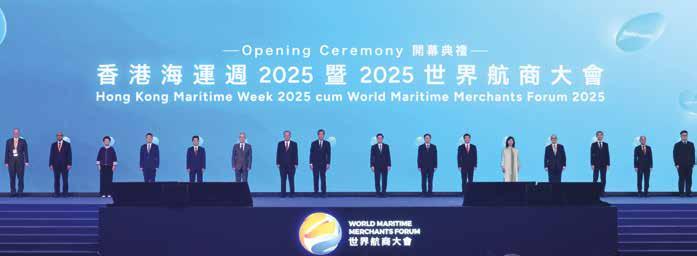
The closing weeks of 2025 saw Hong Kong reiterating the territory’s intentions of becoming a major green bunkering hub in the immediate term. Hong Kong Maritime Week, with IBIA’s own Convention as part of it, in late November had the transition to green fuels and the ability of HK to provide and incentivise them on a rapidly growing basis as one of its cornerstones.
Giving the flagship address, HK’s Secretary for Transport and Logistics, Mable Chan, said: “We are establishing Hong Kong into a green fuel bunkering and trading hub to create the bankable assets that capital seeks. Pioneering investments carry higher costs, and the full benefit of green investments may not be realised due to, for example, the low availability of green fuels. Our Action Plan on Green Maritime Fuel Bunkering, with its five core strengths and strategies and 10 concrete actions, provides exactly a definitive roadmap to propel the green fuel bunkering and trading development in Hong Kong. Leveraging our unparalleled access to the Chinese Mainland’s green fuel production, we are already delivering tangible, quick results from setting the national record for the largest single delivery of biodiesel at a Chinese port, to successfully transition into regularised LNG bunkering in Hong Kong waters. In a way, we are starting late but catching up fast.”
“Our focus now is on the next generation of fuels. We are pioneering the future with methanol, ammonia, and hydrogen.
To accelerate this, we secured a duty exemption for methanol through legislation and will commence feasibility studies for ammonia and hydrogen bunkering soon this year. We recognise the first-mover disadvantage of high initial costs, and that is precisely why we launched the Green Maritime Fuel Bunkering Incentive Scheme in order to help our partners to de-risk and reward pioneering companies. Like different industries, our shipping partners also like recognition and rewards. Though it may be small to the big businesses, it really serves as a symbolism and demonstration of how much care and attention we show to the industry.”
“Next year, we will introduce legislation for a half-rate profits tax concession for the eligible commodity traders including those who trade in green maritime fuels. Coupled with our ongoing matchmaking events that connect Chinese Mainland enterprises with global end-users, we are not just building a fuel hub; we are creating the entire landscape and liquid marketplace required to finance and sustain the global fleet’s transition.”
She expanded on this in her welcoming address to IBIA as well, adding: “We make clear that Hong Kong will adopt a multi-fuel strategy, with the most commonly used or explored fuels such as LNG, biodiesel, methanol, ammonia and hydrogen being the fuels of choice. We then set out to build up a supply chain of such fuels in Hong Kong, from locating sources of green fuels in the proximity, that
is the Chinese Mainland, which is conveniently right next to us and have been the largest supplier of such fuels by far, to developing storage facilities and providing bunkering infrastructure in Hong Kong. We are small, but I think we will be targeted and focused in providing, putting and rolling out storage facilities, infrastructure support, so as to allow Hong Kong to provide a miniature of the ecosystem that is advocated under the IBIA. Crucially, this strategy is already backed by concrete regulatory actions.”
During the course of HKMW, the SAR’s government also announced the establishment of the “Green Maritime Fuel Development Communication Platform” under the Transport and Logistics Bureau, a collaboration and communication platform to ease the development of green bunkering supply chain by linking various industry stakeholders. The launch of such a platform was one of the actions laid out in the territory’s green bunkering action plan set out the year before. At launch, the platform is being shared by 25 different organisations, including bunker suppliers Banle Energy and Chimbusco Pan Nation, shipping lines, terminal operators and energy companies, alongside Hong Kong’s main industry bodies.
The government says the platform will enable stakeholders to express their opinions on how green bunkering is developing in the SAR, simplify business discussion and co-operation, and will be open to any interested
Both the Hong Kong SAR and mainland China are now firmly pressing ahead with moves to put themselves on the leading edge of the future fuels markets, John Rickards writes
parties doing business in Hong Kong – and it will be backed up by government-organised networking events and other in-person support to build the territory’s green fuel offerings as quickly and viably as possible.
Obviously, mainland Chinese ports have their own green fuel offerings and strategies, some further along the road than Hong Kong’s - one of the reasons behind the territory’s specific strategic plan in the first place.
Further along the coast from the Pearl River, 2025 saw Xiamen make its first biofuel deliveries (of B24 and then B5 grade), and then its first international ship-to-ship LNG bunkering to the MSC Daria by a CNOOC LNG tanker in November.
In a statement, Xiamen’s Free Trade Zone said the operation “positioned Xiamen among the handful of cities in China equipped to provide bonded LNG bunkering services” and that “following the previous success in bonded biofuel oil bunkering, the implementation of this bonded LNG bunkering business further fills the gap in clean fuel supply services”. LNG bunkering in China has so far been limited to Shanghai, Ningbo,
Shenzhen and Guangzhou. Guangzhou Port announced in November that it had completed its first simultaneous cargo and LNG bunkering operation, supplying 3,000 cbm of LNG to the MSC Thais at dock.
Citing the knock-on benefits in related shipping services to being able to supply new fuels, the port authority said that in the future it would “explore the dual-mode operation of ‘bonded and non-bonded’, promote innovations such as ‘cross-customs zone supply’ and ‘one ship and multiple supplies’”, and construct an LNG storage tank base in Nansha Port Area to increase the number of vessels able to take on LNG bunkers at once. The port also said that cooperation between the port clusters in the Guangdong-Hong Kong-Macao Greater Bay Area is expected to form an “LNG fuelling service alliance” to make the wider region a green shipping hub.
Xiamen is one of the 22 pilot cities for the promotion and application of biofuels announced by the National Energy Administration in 2024 as part of national moves to reduce air pollution. The Xiamen’s Free Trade Zone Administration issued its guidelines for trials of biofuel bunkering at the end of 2024,
but uptake has been a slow processas across China - and the range of fuels on offer is limited. The end of October saw the Ministry of Commerce announce new guidelines to boost green fuel trade that will allow wider bonded bunkering of alternative fuels as well as blending of more biofuels.
And other moves like the pilot ports scheme are underway to increase biofuel availability and uptake, some arising domestically and some with commercial backing from international firms.
In December, MOL announced a threeway MOU with Sinopec and Marubeni Corporation to establish long-term biofuel supply in China. Under the deal, MOL will work to expand the use of biofuel in China, while Sinopec and Marubeni will develop infrastructure such as storage and transportation facilities and supply ports, and ensure the stable availability of biofuel.
The Japanese shipping group said pushing greater adoption of biofuel was part of its environmental strategy aimed at achieving net-zero by 2050, and “represents a significant milestone toward achieving that target”.
Xiamen is one of China’s pilot biofuel ports and has now joined the LNG club too
REGULATION, RESILIENCE, PREPARATION
Singapore remains the world’s largest bunkering hub and is taking a global lead in regulation, digitalisation and fuel diversity
SINGAPORE
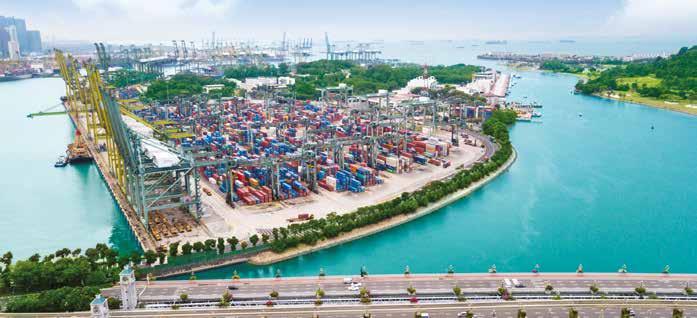
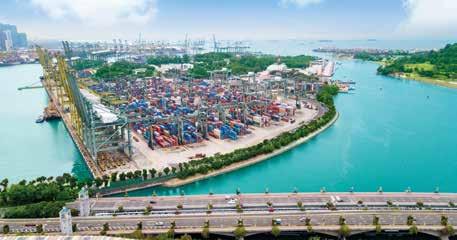
Singapore recorded a year of exceptional port and marine fuel activity in 2025, underpinned by resilient global trade flows and continued growth in fuel offtake. The results reinforced the citystate’s role not only as the world’s largest bunkering hub, but also as a jurisdiction shaping standards, regulation and fuel diversity across the global marine fuels sector.
The figures were announced by Senior Minister of State for Law and Transport Murali Pillai, who was Guest-of-Honour at the Singapore Maritime Foundation New Year Conversations event. They point to a year in which Singapore combined scale with regulatory confidence, even as shipping markets remained uneven across regions and segments.
Record port and bunker activity
In 2025, Singapore achieved a record 3.22 billion gross tonnage (GT) of vessel arrivals and container throughput of 44.66 million twentyfoot equivalent units (TEUs). These totals represented increases of 3.5% and 8.6% respectively compared with 2024, highlighting the port’s continued role as a global transhipment and trading hub.
Marine fuel sales also reached a new high. Total bunker deliveries rose to 56.77 million tonnes, a 3.4% increase year on year and the highest annual total on record.
The performance reflected sustained demand from deep-sea and regional shipping, as well as Singapore’s ability to supply a full range of grades reliably and at scale.
Taken together, the port and bunker figures underline the resilience of Singapore’s maritime ecosystem. They also provide important context for the city’s ongoing regulatory and digitalisation initiatives, which have continued alongside rising volumes rather than at their expense.
According to the Maritime and Port Authority of Singapore (MPA), Singapore supplies more than onesixth of the fuel consumed by global shipping, a position that carries both commercial opportunity and policy responsibility.
Fuel mix
The past year reinforced longer-term changes in Singapore’s bunker fuel mix. High sulphur fuel oil volumes continued to grow, supported by the expanding global fleet of scrubberequipped vessels. Singapore’s ability to store, blend and deliver HSFO at scale has become an increasingly important differentiator as availability tightens in some ports.
At the same time, very low sulphur fuel oil volumes stabilised below the immediate post-IMO 2020 peak, reflecting scrubber uptake and gradual efficiency improvements across the fleet.
Marine gasoil retained a smaller but strategically important role, particularly for regional shipping and compliancedriven demand.
For shipowners, the key advantage has remained flexibility. Singapore has continued to supply all major grades reliably and in volume, allowing operators to optimise fuel choice based on vessel configuration, charter requirements and trading patterns.
Alternative fuels
One of the most notable developments over the past year was the growth of alternative marine fuels. For the first time, alternative fuel deliveries exceeded one million tonnes, reaching approximately 1.34 million tonnes.
Biofuel blends accounted for around 880,000 tonnes, while LNG deliveries exceeded 460,000 tonnes. Although these volumes still represent a small share of total bunker sales, they mark a clear transition from pilot projects to commercially meaningful stems.
MPA Chief Executive Teo Eng Dih addressed this transition in the foreword to an MPA maritime sustainability publication in 2025.
“There is no single silver bullet fuel for maritime decarbonisation,” he wrote. “Our approach is to support multiple pathways, so that shipowners can adopt solutions that best meet their operational and commercial needs, while ensuring that bunkering is carried out safely and consistently.”
Port of Singapore
Industry participants have echoed that assessment. Speaking during an industry panel discussion in Singapore in 2025, James Marshall, President of the Singapore Shipping Association (SSA), cautioned against assuming a rapid convergence on a single fuel saying : “Different ship types, trades and regulatory exposures will require different solutions, often operating side by side for many years.”
Biofuel blends have emerged as the most immediately scalable alternative fuel in Singapore. Their attraction lies in compatibility with existing engines, the ability to use established bunker barge infrastructure and their relevance to shipowners seeking near-term emissions reductions without committing to new propulsion systems.
During the past year, MPA issued interim guidance on the carriage of biofuel blends by bunker tankers and published technical references aligned with ISO 8217. These documents addressed fuel quality, stability, storage and handling, areas that become increasingly important as volumes rise.
The emphasis has been on ensuring that biofuel bunkering develops within a controlled and auditable framework. For Singapore, credibility in alternative fuels depends as much on process discipline as on headline volumes.
LNG infrastructure constrained LNG bunkering continued to expand in Singapore, supported by a growing number of LNG-fuelled vessels calling at the port. LNG has moved beyond demonstration status and is now an established component of Singapore’s alternative fuel mix.
Growth has remained constrained by infrastructure. Singapore relies on a limited number of LNG bunker vessels and terminal interfaces, and MPA has acknowledged that capacity will need to expand to support wider uptake.
MPA officials have indicated that additional sea-based LNG reloading solutions are being explored to complement shore-based facilities. This reflects a view of LNG as a transitional fuel that must be scaled pragmatically, without overcommitting capital ahead of demand.
Meanwhile, however, Singapore big-league container carrier PIL has committed to LNG dual-fuel newbuilds as its primary near-term decarbonisation pathway. Speaking at a vessel naming ceremony in 2025, Deputy Chairman and Chief Executive Teo Siong Seng said the decision was driven by both environmental and operational considerations. “LNG allows us to reduce emissions today, while keeping flexibility for future fuels such as bio-LNG and synthetic methane,” he said. “Equally important, it is a fuel that we can bunker reliably in key hubs like Singapore.”
Ready for methanol
A defining feature of Singapore’s current strategy has been its approach to methanol bunkering. Rather than waiting for demand to accelerate, MPA moved to establish a regulatory framework in advance.
Over the past year, MPA published a dedicated technical reference covering methanol bunkering and opened applications for methanol bunkering licences, scheduled to take effect from 2026. Licensing conditions include requirements for mass flow metering, digital bunkering systems and crew competency.
Speaking at a maritime fuels forum in Singapore in 2025, Teo Eng Dih said the objective was to ensure methanol bunkering develops within a robust framework from the outset.
“We want methanol bunkering to scale safely and consistently, not in an ad hoc way,” he said. “By putting standards and licensing in place early, we can give industry confidence as demand grows.”
Mandatory digital bunkering
From 1 April 2025, licensed bunker suppliers in Singapore have been required to provide digital bunkering services by default, including the issuance of electronic bunker delivery notes.
The requirement builds on Singapore’s long-standing mandate for mass flow meters and followed a period of industry trials. Digital bunkering has been introduced to improve transparency, strengthen audit trails and reduce the scope for quantity and documentation disputes.
MPA has framed digitalisation as a governance tool rather than a convenience feature, emphasising that digital records, combined with mass flow metering, support trust in bunker delivery and protect both buyers and suppliers.
Alongside digital bunkering, MPA implemented an updated code of practice for mass flow metering, SS 648:2024, replacing earlier standards. The update aligned custody transfer measurement more closely with digital documentation and data integrity requirements.
Singapore remains one of the few ports globally to mandate mass flow meters for bunker deliveries. Together with digital bunkering, the updated standard forms the backbone of the port’s quantity assurance regime.
Crowded physical market
According to MPA’s licensed bunker tanker list more than 200 bunker barges are authorised to operate in Singapore waters. This extensive fleet underpins the port’s ability to deliver fuel at scale across multiple anchorages and terminals.
At the same time, the size of the licensed fleet contributes to intense competition among physical suppliers. While liquidity and availability are strengths, margin pressure has remained a feature of the market during periods of weaker freight demand.
The SSA has remained closely involved in bunkering and alternative fuel discussions through member surveys, forums and committee work.
Speaking at an SSA industry event in 2025, Berge Bulk CEO James Marshall said that as the fuel mix becomes more complex, regulatory clarity becomes increasingly important.
“Clarity and consistency in regulation are essential for both shipowners and suppliers,” he said. “Engagement between industry and regulator will be critical as new fuels are introduced.”
Trading-linked suppliers, including those backed by global commodity groups such as Trafigura, have continued to adapt their Singapore operations as the market evolves.
While physical margins have come under pressure at times, strategic interest in Singapore has remained strong, particularly around alternative fuel supply chains and future-fuel capable assets.
International cooperation through corridors
Singapore expanded its network of Green and Digital Shipping Corridors over the past year, signing memoranda of understanding with partners including China, the Republic of Korea and India.
These initiatives focus on collaboration around low- and zero-emission fuels, digitalisation of port processes and pilot projects involving shipowners and suppliers. Singapore’s bunkering market is entering a phase defined by complexity rather than contraction. HSFO, VLSFO, biofuels, LNG and methanol are set to coexist, placing
new demands on infrastructure, regulation and operational expertise.
The maritime hub enters the next phase of global bunkering from a position of strength. Record volumes expanding alternative fuel use and a robust regulatory framework reinforce its status as the world’s leading bunkering hub.
By prioritising governance, digitalisation and early regulation of new fuels, Singapore is positioning itself not only to retain scale, but to influence how bunkering evolves worldwide.
SOUTH KOREA
Steady as she goes
The South Korean bunker market is entering a more structured phase of development, with suppliers, refiners and port authorities each outlining plans to strengthen fuel availability, compliance readiness and digital capability. Many observers suggest that South Korea is seeking to consolidate its position as a dependable Northeast Asian hub, although views differ on the speed at which alternative fuels will gain traction.
The most visible activity continues to centre on low-sulphur and nextgeneration fuels. SK Energy and GS Caltex have both expanded VLSFO output at their Ulsan and Yeosu complexes. In a recent industry briefing, an SK Energy representative stated that the company is “prioritising stable VLSFO supply while assessing the commercial timing for methanol and ammonia pathways”. These comments reflect a wider acknowledgement that, while interest in alternative fuels is rising, workable
demand remains uneven. Several procurement specialists note that vessel orders through the late 2020s will largely determine how quickly Korean bunker suppliers scale new infrastructure.
At port level, Busan Port Authority (BPA) is stepping up its involvement in energy transition projects. According to a BPA manager, the authority is collaborating with domestic refiners on “scenario-based planning for methanol and ammonia bunkering”, although no fixed timeline has been confirmed. Industry respondents generally agree that such preparatory work signals long-term commitment, even if near-term volumes will remain modest.
Digitalisation is another area of progress. Hyundai Oilbank and a cluster of local traders have been conducting trials of data-driven bunkering platforms designed to enhance transparency. One trader involved in the pilot described the system as “a practical step towards reducing disputes by integrating mass flow meter data with AI-supported variance alerts”. Many in the industry expect these digital tools to become more common across Korean ports by the end of this decade, largely because they align with shipowners’ reporting requirements under the Carbon Intensity Indicator (CII) and other International Maritime Organization (IMO) frameworks.
Quality consistency also remains a significant talking point. Several liner operators calling at Busan have highlighted the need for predictable product performance as they refine their CII strategies. A technical superintendent from a major East
Port of Busan
Asia–Europe carrier noted that “Korea generally provides reliable quality and maintaining that standard will be essential as tighter emissions metrics come into play”. Analysts indicate that this emphasis on reliability is likely to reinforce Korea’s reputation for steady supply, even as the fuel mix evolves.
There is also cautious optimism around LNG bunkering. Korea Line Corporation and several yard-linked stakeholders have suggested that LNG demand may grow moderately through the early 2030s, although they acknowledge that price volatility could limit widespread uptake. Many observers suggest that LNG will serve as a transition fuel rather than a dominant long-term solution.
Overall, the Korean bunker industry appears to be preparing for diversification while safeguarding its traditional strengths. The prevailing view is that Korea’s suppliers are adopting a balanced approach: investing in new capabilities, maintaining strong VLSFO output and testing digital programmes that may improve operational efficiency. While no single shift is expected to transform the market immediately, most sources agree that steady, incremental change is now underway.
JAPAN
Evolving Priorities
Japan’s bunker sector is moving through a period characterised by policy-driven adjustments, measured investment and a renewed emphasis on energy security. Many observers suggest that the country’s approach is shaped as much by long-term strategic planning as by immediate commercial pressures, with suppliers and ports aligning their activities around predictable implementation rather than rapid disruption.
A significant share of recent activity has centred on aligning production and supply practices with domestic emissions goals. ENEOS and Idemitsu Kosan have continued to refine their VLSFO programmes, with both companies choosing to highlight
consistency and traceability. According to an Idemitsu representative, the refiner is “working to give shipowners confidence that quality will remain stable during any future shift towards alternative blends”. These comments reflect a wider expectation among procurement managers that Japan will prioritise gradual transition rather than dramatic changes in fuel availability.
At port level, transition planning is taking shape in different forms. Yokohama, Kobe and Osaka have each been examining infrastructure requirements for methanol and ammonia, supported by shipbuilding groups and research institutes. A Yokohama Port Bureau official noted that “scenario planning allows us to understand what early adopters may require, even if volumes remain modest for some time”. Industry respondents generally agree that Japan’s ports are preparing for alternative fuels without assuming rapid uptake.
LNG remains a central pillar of Japan’s transitional strategy. JAPEX, Saibu Gas and various terminal operators continue to support LNG bunkering operations, with MOL and NYK Line extending their LNG-fuelled fleets. A technical adviser to NYK Line observed that “LNG offers immediate compliance benefits and fits the expectations of charterers looking for practical reductions”. Analysts suggest that LNG demand may expand steadily through the early 2030s, largely driven by long-haul liner routes with established calling patterns.
Digitalisation is advancing, but the pace differs from that seen elsewhere in the region. Several Japanese suppliers have begun integrating automated documentation tools and data-enhanced monitoring into their operations, though full digital bunkering processes are not yet widespread. A trader based in Tokyo commented that “digital solutions are gaining acceptance, but operators want strong evidence before integrating them into daily routines”. Many in the industry expect these systems to progress in step with IMO reporting obligations and the evolving application of the Carbon Intensity Indicator (CII).
Product reliability remains one of Japan’s defining features. Shipowners frequently cite Tokyo Bay and Osaka for predictable specifications and fewer off-spec incidents. A fleet manager for an Asia–Europe carrier said that “the consistency here makes planning easier, especially when CII profiles are being scrutinised more closely”. Analysts generally view this stability as a clear competitive strength as markets consider alternative fuel options.
Taken together, these developments point towards a bunker market that is adjusting carefully rather than dramatically. Japanese suppliers appear focused on reinforcing operational certainty while laying the foundations for a more diverse fuel landscape. Many observers suggest that this steady, regulation-aligned trajectory will continue into the early 2030s, positioning Japan as a consistent—if deliberately cautious—presence in the regional bunkering mix.
Tokyo Bay
READY TO RETURN
Main trade traffic returning to Suez would be a boost for the region, and planning for the future is very much the name of the game, reports John Rickards
At the time of writing, the situation in the Red Sea has eased and the first major lines are talking about returning to using Suez – albeit not always with the same concrete dates and level of confidence as the Suez Canal Authority, which is understandably extremely keen to present itself as back to business –but we’re still waiting to see actual significant upticks in major traffic.
However, if lines like CMA CGM and Maerskdo begin to return, there will inevitably be a knock-on bonus for bunkerers in the Eastern Med either directly or from transshipment of main loop cargoes.
As it stands, the region’s largest destination port has managed to hold broadly steady in recent times in terms of overall demand, with continued container and cruise calls shoring up a shortfall in other sectors. Piraeus might have seen a Q3 decline in box throughput, down nearly 15% year on year to 978,711 TEU, but in the first half of the year it was up 5% to a solid 2.05m TEU.
The port’s CEO Su Xudong said: “The results for the first half of 2025 demonstrate the stability and capacity of the Port of Piraeus to operate effectively in an international environment marked by challenges. Our development is closely linked to the green transition strategy we are implementing, with targeted investments and initiatives that reduce our environmental footprint and strengthen sustainable operations. The consistent recognition of PPA as one of the most sustainable companies in Greece, along with our actions within the ESG framework, confirm our commitment to balanced economic and social development. Our goal is to continue investing steadily in the modernisation of the port and the improvement of services, while contributing to the economy, society and the environment.”
The port launched biofuel bunkering at Piraeus Container Terminal earlier in 2025 after a shift in Greek fuel regulations and this was followed in July by a first pilot fuel delivery to a Norwegian Cruise Line vessel under the company’s “Sail & Sustain” strategy for southern Europe.
In December, World Fuel Services and Greek supplier, EKO carried out their first, and one of the first nationally, commercial biofuel bunker deliveries in Piraeus to the Norwegian Viva following extensive trials with the fuel in other parts of Europe.
WFS’ senior director for cruise and energy transition Kimberly Westmoreland said: “This collaboration demonstrates how the cruise industry can access certified alternative fuels right now – not someday. By uniting our global supply network with strong local execution, we’re able to support forward-looking operators like Norwegian Cruise Line Holdings turn low carbon fuels access into meaningful progress on decarbonisation.”
“This biofuel operation in Piraeus reflects the kind of pragmatic progress we’re making under our Sail & Sustain program,” said Lory Urdaneta, NCL’s senior director for energy strategy. “It’s one more way we’re scaling lowercarbon solutions across our fleet. Collaborating with partners like World Fuel and EKO enables us to accelerate our decarbonisation efforts and extend our sustainability impact across new geographies.”
EKO’s marine fuels manager Chrisanthopoulos Konstantinos added: “EKO is proud to contribute to this important milestone in Greece. By supplying waste-based biofuels locally, we are demonstrating the readiness of the market and the potential for wider adoption across the Mediterranean.”
With Suez hopefully seeing traffic recover as the security situation in the Red Sea stabilises, Port Said is also looking to alternative fuels and decarbonisation as part of Egypt’s push for green energy.
In November, the country’s Ministry of Petroleum and Mineral Resources signed an MOU with the Suez Canal Authority to establish LNG liquefaction, storage and bunkering capabilities in the Al-Raswa area of Port Said.
The LNG facility, which should have an initially guaranteed market of the SCA’s tug and ferry fleet, converted to LNG in line with the authority’s aim of being “fully green” by 2030, has been developed in cooperation with South Korean institutions as well as Egypt’s own EGAS, which helped lay out the feasibility and costs of the project and has now “reached the final stages”. The MOU is to secure gas supplies and the technical expertise required to run the plant.
Minister Karim Badawi praised the SCA, saying the project would be an important part of the transformation of the Canal into a green shipping corridor.
A return to traffic through Suez would be a major benefit to the region’s bunker suppliers, drawing business back from the African coast.
A greater array of ports able to handle significant cargo and newer generations of ships won’t in itself drive trade but will share it around and offer opportunities to bunkerers able to shift coverage from congested hubs.
The southern Turkish port of Mersin finished the first phase of its US$455m terminal expansion in mid2025, bringing its maximum annual throughput up from 2.6m TEU to 3.6m TEU, and enabling it to handle two ultra-large container vessels at once. The expansion is due to be completed in 2026. The regional CEO of the port’s operator Vincent Ng said: "We remain firmly committed to investing in the future of Mersin Port. As part of PSA’s ‘Node to Network’ strategy and our Group’s transition to net zero emissions by 2050, MIP stands as a key example of our dedication to operational excellence and sustainable development. We will continue the strive to create long-term value for the region and contribute meaningfully to Türkiye’s economic development.”
The terminal didn’t see the first visit by a ULCV until October, when the 19,313 TEU MSC Ditte made the inaugural call.
Speaking at the ceremony, Singapore Embassy Chargé d’Affaires, Ann Margaret Mathew said: “We are eager to see the completion of the EMH-2 Terminal and its ability to accommodate much larger container vessels such as the MSC Ditte. In a period of trade tensions due to global issues, we see MIP continuing to contribute to strengthening economic development links and a robust global supply chain. This investment is a symbol of PSA’s commitment to MIP’s future.
It also demonstrates Singapore’s confidence in Türkiye’s long-term growth prospects.”
Cyprus is also in line for upgrades to its port offerings. Vassiliko secured nearly €19m in EU funding for expansion, modernisation, and clean energy transition which would see its annual capacity reach nearly 1,800 ships. The Ministry of Transport, Communications, and Works described the upgraded port as "evolving into a cornerstone of geostrategic importance for Cyprus and the wider region, combining commercial, energy,
military, and environmental potential within an ambitious yet realistic plan with a European dimension.”
Limassol, meanwhile, should be getting provision for onshore power. In the summer of 2025, the Cyprus Ports Authority announced a contract with DBA to study setting up shoreside power in Limassol’s New Port in terms of its technical, economic and environmental aspects, and the required infrastructure changes, again with the help of EU funding.
The CPA said: “The Cyprus Ports Authority, in the context of its mission to continuously upgrade port infrastructure and enhance environmental sustainability, considers the implementation of the OPS as a key tool for achieving the climate objectives of the country and the European Union.”
Shore power provision is of particular interest to cruise lines looking to cut their emissions; similar installation in Valletta last year has seen MSC, amongst others, touting its advantages, and the EU’s “Fit for 55” plan requires all “essential” European ports to have it by 2030.
Cyprus has also seen expansion in the local bunker industry in the closing stages of the year and the promise of renewed trade through Suez, with Island Oil adding a second tanker to its bunkering operations and Singaporebased Uni-Fuels opening its first European office in Limassol.
And if - which may be a big “if” - the situation in one of Cyprus’ nearneighbours can remain steady, it could be that the island’s bunkerers might see a fresh source of passing trade in the long term. Syria remains a country deeply scarred by war a year after the fall of the Assad regime, and while the government of Ahmed Al-Sharaa has brought some stability and an end to international sanctions, the battered country needs investment and solid foundations for the future if it’s to rebuild and to see its internal tensions ease properly.
July’s news that DP World had signed a 30-year deal worth US$800m in total to develop, modernise and operate its second-largest port of Tartus, was therefore hugely welcome. DP’s stated ambition at the time of inking the deal was to “upgrade the port’s infrastructure and position it as a critical regional trade hub connecting Southern Europe, the Middle East and North Africa.” The project will include new infrastructure, advanced cargo-handling equipment, and digital systems to improve efficiency across the port’s container and general cargo terminals, and will enable Tartus to handle general cargo, containers, breakbulk, and ro-ro traffic.
DP World group CEO Sultan Ahmed bin Sulayem said: “This agreement reflects our long-term commitment to enabling global trade and creating resilient supply chains. We see strong potential in Tartus to serve as a vital trade gateway and look forward to strengthening regional connectivity and economic opportunity through this investment. We believe in the power of trade to help drive longterm stability and prosperity for Syria and the region.”
Qutaiba Ahmed Badawi, Chairman of Syria’s General Authority for Land and Sea Ports, said: “This agreement marks an important step forward for the Port of Tartus and Syria’s maritime sector. Partnering with DP World will allow us to modernise and strengthen the efficiency of our trade infrastructure as we continue to rebuild key trade lanes, support the national economy and provide more opportunities for the Syrian people. The agreement reflects our shared vision to transform Tartus into a strategic gateway linking Syria with regional and international markets and it will pave the way for sustainable growth for years to come.”
At the time of writing some months later, the project has advanced as far as appointing a port CEO, Fahad Al Banna, ex-container ops VP at Jebel Ali, bringing a new tug into service and launching into what DP World refers to as “a comprehensive assessment of the port’s infrastructure including equipment, quay readiness and yard and warehouse facilities. This phase includes technical surveys, operational studies and design planning to develop a detailed redevelopment roadmap.”
MARINE SURVEYOR & SERVICES S.L.U.
Our Surveyors are locally based in Spanish Ports of (Ceuta, Tenerife, Las Palmas, Algeciras, Vigo, Bilbao and Gibraltar), Portugal (Sines, Lisbon, Leixões and Setúbal), Moroccan Ports (Tangier, Casablanca, Safi, Jorf Lasfar, Mohamedia), Algerian Ports (Algiers, Mostaganem, Skikda, Oran).
In the immediate term, the focus will be on dredging port access channels, basins and berths to achieve optimal design depths. Along with the rehabilitation and replacement of existing handling equipment, together with the introduction of new specialised assets, these works will enable the port to meet growing demand for bulk and breakbulk cargo as Syria slowly rebuilds.
In the medium term, the redevelopment programme will include upgrading port infrastructure and superstructure, expanding handling and storage capacity and investing in bulk handling systems as well as new containerised and noncontainerised facilities.
DP World says these initiatives will position Tartus Port as a “key maritime and logistics hub” in the Eastern Mediterranean, “supporting both regional and international trade flows and contributing significantly to Syria’s reconstruction and economic recovery efforts”.
OUR REGULAR ROUND-UP OF ENVIRONMENTAL NEWS
UN's “Decade of Sustainable Transport”
The World Shipping Council (WSC) used the United Nations launch of the Decade of Sustainable Transport in December to underline the role of ocean shipping in reducing emissions across global supply chains.
At the UN event, held in December, WSC joined political leaders and transport industry representatives to argue that shipping must be fully integrated into global sustainable transport strategies. While public debate on decarbonisation often focuses on visible sectors such as road transport and electric vehicles, WSC said ocean shipping — which carries around 80% of global trade — remains largely out of sight despite being one of the most climate-efficient freight modes.
WSC President and CEO Joe Kramek told delegates that the sector’s energy transition represents a major opportunity for governments and industry to invest in renewable marine fuels and supporting infrastructure. He stressed that the “ocean leg” of global supply chains must be fully recognised within the Decade of Sustainable Transport.
According to WSC, liner shipping companies have already committed more than US$ 150 billion to fleet renewal, with firm orders placed for 1,035 dual-fuel vessels scheduled
for delivery by 2030. These ships are designed to operate on low- and zerogreenhouse-gas fuels as they become commercially available.
WSC also highlighted the importance of effective global greenhouse gas regulation being developed at the International Maritime Organization. By raising shipping’s profile within the UN initiative, the Council said it aims to ensure the sector is recognised and supported as a core part of the solution to a more sustainable global transport system when the Decade of Sustainable Transport begins in 2026.
Uncertainty over green fuel development
Spain and Denmark are emerging as frontrunners in Europe’s push to develop green fuels for shipping, but regulatory uncertainty continues to slow progress from planning to delivery, according to a new analysis from Transport & Environment (T&E).
The group’s 2025 update of its shipping e-fuels observatory identifies up to 80 green hydrogen and e-fuel projects across Europe that could supply the maritime sector, representing more than 3.6 million tonnes of oil equivalent by 2032. However, T&E found that only around 5% of projected volumes are clearly earmarked for shipping, with few projects having reached final investment decision or operational stages.
Alongside Spain and Denmark, Norway and France are positioning themselves as potential suppliers of marine e-fuels. Norway currently leads in volumes dedicated primarily to maritime use, followed by Spain, Finland and Denmark. One notable exception is the Kassø e-methanol project developed by European Energy, which began supplying fuel to Maersk in 2025.
T&E said stronger demand signals from shipping, alongside clearer EU regulation, are needed to unlock investment and scale production. Without more ambitious green fuel requirements, the group warned, Europe risks missing an opportunity to build domestic fuel supply chains, support industrial jobs and reduce reliance on imported fossil fuels.
Banks under scrutiny
Some of the UK’s largest banks have come under scrutiny following the retraction of an influential climate economics paper that fed into widely used financial risk scenarios.
Lloyds Banking Group, NatWest Group and HSBC have all confirmed that they rely on climate scenarios produced by the Network for Greening the Financial System (NGFS), a coalition of central banks and financial supervisors. Those scenarios incorporated findings from an academic study that was formally retracted earlier this month.
The paper, produced by researchers linked to the Potsdam Institute for Climate Impact Research, estimated that climate change could reduce global economic output by up to 62% by 2100 under high-emissions assumptions. Subsequent scrutiny by independent economists identified anomalies in historical GDP data for Uzbekistan, which significantly skewed the model’s results. Revised analysis suggested potential losses closer to 23%, prompting the retraction.
The NGFS has acknowledged that the paper informed aspects of its work and said it will update its assessment framework. The group has stressed that its scenarios are designed to illustrate plausible pathways rather than provide forecasts, and that uncertainty remains inherent in climate-economic modelling.
Banks typically use NGFS scenarios for stress testing, portfolio analysis and long-term risk assessment rather than for direct lending decisions. Public disclosures from Lloyds, NatWest and HSBC show the scenarios are applied to identify sectors potentially exposed to climate-related physical and transition risks.
The Bank of England has previously noted that financial institutions are increasingly incorporating climate scenarios into risk management as part of broader regulatory expectations.
While the episode has reignited debate over the reliability of climateeconomic models, regulators and lenders alike emphasise that scenario analysis remains one of several tools used to assess long-term financial resilience, rather than a determinant of individual financing outcomes.
Oceans absorb more CO₂ than thought
A new international study indicates the world’s oceans may be absorbing substantially more carbon dioxide than previously estimated, a finding that could have implications for climate modelling and global carbon budgets.
Research led by Plymouth Marine Laboratory (PML), alongside GEOMAR Helmholtz Centre for Ocean Research and Heriot-Watt University, suggests global ocean CO₂ uptake may be around 15% higher than conventional estimates. This equates to an additional 0.3–0.4 petagrams of carbon absorbed per year.
The ocean is a major buffer against climate change, absorbing large volumes of human-produced CO₂ from the atmosphere. Accurately measuring sea–air CO₂ exchange is therefore critical for forecasting climate change and informing mitigation strategies.
Traditionally, CO₂ fluxes have been calculated using a 'symmetric' formula, which assumes gas transfer rates are the same for uptake and release. The new study challenges this approach, presenting field evidence that bubbles formed by breaking waves favour CO₂ uptake over outgassing.
The researchers re-analysed more than 4,000 hours of measurements collected across 17 research cruises worldwide. When an asymmetric bubble-transfer formulation was applied, estimates of global ocean CO₂ uptake increased markedly, particularly in high-wind regions such as the Southern Ocean.
The authors say the findings suggest many climate models may underestimate the ocean’s role in absorbing CO₂, highlighting the need for updated assessment methods and further high-wind observations.
Trafigura cuts emissions
Singapore-based commodities trader Trafigura has highlighted progress in reducing shipping emissions and expanding lower-carbon marine fuel offerings in its 2025 Sustainability Report
According to the report, Trafigura reduced the greenhouse gas intensity of its shipping activities by 25% compared with the 2019 IMO-normalised industry baseline, up from a 23% reduction reported the previous year. The company said the improvement reflects operational efficiency measures and closer oversight of vessels operated or chartered across its logistics network.
Trafigura also reported continued expansion of its biofuels and lowercarbon fuel offering for the marine sector, supported by its downstream businesses Greenergy and TFG Marine. The group did not disclose volumes but said demand for alternative marine fuels continues to grow amid tightening regional and international emissions rules.
The sustainability update notes that shipping remains a key focus area as regulators and customers place greater emphasis on emissions intensity, fuel transparency, and operational safety.
Trafigura said it continues to invest in digital systems to improve emissions tracking and prepare for forthcoming maritime and fuel-related regulations, while maintaining its role in supplying energy and raw materials to global markets.
A ROUND-UP OF THE BUNKERING SCENE
A good year for bunker buyers
Integr8 Fuels highlights downward price trends across major hubs As 2025 came to an end, many industry reviews focused on volatility and uncertainty. Integr8 Fuels’ latest analysis, published in December, presented a more positive picture for bunker buyers. According to the openbook marine fuel procurement service provider, the dominant story through 2025 was a sustained decline in bunker prices across the main global hubs, delivering savings of more than 25% compared with January 2025 levels.
Integr8’s price assessments show that very low sulphur fuel oil (VLSFO) prices illustrate the scale of this shift. Buyers in Singapore started 2025 paying around US$585 per tonne. By the end of the year, prices were closer to US$430 per tonne. Integr8 reports a similar decline in Rotterdam and Fujairah, with VLSFO prices down by roughly US$150 per tonne across all three locations over the course of 2025.
High sulphur fuel oil (HSFO) buyers saw an even larger percentage movement last year. Integr8 data indicates that Singapore prices fell from about US$500 per tonne at the start of 2025 to around US$350 per tonne by year-end, representing a decline of roughly 30%.
Over the final seven months of 2025, Integr8 notes that Singapore HSFO prices broadly converged with those in Rotterdam. Fujairah followed a comparable trend, with HSFO prices also down by close to US$150 per tonne over the year.
In its market commentary, Integr8 highlights the familiar tension between geopolitics and oil market fundamentals during 2025. While conflicts in the Middle East and Ukraine remained unresolved, Integr8 observes that perceived geopolitical risk premiums eased compared with earlier in the year. This allowed weaker fundamentals to become the dominant price driver, reinforcing a more bearish market tone.
Looking ahead into 2026, Integr8’s analysis suggests the oil market is likely to move into surplus. Planned production increases from Brazil and Guyana, alongside further OPEC+ supply, underpin this view. Although demand growth forecasts remain contested, many analysts anticipate Brent prices in the US$55 to US$62 per barrel range.
Focus on FuelEU verification
With the 31 January 2026 deadline for submission of ship-specific FuelEU Maritime reports now passed,
attention is turning to the next compliance milestones: verification by 31 March and recording of verified data and any flexibility mechanisms in THETIS by 30 April 2026. FuelEU Maritime, which has applied since 1 January 2025, sets greenhouse gasintensity limits for energy used on board ships trading to EU and EEA ports.
Classification society DNV has warned in published guidance that unclear contractual arrangements between owners, managers and charterers could create compliance risk during the verification phase, urging companies to clarify responsibilities early. EMSA has meanwhile highlighted, through official notices and webinars, the importance of timely and accurate submissions to avoid delays in THETIS processing.
Charterer and operator representatives speaking at recent events organised by BIMCO and INTERTANKO have said the first FuelEU compliance cycle is already influencing fuel procurement strategies and charterparty clauses, as companies prepare for issuance of the first FuelEU Documents of Compliance by 30 June 2026.
MEPC vote influences order selection
Prompted by regulatory uncertainty following the recent Marine Environment Protection Committee (MEPC) vote to delay a decision on IMO's decarbonisation framework, and the lack of proven alternative-fuel designs in the handysize segment, Pacific Basin Shipping says it has opted for conventionally powered tonnage in its latest newbuilding order.
The Hong Kong-listed dry bulk owner has ordered four 40,000 dwt handysize newbuildings for a total of about US$119 million from Jiangmen Nanyang Ship Engineering. The vessels are scheduled for delivery in the first half of 2028 .
The ships will feature a “fuel-efficient” open-hatch design with logs fittings, offering greater cargo flexibility and carrying capacity than earlier standard handysize designs. However, unlike many recent orders across vessel types these will be single-fuel ships rather than dual-fuel or alternativefuel-ready units. Pacific Basin itself ordered four dual-fuel ultramax vessels in November 2024.
NEWS BRIEFS
Viroque Energy expands to Ecuador Viroque Energy has expanded its physical bunkering operations to Ecuador, adding supply capability across several Pacific coast ports. The move strengthens the company’s presence in the Americas and supports its strategy of growing local delivery capacity in key regional markets, the company says.
Integr8's bunkering agreement at Edrom
Integr8 has signed a bunkering services agreement with Australia’s Port of Edrom, extending its supply coverage in the region. The deal enables Integr8 to offer customers additional bunkering options at the New South Wales port as part of its global marine fuel services portfolio, according to a company statement.
Golden Island to deploy four methanol tankers in Singapore
Golden Island is set to operate four methanol-capable tankers in Singapore by early 2026, increasing alternative fuel tonnage in the world’s largest bunkering hub. The move reflects rising interest in methanol as a marine fuel and Singapore’s role in supporting new fuel infrastructure, Ship & Bunker reports.
Minerva adds bunker barge at Las Palmas
Minerva has added a bunker barge to its operations at Las Palmas, increasing supply capacity at the Canary Islands port. The additional vessel is expected to enhance service flexibility and operational reliability at the strategic Atlantic bunkering location, according to port and company statements.
Island Oil acquires new bunker vessel
Island Oil has acquired a new bunker vessel as part of efforts to strengthen and modernise its delivery fleet. The vessel is expected to enhance operational flexibility and support the company’s supply activities in its core markets, according to a company announcement.
Mureloil orders hybrid bunker tanker for Portugal
Mureloil has placed an order for a hybrid-powered bunker tanker to operate in Portuguese waters. The vessel is intended to support more energy-efficient bunkering operations and reduce emissions, according to the company and shipyard.
ExxonMobil Marine expands bio bunker fuel range in UK
onMobil Marine has expanded the range of bio bunker fuel blends available in the UK, responding to growing demand for lower-carbon marine fuels. The move supports shipowners seeking to reduce emissions while maintaining fuel performance, the company says.
Winding-up application against Energe Asia
A winding-up petition against Singapore bunkering firm Energe Asia Pte Ltd has been filed by creditor Olea Global Pte Ltd, with the application lodged on 4 November 2025 and listed for hearing before the General Division of the High Court of the Republic of Singapore.
The company’s bid for a four-month moratorium, aimed at providing breathing space for restructuring discussions with a potential investor, was dismissed by the High Court in December 2025. Market sources say the winding-up applications reflect mounting unsecured debt exposure and ongoing legal disputes over contract claims.
Zhoushan bunker sales up
Annual bonded bunker fuel sales at China’s Zhoushan port reached 8.03 million tonnes in 2025 a record volume for the port and up 10.6% from 7.26 million tonnes in 2024, according to a statement from the Zhoushan Hi-Tech Zone Administrative Committee.
Sea Crown Marine Services FZCO Is Trusted by Leading Global Shipping and Trading Companies such as MSC, CMA CGM, Shipping Corporation of India (SCI), Evergreen, Global Feeders, and Trafigura
22000 MT
Barging Capacity
27,000–32,000 MT Per Month 350,000 - 380,000 MT Per Year
INTEGRATED MARINE SERVICES
Ø Fresh Water Supply
Ø Husbandry Services
Ø Lubricants Suppliers
Ø Repairs & Maintenance Services
MEMBER OF INTERNATIONAL MARINE PURCHASING ASSOCIATION SINCE 2019
MARINE FUEL QUALITY IN 2025
A number of issues appeared repeatedly in reports from fuel testing firms during the year
The same parameters, the same ports and the same operational weak points recur across datasets published during the year by Lloyd’s Register FOBAS, Veritas Petroleum Services (VPS) and Integr8 Fuels. Across those sources, overall compliance remained high. Where risk persisted it was at the margins.
Sulphur: cutting it fine
FOBAS’ H1 2025 Fuel Insight confirmed that most VLSFO supplied globally met the 0.50% m/m MARPOL limit, while illustrating the exposure created by fuels blended close to that threshold.
By mid-year, FOBAS recorded 3.5% of VLSFO samples as off-spec, with 0.6% exceeding 0.53% sulphur, identified as the upper bound of measurement uncertainty around the legal limit. These were the deliveries most likely to escalate into disputes or enforcement cases.
Integr8’s H1 2025 bunker quality update reinforced the point geographically. In ARA, 9.5% of samples fell into the 0.51% to 0.53% 'grey zone', with a further 1.7% off-spec, while Singapore showed materially lower exposure.
Taken together, the data showed sulphur risk in 2025 to be hub-weighted rather than evenly distributed, a point FOBAS highlighted in its H1 commentary.
Stability and sediment: a varied picture
FOBAS’ 2025 reporting repeatedly highlighted high sediment content and sharp differences in stability performance between ports. Some locations delivered consistently stable fuel; others showed persistent volatility.
From FOBAS’ perspective, this inconsistency proved more operationally significant than any single off-spec statistic, reinforcing the distinction between fuel that met ISO parameters at delivery and fuel that behaved predictably onboard.
By year-end, FOBAS was framing stability as a local supply-chain characteristic rather than a global quality problem, with port variability treated as the primary risk signal. VPS’ 2025 publications placed more emphasis on discrete high-sediment and cat fine incidents, while Integr8 focused on identifying geographic hotspots.
Cat fines: sharp spikes
VPS’ Marine Fuel Insights for Q1 2025 showed 16.9% of VLSFO samples containing high catalytic fines, with major off-spec cases in New Orleans, Los Angeles and Antwerp. The same dataset placed the global VLSFO off-spec rate at 5.4% for the quarter, driven mainly by sulphur, total sediment potential and viscosity.
In a September 2025 advisory, VPS described a late-summer cluster of elevated aluminium-plus-silicon levels across East Coast USA, Singapore and Northwest Europe, ranging from 62–176 ppm.
Read together, VPS’ 2025 data pointed to episodic spikes rather than steady deterioration, underlining the importance of separator performance and engine-inlet verification.
Biofuel blends:
new measurement questions
FOBAS’ H1 2025 data recorded increasing use of FAME-based blends, including B30 RF, in hubs such as Singapore, Algeciras and Antwerp, with no systemic operational problems identified during the year.
However, FOBAS also highlighted that net specific energy for biofuel blends was consistently overestimated using standard ISO formulas. For a B30 blend, the discrepancy, around 1.50 MJ/kg, was sufficient to distort consumption forecasting and commercial comparisons if left uncorrected.
Taken together, by the end of 2025, reports from fuel testing companies told a consistent story. Marine fuel quality had not deteriorated across the board, but risk had become more predictable, more localised and more dependent on how narrow margins were managed.
FROM SILOS TO STRATEGY
Bunker management has undergone a significant transformation over recent years, moving from an operational silo into a strategic function supporting shipping’s sustainability journey. With new decarbonisation regulations reshaping the industry, digital technologies and data transparency have become key enablers of this transition.
Not long ago, bunker management was mostly carried out in isolation, focusing solely on ensuring that vessels had fuel onboard at the lowest possible cost. Pricing was not very transparent, fuel grade options were limited, and quality rarely came up as a major discussion point.
Today, this has changed. New fuel types, stricter decarbonisation regulations, and an increasing focus on fuel quality are making bunker management more complex, and more connected, than ever before. This is forcing operators to integrate more closely with other departments and to leverage digital solutions to help drive the successful decarbonisation of shipping operations.
The industry is rapidly shifting from 'cheapest possible bunkers' to 'sustainable, quality fuels', reshaping priorities for commercial operators worldwide. Bunker management is no longer just about prices but about making the right decisions for sustainability, compliance and quality.
New Realities of Bunker Procurement
I have seen this change first-hand. Back when I was a bunker buyer my performance was measured primarily on price: buy as cheaply as possible, avoid costly claims processes, and meet the schedule. And we bunker buyers did so mostly on our own. Bunker departments have historically operated in their own silo, working independently to order fuel with little data sharing and limited coordination with other departments.
Today, in my role at StormGeo, helping shipping companies worldwide optimise their bunker planning and procurement, I clearly see that this narrow approach to bunker management is becoming increasingly difficult to sustain.
Decarbonisation regulations are putting pressure on shipping companies to reduce CO₂ emissions and adopt greener and cleaner fuels. This creates additional complexity for operators and bunker buyers, who must add technical vessel specifications, different fuel grades and port availability to an already long list of factors to consider when purchasing bunkers.
One clear example is the expansion of low-sulphur fuel limit areas (ECAs), recently including the Mediterranean Sea. This development has introduced new layers of complexity for bunker operations. Operators must now plan for multiple fuel grades with varying sulphur limits whenever vessels sail in and out of ECA zones on the same voyage. This requires close collaboration between chartering, operations, bunker buyers, vessels and technical teams, particularly for vessels with limited tank capacity.
At the same time, management and board-level attention to bunkering is growing. Because of bunker management’s increasingly strategic role in the decarbonisation journey,
Julie Louise Nielsen, Global Head of Bunker Sales at StormGeo, asserts that regulation and digitalisation are transforming bunker management
leaders are setting new requirements for real-time reporting of what has now become business-critical insight. Even banks and investors are keeping a close eye on shipping companies’ bunker practices as part of their ESG assessments.
All these changes converge to make bunker planning and procurement more complex than ever. They have effectively put a stop to isolated bunker procurement. Bunker, vessel, chartering, operations, technical and finance teams must now collaborate to ensure that fuel decisions are compliant, compatible with vessel tank systems and financially sound. Silos need to be torn down, and bunker buyers must increasingly rely on shared, accurate and verifiable data to coordinate well-informed decisions.
Digitalisation: Enabling Transparency and Smarter Decisions
With increasing regulatory pressures and closer scrutiny from stakeholders, bunker planning and procurement are rapidly becoming too complex to manage manually. Digitalisation is therefore essential to staying compliant and competitive.
Environmental compliance depends on access to accurate, verifiable and shareable data on fuel consumption, quality and CO₂ emissions. Without this data to support decisions, it becomes difficult to meet current and future regulatory requirements aimed at decarbonising the shipping industry.
Digital platforms are increasingly used by shipping companies to ensure that bunker procurement data is accurate, traceable and ready for compliance reporting. Instead of relying on spreadsheets to plan and manage bunker operations, companies use digital tools to consolidate data on fuel ports, vessel schedules, tank capacities, ordering quantities and more, making this information available to other departments.
Simultaneously, digitalisation enables bunker departments to take advantage of data from
other functions that affect fuel management, such as weather routing and fleet performance. For example, unexpected weather conditions can cause route deviations that increase fuel consumption. With access to real-time weather and routing data, operators can adjust their bunker plans and recommend the most efficient ports for refuelling.
This shared visibility ensures that every function, from operations to technical, works from the same information. It also helps ensure that decisions are aligned, transparent and supportive of accurate emissions tracking and reporting.
Transparency as the Real Disruptor
Although the adoption of digital tools is on the rise, many bunker buyers and operators have been slow to embrace digitalisation, possibly because it challenges long-established assumptions and ways of working. After all, digitalisation enables transparency, and transparency brings visibility, traceability and accountability. These qualities may expose inefficiencies and challenge traditional methods. Yet this is the openness the industry needs.
Digital platforms can replace assumptions with facts, helping everyone in the industry make better decisions. For example, bunker buyers can use data to compare supplier prices and fuel quality more objectively, thereby ensuring fair value across the chain. Bunker suppliers and testing labs can collaborate to provide muchneeded visibility into global fuel quality, helping bunker buyers make better informed and engine-safe decisions. Bunker planning will shift from “business as usual” to “business optimised”, as the way bunkers were planned and purchased yesterday may not be the best way to do so tomorrow.
Future of Bunker Management
This is where the future of bunker management lies: in an open, collaborative ecosystem that connects
industry stakeholders and shares data to foster greater transparency, better visibility and clearer accountability, ultimately supporting smarter and more sustainable voyages.
This future will be largely shaped by regulation and enabled by digitalisation. With growing regulatory complexity and increasing pressure on bunker buyers to support decarbonisation, the digitalisation of the bunker industry will continue to expand over the next five to ten years.
AI is already emerging as an important driver in this evolution. It will not replace human intelligence but will enhance decision-making. AI will help the industry process large volumes of operational data and surface insights that can improve bunker management, automate routine tasks and support better informed decision-making.
At the end of the day, the bunker operator’s goal will always be to bunker the right quantity and the right quality at the right port at the right time. With the rapid digitalisation of the bunker industry, and a stronger focus on collaboration and transparency, that goal is becoming more achievable than ever.
Julie Nielsen, Global Head of Bunker Sales at StormGeo
GETTING REAL
Many in the sector now see AI as one of several technologies that will shape how fuel is bought, delivered, consumed and monitored over the coming decade, alongside mass flow metering, electronic documentation and expanded data sharing.
Bunkering is increasingly being shaped by three overlapping forces: fuel-price volatility, tightening environmental regulation and a protracted transition toward lower-carbon shipping. Industry reports generally agree that carbon-neutral fuels are likely to remain expensive and limited in availability for years, leaving owners and charterers under pressure to improve efficiency while gradually introducing new fuels and propulsion concepts.
This environment generates growing volumes of operational and commercial data – from noon reports and sensor streams to lab certificates, port calls, invoices and contracts. For many stakeholders, AI is seen primarily as a way to turn this fragmented and sometimes inconsistent data into more reliable support for decisions on what to buy, where to lift, how much to stem and how fuel is used on board.
A broad consensus appears to be emerging that AI will not, on its own, transform bunkering overnight. Instead, it is expected to become part of the background infrastructure of
the business, in much the same way that mass flow meters and electronic documentation have already done in some hubs.
Digital bunkering as the runway for AI
The steady advance of digital bunkering is widely regarded as a prerequisite for meaningful AI deployment. In Singapore and a number of other major ports, regulators are moving toward electronic bunker delivery notes and standardised data formats. In parallel, the IMO’s Maritime Single Window initiative is encouraging ports and national authorities to adopt more unified digital platforms for ship–shore data exchange.
Once bunker deliveries, customs information and port calls are captured in structured, machinereadable form, AI tools can be applied more effectively. Industry participants point to several immediate applications: benchmarking suppliers, identifying anomalies, automating reconciliation, and reducing the scope for disputes over quantity, quality or documentation.
Procurement: from price per tonne to “single point of truth” Much of the current discussion around AI in maritime procurement focuses on data quality and governance. At GenPro’s 5th Annual Blue Day in
Limassol, held under the theme “Single Point of Truth: Turning AI into Action in Sourcing and Procurement”, speakers repeatedly stressed that AI systems depend on consistent, reliable input data.
GenPro managing director Maria Theodosiou told delegates that AI “cannot fix chaos” and “is not magic”, noting that poorly structured data can lead to faster but not better decisions. That observation resonates with bunker buyers who work with multiple price sources, catalogues and contract templates. Even minor discrepancies in part numbers, currencies or product descriptions can undermine confidence in AI-generated output.
From a bunkering perspective, many observers therefore emphasise the importance of building a robust “single point of truth” for core data: vessel profiles, historical consumption, fuel grades and specifications, quality records, contract terms and counterparty information. AI is then seen as a layer on top of that foundation rather than a short-cut around it.
Christina Orfanidou, Head of Group AI at Columbia Group, highlighted the regulatory dimension, citing the EU AI Act and the introduction of ISO 42001 for AI management systems. She suggested that data governance, including classification schemes,
As digitalisation accelerates across the bunker sector, AI is moving from buzzword to practical tool
quality indicators and clear ownership of datasets, is becoming integral to responsible AI use. For bunker buyers, this aligns with a wider move to treat price, quality and counterparty data with the same rigour historically applied to financial reporting.
Exelia Technologies CEO Margarita Maimonis, speaking at the same event, emphasised incremental implementation. She argued that successful projects tend to start with digitising specific processes and tackling realistic use cases, rather than attempting an end-to-end AI transformation from the outset. Applied to bunkering, that approach could mean beginning with AI-assisted supplier benchmarking on selected trades, or automating reconciliation between e-BDNs and invoices, before pursuing more ambitious concepts.
Beyond price per tonne: energy, risk and emissions
Traditional bunker negotiations have largely focused on the headline price per tonne. A growing number of technology providers and fuel managers are now promoting broader metrics that incorporate energy content, operational performance and regulatory exposure.
AI-enabled platforms are being developed to aggregate fuel-quality data, port-by-port, and combine it with price assessments, fleet trading patterns, weather forecasts and compliance constraints. The aim is to move towards questions such as:
Given a particular trading pattern, where should a vessel bunker, which grade should be used, how much should be lifted, and what are the implications for total cost and emissions?
By modelling energy content, expected consumption, Carbon Intensity Indicator (CII) performance and exposure to schemes such as the EU Emissions Trading System (ETS), these tools seek to present bunker managers with scenario-based options rather than a single 'cheapest' number.
In parallel, risk-intelligence providers are using AI to screen sanctions lists, vessel behaviour and ownership structures. For bunker traders and suppliers, such tools are increasingly seen as a way to manage a rising compliance burden, particularly in relation to sanctions, beneficial ownership and 'dark fleet' concerns.
Industry opinion generally reflects the view that these applications are evolutionary rather than revolutionary, extending existing analytical practices rather than replacing them.
Case study: AI on the bridge
The application of AI to navigation and situational awareness illustrates how fuel efficiency, safety and ESG considerations can intersect. Shipowner Harren Group’s partnership with Orca AI has been cited as an example of how real-time data from the bridge can be used to inform both operational and strategic decisions.
Harren’s newer heavy-lift and multipurpose vessels are equipped with highly efficient engine and propulsion systems designed to minimise emissions. The integration of marine technology company Orca AI adds an additional layer of intelligence via the SeaPod 'digital lookout', which combines visual and thermal sensors, and the FleetView platform, which aggregates navigational events across the fleet.
According to Harren's managing director Nils Aden, the goal is to measure navigational behaviour in a way that was previously not feasible and to align ship and shore personnel around a common factual picture. The company has set targets to reduce close-quarters situations and near misses, on the basis that smoother and more predictable manoeuvring is positive for both safety and fuel consumption.
Orca AI co-founder and CEO Yarden Gross presents this type of deployment as representative of a broader industry trend. He argues that combining real-world navigational data
with AI-driven analysis can support a more transparent safety culture while also generating ESG-relevant metrics, including fuel-use and emissions indicators.
Commentary around such projects generally suggests that, while individual implementations may vary, AI-enhanced situational awareness on the bridge is likely to become a more common feature of modern fleets, with implications for bunker use as well as safety performance.
On board: AI and day-to-day fuel use
Beyond specific case studies, a range of AI-based systems are being promoted for routing, speed optimisation and predictive maintenance. Supplier claims often refer to measurable fuel savings on certain trades, achieved by adjusting routes and speeds to match weather, currents, traffic patterns and schedule constraints.
Deep-learning models trained on numerous variables – including draught, trim, sea state, engine settings and hull condition – are being used to provide more accurate predictions of fuel consumption than traditional methods in some scenarios. Vision-based tools, drawing on camera feeds and pattern recognition, are being developed to support bridge teams in congested waters, potentially reducing the need for last-minute, fuel-intensive manoeuvres.
Predictive-maintenance applications, meanwhile, link machinery data with operating profiles to identify when cleaning, overhauls or parameter changes are likely to deliver the greatest benefit.
Taken together, these developments support an emerging consensus that fuel consumption at sea is becoming more measurable and more responsive to data-driven intervention. For bunker stakeholders, this suggests that consumption data will play a growing role in decisions on fuel selection, supplier choice and contract design.
Engine diagnostics: AI and human expertise
Not all voices in the industry see AI as ready to take over critical diagnostic roles. Condition Monitoring Technologies (CMT) has publicly cautioned against assuming that AI can fully replace human expertise in engine diagnostics.
Managing director David Fuhlbrügge acknowledges that AI is well suited to processing large amounts of sensor data and highlighting anomalies that might merit investigation. However, he also points out that experienced engineers use senses and contextual understanding that go beyond what current sensors provide, for example, noticing a particular smell, vibration or sound that suggests a developing problem.
CMT advocates a hybrid approach in which sensors and AI systems contribute continuous monitoring and early warning, while trained engineers, on board and ashore, provide interpretation and final judgement. The company notes that deploying a dense network of reliable sensors remains technically and financially demanding, and that AI tools themselves can become additional points of failure.
This perspective is broadly consistent with a wider industry view that AI is likely to augment, rather than replace, human specialists in complex technical domains for the foreseeable future.
Platforms, workflows and the disappearing spreadsheet
On the commercial side, a number of bunker-management platforms now incorporate AI elements alongside more traditional workflow automation and market-data feeds. The aim is typically to provide operators with a single, near real-time view of their fuel position: contracted volumes, lifted stems, remaining on board, exposure to price indices, expected demand and emissions obligations.
In such systems, recommendations on hedging, lifting, grade selection or routing can be generated and updated automatically as AIS positions, price data and operational information change. Many in the sector see this as an extension of the long-standing trend away from spreadsheetbased processes towards integrated platforms.
The discussions at GenPro’s Blue Day and similar events suggest broad agreement that AI works best in this context when underlying processes have already been standardised and data quality is assured. Under those conditions, routine tasks – such as data entry, simple approvals and basic reconciliations – can be largely automated, allowing specialists to focus on exceptions and more complex decisions.
People, skills and expectations
The implications for people working in bunkering and ship operations are a recurring theme in industry debate. A common view is that AI will reduce the volume of repetitive work and change the skill mix required, rather than eliminate the need for human involvement.
Price discovery, basic market commentary and initial risk screening are likely to become more automated. At the same time, traders, operators and surveyors are expected to spend more time interpreting model outputs, managing unusual situations from geopolitical disruptions to supply bottlenecks and maintaining commercial relationships.
Speakers at recent industry events have also noted that younger professionals increasingly expect to work with digital and AI-enabled tools as a matter of course, and that thoughtful deployment of such systems may play a role in attracting and retaining talent. Conversely, organisations are being advised not to overlook the value of experienced engineers and bunker specialists, whose tacit knowledge can be critical in evaluating AI recommendations.
On the operational side, surveyors and barge crews are likely to interact more frequently with metering systems, digital documentation and automated data capture. This is expected to increase demand for personnel who are comfortable with both physical operations and data-driven systems.
How far, how fast?
There is no single agreed forecast for the pace of AI adoption in bunkering, but some common themes can be identified across industry commentary. Many observers expect that, by the end of this decade, large hubs and major owners, charterers and traders will treat AI-enabled processes as a normal part of their technology toolkit. Digital documentation and massflow metering are widely seen as important enablers of this trend.
Into the early 2030s, AI-assisted procurement, planning and emissions management is widely expected to become standard for sizeable fleets, while smaller players may face more gradual or uneven adoption. Regulatory and commercial pressures, including demands for transparent emissions data and more robust compliance processes, are likely to reinforce this direction of travel.
Most commentators emphasise that AI will not remove market volatility, political risk or the uncertainties inherent in the fuel transition. Rather, it is generally viewed as one of several tools that may help organisations navigate those uncertainties more systematically.
Across the sector, there appears to be a growing consensus that the bunker organisations best placed to benefit will be those that combine disciplined data governance, sound operational practice and a clear, realistic view of what AI can and cannot do, and so treating it neither as a cure-all nor as a passing fashion but as an increasingly important element in the evolving operating model of bunkering.
CRYOGENIC FCM SYSTEM
Sweden-based marine engineering group, Alfa Laval has launched a new LNG fuel conditioning module, FCM LNG, as it expands its portfolio of fuel supply systems for LNG-powered vessels.
Unveiled during Marintec 2025, the system integrates advanced cryogenic technology following Alfa Laval’s acquisition of Fives Cryogenics, strengthening its capability to deliver high-pressure LNG fuel systems for marine applications. The launch comes as LNG continues to gain traction as a transitional fuel, offering nearterm emissions reductions while infrastructure for methanol and ammonia continues to develop.
According to Alfa Laval, the FCM LNG system is designed to support shipowners balancing regulatory compliance, capital investment and operational efficiency. The solution combines the group’s long-standing expertise in fuel line design and heat transfer with cryogenic pump technology, enabling safe and efficient LNG supply under demanding operating conditions.
“For years, Alfa Laval has received customer requests for a differentiated LNG fuel line solution that addresses operational challenges and accelerates the shift towards cleaner fuels,” said Peter Sahlen, Head of Marine Separation, Fuel Supply Systems & Heat Transfer at Alfa Laval.
The company said first test benches will be delivered in 2026, with commercial marine deliveries scheduled for 2027. The launch reinforces Alfa Laval’s broader multi-fuel strategy, which spans LNG, methanol, LPG and ammonia fuel technologies.
LNG engine upgrades
Swiss marine engine designer, WinGD has signed a frame agreement with South Korea-based marine systems specialist, Panasia to deliver emissions and efficiency upgrades for X-DF dualfuel LNG engines already in service.
Signed during Kormarine 2025, the agreement focuses on retrofitting vessels with technologies used on WinGD’s latest X-DF engines, allowing operators to improve fuel efficiency, reduce methane slip and limit exposure to carbon pricing without replacing existing machinery.
Panasia will act as system integrator, drawing on its experience with both Korean- and Chinese-built vessels, while WinGD will provide design expertise as the original developer of the X-DF platform. Retrofit options include intelligent control by exhaust recycling (iCER) and variable compression ratio (VCR) technology, effectively upgrading engines to X-DF2.0 standard.
When deployed together, the technologies can reduce methane slip to around 0.7 percent of fuel gas volume, more than halving emissions compared with first-generation X-DF engines, according to WinGD.
“Korea has been the biggest market for X-DF engines since their introduction in 2016, making it a natural starting point for upgrading the installed base,” said René Baart, Head of Retrofit & Upgrade Solutions at WinGD.
Integrated maritime intelligence
UK-based maritime intelligence specialist, Pole Star Global has launched a new digital ecosystem combining analytics, artificial
intelligence and data delivery into a single maritime intelligence platform.
Announced in London, the launch brings together three new products: Meridia, Meridia IQ and Insights Data Products. Together, they aim to provide shipping companies, regulators and financial institutions with real-time, data-driven insight across vessel operations, port activity and fleet performance.
Meridia acts as a consolidated maritime analytics platform, allowing users to monitor congestion, arrivals and vessel movements while automating reporting through a single interface. Meridia IQ introduces a generative AI assistant that enables natural-language queries across Pole Star’s data sets, delivering instant, traceable answers without complex data modelling. Insights Data Products provide ready-to-use datasets via API or email for integration into business intelligence tools.
Pole Star said the ecosystem builds on its existing infrastructure, including direct connectivity to around 60 percent of the global commercial fleet and multi-source AIS data fusion.
“With Meridia, Meridia IQ and Insights, we are redefining maritime intelligence,” said Matt Morgan, Chief Technology Officer at Pole Star Global. “Our goal is to give organisations instant access to trusted answers across their operations.”
New cryogenic fuel conditioning module system for LNG bunkering
Marine lubricant suppliers are reshaping their product portfolios and technical services as new fuels, environmental expectations and digital tools as ship operators’ priorities change
Recent market assessments from Drewry, Platts Analytics and BloombergNEF point to continued expansion across the marine lubricants sector. Their estimates place the market in the region of US$8.6 billion in 2024, with upper-range forecasts projecting values above US$14 billion by 2029. Despite differing methodologies, these organisations identify similar drivers, including environmental requirements, fuel diversification and growth in conditionmonitoring capabilities. Recent Drewry energy-market briefings have also highlighted lubricants as an increasingly important component of fleet-efficiency planning.
Statements issued in early 2025 suggest that shipowners now expect firmer evidence of lubricant performance under cleaner-fuel regimes. ExxonMobil Marine’s technical team, speaking at a January 2025 operator forum, commented that customers “want to know oils are ready for lower-emission profiles and varied operating conditions”. Several other suppliers have made
similar remarks in public briefings, indicating a broader shift in how lubricants are positioned as part of vessel performance strategies. Many observers suggest that decarbonisation pressure is influencing product development as directly as traditional durability considerations.
Sustainability remains a central theme. Bio-based and environmentally acceptable lubricants continue to appear in new product announcements, although adoption remains measured. Speakers at Riviera Maritime Media’s Marine Lubricants Webinar Week 2025 noted growing interest from procurement teams but also emphasised that shipowners want clearer long-term operational evidence before using these lubricants in critical systems. Their comments reflect a cautious but growing willingness to evaluate such products as ESG reporting becomes more embedded in fleet management processes.
Cylinder oil development also remains closely linked to environmental compliance. Lubmarine has outlined work on new four-stroke lubricants designed to reduce friction losses and support cleaner, more efficient combustion. The company expects further approvals during 2025. Other suppliers have made comparable statements, presenting their programmes as aligned with the evolving regulatory landscape and the expectation that cylinder oil performance will increasingly be assessed within the broader context of vessel emissions performance.
Technical Developments and Digital Integration
Innovation in cylinder lubrication continues. Infineum confirmed in 2025 that it had obtained Category II approvals for additive systems validated on both MAN and WinGD engines. According to the company, these formulations are designed to support operation on both low and ultra-low sulphur fuels, including LNG dual-fuel configurations.
Infineum has stated that these packages were developed in close consultation with engine designers to ensure feed-rate flexibility and stable performance during fuel switching,a capability several operators say is becoming critical as fleets adopt multiple energy pathways.
Updates from Chevron and Shell also report new no-objection letters from engine makers for their most recent cylinder oil formulations. Their marine divisions describe improved deposit control, more predictable wear protection and suitability for variable-load operation. At recent industry events, MAN Energy Solutions reinforced the importance of these developments, noting that new engine architectures heighten the need for consistent lubrication strategies as designers seek to balance fuel flexibility, emissions constraints and mechanical protection.
Four-stroke trunk piston oils are progressing in parallel. Lubmarine’s ongoing work aims to reduce mechanical friction and extend oil life in vessels using conventional fuels. Several suppliers have signalled comparable upgrades, emphasising incremental efficiency gains as one of the few readily accessible levers for operators working under tighter cost structures. Some have also noted increased collaboration with classification societies to validate lubricant performance under low-load and slow-steaming conditions, which continue to influence vessel operating profiles.
Digitalisation is becoming firmly embedded in lubricant-related services. TotalEnergies has expanded its condition-monitoring platform, adding more continuous sampling and automated reporting. The company said this may help reduce unplanned downtime by highlighting degradation or contamination earlier in the operating cycle. Other suppliers are promoting predictivemaintenance approaches that combine lubricant condition with operational metrics including load, vibration
and fuel characteristics. Coverage in the shipping press suggests growing interest, although some technical managers continue to take a cautious view until these tools demonstrate consistent reliability across vessel types and hardware generations.
Commercial activity underlines these developments. Lubrication Engineers’ acquisition of Royal Purple’s industrial brands, including marine products, reflects ongoing consolidation in the sector. Announcements of expanded blending capacity and new distribution agreements in Asia Pacific and Europe indicate expectations of continued demand growth and the need for reliable supply points at major bunkering hubs. Several suppliers have also referred to increasing engagement with regional ship registries and port-state authorities to ensure that lubricant approvals remain aligned with evolving emissions-control frameworks.
Operational Challenges and Sector Themes
Despite evident progress, several operational challenges remain. Dual-fuel operation continues to create uncertainty for some operators. Interviews in the shipping press reveal concerns about inconsistent guidance on feed rates, particularly where engines shift routinely between LNG and low sulphur fuels. Technical managers note that recommendations may still vary across suppliers, requiring individual fleets to undertake more inhouse optimisation and, in some cases, cross-reference OEM guidance with empirical data gathered from their own vessels.
Cost pressures also shape decisionmaking. Rising fuel prices, emissions charges and general operating costs limit the appetite for higherspecification lubricants or advanced digital services unless clear benefits can be demonstrated. Nevertheless, many suppliers argue that improved control of cylinder lubrication, particularly when supported by monitoring tools, can deliver measurable gains. Some OEM representatives have also commented that better lubricant-feed
optimisation is increasingly part of their own discussions with operators on long-term engine-health planning.
Environmentally acceptable lubricants remain an area of cautious evaluation. Comments from speakers at industry events underline that while the chemistry is improving, operators still want more long-term evidence before considering these products as universal options. One consultant at a 2025 panel discussion observed that “performance data needs to mature before wider adoption can be justified”, reflecting a widely shared view that EALs will continue to expand only where risk tolerance and service conditions align.
Across press releases, technical papers and event coverage, several themes recur. Environmental positioning continues to grow, with suppliers linking lubricant performance to emissions outcomes and wider sustainability frameworks. Formulations designed for LNG, VLSFO and biofuel blends now appear routinely across portfolios, reflecting the broader diversification of marine fuel strategies. Digital monitoring tools are becoming more integrated into service agreements, with several suppliers tying datareporting features to broader support packages. Collaboration between suppliers, OEMs and research bodies remains central to aligning lubricant performance with evolving engine technologies and emissionscompliance expectations.
So lubricant development is becoming increasingly connected to fuel strategy, emissions compliance and day-to-day operational efficiency. Suppliers are refining formulations, strengthening digital capabilities and expanding partnerships to support these priorities. This pattern is likely to continue as shipping progresses through the next phase of decarbonisation, with lubricant performance becoming more prominent in fleet-management decisions.
SMALL CHANGE: BIG IMPACT
Denmark-based HJ Lubricators has introduced SIP+, a “nextgeneration” upgrade to its Swirl Injection Principle valve that is designed to simplify retrofits and improve lubrication efficiency for two-stroke marine engines. The company says the redesign gives shipowners a practical way to reduce fuel and lube-oil consumption while avoiding extended off-hire periods.
SIP+ features a revised valve geometry that removes the need for internal liner machining and avoids top-cover removal. According to HJ Lubricators, this cuts installation time by more than one-third and means most retrofits can be completed during normal port calls. Head of Sales, Mark Kristensen, said SIP+ takes a proven concept and makes it faster to install while maintaining optimal lubrication at low feed rates. He added that downtime remains one of the most significant hidden operational costs and that the new design is intended to make fleet upgrades more achievable.
The upgraded system retains the performance attributes of the original SIP design. These include a more even oil-film distribution, reduced liner wear and lower lube-oil consumption.
SIP+ is compatible with existing lubrication systems and has been developed for modern engine conditions, including thin-oil and dual-fuel applications. Lower oil consumption provides both cost and environmental advantages, with reduced CO₂ and particle emissions. The company estimates a typical payback period of about three years and offers an online calculator to help operators quantify potential savings.
Kristensen noted that more than 3,500 HJ Lubricators systems are in service worldwide. He described SIP+ as a small design change with a significant operational impact and said it offers shipowners a flexible way to future-proof assets as efficiency and emissions requirements continue to tighten.
Hydrogen-from-LNG project gets DNV approval
Finnish deep-technology company, Hycamite has received Approval in Principle from DNV, the international classification society and technical advisory group, for a novel technology that enables onboard hydrogen production from LNG while capturing carbon in solid form rather than emitting carbon dioxide.
Hycamite’s Thermo-Catalytic Decomposition process breaks down methane using heat and recyclable catalysts in an oxygen-free environment, producing hydrogen gas and solid carbon. The carbon can be stored onboard and potentially discharged ashore for industrial use, including graphite and other carbonbased materials.
DNV’s approval marks the first recognition of a pre-combustion, solid-form carbon capture system designed for shipboard hydrogen production. The concept could allow LNG-fuelled vessels to generate hydrogen during operation, supplying dual-fuel engines or fuel cells without the need for liquid hydrogen storage or new bunkering infrastructure.
Hycamite suggests that if biomethane is used as feedstock, the system could enable potentially carbon-negative operation. While still at concept stage, the approval highlights growing interest in technologies that leverage existing LNG infrastructure while offering deeper decarbonisation potential beyond conventional fuel switching.
Retrofit innovation aims to cut downtime and fuel use
South Korea has progressed its maritime decarbonisation strategy with the launch of its first state-owned all-electric passenger ferry at Busan. The vessel, delivered for Busan Port Authority, forms part of a broader national programme to replace 140 publicly-owned ships with cleaner alternatives by 2030, supporting the country’s net-zero target for 2050.
The ferry was built locally by Kangnam Corporation and is powered by a fully integrated electric power and propulsion package supplied by ABB. Twin battery packs, each rated at 1,068 kWh, provide emissions-free operation for around two hours, with recharging completed in approximately 90 minutes using a 500 kW shore connection. Charging and discharging are automatically managed through an optical communication link while the vessel is alongside.
ABB’s Onboard DC Grid power distribution architecture and Power and Energy Management System are designed to optimise the flow of electricity across propulsion and auxiliary loads, while improving redundancy and fault tolerance.
During service, performance data is monitored remotely through ABB’s global operations centres, with diagnostics intended to identify potential issues before they disrupt operations.
Busan Port Authority has highlighted local air quality and noise reduction as key drivers for the project, particularly given the ferry’s role in connecting the port’s North and South terminals. Harbour craft are increasingly being seen as early candidates for electrification, given their predictable routes and access to shore power, although questions remain around scalability for larger vessels.
For technology suppliers, ABB claims, the project also serves as a reference point in Asia, where regulatory pressure and public investment are beginning to converge around zeroemission coastal shipping. While battery-electric ferries are unlikely to displace liquid fuels across the wider bunker market in the near term, their deployment is widely viewed as an important test bed for energy management systems and port-side charging infrastructure.
Meanwhile, in the UK, larger batteryelectric ferries are to be built for operation in Scottish waters. Caledonian Maritime Assets Limited (CMAL) has ordered energy storage systems for seven fully electric ferries being built at Remontowa Shipbuilding in Poland from Corvus Energy.
The vessels form part of CMAL’s Small Vessel Replacement Programme, which aims to modernise its Loch-class fleet and reduce emissions across services
linking island communities along Scotland’s west coast. Each ferry will be equipped with a 5.7 MWh Corvus Dolphin NxtGen energy storage system, giving a combined installed capacity of around 40 MWh across the series. Deliveries are scheduled between 2026 and 2028.
Design work for the ferries reflects a multi-national effort, with concept development led by naValue in Germany, basic design by Norway’s LMG Marin and detailed electrical design from Remontowa Marine Design & Consulting. Systems integration will be handled by ABB, underlining the increasingly interconnected nature of electric ferry projects.
Corvus Energy and Remontowa have worked together since 2018 on a range of hybrid and fully electric vessels, and industry participants suggest this continuity has helped reduce technical risk on a programme of this scale. The use of lighter-weight battery systems is seen as particularly important in meeting stability and capacity requirements for small ferries operating frequent short routes.
From a technical perspective, Corvus says, building a series of seven vessels in sequence, may allow lessons learnt on the early hulls to be rapidly applied to later deliveries.
Projects in Korea and Scotland advance electric power for harbour and coastal services
Norway is moving towards practical ammonia bunkering, with a coastal infrastructure project aimed at supporting defined early-use cases rather than open-ended demand growth.
In December 2025, newly established Azane Fuel Solution subsidiary Azane Infrastructure secured NKr442 million (US$44 million) in funding from ENOVA for the development of three ammonia bunkering terminals, to be delivered with project partners. The funding is directed at infrastructure for vessels operating in coastal and offshore trades, where ammoniafuelled tonnage is expected to appear first.
According to the project's partners, ammonia bunkering has reached an impasse. Vessel and system development has progressed, but fuel supply remains undefined in most markets. Without fixed bunkering locations, bunker suppliers face difficulty structuring logistics, pricing or long-term contracts. The Norwegian terminals are designed to address that gap by anchoring ammonia supply to specific ports and trading patterns.
The terminals will be located at Florø, Stavanger and Mongstad. Each site already serves established offshore and coastal traffic, allowing ammonia bunkering to be introduced without requiring vessels to change routes or operating profiles.
The terminals are scheduled to be operational by 2029.
Rather than pursuing broad geographic coverage, the project is structured around identifiable vessel segments and predictable demand. For bunker suppliers, this reduces exposure in the early phase and allows supply chains, handling procedures and commercial terms to be developed incrementally. It also enables clearer dialogue with shipowners on volume commitments, delivery windows and pricing mechanisms.
Norway’s approach mirrors earlier alternative fuel introductions, where public funding absorbed part of the initial commercial risk. In this case, infrastructure is being sized for early volumes, not future scale.
That distinction is relevant for bunker suppliers assessing whether ammonia can be supplied on a cost-recoverable basis without overbuilding capacity.
While the terminals do not in themselves guarantee fuel availability, they establish the physical interface required for ammonia bunkering.
For suppliers, this shifts the discussion from theoretical supply to practical questions around sourcing, storage, transfer procedures and liability allocation.
Ammonia fuel systems
In South Korea, Alfa Laval Korea has signed a memorandum of understanding with Hanwha Ocean Ecotech covering joint development of ammonia fuel systems for dualfuel vessels. The cooperation combines fuel handling and mitigation technology with system engineering and integration.
The partners plan to pursue joint project opportunities, including a pilot installation. For ammonia projects, pilot systems remain a prerequisite for classification approval and for demonstrating that safety concepts can be executed under operating conditions.
Under the arrangement, Alfa Laval will supply its ammonia fuel supply system, fuel valve trains and Ammonia Release Mitigation System, while Hanwha Ocean Ecotech will handle system integration. For bunker suppliers, robust integration is a critical precondition, as it underpins confidence in fuel transfer procedures and emergency response during bunkering operations.
The agreement builds on Alfa Laval’s wider ammonia activity, including development work with WinGD and a separate project involving K Shipbuilding and American Bureau of Shipping, addressing the design of a complete ammonia fuel system.
New project will create ammonia bunkering facilities to support coastal and offshore shipping
Azane Terminal Barge (Artist's Impression)
GETTING READY
Norwegian classification society, DNV’s latest white paper, Methanol fuel in shipping, highlights that methanolfuelled engines and technical systems have reached a high level of readiness, and that existing global production sites, storage facilities and a growing bunker fleet are providing a strong platform for wider adoption.
DNV observes that, as the industry explores multiple decarbonisation pathways, methanol is gaining attention as a practical and scalable alternative fuel for deep-sea shipping. This, it notes, is supported by more than 450 methanol-capable vessels in operation or on order, with technical solutions now available for all major ship types.
However, it adds that, as with all alternative fuels, methanol’s future role will depend on a combination of regulatory, economic and operational factors.
DNV’s CEO Maritime, Knut ØrbeckNilssen, said: “As the maritime industry explores pathways to a lower-carbon future, it is important to consider a range of practical and scalable solutions. There is no one-size-fitsall answer, and different shipping segments and geographies will require different approaches. Methanol is one option that draws on established technologies and infrastructure, and it is encouraging to see the industry’s growing interest in a variety of alternative fuels.”
Methanol can offer environmental benefits. It is sulphur-free, produces negligible soot and emits significantly less NOx than fuel oil. The report highlights that certain bio- and e-methanol pathways can deliver very low or even negative lifecycle emissions, and that methanol’s compatibility with existing port infrastructure, together with the availability of interim bunkering solutions, may reduce complexity and cost for shipowners.
However, the report notes that cost and availability remain significant barriers, as is the case for many alternative fuels. Bio-methanol prices in 2025 average around US$2,500 per tonne MGO equivalent, roughly three times the cost of marine gas oil, while global production stands at just 2.2 million tonnes, far below potential demand of up to 60 million tonnes by 2040. The report models four demand scenarios, showing that regulatory frameworks such as the IMO’s Net-Zero Framework and FuelEU Maritime could be decisive in scaling up adoption.
DNV senior principal consultant, Marius Leisner, added: “From a technical perspective, methanolfuelled engines have demonstrated high reliability, with industry data indicating that modern dual-fuel engine designs have accumulated more than 600,000 operating hours on methanol. Retrofit feasibility is well established, and the use of
conventional bunkering systems, unlike cryogenic fuels, means ports can adapt quickly and cost-effectively.”
Mixing it
DNV also observes that methanol also offers fuel flexibility. Dual-fuel engines can operate on methanol, biodiesel or conventional fuels and, with minor modifications, on ethanol. The latter option is currently being explored by Maersk which is testing ethanol in a dual-fuel methanol engine.
A first trial, conducted in October and November 2025, involved a 10% ethanol / 90% e-methanol blend and, Maersk reports confirmed that “ethanol can be safely and effectively integrated into the fuel mix”.
Maersk states that the test underscored the potential to create greater optionality for its dual-fuel methanol fleet, essentially enabling dual fuel alcohol vessels. It now plans to blend 50% ethanol with 50% methanol in a test onboard the container ship Laura Mærsk. Beyond the upcoming E50 test, Maersk plans to conduct a trial using 100% ethanol.
The major shipowner's Head of Energy Markets, Emma Mazhari, commented: “We believe multiple fuel pathways are essential for the shipping industry to meet its climate ambitions. That means consciously exploring different options and technologies.”
Methanol as marine fuel at high readiness level, but adoption hurdles remain
The container ship Laura Mærsk
NUKE-POWERED BOXSHIPS AHOY?
According to a new joint report by Lloyd’s Register (LR) and LucidCatalyst, prepared for Seaspan Corporation, nuclear-powered container ships could eliminate bunker costs, remove exposure to carbon penalties and deliver materially higher cargo productivity, provided the industry is willing to commit at scale.
The analysis focuses on the integration of small modular reactors (SMRs) into large container ships and examines technical feasibility, economics and regulatory readiness. LucidCatalyst led a detailed modelling exercise based on Seaspan’s operating profile, working with Lloyd’s Register to define the conditions under which nuclear propulsion could create tangible value for both owners and charterers.
At the core of the business case is cost elimination. For a conventional 15,000 TEU container ship, bunker fuel remains the single largest operating expense. The report estimates that nuclear propulsion could remove up to US$50 million per vessel per year in fuel costs, alongside a further US$18 million in avoided carbon penalties as emissions regulation tightens. With no dependence on bunkering networks, operators also gain insulation from fuel price volatility and supply disruptions.
Performance gains are equally central. The study models a nuclear-powered 15,000 TEU vessel operating at 25 knots, around 39% faster than typical service speeds today. That increase enables 6.3 round voyages per year compared with five for a conventionally fuelled ship. Combined with an estimated 5% uplift in cargo capacity from the removal of fuel tanks and associated systems, annual cargo throughput could be up to 38% higher on the same hull footprint.
However, the report is explicit that such benefits depend on scale.
To drive costs down to commercially viable levels, more than 1,000 nuclear propulsion units would need to be ordered over a 10–15 year period.
At that volume, the authors estimate SMRs could be manufactured for US$750–1,000 per kilowatt, a fraction of the cost of traditional nuclear plants, with total system costs below US$4,000/kW and fuel costs under US$50/MWh.
The reactors envisaged would be modular, factory-built units designed for marine integration and capable of operating for around five years between refuelling. Maintenance could be aligned with standard drydock cycles, limiting downtime and simplifying lifecycle planning. Market modelling suggests potential uptake of 40 to 90 GW of maritime nuclear capacity by 2050, depending on regulatory progress and industry commitment.
A key recommendation is the creation of a cross-industry consortium to translate high-level requirements into a competitive, requirements-led supply chain. The report argues that avoiding vendor lock-in will be critical, calling for depth of supply, competition on price and performance, and innovative reactor and fuel-leasing models to manage upfront capital exposure while maintaining strict safety and compliance standards.
The study represents the first phase of a three-stage programme. The next phase will focus on concept design and regulatory readiness, including engagement with shipyards, port authorities and nuclear regulators. A final phase will deliver a detailed implementation roadmap covering certification, risk management and investment strategies for large-scale deployment.
LR's Senior Engineer, Nuclear Technology and Alternative Fuels, Meg Dowling, said the research demonstrates how nuclear propulsion could address both emissions and
economics. “The energy transition and long-term sustainability challenges of shipping demand solutions that can scale. Nuclear propulsion offers not just a decarbonised pathway, but a transformative commercial opportunity for shipowners and charterers alike.”
Seaspan's Chief Technology Officer, Peter Jackson, said SMRs offered “several desirable benefits” for owners and operators. While acknowledging the challenges ahead, he said continued technical and regulatory work could enable nuclear-powered container ships to operate “safely, economically and emission free”.
LucidCatalyst's Managing Partner, Eric Ingersoll, said the analysis showed nuclear propulsion could fundamentally reshape shipping economics. By organising the market through coordinated supply-chain strategies, he argued, nuclearpowered vessels could outcompete both conventional and green-fuelled alternatives without relying on green premiums.
Alongside the commercial analysis, LR continues to advance the regulatory foundations for nuclear shipping.
It is a founding member of the Nuclear Energy Maritime Organisation and contributes to the International Atomic Energy Agency's (IAEA) Atomic Technologies Licensed at Sea initiative.
Its recent guidance, Navigating Nuclear Energy in Maritime , developed with industry partners, sets out a structured roadmap covering safety, security, liability and regulatory alignment with bodies such as IMO and the IAEA.
If industry appetite for scale materialises, nuclear-powered container ships could move from concept to commercial reality within a decade, reshaping both the emissions profile and economics of global container shipping.
ADDING POWER A
joint research project between Bluetech Finland and tanker owner International Seaways (INSW) set out to test exactly how much propulsion power wind can realistically deliver on future tanker designs.
Using advanced simulations, Bluetech applied its new SeaWasp concept to a modified version of its BT50 MR tanker design. The study focused on representative INSW trading patterns rather than selectively favourable routes. According to the modelling, integrating two 35 metre rotor sails could deliver propulsion power savings of up to 876 kW on a San Francisco to South Korea route. That equates to around 597 tonnes of fuel saved annually.
Crucially, Bluetech did not treat wind propulsion as an add-on. With support from rotor sail specialist Norsepower, the SeaWasp design was reworked to maximise forward thrust from wind while remaining operationally compatible with MR tanker requirements. Design changes alone accounted for around 104 kW of the total saving, equivalent to roughly 71.5 tonnes of fuel per year, improving overall vessel performance by around 13.5% under certain conditions.
The project also tested less favourable wind scenarios. On a South Korea to Singapore route, where prevailing winds are less supportive, the SeaWasp still delivered savings of 275 kW, or about 186 tonnes of fuel annually, compared with a conventionally powered BT50.
Bluetech and INSW describe this lowerend analysis as critical in ensuring that projected benefits remain commercially realistic.
Beyond wind devices themselves, the SeaWasp concept incorporates efficiency gains above and below the waterline. These include an aerodynamically optimised upper deck and superstructure, semi-enclosed mooring stations, and a new fin arrangement known as blueSURF.
Computational fluid dynamics analysis showed the fins delivered unexpected reductions in power demand, strengthening the overall case for wind-assisted propulsion on newbuild tankers.
The study also compared different rotor sail configurations. While four smaller units performed better in some wind conditions, two larger sails offered higher upside potential and lower overall cost.
For Bluetech and INSW, the conclusion was clear: purpose-designed ships can extract far more value from wind than retrofit-focused approaches.
China’s first rotor sail system Wind-assisted propulsion is also gaining momentum in China. In December 2025, DNV awarded a Type Approval Design Certificate to CMES-Tech for its 5 m by 35 m tilting rotor sail design. It is the first domestically developed rotor sail system in China to receive approval under DNV’s WAPS rules.
The certification confirms the system is ready for installation on DNV-classed commercial vessels and marks a milestone for China’s green shipping technology sector. The tilting rotor features a retractable design, allowing it to adapt to draught and clearance constraints and retract during cargo operations to avoid interference with deck equipment and port infrastructure.
The system integrates intelligent sensing and automatic control, enabling real-time adjustment based on wind conditions to maximise propulsion effect while maintaining safe operation.
As part of the approval process, DNV reviewed the system’s mechanical, structural and electrical design and assessed its suitability under realistic operating and environmental conditions.
The rotor sail prototype has also passed a 120% overload structural test, demonstrating robustness under extreme loads. CMES-Tech plans to move next into detailed installation planning and sea trials to validate inservice performance.
For DNV, the approval adds another option to a growing portfolio of windassisted propulsion systems that are now considered ready for real-world deployment.
Wind-assisted propulsion is increasingly being seen as a meaningful source of additional forward thrust
BIOFUEL PROGRESS
Biofuels and hybrid technologies are gaining traction across the maritime value chain as ship operators and service providers look for nearterm ways to reduce emissions without waiting for wholesale changes in propulsion systems or global fuel infrastructure. Recent announcements spanning fuel production technology, inland vessel design and port-based bunkering operations indicate that waste-sourced and bio-derived fuels are increasingly being deployed in commercial settings rather than limited pilot projects.
While bunkering logistics are one part of the equation, fuel production remains a central constraint. Technology providers have therefore focused on expanding the range and availability of bio-based marine fuels that can be produced at scale. Honeywell introduced a processing technology designed to convert agricultural and forestry waste into lower-carbon fuels, including marine fuel, gasoline and sustainable aviation fuel.
Honeywell’s Biocrude Upgrading process enables plant and agricultural residues to be converted into lowercarbon biocrude close to the feedstock source, helping to keep transport costs down. The biocrude can then be refined at major facilities into drop-in fuels with performance characteristics comparable to conventional products. According to Honeywell, the technology is intended to deliver fuels that can be used in existing engines, with higher energy density than some biofuel blends and without the need for costly onboard modifications.
Engine and vessel design is also adapting to this reality. In December, Wärtsilä announced that its fuelflexible engines had been selected for two new pusher tugs being built for Brazilian agribusiness and logistics group AMAGGI. The vessels, under construction in Manaus, will operate on the Amazon inland waterway system, transporting grain using barges and pusher units.
Each vessel will be equipped with two Wärtsilä 20 engines capable of running on either diesel or biodiesel, with a combined output of 2,100 kW. AMAGGI said that the ability to operate entirely on biodiesel was a decisive factor in the engine selection, reflecting expectations of lower total greenhouse gas emissions compared with conventional fuel use. Wärtsilä noted that onboard data collection systems would support performance monitoring, reliability and extended overhaul intervals.
Speaking at the time of the announcement, Wärtsilä’s newbuilding sales manager for Latin America, Genil Mazza, said the project reflected a growing preference among inland operators for fuel flexibility, particularly where biodiesel is already available within regional supply chains.
The Brazilian project drew additional attention following COP31, held in Brazil in November 2025, where land use, bioenergy and deforestation featured prominently. The contrast between the inland biodiesel project and wider concerns raised during the negotiations highlighted the importance of differentiating between regional biofuel use and large-scale global fuel demand.
Beyond vessels themselves, biofuels and hybrid systems are also being applied to marine service operations in port.
In November, TotalEnergies Marketing Middle East announced that it had time chartered a hybrid lubricants bunkering barge from Tristar Group to support Lubmarine ship-to-ship operations in Fujairah. The 750 cubic metre Tristar Eco Voyager combines electric propulsion with biofuel use and is expected to cut carbon dioxide emissions by around 35% compared with a conventional barge operating solely on low sulphur marine gas oil.
Louise Tricoire, director of Lubmarine, said the vessel expanded ship-to-ship delivery capacity while demonstrating how emissions from marine service operations could be reduced using hybrid and electric technologies already available.
However, biofuels do not command universal support. Campaign group Transport & Environment warned that expanding biofuel use without strict sustainability criteria risked shifting emissions rather than eliminating them. The organisation argued that once indirect land-use change was included, some crop-based biofuels could deliver limited or even negative climate benefits.
Tricoire acknowledged that biofuels were not a long-term solution but argued that projects such as the Fujairah barge showed how hybrid designs and lower-carbon fuels could deliver measurable reductions today while longer-term zero-emission pathways continued to develop.
Biofuels continue to be popular with ship operators despite the concerns of environmental campaigners
As hydrogen fuel cell projects move from pilot scale towards early commercial deployment, safety and regulatory clarity are becoming as important as technical performance. Recent guidance updates and new industrial collaborations underline both the momentum behind fuel cells in shipping and the caution that continues to shape their adoption.
Lloyd’s Register has published the 2025 edition of its Guidance Notes on Fuel Cells onboard Ships. The update reflects regulatory progress around the safe integration of fuel cells in marine environments, at a time when more projects are moving beyond demonstration and into detailed design. Industry observers generally agree that such guidance is a prerequisite for scaling fuel cell applications, particularly on larger vessels where power demand, redundancy and risk management requirements are more complex.
The revised guidance expands on system design, hazard identification, fuel storage interfaces and integration with conventional shipboard power systems. While the document does not mandate technology choices, it provides a clearer framework for designers, shipowners and yards assessing hydrogen fuel cells as part of future newbuilds or retrofit programmes. This is expected to reduce uncertainty during approval-in-principle discussions and class reviews, a recurring bottleneck cited by project developers over recent years.
Moving towards megawatt scale
Regulatory progress is coinciding with renewed industrial activity aimed at increasing the power output of marine fuel cells. ABB and HDF Energy have signed a joint development agreement to develop a high-power fuel cell unit for marine applications. The project targets megawattscale installations suitable for large seagoing vessels, including container feeder ships and liquefied hydrogen carriers.
The agreement builds on an earlier memorandum of understanding signed in 2020 and reflects a shared view that fuel cells must reach higher power levels to be commercially relevant beyond niche segments. Pilot installations are foreseen in the 2028 to 2029 timeframe, with serial production envisaged from 2030. While timelines remain indicative, the partners describe the collaboration as a significant step towards making fuel cells a viable option for deep-sea shipping.
Under the arrangement, Francebased HDF will provide the fuel cell technology, drawing on its experience in large-format fuel cell systems, while ABB will supply power converters, power management systems and electrical and control integration. The two companies will also collaborate on technical specifications, conceptual design and commercial development.
As a seagoing technology, fuel cells are widely seen as offering substantial emissions reductions, particularly where green hydrogen is used as the fuel source. In such cases, operational emissions can be close to zero at the point of use. Many observers note, however, that the overall climate benefit remains closely linked to hydrogen production pathways and fuel availability.
Hybrid systems and auxiliary power
One of the near-term use cases identified by the partners is the replacement of diesel auxiliary gensets on board existing ships. In this configuration, fuel cells could provide low-emission auxiliary power while
conventional engines continue to supply propulsion, reducing overall emissions without requiring a full redesign of the vessel.
Integration will be supported by ABB’s Onboard DC Grid™ power system, allowing fuel cells to operate alongside batteries and other power sources within a hybrid architecture. According to the companies, this approach increases operational flexibility, enabling fuel cells to run at optimal load while batteries absorb transient demand.
“We at HDF are very excited to combine our fuel cell knowledge with ABB’s marine systems integration expertise to provide a practical means of decarbonising the maritime industry,” said Hanane El Hamraoui, chief executive of HDF Energy. Rune Braastad, president of ABB’s Marine & Ports division, said the companies had already made “significant progress toward a viable solution for decarbonising larger vessels”, adding that the new agreement marked another important step forward.
A broader pattern
The ABB-HDF collaboration sits within a wider pattern of fuel cell activity across the sector. Projects involving eCap Marine and operators such as Samskip have demonstrated hydrogen fuel cells on short-sea routes, while shipyards in India have begun construction of their first green hydrogen-powered vessels. Concept studies for large passenger ships are also exploring fuel cells in combination with carbon capture and other low-emission technologies.
HARVESTING WIND & SOLAR ENERGY – BY SAIL
Innovative project to produce hydrogen using sailing vessels
UK-based offshore energy technology developer, DRIFT says it is entering a more execution-focused phase as it prepares to build and launch its first energy-harvesting vessel. Having secured seed funding in 2024 and progressed detailed design work, the company says it is now concentrating on Series A financing and industrial readiness, with the stated aim of moving from concept validation to physical deployment.
Founded in 2021 and headquartered in Bath, DRIFT is developing a fleet of high-performance sailing vessels designed to generate renewable energy at sea. The vessels harness deep-ocean wind and convert that energy onboard into green hydrogen, which can then be stored and transported to markets that require it. The company positions its approach as a mobile alternative to fixed offshore infrastructure, capable of operating far from shore and independent of grid connections.
At the centre of the model is a routing system that uses artificial intelligence to keep vessels operating in optimal wind conditions. Rather than remaining in a fixed location, the ships are designed to move continuously between favourable weather systems, maximising energy capture over time. DRIFT refers to this as an ‘oceans of energy’ approach, although the current emphasis is less on branding and more on proving that the concept can be delivered reliably at scale.
Design Work
Following its most recent funding round, DRIFT has prioritised vessel design and engineering development. The company says the programme is now sufficiently advanced to support the construction of its first net positive energy-harvesting ship, subject to the successful completion of Series A fundraising. This next phase is expected to cover final design, build and initial sea trials.
Unlike conventional offshore renewables, the core hardware in DRIFT’s system is the vessel itself.
The company argues that sailing vessels are simpler to maintain than fixed offshore assets such as wind turbines, particularly those requiring seabed foundations and complex offshore maintenance regimes.
DRIFT also highlights speed of deployment as a key advantage. Mobile vessels can, in principle, be introduced incrementally, avoiding the long permitting and construction timelines associated with large offshore installations. That gradual scalability is seen by the company as a practical way to introduce new capacity without committing to large, upfront infrastructure projects.
“Complementary technology”
The company is careful to present its technology as complementary to existing offshore wind and solar developments, rather than as a competing replacement. Fixed infrastructure, particularly offshore wind, is expected to remain central to many national energy strategies. DRIFT asserts that mobile assets can fill gaps where static installations are less effective or more difficult to deploy.
For maritime and industrial stakeholders, the delivery mechanism is also relevant. Hydrogen produced offshore is intended to be transported by sea to ports or industrial users, potentially aligning with existing maritime logistics chains.
While the company has outlined a wide range of possible end uses, including shipping, heavy industry and off-grid applications, it has not yet announced confirmed commercial offtake agreements, reflecting the project’s early stage.
DRIFT’s chief executive, Ben Medland, has described the vessels as integrated energy platforms, combining generation, storage and delivery in a single system. The company argues that this integration is essential to making mobile offshore energy economically viable, particularly in remote ocean regions.
Funding
DRIFT is backed by a group of deeptech and climate-focused investors, including Octopus Ventures, Founders Factory and Blue Action Lab. In August 2024, the company closed a £4.65 million seed round led by Octopus Ventures, with support from Blue Action Accelerator.
The funding has been used to expand the team, progress vessel design and formalise partnerships across engineering and supply chains.
According to the company, the next funding round will be directed primarily towards construction and launch of the first vessel, marking a transition from development to operational testing.
For now, DRIFT remains precommercial, and many technical, operational and economic questions remain open. However, as the project moves closer to a physical build, attention within the maritime and offshore energy sectors is shifting from concept to delivery.
Whether mobile energy-harvesting vessels can operate reliably and competitively at sea is a question that DRIFT’s next phase is intended to answer.
METHANE SLIP STILL A CHALLENGE
The Methane Abatement in Maritime Innovation Initiative (MAMII) held its first industry event in Brussels in November, bringing together shipowners, engine designers, technology developers and EU policymakers to examine practical approaches to measuring and reducing methane emissions from LNG-fuelled vessels. The discussions focused on how credible data, mature technologies and regulatory alignment can accelerate methane abatement across global fleets.
Led by Safetytech Accelerator, and established by Lloyd’s Register, MAMII aims to address methane emissions across the full value chain. Delegates reviewed progress in upstream transparency, where enhanced monitoring tools are improving visibility of methane intensity and supporting more informed LNG sourcing decisions. However, tank-towake emissions remain the dominant challenge, with unburned methane slip during combustion accounting for the majority of shipping-related methane emissions.
Recent technical developments indicate that several engine types have already achieved methane slip
reductions of 60 to 70% through improved combustion design and control strategies. In parallel, aftertreatment technologies are emerging that could deliver a further 80 to 90% reduction. Technology providers at the event presented a range of solutions, including catalyst-based aftertreatment systems, advanced onboard sensor networks, AI-enabled emissions analysis platforms and portable methane detection equipment for pipeline and bunkering applications.
Shell confirmed that its in-house methane abatement catalyst system was scheduled to enter shipboard trials in December 2026, representing the third such after-treatment trial within the MAMII programme. Early results from member trials have been described as encouraging, with commercial readiness anticipated from 2027.
Participants also highlighted the need for robust measurement methodologies, updated default emissions values that reflect current technology performance, and regulatory frameworks that support early adoption and retrofitting.
Consistency between EU and IMO approaches was viewed as essential to ensure global applicability and operational clarity.
European STIP welcomed LNG lobbying organisation, SEALNG has welcomed the European Commission’s Sustainable Transport Investment Plan (STIP), published on 5 November, as recognition of a practical and investable pathway for shipping decarbonisation based on methanederived fuels.
The industry coalition said the plan acknowledges LNG, alongside bio-LNG and e-methane, as part of a realistic fuel mix capable of delivering nearterm emissions reductions while supporting longer-term climate goals.
According to SEA-LNG, the STIP reflects an understanding that decarbonisation will require both the use of existing infrastructure and a clear transition pathway, rather than a single-fuel solution. The organisation emphasised that LNG is already in use at scale, with a growing number of LNG-fuelled vessels on order and argued that this installed base provides an important platform for the
New initiative aims to reduce shipping-related methane emissions
Mathieu Carlier, CEO & Founder, Everimpact; Claudio Abbate, Group Vice President Maritime Policy and Government Affairs, MSC; Jose Barradas, Policy Officer, DG MOVE; Fanny Lossy, Senior Director – Climate, Environment and Safety, ECSA; Panagiotis Mitrou, Global Gas Segment Director, Lloyd’s Register; George Lymberopoulous, Head of Engine Solutions, WinGD; Steve Brown, Technology Manager, Shell STASCO; Mario Michan, Founder & Board Member, Daphne Technology; Campbell McConnell, VP Sales and Marketing, CDTi Advanced Materials.
progressive introduction of renewable and synthetic methane.
The coalition also underlined the importance of addressing methane slip across the value chain to ensure that greenhouse gas reductions are fully realised. It said continued investment in engine technology, operational practices and regulatory alignment will be essential to maximise environmental benefits.
SEA-LNG added that clear policy signals and access to sustainable finance will be critical in enabling shipowners, fuel suppliers and ports to invest with confidence as the sector navigates the transition.
Fuel supply system
Alfa Laval has launched its FCM LNG fuel supply system for LNG-powered vessels, expanding its fuel supply
portfolio with a solution centred on high-performance cryogenic engineering. The system integrates cryogenic pump and process technologies following Alfa Laval’s acquisition of Fives Cryogenics, combining this capability with the company’s established marine fuel line design expertise.
From a technical perspective, the FCM LNG system is designed to support high-pressure gas injection engines, requiring precise control of LNG at extreme cryogenic temperatures and elevated pressures. The system incorporates centrifugal and reciprocating cryogenic pumps engineered for stable operation, redundancy and efficiency across a wide operating envelope, enabling flexibility in capacity and pressure selection for different vessel and engine configurations.
The fuel supply line is engineered to manage thermal stresses, minimise heat ingress and maintain fuel quality from tank to engine. Emphasis has been placed on operational reliability and safety, with system architecture designed to support continuous operation, simplified maintenance and integration with existing vessel control systems.
According to Alfa Laval, test benches will be delivered during 2026, with marine deliveries expected from 2027. The company positions the FCM LNG system as a technically mature solution intended to meet current LNG fuel requirements while remaining compatible with evolving engine technologies and future operational demands.
NEW METHANOL ANNEX
BIMCO adds definitions and targets certification
The Documentary Committee of BIMCO has adopted a Methanol Annex to its Bunker Terms 2018. The annex is the latest addition to the BIMCO portfolio of contracts and clauses that support the maritime industry’s transition towards alternative fuels and decarbonisation.
The annex introduces new definitions to reflect ongoing developments in the bunkering landscape.
It also targets the increasing importance of sustainability certification which is intended to verify the source and environmental credentials of the fuel under regulations including the FuelEU Maritime.
“The Methanol Annex has been developed in close consultation with industry stakeholders and technical
experts to ensure that it meets the practical and legal requirements of methanol as a marine fuel. It reflects on current industry practices and anticipates future developments in the regulatory area,” says Nicholas Fell, Chairperson of BIMCO’s Documentary Committee.
The annex enables parties to specify GHG intensity limits, fossil comparators and methodologies for calculating emissions via the Election Sheet.
The flexible approach ensures that the annex can be adapted to future regulations and allow parties to agree and specify the parameters relevant to their particular contract.
Considering the toxic nature of methanol and the safety hazards involved, sampling and
measurements of methanol have been carefully considered by the subcommittee. Additionally, the annex mandates the use of closed or remote sounding procedures for methanol bunkering to enhance the safety of the crew involved in the bunkering operation.
“Building on the momentum of the LNG annex adopted in 2023, the Methanol Annex was a natural next step.
We’re continuing to develop and standardise supply terms for new fuels, with an Ammonia Annex to follow when the timing is right. A Biofuels Clause for Time Charter Parties is also underway and expected later this year,” says Stinne Taiger Ivø, Deputy Secretary General & Director of Contracts at BIMCO.
EXPERT MARINE SOLUTIONS
We serve as a central hub for sales, engineering, research and development, after-sales support, and spare parts for the worldwide marine industry. With more than 60 years of experience, our team of skilled engineers has consistently delivered certified systems, precision instruments, and accurate measurement solutions.
Our history is built on technical excellence and continuous innovation. From the start, we have been committed to advancing maritime measurement and monitoring technologies. Today, KROHNE Marine is known for reliability, efficiency, and sustainability within the modern maritime engineering landscape.
Our strong position in the industry is reinforced by long-term partnerships with ship owners, managers, and shipyards. These relationships give us valuable insight into real operational challenges and help guide the development of our monitoring and performance systems. As a result, our solutions are used on a wide variety of vessels, from inland waterway ships to some of the most advanced seagoing vessels in the world.
Sustainability through digitalisation is at the center of our mission. KROHNE Marine supports environmentally
responsible ship operations by providing comprehensive ship fluid monitoring solutions. These systems help operators improve performance, ensure compliance, safety, and reduce environmental impact while contributing to a cleaner and more sustainable maritime sector.
Our monitoring portfolio includes advanced and reliable systems that meet the needs of ship operators and shipyards. We offer precision instruments and integrated solutions for fuel measurement, tank monitoring, safety system, ballast water management, and certified bunker MFM system. Every system is designed to increase operational efficiency, meet regulatory demands, and support sustainable practices at sea.
A major strength of KROHNE Marine is our fully in-house approach. We design and manufacture our own systems and instruments, from producing our OPTIMASS Coriolis flowmeters to developing the EcoMATE software.
This complete integration gives us full control over each stage of measurement, analysis and removes inconsistencies. It delivers validated, trustworthy fuel consumption data you can rely on, even in demanding conditions.
The outcome is accurate data, actionable insight, and full confidence in the numbers that guide compliance, efficiency, and smarter voyages.
Our commitment continues well beyond delivery. We provide comprehensive after-sales support throughout each system’s lifecycle. Whether customers need troubleshooting, upgrades, or routine service, our global team is ready to respond quickly and effectively.
The success of KROHNE Marine is driven by both our technology and our people. Our engineers, researchers, and specialists share a common goal: to push maritime innovation forward and deliver measurable value to our customers. We invest continuously in training, development, and research so that we remain ahead of emerging trends and technologies.
Looking ahead, KROHNE Marine is focused on growth and on shaping a more sustainable and data-driven future for global shipping. With more than six decades of experience and a clear vision for the years ahead, we remain committed to delivering excellence, building strong partnerships, and contributing to a more efficient and environmentally responsible maritime industry.
www.krohne-marine.com
KROHNE Marine is a key division of the globally recognised KROHNE Group.
BUNKEROIL.
PHYSICAL SUPPLIER AND BUNKER TRADER IN ITALY
Passionately engaged in the bunkering and supply of marine lubricants for over 40 years
Bunkeroil is a trusted physical supplier of marine fuels and lubricants in Italy, with over 40 years of experience. Operating directly in key ports across the Tyrrhenian Sea in Italy, the company ensures reliable supply, full operational support, and seamless coordination on every delivery.
In addition to its physical presence, Bunkeroil offers a dedicated international trading desk designed to support foreign shipowners and fuel buyers. With fast responses, competitive pricing, and a single point of contact for all bunker enquiries in Italy, the team provides efficient and transparent handling from enquiry to completion.
Bunkeroil manages the entire process on behalf of its customers, coordinating with ship agencies, terminals, and service providers to guarantee timely, safe, and compliant bunkering.
This combination of strong local operations and responsive international trading support makes Bunkeroil a dependable partner for any vessel operating in the region.
For reliable bunker supply across Italy, and support throughout the wider Mediterranean, choose Bunkeroil as your partner.
BUNKEROIL CONTACTS:
For bunker enquiries please send an e-mail to: bunker@bunkeroil.it
For lubricant enquiries please send an e-mail to: lubricant@bunkeroil.it
Phone: +39 0586 219214
Address: Via Pietro Paleocapa 11, 57123, Livorno, ITALY.
CUROIL, YOUR RELIABLE ENERGY SUPPLIER IN THE CARIBBEAN.
As a trusted regional energy supplier, Curoil fuels the Caribbean with a legacy defined by reliability and excellence.
Founded in 1985 in Curaçao, Curoil has grown into a leading supplier of energy products and services, with a well-established presence throughout the Southern Caribbean.
Supported by a solid foundation and a proven track record, the company holds a leading position in the energy sector in Aruba, Bonaire, and Curaçao, while actively expanding into new markets across the wider Caribbean region.
Over the past 40 years, Curoil has earned a reputation as a reliable, customer-focused energy supplier, consistently operating at the highest standards of safety, quality, and operational excellence.
As the global energy landscape evolves toward cleaner and more sustainable alternatives, Curoil continues to invest in research and development to drive innovation and support the energy transition.
Guided by a firm commitment to sustainability and operational excellence, Curoil is recognized as the Caribbean’s preferred energy partner.
By delivering reliable, high-quality energy solutions, the company creates long-term value for its stakeholders while contributing positively to the communities it serves.
For more information, visit www.curoil.com
ENACOL, CONNECTING CONTINENTS
Based in Cape Verde, strategically located on the main maritime routes between Europe, West Africa and the Americas
ENACOL, offers high quality fuels and lubricants and ensures efficient delivery service to all types of vessels:
Guaranteed Marine fuels quality according with ISO 8217: 2017 standards:
• LS MGO Max 0,1%S (constant availability)
• IMO 2020 Compliant Fuel Oil with max 0.5% Sulphur Content
• Competitive prices in the region
• Safe and efficient supply service
• Fleet compliant with international standards: MARPOL, SOLAS, ISPS and ISM
• High quality lubricants in partnership with GALP-LUBMARINE
Enacol can deliver bunker fuels to international fleets in Cape Verdian main ports of Mindelo (alongside berth and anchorage) and Praia (service alongside berth only) by barge, truck or pipeline.
Mindelo have been reinforcing its position as a recognized and specialized “bunker-only” port due to its perfect anchorage conditions for a safe and efficient quick turnaround bunker operation without congestion, bad weather or security risks.
The port, supported by an international airport nearby and quality hotels for accommodations, offers a wide range of maritime
services, such as crew changes, spare parts supply, ship chandling, sludge disposal, fresh water, among others.
We look forward for your enquiries! Phone: (+238) 5346065; Mobile: (+238) 9968405; (+238) 991 5964
E-mail: bunker@enacol.cv I energia@enacol.cv www.enacol.cv
ABOVE ALL WE SUPPLY… PEACE OF MIND
Founded in 1992 and headquartered in Limassol, Cyprus, the Group has grown steadily into one of the most trusted names in the maritime industry. With a reputation grounded in professionalism, mutuality, and reliability, Island Oil Holdings is a reliable partner to local and international shipping clients alike.
From its physical supply stations in Cyprus, Romania, and Israel, to its trading desks in Piraeus, Singapore, London, Hong Kong, Seoul, and Dubai, the Group operates with global reach and local expertise. Its structure combines global trading of marine fuels along with physical supply, supported by a strong operational and financial backbone.
Through its subsidiary Island Petroleum, the Group operates 9 of its 12 owned tankers, ensuring the physical delivery of VLSFO and MGO in its core ports. Island Petroleum places strong emphasis on quality assurance and operational efficiency, offering in-house fuel testing, reduced turnaround times, and customized price risk management services. With extensive trade finance lines and an excellent credit reputation, Island Petroleum is a dependable long-term supplier for the Eastern Mediterranean and Black Sea regions.
The Group’s trading subsidiary, Island Oil Ltd, operates out of 7 countries to offer its services globally. Its strength lies in its client-centric philosophy, experienced team, and prudent financial management.
The company has earned trust across the supply chain, enjoying healthy credit lines from energy majors and top-tier physical suppliers. Through rigorous supplier vetting and disciplined operations, Island Oil Ltd minimizes risk, delays, and disputes for its clients.
Complementing its core marine fuels activities, Island Oil Holdings offers ship agency services in the ports it operates, marine spare parts trading via NavTech Supplies, and onshore fuel supply for industrial and hotel clients in Cyprus. The Group’s shipping operations are supported by Petronav Ship Management, a fully owned subsidiary managing its fleet.
The Group’s Founder and CEO, Mr. Chrysostomos Papavassiliou, has long emphasized the importance of sustainable growth—both in terms of environmental responsibility and longterm viability. “We mean sustainable both in the sense of how we interact with society and our environment, and how we can guarantee longevity while growing as a company,”he notes.
In line with this philosophy, Island Oil has implemented EU ETS compliance solutions to help shipping clients manage carbon costs effectively.
Services include carbon credit budget planning, procurement through primary and secondary markets, and seamless integration of carbon credit purchases alongside fuel orders.
The company is also preparing for the next generation of fuels. Certified by the ISCC as a biofuels trader, Island Oil has launched partnerships with startups and research institutions to develop biomethane solutions for marine and land-based use in Cyprus. These forward-looking initiatives signal the Group’s readiness to adapt to regulatory and technological shifts in the energy landscape.
On the operational side, Island Oil has adopted a suite of ESG-aligned measures, including pollution prevention technology and ballast water treatment systems across its fleet. Three of its vessels are under contract with EMSA (European Maritime Safety Agency), specifically equipped for pollution prevention services.
These actions reflect the Group’s broader ESG commitments, recently formalized in its inaugural ESG report. A comprehensive Decarbonization Strategy is also nearing completion, reinforcing Island Oil’s commitment to sustainability and regulatory alignment in an evolving maritime energy sector.
With over three decades of experience, a resilient structure, and a clear vision for the future, Island Oil Holdings remains steadfast in its mission: to be a reliable, responsible, and forward-thinking partner in the marine fuels and energy ecosystem.
www.island-oil.com
Island Oil Holdings is a diversified group of companies primarily engaged in the trading and supply of marine fuels
UNLOCKING EGCS RETROFIT
VALUE DURING DRYDOCK
For shipowners navigating today’s fuel and emissions landscape, the discussion is no longer simply about compliance.
It is about choice, resilience, and cost control in an environment defined by tightening sulphur limits, expanding Emission Control Areas (ECAs), and volatile fuel spreads.
Many vessels operating today were built more than a decade ago. Research from the EU-funded Retrofit project (CORDIS ID 285420) shows that while a ship’s hull and propulsion systems may remain viable for 25–30 years, core technical systems typically become outdated within 10–15 years.
This gap creates both risk and opportunity — particularly for exhaust gas cleaning systems (EGCS), where reliability, monitoring accuracy, and maintenance directly influence fuel flexibility and operating cost.
Retrofitting: A Practical Response to Fuel and Regulatory Reality
Market conditions alone do not always justify replacing legacy technology. However, regulatory pressure increasingly does. Expanding IMO ECAs, regional requirements, and stricter enforcement of wash-water monitoring mean that older EGCS configurations are often the weak link in an otherwise viable compliance strategy.
Retrofitting is defined as the installation of modern or innovative components into existing vessels, either to meet new regulatory thresholds or to improve operational standards.
As demonstrated by the Retrofit project, a structured retrofit approach allows shipowners to:
• Maintain access to high-sulphur fuel
• Reduce energy consumption and emissions
• Extend the economic life of existing assets
• Avoid premature system replacement or newbuild investment
For bunker buyers and technical managers, this translates into greater confidence in scrubber availability, more predictable fuel strategies, less concern for the crew and reduced off-hire.
Why Strategic Drydocking Matters
Drydocking is more than a maintenance issue. It is the most efficient point in a vessel’s lifecycle to implement targeted upgrades that improve system robustness and future readiness.
PureteQ supports shipowners with:
• Pre-drydock inspections of EGCS-related pumps, fans, internal structures, and compliance equipment
• Clear, defined work scopes that reduce schedule risk and avoid cost escalation
• Performance assessments that identify where legacy components constrain system stability, monitoring accuracy, energy optimization and reduced maintenance cost
This approach enables shipowners to align technical upgrades with longterm fuel and compliance strategies — rather than reacting to failures or regulatory findings resulting in costly repairs.
Case Example: Simplifying EGCS Water Monitoring
In a recent retrofit project, a vessel’s EGCS was equipped with two separate water analyzers — one for seawater inlet and one for wash-water discharge. The configuration suffered from unstable operation and high maintenance requirements, creating operational risk and high cost for the owner.
Within just three days, PureteQ retrofitted the system with the PureteQ WMS013, a single analyzer capable of monitoring up to three sample points via internal switching system.
Key elements of the retrofit:
• Removal of both legacy analyzers and replacement with one WMS013 unit
• Installation of a pressure reduction unit (WSR) for seawater inlet sampling, eliminating the need for pumps
• Gravity-fed wash-water sampling via a scoop on the scrubber drainpipe
The results were substantial:
• One analyzer replaced two, simplifying system architecture
• No pumps required, significantly lowering maintenance demand
• More stable operation and reduced calibration effort
• Updated software with remote access capability
• Signal conversion enabling compatibility with different shipboard systems
• Full class approval for retrofit installations
For the owner, the upgrade reduced lifecycle cost and improved scrubber reliability — a direct enabler of continued fuel flexibility and lower operating cost.
Retrofitting EGCS: A Fuel Strategy Enabler
As fuel markets remain unpredictable and regulatory pressure increases, scrubber-equipped vessels only deliver value if their systems are reliable, compliant, and easy to operate.
Retrofitting critical EGCS components — particularly monitoring and control systems — helps ensure that scrubbers remain an asset rather than a liability.
PureteQ’s drydocking and retrofit services help shipowners safeguard fuel strategy flexibility, reduce operational risk, and unlock additional value from existing compliance investments.
In a market where margins are tight and decisions are scrutinized, retrofitting done right is not an expense — it is risk management and strategic positioning.
PureServ — PureteQ’s Certified Global Scrubber Service Your trusted partner in reliability and compliance.
HAWKS COLOMBO PVT LTD
Hawks Colombo Pvt Ltd commenced physical supply operations at the start of 2024.
The company is proud to bring the well-known Hawks brand to the Sri Lankan market.
Hawks Colombo deploys the bunker barge MT Hawks Victory in Sri Lanka.
The Hawks Victory is delivering VLSFO 0.5% and LSMGO 0.1% in all ports of Sri Lanka, including Colombo, Galle, Trincomalee and Hambantota.
We focus on the timely delivery of quality bunker fuels at competitive prices, maintaining the levels of service for which the Hawks Group is known
ANURADHA HARASGAMA
CHIEF OPERATING OFFICER
MOBILE: +94 77 644 4540
EMAIL: anuradha@thehawks.biz
as the leading supplier of bunkers and ships services in the Maldives.
Hawks Colombo is committed to be a market leader in the physical supply of bunker fuels in Sri Lanka, with a clear aim to expand our assets and operations in the country.
The Hawks Group has been in the bunker market for 17 years. It is active as a physical supplier of bunker fuels in Maldives and Sri Lanka, with bunker trading offices in Maldives, Dubai, Singapore, Shanghai and Monaco.
In Maldives we own a 30,000 cubic meter tank storage for gasoil, supporting a fleet of 3 floating storage tankers, 15 barges and more than 40 other craft, including tugboats and vessels capable of providing a broad range of support services.
In addition to bunker supply, tanker ownership and oil trading, Hawks represents a diversified group. We are active in shipbuilding and repair, light industry, petrol station networks, hotels, construction, real estate and numerous service sector industries.
www.thehawks.biz
FOR YOUR BUNKER ENQUIRIES IN SRI LANKA PLEASE CONTACT OUR TEAM
SAYURU CHARUKA BUNKER TRADER
MOBILE: +94 74 201 5931
EMAIL: trading.lk@thehawks.biz
One of the leading bunker fuels in Sri Lanka
INSPIRED BY ENERGY
A comprehensive range of marine fuels and premium-quality lubricants
Calling at Lisbon represents only a short deviation and offers the advantage of a sheltered port with protected anchorage all year-round, ensuring safe bunkering by barge within port limits.
Our clients can carry out various operations at no extra cost, such as crew changes, loading of spare parts, provisions, fresh water, lubricants, and even minor repairs — all supported by the full infrastructure of an European capital.
Just a few miles to the south, the deep water Port of Sines is an ideal location for bunkers-only calls, offering the benefit of berthing without additional fees.
We supply a comprehensive range of marine fuels and premium-quality lubricants.
In line with our commitment to sustainability, we have been consistently supplying biofuels to multiple shipowners.
We can supply any biofuel blend with all type of fuels. Galp operates three bunker barges serving the ports of Lisbon, Setúbal, and Sines, with a combined delivery capacity of 15.5 KTon.
For more information please visit: www.galp.com
DELIVERING UNPARALLELED SERVICE
For over two decades, OMTI has stood as a distinguished and privately-owned enterprise, demonstrating unwavering dedication to its customers
Operating Uninterrupted for 22 years within the esteemed bunker hub of Fujairah, ranked among the world's top three, OMTI has consistently delivered unparalleled service to discerning clients. The company's commitment to being a dependable and adaptable partner in the Gulf region has solidified its reputation as a premier choice for those seeking superior service. Over 2000 vessels put their trust in OMTI in 2022 for their legacy of reliability and flexibility in an important hub of the global maritime industry.
Boasting a collective experience exceeding 150 years, OMTI's operations team expertly manages a dynamic fleet of SIRE approved and Oil Majors recognized vessels as well as a barge with a mass flow metre capable for quantity determination. Charterers can take pride in selecting OMTI's services, confident in the team's seasoned proficiency. To complement the operations team, strategically positioned offices in Fujairah, Dubai, Singapore, and Greece provide a 360° perspective and seamless contact with the majority of the world's ports and clients.
Experience unparalleled connectivity without delays or disruptions, as OMTI brings a global reach to clients' fingertips. Trust OMTI for a comprehensive maritime solution that seamlessly integrates operational excellence and strategic trading acumen.
OMTI ensures each interaction is marked by punctuality, personalization, and seamless execution.
The company adopts a ONE-STOP shop approach, providing tailored fuel procurement, risk management, and bunkering solutions that meet the specific needs of each partner, reflecting OMTI's commitment to elevating clients' businesses.
In addition to its supplying operations, OMTI maintains a floating storage of 75,000MTs with a mass flow metre fitted for accuracy in quantity and enabling uninterrupted loading –supplying – loading cycles independent of terminal congestions and shortages.
This strategic approach offers flexibility and assurance to both OMTI and its clients, aligning with the practical needs of shipping companies. The proximity of neighbouring ports, Kalba and Khorfakkan, further expands supply options, accommodating the schedules and routes of OMTI's clientele.
The company delivers a comprehensive and adaptable approach to fuelling success in the maritime industry, grounded in operational efficiency and strategic foresight.
OMTI specializes in the supply of all distillate and residual grades of bunkers, deploying experienced barge crews and officers for seamless operations. The company pioneered the provision of high-quality Very Low Sulphur Fuel Oil (VLSFO) following the enforcement of the IMO 2020 regulation, maintaining this commitment across all bunker grades.
Integral to OMTI's operational success is a robust supply chain management system that ensures the quality of its products. With meticulous oversight from sourcing to delivery, OMTI adheres to stringent quality standards at every stage.
This dedication to a meticulous supply chain empowers the company to consistently deliver bunkering solutions that meet or exceed industry regulations. OMTI stands as a reliable and quality-focused leader in the Fujairah fuel sector.
Since April 2022, OMTI has strategically aligned with Fujairah Engineering Company (FECO), the exclusive fuel supplier in Salalah, Oman. As the operator of the port's bunker terminal and the sole bunker barge in the region, FECO has been providing fuel and Marine Gas Oil (MGO) at the anchorage and berths of the bustling port since April 2022.
Remaining forward-focused, OMTI and FECO are well-prepared to address and fulfill the biofuel requirements of their clients.
With established facilities and enduring relationships cultivated over two decades, the forthcoming milestone in bunkering comes with the assurance of OMTI's steadfast commitment and guarantees.
ORION BUNKERS DMCCFUELING TRUST AT KARACHI AND PORT BIN QASIM
Orion Bunkers DMCC is a leading physical bunker supplier based in Dubai, with a dedicated operational focus on Karachi and Port Bin Qasim, Pakistan’s busiest and most strategic seaports.
With a reputation built on transparency, responsiveness, and service excellence, Orion Bunkers is proud to be a trusted bunkering partner for vessels calling at these ports.
We specialize in the supply and trading of marine fuels, including VLSFO and LSMGO, ensuring safe and timely delivery through reliable local partners and certified surveyors. Whether your requirement is for a full stem during cargo operations or a bunker-only call, our experienced team ensures smooth coordination from inquiry to completion.
At the heart of our success is a strong commitment to quality, compliance, and customer service. Our team operates 24/7 to support bunker traders, shipowners, operators, and charterers with market intelligence, competitive pricing, and end-to-end bunker management. All deliveries are fully compliant with IMO 2020 regulations and MARPOL Annex VI standards.
“At Orion Bunkers, we don’t just sell fuel — we build long-term relationships based on trust, reliability, and performance.
Our clients know that when they call at Karachi or Bin Qasim, they’re in good hands.”— Zishan Arshad, Director, Orion Bunkers DMCC
With on-ground presence and deeprooted knowledge of local procedures, Orion Bunkers ensures seamless
coordination with port authorities, customs, and refineries. Our valueadded services include bunker quantity surveys, quality verification, and regulatory guidance, making us a onestop solution for all your marine fuel needs in Pakistan.
We continue to invest in our people, partnerships, and digital capabilities to stay ahead of evolving maritime trends — ensuring Orion Bunkers DMCC remains a leader in regional bunker services.
For consistent quality, fast response, and reliable bunkering at Karachi and Port Bin Qasim — choose Orion Bunkers DMCC.
Taking place from 10 to 12 March 2026 at the DoubleTree by Hilton Stamford in Connecticut, CMA Shipping brings together North America’s key maritime decision makers traders, shipowners, logisticians and regulators to explore the trends, challenges and innovations shaping global shipping. With more than a thousand industry leaders expected, the conference and expo floor will offer prime opportunities for learning, networking and showcasing new technologies across shipping and logistics. Registration and exhibitor details are now open, inviting the maritime community to be part of this essential annual gathering.
For more information: https://www.cmashippingevent.com/en/home.html
11 MARCH 2026
STAMFORD, UNITED STATES OF AMERICA
IBIA AMERICAS DRINKS RECEPTION
IBIA is delighted to announce the IBIA Americas Networking Drinks Reception, taking place on Wednesday, 11 March 2026, in Stamford, Connecticut, in conjunction with CMA Shipping 2026. This exclusive evening will bring together IBIA members, partners, and invited industry colleagues for a relaxed yet professional networking experience. It’s an ideal occasion to reconnect with peers, share insights, and strengthen relationships across the Americas and the wider global marine fuels community.
For more information: https://ibia.net/event/ibia-americas-networking-drinks-reception/
15 – 16 APRIL 2026
SINGAPORE, ASIA
THE ARGUS GREEN MARINE FUELS
ASIA CONFERENCE 2026
The Argus Green Marine Fuels Asia Conference 2026 will be held in Singapore on 15 and 16 April, uniting shipowners, ports, fuel suppliers, regulators and technology leaders to examine Asia’s expanding role in low emission marine fuels. As Singapore positions itself at the forefront of biofuels, methanol, ammonia, hydrogen and LNG, the event will offer clear insight into market developments and the practical pathways needed to meet the IMO’s 2030 and 2050 goals. It provides a focused platform for collaboration, strategy and investment across the region’s evolving marine fuels landscape. For more information: https://www.argusmedia.com/en/events/conferences/green-marinefuels-asia
20 – 24 APRIL 2026
SINGAPORE, ASIA
SINGAPORE MARITIME WEEK 2026
Singapore Maritime Week 2026 will take place from 20–24 April at Suntec Singapore, bringing together global maritime leaders, innovators and stakeholders to tackle the most pressing developments in the sector. Organised by the Maritime and Port Authority of Singapore, the week-long programme features high-level conferences, EXPO@SMW showcasing next-generation technologies, talentfocussed sessions and insightful site tours. With its emphasis on digitalisation, decarbonisation and collaboration across the value chain, SMW 2026 provides a timely and dynamic platform to shape the future of maritime in Asia and beyond.
For more information: https://www.smw.sg/
22 APRIL 2026
SINGAPORE, ASIA
IBIA ASIA DINNER
The IBIA Asia Gala Dinner is IBIA’s flagship dinner in Asia and a highlight of Singapore Maritime Week, gathering more than 340 senior leaders from the bunkering, marine energy and wider maritime community. This prestigious evening offers exceptional opportunities to connect, share perspectives and celebrate the achievements shaping our industry, all within an elegant setting that reflects the strength and vibrancy of our regional network.
For more information: https://ibia.net/event/ibia-asia-gala-dinner/
28 – 30 APRIL 2026
ANTWERP, BELGIUM
THE ARGUS GREEN MARINE FUELS CONFERENCE
The Argus Green Marine Fuels Conference returns to Antwerp on 27–29 April 2026, convening senior decision-makers from global shipping, marine fuels and the wider energy value chain to examine the practical pathways to marine decarbonisation. The agenda will explore the role of methanol, ammonia, biofuels, LNG, biomethane and other emerging fuels, alongside compliance approaches for EU ETS and FuelEU Maritime.
Please contact ibia@ibia.net to redeem the 10% discount code.
For more information: https://www.argusmedia.com/en/events/conferences/green-marinefuels-conference
5 – 7 MAY 2026
AMSTERDAM, NETHERLANDS
GLOBAL MARITIME DECARBONISATION SUMMIT 2026
Marking its thirteenth edition, the Global Maritime Decarbonisation Summit returns to Amsterdam from 5 to 7 May 2026, uniting the LNG Bunkering Summit and the Alternative Marine Fuels Summit in one major gathering for the full maritime value chain. With the IMO’s Net Zero Framework postponed, the event arrives at a crucial time, offering a platform for collaboration and clarity as the industry continues to invest in future fuels amid regulatory uncertainty. IBIA members receive a twenty percent discount by contacting ibia@ibia.net
For more information: https://www.oilandgasiq.com/ events-lngbunkering
18 MAY – 21 MAY 2026
PANAMA
MARITIME WEEK AMERICAS
Maritime Week Americas 2026 returns to Panama with a full week of standout maritime activities, anchored by the MWA Conference, the region’s most influential bunkering gathering.
The programme features specialist training, a dynamic maritime services exhibition and vibrant Latin American networking throughout.
Delegates can also enjoy two receptions, two networking lunches, an expert bunker course and the rare opportunity to experience the iconic Panama Canal as part of this exceptional industry event.
For more information: https://ship.energy/conference/maritime-week-americas-2026/
All dates were correct at time of going to print but may be subject to change, please review the related websites
WORLD BUNKERING
Q2 2026... NOW OPEN FOR BOOKINGS
Q2 2026
SPECIAL FEATURES:
This issue will be available at Posidonia
SPECIAL FEATURES:
Fuel Management
Ship operators face increasing fuel management issues including tighter emissions rules (IMO 2020, CII/EEXI), fuel quality variability, growing use of alternative fuels and contamination risks. Price volatility and supply chain disruptions challenge budgeting and procurement. We look at how operators are responding.
Scrubbers
New regulations in Europe and elsewhere and growing environmental concerns that ask many to question the long-term viability and role of scrubbers in future compliance strategies all while significant numbers of scrubbers continue to be installed on the world fleet. We look at the pros and cons of this technology.
GEOGRAPHICAL FOCUS:
Western Mediterranean
The Western Mediterranean bunkering sector faces tightening environmental rules, shifting trade flows, and growing competition among ports.
Operators are adapting to expanded ECA-style restrictions, increased scrutiny on fuel quality and rising demand for alternative fuels such as LNG and methanol. Geopolitical uncertainty and disrupted Red Sea routes affect supply patterns and pricing. How are the region's suppliers coping?
Africa
Bunkering in and around Africa faces well-known and persistent supply chain constraints, limited storage capacity and inconsistent fuel quality, especially in West and East African hubs. Nevertheless, we report how demand is being driven by growing regional trade and gradual interest in alternative fuels, but uncertainty over the future of bunkering the long haul Asia-to-Europe trades grows as the Suez Canal slowly retakes market share.