Working to improve the lives of people with traumatic brain injury

Annual Report 2021-2022 connectivity.org.au
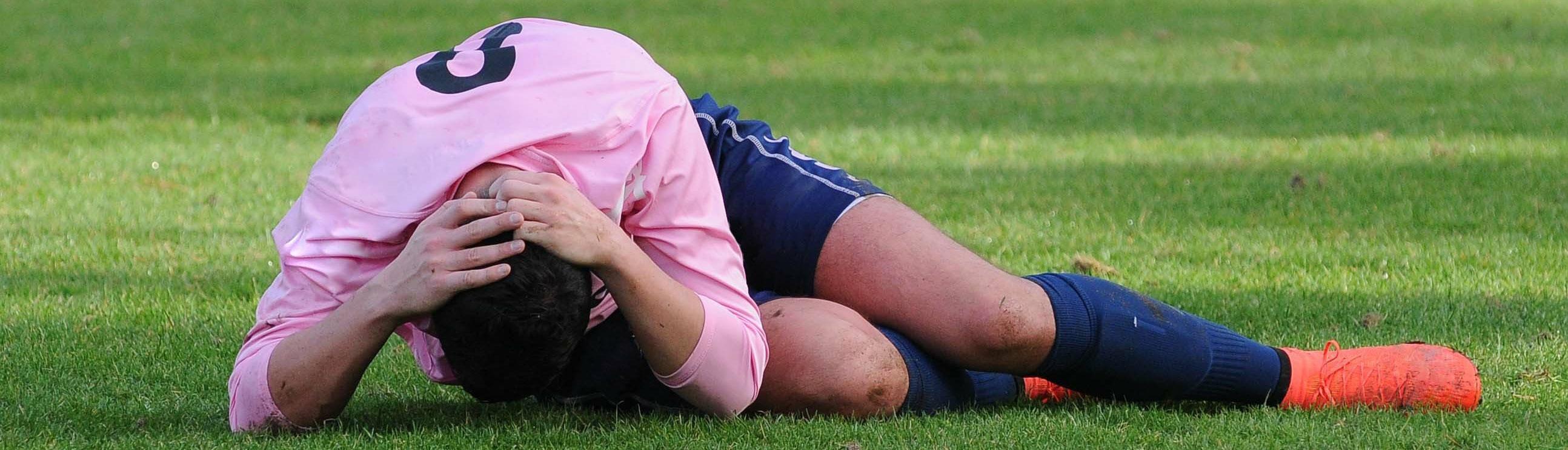
More than one in five people may suffer from ongoing symptoms following a concussion 1

More than one in five people may suffer from ongoing symptoms following a concussion 1
Acknowledgement to Country Connectivity acknowledges and respects the Traditional Aboriginal and Torres Strait Islander Custodians / Owners of the land on which we work, live and build our lives, families and communities. We pay our respects to the First Peoples of this country, their cultures, and Elders past, present and emerging.
Severe TBI has a high mortality of 30-40% , and a very high rate of long-term disability

The 2021-22 year has seen Connectivity shift from finalising its identity and establishing governance procedures to developing a strategic plan and initiating its implementation.
In meeting Connectivity’s mission to improve the lives of people and their families following traumatic brain injury (TBI) of all severities, the strategic plan focusses on six key areas –
• raising awareness;
• improving outcomes;
• supporting people;
• connecting community;
• sustainable research; and
• standardised care.
I am pleased to report that there is considerable activity occurring in all key areas of the strategic plan, with the outputs only limited by the resources we currently have at our disposal to deliver on the objectives.
remote Aboriginal communities, and the publication of the BehaviourWorks Australia Stakeholder Engagement Report on the Connectivity website.
New developments and updates continue to be featured in our digital marketing, including on our website, Twitter, Facebook, LinkedIn and YouTube.
I am pleased to report the beginning of a new 3-year funding agreement between Connectivity and the Transport Accident Commission of Victoria. This adds to the existing funding agreements already in place with Curtin University, Monash University, and the Perron Institute.
Johnstone, resigned during the past year and we sincerely thank her for her outstanding service during the formative stages of Connectivity. She was replaced by Ms Julie Tomas who commenced as the new Business Manager in October of 2021, bringing a wealth of experience in the finance sector to the role. Welcome to the Connectivity team Julie!
Board and Management team will continue to actively pursue other potential partners and opportunities.
Some deliverables have already appeared in the public domain including the online concussion course developed in collaboration with the University of Tasmania, the media advertising campaign raising TBI awareness in regional and
There is no question that COVID-19 has significantly impacted on funding opportunities available to Connectivity and as the pandemic resolves, I am confident that more opportunities will present themselves. To this end, Connectivity engaged Wendy Brooks & Partners for a 10-month period to help identify future funding targets and develop appropriate fundraising materials.
Our Business Manager, Ms Kimberley
With the easing of government COVID-19 travel and gathering restrictions in early 2022, we had the opportunity to bring most of the Board members together in a face-to-face meeting in May of 2022, the first such meeting since Connectivity was launched. It was a highly productive meeting with wide-ranging discussions focussed on the strategic challenges to the organisation moving forward.
Fundraising was clearly identified as a major challenge in today’s economic climate, and we will need to narrow our efforts to be effective in this space.
To this end, Connectivity has been actively seeking partnerships with various organisations, including a new relationship with the Arcare Family Foundation. The
I am very grateful that we have such outstanding Directors on the Board who willingly donate their valuable time and considerable expertise to Connectivity. My sincere thanks. I also am grateful to Mr Dennis Goldner who continues to donate his wealth of corporate expertise as the independent Chair of the Finance, Risk and Audit Committee, Mr Martin Wandmaker for his continued service on the Nominations and Remuneration committee and to Prof. Peter Reilly who continues to serve as the Chair of the Expert Committee.
The organisation has begun to deliver on the strategic priorities identified in 2021 and outlined in the Connectivity Strategic Plan.
We have raised awareness of concussion via the creation and launch of our online Concussion Short Course, which has been completed by 970 people during the financial year. 230,901 people viewed our YouTube videos and learnt something about traumatic brain injury (TBI).
Our website attracted significant interest, with 17,035 new users in 2021-22. These users were able to find a wealth of helpful advice, information and downloadable content to guide them through the journey of recovery following a traumatic brain injury.
We worked with Aboriginal and Torres Strait Islander stakeholders in Western Australia to raise awareness of traumatic brain injury, especially concussion, in regional and remote Aboriginal communities.
We created three concussion education campaigns raising awareness of the need to seek medical care after a concussion. These were aired on television and radio.
We are proud that the Arcare Family Foundation has made a significant donation to Connectivity.
It has enabled us to commence work on producing resources to educate both residential and community based aged care workers in the best way to assist an older person who has experienced a concussion.
Stakeholder engagement is a feature of Connectivity’s work. A Special Communication publication summarising the findings of the BehavioursWorks Australia Stakeholder Engagement Report commissioned by Connectivity, was accepted for publication in the Journal of Head Trauma Rehabilitation.
The Report has guided us in how we implement our strategy, to ensure maximum benefit for the Australian TBI community.
People with traumatic brain injury and their loved ones are not the only people who benefit from the work of Connectivity.
Researchers post information about their research projects and can recruit participants for research via our website.
We are particularly proud of how we empower people who have experienced a traumatic brain injury by connecting them with researchers who are in the design phase of their research.
Through the work of Connectivity, people with lived experience are co-designing research into their own condition, alerting the researchers to what is important, and thus improving research outcomes.
We are extremely grateful for the loyal support we have received from our Founding Supporters Curtin University, Monash University and Neurosciences Victoria, and from the Perron Institute of Neurological and Translational Sciences.
In 2022, the Transport Accident Commission of Victoria joined our Supporters with a multi-year commitment, and we are delighted to be working with them to deliver better outcomes for people who experience TBI.
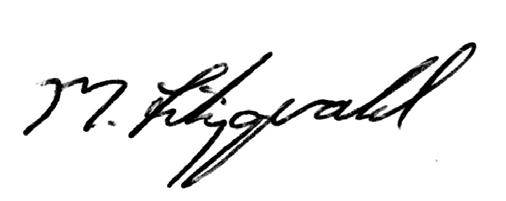
Finally, I wish to thank the Board and Committees of Connectivity for their strong support of the organisation. Their strategic guidance and firm grasp of governance has e mpowered Connectivity to achieve its aims.
The Connectivity Business, Marketing and Communications, Research and Support teams have continued to spread the word on traumatic brain injury and deliver high quality resources more broadly than could be anticipated given such a small group.
We look forward to continuing to improve the lives of people with traumatic brain injury in 2022-23.
connectivity.org.au
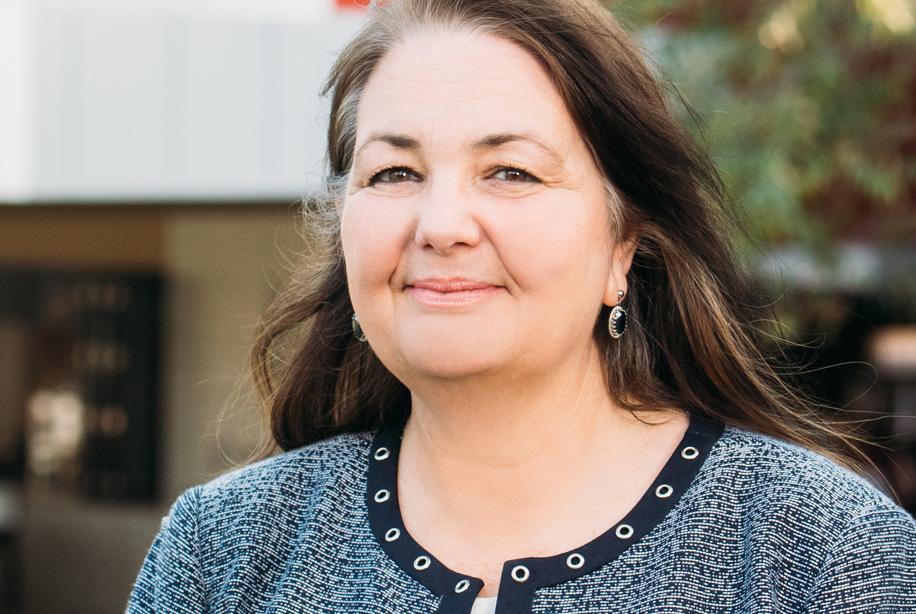
The 2021-22 financial year has been an exciting one for Connectivity Traumatic Brain Injury Australia.Professor Lindy Fitzgerald Connectivity CEO

Connectivity Traumatic Brain Injury Australia (Connectivity), is an Australian-wide not-forprofit organisation working to raise awareness of traumatic brain injury (TBI) including concussion in the community.
A TBI can range in severity from mild, to moderate to severe. Symptoms can be quite mild and quickly resolving or debilitating and life-changing. As such, a TBI can dramatically impact the lives of both the person involved and the people around them.
To promote the prevention and control of diseases and disease processes experienced by people with TBI, including from a physical, mental, neurological and functional perspective.
Connectivity is incorporated as an Australian Public company limited by guarantee, and is registered as a charity with the Australian Charities and Notfor-profits Commission (ACNC).
The core goal of Connectivity is to improve the lives of people and their families following TBI of all severities, including concussion.
Connectivity links together people with lived experience, carers, researchers, clinicians and health care providers to build the evidence base and improve outcomes for people following TBI of all severities.
By supporting research and translating outcomes, Connectivity provides relevant and evidence-based information to people with TBI, their carers and clinicians to help improve the lives of people with TBI.
Connectivity is governed by an independent Board of Directors who provide the experience and skill sets required to deliver the needs of the organisation and its governance.
The Executive of Connectivity is the Chief Executive Officer, the Business Manager and the Marketing and Communications Managers.
The following committees also contribute to the successful running of Connectivity:
• The Expert Committee
• The Finance, Risk and Audit Committee
• The Nominations and Remunerations Committee.
The company is independently audited by:
Hall Chadwick WA Audit Pty Ltd
connectivity.org.au
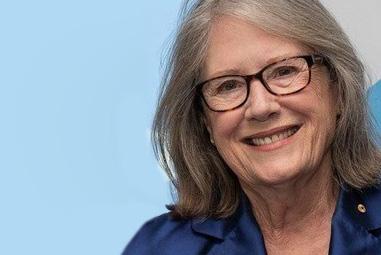
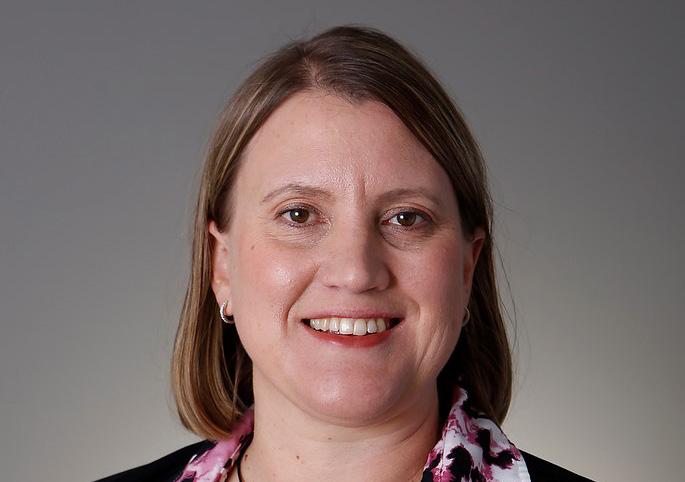
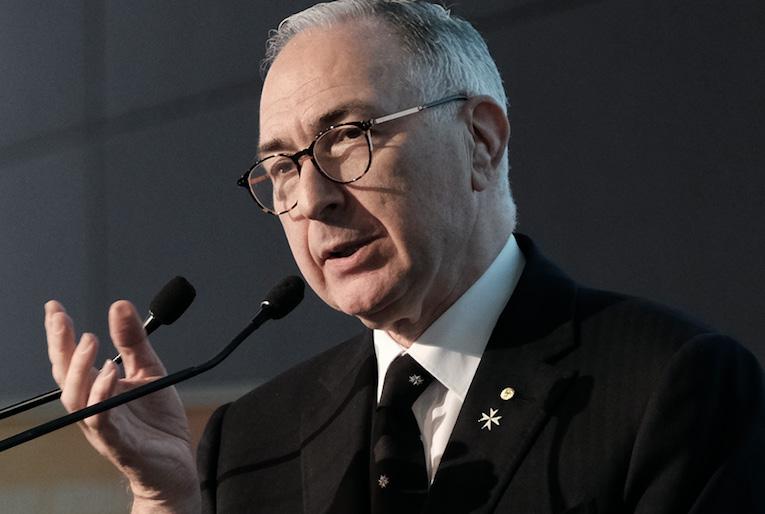
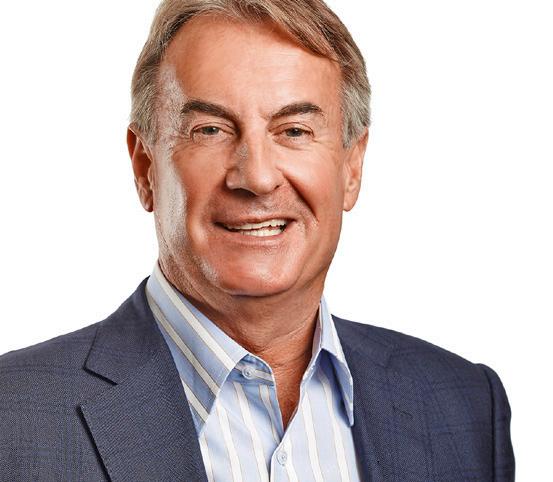
Holly MacNeil Marketing and Communications Prof. Robert Vink am Chair of the Board John Higgins ao Board Member Julie Tomas Business Manager Judi Moylan ao Deputy-Chair of the Board Prof. Elizabeth Kendall Board Member Shenane Hogg Business Support Officer Dr. Anthony Filippis Board Member Prof. Jeffrey Rosenfeld ac obe Board Member OUR BOARD Prof. Lindy Fitzgerald Chief Executive Officer OUR TEAM Naomi Fuller Marketing and Communications Aleksandra Gozt Research AssociateWe work to raise awareness of TBI of all severities in the community.
We source and disseminate best-practice advice to clinicians and health care workers caring for people with TBI.
We source and disseminate information designed for people with TBI and their carers.
We connect researchers, people with TBI and their carers to improve study recruitment, enable co-design and empower people with TBI.
Develop a financial structure that ensures the capacity for long-term research and improved understanding of the consequences of TBI.
Promote best-practice management of mild TBI through recommended practices for clinics.

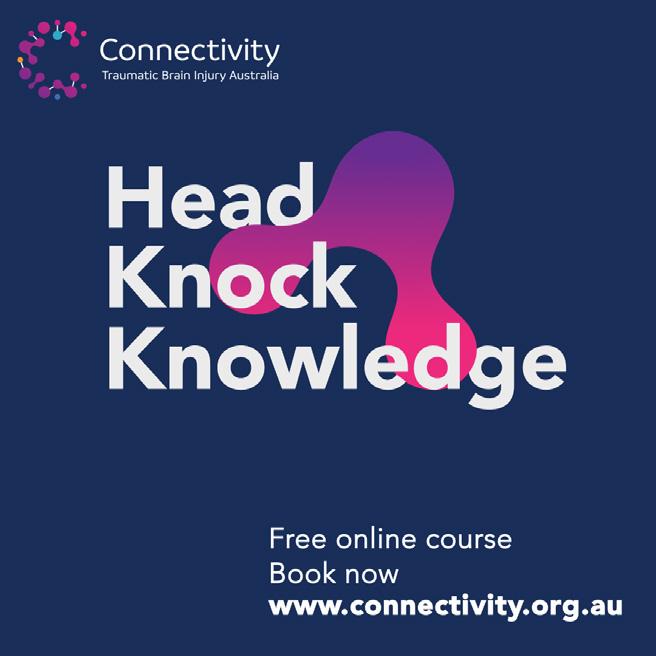
The Concussion Short Course launched in April to 300 pre-registered online attendees. The event included an introduction from CEO Lindy Fitzgerald, a panel Q&A with Dr Gill Cowen, Troy Kirkham from the West Australian Football Commission and ex-WAFL player Rowen Powell.
Created in conjunction with the University of Tasmania, the course was designed to help participants further understand concussion including:
• recognising the signs and symptoms;
• how to manage concussion;
• pathways to recovery; and
• how concussions can impact everyday life.
Course numbers as of 30 June 2022 were:
Assets were created to assist with the course promotion and were used across our digital channels, electronic marketing, and in general promotion of the course.
This resulted in 4,489,587 impressions across the Meta Suite (Facebook and Instagram), with 24,227 clicks directly through to the Concussion Short Course.
”Having had two concussions and a couple of bad falls in a short space of time, Connectivity’s Concussion Short Course has been so helpful for me to understand the reasons for my slow recovery. At times it has been a very scary process and it’s certainly taken me longer to recover from the second concussion. I loved hearing the personal perspective stories within the course, as I could really relate to their experience. It’s great to have a resource such as this to learn from.”
“Over 30 years ago, I was in a multi-car pile-up where I was flung back into my seat and hit the back of my head. At the time I was diagnosed with whiplash, put in a neck collar and given pain relief. I was confused, uncoordinated and suffered from headaches and nausea for weeks. Once the neck collar was removed, I then had symptoms that felt like my head was not supported by my neck, headaches that turned into migraines, dizzy spells, car sickness, and what I called “cottonwool head”.
All of this lasted for years with having episodes of physio, pain relief and rest to cope with the pain. I have just completed Connectivity’s Concussion Short Course and found it so rewarding and validating.
I realise now that I probably had a concussion from that car accident all those years ago and that it was never treated back then like it would be today.
Thank you for providing the knowledge and education in this course.”
Greta, QLD
Inline with Connectivity’s Connecting Community strategic objective, funds up to the value of $2,500 AUD were made available to support the operations of Local Area Networks with a special interest in traumatic brain injury, including concussion. An application form and terms and conditions were created in order to establish the competitive process. These are accessible via the Connectivity website.
The final report for the stakeholder engagement piece on the needs of people and organisations that encounter traumatic brain injury commissioned by Connectivity and conducted by BehaviourWorks Australia, was received in December 2021.
The report can be viewed at: https://www.connectivity.org.au/resources-for-researchers/connectivity-research/
The work was accepted for publication as a Special Communication by the Journal of Head Trauma Rehabilitation.
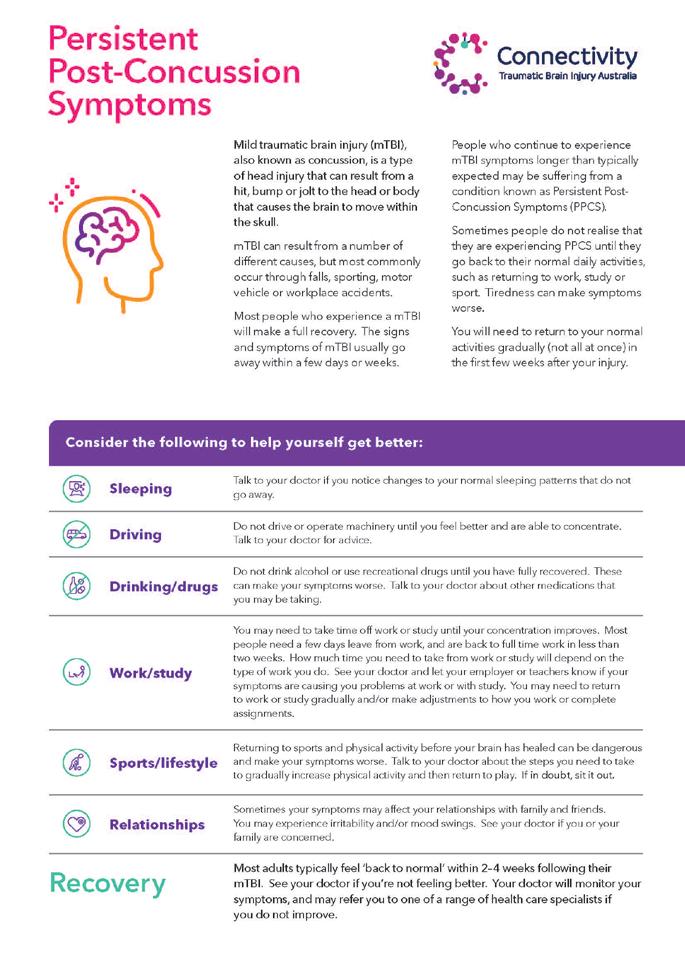
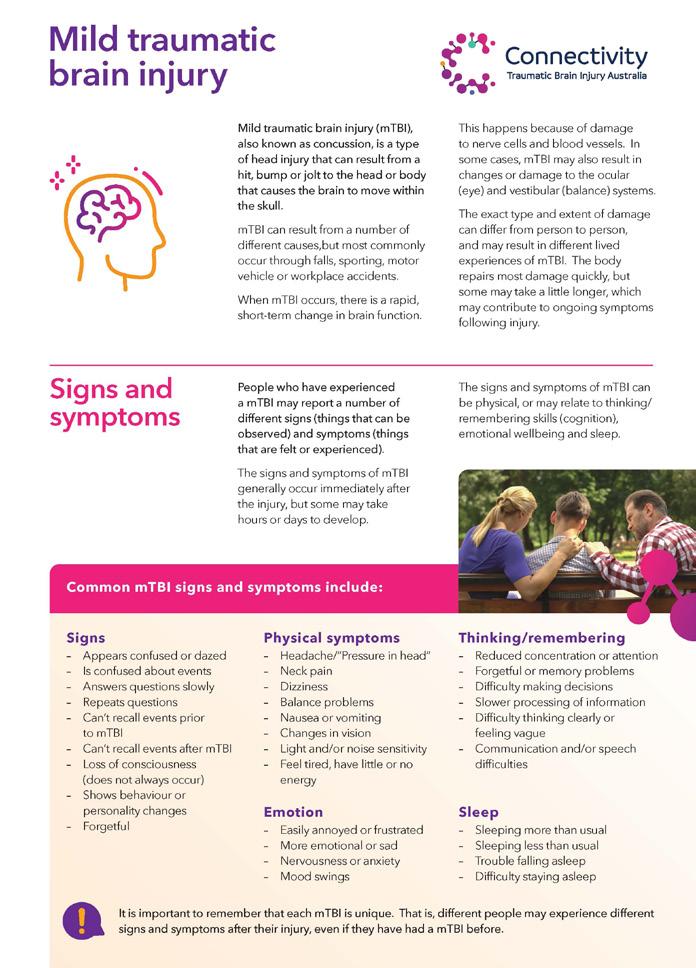
Creating Connectivity branded Consumer Information Sheets (CIS) was a priority project. Analysis into existing CIS showed there was a need for information on both the acute and chronic effects of mild traumatic brain injury (mTBI).
The Connectivity Consumer Advisory Group and the Expert Committee confirmed the need for this content, resulting in the creation of mTBI and Persisting Post-Concussion Symptoms consumer information sheets.
These are both now readily available on the Connectivity website.
connectivity.org.au
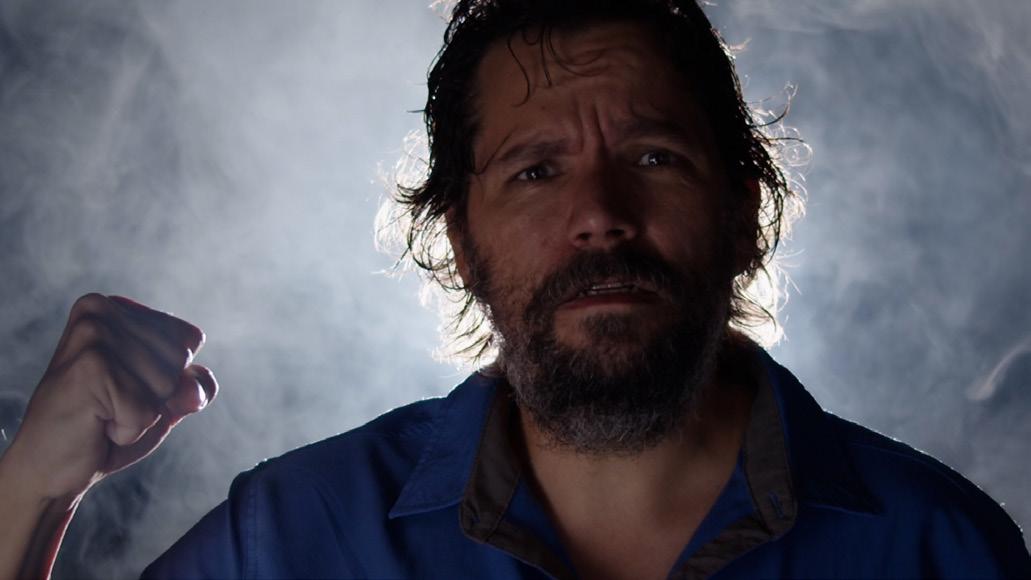
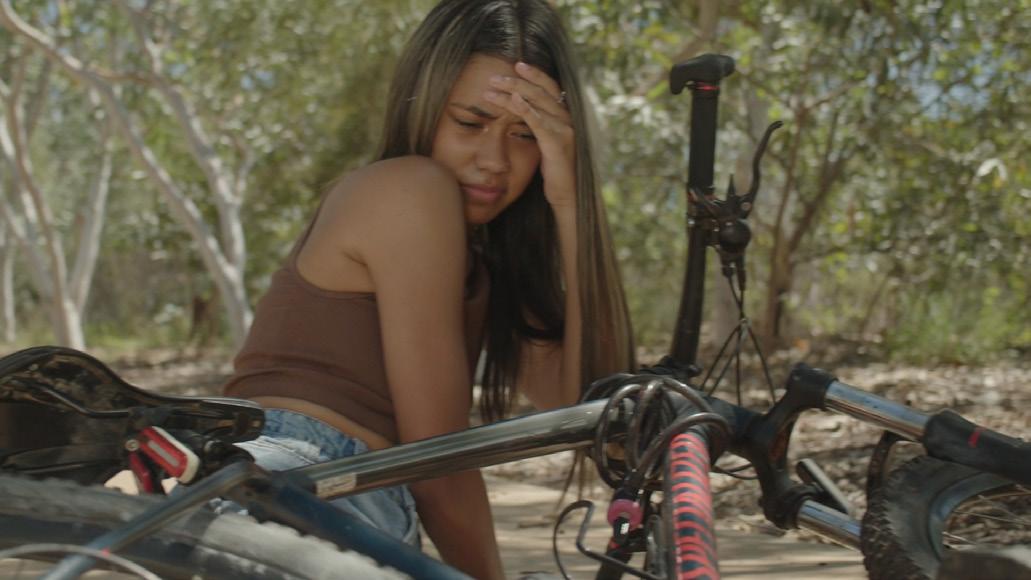
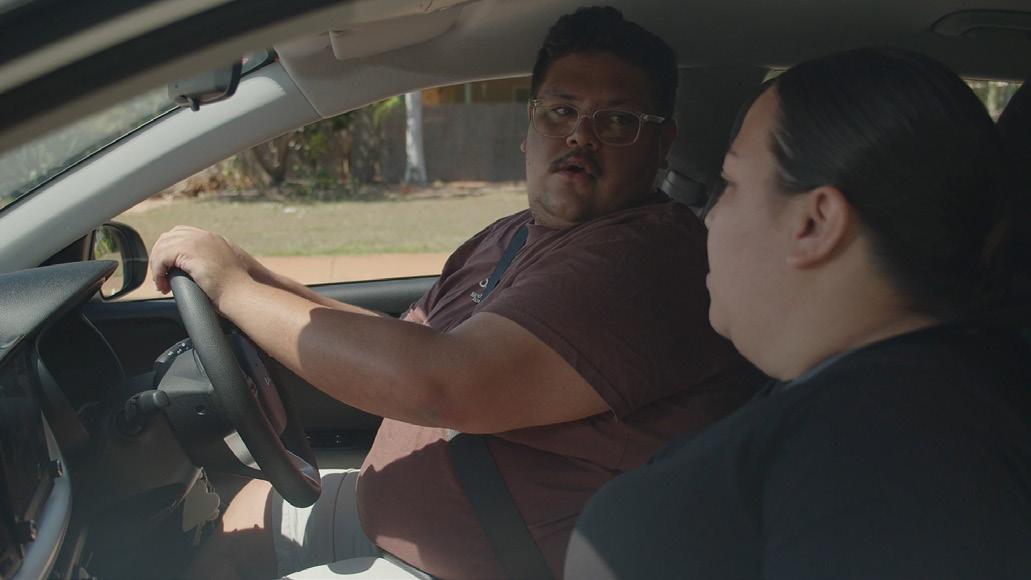
Aboriginal and Torres Strait Islander Education Campaigns on Concussion
Working with Goolarri Media we created a series of three radio and television concussion campaigns to promote the following topics in the North West of Western Australia: Falls Can Cause Concussion Car Crashes Can Cause Concussion Fights Can Cause Concussion
These videos are currently available to view on the Connectivity YouTube channel and the Connectivity website.
Television campaign distribution
• GWN7 during AFL Sunday afternoon games and general news (29 May - 23 October)
• Goolarri TV during peak (25 times per week) and off peak (10 times per week) (29 May –28 June)
Radio campaign distribution
• Airing on Goolarri and PAKHAM radio stations in the North West of WA, 54 times per week over an 11-week period between 29 May and 7 August.
For the year ended 30 June 2022
2022 2021
$ $
Revenue 925,150 428,069
As at 30 June 2022
2022 2021
$ $
Current assets
Cash and cash equivalents 684,729 335,613
Other income 9,088 5,721
Employee benefits expense (265,949) (160,366)
Consulting expenses (89,469) (11,595)
Marketing expenses (155,960) (20,716) Research services (50,472) (23,411)
Other expenses (31,352) (15,207)
Grants made and funding granted (188)
Current period surplus before income tax 340,847 202,495
Income tax expense
Net current period surplus 340,847 202,495

Total other comprehensive income for the year
Total comprehensive income for the year 340,847 202,495
Trade and other receivables 16,988 2,878 Total current assets 701,717 338,491
Non- current assets Computer Equipment 3,220 Total non current assets 3,220 Total assets 704,937 338,491
Current liabilities
Trade and other payables 33,763 12,730 Employee benefits 12,836 8,270
Total current liabilities 46,599 21,000 Total liabilities 46,599 21,000 Net assets 658,338 317,491
Retained surplus 658,338 317,491 Total equity 658,338 317,491