We’re Facing Tough Times and We’re Facing Them Together
Dear members,
With the new semester underway, I know many of you are returning to difficult conditions in your schools and communities.
As you see and read in the news, we are truly living in unprecedented times. I want to remind you where CEA stands: schools should be places where students feel safe, welcome, and supported, not afraid. Every student, no matter their race, background, or ZIP code, deserves to feel respected and protected at school. We believe our work is rooted in standing up for human and civil rights, pushing back against authoritarianism, and protecting the future of our democracy. As the year progresses, I urge you to continue working together to protect our students, our communities, and one another, because we are stronger when we stand united.
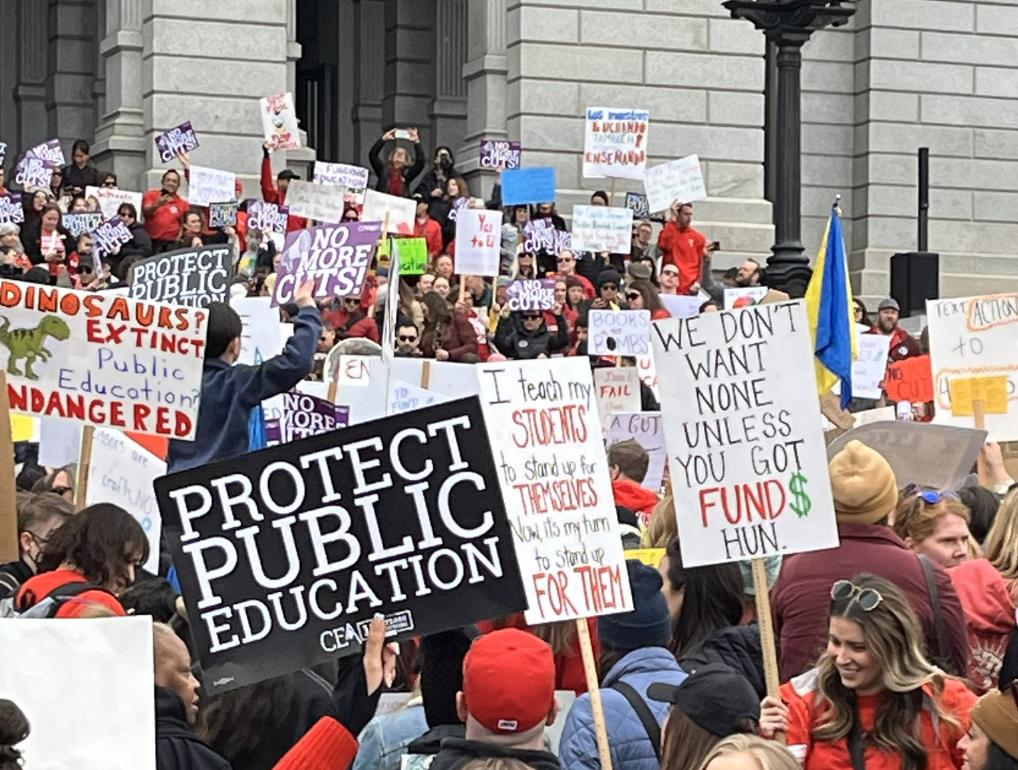
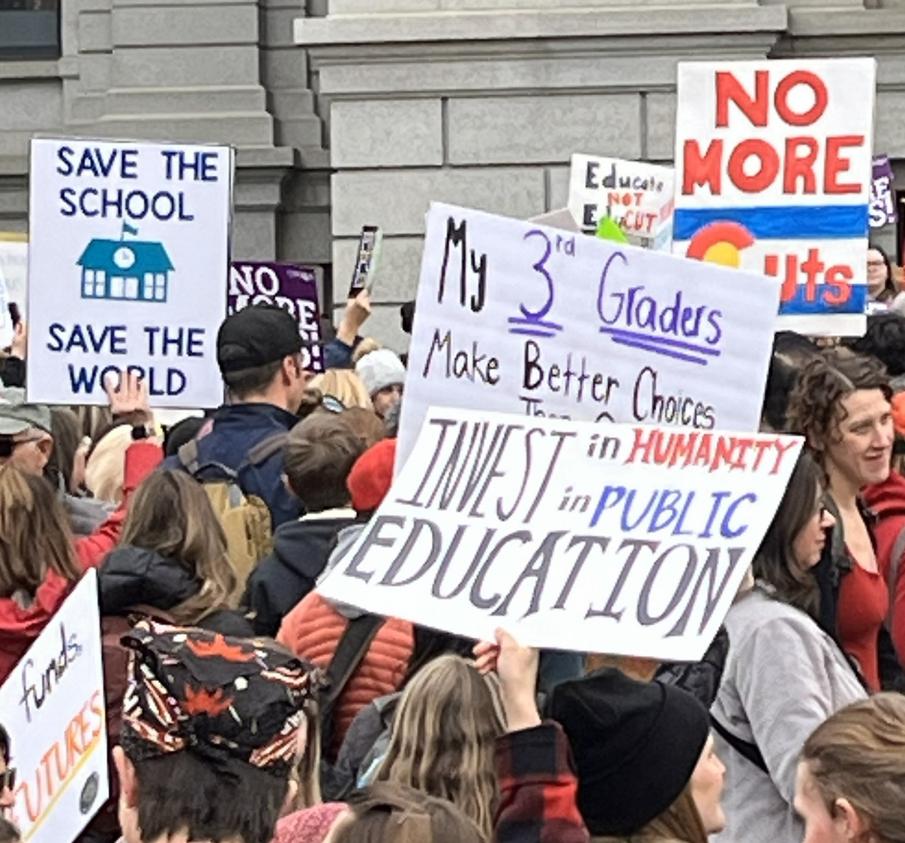
While we continue to work through these challenges, we must also focus on helping the seemingly never-ending funding crisis. Staffing shortages, rising costs, and uncertainty are affecting schools throughout Colorado. However, there is still reason to be hopeful. Our work to fix Colorado’s broken school funding system is moving forward. During this year’s Rural Lobby Day, members from across the state came together to officially kick off our Cut the Ropes campaign. This movement is a statewide effort to improve an outdated school funding system that leaves our schools short by $4 billion each year. We remain firm in holding our legislators accountable. We must remove the outdated revenue cap so we can support educators, lower class sizes, and expand mental health services, all without raising taxes. This funding crisis is forcing educators out of the profession and making it more challenging for schools to meet students’ needs.
As we move forward into the year ahead, please know that you are not facing these challenges alone. CEA will continue to stand with you, advocating for safe, welcoming schools, fighting for fair and sustainable funding, and holding leaders accountable to the students and educators they serve. Together, through solidarity and collective action, we will keep pushing for the resources, respect, and protections our schools need so every student can thrive, and every educator can remain in the profession they love.
In solidarity, Kevin Vick
Kevin Vick is a high school social studies teacher and president of the CEA.
CEA President Kevin Vick
Agenda 2026 Legislative
Colorado’s public schools serve 95% of our state’s children. This year, we call on legislators to strengthen and defend that system by investing in public education, respecting educators as professionals, and ensuring every school is safe and welcoming. Our focus is simple: keep educators in the profession so students benefit from stable, experienced staff.
CEA’s agenda reflects the priorities of our members: the people educating the next generation of Coloradans and standing on the front lines against efforts to undermine public education.
STRENGTHEN & STABILIZE PUBLIC SCHOOL FUNDING
Colorado must create a stable, long-term funding system that allows every district to attract and retain qualified educators. Our top priority is passing a referred measure that will fund K-12 public education with no new taxes so we can keep teachers in the profession and strengthen our neighborhood schools.
STATE LAWMAKERS MUST:
» Refer the funding measure to the 2026 ballot so voters can choose a better, more reliable school finance system without raising taxes.
» Resist unfunded mandates and policies, however wellintentioned, that increase workload and drive educators out of the profession.
INVEST IN EDUCATOR RETENTION
Educators are committed to serving Colorado’s students, but they need meaningful support to stay in the profession. Retention requires affordable benefits, competitive compensation, professional respect, and safe, supportive school environments that are free from political attacks.
STATE LAWMAKERS MUST:
» Support efforts to create a statewide public school health insurance pool that stabilizes costs, increases buying power, and delivers affordable, high-quality coverage for educators and their families.
» Support policies that align with CEA’s three core pillars:
» Invest: support policies that contribute to affordable benefits, competitive pay, manageable class sizes, and adequate staffing.
» Respect: Strengthen workers’ rights, collective bargaining, professional autonomy, and fair compensation so educators are treated as the professionals they are.
» Safety: Protect students and staff from political attacks on public schools, ensure safe and inclusive learning environments, and defend against policies that siphon public dollars to private interests.
For
Colorado’s
State of State of
Respect Safety
Instead of empowering teachers to adapt creatively to their classrooms, the system too often treats them as checklists to be managed. Combined with chronic underfunding, low pay, and inadequate benefits, the escalating administrative burdens create an unsustainable environment, driving talented educators away from the profession.
Colorado must invest in resources and staffing, including counselors, mental-health professionals, paraprofessionals, and smaller class sizes, to address the root causes of behavioral incidents and ensure every educator and student feels safe at school.
60 to $1.00
I wish the people who are making the rules and regulations had a better understanding of what teaching is really like and what we go through. I know that students have rights, as they should, but it doesn’t feel like schools or staff members have rights.
of educators said they do not trust the current accountability system to accurately measure student, school, and district performance
Colorado educators earn earned by similar professionals %82 %50 74
said a student attempted to cause physical injury to them or another adult in their presence
said they personally know someone who has left the profession in the past year
said they have been physically injured by a student.
KEY ISSUES WE’RE BRINGING TO LAWMAKERS DURING LOBBY DAYS:
1 2 3 Lobby
Day
By Amanda Perlman
CEA Lobby Days are your chance to stand up for students, educators, and the future of public education. During Lobby Days, participants engage in activities like meeting with lawmakers, sharing personal stories, and discussing key issues that matter to their profession and community. It’s a chance to make a direct impact by ensuring that policymakers understand the real-world implications of their decisions.
INVESTING IN PUBLIC EDUCATION
Every public school in Colorado, from the Western Slope to the Eastern Plains, deserves sustainable funding to ensure students and educators have the resources they need to succeed.
ELEVATING OUR PROFESSION
Every educator, from classroom teachers to cafeteria staff to bus drivers, deserves to feel respected, valued, and treated as professionals in the field.
BUILDING
SCHOOLS WHERE EVERYONE THRIVES
Every student, regardless of their background, deserves access to high-quality education, safe and welcoming public schools, and the support they need to thrive.
YOUR VOICE MATTERS.
AMPLIFY EDUCATOR VOICES
Lobby Days provide a platform for educators to directly share their experiences, concerns, and priorities with legislators. Personal stories and on-the-ground perspectives are incredibly powerful tools for influencing policy decisions.
STRENGTHEN PUBLIC EDUCATION
By participating, members support the broader mission of public education and ensure its protection and improvement. Legislative advocacy helps counter efforts that might undermine public schools, such as voucher programs or budget cuts.
ADVOCATE FOR STUDENTS
Educators know firsthand what students need to thrive. Lobby Days give members the opportunity to advocate for policies that enhance student learning conditions, such as mental health resources, equity initiatives, and funding for programs.
SHAPE EDUCATION POLICY
Decisions made at the state legislative level significantly impact public education funding, working conditions, class sizes, and student support. Attending Lobby Days ensures that lawmakers hear directly from educators about the policies and resources needed to improve public education.
BUILD LEGISLATOR RELATIONSHIPS
Face-to-face interactions with legislators create connections that can influence future policy discussions. These relationships help legislators see educators as trusted, informed partners in shaping Colorado’s education system.
How easy is it to lobby?
It’s as straightforward as sharing what’s on your mind, and what’s happening in your school or classroom. See the Power in Our Voice: youtu.be/Rcll7IET-BQ.
VOICES WITH IMPACT
During the 2025 legislative session, members met with lawmakers to advocate for the funding, respect, and resources our schools need.
Over a span of 14 Lobby Days with 24 locals in attendance, we tracked more than 200 conversations between members and legislators.
At CEA Lobby Days, all educators are welcome and encouraged to attend. Whether you’re a first-time advocate or a seasoned leader, Lobby Days empower you to use your voice to make real change.
Together we’re stronger. Together we’re heard. CHECK FOR UPCOMING LOBBY DAYS AT MOBILIZE.US/COLORADOEA
Rural Voices at the Capitol
By Sydney Breakfield
EDUCATORS DEMAND CHANGE
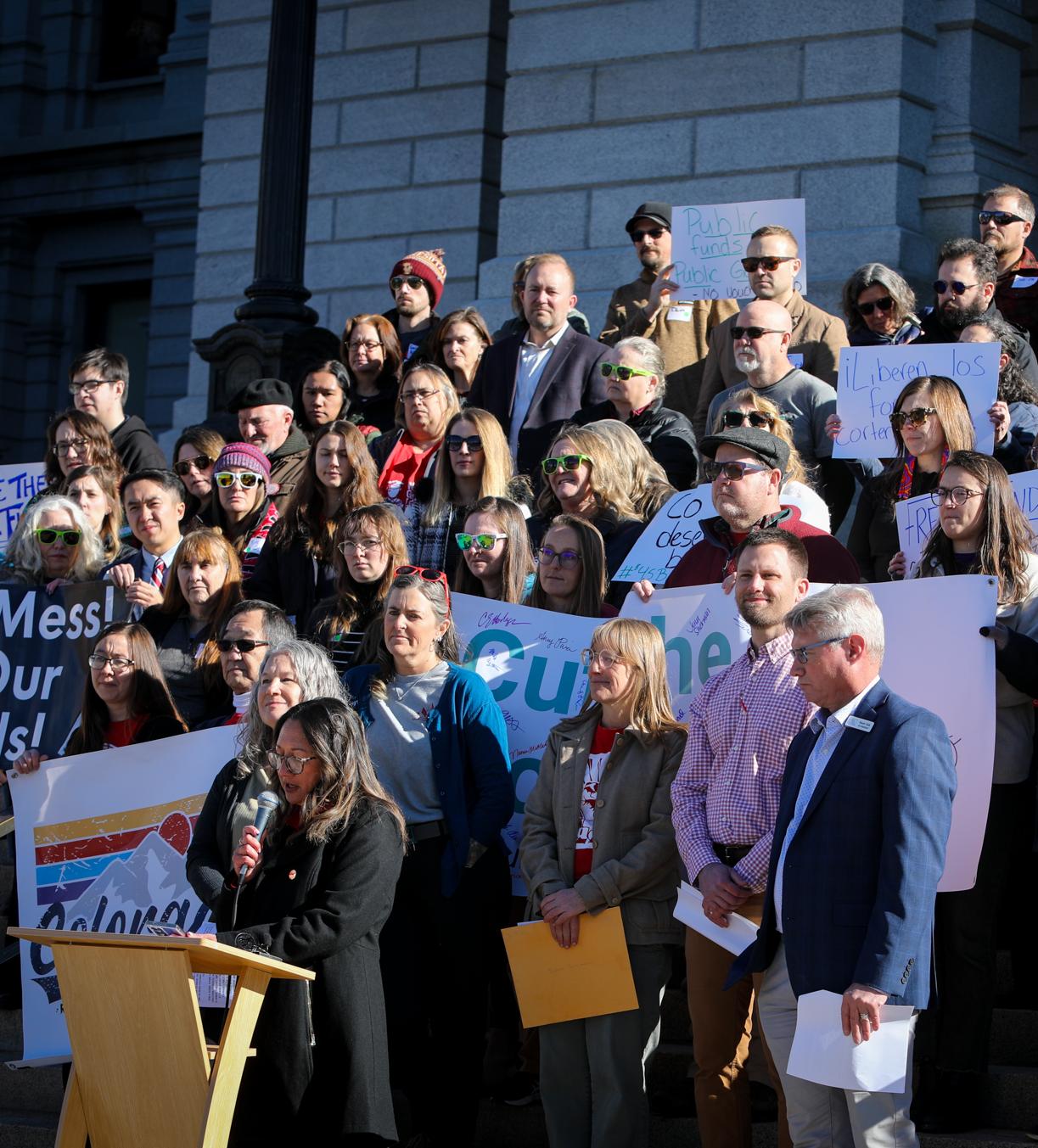
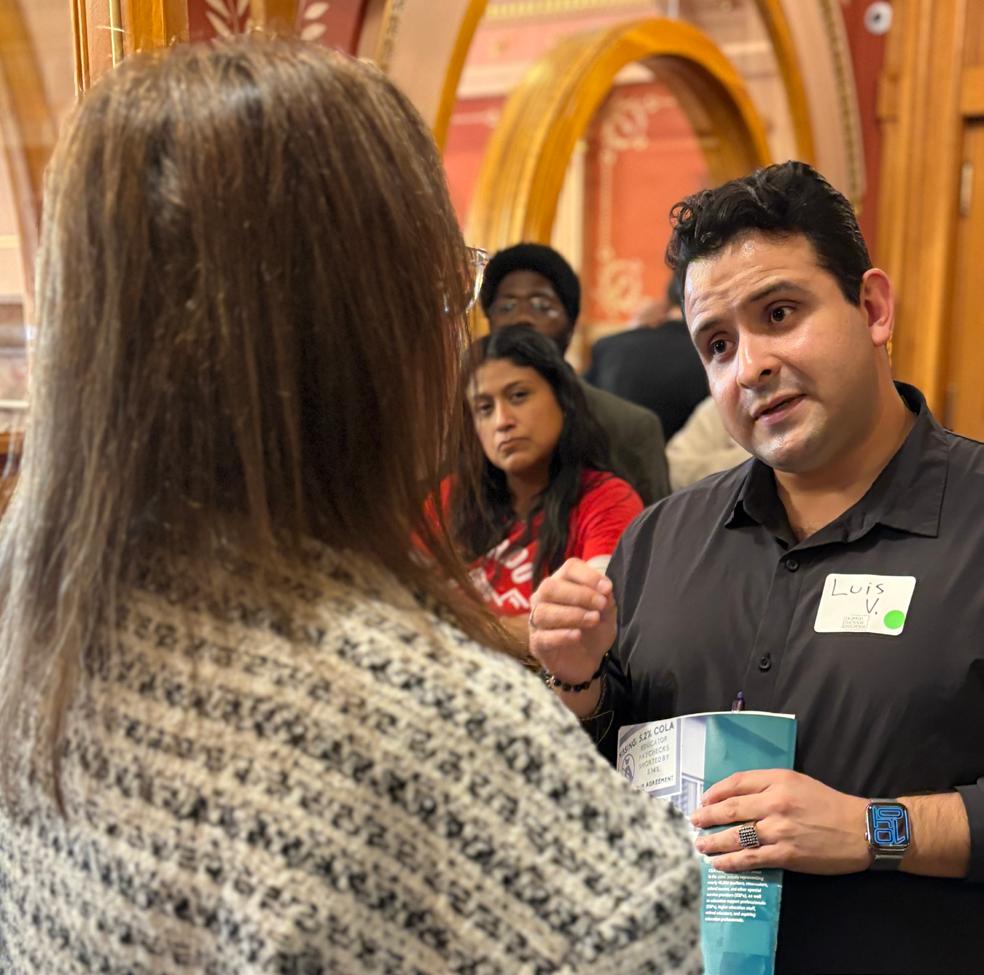
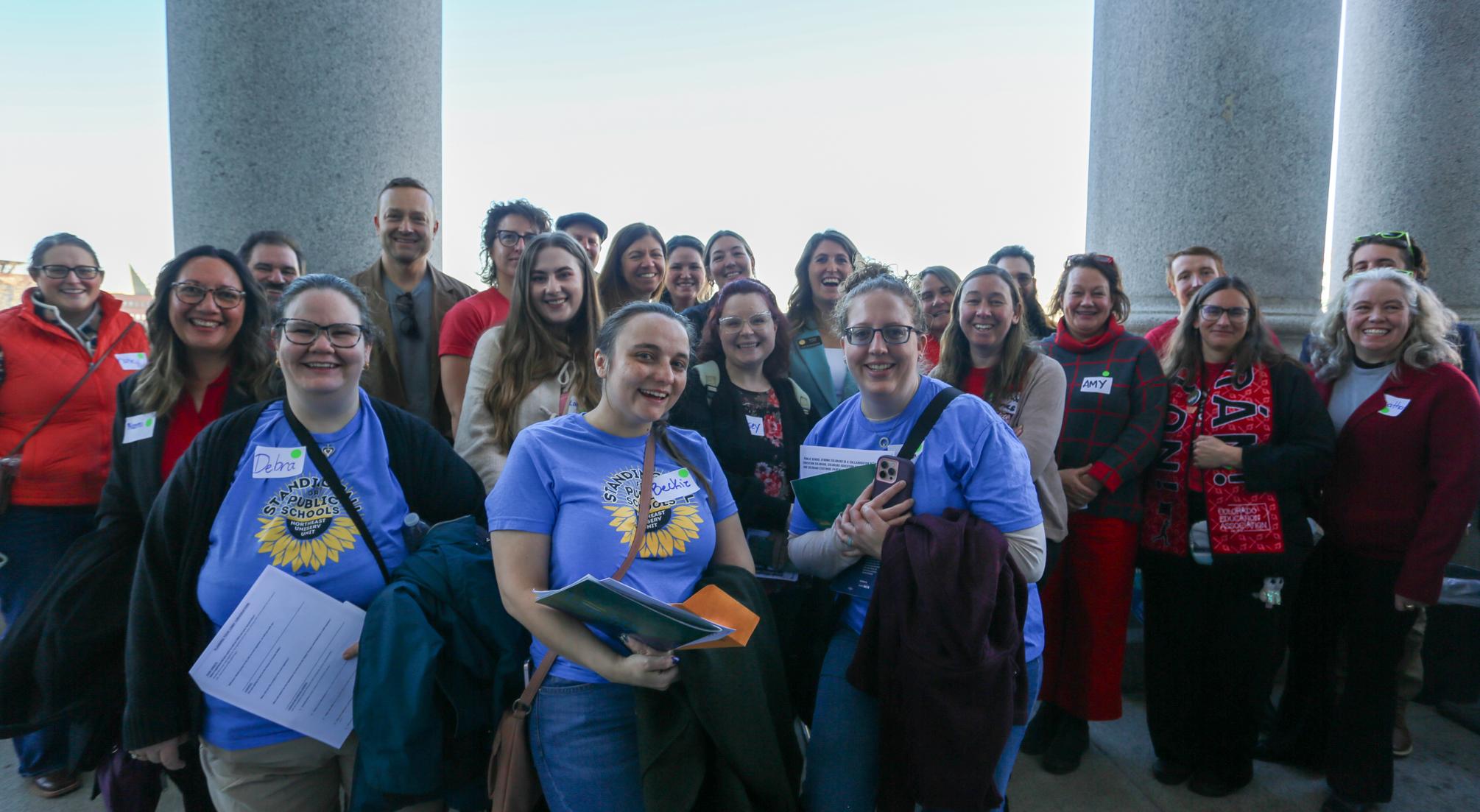
Despite frigid temperatures and the threat of bad weather, nearly 100 educators from across Colorado made the long journey to the State Capitol for Rural Lobby Day, determined to ensure rural voices were heard. Members met with legislators to share the realities facing their schools: chronic underfunding, severe hiring shortages, and rising cost-of-living pressures that are pushing educators out of the profession and straining already limited resources.
When vacant positions go unfilled, turnover remains high, and students lose access to the consistent, high-quality instruction and support they deserve. Rebecca Costanzo, a high school social studies teacher and member of the Brush Education Association, stated that chronic teacher shortages are hurting students’ literacy and essential skills, especially in rural Colorado. “We have been down an English teacher in our high school for about three years. When I graduated from college in 2011, there were hundreds of English teachers, and now we can’t even get one to come out to Northeast Colorado,” Rebecca shared. “So it’s really impacting our students and their instruction in reading and writing and other important skills that they need in the 21st century.” Underfunding also limits resources and reduces students’ learning opportunities and readiness for the real world. As a high school science teacher, Sterling Education Association member Kasey Anderson commented on the relationship between adequate funding and student success. “Funding impacts our ability to provide materials and equipment that is relevant to the changing times, and be able to provide students with real world opportunities that will help develop their skill sets to make them more marketable when they leave our schools,” she stated.
High school Spanish teacher and Eagle County Education Association member Cheryl Prins, she sees teacher shortages affecting both students and school programs. At her school, a teaching position for a Native Spanish speaker remained vacant because candidates couldn’t find housing, forcing a program serving mostly Latino students to shut down, denying bilingual students instruction in both their native language and English.
“I came because there are some changes that need to be made, and unless legislators hear from us and from the people that are in the schools, they don’t know what’s going on.”
Laura
Daly, Eagle County Education Association Member & Fifth-Grade Teacher
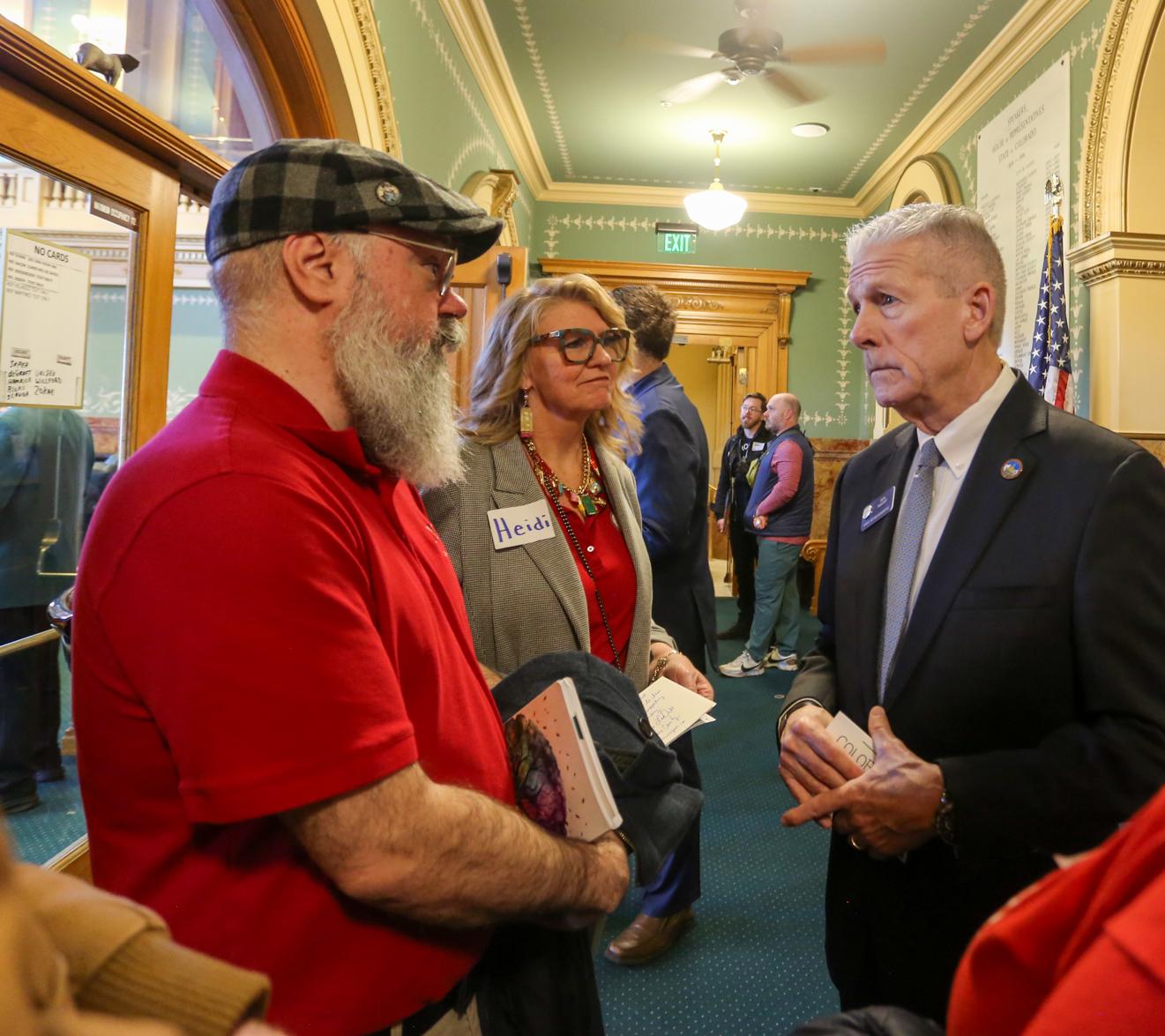
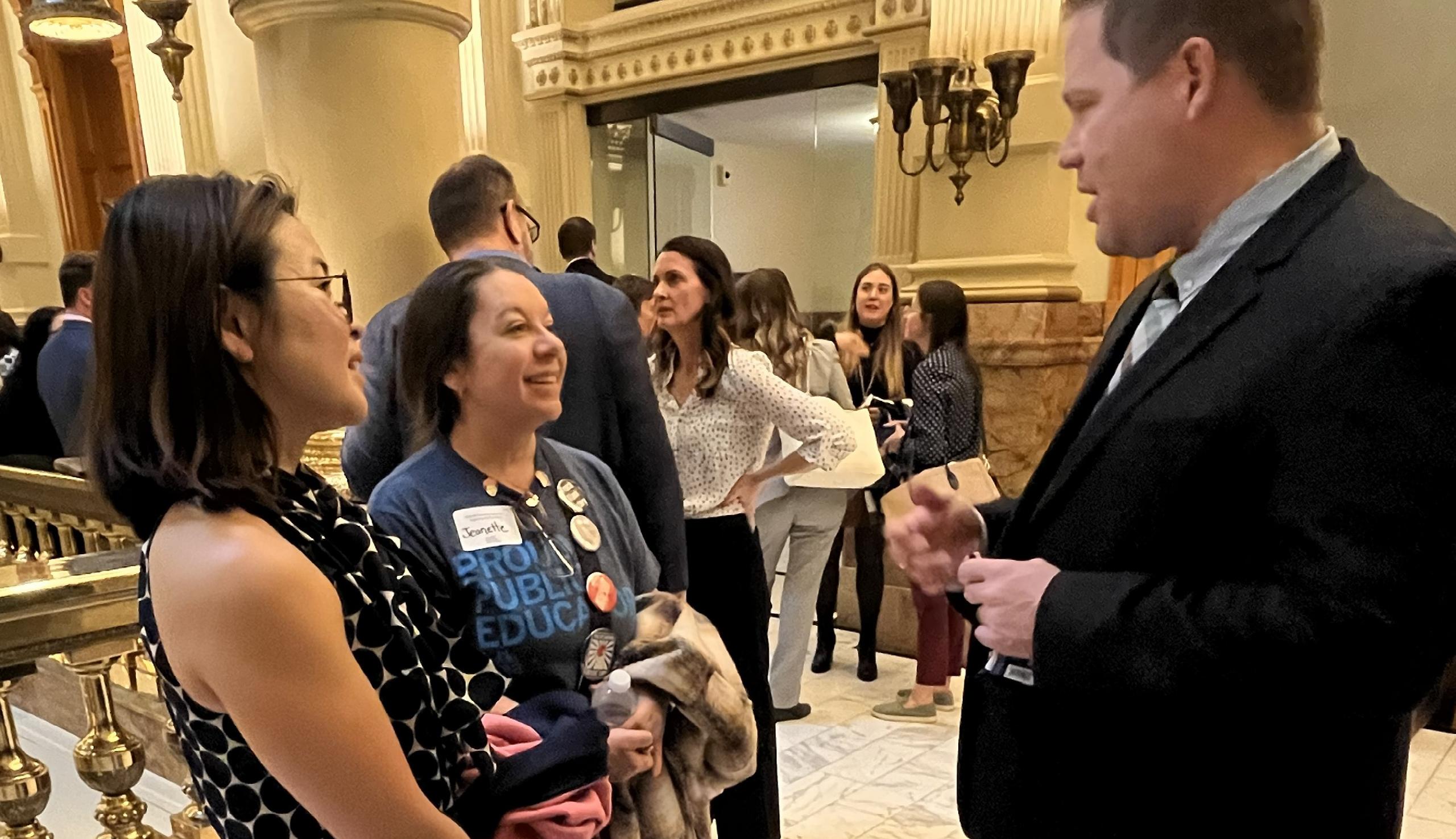
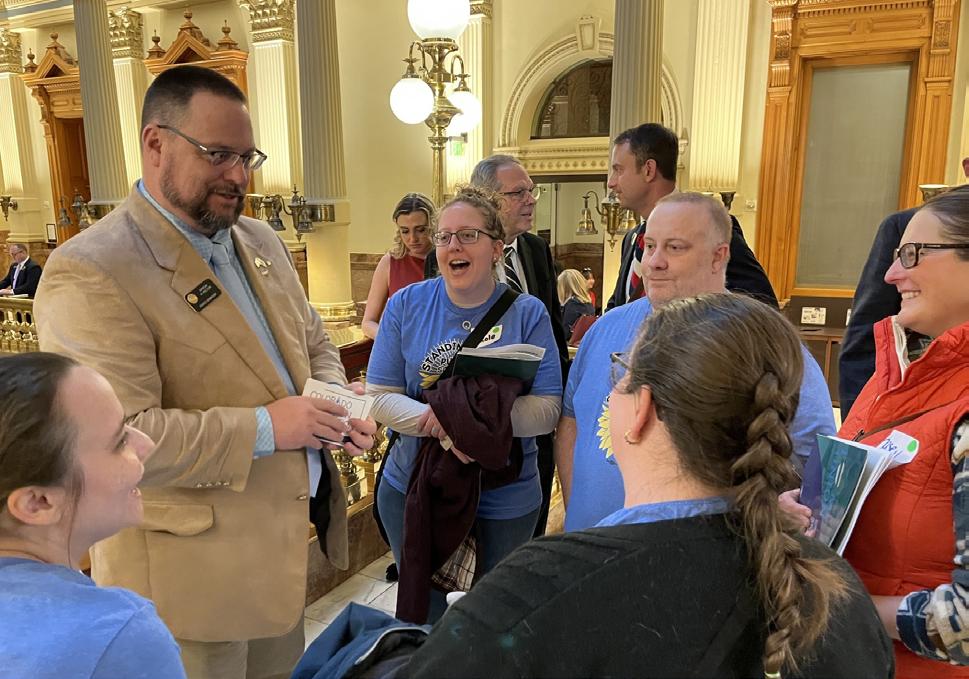
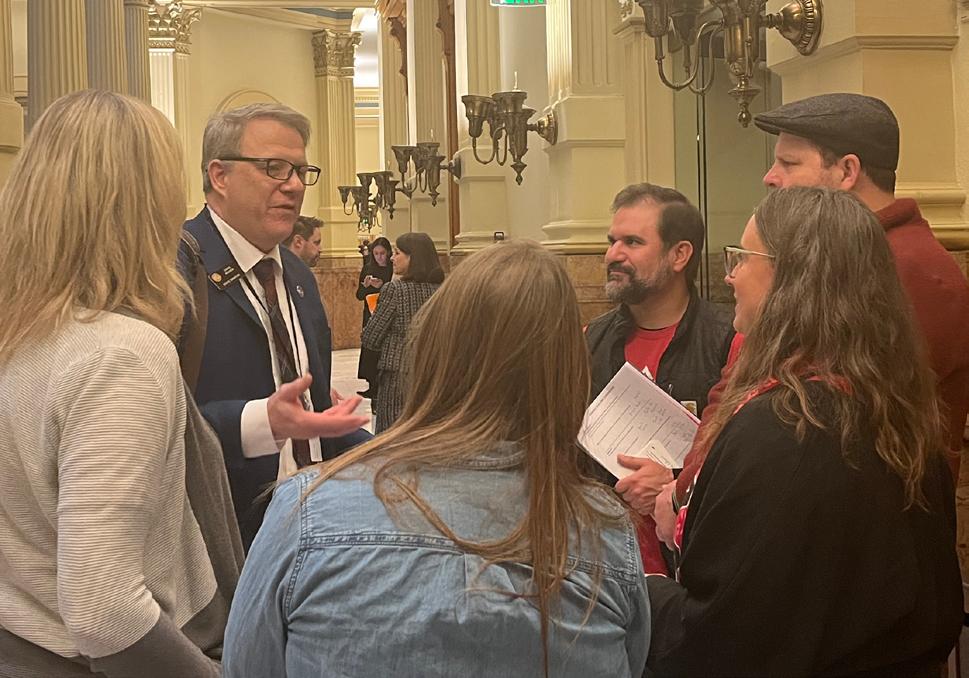
ABOVE: Sen. Byron Pelton meets with members. BELOW: Members speak with CEA Champion Sen. Chris Kolker, Chair of Senate Education.
“There were several different people who committed to the position, but then backed out over the summer because they couldn’t find housing, so the position went unfilled. We couldn’t run our program because we didn’t have a teacher,” she said.
Teacher shortages also force rural schools to rely on visas and substitutes, threatening stability in students’ early education. First grade teacher and Fort Morgan Education Association member Nicole Glassel is fearful for students’ learning foundation when there is a constant rotation of teachers. “We have many teachers that are here on J1 visas, are long term subs or doing alternative licensure programs just so that we can have enough teachers in our buildings,” She explained. “Our middle school next year has 15 openings because the visas are up and they have to leave.”
Laura Daly, Eagle County Education Association member and fifthgrade teacher summarized her purpose in attending Rural Lobby with an impactful statement about making her voice heard.
“I came because there are some changes that need to be made, and unless legislators hear from us and from the people that are in the schools, they don’t know what’s going on,” she shared.
By showing up in person, educators sent a clear message: rural schools cannot be an afterthought. They urged lawmakers to take meaningful action to fix Colorado’s broken school funding system and invest in the students and educators who are vital to the future of their communities. Rural Lobby Day served as a powerful reminder that, even in the harshest conditions, educators will continue to advocate for the schools and students they care about.
INTERESTED IN LEARNING MORE ABOUT CEA LOBBY DAYS AND OUR LEGISLATIVE PRIORITIES? VISIT COLORADOEA.ORG/LOBBY-DAY TO GET INVOLVED.
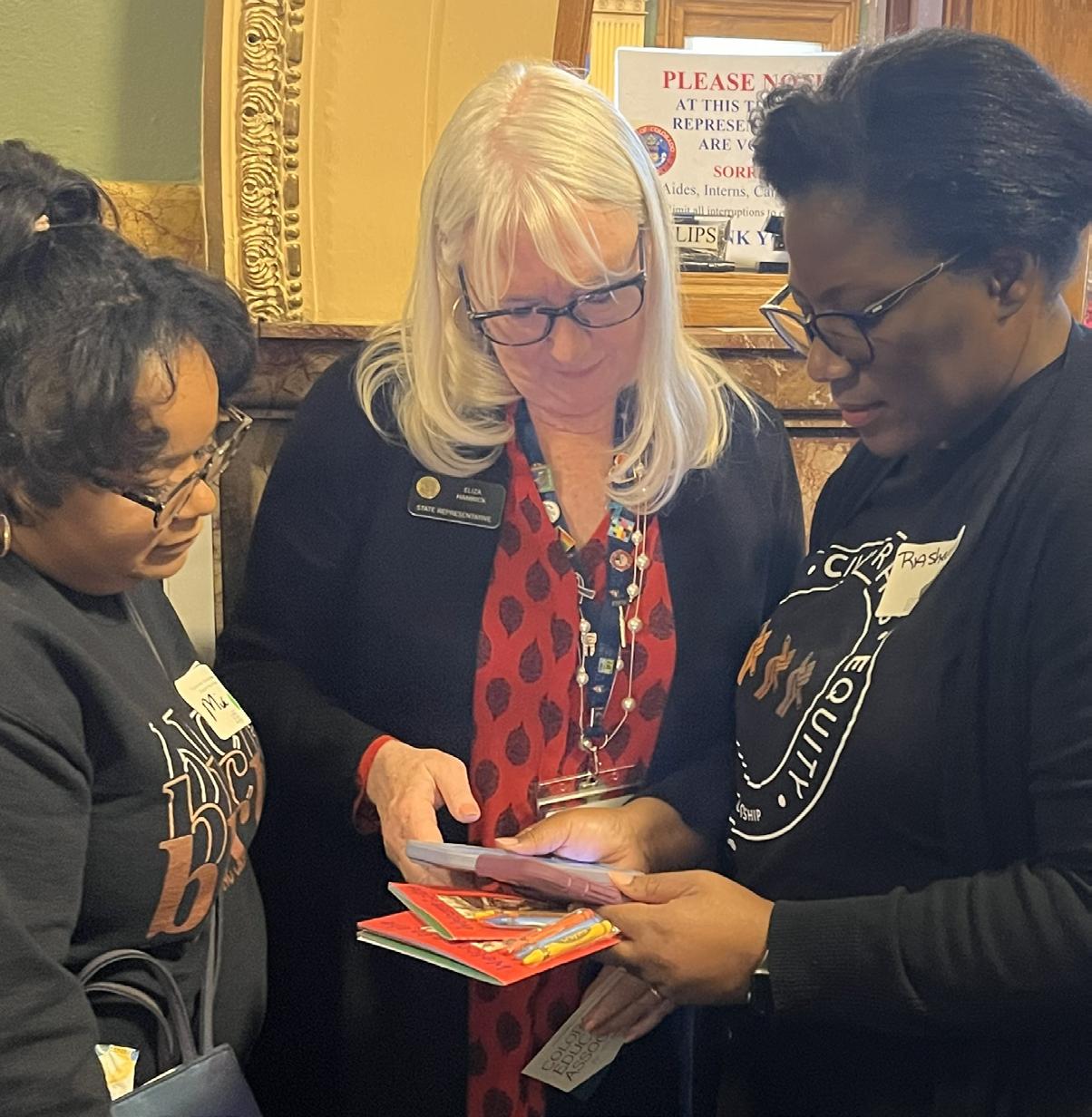
Rep. Meghan Lukens, former CEA member, current Chair of House Education, and CEA champion, greets members.
Photo by Sammy Emerson
Stronger Schools Start With Educator Voices
By Sydney Slifka
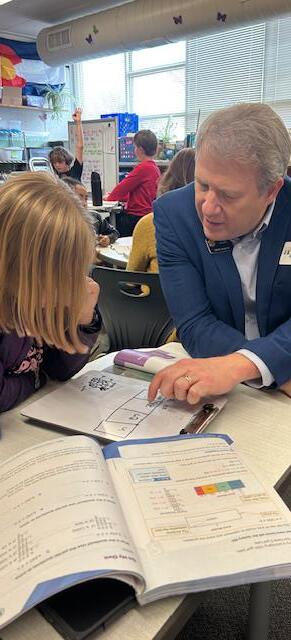
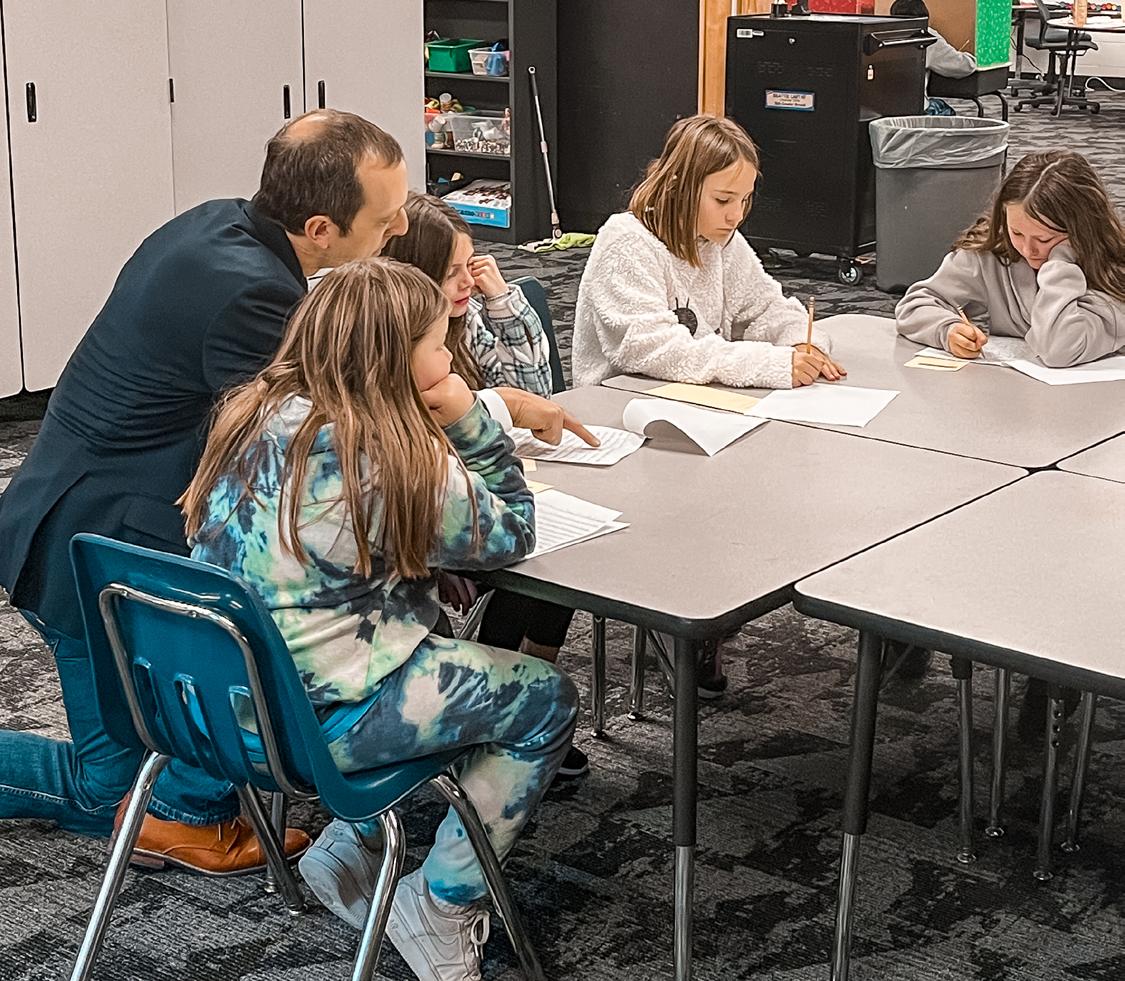
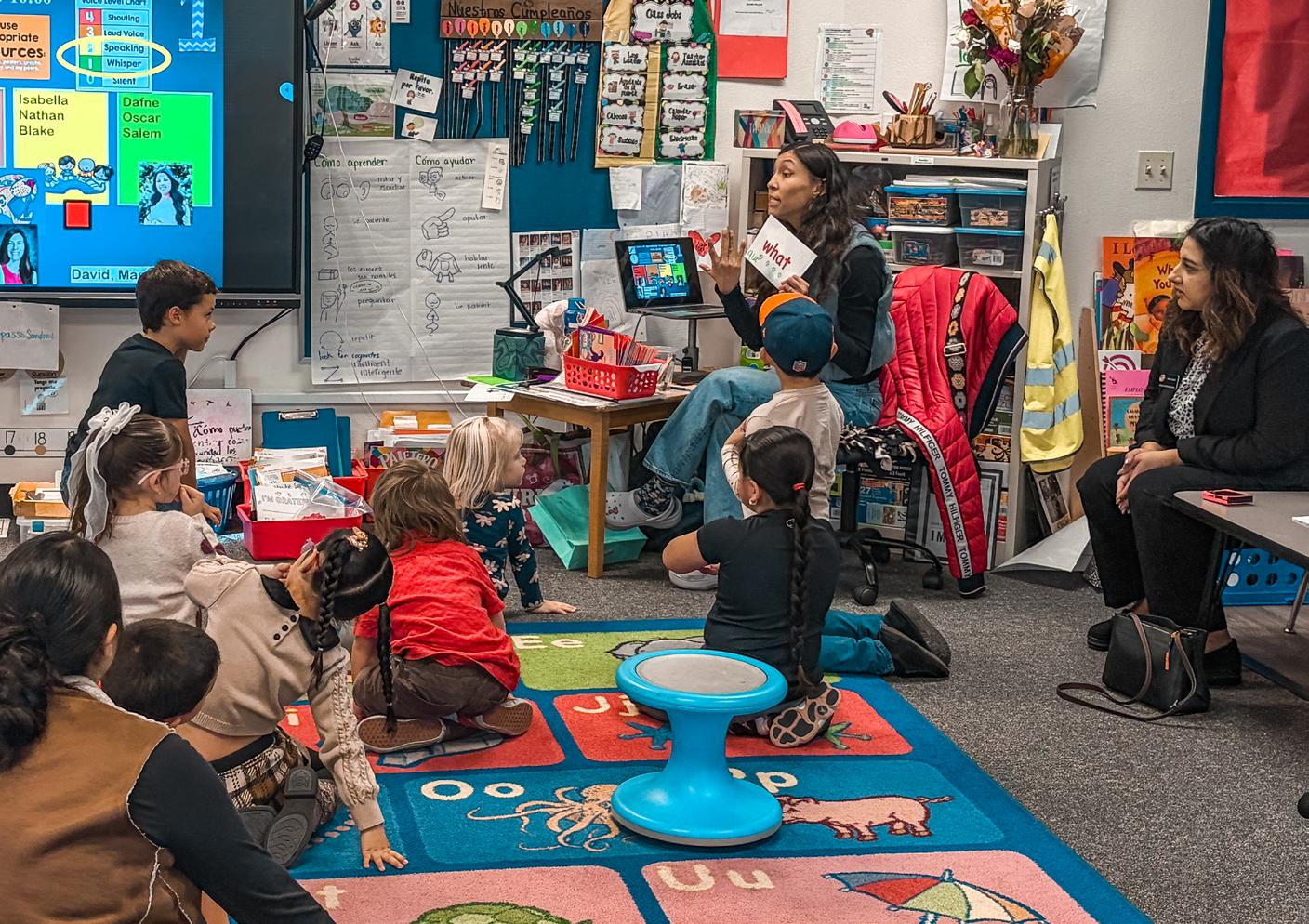
During National Education Week, schools across Colorado invited policymakers to see what a real school day looks like, not from a report or a hearing room, but from inside our buildings. Through Educator for a Day, elected officials spent time in schools to better understand the realities educators face and the conditions students learn in every day.
From the moment the doors open, schools are powered by people. Office staff greeting students and families at the entrance set the tone for the entire day. In classrooms, educators balance instruction, student needs, and limited resources while building relationships that help students learn and feel safe. On the recess playground, paraeducators support students’ social and emotional growth, stepping in to de-escalate conflicts and make sure every child is included. In the cafeteria, food service workers provide meals that many students rely on, offering both nourishment and care. Throughout the day, custodial staff work tirelessly behind the scenes to keep buildings clean, healthy, and safe.
Educator for a Day made clear that schools do not run on teaching alone, that every school staff play an essential role in creating environments where every student can thrive. Yet too often, decisions about school buildings, staffing, funding, and working conditions are made without meaningful input from the people doing this work every day.
Educators must be involved in all decisions that affect them, from building level choices to district priorities to policies made at the state Capitol. When educators are excluded, policies miss the mark. Educator for a Day was just one way to help close that gap, ensuring lawmakers see the full picture of what it takes to run a school. It brings visibility to the work, challenges, and expertise of educators and school staff, and reinforces a simple truth: the best education policy is built with educators, not for them.
WANT TO GET INVOLVED THIS LEGISLATIVE SESSION AND LEARN HOW YOU CAN MAKE A DIRECT IMPACT ON THE POLICIES AND DECISIONS SHAPING OUR SCHOOLS?
Join educators from across Colorado in advocating for what students and school staff need to thrive. Text LOBBY to 45955 to get connected, receive updates, and learn about upcoming opportunities to take action at the state level.
Sen. Chris Kolker spends time in the classroom at Centennial Elementary School in Littleton.
Your Voice in Washington DC: The NEA PAC
Each year at the Delegate Assembly, CEA members have the opportunity to contribute to the NEA PAC. Like the CEA Fund, the NEA PAC supports candidates for office who will fight to support teachers, staff, and students and improve public education.
We need advocates in every level of government to continue to protect and improve public schools. Between the local and state work of the CEA Fund and the large-scale work of the NEA PAC, CEA members have a voice on school boards and all the way to the White House.
The NEA PAC provides direct financial support to recommended candidates for President, the U.S. House, and the U.S. Senate as well as pro-public education candidates in gubernatorial and other important state races.
The NEA PAC is our voice in Washington—it speaks on behalf of our 3.2 million members from all 51 affiliates of the National Education Association. Please consider contributing to the NEA PAC at the
Rep. Andrew Boesenecker spends time in Poudre Education Association member Nicki Earnshaw’s classroom working with students.
Rep. Yara Zokaie joins Poudre Education Association member Irma Sandoval and her students for carpet time in the classroom.
Honoring the Past, Inspiring the Future
By Sydney Breakfield
RESOURCES TO CELEBRATE BLACK HISTORY MONTH
In honor of Black History Month, we are sharing resources to support meaningful learning in our schools. In today’s political climate, recognizing Black history is essential to understanding American history. Learning about Black leaders, artists, and activists honors their impact and encourages conversations about equality and justice.
LITERATURE
By reading literature from Black authors, students gain insights into diverse experiences and cultural perspectives.
• There Was a Party for Langston by Jason Reynolds
• The Day You Begin by Jacqueline Woodson
• Hair Love by Matthew A. Cherry
• One Crazy Summer by Rita Williams-Garcia
• Black Boy Joy edited by Kwame Mbalia
• Crusade for Justice: The Autobiography of Ida B. Wells edited by Alfreda M. Duster
HISTORY
Black history helps students understand American history and recognize the impact of Black Americans over time.
• The Zinn Project
• Teaching for Change
• PBS Learning Media
ARTS
Black art, music, and dance helps students connect with culture in creative ways.
• The Studio Museum in Harlem
• The American Jazz Museum
• Alvin Ailey American Dance
RESOURCE CENTERS
Resource centers across the state support classroom instruction and field trips:
• Center for African & American Studies at CU Boulder
• African American Historical & Genealogical Society of Colorado Springs
• Colorado Springs Pioneer Museum
• Blair-Caldwell African American Research Library (Denver)
• History Colorado Center (Denver)
• Stiles African American Heritage Center (Denver)
• Black & African American Cultural Center at CSU (Fort Collins)
• Fort Garland Museum & Cultural Center
READ MORE RESOURCES WE’VE COMPILED AT COLOEA.ORG/ BLACKHISTORYMONTH
HISTORICAL SITES
Colorado’s Black history is rich and extensive, with historic places and cultural resources that offer powerful learning opportunities. These sites honor Black pioneers, preserves history, and deepens our understanding of Colorado’s diverse heritage.
LITTLE RECTANGLE NEIGHBORHOOD
Boulder
The Little Rectangle was an important early Black neighborhood where families built a strong community with churches, businesses, and social organizations despite discrimination.
BARNEY FORD MUSEUM
Breckenridge
This site honors Barney Ford, a formerly enslaved man who became a successful businessman, civil rights leader, and one of Colorado’s most influential Black pioneers.
*Denotes a site that no longer exists or is closed to public visitors.
FIVE POINTS NEIGHBORHOOD
Denver
The Five Points neighborhood was a thriving hub for Black culture, business, and jazz during the early to mid-20th century.
HATTIE MCDANIEL’S HOUSE *
Fort Collins
Before Hattie McDaniel became the first African American to win an Academy Award, her family lived in Fort Collins, Colorado during the early 1900s.
THE BLACK AMERICAN WEST MUSEUM & HERITAGE CENTER
Denver
Along with historical artifacts, stories of Black pioneers including cowboys, miners, and business owners who helped shape the history of the American West, can be found here.
LINCOLN HILLS
Gilpin County
Built as a resort for Black families during the 1920s, Lincoln Hills became a special place where they could enjoy nature, outdoor activities, and community events without discrimination.
DEARFIELD
Greeley
Founded in 1910 as a farming community for Black settlers, Dearfield grew into a thriving agricultural town in the 1920s before declining during the Great Depression.
THE DRY *
Pueblo
After the Civil War, a group of Exodusters established a small community, drawn by the promise of work in agriculture, railroads, and steel mills.
Member Spotlight
By Sydney Breakfield
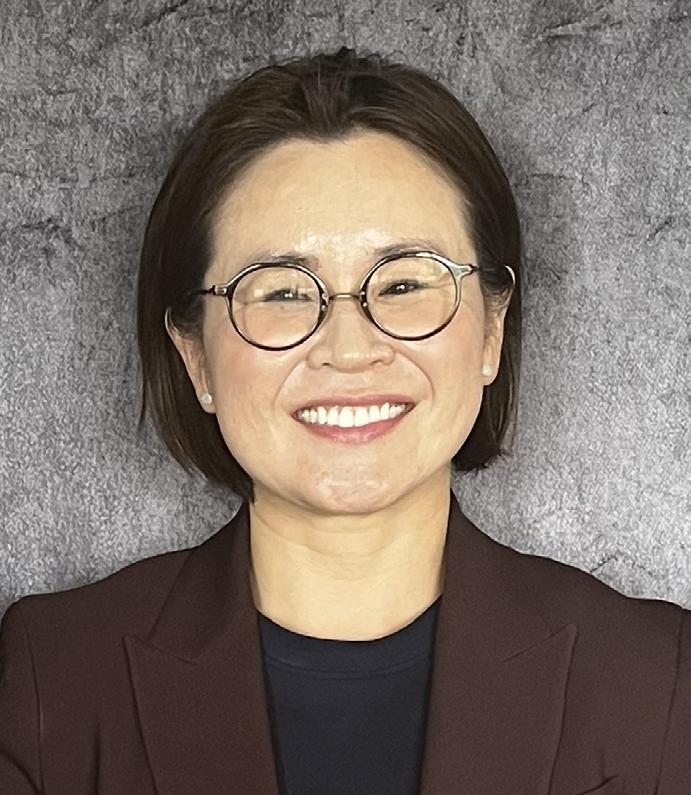
SOYOUNG CHUNG, TURNING INJUSTICE INTO ACTION
“Standing up for myself and for my coworkers was what mattered most.”
Born and raised in South Korea, Soyoung Chung moved to the United States at age 25 and learned English as a second language. She began her career in education in 2020, working at an elementary center that served students with severe emotional disabilities. Today, she is a special education teacher who supports second- and third-grade students across three schools.
Soyoung finds the most rewarding part of teaching is watching her students grow and gain confidence. Some of her favorite moments are when students recognize how much they have learned and proudly show their skills to others. These experiences remind her that teaching is a shared process built on trust and collaboration between students and educators.
That same belief led Soyoung to become more involved in her union. She joined the Aurora Education Association (AEA) in 2020 and deepened her involvement through the ACE Fellowship, where she found a strong sense of community and support. Her journey into union leadership began after facing an overwhelming amount of lastminute case management work that clearly qualified as overage. When attempts to resolve the issue with administration were unsuccessful, Soyoung reached out to AEA for help.
Through that experience, she gained a deeper understanding of how working conditions affect educator wellbeing and realized that advocating for herself also meant advocating for her colleagues. Motivated to ensure others would not face similar challenges alone, she stepped into the role of Association Representative at her school for one year and later ran for vice president, while continuing to grow as a leader.
Soyoung has since shared her experiences with educators across the state and nation. She presented at the CEA Summer Leadership Conference in 2025, and will present at the NEA Leadership Summit in March 2026. At the National Council of Urban Education Associations (NCUEA) Conference, she attended a workshop focused on improving bargaining language for special education. The strategies she learned can be used in future contract negotiations to improve daily working conditions for educators.
Today, Soyoung brings an important perspective to AEA leadership as a special education teacher and multilingual educator. Her story shows that leadership does not require knowing everything at the start, only the drive to participate, learn, and speak up. Her journey is a powerful reminder that union leadership begins locally, and that every member has the ability to make a meaningful impact.
As a Colorado Education Association member, you have access to special savings not available to the general public on Travelers auto insurance. Drivers who switch save an average of $611.*
See what members are saying
...
“My experience with changing from my former car insurance to Travelers was wonderful! A very friendly, knowledgeable agent helped me with the particulars needed to make the change seamless. I am so happy with my decision to switch my insurance carrier to Travelers!”
– Kathleen R.
“I saved over $700 a year and would encourage others to simply call Travelers.” – David D.
“We love Travelers! We are paying lower rates because we are safe drivers, as evidenced by your app that captures our driving habits. That is really appreciated!” – Major and Zora C.
See for yourself. Request your CEA member quote today.
Get Involved
CEA-RETIRED
The CEA Retired Council kicked off the year with great enthusiasm and several newly engaged leaders. We began our work with an all-leader call for a book study on generations. We are reading “Membershift,” by Sarah Sladek. We hope to learn about how to market to today’s newly retired member. Our group is a statewide group that enjoys sharing their learning and new ideas.
Updates from new and re-energized locals include:
Cherry Creek Retired: They have begun to meet and are growing their membership towards formal recognition from CEA. If interested, reach out to Phyllis.
Colorado Springs Retired: CSEA retired members gathered with Pikes Peak Education Association Retired and determined that they will merge. For now the new name will be CSEA/PPEA Retired. They are now meeting to elect officers and determine next steps. They have enjoyed being active in the November elections and gathering socially for networking. If interested, reach out to Phyllis.
CEA-R Council member, Jerry Pinsker, has met with CEA Legal to determine next steps for Substitute coverage for retired members. This was a New Business Item (NBI) passed last April at CEA Delegate Assembly. Be looking for more updates in our monthly newsletter.
Lastly, our CEA Retired Regions all shared various activities they are participating in. Not a member of a local retired group yet? No worries, you can sign-up on the Retired page of the CEA website: https://coloradoea.org/ or reach out to Phyllis.
We would LOVE to have you join us! Reach out to CEA-Retired President Phyllis Robinette at probinette@coloradoea.org for more information.
EDUCATION SUPPORT PROFESSIONALS (ESP s ) COUNCIL
The Education Support Professionals Council is working to connect and organize with ESPs around the state of Colorado who have, for too long, seen their wages stagnate, had their workloads grow, and suffered disrespect from bosses. The Council held a town hall for Denver Metro ESPs that centered the issues we are facing across all of the various job types. It also provided a space for us to build the structured relationships that will drive ESP organizing to take powerful statewide actions.
Additionally, the Council sent out an ESP Survey to gather information on what ESPs care most about statewide.
Finally, the Council is excited to announce that a portion of PowerWeek will be the ESP Conference! We’ll have three days dedicated to discussing issues that most directly affect ESPs and how we can organize to fight back! We invite all ESPs to attend in June in Breckenridge. For more information, contact Matthew Holloway at mholloway@coloradoea.org