EDITOR
Kelly Dickson MPhil ’97
DESIGN
Corey Blake Z Studio Design
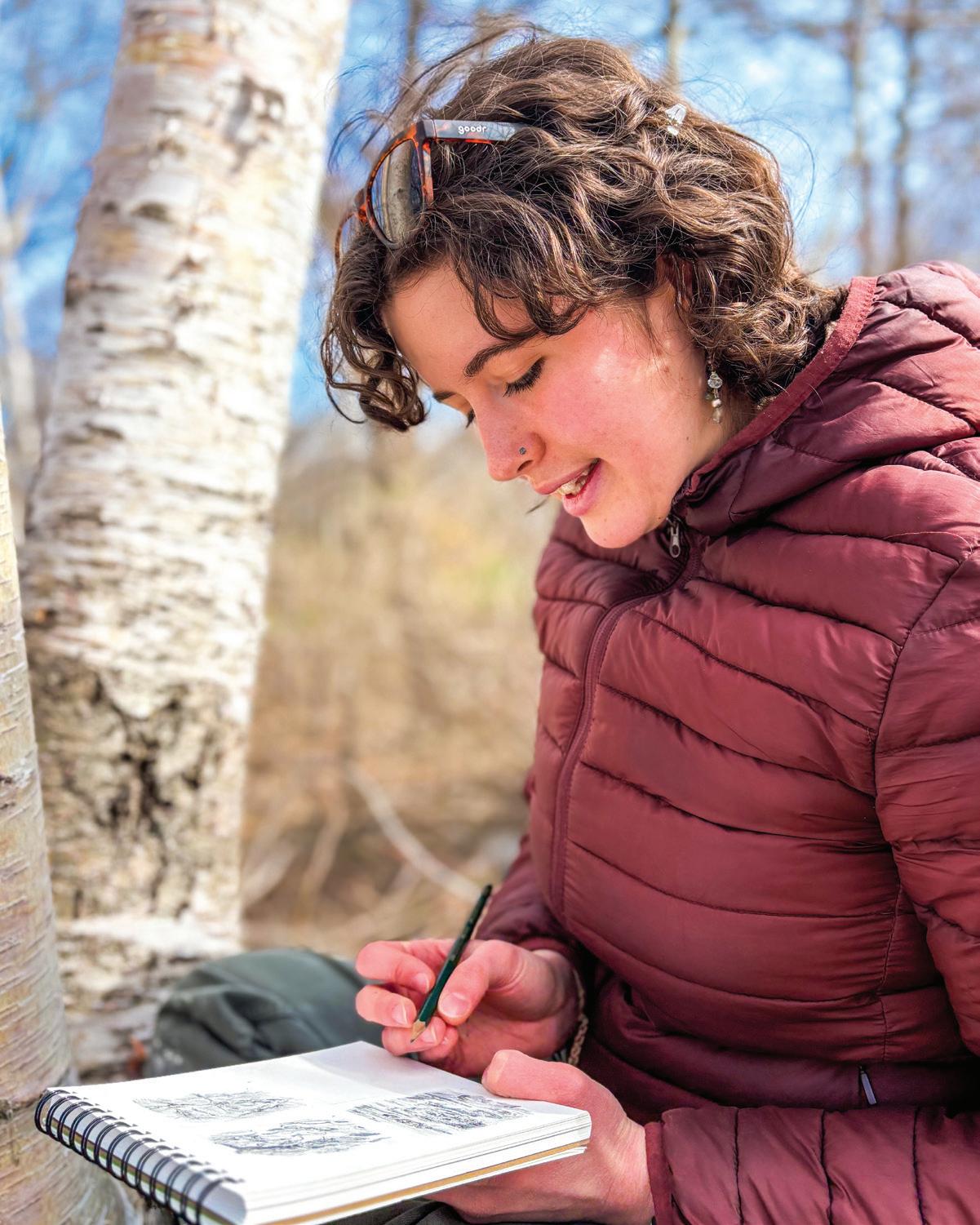
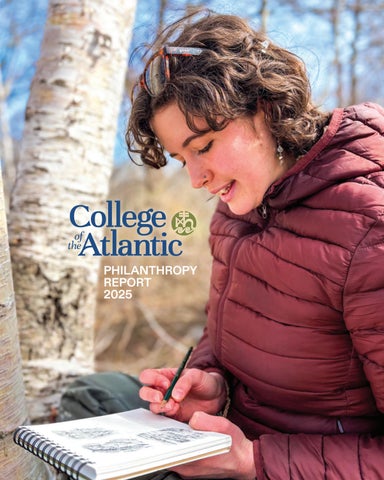
Cover: Greta Bernier ’27 sketches the intricate patterns of birch bark during a drawing class. Photo by Sage Lach ’28

EDITOR
Kelly Dickson MPhil ’97
DESIGN
Corey Blake Z Studio Design
Cover: Greta Bernier ’27 sketches the intricate patterns of birch bark during a drawing class. Photo by Sage Lach ’28
Cynthia Baker Chair WASHINGTON, DC
Martie Samek Vice chair NEW YORK, NY
Ronald Beard Secretary BAR HARBOR, ME
Clay Corbus Treasurer SAN FRANCISCO, CA
Michael Boland ‘94 BAR HARBOR, ME
Joyce Cacho WASHINGTON DC
Heather Richards Evans VERO BEACH, FL


Allison Fundis ’03 NEW HAVEN, VT
Beth Gardiner LONDON, UK
Marie Griff ith ST. LOUIS, MO
Andy Griff iths BAR HARBOR, ME
Chris Groobey MIAMI, FL
Cookie Horner BAR HARBOR, ME

David Hackett Fischer WAYLAND, MA
William Foulke, Jr. BEDFORD, NY

Howard Lapsley NEEDHAM, MA
Casey Mallinckrodt DENVER, CO
Chandreyee Mitra ’01 AURORA, IL
Roland Reynolds ALEXANDRIA, VA
Laura McGiffert Slover WASHINGTON, DC
Laura Stone NEW YORK, NY
Stephen Sullens NEW YORK, NY

Amy Geier SANTE FE, NM
Samuel Hamill, Jr. PRINCETON NJ
Elizabeth Hodder CAMBRIDGE, MA
John Kelly YARMOUTH, ME
Anthony Mazlish CHEVY CHASE, MD
Philip Moriarity HINSDALE, IL
Jay McNally ’84 CENTENNIAL PARK, AUSTRALIA

Claudia Turnbull GREENWICH, CT

Cathy Ramsdell PORTLAND, ME
Hamilton Robinson, Jr. NEW YORK, NY
Nadia Rosenthal NORTHEAST HARBOR, ME
Will Thorndike BOSTON, MA
Sylvia Torti President BAR HARBOR, ME


From our classrooms alive with conversation to farms and research fi eld stations, College of the Atlantic hums with purposeful curiosity. It’s a place where learning and life meet, and where people work together to advance equity and sustainability through daily practices rooted in experience, collaboration, and care. What continues to strike me about this community is how deeply our mission is lived, not just spoken. Human ecology isn’t just an academic framework at COA—it shapes how we approach problems, relationships, and possibilities. It calls us to connect ideas that might otherwise remain apart. It asks us to listen as carefully as we speak, and to act with integrity even when the path forward is complex.
Two recent acknowledgements highlight COA’s deep and lasting commitments to our environment, our people, and our island home.
For the tenth consecutive
year, College of the Atlantic has been named the #1 Green College in the nation by The Princeton Review, a ranking based not only on energy or composting metrics, but on the high value we place on both environmental and social sustainability in our curriculum and in our operations. Pairing with this is the recent COA Economic Impact Analysis (see page 5). The report highlights the college’s contribution to social sustainability, demonstrating how our students, staff, and visitors generate more than $17 million in economic activity annually while supporting nearly 200 jobs across Hancock County, and how our alumni go on to enrich the region.
Additionally, from 2020–2024 alone, COA’s capital projects generated a cumulative $29.2 million in added value to the state and local economy, and supported more than 300 jobs during construction, renovation, and property improvement efforts. The college’s combined expenditures, wages, and student spending generated approximately $1.2 million in state and local tax revenues, plus another $108,987 in direct property tax payments.
The work you’ll learn about in these pages is both local and far-reaching. It starts in the classroom, in the fi eld, and in discussions around shared tables, and it extends outward through the purposeful lives our students and alumni are building.
Giving at a glance $10.2M OVERALL GIVING AND PLEDGES
3,903 GIFTS
1,638 DONORS
Their projects, research, and ventures refl ect the same question that drives us all: How can we live responsibly and with imagination, building communities and enterprises that sustain both people and the planet?
As you explore the report, I hope you’ll feel the same excitement and confi dence we experience on campus. Your interest and generosity make this work possible. I invite you to continue supporting the students, faculty, and staff whose efforts are shaping meaningful change—here on campus and beyond.
With gratitude,
Sylvia Torti, PhD President
Fiscal year 2025 was a year of transition at the highest levels of Advancement. It marked our first full year with new president Sylvia Torti, and the last year of Shawn Keeley’s tenure leading the Advancement Team. From July 1, 2024 to June 30, 2025 COA donors contributed nearly $1,585,000 to the college’s Annual Fund. While shy of last year’s peak of $1,670,000, this represents an increase in the number of supporters: 1,638 donors contributed this fiscal year vs 1,334 donors in the last fiscal year. Alumni giving also increased, from 20% to 23%. The amount raised in February’s 24-Hour Challenge was $336,213—the best yet, with a record number 798 donors participating, the majority being alumni. COA also received a number of generous restricted gifts. Leading the way was a gift of $2,385,000 from the Shelby and Gale Davis Charitable Fund to support the Davis United World College Scholars. Friends and family of longtime trustee Bill Newlin endowed a faculty lecture in his memory, and a foundation pledged $750,000 to rebuild our campus IT system. Overall, a total of $10.2 million was raised over FY25 for the Annual Fund and special projects. Many thanks to all who supported the college last year!
Global financial markets continue to show growth with COA endowment earning a return of +9.1% over the course of FY25. This performance moved the COA endowment from the $85.3 million mark on June 30, 2024, to $90.5 million on June 30, 2025. The COA endowment has returned approximately +9.1% on investment since its 2011 inception. Our annual endowment draw represents a vital source of funding for program operations, equating to roughly $10,000 in annual revenue per student for the 2024-2025 academic year.
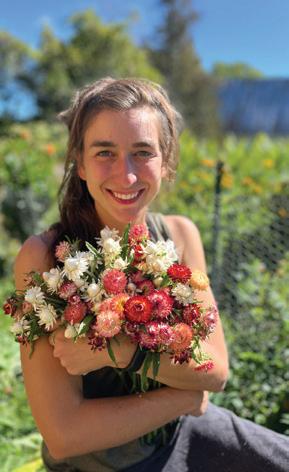
While at COA, Malia Demers ’18 studied education and food systems, with a focus on how these interconnected structures can better serve people and the planet. “COA taught me how to learn, how to ask good questions, connect and communicate ideas, and take action, which prepared me well for my role as manager of program impact for FoodCorps Maine,” she says. “Today I run a program that partners with school districts to support them in making sustainable, student- and communitydriven changes to their meal programs, from incorporating more local and scratch-cooked foods to involving students in menu decisions. I believe COA is worth supporting because it empowers students to become thoughtful, systems-minded leaders who create meaningful change in their communities.”
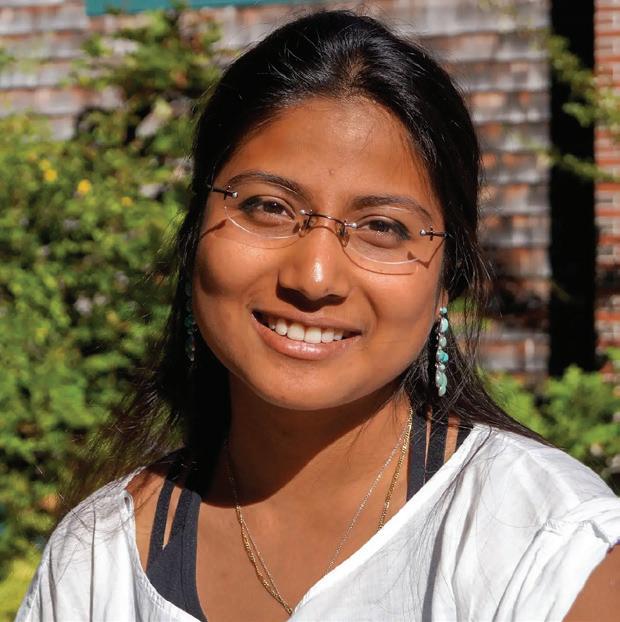
Porcia Manandhar ’17 recently earned a PhD in Global Disease Epidemiology and Control from Johns Hopkins Bloomberg School of Public Health. Part of her thesis work involved investigating locally suitable solutions to support COVID-19 vaccine and routine immunization acceptance and uptake in Nepal, where she is from. Porcia believes that her time at COA prepared her for postgraduate success.
“From day one, Dave Feldman provided unwavering encouragement and guidance, directing me to classes that aligned with the A-levels system I entered with and supporting me throughout my time at COA. I was first introduced to programming languages from his classes. John Anderson, Chris Petersen, Helen Hess, and Steve Ressel played pivotal roles in fostering opportunities for me to conduct field-based research on the islands, which led to academic and summer biomedical internships at The Jackson Laboratory, where I met another great set of academic mentors. Netta van Vliet supervised my senior project in medical anthropology. Her mentorship gave me the confidence to conduct field research, which later helped me develop expertise in my public health career.”
An unrestricted gift to the Annual Fund is one of the most powerful ways to support College of the Atlantic. Tuition and endowment revenue combined are not sufficient to meet all operating expenses; unrestricted donations close this gap and allow us to provide financial aid for students, offer innovative education programs, and maintain our campus.
Unrestricted gifts give us the flexibility to allocate resources where they will make the greatest difference. For a college of our size, COA has an outsized impact.
When you give to COA, you are making an investment in people, this place we love, and the planet.
At College of the Atlantic—the first institution of higher ed to offer a degree in human ecology— education is interdisciplinary and hands-on, connecting students directly to the natural and social systems that shape our world.
Our field stations—Beech Hill Farm, Peggy Rockefeller Farm, the Edward McC. Blair Marine Research Station on Great Duck Island, the Alice Eno Field Research Station on Great Duck Island, our North Woods Ways property, and the Yucatán program—are living laboratories where students can gain confidence, learn new skills, conduct research, and become leaders in environmental sustainability. Additionally, the Diana Davis Spencer Hatchery—an sustainable enterprise accelerator—allows students to earn credit while walking the entrepreneurial high wire with a safety net and support. Unique opportunities like these help our students innovate and think outside the box, preparing them to be the problem solvers of tomorrow.
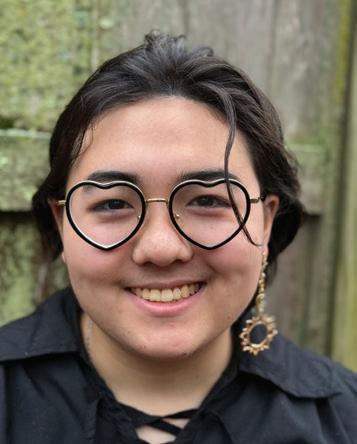
Unrestricted gifts support students like Eun-Jae Norris, a third-year student exploring the intersection between marine biology and creative writing. Eun-Jae received national recognition as a winner of the Norton Writer’s Prize, an award open to undergraduates across the country. Eun-Jae’s essay, “A Guided Tour of the Underworld,” stood out for its vivid exploration of the communities that form around deep-sea whalefalls—massive marine corpses that sink to the ocean floor and become entire ecosystems.
College of the Atlantic’s roots run deep on Mount Desert Island and in Hancock County. As the college continues to grow, so does its economic and cultural influence. A new economic impact study—prepared by RKG Associates, Inc., in collaboration with The Musson Group and College of the Atlantic—evaluated how COA contributes to the Bar Harbor community, the MDI region, and the greater Hancock County economy.
Learn more: coa.edu/economicimpact
COA alumni have global impact, working in 70+ countries as scientists, educators, policymakers, and entrepreneurs, advancing sustainability and social change. They are shaping climate policy, expanding food security, and leading important conservation initiatives.
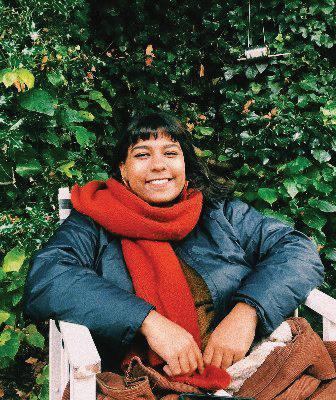
Aneesa studied international environmental law and politics at COA. She also explored themes of environmental inequity and justice through visual storytelling and graphic narrative. She went on to earn an MSc in environmental policy and regulation from the London School of Economics. Based in London, Aneesa now serves as senior communications officer at Oil Change International, a nonprofit organization that works to expose the true costs of fossil fuels and advance a just transition to clean energy.
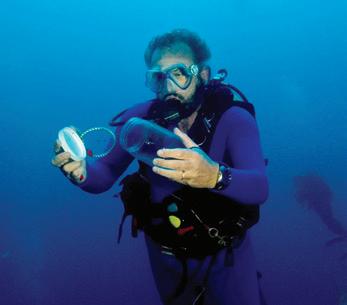
Greg Stone—one of the world’s most influential ocean scientists—began his career at COA with Steve Katona and Allied Whale. He has advised the UN and appeared in documentaries for Discovery and National Geographic. Greg cofounded the Ocean Health Index, redefining what a “healthy ocean” means by integrating human use with ecological well-being—a framework now shaping global ocean governance. He now serves as chief ocean scientist for The Metals Company, guiding research on sustainably sourcing metals essential to electric vehicles and a renewable-energy future.
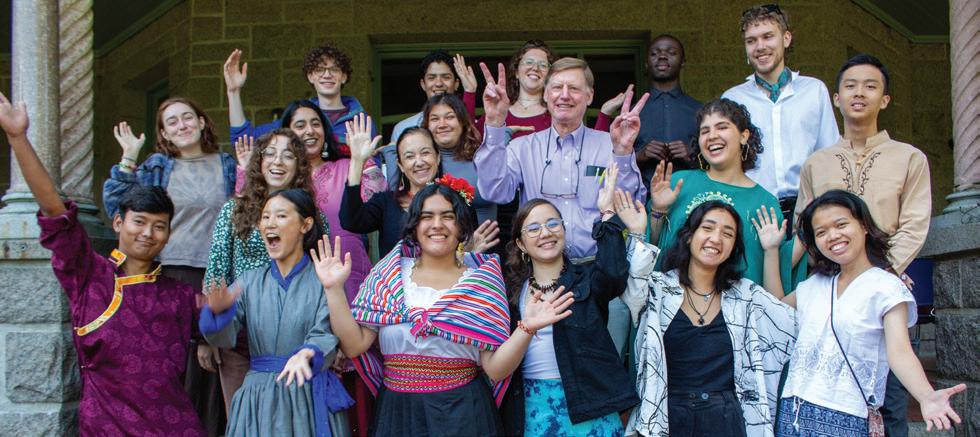
Twenty-five years ago, eight students of the incoming class of 2004 traveled to Bar Harbor, Maine to start their college education. Hailing from China, Poland, Ethiopia, Nepal, Albania, Zimbabwe, and Belarus, they had only this in common: they’d recently graduated from one of the many United World colleges located around the globe.
Most had never heard of Mount Desert Island, much less College of the Atlantic. Some had never seen snow. They were recruited as part of a new scholarship program to bring UWC graduates to US colleges, and were eager to have an opportunity to study in the States with a full scholarship. So to Maine, they came.
Since then, an additional 430 United World College (UWC) graduates have come to COA as part of the Davis United World College Scholars Program with an investment of over $40 million. Shawn Keeley ’00, who currently serves as the college’s director of the College of the Atlantic Summer Institute, says the arrival of the Davis scholars marked the moment “when COA began a new chapter and became a more serious, diverse, and consequential school.”
The Davis UWC Scholars Program started thanks to the chance meeting of two men: Shelby Davis and Dr. Phil Geier. After working together to support the UWC program, they turned their attention to motivated UWC graduates with limited means. “The idea was to expand educational opportunities for students and to encourage American college campuses to become more international communities in the 21st century,” says Dr. Geier.
The pilot program began with 43 students at five colleges: College of the Atlantic, Princeton, Wellesley, Colby, and Middlebury. Today, the Davis UWC Scholars Program has more than 4,500 scholars from all over the world on over 100 American college campuses. Cumulatively, the Davis UWC Scholars Program has supported over 15,000 students with over $1 billion in scholarships. It is a staggering investment, and perhaps the most powerful soft power program in the US today.
Says Dr. Geier, “It is our profound hope that creating such connections and relationships will foster greater international understanding, build more mutual respect, and improve the chances for a more peaceful world than we know today.”
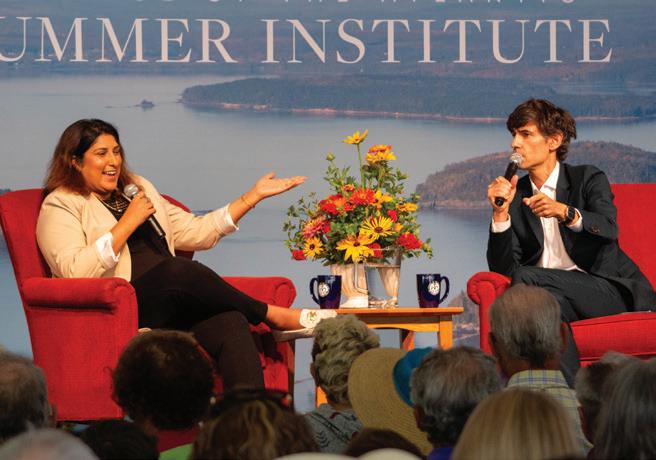
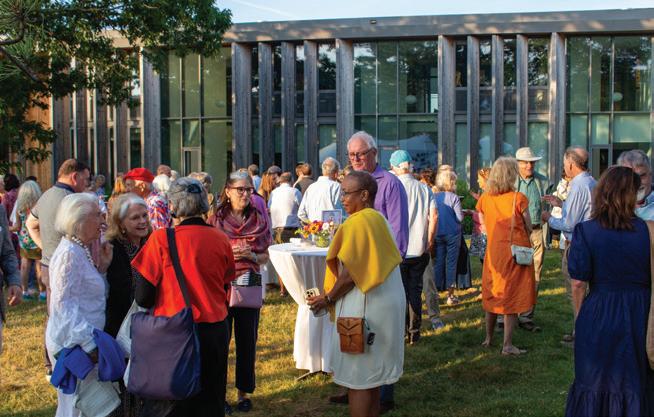
Near-perfect weather and a lineup of extraordinary speakers drew 1,600 registrants to the 2025 COA Summer Institute: Path Breaking at the end of July. The institute was designed to highlight individuals across society and history who have inspired us and shaped our world for the better. We began the week learning about path breaking in the arts with Thelma Golden and Glenn Lowry, followed by the sciences with Frances Collins and Kizzie CorbettHelaire, to philanthropy and service with David Rubenstein and Marie Arana, to a discussion of abolitionists like Charles Sumner with Zaakir Tameez and Dorothy Wickenden. Mid-week brought a back-to-back session on war and peace in Northern Ireland with Patrick Radden Keefe, Daniel Zelewski, and Senator George Mitchell
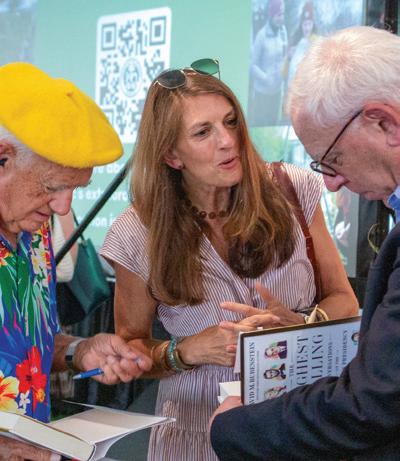
and a deep dive into the life and legacy of Alexi Navalgny with David Remnick and Craig Kennedy. Modern day politics and the new generation of political leaders was discussed by David Hogg and Hannah Pingree while Doris Kearns Goodwin reflected with Ted Widmer on the formative years of the 1960s and the path breakers who shaped our modern times. Looking to the future, Nick Thompson and Navrina Singh kept the audience at rapt attention as they shared real time insights on the state of AI and how it will continue to shape our society.
Summer Institute sessions are archived on the College of the Atlantic YouTube page: youtube. com/collegeoftheatlantic
Sarah R. Hall, PhD
During the 2024-25 academic year I was on leave for a Science & Technology Policy Fellowship sponsored by the American Association for the Advancement of Science. I was stationed at the US Geological Survey in the Washington DC area, and worked on the Natural Hazards Mission team, focused on landslides and other geohazards.
As part of this work, I led in the development, launch, and management of a new National Landslide Hazards Risk Reduction Working Group, and coordinated efforts to design and implement projects supported by Disaster
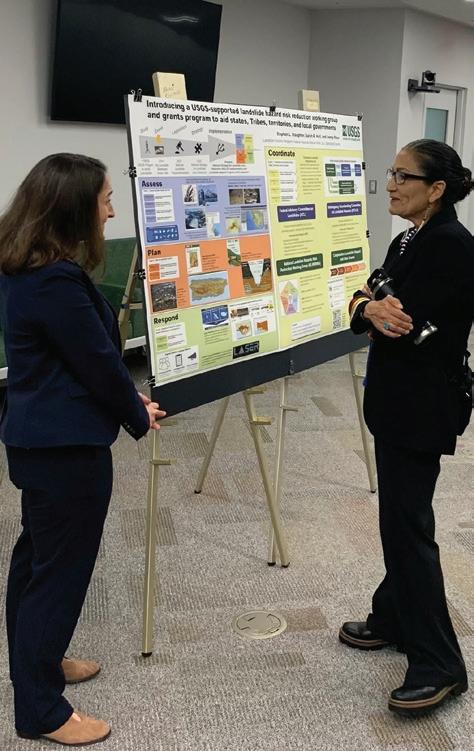
Supplemental Funds in Puerto Rico following Hurricane Fiona in 2023. I helped launch and manage the landslide hazards grants program, new in 2024, which funded landslide risk reduction work in states, Tribes, territories, and local governments.
Over the course of the year, I’ve given multiple presentations at regional and national conferences about my work at the USGS and had the opportunity to present to the Secretary of the Interior, Deb Haaland, on behalf of the Landslide Hazards Program (see photo).
These experiences will allow me to bring new opportunities to students at COA in the 2025-26 academic year. I can help them consider science policy and engage with active research projects related to natural hazards risk reduction. I am grateful for funds from the Bass Chair, which funds a wide range of fi eld and labbased opportunities for students.
While I was on leave, Dr. Scott Braddock taught courses for me, including on-going geoscience courses such as Geology of MDI and Geology of National Parks, as well as new courses such as Earth Systems and Glaciers and the Landscape.
Photo: Presenting on behalf of the USGS Landslide Hazards Program to Secretary Haaland.
Bonnie Tai, EdD
A final academic year is a time of transition and opportunity. My teaching centered long-standing curricular contributions with a new course that reflects my current research and practice. Changing Schools, Changing Society, a course first co-planned with former educational studies directors Ken Hill and Judith Cox, has been and will continue to be a gateway course that introduces students to a transdisciplinary study of education. COA alum and education leader Todd West ‘00 will offer this course in spring 2026. A new course adapted an advanced tutorial offered mid-pandemic when students hungered for more in-person, experiential learning. Mind Matters: Contemplative Education and Liberatory Praxis introduced students to the practice, science, and education of contemplation from a variety of traditions, including but not limited to Native Hawaiian epistemology, Buddhist insight meditation, qi gong and Tai Chi, shinrin yoku or forest bathing, and contact improvisational dance.
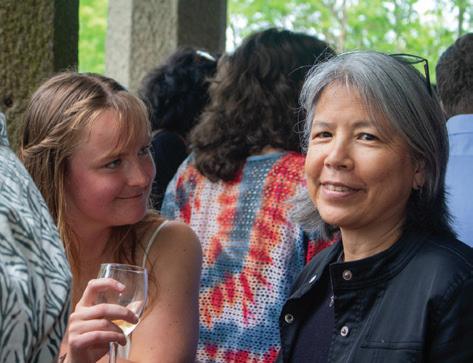
Established in 2011 by COA trustees and alumni to honor longtime COA professor and academic dean, Richard J. Borden.
Continued learning during a winter term sabbatical focused on preparations for this new course. I took a Tai Chi teacher training program offered by Peter Wayne ‘83, COA alum and author of the Harvard Medical School Guide to Tai Chi, and attended Harvard Divinity School’s annual Burning Refuge conference. Additionally, I attended a Guo Gu retreat at the Barre Center of Buddhist Studies on Chan Buddhism; a series on Power, Shadow, and Spiritual Teaching with Sara Shapouri, Sebene Selassie, Morgan Stebbins, and Noah Lopez; and co-facilitated a weekend retreat for Mind Matters students at North Woods Way with queer, Haitian, ecologist, artist, and mindfulness instructor Flore Costumé. I also mentored four graduate students. Two of these co-authored a report with me on teacher professional development associated with the launching of Portland
Several competent colleagues will continue to staff and administer programs I have led at COA for many years. With associate director of educational studies Linda Fuller’s impending retirement in June 2026, we hired several outstanding educators, including COA alum Jasmine Smith ‘09 – founder of The Community School – and talented poet and educator, Eloise Schultz ‘16, to ensure continuity in courses for the 2025-2026 academic year. COA’s Opportunity and Access Program continues to serve students who identify as first-generation college students and/or from low-income circumstances, thanks to the current leadership of new Provost Kourtney Collum.
I have unequivocal appreciation for the hundreds of inspiring students and alumni, dedicated staff and faculty colleagues, generous trustees, and collaborative school and community partners, who have energized my teaching, supported my research, and guided my service.
Suzanne Morse, PhD
Over the summer, Lilia Machado ‘25 joined me in the work of managing the COA Community Garden as a two-credit independent study. In addition to planting, pruning, weeding, watering, and harvesting, she interviewed several gardeners about the importance of the COA garden and of community gardens in the greater Hancock County. This work is helping us frame planning around the future of this venerable garden on our campus.
Before the beginning of the fall term, I returned to the Norwegian University of Life Sciences and taught for two weeks in the Agroecology MSc course, and presented a seminar on “The meanings of agroecology.”
In the fall I taught Agroecology and The Biology and Politics of Seeds. Class projects ranged from the development of a seed library to be housed in Jesup Library to explorations of in situ Chestnut conservation, seed sovereignty, and wild seed conservation.
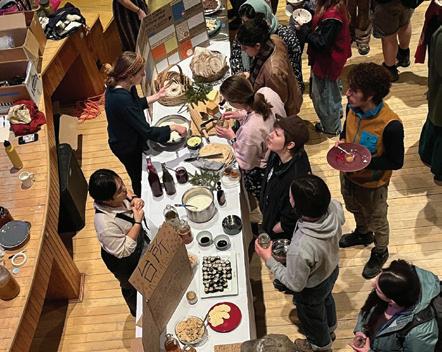
In the winter, I taught The Art and Science of Fermented Foods, which culminated with a sumptuous and wellattended fair where the students shared their exquisite wares, including fermented pine drinks, miso, delicious sourdough breads and pastries, different kinds of krauts, and explained the role of ferments in both preservation of foods and gut health.
In the spring, I team-taught a new course with Beech Hill Farm co-managers Anna Davis and David Levinson titled Organic Farm Planning and Production, which included multiple farm visits within a 100-mile radius of the college, a deep
dive into finding land, setting farm goals, mastering multiple planting schemes, and understanding financials. When not on a farm or in class, students became excellent wranglers of the spreadsheet, and with the data, they produced strong plans that could serve as a great starting place for a future farm. In addition, I also taught Functional Plant Morphology, where students explored how the diversity of plant forms has been generated even though the basic body plan only includes stems, leaves, and roots.
Established between 1998-2007 by many donors to honor the renowned marine biologist, conservationist, and author of Silent Spring.
I also directed two independent studies (Placebased Soil Science, Art, and Agricultural Applications with Evie Gillott ‘26 and Community Garden Management with Lilia Machado ‘25), one residency ( An Ethnobotanical Study of Italian Biocultural Diversity with Larkin Rutherford ‘26), and a senior project with Anna Heiting ‘25 on the exploration of farmer-to-farmer learning among milk producers in the Lower Rhineland, Germany.
Administrative work included serving on the dual arts faculty search committee, coordinating the faculty retreat, and developing and presenting the strategic plan with the food and farming systems working group. I continue to serve on the Academic Affairs Committee and the Landscape subcommittee, and oversee the greenhouses, community garden, and herbarium. Outside of COA, I am the vice chair of the board of Native Gardens of Blue Hill, teaching volunteer for MOFGA, and schemer with the Maine Heirloom Seed Network.
As always, I am deeply thankful for the support of my work through the Rachel Carson Chair of Human Ecology.
Jonathan Henderson, PhD
During the 2024-25 academic year, with support from the Collins Chair, I mentored 19 advisees, taught four courses, organized and presented 10 concerts, and launched two ongoing curricular initiatives.
Samba Percussion Ensemble offered students (with a range of prior music experience) an opportunity to participate in a large performance ensemble based on Brazilian percussion music traditions: the escolas de samba of Rio de Janeiro, and the blocos afros of Salvador. Black Atlantic Music surveyed the multi-directional music history of the region, which formed during the transatlantic slave trade. The Sound Studies Practicum course (team-taught with Galen Koch) exposed students to the field of sound studies through hands-on sound design and composition projects. Final projects formed an immersive installation in the Thorndike Library Reading Room that offered a “sonic portrait” of COA’s three field stations.
This chair was established in 2024 by trustees and friends of the college to honor COA’s first alumnus president, Darron Collins ‘92, who served from 20112024. This investment celebrates Darron’s lifelong love of music, ensuring that music will always be woven throughout the culture and curriculum of COA.
The concerts I organized helped COA maintain a vibrant performing arts scene—not only for students, but for the broader Mount Desert Island community. Events are always open to the public, several drawing strong attendance from both onand off-campus audiences. A few of the incredible performers we hosted from 2024-25 included Indian classical virtuoso Debashish Battacharya, Eastern European folk music band Kotwica, classical pianist Antonio Galera, and Palestinian oud player Zafer Tawil.
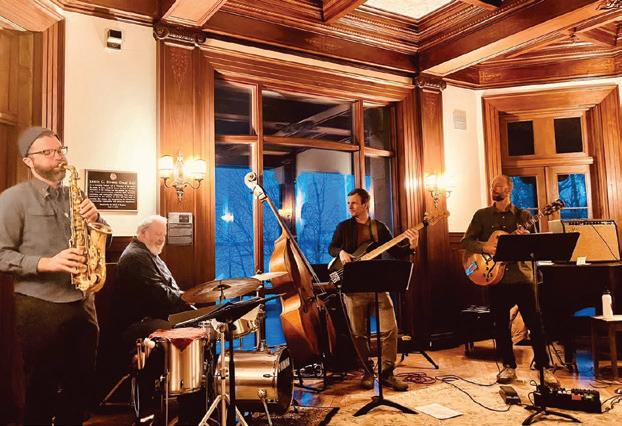
In addition, COA music ensemble classes performed in the surrounding community in 2024-25, directly engaging with local youth at Conners Emerson, Hancock Grammar School, and The Community School of Mount Desert Island.
Finally, in 2024-25, I launched two new programs to sustain and expand the COA music curriculum. The Peer Music Tutoring Program employed four work-study student tutors to support peers in meeting their music learning goals. The new Applied Music Lesson (AML) structure allows students to take a series of private lessons for credit with a local professional. Both ongoing initiatives express and amplify my intention to create a sustainable, inclusive, rich, varied, and academically rigorous program in music and sound at COA. Beginning fund balance $1,261,188
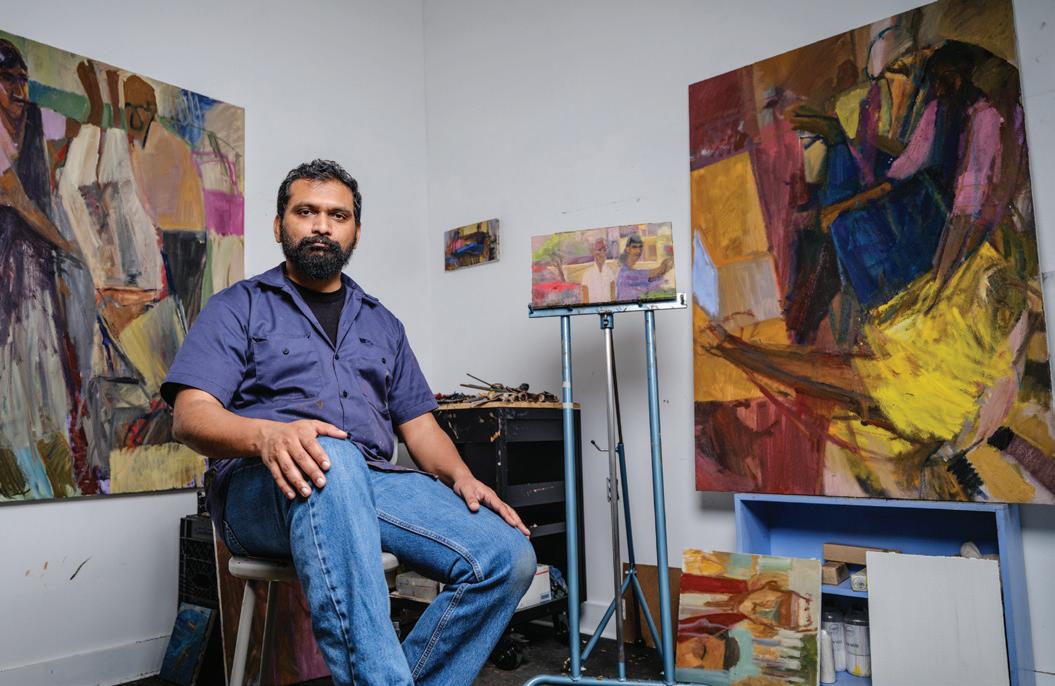
Neeraj Sebastian, MFA
2024-25 was my second year teaching at COA, and I’ve had the pleasure of working with some wonderful students—they’re talented and hardworking, and have grown as people and artists in the time I’ve gotten to know them. It’s been really rewarding as a teacher to work with students who engage seriously with the ideas and material presented in class, and I’m constantly surprised at the ambitious work that COA students create.
I teach classes in which students focus on technique (such as how to mix paint to create new colors), as well as classes in which students explore broader conceptual questions.
In Drawing Intensive/Developing a Studio Practice, students respond to a series of prompts to create a large body of work that they then develop and refine over the course of the term. In this class, students also engage with the work of a broad range of artists and critics. Artists have always
asked questions about the world and their place in it through their work, and I hope that students begin to think about making art as having a conversation—with the work of other artists, society, and the world around them. I hope to continue to support the students as they take risks, challenge themselves, and grow as artists and individuals.
Established by former COA trustee Tom Cox and hundreds of friends, family members, and trustees who gave to the chair after Tom passed away in 2019.
Beginning fund balance $1,545,904 Net return and contributions 147,673
John G.T. Anderson, PhD
This chair was established in honor of Bill Drury, an eminent ecologist and former research director of the Massachusetts Audubon Society, who died in 1992. Bill lectured on evolutionary biology and ecology at Harvard University for over 20 years before joining the COA faculty in 1976.
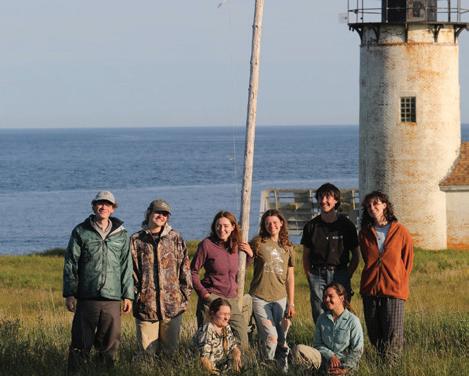
In the 2024-25 academic year, I taught seven classes, including the increasingly popular Islands Through Time course for high school students. I team-taught this with Ken Cline and Neeraj Sebastian, and I cannot speak too highly of the sheer fun that working with these two brings! Without question, the most challenging courses I taught were elements of the Great West Monster Course, again with Ken Cline. These classes involved driving over 13,000 miles from Bar Harbor to California, south through Nevada, Utah, Arizona, and eventually across the border in Nogales, Sonora. The goal of the Great West Course is to expose students to the natural history, public policy, and literature of the western United States. I have always felt that it was the best of place-based immersive learning. The students had the opportunity to interact with a broad range of peoples and landscapes, the likes of which would never come to 105 Eden Street.
Back on campus, I sponsored five senior projects, which examined issues including microplastics in gulls, fire ecology in the Southwest, attitudes of wildlife rehabilitators, public education around Avian Influenza, and songbird migration. I was a reader of seven human ecology essays, an exercise from which I always learn. As I approach retirement, I have been cutting back on accepting new advisees, but still advised 18 students and was the
“unofficial advisor” for a growing number of others.
In the spring, seabird research resumed, and— thanks to a generous grant from Friends of Acadia and Acadia National Park (ANP)—we were able to continue surveys of ANP islands and the deployment of GPS tags on gulls, both of which allow us to track the birds during breeding and non-breeding seasons. We had a very successful season on Great Duck Island, with eight students working on projects ranging from gull movements to nesting ecology, soil chemistry, and fish ecology in the island’s brackish Slough of Despond. We also continued our long-term monitoring of petrels and black guillemots, with both projects continuing to produce surprise and delight.
I chaired and presented in a session at the Northeast Natural History Conference on seabird ecology. I co-authored a paper in Conservation Biology with alums Kate Shlepr ‘13 and Wriley Hodge ‘24 and a colleague from Bowdoin addressing questions regarding gull management in the Gulf of Maine. I served as the campus coordinator for the national Goldwater Fellowship and successfully coached Autumn Pauly ‘26 to a successful application. I also continue to serve as co-archivist and book review editor for The Waterbird Society, and sit on the Education Advisory Committee of the Hurricane Island Center for Leadership and Research.
Brook Muller, MArch
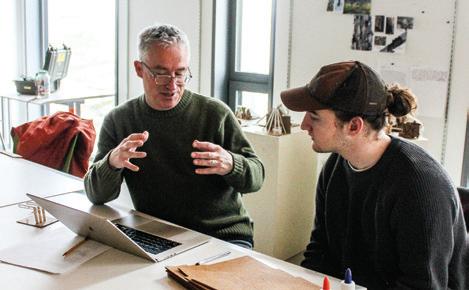
In academic year 2024-25, I delivered five courses and taught 68 students: Sustainable Architecture (fall 2024), Water, Design, and Environmental Futures (winter 2025), Ecologies of Cities (spring 2025), and two Ecological Design Research Studios, one focused on sensitive landscape design interventions in the Cox Protectorate (winter 2025), and the other investigating ecologically and climate-responsive design interventions on Bar Harbor’s Shore Path (spring 2025).
Toward the end of the fiscal year, I submitted a book proposal, Regrowth Architecture: Design in Solidarity with Life, to the University of Texas Press that included a prospectus and two completed chapters. I see this as a sequel of sorts to my previous book, Blue Architecture (also published by the University of Texas Press). As I describe in the introduction, “Regrowth Architecture describes a contemporary design stance committed to vastly improving the environmental quality and livability of urban spaces and buildings, and, in the process, reducing extractive relationships with the extraurban landscapes and peoples the city relies upon. In the most straightforward sense, systems-based ecological and passive design strategies serve to elevate the livability of the built environment while sharply decreasing consumption.”
In June 2025, I delivered a paper of the same title at the 18th Conference of the International Society for Ecological Economics and 11th International
Established in 2000 by Dan and Polly Pierce. Dan was a COA trustee, grandson of landscape architect Charles Eliot, and great grandson of Harvard President Charles William Eliot.
Degrowth Conference “Building Socially Just Postgrowth Futures” in Oslo, Norway. Conference attendees appreciated my paper and how design thinking can complement their work in the social sciences (economics, political ecology, urban studies, etc.) as we develop collective visions for environmentallyjust futures. I am thankful that funds from this chair enabled me to attend an event that brought such a rich diversity of perspectives to a collective commitment to equality and climate resilience. I feel fortunate to teach at an institution in which the questions that drive me as an academic and a creative practitioner are the very ones that attract students to my classes. I bring students through a rigorous methodological and theoretical framework for the first half of the term, exposing them to ways of thinking about design and the built environment, and sharing numerous case-study examples. Then, in the latter portion of the term, I ask them to step up, build upon the framework they have been exposed to, and develop schematic design propositions or design “briefs” germane to the topic at hand. Through this process, I impart the notion that everyone is a creative thinker and designer, even if some classroom participants never thought of themselves as such. Something truly magical has occurred in my water course in particular; whether a student has a passion for law, art, marine biology, or philosophy, they see themselves having a creative role in envisioning possible urban water futures.
Bear Paul, Administrative Dean and CFO
Established in 2018 during the Broad Reach capital campaign by COA trustees to honor Andrew “Andy” S. Gri iths, the college’s well-respected administrative dean who served for more than 15 years.
The endowment of the Andrew S. Griffiths Chair for the Dean of Administration provides important budget relief to administrative operations to allow funds to flow to mission critical activities, initiatives, and capital projects, and aptly recognizing the years of dedication of the chair’s namesake to the institution.
Some of the more exciting developments over the course of the 2024-2025 academic year include:
• Initiated and closed participation in the spring of 2025 MHHEFA bond pool, which provided funding for the purchase of 22 Roberts Avenue and 2 Bloomfield Road in the town of Bar Harbor. Further, it will provide funding to split the Peggy Rockefeller Farmhouse into two units, all of which provides additional housing
options for the college. Participation in the pool will also provide funding to further address deferred maintenance.
• Planned and furthered the process of acquiring or building five to seven additional housing units for the college.
• Furthered the effort to broadly rebuild and refresh the college’s Information Technology systems.
The administrative dean/CFO continues to chair the Personnel Committee, serve on the Campus Planning and Building Committee, and lead the budget setting process. The Andrew S Griffiths Chair’s primary focus remained that of supporting the college’s ongoing financial and operational health.
Sean Todd, PhD
During the last fiscal year I taught a total of 93 students in five classes, three senior projects, and four independent studies. Classes taught included Marine Mammal Biology, Polar Ecology and Exploration, Introduction to Statistics and Research Design, and two separate offerings of Introduction to Oceanography. I had an advisee roster of 21 undergraduate students and one graduate student, reviewed 10 human ecology essays, and supervised two internships.
I assisted with the management of the Edward McC. Blair Marine Research Station on Mount Desert Rock in the 2024 field season. Fifteen students at the field station worked on projects that incorporated marine mammalogy, biological oceanography, intertidal science, pottery, underwater passive acoustic monitoring, natural history illustration, and marine bird ecology. Four of the 15 took on leadership roles, helping to run the field station, with two further students learning as apprentices in anticipation of the 2025 field season. The island also hosted an overnight visit from the Islands Through Time class.
This year marked the second year of GOMSIP II
(Gulf of Maine Stable Isotope Project), a five-year project undertaken by Allied Whale to further examine climate-induced changes in whale feeding behavior. We achieved a good sampling rate for animals local to the Gulf. This year, our previous work was finally published in the peer-reviewed journal, Aquatic Mammals; this was one of three peer-reviewed publications for which I was listed as an author. Other authors included Lindsey Jones ’18, Peter Stevick ’81, Megan Maloney ’26, Dan Dendanto ’91, and Natasha Pastor MPhil ’20.
In FY25 I continued to serve on the Faculty Development Group, and helped streamline the process for obtaining expeditionary funding at the college. In addition to directing Allied Whale and
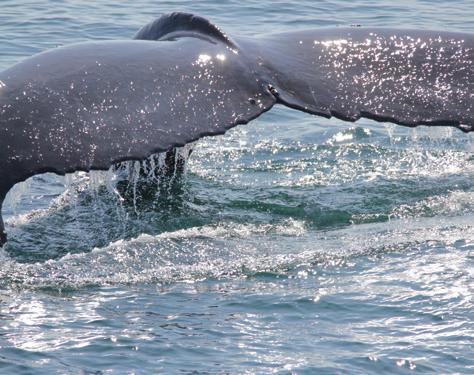
Established in 2007 by COA trustees, alumni, and friends of the college to honor COA’s fourth president and founding faculty member.
overseeing operations at MDR, I also worked on the Graduate Committee, assisted with various admission functions, and helped organize the annual Faculty Retreat. During school breaks, I traveled aboard expedition vessels Seabourn Venture and Seabourn Pursuit to collect data for humpback whale photo-identification catalogs for Antarctica, Greenland, and Iceland. I attained certifications necessary to continue this kind of work, including my Polar Guide certification, Wilderness First Responder certification, and a polar bear rifle safety class.
Chair funds were used to help purchase research equipment for Allied Whale, as well as costs for operations at Mount Desert Rock. Funds also supported equipment purchases, professional development, and virtual attendance for myself and 14 students at the Right Whale Consortium.
Over the course of the year, I helped raise ~$180,000 for Allied Whale research and the Marine Mammal Stranding Response Program from a foundation and a corporate supporter.These funds were essential in supporting our work, given the uncertainties and substantial cuts in federal funding this year. Beginning fund balance $2,371,628
Heather Lakey ’00, MPhil ’05, PhD
Established in 2019 by Jay McNally ’84 as part of the Broad Reach capital campaign.
The 2024-2025 academic year was both exciting and memorable! I enjoyed my first sabbatical and taught four courses: Utopia/Dystopia; Problems and Dilemmas in Bioethics; Sex, Gender, Identity, Power ; and Philosophies of Death and Dying. In total, I taught 50 students, read 12 human ecology essays, directed one independent study and one senior project, and mentored 10 advisees. In addition, I had the rewarding opportunity to serve as a guest speaker for Ken Cline’s class, The Rights of Nature, and Matthew Shaw’s class, 4-D Design. I continue to be impressed by the intellectual curiosity, energy, and creativity of COA students.
Alongside my teaching responsibilities, I took on several administrative service roles. I continued my work with the Academic Affairs Committee and the Academic Priorities Working Group. I stepped into a new role as Chair of the Ethical Research and Review Board, where I oversaw feedback on six projects and discussed the ethics of human subject research with multiple students, staff, and faculty. Finally, I served on the search committee for a new position at COA, executive director of the Summer Institute, which resulted in the hire of Shawn Keeley ‘00, COA’s former dean of institutional advancement.
My fall sabbatical was intellectually stimulating and psychologically rejuvenating! I enrolled in two online classes, which allowed me to switch roles from teacher to student and gain valuable pedagogical insights. I took Introduction to Tantra: Wisdom is Already Present, taught by Buddhist teacher and author, Ethan Nichtern, in collaboration with Dharma Moon, an online platform focused on Buddhist education. The second class, Big
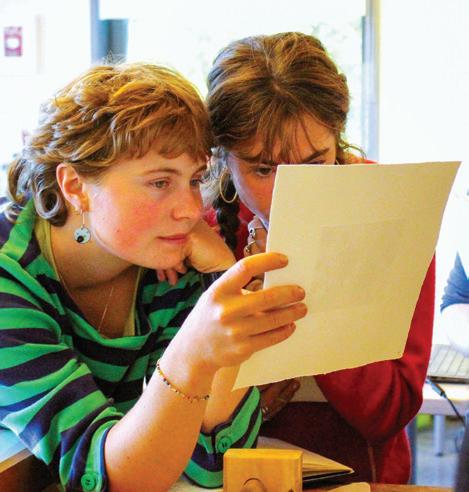
Books in Continental Philosophy, was led by Mark Linsenmayer, who hosts one of my favorite philosophy podcasts, The Partially Examined Life. It was great fun to discuss Buddhist and Continental philosophy with an international group of scholars, students, and thinkers.
In November, I attended a philosophy colloquium at Berkeley centering on the work of contemporary philosopher Evan Thompson. Thompson delivered a paper titled “When Death Comes,” which analyzes Leo Tolstoy’s The Death of Ivan Ilyich to illuminate problems with Heidegger’s understanding of death in Being and Time. I teach both texts, and it was exciting to hear Thompson’s innovative analysis of Heidegger and Tolstoy.
I dedicated a significant portion of my sabbatical to my own writing projects. Specifically, I revised a paper I presented for the COA library lecture series, titled “Rethinking Regret: Simone de Beauvoir, Abortion, and Moral Decision Making.”
I incorporated helpful feedback from the COA community, and the paper is currently under review for publication. I wish to express my deep gratitude to the McNally Family for endowing this chair and supporting philosophical studies at COA.
Susan Letcher, PhD
Service to the college was a primary focus for me over the past fiscal year. I served as faculty moderator, coordinating and moderating the faculty meeting. I also balanced a busy slate of minor committee assignments: I continued to serve on the Review and Appeals Committee, I worked on the successful Interdisciplinary Computing faculty search which brought the phenomenal Torrie Edwards to campus, I mentored new faculty member in marine ecology Kara Gadeken in her first year at COA, I served on a continuing review committee, and I volunteered with the Restorative Practices Team. In that last capacity, I worked with the team to rewrite the college’s bias response policy and prepare for several All College Meetings and cabinet briefings.
Over the course of the year, I did some outreach for the Admission team, including a reception at the George B. Dorr Museum of Natural History and a last-minute gig as a shuttle driver for the Fall Fly-In. I helped Katie Rasmussen ‘26 (who took Sheep to Shawl class last year) start a club on campus dedicated to spinning wool: the COA Spinsters. My office is the club headquarters, jam-packed with wool and spinning wheels.
In terms of academics, I offered classes across a broad spectrum from introductory to advanced in FY25. I joined the team teaching the Human Ecology Core Course in the fall. In the winter, I offered an advanced class in Biostatistics, and Kara Gadeken and I teamed up to teach Cellular and
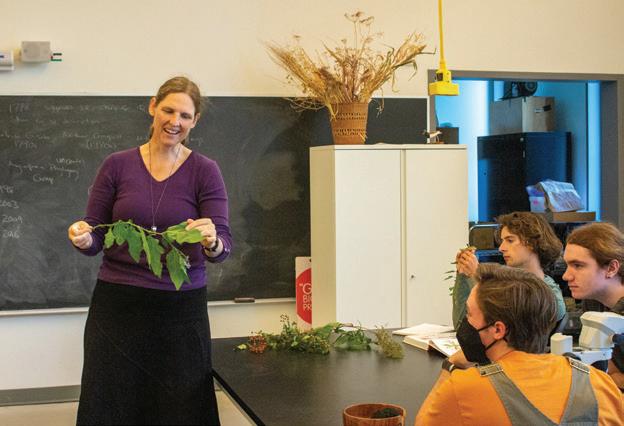
Molecular Processes of Life. In the spring, I taught the introductory course Economic Botany and a newly revamped version of the advanced course Ecosystem Ecology: Biogeochemistry. I also advised three senior projects and two independent studies, serving 86 students during the academic year. I read seven human ecology essays and worked with 16 advisees, along with numerous meetings to offer guidance on experimental design and statistics for students conducting research.
Established in 1996 by Elizabeth Battles Newlin’s children, Lucy Bell Sellers and her husband Peter, and Bill Newlin and his wife Louisa (née Foulke) as part of the college’s Silver Anniversary Campaign
In my scientific work, I continued to collaborate with an international network of scientists studying tropical forests and their responses to major disturbances. We published a paper in Global Ecology and Biogeography entitled “Tropical forest succession increases tree taxonomic and functional richness but decreases evenness,” led by Masha van der Sande at Wageningen University in the Netherlands. I attended virtual meetings with a network of scientists interested in assessing tree diversity at a multi-continental scale. I reviewed a number of manuscripts for journals in my field and evaluated seven grant proposals as a member of the European Science Foundation’s College of Expert Reviewers.
It’s been another busy and rewarding year in Bar Harbor! I look forward to a sabbatical in fall 2025, when I plan to focus on some long-delayed writing projects.
Kourtney K. Collum, PhD
Academics: This was my ninth year serving as the Partridge Chair. In the fall, I taught Transforming Food Systems, my flagship course for students eager to study food systems through the lens of social justice and agroecology. Twenty students brought remarkable energy to the work, developing theories of change to address challenges ranging from seed sovereignty to food access for marginalized communities.
Established in 2008 by Polly Guth, a long-term supporter of COA and Beech Hill Farm, and the Partridge Foundation.
In the winter, I cotaught a new course with my colleague Zach Soares ‘00, Prison Food Systems: An Audio Production Course. Together with 13 students, we examined the ways food is used in carceral contexts—often as a tool of dehumanization, yet sometimes as a vehicle for healing and rehabilitation. We hosted 10 experts and visited three Maine prisons. Students developed audio production skills—interviewing, recording, mixing, and editing—that led to the creation of “Entry Point,” a podcast series advancing the conversation on transforming prison food systems. Funds from the Partridge Chair made possible the travel, guest lectures, and podcast production that brought this course to life. We are excited to release the students’ episodes in November 2025.
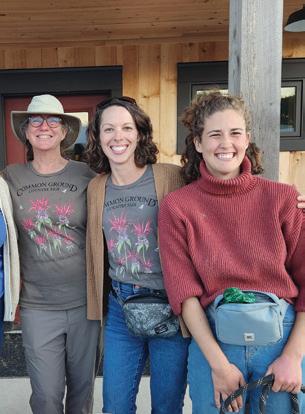
hands-on experience in beekeeping. This year, the Food Systems Working Group co-sponsored a new on-campus farmers market, providing meat, eggs, and produce from COA’s farms at a discount to students and employees, while also supporting our annual Food & Farming Workshop Series – 13 skillbased workshops ranging from chainsaw safety to fruit tree pruning.
Service and professional development: I was on sabbatical in the spring, which allowed me to deepen my scholarship and professional contributions. I presented a talk on my research with beekeepers and blueberry growers at the Maine Science Festival’s “5 Minute Genius” event, delivered two papers at the Society for Human Ecology Annual Meeting in Mons, Belgium—one on migrant farmworkers and one on the prison food systems course—and was honored to give the inaugural Bill Newlin Distinguished Faculty Lecture with Zach Soares ‘00 in May. I also delivered a paper, titled “Invisible Workers: Local Food Systems & Global Migration,” as a keynote at the Mid-Maine Global Forum’s Linda Cotter Speakers Series at Colby College.
Beyond the classroom, I advised 20 students, directed six senior projects and three independent studies, chaired the Faculty Development Group and the Food Systems Working Group, and managed the college’s apiary, giving students
During this time, I also prepared for my transition to Provost, which began on July 1, 2025. To support this new role, I completed the Institute for Education Management at the Harvard Graduate School of Education, an intensive program for academic leaders. I gained an invaluable network of colleagues through that program.
I remain deeply grateful to the Partridge Chair, which made possible so many of these teaching innovations, collaborations, and opportunities for students.
Kara Gadeken, PhD
This past year was a busy start to my academic tenure at COA!
I began last year teaching two sections of a new class, Intertidal Ecology, that got students out observing coastal ecosystems first-hand and practicing the first few key steps of the scientific method. Winter term involved team-teaching the introductory biology course on Cellular Processes of Life with Susan Letcher, and teaching a new course on Deep Sea Biology. Spring term provided the opportunity to dive into another of my favorite topics with students, Invertebrate Zoology Altogether I taught 91 students across five courses, all of which were new courses for me.
Preparing and teaching so many new courses this year left little time for other pursuits, but that investment of time and effort was well worth it, as the courses were very well received and provided a foundation for future marine and coastal science offerings at COA. While it was an incredibly hectic first year, the passion students have for studying the ocean has been inspiring, humbling, and a constant reminder of what makes COA a special place to learn, teach, and grow.
This year I took on some advisory work, and became the director for a student’s senior project exploring the intertidal near her home in Lebanon, and provided thoughts and feedback on another student’s human ecology essay about the experience of living and working at the Edward McC. Blair Marine Research Station on Mount Desert Rock. During the spring term, Jodi Baker and I advised students preparing their senior project presentations for the COA community and Board of Trustees just before graduation. I also served as a member of a search committee in the spring.
Funds from the Rales Chair have allowed me to acquire and maintain essential marine science
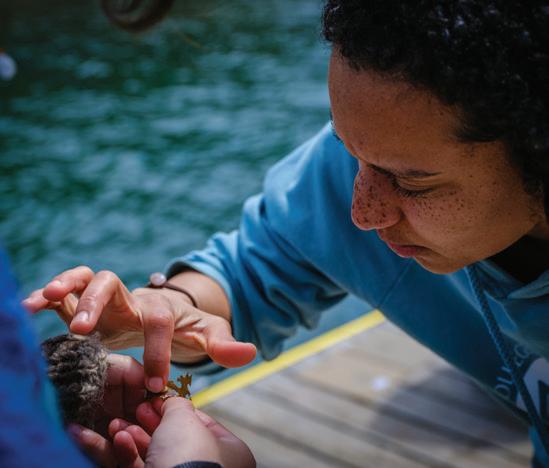
equipment. Most recently, funds were used to purchase a large tank, support platform, and plumbing materials to begin building a holding tank for marine organisms for future teaching and research.
With this also being my first full year living in Maine, I focused in particular on building my sense of place, getting to know members of the local coastal communities, and familiarizing myself with the unique aspects of life downeast. The entwined nature of people’s lives with the coast was what initially drew me to Maine, and learning more about those relationships by connecting with people and attending meetings like the Maine Fisherman’s Forum last spring have been profoundly educational experiences. Opportunities abound for collaboration and community-centered coastal science, and I see great potential in this area in the years to come. I am now turning an eye towards research opportunities focused on local coastal issues, such as aquaculture, introduced species, changes driven by a warming Gulf of Maine, and harvesting from the oceans. Beginning
Reuben Hudson, PhD
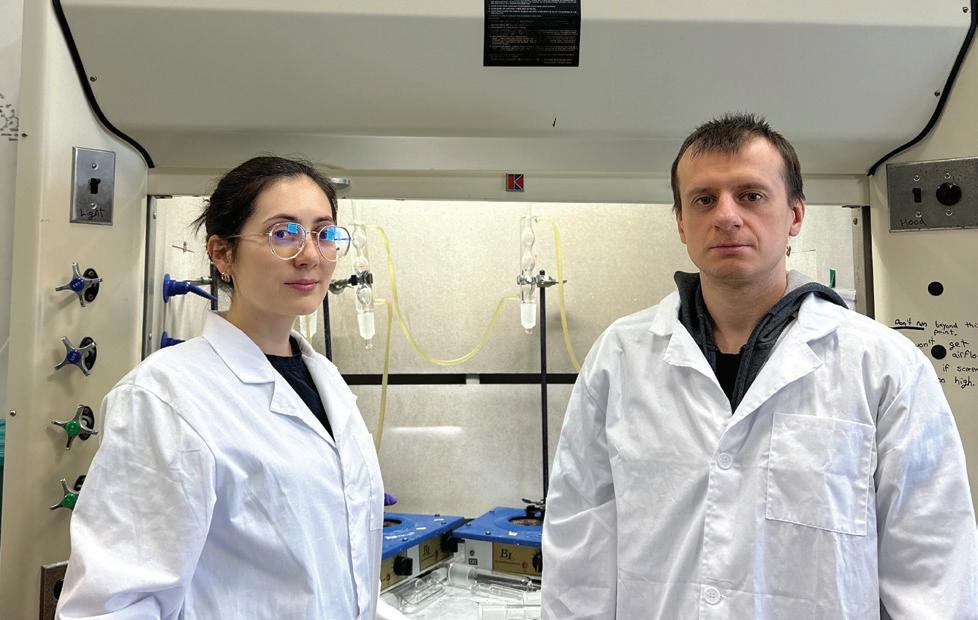
Chemistry at COA has been a growing discipline for several years as we continue to bring in grantfunded equipment and personnel to enable student-centered research and teaching.
Established in 2020 by Lalage and Steven Rales as part of the Broad Reach capital campaign.
Allocations from the Rales Chair and the Guthrie Chemistry Enhancement Fund were used as institutional matching funds (for the purchase of lab supplies) for a $50,000 EPSCoR RID Grant from the Maine Space Grant Consortium. We also had support from the American Chemical Society ($70,000) and INBRE ($110,000). Chemistry students used a state-ofthe-art gas chromatography mass spectrometer to identify and quantify trace chemicals in plant, tissue, and sediment core samples. We quantified biochemical markers indicative of humans in 14 carbon-dated lake sediment cores going back thousands of years.
Our small research group is starting to gain more of an international profile. Brazilian postdoc Thiago Altair finished his third year at COA. Sarah Kheireddine from Lebanon spent part of a second year at COA as a postdoc after finishing her PhD in France. After a long ordeal trying to extract postdoc Vitalii Polubinskyi and lab manager Anastasiia Pustovoit from Ukraine, they finally landed at COA in February 2024. Each of these chemists, along with Hudson, co-supervised students in their areas of expertise, allowing our single-faculty department to offer a wider range of projects for COA students.
Origin of life research from postdoc Thiago Altair and COA alum Sofia Dragoti ‘25 was published in the Journal of the American Chemical Society.
Kenneth S. Cline, JD
Classes: My classes this year had a strong emphasis on public lands and national parks. In the fall, I taught Acadia: The National Park Idea. This course introduces first- and second-year students to the history, policy context, and wonders of Acadia. With weekly field trips into the park and guest speakers such as Acadia’s superintendent and other park personnel, this is an immersive learning experience. I followed this up in the winter term with Our Public Lands, an upper-level course that focuses on the history and management challenges presented by the vast array of public lands including national parks. In the fall, I taught my most difficult course, Advanced International Environmental Law Seminar to a group of upper-class students who have participated in international negotiations or have done other sophisticated legal work. My final course—Introduction to the Legal Process—focused on domestic legal issues and current social justice debates. We looked at institutional racism within the criminal justice system and ways that law can be used as a tool to reduce those inequities. I directed six senior projects and an independent study related to the Rockefeller Chair and Cox Fund. These projects focused on Maine environmental legislation, marine law, New England wilderness, international water policy, and wilderness canoe travel.
National Park work : I continue to strengthen the Acadia National Park (ANP)-COA partnership by introducing students and new faculty to opportunities to collaborate with the National Park Service. For the first time, ANP was able to fund the Acadia Scholars program and we placed two COA interns with the park’s Wildlife Division for the summer. I continue to do advocacy work and submit legal comments on proposed actions in Acadia that will affect park resources. Several students this year also did projects or research in Acadia. Through my position on the board of directors for Schoodic
David Rockefeller established this endowed chair in 2010. Tom Cox, a COA trustee and friend of David and Peggy Rockefeller, established the fund that supports the work of the chair.
Institute at Acadia National Park, I am involved in supporting and designing early-career science opportunities in Acadia.
Co-management research and advocacy: I continue to lead the national Sierra Club’s efforts to improve its working relationships with Indigenous groups in the US. I have participated in a national task force to write and implement a co-management policy for the Sierra Club. Related to this work, I presented some of my research on tribal-federal co-management of public lands this fall at the International Society for Human Ecology Conference in Tucson with Sophie Chivers ‘24, my research assistant.
Conservation advocacy and research: I continue to be deeply engaged in conservation advocacy work with national, local, and international conservation organizations. I have worked extensively with the Sierra Club on how it can effectively pursue its conservation mission in collaboration with native peoples in the US. I also am part of national Sierra Club efforts to protect legally designated wilderness and advance the Club’s 30×30 campaign. To this end, I helped organize a virtual conference for the national Sierra Club on wilderness in the 21st century.
Jay Friedlander
Henry and Peggy Sharpe initiated the funding of this chair, and Jay McNally ’84 completed its endowment in 2004.
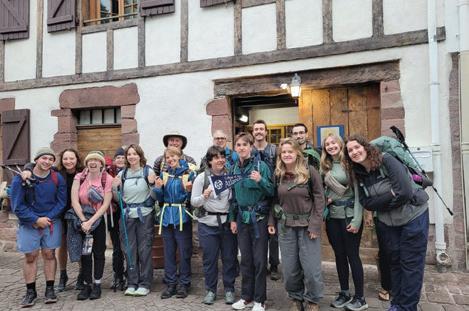
In the fall, I co-led the inaugural Camino Monster Course, where a dozen students and four faculty walked the 500 miles of the Camino Frances. Students followed the path that millions of pilgrims have walked since the end of the 9th century. On this human ecological journey of self-discovery and contemplation, students spent each day walking, interacting with other pilgrims, exploring history, and examining how the Camino has shaped the place, economy, and society along the route.
Student research projects spanned botany, art, economics, grief, food systems, the impact of tourism, soundscapes, and other areas. Other faculty included: Ursula Hanson, LCSW; COA trustee emeritus Jay McNally ‘84; and retired medical doctor Teresa Tierney.
In the winter term, I taught Business and Nonprofit Basics. In this class, students merge ideas and actions as they explore fundamental areas of enterprise such as creativity, marketing, financials, and leveraging capital. Students crafted marketing plans for a small farmer with an excess of root vegetables. After presenting their plans, they were given 25 pounds of different vegetables, such as beets, daikons, turnips, and carrots to implement their plans. Team Turnip transformed their vegetable into an event that raised over $1,500 to fund the education of three Nepali students. This spring, students in the Diana Davis Spencer Hatchery (detailed in the Diana Davis Spencer Hatchery Endowment Report) developed and refined enterprises in restorative justice, rural
economic development, food service, online retail, the arts, planning intentional communities, early childhood education, and postpartum care. Approximately 50 people attended the Hatchery Expo at Havana restaurant in Bar Harbor, where students presented overviews of their work at the end of the term.
Along with Sustainable Business Program Manager Kerri Sands ‘02, I served on the Thesis Committee for a graduate student studying the effectiveness and potential of his nature retreat business—a project he had developed in last year’s Hatchery cohort.
In the broader community, I participated in groups strengthening entrepreneurship and the local economy in Maine and beyond. I gave presentations to start-ups building their business acumen, and groups such as lobstermen who are facing economic transition. Some partners included Island Institute, Ignite Presque Isle, Maine International Trade Center, and others. The Camino team also presented at the XXVI International Conference of the Society for Human Ecology in Mons, Belgium.
As the COA liaisons for Projects for Peace, Kerri and I supported the 2024 project of Valentina Dereani ‘27, to develop seed banks and resilient food systems in Kenya. COA’s 2025 Projects for Peace awardee, Raheem Khadour ‘25, carried out his project documenting stories of Syrian prison survivors in the summer of 2025.
Karen E. Waldron, PhD
The year 2024–2025 continued to deepen College of the Atlantic’s strength in literature, women’s studies, and writing. The Literature and Writing Group met regularly as a team to plan offerings, and it is clear that adjustments have started to take hold that help our students deal with the multiple, multimodal, and now AI-influenced contexts of their writing and learning.
We regretfully saw the departure of Blake Cass MPhil ‘19, our Writing Center director, and enthusiastically welcomed Valeria Tsygankova, whose expertise in writing studies adds new depth to our curriculum. Further contributions by Palak Taneja (Anglophone literature and writing) have helped us cover a wider range of literature, and during the winter term, she and I co-taught a course entitled Epic Heroines: Feminist Retellings. The course was designed around the relatively recent spate of novels retelling both Greek and Hindu mythology from the perspective of otherwisenamed but ignored female characters. Works by Vaishnavi Patel and Madeline Miller were highlights of the term, but we also read retellings of Medusa, Sita, and Galatea. We had a large group who read eagerly and actively considered the effect of myths on ideas and constructions of womanhood. Despite the ancient nature of many of the original stories, their present relevance as well as their
persistence in popular culture were clearly noted, leading to some fascinating questions about gender, culture, religion, and identity. Winter 2025 also saw me teaching Native American Literature.
Established in 2012 by William P. Stewart in memory of his daughter, Lisa Stewart Target. Lisa was a personable, intelligent, and accomplished woman who started Bowen Asia, a successful investment firm in Hong Kong, specializing in the Asian economy. She spoke five languages and lived all over the world. Her three children attended COA’s Summer Field Studies program.
In fall 2024, my classes were Literature, Science, Spirituality (fiction, drama, and poetry about science and religion from Francis Bacon to Gloria Naylor), and The Contemporary World of Women’s Novels (with works from every continent except Antarctica). The Contemporary World of Women’s Novels class is particularly relevant for considering similarities and differences among both female characters and female authorial strategies in a wide variety of cultures.
Spring 2025 was devoted to my most demanding class, The Nature of Narrative, and a very eager group of students whose minds were stretched by considering questions of what makes a novel a novel. We read a significant amount of literary theory and what might be deemed 20th and 21st-century “experimental novels,” ranging from works by Virginia Woolf and William Faulkner to Lindsey Drager’s 2024 The Avian Hourglass. Drager generously Zoomed into our class during week 10, leaving students inspired and in awe. Her work has already influenced several senior projects and independent studies that I am involved with in fall 2025.
Catherine Clinger, PhD
During the 2024-2025 academic year, I taught three printmaking courses, one drawing course, and two art history courses. My two art history classes contrasted active artists (Contemporary Artist as Activist and Researcher, fall 2024) with the contemplative (Range of Sublimity in the Artist Mind, winter 2025). From exoteric work by artists such as Cannupa Hanska Lugar and Rose B. Simpson to the esoteric productions of Hiroshi Sugmoto and Katie Paterson in the winter term, students studied how to activate a community and/or intensify mystery in the human mind.
Established in 2008 by Clare Stone in memory of her husband Allan Stone, who died in 2006. Allan was celebrated for his visionary eye which incorporated an eclectic approach and early advocacy of pivotal artists of the 20th century and beyond. Alongside being a leading authority on Abstract Expressionism, he gave Wayne Thiebaud his first New York show and represented him for over 40 years. He was a passionate collector of anything that appealed to his eye, including Willem de Kooning, Franz Kline, Arshile Gorky, John Graham, Joseph Cornell, John Chamberlain, and many less-known artists. In addition to modern masterworks and contemporary art, Allan collected tribal and folk art, Americana, important decorative arts, furniture, and Bugattis.
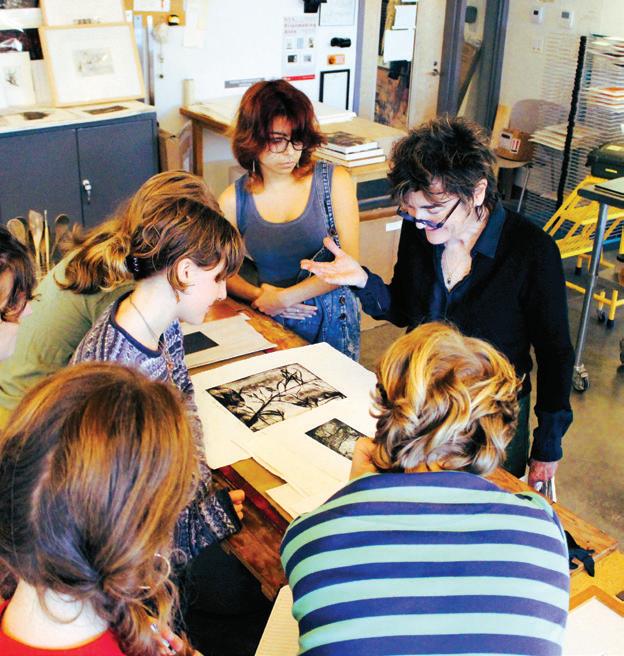
I continue my direction of COA’s Kippy Stroud Artist-In-Residence Program. Edie Fake, the 2024 Artist-inResidence, bridged the summer and fall arts seasons in the Ethel H. Blum Gallery. In Fake’s work, the terrestrial, architectural, and ecological potentialities of queer space in the world are evident in meticulous and nonconformist creations. Fake’s public lecture was remarkable.
During the winter term, the spirited, wry, and playfully sardonic Annika Earley visited the college for two weeks as the Maine Emerging
Artist. She offered two workshops for our students linked to the Advanced Printmaking Class. In the spring term, artist Pia-Paulina Guilmoth joined me on the Gates stage for the Kippy Stroud Memorial Lecture and Conversation to reveal the depth of her beautiful nocturnal work; photographs that exposed the uncanny nature of the night and latent danger found paradoxically in a familiar place, a remote rural home.
I continue to serve on the Faculty Development Group and this past year on a search committee tasked with finding two new full-time arts faculty following the retirements of Nancy Andrews and Dru Colbert. In the Maine arts community, I served again as a reviewer for foundation funding. My work as a scholar was cited in the Exhibition Catalogue for Caspar David Friedrich: The Soul of Nature at the Metropolitan Museum of Art in New York in 2025. Beginning fund balance
Duc Hien Nguyen, PhD
In my first year at COA, I began introducing students to how economics has been used to justify and maintain a structurally unequal economic system, and how it can also be used to disrupt “business as usual.” Through five classes— Introduction to Microeconomics, Introduction to Macroeconomics, Introduction to Marxian Political Economy, Economics of Identity and Discrimination, and Political Economy of Gender—I worked with students to examine a range of issues, from monopoly power in the tech sector and the impact of trade tariffs on households’ cost of living, to the role of identity-based discrimination in the labor market, and the socioeconomic disparities facing sexual and gender minorities in the United States.
I quickly learned that teaching at COA was challenging, rewarding, and inspiring at the same time. While students in my classes varied in their familiarity with quantitative methods and social science theories, they all brought remarkable thoughtfulness to the classroom. We dove into complex issues with an openness to explore ideas from multiple perspectives and using interdisciplinary lenses. This was demonstrated in students’ final projects, such as one from my Political Economy of Gender class that combined an astute critique of the birth rate crisis and the abortion debate with an artistic articulation of the intersection of race, gender, and social justice.
Besides teaching, I continued my research on LGBTQ discrimination and experimented with innovative methodologies such as randomized controlled trials with photo manipulation. My work examining how gender expression affects hiring outcomes in care-service occupations was published last year in a special issue of the Journal of Economics, Race, and Policy, contributing evidence about how the social organization of care is both gendered and racialized.
Funds from the van Heerden Chair enabled me to bring four COA students to the annual International Association for Feminist Economics (IAFFE) conference in summer 2025, where I presented this work. In the current climate, when evidence-based research—especially work on gender, sexuality, and LGBTQ people that is often labeled as “woke gender ideology”—faces withdrawal of funding and hostile reception from federal institutions, professional conferences like IAFFE become vital spaces for building solidarity, deepening academic connections, and strategizing how to push forward with essential research.
Seeing COA students at the IAFFE conference demonstrated to me what becomes possible when we approach quantitative social sciences as a tool for human ecology and social transformation. This kind of transformative education depends on institutional commitment to scholarship that challenges economic orthodoxy and helping students reimagine how economics can be a tool for good, not greed. I am deeply grateful that the Cody van Heerden Chair makes this possible.
Established in 2019 by David and Robin Reis, COA trustees, sta , and faculty as part of the Broad Reach capital campaign to honor former trustee Cody van Heerden, MPhil ‘17, who passed away in 2018 at the age of 58 after a short battle with ALS.
Beginning fund balance $1,105,228
Brittany Slabach
’09,
PhD
My first year back at COA was exciting and busy! I worked with 90 students in five classes over this first year. I offered several new courses, including Vertebrate Zoology, Wildlife Ecology, and Collecting Nature: Exploration of Scientific Collection. I also was part of the teaching team to offer Ecology: Natural History and Biology: Form and Function. Students in these classes participated in ongoing research as part of their course experience. Students in my Wildlife Ecology class were part of collaborative research teams that partnered with Acadia National Park biologists and University of Maine graduate student Marisa Monroe to conduct research on amphibians and flying squirrels, compiling written technical reports.
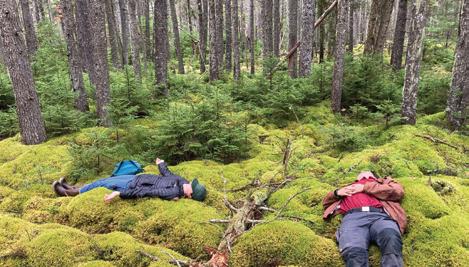
what we value when and why. In this course, we traveled to the L.C. Bates Museum and Harvard’s Museum of Comparative Zoology, getting a behind-the-scenes tour of three of their collections. We talked to curators and learned curatorial techniques. Students applied their knowledge to catalogue and care for our own natural history collections. I also served as a co-advisor for two senior projects. These projects focused on the relationship between PFAS (per- and polyfluoroalkyl substances, also known as “forever chemicals”) and white-nose syndrome in the eastern small footed bat, and a survey of the natural resources of COA.
Established in 2019 by Kim and Finn Wentworth as part of the Broad Reach capital campaign. When establishing the chair, Kim said “We need to inspire and equip future generations to be able to improve some of the conditions we face. We want to address the legacy issue: we, the baby boomers, may have recognized some of the problems early on, but we didn’t do enough.”
Vertebrate Zoology students assisted in monitoring coyote activity at College of the Atlantic Peggy Rockefeller Farm when some chickens were taken; and Ecology: Natural History students participated in monitoring the small mammal communities on the summit of Cadillac Mountain, as part of an ongoing effort to understand the effects of vegetation restoration on community ecology. My Collecting Nature course is a new course aimed at investigating the history of scientific collection. Natural history collections are true artifacts of human ecology, demonstrating
I continued to research the relationship between vertebrate ecology and evolution, and various disturbance types with students. In addition to my long-term projects, I inherited faculty emeritus Steve Ressel’s spotted salamander project, where we investigate the effects of salinity, temperature, and UVB exposure on salamander growth rates. We also conducted a carnivore occupancy study on MDI— the first of its kind—led by a student as an independent study.
I manage a research space on campus that provides a sterile workspace for studies of microplastics and genetics. Funds from the Wentworth Chair were instrumental in providing students with equipment and support for all these different opportunities, both in and outside of classes. They also supported travel for me and a student to participate in a regional scientific meeting. I’m excited to continue this important work and see what the new school year has in store!
Beginning fund balance $1,433,494 Net return and contributions 136,223
James McKown, PhD
This past year, and the fall term in particular, was an exceptionally busy period for all things related to government and politics here at College of the Atlantic. Election season always generates a great deal of student interest and energy, and, like most of the United States, that interest is “off the charts” in presidential election years.
In my capacity as the Wiggins Chair and holder of the Geyelin Fund, much of my work is focused on helping students troubleshoot issues around registration, absentee balloting, and other voting access challenges. Research shows that helping first-time student voters navigate the procedural hurdles that often come with voting access can generate momentum for lifelong electoral engagement.
I also endeavor to prepare all COA community members, whether students or not, to make an informed decision when they go to the polls. To that end, we hosted a number of nonpartisan voter education and engagement events last fall, including information sessions on the cruise ship vote and other hot-button issues. Ballot initiatives can stir up a great deal of passion and controversy in ways that candidate elections don’t. As you might imagine, we take great care in not “putting our thumb on the scale” when it comes to how we present voter information about any of these issues.
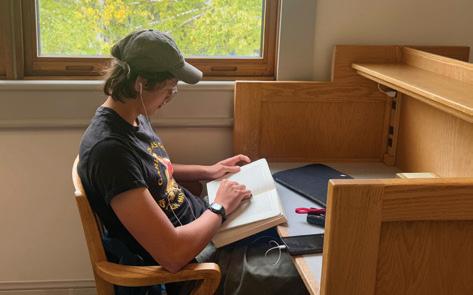
We also hosted a series of presidential debate watch events throughout the fall, and I can say without any reservation that we had the largest student turnout I have ever seen in my time at COA. The lecture hall was entirely packed to capacity for each, with students out in the hallway unable to get a seat.
The Wiggins Chair honors the memory of former COA trustee
James Russell Wiggins, a respected journalist whose career spanned three-quarters of a century, including 20 years as editor of the The Washington Post. After his retirement, he served as US Ambassador to the United Nations and became owner and editor of The Ellsworth American.
Another former trustee, Philip L. Geyelin, a Pulitizer Prize winning author, initiated the idea of the Wiggins Chair and led the campaign to create it. When Phil died, COA honored him by creating this fund to support programs in government, international a airs, and politics.
In the last fiscal year I was also able to offer a new incarnation of our Electing A President seminar. The students in my class were able to cover a bevy of various issues around the history, conduct, and granular details of presidential elections in the US. They broke into teams to track the key electoral battleground states throughout the term, then did a lengthy deep dive into the results in the final weeks of the term. Plans are underway to offer similar classes in the spring and fall of 2026.
WIGGINS CHAIR
168,854
allocations/withdrawals (98,554)
$1,853,069
GEYELIN FUND
Jodi Baker, MFA
Last year, I co-taught Objects and Performance with the great Nancy Andrews, as well as a practical study of Shakespeare’s Hamlet and two movement training courses. I directed two performance-related senior projects, served as an academic advisor and a primary reader for several human ecology essays, and I co-directed senior project presentations for the board of trustees with marine ecology professor Kara Gadeken. I also co-chaired the Dual Interdisciplinary Arts Faculty Search with music professor Jonathan Henderson. This search began in summer of 2024 and was completed in winter of 2025. It resulted in the successful hire of two truly extraordinary new interdisciplinary artists, Anna Ialeggio and Melissa Ferrari. We are all incredibly excited to have these folks teaching at COA.
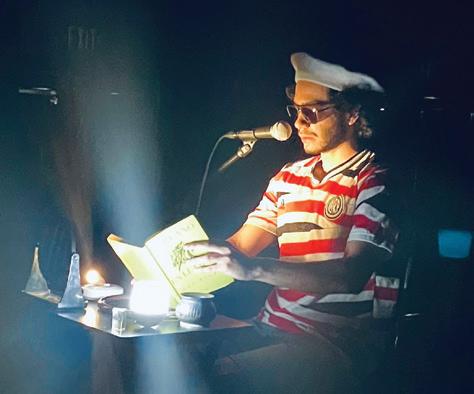
in historical and contemporary techniques for effective conflict engagement in connection with clown theory and training practices.
Established in 2019 by several anonymous donors as part of the Broad Reach capital campaign, in honor of the renowned actors Joanne Woodward and Paul Newman, whose daughter, Nell Newman, graduated from COA in 1987.
In the spring, I was invited to teach as a guest artist as part of the McGillicuddy Humanities Center Fellows Program at the University of Maine in Orono (UMO). I led a short series of movement training workshops for UMO students and faculty based on methods I’ve developed over the last decade with our students. I also had the opportunity to bring some terrific guest artists to COA. Montana-based performance artist and UCSD Professor Emeritus Charlie Oates visited the Art and Resiliency class and led a physical performance workshop for all students. Dwight Dunston and Donna Oblongata visited campus to offer students a workshop
Last year, I also took a sabbatical. I spent a portion of that time traveling to see new work from many of the artists I teach in my courses at COA, and to connect with some professional contacts and former students whose work I deeply admire. I saw new work at Holland Festival, a special event at the Frank House influenced by the work of William Kentridge, and I spent time at the STRAAT, Rijksmuseum, and Tate Modern. I saw significant contemporary theatre, film, and sound art at the National Theatre, the British Film Institute, and Vinyl Factory. In New York, I conducted research at the New York Public Library and the Public Theatre. Additionally, I began work on a new introduction/ contextual analysis for a revised edition of Federico García Lorca’s House of Bernarda Alba (Bloomsbury/Methuen Drama). All this work directly informs the courses I teach and the projects I build with COA students and colleagues.
My work at COA is, of course, made possible by the Woodward and Newman Chair and other generous endowments that fuel art and performance study at COA. I remain incredibly grateful for the exceptional teaching and learning opportunities these funds provide.
This scholarship was established during the Broad Reach capital campaign to benefit students with financial need.
Recipient: Adi Gamache ’27 (Pawtucket, RI)
Beginning Balance: $132,199 Ending Balance: $137,570
This scholarship was created in 2012 through a generous bequest from Brooke Astor and gifts from the Vincent Astor Foundation. It is awarded to Maine students with financial need.
Recipients: Gemma Bradney ’27 (Swanville, ME)
Beginning Balance: $1,042,553
Ending Balance: $1,084,226
Family and friends of Christina ‘Tina’ Baker established this four-year scholarship in 2013 in memory of Tina. After the passing of Tina’s husband, William ‘Bill’ Baker in 2021, the family added Bill to the scholarship name and amended the criteria. This scholarship is awarded to students with financial need with a preference towards first-generation and BIPOC (Black, Indigenous, people of color) students.
Recipient: Ruby DeWilde ’25 (Portland, OR)
Beginning Balance: $129,861 Ending Balance: $146,215
This scholarship was created in 2019 by David Milliken to honor two wonderful people who have lived on MDI for many years. Both talented makers: Judith a very gifted fiber artist mixing the colors of the woods and waters magically in her rugs. Steve a builder and artisan in metals. To sit around a fire with a cup of tea chatting of many thoughts and things was as fine a way to spend time as could be thought of. Student selection criteria: fiber arts, metal arts, handcrafts.
Recipient: Jasper Blake ’25 (Stratham, NH)
Beginning Balance: $120,857 Ending Balance: $125,231
This scholarship was created in 2020 as part of the Broad Reach capital campaign in honor of Lynn Boulger. This scholarship is awarded to students who demonstrate financial need and great talent in writing.
Recipient: Dominick Tricoche ’25 (Warminster, PA)
Beginning Balance: $139,108 Ending Balance: $146,141
The Bright Horizons Scholarship was established by Bar Harbor Bank & Trust as part of the Life Changing, World Changing capital campaign. The scholarship
is awarded to local Maine students who are graduates of high schools in Hancock and Washington Counties.
Recipient: Hope Rankin ’25 (Bucksport, ME)
Beginning Balance: $294,398 Ending Balance: $308,849
This scholarship was created in 2019 by David Milliken to honor two heartfelt and wonderful people, full of kindness and knowledge. From the beauty of a flower to the architecture of shelters, buildings and cities. Student selection criteria: architecture, landscape design.
Recipient: Anna Heiting ’25 (Emmerich am Rhein, Germany)
Beginning Balance: $149,812
Ending Balance: $155,690
This scholarship was created in 2019 by David Milliken to honor Helen Caldicott, an Australian physician, author, and antinuclear activist who has founded several associations (Physicians for Social Responsibility among them) to educate the public about the ongoing dangers of nuclear weapons proliferation and war. Student selection criteria: social responsibility, advocacy, renewable energy.
Recipient: Ellie Jackson ’25
(Twin Falls, ID)
Beginning Balance: $120,857
Ending Balance: $125,231
This scholarship was created in 2018 by David Milliken as part of an effort to honor family, friends, and public figures and the characteristics David admires in them. This scholarship supports a student with characteristics and interests in birding and preservation of wild habitat, service, loyalty, care, and attention to detail.
Recipient: Haysie Maurer ’25 (Wheaton, IL)
Beginning Balance: $124,165 Ending Balance: $128,831
This scholarship was created in 2018 by David Milliken as part of an effort to honor family, friends, and public figures and the characteristics David admires in them. This scholarship supports a student with characteristics and interests in investigation, deep seeing, dot connecting, exposing of toxins in environment, and revealing the destruction of nature and natural habitats.
Recipient: Chloe Meyer ’26 (Churchville, MD)
Beginning Balance: $124,165 Ending Balance: $128,831
This scholarship was created in 2005 with a gift from the Christensen Fund. It is awarded to students with financial need, with a preference towards international students.
Recipient: Piper Myers-Poppay (Boise, ID)
Beginning Balance: $371,443 Ending Balance: $386,398
The scholarship was established in 2004 in memory of Rebecca Clark, a COA graduate who lost her life in the 2004 Indian Ocean tsunami in Thailand. The fund was started with a lead gift from trustee Edward McC. Blair and support from many friends and family of Rebecca. The scholarship is awarded to a rising junior or senior, exemplary in dedication, enthusiasm, passion and scholarship in the field of marine science and/or marine conservation.
Recipient: Rosie Chater ’25 (Pony, MT)
Beginning Balance: $557,083 Ending Balance: $589,201
This scholarship was created in 2023 by David Milliken as part of an effort to honor family, friends, and public figures and the characteristics David admires in them. This scholarship supports a student developing skills in outdoor leadership and exploration.
Recipient: Sierra Abrams ’26 (Conway, NH)
Beginning Balance: $116,839 Ending Balance: $125,054
RICHARD SLATON DAVIS AND NORAH DEAKIN DAVIS SCHOLARSHIP
This scholarship was created in 2004 by Norah Deakin Davis, the widow of Richard S. Davis (Dick), a founding faculty member who passed away at the age of 41 in 1982. Mrs. Davis’s pledge
spurred additional gifts from friends and former students of Dick. Recipients are outstanding students in the contemplative, aesthetic, and philosophical aspects of human ecology that Dick loved.
Recipient: Alder Ame ’27 (Corvallis, OR)
Beginning Balance: $156,163 Ending Balance: $162,601
Beginning Balance: $44,394 Ending Balance: $450,050
The scholarship was created in 2006 by the children and friends of John and Louisa Dreier. It is given to a junior who has shown leadership in building community spirit both on campus and in the college’s surrounding communities.
Recipient: Leila Hammoudeh ’26 (Ramallah and Al-Bireh, PALESTINE)
The scholarship was created in 2006 by the children and friends of John and Louisa Dreier. The scholarship is given to a junior who embodies the spirit of joy in the arts.
Recipient: Anna Celia Morton ’25 (Stockholm, Sweden)
The scholarship was established by COA’s trustees to honor Sam Eliot as he retired from COA after 11 years as vice president. Mary Kathryn served as fundraising assistant to COA’s first president and designed the college’s iconic logo. It is awarded to Maine students with financial need.
Recipient: Rachel Wheeler-Karakose ’25 (Mount Desert, ME)
Beginning Balance: $186,005
Ending Balance: $194,034
This scholarship was created in 2018 by David Milliken as part of an effort to honor family, friends, and public figures and the characteristics David admires in them. This scholarship supports a student with characteristics and interests in the study of oceans, making, chemistry, medicine, curiosity, dowsing, whimsy, laughter, global thinking, and ceramics.
Recipient: Sofia Dragoti ’25 (Athens, Greece)
Beginning Balance: $124,165
Ending Balance: $128,831
The General Scholarship Fund was established in 1984. The fund contains hundreds of unrestricted gifts given by friends of the college. We continue to accept donations for this important endowment. Many students receive aid from this fund; here are a few:
Recipients: Abigail Thornton ’26 (Audubon, PA), Leander Laga-Abram ’26
(Santa Fe, NM), Issa Pizzimenti ’26 (Ferndale, MI), and Nicholas Lapic ’26 (Pottstown, PA)
Beginning Balance: $764,556
Ending Balance: $806,934
This scholarship was created to honor the late Craig William Greene. It is awarded to two rising juniors or seniors who have excelled in botany and general biology classes, and who share Craig’s passion for the world of flora.
Recipient: Conrad Kortemeier ’26 (Bristol, ME)
Beginning Balance: $107,345 Ending Balance: $111,574
Judy Perkins led the initiative to create this scholarship in 2023 to honor COA Life Trustee Sam Hamill and his professional contributions to the fields of regional and environmental planning and his legacy of service to the college.
Recipient: Cora Tietgen ’27 (Occidental, CA)
Beginning Balance: $531,943
Ending Balance: $575,734
This award honors both George B. Hartzog and John M. Kauffmann. Kauffmann, who passed away in 2014, was a former COA trustee, and retired to MDI after a long career at the National Park Service, most notably in
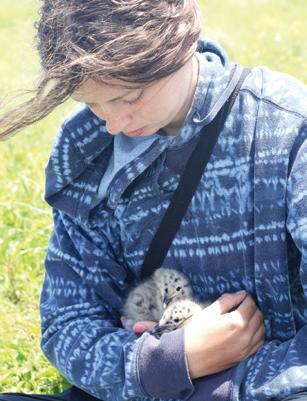
Alaska where he helped define the boundaries of the Gates of the Arctic National Park. George Hartzog, head of the National Park Service from 1964–1972, was a hero of John’s and revered by many for the way he managed the agency and defended the NPS during his tenure. It is awarded to students who have an interest in the management and protection of ecosystems— especially wilderness and rivers.
Recipient: Sofia Dragoti ’25 (Athens, Greece)
Beginning Balance: $462,734
Ending Balance: $480,647
The scholarship was created in 1997 through gifts from friends and family of August Heckscher, an artist, author and public servant whose life and work encompassed many of the values and principles underlying the study of human ecology. It is awarded to students, preferably juniors, with preference for those whose work focuses on public lands, government, or the arts.
Recipient: Sierra Abrams ’26 (Conway, NH)
Beginning Balance: $192,093
Ending Balance: $199,608
This scholarship was created in 2018 by David Milliken as part of an effort to honor family, friends, and public figures and the characteristics David admires in them. This scholarship supports a student interested in art, craft, and landscape design.
Recipient: Autumn Pauly ’26 (Saint Peter, MN)
Beginning Balance: $124,165 Ending Balance: $128,831
This scholarship was created in 2018 with a gift from the Louise H. and David S. Ingalls Foundation. It is awarded to students with financial need, with a preference towards international students.
Recipient: Malek Hinnawi ’25 (Damascus, Syria)
Beginning Balance: $101,173 Ending Balance: $104,864
This scholarship was created in 2019 by David Milliken to honor a college professor who in the best sense of the teaching craft opened the eyes and hearts of his students to art and art history. Student selection criteria: education, teaching, humanities, art history.
Recipient: Jackie Brooks ’26 (Burke, VA)
Beginning Balance: $120,857 Ending Balance: $125,231
COA and the Maine Community Foundation created this scholarship to honor Ed Kaelber for his leadership and contributions in the fields of education and community development. The scholarship provides opportunities for Maine students who possess the boldness, commitment, and leadership personified by Ed Kaelber, and who are using their skills and talents to improve their communities.
Recipient: Conrad Kortemeier ’26 (Bristol, ME)
This scholarship was created in 1996 by former trustee Robert Blum in honor of his daughter Alice. It is awarded to students who plan to actively work for biodiversity and especially for the preservation of underwater species in various parts of the world.
Recipient: Megan Maloney ’26 (Salem, NC)
The Maine Student Scholarship Fund is an endowment created through generous gifts to the COA Silver Anniversary campaign from the organizations listed below.
Beginning Balance: $872,919
Ending Balance: $905,916
This scholarship was created in 1995 through a gift from the Betterment Fund, and supports students from Bethel, Oxford County, and the State of Maine, in that order of priority.
Recipient: Catherine Tibbets ’27 (Raymond, ME)
This scholarship was established with a gift from the H. King & Jean Cummings Charitable Trust. Mr. Cummings led his family’s business, Guilford Industries, a textile manufacturer in Guilford, Maine. He later served as CEO of Sugarloaf ski area and played decisive roles in the founding of Carrabassett Valley Academy and Maine Community Foundation. The scholarship is awarded to students from western Maine.
Recipient: Michaela Payne ’26 (Shapleigh, ME)
This scholarship was created in 1995 with two gifts from Dead River Company and the Kenduskeag Foundation. It is awarded to Maine students with financial need.
Recipient: Haven Haskell ’26 (Spruce Head, ME)
This scholarship was created in 2019 by David Milliken to honor John McKee, a master of black and white and color photography who uses his knowledge of the medium to awaken student awareness to framing the shot, to the play of shadow and light, to notice color and color saturation. It is awarded to a student who pursues excellence in photography.
Recipient: Nathan Morgan ’26 (Rapidan, VA)
Beginning Balance: $120,857 Ending Balance: $125,231
This scholarship was created in 2018 by David Milliken as part of an effort to honor family, friends, and public figures and the characteristics David admires in them. This scholarship supports a student with characteristics and interests in birding and preservation of wild habitat, service, loyalty, care, and attention to detail.
Recipient: Jackie Brooks ’26 (Burke, VA)
Beginning Balance: $148,931 Ending Balance: $154,731
The scholarship was established by Craig Neff “to honor the extraordinarily creative, loving, generous, energetic person Pammie was. She had an incredible passion for taking care of the planet, protecting wildlife and habitat, and encouraging everyone to learn more about nature and science. I know COA’s commitment to those values is strong and we have always admired the school, the staff and the wonderful students and graduates we have come to know.”
Recipient: Lydia Burnet ’25 (Asheville, NC)
Beginning Balance: $159,226 Ending Balance: $167,467
The scholarship was created in 2004 through a bequest from Barbara Piel. She was a great friend of the college, deeply interested in the natural world and inspired by “the intense individuality of students and staff ” at COA. This annual scholarship is awarded to students with financial need.
Recipient: Layne Kirk ’26 (Phillipsburg, NJ)
Beginning Balance: $576,001 Ending Balance: $598,524
Awarded to an undergraduate student(s) with demonstrated need for financial aid, with a preference for students who have an interest in ornithology.
Recipient: Autumn Pauly ’26 (Saint Peter, MN)
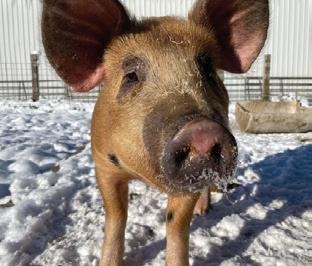
Beginning Balance: $129,543
Ending Balance: $138,872
This scholarship was created in 1997 with a gift to the Silver Anniversary endowment campaign by trustee Maurine P. Rothschild and her husband Robert Rothschild. The scholarship is awarded to qualified graduate students with preference for those pursuing work in the field of education.
Recipients: Emily Ginn ’26 (Landenberg, PA) and Ariel Morgan ’25 (Belfast, ME)
Beginning Balance: $318,332 Ending Balance: $331,107
This scholarship was established by friends and family of Robert Rubin after his death in 2020. It will be awarded to students with financial need, with a preference for students who have an interest in community planning and sustainability on Mount Desert Island—especially efforts focused on linking the issues of environmental stewardship, economic health, and social equity together.
Recipient: Mabon Young ’26 (Portland, ME)
Beginning Balance: $60,385 Ending Balance: $64,895
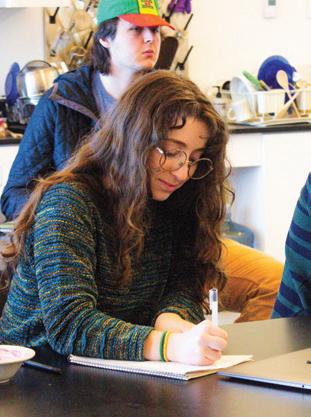
The scholarship was created in 2013 with a gift from Jay McNally ‘84 to honor his maternal grandparents. This four-year scholarship provides financial assistance to a high-achieving student who is a great fit with the mission of COA and would otherwise not be able to attend.
Recipient: Morgan Daley ’27 (Bar Harbor, ME)
Beginning Balance: $760,197
Ending Balance: $789,538
This scholarship was created in 2018 by David Milliken as part of an effort to honor family, friends, and public figures and the characteristics David admires in them. This scholarship supports a student who exhibits compassion, empathy, and community leadership, and who loves wood, landscapes and gardens, books, art, music, letters, and the winter structure of plants.
Recipient: Colleen Nelson ’27 (Elkton, MD)
Beginning Balance: $124,165
Ending Balance: $128,831
This scholarship was created in 2023 by David Milliken as part of an effort to honor family, friends, and public figures and the characteristics David admires in them. This scholarship supports a student studying oceans and environmental health.
Recipient: Mallory McElhenny (Clinton, PA)
Beginning Balance: $116,839
Ending Balance: $125,054
This scholarship was created in 2018 by David Milliken as part of an effort to honor family, friends, and public figures and the characteristics David admires in them. This scholarship supports a student with an interest in boat building, woodworking, and the working waterfront.
Recipient: Natalie Rodriguez-Dickens ’26 (San Rafael, CA)
Beginning Balance: $137,231
Ending Balance: $143,050
This scholarship was created in 2008 with a gift from Donald and Beth Straus. It is awarded to a rising junior or senior who shows promise in working for cultural change and collaboration in the field of human relations and/or leadership.
Recipient: Alexandra Löfgren ’25 (Dvärsätt, Sweden)
Beginning Balance: $262,598 Ending Balance: $273,186
This scholarship was created in 2018 by David Milliken as part of an effort to honor family, friends, and public figures and the characteristics David admires in them. This scholarship honors the Strouds’ love of family and care of community, and their embrace of beauty and aesthetics, respect for the past, and belief in the future. It is awarded to a student with interest in the investigation of unpolluted water and riparian habitats as an essential support of life. Student selection criteria: water quality, wildlife habitat, and community service.
Recipient: Hannah Gaudet ’25 (Dixon, NM)
Beginning Balance: $124,165 Ending Balance: $128,831
This scholarship was established by trustee Heather Evans and her family during the Broad Reach Capital Campaign to benefit students with financial need.
Recipient: David Wasinger ’25 (Durango, CO)
Beginning Balance: $398,009 Ending Balance: $449,930
(not endowed)
The scholarship was created in 2021 by David Bonner Winship ’77, Rich Van Kampen (’13), Kyle Shank ’14, and Taj Schottland ’10. This annual scholarship is awarded to students with financial need who are engaged in environmental and climate activism and action.
Recipient: Linnea Goh ’25 (Vancouver, BC, Canada)
SCHOLARSHIP
The scholarship was created in 2000 by Eleanor T. and Samuel J. Rosenfeld. This annual scholarship is awarded to students with financial need.
Recipient: Leander Laga Abram ’26 (Santa Fe, NM)
This two-year scholarship was created in 2021 by Ellen Seh ‘75. It is awarded to students with financial need, with a preference for women who have an interest in freshwater resources— especially efforts focused on the protection of water quality and ecological integrity. The scholarship will be initially awarded to a third-year student and be renewed for a total of two years, so long as they remain enrolled at the college.
Recipient: Sam Nguyen-Jones ’26 (Brooklyn, NY)
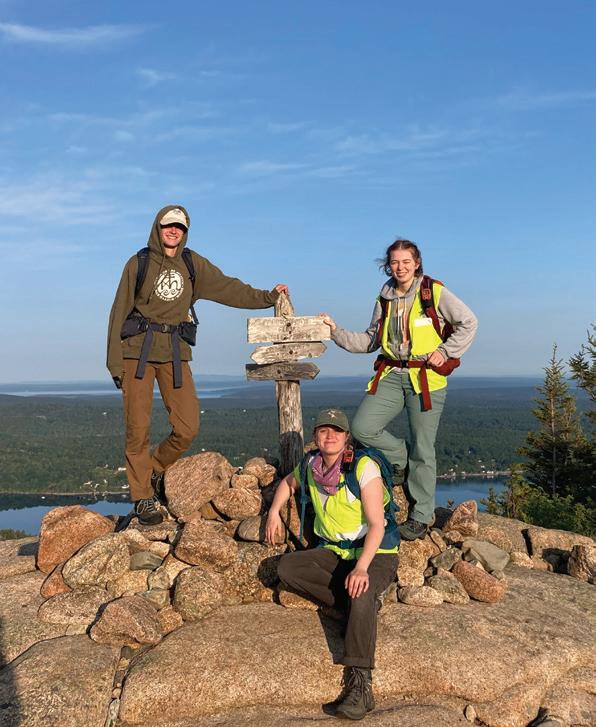
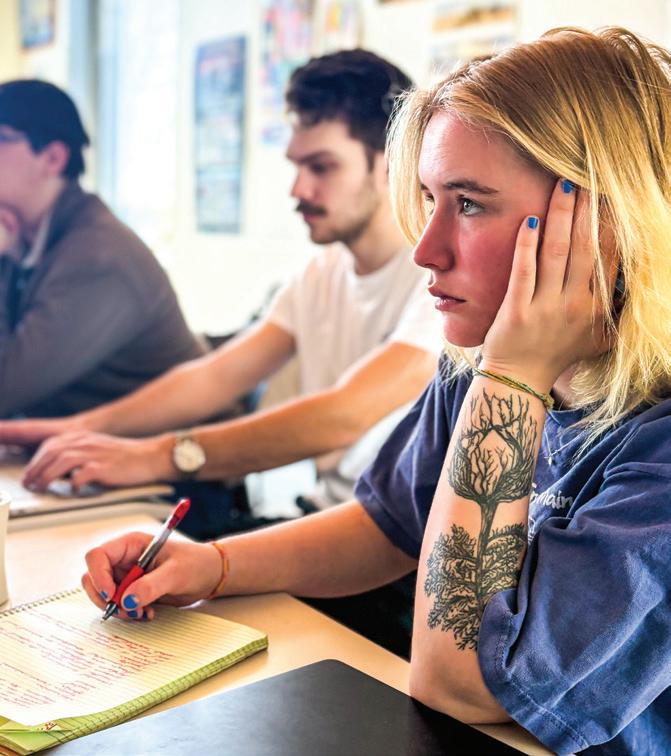
Anna Davis and David Levinson
Beech Hill Farm had another productive and successful year. Throughout the season, we grew over 100,000 pounds of organic vegetables, which were sold through our farm stand, wholesale accounts, the COA dining hall, Take-a-Break, and a 100-person summer and fall Community Supported Agriculture (CSA) program.
We worked with community partners to supply nearly 5,000 pounds of produce to Healthy Acadia’s Gleaning Initiative, provided 2,000 pounds of food to the Bar Harbor Food Pantry, and supervised coordinators of Share the Harvest, our student-run food access project. Share The Harvest provides free produce to low-income residents of Mount Desert Island, and offers 50% discounts in the farmstand to those using SNAP and WIC.
We co-taught Organic Farm Planning and Production with botany and agroecology professor Suzanne Morse. The course led students through the process of planning a farm, from creating a production plan to understanding cash flow and enterprise budgets.
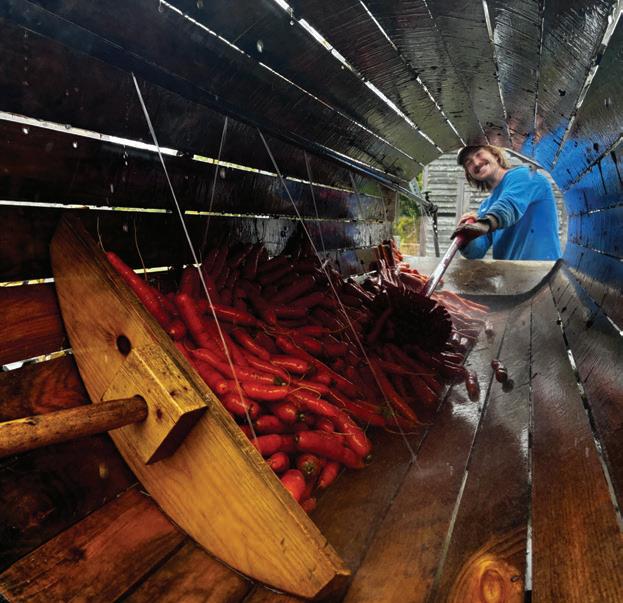
Many island residents attended our Food and Farming Workshop Series, which offered instruction in things like chainsaw safety and tractor operation. Other events hosted on the farm included the 2025 Beech Hill Farm Summer Concert Series (featuring local musicians each month in the summer), a community potluck for A Climate to Thrive, and three successful Share the Harvest fundraiser events.
Established in 1999 by Barbarina M. Heyerdahl ’88 and Aaron J. Heyerdahl ’87 when they donated Beech Hill Farm to COA.
We worked closely with the Food Systems Working Group to develop a Farms and Garden Strategic Plan for Beech Hill Farm, Peggy Rockefeller Farm, and the COA Community Garden. Through this close collaboration, the group established five strategic goals and implementation plans for the long-term sustainability and viability of the farms and garden. We continue to work towards building soil health and fertility by increasing cover cropping, mulching, beneficial insect plantings, and reduced tillage practices. We are also working on expanding our growing season through the construction of our ninth high tunnel.
We employed over 20 work-study students in the spring and the fall, sponsored three summer internships, and hired 15 full-time staff. We hosted numerous school visits, including those from The Community School, MDI High School, and various COA classes.
WASHINGTON, USA
interviewing wildlife rehabilitators; performing music
CALIFORNIA, USA
traveling across the country by train; exploring notions of convenience and social class
NEVADA, USA
participating in a COA monster course
ARIZONA, USA
learning how to tan hides and make leather shoes; creating documentary films
participating in a COA study abroad program; studying theater peformance
COSTA RICA
participatingin a COA monster course; studying medicinal plants
studying whale stranding and fishing communities
MAINE, USA studying the social ecology of skateboarding
NEW YORK, USA creating a guide to perfumery; exploring bookbinding techniques
MARYLAND, USA studying insect photography
KENTUCKY, USA
interning at a primate rescue center
NORTH
USA researching the anthropology of Appalachia
This program was initially endowed by Kathryn W. Davis. Now generally referred to as “the Expeditionary Fund,” it allows COA students the opportunity to learn while travelling as part of their college experience. Each student may apply for up to $1,800 for credit-bearing activities such as travel expenses, residencies, independent studies, internships, senior projects, and attendance at off-campus conferences or meetings.
In 2025, students used their grants to pursue projects around the USA and in countries across the world, including Azerbaijan, Bhutan, Costa Rica, Egypt, France, Lebanon, and Thailand.
FRANCE studying European political institutions and French language
working in public radio for an indigenous community
AZERBAIJAN attending a United Nations Climate Change Conference
LEBANON studying intertidal organisms
studying archery and the relationship between humans and cranes
studying preveterinary medicine
JAPAN completing a marketing internship
BELGIUM attending the Society for Human Ecology conference
GERMANY studing Hildegarde von Bingen
EGYPT training in freediving
This research fund was established to support the work of the W.H. Drury Chair, in honor of Bill Drury, an eminent ecologist and former research director of the Massachusetts Audubon Society, who died in 1992. Bill lectured on evolutionary biology and ecology at Harvard University for over 20 years before joining the COA faculty in 1976.
John G.T. Anderson, PhD
The Drury Fund grew out of Bill Drury’s original “Guillemot Fund,” named after his sailboat that he sold to finance work among the islands of Maine. After his passing, the fund was renamed the W.H. Drury Research Fund, and I was asked to use the proceeds to ensure that the kind of work Bill would have wished to pursue continues. Since 1999, the fund has primarily been spent on running a program for students at the Alice Eno Field Research Station on Great Duck Island, where students are encouraged to develop their own lines of research and to present it at local, national, and international meetings. This was a busy and exciting year for the fund.
In January, I was able to send five COA students to the joint meetings of the Waterbird Society and the Pacific Seabird Group in San Jose, Costa Rica, where each presented their work on Great Duck Island or Mount Desert Rock from the previous summer. In April, I took seven students to the Northeast Natural History Meetings in Springfield Massachusetts, where again they presented their
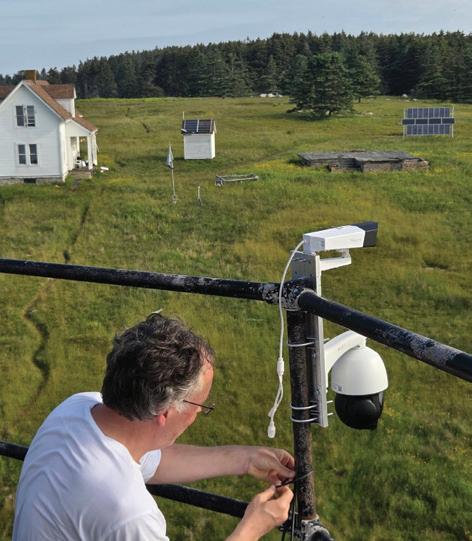
original work and I chaired a session on seabird ecology and the marine environment. In spring and summer, I took a team of eight students to National Park Service islands to the west of us to conduct population surveys and to obtain samples relating to possible infection with Highly Pathogenic Avian Influenza (HPAI). We also deployed four more GPS tags, which allow us to track where the adults are foraging and how a juvenile bird behaves as it is first leaving the colony.
Another exciting development this year was the establishment of live-streaming cameras on both Great Duck Island and Mount Desert Rock. This effort was made possible through the expertise and generosity of COA Research Associate Alan Mainwaring, who provided essential equipment and technical support—including multiple cameras and the networking systems required to bring them online. We are also grateful to Jennifer Starr, whose gift funded cameras on Great Duck Island. These cameras can be viewed through the Alice Eno Field Research Station website (enostation.org), skillfully constructed by Haysie Maurer ’25 as part of her senior project. Together, the new system allows us to monitor both stations throughout the winter and capture the earliest signs of nesting each spring.
This is the last year where I will be responsible for the fund, and I would like to end with a heartfelt “thank you” to the people whose generous donations have funded literally decades of research along the coast of Maine. Because of you, more than 100 students have been able to conduct original research among the islands. Many have gone on to be scientists, professors, lawyers, veterinarians, and farmers…and I think that Bill would have been very proud indeed. You are the wind beneath our wings.
Todd Little-Siebold, PhD, Galen Koch, Natalie Springuel ‘91, Hillary Smith
This year, we team taught numerous classes in marine studies and community-based research that built on a decade of growing our footprint in the communities and the curriculum at COA. Our ongoing collaboration with the Island Institute on the podcast From the Sea Up saw its third season come to a conclusion with six episodes focusing on innovations in Maine’s marine industries. Production on season four of the podcast will conclude in December 2025 with four new episodes about climate adaptation and resilience in the fisheries. Similarly, our ongoing collaborative work with Maine Sea Grant provides students with the opportunity to produce episodes of Coastal Conversations, the long-standing public affairs radio program that airs monthly on WERU Community Radio. This year, two students produced two 30-minute episodes as part of their senior projects. Our community-engaged exhibits continue to garner attention and listenership. The Bar Harbor Exhibit and Soundwalk is on display for its second season at the Bar Harbor Historical Society. This public element of communicating our research is a core component of the work we do.
The integration of classes that support the ongoing interviewing of local community members along with fieldwork by Galen Koch and a team of students has ensured that our archive of interviews is growing as we deepen relationships with coastal communities. Our ongoing collaborations with Maine Sea Grant and the University of Maine School of Marine Studies has increased our bandwidth at a time when institutional collaborations in communityengaged work feels more important than ever. One concrete outcome of the collaboration was that seven current and past students had their oral history work (senior projects, class projects, and independent study work) published in a recent compendium of fisheries-related oral histories for The Maine Policy Review
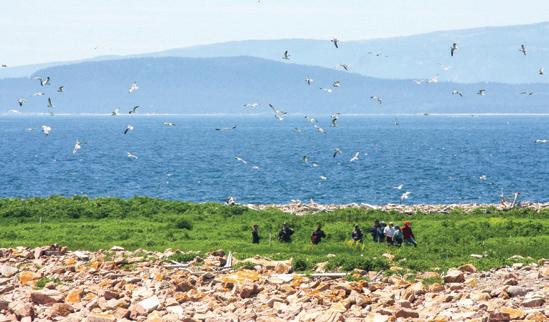
Work that has grown out of the Navigating Change class taught in 2023 has led to several additional grant-funded projects. A collaborative project led by Hillary Smith on women and climate change has involved students in teaching, research, and outreach. Two COA workstudy students have been involved in data management, analysis, and interpretation of key themes from the oral history data set using qualitative and quantitative analysis techniques. One COA student completed a summer internship analyzing oral history interviews on climate change and invasive species and produced and edited a radio story about the potential of invasive European green crabs in Maine’s food system. A community-engaged data science project by computer science faculty member Laurie Baker, now teaching at Bates College, has complemented this with analysis of spatial data from our interviews. Taken together, this work has helped pave a strong pathway for student participation in community-based research, advocacy, and media work.
Established in 2014, this partnership between Island Institute and COA seeks solutions to sustain island and coastal ecosystems. Funded by a challenge grant from the Partridge Foundation and the support of many other donors, the fund addresses four areas of critical concern for Gulf of Maine residents: agriculture and food, energy, education, and adaptation to climate change.
David Gibson, CEM LEED AP BD+C
The 2024-25 academic year has been a year of many changes for the Community Energy Center. We have had many successes, and have faced daunting headwinds with federal funds retracted from the program.
Last summer, with funding from the Buildings Upgrade Prize, we launched the “Maine Energy Upgrade Program” (MaineUP.org). We had five summer interns working with the Community Energy Center. Becca Tarczy, Nicole Grohoski, and three interns worked on Great Cranberry Island, while two interns worked with the Passamaquoddy Tribe at Sipayik. We completed more than 30 home energy audits and distributed hundreds of LED light bulbs and high-efficiency shower heads to residents.
Our AmeriCorps grant from Campus Compact was renewed, and we brought on Rashmi Mohan as our new full-time AmeriCorps member to take over Becca Tarczy’s role. Through her year-long service term, Rashmi helped with writing and revising five grant proposals, learned how to conduct home energy audits, received BPI certification as a Building Analyst Technician, spearheaded and coordinated data collection for our STARS reporting, and participated in implementation of insulation improvements in six buildings.
During the fall term, I taught End-Game Decarbonization, a new course that delves into technical requirements of the clean energy transition, including beneficial electrification,
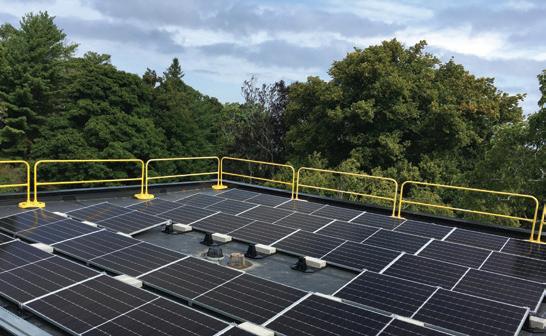
energy efficiency, and renewable energy, but with an emphasis on societal shifts needed to accelerate economy-wide decarbonization.
During the winter term, I taught Maine Energy and Climate Advocacy, another new course in which students tracked legislation and submitted public input, while learning about past energy and climate policy through guest speakers and presentations.
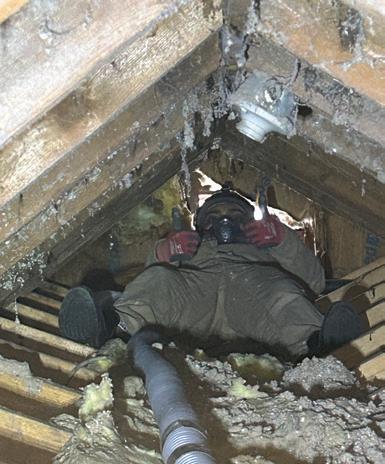
In December, we submitted 500 pages of documentation to the US Department of Energy to verify that we had completed all the requirements of Phase 2 of the Buildings Upgrade Prize. We should have received $200,000 for completion of this phase, but the program has been paused indefinitely since January.
Nicole Grohoski transitioned to half-time to fulfill her responsibilities as Maine state senator during the legislative session. After being assigned to chair a new Task Force on Taxation, she stepped down from her role at COA in May 2025 to focus on statelevel responsibilities. Her leadership, organizational skills, and support are sorely missed.
Across the year, I presented at several conferences
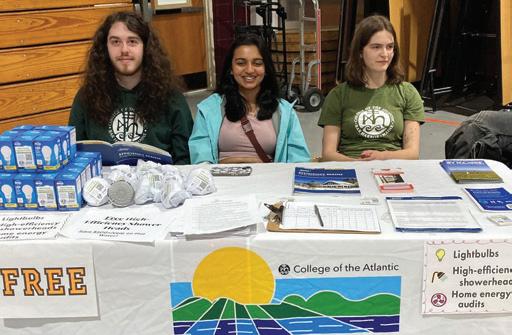
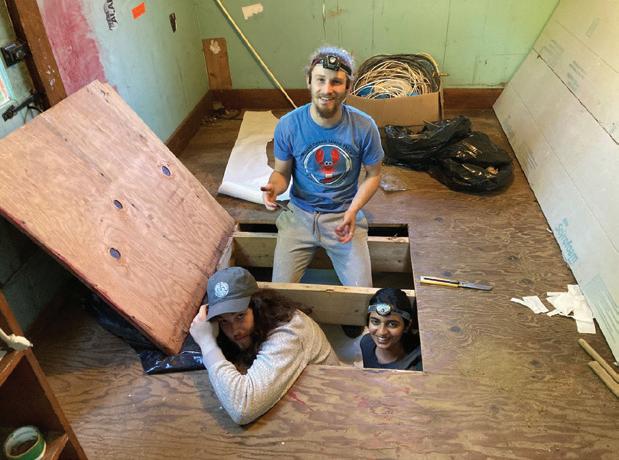
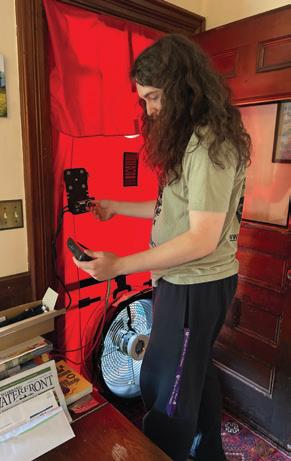
and forums. In October and January, I led training sessions for AmeriCorps members as part of the Campus Compact EnviroCorps Program. In February, I presented on a panel at the PassivHaus Maine Forum. We brought Rashmi Mohan and several students (Cavan Doherty ‘28, Jasper Freeman-Gritter ‘28, Mabon Young ‘26) to attend the forum. I presented “Insulation is Resistance: Resist Heat Loss, Renew Old Buildings, Regenerate Our Communities” at the Climate Convergence hosted by the Center for an Ecology-Based Economy in Norway, Maine in May, and brought one student, Mabon Young ‘26, to attend as well.
I oversaw a senior project for Rudolfs Lukasevics ‘25 focused on renewable energy options and microgrid design and oversaw independent studies for Helen Lloyd ‘27 (solar design), Mabon Young ‘26 (making Bar Harbor more walkable and bikeable), Tyler Hebert ‘27 (marketing for energy audits), Henry Gilpin ‘26 (design, construction, and deployment of underwater Remotely Operated Vehicle (ROV), and Recycling Plastic Bottles into 3D Printer Filament), and Rutherford Zollmann ‘27 (functional art).
The Community Energy Center work-study team assisted with insulating the Turrets attic, the farmhouse at Beech Hill Farm, and some of COA’s off-campus homes.
Established by Peggy and Henry Sharpe to honor COA’s fifth president, David Hales, upon his retirement. Hales led environmental policy and sustainability programs for the US Agency for International Development, and was the first American to serve as chair of the World Heritage Convention.
In May, we were awarded $23,900 from the Governor’s Council on Aging to continue our energy auditing and outreach work on the Cranberry Isles. We were also awarded $349,925 from the Environmental Justice for New England Region One Thriving Communities Grantmaking Program, but the announcement included news that “due to the Environmental Protection Agency’s (EPA) unlawful termination of our funding, EJforNE is unable to proceed with grant awards at this time.” Despite the funding retraction, winning this highly competitive grant reflects a significant achievement for our team.
We had intended to continue the AmeriCorps program and hire Rashmi Mohan full-time into the energy project manager role, but due to a lack of housing for faculty and staff, we were unable to retain either of these positions. This will significantly reduce the capacity of the Community Energy Center for the coming year, but we will continue to take steps toward COA’s goal of becoming fossil fuel-free by 2030.
This fund was established in 1986 with the purpose of helping Thorndike Library build a collection of science and history of science books. The Hall family helped the fund grow further when, upon Thomas Hall’s death in 1990, they requested that donations be directed to this fund. Each year, selections are made based on requests, class needs, and academic as well as general interest. This year’s selections include:
• The Bird Way: A New Look at How Birds Talk, Work, Play, Parent, and Think by Jennifer Ackerman (2020)
• The Catalyst: RNA and the Quest to Unlock Life’s Deepest Secrets by Thomas Cech (2024)
• Clams: How to Locate, Dig, and Cook Them by Curtis J. Badger (2024)
• The Liars of Nature and the Nature of Liars: Cheating and Deception in the Living World by Lixing Sun (2023)
• Medical Microbiology by Patrick R. Murry (2021)
• Medicinal Lichens: Indigenous Wisdom and Modern Pharmacology by Robert Dale Rogers (2025)
• Adaptable: How Your Unique Body Really Works and Why Our Biology Unites Us by Herman Pontzer (2025)
• Amber Waves: The Extraordinary Biography of Wheat, from Wild Grass to World Megacrop by Catherine Zabinski (2020)
• Anesthesiology Manual: Best Practices and Case Management by A Hadzic (2025)
• Avian Illuminations: A Cultural History of Birds by Boria Sax (2020)
• Bayesian Models: A Statistical Primer for Ecologists by Thompson N. Hobbs (2025)
• Bernoulli’s Fallacy: Statistical Illogic and the Crisis of Modern Science by Aubrey Clayton (2021)
• Biogeochemistry: An Analysis of Global Change by William H. Schlesinger (2020)
• The Coming Wave: Technology, Power, and the Twenty-First Century’s Greatest Dilemma by Mustafa Suleyman (2023)
• Electrify: An Optimist’s Playbook for Our Clean Energy Future by Saul Griffith (2021)
• The Elements of Marie Curie: How the Glow of Radium Lit a Path For Women in Science by Dava Sobel (2024)
• Field Guide to Sharks, Rays, and Chimaeras of the East Coast of North America by David A. Ebert (2024)
• Fundamentals of Bionanomaterials by Ahmed Barhoum, Jaison Jeevanandam, Michael K. Danquah Eds. (2022)
• In Praise of Floods: The Untamed River and the Life it Brings by James C. Scott (2025)
• Music, Math, and Mind: The Physics and Neuroscience of Music by Dave Soldier (2021)
• The Patient as Victim and Vector: Ethics and Infection Disease by Pabst M. Battlin, Leslie P. Francis, et. al. Eds. (2021)
• The Power of Prions: The Strange and Essential Proteins That Can Cause Alzheimer’s, Parkinson’s, and Other Diseases by Michel Brahic (2024)
• The Princeton Field Guide to Predatory Dinosaurs by Gregory S. Paul (2024)
• White Light: The Elemental Role of Phosphorus in Our Cells, in Our Food, and in Our World by Jack Lohmann (2025)
• White Pine: The Natural and Human History of a Foundational North American Tree by John Pastor (2023)
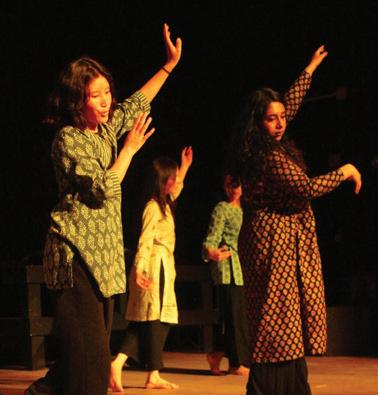
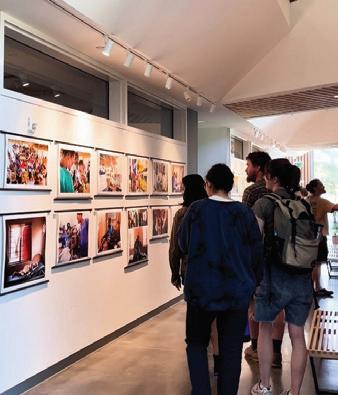
Ken Hill, PhD
The following courses o ered by visiting instructors in the 2024-25 academic year were made possible through this fund:
• Advanced Photography, June Kim
• Sound Studies Practicum, Galen Koch
• Ceramics I, Kreg McCune
• Music Fundamentals: Intro to Reading/Hearing/Writing/ Playing, Adam McLean
• Beginning Contemporary Dance Technique, Dani Robbins
• Documentary Video Studio, Matthew Shaw ’11
• 3D Studio: Introduction to Three-Dimensional Art and Design, Kristy Summers
• Advanced Photography, June Kim
• 10X Dramatic Writing Studio, Andrea Lepcio ’79
• Folk Music Ensemble, Adam McLean
• Introduction to Glass Blowing and Sculpture, Linda Perrin
• Sourcing the Body: Disability as Human Ecology, Dani Robbins
• Four-Dimensional Studio, Matthew Shaw ’11
• Mixed Media Sculpture, Kristy Summers
• World Percussion, Michael Bennett
• Musicianship, Adam McLean
• Dance Improvisation Ensemble, Dani Robbins
• Landscape Cinema, Matthew Shaw ’11
Established by Bob and Arlene Kogod in 2000 as part of the Silver Anniversary Campaign to bring talented artists to COA at a time when the college did not have a robust arts faculty. Today, the fund is used to enhance our o erings by bringing lecturers and visiting faculty to COA who o er courses in subjects such as photography, ceramics, and cinema. The fund also supports the purchase of art supplies and equipment, travel, professional development, and student opportunities that otherwise would not be possible. Beginning fund balance $1,705,046
Teaching assistants for:
• Documentary Video Studio
• Introduction to Photography
• Four-Dimensional Studio
• Advanced Photography
• Ceramics I
• Audio Production as a Compositional Tool
• The Contemporary Landscape in Photography
Field trips, equipment, repairs, and class support including:
• Piano tuning
• Audio recording equipment
• String instrument repairs
• Upright bass repair
• New instruments (two violins, cello, acoustic guitar, electric guitar, electric bass, stands)
161,512
Trisha Cantwell, MLS, and Catherine Preston-Schreck, MA, MSc
Established in 1998 by Nancy Hoskinson McCormick, the widow of Charles Deering McCormick, through the Chauncey & Marion Deering McCormick Foundation.
During the academic year 2024-25, library staff continued to create a space where students, faculty, staff, and the wider public could find information and support, share ideas, and build connections with others. Staff expanded library resources, collaborated with faculty and staff across campus, and worked closely with students and multiple interns. We attended conferences and classes for professional development with topics ranging from digital archiving to international librarianship, as well as meeting human ecologists from all over the world at the Society for Human Ecology conference in Mons, Belgium, expanding the library’s network of professional contacts throughout New England, the US, and internationally.
One of the defining projects of the year was a $56,750 grant from the Leon Levy Foundation to support archives work. Under the direction of archivist Elliot Santavicca ‘20, this grant supported three collaborative archival efforts—digitizing Allied Whale’s humpback whale catalog, the Herbarium, and the history of the founding of COA. Grant funds supported the construction of a research room, the acquisition of digitization equipment and shelving, and four internship positions.
Additionally, library staff installed the new Ashley Bryan Special Collection, a browsable selection of books from his personal library gifted to Thorndike Library by the Ashley Bryan Center and his family last June. The library also benefited from the donation of professor emerit Dru Colbert’s collection of zines and artist books, which resulted in the creation of two new special collections. At the same time, librarians have worked to resolve
older parts of our collection, successfully cleaning up and integrating journals into the collection that had been in long-term storage, and reorganized sections of our microfiche collection. We found good homes for surplus books in two well-attended annual book sales.
The library had another record-breaking year of resource instruction sessions. We mentored 36 work-study students, and hosted numerous events and community building activities. These included faculty talks, karaoke, craft and game nights, poetry readings, Art Crawl exhibits, and displayed work from classes, independent studies, and senior projects.
Library staff maintained their positions as valuable executive members of the Balsam Consortium, a group of over 40 small Maine libraries, and the History Trust, a collaborative group of local libraries and historical societies. Library staff worked to bolster our support of students interested in library careers, working with advancement and the business office to establish a library fund dedicated to supporting future librarians.
Thorndike staff are thrilled to have had such an abundant and productive year and look forward to another, filled with connecting individuals and classes with our resources, expanding our connections, and growing our library community at COA and beyond.
April Nugent
The Peggy Rockefeller Farm Endowment Fund supports the positions of the farm’s two managers. The farm continued to manage its various livestock enterprises and host educational and community events.
Highlights from the season included the development of several hands-on adult education workshops. These included a lambing intensive, and instruction on poultry and lamb processing. The farm also hosted two public open-barn days in which the community was welcomed into the lambing barn to learn about the program and meet with COA students to discuss their work here. The second of these visit days featured an interview with a reporter and a feature on News Center Maine’s evening broadcast.
The farm also hosted its “Leaping into Spring” event this season. We expanded our flock of organic laying hens to meet rising demand for eggs, and are working to develop parasite resistant traits in our flock of Katahdin sheep. The farm increased distribution of farm food to local avenues like the COA Community Fridge and the Southwest Harbor soup kitchen. We also established a new self-serve farmstand on the
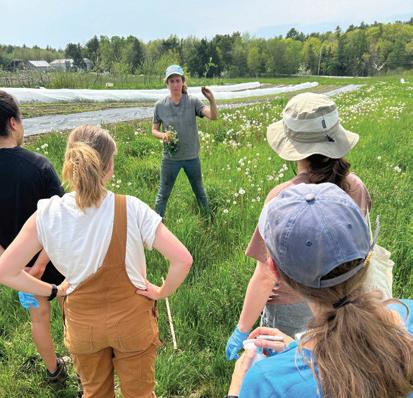
property that allows visitors to purchase farm goods with digital payments.
Established by David Rockefeller, Sr. in 2011 when he donated the Carmen and DeLaittre Farms to the college and supported their operations with a generous endowed gift.
The farm continued to employ approximately 20 different work-study students throughout the school year, and the farm manager hosted several COA courses on the farm. Courses such as Field Sketching, Wildlife Ecology, Human Ecology Core Course, and Entomology visited the farm as part of their curriculum.
The farm continued its partnership with Maine NRCS’s Ag Allies, fledging at least 20 juvenile bobolinks, and numerous savannah sparrows and tree swallows. Ag Allies also hosted a public field walk in July to educate the public about Maine’s disappearing grassland bird species and the importance of protecting their habitats.
Beginning fund balance $1,460,888 Net return and contributions 138,369 Less allocations/withdrawals (80,746) Ending fund balance $1,518,512
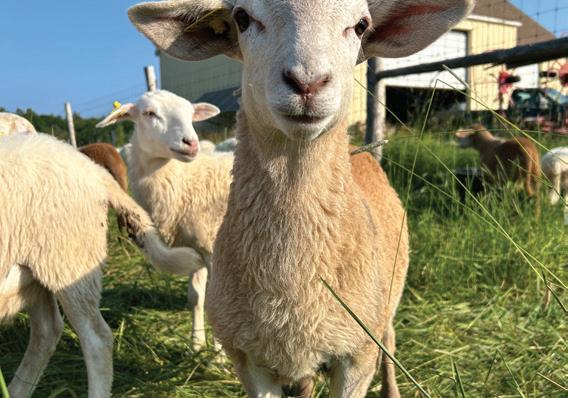
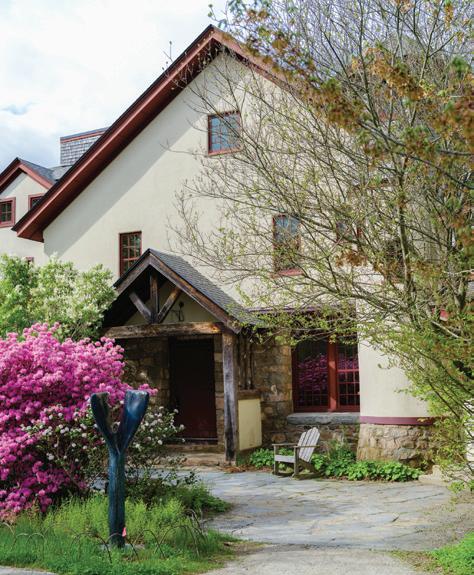

The Ethel H. Blum Gallery was dedicated in 1993 to Ethel H. Blum (1900-1991), an accomplished watercolorist who studied at the Art Students League and the Brooklyn Museum Art School, and exhibited widely in her lifetime. A long-time summer resident of MDI, she took special pleasure in painting Maine coast views.
Established by founding trustees Les Brewer and Father James Gower, and local businessmen Charles Sawyer and Michael J. Garber, to support campus grounds improvements.
This fund was created by gifts from the Shelby Cullom Davis Foundation in support of the maintenance and upkeep of the Kathryn W. Davis Center for International & Regional Studies. The Davis Center houses faculty and staff offices, classes, and the educational studies program. The Davis Carriage House is used for employee housing.
Originally a summer cottage built in 1886 named “Sea Urchins,” this building was fully renovated in 2008. It features a student lounge, a cafe, and offices for staff, the college nurse, and mental health counselors. This fund, created to support maintenance of the facility, was established by Barbara Deering Danielson.
The Gates Center is used for lectures, theatrical productions, music and dance performances, and large meetings or workshops. The hall has a stage with optional podium, seating on the main floor and in a balcony, a lighting and sound booth, and a digital projector with screen.
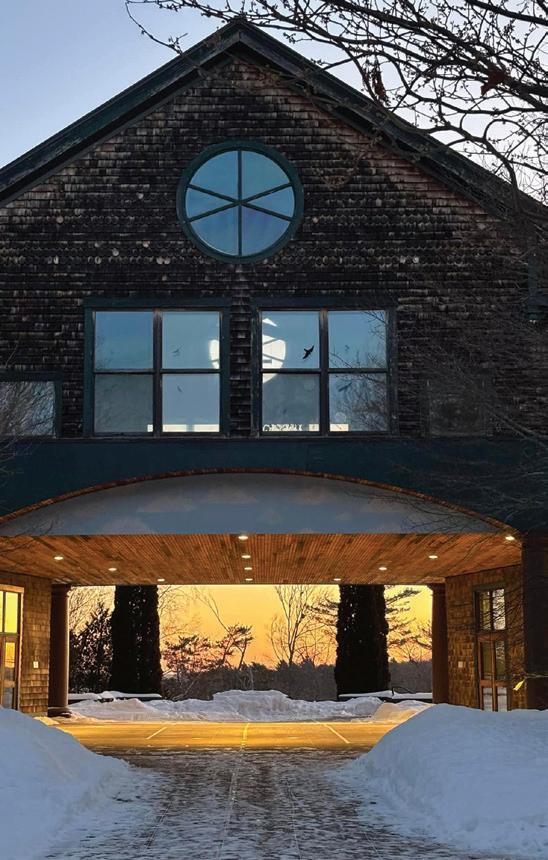
The Turrets was designed in 1893 for John J. Emery of New York by Bruce Price, designer of Québec’s famous Château Frontenac. In 1975, it was listed on the National Register of Historic Places, and is still one of the most important examples of cottage-era architecture in Maine. The Turrets currently houses classrooms and administrative and faculty offices.
Thorndike Library was named in honor of Robert Amory Thorndike (1900-1972) and his wife Elizabeth (1908-1992) in recognition of their support and contributions to COA. Kaelber Hall, named for founding president Ed Kaelber (1924-2018), is the large natural-shingled building located in the center of campus. It overlooks the water and houses the Thorndike Library, the Blair Dining Hall (Take-ABreak) and kitchen, and the admission office.
Gordon Longsworth ’90
The Doug Rose GIS Enhancement Fund has continued supporting Geographic Information Systems (GIS) education through investments in technology and equipment. Over the past 30 years, the fund has enabled new approaches to GIS teaching while maintaining archives of student and faculty work. This year’s investments show our commitment to educational technology and preserving institutional knowledge.
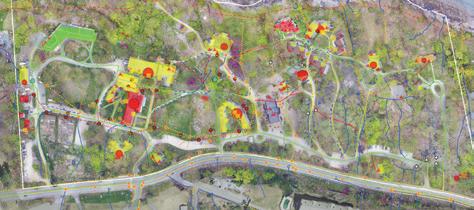
service subscription protects our 35-year archive of GIS data and projects, providing essential backup for work not published to ArcGIS Online. This systematic approach ensures that previous years’ projects remain accessible while clearing lab system space for new academic work. The archive represents decades of institutional knowledge and student innovation.
Established in 1994 by family and friends of Doug Rose, a COA student and avid rock climber who died while climbing Great Head in Acadia National Park. This fund supports the purchase of software and equipment, as well as student attendance at conferences related to Geographic Information Systems.
Artificial Intelligence Integration: The fund is supporting our pilot implementation of Claude AI in GIS classes, marking an important step forward in educational technology. We are testing how students can use this AI tool to better understand complex spatial analysis concepts, find the right analytical tools for their applied projects, and solve technical problems. This pilot integration is designed to help students translate their subject knowledge into practical GIS applications. This pilot shows promise for how AI can bridge the gap between theoretical knowledge and practical software use, supporting student learning while maintaining academic standards.
Remote Access Solutions: our RemotePC subscription provides students with remote access to powerful computers running ArcGIS Pro and other programs, capable of processing large models and datasets. This solution enables students to use any device—including MacBooks, Chromebooks, or tablets—to connect to highperformance lab computers for intensive spatial analysis work.
Data Storage and Management: The IDrive cloud
Aerial Imagery Processing: Our Pix4D subscription continues to expand capabilities in drone imagery processing and storage, with increasing integration into web-based mapping applications. Recent processing includes drone flights from regional islands and the RV Osprey, with all projects archived and accessible for ongoing research and educational use. This platform connects field data collection with classroom analysis. Pix4D access is open to any community member wanting to process and make maps from their drone imagery.
Learning Environment Improvements: an extensive donated book collection and aesthetic enhancements reflect our understanding that physical learning environments contribute significantly to student engagement and academic success.
The Doug Rose Fund continues to support both educational innovation and community-based projects. Through strategic investments in new technologies, infrastructure maintenance, and learning environment improvements, the fund ensures that our GIS program remains at the forefront of spatial analysis education.
Jay Friedlander
COA’s venture incubator was endowed by a grant from the Diana Davis Spencer Foundation in 2015. The Diana Davis Spencer Hatchery provides eligible students with academic credit, professional services, and access to seed funding to develop a sustainable for-profit or nonprofit business. Most collegiate venture incubators are co-curricular and create an entrepreneurial dilemma—forcing students to choose between their interests and education. The Hatchery removes these barriers, aligning education and individual passion by providing students with a full term of academic credit. Sustainable Business Program Manager, Kerri Sands ‘02, and I manage the program, and have built a bespoke curriculum so that any student at COA can develop their ideas and be fully immersed in the entrepreneurial experience.
Students selected for the Hatchery:
• perform a series of increasingly high-fidelity prototypes over 10 weeks
• learn essential business skills necessary for success in any enterprise
• receive guidance from professionals in prototyping, branding, social media, legal, and accounting
• have access to office space and up to $5,000 in seed funding
This year, we had 10 students pursuing eight ventures. The enterprises included:
• The Sunflower Preschool—supporting families with holistic early childhood education
• Pastos Libres—raising funds to expand Nicaraguan cheese production and rural prosperity
• mad.i.person—producing visual and functional art and hosting artist collective events
• Intentional Community Helper—providing energy and site analysis services to intentional communities
• Pita Coast—a Middle Eastern food truck serving fast, sustainable meals
• Musuhi—an online shop connecting exceptional Japanese rural products to urban markets
Established in 2015 with the support of The Diana Davis Spencer Foundation. A venture incubator, The Hatchery provides eligible students with academic credit, professional services, and access to seed funding to develop sustainable for-profit or nonprofit businesses.
• Labyrinth Postpartum Care —caring for women so they can care for their newborns
• Beyond Saydnaya—rebuilding lives of former Syrian political prisoners to rebuild Syria
Hatchery students learned sustainable enterprise fundamentals, developed numerous prototypes, experimented with new products and sales channels, solicited meaningful feedback from customers, outlined operations plans, developed growth strategies, and ultimately came to see themselves as professionals offering products and services of value. At the end of the 10-week term, students, families, and supporters from around the world attended the Hatchery Expo, where students presented overviews of their work.
In 2025, ten years after receiving our endowment, over 100 students have completed The Hatchery experience, and we have launched an impact study with past Hatchery participants. Preliminary results from our survey indicate that 100% of Hatchery alumni would recommend the experience to their peers. In addition, 65% either continued their Hatchery venture or are working as business owners and entrepreneurial leaders using the skills they acquired during their Hatchery experience at COA. We look forward to the next 10 years of putting human ecology into action through entrepreneurship.
In 2001, Thorndike family members started a fund in honor of Betty Thorndike, for whom Thorndike Library is partly named. Each year, this fund pays for the Thorndike “Senior Books” which are selected by the graduating class for inclusion in the library’s collection. In 2015, the family made an additional contribution to the fund to support library resources. This year’s selections include:
A Retrospective of Patagonia’s Outdoor
Photography
by
Jane Sievert
From the peak of a mountain or the barrel of a wave, Patagonia has collected some of the most spectacular sports imagery in history. Unique for a business enterprise, Patagonia’s catalog devotes fully half its space to nonselling editorial content, to environmental and sport essays, and above all to extraordinary photographs of wild places and active pursuits for which the company makes its clothes. Since 1980, Patagonia has invited customers and wilderness photographers to submit their best, most unexpected shots of life outdoors, of alpine climbing, bouldering in the desert, skiing untracked bowls, surfing secret spots, ocean crossings, first kayak descents, and travel in unfamiliar places. Jane Sievert and Jennifer Ridgeway, Patagonia’s current and founding photo editor, respectively, have been calling, and culling, the shots for three decades. This is their compendium of the 100plus most compelling photos and a celebration of wilderness and outdoor-sport photography as an art and a practice. –Amazon
Allow Me to Retort: A Black Guy’s Guide to the Constitution by
Elie Mystal
MSNBC legal commentator Elie Mystal thinks that Republicans are wrong about the law almost all of the time. Now, instead of talking about this on cable news, Mystal explains why in his first book. Allow Me to Retort is an easily digestible argument about what rights we have, what rights Republicans are trying to take away, and how to stop them. Mystal explains how to protect the rights of women and people of color instead of cowering to the absolutism of gun owners and bigots. He explains the legal way to stop everything from police brutality to political gerrymandering, just by changing a few judges and justices. Mystal brings his trademark humor, expertise, and rhetorical flair to explain concepts like substantive due process and the right for the LGBTQ community to buy a cake, and to arm listeners with the knowledge to defend themselves against conservatives who want everybody to live under the yoke of 18th-century White men.
–Amazon
Chrysalis: Maria Sibylla Merian And the Secrets of Metamorphosis by Kim Todd
Before Darwin, before Audubon, there was Merian. An artist turned naturalist known for her botanical illustrations, she was born just sixteen years after Galileo proclaimed that the earth orbited the sun. But at the age of fifty, she sailed from Europe to the New World on a solo scientific expedition to study insect metamorphosis, an unheard-of journey for any naturalist at that time, much less a woman. When she returned, she produced a book that secured her reputation, only to have it savaged in the nineteenth century by scientists who disdained the work of amateurs. Exquisitely written and illustrated, Chrysalis takes us from golden-age Amsterdam to the Surinam tropics to modern laboratories where Merian’s insights fuel a new branch of biology. Kim Todd brings to life a seventeenth-century woman whose boldness and vision would still be exceptional today.
–Amazon
16,499
$182,882
• Abolition Geographies: Essays Towards Liberation by Ruth Wilson Gilmore (2022)
• America for Americans: A History of Xenophobia in the United States by Erika Lee (2019)
• America’s Largest Classroom: What We Learn from Our National Parks by Jessica L. Thompson and Ana K. Houseal Eds. (2020)
• Boundary Troubles in American Vanguard Art, 1920-2020 by Lynne Cooke Ed. (2022)
• Climate Justice and the University: Shaping a Hopeful Future For All by Jennie Stephens (2024)
• Constructing Worlds Otherwise: Societies in Movement and Anticolonial Paths in Latin America by Raúl Zibechi (2024)
• The Crossing: El Paso, the Southwest, and America’s Forgotten Origin Story by Richard Parker (2025)
• Drawn from Courtly India: the Conley Harris and Howard Truelove Collection by Ainsley M. Cameron (2015)
• The Emperor of Gladness: A Novel by Ocean Vuong (2025)
• Going Dark: The Secret Social Lives of Extremists by Julia Ebner (2021)
• Graphic Liberation: Image Making and Political Movements by Josh MacPhee (2024)
• Hip-Hop is History by Questlove (Ahmir Thompson) (2024)
• Illuminations of Hildegard of Bingen by Matthew Fox (2002)
• Is a River Alive? by Robert Macfarlane (2025)
• The Jewish Anarchist Movement in America: A Historical Review and Personal Reminiscences by Joseph Jacob Cohen (2024)
• John Lewis: A Life by David Greenberg (2024)
• Kitchen Lithography: Hand Printing at Home by Laura Sofie Hantke (2017)
• The Language of Trees: A rewilding of Literature and Landscape by Katie Holten (2023)
• Libraries of the Mind by William Marx (2025)
• Lucian Freud by Lucian Freud (2022)
• Mood Machine: The Rise of Spotify and the Costs of the Perfect Playlist by Liz Pelly (2025)
This fund was established in 1979 in memory of longtime supporter and friend, R. Amory Thorndike. College of the Atlantic’s library was subsequently named for Mr. Thorndike and his wife, Elizabeth. The purpose of this fund is to strengthen and enlarge the college’s library collection materials in the fi elds of the arts and humanities. This year’s selections include:
• The Moral Circle: Who Matters, What Matters, and Why by Jeff Sebo (2025)
• Mundane Methods: Innovative Ways to Research the Everyday by Helen Holmes and Sarah Marie Hall (2020)
• Mythical Creatures of Maine: Fantastic Beasts From Legend and Folklore by Christopher Packard (2021)
• Open Socrates: The Case For a Philosophical Life by Agnes Callard (2025)
• Original Sins: The (Mis) education of Black and Native Children and the Construction of American Racism by Eve L. Ewing (2025)
• The Pullman Strike by William H. Carwardine (2024)
• Revolution as an Eternal Dream: The Exemplary Failure of the Madame Binh Graphics Collective by May Patten (2011)
Toby Stephenson ’98
The waterfront continues to be a vibrant and productive environment for our community, with several updates and announcements worth mentioning. Though some events were not as positive as others, they all work to advance our safety and productivity in the future.
Established by an anonymous donor during the Broad Reach capital campaign to endow the waterfront director’s position and maximize the educational potential of our o shore islands— Mount Desert Rock and Great Duck Island.
This year, we hired a second captain to help run RV Osprey during the summer, and assist in sailing and other maritime instruction during the spring and fall. Rowan Fraley comes to us from the Maine Maritime Academy, as well as being a resident of Somesville, born and raised! He has been a delightful addition to our program.
The season started off with an expensive repair to RV Osprey due to residual failures from her grounding two seasons prior. Fortunately, this expense will be covered by insurance as it relates to small amounts of water that infiltrated the engine
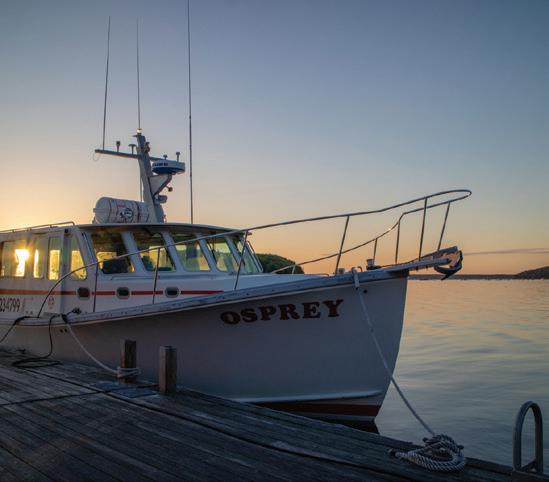
and transmission during her 2021 grounding event. The net result was a new transmission and engine cylinder-liners, which gives her a new start to life.
Boating continues to elicit its usual fervor and excitement with many students learning to handle both large and small craft, power and sail. With 20 work-study students filling crew positions, we have a lot of learning happening. Our two Rhodes 19 boats and the Halman 20 (donated by John Gower) are used regularly when the wind is up and classes are out. SV Rebecca also continues as a training platform for students learning how a larger sailboat handles. In July, she hosted three sailors from Holland for a week-long private charter, and in September, she conducted her second OOPs sailing program with five incoming students. Both events were extremely successful.
Our learning continues into the crafts as we assemble a large post-and-beam canoe and kayak shed for the outdoor club. This was the result of Regan Greer ‘22’s senior project, in which she designed and provided the material to build a 20’x 40’ structure next to the Davis shop to help extend the life of our canoe and kayak fleet. We will also be overseeing a boat building senior project for a student starting in the winter term in the Davis shop. This will preempt more boat building projects through classes and studies as we create greater opportunities for our students to explore connecting hands to minds.
RV Osprey : 50+ trips, 630 passengers, 6 COA research days, 6 summer field studies trips
SV Rebecca: 20 trips, 50 passengers, 1-week private charter, 1-week COA program
Su Yin Khor, PhD
The 2024-25 academic year was productive and focused on strengthening the foundation of the Writing Program in order to support students’ writing and literacy development. We expanded course offerings to provide students with additional options. Two of these courses were developed by lecturer Katharine Turok: Journeys: Writing for Voyagers, Trekkers, Wanderers; and Writing Goes Wild: Environmental Adventures and Impacts. Su Yin Khor also developed a new course, College Seminar: “Soda, Pop, or Coke?”: Linguistic Diversity. A new co-taught course; Ethics, AI, and Authorship; was developed to address rapid technological advancements that are deeply shaping writing, literacy, and education. It was cotaught by Gray Cox and Su Yin Khor.
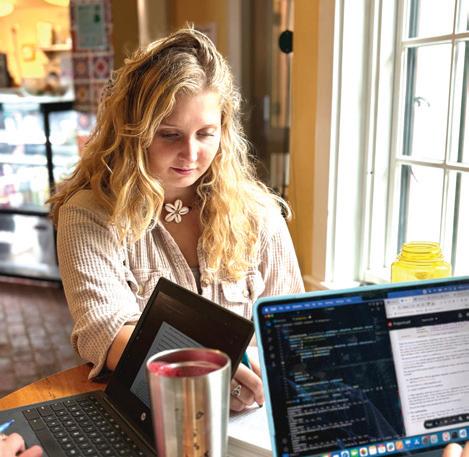
To continue the professionalization of the Writing Center and to prepare for the end of his chapter at COA, Blake Cass MPhil ‘19 worked with two tutors, Paloma Jofre Videla ‘26 and Dominick Tricoche ‘25, to develop a guide for the incoming director and tutors to prepare for the transition. Part of this work also included teaching and training two new cohorts of tutors to prepare for the next academic year. In addition, a new student position was created to provide curricular and administrative
support to streamline day-to-day activities for both the program and the center. Through this work, more resources have been created to support tutors, as well as faculty and staff. The Writing Program website has been significantly expanded to include more information about current course offerings, a guide for selecting courses, writing resources, FAQ, and information about publishing opportunities.
Collaborations with other units continued and were solidified through ongoing conversations about student support and resources, particularly with Thorndike Library and the Career Exploration Laboratory.
A collaboration with Scott Woolsey, our new first-year experience coordinator, resulted in an initiative to integrate writing tutor participation in the Human Ecology Core Course, which will provide additional support for incoming students.
Established in 2018 by former COA trustee, Walter Robinson, as part of the Broad Reach capital campaign. The fund provides faculty support in composition and technical writing, expands COA’s writing tutor program, and institutes new methods of communication to ensure COA students are prepared for today’s labor market.
The year was productive and ended with a celebration of the tremendous accomplishments Blake Cass had achieved during his time at COA, in particular, the transformative work he did to build a Writing Center for all students and writers. It was also a way to celebrate graduating tutors and to welcome new tutors. We hope for another productive year filled with creativity and collaborations.
If you have expressed a wish to remain anonymous, your name will not appear. Please contact advancement@coa. edu if you would like to change this preference.

208 CHAMPLAIN SOCIETY MEMBERS
108 BLACK FLY SOCIETY MEMBERS
78 ALUMNI LEADERSHIP CIRCLE MEMBERS
Anonymous (120)
Carla & Robert Aaront
Nicole Abbott
Tracey Aberman
Barbara Dole Acosta (’77)
Bethany Adamec ’03
Ashley Adler ’09 & Justin Paice
Mirza Alas Portillo ’09
Kathryn Alayan ’06
Eben Albert ’03
Sharon Knopp & Enoch Albert
Heather Albert-Knopp ’99
Alyson Albitz ’01 & Jonathan Albitz
Jane Alexander
Irene S. Alie
Aleksandra Aljakna ’07
Judy Allen
Susan & Robert Allen
Hudson Alter ’28
Valerie Altmiller ’28
Janet & Craig Altobello
Debbie Ambro
Diane & Alan Amendt
Heather & Richard Ames
Lori Andersen
Karen & John Anderson
Lauren Anderson
Marlon Andrew ’24
Diane Andrews
Elly & Sandy Andrews III
Martha Andrews Donovan
Genevieve Soloway Angle ’00
Elizabeth Anne ’11
Susan George Lyons
Applegate ’76
Sally & Bill Arata
Hedy Ardito
Stephanie Arevalo ’22
Allison & Jason Arey
Meeghan & Daniel Athearn
Lucy Atkins ’12
Shlomit Auciello ’17
Maro Avakian
Rosemarie Avenia ’86
Dawn Averitt
Savannah Averitt ’25
Lelania Prior Avila ’92 & Family
Elizabeth Rousek Ayers ’95
Patty Bacon
Mary Dohna Bacon ’80 & Wells Bacon ’80
Emily & Peter Baillos
Marie McCarty ’82 & Steven Baird ’83
Jeffrey Baker ’77
Laurie Baker & Spencer Egan
Rebecca Baker & Ryan Plasky
Robert Baker

42 NORTHERN LIGHTS
SOCIETY MEMBERS
Emily Argo ’10
Valerie Armstrong
Hallie Arno ’22
Edgar & Nancy* Aronson
Ryan Arsenault ’00
Jessica Arseneau ’18 & Roman Bina ’16
*Deceased
Cynthia Baker & Jonathan Zeitler
Ashley Bakken-Martin ’06

Marissa Altmann Balfour ’13
Azilee Ball ’25
Nicki & Christopher Ball
Julie Banzhaf-Stone & Steve Stone
Barbara Tennent & Steven Barkan
Natalie Barnett ’11
James Barrett
Meg Barry ’10
Lavon Bartel & David Struck
Julie Barth ’92
Cheryl Bartholomew ’80
Ted Bartles ’94
Becky Bartovics
Anne T. & Robert M. Bass
Kate Baxter
Molly & John Beard
Sandi Read & Ron Beard
Emily Beck & Geoff Young
Ursa Beckford ’17
Bruce Becque ’81
Alyson Bell ’10
Joe Bellavance

Felicia Bellows
Robin ’80 & Paul ’79 Beltramini
Bruce Bender ’76
Sara Bender & Evan Bender ’04
Fred Benson
Margaret Vettese & Edward Benz, Jr.
Jaime (Duval) Beranek ’00
Heather ’08 & Sean ’08 Berg
Nathaniel Berger
Glen Berkowitz ’82
Marie & Gerald Berlin
Jason Bernad MD ’94
Geena Berry ’10
Laura Berry ’17
Robert Hunt Berry
Stefanie & Alan Berry
Sara Faull ’98 & Eugenio Bertin ’97
Deodonne ’06 & Ranjan ’04 Bhattarai
Anne Oldach & William Bickley
Annick Bickson (’12)
John Biderman ’77
Janet Biondi ’81
Charles Bishop ’07
Linda Mejia Black ’09
Joanie & Jamie Blaine
Michael Blair ’95
Jasper Blake ’25
Sofia & Bob Blake
Sofia Blanchard
Arthur Kettle ’84 & Margaret Blanding ’83
Debi & Art Blank
Jerome Bley (’78)
Jarly Bobadilla
Sarah Bockian ’05
Julia Bogardus / Point Harbor Fund of the Maine Community Foundation
Deirdre Swords & Michael Boland ’94
Pamela Bolton (’79)
Joanna Bombadil
Paul Boothby ’88
Lynn Boulger & Tim Garrity
Charlotte Bourg
Allison & Avery Bourke III
Kathleen Bower
Jason Boyd
Marie Boyle



Kristin & Bryan Bradley
Jessica Bradshaw ’03
Alyce & John Brady
Ellen Brandt
Keagan Bray ’25
Milja & Tony Brecher-DeMuro
Amy Breen ’94 & Cody Johnson
Katherine & James Brennan
Alan Brewer
Christine Brewin
Antoinette & Benjamin Brewster
Jill K. Briggs
Rachel Briggs ’13
Kristen Britton
Miriam Broady
Brenda Brodie
Steven Brown
Deborah Bruns-Thomas
Jason Bryson-Alderman ’91
Michelle & Mike Brzezowski
Elizabeth Bullock
Amanda (Walker) Bunker ’98
Jean & Ordway Burden
Bobbie Burdick
Leon Archias & Sarah Burger
Charles & Jane* Burger
Cherie & Jason Burke
Shan Burson ’83
Charles Butt
Mariana Cadena Robles ’18
Bernice & Tom Cahill III
Helen Caivano ’80
Stefan Calabria ’09
Mariana Calderón ’13
Lindsay Calef
Trisha Cantwell-Keene
William Luther ’06 & Seth Carbonneau ’05
Amanda Carlson
Kiara Carman ’24
Linda K. Carman
Sarah Carney
Sheila Cusack & Gerard Caron
Donna Gold & Bill Carpenter
Giuliana Centurion ’00
Erin Chalmers ’00
Lucy Hull & E. Barton Chapin III
Mary Ann & Harry Charlston
Kathy Chazen & Larry Miller
Grace Cherubino ’11
Taj Chibnik ’95
Cynthia Chisholm ’86
Gabriela Maldonado-Codina & Jim Chivers
Sophie Chivers ’24
Marge Connelly & Julie Christopher
Alyne & Joseph Cistone
Chip Clark
Katherine Clark ’91
Kelly Clark
Lane Taylor & Virginia Clark
Shannon Clark
Sheila W. Clark
Susanna Porter & Jamie Clark, Jr.
Gail & Ham Clark III
Lisa Clarke
Hannah Clatterbuck ’26

JoAnne Carpenter
Melissa ’00 & Matthew ’99 Carroll
Barbara Carter
Melinda ’00 & Ellen Casey-Magleby
Ann Caswell
Amber Colvin
Tracy & Gifford Combs / Combs Family Fund
Sherry & Glenn Conklin
Mairi Connelly ’14 & Spenser Simis
Heidi Conner
Karen Conners
Alexandra Conover Bennett ’77
Abigail Conrad
Barbara Conroy
Iain Cooley ’21
Steven Corbato
Elizabeth Hodder Corbus &
Clay Corbus
Sarah Corson & Dick Atlee
Matthew Corum ’03
Margaret & Jay Costan
Adam Cote
Edith Rodrigue & Mel Cote Jr.
Jill ’83 & Ben ’84 Cowie-Haskell
J. Gray Cox (’71)
Margaret Cox
Malinda Crain
Ryan Claunch
W. Richard Clendaniel
Chris Clevenger
Jen Hughes & Ken Cline
Catherine Clinger
Lillian & Arthur Clinger, Jr.
Andrew Coate Wenkdith ’10
Janis Coates
Pamela Cobb Heuberger ’83
Elisabeth & John Cochran
Reinhard Coenen
Millard Coff in
Laura Cohn ’88
Diana Cohn ’85 & Craig Merrilees
Dru Colbert & Nancy Andrews
Jacquie Colburn
Timothy Cole ’88
Pancho Cole ’81
Ruth M. Colket
Sarah Colletti ’10 & Kyle McMillan
Karen & Darron Collins ’92
Kourtney Collum & Patrick Lyons

Michelle Andre & Shannon Collum
Leza & Jim Colquhoun

Jennifer ’93 & Kevin ’93 Crandall
Tracy Crane
Michael & Susan Cranmer
Lynn & James Crawford
Nadia Kasparek ’15 & James Crawford ’15
Marily Crews
Tom Crikelair
Sally Crock
Gideon Bezalel Culman ’02
Benjamin Cumberland
Callie & Randy Curtis
R.H. Cushman Family
Hannah Cuvin ’25
Jean Morris & Steve Cuvin
John Czerkowicz
Mary D’Alessandro
Dede & Dan Daigle
Lisa Damtoft ’79
John Dandy (’84)
Larry Dark
Adam Dau ’01
Kara ’96 & Matt ’98 Daul & Family
Caleb Fuller Davis ’02
Hornor Davis & William Hague
Leticia Davis
Lucinda & Fred (’75) Davis
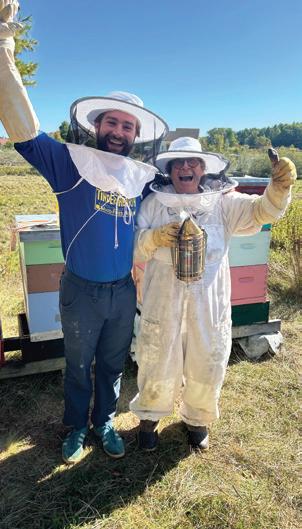
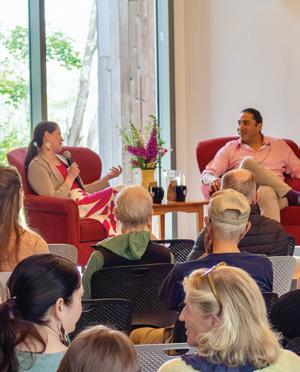


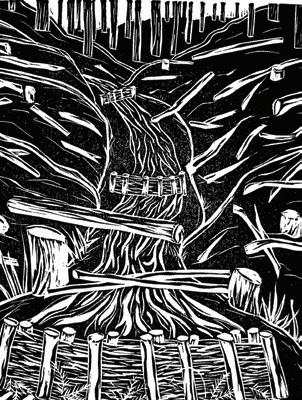
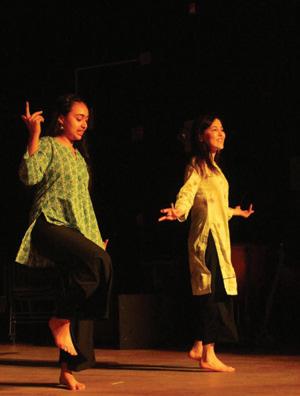
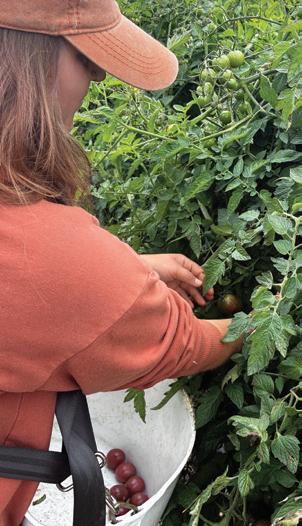
Nancy Davis
Norah Davis

Gale & Shelby Davis
Kate & Andrew Davis
Nicole d’Avis ’02 & Mark Anderson
Reba Duckett
Asa Duffee
Peggy Dulany
Aimee Dunn
Colleen Dunn
Frederick Dupree
Jennifer & Mark Feldman
Julia Feller
Sugar & Nat Fenton
Adrian Fernandez ’15
Michael Fetters
Allison Fichter
John & Nisha Dawson
Hilary Rose Dawson ’18
DJ & George Deans
Carol & Gary DeBarba
Misti DeGroot & Todd DeGroot ’97
Rose (’88) & Steve ’80 Demers
Megan Smith ’90 & Daniel DenDanto ’91
Beth Rendeiro & Steven DePaul
David DePrez
Danyelle Desjardins
Lise Desrochers
Cerissa Desrosiers ’00 & Jessica Hannon
Phoebe Desrosiers
Adrianne Deupree ’02 & Michael Netzer ’01
Linda & Edouard DeVarennes
Holly Devaul ’84
Catherine Devlin ’93
Elana Diaz

George & Kelly Dickson MPhil ’97
Judith Dickson
Derek Dilaj
Sbonga Dlamini ’17
Stephanie Doherty
Ellen & Bill Dohmen
Pat & Bill Dommermuth
Molly Donlan ’20
Andrika Donovan
Mary Kay & David Donovan
Millard Dority
Mary & Frank Dorsey
Julia Doten
Markéta Doubnerová ’13
Yvonne Leicht
& Cameron Douglas
Cameron Hale Douglass ’02
Richard Dow
Stephen Dowdy ’19
Peggy & Steve Downing
Lorri Downs

Sofia Dragoti ’25
Estate of Susan Dreier
Walt Drkula ’12
Sunny Dupree
Anna Durand ’86
Lily Dutton ’25
Mike Duvarney
Ellen Dux
Marcia L. Dworak
Donna & Bill Eacho III
Molly & Justin Earle
Kimberly Eason ’95
Meg & Larry Eaton
Malaika Eaton
Martha & Ned Edmonds
Samuel Edmonds ’05
Susan & David Edson
Mary K. Eliot
Devyn Elliott
Suzanne Elliott
Laura Ellis
Deborah Ellwood
Nathan Emley
Peter W. Emmet ’92
Karin Tilberg & Ben Emory
Peg Emple
Jeff Engel
Gary Engler
Rebecca English
Joel & Arline Epstein
Julie Erb ’83
Florence & Spencer Ervin
Miriam Ervin
Mary Ervin
Maria Escalante ’15
Nickilynn Estologa ’07
Robert Evan
David & Jean Evans
Heather Richards Evans
Chandler & Oliver Evans
Deb Evans ’82 & Ron Schaaf
Sarah & Preston Everdell
Rudi Eyerer
Sally Fairbank
Stefanie Fairchild
Mary Fairfield
Casey Jones & Bill Faller
Misha Mytar
& Daniel Farrenkopf ’93
Joan Feely ’79
Molly Finch ’19
Mary Ann Cunningham & Thomas Finkle
Robert Finn ’92
Alan Finnecy
Noelle Fischer ’94
Cynthia Jordan Fisher ’80
David Fisher
Helen Dickey Fitz & David G. Fitz
/ Helen Dickey and David G. Fitz Charitable Fund
Marie & John Fitzgerald
Anna Flanagan ’13
Elsie Flemings ’06 & Richard Cleary
Angie Flores Quispe ’24
Janine Flory
Mary Laurence Flynn
Joanna Fogg ’07
Judi & Howard Fogt
Joanne Rodgers Foster ’85
Wendy & Bill Foulke, Jr.
Barbara & Dick Fox

Sophie Jo Frandsen ’25
Adrienne Frank
Samuel Franklin ’25
Susan Freed ’80
Jim Frick ’78
Jay Friedlander & Ursula Hanson
Glenon ’86 & Gary Friedmann
Martha Frink
Joanne & Richard Fuerst
Bianka Fuksman ’95
Bernard Fuller
Scott Fuller
Rena Zurn & Spencer Fulweiler, Jr.
Allison Fundis ’03 & Stein Servick ’05
Ann & Garth Fundis
Dana Fuqua
Kara Gadeken
Penelope Gadreault ’26
Richard Galena ’98
Carla Ganiel
Oliver Gardiner
Beth & Will Gardiner
Marina Garland ’12
Missy Gaston
Mark Gauthier & Arthur Keller*
Amy & Phil Geier
Helen Geils
Charles Gemme ’79
Katie & Steve George
Nadine Gerdts (’76) & Steve Lacker
Rona & Nir Gertner
Susan Getze
Toni Geyelin
Sahra Gibson ’20
Willow & David Gibson
Izzy Gilhooley
Christina M. Gillis
Jackson Gillman ’78
Carley & Michael Gillott
June LaCombe (’75) & Bill Ginn ’74
Annika Maia Ginsberg ’99
Jim Givens
Angela Glasser
Maroulla Gleaton
Pamela Gleichman & Karl Norberg
Louise & Tom Glenn
Eleanor Gnam ’23
Emily & Evan Gnam
Megan Godfrey ’77
Lyman Goff
Gerda Paumgarten & Lawrence Goldfarb
Nina Goldman & Douglas Legg
Vicki Nichols Goldstein ’84
Judith Goldstein
Jill & Sheldon Goldthwait, Jr.
Eugenie Sibeud & Walter Gomolka
David Eric Gooch ’01
Jaki Erdoes ’80 & Terry Good ’80
Marie Malin ’01 & Wing Goodale MPhil ’01
John Goodman
Paul Goodof
Abigail Goodyear ’81 & John Allgood
Diane Gordon
Nina ’78 & Jonathan ’78 Gormley
Tree Goulet ’78
Marie Gower
Gerd Morris Grace
Carrie Graham
Sandra Graham
Terri & George Graham
John Grasso Jr.
Cynthia Gray
Susan Butler & Vernon Gray

Anne & Jim Green
Hilary Green
Estate of Eleanor Greenan
Regan Greer ’22
Gina Greer
Linda Gregory ’89
Nelle Gretzinger
Edward Grey
Kandi Grey ’25
Katherine E. Griff in ’00
Mary (Nelson) Griff in ’97
Richard Griff in ’80
Jane & Jeffrey Griff ith
Marie Griff ith & Leigh Schmidt
Susan Dowling & Andrew Griff iths
Judith & Philip Grimley
Nancy Griscom
Nicole Grohoski
Carolyn & Chris Groobey
Nancy & Bill Grove
Eileen & Paul Growald

Emma Rearick ’08 & Jay Guarneri ’06
Peggy & Mike Gumpert
Merna & Joe Guttentag
Carol & Dick Habermann
Susan Simons & John Hagerty
David Hahn (’83)
Vicki & Scott Hahn
Heather Hallett-Thurston
Irene Haisma & Jaap Ham
Claus Hamann
Molly & David Hamann
Janet Hamel
Sam Hamill, Jr.
Carla Seddio & Michael Hamilton
Chris Hamilton ’85 & Patti Munsey
Rebecca Hamilton ’13
William Hanley
Jamie Hanson ’21
Joshua Harkness ’25
Leslie Harlow
Heather Harrell
Jennifer ’94 & Christopher Harris
Kelly Harris ’12
Nicholas Harris ’12
Steff i & Bob Harris
Tyler Harshman ’10
Helene Harton
Louise Hartwell
Hana Harvey ’25
Victoria Harvey
Patricia & John* Hatton
Michelle Hawken
Julie MacLeod Hayes ’78
Loie Hayes ’79
Ed Haynsworth III ’98
Atsuko Watabe ’93 & Bruce Hazam ’92
Katherine Hazard ’76
Tyler Hebert ’27
Mary J. Heffernon
Beth Heidemann ’91
Anna Heiting ’25
Daniel Held
Tara Harper & Peter Heller ’85
Hillary Smith & Jonathan Henderson
Jim Henderson & Jan Tedder
Gail Henderson-King ’82
Evan Henerberry ’17
Julia Moore & John Herron
Brandi Hess
Katherine Hester ’98
Jennifer Niese & William Hetzel
Betsy & John Hewlett
Rayanna Higley
Archer Hill
Ingrid & Ken Hill
Barbara Hilli
Scott Hines ’14
Malek Hinnawi ’25
Sue & Bob Hipkens
Lissa Hodder
Anne Wright Hodge & Byron Hodge
Juliet Hodge ’95
Noah Hodgetts ’10
Katie Hodgkins ’16 & Corey Hodgkins
Juan Hoffmaister ’07
Margaret Hoffman ’97
Rose Voce & Andy Hoffman
Kass Hogan ’81
Emily Holdman
Lisa ’80 & Bob ’79 Holley
Clara Porter & Daniel Holliday
Betsey Holtzmann & Abe Noyes
Russ Holway
Lothar Holzke ’16
Beverly Homich
Nikki Hooper ’02
Amanda Hopkins Tirrell
Cookie & Bill Horner
Lynn & Jeff Horowitz
Jenna Horton & Steve Boucher
Ellie & Paul Horwitz
Wendy Waldron & Neil Houghton Jr.
Charles J. Houston III
Jon Howarth
Laura Howes Noonan ’09
Donna & David Hreniuk
Nora Gibson & William Hudson
Denise Hue
Emily Peterson Huggins ’15 & Connor Huggins ’16
Kate & Steve Hughes
Jane Hultberg
Lisa Humphreys
Kathryn Hunninen ’03 & Jose Luis Sagastegui
Peter Hunt & Family
Miranda Hunt Borden / Point Harbor Fund of the Maine Community Foundation
Leslie Hunt Palumbo / Point Harbor Fund of the Maine Community Foundation
Sarah Huntington (’86)
Lyn Hurwich ’80
Anna Hurwitz ’84
Dana Hussein
Travis Hussey ’00
Maria Hutchins
James Hyland
Katherine & Craig Hyland
Ruth & Keisuke Iida
Tomoko & Masanobu Ikemiya
Sue Inches ’79
Corrie Ingall ’16
Lauren & Alan Ingall
Bill & Keefer Irwin
Devina Viswanathan Iyer ’16
Joanna Izaguirre
Ellie Jackson ’25
Madeleine Jackson


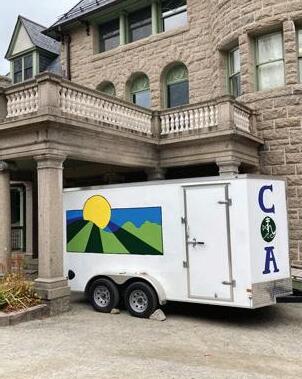
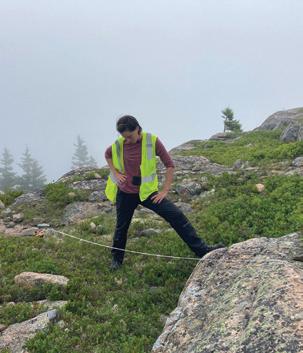
Nancy Knowlton
& Jeremy Jackson
Carol & Pat Jackson
Mary Jo Jakab
Abigail Jakub ’21
Shelley Latham
& Kenton Jakub
Jane & David James
Nishad Jayasundara ’05
AJ Jaydeokar ’23
Peter ’84 & Margaret Jeffery
Christa Jehle
Jonathan Jehle
Danielle Jenei
Jasmine Smith ’09 & Nick Jenei ’09
Amanda Spector ’08 & Peter Jenkins ’09
Yardly & Scott Jenkins
Patricia A. Jennings (’71) & James Hatch
Sonja Johanson ’95 & Richard Gordet
Cathy Johnson ’74
Little Johnson ’25
Eliana Johnston ’06
Louise Johnston
Jody Johnstone
Ronan
Johnston-McWilliams ’22
Bruce Jones ’81

Deborah Keisch ’96
Joan & Jeff Kellam
Ivy ’05 & Nathaniel ’04 Keller
Michael Keller ’09
Maggie & Jack Kelley III
Sally Anne Kellogg

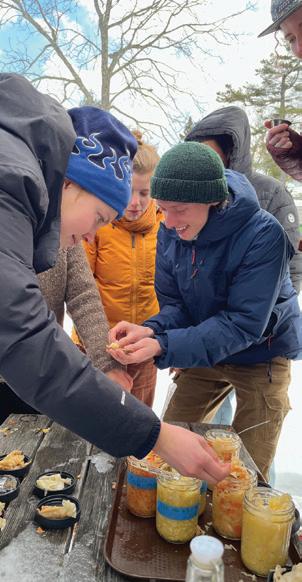
Lindsey Jones MPhil ’18
Leslie Jones ’91 & Max Williamson
Peggy Schultz & Fred Jones
Brianne ’02 & Brian Jordan
Patricia D’Angelo Juachon ’92
Ann & Lee Judd
Jen Judd-McGee (’92) & Sam McGee
Laura & Michael Kaiser ’85
Cate & Paul Kalenian
Nancy & Bucky Kales
Tempest Kane-McCarthy ’25
Arshad Karumbamkandathil
Ali & Steve Kassels
Jennifer Kastelic ’98
Susan Lerner
& Steven Katona
Gail Amalia Katz & Lee Katz
Nan & Peter Katzenbach
Puranjot Kaur ’05
Helen & Colin Keeler
Sarah ’05
& Shawn ’00 Keeley
James Keen
Selina Kelly ’13
Betsy & John Kelly
Nan & Stephen Kennedy
Kathleen & Patrick Kennedy
Craig Kesselheim ’76
Ashlesha Khadse ’08
Aneesa Khan ’17
Barbara & Steven Kiel
Jill ’99 & Joseph ’01 Kiernan
Alya Kiiashko ’25
Lynn Kilpatrick
Sang Kim
Lydia Kimball
Morgan Kimball
Brice King ’97 & Naomi Gross ’97
Kenyon King
Steve King ’80
Robert Kinkel
Debra Kleban
Roberta & Melvyn Klein
Susan & John Klein
Joan & Allan* Kleinman

Barbara Knowles
Greg Koehlert ’96
Aleda Koehn

Joan & Ted Koffman
Arlene & Bob Kogod
Claudia Kohl
Jonathan Kohrman ’84
Elisheva Korenstein ’07
Elena Garanina & Alexey Korneev
Tanvi Koushik ’23
Kaitlyn Kowaleski ’19
Anne Kozak
Paul Kozak ’86
Wayne Simmons ’94 & Catherine Kozaryn ’94
Andreigha Kraemer ’26
Rosalind Rolland & Scott Kraus ’77
Stephen Krause
Natasha Krell ’16
Noah Krell ’01
Sandy & Mark Kryder
Mary Kubiak
Robin Kuehn ’10
Robert Kumpa (’95) & Bianka Fuksman ’95
Margaret & Philip B. Kunhardt III ’77
Philip Bradish Kunhardt IV ’11 & Maria Laura Torre Gomez
Carolyn Kurek
Maude Kusserow ’15
Maryellen Kyriazis
Linda & Philip Lader
Grietje Laga
Heather Lakey ’00, MPhil ’05
Joan Lamb
Jude Lamb ’00
Rebecca & Michael Lambert
Carrol Lange ’99
Laura Crawford & Mathew Langenberg
Sydie Lansing
Gardiner & Nicholas Lapham
Burks B. Lapham
Karen & Howard Lapsley
Marci & Robert Lash
Jennifer Lasher
Georgia Lattig ’24
Jolie Lau ’19
Marjorie Lau ’81
Tiffany Laufer
Virginie Lavallee-Picard ’07 & Alexander Fletcher ’07
Clark Lawrence ’92
David Lebwohl
Courtney Lederer & Mark Thierfelder
Melissa LeDonne
Catherine LeDuke
Kimberly Lemear
Jacquelyn & Dawn Lemoine
Debra Lentz
Caroline Leonard ’01
Lizzie Leone ’93
Andrea Lepcio ’79
Francesca Preston & Doug Lerch ’03
Brenda Les
Randy Lessard ’92 & Melissa Lessard-York ’90
Robin Lester & Jodi Nooyen
Trinket Lester ’27
Susan Letcher
Charles-Olivier Lévesque ’23
Donna Hanke & Rob Levin
Monty Lewis
Linda & Jonathan Lewis
Lois & Larry Libby


Jessie Greenbaum ’89
& Phil Lichtenstein ’92
Stephen Liebrock
Cynthia & Dan Lief
Daniel Lindner, Jr. ’11
Ms. Ingrid Lindstrom (’09)
Maryalice & Brian Little
Peggy Beaulac & Carl Little
Neith Little ’09
Abigail Littlefield ’83
Tanya Hanke & Jeffrey Logee
John Long ’86
Maria Vanegas Long ’84
Margaret Longley ’10
Danielle & Gordon Longsworth ’90
Roberta & Ralph Longsworth
Megan Loomer
Jill Lord & Stephen Byrd
Babette & Peter Loring
Jacob Love
Susan & K. Prescott Low
Barbara & Muhammad Lowe
Hélène Lowe Dupas
Haley Harwood Lowell ’11
Sara Löwgren ’20
Tanya Lubansky
Josh Luce
Devin Lueddeke
Rudy Lukasevics ’25
Adrian Lyne ’23
Isabel Mancinelli
& Sam Coplon
Jane Mandelbaum
Rachel & Tom Maniatis
Pamy Manice
Susan Flynn Maristany ’82

Andrea Lynn ’90
Meaghan Lyon ’16
Blaise Maccarrone ’01
Betsy MacDermid
Lisa MacDonald
Scott MacKenzie & Jerry Cruz
Kate & Ben Macko ’01
River Macrum ’28
Luke Madden ’12
Christina Maguire
Ariel Sydney
Hansen Mahler ’10
David Mahoney ’86
Jonathan Mahoney ’25
Amy Young & David Malakoff ’86
Mayur Malde
Rachel & Pradip Malde
Casey Mallinckrodt
Leeds Mallinckrodt-Reese
Wanda & Jim Maloney
Porcia Manandhar ’17
Tami Mark
Santiago Marquez
Chloe Marr-Fuller ’00
Jacomien Mars
Valeska & Erik Martin ’98
Jay Mason
Susan Mason
Bianca Massacci ’20
Maria Asoni & Guido Massacci
Kathleen Massimini ’82 & Steven Callahan
Adele Ursone & George Matteson
Michael Mattison
Haysie Maurer ’25
Hilary Maybaum
Anna Maynard
Anne Conlee Mazlish & Tony Mazlish
John C. McCann
Madeleine McCann
Angela Hondros-McCarthy & Dennis McCarthy
Whitney & Jeffrey McCarthy
Leslie McConnell ’81
Sarah McDaniel ’93
Bill McDowell ’80
Donna McFarland & Alan Richins
Judy McGeorge
Linda & Clem McGillicuddy
Alisson Mchale
Nina & Archie McIntyre
Suzanne Durrell & Scott McIsaac (’78)
Lauren McKean ’83
Sigrid McKelvey ’28
Linda Parker & Jamie McKown
Bill McLellan ’88
Eva McMillan ’24
Jay McNally ’84
Donald K. McNeil
Megan McOsker ’90

Betsy & Nelson Mead, Jr.
Jane & Bob Meade
Alison & Charles Meadows
Ian D. Medeiros ’16
Rebecca Melius ’01
James ’07 & Lara ’04 Meloan
Khristián Mendéz Aguirre ’15
Tree & Scott Mercer
Caitlin Meredith
Sandra & Hubert Merrick
Krystal Meservey
Chloe Meyer ’25
Mary Lynn & David Meyer
Barbara Meyers ’89
Sheri Millbury
Adrienne Miller
Eileen & Ethan Miller
Jeffrey Miller ’92
Josh Miller
Josselyn Miller ’19
Kendra ’01 & Jake Miller
Mary Miller
Rebecca & Steve Milliken
Linzee Weld & Peter Milliken (’76)
Margot & Roger Milliken, Jr.
Anne & John Milliken
Gail & Gerrish Milliken

Brenda Beckett & Howie Motenko
Hanako Moulton ’25
Bridget Mullen ’91 & Chris Kenoyer
Linda Faville & Brook Muller
Brenda Mulrooney
Sean Murphy ’14
Bethany Murray ’03
Mark Murrill
George Mutrie
Gene Myers (’80)
Amy Naimi
Raymond Nance
Susan & Bob Nathane, Jr.
Sarah Neilson ’09
Meta & Benjie Neilson
Colleen Nelsen ’27
Angela Nelson
Erika Nelson
Steven Neuhauser
Jeffry Neuhouser
Jackson Newell
Alexandra & Jacques Newell Taylor
Sally & Tom Newhall
Louisa & Bill* Newlin
Nell Newman ’87
Duc Hien Nguyen

David G. Milliken
Beth Ferry & David Mills
Irene Driscoll & Lincoln Millstein
Deb & Bob Milotte
Todd Miner
Elizabeth & John Minott
Chandreyee Mitra ’01 & Eric Shuman
Abby Moffat
Amanda & Alan Mogridge
Karen & John Moniz
Karla Tegzes & Peter Moon ’90
Mary Moreau
Phyllis Anina Moriarty
Amy Morley
Terry Morley
Hale Morrell ’12
Sarah ’02 & Chase ’00 Morrill
Abigail Morris ’21
Martha & Wistar Morris
Jackie Nielson
Jennifer & Robert Niesel
Hakim Noah ’18
Elizabeth Nolan
Alice Shin & Mark Norris
Sigrid Coff in & Wesley Norton
Ellanor & Russell Notides
Gisela Nucciarone ’22
Carol ’93 & Jacob ’93 Null Lauren Nutter ’10
Alisa Nye ’15
Jacob Oakes ’02 & Asha Maren ’02
Caroline Oatway
Chaz O’Brien ’93 & Harrison Bains
Bill O’Donnell
Eliza Oldach ’15
Elizabeth O’Leary ’03
Hope Olmstead
Ken Olson
Clifton McPherson III ’84
Emily McQueen
Patricia Johnston-McWilliams & Patrick McWilliams

Suzanne Morse & Noreen Hogan ’91
Celia Morton ’25
Elaine Mostoller
Moira O’Neill
Sarah Gribbin ’12 & Phinn Onens ’13
John Ordway

Cathy Orme
Ned Ormsby ’91
Paul Ort
Lynn & William Osborn
Shirley Oskamp & Gary Lindorff
Yasmine Osseiran ’27
Pam Overmann
Keenan Ovrebo-Welker ’27
Suzanne & Jim Owen
Tammy Packie ’97
Andrea & Jon Pactor
Linda & Eliot Paine
Eleanor & Michael Pancoe
Asher Jay Panikian ’24
Laurie Pansa ’92
Haleigh J. Paquette ’17
Johnny Pauker ’19
Holly & Ken Paul
Susanne & Bear Paul
Peter Pavicevic ’07
Kayla Payne ’26
Cynthia Peach & James Chaput
Daniel Peach
Jeanne Peacock
Valerie Lambert Peacock (’98) & Tobin Peacock ’95
Eva Pearlingi ’25
Susan & Bob Peck
Valerie Peer-Court
Karla Peña
Tyra Penn-Gesek
Susan & Robert Pennington
Mary Pensiero
Lauren Pepperman ’16
Rain Perez ’12 & Benjamin Byrne (’13)
Judith S. Perkins
Margit & Nicolai Peters
Helen Hess & Chris Petersen
Sharyn Peterson
Susan Peverley
Alexa Pezzano ’00
Bruce Phillips ’78 & Susan Erickson
Carey Pickard III & Christopher Howard
Roger Pierce
Susan Pierce ’77
Daniel Pierce, Jr. Family
Barbara & Charles Pierce, Jr.
Sara W. Pierce
Laura & Vassar Pierce, Jr.
Meghan Piercy ’91
Lisa & Jay Pierrepont
Livi Pignataro ’25
Drake ’03 & Finn ’02 Pillsbury
Joanna Pittari ’25
Catherine Baker-Pitts & Will Pitts III
Marguerite Pitts
Ned Platner
Carole Plenty
Rebecca Plona
Charlotte Podolsky
Shiva Polefka ’01
Frances Pollitt ’77 & Frank E. Briber III
John Pollock
Anne & Bruce Pomeroy
Karl Porter ’82
Nico Porter Holliday ’25
William Powell
David Preston
Joyce & Robert Preston
Elisabeth Preston-Hsu
Catherine Preston-Schreck
Katie Pritchard ’00
Sheila Sonne Pulling
Esther & Christopher Pullman / The Pullman Charitable Fund
Kenneth Punnett ’84
Bambi Putnam
Kathy & George Putnam III
Celian Putnam
Karin & Scott Pynes
Richard Quandt
Dierdre & Peter Quesada
Strandy & Ric Quesada
Hillary & Kevin Quist
Galia Rabinkin & Donald Smith
Nishi Rajakaruna ’94
Lalage & Steve Rales
Emily & Mitch Rales
Ancil Ramey
Mauro Ramirez Azofeifa ’23
Cathy L. Ramsdell ’78
Hope Rankin ’25
Katherine Rasmussen
Sarah Rasmussen ’14
Pamlea & Mark Rath
Tina Rathborne
Mary Purdy-Read & Robert Read
Lisa & Keith Reed
Mona Reeder & Jim Stiff
Helene Reeves
Julie Reiff
Jason Reiser
Melissa Relyea ’91 & Peter Ossanna
Diana & Roland Reynolds
Michele Riccio ’88
Jason Rich ’96
Jean Richards
Joanne Scott & Wayne Rickert
Louis Ricou ’25
Louise Riemer & William Locke
Urs Riggenbach ’12
John Ring
Andrea Roberto ’92
Jared I. Roberts
Gerald Robinson ’89
Roxana & Tony Robinson, Jr.
Walter M. Robinson III
Ryan Robison ’18
Sydney Roberts Rockefeller
Susan & David Rockefeller, Jr.
Susie Rodriguez & Charles Lowrey
Olivia Rodriguez Bobadilla ’09
Karla Rusch
Ronald Russell
Sandy Wilcox & Jack Russell
Ann Ryan
Patty Ryan
CedarBough T. Saeji ’93
Linn Sage
Jessica Glynn ’06 & Santiago Salinas ’05
Martie & Ed Samek
Addams Samuel ’11
Pat & Roger Samuel
Eric Sándor Nagy
Kerri Sands ’02 & Edward Muennich ’01
Dan Sangeap ’90
Rosemary Santoro ’21
Sardo Sardinsky ’84
Jodi Sargent MPhil ’06 & Family
Rolanda Sarkis ’00
Barbara Sassaman ’78
Philip Sasse
Mitsuko & Steven Savage ’77
Mary & Dave Savidge
Noah Sawyer ’14
Natalie Rodriguez Dickens ’25
Alba Mar Rodriguez Padilla ’18
Patricia & James Rogers
Patricia & Ronnie Rogers
Amy Falls & Hartley Rogers
Eric Roos ’87
Mary Ropp ’09
Derren Rosbach ’95
Karen Rose
Noah Rosenberg ’18
Mary Lee Stein & Mark Rosenman
Eileen & Richard Rosenthal
Lisa Kay Rosenthal ’09
Nadia Rosenthal & Alan Sawyer
Jess & Rich Ross
Sabrina Rossi
Beverly & Max Rothal
Trisha & John Roths
Gordon Rowe
Abby Rowe (’98) & Emma Brodeur
Pamela Rowland
Melinda & Tripp Royce ’79 / Harrison Royce
Architecture Corp
Dana & Andrew Ruel
Eliza Ruel ’13 & Ian Yaffe


Katie Adams Schaeffer & Anthony Schaeffer
Anais Tomezsko ’04 & Noah Scher ’04
Cynthia E. Livingston & Hank L.P. Schmelzer
Anna Schmidt
Marina Schnell ’25
Andrea Schober
Taj Schottland ’10
Daniel Kojo Schrade
Casey Schuller Jordan
Emily ’11 & Brandyn ’09 Schult
Eloise Schultz ’16
Janet Schuman
Kirsten Schwarz ’00
Amy & Ryder Scott ’97
Jayakiran Sebastian
Neeraj Sebastian
Ellen Seh (’75)
Jeri Presser & Charlie Seitz III
Julia Seixas ’20
Bryan Selee
Lucy Bell Sellers
Frances Stead Sellers & Tim Sellers
Kevin Selter
Therese Servas Nolan
Rosemary Seton
Dorothy & Roland Seymour
Alsu Shagieva ’24
Sarah Sharpe
Sam Shaw
David Evans Shaw
Susan Sheehan & Andrew Flanagan
Catherine Sheehy
Kate Sheely ’07
Margie & John Grace Shethar
Helena Shilomboleni ’09
Sandra Shipley
Lynda Jo & Noah Shlaes
Ruth Shoemaker Wood
Jan Sieger-Fisher
Carol Dean Silverman & Family
Julie Simmons
Katy Homans & Patterson Sims
Patricia Maes & Karl Sims
Heather Sisk ’93
Albane Six
Freidric Slabach
Katherine Moloney & David Steinberg
Andrea Perry ’95 & Toby Stephenson ’98
Frankie FitzGerald & James Sterba
Edward W. P. Stern ’03
Hannah Stevens ’09
William N. Stevens ’84
Maureen & Bill Stewart
Eric & Lydia Stiles
Dorie Stolley ’88
Clare Stone
Pamela Stone ’87
Sandy Stone
Sarah Stovicek ’25
Kathryn Strand
Sarah Strauss
Sherry Streeter & Jon Wilson
Silvija Strikis
Noelle Stroud
Janice Strout
Anna Stunkel ’13
Caren Sturges
Peggy & David Sugerman
Linda & Dave Suitor
Mary Schuler & Stephen Sligar
Mary Sloan
Laura McGiffert Slover & Bill Slover
Bradley Smith
Erickson Smith ’15
Molly Lanzarotta & Tim Smith
Roberta Smith
Zach ’00 & Autumn ’01 Soares
Jivan Sobrinho-Wheeler ’14 & Anna Curtis-Heald
Jamie S. Somes
Julie Spahr
Tim Spahr ’86
Jordan Speers ’27
Renee Speh
Diana Davis Spencer
Heather & Jason Sperling
Tracie & Joseph Spranger
Lynne & Mike Staggs ’96
Charles Stanhope
Jennifer Starr
Laura Starr ’84
Ute Stecker
Zachary ’05 & Paige ’06 Steele
Henry Steinberg ’06
Lois & Ken Thomsen
Genie & Will Thorndike, Jr.
Joanie Thorndike
Deanie Thorsell
Krista Thorsell ’10
Ellen Thurman
Ann Tikkanen & Mark Sullivan
Nancy Tisdale Clark
Jo Todrank ’76 & Giora Heth
Maria Hagen Tohn ’17
Laura Stanton & Kim Tomlinson
Kevin Tompkins
Christopher Toomey
Magdalena Toran
Adrian Torti
Frances Torti
Sylvia Torti & Scott Woolsey
Winifred Hentschel & Philip Trackman
Kathy Tran ’26
Meg Trau-Serrano ’12
Christopher Tremblay ’03
J. Louise Tremblay ’91
Linda Beattie & Paul Tremblay

Allison & Steve Sullens
Nonie & John Sullivan, Jr.
Catherine Sulllivan
Stu Summer ’82
Ingrid Sunzenauer
Timothea Sutton-Antonucci ’94 & Neal Antonucci ’95
Anne Swann ’86
Betts Swanton ’88
Douglas Sward ’96
Sarah Swazey
Virginia Sweatt
Seann Sweeney
Cecily Swinburne ’09
Palak Taneja
Jasmine Tanguay ’98
Julie Tanner
Anne & Charles Target
Davis Taylor
Julianne Taylor ’06
Maura Tearno
Joss Tennille
Tracey Teuber ’98
Michael Thamann
Nina Therkildsen ’05
Mari Huang Li Thiersch ’17
Donna Thomas
Riley Thompson ’13
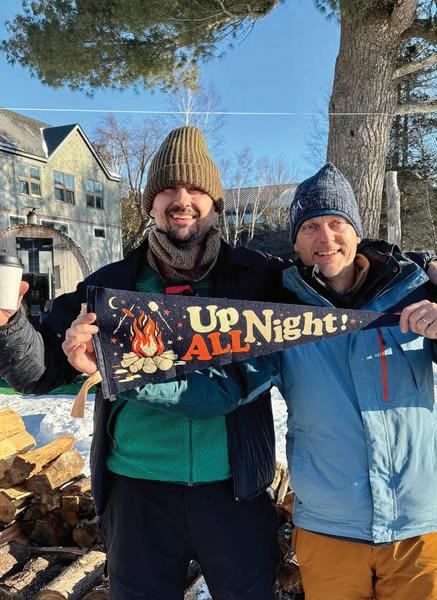
Daphne & Andrew Trotter
Ben Troutman ’24
Juliana Trujillo Mesa ’24
Kristen Tubman ’03
Helene Tuchman
Diane & Charles Tucker
Judith Tucker
Elena Tuhy-Walters ’90 & Carl Walters II
Claudia & Carey Turnbull
Susan Turner
Shea Turner-Matthews ’26
Katharine Turok
Abby Tusing (’01)
Georgia Tuttle
John Twiss
Frank Twohill ’79
Caitlin Unites ’03
Mary Kay Long & Dennis Unites
Kate Unkel ’14
Orr Uzan-Tidhar ’25
Bonnie & Jim Van Alen II
Matthe van Dam


Marlene & Andrew Van Dyke
Wendy Van Dyke (’80)
Christiaan van Heerden ’09 & Family
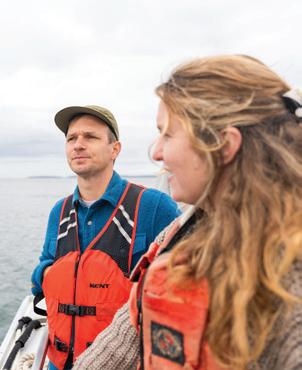
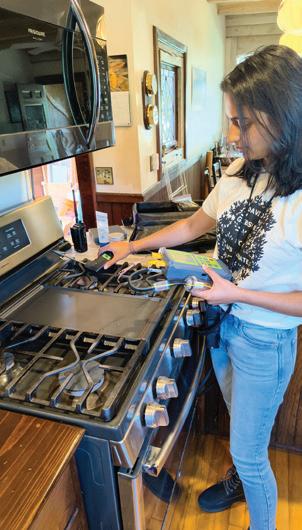

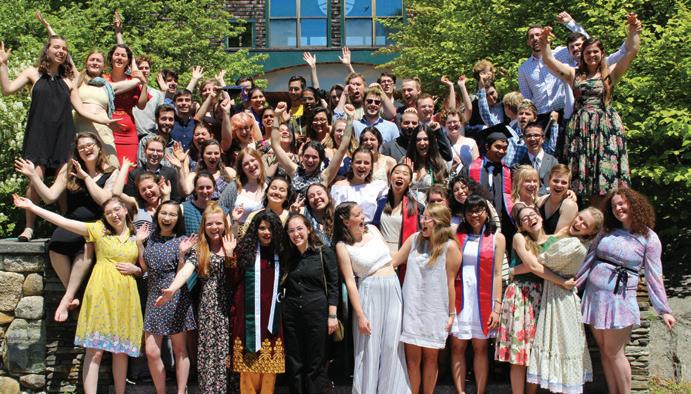


Lindsay HopkinsWeld & Minot Weld
Jeffrey Wells ’92
Karen Wennlund ’85
Kim & Finn Wentworth
Todd West ’00
Meg Westfox ’00
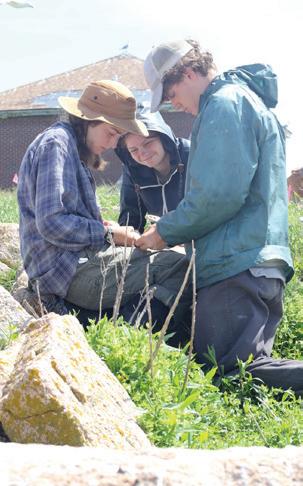
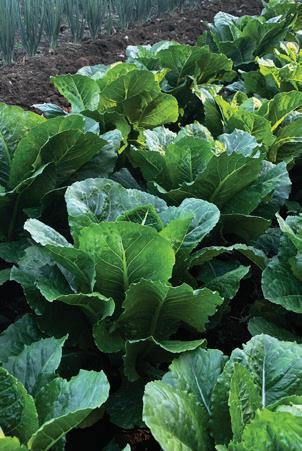
Richard Van Kampen (’13)
Colleen & Daniel van Pelt
Netta Van Vliet
Courtney Vashro ’99
Jackie Vatsend
Patti Vernon
Mindy Viechnicki & Tom Fernald, Jr. ’91
Kathy Vignos
Leo Vincent ’92
Jennifer Vinck ’93
Shamsher Virk ’07
Corie & Bruce Visscher
Liza & Tom Volkmann ’90
Luciana Pandolfi ’98 & Luke Wagner ’99
Suzanne & David Wakefield
Karen Waldron & Richard Hilliard
James W. Walker
Ben Walters ’81
Andrea & Jeremy Ward
HannahMathilde Waschezyn ’13
Linda Washburn
Holly Waterhouse
Paul Watkins
Catherine Thibedeau & Patrick Watson ’93
Allison Gladstone Watters ’00
Peter Wayne ’83
Helen & Paul Weaver
Katherine Weinstock ’81
Jacob Weisberg ’10
Sally Weiss
Ellen Pope & Patrick Welch ’78
Lisa & Paul Welch

JoAnne Yates
Alice Blum Yoakum
Owen Young
Christine & Norb Young, Jr.
Ana Zabala ’20
John Zanca

Scott & Kate Weymouth
Debby & Alexander Wheeler
Isabel Whiston
Kelly White
Cory Whitney ’03
Amos Tappan Wilder
Ramah P. Wilder ’02
Judy Williams
Madison Williams ’26
Peter Williams ’93
Rebecca Hubert Williams & Rhys Williams
J. Michael Williamson
Nellie Wilson ’04
Janey Winchell ’82 & Timothy Mangini
David Winship ’77
Margaret Winslow / Robin Gamble Grinnell Foundation, a Giving Fund
Caralee Wirges
Julia Criscitiello & Kenneth Wise
Sofie Wise ’25
Carol & Joe Wishcamper
Joplin Wistar ’84
Loretta & Tom Witt
Shaun Witten
Chelsea Nash-Wolfe & Alexander Wolfe
Emily Wood
Max Woodfin ’03
Sally Faulkner & Berry Woolley
Margaret Woolley & Gerard Vasisko
Carol Woolman
Janice & Rick Woychik
Cathleen Wyman
Margy & Jimmy Yanacos
Anne Zara
Judy & Lou Zawislak
Michael Zboray ’95
Kristen Zerbato
Logen Zimmerman
Elie Zimring ’26
Disty Pearson & Phil Zuckerman
Caroline Andrews & David Zuk
Trudi Zundel ’13
Kristin Zunino ’25
Erin ’04 & Mike ’01 Zwirko
Amanda Zych ’06
Anonymous (3) Acadia Goldendoodles
American Book Producers Association
Artemis Gallery
Asti-Kim Corporation
Bains Family Foundation
Baird Foundation
Bar Harbor Savings & Loan

Bar Harbor Whale Watch Co.
Beal’s Lobster Pier
Beard Family Charitable Trust
The Blossom Fund
Boston Family Off ice
Stewart Brecher Architects
Builders Initiative Foundation
Florence V. Burden Foundation
Campus Compact
The Casco Foundation at Spinnaker Trust
The Kathy Chazen Family Charitable Trust
Community Foundation of Jackson Hole
Community Foundation of New Jersey
Community Foundation of South GA., Inc.
Cromwell Harbor
Supporting Foundation, Inc.
The Crosby Company

James Deering Danielson Foundation
The Darling-Spahr Fund of the Philadelphia Foundation
The Shelby and Gale Davis Charitable Fund
Davis Family Foundation
Davis Projects for Peace
Davis United World College Scholars Program
The Dayton Foundation
Downeast Chapter of Maine Audubon Society
Downeast Windjammer Cruises
The Eacho Family Foundation
Elevance Health
The Endeavor Foundation
ERQ Educational Foundation at Spinnaker Trust
The Chandler B. and Oliver A. Evans Foundation
Exelon Foundation
Amy Falls and Hartley Rogers Foundation
First National Bank
The FJC Fdn of Philanthropic Funds
Fore River Foundation
Friends of Acadia
Maine Space Grant Consortium
Mass Mutual
McGraw-Hill Foundation
MDI Biological Laboratory
The Minneapolis Foundation

The Mooring Barkeep, LLC
Nate Holyoke Builders
Susan and Roberth Nathane, Jr Charitable Fund of the East Bay Community Foundation
National Center for Research Resources, NIH
National Philanthropic Trust
(NPT-UK)
Nautilus Foundation Incorporated
The Nelson Mead Fund
New England Board of Higher Education
The New York Community Trust
Newman’s Own Foundation
Northern Trust
Ocean Properties, Ltd.
Park Loop Charitable Foundation
Post-Landfill Action Network

Raymond James Charitable
Friends of Sears Island
Galyn’s Galley
Garden Club of Mount Desert
Good Hope Family Foundation
Harborside Hotel & Marina
Harris Family Fund of Princeton Area Community Foundation
John W. and Clara C. Higgins Foundation
Hillman Charitable Foundation
IBM
Intel Foundation Matching Gifts to Education Program
Ironbound Restaurant & Inn
The Howard Johnson Foundation
Leon Levy Foundation
Lunaform, LLC
Maine Beer Co LLC
Maine Coast Sea Vegetables
Maine Community Foundation
Maine Outdoor Heritage Fund
Uplands Family Foundation
UPS Foundation
WaterStone
Rosalie J. Coe Weir Foundation
The WELWE Foundation
Whales and Nails
Yaverland Foundation
Cynthia Baker & Jonathan Zeitler
Whitney Buckley
Mary Kay & David Donovan
Coventry Edwards-Pitt
Maine Beer Co LLC
Bruce McCullom
Jess & Rich Ross
Sweet Monkey Business LLC
Kate Aitchison
Becky Anderson
Susan Bennett-Armistead
Ben Bobowski
Brad Borst
Carleton Bowekaty
Jacob Bretz
Eric Keeling
Katja Knoll
Dayana Krawchuk
Elissa Kretsch
Lori Krupke
Cindy Lambert
Danielle Levesque
Alan Mainwaring
Michael Marino
Liz Marnik
Kaitlin Martin & Kevin Berend
Ana Mattson
Jay McNally ’84
Emily Michaud ’18
Mary Miller
Marisa Monroe
Kate Morren
Jordan Motzkin ’11
Laura Muller
Carol Null ’93
Alexa Parkinson ’22
Steve Parmenter
Susanne Paul
Jamison & Karen Pauly
Vivian Phillips
Claire Picard
Sarah Pottle
Destiny Powell ’20

Virginia Sargeant Reynolds Foundation
Cornelia Cogswell Rossi Foundation
Sanofi
Sawyer’s Specialties

Greta Brown
Alberta Comer
Katie Coppens
Brian Cote
Meggie Curtis ’19
Frank Davis
Second Century Stewardship
Shelby Cullom Davis Charitable Fund Inc.
The Sims/Maes Foundation, Inc
State Street Bank and Trust
Sterling College
Lisa Stewart Family Fund
Marion Boulton “Kippy”
Stroud Foundation
Susanna Porter & James Clark Giving Fund
Takeda Pharmaceuticals
Tonamora Foundation
Trinity University
Turnbull Family Foundation Inc.
UBS Wealth Management USA
University of Maine - Off ice of Research Administration
Maggie Denison ’23
Cristina Devora
Patrick Donnelly
Heather Dority ’96
Ana Dunn
Amanda Dyer
Nabil Elhady
Olivia Ellenbecker
Lindsay Eyesnogle
Eileen McGlinchey Fahey
Mark Fincher
Caroline Fournier
Lyn Gatz
Tyler Gilbert
Melanie Greene
Billie Jean Guerrero
Karina Guzman
Albert & Pat Harmer
Gunnar Hubbard
Tonya Prentice
Renee Quebbeman
Liz Rabasca

Chandra Raymond
Karen Ricketts
Megan Rilkoff
Dani Robbins
Jaylene Roths
Julia Ambagis Rowe MPhil ’02
Kate Shlepr ’13
Rachel Singh
Jasmine Smith ’09
PJ Solomon
Ashley Stanley
Jon Stein
Leeann Sullivan
Meryl Sweeney ’96
Teresa Tierney
Wallace Events
Kaity Walsh
Peter Wayne ’83
Bik Wheeler ’09
Kenny Wintch
Rebecca Woods
Ron Wrobel
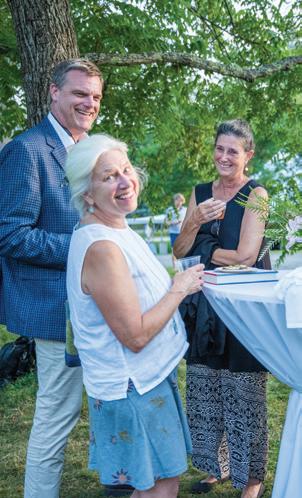
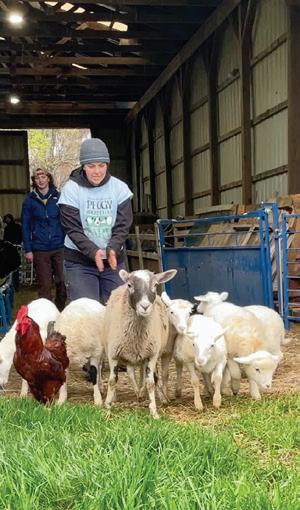

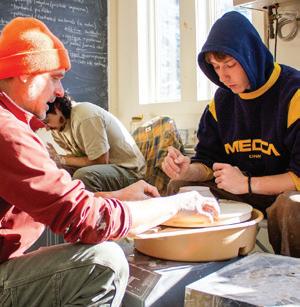
The Champlain Society is COA’s premier giving society. Member support is critical to strengthening our academic program and providing students with opportunities to innovate, learn, discover, and apply their education in real-world settings.
Anonymous (17)
Sally & Bill Arata
Edgar & Nancy* Aronson
Mary Dohna Bacon ’80 & Wells Bacon ’80
Cynthia Baker & Jonathan Zeitler
Becky Bartovics
Anne T. & Robert M. Bass
Kate Baxter
Sandi Read & Ron Beard
Emily Beck & Geoff Young
Fred Benson
Joanie & Jamie Blaine
Sofia Blanchard
Julia Bogardus

Antoinette & Benjamin Brewster
Brenda Brodie
Amanda (Walker) Bunker ’98
Jean & Ordway Burden
Charles & Jane* Burger
Bernice & Tom Cahill III
Linda K. Carman
Mary Ann & Harry
Charlston
Susanna Porter & Jamie Clark, Jr.
Gail & Ham Clark III
Elisabeth & John Cochran
Ruth M. Colket
Elizabeth Hodder Corbus & Clay Corbus
Sally Crock
R.H. Cushman Family
Adam Dau ’01
Gale & Shelby Davis
Kate & Andrew Davis
Beth Rendeiro & Steven DePaul

Ellen & Bill Dohmen
Estate of Susan Dreier
Peggy Dulany
Sunny Dupree
Donna & Bill Eacho III
Mary K. Eliot
Laura Ellis
Deborah Ellwood
Peg Emple
Miriam Ervin
Heather Richards Evans
Chandler & Oliver Evans
Deb Evans ’82 & Ron Schaaf
Helen Dickey Fitz & David G. Fitz
Wendy & Bill Foulke, Jr.
Rena Zurn & Spencer Fulweiler, Jr.
Beth & Will Gardiner
Mark Gauthier & Arthur Keller*
Amy & Phil Geier
Christina M. Gillis
Pamela Gleichman & Karl Norberg
Louise & Tom Glenn
Judith Goldstein
John Goodman
Anne & Jim Green
Hilary Green
Estate of Eleanor Greenan
Gina Greer
Susan Dowling & Andrew Griff iths
Carolyn & Chris Groobey
Nancy & Bill Grove
Eileen & Paul Growald
Carol & Dick Habermann
Susan Simons & John Hagerty
Sam Hamill, Jr.
Steff i & Bob Harris
Louise Hartwell
Lissa Hodder
Betsey Holtzmann & Abe Noyes
Cookie & Bill Horner
Peter Hunt & Family
Miranda Hunt Borden
Leslie Hunt Palumbo
Tomoko & Masanobu Ikemiya
Bill & Keefer Irwin
Carol & Pat Jackson
Yardly & Scott Jenkins
Sonja Johanson ’95 & Richard Gordet
Leslie Jones ’91 & Max Williamson

Brianne ’02 & Brian Jordan
Susan Lerner & Steven Katona
Maggie & Jack Kelley III
Sally Anne Kellogg
Arlene & Bob Kogod
Margaret & Philip B. Kunhardt III ’77
Linda & Philip Lader
Sydie Lansing Gardiner & Nicholas Lapham
Karen & Howard Lapsley
Courtney Lederer & Mark Thierfelder
Francesca Preston & Doug Lerch ’03
Scott MacKenzie & Jerry Cruz
Casey Mallinckrodt
Rachel & Tom Maniatis
Pamy Manice
Jacomien Mars
Anna Maynard
Judy McGeorge
Linda & Clem McGillicuddy
Jay McNally ’84
Betsy & Nelson Mead, Jr.
Mary Miller
David G. Milliken
Rebecca & Steve Milliken
Linzee Weld & Peter Milliken (’76)
Margot & Roger Milliken, Jr.
Anne & John Milliken
Deb & Bob Milotte
Abby Moffat
Phyllis Anina Moriarty
Meta & Benjie Neilson
Louisa & Bill* Newlin
Nell Newman ’87
Ellanor & Russell Notides
Carol ’93 & Jacob ’93 Null
Chaz O’Brien ’93 & Harrison Bains
Bill O’Donnell
Cathy Orme
Linda & Eliot Paine
Susan & Bob Peck
Judith S. Perkins
Bruce Phillips ’78 & Susan Erickson
Carey Pickard III & Christopher Howard
Daniel Pierce, Jr. Family
Barbara & Charles Pierce, Jr.
Lisa & Jay Pierrepont

Catherine Baker-Pitts & Will Pitts III
Frances Pollitt ’77 & Frank E. Briber III
John Pollock
Anne & Bruce Pomeroy
Bambi Putnam
Kathy & George Putnam III
Celian Putnam
Dierdre & Peter Quesada
Strandy & Ric Quesada
Emily & Mitch Rales
Lalage & Steve Rales
Tina Rathborne
Diana & Roland Reynolds
Walter M. Robinson III
Susan & David Rockefeller, Jr.
Amy Falls & Hartley Rogers
Nadia Rosenthal & Alan Sawyer
David Evans Shaw
Margie & John Grace Shethar
Carol Dean Silverman & Family
Jamie S. Somes
Diana Davis Spencer
Jennifer Starr
Maureen & Bill Stewart
Sandy Stone
Caren Sturges
Allison & Steve Sullens
Nonie & John Sullivan, Jr.
Joss Tennille
Genie & Will Thorndike, Jr.
Joanie Thorndike
Laura Stanton & Kim Tomlinson
Christopher Toomey
Jess & Rich Ross
Linn Sage
Martie & Ed Samek
Katie Adams Schaeffer & Anthony Schaeffer
Cynthia E. Livingston & Hank L.P. Schmelzer
Ellen Seh (’75)
Jeri Presser & Charlie Seitz III
Lucy Bell Sellers
Frances Stead Sellers & Tim Sellers
Allison Fundis ’03 & Stein Servick ’05

Sylvia Torti & Scott Woolsey
Daphne & Andrew Trotter
Claudia & Carey Turnbull
Mary Kay Long & Dennis Unites
Christiaan van Heerden ’09 & Family
Kathy Vignos
Suzanne & David Wakefield
Katherine Weinstock ’81
Lisa & Paul Welch
Kim & Finn Wentworth
J. Michael Williamson
Carol & Joe Wishcamper
Margaret Woolley & Gerard Vasisko
Alice Blum Yoakum
Christine & Norb Young, Jr.
Disty Pearson & Phil Zuckerman
Erin ’04 & Mike ’01 Zwirko
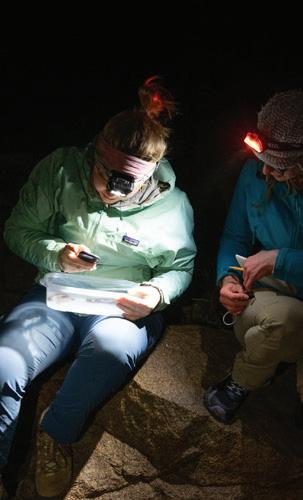
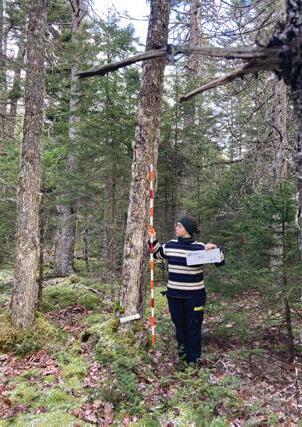
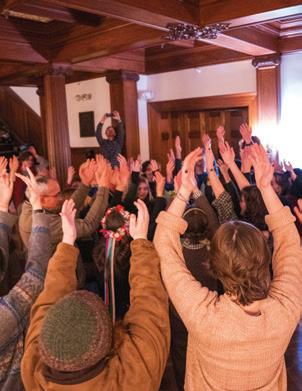

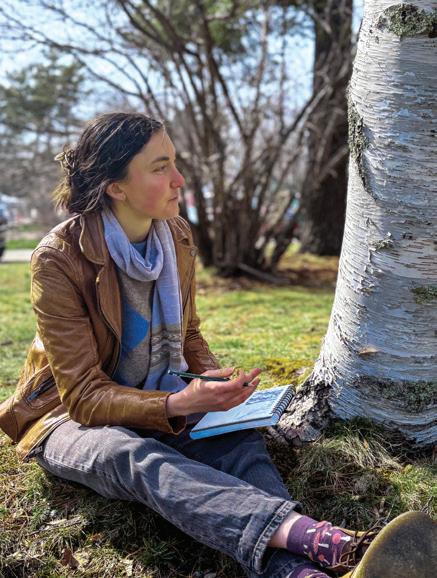
Anonymous (4)
Heather Albert-Knopp ’99
Elizabeth Rousek Ayers ’95
Mary Dohna Bacon ’80 & Wells Bacon ’80
Cheryl Bartholomew ’80
Sara Bender & Evan Bender ’04
Jason Bernad MD ’94
John Biderman ’77
Deirdre Swords & Michael Boland ’94
Paul Boothby ’88
Amanda (Walker) Bunker ’98
Shan Burson ’83
Helen Caivano ’80
Diana Cohn ’85 & Craig Merrilees
Pancho Cole ’81
Karen & Darron Collins ’92
Mairi Connelly ’14 & Spenser Simis
Adam Dau ’01
Kara ’96 & Matt ’98 Daul & Family
Megan Smith ’90 & Daniel DenDanto ’91
George & Kelly Dickson MPhil ’97
Deb Evans ’82 & Ron Schaaf
Joanne Rodgers Foster ’85
Allison Fundis ’03 & Stein Servick ’05
June LaCombe (’75) & Bill Ginn ’74
Katherine Hazard ’76
Tara Harper & Peter Heller ’85
Lisa ’80 & Bob ’79 Holley
Sue Inches ’79
Sonja Johanson ’95 & Richard Gordet
Leslie Jones ’91 & Max Williamson
Brianne ’02 & Brian Jordan
Jen Judd-McGee (’92) & Sam McGee
Sarah ’05 & Shawn ’00 Keeley
Rosalind Rolland & Scott Kraus ’77
Margaret & Philip B. Kunhardt III ’77
Philip Bradish
Kunhardt IV ’11 &
Maria Laura Torre Gomez
Francesca Preston & Doug Lerch ’03
Suzanne Durrell & Scott McIsaac (’78)
Jay McNally ’84
Clifton McPherson III ’84
Linzee Weld & Peter Milliken (’76)
Karla Tegzes & Peter Moon ’90
Sarah ’02 & Chase ’00 Morrill
Nell Newman ’87
Carol ’93 & Jacob ’93 Null
Chaz O’Brien ’93 & Harrison Bains
Valerie Lambert
Peacock (’98) & Tobin Peacock ’95
Bruce Phillips ’78 & Susan Erickson
Frances Pollitt ’77 & Frank E. Briber III
Andrea Roberto ’92
Abby Rowe (’98) & Emma Brodeur
Melinda & Tripp Royce ’79
Ellen Seh (’75)
Zach ’00 & Autumn ’01 Soares
Cecily Swinburne ’09
Elena Tuhy-Walters ’90 & Carl Walters II
Christiaan van Heerden ’09 & Family
Luciana Pandolfi ’98 & Luke Wagner ’99
Katherine Weinstock ’81
Ellen Pope & Patrick Welch ’78
David Winship ’77
Erin ’04 & Mike ’01 Zwirko
The Northern Lights Society is an association for individuals who have made planned gifts to benefit COA. These gifts include bequests, charitable gift annuities, and gifts of life insurance, to name a few.
If you have already included COA in your estate plans but do not see your name listed, please contact the advancement office to inform us of your gift intentions.
Anonymous (4)
Edgar & Nancy* Aronson
Elizabeth Rousek
Ayers ’ 95
Sandi Read & Ron Beard
Emily Beck & Geoff Young
Fred Benson
John Biderman ’ 77
Lynn Boulger & Tim Garrity
Norah Davis
Fran Day
George & Kelly
Dickson MPhil ’ 97
Mary K. Eliot
Donna & Gordon Erikson, Jr.
Heather
Richards Evans
David Hackett Fischer
Wendy & Bill Foulke, Jr.
Mary & Phil Galperin
Barbara McLeod & David Hales
Diana & George* Hambleton
Sam Hamill, Jr.
Jan & George* Hartman
Tomoko & Masanobu Ikemiya
Sue Inches ’ 79
Carol & Pat Jackson
Betsy & John Kelly
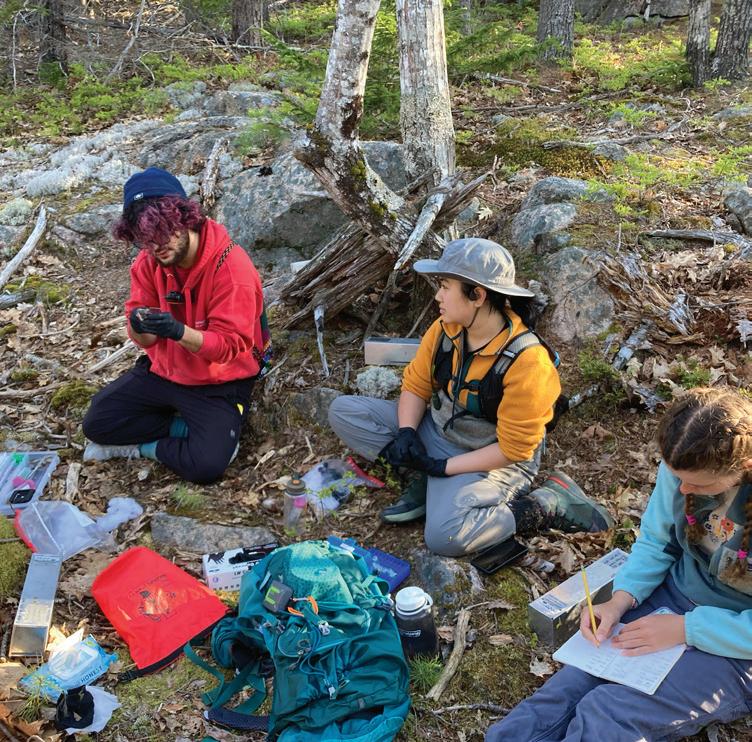
Margaret & Philip B. Kunhardt III ’ 77
Kathleen Massimini ’ 82 & Steven Callahan
Sarah McDaniel ’ 93
Meredith & Phil Moriarty
Rick Moss ’ 79
Susan Tieger & Ralph Nurnberger
Linda & Eliot Paine
Roxana & Tony Robinson, Jr.
Karen Rose
Steve Ross
Cynthia E. Livingston & Hank L.P. Schmelzer
Ellen Seh (’ 75)
Stu Summer ’ 82
Ingrid Sunzenauer
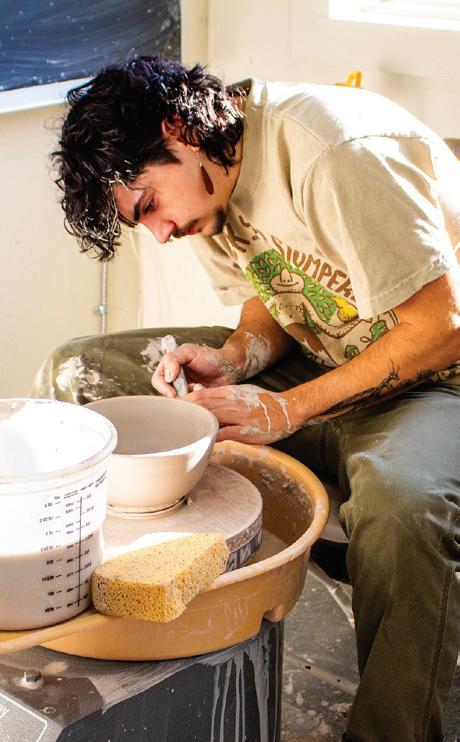

Honoring COA’s mascot, the Black Fly Society was created to make donating easier and greener. Members give monthly, offering COA a steady and sustainable source of ongoing support.
Anonymous (5)
Eben Albert ’03
Heather Albert-Knopp ’99
Elizabeth Anne ’11
Emily Argo ’10
Jessica Arseneau ’18 & Roman Bina ’16
Shlomit Auciello ’17

Cheryl Bartholomew ’80
Sandi Read & Ron Beard
Ellen Brandt
Melinda ’00 & Ellen Casey-Magleby
Erin Chalmers ’00
Cynthia Chisholm ’86
Jen Hughes & Ken Cline
Pancho Cole ’81
Sarah Colletti ’10 & Kyle McMillan
Heidi Conner
Matthew Corum ’03
Jill ’83 & Ben ’84 Cowie-Haskell
Lynn & James Crawford
Marily Crews
Kara ’96 & Matt ’98 Daul & Family
Cerissa Desrosiers ’00 & Jessica Hannon
Holly Devaul ’84
Jennifer Dussault ’02
Samuel Edmonds ’05
Rebecca Hamilton ’13
Kelly Harris ’12
Juliet Hodge ’95
Noah Hodgetts ’10
Margaret Hoffman ’97
Russ Holway
Kathryn Hunninen ’03 & Jose Luis Sagastegui
Anna Hurwitz ’84
Jane & David James

Robert Finn ’92
Helen Geils
June LaCombe (’75) & Bill Ginn ’74
Nina ’78 & Jonathan ’78 Gormley
Tree Goulet ’78
Carla Seddio & Michael Hamilton


Amanda Spector ’08 & Peter Jenkins ’09
Brianne ’02 & Brian Jordan
Jen Judd-McGee (’92) & Sam McGee
Sarah ’05 & Shawn ’00 Keeley
Greg Koehlert ’96
Natasha Krell ’16
Jude Lamb ’00
Virginie Lavallee-Picard ’07 & Alexander Fletcher ’07
Monty Lewis
Jessie Greenbaum ’89 & Phil Lichtenstein ’92
Benjamin Liff
Blaise Maccarrone ’01
Rachel & Pradip Malde
Chloe Marr-Fuller ’00
Angela Hondros-McCarthy & Dennis McCarthy
Lauren McKean ’83
Bridget Mullen ’91 & Chris Kenoyer
Sarah Neilson ’09
Jackie Nielson
Shirley Oskamp & Gary Lindorff
Johnny Pauker ’19
Rain Perez ’12 & Benjamin Byrne (’13)
Drake ’03 & Finn ’02 Pillsbury
Shiva Polefka ’01

Michele Riccio ’88
Jason Rich ’96
Andrea Roberto ’92
Gerald Robinson ’89
Patricia & Ronnie Rogers
Mary Ropp ’09
Derren Rosbach ’95
Eliza Ruel ’13 & Ian Yaffe
CedarBough T. Saeji ’93

Jodi Sargent MPhil ’06 & Family
Eloise Schultz ’16
Janet Schuman
Kirsten Schwarz ’00
Amy & Ryder Scott ’97
Kate Sheely ’07
Zachary ’05 & Paige ’06 Steele
Henry Steinberg ’06
Andrea Perry ’95 & Toby Stephenson ’98
William N. Stevens ’84
Timothea Sutton-Antonucci ’94 & Neal Antonucci ’95
Julianne Taylor ’06
Davis Taylor
Mari Huang Li Thiersch ’17
Ellen Thurman
Meg Trau-Serrano ’12
J. Louise Tremblay ’91
Elena Tuhy-Walters ’90 & Carl Walters II
John Twiss
Caitlin Unites ’03
Karen Waldron & Richard Hilliard
Ben Walters ’81
HannahMathilde Waschezyn ’13
Sally Weiss
Peter Williams ’93
David Winship ’77
Cathleen Wyman
Christine & Norb Young, Jr.
Anne Zara
Amanda Zych ’06

College of the Atlantic enriches the liberal arts tradition through a distinctive educational philosophy—human ecology. A human ecological perspective integrates knowledge from all academic disciplines and from personal experience to investigate—and ultimately improve—the relationships between human beings and our social and natural communities.
The faculty, students, trustees, staff, and alumni of College of the Atlantic envision a world where people value creativity, intellectual achievement, and the diversity of nature and human cultures. With respect and compassion, individuals will construct meaningful lives for themselves, gain appreciation for the relationships among all forms of life, and safeguard the heritage of future generations.
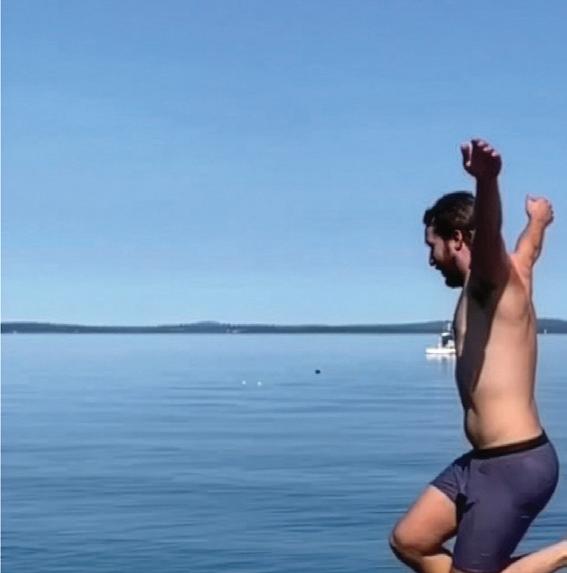

If this report has inspired you to support our mission, please contact Vice President for Institutional Advancement Lynn Boulger at lboulger@coa.edu or call 207.801.5620
You can also learn more about College of the Atlantic’s endowment needs or make a gift online at coa.edu/giving.