UNIVERSITY OF PITTSBURGH CAMPUS MASTER PLAN
EXECUTIVE SUMMARY | NOVEMBER 2025
PROJECT LEADERSHIP
We extend our sincere thanks to the Steering Committee, Working Group, and the entire Pitt community for their thoughtful engagement and contributions throughout the campus master planning process. Your insights, ideas and collaboration have been invaluable in shaping a vision that honors our history while positioning the university for a vibrant and sustainable future.
This collective effort reflects the shared commitment to creating a welcoming campus that supports student success, scholarship, innovation and possibilities for today’s and future generations.
Steering Committee
GINA BLECK
VICE CHANCELLOR, PLANNING, DESIGN AND CONSTRUCTION, COMMITTEE CHAIR
SCOTT BERNOTAS
SPECIAL ASST., EXECUTIVE SENIOR VICE CHANCELLOR FOR ADMINISTRATION & FINANCE AND CFO
JAIME CERILLI
ASST. VICE CHANCELLOR, STRATEGIC SPACE PLANNING AND MNGMT., HEALTH SCIENCES
TOM CRAWFORD
VICE CHANCELLOR, CORPORATE AND FOUNDATION RELATIONS
LINA DOSTILIO
VICE CHANCELLOR, EXTERNAL RELATIONS
ALLEN GREENE DIRECTOR OF ATHLETICS
BILL HALDEMAN
VICE CHANCELLOR AND CHIEF STRATEGIC OFFICER
ANISH KUMAR VICE CHANCELLOR, REAL ESTATE
JOE MCCARTHY PROVOST
CAITLIN MCCULLOUGH STAFF COUNCIL
CARLA PANZELLA
VICE PROVOST FOR STUDENT AFFAIRS
CLYDE PICKETT
VICE CHANCELLOR FOR INSTITUTIONAL ENGAGEMENT AND WELL-BEING
DWAYNE PINKNEY
EXECUTIVE SENIOR VICE CHANCELLOR, ADMINISTRATION & FINANCE AND CHIEF FINANCIAL OFFICER
RACHEL DECKER RICHELIEU VICE CHANCELLOR, COMMUNICATIONS AND MARKETING
ROB RUTENBAR
SENIOR VICE CHANCELLOR, RESEARCH
DAVID SALCIDO FACULTY SENATE
AURORA SHARRARD ASST. VICE CHANCELLOR, SUSTAINABILITY
MATTHEW STERNE VICE CHANCELLOR, BUSINESS SERVICES
KEVIN WASHO
SENIOR VICE CHANCELLOR, EXTERNAL RELATIONS
THURMAN WINGROVE CONTROLLER
LAURA ZULLO
VICE CHANCELLOR FOR FACILITIES MNGMT.
Working Group
CAROLYN VERGA
ASST. VICE CHANCELLOR FOR CAMPUS PLANNING, COMMITTEE CHAIR
KARIN ASHER
ASSOCIATE DEAN FOR STUDENT ENGAGEMENT AND PROFESSIONAL DEVELOPMENT
JULIE BANNISTER
ASST. VICE CHANCELLOR FOR AUXILIARY SERVICES
RACHEL BOWERS PLANNER
LORIE BURNS
SR. PROJECT/BUILDING MANAGER, HEALTH SCIENCES
JUSTIN DANDOY
DIRECTOR OF COMMUNITY AFFAIRS
DAN FISHER
ASST. VICE CHANCELLOR OF OPERATIONS AND MAINTENANCE, FACILITIES MANAGEMENT
JENNIFER HABERMAN
SR. PROJECT MANAGER AND SPACE PLANNER, HEALTH SCIENCES
MATT HANSEN
ASST. VICE CHANCELLOR FOR DESIGN STEWARDSHIP
BRIAN HART
DIRECTOR OF POLICIES, GOVERNANCE, AND PROJECT MANAGEMENT, PITT DIGITAL
PAUL KLACZAK
ASSOCIATE ATHLETIC DIRECTOR, FACILITIES AND EVENT MANAGEMENT
LAUREN MCCONNELL PLANNER
JONATHAN PEARSON DIRECTOR OF PARKING AND TRANSPORTATION
MATTHEW RENDULIC DIRECTOR OF REAL ESTATE DEVELOPMENT
JERRY SCHAFER
SENIOR DIRECTOR OF OPERATIONS & MAINTENANCE
AURORA SHARRARD
ASST. VICE CHANCELLOR, SUSTAINABILITY
Mobility and Accessibility Subcommittee
RACHEL BOWERS PLANNER, COMMITTEE CHAIR
JULIE BANNISTER
ASST. VICE CHANCELLOR FOR AUXILIARY SERVICES
OLIVIA BUDIKE STUDENT
RORY COOPER
ASST. VICE CHANCELLOR FOR RESEARCH FOR STEM-HEALTH SCIENCES COLLABORATIONS
LEIGH CULLEY
INTERIM ASST. VICE CHANCELLOR FOR ACCESSIBILITY
KATIE FITZPATRICK STUDENT
NICK GOODFELLOW SUSTAINABILITY MANAGER, BHAS
NEAL GUPTA STUDENT
PAUL KLACZAK
ASSOCIATE ATHLETIC DIRECTOR, FACILITIES AND EVENT MANAGEMENT
JONATHAN PEARSON DIRECTOR OF PARKING AND TRANSPORTATION
LT. BROOKE RILEY PITT POLICE
AURORA SHARRARD
ASST. VICE CHANCELLOR, SUSTAINABILITY
ANNIE SHVACH
SUSTAINABILITY MANAGER, PLANNING, DESIGN, & CONSTRUCTION
CAROLYN VERGA
ASST. VICE CHANCELLOR FOR CAMPUS PLANNING
Housing Subcommittee
KARIN ASHER
ASSOCIATE DEAN FOR STUDENT ENGAGEMENT AND PROFESSIONAL DEVELOPMENT
JULIE BANNISTER
ASST. VICE CHANCELLOR FOR AUXILIARY SERVICES
GINA BLECK
VICE CHANCELLOR, PLANNING, DESIGN AND CONSTRUCTION
LORRAINE CRAVEN
EXECUTIVE ASSOCIATE DEAN OF STUDENT AFFAIRS
NICOLA FOOTE
DEAN, HONORS COLLEGE
MATT HANSEN
ASST. VICE CHANCELLOR FOR DESIGN STEWARDSHIP
ANNA MACKINNON
ASSOCIATE DIRECTOR OF OFF-CAMPUS EXPERIENCE
LAUREN MCCONNELL
CARLA PANZELLA
INTERIM VICE PROVOST FOR STUDENT AFFAIRS
AMANDA RIES
DIRECTOR OF RESIDENCE LIFE
MATTHEW STERNE VICE CHANCELLOR, BUSINESS SERVICES
CAROLYN VERGA
ASST. VICE CHANCELLOR FOR CAMPUS PLANNING
Consultant Team
SASAKI, LEAD CONSULTANTS
DHARAM, COST ESTIMATION
GATEWAY, CIVIL ENGINEERING
KMA, ACCESSIBILITY
WSP, MOBILITY
Barco Plaza
CAMPUS MASTER PLAN OVERVIEW
The University of Pittsburgh Campus Master Plan articulates a bold vision to guide the physical transformation of the Pitt campus over the next 10 to 20 years—one that underpins the University’s strategic objectives outlined in the Plan for Pitt 2028. Building on the momentum of the 2021 Institutional Master Plan (IMP), the Campus Master Plan sets the stage for envisioning what is possible at Pitt.
Crafted over an intensive 22-month process (spring 2024–fall 2025), the Campus Master Plan (CMP or the plan) reflects a synthesis of institutional priorities and community insight. A robust, inclusive engagement process informed the recommendations of the plan. Subcommittees on Housing, Accessibility, and Mobility convened voices from across academic and administrative units. At the same time, open forums, digital platforms, interviews, surveys, and listening sessions captured the diverse experiences of students, faculty, staff and university partners. The Campus Master Plan Working Group and Steering Committee provided leadership and strategic input.
Other concurrent/recently produced plans, such as the Cathedral of Learning Landscape Master Plan, the Mid-Campus Sciences Master Plan, the William Pitt Union Program Study, the 2022 Climate Action Plan, the Business and SCI Program Study, the
School of Dental Medicine Programming Study, and the School of Nursing Programming Study inform this effort.
While the plan offers targeted recommendations across areas such as placemaking, public realm design, accessibility, campus connectivity and sustainability, it also provides a flexible framework for change rather than a rigid blueprint. It serves as a high-level roadmap to guide campus transformation while allowing space for innovation, iteration and collaboration as individual projects unfold. Ultimately, the Campus Master Plan envisions a connected, inclusive, and resilient campus—one that amplifies Pitt’s role as a driver of knowledge, collaboration and impact in the neighborhood, city, Western Pennsylvania and beyond.
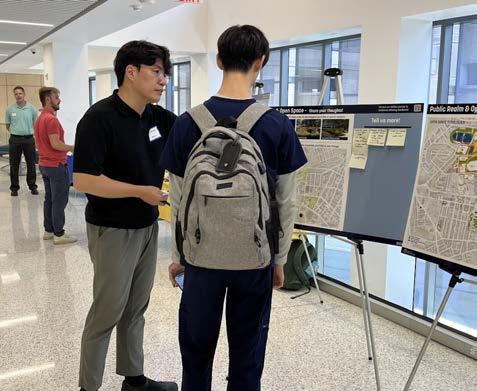
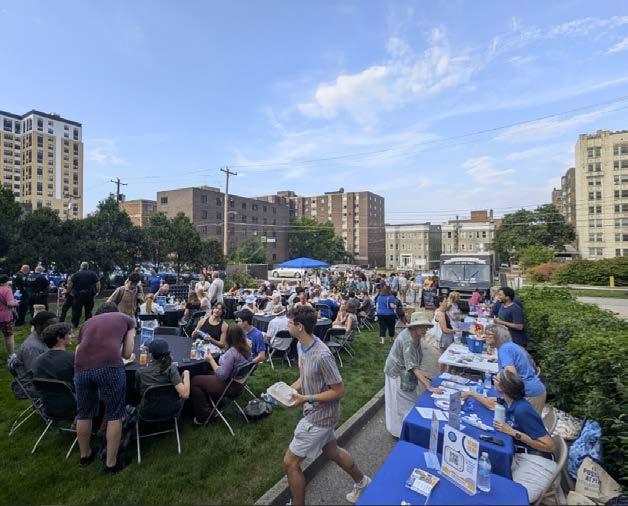
Campus Forum, Scaife Hall Oakland Block Party
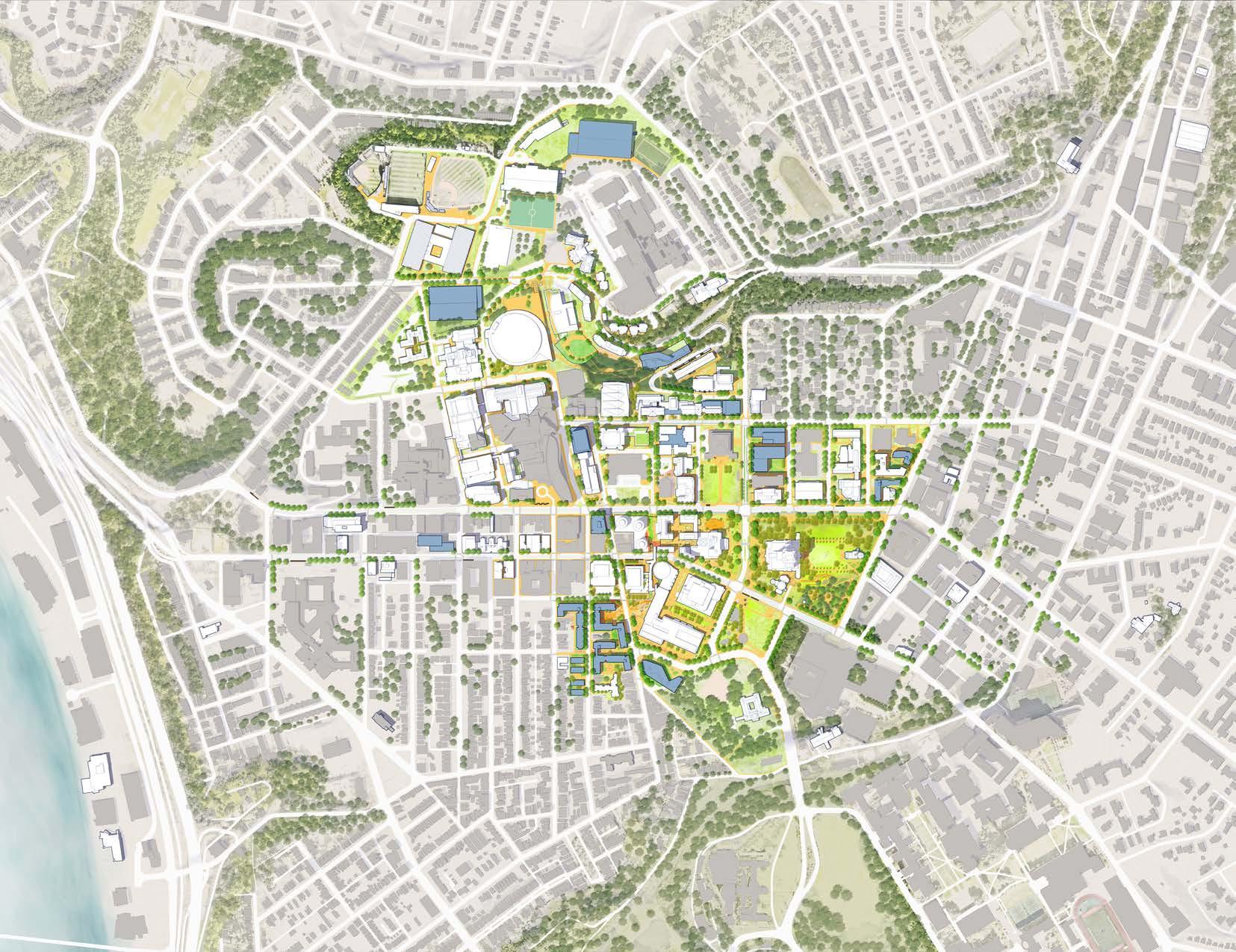
Proposed Vision
CAMPUS MASTER PLAN DRIVERS
Several
drivers inform the priorities and recommendations of the plan including:
• Plan for Pitt 2028
• 2021 Institutional Master Plan (IMP)
• Campus development history
• Historic buildings and context
• Sustainability
• Enrollment growth
• Space needs and utilization
The Plan for Pitt 2028 is the comprehensive strategic framework that serves as the guide for the university’s continued success. Five pillars organize the plan:
• Cultivate Student Success
• Scholarship, Creativity and Innovation
• Welcoming and Engaged
• Accountability and Trust
• It’s Possible at Pitt
The 2021 IMP, in conjunction with the City of Pittsburgh, is a broad, legally binding plan for the physical development of the Pittsburgh campus. It establishes both general and specific quantitative goals categorized under an array of topics, including mobility, infrastructure, neighborhood impact, housing and transportation. The CMP supports and advances the commitments made in the 2021 IMP. If there are any deviations from the 2021 IMP, Pitt will amend the IMP in advance of the specific project.
The storied history of Pitt’s campus development likewise plays a significant role informing its present as well as its future. Three major planning eras shape the campus of today: Franklin Nicola’s early twentieth-century City Beautiful vision for Oakland, the Acropolis Plan of 1908, and a pivot towards the “tall building” concept in the 1920s—which prompted the design and construction of, most notably, the Cathedral of Learning.
Following the mid twentieth century, a fourth era of planning and development emerged in the post-war and brutalist styles that contribute to Pitt’s enduring architectural legacy today.
In addition to its commitment to the historical legacy of the campus, Pitt’s emphasis on sustainability is a key value of the Campus Master Plan. The plan takes into consideration the impact areas and goals of the 2025 Pitt Sustainability Plan and the 2022 Climate Action Plan, which establishes Pitt’s goal to reach carbon neutrality by 2037 (the university’s 250th anniversary).
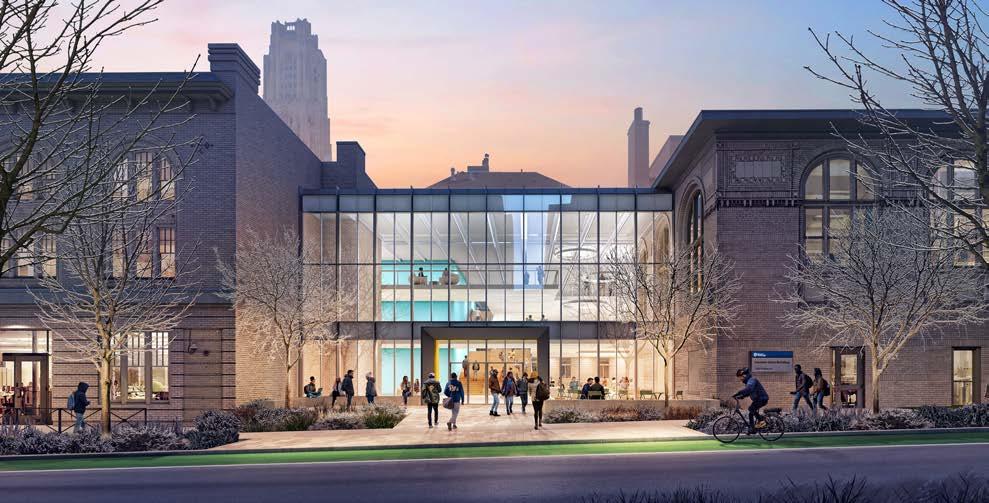
Collaboration Hub At O’Hara and Gardner Steel
A forward-looking document, the plan anticipates and responds to the development of the Pitt community in the coming years. It projects enrollment increases for undergraduate, graduate, and professional students. Accordingly, planned development reflects growth in academic, research, innovation, and campus life, introducing strategic renovations and new facilities tied to space needs and utilization. The plan focuses on the campus experience, providing direction for improvements to the public realm and addressing broader goals for the campus and Oakland.
Planning Principles
The CMP establishes a vision for a vibrant urban campus environment grounded in the history and traditions of the university, its unique place in Oakland, and the academic, research, and partnership initiatives outlined in the Plan for Pitt 2028.
The following principles emerged from the collaborative planning process and are reflected in the plan’s big ideas, vision, and framework plans.
1 2 3 4 5 6
ELEVATE THE CAMPUS EXPERIENCE STRENGTHEN CAMPUS IDENTITY BOLSTER A SENSE OF BELONGING STRENGTHEN CONNECTION ENGAGE THE COMMUNITY BUILD A SUSTAINABLE FUTURE
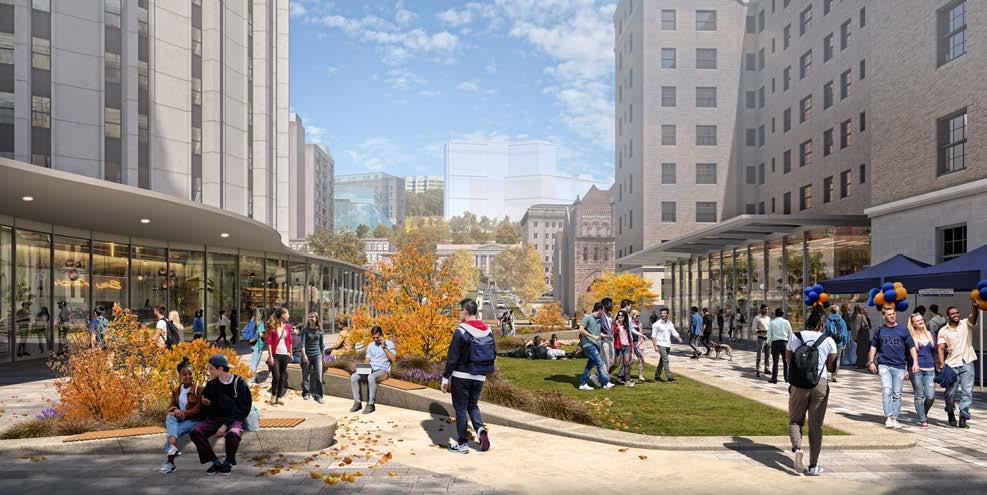
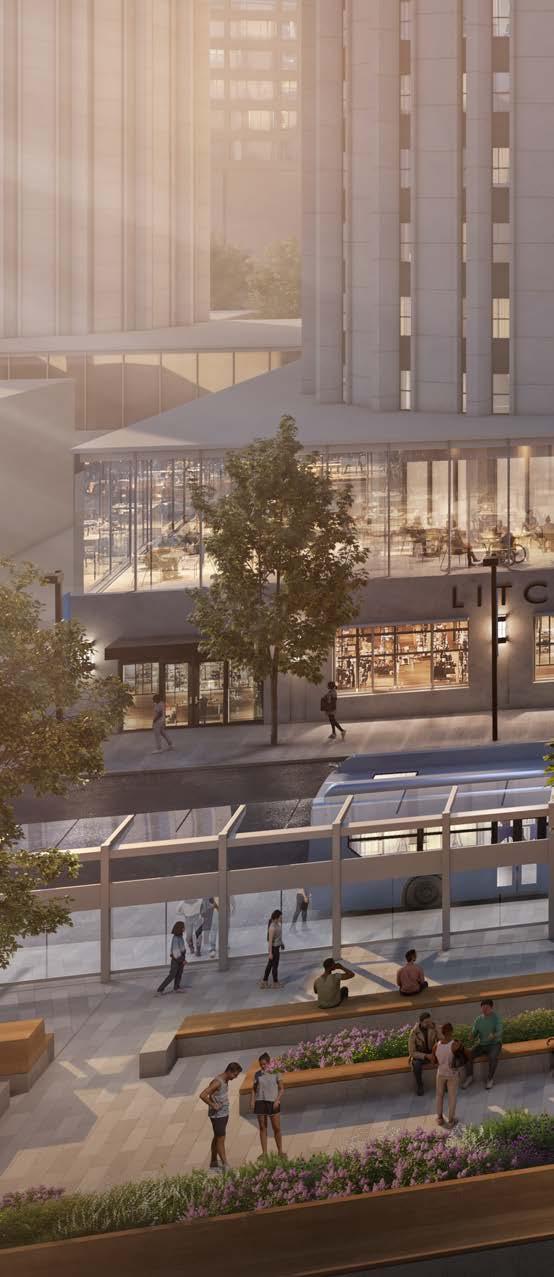
Renewed Litchfield Plaza
CAMPUS MASTER PLAN VISION
The Campus Master Plan reinforces Pitt’s vibrant urban campus, rooted in the history and traditions of the university, anchored to its unique place in Oakland, and informed by and committed to its academic, research and community engagement initiatives outlined in the Plan for Pitt 2028. It establishes a vision for the continuation of campus development.
The vision responds to the five Plan for Pitt pillars with complementary principles and six Big Ideas. It is a foundational revisit of the 2019 Campus Master Plan, with an attention shift to two key areas:
· The public realm
· Stewardship of our historic building portfolio
The public realm connects the fabric of campus within the Oakland neighborhood, and the city of Pittsburgh, foundational to the experience of campus, city and life. The plan establishes and reinforces gateways, pathways and connections, elevating the pedestrian experience for a more intuitive and inclusive navigation of campus. Whether student, faculty, staff, neighbor, visitor or
passerby, the vision welcomes all to campus, fostering a pride of place at the University of Pittsburgh.
The CMP embraces Pitt’s recent acquisitions, of the Twentieth Century Club and the Pittsburgh Athletic Association, accentuating the existing trove of early twentieth century architectural gems, including the competition-winning Acropolis Plan, the skyscraping Cathedral of Learning or the myriad former social clubs of Oakland. It proposes continued and future uses for the historic structures, reinvigorating them while celebrating their rich fabric, and creating additional student space along the pathways of campus.
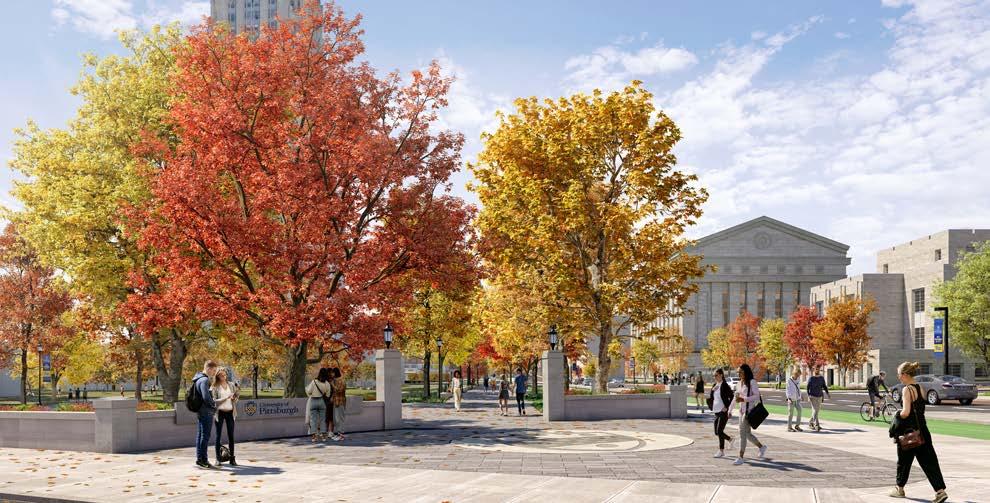
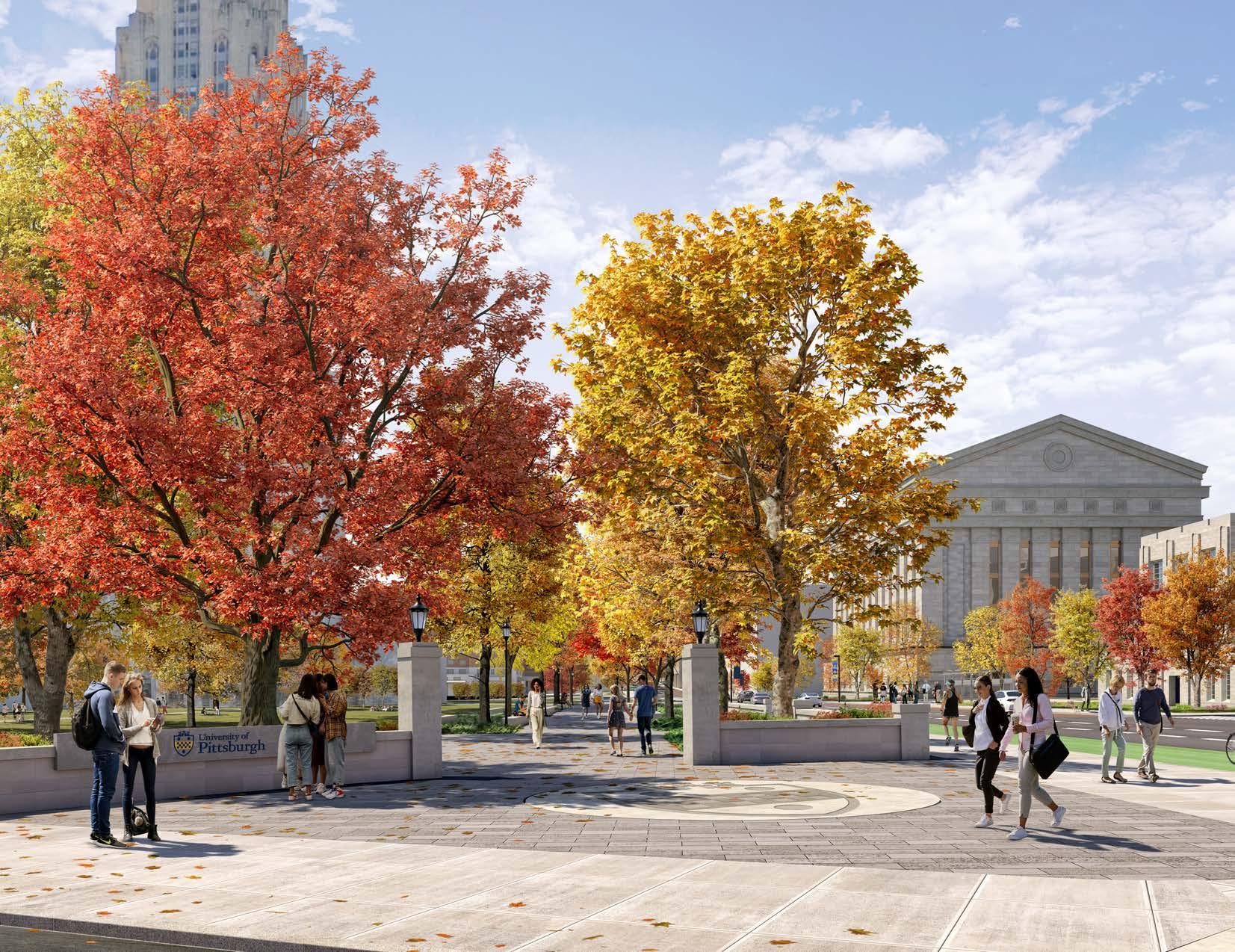
Proposed Cathedral Lawn Gateway at Fifth Avenue and Bellefield Avenue
Big Ideas
The plan’s six “Big Ideas” supplement the planning principles’ broad ideals with specific guidelines for physical development.

1
ENRICH THE CAMPUS EXPERIENCE AND STUDENT SUCCESS PROMOTE PITT’S PRIDE OF PLACE
Enhance the sense of place in Oakland and in the City of Pittsburgh through proposed public realm improvements along major streets, gateways to campus, restoration of iconic public spaces, and new buildings that honor the architectural legacy of the campus.
4
CREATE A RICH, CONNECTED AND ACCESSIBLE PUBLIC REALM
Support campus health and well-being and sustainability goals through adding campusdefining spaces, improving streetscapes and open space, and creating integrated academic, research and social facilities that strive towards universal accessibility.
Enhance campus life through the introduction of new spaces for student engagement. The renewal and expansion of campus housing and the transformation of the Pittsburgh Athletic Association building into a new student center will reinforce the student and community experience at the heart of campus.
5
CONNECT THE CAMPUS
2 3
FOSTER ACADEMIC AND RESEARCH INNOVATION
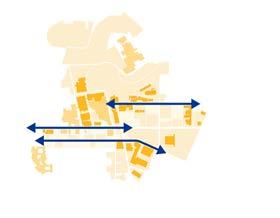
Create stronger linkages between academic buildings, elevate and right-size spaces in support of the Plan for Pitt and the academic and research mission. The plan recommends new and/or expanded facilities for Business, SCI, Nursing, Engineering, Bioengineering and Public Health.
6
STEWARD THE HISTORY OF THE CAMPUS AND OAKLAND
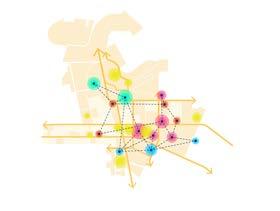
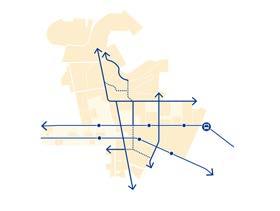
Improve accessible routes to major campus destinations integrated with transit connections. Implement new campus mobility hubs and enhance the public realm and pedestrian experience with intuitive wayfinding elements to enhance the spirit of place and create a memorable Pitt identity.
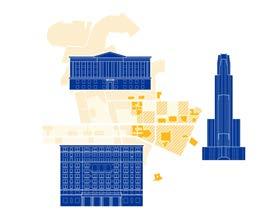
Harness the historic character of Pitt’s campus and surrounding context—which sets it apart from peer universities and other urban institutions—to steward a beloved campus fabric across Pitt, Oakland and the City of Pittsburgh.
MISSION AND EXPERIENCE
Academic and Research
Recommendations
The academic and research recommendations address the need for academic and student success centers, innovation, interdisciplinary collaboration, shared research hubs and partnership spaces. The plan includes a review of the status of facilities across Pitt’s 16 schools and colleges, addressing both instructional and non-instructional campus needs. It identifies new teaching labs, open labs, renewed classrooms to support contemporary learning, and Academic Support Hubs or Collaboration Hubs (inspired by Pitt Global Hub concept, which facilitates community-building through physical spaces). The recommendations embrace the following principles:
• Efficient and Right-Sized Spaces
• Stewardship of Existing Spaces
• Future-Oriented Spaces
• Quality of Space
• Collaborative Space
Campus Experience Recommendations
The campus experience recommendations provide the amenities, common spaces, residential communities and recreation areas that contribute to the quality of campus life at Pitt. The recommendations address student and community needs through several types of facilities:
• A new student center at the former Pittsburgh Athletic Association Building (which allows for the renewal of the existing William Pitt Union WPU for student housing)
• Distributed dining and food service locations, including new venues
• New and renovated residence halls, recreation facilities, health center, lounges, study space, and collaboration hubs
The recommendations locate academic support and collaboration hubs to welcome a diverse array of students, promote a culture of openness, offer flexible spaces and provide centralized student support services in highly visible locations, linked by improved pedestrian routes.
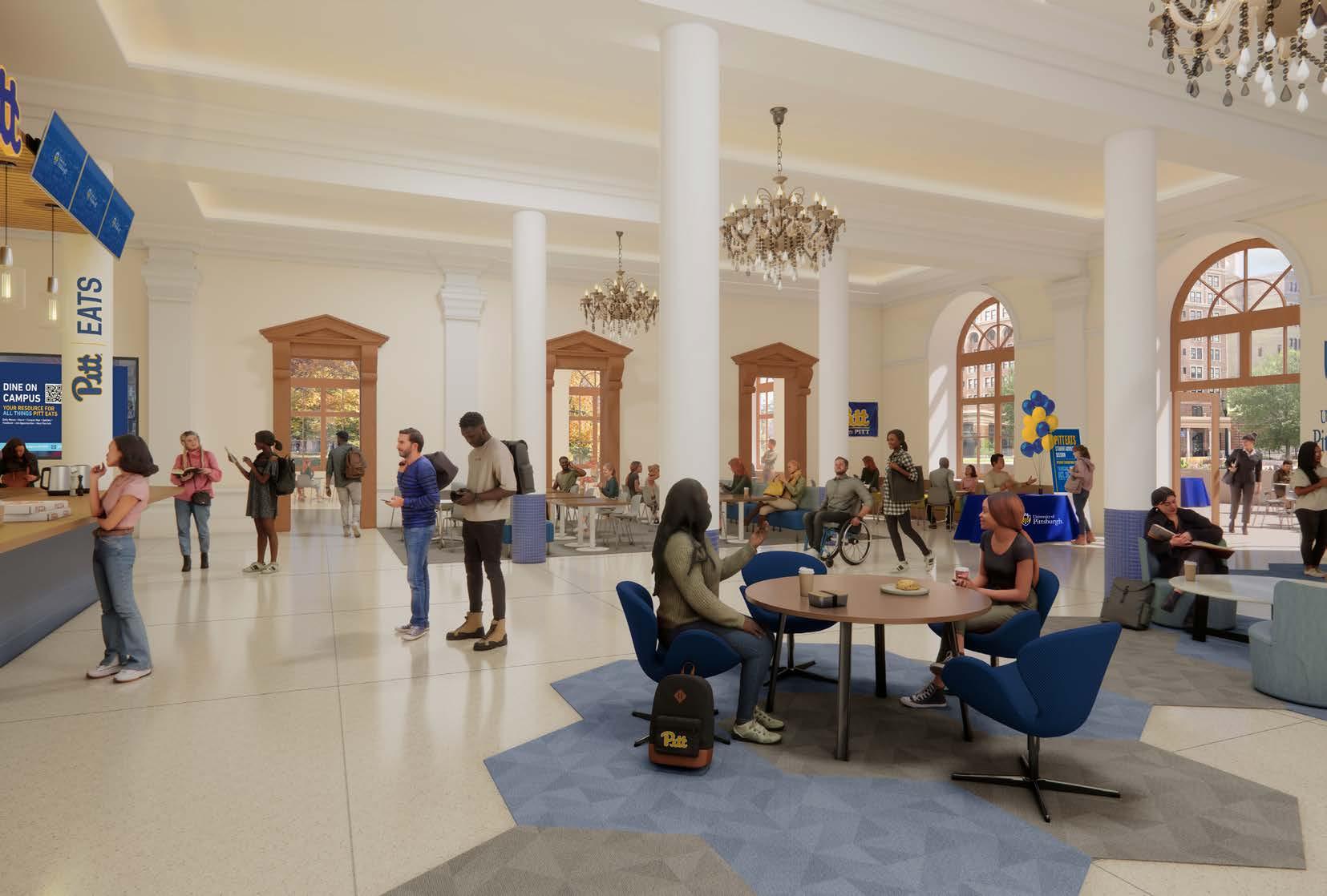
New Student Center at the Pittsburgh Athletic Association
FRAMEWORK PLANS
A series of framework plans collectively contribute to a comprehensive and coordinated guide for incremental change and organize the recommendations for the Pitt campus. The framework plans shape an integrated approach for public realm improvements, building renovation and future development.
Community Context Framework
The Community Context Framework plan leverages Pitt’s integral place within Central Oakland and the context defined by nearby institutions (e.g., the Carnegie Museums, Carnegie Mellon University and others). Pitt is a uniquely historic campus, with several of its buildings located within the Oakland Civic Center Historic District and Schenley Farms Historic District (listed on the National Register of Historic Places); the plan recommends building renovations and enhancements to the public realm that honors this historical legacy and satisfies the needs of present and future campus communities.
Public Realm Framework
The Public Realm Framework Plan contributes to the urban context established by the streetscapes and open spaces of Oakland as well as the existing cultural facilities, dining, recreation and retail
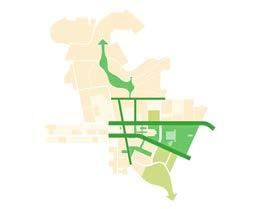
facilities of the campus. Recommendations include improvements to the ground floors of major buildings to facilitate indoor-outdoor connectivity, as well as new locations for collaboration hubs, amenities, services and retail to form nodes along pedestrian spines. Enhanced gateways, wayfinding, and landscapes, along with site-specific streetscape improvements (such as removal of on-street parking in favor of bike lanes and the creation of planted medians) contribute to the campus experience. The plan also embraces improvements to campus open spaces—like the iconic Cathedral Lawn—with new terraces and places to gather in support of a more welcoming and accessible campus.
Mobility and Accessibility Framework
The Mobility and Accessibility Framework Plan enhances mobility through a series of targeted, data-driven, and stakeholder-influenced recommendations for accessibility and mobility. Responsive to Pitt’s IMP commitments and sustainability goals, the recommendations prioritize accessibility, pedestrian and bicycle mobility, micromobility and bus transit over single-occupancy vehicle use.
The CMP performed a campus-wide accessibility review with a goal towards universal accessibility and a welcoming public commons linked across shared Pittsburgh city streets and Pitt-owned pedestrian passageways. The plan envisions a more pedestrian friendly, intuitive and vibrant campus within the urban fabric.
Key recommendations target the following categories:
• Accessibility
• Pedestrian Experience
• Bicycle Infrastructure and Amenities
• Mobility Hubs and Shared Mobility
• Transit Optimization
• Parking and Travel Demand Management (TDM)
Sustainability Framework
The Sustainability Framework translates relevant goals included in Pitt’s 2025 Sustainability Plan, Pitt 2022 Action Plan and the City of Pittsburgh’s 2030 climate initiatives into tangible solutions for the built environment. The framework identifies three impact areas embedded within Pitt’s Sustainability Plan that are relevant to physical campus planning: Stewardship, Exploration and Community and Culture. Stewardship translates to recommendations that minimize the impact of energy systems, water management, transportation infrastructure, materials selection and landscape restoration. The framework supports Exploration through an expanded network of research and collaboration spaces. It advances Community and Culture through enhancements to the public realm and open space network and improvements to campus mobility and connectivity, promoting mental and physical well-being across campus.
Public Realm Framework
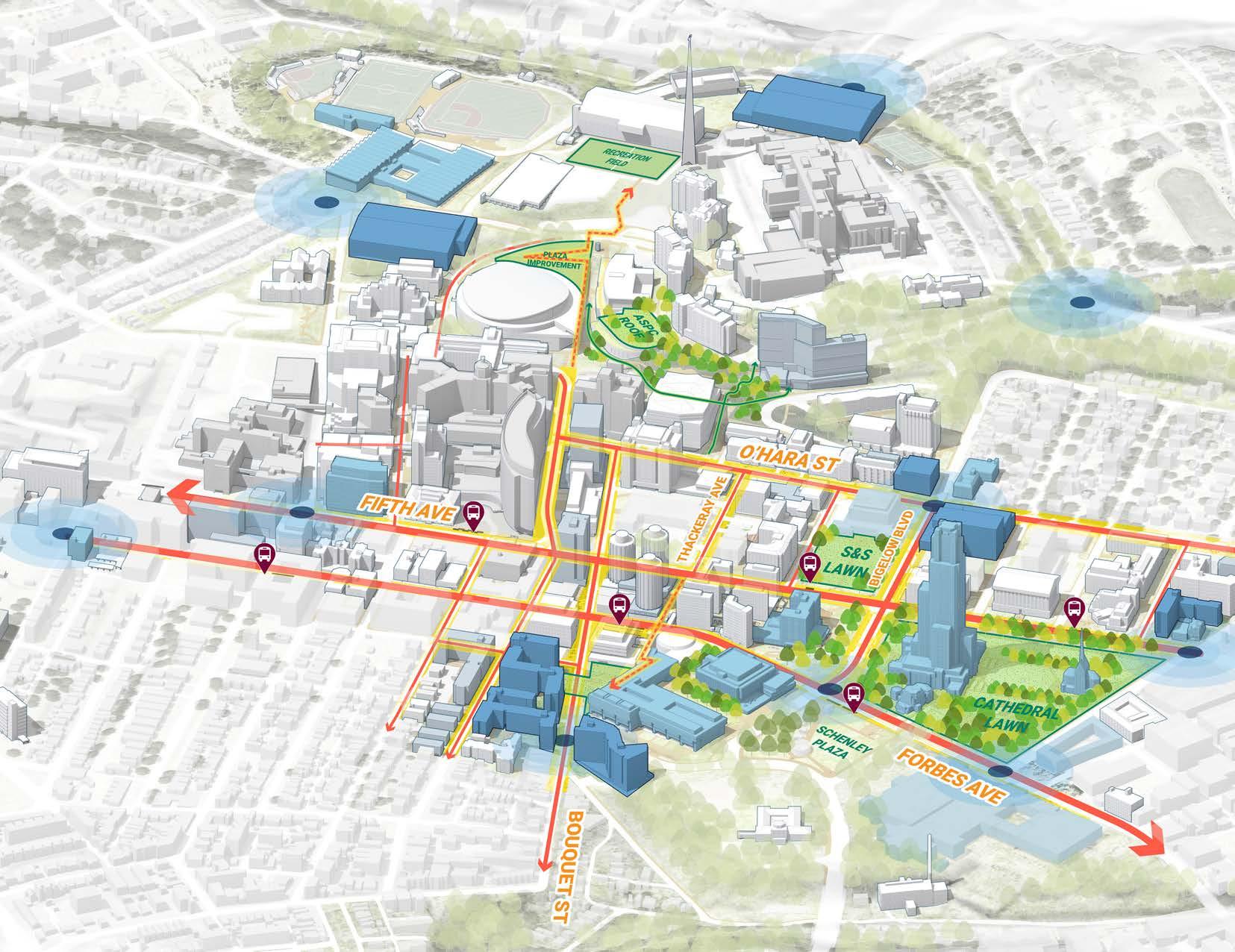
Campus Gateway
Properties Contributing to Gateway Experience
Proposed Buildings Contributing to Gateway Experience
Streetscape Improvement
In-block Pedestrian Connections
BRT Station
Major Open Space
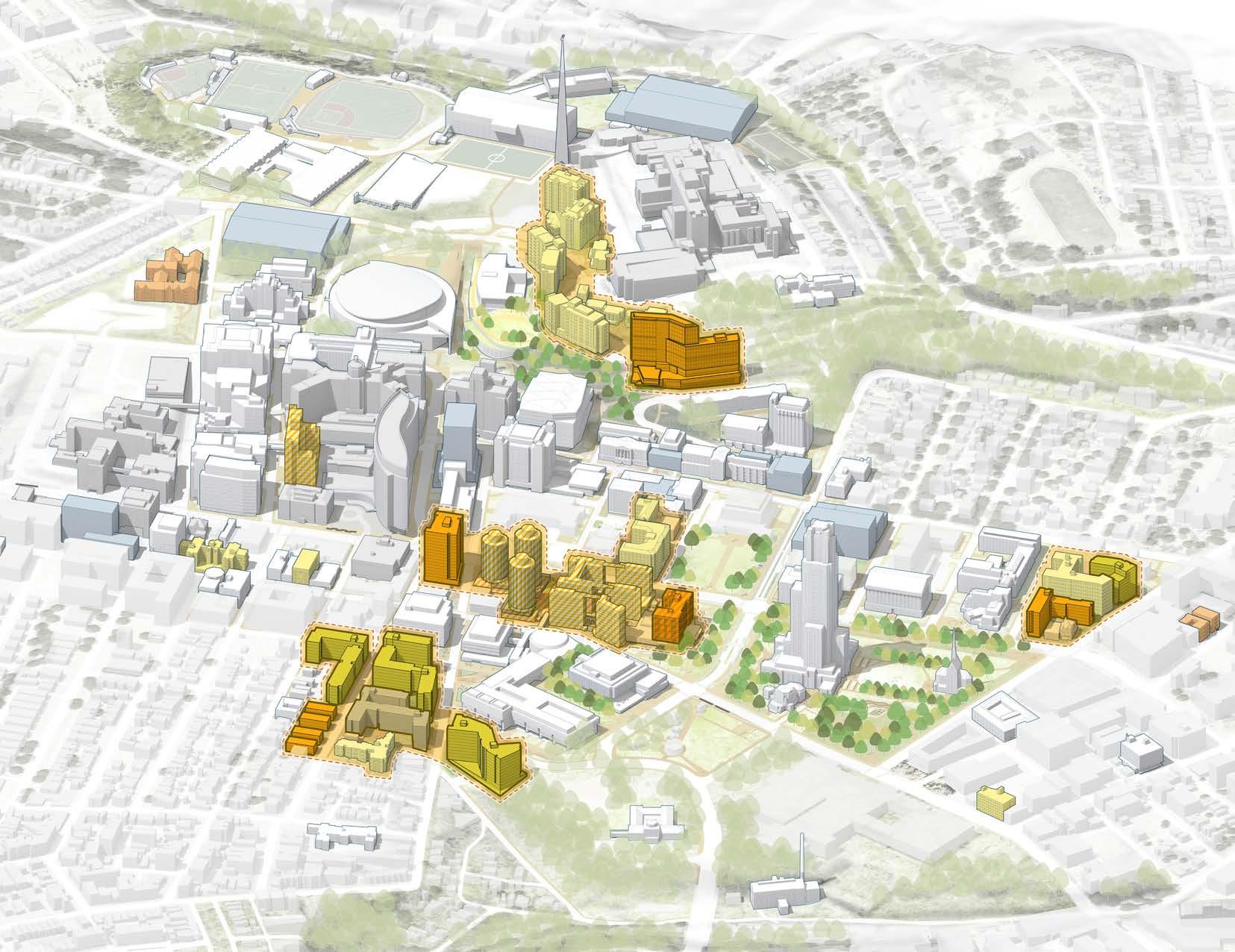
HOUSING PLAN
Concurrent with the development of the Campus Master Plan, the consultant team conducted an analysis of existing on-campus housing facilities and developed a plan to accommodate housing targets established by the University and projected enrollment growth.
Drivers
The following drivers determine the on-campus housing demand for undergraduates.
1
Housing Plan Goals
In addition to meeting the housing demand, the housing plan seeks to achieve the following goals to bolster the residential life experience:
The undergraduate housing needs and aspirations are integrated in the Campus Master Plan with the aim of enhancing the undergraduate student housing experience and contributing to the quality of life on campus while remaining competitive with peer institutions. Furthermore, the vision for each of the major housing neighborhoods align with the broader planning goals for each campus district.
2 Enrollment Growth
The Plan for Pitt 2028 and BHAS Housing Strategic Plan (2024) aim to raise on-campus residency from 41% to 60% while accommodating growth.
Three-Year Housing Guarantee
3
4 Commitment to the City Existing Facility Conditions
Enrollment growth has strained Pitt’s three-year housing guarantee, leading to increased density, removal of lounge spaces, and leasing of nonUniversity owned housing.
The 2021 Institutional Master Plan commits to delivering 1,400 new residential beds by 2031 to accommodate growth and expand on campus housing options in Oakland.
Existing facilities require significant reinvestment, with some halls slated for renovation, demolition, or replacement which requires new beds for swing space.
To accommodate growth, increase capture rate, renovate/redevelop the existing housing portfolio, and exit leases, the projected demand totals 12,100 beds, or 4,950 new undergraduate beds on campus
• Provide a range of housing options to support students throughout their collegiate experience.
• Establish a variety of residential experiences across campus districts with convenient access to academic life and campus amenities.
• Enhance and expand the available social spaces and amenities in each of the residence halls and campus districts.
• Create a welcoming and inclusive residential experience.
• Support Pitt’s sustainability goals and policies.
Renovations and New Construction
Proposed renovations to existing facilities include:
• William Pitt Union Housing Conversion
• Lothrop Hall Renovation and Renewal
• Litchfield Towers Renovation and Renewal
• Schenley Quad Renovation and Renewal
New construction is proposed at the following sites:
• Music and IS Sites
• Tower D
• Hillside Housing
• Central Oakland
• Mervis Hall Site
• Shirley and Mayflower Sites
Housing Plan
CAMPUS DISTRICTS
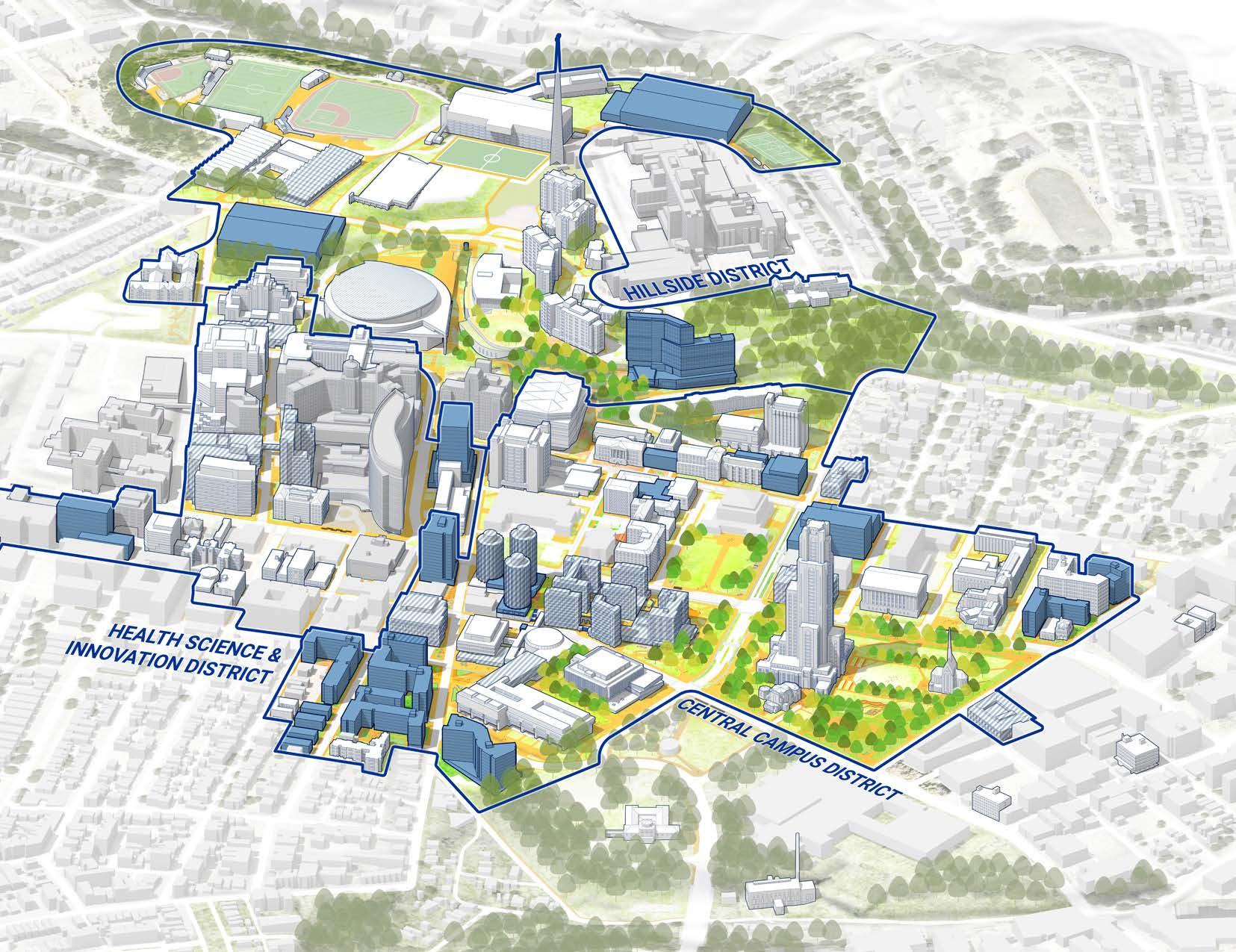
The campus plan defines three campus districts:
• Central Campus District
• Health Science and Innovation District
• Hillside District
Pitt Owned Building
Pitt Affiliated Building
Proposed Building within the District
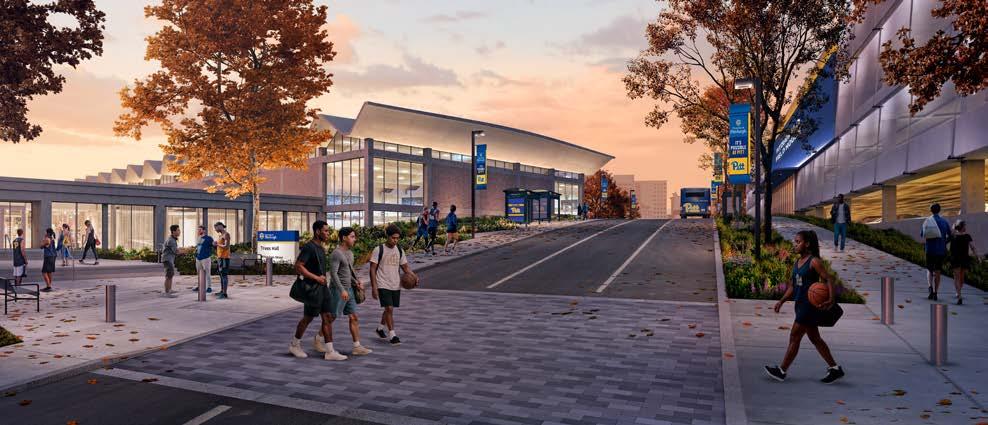
Proposed Trees Hall Renovation and Fitzgerald Field House Redevelopment in the Hillside District
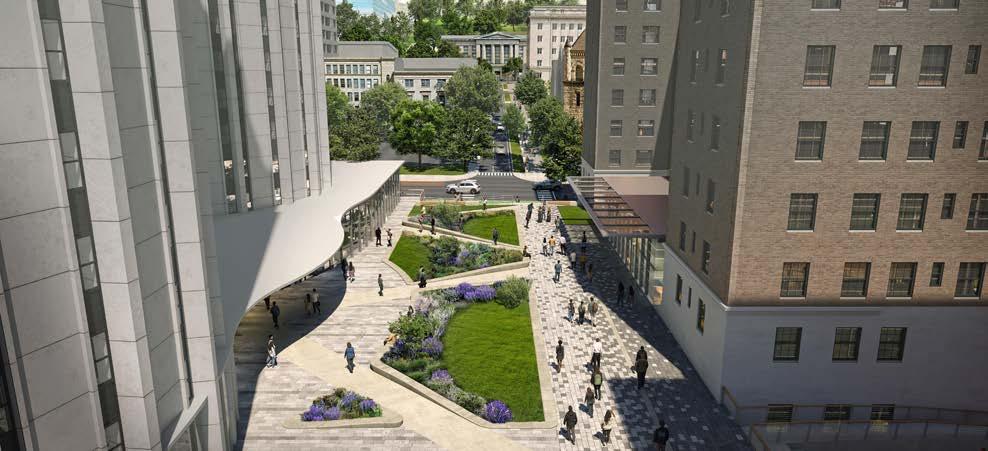
Proposed Litchfield Plaza and Thackeray Avenue Corridor in the Central Campus District
CENTRAL CAMPUS DISTRICT
The Central Campus District encompasses the iconic and memorable buildings of the Central Oakland Historic District. Envisioned as the academic, social and cultural heart of the Pitt campus, the Campus Master Plan includes recommendations for the public realm, renovation and new construction as follows:
Cathedral Lawn Area: improvements to the lawn envisioned by the Olin Partnership create a welcoming and engaging landscape experience for the campus and broader community.
Pittsburgh Athletic Association (PAA): the transformation of the iconic PAA building into a student center in an historic, appropriately scaled space to encourage student engagement and activities in the heart of campus.
William Pitt Union: the conversion of the William Pitt Union to student housing, while maintaining the historic ground floor lobbies and ballrooms, contributes to the first-year student housing and broader campus experience.
Schenley Quad: a vision for renovating the buildings in the Quad contributes to the first-year experience. Changes to the plaza level contribute to accessibility and pedestrian movement and establish a new connection to the bookstore from Litchfield Plaza.
Litchfield Plaza: proposed improvements enhance the accessibility and experience of movement toward Fifth Avenue where new stairs and ADA ramps connect to street level. Reimagined lounges define the base of the Towers contributing to the resident experience and vibrancy of the plaza.
Thackeray Corridor: envisioned as the north-south central spine of the campus connecting Posvar on the south to Allen Hall on the north, Thackeray Ave is the focus of major public realm improvement, including enhanced crosswalks at Fifth Avenue and wider pathways along the east side of the street from Fifth Avenue to O’Hara Street.
Tower D: a new residential building west of the Litchfield Towers, referred to as Tower D, expands the housing capacity for first year students and provides ground floor amenities and retail.
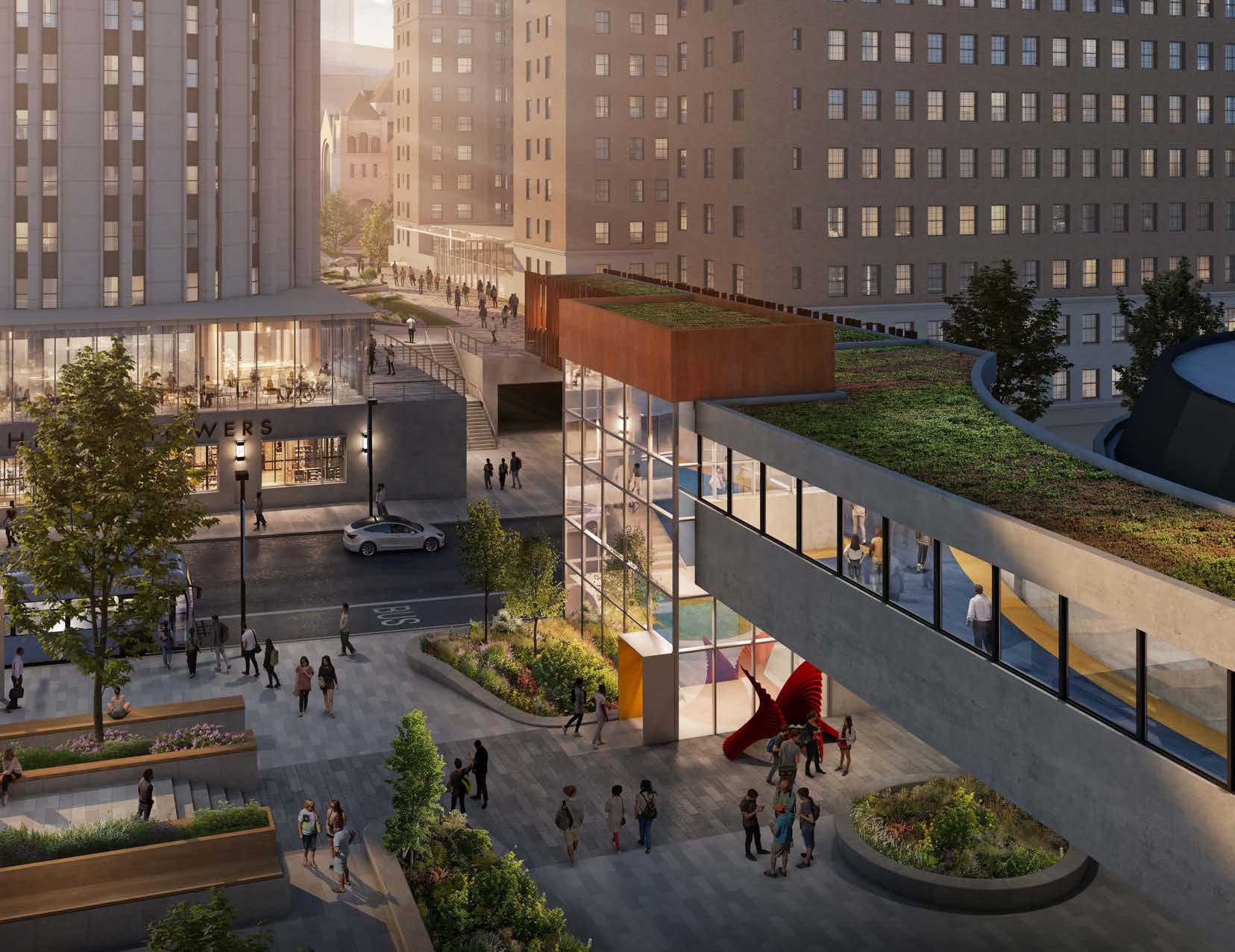
Posvar Pathways: ground level landscape and pathway improvements facilitate connectivity from Schenley Drive to Bouquet Street where a raised crosswalk and plaza connect to proposed redevelopment in Central Oakland. Changes to the Forbes Avenue bridge include a new elevator and stair tower leading to the proposed BRT stop and renewed plaza in front of Barco Law.
Central Oakland: proposed redevelopment provides higher density housing and student support facilities for upper division students. Public realm improvements extend Louisa Street from Atwood Street to Bouquet Street while providing for lowerlevel parking. Over the long term, the plan
recommends the demolition of Mervis and the Information Sciences Building to provide additional housing.
O’Hara Street: The plan builds upon the established and proposed uses along O’Hara Street to create a Collaboration Corridor linking biology, chemistry, physics, astronomy, engineering, public health and medicine. Streetscape improvements widen sidewalks, enhance crosswalks, and add street trees and bike lanes on both sides of the street. Proposed development includes:
• An infill building between Gardner Steel, O’Hara and Thackeray providing additional classroom, student amenity and collaboration space.
• An atrium between Allen Hall and Thaw Hall features amenity space and accessibility improvements.
• A proposed science building at the northwest corner of the O’Hara and Bigelow / Parkman intersection accommodates new teaching and research labs.
• New buildings on the One Bigelow site offer space for future academic, research and collaboration needs for the School of Business and School of Computing and Information Sciences
• A renovated Twentieth Century Club accommodates a visitor / welcome center, the Pitt Alumni Center, Board of Trustees meeting rooms, and Philanthropic and Alumni Engagement.
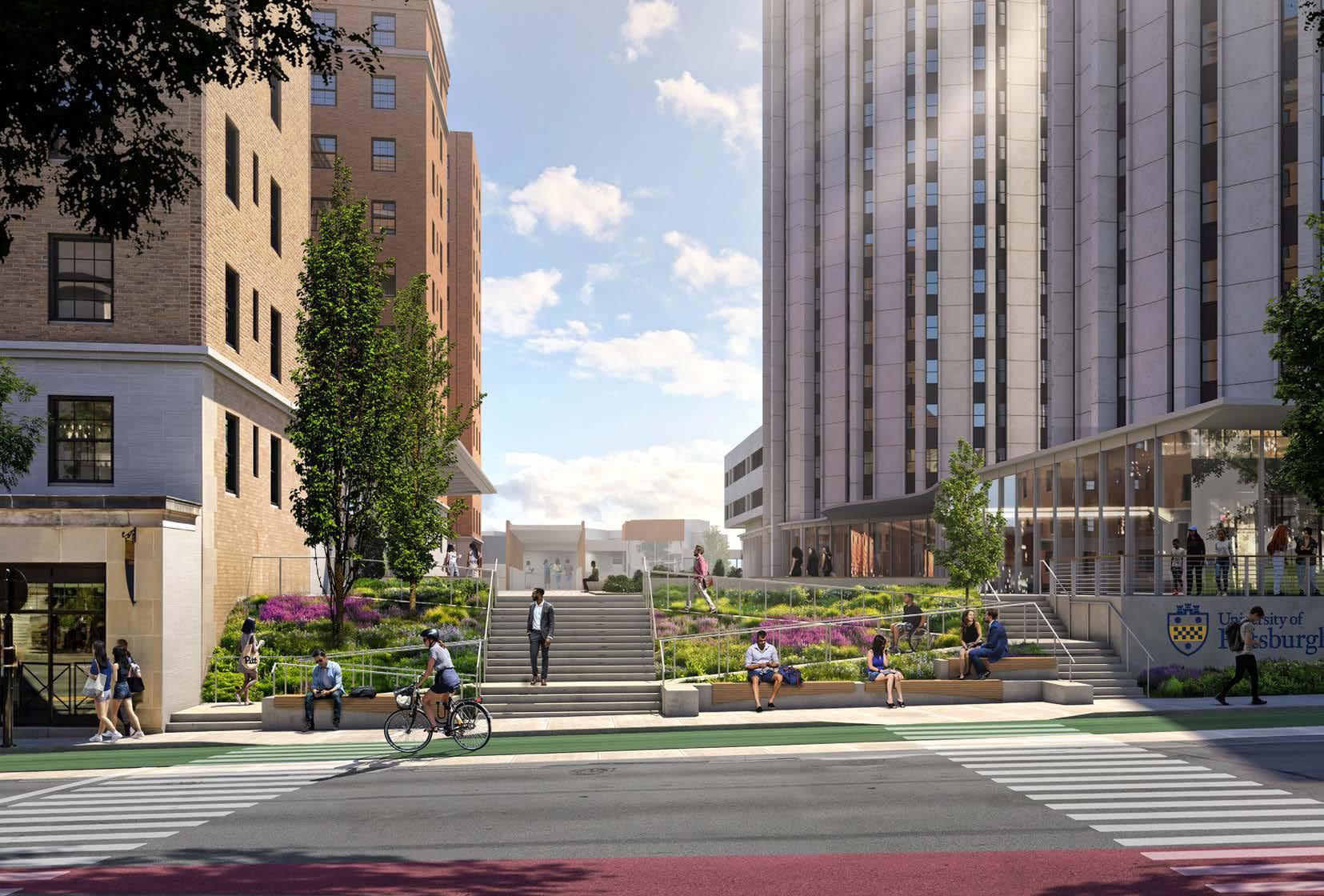
A renewed Litchfield Plaza illustrating the proposed accessible ramp to Fifth Avenue
Proposed Gateway and Music Site Housing Development at Fifth and Bellefield
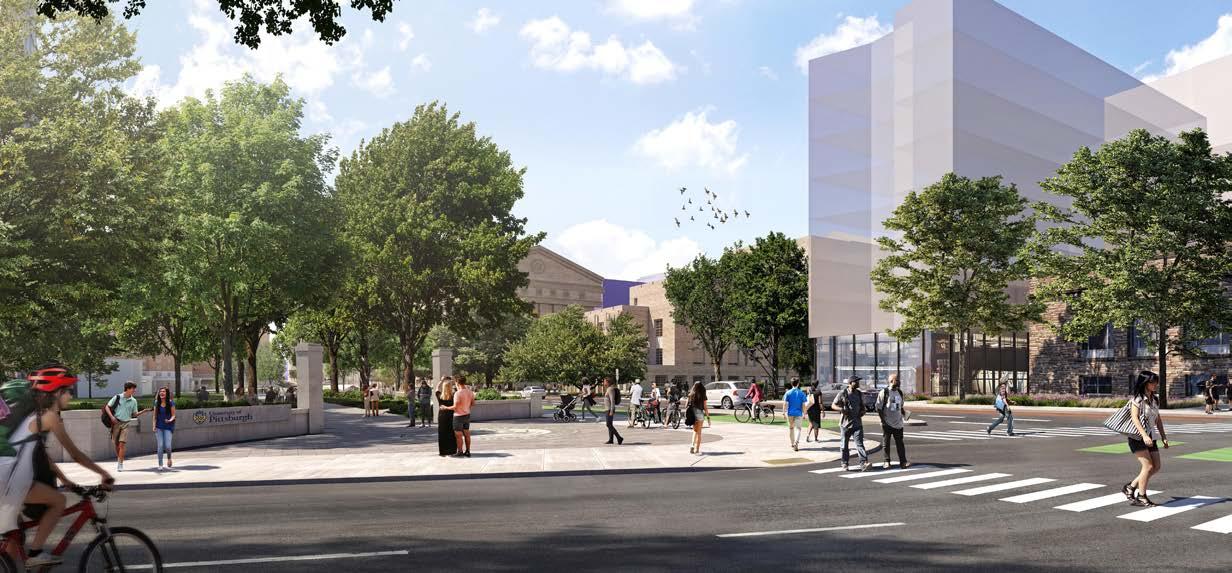
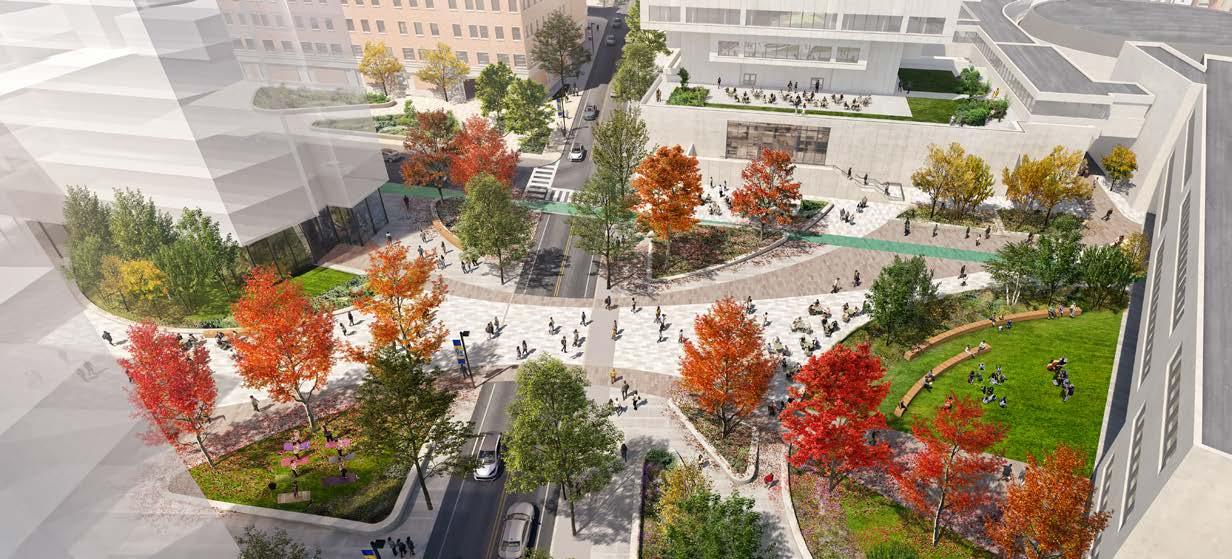
Proposed Posvar Gateway
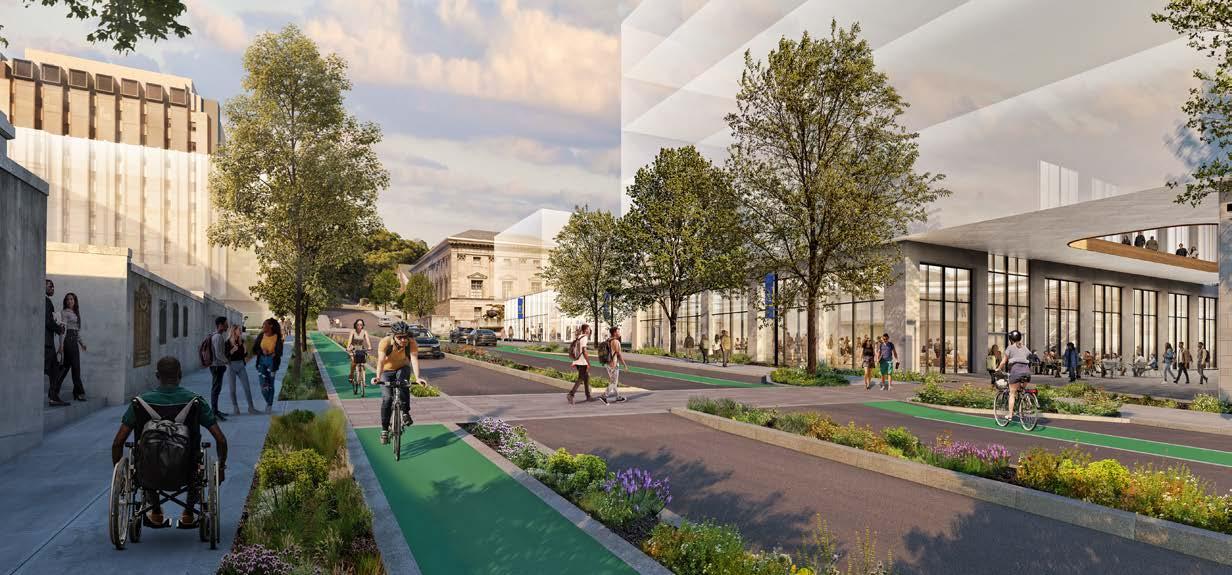
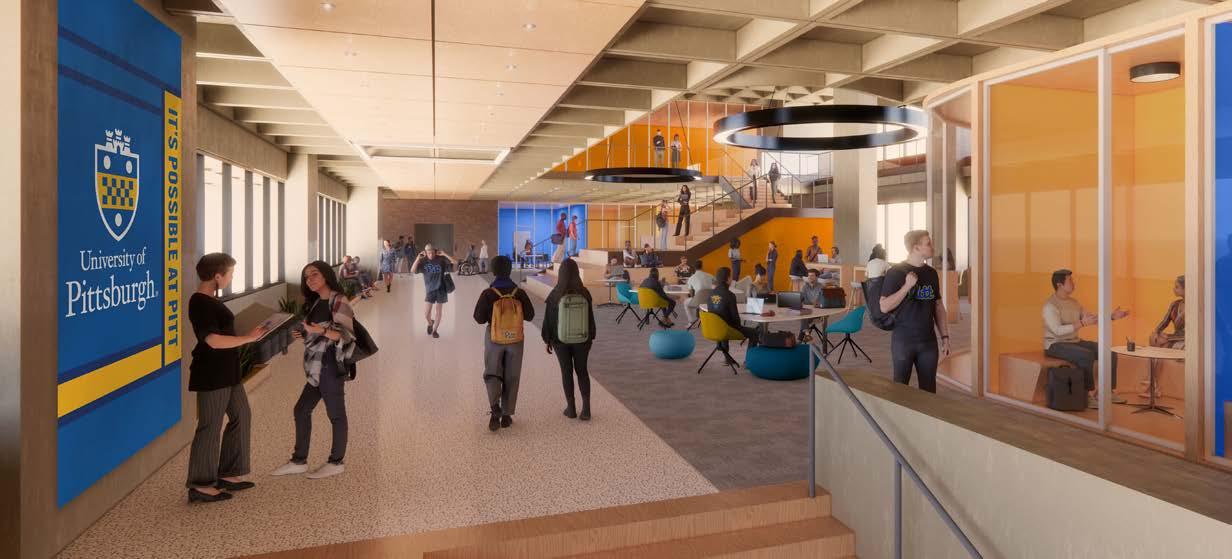
Proposed development and streetscape improvements at One Bigelow
HEALTH SCIENCE AND INNOVATION DISTRICT
The Health Science and Innovation District includes the School of Medicine and the Health Sciences located north of Fifth Avenue and the area along Forbes Avenue, which aligns with the Pittsburgh Innovation District.
The plan reinforces existing Health Science programs in the School of Medicine, School of Nursing, School of Dentistry, School of Pharmacy, School of Public Health, and the School of Health and Rehabilitation Sciences—while providing recommendations for incremental renovations and public realm improvements. It proposes three major renovation projects (Lothrop, Victoria and Salk Hall Annex) as well as the redevelopment of the following sites:
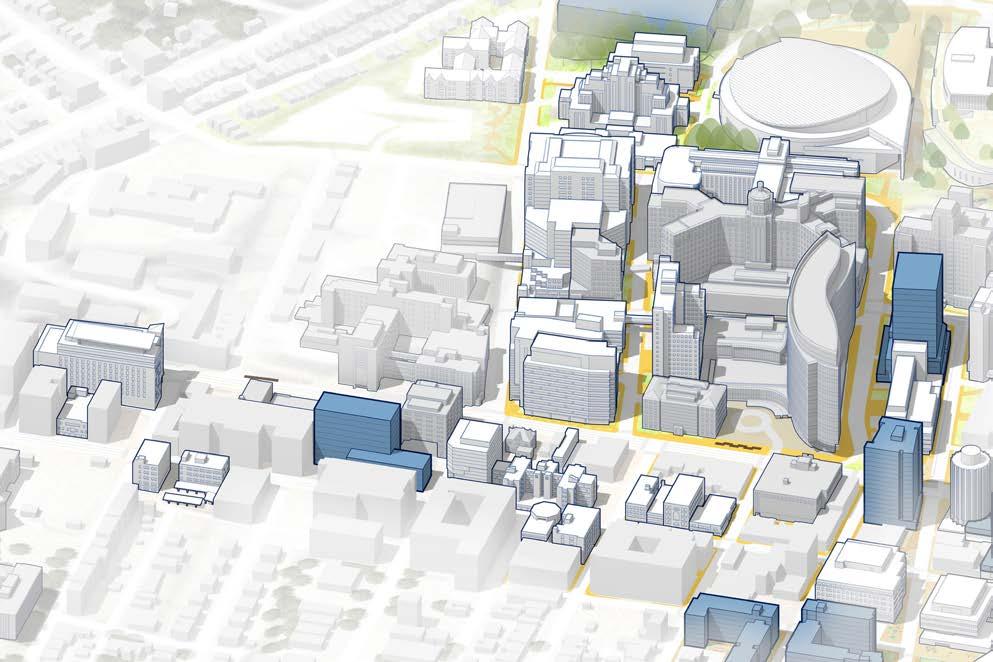
• Crabtree Site: Redevelopment of Crabtree allows for a multi-disciplinary academic and research building featuring a ground level collaboration hub that bridges Health Sciences, research, engineering, and innovation.
• Croatian Fraternal Union and Next-Tier Bank Sites: Redevelopment of the combined sites accommodates growth in the Health Sciences.
Building off the Pittsburgh Innovation District, the Health Science and Innovation District convenes university anchors, encourages cooperation between university and industry, fosters growth for startups and entrepreneurs, and nurtures community engagement and development. It also supports the public realm improvements planned by the City of Pittsburgh, notably streetscapes and BRT services along Forbes and Fifth Avenue.
In addition, Pitt envisions an incubator as a launchpad at 3343 Forbes Ave to provide space for incubation and acceleration as part of a life science startup ecosystem.
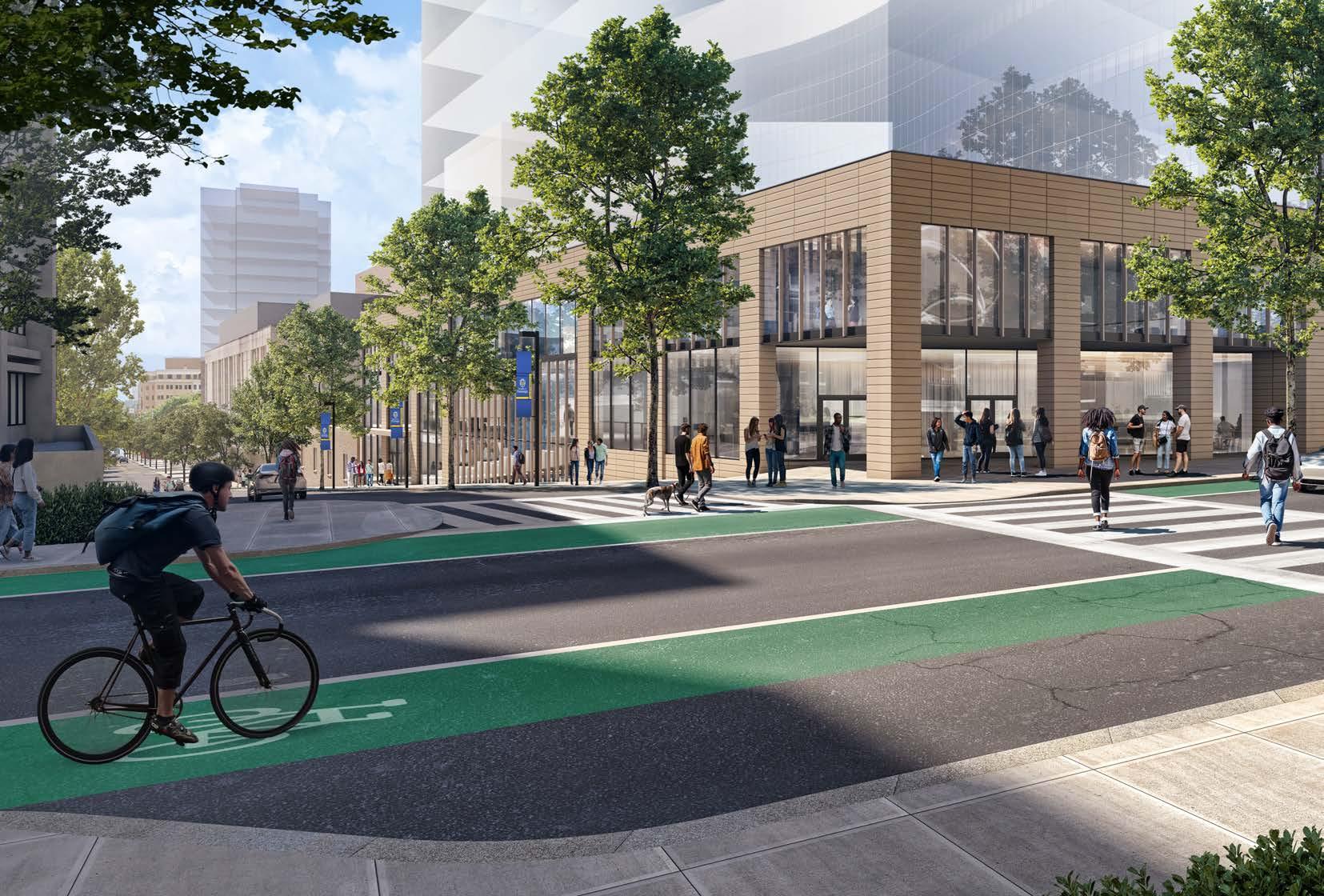
Public Realm Improvements and New Academic and Research Development at Crabtree Site
HILLSIDE DISTRICT
Located immediately to the northwest of the Central Campus and Health Science and Innovation Districts, the Hillside District’s major facilities include athletics, student housing, recreation fields and related programs.
The plan envisions improvements to the public realm, campus gateways, renovated and new athletic and recreation facilities, new student housing and expanded parking facilities. Given the challenging topography of the district, the plan establishes greater connectivity with adjacent districts through an integrated accessibility and open space network.
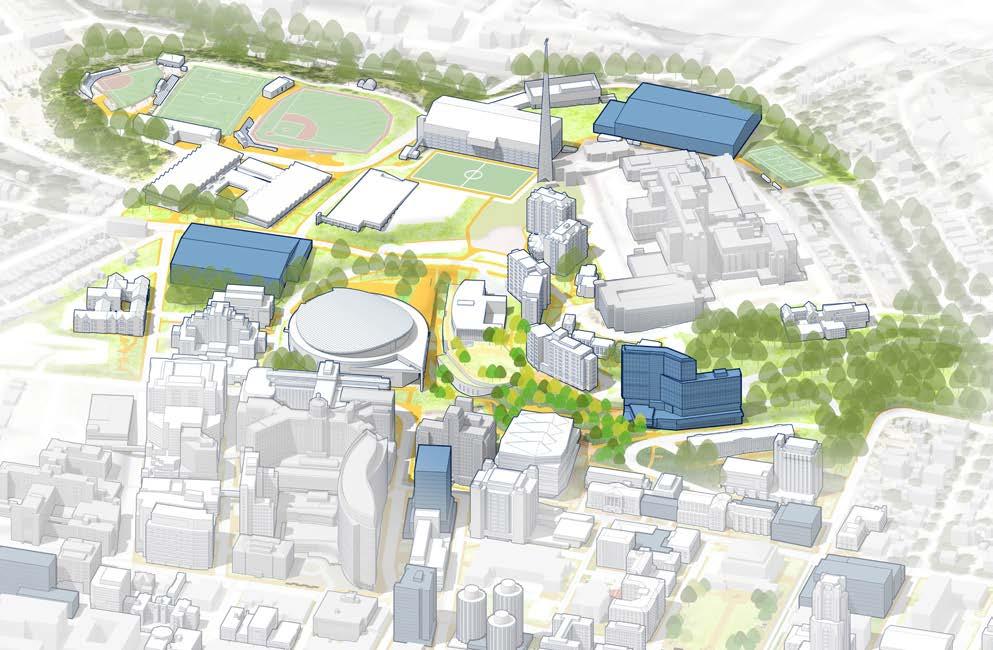
Proposed facilities include:
• Indoor Track Facility Field House and Parking Garage: Located on the Fitzgerald site, an indoor track facility sits on top of a proposed garage integrated with the steep slope conditions of the site.
• Basketball Practice Facility: a renovated east wing of Trees Hall includes a Women’s and Men’s basketball practice facility along with locker rooms, strength conditioning, coach offices and meeting rooms.
• Campus Recreation Sports Dome: replacement of the Pitt Sports Dome provides a permanent indoor facility for campus recreation.
• Band Facility: dedicated band support facility attached to the proposed Campus Recreation Sports Dome.
• Petersen Events Center: relocation of basketball practice and the recreation center out of the Peterson Events Center vacate a space for other potential uses such as an athletics welcome center, hall of fame and student athlete success center.
• OC Lot Field: a new turf field supports the campus recreation program.
• Campus Housing: a new residence hall, known as Hillside Housing, features lower level parking integrated into the steep slope conditions with student housing above.
Allequippa St
Allequippa St
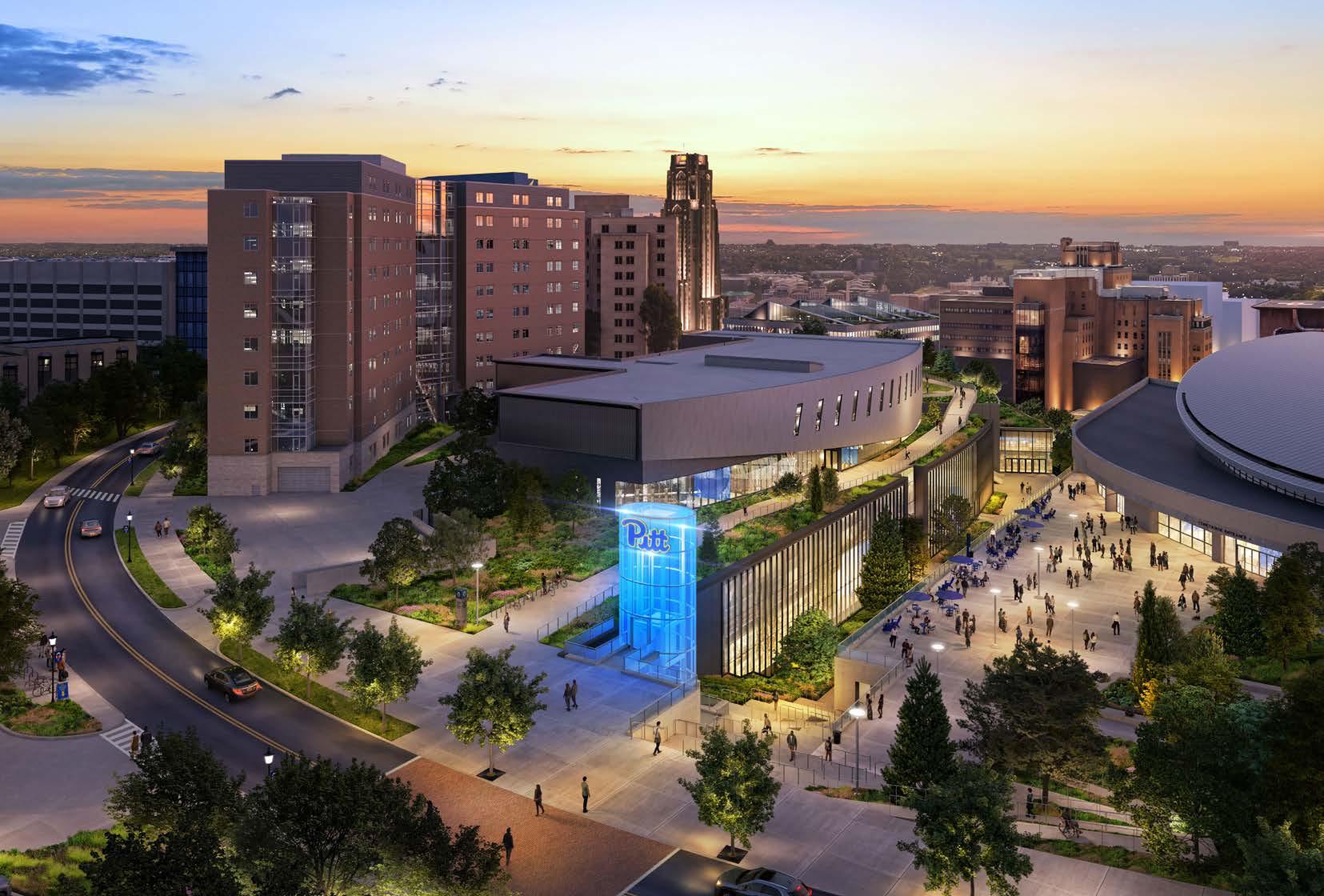
Proposed Victory Heights Gateway at Allequippa Street