Envisioning the Future
EXECUTIVE SUMMARY 04
INTRODUCTION AND PURPOSE 07
A Plan that Builds on Pitt’s Strengths
Alignment of the Physical and Strategic Framework Outreach and Process
EXISTING CONDITIONS AND OPPORTUNITY SITES 21
Campus Context History of the Campus
Campus Physical Attributes
Opportunity Sites
FIVE CORE IDEAS OF THE CAMPUS MASTER PLAN 55
1. A Place of Academic Excellence and Innovation
Health Sciences
Academics (Non-Health Sciences)
2. An Enriching Student Experience
Athletics and Recreation Projects
Housing, Additional Recreation, and Student Life
3. A Distinctive, Welcoming, and Attractive Urban Campus
Open Space
Streetscape Improvements
Campus Arrival Points
4. A More Connected, Outward-Looking, Engaged University
Innovation
Transportation and Mobility
5. A Place that Seeks Synergy and Efficiency
Renovation Opportunities
Anticipated Building Modifications
Campus Support
Sustainability in the Campus Master Plan
IMPLEMENTATION 117
Campus Master Plan
Implementation Phasing Strategy
Drivers of Future Campus Investments
A Living Document: Adapting to Change
A LETTER FROM THE SENIOR VICE CHANCELLOR
Dear University community,
I am excited to share our Campus Master Plan with you. Broadly speaking, this plan is a framework for the University of Pittsburgh’s progress over the next 20 to 30 years—a period that will lead us toward unparalleled impact and academic excellence. It is an exciting and inspiring look at what Pitt can be, and a vision that we want our community to be proud of. That said, it is important to recognize that the Campus Master Plan is not a fixed document, but rather a living plan. While its vision will remain constant, the plan wrapped around it will remain flexible as new opportunities and priorities arise.
Beyond being a working document, the plan is the product of a community. We knew that any comprehensive campus plan would require input from and collaboration with our faculty, students, and staff, as well as our neighbors and local leaders. We listened, deliberated, and collaborated through no fewer than 17 community meetings over the last year and a half. These meetings engaged our many partners, both within our University and in the surrounding Pittsburgh community, and many of the ideas that we heard during these sessions have shaped this plan.
That collaboration yielded five aspirational focus areas:
• A Place of Academic Excellence and Innovation
• An Enriching Student Experience
• A Distinctive, Welcoming, and Attractive Campus
• A More Connected, Outward-Looking, Engaged University
• A Place that Seeks Synergy and Efficiency
The plan is also a physical manifestation of Pitt’s strategic plan. It lays out a cultivated set of campus options that tells us what is probable, possible, and preferred in terms of potential development to support the University’s mission. These options have one basic end goal: to advance Pitt’s mission and our impact on the community, the region, and the world.
This is an exciting and inspiring vision—one that I hope you will see as positioning Pitt and the city of Pittsburgh—for even greater success.
Sincerely,
Greg Scott Senior Vice Chancellor for Business and Operations

Executive Summary
The University of Pittsburgh’s Campus Master Plan is intended to be a flexible framework for future development. It also serves as a strategic roadmap for campus-wide renewal and growth while balancing visionary goals with what can be realistically achieved and implemented. The plan represents the culmination and refinement of planning concepts that have been vetted and assessed by a wide group of stakeholders. These concepts can be summarized into five overarching core ideas.
A Place of Academic Excellence and Innovation
1 2 3 4 5
An Enriching Student Experience
Pitt is unlike almost any institution in the world because of the proximity of its wide array of undergraduate and graduate programs and institutional partners. To better connect these various programs and partners, the plan proposes stronger east-west connections across campus, which will create better synergies among teaching, research, and clinical uses. New buildings along this link reinforce Pitt’s role as a place of academic and research excellence and innovation. These proposed east-west connections are intended to capitalize on adjacencies, create multidisciplinary synergies, and advance campus renewal and stewardship in alignment with the Pitt Sustainability Plan.
Pitt’s topography is a distinguishing element of the campus but is also a challenge in regard to connectivity.
The plan proposes a north-south cohesive network of student life facilities that links residential and student services. A combination of projects integrate living and learning to transform the student experience. The plan intends to connect appropriately scaled facilities that support mind and body, improve student support, and increase cohesion within the campus and beyond.
A Distinctive, Welcoming, and Attractive Urban Campus
Improvements in open space, streetscape, and wayfinding will make Pitt a more distinctive, welcoming, and beautiful urban campus. The plan proposes ways to strengthen Pitt’s identity, support accessibility, and enhance sustainability. This includes meaningful gathering places, increased tree cover and landscaped areas, pedestrian and bicycle focused streets, and enhanced campus arrival points that announce Pitt’s presence and improve wayfinding.
A More Connected, Outward-Looking, Engaged University
A Place That Seeks Synergy and Efficiency
Pitt’s urban location in the heart of a booming tech and innovation city provides additional opportunities beyond the campus but also a responsibility to be a strong partner in improving the surrounding area. The concepts proposed in the plan help attract talent and improve accessibility and the quality of life in Oakland and Pittsburgh. Pitt has a unique opportunity to be a partner and a catalytic anchor for the development of an Innovation District along Forbes and Fifth Avenue. Across the campus and beyond, a more robust transportation network that includes all modes – pedestrians, bicycles, transit, and vehicles – will transform the University campus.
Pitt can seek synergy and efficiency by improving aging facilities, reinforcing shared facilities, promoting affordability and resiliency, and providing new facilities that are more agile and efficient. The plan balances investment in aging facilities with redevelopment through new construction when existing buildings have outlived their useful life or are not the highest and best use of the land. The plan also embraces the goals and aspirations of the Pitt Sustainability Plan and advances the community’s commitment to a sustainable future.
INTRODUCTION AND PURPOSE
The University of Pittsburgh’s Campus Master Plan—shaped by more than a year of listening and collaborating with students, faculty, staff, and local residents—has been designed to strategically align with University priorities.
As a result, the plan illustrates how the institution’s Pittsburgh campus can evolve over time in a way that supports academic excellence, the student experience, and connection to community.
Readers of this document will learn some of the key possibilities and considerations that the University expects to navigate as it plans for Pitt’s future within Oakland both tomorrow and in the decades to come.
A Plan that Builds on Pitt’s Strengths
Pitt is a premier urban research university with a diverse student population, top-tier faculty and staff, and world-renowned research. The Campus Master Plan aims to leverage the University’s unique characteristics and competitive advantages. These opportunities include Pitt’s premier collocated programs, a campus in the heart of one of the world’s most innovative cities, and an educational experience that is unparalleled in value and impact.
One of Pitt’s greatest strengths is having 16 schools and thriving multidisciplinary centers all located in the same place. This rich combination of graduate and undergraduate programs in a condensed area creates a vibrant intellectual environment. Having the health sciences programs, engineering, and professional schools immediately adjacent to a world-class health care system—the University of Pittsburgh Medical Center (known formally as UPMC)—is another key strength. This relationship enables close ties between teaching, research, and clinical efforts. The plan seeks to leverage the proximity and strengthen collaboration among Pitt’s undergraduate, graduate, research, and clinical operations.
Pitt’s urban location in the heart of a booming tech and innovation city is another differentiator. This setting encourages students to develop
independence and an appreciation for cultural diversity. The city is filled with entertainment, shops, restaurants, theaters, galleries, museums, sports teams, and more. At the same time, Pitt’s campus offers many places for enjoyment, including nearby city parks. Pittsburgh’s innovation economy is strong and growing. Few places have such a strong innovation ecosystem as Pittsburgh’s greater Oakland neighborhood, including Pitt, UPMC, Carnegie Mellon University, other institutions, corporate partners, startup companies, and co-working space.
One of the University’s core priorities is to provide top value. Accommodating a cost-conscious student population on campus is critical to supporting the University’s mission and purpose. The physical environment needs to reflect this priority by maintaining an affordable environment for living and learning,
increasing the utilization of facilities, and organizing the campus to improve the operational efficiency.
Collocated schools adjacent to a premier medical center in a vibrant urban setting allow for unparalleled research, teaching, and clinical synergies. These dynamics spur innovation and position Pitt as a leader in interprofessional education and research. The plan seeks to capitalize on these assets by providing high quality space that fosters collaboration, stronger connections, and more outwardly focused campus buildings and landscapes.
Pitt’s mission is to advance teaching, research, and public service. This three-part commitment enables the University to serve others by:
Alignment of the Physical and Strategic Framework
1 2 3
Educating students from the region, the nation, and the world
Expanding boundaries of knowledge, discovery, and technology
Enhancing quality of life in the western Pennsylvania region and beyond
The last major master plan for the University was completed by Deeter Ritchey Sippel in 1967. It envisioned a great north-south expansion of the campus with connected residential communities in the north and several major academic buildings in the south. Much of the 1967 plan was eventually carried out, but some of the larger expansions were reduced due to community opposition. This ultimately resulted in greater dialogue between the University and the community, which continues to this day.
Developed in 2016, the University’s Strategic Plan launched a new phase of institutional planning, determined to build on strengths and confront future challenges to propel Pitt forward as a top university deeply engaged in global issues. The Strategic Plan is a result of wide-ranging discussions with the University community and beyond including community leaders in the region and commonwealth, the Board
of Trustees, alumni, faculty, staff, and students. The plan articulates strategic priorities and six goals:
1. Advance educational excellence
2. Engage in research of impact
3. Strengthen communities
4. Promote diversity and inclusion
5. Embrace the world
6. Build foundational strength
These goals, as well as evolving teaching, research, and clinical demands, all affect the University’s physical facilities and campus infrastructure.
The Campus Master Plan is a bold, visionary, and achievable plan that supports Pitt’s mission of teaching, research, and public service. It will help carry the University’s positive momentum into the decades to come.
EXISTING CAMPUS
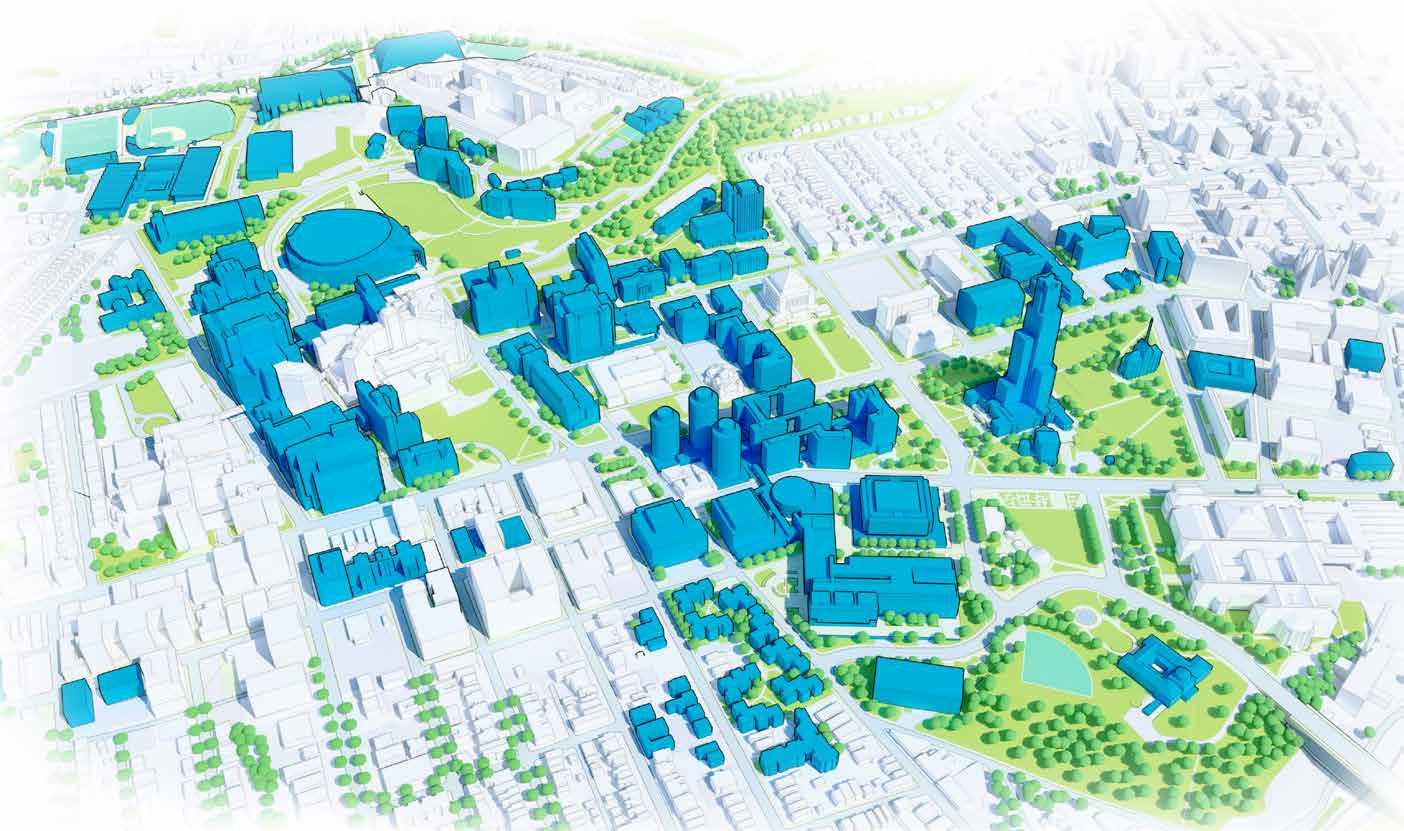








CAMPUS MASTER PLAN
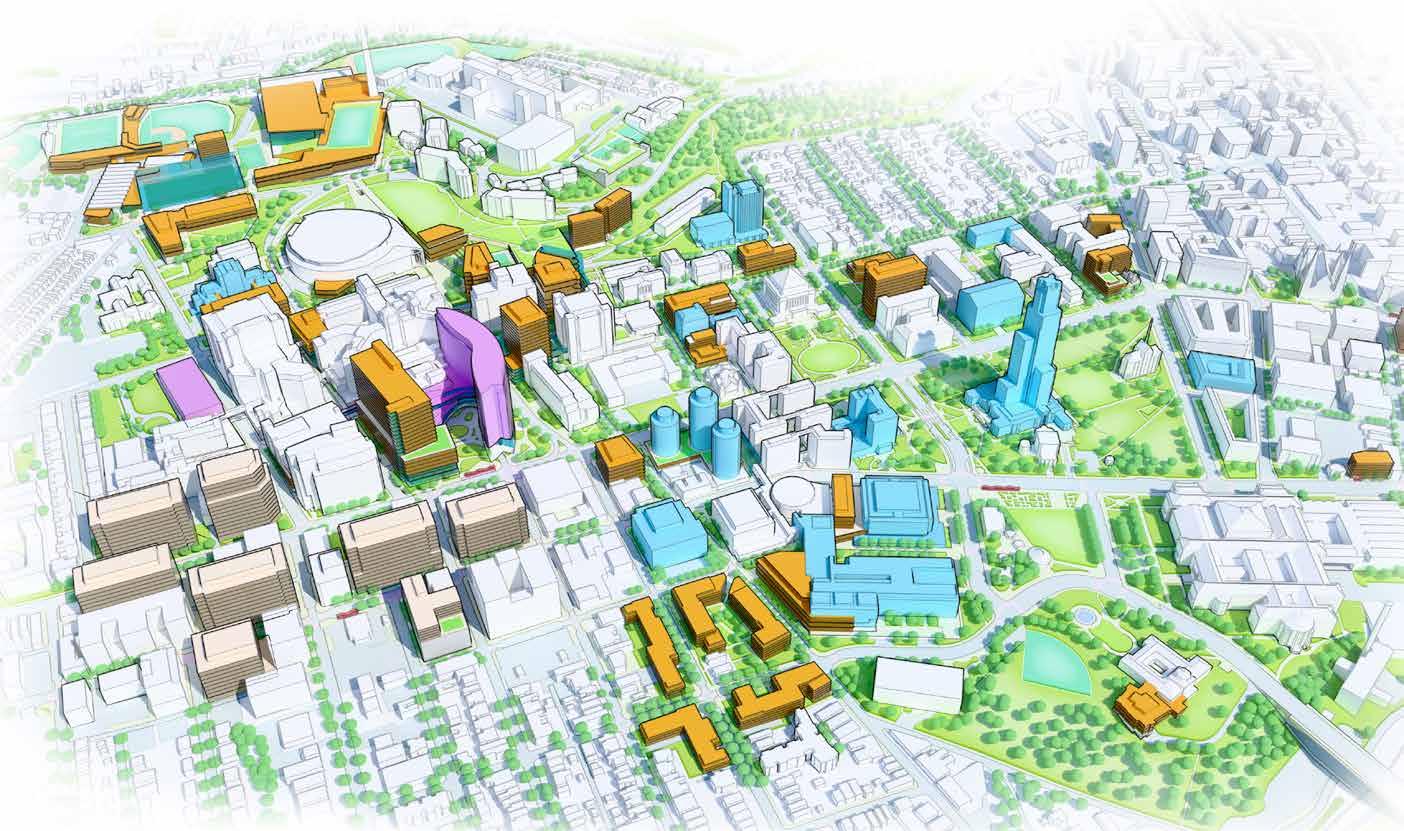
Outreach and Process
In June 2017, Pitt kicked off the first phase of its planning process. This phase—Define + Assess—involved assessing both ongoing and active planning efforts, documenting existing conditions and identifying key issues.
Following this phase, Pitt community members moved to the Envision phase, which established core planning principles and defined overarching themes and goals for the plan.
The third phase—called the Test phase—generated design ideas for different elements of campus, such as academics, research, student life, and recreation.
Finally, in the Synthesize phase, input from the prior planning steps were woven into a cohesive phased plan that encompassed potential building, infrastructure and grounds improvements while also aligning with the University’s strategic sustainability goals.
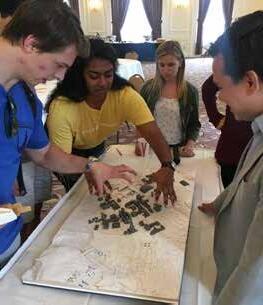
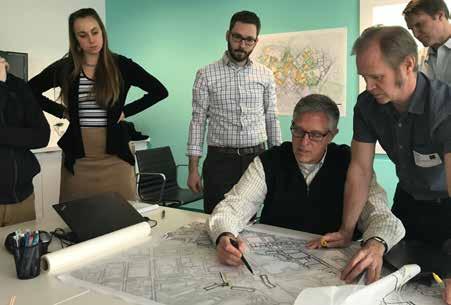
Throughout all four phases of the planning process, Pitt sought to gather input from and collaborate with as many community members and neighbors as possible. Members of the planning team hosted interviews, workshops and listening sessions with a wide range of stakeholders (see page 18 for details on these sessions and their reach).
Beyond these events, Pitt also gathered input online via its Campus Master Plan website and a series of surveys. Nearly 9,000 unique visors contributed meaningful feedback through these channels.
CONTRIBUTORS
UNIVERSITY LEADERS
Board of Trustees
Chancellor
Core Working Group
Deans
Pitt Facilities Management
Senior Leadership Team
Steering Committee
Sustainability Stakeholders
CONTRIBUTORS
Alumni
Business Partners
Community Liaisons
Donors
Innovation Community
Neighbors
Media
Property and Business Owners
COLLABORATORS
Carlow University
Carnegie Library
Carnegie Museum
Carnegie Mellon University
Faculty and Staff
Falk Laboratory School
Pittsburgh Park Conservancy
Student Government Board
Soldiers and Sailors
Staff Council
State and City Government
Students
University Senate
UPMC Health System
Western Psychiatric Institute

The planning process engaged Pitt’s many community partners. This list of participating groups and organizations include:
• Bellefield Area Citizens Association
• Community Human Services
• Oak Hill Community Resident’s Council
• Oakcliffe Community Organization
• Oakland Business Improvement District
• Oakland Planning & Development Corporation
• Oakland Transportation Management Association
• Peoples Oakland
• South Oakland
Neighborhood Group
• West Oakland
Neighborhood Council
Pre-existing, concurrent, and adjacent planning initiatives
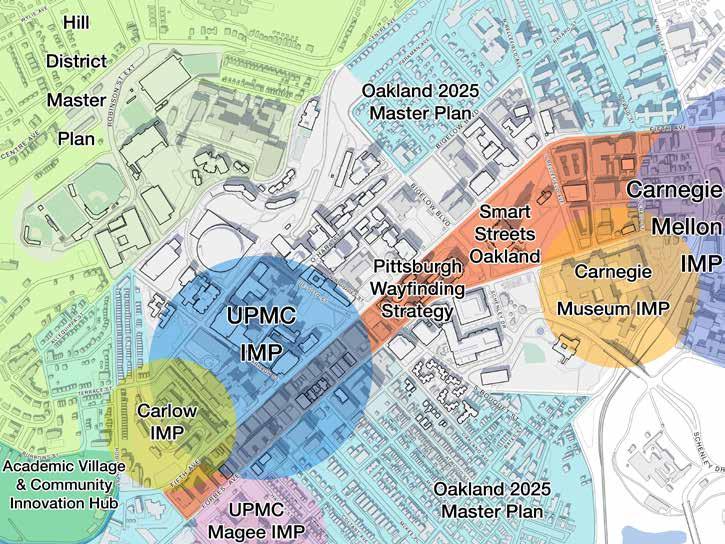
Beyond engaging the surrounding campus and community, the planning process also considered pre-existing, concurrent, and adjacent planning initiatives. Examples include: the Pitt Sustainability Plan, the Comprehensive Energy Master Plan, Oakland 2025 Master Plan, and Pitt Housing Master Plan, as well as studies for individual schools within the University.
EXISTING CONDITIONS AND OPPORTUNITY SITES

Campus Context
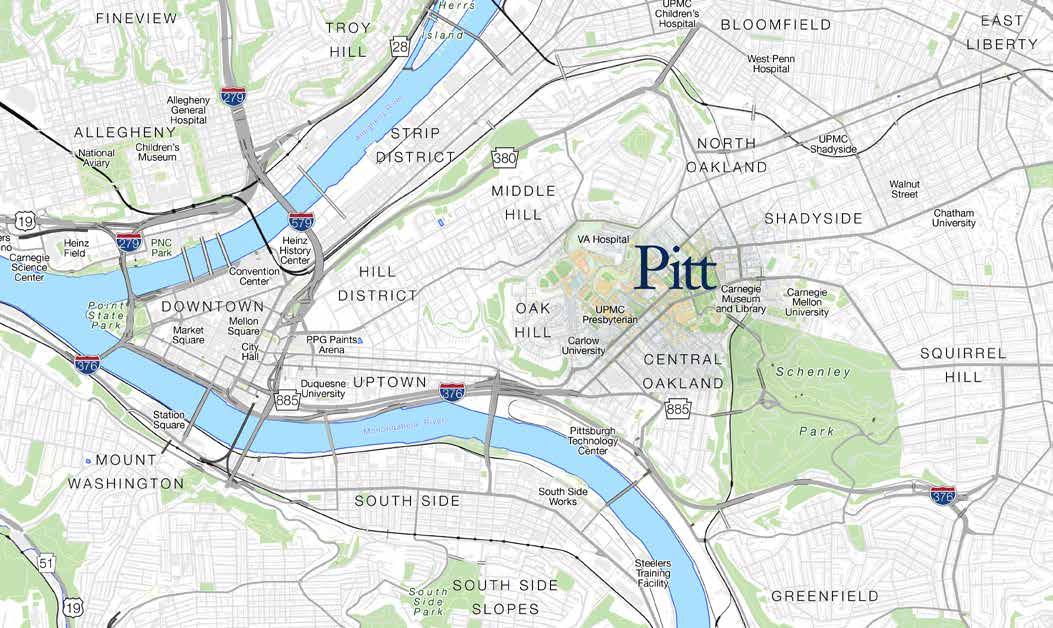
Pitt is located just three miles east of downtown Pittsburgh in the historic Oakland neighborhood along the Forbes and Fifth Avenue corridor.
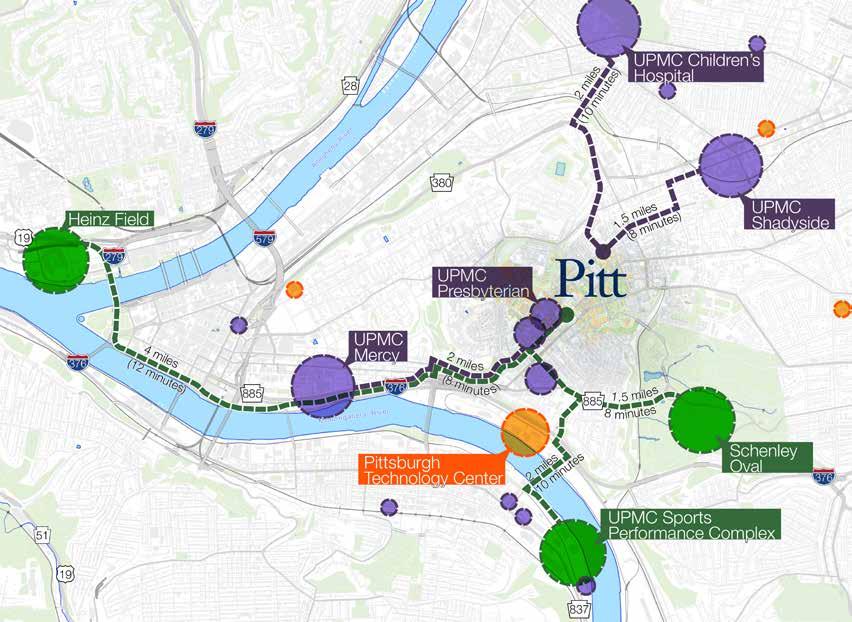
The Oakland area is the third largest economic zone in Pennsylvania and it capitalizes on Pittsburgh’s strong innovation ecosystem with diverse software, robotics, medical devices, biotechnology, health care, and energy businesses thriving across the city. While the 132-acre Oakland campus is considered the University’s main campus, there are several other facilities and shared athletics venues throughout the city. Pitt’s healthcare partner, University of Pittsburgh Medical Center (UPMC), also has a significant presence beyond Oakland.
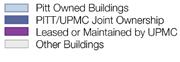
Though Pitt and UPMC are separate institutions, they maintain close affiliations with Pitt overseeing academic oversight and faculty research and UPMC overseeing clinical activity. These connections manifest in a physical form that shapes the character of the western portions of campus, where each institution’s property ownership and leased spaces often overlap.
The Oakland area serves as the city’s academic, healthcare, and cultural heart and is home to Pittsburgh’s second largest concentration of commercial and residential activity. Pitt greatly benefits from its collocation with other exceptional institutions beyond UPMC including, but not limited to, Carnegie Mellon University, Carlow University, Soldiers and Sailors Memorial, Carnegie Library and Museum, and Phipps Conservatory. Pitt and these other institutions are surrounded by densely populated single family and multifamily neighborhoods with rich history and a strong sense of pride. The majority of the campus is within the city’s street grid, but the setting is unlike any other distinguished urban research university with its iconic open spaces, historic structures, and unique topography.

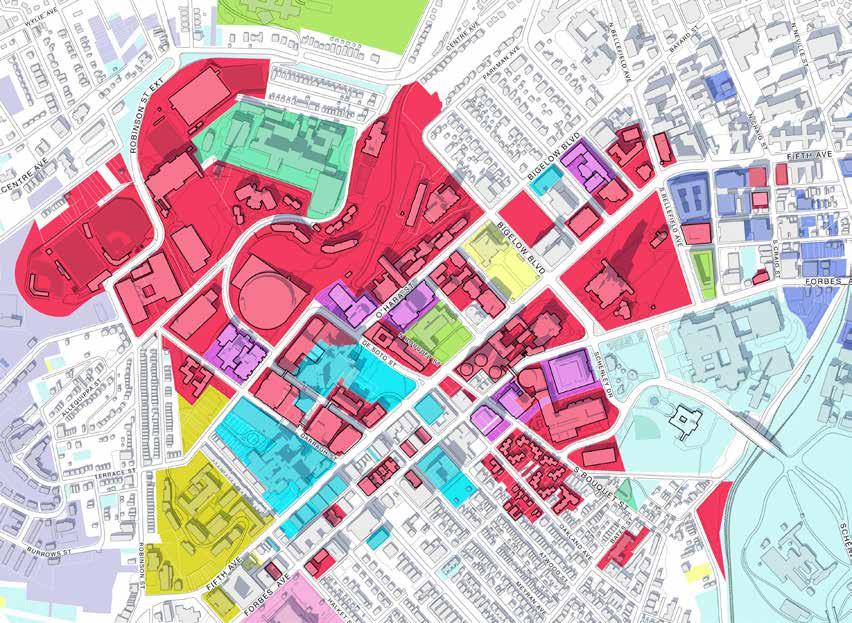





NEARBY PITT AND UPMC FACILITIES
LAND OWNERSHIP
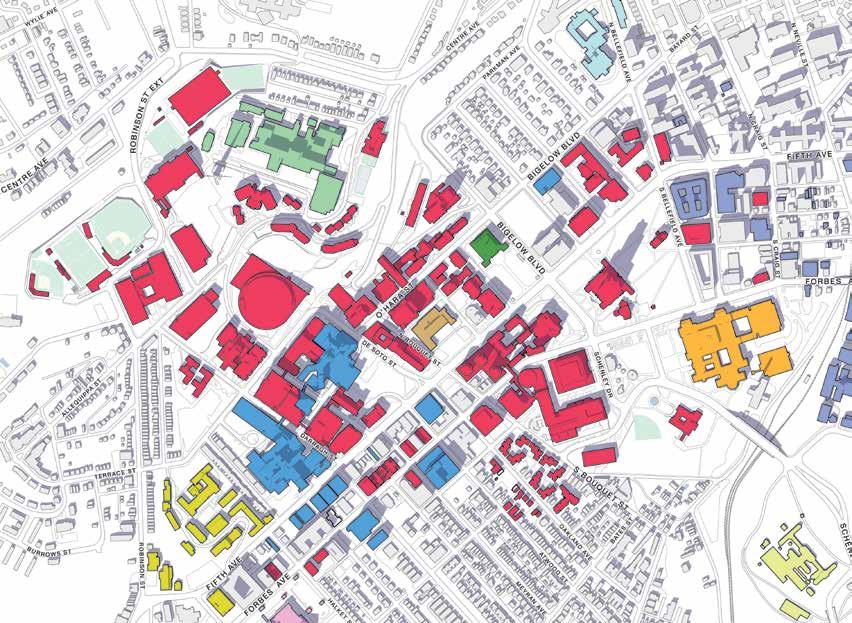
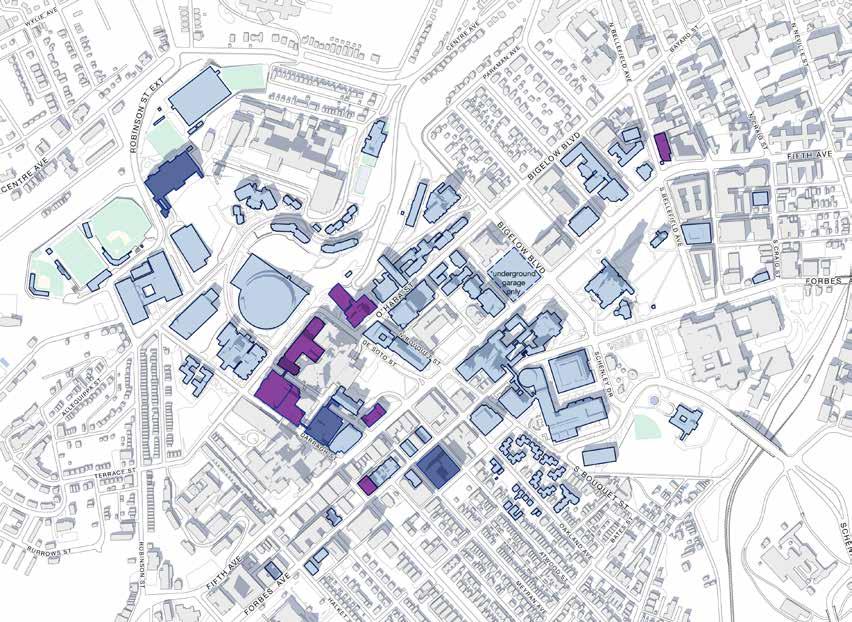
ADJACENT INSTITUTIONS
BUILDING OWNERSHIP AND LEASING
Zoning Context
The University of Pittsburgh is located in a special zoning designation known as the Educational/Medical Institution (EMI) .
This designation intends to address three issues:
• Accommodate educational and medical institutions within the urban context
• Enhance the development and expansion of these institutions
• Protect adjacent context, especially when institutions border neighborhoods
The vast majority of Pitt-owned land is located within the EMI district. Portions of the University are located within or directly adjacent to the Oakland Public Realm District, a designation created to maintain the mixed-use character of the denser portions of Central and North Oakland. As such, this district is non-contiguous, and each sub-district has separate development standards and permitted uses.
Pitt is also adjacent to a variety of residential zoning districts. These designations are based on their predominant housing type and include multi-unit (predominantly in North Oakland), attached residential and semi-detached residential (predominantly in Central Oakland), and detached residential (predominantly in Schenley Farms).
In addition, Pitt falls within, or is adjacent to, historic districts that have
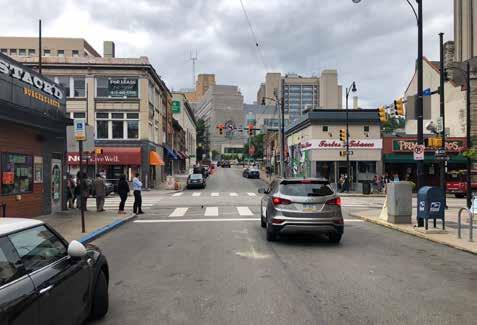
shaped the character of University development and complemented the historic fabric of Oakland.
The most important of these is the Schenley Farms Historic District, listed on the National Register of Historic Places. Contributing properties are eligible for tax incentives, but listing on the National Register does not restrict exterior modifications or demolition.
The Schenley Farms Historic District is made up of two city-recognized historic districts: the Oakland Civic Center Historic District and the Oakland Square Historic District. Any alterations to contributing properties must be approved by the city’s Historic Review Commission.
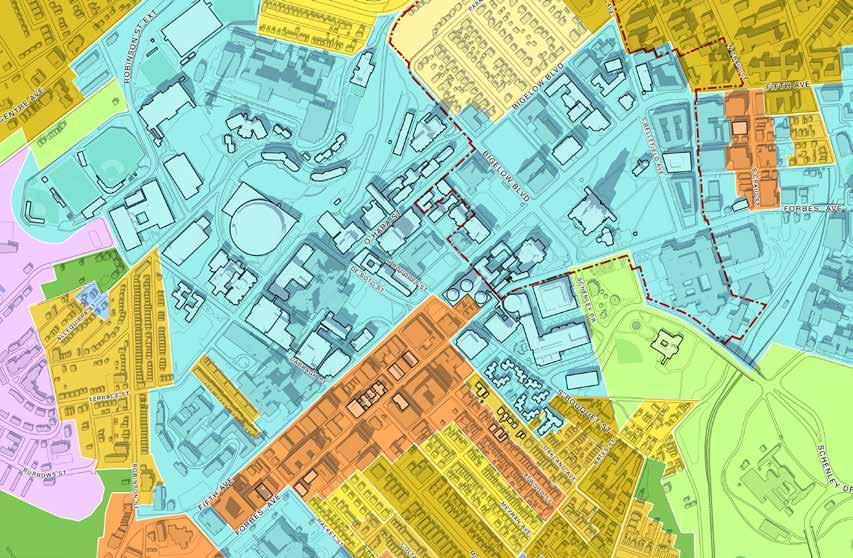


ZONING CONTEXT
Forbes Avenue and Oakland Avenue
History of the Campus
Pitt can trace its roots to a school founded in 1787 by Hugh Henry Brackenridge, in what was then the American frontier. The University moved its physical footprint throughout the city until 1907, when it purchased a 43-acre parcel in what is now Pittsburgh’s Oakland neighborhood.
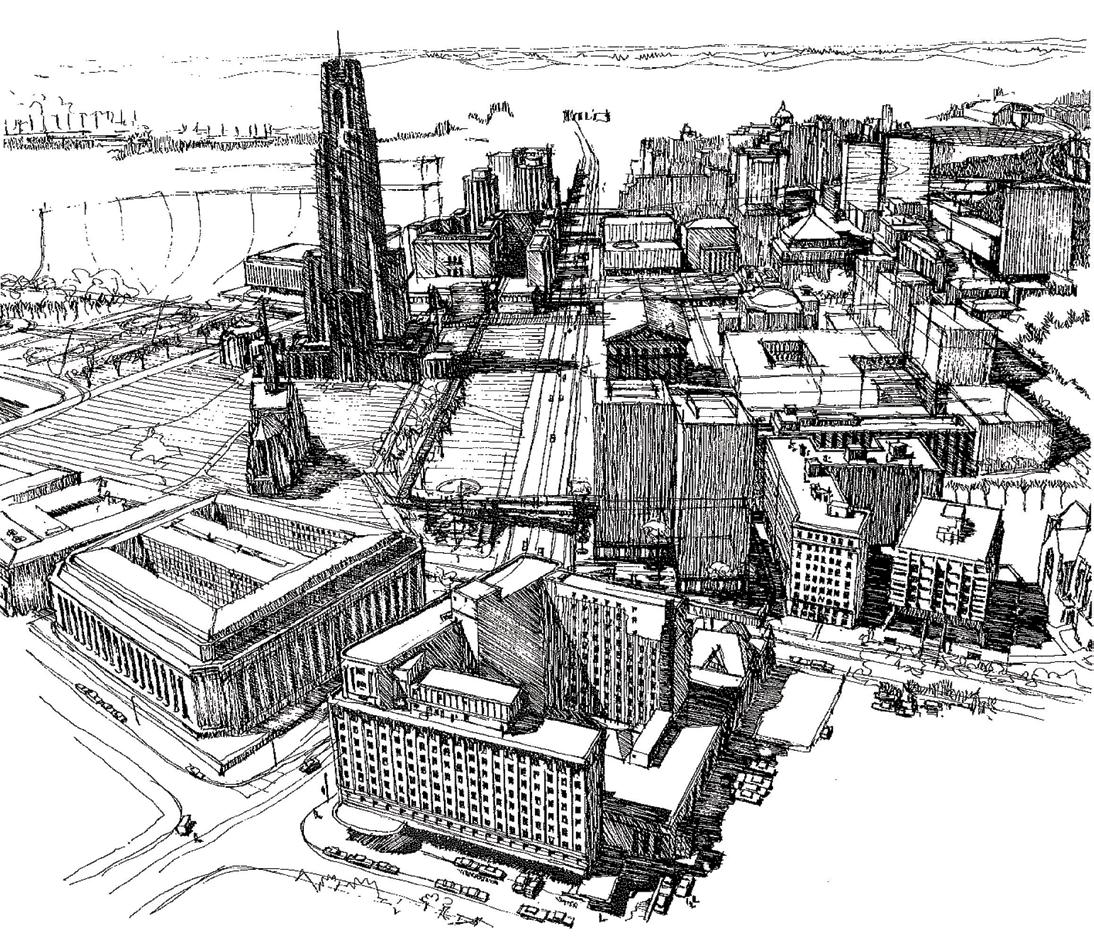
In 1909, Pitt held a nationwide competition to design the future campus. Its winner, Henry Hornbostel, designed what is now known as the Acropolis Plan. However, only a fraction of this plan was carried out as a result of poor access, soil conditions, and financial difficulties.
Following World War I and an influx of students, the University purchased Frick Acres, a largely undeveloped tract of land in the center of the Oakland neighborhood. This parcel is now home to the Cathedral of Learning, one of the city’s signature landmarks and great source of pride for students, faculty, and staff.
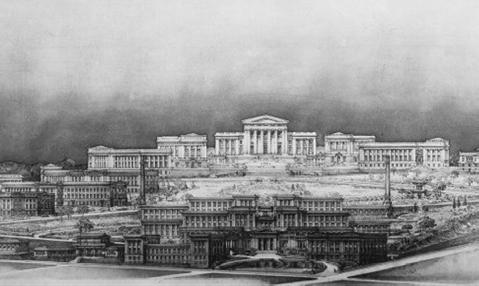
Henry Hornbostel’s Acropolis Plan, 1908
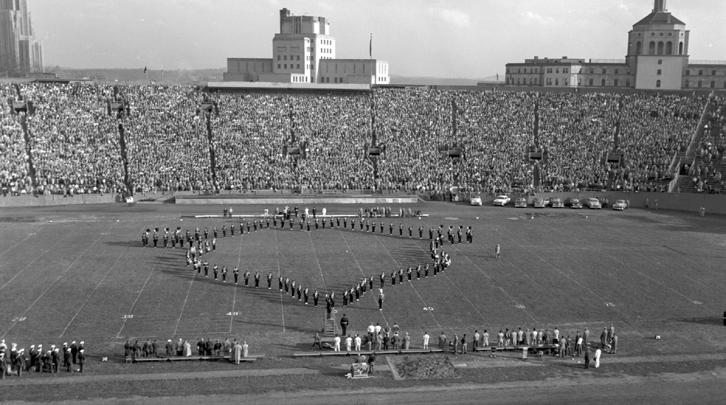
Stadium,
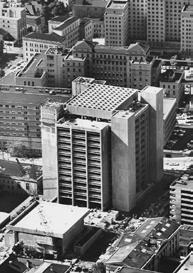
While in Oakland, Pitt has leased or owned facilities for classroom and office space that were once utilized by neighboring institutions (Alumni Hall, Bellefield Hall, Gardner Steel Conference Center). The University also converted apartment buildings (Schenley Quadrangle, Ruskin Hall) for student housing. Throughout the 1950s and 1960s, Pitt constructed several new facilities: The quadrangle for Natural Sciences (Clapp Hall, Langley Hall, and Crawford Hall), a central library (Hillman Library); Old Engineering Hall; Scaife Hall; and the Public Health Building.
In the 1960s and 1970s, the University expanded south across Fifth and Forbes avenues, replacing the former Forbes Field with Posvar Hall, which remains the largest building on campus today. After a period of relatively modest growth in the 1980s and 1990s, Pitt has continued to expand in Oakland.
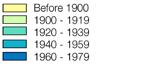
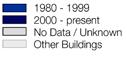
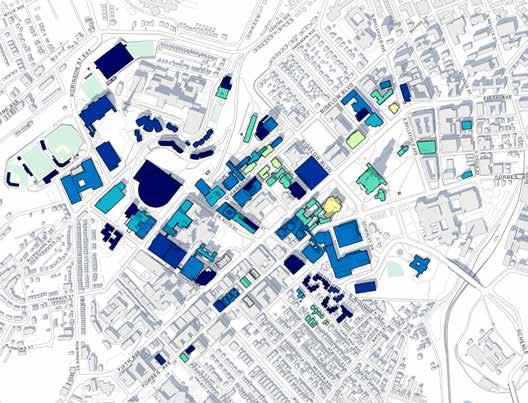
BUILDING AGE
(Year Constructed)

Health Sciences
Pitt established a School of Medicine in 1892. In the first half of the 20th century, the University provided tracts of land to area hospitals to help co-locate academic and clinical activities. In 1955, Pitt acquired the Pittsburgh Municipal Hospital for Contagious Diseases, where Jonas Salk formulated the Polio vaccine. In addition, Presbyterian Hospital’s close affiliation with the University culminated in a shared ownership agreement. This agreement ultimately formed the University of Pittsburgh Medical Center (UPMC).
Pursuing Sustainability
Pitt began making its commitment to sustainability visible in 2005 with the Leadership in Energy and Environmental Design (LEED) Gold certification of the McGowan Institute for Regenerative Medicine. Since then, the University has regularly documented the high-performance attributes of its built environment using the United States Green Building Council’s (USGBC) LEED rating system. The University’s pursuit of a sustainable future also includes regular documentation of the institution’s greenhouse gas invento-
ry, a leadership role in the Pittsburgh 2030 District, and evaluation of new sustainability-focused metrics such as the WELL Building Standard and Living Building Challenge to understand how such benchmarks align with and advance the sustainability of Pitt’s campus.
Benedum Hall under construction, 1971
Pitt
demolished in 1999
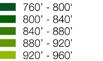
TOPOGRAPHY
Campus Physical Attributes
Topography
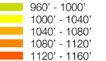
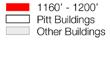
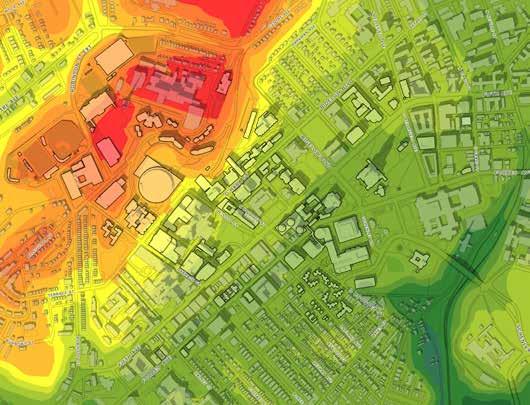
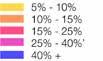
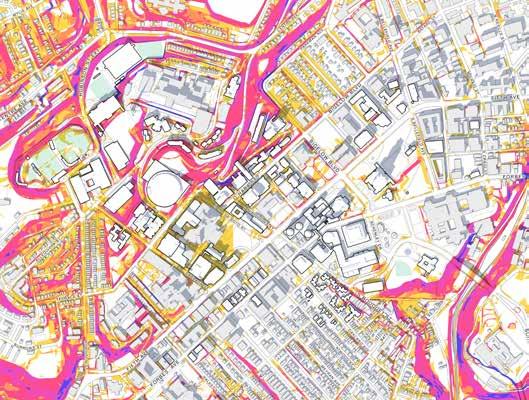
Pitt—like the city of Pittsburgh—is located in hilly terrain, with almost 400 feet of elevation change between the highest and lowest points on campus. North of Fifth Avenue, steep slopes are common, making connectivity and accessibility a challenge on campus.
Pedestrians on DeSoto, Darragh, and North Bouquet Streets (north of Fifth Avenue) must navigate a 5 to 10 percent slope without stairs. Meanwhile, north of O’Hara and Terrace Streets, pedestrians must navigate a 15 to 25 percent slope with the assistance of stairs. These slopes present accessibility challenges, reduce the viability of alternative modes of transportation, such as bicycles, and increase the need for accessible connections across campus. Steep slopes also impact potential building sites, since it is costly to create level building sites and stormwater retention is challenging.
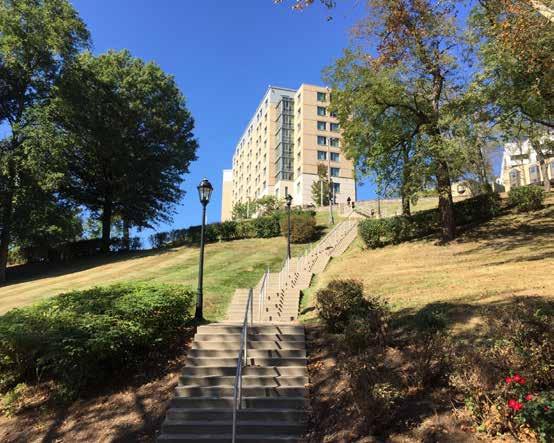
STEEP SLOPES
Steps leading to K. Leroy Irvis Hall
Campus Views and Vistas
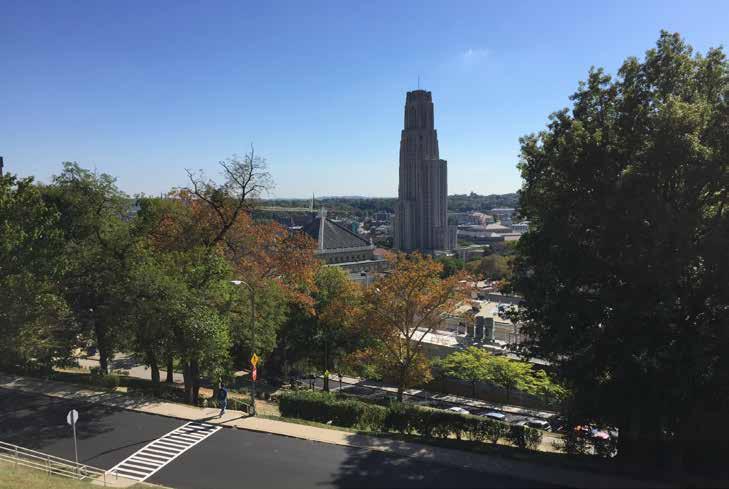
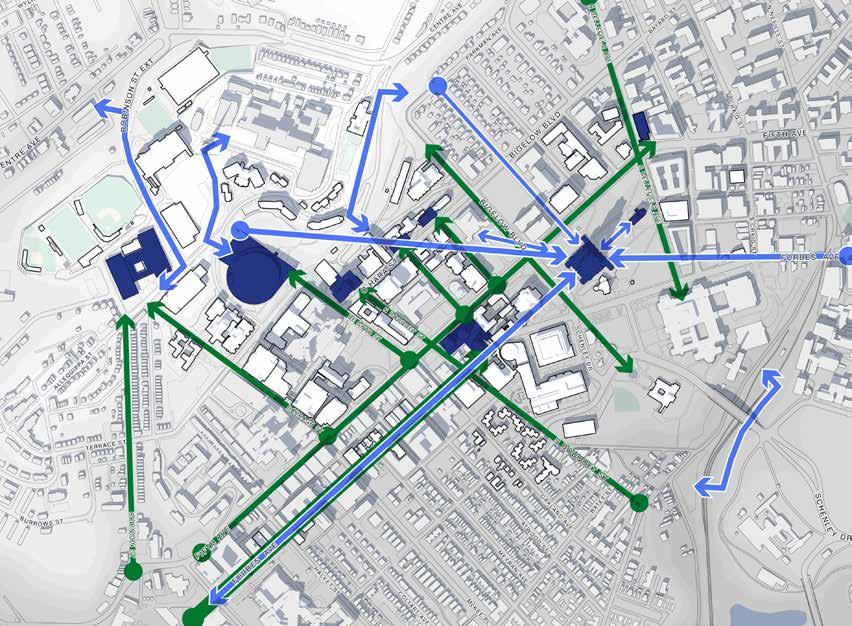
Pittsburgh’s complex topography affects views within and beyond the campus’ built environment and makes a visual impression from the surrounding Oakland neighborhood. The Cathedral of Learning is the central visual landmark and organizing element on the Pitt Campus. The Cathedral is also a symbolic marker of Pitt’s presence and is visible throughout Oakland and many portions of the City, including Downtown.
Important views include:
• The Cathedral and campus from University Drive and from the upper terrace of Petersen Events Center
• The formal relationship between buildings adjacent to Cathedral of Learning and Soldiers and Sailors Memorial Hall
• Cathedral of Learning as a focal point looking east or west along Forbes Avenue
• Looking northwest from Schenley Park toward campus
• Looking from the hilltop toward Downtown Pittsburgh
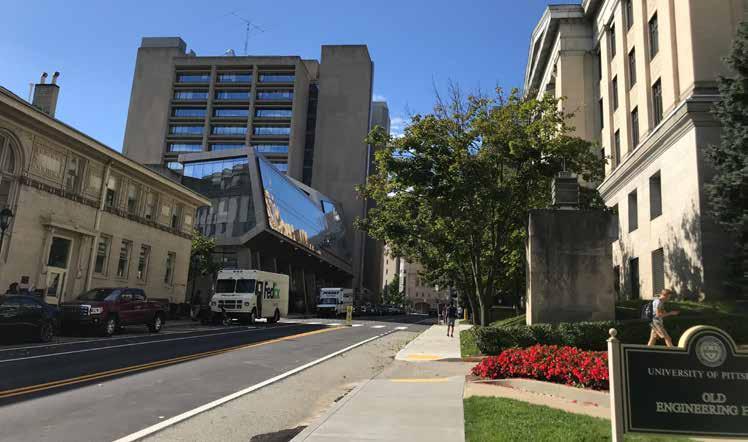
Important street corridors and vistas include:
• The high-density street walls of Forbes and Fifth avenues
• Thackeray and University Place terminating into Greek revival campus buildings
• The high-density street walls and grade change of Darragh and Lothrop Streets
• DeSoto Street’s termination, with significant grade change, into the Petersen Events Center entry
• Bellefield Avenue views of the Cathedral of Learning terminated by the Carnegie Museum
CAMPUS VIEWS AND VISTAS
View of Cathedral of Learning from hilltop
Connectivity
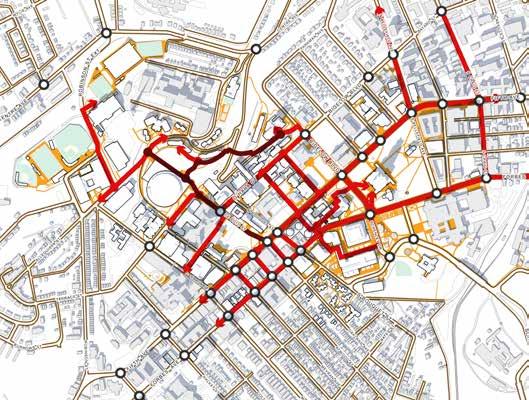
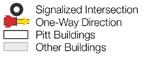
As an urban institution, Pitt relies heavily on its street network. Forbes and Fifth avenues, a one-way pair that runs from Downtown to Oakland and beyond, are the backbone of the city grid serving both as a destination to Oakland and a thoroughfare to other parts of the city. While there is good east-west connectivity, it is dependent on these two busy, parallel streets.
Beyond Forbes and Fifth, the street network generally responds to topography, and there is limited north-south connectivity as streets navigate the complex landscape. Sidewalks and pathways are mostly connected to the street grid and many areas are difficult to navigate due to topography, traffic, and narrow
sidewalks. Building scale, deteriorating infrastructure, a lack of streetscape, and disjointed or circuitous connections also add to inhospitable pedestrian environments. Travel between areas of extreme variations of elevation is limited to off-street facilities and stairs.
Planned Bus Rapid Transit (BRT) along Forbes and Fifth avenues will mitigate some congestion within Oakland. This route will improve the heavy bus transportation through Oakland and also provide relief to the community’s overcrowded parking environment. The majority of parking resources currently on-campus are on or near the periphery, with some resources located at the campus core.
Existing bicycle connectivity is supported by robust end-of-trip amenities on the Pitt campus including covered and uncovered bicycle storage as well as fix it stations. Bicycle commuting is limited by the existing off-campus bicycle network which is discontinuous between points where students, faculty, and staff live and Pitt.
PEDESTRIAN CIRCULATION
VEHICULAR CIRCULATION
O’Hara Street
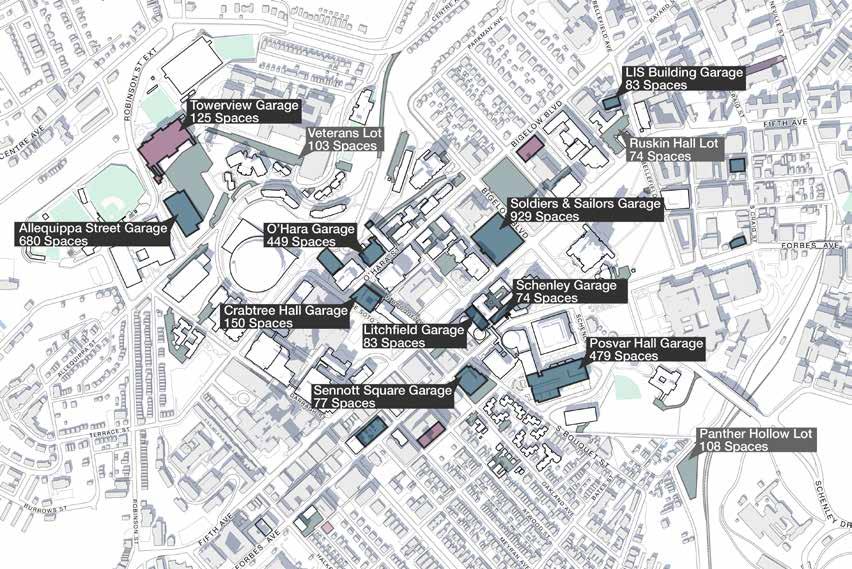
UNIVERSITY LOTS AND GARAGES


Parking
Pitt provides parking on or near campus through a combination of university-owned facilities and lease arrangements. The University’s current core parking inventory includes approximately 4,400 spaces.
In addition, Pitt leases a number of parking spaces in UPMC-owned facilities and also leases spaces to

UPMC in Pitt-owned facilities. Together, the parking inventory between the two institutions totals nearly 10,000 spaces in Central Oakland.
Pitt has a relatively tight parking supply in Central Oakland. Demand for parking permits far exceeds supply, with the most desirable locations featuring waitlists of 10 years.
Pitt uses the U.S. Green Building Council’s Leadership in Energy and Environmental Design rating system— in concert with other strategies—to evaluate campus sustainability.
Regional Transit and Bike Mobility
Pitt’s Central Oakland location provides faculty, staff and, students with access to an array of transit options, with frequent Port Authority bus service along the Fifth and Forbes corridor and good regional connections, particularly to Downtown and to points east. The University’s Fall 2017 Housing and Transportation Survey illustrated that more than a third of faculty and staff respondents (37 percent) use transit as their primary mode of commuting.
The University provides its affiliates with unlimited trips on Port Authority Transit free of charge. Based on survey results, a substantial proportion of faculty and staff places a high value on the transit benefit and views it as an important
component of the benefits package. While Pitt has a more sustainable transit mode split among faculty and staff relative to many of its peer institutions, there is still a significant proportion of faculty and staff that is not well-served by transit and for whom transit is not a viable first choice for commuting.
Enthusiasm for biking in Pittsburgh has increased markedly in recent years, thanks in part to the efforts by membership and advocacy organizations such as BikePGH. The state of bike infrastructure and connectivity has lagged enthusiasm, although it has begun to catch up as the City of Pittsburgh implements more on-street bike lanes and protected bike lanes each year. The city adopted a Complete Street policy
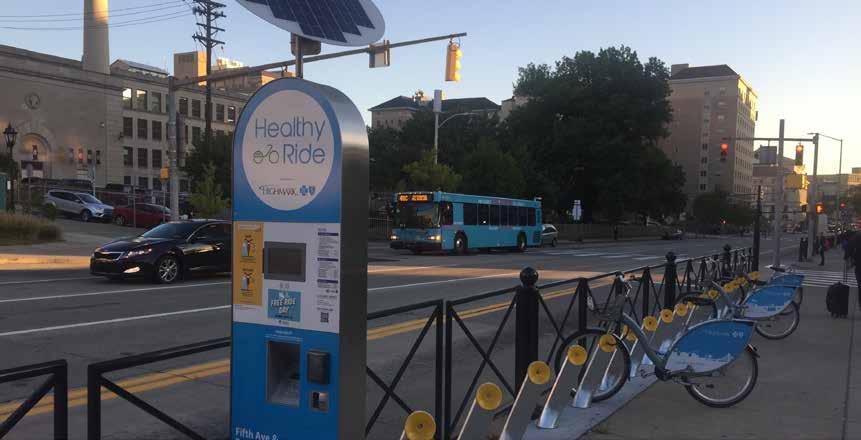
in November 2016, which likely will spur additional investment in bike facilities. The city-sponsored bike-share service offers users pay-as-you-go and subscription options with stations located across the city.
In general, Pittsburgh has an excellent multiuse trail network, most of which centers on parkland and river valleys and accommodates primarily recreational biking. The on-road bike network is far less cohesive. While dedicated bike facilities exist in segments around the city, there are significant gaps in bike facilities that limit connectivity across neighborhoods. Bike mobility within Oakland will receive a significant boost with the installation of a cycle track accompanying the arrival of BRT.
Conditions for commuting by bike are suboptimal due primarily to disjointed facilities, and in general only the strongest and most experienced bicyclists feel comfortable biking to and in Central Oakland on a regular basis. On-road facilities tend to be limited to relatively short segments and lack the connectedness required to support bike commuting on a broader scale. In addition, the elevation differences and steep grades within Central Oakland pose a significant challenge to bike commuting.
Existing bicycle connectivity is supported by robust end-of-trip amenities on the Pitt campus including covered and uncovered bicycle storage as well as fix it stations. Bicycle commuting is limited by the existing off-campus bicycle network which is discontinuous between points where students, faculty, and staff live and Pitt.
Pitt Shuttles and SafeRider
Pitt operates 11 shuttle routes that provide service within and beyond Oakland. Of these, eight routes provide service during daytime hours and have headways of 30 minutes or less. However, student use of the shuttle system is relatively low, with nearly two-thirds of student respondents indicating that they rarely or never use the Pitt shuttle system. Students most frequently report uncompetitive travel times and infrequent service as reasons they choose other transit modes over shuttles. The Pitt shuttle system faces a variety of challenges including circuitous routing, redundancy with Port Authority of Allegheny County routes, long headways, low ridership on certain routes, and relatively low user satisfaction.
The SafeRider program provides students a safe transportation option during evening and overnight hours for nonemergency trips. SafeRider operates as a demand-responsive service in a defined geographic area that includes all of Central Oakland and much of North Oakland and South Oakland. According to student survey results and staff input, SafeRider struggles with limited use and relatively low user satisfaction. Reasons that the service is broadly unpopular include long wait times, refusal of service, and confusion about the service area.
Bikeshare Station on Fifth Avenue
Campus Buildings
Pitt takes pride in the diversity of its building stock. The University’s environment is an eclectic mix of architectural styles: Art Deco, Beaux Art, Brutalist, Neoclassical, Greek revival, Italianate, Modernist, Post-modernist, neo-Gothic, and Richardsonian Romanesque. These varied styles and scales stem from campus expansions (Acropolis Plan, Cathedral of Learning, Life Sciences Quad, Posvar Hall) as well as acquisitions of former civic institutions, office buildings, hotels, and apartment buildings.
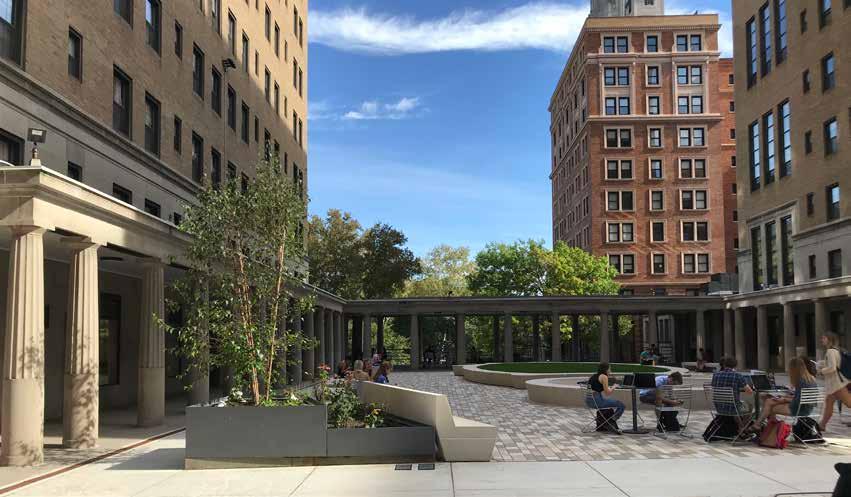
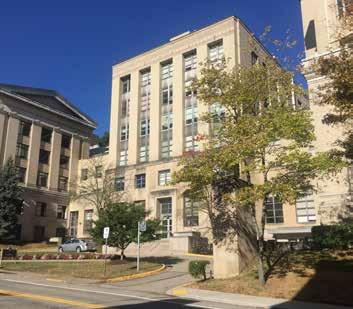
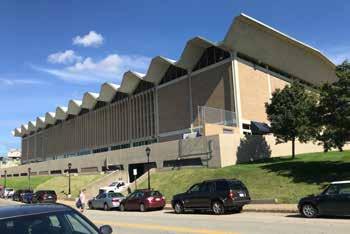
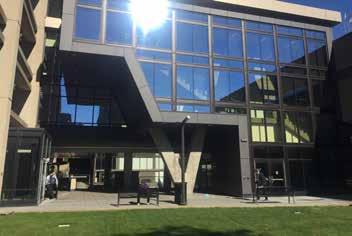
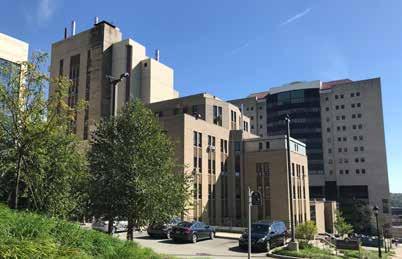
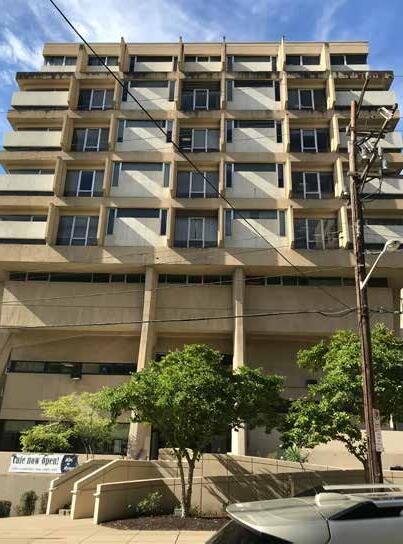
Schenley Quadrangle and William Pitt Student Union
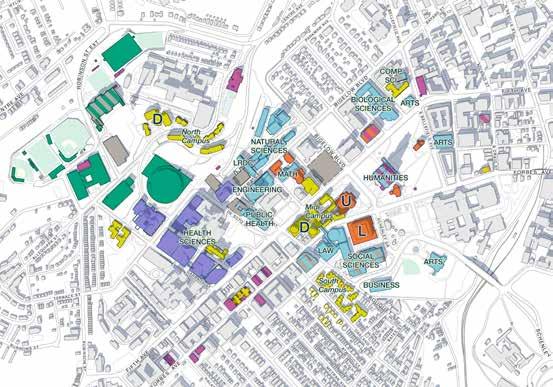
Academic clusters include:
• Health sciences (made up of individual schools and research facilities) located adjacent to UPMC
• Natural sciences (Physics, Engineering, Mathematics, Chemistry) located along O’Hara Street
• Biological sciences located along Bigelow Boulevard
• Social sciences and humanities located between the Cathedral of Learning and Posvar Hall
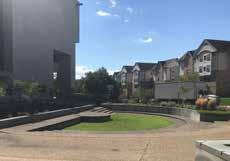
Residential clusters include:
• North Campus: Semi-suites, suites, and Fraternity and Sorority Life Housing
• Central Campus: Traditional residences, suites, and Fraternity and Sorority Life housing
• South Campus: Bouquet Gardens apartments and Pitt-owned apartment buildings in Central Oakland
Athletics and recreation clusters include:
• Hilltop: mix of venues, teaching facilities, and athletics and intramural fields
• Central Recreation Center: Baierl Recreation Center within Petersen Events Center
• Decentralized indoor fitness facilities within many student housing facilities
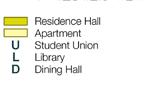
BUILDING USE
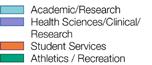

BUILDING HEIGHT
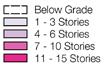
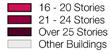
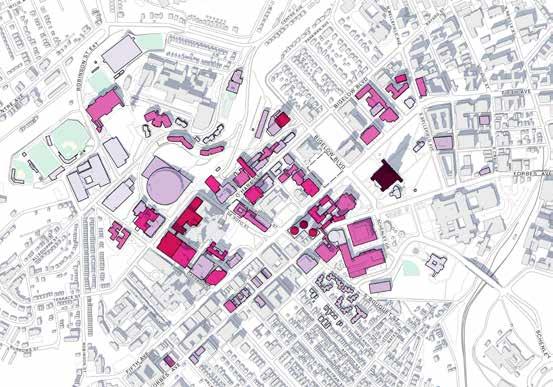
Building Heights
Student dining clusters include:
• North Campus and Central Campus dining in the residential clusters
• Dining facilities outside of clusters, including several housing facilities (such as Lothrop Hall and Ruskin Hall)
Campus core:
• Buildings within and facing the Cathedral of Learning block and Schenley Plaza are typically dedicated to student services (William Pitt Union, Hillman Library, Alumni Hall) and the arts (Bellefield Hall, Music Building, Frick Fine Arts)
• The Cathedral of Learning is home to both academic and administrative services
Buildings on Pitt’s campus are diverse in height, with the 535-foot, 42-story Cathedral of Learning dominating the landscape.
Mid-to high-rise academic buildings include Benedum Hall, Chevron Hall of Science, the William Pitt Union and Thackeray Hall. Several health sciences buildings are high-rise, including Scaife Hall, BST-1 and 3, Thomas Starzl Hall, and Salk Hall.
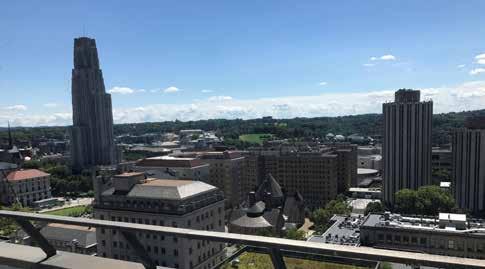
Cathedral of Learning and Litchfield Towers
Posvar Hall and Bouquet Gardens
Campus Open Space
Formal Open Spaces
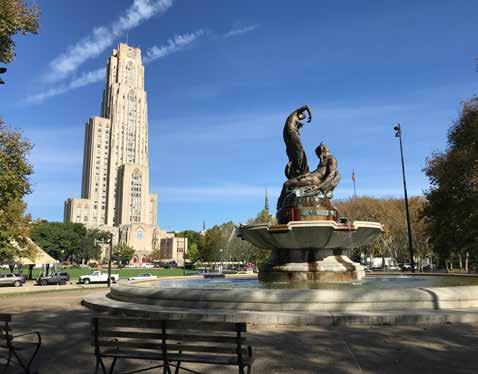
There are three main open spaces that are iconic to Oakland and Pitt. Schenley Plaza, the Cathedral of Learning, and the forecourt of the Soldiers and Sailors Memorial Hall are high-quality and popular landscaped spaces. These spaces are connected by a network of wide sidewalks and continuous tree canopy.
Schenley Plaza, while not part of the University, it a favorite destination for Pitt students and the greater community.
The Cathedral of Learning open space includes the Cathedral, the Stephen Foster Memorial, and Heinz Chapel.
The forecourt of Soldiers and Sailor’s Memorial Hall and Museum, while not part of the University (though Pitt does own the parking lot below), features a large lawn fronting Fifth Avenue. A popular relaxation spot for Pitt students, Soldiers and Sailors has a master plan to improve this space in the near future.
Secondary Open Spaces
Secondary open spaces on campus are typically hardscaped plazas fronting major buildings (such as the forecourts of Posvar Hall, Clapp Hall, and Petersen Events Center).
Athletics and Recreation Spaces
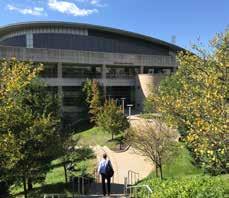
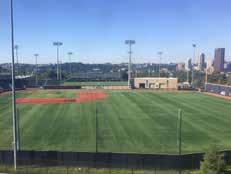
Petersen Sports Complex is home to dedicated athletics and recreation space. In addition, there are intramural fields on Trees Field and indoor athletics spaces in the Charles L. Cost Center and Pitt Sports Dome. Since all of these spaces exist on the hilltop, access for students, faculty, and staff can be challenging. The enhancement and addition of open spaces remains a priority for the University.
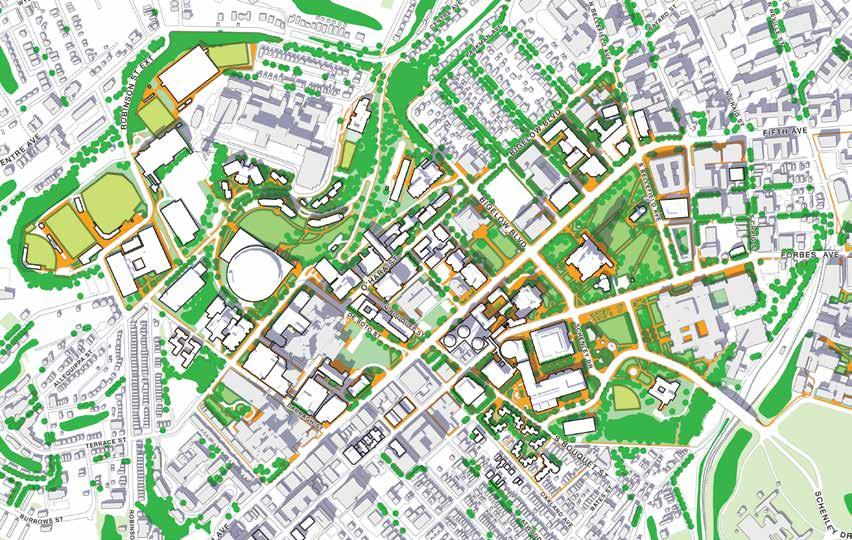
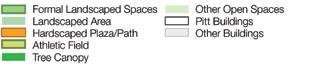
OPEN SPACE NETWORK
Schenley Plaza and Cathedral of Learning
Petersen Sports Complex
Pitt Stadium Bowl
Campus Conditions
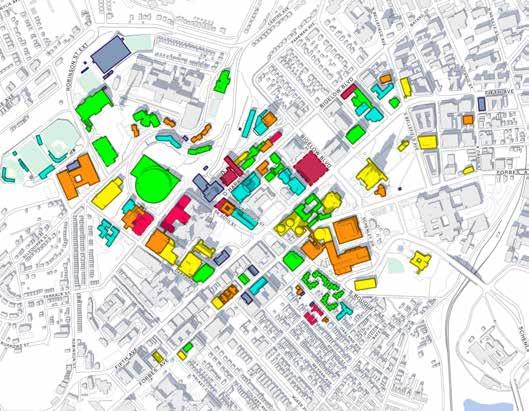
Pitt has quite a few large, complex buildings that require significant maintenance investment, including the Cathedral of Learning, Posvar Hall, Chevron Science Center, and Scaife Hall.
Recent comprehensive renovations of large, 1970s era buildings have yielded good results, such as Benedum Hall. Newer buildings and additions, such as Petersen Events Center, Nordenberg Hall, and the Graduate School of Public Health, provide modern and innovative architecture.
Many Pitt-owned parking garages are in poor condition and detract from the beauty of the campus. In addition, some smaller, unique residential facilities
are in fair to below average condition, including Forbes and Lothrop halls. Furthermore, accessibility remains a significant issue for older buildings.
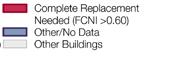
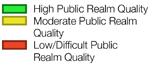
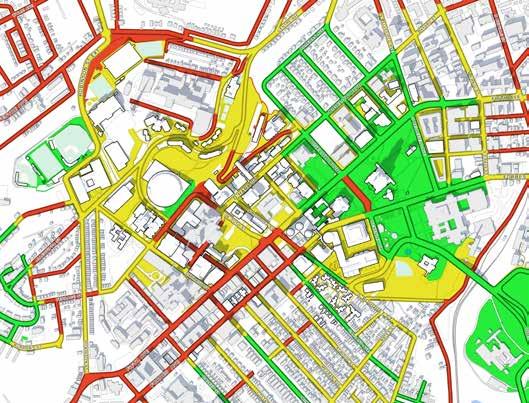
The planning team assessed Pitt’s public realm for general attractiveness and pedestrian comfort. The team then divided this realm into high-, moderate-, and low-quality categories. High quality open spaces typically provide generous landscape that has a high level of greenery, attractive and natural plantings, and tree canopy; adequate pedestrian and bicycle access; pedestrian amenities; and a generally flat (or gently sloping) environment. Low-quality open spaces typically feature absent or poor sidewalks, a lack of green space and/or an abundance of hardscaped surfaces, and steep slopes.
The planning team found that:
• Forbes and Fifth are the main eastwest axes through Oakland and suffer from mixed quality, sidewalk condition, and limited vegetation.
• Narrow sidewalks on main streets contribute to congestion and uncomfortable pedestrian environments.
• Contiguous high-quality public realm exists at Schenley Plaza, Cathedral, Pitt Union, Soldiers and Sailors Memorial, and along O’Hara Street.
• High-quality open spaces exist along the Bigelow Boulevard/O’Hara Street east/west corridor but reduce in quality moving west.
• High-quality open spaces along the hillside are difficult to access.
• Moderate-quality open spaces on the hilltop lack formality.
• Moderate-quality open spaces on south campus are primarily hardscaped spaces.
• Mixed-quality spaces exist within Central Oakland and the Craig Street corridor.
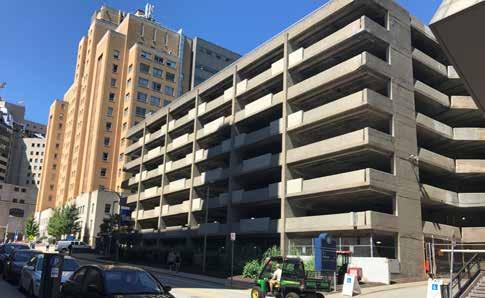
BUILDING CONDITION
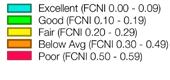
O’Hara Garage
Opportunity Sites
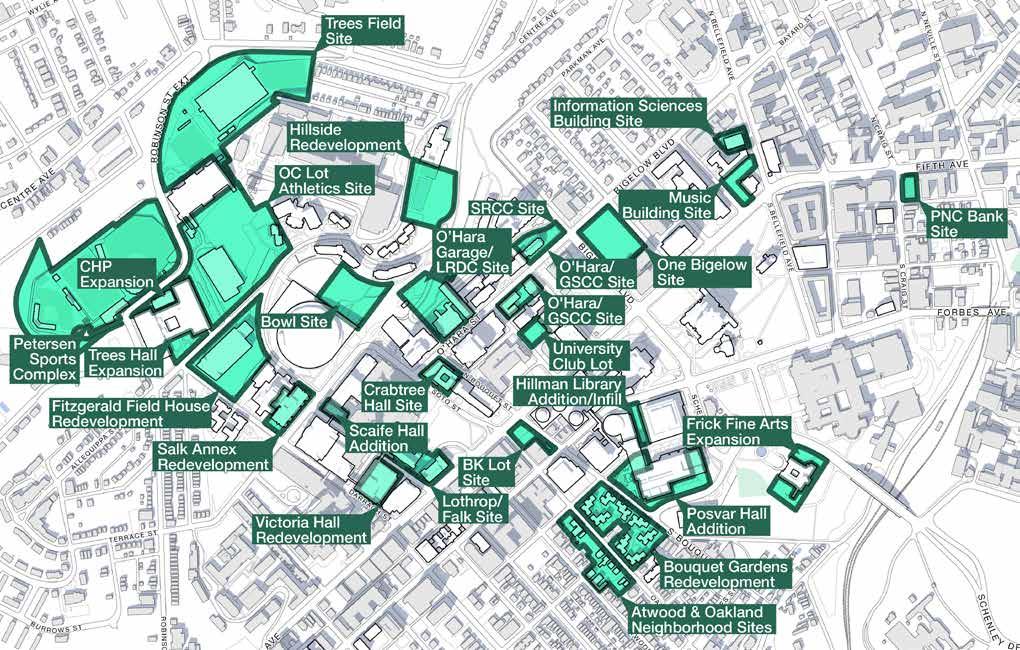
The Campus Master Plan identifies spaces and buildings that are candidates for potential renovation, development, or redevelopment. Building conditions, functionality, and adjacencies—as well as a clear understanding of programmatic needs—are all important factors that shape opportunities for renewal. In addition, the University’s Capital Plan also informed development opportunities.
Some opportunity sites intend to improve the public realm and some could involve demolishing buildings that are in poor condition and that under-utilize extremely valuable land. The planning team has explored a variety of scenarios for future campus development based on these identified opportunity sites.
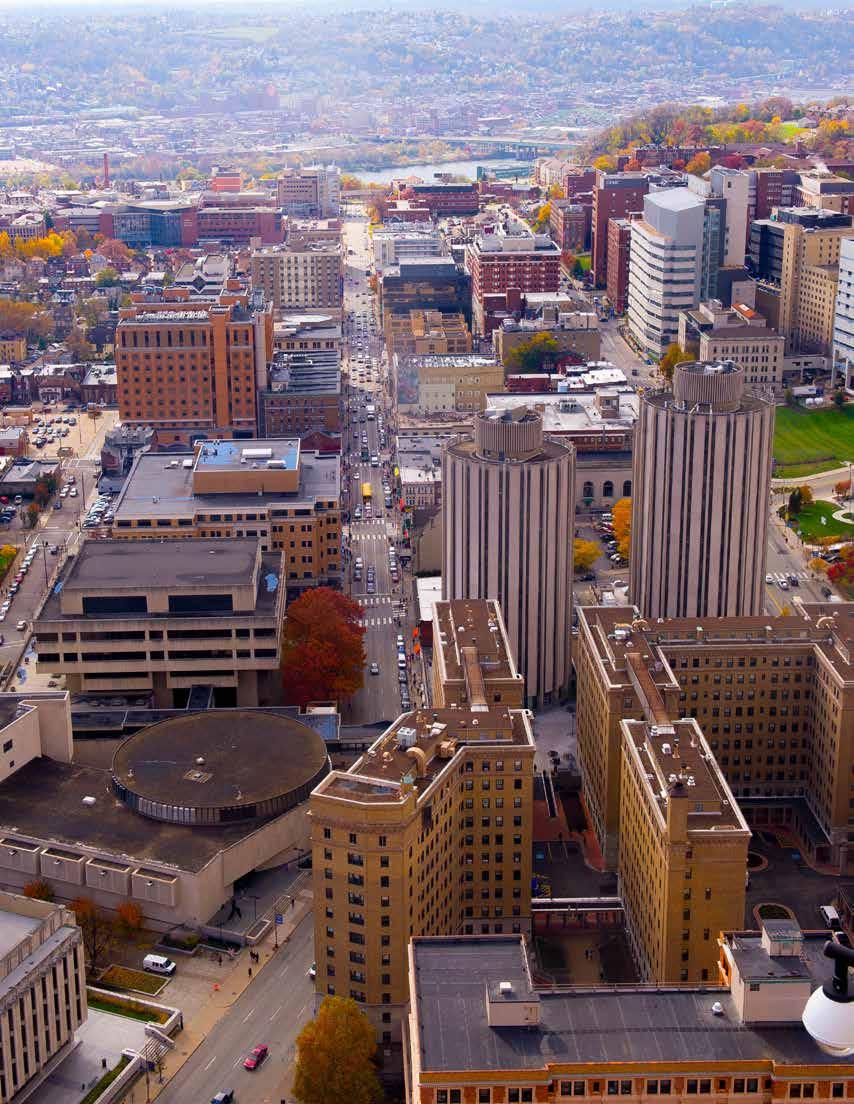
FIVE CORE IDEAS OF THE CAMPUS MASTER PLAN
The University can leverage the momentum of Pittsburgh’s transformation by developing its campus in a way which promotes and drives innovation.
To accomplish this goal, Pitt can take advantage of its dynamic urban setting to enrich the student experience and shape its mission. This section identifies the five core ideas that work together to help accomplish Pitt’s mission.
1 A Place of Academic Excellence and Innovation
2 An Enriching Student Experience
3 A Distinctive, Welcoming, and Attractive Urban Campus
4
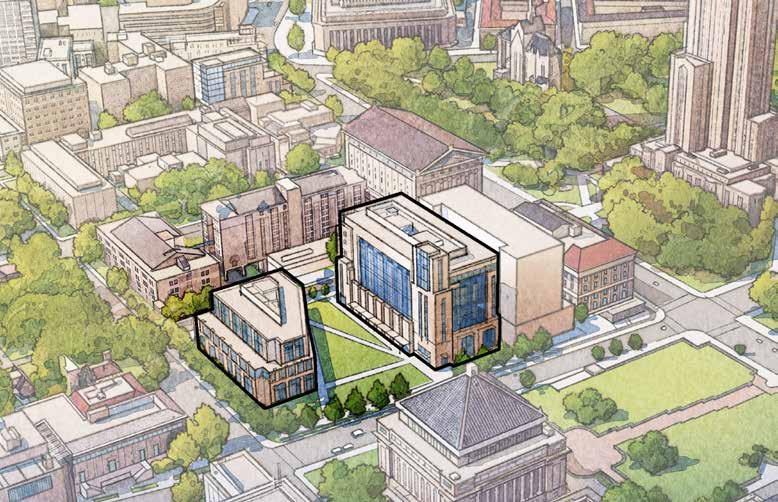
Place of Academic Excellence and Innovation
Create an east-west connection which will create synergies among teaching, research, and clinical uses.
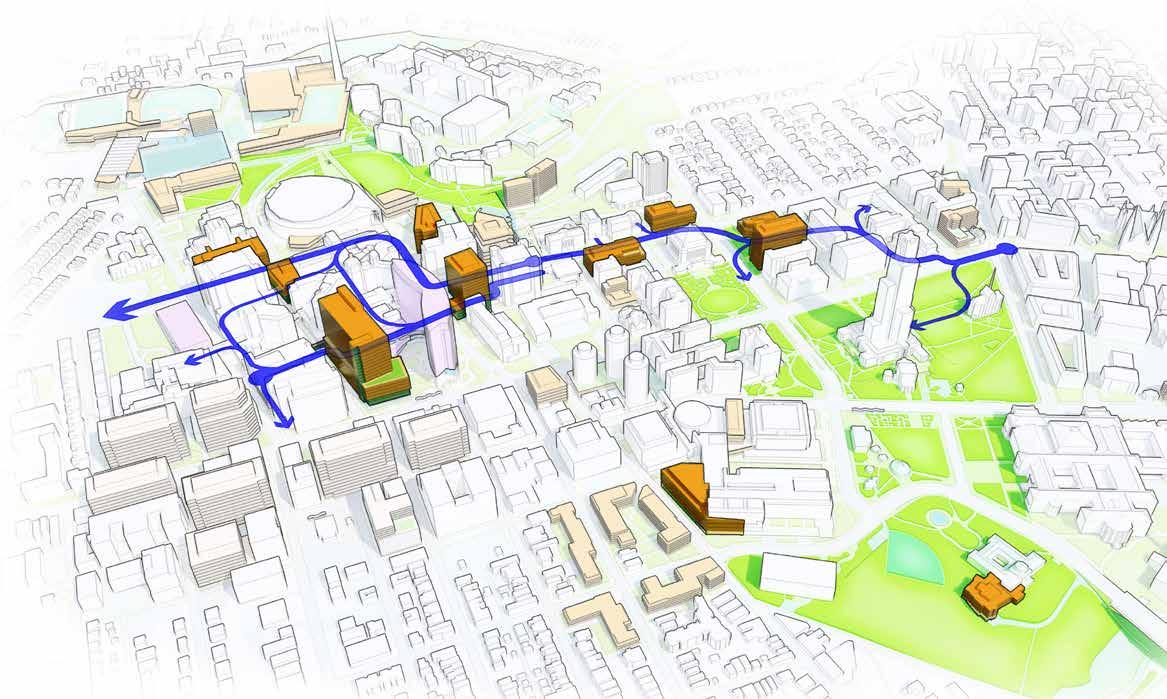
The Campus Master Plan envisions critical connections weaving themselves through Pitt’s urban grid. These “braids” link existing campus destinations to new development and are facilitated by improved open spaces and pedestrian amenities. An east-west connection or “braid” will create synergies among teaching, research, and clinical uses. New buildings along this academic link reinforce Pitt’s role as a place of academic and research excellence and innovation.
Through the east-west braid, the plan intends to capitalize on adjacencies, create multidisciplinary synergies (teaching, research, and clinical), and advance campus renewal and stewardship in alignment with the Pitt Sustainability Plan
Health Sciences
Pitt is unlike almost any institution in the world simply because of the proximity of its various programs. Pitt has multiple health sciences schools on the same campus as engineering, social work, business, law, arts and sciences, computing, public affairs, and education. Pitt is also located in a booming tech and innovation city with a world-class medical center adjacent to its health sciences schools. What sets Pitt apart can be further enhanced by strengthening interdisciplinary connections, creating better academic synergies, and taking advantage of partnership opportunities with UPMC. Connections and collaborations between disciplines, schools, teaching, research, and clinical care will incubate the most innovative discoveries to solve the world’s problems; these types of connections and collaborations are critical to the success of the Campus Master Plan.
The following projects outline opportunities to create stronger physical connections and improve the public realm; provide space for innovation and collaboration; and consider shared simulation space, skills labs, anatomy labs, classrooms, and other interprofessional opportunities.
Scaife Hall Addition/Health Sciences Facilities Expansion
An addition to the western end of Scaife Hall, along with the ongoing renovation of the building, is a critical development for the School of Medicine and Pitt health sciences. The addition replaces a low-scale portion of the building that is not the highest and best use of the land. The addition is focused on education and support space. It will also improve the public realm at the intersection of Terrace and Lothrop streets.
Western Psychiatric Institute and Clinic (WPIC) Expansion
The proposed expansion of WPIC is on the northern end of the inpatient hospital, also known as Detre Hall. The expansion replaces the outdated and dilapidated garage between Detre Hall and the Petersen Events Center, thus improving the public realm along DeSoto Street. The WPIC expansion, along with additional off-site clinic space, replaces spaces WPIC currently leases in the Forbes Building. The proposed program includes research, education, and specialty clinical programs, and the expansion can be connected to the proposed O’Hara Garage replacement to the east. The expanded parking deck at WPIC will likely be a joint partnership with UPMC.

INTEGRATED HEALTH SCIENCES COMPLEX
Create connectivity between health sciences programs to push innovation and synergies.
Replace existing structure to link people and programs between health sciences schools and Engineering.
Create an academic quad that adds green space and improves pedestrian access.

CRABTREE HALL ONE BIGELOW

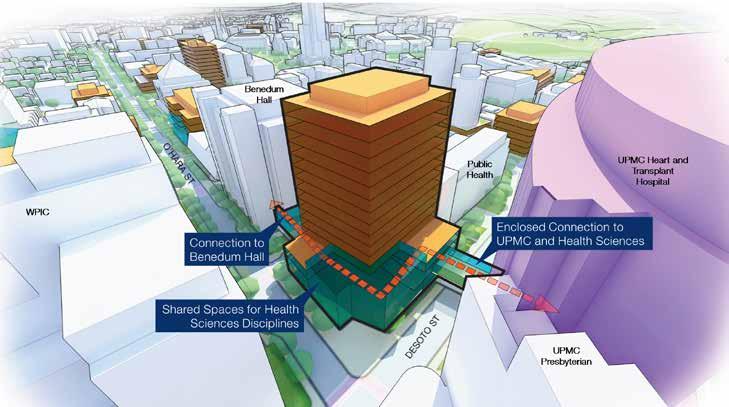
Integrated Health Sciences Complex
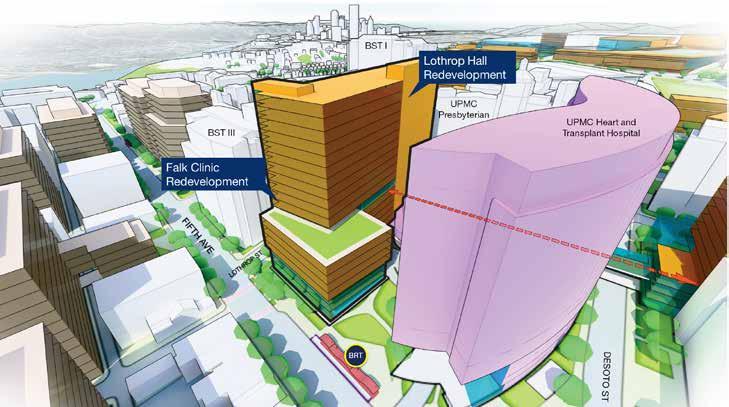
One of the largest sites for health sciences redevelopment is Lothrop Hall, combined with Falk Clinic. The site has the potential to be developed in phases or as one larger development, depending on program need and relocation opportunities for the existing Falk Clinic. This site is prime real estate along Fifth Avenue and has the potential for increased density in response to the scale of the UPMC Heart and Transplant Hospital. This site can provide space for many health sciences programs as an integrated complex. Furthermore, the redevelopment can help facilitate an enclosed east-west connection between Victoria Hall, UPMC Presbyterian, Crabtree Hall, and Benedum Hall.
Victoria Hall Renovation/ Redevelopment
The School of Nursing, located predominantly in Victoria Hall, has long planned for renovation and expansion. The Campus Master Plan proposes the renovation of the building and a new front door and vertical connection along Lothrop Street. The redevelopment of Lothrop Hall should be coordinated in concert with Victoria Hall’s renovation and redevelopment, especially the bridge connection across Lothrop Street, as there is significant opportunity to better connect the health sciences.
Salk Annex Redevelopment
Assuming the School of Dentistry is moved to a new location, the Salk Annex is a prime candidate for redevelopment. The current building has outlived its useful life and is not the highest and best use of the land. The site is an ideal location for the School of Pharmacy to expand and for other shared health sciences functions. While Salk Hall is a designated historic landmark, the three-story Annex addition is not.

Crabtree
Hall Redevelopment, Below-grade Parking, and Bridge Across DeSoto Street
The redevelopment of Crabtree Hall presents a unique opportunity to connect UPMC, health sciences schools, the School of Engineering, and other academic functions along O’Hara Street. Crabtree Hall is located at a nexus, of the campus with a significant amount of pedestrian activity but an undesirable public realm. The proposed program of a redeveloped Crabtree Hall aims to encourage cross-disciplinary collaboration, and create several shared and flexible spaces for the health sciences disciplines. Potential program elements include food and coffee, casual collaboration areas, classrooms and conference rooms, maker space, simulation space, continuing education space, standardized patient rooms, anatomy or teaching labs, shared core facilities, and industry partners. Existing parking on the site will be rebuilt fully underground to allow for a transparent and engaging ground floor with active uses. The streetscape surrounding the site will also be improved with wider sidewalks and better pedestrian crossings. On the second level above grade, a semipublic concourse level will pass from the School of Engineering in Benedum Hall, across Bouquet Street, into the new Crabtree redevelopment, and across DeSoto Street into the new UPMC Heart and Transplant Hospital.
From there, this new pedestrian system joins the existing bridge network to the other health sciences buildings west of DeSoto Street. The goal of the Crabtree Hall redevelopment is to bring students, faculty, staff, and community together.
Crabtree Hall Redevelopment
Integrated Health Sciences Complex
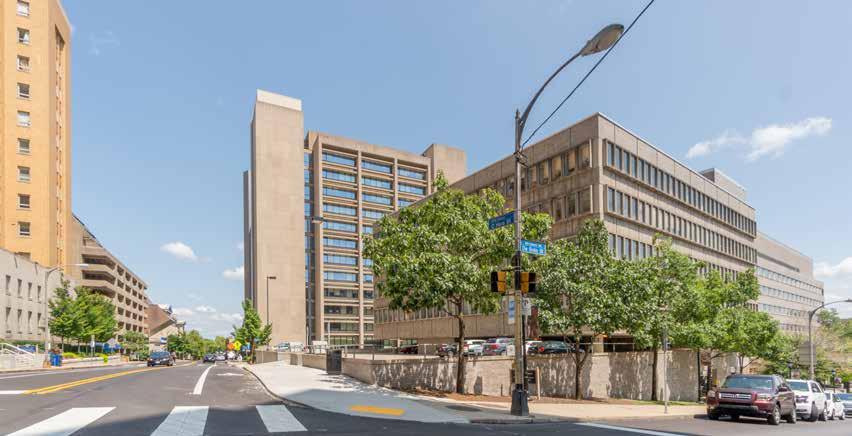
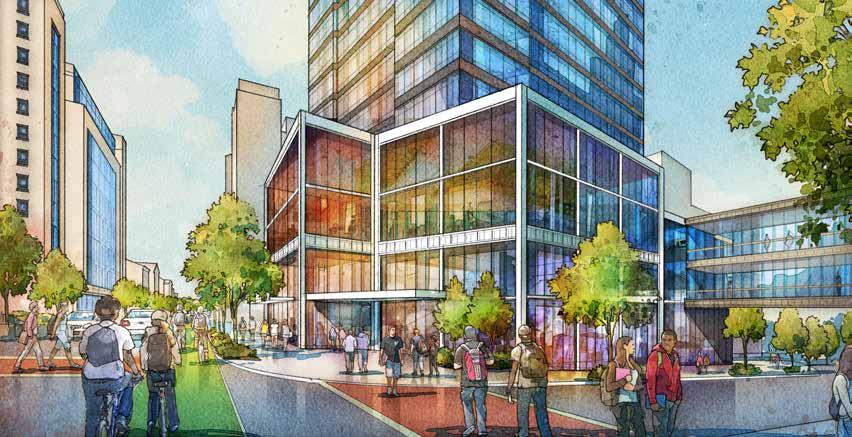
PROPOSED VIEW LOOKING EAST ALONG O’HARA STREET - CRABTREE HALL REDEVELOPMENT
EXISTING VIEW LOOKING EAST ALONG O’HARA STREET
Academics (Non-Health Sciences)
Pitt’s academic programs are unparalleled in their adjacencies, and there is a culture of efficiency and flexibility thanks to a tradition of decentralized decision-making. However, there is a deficit of space on campus for academic, research, and administrative functions. Almost 300,000 gross square feet (GSF) of academic and research space is currently required to fulfill current program needs, and this number does not include scenarios for growth. Pitt can solve many of its space needs by strengthening its interdisciplinary connections to create and reinforce existing synergies, promoting innovation and entrepreneurship, prioritizing
shared teaching spaces and core facilities, expanding the amount of meeting and collaborative spaces, and creating stronger physical connections and an improved public realm. New academic facilities will provide additional spaces for programs and will also allow Pitt to lessen its reliance on leased spaces. Most of these facilities will be located along the east-west braid.
O’Hara Street Development
A new building for Applied Sciences can replace the existing Gardner Steel Conference Center and the O’Hara Student Center and provide an opportunity for additional academic development. Though both buildings are contributing properties to the Schenley Farms

National Historic District, the renovations both buildings have undergone over the past several decades may have removed many character-defining features and are also seen as not suitable for their existing uses. A proposed building will be scaled to contextually match existing campus buildings on the northern side of O’Hara Street, as well as the nearby University Club and Thackeray Hall.
One Bigelow
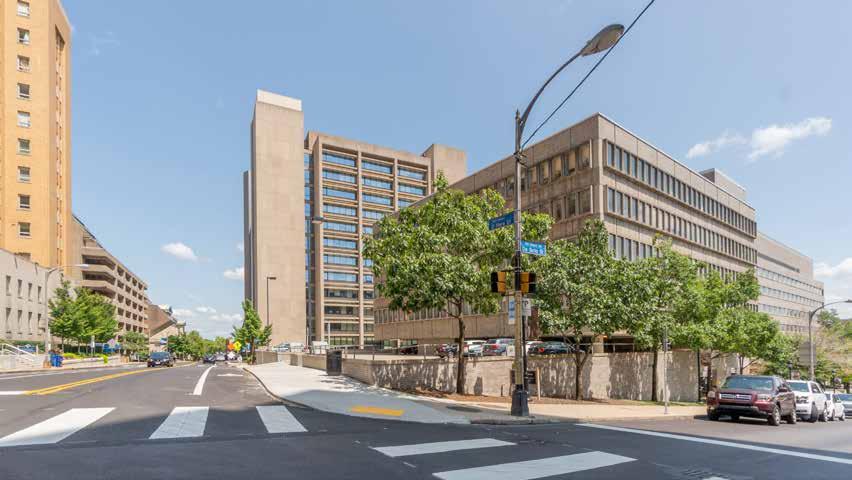
One Bigelow will be a transformative academic complex that will serve as the hub of systems-oriented research, applications, and education at Pitt. Housing the new School of Computing and Information, One Bigelow will also
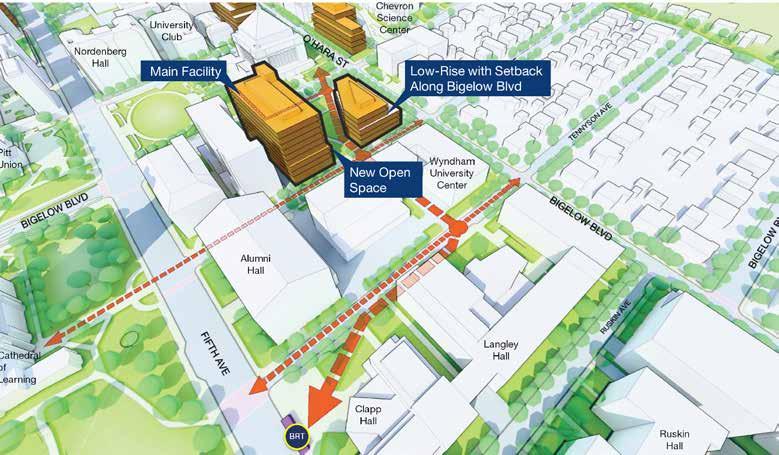
incorporate programs for state-of-theart systems modeling and management as well as innovation and collaboration-related research.
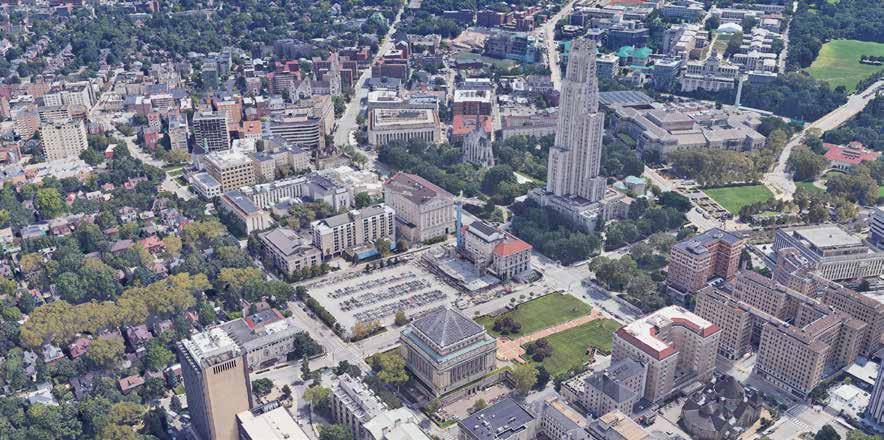
The University has long been interested in developing the parking lot east of the Soldiers and Sailors Memorial Hall, which was once home to the Syria Mosque. One Bigelow is intended to incorporate a central open space, facilitating connections from the future BRT station on Tennyson Avenue to the central and upper portions of the campus. One Bigelow will also accommodate an underground parking garage. Though proposed as a dynamic new academic quad, One Bigelow must show sensitivity to its neighbors north of the site.
SRCC Redevelopment
The existing Space Research and Coordination Center (SRCC), completed in 1965, is in poor condition and features a small, inefficient footprint. A future facility on the site could provide more space for the Physics, Astronomy, Geology, and Planetary Science disciplines, which are all currently located in older facilities. A new facility on this site should take full advantage of the site’s boundaries with a more efficient footprint to allow for larger, more diverse space types. While a new building is feasible on this site, it may not be large enough to also accommodate underground parking. Furthermore, a setback from Thaw Hall could improve pedestrian connectivity between O’Hara Street and the Chevron Science Center, as well as provide an opportunity to restore Thaw Hall’s original Greek entrance façade. Interior connections between Thaw and the SRCC may be facilitated at the basement level.

Posvar Hall Expansion
Additional classroom and administrative space for Social Sciences programs (particularly the School of Education) can be accommodated in an expansion on the western façade of Posvar Hall, replacing the under-utilized hardscaped plaza. This addition could facilitate connections along the north-south braid between a redeveloped Bouquet Gardens and Schenley Quad/Litchfield Towers.
Frick Fine Arts Expansion
The existing Frick Fine Arts Building suffers from overcrowding and insufficient studio space for the Department of Studio Arts, History of Art and Architecture, and University Arts Gallery. An addition to the studio, located to the south of the existing building, will provide additional office space, improve daylight for studio spaces, and make space available in the original building for a more spacious presentation of the University’s permanent art collection.
Fraternity and Falk Garage
A dedicated parking garage accommodating 1,000 spaces could be located between the Falk School to the east and the Fraternity Housing Complex to the west. The garage will replace the existing SC lot and the basketball courts next to Falk School. It is possible for the courts to be replaced (and additional recreation spaces added) on the top of the parking structure at Falk’s ground level, due to the elevation change between Allequippa Street and University Drive.
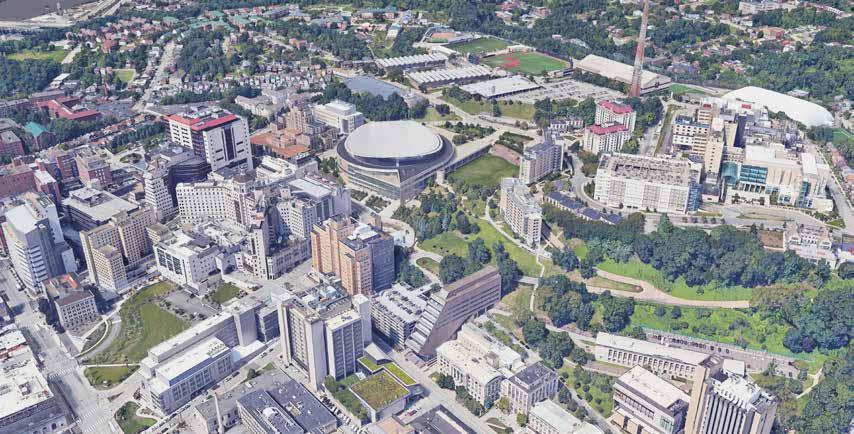
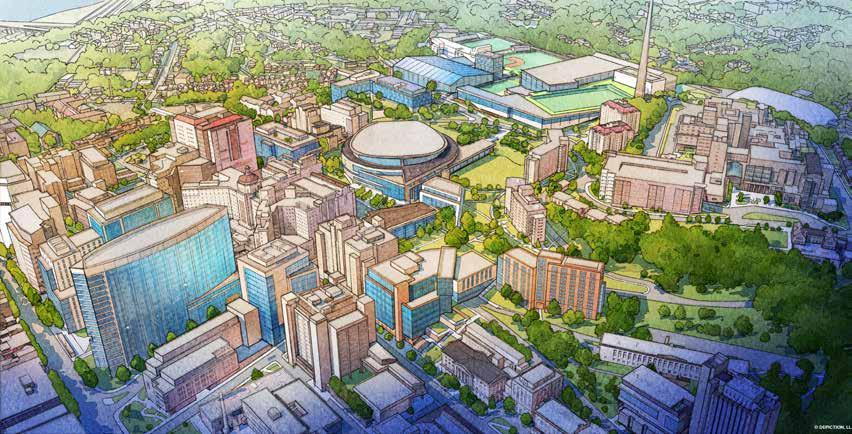
Proposed One Bigelow Development
VIEW LOOKING WEST FROM CATHEDRAL OF LEARNING
PROPOSED VIEW LOOKING WEST FROM CATHEDRAL OF LEARNING
Salk Annex Redevelopment
Multi-Purpose Indoor Facility
Crabtree Hall Redevelopment
Integrated Health Sciences Complex
Recreation and Wellness Center
Human Performance Center
EXISTING
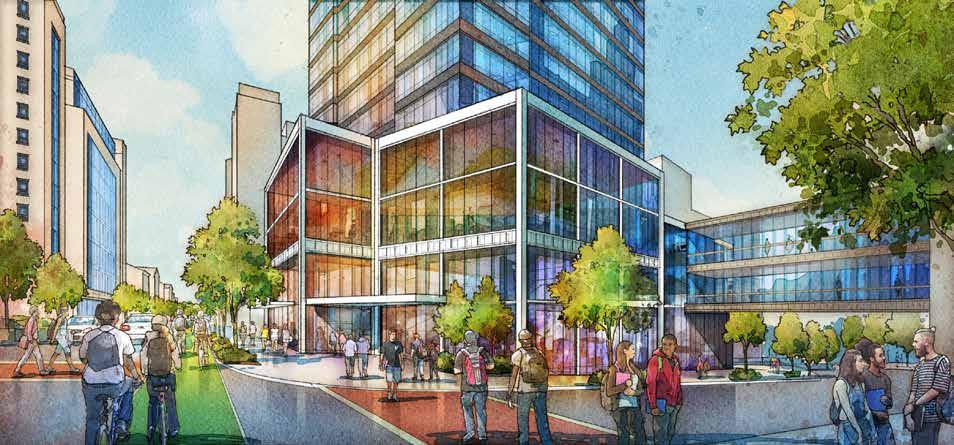
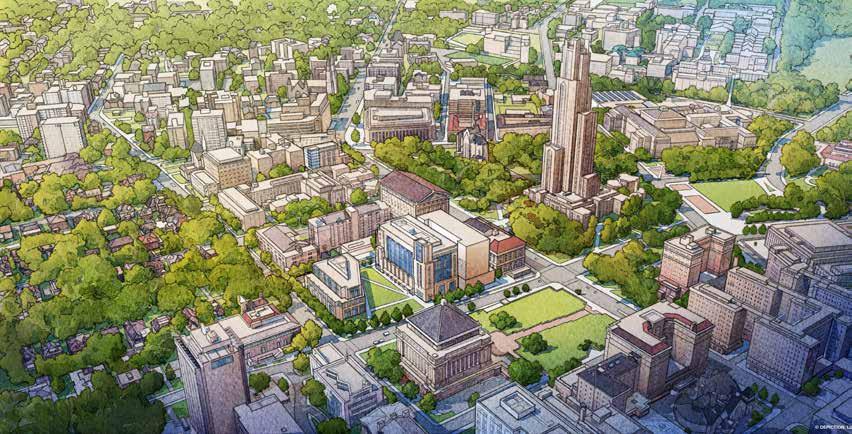
PROPOSED VIEW LOOKING EAST FROM PETERSEN EVENTS CENTER
SRCC Redevelopment
Academic Success Center
O’Hara Street Redevelopment
One Bigelow Development
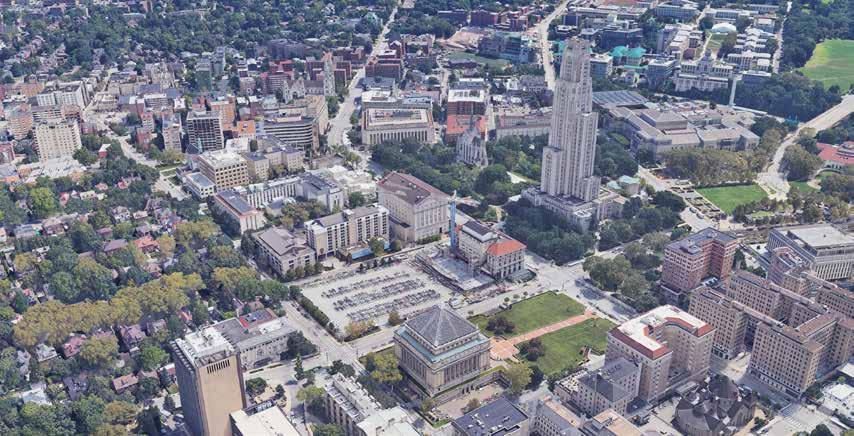
EXISTING VIEW LOOKING EAST FROM PETERSEN EVENTS CENTER
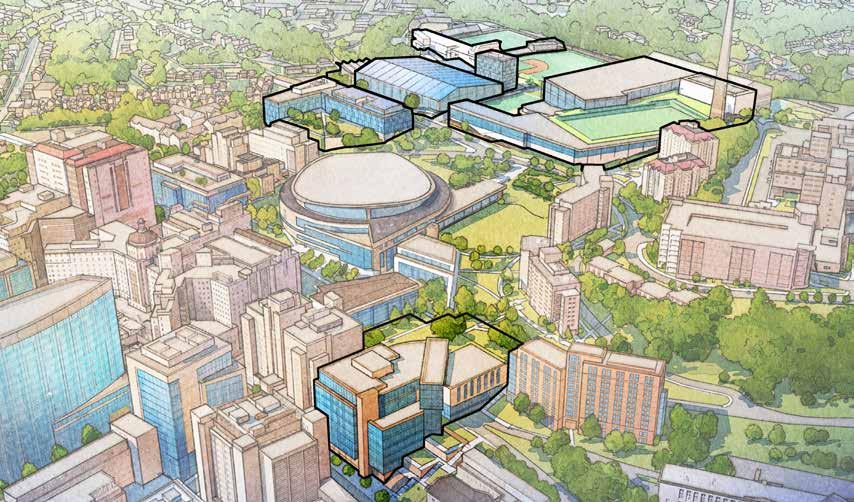
Proposed
The proposed north-south “braid” will link residential and student services. A combination of projects integrate living and learning to transform the student experience. Through the north-south braid, the Campus Master Plan intends to connect appropriately scaled facilities that support mind and body, improve student support, and increase cohesion within the campus and beyond.
Athletics and Recreation Projects
The University’s athletics and recreation cluster has been located on the hilltop since the original Pitt Stadium opened in 1925. Because of its relative inaccessibility and difficulty for traditional campus and urban development, the hilltop has become a natural location for Pitt’s athletics and recreation fields, as well as dedicated athletics buildings such as the Cost Center, Trees Hall, and Fitzgerald Field House.
Though the hilltop provides a contiguous space for the University’s athletics and recreation programs, its relative inaccessibility creates connectivity problems for students, faculty, and student athletes. Several of the facilities are also nearing obsolescence, and modernization is sorely needed for facilities to remain competitive within the University of Pittsburgh’s athletic conference, the Atlantic Coast Conference. In addition, the steady growth of athletics programs and new NCAA requirements and guidelines may require renovations to existing facilities or may require outright replacement to maintain eligibility. The latest athletic facility to be completed at Pitt is the Petersen Sports Complex in 2011. This modern facility is well-regarded, but it is already beginning to see deficiencies in capacity, athlete spaces, and locker room facilities.
Furthermore, there have been calls from the Pitt community for improvements in the recreation and intramural programs and a greater distribution of high-quality recreation facilities across the campus. The Pitt Sports Dome is the latest recreation facility to be completed; however, its air-supported structure may be regarded as temporary in nature. An upgraded centralized Recreation and Wellness Center has been specifically mentioned as a much-needed improvement. There is low student, faculty, and staff satisfaction with recreation and fitness facilities overall, particularly related to location and size, leading to low utilization rates. The Campus Master Plan aims to provide adequate recreation and fitness space to meet the demands of students, faculty, and staff, while integrating recreation with academic and other quality-of-life spaces to foster collaboration and enhance the Pitt community.
ATHLETICS IN FOCUS: VICTORY HEIGHTS
Create an athletics-oriented neighborhood that promotes fitness and organized sports.
STUDENT RECREATION IN FOCUS
Use new Recreation and Wellness Center as an opportunity to improve campus connectivity and accessibility.
HOUSING IN FOCUS
Create new housing facilities to bring students back on campus and keep housing affordable.
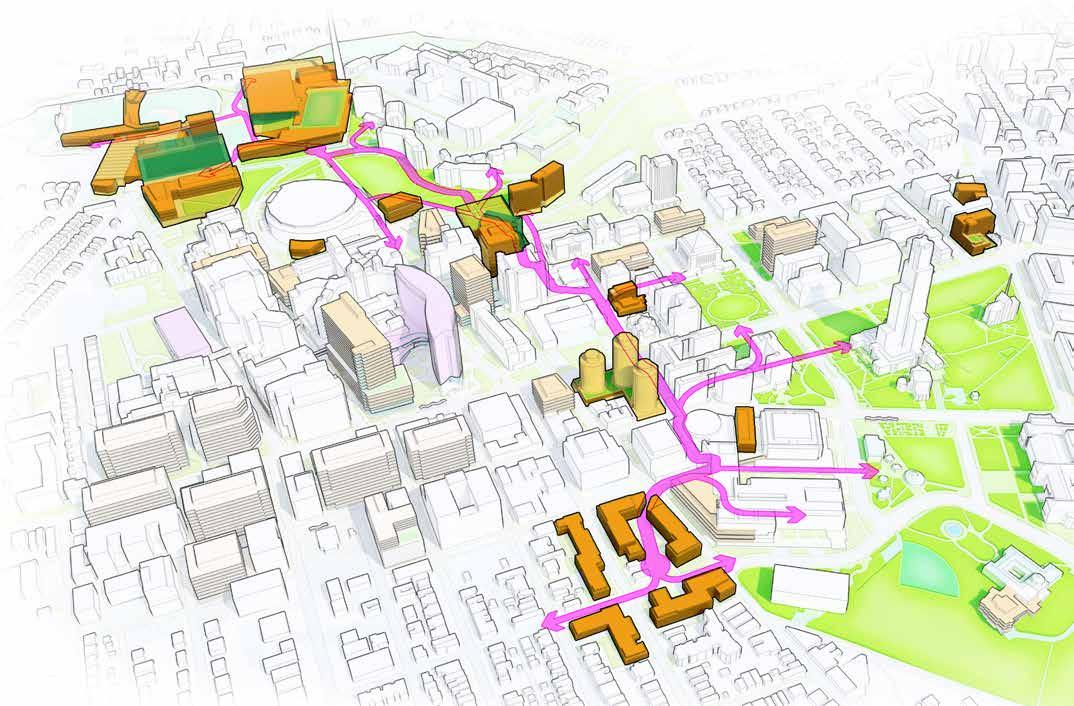

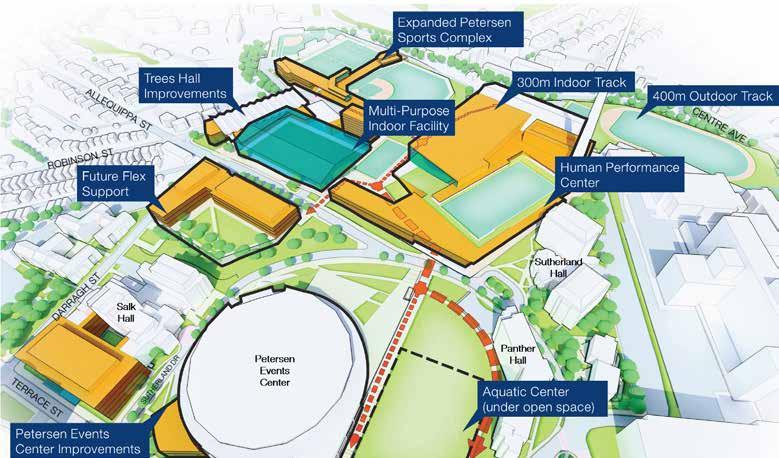

In 2018, Pitt completed its Athletics Master Plan, which creates a bold vision and sense of identity for the hilltop. A combination of expansions to existing facilities and construction of new facilities culminates in the creation of Victory Heights – a vibrant athletics and recreation neighborhood that not only will benefit student athletes, but the Pitt community at large. The Athletics Master Plan emphasizes the creation and promotion of indoor and outdoor healthy spaces. This Campus Master Plan features the recommendations made in the Athletics Master Plan, and it integrates these projects into the broader Pitt campus. Both plans emphasize the creation and promotion of healthy indoor and outdoor spaces.
Human Performance Center
The centerpiece of Victory Heights is the Human Performance Center, a large facility which features a reconfigurable 3,000 seat arena for volleyball, wrestling, and gymnastics; athletics flex space; and a centralized facility for training student-athletes. The building is located on the existing OC garage and parking lot and will be connected to the existing Cost Sports Center by a future phase. This facility also replaces much of the program currently accommodated by the Fitzgerald Field House. In addition, the Human Performance Center features practice spaces for wrestling, cheer, dance, and gymnastics. The facility is sited to provide
maximum flexibility. As part of this project, the Cost Center façade will also be reskinned.
Expanded Petersen Sports Complex
The existing Petersen Sports Complex has some deficiencies including a lack of office space, locker rooms, weight training spaces, and poor locations for restrooms. These shortcomings are to be alleviated in the short term by adding a third level to the existing office building, adding additional restrooms and athlete spaces, expanding locker rooms, and adding additional office space for athletics coaches and staff. Later phases intend to add larger bullpens and dugouts, indoor batting cages, hospitality suites, and premium seating.
Trees Hall Improvement

Victory Lawn/Aquatics Center
The bowl that remains from the demolition of Pitt Stadium is a natural location for a building to complement the Petersen Events Center. A new building will be integrated within the bowl and will feature a landscaped open space for informal recreation on its roof. This “Victory Lawn” could also facilitate important pedestrian connections between the future Human Performance Center, Petersen Events Center and future Recreation and Wellness Center.
Current proposals locate a multifunctional space containing a Hall of Fame and additional recreational program, or a new Aquatics Center, replacing Trees Hall on this site. Any improvements in this area will also be built to improve management of stormwater.
400m Outdoor Track
Petersen Events Center
Improvements and Expansion
The Petersen Events Center has deficiencies in the size of its retail spaces, athletics training area, and office space. Following completion of a new recreation facility, the space currently occupied by the Baierl Student Recreation Center could be repurposed. This space is intended to be occupied by academic support space for student-athletes and a nutrition center. Additionally, a new expansion will accommodate an expanded weight training, cardio, and hydrotherapy facility for student-athletes.
Future Flex and Support Complex
sweeping views of the Cathedral and the Pitt campus, and has a flexible rooftop athletic field.
300M Indoor Track and Cost Sports Center Reskin
The 300M indoor track will feature 2,000 permanent seats and will be configurable for track and field as well as cross country events. In addition to offices and locker facilities for these sports, the indoor track will accommodate office and rehearsal space for Pitt’s marching band. The indoor track will also directly connect to the Cost Center’s existing indoor spaces, as well as the Human Performance Center, promoting Victory Heights in Focus
In the short term, an expansion to the pool facilities is planned specifically to accommodate a new diving well and bleachers that meet NCAA standards. A re-dredging of the existing main pool is also planned. In the long term, the Education Department and gymnastics training facilities that Trees Hall currently houses will be relocated due to completion of the Human Performance Center and Posvar Hall expansion. At that time, the eastern portion of Trees Hall may be demolished to accommodate future athletics or recreation facilities.
Following completion of the Multipurpose Indoor Facility and removal of the Pitt Sports Dome, a full-size NCAA soccer field and 400-meter track may be accommodated in Trees Field. Pedestrian access to this facility, which is currently difficult, may be eased by better indoor, vertical connections through the Cost Center and Human Performance Center and its indoor track.
Two possible long-term projects have been identified in the Athletics Master Plan that will allow some flexibility for future academic programs, athletics programs, or student housing. The first site is located on the northeastern portion of Trees Hall. The second is located on the site of Fitzgerald Field House with provisions for structured parking in the hillside.
Housing, Additional Recreation, and Student Life
Pitt’s brand relies on affordability, an urban environment, and academic excellence. In recent years, students have moved off campus because on-campus housing cannot accommodate them. However, the off-campus market is becoming increasingly expensive. A growing divide exists between newer, high-end housing, and older, substandard units.
The University’s existing recreation facilities do not align with the caliber of its brand or cross-applicant peers. The University community does not use these facilities at a high rate because of dissatisfaction with their location and
size. Student survey feedback suggests a need for centralized and decentralized recreation spaces.
There is also significant unmet demand for student-centered space on campus. Students are utilizing spaces developed for other purposes on and off campus to accommodate functions typically associated with student unions. A more vibrant campus community can be created by integrating student life functions into the campus fabric that facilitate organic interactions.
The Campus Master Plan aims to provide affordable, developmentally appropriate housing that is strategically co-located with other student life func-
tions. The plan also provides adequate recreation, fitness, and meeting space to meet the demand of students, faculty, and staff, while integrating with academic and other quality-of-life spaces to foster collaboration and enhance the Pitt community. These goals align with aspirations set out in the Pitt Sustainability Plan’s Health and Wellbeing impact area.
The following projects strengthen the overall campus fabric; better connect geographic areas of campus; and satisfy recreation, student life, and housing demands.

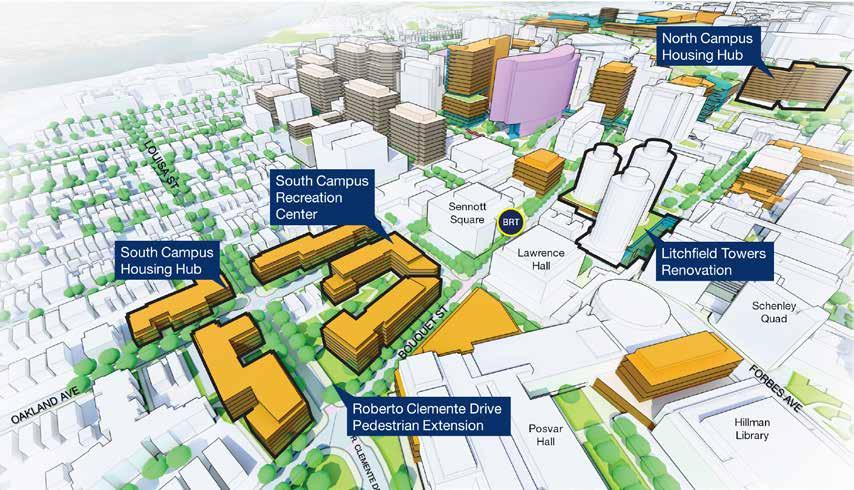
Litchfield Towers
Litchfield Towers are a unique part of Pitt’s physical environment. The three cylindrical towers stand tall above Forbes and Fifth avenues and currently offer mostly first-year housing as well as some upper-level housing. On the lower levels is Pitt’s largest dining facility as well as some student-centered areas. The plan proposes additional program added to the base of the tower, mainly by enclosing the open hardscaped plaza and providing additional student spaces. In addition, pedestrian movements along the north-south braid, as well as to Schenley Plaza and the William Pitt Union, can be facilitated with the incorporation of an atrium.
Recreation and Wellness Center
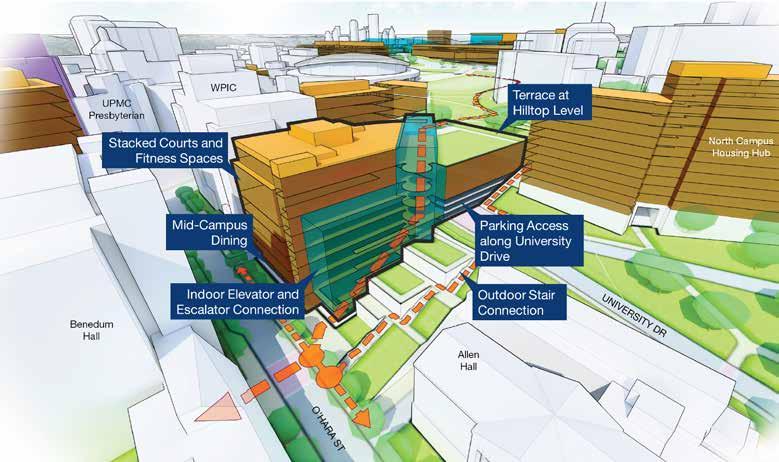
The Recreation and Wellness Center will serve as a catalyst to connect the lower portions of campus with the upper portions on the hilltop, eliminating the perceived divide between the two regions. Replacing the O’Hara Garage and the LRDC, the Recreation and Wellness Center integrates recreation, fitness, student life, and academic spaces.
Pitt seeks to make the Recreation and Wellness Center a show case for sustainable design by employing active design, best management practices for stormwater, attacking the campus topography to create better connections for improved pedestrian experiences, leveraging design to promote a healthier lifestyle, and enabling better opportunities for person-powered mobility.
The facility will utilize a series of stacked indoor recreation spaces traversing the height of the hillside and will provide an internal vertical circulation system. The design will also integrate wellness and student dining. A parking structure may be incorporated into the facility, utilizing the existing University
Drive to organize garage circulation and ease traffic congestion, particularly during athletic events.
The Recreation and Wellness Center complementing the Athletics Master Plan is an opportunity to resolve recreational shortcomings on the Pitt campus, embrace topography, create new connections, and enhance the areas around and north of O’Hara Street.
This project will make the campus more:
Accessible: Create a route available to everyone organized around an atrium and vertical circulation that connects O’Hara Street to the hilltop.
Sustainable: Boldly advance Pitt’s sustainability goals in Energy and Emissions, Landscape and Ecology, Water Systems and Transportation and Mobility. The project is intended to be one of the most energy efficient buildings on campus.
Communal: Strengthen the residential community north of O’Hara Street and create dynamic shared spaces for student life, recreation and living.
The Recreation and Wellness Center will serve as a catalyst to connect the lower portions of campus with the upper portions on the hilltop, eliminating the perceived divide between the two regions.
Proposed Recreation and Wellness Center
South Campus Housing Hub
Redevelopment of Bouquet Gardens and additional southern parcels will help to satisfy the housing demand of upperclassmen and potentially graduate students. It will also create a vibrant south campus gateway that links off-campus students to the campus core. The south housing node will add 1,000-1,300 net beds and include a satellite fitness facility. This mid-rise residential redevelopment will enhance street presence, increase density, face outward to the community, and provide a transition zone to South Oakland.
North Campus Housing Hub
Stronger connections “up the hill” are key to integrating the campus, and adding additional housing will play a critical role in this process. The Campus Master Plan proposes approximately 600 beds north of O’Hara Street in proximity to the engineering and sciences academic node and adjacent to the proposed Recreation and Wellness Center. The location, replacing part of University Drive, will help mitigate topographical challenges, provides amazing views to the Cathedral and beyond, and is an integral part of the plan’s proposed north/south braid of connectivity.
Academic Support Center
Housing academic support programs such as writing, health science advising, and creativity, the ASC will be located between David Lawrence Hall and the Hillman Library on Forbes Avenue. The center will also provide spaces for studying, collaboration, and dining. This project will require extensive site work including chilled water line replacement and construction of a tunnel to replace the library loading dock.

Other Central Redevelopment Opportunities
Three other redevelopment opportunities are located along or near the Forbes and Fifth Avenue corridor in central campus. These opportunities include:
BK Lot Site:
The BK Lot is a prominent site consisting of open space and surface parking along Fifth Avenue between Oakland Avenue and Bouquet Street with a smaller adjacent parcel along Bouquet Street. Because of its size and location, it is an ideal site for student life functions, housing, offices, or innovation space. It is a challenging site for academic or research lab space but, overall, is flexible. Development of the BK Lot site will dramatically improve the public realm along Fifth Avenue across from the School of Public Health.
Lothrop Hall:
This site is an ideal location for expanded academic and research space for health sciences described on page 58.
Forbes Hall:
This site is within the proposed Innovation District and could be redeveloped as either graduate housing or market-rate housing geared to young professionals, depending on the outcomes of the district’s final plan.
East Housing Sites
Longer-term options for student housing are along Fifth Avenue at the northwest corner of Bellefield Avenue and the southeast corner of Craig Street. Redeveloping these prominent sites for housing will help satisfy housing demand by providing approximately 500 new beds. These sites include:
Information Sciences Building:
A housing facility will replace this brutalist style building, which is currently in poor condition. The School of Computing and Information, which occupies the building, is slated to be relocated to One Bigelow.
RA Lot/Music
Building Site:
A housing facility will replace the Ruskin Hall lot and accommodate a garage to replace the lost spaces. The ground floor may be utilized to accommodate student-centered spaces, such as retail or dining. Special care should be taken to retain all or part of the Music Building, a contributing property to the Schenley Farms Historic District.
PNC Bank Site:
The current PNC Bank at Fifth Avenue and Craig Street could be removed or accommodated on the ground floor to create a housing facility.
Future Student Life Spaces
Current student life functions will continue to be supported through alternative spaces on campus, such as the Hillman Library and Academic Support Center. Additional student lounge and study spaces should be incorporated in all new development projects and woven into the campus fabric in a convenient, yet decentralized, manner. The greater off-campus Oakland neighborhood will continue to serve a portion of the student life demand in line with Pitt’s goal to maintain a porous campus edge.
However, even with small group study and lounge spaces integrated throughout campus, there remains a need for larger meeting rooms and student-prioritized conference spaces. As the campus continues to evolve, the plan recommends a smaller centralized student union proximate to the campus core as a mid- or long-term future development. This building will serve as a true student-oriented union, including deliberately programmed spaces and common student services. It will also serve as a visual and physical “living room” for campus and free up space in the existing William Pitt Union for repurposing.
The current centralized “one-stop-shop” functionality for student organizations and Student Affairs offices is ideal and should be maintained in future planning efforts. All student organization spaces within the William Pitt Union should either be transitioned into this potential new facility, or be renovated in line with the interior remodeling efforts that have already been completed on the third floor, shifting to a more inviting and open floor plate.
Proposed Student Housing
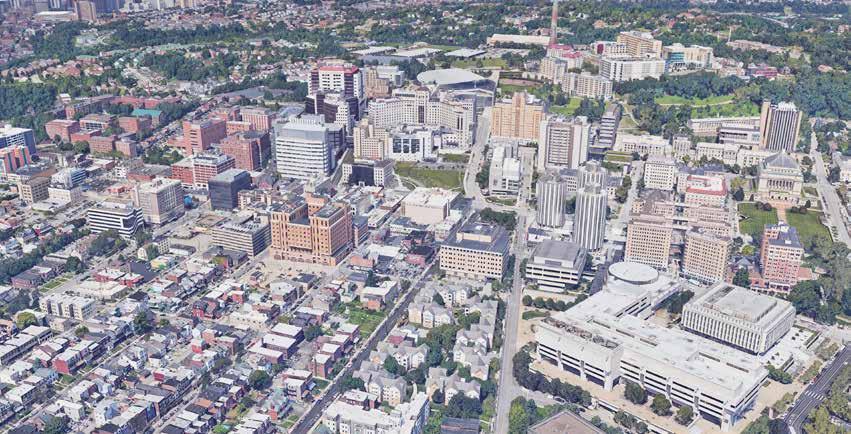
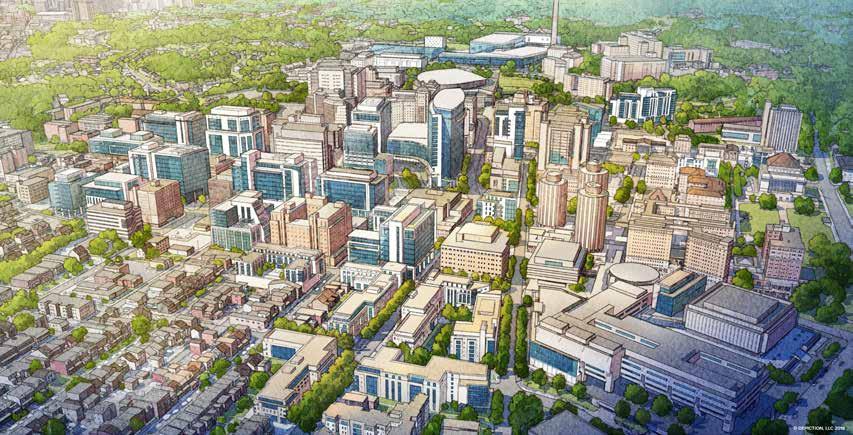
PROPOSED VIEW LOOKING NORTH FROM SOUTH CAMPUS HUB South Campus Housing Hub
Campus Housing Hub
EXISTING VIEW LOOKING NORTH FROM SOUTH CAMPUS HUB
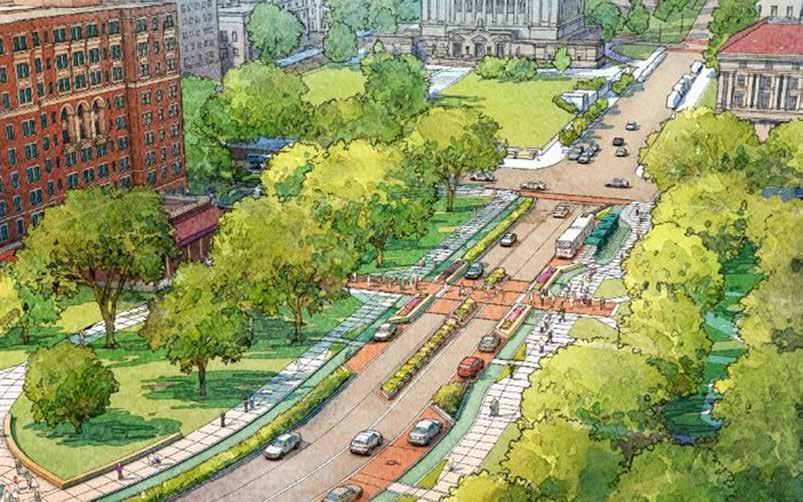
Proposed Improvements on Bigelow Boulevard
The Campus Master Plan will create a campus that strengthens Pitt’s identity, supports accessibility, and enhances sustainability through the following strategies:
• Create meaningful gathering places throughout campus.
• Increase tree cover by 50% and transition 15% of lawn area to indigenous and adapted plants.
• Create pedestrian and bicycle focused “campus oriented” streets that improve safety and accessibility.
• Enhance a series of campus arrival points that announce Pitt’s presence and improve wayfinding.
• Reduce impervious surface area by 20%.
• Divert 25% of stormwater from impervious surfaces to reuse, detention, and/or landscaped stormwater solutions.
Open Space
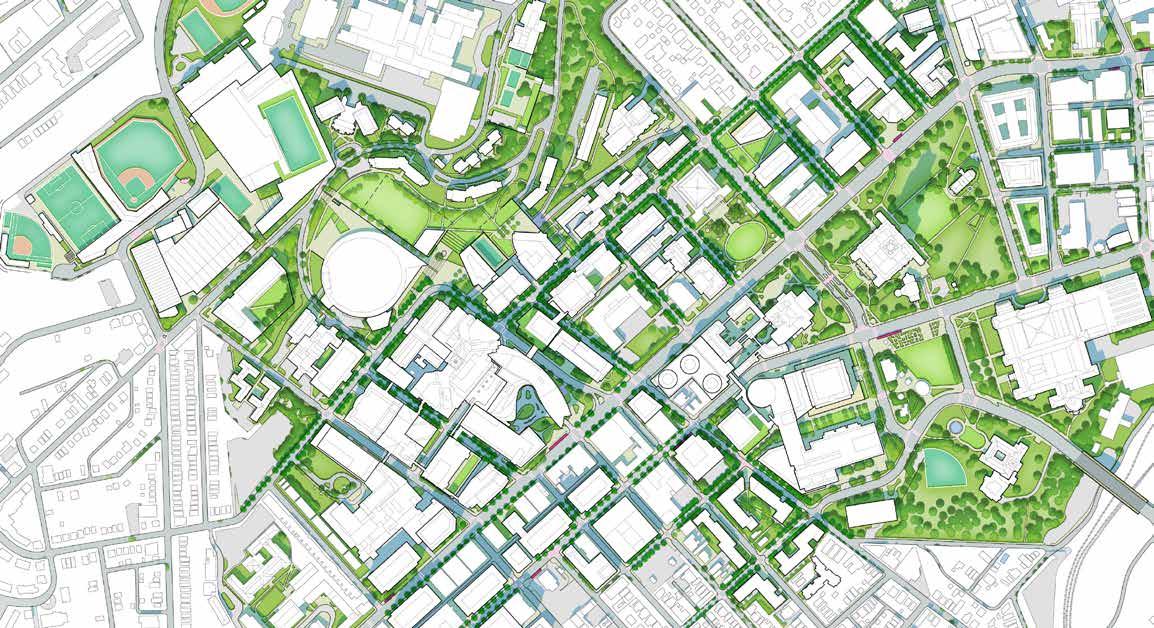
The green space around and adjacent to the Cathedral of Learning is one of the most enjoyed places on Pitt’s campus. A key focal point of the plan is to extend these qualities to other areas of the campus and connect these areas through a series of open space and streetscape improvements.
New open space includes a proposed academic quad at One Bigelow and a green space integrated with the proposed Recreation and Wellness Center. The lawn adjacent to the Petersen Events Center will be raised to increase its size and suitability for recreation and open space in the south campus housing hub will be enlarged. The plan also identifies a series of smaller open space interventions throughout the campus.




Streetscape Improvements
Equally important as open space is improving the streets that cross Pitt’s campus. Streets are the primary way pedestrians navigate the campus. There are three types: campus spine streets, connector streets, and arterial corridors.
The campus spine streets are defined as the areas of O’Hara and Terrace streets that have University property on both sides. Currently these streets are car dominant, lack identity, and have few trees. The plan proposes developing a collegiate character and greater pedestrian focus along this corridor.
Improvements include removing parallel parking, adding a planted area to buffer pedestrians from vehicles and capture stormwater runoff, adding street trees, improving sidewalks, and integrating branded University elements such as banners.
A series of connector streets intersects with the campus spine corridor. To improve their character, the plan recommends adding planting areas and trees. These interventions will also improve pedestrian safety and advance the University’s sustainability goals.
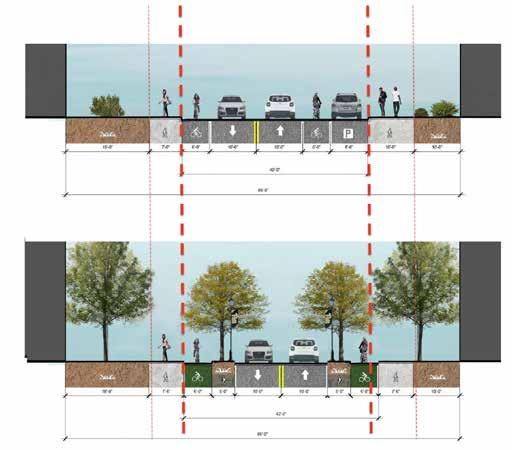
STREET TYPOLOGY

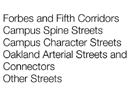
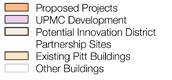
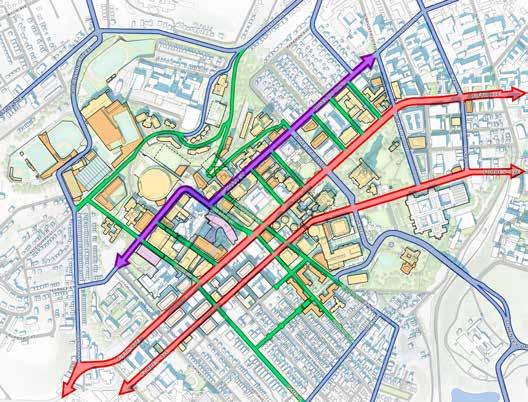
The Forbes and Fifth Corridor is the most challenging area to improve.
These streets are major arterials for the city, have narrow sidewalks with limited building setbacks, and are important retail centers. They are also important to the campus experience. Improvements should include adding street trees, enhancing pedestrian safety at
intersections, creating building setbacks where possible to widen the sidewalks, and adding technology and signage to improve wayfinding and the retail experience. Any improvements in this area require a partnership between Pitt and key stakeholders from the community, city, and organizations in the area.
Section Through O’Hara Street
Campus Arrival Points
One of Pitt’s strongest assets is its urban context. The campus and city blend together creating a distinctive experience. While this relationship between the city and University should be maintained, there are several key campus arrival points that need to be improved.
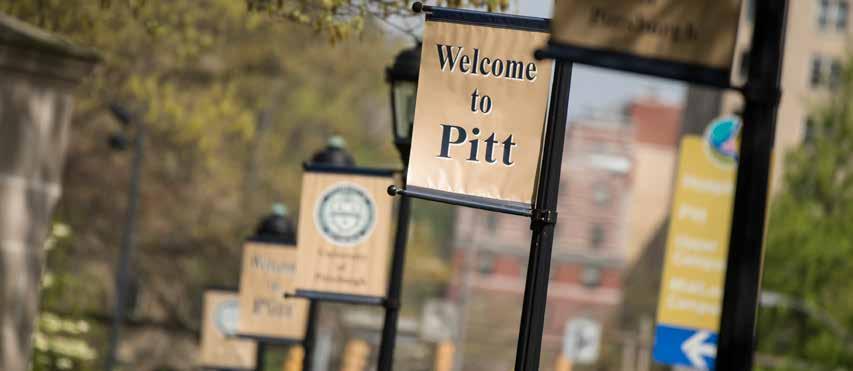
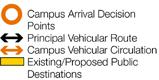
The Campus Master Plan identifies a series of key intersections for enhancing wayfinding, pedestrian safety, and the sense of place. Improvements include signage, public art, enhancements to streets and sidewalks, and green space and trees.
Since these intersections are also arrival points for adjacent neighborhoods and institutions, any improvements will need partner input. Addressing these arrival points will improve the overall campus and Oakland experience.

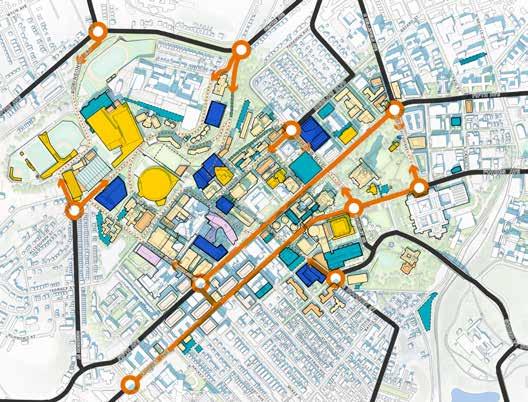
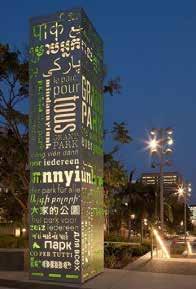
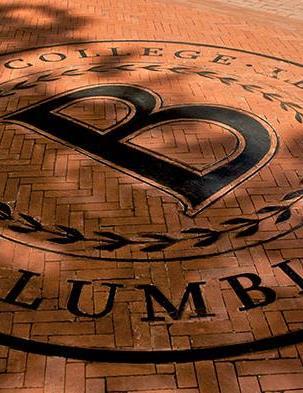
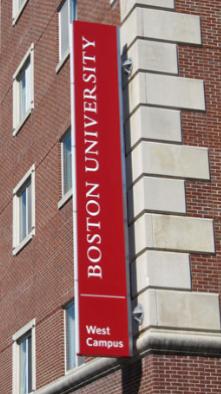
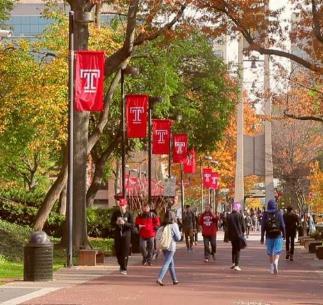
Examples of Ways to Improve Campus Identity and Wayfinding in an Urban Context
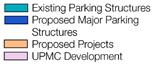
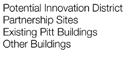
CAMPUS ARRIVAL POINTS
PROPOSED BIGELOW BOULEVARD LANDSCAPE IMPROVEMENTS
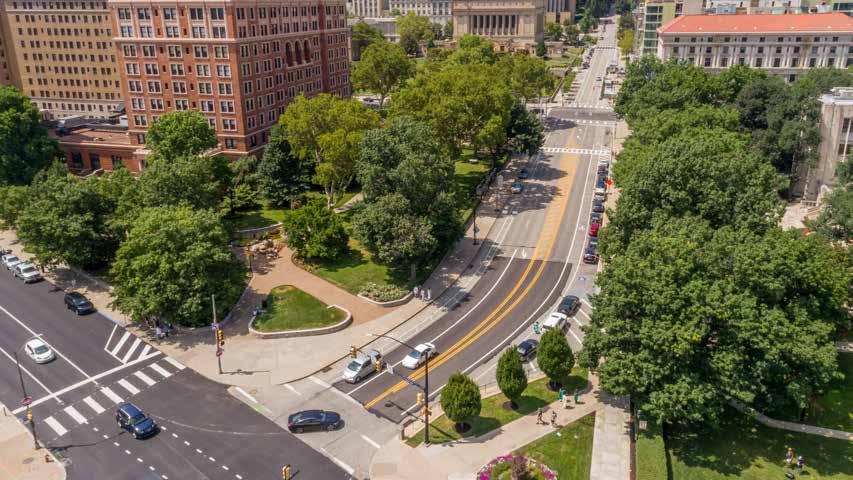
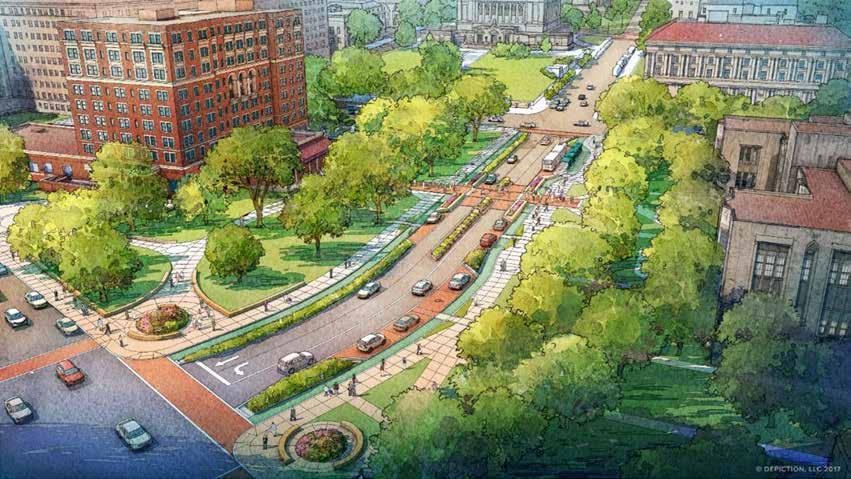
EXISTING VIEW OF BIGELOW BOULEVARD
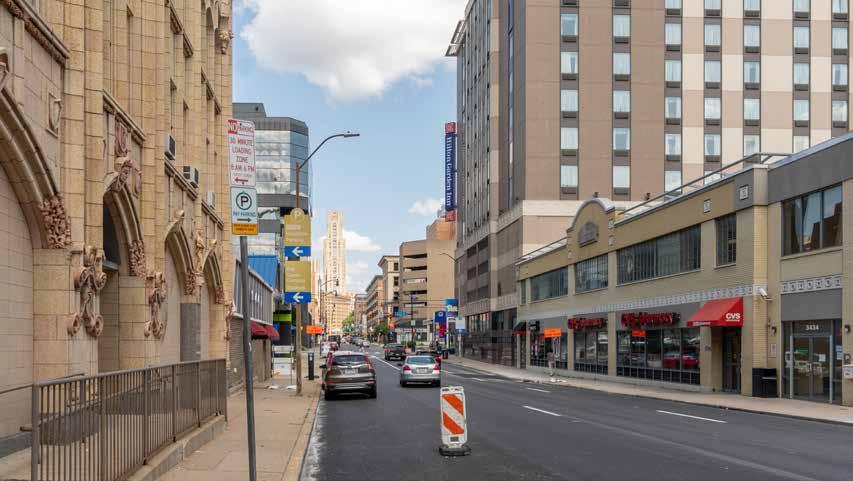
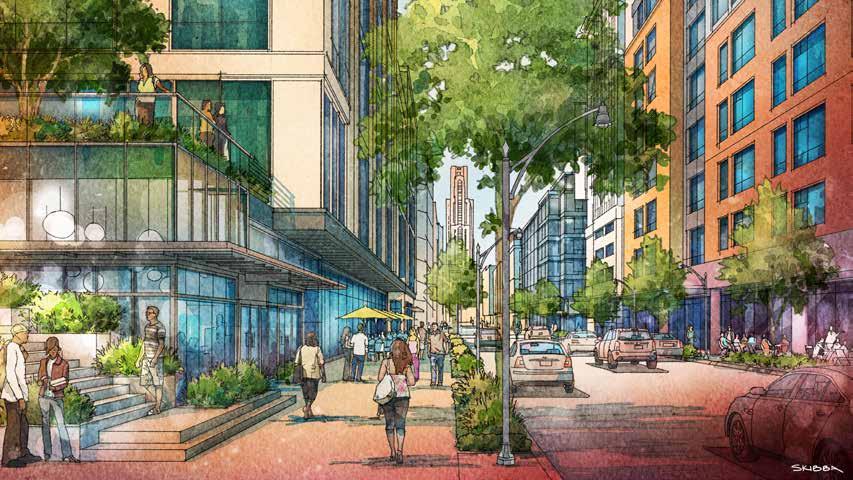
PROPOSED VIEW EAST ALONG FORBES AVENUE
EXISTING VIEW EAST ALONG FORBES AVENUE
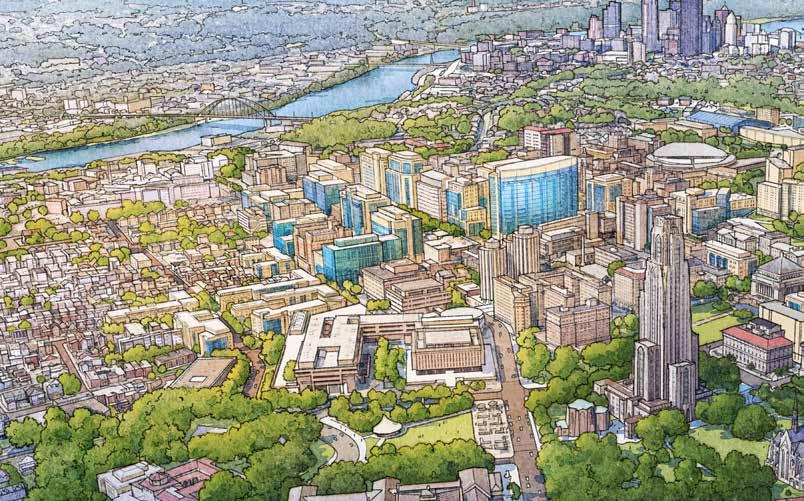
Innovation
Pitt has a unique opportunity to be a partner and an anchor for the development of an Innovation District along Forbes and Fifth avenues. The vision for the Innovation District involves creating a cluster of multi-tenant buildings that can leverage the commercialization and corporate-sponsored activities of numerous centers, institutes, and initiatives. These facilities could address universally needed wet lab spaces, shorten the distance between points of University intellectual capital, and bring corporate sponsors into proximity with the University.
Adding these buildings will create a downtown for innovation in Central Oakland. The Innovation District will also provide public spaces that support
events and programming. The district will seek to create a mix of designs and price points suited to a range of businesses.
Adding these researchers and businesses to the district will reinforce density that supports stronger retail and amenities for all residents. The proposed mix of research, lab, office, residential, hospitality and retail uses will help create a more vibrant and active environment. Improvements to the streetscape and creation of new connections between Forbes and Fifth avenues will improve the physical environment in this important corridor
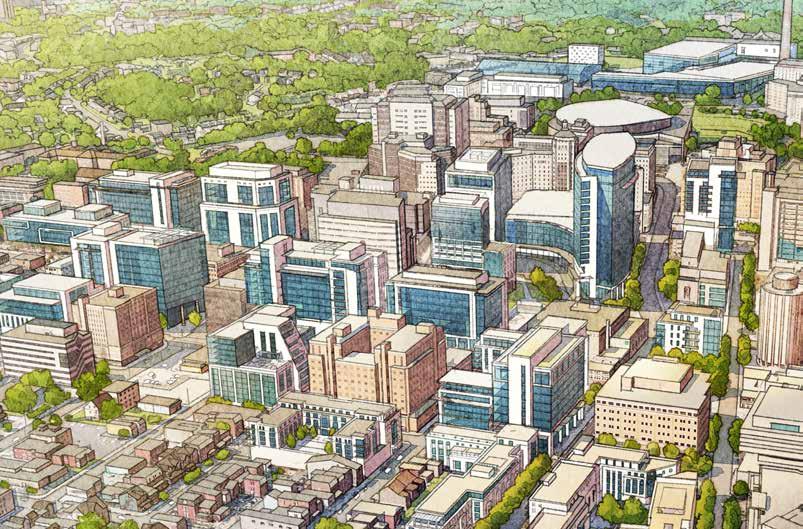
Proposed Innovation District
Transportation and Mobility
Pittsburgh has a robust transportation network that includes all modes pedestrians, bicycles, transit, shuttles, and vehicles—a varied mix that reflects campus’s location in the urban core of Pittsburgh. The Campus Master Plan, in conjunction with the regional pursuit of Bus Rapid Transit (BRT), offers the potential to transform campus. The plan anticipates a reduction in campus parking, which will provide an opportunity to further reduce the community’s reliance on single occupancy vehicles (SOVs) and increase sustainability and health. To avoid potential challenges, this reduction must be timed with the implementation of other mobility options.
Parking
Pitt is facing a potential loss of approximately 2,000 parking spaces as facilities are developed and redeveloped. About three-quarters of those losses will be spaces currently available to Pitt affiliates and visitors, with the balance being spaces leased to UPMC. The plan identifies obsolete parking facilities to be replaced, the building projects that must be developed to bring replacement parking online, and proposes locations for replacement parking. Proposed parking facilities include options discussed during the planning process as well as additional sites identified through prior transportation discussions.
While there are options to replace parking, especially in the long term, Pitt can likely reduce parking demand and the need for parking infrastructure through a variety of pricing and Transit Demand Management (TDM) strategies. Pitt’s short-term strategy for replacing parking losses should include the following elements:
• Identify core parking locations that can be secured through lease arrangements.
• Identify locations in Greater Oakland that can be secured through lease arrangements or partnerships.
• Create temporary or semipermanent parking facilities that convert easily to other uses or can be designed for future development.
• Reduce the number of parking permits available to residential students.
• Implement a marketing and incentive program to encourage existing permit holders to switch to Park and Ride alternatives. This approach should be paired with lobbying efforts to Port Authority Transit to establish or re-establish direct routes to Oakland from select Park and Ride locations.
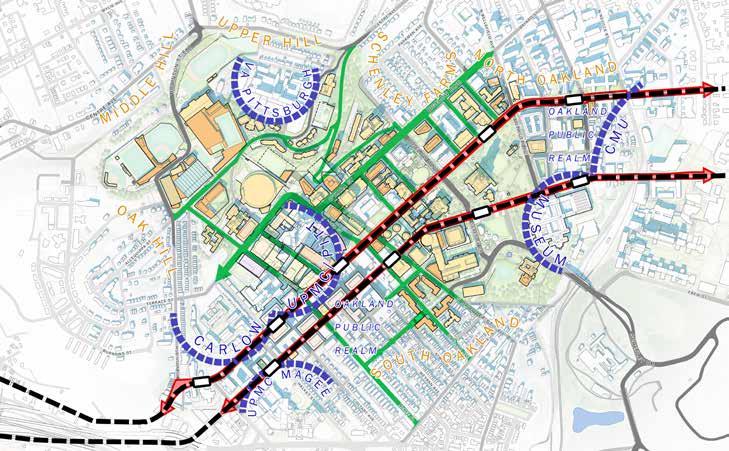

TRANSPORTATION IN FOCUS
pedestrian and bike circulation and experience.
Provide convenient visitor and event parking.
Leverage existing and proposed transit connections.
Create convenient mixed-use interceptor parking facilities.
Leverage remote parking and transit to limit vehicular traffic in Oakland.
If parking facilities in the plan are implemented alongside their associated projects, Pitt could fully replace core parking losses in the long term. The question becomes whether replacing parking in the campus core is the highest and best use of available land and best aligns with the University’s objectives. Land values in Central Oakland are rising, and constructing under-building and standalone parking structures is costly. It is unclear how transportation technologies will impact future parking demand, and Pitt has a stated interest in promoting sustainable transportation options. In lieu of replacing all core parking losses in kind, the University could accomplish parking replacement through a combination of core, Greater Oakland, and park and ride locations.
Pitt’s long-term parking strategy should include the following elements:
Accommodate basic core parking needs. Pitt should provide a core parking supply that accommodates typical daytime visitor parking, some core faculty and staff parking and a limited amount of student parking on campus. In right-sizing future core parking capacity, Pitt will need to balance the risks associated with over-
supplying and undersupplying parking in Central Oakland. Oversupplying parking will inefficiently use financial and physical resources and will likely induce additional SOV trips in Central Oakland. Undersupplying parking without an enhanced TDM program will likely led Pitt affiliates to park in nearby neighborhoods, negatively impacting the community.
Adjust parking demand by aligning fees with market rates. Pitt’s current parking permit prices are well below market rates for facilities in Central Oakland and North Oakland, which disincentivizes alternative transportation.
Enhance park and ride options. Some park and ride locations are underutilized, and Pitt should promote their use in the near term. In the longer term, Pitt should work with Port Authority Transit to pilot additional direct-to-Oakland transit service and expand overcapacity park and ride lots. The University should also explore partnership opportunities to develop mixed-used multimodal hubs at key locations.
Enhance regional mobility. Roughly 40% of Pitt employees live in Greater Oakland and adjacent portions of Pittsburgh. These employees should, in general, be able to walk, bike, or take transit to campus in lieu of driving. Ensuring safe, continuous walking, bicycling, and transit routes are provided from the communities in which employees live and Pitt will aid in reducing parking demand. Pitt should also continue to support carpool and vanpool programs.
Oakland Intercept Parking. For a segment of Pitt faculty and staff, taking alternative transportation modes on a regular basis is not viable. Intercept parking outside of Central Oakland can help address this need, offering parking for those who need it at a reduced price and with reasonable proximity to their workplace. Reducing parking demand in Central Oakland also helps to reduce the number of vehicle trips on the already congested Fifth and Forbes corridor. Developing intercept parking locations through lease agreements or partnerships will allow Pitt to flexibly respond to parking demand via adjustments in parking supply.
In the short term, as many as 1,000 core-campus spaces could be transitioned to intercept parking. That number could grow to as many as 1,400 spaces as core-campus permits reach market rates. Two candidate locations for intercept parking facilities on the periphery of Oakland require partnerships with adjacent institutions, the City of Pittsburgh, and/or private developers.
Craft Site. Located at the western end of the Fifth and Forbes corridor, this site is identified as an important potential parcel for the Oakland Innovation District. It is currently owned by Carlow University and will require a partnership agreement or land swap to move forward.
Middle Hill Site. This as-yet-undefined location, which could house a multimodal facility among other uses, could be situated in the Middle Hill neighborhood north of the University. Middle Hill has relatively easy access from the North Hills via PA-380/Bigelow Boulevard and Herron Avenue. This site has the potential to host additional amenities such as child care and neighborhood retail.
Pitt has developed significant end-of-trip amenities on campus including covered and uncovered storage facilities as well as bicycle repair stations. In future, Pitt should look to increase these amenities commensurate with their usage as well ensure shower facilities are available for bicycle commuters.

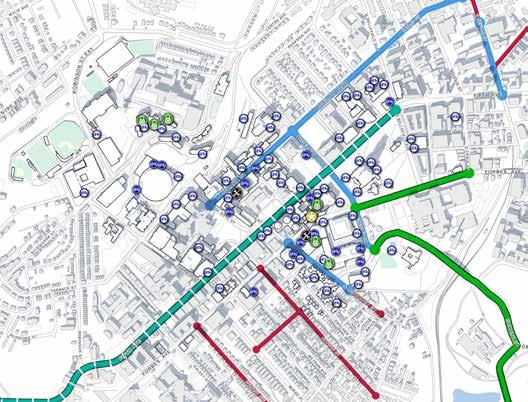
Regional Transit
A significant number of employees travel to campus by using Port Authority transit. While Port Authority transit provides coverage to much of the greater Pittsburgh region, service cuts in past years have left few direct routes to Oakland. While the University has a relatively high mode split for non-SOV modes, maintaining or growing this split through work with regional partners is critical to maintaining quality of life for the Pitt community.
BRT will operate high-frequency trunk service in dedicated lanes between Downtown and Central Oakland, with continuing branch service to multiple East Side neighborhoods. In Central Oakland, the BRT will run in lanes in
the Fifth and Forbes corridor, with eastbound service on Forbes Avenue and westbound service on Fifth Avenue. While BRT service will not provide one-seat service from Oakland to any locations not currently served by Port Authority, the frequent service and new, sleek vehicles should help reduce overcrowding on the most heavily traveled routes and vastly improve the rider experience.
Pitt Shuttles and SafeRider
The implementation of a comprehensive transportation plan allows Pitt to reset its approach to shuttle operations by providing reliable service solely within Central Oakland and facilitate connections with regional transit.
Pitt should also explore an arrangement with a ride-sharing and ride-hailing company to provide safe rides to students as a replacement for the SafeRider program. Such a partnership, if structured properly, could remove the need for a dedicated dispatch and shuttle coordination on the University’s part.
Bike Mobility
Potential bike connections from Central Oakland to adjacent neighborhoods will improve connectivity, including a connection to South Oakland via Bouquet Street and Dawson Street and connections to Bloomfield and Shadyside via Neville Street and Ellsworth Avenue, respectively. Pitt should explore ways to expand secure bike storage as well as expanded shower and changing options in multiple locations on campus.
To overcome the issue of topography on campus, Pitt could explore opportunities for an electric bike (e-bike) share in Central Oakland. E-bikes come equipped with pedal-assist functionality that limits exertion on hills and can broaden the appeal of biking on a hilly campus. This technology could be incorporated into the city’s existing bikeshare fleet or could be developed separately through university partnerships. Pitt will want any e-bike share concept to feature docking stations rather than dockless bikes to protect against theft and to closely control bike parking in an urban environment.
The University should work closely with the City of Pittsburgh’s Department of Mobility and Infrastructure (DOMI) to identify preferred roadways for onstreet bike facilities that will provide a continuous bike network. These facilities should feature protected lanes to increase bicycling comfort and increase the likelihood that more than just the most experienced bicyclists will feel safe. Based on a preliminary assessment, these corridors appear to have traffic volumes and rights of way that could make them candidates for narrower traffic lanes and new dedicated bike lanes. Further evaluation in concert with DOMI will be needed to confirm the feasibility of these treatments.
Pedestrian Mobility
One of the keystone elements of the plan is the development of two pedestrian “braids,” implemented through a series of major capital projects that will significantly enhance pedestrian mobility on campus. The two braids— one with an east-west orientation along O’Hara Street and one with a northsouth orientation connecting areas of campus separated by topography—will improve mobility in multiple ways:
• The north-south braid is envisioned as a student life connector and will help overcome the challenge of topography through a series of walkways and escalators, with activated spaces to provide additional programming while also enhancing the pedestrian experience. This braid will also provide a direct connection between existing residential and greatly enhanced athletics facilities on north campus, the new recreation and wellness center on mid-campus, and the Cathedral of Learning.
• The east-west connector will create more intentional pedestrian connections among teaching, research, and clinical uses along O’Hara Street and in the health sciences complex.
• Both pedestrian braids will contribute to an enhanced pedestrian environment through improved wayfinding and branding thereby signaling to pedestrians that they are moving through a corridor designated and designed to accommodate pedestrian activity ahead of other modes. The transportation initiatives described by the Campus Master Plan intend to reduce the number of vehicle trips to campus and increase mode share for walking, biking, and transit. While the short-term needs of the commuting population may shift solutions toward pragmatic, they are part of a longer-term arc to reduce the carbon footprint of the University by reducing parking demand on campus.
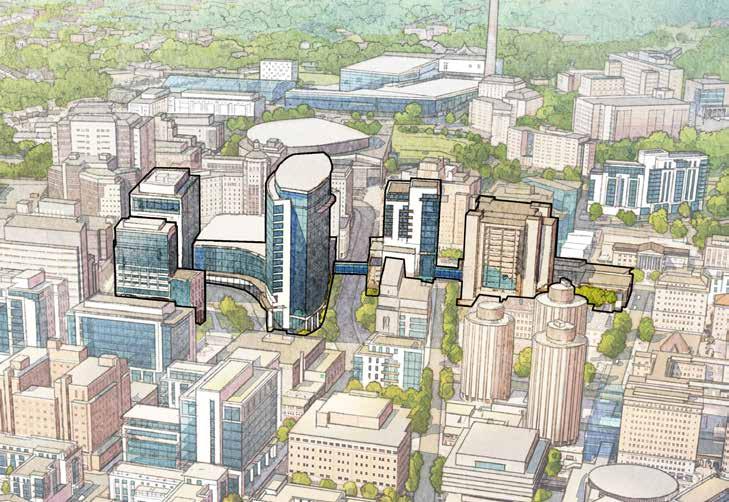
A Place That Seeks Synergy and Efficiency
Seek synergy and efficiency by renewing aging facilities and building on a strong legacy of sustainability planning. New facilities will be interdisciplinary and meet Pitt’s most pressing space needs.
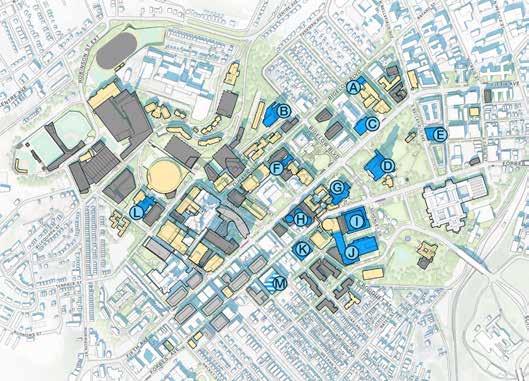
Renovation Opportunities
The Campus Master Plan proposes ideas that reinforce shared facilities and promote affordability and resiliency.
The past few sections have provided guidance on how to strengthen interdisciplinary connections and create better academic synergies. Strategies include innovation and entrepreneurship, shared facilities, and the creation of more meeting and collaborative spaces. State-of-the-art new facilities will be interdisciplinary and meet Pitt’s most pressing space needs. However, renewal of aging facilities is also critical for increased synergies and efficiencies.
One way that efficiency and sustainability can be prioritized is by concentrating near-term investments on maintaining existing University facilities. Even though many new construction projects are recommended for Pitt over the next few decades, the University values its existing buildings.
RENOVATION PROJECTS
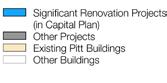
Approximately 73 percent of Pitt’s investments in the recently completed 10-year Facilities Capital Plan are in upgrading, rehabilitating, and preserving aging facilities. The following campus buildings have been identified for significant renovations in the current Capital Plan.
A. Crawford Hall
The home of biological science, neuroscience, and research support services will undergo a significant renovation. It includes replacing all mechanical, electrical, and plumbing infrastructure and renovating the interior of the building to make the spaces more efficient.
B. Chevron Science Center
A significant amount of renovations are planned for the Chemistry facilities in Chevron Hall. They include floor-by-floor renovations over time to replace aging infrastructure, lab and office modernization, and energy efficiency improvements.
C. Alumni Hall
Alumni Hall, as the home of Admissions, will be transformed to provide an impactful experience for the first-time visitor to Pitt. Admissions offices will be consolidated on the fifth floor.
D. Cathedral of Learning
Home to campus administration as well as several social sciences and humanities disciplines, a multitude of targeted renovations are proposed for the Cathedral of Learning. They include floor-by-floor renovations over time to replace aging infrastructure, classroom and office modernization, and energy efficiency improvements.
E. Bellefield Hall
The plan proposes that Bellefield Hall undergo a comprehensive renovation and become the primary home of the Department of Music. Expanding on the programs already offered in the main auditorium, the department will take advantage of former recreation spaces that are suited to practice and recital space.
F. Thackeray Hall
Thackeray Hall will be the home of student services on campus, including the Registrar, Student Payment Center, Student Accounting and Billing, Collections, Financial Aid, and Advising.
G William Pitt Union
Renovations to the William Pitt Union aim to better accommodate student affairs spaces and larger public rooms on the ground floor.
H. Litchfield Towers
Litchfield Towers have a very efficient floor layout with traditional unit-types centered around community bathrooms and limited gathering space on each floor. Towers A and B currently house 32 or 38 beds per floor and Tower C houses approximately 30 students per floor in all single-occupancy units. The plan proposes the de-densification of Litchfield Towers to enhance Pitt’s first-year experience. This includes study and lounge space on each floor, modified communal bathrooms to incorporate more privacy, and stabilized bed count to include 32 residents plus one resident assistant on almost all floors.
I. Hillman Library
Hillman Library is not currently sized to meet future enrollment growth. New spaces in Hillman Library will be collaboration-focused.
J. Posvar Hall
Posvar Hall renovations include improvements to the Graduate School of International Affairs, Behavioral Lab, School of Social Work, and University Center for International Studies. The ground floor will be transformed into an enhanced learning commons containing structured and open study spaces along the main concourse.
K. Sennott Square
This relatively recent building currently houses the Business School, and the School of Computing and Information, as well as some additional Arts and Sciences programs. With the departure of School of Computing and Information to One Bigelow, the Department of Psychology will shift and expand to the fourth floor while the College of Business Administration expands to the third floor. Departmental floors are renovated to create more collaborative environments that share daylight and views.
L. Salk Hall
A recommended renovation of Salk Hall may be phased with the replacement of Salk Annex. The School of Dental Medicine may move to a newer facility that will have an improved adjacency to other health sciences disciplines.
M. Forbes Tower
The School of Health and Rehabilitation Sciences is slated to renovate spaces in leased spaces within Forbes Tower (currently owned by UPMC), although in the long-term it is recommended that SHRS will relocate to a Pitt-owned building to accommodate programmatic growth and foster health sciences synergies.
Anticipated Building Modifications
Projects that affect properties within the Oakland Civic Center Historic District and the Oakland Square Historic District will require review by the City of Pittsburgh Historic Review Commission. This review will take place at the time a project comes forth for a Conformance Review and/or application for a Labor and Industry Building Permit. This may mean that buildings constructed as late as the 1990s may reach the 50-year threshold under the life of this plan.
Campus Support
Loading and service areas can affect pedestrian flow and have a negative impact on the public realm. As a result, they should be carefully considered in every major renovation and new building to minimize pedestrian and public realm impacts. Examples of how this can be implemented include consolidating truck deliveries at fewer loading docks and using small carts to distribute goods. This will reduce truck traffic on campus and improve the pedestrian experience. Wherever possible, new and existing loading and services areas should be screened from view to improve the campus aesthetic.
The trades and shops set-up, delivery of materials, and the ability to stage and stock supplies is critical to improving campus functionality. Currently, grounds crew, lock shop, and building engineers are located on-campus at Posvar Hall. All other resources are positioned off-campus at the Melwood Facility, a 20-30 minute drive from campus. Facilities Management staff and other shops occupy multiple buildings and temporary annexes across campus. As a result, the workforce and materials to support them are transported to and from a remote location to the intended areas on campus. For efficiency and greater coordination, the University will benefit from a consolidated plan combining all functions closer to campus and under one roof. If the opportunity was right, it will be best to further combine Facilities Management staff offices with a new facility centralizing various shop and trade functions. This has the potential to dramatically improve response time and productivity.
PITT’S 15 SUSTAINABILITY IMPACT AREAS
All areas of sustainability are integrated into how campus development will evolve in future. Larger call-outs in the image to the right illustrate impact areas that have a closer relationship to the Campus Master Plan.
STEWARDSHIP COMMUNITY&CULTUR
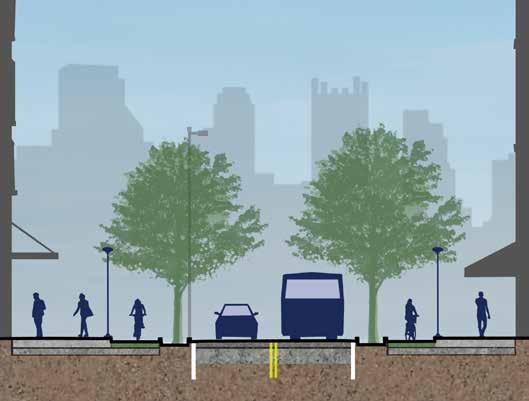
Sustainability in the Campus Master Plan
The Campus Master Plan builds on a strong legacy of sustainability planning and implementation at the University of Pittsburgh. The University’s first Greenhouse Gas Inventory was published in 2008 and Pitt’s commitment to sustainability has only grown since then with the publication of an inaugural Report on Sustainability in 2013, the launch of the Student Office of Sustainability in 2014, the re-formation of a University Sustainability Committee in 2017, and the publication of the first campus-wide Pitt Sustainability Plan in 2018. Pitt is also a strong partner in the Pittsburgh 2030 District and completed a Comprehensive Energy Master Plan and Energy Conservation Plan in 2018.
Sustainability at Pitt covers 15 impact areas encompassing much more than the evolution of the University’s built environment as outlined by the Campus Master Plan. While the Pitt Sustainability Plan articulates Exploration and Community & Culture goals and aspirations for Pitt-led research, teaching and learning, regional and global outreach, engagement, equity, and more, the Campus Master Plan primarily describes the physical environment needed to support such activities. As such, the Pitt Sustainability Plan’s Stewardship theme has the strongest overall connection to Pitt’s physical environment (and thus greatest emphasis in the Campus Master Plan), but all 15 impact areas are integrated into campus’s future development strategy.
The following examples illustrate how Pitt’s Campus Master Plan embraces the goals and aspirations of the Pitt Sustainability Plan and advances the community’s commitment to a sustainable future.
Energy and Emissions: Appropriate investments are being made to upgrade aging energy infrastructure at both a building and campus scale to reduce greenhouse gas emissions. Rooftops are and should continue to be evaluated for their potential contributions to on-site renewable energy generation. Whether such systems are owned and operated by the University or advanced through power purchase agreements, the University should retain the energy and environmental assets of on-site renewable energy systems.
Landscape and Ecology:
Improvements to the campus-wide pedestrian experience and public realm will closely align with this impact area as well as the Transportation and Mobility and Water Systems impact areas. Increasing tree canopy along pedestrian-oriented streets will lead to a healthier and more hospitable environment and help Pitt meet its goal of increasing tree canopy by 50 percent by 2030. Adding landscape buffers along streets will create safer pedestrian experiences while increasing capacity for stormwater management along streets.
Transportation and Mobility:
The Campus Master Plan reflects the Pitt Sustainability Plan’s goals of shifting commutes and in-day travel to less carbon-intensive modes of transportation. By focusing on walking, bicycling, and transit, Pitt will minimize vehicle use campus-wide. Working to increase transit utilization and availability, off-campus park and ride amenities, and continuous bicycle connections and infrastructure to and from surrounding neighborhoods will require partnerships with external entities. See the Transportation section for more details.
Materials and Waste: While Pitt’s current sustainability goals related to materials primarily address consumer waste streams, the University has been (and will continue to make) strides toward campus-wide materials reuse, waste minimization, and landfill diversion, especially related to construction. The Campus Master Plan consciously includes projects that will reuse the most carbon-intensive portions of buildings. Campus architectural and interior design guidelines are being updated to increase the use of construction products with fewer environmental impacts and greater benefits for human health and well-being.
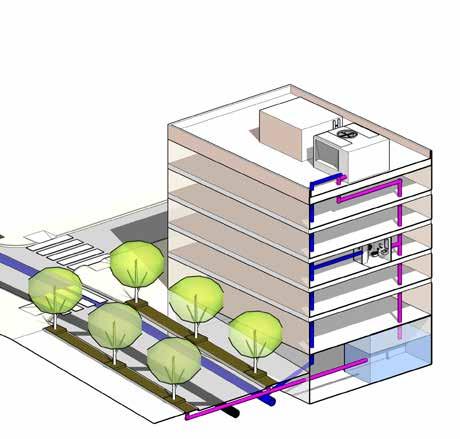
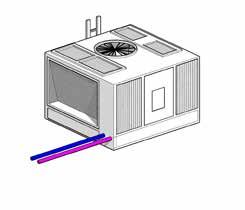

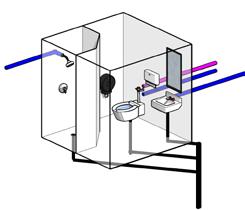
While rainwater is not part of Pitt’s current water supply, it could be integrated as a source in the future.
Rainwater falls on impervious hardscape surfaces and becomes runoff.
Runoff is directed to tree trenches at street edges. Today, rainwater that is not directed to tree trenches overflows into municipal combined sewers.
Instead of directing rainwater overflow to the municipal system, such water could be redirected to cisterns in purple pipe to distinguish it from the municipal potable supply water. Water stored in cisterns could be cleaned and returned to buildings for reuse.
Flush and flow fixtures such as showerheads, sinks, and toilets are currently provided with municipal potable supply water. Fixtures in which people come in contact with water should always be supplied from this source.
Once cleaned to an acceptable level, water from cisterns could be used as an alternate source for water to flush toilets, provide HVAC makeup water, or irrigate landscaping.
Wastewater from flush and flow fixtures is directed to municipal combined sewer infrastructure.
Water Systems: Aging underground and in-building water infrastructure will require investments to reduce potable water consumption as well as sanitary and stormwater outputs. As Pittsburgh’s regional stormwater fee will soon be levied, strategies that reclaim rainwater will have financial payback while supporting regional goals to reduce combined sewer overflows. Reclaimed rainwater could be used to provide HVAC makeup water, flush toilets, or feed irrigation systems on campus. To further reduce water demand, Pitt is already shifting away from turf grass landscaping where possible.
Teaching and Learning: The plan supports the interdisciplinary nature of sustainability-related education by encouraging the types of spaces that will increase engagement across academic units.
Research: The plan looks to increase connections among Pitt’s academic, research and clinical programs. Advancing the campus as a living laboratory through the installation of building sensors, dashboards, and other data-driven engagement mechanisms will empower future curricula and research.
Innovation: The plan aims to leverage the strength of Pitt’s physical location and connections to help elevate institutional impact.
Partnerships: The scale of the campus requires neighborhood and regional partnerships for solutions to transit, the public realm, and other endeavors. Partnering for solutions enables the University to foster stronger relationships with adjacent neighborhoods and Greater Pittsburgh.
Engagement and Awareness:
Appropriate educational signage should focus on the efficiency, health, and sustainable values and attributes of projects outlined in the plan. Signage and utility dashboards should be artistically designed and installed to complement the built and natural environments and other signage and wayfinding elements without creating visual clutter.
Health and Well-being: The University is home to 12 LEED certified projects and is investigating how other green building rating systems can advance campus sustainability. The plan describes new physical spaces that support students, faculty, and staff in maintaining their health and well-being. Improving the quality of the public realm and person-powered mobility around campus will also support stronger mental health across the Pitt community by increasing engagement with nature and increasing personal and pedestrian safety in and around Pitt’s campus.
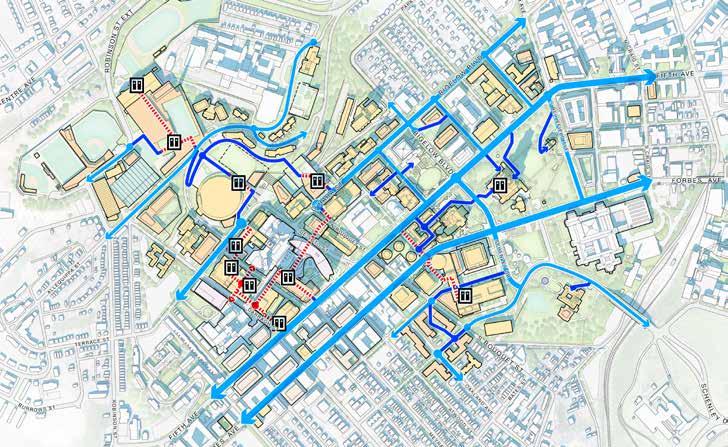

ACCESSIBILITY DIAGRAM

Equity and Access: Increasing on-campus housing should help to stabilize the cost of student housing and preserve Pitt’s affordability. The plan further addresses equity and access in the built environment by suggesting strategies to make the campus more navigable to those with mobility challenges.
City/Regional Connections: The plan’s development involved extensive open engagement and forums with on- and off-campus stakeholders. Pitt will demonstrate an active role in solving sustainable built environments challenges, supporting greater connectivity across Oakland and Greater Pittsburgh.
The University is committed to exceeding the level of accessibility required by the Americans With Disabilities Act and other applicable laws. Under this Campus Master Plan, the University aims to think creatively about buildings, pathways, roadways, and landscaping designs that are both functional and truly accessible for all members of our community. With a goal of “access for all,” the University aspires to establish a network of barrier-free routes, pathways, and facilities for use by all members of the campus community. This will require strategies for addressing the significant topographic conditions of the campus, existing buildings, and other barriers identified in previously completed accessibility assessments.
- A Statement on Accessibility from the Office of Diversity and Inclusion
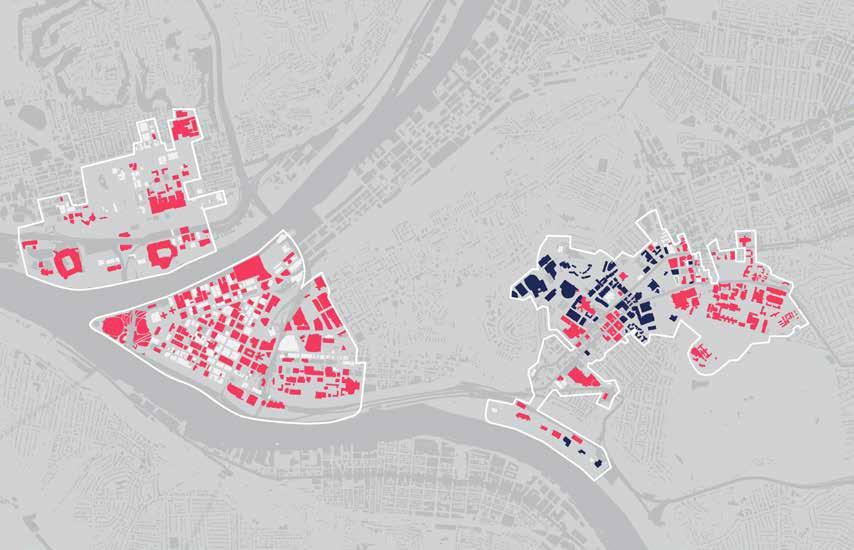

Buildings Committed to the Pittsburgh 2030 District
Pitt Buildings that are Part of the Pittsburgh 2030 District
Comprehensive Energy Master Plan and Energy Conservation Plan
The University’s Comprehensive Energy Master Plan and Energy Conservation Plan examined existing conditions for campus energy and utility infrastructure and proposed means of reducing building energy demand and water use. It employed the University’s 2017 Capital Plan to analyze the capacity of existing systems to support planned growth. Plan implementation was calculated to reduce campus greenhouse gas emissions by nearly 60,000 MtCO2e per year by the end of 2047 (the planning horizon for the plan’s projections) and reduce annual water use by nearly 100 million gallons per year.
The Campus Master Plan reconsidered and refined some assumptions of the earlier plans, including the location, timing, and amount of additional gross square footage for new construction, renovation, and demolition of existing space.
Pittsburgh 2030 District
In 2014, Pitt became a Founding Property Partner of the Pittsburgh 2030 District’s Oakland boundary and committed to measuring and working toward high-performing buildings campus-wide. Since then, the University has been a proud and active participant in the international 2030 Challenge goals.
Today, the Pittsburgh 2030 District boasts 500+ total buildings; Pitt owns 131 of those buildings.
The Campus Master Plan envisions the evolution of Pitt’s built and natural environment in a way that will physically demonstrate the elements of future planning and development efforts including the Pitt Sustainability Plan, the Comprehensive Energy Master Plan and Energy Conservation Plan, and the Pittsburgh 2030 District. As Pitt moves forward, these efforts support a shared vision of Pitt’s future that aligns strategic and physical goals with sustainability aspirations and measured performance.
PITT 2030 DISTRICT MAP
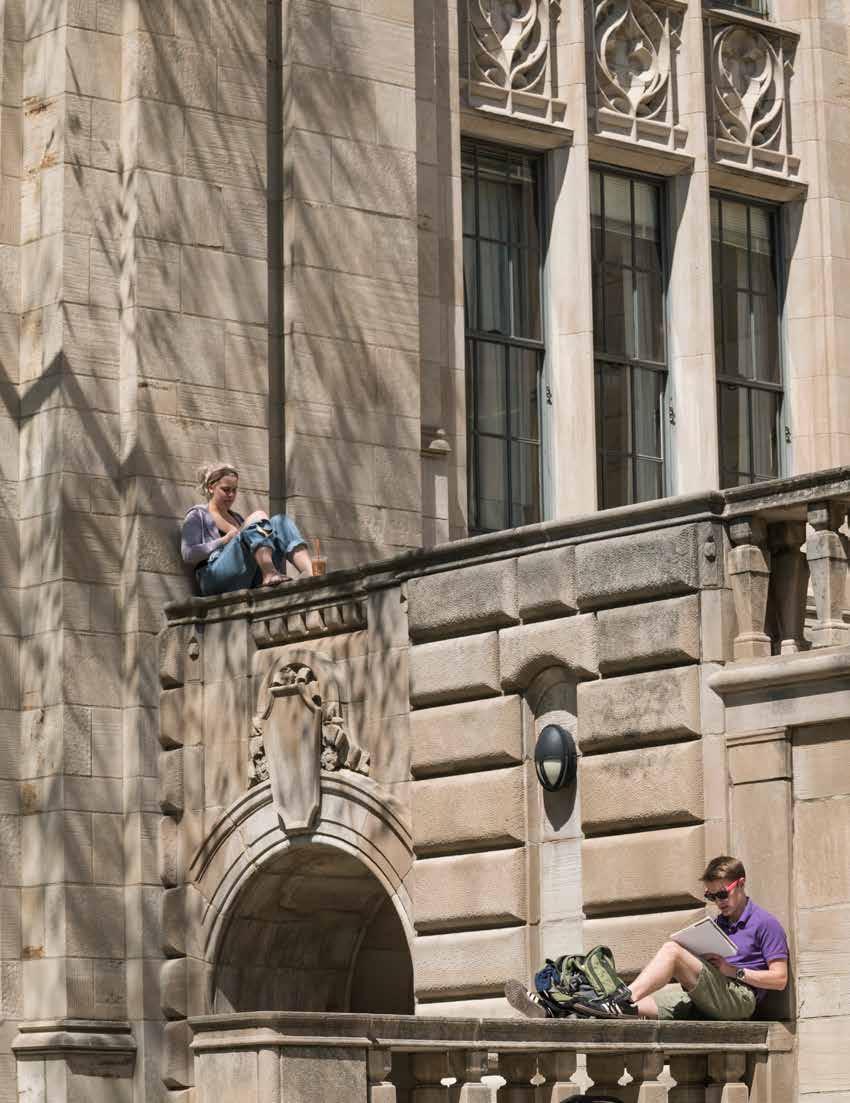
IMPLEMENTATION
EXISTING CAMPUS
CAMPUS MASTER PLAN
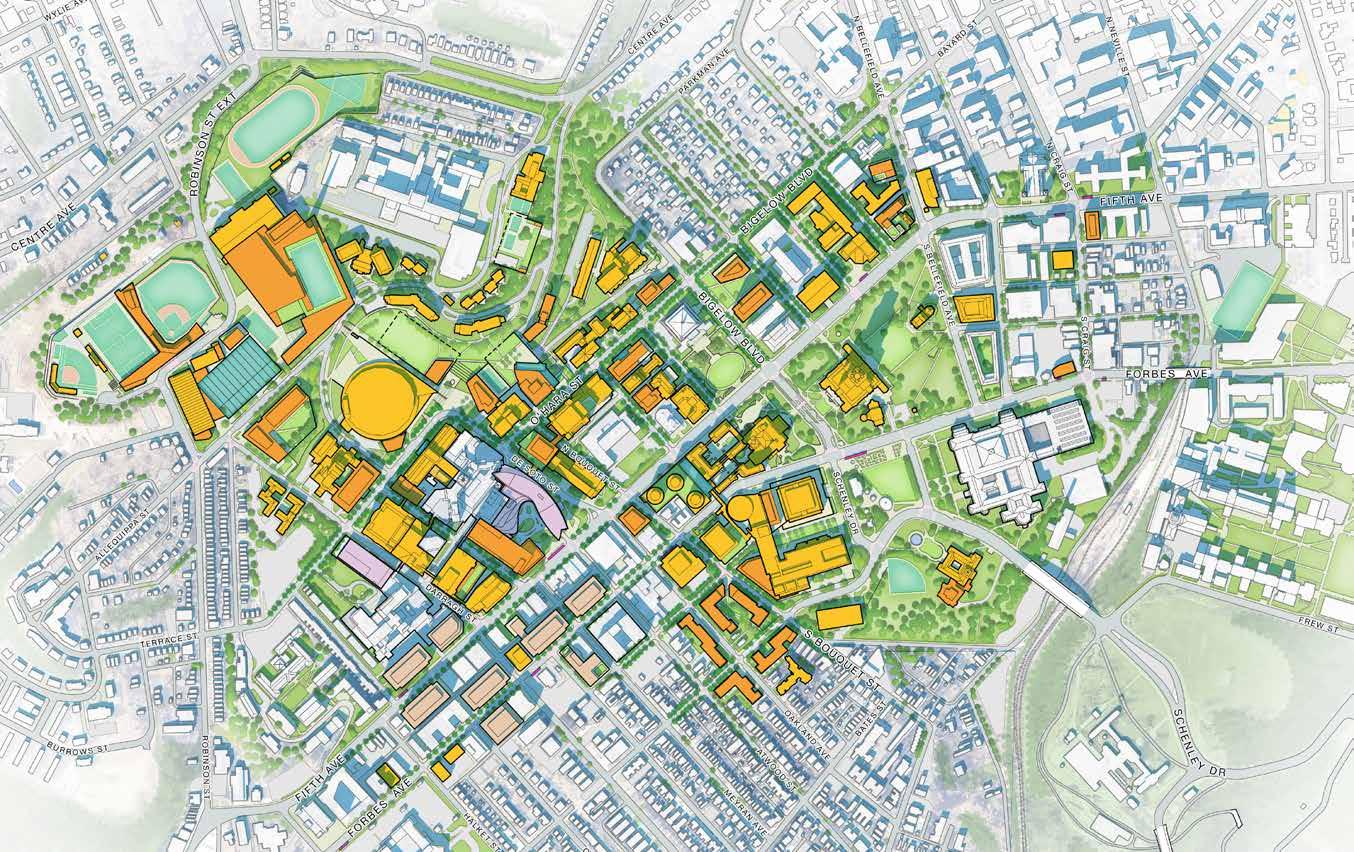


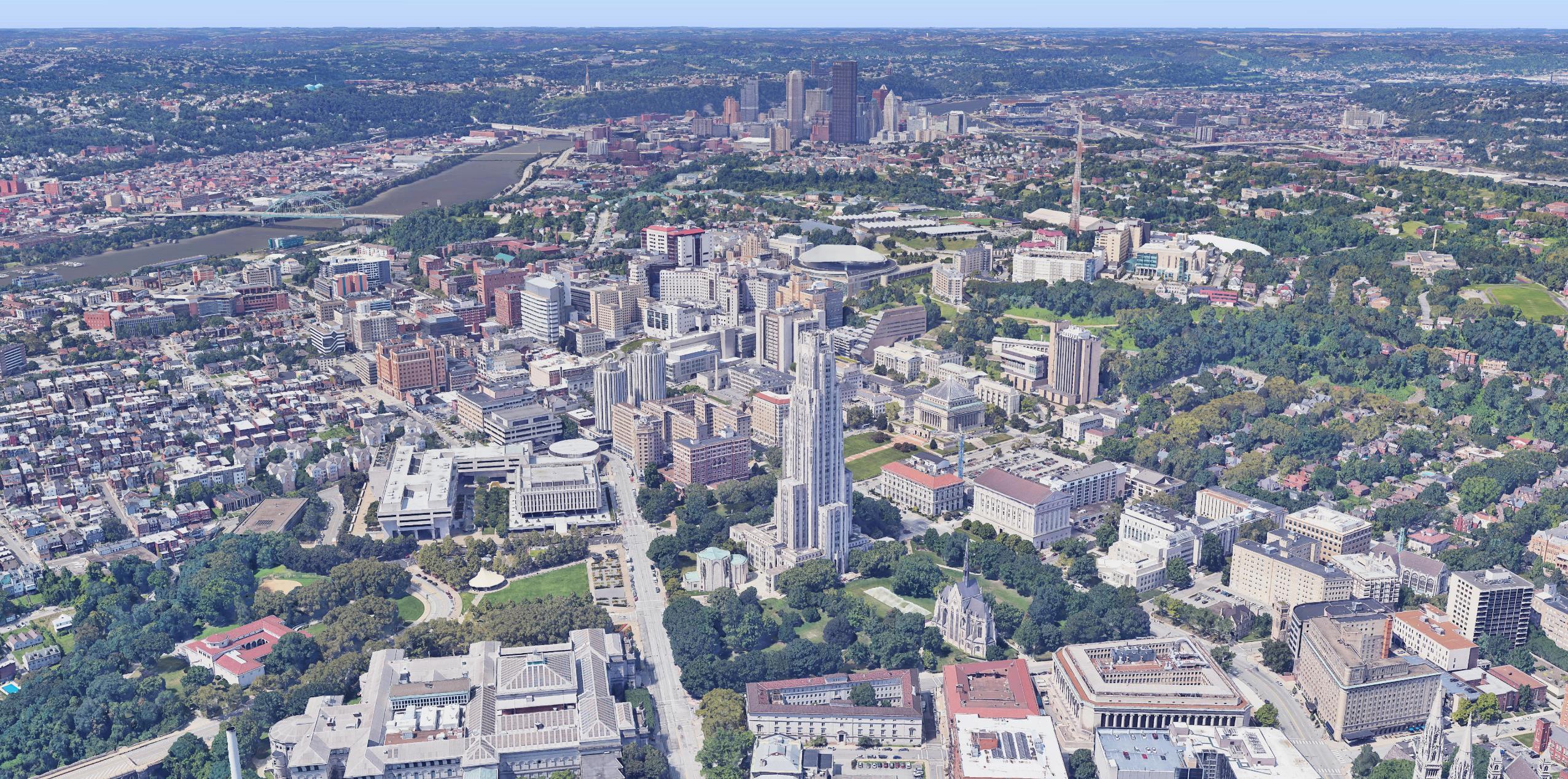
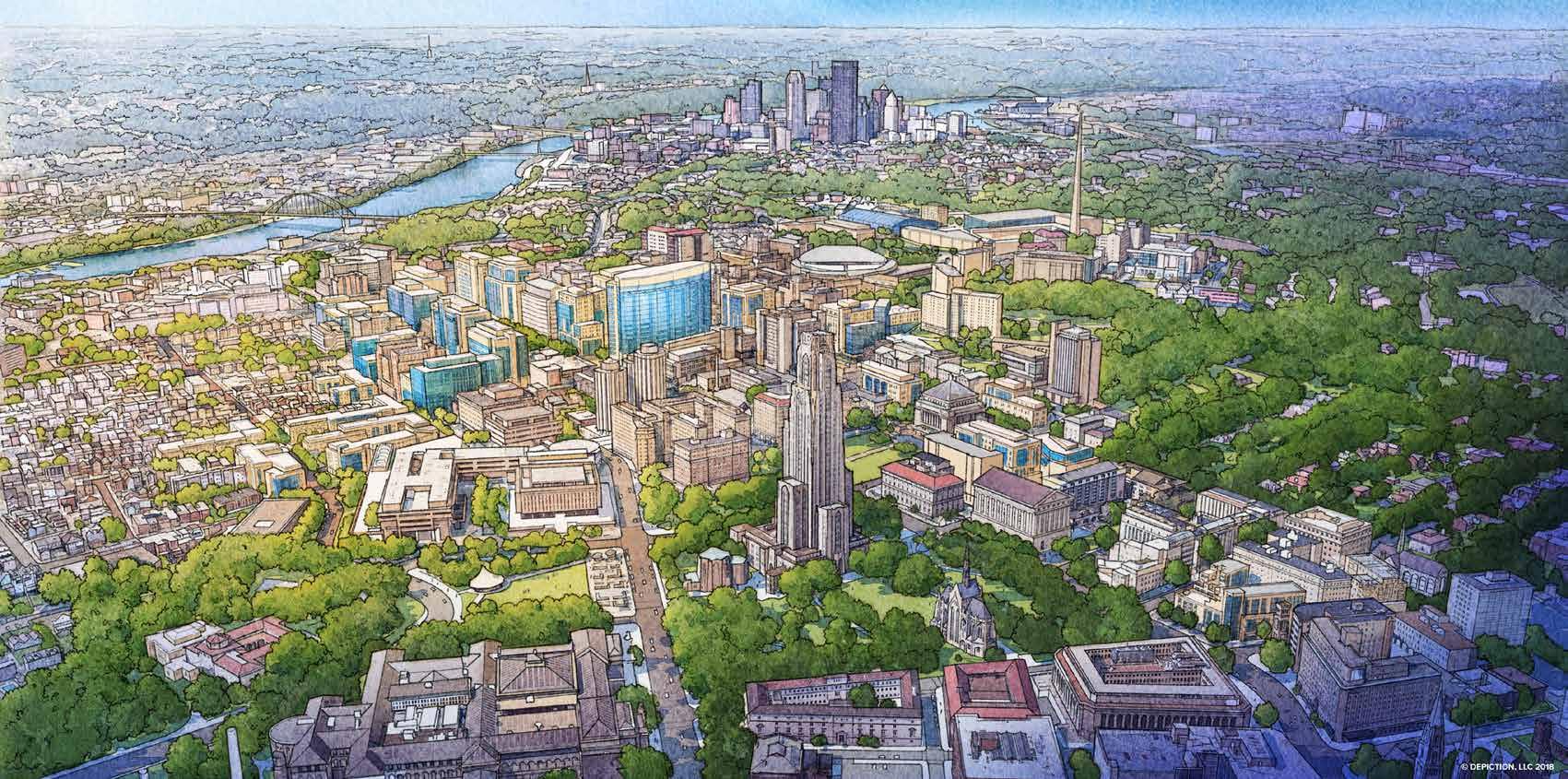
PROPOSED VIEW LOOKING WEST TOWARD DOWNTOWN
Implementation Phasing Strategy
The following figures and tables depict the current (as of 2019), preferred implementation phasing strategy for the Campus Master Plan’s proposed projects. The short-term, mid-term, and long-term implementation of these projects are based on the current Capital Plan, individual school/depart-
ment plans and studies, the current (2010) Institutional Master Plan, and the process of this Campus Master Plan. It is assumed that several significant landscape, open space, and connectivity enhancements are tied to the site improvements in many of these projects.
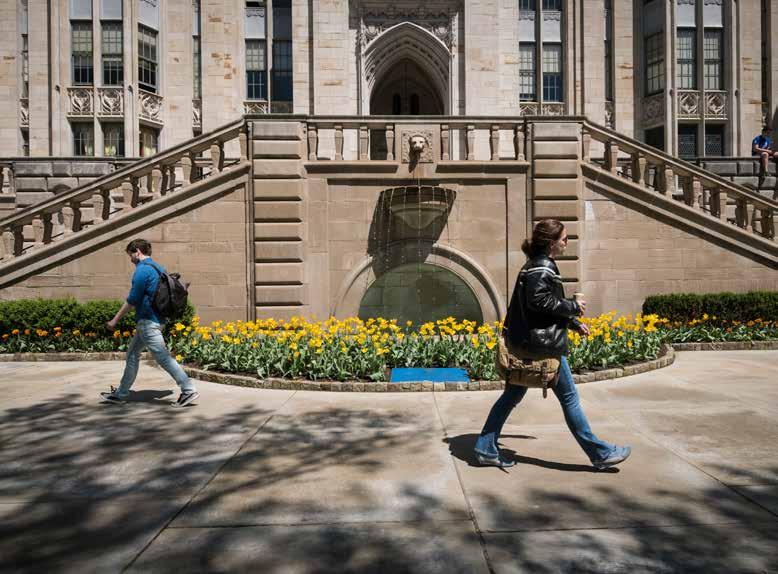
Short-Term Phasing
Projects that fall within this phasing category are projected to be completed in 1 to 7 years.
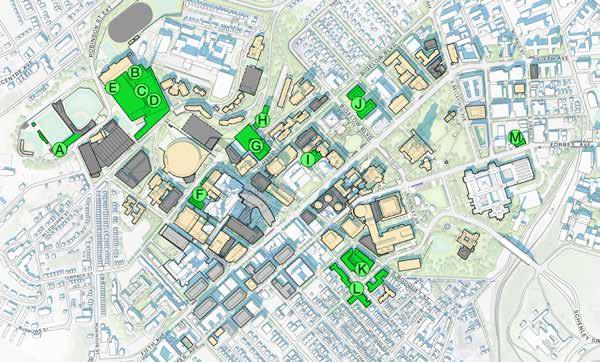
Mid-Term Phasing
Projects that fall within this phasing category are projected to be completed in 8 to 15 years. Proposed Project Name
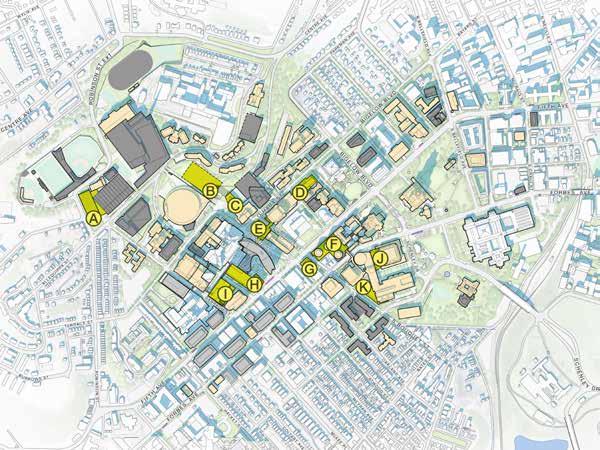

A Trees Hall Expansion -or- Athletics None
B Aquatic Center Athletics None
C WPIC Expansion Health Sciences Relocate WPIC Garage Parking WPIC Expansion Parking Parking Relocate WPIC Garage Parking
D O'Hara Street Development Academic Relocate O'Hara Student Center and GSCC functions
E Crabtree Hall Redevelopment Health Sciences Relocate current program Crabtree Hall Below-Grade Parking Parking Relocate current parking
F Litchfield Towers Plaza Improvements Student Life None
G BK Lot Site Student Life None
H Integrated Health Sciences Complex Health Sciences Relocate Lothrop Hall beds and Falk Clinic functions
Victoria Hall Renovation -orVictoria Hall Expansion Health Sciences Health Sciences None Relocate UPMC Lot under Victoria Hall
J Academic Support Center (Library Infill) Student Life None
K Posvar Hall Addition Academic None
Long-Term Phasing
Projects that fall within this phasing category are projected to be completed in 15+ years. Most of these projects have a longer implementation time-frame due to a lower priority or because their enabling projects typically require the demolition of an existing University building.
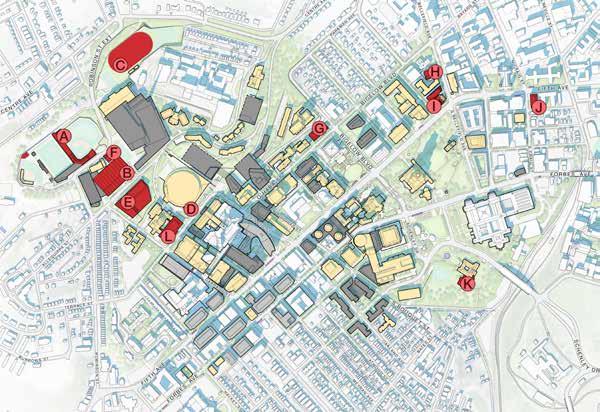
UPMC Development/Partnership Opportunities
The following map indicates UPMC development, as indicated in UPMC’s Oakland Hospitals Project Area Master Plan (2014) and potential partnership opportunities. The Innovation District projects depicted in the map and table are illustrative in nature and are not intended to imply acquisition by Pitt.
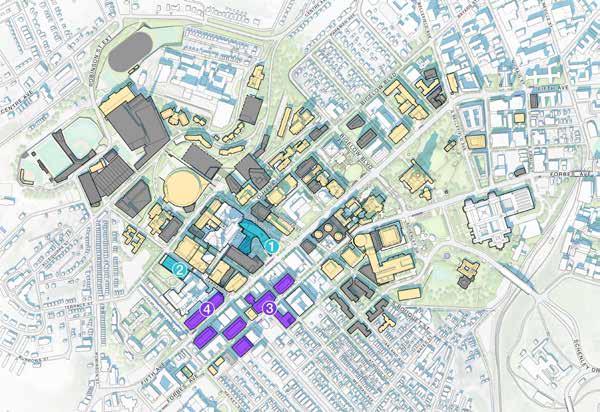
1 Once UPMC completes the Heart and Transplant Hospital, the University intends to leverage its development to provide improved internal circulation among the hospital, health sciences, and engineering disciplines. In addition, the large amount of parking that the hospital intends to provide may reduce pressure on other UPMC and Pitt garages, and may help to enable future Pitt projects, development agreements, or partnership projects.
2. A major garage expansion over the existing Montefiore parking structure is intended to provide 456 additional spaces.
3. Innovation District properties along Fifth and Forbes avenues depict a potential buildout showing how the district could accommodate additional density from mixed-use development. Though the University owns some of these indicated properties, it is assumed that these projects may require land assembly to make development feasible. Instead of outright purchase of these properties, partnerships with an innovation district developer may be an attractive solution.
4. The existing Kaufmann Building and
wing of UPMC Montefiore could be a feasible location for a partnership with Pitt or with a potential developer.
Drivers of Future Campus Investments
2018 Space Needs Assessment Overview
Space planning and efficiency are topics of considerable importance at the University of Pittsburgh. As the University considers its current position as a public institution, its goal is to plan for the future of facilities through better policy and planning of academic and administrative spaces. In support of future endeavors, a utilization study and space needs assessment were performed to understand existing space use and projected needs. The outcomes of this analysis informed the master planning process.
The utilization study calculated the use of instructional spaces (such as classrooms and class laboratories). All credit-bearing coursework was assessed to understand the impact this has on instructional room use. Results of the utilization study informed metrics for the space needs assessment.
The space needs assessment quantifies the amount of space the University presently occupies by space category and proposes quantities space needed for each space category based on utilization of instructional spaces, enrollment for the studied term, planned changes or additions to programmatic offerings, current pedagogy, and other aspects of space as it relates to the educational experience. This space assessment also distributed the need to each primary unit related to the study. The space metrics used to generate analysis results are a combination of normative metrics applicable to similar institutions, experience of the consultant team, stakeholder contribution, and programmatic initiatives at Pitt.
Capacity and Drivers for Investment
The Campus Master Plan identifies more building capacity than needed to meet the anticipated current space needs of the University. Understanding the responsible capacity of the campus ensures that long-term building sites are reserved to accommodate future campus investment. Over the life of the plan, new building construction and renovation will be supported by enhancements to campus open spaces, streetscape, and transportation systems. Five drivers of investment are anticipated.
1. Supporting strategic initiatives
• Holistic and individualized approach to learning inside and outside the classroom
• Collaborative and multidisciplinary research, increasing innovation, and entrepreneurship activities
• Enrich the student experience
2. Modernizing and renovating poor condition space
• Accommodate active learning in classrooms and labs
• Modernize offices and workplaces
• Improve student space
3. Alleviating current space shortages as identified in the 2018 Space Needs Assessment
• General classrooms
• Academic space, most acutely in the health sciences schools, the Swanson School of Engineering, and the Dietrich School of Arts and Sciences
• School of Computing and Information
• Multidisciplinary research centers
• Student space
• Recreation
• Meeting and conference
• Athletics
• Transition some of leased space
4. Future opportunities not anticipated today
5. Aligning housing inventory with market demand
• Align residential beds with demand
• Diversify offerings for undergraduates – different unit types, more amenities, address deferred maintenance
• Decompress certain residence halls
• Provide affordable student housing
A Living Document: Adapting to Change
The Campus Master Plan balances visionary goals with what can realistically be achieved and implemented. The plan serves as a strategic roadmap for campus-wide renewal and growth. As with all roadmaps, many routes can lead to the same destination. If project implementation adheres to the five core ideas of the plan, they will advance a unified vision for the campus and respond to the University’s core strategic needs.
Predicting the campus of the future is challenging and it will be shaped by multiple factors:
• Student demographics and academic market demand
• Housing typology demand
• Fluctuating research dollars and emphasis
• Emerging industries
• Changes in technology
• Changes in University leadership
• Athletics program commitments
• Student life amenity and dining trends
• Political tides; local and state government priorities
• Real estate availability
• Potential donors
• Business cycles
• Community priorities
For Pitt to deliver on its education mission and its community and economic development potential, the University needs to be nimble. The plan provides Pitt a coherent vision to react to challenging forces and respond to opportunities.
The Campus Master Plan vision and these core ideas will shape the University’s future Capital Plan which will outline the specific projects the University will invest in over the next five years. The Capital Plan will be developed closely with University stakeholders and revisited periodically to subsequent 5-year planning horizons.
The Campus Master Plan will also inform the University’s Institutional Master Plan (IMP). All institutions located in Education Medical Institutional (EMI) zoning districts are required to have a current IMP. This document provides a planning and regulatory framework for the development of institutions, which control large areas of land within the City of Pittsburgh. The IMP establishes project and campus-based standards for building height and mass, parking, urban design, and neighborhood enhancement. It is designed to give the community an understanding of the potential growth of institutions and the resultant impacts. It also documents the University’s commitment to, and process for, engagement with the community as the Campus Master Plan is implemented within the IMP framework. As always, input from all stakeholders will be crucial to the success of the plan.
1 A Place of Academic Excellence and Innovation
2 An Enriching Student Experience
3 A Distinctive, Welcoming, and Attractive Urban Campus
4 A More Connected, Outward-Looking, Engaged University
5 A Place That Seeks Synergy and Efficiency
FIVE CORE IDEAS