STRONGER TOGETHER STRONGER TOGETHER
A CCWOMEN MAGAZINE FOR WOMEN IN BUSINESS
Stronger Together is published by Customer Management Practice
ISBN: 979-8-9986249-2-6
Founder and Principal
Sandy Ko Fonseca sandy.ko@customermanagementpractice.com
Editor in Chief
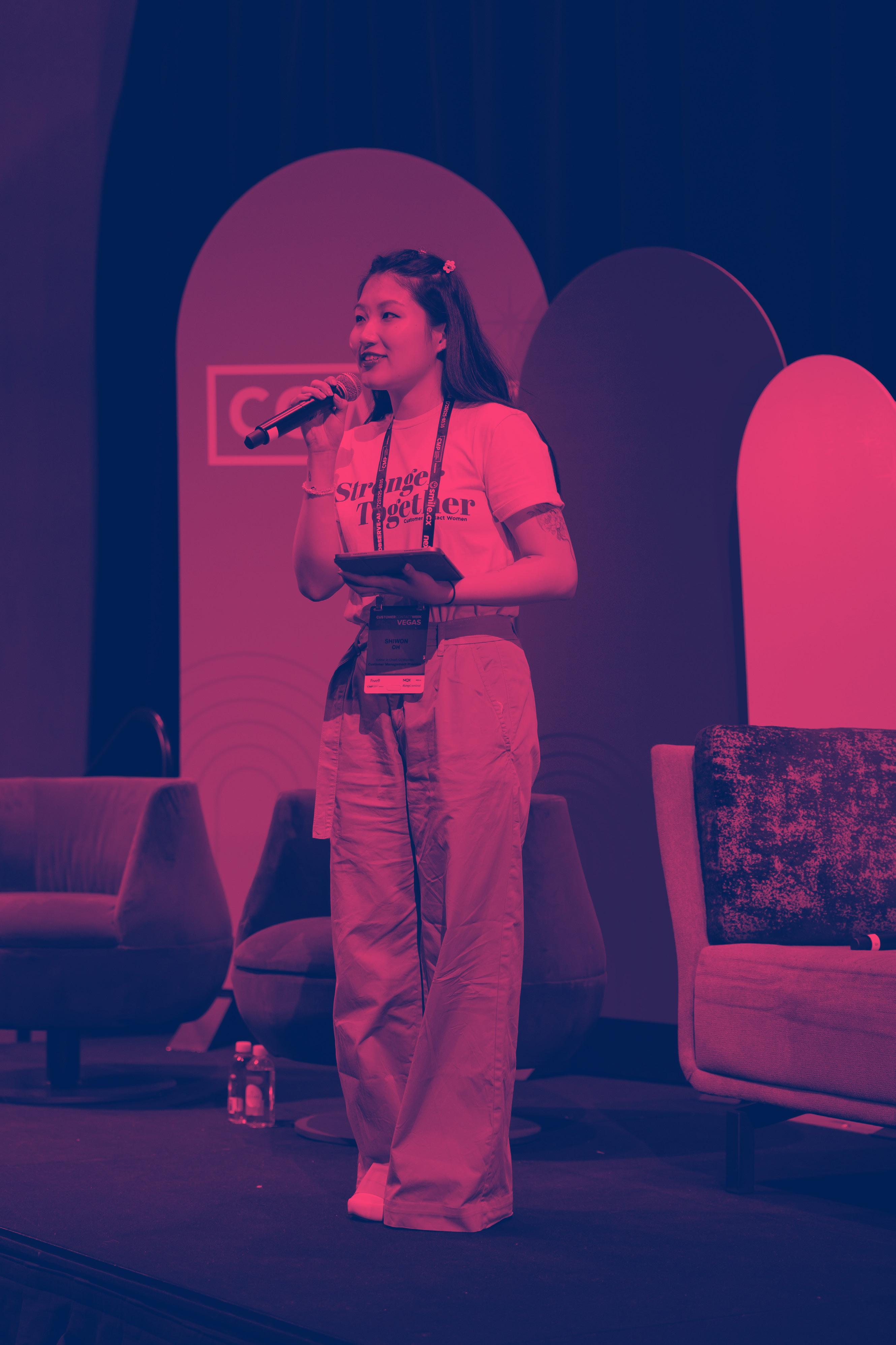
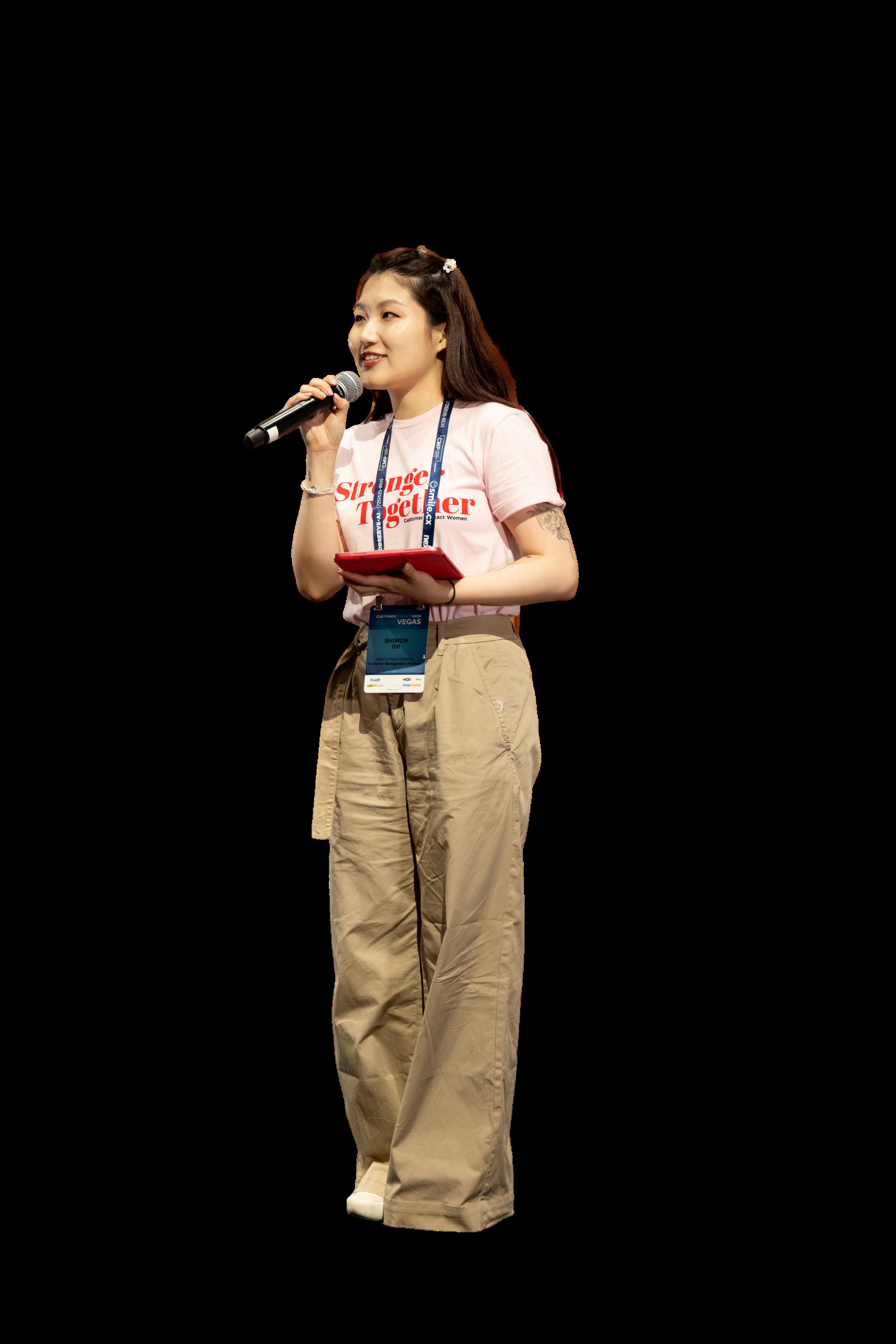
Shiwon Oh shiwon.oh@customermanagementpractice.com
Head of Marketing
Emily Dunn emily.dunn@customermanagementpractice.com
Member Advisor
Ingrit Marena ingrit.marena@customermanagementpractice.com
Sponsorship & Advertising Inquiries
Giulia Savino giulia.savino@customermanagementpractice.com
Thought Leadership Inquiries
Sandy Ko Fonseca sandy.ko@customermanagementpractice.com
Shiwon Oh shiwon.oh@customermanagementpractice.com
Collaboration & Branding Inquiries
Emily Dunn emily.dunn@customermanagementpractice.com
Membership & Subscription Inquiries
Ingrit Marena ingrit.marena@customermanagementpractice.com
Photography
Photographers and photo credit noted where applicable
Additional photographers not listed at the discretion of the collaborators may be provided upon request
Contributor and Content Development
Shiwon Oh
Design and Layout
Emily Dunn
Artwork has been created using an AI tool

WELCOME TO THE WORLD OF
CCWomen
By women, for women and allies, CCWomen is a networking group committed to mutual empowerment.
We’re here to tell a story.
In 2018, Sandy Ko Fonseca hosted an impromptu mimosa breakfast at a CCW flagship event. There, she broke bread with several accomplished customer contact executives who, with decades of industry expertise, unveiled a dire need for a space where women could share their experiences and spark unbridled inspiration.
Women’s successes deserve recognition, so why not create a platform for it? CCWomen became a light for that stage. Now, we operate as a fully-fledged team, continuously working to foster an authentic community that embodies excellence and advocates for gender equity.
We’re on a mission to revolutionize the customer contact and business world, one woman at a time, and we’d love for you to join us.
ISSUE 4 UNWAVERING COMMUNITY
Community comes in many forms. It cultivates a sense of belonging and growth. In times of hardship, it becomes a lifeline that keeps leaders afloat. Vulnerability encourages them to open their hands and release their weaknesses, trusting that others will come to fill them with renewed strength. When women commit to mutual empowerment, they rewrite the story for future generations. Where they were once alienated and present in rooms not meant to hold their stories, they now have warm seats to welcome them—and tables ready to host them.
This issue aims to highlight the power of community through authentic stories and executive-level insights. Whether it’s a word of wisdom from a customer contact changemaker or a glimpse into a public figure’s journey to success, we hope you walk away with a renewed perspective on what it means to nurture your circle and ensure its longevity.
- Sandy Ko Fonseca
FOUNDER, CCWOMEN
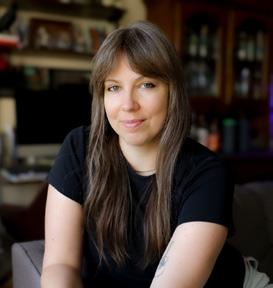
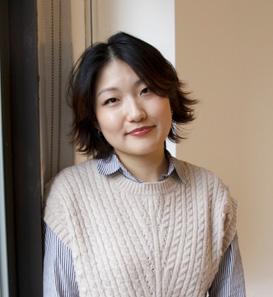
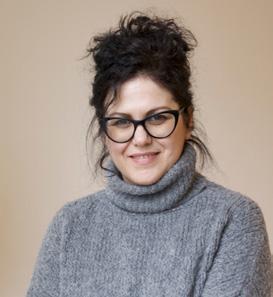
EMILY DUNN HEAD OF MARKETING CCWOMEN
SHIWON OH EDITOR IN CHIEF CCWOMEN
INGRIT MARENA MEMBER ADVISOR CCWOMEN
LETTER FROM The Editor
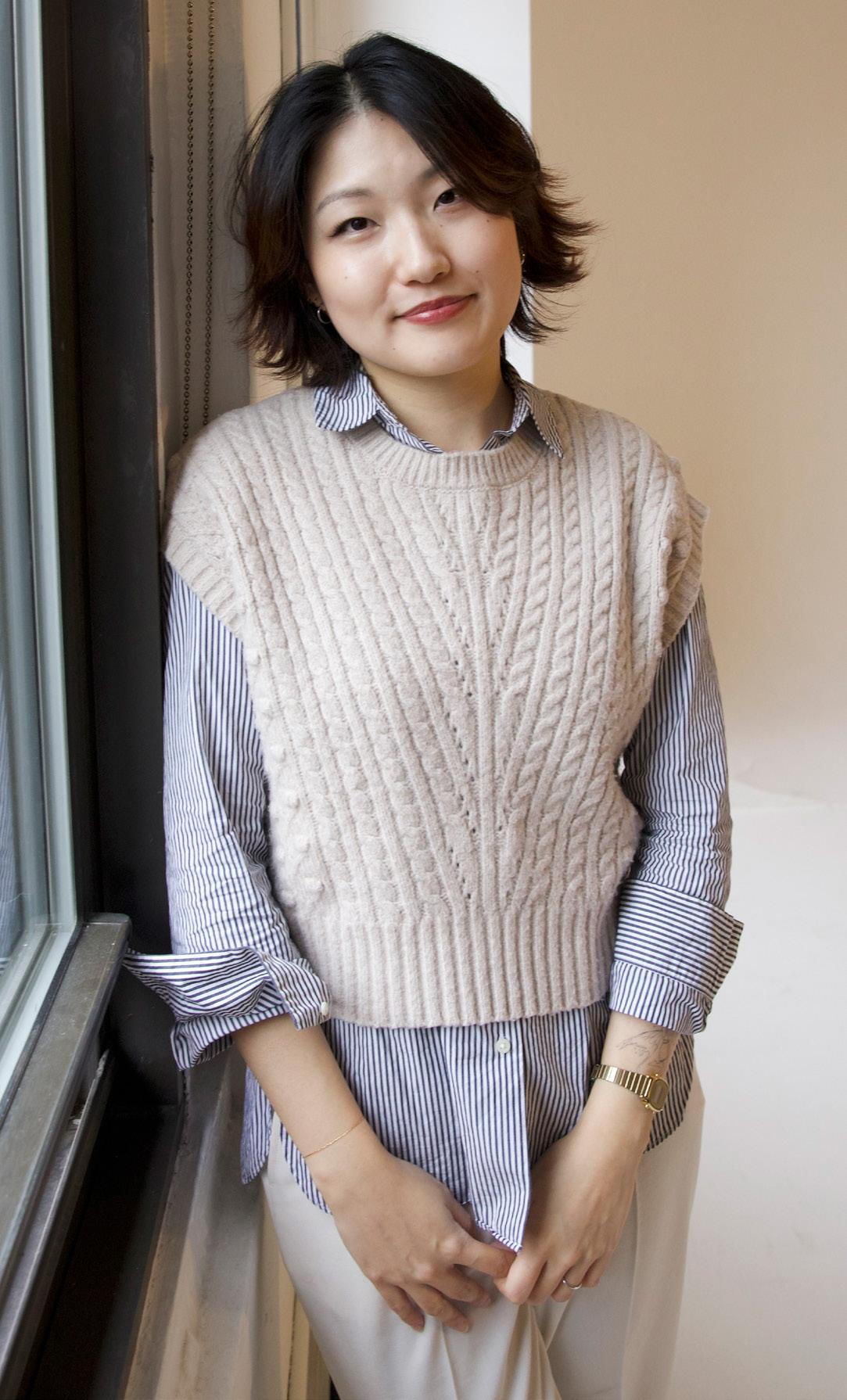

It’s officially been one year since we launched our first Stronger Together magazine, and we’ve sure come a long way. Emily and I went through some real growing pains, but also experienced the most rewarding wins that easily balanced out our anxieties. One was knowing that the two of us—with tremendous support from Sandy and Ingrit—could publish a fully-fledged magazine, design and content, and all. Another was that this allowed us to connect with so many incredible women and allies who, like us, are deeply committed to fostering belonging. We spend a good portion of our lives at work; why not ensure the office feels safe and equitable for everyone?
As an immigrant, I know firsthand what it feels like to be labeled as other. I also know that community is our lifeline, providing us with the resources to care for our loved ones and the relationships that help us deepen roots in a foreign country. Belonging is sacred, and everyone has the right to thrive in it. I’m thrilled to share yet another collection of stories from leaders who are making strides in building communities that keep doors open and remain unshaken.
- Shiwon Oh
CONTENTS
BELONGING | 6
The Science of Community: What Anthropology Can Teach Us About Connection, Belonging, and Growth
Credit Builds Inclusivity, and Businesses can Contribute (with Kristy Kim)
How to “Feel Powerful as You Are” (with Ruchika T. Malhotra)
PRESENCE | 16
Going Beyond Technical: Transform People, Processes, and Yourself (with Farha Ansari)
Nurture an Authentic Presence Through Empathetic Leadership (with Laura Hancock)
LEGACY | 22
Explore the “Me, We, Us” Framework to Build a Legacy (with Tiffany Yu)
A Legacy Rooted in Investment: Why Leaders Must Prioritize Nurturing Connections (with Kelly Rodigas)
SUPPORT | 30
The Power of a Diverse Network When Scaling for Good (with Mary Zhu)
Say Yes to New Opportunities and the Network that Makes it All Possible (with Jaime Rinaldi)
CCWOMEN+ MEMBERS | 38
What Makes Your Community Unwavering? (with Faithe Toomy and Lizzie Resnick)
STORYTELLING | 40
“Own Your Story; Free Yourself” (with Amazin LeThi)
Flowers of Fire: Exploring Korea’s Feminist Activism, and What it Says About Gender Equity in the Workplace (with Hawon Jung)
Why “Technology Should Disappear into the Background of Great Storytelling” (with Tricia Maia)
CELEBRATION | 54
Delivering the Business Case for Gender Equity (with Adeola Ajani)
Shaping Customer Contact Excellence—and Celebrating Career Milestones Along the Way (with Amanda Caparelli)
LIFELONG LEARNING | 62
Back to the Beginning: How Innovation Can Reconnect Us to Shared Humanity (with Sara DeYoung)
Can AI Help Us Close the Gender Gap? Time—And Our Actions—Will Tell
THE SCIENCE OF COMMUNITY
WHAT ANTHROPOLOGY CAN TEACH US ABOUT CONNECTION, BELONGING, AND GROWTH
Emily Dunn
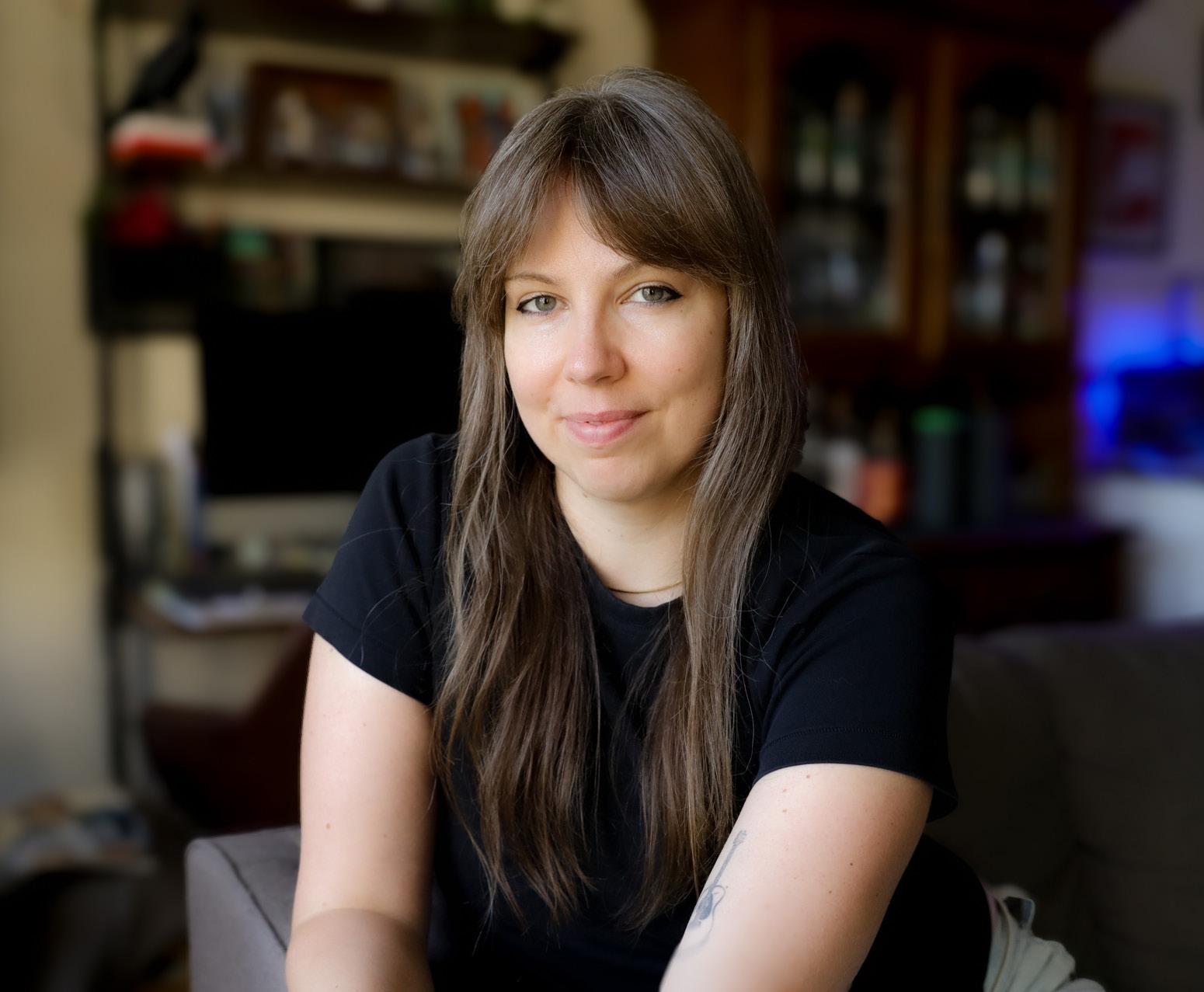
By maintaining accessible tools and resources, we hope to ensure that anyone searching for belonging can find it here—or at the very least, draw from our knowledge base to build or discover a community that is the right fit for them.
Most of you may know me as the Head of Marketing of our beloved CCWomen, but, like all of us, I live many other lives outside of this role. One of my favorites is being a semi self-proclaimed anthropologist. I hold a B.A. and M.A. in Anthropology and have found that my career in marketing is substantially supported by my academic background in the study of people and culture. Watching our community grow and thrive over the past few years has been satisfying from a professional perspective but has also caused my anthro brain to begin to turn once more.
I find myself viewing our community from the lens of social science; hypothesizing on the reasons why communities, particularly for those within corporate environments, seem to be growing as a source of professional—and sometimes personal—belonging and connection, making way for people who participate in these communities to thrive under previously stifling conditions.
Why Community Matters
The term community can be defined in many ways, but at its base, it is “a unified body of individuals.”1 We are all a part of numerous different communities, professional and personal: our families, friend groups, favorite coffee shops, even the neighbors in a local garden. All of these are communities because they bring together people who share a common interest or characteristic. So what makes community so important to humans as a species? Initially, community started as a necessity for survival. Strength in numbers meant protection, hunting success, shared child care, and better chances at farming. In the modern era, community is equally vital, just in a different way. Today, we rely on our communities to give us space to be understood, to problem-solve, to learn new skills, and even to decompress from the stressors of daily life.
Just as early humans thrived in groups for survival, professionals today thrive in communities that offer resources, insights, and belonging—CCWomen being a prime example. CCWomen feels so natural in its existence because there was a base need for support from a large enough group of individuals. Once they were connected, they began to thrive, and the community began to grow.
As CCWomen Editor in Chief, Shiwon Oh, says, “community is at the core of our operations.”
The Science of Community and Belonging
Communities have been around for a very—and I mean very—long time. Early humans’ survival was contingent on forming groups. In today’s world, communities remain just as important, providing identity, belonging, and mutual support.
From an anthropological perspective, communities are powerful sources of connection:
“The benefits of community are vast and multifaceted, encompassing social, professional, cultural, health, economic, and environmental advantages. Whether you’re seeking networking opportunities, professional growth, cultural exchange, improved health, economic savings, or environmental sustainability, being part of a community offers immense value.”2
This isn’t just theory. At CCWomen, we see these benefits in action every day. From mentorship connections to job postings to simple celebrations of wins, our members thrive by creating a sense of kinship and shared identity.
Beyond the feel-good moments, community also enables problem-solving and collective knowledge. When we find others who have walked similar paths, we gain access not only to their wisdom but also to a collective memory of experiences. This not only gives us hope—a light at the end of the tunnel—but also creates a knowledge base future members can rely on.
Who knows? One day, you may find yourself mentoring someone through a challenge you once faced, passing along both your own insights and those of the women who guided you.
CCWomen is working to expand this collective knowledge. With the upcoming launch of our Discussion Forum, members will have access to the same depth of information and storytelling that has made our Summits and Forums so impactful, no matter where they are. And as that knowledge deepens, smaller niche communities will naturally form within the larger CCWomen network, supporting even more specific goals and challenges.
The Ingredients of a Thriving Community
“A thriving community is one where people are able to access and enjoy such basic needs
1 Merriam-Webster, s.v. “Community,” accessed November 21, 2025, https:// www.merriam-webster.com/dictionary/community.
2 Thompson-Markward Hall, “The Benefits of Community,” TMHDC, August 29, 2024, https://tmhdc.org/2024/08/29/the-benefits-of-community/.
along with opportunities for growth and success.”3
Communities flourish when they combine accessibility with shared values and opportunities for growth. Simply creating a space for like-minded peers isn’t enough.
Thriving communities need:
• Open dialogue that fosters knowledge sharing
• Accessibility that leads to inclusiveness
• Shared goals and experiences that fuel problem-solving
• Involvement and activity that empower members to lead and grow
This is why communities like CCWomen are so vital. By maintaining accessible tools and resources, we hope to ensure that anyone searching for belonging can find it here—or at the very least, draw from our knowledge base to build or discover a community that is the right fit for them.
Our upcoming Discussion Forum (Coming soon!) is a step toward this vision: an open, inclusive space for di

alogue and storytelling that strengthens the bonds of our collective.
Closing Reflections
The term community may sound simple, but what it represents is deep and rooted in human well-being. At CCWomen, we hope you find a stage for your voice, a mentor or mentee, or simply the direction you need for your next chapter.
Just as humans have always relied on community to survive, we rely on it now to grow. CCWomen is living proof of that enduring truth.
“Never doubt that a small group of thoughtful, committed citizens can change the world; indeed, it’s the only thing that ever has.”
– Margaret Mead
3 Mark Robert Rank, ed., Toward a Livable Life: A 21st Century Agenda for Social Work (Oxford: Oxford University Press, 2019), chapter 9, “Building Healthy, Diverse, and Thriving Communities,” by Carolyn Lesorogol, Ana A. Baumann, Amy Eyler, Molly W. Metzger, Rodrigo S. Reis, and Rachel G. Tabak.
IF YOU’RE ONLY MEASURING METRICS, YOU’RE MISSING THE MOVEMENT.
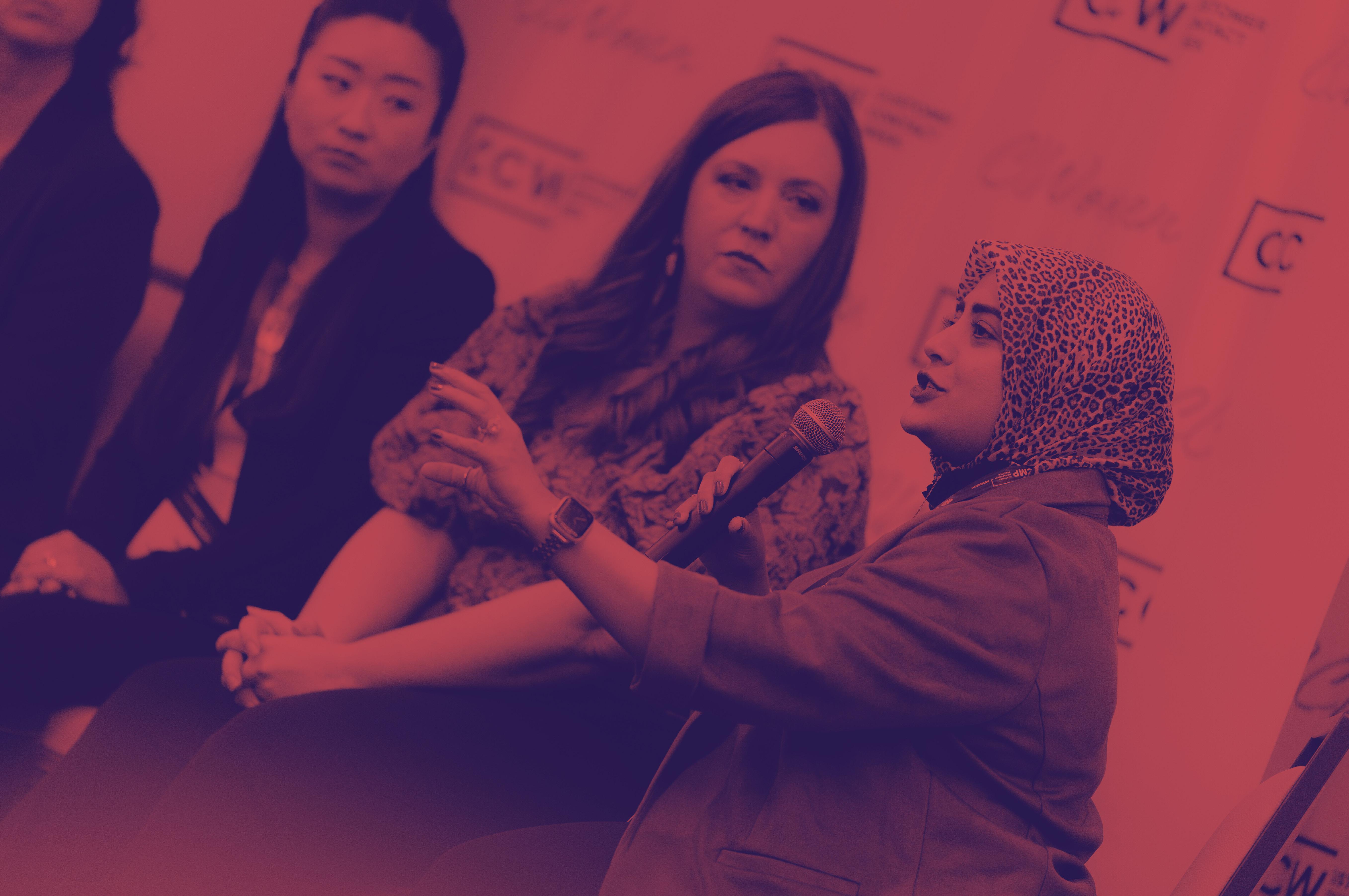

CREDIT BUILDS INCLUSIVITY, AND BUSINESSES CAN CONTRIBUTE Kristy Kim
Kristy Kim is the CEO and co-founder of TomoCredit, a credit card designed to provide accessible credit to underserved Americans. Founded after Kim’s struggle to get an auto loan, TomoCredit offers a no-credit-check, no-fees credit card experience, creating financial opportunities for immigrants who previously had little to none. In this interview, she discusses how workplace and cultural belonging strengthen her growing team and empower every employee to contribute to a shared mission.

Shiwon Oh: How did your immigrant experiences inspire you to create a fintech platform that makes financial security more accessible?
Kristy Kim: My personal immigrant experience is the whole reason TomoCredit even exists. When you move to the U.S. from another country, you have no idea that money isn’t just money—that it’s actually credit (not cash) that makes the “American Dream” work. For example, despite having money in the bank, I was denied an auto loan several times. Getting a lease on an apartment was stressful and almost impossible. You realize very quickly that having credit isn’t just one of those things that are “nice to have.” Credit is a necessity for everyday living in the U.S. In fact, “credit” becomes a word that you go from never hearing at all in your life, to being the word that closes more doors before they can even open. For a while, you come to really hate that word.
The reality is that immigrants can have cash on hand, a great education, and a good job, but without an American credit score, that is not enough. This means that accessing basic necessities (rent, car, etc.) becomes next to impossible.
After my experience, I wanted to make sure that anyone (immigrants and other underserved groups) could have a clear shot at building credit, even if it weren’t on their radar or difficult to come by. Which, by the way, so much of building credit comes down to education and really understanding how the system actually works.
SO: What practices do you prioritize to create your ideal workplace culture?
KK: Startup life is not for the faint of heart! Startup teams have to be nimble, resourceful, innovative, and scrappy. It’s a lot of emotional and mental pressure sometimes---so I think it’s really important to take care of your team. At TomoCredit, we are extremely collaborative, and cross-departmental collaborations and socialization are encouraged and rewarded. We love to play as hard as we work—I’ve always been someone who values the entrepreneurial and social takeaways from sports—and so we try to get out and have fun together, like team outings at TopGolf.
SO: What accomplishments at TomoCredit are you most proud of? How did these positive outcomes provide more equitable financial resources for immigrants?
KK: It’s so easy to get lost in the “AI hype,” but the reality is, not unlike the invention of the Internet itself, AI really does level the playing field in terms of education and accessibility, and it’s only getting better the more LLMs are trained on financial literacy. At Tomo, I’m most proud of TomoIQ —the world’s first AI-powered credit builder and personal finance assistant. This tool is exactly the kind of financial coaching that would have saved me a lot of time (and, to be honest, a lot of heartbreak) as an immigrant. For years, only the wealthy had

access to personal financial advisors. Now, AI makes it possible for anyone, from any background, to work with a technology that actually knows what you should be doing with your money better than you do. It’s like having the world’s best financial advisor in your pocket for free.
SO: What are the challenges you faced in trying to foster authentic belonging?
KK: You know how the 2024 workplace trend was all about quiet-quitting? This year, I would say that the biggest challenge is the “fear of messing up.” Since the economy and job market have been topsy-turvy, people have been more afraid of making mistakes and losing their jobs. The fear is totally understandable, but in reality, a startup like mine requires people to think big, act big, get creative, and sometimes fail along the way. We reward innovators and creativity—but when someone is afraid of messing up, their authentic self and talents often get squashed. It’s my job as the founder and CEO to foster a sense of community and safety, so everyone feels comfortable enough to be themselves and, in turn, be totally dialed in with their talents—meaning it’s okay to try and fail sometimes.
SO: Which workplace belonging best practices have been most effective at TomoCredit, and what lessons can other organizations take from them?
KK: Honestly, having lunch together every day sounds so simple, but it’s one of the most effective and enjoyable ways to foster a sense of belonging and community. We have DoorDash catered every day for our employees, and we all look forward to having our daily meal together, where we can just be a team. I think “breaking bread” with those you work with, which, let’s face it, are the people you see the majority of the week, is critical to cultivating real relationships, true belonging, and a team that always has each other’s back. If other organizations feel like their team isn’t in sync, working in silos, or, worse, there’s combative energy, try having a team meal together at least once or twice a week. Not only will your employees appreciate the effort and feel appreciated, but you’ll notice some of those workplace tensions dissolve.
Belonging is not only about finding a place, it’s about feeling powerful as you are. When you feel like you belong, you stop performing and start leading.
HOW TO FEEL “POWERFUL AS YOU ARE”
Ruchika T. Malhotra
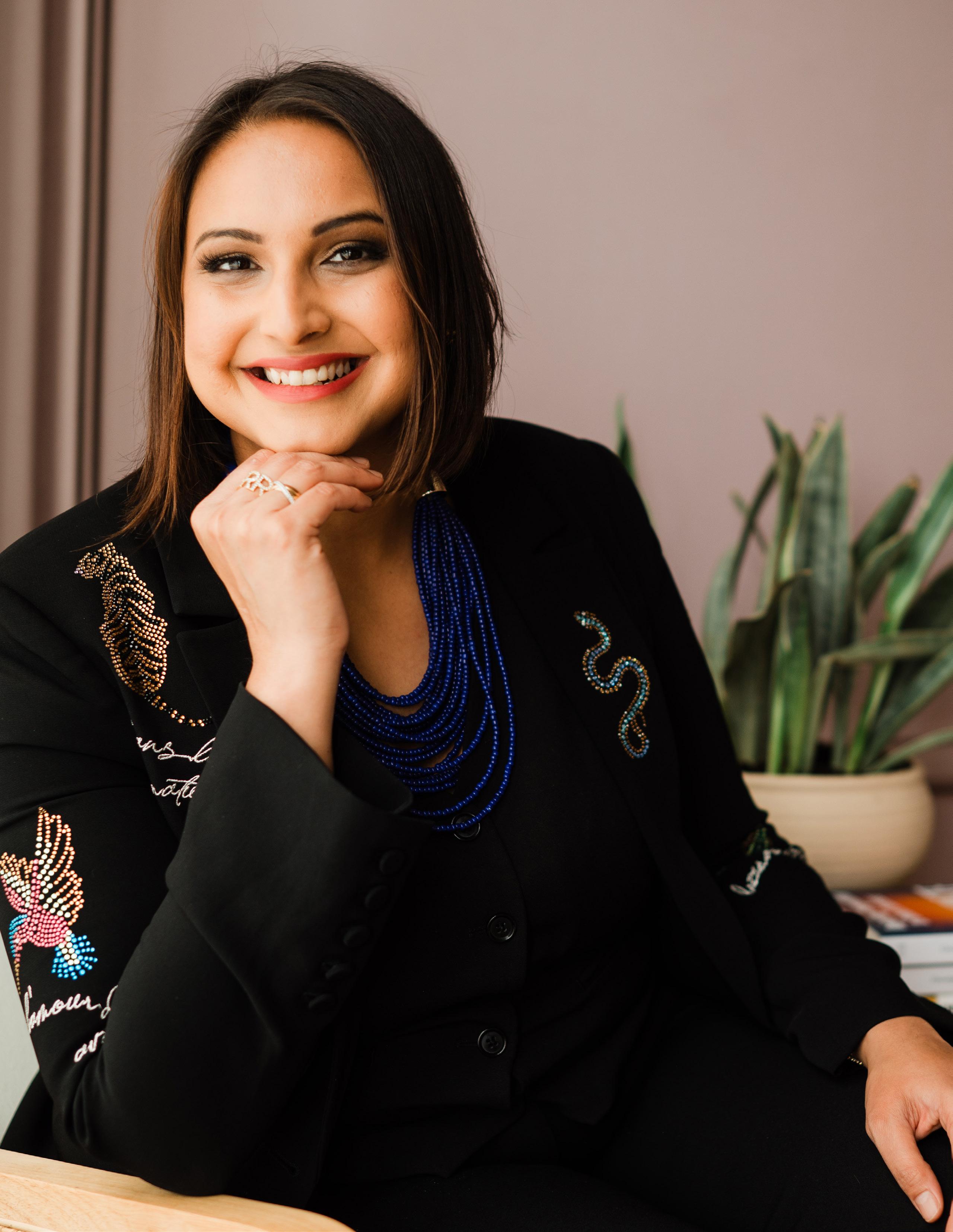
Bestselling author of Uncompete and Inclusion on Purpose and founder of Candour, Ruchika T. Malhotra continues to redefine workplace belonging for leaders seeking meaningful cultural transformation. Through her keynote speaking, writing, and strategic consulting, she challenges systems not built for all people while offering a clear roadmap for structural change. In this interview, Malhotra reflects on her relationship with belonging—how it has supported her and emphasized the importance of diversity.
Shiwon Oh: What types of support and solidarity helped you pursue your passions and become the Ruchika everyone knows today?
Ruchika T. Malhotra: I wouldn’t be here without mentors and sponsors who advocated for me in rooms I wasn’t in. Friends who reminded me that who I was–an immigrant, a mother, a woman of color with a non-western name, was perfectly acceptable as a leader wherever I went. Colleagues who shared resources, not just advice. And most of all, other women of color who didn’t just uplift me, they challenged me to take up space, to lead, and to stop apologizing for it. That kind of solidarity is what sustained me.
SO: How has your sense of belonging helped you overcome barriers and build confidence?
RTM: Belonging is not only about finding a place, it’s about feeling powerful as you are. When you feel like you belong, you stop performing and start leading. For a long time, I was trying to fit into systems that weren’t built for people like me. I even accepted having my name mispronounced. But once I found communities where I could show up fully, as a woman of color, an immigrant, a mother, a builder, everything shifted. I started trusting my own voice. I stopped second-guessing myself. And I began to realize that the barriers weren’t personal, they were structural. That understanding gave me the confidence to challenge them.
SO: What does it look like to diversify our support net-
work? Why is this important now more than ever?
RTM: It means looking beyond proximity and comfort. Too often, our networks reflect people who look like us, think like us, or operate in the same spaces. Diversifying your support network means intentionally building relationships across lines of race, gender, generation, industry and geography. It’s not just morally right. It’s strategically smart. In a world that is changing fast, homogenous networks are fragile. Diverse ones are, historically, stronger together.
SO: Why should women leaders prioritize nurturing a diverse community for their personal career growth?
RTM: Because leadership is a relay. No one rises alone, and if they do, they don’t stay there for long. When women leaders build and invest in diverse communities, they gain access to new ideas, honest feedback, broader influence, and stronger allies. They also signal something powerful: that success is inclusion. That shift is not just good for personal growth, it’s how we create a movement where we collaborate and uncompete
SO: How can leaders foster an inclusive, intersectional culture of belonging in the workplace? How does this lead to greater success for all?
RTM: Start by listening deeply, especially to those whose voices have been sidelined. Then act on what you hear. Inclusive, intersectional cultures don’t just happen because you care. They happen because you build accountability into how decisions get made, who gets promoted, and whose work gets recognized. It means examining your biases, redistributing power, and being willing to be the change.
In my last book, Inclusion on Purpose, I introduced the framework for leaders to move from good intentions to meaningful action. That means: Be uncomfortable, Reflect on what you don’t know, Invite feedback, Defensiveness doesn’t help, Grow from your mistakes, and Expect that change takes time.
In my latest book, Uncompete, I talk about how traditional success models are rooted in scarcity, the belief that for someone to win, someone else has to lose. That mindset shows up everywhere, including how we build teams, assign credit, and define leadership. To foster real belonging, leaders have to reject the zero-sum thinking and embrace a more expansive, inclusive vision of success. That means actively listening to historically underestimated voices, redistributing power, and building systems where collaboration is rewarded, not penalized.


Uncompete by Ruchika T. Malhotra
While competition can feel exhilarating in specific contexts, constant workplace pressure leads to inevitable burnout. After all, what good could come out of comparison, envy, and distrust? Strategic inclusion strategist Ruchika T. Malhotra offers a healthier alternative for leaders in her book, Uncompete. She rewrites the narrative by challenging norms and reframing collective success—because one person’s win can uplift everyone.
Inclusion on Purpose by Ruchika T. Malhotra
We talk about the importance of inclusion and recognize that it produces positive business outcomes, but we often lack the roadmap that helps us change our culture for the better. Exposing biases and prioritizing workplace belonging requires effort from all parties; it’s far from easy. But Inclusion on Purpose provides a framework that makes transformation more accessible, empowering organizations to commit to the initiatives that make real progress.


GO BEYOND TECHNICAL:
HOW TO TRANSFORM PROCESSES, PEOPLE, AND YOURSELF Farha Ansari
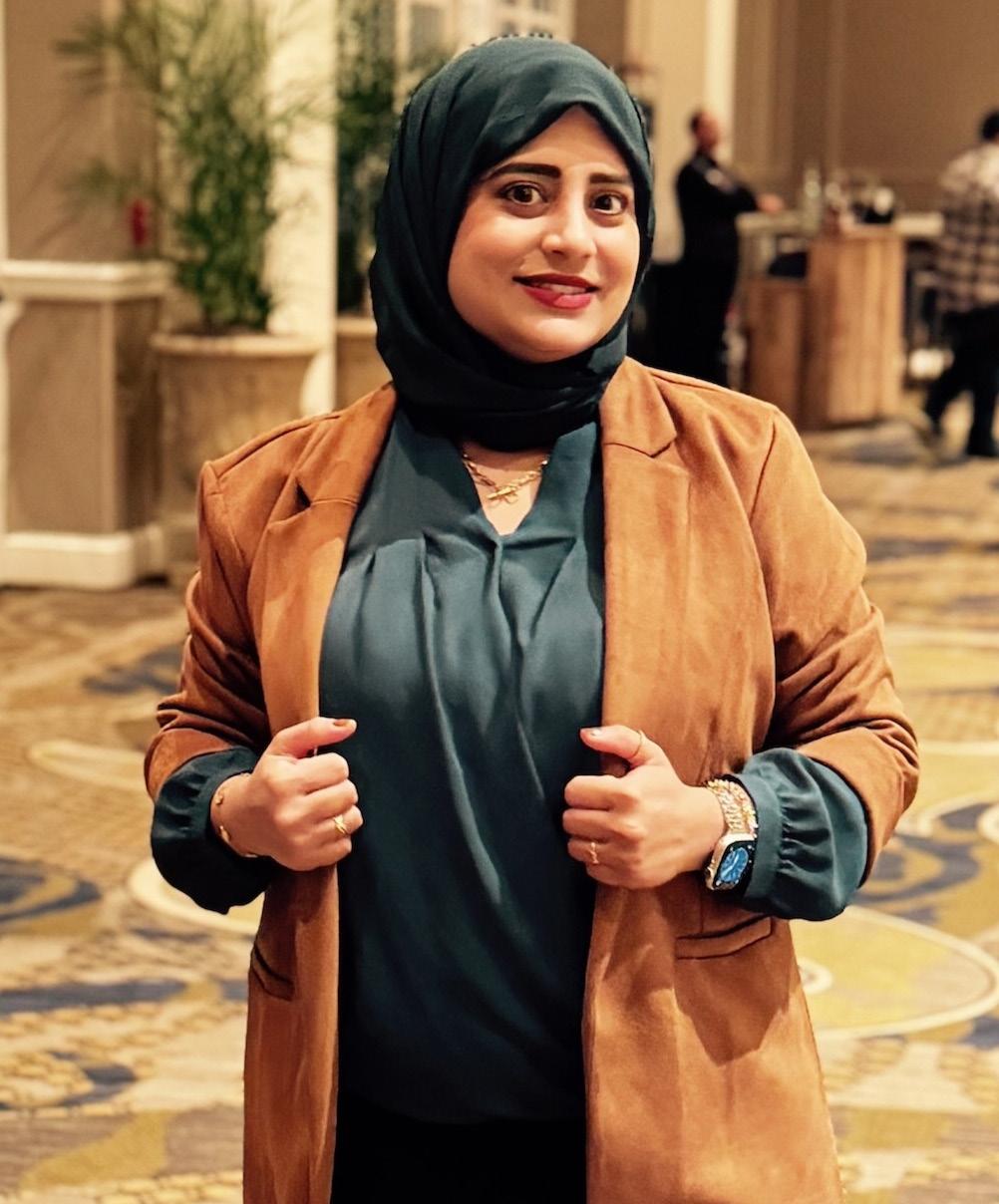
Farha Ansari is a Process Improvement Engineer with a proclivity for process optimization and operational efficiency. Skilled in tools like SQL, JIRA, Smartsheet, Ansari dedicates her time to elevating her team and boosting organizational growth— and, when not on the clock, exchanges her knowledge, wisdom, and resources with her community to support their educational journey. Here, she discusses how her technical expertise and presence translates to meaningful impact.
Shiwon Oh: How does your work in process improvement contribute to better business outcomes and improved customer experience?
Farha Ansari: With process improvements, I’m able to increase the revenue by identifying and reducing the inefficient costs, introducing automation, and reducing resource allocations. Also, it’s very important to foster a culture of acceptable change management systems where teams are well-equipped and willing to change by understanding the ‘whys.’
With improved processes and a well-defined approach to cater to the customer’s needs, it not only helps retention management but also allows employees to feel confident and more satisfied.
Data analysis plays a vital role in my day-to-day work. By measuring the data in a timely manner, I’m able to identify the need for streamlined processes that lead to quicker delivery and a valued customer experience. Along with this, identifying
fewer internal errors and bottlenecks leads to a more consistent and dependable experience for customers, strengthening trust and loyalty. I’m all about revenue and churn savings, ensuring my call center agents have it easier while enhancing the continuous customer experience.
SO: You use a collection of tools like SQL, JIRA, and Smartsheet to optimize processes. Can you tell us how they help you support and improve the lives of employees and customers alike?
FA: With SQL, I retrieve data. My daily duties breathe on data. It helps me assess the scenarios and improve them. My Six Sigma approach begins with data analysis. It improves resolution and enhances my decision-making. With JIRA and Smartsheet, I’m more organized with my projects and the work that I extend to my teams. It adds structure to my analysis, improves the deliverables’ timelines, and helps us stay on track, especially in events like scope creeps. With these systems and a few others, I’m able to maintain 24/7 support for my customers, leveraging technology to meet their needs, improve response times, and reduce wait times.
SO: When faced with resistance, how do you facilitate necessary transformation?
FA: In any transformation that I lead or my team goes through, the most important thing for me is communication and addressing any concerns. The team resists change because the scope isn’t addressed appropriately. With different mindsets come a variety of questions—by addressing the fears and concerns, I can ensure that the change management process becomes clearer.
I also like to acknowledge and validate people’s viewpoints and the emotional thought processes of the resistors. Once the transformation is successful and we overcome resistance, I make sure we celebrate each of my team members—this motivates my team and gives me confidence in their future potential transformations.
SO: Beyond the workplace, how do you leverage your skills and experiences to contribute to your community?
FA: I strongly believe in giving back to the community, as it has helped me build myself. I support fundraising events, assist underserved students with teaching STEM
courses, support local organizations in my city, and share part of my income with organizations in India that help educate young girls and older women.
SO: As someone in process improvement, you’re extremely accustomed to change. What kinds of habits empower you to stay ahead of the game? How do you set others up for success?
FA: I’m a learner; I seek to develop new skills and improve my IQ and EQ. Every project of mine brings change to the team and to the organization. I often get pushback from stakeholders, so it’s very important for me to cultivate resilience and prepare to bounce back. Along with this, I aspire to be proactive in pursuing my goals, meeting deadlines, and managing my time efficiently.
I started practicing mindfulness to stay grounded in the present moment, which also helps me focus on a positive attitude and be accountable. I like to keep healthy and prioritize my ‘me-time’ to balance the in-and-outs of process improvements. Lastly, I’m blessed to be surrounded by mentors and peers who encourage me!
NURTURE AN AUTHENTIC PRESENCE THROUGH EMPATHETIC LEADERSHIP Laura Hancock

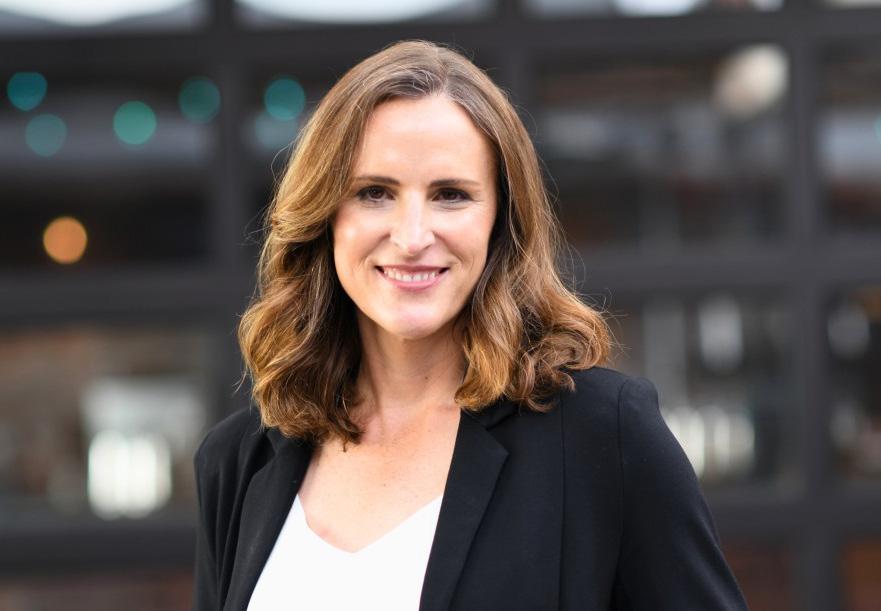
Laura Hancock serves as the National Director of Corporate Partnerships and Foundations at the American Foundation for Suicide Prevention (AFSP). With mental health equity and community wellness guiding her work, she builds intentional partnerships that help save lives across the country. Here, she reflects on how she carries herself as a leader and strives to make a difference every day for her team, organization, and broader spheres of influence.
Shiwon Oh: How do your past experiences define your leadership approach today?
Laura Hancock: My past experiences as both a business owner and a nonprofit leader have deeply shaped my approach to leadership. I’ve learned that being a leader doesn’t mean having all the answers; it means standing beside your team, helping find solutions, and providing the guidance and strategy needed to move forward.
Empathy is at the heart of how I lead. I believe in creating a supportive environment where team members have the structure they need to succeed, while also feeling seen and valued. Leadership, to me, isn’t about being in the spotlight, it’s about building a strong foundation that allows others to thrive, grow, and celebrate their wins.
I’ve been fortunate to lead incredible team members throughout my career—team members who work tirelessly behind the scenes, who have the skills but may still be building their confidence. One of the most rewarding parts of leadership is giving people the space to develop, watching them grow into their potential, and cheering them on as they navigate their own successful paths.
I have also been extremely fortunate to be led and mentored by incredible individuals who instilled confidence in me and provided opportunities for me to shine. Their belief in me has also shaped me into the leader I strive to be today.
SO: What’s an important lesson you learned in forming lasting partnerships?
LH: One of the most important lessons I’ve learned in building lasting partnerships is that it all begins with relationships. By investing time in getting to know a partner, their team, their values, and their goals, you gain a deeper understanding of who they are and what they hope to achieve. This foundation of trust and connection is essential to creating meaningful, long-term collaboration.
In the nonprofit sector, relationships are especially vital because many partnerships are rooted in a personal connection to the mission. It’s incredibly powerful to understand a partner’s “why” and what drives their passion for the cause, so that we can honor that connection and build a partnership that reflects their values.
This aspect of my role is one I find truly special: connecting with partners, learning their stories, and helping to create impact together. I’ve also learned that no two partnerships are the same. When you take the time to understand each partner’s unique goals and their connection to the mission, that’s when real change becomes possible.
SO: What are some challenges you faced and overcame when trying to make a difference?
LH: One of the most common challenges I’ve faced throughout my career in the nonprofit sector is balancing the immense passion and vision for impact with the reality of limited time and resources. This field is filled with people who care deeply and dream big, and I’ve often found myself inspired by the possibilities of what we can achieve. However, that excitement is frequently
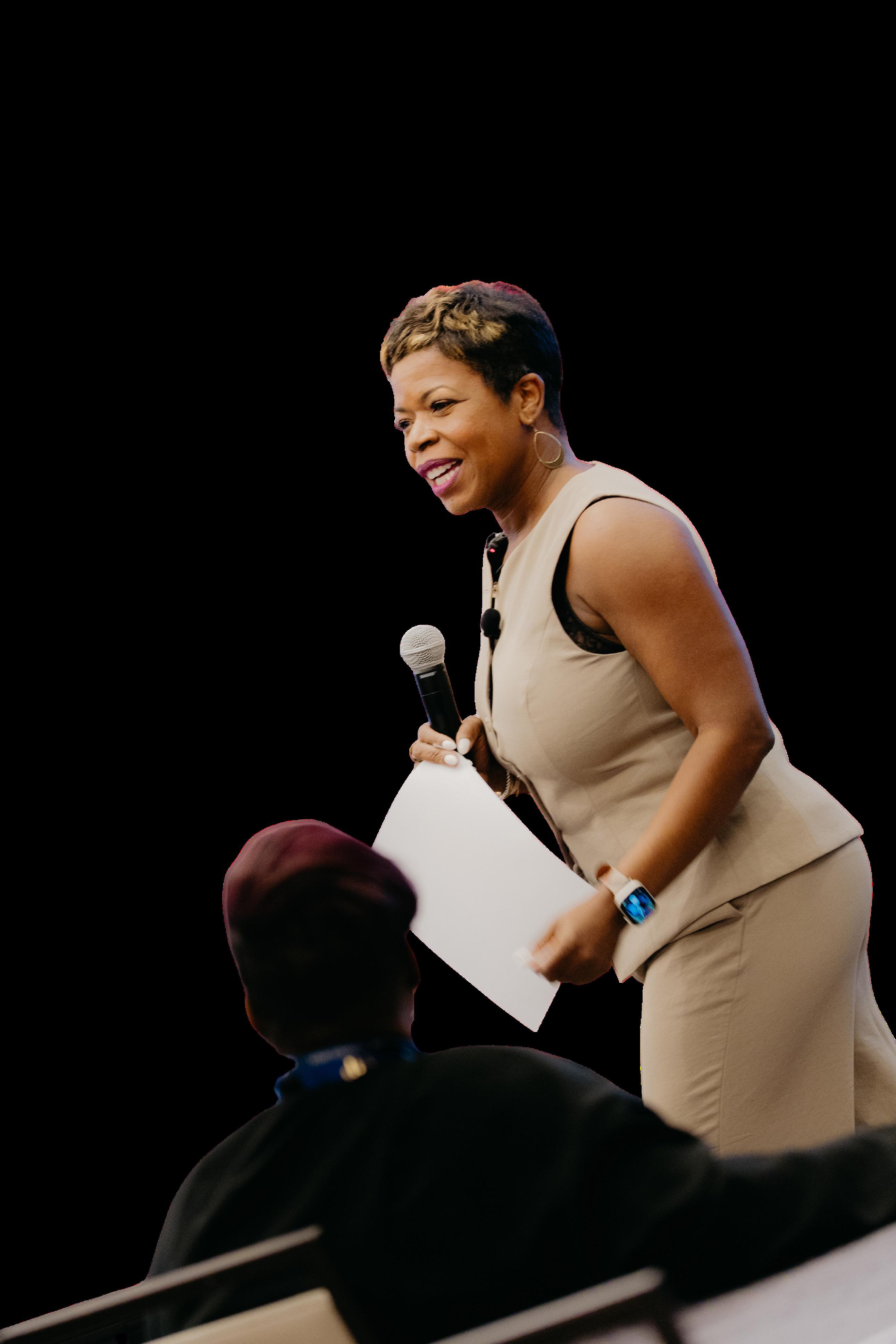
met with the challenge of having to wear multiple hats and manage competing priorities, often with fewer hands and tighter budgets.
In nonprofit work, we are constantly striving to do more with less. This means being incredibly intentional with how we allocate time, energy, and funding, always keeping in mind our responsibility to be the best stewards of donor dollars. It requires creativity, resilience, and a willingness to adapt quickly.
I’ve learned to overcome these challenges by collaborating with others, leaning into strategic partnerships, and staying grounded in our mission. Prioritization has become a key skill, knowing what will drive the greatest impact and focusing our efforts there. I’ve also learned the importance of celebrating small wins along the way, which helps maintain momentum and morale even when resources are stretched. They’ve also taught me that making a difference isn’t just about vision, it’s about perseverance, teamwork, and the ability to turn obstacles into opportunities.
SO: How do you leverage your presence to strengthen connections with organizations that are aligned with your mission?
LH: Presence is incredibly powerful when it comes to building authentic relationships, fostering meaningful connections, and working collaboratively toward a shared goal of impact. One of the most effective ways I’ve learned to leverage presence is by consistently keeping our mission at the center of every conversation and interaction.
At the American Foundation for Suicide Prevention (AFSP), our mission is to save lives and bring hope to those affected by suicide. I’ve seen firsthand how mental health struggles and suicide can affect anyone, regardless of background, age, or circumstance. This understanding drives me to show up with empathy, authenticity, and purpose in every partnership conversation.
When engaging with organizations, I focus on building trust and alignment through genuine connection.
Presence, in this context, means being emotionally and strategically engaged, whether attending a local event, joining a partner’s team meeting, or simply offering a note of encouragement. It’s about being a steady hand, a thoughtful collaborator, and a passionate advocate for the mission we share. Through this approach, I’ve been able to cultivate strong, lasting
relationships that drive meaningful impact in communities across the country.
SO: What advice do you have for leaders who want to present themselves authentically and make a mark in their respective industries?
LH: For leaders who want to present themselves authentically and leave a meaningful mark in their industry, my advice is to lead with empathy, stay informed, and show up with confidence.
Empathy is essential. It’s about genuinely caring for your team, your partners, and the communities you serve. When people feel heard and understood, they’re more likely to trust you and work with you toward a shared goal. Empathetic leadership creates stronger relationships and a more inclusive, supportive environment.
Being knowledgeable and staying informed in your field is just as important. Leaders who take the time to understand their industry, stay current on trends, and learn from others are better equipped to make smart decisions and guide their teams effectively. It’s not about knowing everything, it’s about being curious, prepared, and open to growth.
Confidence ties it all together. Authentic leaders don’t need to be perfect, but they do need to believe in their values and their ability to lead. Confidence allows you to speak with clarity, make bold decisions, and inspire others to follow your lead. It’s about showing up fully, even when things are uncertain, and staying grounded in your purpose.
EXPLORE THE ‘ME, WE, US’ FRAMEWORK TO BUILD A LEGACY
Tiffany Yu
Tiffany Yu is the founder of Diversability and author of The Anti-Ableist Manifesto, a collection of insights from disability advocates, activists, creatives, and leaders who fight ceaselessly for disability rights and inclusion. Forever shaped by her lived experiences, Yu uses her voice to educate and empower those who are often unseen, while calling for change at a greater level. She considers: what stories do we want to leave behind for the next generation, and what must we do to sustain it?
Shiwon Oh: How would you define the word legacy, and what long-lasting societal change would you want to achieve?
Tiffany Yu: Legacy is about creating a ripple effect that continues to make the world more equitable and inclusive long after I’m gone. It’s not about being remembered, but about what endures because of the work we did together. My legacy, I hope, will be a world where disabled people are seen, valued, and celebrated for who we are—not in spite of our disabilities but because of the unique perspectives and innovations we bring. Through my book The Anti-Ableist Manifesto and my company Diversability, I want to leave behind a blueprint for how we can build systems rooted in belonging and collective care, where accessibility and inclusion are the norm, not the exception.
SO: What most inspires you to dismantle biases and educate others through your storytelling? What has been your impact thus far?
TY: As someone who became disabled at nine years old, I often say that nineyear-old Tiffany is the “why” behind my work. I’m building and funding the things I wish had existed when I was younger. Before founding Diversability,

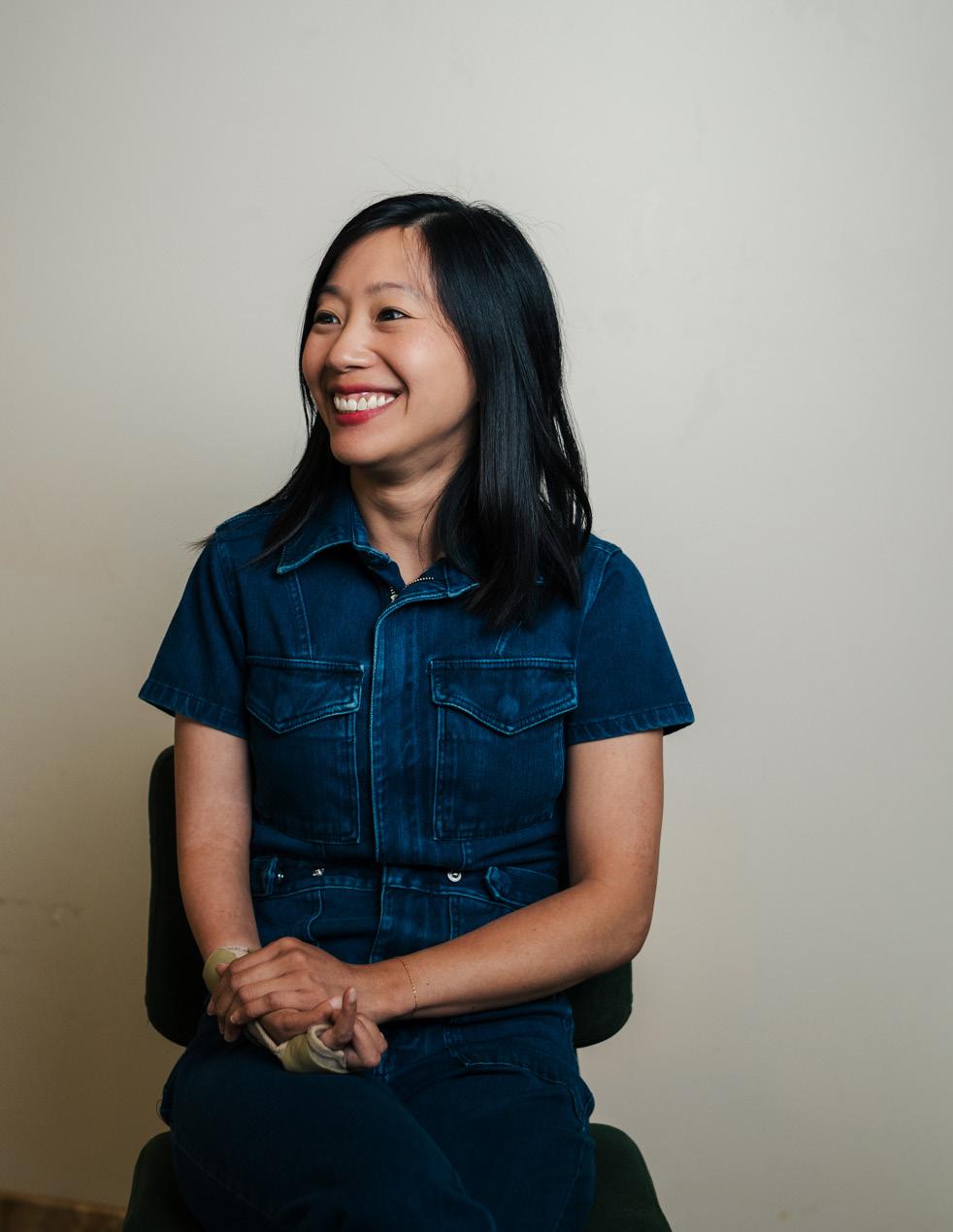
As a disability advocate, I’ve learned that storytelling can be both an act of resistance and an act of love. It disrupts stereotypes and challenges ableist ideas about what leadership “should” look like. Just as importantly, it reminds people that leadership can look like them, and that our stories hold power and purpose in the boardroom and beyond.
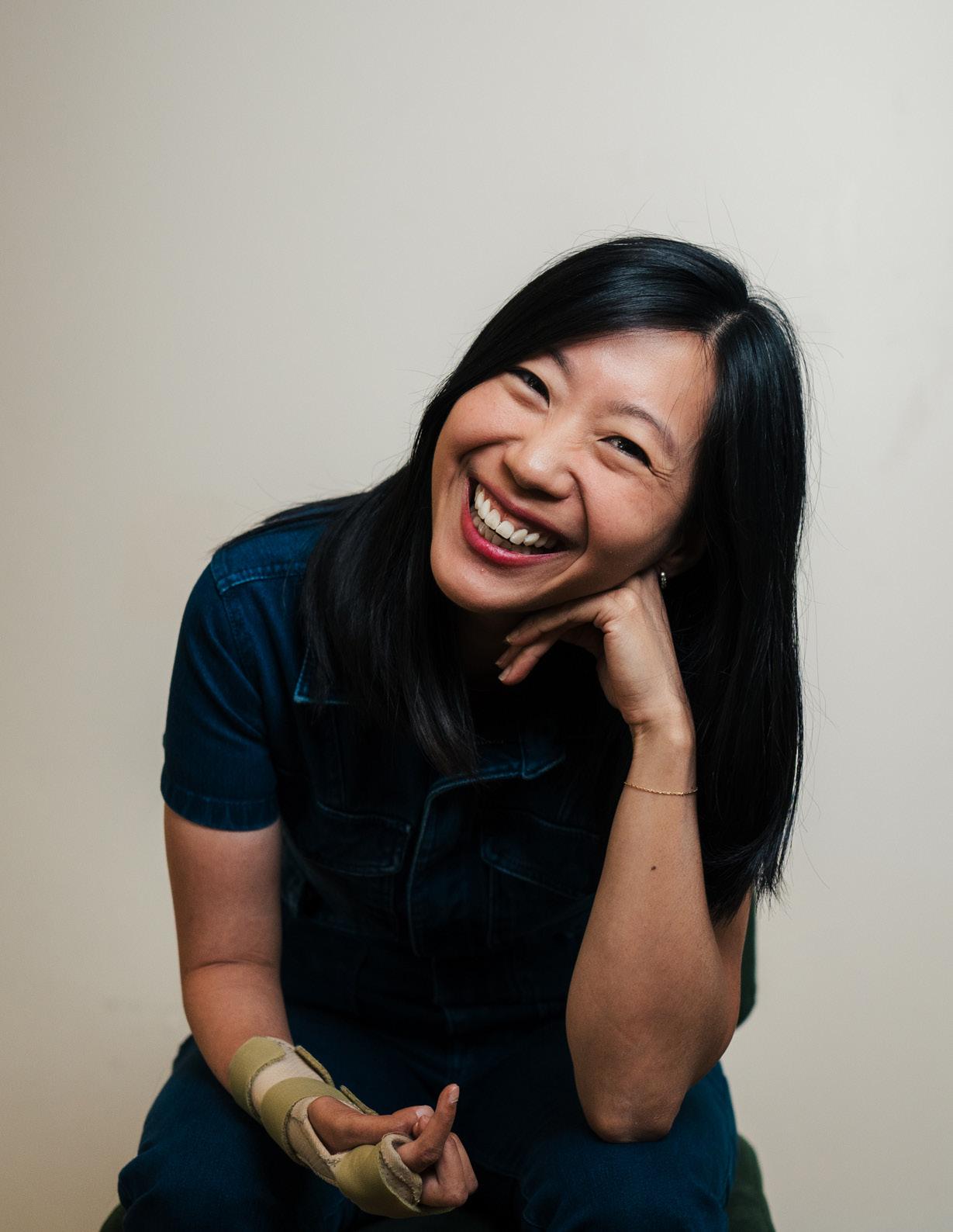
My legacy, I hope, will be a world where disabled people are seen, valued, and celebrated for who we are—not in spite of our disabilities but because of the unique perspectives and innovations we bring.
I worked in investment banking at Goldman Sachs, which taught me how powerful access, networks, and capital can be—and how few disabled people get to benefit from them. I grew up rarely seeing people like me reflected in media, leadership, or culture, and that absence fueled my desire to share my story and democratize access and opportunity.
Through Diversability, we’ve grown from Georgetown University’s first-ever disability student club into a global community of more than 80,000 disabled leaders and allies, helping our members collectively earn over $130,000. With the release of The Anti-Ableist Manifesto (now in its fourth printing), I’ve seen how stories can shift perspectives, inspire action, and spark new initiatives. My favorite part has been watching our community win, gain respect, and move from shame to pride. The disability community is a cultural force to be reckoned with, and we’re not going anywhere.
SO: Much of our legacy-building involves relationships that uplift us. How did you solidify a network that empowers you?
TY: Working at places like Goldman Sachs, Bloomberg, and REVOLT taught me the importance of networks and mentorship. But I also saw how many of those networks excluded people like me. My network now is built on a simple truth: community is the antidote to isolation. After my accident, I spent years feeling alone in my disability. Founding Diversability became both an act of personal healing and collective building. I surrounded myself with people who understood the power of shared experience—other disabled leaders, advocates, and allies working toward the same vision of equity and belonging.
I also believe deeply in mutual empowerment: celebrating each other’s wins, sharing resources, and making space for one another’s voices. My network isn’t transactional; it’s transformational. Every relationship is rooted in care, authenticity, and the belief that a win for one of us is a win for all of us.
SO: Why is it so important for leaders to share their authentic stories when trying to nurture spaces that challenge the status quo?
TY: Authenticity gives our leadership credibility and heart. When we share our real stories—the failures, the fears, the moments of doubt—we invite others to bring their full selves too. That vulnerability creates psychological safety, which is essential for innovation and inclusion.
As a disability advocate, I’ve learned that storytelling can be both an act of resistance and an act of love. It disrupts stereotypes and challenges ableist ideas about what lead-
ership “should” look like. Just as importantly, it reminds people that leadership can look like them, and that our stories hold power and purpose in the boardroom and beyond.
SO: Through your company, published book, and speaking engagements, you make your legacy as an anti-ableist and disability advocate tangible. What are some first steps women can take to drive their own form of cultural transformation?
TY: The Anti-Ableist Manifesto follows a transformative framework called Me, We, Us, which begins with awareness and accountability. Examine the spaces you’re in—your workplace, your community, your personal circles—and ask who’s missing and why. Reflect on how these spaces might inadvertently devalue disabled bodies or minds. Then take action to make them more inclusive, whether by challenging assumptions, advocating for accessibility, or amplifying underestimated voices.
I also encourage women to find community and lead with vulnerability. The things we’ve been taught to hide—our imperfections, our identities, our struggles—are often what connect us to others and drive meaningful change. Cultural transformation rarely starts with grand gestures; it begins with small, consistent acts of courage that collectively rewrite the narrative for the next generation.
The
Anti-Ableist Manifesto: Smashing Stereotypes, Forging Change, and Building a Disability-Inclusive World by Tiffany Yu
Author Tiffany Yu starts her book redefining disability as “a health condition of the body and/or mind that impacts the way a person participates in daily activities.” Many of us, no matter how well-intentioned, hold harmful ableist assumptions—and Yu seeks to dismantle them with gentle compassion, firm knowledge, and thought-provoking storytelling. Whether we want to learn more about disability because of a loved one, colleague, or even for self-education, The Anti-Ableist Manifesto promises to guide our learning.

A LEGACY ROOTED IN INVESTMENT:
WHY LEADERS MUST PRIORITIZE NURTURING CONNECTIONS Kelly Rodigas
Kelly Rodigas is the Chief of Staff of US Wealth Management at UBS. She decided to pivot from investment banking into wealth management, where she experienced greater growth and fulfillment. Passionate about leadership development, Rodigas often reflected on what it means to leave behind a legacy that prepares others for greater success. In this interview, she discusses the cultural impact she strives to make for a fairer, more transparent, and more trustworthy leadership culture.
Shiwon Oh: What are some pivotal career milestones that define your leadership story?
Kelly Rodigas: Looking back, there are three pivotal moments that have truly shaped who I am as a leader.
The first was deciding to pursue my MBA at Columbia Business School while working full-time in investment banking. Many doubted my decision—and honestly, they weren’t wrong to question it. But it turned out to be one of the best decisions I’ve ever made. Did I need it to succeed? No. But it accelerated my leadership development in ways I never could have imagined.
The second moment was leaving investment banking after nearly a decade. It was familiar, comfortable, even second nature. But comfort can be stifling. My MBA had opened my eyes to new possibilities, and I realized I wanted something more strategic, less client-facing, yet still rooted in finance. That led me to JP Morgan, where I landed what I called my dream job: Chief of Staff to a senior leader in
the Private Bank. It was a new area—wealth management— but one where I could leverage my skills to drive growth. Those three years were transformative, thanks to a boss who challenged me to think differently and lead boldly.
The third came when that same boss left JP Morgan for UBS. I had the opportunity to join him as Chief of Staff for U.S. Wealth Management—a role that continues to stretch and inspire me every day.
If there’s a common thread across these moments, it’s this: never stay comfortable. The moment you stop feeling challenged is the moment you should move. Growth lives on the other side of discomfort.
SO: Some leaders demonstrate traits that we want to emulate while others help us identify what we don’t want to be. What are some leadership don’ts that you learned along the way?
KR:
1. Don’t have meetings before meetings: Avoid pre-meeting huddles that exclude voices and leave people out. Bring everyone you need to the table at once and make decisions together. Transparency and collaboration build trust.
2. Don’t shy away from conflict: Healthy disagreement is essential for progress. Management teams will always have disagreements—it’s how you embrace that conflict that enables growth and innovation.
The financial landscape has evolved significantly since I entered the workforce nearly 15 years ago, but there’s still work to do. My goal is to help accelerate that progress and create a culture where we stop saying “the first woman CEO” because it’ll be the norm.
3. Don’t dismiss employee feedback: Listening matters. You may not be able to solve every problem, but most people simply want to feel heard.
4. Don’t overlook the people who keep the lights on: Say hello to building security, get to know the facilities staff, and acknowledge those who keep your workplace safe and running. They are just as much a part of the ecosystem that allows every leader to be successful.
SO: Who are some leaders that have invested in your development, and how did their efforts set you up for success today?
KR: I could easily name countless bosses, managers, and mentors who have guided me throughout my career, including my current boss, who continues to challenge and support me every day. I’m deeply grateful to all of them.
But if I’m honest, the group that often gets overlooked are the peers who grew up alongside me professionally. Some of my best career lessons came from hallway conversations, late-night problem-solving sessions, and shared experiences with colleagues at every stage of my career.
My advice? Invest in those relationships. Learn from them and grow with them.
SO: How do you want to be remembered in terms of your leadership legacy? What cultural shifts do you want to instill to benefit others?

KR: When I think about the legacy I want to leave as a leader, three words come to mind: fair, transparent, and trustworthy.
• Fair, because it’s essential for problem-solving and managing people with integrity.
• Transparent, because openness builds trust and empowers teams.
• Trustworthy, because trust is the foundation of any strong culture and community within an organization.
Separately, as a woman in a still predominantly male industry, I also hope to pave the way for the next generation of women to succeed—ideally to be even more successful than I am! The financial landscape has evolved significantly since I entered the workforce nearly 15 years ago, but there’s still work to do. My goal is to help accelerate that progress and create a culture where we stop saying “the first woman CEO” because it’ll be the norm.
SO: What are some top best practices for emerging leaders seeking to guide their teams with empathy, curiosity, and transparency?
KR: Listen, share the “why” behind decisions (within reason), motivate teams to feel like they’re part of something larger than just a short-term objective or project, ask questions and show your team you don’t always have the answers, and lead through conversations. In a world of zoom meetings, AI, and automation, relationships are still key to being a successful leader. Invest in your people.
THE POWER OF A DIVERSE NETWORK WHEN SCALING FOR GOOD Mary Zhu
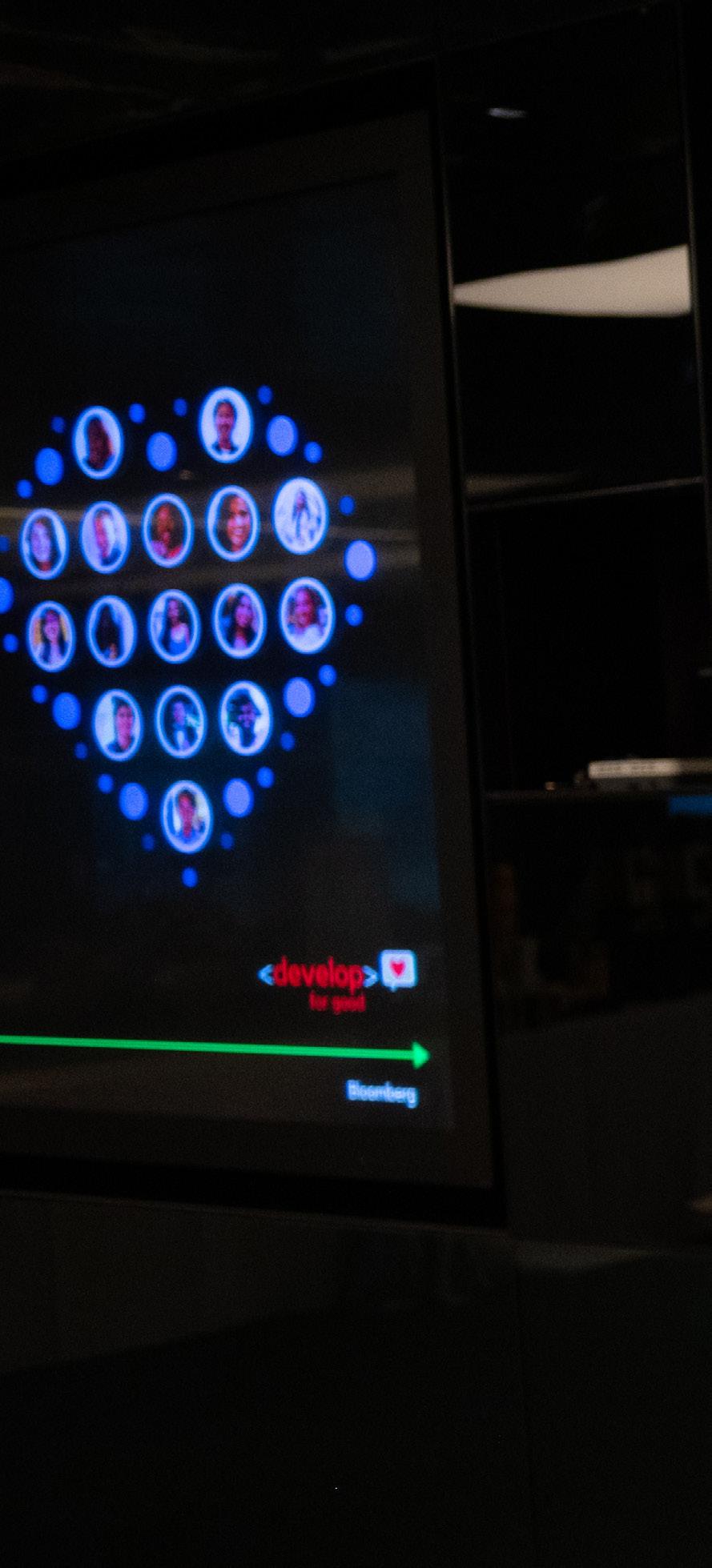
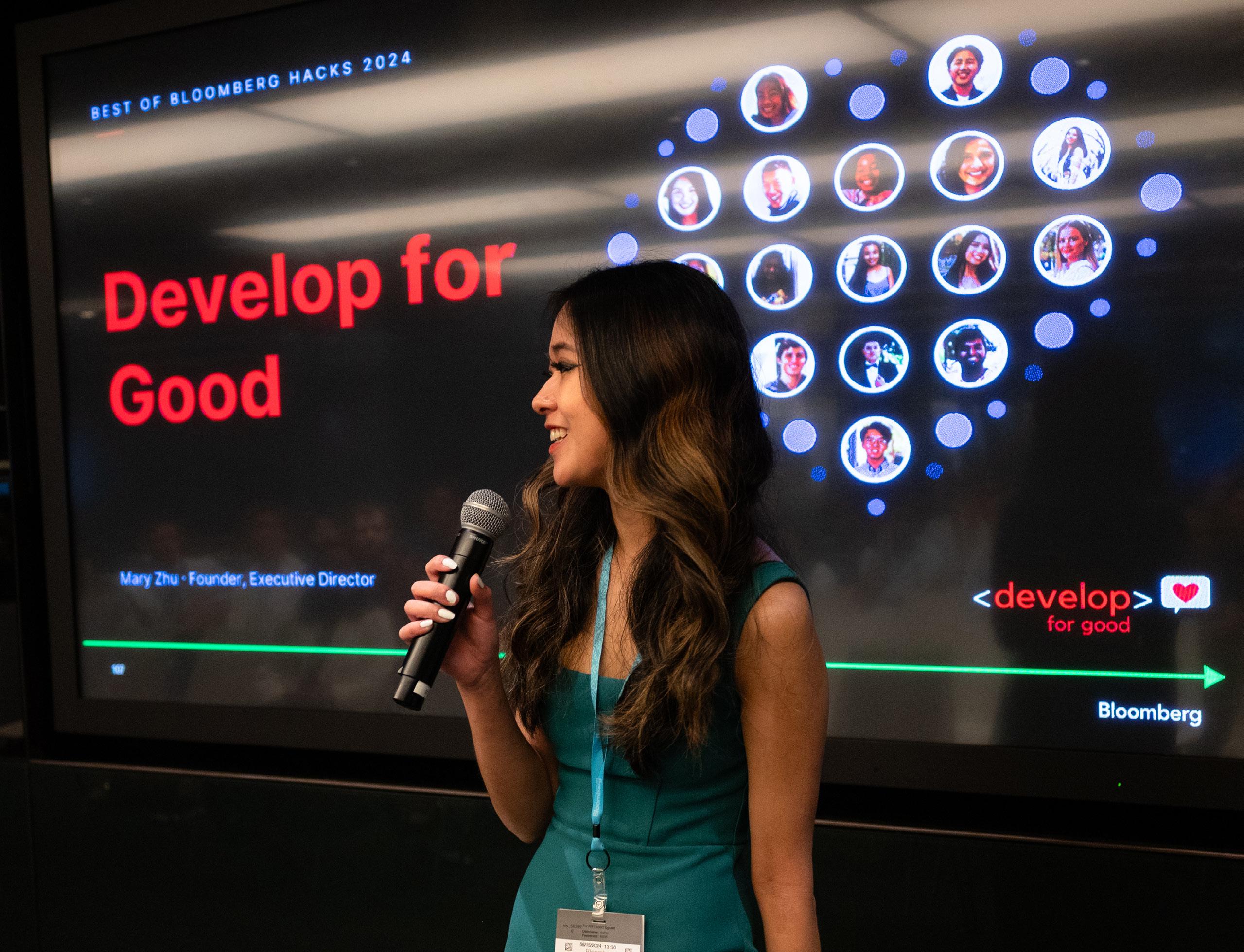
Mary Zhu is the founder of Develop for Good, a non-profit that equips college students with tech experience by having them build software for other non-profits. Zhu credits her growth to her diverse and expansive network of leaders who partnered with her to make her goals a reality. During our conversation, she highlights the power of a supportive network and the role of strategic collaboration in achieving personal and professional success.
Shiwon Oh: You’re the founder of Develop for Good and a Social Impact honoree on Forbes 30 Under 30. Who have been your greatest supporters on your journey, and how have they impacted you?
Mary Zhu: It has truly taken a village of heroes to get Develop for Good to where it is today.
One of the first was Mendel Rosenblum, Founder of VMware and my former Stanford Computer Science professor, who became our first-ever Board Advisor and has guided us since the very start. Amazon Web Services social impact leaders, Maggie Carter and Grace Kitzmiller, responded to my cold emails while I was still an undergrad AWS engineering intern. They ultimately approved the first dollar ever granted to Develop for Good. And
within a year after I began leading the organization fulltime post-college graduation, Tony Bowen of the Fidelity Charitable Catalyst Fund approved our first six-figure grant, which unlocked a new level of capacity to scale our impact.
I’m endlessly grateful to these tech and philanthropy leaders, among many others, who took a leap of faith on our vision at the very beginning. Their early belief has since created ripple effects that continue to shape every chapter of our journey.
SO: What are some of the most important lessons you’ve learned from your mentors and colleagues that shaped your sense of purpose?
MZ: Growing up, I watched Kari Byron creatively apply textbook science to test urban legends on MythBusters, which ingrained in me the importance of leading with curiosity. That lesson has only deepened through her direct wisdom and support.
A conversation over coffee with CHANEL CEO, Leena Nair, last year crystallized another core value for me: leading with compassion. Leena has consistently stood firm in the belief that every decision, even the toughest ones, must be made with the human being at the end in mind.
And from my Develop for Good teammates, Program Director Kiki Liu and Nonprofit Partnerships Manager Michael Gabrielle, I’ve learned what it truly means to lead with empathy. Through their ownership of our volunteer and nonprofit-facing programs, they model an extraordinary commitment to understanding the people we serve and making them feel seen, supported, and valued.
SO: What career challenges has your network helped you navigate or overcome?
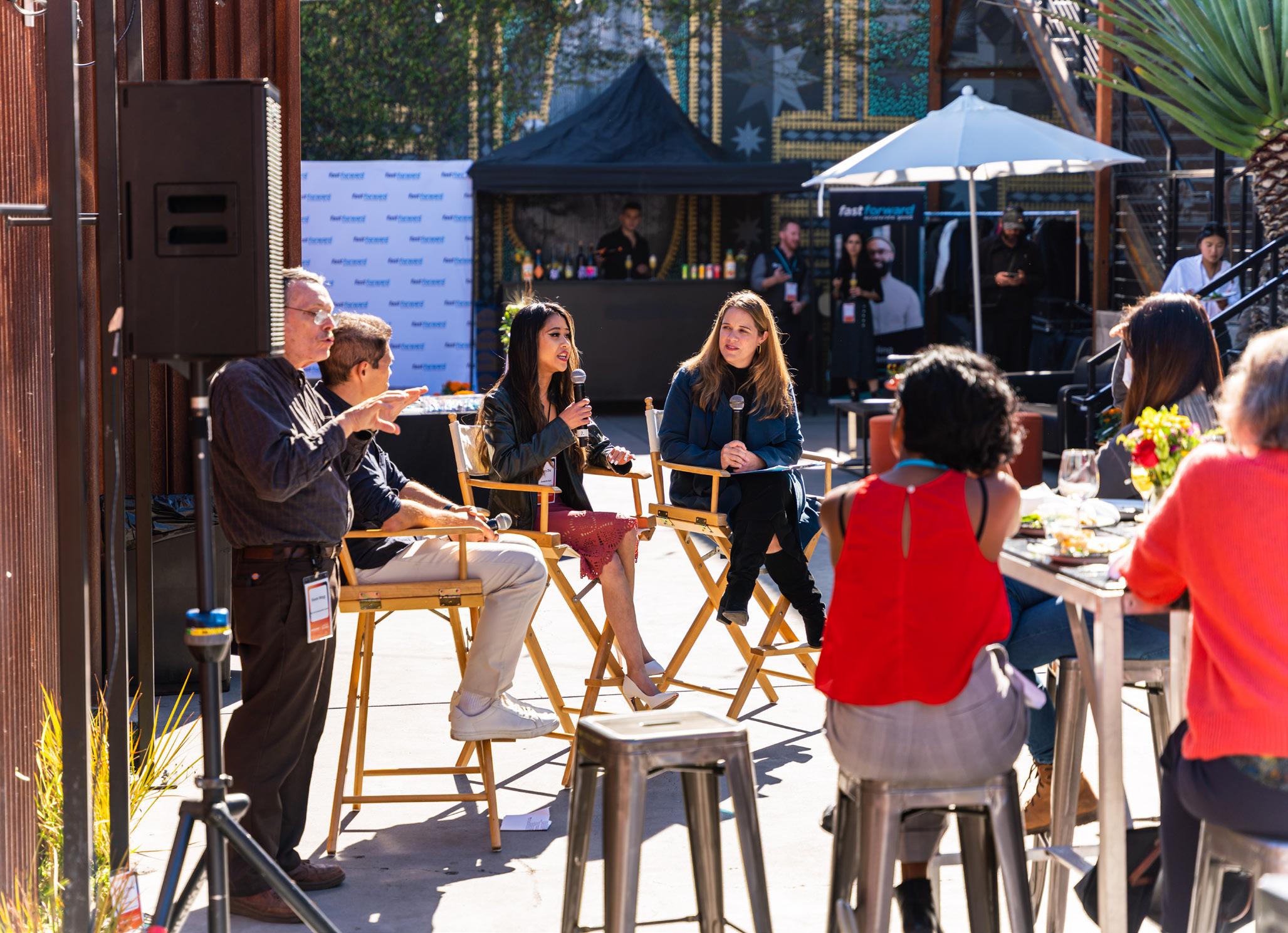
MZ: Because Develop for Good has been my first and only full-time job, I’ve relied heavily on my network to learn and grow. My first-ever accelerator experience was at Fast Forward with Shannon Farley and Kevin Barenblat, who gave
me the essential nonprofit startup 101 crash course I absolutely needed when I was running Develop for Good as a college student.
StartX, Stanford’s startup accelerator led by Kyle Wong, then gave me the opportunity to learn alongside a cohort of ambitious for-profit startup founders whose challenges and insights were surprisingly translatable. This experience exposed me to frameworks, perspectives, and an extended network of mentors I wouldn’t have encountered otherwise.
Most recently, my time at the Praxis Nonprofit Accelerator, led by Sara Miller, helped me connect my vocation to my core values, faith, and purpose. Each of these communities supported me at a different stage of the learning curve, shaping who I wanted to become and how to work toward getting there.
SO: How does Develop for Good serve as a community resource for up-and-coming graduates?
MZ: Today, most tech roles require more than a college degree—employers cite prior, relevant experience as a top deciding factor. Yet real-world experiences are rarely part of core college curricula, and opportunities like internships are limited and highly competitive. As a result, many underserved and underrepresented students graduate with tech degrees but struggle to get hired without that career-critical experience.
Develop for Good is a 501(c)(3) nonprofit that supports teams of diverse college students as they design and build software for nonprofits under industry mentorship. Throughout our 16-week volunteer program, students gain hands-on technical experience while simultaneously building leadership, communication, and project management skills. By the end, they leave with resume-ready case studies and tangible, technical experience to walk through in future interviews and applications.
SO: With many young professionals struggling to break into tech, how can organizations better equip the next generation for success?
MZ: There’s a gap between what’s taught in academic settings and what’s needed to thrive in the workplace. Much of the real world involves navigating technical ambiguity, collaborating with people from diverse backgrounds and perspectives, and adapting to unexpected obstacles. Organizations can better equip the next generation by engaging students in meaningful field experiences to develop career-critical technical and soft skills. At Develop for Good, we’re trying to bridge that gap by providing team-based, nonprofit tech project experiences at scale.
WOMEN’S HISTORY MONTH
MARCH 3, 2026 | AUSTIN, TEXAS

SAY YES TO NEW OPPORTUNITIES AND THE NETWORKS THAT MAKE IT ALL POSSIBLE Jaime Rinaldi
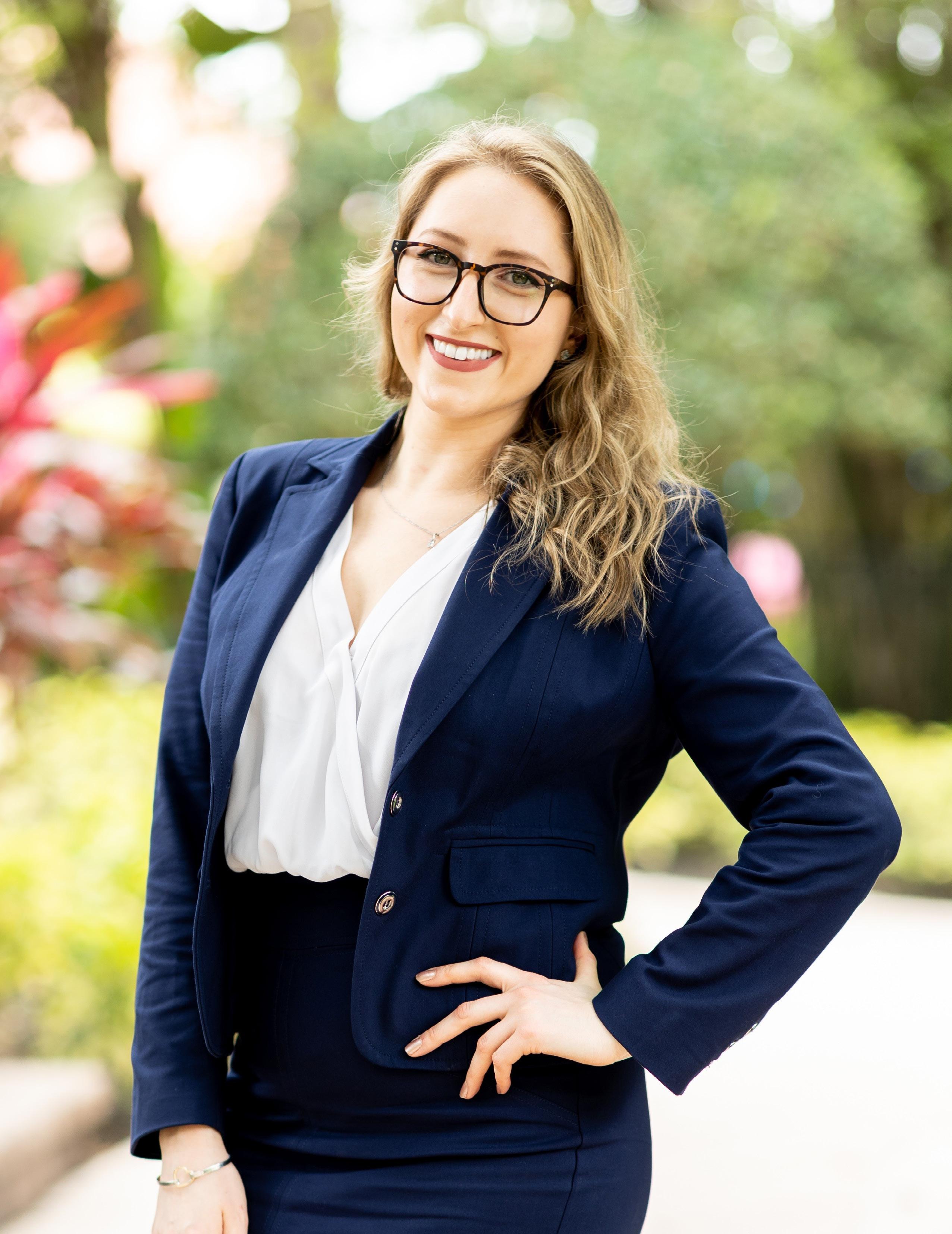
From apple orchards to coastal Japan to industry-specific event spaces, Jaime Rinaldi is no stranger to writing an adventurous, multi-faceted career journey. As the Deputy Divisional Director (Delegate Acquisition) for Executive Exchange Events at the Customer Management Practice, she channels consistent enthusiasm to nurture experiences where others can expand their networks with like-minded peers—and discover themselves along the way. In this conversation, Rinaldi reflects on the role of support in her career and its impact on senior leaders who attend the Exchanges.
Shiwon Oh: During your career journey, when did you recognize the need for a support network to guide and uplift you?
Jaime Rinaldi: My unofficial career journey began long before I ever filled out a job application. It started with helping in my father’s pizzeria, working on my grandpa’s farm, and working at a local apple orchard after school. I always had something to do and somewhere to be, even if I wasn’t entirely sure where I was heading. What I did know was that I had a habit of saying yes—to cross-country road trips, moving to New York City, or studying microplastics off the coast of a small island in Japan. I was floating from place to place, searching for where I was meant to land.
Through all of this, I recognized I could turn to my bonus mom for guidance. I grew up listening to how she spoke to people, watching how she carried herself, admiring her professionalism, her joy, and the way she balanced work and family with such ease. I think she always knew I’d eventually find my path; she was just patiently waiting for me to see it too. After a summer internship and a few job fairs, I found Customer Management Practice, and from there, everything clicked.
Looking back, whether I was in the pizzeria, on the farm, at the orchard, or now working in the events industry, one thing has always been at the center of it all: a strong support system. A network of family, friends, and peers, coming together to uplift each other through shared stories of lessons learned and of greatest achievements.
SO: The Exchange series provides executives an opportunity to build meaningful connections with others facing similar industry challenges. Why is it so important to create a space for support and reflection? What tangible outcomes have you seen?
JR: The Executive Exchange is an invitation-only event series and an exclusive opportunity for leaders to pause and reflect, network, and benchmark with peers
We need space to process challenges together, celebrate wins, and strengthen the mindset required to lead with clarity and courage. If we can stay grounded, inspire trust, and drive meaningful progress even in times of uncertainty, there’s no stopping us!
handling similar responsibilities. We often find ourselves in a busy loop, always chasing the next task. Creating time and space for interactive discussions and sharing challenges and successes helps leaders reset and define the “why” behind their work. It’s refreshing to step out of your day-to-day and into a room with peers who offer fresh, honest perspectives and understand the pressures and priorities you may be facing. It welcomes a level of openness that’s difficult to achieve elsewhere, creating strong networks and support systems.
The outcomes are extremely tangible. In several cases, attendees have credited insights from Exchange sessions and 1-1 business meetings for accelerating major initiatives or navigating difficult transitions. We’ve seen executives walk away with actionable strategies after validating decisions or illuminating blind spots. I’ve witnessed such strong relationships form and continue beyond the event, which is my favorite thing to see!
Ultimately, the value lies in creating intentional space because when leaders have room to think, connect, and be supported, the possibilities are endless!
SO: As a Deputy Divisional Director, how do you balance supporting your team while ensuring you have it for yourself as well?
JR: Lately, I’ve been caught in a real internal debate. Am I doing enough, or am I doing too much? Friends, family, and peers have all reminded me that burnout is real, and it’s nothing to take lightly. When you care deeply about doing great work, pouring your heart and soul into it can feel completely natural. But I’m learning that passion doesn’t make you invincible, and finding that balance is essential.
I’m starting to realize that supporting others effectively requires being grounded myself. It means setting clear boundaries, even when it feels uncomfortable. It means recognizing that rest isn’t a reward but is essential to offering the best version of myself. It means trusting my team enough to share the load instead of carrying it all alone. I’m still figuring out what that balance looks like day to day, but I’m learning that sustainability matters as much as dedication.
From going for a walk to get fresh air while working from home to dedicating time to exercise in the morning before checking emails, it’s all a balance. In the long run, protecting my energy isn’t selfish; it’s what allows me to show up fully for the people who count on me.
SO: What specific types of support do you think leaders will need to thrive in our era of disruption and change?
JR: Meaningful support strengthens a leader’s emotional resilience, ability to navigate ambiguity, and capacity to lead with empathy and heart.
Time. We need more of it—time to pause, reflect, and make sense of these inevitable shifts. Technology is reshaping our norms at a rapid pace, and it’s clear that adaptability is no longer optional. When leaders have the space to examine what’s working, what isn’t, and where they want to go, it creates room for proactive thinking and for embracing diverse cross-functional perspectives that are critical for shaping the future of work and ultimately leading to the team’s success. In addition, continuous learning and the development of emerging skills are key investments and no longer optional extras.
Support has to go beyond building tech skills, though, and I’m passionate about the need for communities that promote connection and shared experiences. We need space to process challenges together, celebrate wins, and strengthen the mindset required to lead with clarity and courage. If we can stay grounded, inspire trust, and drive meaningful progress even in times of uncertainty, there’s no stopping us!
SO: What best practices would you recommend for women leaders who seek meaningful peer networks?
JR: Remain open and honest, true to yourself, and speak freely about what you’re passionate about. You can never go wrong speaking from the heart and putting yourself out there. Whether that’s stepping into a room full of strangers, leading a presentation on stage, or joining a community meet-up in a new city, you may feel hesitant at first, but the right people, your people, will latch on. It’s important to push past your comfort zone. You just have to be ready to say yes to new experiences!

FEATURING CCWOMEN+ MEMBERS:
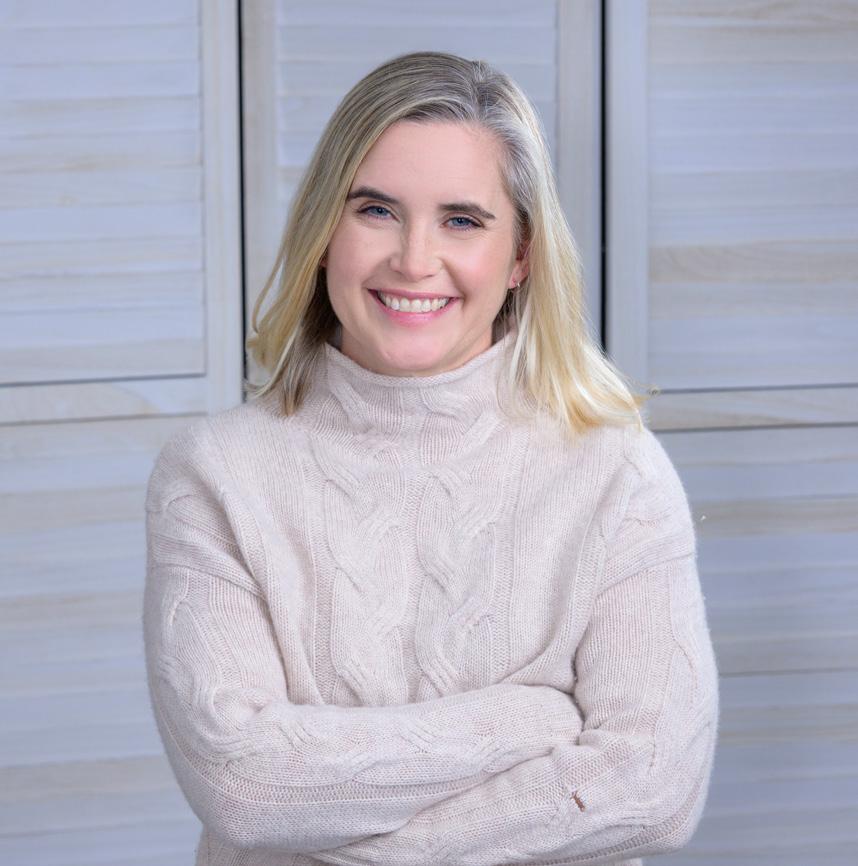
WHAT HOLDS YOUR COMMUNITY TOGETHER? LizzieResnick

1. How has your community been ‘unwavering’ for you, and how did their support empower your career?
Lizzie Resnick: My communities have been unwavering in their encouragement, expertise, and generosity. Professionally, their support was instrumental as I launched my own consulting LLC and later navigated a new role in a different industry. Through both in-person and virtual conversations, my network—including groups like CCWomen—opened the door to stories of success, challenge, and resilience. Their guidance reminded me that I wasn’t alone and helped me stay grounded and confident during times of change. I also learned the value of starting with the network you already have and building from there; meaningful connections take time, intention, and follow-through. The energy you invest in your community not only accelerates your own growth but also equips you to support others on their journeys.
Personally, the steady support of my network, family, friends, and church has been equally transformative. They have celebrated milestones with me, encouraged me through transitions, and inspired me to keep stretching toward new goals. One of the most unexpected gifts from my community has been the opportunity to give back—whether through leading a webinar on networking, sharing a family experience, celebrating a belt promotion in Brazilian jujitsu, or preparing for a 5K alongside others—allowing me to share my experiences and passions beyond work.
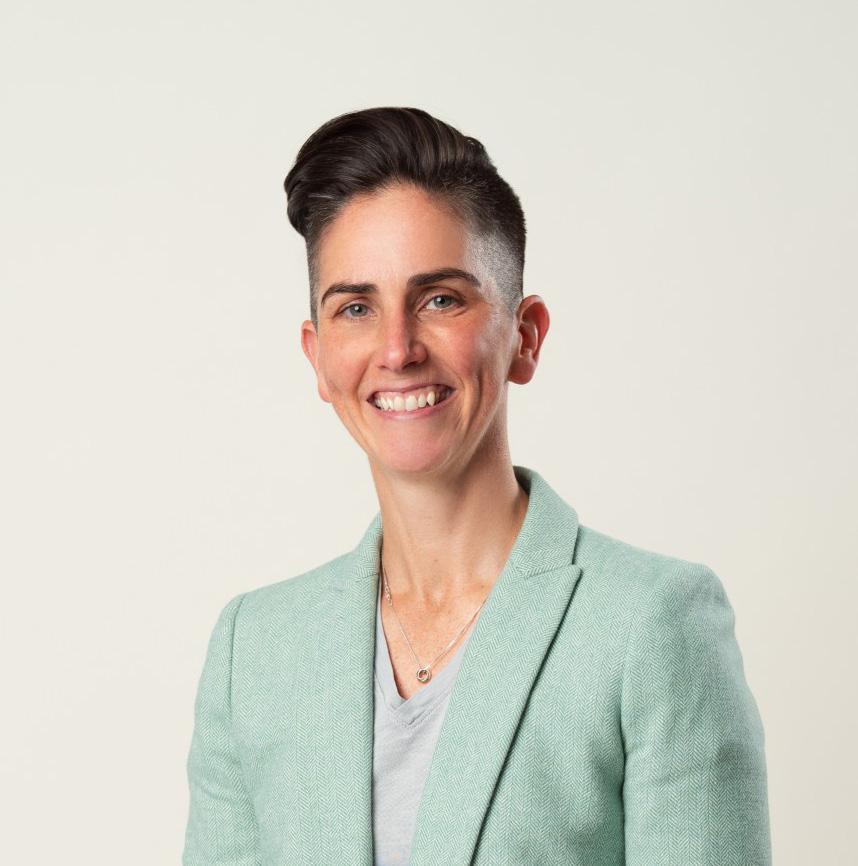
Faithe Toomy: My community has always shown up for me, no matter the time or distance. Even after months or years of silence, they’ve been just a phone call or email away. In moments of doubt, they’ve reminded me of my strengths, my growth, and the wins I sometimes forget to celebrate. These relationships, built over time, have given me the courage to chase opportunities I might’ve hesitated on. And often, it’s the quiet support-
ers, the ones cheering from the sidelines, who speak your name in rooms you’re not in and open doors you never imagined.
2. How do you strive to be a resource for those who seek guidance?
Lizzie Resnick: I strive to be a resource for others by modeling the same support that has been generously given to me. For me, it starts with building genuine relationships—whether through networking conversations, coffee meetings, or simply taking the time to ask what someone truly needs and offering encouragement. I’ve learned that small gestures can have a big impact. Expressing gratitude, saying thank you, or giving someone a thoughtful shout-out not only brings me joy but also uplifts and motivates others. These simple acts help create a culture of support, connection, and confidence—one I’m always eager to pour back into my community.
Faithe Toomy: Everyone we meet has something to teach us. Sometimes the lessons are encouraging, while other times they can be challenging. What matters most is our openness to these moments. I’ve come to view these lessons as gentle nudges toward becoming a better version of myself—not just for my own growth, but so I can support others who might be navigating a similar path.
I have always enjoyed connecting with people. I make it a priority to understand their needs and help them move forward, whether through insight, encouragement, opening doors, or simply being a shoulder to lean on during tough times. It’s about being human and recognizing that everyone is facing their own struggles. By creating a safe space for others, we allow for vulnerability without fear of judgment.
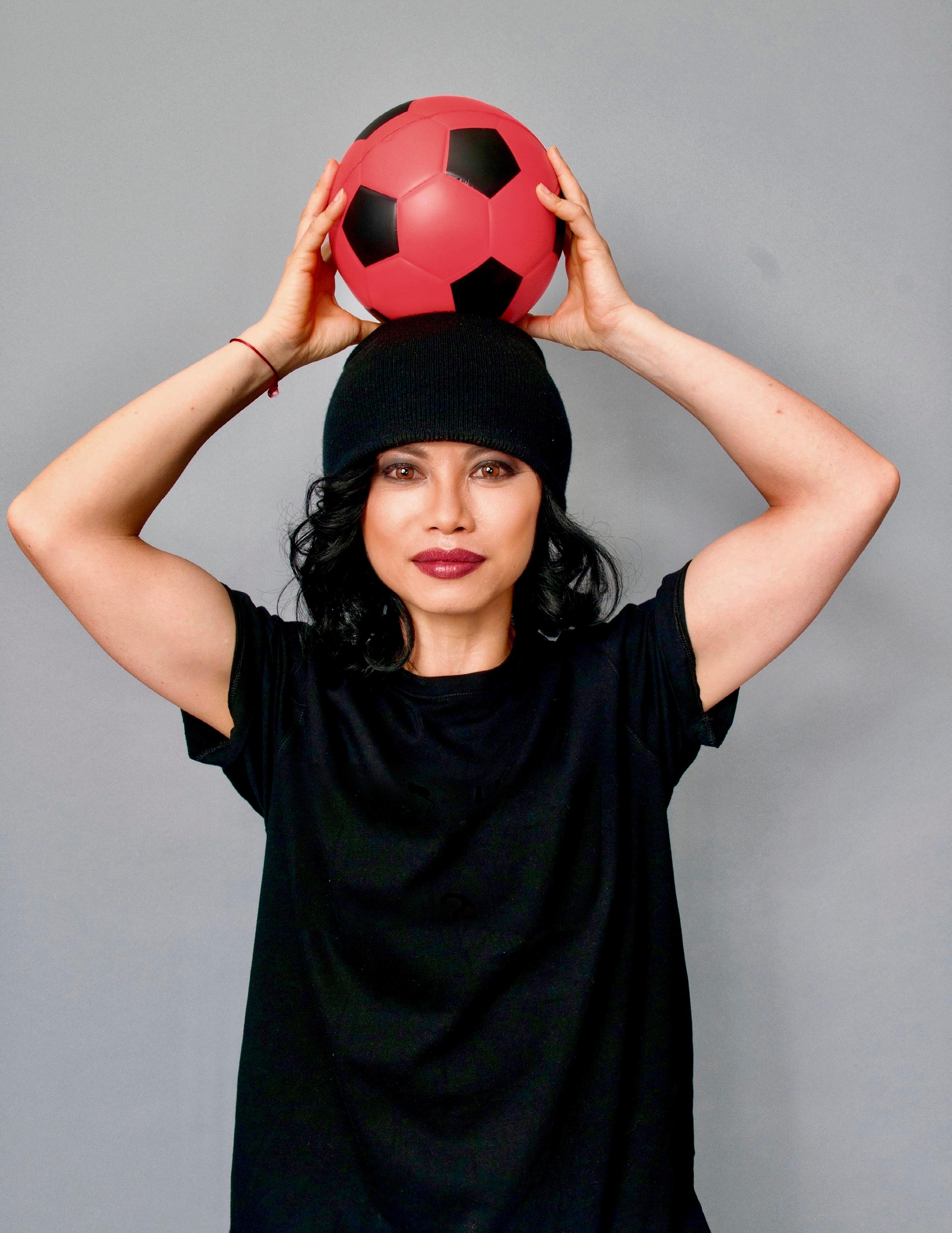
I grew up never seeing anyone like me in sports, and never feeling truly safe or accepted. That isolation made me believe my story didn’t matter. But today, every message I receive, every young person who tells me, “Because of you, I feel seen,” reminds me that I’m no longer walking this path alone.
OWN YOUR STORY; FREE YOURSELF! Amazin LeThi
Amazin LeThi pursued bodybuilding at a young age, but not without overcoming her obstacles. Unhoused as a young adult and navigating mental-health struggles, she found that her passion for sports kept her grounded, helping her rebuild her confidence and life ambitions. Slowly but surely, she gained visibility through opportunities such as the It Gets Better campaign and the White House’s Act to Change initiative for AAPI anti-bullying. In this interview, LeThi reflects on how she wields storytelling as a powerful tool— one that empowers her community and inspires others to live their truths.
Shiwon Oh: When was the first time you realized your story impacted others? How did it inspire you to kickstart your more public journey of sharing?
Amazon LeThi: The first time I realized my story was truly impacting others was when I began sharing it publicly through press interviews and community events. People would approach me and say, “Because I saw you, I finally believe there’s a place for me in sports and in the world.” Hearing those words stopped me in my tracks.
Growing up, I never saw anyone who looked like me— Asian and LGBTQ—on the sports field or in positions of leadership. That absence left me feeling invisible, isolated, and questioning whether I would ever belong. To know that my visibility could give someone else hope and affirmation was moving.
It was the moment I understood that my story was no longer just my own, but it had become a lifeline for others searching for a reflection of themselves. It was a mirror for others who had been silenced or erased. It was the representation I never had. That realization gave me the courage to step out more publicly, and share my triumphs and the pain of my struggles: the
discrimination, the homelessness, and the years of not seeing people like me in sports.
I began sharing openly knowing that vulnerability could be transformed into strength—that by telling my story, I could give others permission to tell theirs. My journey from homelessness to becoming a global advocate and sports ambassador is proof that our most difficult chapters can become powerful tools for change.
Today, I speak out for myself and every young person who has ever felt unseen. My story is a reminder that visibility is a lifeline, representation saves lives, and sports has the power to unite, inspire, and rewrite what’s possible.
SO: Were there any fears or doubts you had to address when detailing moments from your life? How did you address them?
AL: Absolutely. There were so many fears and doubts I had to confront when I first began sharing my story. For most of my life, I carried a heavy silence. I was ashamed of the parts of my past I wanted to bury: the nights of homelessness, the racism and homophobia that cut so deeply, and the constant ache of feeling like I never truly belonged anywhere. Saying those words out loud felt like exposing the rawest parts of myself to the world.
What terrified me most was the thought that people would judge me or dismiss my experiences as if they weren’t real. I worried that my pain would be seen as weakness, or that speaking about it would somehow make me smaller. But holding it inside was even more suffocating.
I came to realize that silence only keeps us trapped
in other people’s definitions of who we are. The moment I started owning my story, I took back my power. What once felt like weakness became the very thing that gave me strength and connection with others. I addressed my fears by remembering that if even one person could see themselves in my journey and feel less alone, then the vulnerability was worth it.
I’ve learned that courage doesn’t mean the fear disappears; it means moving forward despite it. Every time I tell my story, I’m not just releasing my own pain. I’m helping to dismantle the shame and invisibility that so many in our community still carry, because when we own our story, we free ourselves and light the way for others to rise.
SO: How does your community continue to uplift you as you build your online presence and solidify your storytelling legacy?
AL: My community is the reason I can keep telling my story with courage. For so much of my life, I felt like I had no community at all. I grew up never seeing anyone like me in sports, and never feeling truly safe or accepted. That isolation made me believe my story didn’t matter. But today, every message I receive, every young person who tells me, “Because of you, I feel seen,” reminds me that I’m no longer walking this path alone.
They uplift me by reflecting back the very thing I once thought I didn’t have: belonging. When people share that my journey has given them hope or strength, it heals the parts of me that were silenced for so long. It’s a powerful exchange. I pour my truth into the world, and my community pours love and affirmation back into me.
That’s what keeps me building my online presence and shaping my storytelling legacy. It’s not about visibility for myself alone—it’s about creating a space where others can recognize themselves, find strength, and know they are never invisible. My community reminds me every day that this work is bigger than me, and that together, our stories have the power to change the world.
In many ways, my community has become the family I searched for all my life, and they continue to give me courage.
SO: This is a rapidfire question: if you were to give someone a book, podcast, or other media recommendation to learn more about your mission, what would you recommend?
AL: Book: V by Florence Schechter, where I was a contributing writer and shared my story through the lens of sports, breaking stereotypes and amplifying equality.
Podcasts/Media: My interviews on platforms like Forbes, GLAAD, and the BBC LGBTQ Sports Podcast. Each content piece shines a light on different parts of my mission for justice, visibility, and inclusion.
SO: How can organizations foster spaces where diverse stories and perspectives are valued, and add to their company culture?
AL: Organizations must move beyond tokenism and create intentional, safe, and ongoing opportunities for people to be seen and heard. It’s not just about policies or statements; they must embed inclusion into their culture.
All of my work as a keynote speaker and advisor is grounded in the transformative power of storytelling—whether through the lens of sports or within the workplace using an intersectional perspective. When we share authentic narratives about our struggles, triumphs, and identities, we create empathy and forge connections that policies alone can never achieve. True inclusion happens when people feel seen and valued. A workplace stops being just a place to work and becomes a community where everyone feels a sense of belonging.
This starts with listening, not just to those in leadership, but to every voice, especially the ones that have historically been ignored. Companies that do this cultivate a culture where innovation and collaboration thrive, because their people know that they matter, and that their voices shape the organization.
Valuing diverse stories is essential for creating a culture that is resilient, creative, and truly inclusive.
MEASURED IN GROWTH. NOT CLICKS.
EXPLORING KOREA’S FEMINIST ACTIVISM, AND WHAT IT SAYS ABOUT GENDER EQUITY IN THE WORKPLACE
FLOWERS OF FIRE Hawon Jung
A Note from the Editor in Chief:
Anyone who knows me is probably familiar with my love for Korea, my motherland and country of origin. I’m excited to see that, thanks to K-pop, literature, and other forms of media, more of the world can take a peek into our small, mighty, and resilient peninsula. But loving your country doesn’t mean you excuse its faults—for there to be change, you must confront the ugliness that festers alongside its points of beauty and strength.
For one, South Korea has the worst gender pay gap among OECD countries.1 It’s also widely known— as told to me by my mother and other female relatives—that women have trouble re-entering the workforce after having children. During a recent conversation I had with a friend currently working in Korea, she shared the societal pressures she faced as a young woman: namely, how her appearance was casually criticized and scrutinized in the office, as if she were merely a piece of furniture that required repair. And this was only one example of many that shocked me.
1 OECD. “Gender Wage Gap.” OECD. Accessed November 21, 2025. https://www.oecd.org/en/data/indicators/gender-wage-gap.html
On a more insidious level, South Korean women frequently face harassment and discrimination without having the opportunity to speak up against their perpetrators. The system works against them, draining them of resources before they can see justice served. But hope still remains, because people continue to fight for a better future, one of them being Hawon Jung, author of Flowers of Fire.
I first reached out to Jung after coming across her book, which curates several stories from survivors and activists leading our country’s feminist movement. I admittedly know about it at a surface level and from family anecdotes, and always wanted to learn more about why Korea is so deeply steeped in patriarchy, and how women today are changing the narrative—because they are, incrementally.
Jung’s background is nothing short of extraordinary. Journalist and former Seoul correspondent for the AFP news agency, she has covered everything from major South Korean politics to K-pop’s rising popularity. She’s an advisory council member of Human Rights Watch and was honored by CNN for her advocacy on women’s and LGBTQ+ rights. Flowers of Fire is one of her many achievements, and I’m forever changed after reading it.
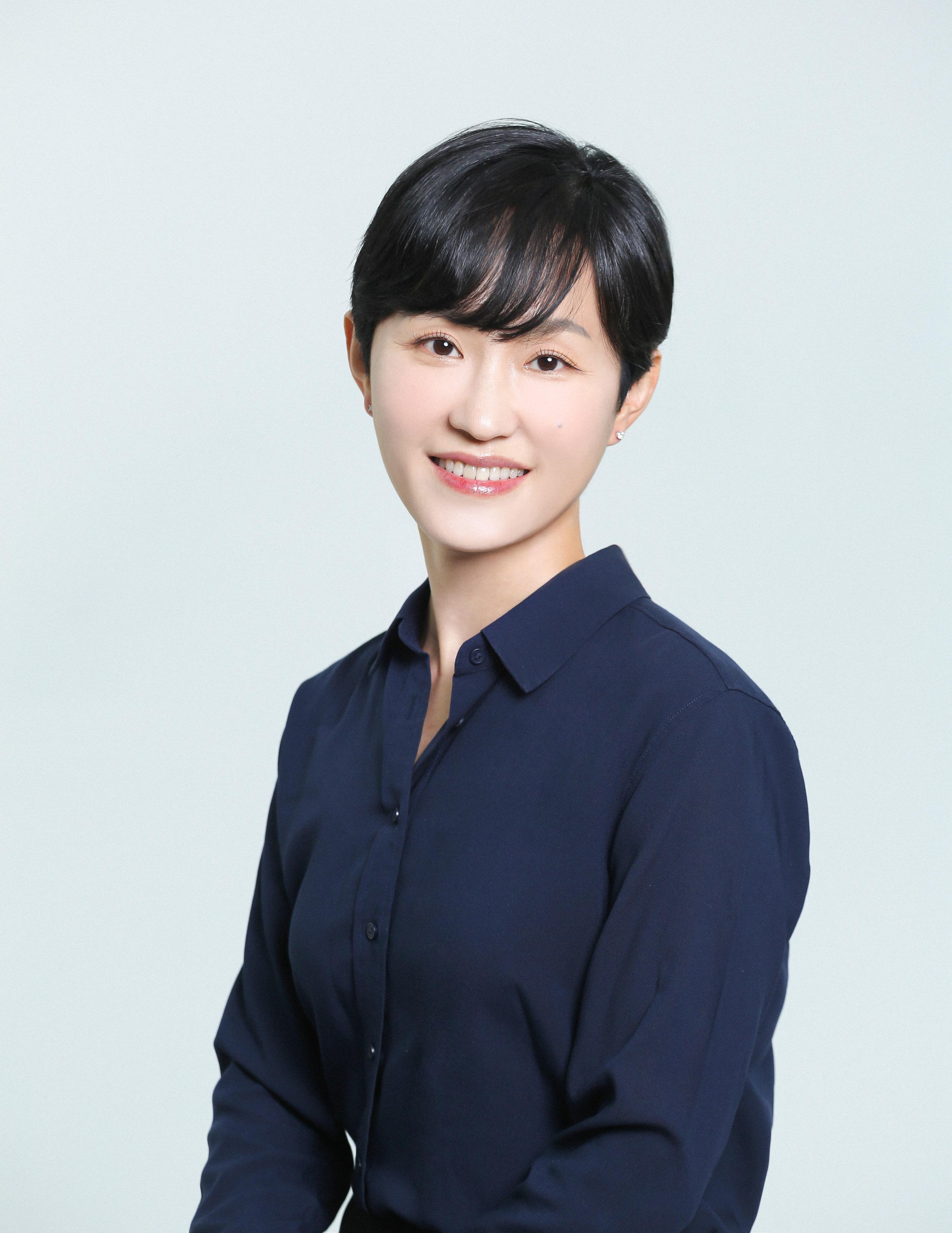
I believe my book and writing, alongside the work of a growing number of Seoul-based journalists writing for international media, have helped, to a degree, amplify dialogues between those fighting for gender equality in South Korea and those outside the country. And I hope that the conversations will continue to grow in the years ahead.


Korea has survived centuries of war and occupation, and it still stands with its chin held high. Its women are just as unwavering, and their sacrifices light a familiar fire within me. We call it han ( ), a deep sense of grief and anger caused by injustice. I like to think that han is an ancestral reminder that we must never forget our history; our past must reshape our future.
As you read this conversation and gain insight into how gender inequality operates in South Korean corporate culture, I encourage you to reflect on your workplace—and your role in transforming it from the inside out, bottom up. Alone, we may be a grain of sand, tossed about by an unforgiving sea. But together, we can create solid land that allows the next generation to walk freely, their footprints a sign of our collective victory.
Shiwon Oh: What life and career experiences fed your desire to spotlight Korean women fighting gender inequity?
Hawon Jung: I hadn’t been particularly aware of, nor had I questioned, gender inequality or structural gender injustices in everyday life while growing up. I didn’t think much about why my mother—like many women of her generation—had to quit work once she got married because “it’s just the way it is”; why there were so few women in senior positions in our society, including the newsrooms where I worked; why so many of my female friends were asked questions like “do you have a boyfriend?” or “when are you planning to get married?” during job interviews; or why South Korea has reported the biggest gender pay gap in the industrialized world year after year. I was very much focused on studying hard, getting a job I wanted, and advancing my career. I didn’t think that I had the luxury of questioning or challenging these social norms, professionally or personally.
But the wave of feminist activism that emerged in South Korea in the mid-2010s was an eye-opening experience. It gave countless women and girls in the country the language to define and articulate the vague sense of frustration and anger they had long felt but couldn’t name.
At the time, it was as if the dam had burst: women and girls began to speak out en masse against gender inequality and everyday misogyny. They questioned why, in a technologically advanced country like South Korea, so many women had to fear being secretly filmed on subways, in schools, workplaces, or public toilets by high-tech gadgets and having these “spycam porn” videos shared online; why hateful online slurs promoting violence against women were dismissed as “just the way the internet is”; and why so many women shouldered the lion’s share of household chores— so much so that even those who were the family breadwin-
ners often spent more time on domestic labor than their stay-at-home husbands.
Back then, so many heated discussions on such issues unfolded on the internet, in classrooms, college campuses, and workplaces. These conversations led to numerous street protests, the #MeToo movement that was one of the most robust in the world, petitions for legal and institutional reforms, and other campaigns to shed light on gender inequalities in everyday life that had long been accepted as “just the way things are.”
As a Seoul correspondent for the Agence France-Presse, I had the opportunity to witness and chronicle many of these developments firsthand. Those issues resonated with me not only professionally but also personally—as a woman living in South Korean society and who had experienced many of the same realities being debated at the time.
At the time, issues of gender inequality in South Korea—and the growing efforts to challenge it—were

rarely covered by foreign media. Most news coverage about the country was focused on geopolitics with North Korea, technology, the economy, or K-pop. Yet I believed that the issue of gender inequality would have profound impacts on South Korean society, politics, and culture for years to come. That’s why I covered them extensively and ultimately wrote a book about them.
SO: In Flowers of Fire, you provide historical and cultural context to explain Korea’s rampant misogyny. How do you connect the past to the present to illustrate the challenges Korean women face today, and why it’s necessary for them to keep fighting?
HJ: While misogyny is a global problem, it manifests itself differently in different places, shaped by distinct social and cultural contexts. In South Korea’s case, it is closely tied to the country’s history, including its Confucian heritage, the 1950-53 Korean War, decades of army-ruled dictatorship, and the pervasive military culture deeply embedded in family life, schools, workplac-
es, and other institutions. In such a “militarized” society, the values prized in the military —including aggressive masculinity, unquestioning obedience to authorities, and tolerance for violence—became woven into the very fabric of everyday life, shaping social interactions at every level. In this environment, women were easily sidelined and discriminated against as second-class citizens.
Feminist scholars were among the first to identify this military culture as a root cause of misogyny in South Korea, and actively explored ways to confront it. They understood that the challenges we face today are deeply intertwined with our past — and that meaningful progress requires a clear understanding of that history. While the remnants of history cannot be erased overnight, South Korea’s feminist activism has achieved remarkable progress, particularly over the past decade. Thanks to a robust #MeToo movement, many companies and institutions now have far stronger mechanisms to address workplace sexual harassment than before.

Strong grassroots campaigns against tech-based sexual abuse—such as spycam porn or deepfake porn—have also driven significant legal reforms, putting South Korea on the forefront of global efforts to address such abuse. These hard-won achievements, made in the face of fierce antifeminist backlash, stands as powerful proof of the need to keep fighting—despite all obstacles.
SO: You’ve interviewed countless women activists advocating for different causes and heard their experiences firsthand. What has been the impact of sharing their stories to the world?
HJ: Like I said earlier, women’s rights activism had not really been a major focus of international conversations about South Korea. And I believe my writing served as a bridge connecting women in South Korea with those outside the country who wanted to hear their stories. Many readers of my book described it as eye-opening and refreshing, saying it introduced them to lesser-known stories of women fighting for equality in the non-Western world.
Journalists, activists, students, artists, and women’s rights advocates outside South Korea often reached out to me, hoping to connect with activists and groups in South Korea. Some wanted to know how they could support the movements I wrote about. Others sought to express solidarity or learn more about some of the unique aspects of South Korea’s feminist activism. One such example was the fight for abortion rights and bodily autonomy: South Korea decriminalized abortion in 2019 after years of campaigns by women’s rights activists, and some women and advocates in the US often reached out, asking about what they could learn from South Korea’s experience.
Another example is the growing number of young South Korean women striving to live free from traditional expectations of women to be a wife, mother, and self-sacrificing family caregiver. More young women—educated and financially independent—see the institution of marriage in South Korea too patriarchal and oppressive for women, and are choosing to live as “bihon (roughly translated as “willfully unmarried).” The number of marriages has plummeted, and so has the number of births (since births out of wedlock remain extremely rare in the country). These trends have sparked debates over how to change the patriarchal norms embedded in the country’s family life.
At the more radical end of this bihon spectrum are followers of the 4B movement, which rejects heterosexual dating, sex, marriage and childbirth altogether. As you may know, the movement gained international attention after Donald Trump’s second presidential victory, when many women in the US embraced it as an act of defiance against tightening
abortion access and pervasive toxic masculinity. And the fact that a fringe feminist movement from South Korea resonated with many women in the US underscored the sense of frustration and hopelessness many American women have about the patriarchal force in their society—a key factor that had initially fueled the 4B movement in South Korea. In this way, I believe my book and writing, alongside the work of a growing number of Seoul-based journalists writing for international media, have helped, to a degree, amplify dialogues between those fighting for gender equality in South Korea and those outside the country. And I hope that the conversations will continue to grow in the years ahead.
SO: What were some storytelling challenges you faced as a journalist covering feminism, and how did you overcome them?
HJ: As a journalist covering feminism, one of my biggest challenges was earning the trust of my sources—and protecting them from the bullying and harassment that often target women who speak out.
In South Korea, women who openly share their experiences of sexual assault face a storm of online abuse, public shaming, and even threats of criminal punishments. Defamation is a criminal offence punishable by years in jail. Even speaking the truth can still be a crime—if doing so is deemed to have damaged one’s reputation. The result is an environment where only a fraction of those who experience sexual violence in the country seek help from the authorities, and even fewer speak publicly.
At the same time, women who identify themselves as feminists—or are merely perceived as such, particularly young women—are often labelled as “mentally-diseased” and face the risk of bullying, harassment, career setbacks, and even physical violence. In a high-profile case in 2023, a young men’s rights activist physically assaulted a convenience store clerk simply because she had short hair, which he considered as a sign of feminism.
Given these risks, many women, understandably, are reluctant to speak out, which means that their stories are easily buried or forgotten. There is no perfect way to “overcome” these challenges. But I made it a priority to show up consistently, spend time with these women, and earn their trust to make them talk to me. To secure interviews with sexual assault survivors, I often attended their court hearings to understand the full context of their experiences. Survivors open up more when they know a journalist won’t simply speak with them for an hour, publish a story, and then leave them to face the backlash alone.
With many advocates and feminists, I had already built rapport through years of covering street protests, high-profile court cases, and other events. Once I invested the time to build relationships and demonstrate reliability, it became much easier to secure interviews or be introduced to the people I needed to speak with.
SO: What advice would you give to storytellers who
want to make a difference, but feel silenced and underrepresented? How can they step into the light and become unapologetically loud about issues they care about?
HJ: I can’t simply tell them to be brave and step forward to share their stories not knowing the risks they would face. But I can talk a bit about the experiences of women in South Korea. Many of them also remained in silence for years, due to fears over all the risks I mentioned earlier. But some of them found others like themselves through feminist organizations, online chat rooms, or social media, or by forming all kinds of communities where they could get together, share their stories, and feel connected.
A sense of solidarity and empowerment emerged from these spaces. Many eventually went on to share their stories with a wider society with the support from these communities. This sense of connection and mutual solidarity played a crucial role in South Korea’s feminist activism and #MeToo movement also fueled the success of many female-centered cultural works, whether literature or TV dramas, over the past decade. I hope that the aspiring storytellers in the marginalized communities elsewhere can also find their own communities where they can grow together and support one another.

Flowers of Fire: The Inside Story of South Korea’s Feminist Movement and What It Means for Women’s Rights Worldwide by Hawon Jung
The #MeToo movement took the world by storm. In South Korea, its women activists, survivors, and fighters flooded the streets, refusing to be silenced. Hawon Jung weaves together several stories of women who, despite ongoing threats from those in power and looming financial and societal barriers, move forward to make their voices heard. Flowers of Fire demonstrates the undying strength of Korean women and how their contributions, too, continue to close the gender gap for all of us.

Tricia Maia WHY “TECHNOLOGY SHOULD DISAPPEAR INTO THE BACKGROUND OF GREAT STORYTELLING”
Driven by a commitment to accessible, resonant storytelling, Tricia Maia—Head of Product at TED—shapes strategies that elevate speakers across platforms, mediums, and technologies. With experience building products from the ground up, she consistently delivers meaningful growth and influence at every stage of development. Here, Maia shares how she designs transformative digital experiences that empower people to deliver their message with the clarity and power it deserves.
Shiwon Oh: You help spotlight others’ voices through TED. How has your role in elevating others shaped your own storytelling skills?
Tricia Maia: If there’s one thing TED has taught me, it’s humility in storytelling. When you spend your days watching people distill world-changing ideas into a few minutes, you realize that clarity and emotional truth matter far more than polish. My role has made me a better communicator. My nature is really to jump to brass tacks or executive summaries in the vein of efficiency, clear outcomes, and everything else you’re taught audiences—especially senior ones—value.
But being at TED, I’ve really come to appreciate the impact of leading with a powerful story. I’ve learned to try to wrap the message I want to land in an evocative way that leaves an impression on people emotionally, not just factually. It’s also made me more confident. I used to think a good story was one that sounded impressive; now I know it’s one that is and feels sincere, and that

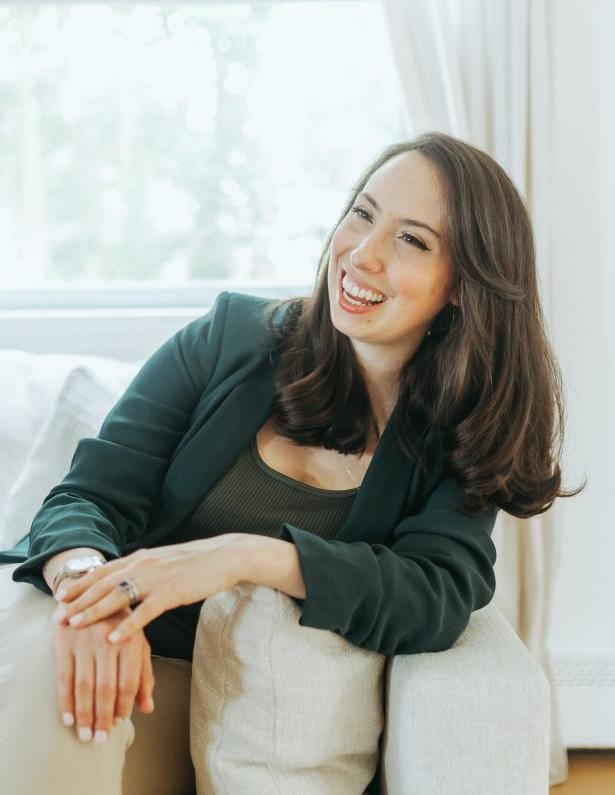
I want [my children] to grow up seeing that you can be ambitious and empathetic, strategic and human, and that leadership doesn’t have to harden you. You can be kind and strong at the same time.
ROI THAT SHOWS UP IN ROOMS. NOT REPORTS.
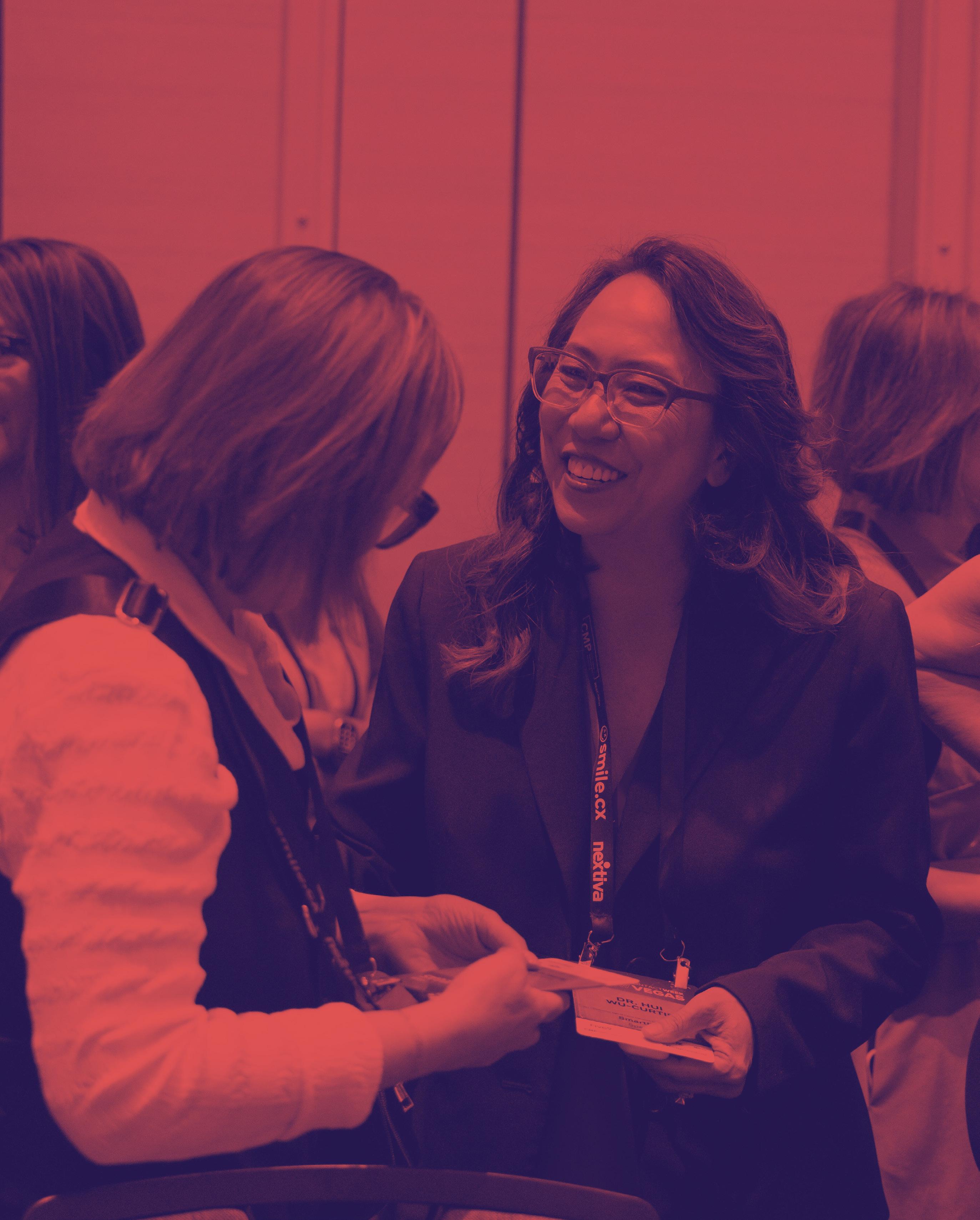
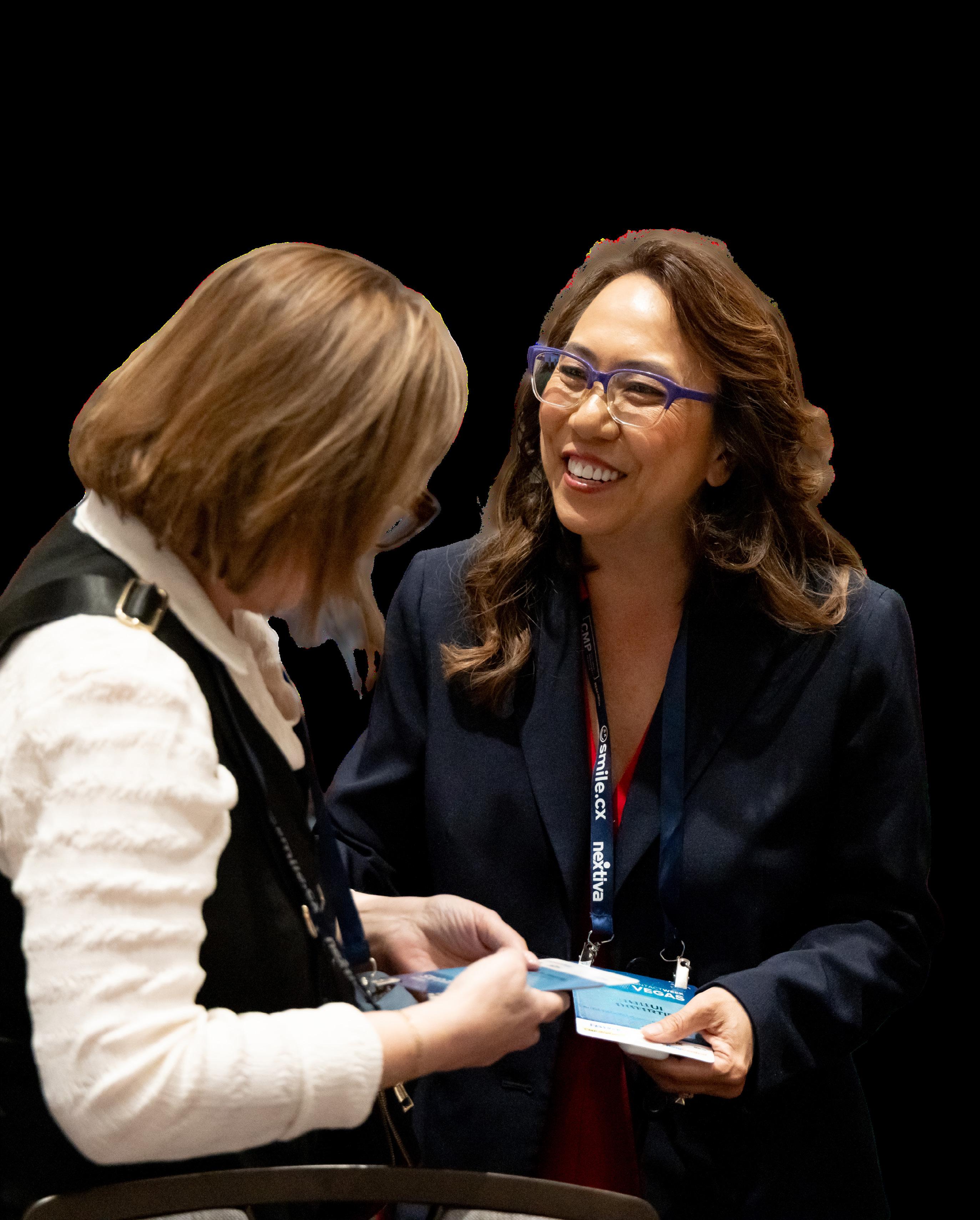
naturally helps you deliver messages more confidently as well. Helping elevate others’ voices across all our digital platforms—from our site, our app, YouTube, social, podcasts, etc.—has deepened my appreciation for simplicity, narrative, and humanity—in others and in myself.
SO: When you think about your personal legacy, what do you hope people will remember?
TM: I hope people remember that I tried to build things that helped others see and express their potential, whether that’s a platform, a product, or a person. My work has always sat at the intersection of technology and human connection, and my goal is to make the former serve the latter. I’d be proud if my legacy was one of amplification—that I helped create systems and environments that gave more people permission to be seen, to learn, to lead.
At TED, that means reimagining our digital experiences so people can discover ideas that expand how they think—not just reinforce what they already know—no matter where they are in the world. But, honestly, I think about legacy more through the lens of my children. I want them to grow up seeing that you can be ambitious and empathetic, strategic and human, and that leadership doesn’t have to harden you. You can be kind and strong at the same time.
SO: Coming from a strong product background, you’re no stranger to continuous innovation. How do you ensure that tech enhances storytelling instead of overshadowing it?
TM: That’s a daily conversation in my team. Technology should disappear into the background of great storytelling, not become the story itself. In product, there’s a temptation to chase novelty, but novelty fades fast if it doesn’t serve a real need. At TED, we treat tech as an amplifier, not a replacement: AI helps summarize, translate, and personalize, but the goal is always to deepen human understanding, not automate it.
One of my favorite examples is our AI dubbing initiative. It’s deeply technical—voice cloning, lip syncing, all of it—but the outcome is emotional. A speaker’s story suddenly feels native in a language entirely different from that in which it was given. That’s the sweet spot; when the technology isn’t even really evident, but new experiences, emotions, and insights are unlocked in ways that were never possible before, that’s when you know you’re doing it right.
SO: What storytelling lessons have you learned as you diversified TED talks for a diverse, global audience?
TM: The more specific a story is, the more universal it becomes. It sounds counterintuitive, but talks that resonate
everywhere usually come from someone being radically honest about their own experience, not trying to cater to everyone. The details we think are “too personal” are often the doorway for others to see themselves. When someone names their fear, their failure, their turning point, that’s when the room gets quiet. Then the translation becomes the “easy” part, because that moment transcends different languages and cultures.
SO: What are some best practices for leaders who want to spark inspiration and change through their storytelling?
TM: First, as TED speaker Simon Sinek famously advised, start with your why. People can feel when your story is in service of something larger than you. Second, make it tangible—abstract ideas don’t move people, moments do. Tell stories that show, not tell, your values. Third, stay human and don’t be afraid to let a little imperfection in. Vulnerability is magnetic and builds trust. When people sense your humanity, they lean in.
And, finally, we like to advise our speakers to think of these stories as gifts, not performances. The best storytellers don’t talk at people, they talk to them. They transform what they’ve learned and what they’ve been through into something others can use. That’s how stories create change—not by dazzling people, but by helping them see themselves differently.
We help women reframe their story. They can be profitable. They can sustain themselves. They can build financial freedom. And when women align purpose with profitability, they elevate themselves, creating a ripple effect that transforms their families, communities, and organizations.
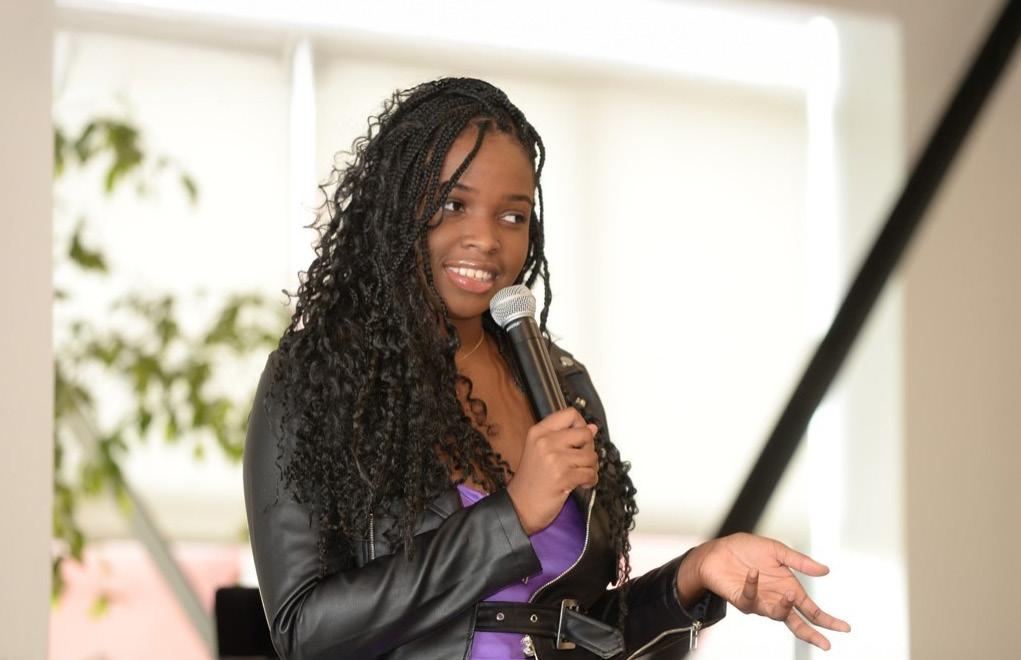
DELIVERING THE BUSINESS
CASE FOR GENDER EQUITY
Adeola Ajani
Adeola Ajani is a 2025 Forbes 30 Under 30 honoree and founder of Fem Equity, a future-ready workplace platform helping women close pay gaps. After discovering she was being paid significantly less than her counterpart, she built a solution that would equip women everywhere to advocate for their worth and receive the salaries they deserve. In our conversation, she emphasized the importance of celebrating our accomplishments and staying visible, as it allows other women to see what’s possible.
Shiwon Oh: How has your increased visibility—especially being on Forbes 30 Under 30—helped you expand your influence in the gender equity space?
Adeola Ajani: Being named Forbes 30 Under 30 has been an incredible amplifier for both me and Fem Equity. It’s expanded my influence in the gender equity space and strengthened the partnerships we’ve been able to secure, like working with Google Women Techmakers as a contrac-

tor and collaborator, along with several other major partnerships, some of which I can disclose and some I can’t. This recognition has elevated our mission to close the pay gap and accelerate women to get paid their worth on a larger stage, which gives greater credibility to our work. The increased visibility has opened doors to new partnerships, investors, and other media opportunities, allowing us to bring our message to more organizations and to the women who need these tools most.
Beyond exposure, it also shifts perception. Speaking as a young Black woman founder in our current climate, and leading in the equity space, this recognition validates our impact tenfold. It positions Fem Equity as a trusted voice in the future of work and pay transparency.
It’s also allowed me to kickstart conversations with Fortune 500 companies, women-led partners, policymakers, and global leaders. One of the biggest highlights this summer was speaking at a leadership conference alongside international leaders from outside North America.
SO: What career milestones are you most proud of as the Founder of Fem Equity? What has been your greatest impact so far?
AA: The biggest measurable impact I can share is that the Fem Equity platform has generated over $5.2 million in total salary impact for women. Breaking that down—because I know it’s a big number—every user on our platform is tracked in terms of where they are in their career and how they’re progressing toward pay equity, salary growth, and title promotion.
We’ve counted every user since the platform launched in 2021, and now with a little over 2,000 users, we’ve seen the average salary increase shift from about $20,000 to $25,000 per professional. When we aggregate all of these outcomes, we land at $5.2 million in total salary impact.
Our goal now is to push toward $10 million, and ultimately reach $1 billion in impact by 2030.
SO: How do you empower other women to align their purpose with profitable outcomes?
AA: We highlight financial freedom and our proprietary W.O.R.T.H.™ Framework as solutions that can help people find purpose in their income while understanding that impact and income aren’t mutually exclusive—they can and should co-exist.
Fem Equity gives women access to data and community. We offer analytical coaching so they can understand their market value, negotiate effectively, and scale both their careers and their lifestyles to the next level. We also focus heavily on shifting internal narratives. We want to close the confidence gap and counter the conditioning that teaches so many purpose-driven women to undervalue themselves or think they must choose between “doing good” and being paid well.
We help women reframe their story. They can be profitable. They can sustain themselves. They can build financial freedom. And when women align purpose with profitability, they elevate themselves, creating a ripple effect that transforms their families, communities, and organizations.
SO: You’ve partnered with many notable organizations— how does their support empower you to pay it forward?
AA: We’ve partnered with many organizations. Some I can name, like Google Women Techmakers, UNCF, and my alma mater, American University. What I’ve noticed is that these conversations are becoming even more urgent in our current climate. Some organizations are doubling down on women and BIPOC-focused initiatives, while others are pulling back. Our role is to make it clear that our work is socially beneficial and profitable.
Our partnerships validate what Fem Equity is doing while helping us grow our community and user base. Through pilots like the one with American University, for example, we’re able to serve not just hundreds of users but quickly reach thousands. Each partnership reflects a shared commitment to building a more inclusive and equitable future of work.
Whether it’s UNCF empowering students, Google advancing women in tech, or American University strengthening pathways for underrepresented students in international affairs, our mission and our platform are helping to pay it forward by investing in today’s women professionals and the next generation of women leaders.
SO: What are some practical ways women can spotlight their careers to receive the equitable pay they deserve?
AA: I’d say the top five strategies women can use to elevate their careers are:
1. Start with the numbers: Know your worth. Research salary benchmarks for your role and location using tools like the Fem Equity Pay Gap Tool, LinkedIn, Glassdoor, and PayScale to understand your real market value.
2. Document your wins: Keep a running list of measurable results, like revenue you generated, projects you led, and client successes. Numbers speak louder than words.
3. Build visibility: Use platforms like LinkedIn to share accomplishments and thought leadership.
4. Expand your network: Surround yourself with mentors and sponsors. Professional sponsorship is different from business sponsorship. These are people with influence and access who can advocate for your advancement. Equity starts when women treat their careers like assets worthy of being recognized and invested in.

REAL ROI ISN’T TRACKED ON A SPREADSHEET. IT’S BUILT HERE.
Thought leadership thrives on fresh ideas, and the best curators are those who welcome new perspectives, challenge their own assumptions, and remain curious about how different approaches can spark better conversations and outcomes.

CONTACT EXCELLENCE—AND CELEBRATING CAREER
MILESTONES ALONG THE
WAY
Amanda Caparelli SHAPING CUSTOMER
Deputy Divisional Director for Customer Contact Week, the world’s largest customer contact event series by Customer Management Practice, Amanda Caparelli expertly curates content that brings top executives together to shape the future of the industry. Committed to building a community where thought leaders can connect through dialogue and collaboration, she creates intentional opportunities for professionals to showcase the work they’re most proud of. Here, Caparelli further defines career celebration—and how it honors her own growth and the work she does to innovate the customer contact industry, today and tomorrow.
Shiwon Oh: What’s your personal definition of career excellence, and how do you strive to achieve it?
Amanda Caparelli: For me, career excellence is rooted in continuous development, constantly striving to become a better version of myself while setting a high bar for the work I deliver. It means approaching my career with a growth mindset, investing in self-improvement, and embracing the belief that there’s always something new to learn. In terms of ownership and accountability, I hold myself to high standards and aim to inspire the same level of excellence in the people I collaborate with, creating an environment where everyone feels motivated to stretch their capabilities.
Excellence also requires adaptability, especially in an industry that evolves as rapidly as ours does. I try to remain flexible, open-minded, and willing to step outside my comfort zone, because that’s often where the best ideas and the most meaningful growth happen. Maintaining a positive attitude helps me stay grounded, even when things are uncertain. Just as importantly, I believe excellence is amplified when you help others achieve it, too. Empowering and supporting those around me has been integral to my approach to leadership.
SO: At CCWomen, we believe that we can empower others by publicly empowering ourselves. How do you celebrate your achievements?
THE COMMUNITY THAT BUILDS LEADERS.
AC: I’ve learned that celebrating my achievements starts with taking the time to genuinely acknowledge them—both the big milestones and the small, quiet wins that come along the way.
My instinct is to stay humble and hope that others will notice my work on their own. However, I’ve realized it’s not other people’s responsibility to recognize my successes. It’s up to me to share them. That mindset shift has been important for me in honoring the effort and intention that go into my work. I’ll admit I’m still working to become more comfortable celebrating myself publicly each day. One thing that’s helped is reframing it as a team celebration, as long as I don’t minimize my individual contributions.
In summary: set small goals, savor the journey, and give yourself permission to celebrate without apology.
SO: You’ve produced some of the world’s largest customer contact events featuring industry giants and influential figures. Looking back, what career milestones are you most proud of?
AC: Looking back, some of my proudest career milestones are the ones I never imagined achieving. This was my first job out of college, so every achievement has felt significant. But the moments that stand out the most are the ones that pushed me outside my comfort zone: from strategizing on a weekly Zoom call with C-suite executives, to getting on stage to speak in front of hundreds of people, to leading team-wide strategy meetings. These are things I never pictured myself doing so early in my career, and yet they’ve become some of the most defining experiences of my professional growth.
I’m especially proud of how much I’ve grown as a leader. Learning how to collaborate effectively and contribute to a positive, high-performing team culture has been incredibly meaningful. Of course, producing some of the world’s largest customer contact events has been a milestone in itself. Seeing months of strategic planning, content development, and decision-making come together over the course of just a few days feels like placing a beautiful period at the end of a very long sentence. Each event is a reminder of how far I’ve come and how grateful I am to work with a team that continuously pushes me to stretch, evolve, and step confidently into new opportunities.
SO: A large part of your job is bringing future-forward executives together to guide the rest of the industry through a competitive landscape. What has been the impact of nurturing such a space where leaders can exchange high-level knowledge and insights?
AC: Bringing future-focused executives together allows competitive pressures to take a back seat to collaboration,
honesty, and shared learning. Over the years, it’s been incredibly rewarding to curate content, create a space to spark those conversations, and see leaders walk away with clarity, inspiration, and new strategies they can bring back to their organizations.
What stays with me most, though, are the smaller moments—the emerging speaker who gains confidence telling their story, the attendee who shares that a session shifted their perspective, or the connections formed that outlast the event itself. These interactions compound over time, strengthening a community that’s navigating complex change. Fostering an environment where leaders feel supported and energized is truly meaningful, and it’s one of the most impactful parts of the work I do.
SO: As an expert in curating thought leadership content, what do you think are the most valuable skills for women who want to accomplish similar goals?
AC: One of the most valuable skills for women who want to excel in this space is the ability to stay deeply connected to what’s happening in the industry. The landscape is shifting quickly. Keeping up with emerging trends, ongoing challenges, and innovations helps ensure your content stays timely and relevant.
Cultivating an open mindset is equally important. Thought leadership thrives on fresh ideas, and the best curators are those who welcome new perspectives, challenge their own assumptions, and remain curious about how different approaches can spark better conversations and outcomes.
Building strong relationships across the industry (and even outside of it) also plays a huge role. When you invest in authentic connections, you gain insight into what leaders are actually grappling with and bring a more nuanced, well-rounded perspective to the content you develop. Together, these skills create a foundation that allows us to shape more meaningful dialogue and drive forward-looking conversations in any field.
Sara DeYoung BACK TO THE BEGINNING: HOW INNOVATION CAN RECONNECT US TO SHARED HUMANITY
Head of Visitor Experience at the Metropolitan Museum of Art and passionate visitor advocate, Sara DeYoung crafts memorable spaces with continuous growth at the heart of her work. She blends innovation and tradition, digital and physical, to create captivating exhibitions that leave a lasting impact. In this conversation, she discusses how lifelong learning can transform audiences, inspire curiosity, and connect museum-goers to the core human experience.
Shiwon Oh: How has your commitment to continuous learning influenced your career trajectory?
Sara DeYoung: I am a curious person with many interests, and I have always been fascinated by people: their stories, histories, and behavior. One of my favorite things to do is to people-watch. Even as a kid, I would entertain myself by wondering about the people around me—who they were, what they were doing, or where they were going. My curiosity, combined with my interest in people, has served me well in my work.
I began my career as an exhibition developer, a role on an exhibition design team responsible for determining the storylines, objects for display, and the appropriate interpretive approach (i.e., text, images, multimedia, digital interactive, etc.) for the target audiences, and for creating the content. I researched many topics for the various exhibitions I worked on, from American Revolutionary history to plate tectonics, and spent time understanding the audiences for each exhibition: their needs and learning styles, so that the exhibitions were relevant, accessible, and engaging. I executed visitor studies and evaluations to better understand the audiences and their experiences. Who was coming
and why? Was the content understandable? Relevant?
Grounding myself in continuous learning about audiences has been an undercurrent in my career. As I moved away from storytelling and into visitor experience more holistically, that approach has been vital. My work relies on knowing who’s coming through our doors and how we can best meet their needs. What are the pinch points in our experience, and what are the successes? Where can we do better? How can we support our frontline teams in their work of welcoming our visitors every day? Now, my continuous learning is focused more on CX and UX, and on building a visitor-centered culture.
SO: How do you stay up to date with emerging tech trends to create memorable visitor experiences?
SD: There are a few key places I look to keep my finger on the pulse of emerging trends in cultural heritage. The first place is my students. I teach graduate courses in Museums and Digital Culture for Pratt Institute’s School of Information. My students tend to be early adopters, and I am constantly learning from them. The second is an annual conference called Best in Heritage, which gathers institutions from around the world to showcase their award-winning projects. For over 20 years, the Best in Heritage has presented a snapshot of what our field deems important, as every project presented during the conference won an award from a cultural heritage governing body or professional organization the previous year. Not surprisingly, this year, immersive experiences and AI were top technological topics. Finally, I look outside my field to see what retail, restaurant, entertainment venues, and theme parks are
Experiences that successfully blend the physical and digital worlds keep the audience at the center and offer authentic connections to stories, objects, and each other. They use technology in intelligent ways to augment an experience, not be the entire experience. Technology for technology’s sake always comes off as empty and gimmicky, but technology used to create connections can make magic.

doing. Museums are slow to adopt new ideas and often resource-strapped—so it’s important to see what others are doing to understand the trends.
SO: In what ways can digital tools and solutions elevate in-person museum exhibits?
SD: Digital tools can provide everything from directions to immersive experiences, but a memorable visitor experience is not about the technology. People visit museums to learn, yes, but primarily to spend time with friends and loved ones. The power of most museums is in offering experiences with real objects, artifacts, and artworks that connect us to the human condition. To the extent that digital tools can help tell stories and create connections, they can help elevate an in-person experience.
SO: What educational resources do you recommend for those interested in creating hybrid visitor experiences?
SD: I’m asked this kind of question often, but it’s the wrong question. It assumes an approach to the end product before understanding the audience and their needs. It’s putting the cart before the horse. The first question to ask while designing any experience is: Who is your audience? Then, what are their needs? Their expectations? Their goals for their visit? What’s the big idea? What stories do you want to tell? How do you make it relevant for them? Then, the solution of how to provide that experience will
start to emerge. Sometimes that solution relies on technology, sometimes it doesn’t.
Experiences that successfully blend the physical and digital worlds keep the audience at the center and offer authentic connections to stories, objects, and each other. They use technology in intelligent ways to augment an experience, not be the entire experience. Technology for technology’s sake always comes off as empty and gimmicky, but technology used to create connections can make magic.
SO: What are your top best practices for lifelong learning, especially in a field where change is constant?
SD: Build relationships across generations. It’s important to know, understand, and respect the point of view of people older and younger than yourself—especially the younger generations, as they are the future of any field, institution, or organization. It’s cliché, but it’s true.
Pay attention to what is going on outside your field. Museums can learn a lot from the hospitality, retail, and entertainment industries about experiences and brand loyalty.
Stay curious about the world around you. Good ideas can come from anywhere, and if you keep an open and curious mind, you’ll be more receptive to them.


MARCH 3, 2026 | AUSTIN, TEXAS
OUR ACTIONS—WILL TELL
Shiwon Oh CAN AI HELP US CLOSE THE GENDER GAP? TIME—AND
*Disclaimer: The views expressed in this article reflect my personal opinions and not those of CCWomen.
When ChatGPT first entered the public space, I immediately thought, “Thanks, Sam Altman. A robot’s going to take my job and conquer the world.” But after seeing its limitations, my admittedly theatrical concerns dwindled to caution—at least, for now. While AI has many use cases that can positively impact us, it presents an entirely new set of challenges, specifically for women, as we continue to fight for equity on various fronts.
A tool is only as effective as the person who uses it; we see this in action daily. Some companies seamlessly integrate AI into their systems and processes, training their employees adequately to ensure productive learning. In a rush to stay competitive, others absorb AI without much preparation or understanding of what it can do and end up having to put out otherwise preventable fires. It’s happening right now, where corporations are too busy trying to one-up one another without considering their returns or consequences.
As a borderline luddite, I’m the first to admit that I haven’t fully embraced AI. I question its ethics and believe it needs stricter regulations to prevent further harm to vulnerable populations and our environment. I also know that, regardless of my thoughts or beliefs, AI is likely here to stay. Similar to the internet, it has become a part of our norm, but we must navigate it wisely by educating ourselves on its risks.
AI is a double-edged sword for gender parity.
More than ever, decision-makers must now seriously consider the role that AI plays in women’s careers. Will it bolster our innovation or hinder us? What measures should we take to equip ourselves for success and security?
Time will tell how AI affects women, but we have good reason to be apprehensive. Women face enough barriers as it is, from entry-level to C-suite, and progress is ongoing, but not fast enough. (As in, we won’t see gender parity in our lifetime.)1
One notable fear is the extent to which AI will disrupt our workforce. Fortunately, a recent Budget Lab study suggests that AI automation has had a minimal impact on our economy, but technology shifts are gradual, and their full ramifications won’t be known until much later.2 While we’re still undergoing the first few waves of AI, we must take as many preventative measures as possible to prevent deeper division. Where there’s a predictably harmful pattern, there must be even swifter action.
1 World Economic Forum, “Gender Equality Is Stalling — 131 Years to Close the Gap,” WEF, June 2023, https://www.weforum.org/press/2023/06/gender-equality-is-stalling-131-yearsto-close-the-gap/.
2 Yale University Budget Lab, “Evaluating the Impact of AI on the Labor Market: The Current State of Affairs,” Yale Budget Lab, accessed November 21, 2025, https://budgetlab.yale.edu/research/evaluating-impact-ai-labor-market-current-state-affairs.

AI literacy is a fundamental skill, but it’s not always accessible to all communities, creating barriers to advancement and growth. Accessibility allows everyone, regardless of background, to acquire the knowledge and education they need to stay on track in our increasingly digitized workforce.
Tech experts suggest that AI will replace automated roles rather than augmented ones.3 Whereas automation replac
es repetitive tasks, augmented tasks require a more human touch to solve complicated, multi-step issues, which AI can’t yet achieve.4 Unfortunately, this risks nearly twice as many women employees who can lose their jobs in comparison to their male counterparts due to the nature of their responsibilities.5 If 24.1% of men have augmented roles— and are powered by AI—20.5% of women have augmented roles, presenting a significant difference in access to more future-proof roles.6
Men are in closer proximity to augmented jobs than women. Therefore, they have more opportunities to leverage AI as a tool rather than viewing it as a competitor. AI will move forward no matter what; our decisions now will determine the direction of its future. If women are barred from any stage of AI development, we’ll be at higher risk for exclusion, and the gender gap will grow.
AI equity is nonnegotiable—but we don’t have all the answers yet.
Just like any new technology, AI can be both a resource and a hindrance to women. Firstly, we must remember why achieving gender parity should be the goal for all forward-thinking businesses, and what role AI plays in our ongoing mission. Despite being a constant uphill battle, it’s advantageous for women and their employers, presenting numerous high-value opportunities.
A UN Women study on gender equality in the private sector states7:
• Achieving gender equality can result in up to $12 trillion in revenue by 2030.
• Companies with more gender-inclusive executives are 25% more likely to perform profitably.
3 “AI Will Replace Most Humans — Then What?” Reuters, August 19, 2025, https://www.reuters.com/technology/artificial-intelligence/ai-will-replace-most-humans-thenwhat-2025-08-19/.
4 World Economic Forum, “AI, Automation, Augmentation: The Workplace and Jobs of Tomorrow,” WEF, September 2023, https://www.weforum.org/stories/2023/09/ai-automation-augmentation-workplace-jobs-of-tomorrow/.
5 UN Women, Progress on the Sustainable Development Goals: The Gender Snapshot 2025 (New York: UN Women, September 2025), https://www.unwomen.org/sites/default/ files/2025-09/progress-on-the-sustainable-development-goals-the-gender-snapshot-2025-en.pdf
6 LinkedIn Economic Graph. Generative AI and the Global Gender Work Classification. PDF. Accessed November 21, 2025. https://economicgraph.linkedin.com/content/dam/me/ economicgraph/en-us/PDF/generative-ai-and-global-gender-work-classification.pdf
7 UN Women. Unfinished Business: The Private Sector and Gender Equality. New York: UN Women, September 2025. https://www.unwomen.org/en/digital-library/publications/2025/09/unfinished-business-private-sector-and-gender-equality
• In a survey of 13,000 enterprises from 70 countries, more than half (57%) said that gender equality in leadership improved business outcomes.
Knowing this, what steps can we take to ensure that businesses benefit, women win, and AI becomes a powerful solution for our societal and economic issues?
Be transparent about today’s AI challenges.
Uncertainty is unavoidable, making transparency all the more necessary. When people don’t have the whole picture, they’ll try to fill in the blanks themselves, leading to more anxiety and distrust.
If you’re a part of a company integrating AI into your platform, consider the following questions as you map out your strategy:
• Where did you source your AI training dataset? Is the data representative of a diverse demographic?
• Did your AI present any biases or inaccuracies that may compromise work quality? How do you intend to address them?
• Who’s involved in your AI development process, and what are their responsibilities?
• How does AI empower your employees or streamline customer experiences?
• How will you implement user feedback to improve your AI product?
Prioritize AI accessibility and equitable learning.
AI literacy is a fundamental skill, but it’s not always accessible to all communities, creating barriers to advancement and growth. Accessibility allows everyone, regardless of background, to acquire the knowledge and education they need to stay on track in our increasingly digitized workforce.
UNESCO suggests that inclusive AI learning can look like8:
• Adding women and girls to the AI value chain: The AI value chain encapsulates numerous stages of AI development, from hardware to data infrastructure to applications. When underrepresented groups are involved at every layer of the technology, there’s more room for innovation and less tolerance for biases.

8 UNESCO. “Mainstreaming Accessibility and Inclusivity in AI and Digital Technologies.” UNESCO. Accessed November 21, 2025. https://www.unesco.org/en/articles/mainstreaming-accessibility-and-inclusivity-ai-and-digital-technologies
• Further skills development: As AI continues to evolve, its learning curve becomes equally steeper. Organizations must think of how to bridge knowledge gaps by investing in their employees, partnering with other industry allies, and creating a more cohesive educational experience that adequately upskills prospective talent.
• Human-centric approaches to AI: Whenever we create a product that’s “human-centric,” we put ourselves in the shoes of the intended consumer. Similarly, leaders need to think creatively about how new tech fits the needs of their people, and what assets they need to provide to maximize effective adaptation.
We don’t have all the answers yet, but we do have the resources to create a kinder, more organically connected world, even amid vast technological transformation. I hope that our values help us resist the temptation of convenience—and that we commit to co-writing a future that encompasses diverse voices and thoughts.
As always, community is the key to our survival and thriving. May we not leave people at the wayside in the name of progress, and may we make all the difficult, but wise decisions today to steward an ethical and empowering tech solution tomorrow.
WOMEN GROW THEIR NETWORKS, ELEVATE THEIR VOICES, AND
BUILD
MOMENTUM. WHERE