WORKFORCE MANAGEMENT
Empowering Tomorrow’s
Employees Today

MEET THE LEADERS
championing employee well-being in an age of automation



Empowering Tomorrow’s
Employees Today
championing employee well-being in an age of automation
As humans and machines work towards symbiosis, creative WFM leaders are navigating uncharted territory.
The most exciting thing about workforce management today is that the ability to quantify previously intangible elements of the employee experience has the potential to radically reshape peoples’ lives. At a time when workforce management technology is so powerful and so accessible, leaders are able to be more experimental in the ways they organize their talent, leading to new and innovative ways of working. There is room for improvement everywhere: from staffing and scheduling, to the way tasks and skills are batched into roles, to the infusion of AI and automation into those roles. With so many of these transformations necessitating an update to the way things have always been, there is more opportunity than ever.
At a time when workforce management technology is so powerful and so accessible, leaders are able to be more experimental in the ways they organize their talent, leading to new and innovative ways of working.
The ripple effect of AI continues to place CX at the center of the organization. With other business functions increasingly reliant on customer data in the age of personalized experiences, industry transparency is critical to understand how successful brands make this happen. In this issue of the CCW Digital Magazine, we highlight a few of the brands and individuals taking action to transform data into meaningful, memorable customer experiences.
AUDREY STEEVES audrey.steeves@cmpteam.com

3 ANALYST ROUNDTABLE
CCW Digital Analysts unpack the burning questions facing workforce managers today.
6 LESSONS FROM THE CUSTOMER CONTACT MANAGER OF THE YEAR
The award-winning workforce manager at IAA shares his perspective on how being people-centered can make or break an organization’s success.
8 HOW CURIOSITY DRIVES SUCCESS AT MCDONALDS
As AI takes over, “soft” skills are taking center stage. Lan Tran, one of McDonalds’ business leaders, showcases an often overlooked ability: curiosity.
10 DYNAMIC STAFFING STRATEGIES FOR A MODERN HEALTHCARE WORKFORCE
Healthcare requires customized solutions to adhere to the unique regulations in the space, but staffing is often more complicated than it needs to be.
13 REIMAGINING SCHEDULING FOR A DIGITAL-FIRST WORKFORCE
Managing schedules for modern employees can drain workforce managers resources. Fortunately, NiCE makes it easy.
17 WINNING STRATEGIES ARE PEOPLE-FIRST STRATEGIES
Every organization is made up of individuals, and for leaders like Courtney King, this is their greatest advantage.
20 FOSTERING BELONGING IN THE WORKPLACE: A RECIPE FOR ORGANIZATIONAL SUCCESS
More than a buzzword, “belonging” is a non-negotiable for workplaces that want their employes to feel seen and heard.
23 THE FUTURE OF WORKFORCE MANAGEMENT
Looking ahead to what we can expect as we move into a future with a more integrated global and local workforce. 8








The CCW Digital Analyst team breaks down common myths, assumptions, and cliches in the world of workforce management.



She leads CCW Digital article development and contributes to the analyst team by supporting online events. Her current work focuses on the intersection of customer centricity and employee experience. ANALYST
Brian Cantor is the Managing Director of Customer Management Practice’s Digital division. Driven by a passion for helping brands better empower their employees and more meaningfully connect with customers, Brian oversees research, product development, editorial vision, and commercial strategy for properties like CCW Digital. Reaching a community of almost 200,000, these digital properties offer industry-leading commentary, research reports, and virtual event sessions.
Far from a “boardroom manager,” Brian routinely speaks at leading customer contact events and directly engages with global enterprises and innovative start-ups via training and advisory services sessions.
Brooke Lynch is the Divisional Director of Digital. With a background in television news and production, she’s worked across industries covering B2B marketing, procurement and finance events.
Her current work highlights challenges and opportunities for customer experience and contact center leaders, with a recent focus on e-commerce, retail, and technology.
Audrey Steeves is a content analyst for CCW Digital. She is an experienced content writer with a background in healthcare and technology across consumer and B2B audiences.
How does workforce management play into reducing burnout and attrition in the contact center?
AUDREY: Labor is just another resource in the workplace. Of course it’s the most complex and unique resource, but that doesn’t mean it can’t be quantitatively assessed like any other resource. So I think workforce management needs to take into consideration the qualitative, sometimes abstract dimensions of the employee experience that ultimately drive burnout and attrition by pointing investments towards remediating those. In our conversation with Courtney King, the SVP of People and Culture at BeatBox, it’s impossible to ignore the connection between the generous benefits their employees receive and their low voluntary turnover rate.
BROOKE: Attrition is a consistent challenge in the contact center — this is nothing new. The agent role is difficult, they are navigating heightened emotions, frustrated customers and complex technology. With all things considered, this role can be a recipe for high turnover if organizations aren’t careful. However, effective workforce management and a dedication to employee well-being and engagement can be highly impactful when it comes to reducing burnout. In the era of remote work, organizations can leverage workforce management tools to build more flexible scheduling, giving employees autonomy over their hours and workflow. Additionally, leaders gain greater visibility into agent challenges, successes and overall performance to ensure adequate attention where needed. These are just a few examples, but will lead to a more engaged workplace over the long-term.
How can leaders ensure engagement isn’t just a survey metric but a genuine priority?
BROOKE: This is one of the most important, but difficult questions. This is not just top-of-mind in the CX space right now, but across just about every industry. We are entering a period of rampant change; from new tech to AI, employees are dealing with fast paced innovation that can feel foreign at times.
Ensuring engagement, then, is never a sure-fire thing. Employees are doing their best to learn new tools, navigate an evolving workflow, all the while keeping customers happy. To strive
Attrition is a consistent challenge in the contact center — this is nothing new. The agent role is difficult, they are navigating heightened emotions, frustrated customers and complex technology. With all things considered, this role can be a recipe for high turnover if organizations aren’t careful.
for genuine engagement, leaders cannot count on simple survey results or frequent check-ins. Leaders must work to deeply understand agent needs and frustrations, and get a handle on how they are reacting to change.
In 2025, engagement cannot be truly measured, but consistently tracked and investigated. With the right mindset and a dedication to this deeper understanding, leaders will be in the position to prioritize engagement.
How can gamification be used without it feeling like “forced fun”?
AUDREY: I think a common misunderstanding of gamification is the emphasis on fun–I think the best gamification in the workplace isn’t overtly fun, rather it encourages the forming of habits and behaviors that improve performance. So promising your employees a game is not only disingenuous, but will likely feel forced because, at the end of the day, they’re at work. They’re not looking to have fun, they’re looking to have a meaningful, stress-free, and rewarding work day. Framing gamification as an avenue for competition, either between an agent and their peers or an agent and their own performance records, is a great way to engage a different part of agents’ motivation. And still, I think gamification works best when those competitive goals are tied to real rewards.
How does scheduling impact the overall employee experience?
AUDREY: Scheduling is everything. Scheduling is how you tell employees that their time is as valuable as yours is. More often than not, managers who create agent schedules are salaried employees with built-in flexibility, while agents are hourly employees who have to pay close attention to punch-in and punch-out times and don’t get that same level of freedom. This may not be top of mind for managers, but it certainly is for agents.
So anything managers can do to give more agency to these hourly employees, and give them more say in how their time is spent, is huge. The piece from NiCE on page 13 outlines some of the ways this can be implemented.
BRIAN: The good news is that today’s customer experience landscape is built for flexible scheduling. Today’s consumers are increasingly spread across the globe, and they are increasingly looking to engage on their own terms. They no longer subscribe to the idea that support is only available from 9 to 5 eastern US time on weekdays. This means that brands must staff around the clock, which means they have every reason to accommodate employees who want the ability to work non-traditional shifts in a remote or hybrid capacity.
The key, then, is not to stress over whether this makes sense but instead over how to optimize the scheduling. Through effective data analysis and robust workforce management principles, contact centers can start to make evolving customer behaviors and workflows more predictable – and use that insight to make scheduling more efficient and employee-centric.
What is the difference between “nice to have” employee perks and crucial drivers of the employee experience?
BRIAN: Concepts like “employee experience” and “culture” were once synonymous with superficial perks. When showcasing their supposedly employeecentric contact centers, brands would not trumpet their robust training rooms or user-friendly systems. They would showcase the Michelin Star-caliber cafeterias and in-office gyms. They would talk about camaraderie retreats rather than empowerment initiatives.
Savvy thinkers, of course, knew to question these focuses. Maybe these “awesome places to work” had slightly better retention rates, but
We’re seeing a lot of transformation all at once. The push and pull of remote work, the increasing volume of customer contact coming through digital channels rather than phone, and the capabilities of AI, are coming together to make the idea of a brick-and-mortar on a 9-5 schedule completely outdated.
turnover was still pretty terrible in the big picture. Maybe these places had slightly happier agents, but the customers they were serving remained unhappy. Maybe these places had slightly friendlier environments, but many agents still saw contact center work as a “job” rather than “career.”
The savviest began shifting attention to “agent effort.” They found that clarity of processes, simplicity of systems, and convenience of accessing data had a far bigger impact on satisfaction and performance than superficial gestures of fun. More importantly, they realized that these areas were more defensible against competition: installing a pingpong table is far easier than building a seamless, omnichannel contact center framework where employees understand the value of their work – and face little-to-no barriers in doing it.
By calling into question the inherent importance of even going into the office, COVID further amplified the need to focus on work flow rather than work fun.
In recent years, more and more business leaders have embraced this reality. They routinely mock the idea of using “pizza parties” as an employee engagement strategy.
But there are two challenges. First, there is a difference between knowing what truly drives employee satisfaction and actually delivering it. Far too many contact centers are still subjecting agents to convoluted workflows, inconsistent data, and fragmented systems, and the consequences of this friction will only grow as employees shift to complex work. Further, there is a difference between not overstating the importance of pizza parties and eliminating them completely. “Fun” may not be the most critical driver of employee engagement, but it still matters. And with employees increasingly focusing on more consultative, emotionally
charged customer conversations, their demeanor will only matter more in the future. Gestures that make them more willing to actually come into an office, more enthusiastic when they are there, and more protected when work gets tough will be the key to cultivating the empowered agents who can create loyal customers. Don’t make pizza parties the entirety of your employee experience program, but still have them!
What are some considerations for leaders to ensure they’re scaling their employee experience appropriately and keeping things from slipping through the cracks?
BROOKE: Building an exceptional employee experience at scale is no easy feat. We tend to focus on the tools and tech that will enable us to optimize. Optimize time spent, optimize key outcomes, optimize workflows and schedules. Yet, optimizing can only get us so far when it comes to the employee experience. A streamlined workflow will only suffice if agents feel supported and engaged.
One of the most important things that can slip through the cracks is the human aspects of the employee experience. It is not just about securing a seamless, intuitive interface for agents. Employees want to feel recognized, heard and supported throughout their career journey. Ensuring that you are dedicating adequate time to the actual people in your contact center is most important as you work to scale experiences.
What is the future of workplace flexibility in the contact center?
AUDREY: Obviously we’re seeing a lot of transformation all at once. The push and pull of remote work, the increasing volume of customer contact coming through digital channels rather than phone, and the capabilities of AI, are coming together to make the
idea of a brick-and-mortar on a 9-5 schedule completely outdated. I think as contact center managers choose more flexible approaches to work, both in scheduling and in the variety of the work itself, these workplaces will be at a significant advantage in attracting and retaining top talent.
We often talk about how AI can make agents better, but how must agents change to contribute to an AI-powered environment?
BROOKE: AI is a tool, not a solution to the world’s problems. When used effectively, it can make us superhuman; when it is not, it will simply fail to add any real value. When it comes to the agent experience, AI has the potential to expand an employee’s knowledge and expertise, and give them insights at their fingertip. The important part, however, is how they use this insight.
As we look ahead, agents must use critical thinking skills, reason and logic to secure the best resolutions for customers. With curated insights, employees can find a solution quicker, but they can also find a better solution than they may have before. Encouraging agents to think outside the box, listen to customers and be more creative with their role will be critical.
BRIAN: Brooke’s point cannot be understated. It is time for our community to stop assuming the “AI for simple issues, agents for complex ones” cliché is going to materialize on its own. They must actively empower agents for this complex work. They must actively rethink metrics and revise training to emphasize critical thinking, empathy, and adaptive decision-making.
As they cultivate these “soft” skills, contact center leaders should also be working to build technological fluency. The reality is that AI-powered platforms come with a learning curve – not only in terms of actually using them, but in terms of maximizing their value. They are superior and inferior ways to run searches, ask questions, and prompt automations – agents that are fluent in these best practices will be the ones who truly deliver augmented performance. ■
BY BROOKE LYNCH

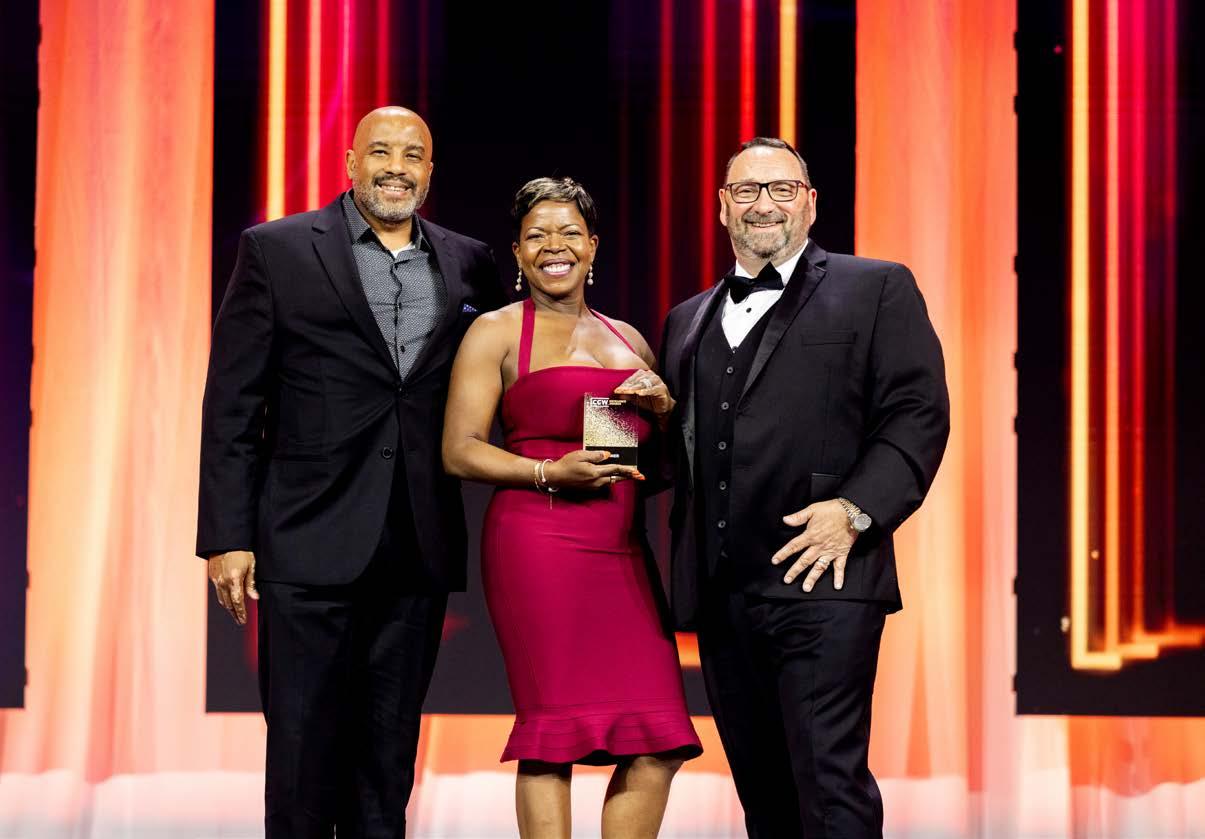
The CCW Excellence Awards recognizes the most innovative brands and top-performing executives, highlighting their extraordinary contributions to the customer contact industry. This year, Cordell Miles, Workforce Manager at IAA, took home one of the top prizes: Customer Contact Manager of the Year.
To better understand his approach to leadership and his priorities for 2025, I sat down with Cordell to learn more about his exceptional management style.
“It really is a foundation of culture… coming into this role gave me the opportunity to sit down and figure out what I deemed, and the team felt, was the right way of doing things,” he shared. “Metrics will change, the work will change but how you treat people, letting people know that they are truly respected and appreciated for the jobs they do, that is something that won’t change.”
Culture is of the utmost importance to Miles. By establishing a foundation of culture, employees thrive and leaders can form deeper relationships with their teams. Culture starts from day one and is embedded in everything Miles does as a leader.
To achieve this, Miles had a clear vision for what is important. By treating his team with respect and establishing open lines of communication, he has been able to help employees meet their goals and secure CX outcomes.
By starting with culture, Miles has been able to set his team up for long-term success. He has achieved a 52% decrease in employee attrition — which is no easy feat in the contact center environment.
One thing he credits for this improvement is a more realistic approach to the role. He shared that you cannot make assumptions that this is the last job that your team member will have, or their forever career. The contact center agent role appeals to individuals at many different stages in their career. They may be at the very beginning of their journey or looking for a fresh start. Letting your employees know that you are invested in them and their growth is critical — no matter what their end goal is.
On his team, Miles works to deeply understand these goals and show support early and often.
“They know that those in leadership and management positions are vested in them and want to understand what their career goals are and what their aspirations are. Then you can tie that into the work they are doing and hone their skillsets to become more proficient at whatever it is they want to do with their lives,” he shares.
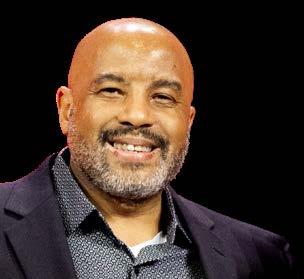
They know that those in leadership and management positions are vested in them and want to understand what their career goals are and what their aspirations are. Then you can tie that into the work they are doing and hone their skillsets to become more proficient.
Miles urges leaders to go deeper than surface level. When managers come in with preconceived notions about what is important and they just look at the data and analytics, they may not be getting the full picture.
“At the end of the day, those that are answering those phone calls, taking those chats and responding back to those correspondents, they actually have the voice of the customer right there,” he states.
Ensuring that you are focused on the right things is important. By making decisions in a vacuum, leaders miss key insights that can help them improve over the long-term. Soliciting feedback from front-line employees, then, is critical.
Miles emphasizes the fact that focusing too much on arbitrary metrics can be detrimental, “You might be holding people accountable for things that, at the end of the day, your customer does not even care about.”
It is important to understand the metrics, but also the why — why you have them in place, what value they add to the customer and what they mean for the bottom line. These metrics should also have a direct correlation to the work that your team is doing, Miles states. If they don’t align, employees will not necessarily see the impact they have.
As we look ahead, it is critical to rethink the role metrics play in the contact center. When implementing new technology, it may be necessary to focus on other areas over traditional metrics like AHT.
Miles shared that he is early on in his technology journey, but this is all relative. His team has rolled out new tools and has the flexibility to test and iterate when needed. What’s most important, however, is including people in the process.
While it might not be feasible to let his team in on every decision, he works to integrate their opinions and feedback wherever he can. “What you’re going to do might not change… but how we do it, how we get there and how we put those pieces in place are negotiable. It’s important to have that insight and to have people understand where they fit in the process,” Miles states.
This is essential, being transparent about where your people fit into the transformation process gives them the assurance they need moving forward. With so many unknowns, leaders must work to be open about their decisions and their vision for the future.
As he looks ahead, Miles shared that continually educating yourself as a leader and remaining dedicated to learning is critical. ■

The industry’s most exciting night of the year!
In the age of AI, we often think of the most important employee traits as being innovative, technologically savvy or inventive. But, we tend to overlook one of the more critical attitudes of the modern worker: curiosity.
BY BROOKE LYNCH
Curiosity is one of the essential elements of success in today’s fast-paced environment. The passion for learning more, diving deeper and getting to the bottom of something gives employees a leg up against the rest. It ensures they are one-step ahead and eager to secure a successful end result. Without curiosity, employees fail to think outside of what’s in front of them — making things more difficult when new technology or processes are put in place.
Lan Tran, Director of Learning Design and Technology at McDonalds, highlighted the importance of curiosity in a recent conversation with CCW Digital on the employee experience and workforce engagement. Tran emphasized the fact that curiosity helps employees gain clarity on how their role fits into the big picture and the potential they have when they put forth their best effort.
“How are we supposed to help push envelopes, improve and elevate things without that bit of curiosity?” she shares.
Curiosity leads to critical thinking, she stated. It helps us go a little bit further and ask the right questions. With a little bit of curiosity, employees can truly enhance and improve processes, understand customers and improve experiences and create impactful learning experiences.
Curiosity also empowers employees to think outside of their own perspectives and lead with people-first principles. Tran is passionate about people-first design and urges her team to deeply understand their user and target audience to define better processes.
“Sometimes when my team comes to me and says, ‘Well, I wanted to do
this and I wanted to do that’, I will say, ‘I’m hearing a lot of what I want’, tell me, what does your audience want? What does your learner want?” Tran states.
By considering what the user wants first, organizations can create products that align with their deeper needs. And often, these needs and preferences may not be exactly what you expect. “Users will still surprise you. So continuing to learn and staying connected to them is very important,” she shares.
To actually deliver on people-first design, Tran advocates for continually connecting with front-line workers and end-users, and for her team at McDonald’s, doing annual restaurant training to experience and remind them what it’s like to work in the restaurant for a day or more. This process encourages ongoing communication with the learners they are building training for. By neglecting

“What I find a lot of times is that leader hasn’t done the role that you’re looking for in 20 years. While they may have a high level understanding, they don’t have the deep dayto-day understanding of some of the challenges that role now goes through.”
LAN TRAN, DIRECTOR OF LEARNING DESIGN AND TECHNOLOGY, MCDONALDS
an on-the-ground approach with their learners, many important details and conversations around the restaurant experience could be missed.
Tran emphasizes the impact of maintaining contact with the end-user, “Make sure you still have that contact with somebody who you’re actually creating something for… their lives will change as things roll out, as these disruptors are introduced,” she shares.
In the contact center, this is critical. Leaders must include the agent and front-line employee in the innovation process if they want to see a real impact. By better understanding their needs, and working to overcome their most persistent pain points, contact center leaders can actually improve the agent’s day-to-day. These improvements make a real difference in how engaged and satisfied employees are in their role.
To understand real challenges, organizations must go beyond the leadership level. While it is certainly important to get feedback from management, there may be gaps that they are not even aware of.
“What I find a lot of times is that leader hasn’t done the role that you’re creating training for in 20 years. While they may have a highlevel understanding, they don’t have the deep day-to-day understanding of some of the challenges that role now goes through,” states Tran.
It is critical to get 360-degree feedback across the team when working to innovate and improve processes. Tran notes that there are always differences between the feedback they analyze from leaders and employees.
Curiosity should extend throughout the organization. When leaders are more curious, inquisitive and interested in the challenges of their front-line workers, problems get solved quicker. Employees also feel more supported and engaged, as their opinions and pain points are heard.
Being curious means asking the right questions and soliciting feedback, not because you have to, but because you want to.
Curiosity is not necessarily innate, but leaders can spark this skill in a few keyways. Tran recommends role modeling, “If they see you showing your curiosity, asking questions, it opens up the door for them to ask questions.”
Expressing these values as leaders gives employees permission to lean into their own curiosities. Building a culture that prompts the questioning of processes and outcomes makes curiosity more welcomed.
“I find with folks, once they do something or are able to move something that they didn’t think was possible, it just opens their eyes to the potential,” Tran states.
By giving employees a direct look at the impact their questions, curiosity and effort has on the business, leaders are able to foster more meaningful connections with employees.
As they play a more direct role in securing CX wins, employees feel more engaged in their role. Being curious, then, can change the way employees see their role and contribution to the overall business.
Tran also emphasizes the importance of leaders’ reactions to questions in building a more open line of communication. When employees ask questions, leaders should continually celebrate and react appropriately, saying ‘great question’ or ‘thank you for asking.’ Although it may seem simple, if employees feel that they are being shut down, they are less likely to continue reaching out for help.
Curiosity is what helps brands get to the next level, enhance experiences and improve operations. By prioritizing a curious workforce, organizations can innovate faster and exceed expectations. Taking the time to answer employee questions and demonstrating the impact this curiosity has on the bottom line is necessary. ■

BY AUDREY STEEVES
Healthcare faces significant workforce management challenges due to complex bureaucracy, insurance systems, and clinical staff shortages. Managers must balance employee expectations, tech limitations, and business objectives. Employee-customer connections are especially critical in healthcare, involving many roles that together shape patient outcomes. The digital era adds complexity, impacting everything from treatments to staffing.
In a CCW Digital interview, AdventHealth’s Vice President of Extended Workforce, Cathy Henesey, discusses contingent workforce management and their essential role in maintaining coverage. As work conventions shift with younger generations, leaders like Cathy help bridge evolving employee needs with healthcare demands.

Cathy Henesey Vice President of Extended Workforce ADVENTHEALTH

Q: Could you start by sharing a bit about your background and what you do at AdventHealth?
A:
I’ve been with AdventHealth for over 10 years, starting as an interim talent acquisition leader in Chicago, where I supported a division struggling to fill positions. During my time there, a joint venture formed AMITA Health, and I was offered a permanent role to help merge the two organizations. After regularly collaborating with the corporate office in Orlando, I transitioned to lead system-wide talent acquisition as VP in Orlando for more than seven years. My current role is Vice President of Extended Workforce, reflecting our shift toward more flexible work options—an evolution accelerated by Covid and influenced by the need to manage contingent workers through platforms like Workday.
Q: Could you speak to why it’s so important for AdventHealth to offer a smooth and seamless application experience, and how you put that idea into practice?
A: The industry is experiencing labor shortages, especially in clinical roles, so making sure we are
considering all qualified candidates is more important than ever. With many open positions, finding the right fit is key. Over two years ago, we implemented HiredScore, an AI tool that efficiently searches our database of 2 million candidates to match them with suitable jobs based on location and other criteria. Recruiters can alert candidates about new roles, re-engaging them even if they only applied once. For example, someone who applied after nursing school but accepted another position may now have relevant experience, and we reach out to renew their interest in available jobs.
That sounds like it would be great for a candidate pool that is so large.
They value your continued outreach, which demonstrates you are following through—something they truly appreciate.
Q: Speaking of engagement, you said that you have a live chat tool for applicants and prospective applicants that has been well received. What do you think made that initiative successful?
A: We use Radancy (formerly Brazen), a pop-up chat tool that provides 12-hour live support to
accommodate all time zones. Applicants can quickly ask job-related or general questions, receiving immediate responses or next-day follow-ups if outside live hours. This feature supports instant communication, helps candidates determine job fit, reduces applications, and increases engagement. Chat records are used to update FAQs and inform job descriptions on our career site.
Q: Chat has been a big game changer across all kinds of customer and employee experience. But this is an interesting example for prospective employees. Is the person on the other side of the chat a Radancy employee or AdventHealth employee?
A: They are AdventHealth consultants who are familiar with our business operations. They know where to find answers if needed and strive to make immediate connections, ensuring a seamless experience for candidates.
Q: You mentioned the internal staffing agency that you helped set up and led the charge on, could you talk about what precipitated that project and what you’ve seen come out of it?
I suggested we establish our own internal staffing company. The goal was to provide contract positions as temporary employees within our organization, thereby sourcing candidates directly and eliminating the markup fees typically associated with external agencies. We subsequently created a dedicated team to focus on this unique candidate pool, which differs substantially from traditional recruitment channels.

A:The initiative emerged as a direct response to the significant impact of Covid, particularly when we began losing nurses to the travel industry. With my background in staffing agencies, along with the experience of several team members who had also worked in similar organizations, I suggested we establish our own internal staffing company. The goal was to provide contract positions as temporary employees within our organization, thereby sourcing candidates directly and eliminating the markup fees typically associated with external agencies. We subsequently created a dedicated team to focus on this unique candidate pool, which differs substantially from traditional recruitment channels.
By joining our internal staffing agency, professionals can accept different assignments across AdventHealth facilities while remaining within the organization, streamlining orientation and training processes. This approach quickly gained popularity—at its peak, we employed over a thousand consultants or travelers. The cost savings were substantial; I ceased tracking after reaching $60 million, as the savings continued to grow exponentially. Additionally, retention rates improved,

resulting in a mutually beneficial solution for both the organization and its staff.
I imagine it goes a long way for the experience of these employees, too, because it’s way less hassle with paperwork and insurance, and then searching for jobs is kind of a difficult process these days.
Yes, they work with other employees in the same way as everyone else. However, all employees are included as part of the organization.
Q: What would you say are the strategic goals of your Extended Workforce role?
A: Leaders prioritize efficiency, and centralizing functions create significant opportunities to streamline processes. We aim to simplify experiences for contingent workers, vendors, and hiring managers, following our “make it easy” service standard. Centralization also enables better tracking and improves efficiency and cost savings. By managing contracts collectively instead of individually at each facility, we can secure more favorable terms from a supply chain perspective.
Q: It seems like there’s been a really big disruption in the staffing/recruiting discipline. There are so many different avenues for people to find a job these days, especially in healthcare, where it’s so specialized. Having been in this company for a decade, what do you see as the next major trend to keep an eye on for workforce managers?
A: Workforce shortages are expected to worsen as Baby Boomers retire, reducing the labor pool while increasing demand for healthcare services. Successive generations are smaller, compounding the issue. Additionally, workers increasingly prefer flexible schedules and non-traditional hours. To adapt, corporations and healthcare systems need to offer more flexible work options and consider part-time models to meet staffing needs creatively. ■

One of the quickest ways to create a culture of empowerment among your team is to put agents in charge of their own schedules as much as possible, offering autonomy in your contact center team’s day. While remote work is a desired component, it’s not the only definition for “flexibility.”





BY TROY PLOTT
Agent satisfaction and retention remain a perennial issue in contact and back office environments. According to the 2025 Managing the Modern Contact Center: Current Employer Trends survey, the average turnover rate now hovers around 39% for contact center agents and 34% for back-office employees. With the cost of turnover averaging over $20,000 per agent, addressing these challenges is a top priority for workforce managers. According to Deloitte, 63% of contact centers deal with staffing shortages, and some of the root causes of attrition have shifted. Lack of agency, overburdened team members, and organizations that lack flexibility may all share some of the blame. All of these factors can cause ongoing attrition, impacting contact centers’ ability to appropriately schedule their workforce and deliver on high customer service expectations. Fighting against the tide of change to do things how they’ve always been done serves no one, and creative thinking can empower your workforce while boosting the business’s bottom line over time.
It’s time to reimagine workforce scheduling to better meet the needs of both agents and customers. There are three key areas to consider: agent schedule autonomy, the impact of cognitive load on scheduling needs, and opportunities to gamify workforce planning.
One of the quickest ways to create a culture of empowerment among your team is to put agents in charge of their own schedules as much as possible, offering autonomy in your contact center team’s day. While remote work is a desired component, it’s not the only definition for “flexibility.” Essentially, contact center agents are advocating for more freedom in their day. They need to be able to adjust their work schedule to accommodate the demands of their personal lives. Rigid scheduling requirements leave little room for individualized schedules, contributing to attrition numbers and employee dissatisfaction. Stress and burnout borne from business needs that necessitate long or irregular hours (including 24/7 operations, evening shifts, and holiday work) leave agents feeling powerless. The way your organization manages scheduling has a tangible impact on your team’s engagement. Constant turnover is costly and disruptive for your organization, too. Offering flexible scheduling beyond remote work can help mitigate these issues and optimize your team’s performance in the long term. Flexibility in scheduling boosts the retention of experienced agents who may otherwise seek out other positions with more accommodating work-life balance options. Your shift coverage will also likely improve, minimizing the need for overtime or hiring additional staff.
1
Create a “bring your own schedule” approach, which would allow agents to pick the shifts they prefer based on pre-configured settings that include shift length, start time, scheduled lunch breaks, and hours worked per day
2 3 4 5
Implement the concept of availability points, which assign different values to different parts of the day, encourage flexibility through gamification, and help ensure peak hours are always staffed sufficiently
Preference-based scheduling to leverage automation in considering work rules, planned activities, absences, and employee preferences
Shift bidding gives agents a say in when they work by letting them choose their preferred schedules and shifts within customizable parameters
Self-service scheduling encourages shiftswapping among coworkers, empowering agents and saving managers’ time
A brief review of WFM history is helpful in understanding what makes current scheduling approaches challenging. While we don’t need to explore the life of Anger Krarup Erlang in depth for this piece, it is important to note the impact of his early 1900s research. His work on telephone traffic and waiting times formed the basis for staffing calculations that are foundational to most WFM solutions we have today. However, Erlang’s research (and resulting calculations) assume that agents are single-skilled and that a contact is handled in a continuous manner, quite different from the trained agents working across channels today. The advent of skills-based routing (SBR), about a halfcentury after Erlang’s research, meant that agents could now function in a multi-skilled environment. Simulation was introduced to address the complexities of calculating staffing requirements for dynamically variable queue lengths in SBR environments. SBR environments, now in practice at nearly all contact centers, add substantial workload to employees. Smartphones and the digital era introduced a major shift in how humanity communicates and in the number of platforms we have available to communicate on.



Troy Plott is the Vice President of Product Management at NiCE. He and his team are responsible for the product strategy and roadmap for the Workforce Management line of business. Troy joined NiCE in 2017 and brings over 25 years of experience in the WFM space including 15 years selecting, deploying, consulting and using WFM solutions and 10 years developing WFM solutions.
Today, nearly everyone has the power to call, email, chat, video conference, or direct message a business from almost anywhere. Such capabilities were the stuff of science fiction in Erlang’s time. His research couldn’t even conceive of customers engaging in more than one mode of communication, let alone multiple simultaneously. Though his calculations are still the basis for most scheduling practices, contact center leaders are stretching Erlang’s approach thin, trying to apply it to a much more complex world. The history of workforce management clarifies that, even with simulation, modern interactions between customers and businesses include behaviors contrary to longstanding assumptions. The simultaneous way customers and agents use digital channels adds complexity—and time—to each interaction. Chats and direct messages are a prime example. It’s common to experience delays in customers’ responses in a chat. During these pauses, employees may handle another message in the chat or an interaction from another channel. These non-linear communications introduce frustration in the scheduling process. How do we best schedule for a series of interactions from multiple customers while accounting for different availability and hours for various channels?
Additionally, many WFM solutions cannot currently assess workload thresholds for individual employees. Schedulers will know if an agent can handle a single interaction at a time. But what about the number of simultaneous interactions? For a particular agent, is it two, three, or ten? Beyond concurrency, employee thresholds around interaction intensity, reading ease in text-based channels, and cognitive effects of switching between platforms will also vary. Schedulers simply do not have a tool to assess cognitive stress for employees. Instead, schedulers rely on intuition and guesstimates to land on the “optimal” amount of cognitive load a given employee can handle (which is also different from the load at which they perform their best). But in the age of AI in WFM, there might just be a better way.
Today’s workforce—particularly Millennials, Gen Z employees, and remote workers—deeply values flexible work arrangements. Offering greater scheduling flexibility is one of the most effective ways to improve agent satisfaction and retention. Self-service scheduling tools empowering agents while letting managers define permissions, configure activity codes, and set parameters for shift trades. To deliver the flexible scheduling today’s employees want, you’ll need workforce management tools that offer agile capabilities for agents and don’t overburden managers with administrative tasks.
Mobile access ensures anytime, anywhere access, bringing schedules for both agents and managers to the arena they prefer for its convenience and ease of use
Pre-approved schedule trades to save time and reduce the friction that is incurred when shifts remain “in limbo”
Request change management reduces follow-up friction
Effective time off management unburdens managers from juggling requests and allows supervisors to answer time off requests faster
Gamification of scheduling with shift currency supports a dynamic approach to staffing by incentivizing shifts that are less popular or need to be filled on short notice
Self-swaps takes agent preference accommodation to the next level by allowing them to make adjustments to their own schedule within set parameters
Adaptive events establish “buffers” that account for the real-world factors that may impact agents’ schedules
Gig scheduling allows for ease in custom-building schedules for agents who are not full-time employees
Shift bidding turns the difficult process of filling undesirable shifts into an engagement tool ■

NiCE is transforming the world with AI that puts people first.
Our purpose-built AI-powered platforms automate engagements into proactive, safe, intelligent actions, empowering individuals and organizations to innovate and act, from interaction to resolution.
Trusted by organizations throughout 150+ countries worldwide, NiCE’s platforms are widely adopted across industries connecting people, systems, and workflows to work smarter at scale, elevating performance across the organization, delivering proven measurable outcomes. 1 2 3 4 5 6 7 8 9

Technology Assessment Framework for Customer Contact & CX
The Prism assesses solution providers with insights and feedback from three perspectives:
analyst user marketplace
Technology
Real-Time Agent Assist/Co-pilot
Chatbot / Virtual Agent

Workforce Management














DOWNLOAD WHITEPAPER to see how each provider compares and informs investment decisions.
BY AUDREY STEEVES

Workforce management is teeming with the intangible and fluctuating experiences of employees.
Try as they may to make data-driven decisions, concepts like employee engagement are tied to innumerable factors. Strategies that fail to capture the nuances that drive employees’ day-to-day wellbeing are costly, hard to measure, and lack the transformative power that executives come to expect from other programming.
The thread from generous benefits to engaged employees is apparent, but how to develop and prioritize a mix of benefits that will appeal to a diverse workforce remains a challenge. Too often, leaders’ myopic view of the immediate return of benefits leads to a conservative approach. The shortterm costs of more superficial benefits like complimentary in-office food and beverage, budgets for short events (e.g. happy hours, team dinners) and annual bonuses pale in comparison to those that are more comprehensive. But when workforce management budgeting accounts for costs associated with turnover, burnout, and disengagement, the data tells a different story.
BeatBox, an alcoholic beverage brand that has seen meteoric growth in the past few years, sets itself apart through a commitment to “music, good times, and making a real impact.” While other beverage brands have begun offering a stripped back version of their product (for example less alcohol, less sugar) in response to cultural trends, BeatBox’s unwavering support of their core values is refreshing.
At the helm of BeatBox’s exceptional team is Courtney King, SVP of People and Culture. Having built the role from the ground up, Courtney has seen the business grow from fewer than 40 employees to almost 300. For a leader in the workforce, Courtney has seen results many managers can only dream of: Voluntary turnover of less than 2% in the last quarter, an employee engagement score of 95%, which is 23% higher than the industry standard, and consistent placement on the Great Place to Work list. In this interview with CCW Digital, Courtney breaks down how she has cultivated such a positive, strong work atmosphere and how these tactics can be implemented in teams of any size.
Can you kick us off by telling me about your role at BeatBox and what led you to it?
I’ve spent twenty-plus years in HR, with the majority of my career in private equity and some CPG companies. I’m a former entrepreneur. I come from a family of entrepreneurs, and I had the ability through my grandparents, to purchase a restaurant franchise. At the franchise, I was both the owner and operator. Not only was I working in the

At BeatBox, we prioritize employee wellbeing and engagement. We have 100% paid health, dental, and vision premiums for employees, and we pay a large portion of the family coverage. We do things like music festival lottos, because the BeatBox brand was built on the co-founders’ love for music and bringing people together. We also have a learning budget for every employee, we offer flexible time off, and we have team summits to encourage relationship building.
-Courtney King
front of the house doing all of the things it takes to run a restaurant, but I was simultaneously managing all the back of the house things. I quickly learned that I loved the talent leadership and workforce developments components, although at the time, I didn’t realize these were actually a human resource function. Not only did I love it, I was also really good at it. A few years later after more research, I went back to school as a nontraditional student (at that point I sold the businesses and I was already working in HR). I loved the formal education component and continued on to get both my undergraduate and my graduate degree in human resources.
One of the things I pride myself on is building systems that deliver results but without losing the heart of the matter. At BeatBox, we prioritize employee well-being and engagement. We have 100% paid health, dental, and vision premiums for employees, and we pay a large portion of the family coverage. We do things like music festival lottos, because the BeatBox brand was built on the co-founders’ love for music and bringing people together. We also have a learning budget for every employee, we offer flexible time off, and we have team summits to encourage relationship building and one large company summit every year. Some of the things I want to be known for are building strong people-first strategies. And specifically, with BeatBox during hyper growth,
creating people-first systems that scale.
That’s a really interesting trajectory you’re on. When we think about people-first strategies, what does that look like in practice?
First and foremost, my team understands that without the employees, there is no us. They’re the reason that we’re here. So, starting with that mindset, in practice that looks like listening to people. But, more importantly, putting that feedback into action. It’s one thing to hear someone. It’s another thing to take their ideas and input and do something with it.
Nothing’s perfect, so when issues do arise we try to resolve them in a way that builds trust so that employees know that we are a place they can come to equitably resolve issues. We know that an employee can work anywhere, just like a customer can take their business anywhere, so we go the extra mile to retain their business, so to speak. We treat employees well from their first interview and through their last day (and beyond)! I think that’s important because we want individuals to be a consumer and fan of the brand, regardless if they work here.
And then supporting employees by recognizing milestones beyond just work milestones. And incredibly important, acknowledging the tough stuff. Life and work are not always easy, so we acknowledge the ups
and downs in a way that makes our team members feel seen and heard.
Historically it can be really hard to demonstrate ROI for these types of things. Do you feel like this is an ethos that’s passed down from leadership, or have you been able to quantify the value of these initiatives?
I would say that it comes from the very top. Our co-founders are really compassionate, and they care about people in a way that I’ve never seen. I really think that that is one of the tenets of why BeatBox has been so successful. If you show people that you care about them and give them meaningful work, then you get people that are incredibly engaged, and it shows in the results of the business.
You mentioned some of the benefits of working at BeatBox, and I appreciate that you started by mentioning healthcare. A lot of the time we talk about the “nice to have” benefits because they’re more glamorous, but things like healthcare tend to hold the most value for employees. How do you decide on the mix of benefits and perks you offer?
I don’t know if there’s any magic formula, but I can tell you it starts with listening to people’s ideas. What do they value? What’s important to them? My team and I are employees as well, so we think about what is important to us, not as HR professionals, but as employees. One of our co-founders, my boss, Aimy, told me what I first started, “Dream big, and then let’s work backwards and figure out how to make it happen.”
At BeatBox, we have some of the most unique benefits. All employees have a virtual assistant through Overalls, which is a life concierge. We have a wellness program with multiple pillars. When I think about what really drags employees’ productivity or is a drag on their mental health, I feel like it’s all the other things that happen during the work day that aren’t work related that we still have to deal with as human beings. And this was a way to say, “we see you, we understand that, and you can use this platform.” We let them take care of those things, and the return on that investment is huge, because employees can focus on the business.
Also thinking about the company being born out of a love for music and bringing people together, how can we
give an employee that experience if they don’t work on that team? So we do music festival lotteries. We give away a pair of tickets and give people a travel stipend, and say, “Go enjoy this music festival and experience it BeatBox style.”
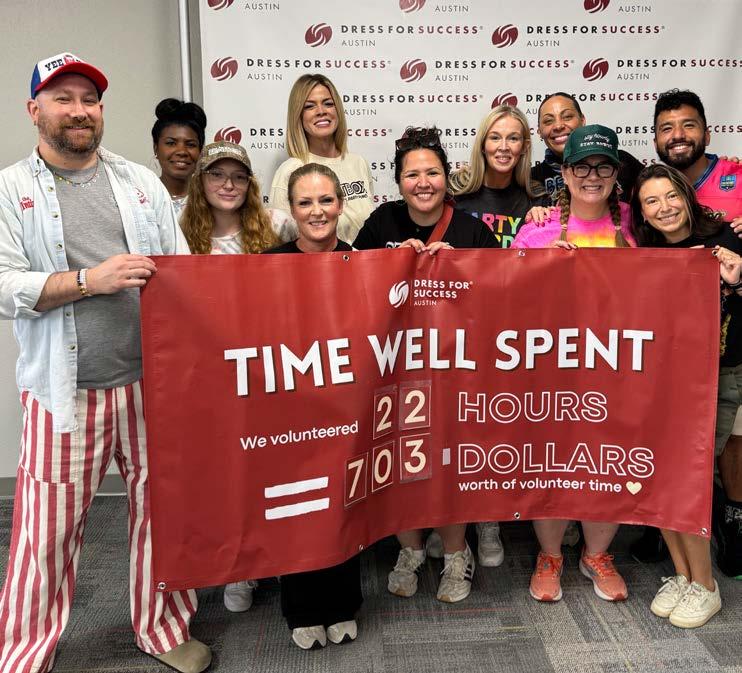
We have so many benefits that I feel proud of. Another is that we offer paid volunteer time. So you can spend the day at an organization giving your time to something that’s near and dear to you, we’ll pay you to do it.
That’s wonderful. Thinking about what you said earlier, that you create a great experience for your employees from their first day to their last day. What do you think are some of the most important touchpoints throughout someone’s tenure?
For starters, 99% of our employees say that when you join BeatBox you’re made to feel welcome, and that’s per the Great Places to Work survey. We were just certified for a second year in a row as a Great Place to Work. Once someone gets a job offer, the whole team texts them to congratulate them. So they feel welcome from the beginning, and then they have
everyone’s contact info. New hires get a warm welcome with a swag pack and a handwritten note from our co-founders. What we provide is all very intentional. During onboarding, our team facilitates meetings cross-functionally, so employees know not just their immediate team, but team members across the organization. We celebrate milestones every year: for every work anniversary the employee has, they get a handwritten card and a gift, and the same for their birthday. So we recognize employees twice a year in that way. We’re interested in developing our people. All employees have an annual learning budget. But we also have programs that allow, let’s say, another team needs some support or help. Then other employees can sign up to help those teams, so you get cross functional learning.
Annually, we conduct an engagement survey. We want to make sure that our people are happy, healthy and engaged, so while we perform well in the survey, nothing is without the need for improvement. After the survey, we take our key learnings, identify the most critical areas and implement changes to make ourselves better. ■

We all remember the first-day jitters of starting a role. We have to internalize an unfamiliar schedule, learn new processes, and, arguably the most daunting task of them all, find a place where we feel like we belong. Without the right people in our corner, work can be an incredibly isolating experience.
Integrating successfully into any company can feel challenging regardless of anyone’s title or background. No matter how many times we do it, the anticipation never really goes away. And it’s not just about completing tasks or meeting goals on time—though that certainly adds to our stress—we have to join a community that allows us to feel safe and accepted.
Finding belonging in the workplace can sometimes feel arduous, but considering that we spend at least eight hours in the office, in-person or remotely, it’s necessary to go beyond our comfort zone and form peer-to-peer connections. However, that doesn’t mean the individual should do all the heavy lifting.


BY SHIWON OH
We thrive when we feel like we’re a part of something bigger.
People naturally gravitate towards purpose. They want to find meaning in their work and are generally more engaged if they believe in what they do. It can look like women executives working to disrupt a male-dominated tech industry, an HR director educating their team on unconscious hiring biases, or a marketer overseeing a campaign they’re exceedingly passionate about.
There must be open collaboration toward a vision larger than just one person—and it’s all but an organic way to create long-lasting relationships that can enhance a company’s goals. When employees believe that they contribute to a larger mission, with their solutions being a piece of a grander puzzle, they can feel a sense of accomplishment that drives them toward continuous inspiration.
People naturally gravitate towards purpose. They want to find meaning in their work and are generally more engaged if they believe in what they do. It can look like women executives working to disrupt a male-dominated tech industry, an HR director educating their team on unconscious hiring biases, or a marketer overseeing a campaign they’re exceedingly passionate about.

If their employer doesn’t nurture a space where they can be an active part of a whole, they gradually lose interest and become more prone to work burnout. Without a strong “why,” they’ll be less likely to execute the “how” and no longer have a reason to invest in their company culture.
Cultivating belonging in the workplace is a win-win for everyone.
On the other hand, workplace belonging benefits all parties, both employees and leaders. It’s an effective strategy that brings people together and establishes trust while yielding mutually positive outcomes. A few examples include:
Higher employee satisfaction: According to a SHRM survey, belonging results in 50% lower turnover risk, 75% fewer sick days used, and 56% improved job performance. The numbers don’t lie. When people feel accepted and valued in the workplace, they’re more willing to show up.
Stronger company culture: No matter how high-performing or prestigious a company is, culture can make or break its reputation. Let’s say that although a business provides an extensive benefits package, its upper management doesn’t treat its employees with respect. Word will get out, making their hiring and retention efforts significantly harder. But if collaboration and camaraderie are tangible amongst team members, they’ll be more likely to want to stay—and potentially attract more talent.
Increased creativity: Belonging in the workplace creates emotional and mental safety. It helps employees feel more comfortable taking creative risks and thinking outside the box without fear of judgment. For instance, if the company faces a particular roadblock, a team member may suggest a new perspective that leads to an unexpected yet valuable solution.
If your culture lacks belonging, now’s the time to change it. Your workplace may be welcoming for some, but not all. Here, we’ll go over a few ways you can establish a culture that values all workers:
1.
Advocate for transparent leadership.
Leaders who practice honest communication don’t merely share the company’s internal goals, strategies, and insights. They consistently keep their team in the loop, providing clarity around critical business decisions and welcoming open dialogue. If difficult conversations arise, they lean into the tension to find the best resolution for all parties, navigating every interaction with empathy and respect.
Ultimately, you lead by example. Prioritizing transparency builds your credibility and makes you more approachable. So, when there’s a potential culture issue that employees want to address, they can relay their concerns and trust that you’ll work to resolve it together.
2.
Implement
If you’re wondering what policy changes or adjustments will truly benefit women, people of color, LGBTQIA+ employees, disabled employees, and other marginalized groups, it’s crucial to stay informed. Seek credible resources to gain a better understanding of their work experiences or facilitate training sessions to educate others; allow yourself to be held accountable.
Advocating for inclusivity is an uphill battle that requires immense patience and flexibility. But if your goal is for all your employees to feel supported, it’s an absolute must.
Diversify your community with CCWomen.
Creating workplace belonging transforms employees and companies alike, ushering in a more diverse professional landscape. But what about outside of it? What does it look like to meet other passionate, missiondriven professionals who want to make a notable impact within and beyond their spheres of influence?
At CCWomen, we aim to elevate women in business and customer contact. Through content pieces, podcasts, webinars, and in-person events, we strive to build a network of women and allies that empower one another— and transform the business world along the way. ■
3.
When exploring optimal workplace settings, the U.S. Department of Health and Human Services (HHS) urges companies to adopt prosocial behavior, which “promotes positive social relationships through welcoming, helping, and reassuring others.”
There’s a difference between tolerating and celebrating someone’s authenticity. To establish work environments where people feel understood, you must first learn how to celebrate them as they are. Do away with any societal expectations that require people to fit into a mold. Appreciate employees for the different personalities and talents they bring to the table, and know that your team, department, and company at large are made richer with their presence.
4.
4.
How do you know if your efforts to foster workplace belonging are effective without feedback? Short answer: you can’t.
Asking employees for their input can initially be intimidating, but there are various ways to go about it. If you need numbers, distribute an anonymous survey to maximize participation. If you want to hear from individual team members, simply ask for their thoughts during weekly one-on-ones.
Most importantly, don’t measure your efforts just once. Revisit and strategize, whether monthly, quarterly, or annually. By doing so, you create an intentional space for your work community to reflect, and, if needed, make necessary changes along the way.
By women, for women and allies.
CCWomen is on a mission to transform the business and customer contact world. We’d love for you to join us.
I think AI is a level setter. I tell people all the time that AI is not the endpoint, it’s the starting point. So, if you’re curious, and you understand how to ask questions, and you understand context, syntax, and tone, when you understand the etymology of the words, and you implement that into AI, It helps level the playing field to get you from 0 to 80%. Then you’re able to do more in-depth personal research to get to that last 20.
One of the significant challenges facing workforce management today is the disconnect between individualized expectations for work and the realities and constraints facing those who make the organization-wide decisions on these issues.
As organizations become more receptive to unconventional working schedules and roles become interdependent with all sorts of technology, workforce managers need to proactively adjust to strike a balance that will result in optimal output and employee engagement.
Throughout this issue we feature perspectives and experiences from those managing workforce initiatives and projects on a day-to-day basis. Like any discipline, their approaches vary widely between organizations. To better understand the state of WFM from the perspective of a regional economy, we interviewed Robert Thompson, the Workforce Development Manager for the City of Greeley, Colorado. Greeley is the fastest growing city in Colorado and the fourth fastest growing city in the U.S., and the region faces similar challenges to that of a rapidly growing organization. Robert’s insights, alongside findings from CCW Digital research on the employee experience, surfaced some consistent themes that point to the future of WFM.




















Business processes and organizational structure have seen a great deal of reinvention in recent years. Enough has been written about the ways the pandemic and its aftermath reshaped the notion of workplace, but as years go on, the unique mix of cultural trends and technological capabilities have kept the momentum of change going.
In the past, the implementation of a human capital management (HCM) tool or enterprise resource planning (ERP) software would send ripples of change throughout the organization. Today’s enterprise tools almost exclusively center AI, and with this their introduction brings much larger shockwaves of change. Workforce management notoriously










faces challenges in the discrepancy between what outcomes sound good on paper, and how those changes actually affect employees’ performance. This discrepancy is exacerbated by AI: the promises are more attractive, but the downsides are yet uncharted, and can be destructive if adequate oversight is not there.
At the same time, AI in the category of employee-assist can be transformational in what a team is capable of.
“I think AI is a level setter. I tell people all the time that AI is not the endpoint, it’s the starting point. So, if you’re curious, and you understand how to ask questions, and you understand context, syntax, and tone, when you understand the etymology of the words, and you implement that into AI, It helps level the playing field to get you from 0 to 80%. Then you’re able to do more in-depth personal research to get to that last 20.” - Robert Thompson
The opportunity for AI to upskill an existing workforce is tremendous. Still, potential for AI and automation to deliver positive change for an organization is tempered by the breadth and clarity of its data. When leaders fail to thoroughly consider how the promises of technology fit into their existing conventions, they open the door for disorganization and lost potential.
“Perfect” employees are fewer and farther between
Anyone who has sought out a new role in the past few years knows that the process is rife with difficulty. Increasingly, employers are looking for highly specific candidate profiles and experience while using AI filtering to pass over resumes without a human ever looking at them. Not only is this discouraging for candidates, it damages the wider candidate pipeline and employer brand image that takes years to build.
Uber-specific hiring profiles are self-limiting, but in-house training and upskilling are more accessible than ever. Employers who are more receptive to taking a chance on candidates that demonstrate strong soft skills, such as enthusiasm about the work and propensity for learning, will have a much easier time successfully filling a role than looking for years of experience with a given software in a specific industry.
“One thing I tell people all the time is I like hiring customer service reps, telemarketers, and bartenders. Why? Because they’ll talk to anybody. The one thing that a human can do that AI can’t do. If you can have a conversation and know how to listen and respond and engage, that’s what we can do that AI can’t.” - Robert Thompson
As automation eats away at the entry level jobs that the workforce has naturally used to pressure test new hires and ease them into a business, employees will bear the brunt of the responsibility to ensure they’re prepared for the work and field they choose. As employees take ownership of their development, employers that offer tools to self-develop will have a competitive advantage.
In regional workforce management, one way this can be done is through alleviating barriers to work. Robert’s work involves engaging segments of the workforce that may be shut out due to these barriers, a perspective that can be applied to any private business by rethinking what qualifications actually prohibit a candidate from succeeding, and which exist as a relic from a pre-AI world.
“One of our largest refugee and immigration centers in Colorado sits in Evans. Some of our new residents from the center may have certain degrees or experience within different fields, but for whatever reason, the degree may not have been fully recognized because it was an international degree. So, we set them up by creating a pipeline to the Linc Library, which is low barrier access. And then from there, we are building intentional pipelines from the Linc Library to Ames Community College to help them integrate, not just within the educational system, but within the community.” - Robert Thompson
A virtual workforce still has its limitations
CCW Digital has been covering the push back to in-office work and its rationale, execution, and reception since 2021. The infrastructure to accommodate the suspension of in-person work was never meant to be permanent, and as leaders make a call whether to codify remote work as part of their company culture or transition back to in-person, both paths face serious challenges. Proponents of in-person work cite the ease of communication,

“One thing I tell people all the time is I like hiring customer service reps, telemarketers, and bartenders. Why? Because they’ll talk to anybody. ”
ROBERT THOMPSON, THE WORKFORCE DEVELOPMENT MANAGER FOR
opportunities for collaboration, and more comprehensive coaching, which are all key focus areas of workforce managers. Rather than refuting these ideas with claims about remote work’s benefits, WFM leaders can intelligently use technology to fill these gaps.
“Technically, yes, everything is available online, but when you also look at the push between some of our biggest private companies right now, the major push is returning to office. So you have to look at what regional offerings are there.” - Robert Thompson
Workforce managers have a vested interest in pushing leadership to make a call on the modality of work because remaining in the limbo between remote and in-person placing pressure on both companies and employees. In both cases, the key is to lean into a longterm strategy: in-person organizations should deepen their connections to local resources in order to build a talent pipeline, and remote organizations should shoulder the responsibility of providing opportunities for both selfdevelopment and collaboration. ■

As the world’s largest customer service resource, CCW Digital provides 180,000+ members with tools and insights for optimizing their customer contact operations. Through research-driven market studies, virtual events, webinars, analyst reports, advisory services, and its quarterly magazine, CCW Digital drives critical conversations on customer experience design, employee engagement, brand reputation, business intelligence, and the growing impact of artificial intelligence.
CCW Digital is a part of Customer Management Practice
www.customercontactweekdigital.com
Art and Design: Synergy Design
Editor: Audrey Steeves
Marketer: Melinda Acuna
Customer Management Practice 420 Lexington Avenue, 7th Floor

Seamless, connected, personal

No matter where, or how
That’s so NiCE