The Gathering CBFNC Newsletter - November–December 2016
The Gathering The Gathering
of the Cooperative Baptist Fellowship of North Carolina
November/December 2016 • Vol. 21 Issue 6
Bringing Baptists of North Carolina Together for Christ-Centered Ministry
embracing our neighbors ministry in Lebanon, page 3
from missional to incarnational
by Larry Hovis, CBFNC Executive Coordinator
In 2004, the term “missional” was new to most of us in the CBF community. CBF Executive Coordinator Daniel Vestal had published a book entitled, It’s Time: An Urgent Call to Christian Mission, in which he sought to clarify what it means to be a missional church. CBFNC leaders adopted a strategic plan centered on this concept. For the next ten years, in a variety of ways, we tried to encourage Christians and churches to shift their focus from only attracting people (“Come unto me…”) to also sending people (“Go ye therefore…”).
During that period we saw an explosion of churches expanding their missions programs. Not only did they send youth and adults on mission trips to faraway places, many congregations also developed service projects in their communities – particularly with the poor, the vulnerable, and the underserved.
In the summer of 2015, Wake Forest Divinity School student and CBFNC intern Seth Hix conducted a research project. Seth conducted phone interviews with ninety-one church leaders from across North Carolina. The largest number of those interviewed was laity. The remaining interviewees were evenly divided between senior/solo pastors and staff ministers. Questions centered on four broad topics: congregational identity and values; church strengths; church challenges; and relationship to CBFNC/CBF Global.
Overall, missions was judged to be the greatest strength of this group of churches. Interviewees described a variety of ways their churches were involved in missions, especially in their communities. As Seth joked, “If anyone in any part of North Carolina needs a wheelchair ramp built, I can hook you up with a Baptist church to do it!” From Seth’s conversations with our partner churches, it appeared that the missional message had been internalized and realized in very tangible ways.
There was only one problem. The church leaders told Seth that they hadn’t gone far enough. They had embraced the idea of missions, especially local missions. They had embraced mission projects. But they hadn’t always embraced the people who were the recipients of these ministries. They had often failed to establish relationships. They were sometimes guilty of “parachute missions,” dropping into a community or a situation of need, providing a quick fix, then going back home without getting to know the people with whom they ministered.
You’ll be hearing more about it in the coming months. One of our new initiatives is “Embrace Neighbors.” It’s more than just a fancy way to say “missions and evangelism,” though it definitely involves missions and evangelism. We believe the time has come not only to minister to our neighbors but to minister with our neighbors. The time has come to stop holding them at arm’s length, and to start wrapping our arms around them with the love of Jesus.
We know many Christians and churches in our Fellowship are already embracing their neighbors. We want to tell their stories and encourage others to discern whom God is calling them to embrace. Who are your neighbors and how can you embrace them?
n Perhaps your neighbors are refugees from around the world who have come to your community fleeing violence, persecution, or simply seeking a better way of life for their families.
n Perhaps your neighbors are the people who live in the houses surrounding your church property (even though you may live miles away).
n Perhaps your neighbors are your literal neighbors –those who live on your block.
n Perhaps your neighbors are your co-workers.
n Perhaps your neighbors are the children and families in your neighborhood school.
n Perhaps your neighbors are people of a different race with whom you’ve been acquainted, but never really taken the time to get to know.
n Perhaps your neighbors are people of a different faith, who may be the object of prejudice and ridicule.
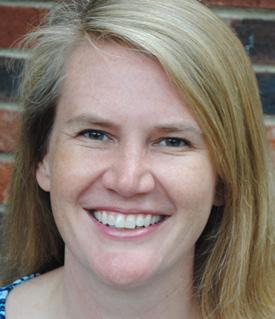
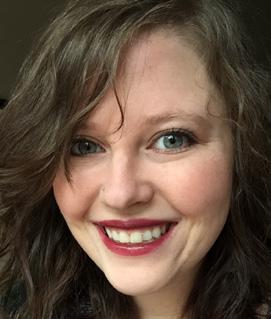
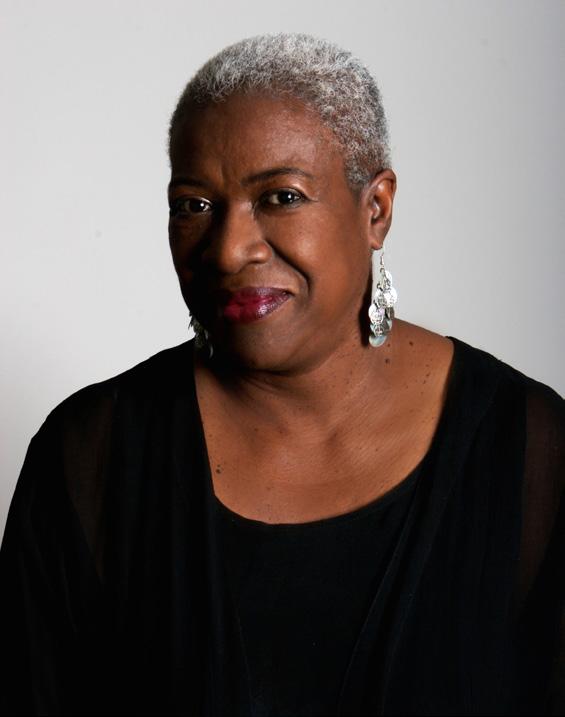
Wanda Kidd recently moved to the town of Mars Hill. Wanda and her husband, Dan, purchased a house near Mars Hill Baptist Church, where they moved their membership.
What they needed, they told Seth, was to go deeper. They needed not only to engage their neighbors, they needed to embrace their neighbors. They needed to move from an incomplete understanding of missional (increased mission activities) to being incarnational. They needed to learn that faith is best shared, not at a distance, but face-to-face and hand-inhand. This faith is shared over the long haul, not just short-term. CBFNC has just completed another strategic planning process.
Wanda’s life has been devoted to relational ministry with young adults, especially on college campuses. One of Wanda’s first priorities was to invite a group of young adults to her home on a Sunday evening for a meal. Some have a strong church connection, others none at all. The goal is to meet monthly and provide a safe place for spiritual conversations to which they can invite their friends, some of whom may be too intimidated to attend a church service.
Though Wanda doesn’t know where this effort may lead, she is clear on one thing: Christ has called her to embrace young adults, not only through her official CBFNC responsibilities but also the young adult neighbors in her community, as she goes about her daily life.
Mission and Ministry Offering Envelopes Offering envelopes are inserted in this edition of The Gathering to receive CBFNC’s annual Mission and Ministry Offering. Please give generously. Additional envelopes may be ordered by calling (888) 822-1944.
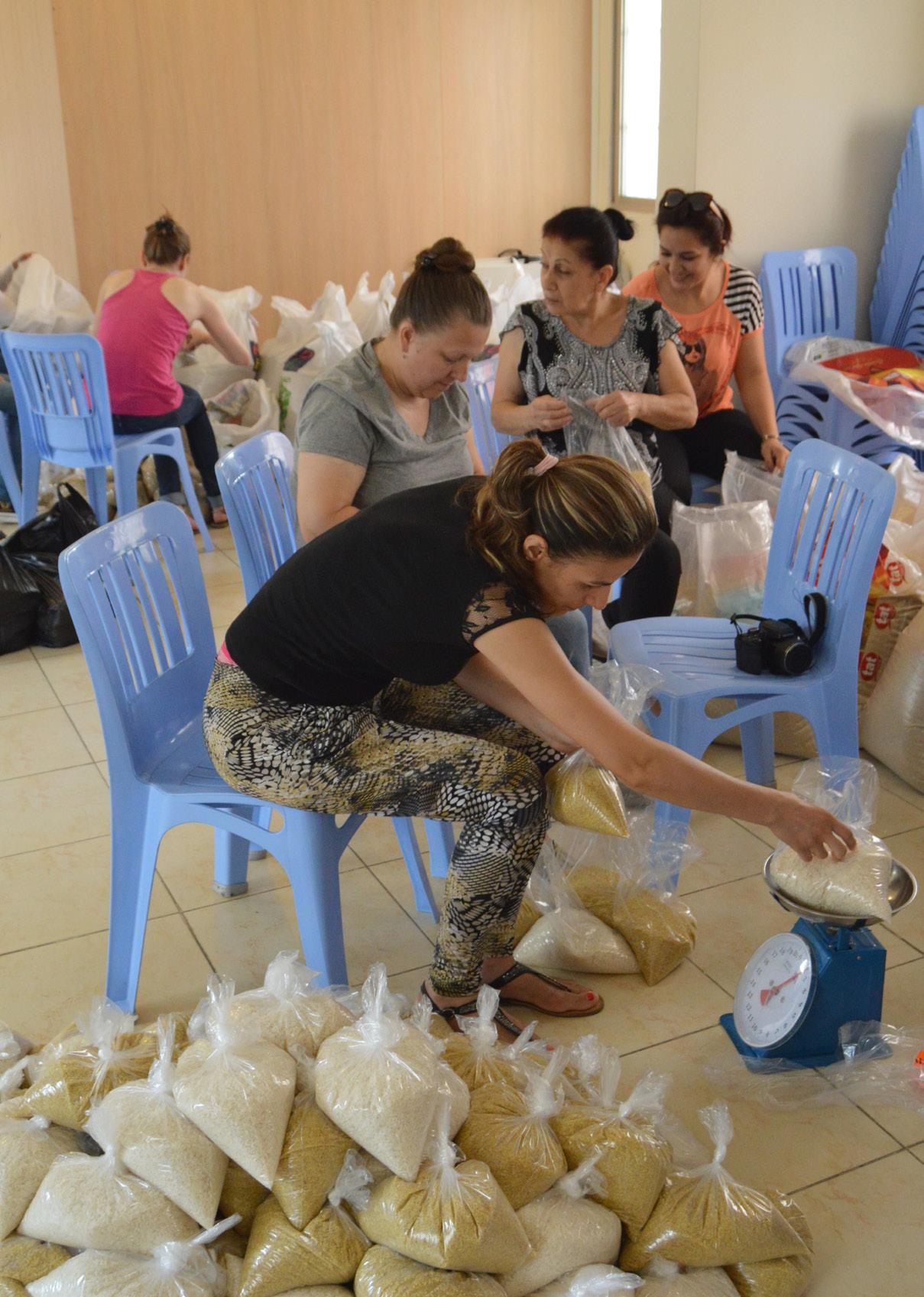
Beirut, Lebanon … a beauty to behold, an oasis in the desert, a safety hub … all expressions I have come to use to describe the place I experienced and quickly fell in love with in June of 2016 when I embarked on a last minute, nicely thrown together, informational missions trip. I went, along with two other ladies from my church, in search of numbers, data, and facts about a Food Distribution Ministry to mostly Syrian refugee women. A local grassroots organization, in addition to our church, sent us to check out the project. We were to be eyes, ears, hands, hearts, souls, and feet on the ground, connecting with Chaouki and Maha Boulos, CBF field personnel from NC who are partnering with and supported by CBFNC. Upon our return to NC, we were to report our findings and be a mouthpiece for their ministries.
the refugee hub
by E. Laurell Murray
We immediately got comfortable with Chaouki and Maha Boulos, missionaries to and natives of Lebanon, who retrieved us from the airport in Beirut and welcomed us into their home and busy lives. Parents to two grown boys living back in the States, they embraced the experience of having three girls under their roof and in their care for ten days. They showed us their capital city and surroundings, introduced us to all the amazing and ever-so-tasty and healthy Lebanese food, and even let us stick our toes in the Mediterranean. We got to know them personally during lots of dining out, a few sightseeing tours, and hands-on experience with one of their many ministries. We saw just a drop in the bucket of the natural beauty of Lebanon. It is literally and figuratively a green oasis along the seaside surrounded by war and desert.
it has become what I like to think of as a “hub.” God is using people like Chaouki and Maha to bring the comfort, joy, and truth of the Gospel to lots and lots of suffering people who are open to the message of Christ. They see his church in action as they care for, feed, guide, serve, love, and respect these hurting souls as they painstakingly wait for resettlement. It is a hub where they are seeking refuge now, but within years will be dispersed from. When they leave Lebanon, they will either go as new believers or as Muslims who were served and loved by Christians. They will take with them the seeds of the Gospel.
Lebanon with its close to 4.5 million people is about the size of the state of Connecticut. Roughly half of its population is made up of refugees fleeing places like Armenia and Israel in the past and Syria and Iraq in the present. As far as spreading the Gospel goes, it is as strategic a place as any. Due to the volumes of Muslims and Christians fleeing their homelands and taking refuge in Lebanon,
Chaouki and I had a nice chat on the patio one evening where he told me from his heart that he believed the harvest is NOW. Through the Food Distribution Ministry, some of the physical needs of the refugees are being met, and through attendance at the worship services required in order to receive the food packages, spiritual needs are also being met. Only God could take something so horrible like war and turn it into something beautiful to bring Him glory. I mean, not in their wildest dreams could Chaouki and Maha have thought that they would be holding 3 worship services a week for around 500 women where Muslims and Christians worship in unity together. I count it as one of my top blessings in life to have served alongside them and to have witnessed what God is doing through their ministry to these beautiful, resilient, broken yet hopeful people.
I came away from this trip not only with my numbers, facts, and data but with a heart broken for refugees and an understanding of how important Lebanon is for the spread of God’s love and Good News. Supporting full-time missionaries to Lebanon like the Bouloses or serving as a short-term missionary yourself may very well be one of the most important things you ever do in life. It was for me.
The Boulos can be contacted at operationantioch@hotmail.com Contact E. Laurell Murray at LB_psalm139@hotmail.com to share her experiences in Lebanon with the Boulos with your church or organization.
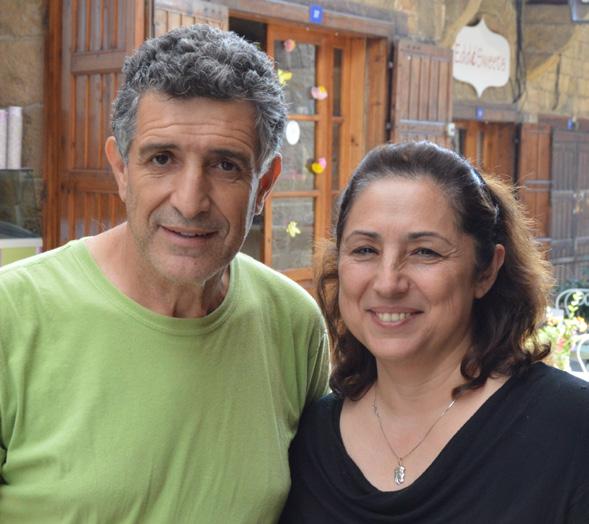
Chaouki and Maha Boulos
Summary of individual contributors
January-December 2015
Our Fellowship is supported by many individuals who give directly to CBFNC’s ongoing ministries. While the bulk of our financial support comes from church budgets, individual gifts have become an important source of funding.
CBFNC is grateful for all gifts, regardless of size, donor, or designation. We are faithful to use each gift to fulfill God’s mission in our state and beyond. Join other individuals by giving directly to the CBFNC Mission and Ministry Offering. For more information about how to support CBFNC financially, visit www.cbfnc.org/MMU.
Christine Smith ............................ Clayton
Stephen & Sandy Smith Wilmington
Stanley Spurgeon Raleigh
Rodney Stewart ......................... Gastonia
Doris Stocks High Point
Rick & Meg Stouffer Chapel Hill
Jim & Marion Summerville ... Chapel Hill
Carol & Charles Taylor Sunset Beach
Susan Taylor Chapel Hill
Phillip & Carolyn Tillman ...... Burlington
Kat Tinsley Lillington
Joe & Lalia Turlington Wendell
Norma Turnham............... Winston-Salem
David & Angela Vess Raleigh
Laura Anne Vick Raleigh
Wagner Agape Foundation ... McLeansville
Wake Forest University BSU Winston-Salem
once-in-a-lifetime
You’ve never seen anything like this before!
Coming to North Carolina on March 30th during CBFNC’s 2017 “As You Go” events is a comedy act like no other in the world. We’re bringing to you from New York City a Baptist minister, a Jewish Rabbi, and a Muslim storyteller who will perform together on stage at The Crossing in Hickory.
Susan Sparks, an ordained Baptist minister and Senior Pastor at Madison Avenue Baptist Church in NYC, is one of the performers. Reverend Sparks is originally from Charlotte and attended UNC Chapel Hill and also
Andy & Olivia Wakefield Buies Creek
Will Watson Winston-Salem
Mary Scott & D.L. Webster ........ Durham
Kimsey & Renea Welch Trent Woods
Western NC Baptist Network Asheville
Alta & Steve Whitt ...................... Raleigh
Amy Whittington Benson
Alan & Blanche Williams Durham
Jean Williams .................... Elizabeth City
Mark Williams Benson
Mary & James Williams Durham
Creely Wilson ...................... Franklin, TN
David & Ann Wilson Maryville
Hallie & Harry Wilson Zebulon
The Estate of Hilda Wilson .............. Dunn
James Wilson Winston-Salem
Wanda Wilson Weaverville
Billl & Kathy Wilson .............. Clemmons
Linda Winslow Jamestown
Thomas & Donna Wolcott Raleigh
James Wright ................................. Lenoir
Joyce Wyatt Raleigh
Ray & Melba Wyche Whiteville
Richard & Betty Wynne............... Raleigh
NC Baptist Foundation Endowment Fund: Blanceh Wall & William A. Brown
Hannah & Frank D. Hills
H. Manly Hocutt
Lynn Camp Odom
Elizabeth Simmons
opportunity
received a law degree from Wake Forest University, so she knows a lot about things in our state. Susan will also be our keynote speaker the next day at our Annual Gathering at First, Hickory.
Bob Alper, a Jewish Rabbi, has been performing stand-up comedy for years. Rabbi Bob can be heard on radio every week and was recently named “Honorary Comedic Advisor to the Pope.” Wow! What a combination!
Aman Ali, an American-born Muslim, is an award-winning storyteller, writer, and comedian. This will be Ali’s first appearance in North Carolina and he’s really looking forward to meeting folks from our great state.
The show will last about an hour and a half, ending with a Q&A session. After that, the comedians will hang out with the crowd until everyone leaves.
Tickets are $25 per person and seating is limited. Order your tickets at www.cbfnc.org. This could be a once-in-a-lifetime opportunity. Don’t miss it!
sing out!
by Rick Jordan, CBFNC Church Resources Coordinator
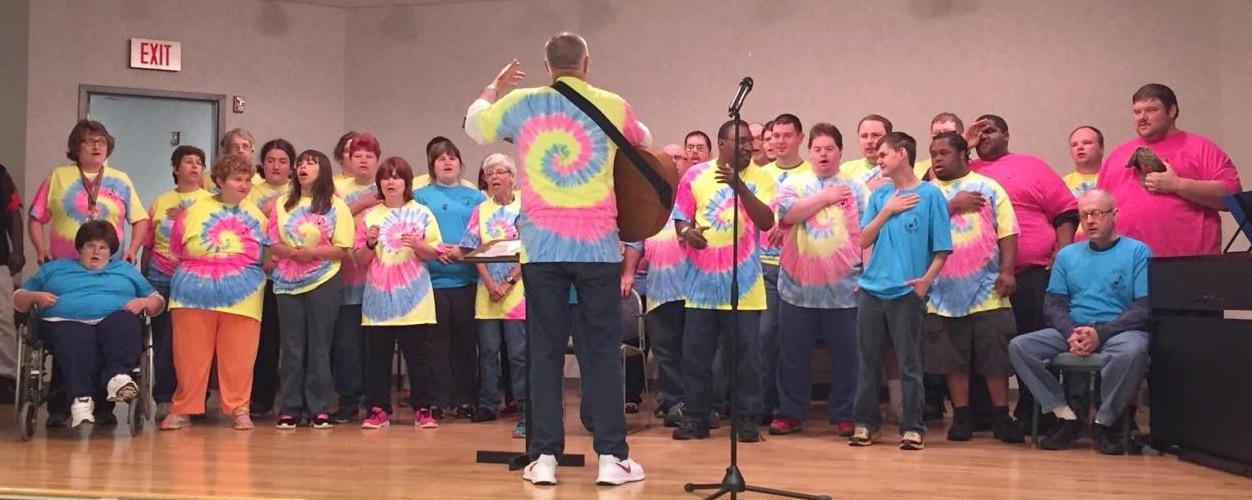
“Everyone deserves an opportunity to sing in a choir,” says Tony Spencer. Tony, along with Diane Nelson, leads Cheerful Voices, a community choir made up of adults with physical and neurological challenges and acquired brain injury. Since October 2014, Tony and Diane have driven every Tuesday morning to the Rutherford Life Services complex to lead a 45-minute rehearsal with approximately 30 new friends. “These people are more themselves than we are,” Tony says, referring to their honesty and spontaneity.
Recently, I was able to attend a choir rehearsal. I met Tony and Diane at First, Forest City, where they have worked together in the music ministry for a very long time, Tony as the minister of music and Diane as the organist/music associate. “I’ve had to look at his profile for 22 years,” Dianne laughs. Garin Hill, the church’s pastor met us before we left for the rehearsal. “I really liked the last issue of The Gathering about ‘As You Go.’ That’s really what this is. Tony and Dianne are reaching out into the community, being a positive Christian influence. They just happen to be on a church staff. So this isn’t directly a churchsponsored mission, but it is a model that I’d love to see taken up by more and more of our church members.”
At the Life Services building, the men and women find their nametags and find a chair. One woman approaches me, “Who are you?” “I’m Rick. I’m here to watch the choir rehearse.” “Oh. Guess who got employee of the month?” “You?” “Let me show you something.” She pulled a card from her purse that was full of well-wishes and affirmations as well as a gift card. “I’ve got to show this to Diane,” she said as she walked away.
Tony called the rehearsal to order, held up two fingers, then one finger, then three. With each change of the count (and with no words spoken) the choir members sat on the edge of their chairs, sat back in a relaxed posture, and then stood. Tony held up a picture with a random-looking squiggle on it. As he moved his finger along the page, the choir members followed the squiggle to sing “ooo” higher or lower. Later, Tony told me, “I use the same techniques in my church’s children’s choir. I keep things simple.
We all have a great time and singing makes us all better people.”
The choir rehearsed half a dozen songs, most from memory, including “You Have a Heart,” “This Land Is Your Land,” and “The Star-Spangled Banner.” In 2015, the choir sang for the CBFNC General Assembly. Last year, the choir sang the national anthem for sporting events, at civic clubs, and luncheons, and were featured at the North Carolina American Choral Director’s Association (ACDA) meeting. Tony is lining up this year’s concert schedule now. “This is a great partnership. Life Services takes care of all the logistics and it provides transportation to the events when they are during the weekday work hours.”
The choir was not a hard sell. Tony was already serving on the board of Life Services, an avenue of community involvement for him, as well as serving as the director of the Rutherford County Community Chorus. “In 2011, I wandered into an interest session at our national ACDA conference in Chicago about Joyful Noise, the featured chorus of 45 adults aged 17-70 with special needs. That morning, my idea about community singing changed forever. After that session, I contacted their director who told me all I needed to know to begin this as a sub-group of our local community chorus.”
In mid-verse of “This Land,” Tony stops the singing. “There is a rest there. That is time when no one sings. Some of you sang. Let’s try it again. You’re good enough musicians that I can be picky.” This is part of Tony’s goal – increasing self-esteem. It seems to be working. As the chorus stepped off the stage from singing at last year’s ACDA meeting, one of the men told Tony, “I bet none of those other choirs will want to sing now. We killed it!”
Christy Beddingfield, the activities director of the Life Center, said, “We’d always had a little holiday concert around Christmas, but Tony has taken us to a whole new level. And, this actually helps with discipline problems. Everyone wants to be on their best behavior so they can go sing in a concert.”
On the drive back, Tony confessed, “I’ve found that after every seven or so years of ministry, I need to reinvent myself. This choir has helped me to reinvent myself and to recharge my spirit.”
First Baptist Church
Hickory, NC
March 30 - April 1, 2017
Therefore, as you go, disciple people in all nations, baptizing them in the name of the Father, and the Son, and the Holy Spirit. Matthew 28:19 (ISV)
Leadership Institute | March 30
Laugh in Peace Comedy Tour | March 30
Annual Gathering | March 31
Divinity Student Experience | March 31 - April 1
All Are Called Forum | April 1 “ ”
Registration and information: www.cbfnc.org/asyougo2017
When it was mentioned during James Dunn’s funeral last summer that he was a champion of religious freedom, I realized that my interfaith starting point as a Baptist is religious freedom. As the head of the Baptist Joint Committee in Washington D.C., he worked alongside people of other religious traditions and his work was always to protect the religious rights of any group. His task was not that of a theologian wrestling with exclusivism, inclusivism, and pluralism. Instead, he was an ethicist concerned with the rights of any group to have freedom to worship. For him, being Baptist meant following in the footsteps of Roger Williams who recognized that as a religious dissenter in the new world, if everybody didn’t have religious freedom then no one had religious freedom. For Baptists, people must be able to choose their own faith.
Seeking to follow Jesus’ command to “love thy neighbor,” several churches are trying to figure out how to love our Muslim neighbors. When my class at church did a severalweek study using materials from Sojourners, our leader John Baxley asked, “To love my neighbor, do I need to make a conclusion about who is right and who is wrong?” His question echoed Jesus’ parable about the Good Samaritan who doesn’t ask if the man in the ditch is worthy of saving. As we are trying to figure out how to build bridges with our Muslim neighbors, we must approach the relationship not as a debate to win or argument about who is right, but rather a dialogue in which we listen to one another.
A few years back, some Resident Advisors at Wake Forest asked me to do a program on north campus about interfaith dialogue and I found that students were mostly interested in meeting an “actual” Muslim. At the time I was the faculty advisor for the Interfaith Council, so I prepared a presentation on dialogue and brought some bright students from the Interfaith Council. While the information on dialogue was helpful, students were most interested in hearing a fellow Wake student talk about his experience as an American Muslim.
building bridges
by Chris Towles,
Listening is one of the guidelines in Leonard Swidler’s Dialogue Decalogue. He also includes dialogue suggestions such as: participants describe themselves; participants do not speak for their entire tradition; participants are only required to speak out of their own experience; participants do not come with preconceptions of disagreement; the purpose is not to agree, but to learn about different viewpoints; participants do not disprove another’s faith in order to validate their own; and participants do not water down their own religion, but rather come authentically from their own background. When I meet with groups who want to engage in dialogue, I present these as our starting guidelines and ask what we would want to add or take away.
In January, a young woman from Campbell University told me that she had never met a Muslim and wouldn’t know what to say that wouldn’t be offensive. If you’re her, a book such as How to Be a Perfect Stranger gives readers an ability to learn about basic beliefs, practices, and expectations of those who visit various religious sites. As I’ve interviewed undergraduates for my doctoral work, many students report that there weren’t Muslims in their hometown so some churches may be in areas where there are few Muslim neighbors. Despite this, churches such as First, Elkin, have been doing a study on Islam as a first step to creating better relationships. Particularly since so much harmful misinformation exists, it is important to develop religious literacy. At First, Elkin, Imam Griggs, Wake’s Associate Chaplain of Muslim Life, told the congregation that an important step was knowing someone from another tradition. Knowing someone from another tradition meant being less likely to believe misinformation.
At Wake Forest
we started doing the Muslim/Baptist cookout, using halal beef for dishes such as hamburgers or chili. While there has not been an official agenda, my hope for the cookout is that Muslims and Baptists can get to know one another. People have preconceptions about both groups, and in their meeting, hopefully, they will know one another and will be able to respond to misinformation about Baptists and Muslims alike.
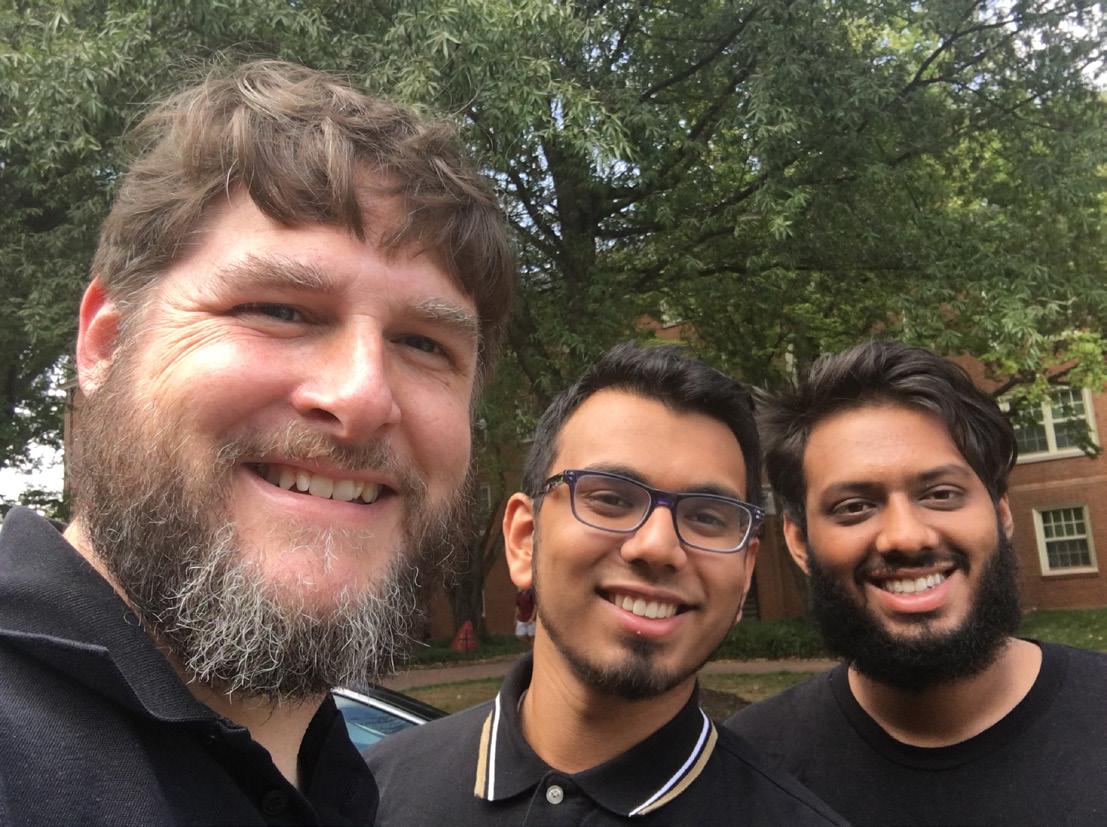
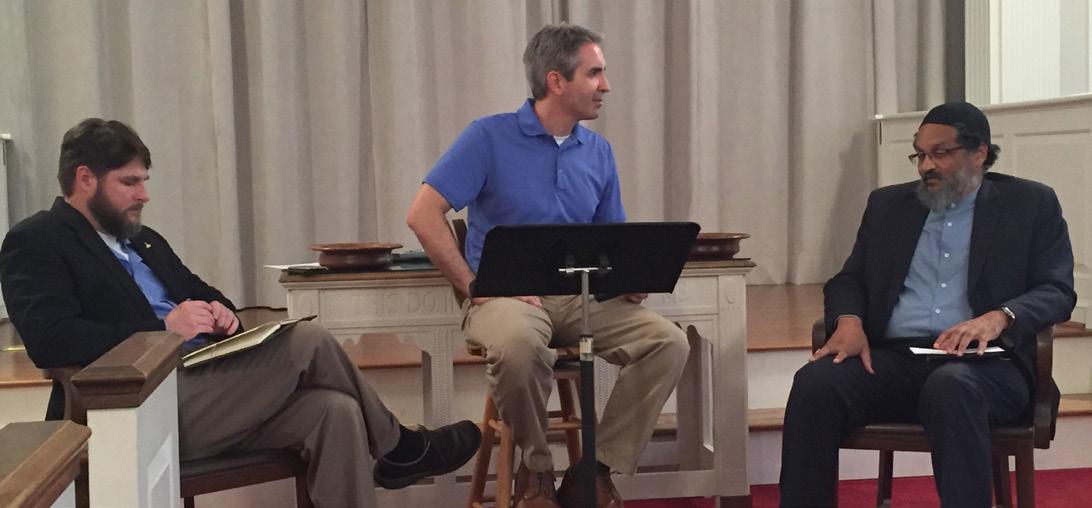
Imam Griggs (right), Associate Chaplain, Wake Forest University, discusses Islam with Chris Towles (left) and Pastor Rick Bennet (center).
CBFNC Campus Minister at Wake Forest University
Each summer CBFNC young adults serve in a variety of ways across our country and the world. We are spotlighting three of them who served through CBF project Student.Church.
by Wanda Kidd, CBFNC Colligiate
Engagement Coordinator
ministry of presence sharing meals, laughs, culture
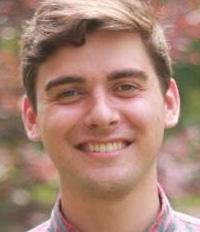
This summer Carter Benge, a student at Campbell Divinity School, and Gilbert Henry, a criminal justice major at Mars Hill University, served at First, West Yellowstone, MO, with Rev. Bennie McCracken. They said that they discovered more about ministry than they bargained for. Through the years, they both served in places with a variety of responsibilities, but this year was different. Their placement involved work not only in a church or with field personnel, but also work in secular jobs in West Yellowstone to experience bi-vocational ministry. They helped with various events: Kids Day in the Park, Sports Camp that doubled as a Vacation Bible School, a weekly chess club, and Ultimate Frisbee group. They led Bible studies, helped plan worship, and attended a Mormon meeting at Old Faithful. And, as they did that, they scooped more than 1,000 gallons of ice cream at the local creamery.
Benge said, “Throughout much of my life, I have seen ministry put on a schedule. Almost as if, ‘Ministry will happen from 10am to 2pm on Saturday.’ This has always seemed so constraining and overwhelming that I constantly wonder, ‘Does God want me to be a minister?’” By serving outside of the church, these two young men discovered that ministry is broader than their past experiences. This summer they had real encounters with God in-between their “scheduled ministries.” While playing pick-up soccer in the afternoons with the kids in the park or sitting at the local espresso bar, they began to see ministry beyond the walls of the church.
Those times weren’t planned ministry but happened in the cracks and crevices of life because of the ministry of presence. Ministry happened when they least expected it. Benge said, “Perhaps ministry is about being present, and I’ve realized, yes, God wants me to be a minister. I can go sit with a friend at their house. I can listen while we talk and drink coffee. I can go to their basketball game. I can walk with them through life. I can be present. My presence is ministry.” Missionally and bivocationally Henry and Benge’s lives were changed by their summer serving in West Yellowstone, MO.
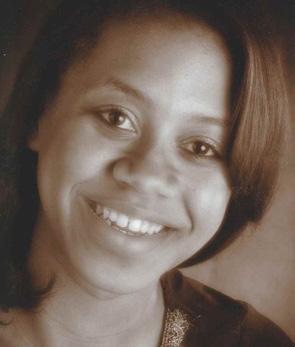
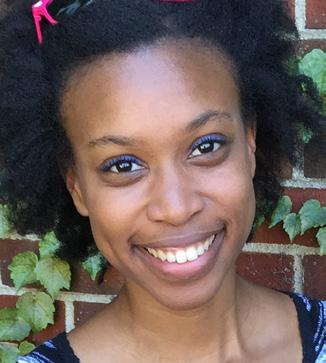
Jaime Fitzgerald is a student at Gardner-Webb Divinity School and has served with CBF from her home church to Puerto Rico. Her placement this summer, however, was unique. She served as the mentor, host, and tour guide for a team of Baptist university students from South Korea who wanted to learn about church and serving Christ in America. She helped translate the culture for both the students and the congregations they served. She was the continuity for the group throughout the summer of experiences.
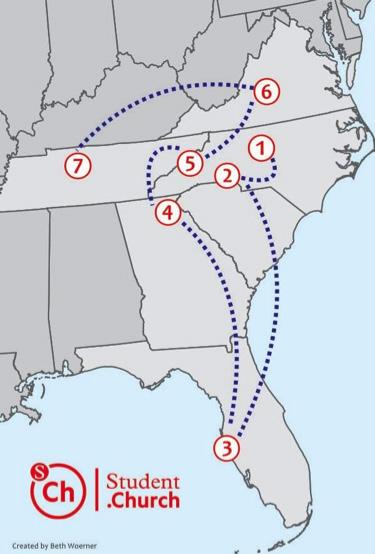
The summer of travel began with College Sessions at CBF Global’s General Assembly in Greensboro in June and ended with Selah Vie in Nashville in August. Each week the team traveled to a CBF church and served alongside the ministries of the local congregation. The team’s first week of service at First, Shelby, included assisting with different roles in Vacation Bible School and learning about the important work of Field Personnel Cecilia Beck.
The following week in St. Petersburg, FL, was filled with summer literacy camp at Church of the Beatitudes and the Micah Center. The team then traveled to First, Cornelia, GA, and served countless hours as part of an overnight camp for children as well as Vacation Bible School each morning. Mars Hill, Mars Hill, graciously hosted the team next, and the week was spent working with ministry partners of the church. This included serving with Lord’s Harvest for the Hungry feeding ministry of Western NC as well as at a local middle school helping to prepare for a new school year to begin. The team’s last week of service was in Madison Heights, VA, at Randolph Memorial Baptist Church. The week in Madison Heights was filled with a variety of experiences including teaching Korean culture to children and adults, serving food at a community lunch with Madison Heights Baptist Church, attending an American funeral, and learning about the funeral process in the U.S.
Upon the conclusion of their time in America, the team made their way to the CBF student event called Selah Vie, where they were able to debrief their summer and reconnect with people they had met along their journey. The summer was filled to the brim with learning and teaching of local church culture from both South Korea and the U.S. Meals were shared. Phrases were taught. Laughs were had. And most of all the light of Christ shined brightly.
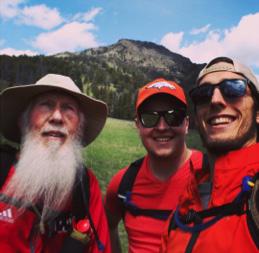
L-R: Benny McCracken, Gilbert Henry, and Carter Benge.
Scholarships
2016 CBFNC Theological Education Scholarship Recipients Each listing includes scholar name, hometown, current church membership, ministry goal, and school. To learn more about giving to theological education through CBFNC, please visit www.cbfnc.org.
Thanks to you ...
CBFNC has provided a tremendous level of support for theological education in our state and beyond.
25 students have received direct scholarship aid. These students are enrolled in divinity schools and seminaries in North Carolina and other parts of our country.
4 in-state partner divinity schools have received significant support that aids specific scholars and underwrites additional costs of delivering quality theological education.
$342,857 has been provided by congregations and individuals through the CBFNC Mission Resource Plan to support theological education.
Thank you for your partnership in preparing leadership for Christian ministry.
Scholars from North Carolina who attend Out-of-State or Non-Partner Schools
Alethia Chappell DeHay
Raleigh
Calvary, Waco, TX
Pastoral Ministry
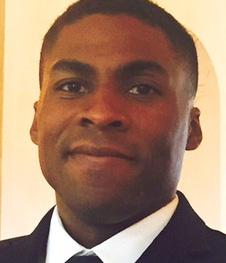
Truett Theological Seminary
Baylor, Waco, TX
Aurlbrio L. Fennell
Charlotte
Western Heights, Waco, TX
Political Ministry, Washington, D.C.
Truett Theological Seminary, Baylor, Waco, TX
Ronald Paul Hayes
High Point
First, High Point Ministry of Education
Baptist Theological Seminary at Richmond, VA
Ashley Hinkleman
Raleigh
Trinity, Raleigh
Overseas Missions
Fuller Theological Seminary, Sacramento, CA
Baptist University of the Americas
Alvaro G. Cisneros
Sanford Life Church of San Antonio, Texas Evangelism/Missions
Jonathan Juarez Hurtado
Marion
Primera Iglesia Ebenezer, Marion Congregational Ministry/Youth Pastorate
GARDNER-WEBB UNIVERSITY
M. Christopher White School of Divinity at Gardner-Webb
left column: Courtney Ballard Charlotte, NC
Pritchard Memorial, Charlotte Pastoral Ministry (Co-Pastorate)
Sarah Blosser Blackwell Jefferson City, MO Providence, Charlotte Ministry of Education
right column: Christi Hollifield Marion, NC First, Marion
I was recently asked about our ministry to newly arrived refugees, “But what do you do when they don’t speak English?” Good question. Well, I do a lot of smiling and pointing with my hand not my finger. Fingers can get you into trouble sometimes. We both laughed. In this article, we will discuss some of the basics about sponsored refugees and ways the Beloved Community is serving them.
by Marc Wyatt, CBF Advocate for Internationals in Research Triangle
Who is a refugee? The UNHCR defines a refugee as “a person who owing to a well-founded fear of being persecuted for reasons of race, religion, nationality, membership of a particular social group or political opinion is outside the country of his nationality and is unable or, owing to such fear, is unwilling to avail himself of the protection of that country; or who, not having a nationality and being outside the country of his former habitual residence as a result of such events, is unable or, owing to such fear, is unwilling to return to it. There are approximately 50 million refugees in the world today.
One of the best ways to meet a refugee is to volunteer with a local refugee agency in your area. Welcome House is a place for refugee families to live temporarily while awaiting long-term housing of their own in Raleigh. We work closely with agency case workers and translators as we provide a ministry of welcome and hospitality to our refugee guests. Welcome House opened in October of 2015. We welcomed our 100th guest over the Labor Day weekend. One in three refugees relocated by our partner, the US Committee for Refugees and Immigrants, are guests of Welcome House. This is mainly because finding clean and affordable housing for refugees in the Research Triangle is difficult when you consider a refugee has no credit history or job in the U.S. when they arrive. On the promise of an initial rent support period, few landlords are willing to open their properties to refugees. It is worth stating, however, that 95% of USCRI refugee clients are financially self-sufficient within 16 weeks of arrival.
As Welcome House guests arrive we provide a brief orientation to the apartment and an introduction to our Hospitality Team. We display pictures of our team on a bulletin board so guests may begin to familiarize themselves with who will be in and out of the house during the coming week. By working with the agency translators we begin new friendships with each new guest.
Our friends from Greystone, Raleigh, have adopted a local after-school program that meets in an apartment complex that is frequently used by refugee agencies. Several saints from the church volunteer weekly helping refugee children with their homework because their parents often have difficulty with the language. While adults do take longer to learn new languages, children
tend to grasp what they need very quickly. The relationships our church friends are making through the after-school program provide bridges to the whole family.
Sometimes developing friendship goes deep. Joanne and Loraine have taken the sacred role of American Grandmothers to the refugees they have become friends with. Joanne connected when her church furnished an apartment for an arriving refugee family. She later became a Medical Mentor to the family, who has a child with a special medical condition.
For Loraine, her relationship started when she opened her home to provide a temporary room for rent to a young refugee woman. Soon into their arrangement, Loraine became aware that Marthe was uncomfortable calling her by her first name. In her culture, it is impolite to call an elder by their first name. “Well, we have to work this out,” Loraine told Marthe, “What would you be comfortable calling me?” “May I call you Grandmother?” asked the young African woman. This caught Loraine by surprise. She thought about it for a moment and then said, “If you do then I’m never letting you go.” On that day both women became family for life. Marthe is getting married this fall. She will move to Missouri to join her husband, a young man she has known since childhood back in her country. We had the privilege of enjoying a wedding shower recently hosted by Loraine’s church, Temple, Durham.
It is our goal as missionaries working in NC that local Christians and churches will engage in cross-cultural ministry. For some, it will mean stepping fully into the role of missionary as a member of a local church by volunteering with a local refugee agency. For others, it will mean incorporating short-term, cross-cultural missions into their mission discipleship program through day trips, projects and service features like Operation Inasmuch.
We believe the time and opportunity is right to fully embrace our new international neighbors in the name of Jesus. The Bible points to this mission in Acts 17:24-27 as part of God’s plan for the nations to find him. We are seeing the Spirit at work within the ministries of local Fellowship congregations across North Carolina. There is an intentional movement of embrace toward our new refugee neighbors growing. The good news is that English is not required.
Donate to CBFNC today! www.cbfnc.org/give
Choose a particular ministry, our Mission & Ministry Offering, or undesignated.
Visit our website, www.cbfnc.org to find a listing of our staff and leadership
Ministers on the Move
Our encouragement and support go to the following ministers who have recently moved:
Justin Bell to First, Elkin, as Associate Pastor
Tony Brown to Northwest, Winston Salem, as Congregational Minister
Lee Canipe to Providence, Charlotte, as Senior Pastor
Patrick Cardwell to Edenton, Edenton, as Associate Pastor
Gay Collins to First, Elon, as Minister of Music and Children
Daniel Cromer to Spilman Memorial, Kinston, as Pastor
Lauren Efird to Greenwood Forest, Cary, as Senior Pastor
Woody Freeze to Lowe’s Grove, Durham, as Senior Pastor
Sheila Gibson to Crabtree, Clyde, as Minister of Youth and Children
Phil Hall to Hominy, Candler, as Minister for Students and Community Outreach
Becca Jones to First, Wilmington, as Minister to Children
John Miller to First, Rutherfordton, as Minister of Youth and Outreach
Abbie D. Mullens to The Memorial, Greenville, as Associate Pastor – Minister of Family, Formation and Community Engagement
Jennifer Pelissero to Durham Memorial, Durham, as Minister of Discipleship and Children
Courtney Stamey to First, Greensboro, as Pastoral Resident
Taylor Vancil to First, Mount Holly, as Minister of Music
Christa Warise to Westside, Winston Salem, as Pastor
When you make a move or know of someone who has changed places of ministry, let us know by e-mailing us at cbfnc@cbfnc.org.
For assistance to search committees and ministers seeking vocational discernment, visit our reference and referral page on our website at www.cbfnc.org or call (336) 759-3456 or (888) 822-1944.
CBFNC Financial Report
August 2016 Contributions
Undesignated - $89,519
Designated - $152,848
September 2016 Contributions
Undesignated - $100,501
Designated - $145,082
April 2016 - March 2017
Monthly Undesignated Goal: $114,432
Take a look at CBFNC’s blog, Thoughts from across our state ... cbfnc.wordpress.com.
Would you like to contribute? E-mail smitchell@cbfnc.org.
Coordinator Visits August - September 2016
First, Elkin
First, Goldsboro
First, Greensboro
First, Lumberton
First, Morganton
Mount Carmel, Chapel Hill
Northwest, Winston-Salem
Pauline, Four Oaks
Providence, Hendersonville
CBFNC ministry coordinators are available to visit your church to speak, preach, teach, consult, lead and minister in ways appropriate to your context. Contact the CBFNC office for more information.
go neighboring
by Dorothy Clark, Person County Missions in Roxboro
In March 2016 I was privileged to present a workshop, “Re-Thinking Local Missions,” at CBFNC’s Annual Gathering. I was asked to reflect on that workshop and share thoughts on the topic.
As Christians, we participate in mission work because we are compelled to do so. Throughout the Bible, we are reminded to help the poor, widows, imprisoned, and the hungry. The fact is that any person, civic group, or agency can perform these same tasks, and there are plenty who do an outstanding job. However, I believe that as missionaries, as agents of the church, our engagement with the people we serve should be of a different nature. Jesus’ teaching of the Greatest Commandment was the beginning of my re-thinking local missions:
“You shall love the Lord your God with all your heart, and with all your soul, and with all your mind.”
This is the greatest and first commandment. And a second is like it: “You shall love your neighbor as yourself.” On these two commandments hang all the law and the prophets. Matthew 22:37-40 (NRSV)
With that passage in mind, the workshop was built around the following idea: what if, instead of going “to serve the poor,” “to feed the hungry,” or “to help the needy,” we went instead with the idea of helping a neighbor Thinking and speaking of our work in terms of a person’s present state obscures the person and highlights their condition. Further, it maintains a distance, a barrier if you will, between “us” and “them.” It keeps us from seeing “them” as someone just like us. On the other hand, offering assistance to a neighbor who is temporarily poor, hungry, or in need, encourages connection with a person and not a label. It also acknowledges that with God’s help, their present condition can change.
Why should we reframe our thought about local mission as neighboring, as I’ve taken to calling it? Going back to the verses from Matthew, we are told to “love your neighbor as yourself.” Love comes from getting to know a person, from developing a relationship. Think of the people in your community that you consider neighbors. They might not necessarily be the people next door; they are the ones you talk to, spend time with, the ones you share a laugh with, no matter their physical proximity. I suggest that when we go neighboring, we are sharing the love that Jesus talked about. We are also laying a foundation to build our congregations. Consider whose invitation to attend worship services you are more likely to accept, a neighbor’s – someone you know - or a stranger who comes knocking at your door? I work with Person County Missions in Roxboro, an ecumenical group of churches who visit housing communities spreading “Jesus love.” The first time we knock on a person’s door, we do so with a cake in hand.
People are much more inclined to talk when your opening line is “I’ve got a cake for you!” We can then begin the work of creating opportunities to build relationships.
We should not overlook the spiritual growth that comes from reorienting our focus to helping neighbors instead of helping the needy. At the August meeting of Durham Congregations in Action, I listened as two insightful teenagers gave a fresh perspective on exactly what I had tried to convey in the workshop. Their report was a reflection about what they learned from participating in the Youth Summer Service Week. Working closely with people who began as strangers, they were able to “get a personal connection.” Prior to spending time with the people they helped, one admitted that she might have been afraid if she just passed by the neighborhood. But working with people and getting to know them, according to the teen, you “get to know why you are doing what you are doing.” I can’t think of a better testament for neighboring. When we reframe our thoughts in this manner, we don’t wait to do missions. Instead, we begin to see neighboring opportunities all around us!
Dorothy Clark is a 2016 M.Div. graduate of Duke Divinity School and a 2015-2016 CBFNC scholar in the Baptist House of Studies.
888-822-1944 www.cbfnc.org
Return Service Requested
Upcoming Events
Children’s Mission Days
November 5, 2016 - First, Winston-Salem
November 12, 2016 - First, Boone
November 12, 2016 - Zebulon, Zebulon
November 19, 2016 - Oakmont, Greenville
Congregational Coaching
November 14-15, 2016
Christmount Conference Center, Black Mountain
Refugee Roundtable
November 19, 2016
Providence, Charlotte
Youth Ski Retreat
January 20-22, 2017
Winterplace, WV
Mid-Winter Collegiate Retreat
January 28-29, 2017
Camp Mundo Vista, Sophia
Youth Choir Festival
March 3-4, 2017
Knollwood, Winston-Salem
Children’s Choir Festival
March 11, 2017
First, Southern Pines
Foundations of Christian Coaching (501)
March 13-14, 2017
CBFNC offices, Winston-Salem
2017 CBFNC Gathering “As You Go”
March 30-April 1
First, Hickory
Leadership Institute: March 30
Laugh in Peace comedy tour: March 30
Annual Gathering: March 31
“All Are Called” Forum: April 1
Establishing a Dynamic Coaching Relationship (502)