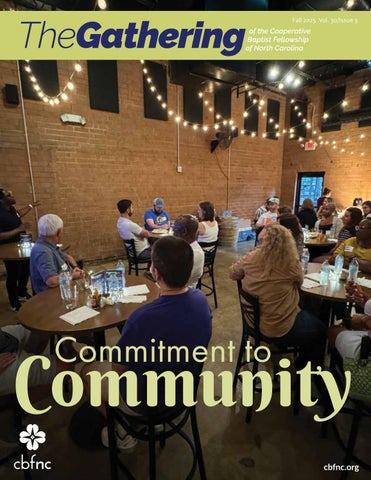
Community Commitment to



By Larry Hovis CBFNC Executive Coordinator
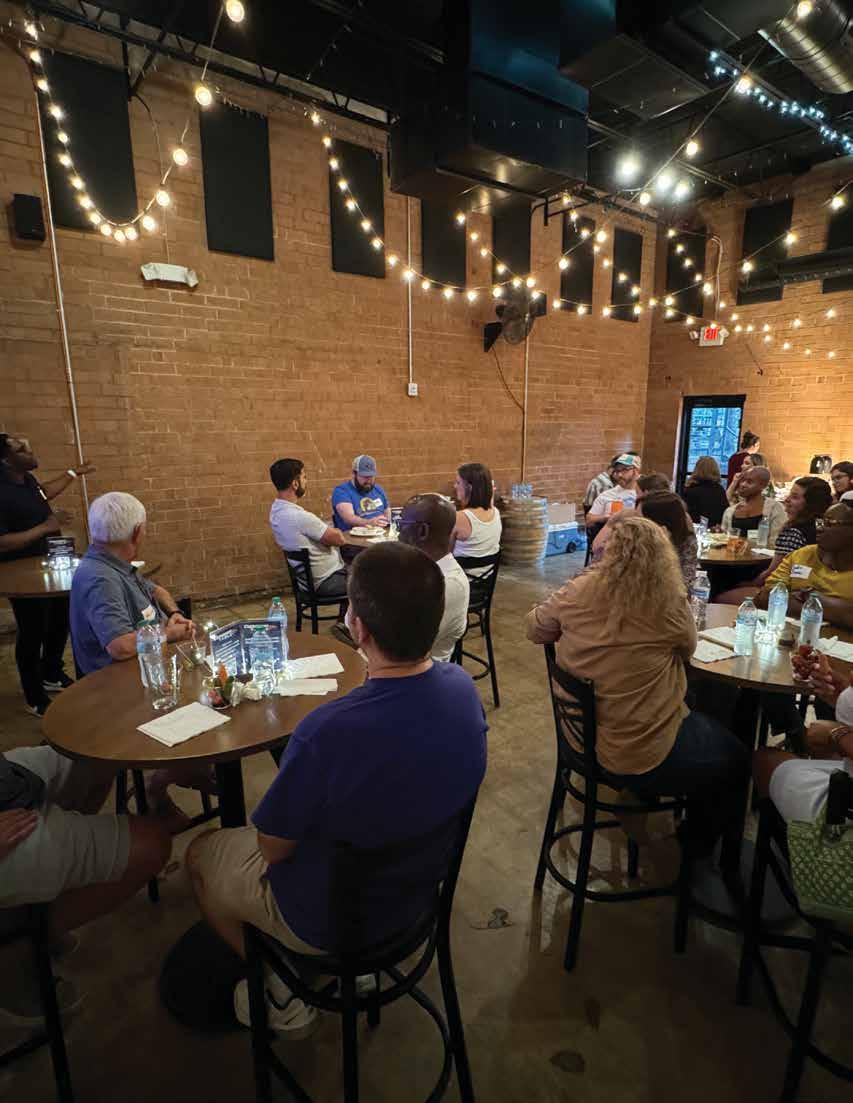
More Than Local: Our Commitment to Community
This article is the second in a series on CBFNC’s Three Overarching Commitments. In this issue we focus on A Commitment to Community:
“Be devoted to one another in love” (Romans 12:10).
As conveyed in our name, the word Fellowship points toward our deep desire for connection. We seek that beautiful Scripture experience expressed by the word koinonia. CBFNC exists to support connections among congregations and Christians, to facilitate conversation and to create missional partnerships and networks within our fellowship, as well as the broader Christian and religious communities. We need to live in fellowship and partnership with one another because it bears witness to the unity of the body of Christ. We need one another in order to grow in faithfulness and effectiveness; innovation and creativity flourish more readily and abundantly in community. We desire to build community among the congregations, individuals and partners of our fellowship, so that we can be agents of God’s reconciliation in the world.
Many Cooperative Baptists find resonance with the 1963 version of “The Baptist Faith and Message.” We do not see it as a creedal statement requiring doctrinal conformity but as an important voluntary witness of shared Baptist faith. It includes the following definition of The Church:
A New Testament church of the Lord Jesus Christ is a local body of baptized believers who are associated by covenant in the faith and fellowship of the gospel, observing the two ordinances of Christ…[It] is an autonomous body, operating through democratic processes under the Lordship of
Jesus Christ…The New Testament speaks also of the church as the body of Christ which includes all of the redeemed of all the ages.
In contrast to other Christian groups, which use the word “church” to refer to denominational organizations beyond the local church, we Baptists reserve that term for the location congregation, and to the more nebulous “universal church.” At the same time, we recognize the importance of experiencing Christian community beyond the church, housed in tangible organizational structures.
We Cooperative Baptists champion our autonomy, yet we are most definitely not Independent Baptists. Autonomous congregations, their individual members and leaders need to be in voluntary relationship with other autonomous congregations—both to share the gospel in the world, but also for mutual support.
CBF (in North Carolina and globally) places a high value on fostering Christian community beyond the local church. Here are some of the ways we seek to do that.
Annual Gathering
The CBFNC Annual Gathering (and similarly CBF Global’s General Assembly) brings Cooperative Baptists together from all over for worship, fellowship, training, resourcing and support. It is a reminder that we do not serve Christ in isolation, but in community with others who share our values and goals. God’s mission is bigger than any single Christian or church. It is an opportunity to be equipped for local ministry as well as to celebrate shared ministry.
Regional Fellowships
For some, it is difficult to travel to large gatherings in another part of the state or to another state. Regional connections are vital for networking, support and local missional collaboration. Some regional expressions are highly organized, such as the Western North Carolina Baptist Fellowship. Others are more ad hoc, but still provide meaningful connection.
Retreats and Conferences for All Ages
A significant amount of CBFNC staff time is spent planning and hosting retreats and conferences for ministers, other church leaders, youth and young adults. These events are held throughout the state, at conference centers (i.e.
See “More Than Local” on page 4.
More Than Local, cont’d.
Caswell or St. Francis Springs) and local churches. Their express purpose is training and equipping, but fellowship is an important byproduct where relationships are developed and strengthened.
Peer Learning Groups
Many CBFNC clergy are blessed by regular gatherings of clergy devoted to the personal, spiritual and professional development of the members. These groups are often regional, though some are geographically broader. They often bring together ministers with a shared role (i.e. pastor, youth, music) or a common history (i.e. graduates of the same seminary). For many ministers, these groups are life-giving and essential to their vocational wellbeing.
Ministry Team Service
CBFNC has many opportunities to be involved and serve our fellowship through standing and ad hoc ministry leadership groups. Ministry Teams not only help guide and shape the work of our fellowship, but they foster meaningful community among the members.
Missional Engagement
Missional engagement opportunities, within and beyond our state, also serve as avenues of community building. Sometimes these opportunities are facilitated by CBF field personnel; at other times, we work with other partners to offer missions opportunities.
News & Notes
Staff Updates
CBFNC Communications
CBFNC has greatly expanded its communication resources in recent years. Through print, digital and social media, CBFNC seeks to tell the stories our fellowship in its various expressions—both individual congregations and our shared ministries. Learning about the people, churches and ministries we share strengthens our communal bonds even when we aren’t physically together.
As a teenager, my church took our youth group to summer camps at Caswell and Ridgecrest. These mountaintop experiences were my first taste of Christian community beyond my local church. In college, I participated in another church and the Baptist Student Union. My understanding of Christian community expanded. In seminary, in subsequent service to other churches, and in denominational life, my Baptist community grew even further. Though I was a member of the churches I served, the community that supported me and fostered my discipleship and vocational development was far more than local. It’s no exaggeration for me to profess that were it not for the Baptist community beyond the local church, I would not be a vocational minister today.
I give thanks to God for the local church, where I first experienced Christian community. But I also give thanks to God that church is more than local. And I’m thankful that CBFNC is committed to fostering Christian community within and beyond the local church.
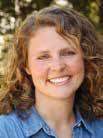
CBFNC is excited to share about two recent staff updates. Amy Lee Gallaher’s role has been expanded and she now serves full-time as director of Programs and Missions. In this new full-time role, she will continue to coordinate the Annual Gathering and work as assistant director of the Helping Churches Thrive program. Her new responsibilities include coordinating missions ministries and church resources. She began this new role in September.
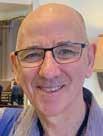
Daniel Sostaita joined the CBFNC staff in a contract role as the new associate director of CBFNC Red Latina. He serves in dual ministry roles with CBFNC and as pastor of Iglesia Cristiana Sin Fronteras (Christian Church Without Borders) in Winston-Salem. Daniel is widely known within Red Latina and CBFNC. He has been involved in CBFNC life in a variety of ways, including serving on the Red Latina Ministry Team and the Coordinating Council.
As associate director of Red Latina, Daniel assists Santiago Reales, director of Red Latina, in the areas of support for new congregations, strengthening connections with related organizations and other delegated functions. He works closely with CBFNC staff and leaders to help maintain consistency with the organization’s goals.
2024–2025 Video Impact Report
Thanks to the financial support from many generous churches and individuals, CBFNC is able to fulfill the mission God has assigned to us. It is because of these gifts, CBFNC was able to make a great impact for God’s kingdom in our state and world in 2024–2025. This year, we are sharing highlights of that impact in a Video Impact Report. You may view the video by scanning the QR code with your smart phone or on our website at cbfnc.org/about/finances.
Daniel Sostaita
Amy Lee Gallaher
– Gal. 5:1; Heb. 10:24

Annual Gathering
March 19–20, 2026
Hayes Barton Baptist, Raleigh
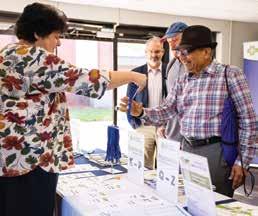
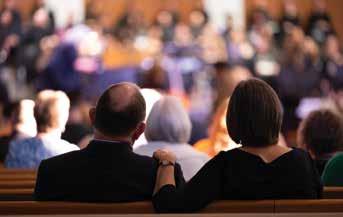
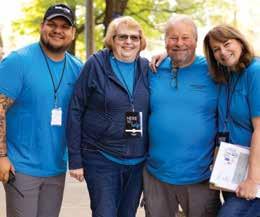
YOU’RE INVITED TO BE A PART OF CBFNC’S ANNUAL GATHERING —two meaningful days of learning, fellowship and renewal. Come connect with Cooperative Baptists (clergy & laity) from across our state, gaining fresh insights for ministry and leaving inspired for the work God has called for you and your church.
Breaking Bread, Building Community
CBFNC Grant Helps Churches Partner to Launch a ‘Fresh Expression’ of Church
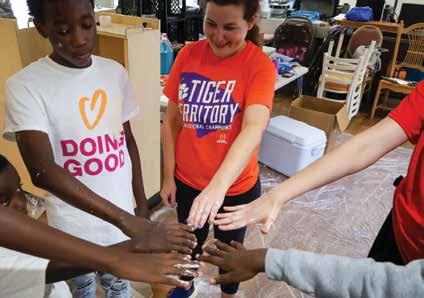
How does the church reach people who have experienced church hurt and trauma? How do we fulfill our calling as disciples to those who, for any number of reasons, may not ever feel comfortable entering traditional church spaces?
Two Charlotte churches are exploring answers to these questions with Common Table Charlotte, a new ecumenical ministry launched in April 2024 with funding from the Cooperative Baptist Fellowship of North Carolina’s Missions Engagement Grant.
It began as a small spark of an idea between staff and members of CBFNC partner church St. John’s Baptist and St. Stephen United Methodist Church in Charlotte. Across denominational lines, both of our churches share a lot in common. We both prioritize missions, community outreach and engagement, and we agree on the roles of all people in leadership and the life of the church. The UMC is also heavily investing in what they call “fresh expressions” of church. So, we have been perfect partners for this new ministry, aligning on the importance of building a new kind of welcoming, affirming and outward-facing evangelistic vision for our churches.
We’ve seen the news reports that claim the church is dying or declining, but among our friends and acquaintances our age, what is really happening is a yearning for reimagination and rejuvenation. Even if it seems like people are giving up on the church, they aren’t giving up on

God or their desire for genuine community. Common Table has provided a chance for people to connect, make new friends and have conversations about the things that really matter—their lives, their faith, and their relationship with God and others.
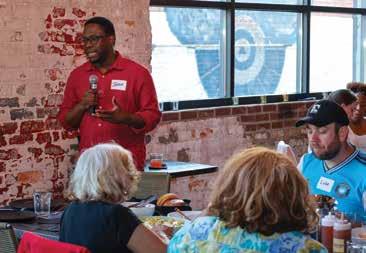
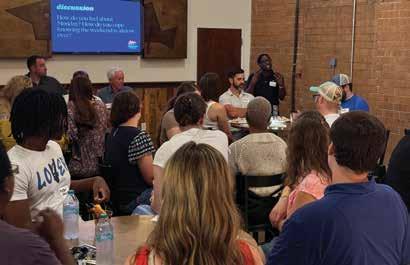
We gather once monthly for dinner at a variety of restaurants and breweries in popular neighborhoods in Charlotte. We offer a free meal and a guided conversation on topics like Community, Relentless Love, Vulnerability and Coping Mechanisms. We don’t shy away from Jesus, but we aren’t pressuring people to believe a certain way either; we’re valuing relationships first over any kind of rigid dogma. One dinner theme — Loving and Serving the World Well — preceded an open invitation to join us at a community service project. We want people to engage their faith internally, but also externally by putting their faith into practice.
So far, we’ve interacted with over 130 individual people, with more than 70 attending at least one dinner. More than two dozen repeat guests are forming the core of a growing community. We see God working in genuine ways, bringing together a varied group of people of all races and ages, even while folks from their mid-20s to late-30s tend to be uniquely drawn to our dinners. Their stories are powerful: People with church hurt who are finding a safe space
See “Breaking Bread, Building Community” on page 7.
by Matt Comer Deacon at St. John’s Baptist, Charlotte and leader at Common Table Charlotte
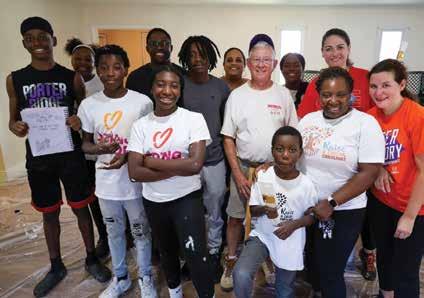
Participants from Common Table Charlotte serving together throughout the community.
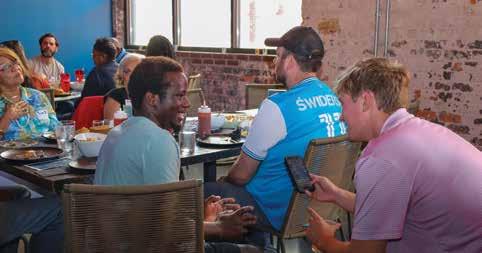
Monthly gatherings include meals and faith-filled conversations.
Breaking Bread, Building Community,
cont’d. from page 6.
to land. People who are reigniting a disengaged faith. Those who have wandered and searched for a comfortable place to grow and engage their faith.
Common Table has affirmed what we hoped it might — when you invite people to an open, common table to experience a shared meal, they’ll come ready to engage their faith, build new relationships and grow in God’s grace.
Learn more about Common Table Charlotte at www. commontableclt.com.
CBFNC JACK & MARY LIB CAUSEY FUND
Scholarships & Grants for Clergy and Laity
Did you know that CBFNC offers scholarships and grants for both clergy and lay leaders who are continuing their education and training to enhance service to local churches?
SCHOLARSHIPS AVAILABLE
For Graduate Programs
Applications for the 2025–2026 academic year are now being accepted. The maximum scholarship for degree students is $3,000.
GRANTS AVAILABLE (to clergy & laity)
For Continuing Education & for Special Programs
Grant applications accepted throughout the year. Amount will vary based on scope & cost of each program.
Serving Together for Children’s Missions Day
Oby Lou Ann Gilliam CBFNC Ministerial Equipping Director
n an early spring day in March of this year, in the Hayes Barton Baptist Gym in Raleigh, the sound of children squealing during dodgeball was truly a joyful noise. These happy sounds signaled the return of the first CBFNC Children’s Missions Day since the COVID-19 pandemic.
Before this event, the Children’s Ministry Team continued their good work, holding regular meetings over Zoom. Together, they curated curriculum resources for CBFNC churches and hosted a mental health webinar in conjunction with the Youth Ministry Team. While creating these resources, they continuously worked for a return to an in-person event.
Benson Baptist Church Associate Pastor and 2024 team Chair Will Raybon shared, “Reviving the Children’s Missions Day was a priority for our team. We wanted the children of our churches to have a day designed specifically for them.”
Everything finally came together, including the decision by the team to adopt the 2025 Annual Gathering theme, “Serving Together,” as the theme for the Children’s Missions Day.
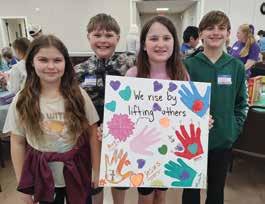
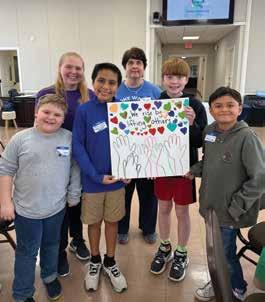
With 60 participants representing 10 churches, the event struck a perfect balance of learning and fun in serving together. Bible study and worship focused on the story of the boy who participated in Jesus’ miracle of feeding the 5,000. Additionally, the children learned about Hayes Barton’s Backpack Buddy ministry, which helps feed children when they are not in school. In response, the children served together, creating cards and packing treat bags to be used in the ministry. The day ended in celebration with an ice cream party.
Along with the planned lessons, a subtle lesson was taught in “Serving Together.” The Children’s Ministry Team effectively modeled the theme with each team member contributing their talents of organization, leading worship, storytelling and dodgeball throwing. The return of the Children’s Missions Day proved that it is indeed a joy to serve together!
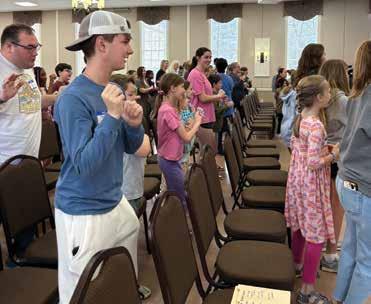
The Next Children’s Missions day is scheduled for Saturday, November 8, 2025 at First Baptist, Statesville. Learn more about it and find children’s resources in the Resource Library on the CBFNC website at cbfnc.org.
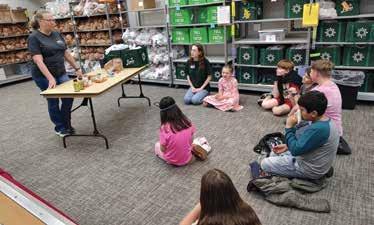
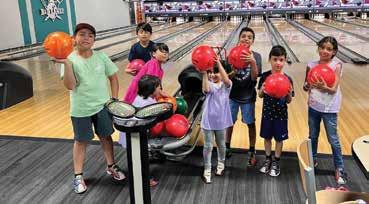
Fun and learning about serving during Children’s Missions Days.
Church Spotlight: Snyder Memorial Fosters Community Among Refugees in Fayetteville
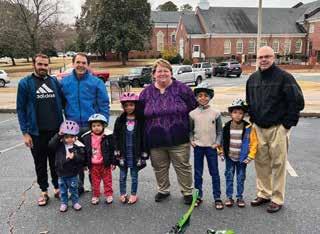
Ibecame the minister of Missions at Snyder Memorial Baptist Church in Fayetteville in 2006. About that time one of our church members had heard about a family in Iraq who needed a place to stay in the U.S. Eva had helped our military in Iraq and one day her son was shot. After that, she and her son were desperately trying to get to the U.S.
Our church had a mission house that was being used for groups who needed a place to stay and where we hosted the Cumberland Interfaith Hospitality Network (CIHN), a group that used churches to host homeless families. We brought Eva and her son here and they lived in our mission house for almost two years until the rest of their family could come to the U.S.
Fast forward to 2016 when I went to the CBFNC Annual Gathering and was encouraged to visit Welcome House Raleigh. I began to dream of how Snyder could do this with our Mission House since the CIHN had found other transitional housing for homeless families.
It just so happened that the young man, Jawid, who was living at Welcome House Raleigh wanted to move to Fayetteville to join the army at Fort Bragg. So, we moved ahead and brought Jawid to live here, in Snyder’s Mission House.
A few months later, one of our members who served in Afghanistan shared with me how he was trying to help get his Afghan translator to the U.S. and wanted to see if we could help that family out. So again, we did.
by Susie Reeder
When we heard about all the Afghan refugees coming to the US in 2021, we decided to clean up our Mission House and officially make it a Welcome House—Welcome House Fayetteville. But one thing we learned was that the last family that arrived didn’t want to stay here because the wife didn’t have any community.
Snyder owns seven homes in the neighborhood around the church. We decided to take two houses beside the Welcome House and make them Ministry Houses, longterm rentals with affordable rent. The idea is that this will help create community.
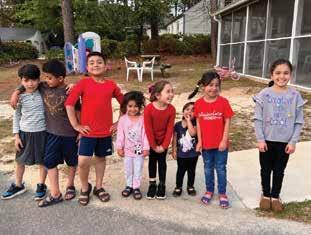
All the families who have lived there have become friends and the children all play together. There are families in our church that engage our Ministry House families, taking them places such as the zoo. The best part has been watching the mothers become friends. They need that. We all need community!
Minister of Missions at Snyder Memorial, Fayetteville
Members from Snyder Memorial help create beloved community for refugee families in Fayetteville.
Welcome Network Provides Connections Across State Lines
CBFNC’s Welcome Network team, along with members from several churches, hosted a tour in July of the Network’s ministries for an intergenerational group of friends from Oakland Baptist and Pleasant Ridge Baptist Churches in South Carolina. The group also spent time with Welcome House Ardmore in Winston-Salem, Hope Valley Baptist and Temple Baptist Churches in Durham and First Baptist Hillsborough. The team from South Carolina received hospitality and lodging at Trinity Baptist in Raleigh, which is an Encourager Church of Welcome House Raleigh. It was true koinonia experience over the course of four days!

by
Leigh Reynolds, associate minister for spiritual growth and missions at Oakland Baptist in Rock Hill, South Carolina, observed, “The reflections below demonstrate that this brief but intensive experience left lasting impressions on hearts and minds, challenging each of us to reconsider our understanding of hospitality, community and faithful discipleship in an increasingly interconnected yet fragmented world. ”
“The experience proved to be more than an educational opportunity; it was a profound encounter with the gospel lived out in practical, tangible ways. We witnessed what it means to be the hands and feet of Christ in a world marked by displacement and division. We saw how authentic Christian love transcends cultural and linguistic barriers, creating spaces where strangers become neighbors and where the biblical call to ‘welcome the stranger’ takes on vivid, personal meaning.”
My experience was deeply moving and eye-opening. To hear the stories of refugees in the news is compelling, but to immerse yourself in their stories is life-changing. Putting a face and a name to a story personalizes the experience and changes perspectives and hearts. In listening to the journeys of families and individuals, the common thread was that their paths were often marked by hardship, resilience and hope. I’ve gained a profound understanding of the challenges they face, from navigating legal systems to adjusting to a new culture and rebuilding their lives from scratch. These experiences have not only deepened my empathy but also strengthened my commitment to advocating for dignity, support and opportunity for those seeking a new beginning in America. – Karen, Oakland Baptist
In a climate that leads us to focus on our wants and desires, being introduced to Welcome House was a reminder of what Jesus modeled. I saw committed, longterm volunteers and leadership making a difference in the lives of their ‘neighbors’ by being the ‘hands and feet’ of Christ. I saw genuine gratitude in Welcome House residents, pride in their accommodations and—maybe most significantly—thankfulness for being welcomed as a neighbor to a caring community. It was a powerful reminder of what Christ expects of us. – Jimmy, Oakland Baptist
Our time with CBF Field Personnel Marc and Kim Wyatt was heartwarming and inspiring. We had an opportunity to visit some of these homes, and it was obvious the Wyatts make sure each family receives not only the essential knowledge for navigating their new life in America but also the practical household items and resources that transform a house into a home. This experience was more than I ever thought it could be. Blessings and more blessings are coming to the Wyatts. – Arlene, Pleasant Ridge Baptist
Our trip to Welcome House was educational and inspiring! We studied scripture relating to immigrants, talked to refugees who had fled their native countries due to danger or persecution and enjoyed hospitality in the Welcome House from an Afghan refugee who prepared a feast for us. I especially enjoyed playing with children from many different countries and discovered a universal language in the form of bubbles, balls and sidewalk chalk! – Julie, Oakland Baptist
We learned how hard it really is for refugees to get to the United States and get settled. One shocking statistic we learned is that only .01% of people seeking safety from their current situation ever make it to any of the countries welcoming refugees. – Graham & Nathan, Oakland Baptist
Marc Wyatt CBFNC Welcome House Raleigh Ministries Director
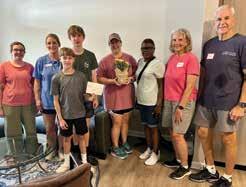
Friends from South Carolina tour Welcome House Raleigh.
Free & Faithful Legacy Society
Member Testimonial
The Free & Faithful Legacy Society honors those who make a planned gift to CBFNC through their will or estate plans. Those who include their local church and CBFNC in their legacy planning, help ensure that the values we hold dear—those of free and faithful Baptists— will thrive for generations to come.
Becky Keesler, a lay leader at First Baptist in Mount Airy and past CBFNC moderator, shares below about why she decided to make a planned gift to CBFNC.
“Some years ago, my husband and I made a decision that we wanted the division of our estate to reflect our priorities of giving during our life. Our local church and CBFNC were at the top of the list for our legacy plan.
When that decision was made, we revised our wills to designate a certain percentage of our estate to the designated recipients. Our portion to CBFNC is designated to the General Endowment Fund.
Serving in church is part of the fabric of my life. CBFNC has given me many opportunities for service beyond my local church and helped me to grow my faith and use my leadership skills through association with so many wonderful and inspiring clergy and laity folks across our state. These opportunities have nurtured me and chal lenged me to live out my Christian calling in meaningful ways.
While I have been aware of and grateful for CBFNC since its beginnings, I first made real connections with folks from other CBFNC churches
By Becky Keesler Former CBFNC Moderator
while serving on mission teams in Helena, Arkansas in 2004 and 2005. Since that time, I have supported CBFNC and partnered with my pastors at First Baptist, Mount Airy to grow my church’s connection with CBFNC. In 2017 I was honored to be asked to serve on the Coordinating Council. In 2019, I became moderator and served for two years during COVID. I have continued to enjoy a leadership role on various committees, including Annual Gathering planning and the development of the Free and Faithful Legacy Society.
CBFNC has had an awesome ministry for the past 30 years. We need to continue to grow our Beloved Community, help churches and pastors thrive, nurture new leadership to ensure the future of our fellowship and work together on mission. I love the joy I see on the faces of folks as they greet friends at Annual Gatherings—which symbolizes the deep connection they feel from the support, nurture and joint ministry opportunities provided by our fellowship.
Through my work on the Coordinating Council and other committees, I have met impressive young leaders and ministers who give me great hope for the future of CBFNC. We must continue to nurture them, fund educational opportunities for ministry leaders, and partner with groups that allow us to grow our fellowship and respond to the needs of our community and world.”
Learn more about making a planned gift on our website at cbfnc. org/plannedgiving.
YOU DON’T HAVE TO BE WEALTHY to leave a lasting legacy. A few simple, smart steps now will allow you to help sustain Cooperative Baptist Fellowship of North Carolina’s values in the future. A planned gift to CBFNC may be done two ways:
INCLUDE CBFNC IN YOUR WILL. Making a gift as part of your estate plan allows you to make a larger gift than might be possible in your lifetime. You will enjoy peace of mind that you have made provision for an organization whose mission you believe in, and planned gifts lessen the burden of estate taxes on your family. You remain in control of your assets and have the flexibility to modify your bequest if circumstances change.
A bequest may be made several ways:
• Gift of a specific dollar amount or asset.
• Gift of a percentage of your estate.
• Gift from the balance of your estate.
INCLUDE CBFNC AS A BENEFICIARY OF YOUR RETIREMENT PLAN OR LIFE INSURANCE POLICY. Naming CBFNC as a charitable beneficiary of your IRA, Roth IRA, 403(b), or 401(k) maximizes your charitable impact and may lower estate taxes for your heirs. Fall 2025 | 11
Partnering Locally: How Two Churches Demonstrate This Thriving Church Characteristic
EBy Amy Lee Gallaher CBFNC Director of Programs and Missions
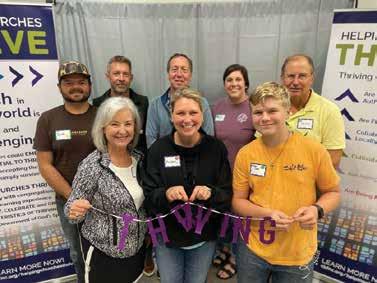
very church that participates in the CBFNC Helping Churches Thrive Shared Learning Cohort is given a unique opportunity: a creative ministry grant to dream boldly and explore new ways of being the Church within their context in today’s world. This past June, the very first cohort of 10 churches completed a nine-month journey together. Along the way, they discovered that thriving isn’t about doing more; it’s about doing ministry differently.
Below, we’re excited to spotlight how two of these congregations have used their creative ministry grant to live out one key characteristic of thriving: collaborating as partners both locally and globally.
FIRST BAPTIST, WAYNESVILLE Partnering Through Fun & Games
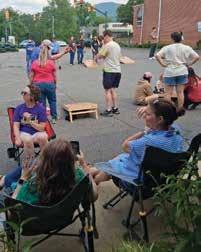
The team at First Baptist, Waynesville came up with the idea to explore ways to partner locally in their community through fun and games. Their grant was used to purchase corn hole games and equipment to be used at church and community-wide events, such as hosting a corn hole tournament.
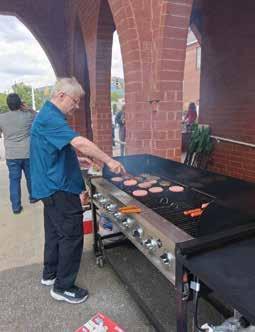
The games were first used to during an All-Church Cookout and Game Night in May. In addition to the corn hole games, the team also set up a board and arcade game area in the church gym. This event also helped them apply the thriving characteristics of authentic community and intergenerational interaction.
Next, FBC Waynesville hosted a game area in July during a local 5K race fundraiser for Haywood Christian Ministries, a local interdenominational nonprofit. The church also hosted a game area in their church parking lot during the Downtown Waynesville Association’s Meet Me at the Arch Block Party.
FIRST BAPTIST, SMITHFIELD
Partnering by Sharing Church Spaces
FBC Smithfield’s Helping Churches Thrive team shared that initially, there was some fear within their congregation around the idea of partnering locally and globally. But within just a week of intentionally praying and leaning into the vision of thriving, three unexpected opportunities emerged that centered around sharing the church’s campus with local community groups.
FBC Smithfield began hosting the Street Reach of Johnston County Resource Center on their campus three days a week. Street Reach is a nonprofit that works to address homelessness. The resource center offers services that include access to a computer lab, hygiene items, clothing, shoes and laundry facilities. It also provides referrals for medical and mental health care, employment opportunities, housing assistance and recovery meetings. While on site, guests can participate in Bible studies, music and art classes. Additionally, transportation is available from the church campus to detox and treatment centers.
The church also used the grant to host a Shred & Scam Prevention event in partnership with Community & Senior Services. This event provided community members with the opportunity to securely dispose of sensitive documents—such as tax forms—and receive valuable information on the latest scams targeting older adults.
Finally, FBC Smithfield will begin offering a respite program for adult caregivers of senior adults with dementia. This new ministry will provide critical support to caregivers in FBC Smithfield’s local community.
THRIVE HELPING CHURCHES
A MINISTRY OF CBF NORTH CAROLINA
CREATIVE WORKSHOP RETREAT
November 14–15, 2025
Ardmore Baptist Church Winston-Salem
$70/person (shared room)*
$140/person (private room)*
$25 for locals (no room needed)
Designed for Deacon Boards, Finance Committees, Personnel Committees, Properties Committees, other church leadership teams and church staff, this retreat offers:
• Impactful large group presentations on leading change and navigating conflict from pastors and lay leaders
• Practical learning tracks
• Small group sessions & collaborative learning spaces
CHOOSE FROM LEARNING TRACKS ON TOPICS SUCH AS:
• LEGAL – Abuse Prevention and Response
• FINANCE & PROPERTY – Building Use, Legacy Giving, Financial Resources, Aging Buildings
• PERSONNEL – Healthy Hiring Practices, Personnel Structures, Personnel Handbooks
• CONGREGATIONAL LEADERSHIP – Volunteer Selection and Training, Spiritual Formation of Leaders
• LEADING CHANGE & NAVIGATING CONFLICT – Designed for Clergy
cbfnc.org/hctcreativeworkshopretreat
Whether you’re tackling immediate challenges or rejuvenating your congregation’s vision, this retreat equips you to lead with confidence and creativity in an ever-evolving world.

FChurch Resource Corner
Reimagining Church Spaces
or generations, church buildings have been more than places of worship. They’ve been community gathering spaces, shelters in times of crisis and centers of spiritual formation. Yet today, many churches find themselves struggling to maintain their expansive facilities, originally built for larger congregations and busier weekly schedules.
Rather than seeing unused space as a liability, churches can embrace a new vision of sustainability by creatively using their buildings to both serve their communities and generate revenue. Through intentional space-sharing and revenue-based partnerships, churches can breathe new life into their facilities while ensuring financial stability for years to come.
Creative Ways to Utilize Church Space
Churches across the country are finding innovative ways to transform their buildings into community assets that also provide financial sustainability. Here are some successful models:
1. Nonprofit and Community Organization Partnerships
Many churches have large fellowship halls, classrooms, and office spaces that can be leased to nonprofit organizations. Potential partners include:
• Food pantries and meal distribution programs
• Counseling and mental health services
• After-school tutoring programs
• Senior activity centers
• Refugee and immigrant resource organizations
2. Childcare and Educational Centers
With the rising demand for quality childcare and alternative education models, churches are well-positioned to host:
• Preschools and daycare centers
• Homeschool co-ops
• Music and arts programs
• Special education services

By Andy Hale CBFNC Associate Executive Coordinator
3. Co-Worship Arrangements with Other Congregations
Many church buildings were constructed to accommodate multiple services and ministries. Instead of allowing large sanctuaries to sit empty, churches can partner with:
• Immigrant or ethnic congregations
• New church plants needing affordable worship space
• Other denominations with complementary schedules
4. Arts and Cultural Venue Hosting
Churches often have beautiful spaces that can host:
• Concerts and performances
• Art galleries and exhibitions
• Community theater productions
• Writing and poetry workshops
5. Business and Entrepreneurial Partnerships
Forward-thinking churches have begun partnering with businesses that align with their mission, such as:
• Coffee shops or bakeries that serve as community gathering places
• Coworking spaces for remote workers
• Farmer’s markets and CSA distribution hubs
• Gym or wellness centers offering fitness and health programs
Financial Benefits of Revenue-Based Partnerships
Engaging in space-sharing and revenue-generating partnerships provides multiple financial advantages:
• Increased Income: These partnerships help offset operational costs, ensuring the church can continue its mission.
• More Efficient Use of Resources: Empty buildings become active community hubs, maximizing the church’s impact.
• Sustainable Ministry: Instead of relying solely on tithes and offerings, revenue streams provide long-term financial stability.
• Potential Tax Benefits: Some nonprofit partnerships may provide tax exemptions or financial incentives, depending on the arrangement.
Potential Tax and Legal Considerations
While revenue-based partnerships can provide financial relief, churches must be aware of tax implications:
• Unrelated Business Income Tax (UBIT): The IRS requires tax-exempt organizations, including churches, to pay taxes on income generated from activities unrelated to their core mission. For example, renting space for a commercial business (such as a for-profit coffee shop) may be taxable, while renting to a nonprofit daycare may not.
• Property Tax Considerations: Some local municipalities may reevaluate a church’s property tax exemption if a significant portion of the space is used for non-religious purposes. Churches should consult with tax professionals to ensure compliance.
• Zoning and Lease Agreements: Churches should check local zoning laws and create clear lease agreements that outline usage, responsibilities, and financial terms.
CBFNC HONORARY & MEMORIAL GIFTS
February 2024 – June 2025
Rachel and Garin Hill in honor of Wanda Kidd & Dave Hawes
Marion and Don Horton in honor of Donald & JoAnn Horton
Crystal and Bill Leathers in honor of Kim & Larry Hovis
Rebecca and Jeff Mathis in honor of Wanda Kidd
Lynn and David Odom in honor of Administrative Staff Support
Mackenzie Savannah Smith in honor of First Baptist, Asheville
Claude Miller Sigmon in honor of Brenda Narron
Jess and Tyler Tankersley in honor of Wanda Kidd
Jean and Jerry Beamer in memory of Judy LeCroy
Ed, Shannon and Meghan Beddingfield in memory of Sarah Beddingfield
Thea and Charles Horrell in memory of Helene Disaster Response
Barbara Huggins in memory of Kay M. Huggins
Lori Keeton in memory of Judy Lee Graves LeCroy
Karen Knighton in memory of Sylvia Traynham
Emily Hull McGee and Josh McGee in memory of Daniel Hudgins
Jane and Rick Moody in memory of Judy LeCroy
Dolores Shepherd in memory of Judy LeCroy
Janet and Thompson Smith in memory of Judy LeCroy
Virginia Ross Taylor in memory of Elaine Jeffcoat
John Vestal in memory of Cindy Vestal
• Solution: Churches can work with CBFNC’s Church Sustainability Initiative to navigate these complexities, ensuring that space-sharing arrangements remain both missionally aligned and financially sound.
Learn More & Take the Next Step
The CBFNC Church Sustainability Initiative (CSI) is designed to help congregations explore these opportunities and implement sustainable, mission-aligned partnerships. For guidance, resources and support, visit www.cbfnc.org to explore how your church can reimagine its space and establish mission-driven, revenue-based partnerships.
MINISTERS ON THE MOVE
Our encouragement and support go to the following ministers who have recently moved:
Jason Dickerson to Rocky River Baptist, Siler City as Pastor
Matt Sparling to First Baptist, Morganton as Pastor
Mari Wiles to First Baptist, Fayetteville as Pastor
Jimmy Allen to Youngsville Baptist, Youngsville as Pastor
Amy Brown to Providence Baptist, Charlotte as Minister with Students & Their Families
Bradley Boberg to Rolesville Baptist, Rolesville as Senior Pastor
David John Hailey, Jr. to Oxford Baptist, Oxford as Pastor
When you make a move or know someone who has changed places of ministry, please email transitions@cbfnc.org. For assistance with transitions, visit cbfnc.org/transitions or call us at 336.759.3456.
Bringing Baptists of North Carolina Together for Christ-Centered Ministry www.cbfnc.org
2640 Reynolda Road
Winston-Salem, NC 27106
OCTOBER
PILGRIMAGE TO IONA
— Peregrinación a Iona
October 18–24
REGIONAL GATHERING–TRIAD
— Encuentro Regional–tríada
United Baptist, Winston-Salem
October 23
CBFNC YOUTH BEACH RETREAT
— Retiro de playa para jóvenes de CBFNC
Fort Caswell, Oak Island
October 24–26
COMPELLING PREACHING CONFERENCE
— Conferencia de predicación convincente
Benton Convention Center
Winston-Salem
October 27
NOVEMBER
MIGRANT GOD: AN EVENING WITH AUTHOR ISAAC VILLEGAS
— Dios migrante: Una velada con el autor Isaac Villegas
Zoom
November 3
REGIONAL GATHERING-SANDHILLS
— Encuentro regional–Sandhills
First Baptist, Southern Pines
November 6
RED LATINA WOMEN’S CONFERENCE
— Conferencia mujer Red Latina
Greenville
November 8
CHILDREN’S MISSIONS & MUSIC DAY — Día de las misiones y la música infantil
First Baptist Statesville
November 8
HELPING CHURCHES THRIVE CREATIVE WORKSHOP RETREAT
— Retiro de taller creativo para ayudar a las iglesias a prosperar
November 14–15
JANUARY 2026
YOUTH SKI RETREAT
— Retiro de esquí para jóvenes Winterplace, WV
January 23-25