the gathering
of the Cooperative Baptist Fellowship of North Carolina
March/April 2017 • Vol. 22 Issue 2
Bringing Baptists of North Carolina Together for Christ-Centered Ministry


SEEDS, PAGE 3

of the Cooperative Baptist Fellowship of North Carolina
March/April 2017 • Vol. 22 Issue 2
Bringing Baptists of North Carolina Together for Christ-Centered Ministry
SEEDS, PAGE 3
by Larry Hovis, CBFNC Executive Coordinator
I was blessed to grow up in a time and place in which my life centered on three things: family (and family business), school, and church. When it came to church, we attended at least three times a week. Sunday morning was for Sunday School (Bible study) and worship. Sunday night was for Training Union (later called Church Training, then Discipleship Training) and evening worship. Wednesday night was for supper (of course!), children’s choir, and missions education (Royal Ambassadors for me and Girls in Action for my sister). When I became a teenager, youth choir was held on Sunday evening and we often sang during the evening service (and of course, we ate another meal!). All of that time spent at the church house, in church activities with church people, formed my faith and shaped me as a person and as a Christian.
By the time became a pastor in 1987, that paradigm had begun breaking down. I pastored four churches, none of which had a Sunday evening worship service. In some of them, we had some programming on Sunday nights. In most of them, we had significant programming on Wednesday nights. But attendance patterns were shifting in major ways, and we simply never had enough people enough of the time to shape their life and faith in the same way I experienced growing up.
Today, the situation is even more challenging. Whereas we used to define an active church member as attending three times per week, we now consider someone as being very active if they attend three times per month.
Jesus’s call to make disciples hasn’t changed, but the context in which we seek to make them is drastically different. What are we to do? How can we form faith and make disciples in our time? Here are a few ideas. I hope you’ll let me know of others.
n Church-based programs – For some people, Sundays and Wednesdays in the church house are still a good way to reach people and teach them. This approach needn’t be abandoned just because we offer other options.
n More times, more places – For some people, Sundays and Wednesdays in the church house every week just doesn’t fit their schedule. Many churches are meeting the needs of time-starved members by offering opportunities for faith formation at various times and places throughout the week. I participated in a small group on Tuesday mornings at 6:45 a.m. at Panera Bread for several years.
n Virtual-formation communities – Many people are finding community, and even receiving college degrees, online. Why not offer Bible study and other opportunities for spiritual formation through Facebook and other platforms?
n Missional formation – Many Christians testify that they feel closer to God on a mission trip than at any other time of the year. Through extended preparation before the trip, thoughtful experiences on the trip, and intentional reflection and application after returning home, that trip can have a year-round impact on one’s spiritual growth. The CBF community has produced some great resources to help with this approach, including Pivot (www.cbf.net/pivot) and PilgriMission (www.nurturingfaith.net/product/pilgrimission).
n Faith Coaching – Coaching has proved to be an effective way for people to improve life, health, work, and leadership responsibilities. Coaching has also become a valuable way for people to grow spiritually. CBFNC offers coach training (www.cbfnc.org/christiancoaching) for church leaders, who in turn can coach church members, one-on-one, to develop an individualized faith-formation plan.
There is still a need for God’s people to gather together in God’s house for worship, study, and fellowship, as much as possible. But if we are going to be effective in responding to God’s call to make disciples and form faith in our time, we must expand our delivery system. Let’s find ways to meet people where they are, as they go about their lives, not only on Sundays and Wednesdays but every day of the week.

Workshops at CBFNC’s Annual Gathering can be seen as seeds being sown. This year, there will be 60 workshop opportunities. That is a lot of seed! Here’s an illustration of how the seeds sown at a recent workshop produced much fruit.
Bill Brown (the volunteer CFO — Chief Farming Officer) and David Jordan (Associate Pastor) led a workshop, “Church Gardening as a Ministry for Everyone!” at the 2015 General Assembly which was hosted by their church, Providence, Charlotte.
David had taught a Wednesday night series where he shared that the church over the centuries had been a source of hospitality, safety, and food for many by using church land for gardens that would help to feed the community. David says, “We have 22 acres around Providence, and, afterwards, several people said that we should be doing something like that. We agreed to try a pilot project of two raised beds to see what would happen.
runs the Cleveland County Potato Project. Jim, Susan, and Doug pondered the need and the potential for a community garden. Doug says, “Jim and Susan were strong encouragers for FBC’s gardening efforts. The church owns a lot in a neighborhood that contains many people deemed to be in need of food. Then, money became available. Operation Inasmuch provided a great labor force. People liked the idea of a garden shaped like a cross. When the idea was expressed in a small group, a member offered to pay for a plot containing only flowers as pollinators.”
by Rick Jordan, CBFNC Church Resources Coordinator
“As word got out, folks began to donate money, volunteers began to call, and, next thing we knew, we had to start building new beds. Now, 4.5 years later, we have 29 beds and a huge series of muscadine vines that have provided many jars of excellent muscadine jam. Last year, we also planted two pear trees, two apple trees, and a peach tree that we hope will produce in the next year or two.” The produce goes to Friendship Trays and Meals on Wheels home delivery. Since 2012, they have surpassed 3,700 pounds of fresh produce contributed. There are also two beds designated for Burmese refugee families (they grow some wild stuff!) and five beds for the Weekday Education Program where preschoolers get to learn about veggies and grow some themselves that they then eat for lunch during the spring and summer.
Jim and Susan McConnell, members of First, Shelby, attended the Annual Gathering workshop and were inspired. They shared the news with fellow member Doug Sharpe who
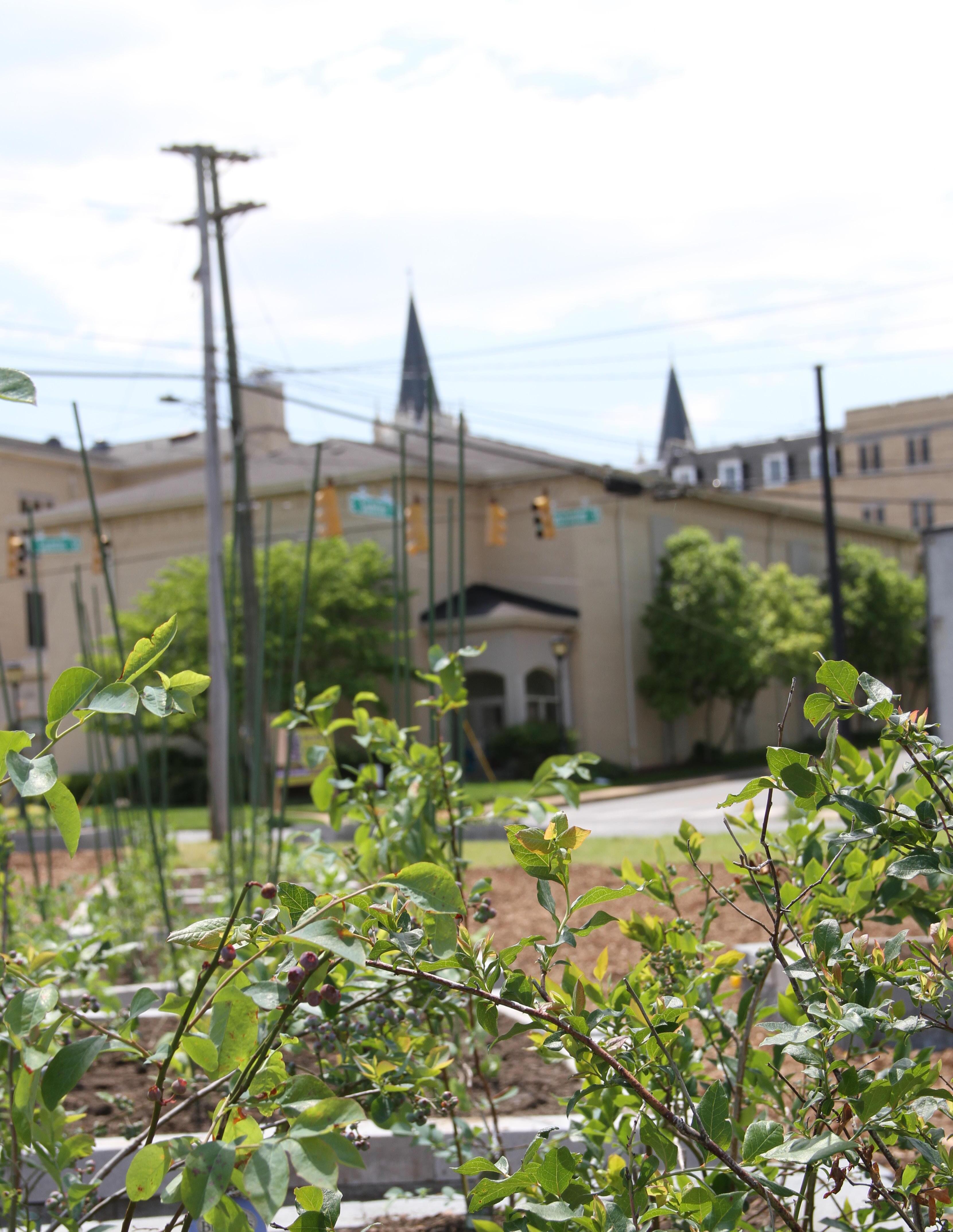
The garden at First, Shelby, consists of several 5x20’ raised beds. They plant only highproducing vegetables such as peppers, tomatoes, okra, and a bed for blueberries. It is a “help yourself” garden for local residents. Some of those locals did not want to become consumers only; they asked if they could keep the garden weeded and watered.
“The garden has been worked by church members, residents of a ladies homeless shelter that is a block away, people who are interested in the efforts of CBF missionary Cecelia Beck, and residents of the men’s homeless shelter (about a mile away),” Doug says. He continues, “I support anything we can do to encourage an active role for Christians in our own neighborhoods. And nothing is more local than a community garden when you expect the produce to be harvested by people living in the neighborhood. This garden is a symbol of God’s love.”
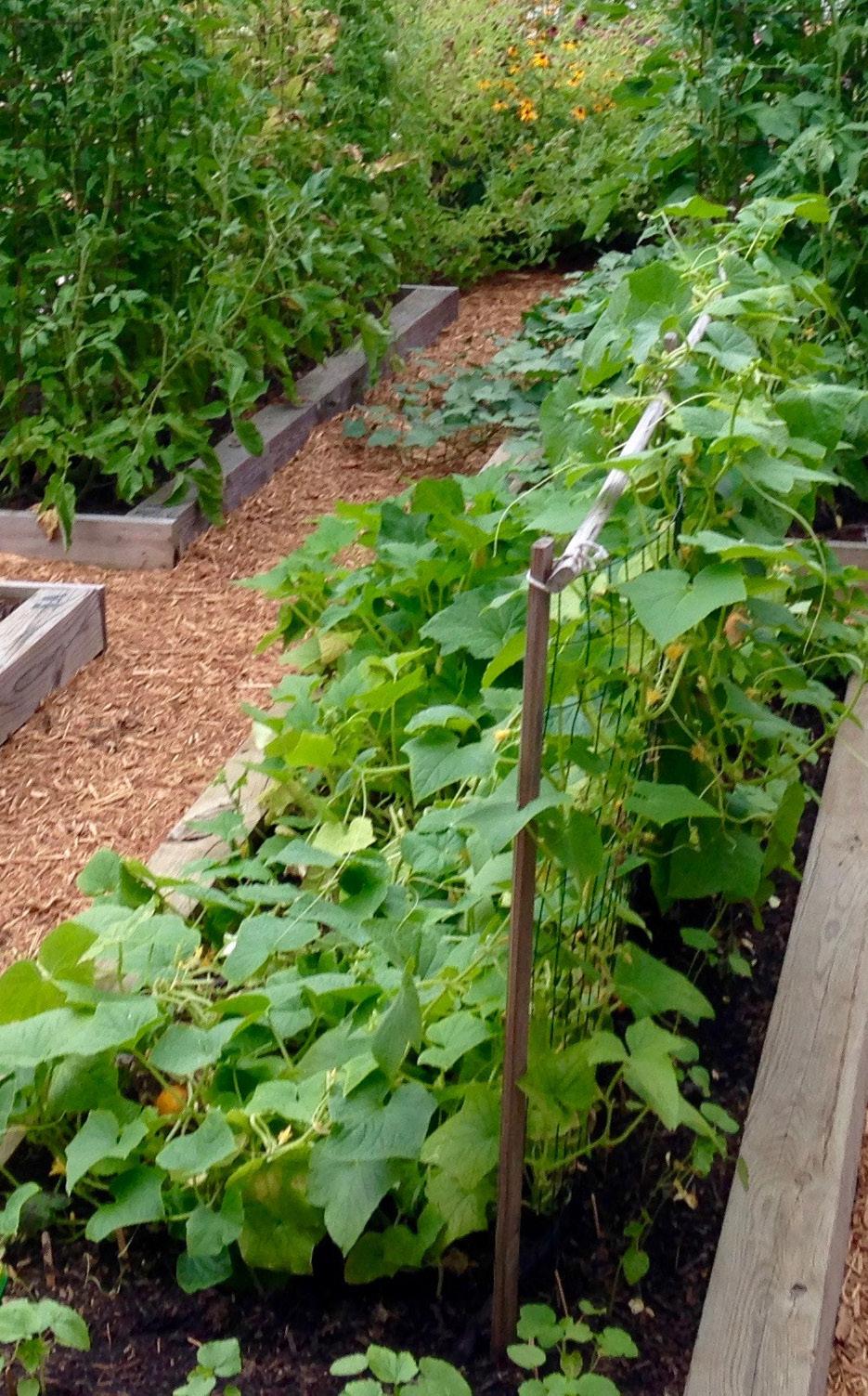
Susan McConnell’s cousin saw the garden by First, Shelby, on Susan’s Facebook page and was inspired to create a community garden through his church, First United Methodist Church of Asheboro. It received a grant from Randolph Heath. The church owned a vacant lot that was tilled by tractor and nourished with tons of cow manure and rotten leaves. In April, volunteers planted the garden. They also built seven raised beds (6x16’) that they filled with organic soil. They added water spigots and hoses to keep the garden watered. From June to August, the garden produced 233 pounds of cucumbers, 138 pounds of squash, 1181 peppers, 480 ears of corn, 337 tomatoes, and 2206 pods of okra. Hundreds of zinnia flowers were shared with nursing homes. Then, they had a large fall crop of turnips, cabbage, and broccoli. The produce goes to a local men’s homeless shelter, the local soup kitchen, the Christian United Outreach Center, and a shelter for abused women. Since it is located on a heavily traveled road, it attracts a lot of attention and has been featured in the local newspaper several times. According to Felix Ward, “The experience has been good for the youth and some members who were completely new to gardening. It’s a great church project that helps others in the community and demonstrates love and compassion.”
First Baptist Church
Hickory, NC
March 30 - April 1, 2017
Therefore, as you go, disciple people in all nations, baptizing them in the name of the Father, and the Son, and the Holy Spirit. Matthew 28:19 (ISV)

Leadership Institute | March 30
Laugh in Peace Comedy Tour | March 30
Annual Gathering / General Assembly | March 31
Divinity Student Experience | March 31 - April 1
All Are Called Forum | April 1 “ ”

Cooperative Baptist Fellowship of North Carolina Registration and information: www.cbfnc.org/asyougo2017
THURSDAY, March 30, 2017 1:00-5:00pm
First Baptist Church, Hickory
Brad Griffin, Associate Director of the Fuller Youth Institute and author, will share research presented in his book, Growing Young – Essential Strategies to Help Young People Discover and Love Your Church. Churches are both shrinking and aging as more young people disengage. All churches grow old, but strategic churches are growing young. How can you help your church become strategic?
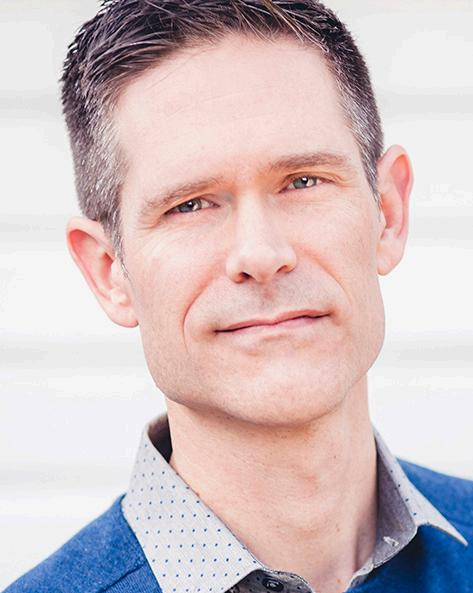
Join Brad in thinking about how churches can engage younger generations spiritually, emotionally, missionally, and numerically. Packed with ideas, this event will show ministry leaders how to position their churches to reach younger generations in a way that breathes life into the whole church. Connect with other leaders and hear strategies any church can use to involve and retain young people.
Cost: $40 (pre-registration), $50 (at the door)
FRIDAY, March 31, 2017 8:30am-8:15pm
First Baptist Church, Hickory
Join CBFNC for workshops, worship, and fellowship! Our keynote speaker will be pastor, native North Carolinian, and comedienne, Rev. Susan Sparks.
n Peer Learning Breakfast
n BWIM Convocation
n Lunch and idea-sharing with those living in your region (reservations required)
n 60 workshop sessions
n Free Enderly Coffee at the Kinsfolk Coffee Cart all day
n BBQ dinner in two seatings (reservations required)

n Children’s Assembly - childcare with a purpose for infants through 5th grade (pre-registration required)
n Meaningful Worship
Cost: free!
THURSDAY, March 30, 2017 7:30-9:30pm The Crossing at Hollar Mill, Hickory
A Jewish rabbi (Bob Alper), a Christian minister (Susan Sparks), and a Muslim comedian (Aman Ali) step onto a stage together.
It sounds like the set-up to a good joke. Instead, it’s the set-up for a great night of entertainment.
The Laugh in Peace Comedy Tour, established by Bob Alper (recently named Honorary Comedic Advisor to the Pope) more than a decade ago, brings together comedians from different faiths to share jokes and break down barriers.

The show will conclude with a Q&A period. The comedians also will mingle with audience members after the show.
Cost: $25 (pre-registration), $30 (at the door)
SATURDAY, April 1, 2017 8:30am-12:15pm
First Baptist Church, Hickory
Are you looking for ways to use your career to serve God’s Kingdom? Have you heard God’s call and wondered how to respond? Maybe you are looking to connect with the greater CBFNC family? If so, the “All Are Called” Forum is for you.
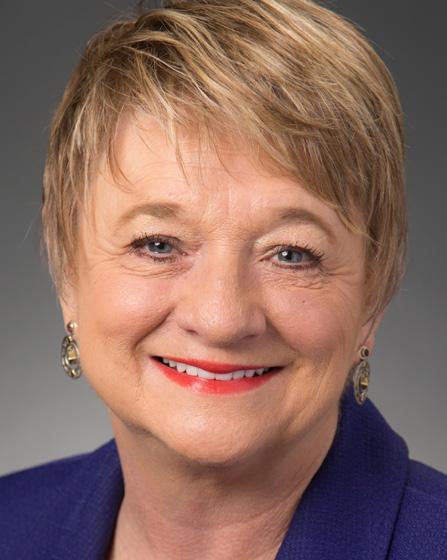
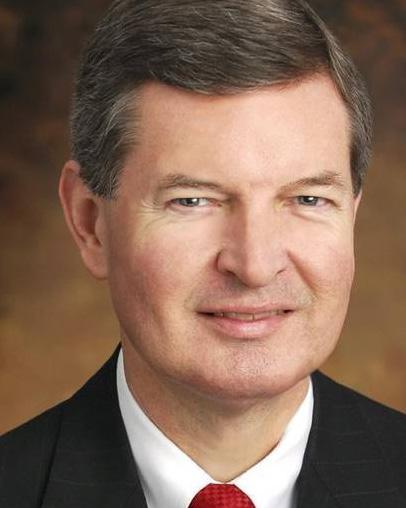
This unique event features two lay persons: Suzii Paynter, Executive Coordinator of CBF Global, and Kelly King, Chairman and CEO of BB&T. It is organized by and designed for lay leaders (though clergy members will have their own workshop too!). We will explore ways to live out God’s call in their families, neighborhoods, workplaces, and leisure time.
Cost: free!
Thursday, March 30 — Leadership Institute and Laugh in Peace
1:00-5:00pm Leadership Institute
7:30-9:30pm Laugh in Peace Comedy Tour at The Crossing at Hollar Mill
Friday, March 31 — Annual Gathering (General Assembly)
8:00-9:00am Peer Learning Group Breakfast
8:30am-11am Registration
8:30am Divinity Student Registration available
9:00-10:30am BWIM Convocation in Sanctuary
9:30am Living Water Cafe opens
11:00am General Assembly Opening Session
12:00 pm Exhibit Hall opens
12:00 pm
Regional Lunch at First Presbyterian Church
1:30-2:30pm Workshop 1
2:45-3:45pm Workshop 2
4:00-4:45pm Business Session
5:00-5:45pm
5:45-6:30pm
Dinner Seating 1 at First Presbyterian Church Exhibit Hall will be open
Dinner Seating 2 at First Presbyterian Church Exhibit Hall will be open
6:45-8:15pm Worship
8:30pm
Divinity Student Pizza Gathering at Hotel
Saturday, April 1 — “All Are Called” Forum
8:30-9:00am Registration
9:00-9:45am Plenary Session featuring Kelly King, Chairman and CEO of BB&T Corporation
9:00am-12:00pm Divinity Student Experience
10:00-11:00am Affinity Groups
11:15am-12:00pm Plenary Session featuring Suzii Paynter, Executive Coordinator of CBF Global
worship offering
This year’s offering will support CBFNC Collegiate Ministry across our state.
children’s assembly
Free childcare with curriculum! Faith experiences, new friends, and fun times for your child (infant - 5th grade). You must pre-register!
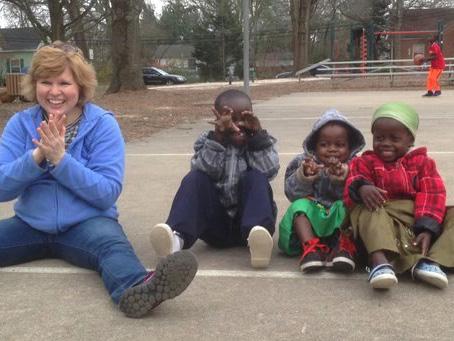
Embracing our Neighbor: 30 Days of Prayer for Internationals is a meaningful new resource for churches and individuals as they pray and discover new ways to love our neighbors, especially those who have experienced much hardship and suffering.
Inspiring stories and practical suggestions to help us engage with our neighbors are found on each page. This booklet, produced by the CBF Internationals North America Team, will stir your heart to love and care for our international neighbors.
“It was a normal day—just another Thursday in their small African village. And then in the flash of an eye and with the sounds of gun fire, Felix’s family was torn apart. He and his wife grabbed the hands of their children and fled in different directions hoping to evade capture and death. Each instantly became a single parent with no possessions, no home, only fear as they ran holding the small hands of their children with all their might.”
Day 4, “Home again”
Embracing Our Neighbor
Embracing our Neighbor is available through CBFNC. Contact Linda Jones at ljones@cbfnc.org or call (336) 759-3456.
by Linda Jones, CBFNC Missions Coordinator
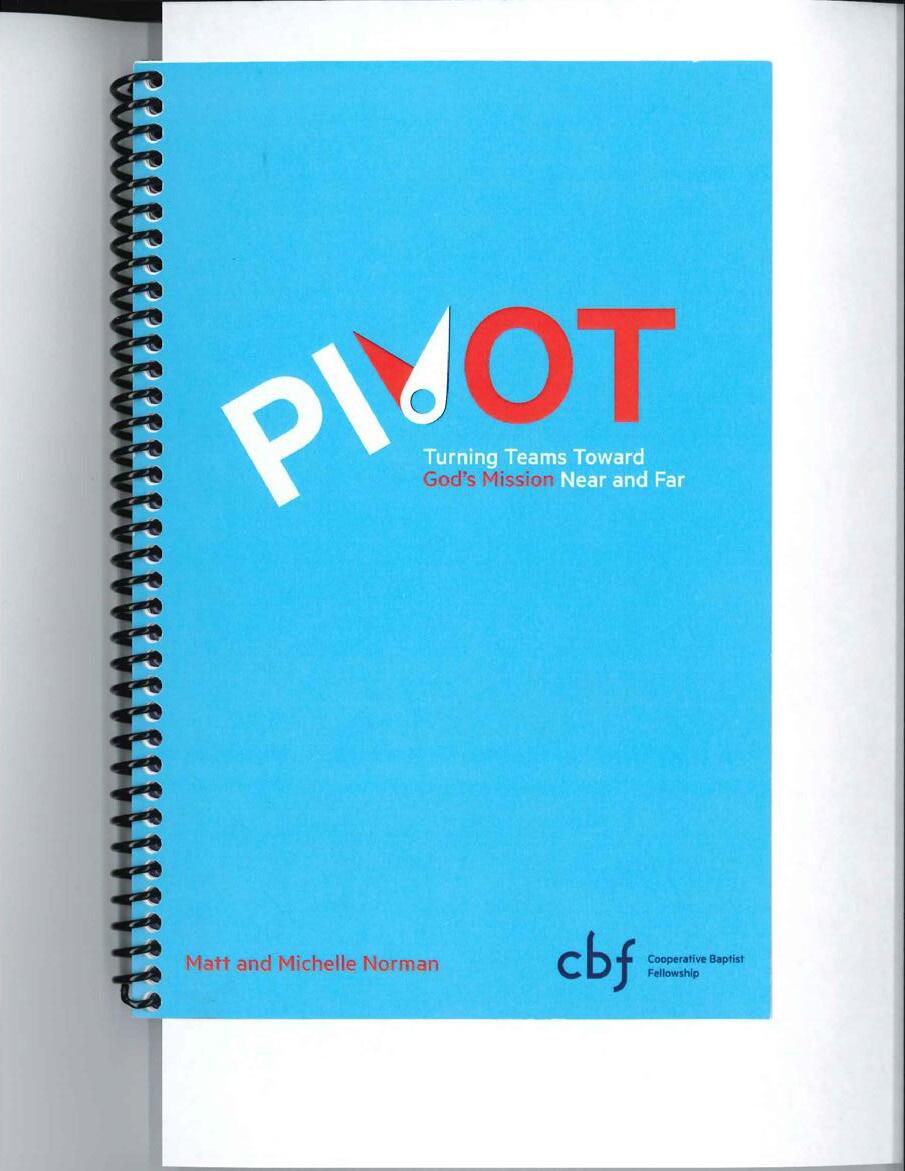
Pivot: Turning Teams Toward God’s Mission Near and Far transforms how our churches go on mission trips and how they do mission in their own community.
Most of us have been on mission trips where preparing to go means organizing travel, supplies, and the mission endeavor that we will be doing on the field. What if going on a short-term mission trip included a process of preparation with the CBF field personnel? What if there was time set aside as a team for prayer, scripture, and discovery about crossing borders with good missiology?
This Pivot experience entails learning and growing in addition to doing. While you are on the field, you will be developing an understanding of what assets are in the community (strengths and benefits) and how to connect and collaborate with those strengths. Forge new friendships with the field personnel you work with and the local people you minister with on the field. Discover how to be a missionary yourself — how to learn about a community, assess its assets, and connect with community organizations and leaders. When you return you will have the tools to do this in your own community and to involve your church members in new ministry. More importantly, the readings, experiences, and dialogues will help you grow as a Christian and understand God’s mission in the world and your role in that mission.
If this sounds like a great experience of spiritual formation, then Pivot is for you. This approach to missions will transform the way you engage in missions at home and abroad. It fosters a closer relationship with field personnel who exemplify what it means to follow Jesus. It teaches assetbased community development on the mission field and helps you apply it to your local context.
Pivot can be purchased from CBF Global’s store at www.cbf.net.
Basic Concept: engaging our neighbor on the mission field abroad and back home
Prepare with prayer, scripture, dialogue, “Crossing Borders”
Collaborate with CBF field personnel who are part of your team via Skype
Experience a process of discovery and first-hand encounters in the field
Return with a plan for asset-based development in your own community, spiritually formed in a new way
When you return after Pivot, you will look at your community with missionary eyes!
by Ka’thy Gore Chappell, CBFNC Leadership Development Coordinator
Sports, physical exercise, and recreational activity contribute to our development as spiritual beings composed of body and soul.
Robert B. Kruschwitz, Director, Center for Christian Ethics, Baylor University, Waco, TX
Travel sports are BIG business and require time and money. Most often, travel sports take place during the weekend, which means kids, parents, and sometimes entire families are on-thego and away from their community of faith on Sunday. What’s a family to do? What’s a church to do?
We asked you, via Facebook, for your ideas about how to incorporate spiritual formation and worship with travel sports. We received responses (and there were many) from both laity and clergy.
Laity parents were inspiring with their intentionality and creativity in providing spiritual formation and worship opportunities for their children, family, and teams. These parents literally put themselves in leadership roles through scheduling, preparing/presenting devotionals, and modeling the Christ life.
Clergy, even though frustrated at times with the reality of travel sports “taking families away from church” on Sunday mornings, were equally inspiring with their desire to embrace families involved with travel sports and provide alternative opportunities for spiritual formation and worship. Clergy also offered words of challenge for faith communities to support parents and athletes with their decisions “to play or not to play.”
Susan Smith Wray With four daughters who play sports, we have managed weekend sports and “church” carefully.... At the Sunday games, there is a stoppage of play at approximately 10:30 a.m. and a brief sermon or scripture reading is provided for those who want to participate.



As a family involved with travel sports, how and where does your family experience worship and spiritual formation?
Skip Everhart Both of our girls play travel volleyball and soccer. When we travel on Sunday, our family is intentional about locating and attending a church service in the area.


Jeanne Hollifield Baucom My husband and son would attend the 8:30 a.m. worship service—in baseball uniform— then head out to the tournament. We learned that what worked for us required up-front communication with coaches and families, careful selection of which tournaments to enter, a family decision to remain faithful to our community of faith, personal responsibility for faith development with our child, and a great partnership between youth families and spiritual leaders.
Kathryn Horne Yarbrough I lead Dug-Out Devotions with my son’s baseball team. Sometimes we even have competing teams join us! I use lessons from the Fellowship of Christian Athletes (www.fca.org) about baseball, famous people, life lessons, and how it relates to God and God’s love for ALL OF US!
As a community of faith, what can a church do to assist families in the decision-making process regarding travel sports? What can a church do to resource families “on-the-go” regarding spiritual formation and worship?
Paula and Scot McCosh (Co-Pastors) commission athletes in worship and are brainstorming ideas for development of “sideline services” to share with travel teams.
Sally Queen (Pastor) live-streams worship via Facebook Live, provides weekday services, and prepares devotionals to read on the road.
Bruce Hermann (Associate Pastor) has three girls who played travel soccer. He shared that their family desired to live the Christ life in sports and with competition. Bruce suggests that families can worship “on location” and churches can offer worship at alternative times.
Travel sports are a reality in our world. In this article, both laity and clergy have provided honest feelings and creative solutions for re-thinking opportunities for spiritual formation and worship through travel sports. Most importantly, travel sports can challenge our churches to discover new ways and venues to be “on mission” for Christ, through God’s love.
Youth ministry is changing with the times. The days when church on Sunday mornings, Sunday nights, and Wednesday nights had no competition are long gone, of course.
“We’re seeing our Wednesday evening programs suffering because sports, dance, and homework all have taken over Wednesday nights,” says Bryan Moore, minister of youth and students at First, Southern Pines. “We still get our middle-schoolers who can’t drive, but we miss many of our high schoolers. There’s nothing you can do about today’s schedules. The student can’t miss a baseball game or not go to a club meeting or get a failing grade.”
The youth miss coming to church too, so they are in a dilemma. Bryan continued, “About four years ago, some of them said to me, ‘We hate this, but what can we do?’ When I asked my youth when we could get together, they said, ‘Early in the mornings.’” The youth council talked about it and got the new program started. Bryan now leads a 30-minute devotional before school, three mornings each week for three different groups of youth. The youth meet at fast food restaurants. After check-in, a youth reads from a devotional book and they pray. “Some of the youth aren’t from our church, so it is also outreach.”
Since the start of the school year, ten teenagers have joined the youth group. On days they are not meeting, the youth continue their devotional readings. “They bring their devotional books to the prayer time and I see they’ve written notes in the margins. On days we are not together, I send text messages, ‘Did you read the devotional? It helped me today.’”
by Rick Jordan, CBFNC Church Resources Coordinator
respond with their thoughts and opinions; and closing prayer. Students are able to see how their faith is not a switch they turn off and on, but something that is always on. This has also provided a platform for students to invite their friends — churched or unchurched, they are all welcome.” One young man had never connected to a church or a youth group. His family situation is very complicated and unsettled. A friend from Ardmore, Winston-Salem, invited him to attend the devotion one week. He came and felt welcomed. He listened to what was said and something seemed to stick. He continued to come to the small group each week.

We’ve got to gather together to encourage one another, but we don’t live in the four walls of the church.
Dane Martin, youth minister at Ardmore, Winston-Salem, faces the same challenges. How do you disciple youth off campus? He says, “In addition to ‘church type’ involvement we get into the real world of our students. We walk with students and support what they are doing at school and in their other activities.” Volunteers from Ardmore lead morning devotions during the week. “Each small group is a little different because of the adult who leads, but similar things include check-in time for students to share about how they are doing; short devotion/reflection; opportunity for the students to
Dane says, “Before too long, he decided to attend a youth retreat. Now he is a regular at church, not just this small group, and something is different about him. Despite the turmoil that might be happening at home, he seems to have a joy about himself that wasn’t seen earlier.”
Ted Duncan, associate pastor at First, Bryson City, also encouraged a weekly meeting for high school girls with an adult lay leader. They meet at a bakery every Thursday at 7:30am before school. Maggie Burns, one of the youth, says, “This group has provided a measure of consistency for me in my own faith, and has provided me with multiple accountability partners and strong friendships that I can lean on in hard times. I have also been able to form a strong relationship with our mentor, Robyn, who is an amazing example of a woman of faith. She provides us with ample amounts of wisdom and always loves us. I am beyond thankful for this group.”
To Ted, discipleship is broader than a weekly program. For example, as the youth group was planning their summer beach retreat, a student realized that it would take place the same week as her volleyball camp in Tennessee. She wrestled with this decision for two weeks. If she didn’t go to camp, she couldn’t play on the school team. She didn’t want to abandon her team or her church. Ted says, “After a couple of weeks, she pulled me aside with this burden. I told her, ‘Look, if you go to the volleyball camp, you be the best Christian witness you can be there. You can be faithful to God by being there and not at church camp.’ You have to give them permission to miss church, but also give a challenge to be faithful wherever they are. That’s what I really try to emphasize, not a program but a life challenge. It’s an attitude. It’s harder to measure. The easy measure is attendance numbers. But it is still a good ministry if they are faithful where they are. It’s a balance of both. We’ve got to gather together to encourage one another, but we don’t live in the four walls of the church.”
Donate to CBFNC today! www.cbfnc.org/give
CBFNC Financial Report
December 2016 Contributions
Undesignated: $163,192
Designated: $294,444
January 2017 Contributions
Undesignated: $133,634
Designated: $374,879
April 2016 - March 2017
Monthly Undesignated Goal: $114,432
Visit our website, www.cbfnc.org to find a listing of our staff and leadership
Our encouragement and support go to the following ministers who have recently moved:
Gina Brock to Ardmore Baptist Church, Winston Salem, as Associate Pastor
Karen Gray to First Baptist Church, Black Mountain, as Youth and Children Director
Court Greene to First Baptist Church, Canton, as Pastor
Jeff Hensley to Hester Baptist Church, Oxford, as Pastor
When you make a move or know of someone who has changed places of ministry, let us know by e-mailing us at cbfnc@cbfnc.org.
For assistance to search committees and ministers seeking vocational discernment, visit our reference and referral page on our website at www.cbfnc.org or call (336) 759-3456 or (888) 822-1944.
Collegiate Ministry fund in memory of Cindy Vestal Gamma Nu Sorority (Ann Marie Wasson, treasurer); Susan and Thurman Burnette, Raleigh; Sylvia Cash, Raleigh; Toni and David Cox, Raleigh; Amy Lin, Raleigh
Wyatt Ministry in honor of Genice Nix
Adam Nix, Raleigh
In honor of Dr. Danny Russell
Suzanne Harris and Alton Chewning, Chapel Hill
In honor of Lois and A.G. Bullard
Debra Christian, Valdese
In honor of Rebecca Mathis
Jeff Mathis, Sylva
In honor of Dr. Doug Murray
Henry Skinner, Wilson

Take a look at CBFNC’s blog, Thoughts from across our state ... cbfnc.wordpress.com.
Would you like to contribute? E-mail smitchell@cbfnc.org.
First, Gastonia
First, Oriental
First, Wadesboro
Hayes Barton, Raleigh
Lamberth Memorial, Roxboro
Piney Grove, Mt. Airy
Providence, Charlotte
CBFNC ministry coordinators are available to visit your church to speak, preach, teach, consult, lead, and minister. Contact the CBFNC office for more information.
by Rick Jordan, CBFNC Church Resources Coordinator
When Jesus gave his “Great Commission” found in Matthew 28, he said, “as you go, make disciples.” In other words, as you go about your daily life, be a light, be a witness, be a representative of God’s presence. There are some who are called by God to devote their full-time energies in professional ministry. For most Christians, however, that is not the call.
In this last year, CBFNC has focused on “normal people” who have stories of success and stories of struggle in this call on their lives. These are lay persons who see their jobs as their ministry, use their hobby or volunteer service as an avenue of Christ-centered service, or use their power and influence for Christ-inspired good in their local community. We held “As You Go” conferences around the state and interviewed many persons for The Gathering newsletter. We will cap off the year with the “All are Called” Forum, a laity-focused event on the final day of the 2017 CBFNC Annual Gathering, Saturday, April 1.
As I have worked on this year’s emphasis, I have learned several things. Some were hard to hear but bear with me.
1
The priesthood of all believers, as important a doctrine as it is to CBFNC Baptists, needs more attention. If we truly believe that every Christian has a calling and the potential to fulfill that calling, then we need more ways to affirm the callings and more means to equip. Laypersons are too often seen (by clergy and by themselves) as a means to serve the goals of institutional survival or growth, rather than as a means to grow the Kingdom of God off the church property and outside of church programs.
2
Despite the lack of intentional attention to this, laypersons are “walking the talk” and serving as the presence of Christ in places that a professional minister will not be able to be regularly. A minister may visit a member in a cancer ward, but the charge nurse over that ward is being the presence of Christ every day. A minister may visit a college student’s campus and take her out to lunch with her friends. That is awesome! But remember that the college student is that church’s missionary to that campus. A minister may join the Chamber of Commerce, but the business owner is struggling with “presence of Christ” issues every week when it comes to pricing, store hours, and employee support. Many laypersons I talked with do see their vocation as their ministry.
3
Disappointingly, this is not even on the radar screen of many ministers. Several ministers came to the “As You Go” conferences. Most of them came up to me afterwards and said something like, “I had no idea how important this is to my laity. I am going to give this some deeper thought and action.” Most ministers have so many plates spinning, so many meetings to lead, so many persons to visit, so many messages to prepare. Affirming, commissioning, and equipping laity gets lost in the shuffle. Worse, it is not even something that is considered. I contacted several ministers about laypersons that I could interview. Many could not think of even one layperson in their church who could speak to the topic of being the presence of Christ in their daily life. There were many who could talk about a mission trip or a leadership role in the church. But outside the church? None. It is not being talked about.
4
This is not on the radar of some laity, however. They see their vocation as a job that is unrelated to their faith. They see their hobby as fun time, not as a potential ministry. They see community volunteerism as a social outlet. Students see the school campus as a place they need to be so that they can eventually go someplace else, not as a mission field. For many laity that I did interview, the mere question, “How has your church equipped you to be an As You Go Christian?”, gave real pause. The dots have not been connected.
5
However, other laypersons share the sentiment of one woman who said, “We long to be affirmed by our ministers and churches!” A businessman said to me, “It is like we are on separate islands. The pastor always invites me to his island and expects me to show up two or three times a week, but he never comes to my island. He never says, ‘How can I help you be a better Christian witness here?’” I heard a lot of frustration and even anger that their callings are being ignored or sometimes belittled. For example, ministers telling jokes about crooked lawyers or car salesmen, when a lawyer and salesman sit in the pew hoping for help rather than pigeonholing.
6
There are few models for affirming, blessing, or commissioning laity. However, over the years, we have found a few and have included them in the Virtual Resource Library of the CBFNC webpage, www.cbfnc.org Videos of many of the interviews from the As You Go conferences will be in the library soon, along with a discussion guide. These are for a Bible study, a deacon retreat, or a Wednesday night series. We plan to add more resources as we discover them, and, hopefully, more that are created by you and our CBFNC churches.
888-822-1944 www.cbfnc.org
Return Service Requested
Youth Choir Festival
March 3-4, 2017
Knollwood, Winston-Salem
WNCBF Ministers’ Retreat
March 9, 2017
First, Asheville
Children’s Choir Festival
March 11, 2017 First, Southern Pines
Foundations of Christian Coaching (501)
March 13-14, 2017
CBFNC offices, Winston-Salem
2017 Congregational Coach Training
March 20-21, 2017
Christmount Conference Center, Black Mountain

Leadership Institute: March 30 First, Hickory Laugh in Peace Comedy Tour: March 30
The Crossing at Hollar Mill, Hickory
Annual Gathering: March 31 First, Hickory
“All Are Called” Forum: April 1 First, Hickory
International Student & Scholar Conference
April 7-9, 2017
Fort Caswell
Establishing a Dynamic Coaching Relationship (502) June 8-9, 2017
Christmount Conference Center, Black Mountain