


of the Cooperative Baptist Fellowship of North Carolina
July/August 2017 • Vol. 22 Issue 4
Bringing Baptists of North Carolina Together for Christ-Centered Ministry

by Larry Hovis, CBFNC Executive Coordinator
Like many North Carolinians of my generation, one of my favorite television series of all time is The Andy Griffith Show. During one particularly memorable episode (out of many memorable episodes), Opie was about eight years old. He was doing chores and odd jobs, trying to save enough money to buy a new fishing rod. Andy was proud of the way his son was working hard and learning how to manage and save his money.
While this was going on, Opie met a girl at school and they became good friends. Opie told his father he needed a little more money, and asked if he would give it to him. Fishing season was about to begin and Andy assumed it was for the new rod. He told Opie that since he had worked so hard, he would help him with the remainder of the money. When the first day of fishing season arrived, Opie got out his old rod. Andy asked him where the new rod was. Opie said that he didn’t use the money to buy a fishing rod, but to give his girlfriend a present instead. Andy became incensed. He scolded Opie for wasting his hard-earned money on a trifling present for some girl. He refused to let him go fishing and made him stay at home to think about what he’d done.
That night, Andy talked to Opie about what had transpired earlier. Opie said that he didn’t mean to defy his father or waste his money. He said he was just trying to do what was right. Andy still didn’t understand. With tears in his eyes, Opie explained that his girlfriend came from a poor family. She had very little clothing. Her coat was tattered and torn and failed to keep her warm on cold days. Opie had used his fishing rod money to buy her a winter coat.
How did Opie learn to be so generous? Who taught him the way of generosity? Even though Andy looked clueless in this episode, the larger Andy Griffith story reveals Opie’s father to be the primary molder and shaper of his character. If Opie was generous, then Andy and the Mayberry community surely showed him the way.
Although not explicitly stated in the show, I believe the ultimate teacher of generosity is the one Jesus refers to as “Our father who art in heaven…” God is the original Generous One. Though we often refer to God’s characteristics or attributes with concepts like omniscience, omnipotence, omnipresence, transcendence, immanence, and holiness, I believe generosity should be high on the list.
God’s generosity began with creation, continued with the formation of a special people called Israel, culminated with the gift of the Son, led to the birth of the Church, and was carried out by the gift of the Spirit. To summarize the generosity of God, “God so loved the world he gave…” (John 3:16).
If generosity is a central characteristic of God, then surely God’s people are called to follow God’s example. Ephesians makes this extremely clear: “Be imitators of God” (5:1). As God is generous, so are God’s people called to be generous.
This year, CBFNC is emphasizing the theme, “FitChurch: Nurturing Healthy Congregations.” We believe healthy churches are generous churches. They are generous toward God, toward one another, and toward their communities and world.
This issue of The Gathering explores generous churches from several angles. The partner church list is a way of celebrating churches whose generosity extends to CBFNC and, ultimately, to God’s mission in North Carolina and beyond. Without the generosity of partner churches, CBFNC would not exist.
In addition, Ruben Swint shares practices by which churches can grow generosity. James Smith explains how we can be generous after our walk on earth is concluded. Jim Hylton describes ways churches can cultivate financial generosity beyond the offering plate. Several articles illustrate how partner churches express and cultivate generosity in a variety of ways, including but not limited to financial generosity.
Generosity is a hallmark of God, God’s Son, and God’s people. Generosity is expressed in a variety of ways. Generosity is a lifestyle. It all comes down to the question, “Are we about buying fishing rods for ourselves or giving winter coats to others?”
$4,500,000 4,000,000 3,500,000 3,000,000 2,500,000 2,000,000 1,500,000 1,000,000 500,000 0


Designated Undesignated
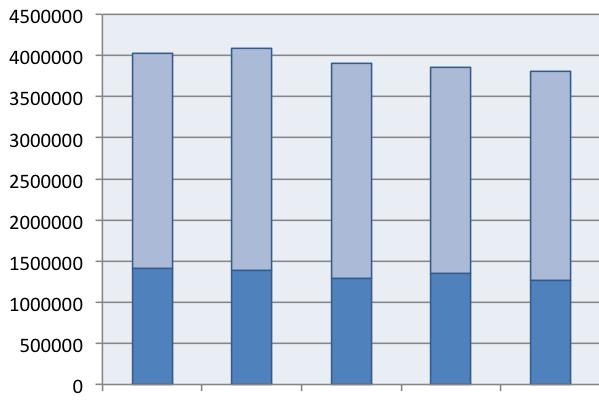
In the 2016-2017 budget year, undesignated gifts totaled $1.26 million, a 5.6% decrease over the previous year. Designated gifts exceeded $2.4 million, resulting in total gifts of $3.71 million.
CBFNC is grateful for the trust congregations and individuals place in us. As you form your church budget for next year, we prayerfully and humbly ask that you consider increasing your gifts to CBFNC.
We are taking great care to be good stewards of these resources through the ministries we coordinate and the cultivation of positive relationships with our cherished ministry partners.
To view CBFNC’s 2017-2018 budget, visit www.cbfnc.org/budget.
Churches contributing to CBFNC are listed in bold type. Churches that contribute to CBF Global only are listed in regular type. Designated in blue are churches that participate in the CBFNC Mission Resource Plan, providing financial support for other Baptist ministries through CBFNC. For additional information about the Mission Resource Plan or for more information on partnering with CBFNC, visit www.cbfnc.org. This list does not include churches who partner with CBFNC or CBF Global in other, non-financial ways.
Earlys ............................................ Ahoskie
First ............................................... Ahoskie
First ........................................... Albemarle
Mount Zion ...................................... Alexis
Angier .............................................. Angier
Baptist Fellowship .......................... Angier
Neill’s Creek ................................... Angier
Iglesia Bautista Torre Fuerte ......... Apex
Olive Chapel ................................... Apex
Woodhaven ........................................ Apex
First ............................................ Asheboro
Oakwood Park ........................... Asheboro
West Asheboro Asheboro
Calvary ........................................ Asheville
First ............................................. Asheville
Morningside Asheville
Connaritsa .................................. Aulander
First ........................................... Belhaven
Benson .......................................... Benson
First .................................................. Biscoe
First ................................. Black Mountain
First ......................................... Bladenboro
Lennons Cross Roads ............ Bladenboro
First ..................................... Blowing Rock
Boiling Springs ............... Boiling Springs
First .................................................. Boone
Boonville Boonville
First ........................................ Bryson City
First ........................................ Buies Creek
Memorial ................................ Buies Creek
Bullock ........................................... Bullock
First Burlington
First ......................................... Burnsville
First .............................................. Butner
Calypso .......................................... Calypso
Sawyer’s Creek ............................ Camden
Hominy .......................................... Candler
First ................................................ Canton
First .................................. Carolina Beach
Greenwood Forest ............................. Cary
Westwood ........................................... Cary
Chadbourn .............................. Chadbourn
Piney Forest Chadbourn
HillSong ................................... Chapel Hill
Iglesia Bautista Amor de Dias ................... .................................................. Chapel Hill
Lystra ...................................... Chapel Hill
Mount Carmel ........................ Chapel Hill
University .............................. Chapel Hill
Grace Crossing .......................... Charlotte
Iglesia Bautista Hispana Charlotte
Iglesia Communidad Evangelica
Internacional La Red ............... Charlotte
Park Road Charlotte
Pritchard Memorial .................. Charlotte
Providence.................................. Charlotte
St. John’s .................................... Charlotte
Sardis .......................................... Charlotte
Together in Christ Intl. Ministries..........
................................................... Charlotte
First ........................................... Clarkton
First ............................................. Clayton
White Oak Clayton
Mosaic ........................................... Clayton
Clemmons First ...........................Clemmons
First ..............................................Clinton
Grove Park..................................... Clinton
McGill........................................... Concord
First .......................................... Cramerton
Open Arms .............................. Creedmoor
Cullowhee.................................. Cullowhee
The Summit .............................. Cullowhee
First ................................................. Denton
First ................................................ Dobson
First ..................................................Drexel
First ................................................... Dunn
Westfield ............................................ Dunn
Calvary ......................................... Durham
Durham Memorial ...................... Durham
Iglesia Bautista Valle De Esperanza
....................................................... Durham
Hope Valley .................................. Durham
Lowes Grove ................................ Durham
Mount Hermon ............................ Durham
Temple .......................................... Durham
Watts Street ................................. Durham
Yates ............................................. Durham
First ................................................. Eden
Edenton ........................................ Edenton
Blackwell Memorial Elizabeth City
First .................................... Elizabeth City
First ....................................................Elkin
First ..................................................... Elon
Emerald Isle .......................... Emerald Isle
Enfield ............................................. Enfield
Enka ..................................................... Enka
Fair Bluff.................................... Fair Bluff
First Fairmont
First ............................................ Farmville
Cedar Falls Fayetteville
First ......................................... Fayetteville
Lafayette ................................. Fayetteville
Mount Pisgah .......................... Fayetteville
Snyder Memorial.................... Fayetteville
Unity Christian Center .......... Fayetteville
First .......................................... Forest City
Florence ................................. Forest City
Mount Vernon.......................... Forest City
First ...........................................Four Oaks
Pauline .................................... Four Oaks
Franklinton ............................ Franklinton
Fremont Missionary Fremont
Aversboro Road ............................. Garner
Covenant ......................................Gastonia
First ..............................................Gastonia
Loray ............................................Gastonia
New Hope .....................................Gastonia
Reynoldson........................................ Gates
First ........................................... Goldsboro
Rosewood First ......................... Goldsboro
First ............................................. Graham
College Park Greensboro
First ......................................... Greensboro
Guilford ................................... Greensboro
Lindley Park ........................... Greensboro
Southeast ................................. Greensboro
Immanuel ................................ Greenville
The Memorial ........................... Greenville
Oakmont ................................... Greenville
Pleasant Hill Grover
Hallsboro .................................... Hallsboro
First Hamlet
Flat Rock ..............................Hamptonville
First .......................................... Henderson
Providence......................... Hendersonville
First ............................................... Hickory
Mountain Grove Hickory
Viewmont ...................................... Hickory
Hiddenite .................................... Hiddenite
Emerywood .............................. High Point
First .......................................... High Point
Iglesia Bautista Esperanza Viva
................................................... High Point
Parkwood ................................. High Point
Cane Creek Hillsborough
First ...................................... Hillsborough
Hobbsville ................................. Hobbsville
First ........................................ Huntersville
First ............................................ Jonesville
First ......................................... Kannapolis
New Life Chinese.................... Kannapolis
First ........................................ Kernersville
Main Street ............................ Kernersville
Union Cross ........................... Kernersville
Quaker Gap ....................................... King
Spilman Memorial ....................... Kinston
First ...................................... Laurinburg
Goshen Leland
North Brunswick Fellowship ........ Leland
College Avenue Lenoir
First ................................................. Lenoir
Churchland ................................Lexington
First ............................................Lexington
Jersey ..........................................Lexington
First .............................................Liberty
Mount Pleasant ............................Liberty
First ....................................... Lincolnton
Littleton ........................................ Littleton
Mission ............................................ Locust
Hickory Rock .......................... Louisburg
Louisburg .................................. Louisburg
First ......................................... Lumberton
First .............................................. Madison
Antioch .......................................... Mamers
First ................................................ Marion
Calvary Mars Hill
Mars Hill .................................... Mars Hill
First .......................................... Marshville
First ............................................ Mayodan
New Bessemer ...................... McLeansville
First ............................................... Mebane
Mount Adar .................................. Mebane
Eatons Mocksville
First .......................................... Mocksville
First ............................................... Monroe
First Mooresville
First ................................. Morehead City
First ..........................................Morganton
Calvary .................................... Mount Airy
First ......................................... Mount Airy
Mission Uno Mount Airy
Piney Grove ............................ Mount Airy
First ..................................... Mount Gilead
First ..................................... Mount Holly
First ..................................... Mount Olive
Murfreesboro ...................... Murfreesboro
Nashville .................................... Nashville
First ............................................ New Bern
First Chin .................................. New Bern
Kendalls ................................ New London
Trinity .......................................... Newton
First .................................... N. Wilkesboro

Burningtown ................................ Franklin
Oak Ridge ...................................... Kittrell
Knightdale Knightdale
Union Grove Oak Ridge
First Oriental
Churches making contributions October 2015 - March 2017
Enon ............................................... Oxford
Hester ............................................. Oxford
Mountain Creek ........................... Oxford
Oxford ............................................ Oxford
Roberts Chapel .......................... Pendleton
Iglesia Cristiana Nuevo Amanecer
..................................................... Pfafftown
Pfafftown .................................... Pfafftown
Iglesia Bautista Misionera Roca Fuerte
...................................................... Pittsboro
Mount Gilead .............................. Pittsboro
Athens Drive .................................. Raleigh
Crabtree Valley ........................... Raleigh
First ................................................ Raleigh
Forest Hills Raleigh
Greystone ....................................... Raleigh
Hayes Barton ................................. Raleigh
Heritage Raleigh
Iglesia Bautista La Roca ............... Raleigh
Longview ........................................ Raleigh
Macedonia ...................................... Raleigh
Millbrook ....................................... Raleigh
New Hope Raleigh
Ridge Road .................................... Raleigh
Samaria ......................................... Raleigh
Shiloh Restoration ........................ Raleigh
St. John’s ....................................... Raleigh
Swift Creek .................................. Raleigh
Tabernacle...................................... Raleigh
Temple ............................................ Raleigh
Triangle .......................................... Raleigh
Trinity .......................................... Raleigh
First ........................................ Red Springs
Calvary ....................................... Reidsville
First .......................................... Reidsville
Richfield .......................................Richfield
First ............................................ Richlands
Rosemary ........................ Roanoke Rapids
Bethel ......................................Robbinsville
First Rockingham
Dortches .............................. Rocky Mount
Lakeside .............................. Rocky Mount
Rolesville .................................... Rolesville
Evergreen .................................... Rose Hill
Rose Hill ...................................... Rose Hill
First ............................................. Roseboro
First ..............................................Rowland
Lamberth Memorial Roxboro
Roxboro ........................................ Roxboro
First .................................... Rutherfordton
First Salisbury
Ephesus ........................................... Sanford
First ............................................... Sanford
Flat Springs Sanford
Jonesboro Heights ........................ Sanford
Primera Iglesia Bautista ............ Sanford
Double Shoals ................................. Shelby
Dover Shelby
First ............................................... Shelby
Poplar Springs .............................. Shelby
Ross Grove ........................................ Shelby
Zion Shelby
Rocky River ................................Siler City
Nobles Chapel ..................................... Sims
First ......................................... Smithfield
Sharon ....................................... Smithfield
First ................................... Southern Pines
Spencer ......................................... Spindale
First ....................................... Spring Hope
Central ....................................... Spruce Pine
First ........................................... Stanfield
First ................................... Stantonsburg
First ............................................Statesville
First ............................................ Stoneville
Brunswick Islands .......................... Supply
East Sylva Sylva
First ....................................................Sylva
Olyphic ................................... Tabor City
First ............................................... Tarboro
Antioch .................................. Taylorsville
First ................................................ Tryon
Round Hill Union Mills
Cornerstone ................................... Valdese
First ............................................. Valdese
First ............................................ Wadesboro
Falls ..................................... Wake Forest
Heritage Wake Forest
Wake Forest .......................... Wake Forest
Woodland .............................. Wake Forest
First ............................................. Wallace
Warrenton ................................ Warrenton
First ........................................ Washington
First ...................................... Waynesville
First ...................................... Weaverville
Crossroads Fellowship .....................Weldon
Baptist Tabernacle ....................... Wendell
Wendell.......................................... Wendell
First ................................. West Jefferson
Fishing Creek............................ Whitakers
First ......................................... Whiteville
Mount Zion ............................... Whiteville
New Hope Whiteville
Wilkesboro .............................. Wilkesboro
First ........................................ Wilmington
Masonboro ............................. Wilmington
Temple .................................... Wilmington
Winter Park ........................... Wilmington
First ................................................. Wilson
Wingate ........................................ Wingate
Ardmore Winston-Salem
College Park ..................... Winston-Salem
Fellowship ......................... Winston-Salem
First ................................... Winston-Salem
Iglesia Cristiana Sin Fronteras ............................................ Winston-Salem
Knollwood ......................... Winston-Salem
Mineral Springs ................... Winston-Salem
Northwest .......................... Winston-Salem
Peace Haven ...................... Winston-Salem
Revo Winston-Salem
United ................................ Winston-Salem
West Side ........................Winston-Salem
Winterville ............................. Winterville
Wise .................................................... Wise
Maplewood...............................Yadkinville
Bethlehem ............................... Youngsville
Youngsville .............................. Youngsville
Zebulon ......................................... Zebulon
Special Causes:
Ball Camp Knoxville, TN: Flood Relief Lumberton
First, Danville, VA: Wyatt Ministry
Highland UMC, Raleigh: Wyatt Ministry
Monument Heights, Richmond, VA: Wyatt Ministry
Mount Moriah, Lumberton: Hurricane Matthew Response
Walnut Grove, Mechanicsville, VA: Hurricane Matthew Response
I have long believed that young adults are the greatest untapped group who can move the church forward, both within the church body and beyond our walls. If allowed, they can help the church equip itself to be the presence of Christ in a hurting world. However, they are not interested in simply contributing their money without exploration or just because the church has always done it that way. They are drawn to and shaped by the “Why” questions of life before they will contribute to the “How” responses we often give.
The topic of “giving and the church” was discussed one evening in a class I taught on young adults and the church. Ironically, the ten young adult students sat facing the older students around the classroom tables. The discussion was rather heated, particularly from the older students to the younger. After about twenty minutes, a non-Millennial who was on staff at a large church looked across the table and with great passion and a pointing finger said, “I need you to come to my church and help me pay for that million dollar building we built for the youth 10 years ago.” The room fell silent and there it was: the divide and the disconnect of the church’s need for people to help them keep the doors open and young adult’s desire for their giving to serve Christ and others. Those two things do not have to be mutually exclusive, but there must be a greater effort to talk about giving—what it means to our faith journey and how we can invite people into the process of generosity.
talked about money with his congregations. The conversation on “giving” focused more on generosity and sharing from the top, rather than giving the leftovers of our assets.
It helps that Justus has been at the same church for 20+ years and throughout that time has stayed engaged with the children and youth as well as the adults, so this theology has permeated the whole congregation. Those first youth group members are now deacons, Sunday school teachers, and community leaders. Those youth who went on mission trips are now chaperoning and leading mission events.
by Wanda Kidd, CBFNC Collegiate Engagement Coordinator
Some things that have been observed about church giving and young adults:
A large number of young adults, even those who grew up in church, are not attending any church on a regular basis, much less contributing to it.
Churches assume that young adults who do attend understand the value and purpose of giving to the ongoing ministry of the church. While churches vote on annual budgets, seldom is there an explanation of the theology involved in how the budget was created.
Many churches do not have younger voices involved in shaping and impacting financial decisions of their church.
For us to show young adults why they would grow spiritually by sharing their talents and financial resources, we must:
cast a vision that can be shared by the whole church body;
My husband and I recently moved, and we are attending a new church. One of the things we noticed when attending Mars Hill, Mars Hill, was that the church does not have the financial angst that many other churches express. Over lunch one day we asked the pastor, Tommy Justus, what he thought contributed to that reality. He told us that about twenty-five years ago he heard the Christian author and teacher, Leonard Sweet, talk about “giving” as a discipline of “giving your first fruits” rather than a prescribed amount. Tommy said that concept shaped how he
help them understand as followers of Christ why they should give; where the money is spent; what are the results of their giving and what would happen if they did not give;
provide a variety of techniques for them to give, such as electronically and online;
make space and time for people who value and understand the theology of giving to share their stories.
The focus on giving at Mars Hill has been on sharing resources as a means of doing ministry, and part of their ability to do ministry is to open their church building for community and college needs. Ongoing ministries such as a meal site for the elderly, meeting space for 4-H and scouts, university team meals, sorority and fraternity meetings, and being the launching area for the county’s Christmas Project are ways in which the church uses its building to accomplish this. When people see their building as a place of ministry, then paying for lights and other mundane supplies makes sense.
Mars Hill is not a rich church. There are no large donors that dictate the ministry. Most of the contributions are modest amounts given by people who share a vision of being the presence of Christ in their small community. They do that through national and international missions endeavors, local service, and providing a place for young adults to grow into their faith and learn generosity. In so doing, they find that sharing their money is one part of their faith journey.
People give because it was modeled for them, and others have shown them why it is part of a believer’s spiritual giftedness
While this article is primarily focused on young adults, giving is a broader issue. It is not just a financial crisis for the church, it is a spiritual crisis. It is necessary to dismantle old stewardship ideas of duty and supplant it with a calling to invite, invest and respond.


by James R. Smith, President, CBF Foundation

How many times have you heard about someone making a gift of hundreds of thousands of dollars and you’ve thought to yourself, “Wouldn’t it be great to be able to do something like that? What a wonderful feeling that must be.” It does not take a gift of enormous size to experience the joy and the fulfilment of generous giving. Often schools, hospitals, and other institutions have a wall or a series of plaques to express thanks to contributors of many levels of giving. The difference between those who contribute charitable gifts and those who just wish to do so and say, “Wouldn’t that be great?” is often in understanding how a charitable gift can be made, especially through planned gifts and estates.
In making planned or estate gifts to your church, it is important to consider what assets to give. A gift can be made by simply writing a check or using a bank card. Cash is easy to give, but not always best from a tax-planning standpoint. Many gifts, however, are made through different avenues.
Stocks and bonds may make sense as a tax-planning strategy if the current market value exceeds the initial cost. A tax deduction of the value of the stock is possible if a gift of the stock is made. If stock is liquidated before it is given, the tax advantage may be lost.
Real estate assets may include a residence, vacation property, undeveloped land, farm, or commercial property. If it costs to own real estate that is no longer needed, it might be the perfect asset to contribute. The combination of being
relieved of expense and responsibility of ownership plus the tax deduction can make this a good decision. Strategies to retain a life estate or to gift an “undivided interest” in property are often helpful. Gifts of property that have environmental concerns, tax issues, or other liabilities may not be able to be accepted by the church.
Tangible personal property includes antiques, art, jewelry, cars, boats, coin collections, valuable musical instruments, and other collectibles. To maximize the charitable deduction, make sure the church can use it for a purpose related to its nonprofit function. For example, a gift of a rare Stradivarius violin may be made to a music school for its appraised value. But if donated to a hospital, the gift is valued at cost basis or potentially lower.
This is an interesting category. Through the years, I have helped churches sell coin collections, fine jewelry, lumber inventory, and even a race horse. Some gifts can’t be passed in the offering plate!
Another category, life insurance policies, may include a policy no longer needed or a new one purchased for the purpose of making a gift. An entire policy may be given or the church can be named as one of several beneficiaries of a policy. Life insurance that comes into an estate will grow the estate. The opportunity to tithe on life insurance is lost unless there is advance planning. Consider making your church at least 10% beneficiary of life insurance.
Other possible assets include but are not limited to a business, closely held stock, or retirement plan assets.
Giving in a responsible way means taking care of self, spouse, and family. The selection of the way you make gifts to your church and take care of self and family is often the key.
General ways to give include revocable commitments, irrevocable gift plans, and to provide remainder interest or life estate.
A revocable gift allows you to plan today with the ability to change that plan if you have a reason for change tomorrow. Making a revocable gift commitment allows you to say, “I plan to make this gift in the future but I reserve the right to change my mind.”
Revocable gifts provide no current income tax deduction. Once a revocable gift becomes irrevocable and passes to the church, there may be some tax benefit.
The most popular revocable gift is a bequest in a will. Bequests may be made for a percentage, as a specific amount of the estate, or as a residuary bequest, which is from the remainder of the estate after payment of all expenses. Seek final advice from legal and financial professionals in the state where you live. Gifts given as endowment are invested and the principal is used to produce perpetual income for ministry. You may give more from heaven to your church than you can ever give during your lifetime. Now, that’s great!
by
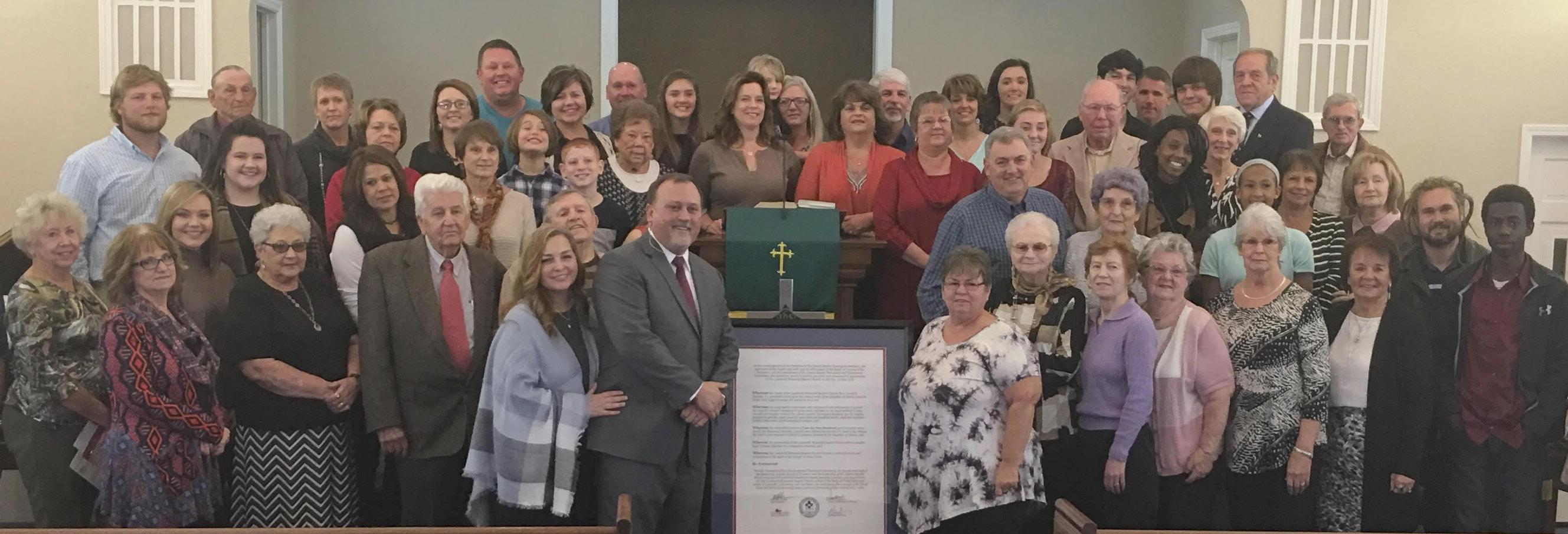
For generations, Lamberth Memorial, Roxboro, has expressed compassion through concrete efforts. From helping to build a clinic and training center in Guatemala to Habitat homes in the United States to recovery and rebuilding efforts following storms in the Gulf and the East Coast to giving funding to help those burned-out along with those feeling down-and-out, such care is a constant rhythm of life at Lamberth Memorial.
On Sunday, November 13, 2016, Lamberth Memorial received a certificate of appreciation from fellow Christian activists in Liberia. The church gathered to remember that for two years they labored in a crowded intersection of hopeful gladness and threatening hunger. Just following the installation of Dr. Richard Wilson as the sixth president of the Liberia Baptist Theological Seminary (LBTS), the Ebola disease became widespread in Liberia. Beyond the sadness of the disease itself, Ebola created a humanitarian crisis. The disease made it dangerous to go to the common markets for food.
How did a small church in eastern North Carolina become involved with a seminary in Liberia, Africa?
Dr. Wilson notes, “The pastor, Gerald Thomas, and I have been partners in ministry since we were at Gardner-Webb College in the mid-1980s. I was teaching at GWC (19821988) when Gerald was a student ....When I became the President of the Liberia Baptist Theological Seminary in 2013, I invited Gerald to participate in the installation celebrations. As President of LBTS, I needed the support of local Baptists to help raise funds for physical improvements, student scholarships, work/study funding, and more. Gerald and I talked about it and he offered to raise the issue with Lamberth Memorial. With no resistance, we had a partner!
The Roxboro church agreed to receive funds for LBTS.
Doing so required that they send receipts to all donors and then send wire transfers to the seminary as needed.”
When Ebola broke out in July 2014, the seminary was put in peril.
Dr. Wilson continues, “I was in Liberia at the time and chose to stay until we had in place a way to care for the residents of the LBTS compound. Immediately, Lamberth Memorial joined us. Over the next 20 months, the church collected and distributed more than $70,000 for Ebola relief. In the end, LBTS —with the church’s help— was able to provide a daily meal for Liberia Baptists living in school compounds in seven places, including locales in five Liberian counties.”
Persons in Liberia could obtain food and transport enough rice and beans for one meal per day, beginning on the LBTS campus. What was needed was a collection and distribution point in the United States for the funding.
Twenty-six churches, businesses, private organizations, and 73 individuals partnered with Lamberth Memorial. Thomas received little notes with many contributions. One woman gave her donation out of her mother’s estate funds. Some lamented not being able to do more. But in Liberia, there is a way of getting things done: small-small. Folks in Liberia received those funds and turned them into rice, beans, oil, and seasoning. All remained faithful and the rhythm of receiving and distributing continued until they finally out-gave and out-worked Ebola. Ultimately, onemeal-per-day for one hundred grew to nearly a thousand in various communities outside the seminary.
Compared to churches that are often in the news, Lamberth Memorial is “small-small,” but they are large enough and generous enough to care for brothers and sisters half a world away.
by Jim Hylton, CBFNC Business Administration Coordinator

Throughout history, American churches have tried all sorts of ways to raise money, including renting pews and public subscription which highlighted wealth inequality, and lotteries and raffles which were later criticized as gambling. Then, in the early twentieth century, came the practice of passing the plate. This was a great improvement over the previous methods used to raise money, and, in time, became the most powerful fundraising tool used by the church.
In recent days, though, collection plates have become less popular. We have been in a technological revolution for some time now, which has resulted in many alternative ways to give. Yet, most churches still use the collection plate as their primary fundraising tool. Why? Because the passing of the plate is still seen by many as an act of worship. That is a good thing. Christians say, “We aren’t just supporting an organization, we are giving to God.” Yet, considering the current environment, can we not give to God by other means?
We know that the message of the Church is eternal and that will not change. Yet how we do church must continually change. Since we are in the midst of a technological and communications revolution, we must embrace it or be left behind. The 21st century is driven by technology and information. Let’s look at a few facts about technology and change.
First, technology is theologically neutral. It is not a bad thing. Rather than fear technology, we will have to learn to embrace it. Second, change is inevitable. Wise organizations, including the Church, realize that they must continually reinvent themselves. The Church must learn not to fear change. Even cultural changes can be met without compromising our
theology and principles. Change must be met by the Church with a positive message of hope and stability.
In speaking with several Church Administrators from CBF churches, I have found that a substantial number of members at many churches are now using bank drafts as their primary giving tool, which is a good thing for churches. As attendance becomes more and more erratic, it ensures that the funds necessary for the church to continue to join God in work and worship will continue to be received on a regular basis. Many older members are using IRA contributions. The church must provide information about this type of giving and encourage its members to give in a manner that can help both them and the church.
Additionally, every church needs to offer online giving. While most report that this method of giving represents a smaller percentage of their gifts, younger generations expect and need this option. Many people no longer carry much (if any) cash and an increasing number of folks no longer use checks.
Yet, as churches embrace these changing ways to give, the question still needs to be asked, “How do we make giving a worshipful experience?” There is more than one right answer, and passing the plate should be one option. What may be worship to one may not be to another.
Much of giving and worship is simply what we are accustomed to, which is constantly changing in this fastpaced society. The primary focus of Christians should always be that these gifts are being offered to God, no matter how we give them.
When I accepted the request to write this article, I decided that this topic would benefit from crowdsourcing. I sent the title to more than 30 contacts, asking each one what they would include about churches that cultivate generosity. What you will read is much better because it includes the perspectives of those who cultivate generosity in their church.
Consider the following experience from one of my article’s “conspirators”:
“When I attended my first business meeting as the new pastor, the church was $50,000 in the red and living off restricted funds. They were funding about 75-80% of the budget. Five years later, we received 99.3% of the budget amount and finished 2016 $125,000 in the black. The generosity principles I learned and applied helped us change course.
One of the realities that I accepted was that people don’t have a giving problem. They have a giving-to-the-church problem. So, we made changes that produced a new reality. Last fall, we informed the congregation of the practices of payday lending predators. Three months later, we had $5,000 in an account. Our payday lending ministry has paid off the loans of three single mothers and we are providing them with financial counseling. I am so proud of our generous members and their big hearts.”
From crisis through faithful stewardship to generous giving and living, that is how I would describe this church’s experience. And, I believe this is the transformation that most churches can experience if they will act using effective principles of generosity. What else did my contacts contribute to this topic?
by Ruben Swint, Generosity Guy

Churches that cultivate generosity ... carry on an active conversation about stewardship, generosity, and giving. There is preaching and teaching, articles and story-telling, giving testimonies throughout the year, and communication of ministry that results from faithful and generous giving. People are naturally inclined to help, to console, to care for, to rescue, to befriend, to “be there” for others. So, preaching and teaching generous giving should always include the phrase, “so that in Christ’s name we can ....” create and deepen connections between people, participation in ministry, and engagement with the life of the congregation. Research by the Gallup company shows that engagement of church members leads to higher levels of serving, inviting, and giving. Involved members tend to be informed members and their giving is higher. Relationships are a vital aspect of life, leading to gratitude and to generosity.
have pastors who lead the generosity initiative; they make it a priority in the life of the church. The pastors reflect that priority by being personally generous themselves. Their generosity is a compelling witness that brings others with them along the giving path. One of the pastors who responded to me delivers fresh-baked bread to people recovering at home and cookies to families waiting at the hospital. He even keeps spare umbrellas in his car to give to people caught out in the rain. These small acts give weight to his preaching and teaching on generous giving. plan, serve, and give with a clear sense of vision and congregational mission
The members are singing the songs of generosity and ministry in a beautiful harmony from a shared dream. They know who they are, why they do what they do, and that they are better working together than they are apart.
trust their ministers, their leaders, and each other. Personal contributions are accurately accounted for and contribution statements are sent out regularly with a note about a significant ministry outcome from the reporting period. Standard accounting statements are prepared and made available to members. Feedback is prompt for what was accomplished by regular giving or with a special offering. People welcome learning that their gifts are making a difference.
build a compelling case for generosity: “Generosity is a lifestyle. It should factor into every decision we make, as it did for Jesus. I am convinced we are most like God when we are generous. It brings the best out of us and does more to build bridges of goodwill, understanding, hope, and reconciliation than anything I know. Pastors and other ministers who model this lifestyle will find it natural to talk about the personal and professional benefits of generosity. Their message will be heard by people who know they are sincere and are truly trying to help them, not merely get something from them.”
Now it’s your turn. How about crowdsourcing with your congregation? Would it be helpful for you to know the answers to the following questions?
How is our congregation generous to our community and the world? What inspires you to be generous in church and/or life? Would you be more generous if you believed you could be?
You can contact Ruben Swint at ruben@generosityguy.com, (404) 314-7273.
How does your church cultivate generosity, financially and otherwise, among your congregants? How do your congregants express generosity, financially and otherwise?
Don Gordon – Ardmore, Winston-Salem
Our church cultivates generosity by teaching, asking, and leading by example. We teach biblical principles of stewardship, tithing, and sacrificial giving. We have discovered the New Consecration Sunday material is a great resource for annual stewardship campaigns. We also encourage our ministers to give public testimonies about their own tithing/giving. Our people give an unusual amount of their time for missions projects, fundraisers, and trips. Our Finance Committee does not view excess giving to the budget as insurance against future droughts in giving. When giving exceeds the budget, the excess is given to our mission partners after a thorough and prayerful conversation with our leaders.
David Brooks – Edenton, Edenton
We have had a “Money Matters” emphasis, with sermons focused on stewardship and a commitment card. We’ve also occasionally had a “catch-up” Sunday in the fall. Periodically, I will write an article in the weekly newsletter to update and encourage financial giving, reminding the congregation that our checkbook register says more about our Christian discipleship than just about any other document. Our church is also generous with the special offerings we collect every year for Baptist ministry partners. Folks give most generously to the CBF Offering for Global Missions. We also cultivate generosity of time and service by encouraging congregants to be involved in various ministries and service projects in our church and community.
Andy Jung – First, Albemarle
When faced with an unfavorable trend line related to financial giving to our church, an ad hoc committee was formed to provide recommendations to cultivate generosity and ensure a
strong financial future for the church. The following recommendations were adopted by the church:
n Sponsor a Stanly County Habitat for Humanity house build with a goal to raise $30,000 in dollars and pledges, and to provide at least half of the volunteer days required (257 days).
n Implement a “Plus 1 Stewardship Campaign” to increase giving by 1% with a minimum increase of $10 per week.
n Initiate a capital campaign to start a building endowment fund to assist in maintaining the facilities into perpetuity.
n Implement a congregational education plan that will help develop the spirit of generosity within the membership.
n Develop and implement an action plan to increase membership through evangelism to the unchurched in our community. Increase our church’s marketing in local media, online, and through presentations.
We cultivate generosity through preaching, telling stories of generosity and/or sacrifice, giving people opportunities to be generous with time, money, etc. We offer Financial Peace University from Dave Ramsey. We tithe our budget to causes/places beyond ourselves so we are showing people that we live what we say. Members share verbal or written testimonies about how God is working in their lives. Many express generosity through time commitments to local ministries and/or mission trips.
We try to teach periodically throughout the year on some aspect of stewardship. For example, we have used Thrift and Generosity by John Templeton over a 6-8 week time frame. We also ask the church members annually to commit to support the church by being present, by praying for the church, by
cultivating a deeper devotional life, by serving others, and supporting the work of Christ. These themes are accented in preaching, usually once a quarter, so that all the stewardship work is not left to one or two weeks in the year. Our church is also generous through participation in local, state, and international missions.
David Hailey – Hayes Barton, Raleigh
We regularly emphasize stewardship, utilizing programs such as New Consecration Sunday. We are still working on how to measure generosity of time and talent. Our people are generous givers to the church through our budget and other special offerings. Many of our people are generous with their time and talents by serving on ministry boards and councils, as well as participating in other helping organizations.
Greg Rogers – Oakmont, Greenville
We cultivate generosity by having an annual stewardship emphasis that ties in ministry outcomes and opportunities with an invitation to give in our worship service, by providing online giving options, and by celebrating in many different settings (classes, worship, Oakmont 101) Oakmont’s heritage of beginning in April 1964 with all 42 charter members committing to tithe as a new community of faith. Our members also share time and talent through community and global opportunities to serve and be the presence of Christ with hands-on work.
Mark Mofield – Temple, Durham
We have used the New Consecration Sunday model to build an understanding of stewardship as a Christian discipline. We use our offertory time during the worship to emphasize the impact of all aspects of our giving (time, talent, treasure) in our church and our community. Recently, the church was recognized by a local homeless ministry as the largest supporter of the organization, not just financially but in the amount of food donated and volunteer hours. The congregation is always asking, “Is there something that is needed that I can provide? How can we help?”
by Linda Jones, CBFNC Missions Coordinator


“It’s hard,” states Javier Benitez, pastor of Iglesia Bautista Misionera Roca Fuerte and leader coach of the CBFNC Hispanic Network. “At this time in our churches, there is a lot of fear for the future because of immigration issues. In the past, the IRS gave us a number and people have bought houses using that number. If they’re deported, they lose everything. It’s hard to encourage the families to keep faith and have hope. Boys and girls who came to the U.S. when they were children are now teenagers. They have no papers. It affects everything. And yet when I present a need, they give. God has enough mercy for us. You can put your trust and faith in God. God always has enough mercy for each person.” In spite of the hardships, Companerismo Cristiano Emanuel (the CBFNC Hispanic Network), exemplifies sacrificial giving. Together, they have donated $17,000 to buy land in Nicaragua for a new church start, supported a pastor in Costa Rica for two years, and supported three churches in Mexico.
Rev. Daniel Sostaita, pastor of Iglesia Cristiana Sin Fronteras, explains, “I strive to show the needs of the world and the community. We talk about the duty to give, in which there is more joy in giving than receiving. With very little, we can change the destiny of many lives. It’s a difficult task to work with the immigrant community. We see their low wages, labor instability, and first-generation problems.” Regardless, they have reached out to their community working with Mi Casa, an organization that provides legal aid and other services; Faith Action’s ID program; and the Hispanic League on community projects. They participate in a foodbank on the last Friday of each month, organize four health fairs each year, and work closely with the South Side Clinic. Last year, Sin Fronteras gave away school supplies to 137 families. Once a year for 8 weeks, educational classes are held for parents of high schoolers. The church also organizes a soccer camp for a week in the summer. The whole community is offered clothes, soup, and fruit in October at Neighbors Day and meals at Thanksgiving and Christmas. Daniel states, “In the midst of difficulties, we grow and give. I am always looking for resources to support all the programs to the community.”
With a heart and a calling for the many Hispanics immigrating to the U.S., Pastor Pablo Hernandez and family relocated from Honduras to North Carolina with a Religious Visa sponsored by CBFNC. Pablo is pastor to Primera Iglesia De Sanford and provides leadership to Companerismo Cristiano Emanuel. Through sermons and Bible study, Primera Iglesia dedicates a month or two each year emphasizing the need to give back to the church and community, both financially and with time. This congregation helps those unable to work, laid off, sick, or those with emergency needs for food or money. Their building is shared for funerals with anyone in the community and financial help is given for the funeral expenses. Annually, the community is invited to hear guest speakers teach about nutrition and financial topics. In the summer, the men’s group works on homes of the elderly in the community, both members and non-members. Help is given with immigration status, reference letters of character, and legal fees. At the end of this summer, the church is planning a conference for young adults, led by paralegal church members, which is designed to address confusion over Deferred Action for Childhood Arrivals (DACA), a two-year renewable immigration work program.
I give thanks for these healthy, generous churches that model sacrificial giving for all of us!
by Andy Hale, CBF
The pastor gathered the children around him for the weekly children’s sermon. There I was in my cute little shirt, clip-on tie, khaki pants, and penny loafers (yes, with the penny in its slot). The pastor then said a line that haunts me 30+ years later, “You know, kids, God loves money that folds, not money that jingles.”
Were his intentions decent? Yes. Could the message have used a slight tweak? You can bet both pennies in my loafers on that fact.
Yet if we are all honest, talking about money in the church is so awkward. Whether they answered “Yes” or “No” when the pastor search committee asked if they will gladly preach on stewardship, every preacher dislikes preaching about money. Nevertheless, the topic makes it to the pulpit at least once a year, typically during a projected budget dip or in December to remind people they can get charitable contribution credit for taxes.
But what if I told you that the best thing for pastors and churches to do is to say goodbye to the stewardship sermons and emphases? In fact, what if I told you that preaching on tithing has done a tremendous disservice to the church for many generations?
The reality is that God cares about money. God, however, tends to care about it in a way that we are less likely to focus on.
greed, lording over the poor, propping up the idol of money, discriminatory laws against the alien and poor, predatory lending, and so on.
It appears that God does care about money, but in a holistically different way than we tend to preach on.
It never ceases to amaze me that no matter how much things change, they really do stay the same. Think about the nearly 2,200 passages of scripture on money!

The Bible talks about money more than 2,172 times. Just to give us a little comparison, the Bible talks about believing only 273 times, praying 371 times, and love 714 times.
Jesus mentions money in 16 of his 38 parables. 1 out of 7 verses in Matthew, Mark, and Luke are about money. All told, Jesus speaks about money 25% of the time.
Is this more fodder for a stewardship sermon? Actually, these passages give us more fodder for a sermon on debt,
It is time for the church to stop its disservice to members by only teaching on tithing when people are facing financial stress, growing debt, consumerism, and unethical business practices. We need to discuss the disconnect between the way of Jesus and the way we use our wallets.
It is time to say hello to a holistic approach to finances. We might begin that conversation by discussing how the way that we earn, spend, and invest our money matters; how debt has ramifications on our lives and souls; how business practices and following Jesus can go hand-in-hand; why it matters who is making our products and how inexpensive goods come at a price to others; and how the only response to God’s abounding generosity is generosity to neighbors.
It is also way past time for the church to examine
how it uses its resources. Maybe spending more on ourselves (buildings, programs, and events) than hands-on-ministry (loving our neighbor as ourselves) matters more than we care to admit.
So, let’s throw away stewardship sermons and start a new conversation around a holistic and gospel-centric approach to finances, both for the individual and the church.
April 2017 Contributions
Undesignated: $114,562
Designated: $213,281
May 2017 Contributions
Undesignated: $89,964
Designated: $160,634
April 2017 - March 2018
Monthly Undesignated Goal: $110,269
Annual Gathering offering for Collegiate Ministry Fund in memory of Cindy Vestal
Glenn and Cathy Baldwin; Grace Bullard; Linden and Alice Burch; Mary Byrd; Andrew Corley; Patricia Dunn; Johnnie Evans; Pat and Tommy Hardin; Susan Harrington; Barbara Huggins; Bill and Jane Kibler; Bob and Rhea Lamb; Jeff Mathis; Tim Moore and Magay Shepherd; Dana Sit; Stephen and Sandra Smith; Amanda Gail Smith; Mary Lois and Charles Strickland; Carey Washburn; Joyce Wyatt
Collegiate Ministry Fund in memory of Kay Huggins Barbara Huggins, Raleigh
Collegiate Ministry Fund in memory of Jim Wayne
Anne and John Burdette, Jr., Advance Deana and Clayton Patteson, Julian Nancy Wingenbach, Chagrin Falls, OH
Mark Elliott, Englewood, CO Thoughts from across our state ... cbfnc.wordpress.com. To
Our encouragement and support go to the following ministers who have recently moved:
Taylor Smith Crumley to Flat Springs, Sanford, as Associate Pastor: Family Ministry
Carin Daniels to Woodland, Wake Forest, as Children’s Minister
Rebekah Gordon to Trinity, Raleigh, as Student Ministry Associate
Megan Gant to Jersey, Lexington, as Family Minister
Leah Harlow to Wake Forest, Wake Forest, as Minister of Youth & Missions
Lauren McCollister to First, Clinton, as Minister of Music
Robbie Stephens to Churchland, Lexington, as Pastor
When you make a move or know of someone who has changed places of ministry, let us know by e-mailing us at cbfnc@cbfnc.org
For assistance to search committees and ministers seeking vocational discernment, visit our reference and referral page on our website at www.cbfnc.org or call (336) 759-3456 or (888) 822-1944.
Michael and Evelyn Fink, Oviedo, FL
Lonnie and Jacqueline Baxley, Greensboro
Hillsdale Church, Advance Chipley High School Class of 1961, Chipley, FL
Donate to CBFNC today! www.cbfnc.org/give
Earlys, Ahoskie
First, Asheville
First, Elizabeth City
First, Hickory
First, Spring Hope
First, Tryon
First, Wilson
Yates, Durham
CBFNC ministry coordinators are available to visit your church to speak, preach, teach, consult, lead, and minister. Contact the CBFNC office for more information.
by Wanda Kidd, CBFNC Collegiate Engagment Coordinator
Having sent a son and daughter off to college and as a campus minister who has received many other people’s children, there are a few parenting tips I would like to share with you. I am aware that our culture says that our role as parent is to make sure that our children are safe and happy, so many of these ideas will be challenging to hear and harder yet to enact.
However, regardless of our hyper-vigilant parenting ideals, it is important to remember that parenting young adults is very different from parenting children or even adolescents.
Parenting young adults requires a shift in the relationship between parent and child. As challenging as it is, there must be a belief and trust that you have done enough to allow them to thrive on their own. You need to trust your daughters and sons to utilize the vast resources you have invested in them. In addition, as Christians, we have the power to lean into our faith in Christ because we have graciously been entrusted with the rearing of these children of God.
So throughout the summer, while purchasing all of the gadgets for residence hall living and taking that last great family vacation, here are some discussion starters, things to pray about, and actions to take before you actually leave for campus:
n Agree to talk on the phone only once a day for the first month. They need time and space to find their place on campus and in their new community.
n Send care packages, notes, and letters, and sign them up for the church newsletter.
n Have a frank conversation about money with a budget for disposable income. Except for emergencies, stick to the amount of money you agreed on.
n Teach them basic life skills such as how to do laundry and simple food prep.
n Talk about the necessity and the value of going to class and turning in assignments in a timely fashion. They do not get a second chance for a first semester.
n Give them permission to explore their new world — with opportunities to fail as well as succeed — and provide a soft place to land if absolutely needed.
n Without projecting your own fears or failures, have a conversation with your son or daughter about the things you wish you had done differently as a freshman.
n Ask your pastor or youth minister to have a class(es) with pending students about what to look for in healthy relationships and how to practice conflict resolution.

Give them permission to:
n Make new friends and have challenging experiences;
n Go to the mental health center if they need to talk to someone about issues that are troubling them;
n Seek help through student support services if they have learning concerns;
n Go to a variety of churches and claim their own faith journey;
n Speak directly to their professors about questions they have before it becomes a crisis; and
n Tell you if they need your help, with your promise not intrude into their life unnecessarily.
Taking your college student to campus this August will be an exercise in faith and grace. Just ask the manager of the local steakhouse where we stopped for lunch after dropping off our son at UNC. His innocent question, “Is it just the two of you?” triggered a sobbing, “Yes it is,” from me. As embarrassing as it was, I did not tell my son the story for years. It was important not to burden him with my grief.
While university staff will give you advice and help you understand how the collegiate system works, what will sustain you in the days that follow will be prayer, a community of faith, and a new relationship with an amazing young adult.
Cooperative Baptist Fellowship of North Carolina
Bringing Baptists of North Carolina Together for Christ-Centered Ministry
2640 Reynolda Road
888-822-1944 www.cbfnc.org
Return Service Requested
Companerismo Cristiano Emanuel events contact Linda Jones, ljones@cbfnc.org, for more information
July 21-23, 2017
Women’s Camp at Ridgecrest
August 4-6, 2017
Youth Camp at Camp Dixie
September 22-23, 2017
Mens Camp
September 30, 2017
Training for Youth
October 14, 2017
Pastor’s retreat at Caraway
Preparing for College Meet and Greets
July 9, 2017: CBFNC Campus House, Asheville
July 10, 2017: First on Fifth, Winston-Salem
July 11, 2017: Forest Hills, Raleigh
Selah Vie Collegiate Retreat
August 2-5, 2017 Nashville, TN
Youth Beach Retreat
September 15-17, 2017 Caswell
Deacon Training Workshop
September 23, 2017: The Memorial, Greenville
September 30, 2017: Trinity, Raleigh
Children’s Mission Days
October 28, 2017 - First, Boone
November 4, 2017 - Oakmont, Greenville
November 11, 2017 - Zebulon, Zebulon
2018 CBFNC Annual Gathering
March 15-17, 2018 Knollwood, Winston-Salem
CBFNC has a new home! Be sure to update the contact information for our office: 2640 Reynolda Road, Winston-Salem, NC 27106. Our phone number remains the same: (336) 759-3456.