CBABC advocacy to protect retirement savings pays off
On November 2, 2008, Premier Gordon Campbell announced that the Provincial Government will be acting on the Canadian Bar Association B.C. Branch (CBABC) recommendation that RRSPs and similar savings instruments be protected from seizure by creditors.
The day following this announcement Miriam Maisonville, CBABC President, emphasised its great importance to lawyers around this province.
“CBABC has been actively lobbying for this legislative change not only because it removes an anomaly in the law, but because the majority of lawyers and other professionals, as well as the self-employed and small-business owners, rely on their retirement savings and do not have access to protected pension plans.”
CBABC has confirmed that RRSP investments with banks is only one example of RRSPs to be protected. It is intended that protection will be extended to all RRSPs recognized under the federal Income Tax Act, consistent with the legislation proposed by CBABC and currently in place in Saskatchewan.
In February 2006 (refer to page 18), CBABC efforts to protect retirement saving were noted in this publication’s cover story with the headline reading “Protecting your Retirement Investments: CBABC proposes Registered Plan (Retirement Income) Exemption Act.” That article traced CBABC’s advocacy to the work of the Legislation and Law Reform Committee who monitored the law and policy across
Canada regarding creditor enforcement of RRSPs, RRIFs and DPSPs. The persistence of our members and executive over time has born concrete and impactful results. While one challenge has been met many more remain, including CBABC’s active promotion of respect for our justice system, mandated by council in a resolution this past June.
The RRSP success stands as a powerful example of the difference that CBABC members can make volunteering their time for the good of the profession as a whole. This same commitment will be required to meet the challenges that await lawyers in the New Year both individually and as a profession. Though lawyers wear many hats, the lobbying efforts that met with success this past November demonstrate the power of working together toward common goals.
In ThIs Issue
The staggering diversity of roles lawyers undertake; from Olympic Athletes; Ombudsman; to Advocates for the homeless are highlighted in this issue. From now until the 2010 Olympic flame is extinguished, we will be showcasing the inspiring stories of lawyers who have participated in the Olympic movement. Alan Hobkirk, lawyer and Captain of the 1976 Canadian Olympic field hockey team, kicks off the series.
Whatever their stripes, lawyers are stronger in solidarity as they strengthen the profession and the Justice system as a whole.
For more information about CBABC advocacy work please visit our website at www.cba.org/bc. BT
Bar Moves uu
Continued on page 27
Have you recently changed firms or opened a new firm? Send your bar moves submission (maximum 25 words) to cba@bccba.org.
MIChAeL KLeIsIngeR has joined Bull, Housser & Tupper LLP as an associate with the Engineering & Construction Group. Michael was previously an associate with Harper Grey LLP where he practised primarily in the areas of corporate and commercial litigation, medical malpractice defence, and administrative law.
KeLVIn sCheueR has joined Beacon Law Centre practising real estate, business law and estate planning. He will be practising primarily in the new Brentwood Bay office.
PATRICe B. newMAn has recently joined Horne Coupar, in Victoria, as an associate. At Horne Coupar, Patrice shall continue her practices of personal injury, estate litigation, and general civil litigation.
Conkie & Company is pleased to welcome two new members to the firm, JuLIA DMyTRyshyn and CARMen Cheung. Julia is a civil litigator with entertainment law savvy from two years practising in Los Angeles before she returned to Vancouver. Carmen joins the Conkie boutique after six years practising at a large Manhattan firm in complex commercial litigation as well as human rights. She is taking the necessary steps to be called to the B.C. Bar, and working in the interim as a paralegal and researcher.
CoLLeen sPIeR has lessened her 3.5 hour daily commute from South Surrey to West Vancouver (leaving Braker and Company) by moving to sunny Victoria, where she has joined the progressive firm of Hemminger Schmid to expand her family law practice. Hemminger Schmid believes in a well-rounded approach to legal problems and a well-rounded approach to life, and, as such, will be moving in 2009 to Dockside Green, an eco-friendly, self-sustaining community.
sheRRyL DuBo, formerly of Fraser Milner Casgrain LLP, has joined Michelle Good & Company of Kamloops as a partner. She will continue her practice in the areas of insolvency, commercial litigation and aboriginal law.
susAn Ben-oLIeL and heLen yu, both lawyers and patent and trade-mark agents, have joined the Intellectual Property Group of Bull, Housser & Tupper LLP as associates. Most recently, Susan was practising as in-house counsel with Forbes MediTech and Helen was practising in Kelowna.
JAneT gRoVe has joined Bull, Housser & Tupper LLP as a partner with the business, technology and health care groups. Most recently Janet held the position of vice president, corporate counsel and corporate secretary with QLT Inc.
susAn L. BeACh has left her partnership with Cox, Taylor in Victoria to join the Province of B.C. Ministry of Finance Risk Management Branch as legal counsel.
CheLseA wILson, formerly of Lawson Lundell LLP, joined Legacy Tax + Trust Lawyers in August 2008. Chelsea is practising in the areas of estate and trust litigation.
KATe senIowsKI, formerly of Fasken Martineau DuMoulin LLP, will be joining Legacy Tax + Trust Lawyers mid November 2008 where she will be practising in the areas of tax and estate planning.
michael Kleisinger
Susan ben-oliel
Helen Yu
Julia Dmytryshyn
Carmen Cheung
Send your Le TT e R s To T he eDITo R to:
Jesse Tarbotton, barTalk Senior editor
Canadian bar Association, b.C. branch
Fax: 604-669-9601 Toll-free fax: 1-877-669-9601
email: jtarbotton@bccba.org
we’ve got you Covered!
Beginning in January 2009 you will be able to download your attended Professional Development and CLE hours from the CBABC using a tool on our CBA website. Section attendance, conference, workshop, webinar and group learning hours that you need to report will all be tallied using your CBA ID number and printed whenever you want.
new Articling Registry
The new Articling registry was presented at the bencher’s meeting on october 3rd by CbAbC’s Joanne Silver. There are only 14 firms registered in b.C. so far but 96 students are looking for articling positions. law firms in every county are encouraged to make use of the online registry on the home pages of the CbAbC and lSbC websites.
have you Moved? Let us Know!
If you have changed firms, addresses, email addresses, or phone/fax numbers, you need to let us know. email us at data@bccba.org, phone 604-687-3404 or fax 604-669-9601 or contact us toll-free (phone 1-888687-3404, fax 1-877-669-9601).
Canadian bar Association, b.C. branch 10th Floor, 845 Cambie Street vancouver, b.C. v6b 5T3
Tel: 604-687-3404
Toll-free (in b.C.): 1-888-687-3404 bartalk@bccba.org
barTalk is published six times per year by the Canadian bar Association, british Columbia branch and is available online at www.cba.org/bc.
This publication is intended for information purposes only and the information herein should not be applied to specific fact circumstances without the advice of counsel.
The Canadian bar Association, british Columbia branch represents more than 6,099 b.C. members and is dedicated to improving and promoting access to justice, reviewing legislation, initiating law reform measures and advancing and improving the administration of justice.
barTalk Publication Sales Agreement #40741008
Leading Together for the Future
Advocacy for the profession is one of the most fundamental roles the CBA performs. But what exactly does that mean? A prime example of the culmination of years of advocacy occurred on November 2, 2008 when Premier Campbell announced that the Provincial government will be acting on the CBABC’s recommendation that RRSPs, RRIFs and similar retirement savings instruments be protected from seizure by creditors. Numerous people worked hard and helped see this idea to fruition. But that was all it took initially – the idea and the CBABC. Those ideas and looking to the future are what we need. Grass roots or central, sole practitioner or large firm – we want your ideas because it is through our ideas and the work toward them now, that we can continue to make this profession better for the future.
miriam maisonville President 2008/2009 b.C. branch Canadian bar Association
In the short time I have been President I have been contacted with a number of ideas by enthusiastic members and I hope, in earnest, those ideas will keep coming.
The CBABC, however, is more than a place to have input on ideas – stewardship of ideas and initiatives, the continuation of work on those ideas set in motion is an integral part of the process. Stewardship includes carrying through with the ideas of those members that may take years to accomplish, for it is very rare that in the space of one year an idea can be followed through. This ensures that great ideas continue to be worked on, promoted and advanced.
What are some of those ideas right now? Interest relief for students’ loans going through to cover the articling year is one example. We know from our members that some are graduating from Law Faculties under crushing student loans, some as high as $100,000 and beyond. The effect of this is felt throughout the
profession because many graduates do not feel it is an option to consider accepting anything but the highest paying jobs which are usually in the urban centres. More frequently than not these gains by the larger centres are the rural area’s losses.
Our goal is to think into the future – to try to identify ways to help the profession before a crisis is upon us.
In my travels throughout the province I have heard the concerns of many of the lawyers in the smaller centres. Upon retirement they are not getting the younger lawyers to replace them. Yet the work is there and potential clients search for legal assistance. Many in rural area practices are turning away work.
What can we, the CBABC do to help? We can continue to come up with ideas and ways to help attract junior lawyers to smaller centres, people who may not have considered work and a life in a smaller centre. One ideal way of demonstrating to our young lawyers that life outside the bigger centres can be wonderful is to have a taste of that lifestyle. What better way to do that than through the articling year spent in a smaller centre. Now with the Shared Articling Registry developed by the CBABC with wonderful support from the Law Society of B.C. (www.lawsociety.bc.ca), practitioners in the smaller centres who never thought their practices were sufficiently varied or large enough to have an articled student can now have an articled student for a determined period of time enabling the student to complete the articling process in a community that before may not have had enough practitioners able to offer articles.
I ask you to consider getting involved. Join a Section, join a committee – share your ideas, those great ones you can be sure the CBABC will take up and follow them through. BT
Dealing with economic uncertainty
It’s time to go back to the basics of financial management
Recent Ipsos Canada survey data shows an interesting dichotomy in how Canadians view the economy. In essence, we believe that the economic situation is “bad,” but it’s not that big a deal for “us.” The thinking goes something like this: “We’re not a Lehman’s, we‘re not big money stock market players and my family seems to be doing OK.”
Caroline nevin executive Director b.C. branch
Regardless of how much or little you believe the global situation will affect you, it is reasonable to assume that it will. We don’t know how bad it will get, but we do know that our old way of life is no longer viable. Unending access to credit, living beyond our means, hyper-inflated housing markets, guaranteed wage increases (and jobs) will all be viewed by history as signs of a consumer society on the road to an inevitable crash.
Canadian bar Association
The Canadian dollar has already dropped almost 20 per cent, real estate values are sliding fast, and the cost of living is increasing as inflation continues to rise. US law firms – those that remain standing –are expected to take a hit of between 5-15 per cent (Hildebrandt International). Altman Weil is predicting a nine per cent decrease in profits.
Whether you are in private practice, the public sector or in-house counsel, this is a good time to look at ways to reduce your exposure to financial stress. There are many sources of advice on the topic, but it all boils down to the same four rules you’ve always known:
1. CLARIFy
Get clear on what you really need and want, for now and for the future. Find out how much you owe, record what you spend, and figure out a reasonable budget. There are lots of resources to help with this, including
self-help sites (e.g. www.playbook. theHartford.com) and professionals (Canadian Bar Financial [CBAF] www.barfinancial.com).
2. sIMPLIFy
Once you’re clear on what’s important to you, make conscious choices about spending. Put away all but your lowest interest credit card. Pay down the rest of your debts, starting with highest interest ones first. Use cash as much as possible, and find fun ways to be frugal. (One CBA tip: as a B.C. lawyer, you have to invest in at least 12 hours of professional development as of January 1, 2009. CBA membership gives great value with 12 months of approved PD options plus up-to-date news and friendly networking.)
3. BuILD FoR The FuTuRe
No matter how small, save part of every paycheque. Take charge of your own “next stage” of life by growing the savings you need to move on – or land softly – when it’s time. (Note: thanks to CBA advocacy, your RRSPs are protected from seizure, just like pensions. And the CBAF has a great CBA rate to grow savings faster).
4. shARe whAT you CAn
This is a tough time for lots of people. We, who are fortunate, have a chance to help others. There are lots of great organizations to support, including the CBABC Bar Benevolent Society and Lawyers Assistance Program.
What your parents taught you is still sound: don’t pay more than you have to, don’t buy what you don’t need, save something no matter how small, and give what you can to those who have less. We are older now; perhaps it’s time to be a little money-wiser too. BT
We’reinthemoney, thatskyissunny, old man Depressionyouarethrough, youdoneuswrong…
lyrics by Al Dubin, music by Harry Warren, from the film Gold Diggers of 1933.
TDavid J. bilinsky is the Practice management Advisor for the lSbC. email: daveb@lsbc.org blog: www.thoughtfullaw.com
he signs are clear. The world is definitely in a recession even if the tsunami has not yet washed over B.C.’s shores. Forestry, high tech, manufacturing – all will be affected as the waves crash through B.C. law firms.
So what can law firms do – now – to prepare for the hard times? Here is a list of steps that you can take:
• Law firms are seeing receivables balloon as clients are slow to pay. Ensure that your retainer agreement and invoices state that interest will be charged (in accordance with the Canada Interest Act) at a rate set higher than credit card rates to act as an incentive for clients to pay. Insist on up-front retainers. Consider holding a cash retainer but the firm expects all accounts to be paid on time. If the client defaults, the funds in trust would be used to pay the last account and the firm gets off the file.
• Check your available credit arrangements and balances. Pay down debt as cash comes in, ensuring that you will have available credit if you need it. Discuss increasing your credit limits just in case.
• Seventy per cent of a law firm’s expenses are in facility costs, compensation and technology: there is typically little room to reduce expenses without cutting into capacity (entertainment
and such being the exception). Don’t start laying off staff –that not only reduces your income earning ability, it works against the firm’s culture (sending a message of every person for the lifeboats) and that works against morale – and you will need good staff to carry you through the tough times.
• Protect your stars – the #1 profitability strategy of firms these days is to hire away excellent lawyers and staff from other firms.
• Deal with underperformers. Communicate expectations clearly through performance reviews and continued monitoring. Eliminate underperformers who do not respond. Do so quickly, efficiently and humanely – the rest of the firm is watching how you handle this.
• Chances are that you will have lawyers who have had their practice areas collapse around them. Assist them in transition over to productive areas of practice. If this can’t be done, the firm may be looking at how to carry them through the recession on the basis that their practices will eventually come back. But if matters are dire, they may need to leave the firm to ensure its survivability. There are no easy answers here – just hard consequences.
• Work on effectiveness improvements. By becoming a lean, efficient machine you will be better able to take advantage of the change in economic fortunes when they eventually come.
• Lastly, focus on your clients who are facing the same economic consequences – and hoping you will help them through this mess.
By taking the right steps now you can be singing “We’re in the money, that sky is sunny, Old Man Depression you are through…” BT
Letter From America
Barack Hussein Obama and the U.S. Election
Iwrite this from the United States, where I am spending a long weekend in the sun avoiding the fall monsoons of Vancouver. I am reminded of Alistair Cooke’s BBC Radio Program, Letter from America, where for more than 58 years, he would extol the virtues of his adopted American Republic for listeners in the U.K. and the world. It was ironic that when he died, rogue morticians at the New York funeral home that prepared his body for cremation carved off his limbs and sold his 95-year-old bones on the black market for dental implants and bone grafts. Such is the irony of America. It has the best of everything. And the worst.
Tony Wilson is a vancouver franchise lawyer at boughton and has written for the Globe and mail and macleans. He will teach Contract law 2009 at Simon Fraser university as an Adjunct Professor in the School of Criminology and thinks he might now have a chance of becoming President too.
America is a country of inexplicable ironies and deep divisions. It’s a country that historically promoted justice in the world but in the last eight years, used its justice system to torture prisoners of war and hold them without trial contrary to the Geneva Conventions and the Rule of Law. America is fiercely proud of its democracy, yet allowed its Supreme Court to pick the winner of the Presidential Election of 2000. It was founded by men who abhorred the concept of a “state religion,” yet over the past 25 years, allowed its religious fundamentalists to set the national agenda like Mullahs of Iran. America had the support of the world after 9/11, but squandered it all by invading Iraq on false pretences, causing untold suffering and chaos. America’s a country that abhors socialism, yet bailed out the entire financial services sector in October to the tune of $700 billion, proving that socialism exists in America, but only if you’re very rich (or were very rich). It stands for “freedom,” but only if that “freedom” includes “freedom of enterprise.’ It despises “taxes,” but hasn’t figured out
that only taxes can pay for wars and bailouts; taxes being the price you have to pay for civilization.
It’s a country that Canadians sometimes sneer at, in part because the Americans we meet are either rich, famous or beautiful (so we’re jealous), or they don’t know where Canada is on the map (so we’re annoyed). But despite the past eight years, we must not forget that the United States turned the tide in two World Wars, protected Europe from post war Soviet aggression, fostered prosperity in Canada and around the world and is the birthplace of Apple computers, Pat Metheny, the airplane and jazz. There are lots of countries we Canadians could have had on the other side of our 4000-mile border, but we probably have the best (and not just because it’s sunny and hot here in Palm Springs by the pool).
I’m privileged in my legal practice to deal with American lawyers and clients who are decent, intelligent and engaging people, just as concerned as the rest of the world that their country was in the process of becoming a rogue state of its own making. I have met other Americans over the past eight years who proudly call themselves “Bush refugees,” opting to leave the United States and immigrate to Canada.
The election of Barack Hussein Obama, 160 years after the end of slavery, is, I believe, a transformative event in world history, and not just because his middle name is “Hussein.” I believe this event will re-instill in Americans the belief that anything is still possible in their country.
But as this is a humour column, I have to say how inspiring it is that a former law professor can go so far in life. Who’d a thunk it? BT
electronic waste
What you can do about it
Canadians have an important role to play in the stewardship of the planet and its resources. The United Nations estimates that 50 million tonnes of electronic waste are generated annually. A disproportionate amount of that electronic waste is exported from industrialised countries to developing countries. Electronic waste is the most heavily traded toxic waste on the planet. Visit BAN.org to view photographs of toxic electronic waste dumping sites in Africa and China.
Patricia Jordan is the CbAbC Web manager. She welcomes your comments, questions and suggestions.
Tel: 604-646-7861
email: pjordan@bccba.org
If you are like me, then you have an old computer and monitor in storage. And, you are asking yourself, “How do I responsibly dispose of my unwanted electronic waste?” The good news is there are several options available to you. For example, items can be posted on an online exchange bulletin board or donated to recycle programs through reputable electronic waste recyclers so that equipment is reconditioned and reused.
The Recycling Council of British Columbia (RCBC) operates services that provide consumers with information and resources that are available in British Columbia. The RCBC Recycling Hotline (rcbc.bc.ca/services/recycling_hotline.htm) is a comprehensive, toll-free service that provides information on waste reduction, recycling, disposal and pollution prevention. The RCBC Materials Exchange Program (bc.reuses.com) and RCBC Electronic Materials Exchange Program (bcemex.ca) are free province-wide services facilitating the reuse and recycling of products and materials.
Encorp Pacific (Canada) (encorp.ca) is a federally incorporated not-for-profit stewardship corporation that provides stewardship services on a contract basis
to the electronics industry for the collection and recycling of regulated products. A province-wide end-of-life electronics recycling program is available to consumers and businesses.
DID you Know?
• Canadians throw out more than 140,000 tonnes of computer equipment every year.
• Many electronic waste recyclers export materials to other countries rather than recycling materials in Canada.
• Canadians generate approximately 31 million tonnes of garbage a year and only recycle about 30 per cent of that material.
Does youR LAw FIRM hAVe A “gReen sTRATegy”?
I would like to hear about your firm’s “Green Strategy” and share that information online. For more information about recycling, see “Green Your Law Firm” in “Practice Resources” at cba.org/bc. Information and resources on environmentally friendly products, fuel efficient vehicles and more is available in “Transportation.”
sITe Du JouR BAN.org
Basel Action Network (BAN) is an organization that is focused on global environmental injustice and economic inefficiency of toxic trade and its impacts. BAN confronts issues of environmental justice and actively promotes sustainable solutions to consumption and waste crises while promoting green, toxic free and democratic design of consumer products. BT
Site du Jour
section update
Keep your practice current
The following are brief summaries of several recent Section meetings held throughout the province. More detailed information and available minutes from the Section meetings are accessible online at www.cba.org/bc in Sections and Groups, for enrolled CBA members.
CRIMInAL JusTICe – VAnCouVeR
MeeTIng: September 17, 2008
sPeAKeRs: The Honourable mr. Justice C.e. Hinkson and nikos Harris (ubC lecturer)
ToPIC: Tips for Counsel in Criminal matters and Abuse of Process remedies
Prefaced by the caveat that he has been a judge for a short period of time and had limited experience in criminal matters as counsel, Mr. Justice Hinkson provided insight into practices by counsel which he finds helpful in criminal matters. These include a decent opening by Crown to help the court follow the evidence; submissions that relate to the essential elements of the offence and say more than is found in the Code annotations; as well as creative submissions containing some reference to potential consequences of the issue at bar. Ascertaining your judge’s background is also important. Counsel’s being prepared for trial is critical, and an economic (wise) use of time in examining witnesses is appreciated. Mr. Harris explained the need of counsel to apply for creative and specific remedies when faced with a s. 7 Charter violation. He reviewed several cases where the ultimate remedy of a judicial stay of proceedings was obtained, but proffered the notion that counsel should pursue other remedies, as well, when dealing with breaches of s. 7: Where the Crown or other state actor has engaged in conduct that diminishes the administration of justice, or the state is responsible for conduct which impacts on the ability of the accused to have a fair trial, such relief should be considered. Members were also provided summaries of Significant Criminal Appellate Cases by Elizabeth Campbell at this meeting.
ReAL PRoPeRTy – VAnCouVeR
MeeTIng: September 9, 2008
sPeAKeRs: James Taylor, QC Taylor Jordan Chafetz; Ian Smith, Director and registrar of land Titles
ToPIC: Is mandatory e-filing on the Horizon?
Mr. James Taylor, QC discussed and provided a detailed handout as to why he is opposed to mandatory e-filing. Following Mr. Taylor’s discussion, Mr. Ian Smith was
given 20 minutes to discuss why the Land Title Survey Authority thinks mandatory e-filing is a good idea. A lengthy question and answer period ensued in which some lawyers and attendants applauded the efficiency of mandatory e-filing and cautiously favoured moving forward with it, while others were somewhat skeptical of mandatory e-filing and were not totally comfortable that it was reliable. There were some concerns expressed that mandatory e-filing would not work well in large commercial transactions were there are multiple filings and multiple meets amongst agents.
ADR –oKAnAgAn
MeeTIng: october 16, 2008
sPeAKeRs: Grant Hardwick, Al Perry, Cheryl
berry and robert
Groves
ToPIC: Panel Discussion:
mediation in the okanagan
A wide-range of mediation topics including the differences in tone between ICBC mediations, family, estate, child protection and commercial mediations were discussed at the dinner meeting in Kelowna. Mediators and counsel need to be aware and sensitive to the type of mediation they are in, because the customs and practices common to each may vary widely. The panel participants also discussed the usefulness of counsel preparing and exchanging briefs before the mediation session. Those mediators who find briefs less helpful rely instead on what the parties identify to be important at the mediation session itself as a means to provide focus. The panel differed in their comments regarding notices to mediate with some pointing to statistics showing the settlement rate for cases involving consensual, as opposed to compulsory mediation is about the same.
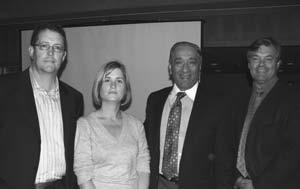
From left to right: Cheryl berry, Grant Hardwick, robert Groves, Al Perry
ConsTITuTIonAL/CIVIL
LIBeRTIes
MeeTIng:
october 2, 2008
sPeAKeR:
The Honourable Wally oppal, QC, Attorney General of british Columbia and minister responsible for multiculturalism
ToPIC: The unique role of the Attorney General in our Constitutional Framework
The Honourable Wally Oppal, QC, Attorney General of British Columbia, addressed the Section about the constitutional role of the Attorney General in our system of government. He explained that, while the Attorney General is a politician and a member of the Legislature, he has additional roles that are not shared with his cabinet colleagues. One of the primary roles of the Attorney General is to be the guardian of the rule of law. As well, the Attorney General is the government’s chief legal adviser and ensures that the administration of justice conforms to constitutional principles. The Attorney General advises cabinet as to the legal implications of their decisions in an impartial way. He noted that the Attorney General acts as the holder of the Great Seal, which after being sworn into office, he delivers to the Lieutenant Governor for safe-keeping. As well, the Attorney General must review all proposed legislative instruments to ensure that they are constitutionally valid and in accordance with the principles of natural justice. In British Columbia, since the 1990 Owen Inquiry, there has been a separation between the office of Attorney General’s office and the Criminal Justice Branch. Now, under the Crown Counsel Act, the Criminal Justice Branch reviews and implements prosecutions. However, the Attorney
General may provide direction in exceptional cases to the Criminal Justice Branch, such direction being documented in writing and published in the Gazette to ensure transparency. The Attorney General may also appoint a special prosecutor in cases where there is any apprehension of bias. Mr. Oppal noted that he is often asked questions, whether in the Legislature or by the media, about matters that are before the courts. The Attorney General is strictly bound by the principle of sub judiciae and cannot comment on such matters.
InsoLVenCy
LAw
MeeTIng: october 28, 2008
sPeAKeR: Alan H. brown, Partner of boughton law Corporation
ToPIC: liquidating CCAA’s: recent Decisions coming out of The Cliffs over maple bay and Pope and Talbot
section Meetings Count!
For CbA members, attendance at Section meetings in-person, by Webinar or teleconference counts toward your mandatory Continuing Professional Development (CPD) requirements (12 hours per year) which will be implemented by the law Society of b.C. beginning January 1, 2009. enrol in Sections and benefit from the CbAbC’s online reporting program. We record your attendance and you print your report!
This Section met for a very topical discussion on what are referred to as “liquidating CCAA’s,” given the recent Court of Appeal decision in Re: The Cliffs Over Maple Bay and various recent decisions in Re: Pope & Talbot. These decisions have highlighted the uncertainty created by the skeletal nature of the Companies Creditors Arrangement Act in terms of its proper application for companies whose operations are not intended to continue beyond the “reorganization.” The Section discussed both the positive and negative sides of the judicial discretion inherent in CCAA proceedings. The Section also discussed the recent amendments to the Bankruptcy and Insolvency Act and the Companies Creditors Arrangement Act, enacted on July 7, 2008. BT
From left to right: ron Skolrood, Pamela murray, Attorney General Wally oppal, QC and Art Grant
From left to right: bill riley, Jennifer Cockbill, Alan brown, Kimberley robertson, bryan Gibbons
eFs: evolution Through Consultation
Doing business over the Internet is both revered and feared, but the Internet’s appearance in almost every aspect of life is a fact.
The Land Title system in B.C. is no exception. On each of the occasions of major change, computerization in the 1980s, implementing an imaging system in the 1990s, and the 2004 introduction of the Electronic Filing System (EFS), the fears have been: “The IT systems will fail.” “What about the registry agents?” “Lawyers will have to take on more of the work, and what then?”
Ian C.b. Smith, Director of land Titles, land Title & Survey Authority of b.C. (lTSA)
The LTSA has always taken the fears and concerns of all Land Title users very seriously. EFS meets the demand for modern e-business solutions, and has been developed in consultation with the professionals who regularly file at the Land Title Offices:
• The EFS Committee, representing users, advises the LTSA on how best to proceed with system and practice-related matters.
• Registry agents have been meeting with the LTSA since 1998, when EFS was merely a concept. This led to agents being able to electronically submit professionally certified documents on a legal professional’s behalf, as they do for paper documents. In this way, the important function of a “second set of eyes” is preserved.
• The LTSA Stakeholder Advisory Committee and CBABC Real Property Section Chairs have been providing input into EFS enhancements. Security is continually under review to ensure the land title system is as failsafe as possible. Risk assessment is second nature to the EFS team. The risks one doesn’t run using EFS (documents lost in transit, courier delays, traffic jams, documents not being completed in time for courier or
office deadline) combined with a structure designed to avoid fraud, have produced a system that is attracting the attention of other jurisdictions in Canada and across the world.
EFS has transformed conveyancing for real property professionals, and for many is the preferred method of filing documents. On October 30, 2008, 53 per cent of freehold transactions and 66 per cent of mortgages were filed electronically. Sixty per cent of all notaries now file electronically, and 69 per cent of all eligible Crown land survey plans were submitted electronically during 2007-08. Several law firms have directed their staff to use EFS for all filings where possible, and leading registry agents in B.C. file electronically on behalf of clients. Ask any regular user what benefits EFS brings and you will hear: “It makes my business more efficient and cuts costs.” “Filing is faster and more secure;” “EFS has enhanced my customer service;” “I file at times convenient for me and my client;” “It doesn’t matter where I am, I can still file.” As one owner of a registry agent company says, “EFS has grown my business – we have more clients using us because we use EFS.”
The LTSA’s objective is that it should be possible to electronically file anything that can be filed on paper. Documents are becoming “electronically enabled” all the time – Power of Attorney will be added soon.
Where EFS is used, it becomes the obvious choice. It also enables the LTSA to enhance its own services, and to ensure the fast, efficient turnaround of documents.
In addition to internal efforts to improve consistency around examination decisions, continued consultation with our lawyer, notary, registry agent and land surveyor, customers will ensure that EFS evolves to meet everyone’s needs. BT
A Classic updated - Rediscovering the B.C. ombudsman’s office
“ombudsman” is:
a) a position first established in 1809 in Sweden?;
b) an independent officer of the legislature in british Columbia?;
c) an office that assists in obtaining fair treatment from provincial public authorities?; or
d) all of the above?
If you answered “d” you would win a coveted “Ombuddy” pin in the B.C. Office of the Ombudsman.
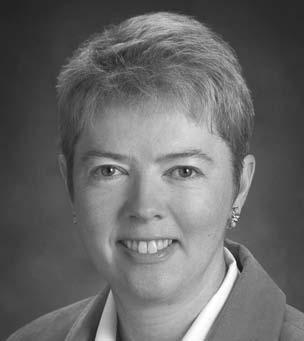
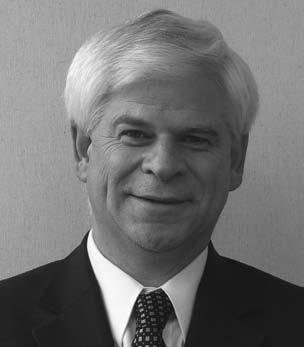
Kim Carter, ombudsman
Since 1979 the Ombudsman’s Office has been an integral part of ensuring access to justice for people in British Columbia. It has one of widest jurisdictions in Canada, with the ability to investigate complaints about administrative unfairness involving provincial ministries; administrative tribunals; boards and commissions; Crown corporations; health authorities and hospitals; school boards and schools; local government; colleges and universities; and selfgoverning professions (the Law Society; the College of Physicians and Surgeons).
Adopting a consultative approach, its role is to impartially and independently investigate complaints. It can make recommendations for remedying unfair treatment; encouraging accountability; and improving poor administrative practices. Fair resolutions obtained have included apologies; re-hearings; reconsiderations; financial reimbursements; and changes to policies and procedures.
Lawyers play an active role in the Ombudsman’s investigative process. A number of the Ombudsman Officers who conduct investigations are lawyers. Although not required, some of the complainants who come to the office choose to do so through their counsel. Often counsel for an organization being investigated is involved in providing its response.
The Office of the Ombudsman role in providing access to justice augments the role of other bodies. The office does not investigate matters that are being heard by a court or a statutory tribunal. If there is an established internal complaint resolution process within an organization that is available to a complainant then a referral to that process is usually offered as a first step, along with the information that the Ombudsman’s office remains available if that process proves unsatisfactory.
In addition to responding to complaints the Ombudsman can initiate her own investigation into any “matter of administration” – that is everything done by government authorities in the implementation of government policy except the activities of the legislature and the courts – that she believes results, or may result, in a person being treated unfairly.
In the past two years the office has completed a number of large systemic investigations into issues ranging, from the adverse effects of changes to crime victims assistance legislation, through the fairness of lottery prize payout processes, to the adequacy of procedures protecting drinking water safety. Currently, the office is engaged in a major investigation into concerns about senior’s care facilities.
Another recent innovation has been the establishment of an Early Resolution Process which is designed to deal quickly with administrative fairness issues such as delay, failure to respond to inquiries and inadequate explanations for actions or decisions.
For those seeking fair treatment, especially those with limited resources, the Office of the Ombudsman remains a valuable option.
More information is available at www.ombudsman.bc.ca. BT
Buy FsC Labelled Paper
Something you can do to protect our children’s forests
Since the advent of the paperless society in 1970, worldwide paper consumption has risen from 100 to 350 million tons per year. Even with computerization, the legal profession is still among the most voracious of the paper hogs –but you can do something to help.
With simple purchasing choices, you can help protect wildlife habitat, ensure clean water, and keep our forests healthy for generations to come. That choice is to buy FSC.
becker, vice President, Forest Stewardship Council (FSC) Canada
The Forest Stewardship Council (FSC) is the international certification and labelling system that allows buyers to choose paper and wood products that come from responsibly managed forests and verified recycled sources. FSC is a set of strict environmental and social standards for forests, and fibre is tracked from the forest or reclamation site to the consumer. The end result is a product in the marketplace carrying the FSC “check-tree” logo. For more information visit www.fsccanada.org.
FSC promotes healthy forests and strong communities. Many organizations – Canada Parks and Wilderness Society (CPAWS), Forest Ethics, Greenpeace, National Aboriginal Forestry Association, Sierra Club of Canada, The Nature Conservancy and WWF Canada recognize FSC as the most rigorous and credible forest certification system in the world.
How YOU can Change the World by specifying paper. With every purchasing decision, each and every one of us has the ability to positively influence the health of our forests and our communities. Here are some tips on how you can change the world by specifying FSC-certified paper.
1. Buy FSC-certified paper. When purchasing paper for the office or at home, buy paper with
the FSC “check-tree” logo. FSC-certified paper is available from all major paper merchants and retailers.
Dye and Durham • is the only FSC-certified Law office supplier in Canada. FSC Chain-of-Custody certificate code: SW-COC-002302. Visit www.dyedurham.ca for more info.
For a list of merchants and • retailers: www.fsccanada. org/paperretailers.htm
For a list of FSC-certified papers: www. • fsccanada.org/fscpaper.htm
2. Print on FSC-certified paper, and work with an FSC-certified printer – there are hundreds. For a list of FSC-certified printers: www. • fsccanada.org/fscprinters.htm
3. Develop a Paper Procurement Policy for your company that specifies the use of FSC-certified paper and printing. How to develop a paper procurement policy: • www.fsccanada.org/paperprocurement.htm Examples of paper procurement policies: • www.fsccanada.org/ProcurementPolicies.htm
4. Encourage others to buy FSC-certified products. Ask local retailers and manufacturers if they carry FSC-certified products, and encourage governments, businesses and associations to specify FSC-certified products in their procurement policies.
For a list of companies printing on FSC- • certified paper or buying FSC-certified products: www.fsccanada.org/usingfsc.htm
5. Tell everyone. Talk about FSC and your commitment to the environment on your website and in marketing materials. Tell your colleagues, clients, friends and family. BT
maia
A Day in the Life of an olympic Athlete
It was a great privilege to represent Canada in the Olympics. I recognize the “lessons” learned from my athletic career which now inform my civil litigation practice in a larger firm.
Be PRePAReD – The two year build-up to the Olympics was similar to preparing a case for trial (with the Olympics themselves representing the trial). As with the legal case, one has to be physically, mentally and tactically prepared, knowledgeable about your opponent’s and your own team’s strengths and weaknesses. In both contexts, failure to adequately prepare meets with adverse results.
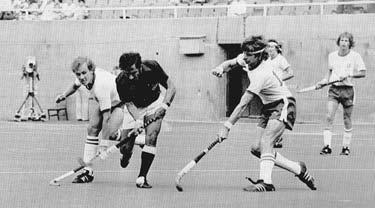
Alan Hobkirk (above and below wearing a headband)
olYmPIC SnAPSHoT:
• Competed in 1976 Olympics (montreal)
• Sport: Field Hockey (Captain)
• Result: 10th Place
• Called to B.C. Bar, February 1981
TeAM woRK - Field hockey is a team sport with its 11 players being selected with care. Regardless of who scores the goals or “gets the glory,” each member of the team is making an essential contribution. In the context of a larger legal case, a team of lawyers, students and paralegals is assembled and works together towards the common purpose of advancing the client’s case.
• Practice area: Civil Litigation
• Current affiliation: Partner, miller Thomson llP
was seriously injured and did not play again. Despite this setback, we had to adapt and play on – much as the litigator does when there is a sudden, unwelcome development in the case.
The FRIenDs we MAKe
–
One of the great joys of practicing law is the mutual respect and camaraderie that develops amongst counsel and colleagues. In competitive sports, one plays to win. Regardless of the result, after the game, we shake hands with our opponents. Even amidst heated competition, lasting friendships are made. When one makes the effort, litigation is no different.
eXPeCT The uneXPeCTeD – There is not a significant legal case where the unexpected does not occur at some point between taking on a matter and going to trial. In field hockey, played at high speed, much can change in an instant due to injury, weather conditions or the bounce of the ball. One has to continually adapt to changed circumstances. In Montreal, in the early stages of the tournament, against Argentina, we had an upset win. Unfortunately, one of our top forwards
VIVA LA DIFFeRenCe – Elite competitive sports is about “winning the game.” There is a winner and a loser. One battles to the end of the game with no thought of surrender. Although this mindset has assisted me in my trial practice, I have had to learn and practice the necessary and important skill of negotiation, aimed at reasonable compromise – a skill not necessarily considered an asset in elite sports!
In the legal profession, we subscribe to the highest standards of competence and ethics. Admittedly, this differs from elite sports where taking “paltry advantage” of one’s opponent or “gamesmanship” is usually condoned and encouraged.
I have had the good fortune to continue my association with sport as a coach, former Director of Sport B.C., counsel for sports associations and advocate/panelist at national and international level disciplinary hearings. BT
Bylaws Preventing homeless from erecting shelters Found unconstitutional
On October 14, the B.C. Supreme Court handed down a decision with potential repercussions for the entire country. In Victoria (City) v. Adams, Justice Ross struck down Victoria bylaws prohibiting homeless people from erecting temporary shelter on Cityowned land. She ruled that the bylaws were arbitrary and overbroad and thus violated Section 7 of the Charter and were not saved by Section 1.
Track, lawyer, Pivot legal llP
The decision is based on three main findings of fact. First, the number of homeless people living in Victoria vastly exceeds the number of shelter beds. Thus, hundreds of people have no choice but to sleep outside in the City’s parks and streets. Second, the effect of the bylaws was to prohibit homeless people from erecting any kind of overhead protection to shelter themselves from the elements, even on a temporary basis. Third, the effect of the prohibition was to impose upon homeless people, who are among the most vulnerable and marginalized of the City’s residents, significant and potentially life-threatening health risks such as hypothermia.
Given these realities, Justice Ross found that by denying access to shelter, a basic necessity of life, the City violated homeless people’s right to life, liberty and security of the person, in a manner not in accordance with the principles of fundamental justice.
There have been predictable accusations of judicial activism and legislating from the bench, but in fact the judgment was remarkably narrow. Justice Ross noted that the City enacted the bylaws for legitimate purposes: protecting parks’ natural environment, ensuring parks are available for everyone to enjoy, and because of public health concerns. However, the City was unable to show
how prohibiting people from sheltering themselves at night would achieve those aims.
Recognizing that policy makers are entitled to deference in the policy choices they make regarding complex issues such as homelessness, Justice Ross emphasized that, nevertheless, it is the responsibility of government in making those decisions to act in conformity with the Constitution.
Accusations that the judgment will result in the unbridled expansion of tent cities throughout the city are also misguided. The judgment does not suggest that all laws should be suspended with respect to homeless people in parks, nor that there can be no regulation of when, where, and how homeless people may shelter themselves. In response to the court’s decision, the City of Victoria passed a new bylaw restricting the hours when tents could be erected to between 9:00 p.m. and 7:00 a.m. Unfortunately, those hours were decided without any consultation with the homeless people sure to be affected, and the Victoria police’s efforts to enforce the new bylaws resulted in several arrests just days after the court’s decision.
The City of Vancouver says it will continue to enforce its own bylaws prohibiting homeless people from sheltering themselves on public property, despite the Victoria ruling. This despite the fact that Vancouver has fewer than 800 shelter beds and more than 1500 homeless people, according to a homeless count conducted in March 2008. In the last nine months of 2007, Vancouver shelters turned away homeless individuals seeking a place to stay for the night 36,000 times because the shelter was full.
The City of Victoria plans to appeal the court’s decision. BT
laura
uBC and uVic Mentorship Receptions
On the evening of October 27, 2008, the UBC Canadian Bar Association Mentorship Reception was held at the Vancouver Law Courts Inn.
More than 140 people attended this popular event, which is hosted by the CBABC and the UBC Faculty of Law Career Services Office.
Claire Young of the UBC Faculty of Law (Senior Associate Dean, Academic Affairs) spoke briefly of the program’s benefits to students and thanked the CBA, Career Services and the Mentors for their contribution to the Mentorship Program. Also in attendance from the UBC Faculty of Law were Kerry Parker Smith (Director of Career Services) and Pamela Cyr (Associate Director of Career Services).
Miriam Maisonville, CBABC President, presented the prestigious CBABC Law Student Award to Peggy Lee in recognition of her academic achievements and contributions to the law school and her community. Also in attendance from the CBABC was Joanne Silver, Director of Stakeholder Relations.
The Mentorship Program provides an excellent opportunity for students to obtain exposure to the practice of law and to obtain guidance from experienced lawyers.
This year 110 students were matched with local lawyers practising in diverse areas. All students interested in participating were successfully matched with a mentor. Approximately three quarters of the students matched were in their first year of studies, however, a number of second and third year students are participating in the program. Jennifer Duncan (former First Nations Legal Studies Advisor) selected mentors for seven First Nations students.
It was a pleasure to co-ordinate the Mentorship Program and the reception. BT
The University of Victoria’s Law Careers Office and the Canadian Bar Association, B.C. Branch, held their 2008 mentorship reception on October 29th at the Union Club of Victoria. The reception was attended by a high percentage of the mentees and mentors involved in the program. UVic Dean of Law, Donna Greschner, spoke briefly about the benefit of quality guidance through mentorship for students during their studies as well as throughout their careers.
Miriam Maisonville, CBABC President, presented the CBABC Law Student Award of $4000 to Karen Tse for her achievements. Michelle Chan was the second award winner of the night and received the CBA Financial Services Corporation Law School Achievement Award, which was presented by John Waddell, QC.
The mentorship reception provides a social setting in which mentors and mentees are able to break the ice and begin their relationships. The reception also provides an important opportunity for participants to see the strength of the program as a collective group which may be difficult otherwise considering the private nature of mentorship.
The majority of students participating in the program are first years although many upper year students keep in touch with their mentors from prior years. This year the 70 UVic students participating in the program were matched with mentors practising in a wide array of practice areas based on each student’s area of interest. Mentors participating in the program include lawyers from small firms, large firms, nonpracticing careers, government and the judiciary.
Organizing the program has been a rewarding experience. Good luck to all the matches. BT
CbA Student representatives Jennifer Poirier from ubC and Harpreet nahal from uvic.
Conflict of Interest and the small Firm
Understanding the “Substantial Risk”
While, generally speaking, the rules and principles regarding conflict of interest develop around the intricacies and Byzantine relationships found in the major transnational and multinational law firms, it is in the actual experience of the profession that conflicts of interest are most profoundly focused and acutely felt at the level of the small office and in rural communities. Indeed it is in these work places that lawyers are most acutely aware that conflicts which preclude their representation of valued clients are both bad for the public interest, bad for the justice system and bad for business. With this issue sharply in mind a task force of the Canadian Bar Association has set about to critically analyse and in some sense restate the law of conflicts of interest in our profession and the application of rules to best protect counsel and the public from the adverse effects of conflicts of interest.
mayland mcKimm, QC lawyer, mcKimm & Wishart
us in practice often feel that we will simply know that a conflict exist in our representation of a new or existing client. A client arrives in the office, begins to present their legal problem and counsel begins to undertake significant work on their behalf, this may include the preparation of pleadings, the preparation of documents and the gathering of information. In the small office lawyers tend to be more immediately focused on serving the client and in the struggle to serve as many clients as well as possible, office systems can fall into disuse. Sadly, the real risk to the small office practitioner is that, after doing substantial work without engaging a conflicts analysis, counsel may well find themselves without a client and all of their work having effectively been wasted and of no value to either themselves as billable or to their clients as a useful resolution to their legal problems.
In a report prepared for the Canadian Bar Association and presented to the National Council in August, 2008 (refer to the cover story) the Task Force on Conflicts of Interest conducted a thorough and encompassing review of this troublesome area of the law. For those in practice the work is an excellent read and it has been presented both in a manner that is easily digestible and practically focused. Perhaps of greatest utility to the profession is the conflicts of interest “tool kit” found at the back of that report. For this tool kit alone all members of our profession should find the report essential reading as they move their practices forward.
Counsel should commend themselves to the analytical framework found within the report, titled; How to analyze a potential conflict of interest. Those of
The task force report also presents a series of excellent check lists, retainer and termination letters to cover many eventualities both in the sense that a conflict may arise or to ensure that conflicts do not arise. Counsel must always be mindful to engage in a conflicts analysis during that critical first interview. To ask precise questions of either the new or existing client just what parties may be engaged in the litigation or engaged in the transaction and how those parties may relate to other parties or other clients of either the small firm or indeed even the sole practitioner.
The Canadian Bar Association is to be substantially commended once again for putting such an enormous amount of volunteer effort into such a fundamental area of the practice of law. The task now falls to we in the profession to ensure that we make the highest and best use of this excellent work and take the time to assess the report and see what steps we can all take to improve our practice. BT
every effort is made to ensure the accuracy of the information provided to you in this article but the information should not be relied upon. lawyers should refer to the specific legislative or regulatory provision. You will see a reference in some cases to the number of the bill when it was introduced in the House. This number may be different from the chapter number of the new Act which is quoted after the title of the Act and which is the proper citation for the Act. The bill number has been given to make it easier for you to note up the bills you may have in your library.
CuRRenT FRoM AugusT 13 - noVeMBeR 3, 2008
legislative update is provided as part of the CbAbC legislative and law reform program. It is a service funded by CbA membership fees, and is, therefore, provided as a benefit of CbA membership. The full version of legislative update is now only published online and available to CbA members exclusively at www.cba.org/bc.
MoToR DeALeR AMenDMenT ACT, 2004, s.B.C. 2004, C. 24 (BILL 24)
Section 1(f) is in force October 10, 2008
2008 CBA Cecilia I. Johnstone Award
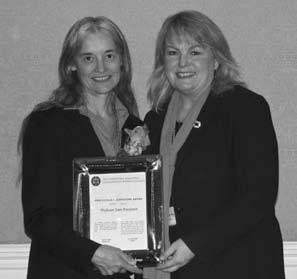
Joan brockman, a Professor of Criminology at Simon Fraser university, has won the 2008 CbA Cecilia I. Johnstone Award in recognition of her outstanding work to advance the standing and influence of women in the legal profession.
As a legal scholar and educator, Professor brockman has persuasively argued that law remains a highly gendered field, but one that can be reformed. Her reports to law societies have been instrumental in the development of model workplace policies for law firms, changes to codes of conduct rules relating to sexual harassment, the provision of parental leaves, innovative new workplace accommodation, and revision to professional development in aid of eliminating gender disparities.
PATIenT CARe QuALITy ReVIew BoARD ACT, s.B.C. 2008, C. 35 (BILL 41)
The Act, except Section 12, is in force October 15, 2008
PuBLIC sAFeTy AnD soLICIToR geneRAL (gIFT CARD CeRTAInTy) sTATuTes AMenDMenT ACT, 2008, s.B.C. 2008, C. 15 (BILL 17)
Sections 1 to 4 are in force November 1, 2008
sMALL BusIness AnD ReVenue sTATuTes AMenDMenT ACT, 2008, s.B.C. 2008, C. 11 (BILL 11)
Section 2(a) adding the definitions “accommodation units,” “leasehold accommodation property” and “leasehold unit,” (b), (c), (e) and (f) are in force October 27, 2008
“It is impossible to enter a serious discussion about the advancement of women in the legal profession without mentioning Joan brockman. She has demonstrated exceptional leadership in this area through her scholarship, her policy-related work, and her teaching and mentorship,” said veronica Jackson, national Chair of the CbA Women lawyers Forum. “Professor brockman’s career has directly supported the advancement of women lawyers and encouraged the retention of women lawyers in the profession.”
The Cecilia I. Johnstone Award was established in 2007 to recognize women who have achieved professional excellence in their field and influenced other women to pursue legal careers, supported other women in career advancement or opened doors for women lawyers in a variety of job settings that historically were closed to them. It is named to honour an outstanding lawyer, judge, CbA President, woman and friend who passed away in the summer of 2006.
Joan brockman and Kerry lynne Findlay, QC
DAVE's TEch Tip
Technology Tip from Dave Bilinsky’s Award-Winning Blog: (www.thoughtfullaw.com):
eWeek’s Channel Insider blog posted an interesting article on Thursday, nov. 6, 2009: “Can Solution Providers leverage Web 2.0 as obama Did?” They stated: “Whoever you supported in the recent presidential election, one lesson everyone can learn from the whole thing is that technology is changing the way organizations interact with their customers.”
In particular, substitute “law firms” for “organizations” and one can realize that there are many lessons for lawyers to learn about how their clients (particularly younger ones) are communicating. Twitter, Facebook, blogs – all these and more are the communication methods being used today. Ask yourself: “Where are my clients spending their time? Am I listening to them?” obama (and his advisors) realized the power of today’s communication technologies and made the most of them. The question that can be asked: Am I listening to these lessons and am I ready to move on? Have I thought about and more importantly, developed a plan to move forward using web 2.0 technologies to reach out to new markets and clients?
early Bird “Bonus offer” winners
A record 2,715 CbA members joined Sections before August 18th and were eligible for the bonus offer draw of ClebC gift certificates and courses. The winners are:
1. Gift certificate for $700 to be used toward any C leb C product(s); nicholas ellegood, lawson lundell llP, vancouver
2. registration to a regular, one-day ClebC course; rebecca buchanan, race & Company, Squamish
3. registration to a regular, one-day ClebC course; Dominic A. Petraroia, Farris, vaughan, Wills & murphy llP, Kelowna
4. Gift certificate for $300 to be used toward any ClebC product(s); Cynthia Callison, Callison & Hanna, vancouver
The CbAbC would like to thank the Continuing legal education Society of b.C. for its generosity and continued support of Sections.
work Life Balance Committee gets the Boot – Boot Camp workout That Is!
on Tuesday, november 4, 2008, Corporate occupational Solutions (CoS) hosted a boot Camp session for the Work life balance Committee. As part of the Work life balance Committee’s commitment to emphasize the importance of health and wellness as part of everyone’s daily activities, the Committee joined in a noon boot Camp workout session. At the boot Camp, CoS instructors introduced a range of corestrengthening exercises, plyometrics, agility exercises, calisthenics, speed drills, circuit training, yoga, Pilates, and toning exercises. Committee member rita Sidhu said afterwards, “I thought I was the type of person who would never attend a boot camp but I was completely wrong. It was fantastic! I felt so energized after.” For those CbA members who were unable to attend the november 4th session, CoS has generously provided a free boot Camp session workout, valid at any time until June 30, 2009. To print off your free CoS boot Camp Certificate, go to: http://www.cba.org/bc/pdf/events/ bootcamp_certificate.pdf. To find out more about CoS and its initiatives, visit their website at www.CoSinc.ca or contact CoS Ceo Antonio Zivanovic at 604-726-6142.
1st Annual Boughton / BCLI great Debate
on october 29, 2008 the first annual boughton / bClI Great Debate was held at the law Courts Inn, the topic of which was “resolved that copyright law has no place in the modern iWorld.” The event, hosted jointly by the boughton law Corporation and the british Columbia law Institute, was organized to raise funds for the Institute’s law reform initiatives as well as for the ubC Faculty of law’s new law school building. This lighthearted and fun debate was undertaken by Professor robert (bob) Howell, uvic IP law Professor and Tony Wilson, boughton law Corporation, who argued for the resolution on behalf of the university of victoria, and Professor Joost blom, QC and Karen macDonald of Smart and biggar, who argued against the resolution for the ubC team. The debate was such a close contest that CbC radio one’s rick Cluff, the moderator, had to rely on Chief Justice brenner to determine that uvic was the victor of the Great Debate Trophy. many thanks to all who attended. We’ll see you at next year’s event, scheduled for october 28, 2009. more information can be found at: www.bcli.org.
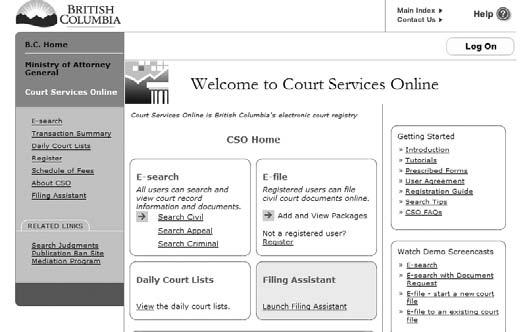
The Court services (Cso) e-File service
The Court Services Online (CSO) e-File service allows users to submit electronic court documents in civil actions to Supreme Court and Provincial Court registries. Electronic filing is a key component of the Integrated Electronic Court, a joint vision of the Court Services Branch of the Ministry of Attorney General and the British Columbia Judiciary to use new technology to improve access to justice.
B.C. is the first province in Canada to introduce a comprehensive e-Filing system including the storage and maintenance of court files in an electronic format.
Legislation to facilitate e-Filing came into effect in 2005. Today, CSO e-Filing is available in thirteen court locations, and more than 26,000 Supreme Court Civil, and Provincial Court Small Claims documents have been e-filed. E-Filing will be available in all 43 court locations in December 2008.
E-Filing is available for most Supreme Court Civil and Provincial Court Small Claims documents. For e-Filing restrictions refer to Supreme Court Rule 69 (5) and Small Claims Rule 22
E-Filing is simple and can take less than three minutes to complete. Once a document is e-Filed, an electronic copy can be retrieved via the CSO account. Statutory filing fees and CSO transaction fees can be paid with a credit card or with a BC OnLine deposit account.
Feedback from law firms has been very positive. They like the ease and convenience, and the efficiencies gained. E-Filing allows users to file, retrieve and electronically search files from their office or home.
For more information about e-Filing or to view a demonstration, please visit Court Services Online at www.courtservicesonline.gov.bc.ca.
Questions can be emailed to Courts.CSO@gov.bc.ca.
Winners robert Howell and Tony Wilson
2008 Fall Launch and Award of excellence Luncheon
The CbAbC Women lawyers Forum held a Fall launch and Award of excellence luncheon on october 29, 2008 in celebration of its sixth year of successfully promoting the stature and influence of women in the legal profession. The first Award of excellence was presented to maria morellato, QC, in recognition of her many distinguished career achievements and outstanding contributions to women in the legal profession as a change agent, leader and mentor.
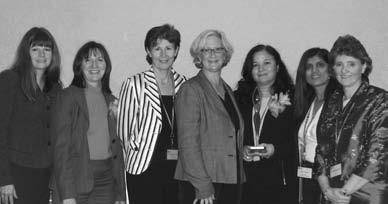
From left to right: miriam maisonville, rosanne Kyle, marina Pratchett, QC, Alison murray, maria morellato, QC, Anne Chopra and linda robertson.
We wish to congratulate and honour the nominees for the first CbAbC Women lawyers Forum Award of excellence: rosanne Kyle, miller Thomson llP; maria morellato, QC, blake, Cassels & Graydon llP; Alison murray, murray Jamieson; margaret ostrowski, QC, Immigration & refugee board; Susan Paish, QC, Pharmasave Drugs (national) ltd.; and marina Pratchett, QC, Fasken martineau Dumoulin llP.
georges A. goyer, QC Award
Marvin Storrow, QC, partner emeritus at Blake, Cassels and Graydon LLP, is the recipient of one of the CBABC’s, highest honours, the Georges A. Goyer, QC Memorial Award. The Award was presented to Mr. Storrow at the 2008 Bench and Bar Dinner at the Pan Pacific Hotel in Vancouver on November 19, 2008. The Goyer Award was created in 1992 to recognize exceptional contributions to the legal profession, to jurisprudence or to the law in British Columbia. The award was established in memory of Georges A. Goyer, QC, a respected member of the B.C. Branch who passed away after a courageous battle with cancer.
CBABC President Miriam Maisonville, who chaired the selection committee, said “Marvin Storrow, QC a renowned litigator, is one of the leaders of our profession and exceptionally deserving of this year’s Goyer Award for not just his legal contribution to existing jurisprudence, but his volunteerism for other lawyers. His volunteer activities in their entirety are too numerous to mention but include being a Director and Executive Member of the Educational Endowment for Aboriginal Justice, Committee member of the CBA Aboriginal Law Student Scholarship Trust, Life Bencher of the Law Society of B.C. and past Elected member of the Provincial Council of the Canadian Bar Association. Mr. Storrow is a recognized leader in numerous legal areas particularly Aboriginal law, and “white collar crime” and his contributions are recognized in all Courts from our Provincial Court to the Supreme Court of Canada.”
December 2008 – January 2009
December 5
Branch and Bar Calendar (see cba.org/bc for details)
December 5
December 6
December 8
December 12
January 15
CBABC Women Lawyers Forum “Lady Lawyers Who Lunch” Christmas Soiree (COZA! Restaurant, Langley)
CBABC / Local and County Bar Associations (Delta Airport Hotel, Richmond)
CBABC Provincial Council Meeting (Delta Airport Hotel, Richmond)
Lawyers Assistance Program Workshop: Creating Balance Through Healthy Boundaries
New Westminster Bar Association Christmas Dinner (Hart House Restaurant, Burnaby)
Do you like to plan ahead and avoid the last-minute rush? Then be sure to guarantee your place at the CbA’s Canadian legal Conference in Dublin, Ireland, Aug. 16-18, 2009.
Take a moment to
check out the draft program, then book your accommodation online. The schedule has been structured with business and professional development programs in the mornings, with afternoons free for sightseeing. Then round out the day with receptions, dinners and entertainment at the national Concert Hall, Dublin Castle, and Guinness Storehouse.
Brochure uuu http://www.cba.org/cba/dublin2009
CBA online store
looking for materials from a past CbA national Continuing legal education program or access to a past online Cle session? You can find them, and much more, in the CbA store. Search by subject, author and keyword to find exactly what you are looking for. order online, then download immediately in PDF format. It couldn’t be easier!
Visit the CBA store uuu www.cba.org/store
equity and Diversity guide Available online
The CBA’s Equity and Diversity Guide – a first of its kind in the legal profession –is a resource manual for the legal profession that offers practical advice to help law firms promote diversity and equity, leadership for recruitment efforts, and mentoring for lawyers.
“The business case for diversity is already made,” says Mary Jackson, chief legal personnel and professional development officer with Blake Cassels & Graydon LLP in Toronto, and a member of the guide’s advisory panel. “This guide speaks to how you actually do it. It is the first step in thinking about and analyzing your approach to diversity.”
Developed by the CBA’s Standing Committee on Equity, the guide directly meets the strategic objective of promoting equity and diversity in the legal profession. “We are trying to assist law firms and organizations so that they can become leaders within their fields, by achieving and promoting diversity within so that they become part of the core business plan,” says Janet Oh, immediate past Chair of the Equity Committee.
The guide is being distributed throughout the profession alongside the CBA’s “It’s About Respect” video series on gender, race and disability discrimination. The video series presents three very short stories to open a discussion about the biases and prejudices that may be present in law firm situations. By exploring assumptions and increasing self-awareness, lawyers will be able to recognize ways in which they can contribute to a discrimination-free workplace.
“The ultimate goal is to try and achieve diversity within the legal profession, so it is reflective and inclusive of the population and of groups that have traditionally been underrepresented, excluded and discriminated against within the profession itself,” says Janet Oh.
The CBA’s Equity and Diversity Guide uuu http://www.cba.org/cba/equity
Live entertainment
As winter sets in, get out and play: outdoors on the ski and snowboard slopes, or indoors at arts and sports events. And, just in time for the Holidays, CbA has some suggestions for gifts that are always in good taste and sure to be appreciated.
winter on sale (For a Limited Time)
January 15 - February 7, 2009
order lift tickets online January 15 - February 7, 2009 and enjoy skiing and snowboarding through easter. receive actual lift tickets (no waiting in line, no blackout periods, 100 per cent transferrable) by the last week of February.
Whistler Blackcomb:
Save 20 per cent or more on ski-tickets, 35 per cent – 50 per cent off rentals! Peak 2 Peak Gondola access included in all lift tickets to Whistler/blackcomb.
Outside the Lower Mainland the savings continue: 15 per cent off Big White (Kelowna) and Silver Star (vernon); 10 per cent Sun Peaks (Kamloops) ski hills.
To order tickets on sale go to www.cba.org/bc between January 15 - February 7, 2009
Vancouver Canucks – Ticket update
Seats in upper bowl III are available for January 15 (Phoenix), January 28 (nashville), march 3 (minnesota), and April 2 (Anaheim) @ $60. book early to avoid disappointment.
Lawyers’ Cases
bugatti bags are available in six popular styles, with and without wheels, all customizable via embossing of personal or firm initials. Perfect for Christmas as a gift or a present for yourself.
CBA Boutique
Think of it as your in-house source for business gifts. visit www.cba.org/bc and go to member Savings to see what’s in store, starting at just $5.
Did you know major performing arts companies in vancouver and victoria offer members regular discounts on shows and season subscriptions? The Arts Club Theatre (www.artsclub.com) offers up to 20 per cent off single ticket prices to any of its shows at the Stanley Theatre or Granville Island Stage under new artistic leadership, the Playhouse Theatre (www.vancouverplayhouse.com) offers members an exclusive online discount: $6 off the single ticket price to any show (except previews and openings). If you love music with your theatre, Vancouver (www.vancouveropera.ca) offers members 10 per cent off regular subscription rates. usic lovers on vancouver Island can attend regular series Victoria Symphony concerts at 20 per cent off the regular price (www.victoriasymphony. ca). In vancouver, the vSo (www. vancouversymphony. ca) offers a standing discount of 15 per cent off box office tickets. Go member Savings at www. cba.org/bc for full details of promotional codes and additional information on these and other arts and entertainment offers.
sign Me up!
q Yes, please send me monthly updates on the latest CbAbC promotions.
Please complete this form and fax back to 604-669-9601/ toll-free 1-877-669-9601 or sign up by emailing your information to members@bccba.org.
Funding notice
2009 Projects Initiative
The Law Foundation anticipates establishing a projects budget of $750,000 for 2009 one-time projects.
The Law Foundation encourages applicants and projects that reflect the diversity of British Columbia. The Law Foundation’s working definition of diversity is: Diversity includes age, different abilities, socio-economic level, education, ethnicity, language, family, gender, marital/relationship status, race, religion, work experience, geographic size and location, and sexual orientation.
who CAn APPLy?
A non-profit organization in British Columbia whose proposed time-limited project falls within one or more of the five statutory mandated areas of the Law Foundation: legal aid; legal education; legal research; law reform; and law libraries.
AReAs oF enCouRAgeMenT:
The Law Foundation is particularly interested in receiving proposals that meet needs in the following areas:
• Aboriginal Justice
• Family Law
• Projects that meet the legal needs of culturally diverse groups
• Projects that meet the legal needs of remote, isolated and underserved areas of the province
• Youth Justice
• Consumer and Debt Issues
The Law Foundation will consider proposals in areas other than those listed above as long
as they fall within the program objectives of the Law Foundation.
gRAnT sIze:
The maximum amount available for each project is $75,000.
APPLICATIon PRoCess:
There will be a two-stage process: a Letter of Intent stage followed by selected applicants being invited to submit full applications for adjudication at our June 2009 board meeting.
Please visit the Law Foundation website to download a Letter of Intent form, www.lawfoundationbc.org, or contact LFBC at 604-688-2337 / lfbc@ tlfbc.org. The deadline for Letters of Intent is 3:00 p.m., Friday January 23, 2009.
Please contact Law Foundation staff at 604-6882337 to discuss your project prior to submitting a Letter of Intent form.
Law Foundation of British Columbia gRADuATe FeLLowshIPs 2009/2010
VALue: up to five (5) Awards of $13,750 each (subject to change).
CLosIng DATe: January 5, 2009.
FIeLD oF sTuDy/ eLIgIBILITy: Full-time graduate studies in law or a law-related area. Applicants must either be residents of british Columbia; graduates of a british Columbia law school; or members of the british Columbia bar.
wheRe TenABLe: recognized universities in Canada, the u.S. or abroad. noTe: The law Foundation Graduate Fellowship is not available for the graduate programs of the Faculties of law at the university of british Columbia and the university of victoria as the law Foundation makes separate grants to the Graduate Fellowship programs at these universities.
APPLICATIons: Please visit the law Foundation website, www.lawfoundationbc.org or contact the law Foundation of b.C., 1340 – 605 robson Street, vancouver, b.C. v6b 5J3 / Tel. 604-688-2337 / email lfbc@tlfbc.org for an application form or further information.
new MeMBeRs
The CBABC Branch welcomes its newest members! The following new members joined in the months of September and October of 2008:
Regular Members
TAM C. BoyAR
Hunter Litigation Chambers
Vancouver
TAeghAn DuFF
Blake, Cassels & Graydon LLP
Vancouver
MIChAeL DuPuIs Morelli Chertkow LLP Kamloops
ALeX FARBeR Miller Thomson LLP
Vancouver
KeVIn gouRLAy Guild Yule LLP
Vancouver
MARK J. gusTAFson Fasken Martineau DuMoulin LLP
Vancouver
ALeXAnDRA CAMILLe LuChenKo Blake, Cassels & Graydon LLP
Vancouver
BRooKe A. MACLeoD Windsor Law Group
Victoria
ADAM MenzIes Oyen Wiggs Green & Mutala LLP
Vancouver
sCoTT TwInIng Whitelaw Twining Law Corporation
Vancouver
eMMAnueLLe VALLéePouLIoT Cardiome Pharma Corp.
Vancouver
Associate Members
RACheL MARgAReT MoCKLeR
hARMAnDeeP VIRK
Western Star Immigration Inc. Abbotsford
Articling Students
eRIK ALBReCheR Straith & Company
Victoria
DIAne CAMPBeLL
MoRgyn ChAnDLeR Richards Buell Sutton LLP
Vancouver
eMILy CLough
TRAVIs CRAMB Farris, Vaughan, Wills & Murphy LLP
Vancouver
TAMARA DJuRDJeVIC Turko & Company
Vancouver
DAnA eLLIs McCarthy Tétrault LLP
Vancouver
eLIzABeTh FAshLeR Gowling Lafleur Henderson LLP
Vancouver
sARAh huDson
Borden Ladner Gervais LLP
Vancouver
nAseeB KAhLon
JonAThAn KuTneR Fraser Milner Casgrain LLP
Vancouver
sTACey LAMBeRT Caroline & Gislason Lawyers
Vancouver
AARon LIghTMAn Fraser Milner Casgrain LLP
Surrey
MoRgAn D. MAguIRe Farris, Vaughan, Wills & Murphy LLP
Vancouver
hARMonIe RoesCh-wesT
MARTIn g sheARD
Farris, Vaughan, Wills & Murphy LLP
Vancouver
FReDeRICK wynne Cowley & Company
Surrey
KRIsTInA zeLenIKA
To view all new members, including the 122 Law Students, please visit uuu http://www. cba.org/bc/bartalk_06_10/12_08/membership.aspx.
CLeBC update
new eDITIon oF CIVJI on The wAy
ClebC is preparing its second edition of Civil JuryInstructions(CIvJI) for launch in the spring.
updated annually since it was published in 1989, CIvJI contains approximately 100 standard civil jury instructions in language that is easy to understand. Annotated with exhaustively researched legal authority, the instructions cover procedure, evidentiary matters, torts, defences, and damages. users are encouraged to customize the instructions to fit the case; user notes are featured throughout, giving guidance to members of both bench and bar on specific instructions.
CIvJI includes a thorough discussion of trial by civil jury in Canada, including procedure from the time a jury trial is elected to the commencement of the trial, procedure before the jury, and review of the jury’s verdict.
The new edition will feature revised charges and annotations and revamped navigation.
uPCoMIng CouRses
Cle has a busy winter session of new courses, conferences and annual updates in a variety of areas of law. There are three new titles of interest in January:
(a) Solo and Small Firm Conference (January 22, 2009): a comprehensive program on all matters pertaining to the business of effectively running a law practice.
(b) Real Estate: Everything’s Gone Green (January 29, 2009): “green” real estate development and the legal implications that you need to know to advise your clients.
(c) Fundamentals of Judicial Review (January 30, 2009): the course will walk you through a judicial review application from beginning through drafting to presentation.
In February, we are offering the Charities and Notfor-Profit Law Conference (February 13, 2009) and adding additional breakout sessions geared to notfor-profit housing and education issues.
Bar Moves uu
Continued from page 2
Have you recently changed firms or opened a new firm? Send your bar moves submission (maximum 25 words) to cba@bccba.org.
Farris, Vaughan, Wills & Murphy LLP is proud to announce that four of its articling students – JoAnne A. AnDeRTon, Ben J. eBeRhARD, eRIC L. gooDMAn and eLI C. wALKeR – were called to the Bar on September 5, 2008 and have since joined its Vancouver office as associates. Ben Eberhard, practising general commercial and civil litigation, Eric Goodman, practising civil, criminal, and commercial litigation, and Eli Walker, practising civil, criminal and family litigation, have all joined Farris as litigators. Joanne Anderton will practise as a solicitor in the areas of corporate and commercial law.
sheRRI RoBInson has joined Synergy Business Lawyers as an associate continuing her practice in wills and estates and general corporate commercial matters.
used Legal Textbooks needed for the Developing world
The International Assistance Section of the CbAbC is accepting donations of used legal textbooks and treaties to send to legal clinics, advocacy centres, and publicly accessible law libraries in sub-Saharan Africa and other parts of the developing world.
Textbooks and treaties, but not case-reporters, published within the last 10 years, on all areas of law are needed. Anyone interested in donating please call or send a list of your available books to robin bajer (604-643-1295) rbajer@millerthomson.com or Delia Jane ramsbotham (604-331-6017) dramsbotham@mbalawyers.ca.
health & Wellness Tip
Planning a Meeting: everything in Moderation
uuu Healthy eating is balanced eating. Healthy eating does not mean that everything you serve has to be low-fat, low-salt, low-sugar and high-fibre.
At your meetings and events, you can still offer the treat of a cookie or pastry now and then. Just make sure that you offer more choices that are healthy and fewer choices that are not. And that whenever you do serve the less healthy choices – such as cookies or pastries – you cut them in half.
courtesy of AcTNOW Bc www.actnowbc.ca
Joanne A. Anderton
eli C. Walker
ben J. eberhard
Sherri robinson
eric l. Goodman
CLAssIFIeD and DIsPLAy next deadline: January 11
InseRT (all of B.C.) next deadline: January 16 next mailing: February 8
Direct BarTalk advertising inquiries to: Jesse Tarbotton barTalk Senior editor Tel: 604-646-7856 or 1-888-687-3404 email: jtarbotton@bccba.org
C oAC h I ng
CoAChIng: Do you have a coach? Join the growing trend to be coached. Coaches get you from where you are, to where you want to be. What’s next for you? Be coached by a lawyer coach. Visit us at www.ignite-coaching.com and let us help you make your next move – in law and in life. soar@ignite-coaching.com 604-202-1040.
P os ITI ons AVAILABL e
LoCuMs – OnPoint Law Corp. is looking for exceptional litigators and solicitors to join its Locum Division. Successful applicants must have at least five years experience in one area of law, and be available for flexible placements. Please send a resumé to Sarah Picciotto at spicciotto@onpointlaw.com or call 604-879-4280.
s e RVIC es
InTeLLeCTuAL PRoPeRTy: Let us assist you in providing protection for your clients. Douglas B. Thompson Law Corporation –Registered Patent Agent, Registered Trade Mark Agent. Practice restricted to Intellectual Property, Victoria, B.C. (www.BCpatents.ca) Email: doug@BCpatents.ca.
Atkinson Law Office Business/Immigration, www.AtkinsonLaw.com referrals paid.
Practice Restricted To WCB
390 Howard Av e. Burnaby, B.C. V 5B 3P 8 Canada
Request for Expression of Interest (EOI)
Legal Agents of the Minister of Justice and Attorney General of Canada
The Department of Justice is seeking Expressions of Interest (EOIs) from private sector law firms and law practitioners interested in being considered for appointment as Legal Agents of the Minister of Justice and Attorney General of Canada. These agents provide the Government of Canada with legal advisory, real estate
or litigation services in a broad variety of practice areas across the country.
The Department of Justice relies upon in-house counsel, as well as private sector law firms and law practitioners, to support the Minister of Justice and Attorney General of Canada in his responsibility for the legal affairs of the government as a whole and in the delivery of legal services to individual departments and agencies.
Interested law firms and law practitioners are invited to consult the Department’s website at www.justice.gc.ca under “Work for Justice” for details regarding the application process, qualifications, locations and a list of relevant areas of expertise. Applicants will be placed on an eligibility list and may be subject to further screening and evaluation as dictated by operational needs. Applicants must be willing to comply with minimum requirements in order to be considered for an appointment.
Please note that this process does not apply to prosecution work. Information on becoming a Legal Agent of the Director of Public Prosecutions can be found at http://www.ppscsppc.gc.ca/eng/aaf-man/ index.html
This EOI does not obligate the Department or the Government of Canada in any way and is not to be construed as binding upon the Department or the government. Law firms or law practitioners having already expressed their interest through this process need not re-submit
unless they wish to revise previously submitted information or register interest in additional practice areas.
For more information on the role of Legal Agents, please visit: http://canada.justice. gc.ca/eng/dept-min/la-man/ index.html