Life
December 2025
Winners revealed: Jubilee Art Prize
40 years of Trinity
Kyogle and Macleay Valley’s
Eucharistic Miracles
and the exchange of gifts
Deacon Anthony Gooley explores the grace behind our festive giving
December 2025
Winners revealed: Jubilee Art Prize
40 years of Trinity
Kyogle and Macleay Valley’s
Eucharistic Miracles
and the exchange of gifts
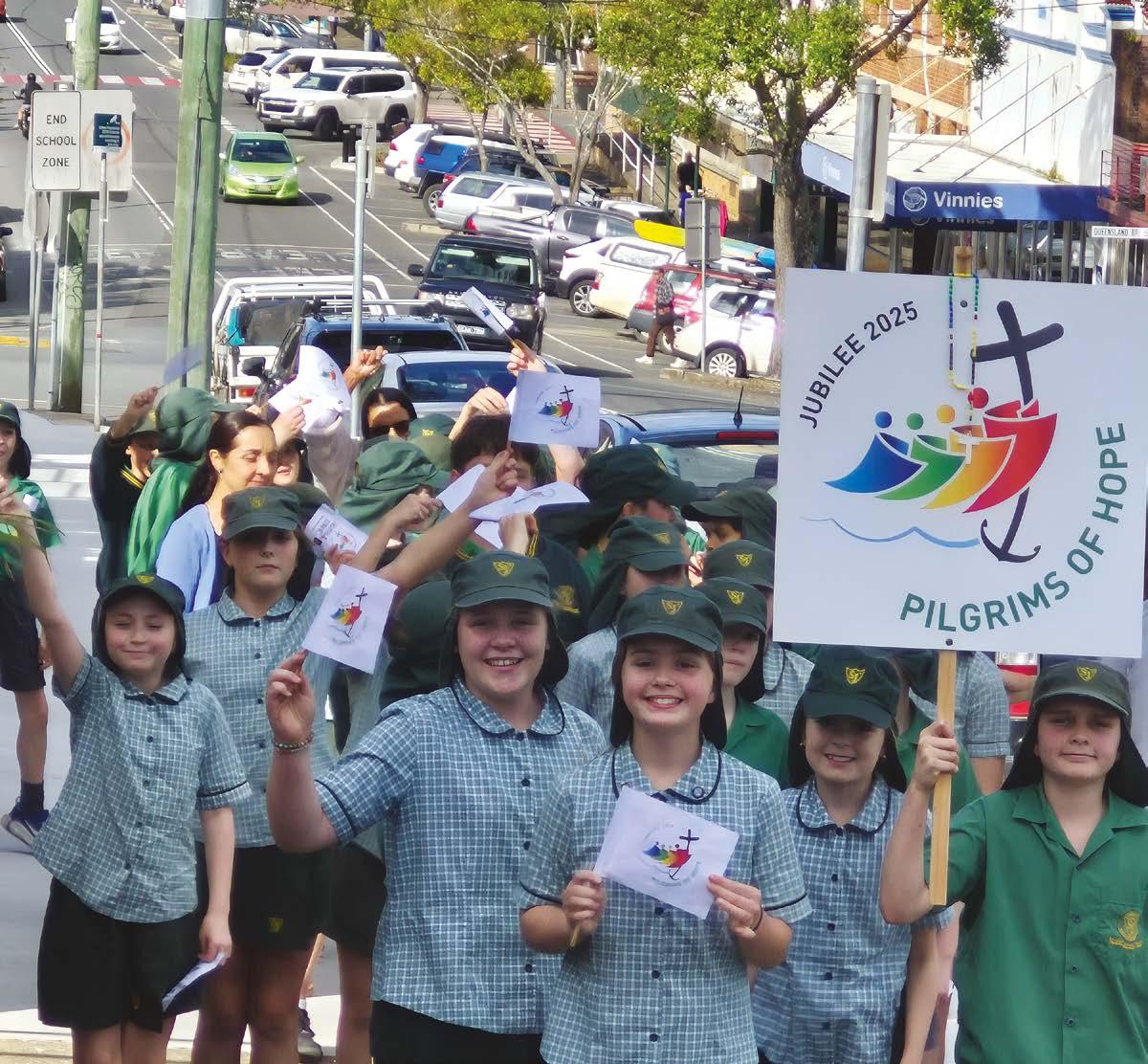
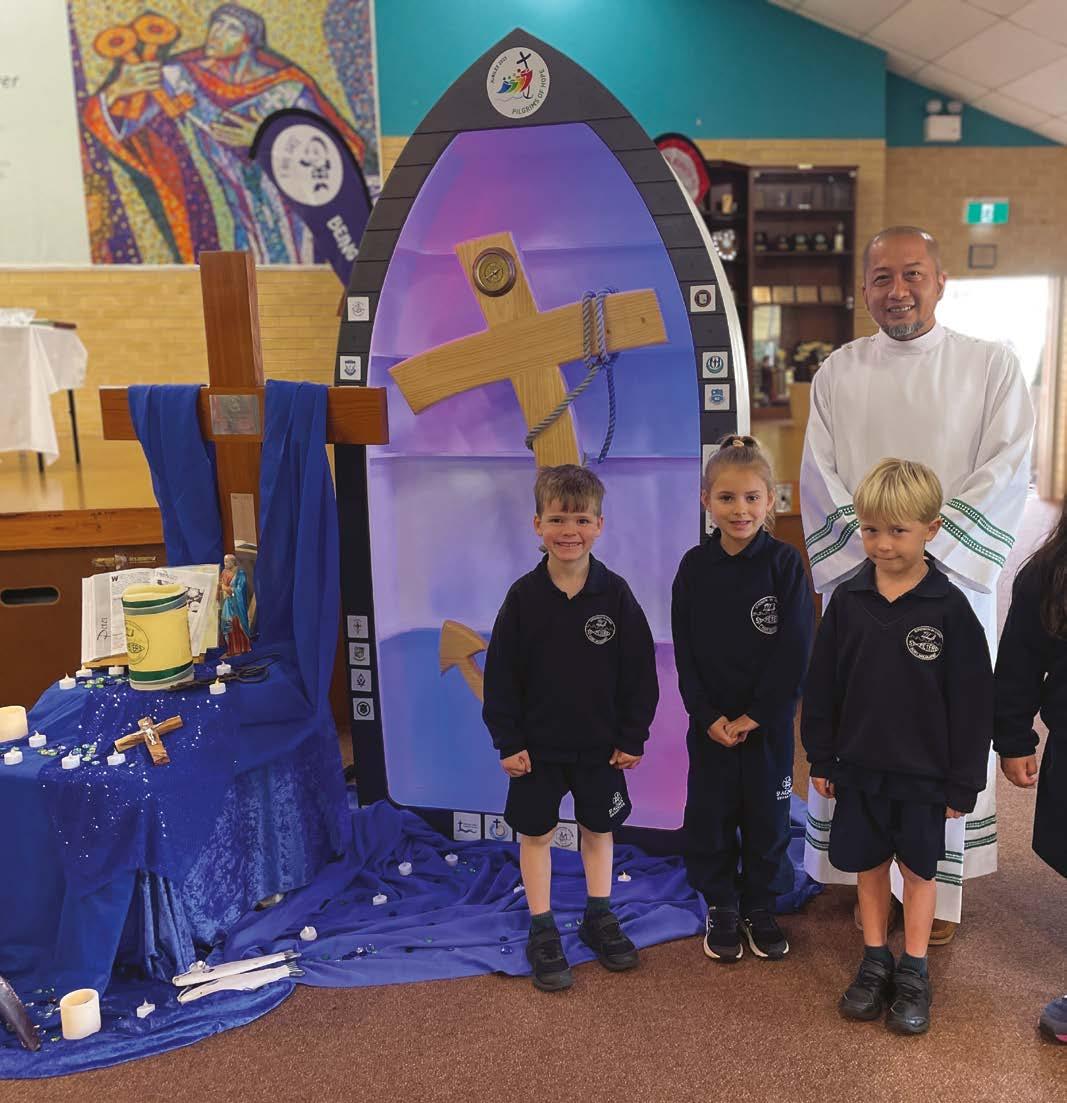
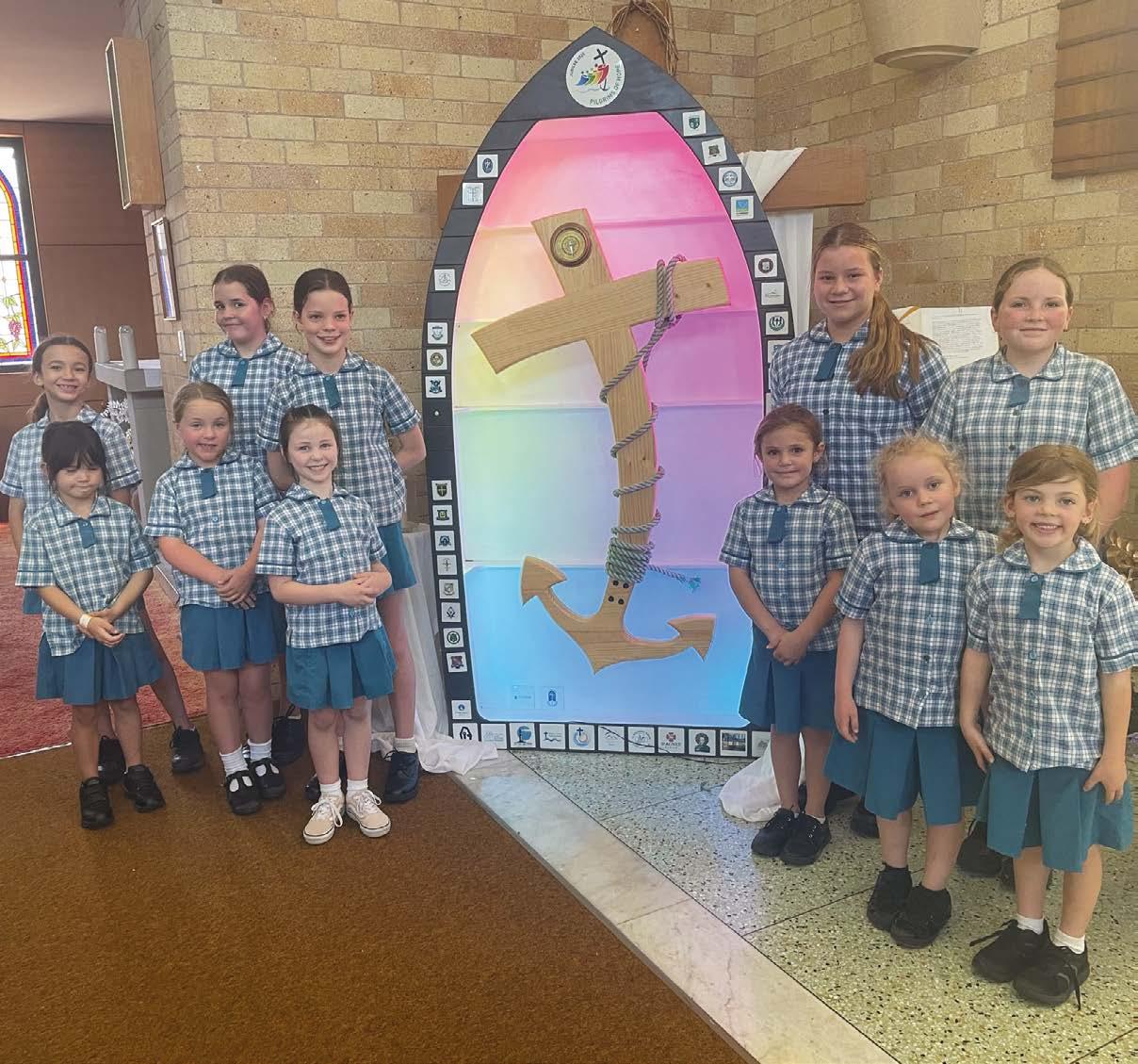
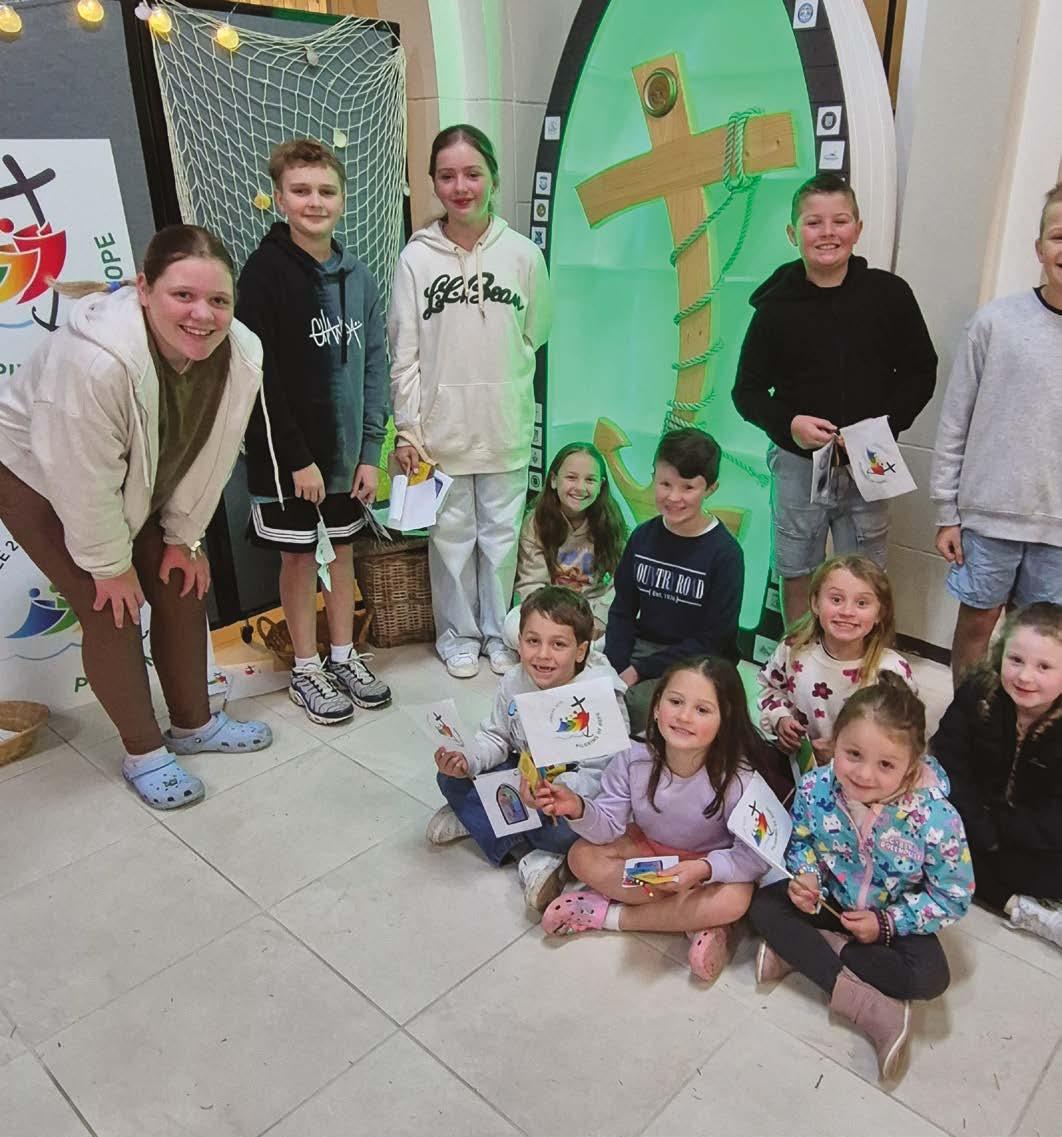
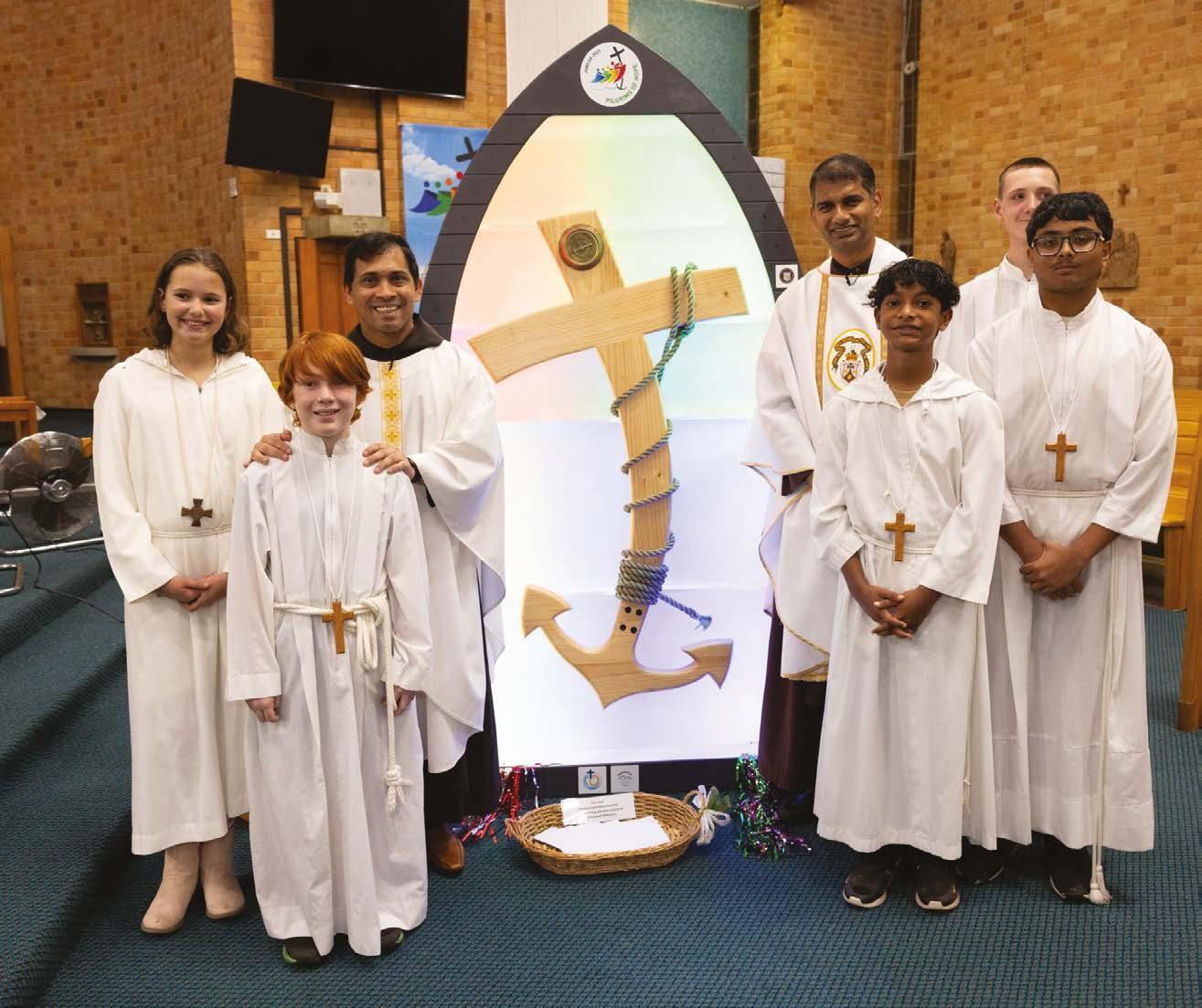
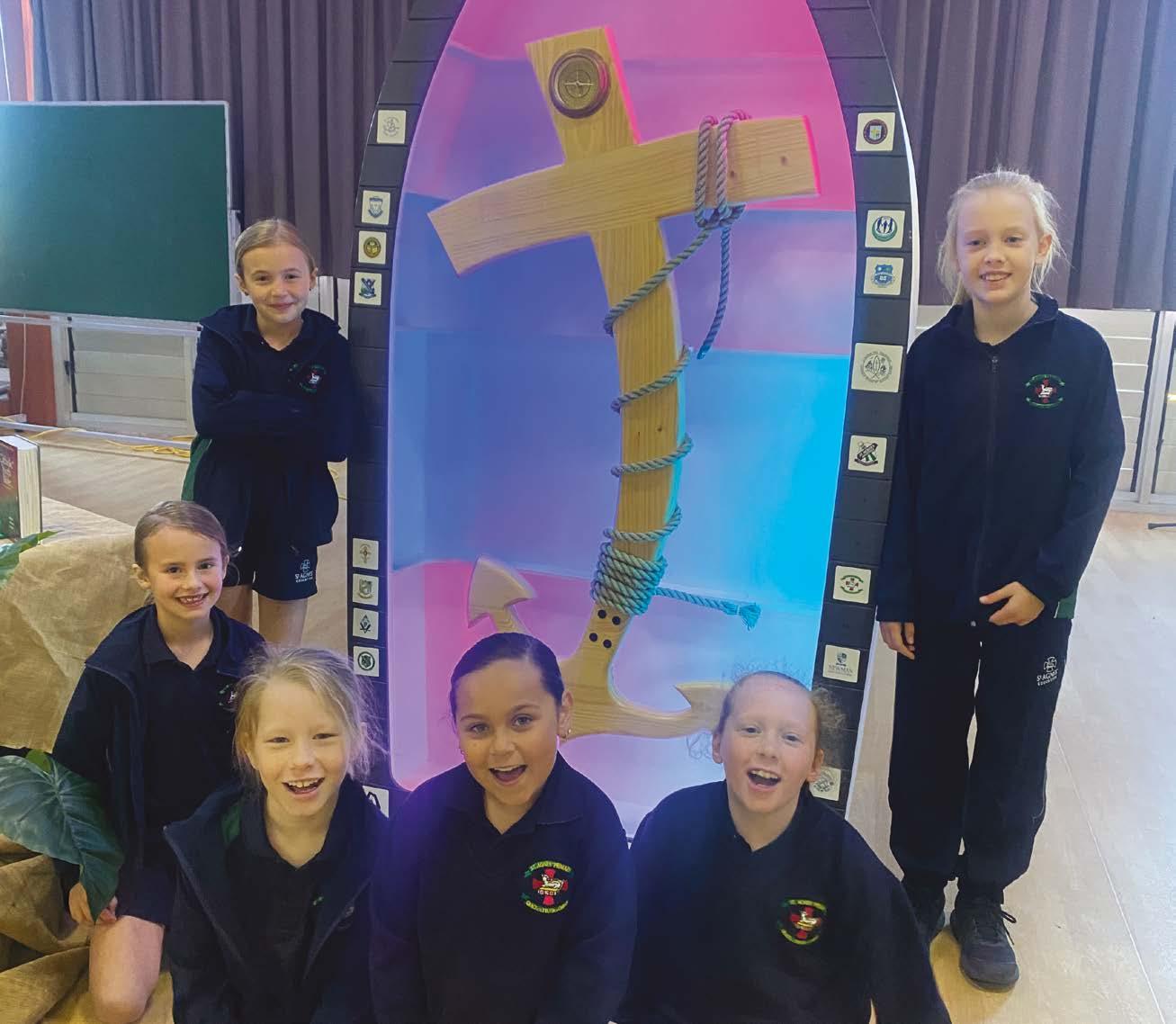
With the conclusion of the Jubilee Year on the horizon, we give thanks to the students and staff at Newman College, Port Macquarie for the beautiful wooden boat they created for the diocese - Good Ship Hope, which symbolises our collective journey as Pilgrims of Hope.
During its voyage, the ship has docked at parishes and schools around the diocese. Here is a selection of photos of the ship over the last year. May we continue to sail forward together in faith.


Front cover:
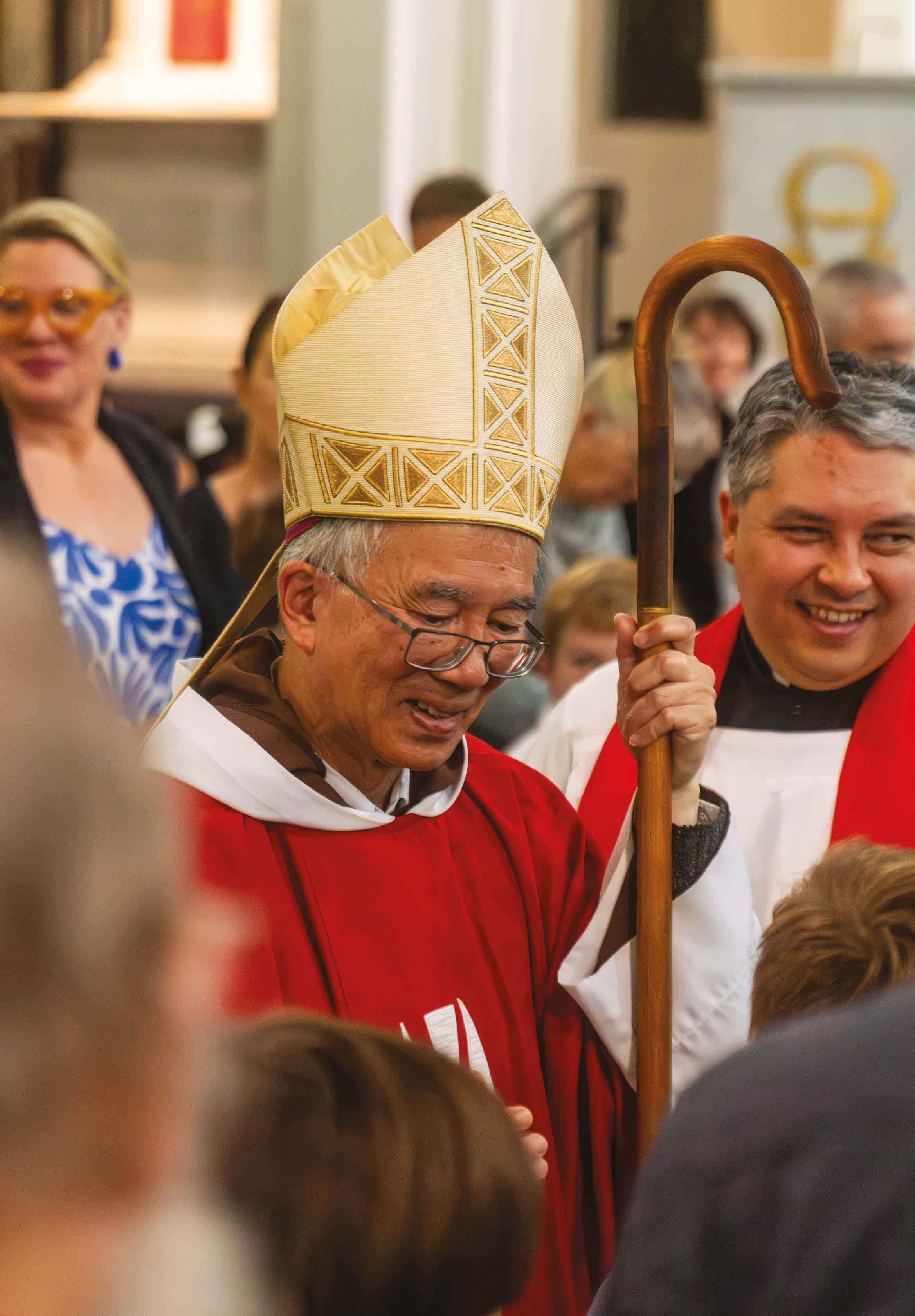
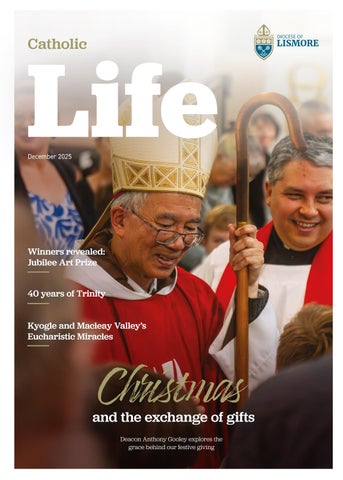
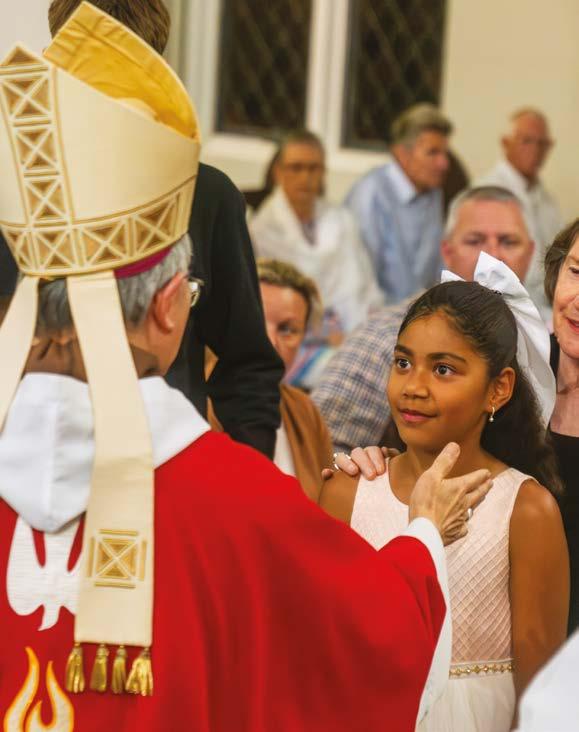
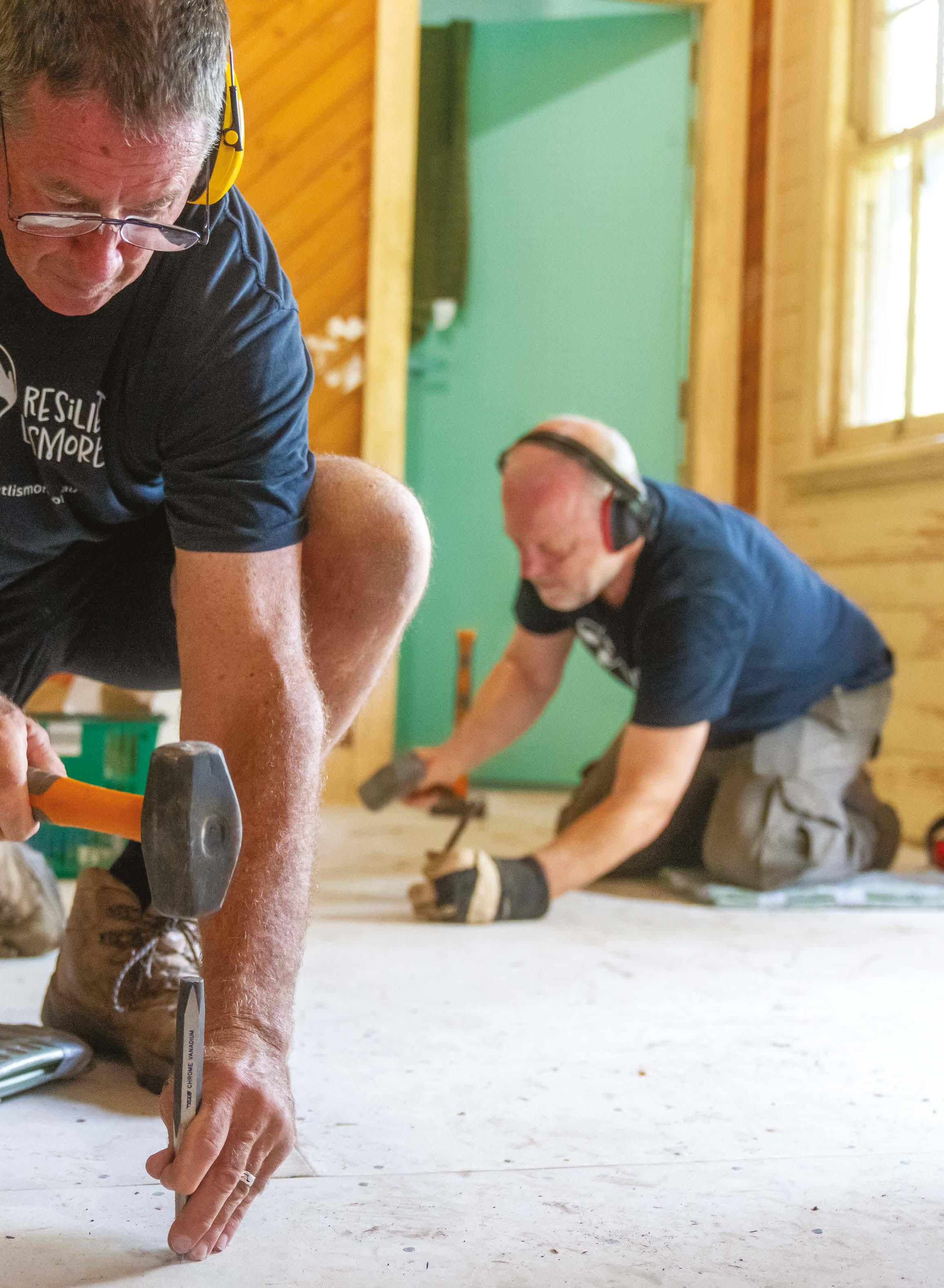
Bishop Greg Homeming and Fr Peter Wood at Murwillumbah Parish’s Confirmation ceremony on 3 September 2025.
Photo by Value Imagery
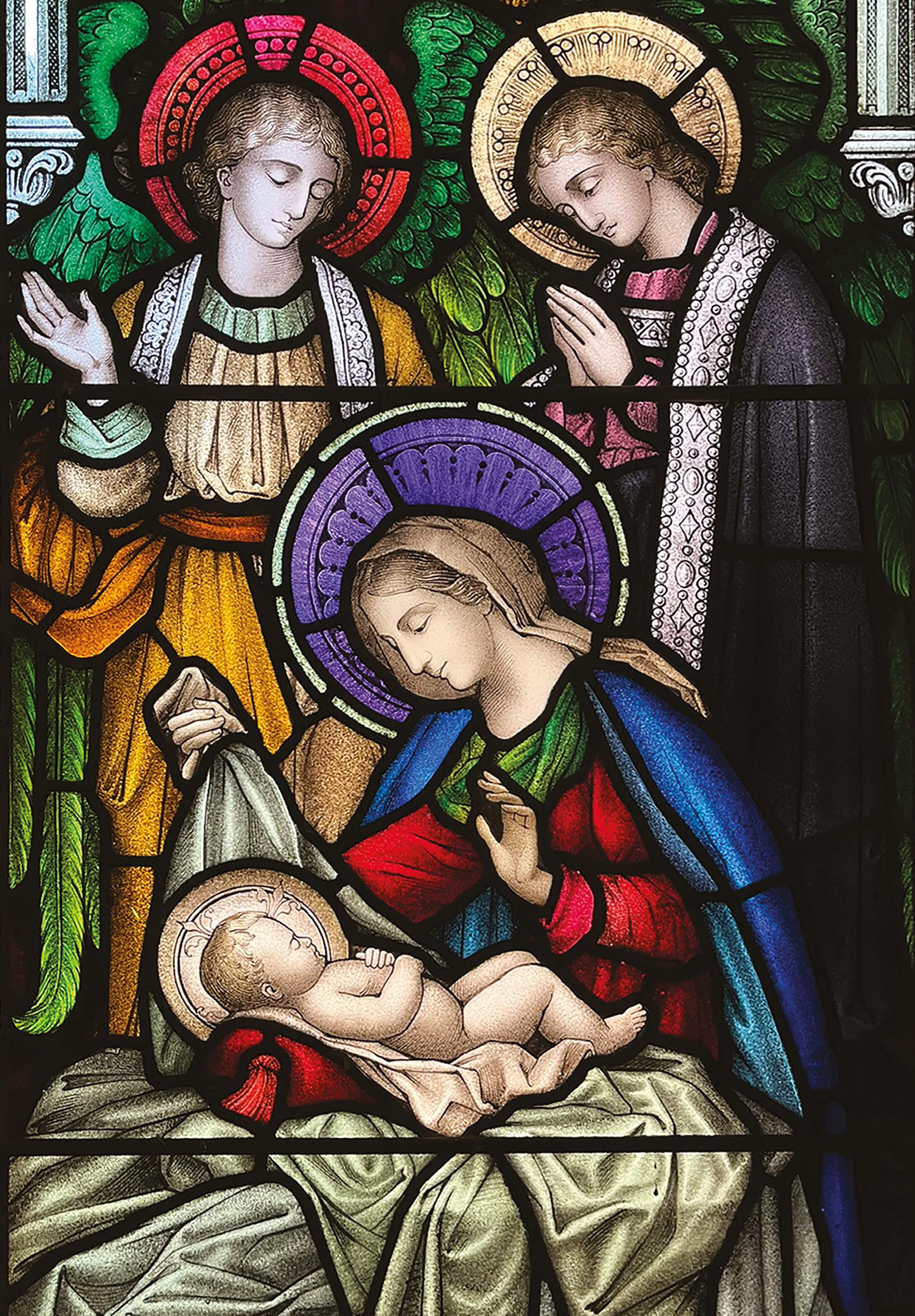
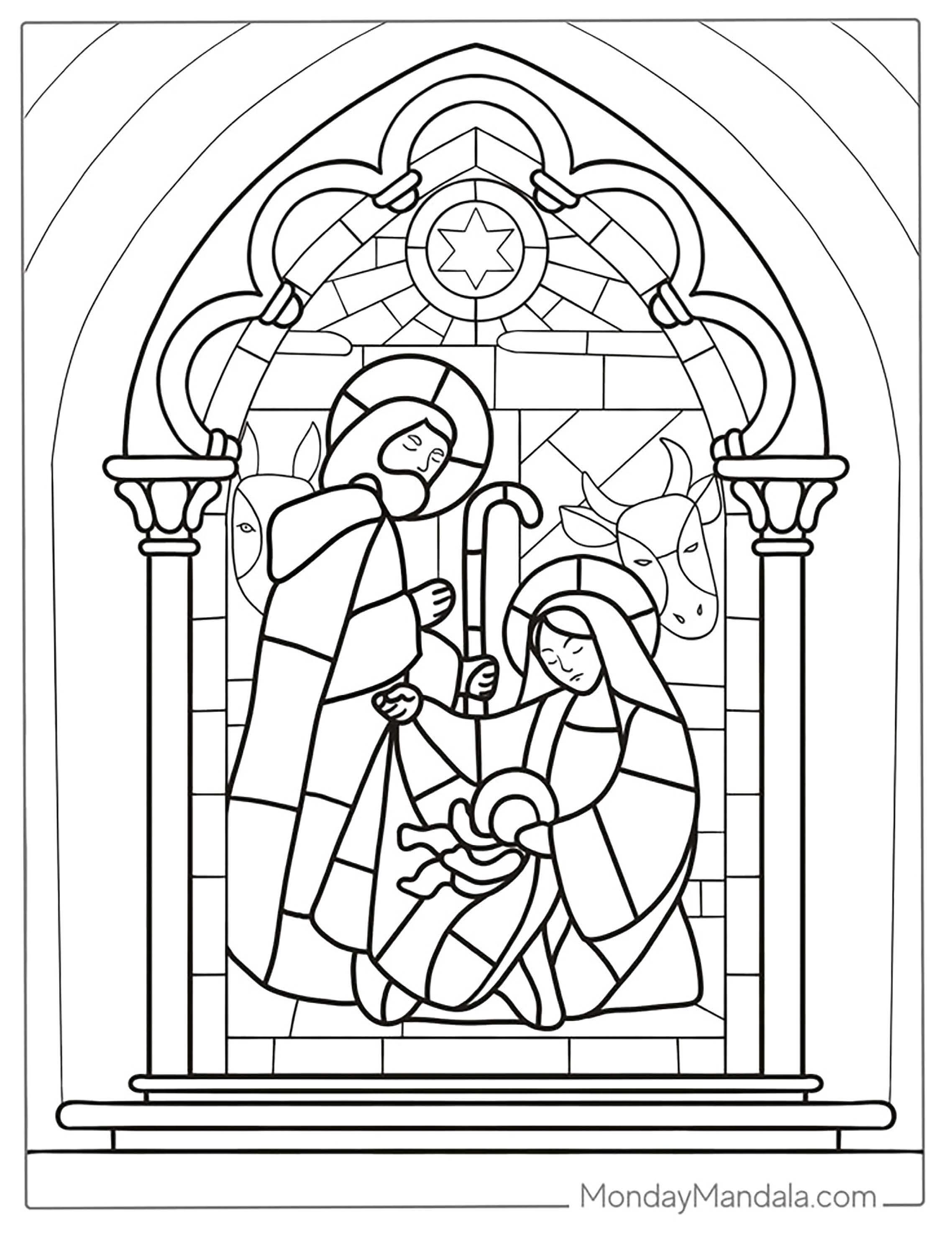
Backpage: The stained glass nativity window in the Lady Chapel at St Carthage’s Cathedral, Lismore
Photo by Barry de Silva
We welcome submissions of articles and high-quality photographs to be sent to the editor at:
media@lismore.catholic.org.au
While we strive to publish submissions, please note that this cannot always be guaranteed, and content may be edited for space and clarity.
Published by Diocese of Lismore
Editor: Barry de Silva
Editorial committee: Megan Barber, Joe Pereira, Fr Peter Wood, Greg Isaac, Barry de Silva.
Design and production: Barefruit Marketing © 2025
The Diocese of Lismore
No part of the magazine may be reproduced in any form without prior written consent from the Bishop of Lismore. All the content and photographs that appear are used for the purpose of the magazine, with the prior permission of those concerned.
Scan to subscribe & read online

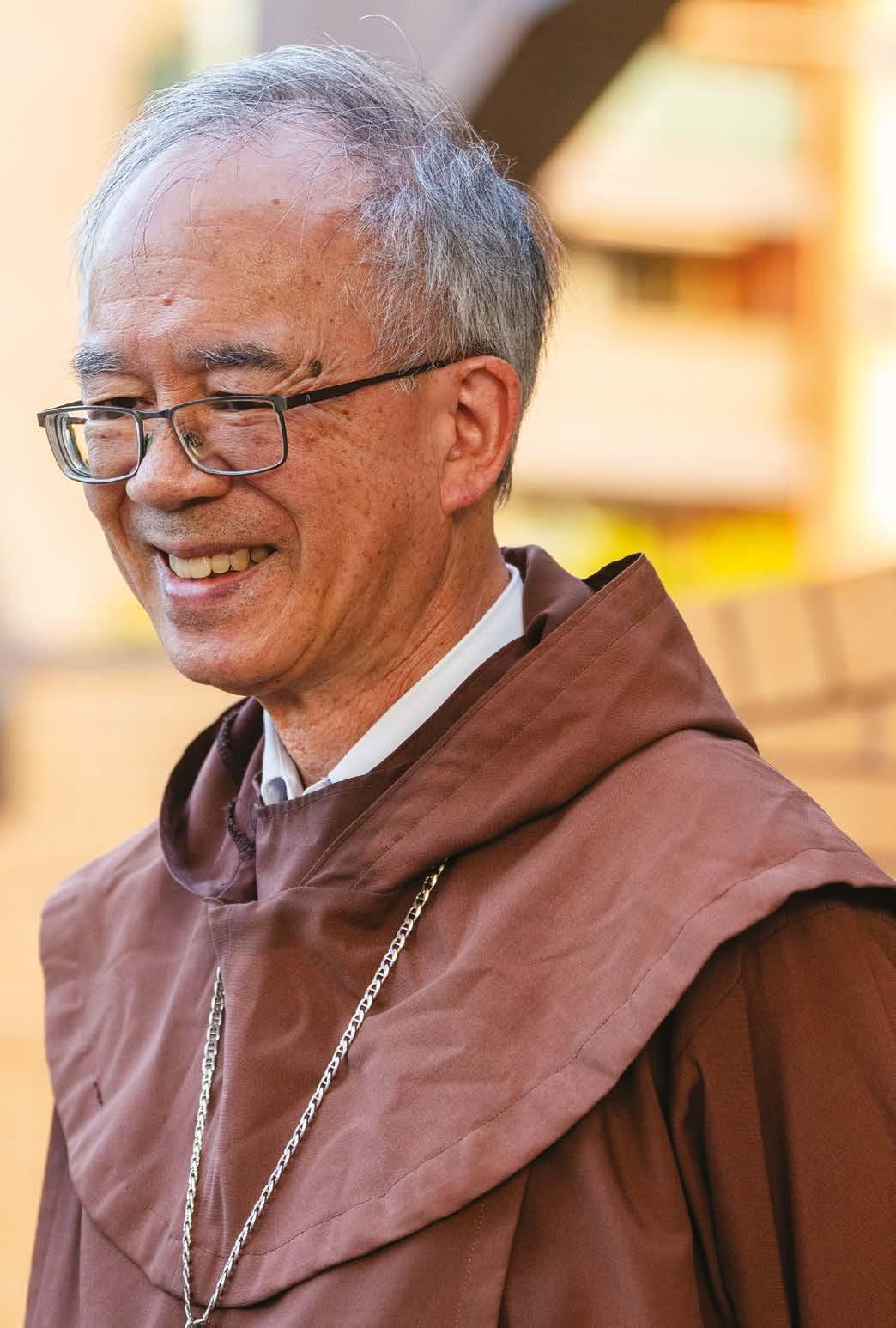
Iam quite relieved that 2025 is coming to an end. So much has happened this year, much of which held our attention both emotionally and intellectually.
As Australians we have been on the periphery of significant world events. Wars and conflicts which caused so much suffering and loss of life seemed to be without reason. Natural disasters have abounded. In our own diocese Kempsey, Laurieton and Port Macquarie were flooded twice. At a time when so many have no where to live and are without food, the economics of greed and power are growing.
On 21 April Pope Francis died and Pope Leo XIV was elected pope on 8 May. A massive change in the Church but a move from one impressive pope, to an equally impressive, but different pope.
Pope Leo is an Augustinian who comes from an ancient spiritual tradition of interiority, community and pastoral care. I think that he will bring this gift to the Church.
As 2025 draws to a close we have much to pray for and much to be thankful for. I pray that the Christmas Child will bring peace to our troubled world, and inspire us through the goodness of people who work tirelessly for the good of others. May He soften our hearts to see with gratitude the goodness around us, and to love with generosity.
Happy Christmas.
Bishop Greg Homeming OCD
by Deacon Anthony Gooley

In a very short while we will be celebrating the Solemnity of the Nativity, the birth of Jesus on 25 December. The chances are that many of us have already started our preparations for the celebration.
These preparations might include making decisions about where we will gather for the day and coordinating who will bring what food to a communal celebration. There may be requests for a family member to bring their special dish that is everyone’s favourite. Some will have been really organised and purchased presents way ahead of time to give to family and friends. Others enjoy the adrenaline rush of last-minute gift buying (don’t forget the batteries).
In making our preparations there is a temptation to give in to an overly consumerist version of what Christmas should be. There are plenty of incentives on television to purchase gifts and to go over the top with planning an extravagant menu of food to overindulge our appetites. Done in moderation,
the sharing of a Christmas feast and the exchange of gifts can be made a celebration that lifts the mind and heart to God.
Catholic customs around Christmas vary among countries and different types of Catholics. In some countries Christmas eve is the major feasting time and gifts may or may not be exchanged. In others, Christmas Day with the exchange of gifts is celebrated. In others, a feast may be celebrated on Christmas Day, but gifts are not exchanged until 6 January, the Feast of Epiphany, which marks the arrival of the Magi, who bring their gifts to Jesus. Some Catholics, especially those in one of the Eastern Catholic Churches, do not celebrate the Solemnity of Nativity at all, but only Epiphany.
From very early times we have records of Christians exchanging gifts on Epiphany and eventually on 25 December. These gifts would have been very modest, and the purpose of the exchange was largely symbolic. If we focus on the symbolism, we may be able resist the consumerist impulse and celebrate a meaningful Christ centred Christmas.
At the simplest level of symbolism, the exchange of gifts was to connect the celebration of the birth of Jesus with the gift giving of the Magi as recorded in Matthew (2:1-12). We do not know how many Magi came in the Gospel story. In traditional art and song, we frequently use the number three simply because Matthew mentions they brought three gifts, gold, frankincense, and myrrh.
In giving the infant Jesus gold and frankincense, the Magi evoke Isaiah (60:3-6) in which Gentile nations bring these gifts to the God of Israel (see also Tobit 13:11 and Psalms 72:10-15). In addition, myrrh is an oil that was used to consecrate Levitical priests and the wilderness tabernacle, the forerunner to the temple in Jerusalem (Exodus 30:23-33). Myrrh was also used as a burial ointment.
There are also the spiritual senses of Scripture. In the allegorical or Christological sense, St Irenaeus says that the gifts signify the mystery of the Incarnate Word (God who has become a man): gold, a symbol of royalty, represents his kingship; frankincense,
used in worship, points to his divinity; and myrrh represents his humanity, particularly in his passion and death (Against Heresies, 3.9.2).
One could also argue that the myrrh signifies that Jesus is also a priest, in fact the definitive high priest who fulfills the Old Covenant Levitical priesthood with his superior Melchizedekian New Covenant (see Hebrews 5-7); it also indicates that he is the new Temple (see John 2:18-22).
In the moral sense, i.e., how we are to live, Pope St Gregory the Great says in his Homilies on the Gospels that the three items represent gifts that we are to present to God in our daily lives: gold is Christ’s wisdom, which is to shine in our lives; frankincense is the prayer and adoration we are to give him (see Revelation 8:3-4); and myrrh is our daily self-sacrifices to the Lord (see Matthew 10:39 and Romans 12:1).
There is also another way to connect the exchange of gifts with the greater story of Christmas. In the Solemnity of the Nativity, we celebrate the mystery that God came among us as one like us in all things but sin. We call this the incarnation, that the Word became flesh and dwelt among us. Jesus is the gift which we receive at Christmas and every one we exchange becomes a sign of this essential gift.
During Mass, the deacon or priest will take a small amount of water and pour it into the chalice with these words, “By the mystery of this
God comes to us by taking on our humanity so that we may go to God by participating in his divinity.
water and wine, may we come to share in the divinity of Christ who humbled himself to share in our humanity.” That is, there is a two-way exchange happening at Christmas.
God comes to us by taking on our humanity so that we may go to God by participating in his divinity. In this exchange, we give the whole of ourselves to God because He has given Himself to us in Jesus. Our Christmas gifts can become a sign of this great mystery.
We can celebrate with food and the exchange of gifts and lift our hearts and minds to God if we pause to pray before our family celebration. Thank God for the food, the company gathered and ask God to bless this and pray that we may give and receive each exchange as a sign of Christ’s presence among us. Give God thanks for what you’ve received on the day, and in life, and ask that God will grant you the wisdom to see in these gifts the greater gift, Christ Jesus, Emmanuel, God among us.

Casino Parish Priest and Chancellor, Fr Peter Slack shares his experience of using AI, and whether it might one day write his homilies.
When I was asked to write about AI, I must admit that I did not know where to start. Where was I first introduced to it?
Then it struck me.
I had acquired a new car. Suddenly it was doing all sorts of things: cruise control, lane keeping, automatic braking. Sensors warned me when I was too close to other cars, kerbs, or rubbish bins.
Voice recognition allowed me to change the radio station, make a phone call, or set directions.
Before long, I found myself arguing with the disembodied voice as it told me to go this way or that. Occasionally,
I yearned for the days when I argued with my sister on a road trip while she read the directions, or when I had to stop to read a map myself. That was human intelligence, not artificial intelligence.
Now, AI surrounds me, shaping what we watch, listen to, and read online. Products are suggested, questions are answered, problems are solved. Recently, I had a knee replacement. I was told that the surgeon would be assisted by a robot, helping to remove diseased bone and cartilage and creating virtual boundaries to guide the surgery. My new knee is better than the old one! Nothing, however, could
replace the surgeon’s visit before and after the surgery, giving me confidence and hope, or the kindness of nurses, and the person who gave me a cup of tea when I woke up.
AI can even help me with my homilies — write them, if I succumb to temptation.
To test it, I composed a homily about the rich man and Lazarus and copied it into an app. Almost immediately, a polished version appeared: “Would you like a slightly reorganised version that is easy to read aloud and present?” it asked. “Certainly,” I replied.
The result was marvellous. It was polished, engaging,

and just the right length — exactly what I had requested. I was tempted to use it. But as beautiful as it was, it was not me. Were I to use it, I would be seduced by its beauty and perfection. I would succumb to form rather than to substance. I would become an actor reading a script. The Sunday congregation would have to listen to words that were crafted for perfection, but not born of my reflection. My story might wander slightly, but it would be authentic — it would be mine.
Do you remember Aldous Huxley’s Brave New World?
Written in 1931, it describes a future society controlled by science and technology. Freedom, human connection and truth are sacrificed for convenience and comfort.
Huxley’s warning resonates strongly in our age of AI. Algorithms shape the information we see, AI tools influence decisions in healthcare, finance, and education, and technology increasingly determines the way we interact with the world. While these tools can enhance our lives, they also raise important ethical questions: How do we ensure that technology serves humanity rather than controls it? How do we protect human dignity, moral responsibility, and freedom in a world increasingly mediated by machines?
Pope Leo XIII, in Rerum Novarum (1891), reminds us that technology and work should serve humanity and uphold human dignity.
Pope Leo XIV, soon after being elected, told the Cardinals:
“Sensing myself called to continue in this same path, I chose to take the name Leo XIV. There are different reasons for this, but mainly because Pope Leo XIII in his historic Encyclical Rerum Novarum addressed the social question in the context of the first great industrial revolution. In our own day, the Church offers to everyone the treasury of her social teaching in response to another industrial revolution and to developments in the field of artificial intelligence that pose new challenges for the defence of human dignity, justice and labour.”
Given the all-pervading use and influence of AI, it is not surprising that we are reminded of the importance of using technology responsibly — from algorithms curating news feeds to AI authoring entire texts and conversations. For all its worth it cannot replace the uniquely human capacities for empathy, conscience, and moral responsibility.
Whether I like it or not AI is with us and with me. I know that it can assist me — become a sort of research assistant, even for homilies, but I dare not let it take over me. Somehow, I sense that, if I do, it will take my soul.
And yes, I did resist ChatGPT’s temptation “to create a punchy version for Catholic Life that is highly accessible to a wider audience!”
Whether I like it or not AI is with us and with me. I know that it can assist me — become a sort of research assistant, even for homilies, but I dare not let it take over me. Somehow, I sense that, if I do, it will take my soul.
by Barry de Silva
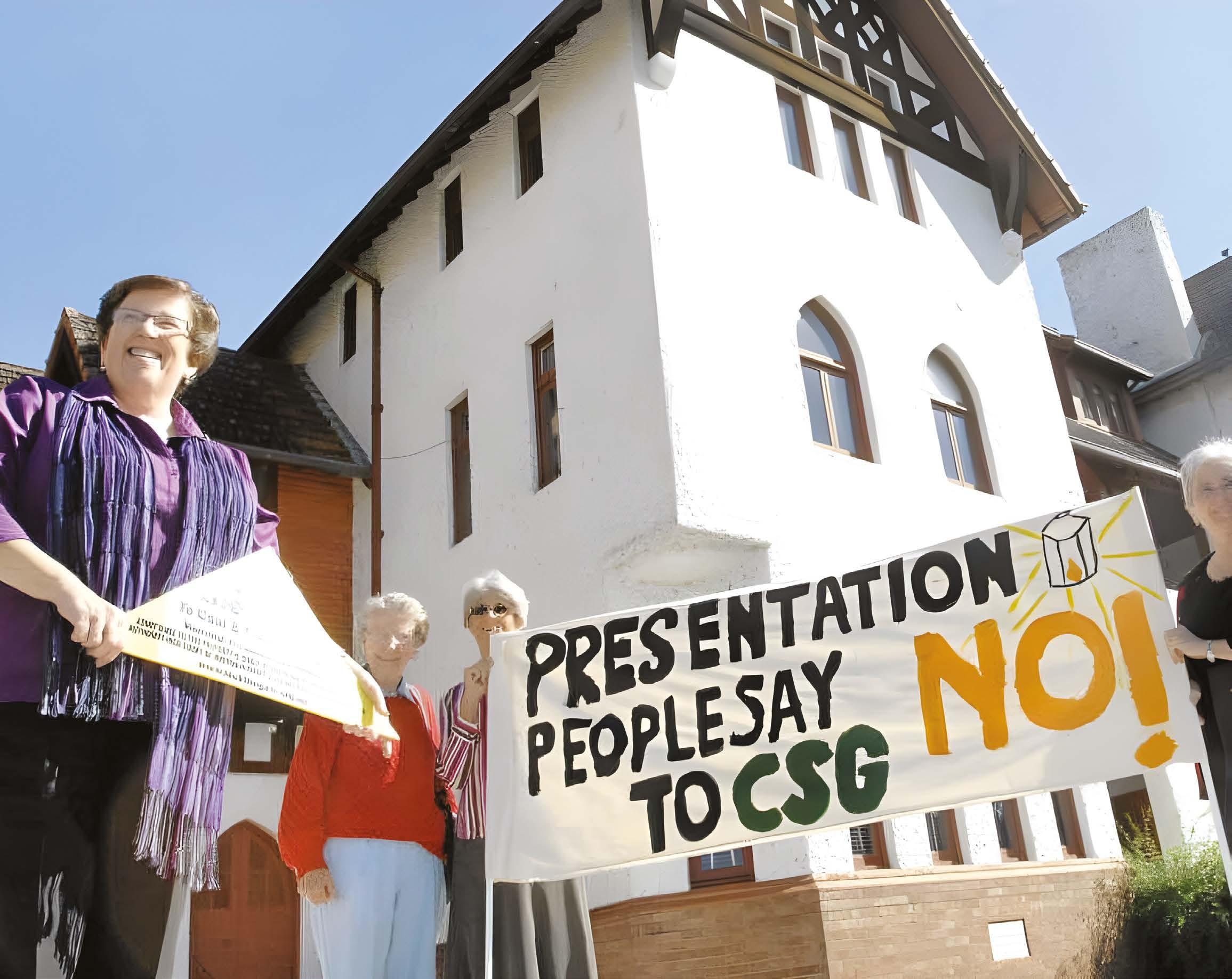
Earlier this year, Sister Mary Bruggy marked 50 years of religious life with the Presentation Sisters. She reflects on what first drew her to religious life, her rewarding years in education, and standing up for injustice. Faith, community and a desire to help those in need have guided her every step.
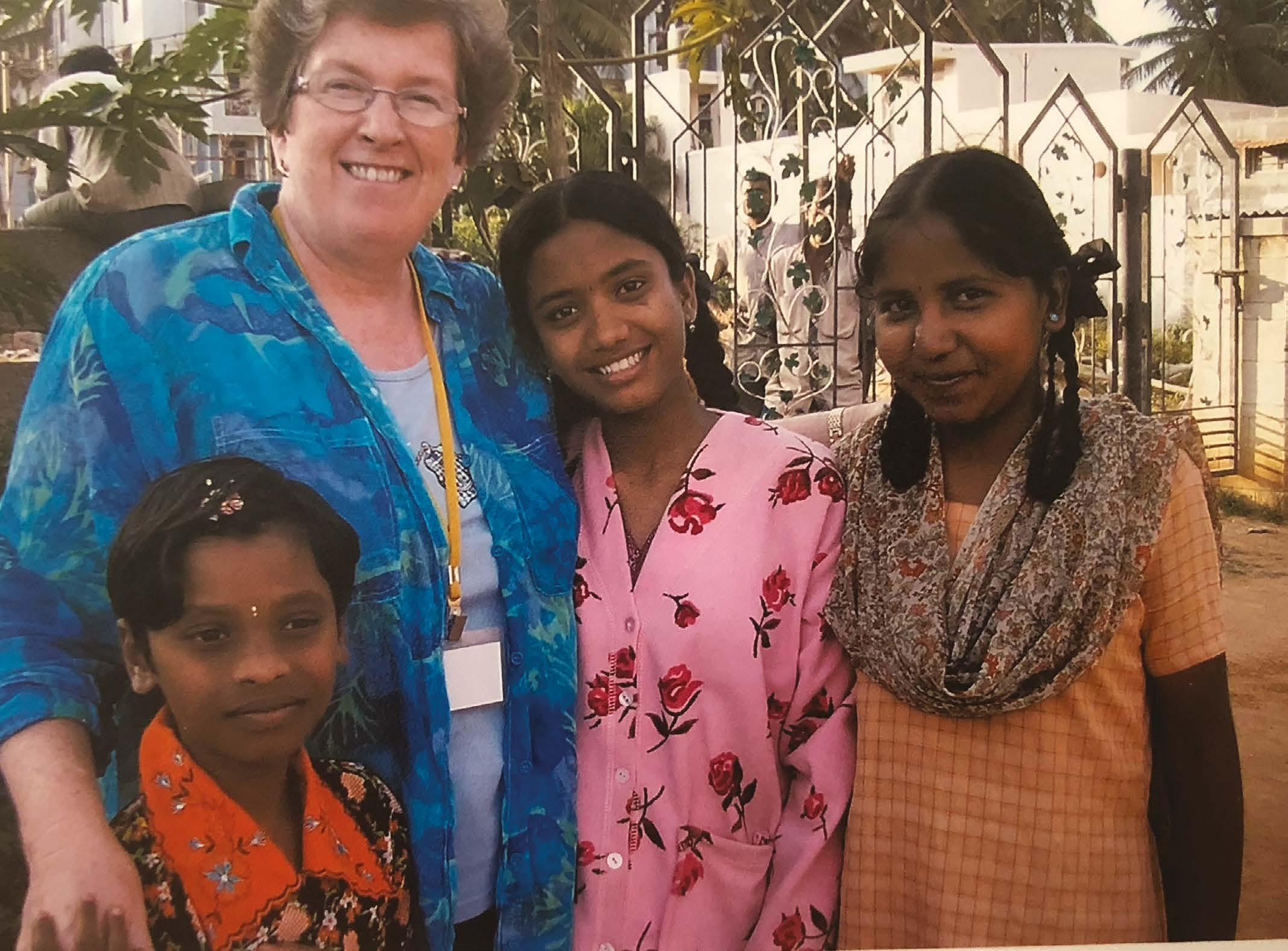
Sr Mary’s connection to the Presentation Sisters began in her school years. After leaving St Mary’s College, Lismore in Year 10, she worked for four years in a fabric store, a job she admits she “loved”, before joining the Presentation Sisters in 1972.
Educated by the sisters, Sr Mary was drawn to their warmth and genuine care for others. “They were thoughtful and compassionate - very much on the same level,” she recalls. “Back in the early 70s, I was thinking of doing something a bit different. I’d remained good friends
with a couple of the sisters who taught me, and I think that probably encouraged me as well.”
Sr Mary’s path in religious life took her into education, even as many of her fellow sisters moved into other ministries.
“We had sisters doing social work, hospital ministry, parish ministry, retreat work - lots of different things. It was a bit unusual for me to go into education because a lot of our sisters had moved away from the schools when I came in.”
She completed teacher training through the Good Samaritan College, Sydney, part of the newly formed Australian Catholic University. Sr Mary began her teaching career at Tweed Heads and Murwillumbah before a long tenure at St Carthage’s Primary School, Lismore.
“I really enjoyed working with young people. I realised very
early on there was a big need for support. I used to tell students that respect is not something you just get. If I give them respect, I expect respect back. Whether they were seven or 17, I always found that respecting the dignity of the person was important and followed the values of our founder Nano Nagle.”
After 14 years in primary education, Sr Mary responded to a call in healthcare at St Vincent’s Lismore; a ministry she shared with other Presentation Sisters for many years.
In 1994, Sr Mary was given the opportunity to study overseas. “I spent two years at the Jesuit School of Theology in Berkeley, USA, and completed a Master of Theological Studies. It was a time of great personal and spiritual growth.”
Upon returning to Australia, she served as Parish Coordinator of the Terania Parish from 1996 to 1999, working closely with Fr Peter Slack in the day-today organisation of the four centres of the Parish; Dunoon, Goolmangar, Nimbin and Larnook. “I count that as a very blessed and enjoyable three years. They were wonderful communities in different ways,” she enthuses.
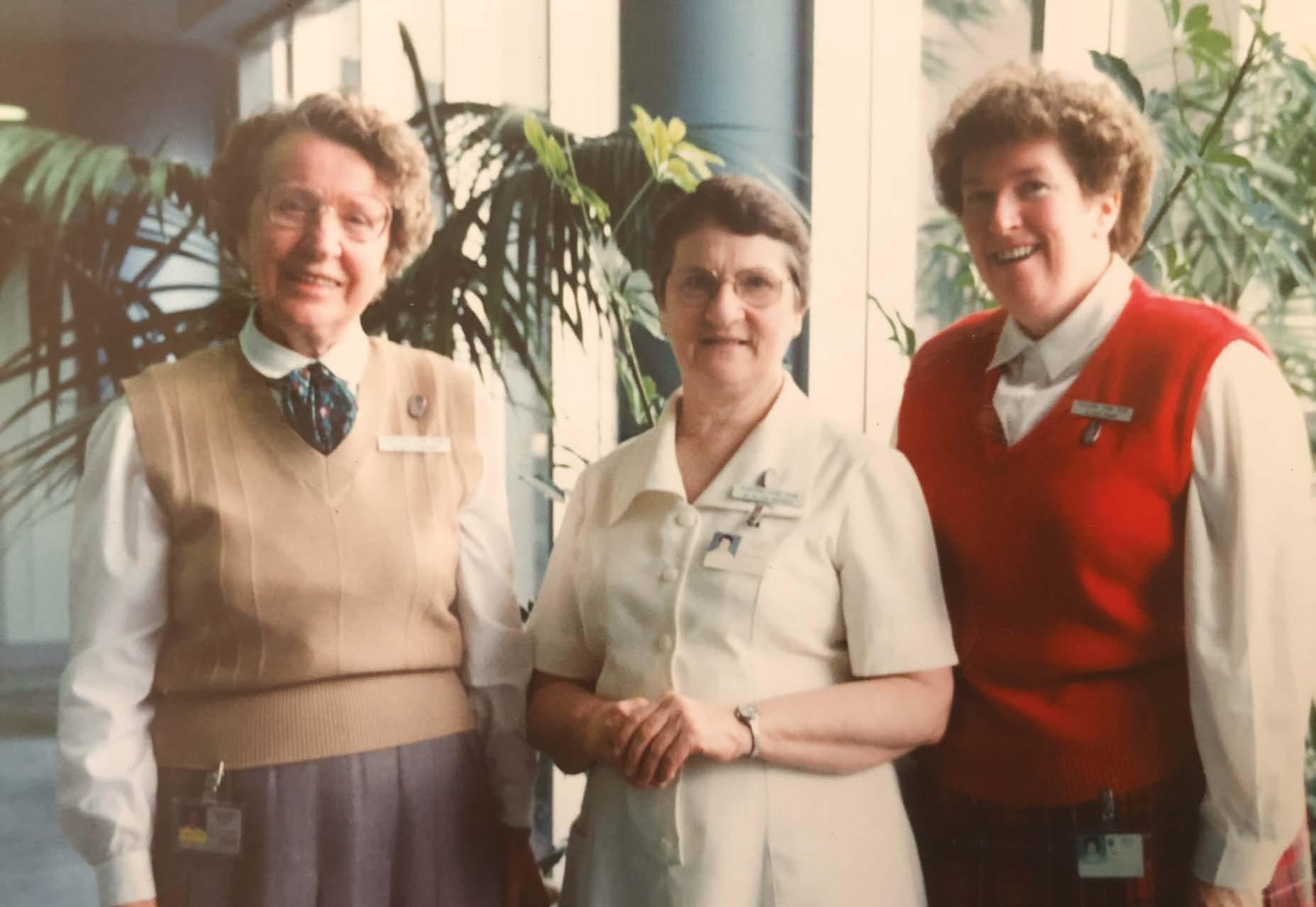
In 2002, Sr Mary returned to education where she experienced one of her “most rewarding periods” at Trinity Catholic College, as Director of Mission and Studies of Religion. While at the College she got the opportunity to deepen her interest in mental health and school counselling, completing a Postgraduate of Counselling and Behaviour Management, and enjoyed this ministry with students and staff until retirement her in 2018.
“There were a lot of challenges for young people,” she reflects. “I started to realise how important it was to listen, be present, and to offer hope.”
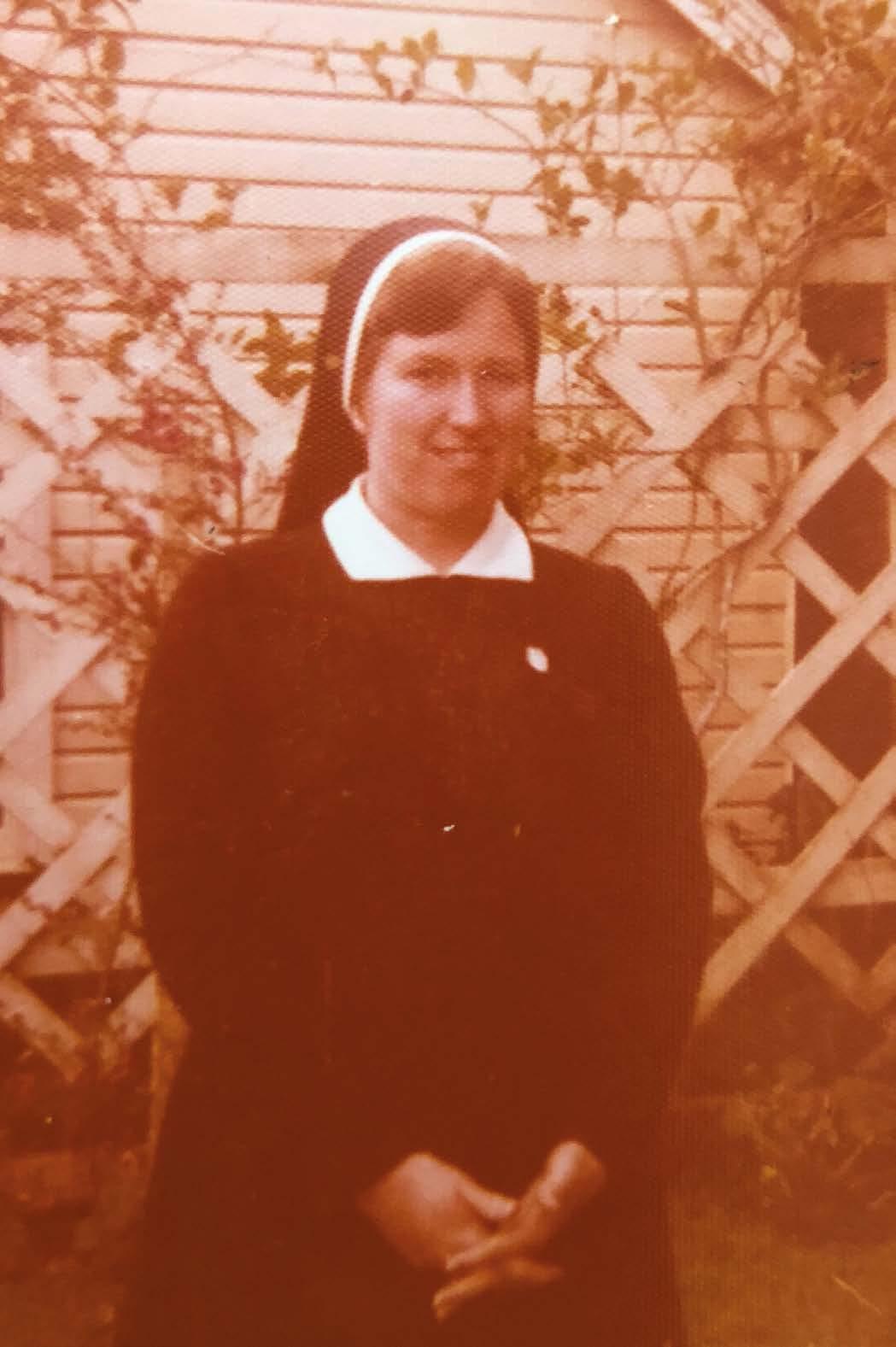
24th May 1975
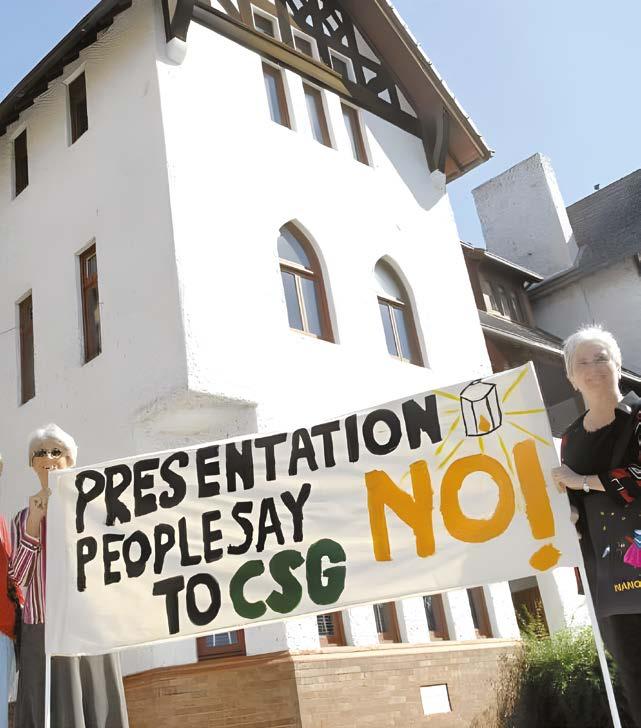
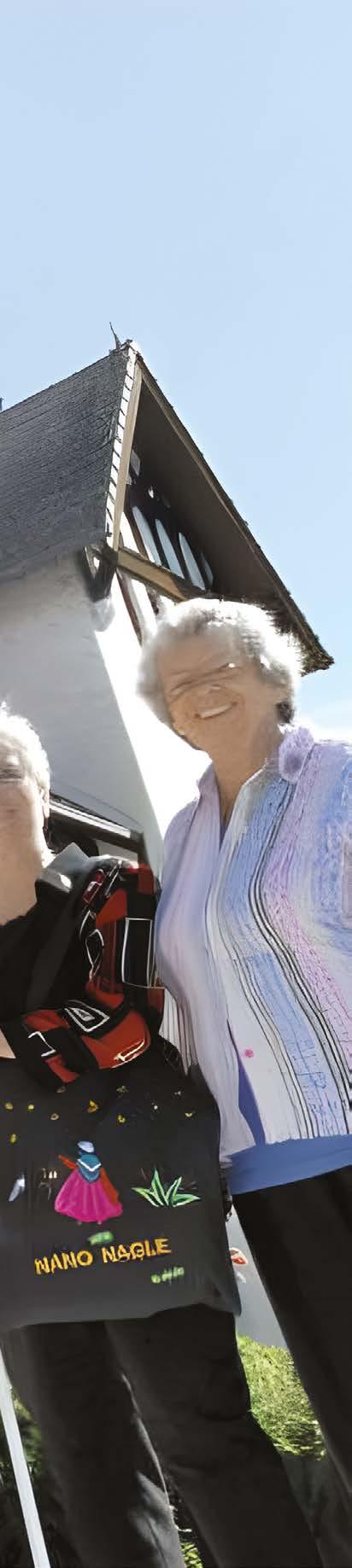
Caring for the earth and social justice are integral parts of the mission of the Presentation Sisters. This came into sharp focus for Sr Mary and the rest of the order during the 2012 Lock the Gate rally in Lismore, where they stood against the coal seam gas industry with thousands of locals. The Sisters marched under the banner of ‘Presentation People Say No To CSG’.
“That was a big protest - there was a lot of injustice. It wasn’t just about politics. It was about people being treated fairly, having a say in what affects their land, their health, and their future.”
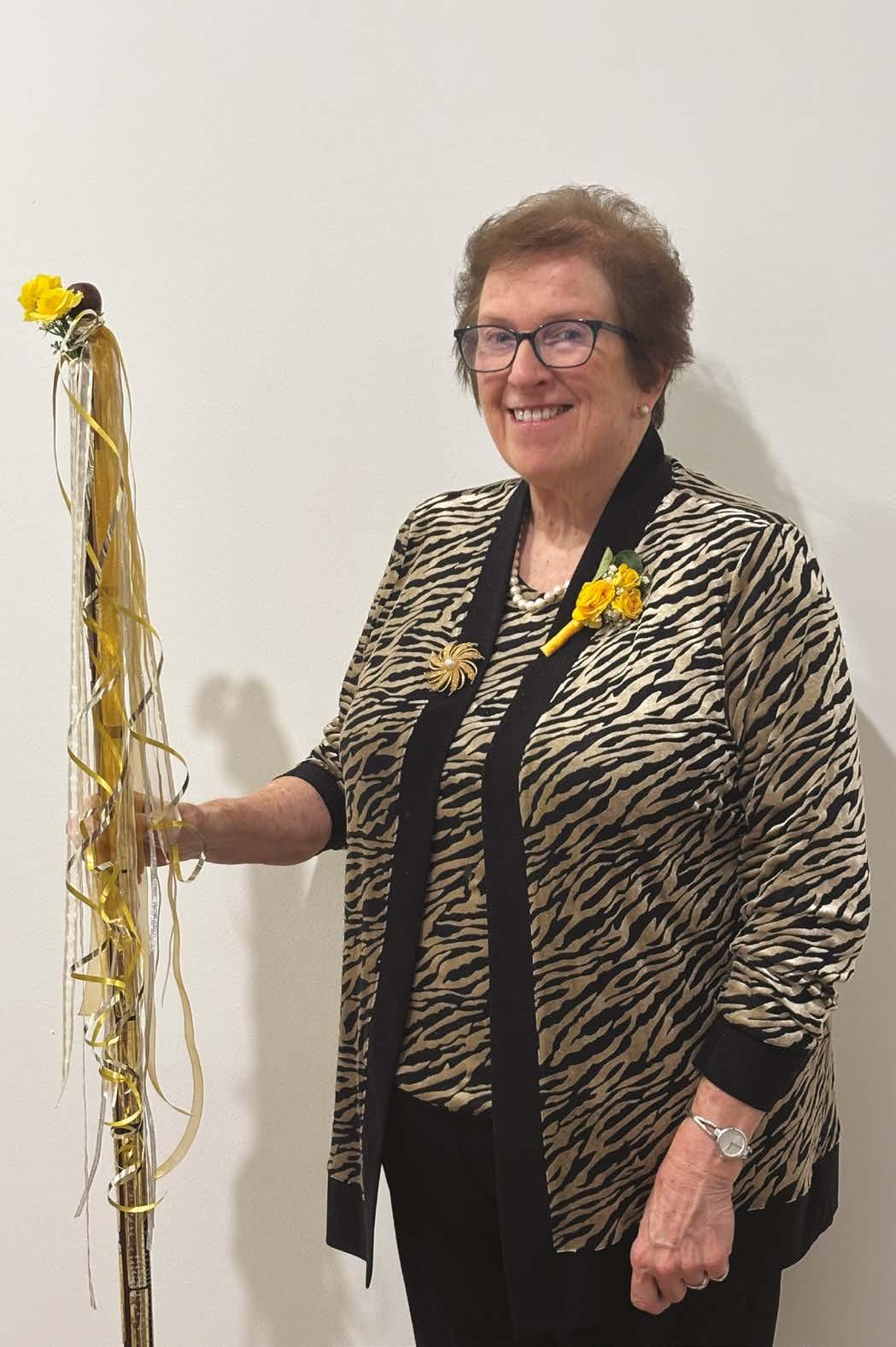
Looking back, Sr Mary acknowledges how much she has learned over her five decades as a Presentation Sister. “I turned 21 not long after I joined, and I was probably a bit naïve in some ways. When I joined the sisters in 1972, Sr Lucy Briggs was the leader, I feel I have come a long way since then.”
Sr Mary continues to be a part of the Presentation Sisters leadership team; in a significant period of transition for the order as they await the appointment of a Canonical
Delegate from the Vatican, to support their governance into the future.
From a close-knit family, Sr Mary continues to value stability in life and enjoys her time with family and friends. With hobbies such as quilting to cake decorating and researching family history, she remains a warm and supportive presence for others.
“Life must have balance. I’ve been blessed with a positive outlook and good health, I’m grateful for that.”
by Barry de Silva
At his inauguration Mass on Sunday 18 May 2025, Pope Leo XIV proclaimed that true unity “does
not cancel out differences but values the personal history of each person and the social and religious culture of every people.”
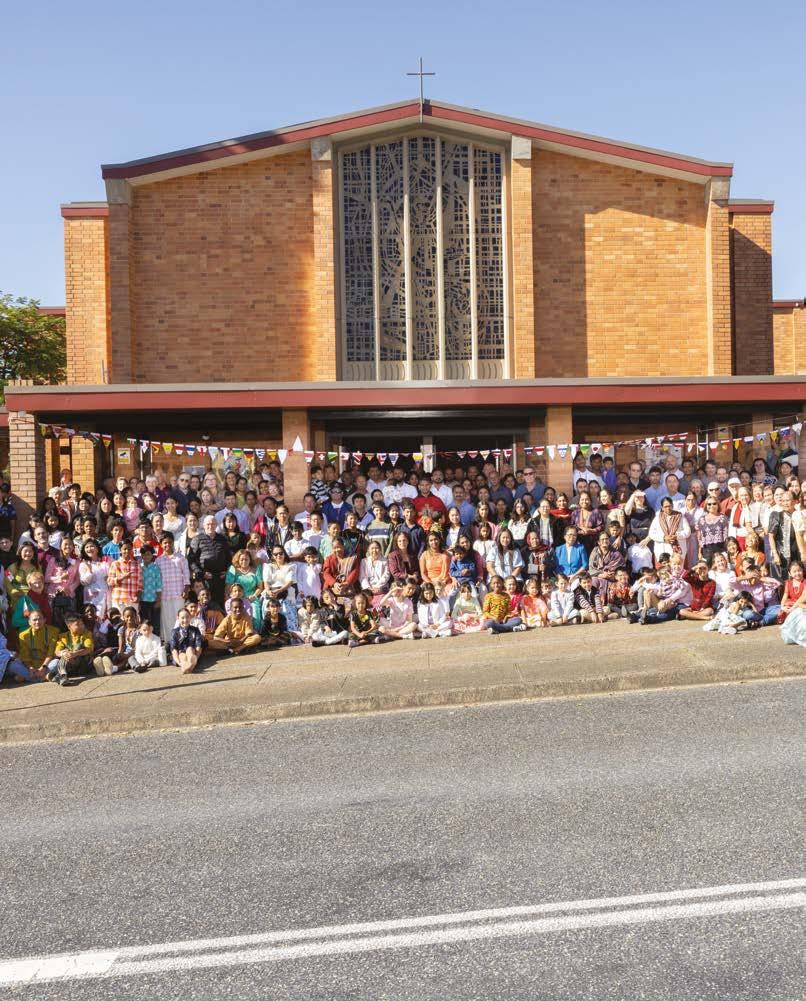
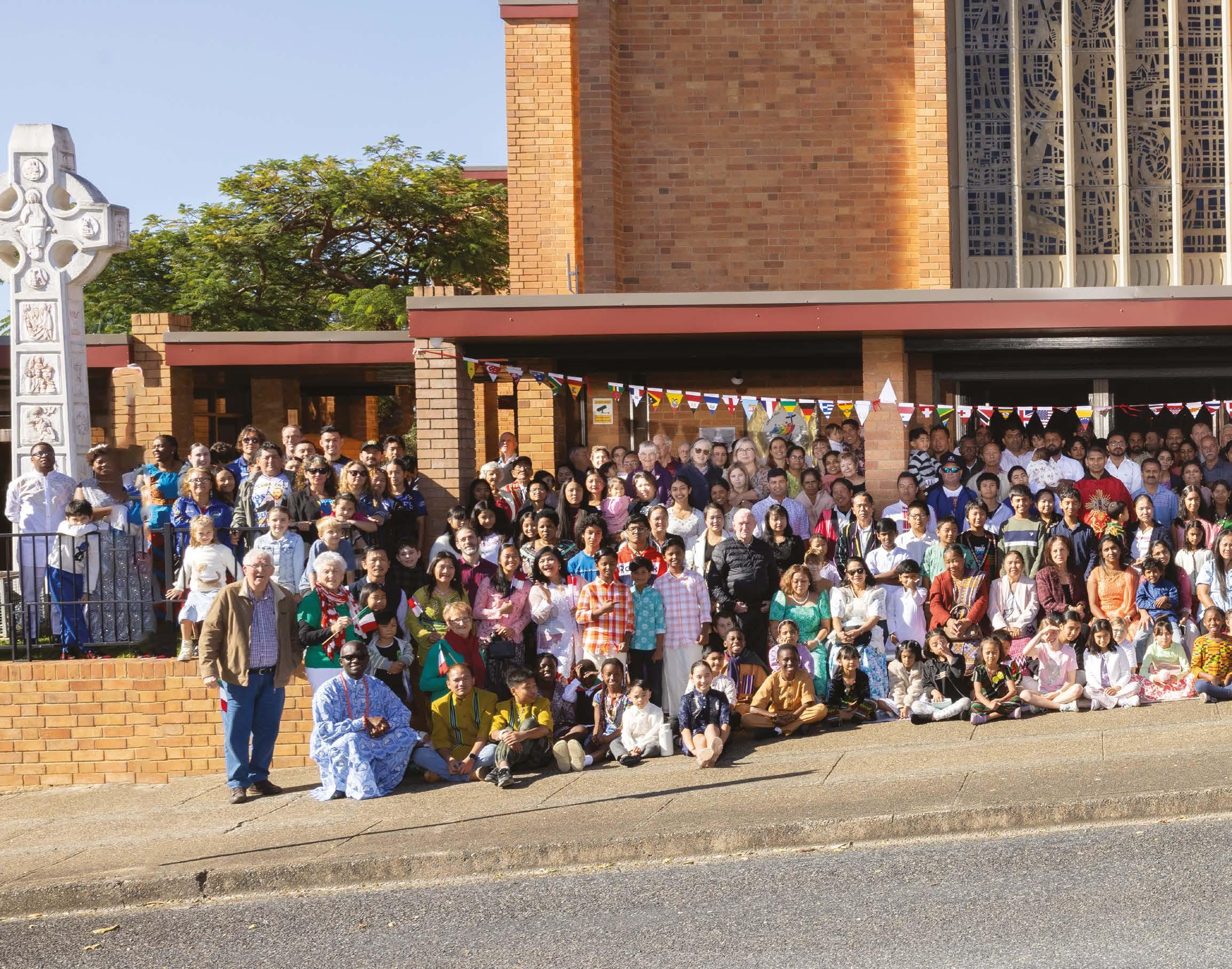
St Augustine’s Parish in Coffs Harbour embodies this message, through its mix of cultures, thriving youth ministry and dedication to supporting those in its community.
Since the COVID-19 pandemic in 2020, the parish has seen sizeable growth, so much so you’d struggle to find a free car parking space for weekday Mass.
Since arriving at the parish almost six years ago, parish administrator, Fr Joe DSouza has witnessed an evolution in its diversity, with more
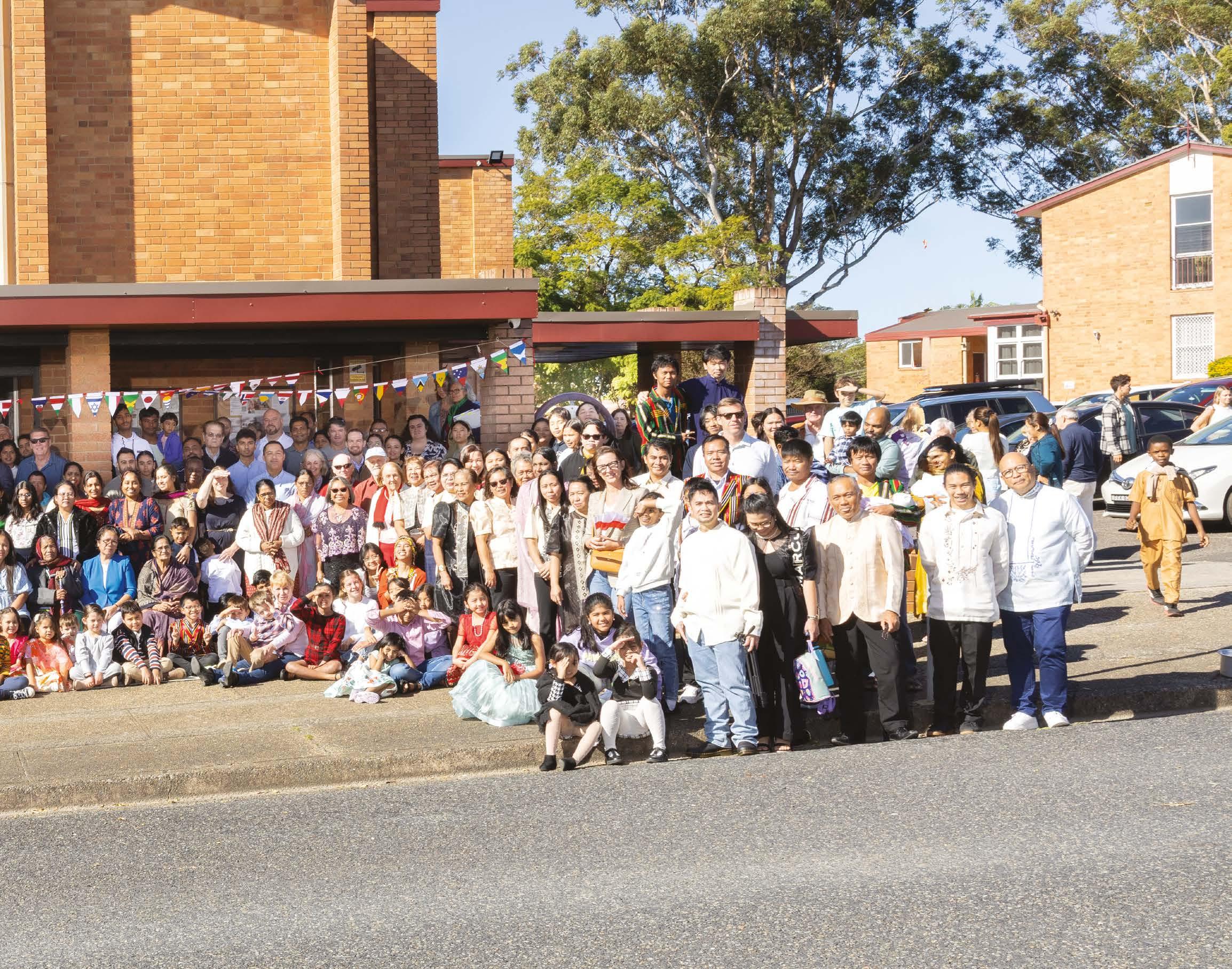
than 30 different cultures and nationalities represented.
“The vibrancy is only increasing, and it is evolving all the time,” Fr Joe said.
“We have Australians, Burmese, Maltese, Filipinos, Indians, Pakistanis, Sri Lankans, Bangladeshis, British, Canadians, Spanish, people from parts of Africa, so a whole range and it’s growing.”
Parish Youth Coordinator, Christa Morrow, shared a moving moment from the parish’s multicultural Mass.
“Everyone was singing the Lord’s Prayer in their native language, and it was so emotional. I was standing next to a Scottish man, who was wearing his kilt, and we both
had tears streaming down our faces because of how beautiful it was to hear all those languages spoken.”
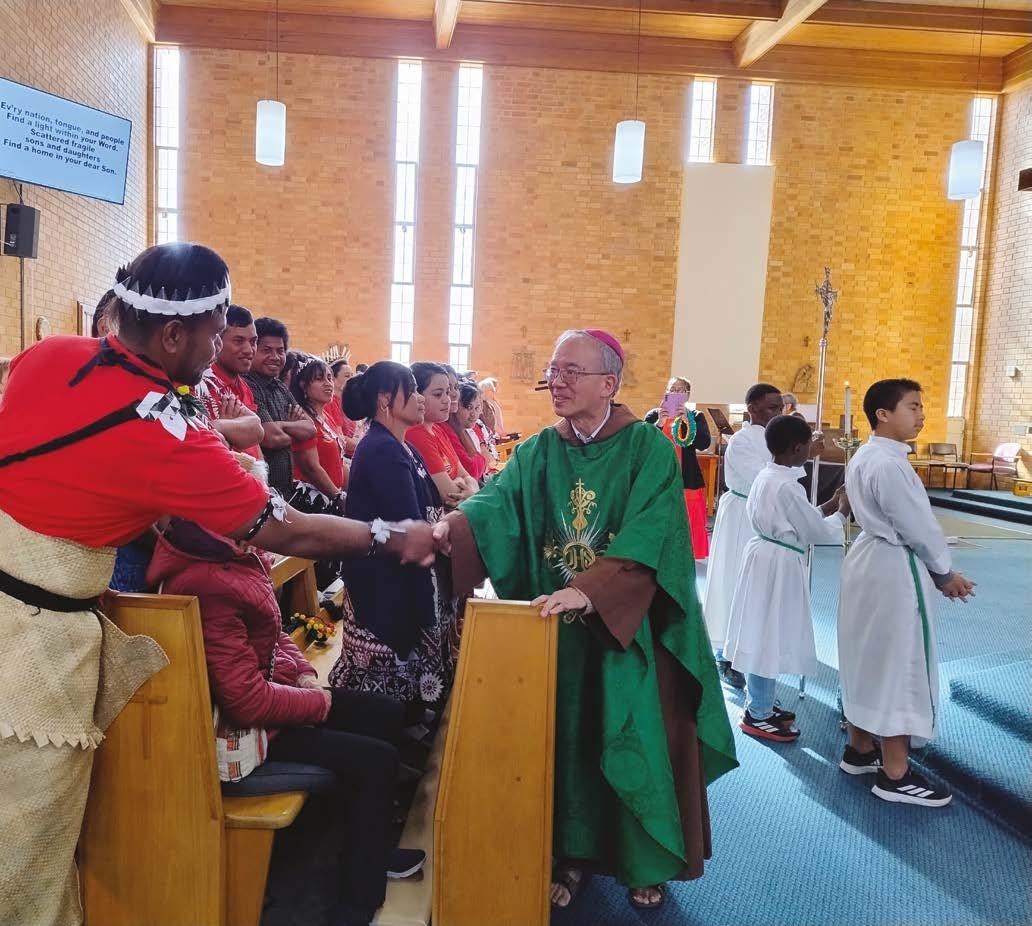
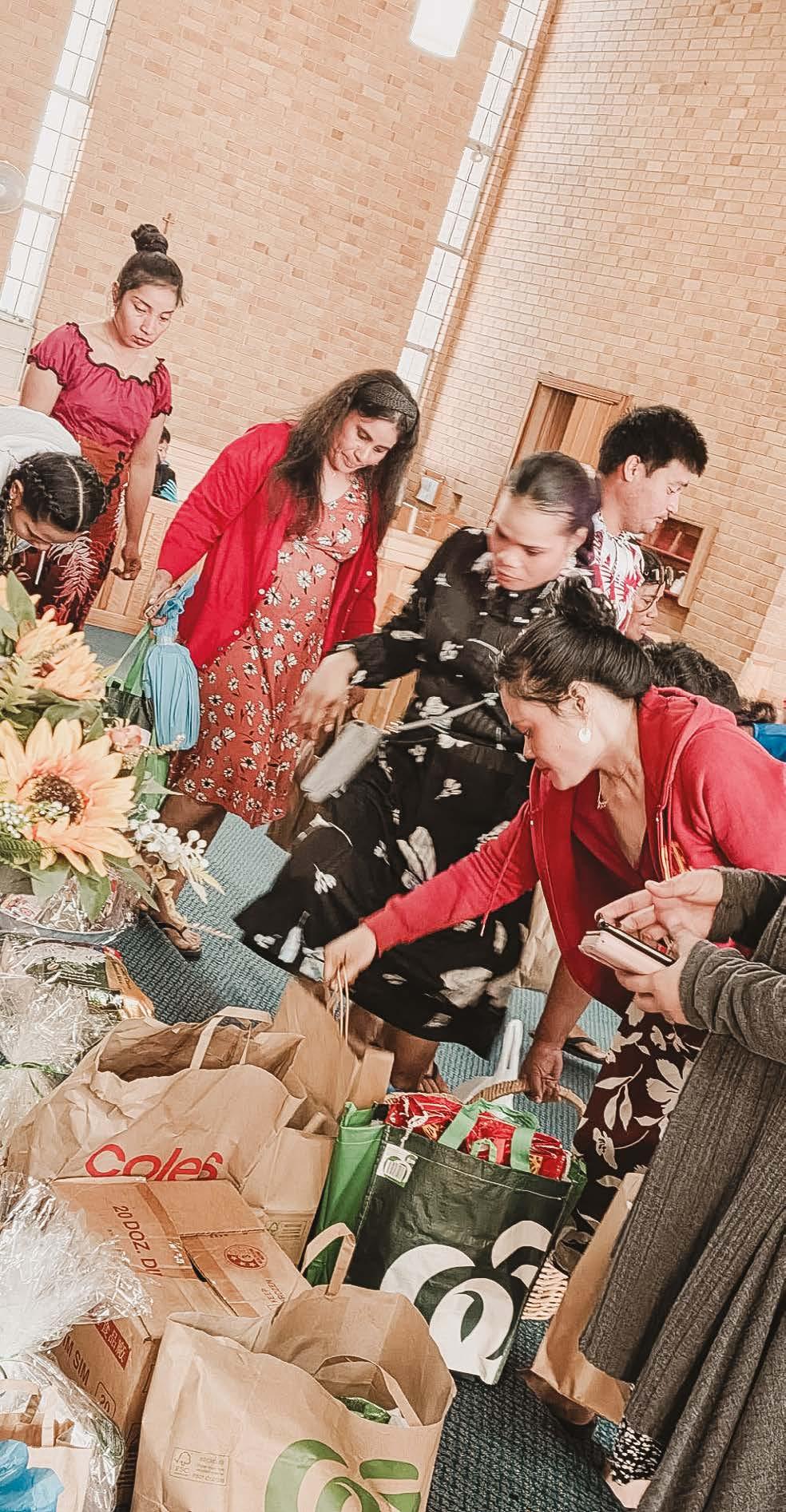
On Sunday 27 July, the parish came together to support seasonal workers in the city by offering in-kind food donations. The occasion coincided with Bishop Greg Homeming’s visit, following the confirmation ceremonies he presided over earlier that week.
“Every month we have a theme for the Jubilee, and July was charity, which is why we supported the seasonal workers in our community. It was a wonderful occasion, which
we were fortunate to have Bishop Greg at,” Fr Joe said.
The eagerness to engage within the parish has meant that the morning tea after Sunday Mass now caters for more than 100 people, and often spills out into the car park, as parish business manager, Debbie Willoughby explained.
“The parish community is very active, every Sunday a different community takes charge of the morning tea, and the food disappears within minutes,” Debbie said. “Last Sunday it was the Myanmar community’s turn to cook their local cuisine. There are always so many people there - which is an amazing problem to have.”
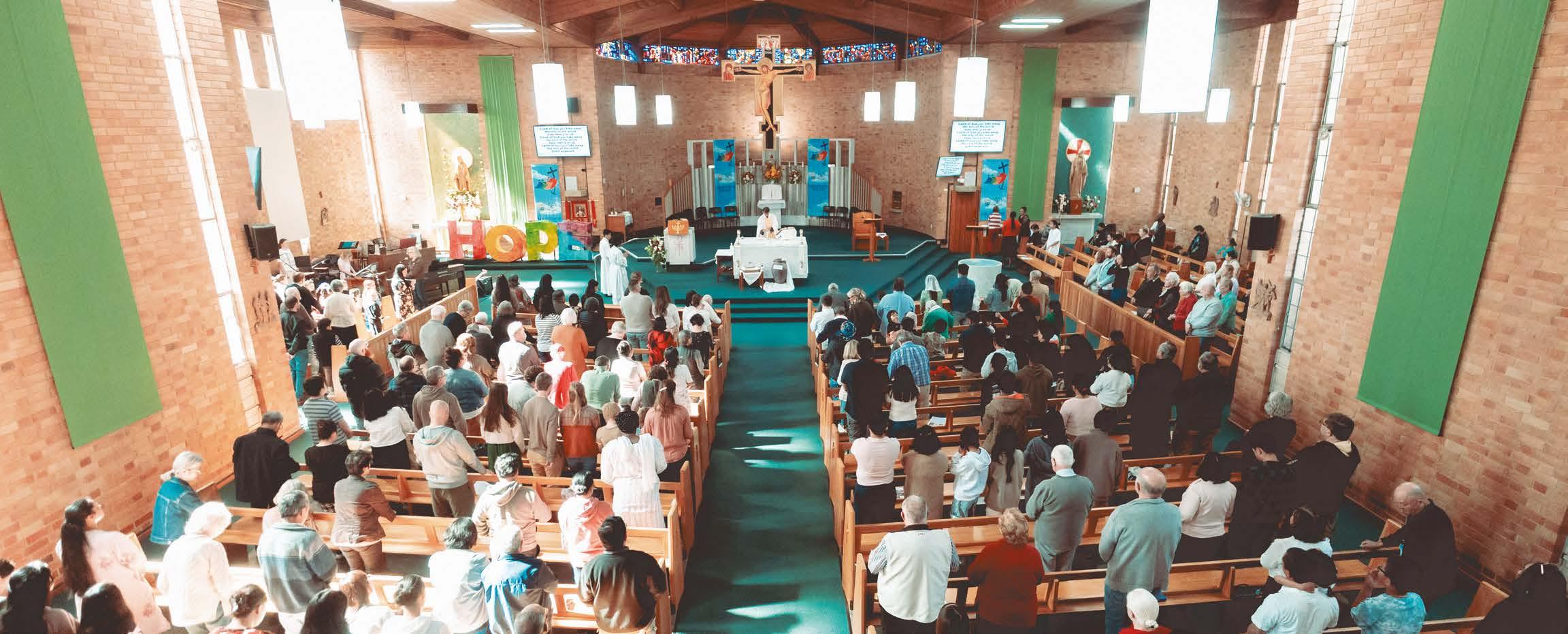
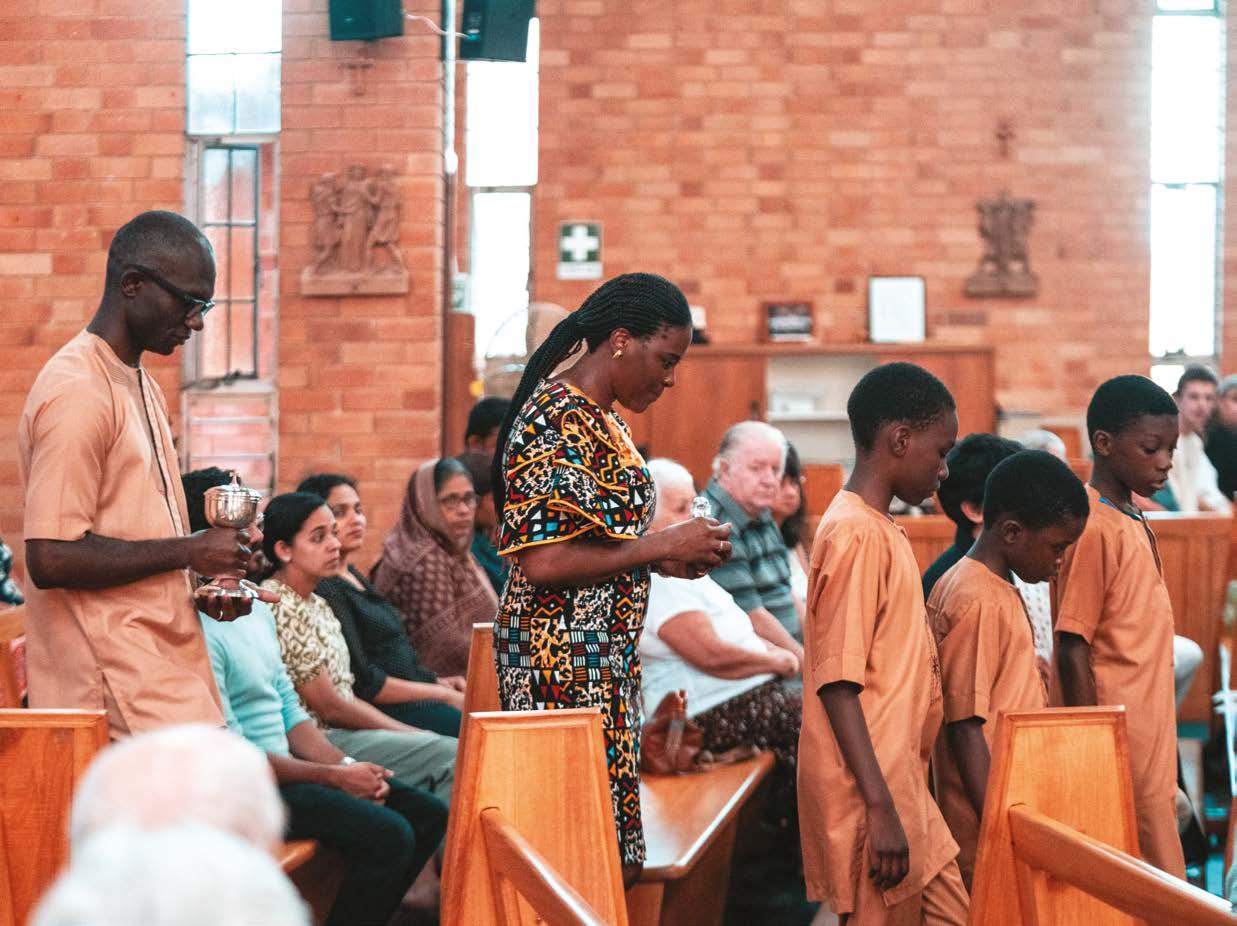
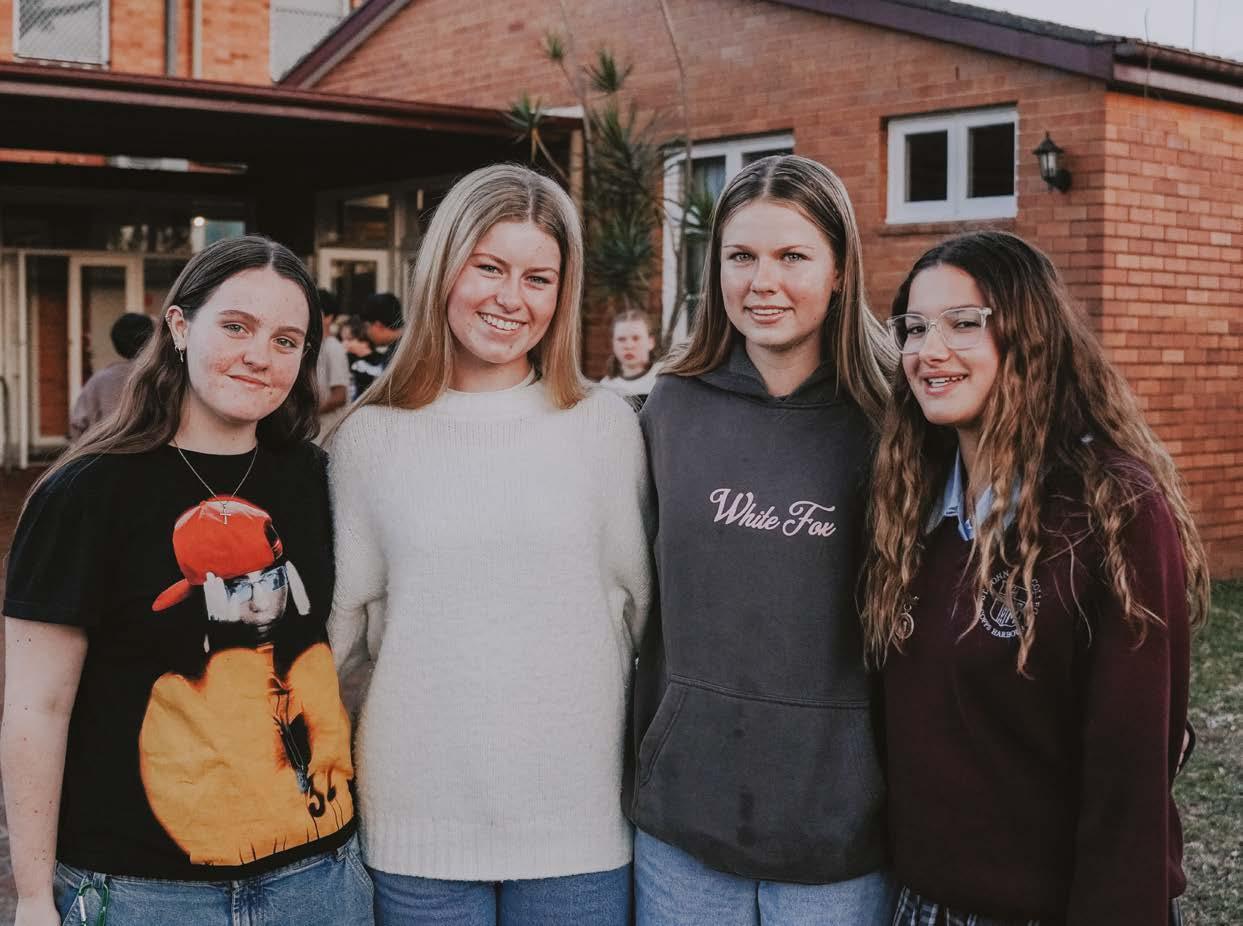
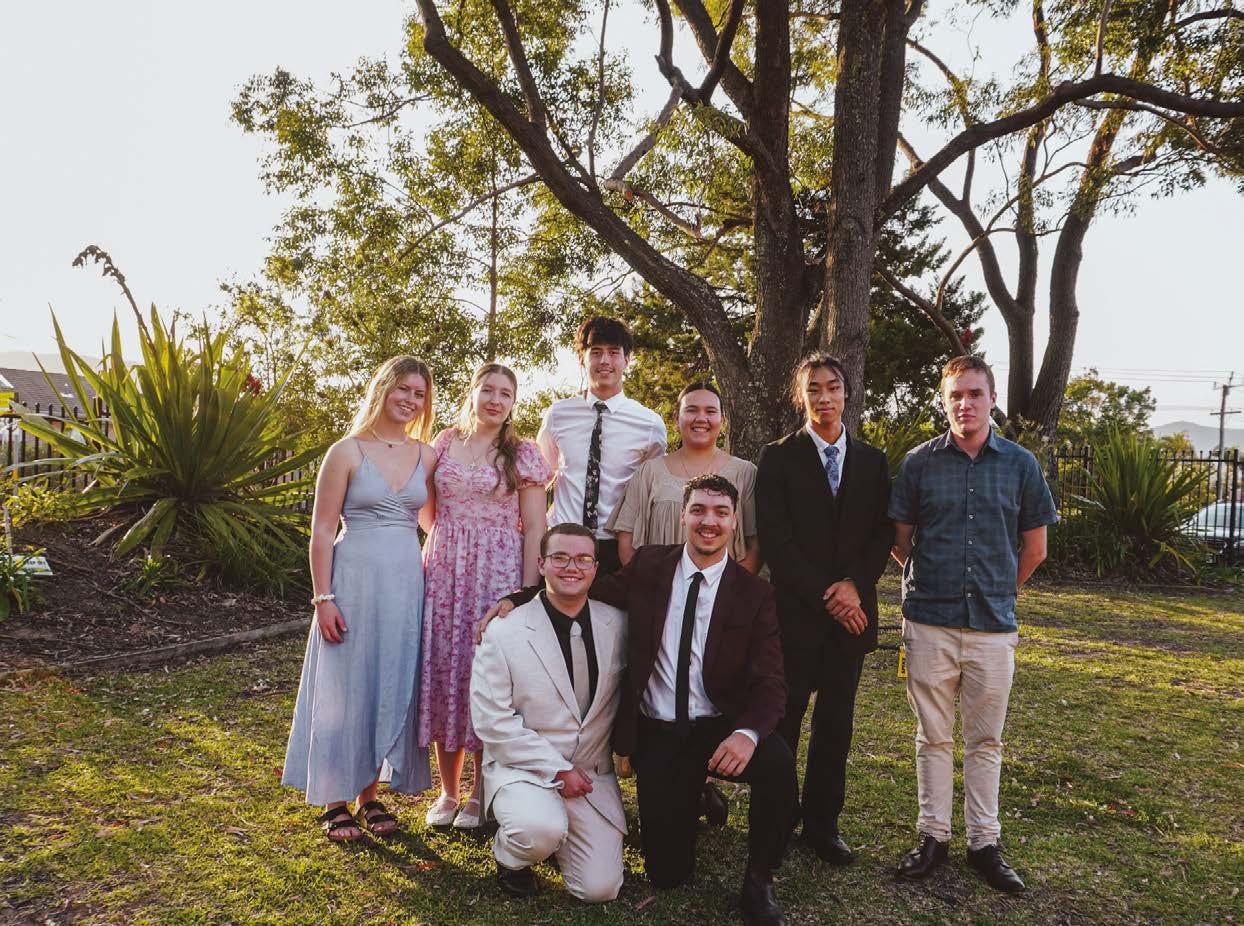
The parish’s youth ministry has grown significantly over the past year, with around 25 regularly attending Youth Group every Friday evening – most of them from Catholic families. These families may be part of the reason why the parish’s children’s liturgy is thriving with many young people attending.
“People are bringing their friends now, which is encouraging. They might come from a Catholic family, but their friends might not,” Christa said.
Much of this success is thanks to the group of young adults who lead the ministry. By embracing social media platforms and using QR codes in the parish bulletin, they have helped the group grow organically.
“Catholic social media is booming right now with positivity, and so many people are engaging in that way,” Christa said. “We’ve become a landing pad for people looking for that physical place to connect with their faith.”
Christa is also active in local schools: “We have an active children’s liturgy, and we’re getting the year 6 children to
go through ministry skills and faith formation, so they’re still engaged when they go to high school.”
With a new pastoral council in its infancy, the parish is exploring new ways to spread the Gospel and support those in need.
“Our pastoral council has great people with excellent experience,” Fr Joe said.
“We have already started a project to help the Burmese community in our parish learn English. There are nine different languages spoken
by that group within our parish alone, so we have to find solutions to cater for that.”
Fr Joe added that the parish is developing consistency in events and celebrations, to ensure sustained engagement from parishioners and the wider Coffs Harbour community.
“Developing cultures and traditions should become the fabric of the parish. Once that happens, it keeps the community together. With the morning tea, we started that once a month, and now it happens every week.”
The parish continues to embody Pope Leo XIV’s vision of unity in diversity. The heart of the Catholic faith is alive and beating in Coffs Harbour.
Our pastoral council has great people with excellent experience
by Barry de Silva
The Kyogle and Macleay
Valley Parish
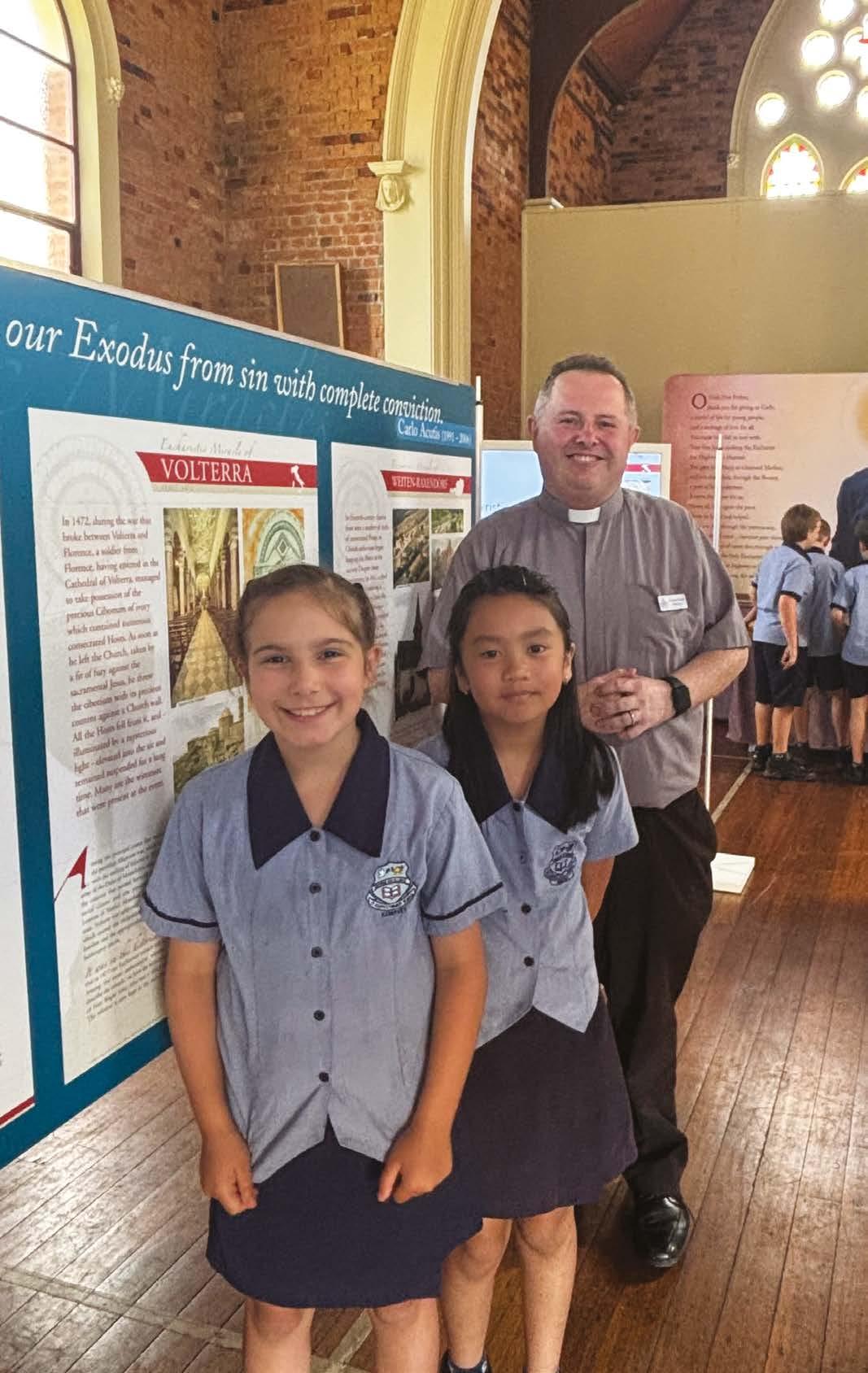
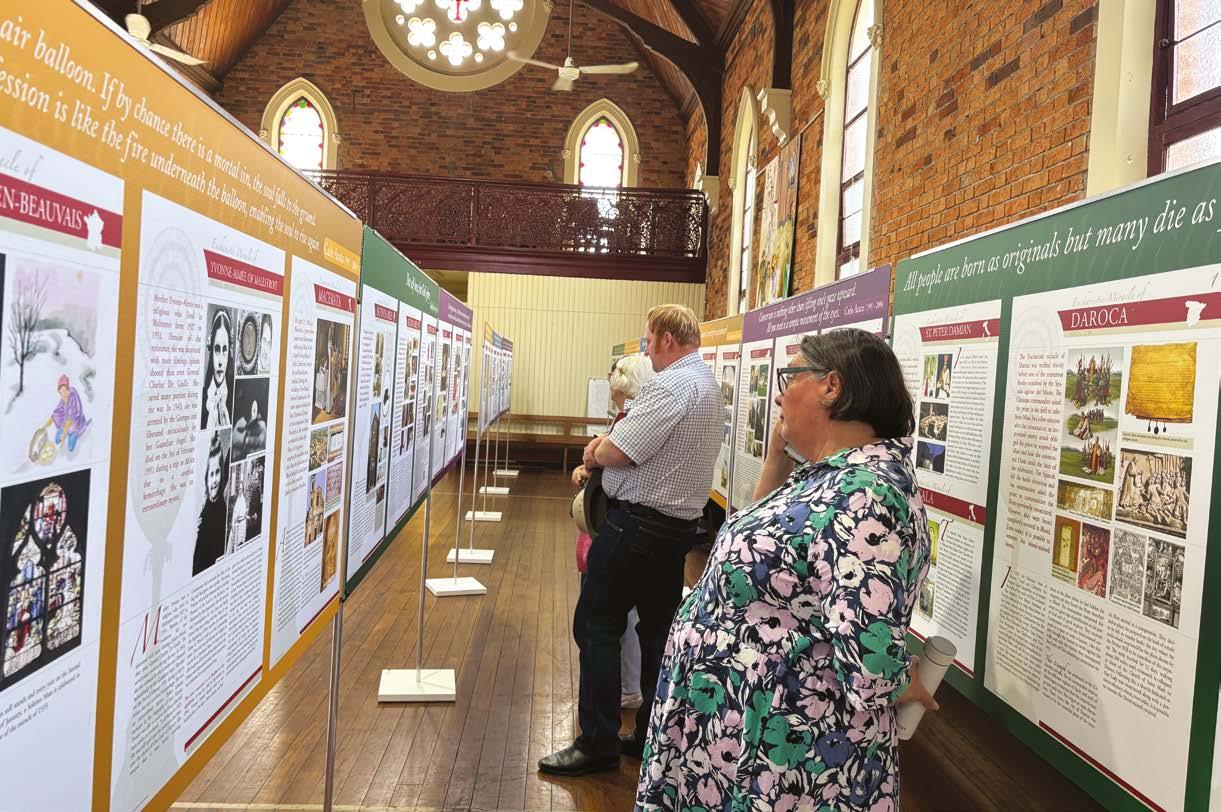
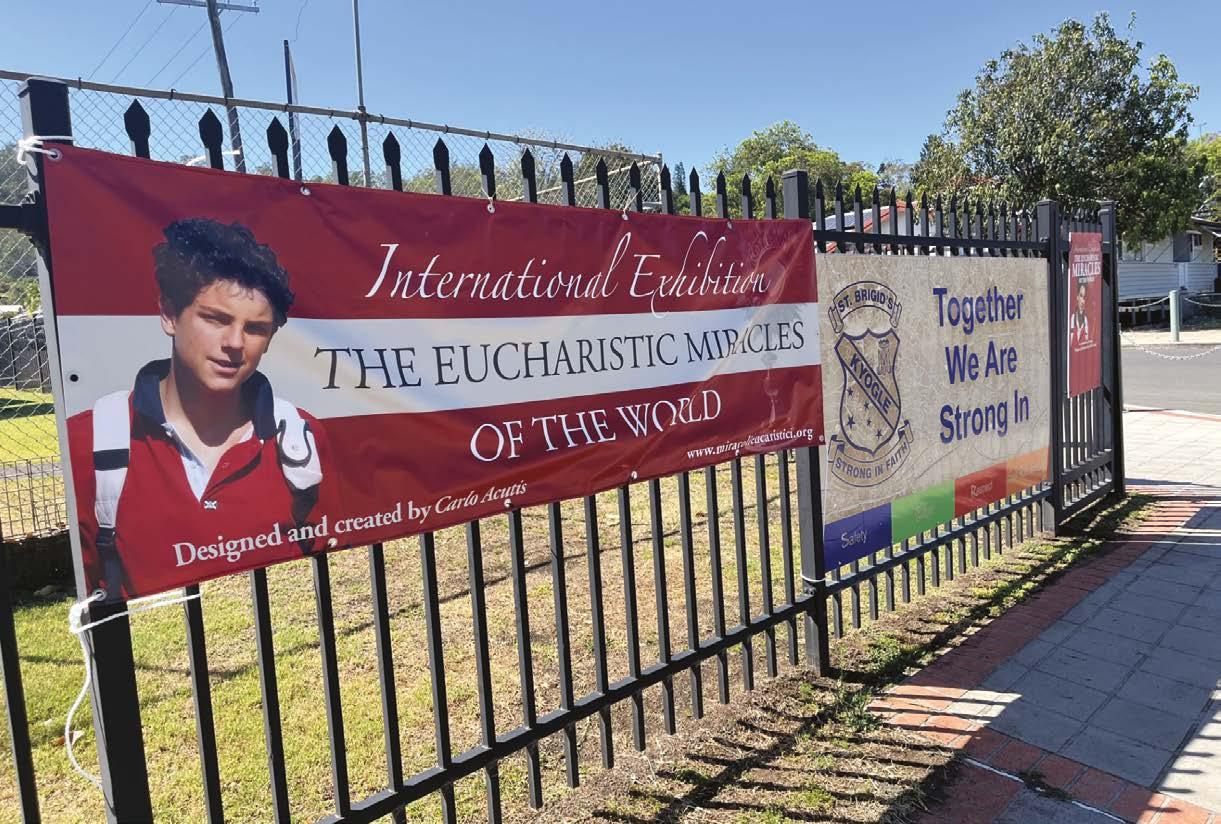
communities were deeply moved by the visit of The International Exhibition of Eucharistic Miracles of the World, originally curated by St Carlo Acutis.
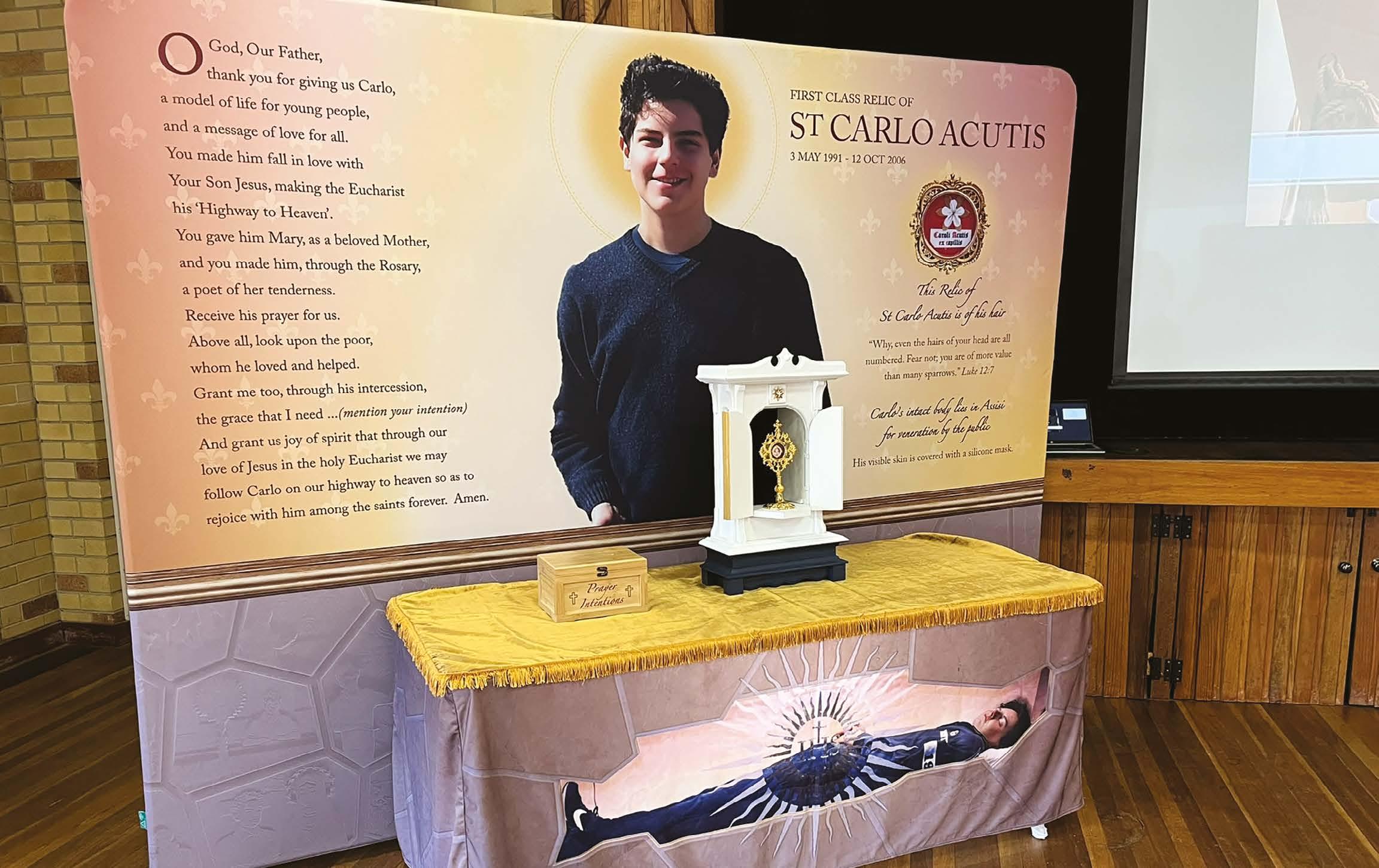
The exhibition, which includes a first-class relic, a strand of St Carlo’s hair, drew students, parishioners, and visitors to celebrate their faith.
Kate Hobbs from the Association of Friends of St Carlo Acutis Australia shared Carlo’s story. He was a teenager whose computer skills and love of Jesus helped bring centuries of Eucharistic miracles to the modern world. Carlo was canonised by Pope Leo XIV on 7 September 2025, becoming the first 21st century saint, and has since been referred to as the ‘patron saint of the internet’.
Kyogle Parish Priest, Fr Joe Holloway spoke of the privilege of hosting such an extraordinary display.
“It’s with immense gratitude and joy that I’m here to open this Eucharistic Exhibition so that we may open our minds
to this profound spiritual experience as we celebrate St Carlo,” Fr Joe said.
“We’re incredibly proud to host this collection — the result of the tireless faith and visionary work of the young modern saint, St Carlo Acutis.”
St Brigid’s Primary School Principal, Vanessa Walters, said the exhibition offered a chance for learning and renewal.
“[Carlo was the] computer tech savvy teenager, the kind of young person whose brilliance we see daily in our school,” she said.
“This exhibition serves as a powerful, physical and historical testament to the ultimate mystery of our own faith — the real presence of Jesus Christ.”
Further south, the Macleay Valley Parish also hosted the exhibition. The parish celebrated Mission Sunday in the spirit of St Carlo whose
quiet acts of service to the poor embodied the Eucharist in action.
Macleay Valley Parish Priest, Fr James Foster said the exhibition had a profound impact on those who attended.
“It was uplifting to see our parish and schools come together in prayer and reflection, inspired by this young saint’s love for the Eucharist which was not only an integral part of his prayer life, but also led him to be ‘broken and poured out for others’ in his care for others especially the poor,” Fr James said. “It was truly a great experience for our parish family.”
Both parishes expressed their gratitude to their communities for embracing this opportunity to grow in love for Jesus in the Blessed Sacrament. The exhibition was a reminder that at any age we can change lives through simple acts of devotion and creativity.
by Barry de Silva
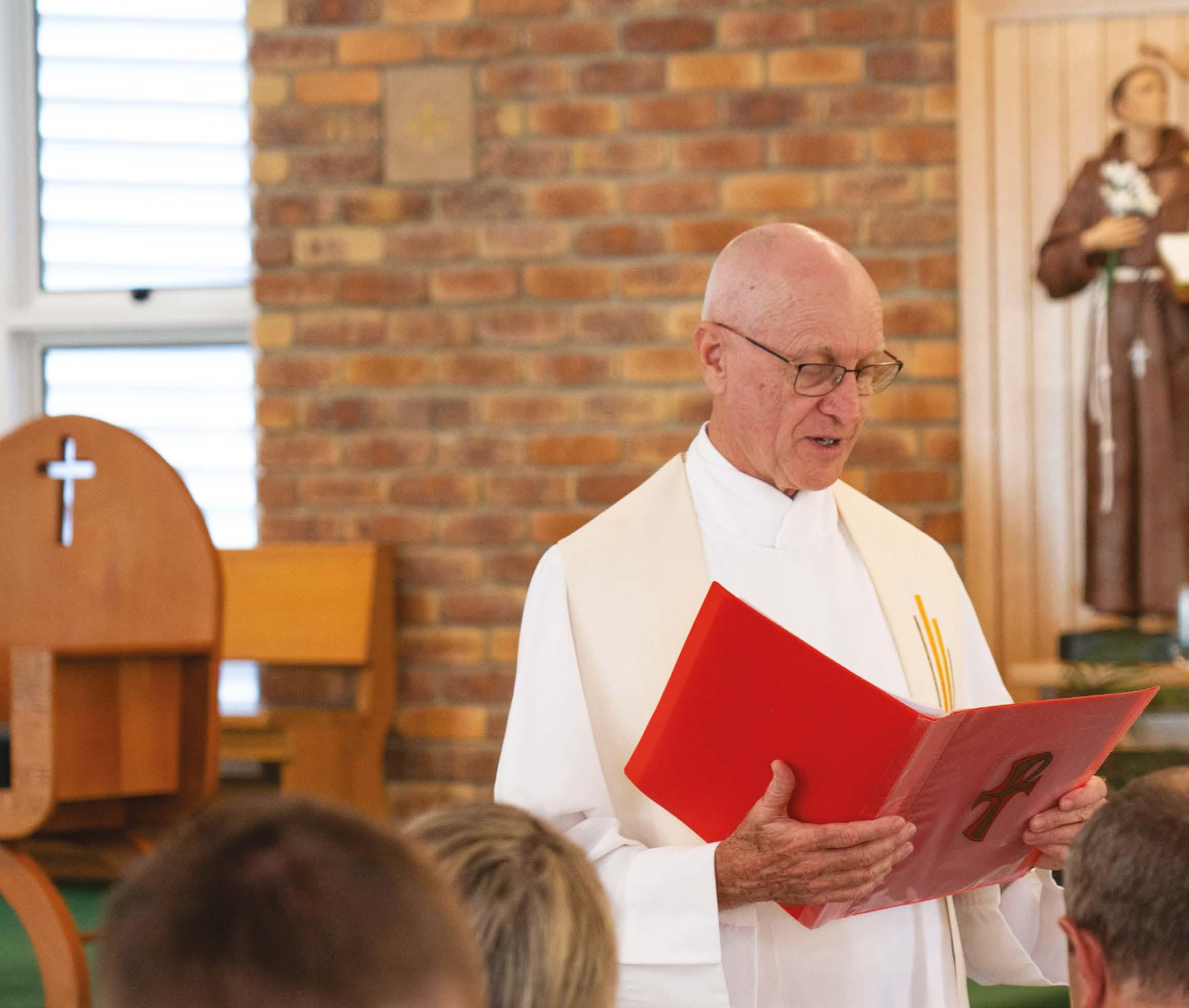
Born in Murwillumbah and raised on a dairy farm, Fr Paul McDonald reflects on his life of service, the enduring joy of parish ministry, and his role as vicar general for the diocese.
Following his schooling at Mount St Patrick Primary School and Murwillumbah High School, Fr Paul began working as an articled clerk with a firm of solicitors in Murwillumbah where he also undertook legal studies part-time.
During those years, his connection to parish life deepened. “I became involved in the parish youth group and also a service club for young men aged 18 to 40, where I served as secretary, treasurer, and public relations officer during my five years of membership,” Fr Paul says.
“As I became more involved in the parish and community, I began to feel the call to priesthood, where I might be more fulfilled in serving God and the community.”
Fr Paul later applied to become a seminarian for the diocese and began formation at St Patrick’s College, Manly, completing a Bachelor of Theology. He was ordained to the priesthood by Bishop Satterthwaite on 30 August 1982 at Sacred Heart Church, Murwillumbah.
Over 43 years of priesthood, Fr Paul has served in a variety of pastoral appointments, including as parish priest at Murwillumbah, and Coffs Harbour parishes, and later as administrator of St Carthage’s Cathedral, Lismore, before his current role as Kingscliff parish priest.
“My involvement in the pastoral, sacramental, and Church life of the parish gives meaning, purpose, and fulfilment to my ministry,” he says. “I enjoy the community and parish of Kingscliff. While administrative tasks are less enjoyable, they are a necessary part of the role.”
Alongside his parish ministry, Fr Paul now serves as vicar general for the diocese — a role that supports Bishop Greg Homeming in the pastoral and administrative governance of the diocese. “When the bishop is away, the vicar general may be called upon to represent him and exercise his executive authority in running the diocese.”
Fr Paul’s week is full, balancing parish life with broader diocesan responsibilities. “My diary sometimes requires juggling parish and diocesan commitments,” he says with a smile. “There are many meetings, including the Council of Priests, the College of Consultors, and the Diocese of Lismore Catholic Schools, where I am a board member.
Fr Paul’s experiences on these boards, including previously
at St Vincent’s Private Hospital Lismore, he says, have broadened his view of how the Church functions as one body. “They’ve helped me appreciate the larger picture of the diocesan and universal Church, as well as the local parish, and how they all work together.”
In recent years, Fr Paul has been actively involved in the Diocesan Renewal Journey, collaborating with neighbouring parishes to improve processes.
“Over the past 18 months, I’ve enjoyed working more closely with the neighbouring parishes of Murwillumbah and Tweed Heads,” he says. “We’ve discovered that the parishes of the Tweed Valley share much in common and can all benefit from sharing ideas and resources.”
Having witnessed a Diocesan Pastoral Council (DPC) before and been involved in the consultation process for its return, Fr Paul is looking forward to the body’s reestablishment in 2026.
“I was in Lismore when the first DPC was formed in 1987 to mark the centenary of the diocese – I’m excited to see it return.”
I enjoy the community and parish of Kingscliff.
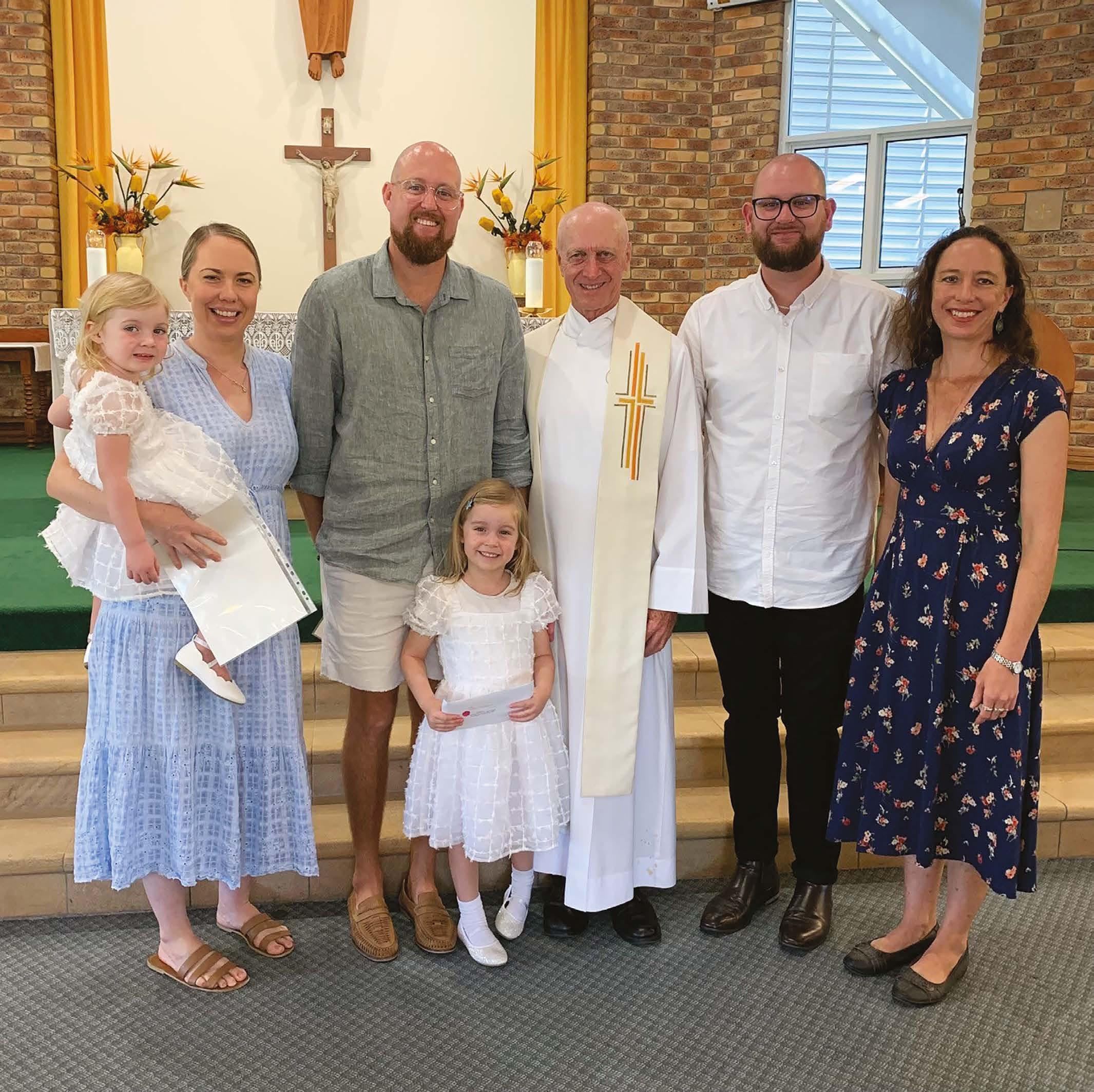
Despite his demanding schedule, Fr Paul values balance and wellbeing.
“Living in Kingscliff provides an opportunity to have an active and healthy lifestyle — early morning walks with my dog, Zara, along the foreshore, a quick dip in the ocean followed by a piccolo, and the gym is only a three-minute walk from the presbytery,” he enthuses. “While my running days are over, there are many other opportunities for physical fitness.”
Music is another passion that brings joy and community connection. “I’ve really enjoyed playing second clarinet with the Lismore Symphony Orchestra since 2008.”
After more than four decades, Fr Paul continues to serve with the same humility and enthusiasm that first drew him to the priesthood.
“My pastoral work continues to bring meaning and fulfilment,” he reflects. “It’s a privilege to serve God and the people of our diocese.”
It’s a privilege to serve God and the people of our diocese.
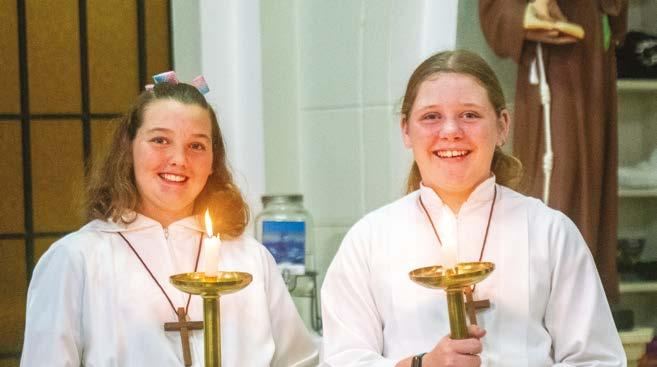
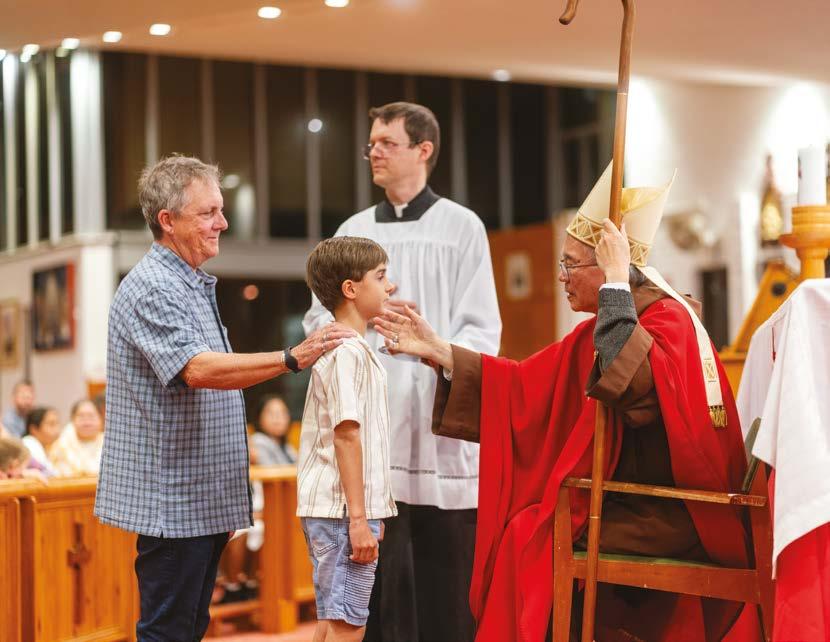
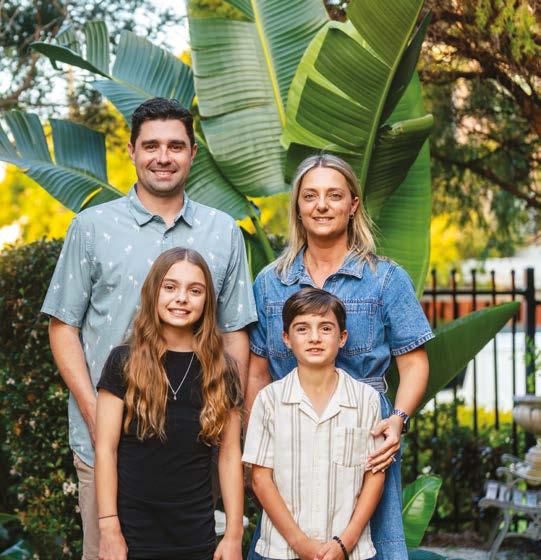
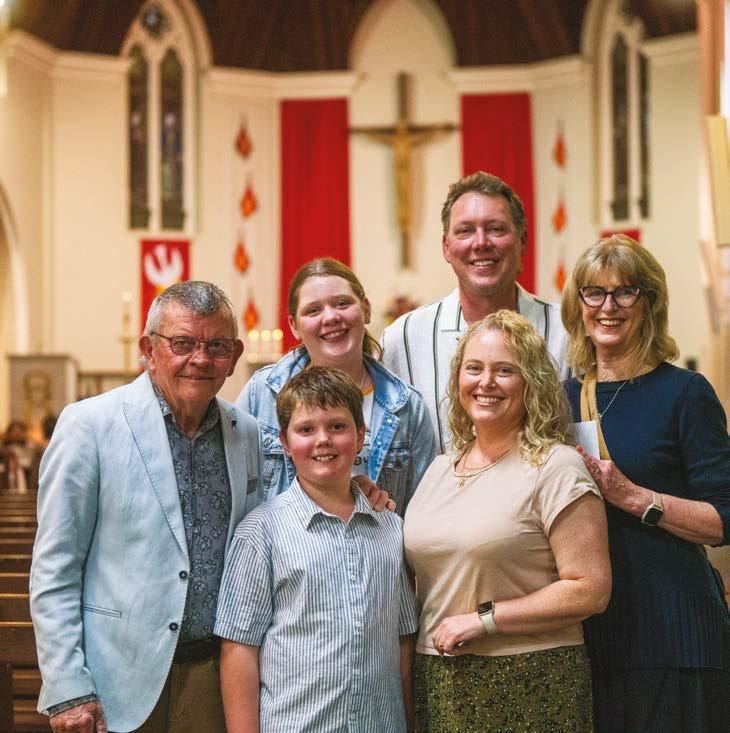
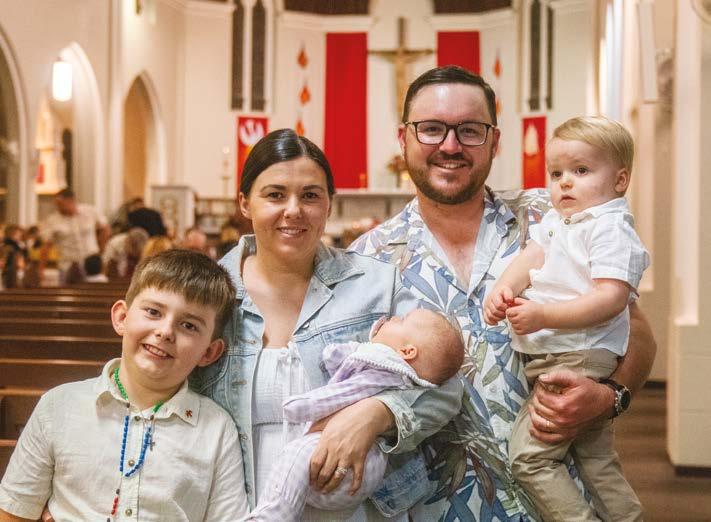
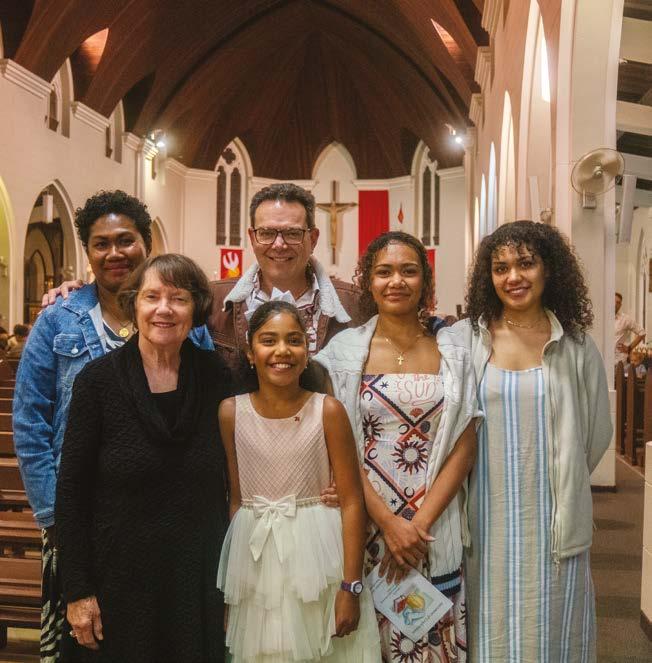
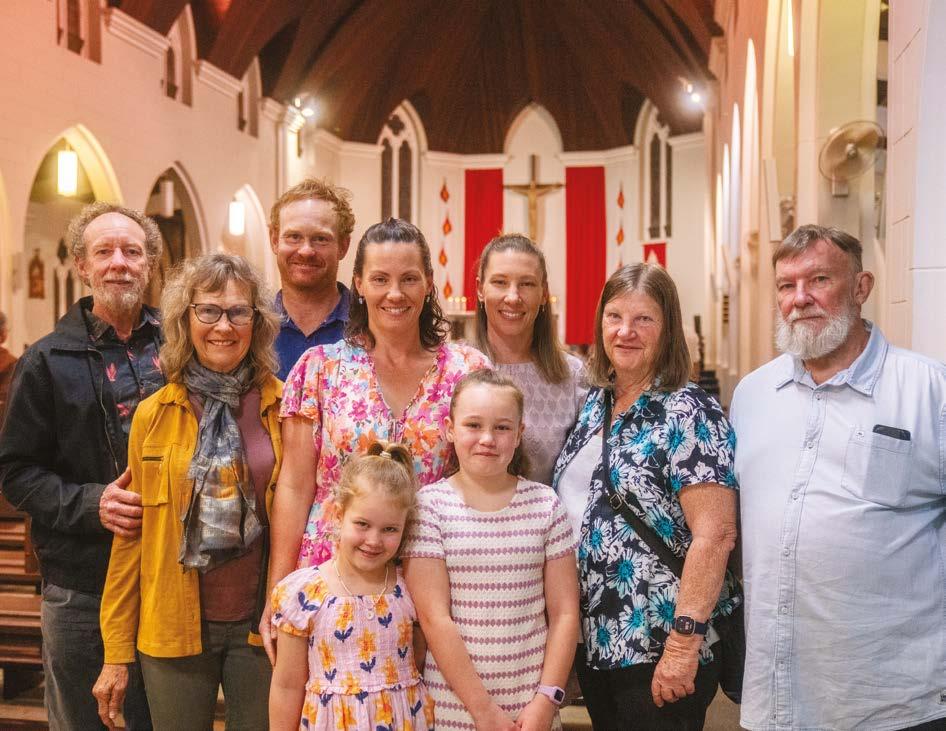
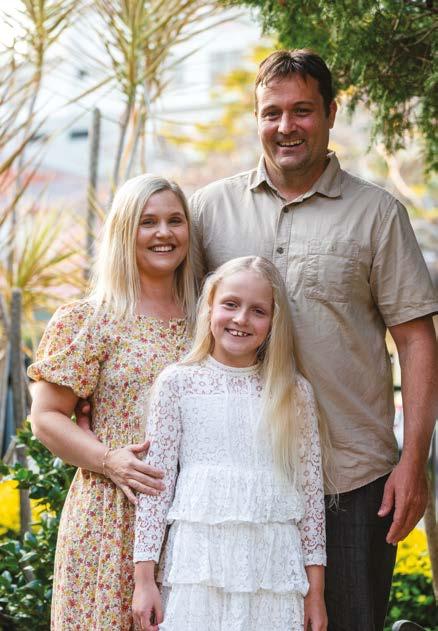
This year, hundreds of children across the diocese received the Sacrament of Confirmation. We give thanks to God for this special moment in their faith journey and strengthening their connection with the Lord.
Here is a selection of images from the Confirmations at Murwillumbah and Tweed Heads earlier this year.
Photos
by Value Imagery
As the year draws to a close, we find ourselves with much to be grateful for across our system of Catholic schools, not only the milestones and moments, but the quiet, steady work of formation and learning that takes place in every classroom, playground, and parish across our diocese each day.
In 2025, more than 18,000 students across 45 Catholic schools have been guided by the care and commitment of over 3,000 staff. That care looks like many things: a principal cheering on the side of a sporting field, a teacher kneeling beside a student sounding out a new word, a year level coordinator walking with a child through a hard day. It’s in the patient work of helping a kindergarten child move up a reading level, the joy of a year 4 student earning their pen licence, and the quiet pride of a senior student receiving their HSC results. These moments, large and small, remind us that our Mission is lived not only in programs and outcomes, but in people.
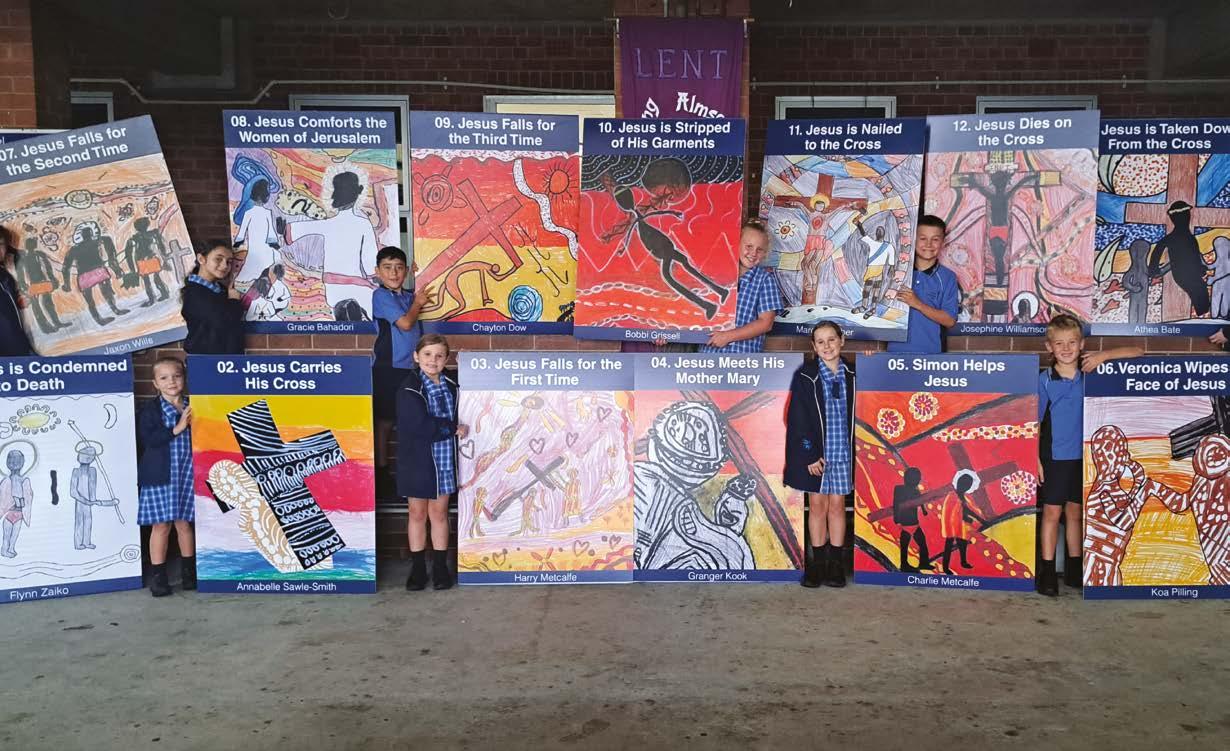
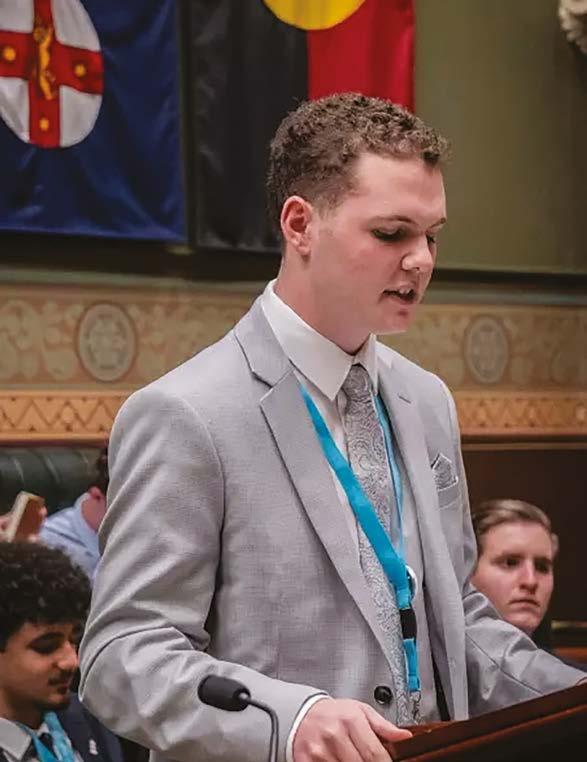
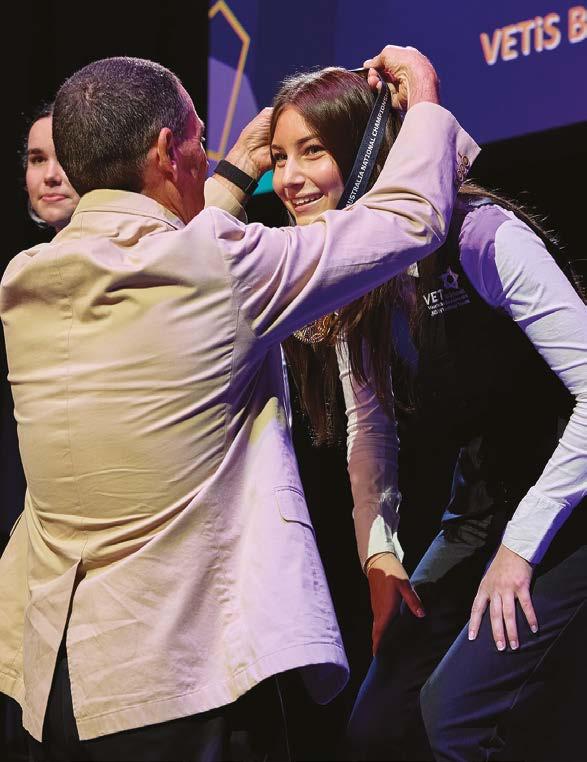
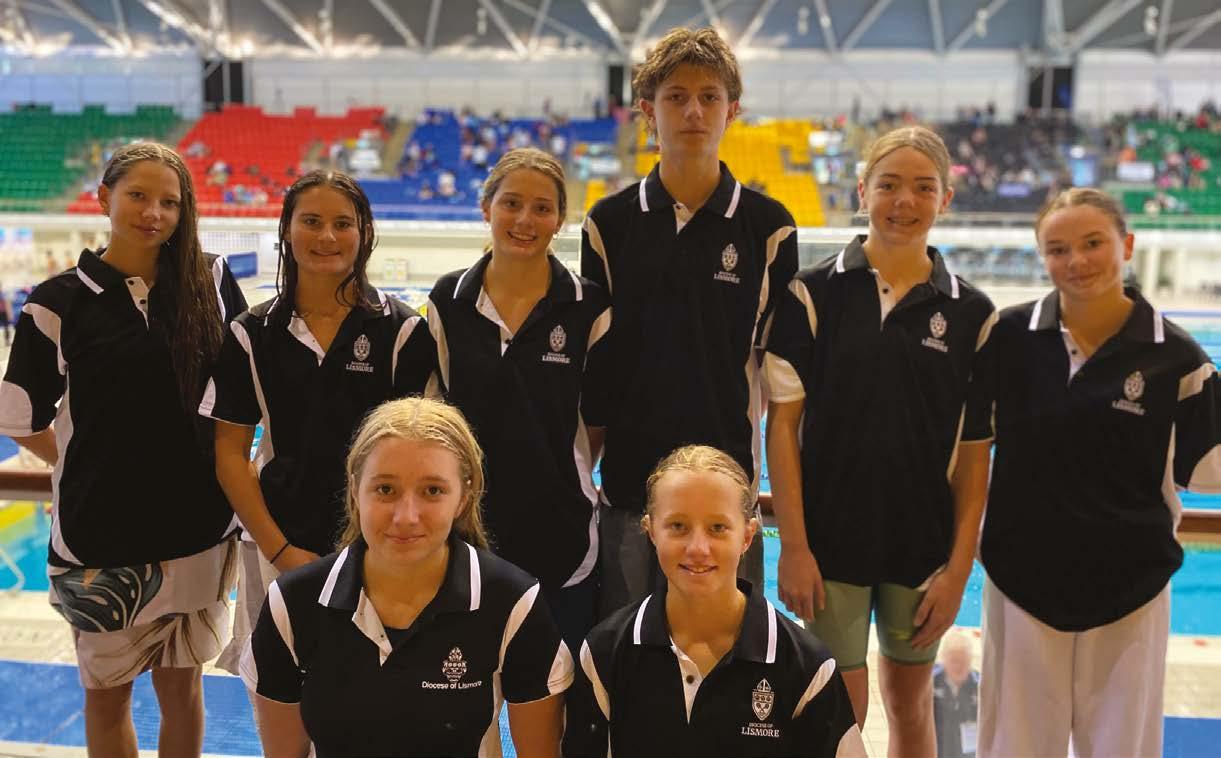
We’ve celebrated outstanding achievements this year. From state-level sporting victories and student leaders addressing parliament, to vibrant music programs and sacred projects that weave together faith and culture, our schools are alive with creativity, purpose and promise. Our Aboriginal and Torres Strait Islander students have led with pride. Our young people have given generously to those in need. And our graduates have reminded us that academic excellence and high-level vocational achievements are always richer when grounded in character and hope.
These moments are made possible by the dedication of our teachers, school staff, and leaders. You have given yourselves with grace and generosity, walking alongside students through challenge and triumph alike. Your vocation is a gift to our Church ministry.
To our parents and families, thank you for your trust. In choosing Catholic education, you have partnered with us in shaping
not just capable learners, but compassionate, faith-filled people. Your encouragement and support are the unseen strength behind so many student successes.
To Bishop Greg, our clergy, and parishioners, thank you for your faithful presence. The Mission of Catholic education stands stronger because of the prayerful, pastoral and practical support of our parishes. Together, we witness a faith that forms and transforms.
As we look back on the year, we give thanks for the countless ways Christ has been made present in our schools, through learning and laughter, friendship and forgiveness, moments of awe and acts of service.
On behalf of the board and leadership team I wish you every blessing for the season. May this Christmas bring rest, renewal and joy to you and your families. And may we enter the new year with hearts open to all that God continues to do in our schools, students, families, staff and in each of us.
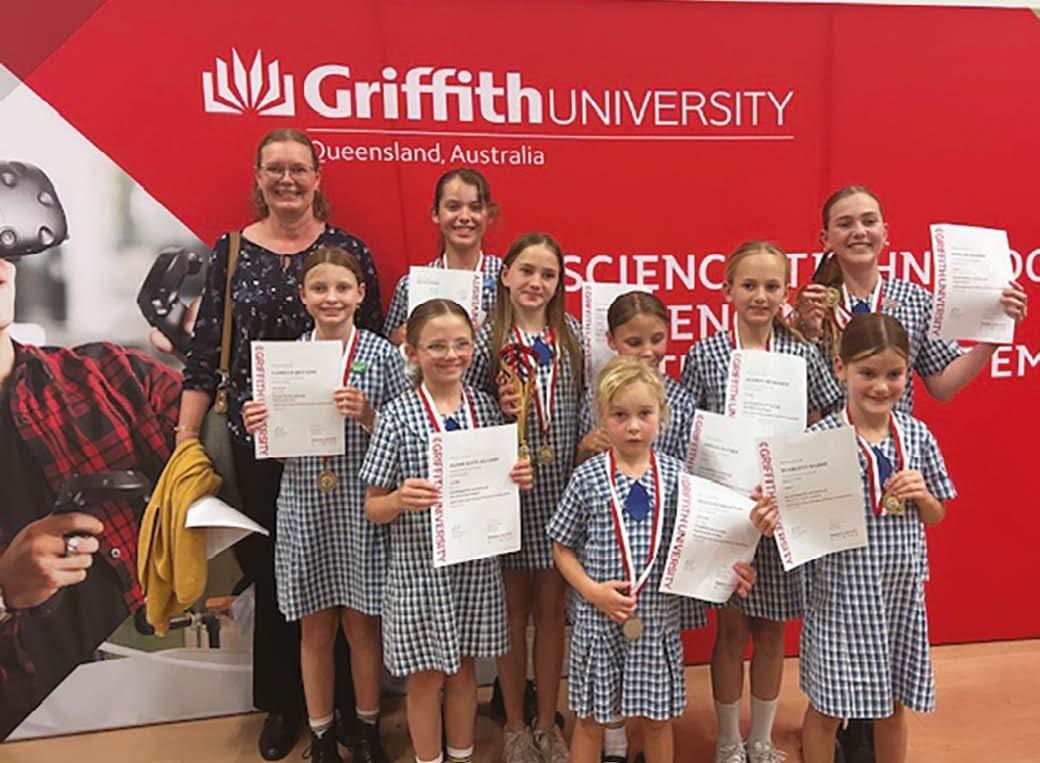
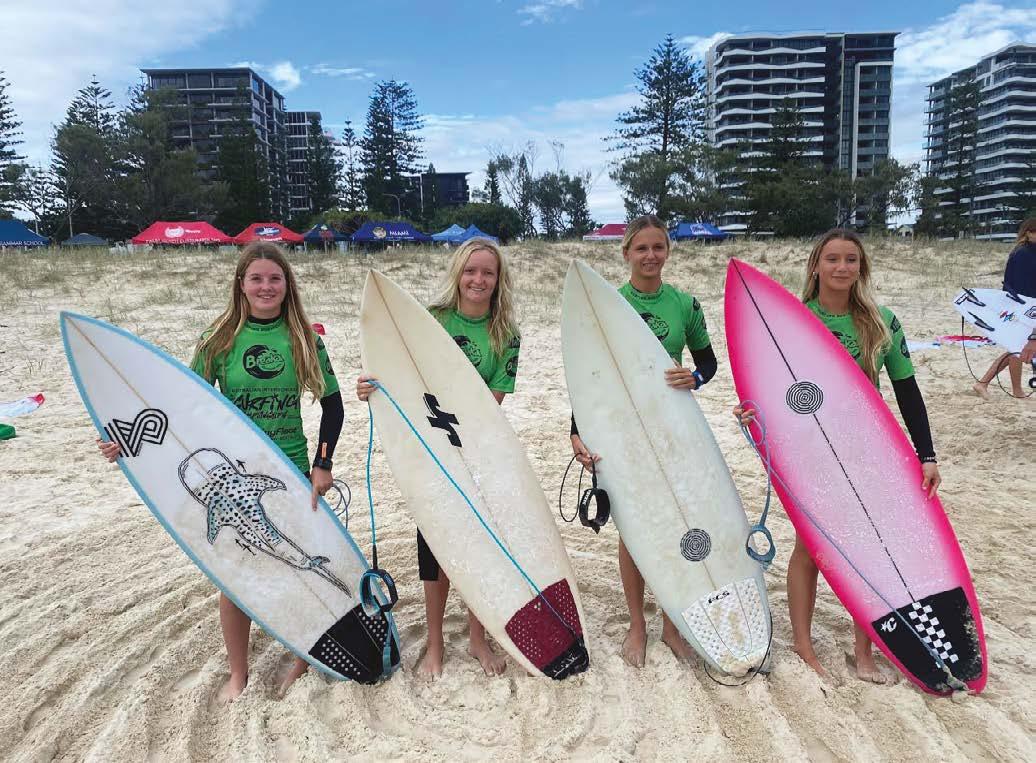
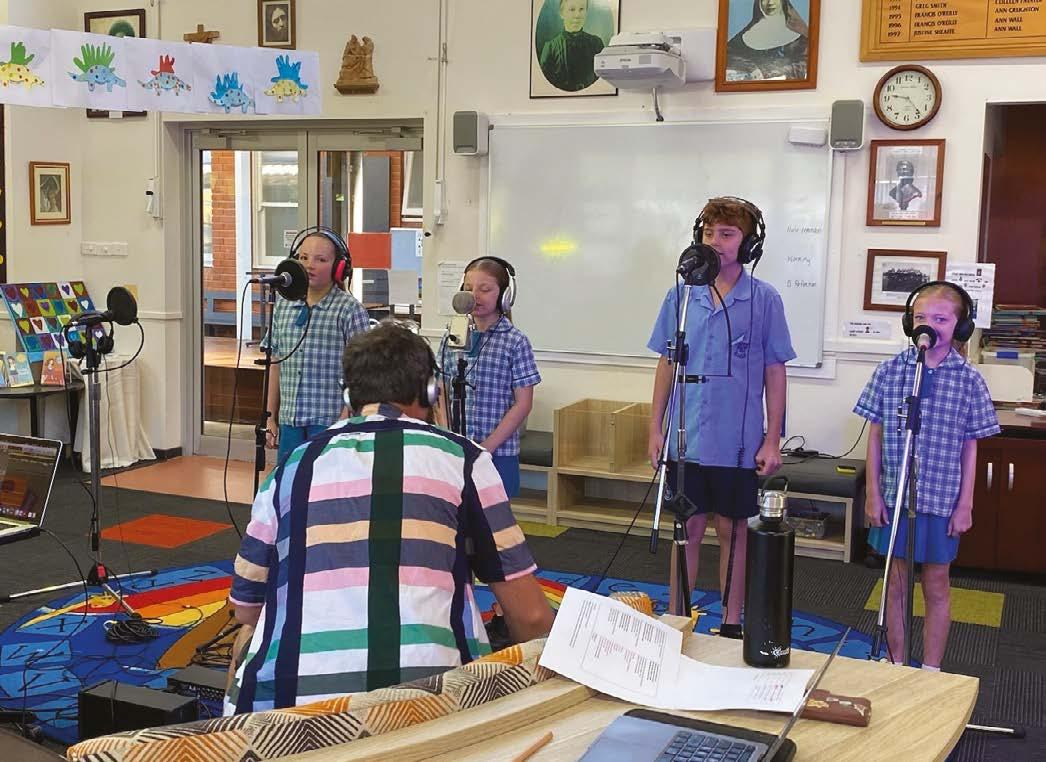
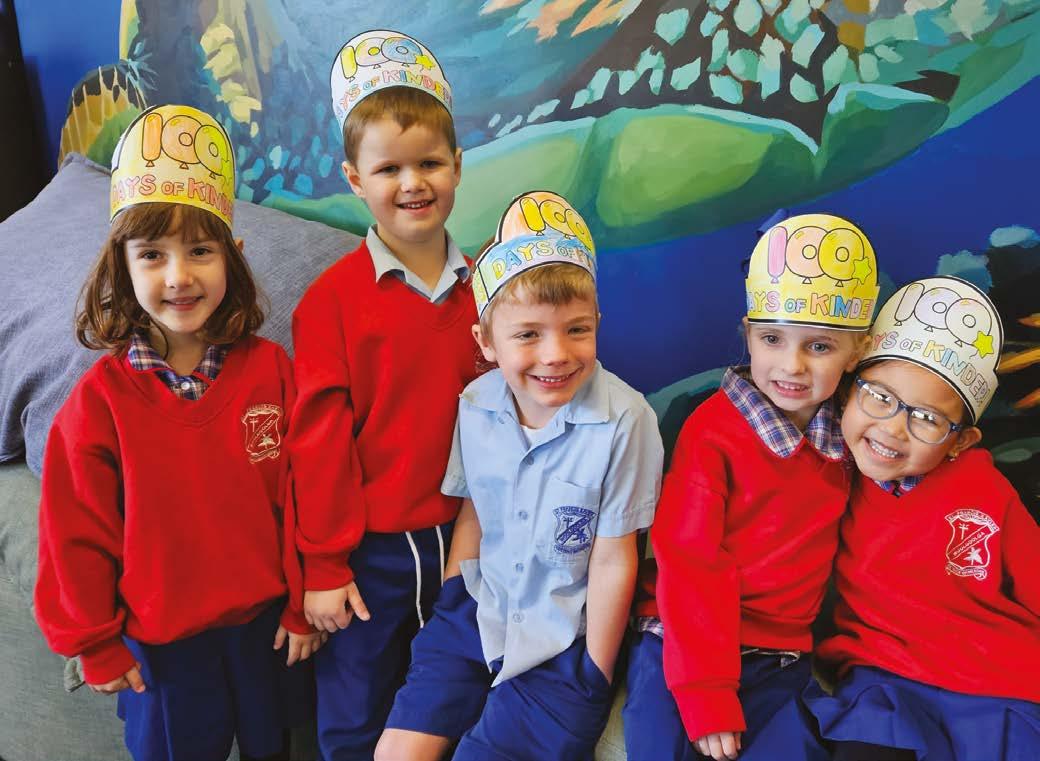
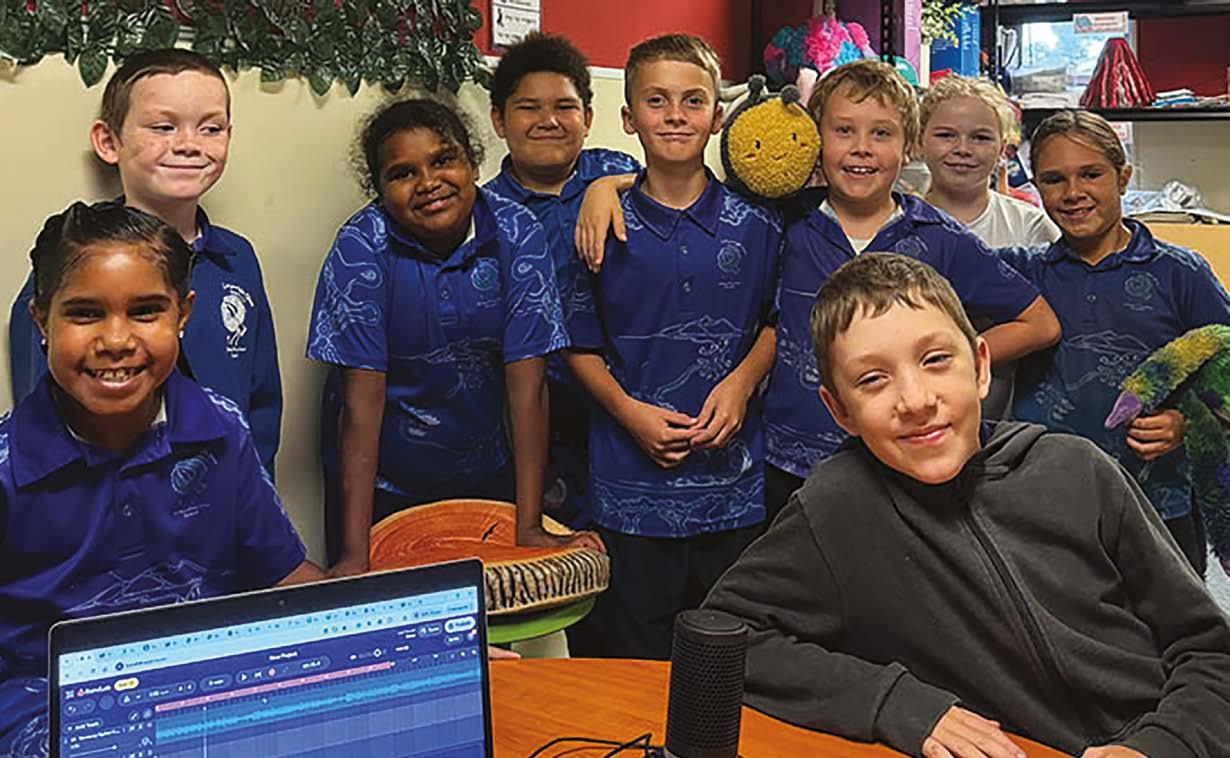
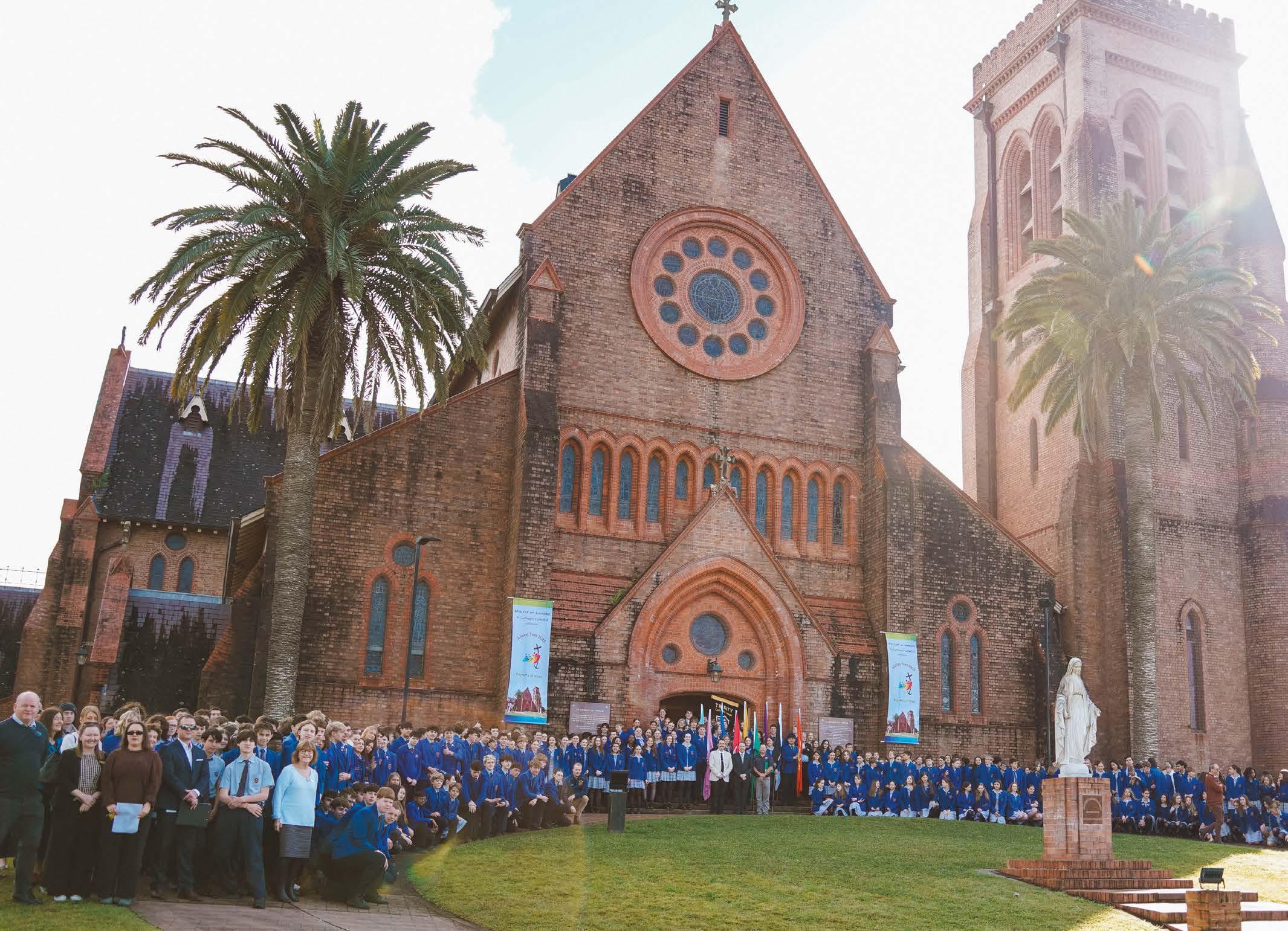
his year Trinity Catholic College Lismore marks 40 years since its formation in 1985 from two long-standing Catholic institutions: the Presentation Sisters’ St Mary’s College for Girls (1886) and the Marist Brothers’ St Joseph’s High School for Boys (1911).
The amalgamation was formally blessed at St Carthage’s Cathedral in 1984, when students from both schools symbolically handed over their banners, stepping into a shared identity rooted in faith, service, and unity.
The newly named Trinity Catholic College was built on the example of Jesus Christ and the charisms of Venerable Nano Nagle and Saint Marcellin Champagnat. The Presentation tradition of Venerable Nano Nagle is devoted to compassion and education for the poor, and
the Marist ethos of Saint Marcellin Champagnat, focused on simplicity, humility, and presence. The original College motto, Deeds Not Words, later evolved to In Word and Deed, reflecting Trinity’s enduring call to integrity and authenticity.
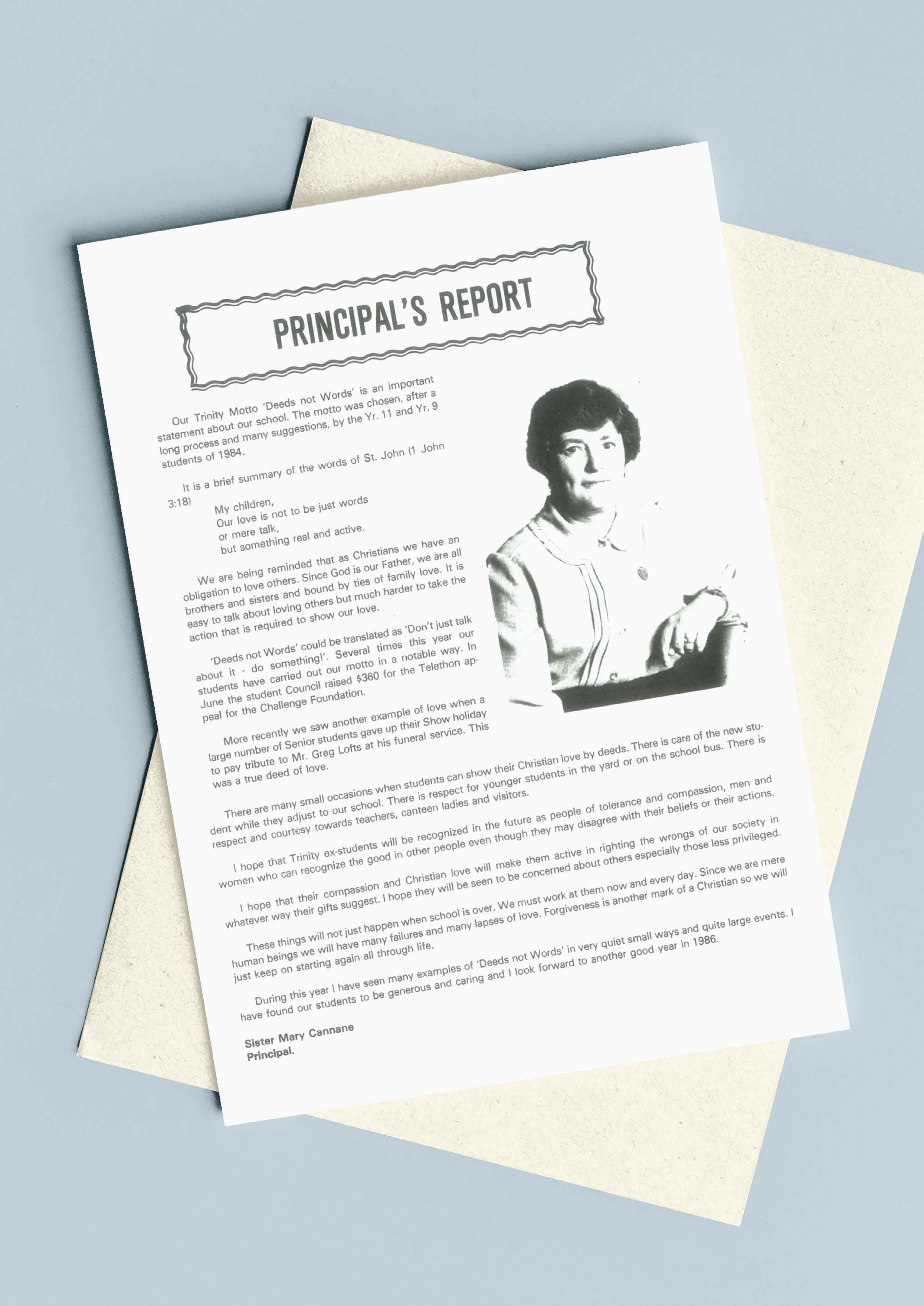
The College’s founding principal, Sr Mary Cannane pbvm, guided Trinity through its formative years (1985–1992). She was instrumental in building a cohesive community that reflected the best traditions of Catholic education.
In her 1985 Principal’s Report, published in the school magazine, Sr Mary captured the essence of Trinity’s early spirit and eloquently established a vision for the Trinity graduate (see opposite).
Following her leadership, five Marist Brothers served
as Principals, continuing a proud Marist presence. In 2022, Jesse Smith became Trinity’s first lay Principal and ushered in a new era.
“This year’s celebrations focus on the past 40 years, in particular, and all that was achieved and accomplished through the amalgamation of St Mary’s and Marist Brothers,” Jesse said.
“Thousands of students have called Trinity home over the past four decades. Trinity alumni now find themselves across the globe, contributing to their communities in meaningful ways.”
“It is fitting that we celebrate this anniversary in 2025, which is also a Jubilee Year for the Universal Church — a year in which we are called to be Pilgrims of Hope
My hope is that we can give thanks to all who have gone before us and to celebrate
the positive contributions so many have made.”
Despite the physical relocation of the College to the grounds of Southern Cross University following the 2022 natural disaster, Trinity continues to embody the same spirit it always has — to provide its cohort of over 820 students with meaningful learning opportunities that will help form them for the dynamic world beyond high school.
The College is blessed with wonderful students, caring parents and dedicated staff who have a shared understanding of the College’s Mission: “Enabling students to achieve the fullness of life.”
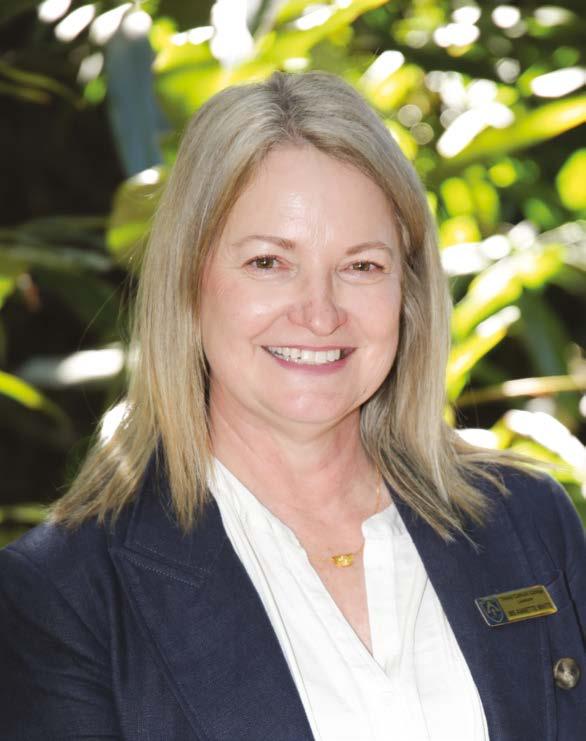
Annette White, 1991 School Captain and current Director of Mission reflects on her connection to Trinity.
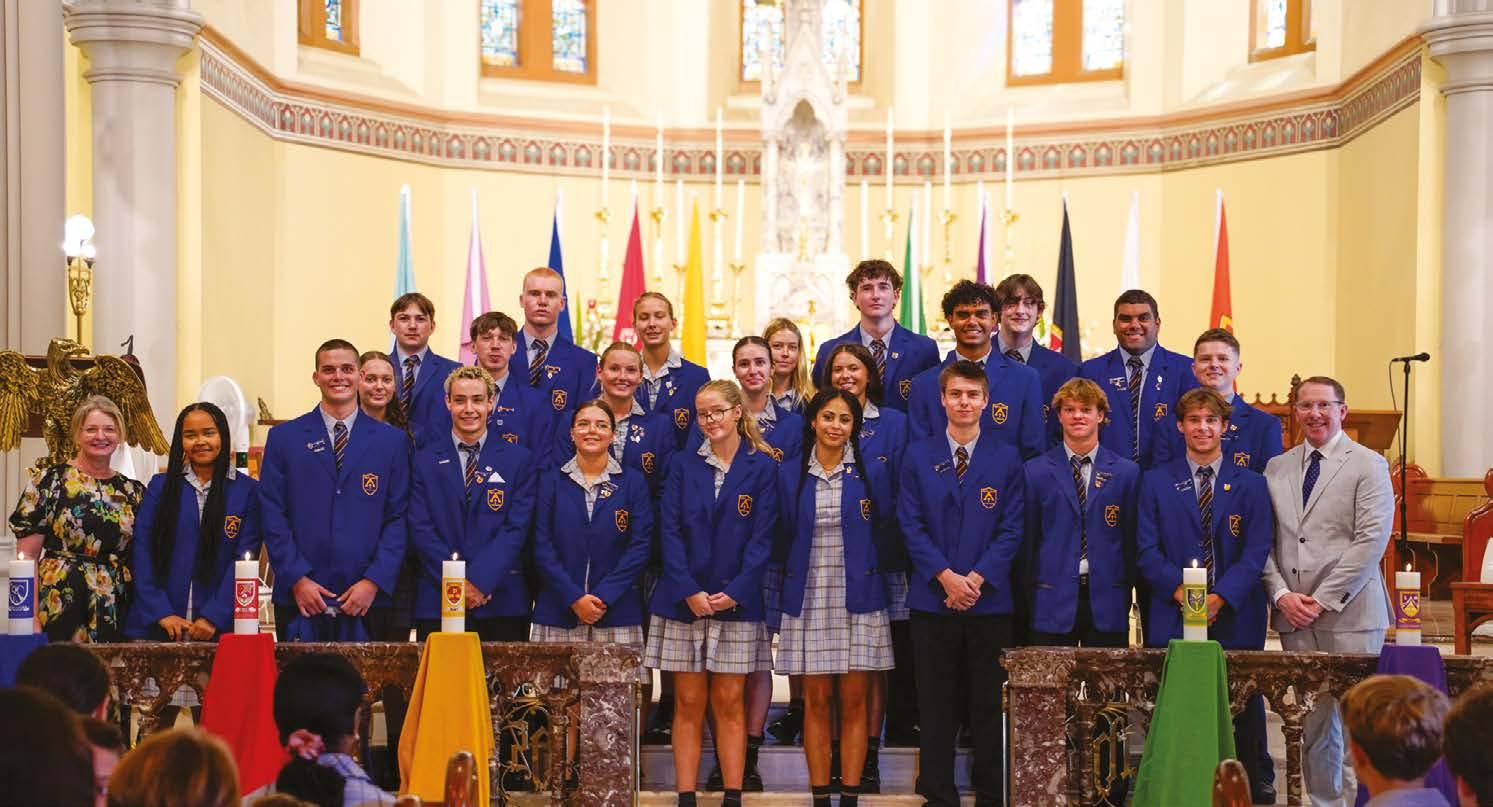
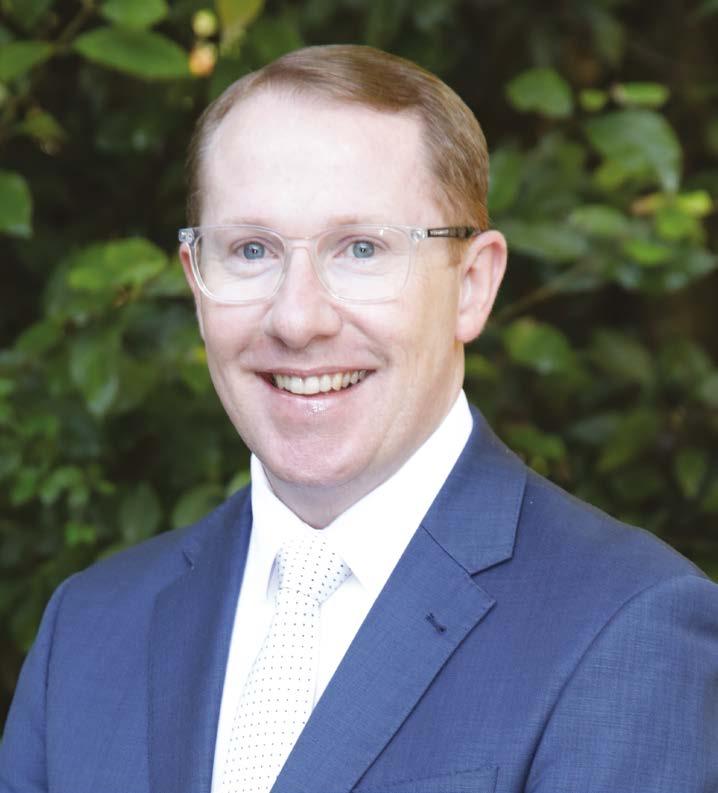
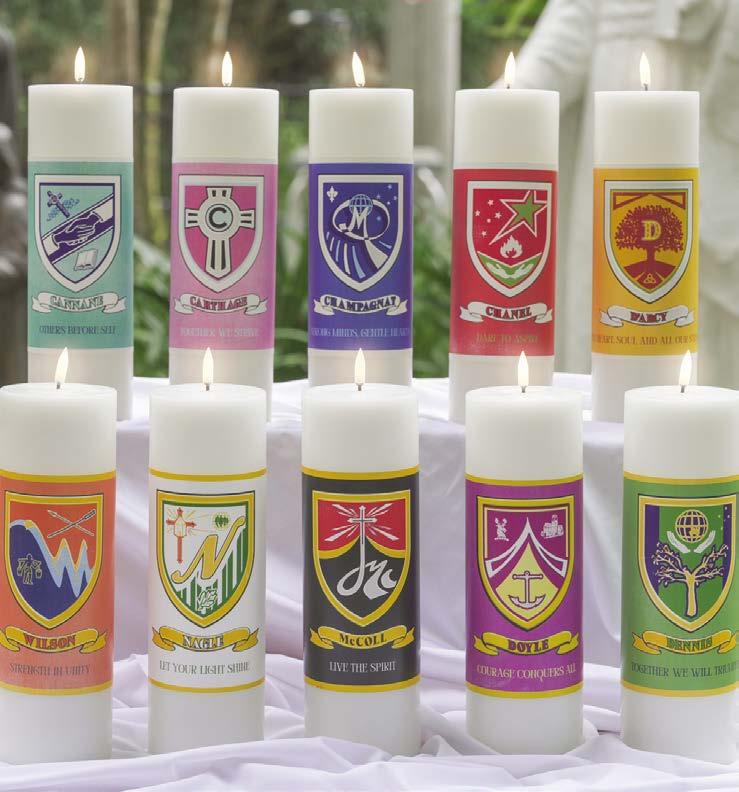
It was 34 years ago when I stood nervously on the stage of Trinity as School Captain, filled with ambition, pride and a deep sense of responsibility. I never imagined that one day I would return in a different capacity as part of the College’s Leadership Team. This school helped shape who I am. It taught me the values of service, faith and leadership that have guided every step of my journey since graduating in 1991.
Now in my role as Director of Mission, I have the privilege of helping to shape the spiritual life of the school that gave me so much. I work alongside deeply committed staff and amazing young people to nurture our Presentation and Marist identity, deepen
our commitment to social justice, and create meaningful opportunities for service and reflection.
Speaking at a recent assembly, I looked out at the sea of young faces — some full of curiosity, others quietly confident — and I saw myself in them. I explained to them what I know to be true: that the values we live here do not end at graduation. They follow you, challenge you and call you to live with purpose.
Returning to the Trinity community feels like coming home. My hope is simple. To help form kind, generous and empathetic young people who will become changemakers for good in a world that needs them.
by Barry de Silva
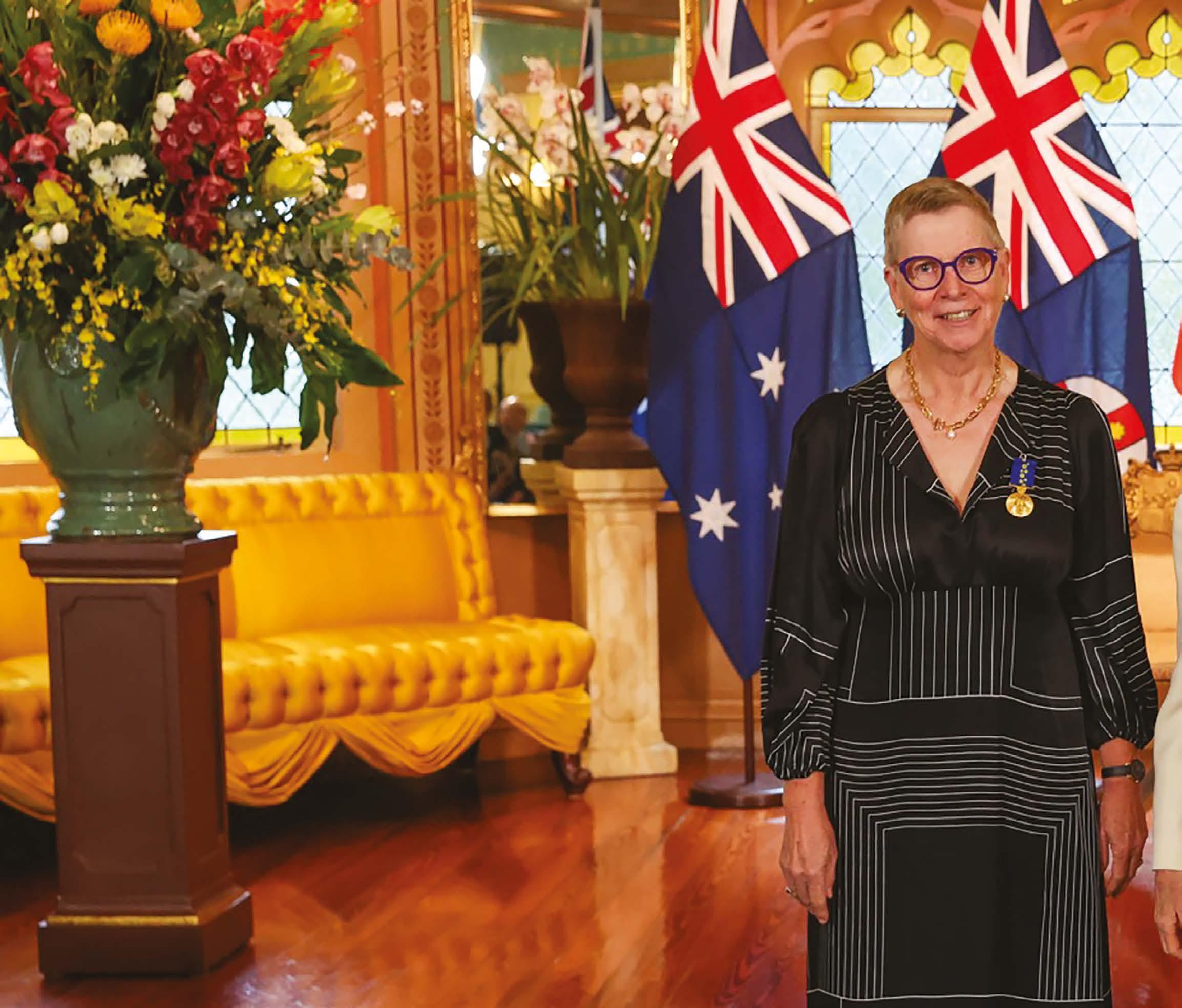
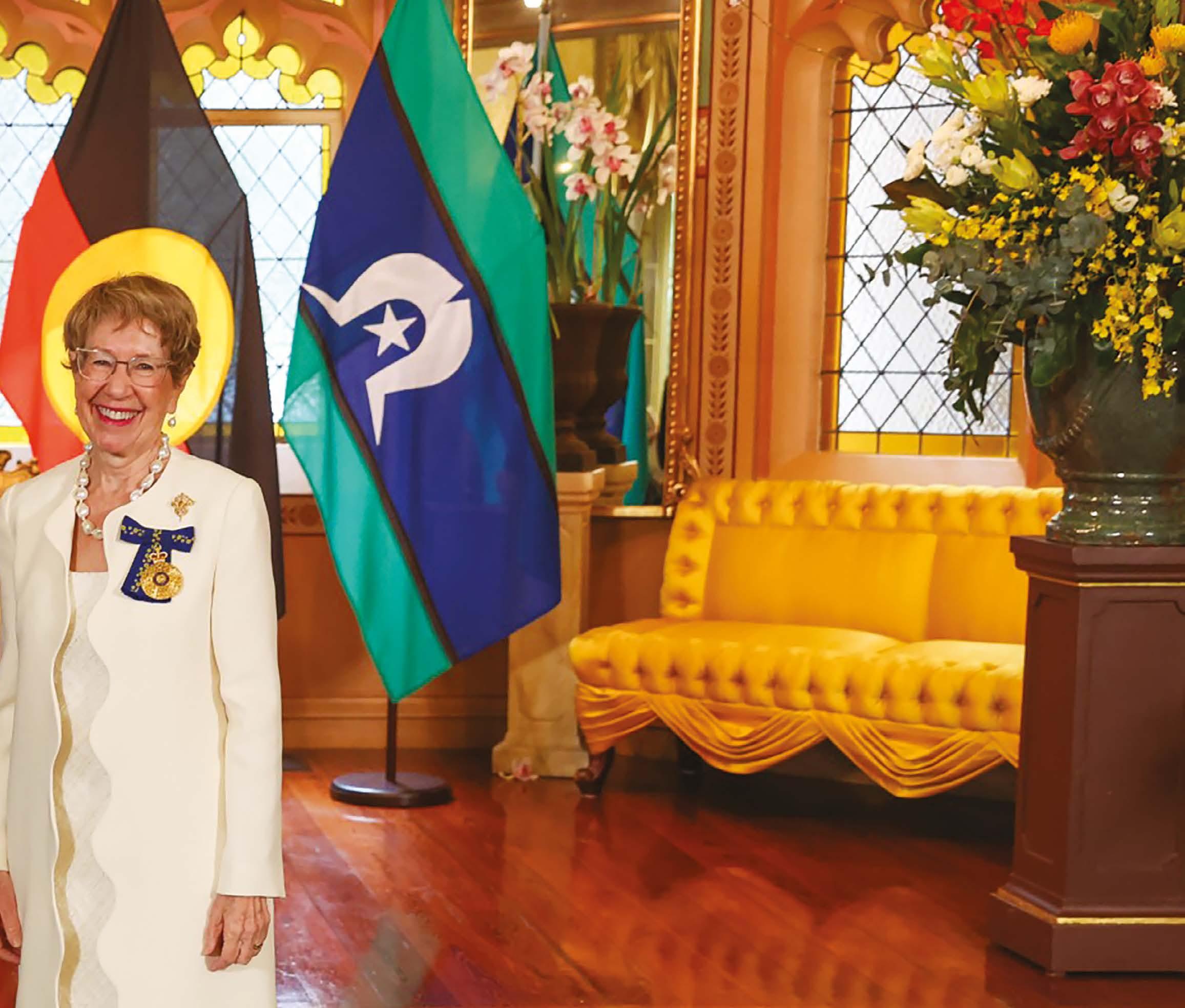
From nurturing curiosity to preparing children for school, Karen McKay spent 43 years laying the foundations for Camden Haven’s youngest learners. Her lifetime of service has now been recognised with the Order of Australia Medal. A recognition she humbly accepts not just for herself, but for her colleagues across the sector.
“I am a little uncomfortable about the award,” Karen admits. “There are many practitioners in the field who are equally as deserving. I accept it on their behalf as well as my own.”
Karen spent an extraordinary four decades as Director of St Joseph’s Early Childhood Services, from 1980 to 2023.
Over that time, she helped shape the centre into a place of quality education for generations of local families.
“I’m proud that we retained our ability to serve the community in line with its needs,” Karen reflects.
“The centre started as a sessional preschool and morphed over time into a multi-functional service that provided several different types of education and care required by families within the Camden Haven.”
While Karen admits it’s hard to recall exactly what first inspired her to pursue early childhood education, the impact of her mother, a primary school teacher, and a desire to work with younger children clearly influenced her path.
Karen believes that what set St Joseph’s apart was its relationship with the local community. “My greatest pride was engaging with generations of families who chose to send their children to our centre.”
That community spirit extended to her day-to-day work, where her tireless
Whatever needed doing, whatever gap needed to be filled, I did it.
advocacy for early learning often meant stepping in and helping with teaching, management, and coordinating with government departments and local authorities.
“Whatever needed doing, whatever gap needed to be filled, I did it,” she says, with one exception. “Except for vomit – I’m not very good with vomit!”
For Karen, quality early learning starts with believing that all children deserve the best start in life, and that families are central to the learning process. “Education is not just about rote learning
cognitive facts,” she says. “It is the role of services to work with families to provide the best possible outcomes for each child. My role was to ensure that we had great staff, the financial resources, and the passion to deliver those individual outcomes.”
Although she spent 18 months preparing for retirement, Karen says she misses the daily connections, but knows the service is on a new and different path now, as is she. That new chapter sees Karen volunteering in the dementia wing at her father’s aged care facility, where she cares for the garden each day.
“This gives us time to sit outside and enjoy the fresh air and time together,” she says.
“Dad was heavily involved with the gardens at St Joseph’s for many years, so I guess this is my time to give back to him and the other residents who enjoy helping out...or mostly watch me work while they have morning tea!”
Whether in a childhood service or garden, Karen’s nurturing presence continues to shape lives in quiet and meaningful ways.
by Madeline Beveridge
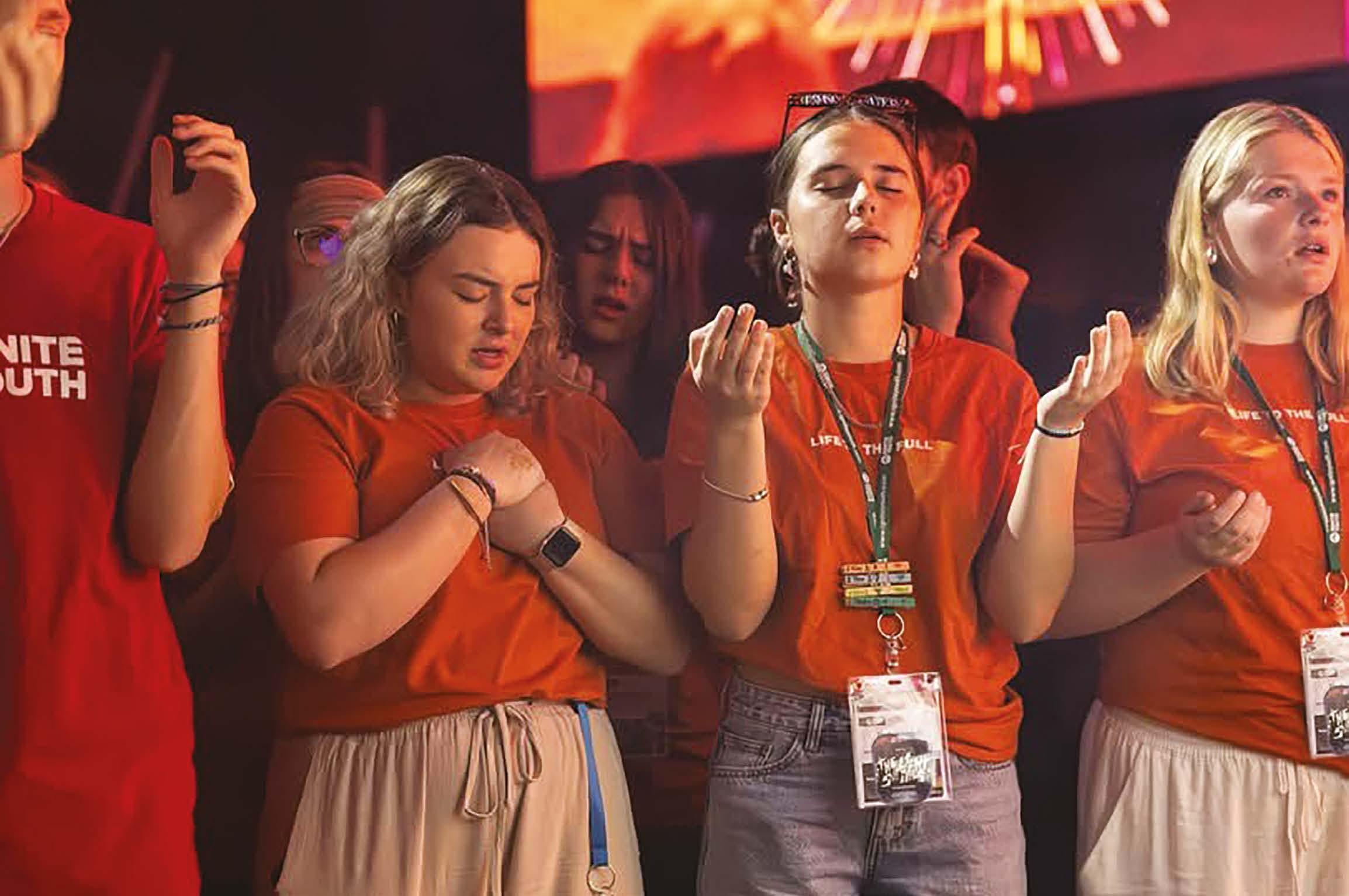
A significant focus of the Diocesan Renewal Journey has been the Youth and Young Adult Ministry. There is much excitement for the journey ahead and for partnering with parishes in building a hopefilled future.
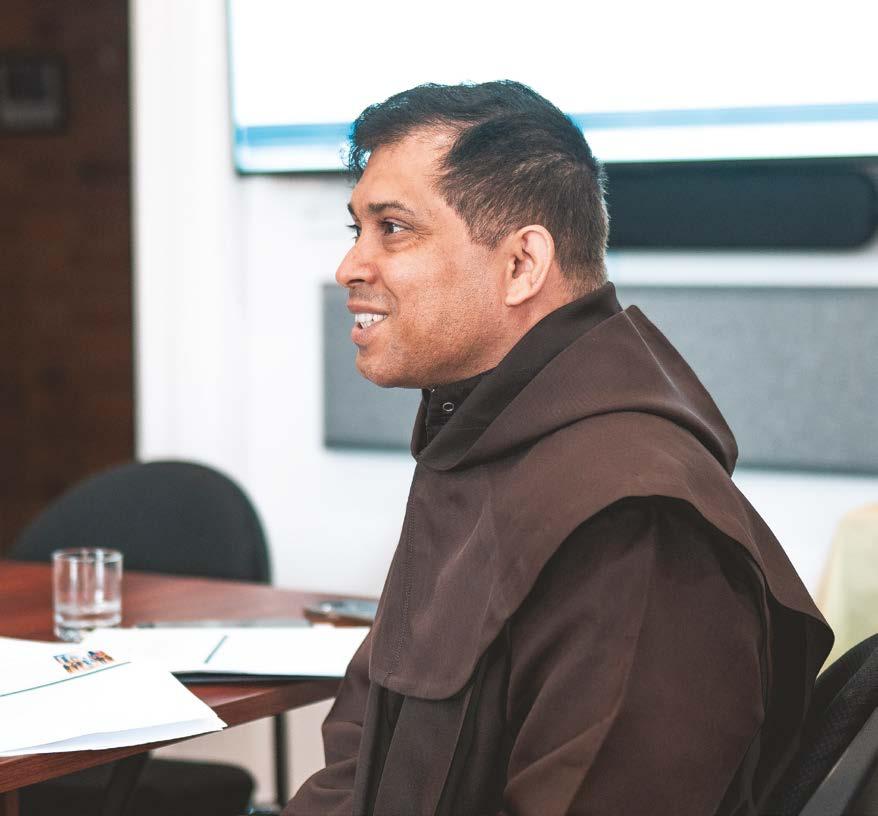
Diocesan Youth Director, Fr Joy D’Souza, brings energy and enthusiasm to this ministry. His spirit and genuine warmth reflect his special gift for spreading hope to those around him. He envisions youth ministry as a dynamic, interconnected movement — from local parish initiatives to national collaboration. He hopes to see vibrant parish programs, retreats, outreach activities, a clear diocesan identity for our youth ministry, and strong partnerships with other dioceses across Australia. Above all, he dreams for a cohesive and integrated approach to youth ministry, developed in close collaboration with parishes across the diocese.
Supporting Fr Joy are several key groups and individuals, including newly appointed Diocesan Youth Ministry Coordinator, Zac Parnell, the Diocesan Youth Advisory
Council, and the Youth Ministry Network.
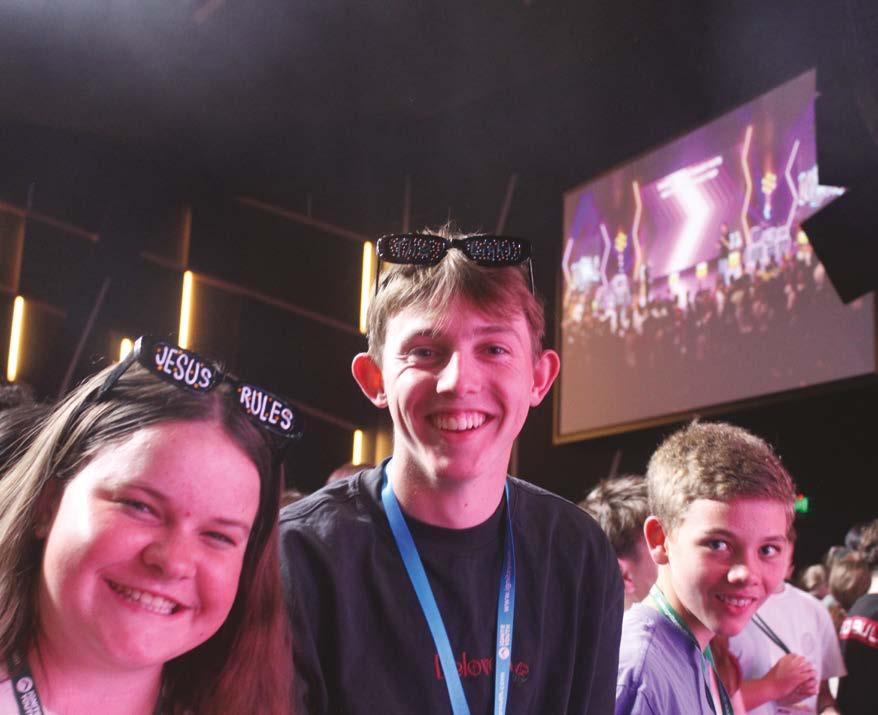
Our diocese is blessed with a vibrant Youth Ministry Network that gathers monthly to collaborate and plan parish-based initiatives. The network has worked together on events such as the Pentecost Pilgrimage, Ignite Conference in Brisbane, Young Adults Festival in Murwillumbah, and the Australian Catholic Youth Festival in Melbourne.
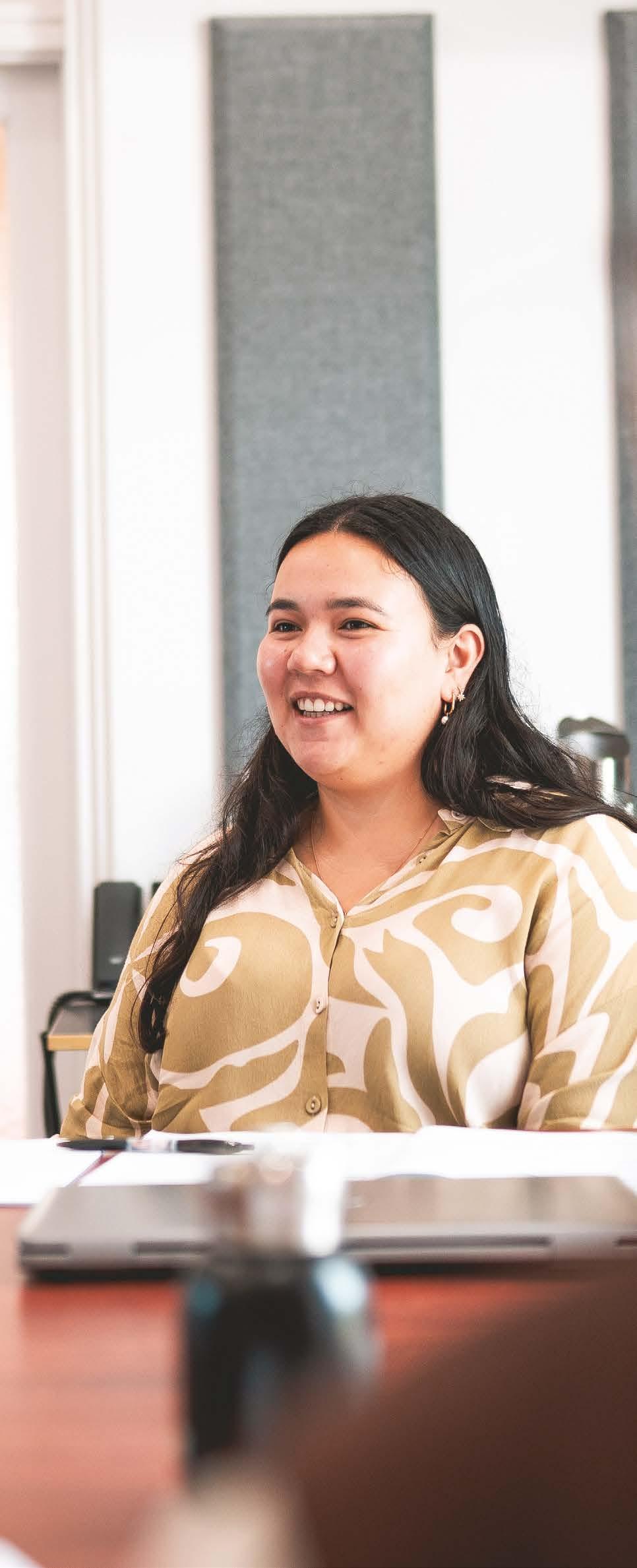
Christa Morrow, Parish Youth Coordinator at St Augustine’s Parish Coffs Harbour, describes the network as invaluable:
“It’s a space to share ideas, find encouragement, and be inspired,” Christa said.
“Feeling connected to others who are also ‘fighting the good fight’ has strengthened me personally and helped our youth ministry thrive.”
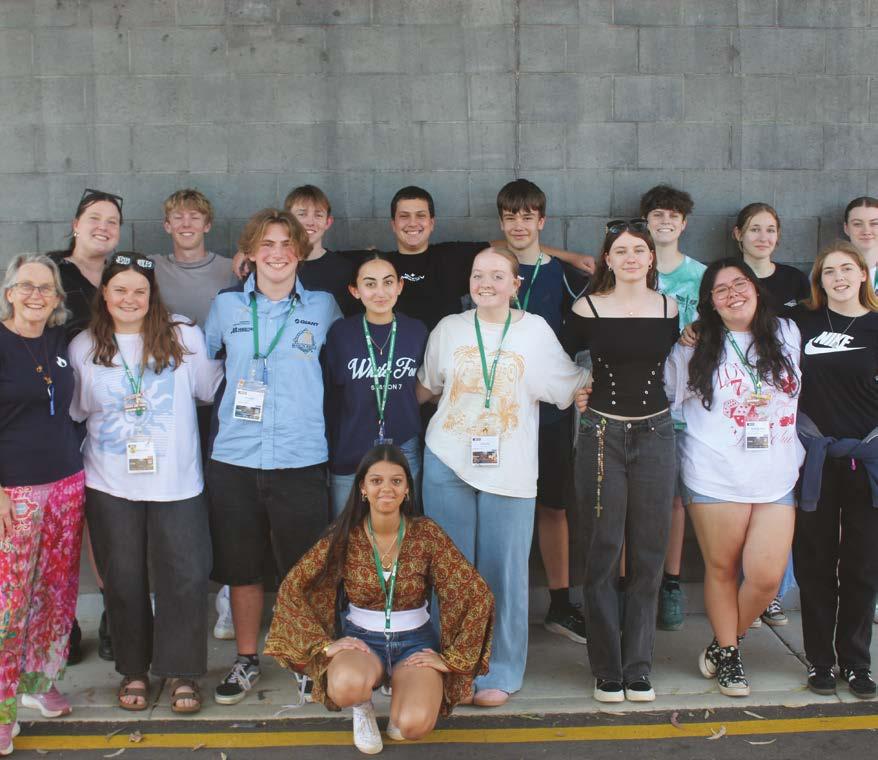
Commissioned by Bishop Greg in 2019, the Diocesan Youth Advisory Council provides a vision for young people in the diocese. The council re-convened in October with members from across the diocese. It will work collaboratively with Church agencies and communities to ensure young people have coherent, coordinated opportunities to
encounter Jesus Christ and to grow in their spiritual lives.
The fire of hope burns brightly for the youth ministry in the diocese, grounded in a deep desire for all young people to discover how profoundly God loves them. We pray that this love is made real in their lives so that they, in turn, can share it with others — especially
their families and parish communities. We dream of a vibrant diocesan network of connection, more opportunities to encounter Jesus through the sacraments, authentic community, and meaningful formation. We envision a Church where well-formed young people live their faith boldly, and where vocations to priesthood, religious life, and sacramental marriage flourish abundantly.
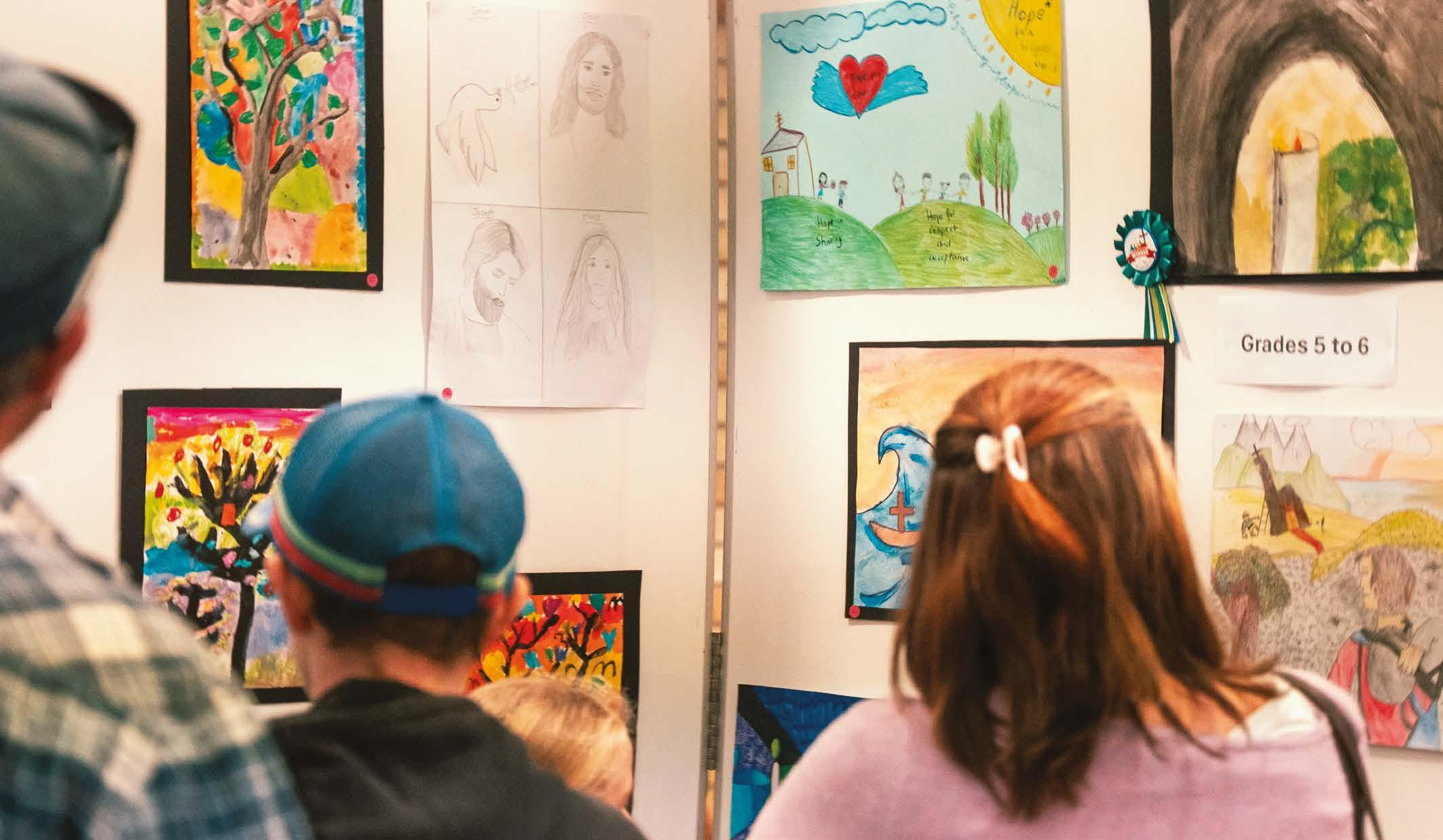
The Jubilee Art Prize has been a wonderful way for people in our diocese to celebrate creativity, and the Jubilee theme, Pilgrims of Hope. Thank you to everyone who participated and visited the Pilgrim church exhibitions.
We’re delighted to announce the winners of the People’s Choice Awards, selected by local communities at each Pilgrim church.
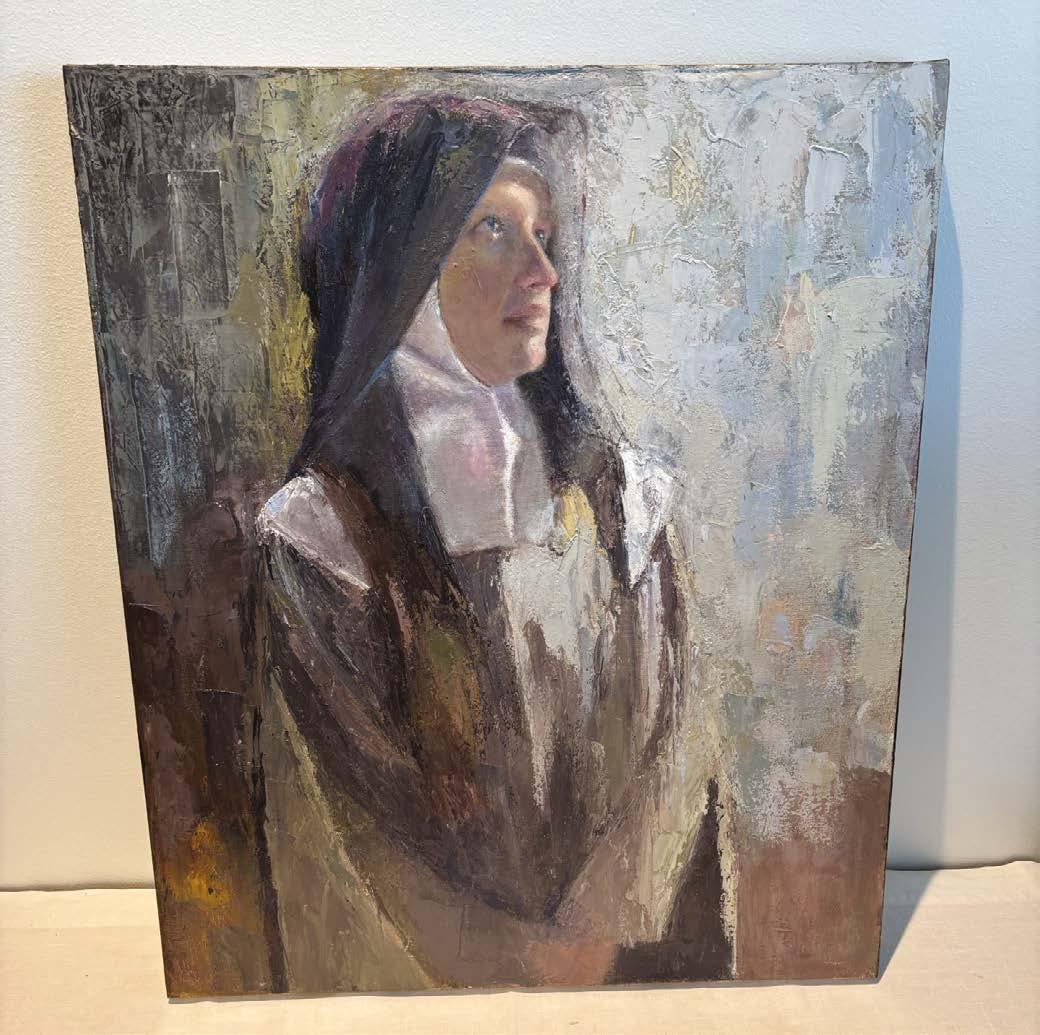
At St Carthage’s Cathedral, Lismore, Geraldine from Alstonville was honoured for her stunning canvas portrait of Sr Mary Rose, created in collaboration with the Carmelite Monastery in Goonellabah, with the sisters choosing Sr Mary Rose as the subject.
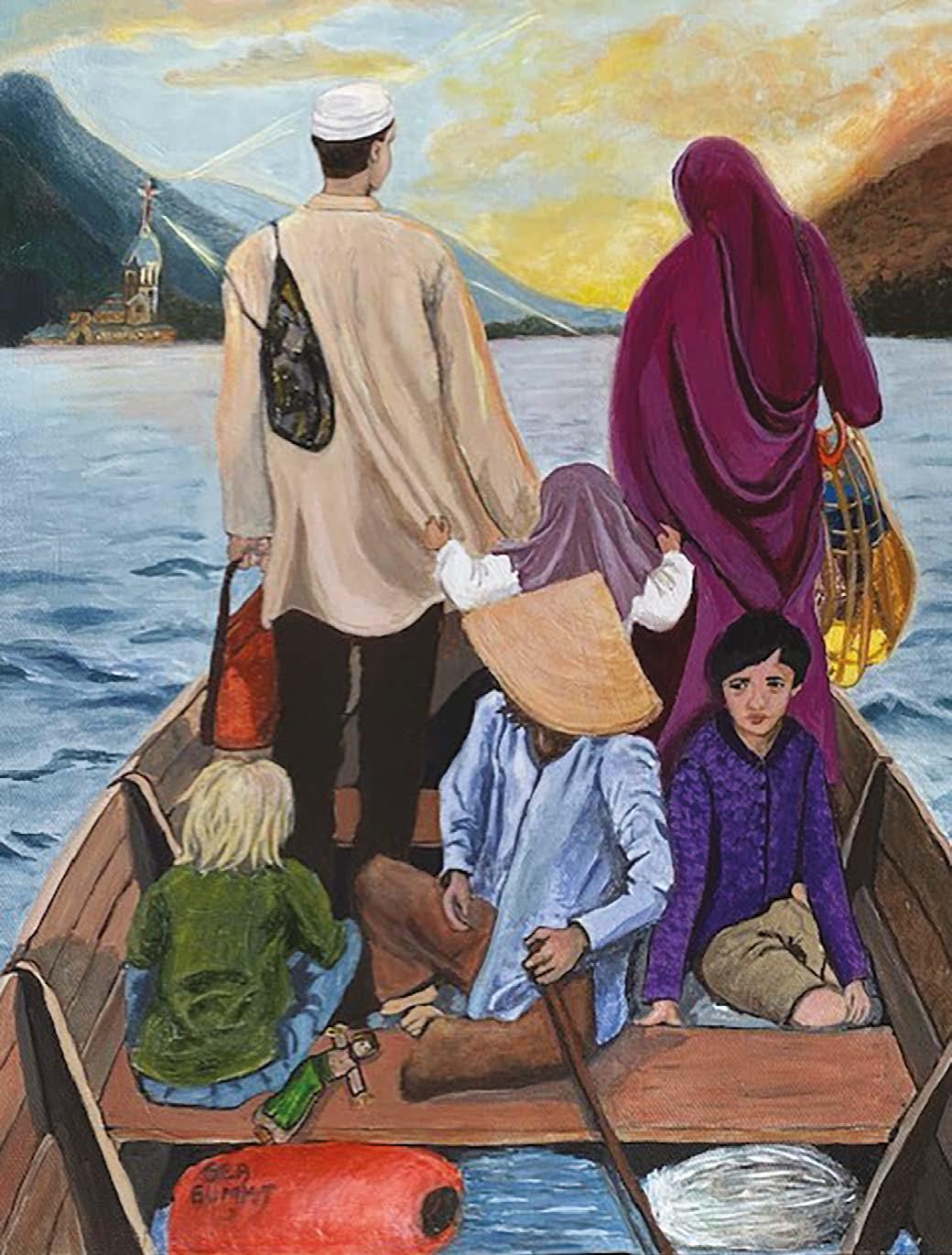
In Coffs Harbour, Frances received the award at St Augustine’s Parish for her piece Ocean Star, inspired by the hope and resilience of refugees and migrants.
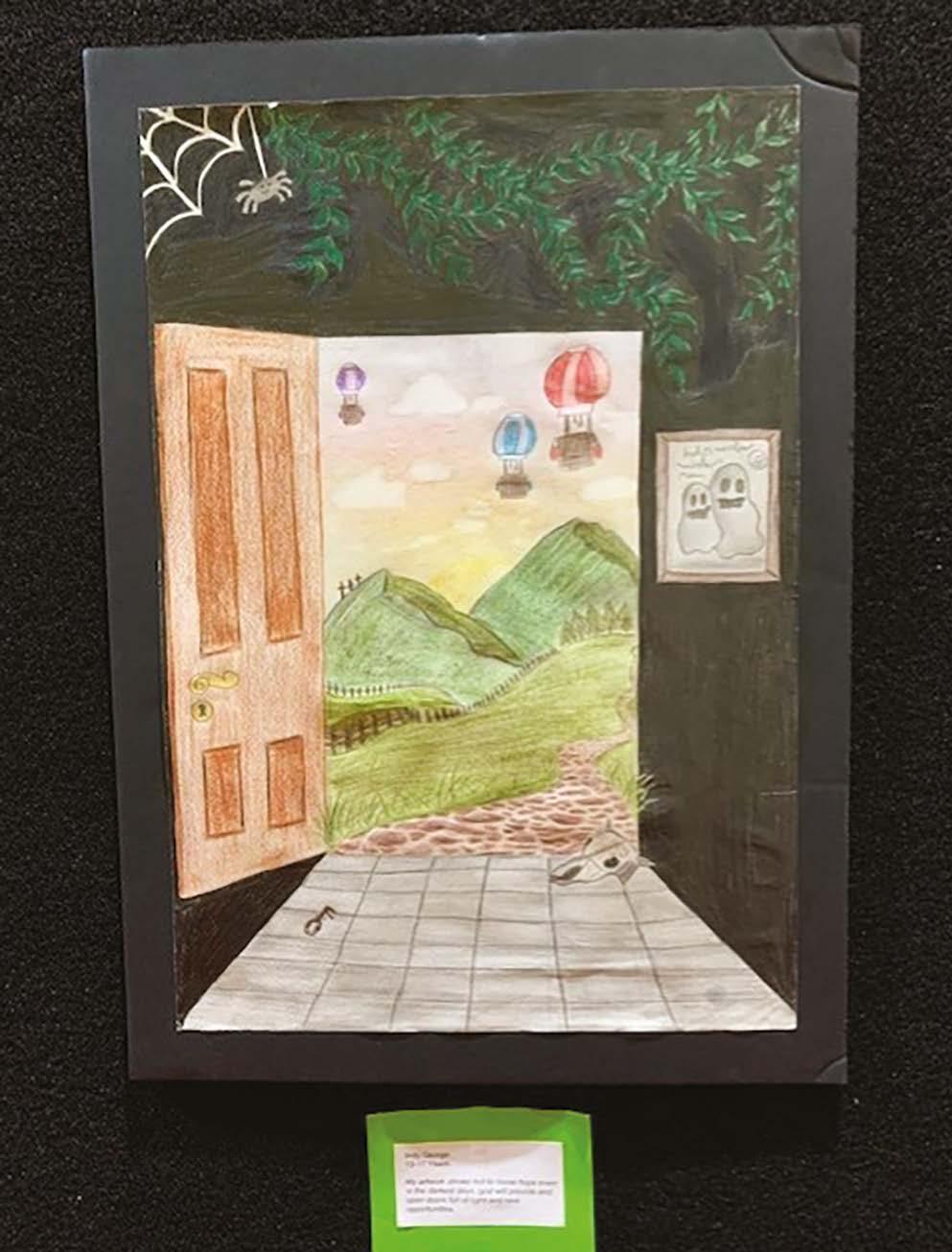
At St Agnes’ Catholic Parish, Port Macquarie, congratulations to Indy, whose hand-drawn work reminds us to not lose hope and that even in the darkest days, God will open doors and provide new opportunities.
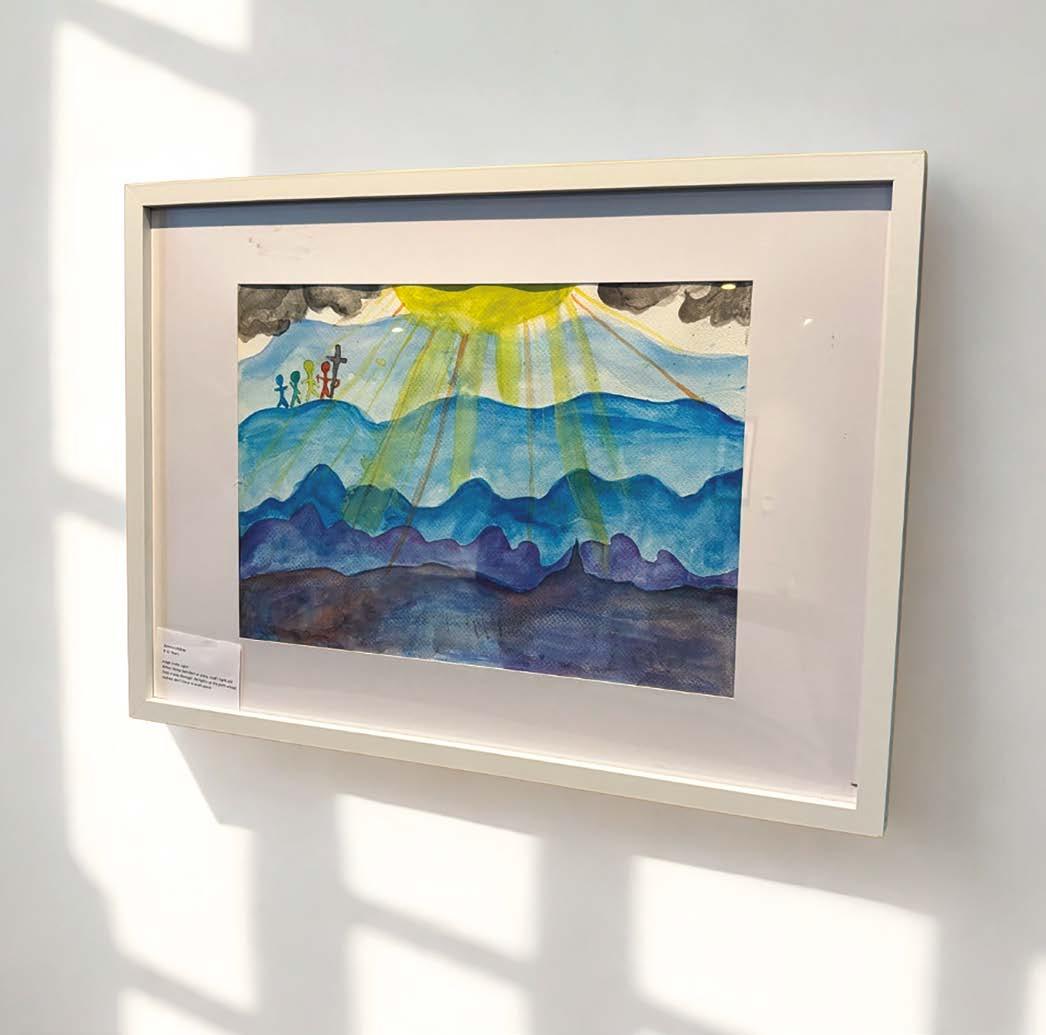
And at Sacred Heart Parish, Murwillumbah, Bonnie from St Joseph’s
Primary School won for her inspiring piece Hope in the Light, reflecting God’s presence in difficult times.
At the time of going to print, the final exhibition winners were yet to be announced. The final exhibition will be held at St Carthage’s Cathedral and Presentation House, Lismore on Saturday 6 December. Scan the QR code on the following page to find out the winners.
Thank you for making the Jubilee Art Prize a celebration to remember.
Find out the Jubilee Art Prize Winners
lismorediocese.org/ jubilee-art-prize
“St Vincent’s has a proud history and a bright
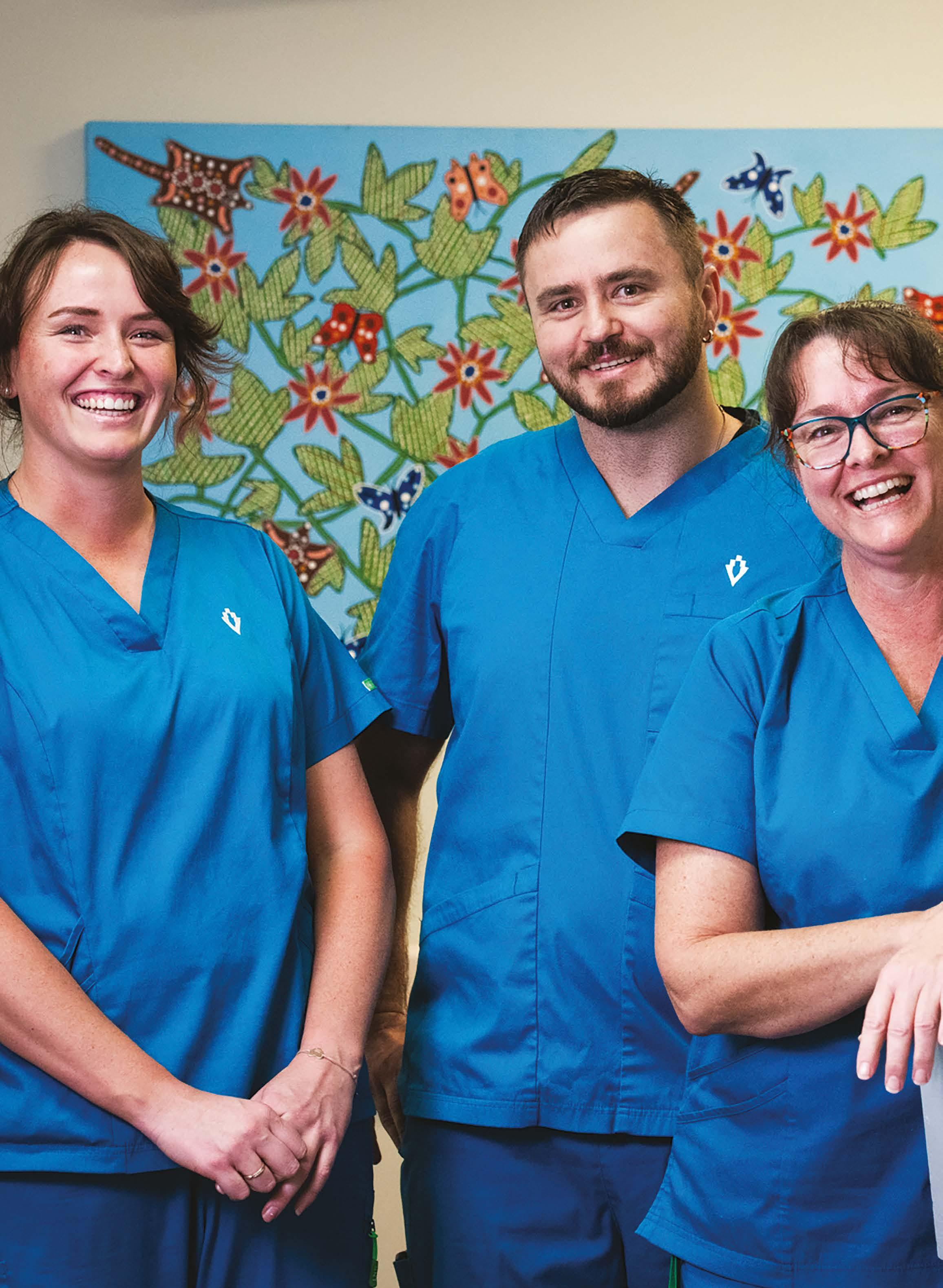
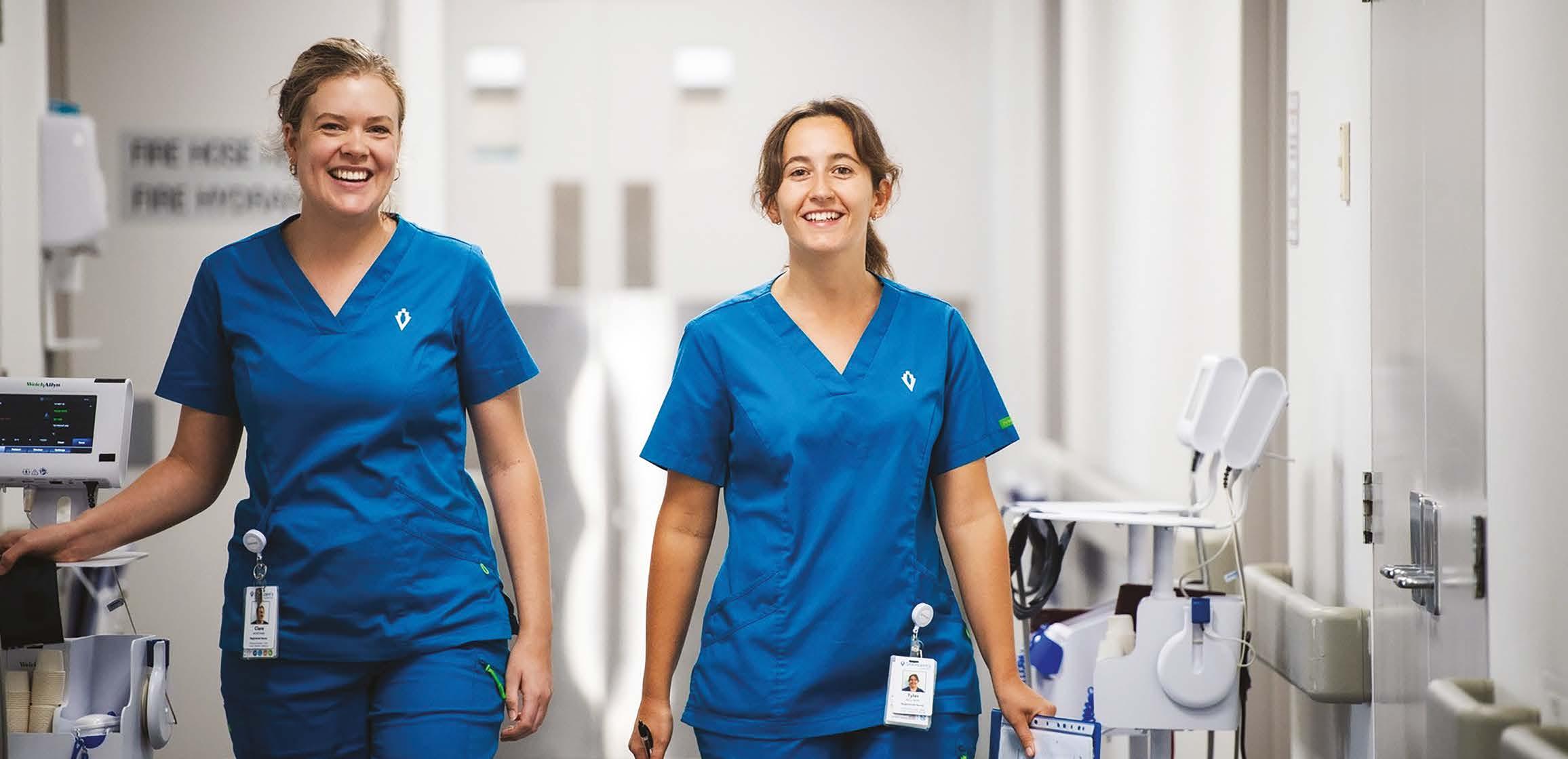
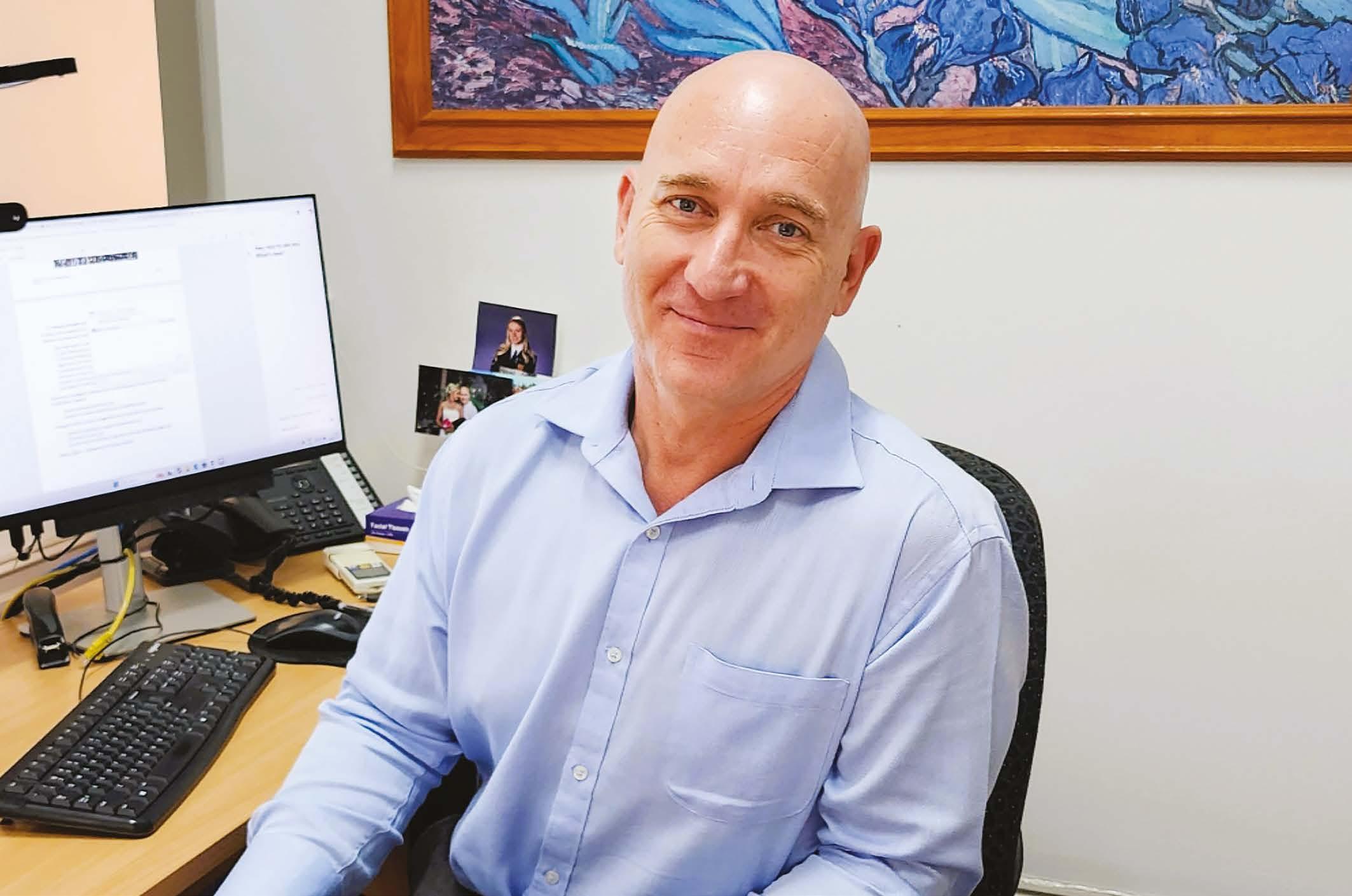
When new St Vincent’s Lismore CEO Peter Fahey first walked through the doors of the hospital, he immediately sensed what makes it special. A commitment to mission, a caring culture, and a connection to the local community.
by Barry de Silva
With a wealth of healthcare leadership experience across Australia and around the world, Peter brings a leadership style that has patient care and staff wellbeing at its heart. His journey from nurse to CEO reflects a respect for people and a belief that leadership begins with service. Catholic Life caught up with Peter to find out what excites him about the hospital, and his message for staff and the community.
What attracted you to St Vincent’s Lismore, and what excites you most about joining this community?
I was drawn to St Vincent’s because of its strong reputation for compassionate, values-based care and its identity as one of the last independent, faith-based private hospitals in Australia. The connection to the diocese and the Northern Rivers community is something special. What excites me most is the opportunity to work with such a dedicated team to strengthen services and ensure St Vincent’s continues to play a vital role in local healthcare for generations to come.
How has your experience as a nurse shaped the way you lead today?
Starting my career as a nurse gave me a deep respect for the people on the frontline — the ones providing care and
comfort every day. It taught me that leadership isn’t about hierarchy; it’s about listening, supporting, and creating an environment where people can do their best work. My nursing background helps me make decisions where patient care and staff wellbeing are at the forefront.
You’ve worked in a variety of healthcare settings. What have you learned from those environments that you hope to bring to St Vincent’s?
Across Australia and overseas, I’ve learned that success comes from teamwork, respect, and clear purpose. At St Vincent’s, I want to build collaboration across departments, foster innovation, and make sure our staff feel valued. When people feel proud of where they work, great care naturally follows.
How important is it for you to stay connected to staff, from nurses to volunteers, to understand the hospital’s daily life?
It’s essential. The best leaders are visible and approachable. I like to spend time in the wards and with teams across the hospital — not just to check in, but to listen. Every role, from nurses and doctors to cleaners and volunteers, contributes to the heart of St Vincent’s, and staying connected helps us make better decisions together.
St Vincent’s has a proud tradition of compassionate, person-centred care. How do you see your role continuing that culture?
Compassionate, personcentred care is who we are. My role is to protect that
Photo by Elise Derwin
culture while equipping our teams to thrive in a modern healthcare environment. That means investing in people, technology, and facilities, while ensuring our mission and values guide every decision. We care for the whole person — body, mind, and spirit.
St Vincent’s was founded by the Sisters of Charity in 1920. How do the hospital’s Catholic values align with your own?
The values of compassion, integrity, justice, and excellence deeply align with my own. I’ve always believed healthcare is a vocation — a calling to serve others. The Sisters of Charity built this hospital on a legacy of service to the vulnerable, and I see it as both an honour and a responsibility to continue that tradition. Leading with faithbased values ensures that we make decisions guided by purpose, not just policy.
What opportunities do you see for the hospital to continue supporting the Northern Rivers community?
Our role goes beyond hospital walls. There’s a real opportunity to strengthen partnerships with local GPs, community organisations, and aged care providers so people can access coordinated, high-quality care close to home. We also want to continue supporting the community through education, outreach, and by being a trusted local employer that contributes to the wellbeing and growth of the region.
How
do you see St Vincent’s adapting to meet future challenges while keeping patient care at its heart?
Healthcare is evolving faster than ever, but our mission remains constant — to deliver excellent, compassionate care. For St Vincent’s, that means embracing innovation, strengthening workforce sustainability, and ensuring our facilities are fit for the future, all the while keeping our focus on each individual patient.
What message would you like to share with the community, staff, and partners as you begin this new chapter?
I would like to thank everyone for the warm welcome I’ve received. St Vincent’s has a proud history and a bright future. To our staff, thank you for the incredible work you do every day. To our community and partners, thank you for your trust and support. Together, we’ll ensure St Vincent’s remains a place of hope, healing, and compassion for all who come through our doors.
I grew up in a small country town two hours north of Adelaide, surrounded by sport, family, and community. Those early years gave me a strong foundation in teamwork, resilience, and hard work.
Favourite childhood memories?
Sport and family were everything. AFL, cycling, tennis, and basketball taught me teamwork and discipline. Summers on my grandparents’ farm at Kangaroo Island were full of laughter, hard work, and freedom — they taught me the importance of family and community values.
Lismore and the Northern Rivers are home. After 25 years of moving around, this region has captured my heart. The people are welcoming and resilient, and I feel privileged to be part of this community.
Tell us about your family.
I grew up as the only boy with three sisters. It taught me empathy and collaboration early on! Now I have a blended family with my Canadian wife and five daughters, aged 17 to 22. They keep life joyful and balanced and remind me of what truly matters.
I love spending time with family, being outdoors, and catching a movie; especially
a good action or drama film. It helps me unwind and stay grounded.
The film Rudy has always inspired me. It’s about hope, integrity, and never losing faith when things are tough.
“Lead with kindness, act with purpose.” Leadership is about service and staying true to your values. I also carry a quote from American football coach Lou Holtz: “Ability is what you’re capable of doing. Motivation determines what you do. Attitude determines how well you do it.” It’s a reminder that talent alone isn’t enough and it is how we approach challenges, stay motivated, and maintain a positive attitude truly shapes the results we achieve.
by staff writer
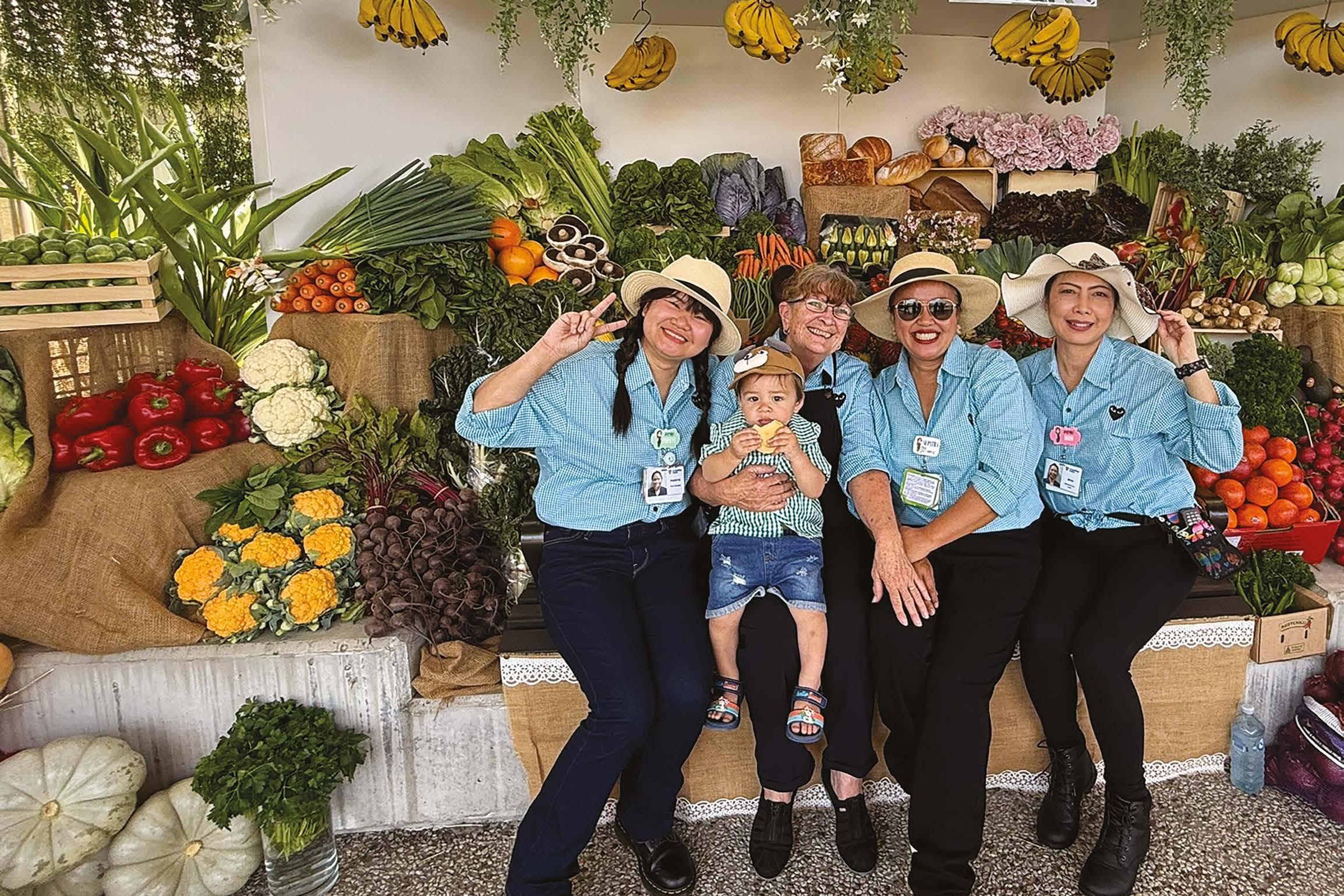
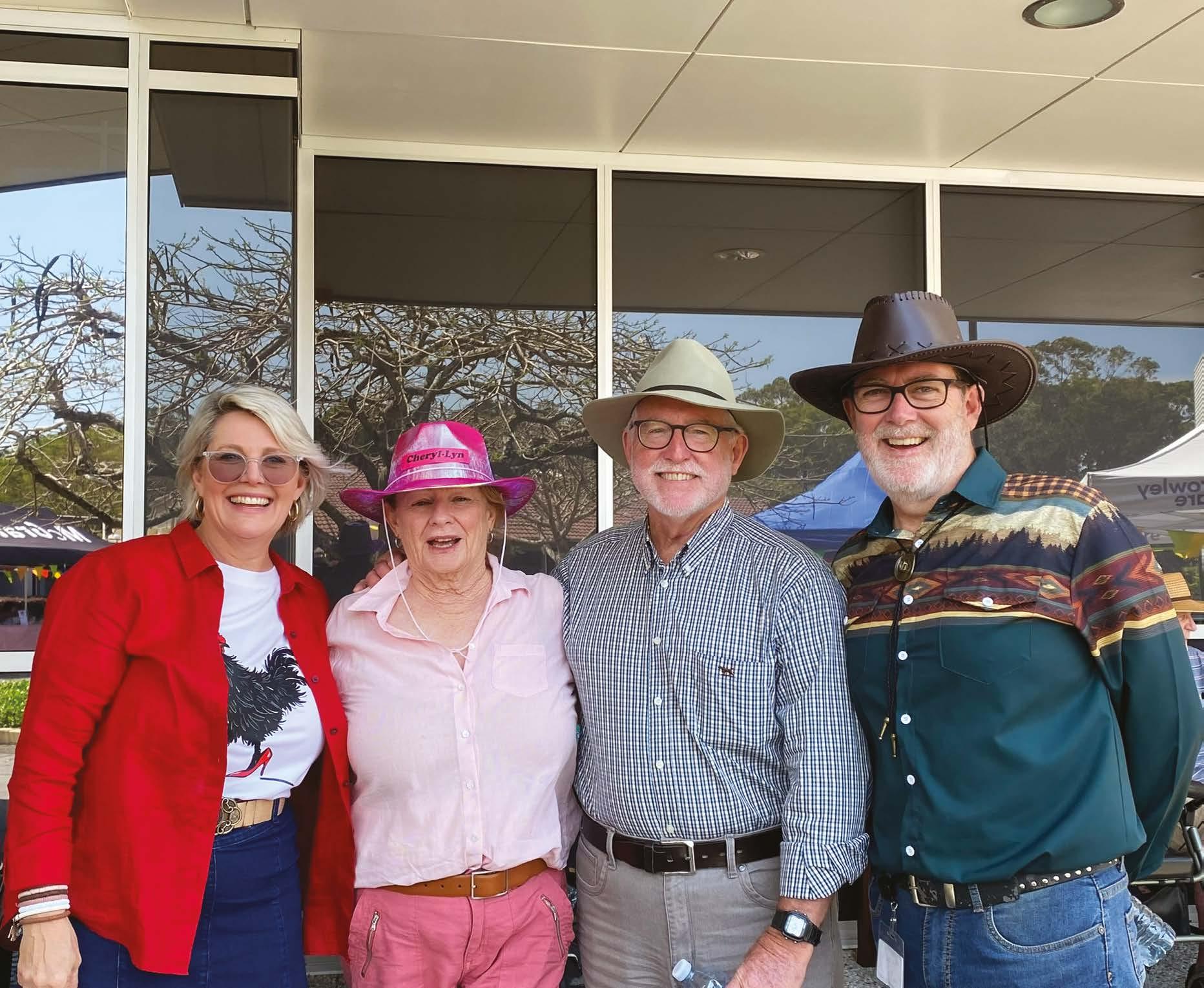
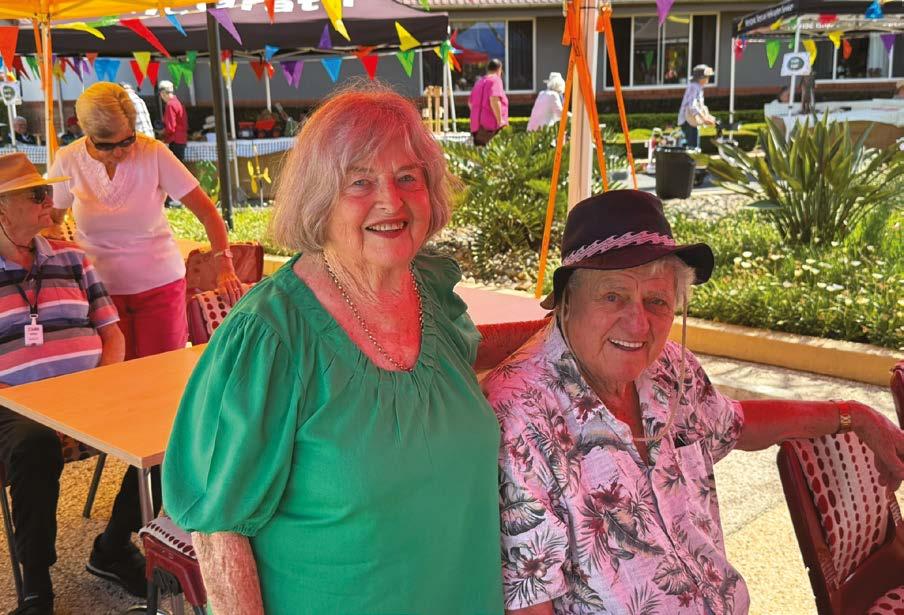
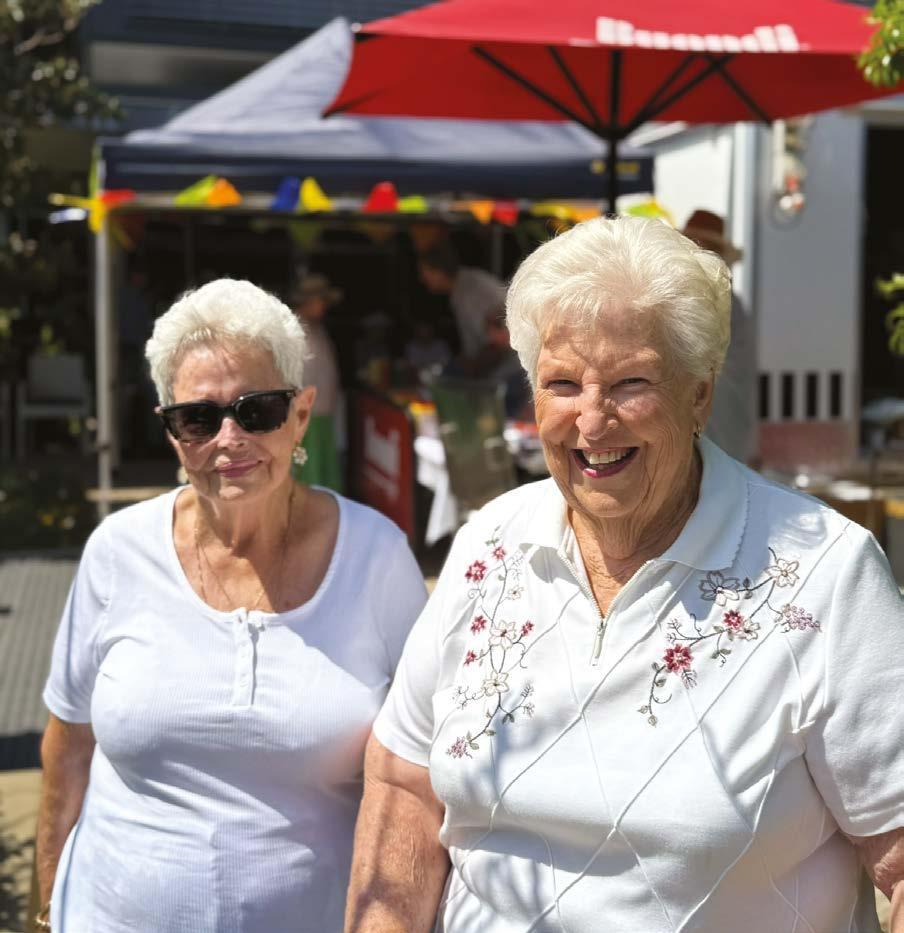
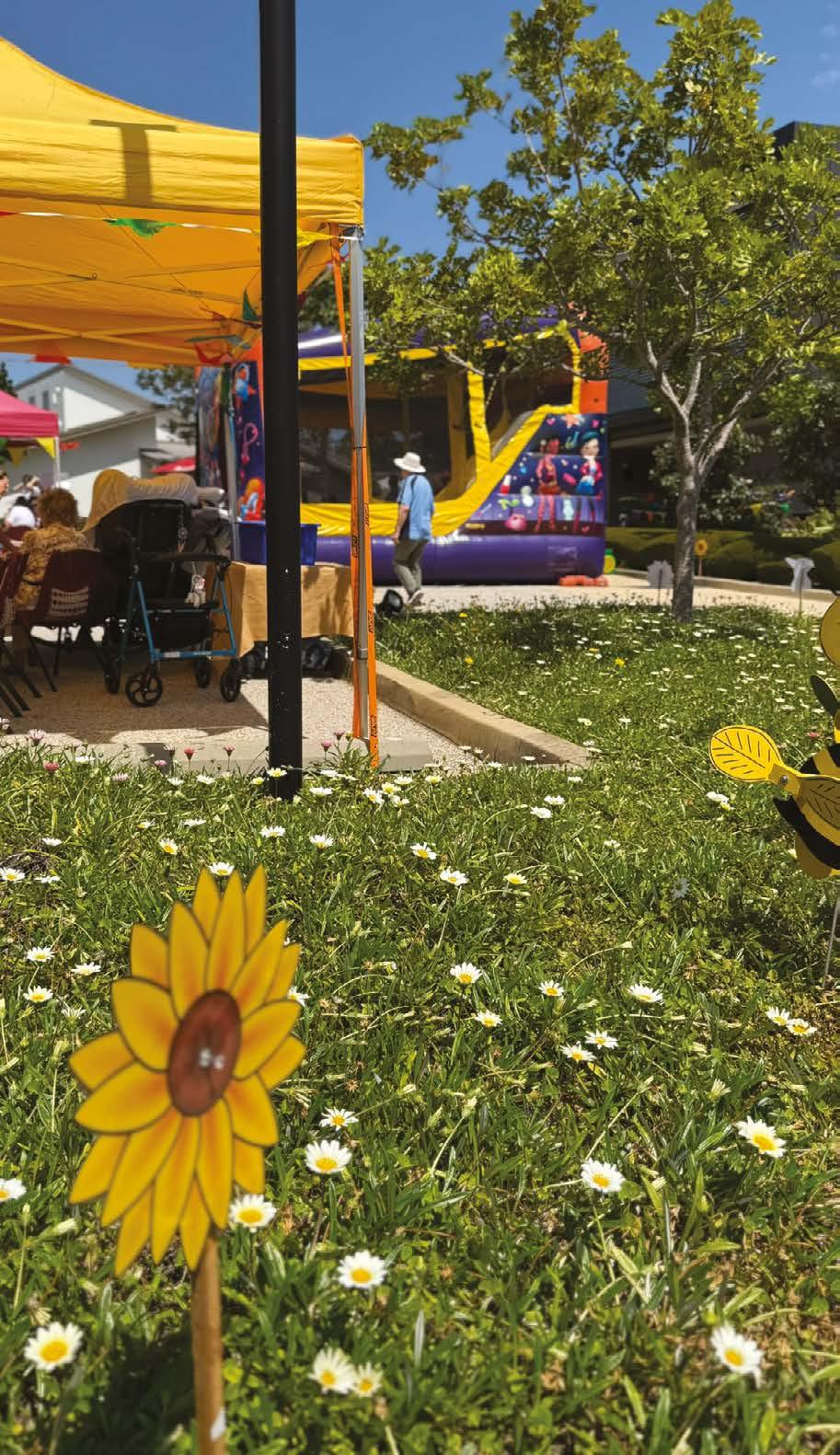
Crowley Care’s annual Family Show Day in Ballina on Thursday 9 October, brought together residents, families, staff, and the community for a day of fun, laughter, and connection.
It was a day that radiated spontaneous, unfiltered joy across generations. From great-grandchildren to grandparents, staff to visitors, the smiles on people’s faces told the story of a truly special celebration.
For many residents, Show Day is the highlight of the year, a unique opportunity to create memories together and enjoy the simple pleasures of community life.
Inspired by the tradition of regional show days that have brought communities together since the 19th Century, Crowley CEO Michael Penhey says the event carries that same cultural and community
glue – connecting us in the present while acknowledging the memories of our childhoods and our past.
“Our Family Show Day truly captures the heart of Crowley and is one of those moments where fun brings everyone together –residents, families, staff, and our wider community. It’s a wonderful reminder of how special the Crowley family is,” Michael says.
Held in Crowley Care’s beautiful Plaza, the sun was happily shining and the day offered a mix of activities and entertainment for all ages. Highlights included baby farm animals, face painting, a performance by the Heart of Dance Group and live music from Helen Jarvis. The laughter, shared stories, and joy of being together created an energy that was felt by all.
A huge tribute goes to the staff and contributors who made the day possible. By the end of the day, everyone was happily tired, buzzing with the unique spirit that makes this event so memorable.
Crowley Care’s annual Family Show Day remains a day to pause, celebrate, and rejoice in the gift of community – and what an amazing day it was again this year!
Find out more about Crowley Care crowley.org.au
The Most Reverend Gregory Homeming OCD has made the following appointments in the Diocese of Lismore, which commenced on 12 August 2025
Fr Michael Alcock, Administrator, Tweed Heads Parish
‘Never
see a need without doing something about it.’
Mary MacKillop
By giving to the Diocese of Lismore, you are helping us continue our mission of faith, hope, and charity.
The diocese has a Benevolent Fund you can donate to that assists people facing financial strain, unemployment, or crises that disrupt their daily lives. This includes support for those affected by homelessness, domestic violence, or anyone seeking to rebuild their lives. Every dollar donated to this fund is used for charitable purposes.
In addition, the diocese gratefully accepts nontax-deductible donations to support Catholic Life Magazine and the online Mass. Contributions help cover the printing, production, and distribution of Catholic Life, and the technology and resources needed to produce and stream the online Mass, allowing us to reach and serve communities near and far.
(1934–2025)
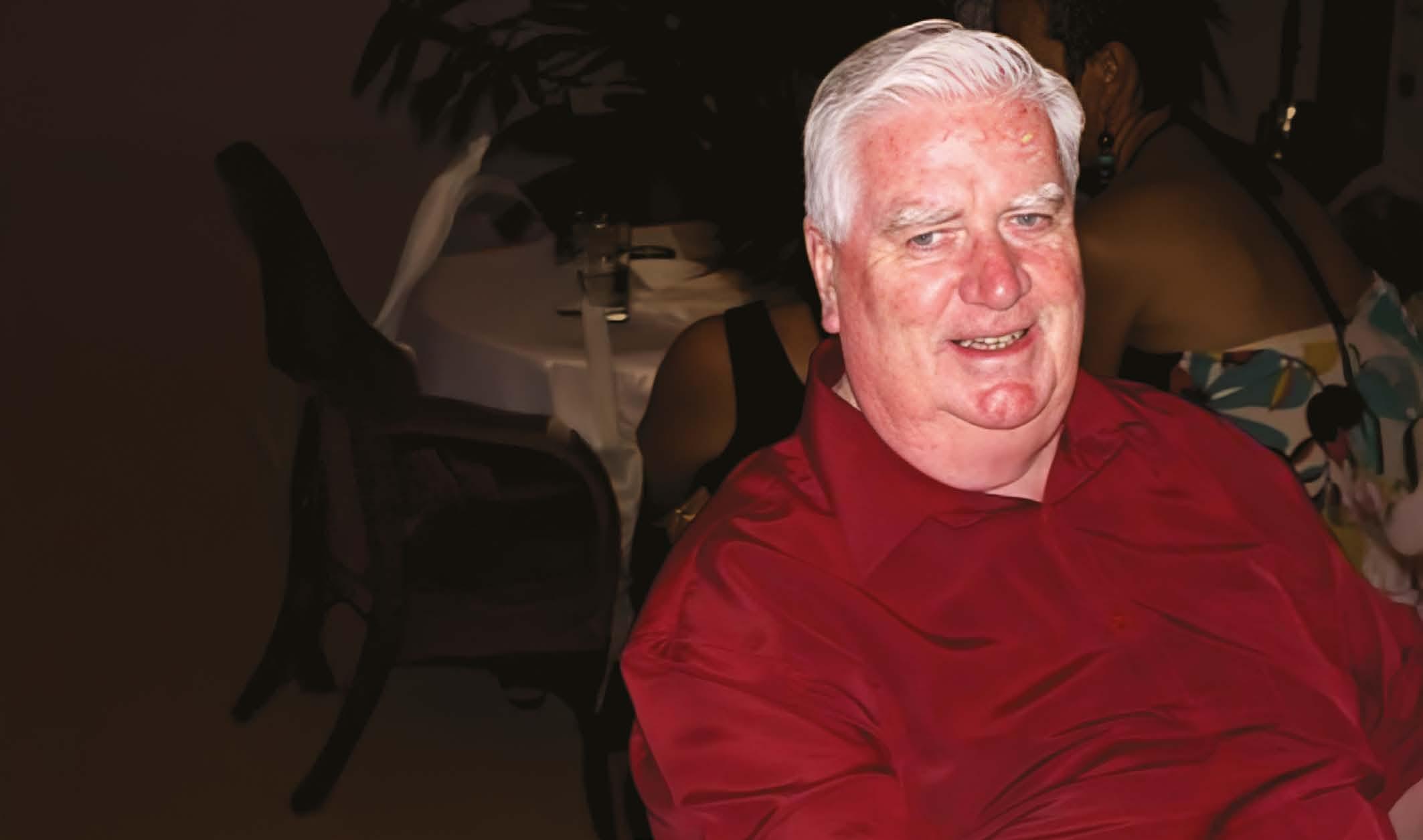
Father
Born Francis Mulcahy, he moved as a young boy with his family to Casino, where his father managed the Hotel Cecil. Fr Frank was educated at St John’s College, Woodlawn, and later pursued his vocation at Springwood and Manly seminaries. He was ordained to the priesthood on 9 March 1958 at St Mary’s Church, Casino, by Bishop Farrelly.
Over his many decades of dedicated service, Fr Frank made a lasting impact through his parish ministry and his extensive involvement in diocesan life. He served in numerous roles including Diocesan Chaplain to the Young Christian Workers (YCW), military reserve chaplain, chancellor of the diocese, and chair of the Diocesan Education Board.
Fr Frank had a deep commitment to Catholic education. In Grafton, he played a pivotal role in the
creation of Holy Spirit College, which he proudly described as his “pride and joy.” Later, in Lismore, he worked closely with Sr Mary Cannane to help establish Trinity Catholic College. He also helped initiate Centacare and was instrumental in the early development of the Diocesan Pastoral Council.
During his seven years as Chairman of St Vincent’s Lismore from 1983–1990, Fr Frank guided the hospital through a period of renewal and change. He oversaw essential upgrades, including a new hospital kitchen, and championed the development of a private wing to protect the future of the hospital. His leadership ensured St Vincent’s remained a place of compassionate service true to its Catholic Mission.
Known for his Shakespearean voice and dramatic flair, Fr Frank used theatre and music to engage youth
in parish life. His love for creative evangelisation left a lasting impression, which was evident when close to 80 people, who performed in his musicals in the 1960s, returned to celebrate his 70th birthday.
Fr Frank was also known for his good humour and community spirit. While serving in Grafton, he gained unexpected fame for a cheeky cartoon tip in the parish newsletter that correctly predicted the winner of the Grafton Cup. The story made headlines as far afield as Glasgow and London.
A gifted mentor to priests, Fr Frank was deeply committed to hospitality, liturgical excellence, and community building. His legacy is one of imagination, initiative, and pastoral heart.
May he rest in peace.
Humble place where Christ was born.
It is a time when we spiritually ___ ourselves.
Foretelling of the Messiah’s coming.
Emotion filling hearts at Christ’s coming.
The season of preparation for Jesus’ birth. The promised one of Israel.
Earthly father of Jesus. Jesus’ birth signified the arrival of ____ on earth. The revelation of Jesus to the world.
Trust in God’s promises.
Symbol of Christ shining in darkness.
Angel who appeared to Mary.
Radiant splendour of God revealed.
Title for Jesus who brings salvation.
group of wise men.
Hour many gather for Christmas Mass.
Songs celebrating the birth of Jesus. Gift foreshadowing Jesus’ suffering.
Mother of Jesus.