
María López-Mercer, NMFS SERO
188th CFMC Meeting
St. Thomas, US Virgin Islands
December 3-4, 2025
● Compared pelagic AMs with those for other species (e.g., reef fish).
● AM corrective actions are undefined when an annual catch target (ACT) or annual catch limit (ACL) is exceeded.
● Reviewed Magnuson-Stevens Act requirements for ACLs and AMs.
● Discussed replacing the ACT with the ACL as the trigger for the pelagic AM.
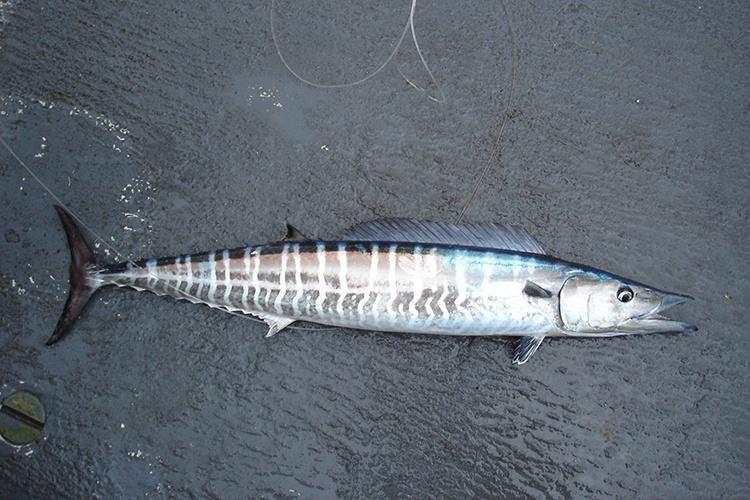
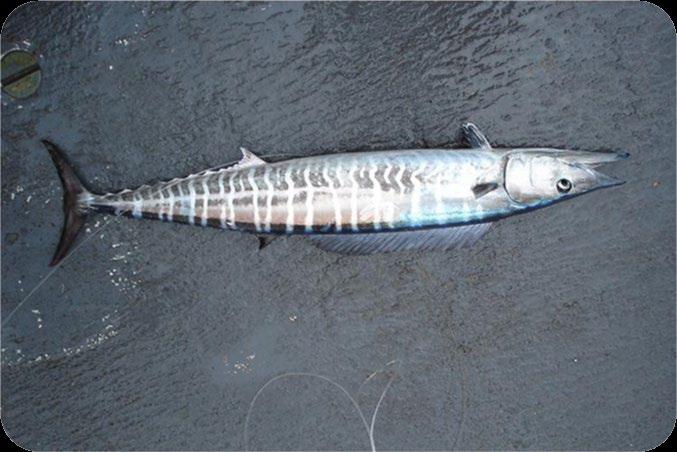
• Noted the new size limits for dolphin and wahoo and how they might help keep harvest below the ACT/ACL.
• Explored options to change the AM trigger and corrective actions (e.g., seasonal closures, size limits adjustments).

• Discussed concerns about AM corrective actions due to the seasonal nature and low ACLs for some species.
• Discussed how the matrix process could alter federal management and provide better data to revise ACLs for some species.
• Agreed that the AM design must be biologically appropriate for the species.

The AM would be triggered if the applicable landings (e.g., sector landings, as available) exceed the applicable ACT for that stock/stock complex. If NMFS estimates that landings have exceeded the applicable ACT for a stock or stock complex, NMFS in consultation with the Council will determine appropriate corrective action.
• For Puerto Rico - when landings for one sector are not available for comparison to that sector's ACL and ACT, the ACL and ACT for the sector with available landings are the ACL and ACT for the stock or stock complex.
Annual Catch Monitoring Process
Step 1. As soon as landings are available each year, Southeast Regional Office (SERO) staff compares each pelagic stock/stock complex's landings to the applicable ACT.
➔ If landings < ACT, then no corrective action is required.
➔ If landings > ACT, then NMFS notifies the Council of the overage.
Step 2. Although not required by the AM, SERO staff sends a summary memo listing those pelagic stocks with ACT overages to the Southeast Fisheries Science Center (SEFSC) for review.
Step 3. NMFS and the Council discuss and determine appropriate corrective action.
1. Retain Current AM: Evaluate landings relative to the applicable ACT based on a moving multi -year average of landings, as described in the FMP. If NMFS estimates that landings have exceeded the applicable ACT, NMFS in consultation with the Council will determine appropriate corrective action.
• ACT not serving its purpose
• Requires establishment of a corrective action
2. Evaluate landings relative to the applicable ACL based on a moving multi -year average of landings (3 years). If average landings, as estimated by NMFS, exceed the ACL, apply the AM. NMFS will use the best scientific information available, including considering landings trends and pulses , to determine if CORRECTIVE ACTION is necessary to prevent another overage.
• Does not use the ACT for AM monitoring; uses instead the established ACL for AM monitoring.
• Similar to current AM; uses multi-year landings for monitoring.
• Adds a process where NMFS would evaluate BSIA to determine if corrective action is needed.
3. Evaluate landings relative to the applicable ACL based on a moving multi -year average of landings (3 years). If average landings, as estimated by NMFS, exceed the ACL, apply the AM.
• Does not use the ACT for AM monitoring; uses instead the established ACL for AM monitoring.
• Similar to current AM; uses multi-year landings for monitoring.
• Does not include a NMFS review process
4. Other options to modify the AM trigger?
The Council should also periodically review and reevaluate the system of ACLs and AMs, and modify if necessary, to improve their performance and effectiveness.
Current AM
… NMFS in consultation with the Council will determine appropriate corrective action.
Potential Options to Consider:
A. Season Length Reduction:
Reduce the length of the fishing season for all sectors by the amount necessary to prevent landings from exceeding the ACL in the year following the determination.
• Consider options to select, for example, a pre-determined short -term closure or a variable time closure (e.g. from Dec 31 backward or Sep 30 backwards, or Jan 1, other)
- Look at landing trends, species seasonality
B. Adjust Size Limits:
Modify the size limit for those species with one, or implement a size limit for those without one, to prevent landings from exceeding the ACL in the year following the determination.
● Consider size limits recently implemented for dolphin and wahoo to limit mortality and protect fish prior to reaching mature spawning sizes.
C. Adjust Recreational Bag Limits/Implement a Commercial Trip Limit:
Modify the recreational bag limit (for dolphin, wahoo) and implement a commercial trip limit to prevent landings from exceeding the ACL in the year following the determination.
● A recreational bag limit was recently implemented for dolphin and wahoo
● Recreational limit would not apply to other pelagic species managed under the Puerto Rico FMP
● Recreational data not available for monitoring
● May be difficult to implement and communicate
● Could lead to regulatory discards
• Discussion, including input on options presented and others that may be proposed at this meeting.
• Consider ongoing processes such as Matrix (stock evaluation) and new management measures for dolphin and wahoo for deciding when to further develop the action.
• IPT could develop an Options Paper for consideration at the April 2026 meeting.