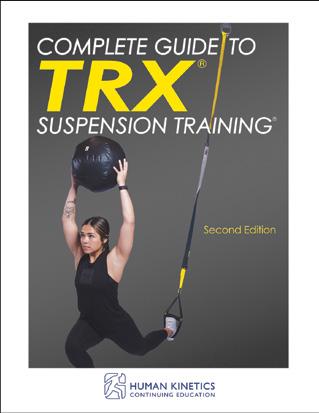
Save on top titles and get 30% off books and ebooks with code CFP30 and 15% off CE with code CFP15, exclusive for canfitpro members!
Train Smarter, Not Harder!
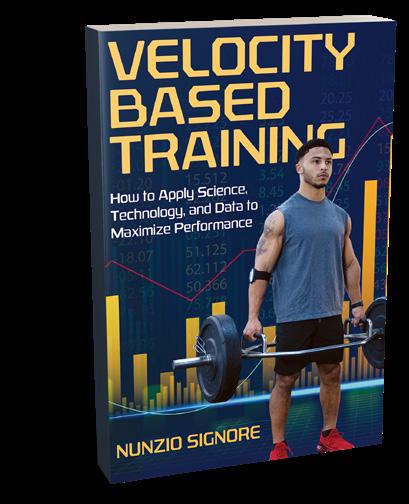
Featuring this exciting new method for increasing explosive power, Velocity-Based Training takes an in-depth look into how to best incorporate velocitybased training (VBT) into an athlete’s training program.
$45.95 $32.17 SALE CFP30
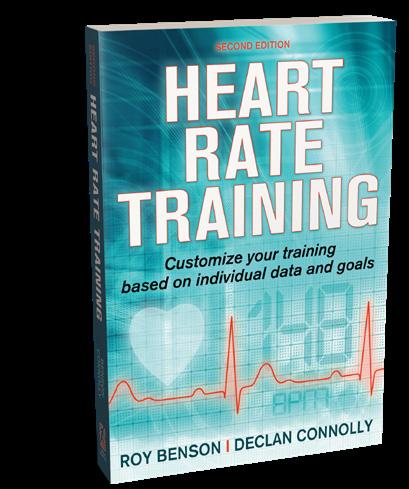
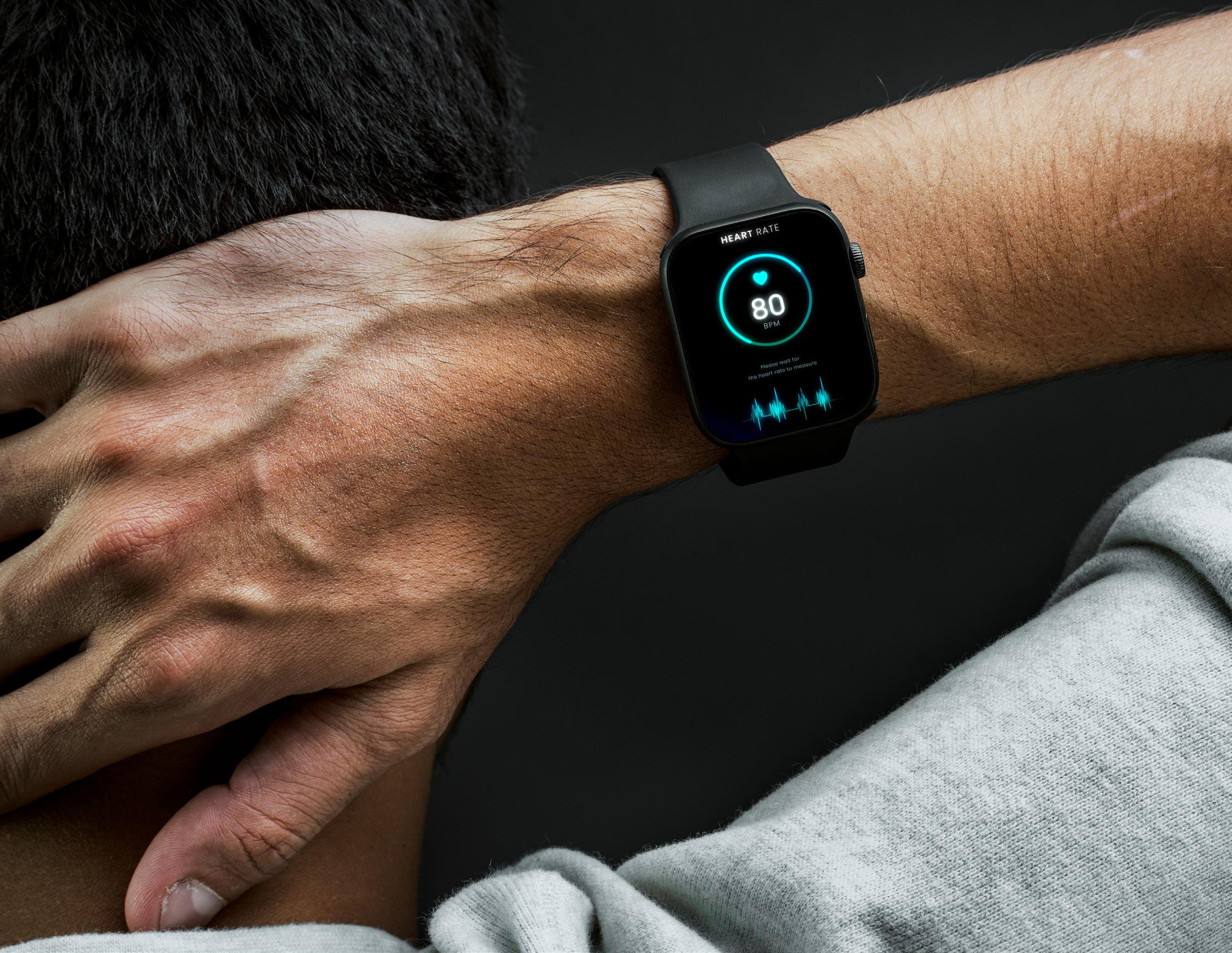
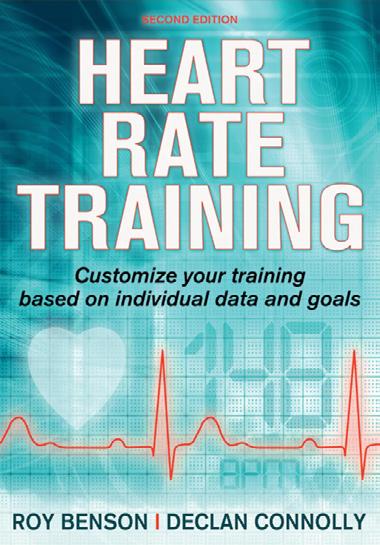
With a myriad of affordable devices enabling you to track your body’s response to activity, it’s never been easier to use heart rate monitoring to customize your training— this guide will show you how!
$34.95 $24.47 SALE CFP30
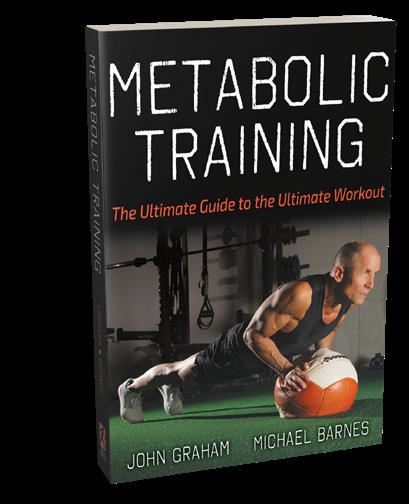
Catapult your training efficiency and get measurable results! Commonly known as met con, or metabolic conditioning, this form of training is often mistaken for any combination of highintensity exercises.
$41.95 $29.37 SALE CFP30
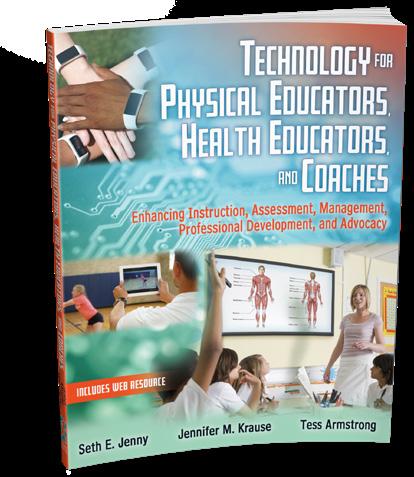
Helps health and PE teachers and coaches improve their abilities by learning to effectively use technology in the areas of instruction, assessment, management, communication, professional development, and advocacy.
$99.95 $63.67 SALE CFP30
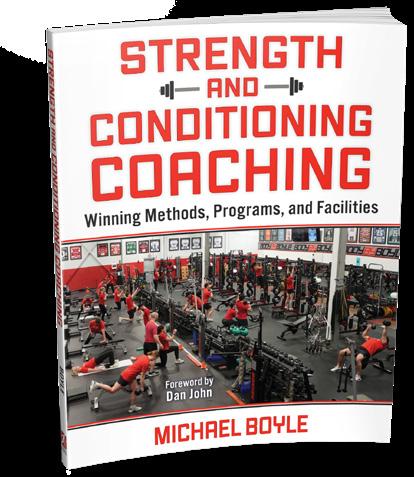
Helps you make the right choices, apply the best methods, offer superior training experiences and outcomes, and be a more successful professional in a very competitive industry.
$44.95 $31.47
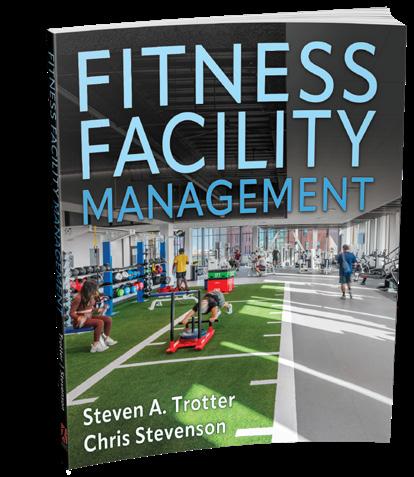
Provides an in-depth look at the challenges and rewards of managing contemporary health and fitness facilities.
canfitpro Magazine is published six times per year by Canadian Fitness Professionals Inc. New Professional Memberships with canfitpro are $120 per year (plus GST/HST) and renewals are $98 per year (plus GST/HST) and include a subscription to themagazine.
For more information, please contact Member Services at ext. 301.
Feedback magazine@canfitpro.com
Contact info@canfitpro.com for questions regarding membership, conferences, and Canadian fitness resources.
To contribute to canfitpro Magazine, visit the Member Portal.
canfitpro is a division of Canadian Fitness Professionals Inc.
Canada Post Canadian Publications Mail Sales Product Agreement No. 40783518 - Return Postage Guaranteed
As we step into 2026, the fitness landscape continues to evolve—faster, smarter, and more connected than ever before. “Digital-first” is no longer about simply offering an app or online program; it’s about creating meaningful experiences that flow seamlessly across wearables, platforms, and communities. The most successful fitness businesses are finding harmony between innovation and intention—using technology to strengthen, not replace, the human connection that fuels transformation.
In this issue, we explore how our industry is redefining what it means to thrive in a tech-powered world. From adaptive fitness and recovery breakthroughs to the resurgence of strength training and digital ecosystems that link clubs, coaches, and clients—one message rings clear: progress isn’t about chasing every trend. It’s about building systems that sustain us, embracing smarter tools, and staying rooted in purpose.
As we move toward 2026, let’s remember that true growth begins with reflection. The most impactful fitness professionals aren’t doing more—they’re focusing on what matters most, with clarity, courage, and consistency. Here’s to a new year of connection, creativity, and realignment—not reinvention.
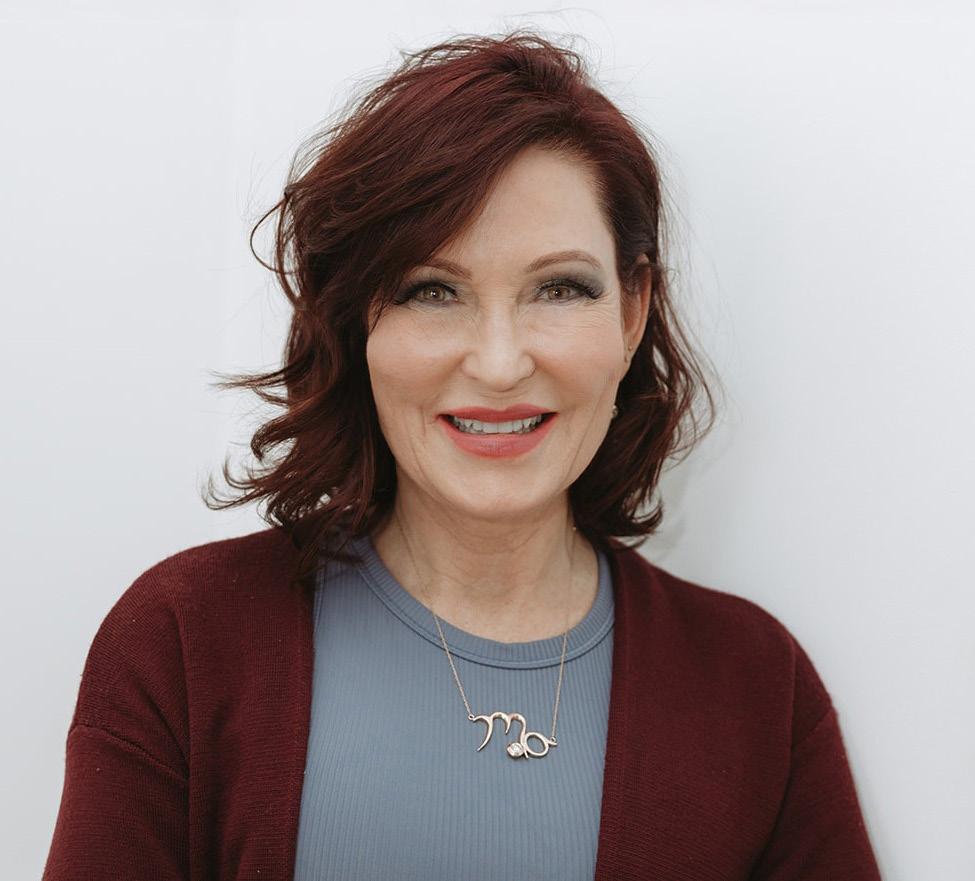
Mo Hagan Chief Operating Officer, canfitpro
INSIDE
THE CANFITPRO COMMUNITY
CELEBRATING THE PEOPLE, PASSION, AND PURPOSE THAT CONNECTS OUR CANFITPRO COMMUNITY
This section shines a light on members who embody connection, compassion, and commitment, reminding us that our shared purpose is what truly drives this industry forward.
We asked our members what moment in the last year stands out as a defining example of the impact they’ve had with their clients or community.
Jessie Thomas Owner Farm Girl Fitness
The most defining moment for me has been seeing so many of our members qualify for the DEKA World Championships. When we first brought DEKA programming and events to Farm Girl Fitness in 2022, we weren’t sure what to expect. In 2024, I qualified as a participant alongside six of our members. This year, 16 of our members and staff qualified! Watching their physical growth and confidence evolve has been one of the greatest joys of my career. Even more meaningful has been seeing how their success has inspired others in our community to set bigger goals and believe in themselves. It’s a reminder that the ripple effect of one person’s courage and growth reaches far beyond what we can see.
Lynne Skilton-Hayes Fitness Program Supervisor
University of Guelph
My most defining moment this year was being nominated for two industry awards—the Sharon Mann Inspiration Award and the Fitness Professional of the Year Award.
Sharon Mann was a friend and colleague and a truly remarkable person. Her presence changed my life in a moment. She showed me that the energy you bring into a room matters. That kindness and confidence can spark growth in others. And that lifting people up is the greatest gift we can give. To be nominated for the role I play in this industry was truly an honour.
A health crisis brought me to fitness and literally gave me my life back. Fitness isn’t what I do for a living. It’s more about who I am. And it drives my work ethic and passion to pay it forward and help others find themselves again.
Vanje Watson Watson Wellness
One moment that stands out this year was a call from a client after her doctor’s appointment. I had written a letter outlining patterns we’d noticed during training, and she brought it with her. Her doctor reviewed it and said, “Your personal trainer may be the one to save your life.” That moment affirmed the power of collaboration and observation in fitness.
I’ve had the joy of supporting clients transitioning from physio, navigating chronic conditions, or experiencing those “aha” moments when movement and nutrition finally click. These aren’t just workouts—they’re life shifts. I’m deeply grateful to do this work and to witness the resilience, growth, and transformation in each person I meet.
Beth Yarzab canfitpro PRO Trainer
One defining moment stands out: rediscovering my purpose as an empty nester and channeling that energy into empowering others through fitness.
When I was first certified with canfitpro, I struggled with self-doubt—like so many of us do when starting over or stepping into something new. But as a mother, I knew my daughters were watching, and that inspired me to keep showing up as my best self, even when the path was unclear.
This year, with my twins grown and thriving, I found a renewed sense of purpose in mentoring new trainers as a canfitpro PRO TRAINER and helping clients uncover their own strength.
To every fitness professional reading this: remember that doubts may whisper, but purpose speaks louder. Keep showing up—because the lives you change will always include your own.
SYSTEMS THAT SCALE:
THE SECRET TO BUILDING A SUSTAINABLE FITNESS BUSINESS
DITCH THE CHAOS AND COMPLEXITY—LEARN HOW SIMPLE, REPEATABLE HABITS CREATE CONSISTENCY, BUILD CLIENT TRUST, AND DRIVE LONG-TERM GROWTH WITHOUT BURNOUT OR EXPENSIVE TECH
By Jessica Maurer
WITHOUT AN ORGANIZED APPROACH, BUSINESSES FALL INTO CONSTANT CREATION MODE INSTEAD OF MAXIMIZING WHAT ALREADY EXISTS.
Too often, professionals think growth requires expensive technology or complicated platforms. Systems are simply habits, repeatable steps that create structure, consistency, and efficiency. From guiding client work to streamlining content creation, systems provide the backbone that allows fitness professionals to scale their work without sacrificing quality or energy.
Consistency, for example, builds trust with clients. When people know what to expect from you, whether it is reliable programming, timely content, or a steady brand presence, their confidence in your services grows. Trust is not built from one great workout or a single polished post. It develops through repeated, dependable actions that show clients you are organized, attentive, and committed to their experience.
Technology can support these systems or habits, but real strength comes from building simple, repeatable processes that ensure nothing falls through the
cracks. Here are four essential systems every fitness professional should have in place to create sustainable business growth.
Task Manager
Think of a task manager or project management tool as your extended to-do list. Instead of relying on sticky notes, phone reminders, or mental checklists, everything lives in one organized, visual hub. A simple to-do list might include tasks like:
• Email new leads
• Plan Friday bootcamp workout
• Post on Instagram
That works for today, but what about long-term planning? A project management tool not only tracks what needs to be done but also stores your order of operations, so you can replicate successful tasks, actions, and projects.
Opening your project management tool each morning should become a daily habit, as automatic as
checking messages or making coffee. Completing tasks reinforces a repeatable routine that keeps client care, content creation, and business growth moving forward consistently.
Items to track may include:
• Lead follow-up and client progress
• Social media content
• Program creation
• Brainstorm ideas and references
Platforms such as Trello, Monday, or Asana are popular options. The specific tool is less important than the habit of using it daily to stay organized and maintain consistency across all projects.
Content Creation System
Instead of creating content reactively, develop a repeatable content creation habit that reinforces brand recognition and consistency. Set aside dedicated times each week to batch-produce social media posts, blog articles, email campaigns, and program materials. A predictable routine transforms content
production into a stress-free habit rather than a last-minute scramble.
For example:
• Mondays at 10:00 a.m. - write blog for the week
• Tuesdays at 2:00 p.m. - create social media posts for the week
• Wednesdays at 9:00 a.m.write client emails
Brand recognition is critical for standing out. When clients scroll through feeds, they should recognize your content immediately, not because it is flashy, but because it is consistent. Establish simple guidelines that can be followed repeatedly. Select two to three brand colors and one to two fonts for all materials. These choices should extend beyond digital content to merchandise, signage, and other physical items. The more consistently your audience sees these elements, the stronger their association with your brand.
Design tools like Canva and newsletter services like Kit make this habit easier by storing brand kits, templates, and preset layouts. Batch-creating content, saving reusable designs, and repurposing materials ensure messaging is consistent across every platform and touchpoint. When content and design are approached as repeatable habits, they become reliable systems rather than one-off tasks, streamlining production while building authority and trust.
Content Recycling
Batch creation is efficient, but without a system for storage and reuse, valuable work can be lost or forgotten. Without an organized approach, businesses fall into constant creation mode instead of maximizing what already exists.
A content recycling system allows materials to be reused, repurposed, and shared across multiple platforms and formats. A single social media
post, for example, can become an email snippet, a blog highlight, or a program resource. This habit enables businesses to work smarter and maintain consistent messaging without the pressure of constantly creating new content.
Key elements of a strong content storage system include:
• Cloud storage for accessibility across devices
• Clearly labeled folders for quick retrieval
• Backups to protect important files
Project management tools such as Trello can also house social media captions, hashtag banks, emails, and program outlines. Keeping everything in one organized hub ensures that your best ideas are consistently reused, brand cohesion is maintained, and daily content creation becomes less stressful.
Time Management System
Distractions are unavoidable, but time can be managed with intention. A time management system ensures important work is scheduled and completed without unnecessary stress, while building habits that support consistency and productivity.
Calendar blocking is one of the most effective strategies for managing time. Setting non-negotiable blocks of time for key tasks, such as Mondays for social media planning or Tuesdays for client updates, creates predictable routines. This habit reduces the mental load of deciding what to focus
on and ensures essential tasks are consistently prioritized.
The Pomodoro Technique, which breaks work into 25-minute focused intervals followed by short breaks, builds a habit of sustained focus while preventing burnout. Productivity tools like Momentum Dash combine timers, brainstorming space, and task tracking in one place, reinforcing repeatable habits that keep projects on track and reduce mental friction.
When time is managed intentionally, professionals create consistent routines that prevent burnout and support long-term business sustainability.
Final Thoughts
Passion drives fitness professionals to help clients move better, get stronger, and live healthier lives. But love alone cannot sustain or grow a business. Systems do.
By implementing repeatable habits through task management, content creation, content recycling, and time management, fitness professionals create consistency, reduce stress, and free mental energy for serving clients. The best systems do not require the fanciest tools or the most significant budget. The most effective approach is to start simple, use one system consistently in each category, and focus on progress rather than perfection.
With these four systems, fitness professionals can build a business that is organized, efficient, and positioned for long-term growth.
Jessica H. Maurer is a wellness business consultant, strategist, and keynote speaker who helps professionals overcome burnout and build resilience. As Director of Education for the Mental Wellbeing Association, she delivers actionable insights and strategies that drive clarity, balance, and sustainable success in high-pressure industries through workshops, keynotes, and consultations worldwide.
CONNECTION
IS THE NEW TECH FRONTIER
MATRIX FITNESS IS REDEFINING HOW CLUBS INTEGRATE TECHNOLOGY— CREATING EFFICIENT, HYBRID, AND HUMANCENTERED FITNESS ENVIRONMENTS
By Matrix Fitness Canada
Technology is no longer an accessory in fitness—it’s the backbone of how clubs deliver experiences, drive retention, and create communities. At Matrix Fitness, we’ve always believed technology should work for you, not against you. Today’s innovations are transforming fitness facilities into connected, intelligent ecosystems where operators can thrive and members can flourish.
Personalization at Scale
One of the most exciting shifts in fitness technology is the ability to deliver personalized training at scale. Members expect more than
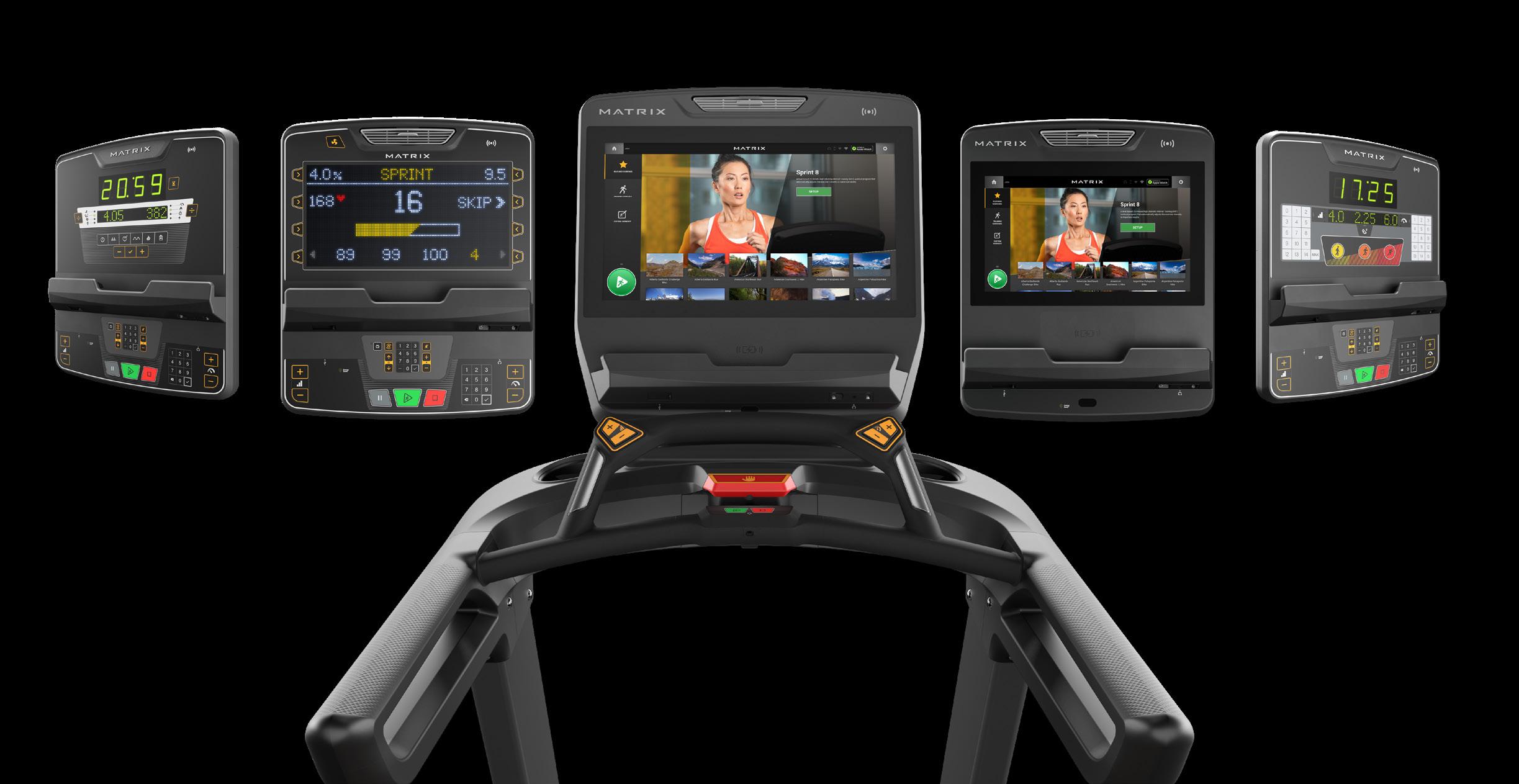
generic workouts—they want tailored programming, progress tracking, and meaningful results. With Matrix Cardio Consoles, apps, and training platforms, operators can deliver individualized plans whether someone is on the treadmill, the functional trainer, or in a group cycle class.
This isn’t just a “nice-to-have”—research shows that members who feel seen and supported are more likely to stay. By meeting people where they are, facilities can turn occasional visitors into loyal community members.
OPERATORS WHO EMBRACE HYBRID MODELS AREN’T COMPETING WITH DIGITAL FITNESS; THEY’RE EXPANDING THEIR REACH AND RELEVANCE.
Data That Drives Decisions
For operators, technology is also delivering powerful insights. Connected Solutions allow facilities to track usage patterns, member engagement, and even maintenance needs in real time. This data empowers operators to make smarter decisions: which machines to invest in, how to optimize floor layouts, and when to schedule preventive service.
The result? Less downtime, lower costs, and higher satisfaction It’s about efficiency—but it’s also about building trust. When members walk into a facility where everything “just works,” it strengthens the bond between the operator and their community.
Hybrid Fitness: Bridging In-Club and At-Home
The pandemic accelerated hybrid fitness, and the demand hasn’t slowed.
Members want flexibility: the option to train at the club, at home, or on the go. With Matrix Connected Solutions, operators can extend their brand beyond the facility walls.
Imagine a member who completes a Sprint 8 HIIT session on a treadmill in the gym, then continues their program through the app at home. That continuity creates consistency— and consistency is the foundation of results. Operators who embrace hybrid models aren’t competing with digital fitness; they’re expanding their reach and relevance.
Community Powered by Tech
Finally, the heart of fitness remains the same: connection Technology is helping to build communities in smarter ways, from leaderboards in group cycling classes to wellness challenges that unite teams across multiple
In 2001, Johnson Health Tech launched Matrix to bring premium fitness equipment to the marketplace. Fueled by cross-cultural collaboration, Matrix offers a complete line of cardio, strength, and group training equipment for health clubs, luxury resorts, and collegiate athletic teams, plus club-quality equipment reimagined for the home. Matrix is the proud sponsor of the Fitness Industry Council of Canada
facilities. Members don’t just want a workout; they want to belong.
At Matrix, we see technology as a bridge, not a barrier. Whether it’s cloud-based software that streamlines facility management or consoles that deliver entertainment and education, every innovation should enhance human connection.
Looking Ahead
As we celebrate 50 years of innovation under our parent company, Johnson Health Tech, Matrix Fitness is committed to driving the industry forward with solutions that balance innovative technology and human connection. Because at the end of the day, the future of fitness isn’t about machines, it’s about people. And technology, when harnessed with purpose, helps people live healthier, longer, and more connected lives.
BUY 3 ADS, GE T 3 FREE GET A FULL YEAR OF ADVERTISING FOR HALF THE PRICE STARTING AUGUST 1ST
REACH THOUSANDS OF FITNESS PROFESSIONALS AND ENTHUSIASTS LEARN MORE
GO DIGITAL-FIRST:
6 STEPS TO BUILD A FUTURE-READY FITNESS BUSINESS
IN 2026
DIGITAL-FIRST ISN’T JUST LIVESTREAMS AND AN ON-DEMAND LIBRARY. IT’S A PRODUCT THAT LIVES PRIMARILY ON PHONES, TABLETS AND WEARABLE TECH, DESIGNED AROUND DATA, COMMUNITY, AND RECURRING REVENUE.
What “digital-first” means in 2026
Digital-first isn’t just livestreams and an on-demand library. It’s a product that lives primarily on phones, tablets and wearable tech, designed around data, community, and recurring revenue, whether a client ever sets foot in your gym (if you have one).
Think app-led programs, real-time feedback from wearables, challenges that live on Strava or Apple Fitness+, and an automation layer that markets, sells, and constantly measures results in the background, so you don’t have to.
Strava’s latest upgrades (like Live Segments on Apple Watch) and Apple Fitness+’s new Custom Plans show where consumer expectations are headed: personalized, portable, and integrated.
Here are six steps to building your digital-first business:
DIGITAL-FIRST:
TRANSFORM YOUR EXPERTISE INTO AN APP-LED, COMMUNITYPOWERED BUSINESS THAT GROWS EVEN WHEN YOU’RE OFFLINE
By Alicia Tyler
1. Pick your “why” and target your audience.
Before filming your first workout, decide what your digital program stands for. Avoid generalized “workouts for everyone.” Instead, get specific with a niche, something like “Get stronger three days a week using nothing but body weight exercises,” “Train for your first HYROX race in 12 weeks,” or “Lowimpact cardio to get you back in shape.”
A clear promise helps you create a plan, like a four-week challenge, that feels actionable and personal. That clarity is what keeps people engaged.
2. Choose a platform that does the heavy lifting for you.
These days, you don’t need to code your own app. Today’s platforms are built for fitness professionals:
• Trainerize (Canada-based): Upload workouts, manage payments, and track clients in one dashboard.
• Arketa: Perfect for selling memberships, digital passes, or virtual courses.
• Momence: Ideal for hosting videos, live workshops, and keeping your messaging (email/SMS) centralized.
Think of these as plug-and-play tools: you deliver the coaching and workouts; they handle the tech and payments.
3. Make wearables and apps part of the experience.
Many clients already track their activity with an Apple Watch, Fitbit, or Whoop. Invite them to connect those to your program.
You might:
• Monitor their recovery or sleep scores to adjust programming.
• Create a weekly leaderboard inside a Strava club (steps, distance, streaks).
• Celebrate personal records or consistency in your private online community.
This transforms your offering, from just sending videos, to providing real-time, data-informed coaching.
REVENUE FOR CANADIAN VIRTUAL AND IN-PERSON FITNESS PROFESSIONALS
4. Offer simple levels of service.
Use a three-tier structure to make it easy for people to choose:
A: Programs (which tend to be budgetfriendly option): Pre-recorded plans users follow on their schedule.
B: Memberships (mid-range): Includes updates, community access, low-level virtual coaching and live events, and Q&As.
C: Coaching (premium): Highly personalized feedback, form analysis, programmed progression, motivation and support.
This path lets members start small and upgrade as they progress and see the benefits of your offerings.
5. Let your marketing run in the background.
Set up systems that work without constant manual effort (you are likely one-person, after all!):
• Free sampler: A 7-day or mini challenge that naturally leads into a paid offer.
• Community challenges: Use Strava, Facebook, or WhatsApp groups where members share progress—this visibility attracts friends organically.
• Automated nudges: Schedule friendly emails or texts reminding members to log workouts, celebrate
• Canada’s virtual fitness market generated roughly $575 million in 2022, projected to surge to $4,183 million by 2030, a 28% predicted increase.
• Canada is the fastest growing virtual fitness market in North America.
• Fitness coaches earn an average of $24.09 per hour (about $50K annually), with most salaries ranging from $15.87 to $27.88. According to a 2025 survey from Glassdoor, online fitness coaches in Canada report an average base pay of about $48K per year, typically ranging from $36K to $63K.
milestones, or renew paid plans. This is also a great vehicle for regular promotions.
These systems help your business grow quietly in the background.
6. Launch small and fast.
Here’s a practical 30-day roadmap:
1. Choose your niche and write a 4-week program.
2. Upload Week 1 to your platform and schedule weekly rollouts.
3. Launch a Strava or private community group for accountability.
4. Offer a “founding member” price to your first 50 sign-ups.
5. Automate site reminders to keep everyone engaged.
Track these key metrics: program completion rate, Week 2 retention, 90day churn, and how many join the next round. If those are trending up, you’re on the right track—repeat and scale.
Why launch fast? Waiting six months to perfect and soft launch risks wasting time and losing momentum. A small, quick launch lets you confirm demand, learn what resonates, and adjust in real time while building trust and community from day one.
The Bottom Line
Going digital-first in 2026 doesn’t mean abandoning in-person training altogether. It’s about making your expertise accessible—on phones, watches, and on the go. You can even think of it as a side-hustle or flip your in-person gig to your side hustle as you transition to virtual-first! Start small and specific, use platforms built for fitness pros, and build community into every program. You might be surprised to learn that community is often just as important as health and fitness goals to many of your clients.
That’s how you build a digital fitness business that people love—and market predictions tell us that Canada is ready for yours.
Alicia Tyler is a journalist and editor specializing in health, nutrition, fitness, and wellness. She was previously the Editorial Director of Clean Eating and Vegetarian Times. Her work has also appeared in MindBodyGreen, MoneySense, Yoga Journal, Women’s Running, and Oxygen. She is also an F45 studio owner in Toronto and a certified nutritionist and personal trainer.
THE RISE OF RECOVERY:
WHY HOT AND COLD ARE HEATING UP THE FITNESS INDUSTRY
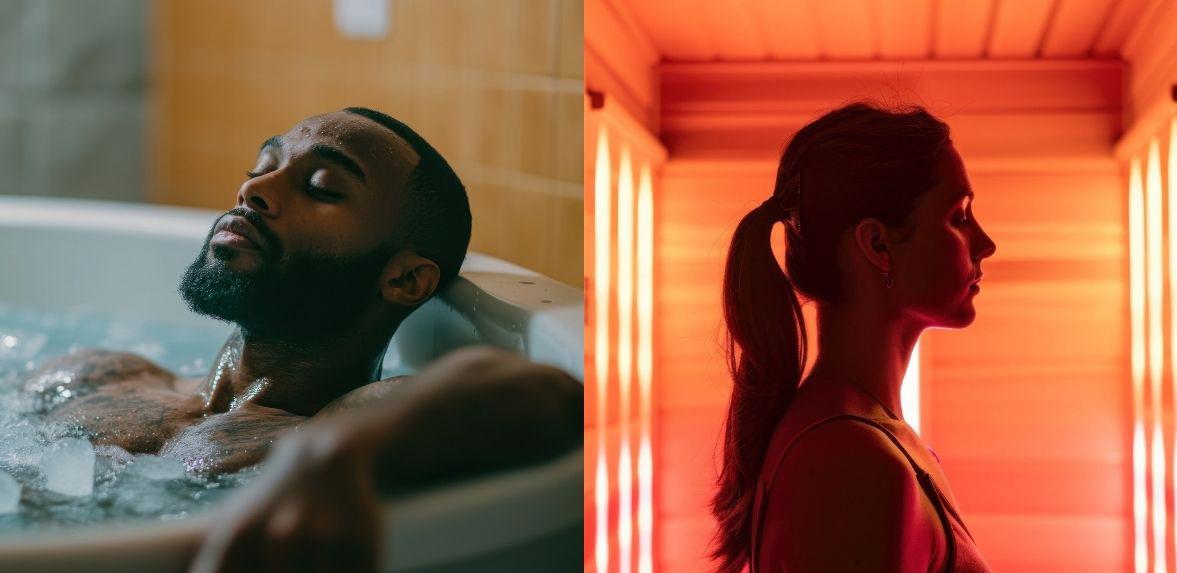
Recovery has become one of the most visible parts of training. Scroll social media and you’ll see athletes plunging into ice baths, influencers sweating it out in saunas and gyms promoting their recovery spaces just as heavily as their training equipment. What used to be behind the scenes is now a trend members talk about, share online and actively seek out when choosing where to train.
For fitness clubs, health clubs and gyms, offering hot and cold recovery is no longer just an added perk. It’s a way to meet member demand, attract new athletes and fitness enthusiasts, and create a premium experience that keeps people coming back.
The Cold Plunge Craze Cold has long been a recovery room staple, but few recovery tools have
FROM ICE
PLUNGES TO INFRARED
SAUNAS, RECOVERY IS NO LONGER A PERK; IT’S A MUSTHAVE EXPERIENCE THAT ATTRACTS AND RETAINS TODAY’S MEMBERS
By WellnessSpace Brands
generated as much buzz as cold plunges. They’re everywhere, from viral TikToks to pro athlete interviews, and have become a symbol of serious training.
Klay Thompson, four-time NBA champion, swears by daily cold plunges for focus and energy. Soccer legend Cristiano Ronaldo often posts his postmatch ice baths, while Lionel Messi
has long relied on them as part of his training and game recovery. Former NFL star J.J. Watt took cold immersion to extremes, even jumping into frozen lakes, and Olympic marathon champion Eliud Kipchoge uses weekly ice baths to handle the demands of longdistance training.
When world-class athletes embrace cold immersion, everyday members take notice. What started as a recovery tool has become a ritual, a challenge, and an experience they want to share with others. That enthusiasm has turned cold plunges into an expectation. Members increasingly look for them when choosing a fitness club, and facilities that offer them see the buzz firsthand. The plunge becomes a photo op, a social post and a bragging right, the kind of organic visibility that builds a club’s credibility without a single ad.
Heat as a Wellness Ritual
If cold plunges are about intensity, heat is about balance. Saunas and infrared cabins have moved well beyond luxury status—they’re now fixtures in training centers, boutique gyms and even home setups. Members don’t see them as extras anymore; they see them as essential parts of a modern recovery experience.
The pros are right there with them: Tom Brady, seven-time Super Bowl champion, travels with a portable infrared sauna to stay consistent with his regimen. And Josh Allen, quarterback of the Buffalo Bills, says he and his wife use an infrared sauna almost daily during the NFL season.
Part of the appeal is how versatile heat sessions feel. For some, it’s a way to
WHAT USED TO BE BEHIND THE SCENES IS NOW A TREND MEMBERS TALK ABOUT, SHARE ONLINE AND ACTIVELY SEEK OUT WHEN CHOOSING WHERE TO TRAIN.
unwind and reset after a tough workout. For others, it’s a quiet ritual that helps them clear their head, release tension and leave feeling restored. And because saunas are already familiar to most people, adding them to a recovery space feels instantly accessible, like a natural extension of the training routine.
Hot & Cold Recovery: The Premium Experience
For members who want the best of both worlds, alternating between hot and cold has become the ultimate recovery practice. It’s immersive, energizing, and often seen as a step above hot or cold alone.
Some of the biggest names in sports alternate cold and heat as part of their recovery process. LeBron James, fourtime NBA champion, alternates ice baths and hot showers to stay ready throughout the long seasons. Novak Djokovic, 24-time Grand Slam tennis champion, ends training days with cold and sauna. And Sam Hubbard, defensive end for the Cincinnati Bengals, credits the routine with keeping him fresh during the NFL grind.
The draw is as much mental as physical. Moving from the sharp jolt of cold to
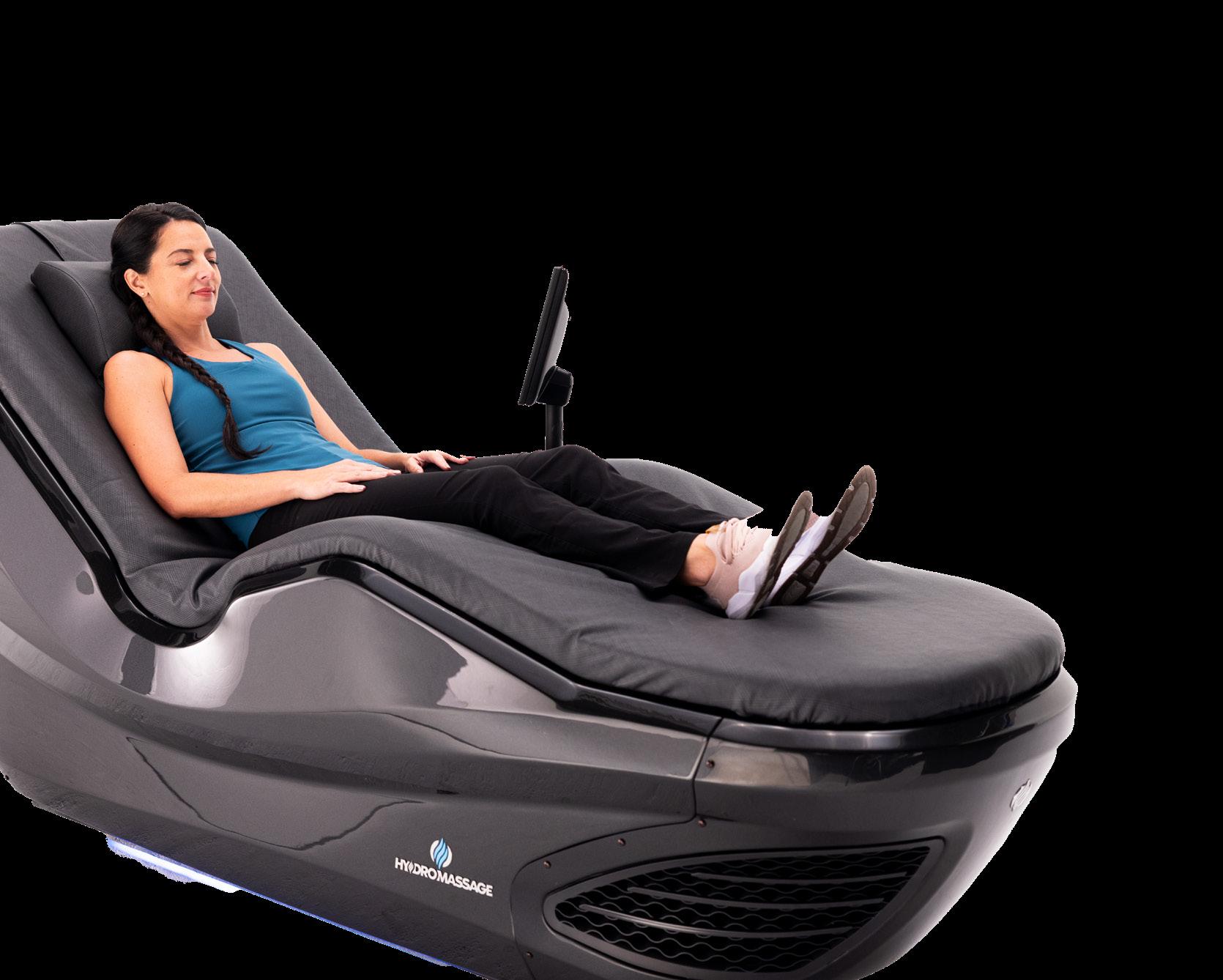
WellnessSpace Brands offers an industry-leading suite of experiential wellness products, including HydroMassage, CryoLounge+, RelaxSpace, PolarWave Dry Plunge and RedZone Sauna. Each of our innovative product lines has a shared vision: to provide people around the world with access to convenient, technology-based solutions for mind and body wellness.
the relaxing warmth of heat creates a rhythm athletes describe as both restorative and mentally grounding. It’s a ritual they look forward to, one that clears the head as much as it eases the body.
For fitness clubs and gyms, offering hot and cold recovery signals a commitment to providing the kind of memorable experience that members will talk about, post about and associate with your brand.
Putting It All Together: Recovery That Sets Your Club Apart
For fitness clubs, health clubs and gyms, the takeaway is simple: members don’t just enjoy recovery amenities; they expect them. Facilities that invest in both hot and cold recovery stand out as modern, competitive, and in step with today’s culture.
And the payoff goes well beyond helping athletes feel good. Recovery drives retention, builds reputation and fuels revenue. It’s part of the decisionmaking process when people choose where to train, and the clubs that deliver it are the ones they’ll choose, talk about, and commit to.
P R O U D LY C A N A D I A N
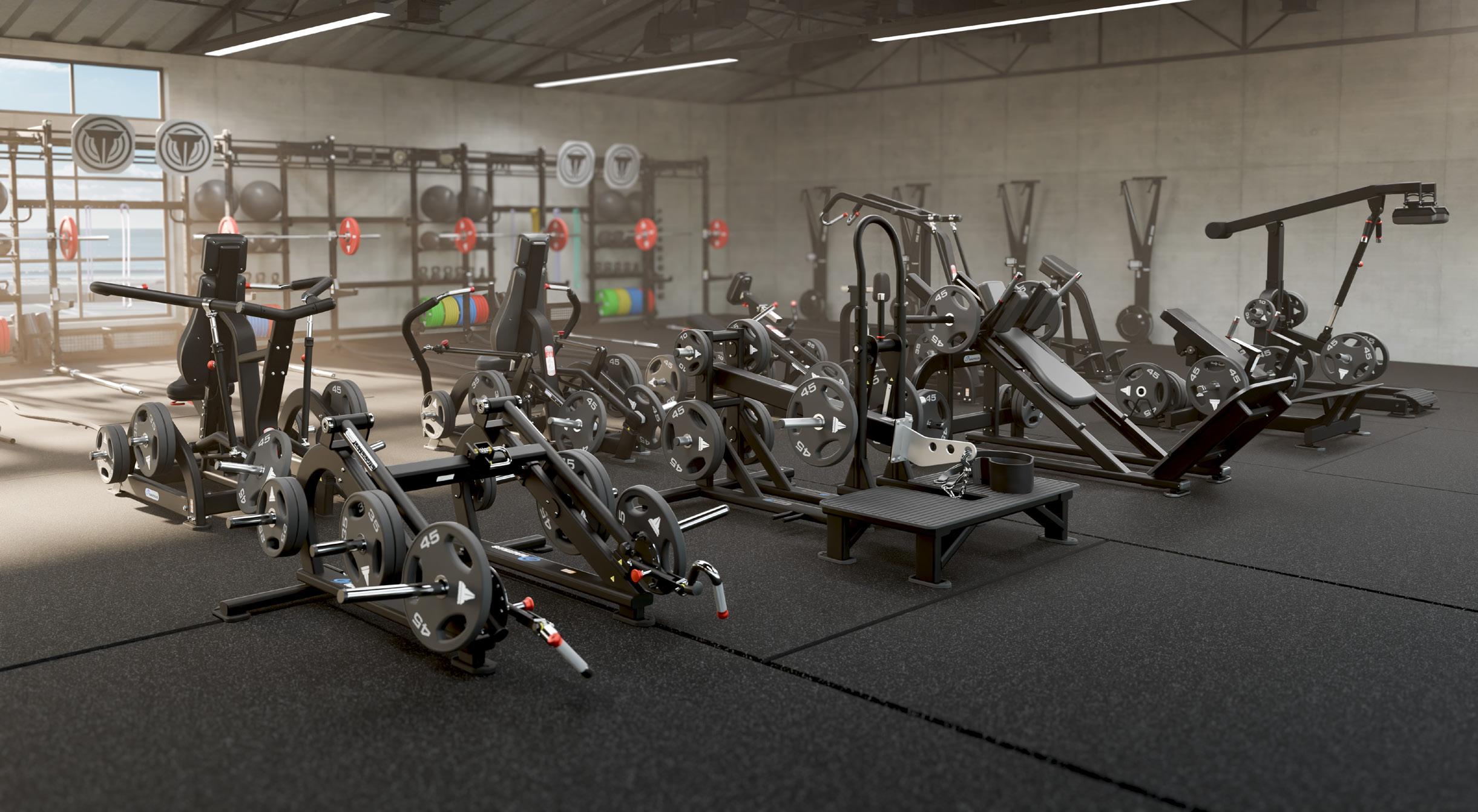
LEAD THE LIFT
NAUTILUS PLATE LOADED AND LEVERAGE DELIVER THE NEXT EVOLUTION IN STRENGTH TRAINING FOR FACILITIES THAT WANT TO STAY AHEAD OF DEMAND
By Core Health & Fitness
Strength training isn’t just having a moment; it’s defining the future of fitness. From boutique studios to large athletic centers, the demand for resistance training has exploded, cutting across demographics and reshaping expectations for facility design. Members aren’t just chasing aesthetics; they’re training longevity, confidence, and performance.
For owners and operators, that shift poses both opportunity and challenge. How do you serve a growing population of lifters who demand authenticity, safety, and results? The answer is Nautilus Plate Loaded and Leverage equipment.
What Sets Plate Loaded Apart
Plate Loaded machines mimic the raw intensity of free weights while delivering a safer, more controlled environment. Users load Olympic plates directly,
adjusting resistance with the same freedom as a barbell. The result: a workout that feels natural, intuitive, and performance-driven, without sacrificing biomechanics or accessibility.
Leverage equipment takes it further, guiding users along optimized movement arcs powered by a four-bar
Plate Loaded and Leverage create a seamless circuit, biomechanically precise, intuitive, and built for the rising demand for strength training.
linkage that mimics the Nautilus Cam. The resistance feels lighter where lifters are weakest and heavier where they’re strongest, creating confidence for beginners and challenges for advanced athletes. It’s no surprise that these machines now anchor training zones in universities, fitness centers, boutique studios, and performance facilities alike.
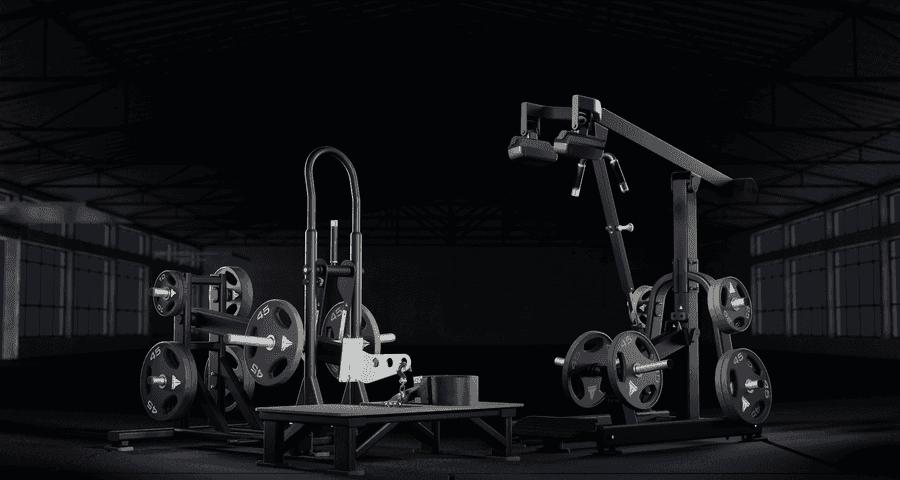
Pairing the Nautilus Belt Squat and Standing
Calf builds powerful legs and balanced aesthetics, delivering visible results.
Confidence-building: Lifters can push harder—even to failure— without a spotter.
Smart footprint: Compact designs maximize floor space and ROI.
Inclusive training: Accessible to seasoned athletes and beginners alike.
Performance appeal: Trusted by serious lifters for delivering results.
Strength is no longer a backroom feature. It’s central to member satisfaction, retention, and growth.
Inside the Nautilus Plate Loaded & Leverage Lines
The first wave of Nautilus’ Plate Loaded and Leverage expansion showcases what happens when biomechanics meets bold design. Flagship pieces like the Belt Squat and Standing Calf embody the hallmarks of Plate Loaded, smooth, linear resistance, compact footprints, and durability built for high-volume use.
But this is only the beginning. Each addition is engineered to deliver the best results for muscle development, from upper body to lower body. Built to the standard traditional bodybuilders expect yet designed with the intuitive accessibility modern fitness centers require, these solutions meet the needs of every lifter. From boutique studios to upscale facilities, Plate Loaded and Leverage redefine what strength training can look like on the floor.
The Innovation Continues
What’s here today sets the stage for what’s next. Nautilus is actively expanding Plate Loaded and Leverage with solutions that answer the strongest market demands, especially around lower-body and glute-focused training. Additional presses and circuit-ready designs are already in development, each with the same biomechanics-first approach that sets Nautilus apart.
For decision makers, the message is clear: the free weight zone of the future isn’t just racks and dumbbells. It’s a hybrid training space where Plate Loaded and Leverage create safer, more versatile, and more engaging lifting environments.
about positioning your facility for the next decade of strength demand. By integrating Plate Loaded and Leverage solutions, you:
• Serve the fastest growing segment of fitness members.
• Differentiate your facility with performance-driven design.
• Maximize floor space efficiency without compromise.
• Offer scalable solutions for everyone, from first timers to elite lifters.
In other words, you’re not just buying machines; you’re building a futureproof strength zone.
The Bottom Line: Strength Training Is Entering a New Era
Nautilus isn’t just adding to the floor; we’re redefining it. What’s coming next will deliver the most complete, biomechanics-first strength ecosystem in the industry.
Why Decision Makers Should Pay Attention
Investing in the right equipment isn’t just about filling floor space; it’s
Core Health & Fitness empowers fitness operators and communities around the world with premium equipment, innovative technology, and dedicated support. Home to industryleading brands including StairMaster, Nautilus, Throwdown, Star Trac, Schwinn, and Wexer, we deliver tailored solutions that combine equipment, education, digital fitness, financing, and more. Our mission is to serve the industry across vertical markets, creating products, programs, and partnerships that meet the evolving needs of modern fitness.
Strength is no longer on the periphery; it’s at the center of how members train, recover, and achieve results. Nautilus has always been at the forefront of innovation in strength, and with Plate Loaded and Leverage, that legacy continues.
What’s already here delivers unmatched biomechanics, sleek design, and performance members can feel from the first rep. What’s coming next will complete a full ecosystem, solutions intentionally designed to target every major muscle group with precision, power, and approachability.
For facility owners and operators, the takeaway is simple: this is the moment to prepare for the next generation of strength training.
Ready to lead the lift? Let’s build stronger spaces together.
MONTRES INTELLIGENTES :
ALLIÉES OU OBSTACLES ?
CONSEILS POUR UNE UTILISATION SAINE ET ÉQUILIBRÉE AUPRÈS DE NOS PARTICIPANT(E)S
Par Marie Eve Ricard
Les montres intelligentes occupent une place grandissante dans le conditionnement physique. Elles suivent nos pas, notre fréquence cardiaque, les calories dépensées et nous rappellent quand il est temps de bouger. En tant qu’instructeurs et instructrices de cours en groupe, nous constatons l’enthousiasme chez les personnes participant à nos séances pour ces outils technologiques. Mais une question demeure : ces
montres sont-elles de véritables alliées ou peuvent-elles devenir des obstacles au bien-être ?
La réponse dépend entièrement de la façon dont elles sont utilisées. Comme tout outil, elles peuvent nous aider à maintenir notre motivation ou, au contraire, créer de la pression et du découragement. Notre rôle consiste à guider nos participant(e)s pour qu’ils et elles utilisent leur montre de façon
équilibrée, tout en gardant le plaisir de bouger et la connexion avec leur corps.
Les bienfaits
Les avantages des montres intelligentes sont nombreux. Pour plusieurs, elles agissent comme un(e) coach de poche, capable d’accroître la conscience de soi. Elles fournissent des données précises qui aident à mieux comprendre son activité quotidienne.
• Motivation accrue : les rappels et les encouragements favorisent la constance, surtout pour les personnes qui peinent à maintenir une routine.
• Objectivité : les données offrent une mesure concrète des progrès réalisés et renforcent la confiance.
• Surveillance de la santé : les données concernant la fréquence cardiaque ou la qualité du sommeil peuvent sensibiliser à de meilleures habitudes.
En tant qu’instructeurs et instructrices, les montres intelligentes ouvrent la porte à des échanges sur la gestion de l’effort et la progression.
Les pièges à éviter
L’utilisation des montres intelligentes n’est pas sans risque. Certaines personnes deviennent esclaves des chiffres et oublient l’essentiel : bouger pour leur santé. Ne pas atteindre les 10 000 pas ou vouloir battre un record peut générer une forme de coercition et provoquer un surentraînement.
Dans ces cas, l’appareil cesse de soutenir la motivation et devient une source de stress ou engendrer des blessures. C’est
COMME TOUT OUTIL, ELLES PEUVENT NOUS AIDER À MAINTENIR
NOTRE MOTIVATION OU, AU CONTRAIRE, CRÉER DE LA PRESSION ET DU DÉCOURAGEMENT.
pourquoi notre accompagnement est crucial. Notre rôle est de rappeler que ce dispositif doit rester un outil de soutien et ne pas tout dicter.
Cinq conseils pratiques à transmettre à nos participants et participantes
En tant que professionnel(le)s du conditionnement physique, nous pouvons aider nos participant(e)s à développer une relation équilibrée avec leur montre intelligente en leur transmettant des stratégies simples et efficaces.
1. Établir des objectifs réalistes
Chaque personne est unique : la montre doit soutenir la progression, pas créer une pression en voulant battre tous les records.
2. Les chiffres ne disent pas tout
Un pas ou une calorie de plus ne définit pas la santé. Le bien-être global reste la priorité.
3. Programmer avec souplesse
Les alertes peuvent être utiles, mais elles ne doivent pas dicter le déroulement de toute une journée.
4. Écouter son corps
Être à l’écoute de ses sensations, c’est la priorité.
5. Déconnecter pour se reconnecter
Enlever sa montre à l’occasion, c’est savourer le moment présent et l’activité pour ce qu’elle est.
Un outil au service du bien-être
Utilisée judicieusement, la montre devient un repère pour comprendre l’effort, ajuster l’intensité et affiner la perception de l’effort. En l’intégrant dans nos cours, par exemple en vérifiant la fréquence cardiaque ou en comparant les sensations et les données, elle devient un outil éducatif et un soutien à la motivation. Les montres intelligentes ne remplacent ni notre expertise ni l’écoute du corps, mais servent de levier pour ramener l’attention sur l’essentiel : bouger pour la santé, le plaisir et le bien-être.
Marie-Eve Ricard , entrepreneure dynamique, agile et polyvalente détenant un baccalauréat en éducation physique et à la santé, possède plus de 20 ans d’expérience dans le conditionnement physique. Elle excelle dans les cours en groupe en ligne, en entreprise et sur l’eau (SUP). Lauréate du prix « Impact dans l’industrie » de canfitpro, elle partage son expertise avec un dévouement exceptionnel et passion.
THE REAL ROI
OF FITNESS TECH
WHAT TRULY HELPS TRAINERS TURN DATA AND DIGITAL TOOLS INTO TRUST, PROFIT, AND LASTING CLIENT RELATIONSHIPS.
By Claudiu Popa, PTS
Let’s be honest, fitness tech today is part miracle, part marketing stunt, and part privacy nightmare. As personal trainers, we’ve been pitched everything from AI coaching apps to “smart” socks that allegedly optimize gait. But if you’re trying to grow a real coaching business, not just play with gadgets, you need tech that makes your job easier, deepens client relationships, and protects both your time and your brand.
Today’s personal training relationships are not about shiny objects. They’re about what works. So, let’s take a pragmatic look at what technology innovation can do for you and your clients.
TECH THAT PAYS OFF
All-in-One Coaching Platforms: Look for tools that simplify your backend, not add more work. Platforms like
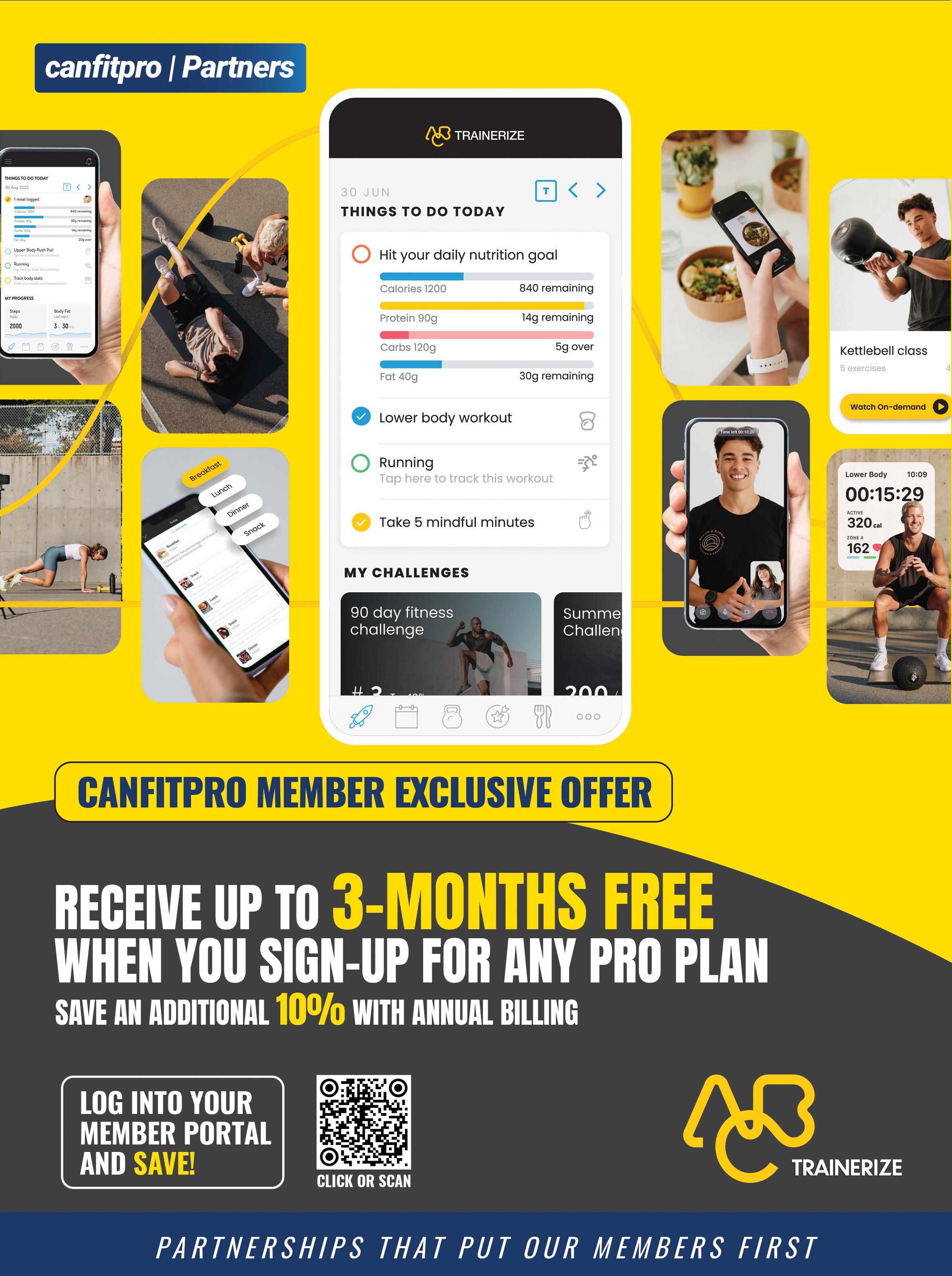
ABC Trainerize (canfitpro member discounts), My PT Hub, Everfit, and TrueCoach allow you to program workouts, schedule sessions, message clients, and even collect payments, all in one place. These save time and reduce missed revenue.
My PT Hub, for example, lets you add unlimited clients without penalty, making it great for scaling. Everfit’s dragand-drop interface makes check-ins a breeze. Choose based on your workflow, not what’s trending on TikTok.
Wearables That Guide, Not Mislead: The Apple Watch, Fitbit, and Garmin still earn their place in a smart coaching toolbox, when used wisely. Heart-rate data and step counts? Pretty solid. Calorie burn and sleep scores? Not gospel. Use
TRAINERS WHO CAN TURN ISOLATION INTO CONNECTION ARE THE ONES WHOSE BUSINESSES GROW ...
them to inform conversations, not replace intuition.
Even a simple Strava club can foster consistency and friendly competition, especially when you celebrate your clients’ progress publicly.
Engagement Tools That Keep Clients
Close: Want clients to stay consistent between sessions? Don’t just text them “Keep going!” Use tools like HabitBull, Coach Catalyst, or built-in habit features in your coaching platform to track water intake, mood, sleep, or step goals.
Create a Discord server, private Facebook group, or WhatsApp thread to build community. Trainers who can turn isolation into connection are the ones whose businesses grow, without always needing to sell.
TECH TO THINK TWICE ABOUT
Apps That Harvest Data, Not Results: Here’s what too many free fitness apps don’t tell you: they’re not “free.” A 2023 study found that 80% of top fitness and wellness apps shared user data with third parties, often without clear consent. Strava and Fitbit alone have been caught collecting over 21 different types of personal data. And guess what? If you introduced the app to your client, you assume the responsibility when that app misbehaves. Your reputation is your most valuable currency, don’t gamble it on a flashy platform with shady ethics.
Gadgets That Look Cool, But Add Nothing: Smart mirrors that correct your form mid-deadlift? Smart rings that buzz when your HRV dips? Unless they directly improve outcomes or efficiency, they’re distractions with Bluetooth. One client’s “accountability” becomes another’s anxiety spiral.
The best short-term recovery tools? Still the basics: massage guns, foam rollers, and yes, actual rest days.
AI Coaching That Bypasses
You:
Apps promising AI-powered plans or “adaptive training algorithms” often sell clients the illusion of personalization, without your input. These platforms are often built to scale their own revenue, not yours.
If a tool makes you look smarter, more helpful, and more human? Use it. If it tries to replace you or hoard client information to be shared with data brokers? Ditch it.
BOTTOM LINE
Every tech decision you make either builds your brand or gives it away. Use tools that scale your time, build trust, and reflect your values. Be fussy. Be skeptical. Keep learning. Because in a world full of gadgets and gimmicks, your informed instincts are your real superpower.
Claudiu Popa, canfitpro PTS, enjoys sharing knowledge accumulated over 30 years of strength training and fitness conditioning. He enjoys empowering fitness enthusiasts and trainers alike with Facebook pages, including Claudiu’s Workout Humour. He can be reached in confidence at Claudiu@WorkoutSmart.ca.
THE FUTURE OF ADAPTIVE FITNESS TECH MEETS TALENT:
HOW INNOVATION, BOTH HIGH-TECH AND HUMAN, EMPOWERS PEOPLE OF ALL ABILITIES TO MOVE, TRAIN, AND THRIVE
Lorne Opler, M.Ed, MSW
Fitness has never been more tech friendly than it is today. From fitness trackers to workout apps, from heart rate monitors to “smart” scales, there is something “tech” for everyone who wants to track, monitor, and improve their health.
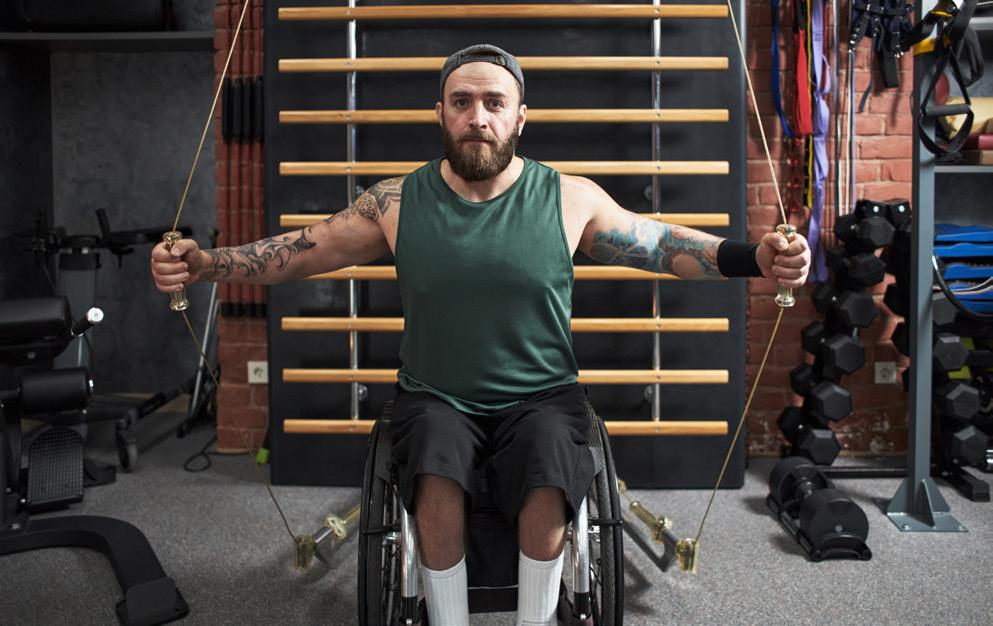
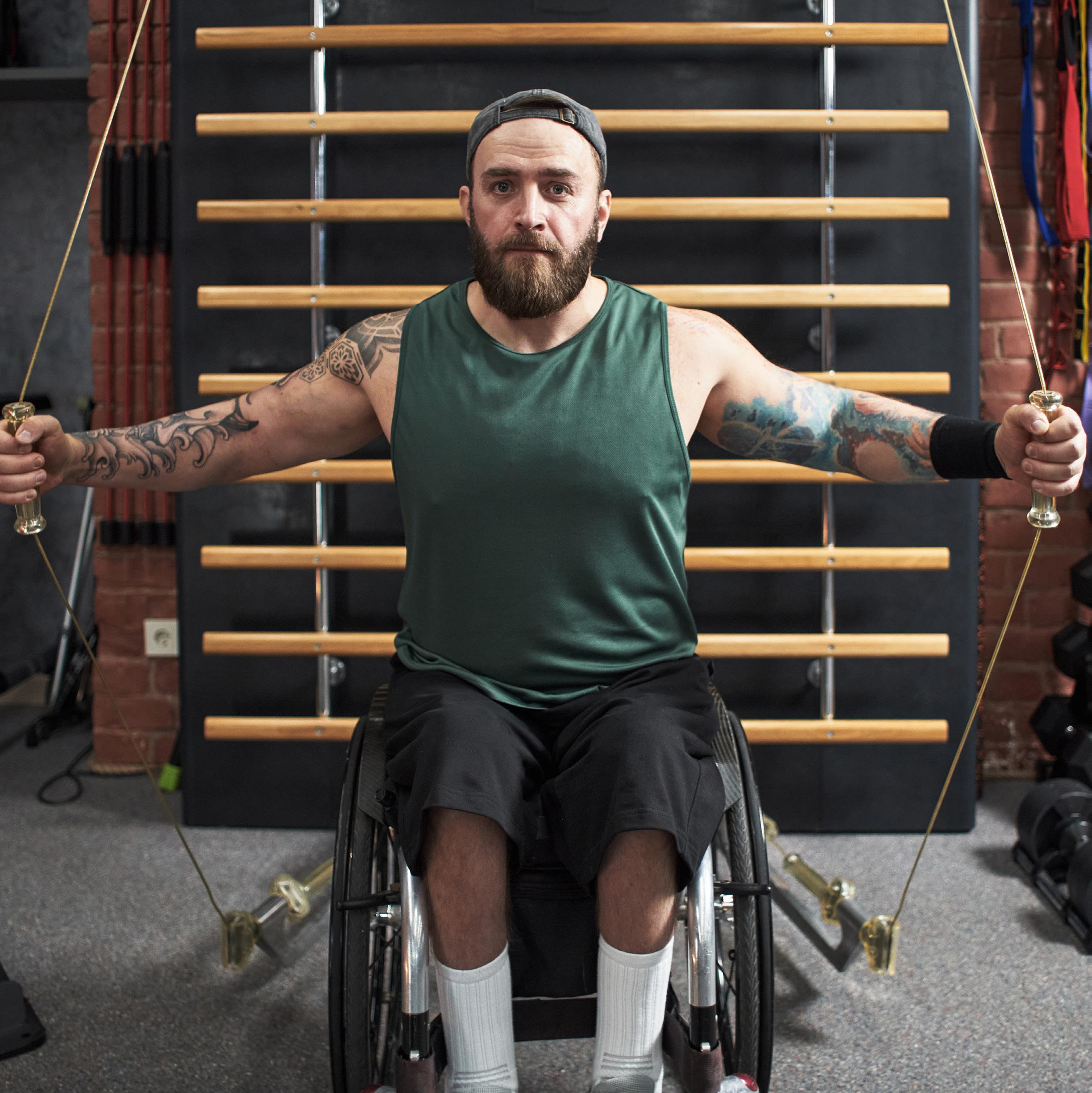
When it comes to assisted fitness devices with people with disabilities, not all tech is “high” tech. Low tech plays an equal role in enhancing the workout experience. Peter Morel, founder and co-owner of Top Shape Fitness Studio in Ottawa, recommends using lifting hooks - simple wrist cuffs with an attached hook that can latch on to a barbell or dumbbell allowing people with weak grips or missing fingers to lift a weight through full of range motion. Or a rowing hook that can be attached to a rowing machine allowing para-athletes and hemiplegics to row with one hand.
Paul Gabay, health and fitness strategist and owner of Resolution Fitness, recommends the Stroops®️ Cobra Pro, a resistance band system that provides a safe, effective, and adaptable workout allowing all athletes, seated or standing, able bodied or those with a disability, to build strength, improve speed, and increase endurance. “It’s a purposebuilt resistance system with a protective safety sleeve preventing the band from snapping back on you,” says Paul.
But whether it’s low-tech or hi-tech, all adaptive-friendly equipment aims for one thing says Candice Combdon, Adaptive Fitness Advocate and fitness advisor at Goodlife Fitness in Barrie. “It’s about freedom and confidence. Tech is about making us feel the same kind of freedom able bodied feel when they are in the gym,” says Combdon. A good example, she adds, are tech apps. “Fitness apps for wheelchair users, chair yoga apps, apps for amputees, to name just three.”
One of the newest mobile apps available is by Sekond Skin Society
Founded by Lee-Anne Reuber, “it’s a virtual on-demand group fitness app using assisted technology open to everyone, able bodied athletes and athletes living with a disability,” she says. Sekond Skin Society offers yoga, dance, cardio, strength and meditation/ visualization and provides voice over activation, screen reader capabilities, and interpretation in American Sign Language so everyone can take part. Perhaps its most unique feature is its capacity to stream two versions of the same class simultaneously (e.g., a standing class along with a seated class with no lower body movement). “This allows people with different needs to take the class together,” adds Reuber.
But as helpful as technology can be to accelerate our workouts, nothing can replace the human connection between fitness professionals and their clients/participants to ensure success. There is a need for more trainers and group instructors with a background in adaptive fitness coaching, says Jess Silver, Adaptive Fitness Personal Trainer/ Consultant and owner of Flex for Access, which develops adaptive fitness opportunities for people with physical disabilities in mainstream athletic settings. “We need to create educational curricula for trainers that teach these skills,” she adds.
Which is exactly what Peter Morel did in creating the Top Shape Adaptive Fitness Certification course, a sixhour home study course to teach fitness professionals how to perform assessments, develop programming and ensure proper gym safety for clients with disabilities.
In the end, it will be a combination of high tech plus human talent that will propel adaptive fitness forward. As Candice Combdon concludes, “I’m excited to see where fitness will take us in the future.”
DISABILITY & FITNESS RATES
• In 2022, 27% of Canadians aged 15 or older (about 8 million people) reported having one or more disabilities that limit daily activities. That’s up from ~22% in 2017. (statscan.gc.ca)
• In Canada, ~27% of adults participated in sport in the past year. Among individuals identifying as having a disability, sport participation was about 21%; among those without a disability, ~30%. (cflri.ca)
Lorne Opler, M.Ed., MSW, CSCS, is an Adjunct Professor at Seneca College in Toronto, Ontario where he teaches Introductory Nutrition. He has specific interests in the areas of exercise and mental health, nutrition and mental health, fitness for older adults and people with disabilities. His freelance fitness articles appear in Muscle and Fitness magazine, ACE Fitness, and the Washington Post.
SMARTER HEART RATE TECH IS TRANSFORMING THE WAY WE TRAIN
THIS IS AN EXCERPT FROM HEART RATE TRAINING-2ND EDITION
BY ROY BENSON, DECLAN CONNOLLY.
Heart rate monitor capacities have advanced dramatically in the last several years. They have improved in function, appearance, reliability, and accuracy. The new generation of wrist-reading monitors has proven reliable for the most part, and so much more practical than the chest strap systems. Modern monitors provide basic information on calorie expenditure, oxygen consumption, time in target zones, average and maximum heart rates achieved during the workout, and time in heart rate recovery zones, as well as offering audible signals, 24-hour heart rate measurements, and a whole lot more. All this information can be easily recorded and stored on your smartphone for later analysis, allowing you to fine-tune and individualize your program to a greater degree than ever before. This info can be downloaded and stored on your computer as well. You can also compare your heart rate response from day to day. If these workouts are at the same speed, you will be able to see your training heart rate response over time (e.g., your heart rate should decrease
when working at the same speed as you get fitter). The recordable and downloadable features allow you to see your daily data on a spreadsheet. When viewing your changes over time on this single spreadsheet, the data can greatly reinforce your determination to train smartly.
Data on calories expended, which is indirectly calculated from heart rate, is a helpful feature because it expands the use of the monitor to people who are less performance oriented and more interested in issues such as health improvement, weight loss, and cardiac rehabilitation. Often people will have a distinct caloric expenditure target per day or week that translates into weight or fat loss. For example, it is common to use the basic value that you must burn 3,500 calories to lose one pound (0.5 kg) of fat. Therefore, burning 500 additional calories per day through exercise equates to roughly one pound of fat loss per week.
For athletes, the 24-hour monitoring option provides an abundance of new information they can use to fine-tune their programs and monitor their
intensity levels. This fairly convenient system tracks not only exercise heart rates but also recovery rates. This provides vital information related to adaptation and recovery. By tracking the heart rate over 24 hours, athletes get thousands of data points that are downloadable to a computer to create a graph or spreadsheet. These data can reveal not only the slightest signs of illness, overtraining, and fatigue, but also improvement in fitness levels. Having this data can allow an athlete to compare morning resting heart rates over time and potentially even detect early signs of overtraining or illness before it progresses too far.
THE EVOLUTION OF GROUP CYCLING—FROM PLAYLISTS AND PASSION TO PERFORMANCE DATA AND DIGITAL CONNECTION
By Krista Popowych, BHKin
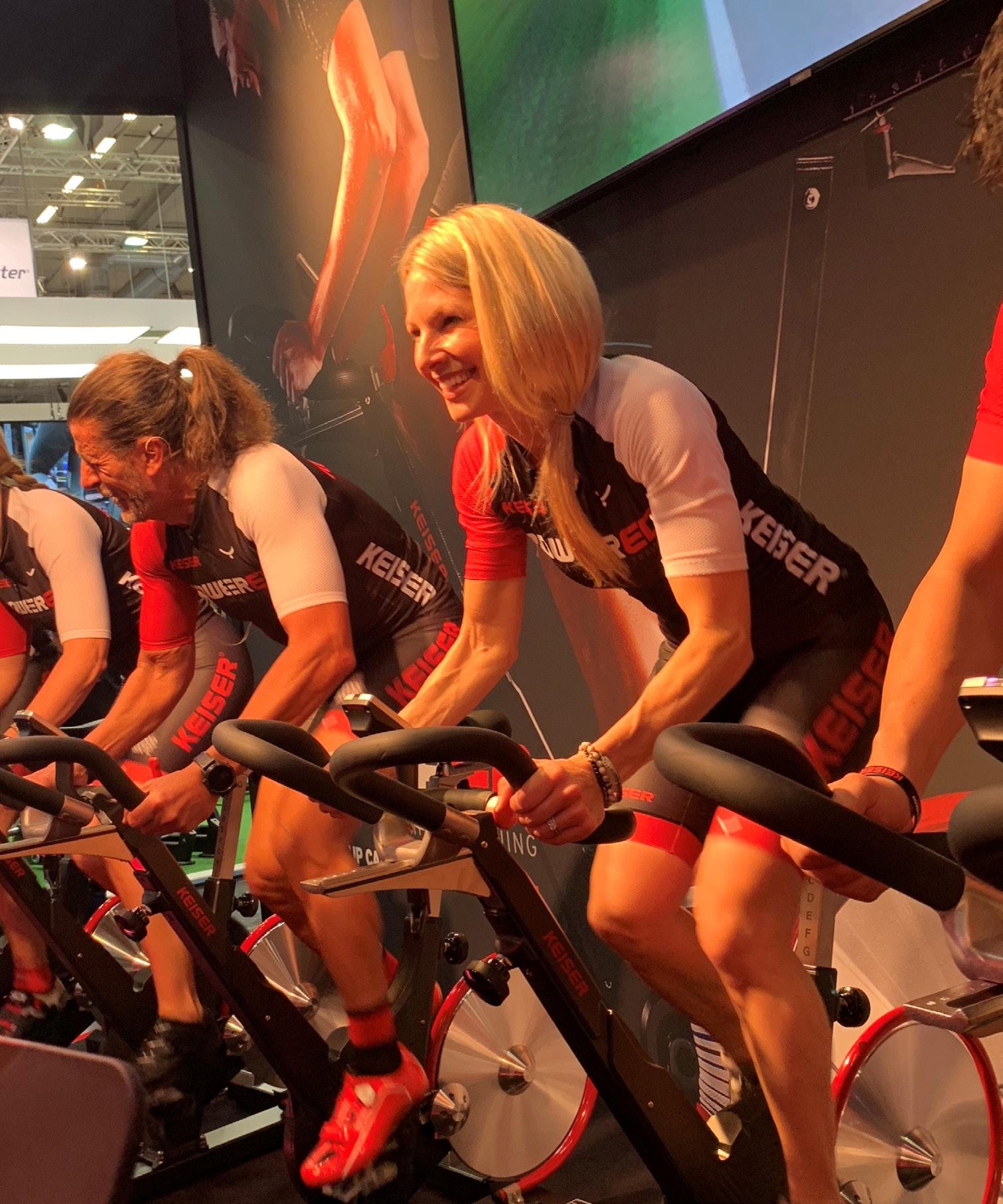
Group indoor cycling has experienced dramatic change, particularly in the last decade. Once centered mainly around energetic music and enthusiastic instructors, today’s cycling classes are increasingly shaped by advances in fitness technology. The modern studio now leverages interactive bikes, performance-tracking apps, and shared digital displays to deliver real-time feedback to riders. Participants can check their stats, set personal targets, and receive tailored encouragement, while instructors use data to design inclusive, responsive classes for all skill levels.
Empowering Participants & Instructors with Technology
Smart devices and software play a significant role in keeping cyclists engaged and accountable. Apps synced to exercise equipment track power output, heart rate, and rpm (cadence), both during and after each session. This insight helps riders—from beginners to veterans—understand their performance and work towards specific goals. Group display systems further foster teamwork and healthy competition by letting everyone see their contribution to the collective effort, inspiring camaraderie and motivation.
Instructors, meanwhile, benefit from instant access to group and individual statistics, enabling them to tailor workouts and offer targeted feedback. Leaderboards, like the Keiser MSeries Group app, display key metrics initially inputted by the rider. With that information, an instructor can cater the workout. For example, if less than half the class enters their FPT, the instructor armed with this knowledge can pivot to teaching a workout that is not power based or know to include an FTP test early in the session.
Fostering Community & Motivation Through Digital Tools
One of the most powerful effects of technology in indoor cycling is its ability
BY BLENDING TECHNOLOGY AND CREATIVITY, GROUP INDOOR CYCLING BECOMES MORE INTERACTIVE, MEASURABLE, AND REWARDING FOR EVERYONE INVOLVED.
to bring people together. Shared screens, real-time leaderboards, and progress tracking encourage unity and mutual support. These features help to create a welcoming atmosphere where riders feel included, challenged, and inspired to improve. Fun drills like working towards hitting a distance target or blasting through a group kilocalorie goal, bring excitement and engagement.
Instructors use digital platforms to keep classes lively, inclusive, and responsive, making sure every participant feels valued.
On-Demand Training Platforms: Expanding Accessibility
Digital on-demand platforms have made high-quality cycling instruction available to a much wider audience. Riders can access professionally produced classes from home, in the studio, or even while traveling. This flexibility allows users to train on their own schedule, while instructors can draw on world-class programming to supplement their own offerings or try out new class formats. These services help ensure that everyone, regardless of location or time constraints, can benefit from expert guidance and the energy of group cycling.
Many of these on-demand systems are also not expensive. The Ride by Keiser has a bank of over 600 indoor cycling workouts and costs under $10.00 per month. Not only do virtual rides provide great workouts, but they can also be used to inspire instructors to refresh the ride content they deliver themselves, providing ideas, teaching examples, and effective ride designs. In addition, virtual workouts solve the instructor shortage problem that many clubs face today, or the frantic search to find a last-minute
sub. With the push of a button, platforms like The Ride Studio by Keiser provides indoor cycling rides that can be displayed on a large screen in a studio or offer support like pre-designed workouts to support the in-person instructor.
Integrated Studio Ecosystems: The Ultimate Connected Environment
Fully integrated studios blend hardware, software, and content for a seamless, immersive group cycling experience. Smart bikes, digital displays, ambient lighting, and custom soundscapes— often controlled from unified platforms— combine to create a multisensory environment that maximizes engagement and motivation. Real-time analytics and management tools allow instructors to adapt sessions on the fly, based on participant feedback and group performance, resulting in memorable and dynamic rides.
Creating a Technology-Like Experience Without Tech
Not every studio or community has access to advanced equipment or digital platforms, but there are creative ways to capture the atmosphere and benefits of high-tech cycling. Using coloured LED lights can help set the mood and energize the space—choose colours to match the intensity of different segments or signal transitions in the workout. Soundscapes
and curated playlists can create immersive audio experiences, while simple visual props like banners or wall decals can inspire and motivate. Instructors can use whiteboards or poster charts to track group challenges or milestones manually, fostering friendly competition and accountability. The key is to focus on elements that build community, encourage progress, and make each class feel special, even without digital tools.
Empowering Instructors & Participants Without Boundaries
Whether using high-tech solutions or imaginative alternatives, the goal remains the same: to empower participants with feedback, motivation, and a sense of belonging, while giving instructors the tools to lead adaptive and engaging classes. By blending technology and creativity, group indoor cycling becomes more interactive, measurable, and rewarding for everyone involved.
Final Thoughts
As fitness continues to evolve, technology is helping redefine what’s possible in group cycling studios across Canada. However, even without access to advanced equipment, creative approaches can bring many of the same benefits—building community, inspiring improvement, and making every ride memorable. Ultimately, it’s not just about the tools, but about the people and the shared journey. Whether high-tech or low-tech, Canadians can enjoy every pedal stroke together.
Krista Popowych, BHKin, is an award-winning fitness professional, canfitpro three-time Canadian Presenter of the Year as well as an IDEA Fitness Instructor of the Year. Krista is the Global Director of Group Education for Keiser and is the co-creator of The Ride and The Ride Studio, offering on-demand virtual rides for indoor cycling enthusiasts and clubs world-wide. She can be reached at kristap@keiser.com
in Data-Driven Fitness THE MISSING LINK
HOW PERSONAL TRAINERS CAN TURN WEARABLE TECH INSIGHTS INTO REALWORLD RESULTS THROUGH HUMAN CONNECTION, ACCOUNTABILITY, AND PERSONALIZATION
By ABC Trainerize
Walk into any session today, and chances are your clients aren’t just showing up with water bottles and sneakers...they’re bringing data too. Apple Watches, Fitbits, Oura Rings, WHOOP bands…it’s an ever-growing list.
Heart rate, sleep cycles, recovery scores, steps, calories burned - it’s all tracked, logged, and synced. The problem? For most clients, that data is overwhelming. It’s often a flood of numbers without context. They know they got “10,000 steps,” but what does that mean for their strength goals? Their device tells them they slept six hours, but how does that connect to today’s workout plan?
More data doesn’t always equal better outcomes. Clients often misinterpret what they see. They chase calorie burn over strength progression. They overtrain because their watch told them they “need to move more.” They underappreciate the role of recovery, consistency, or even their own enjoyment of exercise.
Here’s where the opportunity lies. Personal trainers aren’t just exercise prescribers anymore. They’re
translators too. You take the data and turn it into action. You give numbers meaning and (most importantly) turn meaning into results.
From Prescriber to Interpreter
Data can tell us a lot, but it can’t make sense of a client’s lifestyle, goals, and habits. Trainers can.
Being a data-informed coach means shifting the way you approach programming. Instead of just writing workouts, you’re helping clients integrate what their wearables are tracking into a sustainable plan.
• Lifestyle adjustments: If your client plays basketball every Tuesday night, maybe avoid scheduling heavy leg work that morning. If they walk five minutes after work daily, could you build on that and challenge them to walk 10? Small tweaks add up.
• Recovery awareness: Clients often think more is better. You can step in to explain why their recovery score (and their tired body) means they’ll get more benefit from rest and mobility work than another round of HIIT.
• Celebrating small wins: Wearables make consistency visible. Whether it’s hitting a sleep goal three nights in a row or seeing their step count rise steadily, you can highlight progress in ways the scale never could.
This is coaching that makes clients feel seen, heard, and supported...not just instructed.
Practical Applications:
Using Wearable Data in Coaching
So, how do trainers actually put all this into practice? Here are three simple ways:
Personalize Programs: Use heart rate data, recovery scores, or step counts to tailor training intensity and volume. This ensures clients stay challenged but not burnt out.
THE FUTURE ISN’T
Boost Accountability: Clients love seeing streaks, metrics, and badges. Pairing those with your coaching adds an extra layer of motivation. You’re not just telling them to stay consistent—their watch is showing them how well they’re doing.
Measure Progress Beyond the Scale: Sleep quality, resting heart rate, recovery time, and activity levels offer new ways to celebrate progress, especially for clients who get discouraged by traditional metrics like body weight.
Technology Spotlight:
ABC Trainerize as the Connector
Here’s the good news: you don’t have to chase down your clients’ data from five different apps. ABC Trainerize integrates directly with Apple Health, Google Fit, Fitbit, Garmin, and other wearable platforms.
That means step counts, heart rates, and activity summaries flow right into your clients’ profiles, alongside their workouts, habits, and goals. You see the bigger picture without the noise.
ABOUT
MORE DATA;
IT’S ABOUT BETTER
COACHING.
For example:
• A client’s wearable shows poor sleep all week. Instead of pushing harder, you adjust the program to focus on mobility and recovery.
• A step count plateau reveals an opportunity to challenge them with a walking habit or more cardio.
• Heart rate tracking during workouts helps you show them they’re actually working in the right intensity zone, not just “feeling tired.”
Looking Ahead: The Future Is Coaching, Not Data
The future of wearables is only going to get more detailed. Biomarkers, continuous glucose monitoring, hydration tracking. The list is growing. But more numbers don’t automatically lead to better results.
Personal trainers who embrace this shift will not only improve their clients’ outcomes but also future proof their businesses. Clients don’t need more data. They need better coaching.
ABC Trainerize is a member engagement mobile app and software platform that allows coaches and fitness businesses to expand their reach beyond their physical space, better connect with members, and digitize the training experience. By combining fitness, nutrition, and habits with online coaching, ABC Trainerize can help coaches drive deeper behavioral changes and healthier lifestyle decisions. ABC Trainerize is available as an integrated solution with ABC platforms, as well as other third-party member management solutions.
MEASURE WHAT MATTERS
HOW NUTRITION TECH IS CHANGING
THE GAME FOR COACHES
By Maureen (Mo) Hagan
Imagine this: a client walks into your session already armed with weeks of sleep data from their Oura Ring, daily glucose curves from a continuous glucose monitor (CGM), and a body composition history synchronized from their smart scale.
Welcome to the new coaching frontier where nutrition technology gives consumers the power to measure nearly everything, and fitness and health professionals the chance to turn raw numbers into meaningful action.
Nutrition technology has exploded beyond calorie-tracking apps. Today’s devices can scan antioxidant levels through the skin, analyze metabolism from a single breath, and deliver realtime glucose readings once reserved for clinical use.
For fitness professionals, this tech wave is both exciting and overwhelming. Which devices really help? How do you
use them responsibly? And how do you keep focusing on client outcomes rather than chasing numbers?
Here’s an updated overview of the nutrition technology landscape and how these tools can enhance your understanding of client health and nutrition. While not every professional needs to use them, being aware of their potential benefits helps coaches and clients make more informed, evidence-based decisions about their health, habits, and overall wellness journey.
WEARABLES: THE CONTEXT LAYER
Apple Watch, Oura Ring, and Fitbit remain the most common “gateway” devices. While these tools don’t measure nutrition directly, they track sleep, heart rate variability (HRV), activity, and recovery.
These signals provide context for nutrition coaching: poor sleep may explain stalled weight loss, or low
readiness scores may suggest clients need better fueling and hydration.
PRO TIP: Treat wearables as the background music of client health and not the main performance, but an important influence on outcomes.
SMART SCALES & BODY COMPOSITION
Today’s scales do far more than log weight. Consumer models like Withings Body+ estimate fat, water, and muscle using bioelectrical impedance, while professional analyzers such as InBody and Tanita deliver detailed segmental analysis.
BEST USE: Track trends over time and not daily fluctuations. Emphasize consistency (same scale, same time, fasted state) to get meaningful data.
CONTINUOUS GLUCOSE MONITORS (CGMS)
Originally developed for diabetes management, CGMs from Dexcom,
QUICK CHECK: IS THIS DEVICE RIGHT FOR MY CLIENT?
Ask these five questions before recommending nutrition tech:
3 Providing human accountability and encouragement.
Abbott, and Freestyle Libre are now mainstream through wellness services like Levels and Nutrisense.
They reveal how food, exercise, and stress affect blood sugar in real time.
CLIENT IMPACT: A single two-week trial often sparks “aha” moments—like realizing that a poor night’s sleep amplifies glucose spikes.
Caution: Glucose is just one marker. Use it as a feedback tool, not a judgment metric.
BREATH ANALYZERS & METABOLIC FUEL USE
Devices such as Lumen or Breezing Pro analyze exhaled breath to estimate whether the body is burning carbohydrates or fats.
Clients can assess metabolism daily and adjust nutrition or training accordingly.
BEST FIT: Athletes or clients focused on metabolic flexibility, performance, or body composition refinement.
NUTRIENT
& ANTIOXIDANT
SCANNERS
One of the most promising frontiers in nutrition tech measures diet quality directly through biomarkers.
The Pharmanex BioPhotonic Scanner is a non-invasive device that measures skin carotenoid levels to estimate antioxidant status and diet quality. Using light-based analysis, it provides a quick, real-time carotenoid score that reflects fruit-and-vegetable intake. For coaches and wellness professionals, it serves as a practical tool to motivate healthier choices and track lifestyle improvements over time.
Handheld spectrometers like SCiO and Tellspec also estimate nutrient density using light-based analysis. While accuracy continues to evolve, these devices shine as motivational tools— not diagnostic.
PRO TIP: Use carotenoid and nutrient scores as conversation starters to encourage more colourful, plant-rich diets.
NUTRITION TECH TOOLS TO WATCH: NEW, EXPANDING, OR GAINING ADOPTION
This section highlights technologies that are either new to the market, expanding their capabilities, or gaining adoption in coaching and wellness settings. Some have been around for a few years,
THE REAL POWER OF NUTRITION
TECH
ISN’T IN THE
DEVICE—IT’S HOW YOU USE IT TO CONNECT SCIENCE, BEHAVIOUR, AND HUMAN COACHING.
but their practical use in professional practice is only now increasing.
PHARMANEX PRYSM IO
The Pharmanex Prysm iO is a compact, fingertip-based device that measures skin carotenoid levels—a proxy for antioxidant status—in just 15 seconds and is paired with an app that helps interpret the score to educate the client. Using hyperspectral absorption and machine-learning calibration, it delivers a personalized carotenoid score that provides immediate feedback on fruit-and-vegetable intake and overall diet quality. This next-generation tool helps coaches integrate biomarker insights into wellness programs and spark meaningful conversations about nutrition habits.
These apps use AI to log meals from photos. While not brand-new, AI-based meal recognition is still evolving, and adoption among professionals is growing.
DNA & MICROBIOME TESTING (E.G., NUTRIGENOMIX, VIOME)
These services offer insights into genetic and gut microbiome factors affecting nutrient metabolism, inflammation, and food sensitivities. Professionals are increasingly using them to inform personalized nutrition strategies.
HYDRATION SENSORS (E.G., NIX BIOSENSOR)
Wearable hydration monitors track sweat and electrolytes in real time.
Though available for a few years, their integration into daily coaching and wellness programs is still emerging, particularly outside of elite athletic settings.
These platforms unify nutrition, exercise, and recovery metrics in one dashboard, helping coaches translate data into actionable insights. While the platforms themselves exist, their full adoption in integrated, multidevice workflows is still growing. They appear in terms of how widely coaches use them to combine nutrition, exercise, and recovery data in one place for holistic programming.
MAKING TECH WORK FOR YOU
With so many options, start with purpose: what question are you trying to answer? Then match the tool to the goal, standardize measurement routines, and translate data into simple, actionable steps.
A client who paired an Oura Ring with a CGM discovered larger
glucose swings after poor sleep. The intervention? Better sleep hygiene and added morning protein. Within six weeks, glucose stability and energy improved.
PITFALLS
& ETHICS
Accuracy: Use trends, not absolutes.
Data Overload: Filter the noise.
Privacy: Get consent and understand data policies.
Scope of Practice: Refer clients to proper healthcare professionals when readings raise red flags.
THE BOTTOM LINE
Nutrition technology won’t replace the coach—it amplifies your impact. By helping clients measure what matters, you turn data into confidence, curiosity, and change.
Because the real power of nutrition tech isn’t in the device—it’s how you use it to connect science, behaviour, and human coaching.
Disclaimer: This article is intended for informational and educational purposes only and does not constitute medical advice. The technologies and tools discussed are reviewed based on publicly available information and emerging industry trends. Readers should consult qualified healthcare or wellness professionals before making decisions about medical, nutritional, or fitness interventions. canfitpro and the author are not responsible for the use of any products or devices mentioned
Maureen (Mo) Hagan is COO at canfitpro, and a global fitness ambassador recognized for her leadership in the fitness industry that spans almost four decades. She is an international award-winning fitness professional and her passion for moving people extends beyond the fitness industry as a licensed physiotherapist and with her work on the Canadian National Board of Directors for Prescription to Get Active
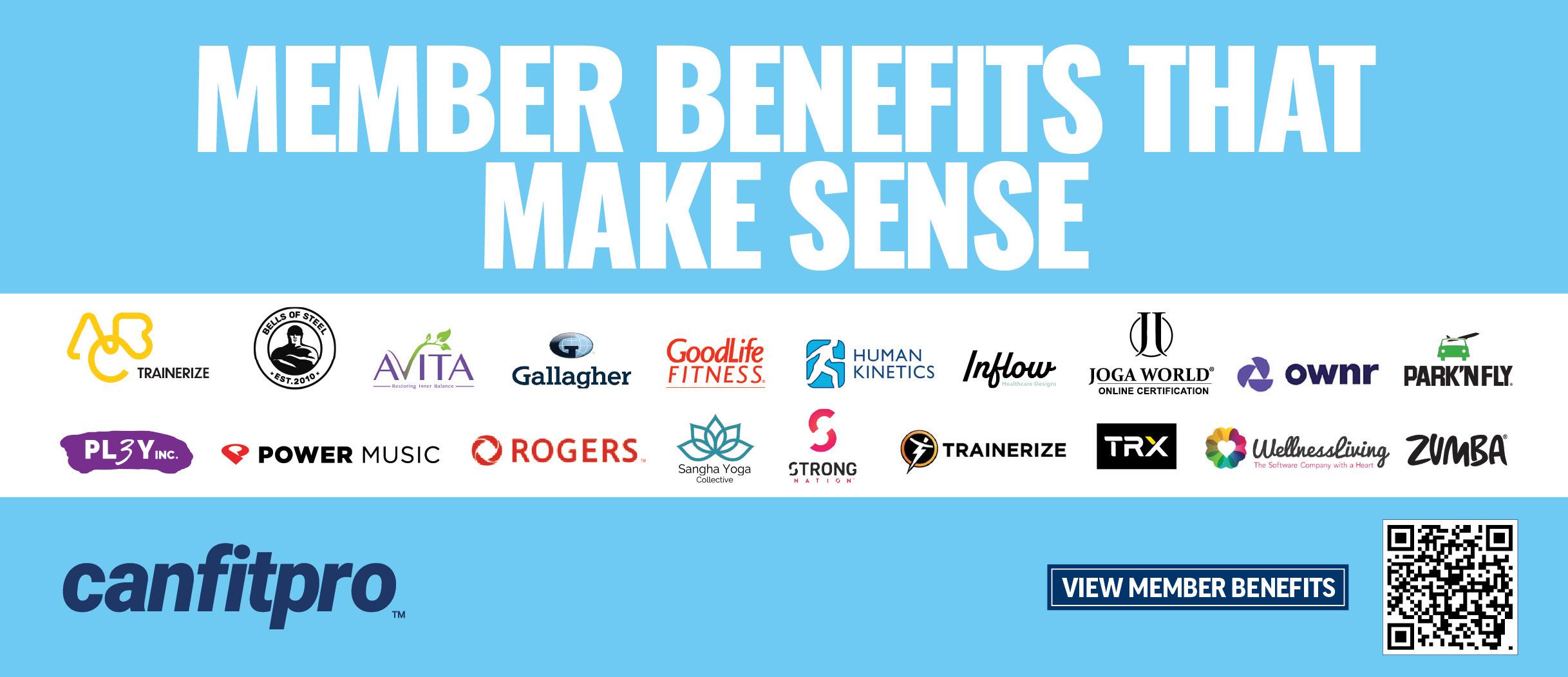
MEMBER BENEFITS THAT MAKE SENSE
From gear and apparel to insurance and wellness services — your canfitpro membership comes with exclusive perks.
YOU DESERVE BENEFITS. START USING THEM TODAY.
TOP VOICES IN FITNESS, NUTRITION, AND BUSINESS REVEAL THE RITUALS THAT HELP THEM REFOCUS, RECHARGE, AND REIGNITE THEIR PURPOSE FOR 2026
By canfitpro
How Fitness Leaders Power into a New Year of Growth RESET TO RISE:
As fitness professionals, we spend the year helping others build strength, find balance, and stay consistent. But as the calendar turns, many of us feel the need for a reset of our own. The start of a new year isn’t just a time for resolutions; it’s an opportunity to pause, reflect, and realign with our deeper purpose. Whether that means adjusting routines, renewing energy, or reimagining how we serve clients, a thoughtful reset can reignite motivation and set the tone for a more balanced, fulfilling year ahead. In this feature, industry leaders in personal training, group fitness, nutrition coaching, and business share their personal and professional rituals for recharging and refocusing. From mindset shifts and movement refreshes to fueling smarter and restoring balance, their insights remind us that meaningful growth starts not with doing more, but with reconnecting to what matters most.
GROUP FITNESS INSTRUCTOR: REIGNITING JOY AND CONNECTION
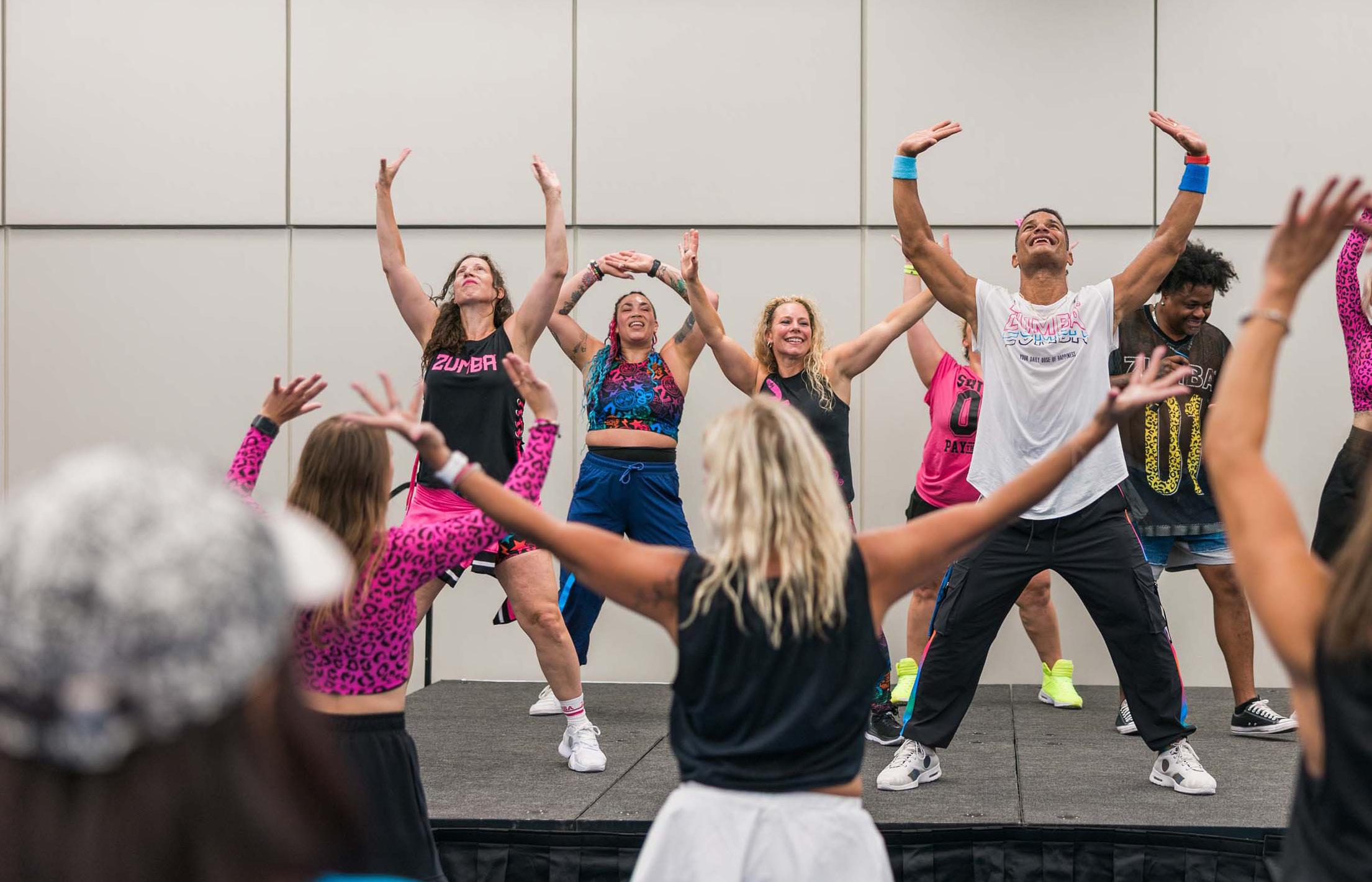
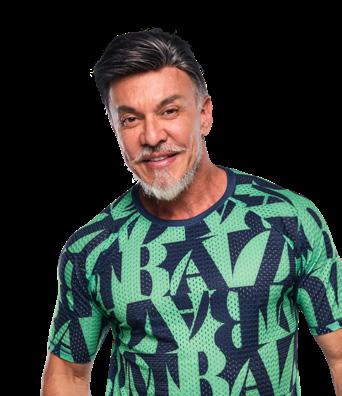
“Before every new year, I always take time to dance just for me. No choreography, no mirrors, no plan… just music and movement. It helps me reset my mind and remember that fitness doesn’t have to be perfect; it just must feel good.”
Beto Perez, Creator & Co-founder of Zumba® Fitness
“I plan my training and conference schedule for the year ahead, considering both financial feasibility and my business operations. To avoid burnout, I prioritize daily rest and schedule time off, ensuring I can give my best to my participants.”
Theresa Rindress, Owner of TRxrcs and canfitpro Fitness Professional of the Year (FIS) 2025
Group fitness instructors spend all year energizing others. The reset comes in finding new ways to energize themselves.
How they reset: Refreshing class themes, planning continuing education, or prioritizing creative time and rejuvenation.
Try this: Create a “Joy List”—three small actions that make you excited to teach again, whether it’s a new playlist, a themed class, or a simple gratitude ritual.
Key takeaway: Protecting your energy helps you serve your community with authenticity and enthusiasm.
PERSONAL TRAINER: RESETTING WITH PURPOSE
“Each fall, I take time to reverse engineer my year ahead. I set a personal goal (e.g., 5k race, a PR) to stay connected and grounded in what my clients experience. Professionally, I reflect on the past year: what worked, what I can scale or refine, and what I might let go of as I continue to evolve in the online space.”
— Lisa Mastracchio, Owner of Coach Lisa, canfitpro Delegates’ Choice Canadian Presenter of the Year 2025
NUTRITION
“For me, it begins at home: being the father and role model my children deserve. I want them to see discipline, curiosity, and a love for movement lived daily, then I revisit my four-quadrant goals— career, financial, personal, and educational—to ensure alignment between who I am and who I aspire to be. My message to fellow fitness professionals: your energy sets the tone for others’ success.”
Milad Emadi, Director of Performance Coaching, Movati Athletic, canfitpro Fitness Professional of the Year (PTS) 2025
“When we enter the fourth quarter of each year, we go back through our programming and perform a full audit. We assess client weaknesses (e.g., foot strength, posture) and review the latest research to identify improvements and new strategies. By addressing gaps and integrating proven methods, we keep workouts evolving with current science, delivering more efficient, safe, and effective results that help clients reach and sustain their goals longer.”
— Robert Linkul, Owner & Founder of Training the Older Adult (TOA)
COACH: REFUELING WITH INTENTION
“I’m focused on mindful eating, avoiding multitasking to reduce stress and support digestion. My advice: choose one physical goal, one nutritional rule, and one lifestyle habit then honor them with presence and consistency.”
— Tosca Reno, Founder of The Eat Clean Diet® Revolution
“Each January, I write ten goals: five professional, three health and fitness, and two personal. I assign target check-in months and review my progress weekly, creating small, actionable steps that keep momentum strong.”
— Terence Boateng, RD
After a year of coaching clients through countless reps and routines, even trainers need to step back and assess their own alignment.
How they reset: Reviewing client progress, re-evaluating programs, and carving out time for personal training and recovery.
Try this: Set aside one day in December to audit your own systems, your schedule, energy, and education plan. Small tweaks can lead to big breakthroughs.
Key takeaway: A purposeful pause keeps your coaching fresh, focused, and inspired.
After a busy holiday season, nutrition coaches know how easy it is to fall into “reset” extremes. The key? Balance and mindfulness.
How they reset: Resetting for the new year means grounding nutrition and lifestyle in mindful structure simplifying habits, setting clear, intentional goals, and fueling both body and purpose with consistency and presence.
Try this: Start each week with one mindful nutrition practice: pause before meals, notice how food makes you feel, and choose one habit to improve with purpose rather than perfection.
Key takeaway: Sustainable habits, rather than strict resets, build long-term health and clarity.
BUSINESS EXPERT: RESETTING THROUGH REFLECTION AND COLLABORATION
“My annual reset strategy is taking a holistic approach to wellbeing, looking at how I can be better physically, mentally, spiritually, and social/ emotionally in the coming year. I find that when I prioritize me, I can be better for others.
Physically, I revisit my exercise and nutrition goals and habits to determine what needs to change for improved results.
Mentally, I plan my list of books or courses to tackle for continued learning and growth, but more importantly for fresh ideas mostly around leadership.
Spiritually, I challenge myself to go deeper in my faith through prayer and meditation, building better habits to keep me grounded and reduce stress.
Socially/Emotionally I often reflect on how I can show up for others.
At canfitpro, we take a similar approach to our business reset. We look at each center and ask: What should we STOP, START, or KEEP doing? It’s about evaluating last year’s efforts and aligning on what’s next. Collaboration is key, because when everyone shares the vision, the reset becomes a powerful launchpad for growth.”
— Robert Robinson, Director of Business Growth, canfitpro
FINAL REFLECTION
“As an organization we begin preparing for the upcoming year approximately 4–5 months in advance to ensure there’s full collaboration and the right priorities are selected to meet our enterprise goals. I believe it’s important to not only goal set for the upcoming year, but to take time to reflect on the current year, what worked, what didn’t. It’s important that you don’t build your goals in isolation; team collaboration and cross-functional feedback help shape full company buy-in on the path ahead.
Personally, I practice the power of consistency and intentional routines— beginning each day with morning meditation and a workout to boost clarity and focus, and ending with evening journaling to set intentions. These sustainable habits, maintained at home or while traveling, help build balance, reduce stress, and keep longterm goals on track.”
— Kelly Thorne, Sr Vice President of Operations, MOVATI Athletic
A meaningful reset isn’t about starting over; it’s about realigning what already matters most. As these leaders remind us, growth is built on reflection, consistency, and presence. When we take time to restore our energy, sharpen our purpose, and approach the year with intention, we not only elevate our own performance, but we also empower those we serve to do the same.
High-performing leaders know that preparation and reflection go hand in hand. A strong business reset combines strategic planning with daily rituals that sustain focus, clarity, and balance.
How they reset:
Engaging teams early in the goal-setting process, fostering collaboration across departments, and reinforcing personal rituals like morning meditation, movement, and evening journaling to maintain energy and perspective.
Try this: Schedule a “year-in-review” meeting with your team to celebrate wins, analyze lessons, and co-create next year’s top priorities.
Key takeaway: The foundation for business success is built on consistent personal habits and collaborative planning that align purpose, people, and performance.
“Stepping into 2026, remember, your energy and perspective are your gifts. In the spirit of Ubuntu, “I am because we are,” you get to serve with gratitude and possibility to reignite the fire within you and those around you.” Orlando Bowen, Motivational Keynote Speaker
How do you reset for the new year? Share your ritual on Instagram and tag @ canfitpro
Hands-On Yoga Assists,
developed by yoga educator and massage therapist Kiara Armstrong, the Rubber Band Method®️ offers a consent-based, anatomyinformed approach to providing hands-on assists. You will learn how to read tissues, adapt your touch to each student, and apply contact to enhance the asana practice. The method also emphasizes physical safety and longevity for teachers, helping you assist sustainably for years to come.
THE AVITA TRIAL PACK: YOUR FIRST STEP TO HORMONAL HARMONY
Take control of peri-menopause & menopause with our professional grade herbal supplements.
• Suffering with anxiety, mood swings, irritability, night sweats, extreme fatigue, and weight gain?
• Struggling to sustain your fitness level and muscle mass?
• Worried about the challenges of high cortisol and insomnia?
Get started NOW & Reclaim your vitality in just ONE month.
Learn more or call/text 416-884-8444.
BREAK AWAY FROM THE PACK
with the brand-new Precor Breakaway™ Treadmill! Its premium slat-belt design delivers a smooth, durable stride that feels great underfoot. Intuitive controls and versatile training options, including HIIT intervals, incline, and push mode, keep exercisers engaged. Designed for everyday use, it keeps your members coming back.
The diverse collection of Matrix consoles gives fitness businesses choices in what they put on the cardio floor. Sophisticated, easy-tooperate designs give members control of the data they collect, the content that keeps them engaged, and the way they reach their goals.
The Matrix Touch Consoles exceed expectations with brilliant displays and fluid app interfaces. Users can connect to entertainment, social media, programming, including Sprint 8, facility communications, and more.
NEXT GEN CARDIO + APEX DISPLAY
Elevate your cardio experience with the Apex Touch display, featuring innovations from Star Trac and StairMaster. This sleek, high-definition touchscreen delivers immersive workouts, real-time tracking, and seamless Bluetooth, WiFi, and NFC connectivity. Built on the powerful OpenHub™ platform with over-the-air updates and EcoFit integration, Apex Touch combines interactive content and intuitive functionality for a smarter, more engaging, connected fitness experience.
DISCOVER HYDROMASSAGE 440 G3: Personalized, Full-Body Heated Massage for Wellness and Muscle Recovery
Designed to impress, the HydroMassage 440 G3 embodies quality and functionality, meeting the needs of diverse industries seeking wellness and recovery technology and solutions. Featuring a full body heated massage, HydroMassage relieves minor soreness and stress with a fully customizable massage for muscle recovery.