


Your support helps us forge proud and safe communities where gender identity and sexual orientation are respected.
I proudly support CAMP Rehoboth because they make our community feel safe and welcoming for everyone. Their mission isn’t just about programs and services—it’s about making sure every person feels embraced for who they are. That takes resources, and it’s the member-driven donor system that keeps the lights on and the mission moving forward.
I donate because I believe in CAMP Rehoboth’s ability to create a stronger, more inclusive community for all of us here in Delaware.
—
Dennis Diaz
CAMP Rehoboth Membership
Give ongoing support monthly or yearly.
One-Time Gift
Give instantly online.
Donor Advised Fund (DAF)
Recommend a grant from your DAF to support our work.
Tribute Giving
Honor someone special.
Planned Giving
Include us in your will or trust.
Donate appreciated assets.
Corporate Matching
Employer match donations.
Fundraise for Us
Start a peer-to-peer fundraiser.
Transfer from an IRA
If you are 70 1/2 years of age or older.
Cryptocurrency Giving
Donate crypto securely.
Contact our Development Manager, Laurie Thompson, at laurie@camprehoboth.org to learn more about these ways to give. Give.CAMPRehoboth.org

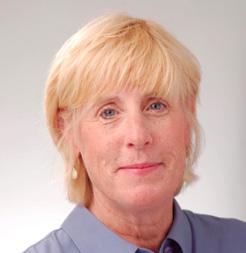
BY KIM LEISEY, PHD
Yes, CAMP Rehoboth matters—even in ways not often recognized.
For example, CAMP Rehoboth plays a vital yet often overlooked role in strengthening the local economy. Although we are commonly seen as a charitable or service-oriented organization, our influence extends far beyond social programs. Many LGBTQ+ folks and allies have moved to Sussex County to live, retire, and work because of the impact of CAMP Rehoboth in facilitating an affirming LGBTQ+ culture in Delaware’s coastal communities.
The Williams Institute reports that as of 2021, 7.5 percent of Delaware adults identify as LGBT compared to 5.5 percent nationally. Delaware has the third-highest percentage of LGBT residents in the nation, per capita (behind DC’s 14.8 percent and Oregon’s 7.8 percent).
Seventy percent of same sex couples in Delaware live in Sussex County. Of all three counties in Delaware, Sussex County has the lowest unemployment rate and the largest job growth rate. LGBTQ+ peoples’ dollars are fueling Sussex County businesses and economy.
Because of CAMP Rehoboth’s impact, LGBTQ+ people are a significant economic driver: creating jobs, attracting outside funding, supporting local businesses, and contributing to long-term community development. Our presence has helped to build a stronger, more resilient local economy.
CAMP Rehoboth also serves as a pipeline through which external funding reaches communities. Through grants, donations, and government contracts, we attract financial resources that are then spent locally on salaries, materials, equipment, and professional services. This inflow of money supports local vendors and generates additional economic activity. While CAMP Rehoboth is tax-exempt, the economic transactions it creates—such as wages paid to employees and business opportunities for local
suppliers—increase local revenues and help sustain essential public services. Supporting local businesses is another critical function of CAMP Rehoboth. We frequently purchase goods and services from nearby companies, including food services, office supplies, printing, event materials, and renovations. CAMP Rehoboth-sponsored events and programs also draw residents and visitors (many from other states) to local restaurants, hotels, and shops. Through these direct and indirect interactions, CAMP Rehoboth strengthens local supply chains and encourages the growth of small and mid-sized businesses.
Beyond our immediate financial con-
The economic value CAMP Rehoboth brings is crucial for building vibrant, equitable, and sustainable local economies.
tributions, CAMP Rehoboth enhances the overall quality of life within communities. Our work in areas such as education, healthcare, housing, recreation, and the arts creates environments in which people want to live and work. Communities with strong nonprofits such as CAMP Rehoboth tend to experience higher property values, stronger business retention, and an increased ability to attract skilled workers and new investments. Quality-of-life improvement, driven by CAMP Rehoboth’s activities, are key factors in regional economic competitiveness.
CAMP Rehoboth also fills critical service gaps that neither the public nor private sectors can fully address. We provide essential support for issues such as health equity, safe schools, first responder training, mental health resources, and family development. By doing so, CAMP
Rehoboth reduces pressure on government agencies and helps support vulnerable populations. More stable communities lead to more stable local economies, reinforcing the importance of CAMP Rehoboth.
Additionally, CAMP Rehoboth fosters civic engagement and social cohesion by mobilizing volunteers, building partnerships, and encouraging residents to participate in community life. High levels of social capital, i.e., trust and cooperation among community members, are linked to stronger and more resilient local economies. When communities face crises, such as economic downturns or natural disasters, a nonprofit such as CAMP Rehoboth is often called upon to act as a stabilizer by expanding services and providing support where it is most needed.
Long-term community development is another area where CAMP Rehoboth has made a lasting economic impact. CAMP Rehoboth supports affordable housing, neighborhood revitalization, small business assistance programs, and environmental improvements. These investments help attract new businesses, increase property values, and improve economic mobility for residents.
CAMP Rehoboth is essential to the economic health and long-term prosperity of Sussex County communities. Our contributions go far beyond charitable services—we create jobs, attract funding, support businesses, enhance quality of life, and strengthen community resilience. The economic value CAMP Rehoboth brings is crucial for building vibrant, equitable, and sustainable local economies.
Yes, CAMP Rehoboth matters. Your investment through donations, sponsorships, and support of CAMP Rehoboth programs serves all of Sussex County. Thank you for ensuring that we reach our 2025 end-of-year fundraising goal. We wish you a prosperous 2026. ▼
Kim Leisey, PhD, is Executive Director of CAMP Rehoboth.
74 View Point
We’ve Got Them on the Run RICHARD ROSENDALL
76 Signs of the
EDITOR: Marj Shannon
EDITORIAL ASSOCIATE: Matty Brown
DESIGN AND LAYOUT: Mary Beth Ramsey
ADVERTISING SALES MANAGER: Tricia Massella
DISTRIBUTION: Mark Wolf
should be sent as attachments in Microsoft Word®. Deadline for submissions is two weeks prior to the issue release date. Letters to the Editor (up to 300 words) are published at the discretion of the Editor on a space-available basis. Letters may be edited for length or clarity.
CONTRIBUTORS: Chris Azzopardi, Rich Barnett, Matty Brown, Pattie Cinelli, Sandy Clark, Michael Cook, Robert DeDominic, Vincent DeLissio, Logan Farro, Clarence Fluker, Michael Thomas Ford, Bill Fuchs, Joe Gfaller, Fay Jacobs, Leslie Ledogar, Kim Leisey, Tricia Massella, Christopher Moore, Sharon Morgan, Eric Peterson, Mary Beth Ramsey, Stephen Raskauskas, Richard Rosendall, Nancy Sakaduski, Romeo San Vicente, Terri Schlichenmeyer, Marj Shannon, Beth Shockley, Mary Jo Tarallo, Laurie Thompson, Sophie Wagner, Eric Wahl
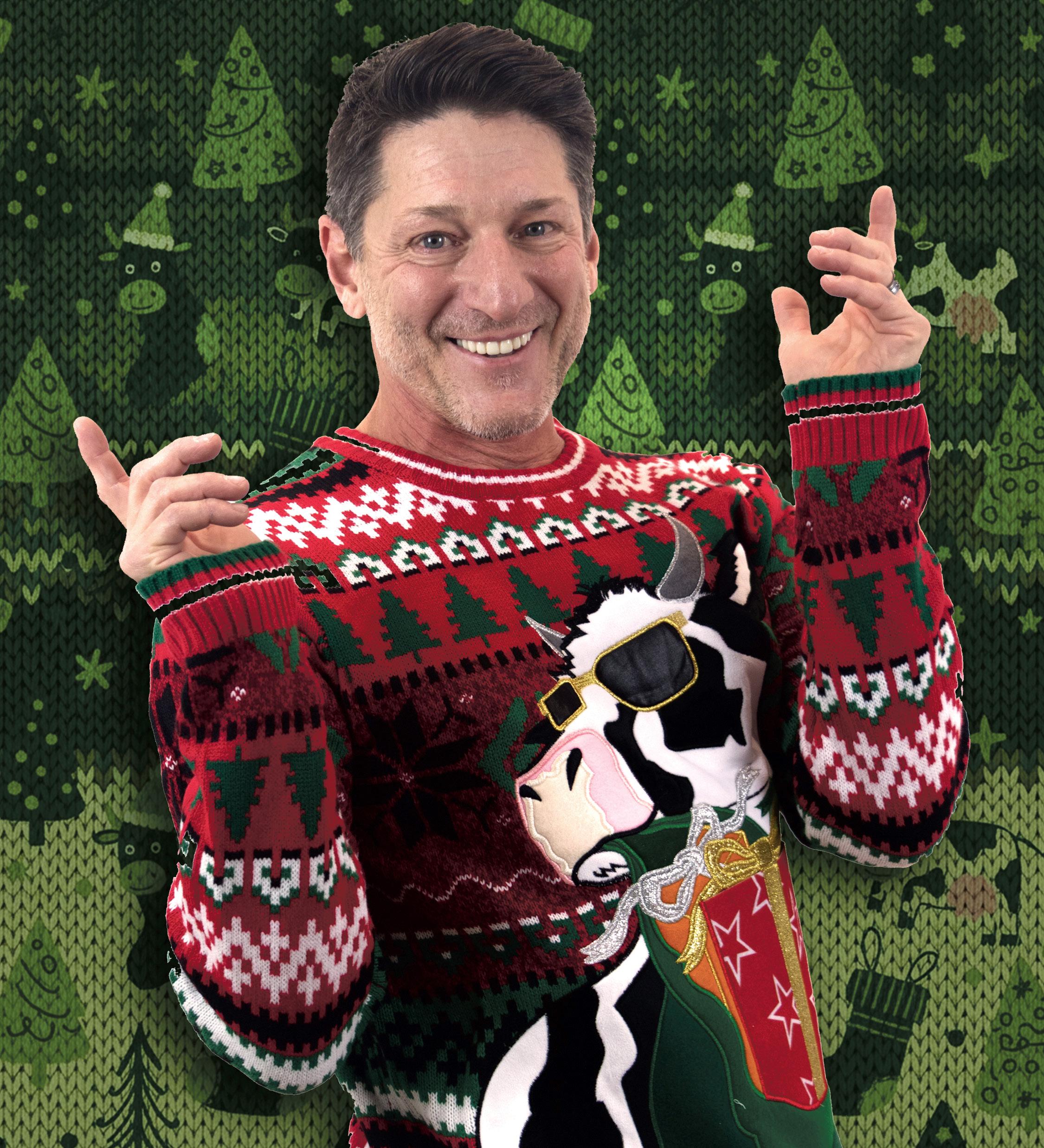
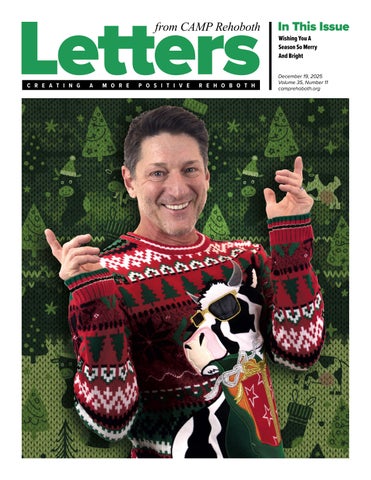
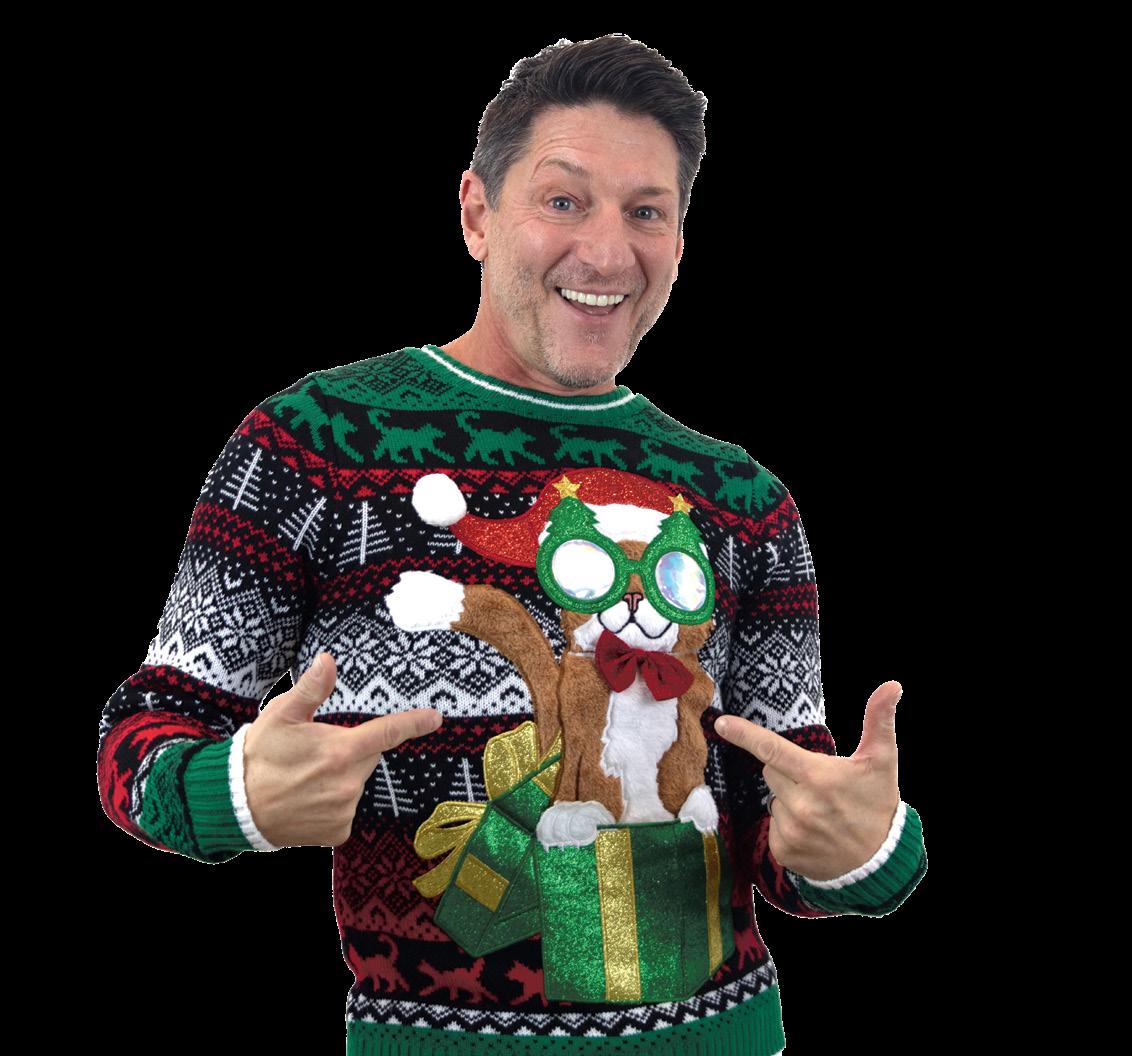
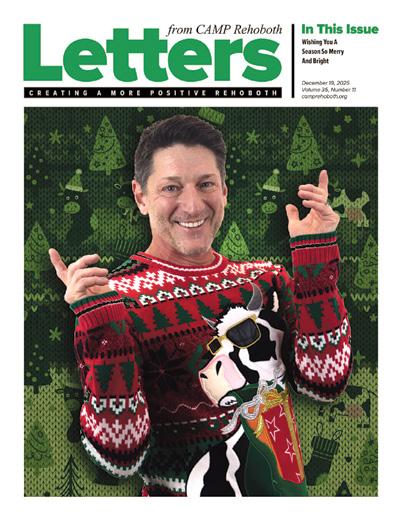
VOLUME 35, NUMBER 11 • DECEMBER 19, 2025 ON THE COVER Sweater Weather!
Photo by Murray Archibald
Letters from CAMP Rehoboth is published 11 times per year, between February and December, as a program of CAMP Rehoboth Inc., a non-profit community service organization. CAMP Rehoboth seeks to create a more positive environment of cooperation and understanding among all people. Revenue generated by advertisements supports CAMP Rehoboth’s purpose as outlined in our mission statement.
The inclusion or mention of any person, group, or business in Letters from CAMP Rehoboth does not, nor is it intended in any way, to imply sexual orientation or gender identity. The content of the columns are the views and opinions of the writers and may not indicate the position of CAMP Rehoboth, Inc.
© 2025 by CAMP Rehoboth, Inc. All rights reserved by CAMP Rehoboth. No portion of this publication may be reproduced in any form without the prior written permission of the editor.
MISSION STATEMENT AND PURPOSE
CAMP Rehoboth is an LGBTQ+ community center determined to Create A More Positive (CAMP) environment that is inclusive of all sexual orientations and gender identities in southern Delaware and beyond. We seek to promote cooperation, understanding among all people, and well-being, as we continue our work to build a safer community with room for all.
CAMP Rehoboth envisions communities in southern Delaware and beyond where all LGBTQ+ people thrive.
Community | Belonging | Positivity Diversity | Visibility | Transparency Safety | Partnership | Compassion
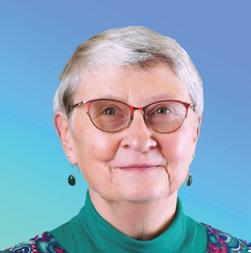
FPRESIDENT Leslie Ledogar
VICE PRESIDENT Teri Seaton
SECRETARY Pat Catanzariti
TREASURER Polly Donaldson
AT-LARGE DIRECTORS
Amanda Mahony Albanese, Wes Combs, Lewis Dawley, Mike DeFlavia, David Garrett, Jenn Harpel, Kim Leisey (non-voting), Michelle Manfredi, Kevin Ussery, and Hope Vella
EXECUTIVE DIRECTOR Kim Leisey
CAMP REHOBOTH
37 Baltimore Avenue, Rehoboth Beach, DE 19971 tel 302-227-5620
email editor@camprehoboth.org www.camprehoboth.org
CAMP Rehoboth, Inc. is tax-exempt under section 501(c)(3) of the United States Internal Revenue Code. Contributions to CAMP Rehoboth are considered charitable contributions for federal income tax purposes and may be deducted to the fullest extent of the law. A copy of our exemption document is available for public inspection.
BY MARJ SHANNON
irst up: It’s here! Letters from CAMP Rehoboth’s 2026 Flash Fiction contest is open for submissions! See page 13 for highlights and visit camprehoboth. org/letters for Writers’ Guidelines. The contest closes to submissions on February 28 so—there’s time, but not too much….
Okay, that exciting announcement behind us—what else will you find in this issue’s pages? Not surprisingly, there’s lots of fun, holiday-related content.
Sandy Clark’s been researching ugly sweaters—it turns out those can be slotted into categories (sure, they’re arbitrary, but…) and they are not confined to the December holidays. Nancy Sakaduski brings us one of her holiday favorites: fruitcake! Apparently, properly prepared, it can be more than a doorstop.
Clarence Fluker recalls his favorite holiday music, first enjoyed as he accompanied neighborhood carolers. More music: On page 76 there’s mention of “Little Bolero Boy.” Yes, really—bolero, not drummer.
Eric Wahl introduces us to Delaware’s pine trees and Rich Barnett reports on the results of his efforts to develop a pine-y cocktail. Robert DeDominic offers an Ebenezer Scrooge comparison; Michael Thomas Ford wishes us a Scary Christmas.
If you’ve had about enough of all that—Christopher Moore brings us Festivus, and Beth Shockley suggests some alternative—and appealing—ways to enjoy the holidays.
Maybe you’re already looking toward 2026? Joe Gfaller has some arts-related resolutions to consider for the New Year. Terri Schlichenmeyer’s gives us lots of tiny (Champagne) bubbles, just as Stephen Raskauskis brings us Dry January. Pattie Cinelli advises choosing a workout that brings joy if we want to keep that perennial “get in shape” resolution. Another worthy resolution: January is National Blood Donor Month; maybe you have some to spare? Sharon Morgan tells us all about blood donations.
Of course, we have lots else, too: Vincent DeLissio brings us up to date on the evolving CAMPsafe program, and Matty Brown reports on Rehoboth Beach’s Municipal Equality Index (MEI) score of 100. That was the only perfect score awarded across Delaware municipalities, and the city’s partnership with CAMP Rehoboth played a role.
Mary Jo Tarallo gives us a peek behind the camera of photographer G Michael Beigay, and Michael Cook and Chris Azzopardi talk with Nicole Paige Brooks and Katy O’Brian, respectively.
In short—there’s a lot to enjoy in these pages. Give them a browse—and when you have a minute, let me know if there are things you’d like to see in Letters in 2026: editor@camprehoboth.org.
Meanwhile, as we close out this publication year: Best wishes for happy holidays and a wonderful New Year! ▼
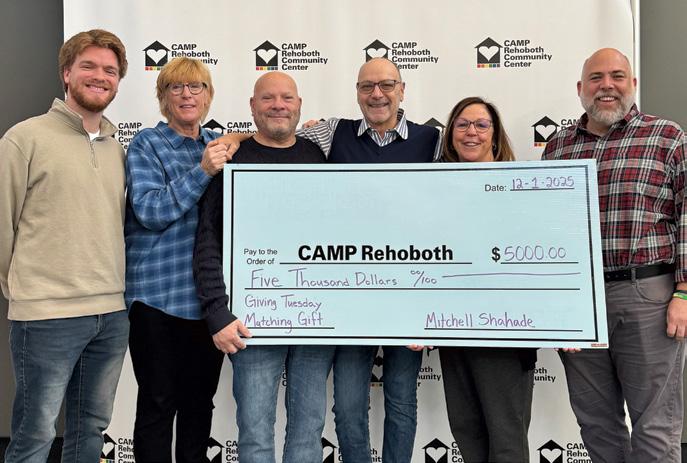
Giving Tuesday
2025 was a great success thanks to over 110 donors. We came away from the day having raised over $32,000—exceeding our goal! We here at CAMP Rehoboth are in awe of our incredible community—we couldn't do any of this without you. Your donations will go towards Creating A More Positive Rehoboth and beyond.
Please join us in thanking Mitchell Shahade, Jennifer Rubenstein and Diane Scobey, and a grateful (anonymous) couple, fortunate to be matching gift donors, who matched every dollar up to $15,000. We also thank Kathleen Nilles and Camille Nichols for hosting a Giving Tuesday party that landed us over the edge.
Thanks to your gift, CAMP Rehoboth will continue to be a beacon of light for the LGBTQ+ community. ▼
Photo: Supporter Mitchell Shahade, joined by the CAMP Rehoboth team and cousin Chuck Salem, presents a check for $5,000 to increase CAMP Rehoboth's 2025 Giving Tuesday match impact.
On January 7, CAMP Rehoboth will host its second annual “Protecting Progress: Continuing the Conversation” session, an engaging conversation with elected officials and thought leaders. CAMP Rehoboth welcomes back Rep. Claire Snyder-Hall, 14th District, Delaware; Sen. Russ Huxtable, 6th Senate District, Delaware; and Mike Brickner, Executive Director, ACLU of Delaware, for the 2026 session. Last year, the program highlighted Delaware’s progress and protections regarding LGBTQ+ equality.
This year’s forum will offer the opportunity to share key updates from 2025, discuss what may be on the docket for 2026, and highlight priorities and issues important to the LGBTQ+ community.
These conversations lead to real change. Last year, a concern raised during the forum was championed by Rep. Snyder-Hall and Sen. Huxtable, who introduced, passed, and ultimately saw signed into law Senate Bill 83: an act to amend Title 16 of the Delaware Code relating to the rights of residents of long-term care facilities. This Act amends the long-term care resident’s bill of rights to provide that residents may not be subject to discrimination based on their membership in a protected class.
CAMP Rehoboth’s atrium filled at last year’s event, and another full house is expected this year. Advance registration is required for this event; please visit camprehoboth.org/ events to register. ▼
Duringchallenging times in the national landscape, the LGBTQ+ community understands the vital power of solidarity. Standing together and showing up for one another creates an indelible connection, bonding communities and demonstrating an unshakeable courage to not cower in the face of challenges or discrimination.
For over 30 years, CAMP Rehoboth has fostered communities of courage in southern Delaware. In the past year, CAMP Rehoboth has been visible through the chambers of commerce, school systems, Legislative Hall, and healthcare agencies. CAMP Rehoboth will continue to give voice to LGBTQ+ community members in its work to create communities where there is room for all to thrive.
Please keep CAMP Rehoboth in your end-of-year giving plans and make a gift today by visiting camprehoboth.org/ give. ▼
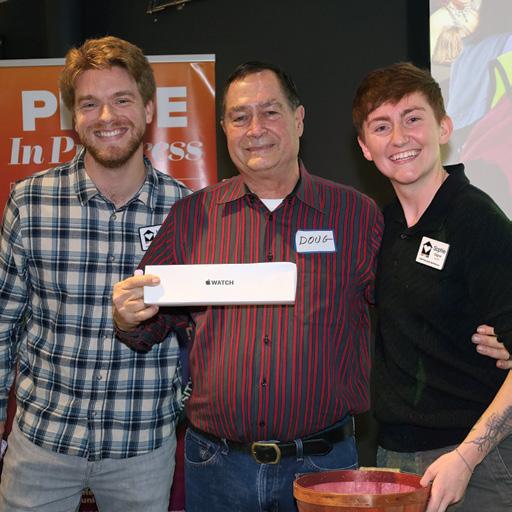
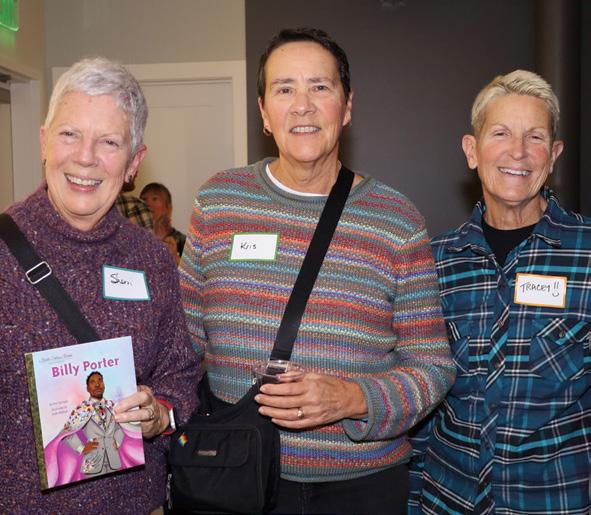
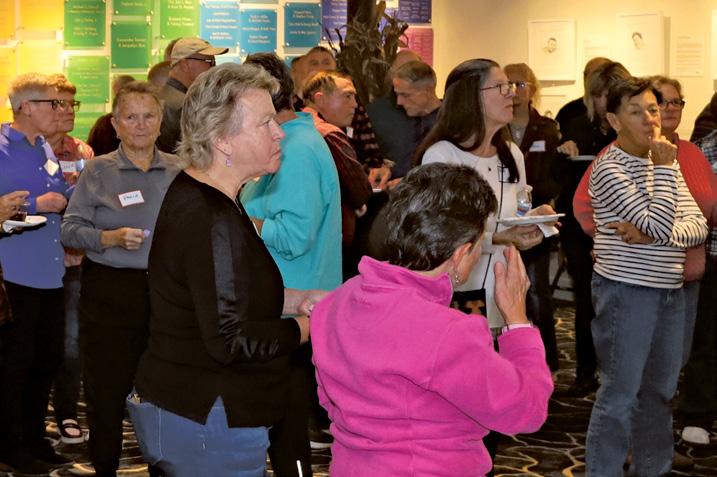
On Friday, November 21, CAMP Rehoboth hosted its annual Volunteer Appreciation Party, welcoming over 100 attendees and honoring their time and service to the organization and the community. Between special events, outreach efforts, program support, and office administration, volunteers from various pathways gathered and celebrated the year.
Congratulations to all the attendees who walked away with raffle prizes, including Doug Sellers, who got the top prize of the night: an Apple Watch! ▼ See more photos in CAMPshots, page 64.
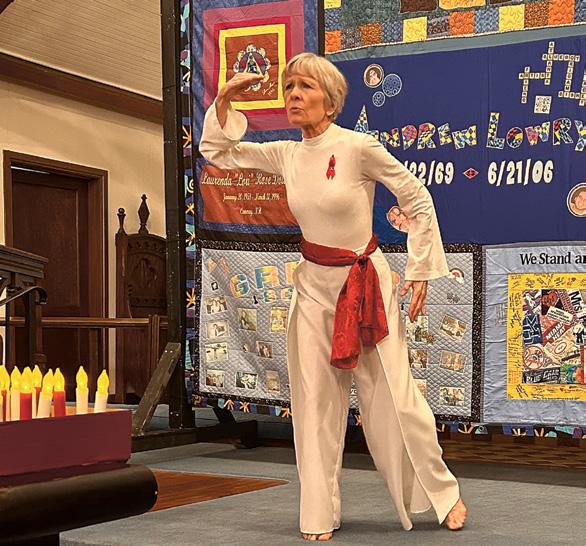
The World AIDS Day service brought together a powerful cross-section of the community, showing that collective care, remembrance, and advocacy continue to thrive. CAMP Rehoboth, local faith organizations, HIV advocates and caregivers, LGBTQ+ leaders, and neighbors of all ages joined to honor those lost to the AIDS epidemic and to celebrate the ongoing resilience of people living with HIV.
Over 100 attendees attended this year’s service. A diverse
Over the past several months, CAMP Rehoboth has been building an evaluation framework that will guide program decisions, support community needs, and bring our strategic plan to life. This initiative is rooted in the belief that data, when gathered thoughtfully, can help CAMP Rehoboth expand what works, adapt what needs refining, and ensure our efforts directly support belonging, safety, health, and growth within the LGBTQ+ community.
So far, CAMP Rehoboth has reviewed all current programs, assessing how each aligns with our core focus areas of Health, Safety, and Belonging. CAMP Rehoboth also evaluated the resources required to
range of music and art, including dance and spoken word, gave the event its emotional heartbeat. Performances including an organist, flautist, and the ALLIANCE singers of the CAMP Rehoboth Chorus. They lifted the space, reflecting the joy, grief, and hope that continue to shape the HIV story.
CAMP Rehoboth thanks everyone who helped in the planning of this year’s program, who walked in memory of someone lost to AIDS, and who joined us at this year’s service.
World AIDS Day 2025 was a program organized and made possible by many partners, including CAMP Rehoboth, Sussex Pride, All Saints’ & St. George’s Episcopal Parish, Community Lutheran Church, Seaside Jewish Community Center, Epworth United Methodist Church, Metropolitan Community Church of Rehoboth Beach, Unitarian Universalists of Southern Delaware, and Westminster Presbyterian Church. ▼
run each program, from staffing to facility needs, lending a better understanding of both the impact and effort behind programs and services. CAMP Rehoboth is now identifying the key data needed to support future decisions, including demographics, attendance trends, satisfaction feedback, and alignment to our mission. Prototype evaluation models are being built which will grant insight into what tools work best for participants and staff. This evaluation work contributes directly to all four pillars of CAMP Rehoboth’s Strategic Plan:
1. Maximize Program Impact—clarifying how programs increase belonging, improve well-being, and provide safety.
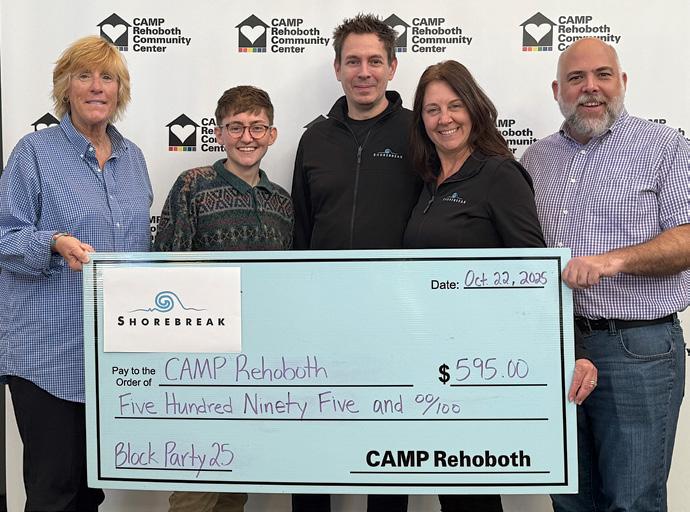
During the CAMP Rehoboth Block Party on Sunday, October 19, Shorebreak Lodge hosted a raffle to support CAMP Rehoboth’s programs and services to the community. Throughout the full-day event, Shorebreak Lodge raised $595, and presented the check this fall to CAMP Rehoboth staff. ▼
Photo: Owners Ben Winiarczky and Diane Winiarczky present the check to CAMP Rehoboth staff members Kim Leisey, Sophie Wagner, and Matt Castrina.
2. Build Sustainable Funding strengthening grant reporting and donor confidence.
3. Increase Community Engagement—identifying needs, expanding reach, and supporting safe, connected environments.
4. Strengthen Governance & Leadership—promoting transparency, accountability, and data-informed decision-making.
CAMP Rehoboth’s process will continue to evolve, but the goal remains constant: to build a culture of learning that shapes programs, elevates the community, and guides meaningful growth for years to come. ▼
As we close out 2025 and look forward to 2026, I want to extend my heartfelt thanks to our Board members for their strategic vision, our Executive Director Kim Leisey for her innovative and transformative leadership, and our staff for their intelligence, patience, good humor, and dedication. I would also like to thank our members, donors, and volunteers who have made it financially possible for CAMP Rehoboth not just to survive the turmoil of 2025, but to make measurable strides in achieving our Strategic Plan’s goals and objectives.
While the Federal government has attempted to erase any vestiges of Diversity, Equity and Inclusion (DEI) from our culture, we at CAMP Rehoboth have doubled down on our mission, vision, and values, guided by our 2024-2028 Strategic Plan, “Pride in Progress— Embrace, Empower, Evolve.”
As I discussed in prior columns, CAMP Rehoboth solidified its strategic plan late in 2023 and we dedicated much of 2024 to understanding CAMP Rehoboth’s baseline from which to identify opportunities for growth and change. This year, we focused on turning this framework into a roadmap that identifies strategic outcomes, success metrics, strategies, and key initiatives that will help us achieve each of the plan’s four goals.
GOAL 1: Maximize the impact of our programs ⊲ This year, we began the process of building a “data driven” culture that will enable us to quantitatively evaluate program offerings and effectiveness. Some clear programmatic “wins” for 2025 include the revitalization of our PRISM young adults’ group, and the formation of a new H.I.M. Society and our first-ever LGBTQ+ veterans group.
GOAL 2: Increase and broaden community engagement ⊲ This year, we have focused on reaching out to partners and allies in all corners of our community. Whether partnering with other organizations, sitting down with municipal, county, state and federal representatives, offering cultural competency training to law enforcement, or opening our doors as a place of refuge from the “chaos,” CAMP Rehoboth has been intentionally outward facing, while also continuing to provide a welcoming and safe space within.
GOAL 3: Build a diversified and sustainable funding plan ⊲ Under this strategic goal we are aiming to support CAMP Rehoboth with a diversified and sustainable financial infrastructure. This year, we have made major steps towards achieving this goal, including leveraging the skills of a volunteer grant writer so that we may include grant monies as a viable funding stream, revamping our membership and sponsorship levels, and launching the Steve Elkins Legacy Society for planned giving.
GOAL 4: Strengthen Board governance and staff leadership ⊲ The Board identified the top strategic outcomes towards achieving this goal as having a Board that is reflective of the community it serves in terms of diversity and geography, and ensuring that the community believes the Board is transparent.
This year, we successfully increased the diversity of both our Board and staff in terms of ethnicity, gender identity, and sexual orientation.
In terms of transparency, I have dedicated this column to keeping Letters readers informed, and the Board and I have focused on being visible at all CAMP events. Additionally, staff are innovating new ways to engage with the community, including a monthly podcast on queer history, volunteer training and appreciation
events, and the weekly “What’s Happening at CAMP Rehoboth” emails. We are also dedicated to sharing our financials on the newly revamped website.
We have also embarked on our first ever Impact Analysis. The object is to complete an analysis that provides conclusive support for asserting CAMP Rehoboth is both a source of considerable economic activity for Sussex County (and the state of Delaware more broadly) and has positively impacted the quality of life for area residents. We look forward to sharing the results of the Impact Analysis as the team more fully fleshes out its conclusions.
While the space allocated to this column permits me to describe only highlights and give examples, it goes without saying that there are many more examples of what we have achieved as a community—I do not mean to minimize other accomplishments by not mentioning them here.
As we celebrate this year’s achievements, I am reminded of a lyric in the musical RENT: “…the opposite of war isn’t peace; it’s creation.” Although we admittedly live in dark times, we at CAMP Rehoboth continue creating because we must—it’s the first word in our organization’s name! Guided by our mission, vision, and values, we are building and creating, using our Strategic Plan as our north star.
I am so proud of what our organization, with its dedicated Board, staff, donors, members, and volunteers, has been able to accomplish this year, even in the face of the unprecedented backlash from our own government. Thank you to each and every one of you. May this holiday season be especially bright for all of us. ▼
Leslie Ledogar is CAMP Rehoboth Board President.

“We
Name CAMP Rehoboth in your will or trust
Retirement Accounts & Life Insurance
Designate CAMP Rehoboth as a beneficiary.
If 70½ or older, give up to $100,000 tax-free from your IRA.
Donate securities to maximize impact and reduce capital gains tax.
You may leave your home or other property to CAMP Rehoboth through your will or a charitable trust. Consult your legal and tax advisors to determine the best way to structure your gift.
envisioned CAMP Rehoboth as the heart of the community. CAMP Rehoboth became a gift to the community around us.”
—Murray Archibald, CAMP Rehoboth Co-Founder

Contact our Development Manager, Laurie Thompson, at Laurie@CAMPRehoboth.org to learn more about these ways to give. CAMPRehoboth.org/PlannedGiving EIN # 51-0331962 © CAMP Rehoboth 2025
s the year comes to a close, many of us pause to reflect on what matters most— community, connection, and the spaces where we feel at home. At CAMP Rehoboth, these values guide our work across southern Delaware. During this season of reflection, we’re reminded that giving, whether of time, resources, or support, is one of the most meaningful ways to nurture the communities we care about and to foster health, safety, and belonging for LGBTQ+ individuals and allies. The act of giving often brings its own quiet reward, a sense of fulfillment that goes beyond the impact itself.
Economists have studied this phenomenon for decades. James Andreoni, who developed the concept of warm glow giving, explained that people give not just for the public good, but also for the personal satisfaction that comes from helping. The “warm glow” is that quiet sense of joy we feel when we know we’re making a difference, a reward that comes from the act of giving itself, independent of the outcome. At CAMP Rehoboth, we see it every day in the generosity and engagement of our supporters and volunteers, whose time and commitment bring programs and initiatives to life.
This year, that glow has been especially visible through the leadership of our matching gift donors. Jennifer Rubenstein and Diane Scobey, Mitchell
Shahade, and two generous anonymous couples collectively contributed $35,000 to CAMP Rehoboth’s Show Up and Show Out End-of-Year giving campaign. Their gifts not only provide critical support, but also inspire hundreds of
Supporting CAMP Rehoboth isn’t just about making an impact, it’s about the quiet joy of helping others thrive.
others to join in, creating a ripple effect that strengthens programs and services across the region.
The impact of these gifts and the dedication of our volunteers is tangible.
BY LAURIE THOMPSON
Support helps expand programs for LGBTQ+ veterans, offering safe spaces to connect, access resources, and feel recognized. It nurtures creative expression through the arts, giving LGBTQ+ individuals and allies the chance to celebrate their voices and talents. And it strengthens initiatives that foster inclusion, connection, and opportunity, ensuring that anyone who engages with CAMP Rehoboth feels seen, valued, and empowered. Every act of generosity plays a part in sustaining the vibrancy and resiliency of our community.
As the holiday season approaches, it’s worth noticing that glow. Supporting CAMP Rehoboth isn’t just about making an impact, it’s about the quiet joy of helping others thrive. If you haven’t yet had a chance to give, we hope you’ll consider doing so today, knowing your generosity creates meaningful experiences and safe, affirming spaces for LGBTQ+ people and allies throughout southern Delaware.
From all of us at CAMP Rehoboth, thank you to every member, donor, sponsor, and volunteer who has helped make our work possible this year, and may your holidays be filled with warmth, connection, and joy. ▼
Laurie Thompson is Development Manager at CAMP Rehoboth.
Illustration by Murray Archibald


C e l e b r a t i n g C o m m u n i t i e s o f C o u r a g e !
S u p p o r t C A M P R e h o b o t h w i t h a Y e a r - E n d G i f t !
S u p p o r t C A M P R e h o b o t h w i t h a Y e a r - E n d G i f t !

S C A N T H I S Q R C O D E T O
S C A N T H I S Q R C O D E T O
S E N D C A M P R E H O B O T H
S E N D C A M P R E H O B O T H
S O A R I N G I N T O 2 0 2 6 !
S O A R I N G I N T O 2 0 2 6 !
Y o u r d o n a t i o n w i l l b e m a t c h e d ! A g e n e r o u s d o n o r
c o u p l e w i l l d o u b l e e v e r y g i f t t o C A M P R e h o b o t h
u p t o $ 2 0 , 0 0 0 .

What happens if you die without a will? Do you know what probate is and how long it can take? Wills vs trusts— what is the difference? If you die out of state, or out of the country—what happens? Are there specific considerations for the LGBTQ+ community?
These are just some of the questions that will be answered at the upcoming “What Happens When You Die” panel sessions to be held at CAMP Rehoboth Community Center on January 28 and 29. Whether you are starting from the beginning, haven’t updated your documents in a long time, or just want to make sure all the details are covered, this seminar can help! Registration will begin after the new year. The seminar is presented in partnership with Soaring Spirits International, Parsell Funeral Homes, PWW Law, Greg Fuller—Register of Wills, and Catie Walther, State Farm-Lewes. ▼
CAMP Rehoboth is excited to launch a new support and social group for people who are transgender or who identify outside of the gender binary. This peer-led group welcomes all transgender, nonbinary, and gender expansive questioning adults ages 21 and over to come together for conversation and connections.
Beginning in mid- to late-January 2026, join other queer folk and come together at the CAMP Rehoboth Community Center to share your voices and help shape this new group. Keep an eye out for the first meetings via CAMP Rehoboth’s weekly newsletter. To learn more about the group and how to participate, sign up at camprehoboth.org. ▼
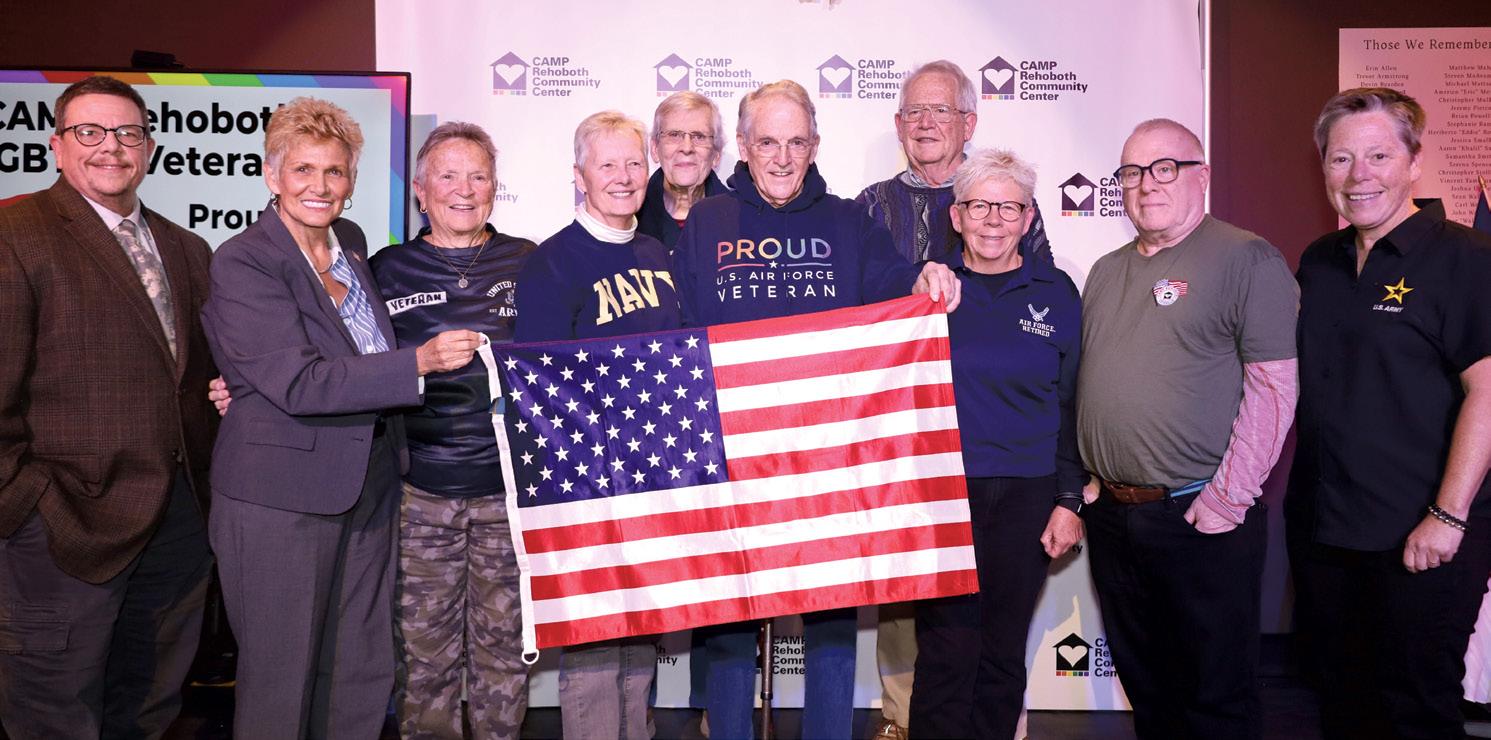
On Veterans Day, CAMP Rehoboth's LGBTQ+ Veterans Group hosted "Tales Asked and Told," a storytelling event where attendees heard military veterans tell their personal stories, running the gamut from humorous to hellish experiences. They listened as the presenters shared insights into their military experiences, including during “Don’t Ask, Don’t Tell” and serving in silence, and surviving and thriving despite the roadblocks. From folks who were outed and investigated to others who were honored and accepted, the program let
The CAMP Rehoboth Chorus presents “I Am Woman” on Valentine’s Day weekend 2026, kicking off its new season. Audiences will “Feel the Earth Move” as the Chorus celebrates women composers, songwriters, and artists.
Featured songs include “The Greatest Love of All,” “I Will Always Love You,” “Born This Way,” “Like A Prayer,” “This Is Me,” and “9 to 5.”
The Chorus’s newest ensemble, WomenKind, an a cappella group, will be making their debut. Concerts will be Friday and Saturday, February 13 and 14, at 7:00 p.m., and Sunday, February 15, at 3:00 p.m.; all will be at Epworth United Methodist Church, 19285 Holland Glade Road, Rehoboth Beach, Delaware. Tickets are available at camprehoboth.org.▼
the audience peek behind the military curtain to hear their neighbors’ and friends’ stories.
They cried, laughed, loved and coped—and were proud to talk about how they did it.
Now, these stories are available for all to bear witness. Visit CAMP Rehoboth’s YouTube channel at youtube.com/camprehoboth to watch and listen to these incredible tales.
Women’s+ FEST 2026 will celebrate a remarkable milestone in 2026: its silver anniversary! That’s right—for 25 years, FEST has brought fun, entertainment, spring, and tradition for all those on the spectrum of the feminine spirit.
CAMP Rehoboth annual sponsor Hampton Inn and Women’s+ FEST hotel partner Atlantic Sands are offering special event rates through the end of January.
Find group codes, phone-in details, and booking links at camprehoboth.org/ events—and lock in your stay before prices go up! ▼



















































Deadline for Submissions: February



► Original fiction, 300 to 1,000 words
► Timely submitted to flashfiction@ camprehoboth.org
► Target audience: adult or young adult readers
► Monetary awards (ranging from $1,000 to $250) to First-, Second-, and Third-place winners, plus two Honorable Mentions
► Publication in Letters from CAMP Rehoboth
THE
Go to camprehoboth.org/letters for Writers’ Guidelines


THE FINE PRINT ► Members of CAMP Rehoboth sta , its Board of Directors, and the Readers Panel are not eligible to compete.

It’s been a busy autumn. And once again I’ve failed spectacularly in my quest to be less busy.
I keep wondering what a lazy retirement would be like, but there’s always some new event to tweak my curiosity.
Most recently, I went to my first trivia contest. Oh sure, I played Trivial Pursuit in the 80s and still watch Jeopardy to feel inferior, but this was my first time at a bar, perched on an uncomfortable bar stool, joining an actual team.
By night’s end we had neither won nor lost, but our team sat comfortably (but not on the stool) in the middle of team standings and I loved it.
The team, Trivia Newton John, included two gay men and two lesbians. I felt confident in my ability to at least understand questions about musical theater, books, or politics. Each of the men had pop music and culture covered and the other lesbian was recruited shamelessly by the boys for her sports knowledge.
A favorite moment came with a question about a beauty product and the lesbians sat dumbstruck while the guys not only knew the answer but could sing the jingle.
And our disappointment in not winning was assuaged by our team being the only one offered shots from the bar for having had the night’s funniest answer.
The question asked the name of a legislator who’d served first in the Confederate legislature, then following Reconstruction, in the US Senate.
Baffled, we offered up the cartoon chicken Foghorn Leghorn. Worth a shot of bourbon, right?
Taking the drink, if not the win, I moved on to volunteer activities. First, I was asked to emcee the Veteran’s Day program for our newly-formed CAMP Rehoboth LGBTQ+ Veterans Group.
If you missed it, it was by turns humorous and heartbreaking. A terrific collection of stories told. You can see it—or revisit it—on the CAMP Rehoboth website (camprehoboth.org).
This group is awesome! There are
veterans from all the services and folks of every rank. But the beauty is that literally, nobody pulls rank. You can’t tell the generals from the enlisted volunteers until you happen to hear their stories. It’s a warm, energetic working group.
They also participated this fall in CAMP Rehoboth’s Block Party, the Sea Witch®
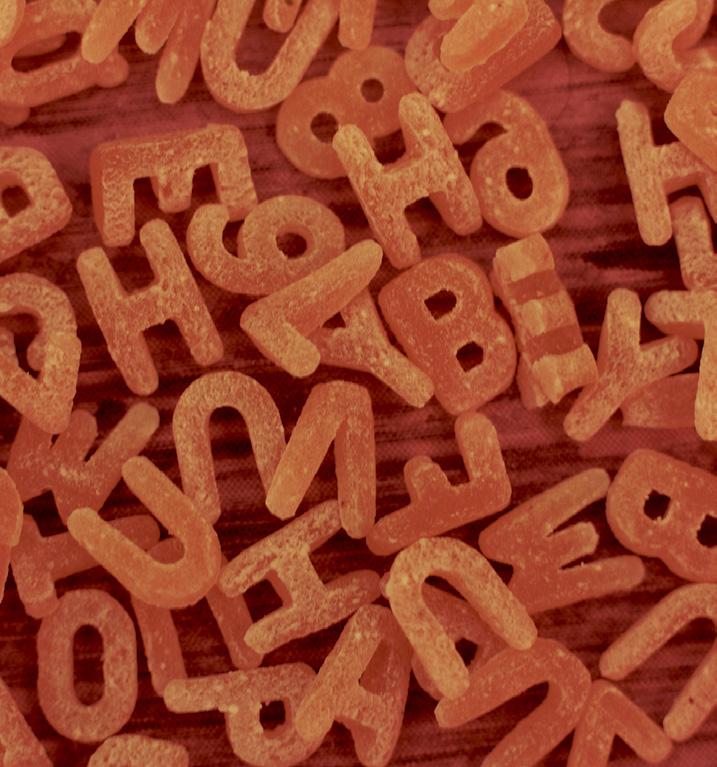
I wish everyone—myself included—could be comfortable with [queer] for our community so we could ditch that alphabet soup for a simpler description of our identity.
Parade, and Wreaths Across America. Not only do I want to say thanks for your service to these CAMPers, but thanks for bringing the troops to our CAMP Rehoboth community. There are more veterans here than we ever imagined and this group’s mailing list is expanding quickly.
Next up came some fascinating and startling moments. I was asked to sit on a CAMP Rehoboth intergenerational panel of young people and old people. Okay, they weren’t that blunt. They called us Successors and Pioneers.
And there was an audience of interested people wanting to see how our thoughts differed on tough questions from CAMP Rehoboth Executive Director
BY FAY JACOBS
Kim Liesey, who moderated the panel.
We were asked about our coming out experiences, our individual fears then and now, our thoughts about today’s pronoun use, and how we envision the future.
This Pioneer (Survivor?) had her eyes opened to the amplified focus on gender issues now, as compared to my history. Almost all the Successors talked of grappling with the gender continuum as well as their LGBTQ+ identity. I need to learn more and embrace today’s focus on fluidity.
And we talked about the word queer. I wish everyone—myself included—could be comfortable with that word for our community so we could ditch that alphabet soup for a simpler description of our identity. I’m not saying I could do it, but I wish I could. Survivor, here.
Moving along, all of a sudden it was Thanksgiving and we attended a feast with over a dozen old (Pioneer?) friends for an amazing evening. At the gathering we heard of the newly adopted term FRAMILY for friends who are family, and lost no time toasting to all my brothers, sisters, and me.
The next night was a Friendsgiving potluck where there were some Pioneers, and some younger Pioneers who will be Successors sooner rather than later. We had a blast and shared another toast to FRAMILY ties.
We intend to attend the Santa Crawl too, (although it happens after deadline for this article), if only to keep amortizing the Santa suits. At this point, we don’t crawl. We pull up to our favorite bar and just park the sleigh.
So it’s Happy Holidays, readers, from me, Bonnie, and Windsor. We’ll see you on these pages in 2026, unless this column is passed along to a Successor! [Editor’s note: Nice try. No chance.] ▼
Fay Jacobs is a freelance writer, storyteller, and author of six books of (mostly) comic essays. She has written for the Washington Post, Baltimore Sun, The Advocate, the Washington Blade, Delaware Beach Life, and—for 30 years—Letters.
CAMP Rehoboth Chorus
“It’s the voice of hope. It’s the voice of peace. It’s the voice of everyone.” CAMP Rehoboth Chorus begins their 16th season with “I Am Woman,” a concert celebrating the power of women in music. Performances are on Friday and Saturday, February 13 and 14, at 7:00 p.m., and Sunday, February 15, at 3:00 p.m. All concerts are at Epworth United Methodist Church, 19285 Holland Glade Road in Rehoboth Beach. Tickets are available at camprehoboth.org.
Julie Gold reminds us that “From a distance you look like my friend even though we are at war,” in the Bette Midler hit “From A Distance.” Songs like “Let the River Run” and “Like a Prayer” give reason to hope in troubled times. And “Rumour Has It” that a medley of songs from Adele is featured. Stefani Germanotta, better known as Lady Gaga, demonstrates her composing versatility with the raucous “Born This Way” and the haunting “Hold My Hand” from the movie Top Gun: Maverick, which she wrote as a “love letter to the world during and after a very hard time.” “This Is Me” from The Greatest Showman and “I Will Survive” remind us of the resilience in all of us. Taylor Swift speaks to the vagaries of love in “Blank Space” and “Style.” Any concert celebrating women must include “Beautiful” Carol King, Aretha Franklin, and Dolly Parton and, of course, would not be complete without the namesake “I Am Woman.”
More than 100 members bring their voices and commitment to the CAMP Rehoboth Chorus, and two ensembles, ALLIANCE and WomenKind, are both featured in this concert. WomenKind is a brand-new women’s a cappella group singing under the direction of Jeff Burhmann. The group will be introduced to the community at this “I Am Woman” concert, performing prior to the full Chorus’s performance. Both ensembles can be seen at outreach events throughout Sussex County.
Sue is a soprano in the Chorus and a member of the ALLIANCE ensemble. She grew up in locations all around the US and Canada due to her father’s job as a television engineer, but eventually settled in Chester County, Pennsylvania. During their time in the south, the family was drawn into a Christian cult, and Sue had no exposure to secular music and limited exposure to television or other outside influences. But from a young age in that church setting, she learned to play guitar and began singing.
Her epiphany came at around the age of 16 when, living in New York away from the cult, she first heard secular music that amazed her. “What is this?” It was Barbara Striesand’s album with Barry Gibb, Guilty, a total revelation, and still Sue’s favorite album of all time. “In fact,” she says, “if you were ever on a deserted island and could take only one album with you? Easy answer. Guilty.” Two years later, she got a job as lead singer and guitar player in a rock band, Wavelength. Of course, having had no exposure to rock music, she had to learn all the lyrics from scratch.
When the band broke up, Sue married at the age of 22 and had two children. She became a stay-at-home mom and worked part-time as a bank teller. She was married for nine years. Near the end of her marriage, her life took another remarkable turn. “I kissed a girl and I liked it!” All of a sudden, this experience “made 100 different things in my life make sense.” Her mother responded, “I often wondered about that.”
She returned to singing as a DJ and managed karaoke and took on gigs as a wedding singer. She also began doing children’s entertainment, performing as a clown, Suzy-Q, a magician, and even a princess. In 2006, she developed nodules in her vocal cords, recovered with rest, then went to a vocal coach for rehab and training. Her coach took her singers to Carnegie Hall, and Sue performed two solos at Carnegie Hall, including “The Man That Got Away,” a song that Judy Garland performed on the same stage.
BY
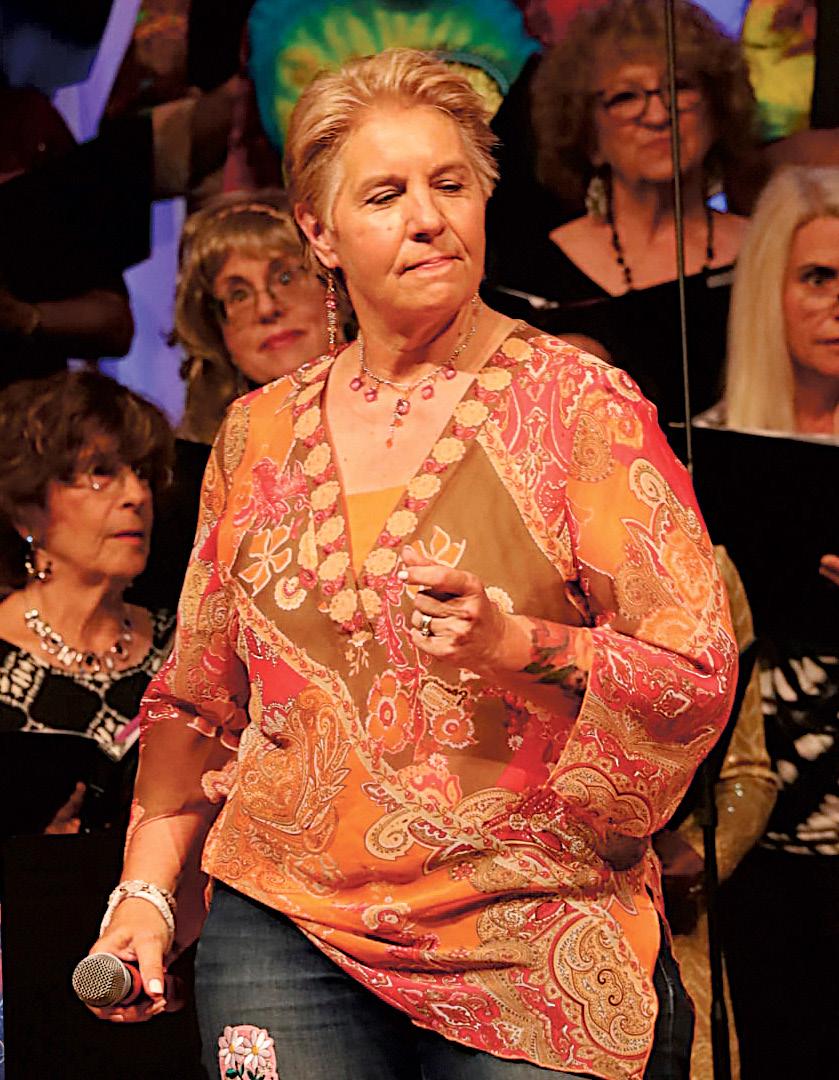
Sue
performed two solos at Carnegie Hall, including
“The Man That Got Away,” a song that Judy Garland performed on the same stage.
Sue lives in Lewes with her wife of 20 years, Mary Jo, and their three rescue dogs. They moved to the area with great plans and ran smack into the jaws of COVID. After emerging from their cocoon, Sue attended the 2022 concert “Hooray for Hollywood!” and decided to pursue her passion for singing again. She joined the Chorus in 2023 and loved the people, the challenge, Doug, and friends she has made. She is a member of ALLIANCE, has done some impressive solos, and recently became part of the Chorus’s Leadership Committee. Referring to rehearsal night, Sue says “I always look forward to Monday nights!” ▼
Bill Fuchs has been with the Chorus since 2016. He has the distinction of having married two college sweethearts—not at the same time! He loves music, theater, travel, and his long-haired Chihuahua.


Diana Ross • Dolly Parton Carly Simon • Alicia Keys
Katy Perry • Carole King Adele • Cyndi Lauper
Aretha Franklin • Beyoncé Bette Midler • Helen Reddy
$ 30 adult • $ 15 student • tickets at camprehoboth.org Introducing WomenKind j

FEBRUARY 13-14 @ 7PM
FEBRUARY 15 @ 3PM winter 2026
epworth united methodist church • rehoboth beach, delaware

doug yetter • artistic director david zipse and the camp chorus band

The theme of a writing workshop I took recently was joy. My instructor wanted us to infuse joy into our projects. We discussed what it meant and what it felt like. It’s different from happiness. Joy is a sense of contentment or meaning that can exist even when circumstances are difficult. Unlike happiness that waxes and wanes, joy develops over time through resilience, perspective, and consistency. I can be joyful even when things are not going well.
During the discussion, I realized how exercising brings me joy. Our bodies are meant to move. If you don’t feel good when you work out, it’s not that you don’t like exercise—it’s just you haven’t found the movement that’s perfect for you. It isn’t about discipline or willpower. It’s about finding the correct fit for your body, your personality, and your tastes. Joy shows up when movement feels like something you get to do, not something you force yourself through.
I want to start 2026 with a renewed dedication to regularly exercising. Recently I’ve been fickle with my workouts. My prior pickleball-twice-a-week has become once every couple of weeks, and my once-weekly yoga class has become a few times a month at best. My home workouts have become sketchy. After a recent home yoga practice I was surprised at how fluid, relaxed yet awake, and good I felt. I noticed a better night’s sleep and an ease of movement. I then noted that I felt the same clarity and calmness after almost every time I did my weight-lifting routine. Maybe that’s why I am drawn to those movements.
According to a 2023-24 survey by Forbes Health/OnePoll, the average New Year’s resolution lasts about 3.74 months. I don’t want to contribute to that statistic in 2026. Regular, consistent exercise plays a central role in aging well—which means not just living longer but also reducing unnecessary suffering as the years pass. It’s one of the few interventions that simultaneously improves physi-
cal function, mental health, resilience, and independence. I see the effects daily in my aging friends and acquaintances who have not made exercise a priority. I want to create an exercise regimen that is my priority.

I want to start 2026 with a renewed dedication to regularly exercising.
A workout you can stick with starts with knowing yourself. It requires introspection. Forget about what you think you ‘should’ be doing. Instead, search for a movement that seems like fun. I started dancing again when I listened to live music. It felt so good I started dancing at home, too, and now it has become an almost daily part of my routine. However, when I tried dancing with a partner, I kept tripping and stepping on my partner’s feet. I didn’t want to ever do that again!
Interest is a strong predictor of consistency. It’s important to pay attention to how you feel after you work out. If you finish feeling better than when you started, you know you are on the right track. You’ll want to do that workout again.
Years ago, I loved teaching spinning
BY PATTIE CINELLI
but the workout that I once craved has become boring. Instead, I enjoy the flow of yoga or mat Pilates. I changed, and I recognize that what I once did is not necessarily what I should be doing now.
Ignoring my personality when trying an exercise program proved disastrous for me. Years ago, it was trendy to run both outside and on a treadmill. I decided I was going to run a 10K. While I loved running through streets closed to traffic and waving to friends I passed, I hated the solitary hours of training needed to complete the race. It was torture. After I successfully finished the race, I never ran again. I gave myself permission to stop a program I dreaded without guilt, even though the pressure I exerted on myself to run (like many of my fitness colleagues) was strong.
Since I’m more of a class or group exerciser, I became curious when a friend invited me to a new class she was teaching. I loved the concept of Aerial Yoga. You sit in a silk-like hammock suspended from the ceiling which supports your body weight while you flow through poses. However, Aerial Yoga along with pole dancing—which I adored—had to be discarded: The movements in both made me nauseous.
It really doesn’t matter what type of movement you choose. It’s choosing what lights you up that keeps you showing up. And it changes as you change. Moving your body is not just a goal to attain then discard and move on; it is one of the deciding factors in your health and wellbeing.
People who move regularly not only add years to their life, but they also add life to their years. We can gain strength and often have fewer limitations and chronic illnesses. Feeling in shape and in control of my body gives me confidence that I can meet whatever challenges I face. ▼
Pattie Cinelli is a writer and a holistic health & fitness professional. Email her with questions or column ideas to: fitmiss44@aol.com.



Meeting at the Lewes Public Library the second Wednesday of each month, from 3:00 to 5:00 p.m., Topical Seminars is a series of seminars based upon essays whose topics include philosophy, the arts and literature, science, politics, economics, communications, and much more. Participants are asked to read an essay chosen by the facilitation team and then submit a written response in advance of each session. The group then meets for a lively discussion on the posted piece and the participants’ responses to it.
Essays are available for reading online (lewesseminar.com) a month in advance. Responses are due no later than the day before each meeting and are also posted on the website. For more information, email lewesseminar@gmail.com.
On January 14*, the discussion will be the American Identity: What does it mean to be an American? The American Dream:
Rilla-Fest, a celebration of the late Christine Havrilla, kicks off Saturday, February 28, 2026, and continues through Sunday, March 1. Coinciding with Christine’s birthday, the weekend will feature music, art, and community. Proceeds from Rilla-Fest will go toward the creation of a Christine Havrilla Memorial Scholarship Fund for independent musicians.
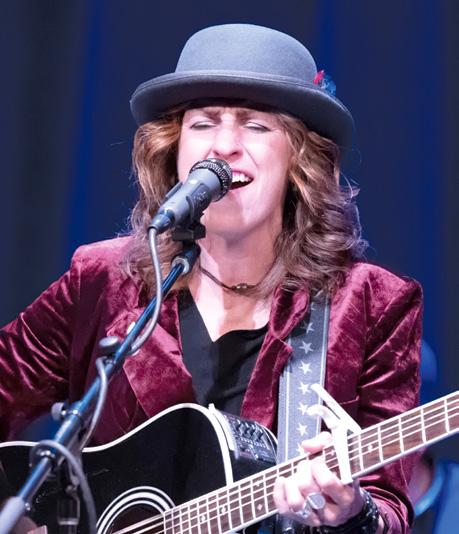
Rilla-Fest starts with an opening reception/photo exhibit at noon on Saturday (Art Off the Avenue, Rehoboth Beach), continues with a RILLA Pub Crawl from 4:00-7:00 p.m., and wraps up with a Dance Party featuring GirlsRoom (Bethany Blues, Lewes, 7:00-10:00 p.m.). Sunday offers a Walk on the Boards (Rehoboth Beach Boardwalk, 9:00 a.m.), another chance to visit the photo exhibit at Art Off the Avenue (11:00 a.m. to 3:00 p.m.), a film screening (Some Other Thing, Cinema Art Theater, 1:00 p.m.) and a musical tribute to Christine Havrilla (Sing Out Loud, Milton Theatre, 7:30 p.m.).
Event details, sponsorship info, volunteer sign-ups, and ticket links are available at: christinehavrilla.com/rilla-fest. ▼
the pursuit of happiness. What does that mean? For two-anda-half centuries, the United States has been defined by a set of ideals called the “American creed”—liberty, individualism, equality, and self-government. This identity was seen as a unifying force in a nation of immigrants whose cultures coalesced around a common political philosophy. Today, that consensus seems fractured. Have our values changed in 250 years so that we are missing the meaning of America’s foundation? Should foundational documents be cherished as relics or revered as value statements applicable to the present day? Could an originalist interpretation of the Founders’ intent give us an understanding of the core values of the American Creed? ▼
Registration is requested: email lewesseminar@gmail.com.
*Upcoming dates/topics are: February 11: The Great Political Realignment; March 11: Romanticism; April 8: Community and Technocracy; May 13: Rewritten Masterpieces; June 10: Reflections on this year's Topical Seminars programs and thoughts for the future.
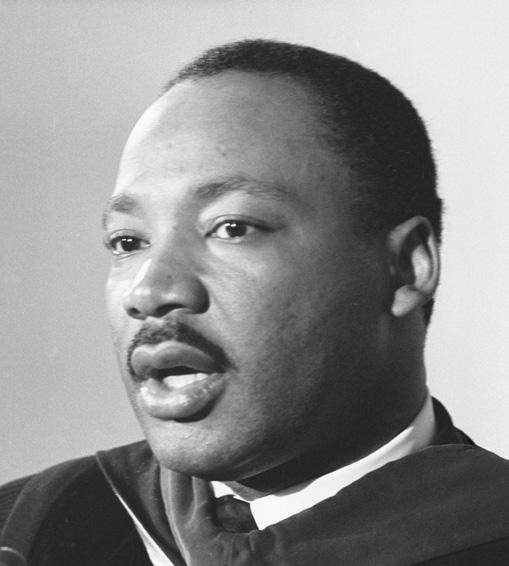
The Southern Delaware Alliance for Racial Justice (SDARJ) invites everyone to attend its Third Annual Martin Luther King Jr. Celebration. The celebration will be held at Epworth United Methodist Church on January 16, 2026, from 6:00-8:00 p.m., and will pay homage to Dr. King and other civil rights leaders such as John Lewis, Ella Baker, Fannie Lou Hamer, and Andrew Young.
Proceeds from this year’s event will raise money for Charlotte King Scholarships for high school seniors; $1,500 scholarships will be awarded in spring 2026. Additionally, funds raised will be used for SDARJ’s Academic Achievement awards for middle-school students.
The celebration will feature musical acts and performances as well as inspirational commentary. As in previous years, young people will be showcased in the program. So, get ready to be inspired and fired up for 2026—likely to be one of the most consequential years in American history.
Tickets ($30 each) are available at: sdarj.org. This event tends to sell out early—don’t delay! ▼



BY MATTY
In November, the Human Rights Campaign (HRC) published its updated Municipal Equality Index (MEI) survey that ranks how inclusive a city or municipality is of its LGBTQ+ community. Of the eight Delaware cities rated, Rehoboth Beach reported the sole perfect score, as city officials cited its strong partnership with CAMP Rehoboth.
The MEI examines how inclusive municipal laws, policies, and services are of LGBTQ+ people who live and work there. Cities are rated based on non-discrimination laws, the municipality as an employer, municipal services, law enforcement, and leadership on LGBTQ+ equality.
“Rehoboth Beach's journey from progress to excellence exemplifies how intentional policy, leadership and community engagement can drive meaningful change.”
Rehoboth Beach’s last reported score was just 61. According to the city’s press release, the transformation reflects Rehoboth Beach’s strong commitment to fostering an inclusive, affirming environment for all residents and visitors, as well as a strong partnership with CAMP Rehoboth, which delivers LGBTQ+ services, advocacy, and community engagement on behalf of the city.
CAMP Rehoboth delivers essential services typically performed by municipal governments in larger jurisdictions. These services directly align with multiple MEI scoring categories and fulfill municipal functions that have now been credited toward the city’s MEI score, demonstrating its reliance on CAMP Rehoboth as its trusted, community-based service provider.
“The City of Rehoboth Beach, Delaware, is widely known for its long-standing reputation as a welcoming and affirming destination and home for LGBTQ+ residents and visitors. Yet, the city’s Municipal Equality Index score was not as high as expected, until now,” said Assistant City Manager Evan Miller.
“Thanks to our strong partnership with CAMP Rehoboth and their guidance through this process, we are so proud to earn a perfect score that more accurately reflects our values. Rehoboth Beach’s journey from progress to excellence exemplifies how intentional policy, leadership and community engagement can drive meaningful change.”
“CAMP Rehoboth is proud to build on its transformative legacy of fostering understanding and cooperation in our community and the southern Delaware region at large,” said Kim Leisey, CAMP Rehoboth
Executive Director. “While progress is never final, this perfect score demonstrates how valuable partnerships between local government and organizations can forge safer and more inclusive communities for everyone.”
Over the past year, Rehoboth Beach implemented a series of impactful policy changes and initiatives. These affirmed its employment practices by including more comprehensive nondiscrimination protections and strengthened its internal workplace policies to promote equity and inclusion. The city received credit for offering transgender-inclusive healthcare benefits to municipal employees.
Regarding public services, Rehoboth Beach appointed an LGBTQ+ liaison in the police department and city manager’s office, ensuring thoughtful engagement and fair administration and enforcement practices. Flex-point credits were received after recognizing CAMP Rehoboth’s services for LGBTQ+ youth, older adults, people experiencing homelessness, and individuals living with HIV or AIDS.
Leadership played a pivotal role. City officials publicly affirmed their support for LGBTQ+ equality and advanced pro-equality efforts, signaling sustained commitment to inclusive governance and workplaces. The city received credit for LGBTQ+ competency training in partnership with CAMP Rehoboth.
Of the other Delaware cities surveyed, three increased their scores (Middletown rose from 32 to 64, Dover from 66 to 69, and Newark from 71 to 72); two cities maintained their scores (Bethany Beach at 51, Smyrna at 59); and two decreased (Wilmington dipped from 82 to 76, and Milford from 85 to 83).
As part of the MEI release, HRC published an article speaking to the speed of progress, noting: “The scorecard should be used to celebrate achievement and progress while acknowledging context. It highlights leaders and guides improvement. Above all, however, it shows that every city can contribute to advancing LGBTQ+ equality, whether they’re sprinting for 100 or steadily making gains one policy at a time.”
In this pivotal moment, when LGBTQ+ equality is threatened on the federal level, CAMP Rehoboth celebrates progress at all levels and looks forward to working with municipal governments to address the health, safety, and belonging for all community members who live there. ▼
Matty Brown is Communications Manager at CAMP Rehoboth.
Do you tinkle when you laugh, sneeze, cough, or exercise?
Do you constantly wake up at night to go to the bathroom?
Do you feel like you need to pee, but can’t go once you try?
Do you sometimes just can’t get to the bathroom quick enough?

Do you carry around extra underwear, just in case?
Do you notice blood in your urine?
Do you feel pain when you start to go to the bathroom?
Is your worry starting to take over your daily life?
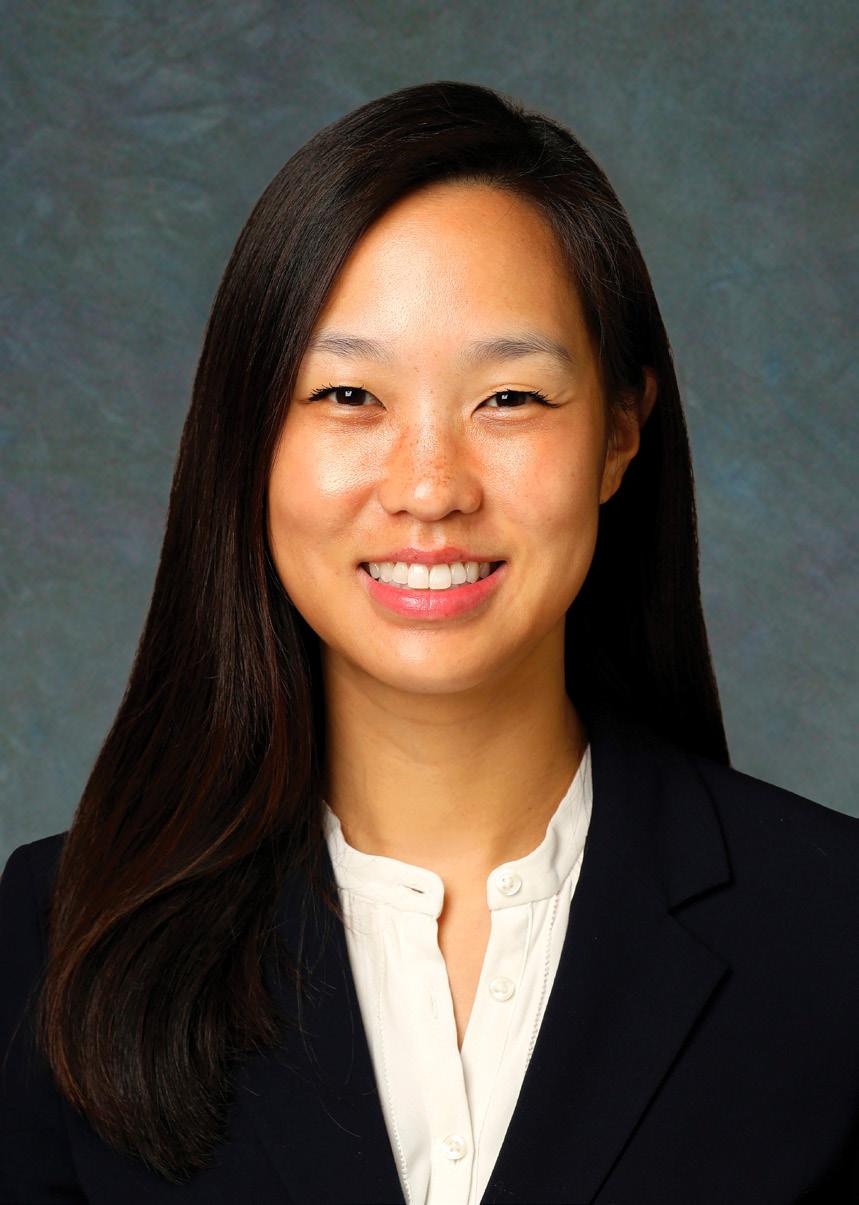
Brandywine Urology Consultant’s Dr. Alice Y. Wang, MD, is Fellowship trained in Pelvic Medicine and Reconstructive Surgery who, depending on your symptoms, can provide a variety of treatment options ranging from lifestyle changes, minimally invasive treatments or surgical operations. Dr. Wang is accepting male and female patients in all three offices. Please contact the office today to schedule your conversation with Dr. Wang.
Brandywine Urology Consultants, Delaware’s leading urological practice, delivers comprehensive urological solutions for men and women enabling them to remain in Delaware throughout the duration of their treatment. Brandywine Urology Consultants team of Surgeons and Advanced Practice Providers specializes in urinary cancer care, reproductive and sexual health, bladder and kidney dysfunction, chronic urinary tract infections and prostate health.
Be the reason for someone’s heartbeat. –INTERNATIONAL RED CROSS
Pregnancy and childbirth are all-consuming acts. For my mother, each pregnancy was a risky proposition, with the chances of complications increasing with each conception. My mom’s blood type is O negative, while my three siblings and I are O positive. That means, with each pregnancy, my mom’s body produced more antibodies, attempting to expel what was viewed as foreign. Her pregnancies also came with more forceful morning sickness, again, as her body simply found the growing life inside her a danger.
January is blood donation month, when the importance of donating is highlighted and donors are celebrated. Blood is a vital life force. Through the circulatory system, blood transports oxygen and facilitates the removal of bodily waste. The various blood components also contribute to electrolyte and nutrient movement, to thermal regulation, to fighting infection, and to blood clotting.
According to the American Red Cross, every two seconds, someone needs whole blood or blood products, including red blood cells (oxygen transport), platelets (clotting factors), or plasma (volume expander). Annually, just under seven million people in the US donate blood. But supply often does not meet demand, because only about three percent of age-eligible individuals donate. Several factors limit the donor pool.
In most states, donors must be at least 16 years old. Besides age, whole blood donors must weigh at least 110 pounds and be in good health. Whole blood donors can contribute every 56 days or about six times per year.
A special category of whole blood collection is the power red donor, where two liters of blood are taken in a session, versus one liter. Because more time transpires between sessions—only three donations per year annually—power red donors report flexibility in scheduling. In addition, because only the red blood
cells are collected and the other blood products are returned to the donor, clients say they feel more hydrated after the session.
Besides whole blood, individuals can donate just platelets or plasma, under specific conditions.
Other factors may prevent individuals from donating despite a desire to do so. In 1983, soon after the human immunodeficiency virus (HIV) was found to be transmitted through blood, men who have
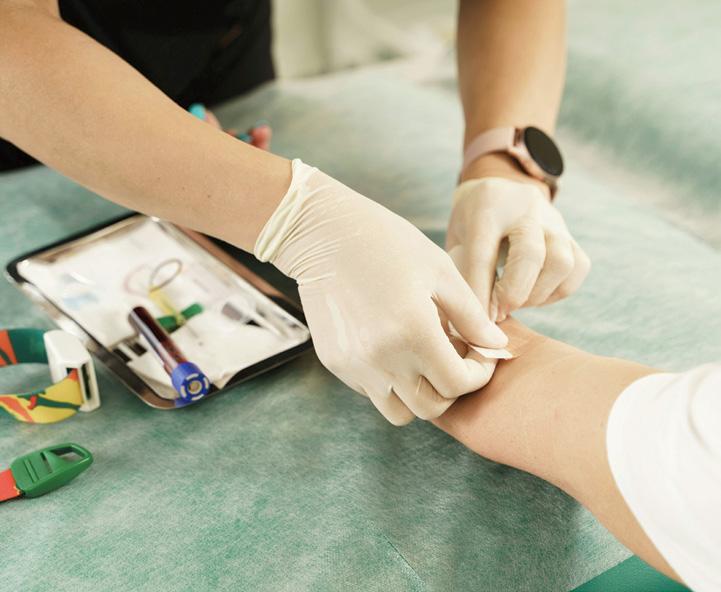
According to the American Red Cross, every two seconds, someone needs whole blood or blood products…
sex with men (MSM) were banned from donating blood. Over the past decade, the ban has been relaxed, as viral detection within the blood supply and treatments for HIV have improved. Now, MSM may donate if they have not had sexual intercourse in the previous three months, the time it takes for HIV to fully be detected after exposure. Of course, those who have an active HIV infection, are on antiretroviral therapy (ART), or have been diagnosed with acquired immunodeficiency syndrome (AIDS) are precluded from donating. Someone who has taken HIV pre-exposure prophylaxis (PrEP) or post-exposure prophylaxis (PEP) medications may donate after a certain waiting time, depending on the medication taken. Like HIV, the hepatitis viruses trans-
BY SHARON MORGAN
mitted through blood (hepatitis B, C, D) preclude individuals from donating, even if they have been successfully treated. Those who have had hepatitis A and E, transmitted via oral-fecal route, may donate following a specified waiting period.
Those who have traveled to certain countries may have temporary or permanent bans placed on them, over concern of spreading blood-borne diseases, most notably Creutzfeldt-Jakob disease (CJD), a rare but fatal neurodegenerative disease. Temporary holds on donating may also occur based on recent vaccinations, medication uses, exposures to other diseases, or tattoos or intravenous drug use.
Historically, successful blood transfusions are only a few hundred years old. The circulatory system wasn’t fully understood until 1628, and the first successful human transfusion following a postpartum hemorrhage didn’t occur until 1818. However, until the different blood types were identified at the turn of the 20th century, the science community could not comprehend why some transfusions worked and others didn’t. The classification of blood by type (A, B, O, or AB) along with the discriminator of Rh positive (+) or negative (-) have allowed for the safe collection, distribution, and usage of blood worldwide.
Exactly why different blood types exist, however, remains a mystery. Blood types evolved over millions of years and the theories as to how and why they evolved tracks with how human development and expansion is thought to have occurred.
Blood type is a hereditary factor, that is, an individual’s blood type is passed down through a parent. One hypothesis suggests that all blood types evolved from the O lineage, and that as modern humans migrated from one regional area, they developed the other blood subtypes that provided unique or additional protections. The other prevailing theory follows the primary races hypothesis, which opines that modern humans evolved simultaneously from different geographic regions and, as such, different blood types also evolved simultaneously.
Blood types have come to occupy a pop cultural and mystical significance.
Who you should attract as a mate or which foods are best to consume have been linked to which blood type you are. The subtypes are thought to represent certain favorable traits, like creativity, adaptability, sociability, or unpredictability. Blood subtypes can represent animal spirits, both real and imagined. Even the Rh factor has taken on mystical meaning, with (-) suggesting a more ancient lineage. Blood is always in demand, and countries worldwide have ingenious ways to promote donation. Paid time off to donate is provided in several countries, with duration ranging from only the time to donate to the entire day off. Financial rewards might be gift cards or vouchers to local establishments but also may include such incentives as tax breaks or reductions in health insurance premiums. Not only does Sweden provide time off, donors also are notified when their blood has saved a life.
The youngest of us had to stay in the hospital following her birth to receive a series of transfusions. Maybe that’s why I’m such a fierce advocate for blood donation and strongly encourage others to participate—say, at the next CAMP Rehoboth blood drive. Maybe it’s guilt, however. We originally voted for the hospital to keep her. ▼
Sharon A. Morgan is a retired advanced practice nurse with over 30 years of clinical and healthcare policy background.
Youth Crisis Support: Crisis intervention services for children under 18. Parents and caregivers are connected to a crisis clinician. Available 24/7. Call 800-969-4357 or text DE to 741-741.
988: Free, confidential support and resources for anyone in distress. Available 24/7. Call 988.
Delaware Hope Line: Free coaching and support. Links to mental health, addiction, and crisis services. Available 24/7. Call 833-9-HOPEDE (833-946-7333).
Donating blood is among the simplest and most powerful ways to save lives. A single donation can help trauma victims, surgical patients, individuals with chronic illnesses, and premature babies. Whether a first-time donor or a regular participant, preparing well can make the process smoother and more rewarding. Here are practical tips to help every step of the way.
BEFORE DONATING ⊲ Preparation begins at least a day before donation. Start by drinking plenty of water. Hydration is crucial because it helps maintain healthy blood volume, making the donation process easier and reducing the likelihood of dizziness afterward. Aim for an extra two to three cups of water the night before and the morning of donating.
Eat a balanced meal rich in iron. Since blood donation temporarily lowers iron levels, having foods like spinach, lentils, beans, lean meats, eggs, and fortified cereals can help. Avoid high-fat or greasy meals, as they may affect how well blood can be processed.
Get a good night’s sleep. Rest helps the body maintain stable vitals during the donation. Feeling unwell, have a cold, or recently took antibiotics? It’s best to postpone donating.
Wear clothing with sleeves that can be easily rolled up. Bring a valid ID and notes about medical details—e.g., current medications, recent travel, and vaccinations; these can impact eligibility.
WHILE DONATING ⊲ Upon arrival, stay relaxed and follow the staff’s instructions. There will be a quick health check, including hemoglobin testing and blood
pressure measurement.
During donation, focus on slow, steady breathing. Feeling nervous? Music or conversation is a good distraction. The actual collection typically takes only about 10 minutes for whole blood. (Donating platelets or plasma may take longer.)
Feeling faint, dizzy, or having some unusual sensations? Let the technician know immediately. These reactions are normal and easy to manage when addressed early.
AFTER DONATING ⊲ Once donation is complete (and staff says it’s OK), drink water or juice from the refreshment area to replenish fluids and enjoy a light snack to help restore blood sugar levels.
For the next 24 hours, continue hydrating—water, juice, and electrolyte drinks work well. Avoid alcohol, smoking, and strenuous exercise, as these can worsen dehydration or increase the risk of dizziness.
Keep the strip bandage on the donation site for at least four hours and avoid heavy lifting with the donation arm. If bruising appears, apply a cold compress during the first day, then warm compresses afterward.
Pay attention to your body. Mild fatigue is normal; if you feel persistent discomfort, coldness in the arm, or prolonged dizziness, contact the donation center.
TILL NEXT TIME ⊲ Blood donation is a small act with immense impact. With good preparation and proper care, most people can donate safely, comfortably, and confidently. ▼
All of CAMP Rehoboth’s programs, services, and events are listed here: camprehoboth.org/events-calendar/. Please visit the site often to ensure you have up-to-date information on what is being offered—and when
There was a time when CAMP Rehoboth Community Center deployed summer interns into the whir of the bustling beach town with instructions to patrol the boardwalk, bars, and beaches in search of discerning gentlemen—particularly those with a knowing look in their eyes that affirmed their ambition to have a good time. Their mission: Hand out free condoms and pamphlets about HIV testing at CAMP Rehoboth on Baltimore Avenue. This unique marketing tactic is just one little-known anecdote about a time when CAMP Rehoboth took a more boots-on-the-ground approach to health education. It’s a superb example of how CAMPsafe came to be one of the organization’s most impactful initiatives in the community.
December is HIV Awareness Month, so the perfect time for CAMP Rehoboth to reflect on its longstanding legacy of advocating for and upholding the health and wellbeing of the LGBTQ+ community. For nearly 30 years, CAMPsafe—CAMP Rehoboth’s HIV and STI prevention program—has been a trusted, stigma-free access point for sexual health services. CAMPsafe has helped thousands of vulnerable people learn their status, navigate care, and feel supported through a deeply personal and critically important process.
In fact, CAMPsafe is one of CAMP Rehoboth’s oldest programs. Its establishment was announced in a 1998 issue of Letters, where one article noted that “CAMPSafe, the new HIV/AIDS outreach program of CAMP Rehoboth, is set to launch over Memorial Day weekend.” This article heralds the beginning of a 27-year partnership with the Delaware Division of Public Health.
In that time span, CAMP Rehoboth has accomplished much in the way of distributing resources, educating the public, and changing lives. To date, CAMP Rehoboth has tested over 3,600 community members for HIV. Moreover, throughout the 1990s and 2000s—at the height of CAMP Rehoboth’s testing operation—accessible, community-based HIV
testing was not simply an important public health service; it was a lifeline. CAMPsafe offered confidentiality, compassion, and culturally competent care at a time when stigma surrounding sex and HIV was more pervasive and resources were more limited. And so, in 1998, to inaugurate this program as a sex-positive and queerfriendly resource, CAMPsafe’s persisting tagline was coined: “Have fun! Play smart! CAMPsafe!”
While this history remains central to CAMPsafe’s legacy, the landscape for HIV prevention has changed dramati-
CAMP Rehoboth’s core mission—to Create A More Positive Rehoboth by promoting belonging, safety, and the health and wellbeing of all people—has and will always remain at the center of the CAMPsafe program.
cally since Memorial Day weekend of 1998. Today, risk factors have steadily decreased thanks to major innovations in medical science and public health infrastructure. The introduction of pre-exposure and post-exposure medicines (PrEP and PEP), improved case management and viral load monitoring, and the confirmation that individuals living with HIV who are undetectable cannot transmit the virus (U=U) have reshaped both prevention and public understanding of the disease. At the same time, at-home testing kits, telehealth access to PrEP, and digital platforms for health education have made prevention more accessible and immediate than ever. These present-day innovations, combined with decades of community advocacy, have significantly reduced overall transmission risk while empowering individuals with more control, information, and autonomy in their sexual health decisions.
Against the backdrop of an improved
landscape for HIV care—with emphasis on the evolving nature of public health tools—so too will CAMPsafe evolve. In 2026, CAMP Rehoboth will transition away from direct testing. Instead, it will prioritize resource distribution and referrals to alternative testing options, including nearby clinics, trusted healthcare providers, at-home testing distributors, and partnered community-based organizations. CAMP Rehoboth is now confident that with the evolution of services in the broader community, access to HIV and STI prevention services are now available beyond its own Baltimore Avenue location. CAMP Rehoboth assures the community that this transition is a future-facing shift that allows the organization to align its current resources with the areas of greatest emerging need.
CAMP Rehoboth’s core mission—to Create A More Positive Rehoboth by promoting belonging, safety, and the health and wellbeing of all people—has and will always remain at the center of the CAMPsafe program. Going forward, CAMPsafe will still ensure that every individual has the tools, knowledge, and confidence to make informed choices about their sexual health. In doing so, CAMPsafe will continue to provide education, referrals, navigation support, linkage to care, and culturally responsive community outreach.
CAMP Rehoboth Community Center is proud of the years of service it’s provided through HIV and STI testing. It is equally proud to adapt, evolve, and refocus in ways that best meet the needs of today’s LGBTQ+ community.
CAMP Rehoboth extends its gratitude to every staff member, volunteer, and partner who helped make CAMPsafe a beacon of safety and care over the past three decades. Together, we move forward with optimism, ensuring that the community can continue to Have fun! Play smart! CAMPsafe! ▼
Vincent
DeLissio is Membership and Program Coordinator at CAMP Rehoboth.





Andrew Foy, MD & Zaid Amin, MD
Andrew Foy, MD, a General Cardiologist, practices at Beebe Cardiology Lewes, part of the Cardiovascular Institute at Beebe, where he diagnoses and treats common conditions such as chest pain, lipid disorders, congestive heart failure, coronary artery disease, atrial fibrillation, and syncope.
Zaid Amin, MD, an Interventional Cardiologist, practices at Beebe Cardiology Lewes, part of the Cardiovascular Institute at Beebe, where he diagnoses who specializes in diagnosing and treating complex heart and vascular diseases.
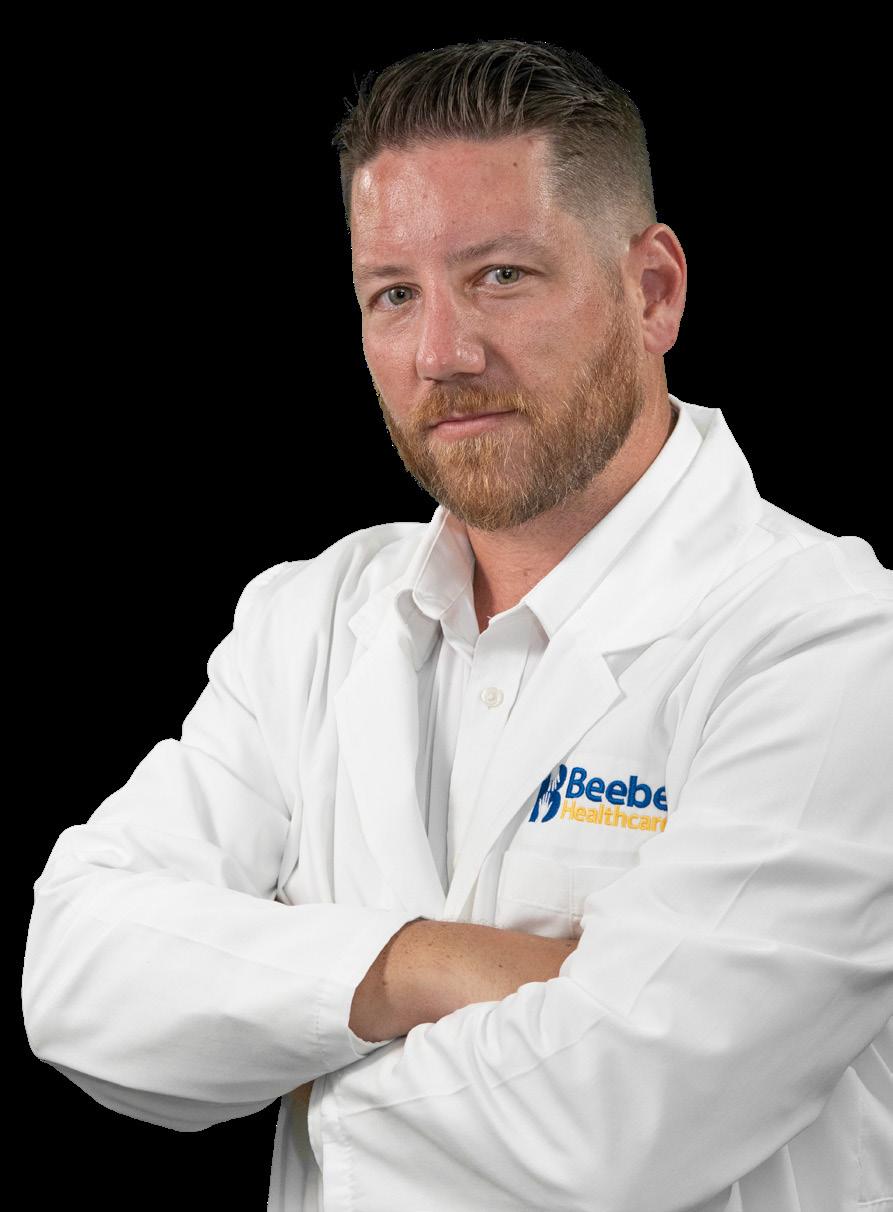

Beebe Cardiology Lewes
431 Savannah Road, Lewes, DE

My favorite thing about the Christmas season is the monsters.
When I was a kid, “It’s the Most Wonderful Time of the Year” from Andy Williams’ 1963 Christmas album was everywhere at holiday time, and I always wondered why “scary ghost stories” were included in the list of anticipated yuletide activities alongside marshmallow toasting and caroling. Then I saw one of the many versions of A Christmas Carol, most likely the animated one starring Mr. Magoo, and it all made a little bit more sense.
Honestly, I’ve never been that enamored of Dickens’ most celebrated ghost story, which is a little too preachy for my liking. It’s not the best of the many ghost stories Dickens wrote, or even the best Christmas-themed one to come from his pen, and it’s not particularly scary unless you happen to be a miserly type who can relate to Scrooge’s need for redemption.
Much more thrilling to me are the ghosts who have more menacing intentions, like the one in M. R. James’ “Oh, Whistle, and I’ll Come to You, My Lad” or A.M. Burrage’s “Smee.” These ghosts are genuinely terrifying, and it’s easy to imagine yourself encountering them the way the narrators of the stories do. The fact that they appear at Christmastime makes them all the more delightful, since we’re supposed to be having visions of sugarplums dancing in our heads, not the spirits of the dead.
Beyond the ghosts, there’s a whole host of threatening Christmas characters to watch out for. Krampus is probably the most well-known, as he’s become something of a favorite in recent years. But he’s hardly the scariest of the bunch. More ominous is the Yule Cat. While Krampus punishes naughty children, the gigantic Yule Cat wanders around eating anyone who doesn’t receive new clothes for Yule. Even worse is his owner, the troll Gryla, who is not only mother to the mischievous Yule Lads but whose favorite snack is, you guessed it, children. She’s said to go door
BY MICHAEL THOMAS FORD

Halloween is supposed to be the time for scares, so why are so many terrors associated with what should be a time of merriment and cheer?
to door, asking for the naughty ones to be handed over.
Halloween is supposed to be the time for scares, so why are so many terrors associated with what should be a time of merriment and cheer? Perhaps the long nights and the cold are to blame. Or maybe it’s precisely because Christmas is a time of light and hope that we feel safe enough to indulge in the occasional darker thought. Seated beside the fire or wrapped up in bed while the snow falls outside, the idea that something sinister lurks behind the decorated tree and twinkling lights imbues the Christmas spirit with extra comfort.
Occasionally, I write both ghost stories and mysteries. Mysteries set at Christmas, particularly of the cozy variety, are enormously popular. Murder goes with the holidays like fruitcake and eggnog, and the only thing mystery readers like more than finding a gift under the tree is finding a body there. I trace my own love of mysteries to being gifted a set of Agatha Christie novels
for Christmas at an impressionable age, and spending a delightful vacation from school alternating between playing in the snow and trying to figure out her twisty plots.
It occurs to me that an affinity for hauntings and homicides during the most wonderful time of the year may just be a reaction to being told we’re supposed to be merry and bright. After all, the holidays are for many of us a time of stress, depression, and barely concealed rage. The pressure to act like things are wonderful and that we’re having a marvelous time is intense. Perhaps one way to deal with that is to allow ourselves some moments of anti-cheer.
I genuinely do love Christmas, even with the attendant obligations to be festive. But I also love the idea that sinister somethings are there in the background, threatening to bring it all crashing down. Our tree is decorated with hundreds of the usual ornaments— Santas and snowmen and angels—but
Continued on page 34

The New Year has many people participating in Dry January, a month-long challenge to give up alcohol, jump-starting other healthy habits for the year to come. Whether or not you choose to go dry, maybe it’s time we all reconsider our relationship to alcohol—and the LGBTQ+ community in particular.
For decades, queer communities have been built around nightlife and alcohol. Bars became our gathering spaces because safer options were often limited or nonexistent. So, it’s easy to think of alcohol as neutral within queer life, the perennial plus one.
But recent data gives us a more complicated picture about alcohol in LGBTQ+ communities.
National surveys like the 2023 National Survey on Drug Use and Health consistently show that queer adults drink more frequently and more heavily than straight adults. About two-thirds of lesbian, gay, and bisexual adults report drinking in the past month, compared to just over half of straight adults. LGBTQ+ adults are also statistically more inclined to binge drink. The rates of alcohol use disorder are higher for queer-identifying people, too. Almost 20-25 percent of the LGBTQ+ community has moderate alco-
hol dependency, while only 5-10 percent of the general population does, according to addictioncenter.com.
Rates of dependency and abuse can be even higher for some LGBTQ+ subcommunities. Multiple peer-reviewed studies have shown that sexual minority women report binge drinking and heavy drinking at higher rates than cisgendered, heterosexual women. They also report more alcohol-related problems like blackouts, and social and health impacts, despite similar or lower frequency of drinking compared to some groups.
Among LGBTQ+ youth, the CDC finds similar disparities. Queer teens report higher levels of binge drinking and alcohol-related risks than their cis-het peers. Alcohol use has dropped for youth in general, but LGBTQ+ teens still drink at significantly higher rates than straight teens.
One explanation is that queer people disproportionately carry stressors that straight people often do not, including higher rates of depression, anxiety, discrimination, family rejection, trauma, and economic instability. LGBTQ+ youth, in particular, can experience higher rates of mental health risks and bullying, increasing the probability of using alcohol as a coping tool. When those pressures intersect with a culture historically centered

BY STEPHEN RASKAUSKAS
Drinking less all year is not about rejecting queer culture. It is about allowing queer culture to grow.
on nightlife, alcohol becomes a common coping mechanism.
Jokes about the famous “gay pour,” where a vodka soda at the club is mostly vodka with a whisper of soda, are funny because they’re true. Humor softens the truth that many queer people drink more heavily than they intend.
That is why conversations about drinking less—not just in January and not only as a temporary detox—must grow louder in queer circles. We don’t need to shame anyone. But we can expand what queer joy can look like and talk about ways alcohol interacts with our bodies, minds, and already elevated mental health risks.
Alcohol affects nearly every organ system, according to the National Institute on Alcohol Abuse and Alcoholism. It disrupts neurotransmitters that regulate mood and sleep, raises blood pressure, alters hormones, and increases the risk of several cancers. The liver, especially, bears the brunt of it, as alcohol leads to inflammation, fatty liver changes, fibrosis, and sometimes cirrhosis over time.
The good news is that the body responds quickly when we reduce alcohol intake. Alcohol stays in the system for 24 hours, so even after just a day you’ll notice changes. If you give up alcohol for a month, Healthline claims that you’ll improve your liver, metabolism, and sleep. With more time, the benefits of abstaining from alcohol or greatly reducing consumption only increase, as many studies have shown.
Bars, parties, and events are essential to queer culture, but they should not be the only places where we feel welcome. We deserve a wider ecosystem of queer spaces, including daytime events, outdoor gatherings, queer cafés, shows without a two-drink minimum, and social spaces that do not require buying alcohol to belong. The lack of alternatives is why queer communities can still center around nightlife and drinking. Though when alcohol becomes the price of admission, it becomes harder to question how it shapes us.
Continued on page 34



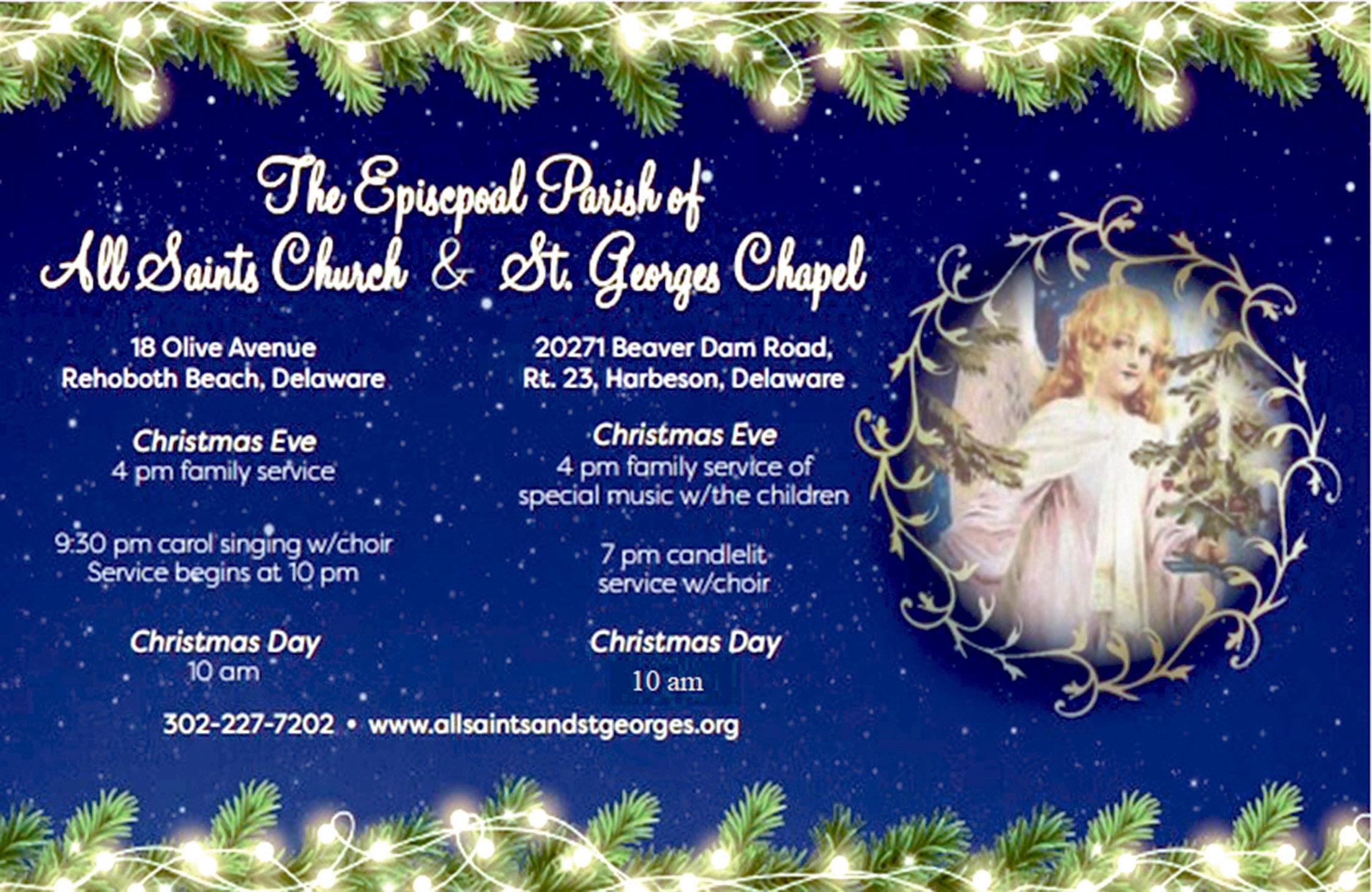
Christmas Continued from page 30
there are also a couple of Krampuses, some vintage devil heads, and a ghost of Jacob Marley complete with translucent glass skin and chains wrapped around him. I love seeing them hanging amongst the jaunty feathered birds and glittery gingerbread men, peering out from the boughs as if to say, “Enjoy the sparkle while you can. We’ll be waiting when you settle your brain for a long winter’s nap.”
However you celebrate the holidays, with unadulterated Christmas joy or sprinkled with a little Grinchy ghostliness, I hope the end of the year finds you well. It’s been a wild ride since last Christmas, and I know there were times when I thought we might not make it. But we did. And while I really try not to make New Year’s resolutions, which for me almost immediately become New Year’s failures, I’m looking forward to what the next year holds. If anything, this past year has shown me that there are more people out there who want to change things for the better than there are ones willing to burn it all down for the benefit of a few.
Now that I think about it, maybe we’re all the Ghosts of Christmas Yet to Come, and our job is to show the collective Scrooges of the world that their time is running out. In that case, best get to haunting. I’ll see y’all when the clock tolls three. ▼
Michael Thomas Ford is a much-published Lambda Literary award-winning author. Visit Michael at michaelthomasford.com.
Continued from page 32
Luckily, reducing alcohol intake isn’t as difficult as people expect. That’s not to say it’s not challenging. And there’s no shame in seeking out support in your journey. For those with alcohol dependency, that support is vital.
But many times when someone says they want a drink, what they really want is something beautiful or comforting or festive in their hand. They want a small ritual or to create a vibe. That is why mocktails and alcohol-free spirits have become so popular. They deliver all the sensory pleasure of a cocktail without the biological hangover. And if you replace cocktails with mocktails at gatherings, many folks won’t even bat an eye.
Drinking less all year is not about rejecting queer culture. It is about allowing queer culture to grow. It is about making space for more kinds of connection, more ways of gathering, and more forms of joy. It is about understanding that the stressors queer people face make us more vulnerable to alcohol’s harms and that we deserve to feel better, more grounded, and more in control than the default rhythm of nightlife allows.
Queer life is bigger than partying and drinking. It always has been. When we make room for choices that support our physical and mental wellbeing, we create a community that is not only more inclusive but also more imaginative and vibrant. ▼
Stephen Raskauskas is a Sussex County native who has produced content for radio, TV, digital, and print.



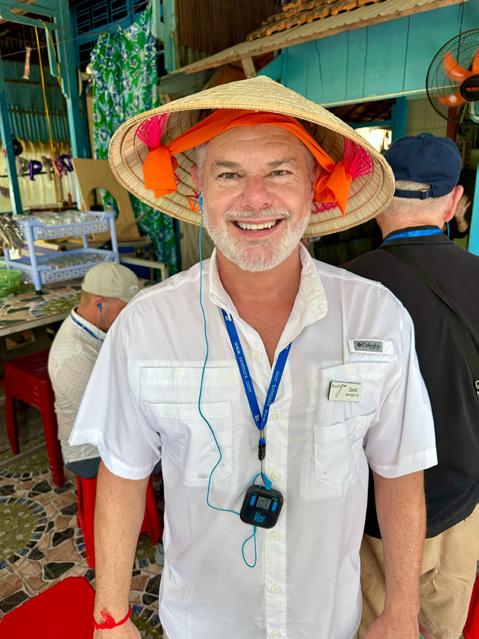

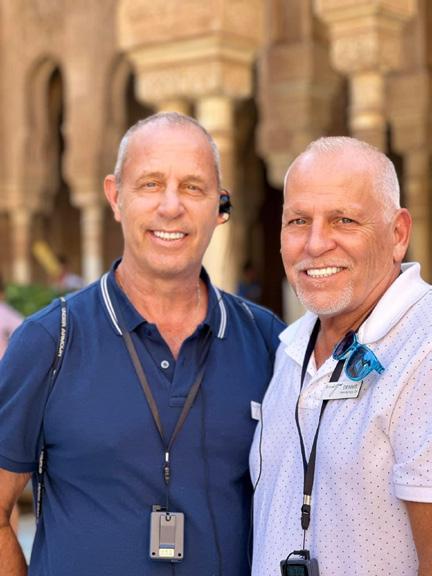



RICH BARNETT
I’ve no idea where the notion to turn a pine tree into a festive holiday cocktail came from.
Perhaps it stems back to my stepfather’s Christmas tree farms, which filled our house each winter with an almost supernatural abundance of evergreen, as though the forest had moved in and taken over. Maybe it’s a lingering memory of naturalist Euell Gibbons gazing out at America and asking, “Ever eat a pine tree?”
According to Gibbons, the crunchy Grape-Nuts cereal he was promoting on TV tasted like one.
More likely the idea was just one of those harebrained thoughts that pop into my head uninvited and refuse to leave until I do something about it.
Mixologists today will infuse booze with everything short of pizza—wait, a distillery in Rhode Island has done that—but few are seriously exploring pine. I discovered one or two who play with European pine liqueurs and a Vermont-made pine syrup. Alas, none of these products have made their way to Rehoboth. So, I did what any adventurous mixologist would do and made my own.
This did require a quick detour into the world of toxicology because not all members of the pine family are edible. For example, ingesting hemlock or yew can result in gastrointestinal issues, breathing difficulty, and—in extreme cases—death. Hemlock was given to Socrates as his method of execution in 399 BC. And though I like to dance on the edge of crazy now and then, I played it safe and used loblolly pine and Fraser fir, which is one of the classic “Christmas” tree varietals and the kind I grew up with.
To make pine syrup, I chopped two cups of needles, simmered them in a pot of water for an hour, and let them infuse overnight. The next day I used one cup of the pine water, one cup of sugar, all the needles, and brought everything to a boil. I poured the results into glass jars and let them rest again. My kitchen smelled like Christmas.
Neither syrup, however, turned out
to be as piney as I had hoped. It’s as if the taste and aroma faded instead of intensified over time. The Fraser fir batch, however, had promise. So, I summoned my experienced, ever-ready team of taste-tipplers to come try two classic cocktails I thought would pair with the mild woodsy-citrusy-flavored syrup: a Gin and Tonic and a Manhattan.
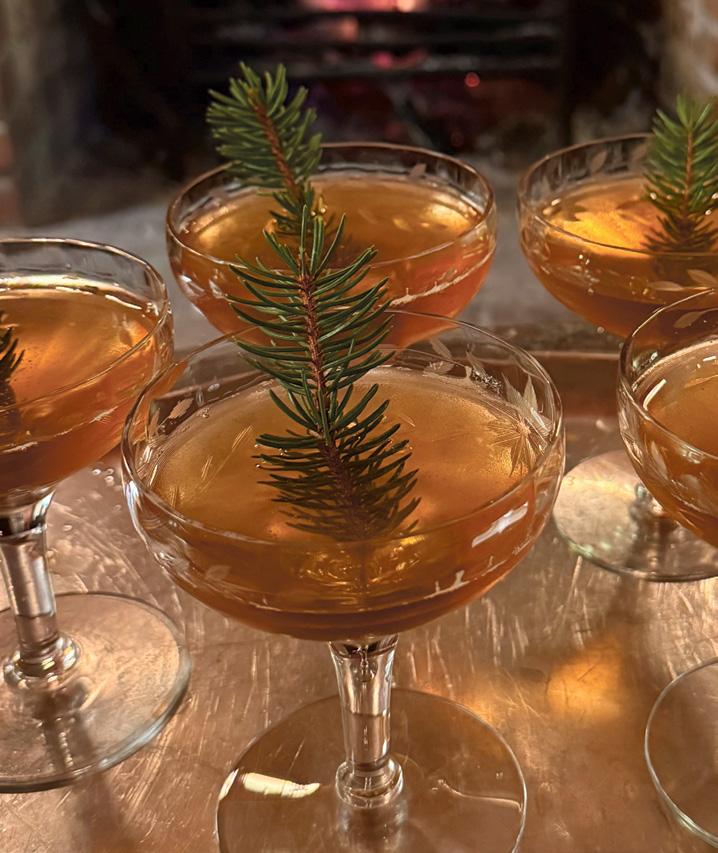
This did require a quick detour into the world of toxicology because not all members of the pine family are edible.
We started with gin and made the drink in a cocktail shaker because we wanted to muddle additional pine needles in the syrup to coax out more flavor. We strained the mixture, poured our drinks, and garnished them with a festive sprig of Fraser fir. The result was very nice, a classic G&T with a subtle pine taste. Très seasonal. And it didn’t take long before someone dubbed it the “Gin and Tonikkah,” a nod to Adam Sandler’s well-known Hanukkah song.
For the Manhattan, we repeated the muddling-and-shaking routine, this time
with bourbon, sweet vermouth, and a dash of cardamom bitters. Again, we garnished with a green sprig. The result? “Just a nice Manhattan.” The vermouth had masked the pine flavor. Someone playfully suggested adding a couple drops of Pine-Sol® to amp up the scent and the flavor. This naturally led to a big guffaw about Trump’s “inject disinfectant to treat COVID” advice from back during pandemic days.
For the record, we did not use PineSol. But we did mix up another batch, this one sans vermouth and with classic Peychaud’s bitters. The pinus—that’s Latin for pine—was flaccid in this drink too. Fortunately, one gentleman who shall not be named discovered that if you licked the pinus before taking a sip, you’d get a stronger pine flavor. Kind of like the “lick, shoot, suck” method with tequila shots. But it was important to lick in the direction of the needles, not against.
Yes, things had gotten a little bawdy, but that’s to be expected when your tasting panel has consumed several experimental cocktails. We christened this drink the “Lick It Before You Sip It Manhattan.”
By the end of the tasting, what had we learned? First, the Gin and Tonikkah outperformed both Manhattans. Second, you absolutely can drink your Christmas tree—infuse it, bruise it, wave a pine sprig over the glass like you’re blessing it with the spirit of Euell Gibbons. And finally, we all agreed what the world needs now isn’t more outrage but more outrageous cocktails—the kind of inclusive holiday spirit you can actually drink. Happy Holidaze! ▼
Rich Barnett’s column just celebrated its 20th year in Letters. He is the author of two books and is an occasional contributor to Delaware Beach Life. His character-driven short stories have appeared in a variety of publications, most notably three times in Saints and Sinners annual LGBTQ fiction anthology. He can be reached at richbarnettwriter.com.
Located at the south end of the boardwalk in beautiful Rehoboth Beach Full custom design center and repair service on premises, most can be completed while you’re here on vacation Exclusive home of the “Rehoboth Beach Bracelet” Official Pandora Dealer Large selection of: 14kt Gold, Rubies, Emeralds, Sapphires, and Tanzanites GIA Certified Diamonds in all sizes Watches including Movado, Raymond Weil, Seiko, Citizen, Pulsar, and Swiss Army
y


BY MICHAEL COOK
After a stunning turn on RuPaul’s Drag Race All Stars 10 and now the brand-new WOW Presents Plus series Scroll Patrol, drag legend Nicole Paige Brooks is just getting started! The newly proclaimed “NPBFAG” is looking back on her career with this new show, but also looking forward towards possible new stages to take on (Drag Race Live! anyone)? I sat down to chat with Nicole about her All Stars run and her path to becoming a Brooks family member herself.
MICHAEL COOK: With your appearance on RuPaul’s Drag Race All Stars 10, and now the amazing WOW Presents Plus show Scroll Patrol, who knew that this would be the renaissance of Nicole Page Brooks?
NICOLE PAIGE BROOKS: Well, I kind of did (laughs). To be honest, I was telling my husband that being out of town four or five times a month would be good. And now I’m just like, okay, I gotta keep it to 10. I’m not going out of town more than 10 times at the most. I was not expecting in July—I was out of town 21 out of 31 days! I came home cranky; I’m doing that and it’s not good for the fans. You know, it’s not good for me to show up “off.” I’m trying to pace myself, because that’s what the real problem is, like, they want you when the show’s airing. I’m just like, I’ll have to see you after (laughs)!
MC: Scroll Patrol is fun because, for example, a lot of the girls on Season 17 of Drag Race came to fall in love with drag during the Drag Race era. Conversely, a lot of the drag you are showing off is the drag that you came up with and it’s such a fanstastic time capsule. Is it as fun for you?
NPB: I’ve always been proud of my drag legacy, the Haus of Shawnna Brooks, and my drag family. I don’t think


Originally, I started in Oklahoma City, but I was Nicole Cage there, and I was only doing AIDS benefits…
a lot of people know that I originally started in Oklahoma City, and I think that’s something that’s kind of come out in this process. Originally, I started in Oklahoma City, but I was Nicole Cage there, and I was only doing AIDS benefits, ‘cause that’s what I did. It was an AIDS charity, and it was a minipageant and I won that and then that avalanched into being asked to do drag. I did a talent show at the Metro here in Atlanta and I just kept saying “yes” to gigs, and it just turned into this. I was at a brunch, and somebody was like “RuPaul’s doing an online contest of some sort. I signed you up, I just need you to come and approve these photos.” I went over there and after like and after like 16 martinis I was like “yeah, I love it!” Atlanta voted me up to the top; apparently they were refreshing their cookies!
MC: Your drag family remains an essential part of who you are as a
performer and person. What is it about drag families from when you were coming up that made you who you are?
NPB: When I came up, me and Shawnna (Brooks), I was a superfan of Shawnna. I still am a superfan of Shawnna. If you ask me my favorite drag queen, it’s always gonna be Shawnna. The thing is, I have so much respect for her opinion, for her drag, because I am a fan of her drag. I’m not just a fan of her reputation and her legacy. I’m a fan of her, and what she puts out on the stage and creates.
We started hanging out so much that we had a relationship and then she was like, “Well, if you’re my daughter, why don’t you have my last name?” So for her birthday in 2000, I just added her last name to the end of mine.
Like Phoenix becoming my daughter. When I found Phoenix, she was wearing headband wigs, and every time she performed, her hair went one way and
she went the other. Everything was a mess until I got ahold of her (laughs). She may not give me the credit, but that’s still the facts.
MC: It’s so funny that you were on All Stars 10 together and you never interacted. That was so wild.
NPB: It was so wild! I think if we would have been in a room together, to be honest, I don’t know if it would have helped my game, as much as it would have helped her game. Because I’m too motherly—but I know I would have been able to snap her out of that, because she was all in her head when she first arrived. I know if I was in the car with her that morning, I could have got her
together. As soon as she walked in the room, I saw the angst, the anxiety. I think both of our experiences would have been really different. I would have traded Mistress (Isabelle Brooks) for her (laughs)!
MC: I can’t think of anything you haven’t done in your career so far. What is one thing left that you want to do? What is something you want to accomplish?
NPB: I would love to host a show in Las Vegas, maybe a huge drag show on the Las Vegas strip somewhere? I would like to act more and maybe do stand-up comedy. There are things that I’m researching now that I think will perpetuate even a longer career. Where I
can sit down in a chair and be funny. But I wanna host Drag Race Live! so bad! ▼
Scroll Patrol is streaming now on WOW Presents Plus.
Follow Nicole Paige Brooks on Instagram: @nicolepaigebrooks.
Michael Cook has been a part-time resident of Rehoboth Beach for over a decade. He is currently a contributor to WERRRK.com., OUTSFL, and The Philadelphia Gay News.
Photo credit: World of Wonder

In the late nineties, a movie with a gay lead wasn’t exactly unheard of, but it was rare. So when we all found out that heartthrobs Kevin Kline and Tom Selleck were both going to play gay men in a new comedy called In & Out, it felt like big news. Toward the end of the film, Joan Cusack sits at a dive bar, in full bridal regalia, after having been jilted at the altar by Kline, who chose that moment to come out to the entire town, after only recently coming out to himself. She’s seated next to Selleck, and in a weak moment brazenly propositions him. He politely declines and tells her why. Moments later, she bursts through the doors of the bar and screams into the night, “Is EVERYBODY gay??”
Fast forward a few decades, and sadly, everybody still isn’t gay. But we are popping up in the most unexpected places.
Recently, I started streaming two very different shows, one on Netflix and the other on AppleTV+. They both had intriguing, but very different premises. Neither was marketed as “LGBTQ+” programming, but rather to the widest audience possible. In fact, both were the #1 show on their respective streaming services for a time. And both featured lead characters that were visibly and unmistakably queer.
The Beast in Me is a limited series on Netflix. Claire Danes plays Aggie (short for Agatha), an author living on Long Island who is struggling with a book she’s trying to write and an old house in need of repair. Her life is complicated when Nile Jarvis, a notorious real estate developer from Manhattan, moves next door. In addition to displacing those in need of affordable housing and a maniacal obsession with a jogging path he wants to build behind his new McMansion, his sudden arrival is unnerving because pretty much the entire world is convinced he killed his wife and got away with it. Before the end of the first episode, Aggie suspects that Nile has killed again, and before the end of the
second, she’s decided to make her next book all about Jarvis.
Oh, and by the way, Aggie is also gay. Her relationship with ex-wife Shelley deteriorated after their young son died in a car accident and Aggie entered a grief spiral. But Shelley is an integral part of the show, joining Aggie to visit their son’s grave in the first episode and bearing witness to yet another of her fierce rages.
But what’s truly remarkable to me is that neither of these shows is about being gay…
Pluribus is a sci-fi show on AppleTV+. Rhea Seehorn plays Carol, a much more prolific author, who is struggling with how much she detests her own work, a series of schlocky outer space-fantasy-romance tomes that have somehow gained a fierce and loyal following. Her life is complicated when an alien virus spreads like wildfire across the entire planet. The virus kills some, but successfully infects nearly everyone else, turning them all into some kind of connected borg. Once exposed, every infected person shares the memories and experiences of every other infected person. Everyone knows how to fly a plane or perform open-heart surgery. Moreover, these quasi-zombies have an inability to lie and only behave in ways that will benefit all of humanity. There is no need for political leadership, since there is no conflict. Everyone is happy, but no one is really themselves anymore. For reasons unknown to her, Carol (and 12 others on the entire planet) are resistant to the virus, and have maintained their “selves.” She had always been a bit cranky, but now she’s the only cranky person on earth—and determined to defeat the virus before the jolly zombies figure out how make her one of them.
BY ERIC C. PETERSON
Oh, and by the way, Carol is also gay. Her relationship with her wife/manager ended when Helen was killed by the virus that turned everyone else into a happy robot in episode 1. But the show reminds us in pivotal moments that Carol isn’t just a curmudgeon, she’s also (like Aggie) experiencing profound grief, losing the love of her life at the exact moment the entire world changed. (Adding insult to injury, Helen’s mind joined with the rest of humanity before her death, so every stranger on the street now knows the most intimate details of their relationship, even though she’s gone.)
It’s notable that neither of these women are particularly likeable—they are as human and flawed as any other complicated protagonist of a drama series on prestige TV. But what’s truly remarkable to me is that neither of these shows is about being gay—the orientations of Aggie and Carol are never ignored, but the shows could have easily centered on heterosexual women with very few script changes.
Even more astounding, I had no idea that these shows were about gay women until I started watching. Nothing in the marketing of either program felt the need to announce this, either to bring LGBTQ+ audiences in or (and this is the best bit) scare homophobic audiences away. That feels like progress, to me.
Despite Joan Cusack’s protestations, everyone isn’t gay. But we are everywhere. ▼
Eric Peterson is a Diversity, Equity & Inclusion (DEI) practitioner, pop culture junkie, and sometime novelist. His debut novel (Loyalty, Love & Vermouth) is available at Broweseabout Books and online.



Hotel Riviera Nayarit I & II | Oct 8–15 & Oct 15–22, 2026 Balkans on the Danube Riverboat Cruise | Apr 5–12, 2027
Amsterdam to Switzerland Riverboat Cruise | Apr 13–20, 2027
Portugal Douro River Cruise | May 12–19, 2027
Wild Alaska Adventure Cruise | May 29–Jun 3, 2027
Barcelona to Lisbon Luxury Cruise | Jun 8–16, 2027
Norwegian Fjords Luxury Cruise | Jul 12–19, 2027
Polar Bear Photography Safari | Nov 10–16, 2027
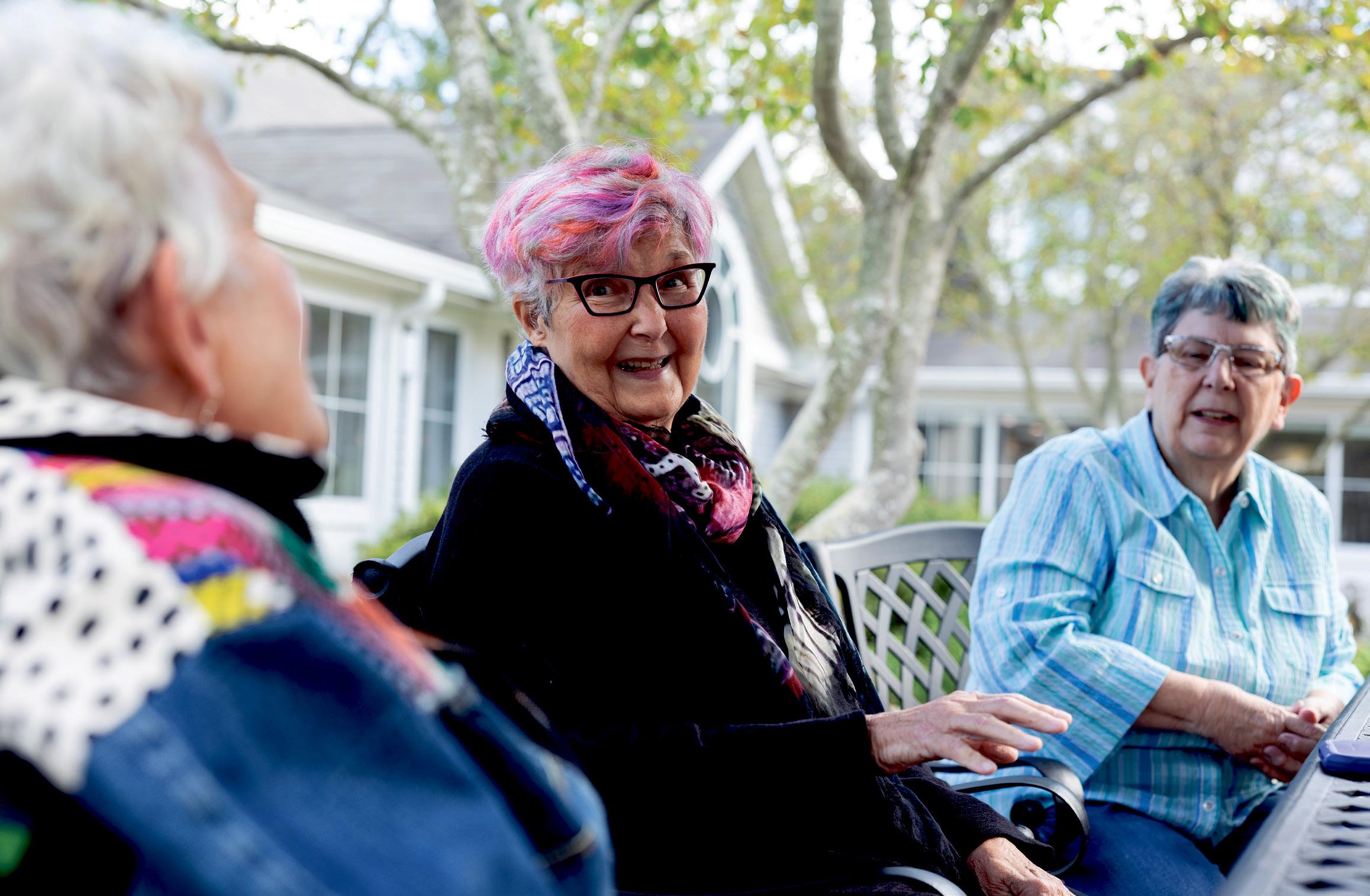
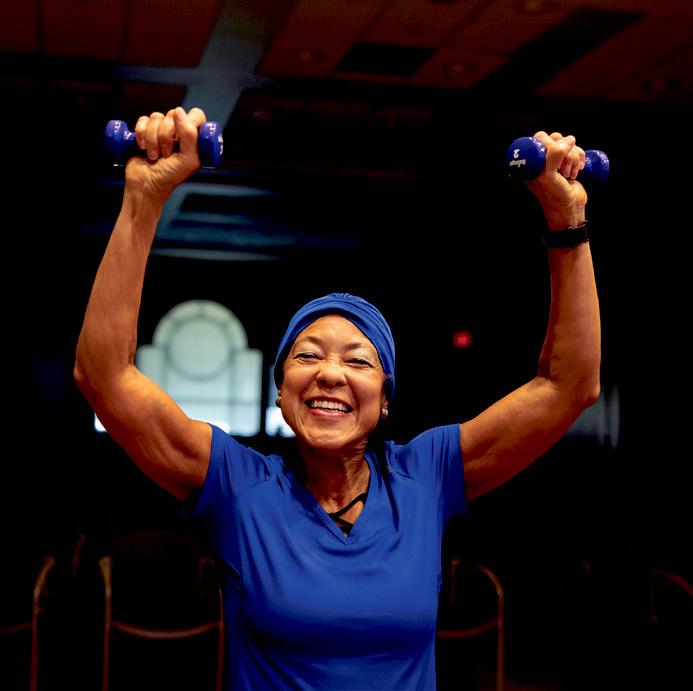
When
we give back, our community leaps forward.
WSFS Bank sees every chance to support a local nonprofit as an opportunity to grow and enrich our Community. We’re honored to support the positive impact made by the Camp Rehoboth Annual Block Party.
There’s a certain poetry to the fact that the most relatable holiday ever invented was born not from religion, culture, or even an opportunistic Hallmark executive—but from rage and exhaustion. Festivus, that 1997 Seinfeld fever dream of an anti-holiday, was designed to rebel against the consumerism and phoniness of December. At the time, it seemed absurd, even cynical. Now, in 2025, it feels like scripture—an existential handbook for surviving a month that’s become a multi-sensory assault of artificial joy. Picture it: the iconic aluminum pole. No tinsel, no lights, no desperate attempt to “spark joy.” Just pure, cold metal standing upright like a monument to minimalism and emotional repression. It is, in many ways, the perfect mascot for our era: sustainable, industrial, and completely devoid of emotional labor. The pole doesn’t ask how you’re doing. It doesn’t pretend to care. It just stands there, unapologetically unadorned—like the patron saint of healthy boundaries.
Meanwhile, the rest of the holiday landscape looks like a hostage situation with better lighting. Adults who should know better sit around manufacturing fun as though they’re trying to meet quarterly joy metrics. Every weekend from Thanksgiving through New Year’s is now a rotating schedule of mandatory merriment: Friendsmas, Secret Santa, Office White Elephant, Pajama Brunch, Vision Board Workshop. It’s all become a social nightmare wrapped in cheap paper.
The problem isn’t the impulse to connect—it’s the required performance. We’ve somehow mistaken attention for affection. Holiday gatherings have evolved into content opportunities, a chance to prove that one’s life is both emotionally rich and tastefully lit. We post Reels of ourselves clinking glasses with rote captions like “we did a thing!” while silently calculating how many likes justify the hangover. We “surprise”
each other with gifts pre-selected from Amazon wish lists. We pretend self-care means spending $400 on candles.
And yet, beneath the glitter and endless playlists, there’s a low hum of fatigue—the kind that can’t be solved by another round of espresso martinis. It’s the fatigue of people who have been “on” for far too long, who are expected to generate warmth in a world that feels increasingly cold.
That’s why Festivus feels different now. It doesn’t pretend to be magical. It doesn’t require matching pajamas, an expensive dinner, or a photogenic tablescape. It’s the anti-holiday for the over-simulated and emotionally dehydrated. It’s a minimalist rebellion in a season of excess.
At the heart of Festivus are its three sacred rituals: the Airing of Grievances, the Feats of Strength, and the aforementioned Festivus Pole. Together, they form a kind of emotional detox plan. Forget “Elf on the Shelf.” Try “Adult on the Edge,” publicly listing their disappointments while everyone pretends to be shocked.
BY CHRISTOPHER MOORE
The Airing of Grievances is pure catharsis: a structured opportunity to get things off your chest. It’s the most honest family gathering imaginable, one where no one hides behind eggnog diplomacy.
Think about how revolutionary that is in 2025. We’ve replaced heart-felt conversation with text chains and reaction emojis. We’ve turned conflict avoidance into a national pastime. But Festivus can reverse all of that. It invites confrontation. It demands discomfort. It reminds us that maybe love isn’t found in relentless agreement, but in the ability to holler across a table and still pass the mashed potatoes.
Then comes the Feats of Strength—a tradition that, in its original Seinfeld form, involved wrestling the head of the household until they’re pinned to the ground. But in modern practice, that can be reimagined as something far less physical and far more symbolic. Today’s Feats of Strength might look like surviving a group chat without muting it, making it through a dinner without mentioning politics, or gleefully declining that

The pole doesn’t ask how you’re doing. It doesn’t pretend to care. It just stands there, unapologetically unadorned— like the patron saint of healthy boundaries.




one specific holiday party invite because you simply don’t want to go. It’s about endurance, not domination—the quiet heroism of setting boundaries, saying “no,” and staying upright in the face of holiday chaos.
The beauty of Festivus lies in its unmarketable nature. You can’t sell a “limited-edition Festivus pole” without missing the point entirely—though someone, inevitably, will try. There are no themed cocktails or Pinterest boards. You can’t manufacture Festivus because the entire premise is to stop pretending. It’s not about joy, it’s about relief.
In many ways, Festivus isn’t just a parody of holiday excess—it’s a critique of modern adulthood. We’ve become so obsessed with constructing happiness that we’ve forgotten how to feel anything else. The modern adult is expected to be perpetually fine: productive at work, balanced at home, socially engaged, emotionally literate, and seasonally festive. Festivus doesn’t care about any of that. It says, “Come as you are—bitter, burnt out, or barely hanging on.”
And honestly, isn’t that what we need right now? Between global chaos, economic anxiety, and the creeping
realization that AI might soon write our Christmas cards, the idea of pretending everything’s merry feels absurd. Maybe what we need is permission to admit that we’re tired. To laugh at how absurd it all is. To have one night where it’s okay to be human—messy, flawed, and unfiltered.
This is why Festivus endures. It doesn’t require belief, just participation. It’s a collective sigh of relief masquerading as a holiday. It’s proof that rebellion can be funny and community can exist in imperfection. The aluminum pole becomes a mirror—reflecting our exhaustion back to us and saying, “you’re not imagining this dumpster fire!”
So this year, skip the ugly sweater party. Cancel the cookie exchange. Unplug the inflatable snowman. Gather your people, pour something strong, and speak your grievances into the void. Don’t worry about tone or tact. Just get it out. When you’re done, get on with life. And remember: the pole doesn’t care either way.
Because in 2025, the world doesn’t need another holiday that pretends everything’s fine. It doesn’t need more performative happiness or algorithmic cheer. What it needs—desperately—is


Forget “Elf on the Shelf.” Try “Adult on the Edge,” publicly listing their disappointments while everyone pretends to be shocked.
Festivus: a ritual of resistance, a raising of a certain finger in the middle of your hand to false cheer, and a safe space for everyone who’s had enough of faking the holiday spirit.
It’s a holiday that doesn’t ask you to smile, shop, or sparkle. Just to show up, say your piece, and get on with life. Festivus for the rest of us, indeed. ▼
Christopher Moore is a writer, a teacher, and a lover of NPR, yoga, abandoned shopping malls, reproductive freedoms, and a man who lives in Toronto. His email is moore.cc@gmail.com.



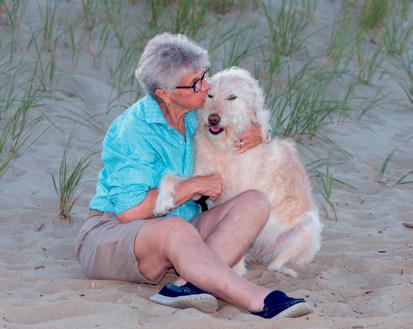




As a kid, the Christmas season was always special. One of my earliest memories is being pulled in a little red wagon up and down the street by my brother while my mom, sister, and some of the neighborhood kids that my mother assembled were caroling from house to house in our close-knit community. My mother had recruited these pre-teens and some teenagers for this annual activity—that I now think is most uncommon in any urban area.
Although I was a very little boy, I remember how cold it was, and I was bundled up and had such a great time just being a part of something that felt so blissful. The caroling trek officially ended at a senior living facility that was on the corner of our street. My mom and the kids continued to sing indoors for the residents.
I get my strong commitment to service from my mother. Growing up, we didn’t have very much. Despite that, she was a giving person and instilled in her children the idea that we should always continue to give to others who may not have even what we had. If we had anything to give, be it money, time, or simply our presence, we should share it with others. In this case, it was a group of kids from a low-income neighborhood, with high hopes for a season, sharing their joy through the energy and excitement of songs.
The African American spiritual “Go Tell It on the Mountain” was my favorite song. In our lively rendition there was an added repetition of the phrase “Go tell it, yeah!” when the voices would grow in rhythm louder and louder. I was too young to memorize most of the words to the song, but I could eagerly and on cue chime in with a “Go tell it, yeah” with the rest of them and best of them. When I sang, if you can call it that, my heart was full, and face beamed with delight.
The other song that I remember vividly from our caroling adventures is “Children, Go Where I Send Thee.” I recently came across a video on social media of the Bethune Cookman Concert Chorale singing this song at a performance and it felt like a warm hug. I loved these songs as a child, and now that I’m older and understand more about their histories and contexts, I appreciate them even more.
Throughout the years, my catalogue of Christmas favorites has expanded to include any song from A Motown Christmas, Donny Hathaway’s “This Christmas,” Nat King Cole’s “The Christmas Song,” Eartha Kitt’s “Santa Baby,” and holiday recordings from Whitney Houston, Luther Vandross, Ledisi, and Leslie Odom Jr. And of course, it isn’t the season without hearing Mariah Carey belt “All I Want for Christmas Is You.” These are individual songs and albums that make me happy. They take me back to a specific time, place, or feeling that I want to hold onto

…in the challenging world we live in right now, bring on the Christmas music!
BY CLARENCE FLUKER
again. For those reasons, I say that in the challenging world we live in right now, bring on the Christmas music!
Delve into your crates, curate yourself a playlist, do whatever you choose to find and sort out music and turn on the nostalgia and cheer. This is perhaps one of the most accessible ways to find that “comfort & joy” that has been sung about so much over the years. There are many forms of self-care and playing music is one that doesn’t cost as much as a trip to a spa. In your car, in your home; if you have headphones, music can be available just about anywhere at any time.
Over the next several weeks, some of us will be navigating grief and loss; hearing a song we once sang with a loved one may be healing. Others will be traversing the minefields of family dynamics that can make you angry—there’s likely a song that if you press play, it’ll calm your nerves and bring about a smile.
Whether it be the stress of finishing out work projects before the end-of-year deadline, the disappointment of not having someone to kiss under the mistletoe, or being filled with anxiety about the state of the social and political moment we’re in, turning to music as a tool in your selfcare toolbox is a small thing you can do that can help in a big way. No matter what you’re going through, I encourage you to tap into the song that touches your heart.
I wish you hope and healing in this season and in the famous words of Robert Wells and Mel Tormé, sung by Nat King Cole:
“And so I’m offering this simple phrase To kids from one to ninety-two Although it’s been said many times, many ways Merry Christmas to you.” ▼
Clarence J. Fluker is a public affairs and social impact strategist. Since 2008, he’s also been a contributing writer for Swerv, a lifestyle periodical celebrating African American LGBTQ+ culture and community. Follow him on Instagram: @Mr_CJFluker.

Welcome to this charming 2-bed, 2-bath Ranch/Rambler in the Camelot. Enjoy a bright, open layout with a spacious living area, dining space, and a stylish kitchen featuring granite counters, island, pantry, and recessed lighting. New hot water heater and water lines. Relax on the large rear deck overlooking peaceful surroundings. Community amenities include a pool, fitness center, lawn care, trash and snow removal. Just 3 miles from downtown Rehoboth Beach shopping, dining, and entertainment… schedule your showing today!


2 Laura’s Way (Sea Chase) $375,000
This contemporary 2bed, 2-bath home offers a bright open floor plan with vaulted ceilings and gleaming hardwood floors. The kitchen features stainless steel appliances, tiled counters, and a breakfast bar. Each spacious bedroom—one on each level—provides comfort and privacy. Enjoy built-ins, ceiling fans, recessed lighting, and window treatments throughout. Relax in the community pool or take a quick 3-mile drive to downtown Rehoboth Beach for shopping, dining, and the beach. Additional perks include an oversized laundry room and attached garage. A perfect blend of comfort, style, and coastal convenience!
BY NANCY SAKADUSKI
Fruitcake is a controversial topic. It’s not a controversy of Trumpian proportions, perhaps, but people do tend to have strong opinions about it.
Fruitcake haters are certainly a force to be reckoned with. For example, I couldn’t help noticing that National Fruitcake Day is two days after Christmas. I can almost hear the rustling of regifting. And for 30 years, Manitou Springs, Colorado, has held a well-attended Fruitcake Toss (bring your own fruitcake or for five dollars you can “rent” one). Not exactly punkin chunkin, but I imagine it’s still pretty hard on the fruitcakes.
I freely admit that I like fruitcake, a genetic trait associated with my British heritage. On the off chance that you like it too, and that your British granny is no longer whinnying with us, I will tell you that some of the best fruitcake these days is made by—brace yourself—Trappist monks in Missouri.
That’s right, the members of the Cistercian family (founded in 11th century France) at Assumption Abbey in the Missouri Ozarks asked themselves what noble endeavor they could apply themselves to and came up with the obvious answer: build a better fruitcake. They’d tried the dried-up grocery store version, suitable only for filling
shelves in preppers’ fallout shelters and, like fellow Missourian Harry “The buck stops here” Truman, they said, “We’ve got this,” or however you say that in Latin.
These “show me” monks started by consulting world-class chef JeanPierre Augé, who at one time served in the royal employ of the Duke and Duchess of Windsor. With Mr. Augé's able assistance, they developed their special recipe and more importantly their production process. It must be an impressive one because, according to 411 Magazine, Assumption Abbey sells 30,000 fruitcakes a year, which is pretty darn good for 12 monks. This may be proof that eliminating office chit-chat improves productivity considerably.
But let’s get to the lavender elephant in the room. How did “fruit” and “fruitcake” become terms associated with gay men?
Joseph Lamour, in an article for Bon Appetit of all things, quotes John Kelly, senior director of editorial at Dictionary. com as saying, “The evidence for fruit being used as a slur, specifically to insult gay men, was first documented in the early 1900s.” He continues to explain that “Around this time, ‘fruit’ was also used to refer to both an ‘easy victim’ and a promiscuous woman.” I have several questions about that, but let’s move on. Some speculate that fruit meaning gay was first used in Polari (the 19th century underground language used by British gay men, not the missile). Fruitcake has been used to mean crazy or eccentric, hence the phrase “nutty as a fruitcake,” which was first recorded in 1935. So, it wasn’t too large a leap for ignoramuses to pin it on gay men in a time when homosexuality was considered a mental illness.
Fortunately, fruitcake has contin-
ued to have outspoken fans. Truman Capote, one of my favorite authors, declared through a character in his masterpiece A Christmas Memory, “It’s fruitcake weather,” pointing out that fruitcake baking is a season unto itself. The marvelously rich autobiographical piece is practically fruitcake porn, with its “nose-tingling odors” and “windfall pecans” in a “golden mound of sweet oily ivory meat.” Is it hot in here, or is it just me?
[Their special recipe] must be an impressive one because…Assumption Abbey sells 30,000 fruitcakes a year, which is pretty darn good for 12 monks.

My mother’s fruitcake had a list of ingredients that read more like scavenger hunt than a recipe. Citron? Currents? Sultanas? She made it months in advance, swaddled it in cheesecloth like a newborn, bathed it in brandy, and stuck it in a drawer, bringing it out every week or so for a fresh shower of booze. She ignored the skeptical looks when she proclaimed that this process could easily go on for years and the fruitcake would only get better. My father took this lesson to heart and lived to age 97 through the careful daily application of at least two martinis.
So, next time you’re offered the opportunity to sample some fruitcake, cheerfully give it a try. Remember, it takes all kinds, and in the end, that’s what fruitcake is—all kinds, swimming in Christmas cheer. And who can argue with that? ▼
Nancy Sakaduski is an award-winning writer and editor who owns Cat & Mouse Press in Lewes, Delaware.
You start to see them right after Halloween—ads for those red, green, and yellow knitted fashion abominations. That’s right. ‘Tis the season of the ugly Christmas sweater. Every year I ask myself the same question: why? Did people just have so much fun with Halloween costumes in the fall that they needed to invent a reason to wear more horrifying attire in winter? Really, how did this happen? This year I decided to investigate the origin and current trends of this wardrobe oddity.
In 2023, CNN traced the history of the ugly Christmas sweater to the 1950s’ “Jingle Bell Sweaters” as precursors of today’s monstrosities. They looked like the knitted snowflake-themed outerwear of Norwegian skiers and sailors. They hadn’t yet achieved “ugly” status. Ugly happened in the 1980s with the Griswolds in National Lampoon’s Christmas Vacation and the resourceful Kevin who spent his Christmas Home Alone. In 2001, ugly spread across the Atlantic in Bridget Jones’ Diary when Mark Darcy wore a reindeer jumper so shockingly tasteless it caused Bridget to react with startling revulsion. Maybe that’s why they call them jumpers in the UK?
The popularity of the ugly Christmas sweater really came into its own when the sweaters became a humorous theme for holiday parties. One of the earliest of these soirées was in 2002 in Vancouver. Invitees were encouraged to wear their ugliest Christmas sweater. I suppose that’s the 21st century version of “don we now our gay apparel.” Thank you, Canada!
The inevitable outcome of these gatherings, especially after copious amounts of holiday cheer, is a friendly competition, the winner receiving an entire year of ugly bragging rights and everyone else thinking, “Just wait until next year!” Nothing feeds the imagination of designers everywhere like a market filled with people trying to out-do each other. That could explain why we see the variety of ugly Christmas sweaters available to us now. And, oh what a variety there is!
After a completely non-scientific review of these holiday horrors for sale online, I have both a headache and a list of four sweater types: traditional, character-based, embellished, and WTF? Traditional sweaters are usually the least ugly and meant for those who want to support

Did people just have so much fun with Halloween costumes in the fall that they needed to invent a reason to wear more horrifying attire in winter?
the theme of ugly without the actual ugliness. These sweaters are usually more like the original Jingle Bell sweaters, a single background color decorated with white snowflake, reindeer, and evergreen tree knitted patterns and meant for the ugly-averse, turtleneck-wearing partygoer who actually enjoys eggnog without the spike.
For the more culturally attuned, there is the character sweater. If you like a good Venn diagram, these sweaters are the intersection of ugly and your favorite character, like the Grinch, Rudolph, or that guy from Elf. The character doesn’t even have to be holiday related. Just take the visage of Hello Kitty, some Minions, or the kids from South Park, throw some Santa hats
BY SANDY CLARK
on them and stick them on a nightmarishly colored knit creation and voilà!
Then there is the embellished sweater. These are the kaleidoscopic colored tunics with actual things attached to them. What things, you ask? Things like tinsel, jingle bells, Christmas ornaments, and working twinkle lights in various sizes, shapes, and colors. That’s right, these sweaters let YOU be the Christmas tree! In your multi-medium work of art, you will be the center of attention! The ornaments sway, the bells warn others of your approach, and the lights might earn you the nickname of The Flash. These tend to be more on the cute side of ugly. A few trips to the wassail bowl though and you might start inviting others to jingle your bells. Now that could get ugly!
The most unsettling sweater type I noted was what I call “WTF!?” These range from the simply weird laser-wielding cat in a Santa hat riding a similarly attired T. Rex who has lasers shooting out his tiny little eyes, to the nausea inducing naked and flabby torso decorated with red and green glass ornaments hanging from the nipples. If it is ever appropriate to say “WTF,” these sweaters would qualify as the reason. This is where competition will get you. Or is it?
What is the future of this phenomenon? I did a search for non-Christmas ugly sweaters. Wow. You have probably already guessed that there were ugly Hanukkah sweaters with dancing dreidels and slogans like, “Oy to the World,” and “Let’s Get Lit” written under a menorah. But did you expect ugly Easter sweaters featuring Peeps and bunnies? How about Thanksgiving sweaters emblazoned with turkey drumsticks and phrases like, “Gobble, gobble,” and “Leftovers Are for Quitters!” Independence Day sweaters? Yeah, nope. Thank goodness it’s just too damned hot in July for a sweater. ▼
Sandy Clark, retired and living in central Delaware with her wife and two cats, loves sharing her humorous observations on the weirdness of life.


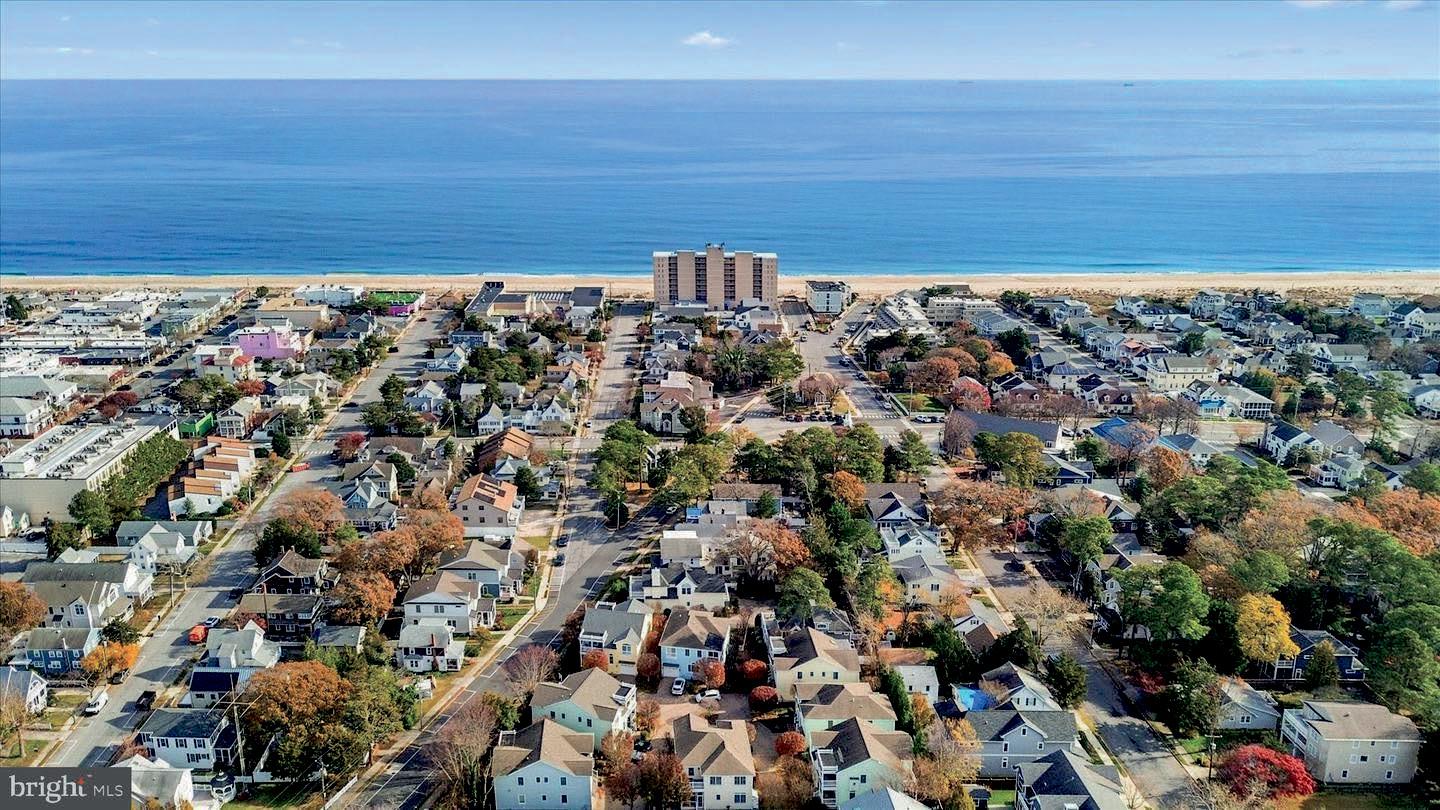







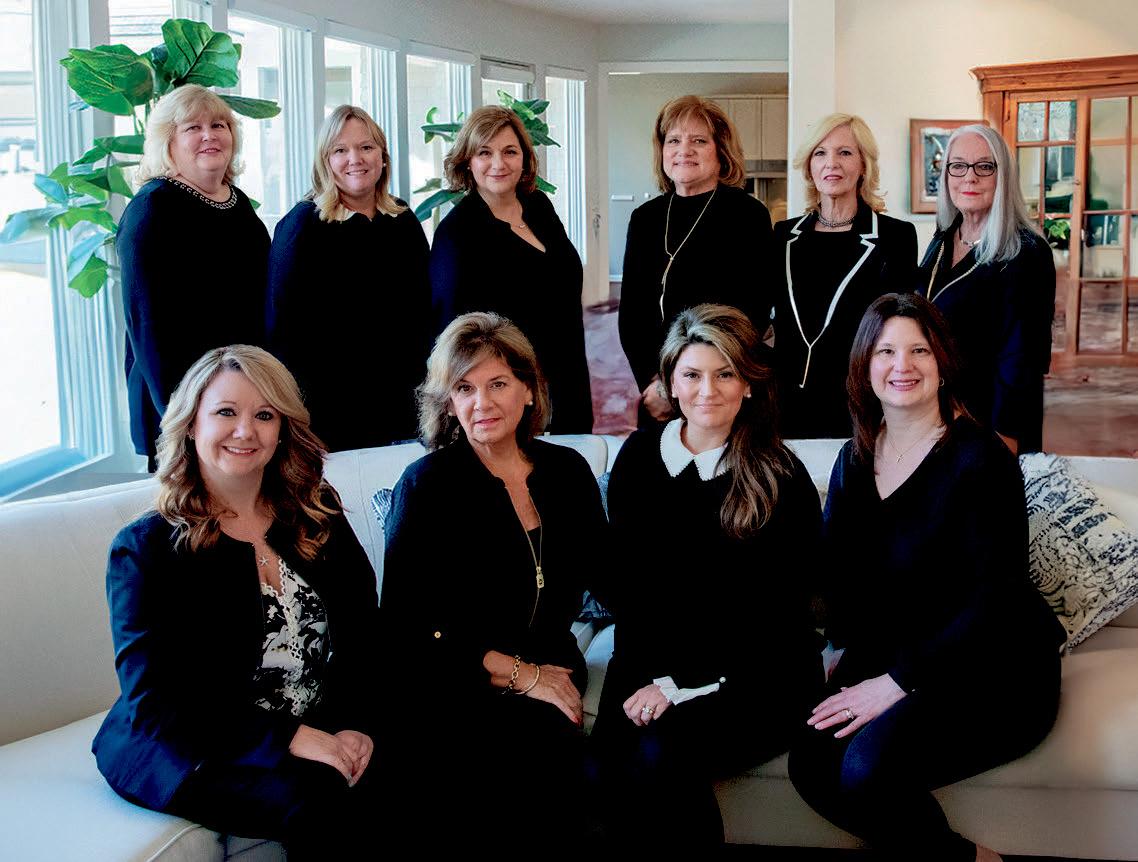





Delaware’s landscape may be best known for its farmland, marshes, and coastal shores, but pockets of pine—most notably the resilient pitch pine—have played a quiet, persistent role in the state’s natural and cultural history. These native pines are adapted to the sandy soils and periodic disturbances of the Mid-Atlantic coastal plain, and they provide habitat, fire-adapted resilience, and a thread of folklore that links Indigenous, colonial, and modern communities.
The pitch pine (Pinus rigida) is the emblematic native pine across Delaware’s Pine Barrens and dry, sandy uplands. Pitch pine thrives where soils are nutrient-poor and well drained, and where fire or other disturbance prevents more shade-tolerant species from dominating. Eastern white pine (Pinus strobus), loblolly pine (Pinus taeda), Virginia pine (Pinus virginiana), and other southern coastal pines appear in the broader Delmarva region and may be present in parts of the state, but it is pitch pine that best exemplifies Delaware’s native, fire-tolerant pine ecosystems.
The native pines of Delaware are specialists of tough sites rather than pampered garden beds. Key cultural requirements include:
• Soil and drainage—Pitch pine tolerates acidic, sandy, and rocky soils with low fertility; it performs poorly in heavy, waterlogged clay. Good drainage is essential.
• Light—These pines are light-demanding. Open sites, clearings, or areas kept free of a closed canopy favor pine regeneration.
• Disturbance regime—Pitch pine is adapted to disturbance, especially fire. Fire removes competing vegetation, opens the seedbed, and stimulates seed release in some cones.
• Moisture and climate—These species are drought tolerant once established and suited to the temperate, humid climate of the Mid-Atlantic. They do not require intensive watering or fertilization.
• Management—When cultivated,
pines benefit from minimal soil amendments and selective thinning if overcrowded. On restoration sites, planting stock should match local ecotypes to preserve genetic resilience.
Although pines occupy a smaller share of Delaware’s overall forest cover compared with oak-hickory or mixed hardwood stands, their ecological roles are disproportionate to their acreage:

Delaware’s native pines— especially the pitch pine—are specialists of place: modest in appearance but mighty in ecological function and cultural resonance.
• Habitat and biodiversity—Pine stands support specialized communities: scrub oaks, heathland plants (blueberries, huckleberries), and wildlife that prefers more open, sunlit conditions. Birds such as certain warblers, and mammals like snowshoe hares in other regions (here, small mammals and insects) find refuge and foraging resources in pine-dominated patches.
• Fire ecology and resilience—Pitch pine is fire-resilient: thick bark protects older trees, and epicormic shoots or basal sprouting allow recovery after topkill. These traits maintain a mosaic of successional stages that increases landscape diversity.
BY ERIC W. WAHL
• Soil stabilization and water regulation—On sandy coastal soils, pine root systems help bind soil, reduce erosion, and moderate runoff into streams and wetlands—functions that are especially valuable near Delaware’s shorelines and river corridors.
• Carbon storage and nutrient cycling—Like all trees, pines sequester carbon and contribute to nutrient cycling through needle litter that acidifies and structures the soil, favoring a distinct understory community.
Pines have long been woven into local lore and utility. Indigenous peoples of the region used pine products—resins for medicinal and waterproofing purposes, needles for basketry and bedding, and charcoal in crafts. Early European colonists harvested pitch and tar from pines for naval stores: pitch pine resin was boiled down into pitch used for sealing wooden ships, ropes, and barrels. This practical value seeded stories of “tar and pitch” landscapes and the hardiness of pine country settlers.
Folklore also attaches symbolic meanings to pines. Their evergreen nature made them emblems of endurance and protection through winter, appearing in seasonal customs and as wise, stoic presences in local storytelling. Pitch pine’s rough, often contorted form inspired metaphors about perseverance—trees that survive drought, fire, and poor soils— becoming a quiet local symbol of stubborn tenacity.
In short, Delaware’s native pines— especially the pitch pine—are specialists of place: modest in appearance but mighty in ecological function and cultural resonance. They remind us that resilience often grows in the margins, and that even narrow strips of native forest can hold deep natural and human stories.
Have fun and let’s garden together. ▼
Eric W. Wahl is Landscape Architect at Pennoni Associates, and President of the Delaware Native Plant Society.
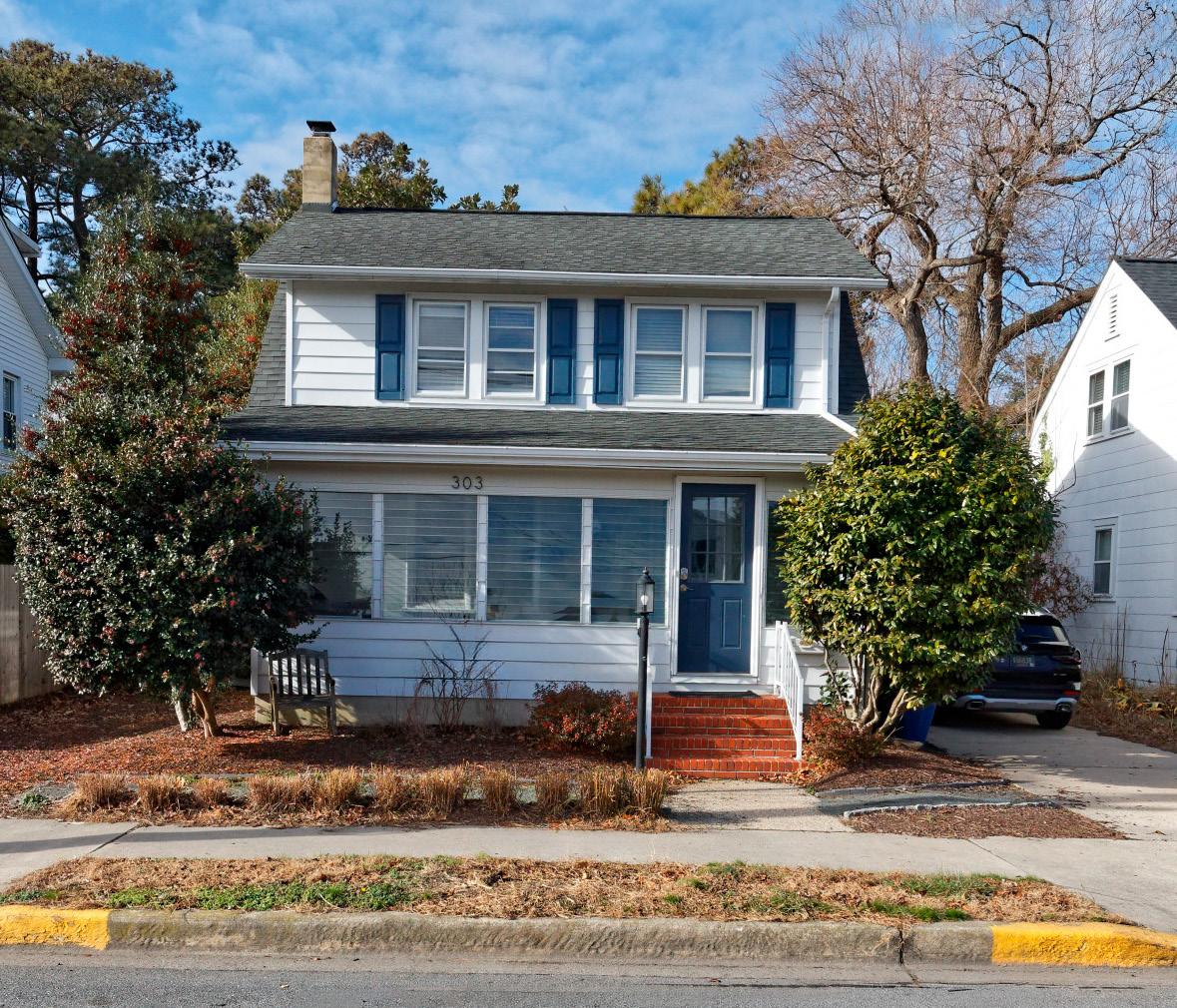


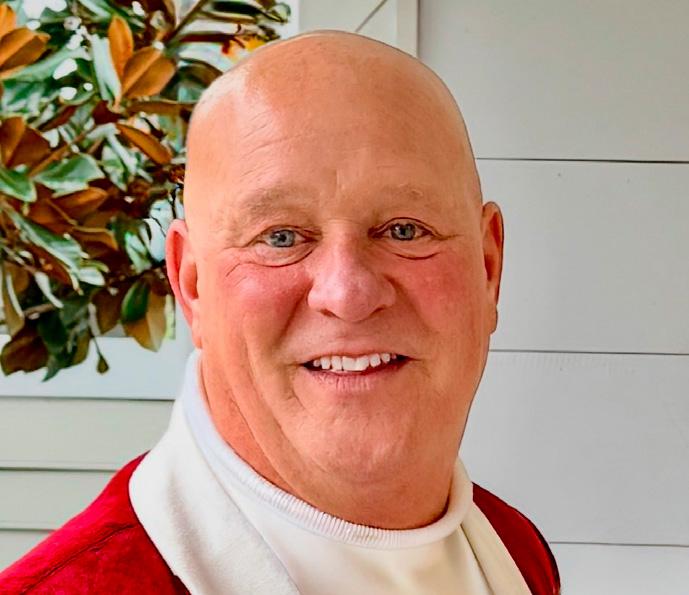



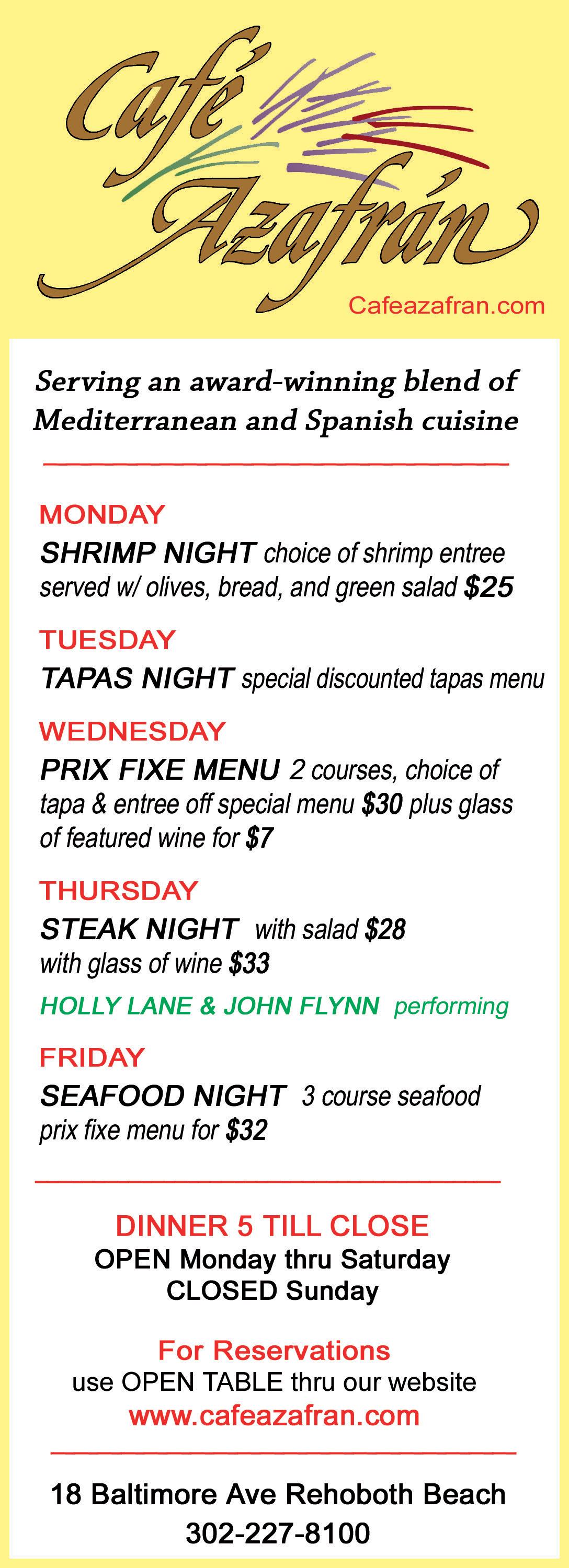
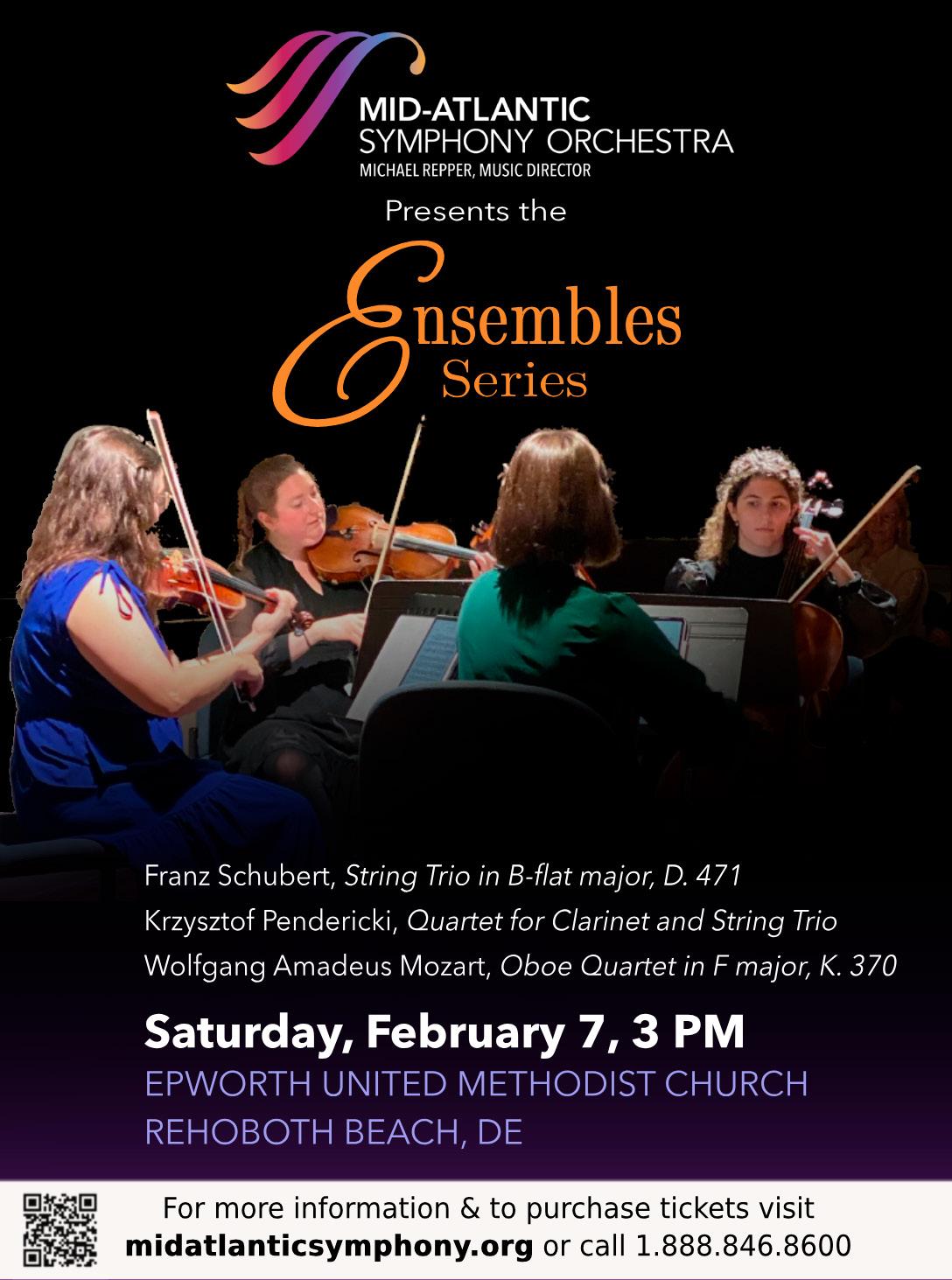
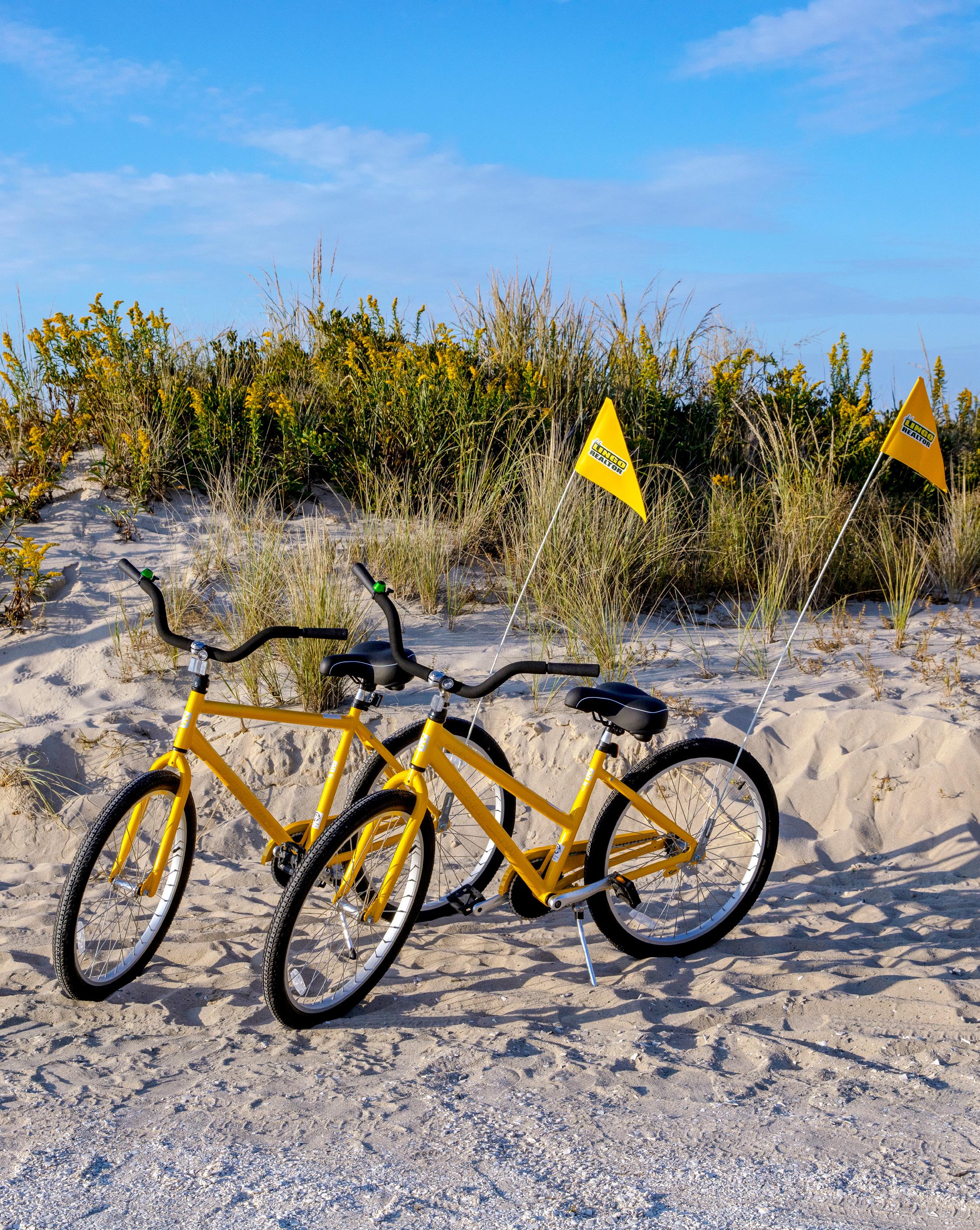



BY TERRI SCHLICHENMEYER

Somewhere, the Champagne is chilling.
An outfit hangs in your closet that’s sparkly and silky and makes you feel awesome. You’ve got your dancing shoes broken in because you and a hundred of your closest friends are going to bring in the New Year with style and sass.
Okay. So. Which New Year are you going to celebrate?
Most of us will ring in the night by following the Gregorian calendar, so named because Pope Gregory disliked the chaos that the Julian calendar had become. Introduced by Julius Caesar in 45 BCE, the Julian calendar had been used for nearly 1,600 years, but its dates and seasons no longer aligned with the solar system. In 1582, the Pope ordered that the mess be fixed, but it wasn’t seamless: to ensure things were right again and would remain so, the month of October 1582 was shorted by 10 days, and leap years were instituted.
But here’s why they couldn’t have nice things: The Gregorian calendar wasn’t fully adopted everywhere right away; in fact, Great Britain and the colonies (us, in other words) didn’t start using the Gregorian calendar until 1752, which again required skipping some dates. So, if you were a colonist heading for bed on September 2 of that year, you woke up on September 14, and thus was the calendar realigned here.
Year, or Nowruz. In April, celebrate Songkran, or the Thai New Year, by splashing a little water on your parents. On June 16, the Islamic New Year will kick off the year 1447; if you wish someone a Muharram Mubarak then, they’d probably respond in kind. Head to Australia on July 10 and celebrate Mitariki, or the Maori New Year.
Sadly, you just missed Diwali, the Hindu New Year, which was this past October. You also missed Rosh Hashana, the Jewish New Year which kicked off the year 5786, last September. And if you want to celebrate the Buddhist New Year, there are several and you’ll have to decide which one you prefer to begin the year 2569.
You’ve got your plate full now, don’t you? Full of traditional New Year’s Eve foods like: Hoppin’ John, or black-eyed peas and rice, a favorite in the American South; exactly a dozen grapes to eat at the strike of midnight in Spain; toshikoshi soba (buckwheat noodles) in Japan; marzipan shaped like pigs in Germany; and pickled herring in Scandinavia. Don’t forget to save a couple pomegranates to smash on someone’s doorway, if you’re celebrating in Greece. Then smash the whole entire plate on your Dutch friend’s doorstep. It’s okay. Tradition.
Just remember that your average bottle of Champagne contains up to 250 million bubbles and you just know it was a blast doing that research.
Bummer, if your birthday fell somewhere in there.
Anyhow, now you’re primed for this New Year’s Eve party on your calendar. You’ve had tickets for months because you love this holiday and everything it represents—which is a really good thing because January 1 isn’t the only chance you get to celebrate.
Wait a few weeks, and you can say “Xinnián hăo” on February 17 for the Chinese New Year, also known as the Lunar New Year. It will be, by the way, 4724 or the Year of the Horse.
In March, you can wish someone “Nowruz Mobarak” for the Persian New
Don’t forget the libations—mainly, Champagne. Just remember that your average bottle of Champagne contains up to 250 million bubbles and you just know it was a blast doing that research.
Then at the end of the evening, with your tie askew, your fancy duds all sweaty, and a new beginning in your heart, sing along with a song you hear once a year, knowing that “Auld Lang Syne” basically means “for old times’ sake.” Take a cup of kindness yet, make some noise, watch the fireworks, toast to the memory of Dick Clark, and don’t drink and drive.
Happy New Year! ▼
Terri Schlichenmeyer’s third book, The Book of Facts and Trivia: Science, came out in 2024.

















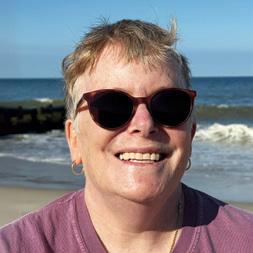
Already sick of the holidays? The stress, the traffic, shopping, the meal prep? Looking for a way to celebrate without participating in the traditional ways—the hours with family/ friends, trimming the big tree, exchanging presents, preparing and eating a big meal? Maybe you’re seeking less stress or you dislike the sheer commercialism of the season?
As LGBTQ+ people, we—more than many—are often more familiar with non-traditional ways to celebrate the holidays. Maybe we weren’t out to our families, or maybe we were and as a result were no longer really welcome at the holiday table. We learned to make our own celebrations. Or maybe it was just all too much and easier to avoid the whole holiday season.
For whatever reason you may have, it’s fairly easy to just say no to all the glitter and have a nice, non-traditional holiday.
By far, the number one non-traditional way to celebrate the holidays is to travel. It doesn’t have to be far, or even to a bucket list destination. If you can swing it, just being in a different space, away from the hustle and bustle, will do the trick. The point, though, is to avoid stress, so nothing too ambitious.
Back in the 1990s, my partner, Jane, and I were able to travel to the Caribbean islands and Mexico for the holidays. I cannot describe how beautiful, stress-free, and fun those holidays were. Snorkeling in gorgeous, color-saturated reefs in Bonaire, the Cayman Islands, and St. Croix. We would whisper “Merry Christmas” to each other and chuckle, delighted to be together and away from “all that Christmas crap.”
It worked for us, for as long as we were together. But if you can’t travel, you can make the holiday a fun staycation. Load up on snacks, blankets, pillows, fuzzy slippers, hot chocolate, wine, and
charcuterie board/girl food dinners. And, of course, binge Netflix or have a Kindle marathon.
Getting out in nature is fun—and healthier than the staycation described above. Being outside is all kinds of good for you. A walk or bike ride down a nature trail can help with everything from reducing holiday blues to getting better sleep.
These days, my wife and I celebrate the Christmas holiday together, ensconced in our warm house, often with a fire, in our pajamas all day.
Learning a new skill is another non-traditional way to spend the holidays. I don’t know how stress free this one may be—I suppose it depends on what skill you choose—but imagine being able to speak and understand Spanish by the end of spring….
More practically, the website Simply Enough recommends buying fewer gifts/ editing your gift list, decorating in one night (that seems pretty traditional to me, but they’re supposedly the experts), and saying “no” to obligations, even if it’s just one.
Another website I perused, called Women on the Road, suggests cooking something unusual or unexpected for yourself. Or you can explore your family roots (another possibly fraught activity, so be careful).
Here’s one I really like and can personally recommend: Take some time to volunteer your time to helping those in need—people, or cats and dogs, wildlife, or nature (even just picking up trash you see makes a difference). There are so
BY BETH SHOCKLEY
many ways to help others, and it’s good for the soul. Making donations to food banks or shelters for humans and pets really helps make the season more meaningful. And you might even create your own new holiday tradition in the process.
Another cool suggestion from Women on the Road: Have an unplugged day. A day (or even several hours) with no electronic devices, no phone scrolling, no screens at all. Try to do it, just to see if you can. Read a physical book, meditate, take a walk or a bath, or make soup for dinner.
These days, my wife and I celebrate the Christmas holiday together, ensconced in our warm house, often with a fire, in our pajamas all day. Our holiday meal is Chinese takeout, a holiday tradition I brought with me from my years living in New York City. This has been working for us for several years now.
We didn’t always spend the holidays like this. There were many years where we did the big celebrations with large numbers of family, big Christmas trees, big meals, big presents. And those holiday celebrations were wonderful— but exhausting. We are happy to have downsized our Christmas and created our version of a non-traditional holiday celebration.
It’s easy to bah-humbug the holidays, ignore them, or refuse to participate. But if you dislike the usual trappings of the season, there are so many other ways you can choose to celebrate. A non-traditional holiday can feel less artificial, more grounded, healthier, and a lot more fun. Happy holidays! ▼
Beth Shockley is a retired writer and editor, and shares life with her wife and kitty boys.
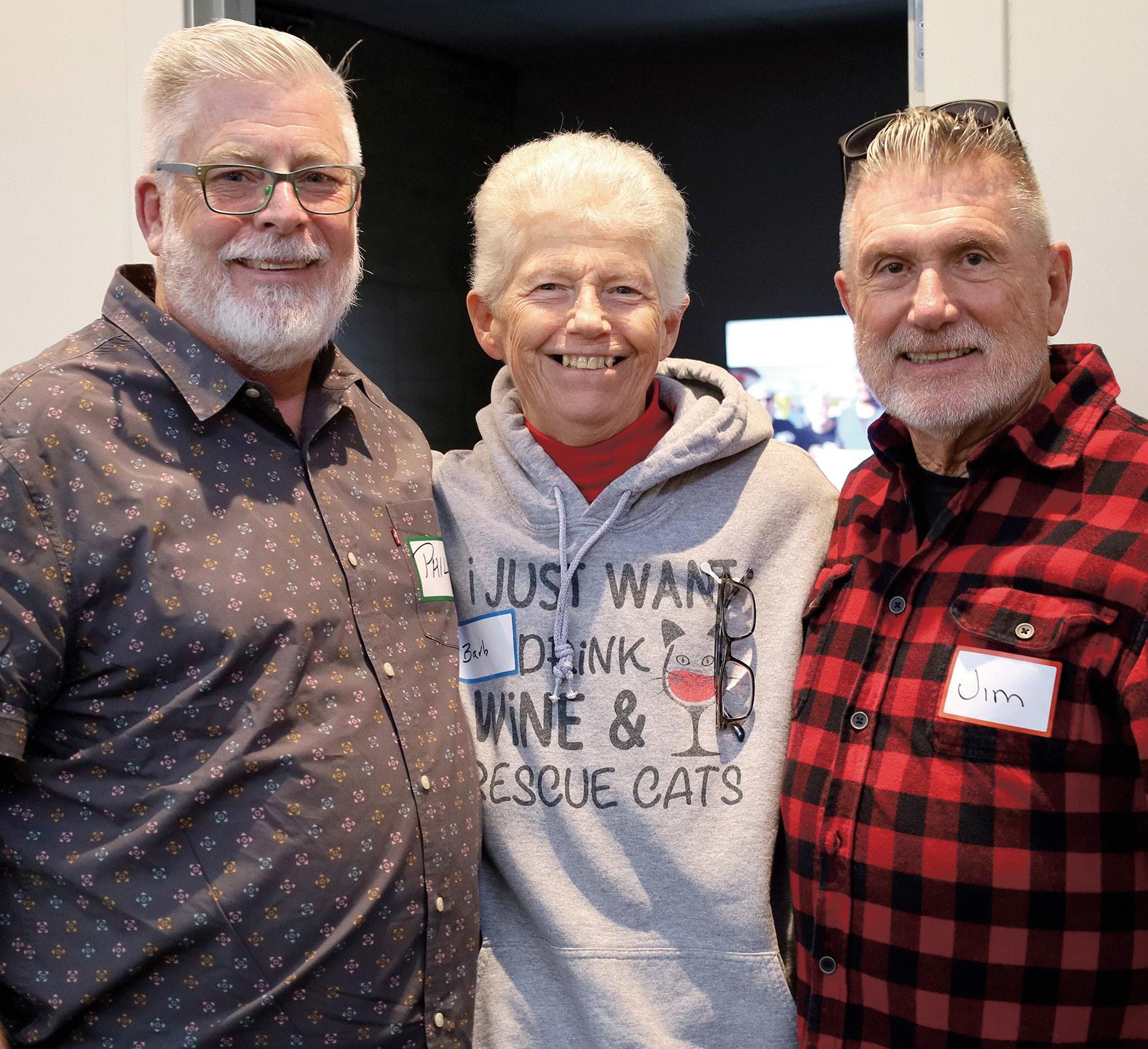
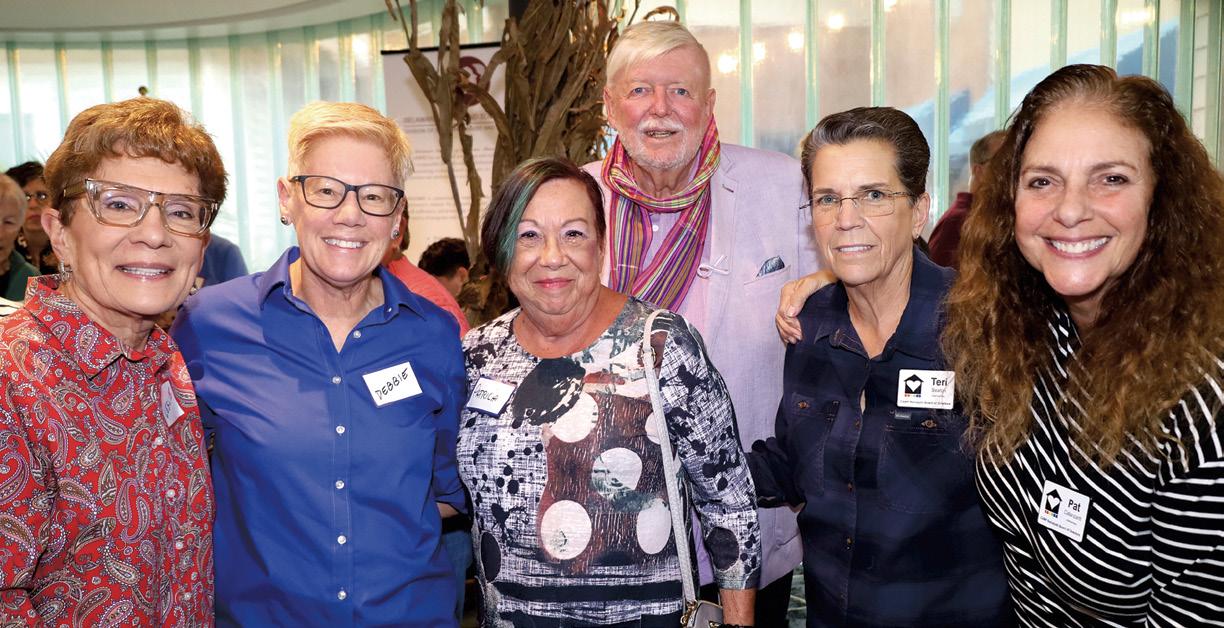
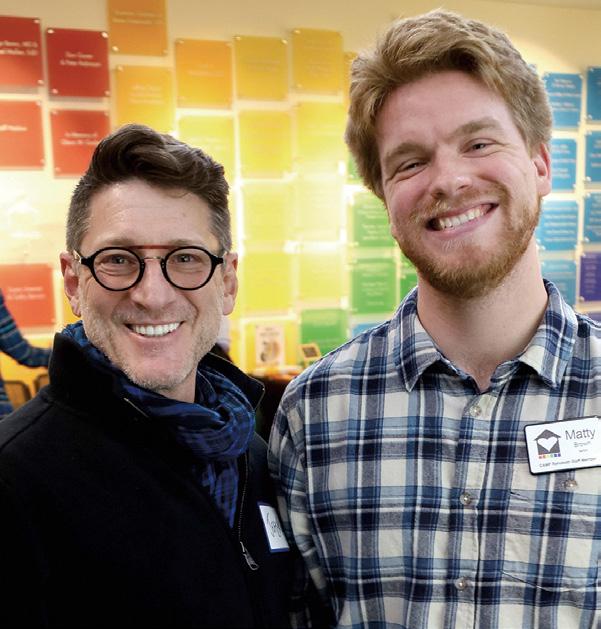
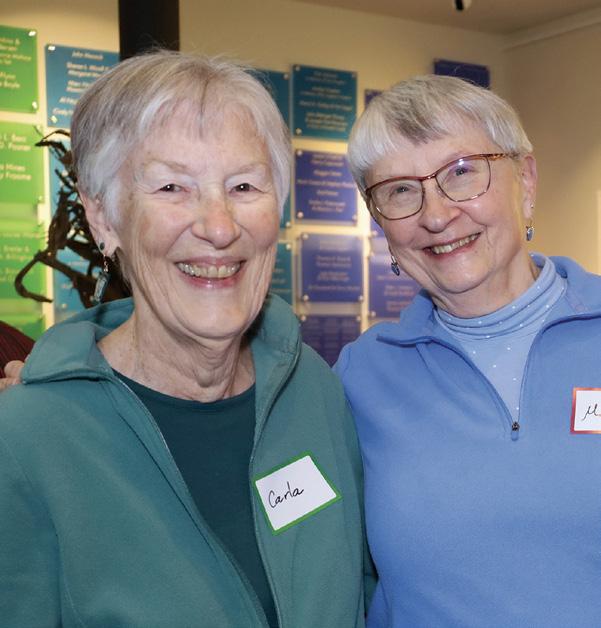
SCENES FROM REHOBOTH BEACH
RB Christmas Parade, Cape Henlopen Senior Center Cabaret, RB Film Festival, CAMP Volunteer Appreciation, and More!
THIS PAGE (left to right) 1 ) at CAMP Rehoboth Volunteer Appreciation Party: Philip Vehslage, Barb Ralph, Jim Mease, Leslie Sinclair, Debbie Woods, Patricia Stiles, Russell Stiles, Teri Seaton, Pat Catanzariti, Diane Scobey, Gail Tannenbaum, Wendy Walker, Jennifer Rubenstein, Jefferson Rougeau, Matty Brown, Carla Burton, Marj Shannon, Mikki Snyder-Hall, Kim Whitmer, DE State Rep. Claire Snyder-Hall, Jamie Forshey.
OPPOSITE PAGE 2) at CAMP Rehoboth Volunteer Appreciation Party: G Michael Beigay, Tony Burns, Peter Garneau, Leslie Ledogar, Eric Peterson, Larry Rosen, Mike DeFlavia, Kim Leisey, Chad Stover, Paul Frene, Mary Jo Tarallo, Sherri McGee, Kris Aulenbach, Tracey Hepner, Tammy Smith; 3) at Blue Moon: Chase Angle, Carlton Morrissey, Josh Appleman, Edward Chrzanowski, Sandra Karftman, Stacey Trout, Mark Freer, Roxy Overbrooke, Scott Sylvester, Justin Russell, Mark Pipkin, Karl Zoric, Scarlet Stout, Brooks Woodward, Riess Liuaudais.
More CAMPshots page 66
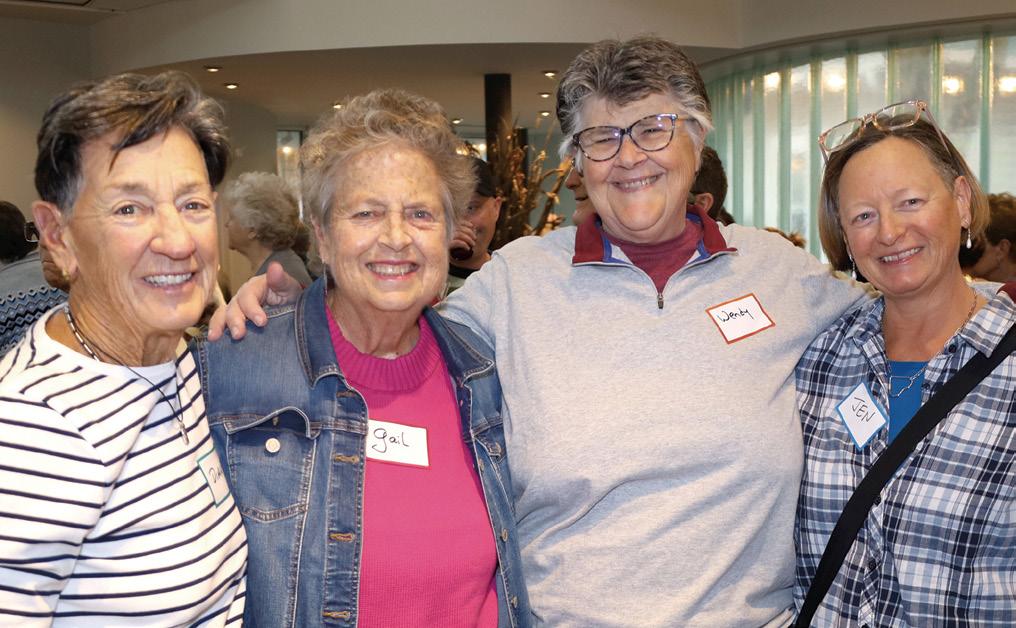
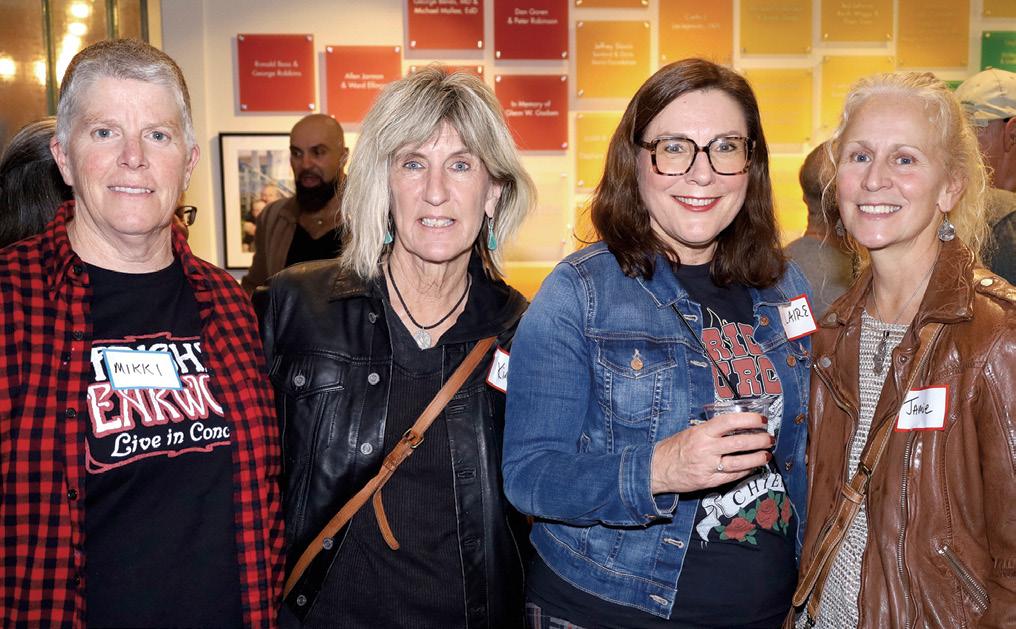
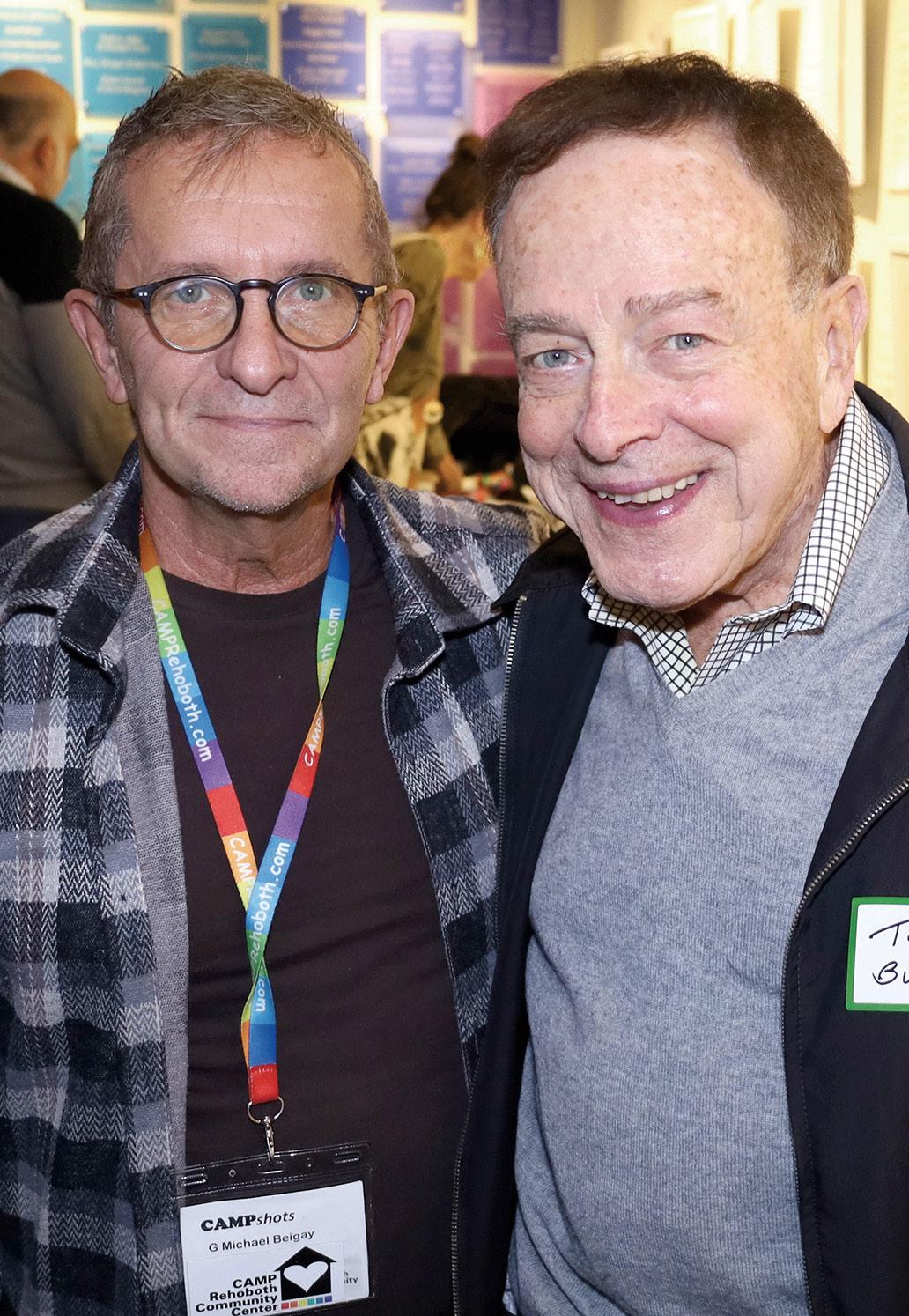
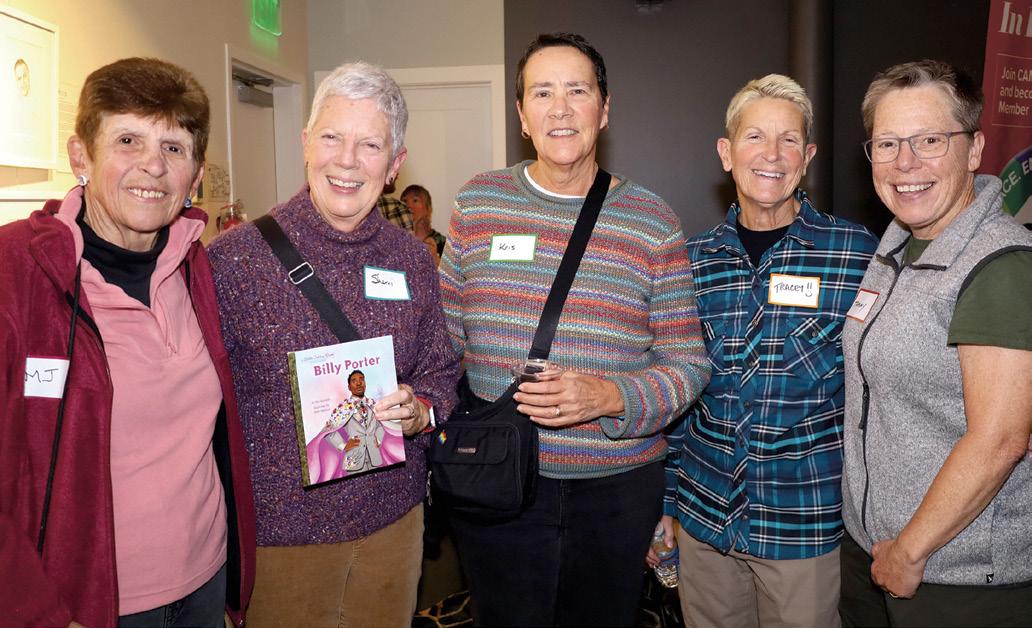
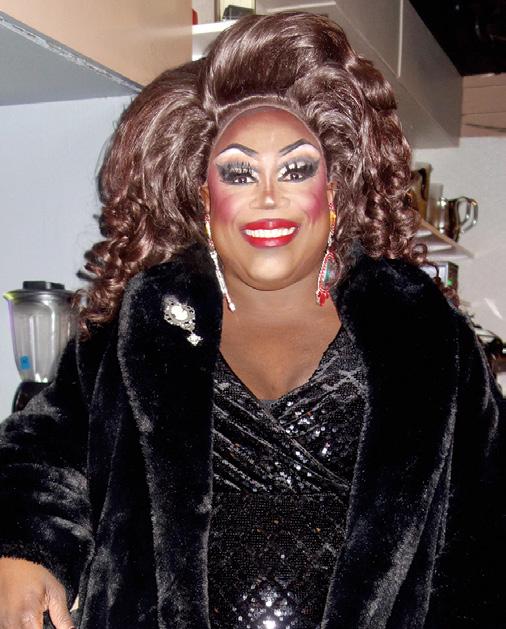
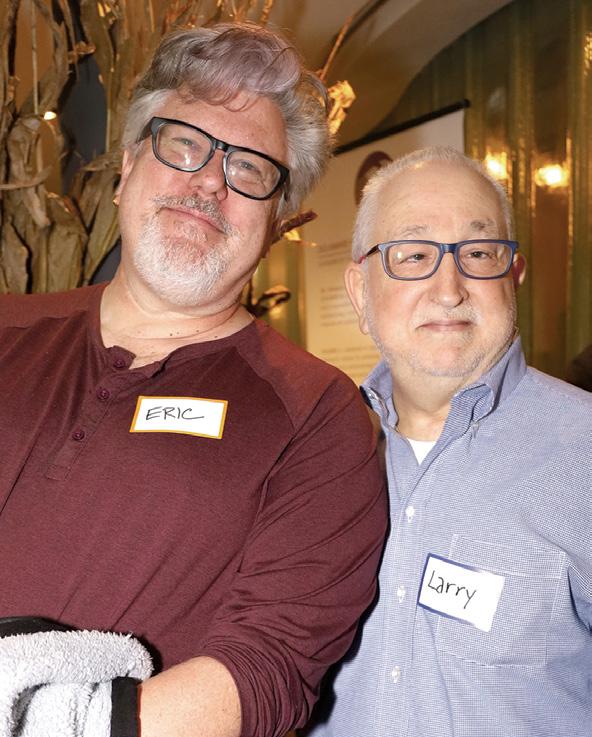
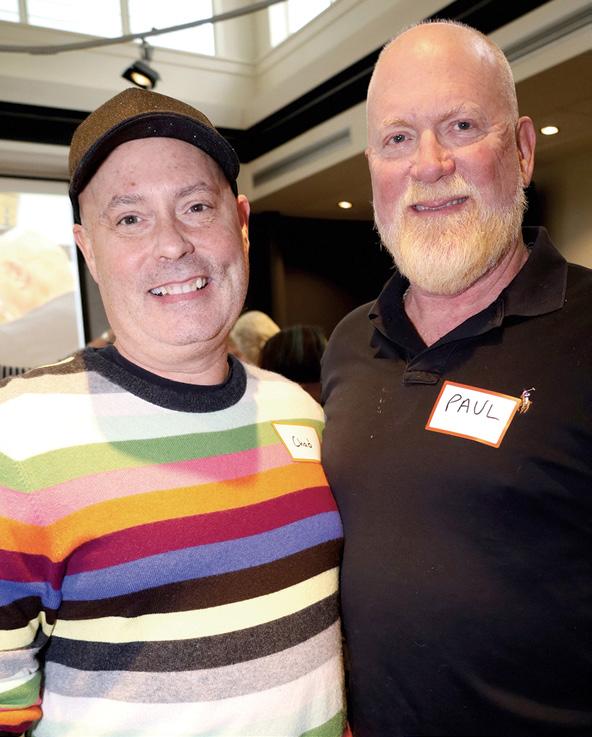
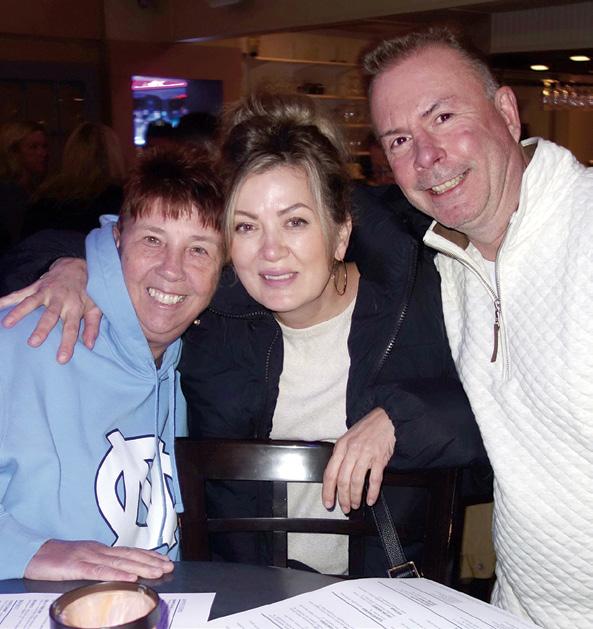
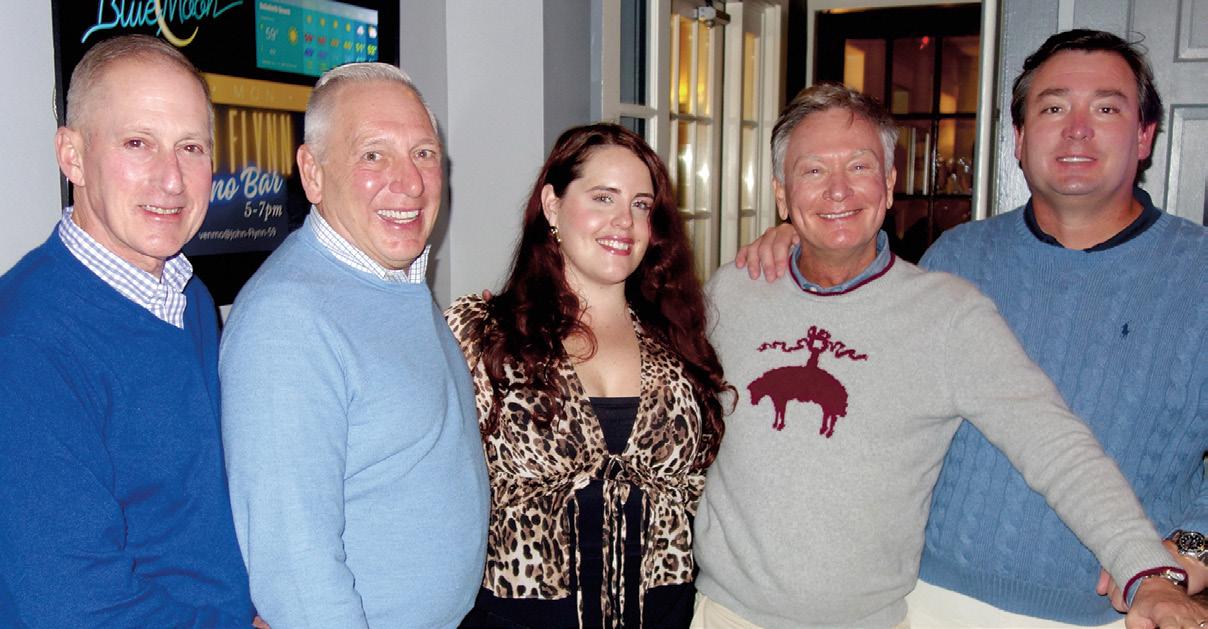
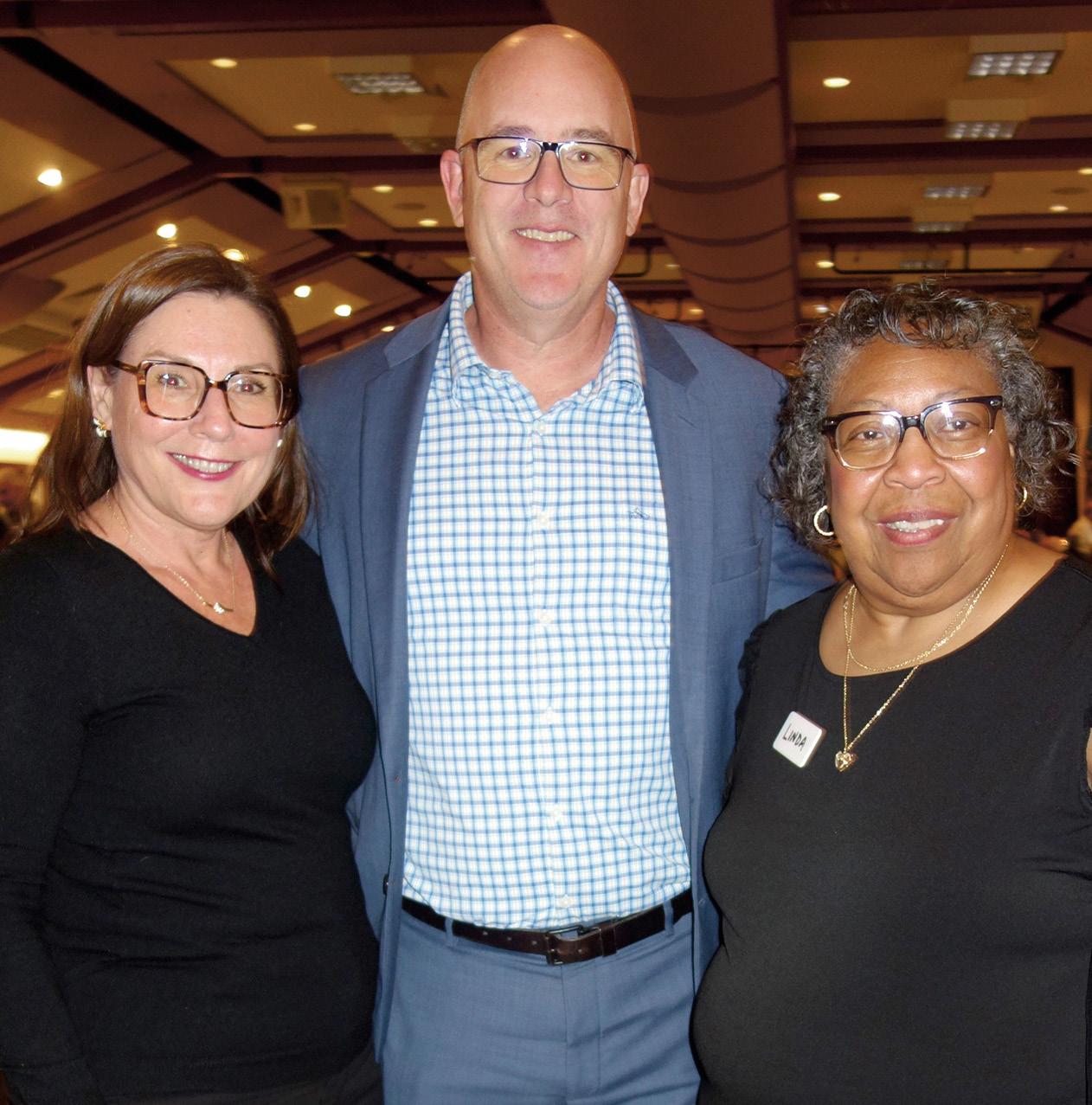
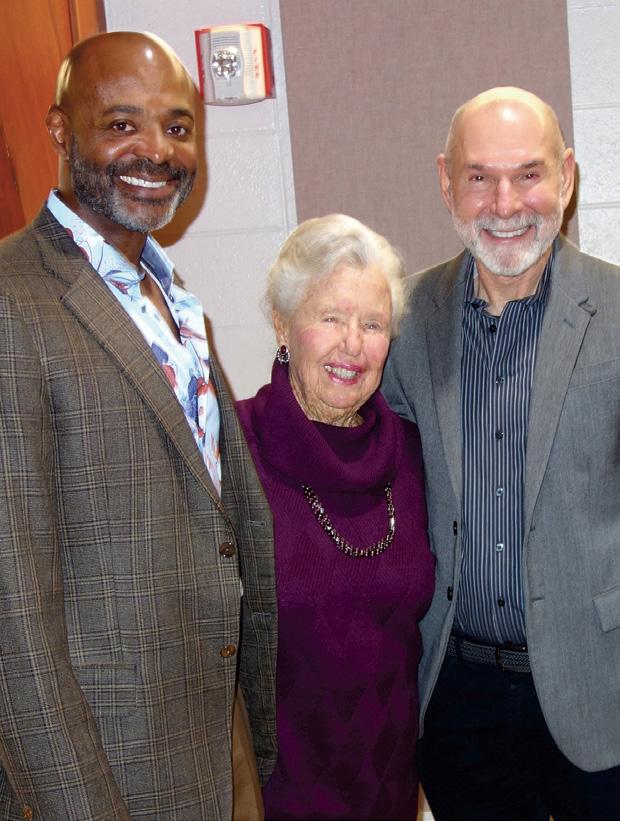
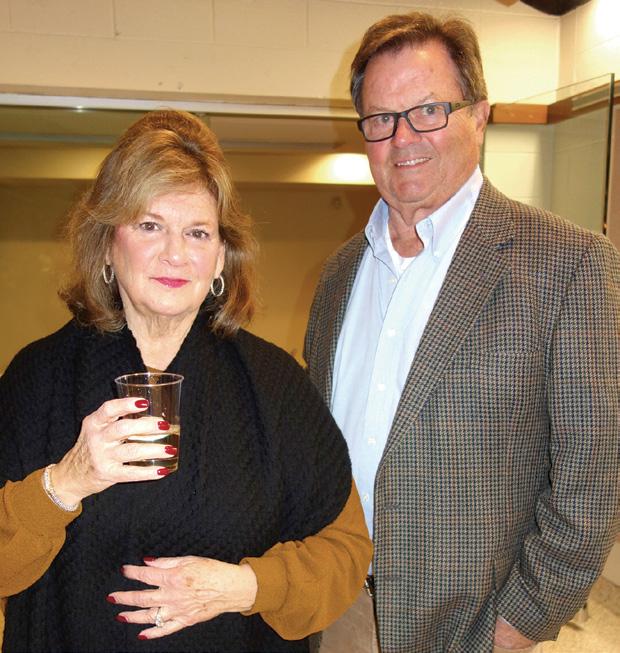
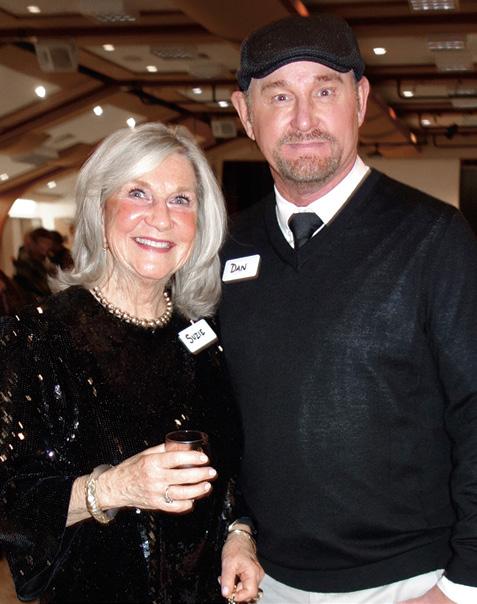
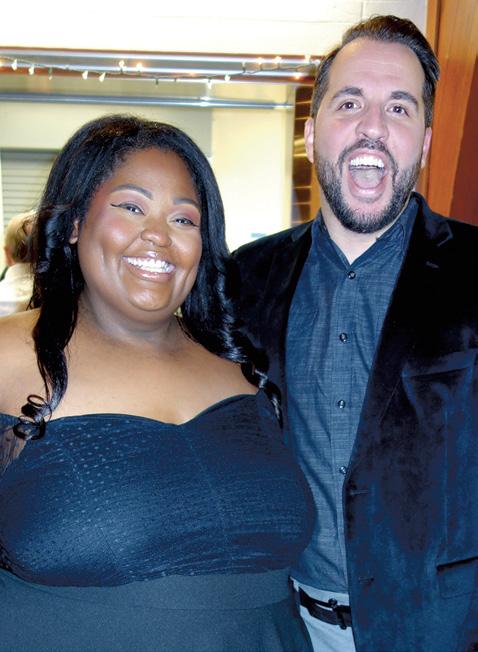
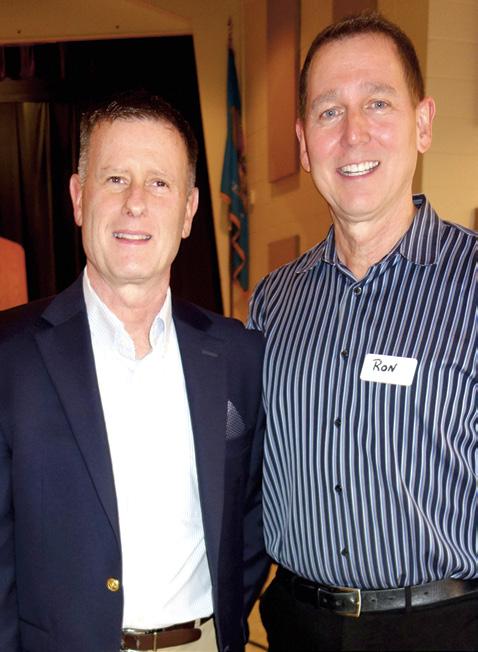
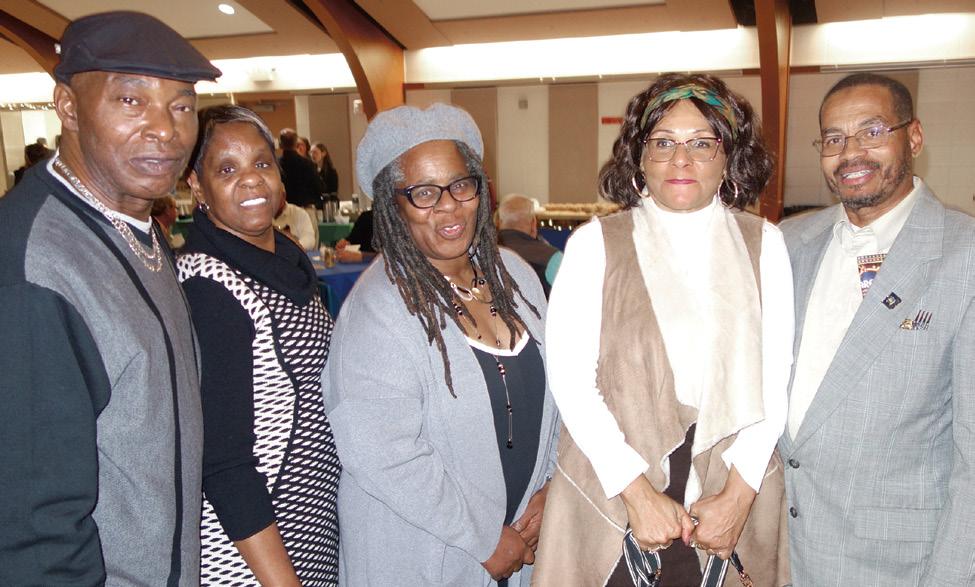
(Continued from page 65)
THIS PAGE (left to right) 1) at Cape Henlopen Senior Center Cabaret Fundraiser at RB Convention Center: DE State Rep. Claire SnyderHall, DE State Senator Russell Huxtable, Linda Bonville, Suzie Martin, Dan Slagle, Hoyte Decker, Sonie Decker, Ashley Williams, Matt Whalen, John Swift, Ron Bowman, Larry Richardson, Shirley Bennett, Joe Filipek, Sam Cooper, Cindy Lovett, Paul Lovett, Eric Mallory, Bernice Alford, Marilyn Waples, Lorraine Carrethers, Efrem Phillips, Debbie Reed, Joe Reed, RB Mayor Stan Mills, Marcia Maldeis.
OPPOSITE PAGE: 2) at RB Holiday Tree Lighting: Joe Gfaller, Candace Jewel, Igor Lima, Paul Frene, Andrew Herrey, Rick Hardy, Dave Lyons, Josh Burge, Juliet Riddle, Grace Riddle, Jamie Riddle, Toni Weymouth, Josh Walden, Barbara Brown, Scott Tazbin, Mike DeFlavia, Gary Seiden, Bashir Amanat; 3) RB Christmas Parade: Andy Dorosky, John Derrick, Kimberly Grim, Kelly Phillips, Nicole Chubiogiu, Angelo Tabbita, Denise Anderson, Willis Bininger, Edward Haurihan.
(More CAMPshots page 88)
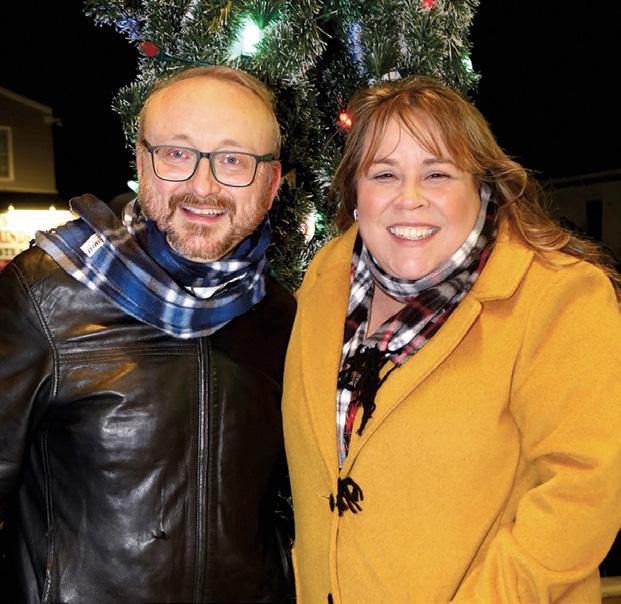
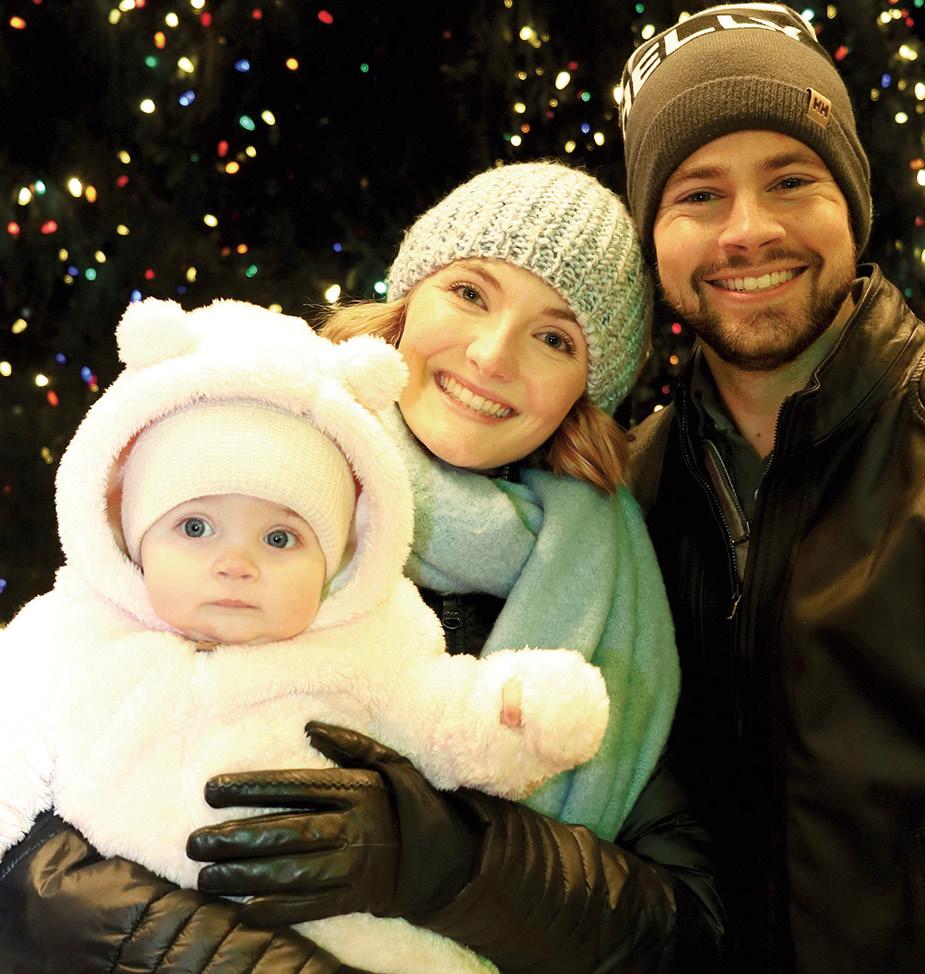
In the middle of taking one of her extended, sometimes years-long breaks in between albums, Adele is switching it up: she’s going to act. The singer will make her big screen debut in director-designer Tom Ford’s latest, Cry to Heaven, currently in pre-production. Based on the 1982 Anne Rice novel, Ford will adapt the screenplay, produce, and direct the period film with an all-star cast that includes Nicholas Hoult, Aaron Taylor-Johnson, Ciaran Hinds, George MacKay, Mark Strong, Colin Firth, Thandiwe Newton, Paul Bettany, and trans actress Hunter Schafer. The story revolves around a Venetian nobleman and a castrato opera singer—we don’t know who’s playing these roles yet—whose lives intersect in unusual ways. Does that mean it’s also a musical? Who can say. All we know now is that it’s set to roll before cameras in early 2026 in London and Rome, which means a likely 2027 release. And if Adele sings in the film that means more music from her soon, too. ▼
This Christmas? No, next; it features in-demand, Emmy-winning gay star Tramell Tillman (Severance, Mission: Impossible—The Final Reckoning) and legendary gay actor Ian McKellen in a new adaptation of A Christmas Carol that will star Johnny Depp as Ebenezer Scrooge, to be directed by acclaimed horror filmmaker Ti West (X, Pearl). It’s the kind of news we get that makes us think that one more version of this well-worn tale is going to be a welcome experience. We don’t know which roles McKellen and Tillman will play but if we had to guess we’d assign them the ghost of Jacob Marley (traditionally grumpy and sometimes a little bitchy) and the Ghost of Christmas Present (commanding and sexy in that robe), respectively. We’ve already been promised a November 2026 release date, so they’d better get to work. ▼
With increasingly fractured relationships and declining ratings, Bravo’s Shahs of Sunset was cancelled in 2021 after nine seasons. But a few of the show’s cast members—specifically gay ringleader Reza Farahan, Golnesa “GG” Gharachedaghi, and Mercedes “MJ” Javid—would appear to have kept ties to the network, and recent events on the streets of West Hollywood would suggest that something more than simple hanging out is happening. The three cast members were seen quite recently handing out samples from the food truck GG owns, “Bottom of the Pan,” which serves Persian food, while a camera rolled to document the situation. We have no idea if this means there’s more Bravo content coming with the three friends, or if this is just promotion for the business, but nothing happens with a filming permit in Los Angeles that doesn’t involve showing it to the public later. Stay tuned and hungry. ▼
BY ROMEO SAN VICENTE

On a recent episode of the hilarious podcast Las Culturistas, hosted by comedian Matt Rogers and SNL cast member Bowen Yang, guest Jennifer Lawrence dropped the bomb: she and Emma Stone are producing a Miss Piggy movie, one that will be written by Oh, Mary! creator and Tony-winner Cole Escola. It’s in development at Disney, which owns the rights to the Muppet characters, and it will be the first time that the temperamental diva will take the lead in a movie after being part of the larger Muppet ensemble for many decades. Lawrence stated that she and Stone will probably appear in the film, though that’s not locked down. Who knows when this will happen, but it feels like a lightning flash of good times suddenly struck the world. And it’s too bad that Miss Piggy is actually a puppet, because a real-life version would take aggressive charge of a project like this and make sure nothing got in her way. Let her spirit possess the producing pair for the good of all humankind. Nothing is allowed to go wrong. ▼ Photo: Emma Stone by Starfrenzy.

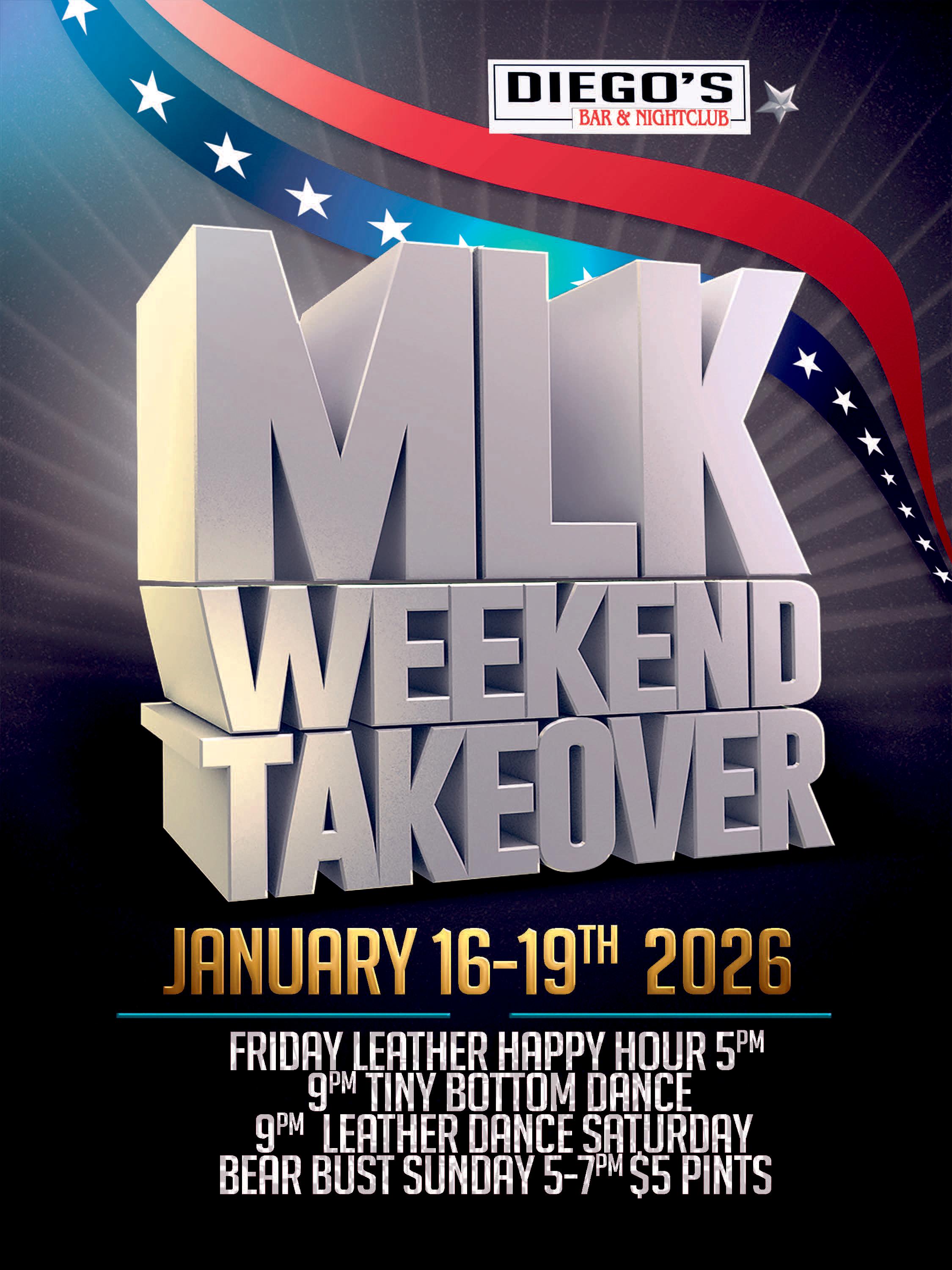




It is tempting, after every outrage by this president, to say, “He’s finished!” But his normalizing of ignorance, recklessness, and cruelty, and his sheer relentlessness, have brought a lot of destruction in a short time.
Trump may be on the ropes, but he is not yet gone.
In one recent week, he said, “Quiet, piggy” to Bloomberg News reporter Catherine Lucey for questioning him about the Jeffrey Epstein files and made death threats against members of Congress who reminded military service members of their duty not to obey unlawful orders.
The first incident demonstrated once again Trump’s misogyny, as if we needed a reminder. The second is not just disgusting, it is unhinged. The members of Congress in question, all of them veterans, did not say service members should simply disobey orders. They specifically said they must disobey unlawful orders. That requirement is enshrined in the Uniform Code of Military Justice and the Nuremberg Principles.
Trump likes projecting his crimes onto others. Thus, he sees insurrection in every peaceful protest against him, and sedition in a restatement of current law that he finds inconvenient.
There are plenty of encouraging signs. Millions of Americans stood up against Trump and made it clear that we will have no kings. Many have taken him to court to stop his abuses of power. Minorities that Trump has attacked, including LGBTQ+ people, have continued affirming their lives and supporting their communities. Voters in the off-year elections turned out in large numbers to push back against Trump’s misrule.
Some congressional Republicans are heading out the door, potentially costing Speaker Mike Johnson his majority before the midterms. The first to announce was Congresswoman Mother Teresa Greene (okay, that’s not exactly
her name), apparently worn down by all the nasty Washingtonians who fail to emulate her saintly attitude and behavior. So in January, as soon as she qualifies for her congressional pension, she will take her Jewish space lasers back to northwest Georgia. How can her constituents hope to do better with their next representative? Maybe randomly pick someone out of the phone book?
We need a public space where we can summon the civility to resolve our differences and repair our frayed bonds.
A key advantage we have in the opposition is our residency on Earth One. If the laws of the universe actually altered themselves according to the whims of Glorious Leader, he would have a greater claim to divinity.
Many of the loudest self-professed Christians have been shown by their statements and actions to be no such thing. I am glad that professional busybody Kim Davis was rebuffed by the Supreme Court in her effort to overturn civil marriage equality. Our opponents will keep looking for a vehicle to delegitimize our families.
Speaking of people of faith, I am glad that Pope Leo raised his voice in criticism of Trump’s cruel policies toward immigrants. Despite the president’s demonizing, immigrants have a lower crime rate than people born here.
I am thankful for the political gifts of New York Mayor-elect Zohran Mamdani, who had Trump eating out of his hand at their White House meeting after Trump scored no hits with his attacks during the campaign. Trump cannot resist basking in the glow of a winner.
BY RICHARD J. ROSENDALL
I appreciate those who try their best to have substantive discussions on social media despite the growing toxicity on those platforms. One side effect of Trump’s tenure in office has been to drag everyone else into the gutter with him. We need a public space where we can summon the civility to resolve our differences and repair our frayed bonds.
It is essential, however, to recognize that not everyone is acting in good faith. We have a responsibility to call out the evil, for example, of masked secret police grabbing people in the street and disappearing them. The thugs may not yet be coming for those of us who do not “fit the profile,” but if we sit idly by while others are dragged off, we should not be surprised when our turn comes.
I am also thankful to those who unwittingly entertain us, from a presidential press secretary displaying astounding stupidity, to the New York Times having to change a headline that asked if women ruined the workplace.
There is a place for outrage; but some things are so idiotic, they deserve to become laugh lines.
Let us give thanks that recent poll numbers show that the Rethuglicans, as some have dubbed the increasingly authoritarian GOP, are in serious trouble. Let us also remember that polls do not win elections, people do. Thank you for doing your part. ▼
Richard Rosendall is a writer and activist who can be reached at rrosendall@me.com.

Recently, I enjoyed an introduction to what may well become a holiday music favorite: “Little Bolero Boy.” No, I don’t mean “Little Drummer Boy.”
Performed by the Mid-Atlantic Symphony Orchestra as part of its Holiday Joy concert, “Little Bolero Boy” is just a terrific mash-up of Maurice Ravel’s Bolero and Katherine Kennicott Davis’s “Little Drummer Boy.” The orchestra’s conductor, Michael Repper, describes the contributing pieces as “the most monotonous tunes ever written”—but the combo is pure fun. And a lot of drumming. Credit for the piece goes to composer/arranger/conductor Robert Wendel; it is part of his Classical Christmas Suite. The entire Suite comprises four parts and consists of mash-ups of popular Christmas songs and classical music. Many performances of “Little Bolero Boy” are available on YouTube—treat yourself for the holidays and give it a listen.▼
Then, there are gingerbread houses—a fun aspect of the holiday season that blends culinary creativity with festive nostalgia. (Just to be clear: I derive my fun from being an admirer, not a creator.) Rooted in European folklore and popularized in part by the Brothers Grimm tale “Hansel and Gretel,” gingerbread houses range from basic spiced-cookie cottages to elaborate architectural wonders. Whether crafted by children for fun or by skilled bakers for competitions, gingerbread houses symbolize warmth, celebration, and the joy of building something whimsical from scratch.
Key to every gingerbread house is its dough: molasses, brown sugar, spices like ginger, cinnamon, and cloves, and a sturdy flour base. The dough is rolled out, cut into panels, and baked until firm enough to stand upright. House panels need to be sturdy enough to support weight, meanwhile holding their shape. Panels in hand, the real fun begins: construction and decoration.
Royal icing acts as the cement in gingerbread world. Made from powdered sugar and egg whites or meringue powder, it dries into a hard, white finish that glues walls and roofs together with surprising strength.
Decorating involves embellishing the houses with gumdrops, peppermints, candy canes, chocolate buttons, and sprinkles. A handful of coconut creates a snowy lawn, and pretzels can transform into fences or log-cabin walls. Ambitious creators might add stained-glass windows made of melted hard candies or craft miniature trees from ice cream cones coated in green frosting. The possibilities are limited only by imagination—and gravity.
Friends and families may make gingerbread house construction an annual tradition—a chance to gather in the kitchen, make a mess, laugh together, and create memories. Okay, not mine— but maybe yours? ▼
BY MARJ SHANNON

our skies for the first time each fall, I feel a surge of joy and anticipation; the autumnal equivalent of the delight I take in each spring’s first bobbing crocus or dazzling forsythia.

It turns out my response is not dependent upon a sighting: This year, I first knew they’d arrived when their faint, raucous calls drifted down to me as they streamed by, high above the late-night, deserted parking lot where I stood in stillness, listening intently. And although the night sky afforded me not even a glimpse of their arrival—let alone the spectacle of a sun-spangled multitude—joy surged within me nonetheless.
May you too find joy in this season, even if the cues you rely upon are similarly distant and unseen. And may you find that the faint calls you strain to hear in the darkness are proof enough to trigger that joy till another day’s light delivers more tangible evidence to your eyes. ▼
Snow Goose in Dorchester Co., Maryland (2/7/2016).©Ashley M. Bradford. www.marylandbiodiversity.com/record/780020




HOLIDAY TEA
Interactive Live Show
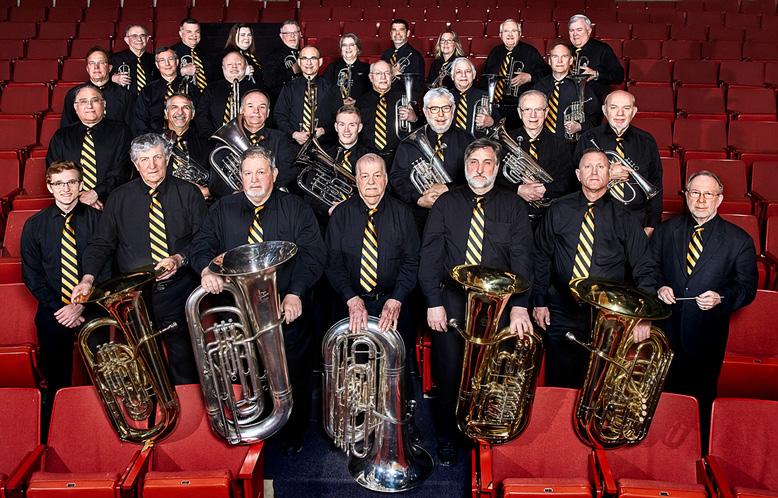
CHESAPEAKE SILVER CORNET BRASS BAND

December 21 - 11AM & 12PM
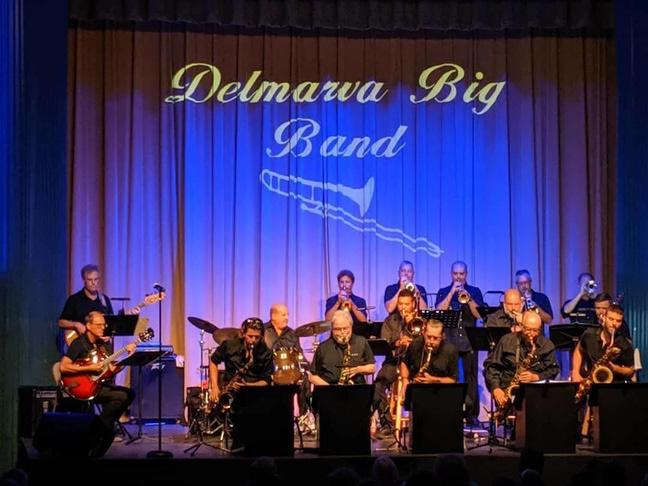
DELMARVA BIG BAND Duke Ellington’s The Nutcracker Suite
December 23 - 7:00PM
December 21 - 7:00 PM

NIGHT, NOT TONIGHT! Stand-Up Comedy December 26 - 7:30PM
DECEMBER 22 - MILTON’S MERRY MELODIES: A Hometown Cabaret Show
DECEMBER 27 - THE BELL BOTTOM BLUES: The Endorsed Live Clapton Experience
JANUARY 2 - F*CK NEW YEAR’S RESOLUTIONS: Stand-Up Comedy Special
JANUARY 4 - GOOD STUFF: Tribute to Steely Dan / Sting / Stevie Wonder / Gino Vannelli
JANUARY 7 - THE MIDNIGHT ROCK SHOW: 70's Rock Concert Experience

New Year ’s Eve D ance Par ty
CRUSH delivers a dynamic mix of Top 40, 80s & 90s hits, Rock, 70s Disco, Motown, and feel- good favorites! DANCE FLOOR- COUNTDOWN - PART Y FAVORS December 31 - 9:30 PM
JANUARY 8 - THE WEEKLINGS: Tribute To The Beatles
JANUARY 9 - KICK IT OUT: Tribute To Heart
JANUARY 10 - PHILADELPHIA FREEDOM: Tribute To Elton John
JANUARY 11 - ULTIMATE DIAMOND BAND: Neil Diamond Tribute
JANUARY 14 - THE FUNSTERS: Benefit Dance Party
JANUARY 15 - DON JOVI: The Ultimate Tribute To The Music Of Bon Jovi
JANUARY 17 - SHOWSTOPPERS: Broadway Cabaret


This exhibition, which includes pieces by local artists Renata Price and Kathleen Fitzgerald, features a variety of colorful and expressive works. Do suspend the holiday busy-ness just long enough to drop by the Gallery to view the show—you’ll be glad you did! Price works chiefly in oils; her work is very detail oriented, reflecting her background as an engineer. She is fascinated by complex shadows and reflections which are often a central characteristic of her work. Renata particularly enjoys employing “Old Masters” techniques involving underpainting and glazing to achieve this effect.
Fitzgerald, a lifelong artist, works primarily in watercolor. Her career
included stints in journalism, advertising and law; she also was an award-winning editorial cartoonist for the Provincetown Banner newspaper from 2008-2015 while she and her wife owned and operated a bed and breakfast in Provincetown. ▼
CAMP Rehoboth Gallery typically is open Monday-Friday, 10:00 a.m. to 4:00 p.m. You can call ahead to confirm: 302-227-5620. Note: CAMP Rehoboth Community Center will be closed Wednesday, December 24 till Monday, January 5.
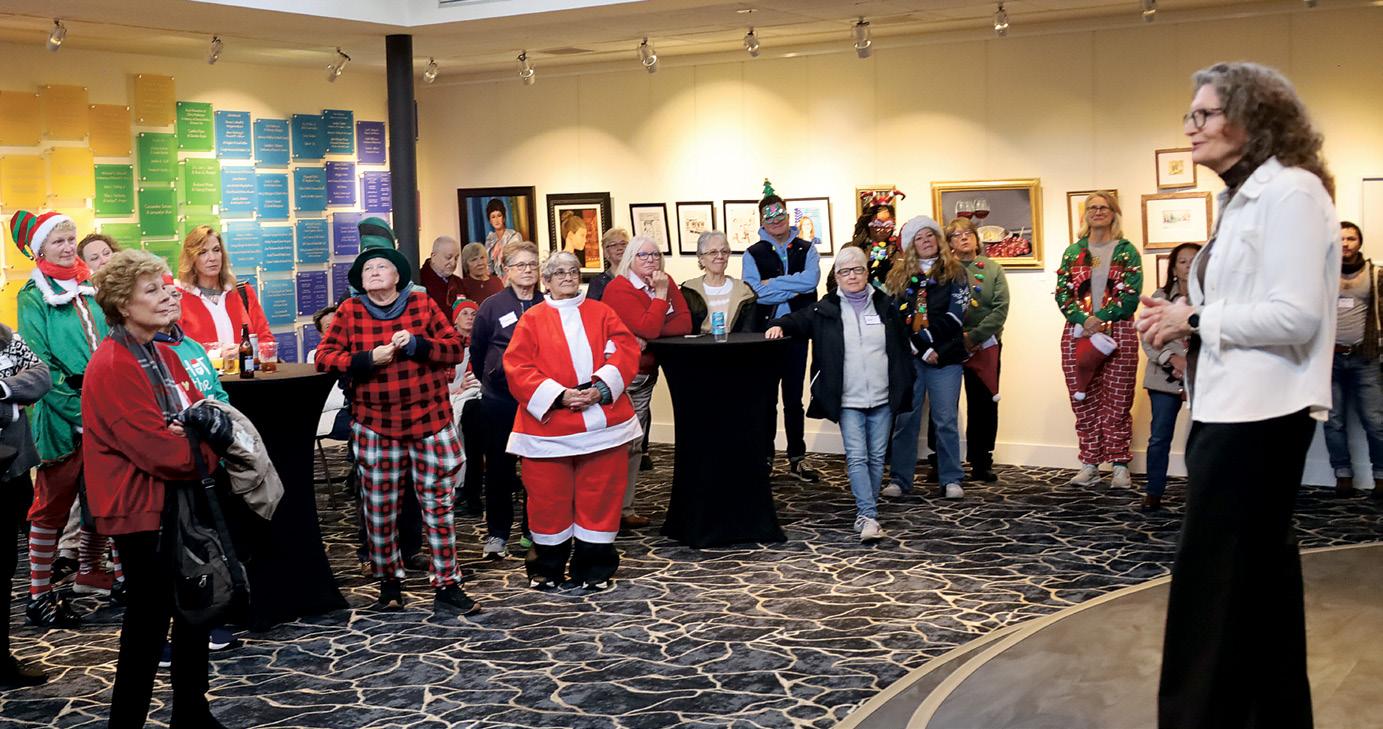
BY MARY JO TARALLO
Seriously, it’s okay to admit that you are one of those folks who immediately flips through the most recent issue of Letters to see whose photos are featured in CAMPshots. Maybe yours? Maybe some friends? It’s probably safe to say that the photography pages are among Letters’ most popular.
So you’ll be excited this month to meet—in this column—one of the photographers behind the camera at many community events: G Michael Beigay. No doubt you have seen Michael whether he has taken a familiar photo or not. He is a professional photographer who volunteers for CAMP Rehoboth. With so many social gatherings to cover, you might say that Michael gets around. He is grateful for the opportunity and finds his relationship with CAMP Rehoboth to be rewarding and enriching.
“I was so excited that CAMP Rehoboth brought me on to photograph for them,” he said. “I felt at home with CAMP and was so welcomed into the community. As that happened, I began meeting new people and developed wonderful relationships and friendships.”
Michael has an uncanny knack for quietly integrating with a crowd, then wasting no time snapping photos—it’s typically one shutter click and done. “I like the interaction between myself and those individuals at events where you get to capture that moment in time,” he said.
Michael grew up about 30 minutes north of Pittsburgh in Freeport, Pennsylvania, and lived in the city of Pittsburgh for 20 years before relocating to Delaware. He moved what he calls his “household belongings” to the Rehoboth area in November of 2023 and seven months later, in June 2024, was here permanently. He had been coming to Rehoboth throughout his life on vacation and knew he wanted to relocate to the area eventually. “Rehoboth has been my safe and happy place,” he said.
He credits his father for his love of photography.
“He was always taking photographs
and movies of family functions,” Michael explained. “I learned from him that while he was in the Air Force, he had the opportunity to photograph Pearl
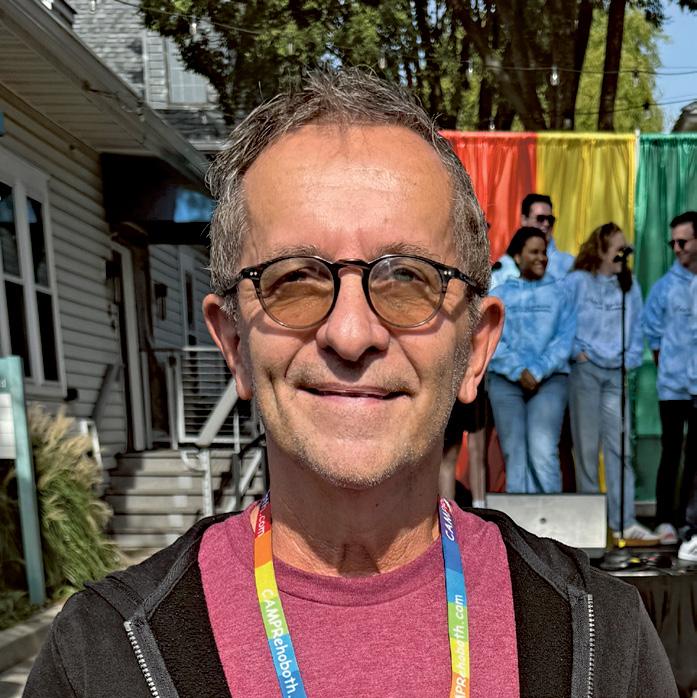
Harbor after the attack. I always liked photography as a young person, and it continued into my adult life where I began to photograph LGBTQ events for publications in the Pittsburgh area which then led to photographing weddings, birthdays, headshots, and senior photos. My favorite type of photography and what I consider my area of expertise is event photography, but I so enjoy scenic photography now that I can focus specifically on my photography career.”
Aside from his father’s influence, Michael honed his photography skills by taking a variety of classes as well as learning on his own. He also holds bachelor’s and master’s degrees in education from Indiana University of Pennsylvania and University of Pittsburgh. He was in the field of special education as a teacher/consultant/trainer for 28 years and in the private sector as a special education coordinator for five years. He nurtured his photography career during his last 20 years in education. He managed to combine teaching with photography by providing community-based instruction, travel instruction, and educational tools to help students with cognitive issues.
“I had a young cousin with a disability who I became very close to in his seven years of life,” he said. “He was
my inspiration to pursue a teaching and training career in special education. I worked for two intermediate units in Pennsylvania. One of my favorite things to do was to photograph those students who were graduating from the program. I learned that is so important to provide our students the means to be successful and independent so they can access their community by traveling independently as well as holding a paid work position.”
Aside from his volunteer work with CAMP Rehoboth, Michael is in demand photographing private parties, graduations, weddings, family gatherings, and dabbling in corporate photography. He also has other creative pursuits. The Rehoboth Art League has displayed some of his work and he has sold a piece there as a member. He also participated in the Developing Artists’ Collaboration’s twice weekly Creative Market in West Rehoboth where he sold some of his work. One of his scenic photography pieces was chosen by the city of Rehoboth for the 2026 Rehoboth Beach Wall Calendar. He currently is in talks to work on photography and social media for Penny Lane in downtown Rehoboth. Michael’s versatility as a photographer is evident. While his commercial photography portfolio is impressive, his passion for nature and food comes across strongly on his website (gmichaelbeigayphotography.com). His scenic shots range from exotic far-away places to local flora and fauna. Food products like pastries and breads look like they could jump right off the screen and onto your dinner table.
While he was in the Pittsburgh area, Michael’s photos appeared in several magazines including Cue Pittsburgh, Equal, Qburgh, and Pittsburgh Magazine. Like most artists dedicated to their craft, he has a few words of advice for photographer wannabees: “Follow your dream and develop your skills. By doing these two things, as I did, you will find your passion in taking photographs and be successful.” ▼
As a new year starts, many of us are tempted to sit and write resolutions.
Statistically, a lot of those will focus on what we eat, how often we get to the gym, and how we manage our time or our finances.
But…if you care enough about the arts to already be reading this column, I’d like to propose a few resolutions to consider adding to your list. They are grounded in a couple of common themes about the arts. First: that engag ing in the arts is a communal experience, one we share with others. Second: that communal experiences build community. (It’s no surprise that theater was born at the same time and in the same place where democracy was born.) Third: there are as many ways to encounter the arts as there are people who want to encounter them.
So, pick two or three from the list below (or all 10!), find an accountability partner, and see if these ideas make your 2026 a little more joyful.
you’re intrigued to see, odds are you’ve got a few friends who would be grateful for the invitation.
MEET YOUR SEAT MATES. Strike up a conversation with someone new sitting next to you at a performance. If you’re both at the same event, you probably have more in common than you think!
many opportunities to take classes in our region in dance, in visual art, in creative writing, and more.
TRY SOMETHING NEW. Do you usually just go to the theater? Make time to hear music with Coastal Concerts or at the Listening Booth. Has live music been exclusively your thing? See an exhibit at the Rehoboth Art League or at one of the region’s many galleries. Do you tend to see only the big blockbuster musicals? Take a chance on a play you haven’t heard of!
EXPERIENCE PERFORMANCES WHEN YOU TRAVEL. Before your next vacation, after researching hotels and restaurants, look for the theater, dance, opera, or music happening while you are in town. You might be surprised by how many opportunities there are to immerse yourself in the culture of where you’re visiting.
PLAN AHEAD. In coastal Delaware, so many shows sell out, and so many venues offer shows for just one or two nights. Doing a little research early is the best antidote to having FOMO later.
CHECK IN. Hop on your phone and take a minute to let your friends on social media know what you’re seeing. It might just start a conversation about the show online as well.
LET THE ARTISTS KNOW YOU LIKE THEIR WORK. Artists are people too! If something an artist created moved you, let them know. After a live performance or at a gallery opening, there are often chances to share positive feedback with an artist. Even if it pushes you out of your comfort zone, know that most artists are very approachable. Your kind words might just make their day!
DIG DEEPER. If you saw something you loved, that performance or exhibit might just be the tip of the iceberg. Take some time to learn about the artists. Read another play by the same playwright. Get to know the company that presented or produced the show. The more you learn, the more rewarding your next experience might be.
TELL YOUR ELECTED OFFICIALS THAT THE ARTS MATTER. Elected officials care about their constituents, but if they don’t know what you value, they can’t make decisions aligned with those values. While the arts may not be the only thing you’d like them to prioritize for funding, if the arts are somewhere on your list, let them know. Federal funding across so many sectors is at risk, so it’s more critical than ever to advocate at the federal, state, county, and municipal level for what you believe in. Write a letter, send an email, or make a phone call this year! ▼
Logan Farro is CAMP Rehoboth’s Visual Arts Coordinator. They may be reached at logan@ camprehoboth.org.
Mary Jo Tarallo is a former journalist and public relations professional for various non-profits including a ski industry trade association. She won a Gold Award for a United Way TV program starring Oprah Winfrey.
Joe Gfaller is Managing Director of Clear Space Theatre Company.
Photo by Tim Mossholder on Unsplash
BY TERRI SCHLICHENMEYER
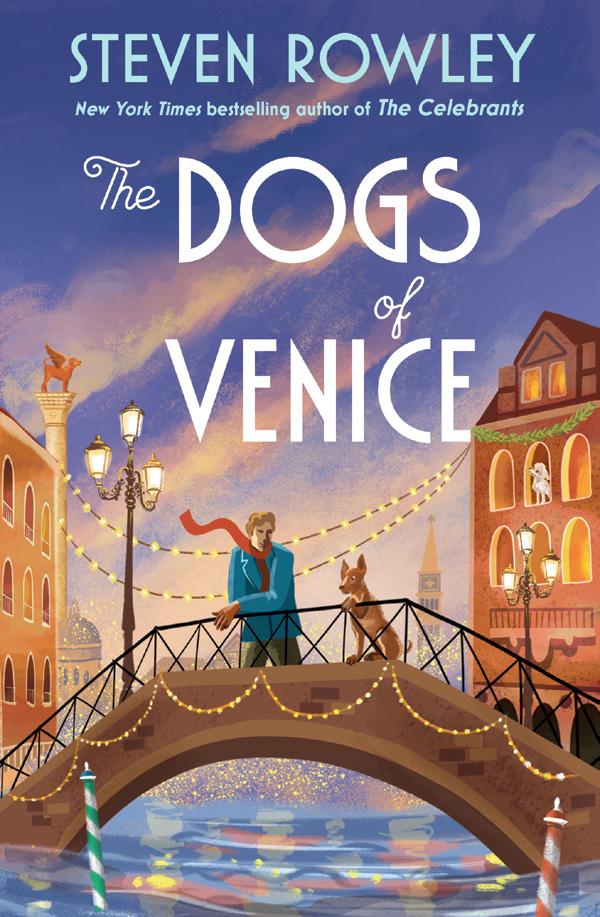
The Dogs of Venice by Steven Rowley © 2025, G.P. Putnam & Sons, $20.00, 65 pages
One person. Two, 12, 20, you can still feel alone in a crowded room if it’s a place you don’t want to be. People say, though, that that’s no way to do the holidays; you’re supposed to Make Merry, even when your heart’s not in it. You’re supposed to feel happy, no matter what—even when, as in The Dogs of Venice by Steven Rowley, the Christmas tinsel seems tarnished.
Right up until the plane door closed, Paul held hope that Darren would decide to come on the vacation they’d planned for and saved for, for months.
Alas, Darren was a no-show, which was not really a surprise. Three weeks before the departure, he’d announced that their marriage wasn’t working for him anymore, and that he wanted a divorce. Paul had said he was going on the vacation anyhow. Why waste a perfectly good flight, or an already-booked B&B? He was going to Venice.
Darren just rolled his eyes.
Was that a metaphor for their entire marriage? Darren
had always accused Paul of wanting too much. He indicated now that he felt stifled. Still, Darren’s unhappiness hit Paul broadside and so there was Paul, alone in a romantic Italian city, fighting with an espresso machine in a loft owned by someone who looked like a frozen-food spokeswoman.
He couldn’t speak or understand Italian very well. He didn’t know his way around, and he got lost really often. But he felt anchored by a dog.
The dog—he liked to call it—his dog—was a random stray, like so many others wandering around Venice unleashed, but this dog’s confidence and insouciant manner inspired Paul. If a dog could be like that, well, why couldn’t he?
He knew he wasn’t unlovable but solo holidays stunk and he hated his situation. Maybe the dog had a lesson to teach him: Could you live a wonderful life without someone to watch out for, pet, and care for you?
Pick up The Dogs of Venice, and you might think to yourself that it won’t take long to read. At under 100 pages, you’d be right—which just gives you time to turn around and read it again. Because you’ll want to.
In the same way that you poke your tongue at a sore tooth, author Steven Rowley makes you want to remember what it’s like to be the victim of a dead romance. You can do it here safely because you simply know that Paul is too nice for it to last too long. No spoilers, though, except to say that this novel is about love—gone, resurrected, misdirected—and it unfolds in exactly the way you hope it will. All in a neat evening’s worth of reading. Perfect.
One thing to note: the Christmas setting is incidental and could just as well be any season, which means that this book is timely, no matter when you want it. So grab The Dogs of Venice, enjoy it twice with your book group, with your love, or read it alone. ▼

hristmas? Bah humbug,” exclaims Ebenezer Scrooge, the stingy, odious, mean, hard, unfeeling main character in the classic Charles Dickens novella, A Christmas Carol. First published in 1843, the story follows an elderly miser who is visited by the ghost of his former partner, Jacob Marley, and three more apparitions throughout one fateful Christmas Eve night. In the process, Scrooge is transformed into a kinder, gentler man.
Ever since I can remember, I have been enthralled by this story. Growing up, I would seek out different tellings on television or in movie theaters. My favorites include the 1984 George C. Scott TV movie and of course, The Muppet Christmas Carol. Honorable mentions go to Spirited with Ryan Reynolds and Will Ferrell, Scrooged with Bill Murray, and Ebbie, the Lifetime TV movie starring Emmy Award winner Susan Lucci in the title role.
There is no single definitive number for the total count of adaptations. According to Google AI overview, “some sources cite over 135 adaptations, while others mention more than 100 film and TV versions, over 60 remakes since 1935, and one source claims there are 347 total adaptations.”
Why the enduring popularity of a story written almost 200 years ago? The themes explored through the lives of characters such as Bob Cratchit and Tiny Tim are just as relevant now as they were then—maybe even more so. Dickens wrote A Christmas Carol partly in response to British social attitudes towards poverty, especially child poverty. In a particularly heartbreaking scene, two impoverished children named Want and Ignorance were meant to arouse sympathy with readers.
I couldn’t help noticing striking resemblances between Ebenezer Scrooge and the current occupant of the White House. Scrooge might take that as an insult. Truth be told, Ebenezer is not a
convicted felon who was impeached twice during his first term as POTUS. But in their obvious disdain and hatred of the poor, the two men are alike.
Since taking office for his second term, Trump has waged a non-stop war on the most vulnerable and marginalized people in the country. As many political pundits have shouted from the rooftops, when it comes to this Administration, the cruelty is the point.
Dickens wanted to show—through Scrooge— that even the worst of sinners can repent and be redeemed.
The year 2025 saw MAGA cheering on as the unelected Elon Musk gutted our federal workforce. It is estimated that by the end of the year, the reduction will reach around 300,000 people. That number includes those taking voluntary early retirement, those resigning, and layoffs. These are individuals who dedicated their lives to public service and to this country. The Big, Beautiful, Bill (BBB) is going to leave millions uninsured and millions more will go into medical debt just to stay alive. The BBB is also responsible for the single largest transfer of wealth from the working class to the ultra-wealthy through tax cuts and spending cuts.
All while DJT is building a $300 million ballroom to entertain his wealthy donors. There was a Great Gatsby-themed Halloween party at Mar-a-Lago, with the theme “A little party never killed nobody,” the night before 40 million people lost their SNAP benefits. The cruelty is the point. The pre-reformed miser Scrooge would be in hog heaven.
The post-reformed Scrooge would probably be more like Bernie Sanders and Tim Walz.
The other major theme of A Christmas Carol is that of redemption. Re-
BY ROBERT DEDOMINIC
demption is a powerful tool. It is the redemption part of the story that gives me the most hope. Dickens wanted to show—through Scrooge—that even the worst sinners can repent and be redeemed. At the end of the story, Ebenezer grows into someone with emotional depth who regrets lost opportunities. (Honestly, I don’t even think a visit from three ghosts would work for the likes of Trump, Hegseth, Bondi, Patel, Noem, and RFK, Jr, to name a few. But you never know, stranger things have happened lol!)
Our own regrets sometimes surface around the December holidays as the end of the year approaches. We look back on the months behind us and wish—hope—next year will be better than this one. Lord knows I have made mistakes this year. Everyone makes mistakes; that’s why pencils have erasers. But I do know that after each stumble, each misstep, I vow to do better and be better. I wake up each day saying I will try to do better and be better than the day before.
I see the world and the holidays like Fred, Scrooge’s nephew, does. We share the same feelings about the Christmas season. Fred tells his uncle that he has “…always thought of Christmastime, when it comes round, as a good time, a kindlier, forgiving, charitable time, a time when men and women seem by one consent to open their shut-up hearts freely to their fellow creatures.”
These words stick with me throughout the holiday season, and as the reformed Ebenezer proclaims in gratitude for the second chance he has been given— “I will honor Christmas in my heart and try to keep it all the year.”
Until next time readers, have a wonderful holiday and best wishes for 2026! ▼
Robert DeDominic is a queer freelance writer living in Brooklyn, NY. Follow Robert on Bluesky at robertdominic.bsky.social.





















































RAINBOW MEMBERS RECEIVE:
• Basic Membership Package
- Advance ticket sales to CAMP Rehoboth events
- Recognition in Letters from CAMP Rehoboth
- Rainbow Member window cling(s)
- Weekly “What’s Happening at CAMP” email
• Discount on CAMP Rehoboth Event Tickets for Levels Green and above (as noted)
• Free Health Screenings, Counseling Services, and Support Groups
• Youth, Adult and Senior Programs, Services and Outreach
• The satisfaction of knowing you are helping others!
PAY ANNUALLY or MONTHLY
☐ PURPLE LEVEL ☐ $2400 annual or ☐ $200 monthly
Basic + 25% ticket discount and one 1/4 page ad in Letters from CAMP Rehoboth
☐ INDIGO LEVEL ☐ $1200 annual or ☐ $100 monthly
Basic + 20% ticket discount
☐ BLUE LEVEL ☐ $900 annual or ☐ $75 monthly
Basic + 15% ticket discount
☐ GREEN LEVEL ☐ $600 annual or ☐ $50 monthly
Basic + 10% ticket discount
☐ YELLOW LEVEL ☐ $300 annual or ☐ $25 monthly
☐ ORANGE LEVEL ☐ $180 annual or ☐ $15 monthly
☐ RED BASIC ☐ $50 annual or ☐ Basic Dual/Family, $85 annual
☐ YOUNG ADULT (18-25 years old) ☐ $25 annual
NAME PARTNER/SPOUSE NAME
ADDRESS CITY STATE ZIP
EMAIL 1 CELL 1
EMAIL 2 CELL 2
HOME PHONE
☐ Enclosed is my check payable to CAMP Rehoboth for the full annual amount.
☐ Please charge my Recurring Monthly or Annual Membership fee to:
CREDIT CARD NUMBER VALIDATION CODE EXP. DATE
SIGNATURE DATE
CORPORATE MATCHING GIFT COMPANY NAME CONTACT PERSON NAME
EMAIL PHONE NUMBER
EXPECTED
BY SOPHIE WAGNER
SOPHIE WAGNER: When did you start volunteering at CAMP Rehoboth?
JEFFERSON ROUGEAU: I jumped right into the deep end with SUNFESTIVAL.
SW: What’s your best memory of volunteering here?
JR: The look on everyone’s face when handed their volunteer vests. Not pretty. Though working with so many committed volunteers and the staff at CAMP Rehoboth would have made it worth it, I still got away with not wearing it.
SW: Name a childhood mentor or someone who influenced you while growing up and why?
JR: My Dad taught me how to read. I can’t think of anything more influential than that.
SW: Favorite season here at the beach and why?
JR: Fall. For someone who lives at the beach—I hate the heat.
SW: What are you most thankful for?
JR: Spending more time with my husband, Steve, as we make the transition to living here full time. ▼
Sophie Wagner is Event and Volunteer Coordinator at CAMP Rehoboth.
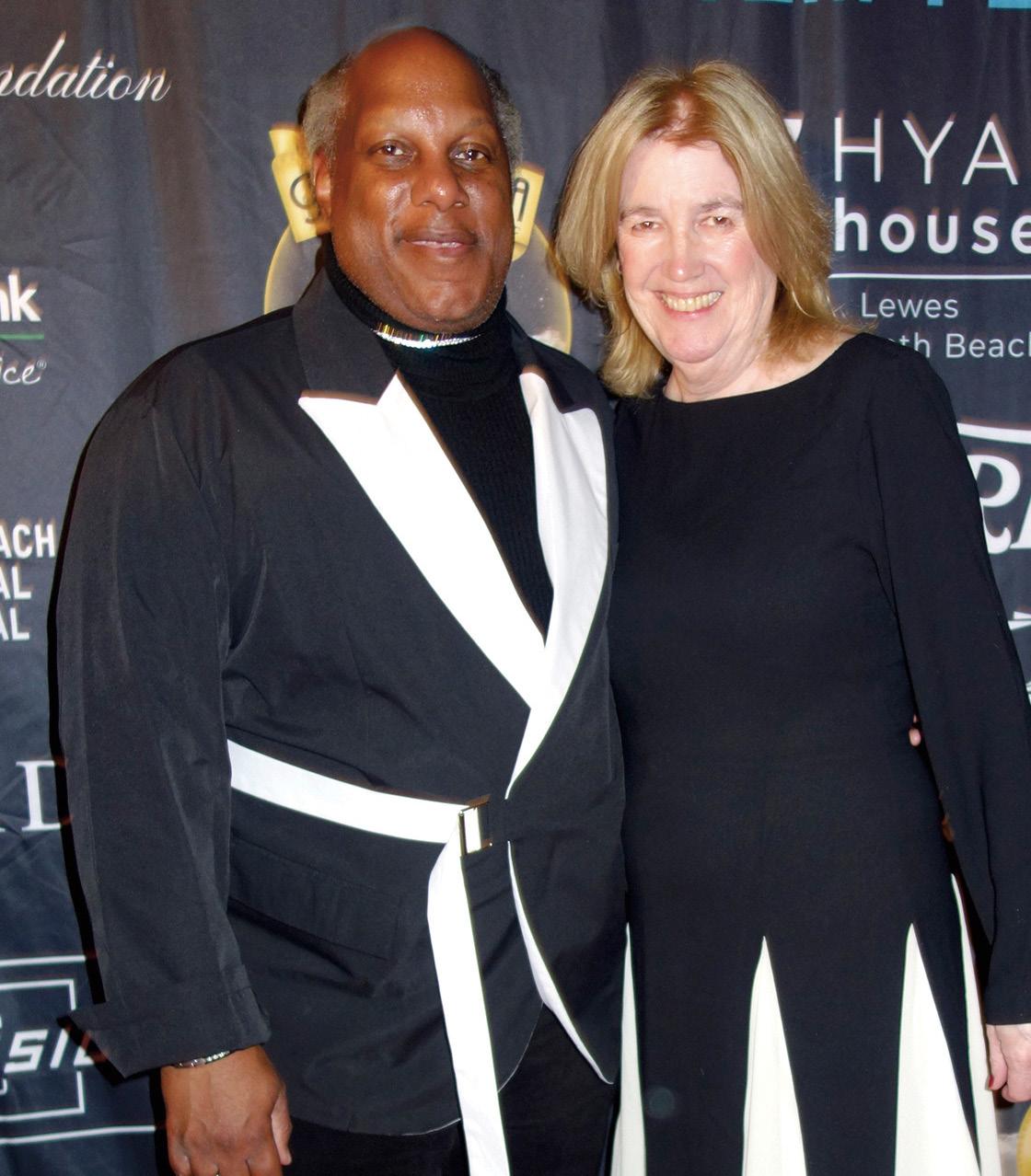
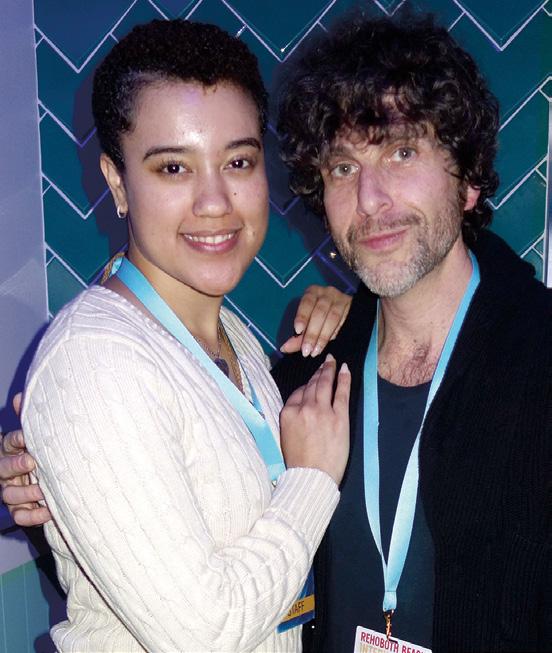
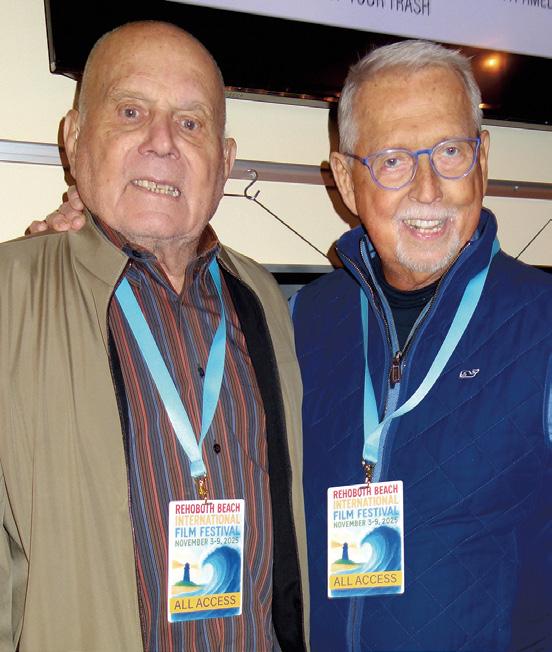
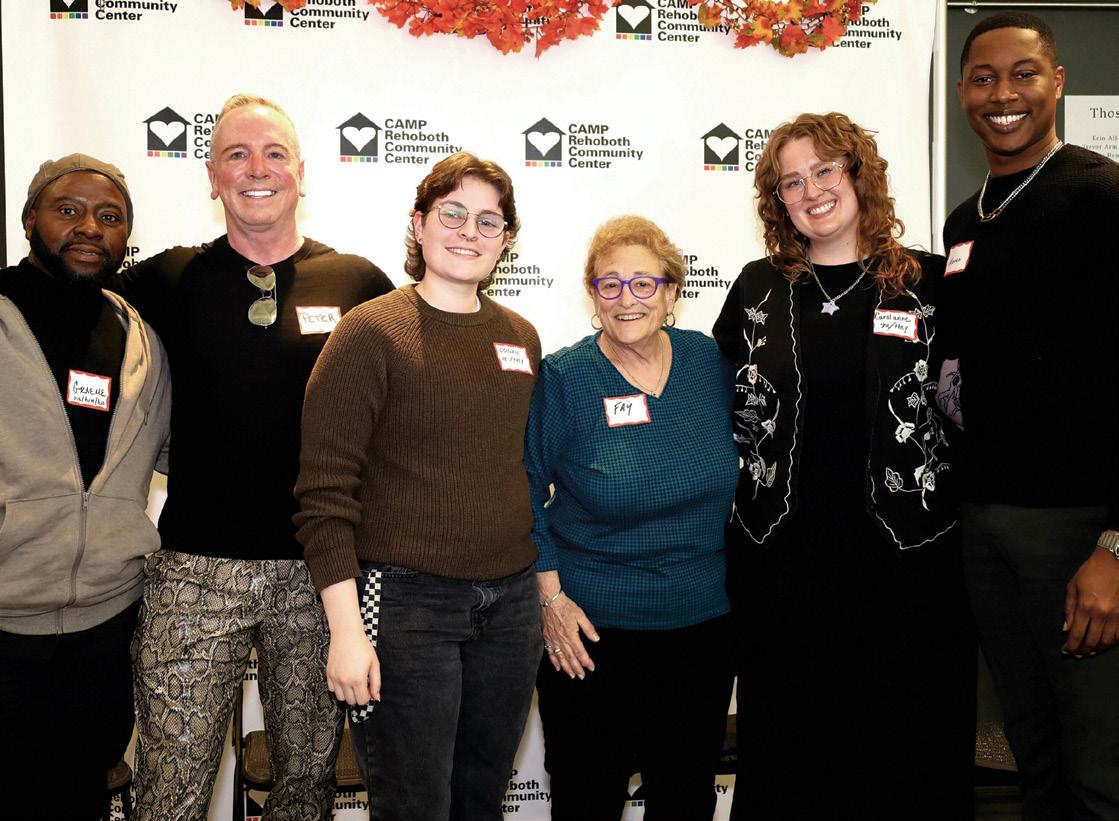
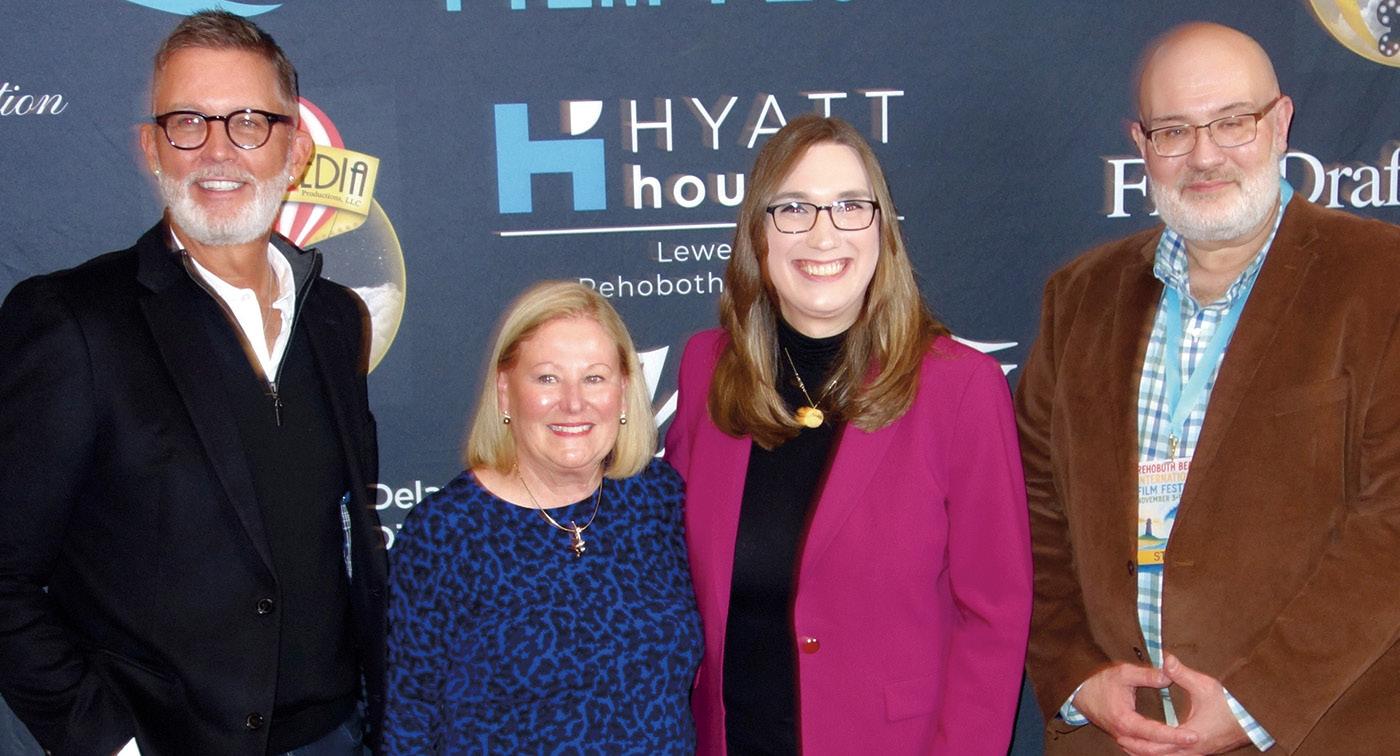
(Continued from page 67)
THIS PAGE (left to right) 1) at RB International Film Festival: Tom Johnson, Cathy Penney, Charlie Jones, Barbara Keenan, US Rep. Sarah McBride, Dave Bever, Kim Machado, Reece Quineo, Tony Burns, Andrew Watts Jr., Kristen King, Geoff Lerer, Bill Hillegeist, Ed Gmoch, Mike Tyler, Kathy Solano, Kim Leisey, Ken Currier; 2) at Yesterday, Today, Tomorrow: A Conversation Among Generations at CAMP Rehoboth: Graeme Davis, Peter Garneau, Logan Farro, Fay Jacobs, Carolanne Deal, Alonza Parker.
OPPOSITE PAGE 3) at Clear Space Theatre: Edmund Bagnell, Mark Hartman, Steve Hoult, Rick Bane, John Nehrbas, Alred Willis, Alice Willis, Liv Nehrbas, Megan Nehrbas, Steve Morris, Brent Quinn, Gina McGregor, Matt McGregor; 4) at Rigby's: Jeff Cover, Harold Hannah, Scott Burdette, David Barthlomew, Bill Wasser, Mark Kehoe, Brad Boswell, Randy Kimble; 5) at Freddie’s Beach Bar: Wala Kortue, Neil Roman, Julia Sugarbaker, Freddie Lutz, Duane Reed.
(More CAMPshots page 90)
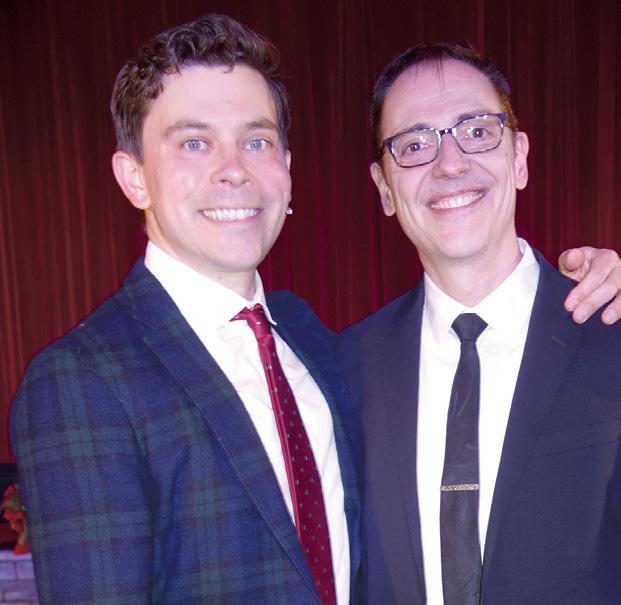
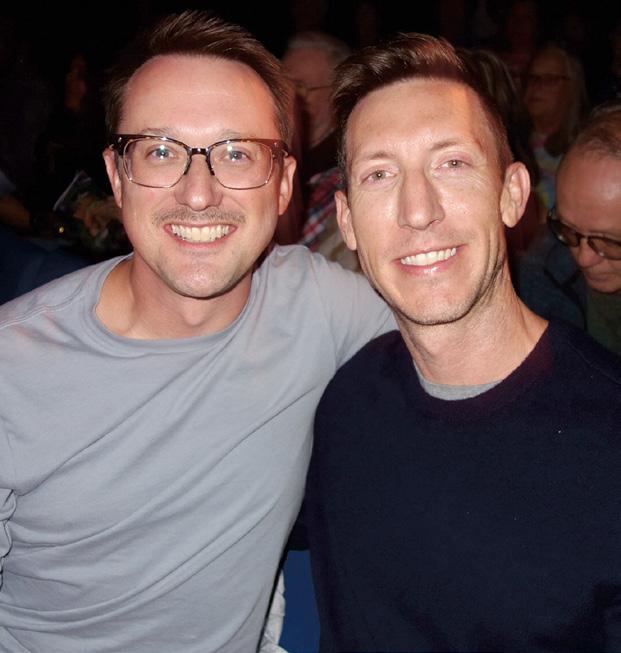
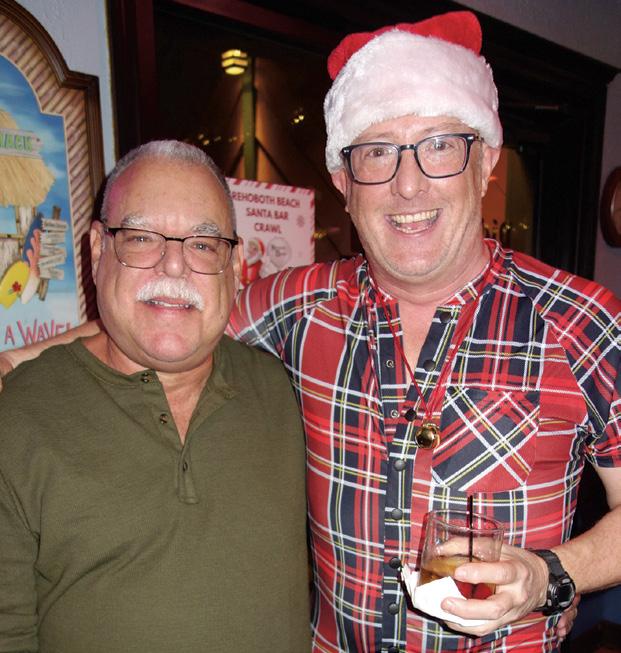
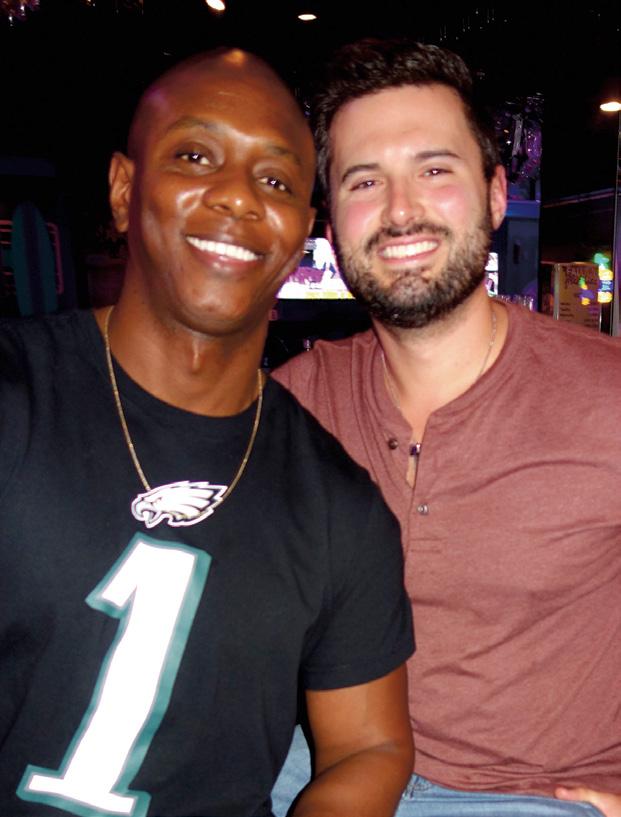
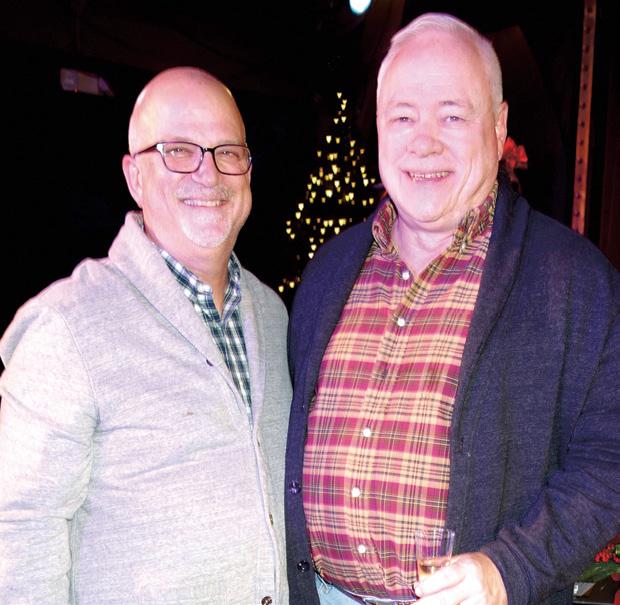
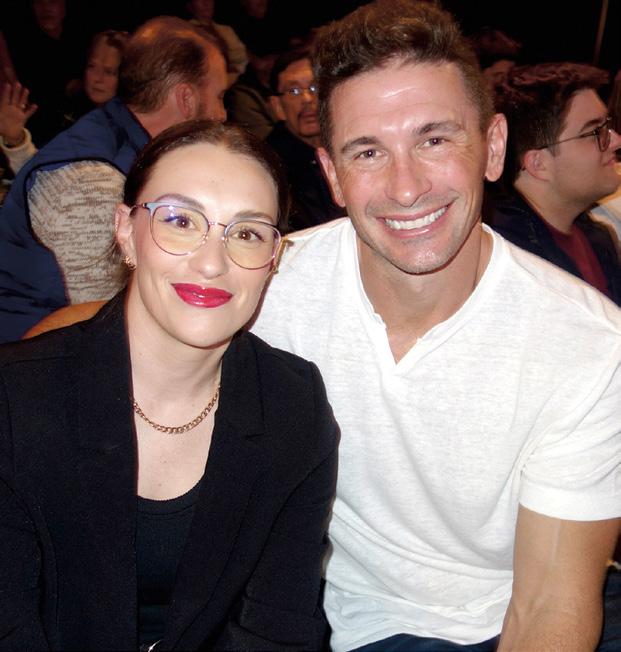
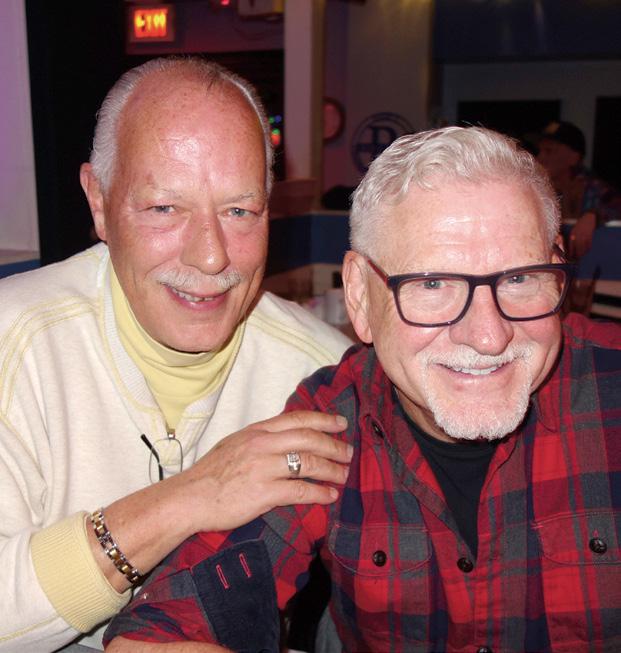
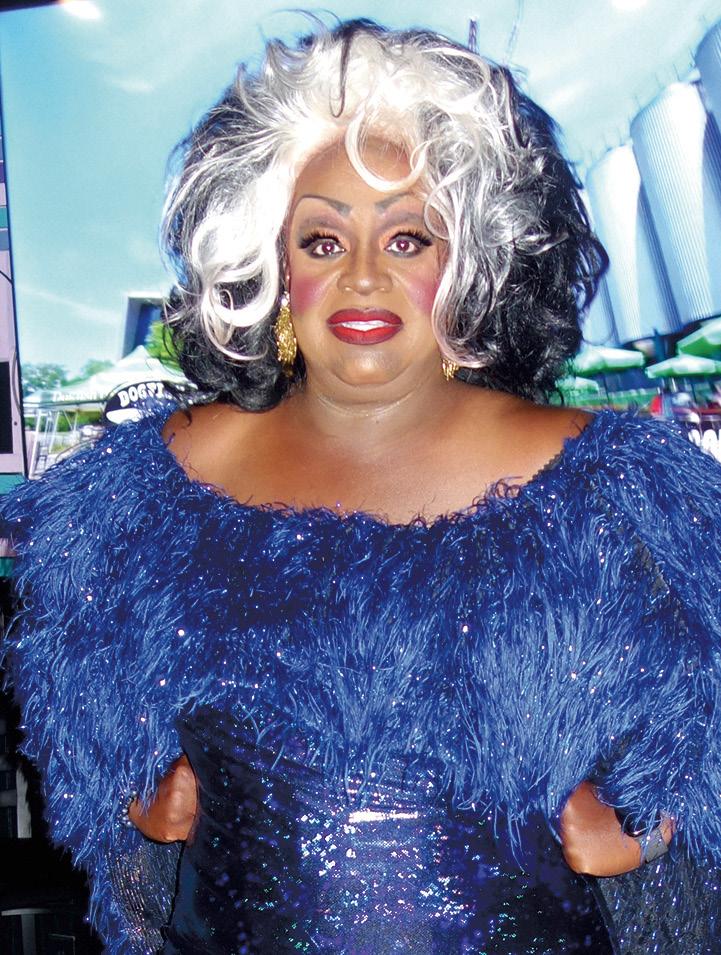

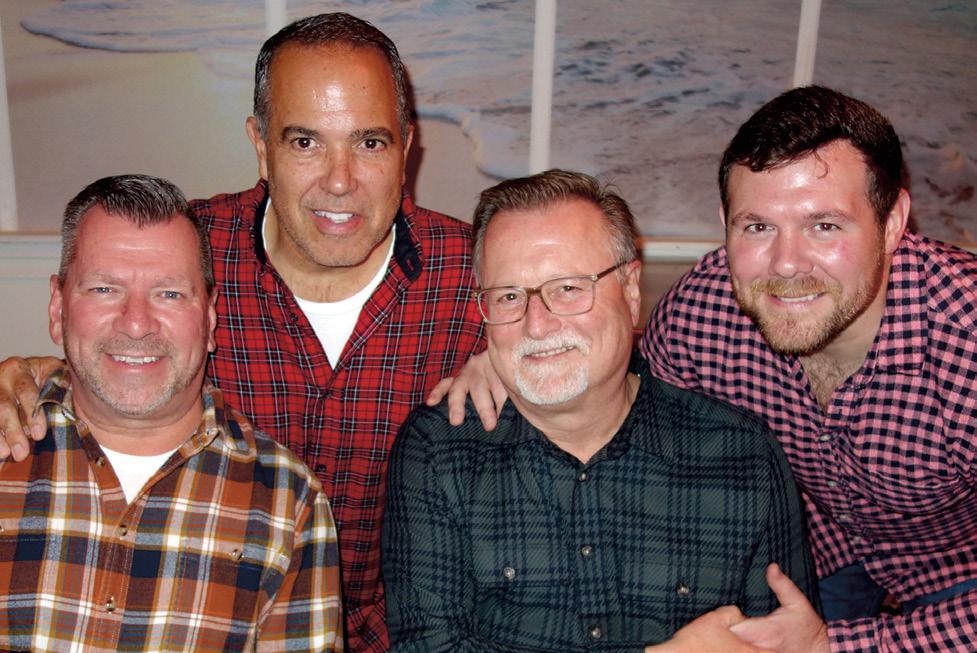
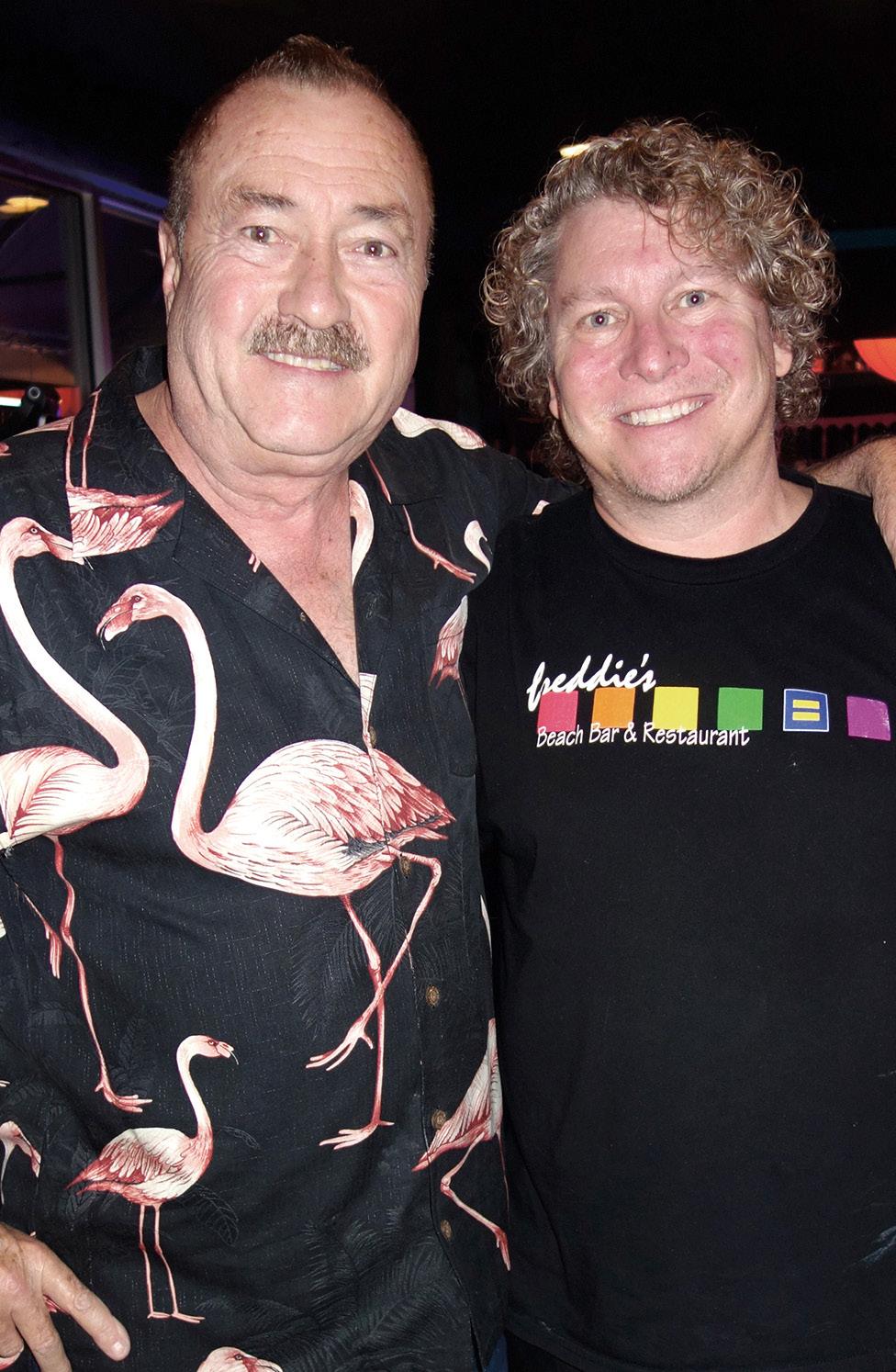
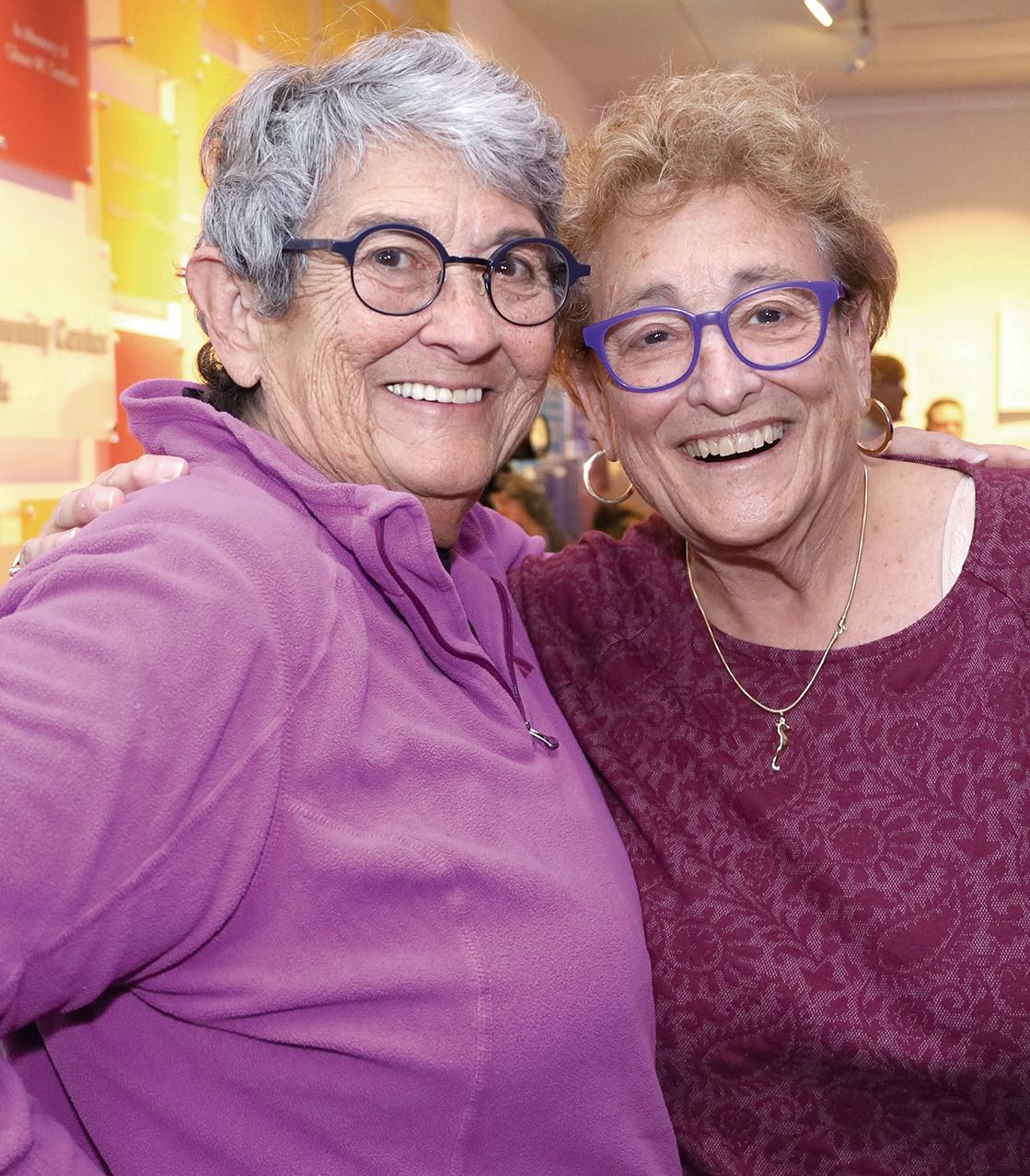
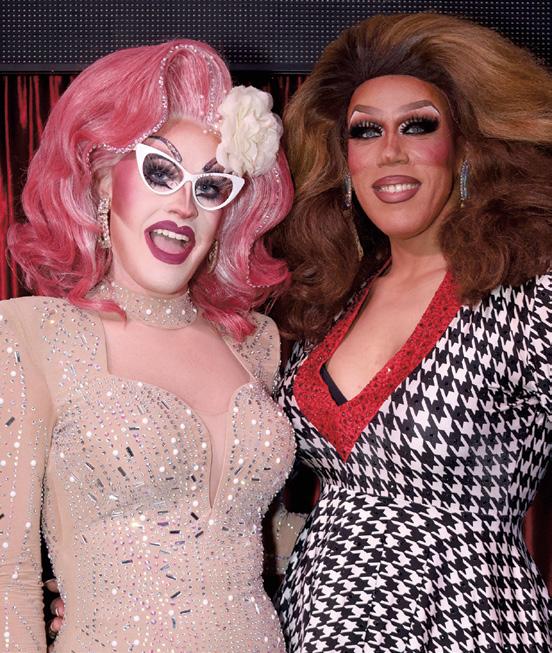
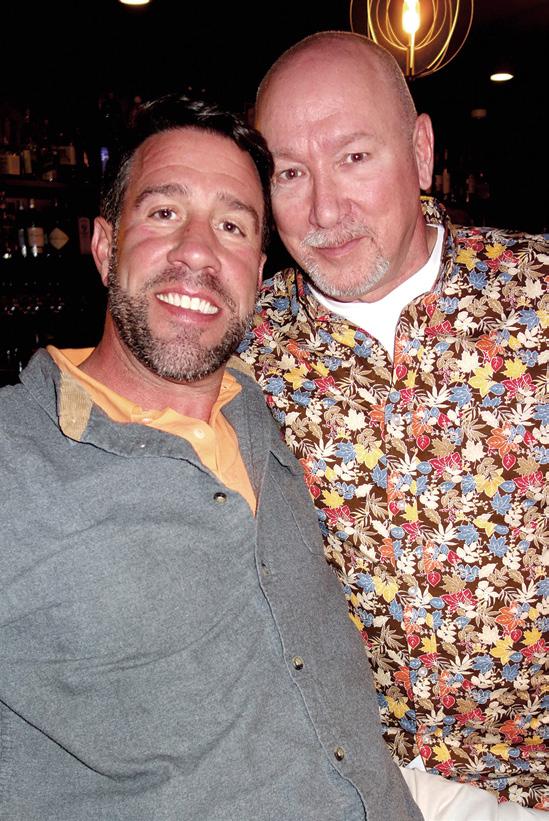
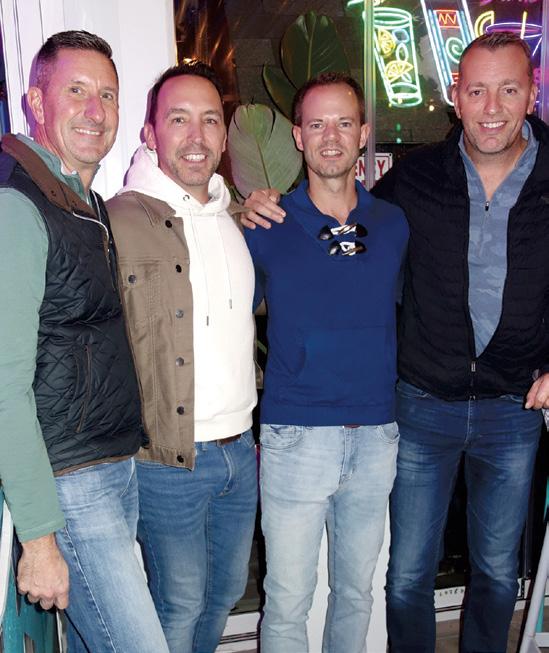
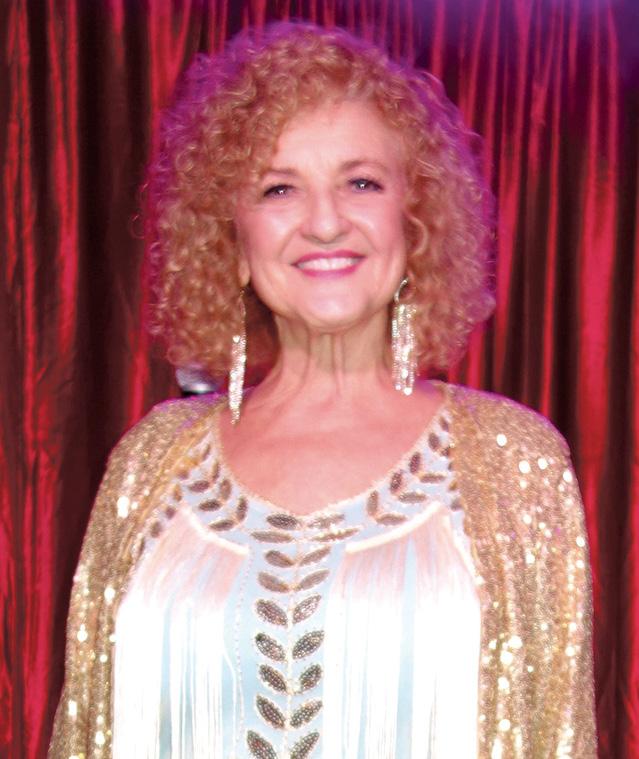
(Continued from page 89)
THIS PAGE (left to right) 1) at LGBTQ+ Veterans: Tales Asked and Told at CAMP Rehoboth: Bonnie Quesenberry, Fay Jacobs, Lori Kline, Beth Bozeman, Carol Sink; 2) at Diego’s: Duane Albertinas, Joe Parkany, Linda Wildasin, Kelly Doyle, Steve Wildasin, Magnolia Applebottom, Amethyst Diamond, Bruce Chamberlain, David Clarke, John Bator, Paul Haid, Adam Updegraff, Kevin Naff, Pamala Stanely; 3) at Aqua: Katie Lydell, AJ Hemphill, Justin Russell, Scott Sylvester.
OPPOSITE PAGE 4) at RB Historical Society Annual Meeting: RB Mayor Stan Mills, Bunky Markert, Roger Truitt, RB Commissioner Chris Galanty, James Apistolas, Robert Thompson, Heidi Nasstrom Evans, Alex Papajohn, Laura St. Marten; 5) at The Pines: Kat Phillips, Holly Lane, Robin Rohr, Linda Bova, Corey Peterson, Dan Kindle, Adam Gold; 6) at Transgender Day of Remembrance at CAMP Rehoboth: Kathleen Berault-Chmielewski, Russell Stiles, Linda Szabo; 7) at ACLU Leadership Night: Sussex County Councilwoman Jane Gruenebaum, Leslie Calman, DE State Senator Russell Huxtable, DE State Representative Claire Snyder-Hall, Kim Leisey, Deborah Archer. ▼
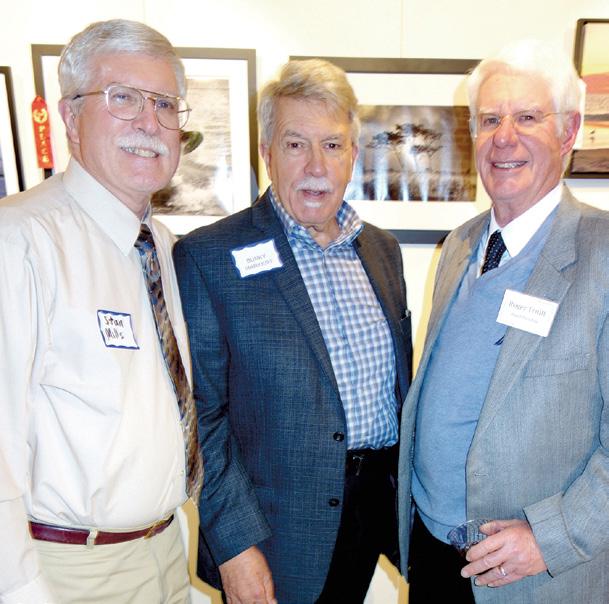
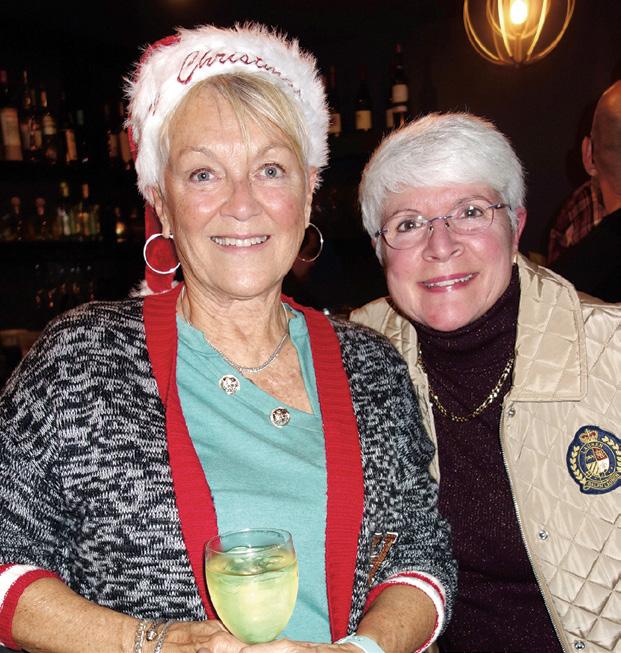
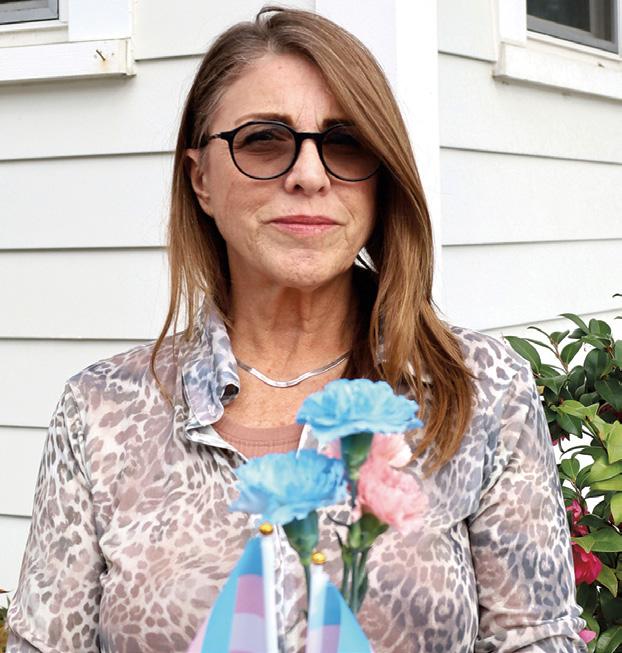
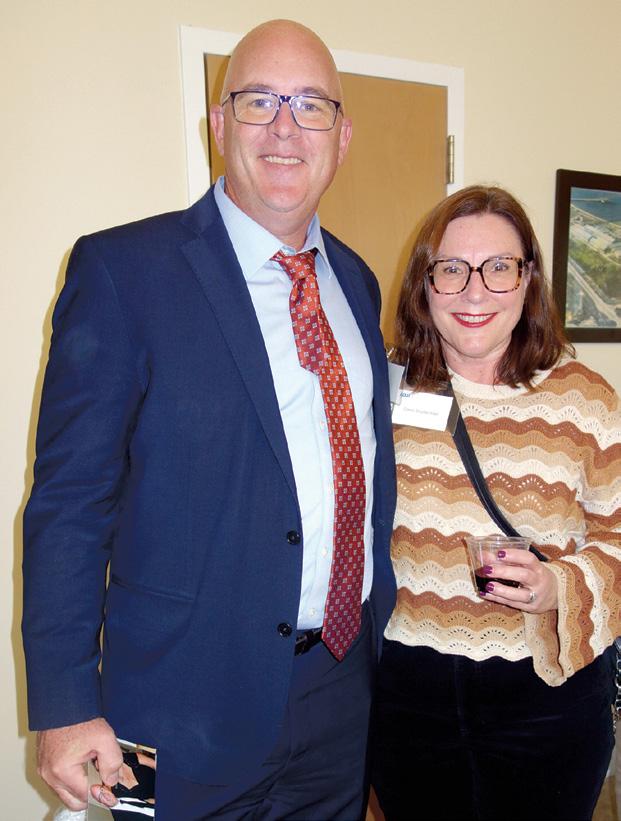
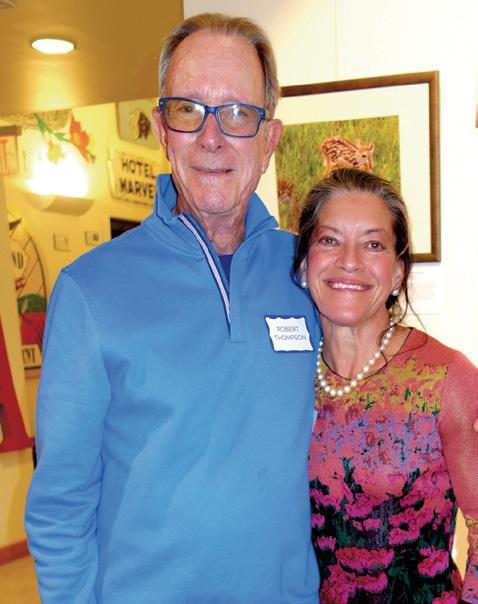
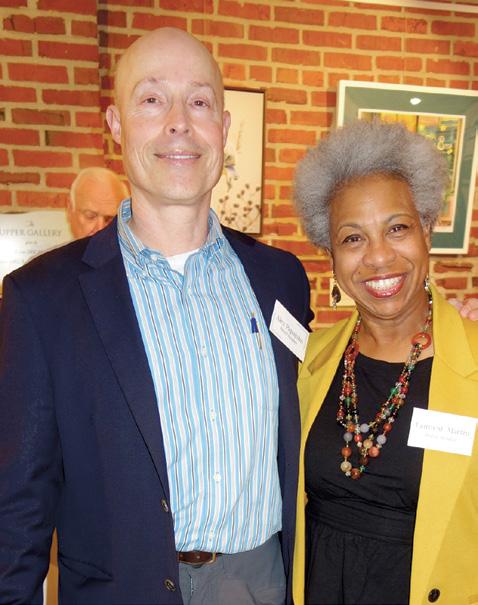
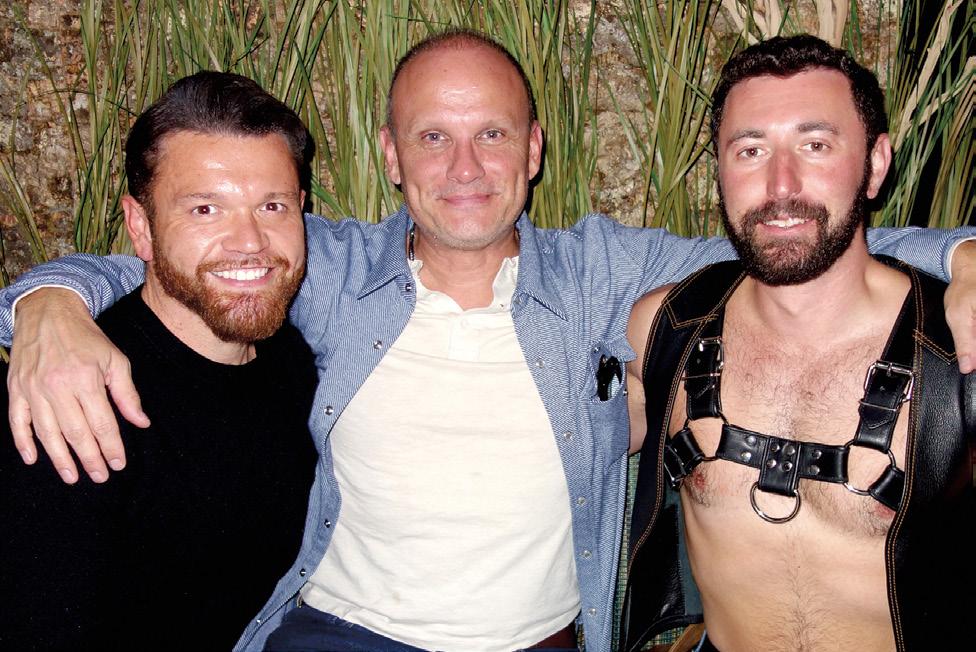
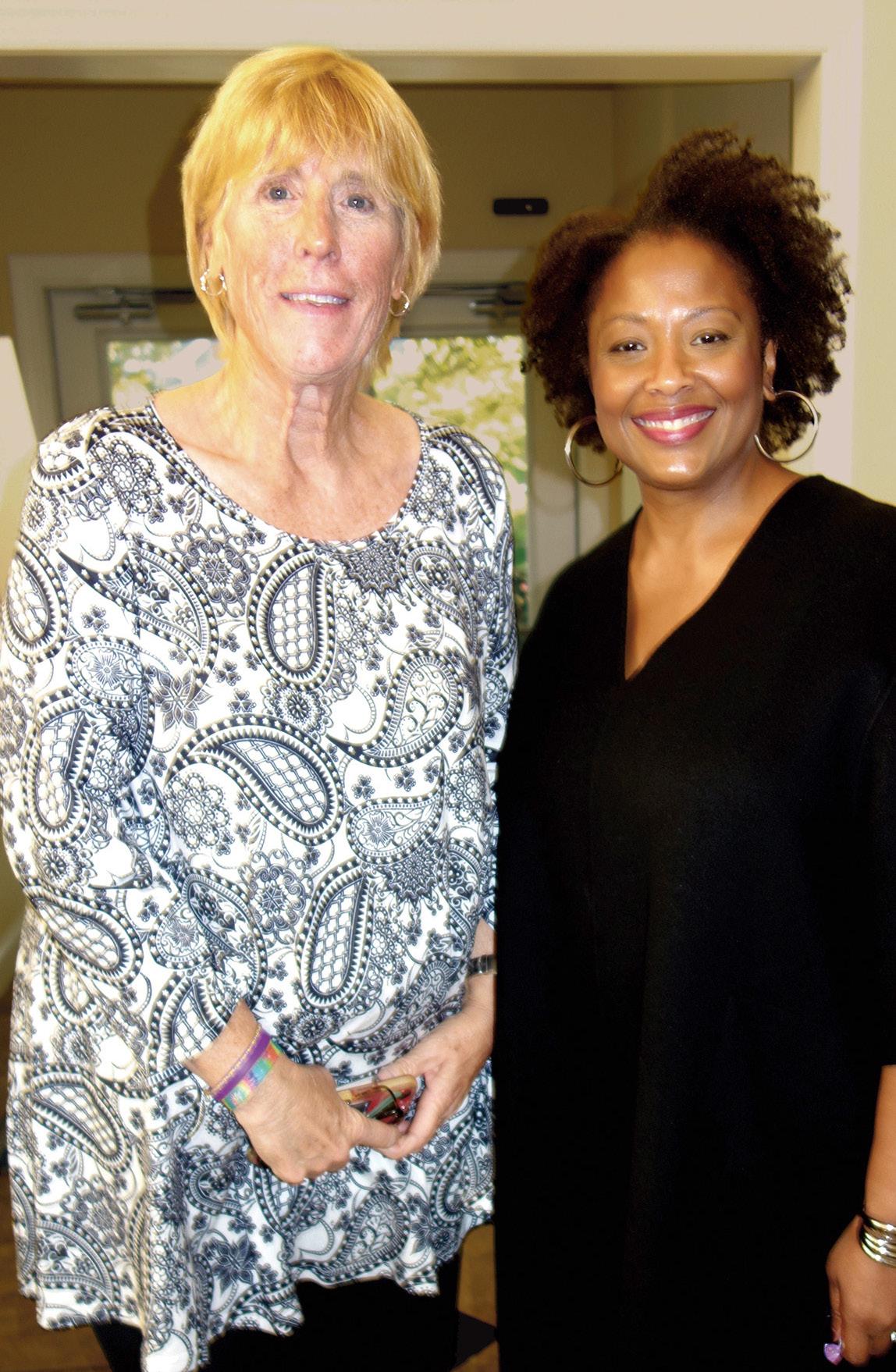
BY MICHAEL COOK
From queer horror to action blockbusters, the Love Lies Bleeding breakout is reshaping the screen—on her own terms.
Katy O’Brian has tackled lesbian neo-noir and gone full-throttle action, sharing the screen with Tom Cruise in Mission: Impossible—The Final Reckoning earlier this year. She also appears in two of the year’s most anticipated films: Christy, the true story of lesbian boxer Christy Martin (with Sydney Sweeney in the title
role), and The Running Man, opposite Glen Powell.
It’s no stretch to say that the 36-yearold Indiana native is redefining what it means to be a queer leading force in Hollywood.
Meanwhile, she’s also helping to redefine how queerness is portrayed in film. In 2024, O’Brian was celebrated for her breakthrough role in Love Lies
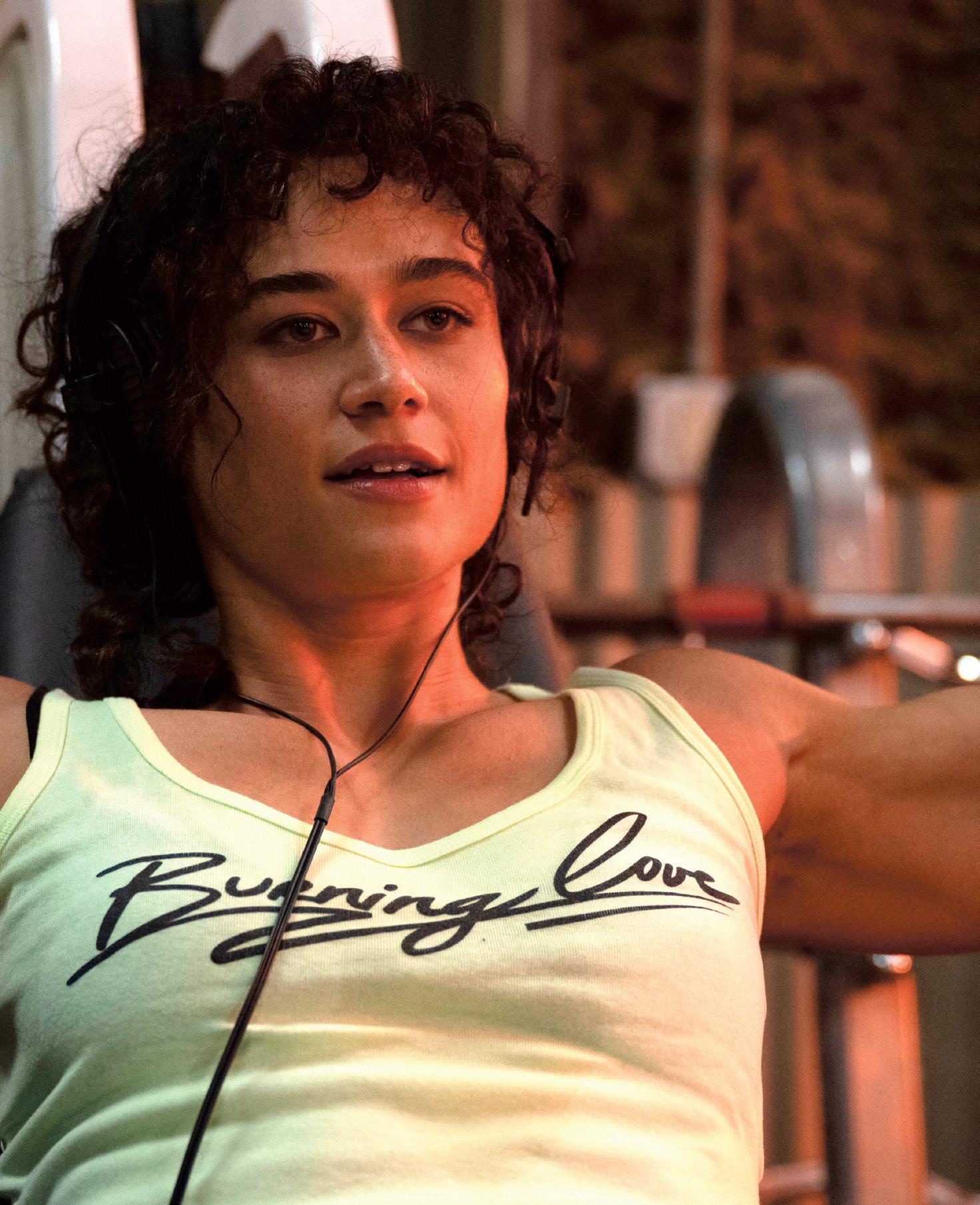
It’s like, when you feel like maybe part of your group is threatened, but there’s someone else that could be threatened even more, you just throw them under the bus.
Bleeding, which legendary filmmaker John Waters called “the best movie of the year.” Alongside Kristen Stewart, O’Brian—as ’80s-era bodybuilder Jackie—proved that women can be just as tough as men, without men. Even the sex scenes between the two felt raw and progressive, charged with desire rather than filtered through the male gaze.
Before going through a traditional audition, O’Brian caught A24’s attention with a simple tweet. In response to the studio’s call for a lead actor, the experienced bodybuilder posted a photo of herself with the words “I’m free.” That tough streak runs through her latest film, Queens of the Dead, in which O’Brian faces off against zombies in a glitter-soaked, camp-horror thriller that assembles a who’s who of queer Hollywood. Directed and co-written by Tina Romero—daughter of the legendary Night of the Living Dead director George A. Romero—the film follows drag queens and club kids fighting to survive a zombie outbreak during a warehouse drag show in Brooklyn.
Speaking about the film recently, O’Brian reflected on its sharp commentary on LGBTQ+ community dynamics and horror’s enduring role as a haven for queer expression and survival. She also spoke about sharing the screen with LGBTQ+ icons like Nina West, Dominique Jackson, and Margaret Cho—and how every role, from intimate indie dramas to big-budget blockbusters, is part of her mission to tell bold, boundary-pushing stories that matter.
CHRIS AZZOPARDI: This is Tina Romero’s debut feature. Knowing that she’s the daughter of George A. Romero, what was it like stepping into Queens of the Dead with that kind of legacy looming?
KATY O’BRIAN: Tina has such a vibrant, fun, and easy personality. I’m sure she had a lot of pressure on her. But it didn’t feel like I had to do anything other than
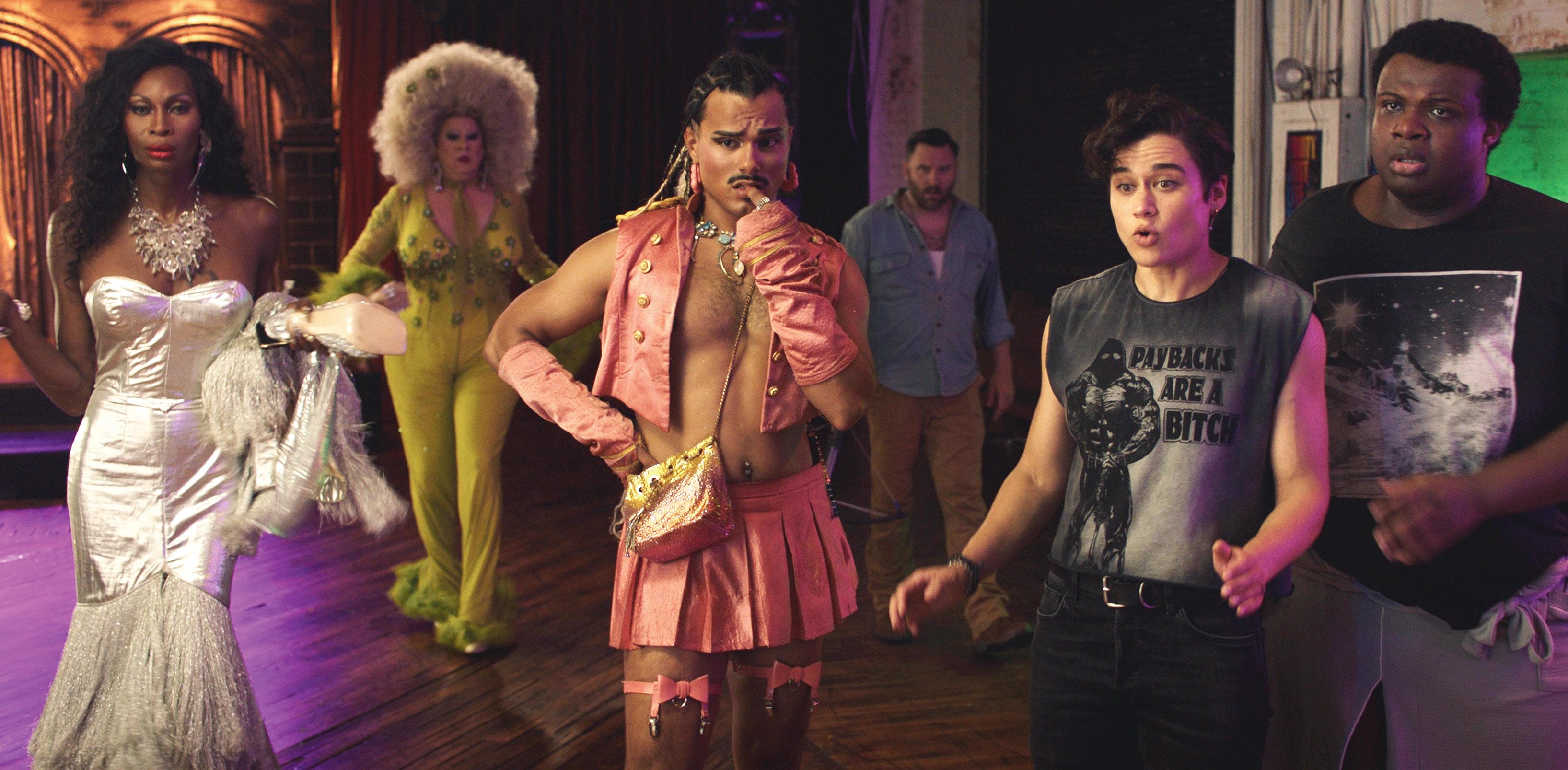
deliver what was in the script. I think everybody came and showed up and just really was there and ready to have such a good time. It was a really cool honor to work with her, especially having done two other zombie projects. And then you’re there kind of feeling like you’re with the O.G. It was definitely an honor and really awesome. But the pressure, the weight of it, I feel like she might’ve felt, but she never made us feel.
CA: Did you grow up watching Romero’s films, like Night of the Living Dead? And how does Queens of the Dead flip the script on that kind of horror?
KO: I did when I was young. I loved horror when I was a kid. I still love horror, but I watched everything. I did summer camps that were monster drawing classes. I remember babysitting my little cousins, and we watched Night of the Living Dead. It was probably a mistake. [Laughs.] I feel like over the years I’ve probably seen all of them, but I also, over the years, forget a lot of the minute details; just certain things stand out. So I know that she’s got a lot of little Easter eggs in this. But, obviously, Tina’s a DJ, so music is such a big part of the film, along with queer culture. Her dad was a social commentator in his films, but I think this is very focused within the queer community and not just the overall society. Our zombies are glitter zombies, but it was still very important to her that they were slow. And I think she was bummed that we didn’t have the budget for red eyes for all of them.
CA: Horror has always had a unique relationship with queerness, going back to Frankenstein. What do you think that this movie is saying about queer survival today?
KO: I think it was a community message. And part of that was how divided we can be in a lot of ways. And they use the two separate parties as one of those ways. But then we’re all arguing about little petty things too. We have messages about drug culture; one character is very QAnon and has all of these opinions about what a queer person is like and doesn’t even interact with them. But when you have to survive, none of that matters. Community connections matter, helping each other matters, teamwork matters. Those things matter in society more than all these little differences that don’t in the end.
So it was a bunch of theater kids getting together, singing all the time and joking around.
CA: Politically, as a wedge is being driven between those within the LGBTQ+ community, this movie seems to emphasize what you’re saying about our own community.
KO: It’s kind of a shame. And this is historically what people do. It’s like, when you feel like maybe part of your group is threatened, but there’s someone else that
could be threatened even more, you just throw them under the bus. And I feel like that’s what a lot of people are doing with the trans community, which is terrible. But everyone is a different gender in this movie. It’s so inclusive and so fun and it literally doesn’t matter. We all bind together and we all serve the story in a way so that everyone is a bit of a hero.
CA: Nina West, Dominique Jackson, Margaret Cho—what happens when you get such an iconic cast of LGBTQ+ talent together?
KO: I hope everyone else had the same experience—I just had so much fun just getting to know each other. I feel like there wasn’t a single person I didn’t want to flirt with in a very platonic way—but everyone is just so lovely and beautiful. We just had such a good time. And everybody really came through with their characters. I’m not a stage actor, but I think almost all of them are. So it was a bunch of theater kids getting together, singing all the time and joking around. And yeah, there was a lot of downtime when we were sitting around and chatting. We had a bunch of extras around; we were all just gathered and talking. We didn’t really have a trailer to go back to or anything, so we just hung out and had the time pass while we were all hopefully falling in love.
CA: It honestly sounds like the ideal way to spend time on a set with a bunch of queer people.
KO: It was great. We had a tiny crew. And
Continued on page 94
Continued from page 93
the way that they pulled through was unbelievable. I’m still in awe to this day. One person on sound, one person on boom, one camera operator.
CA: You recently did Mission: Impossible How do you compare those experiences?
KO: Obviously, Mission: Impossible just felt like there was no limit, no time constraints. With this, we could do maybe one or two takes, and we just had to move on. So you just had to be very intentional, and Tina had to be very intentional with any notes. It’s just like— you got to move on.
With Mission: Impossible, we could just do my parts for 12 hours. And do it over and over and over again and really grind away at the performance. I learned to scuba dive—just for two seconds underwater onscreen. The sets were incomprehensible. Just showing up and seeing what they had put together to fake a submarine, but make it as practical as possible. It was incredible.
I don’t want to say that people weren’t there for the love of it. A lot of people that had worked on Mission: Impossible had worked on it for five-plus years and were still bringing joy to work every day. So it was still a wonderful experience, just with maybe more convenient circumstances.
CA: From niche queer horror to major blockbuster franchises, it’s been exciting to see you thrive in such a range of spaces within Hollywood. As someone who has established yourself as a strong queer presence across multiple genres, how do you approach choosing roles at this stage in your career?
KO: It’s just, is this a story that I want to tell right now? And then also depending on the project, if it’s a comedy, I’m not so worried about what the message is necessarily, but I do try to take into consideration whether it’s a harmful message and who’s backing the project and why. I’m very fortunate right now that I can be a little more selective. But it’s also one of those things where, if you’re too selective, you might never work again. It’s a fine balance.
CA: In Love Lies Bleeding, you brought incredible emotional and physical depth to Jackie, a character that broke a lot of stereotypes about queer women on-
screen. Why were you drawn to that film at that particular time in your career?
KO: If I got a script like Love Lies Bleeding, I would do it every single day. [Director and co-writer] Rose Glass, first of all, has just such an interesting mind to even pop something like that out of the air. I connected so much to it because I do bodybuilding, I like lifting weights, I like feeling strong, I like being strong, I like having muscle. I like all of those things. But I’m not just some brute. A lot of people see bodybuilders or people with buff bodies as that. And oftentimes, it’s like armor. I don’t think that what you look like is almost ever an indicator of who you are. I really loved that that role led to a lot of opportunities for vulnerability. I immediately understood who that person was, minus the murder and steroids aspect [of the film].
Also, when Kristen and I were discussing it, we loved that it wasn’t like your typical lesbian period drama, where we’re just sharing glances for the first two hours in the movie and then maybe you kiss at the end. And it’s scandalous. Or one of us is engaged to a dude and we’re coming out. Our sexuality had nothing to do with any of the conflict. And we were morally questionable. We both really loved it because it was a massive break away from what we usually see. There’s aggressiveness and violence and vengeance. It’s just a story that’s usually reserved for a guy that we got to do.
CA: Do you think that it opened the doors for Christy to happen?
KO: It did. I don’t know that they would’ve known who I was. [Director and co-writer] David Michôd said that he saw Love Lies Bleeding, and he’s like, “That’s the only person that will play Lisa Holewyne.” When I got to know Lisa and I got to see her pictures, she and I are very similar. From neck down, our bodies were almost identical. She used to body build, she was in very good shape. We’re like the same height, we’re both mixed. And in talking to her, she was one of the main reasons I wanted to do that project, because she was like, “I want you to play me. I feel represented by you playing me.” It was scary to play someone for real.
CA: What did it mean to you to bring that story to life and what was it like sharing
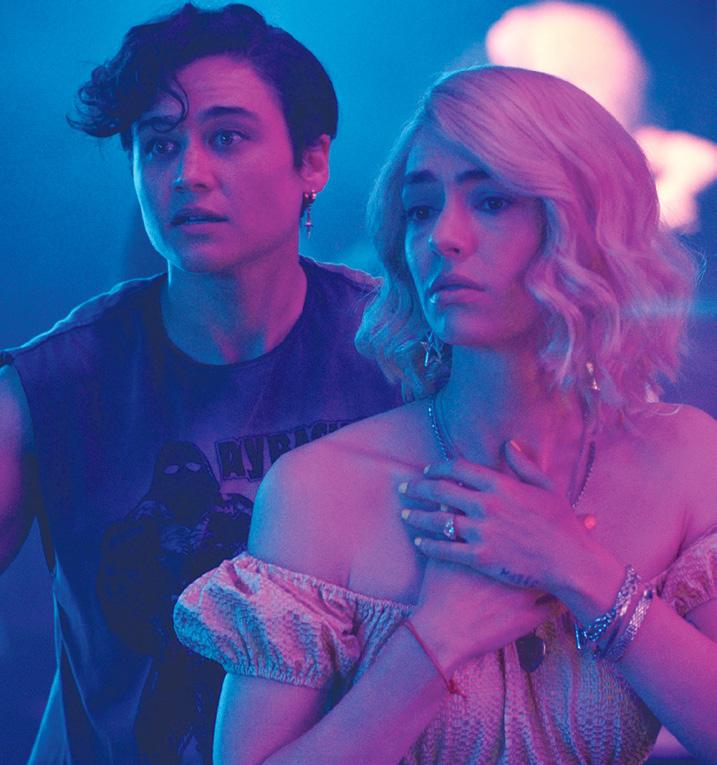
this space with Sydney Sweeney?
KO: It’s such a terrifying story to tell because it’s so personal and so intense. I so respect Black Bear Pictures for doing this: They had Christy Martin there as often as they could. She was constantly there to consult for the film, consult Sydney. And when you’re telling a story about someone where violence has been done to them, having their consent and their approval on that project is so important in an industry that often takes advantage of that.
And with Sydney, I cannot even begin to tell you how hard she worked on this project. It was not easy. We didn’t have a lot of shoot days; again, it’s low budget. And also they’re trying to match Christy’s fights directly. So it’s a lot of choreo, like a 12-hour-plus shoot day. And then on top of that, you got to go to fight training after and learn 14 different fights. And eat a disgusting diet. It’s a lot. So she worked really hard and she was very dedicated to just making sure that she brought Christy’s story to life, but also honored her as well. ▼
Chris Azzopardi is the Editorial Director of Pride Source Media Group and Q Syndicate, the national LGBTQ+ wire service. Reach him via Twitter @chrisazzopardi.
Page 92 photo credit: A24. Photos pages 93, 94, photo credit IFC/Shudder.


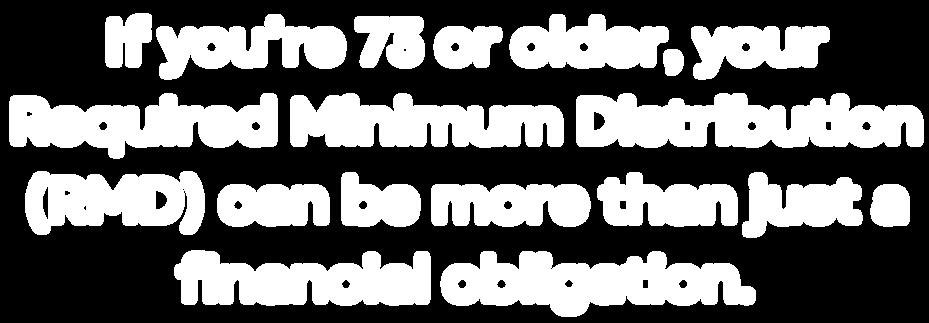

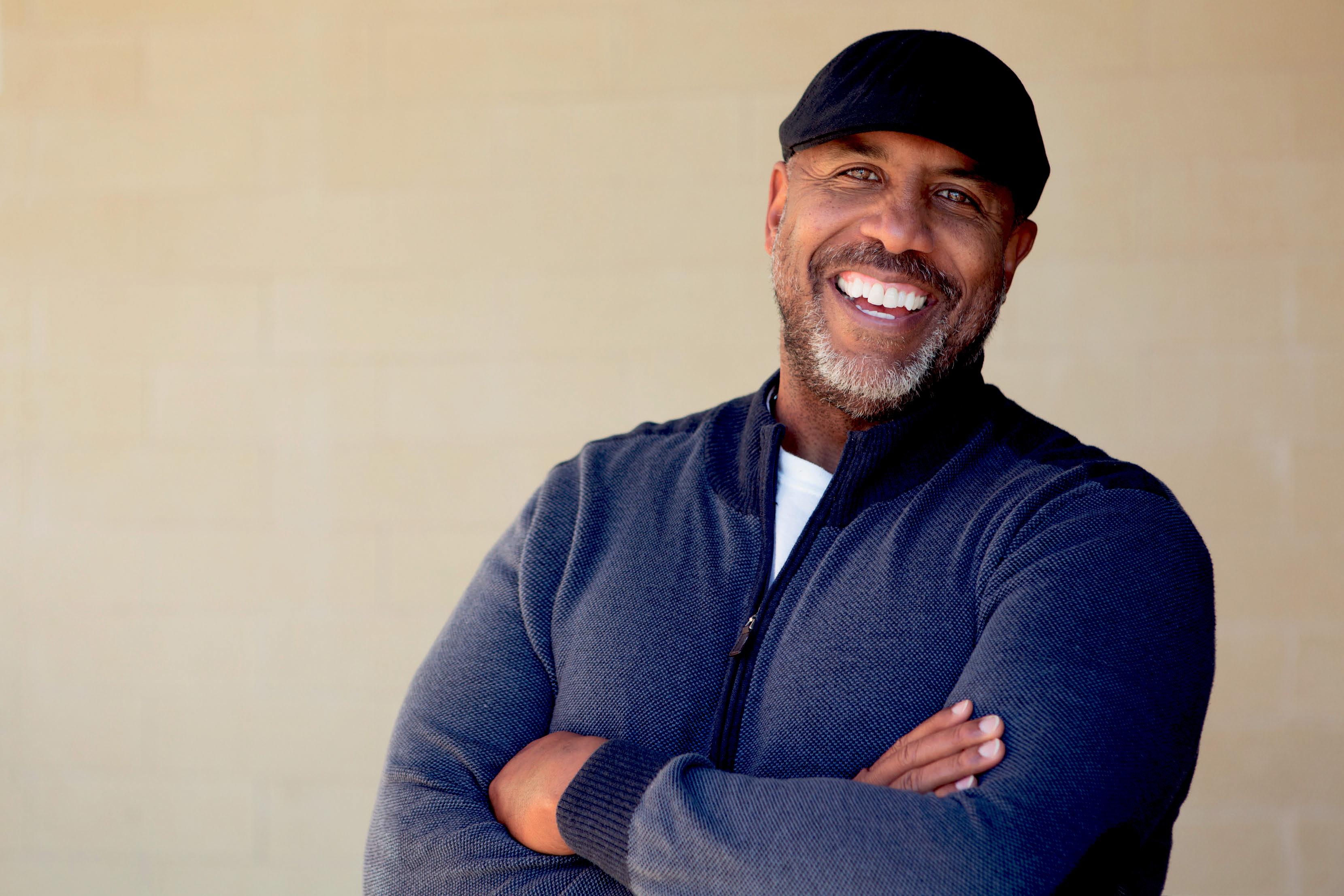



Comedian, Storyteller, named as “One of America’s Funniest Women”
Captivating singer, known as “The Cuban Adele”
FEST is one of the best events on the East Coast for women, both trans and cis, nonbinary folks, and those that live on the spectrum of the feminine spirit.


information about Women’s+ FEST and accessibility information, visit camprehoboth.org.
sponsorship
Wagner at

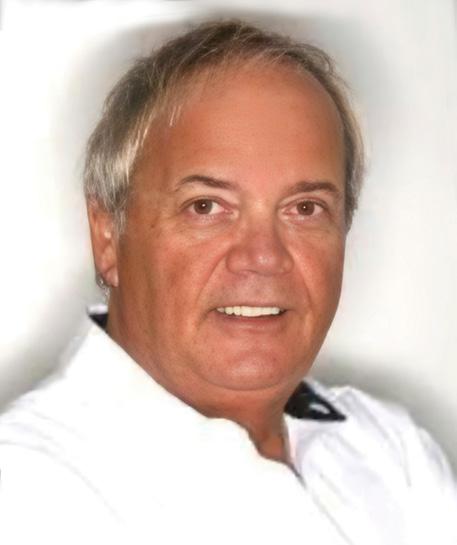
Salvatore “Sal” James Cutrona, Sr., of Rehoboth Beach, Delaware, passed away November 23, 2025. Born on April 18, 1948, Sal lived a life filled with creativity, devotion, and a warm spirit that touched all who knew him.
Sal is survived by his beloved son, Jamie (Liz) Cutrona; and by his treasured granddaughters, Isabella and Lucia Cutrona. He is also survived by his loving partner of 14 years, Joseph Gentile, who provided devoted care and companionship, especially during Sal’s final months, and was a constant source of comfort, patience, and love. Sal leaves behind also his brothers Vince (Joan), Franny (Lisa), and Phil, as well as many cherished extended family.
He is predeceased by his parents, Francis and Jennie Cutrona; his sister, Concetta; and his former wife, Sheila.
Born and raised in Wilmington’s Little Italy neighborhood, Sal and his family took great pride in their community’s deep traditions and their longtime connection to St. Anthony of Padua Parish. He graduated from Salesianum School in 1966 and later obtained his cosmetology license from the Academy of Hair.
For the past eight years, Sal made his home in Rehoboth Beach, Delaware, with Joe, where he found joy in living at the beach and in the welcoming community he so enjoyed being part of. Warm, friendly, and instantly engaging, Sal built lasting friendships and leaves behind a wide circle of cherished friends who will miss his humor, flair, and unmistakable sparkle. Sal had a particular love for Halloween, often delighting in crafting creative costumes and decorations.
Sal’s extraordinary 50-year career as a hairstylist showcased his artistic brilliance and his gift for making others feel their very best. He worked at John Wanamaker & Co, JCPenney, All About Hair, and spent more than 35 years at Michael Christopher Designs. Known for his master styling skills, Sal became beloved for the artistry and personal attention he brought to every client.
Beyond the salon, Sal’s creativity found another home in the Miss Delaware Scholarship Organization, where he volunteered for many years. He took immense pride in styling the hair of numerous Miss Delawares and was celebrated for crafting countless imaginative, show-stopping shoes for the Miss America “Show Us Your Shoes” Parade.
Sal also had a deep love for travel. Whether exploring new places or revisiting favorite destinations, he embraced every experience with enthusiasm, curiosity, and joy.
A Celebration of Life was held December 8, 2025, at Parsell Funeral Homes & Crematorium.
The family asks that anyone wishing to make a donation in Sal’s memory direct it to the Miss Delaware Scholarship Organization. Donations may be made online at missde.org/ donations. ▼
Charles “Chuck” Henry Carr Jr., 67, of Rehoboth Beach and formerly of Washington, DC, passed away Wednesday, October 29, 2025. Born June 6, 1958, in Lancaster, South Carolina, he graduated from Wofford College in Spartanburg, South Carolina and was employed at Spartan Food Systems in Spartanburg before moving to Washington, DC, to serve as press secretary for Congresswoman Elizabeth “Liz” J. Patterson.
His most recent employment was as Vice President of Conventions, Meetings, and Education at the Institute of Scrap Recycling Industries, now known as the Recycled Materials Association. He chose Rehoboth Beach to retire after spending many years as a part-time resident.
Chuck is survived by his husband of 40 years, David W. Taylor of Rehoboth Beach, and his sister and brotherin-law, Joanna C. and Lee Butler and their son Seth, all of Fredericksburg, Virginia. Other survivors include members of the Wentz and Carr families, the extended Taylor family, and numerous friends.
Memorial gifts may be sent to Capitol Hill United Methodist Church, Washington, DC, Food and Fellowship Ministry; Wofford College Office of Philanthropy, engage@wofford.edu; or Clear Space Theatre Company, Office of Development, Rehoboth Beach.
Memorial services will be announced at a later date. ▼
Sante D. Perogine, 83, of Lewes, passed away Sunday, November 30, 2025, at Accent Care Hospice, Wilmington. Sante was born July 11, 1942, in Camden, New Jersey, to the late Florie J. and Emma Giacomini Perogine. In addition to his parents, he was preceded in death by his wife, Ann Marie (Kozicki) Perogine.
His skill as a machinist began with the DuPont company at the Wilmington Shops location and later with W. L. Gore and Associates, where he retired as a supervisor.
Sante’s love of the water and the beaches of southern Delaware, as well as many local golf courses, gave him great enjoyment as he boated and crabbed the waterways and walked the links. He was a devoted member of Midway Assembly of God Church near Lewes.
Sante is survived by his children, Sandralynn Campbell (Jim), David Perogine (Suzanne), and Michael Perogine (Maria); five grandchildren; and two great-grandchildren. Also surviving is a stepson, Dana “Tony” A. Teoli (Michele); and a step-grandson, Michael Teoli; his first wife, Joan Perogine (Retkovis); and his devoted companion, Cathy Gorman, of Georgetown.
Memorial services were held December 8 at Midway Assembly of God Church. It is suggested that anyone wishing to make a memorial donation direct that to Brandywine Valley SPCA, 22918 DuPont Blvd. Georgetown, Delaware 19947. ▼
Wayne Edward Perkins, 87, of Millsboro, formerly of Arlington, Virginia, passed away at home on Sunday, November 23, 2025. He was born in Lancaster, New Hampshire, on June 27, 1938, and from a young age carried the sense of duty, humor, and compassion that would become the hallmarks of his life.
Wayne proudly served his country in the US Air Force for eight years. His service was distinguished not only by commitment to mission, but by the quiet strength and reliability that defined him.
After his honorable discharge, Wayne went on to serve the federal government for 42 years, ultimately retiring in 2014 as the director of personnel, logistics supply, security, and contracting. His career was marked by integrity, loyalty, and many friendships he treasured over the decades.
Wayne’s talents stretched far beyond his professional life. He possessed a remarkable green thumb—his garden and landscaping often resembled scenes lifted from the pages of a magazine. Tending to his flowers, shrubs, and trees brought him peace, pride, and joy. He also found delight in afternoons spent with his beloved husband, Alvin, browsing local thrift stores, discovering quirky treasures, and sharing laughter.
Though he often joked about not being a cook, Wayne had a few specialties that his family adored—his lasagna, New England clam chowder, and corn chowder were staples of comfort and love at countless gatherings.
Wayne will be remembered most for his wit, his spirited stubbornness, his fierce independence, and the humor that could lighten even the heaviest day. He lived sincerely, loved deeply, and stood firmly by those he cared for.
In addition to his parents, he was preceded in death by his husband, Alvin Terry Smith, and his son, Anthony Wayne Perkins. Surviving him are his daughters, Tina Marie Haynes and Amanda Ellen Perkins; his grandchildren, Jessica Norwood (Arzell), Jacqueline Vasquez, and Megan Pomar; two great-grandchildren, Isaac Norwood and Scarlette Norwood; and his brother, Roderick Perkins.
A service to celebrate Wayne’s life was held Friday, December 12, at Delaware Veterans Memorial Cemetery, Millsboro. The family suggests any memorial contributions in Wayne’s name be directed to Delaware Hospice, 100 Patriots Way, Milford, Delaware 19963. ▼
Naomi June Cartwright, 95, of Fort Collins, Colorado, passed away at home on Wednesday, November 26, 2025. Born June 15, 1930, in Chicago, Illinois, Naomi was active, energetic, and involved with family and friends until the day of her passing.
After getting her bachelor’s degree in elementary education from Chicago Teacher’s College, Naomi worked as an elementary school teacher in the Chicago public school system. In the early 1970s, she earned a master of science in education and master of science in psychology from Chicago State College and became a school psychologist.
After retiring from the Chicago school system in the mid-1980s, she pursued a variety of activities, including work as a tour bus guide and as a tax preparer for AARP and VITA, the IRS’s Volunteer Income Tax Assistance program.
In 2012, Naomi left Chicago and relocated to Fort Collins, Colorado, to be near her son, daughter-in-law, grandchildren, and great-grandchildren.
Naomi’s lifelong passions included playing bridge and keeping fit. She was a Life Master bridge player, playing bridge three times a week, and exercised with a personal trainer twice weekly until the week of her passing.
Naomi also had a flair for design, both in the clothing she wore and the various homes she decorated. She loved ocean cruises and especially enjoyed cruising on ships sponsoring bridge tournaments.
Naomi is survived by her daughter, Rabbi Beth Cohen (Frances Sneider) of Lewes; son, Mike Cohen (Sheri) of Fort Collins, Colorado; grandsons, Jeffrey Cohen and Daniel Cohen; granddaughter-in-law, Darci Knapp Cohen; great-grandchildren, Austen, Oliver and Sawyer Cohen; and several extended family.
A memorial service was held in Fort Collins, Colorado. In Naomi’s remembrance, donations may be made to Seaside Jewish Community, PO Box 1472, Rehoboth Beach, Delaware 19971; Community Resource Center, 37510 Oyster House Road, Rehoboth Beach, Delaware 19971; or Food Bank of Larimer County, 5706 Wright Drive, Loveland, Colorado 80538. ▼
Planned giving enables you to support CAMP Rehoboth even a er death. Options include:
• Bequests
• Retirement Accounts & Life Insurance
• IRA Charitable Rollovers
• Appreciated Stocks & Bonds
• Real Estate & Personal Property
Contact CAMP Rehoboth Development Manager Laurie ompson at laurie@camprehoboth.org TO LEARN MORE 37 Baltimore
| Rehoboth Beach, DE | camprehoboth.org
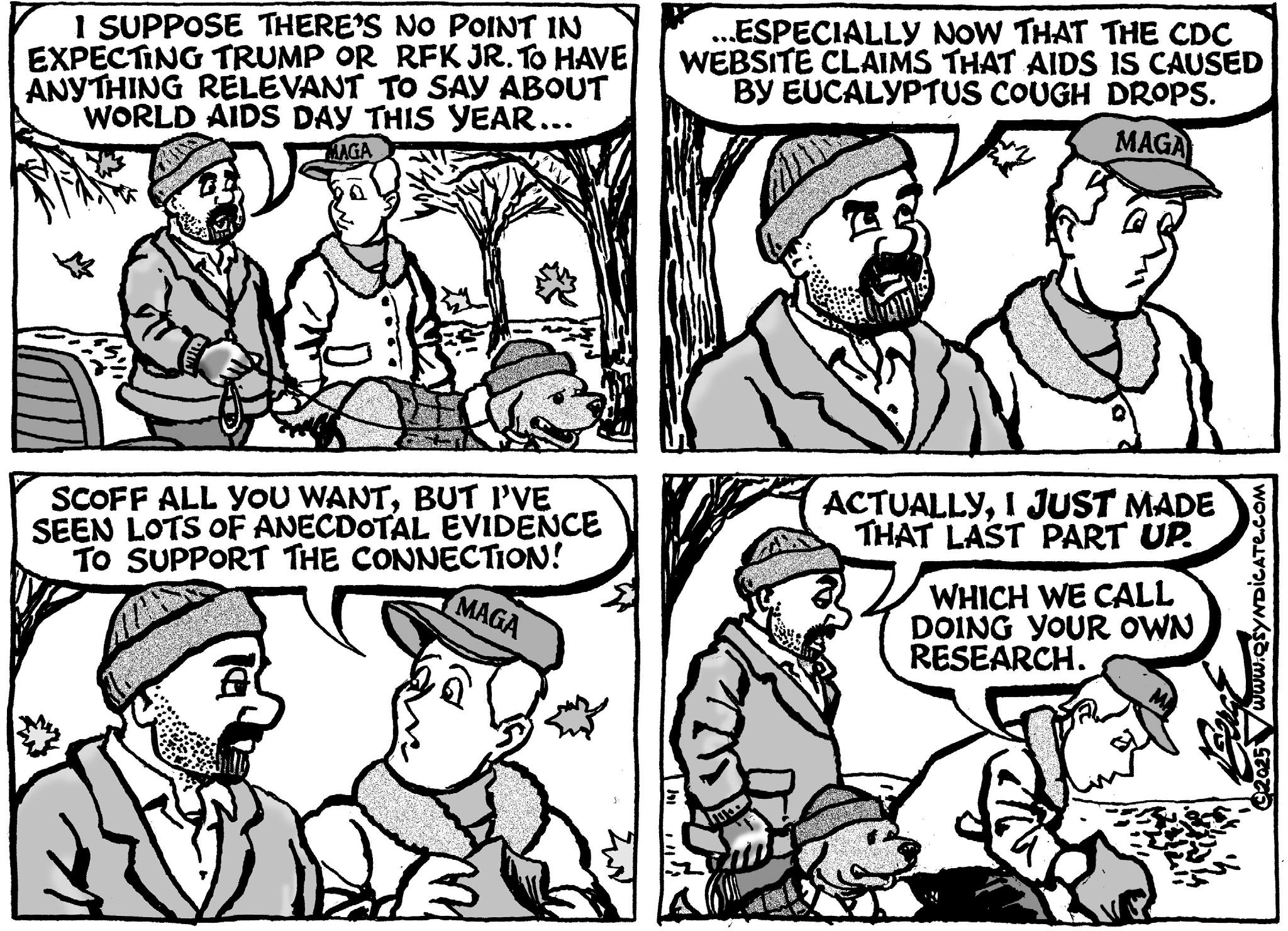



(puzzle on page 84)



CAMP REHOBOTH ACCESSIBILITY
Hope Vella
CAMP REHOBOTH ADMIN
Sherri McGee
CAMP REHOBOTH ADVOCACY COMMITTEE
Daniel Bruner
David Garrett
Leslie Ledogar
CAMP REHOBOTH ARTS
Logan Farro
Jane Knaus
George Munson
Sona Nathan
Joe Vescio
CAMP REHOBOTH CHORUS LEADERSHIP COMMITTEE
Bill Fuchs
Karen Gantz
Sue Pound
Gloria Richards
Dave Scuccimarra
Travis Stevens
Rose Verona







Send your check for $50 to CAMP Rehoboth, 37 Baltimore Ave., Rehoboth Beach, DE 19971. If you prefer to use your Visa, MasterCard or American Express call 302-227-5620. YOUR NAME
LOVE PICKLEBALL? WOMEN’S+ FEST NEEDS YOU!
The Women’s+ FEST Pickleball Tournament needs YOU! We’re looking for fun, energetic volunteers to help on Thursday, April 9 from 7:00 a.m. to 1:00 p.m. We need scorers, a timer, check-in helpers, and especially two people to coordinate the event. Don’t worry, we’ve got all the signage and registration covered—just bring your energy to help make this event a smash! Please reach out to Sophie Wagner at swagner@camprehoboth.org or 302-227-5620 if interested
LOVE ORGANIZING EVENTS? WOMEN’S+ FEST NEEDS YOU!
The Women’s+ FEST Expo needs a volunteer lead! We’re looking for someone organized, friendly, and ready to help showcase all the amazing vendors and community partners that make FEST shine. The Expo takes place on Saturday, April 11, and you’ll help coordinate the planning of the event, vendor checkin, and ensure the day runs smoothly (with plenty of support from the CAMP Rehoboth team!).
CROP: CAMP REHOBOTH OUTREACH PROGRAM
The CAMP Rehoboth Outreach Program (CROP) is constantly working to cultivate community and strengthen relationships and the connections between us all. Check the site for monthly volunteer opportunities.
Sign up at camprehoboth.org/volunteers.
Your volunteer efforts benefit you and others. Please visit camprehoboth.org/volunteers to register as a volunteer and to sign up for available opportunities.
CAMP REHOBOTH DEVELOPMENT TEAM
Jane Blue
Pat Catanzariti
Wes Combs
Mike DeFlavia
Amanda Mahony Albanese
Michelle Manfredi
CAMP REHOBOTH FACILITIES
Carol Brice
Lisa Evans
Eric Korpon
CAMP REHOBOTH LIBRARY
Bill Himelright
Rick Miller
CAMP REHOBOTH VOLUNTEER DEVELOPMENT COMMITTEE
Madelyn Jablon
Marce McCollum-Martin
Jim Mease
Kim Nelson
Rina Pellegrini
John Michael Sophos
Joe Vescio
CAMPCIERGES
Joe Benshetler
Joe Burton
Ken Currier
Max Dick
Susan Goudy
Robert Howley
Peter Keeble
Jim Mease
Jean Metzar
Kim Nelson
Pamela Rule
Maria Scannapieco
Joe Vescio
CAMPSAFE HIV TESTING AND COUNSELING
Dick Hospital
E.J. Kenyon
Joe Vescio
CAMPSHOTS PHOTO VOLUNTEERS
G Michael Beigay
Tony Burns
CROP HELPS I SUPPORT THE GIRLS
Debbie Bonn
Deb Carroll
Robin Cunningham
Karen DeSantis
Maureen McGeough
Jean Metzar
Beverly Miller
Dotti Outland
Elizabeth Powell
Meryl Raksin
Lorraine Stanish
CROP SUPPORTS
MOBILE FOOD BANK PANTRY
Dan Anderson
Cathy Balsley
Rick Bishop
Julie Blake
Joanne Caputo
Deb Carroll
Ken Currier
Lissa Dulany
Max Fleishman
Mike Fleishman
Lisa Gilley
Susan Goudy
Lee Lachmund
Milan Mladjan
George Munson
Pat Nickols
Cara Radosevich
Jane Rice
Mike Tyler
To all the CAMP Rehoboth Volunteers for the period: Nov. 8 - Dec. 5, 2025
LETTERS DISTRIBUTION TEAM
Jim Mease
LETTERS MAILING TEAM
Nancy Hewish
Joanne Yurik
LETTERS PROOFING
Barb Ralph
LGBTQ+ VETERAN’S STORYTELLING EVENT
Fay Jacobs
Sona Nathan
Jennifer Varone
THIS MONTH IN QUEER HISTORY
Beth Shockley
TRANSGENDER DAY OF REMEMBRANCE
Kathleen BeraultChmielewski
Marty Goff
Lori Rocheleau
Leslie Sinclair
Russell Stiles
Linda Szabo
Debbie Woods
WORLD AIDS DAY
Cathy Balsley
Marvin Garcia
Kevin Pelland
Julie Rasmussen
WORLD AIDS DAY
PLANNING
Janice Bowker
Carla Christopher
Beth Cohen
Eddie Jusino
Marina Laws
David Mariner
Glen Pruitt
Jon Rania
1776
Café Azafrán
CAMP Rehoboth Annual Sponsors
CAMP Rehoboth Atrium .........................................96
CAMP Rehoboth Chorus, I Am Woman 17
CAMP Rehoboth Development Ways to Give 2
CAMP Rehoboth End of Year Appeal.....................11
CAMP Rehoboth Flash Fiction 13
CAMP
CAMP
CAMP
CAMP
CAMP Rehoboth Online Store ...............................27
CAMP
CAMP Rehoboth Poetry Jam






CRESCENT SHORES - Lincoln. 2009 3BR/2BA. Owned solar equipment. Pool & hot tub. 1/2-acre corner lot. Freshly painted; new LVP. Updated kitchen. Split BR plan. $339,000 (2095712)


SHADY DELL - Ocean View. 1988 3BR/2BA manufactured home on 1/4-acred lot. Low HOA of just $75/yr. Screened porch. Shed w/30amp for your RV. 3 miles to the beach! $380,000 (2095732)


WHISPERING PINES
- Lewes. 2016 3BR/2BA is 1,260sq. Big eat-in kitchen. Covered front porch. Shed. Community pool. 4 miles to beach. $139,900 (2098990) Lot Rent $888/mt.
CAMELOT MEADOWS - Rehoboth. 1972 3BR/2BA is 1,288 sq. ft. Fully fenced side yard. Main bedroom is en Suite. Community pool. 4 miles to beach. $74,900 (2071060) Lot Rent $1,153/mt. After 20 Years in This Spot, Bye-Bye Back Cover
FAIRWAY VILLAS - Dagsboro. 2003 2BR/2BA condo w/loft. 7 miles to the Bethany Beach boardwalk. Located in Cripple Creek Golf & CC w/pool, golf & social memberships avail. $349,900 (2085536)

SILVER VIEW FARMRehoboth. 1983 2BR/1BA remodeled in 2023! SS kit appliances w/granite. LVP. Shed. Community pool. 3 miles to beach. $110,000 (2092564) Lot Rent $763/mt.

A SPEN MEADOWSRehoboth. 2009 3BR/2BA. LV w/gas FP + family room. Floored attic w/fixed stairs. Community pool & just 4 miles to beach. $250,000 (210124) Lot Rent $1,196/mt.

THE PLANTATIONS - Lewes. Private elevator in this 1998 3BR/2BA condo. Garage w/220v EV outlet. 1,500sf + 200sf L-shaped enclosed porch. 5 miles to the beach! $426,000 (2088132)

COLONIAL EAST - Rehoboth Beach. 2019 3BR/2BA features the “ultimate kit” & main BR “super bath” upgrades + more! 4 miles to Rehoboth or Lewes beach. $279,000 (2091602) Lot Rent $896/mt.


SUSSEX EAST -Lewes. 1987 3BR/2BA 980sf home w/10’x20’ 3-season porch. Shed. Handicap ramp. Indoor community pool & 6 miles to beach. $84,900 (2099840) Lot Rent $1,003/mt.

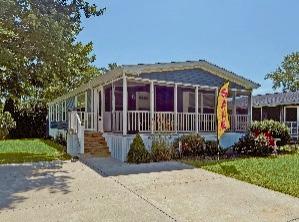

SILVER VIEW FARMRehoboth. 2010 3BR/2BA is 1,624sf with large front sunroom. Screened porch. Shed. Community pool. 3 miles to beach. $220,000 (2081354) Lot Rent $763/mt.
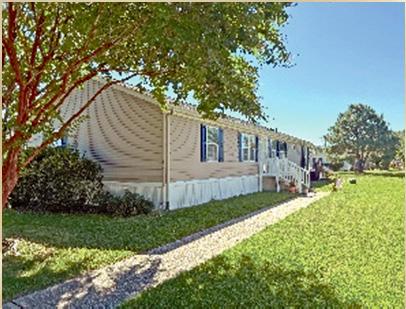

REHOBOTH BAY - Rehoboth. 2019 “like new” 3BR/2BA. Open floor plan. Great kitchen! LVP throughout. Pool. Marina. 6.5 miles to beach. $189,900 (2090642) Lot Rent $913/mt. REHOBOTH BAY - Rehoboth. 2002 3BR/2BA is 1,560sf. Features LV & family room. VinylTech porch. Shed. Pool. Marina. 6.5 miles to beach. $189,000 (2098272) Lot Rent $821/mt. CAMELOT MEADOWS - Rehoboth. 1972 3BR/2BA 1,536sf doublewide. Large screened porch. Ready today! Community pool. 4 miles to beach. $120,000 (2100274) Lot Rent $1,153/mt.