The housing market is brimming with listings and bargains.
Page 5
AWE OF NATURE
Photographer John Perrin has been highly commended for his Skeleton Coast image.
Page 7
The voice of Bay of Plenty
BLOODSUCKERS
The medical leech business is thriving under two veterinarians. Page 12
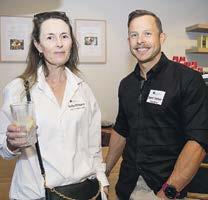
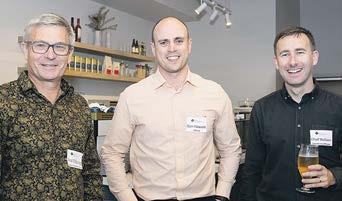
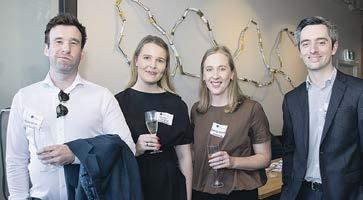
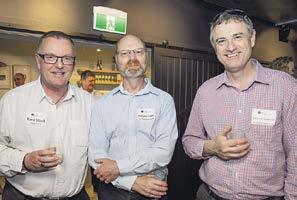
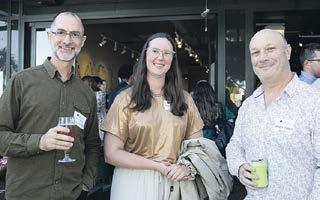
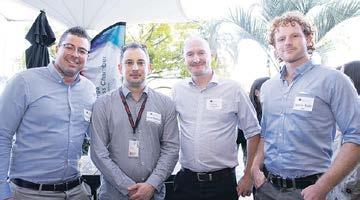
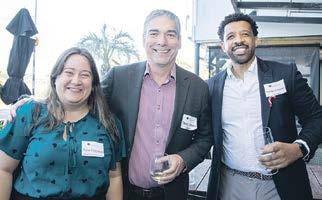
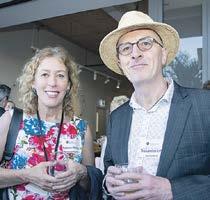
OUT AND ABOUT Did we catch you at events in Tauranga and Rotorua? Pages 13-15
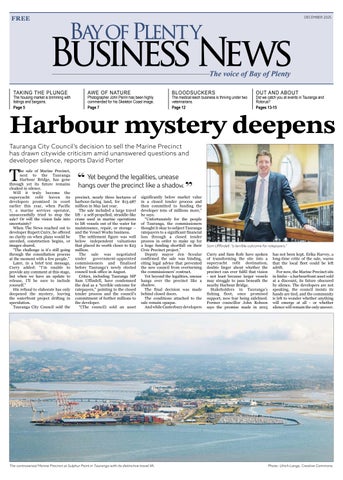
Harbour mystery deepens
Tauranga City Council’s decision to sell the Marine Precinct has drawn citywide criticism amid unanswered questions and developer silence, reports David Porter
The sale of Marine Precinct, next to the Tauranga Harbour Bridge, has gone through yet its future remains cloaked in silence.
Will it truly become the superyacht refit haven its developers promised in court earlier this year, when Pacific 7, a marine services operator, unsuccessfully tried to stop the sale? Or will the vision fade into uncertainty?
When The News reached out to developer Rupert Curry, he offered no clarity on when plans would be unveiled, construction begins, or images shared.
“The challenge is it’s still going through the consultation process at the moment with a few people.”
Later, in a brief text message, Curry added: “I’m unable to provide any comment at this stage, but when we have an update to release, I’ll be sure to include yourself.”
His refusal to elaborate has only deepened the mystery, leaving the waterfront project drifting in speculation.
Tauranga City Council sold the
Yet beyond the legalities, unease hangs over the precinct like a shadow.
precinct, nearly three hectares of harbour-facing land, for $13.987 million in May last year.
The sale included a large travel lift - a self-propelled, straddle-like crane used in marine operations to lift vessels out of the water for maintenance, repair, or storage –and the Vessel Works business.
The settlement figure was well below independent valuations that placed its worth closer to $23 million.
The sale was negotiated under government-appointed commissioners and finalised before Tauranga’s newly elected council took office in August.
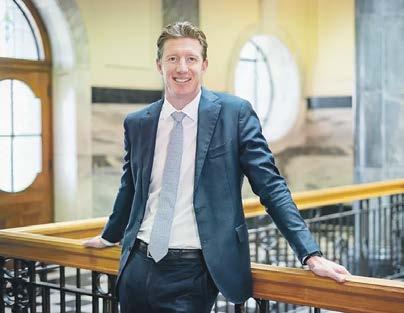
Critics, including Tauranga MP Sam Uffindell, have condemned the deal as a “terrible outcome for ratepayers,” pointing to the closed tender process and the council’s commitment of further millions to the developer.
“(The council) sold an asset
significantly below market value in a closed tender process and then committed to funding the developer tens of millions more,” he says.
“Unfortunately for the people of Tauranga, the commissioners thought it okay to subject Tauranga ratepayers to a significant financial loss through a closed tender process in order to make up for a huge funding shortfall on their Civic Precinct project.”
Deputy mayor Jen Scoular confirmed the sale was binding, citing legal advice that prevented the new council from overturning the commissioners’ contract.
Yet beyond the legalities, unease hangs over the precinct like a shadow.
The final decision was made behind closed doors.
The conditions attached to the sale remain opaque.
And while Canterbury developers
Curry and Sam Rofe have spoken of transforming the site into a superyacht refit destination, doubts linger about whether the precinct can ever fulfil that vision - not least because larger vessels may struggle to pass beneath the nearby Harbour Bridge.
Stakeholders in Tauranga’s fishing fleet, once promised support, now fear being sidelined.
Former councillor John Robson says the promise made in 2015
has not been kept. Erika Harvey, a long-time critic of the sale, warns that the local fleet could be left adrift.
For now, the Marine Precinct sits in limbo - a harbourfront asset sold at a discount, its future obscured by silence. The developers are not speaking, the council insists its hands are tied, and the community is left to wonder whether anything will emerge at all - or whether silence will remain the only answer.
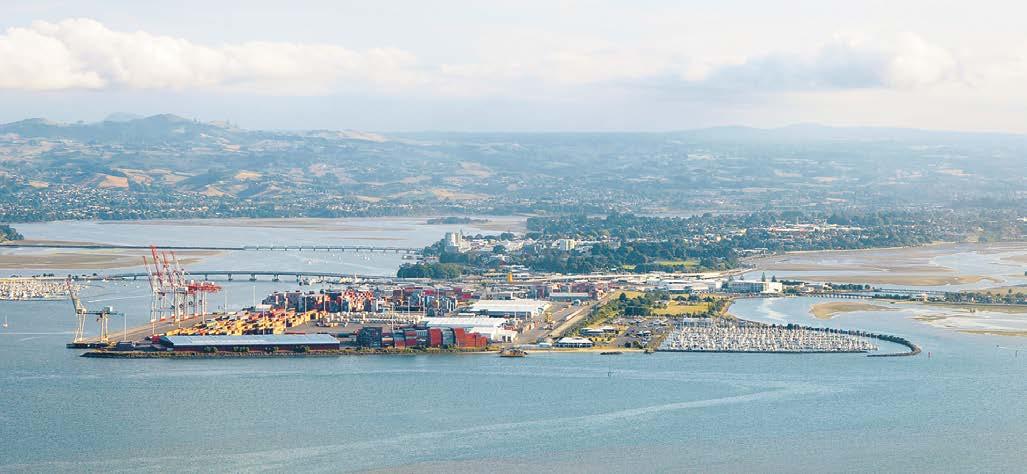
The controversial Marine Precinct at Sulphur Point in Tauranga with its distinctive travel lift.
Photo: Ulrich Lange, Creative Commons.
Sam Ufffindell: “a terrible outcome for ratepayers.”
Editor
David Porter dwp@davidporter.co.nz 021 884 858
Senior Writer
Mary Anne Gill maryanne@goodlocal.nz 021 705 213
Advertising Director
Janine Davy janine@goodlocal.nz 027 287 0005
Owner/Publisher
David Mackenzie david@goodlocal.nz 021 684 304
To Advertise sales@goodlocal.nz
News Tips editor@goodlocal.nz
Office/Accounts admin@goodlocal.nz
Website goodlocal.nz
To Subscribe admin@goodlocal.nz
Readers’ contributions of articles and letters are welcome. Publication of contributions are entirely at the discretion of editorial staff and may be edited. Contributions will only be considered for publication when accompanied by the author’s full name, residential address, and telephone number. Opinions expressed are not necessarily those of the publishers. Bay of Plenty Business News is published by Good Local Media Limited.
Also publishers of
Birds of a feather
By DAVID PORTER
One of the most rewarding aspects of my return to New Zealand a few years ago, after several decades working abroad, was the decision to bring my family to live in Tauranga.
The decision was based, simply, on the fact that I had to the best of my knowledge never even visited Tauranga before. But I had by then developed a love of researching and finding out about new places. Exploring a new city seemed as useful way as any to start renewing my acquaintance with my homeland.
So, it has proved. And one of the most charming aspects of living in Tauranga has been the avian life. When I drop my wife off at work, we invariably drive up from our home towards Bethlehem along a road that bisects the Gordon Carmichael Reserve.
And although we have recently been going through a period when the bird life has been less profuse than usual as they retired to nest and produce their chicks, the numbers are again beginning to swell.
According to Tauranga Ornithological
This newspaper is subject to NZ Media Council procedures. A complaint must first be directed in writing, within one month of publication, to the editor’s email address.
If not satisfied with the response, the complaint may be referred to the Media Council P O Box 10879, The Terrace, Wellington 6143. Or use the online complaint form at www.mediacouncil.org.nz
Please include copies of the article and all correspondence with the publication.
Society member Paul Cuming, the proliferation of bird life in the area is largely a result of the proximity of low-lying sources of water.
The birds themselves did not arrive here after lengthy trans-oceanic migrations, as I had fancifully supposed. Instead, says Cuming – who is soon to retire after many years at the society – most of the birds’ presence has resulted from efforts by an earlier generation of gamekeepers to introduce the species to provide shooting practice for hunters.
“There’s always been a wetland around there where there is low-flowing water, and ducks and waterfowl like to congregate,” he says.
The most common small duck that clusters in the area is apparently the mallard. But there is also an oversupply of waterfowl and Canadian geese, says Cuming. He notes that this may be stretching the habitat slightly beyond what the habitat can contain. The bigger birds tend to be Canadian geese, which would originally have been introduced
REGIONAL VIEW
from North America, and have no natural enemies here.
The presence of birds in Tauranga is not unusual for New Zealand, he says, with any town that houses a suitable pond likely to attract ducks, geese and swans.
But perhaps the most charming aspect of our avian population, is that it seems to bring out the gentler side of the New Zealand driver. I have several times been brought to a halt on the road because drivers have ground to a halt to allow a single file of head to tail birds to cross the road in peace, to get back to their source of water.
Cuming suggests that, while this is partly because motorists fear damage to their cars because of a collision, it also reflects the fact that in general New Zealanders increasingly seem to accept and welcome the presence of the birds in our society.
• David Porter is an experienced journalist and a former foreign correspondent.
Mood down, numbers up
By TODD MULLER
It doesn’t seem that long ago that our Bay business community were hanging on the mantra: “just survive to 25.” The hope was simple - get through the pain of 2024 and things would finally turn a corner.
Well, here we are a year on, and if we have turned that corner, it feels more like a long, gentle arc than a sharp shift in fortune. It’s still tough out there. Even softening interest rates and record primary-industry returns haven’t noticeably lifted spirits.
So why are we so glum? Are things really that bad? Or has our collective patience simply worn thin?
Last month my wife and I hosted a friend from Wales on his first trip to New Zealand. To my surprise, I caught myself down-selling the country — a trait I’ve noticed creeping into conversations everywhere. It feels like an impatience with almost everything: people, politics, institutions. Some analysts argue that the rise of populism overseas hasn’t driven this discontent but expressed it. Maybe. But what’s clear is that our social tolerance for complexity is thinner than it used to be. Add the constant online toxicity
and background noise of global uncertainty, and it’s no surprise people feel flat.
But here’s the paradox: while sentiment is low, the Western Bay economy is quietly outperforming most of the country.
The mood is down - the numbers are not.
The latest local data tells a striking story:
• Mean earnings in the Western Bay grew 5.8%, exactly in line with national growth.
• Māori earnings rose 5.0%, again closely tracking national trends.
• Filled jobs grew 2.4%, outpacing the national rate of 2.2%.
• Highly-skilled jobs grew 2.8%, stronger than New Zealand overall.
• Business unit growth sits at 1.6%, well above the national 0.9% — meaning more local firms are opening and expanding.
• GDP grew 1.9%, beating the national figure of 1.4%.
• Population growth of 2.0% is also ahead of the country at 1.8%.
• And perhaps most telling: unemployment in the Western Bay is
4.0%, significantly below the national rate of 5.2%.
These are not the characteristics of a struggling region. They’re the building blocks of sustainable performance.
As we close in on Christmas — the closest thing to a national reset — business leaders have an opportunity to recalibrate the conversation. Yes, conditions remain challenging. No one doubts that. But the Western Bay is operating from a position of strength, not fragility.
Confidence doesn’t return because we say things are good. It returns when we align our decisions with the data — not the gloom. And the data tells a clear story. This region is performing. Quietly, steadily, and better than most.
Let's have a great Christmas and New Year and return with a ’time to thrive’ mindset.
• Todd Muller is a long term Tauranga resident, former MP and current chair of Priority One. All views expressed are his own.
Authorised by Sam Uffindell, Parliament Buildings, Wellington
Briefs…
Research job
Tauranga-based Florian Spoerl will next month join Waikato University as its new director Commercial and Business Partnerships. In his new role Spoerl will leverage the university’s opportunities in innovation and commercialisation, grow business partnerships and funding streams for research, and provide guidance and mentorship in the commercial research space.
Rhodes’ scholar
Rotorua-raised Waikato University honours student Naianga Tapiata is set to walk the hallways of Oxford University armed with a Rhodes Scholarship to complete a fully funded twoyear Master of Philosophy in Social Anthropology. Tapiata lived near Whakarewarewa and attended Te Kura Kaupapa Māori o Ruamata, New Zealand’s second Māori immersion school.
Strategy role
Sue Griffiths has been appointed First Mortgage Trust’s national Strategic Partnerships manager. The company’s head office is in Tauranga with branch offices in Auckland, Christchurch and Wellington. She succeeds Bruce Smith who was with FMT for a decade. The company was founded in 1996 and now has more than $1.6 billion invested for its clients.
Leave rules simplified
Brooke van Velden outlines major proposed changes to employment leave, reports David Porter
After years of confusion and costly remediation, the Holidays Act is set for a fundamental rewrite.
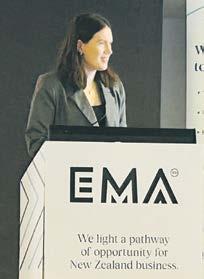
Speaking to business leaders in Tauranga, Workplace Relations and Safety minister Brooke van Velden declared that the government is ready to fix what many consider New Zealand’s most frustrating employment law. At the Employers and
Manufacturers Association (EMA) event last month, she detailed sweeping changes to the Holidays Act designed to replace complexity with simplicity.
She outlined a new framework that shifts leave entitlements to an hours-based accrual system, promising clarity and fairness for both employers and employees.
EMA Head of Advocacy and Strategy Alan McDonald, who introduced van Velden, welcomed the changes.
“The government is on the brink of fixing one of our most frustrating and confusing pieces of employment law,” he told the meeting.
“For years, the Holidays Act 2003 has been recognised as a minefield of complexity, legal risk, and unintended cost for both employers and employees.”
McDonald says the new framework looks to deliver a system that is simpler, fairer and far easier to navigate for all types of work.
“At the heart of the reform is the shift to an hours-based accrual system for annual and sick leave.
Rather than waiting six or 12 months before leave starts to build up, entitlements now begin on day one, accumulating with every hour worked.”
Van Velden told the event that past remediation costs have run into the billions.
“I think it says a lot that even large businesses – with sophisticated software and HR and legal teams –have found themselves caught out by its calculations,” she says.
And van Velden notes that it was not just private sector employers affected – even the Ministry for Business, Innovation and Employment and other public sector employers had been affected.
“There’s a near consensus that the current system is broken. The message I’ve been receiving across the country has been consistent: the status quo is holding the economy back, and patchwork fixes just won’t do. This is a root and branch replacement of the current Act.”
Under the proposed new system, leave will be earned, taken and paid in hours. Employees will earn both annual and sick leave in direct proportion to their contracted hours of work. The hourly accrual rate for annual leave will be set to provide the equivalent of four weeks’ annual leave for employees who work the same number of contracted hours all year, or the equivalence of the status quo.
“For most people, leave
entitlements will stay the same – what will change is how it is calculated,” she says.
For example, an employee working 40 hours per week will earn the same amount of leave, but it will be expressed as 160 hours rather than four weeks.
“And finally, gone are the days of multiple, confusing calculations for leave payments,” she says.
Under the new system, the same hourly leave pay rate will be used for all leave types. It will be based on an employee’s base wage for the day of leave. For those on piece rates, where an employee is paid for the number of units completed like the number of buckets of apples picked, an average hourly rate will be used.
“The aim here is simplicity,” says van Velden.
“Employers and employees alike will know exactly what their minimum entitlements are.”
Glimmerings of an upturn
The government’s latest interest rate cut wins cautious market approval, reports David Porter.
The government’s decision to push for a cut in the Official Cash Rate (OCR) has been broadly welcomed by economic observers.
The reduction by 25 basis points to 2.25 percent is seen by some as tacit recognition that the government’s efforts to curb inflation have yet to convince the market.
“I don’t think it’s an inflation story, so much as just prolonged waiting for the [promised] economic upturn to gain momentum,” Infometrics chief forecaster Gareth Kiernan told The News.
“What we are seeing
with this cut and with the previous change in October is, they’ve just gone, what do we need to do to get the economy going, after having had disappointing outcomes,” he says.
“They’ve made the point that they think some of the stuff that would have got the economy moving with previous interest rates cuts last year, with the housing market and spending, just haven’t resulted in the economy being as responsive as the government might have expected.”
Kiernan says with inflation at around three percent, the government has had to tread
carefully this year.
That was because there had been some concerns they let inflation get out of hand four years ago.
“They didn’t want to make the same mistake this time, so they just wanted to be careful.”
Kernan notes that a close look at the Consumer Price Index and the headline number suggests there were significant price increases like rates, insurance and electricity.
“But across the rest of the CPI, because there are such weak demand conditions, there’s more discounting going on and prices aren’t
being passed on.
“Which is a very different situation to what we had four years ago when everything was rising.”
Kiernan suggests that this reflects concern on the part of New Zealand businesses.
“They are worried if they do try to lift their prices, there are risks that this would put people off more.”
Infometrics principal economist Nick Brunsdon recently wrote that a recovery is getting underway across most of New Zealand’s regions.
“The September 2025 quarter shows more meaningful economic gains across most regions, and the continued strength of the South Island.”
Strong primary sector
Kiernan
returns are driving economic recovery for regional New Zealand, he says.
“Fonterra continues to forecast a strong dairy payout midpoint… Even if this figure falls, as the latest Global Dairy Trade auctions imply, farmers would still wind up with the secondhighest payout on record.
“Returns for beef and lamb have increased too – at the expense of consumers buying mince – but boosting returns for dry stock farmers. Kiwifruit and apple growers are also earning a higher return on elevated export volumes.”
Brooke van Velden at the EMA event in Tauranga. Photo: Supplied
Alan McDonald
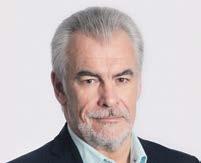
Gareth
Time it takes to set up new employee plans. Switch telco. Save time. Get to Business.
Buyers: taking the plunge?
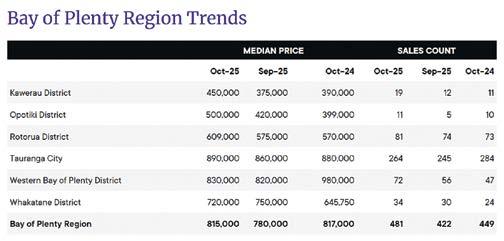
The Bay of Plenty housing market is brimming with listings and bargains, but whether sellers sink or swim will depend on confidence. As Jon Rawlinson found, buyers are circling waiting for the right wave to ride.
An oversupply of homes and a cautious economy have left Bay of Plenty buyers spoilt for choice, yet falling interest rates could tempt many to dive back in.
Vanessa Williams of Realestate.co.nz says borrowing is now far cheaper than a year ago, a shift that may stir fresh demand.
“Interest rates were a heck of a lot higher. You could assume that, because it's now cheaper to borrow, there will be more demand,” she says.
“But we need to move through existing stock. At the moment, people are getting some really good deals, but they're also not moving particularly fast –they don't have to because of an oversupply of stock.”
Bay of Plenty is not usually the first place people think of for baches – Coromandel tends to hold that crown.
But Williams says holiday homeowners in the Bay, facing economic gloom, could add to supply by selling.
“I'm from the Bay of Plenty, so I know the area
well and when I think of the local market, baches aren’t really where my mind goes,”
Williams says. “It's just as expensive to buy in the Mount as it is in
the Coromandel, and Waihi Beach has also become so expensive. But there are probably more options elsewhere. It depends on lifestyle versus investment
and what people want to get out of their property.”
From humble Kiwi baches through to palatial seaside estates, waterfront properties can command higher rentals over summer. However, this too can be checked when economic confidence is lacking.
“If you have a bach and rent it out, you might find fewer people are going on holiday. Everything trickles down – those who usually go overseas may holiday in New Zealand, but more may just stay home,” Williams says.
“Some people who would love to go on holiday this year just won't be able to.”
Regardless of whether buyers are seeking a summer escape or year-round living, the Bay reflects the same
uncertainties as the national market.
“There’s a remarkable amount of pre-approvals going out but not a corresponding level of sales.
That tells me that people inherently want to move or look at a second property, including a bach, but they might lack confidence.”
Confidence is the key to a better balance between supply and demand.
“There's been nervousness in the economy, but as people become more confident, they will make more decisions. When the economy shifts, and unemployment drops, it will start to stimulate the house market,” Williams says.
“We're almost at the bottom – after three years of flatness, there would
have to be something pretty significant for it to drop further.”
For now, the Bay’s property market feels like a summer beach with plenty of towels laid out but fewer swimmers diving in. Buyers are circling, waiting for the right moment to plunge - and when confidence returns, the rush into the water could be swift and decisive.
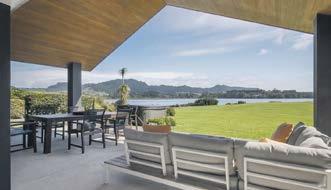
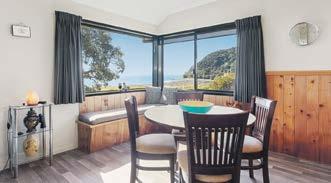
Waterfront property, Ōpōtiki.
Photo: Realestate.co.nz
Waterfront property, Katikati.
Photo: Realestate.co.nz
Vanessa Williams
Capital gains tax taboo
By PETER NICHOLL
At last, a political party in New Zealand has been brave enough to include a capital gains tax in its policy platform.
The United Kingdom has had one since 1965, Canada since 1971, Australia since 1985 – and that bastion of free enterprise, the United States, since 1913.
I have never understood why our politicians have for so long regarded capital gains taxation as a no-go area. When around 130 countries have some form of it. We are one about 30 that don’t – and most of the others are very small.
In international policy jargon, having some form of capital gains tax is regarded as ‘best international practice’ for taxation systems both for fairness and for revenueraising reasons. Internatioinal organisations like the IMF and the OECD have been telling our politicians this for many years. Out politicians seem to love saying what they are doing is ‘best international practice’ in other areas. But until Labour’s recent announcement they have not only refused to follow this ‘best international practice’, they have also refused to even talk about it. They seemed to fear that voters would penalise any political party that had the nerve to propose a capital gains tax – or to even talk about it as a possibility. But there have been a number of opinion polls over the last few years in whch a majority of respondents supported the introduction of some form of capital gains tax. In the recent political opinion poll that came out after the Labour Party’s announcement on their capital gains tax proposal, their share of the vote increased rather than decreasd.
I think our politicians have misread the views of the country on this issue. I have been writing a fortnightly column since 2022 and have written about capital gains taxes on at least five occasions during that time.
One of the main points I have made in my previous columns is that the introduction of a capital gains tax here is inevitable. I think many others have reached the same conclusion. They can see the state of our fiscal accounts. They can see the huge demands for expenditure the country has in areas like health and roading. They can see that with an ageing population, there is only one direction in which superannuation payments can go.
What are the alternatives to a capital gains tax? We could continue to let our infrastructure run down. We could increase tax rates on labour income, profits or GST. We could markedly raise the age of entitlement to superannuation or introduce means testing into superannuation entitlements. The one option we don’t have as a country is to do nothing. The staus quo is not a viable option.
At present all we have is a proposal. But the issue is no longer hidden in the political ‘too-hard’ drawer. It is now out in the open and part of the New Zealand political debate. That is progress. It will be interesting to see how the debate develops.
• Peter Nicholl was formerly Reserve Bank of New Zealand deputy governor, World Bank Board executive director and Central Bank of Bosnia and Herzegovina governor. He is now retired.
THE AGE OF REASON
Pay rises amid council chaos
By RICHARD STEELE
We have become so used to price increases that no one has even commented on the Higher Salaries Commission recommending honorarium increases for mayors and councillors.
From, it sounds like, between one and 30 per cent for both regional, and district councillors. I find that deeply troubling because the increases come at a time when councils everywhere seem to be failing to fulfil their core functions.
You don’t have to look very far, or listen for long about the Three Waters debacle, and the off shoots of that sadness that shows up decades of poor decision making, coming home to haunt hard pressed ratepayers.
Look for a moment, at the roads that connect us, infrastructure that’s been neglected for so long that the cost of returning the roads to a good standard is going to be more expensive than it was to build them in the first place.
I look out the window every day at a river that flows mud every time it rains heavily, and it seems to get no better for the decades of rates paid to restore the rivers to their former glory.
That the suggestions I’ve made to isolate water degradation at their source have been ignored, is only a frustration, and sad, for the rivers of our beloved country. But the rivers degrade non the less under regional councils’ watch, and the fact that I don’t have a doctorate should not preclude me
from commenting.
The list of councils failings goes on of course, and every ratepayer I meet has their own story, their own example, of what’s going on in their neighbourhood.
That there’s too much sewage, so you can’t swim safely in your own waterway, is an indictment that councils nationwide have never handled.
I don’t have any trouble with people being compensated for the work they do in the neighbourhood communities they serve, it’s just that as an older self-employed person, forever, I just wish people were paid for the outcomes that they actually achieved, rather than be paid whether they achieve anything or not.
It may be naive of me to expect our councillors to have enough business acumen, to have had a degree of personal success, before they aspired to public office, to actually make a difference. I live in the hope that I won’t be disappointed again.
And while I have no objection to any one being paid for their civic duty, I would object to that being their only source of income.
Reject the extra money. Now there’s a challenge. I really wonder, sometimes, whether our local government is even fit for the purpose it was designed for.
• Richard Steele is a central North Island hill country farmer, author and tourism business operator.
PEOPLE AND CULTURE
Rethinking redeployment
By SARAH LIM
When businesses in New Zealand face challenging times, one of the earliest indicators we observe at the EMA is a surge in restructure-related queries to our AdviceLine team.
Over the past two years, this trend has remained steady, reflecting the reality that many organisations are under significant financial pressure.
Members consistently tell us the same story: the economy is sluggish, their revenue streams are tightening, and cost-saving measures have become unavoidable. For many, restructuring is seen as the most practical solution to ensure survival and sustainability.
Employers across New Zealand understand that restructuring is not a decision to be taken lightly. It involves a detailed, legally compliant process where every step must be both procedurally and substantively fair. This means that before any final decisions are made, businesses must have a sound commercial rationale for the proposed changes and follow a transparent, consultative process. One critical component of this process - often underestimated - is the consideration of redeployment opportunities before redundancies are confirmed.
Recent Employment Relations Authority (ERA) decisions highlight a growing emphasis on redeployment. The Authority is scrutinising whether employers have genuinely explored all possible alternatives to redundancy, particularly opportunities for redeployment. This is no longer a mere formality or a box-ticking exercise. Redeployment is now recognised as a distinct and essential step in the restructuring process, requiring employers to actively assess and consult on all available roles before making any final decisions.
So, what does this mean in practice? If you are contemplating a restructure or are already in the midst of one, you must carefully review whether there are roles within your organisation that affected employees could reasonably perform - either immediately or with reasonable training and upskilling. If such roles exist, redeployment should be offered as a priority. For businesses operating as subsidiaries, this obligation may extend beyond national borders. For example, if your New Zealand team works closely with an Australian head office, consider whether suitable opportunities exist there as well. Active engagement with employees throughout this process is vital. Employers should invite feedback on potential redeployment options and follow up if none is provided. Encourage employees to suggest roles they believe they could perform and discuss these ideas openly. If vacancies exist but you believe an employee is unsuitable, explain your reasoning clearly and invite comment. This dialogue demonstrates good faith and ensures compliance with consultation obligations. The overarching principle is simple: keep an open mind, explore every alternative to redundancy, and maintain transparent communication at every stage. Ultimately, redeployment is about more than compliance - it reflects a commitment to supporting staff during times of uncertainty. By approaching this process thoughtfully and proactively, employers can reduce risk, maintain morale, and uphold their reputation as fair and responsible organisations.
• Sarah Lim is senior associate at the Employers and Manufacturers Association (EMA)
Tauranga franchises triumph
Tauranga franchises have taken centre stage at the New Zealand Franchise Awards, with The Coffee Club Ōmokoroa and Quest Mount Maunganui both recognised among the country’s best.
The Coffee Club claimed the coveted Supreme Franchisee of the Year Award as well as Franchisee of the Year – Retail & Hospitality, while Quest Mount Maunganui secured the Franchisee Excellence in Customer Service Award.
Their success last month underscores Tauranga’s growing reputation as a hub for thriving franchise businesses, with both operators praised for their strong community focus, customer care, and commitment to excellence.
The Coffee Club Ōmokoroa, opened in 2023 by owners Kelly and Jess Bain, has quickly become a community cornerstone, supporting schools, clubs, charities, and local events through sponsorships, catering, and volunteer work.
Quest Mount Maunganui, meanwhile, was recognised for its outstanding customer service, reinforcing the city’s
reputation for excellence in hospitality and tourism.
While Tauranga stole the spotlight, the Supreme Westpac Franchise System of the Year went to Takapuna’s Harrisons Flooring.
Franchise Association of New Zealand CEO Katrina King says the awards celebrate resilience and excellence across the sector.
“We’re thrilled to see members from some of the smaller cities around New Zealand making such an impact and punching above their weight in our national awards.”
Westpac New Zealand Franchise Awards 2025 winners:
Westpac Supreme Franchise System of the Year: Harrisons Flooring, Supreme Franchisee of the Year: Kelly & Jess Bain, The Coffee Club Ōmokoroa.
Field Manager of the Year: Bailee Mills, Harrisons Curtains and Blinds.
Service Provider of the Year: Franchise Accountants.
Franchisee Special Awards: Regional Master Franchisee of the Year: Tim O'Leary, CrestClean
Hawke’s Bay, Excellence in Community Contribution: Kelly & Jess Bain, The Coffee Club Ōmokoroa, Excellence in Customer Service: Tere & Avelien Strickland, Quest Mt Maunganui.
Franchise System Special Awards: Excellence in System Innovation: Red LBP, Marketing Campaign of the Year: Laser Plumbing & Electrical, Excellence in Community Contribution: Aramex.
Small Business Franchisee of the Year: Quin Wang, Aramex Mt Wellington & Panmure.
Retail & Hospitality: Franchise System of the Year: The Coffee Club, Franchisee of the Year: Kelly & Jess Bain, The Coffee Club Ōmokoroa.
Home & Lifestyle: Franchise System of the Year: Harrisons Flooring, Franchisee of the Year: Karen & Paul Collins, Kitchen Studio North Shore. Business to Business: Franchise System of the Year: CrestClean, Franchisee of the Year: Navjot Kaur, CrestClean Christchurch & South Canterbury. – Mary Anne Gill
The awe of nature
Bay of Plenty photographer John Perrin has been highly commended in this year’s Oceania photography contest run by The Nature Conservancy.
His image was of the desert captured during a visit to the Skeleton Coast in Namibia earlier this year.
Nearly 1000 photographers from New Zealand, Australia, Papua New Guinea and Solomon Islands entered the contest which celebrates the power of photography to connect people with nature and inspire conservation action.
“I was taken by the colours and textures of the sand dunes coupled with the play of light,” says Perrin.
“There was a very strong breeze which provided movement in the form of shifting sands.
“I was also attracted by the contrast between the colours of the sand dunes and the ocean in the background.”
More than 1200 New Zealand entries from a total of 3500 highlighted the unique biodiversity of the region. The New Zealand judging panel of three, drawing on a combined 55 years of experience and diverse photography interests, say the high quality of the entries is very moving and shows a deep understanding of storytelling.
Every shot is a story of survival or majesty, a reminder that the natural world is part of us as much as we are part of it, they said.
The Nature Conservancy Aotearoa New
Zealand country director Abbie Reynolds says the quality of this year’s images was astonishing.
“New Zealanders from all over the motu have captured the awe of nature and muchloved landscapes we are working hard to protect. It’s a reminder that New Zealand is home to a huge array of species found nowhere else on Earth.”
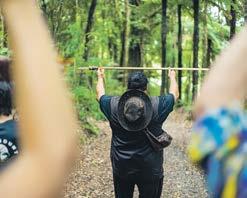
Waikato’s Lucy Schultz was highly commended for her image Moa Hunter, taken at Sanctuary Mountain Maungatautari.
The photo shows Bodie Taylor (Ngāti Hauā te iwi, ko Waimakariri te Marae, ko Ngāti Waenganui te Hapu) leading a cultural experience group tour in the wild forest at Sanctuary Mountain Maungatautari.
"He raises his voice and the Mau Rākau in a form called toropaepae, a state of receptivity which is used to invoke energies of the Ancestral Gods.
“He begins to welcome us into the forest and guide us along the path to find what we seek. He calls to elements of earth, air, fire, and water and the life force is the quintessential connection to them all,” says Schultz.
“In this moment the air stands still and I am transported back in time to Aotearoa in the days of the moa hunter."
Reynolds says both budding enthusiasts and professionals entered this year’s competition.
“All photographers have an important role to play in capturing the awe of the natural world and inspiring us to reflect on the part we play in safeguarding its future,” she says.
Kelly and Jess Bain, right, from The Coffee Club in Ōmokoroa with Franchise Association of New Zealand chair Brad Jacobs and Daniel Cloete from Westpac.
Tere and Avelain Strickland, right, from The Quest in Mount Maunganui with the customer service award received from Tranxactor’s John Norrie and Kiki Qi.
Skeleton Coast, Namibia. Photo: John Perrin
Moa Hunter at Sanctuary Mountain.
Photo: Lucy Schultz
Matakana Island life made easier
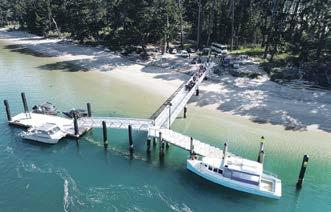
The brand-new Panepane Wharf on Matakana Island is now open, giving locals and visitors a safer, easier way to travel between the island and the mainland.
About 60 people came together for the opening, including local iwi and hapū, Western Bay of Plenty District Council members and staff, project partners from Tonkin + Taylor, HEB Construction, and Structure Design.
A highlight of the day was a visit from ‘Miss Ada’, the school ferry that many tamariki rely on.
The wharf is the result of years of planning, consultation, and collaboration between Council, iwi, hapū, and project partners. Together, they’ve created a strong, lasting structure designed to serve the island community for decades to come.
The opening was marked with a blessing from kaumātua Bob Rolleston and waiata performed by local tamariki. Afterward, guests were invited to stroll along the new wharf and pontoon, enjoying the moment and the view.
Made mostly from steel and aluminium, the $2.1 million wharf replaces the old timber structure from the 1980s, which had been weakened by marine worms.
The new design is stronger, safer, and ready to serve the community for many years.
Visitors can reach the wharf via a pontoon and gangway, or by stairs. The pontoon offers the most accessible option, while the stairs give boats flexibility to dock at different spots depending on the tide.
Timber from the old wharf won’t go to waste. Some of it will be reused in
new features like seats and picnic tables planned for the foreshore reserve, blending history into the future.
Council worked closely with local iwi and hapū to make sure the wharf reflects cultural values and community needs.
The five hapū connected to Matakana Island - Ngai Tuwhiwhia, Ngati Tauaiti, Te Ngare, Te Whānau a Tauwhao, and Ngai Tamawhariua - are all part of Ngai te Rangi Iwi.
Nessie Kuka, of Ngai Tuwhiwhia, says it is exciting to see the wharf finished.
“It will make a real difference for everyone who lives here, especially for our tamariki getting to school on the mainland,” she says.
“It’s wonderful to see the wharf already being used and enjoyed.”
Western Bay mayor James Denyer calls the wharf an important community asset.
“The new wharf provides a safer, more reliable way for people to get to and from the island,” he says.
"It’s great to see a project like this come to life after years of planning and working closely with the community. It will make daily life easier and more connected for residents."
Back in October 2021, council agreed to transfer 172 hectares of land known as Panepane Pūrakau to a local hapū Trust.
As part of the agreement, a 13-hectare public reserve will be created to guarantee public access to the foreshore forever. This means people can continue to fish off the wharf, walk the beach, and enjoy recreational activities like water-skiing.
Council Reserves and Facilities manager Peter Watson says while the
public can access the wharf and foreshore, people are encouraged to respect the whenua (land) and nearby forest.
“There are commercial forestry operations nearby so please stick to the harbour margins and don’t wander along the road or into other parts of the forest,” he says.
“We would also like to
remind people visiting the area that lighting fires is strictly prohibited. We don’t want a repeat of the fire that occurred on the island two years ago.” - Supplied A wharepaku (toilet) has been built next to the wharf for public use. New signage is also planned to guide visitors on how to enjoy the area safely and respectfully.
Kauri Point cultural plan
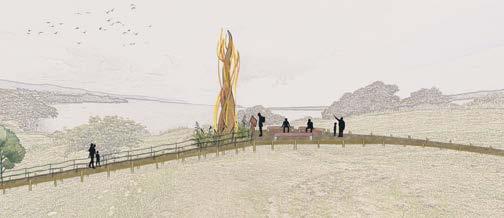
A draft cultural concept plan has been unveiled for Kauri Point Historic Reserve - a site of deep cultural and historic importance and home to significant pā.
Developed by Western Bay of Plenty District Council and the Kauri Point Te Kō Rōpu hapū group, the plan focuses on protecting heritage, restoring the environment, and keeping the reserve a place for everyone to enjoy.
The vision is to create a world-class
facility at the headland on the eastern side of Tauranga Harbour, near Katikati, that honours mana Māori and mana tūpuna, with features like storytelling panels, pou, waharoa, and ecological restoration.
Council’s Reserves and Facilities manager Peter Watson says the aim is to safeguard the taonga while ensuring respectful access for future generations. The project will be funded through council’s Long Term Plan and hapū fundraising.
Supreme Court parks
Uber’s contractor model
> WHAT IT MEANS FOR BAY EMPLOYERS
On 17 November 2025, the Supreme Court of New Zealand released its long awaited decision in Rasier Operations BV v E Tū Inc, dismissing Uber’s final appeal and confirming that four representative Uber drivers were employees, not contractors, whenever they were logged into the Uber app.
Although the decision focuses on a single platform, its implications reach far wider. Many Bay of Plenty businesses rely on contractors, gig workers, seasonal labour, or on demand staffing. The Court’s reasoning offers an important reminder of how employment status is determined in New Zealand.
How the Court reached its decision
The Employment Relations Act 2000 requires the courts to look past labels and identify the real nature of the working relationship. Parties may call the worker an “independent contractor”, and contracts may be drafted to support that position, but the Employment Relations Authority
or Employment Court will look at “the real nature of the relationship”. What happens in practice?
Uber relied heavily on its standard form documents, which described drivers as independent providers using a digital platform to access “lead generation services”. The Supreme Court agreed with the Court of Appeal that these statements were “window dressing”, designed to disguise the true nature of the relationship and avoid employment obligations. Instead, the Court focused on the practical indicators of control, integration, and economic dependence.
• Control: Uber set pricing unilaterally through its algorithm, managed driver performance through ratings and de-activation processes, and monitored behaviour, routes, and acceptance rates. Drivers had very limited discretion about how work was performed.
• Integration: Drivers were the public face of Uber’s core passenger transport business. They had no independent customers, no brand of their own,
and no ability to build goodwill.
• Economic dependence: The supposed flexibility of choosing when to log on or off did not outweigh the level of subordination created while the app was active.
These factors pointed clearly to employment. The Supreme Court therefore upheld the lower courts’ findings and confirmed that the drivers were employees whenever logged in.
What Bay businesses should take from the ruling
The decision reinforces several principles that matter for businesses across the region.
• Labels are not enough. Calling someone a contractor does not carry weight if the working relationship functions like employment.
• Digital control counts as managerial control. Algorithmic pricing, app-based allocation, automated performance systems, and platform rules are
all treated as forms of direction and supervision.
• Integration is key. Workers who are central to the business’ core activities, and who cannot build their own client base, are more likely to be employees.
• Power imbalance is relevant. The Court highlighted the importance of bargaining power and signalled increased scrutiny of standardised contractor agreements.
Upcoming legislative changes
This ruling lands at the same time the Government is progressing the Employment Relations Amendment Bill. The Bill proposes a new “gateway test” that would deem a worker to be a contractor if certain conditions are met. These conditions include having a written contractor agreement, freedom to work for others, no requirement to be available at specified times or ability to subcontract the work, and a genuine opportunity to obtain independent advice before signing.
The Supreme Court’s emphasis on power imbalance suggests this last point may become a key area of challenge if the Bill is enacted. What to do now
Bay of Plenty businesses that rely on contractors should review both their agreements and their day to day operating model. If control, supervision, or integration resembles employment, there may be risk exposure.
Tompkins Wake’s Employment Team can help businesses assess their arrangements and prepare for the potential impact of the gateway test.
Daniel Erickson is a Partner at Tompkins Wake, Auckland. He can be reached on 09 558 0624, or daniel.erickson@tompkinswake.co.nz
Ella Burney is a Solicitor at Tompkins Wake, Hamilton. She can be reached on 07 245 0593, or ella.burney@tompkinswake.co.nz
Concept drawing of the northern lookout by Thrive Spaces and Places.
The new Panepane Whard on its opening day.
Comvita faces reality
Honey giant Comvita is navigating tough financial restructuring after shareholders rejected the company’s plan, reports David Porter
Bay of Plenty honey producer Comvita is entering a period of significant restructuring after failing to secure shareholder support for a refinancing proposal from investor Florenz.
Despite strong backing from Comvita chief executive Karl Gradon, the vote last
month did not pass, leaving the company to pursue alternative recapitalisation options.
Before the vote, Gradon told The News Comvita had long been woven into the Bay of Plenty community, and that emotive connection made the reality of restructuring even harder.
“And that brings us to reality - the company must face up to significant financial restructuring. We need to act.”
In the wake of the decision, Comvita has moved quickly to strengthen its leadership team.
Mandy Tomkins-Dancey has been appointed
permanent chief financial officer, alongside Ben Duncan as chief operating officer and Nikki Leske as chief people and culture officer.
The company says these appointments provide a solid base for its ongoing reset.
The board has advised the New Zealand Stock Exchange that Comvita continues to trade modestly ahead of budget and remains confident of returning to profitability in the 2026 financial year, subject to successful trading execution and market conditions.
Earnings are expected to be weighted toward major sales events in the coming quarters.
Gradon acknowledges the challenges facing the business, noting that the mānuka honey sector has been under extreme pressure from oversupply, a key factor in Comvita’s current position.
“We’ve got to acknowledge there’s no sugar coating this,” he says.
Comvita has tightened inventory management, reducing holdings to below $85 million at the end of October 2025, down from $135.8 million a year earlier.
At the same time, the company is accelerating its global innovation programme, with new launches in digestive health, eyecare, immunity, and premium gifting ranges supporting diversification in core markets.
The board says constructive talks with banking partners are continuing, with further shareholder updates to follow as recapitalisation options are confirmed.
Sponsored Content
Bay of Plenty businesses shine in Deloitte Fast 50’s 25th year
Each year, the Deloitte Fast 50 index recognises the country’s businesses that have shown significant revenue growth over the past three years, establishing the standard for fast-growing companies in New Zealand.
As we celebrate the programme’s 25th anniversary, it’s particularly special to acknowledge the exceptional achievements of our regional winners from the Bay of Plenty. Their success reflects not only impressive revenue growth over the threeyear period, a requirement for entry, but also the spirit of innovation and resilience that defines business in our region.
This year, four locally based businesses secured places on the national Deloitte Fast 50 index, with three also taking home regional category awards: an outstanding result for our local economy.
Leading the charge at #15 is Flicket, achieving remarkable growth of 234% and earning the regional title of Fastest Growing Technology Business.
Flicket’s end-to-end ticketing platform is helping event organisers build and understand
TAXATION
BY ANDREA SCATCHARD
their fan base with confidence. The company’s momentum now stretches across New Zealand, Australia, Singapore, and the US, a true example of how technology-led, weightless exports can scale at pace.
At #18 sits Kiwi Artisan, with 204% growth and the regional award for Fastest Growing Food & Beverage Business. Emerging from the challenges of the Covid19 pandemic, Kiwi Artisan has reimagined how niche producers reach consumers. Their platform champions artisan makers while also delivering their own line of distinctive, small-batch products. With demand growing across New
> Four locally based businesses secured places on the national Deloitte Fast 50 index, with three also taking home regional category awards: an outstanding result for our local economy.
Zealand and abroad, Kiwi Artisan is showing how authenticity and strong storytelling can drive global appetite for Kiwi-made goods.
Our region also celebrates Tiny Pools, ranked #43 with 130% growth and the regional award for Fastest Growing Manufacturing Business. Their precast concrete plunge pools are transforming backyards nationwide.
Rounding out the local finalists is Collab Realty, placing #48 with 122% growth. By pairing top real estate professionals with specialist media and design expertise,
Collab Realty is reshaping the property experience for clients across the Bay of Plenty and Hawke’s Bay.
These four businesses reflect the theme of this year’s Deloitte Fast 50: Barrier Breakers, Future Makers. They remind us that growth comes from ambition, a focus on people, and a willingness to explore new markets. When asked what will fuel their next phase of expansion, most Fast 50 companies pointed to international growth, something our regional winners are already pur-
suing with confidence. Congratulations to all our Bay of Plenty winners. Your success strengthens our regional economy and demonstrates what’s possible when ambition meets action.
Learn more about the Deloitte Fast 50 programme and see this year’s full results at http://www. fast50.co.nz.
Andrea Scatchard is a Tax Partner at Deloitte, based in the Bay of Plenty. She can be contacted on ascatchard@deloitte.co.nz
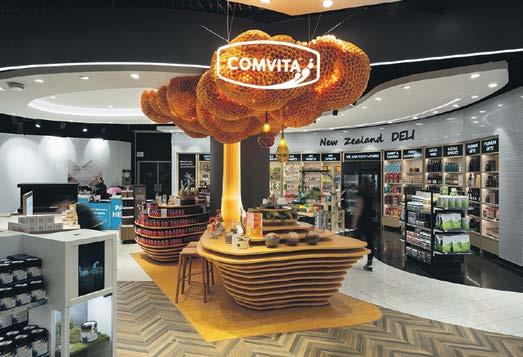
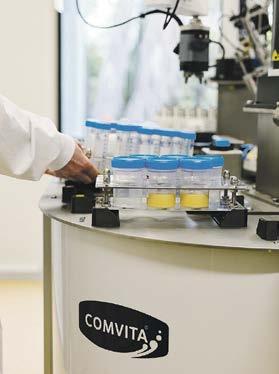
Comvita at Auckland Airport
Comvita honey in production.
Photos: Supplied
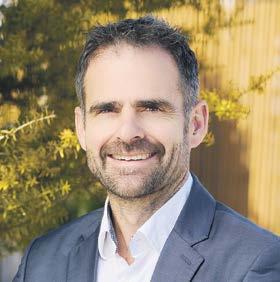
Karl Gradon
Wrong metrics?
By JOSH MOORE
Most business owners and marketing managers dream of growth.
You want your marketing to bring in leads, convert customers, and ultimately drive success. But here’s the challenge: when you look at your digital marketing reports, do they actually show you if your marketing is helping you reach that goal? Or are they just pages of numbers that leave you guessing?
Too often, reports are filled with data that looks impressive but doesn’t give clarity. A page full of numbers can make it hard to see what really matters.
Often, I see reports that focus on things like ad clicks or impressions. It can feel like progress but isn’t a measure of real results.
Clicks are not the finish line. A campaign that gets thousands of clicks might look great, but if those clicks don’t turn into leads or sales, they’re just noise. The same goes for CPC, or “cost per click”. Many reports highlight CPC as if it’s the ultimate measure of success. It isn’t. A low CPC might sound good, but if those clicks aren’t converting, you’re spending money without getting anywhere.
The metric that truly matters for businesses that need leads is CPA, or “cost per acquisition”. In simple terms,
how much does it cost you to get a lead? This is the number that tells you whether your marketing is working. If you know your CPA, you can make smart decisions. Is your campaign profitable? Is it doing better than last month? Should we scale it up? Or do we need to adjust our strategy?
Clear reporting should make this easy. It should highlight the numbers that matter and explain what they mean for your business. When you can see your CPA clearly, you can have confidence in your advertising. You know what’s working, and you can grow further.
Taking it a step further, our best clients track exactly which leads came from the Google Ads or Meta campaigns and then are able to report how many of those leads turn into customers, and the value of those customers. That’s the power of tracking what matters.
So don’t get distracted by the wrong metrics. Clicks and CPC might look exciting, but they don’t tell the full story. Focus on the right metrics, and you’ll have the clarity to build the business you’ve always envisioned.
• Josh Moore is the managing director at Duoplus, an online marketing agency with clients in Australia and New Zealand.
Colour and personality
By PHIL MACKAY
It’s fascinating watching people walk into the PAUA Architects’ office for the first time. I’m not sure what the expectation is, but we frequently receive comments remarking how interesting the space is.
There is colour, texture, character, quirkiness even. Artworks are scattered around, hand carved sculptures, architectural models, and a small collection of old Apple computers – artifacts of great design. Perspex and plywood cabinetry is both functional and visually interesting. It is immediately clear that this is a place of creativity, where art and culture are celebrated.
While it’s arguably overdue for a refresh, and certainly well overdue for a tidy up, it’s nonetheless an enjoyable, enriching place to be.
In contrast, sadly, almost all new housing now is bland and uninteresting. I recently saw a developer claim online that they “can’t do anything crazy or bold, but can’t do anything too boring either.” This tends to play out as ’safe’ white interiors, and a limited palette of exteriors – Fifty Shades of Grey.
I understand the logic, that anything too adventurous might limit the marketability of new houses. But how do we know, has anyone bothered to test this assumption? And what about the marketing concept of having a point of difference?
Real estate agents would undoubtably tell you the same thing. Yet, agents can only sell what already exists. And so, we are stuck in a selfperpetuating feedback loop, producing more of the same, believing that is what the market wants, because that’s what sells, because of course, that’s
all that is available to sell.
This is part of a broader trend of course. Just as the industrialisation of food production has homogenised our diets and robbed us of the joy of localised, seasonal eating, digital globalisation has supercharged a trend towards the sameness of everything.
Fashion, societal trends, and architectural movements have always made their way around the world, but have typically morphed and taken on regional nuance in the process.
As the world has gotten smaller, trends and preferences travel more quickly. Now you can find the same hipster coffee shop in Beijing or Barcelona, Melbourne or Manchester. It’s all become a bit too familiar and comfortable, and I think we’ve forgotten the joy of diversity.
We can do so much better. My challenge to anyone working in the provision of new housing, is to think how you might innovate and create more interesting, more enriching environments. Perhaps it’s not appropriate in every instance, and I strongly suggest working with a professional who has training and experience with colour. But there is an opportunity to provide bolder, more colourful options.
Just imagine if you are successful. What if you could spark the same excitement about your development or house that we still get for new season strawberries or asparagus?
• Phil Mackay is Business Development manager at Procuta Associates Urban + Architecture (PAUA).
Climate leadership inspires change
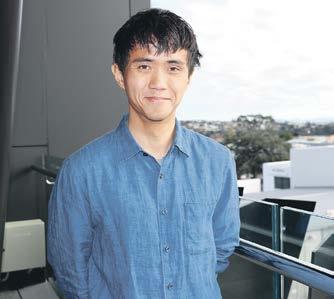
Tauranga researcher Terry Isson has been awarded the prestigious Hill Tinsley Medal at the 2025 New Zealand Association of Scientists conference in Wellington.
The award celebrates excellence among early and mid-career researchers and recognises Isson’s groundbreaking work on how Earth’s climate system operates, along with his leadership in new carbon removal strategies.
Based at Waikato University’s Tauranga campus in Te Aka Mātuatua School of Science, Isson has become an international leader in climate research. His studies show that
climate stability depends not only on carbon dioxide being removed through weathering, but also on clay formation - a process that can recycle carbon back into the ocean and atmosphere. This discovery has reshaped scientific understanding of how our planet regulates its climate.
Isson’s work has revealed how clay formation influenced carbon dioxide levels and climate throughout Earth’s history, including during extreme warming and recovery after mass extinctions. He also uses innovative methods to reconstruct Earth’s temperature history. Since 2018, he has
published widely in top journals such as Nature and Science, combining geochemical data, climate models, and sediment records to unlock new insights into long term climate change.
“I’m honoured to receive this recognition,” says Dr Isson. “I’ll continue to pursue the science and support others working to understand and protect our planet.”
Isson heads New Zealand’s flagship programme exploring enhanced alkalinity methods for carbon removal. His team runs field trials across the country and advises government, iwi, and
industry on strategies for durable carbon drawdown.
Deputy Vice Chancellor Research professor Gary Wilson says Isson’s work was exceptional in both its scientific impact and its relevant to New Zealand’s climate goals.
He has advanced global understanding of long-term climate regulation and is contributing to practical climate solutions in partnership with communities and industry.”
Isson’s achievements highlight the University of Waikato’s leadership in global climate science and its commitment to tackling one of the world’s biggest challenges.
Waikato University researcher Terry Isson.
Kaimai commute a community connection
Every morning before sunrise, Kerry Watson sets out from Tauranga, crossing the Kaimai Ranges on a drive he knows by heart.
The cafés along the way, the bends in the road, even the quiet moments of reflection - they’ve become part of his rhythm.
For 25 years, that commute has taken him to Te Awamutu, where he has built a career - and a legacy - with Waipā Networks, a community-owned business that has shaped both his professional life and his outlook on service.
Watson’s story began in 2000, when he spotted a job ad for a company he’d never heard of, in a town he wasn’t sure how to find. His wife Fiona had to show him Te Awamutu on a map.
At the time, Watson was working in Hamilton in insurance - long hours, claims targets, little connection. He was ready for something different, something closer to people. That something was Waipā Networks.
From his first assignment - helping deliver a one-off customer discount - Watson saw what community ownership meant. More than two decades later, he still manages the process, which has now returned over $100 million to Waipā Networks customers.
“Every year, we coordinate with 20-plus electricity retailers across the country to make sure customers, no matter who they buy their power from, get their share. It’s a reminder that we’re still local, still giving back,” he says.
But Watson’s Tauranga base has always shaped his perspective. The daily drive reminds him of the importance of connection - between towns, between people, between communities. He has worked to ensure Waipā Networks stays visible and engaged, revamping its website, launching social media, and publishing monthly updates to show the company is part of the place, not some
A quarter of a century later, Tauranga remains home, but Waipā Networks has become family. Watson’s daily commute is more than a drive; it’s a bridge between the city he lives in and the community he serves.
distant utility.
His career has evolved through multiple roles.
In 2006, he led the newly formed Customer Services and Faults team, merging customer support and field response.
“It made sense. The person answering the phone and the person fixing the fault were solving the same problem - keeping people connected.”
Those stormy nights, late calls, and urgent repairs reinforced how much the community relied on Waipā Networks, and how proud the team was to restore power.
That experience also led Watson to innovate. After a serious incident involving a lone worker, he partnered with a Hamilton start-up to develop a real-time tracking solution that could detect when a worker was non-responsive and send for help.
“It came from a scary moment, but it made people safer. That’s what matters, and I’m proud of that.”
Today, Watson serves as Pricing and Compliance Manager, navigating the industry’s regulatory
space while keeping his community focus intact.
Back in Tauranga, life is full with Fiona, their three children, weekends at church, the beach, classic car shows, and music. He has even designed over 20 houses and built four, a reflection of his love for creating things that last.
From handwritten fault logs and landlines to digital dashboards and real-time systems, Watson has seen
Waipā Networks transform.
He has also felt the company’s care personally, supported through a health scare a few years ago.
“They looked after me through that,” he says.
“That’s the kind of company this is - bigger now, but still feels like family.”
As Waipā Networks celebrates more than a century of powering communities, Watson marks his own milestone: 25 years of service.
Elected members to lead Tauranga’s water services partnership transition
> By MAHÉ DRYSDALE, Mayor of Tauranga
Tauranga City Council has established an elected member working group to help guide the city’s transition to a new multi-council Water Organisation (WO), which is planned to be in place by 1 July 2027, subject to the outcome of due diligence processes.
The working group will play a key role in shaping the future delivery of water services –treated water reticulation; wastewater reticulation,
treatment and disposal; and stormwater collection and disposal – in partnership with the Western Bay of Plenty District Council, and potentially other councils in due course.
The multi-council WO model is designed to improve access to funding for water infrastructure, create advantages of scale and deliver high-quality, affordable water services to communities.
Services Delivery Plan (WSDP) to the Department of Internal Affairs.
The plan outlines how the city will manage water supply, wastewater and stormwater services over the next decade and was recently approved by the Department of Internal Affairs.
For him, the journey from Tauranga to Te Awamutu has never just been about kilometres on the road. It has been about building connectionsbetween people, places, and generations - and ensuring that both Waipā and Tauranga remain powered by more than electricity: by trust, care, and community. - Supplied
vices) Act 2025, which came into effect on 27 August this year, establishing a new framework for how councils across Aotearoa deliver water services for their communities.
MahéDrysdale
Early modelling shows potential savings of around $3,000 per connection over a 10-year period, compared to in-house delivery of water services.
A commitment agreement has been signed with the Western Bay of Plenty District Council, enabling both councils to begin due diligence.
The elected member working group will oversee that the process and ensure that the partnership outcomes provided by a Water Organisation reflect the needs and priorities of Tauranga’s communities.
In September 2025, Tauranga City Council submitted its Water
Council elected members acknowledge that the work programme ahead is a significant undertaking, but we need to set our city up to keep delivering great quality, cost-effective water services far into the future.
While most of the work will happen behind the scenes, residents can be assured that the Council’s priority remains delivering affordable and sustainable water services.
No immediate changes will be noticeable for our customers, as the transition is carefully planned over the next two years and will only go ahead if we’re comfortable with the due diligence findings.
This work aligns with the Local Government (Water Ser-
We will be looking to keep the community informed as we progress the due diligence and work towards the establishment of a Water Organisation to serve the Western Bay region.
Other councils could potentially become partners in the WO, but that will naturally be dependent on further due diligence processes confirming that any wider partnerships will deliver positive results for all parties.
As this is my last Business News column for 2025, I’d like to take this opportunity to wish all readers a merry Christmas and a happy and relaxing festive season.
I hope you all can enjoy some quality time with friends and family, and that the new year will signal a return to more prosperous times. Take care and be safe.
Kerry Watson, centre looking at camera, at a team building day. Photo: Supplied
Bloodsuckers with a purpose
New Zealand’s only medical leech breeding and supply business sold recently in a transaction that feels uniquely made to measure. Viv Posselt explains.
Aniche enterprise - vital to the country’s surgical community - has begun a new chapter under the stewardship of two Waikato veterinarians.
The medical leech business was started by Maria and Robert Lupton 36 years ago.
They came to it by chance when the family discovered eels and leeches in dune lakes on a farm north of Dargaville. At the same time, an Auckland Zoo scientist was up there looking for leeches for his creepy-crawly exhibition.
The Lupton children lent a hand, and when the family ended up sending leeches to the zoo, a newspaper article on them was spotted by a Middlemore surgeon seeking help for a patient. He rang the zoo and was referred to the Luptons; they sent him leeches that successfully remedied the problem … and so the business began.
It was small at first, requiring loads of research and some measure of trial and error. They moved to the Waikato and built it into the country’s only medical leech breeding and supply business, sending thousands of the slippery critters via courier to multiple plastic surgery units around the country.
The numbers fluctuate, but when The News spoke to the Luptons last year, they had about 50,000 leeches of varying ages in their shed, with sales increasing as New Zealand’s population grows.
In October, the all-important enterprise passed into the hands of new owners, Rachel and Richard Munn, a superbly qualified pair of veterinarians working primarily in the field of research.
The sale has been over two years in the making. In 2023, when the Luptons made the decision to sell and retire, they knew it might take time … not because potential buyers might find the little bloodsuckers an unusual commodity, but because it was essential that whoever bought it was aware of the business’s critical importance to the country’s medical experts.
“It needed to be the right buyers, people who understood the social responsibility that goes with being the only leech supplier in the country,” Maria says.
“We had to know they recognised the commitment around delivering the leeches, to guarantee that plastic surgeons could get what they needed when it was needed,” Robert says.
“Richard and Rachel are the perfect fit. We’re very pleased …
and we’ve offered ourselves to them in an advisory capacity if needed.”
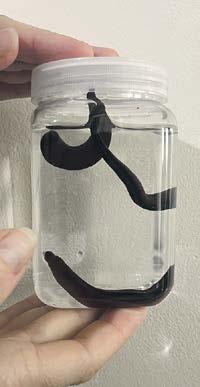
Leeches have been used medicinally for thousands of years. They are used today to help prevent a post-operative condition called venous congestion, which occurs when the blood pools and stagnates in veins cut during surgery. As the leeches feed on areas of damaged tissue, they reduce the risk of blood clotting, allowing time for new, healthy tissue to grow. Each bite provides its own shot of natural anaesthetic that numbs the area. While the Luptons were pondering a leech-free future, the Morrinsville-based Munns were weighing up ‘what next’. Rachel was keen on lifestyle block living when an entomologist friend sent her a link to the advertised leech business. She passed it on to Richard. At that stage, the Luptons had both their farm and the leech business up for sale together, which put it out of the reach of the Munns, but when the Luptons sold their farm separately earlier
this year, the leech business stood alone and the Munns took a punt.
“It really piqued our interest,” Richard says.
“Our accountants and bankers didn’t initially know how to value it, but they were up for the challenge and so were we.”
The Munns work in the veterinary environment. Neither are familiar with the medical use of leeches on animals, but both are knee-deep into research and says that once they’re bedded in, they may well look at it.
After qualifying at Massey University, Richard completed his veterinary clinical pharmacology residency at the University of Melbourne, is a PhD and registered specialist. He is general manager/ lead scientist at Cognosco, Anexa Veterinary Services in Morrinsville.
Rachel is a veterinary technologist and animal scientist, currently juggling her work as a veterinary research technician with caring for the couple’s three daughters, Eva, Amy and Olivia.
They’ve learned fast that weekends away might be interrupted by medical emergencies requiring the swift delivery of leeches for a range of accidents and plastic surgeries.
The first call came on Labour Weekend, just as they planned an outing. “We had to turn back, collect the leeches and get them
TERMS OF TRADE
By confirming and placing advertising in Good Local Media Ltd publications, products and platforms you are agreeing to our terms and conditions of trade.
CANCELLATION DEADLINE: Cancellation deadline is two weeks prior to publication. If cancellations are received after the booking deadline, then full charge applies. Advertising setting is free for use in Good Local Media Ltd publications only. If used elsewhere charges will apply, pricing available on request. Advertising space only is purchased, and all copy made up by Good Local Media Ltd remains the property of Good Local Media Ltd. If supplied ready to print, copy is owned by the advertiser. Publication day is first week of the month.
RATE CARD: Rates are based over a 12-month period starting from the date the first ad publishes. The rate bracket e.g. six insertions, 12 insertions etc. chosen allows ad sizes to vary within the rate bracket. If the number of insertions chosen is not met, then a bulk charge will be applied at the end/cancellation of your schedule based on correct rate reflective of the number of ads actually published e.g. if you have chosen the 12 insertion rate and only publish six insertions
etc., the bulk charge will be the difference in price between the six insertion rate and the 12 insertion rate multiplied by the number of ads published. You pay the rate reflective of the number of ads you actually published.
PRICING: All prices quoted are ex GST, per insertion, including full colour and are non-commission bearing. Commission rates are to be added on top. Rates are based over a 12-month period. The 12-month period starts from the date of your first insertion. Annual rates are based on 12 insertions.
INVOICING AND PAYMENTS: For advertisers on a regular schedule and have completed a client information form, invoices will be sent at the end of the month and payment is due by the 20th of the following month, otherwise payment is required prior to advert publishing. Accounts in arrears (+60 days) may be subject to a $95 + GST late payment fee per advert per month. Advertiser is responsible for any and all debt collection fees. Payment options are via internet banking (account number 02-0316-0510007-000), credit card, debit card, or EFTPOS at the office.
couriered away,” Richard laughs. “It was a bit of a baptism of fire.” That will be their future, the Luptons remind them. The need is ever-present, and when it arises, no break-away is assured.
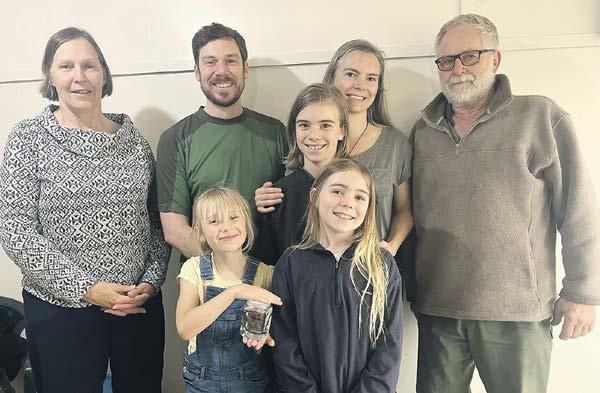
The leech farm’s former owners, Maria and Robert Lupton, flank the new owners, Rachel and Richard Munn with their daughters, Eva, 11, Amy, 10, and Olivia, 8.
Photo: Viv Posselt
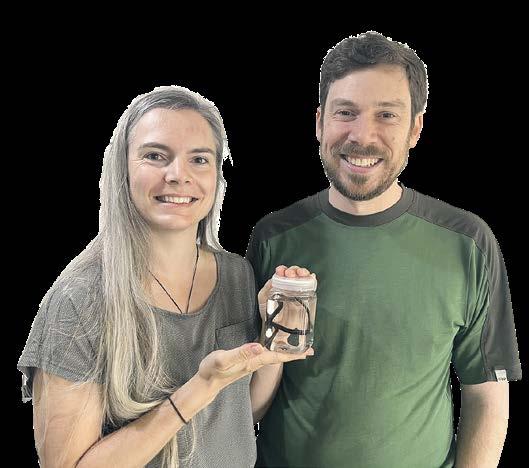
Rachel Munn holds up a jar of lifegiving leeches, aka Richardsoniasnus mauianus.
Photo: Viv Posselt
Veterinary researchers Rachel and Richard Munn took over the leech business in October.
Photo: Viv Posselt
Tourism Bay of Plenty Business Events Strategy Launch
Venue: The Balcony Room, Historic Village, Tauranga, Tuesday 18 November
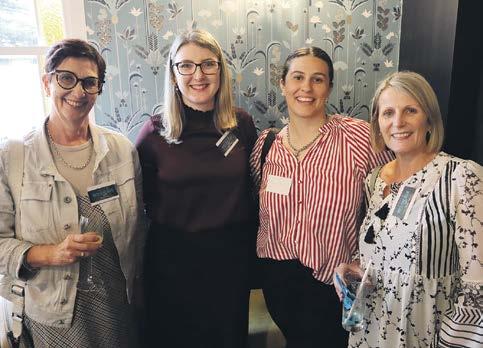
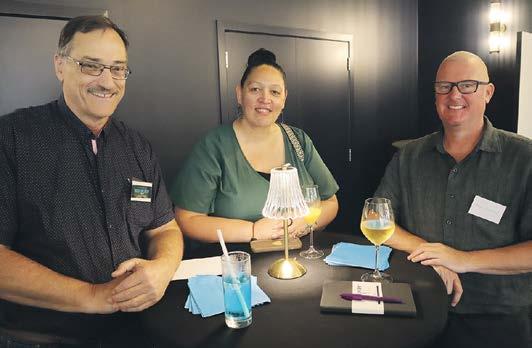
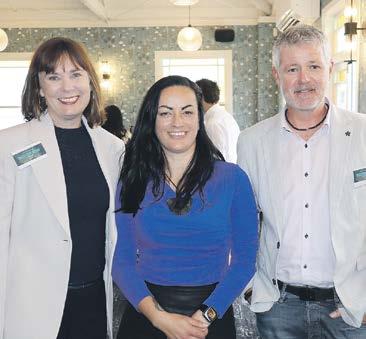
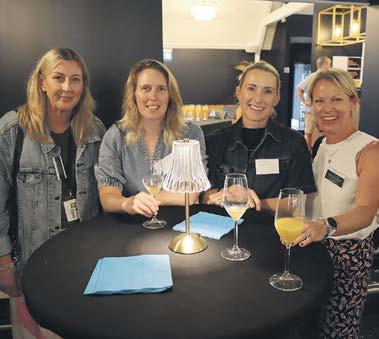
Photography: Tourism Bay of Plenty (all captions show people from left to right)
Tourism Bay of Plenty unveiled its new business events strategy - Out of the Boardroom and Into the Blue. The strategy intends to draw together the region’s high-performing people and spectacular landscapes to create business events that inspire and connect.
It champions work-life balance and individual wellbeing as essential factors to support team building, productivity, and effective decision-making.
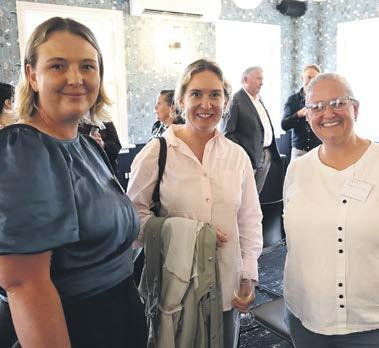
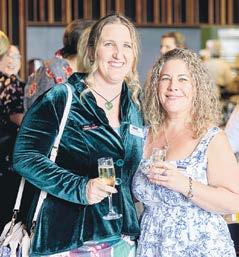
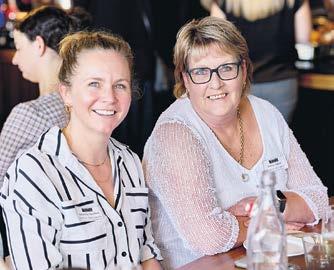
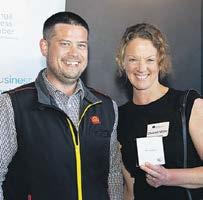
Eliza Murray (Twelve Tables), Amy Bourke (Blank Canvas Catering), and Stephanie Mardon (Pāpāmoa Surf Life Saving Club)
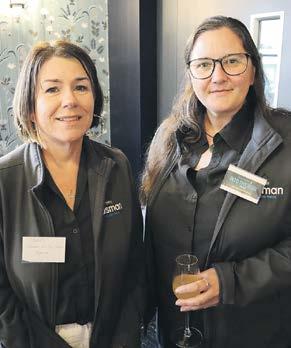
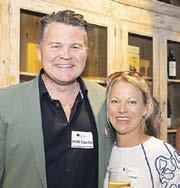
Lynley Baker and Heide Thompson (Tasman Holiday Parks - Papamoa Beach)
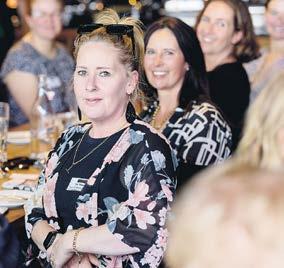
Nicole Hoeata (Growth Hungry) and Marie Roberts (The Timegifter)
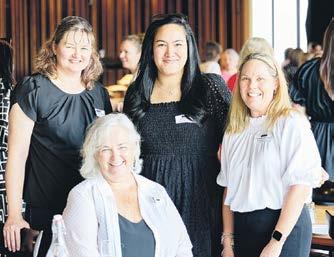
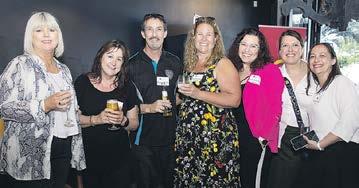
Jill Beedie (Priority One), Kelly Taylor & Jasmine Cooke (Trinity Wharf Tauranga), and Gail Elliot (Priority One)
Nicky Tilsley (guest speaker: Business Events Industry Aotearoa), Mary Tolley (event host - Tourism Bay of Plenty), and Michael Stokoe (guest speaker - Tourism New Zealand)
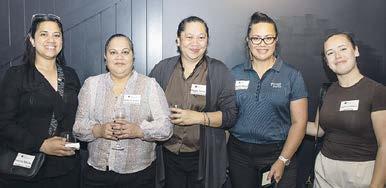
Nikki Hansen (University of Waikato - Tauranga), Genevieve Whitson (Downtown Tauranga), Kathryn Scholes (Priority One), and Jessica Townsend (Human Sync)
Angela Heyward (Tauranga City Council) and Andrea Zwezerynen (Leveret Mills Reef)
Ron Scott (Autombile Association Bay of Plenty), Terina McRae-Hape (Tauranga Māori Business Association), and Jay Banner (Mount Mainstreet)
BurgerFuel Fairy Springs Women in Business Lunch
Host: Rotorua Business Chamber
Venue: Te Puia Māori Arts & Crafts Institute, Tuesday, 11th November 2025
Photography: Michelle Cutelli Photography
BurgerFuel Fairy Springs Women in Business event at Te Puia celebrated women’s leadership, authenticity and empowerment and brought together business owners, professionals and community leaders for connection, kai and kōrero.
Rexina Hulton, Dawson Insurance and Melanie Short, Rotorua Business Chamber
Emma Clapperton, Personnel Resources and Yvette Folley, Rothbury Insurance
Philly Angus, Raelene Castle and Heidi Lichtwark
Bex Temple and Kellie Hamlet, TalentID
Sarah Martelli and Nikki Melvin, House of Travel
Kylie Brackfield and Angela Baker, Osbornes Funeral Directors
Denise Emery, Te Puia and Ashleigh Nairn, BurgerFuel Fairy Springs
Samantha Sandford and Donna Hewson, Sandford Wall Lawyers
Alex Wilson and Debbie Cossar, Rotorua Lakes Council, Jenha Phillips, Te Puia
Rachel McRae, Dubzz Digital Marketing and Tracy Mowbray, Nairn Fisher
Mickey van der Merwe, Shani Morgan, Janelle McCorquindale and Carroll Hill, Vetora Bay of Plenty
Belinda Farmer and Helene Nicholson, NDuro Events
Tauranga Business Chamber Alliance Partners BA5
Venue: Oscar & Otto, November 5, 2025
Photographer: Salina Galvan Photography
The Tauranga Business Chamber hosted its final Business After 5 for the year with a vibrant Christmas themed event. It was supported by the Chamber’s Alliance Partners: 2degrees, Noel Leeming, Air New Zealand, Z Energy, Bunnings and Office Max and featured a lively Santa Stocking gift draw. More than one hundred attendees enjoyed relaxed networking over canapés and drinks by Oscar and Otto, celebrating and closing out another successful season of BA5 events.
Kelly O’Hara: Kelly O’Hara Photography Mark Weber: Redco NZ
Rachael Plunket: Stellar Mortgages Kyra Ormsby: Eves Real Estate Ali Gilcrist: One Paperclip Jade Maddox: BloomCo
Paul Brljevich: Tabak Business Sales Kerri Watson-Poole: Tauranga Business Chamber
Tony Stack: Classic Group; Richard Crabb: All Things Accounting; Michael Dewhirst: Surveying Services
Ryan McMaster: Sharp Tudhope; Monique O’Meeghan: Holland Beckett; Emily Merrill: Holland Beckett; Ben Alexandar: Sharp Tudhope
Roz Irwin: Tauranga Business Chamber; Angela Hale : Sign Creations; Shane Hale: Sign Creations; Ali Gilchrist: One Paperclip; Jill Maddow: BloomCo; Giselle Brosnahan: Giselle B Photography; Rose Gilmore: BTG
Asta England- Emerald Business Advisors; Tony Jones: 2degrees; Khanyisa Lukwe: 2degrees
Lance Adolph: Jigsaw Architects; Courtney Smith-Frank: Jigsaw Architects; Simon Litten: Brosnan
Mignon Aucamp: Digital Workplace Results; Debbie Ireland: Digital Workplace Results
Carrie Brown: Tauranga Business Chamber; Bridget Jenkins: Tauranga Business Chamber
Mike Rawlings: Noel Leeming; Christel Milne: Kex Catering
Nadene McClay: Ministry of Social Development; Ned Burke: Access NZ
Matt Cowley:Tauranga Business Chamber; Jessica Townsend: HumanSync
Harina Marks: First Credit Union; Nirvana Kumar: First Credit Union; Peggy Turua: First Credit Union; Wanita Wood: First Credit Union; Sophie Hawkins: Kex Catering
Ted Ebbing: BTG; Dan Howard: YRW; Chad Wallace: Cooney Lees Morgan
PURPOSE-BUILT. FOR TAURANGA CROSSING
Tauranga Crossing’s continued growth reflects our region’s strong commercial momentum and the increasing demand for high-quality retail experiences.
The latest expansion (stage 3) has added 8,100sqm of new retail space, anchored by Farmers and six specialty stores.
Tauranga Crossing Development Manager, Richard Taaffe, said Fosters secured the extension base build through a competitive tender, underpinned by the experience of our
project team and a strong commercial offer. A key objective was early access for the Farmers fitout – achieved with six weeks to spare.
The project was delivered on time and on budget. Fosters’ collaborative approach, clear communication, and strong relationships with both the client and existing tenants ensured work progressed smoothly in a busy live environment.
Richard said the experience was positive from start to finish. “This never felt like a contractual process –
This never felt like a contractual process – Fosters simply got on with delivering the project.
Fosters simply got on with delivering the project. Their flexibility and regular communication made the connection to the existing building seamless. They’re clearly experienced at working in live environments.”
Alongside the base build, Fosters completed two specialty retail fitouts –Toyworld and the Farmer Autovillage showroom – plus entry embellishments and a new entry road, all ready for opening day.
‘Make it happen’ and ‘Make it a success’ – that’s the Fosters’ way.
Richard Taaffe, Tauranga Crossing Development Manager