AWARD WINNER
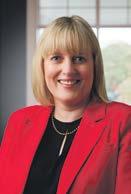
Police area commander Andrea McBeth has been named leader of the year.
Page 2
BLOODSUCKERS
The medical leech business is thriving in Waikato.
Page 5
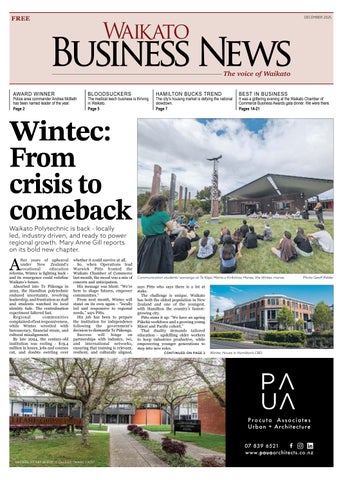
Police area commander Andrea McBeth has been named leader of the year.
Page 2
The medical leech business is thriving in Waikato.
Page 5
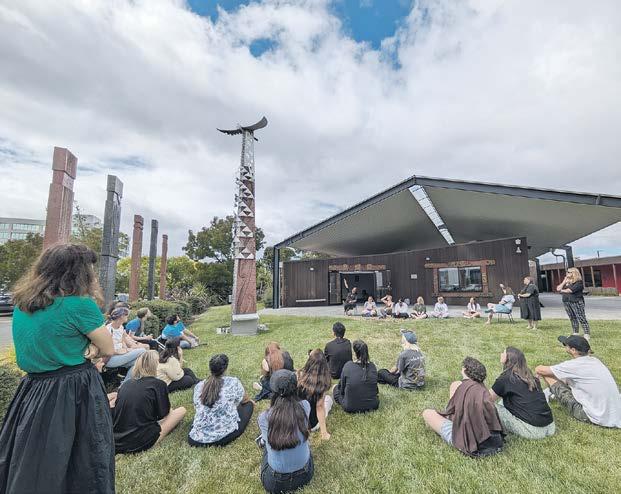
Waikato Polytechnic is back - locally led, industry driven, and ready to power regional growth. Mary Anne Gill reports on its bold new chapter.
After years of upheaval under New Zealand’s vocational education reforms, Wintec is fighting backand its resurgence could redefine Waikato’s future.
Absorbed into Te Pūkenga in 2022, the Hamilton polytechnic endured uncertainty, revolving leadership, and frustration as staff and students watched its local identity fade. The centralisation experiment faltered fast.
Regional communities complained of lost responsiveness, while Wintec wrestled with bureaucracy, financial strain, and cultural misalignment.
By late 2024, the century-old institution was reeling - $19.4 million in losses, jobs and courses cut, and doubts swirling over
whether it could survive at all.
So, when Operations lead Warwick Pitts fronted the Waikato Chamber of Commerce last month, the mood was a mix of concern and anticipation.
His message was blunt: “We’re here to shape futures, empower communities.”
From next month, Wintec will stand on its own again - “locally led and responsive to regional needs,” says Pitts.
His job has been to prepare the institution for independence following the government’s decision to dismantle Te Pūkenga.
Success will hinge on partnerships with industry, iwi, and international networks, ensuring that training is relevant, resilient, and culturally aligned,
The city’s housing market is defying the national slowdown.
Page 7
It was a glittering evening at the Waikato Chamber of Commerce Business Awards gala dinner. We were there. Pages 14-21
says Pitts who says there is a lot at stake.
The challenge is unique. Waikato has both the oldest population in New Zealand and one of the youngest, with Hamilton the country’s fastestgrowing city.
Pitts sums it up: “We have an ageing Pākehā workforce and a growing young Māori and Pacific cohort.”
That duality demands tailored education - upskilling older workers to keep industries productive, while empowering younger generations to step into new roles.
CONTINUED ON PAGE 2






News/Editorial
Roy Pilott editor@goodlocal.nz 027 450 0115
Mary Anne Gill maryanne@goodlocal.nz 021 705 213
Viv Posselt viv@goodlocal.nz 027 233 7686
Chris Gardner chris@goodlocal.nz 027 231 7007
Advertising Director
Janine Davy janine@goodlocal.nz 027 287 0005
Owner/Publisher
David Mackenzie david@goodlocal.nz
Office/Accounts admin@goodlocal.nz 07 827 0005
Readers’ contributions of articles and letters are welcome. Publication of contributions are entirely at the discretion of editorial staff and may be edited. Contributions will only be considered for publication when accompanied by the author’s full name, residential address, and telephone number. Opinions expressed are not necessarily those of the publishers. Waikato Business News is published by Good Local Media Limited.
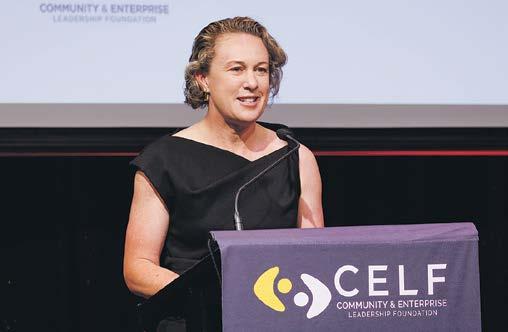
Andrea McBeth has been recognised as the Community and Enterprise Leadership Foundation (CELF) Alumni Leader of the Year.
McBeth, who has served with the New Zealand Police for nearly 28 years, is currently Hamilton City Area Commander.
She received the award at CELF’s recent graduation ceremony at the Gallagher Academy of Performing Arts, an event that also celebrated a decade of leadership programmes.
CELF chief executive Tania Witheford said McBeth’s achievements have created a lasting legacy.
“Andrea is celebrated for her courageous, values-driven leadership, clarity, compassion, and conviction in her role with the New Zealand Police.
“Her integrity and self-awareness have set her apart, with her “who-ness becoming her superpower.” Andrea’s ability to build genuine partnerships and collaborate across sectors highlights her strength in integrative leadership,” said Witheford.
The award honours alumni who exemplify responsible leadership and make a significant impact within their organisation and the wider community, reflecting CELF’s mission to grow responsible leadership for a connected and thriving Waikato.
There are now 193 CELF graduates, many of whom attended the ceremony to celebrate learning, growth, and connection.





This newspaper is subject to NZ Media Council procedures. A complaint must first be directed in writing, within one month of publication, to the editor’s email address.
If not satisfied with the response, the complaint may be referred to the Media Council P O Box 10879, The Terrace, Wellington 6143. Or use the online complaint form at www.mediacouncil.org.nz Please include copies of the article and all correspondence with the publication.

A committed lifelong learner, McBeth recently completed her Executive Master’s in Public Administration through the Australia and New Zealand School of Government, earning high regard from faculty and peers.
Three years ago, she was a finalist for Most Outstanding Female Leader by the Australasian Council of Women and Policing.
•
Employers want flexible training that slashes red tape and reflects identity.
Wintec’s strategy is clear: short-cycle programmes, microcredentials, and earn-while-youlearn models aligned with local demand.
Partnerships with iwi and industry are central, tapping into Waikato’s $55 billion Māori economy and ensuring training is both culturally grounded and
globally relevant.
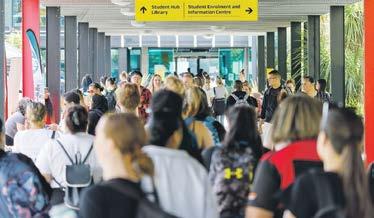
Today’s students are far from the traditional university profile. More than half are over 25, nearly two-thirds care for dependents, and 30 per cent are the first in their family to study.
A third work more than 40 hours a week on top of study, and a quarter live in households earning below the living wage.
Pitts says this diversity underscores Wintec’s mission: “We are unapologetically
committed to underserved learners and helping them achieve the qualifications they need.”
The payoff is significant. Pitts estimates that graduating just 250 more learners at diploma level or above could inject $300 million into Waikato households over their working lives.
That means more people moving from low-skill to highskill jobs, earning more, and strengthening community ties.
Wintec’s comeback will be defined by flexibility and partnerships.
Expect more blended and regional learning, pop-up programmes where demand is strongest, and greater use of community facilities such as marae for training. Collaboration with other tertiary providers, including the Open Polytechnic, is also on the table.
The institution will align provision directly with local needs - from retaining older workers through study grants to upskill, to supporting iwi

aspirations through Te Tiriti projects with Waikato-Tainui and other mana whenua.
“We are focused on reaching out and welcoming in, learning and achieving together, and strengthening and growing the whole person.”
For stakeholders, the message is clear: this institution is not simply returning to independence. It is positioning itself as a cornerstone of Waikato’s future - a driver of productivity, inclusion, and regional prosperity.
• See: Out and About, page 23

Hamilton manufacturer
RML Machinery won Waikato Chamber of Commerce’s Supreme Award last month capping off a remarkable night in which they also took home the Innovation Award for their pioneering work in automated guided vehicles. Other major winners included Fiona Michel of Braemar Hospital (CEO of the Year) and Claire Williamson of My Mortgage (Emerging Leader of the Year. See more, page 14.
Two new committees are being established by Waikato Regional Council – one to provide greater oversight of transportrelated matters and the other with a focus on regional growth and resilience. The Climate Action Committee – first established following the 2019 local government elections – will not return.
Hobbiton Movie Set’s Bagshot Row, opened in December 2023, has won the prestigious 32nd Annual Themed Entertainment Association Thea award at an event in Orlando, Florida for an attraction that exemplifies outstanding achievement in creating a compelling place and visitor experience.
Waikato Industrial Tube is marking 40 years of local production and preparing for the next wave of demand in food manufacturing and horticulture. The Hamilton company is now one of only two remaining precision steel tube manufacturers in New Zealand and employs 55 staff at its Kahikatea Drive site.
Hamilton-based exporter Gallagher won the Supreme Award and Best Large Business at New Zealand Trade and Enterprise’s New Zealand International Business Awards. Gallagher’s is experiencing unprecedented global demand and expansion across its Hamilton headquarters and international offices.
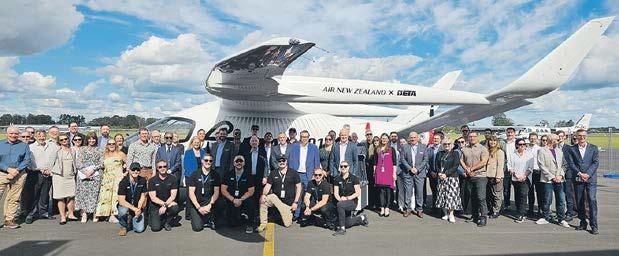
Waikato cemented its reputation as a leader in innovation with the launch of New Zealand’s first electric aircraft at Hamilton Airport – a bold step towards a cleaner, quieter future for regional air travel.
Air New Zealand’s Beta Alia CX300 will be a familiar sight in Waikato skies as it undertakes demonstration flights across the region before heading to Wellington this month. Its sleek silhouette and iconic koru branding are hard to miss, noted Taupō MP and Tourism Minister Louise Upston at the launch.
The event drew a strong Waikato presence, including MP Tim van de Molen, Waipā mayor Mike Pettit, Hamilton city councillor Maria Huata, alongside Air New Zealand chief executive Nikhil Ravishankar and Hamilton
Airport chief executive Mark Morgan.
Industry leaders from Beta Technologies and the Civil Aviation Authority also attended, underscoring the significance of this milestone.
The Beta Alia CX300, built by Vermont-based Beta Technologies, is a battery-electric aircraft offering zero-emission propulsion, a range of up to 398 kilometres, and 5.6 cubic metres of cargo space. Its ability to operate from existing airports makes it a practical solution for regional connectivity.
Flights of up to 200 kilometres will be conducted during the fourmonth programme at Hamilton, Wellington and Blenheim.
Waikato’s aviation story began in 1933 at Rukuhia Aerodrome (now Hamilton Airport) and grew through pioneers like Ossie James and Max Clear, as well as the Waikato Aero Club and Pacific
Aerospace. Today, the region is once again at the forefront of change – this time driving sustainable aviation.
“This is a powerful example of what collaboration can achieve,” said Upston, praising Air New Zealand’s forward-thinking approach.
Ravishankar added that with 60 per cent of regional flights under 350 kilometres, New Zealand is the ideal testing ground for nextgeneration aircraft.
Morgan emphasised Waikato’s role as a learning hub: “Our airspace provides the perfect environment to understand the systems and infrastructure that will support future aviation.”
From top-dressing planes to electric aircraft, Waikato continues to lead the way – proving that innovation and sustainability can soar together. – Mary Anne Gill

Hamilton Boys’ High School year 13 student Rion Ormsby-Harris has won one of just two national Mā te huruhuru ka rere te manu scholarships from global accounting firm PwC.
The scholarship provides $7000 and a PwC mentor for the duration of tertiary studies, along with an opportunity to apply for a paid summer internship with the organisation, and access to business networks at social and scholarship events.
It is for a Māori student who possesses exceptional talent in all aspects.
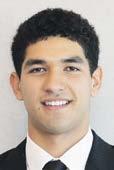
Rion also won the Daniel Rimmer Cup and Prize at the HBHS prizegiving for a student who displays the qualities of a lion and has outstanding service to his school and community. – Mary Anne Gill






















































































New Zealand’s only medical leech breeding and supply business – based in Te Miro just outside Cambridge – sold recently in a transaction that feels uniquely made to measure. Viv Posselt explains.
Aniche enterprisevital to the country’s surgical community - has begun a new chapter under the stewardship of two Waikato veterinarians.
Rodney Stirling
The medical leech business was started by Maria and Robert Lupton 36 years ago.
They came to it by chance when the family discovered eels and leeches in dune lakes on a farm north of Dargaville. At the same time, an Auckland Zoo scientist was up there looking for leeches for his creepy-crawly exhibition.
The Lupton children lent a hand, and when the family ended up sending leeches to the zoo, a newspaper article on them was spotted by a Middlemore surgeon
seeking help for a patient. He rang the zoo and was referred to the Luptons; they sent him leeches that successfully remedied the problem … and so the business began. It was small at first, requiring loads of research and some measure of trial and error. They moved to the Waikato and built it into
Zealand’s population grows.
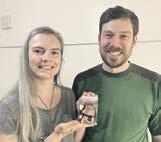
In October, the allimportant enterprise passed into the hands of new owners, Rachel and Richard Munn, a superbly qualified pair of veterinarians working primarily in the field of research.
The sale has been over two years in the making.
In 2023, when the Luptons made the decision to sell and retire, they knew it might take time … not because potential buyers might find the little blood-suckers an unusual commodity, but
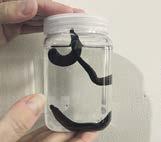

advisory capacity if needed.” Leeches have been used medicinally for thousands of years. They are used today to help prevent a post-operative condition called venous congestion, which occurs when the blood pools and stagnates in veins cut during surgery. As the leeches feed on areas of damaged tissue, they reduce the risk of blood clotting, allowing time for new, healthy tissue to grow.
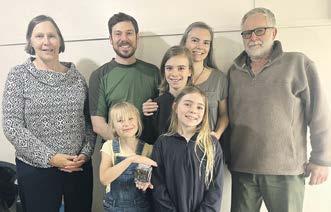


her work as a veterinary research technician with caring for the couple’s three daughters, Eva, Amy and
They’ve learned fast that weekends away might be interrupted by medical emergencies requiring the swift delivery of leeches for a range of accidents and
The first call came on Labour Weekend, just as they planned an outing. “We had to turn back, collect the leeches and get them couriered away,” Richard laughs.
“It was a bit of a baptism of fire.”



“Our accountants and of Melbourne, is a PhD and registered specialist. He is general manager/ lead scientist at Cognosco, Anexa Veterinary Services in
Rachel is a veterinary technologist and animal scientist, currently juggling


Rodney Stirling
That will be their future, the Luptons remind them. The need is ever-present, and when it arises, no breakaway is assured.




Rodney Stirling
Rodney Stirling
Rodney Stirling
Rodney Stirling
As offshore competition continues to put pressure on New Zealand manufacturers, one Waikato-based business is marking 40 years of local production and preparing for the next wave of demand in food manufacturing and horticulture.
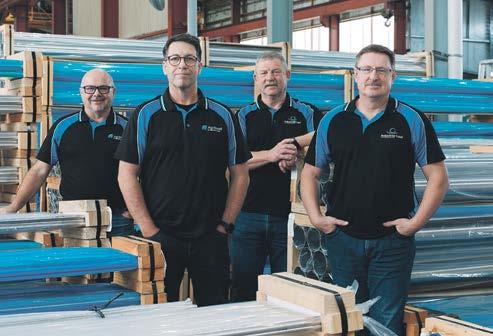
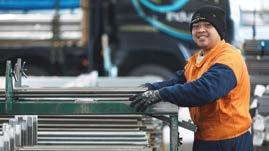
Hamilton-founded Industrial Tube is now one of only two remaining precision steel tube manufacturers in New Zealand. The company employs 55 staff at its Kahikatea Drive site, with a further five nationally, and supplies engineered tube and components to manufacturers across the food, beverage, dairy, horticulture, transport and construction sectors.
Chief Executive Grant Waring says the company’s longevity comes down to reliability and local responsiveness.
“We’re a partner to the manufacturers who depend on us. They value reliability,
“We’re a partner to the manufacturers who depend on us. ey value reliability, consistency and service. Being able to pick up the phone and speak to someone here in New Zealand matters.”
consistency and service. Being able to pick up the phone and speak to someone here in New Zealand matters,” he says.
General Manager Werner Petrick says certainty of standards is a growing priority for customers operating in export-facing sectors.
“Steel tube can be imported, but what our customers value is a precision product with exacting specifications, production responsiveness and confidence in standards,” he says. “When you’re supplying New Zealand’s food sector, the quality stakes are extremely high, and that’s where we lead.”
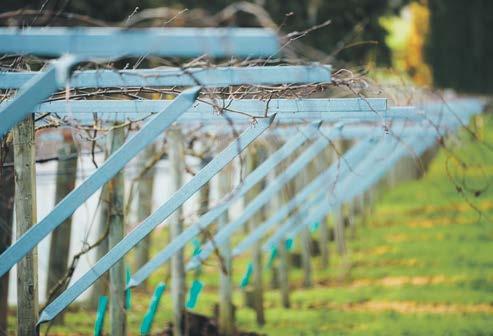
Over four decades, the business has expanded from producing a single product to manufacturing tube in eight different steel types, used across applications from furniture and automotive components to orchard infrastructure and food-grade stainless tube for dairy and processing environments.
Where possible, the company sources steel coils from BlueScope New Zealand, meaning many of its products are 100% New Zealand made.
In 2022, the company achieved Gold Certification from the New Zealand Sustainable Steel Council, recognising responsible and sustainable
manufacturing practices.
Industrial Tube also maintains a longstanding link to the Waikato community through the Green Charitable Trust, which distributes profits to local causes and regional initiatives.
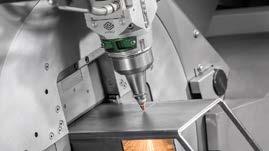
To meet shifting production needs, the company has invested in advanced cutting, laser and finishing technology, enabling it to deliver fully engineered tube components ready for integration into customers’ manufacturing lines.
“Imports are a reality of the global landscape, which demands partnering with customers and offering innovative, customised solutions,” Werner says.
Industrial Tube sees its strongest growth pipeline in the primary and export sectors.
“There will be significant opportunities in the horticulture and agriculture space driven by new growing and farming methods – enhancing efficiencies, serving increased global demand and mitigating climate impacts,” Werner says.
He believes infrastructure will follow once a more stable pipeline of work is confirmed.
“
ere will be signi cant opportunities in the horticulture and agriculture space driven by new growing and farming methods –enhancing e ciencies, serving increased global demand and mitigating climate impacts.”
New Zealand has a major infrastructure backlog which will bode well for the industry once a committed pipeline of work is in place.
Cost pressure and offshoring remain ongoing challenges, Grant says, but local supply is increasingly valued.
“Offshoring manufacturing remains a threat, but New Zealand customers still strongly support NZ made and value the reliability and responsiveness of having local suppliers ready.”
Werner says the next decade is about capability and ensuring New Zealand retains the local manufacturing capacity required to support its export sectors.
“If New Zealand wants secure supply and world-class food and export systems, it needs local manufacturing. We intend to be at the heart of that.”
Supporting NZ Manufacturers since 1985.




Hamilton’s housing market is defying the national slowdown, showing modest gains while most centres remain flat. As Jon Rawlinson reports, confidence and affordability are shaping a city quietly finding its stride.
Average home values across New Zealand continued to soften in the three months ended October, but Hamilton recorded one of the country’s strongest regional performances.
The latest Quotable Value (QV) House Price Index shows national values dipped just under one percent in the quarter.
Hamilton posted a modest 0.6 per cent gain - one of the strongest regional performances in the country. It is a small but telling signal in a market still searching for balance.

Prices in Hamilton remain 13.7 per cent below the nationwide peak of January 2022, but momentum is building.
QV Hamilton registered valuer Marshall Wu says overall the residential property market remains subdued, reflecting a soft economy and the highest unemployment rate since 2016.
“Listings have eased slightly, though activity is beginning to lift with the spring market.”
Hamilton’s northeast led the charge (up 2.18 per cent), while its northwest and southwestern areas recorded the city’s only falls, down 1.22 and 0.36 per cent respectively.
“The recent easing in interest rates has prompted renewed interest from investors and is also offering improved affordability and accessibility to the market for first home buyers,” says Wu.
“First home buyers remain active in the $650,000–$750,000 range.”
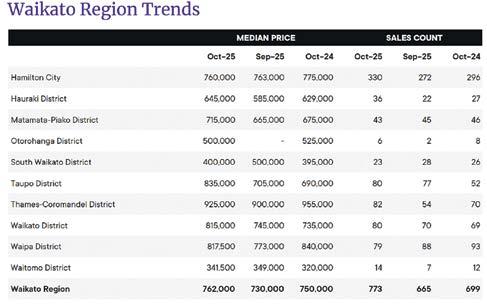
Hamilton prices increased to an average of $789,540, up 2.1 per cent year-on-year. Average prices in the city ranged from
$660,685 (Hamilton southwest) to just under the million-dollar mark for properties in the city's northeast at $935,971.
Homes in more affluent areas (in the over $1million bracket) appear to be taking longer to sell.
Across the wider Waikato, values were steady.
Thames Coromandel recorded the region’s largest quarterly gain –up 1.87 per cent for the quarter – while Waipā had the largest fall, down 0.93 per cent.
Nationally, the average house price sits at $902,020, unchanged from a year earlier and 13.9 per cent below the January 2022 peak. Most main centres recorded small declines, offset by gains in the South Island and some regional cities.
QV national spokesperson Andrea Rush said Napier, Hamilton and Palmerston North are showing renewed energy as the spring market gains momentum.
The South Island recorded the country’s highest gains, led by Invercargill (up 2.7 per cent), Queenstown (1.4 per cent), Napier (1.2 per cent) and Christchurch (0.4 per cent).
Auckland posted the steepest fall, down 2.2 per

cent, with Whangārei and Tauranga both down 1.3 per cent.
Rush expects values to remain relatively stable in the short term followed by gradual growth next year as economic conditions strengthen.
“Listings and buyer activity have lifted this spring, but it hasn’t yet translated into sustained value growth,” she says.
“The market is still finding its footing after a long period of economic uncertainty, with confidence slowly
returning as interest rates ease.
“Overall, the market is showing early signs of recovery, but progress remains uneven. While interest rate cuts and easier lending conditions are improving sentiment, high living costs and elevated unemployment are still weighing on household confidence.”
For now, the housing market feels like a ship edging out of harbour - progress is slow, the waters uneven, but the sails are beginning to catch the wind.






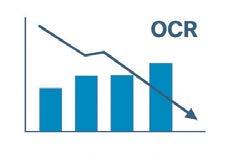
New Zealand’s economy is showing early signs of renewed confidence as the Official Cash Rate (OCR) continues its downward path, following a significant 50 basis point cut in October to 2.50%, offering welcome relief after a prolonged period of tight monetary conditions. With one final cut anticipated on November 26th to 2.25%, economists are suggesting that the tide may be turning – particularly for investors waiting on clearer signals before re-entering the commercial and industrial property markets.
The Reserve Bank’s recent OCR reductions have already begun to filter through the financial system. Most notably, long-term deposit rates are easing, prompting many savers to reassess where their capital will earn the strongest returns. As bank deposit returns fall, shares, property and other investment classes are being assessed.
Commercial and industrial property – traditionally seen as a stable, incomeproducing investment – has begun attracting stronger enquiry from both seasoned and first-time purchasers.
Market analysts suggest that the New Zealand economy has been “bouncing along the bottom” of the property cycle. Prices have largely stabilised after several years of downward pressure, and while activity remains selective, the fundamentals have started to shift. Historically, turning points like this have offered some of the best buying opportunities for investors, developers and owner occupiers willing to take an early position.
Commercial and industrial assets in particular are well-placed to benefit from an uplift. Vacancy rates in main centres have remained comparatively resilient, construction pipelines have slowed, and businesses are beginning to plan ahead with more certainty as inflation comes under control. With a more supportive interest rate environment emerging, market conditions are lining up in a way not seen since the prepandemic period.
“Be fearful when others are greedy, and greedy when others are fearful” – Warren Buffett
For purchasers, timing is becoming increasingly important. The combination of falling bank deposit rates, improving business sentiment and optimism, and potentially a final OCR cut in November, this will undoubtedly draw more buyers into the market over the coming 6 to 12 months. We, along with other industry observers, note that enquiry levels have already begun to lift, particularly for well-located industrial properties and tenanted commercial buildings offering strong fundamentals.
Once demand strengthens, upward pressure on values typically follows. As competition increases, properties that have lingered on the market through the quieter phase of the cycle may sell more quickly, and buyers who have been waiting for absolute certainty may find themselves paying a premium as the market heats up. We have already seen a number of recent Hamilton sales attracting multiple offers – an early indicator of what may lie ahead.
“It appears to be an excellent time for purchasers to act, before they face increased competition in the New Year.”
For now, the window remains open. Investors who move before sentiment fully shifts, may secure favourable yields and purchase terms that become harder to find once the broader buyer pool re-enters the market. While no cycle turns overnight, the signals pointing to recovery are becoming clearer: inflation is easing, the cost of capital is falling, and businesses are regaining confidence.
With one final OCR cut expected in November to 2.25%, the momentum toward recovery is likely to strengthen. For commercial and industrial property purchasers, the message is increasingly straightforward, conditions are improving, competition is rising, and those who act sooner are best positioned to benefit as the market eventually lifts.
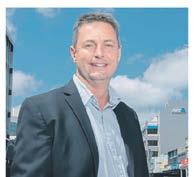
Mike Neale, Managing Director, NAI Harcourts Hamilton


By MARGARET EVANS
Dear Santa, I’m hoping for the greatest gift of all for all - a great big dosh of financial literacy to spread throughout this nation. Please. To conclude a year notable for the emphasis almost everywhere on dollars (mostly not enough) and PTI (percentage translation illiteracy – my term). Along with the inability of so many adults (not just children) who either can’t count or won’t.
This responds to education and health sector strikes, extraordinary executive pay rises, rates increases and power costs, high profits alongside business failures, CPI and inflation. And the mounting concern that community acceptance of illiteracy has infiltrated most sectors of our society and certainly local councils who’ve not been balancing budgets for years.
Back in 2017, new mayor Andrew King’s council gave chief executive Richard Briggs a $60,000 salary increase (up to $440,000), while a third of staff were below the adult living wage. Now, applying 3% inflation (‘rounded’ for easy reading) gives an executive on $500,000 an extra $15,000, those on the adult living wage c$1800 ($28.95/hour, $60,000/year), and on the minimum wage c$1500 ($23.50/hour, $49,000/year).
It’s definitely time to question percentage increases when life is about costs in dollars.
Today we have three new mayors (Hamilton, Waikato and Waipā) and I’m among those hoping for a new Age of Enlightenment at least on economic issues.
For Hamilton City Council, December 11 will be the big day, the first for some serious number crunching by mayor Tim Macindoe’s councillors. It’s the pre-Christmas review, looking ahead until June 2026, and then there’s the plans for 2026/27.
We’ve had a long time to do better. The ‘language of numbers’ traces back 50,000 years with finger counting and beads on sticks evolving into systems in Mesopotamia and Egypt around 3,000 BC and our modern Hindu-Arabic numerals in India in the 3rd century BC. Their key addition of zero by the 7th century AD spread as ‘Arabic numerals’ to Europe through merchants and scholars –our modern mathematics.
Numbers is a language of patterns and logic, and an important life skill that can’t be replaced with AI or smart phone calculators. Numbers is a sibling to the ‘mother tongue’, and we are wired to be bi-lingual (at least), to tune-in to finger counting at a few months old. It’s for solving problems and interpreting data, presents snapshots and images and recognises when something is ‘not right’. ‘Percents’ are just one tool. My call is for even more push from Education Minister Erica Stanford (and associate David Seymour), and ‘support not strikes’ from all educationalists. With an extended focus on pre-schools so that all may pass through our education system over the following decades to forge a truly welleducated nation. Whose citizens can count. And businesses too.
• For those who might wonder, I’ve viewed numbers as a language since a tiny tot playing card games at home with family, then off to school proudly able to count “1,2,3…9,10, Jack, Queen, King…:
• Margaret Evans was Hamilton mayor from 1989 to 1998 and first elected to the council in 1974. She was honoured in 1995 with a Commander of the Order of the British Empire (OBE) for her services to local government.

B y NICK SHEPPARD
Professional development isn’t a nice-to-have; it’s a growth lever for small businesses. At the EMA, we work with hundreds of member businesses every year, and the pattern is clear: companies that invest in structured training see measurable improvements in productivity and engagement.
Our leadership programmes like Ultimate Team Leader and Emerging Team Leader give managers the confidence and tools to lead effectively, which translates directly into better team performance and business results.
When businesses combine leadership capability with technical and compliance training -such as the EMA’s Health & Safety Rep 1 or the NZ Diploma in Workplace Health and Safety Management - they not only meet regulatory requirements but also create safer, more efficient workplaces. These gains are real and immediate for SMEs (small and medium-sized businesses) that want to stay competitive.
The biggest mistake SMEs make is treating training as an expense rather than an investment. At the EMA, we encourage businesses to link training outcomes to their core goals. For example, after completing our Train The Trainer programme, many members report reduced reliance on external providers and improved internal capability. Similarly, courses like Employment Law Essentials (ER101) and Ultimate Employment Relations Advisor help leaders manage risk and compliance, which has a direct financial impact.
Tracking return on investment (ROI) doesn’t have to be complicated. Start with practical measures like productivity per
employee, staff retention, and customer satisfaction. These are the metrics our members use to demonstrate that training drives growth, not just costs.
Upskilling is now a strategic imperative. We’re seeing strong demand for futurefocused courses like Management: An Introduction and Supervision, alongside digital and compliance training. SMEs know that leadership capability and technical skills are the foundation for adapting to changewhether that’s new technology, regulatory shifts, or market pressures. Our members range from manufacturing and logistics to professional services, and they all share the same challenge: staying competitive. Investing in training isn’t optional- it’s how you build resilience and innovation into your business and help lift engagement. The EMA’s programmes are designed to deliver those outcomes. For leaders, embedding ROI frameworks early - using metrics like productivity per employee, error rates, and retention - ensures training is seen as a growth driver, not a cost. With skills shortages and AI-driven change on the horizon, future-focused upskilling is no longer optional; it’s essential for competitiveness and long-term viability. At the EMA, we don’t just deliver courseswe partner with businesses to build capability for the future. Our programmes are designed to align with strategic goals, embed measurable outcomes, and prepare teams for the challenges of a rapidly changing market. Whether it’s leadership development or compliance training, the EMA is committed to helping New Zealand SMEs thrive.
• Nick Sheppard is Head of Learning and Development at the Employers and Manufacturers Association (EMA)
For nearly 150 years, Pirongia Rugby Sports Club has been more than just a place to play - it’s been the beating heart of its community with a proud history, thriving teams, and a commitment to youth and tradition. Journalist Jesse Wood discovers the secret to the club’s success.
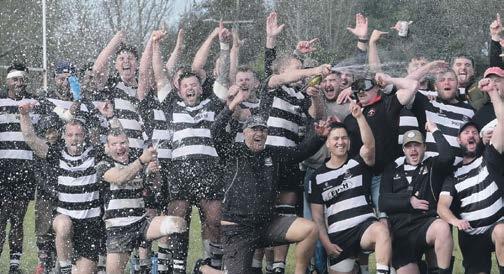
Pirongia Rugby Sports Club – where members are dubbed mountain men and women – has been a pillar of the community for 149 years.
It’s a rare feat for any club to endure that long. Pirongia – which started with the name Alexandra in 1876 - is likely the oldest club in Waikato, and among the longest standing in New Zealand.
As the club approaches its 150th jubilee, it has already celebrated major milestones: named Club of the Year at the 2025 Waikato Rugby Awards and winner of the Field of Dreams competition, winning a game changing turf upgrade worth up to $20,000.
On the field, success has been just as impressive. The sevens team collected multiple trophies this season, while the senior B squad went unbeaten to claim their first club rugby title in 19 years.
Life member, former president and senior B coach Te Oti Kaihe has a theory on why Pirongia has kept strong for so long.
“It’s a country club and we’ve always had very good people, good leaders that attract others. We treat people as people, not as numbers,” he says.
The club does not have the numbers living in Pirongia to sustain the club which now has five senior rugby teams, 240 junior rugby players as well as countless other sports including cricket, touch, volleyball and netball.
“We’ve got people coming from Kāwhia, Hamilton, Te Awamutu. We need that.
“Winning club of the year just shows what the club is all about. It’s about getting the people into the club. Everything we do is for the youth and the experience of playing rugby and sport at the club,” says Kaihe.
“Having five senior teams, just shows that people are attracted to the club. They can play their rugby and enjoy themselves.
“It’s strong every year. In the juniors, we always have more and more of them.”
Kaihe says one of the special things is having so many living life members.
“They’re there for newcomers and the young ones to look up to. I think there’s about 13 of us that are alive, well, and still involved with the club,” he says.
“That’s a bonus, those guys have done a lot of hours at the club voluntarily. They know how the place is run, everyone knows them and they’re still regularly involved.
“People see them up on the board and they go chat to them.”

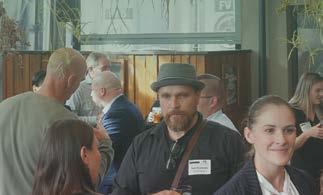

Club president Cameron Coombes says the facility is a place for “young men and women to make their own memories and mates for life”.
“We’re nothing without those people. We’re really about the rugby and the other sports as a means to creating a better community in my opinion.”
The growth in senior rugby is particularly impressive – from two senior teams a decade ago, to five now.
Sport is the focal point at the club, a place that has the community at heart.
The recent closure of the Five Stags pub in the village had not brought in more club members. It was rugby that pulled the crowd, not the bar.
“You get a winning team like we had with our B team this year and it pulled punters in from all over the place. It was tough rugby not to lose a game. Going through the season unbeaten and the final we had was just amazing,” says Kaihe.
“The crowd we had there was huge. Winning that Div 1B competition was great for the club.
“Our supporters support our teams no matter who they are. They’re always well supported,” he says.
As they look towards their big celebrations next year, Kaihe is pleased the club is looking vibrant and healthy.
“To win club of the year was really great because we didn’t think we’d be in with a chance.
“It’s the second time we’ve won it. The first one was about 14 years ago. That was probably when we’d just started to get things rolling.
“All the hard work that’s been done to get ready for our 150th is paying off. The two committees - senior and junior - all working together, shows the progress of the club,” says Kaihe.
“There’s always a heap of people down there doing something as a community, with the club as a focal point.”
As the jubilee year approaches, Pirongia Rugby Sports Club is not just reflecting on its past but embracing its future.
The blend of history, community spirit, and sporting success has created a club that continues to inspire new generations. With the mountain at its back and the community at its side, Pirongia is ready to mark 150 years not only as a celebration of endurance, but as a promise that the next chapter will be just as strong.

Running a business can be isolating, nding the right connections, getting your name out there, and staying on top of change takes time you don’t always have.
At the Waikato Chamber of Commerce, we’re here to make business easier.
AS A MEMBER, YOU’LL GAIN:
• Networking opportunities that open real doors
• Visibility and advocacy for your business in the region and beyond
• Workshops and events to grow your skills and condence
• A supportive community that celebrates local success
JOIN A NETWORK THAT HELPS YOU CONNECT, LEARN, AND THRIVE TOGETHER.
Te Awamutu Boxing Academy’s Chris Graham is re-launching guitar-building classes, sessions that cover off building an instrument from go to whoa, ending up with participants owning their own, bespoke guitar. His extensive knowledge of the different timbers used and the sounds they make, the precision and patience needed to craft something of true quality is something he wants to pass on.
A shared love of storytelling – and a familiar dinner-time standoff – has led two Hamilton creatives to publish their very first children’s book, Dude, Eat Your Food! Written by Emma Letessier and illustrated by Kayla McQuade, the book was inspired by a real-life exchange between Emma and her daughter. The book also marks the launch of Sweet Pea and Beans, Emma and Kayla’s new creative venture dedicated to creating playful, relatable stories for children.
A new funding arrangement to support the management and maintenance of New Zealand’s 23 iconic Great Rides will enable Kiwis and international visitors to get out to the regions, says Tourism minister Louise Upston. The announcement was made at Little Waipā Reserve on the Waikato River Trails with South Waikato mayor Gary Petley and Waikato River Trails Trust general manager Glyn Wooller.
James and Wells has been named the Trans-Tasman IP Firm of the Year at the recent Managing Intellectual Property Asia Pacific Awards. The patent attorneys have offices in Hamilton and Tauranga
A new Waikato-based business growth programme is empowering women to take their ventures to the next level. Soda’s Business Fundamentals Growth Lab is an eight-week practical programme designed specifically for wāhine founders and women-led startups or small businesses. The programme runs from February through to April.
Young people involved at Huntly College in the Graeme Dingle Foundation Career Navigator programme teamed up with Kiwi Can kids from Ngāruawāhia Primary School to lead the Beautifying Ngāruawāhia project, a creative initiative celebrating what young people see as beautiful in their town. Students captured photographs representing pride and connection to place; from Turangawaewae Marae to local parks and community spaces which were displayed at the Waikato District Council chambers and gifted back to the college.


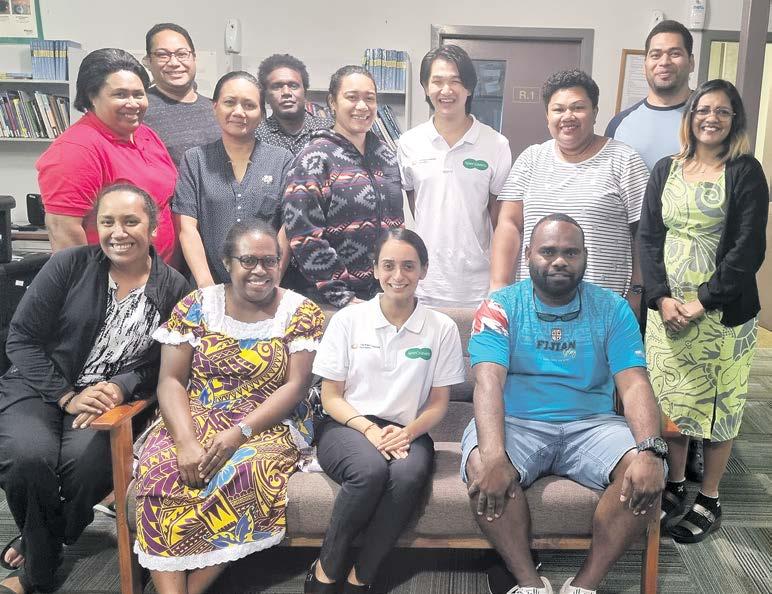
Waikato-based optometrist Kamaldeep Kaur is passionate about breaking down barriers to eye care.
Last year she travelled to Fiji with The Fred Hollows Foundation NZ, where she worked alongside nurses training in eye health.
For Kaur – who practices at Specsavers at The Base in Hamilton - the experience was deeply rewarding, an opportunity to share her expertise, support local health workers, and witness firsthand the life-changing impact of restored vision.
She speaks passionately about the importance of the foundation’s work, noting how donations directly empower communities by funding training and sightsaving operations.
Every contribution helps reduce preventable blindness in the Pacific.
Nine out of 10 people who are blind in the region don’t need to be - their conditions are treatable.
Specsavers has reinforced this mission by releasing a new limited-edition range of frames designed in collaboration with
renowned Māori artist Kura Te Waru Rewiri. For every pair sold, $25 will be donated to The Fred Hollows Foundation NZ, supporting initiatives like the Pacific Eye Institute in Fiji where Kamaldeep herself contributed.
The frames, inspired by Te Waru Rewiri’s celebrated work Puhoro Meets the Stripes III, weave cultural symbolism into modern design. While the artistry is striking, Kamaldeep sees the collaboration as more than aesthetics - it’s a tangible way to fund sight-saving programs and train the next generation of eye health professionals.
Since Specsavers began its partnership with The Fred Hollows Foundation NZ in 2009, over $1.4 million has been donated. Last year alone contributions supported 25,000 consultations and 3000 operations in Fiji. This year, the goal is to raise $75,000funds that will continue the work Kamaldeep experienced firsthand.
For Kaur, the message is clear: eyesight is precious, and improving eye health doesn’t just change individual lives - it strengthens entire communities.


By PHIL MACKAY
It’s fascinating watching people walk into the PAUA Architects’ office for the first time. I’m not sure what the expectation is, but we frequently receive comments remarking how interesting the space is.
There is colour, texture, character, quirkiness even. Artworks are scattered around, hand carved sculptures, architectural models, and a small collection of old Apple computers – artifacts of great design. Perspex and plywood cabinetry is both functional and visually interesting. It is immediately clear that this is a place of creativity, where art and culture are celebrated.
While it’s arguably overdue for a refresh, and certainly well overdue for a tidy up, it’s nonetheless an enjoyable, enriching place to be.
In contrast, sadly, almost all new housing now is bland and uninteresting. I recently saw a developer claim online that they “can’t do anything crazy or bold, but can’t do anything too boring either.” This tends to play out as ’safe’ white interiors, and a limited palette of exteriors – Fifty Shades of Grey.
I understand the logic, that anything too adventurous might limit the marketability of new houses. But how do we know, has anyone bothered to test this assumption? And what about the marketing concept of having a point of difference?
Real estate agents would undoubtably tell you the same thing. Yet, agents can only sell what already exists. And so, we are stuck in a self-perpetuating feedback loop, producing more of the same, believing that is what the market wants, because that’s what sells, because of course, that’s all that is available
The award-winning charity Kids in Need Waikato is securing its future with plans for a new ownership structure. It has launched The Legacy Project, a campaign aimed at moving from renting to purchasing its Cambridge base. Owning the property will allow for the expansion of services, unlock access to grants and funding that are not available while renting, and prepare for future leadership.
After 12 years as Waikato Chamber of Commerce Business Awards head judge, Heather Connolly has stepped down. Taking on the role from next year will be Jason Trower, previous investor and director of The Instillery and a judge for several years, most recently in the Emerging Leader category.
On-street all-day parking rates at selected central city locations are set to become cheaper making it more cost-effective for workers and other long-stay visitors to park in Hamilton. Data showed that some all-day paid parking areas were not getting the number of users expected. The reduction will help make better use of available parking space while supporting workers, long-stay visitors, and local businesses.
to sell.
This is part of a broader trend of course. Just as the industrialisation of food production has homogenised our diets and robbed us of the joy of localised, seasonal eating, digital globalisation has supercharged a trend towards the sameness of everything.
Fashion, societal trends, and architectural movements have always made their way around the world, but have typically morphed and taken on regional nuance in the process.
As the world has gotten smaller, trends and preferences travel more quickly. Now you can find the same hipster coffee shop in Beijing or Barcelona, Melbourne or Manchester. It’s all become a bit too familiar and comfortable, and I think we’ve forgotten the joy of diversity.
We can do so much better. My challenge to anyone working in the provision of new housing, is to think how you might innovate and create more interesting, more enriching environments.
Perhaps it’s not appropriate in every instance, and I strongly suggest working with a professional who has training and experience with colour. But there is an opportunity to provide bolder, more colourful options.
Just imagine if you are successful. What if you could spark the same excitement about your development or house that we still get for new season strawberries or asparagus?
• Phil Mackay is Business Development manager at Hamilton-based PAUA, Procuta Associates Urban + Architecture.
The Hamilton Arts Festival
Toi Ora ki Kirikiriroa will return next year from February 20 and will bring together international performers, New Zealand favourites, an expanded literary weekend and an eclectic mix of theatre, music, dance, comedy and whānau-friendly events. This year’s event featuring more than 800 performers and was the largest regional arts festival in the country. It attracted 47,000 people and injected an estimated $14 million into the economy.
Florian Spoerl has joined Waikato University as its new Director – Commercial and Business Partnerships, bringing a proven ability to translate cutting-edge research into real-world outcomes. Spoerl will leverage the university’s opportunities in innovation and commercialisation, grow business partnerships and funding streams for research, and provide guidance and mentorship in the commercial research space.
Waikato University honours student Naianga Tapiata (Te Arawa, Waikato, Ngāti Awa, Ngāti Porou) has become the university’s fifth Rhodes Scholar, making history as the first graduate
New Zealand’s immigration landscape continues to evolve with the introduction of the Business Investor Visa (BIV).
This new visa enables experienced businesspeople to invest at least NZ$1 million to purchase an established business in New Zealand and replaces the long-standing Entrepreneur visa category.
The Entrepreneur visa, in place since 1999, became increasingly complex due to frequent policy changes and unrealistic policy settings. High decline rates and inconsistent outcomes left many migrants, who had invested significant savings and endeavour, without the resident visa outcome they had expected. Industry stakeholders had long called for its replacement, recognising that while attracting serial entrepreneurs is desirable, the policy settings required to manage risk and expectations often stifled genuine entrepreneurial activity.
The new BIV is designed for experienced businesspeople who have the required financial resources and want to own and operate an existing business in New Zealand. The primary focus of the BIV is on employment retention and growth, rather than imposing rigid future business outcome requirements which are always difficult to forecast, let alone meet, even for existing business operators.
There are two BIV pathways:
of kura kaupapa Māori to be awarded the honour. He will join the University of Oxford’s Class of 2026 to complete a fully funded twoyear Master of Philosophy in Social Anthropology.
Clive Somerville chief executive of South Waikato Investment Fund Trust is one of only nine distinguished Winston Churchill Fellows for 2026, allowing him to travel to Europe to visit communities that have reinvented themselves following the decline of traditional industries.
Michelle Noordermeer has been appointed to a newly established role at Waikato Regional Airport as Aeronautical Growth and Marketing general manager. She holds a degree in aviation management, a commercial pilot’s licence, and an MBA and has enjoyed an impressive career spanning aviation strategy, global airline partnerships, route development, marketing leadership and sustainability.
Water role
Peter Winder will become chief executive of IAWAI –Flowing Waters, the new entity delivering water, wastewater and stormwater services to nearly 300,000 people in Hamilton and Waikato.
• Actively operate the business in New Zealand
The business being purchased must:
• Have been established for at least 5 years
Employ at least 5 full-time equivalent (FTE) employees and be able to create 1 new role
• Be compliant with all employment and regulatory laws
• Not be an excluded business (e.g., franchises, fast food outlets, convenience stores, etc.)
One of the most compelling aspects of the BIV is its potential to address succession planning in New Zealand’s SME sector. Thousands of small businesses are owned by individuals nearing retirement. The BIV provides a pathway for business-savvy migrants to buy into these businesses, injecting fresh energy, capital, and global experience. This can maintain, recapitalize and reinvigorate businesses that might otherwise were looking to close or wind down.
For business accountants, professionals, and business brokers, the BIV opens new opportunities to help SME clients plan successful exits, and to maximise the value of their hard work and intellectual property acquired over many years, while, importantly, preserving employees jobs. This BIV has to be a win-win for all parties.
• Standard Pathway: Minimum investment of NZ$1 million in a qualifying business, with a three-year pathway to residence.
Fast-Track Pathway: Minimum investment of NZ$2 million, with a one-year pathway to residence, provided the business creates jobs and meets specific growth criteria.
Note: The investment amount cannot include any real estate component. Applicants must:
• Have a minimum of 3 years’ business experience
• Be aged 55 years or younger
• Meet English language requirements Have NZ$500,000 available in addition to their business investment
• Conduct appropriate due diligence on the business
• Acquire at least 25% ownership of the business
The BIV complements the successful Active Investor Plus (AIP) visa by targeting business migrants who may not have the capital required for the AIP but who wish to own and operate a business in New Zealand.
The BIV does not cater for establishing new businesses and the Government is considering other visa options in this regard but, as noted earlier, this is a complex policy area which may take time and prove challenging to resolve.
The BIV has a very different focus from previous business visa policies and while it may take a little time for New Zealand business owners, and their advisers, to understand and respond to this new opportunity, the BIV has real potential and we look forward to it delivering wide-ranging and positive impacts across New Zealand’s SME sector in the future.





By NICOLA GREENWELL
As warm days and light-filled evenings return, the team at Hamilton & Waikato Tourism continue to focus on ensuring visitors experience the full depth of what makes our place special. From the lively heart of Hamilton to the warm welcomes awaiting just minutes away in our rural towns.
Hamilton continues to thrive as the beating heart of Waikato: a city rich with art, culture and vibrant shared spaces bringing people together. With the Waikato River weaving through its centre and cycle trails connecting neighbourhoods with nature, Hamilton offers a dynamic urban playground paired with some of the most delicious dining in Aotearoa.
One of our region’s greatest strengths is how quickly city energy gives way to peaceful rural escapes. Within a short drive, visitors can be immersed in landscapes, stories and people defining Waikato’s rural roots. Each township brings its own character and charm, creating a tapestry of experiences making the mighty Waikato unforgettable.
Cambridge, with its leafy streets, sporting pedigree and boutique eateries, remains a favourite base for families and active travellers. The ancient forest of Sanctuary Mountain Maungatautari rises above the farm belt, where native species flourish in an environment safeguarded by an entire community.
To the northeast, Te Aroha’s iconic mineral spas and historic domain offer slow-summer rejuvenation, while the Hauraki Rail Trail linking Te Aroha and Matamata draws cyclists and walkers enjoying long, sun-soaked days. Matamata remains a visitor favourite with Hobbiton Movie Set delighting both domestic and international audiences.
Towns across northern Waikato blend heritage and hospitality. Te Karaka Lodge sits among rolling
farmland, while at Rangiriri Pā, Ngāti Naho’s Spirit of Resilience tour offers powerful insight into the people and events that shaped this historic landscape. The area also showcases producers elevating the region’s premium food and beverage identity, most notably Pōkeno Whisky, crafting world-class single malts, and internationally recognised Zealong Tea Estate, New Zealand’s only tea estate.
Out west, coastal communities like Raglan pair surf culture and creative energy with nature-rich adventures, summer markets and long, sunlit evenings, drawing travellers who want to immerse themselves in the region’s relaxed, free-spirited vibe.
Our role at Hamilton and Waikato Tourism is to ensure these experiences are championed through our summer campaigns, media and influencer hosting and ongoing operator support. When boutique accommodation, guided experiences and heritage trails sit alongside major venues like Hamilton Gardens, Hobbiton Movie Set and Claudelands, we showcase the full richness of what Waikato offers.
Tourism spending in rural communities supports local jobs, sustains essential services and helps keep our towns vibrant and future focused. A thriving café or gallery enriches daily life for residents just as much as it appeals to visitors; everyone benefits when our small towns shine.
This summer, we encourage locals to rediscover the beauty in their backyard. And if there’s more we can do to amplify your corner of the mighty Waikato, we’re keen to hear from you.
• Nicola Greewell is general manager of Hamilton and Waikato Tourism.


By JOSH MOORE
Most business owners and marketing managers dream of growth.
You want your marketing to bring in leads, convert customers, and ultimately drive success. But here’s the challenge: when you look at your digital marketing reports, do they actually show you if your marketing is helping you reach that goal? Or are they just pages of numbers that leave you guessing?
Too often, reports are filled with data that looks impressive but doesn’t give clarity. A page full of numbers can make it hard to see what really matters.
Often, I see reports that focus on things like ad clicks or impressions. It can feel like progress but isn’t a measure of real results.
Clicks are not the finish line. A campaign that gets thousands of clicks might look great, but if those clicks don’t turn into leads or sales, they’re just noise. The same goes for CPC, or “cost per click”. Many reports highlight CPC as if it’s the ultimate measure of success. It isn’t. A low CPC might sound good, but if those clicks aren’t converting, you’re spending money without getting anywhere.
The metric that truly matters for businesses that need leads is CPA, or “cost per acquisition”. In simple
terms, how much does it cost you to get a lead? This is the number that tells you whether your marketing is working. If you know your CPA, you can make smart decisions. Is your campaign profitable? Is it doing better than last month? Should we scale it up? Or do we need to adjust our strategy?
Clear reporting should make this easy. It should highlight the numbers that matter and explain what they mean for your business. When you can see your CPA clearly, you can have confidence in your advertising. You know what’s working, and you can grow further.
Taking it a step further, our best clients track exactly which leads came from the Google Ads or Meta campaigns and then are able to report how many of those leads turn into customers, and the value of those customers. That’s the power of tracking what matters.
So don’t get distracted by the wrong metrics. Clicks and CPC might look exciting, but they don’t tell the full story. Focus on the right metrics, and you’ll have the clarity to build the business you’ve always envisioned.
• Josh Moore is the managing director of Hamilton-based digital marketing agency Duoplus.







Fonterra is increasing its support for young people entering the dairy industry with a new twoyear programme delivered in partnership with Growing Future Farmers, a national charitable trust providing a hybrid farmer-led vocational training model. The programme will begin with a pilot in Waikato and Bay of Plenty, next year.
A school holiday initiative by Waikato Regional Council that tripled bus patronage - especially among children and families - has been such a success it’s set to return. Council transport staff are now looking to collaborate with Waikato-King Country communities on other innovative ways to boost bus usage.
Construction of a new roundabout at State Highway 5 / State Highway 28 Harwoods Road intersection east of Tīrau is well underway. Traffic will be on the new roundabout in March next year.
The Waikato River Authority has awarded $5.7 million to 26 projects aimed at protecting and restoring the health and well-being of the Waikato and Waipā Rivers and their catchments.
Co chair Stu Kneebone said there were 43 applications seeking $12 million for projects with a total value of $22 million.
The technology used in the upgraded Te Kauwhata and Raglan wastewater treatment plants has placed Waikato District Council at the forefront of global water innovation because of the near drinking standard of the discharge. The plants are Southern Hemisphere’s first dual Membrane Aerated Biofilm and Membrane Bioreactor powered plants, resulting in safe, energy efficient and scalable discharge that meets longterm catchment planning.
Francis Upritchard’s Rock has landed at Hayes Paddock, gifting Hamilton a striking new public artwork. Mary Anne Gill was at the unveiling.
Hamilton has a new landmark to enjoy: Rock, a striking bronze sculpture by internationally renowned artist Francis Upritchard.
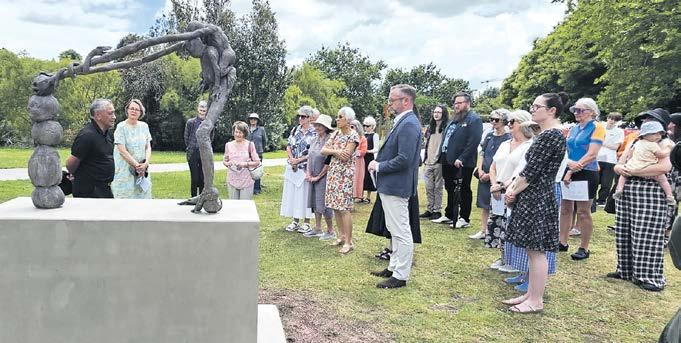
Unveiled at Hayes Paddock Reserve last month, the artwork – donated by Dallas Fisher and Helen Gleeson in memory of their late friend Glennis du Chatenier who lived nearby - has already captured the imagination of locals and visitors alike.
The reserve, nestled alongside the Waikato River and a popular route through to Hamilton Gardens, is a much loved community space in Hayes Paddock.
Nearby attractions include the Wellington Street Beach, a children’s playground, and a grove of chestnut trees.
Now, it’s also home to a piece of art that invites curiosity and delight. It is the fifth public artwork gifted to the city by Mesh Sculpture Hamilton.
Rock joins four other Mesh gifts to Hamilton: Te Tatau ki Kirikiriroa (Victoria on the River), Tongue of the Dog (Waikato Museum), Te Waharoa ki te Ao Maarama – The Entranceway to the World of Enlightenment (Hamilton Lake), and Te Pumanawa o te Whenua – Beat Connection (Claudelands).
Rock began life as a hand moulded form in balata rubber, its distinctive texture preserved when cast in bronze.
The sculpture depicts two elongated figures - Long Arms and Long Legspiggybacking and entwined as they build a rock pile. It is inspired by a Japanese folk tale of yokai (supernatural beings) who must work together to complete even simple tasks - imagined as building a rock pile.
Visitors are encouraged to touch, wonder, and imagine.
It’s a piece for everyone, offering a moment of surprise and joy along the river path, says Mesh chair Stuart Anderson.
Wini Paekau, representing mana whenua, says the sculpture is a worthy addition to an area where there was once the major Te Nihinihi Pā site, occupied by Ngāti Koura and Ngāti Hanui at various times during its existence.
Mesh curator Laree Payne says it was “immediately obvious” to her that the Francis Upritchard work was the right one for the site.
Upritchard, born in New Plymouth and now based between London and New Zealand, is celebrated for her figurative sculptures that blend mythology, literature, and history. Her works often feature unusual materials - from polymer plastic to glass and bronze - and explore human like forms with a touch of the fantastical.
“Rather than dominate
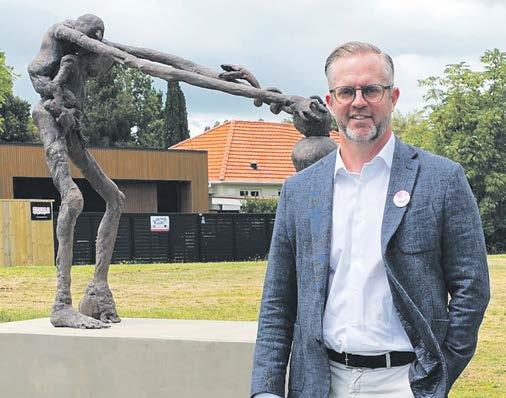
the site with scale, it (the sculpture) reflects the size of the park’s smaller frequenters, which are children, of course,” says Payne.
“And at the same time, its detail and unusual surface quality insists that those travelling along the river path start to slow down for a closer look.”
Upritchard was not at the
unveiling but sent a message saying she would visit next year to see her work in the reserve. Its depiction mirrored those involved in bringing the Rock to Hamilton and showed how many hands can make culture possible, she says.
Mesh was formed in 2010 to commission nationally significant public artworks
for the city. Funded entirely by donations from generous individuals, families, and charitable groups, Mesh’s projects are gifts to Hamilton - creating a legacy of art in public spaces.
“Art doesn’t just belong in galleries – it belongs in the heart of our communities, where it can surprise, delight and connect us,” says Anderson.
An elder law solicitor can advise on all aspects of future planning and undertake a full review of your affairs to ensure you receive the right entitlements and care, and that your estate is managed according to your wishes.
From 1 April 2026*, Joanne Jogia will join current partners Lisa Ware, Matt Makgill and Lucy Young. Possessing all the great attributes we seek in our leaders, Joanne is exceptionally bright, with an insatiable thirst for knowledge and consistently humble. Joanne has made significant contributions in her time with the firm, consistently demonstrating
exceptional drive and embracing leadership opportunities across key areas, including property, employment, and occupational rights, becoming a trusted expert and resource for all of us.
Congratulations Joanne. We look forward to the innovative direction you will bring to the firm in the years ahead.
The team at Lewis Lawyers covers an extensive range of matters including occupation right agreements, succession planning, wills, enduring powers of attorney, PPPR applications (property manager and welfare guardian), capacity issues, residential loans and subsidies, asset protection and elder abuse.
*Pending Law Society approval.































RML Machinery took centre stage at the 2025 Waikato Chamber of Commerce Business Awards, earning both the Supreme Award and the Innovation Award for its advancements in automation technology.
Judges described RML as an exemplar of Waikato innovation, integrating technical excellence with substantial commercial results and a profound impact on the local community. Behind these achievements lies a vibrant, passionate team whose energy and determination were palpable at the awards.
The focal point of RML’s accolades is their cutting-edge automated guided vehicles (AGVs), locally designed to meet the needs of New Zealand manufacturers. Judges highlighted the AGV platform as a standout achievement: technically sophisticated, user-focused, and crafted for the local industry’s unique challenges.
CEO Daryl Joyce says credit belongs to the whole team: “For a bunch of engineering, production and finance types, it was pretty overwhelming. To have homegrown recognition for what we do means everything to our people and helps us attract good talent, especially the bright, fresh minds coming out of our amazing local universities and colleges.”
Recognition at the awards is more than a trophy for RML – it’s validation of the company’s investment in people and

workplace culture. They were also a finalist in the People and Culture category.
“We recruit in a certain way. Our chief people officer Sarah Tordoff has been a big part of shaping how we teach and inspire new team members. If someone is enthusiastic and loves what they do, we give them the chance to learn and thrive,” Daryl explained.
The average age of staff is just 34, and the company is committed to fostering team members to ensure they have a deep talent pipeline that keeps the team
fresh, driven and will support customers for decades to come.
“We spend a lot of time talking with our customers about how we design solutions for them. You see their eyes light up… we’re passionate about delivering products that genuinely change the way they work and grow their businesses.”
Daryl reflects on the importance of “putting ourselves out there”.
“It takes courage to enter and share your story, but the process helped us articulate who we are, why we do what we do, and celebrate our success as a
team instead of just moving straight onto the next thing.”
For a finalist in the People and Culture category as well as a double awardwinner, the Supreme title was the ultimate honour.
“When you look around that room, and at the past winners, we had no idea we’d be considered for the Supreme Award. We’re very proud, and more determined than ever to keep pushing what’s possible for our own people, for New Zealand innovation, and improving our customers productivity.”







Fiona Michel, chief executive of Braemar Hospital, has been named Waikato’s CEO of the Year for 2025 – a recognition that crowns her as one of the region’s most progressive and values-driven health leaders.
Fiona’s leadership is guided by what she calls her “Shining Eyes” philosophy, a mindset shaped through years of seeking purpose and meaning at work. “I know I’ve done a great job when someone just sparks. The moment when they say, ‘I can do that, I can lead that, I can make that change.’ That sense of ownership and drive, that’s what gets me out of bed,” she explains. This approach isn’t limited to upper management. Fiona is known for walking Braemar’s hospital wards with a basket of chocolates – sometimes non-sugary treats for good measure – using them as a gentle tool to start conversations.
“There’s method in my madness,” she laughs. “People flock to you when you have a basket of chocolates. I’ll ask them how their day is, what do they need? It changes dynamics. It’s much more effective for me to go to them than for someone to have to come to the CEO’s office, which can be intimidating. Every couple of weeks I do the rounds. Because I’m a familiar face, people feel like they can share with me… funny stories, busy days, something they noticed, whether good or bad. Catching little things before they become big things is what matters in a hospital running 24/7.”
Fiona’s route to hospital leadership
wasn’t straightforward. Her career has zigzagged through banking, insurance, energy, technology, and healthcare. She describes herself as a business leader, with deep specialities in IT and HR, always seeking challenging environments that demand learning and adaptation. “You can’t just rinse and repeat. I need the stretch,” she notes.
It was her time at Harvard Business School cemented her belief that innovation often comes from outside your own industry. “Seventy percent of innovation comes from outside of your industry. If we treat healthcare like a corporate, we will fail. That’s where my industry diversity has worked for me. I find the mix gives me an incredible selection of experiences and lots of possibilities to explore.”
Fiona is determined that her tenure at Braemar will add to its legacy. “I love Braemar’s legacy story, but I’m constantly thinking about what I can bring back for Braemar and the Waikato. Health isn’t in a great place nationally or internationally, but there are ways through if we’re willing to think differently and work together,” she says. “It means all of us working together, if we value health in our community.”
As Braemar approaches its centenary next year, Fiona hopes more of the community will come to know about its achievements and progressive spirit. Her legacy will be one of innovation, compassion, and shining eyes – lighting a way forward for staff, patients, and the wider Waikato community.
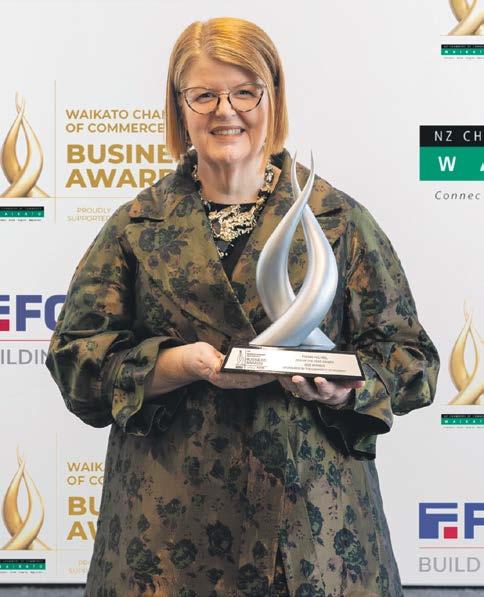
As the 100% shareholder of Braemar Hospital, Braemar Charitable Trust has been working for more than 50 years to advance health outcomes in the Waikato region.
In the recent financial year, the Trust enabled 159 free surgeries for those who need it most and is on track to significantly exceed previous years’ numbers as community health needs grow.
In addition to funding eligible patients for free surgeries and procedures through its Community Surgery Programme, the Trust works alongside partners to implement innovative, sustainable healthcare initiatives.
We are proud to be the recipient of the ‘For Purpose’ Waikato Chamber of Commerce Business Awards 2025.
& Strategy.
an award for that. And an agency.
The Bettle–Associates team is incredibly proud to have been awarded the ‘Business Growth & Strategy’ Award at the Waikato Chamber of Commerce Business Awards 2025.
The award acknowledges our focused business’ strategy and our growth. But, for us and for our clients, it also defines what sets us apart – strategy and growth.
Our focus is on helping organisations navigate complexity with clear strategy and customer-centric thinking – and connecting all investment and tactics to measurable indicators of growth.
Our clients’ growth comes from their tricky marketing challenges being carefully solved through:
Brand Strategy
Go-To-Market Strategy
Value Proposition Definition
Customer Experience (CX) Strategy
Organisational Culture
Marketing Strategy & Planning
Design
Digital Performance
Media Strategy and Planning
Campaign Development
Market Research
Sales Strategy
If you’re facing a growth or strategy challenge, we’re here when you’re ready.
bettle.co.nz




The third time was a charm for Claire Williamson who was named Emerging Leader of the Year at the Waikato Business Awards.
Applauded by judges for her bold, valuesdriven leadership and her commitment to empowering both her team and her community, Claire had entered the category twice before.
“When you enter and don’t win… it could be easy to get a bit despondent. But I knew I was doing some cool stuff and I’d taken on board the feedback from judges I had spoken with the past two times I’d entered. I really wanted to be able to have those conversations again because they were so valuable,” Claire said. Through those conversations with judges Jason Cowan, Jess Fearnly, and Pam Roa –who was last year named CEO of the Year – it was clear that Claire had what it took to win the category this year.
The judges described Claire as “energetic, authentic, and purpose-focused”, saying she’d built My Mortgage into a dynamic business known for its financial expertise and genuine care for people.
Judges said her entrepreneurial agility –evident in the company’s expansion into other complementary offerings – showcases her ability to innovate and adapt in a changing environment.
Judges praised Claire’s openness to feedback, willingness to embrace vulnerability, and comfort with being challenged by her team, qualities that show mature leadership grounded in learning and long-term thinking.
One of the conversations she had with the judges was about personal development.
“I’ve been doing a lot of work on that and realised you can create your own development. I’ve been challenging the idea that personal development has to be done a certain way. I believe you can grow through interacting with other young leaders with different perspectives.”
That has led Claire to talk with other high achieving young leaders who are keen to set up an initiative for ambitious young people to support each other – watch this space! Claire juggles many hats… MD of My Mortgage, author, mentor, speaker. She serves on the boards of Aroha Cambridge Trust, which protects and restores the environment, and the Rural Communities Trust, that empowers rural communities. She’s also working on a new business that will focus on investment – “supporting people with career ambitions to build wealth in a holistic way”.
So how does she manage everything?
“I let people do what they are good at and I do what I’m good at. I’m also non-negotiable about the time in my diary that fuels me …. the gym, food, time in nature… doing things that enable me to bring the energy I need to for each situation.”
Having realised that she loves “growing things… food, people, business, and community”, ‘Growing Kiwis’ is set to be the name of her podcast that Claire plans to launch in the new year.
“I think I might need a PA!,” she laughs.

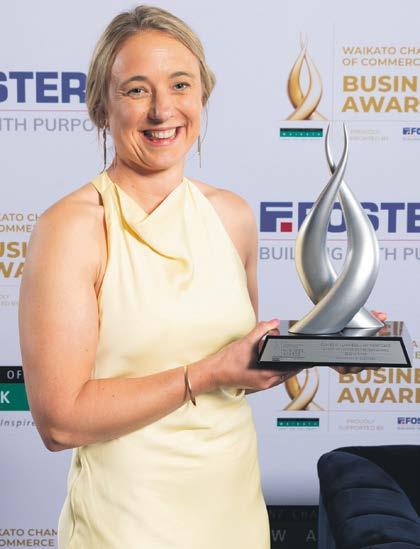
Emerging Leader of the Year: Claire Williamson. Award sponsored by: 2degrees.
As announced in November this month we were awarded NZ Most Trusted Business for 2025
At TOLBECS, we pride ourselves on being your trusted ear health experts, offering safe and comprehensive care led by our highly trained team of registered Ear Nurses. As members of the Ear Nurse Specialty Group NZ, we are equipped with cutting-edge technology to transform lives with precise, gentle, and reliable solutions for all ear concerns.
We combine clinical precision with genuine care to deliver excellence in ear health across the Waikato.
Our experienced ear nurses provide a full range of professional ear-care service, including:
• Infection diagnosis and treatment
• Hearing screening tests
• Microsuction wax removal using state-of-the-art surgical microscopes
• Foreign body removal
• Assessment and management of ear pain
• Suppor fot blocked ears and recurring wax build-up
• Expert advice for ear health when diving, flying or swimming









































































Satco’s win at the Waikato Chamber of Commerce Business Awards is a beacon of local resilience and spirit in a region reeling from job losses and industrial closures.
Founder Warwick Batley’s journey – from a simple engineering shop to a globally respected innovator in forestry equipment – captures the essence of South Waikato’s grit. “You have to believe it will work, keep working hard, and keep investing back into your people and your ideas,” said Warwick, who started in business at just 22.
Warwick and his then-business partner bought an existing engineering company and began doing repairs on forestry equipment. That company – Steel and Track Engineering Company, was pretty run down.
“We fixed pretty much anything that came in the door.” In the mid-90s, mechanisation was introduced into forestry industry around Tokoroa. “We started fixing the mechanised heads that came out of Europe because they couldn’t stand up to the New Zealand conditions.”
Working on the European equipment meant Warwick learned how to make products that would handle New Zealand’s toughest timber. At the end of the ‘90s Warwick bought out his partner in Steel and Track. He then doubled down, learning and innovating to build homegrown solutions. After years of long hours and hard-earned lessons, he drew a line in the sand: no more repairs – just building world-class products under the Satco name, aptly named as a nod to Steel and Track Company, where the concept of developing the products began.
“I knew Satco was the future, not Steel and Track.” Satco was selling products throughout New Zealand and Australia. Then a group of Chileans came to New Zealand, looking at innovation in the forestry industry for ideas that they could take back to adapt for their own market. They were introduced to Warwick who gave them a tour of their factory.


International Trade Award: Satco Award sponsored by: Oyonnx.
They asked if Warwick would be interested in selling Satco products into Chile. The answer was a resounding “yes”. Fast forward and Satco Chile is growing in leaps and bounds.
Satco now exports products to Montana and Idaho in the US, and has a foot in the door in Ecuador, Brazil, and Indonesia. There is also interest from South Africa.
Nearly every component is built in Satco’s Tokoroa facility, using advanced robotics and machining, keeping costs 20% below international competitors while delivering tailor-made solutions to customers around the world.
Beyond its technical success, Satco is a family and that includes staff, many of whom have been with the company up to three decades. Succession is under way, with Warwick’s son Ethan preparing to learn Satco’s Chilean operations.
At a time when other companies in South Waikato have shut down plants and axed hundreds of jobs, Satco has proven you can grow a world-leading business right in South Waikato.
“If you stick to your guns, you can be competitive and sell on the world stage, even from Tokoroa!”
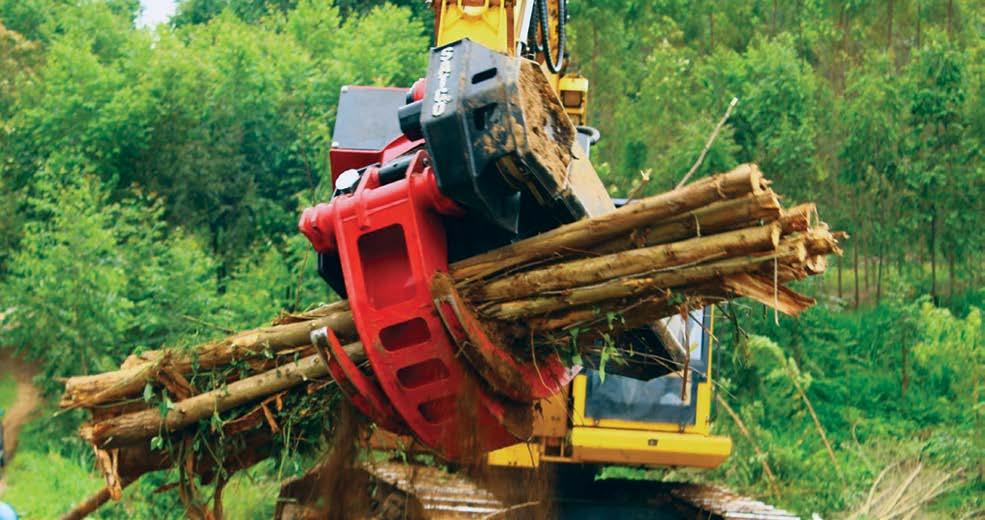







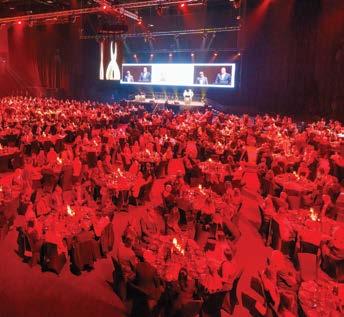


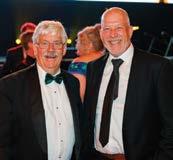



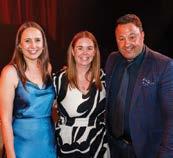
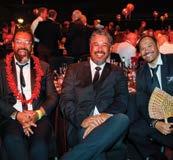






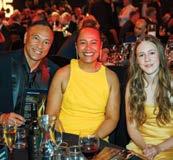
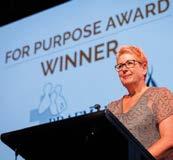







The next generation of steel suppliers who have client relationships and sustainability at the heart of what we do.
We offer the complete package in steel fabrication services and are trusted by leading commercial and industrial developers. Based in North Hamilton and are central to supplying throughout the Waikato, Bay of Plenty and Auckland regions.




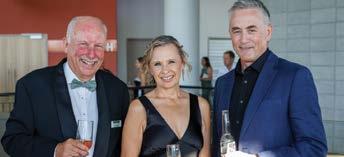




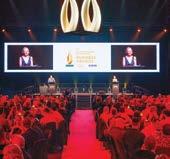










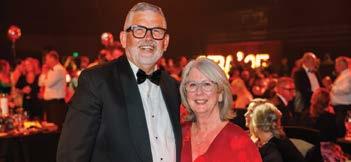











Individuals and groups who have made exceptional contributions to the city and people of Hamilton - mostly in a voluntary capacity, across five categories: health and wellbeing, arts and culture, sport and recreation, education, and community – have been recognised by the city council. Mayor Tim Macindoe presented the Hamilton City Council Civic Awards to 12 individuals and groups and the prestigious Hamilton Kirikiriroa Medal to former deputy mayor and Member of Parliament Martin Gallagher for his outstanding service to the city and its people. Photos: Mike Walen.
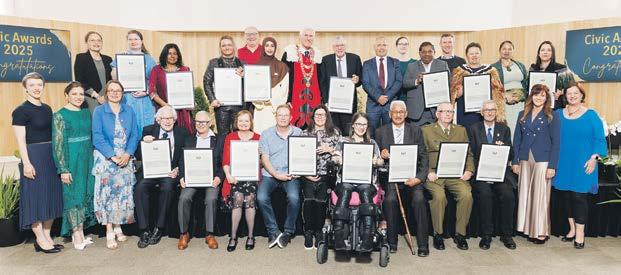
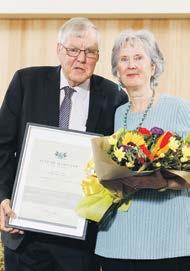
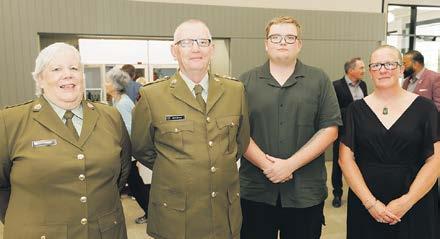
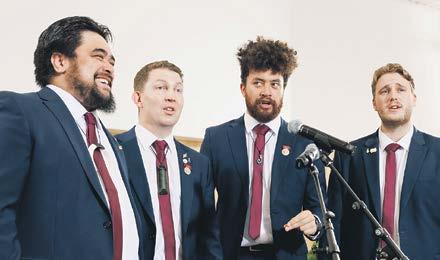
Zealong Tea Estate is brewing more than just globally acclaimed teas on land that was once a dairy farm and it has become a popular place for events. The Employers and Manufacturers Association held its Waikato member briefing there last month, attended by more than 100 business leaders. It was also a day to celebrate Zealong’s inclusion in a book called “150 Tea Houses You Need to Visit Before You Die.” Photos: Mary Anne Gill
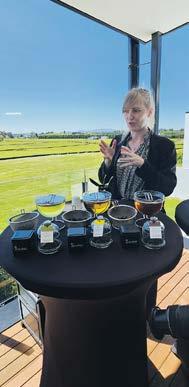
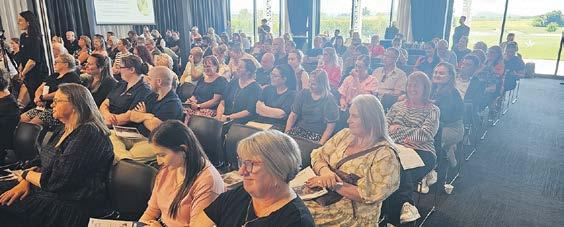
The Clements Hotel, formerly the Masonic, has been restored to its full glory and is now a 29-room boutique hotel. A grand opening was held in Cambridge last month with Tourism minister Louise Upston among the invited guests who mixed and mingled with operators Capstone Hotel Management and co-owners Gerry Westenberg and Jo Pannell. Photos: Mary Anne Gill
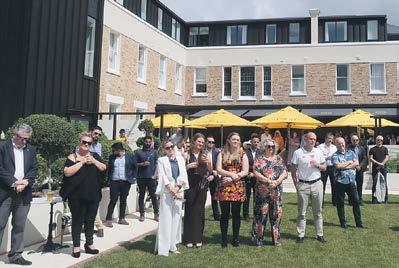
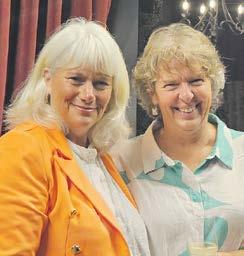
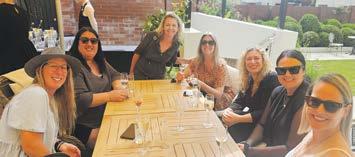
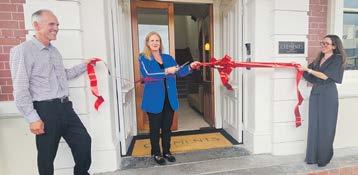
It has been a challenging time for the team at Waikato Institute of Technology (Wintec), one of New Zealand's leading vocational training partners. From January, Wintec will leave the former Te Pūkenga/New Zealand Institute of Skills and Technology and return to regional governance delivering high-quality education to over 11,000 learners each year across 130+ programmes, from certificates to master's level. At the Waikato Chamber of Commerce BA4 last month held at the Storehouse in central Hamilton, Wintec Operations lead Warwick Pitts talked about how the organisation is shaping the future of education and training in the Waikato. Photos: Marcelo Mieres
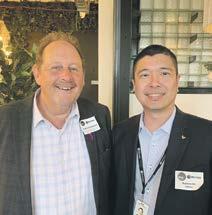
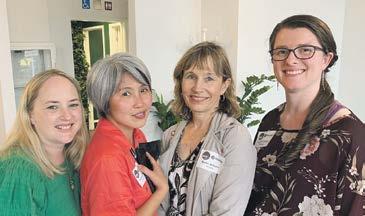
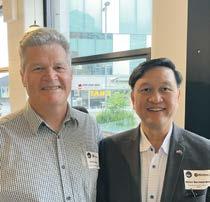
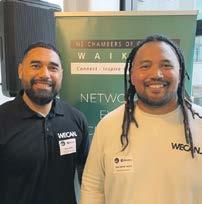
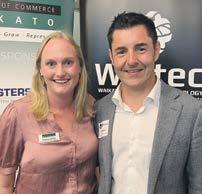
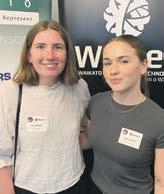
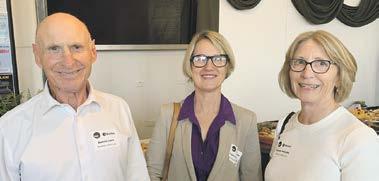
The Community and Enterprise Leadership Foundation (CELF) celebrated the graduation of its 10th Leadership Class, marking a decade of cultivating leaders who drive positive change across the Waikato and beyond.
Held at the Gallagher Academy of Performing Arts, the evening was a celebration of learning, growth, and connection. Photos: Stephen Barker
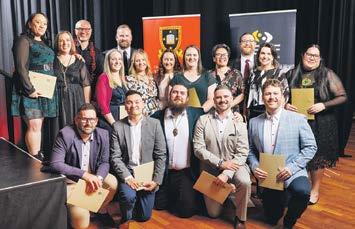






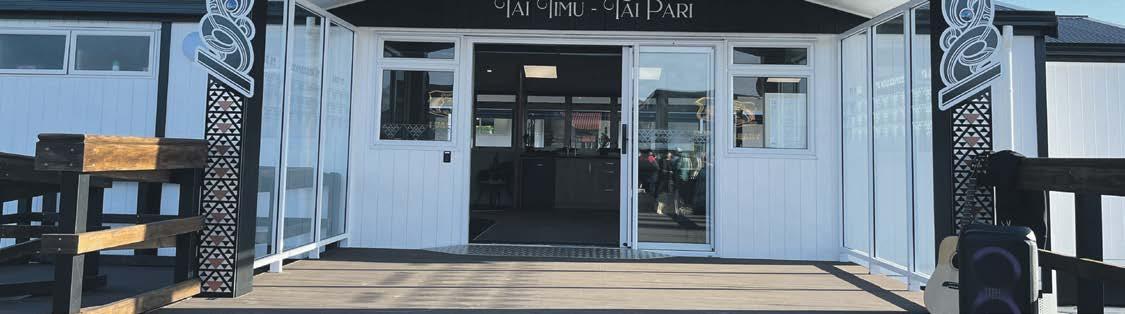
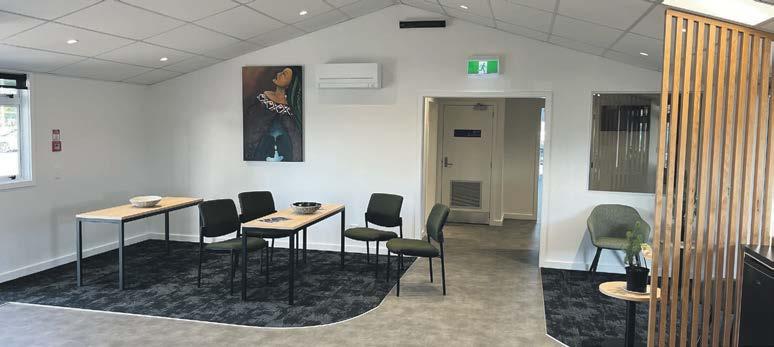
The recently completed Tai Timu Tai Pari Health Hub in Raahui Pookeka (Huntly) has transformed a collection of used relocatable classrooms into a modern, fully functioning facility supporting mental health and addiction services.
The refurbished 600m² space includes a welcoming reception, day clinics, offices, staff and public amenities, and a landscaped courtyard connecting the buildings - a design that encourages interaction, dignity, and community connection. With capacity to see up to 50 patients a day and house 30 permanent staff, the hub will also host visiting clinicians, improving access to care for the wider community.
Delivered in partnership between Foster Maintain and the Matawhaanui Trust, the project reflects a shared commitment to community-led outcomes. The Trust’s people were involved throughout, ensuring cultural relevance, local participation, and a design that truly reflects the aspirations of Raahui Pookeka.
Fosters was brought into the project partway through, inheriting the relocated classrooms that required extensive remediation before fitout could begin. Working closely with the Trust, Te Whatu Ora (Health New Zealand) and the wider consultant team, Fosters led the structural, compliance, and services upgrades needed to bring the buildings up to modern health facility standards - while respecting
Fosters supported our local workforce, guided us through the process, and managed the documentation and coordination exceptionally well. They were fantastic to work with.
Joyce Maipi, General Manager Matawhaanui Trust
budget, community goals and key cultural considerations.
Joyce Maipi, General Manager of Matawhaanui Trust says the alignment in values was critical.
“I really want to thank the Fosters team, who were culturally aligned with our vision and had a genuine affinity with the outcomes we wanted for our community,” said Joyce. “They provided absolutely the right people for this job. The site team worked so well on the ground, while management saw the vision and worked with our people every step of the way.”
“Fosters supported our local workforce, guided us through the process, and managed the documentation and coordination exceptionally well. They were fantastic to work with.”
Looking for a purpose-built solution? Let’s work together.