Editorial Committee
Marketing and Communications Advisor, Emma McMillan
Marketing and Communications Manager, Claire Denbury Head of Community and Development, Ryan Whitehead
Development Associate (Alumni), Cindy Parker
Contact us Alumni ocga@cgs.vic.edu.au Foundation cec@cgs.vic.edu.au
cda@cgs.vic.edu.au
55 Mont Albert Road, Canterbury VIC 3126
Spectemur is printed on FSC certified 100% recycled uncoated ‘Revive Laser’ paper. The carbon emissions associated with the Spectemur production have been offset through various sustainable practices. By adopting carbon-neutral practices, Spectemur aims to uphold the environmental values of the School.
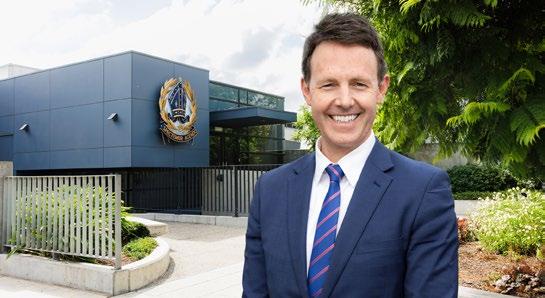
One of the special privileges of leading a school with 140 years of history is witnessing the way connection continues to shape and define our community. At its heart, education is not simply about knowledge gained in the classroom but about the relationships formed, the partnerships built and the sense of belonging that endures well beyond graduation.
We know that strong human connections are vital for health and mental wellbeing. For our students, connection provides the security and encouragement to learn with confidence, to take risks and to grow into young people who understand their value lies not just in what they achieve individually, but in how they contribute to the collective good. Research continues to affirm that people with strong ties to others are more resilient, healthier and better equipped to navigate life’s inevitable challenges. Within our School, these ties are fostered daily through the friendships formed in classrooms, on sporting fields, in music rehearsals, co-curricular clubs and through the simple acts of encouragement and kindness that flow between students and staff.
Importantly, these connections are not just about companionship; they are about purpose. Working towards a shared goal, be it a concert, sporting match, camp or community fundraiser, teaches our students the power of collective effort and the satisfaction that comes from contributing to something larger than themselves.
The importance of connection does not end with school. I am regularly reminded of this when speaking with our alumni, many of whom remain deeply involved through sports clubs, lending support to mentoring and career education programs, and attending reunions and network functions. These connections provide not only camaraderie but also support during times of need.
For many, the bonds first formed at school are the very relationships that continue to sustain them decades later. Such a lifelong connection is a testament to the enduring value of our school community.
If connection is the foundation, collaboration is the structure that builds readiness for life beyond school. Collaboration teaches young people to listen, to value different perspectives and to contribute their strengths to a shared endeavour. Whether it is working together on a group project, playing in an orchestra or ensemble, being part of the cast or crew for a performance, or participating in a team sport, collaboration develops patience, adaptability and respect for others. These qualities are essential for leadership, for relationships and for meaningful engagement in the wider world.
In a time where workplaces increasingly demand cooperative problem-solving and innovation, our students must leave us with the skills to thrive in collaborative environments. More importantly, they must leave us understanding that true success is rarely achieved alone, but through the combined efforts of many.
The sense of connection and collaboration within our School is also shaped profoundly by the involvement of parents. When families gather on the sidelines of a sporting match, attend a concert or volunteer at rehearsals and productions, they are supporting their sons while also helping to strengthen our community. The work of our many “Friends Of” groups is modelled on this spirit of connection and collaboration. Similarly, our annual Open Day is not possible without the collaboration and generosity of parents who run stalls and events, welcome visitors, answer questions and share their pride in the School. These acts of service, large and small, weave parents into the fabric of community, showing our students what it means to belong and contribute.

‘Research continues to affirm that people with strong ties to others are more resilient, healthier and better equipped to navigate life’s inevitable challenges.’
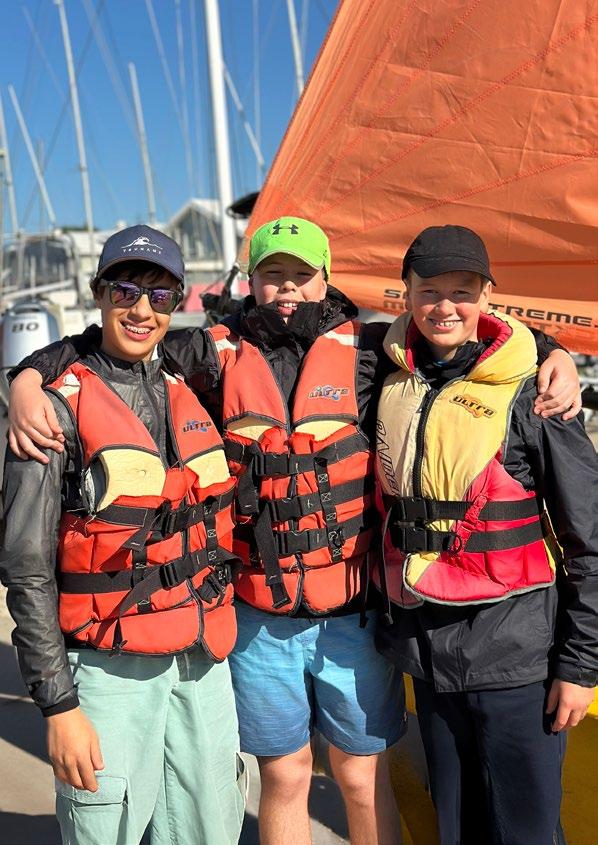
Ultimately, the purpose of schooling is to prepare young people not just for examinations or university entry, but for life. By fostering collaboration and connection, we help our students become young adults who can lead with humility, work with others and contribute positively to the communities they join.
Across the Camberwell Grammar community, from the youngest learners through to our alumni and families,
I see daily evidence of the strength that collaboration and connection provide. I hope that every student who walks through our gates understands and experiences that the connections formed here, and the collaborations undertaken, will remain among the most significant and sustaining influences of his life.
Mr Ben Jeacocke Principal
What began in 1968 as a small, makeshift operation has grown into today’s Pre-Loved Uniform Shop (PLUS) – a thriving hub of collaboration, connection and sustainability. Behind its success are generations of volunteers who have given their time and energy to keep PLUS running. Among them are Cathy Garrard, who helped steer the shop into the modern era, Tracey Guorgi, who has served as Convenor for more than a decade and will step down in 2025, and longtime volunteer Kate Locke, who is winding up this year as her youngest son finishes school.
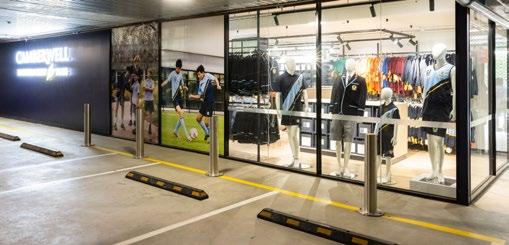
operations. ‘We wanted to ensure parents got paid and to support the school with secondhand uniforms. We knew the shop was such a big part of the school, even back then.’
The team introduced stocktakes, clear financial records and a volunteer roster. With improved systems, the shop’s reputation and fundraising capacity grew rapidly. In 2003, $10,000 was donated to furnish the new library mezzanine, while unsold stock was redirected through Rotary’s Donations in Kind program to East Timor.
This is the story of PLUS – its past, its people, and its enduring role here at Camberwell Grammar.
In the late 1960s, the Ladies’ Auxiliary launched a small “Swap Shop” for uniforms. Run by Brenda Butler, it quickly became a valued resource for families, offering affordable uniforms while raising funds for the school.
By the 1970s, the shop had moved to the “Highton Store” under the Parents’ Association, and proceeds began to support school projects and local charities. Through the 1980s and 1990s, the Swap Shop continued to grow, relocating to Kingussie and improving its operations and facilities.
By the close of the decade, annual income exceeded $22,000, supporting technology, cadets, sport and music. The Swap Shop had become a fixture of school life and a source of community support.
After two decades at Kingussie, the shop returned to Highton in 2002, occupying space once used by Dobson’s. The move brought renewed visibility – and new challenges.
As Cathy Garrard recalls, ‘Parents would say, ‘I give all my uniforms and never get any money back.’ I thought, it’s a consignment system, something’s going wrong.’ Together with Joan Mason and Tina Anderson, Cathy overhauled

By the end of the decade, the once-modest Swap Shop was thriving. ‘We started making a significant amount of money, which we donated to IT, the building fund and sports facilities,’ Cathy says. ‘We felt like we were giving back to the school as well as supporting parents.’
By 2010, the Swap Shop had donated $40,000 to the CGS Foundation Building Fund, and by 2012, a further $55,000 to projects across the school. It also supported scholarship holders, exchange students and families in need, with unsold items donated to charities both locally and abroad.
Upgrades to systems brought the shop into the digital era. EFTPOS facilities, direct deposit for sellers and computerised records replaced manual processes. Volunteers continued to give their time week after week, often in tight conditions. ‘We worked in a tiny space,’ Cathy recalls. ‘One half for clothing, tubs of stock in the other. We even processed items on top of the shelves.’
That all changed in 2017, when PLUS relocated to a purpose-built space in the Sports Centre. ‘When we moved into the new shop, we thought we were in heaven. We could finally have all our blazers out and even have change rooms,’ Cathy says. The move, strongly supported by Dr Paul Hicks and the Development Office, marked a new era of professionalism and visibility – and a new name, the Pre-Loved Uniform Shop. ‘We had a grand opening and invited past volunteers. It felt like a celebration of how far we’d come.’
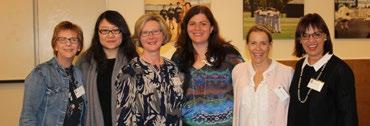
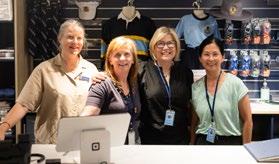
The generosity of volunteers has always been at the heart of PLUS. For many, the decision to volunteer began as a way to connect more deeply with the school community.
‘You come to a high school thinking you’re not going to have anything to do,’ says Tracey Guorgi. ‘But if you’re prepared to put in time, you can meet so many people and do so many things.’ Drawn by the focus on reusing and recycling, she found herself part of a welcoming, like-minded group. ‘You collect friends volunteering,’ Tracey says. ‘Cathy and I are great friends, even though our kids aren’t in the same year.’
Kate Locke began volunteering when her youngest children entered secondary school. ‘High school can feel like a spectator role at first,’ she explains. ‘Monday morning processing suited me as I couldn’t get to the shop during opening hours. You meet people you’d otherwise never meet, across grades and houses, not just your child’s year.’
PLUS works closely with staff across the school, including IT, Maintenance and the Development Office. Technology has steadily improved shop operations, making processes more efficient and secure.
Orientation Days are among the busiest and most rewarding events. ‘You go away with a real sense of satisfaction,’ Kate says. ‘Families come in with long lists. You guide them, maybe suggest they start small. They leave feeling appreciative and grateful.’ For many new families, it’s their first friendly face at CGS. ‘It’s more than just buying uniforms,’ Tracey says. ‘It’s answering questions, easing the transition and helping people feel part of the community.’
For Kate, the quality and care behind every item are what set PLUS apart . ‘I ran a uniform shop at our primary school, which was just a cupboard, with $5 items. Here, the quality and effort are incredible. I wish every new family could visit PLUS on Orientation Day before they go out shopping.’
Sustainability has long been central to PLUS. Ensuring nothing goes to waste is a philosophy in line with CGS’s commitment to sustainability.
‘We’re connected to Backpacks for Kids,’ explains Kate. ‘We supply them with old uniforms, mainly shirts, and the fabric is sewn into drawstring bags for foster children.’ Over the years, PLUS has also supported communities in Africa, Fiji and Australia, including a partnership with the Katalyst Foundation. ‘We send them anything that can’t be repurposed locally, like obsolete sports gear, crested items or house items,’ says Kate. ‘It gives them a second life.’
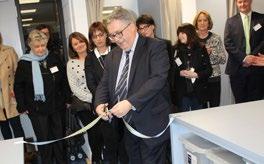
Tracey adds, ‘If we can’t sell it, we find charities. Nothing goes to landfill if we can help it.’ Volunteers can repair and restore uniforms to extend their life. ‘With a soak and a spray, items look great,’ says Cathy.
Community attitudes have also evolved. ‘People are now so much more open to secondhand uniforms,’ says Kate. ‘It’s often their first stop if they know about us.’ Tracey agrees: ‘The boys love op shopping. They’re socially minded and they love a bargain.’
In recent years, PLUS has made significant financial contributions to school projects, including a $42,000 donation to the David de Kretser Scholarship Fund, subsidies for Year 12 hoodies and funding for STEM Racing (formerly F1 in Schools).
Weekend openings have also made volunteering more accessible. ‘Saturday is a great option for working parents,’ says Kate. ‘You can do two hours and feel like you’ve contributed and that you’ve met a whole range of people.’
For Cathy, the connections have been lasting. ‘I was new to Melbourne when my son started. That’s how I met some of my best mates, through volunteering.’
As the shop has grown, so too has the need for continuity. ‘It became too big for volunteers alone,’ says Tracey. ‘So the school decided to employ Jessica Di Muzio, our new Pre-Loved Uniform Coordinator. She provides a consistent presence and a voice for the school. That support means volunteers can hand over responsibilities safely and confidently.’
From humble beginnings, PLUS has become a cornerstone of the CGS community – a place where sustainability, service and friendship come together year after year.
PLUS is a parent-run initiative that provides families with an affordable way to buy and sell second-hand school and sports uniforms. Operated as a subcommittee of the CGS Parents’ Association, PLUS is staffed largely by volunteers, supported by the PLUS Coordinator, and delivers a much-valued service while also raising funds for the school.
• Families bring in pre-loved uniforms for resale.
• Items are sold on consignment – 75% of the selling price goes back to the seller.
• The Parents’ Association retains the remaining 25% to support various school projects and initiatives.

By the Numbers – PLUS Impact


• 1991 – Record turnover; $3,495 profit.
• 1998 – Income now over $22,000 per annum.
• 2005 - Significant improvements to computer systems, stock-taking.
• 2009 – Half-price sales clear backlog of old stock; $25,000 donated to school projects.
• 1968 – First official mention of the Swap Shop; described as a “very acceptable service.”
• 1972 – Swap Shop moves to the Highton Store; management under a Parents’ Association committee.
• 1975 – Swap Shop raises $500 for the Parents’ Association; donates obsolete stock to Tally Ho Boys Home and St John’s Children’s Home.
2020 – Shop remains open when safe during COVID.
• 2022 – Sales increase by 12% (over $50,000 raised); over 1,000 items sold in Terms 1 & 2; volunteer numbers surge; regular charitable donations continue.
• 2024 – Shop operates from a pop-up shed during renovations; newly remodelled shop combines new and pre-loved uniforms.
• 2010 – $40,000 donated to CGS Foundation Building Fund (including $25,000 for VCE Lecture Theatre).
• 2013–14 – Shop plans confirmed for a purpose-built space in the Sports Centre.
• 2016 – Shop operations consolidate; EFTPOS system up and running.
• 2017 – Shop moves to purpose-built facilities in the Sports Centre; Grand Opening held; new logo and name PLUS officially launched.
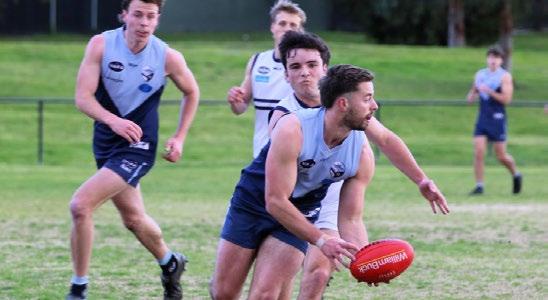
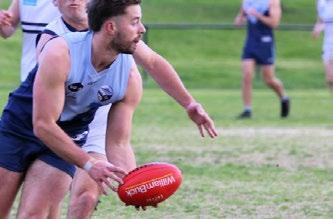
The Old Camberwell Grammarians’ Association includes various groups that allow past students to stay in touch with friends, forge connections across generations and remain part of the CGS community. Members share what their groups mean to them and how to get involved.
The OCGAFC was founded in 1960 so Old Grammarians could continue playing football together. It remains a significant part of the Old Grammarians community today, as the largest Old Grammarians sporting club, and provides a strong link between the school, current and past players.
While the club likes to win, we see our role as more than a football club. We aim to make a positive difference to the lives of young men and women by providing an inclusive and respectful environment that allows players of any ability to enjoy their football while also benefiting their physical fitness and mental wellbeing.
We are fortunate to have a very strong supporters network - ‘The Wellsmen’. Approximately 1,200 supporters (past players) receive our weekly newsletter, and each year we run a ‘Wellsmen Lunch’ and ‘Wellsmen Golf Day’ that help to maintain the connection between past and present generations.
What I personally value about being part of the OCGAFC is the opportunity to be involved with a group of fantastic young men and women with a common purpose, together with the opportunity to interact with those I went to school with and played with at the club.
The men’s senior team recorded its most successful season ever in B grade, winning 10 games and only missing finals after losing the last game of the season. The fact that 21 of the 22 players that day went to CGS is a testament to the strong link between the club and the school. After a challenging 2024 season, our women’s team reached the preliminary final, eventually losing a very tight contest by just four points.
How can new players, supporters or volunteers get involved?
Each year we get a new group of school leavers who make up the majority of our Under 19 team, and we’re always looking for recruits to come and play at all levels – Firsts, Reserves, Thirds, Under 19s and Women’s. Running a football club takes a lot of resources, so we always need volunteers to help out - there are match day roles (helping in the canteen, time-keeping, field, boundary and goal-umpiring, running water, etc.), through to joining our committee. Supporters are always welcome at our matches; there is a great atmosphere down at the picturesque Gordon Barnard Oval when supporters turn out in large numbers.
Gavin
Powell (1980)
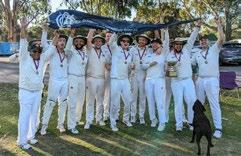
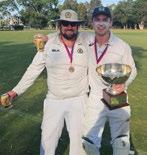
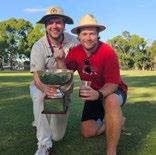
Nick Brown, Brendan Li, Jono Wong (all 2006 leavers) and I decided to take on a new challenge of running a Cricket Club in late 2015 after playing many years of senior cricket elsewhere. We were in a strong position, thanks to a small kitty left behind by the previous Old Grammarians Cricket Club/Hartwell Uniting Cricket Club. We thank Andrew Webb (1975), the custodian of the previous club, who helped us get going. Since then, we have gone from strength to strength, with now two teams competing in the MCC (Melbourne Cricket Club) Club XI competition playing the likes of Old Trinity, Old Carey and Old PEGS. We find that those leaving Year 12 are keen to see the world, immerse themselves in university or a trade. It’s only after a couple of years that many realise they’re missing the mateship of school, which all club sport can bring. With football and soccer in the winter, cricket gives us this opportunity in the summer.
As much as we like to think we’re elite cricketers, it’s a real mix. We’ve had leavers from 2003 to 2022 playing with us over the last couple of seasons, and we encourage anyone to come and try out. Our 1st XI remains competitive with some very handy cricketers, while our 2nd XI takes all comers.
I doubt we’d see such strong player retention if our focus was only on the field. We’re a very laid-back club, and tend to enjoy a meal together after a game or training. Social events throughout the year include a ladies’ day and match day BBQs, where friends and family are
encouraged to come along. The latter is important for the demographic of the club, with some new dads with little ones and supportive partners deserving recognition! Being part of the MCC competition also means that the association presentation night is held at the MCG, usually during a blockbuster Round 2 or 3 AFL game!
A favourite match story from recent years?
The 23-24 Grand Final, where I skippered the 2XI to the premiership in 40°C +. Grand finals are always different. We batted first and ground our way to 144 in 40 overs after being 7/63. When the first ball of our bowling innings went for a one-bounce 4 over the bowler’s head, I thought we were in trouble. But, with some real spirit and good execution, we kept the pressure on. While Old Carey got to 5/91 with a strong 6th wicket partnership, we came out firing after drinks to take the last five wickets for just 13 runs, dismissing them for just 104.
What would you say to someone considering joining?
Do it. You won’t find better training facilities than the new KAO, a better competition to play in or a group of individuals who enjoy the game of cricket as much as they enjoy the opportunity to spend time with one another.
Jonathan Gumley (2006)
The Soccer Club was formed in 1984 and spent its inaugural season in the Victorian Amateur Soccer Association. Two years later, Old Camberwell, seeking greener pastures, was accepted into the Amateur League of the Victorian Soccer Federation. The club experienced it all – thrilling championships, hard-fought promotions, and seasons we’d rather forget. It didn’t survive the impact of the pandemic and officially disbanded towards the end of 2021. Then, 40 years after its inception, some of us recent graduates decided it was time to pick up the baton. We weren’t willing to let the history, spirit and pride of the club disappear.
During my time at CGS, I didn’t fully appreciate the time I got to spend with my peers day-to-day. After graduation, everyone moved in different directions, and it became clear how challenging it is to maintain the close friendships built over the years. Playing together
strengthens the sense of connection by rekindling the shared experiences and traditions that tie us back to our school days. Forty of the 45 registered players are CGS alumni, with a mix of ages represented. The camaraderie built through these shared histories fosters a lasting bond that continues well beyond graduation.
Playing across the road on Deepdene Oval also brings a strong sense of nostalgia. It’s where we trained for winter soccer competitions, wearing the navy blue kit, reminiscent of the school sport uniform.
We hope the Open Day match against the Firsts Soccer XI will become a new annual tradition to strengthen ties between current students and alumni. Looking ahead to 2026, we’re launching our first-ever women’s team. This milestone will open up opportunities for graduates of our sister schools to represent a club closely connected to their own school communities.

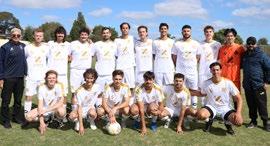
We invited as many CGS students as could attend to support us on Deepdene against the league champions of 2024. It was the most difficult game we played the entire season. Despite being down two players towards the end of the game, we won because of the relentless student support and cheering from the sidelines.

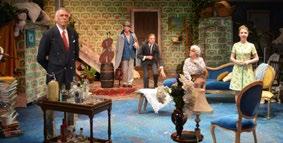
CGTC was formed as a way for CGS students to continue to stay connected and make theatre after school. Our cast and crew are passionate volunteers who share a love for the performing arts. CGTC has undergone a few different iterations over the past few decades, most recently revitalised by Old Grammarians Ben Giraud (2004) and Adam Porrett (2010) for the 2014 production Black Comedy. Traditionally, CGTC has put on comedies. However, we’re also not afraid to explore more serious works that explore subjects like war and nostalgia.
Theatre is one of the few activities I’ve taken part in where social boundaries of age and background quickly evaporate. You may be working with people whom you’d never otherwise meet. It’s out of necessity and curiosity (aided by a great deal of humour) that relationships start to build. Within a few rehearsals or production meetings, everyone is often bantering like old friends. Our team greatly respects the insights and experience everyone brings to the table.
Personally, CGTC has been the main way I have stayed in touch with friends since leaving CGS. Connections start to drop away over the years, and unless you actively try to stay in contact, you may lose them altogether. I’ve developed a whole new set of memories and experiences with old friends from CGS through CGTC. It’s a great way to find new friendships, both within and outside the CGS community.
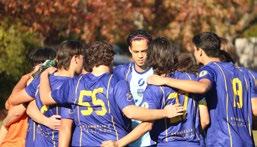
Throughout the year, we invite anyone interested to join our training sessions at Deepdene, where we get to know prospective players and gauge their interest and commitment. Whether you’re a new face or a returning one, there’s always a place for you at Old Camberwell Grammarians SC.
Christos
Kalas (2020)
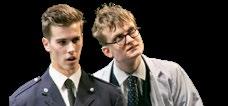
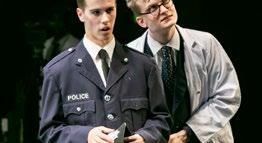
One was watching the first performance of our 2022 production, Memory’s Recess, which I wrote. It was brought to life in front of a wide audience by a passionate teamsomething that is unspeakably special to me. Another is from a show that never actually premiered - Cosi (2021). Cut short by the pandemic, I nonetheless had a wonderful time as Stage Manager, corralling a talented group of actors. One of the props was a packet of chocolates, which I would guard from the peckish cast - with mixed success. I learnt that if you have edible food as a prop, buy enough to keep the rest of the cast (and crew) satiated.
What’s next and how can others support the CGTC?
We’re currently preparing for a very special project: a collection of original short plays. Keep an eye on our socials for further information on how to get involved as cast, crew or audience member. https://www.facebook.com/cgtc24/ https://www.instagram.com/cgtheatreco/ Benjamin Chesler (2018)
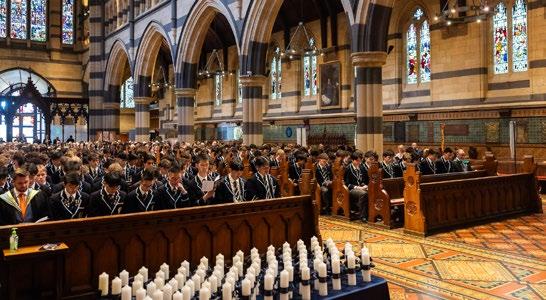
Our Year 12 students have taken part in a series of meaningful traditions that marked the end of their school journey and celebrated their place in the Camberwell Grammar community.
The celebrations began with the Year 12 Lifers and Pre-Prep Morning Tea, where students who started at CGS in 2012 were welcomed back to the Junior School with their families. A tour of the Pre-Prep classroom, time on the playground, and reunions with early teachers offered a heartwarming reminder of how far these students have come.
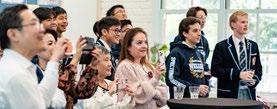
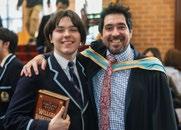
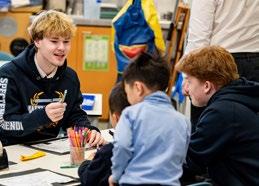
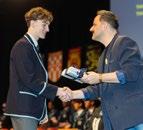
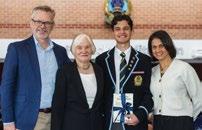
At Prize Giving, we celebrated excellence across academics, sport, the creative and performing arts, leadership and service to the School. It was an occasion to acknowledge both individual accomplishments and the collective spirit of the Class of 2025. Guest speaker Ben Vasiliou delivered an inspiring address. Ben is a social entrepreneur and the new CEO of The Man Cave, Australia’s leading preventative mental health charity for teenage boys and their communities. He is a champion of social justice and shares our passion to help young boys become great men who make a difference in the world.
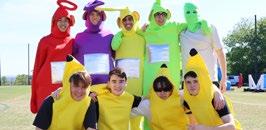
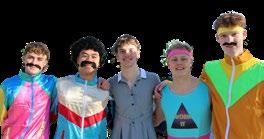
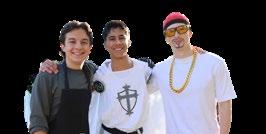
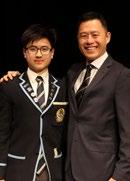
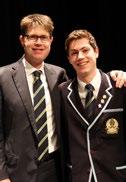
The Cufflink Presentation, conducted by members of the OCGA, was a special moment for students. Some received their Camberwell Grammar cufflinks from fathers who themselves are Old Grammarians, making the occasion especially memorable.
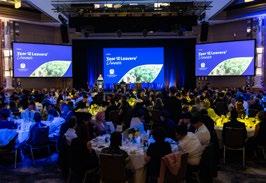
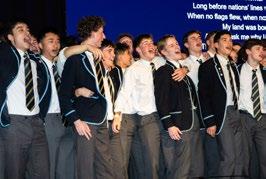
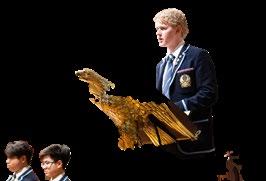
The cohort and their families then came together for the Leavers’ Service at St Paul’s Cathedral, a deeply moving ceremony led by Rev Alison Andrew. This was followed by the Leavers’ Dinner, a wonderful celebration of all the Class of 2025 has achieved.
Now preparing for their final exams, our Year 12 students leave with our best wishes and the confidence that they are ready for what lies ahead.
As the Class of 2025 moves beyond the gates of Camberwell Grammar, they join the Old Camberwell Grammarians’ Association (OCGA). Each student received their OCGA tie and cufflinks, symbols of their ongoing link to the School and to one another.
OCGA membership helps Old Grammarians remain part of the CGS community through events, reunions and professional networks, offering opportunities to stay engaged and supported well beyond school. This connection provides a continued sense of community and belonging as they embark on the next stage of their journey.
The themes of collaboration and connection are evident throughout the history of Camberwell Grammar in every aspect of school life, but nowhere with greater emphasis than in the role of the OCGA. The history of this organisation of alumni illustrates the strong desire amongst past Grammarians to both maintain links with their old school and to assist in its development for the benefit of future generations. In most cases, the connection of these men with CGS would be lifelong.
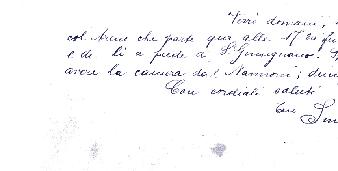
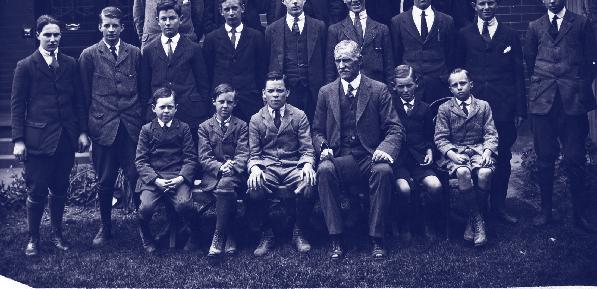
Camberwell Grammar had modest beginnings with those 66 inductees at St John’s in February 1886. Within a decade, the numbers had fallen to the nadir of 33, leaving Old Boys with little to commemorate. However, the School came through this fog and by 1908 had moved to the new, more extensive Burke Hill campus with a record enrolment of 121, a significant figure amongst the suburban private schools of the era. There were now over 700 Old Boys who had passed through the portals of the School at St John’s and at Fermanagh Road, a significant body of young and middle-aged men engaged in the professions and commerce in Melbourne and beyond.
Accordingly, on the evening of Wednesday, 10 March 1910, in the company of Headmaster Alfred Hall, 60 past Grammarians met in Little Collins Street at “The Savoy” – one of Melbourne’s leading hotels since 1866 - to form the “Old Camberwell Grammarians Association”. The stated aims of the OCGA were to hold annual reunions and, primarily, ‘to foster and increase the interest of Old Boys in the School’. The first President was solicitor Frederick B. Waters, one of the pioneering 66 and one of the first matriculants from CGS in 1887 – his city office served as the site of subsequent OCGA committee meetings. The Association went from strength to strength in the following years, and its ambition of maintaining collaboration and connection was never more important than in the years of the Great War, 1914-18, when 245 Old Boys served (almost 20% of the School’s alumni ).
Perhaps the annual reunions of the OCGA became even more important in the post-war period in pursuit of those 1910 aims ‘to keep Old Boys in touch with one another’ given that 40 of them had made the ultimate sacrifice at Gallipoli, in France, Belgium and the Middle East. The first of the peacetime reunions was held at Sargent’s Café, Elizabeth Street, in November 1919, after a two-year absence, and 34 returned servicemen were particularly welcomed. The main issue under discussion was the introduction of an Old Boys blazer similar to that worn by boys for sport, with the letters O.C.G.A. above the badge. Cricket, football and tennis matches against the School were also proposed.
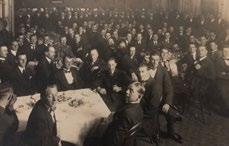
Pictured from the Archives is the extensive OCGA gathering of late-1921 – there were now over 1500 past Grammarians. This ninth reunion was held at Adams Hall, Camberwell, and although a motion suggesting the federation of the alumni associations of the eight Associated Grammar Schools was approved, nothing came of the proposal other than the OCGA supporting the engagement of the School with federated sporting competitions. Earlier in the year, the current President, businessman Arthur Perry (1893), had visited Burke Hill to show the attachment to the School of the Old Boys he represented. He urged the boys of 1921 to ensure a connection with their school later in life by joining his Association. Mr Perry also proposed a half-day holiday to mark the occasion of his visit - Headmaster Hall agreed, and the boys excelled themselves in offering three cheers.
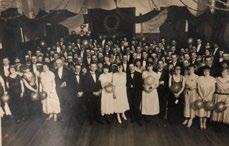
The 1922 reunion, the 10th, was held again at Sargent’s Café in April. The chief measure of the evening was the proposal for an OCGA Ball, an innovation which would be realised in July 1924 at the Glenn Hall – pictured are the participants with their partners. This extension of social invitations beyond the Old Boys themselves was an indication that change was in the air. Those uncomfortable with such a trend could still attend an OCGA ‘Smoke Night’ restricted to alumni only – 75 had done so in April 1923. Nevertheless, the OCGA committee was already considering the conversion of the School into a ‘public or semi-public institution whilst preserving its identity’. The OCGA would indeed play a significant part in the following years in such preservation during and after the transformation of the School from a private business into an institution associated with the Church of England, a transition particularly guided by Frank Derham (1899; OCGA President 1914 and 1924).
The current OCGA of a century later continues these collaborative and connective practices from the early days of Camberwell Grammar with the same spirit and towards the same goals. ‘Smoke Nights’ and half-holidays are gone, but the motives that drove those men to meet at “The Savoy” on that evening in 1910 (like the hotel itself) remain steadfast.
Dr David Bird School Historian and Archivist


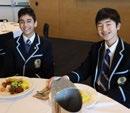
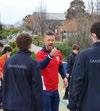
Students recently enjoyed a special waste-free lunch hosted by the Indonesian Department. Across the day, different groups came together to share authentic Indonesian dishes and play traditional games. The experience offered students a fun and memorable introduction to Indonesian language and culture. Indonesian students were keen participants as they welcomed Robbie Gaspar, a former professional international soccer player, for an action-packed workshop. Robbie combined soccer drills and games with language practice, giving students the chance to strengthen their skills in both sport and Indonesian.
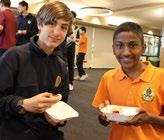
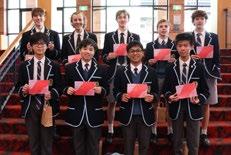
Nearly 90 students and staff took to the stage last term with songs, raps, poems and monologues, all in French! With the theme ‘Love’, the standard was so high that judges created a brand-new award: the Special Prize (le prix spécial), to celebrate outstanding dedication and enthusiasm. Félicitations to all prize winners (some pictured).
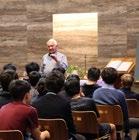
AFL player Ben Brown shared how athletes can use their platform to give back to the community. He spoke with genuine passion about important causes close to his heart, including Domestic Violence Awareness and Gender Equality in Sport. Ben encouraged students to reflect on who inspires them and to consider how they, too, can make a difference.
Mr Jamie Watson Head of Sports Academy
Year 8 students explored the stories and history of the land our school stands on and the Wurundjeri people. The day included a guided tour of the NGV’s Indigenous art collection and a visit from Murrundindi, who shared the history of the Wurundjeri and the significance of Coranderrk. Students also played marngrook, learned about traditional bush foods and finished the day tasting wattle seed scones with lemon myrtle jam.
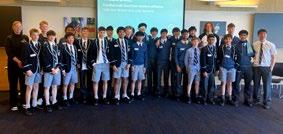
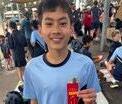
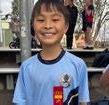
A team of 32 Year 4, 5 and 6 boys participated in this event on 9 September. CGS finished 5th overall, an amazing effort. Several students achieved 1st and 2nd place and progressed to the SSV Beachside Division Athletics Championships:
• 10 Years – Theo Poon (Year 4, who also broke the District High Jump record with another student from Westbourne Grammar)
• 11 Years – Isaac Huang (Year 5)
• 12/13 Years – Alex Bhattacharjee and Derek Duan (both Year 6)
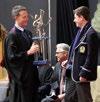
Clouds, creativity and imagination filled this year’s House Arts Competition, inspired by Chris Judge’s Daily Cloud series. The artworks explored nostalgia, childhood memories and imagination. Judges examined every detail, but it was Steven House who claimed the win –and an impressively sculptural trophy that turned just as many heads as the artwork itself!
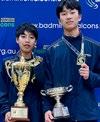
Congratulations to Chauncey Yu (Year 12) and John Zhuang (Year 7), who were selected to represent Victoria in the National Team Championships. Both contributed to Victoria’s Gold Medal victories in the U19 and U15 team events, respectively.
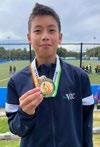
Congratulations to Ethan Chong (Year 6), who earned a bronze medal representing CGS at the National U12 School Sports Australia (SSA) hockey championships in Bendigo during August. Ethan had a wonderful tournament playing as a defensive midfielder who set up multiple scoring opportunities for his forwards.


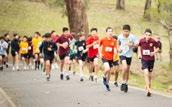
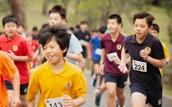
Middle School students headed to Westerfolds Park for a spirited afternoon of competition, as Years 6–8 took to the field for their House Cross Country event. Students gave their all, earning points for their Houses and showing the teamwork, enthusiasm and friendly rivalry that make these occasions so special. Congratulations to overall winners, Summons House.
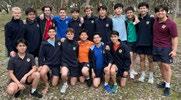

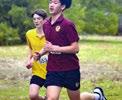
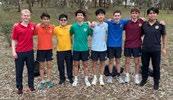
Perfect weather greeted our annual event, with students from Years 9–12 running with great spirit and earning valuable House points. It was a fitting Cross Country finale for our Year 12s and House Captains, showcasing the camaraderie and healthy competition of our House community. Congratulations to overall winners, Robinson House.

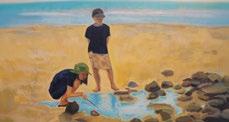
The VCE Art and Visual Communication Design Exhibition opened on 9 October, a vibrant celebration of our students’ creativity, dedication and artistic vision. Guests had the opportunity to speak with the artists themselves about their design process and inspiration. The evening showcased the depth of our arts program and honoured the remarkable skill and imagination of our VCE students.
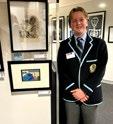
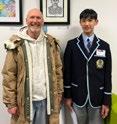



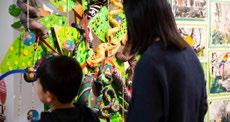
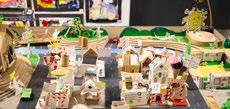
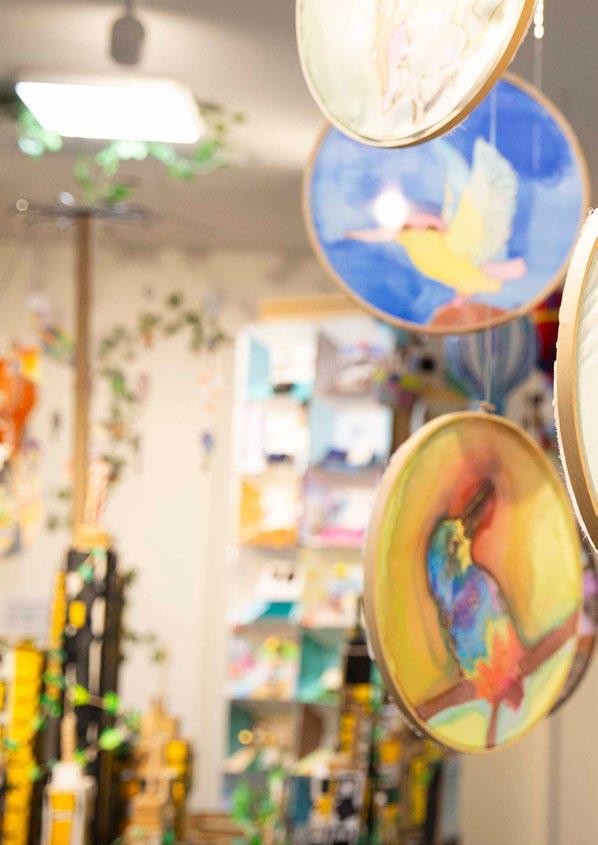
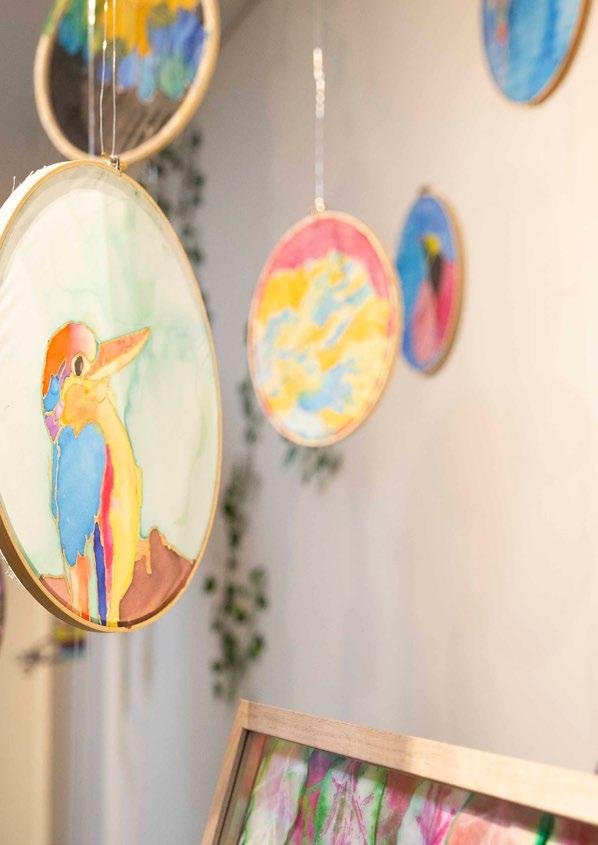
We celebrated the creativity and imagination of our students and staff at the opening of Urban Jungle, the Pre-Prep to Year 5 art show. The David Williams Gallery was transformed into a colourful display of student work – from monkeys in hot air balloons to cardboard cityscapes and wild animals hidden in campus landmarks. A silent auction of a collaborative artwork raised funds for Schools for Nepal.
Congratulations to the 28 Camberwell Grammar students featured in this year’s ISV Student Art Exhibition. Over 100 artworks were featured, from early learners to senior secondary, across 2D and 3D pieces to digital media. With a wide range of themes and creative approaches, the exhibition offered a window into the emerging world as seen by young people.
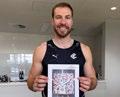
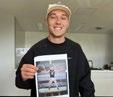
This exhibition showcased the work of Year 9 and 10 visual arts students across Art, Ceramics and Sculpture, and Visual Communication Design. The works reflect the diverse offerings of themes, concepts and learning in the Visual Arts electives program, and highlight individual creativity, originality, personal connections and skill development. While the subjects couldn’t attend in person, Nicholas Lipscombe (Year 9) painted Harry McKay and Lachlan Crone (Year 9) painted Patrick Cripps (both pictured).
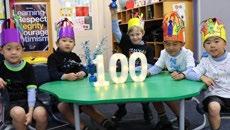
As our Year 12 students wind up at CGS, our Prep boys are just beginning their journey, marking their first 100 days of school! To celebrate, students participated in fun, hands-on activities all themed around the number 100, helping them explore what ‘100’ really means. A special part of the day was support from Senior School students, many of whom started their own journeys in Mrs Gatley’s Prep class.

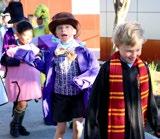
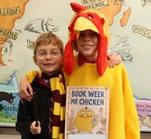
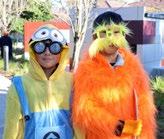
What an incredible week in the Junior School Library, celebrating Book Week and the 80th anniversary of the Children’s Book Council of Australia. From the moment students grabbed their ‘boarding passes’, the library was alive with colour, creativity and adventure. Highlights included inspiring author visits from Nat Amoore and Vikki Conley, who showcased the magic of storytelling. The annual Dress Up Parade brought favourite characters to life – pirates, wizards, adventurers and more – while at lunchtimes, the library buzzed with activities.
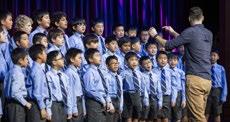
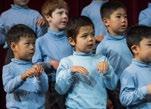
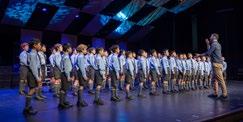
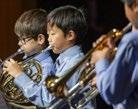
Families filled up the Performing Arts Centre on 3 July to enjoy the musical talents of our Junior School students. It was a wonderful celebration of our music program, and the students performed with great confidence. Congratulations to all performers and our enormously talented music staff.
Congratulations to four Camberwell Grammar students - three past and one present - whose outstanding 2024 academic achievements were recognised at the Premier’s VCE Awards. We are incredibly proud of these students and their teachers.


Joel Cheok (2024) – Top AllRound VCE High Achiever | Specialist Maths | Physics. Joel achieved perfect scores in five subjects, plus a sixth in Year 11.
Jerry Jin (2024) – Top AllRound VCE High Achiever. Jerry achieved perfect scores in Specialist Maths and Chemistry and was a representative at the International Chemistry Olympiad.
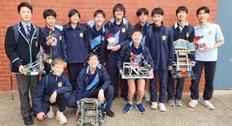
At the end of Term 2, five CGS robotics teams from Middle and Senior School competed at Templestowe College in the first VEX Robotics event of the season, with four advancing to the finals and Year 9 team 31260X (Ethan Zhao, Derek Hu, Horus Cheung and Sean Tseng) named Tournament Champions. At their next competition, four CGS teams reached the finals, with 31260X repeating their win and Year 11 team 31260Z (Richie Yang, Julian Nguyen, Jerry Tang and Lucas Gu) taking out the Robot Skills Champion trophy.
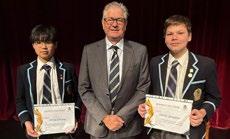
Each year, a Year 9 and 10 student is awarded the Andrew Lane Prize for Service. The students are chosen for their service to the CGS Community by displaying our values of Courage, Respect, Optimism, Integrity and Learning. Congratulations to Year 9 recipient, Horus Cheung and Year 10 recipient, Oliver Gaudion


Chris Lu (2024) – English. A House Prefect and accomplished debater, Chris scored 50 in English and received a School Prize for the subject.
Lachlan Courmadias (Year 12) – Applied Computing: Software Development. Lachlan achieved a perfect score while in Year 11.
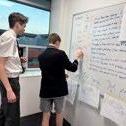
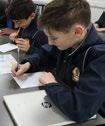
The Weickhardt Library and the Gifted and Talented Program hosted LitFest – a celebration of literature, stories and creativity. Students enjoyed trivia, campfire stories, Roll for Plot short stories, and a visit from Melbourne-based author and playwright Gabriel Bergmoser. The festival concluded with 17 Year 9 and 10 students taking on the Write a Book in a Day challenge, writing and illustrating a novel in 12 hours to raise funds for childhood cancer research.
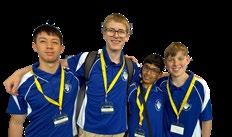
Congratulations to David Kyriakou, Samuel Jacob, Arohan Dasgupta and Sam Osborne-Smith (Year 8), who represented CGS at the 36th Future Problem Solving National Finals. Future Problem Solving is an academic program that challenges students to think critically and creatively about complex global issues. Our students completed a demanding two-hour problemsolving booklet on the topic of Nanotechnology before presenting an engaging action plan presentation.

Congratulations to Leo Buckle (Year 12) on his outstanding achievements at the recent Olympiad in China. Leo was awarded Gold in the Earth Systems Project, Gold in the International Team Field Investigation and Silver in the Individual Test – a testament to his hard work, talent and passion for science.
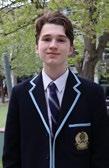
Congratulations to Bertie Atkin (Year 9), who was named joint Year 9 State Champion in the Australian History Competition. Well done, Bertie, on this outstanding recognition of your knowledge, dedication and passion for history.
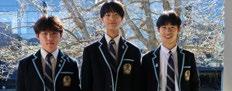
Congratulations to Year 10 students Gino Yao, Justin Zhou and Andy Tao, who have been selected for the prestigious Monash Scholars Program for 2025–2027.
They will take part in a range of learning experiences and networking events over the next two years, opening doors to future opportunities at Monash University.
VIEWS is a camp for Indigenous students from across Australia that offers a glimpse into university life and engineering pathways. Participants lived on campus at the University of Melbourne and visited Monash, RMIT and Swinburne to explore the opportunities each offers. Highlights included connecting with 26 like-minded students passionate about engineering and a hands-on day at Monash, designing and building robots. The camp concluded with meetings with university representatives and industry sponsors Boeing and Worley, providing valuable networking experience and lasting connections.
Atticus Brennan (Year 11)
The Duke of Edinburgh Award fosters personal development through engagement in physical recreation, skill acquisition, community service and adventurous activities, requiring sustained commitment and demonstrated progress.
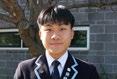
Congratulations to Ethan Yeung (Year 12) for attaining his Bronze Award.
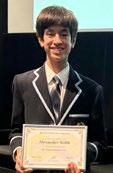
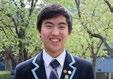
Congratulations to Jasper Chao (Year 11) for attaining his Silver Award.
Congratulations to Alexander Robb (Year 10), who was named the Victorian Brain Bee Champion at the Victorian State Finals at the University of Melbourne. The Challenge introduces Year 10 students to the world of neuroscience, and Alexander claimed first place among a field of 50 top students.
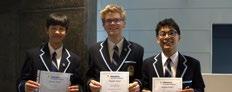
The DAV Debating Squad has had an outstanding year, with three teams qualifying for the playoff finals after remaining undefeated across five rounds of debates. In addition, Evan Lin (Year 9), Thomas Klebanowski (Year 11) and Matthew Stephen (Year 11) were each honoured with a Swannie Award for Best Speaker in their respective year levels within the Camberwell region.

The Roystead Award – voted for by peers and staff –celebrates Year 8 students who go above and beyond in demonstrating integrity, learning, respect, courage, optimism, sustainability, responsibility and service, and sportsmanship. Congratulations to this year’s Roystead Award recipients.
The Ben Jago Award recognises good citizenship, support for others, a willingness to get involved and a positive spirit in all areas of school life. Congratulations to Keaghan Ho on receiving this exceptional award in 2025.
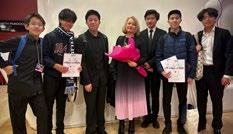
On 30 August, Camberwell Grammar’s Roystead Trio and Kingussie Trio performed in Musica Viva’s Strike A Chord Competition at the Melbourne Recital Centre alongside ensembles from all over the country.
Kingussie Trio came second. David Chon (Year 9 - violin), Gabriel Liu (Year 9 - cello), Dillon Chan (Year 8 - piano)
Roystead Trio won the Australian Music Prize. Leo Qi (Year 11 - violin), Derrick Kwon (Year 12 - cello), Reily Wang (Year 11 - piano)
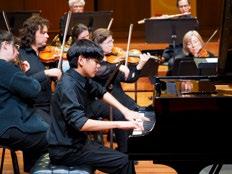
Wei-Bo Tsai (Year 7) submitted a video entry for the Melbourne Pacific Open Competition and won 1st Prize in the Junior section. He was invited to be accompanied by the Melbourne Arts Orchestra, playing the Mozart Concerto K.488 in A Major at the Winners Concert, alongside participants from the USA, Canada, Hong Kong, Malaysia and Thailand.
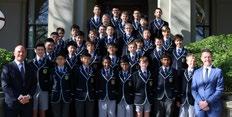
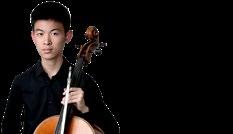
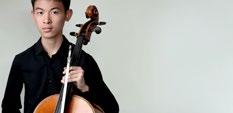
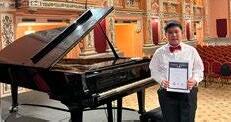
Jerry Zhang (Year 7) represented Camberwell Grammar at the Orbifold Global Music Festival in Bulgaria. In Burgas, he worked with acclaimed pianists and performed in two concerts. The festival concluded in Sofia, where Jerry placed second in his age group in the piano competition and gave his first piano concerto performance, Mozart’s Piano Concerto No. 17 in G Major, with the Sofia Philharmonic Orchestra.
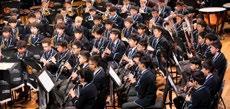
Congratulations to the Middle School Concert Band and Middle School Symphonic Winds, who each achieved Platinum Awards at this year’s Victorian Schools Music Festival. The Concert Band performed Everything for a Dream (Richard L Saucedo) and Champion (Jay Coles), while Symphonic Winds presented Chillin’ With Max (Tim Fisher) and And The Lion Roared (Carol Brittin Chambers).
Get to know some new – and not-so-new – faces on staff at Camberwell Grammar School.
Meet Ms Emily Wang
Subject Leader - Chinese | Clifford Tutor

What excites you most about leading the Chinese program here at CGS?
The opportunity to give back to the community by shaping a Chinese program that is both innovative and grounded in realworld relevance. I’m passionate about pushing meaningful change, designing content that goes beyond textbooks, connecting classroom learning with students’ lived experiences and cultivating globally minded learners. It’s incredibly rewarding to be part of a school that values bold ideas and supports cross-cultural understanding in such an open, diverse environment.
Outside of school, how do you like to connect with others?
I serve as a committee member of the Chinese Language Teachers’ Association in Victoria. Throughout the year, I actively participate in a variety of volunteer projects. These experiences have provided valuable opportunities to connect with educators from diverse backgrounds and continually expand my professional perspective.
I enjoy outdoor activities and often go for walks with friends, embracing all kinds of weather that nature brings. I also enjoy going to the gym, where I challenge myself to step outside my comfort zone. This active lifestyle not only keeps me energised but also gives me a good excuse to indulge in delicious food! I love cooking and often share my creations with friends. It’s a wonderful way to connect and enjoy the simple joys of life together.
How can language learning help students connect across cultures?
Language learning is not just about acquiring communication skills; it serves as a bridge to understanding and experiencing another culture. By learning a language, students gain deeper insight into different values, customs and ways of thinking, which fosters mutual respect and inclusion. Language learning also encourages students to see the world from others’ perspectives, helping them build genuine and meaningful cross-cultural connections. This enhances their global competitiveness and also lays a solid foundation for their future interpersonal relationships and career development.
What’s a highlight from your teaching career so far?
One of the most rewarding highlights has been watching my students grow, not only in their Chinese language skills but also in developing a positive and resilient attitude toward learning and life. This mindset has empowered them to overcome challenges in many areas and achieve success beyond the language classroom. While teaching Chinese helps prepare them for important exams, it also equips them with a lifelong skill, a valuable tool that will benefit their futures well beyond school.
What’s one tip for students learning a new language?
Cultivate a genuine love for the language, and stay persistent. It’s okay to feel frustrated or even complain sometimes, that’s part of the journey, but don’t give up. Language is something we gain from the world around us, and one day, it becomes a way for us to give back to society. Stick with it, and it will become more than just a skill; it will become part of who you are.
French and English Teacher | Bridgland Tutor
What attracted you to Camberwell Grammar?

I was initially drawn to Camberwell Grammar’s strong academic reputation and its long-standing commitment to boys’ education. From my first interactions, I could sense the palpable feeling of community, as well as a genuine excitement for learning among the students. It was clear that this was a place where I could not only contribute my expertise in language and literature but also actively foster the curiosity and growth of young men.
How do you help students connect with different cultures through language and literature?
My primary goal is to foster an emotional connection to reading and language. Boys need to find ways of becoming engaged with the content. We do this by exploring stories through different media – such as film, music or art – and by adopting various perspectives in connection to our curriculum. By doing so, they can see a new culture not just as a collection of facts, but as a living, breathing entity. This approach helps them build empathy and understanding, turning learning into an adventure in cultural discovery.
Can you share a highlight from your teaching career so far?
A definite highlight was when my Year 7 advanced French class performed a short play entirely in French. They were so committed and brilliant, and it was amazing to see them take ownership of the project. Their passion for the language was evident in every line they delivered, and it was a powerful reminder of how much boys can achieve when they are truly engaged and excited about what they are learning.

If you could recommend one book or film in French or English, what would it be?
I’d have to recommend the film Le Dîner de Cons (The Dinner Game). It’s a classic French comedy that is hilarious and also a brilliant study of human nature. The dialogue is witty and fast-paced, which makes it a fantastic way for language learners to improve their listening skills. It’s a great example of how comedy can be used to explore deeper themes of friendship and social class.
Can you share a hobby or interest you have outside the classroom?
I’m an expert snowboarder and an avid motorcyclist, which are both great ways to challenge myself and experience the world from a different perspective. I also love getting out on my bicycle and exploring the beautiful scenery around Melbourne.
Following the 2025 assessment and rating process, our Pre-Preparatory Centre has proudly achieved a rating of Exceeding National Quality Standard (NQS) in all seven Quality Areas. This outcome is a direct reflection of the ongoing dedication, leadership and commitment to improvement over recent years.
Since the 2020 assessment, significant effort has gone into strengthening the quality of care and education. This has included a comprehensive review of compliance, policies and practices to ensure alignment with best standards. The team has worked closely to establish a clear and unified vision, leading the service through ongoing improvement, targeted professional learning and a culture of critical reflection.
These combined efforts have resulted in significant and measurable improvements across all quality areas – this year, the centre was rated Exceeding.
Meet Ms Libby Gronn
Pre-Preparatory Leader

What brought you to Camberwell Grammar?
I was drawn to Camberwell Grammar because of its strong sense of community and the emphasis on nurturing the whole child. The school values of Learning, Respect, Integrity,
Courage and Optimism align closely with my own teaching philosophy, and I feel privileged to help nurture them in our youngest learners. Having the Pre-Prep classroom co-located within the Junior School also provides a unique opportunity to support transition from Pre-Prep to Prep, helping children build familiarity and confidence as they take the next steps in their educational journey.
What do you enjoy most about teaching our youngest students?
I love the joy and energy that young children bring to the learning environment every day. Their curiosity is engaging, and it’s so rewarding to share in those ‘lightbulb moments’ when they discover something new. The flexibility in the Victorian Early Years Learning and Development Framework allows us to follow children’s interests and adapt learning experiences in meaningful ways, ensuring that every child feels engaged, valued, challenged and supported.
How do you help children build connections in their first years of school?
Relationships are at the centre of everything we do in Pre-Prep. By partnering with children’s families and getting to know each child’s interests and strengths, we can create opportunities for them to connect meaningfully with their peers and teachers. Group games, shared inquiries and everyday routines all help children to feel secure, build friendships and develop a real sense of belonging, first to their teachers and peers and then to the broader school community.
What’s a favourite classroom activity that encourages collaboration?
One of my favourites is dramatic play, whether we’re setting up a mechanic, a jungle safari, a pirate adventure, or re-enacting a story we’ve read. It’s fun and imaginative, but also gives children the chance to work together, share ideas and solve problems while building important social and communication skills.
Outside of school, how do you like to spend your time?
I enjoy spending quality time with friends, travelling, going for walks and hikes in nature, and experimenting with new recipes in the kitchen. I also love to balance my busy schedule and switch off a little bit by starting my day with a spin or Pilates class when I can find the time.

Parents’ Association Trivia Night – Saturday 23 August
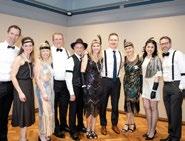
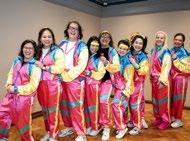
The Parents’ Association hosted a fantastic Trivia Night at Malvern Town Hall, with more than 270 parents joining the fun. The ‘decades’ theme brought plenty of colour,
Father’s Day Breakfast – Friday 5 September
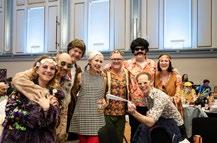
laughter and creativity as parents rolled back the years to the 60s, 70s, 80s, 90s and even the 00s. What a wonderful celebration of our CGS community spirit!
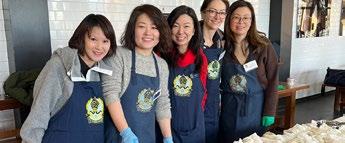
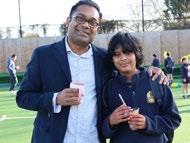
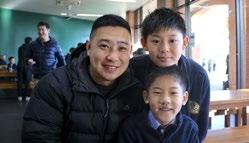
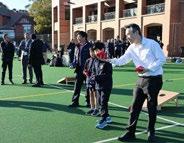
Our Junior School boys and their dads or special guests gathered on the JTO for a wonderful breakfast and activities in the sunshine. The Middle School Stage Band set the
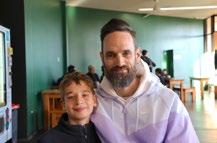
atmosphere with live music, making it a memorable morning for all. Thank you to our parent helpers and staff for bringing it all together.
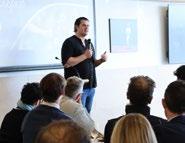
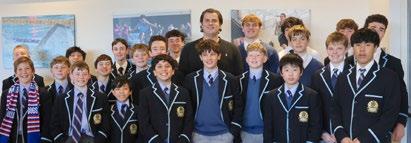
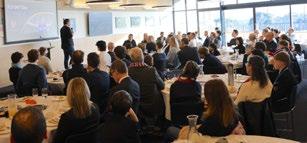
We came together to connect, reflect and prioritise mental health and wellbeing on R U OK? Day. At our community breakfast, guest speaker and former AFL footballer, Tom Boyd shared his story and personal
Open Day – Saturday 11 October
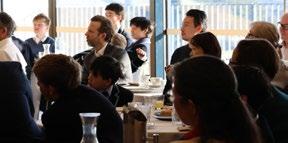
mental health struggles. He spoke about the importance of putting mental wellbeing ahead of traditional notions of success, and the power of honest conversations in supporting those around us. Tom then addressed a whole school assembly, encouraging students to look after themselves and check in with others.
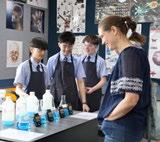
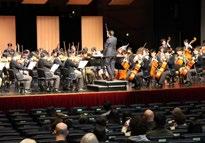
Thank you to everyone who visited, supported and participated in our annual Open Day. It’s always a wonderful occasion for our community. An enormous number of visitors came through our School and many
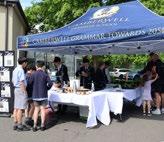
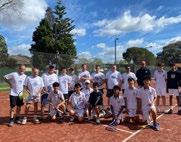
of our parents and students participated in different stalls and activities. The various academic and sporting displays and activities throughout the day were wellattended and enjoyed.
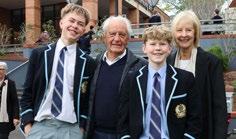
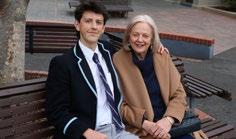
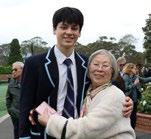
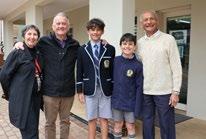
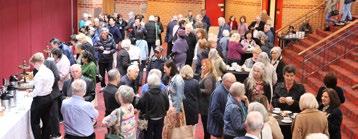
We welcomed more than 650 grandparents and special friends to our annual event with students from all year levels eagerly awaiting their arrival. Guests enjoyed morning tea, followed by a wonderful concert, and the event concluded
with a school tour led by their grandsons who were excited to show them their school and classrooms.
These special memories will be treasured for years to come.
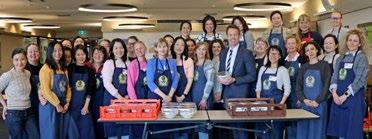
Many wonderful parent volunteers joined in for one - or more - of our annual pudding mixing days. Mr Jeacocke joined the group on 15 August to express his gratitude and to congratulate everyone, especially those for whom this

We warmly thank our Parents’ Association President, Kath Lok (pictured right), and all Year 12 parent volunteers for their years of generous service to the school community.
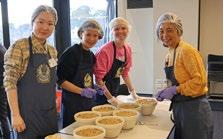
is their final year, with their sons now in Year 12. We thank them for their years of dedication to our community, and all who contribute to this wonderful tradition.
Kath has led with kindness, dedication and a genuine commitment to building a welcoming and connected school community. Her ability to bring people together and create meaningful connections has helped strengthen the inclusive and supportive culture we value as a school.
To the Year 12 parents who have given their time and energy – your efforts in organising events and supporting activities have brought great spirit and connection to school life. Your commitment has helped build lasting links between families and enriched the experience of our students. We are sincerely grateful for your contributions and for the enduring sense of community you have helped to nurture.
Mr Ryan Whitehead Head of Community and Development
– Friday 15 August
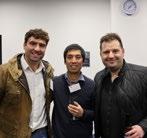

Attendees travelled from interstate and overseas to join the 20 Year Reunion. The evening began with a
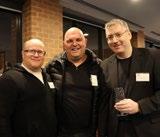
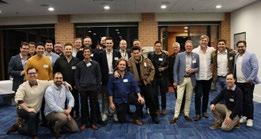
tour of the school, followed by drinks and reconnecting with classmates.
– Friday 15 August
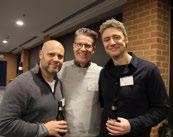
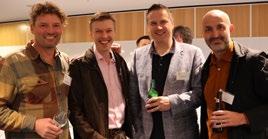
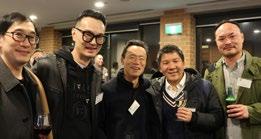
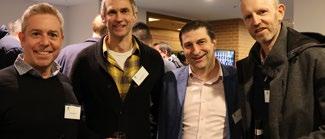
There was a great turnout for the Class of 1995’s 30 Year Reunion. Some attendees hadn’t been back to the school in many years, while others are current parents or have
OCGA Cufflink Presentation – Friday 17 October
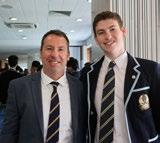
sons starting in the coming years. It was wonderful to see such a strong presence from the Class of 1995.
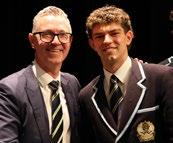
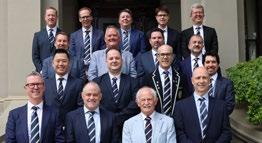
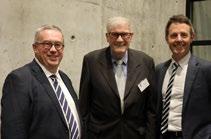
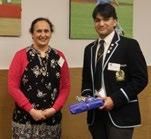
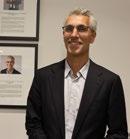
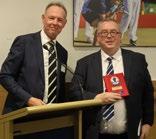
This event was held to honour the newest inductees into the Gallery of Achievement, celebrate former Headmaster Paul Hicks as a Life Governor of the School,
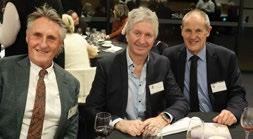

and recognise the outstanding 25 years of service by staff members Nick Appleyard and Paul Brincat.
We proudly welcomed the following alumni into the Gallery of Achievement: ASSOC. PROF. WALTER (BRUCE) STEELE AM (1949)

Recognised for his exceptional service to scholarship and the arts. Bruce was appointed a Member of the Order of Australia (AM) in the 2003 Queen’s Birthday Honours.
MR JAMES WILLIAM MCCANN PSM (1990)

Honoured for his outstanding public service in leading and managing Victoria’s Youth Justice Centres, contributing significantly to their recovery and development. James was awarded the Public Service Medal (PSM) in the 2023 King’s Birthday Honours.
The above are condensed biographies.
Explore the full 2025 biographies
Find the entire Gallery of Achievement Publication
MR HUGH DE KRETSER (1991)

Recognised for his significant contributions to law and justice, having served as Commissioner of the Victorian Law Reform Commission, Director of the Victorian Sentencing Advisory Council, Executive Director of the Human Rights Law Centre, CEO of the Yoorrook Justice Commission, and now President of the Australian Human Rights Commission.
MR JOSHUA LACHLAN DAICOS (2016)
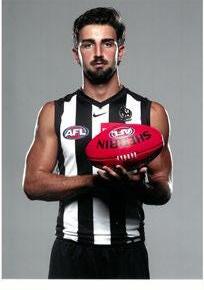
Celebrated for his achievements in the AFL with Collingwood FC. Josh was awarded the AFL Goal of the Year and named in the 22Under22 team in 2020, and was selected for the AllAustralian Team in 2023.
Congratulations also to Year 12 student Saveen Seneviratne, recipient of the Charles Francis Award for Ethics, who delivered an inspiring address at the dinner. He reflected on how his Year 8 camp experience laid the foundation for lasting connections within the school. Returning as a leader in Year 11 proved a full-circle moment, offering powerful leadership lessons.
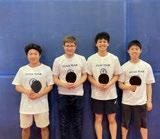
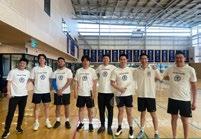
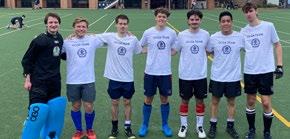
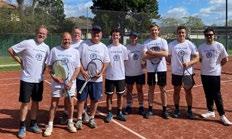
A group of enthusiastic alumni returned for Open Day to take on our school teams in a variety of friendly sports competitions. While the alumni brought heart and experience, the school teams were too strong, taking out:
• The Wayne Arthurs Doubles Tennis Cup
• Simon & Terence Chong Badminton Trophy
• Stuart Webster Shield in Hockey
• OCGA Vs CGS Firsts Basketball
• OCGA Vs CGS Firsts Table Tennis
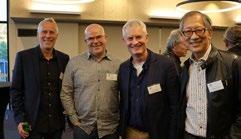

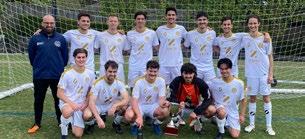
A big congratulations to the Old
the first-ever
After the matches, alumni caught up over refreshments and cheered on Harry Watson (2023) as he sprinted to victory in the CR Bence Cup Open Day Gift.
Friday 24 October
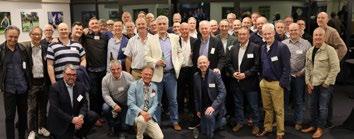

The Class of 1985 gathered in the Camberwell Room to celebrate their 40 Year Reunion. It was a wonderful
evening filled with laughter, catching up with former classmates and staff, and sharing stories of school antics.

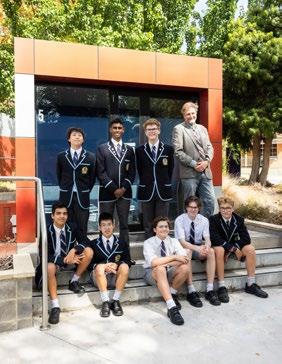
Camberwell Grammar School’s dedicated Fix the Future podcast team, led by Mr Will Hone, is a great example of community connection and collaboration. The podcast is based on solutions journalism sourced from Fix the News, a newsletter that focuses on efforts being made around the world to solve some of our more persistent problems.
Working with Camberwell Girls’ Grammar, Kew High School and Avila College, the goal is for each school to prepare one episode a month, so that a new episode will eventually be published every week. The primary driver behind the podcast is to spread solutions journalism to the students and, in doing so, provide a light of real hope in our efforts to shift people’s thoughts and hearts towards tackling the climate crisis.
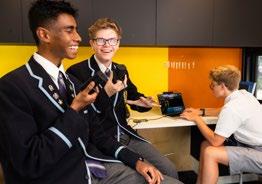
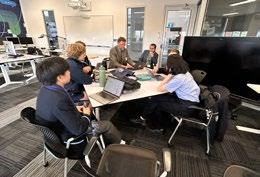
But beyond the surface, the social aspect of working with other schools is also a deeply embedded and important aspect of the program. Already, our podcasters have ventured down Mont Albert Road to collaborate with the CGGS crew, and moving forward, we hope to do the same with the other schools. Communities form around collective interests – where people gather for a project, there they find friends with shared concerns, a common purpose and a real goal against which they may throw their combined energies. And meetings such as these can (and frequently have) changed the world, as they surely will again.
Keep an eye out on the Sustainability page, or on Spotify (search for Fix the Future under ‘Podcasts’) for our next episode and be a part of the solutions movement.
Mr Will Hone Sustainability Community Engagement Coordinator
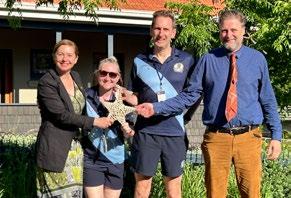
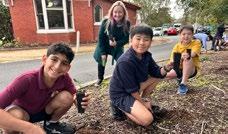
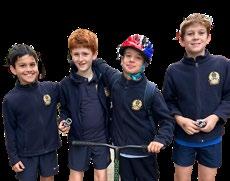
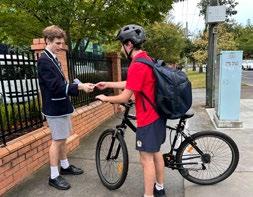
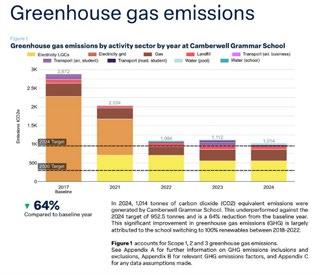
Camberwell Grammar School is a sustainability leader, formalising a decade of action with our bold commitment to Net Zero by 2030. This initiative is fundamentally driven by whole-school collaboration and deeply connecting the community to comprehensive emissions reduction solutions.
The strategy focuses on strategic resource management: reduction (energy, waste, water, paper and transport) and increase (biodiversity and recycling). The School demonstrates its commitment by investing in a fulltime Sustainability Project Coordinator, ensuring a collaborative approach across leadership, staff, operations and students. This structure transforms Net Zero into an optimisation journey that enhances operational efficiency and promotes global citizenship.
The School has already achieved a significant 64% emissions reduction since 2018, anchored by a massive 888 kWh solar system. Further reductions stem from
sourcing 100% renewable energy, introducing FOGO waste streams, electrification (e.g. replacing gas boilers with heat pumps), and integrating efficiency upgrades like HVAC and lighting sensors and irrigation infrastructure. Diverting items from landfill through partnerships and committing to sustainable events is crucial to the program.
Connection and transparency are key to this success. Resource data is collected, analysed and shared through quarterly and annual reports, prioritising projects and curriculum programs. Events like Schools Tree Day, Clean Up Schools Day, Ride2School Day and National Recycle Week actively connect the community with tangible emission reduction actions.
Our Net Zero by 2030 initiative is a powerful demonstration of how strategic collaboration and community connection secure a sustainable future.
Ms
Jo Menzies
Sustainability Project Coordinator
We all remember our high school work experience. Any group of adults can likely share fond or funny memories of their early forays into the world of work. From delivering office mail and cleaning classroom tables to watching nervously as vets operated, sitting bemused through meetings, or waiting long hours with little to do – these vivid and formative experiences were often our first independent steps into the adult world.
Work experience opened our eyes to the vast range of opportunities – and, crucially, the gap between our perceived abilities and reality – revealing the need for training or further study. It offered a first glimpse of our grown-up selves, operating in an adult environment, often without direct support or supervision (though usually with very supportive mentors). We may have travelled daily on public transport and bought lunches that quickly drained our limited funds, but those small steps were part of learning to connect with the wider world.
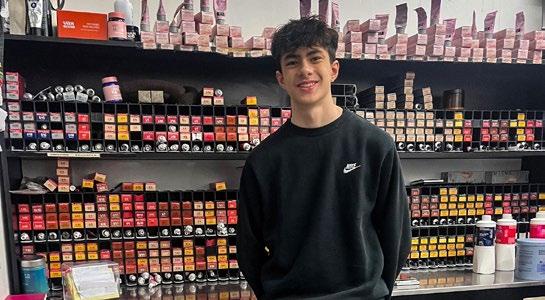
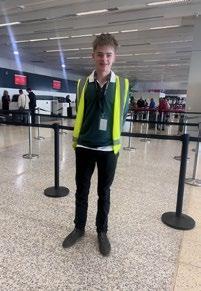
In June, more than 150 of our Year 10 students stepped into their possible futures, trading school uniforms for
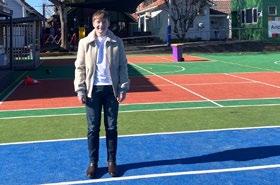
suits, workwear and, in some cases, specialist protective gear. While many schools now choose not to run work experience for various reasons, at CGS we continue to passionately advocate for this time away from the crowded curriculum. We see work experience as a vital growth opportunity, helping students develop career ideas, life skills and maturity, while beginning to build meaningful connections. These connections can be tangible – many of our alumni still work with or remain in contact with their original placement organisations – or more abstract, helping students link their actions and efforts today with their education and future goals.

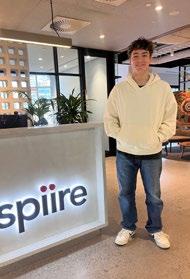
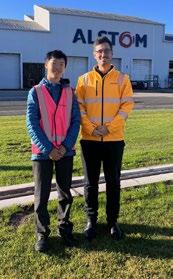
On the precipice of AI-driven disruption to the labour market, we are constantly being asked (and asking) how to future-proof our students’ skill sets. Critical capabilities are consistently identified as the uniquely human ‘soft skills’: communication, creativity, critical thinking and adaptability. For some students, work experience is one of the first opportunities to develop these skills outside the classroom.
When asked to give feedback on the value of work experience, this year’s Year 10 cohort were overwhelmingly positive. They said it gave them a glimpse of the future – whether or not in their chosen industry – and a sense of how quickly their current school days connect to their future careers. They reported feeling excited, hopeful and energised.
We run an annual alumni careers event where former students return to share their journeys with our Year 10s. Many alumni, now leaders in their fields, talk fondly
of the connections they made during their own work experience. They see clearly what our current students can only glimpse: the early connections that grew into career pathways, from the first flicker of an idea to where they are now.
Our students are often fortunate to find placements through alumni and local businesses who volunteer year after year to support our young people, offering them a window into one of their possible futures. They may be repaid only in gratitude, but in an ever-connected digital world, it’s those human connections that continue to spark imagination and shape the future.
If you are interested in supporting our Year 10 work experience program by participating in the alumni careers event or hosting a student for placement, please contact Emma White at careers@cgs.vic.edu.au
Mrs
Emma White
Careers Practitioner
Work experience is a valuable opportunity for students to step into the professional world and explore careers they might enjoy. During my own placement at a hospital, I observed firsthand the collaboration and dedication that go into caring for patients, giving me a deeper appreciation of the field and its impact. The week also provided a chance to reflect on my goals and interests, and how I could make a difference in the future.
Alexander Robb (Year 10)
With Jetstar’s work experience, I found it interesting that there are many unique pathways for aviation and their roles.
Conrad Chau
Work experience gave me a real insight into what day-today life is like in the workplace. It also helped me figure out if it was a career I wanted to pursue in the future.
Benjamin Proctor
Work experience at the Arts Centre pulled me out of the safety of grades and into the demands of real work. Guiding Year 10 students from Xavier, Scotch, Caulfield and Haileybury in using software for music composition, flipped my role from being assessed to being the instructor and taught me that teaching is most effective when it’s executed with clarity, communication, preparation and service.
Lachlan Barnes
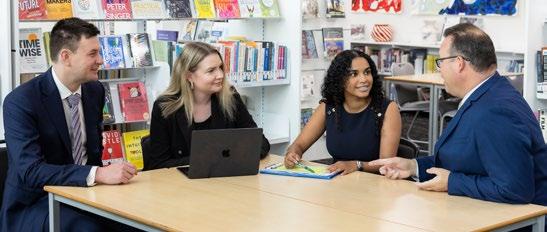
The very best part of my role as Head of the Murdoch Centre is the opportunity to focus not only on our wonderful students, but also on supporting our teaching staff. A significant part of my work is centred on developing the highest standards of teaching practice, ensuring that both staff and students can thrive.
Earlier this year, I was fortunate to attend the International Boys’ School Coalition (IBSC) Conference in Boston. Spending a week with educators from around the world who work with boys highlighted the value of sharing professional practice and knowledge.
John Hattie, an academic and statistician, emphasises the importance of teachers practising collective efficacy: Collective efficacy summarises the influence of cooperation and exchange within teaching staff on the academic achievement of students. The effect size is very high…there is a consistent conclusion: The critique and evaluation discussed among teachers, the shared vision for a school, and the conception of what successful teaching looks like significantly promotes the academic achievement of students.
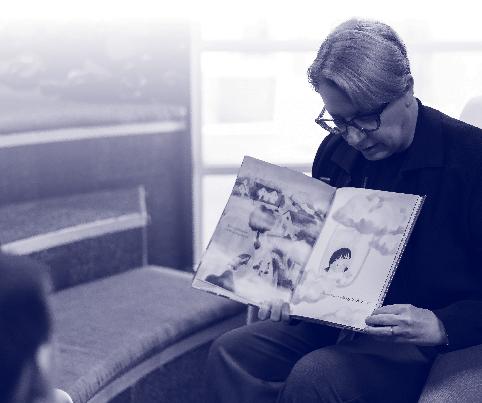
This sentiment was amplified at the IBSC Conference, where teachers and academics came together to discuss how best to teach boys.
• How do we make sure we are stretching them academically, socially and creatively?
• What is the recipe for a positive school experience? Who do we want our students to become?
• As a community, how do we work together to achieve that?
These were some of the key questions explored. Schools also shared how they had fostered connection and belonging so they could positively challenge boys in preparation for life beyond school.
Jimmy Casas, in his book Culturize, offers insights into the choices we make as teachers that support success. Building on the idea of collective efficacy, he argues that teachers must continue to learn from their colleagues and embrace this as an intentional practice. This is an important factor in ensuring that we continue to develop our skills as educators.
At the 2025 conference, we had two wonderful staff members present their work on an international stage. Our Head of English, Rick Mason, was part of the action research team and spent two years planning and researching what he eventually presented: Refocusing the Reading Lens: Exploring Literary Outliers to Foster Belonging in Year 9 Boys. This work showcased the power of research-driven practice to strengthen student belonging and engagement through the English curriculum and classroom practice. Our Junior School librarian, Michele Rutter, also shared her expertise at the conference, presenting: Building Empathy and Identity Together: Bibliotherapy for Social-Emotional Growth.
Both Michele and Rick demonstrated the importance of continually building and developing their own learning. As professional educators, they embody the value of lifelong learning for the benefit of our community and our boys. Not surprisingly, both received wonderful praise from the audience, many of whom took detailed notes to bring back to their own schools and apply in their own contexts.
The conference was a powerful example of contemporary action research and provocative ideas from leaders

‘Our shared vision, and the way we work together to achieve it, is the vital ingredient for success.’
across the world. What resonated most with me was the idea of togetherness, not only for our boys, but also for us as a staff and as a wider community. I was reminded of the impact that a community has on an individual. Our shared vision, and the way we work together to achieve it, is the vital ingredient for success.
Owen Eastwood captures this powerfully in his book Belonging, where he describes the strengths of humans in the form of a team:
Our ancestors deeply understood our primal need to belong, before psychology or neuroscience gathered the proof. It was visceral to them, part of every day and every decision. From the time our human ancestors left the forests to live on the grasslands, the greatest determinant of individual survival was whether they belonged to a strong group.
While developing collective efficacy and belonging may not be about survival in our context, it is about thriving as educators and as a school. The IBSC Conference was
a reminder that as a community, we each belong, and that my individual success is a collective success. As teachers, we are working together to share our practice and learning.
While we are incredibly proud of Michele and Rick, we also have staff doing equally impressive work here at school. Each term, we run professional learning cycles, where teachers are invited to present on something that is having a positive impact in the classroom. From Georgia Bellchambers’ expertise in the Gifted and Talented program, to Marie Zwart and Michael Daniels’ contemporary practice with students on the autism spectrum, to Bernie McGrath’s work on using technology for feedback, our teachers share their expertise, pushing each other to make the intentional choice to continually improve their practice.
My final reflection from the conference came from listening to Shabana Basij-Rasikh share her extraordinary experiences and leadership. What I took away was the idea that we each belong to something, and the choices we make always matter to someone. The leadership we demonstrate matters to someone. The way we support each other matters to someone.
While the sharing of teacher practice may seem like a simple task, the building of collective efficacy is far greater. It has the power to positively shape the experience of our boys and strengthen our wider community. I look forward to the continued growth of the Camberwell Grammar School professional learning program and to celebrating the work of our teachers in supporting each other’s continual improvement.
Ms Victoria Triantafyllou Head of the Murdoch Centre for Teaching, Pedagogy & Innovation
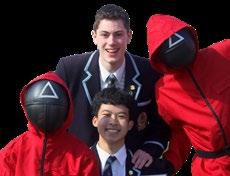
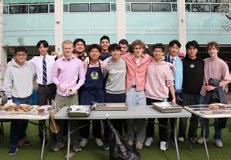
Students gathered on the JTO during August to participate in the Steven House Charity event, a series of games resulting in one winner going home with a $100 prize. It was great to see the turnout and participation on the day. Paired with the games was a sausage sizzle, with all money raised donated to the Cancer Council.
On 22 August, we celebrated Live to the Max Day, honouring the memory of Max McKenzie (Year 9, 2021) and raising allergy awareness. Students wore casual clothes with a touch of pink, Max’s favourite colour, and enjoyed a BBQ and concert, raising funds for the National Allergy Centre for Excellence. We welcomed Max’s family at our Senior School Assembly on 21 August, where his father shared Max’s story and reminded us all of the importance of allergy awareness and knowing how to use an EpiPen. Max will always be remembered as a special part of our community. Find out more about Max and the Live to the Max initiative: https://bit.ly/4fWFmws
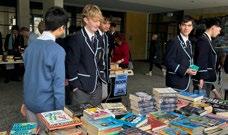
On 9 September, Bridgland House transformed the Amphitheatre undercroft into a bustling Book Fair. Thanks to generous donations collected over three
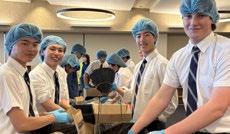
Students from the CGS Rotary Club and Presbyterian Ladies’ College joined forces for the annual FORaMEAL initiative, packaging over 14,000 emergency relief meals for communities impacted by natural disasters. After school, students worked enthusiastically in production lines, measuring and sealing dried ingredients into ready-to-distribute packs. Their efforts supported a worthy cause and demonstrated the spirit of service and collaboration between our schools.
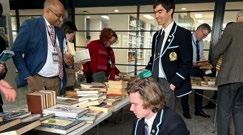
weeks, students and staff were able to pick up preloved books for just $2 each – with all proceeds going to support the Indigenous Literacy Foundation.
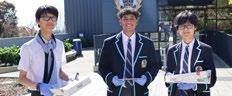
On 5 September, Senior School students got into the spirit with funky ties and sweet treats to support The Smith Family, a charity helping young Australians overcome educational inequality. Glazed Krispy Kreme Donuts were on sale in the Amphitheatre at lunchtime and generous pre-orders helped make the day even sweeter. Thanks to everyone’s support, an amazing $1,027 was raised.
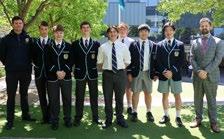
Students took part in the Great Cycle Challenge during October to help fight kids’ cancer. Aiming to match the perimeter of Tasmania (2,237 km), the 16-member CGS team quickly surpassed their goal, riding 2,612 km across 142 rides – 117% of their target – and at the time of writing, are aiming to cover the coastline of Victoria. The team raised over $4000 for the Children’s Medical Research Institute.
We continue to steadily grow support for the David de Kretser Scholarship program, now in its second year of operation. Three boys are currently studying on scholarship, with another two new scholarships on offer for 2026 and ongoing fundraising activity. Over recent months, the Community and Development Office, along with Chaplain Rev Alison Andrew, has been expanding our outreach, connecting with a range of partner organisations across diverse communities.
Partner organisations who are already helping raise awareness of the scholarship program include:
• Anglicare Victoria: CGS has a long-standing relationship with Anglicare Victoria. Our community raises funds for Anglicare’s Winter Food Drive and their Christmas Toy Appeal. www.anglicare.org.au
The Sudanese Australian Integrated Learning (SAIL) program: SAIL is a completely volunteer-run, non-profit, secular organisation that provides free tutoring and educational support to the Sudanese Australian community. https://www.sailprogram. org.au/site/about/about/
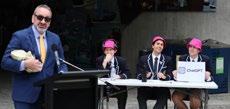
Schofield’s annual charity event donated all profits to Grab Life By the Balls – a mental health charity. The topic this year was “That students today are smarter than those 30 years ago”. Surprisingly, the teachers argued the affirmative, and came away with the win! It was a great day to grab a soft drink and some meatballs in a bun, with almost $1000 raised.
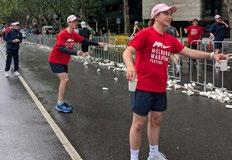
Senior students volunteered at the recent Melbourne Marathon to hand out water to thirsty runners. They enthusiastically supported runners at the last water station, just 1km before the finish line.
• Community Refugee Sponsorship Australia (CRSA): Established in 2021, CRSA is an independent Australian charity that enables community groups to sponsor and support refugees as they settle in Australia. https://refugeesponsorship.org.au/
• Koori Engagement Support Officers (KESOs): KESOs are employed by the Victorian government as area-based professionals who understand Aboriginal culture and history, and they support Aboriginal and Torres Strait Islander learners across public schools. https://www.schools.vic.gov.au/koorieengagement-support-officers
We look forward to ongoing collaboration with these organisations and other suitable partners, and we commend the work of these organisations to the CGS community. Read more about the David de Kretser Scholarships

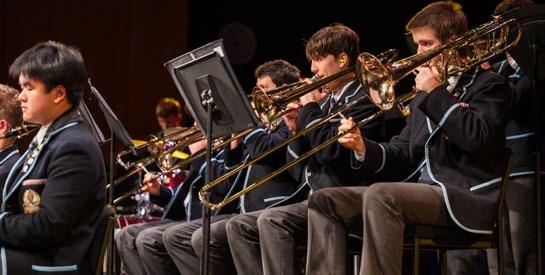
The first of three Semester 2 concerts to light up the Performing Arts Centre, the CGS Strings Festival was an outstanding showcase of the depth and breadth of Camberwell’s string program.
The evening opened with the youngest of Camberwell’s string ensembles, Sing and String, who gave a lively performance of Medieval Kings by Soon Hee Newbold. They were followed by Dorset Strings, who impressed with their polished renditions of Rooster Rag by Stephen Chin and Creatures by Brian Balmages, highlighting the strength of the Junior School string players.
As the program progressed through the year levels, CGS Strings performed the evocative Sahara Crossing by Richard Meyer, and Philharmonic Strings kept up the energy with Peter Warlock’s much-loved Basse Danse Angliss Strings delivered an engaging two-part program, featuring Telemann’s Sinfonia for Strings and Leslie Searle’s atmospheric Evening Shadows
The concert concluded with Highton Strings, joined by soloist Owen Wu (Year 12), who captivated the audience with Marcello’s Oboe Concerto in D Minor before Highton brought the evening to a memorable close with the third movement of Elgar’s Serenade for Strings. A huge congratulations to all the students involved, and sincere thanks to the many staff whose dedication and preparation ensured the festival’s success.
Charles Taliadoros (Year 12)
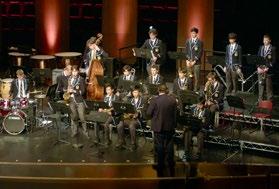
To conclude Term 3, our school proudly hosted its inaugural Bands Festival, a spectacular evening that brought together musicians from every corner of the woodwind, brass and percussion programs. Organised and conducted by the most wonderful staff, the festival offered a vibrant showcase of student talent, dedication and musical growth across all year levels.
The program featured an impressive lineup of ensembles: the Middle School Symphonic Winds, Middle School Drumline, Middle School Concert Band, Middle School Stage Band, Senior School Symphonic Winds, Senior School Big Band, Senior School Stage Band, Senior School Concert Band and the Percussion Ensemble.
From the rhythmic intensity of the drumline to the amazing solos of the jazz ensembles, each group brought something unique to the stage. The diverse repertoire, ranging from renditions of modern pop pieces to the most famous pieces for concert band, highlighted the musical excellence within our school community.
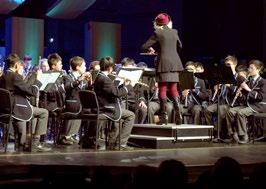
‘What made the evening truly special was the sense of unity and joy that filled the performance hall.’
What made the evening truly special was the sense of unity and joy that filled the performance hall.
Younger musicians played with enthusiasm and courage, while senior students demonstrated maturity and musical polish, inspiring those who will follow in their footsteps. Each ensemble’s performance reflected countless hours of rehearsal, collaboration and shared passion for music at Camberwell Grammar.
The Bands Festival celebrated the achievements of our students and marked the beginning of what will undoubtedly become a cherished school tradition.
Heartfelt thanks to our dedicated staff, supportive families and, most importantly, our talented young musicians. The event was a resounding success, showcasing the very best of what our school’s music community has to offer.
Owen Wu (Year 12)
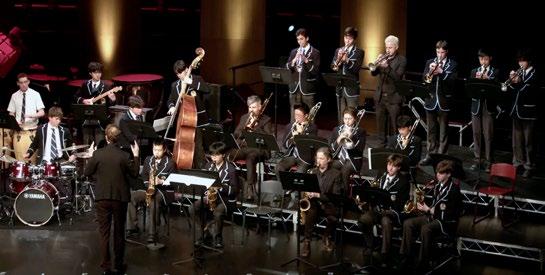
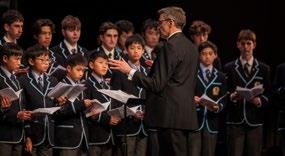
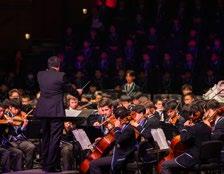
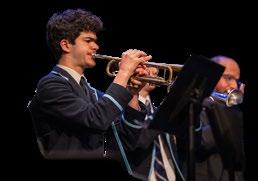
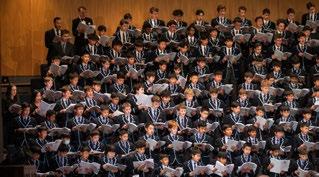
The September Concert marked the final event on the music calendar and the end of an unforgettable year for the Camberwell music program. The introduction of the new concert format was well-received, consisting of three shorter concerts: the Strings Festival, Bands Festival and culminating with the September Concert. This year’s shorter run time certainly did not take away from the usual quality and excitement of the prestigious September Concert. Mr Bishop and the music school introduced the audience to new heights of what’s possible in music performance, an achievement borne of months of dedication and passion from students and staff.
The night started began with a bang, with the Philharmonic Orchestra’s dazzling rendition of the fan favourite, Phantom of the Opera, followed by performances from a wide variety of genres, featuring a jazz and improv-infused cello interlude, to classics from Hercules and The Wizard of Oz performed by the Junior School Choir, and a CGS Chorale special, Tap-Tap, a Haitian Creole a cappella work song, expertly directed by Mr Kerr. This concert was a poignant farewell for Mr Kerr, marking the end of 27 extraordinary years as a treasured member of the Camberwell Grammar community.

To close out the first half, the Chamber Orchestra performed the fast-paced third movement of Haydn’s Cello Concerto in C Major, with Mr Bishop’s steady and assured guidance. The second half saw a change of pace, opening with the usual effortless groove of the Senior School Stage Band with a performance of Oh Lady Be Good! by George and Ira Gershwin. This served as a muchneeded respite before the monumental finale of Mr Bishop and the School Choir’s glorious magnum opus, Requiem by Giuseppe Verdi. The choir and Chamber Orchestra were operating on all cylinders in this masterful performance, ranging from the towering highs of the chorus in Dies Irae, to the gently crafted Liber Scriptus featuring Year 12 solo vocalists, Jade Bishop and Fraser Rowe.
The night was a great testament to the passion, perseverance and artistry that goes into these concerts. As I look back at the close of my own Camberwell music journey, performances like these define what the CGS community is all about.
Nicholas Branson Captain of Music
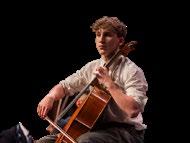
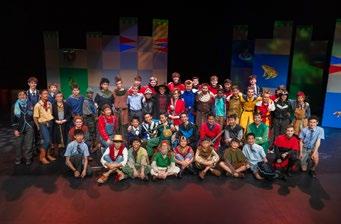
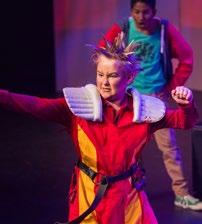
The 2025 Middle School Play transported the audience into a realm of dragons, knights and medieval mishaps, all brought to life through the imagination of a young boy.
The story follows Sir Oblong Fitz Oblong as he attempts to free the Bolligrew Isles from the tyrannical rule of Baron Bolligrew and his assistant, Squire Blackheart. Along the way, Oblong faces political corruption, deadly duels, the evil wizard Moloch and the fearsome Black Dragon. Full of humour and powered by the energy and commitment of staff and Middle School students, this year’s play was a fantastic production with many memorable performances.
Daniel Horne (Year 7) gave a superb performance in the lead role of Oblong Fitz Oblong, expressing the character’s emotions with great skill. Alongside him, Akein Seekkuge (Year 8), as the Storyteller, was a standout. With expressive delivery and animated gestures, Akein drew the audience into the world of the play, playing a crucial role in maintaining the story’s momentum. Other noteworthy performances included Year 7 student Alexander Collette (Dr Moloch), Year 6 student Collin Lee (Squire Blackheart), Year 7 student Jack Birch (Obidiah Bobblenob) and Year 8 student Cooper Kollosche (Michael Magpie), whose characters each added depth and personality to every scene. It would be remiss not to mention Baron Bolligrew himself. Nate Wittmann’s (Year 7) performance in the titular role earned many laughs for his witty delivery and made for an entertaining and engaging central character.
Beyond the cast, the production’s costumes, staging and technical design also deserve recognition. The costumes, designed by Miss Breanna Handfield, were fantastic – colourful, detailed and perfectly suited to the
childlike imagination behind the story. Each character felt unique and instantly recognisable. The set and props were equally impressive, with the stage transforming from a bedroom into the Bolligrew Isles. The highlight was undoubtedly the dragon – cleverly disguised as a bed before transforming into a giant dragon head (nicknamed “Chompy” by the crew) – an ingenious feature that captivated the audience. The stage crew did a superb job; kudos to Mr Mark Wager and the whole team for their exceptional efforts.
The technical elements also added greatly to the final performance. Atmospheric lighting and plumes of stage smoke helped bring the world to life. Many thanks to the tech team, especially Mr Stuart Feldt and Mr Michael Zagarn, for their work on the lighting and sound design.
With outstanding performances, beautiful costumes and the dedication of everyone involved, the play was a resounding success. Congratulations to all cast members and those who worked tirelessly behind the scenes, especially Mr Andrew Stocker for his direction and Mrs Jessica Johnson for her coordination. So much effort goes unseen in a production like this, and it truly paid off. Thanks also to the wonderful makeup and costume assistants and the students who volunteered as stagehands. Congratulations to everyone involved in this year’s play and best wishes for your future drama endeavours.
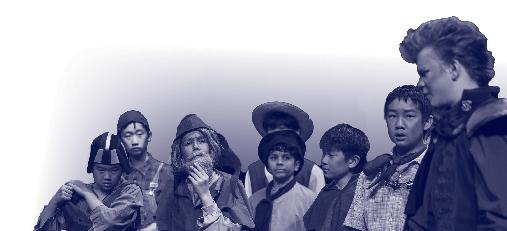
Jonah Guorgi Captain of Drama (2025)
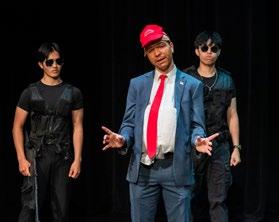
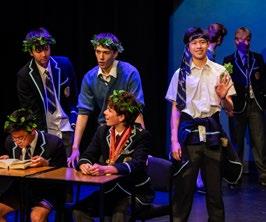
On 21 November, all eight houses came together to perform for their peers. Hours of rehearsals had come down to this very moment.
The theme for House Plays 2025 was Short Shakespeares. Each House had to select a Shakespearean play, cut it down to under 13 minutes, and present it in front of special guest judge, Mr Andrew Byrne.
Robinson presented their recontextualisation of Twelfth Night with passion and pride. The change of setting to Hawaii suited the play well, as it was still able to capture the humour of the show. Performances from Luke Meaney (Year 11) and a small cameo from Lachlan Rundell (Year 11) also enhanced the comedy. Reece Sun (Year 11) led Robinson well, earning Best Actor in the House. With a massive ensemble, Robinson earned 8th place.
Bridgland put on an excellent version of Hamlet. As the only House to not recontextualise their play, they stuck to the original storyline extremely well. They opened with a bang, with superb costume designs, especially for Rory Westcott (Year 11), who played Hamlet’s father. Julian Nguyen (Year 11) took command of the stage early, never letting the audience’s concentration waver. His performance earned him the Best Actor in his House. Bridgland’s strong performance got them to 7th place overall.
Schofield’s adaptation stayed close to home, setting Julius Caesar in CGS. The ensemble chemistry really shone through as the cast collaborated and performed extremely well together. Harvey Beckett (Year 9) shone through as the lead, while Jasper Chao (Year 11) performed a brilliant and very humorous Mr Jeacocke, earning himself the Best Actor in his House. Overall, Schofield had a strong showing, placing 6th.
Clifford took an interesting but very effective approach to the classic love story of Romeo and Juliet Recontextualising the show to set it in the 1980s, Romeo and Juliet are divided not by their houses, but by whether their father owns Pepsi or Coca-Cola. The chemistry displayed by Frank Roodenburg (Year 10) and Kevin Tian (Year 10) was a sight to behold, and Frank took the Best
Actor gong for his House. Overall, Clifford’s impressive tech helped them clinch 5th.
Derham made the biggest change to their play by far, turning Shakespeare’s most famous play, Macbeth, into a reality game show. This stroke of genius influenced Derham’s success, with strong performances from tech as well. Lucas Xuan (Year 10) was a standout, earning Best Actor for his House. Derham’s efforts earned them 4th overall.
Summons’ adaptation of The Merchant of Venice worked well. The show took advantage of its humorous side, using various sound effects and included a great line from Kieren Uffindell (Year 11), “That is the law, I think.” Ethan Zhao (Year 9) performed very well, taking home the House’s Best Actor. Summons’ strong efforts earned them 3rd place overall.
Steven’s adaptation of A Midsummer Night’s Dream was executed to perfection. The tech in the show contrasted perfectly with the actors. Perry Millard (Year 9) and Atticus Brennan (Year 11) brought out the true humour in the show. Lachlan Millard ’s (Year 11) exaggerated Australian accent had many talking about it for days after, earning him Best Actor for his House. Steven’s strong performance earned them 2nd on the day.
Finally, Macneil presented an interesting version of Henry V By modernising the play and turning Henry V into Donald Trump, Macneil dominated the after-show discussions. Dean Tsigounis (Year 11) performed an extremely accurate version of Trump, causing the audience to often erupt into laughter. The purposefully delayed sound effects added to the humour of the show. Macneil won Best Play, with Dean winning Best Actor for the House and overall.
Congratulations to all students who put so much time and effort into this year’s productions.
Will Nethercote Captain of Drama (2026)
The 2025 Snowsports season brought together students, families and staff for one of the most successful and enjoyable years in recent memory.
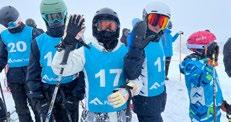
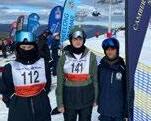
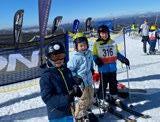
A highlight of the Snowsports calendar for more than 25 years, the Camberwell Cup and Falls Creek Family Week once again united families from across the School. Participants enjoyed world-class coaching, friendly competition and the chance to connect on and off the mountain.
Despite a midweek mix of strong winds and freezing rain, spirits remained high and conditions cleared in time for the 12th annual Camberwell Cup on Thursday. Around 50 competitors took on the NASTAR course in deep snow, cheered on by family and friends. Congratulations to Jonathan Cheung (Year 12), this year’s overall winner and fastest skier, with awards also presented across a range of age groups to recognise improvement and effort.
With deep snow and clear blue skies, this year’s Victorian Interschools Championships were among the best in recent memory. The CGS team competed across Alpine, Skier Cross, Moguls and Snowboard events, showing impressive skill and enthusiasm throughout the week.
Hamish Wu (Year 4), Brian Wu (Year 1) and Nicholas Tay (Year 1) completed their runs confidently, gaining valuable experience for future seasons. Arvin continued his strong form from earlier in the month, finishing 6th in Skier Cross from 190 competitors and 20th in Moguls – a fantastic achievement in large, highly competitive fields.
The event concluded with dinner hosted by Friends of Snowsport, whose ongoing support and organisation once again made the week possible. A final coaching session on Friday allowed students to consolidate their skills and reflect on their progress ahead of the Interschools season.
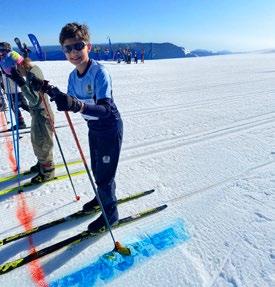
In early August, Arvin Aminazad (Year 5) proudly represented CGS at the Victorian Interschool Cross-Country Championships, earning a bronze medal in the individual event and helping a composite team to another third-place finish in the relay. His strong results qualified him for the National Championships and set the tone for the team’s excellent showing at Mt Buller.
Conditions remained ideal as the competition progressed, with Arvin also placing 5th in Giant Slalom and Jake Yang (Year 5) delivering consistent runs in the same event. Junior School competitors Hamish, Brian and Nicholas again represented CGS with great determination in their Skier Cross races.
The snowboard team was another highlight, with Owen Zhao (Year 6) and Ramon Liu (Year 3) both qualifying for the National Championships after top-15 finishes in Snowboard Cross and Giant Slalom. Their strong, composed riding stood out against an excellent field of competitors.
Senior students rounded out the week in fine form. Matt Barrett (Year 12) and George Baker (Year 12) represented CGS in their final Interschools appearance, tackling challenging Giant Slalom and Skier Cross events with determination. They finished the season proud of their efforts and grateful for the strong sense of camaraderie within the group.
Year 8 student Lachlan Chong qualified for the National Championships in both Snowboard Cross and Giant Slalom, an outstanding result that capped off a strong season for the younger competitors.
With competitors of all ages and achievements across every level of competition, the 2025 Snowsports season was defined by teamwork, perseverance and shared enjoyment of the snow. The team now looks forward to building on this momentum for the 2026 Camberwell Cup and another exciting Interschools season at Mt Buller.
Mr Ian March Teacher in Charge of Snowsports


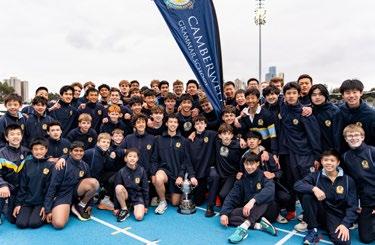
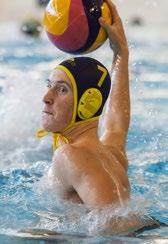
The 2025 Winter and Spring Sport Seasons once again demonstrated the breadth, commitment and talent of Camberwell Grammar’s sporting community. Our students displayed remarkable teamwork and resilience, with many achieving outstanding team and individual results that reflect the School’s core values of Learning, Courage, Respect, Integrity and Optimism. In what was an extraordinary year, Camberwell Grammar captured six AGSV Premierships from the 12 contested across all seasons – a remarkable achievement that highlights the depth and excellence of our sporting program.
The conclusion of the Winter Sport Season brought tremendous success and pride to the School, with Firsts Badminton and Firsts Hockey both winning AGSV Premierships, and our Cross Country team finishing as runners-up to perennial champions, Marcellin.
The Firsts Badminton team continued their extraordinary run of dominance, securing their 11th consecutive AGSV Premiership in commanding fashion. Led by Captain Chauncey Yu (Year 12), the team produced a flawless 6-0 victory against Yarra Valley in the Grand Final. The strength of the program continues to shine through all divisions, a credit to the dedication of players and coaches alike.
Having secured their place in the Grand Final at the end of Term 2, Camberwell faced Mentone in the AGSV Hockey Final, aiming to complete an undefeated season. Co-Captain Monty Green (Year 12) opened the scoring with a backstick strike, while fellow Co-Captain William Watson (Year 12) made several crucial saves to maintain the lead. With strong midfield play from Thomas Tsui (Year 9) and Lachlan Hoyling (Year 10),
Camberwell extended their lead and sealed a 4–1 victory, securing their first outright AGSV Hockey Premiership since 2021. Congratulations to all involved on a wonderful and undefeated season.
Our Cross Country team ran with determination and consistency throughout the season, finishing runners-up in the AGSV competition. Individual medallists included Sachin Kunendra (Bronze, Year 12), James Alex (Silver, Year 11), Alexander Zabojec (Bronze, Year 9), Lachlan Baxter (Gold, Year 8), Edward Smith (Bronze, Year 8) and Kevin Ma (Silver, Year 7) – an exceptional effort across all year levels.
The Fencing Squad concluded their season with impressive results at the 2025 Junior and Senior Men’s Individual Championships. In the Senior event, Marcus Lu (Year 12) finished inside the top five, while the Junior Championship was a showcase of CGS strength, with Collin Huang (Year 7) crowned 2025 Schools League Junior Men’s Individual Champion, Daniel Chen (Year 9) earning Bronze and Harvey Zhao (Year 7) finishing fifth.
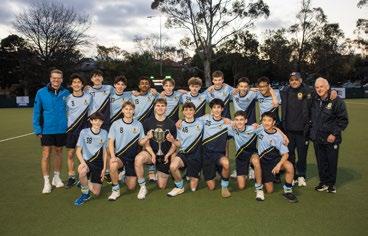
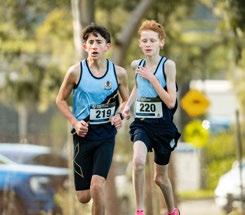
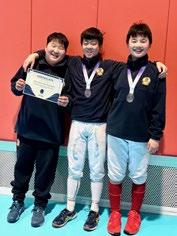
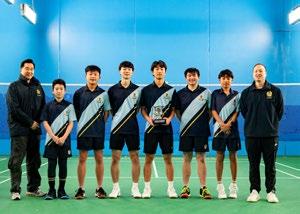
The Spring Sport Season delivered yet another highlight, with Camberwell securing the AGSV Athletics Premiership – our third title in four years. The team’s commitment to training, coupled with the enthusiasm and leadership of our senior athletes, ensured a memorable and successful campaign. Winning a Premiership requires contributions from all squad members, which was evident by the number of medallists from the day; however, outstanding individual performances at the Finals came from Co- Captain, Joshua Carlin (Year 12) in long distance events, Joshua Tallis (Year 11) in short and middle distance events, and Lachlan Baxter (Year 8) in long distance events. Congratulations to all athletes, coaches and staff involved in this outstanding achievement.
After the AGSV Winter and Spring Seasons, several Camberwell Grammar students were selected to represent the AGSV in matches played against APS representative teams – recognition of their consistent excellence and sportsmanship throughout the year:
• Badminton: Chauncey Yu (Year 12), Edward Lam (Year 11), Owen Lim (Year 11), Meno Chu (Year 10)
• Basketball: Henry Sewell (Year 12), Jarvis Neal (Year 11)
• Football: Luke Davidson (Year 12), Adam Li (Year 12), James Orton (Year 12)
• Hockey: Monty Green (Year 12), William Watson (Year 12), Daniel Tsui (Year 11), Lachlan Hoyling (Year 10), Thomas Tsui (Year 9)
• Soccer: Marko Maric (Year 12)
• Water Polo: William Watson (Year 12), Lachlan Rundell (Year 11)
We extend our sincere thanks to all staff and coaches who have supported our students throughout the Winter and Spring Seasons. Their dedication and expertise are central to the continued growth and success of our sporting programs.
Finally, a heartfelt thank you to our Year 12 students, who have represented Camberwell Grammar with distinction, enthusiasm and pride over their years in the Sport Program. Your leadership, example and commitment will leave a lasting impact on our teams and younger players. We wish you every success in your final examinations and beyond.
Mr
Lachlan Crawford Head of Sport

One of the most powerful aspects of education lies in the opportunities students have to step beyond the classroom and connect with the wider world. Whether travelling overseas or taking part in experiences closer to home, these opportunities invite our young people to broaden their perspective. They also encourage personal growth: developing independence, learning to be organised, adapting to unfamiliar environments and collaborating closely with peers. Sharing common
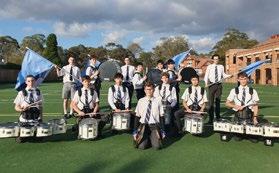
On Sunday 3 August, 14 Camberwell Grammar students flew to Sydney to compete in the Australian National Drumline Competition. Competing in the top-tier A-Division, the students represented the school with focus, professionalism and a strong sense of teamwork.
To compete, each team must combine musical precision with visual performance. The ensemble is made up of snare drums, bass drums, tenor drums and cymbals, supported by a colour guard who use large flags in choreographed routines. Each group was required to perform a predetermined test piece – this year’s was Avenue C – followed by a piece of their own choosing. For this, Camberwell Grammar presented BLU-EYE, a medley of three works integrating marching, stick tricks and complicated rhythms into one powerful performance.
Despite the brutal 5:00am call time and the nerveracking weighing of the drums, we luckily scraped through and made it to Sydney. Once we arrived at PLC, this year’s event host, we warmed up and prepared to face 11 other schools. After an anxious scoping of the competition, it was then our turn to enter the gym and deliver our best performance possible. The room shook with energy as we played both loudly and meticulously – each section shining in its solos while the colour guard filled the air with sweeping arcs of colour. Our
spaces and working together fosters resilience, empathy and teamwork – skills that serve students well in every aspect of their lives. In the following pages, we celebrate memorable tour and camp experiences our students have embraced this semester, highlighting how connection and collaboration extend well beyond the school grounds.
Ms Karen Whelan Deputy Principal / Head of Senior School
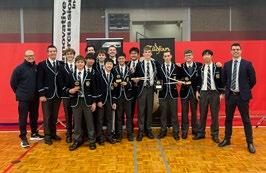

performance flew by, leaving us exhilarated and proud of how tightly we had played as a unit.
When the results were announced, we were thrilled to learn that our hard work had paid off. Camberwell Grammar was recognised with several section awards: Best Tenor Section, Best Cymbals Section, Second Best Snare Section and Best Test Piece Performance. To top it off, we placed second overall in the A-Division –a huge achievement.
Beyond the music, there were plenty of laughs and memories. Whether it was bonding over airport meals on the way home or trying every cologne sample in sight, the trip was as much about camaraderie as it was about competition.
Finally, we extend our deepest thanks to our instructor, Mr Keser, whose tireless dedication, good humour and immense passion have lifted the drumline to substantial new heights this year. We are also grateful to Mr McLaughlin for generously giving up his Sunday to accompany and support us.
The trip was a memorable mix of music, teamwork and laughter, leaving the drumline proud of what we achieved and eager for whatever awaits us next.
Charlie Weickhardt (Year 12) and James Buick (Year 11)
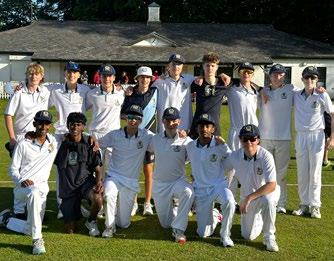
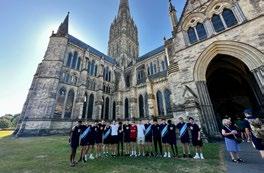
During the Term 2 holidays, 16 students from Years 10 and 11 got the exciting opportunity to tour England and Wales. During the tour, we visited many cultural icons such as Westminster Abbey, Buckingham Palace, the Tower of London and Lord’s Cricket Ground, where we learned about the history of the most famous cricketing venue in the world. We even got to see the Ashes urn, alongside many other cricket artefacts.
We were fortunate to play five games of cricket against local clubs and schools across Wales and England, as well as watch a game at Lord’s. Some key standout performances included a 74 from Lachlan Wu (Year 10), 72 from Noah Smith (Year 11), a four-wicket haul from Luke Suckling (Year 10), and a 137-run partnership between Kathir Suresh (Year 11) and Jay Christie (Year 11). As well as playing these matches, we also got to visit London, Cardiff and Salisbury.
The first few days were spent in London, where we enjoyed the Camden Markets, toured Lord’s Cricket Ground and visited Buckingham Palace. We then headed to Cardiff, where we stayed at the National Sports Centre of Wales, and played four games of cricket. Throughout these games, we enjoyed playing in different conditions, as well as having fun and bonding with some of the local players.
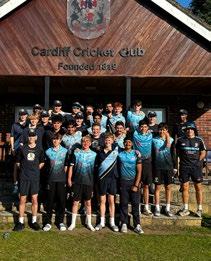
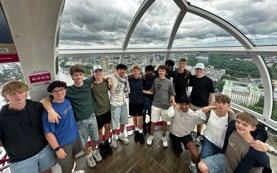
After this exhausting stretch of four games, we travelled south for a day to Bath, where we witnessed the elegant architecture and scenery of the buildings and streets. In Salisbury, we visited Stonehenge and Salisbury Cathedral and went to the driving range.
After our time in Salisbury, we headed back to London for our final few nights. During this time, we toured the Imperial War Museum and The Oval, and visited the London Eye, Big Ben, the Tower of London and Oxford Street. On the final night, we all enjoyed a team dinner, which gave us one last chance to reflect on the incredible trip we had shared. We celebrated not only the cricket we played, but also the friendships, bonds and memories that were formed during the trip.
It was truly a once-in-a-lifetime experience! On behalf of all the students and our parents, we would like to thank Mr Rayner, Mr Conlan and Mr Stanley for organising this amazing tour and spending two weeks with 16 boys! Kathir Suresh (Year 11) and Lachlan Wu (Year 10)
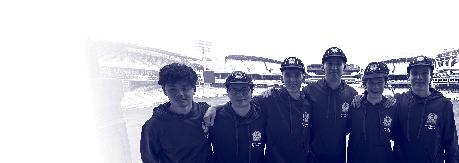
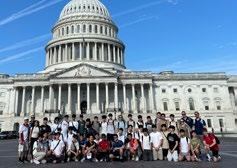
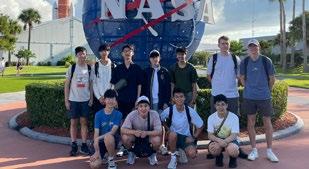
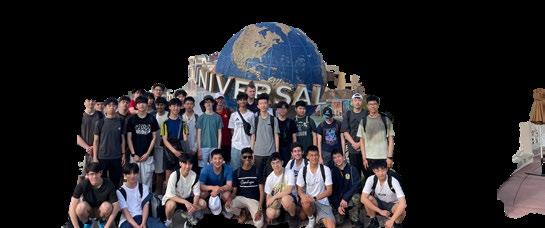
After a 14-hour flight packed with questionable airplane meals and endless movie marathons, we landed in Washington D.C. We stepped into the humid night air, jet-lagged and mildly disoriented, but buzzing with excitement. This was it, the start of an adventure we had been counting down to for months.
The next morning, we set off to explore Capitol Hill, where history and neoclassical grandeur collide. Standing beneath the Capitol dome with its sweeping marble columns and the breathtaking Apotheosis of Washington painted above was awe-inspiring. This was a place where imagination, governance and legacy met. Later, we wandered along Embassy Row, flags from around the world fluttering above, and turned it into a game of Guess the Flag. This ended hilariously when someone confidently called Belgium “Germany.” A+ for effort! Arlington Cemetery followed, rows of white headstones stretching endlessly, a solemn reminder of the human sacrifices behind freedom.
The next day at the Udvar-Hazy Center was a dream for engineers and tinkerers. Standing beneath the SR-71 Blackbird, sleek, matte black and impossibly fast, it almost felt alive! Nearby, the Space Shuttle Discovery hung suspended, a monument to human audacity. We explored spacecraft systems, learned about flight control, navigation and the principles behind space research. Every exhibit made STEM lessons tangible and left us inspired about exploration, technology and the ingenuity that propels humanity into the stars.
Then came Orlando. Two full days at Universal Studios in the blazing sun were pure chaos and joy. We screamed our lungs out on rollercoasters, sprinted from ride to ride, and got drenched to the bone on Ripsaw Falls. The VelociCoaster left us exhilarated, hearts pounding, hands
in the air. Even slower moments, like decoding DNA in Jurassic World, reminded us that curiosity and learning can be thrilling in every form.
Next was the Kennedy Space Center. The reveal of Atlantis was cinematic and triumphant. As the curtains lifted and lights swelled, she hung suspended midair, scarred from orbit yet perfect. Walking beneath the Saturn V rocket, tracing the launch sites and seeing the technology that had carried humans beyond Earth was breathtaking. This was the pinnacle of engineering and out-of-this-world determination.
Finally, Space Camp in Huntsville – what we had all been waiting for. Five days of mission simulations, rocket building, anti-gravity chairs and multi-axis trainers tested our skills and teamwork like never before.
From commanding aircraft and shuttles to conducting extravehicular activities, we applied principles of aerospace engineering, mission planning and flight systems in real time. Crew trainers pushed us, the 9-square tournaments tested our strategy and late-night conversations forged connections that went beyond camp. Every challenge was a lesson in collaboration, perseverance and ingenuity. And yes, there were creative experiments too – like the time I may have used “acid” as a face wash on the ISS during a critical mission (NASA, please forgive me).
By the end, we weren’t just students. We were a crew. We left with knowledge, memories, inside jokes and a shared understanding that the sky isn’t the limit. It’s just the beginning.
Adil Jibu (Year 10)

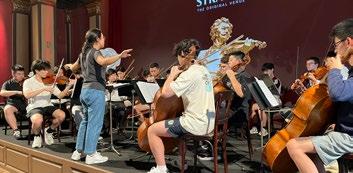
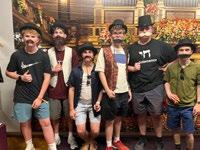
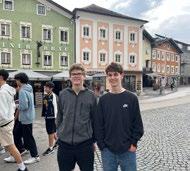
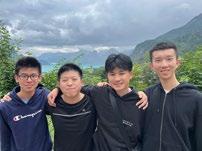
On a dark, rainy Wednesday morning in early July, 35 eager students and five teachers set off to participate in the Summa Cum Laude Festival of Music, held in Vienna. Camberwell Grammar School sent a string orchestra and choir to participate in the event, joining schools from all over the world.
Arriving in a Viennese summer was a shock after where we were only a day earlier. One of my colleagues had said to me, ‘Oh, European summers are different from summer hereit’s like a hug!’. Our ‘hug’ was the hottest day on record for Vienna, in the middle of a heat wave! Our CGS track pants and fleecy tops were no match for a 38-degree day, so it was a quick wardrobe change before taking a tour of the city centre and a walk in Mozart’s footsteps, before heading back and enjoying a chance to get a good night’s sleep.

The following day was spent rehearsing and participating in the opening ceremony of the festival, marvelling at the stunning architecture of the city, the incredible performance venues we were to perform in, and exploring an ancient city with a rich and varied history.
There was a competition component for our string orchestra, who performed magnificently at the Musikverein, an exquisite concert hall in the heart of the city. Camberwell Grammar placed second in our category, performing works by Josef Suk and Peter Sculthorpe, along with a rousing arrangement of Waltzing Matilda. We have so much to be proud of with our students performing at such a level. Straight after performing, those students joined the rest of our touring group, performing in the choral celebration and performing works by Australia’s Nicholas Buc and Paul Kelly. Immediately following this, we were on our bus and setting up to perform another concert set to celebrate the 200th birthday of Johann Strauss II. It was quite a day of performing!
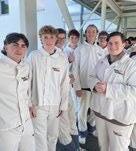
In the following days, Vienna provided us with the opportunity to participate in orchestral and choral workshops at the local Music University, visit music museums and perform a special concert at the House of Strauss. We celebrated the conclusion of the festival at a final concert at the Vienna Konzerthaus, followed by a closing party of music and dancing.
Our next stop was the beautiful city of Salzburg, where we set up our base in Altenmarkt, spending a few days performing and sightseeing. This included a trip underground to an ancient salt mine, complete with an impromptu performance of Anthem from Chess, and a trip to an altitude of 2800 meters to explore the Eagle’s Nest, nestled in the Bavarian Alps. A quick few days in Munich rounded out our trip, before we returned to Melbourne and many excited families.
Tours like these do not just happen. The complete, exhaustive planning to get our students to the other side of the world and back safely and to have them perform successfully was facilitated by a fantastic team back at Camberwell – Ms Karen Whelan, Mrs Katrina Price, Ms Andi Gehrke, Ms Genevieve Bourke and Ms Jacinta Sonego. On the ground, the fabulous team of caring teachers – Ms Lisa Grosman, Mr Dominic McLaughlin, Ms Esther Toh and Ms Stephanie Dixon – helped our students through the rigours of a huge tour with kindness, positivity and optimism, modelling the best qualities of what we always hope to see in our students.
The 2025 Summa Cum Laude Festival was more than just a performance tour – it was a life experience. Our students returned with remarkable international performance experience, and also with memories of music, friendship and fun that will last a lifetime.
Mr Nic Johnston Head of Performing Arts | Subject Leader - Music
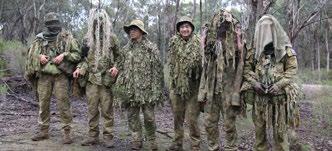
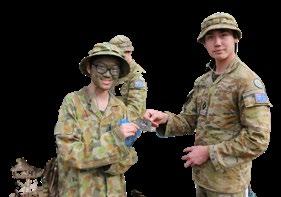
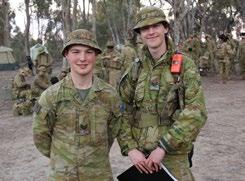
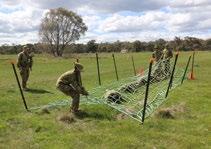
‘In the first week of the term break, 113 cadets, including a keen contingent of our Year 8s, headed to Puckapunyal for their �nnual Camp: Exercise Emu.’
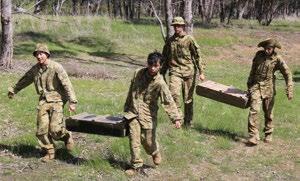
In the first week of the term break, 113 cadets, including a keen contingent of our Year 8s, headed to Puckapunyal for their Annual Camp: Exercise Emu.
The first half of the camp involved practising key fieldcraft and campcraft skills, ranging from First Aid scenarios, navigation, radio communication, field engineering, camouflage and movement by day and by night. Cadets feasted on “hot box” meals provided by the Army as well as the traditional ration packs, which they cooked for themselves. The Year 8s undertook a series of introductory lessons and activities over the first three days, and also tackled the confidence course before departing.
Senior Cadets then turned their attention to a twoday inter-platoon competition that tested teamwork, resilience and leadership as they competed for points and overall kudos as the winning platoon.
Finally, the Cadets undertook a weapons familiarisation activity at the Army Weapons Training Simulation System. Guided by Army instructors, the Cadets undertook simulated target practice, with Ethan Tran (Year 12) earning the Marksmanship Award.
The entire camp was planned and implemented by the Senior Cadet team of CUO Kris Vos-Rutter (Year 12) and RSM Owen Wu (Year 12), who deserve immense credit for building and implementing the training program, activities and organising the Unit throughout the week. They were supported by a large contingent of Year 12s, who should also be commended on the care, enthusiasm and spirit that they demonstrated throughout their week.
Thanks also to the Unit’s Commanding Officer, Dr David Rodgers, CGS Cadet Staff and alumni who assisted during the camp and helped to make the event a successful and rewarding experience.
Mr David Rayner and Mr Michael Daniel
I started at CGS in Year 7 in 1980. It was a lot bigger than my state primary school, where I’d always felt pretty comfortable, and in the mix with the other kids. A boys’ school was a tougher environment, and I was pretty intimidated at times. The support of my Year 7 teacher, Simon Murray, and a couple of good friends made a big difference.
I played tennis and basketball because I found football and cricket a bit too physically intimidating. Tennis became an important part of my life, and I’ve played it ever since. I remember participating in cross-country inter-house races for Schofield. The scoring was designed such that the time of every boy mattered. I also remember the 3km run we used to do at the school camp Bambara. I always went my hardest, even though I wasn’t the fastest, and one time I threw up at the finish line.

industry. I shifted into a management role and hired and supervised teams working on projects for corporate clients. In 2007, this abruptly came to an end with another redundancy. This time, I landed on my feet. One of our clients, the Australian Red Cross Blood Service (now Life Blood), immediately offered me a role managing their learning design team. I had a productive six years there, leading our team to introduce a Learning Management System and video-based online learning. I had a great relationship with my Manager and learned a lot from him.
Some other favourite teachers were Roy McDonald (Latin) and Ian Mason, a fierce coach of the Firsts Tennis team. I reconnected with Simon Murray a couple of years back to reminisce about school days. I still see about five friends from CGS and have a regular tennis hit with three of them.
In 1986, I went to Monash in Clayton and studied Economics with a minor in Psychology. It was a big time of social opening up for me. I enjoyed myself a lot but barely scraped through my subjects. I particularly enjoyed Psychology but never considered switching to a Psychology degree. I’ve noticed this a few times in my life. When I have a plan, I often stick with it beyond the point where it’s clear that it’s not the best plan for me. It’s something I’ve begun to change.
After university, I spent 20 months travelling the world, including two summer camps in New Jersey and a ski season at Whistler. It was a real coming of age for me as an independent adult. In 1992, I returned home to study a Diploma of Education (secondary) at Melbourne, but my timing wasn’t great. The Victorian government was busy closing schools in 1993, and it was very tough to get a teaching job. Ultimately, I decided to pursue a career in workplace learning and worked in that field for 29 years.
I started at Optus in 1993. After a couple of years in customer service and sales roles, I got a job teaching customer service to new contact centre representatives, eventually writing most of the training materials. In 1999, Optus was exploring the emerging world of online learning, and I secured a role in a new team creating online learning. I always felt a little uncomfortable that the time and cost of what we were producing was not commensurate with the value, and it was perhaps not surprising that most of the team, including me, was made redundant in 2001.
I found this quite a challenging blow, and it took me three months to secure my next role in an eLearning consulting firm. This was an innovative small business, and we did a lot of great work with organisations mostly in the finance
Simon Plant
In 2013, I left the Blood Service and took up a role as Education and Training Manager at headspace. There, I led our team to introduce a learning management system, online learning for all key roles and a national conference. I’ve enjoyed my time at headspace more than any other place. A big part of that has been the shared mission to support young people in transitioning through the challenging years of adolescence to a thriving adulthood. In 2022, I brought my learning and development career to a close and shifted into a general management role, managing a program to grow the size of the youth mental health workforce through student placements and a graduate program in headspace centres. This has been a highlight of my career, working with a terrific team of skilled and dedicated people on an important cause, and experiencing a lot of success. At 58 years of age, I imagine I have about one more big job left in me and am contemplating what that might be.
The theme of this edition is connection and collaboration. Both have played an important role in my career. I’ve pursued connections with people for the pleasure of enjoying the company of people I work with. But it’s also true that a few of these relationships have been key to me getting the opportunities that have moved my career forward. The key has been to be warm and open to colleagues and see what emerges. Everyone up to and including the CEO is a person with all the strengths and insecurities that come with that, and most people appreciate the warmth and interest of others. In relation to collaboration, I’m reasonably intelligent and insightful, and it’s been a lifelong learning for me to discover that “we” are smarter than “me”. The best solutions come from creating spaces where everyone’s ideas are heard.
To close, I’d like to share a few lessons I’ve learned over my career and life:
• Feel the fear and do it anyway. Fear has made my life a bit smaller than it could have been, but so many good things have come from pushing through a bit of fear and anxiety.
• Consider working in the not-for-profit sector on a cause you care about. You may not earn quite as much, but you’ll meet and work with great people who really care about what they’re doing. Invest in friendships while you’re young. It gets harder to make new friends as you get older, and you cannot make new old friends.
• Don’t be too wedded to your plans. Keep an open mind that life might show you another path better suited to you.
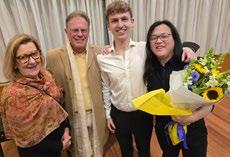
Following the success of last year’s concert, Freddy Branson (2022) returned to Camberwell Grammar with Darby Lee (2022) for an afternoon of music. The repertoire covered a wide range of genres and favourites, including Bolling’s Jazz Suite, Chaminade’s Concertino, and Liebermann’s Sonata for Flute and Piano, as well as a composition by Darby himself.

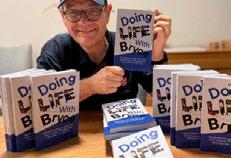
Bryce Davies (1981) has recently released Doing Life with Bryce, a heartfelt collection of scriptural reflections drawn from his popular podcast, Stories of Hope. Bryce is a Salvation Army officer in Queensland who has over 25 years of experience in community work within the Salvos. Though the podcast has concluded following Bryce’s new role at Goodna Salvos Mission in Brisbane, all 600-plus episodes remain available on podcast platforms. This accessible and real book is perfect for anyone seeking deeper meaning in life and spirituality.
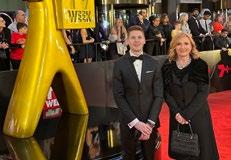
Chris Gillett (2005) recently won a Logie for ‘Best Current Affairs Documentary’.
Chris is a TV producer with ABC Investigations who works with one of Australia’s most esteemed investigative journalists, Adele Ferguson. The pair made the Four Corners documentary, Betrayal of Trust, which delivered the most comprehensive and unflinching investigation ever undertaken into Australia’s $20 billion childcare industry.
Exposing sexual and physical abuse of children unleashed by the rapid privatisation of the sector, which anyone can buy into. The program revealed the widespread prioritisation of profits over safety, with serious incidents skyrocketing as a result. The story sparked national debate and widespread reform of the sector.
Chris’ work has previously been recognised with awards in Australia and abroad, including five Press Club Quill Awards, Kennedy Awards and a New York Film Festival World Medal.

Simon Plant (1975), a Melbourne writer and former Herald and Weekly Times journalist, has published his first book, Entertaining Mr Coppin: An Antipodean Showman in Civil War America
Released by Theatre Heritage Australia, the book traces
the extraordinary journey of 19th-century actor and entrepreneur George Coppin through North America at the height of the Civil War, blending biography with social history. An edited extract appeared in The Australian on 19 August. Simon, who spent three decades specialising in arts and entertainment reporting, has also written plays, co-curated major cultural exhibitions, and continues to contribute essays and articles on popular culture and theatre history. More information at theatreheritage.org.au
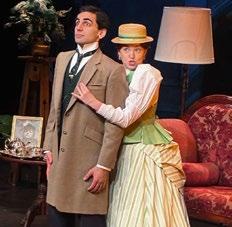
The Camberwell Grammarians’ Theatre Company presented the Oscar Wilde classic, The Importance of Being Earnest, in the Middleton Theatre from 24 - 26 July. This production featured the magnificent theatrical efforts of some new faces to the CGTC Community, as
The CGS Community and Development Office, which organises alumni reunions and various annual OCGA events, has been trialling the use of informal, year-level WhatsApp groups.
Several year levels have made use of these groups to better connect classmates in real-time, rather than relying on email, which often ends up in secondary email accounts. Some year levels have set up groups ahead of reunions to help spread the word about plans, while others have set them up at the event itself to help classmates stay in touch.
Dave Phillips (1987) and Matt Scholes (1987) started arranging periodic catch-ups with a small group of classmates every two months over pizza and beer. They initially relied on email and text messages, but since moving onto WhatsApp, the group has grown steadily.
Lachlan McDonald (2013) recently took to the stage with renowned UK vocal ensemble The Tallis Scholars during their Australian tour. After a last-minute call to fill a vacancy caused by illness, Lachlan joined the group with virtually no rehearsal, performing two different programs almost at sight at the Melbourne Recital Centre on 5 October. Supported by proud family, teachers and fellow alumni in the audience, Lachlan has since joined the ensemble for the remainder of their Australian tour.
well as alumni, past parents and current staff. Below is an excerpt of a review of the production by Dr Paul Hicks.
Stephen Bennie’s fast-paced direction never faltered in this crowd-pleasing production. He presented Wilde’s material ‘straight’ - letting the language speak for itself - and setting a cracking pace which never faltered, and which helped to sustain the beautiful illusions of the play. The gorgeous sets, which came to life at the beginning of each act in animations created by David Bennie, reminded us that this is storytelling that wallows in its artifice. Indeed, this show was in many ways a Bennie family enterprise, as Jennifer’s luscious costume designs reflected the setting of the play perfectly.
Each of the actors in this ensemble cast seemed perfectly chosen for their roles, and delivered Wilde’s prose with crisp precision, allowing the epigrams to ring forth with bell-like clarity. The two leads - Ali Samaei as Jack Worthing and Nicholas Sarlos-Welsh (2021) as Algernon Moncrief - played off each other perfectly and with great energy and authority, with Samaei’s rolling ‘Rs’ propelling his doubtful logic, and Sarlos-Welsh’s flair for physical comedy being used to great effect. This pair had the audience in the palms of their hands, and they milked the comedy for all it was worth. They were wonderfully complemented by Rebecca Cecil as Gwendolen and Phoenix Bennett as Cecily.
Dave explains: ‘Everyone really enjoys catching up, but the organising used to be a bit of a chore. Now the group has grown to 25 alumni. Not everyone can attend each dinner, but we usually get at least 8-10, and the group chat keeps the conversation going.’
Dan Warne (1995) set up a WhatsApp group at his 30 -year reunion in August to keep the conversations going and to catch up more frequently. ‘The Community and Development Office helped us send the link out to all attendees as well as those who couldn’t make it on the night, because they had a clash or were overseas. It’s been really fun for everyone to reconnect.’
If you’d like to set up a WhatsApp group for your year level, we can help. Get in touch with Cindy Parker, Development Associate (Alumni) via ocga@cgs.vic.edu.au or 9835 1748.
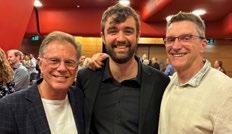

16 August 1935 – 10 September 2025
Douglas enjoyed playing cricket and football during his time at CGS, but his passion was tennis, and he was Senior Tennis Champion in 1951 and 1952. After leaving school, Douglas pursued a career in banking and finance and was always proud to mention that he attended Camberwell Grammar School.
1 May 1952 – 28 September 2025
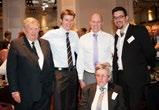
Father to Ashley (1995), Duncan (1997), Ed (2003) and Philip
19 January 1944 – 25 June 2025
Brother to Allan (1965)
29 October 1939 – 11 July 2025

Anthony (or Tony as he was known) began his education at Trinity Grammar, spent a few years at Geelong Grammar, and completed his schooling at Camberwell Grammar. It was during his time at Camberwell Grammar that his passion for chemistry really stood out – he was well known for spending countless hours in the chemistry lab. After finishing school, Tony attended RMIT, where he earned an Associate Diploma in Applied Chemistry. His love of learning and science led him to a long and rewarding career – beginning as a Scientific Officer with the State Electricity Commission of Victoria. He later joined Macphersons as an industrial chemist, before moving into education, where he became a lecturer in Chemistry, Physics, Computers and Maths at RMIT. He was also a proud and long-standing member of the Royal Australian Chemical Institute for almost 60 years.
Tony was a devoted husband to Margaret McClellan (50 years married) and a proud father to John McClellan, Elizabeth McClellan and Sue Faulkner.
Sue Faulkner
6 May 1965 – 4 July 2025
Brother to Peter (1985, CGS 1973 - 1983).
Stephen attended the school from 1970 to 1982. Following HSC, Stephen went on to study Electrical Engineering at Melbourne Uni. Stephen was able to combine his lifelong interest in electronics with a career designing and building electronic circuitry and software. In more recent years, Stephen moved to Sydney, where he became involved in the shortwave radio community. Stephen established a love of music in his time at CGS and continued to play and occasionally perform throughout his life. Stephen is survived by his mother and brother, Peter.
Peter Stebbing (1985, CGS 1973 - 1983)
26 September 1936 – 4 August 2025
Doug was born on 26 September 1936 and died on 4 August 2025 in St Vincent’s Hospital, Melbourne.
Doug attended Camberwell Grammar and completed his matriculation in 1953. He was the elder brother of John Tonkin (1956, deceased), who also attended the school.
Doug lived an active and fulfilling life well into his mid80s, sharing it with his lifelong love, Wilma, his children and grandchildren. He was a Chartered Accountant Partner, and enthusiastically pursued passions of photography, bushwalking and travel. Even as his health declined in later years, he remained positive, choosing to focus on what he could still enjoy and appreciate rather than on what he had lost.
Doug and Wilma’s younger son, Peter, sadly died in February 2022 at the age of 54, after living with a chronic illness for over two decades. Doug is survived by his wife Wilma, his elder son Roger, his daughter Jan and his two much-loved grandchildren, Samuel and Isobel.
Tonkin family
Be part of the Camberwell Grammar community and keep up to date with our news and achievements by following us on our social media channels, reading our latest news, and more.