



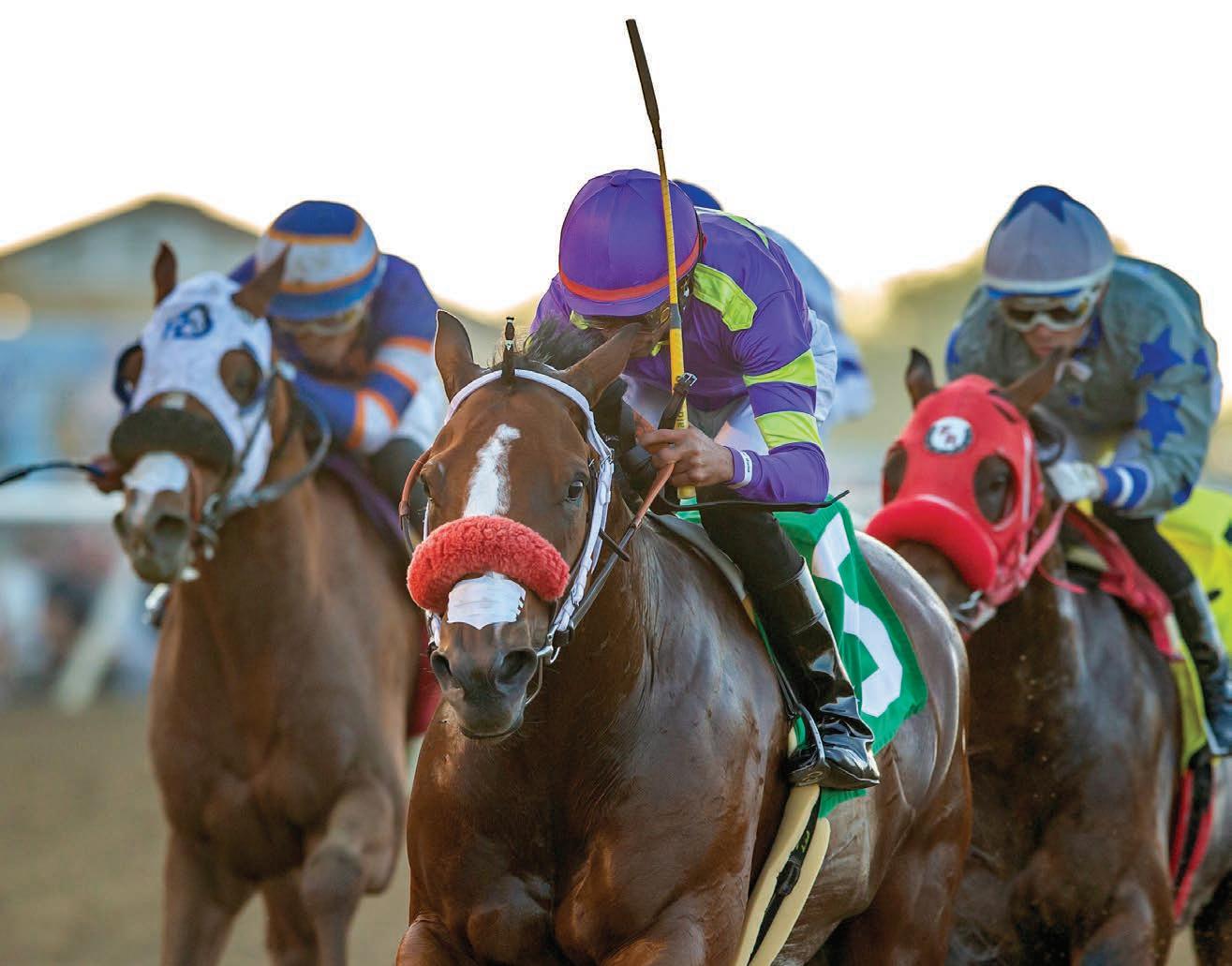
CAL-BRED WINS THREE CONSECUTIVE
CAL-BRED WINS THREE CONSECUTIVE
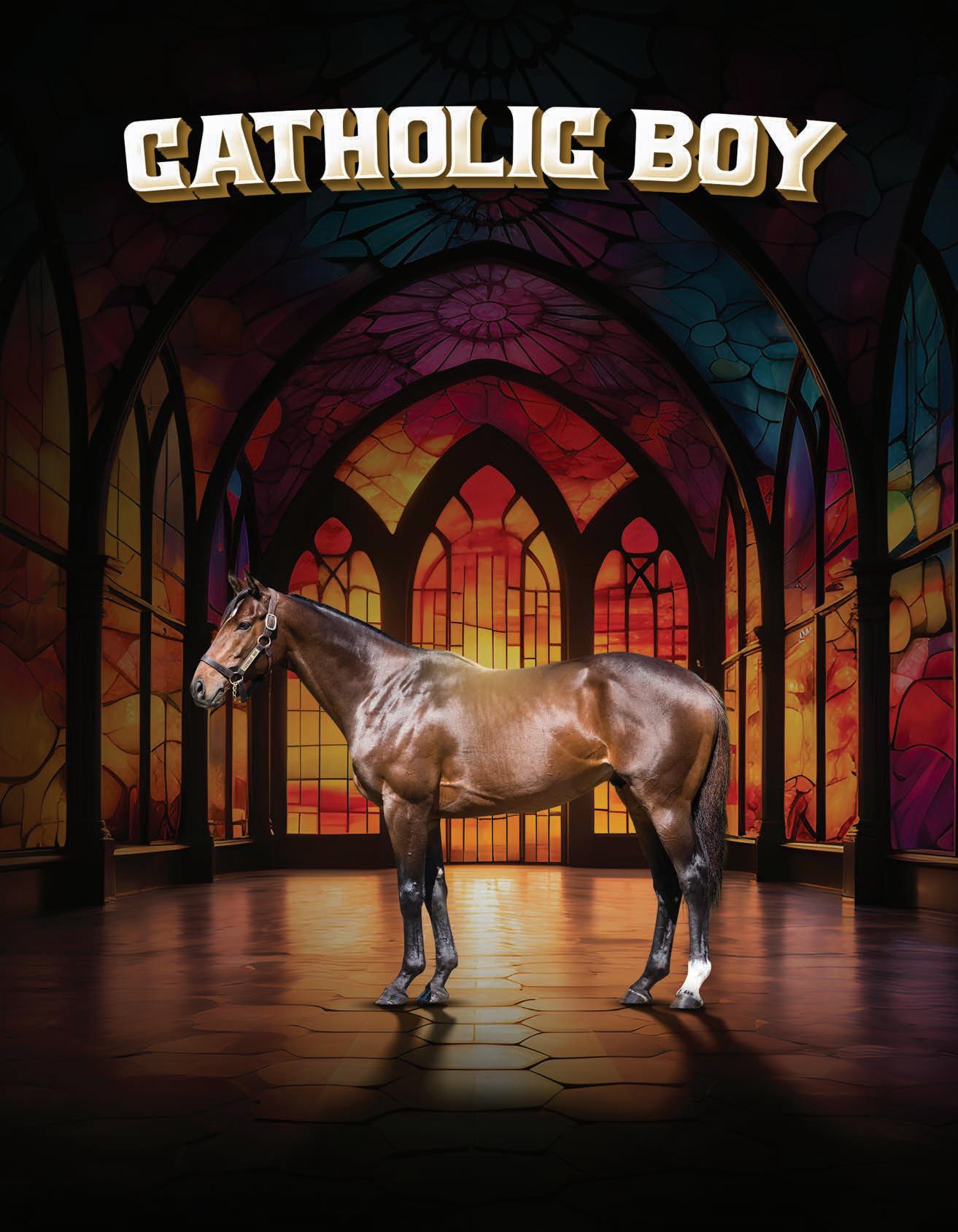
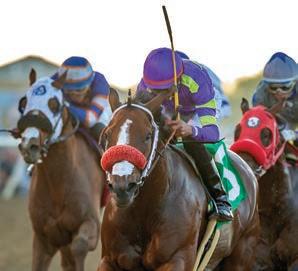
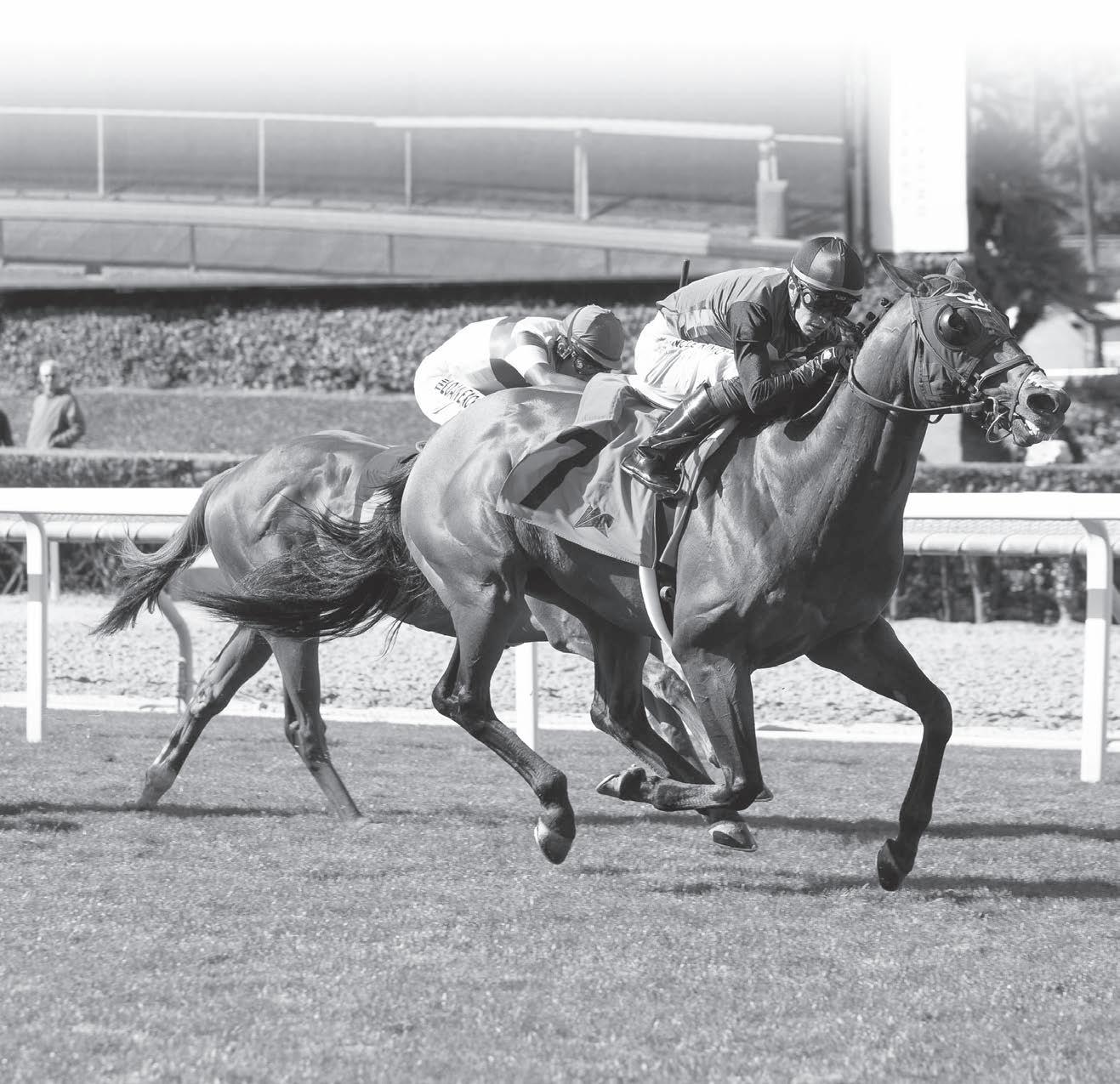
A Graded stakes winner on dirt and turf at 2. Grade 1 winner on dirt and turf at 3—won the Travers S. (G1) and Belmont Derby Inv. S. (G1). More than $2.1 million in earnings.
10 STAKES HORSES,
including Les Is Best, runner-up in this year’s Gowell S. at Turfway Park, and graded stakes-placed Faith Understood, 3rd in the Honeymoon S. (G3) at Santa Anita.
2 STAKES WINNERS—
G1 winners in Puerto Rico include SMOKEN BOY, who also won the Caesars H. at Horseshoe Indianapolis, and EL CATOLICO
More Than Ready - Song of Bernadette, by Bernardini Jonny Hilvers (559) 903-4391 jonnyhilvers@harrisfarms.com


The official magazine of California Thoroughbred Breeders Association, a non-profit corporation dedicated to the production of better Thoroughbred horses for better Thoroughbred racing, published by Blood-Horse, LLC.
Opinions expressed in signed articles are those of the authors and do not necessarily reflect policies of the CTBA or this magazine. Publication of any material originating herein is expressly forbidden without first obtaining written permission from California Thoroughbred. All advertising copy is submitted subject to approval. We reserve the right to reject any copy that is misleading or that does not meet with the standards set by the publication.
Acknowledgment: Statistics in this publication relating to results of races in North America are compiled by the Daily Racing Form Charts by special arrangement with Daily Racing Form Inc., the copyright owners of said charts. Reproduction forbidden.
OFFICERS
CHAIRPERSON
JUSTIN OLDFIELD
PRESIDENT
DOUG BURGE
VICE CHAIRPERSON
TY GREEN
TREASURER
GEORGE SCHMITT
SECRETARY
ADRIAN GONZALEZ
DIRECTORS
Gloria Haley, Pete Parrella, Sue Greene, Terry C. Lovingier, George F. Schmitt, Ty Green, Justin Oldfield, Adrian Gonzalez, Dan Harralson, Dr. Stacy Potter, Jonny Hilvers, Katherine Fisher
ADMINISTRATIVE STAFF
CONTROLLER
THOMAS R. RETCHLESS SALES
LORETTA VEIGA
REGISTRAR/INCENTIVE PROGRAM MANAGER
MARY ELLEN LOCKE
ASSISTANT REGISTRAR
DAWN GERBER
ADVERTISING MANAGER/PRODUCTION COORDINATOR
LORETTA VEIGA
WEBSITE MANAGING EDITOR
KEN GURNICK
RACETRACK LIAISON
SCOTT HENRY
California Thoroughbred (ISSN 1092-7328) is published monthly, except for two combined issues in June/July and Aug/Sept, plus one special issue in December, in Lexington, KY by Blood-Horse LLC, 821 Corporate Dr., Lexington, KY 40503. Periodicals postage paid at Lexington, KY and at additional mailing offices.
POSTMASTER: Send address change to the 201 Colorado Place, Arcadia, CA 91007
Subscriptions - $55.00 per year USA $85.00 per year Canada & Mexico
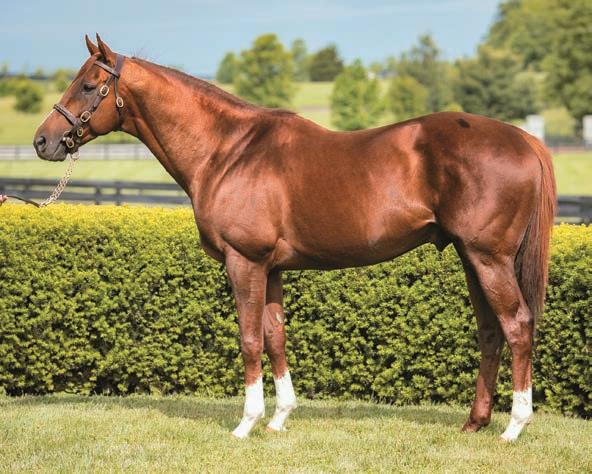
Collected has moved to California for next year and is one of several new stallions standing in the state, while others have relocated.
BY
WEST COAST CONTRIBUTING EDITOR
TRACY GANTZ
COPY EDITOR
MARY SCHWEITZER
ART DIRECTOR
CATHERINE NICHOLS CREATIVE SERVICES DIRECTOR JENNIFER SINGLETON
PRODUCTION FORREST BEGLEY ARTIST PHILIP TRUMAN
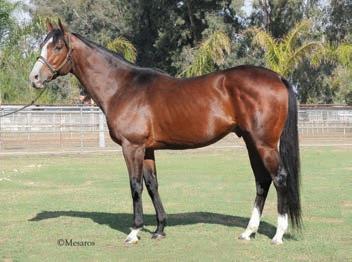
AIR FORCE RED
Air Force Blue – Mesana, by Mizzen Mast
Fee: $2,500 LFG
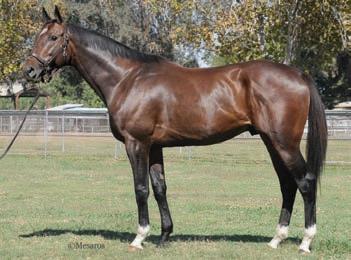
KING OF JAZZ (ARG)
Giant’s Causeway – Kiss Me Sweet (ARG), by Lode
Fee: $1,000 LFG
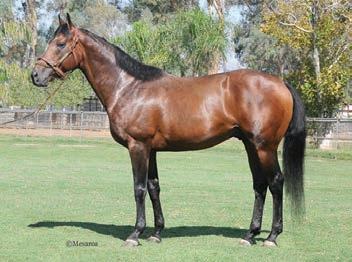
ORIGINAIRE (IRE)
Zoffany (IRE) - Polly Perkins (IRE) by Pivotal (GB)
Fee: Complimentary
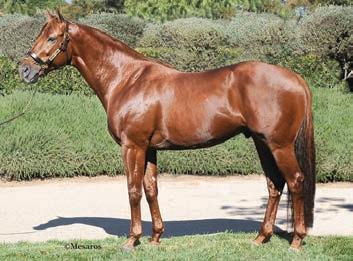
ROUSING SERMON
Lucky Pulpit – Rousing Again, by Awesome Again
Fee: $1,500 LFSN
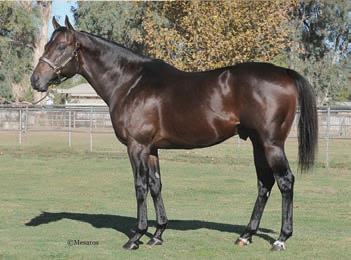
GATO DEL ORO
Medaglio D’oro – Funny Feeling, by Distorted Humor
Fee: $2,500 LFG
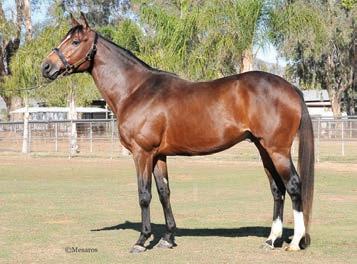
Uncle Mo – Leslie’s Harmony, by Curlin
Fee: $2,500 LFSN
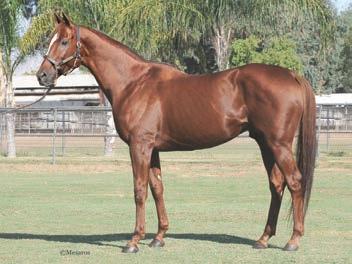
OSCAR NOMINATED
Kittens Joy – Devine Actress, by Theatrical (IRE)
Fee: $1,500 LFSN
A Full Service Thoroughbred Facility
Centrally Located to All Southern California Racetracks OFFERING
Breeding, Boarding, Mare & Foal Care, Lay-Ups, Breaking, Training, Sales Prep, 5/8 Mile Race Track

Marcos Menjivar, Manager 3001 W. Esplanade Ave Hemet, CA 92545
C (951) 316-5420
P (951) 654-9100
F (951) 654-9119
E: bgfarminc@gmail.com
The California Thoroughbred Breeders Association has cataloged 192 for its mixed sale, to be held Jan. 20 at the Hinds Pavilion at Fairplex Park. The sale will offer broodmares, newly turned yearlings and 2-year-olds, and older horses of racing age. Catalogs will be available in late December and online at ctba.com.
California-bred broodmare
Streak of Luck, the dam of Breeders’ Cup Juvenile (G1) winner Ted Noffey, sold for $6.2 million Nov. 3 to top the Fasig-Tipton Kentucky November sale. Several other Cal-breds at Keeneland later that week brought six figures each.
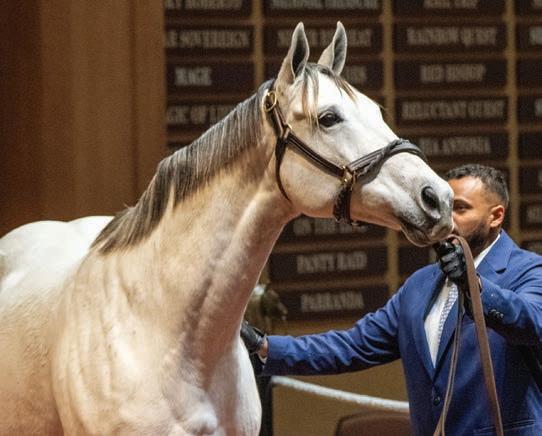
The Roncelli Family Trust bred Streak of Luck, a 2015 daughter of Old Fashioned— Valeria, by Elusive Quality, and raced her in partnership. Streak of Luck was multiple graded stakes-placed, earning $352,109. Sold to Aaron and Marie Jones in 2021 for $620,000, Streak of Luck went on to produce Ted Noffey for breeder Aaron & Marie Jones LLC. By Into Mischief, Ted Noffey sold for $650,000 at the 2024 Keeneland September yearling sale and races for Spendthrift Farm.
Aaron Jones died in 2014, and Taylor Made Sales Agency sold Streak of Luck at the Fasig-Tipton sale for Marie Jones. The mare was in foal to Not This Time. Ben McElroy signed the ticket for Amo Racing USA, and he told BloodHorse that Streak of Luck could be bred back to Into Mischief. The mare foaled a full brother to Ted Noffey in 2025.
Chismosa, the 2024 champion Cal-bred older female, at $375,000 brought the highest price for a Cal-bred during the Keeneland November sale. Warrendale Sales consigned
Beginning with the January 2026 issue, California Thoroughbred will segue to a digital-only platform, with two exceptions. The April/May issue will be printed so as to feature the previous season’s California-bred champions and others honored at the CTBA’s annual year-end awards banquet. The September/October issue will be printed to highlight California Thoroughbred breeding farms. Every issue will continue to be available digitally as it is currently.
the daughter of Clubhouse Ride—You Can Dream, by Cat Dreams, as agent for breeder Jamie Renella. Stonestreet Farm purchased her. Chismosa won the 2024 Las Flores Stakes (G3), placed in five other graded stakes, and has earned $636,750.
Cal-bred Big Pond, in foal to Arabian Knight, sold for $320,000 at Keeneland. Flying Dutchmen purchased her from the consignment of Hill ‘n’ Dale at Xalapa as agent. George Krikorian bred and raced Big Pond, a daughter of Mr. Big—Beside Still Water, by Lemon Drop Kid. She won two stakes, was multiple graded stakes-placed, and earned $322,880.
Uncontrollable, a Cal-bred broodmare in foal to Arabian Knight, brought $250,000 at Keeneland. Haif Stud purchased her from Taylor Made Sales as agent. Fountain of Youth Breeding LLC bred the daughter of Upstart—Behavioral, by Include. Uncontrollable was multiple graded stakes-placed and earned $200,030 on the racetrack.
A Cal-bred weanling colt by Omaha Beach sold for $175,0000 at Keeneland. Adrian Gonzalez’s Checkmate Thoroughbreds and Raymond Salvatore bred the colt from the Blame mare Flame Mingo. Checkmate consigned the youngster to the sale, and Bourbon Meadows purchased him.
Remember to register your California-bred/California-sired foals by Dec. 31 to take advantage of lower fees. Fees to register 2023 foals (yearlings) before Jan. 1 are $125 for CTBA members and $250 for non-members. After Jan. 1, the fee will be $750.
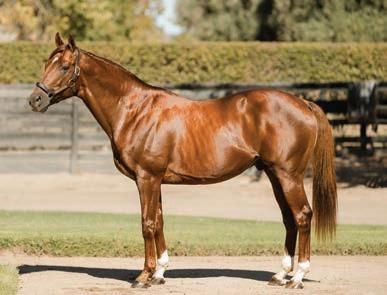
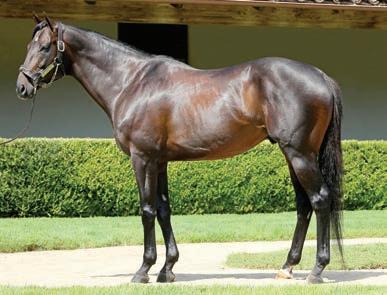
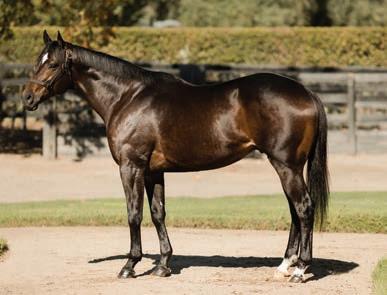
Overnight purses at the Santa Anita classic meet, which opens Dec. 26, will increase 5%. That will be added to the $11.75 million in stakes being offered. The stakes program will include the many Golden State Stakes Series for California-breds and California-sired runners. A highlight of that program is the lucrative California Cup card, featuring five stakes scheduled for Jan. 17.
The Jockey Club (TJC) and Weatherbys has launched “Racehorse Naming,” a website that enables users to check the potential availability of a Thoroughbred name in Great Britain, Ireland, the United States, Canada, and Puerto Rico.

“The overall 5% purse increase for Santa Anita Park’s classic meet continues the positive trend from last season,” said Nate Newby, Santa Anita’s general manager. “The increases are highlighted by the rise in maiden special weight races to $70,000. Building on the strength of the 2025 Southern California racing program, we’ve been able to add back two stakes races that were not offered last season. These are positive steps for the state as California remains the only major racing jurisdiction where purses are not subsidized by other forms of gaming.”
Santa Anita’s press release announcing the purses noted that Calbreds are a vital component to Santa Anita’s racing program and that 14 stakes for them are on the schedule. California Cup Day includes the Unusual Heat Turf Classic presented by City National Bank, California Chrome California Cup Derby, and Leigh Ann Howard California Cup Oaks, each carrying a $175,000 purse. California Gold Rush Day is scheduled during the Hollywood meet. To be conducted May 23, that card will offer five more stakes for Cal-breds and Cal-sired runners, including the Snow Chief Stakes and Melair Stakes.
Racehorse Naming, which is available and free at racehorsenaming,com, will be useful for unnamed Thoroughbreds bred or purchased in one country and imported to another. TJC oversees naming in the U.S., Canada, and Puerto Rico, and Weatherbys covers Great Britain and Ireland. The results of a name search on Racehorse Naming indicate if the name is potentially available in both jurisdictions, only one jurisdiction, or neither jurisdiction. Names are still subject to further checks and final approval by the respective naming authority.
“We’re proud to partner with Weatherbys to launch Racehorse Naming, and we hope that owners and breeders find it easy to use and helpful in streamlining the naming process,” said Andrew Chesser, TJC director of registration services and director of business development. “Given the scale of trade between Britain, Ireland, and North America, it made perfect sense to create a shared tool that supports those naming horses bred in one jurisdiction and racing in another.”
Mike Butts, head of equine services at Weatherbys, said, “Working with our partners at The Jockey Club U.S., we have created a new service designed to help anyone looking to check the availability of horse names across multiple jurisdictions—not just in Britain and Ireland but now also in the USA, Canada, and Puerto Rico—all through a single, convenient website.”



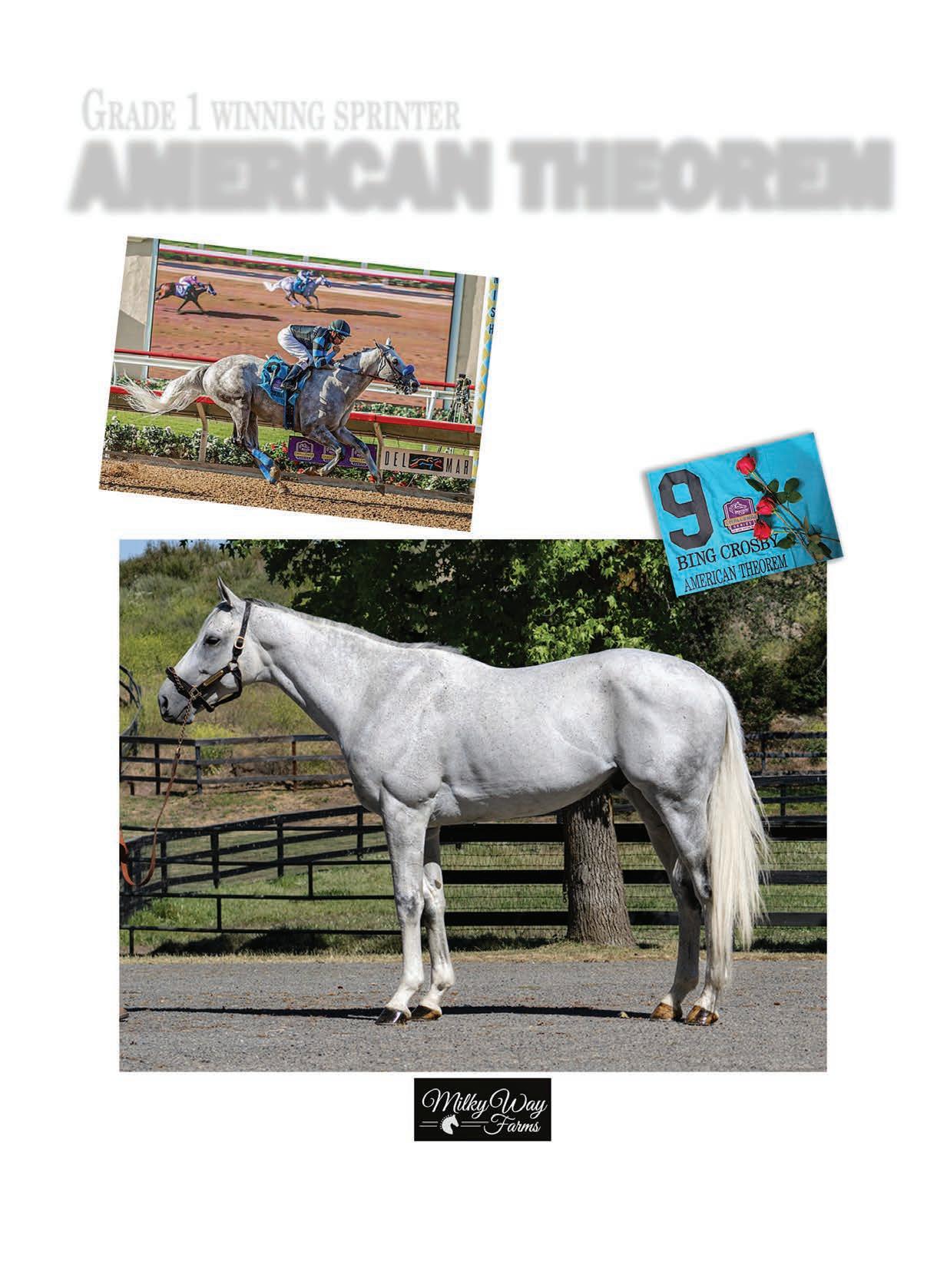





While Rags to Riches, who died Nov. 24 at age 21, put her name in the history books when she won the 2007 Belmont Stakes (G1), she springboarded to success via California. She went from still a maiden after one start to a two-time graded stakes winner at Santa Anita in 2007.
Todd Pletcher trained Rags to Riches for owners Michael Tabor and Derrick Smith of Coolmore after agent Demi O’Byrne bought her for $1.9 million at the 2005 Keeneland September yearling sale. Skara Glen Stables bred the daughter of A.P. Indy—Better Than Honour, by Deputy Minister.
Rags to Riches debuted at Churchill Downs in June of her 2-year-old season, finishing fourth in a maiden race the same day her half brother Jazil won that year’s Belmont. Pletcher later had to serve a suspension, so his primary assistant, Michael McCarthy, now a successful trainer himself, trained Rags to Riches for her first two starts in California in 2007.
She demolished maiden competition by six lengths in early January and in subsequent months captured consecutive grade 1 races. Rags to Riches won the Las Virgenes Stakes (G1) for McCarthy, while Pletcher was the trainer of record in the Santa Anita Oaks (G1).
“She does everything so easily in the mornings,” McCarthy said after the Las Virgenes. “She’s just a beautifully made filly—all class.”
In the Santa Anita Oaks, Rags to Riches scored by 51⁄2 lengths under jockey Garrett Gomez. That set her up perfectly for the Kentucky Oaks (G1), which she captured by 41⁄4 lengths, again with Gomez aboard.
Instead of sticking to the distaff ranks, Rags to Riches next competed in the 11⁄2-mile Belmont against males. She became the first filly in 102 years to win the Belmont, defeating Curlin by a head. Curlin went on to be a two-time Horse of the Year, a successful sire, and a member of the national Hall of Fame.
Rags to Riches started once more, finishing second in the Gazelle Stakes (G1), and was retired after sustaining a hairline fracture in her right pastern. Her overall record was seven starts, with five wins and one second, for earnings of $1,342,528. While Rags to Riches has been on the Hall of Fame ballot several times, she has yet to garner enough votes for inclusion.
As a broodmare, Rags to Riches has produced three winners and has a 2024 colt by Uncle Mo and a 2023 filly by Munnings.
The following claiming levels for California owners premiums and stallion awards are currently in effect:

Seven went postward for the $100,210 Berkeley Handicap (G3) at Golden Gate Fields Nov. 29, 2015, and California-bred POSHSKY emerged victorious. Ridden by Russell Baze and sent away as the 7-2 third choice in the field of seven, Poshsky laid third early in the 11⁄16-mile test, raced wide into the stretch, and eked out a neck win over Pepper Crown, with favored G. G. Ryder third for a Cal-bred Trifecta. Poshsky completed the distance in 1:42.70. Peter Miller trained Poshsky for owners Silver Ranch Stable and Wachtel Stable. The Berkeley was Poshsky’s first stakes victory. He went on to win the 2016 Crystal Water Stakes and earn $823,383. Old English Rancho and Sal Berumen bred the 5-year-old gelded son of Vronsky—Pinky’s Posh, by Bold Badgett. Poshsky’s third dam, Winning in Style, produced Eclipse Award-winning Cal-bred Acclamation.
After capturing the Wells Fargo Bank California Cup Classic Handicap, California-bred SKY JACK made it two in a row when he stepped up to graded competition in the $100,000 Native Diver Handicap (G3) at Hollywood Park Dec. 3, 2000. With Laffit Pincay Jr. in the irons, Sky Jack led throughout the 11⁄8mile event and defeated Lethal Instrument by seven lengths as the 2-1 favorite. Cal-bred Grey
Memo finished third. Sky Jack stopped the timer in 1:46.81. Doug O’Neill trained Sky Jack for Rene and Margie Lambert’s Ren-Mar Thoroughbreds. The Lamberts bred the 4-year-old son of Jaklin Klugman—Sky Captive, by Skywalker. Sky Jack two years later would win the Mervyn LeRoy Handicap (G2) followed by Hollywood Gold Cup (G1). He closed out his career with a victory in the 2003 Longacres Mile (G3) in Washington, ultimately bankrolling $1,115,127.
California-bred STAINED GLASS defeated Telly’s Pop in the California Breeders’ Champion Stakes at Santa Anita Dec. 27, 1975. Telly’s Pop was heavily favored, after winning the Del Mar Futurity (G2), Norfolk Stakes (G2), and California Juvenile Stakes (G2). Stained Glass had bucked his shins and had been away from the races for five months. But he and jockey Laffit Pincay Jr. led wire to wire and got to the finish 11⁄2 lengths ahead of Telly’s Pop in 1:221⁄5 for seven furlongs. It was six lengths back to Real Hot in third. Joe Manzi trained Stained Glass for owners Grown, Kaufman, and Criste. Connie Ring bred the 2-year-old son of Olympiad King—Bouquet of Roses, by Dress Up. Earlier that year, Stained Glass had won the Westchester Stakes, Sir Francis Drake Stakes, and Cabrillo Stakes, and he went on to add the 1976 Alibhai Handicap.
To further assist the membership of the California Thoroughbred Breeders Association (CTBA) and subscribers of its official publication, California Thoroughbred, this monthly editorial page provides readers with updates about the association’s current policies, latest news, and upcoming events in the Golden State.
SUNDAYMONDAYTUESDAYWEDNESDAYTHURSDAYFRIDAYSATURDAY
$100,000 Soviet Problem Stakes
$100,000 King Glorious Stakes Los Alamitos Los Alamitos closing day
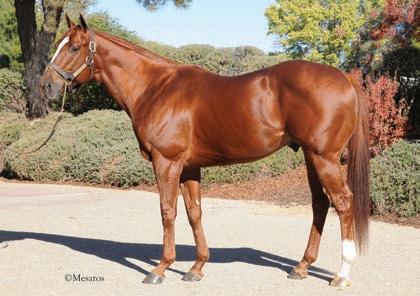
SQUARE EDDIE – BAS, by FLOWER ALLEY
Undefeated winner on dirt and turf by 21 lengths.
Blazing Speed: 6 furlongs in 1:07.50!
First-crop yearlings in 2026.
$3,000 LFSN
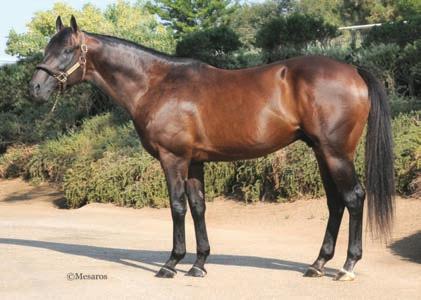
WAR FRONT – PLAYA MAYA, by ARCH
Uncle Mo half-brother boasts $100,000 average earnings/starter and 20% black-type performers. First-crop Cal-breds race in 2026.
$3,000 LFSN
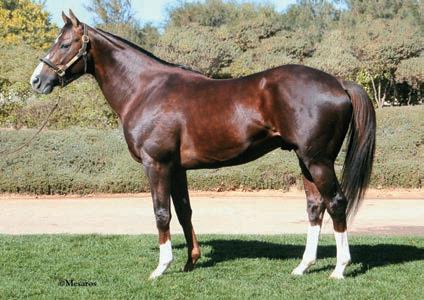
GIANT'S CAUSEWAY – GETAWAY GIRL, by SILVER DEPUTY
Grade 3 winner out of half-sister to Grade 1 sires Ghostzapper and City Zip delivers durability.
Top 5 Runners: 53 starts average.
$2,500 LFSN
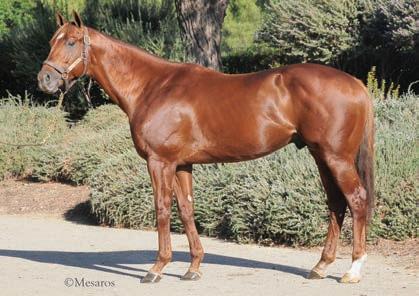
CLUBHOUSE RIDE – BRICKYARD HELEN, by SOUTHERN IMAGE


Speedy multiple graded stakes winner from the Candy Ride (Arg) sire line earned $925,477. First foals arrive in 2026.
$4,000 LFSN

EMPIRE MAKER – PURELY HOT, by PURE PRIZE
GIANT’S CAUSEWAY – GETAWAY GIRL, by SILVER DEPUTY
Grade 3 winner from the immediate family of Grade 1 sires Ghostzapper and City Zip. Sire of 2024 stakes performer Talbot Bay. EIGHT RINGS
$2,500 LFSN
TAMAYUZ (GB) – MONA EM (IRE), by CATRAIL
Proven elite sire has global progeny earnings of $26 million. His 39 stakes performers include seven international G1/G2 winners.
$6,000 LFSN




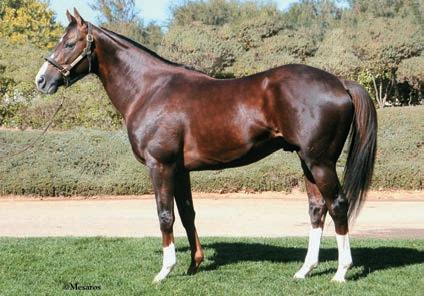
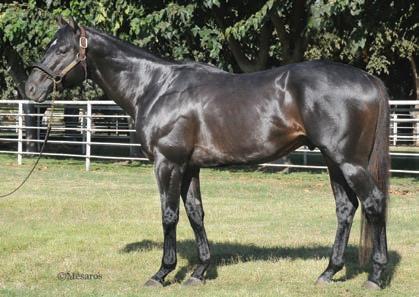
Grade 1 winner at 2 has highest 2025 median yearling sales results among active California sires. First-crop 2-year-olds in 2026.
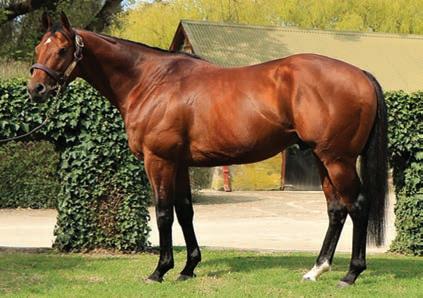
































COLLECTED
CITY ZIP – HELENA BAY (GB), by JOHANNESBURG
California’s New #1 Sire!
Pacific Classic (G1) winner has 20 stakes winners ― seven graded ― in first four crops.
$7,500 LFSN
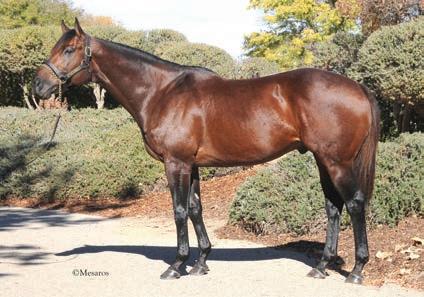
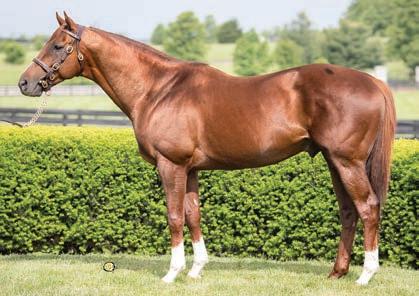
UNCLE MO – INFLAMED, by UNUSUAL HEAT
Grade 1-winning millionaire is #1 son of Uncle Mo standing outside Kentucky. California’s most popular stallion: 2023 & 2024.
$5,000 LFSN
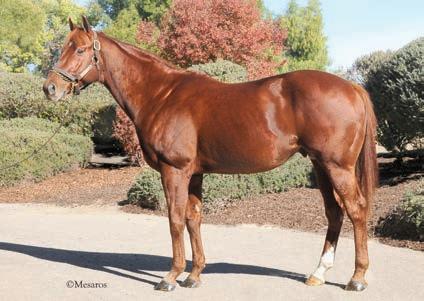
STREET BOSS – SILVER SWALLOW, by ALPHABET SOUP
Versatile black-type performer by a multiple Grade 1 sire out of a multiple Grade 1 dam. First-crop 2-year-olds in 2026.
$2,500 LFSN

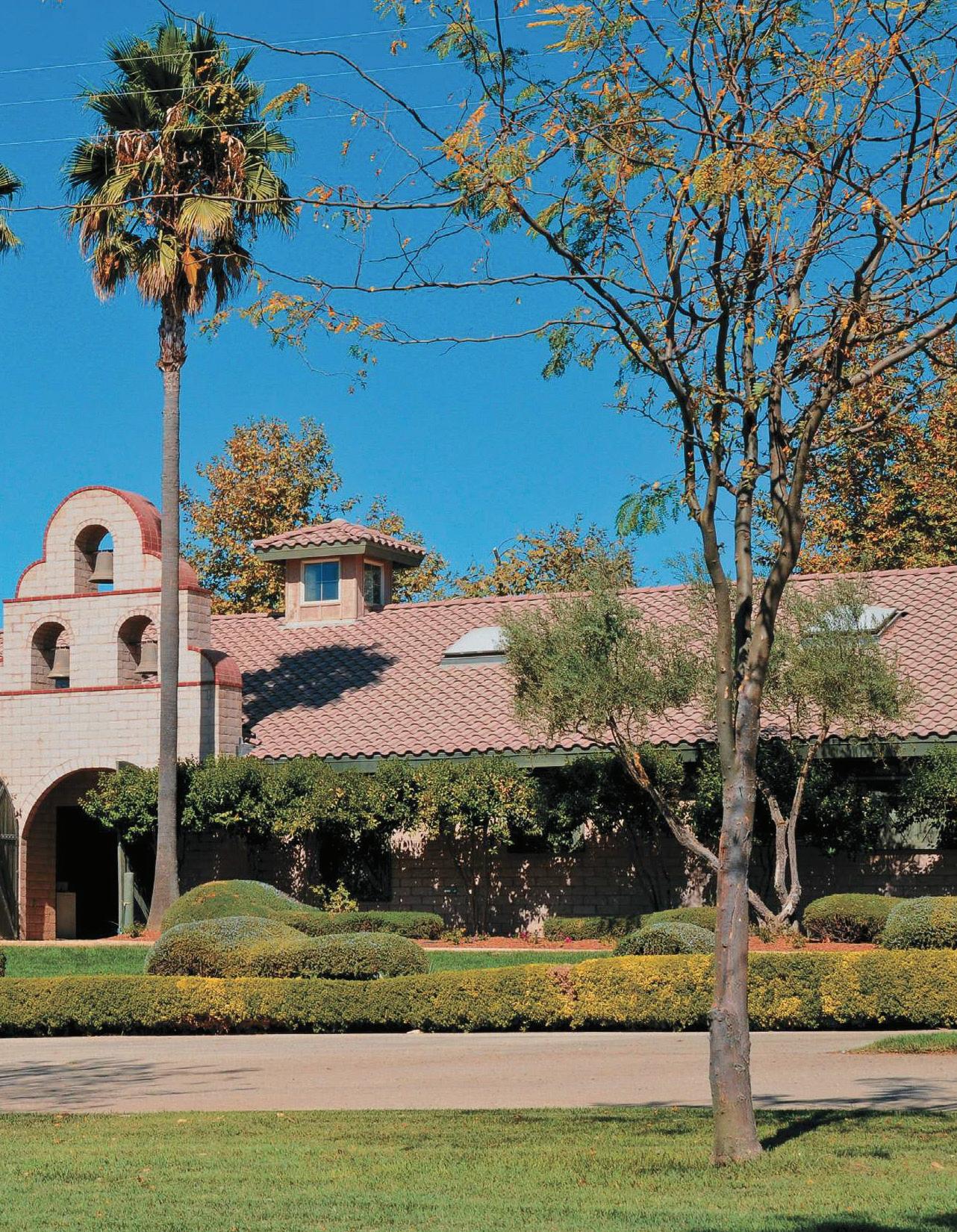


1741 West 10th Street San Miguel, California 93451 (805) 467-3847 info@ranchosanmiguel.net ranchosanmiguel.net
Boarding | Breeding Foaling | Lay-Ups
Sales Prep | Sales Consignment
GIANT’S CAUSEWAY – ISTIKBAL, by KINGMAMBO
$2,500 LFSN
SPEIGHTSTOWN – LISTEN TO MY SONG, by UNBRIDLED’S SONG
Six-furlong specialist by Champion Sprinter and Sire of Sires Speightstown improves his mares with a 1.14 AEI.
$1,500 LFSN
Stakes-caliber Giant’s Causeway sire represents a genetic gold mine: More than 90 stakes horses under his first four dams.
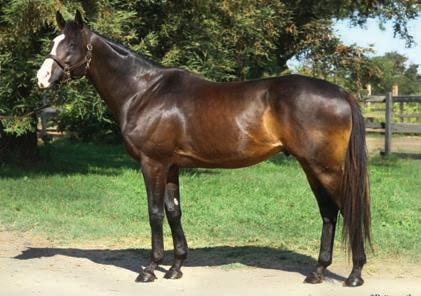
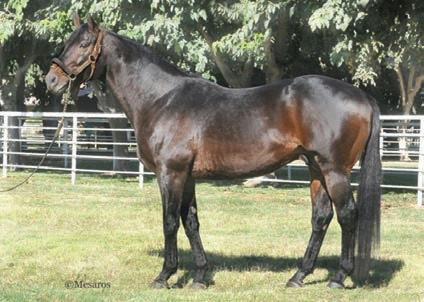
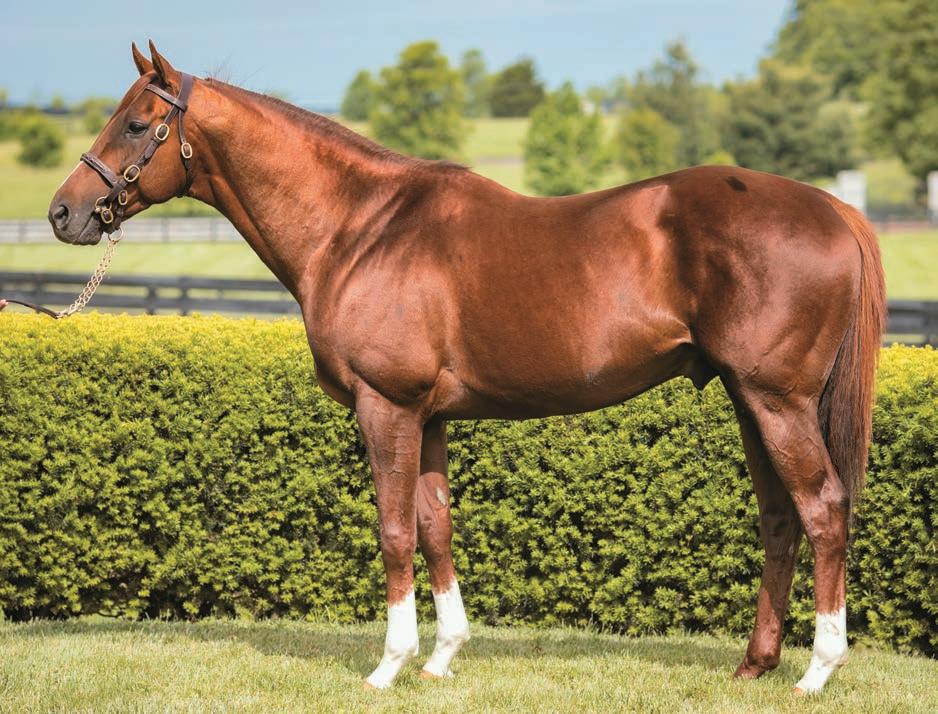
Collected is returning to the state where he scored his biggest coups as a racehorse. Just four years into a promising stud career, he is moving from Kentucky to California to stand at Rancho San Miguel in 2026.
He is one of several new stallions California breeders will have the opportunity to choose from as they also will be able to take advantage of new
incentives put in place by the CTBA.
Several people came together to bring Collected to California. Tom Clark of Rancho San Miguel, Bret Jones of Airdrie Stud (where Collected had been standing), and longtime California owner/breeder Marsha Naify were the principals involved, with the move brokered by California-based bloodstock agent Lisa Groothedde.
“We have a relationship with Airdrie,” Clark said. “They were very con-
cerned about the future of California breeding and racing. They were trying to think of a way they could help. They feel it’s very important that California survive and thrive for the industry as a whole.”
The loss of Northern California racing impacts all owners and breeders in California. The new incentives being offered will offset some of the costs to breeders, as well as incentivize them to buy more and better broodmares
to breed in the state. Another piece of that puzzle will be new stallions to join those already here who are siring winners.
Collected, a 12-year-old son of City Zip—Helena Bay, by Johannesburg, will stand for an introductory stud fee of $7,500. He will be featured as part of Rancho San Miguel’s annual free open house and stallion show, this year scheduled for Dec. 6.
Trained by Bob Baffert, Collected raced for Peter Fluor and K. C. Weiner’s Speedway Stables. Though based in Texas, Fluor grew up in California, the son of the late Bob Fluor, who decades ago partnered with the late Hall of Fame trainer Charlie Whittingham in the California farm El Rancho Murrieta.
Collected’s finest hour on the racetrack occurred in the 2017 Pacific Classic (G1), when he defeated Arrogate, the previous year’s champion 3-year-old male and now a member of the national Hall of Fame. Collected won six other stakes, including the 2016 Sham Stakes (G3) and 2017 Californian Stakes (G2). He finished second to champion Gun Runner in the 2017 Breeders’ Cup Classic (G1) and retired to stud at Airdrie for the 2019 breeding season with earnings of $2,975,500.
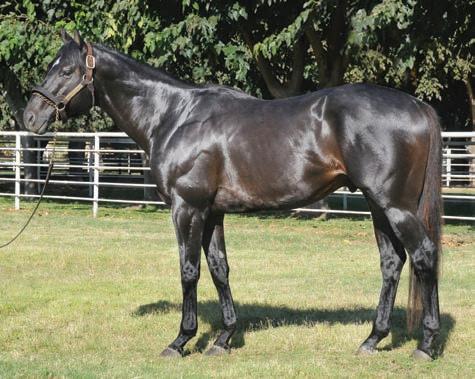
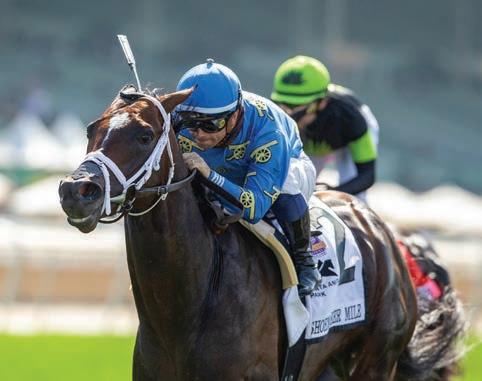
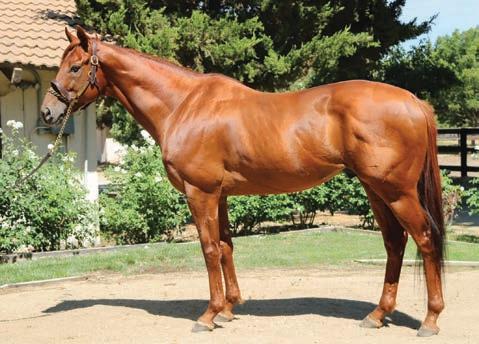
Collected has sired 20 stakes winners from four crops, with total progeny earnings of more than $18 million. Those stakes winners include grade 2 winner Taxed, an earner of $1,173,919, and 2025 King’s Plate Stakes winner Mansetti. Collected has 2025 progeny earnings of more than $6.3 million, putting him atop the California sire list.
Clark noted that Collected has not changed ownership. The syndicate that stood him in Kentucky continues to own him.
“Collected has been an absolutely rock-solid Kentucky sire,” said Jones, president of Airdrie. “California’s success is so critical to our overall industry. This is a great deal for both our syndicate members and the California breed-
ing and racing communities.”
In the press release announcing Collected’s move, it was also noted that Naify plans to purchase additional mares specifically for the stallion.
“Marsha’s an important client of ours and a friend,” Clark said. “She and I went together as a partnership with Airdrie and the syndicate.”
Clark emphasized that Rancho San Miguel is committed to growing California’s breeding industry.
“We are looking for a strategic investor with a similar vision and deep pockets to grow Rancho San Miguel,” Clark said. “We want to leverage the facility and experienced staff to build a successful and profitable ranch.”
Also new to Rancho San Miguel for 2026 is Eight Rings, who previously stood at Harris Farms. Another top runner trained by Baffert, Eight Rings, a son of Empire Maker, won the 2019 American Pharoah Stakes (G1). His first foals will be 2-year-olds in 2026.
“We believe he has huge potential to be a leading sire in California,” said Clark.
Mike Scully and Angie Hager-Scully’s Eclipse Thoroughbred Farm in Buellton is also expanding its stallion ranks. Already the home of leading California sire Grazen, Eclipse will have a newcomer for 2026 in Smooth Like Strait. Another who raced well in California, Smooth Like Strait stood for a time in Kentucky and is now returning to California to continue his breeding career. Smooth Like Strait will stand for a stud fee of $3,500.
An 8-year-old son of Midnight Lute—Smooth As Usual, by Flower Alley, Smooth Like Strait won such stakes as the 2021 Shoemaker Mile (G1T) and earned $1,813,863. He ran
second in the 2021 Breeders’ Cup Mile (G1T). His first foals will be yearlings of 2026.
Linda Madsen’s Milky Way Farm in Temecula will stand newly retired Red Run for $3,500. A stakes-winning son of Gun Runner, 6-year-old Red Run earned $574,897 over five seasons, won the 2022 Bob Bork Texas Turf Mile Stakes, and placed in four other stakes.
Red Run is out of the Tapit mare Red House, making him a full brother to Red Route One, a graded stakes winner of $2,165,107. Red House is a full sister to champion Untapable.
American Theorem also stands at Milky Way. Retired late last year, American Theorem bred a few mares during 2025, but 2026 will be his first full season at stud.
By Triple Crown winner American Pharoah, American Theorem is an 8-year-old out of the Maria’s Mon mare Mighty Renee. He won the 2022 Bing Crosby Stakes (G1) and Triple Bend Stakes (G2) and earned $607,767.
Air Force Red has been retired to stud and will stand at BG Thoroughbred Farm in Hemet. He will stand for $2,500 as the property of Holly Golightly.
A 7-year-old son of Air Force Blue—Mesana, by Mizzen Mast, Air Force Red earned $758,914 during four seasons of competition. He won the 2022 Joe Hernandez Stakes (G3T) and Lure Stakes and 2025 San Simeon Stakes (G3T).
With the death in July of John Harris, Harris Farms has closed its stallion division. Several California farms have stepped up to stand some of the stallions previously based at Harris.
In addition to Eight Rings, Rancho San Miguel will stand Uptown Rythem, a multiple winner by champion sprinter Speightstown. The 14-year-old stallion retired to stud at Harris prior to the 2017 breeding season, having won a pair of six-furlong dirt sprints at Santa Anita. He is out of the Unbridled’s Song mare Listen to My Song.
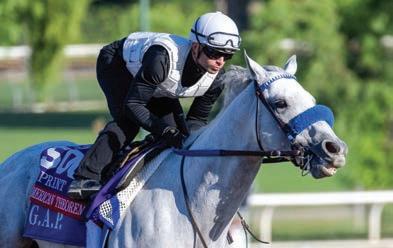
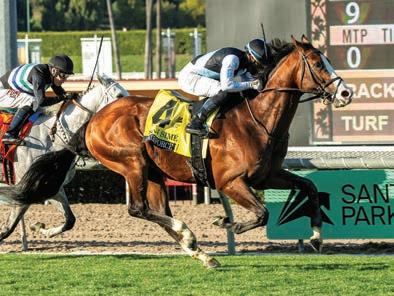
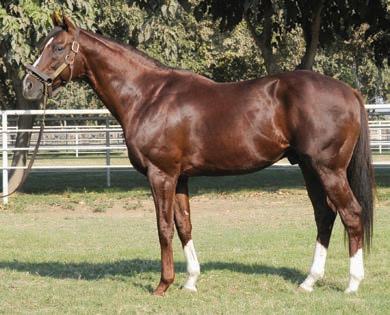
Om and Tamarando have moved from Harris to Pete and Evelyn Parrella’s Legacy Ranch in Clements, joining a stallion roster that includes major California sire Clubhouse Ride.
Om is making a name for himself as
the sire of the good California-bred multiple stakes winner Om N Joy. The 3-year-old filly won four stakes in a row earlier this year: the Evening Jewel Stakes, Melair Stakes, Fleet Treat Stakes, and Torrey Pines Stakes (G3).
By Munnings—Rare Cat, by Tabasco Cat, Om is a millionaire multiple stakes winner. In 2015, he captured the Del Mar Derby (G2T), Mathis Brothers Mile (G2), and Twilight Derby (G2T).
Tamarando, the 2013 champion Cal-bred 2-year-old male, won that year’s Del Mar Futurity (G1) and Real Quiet Stakes and the 2014 El Camino Real Derby (G3). His runners include stakes winners Tam’s Little Angel, Passarando, and Royal ’n Rando.
Stanford has been moved from Harris to Eclipse. He also has a major Cal-bred running this year in Man O Rose. A 5-year-old gelding, Man O Rose has won three consecutive stakes, beginning with his second E. B. Johnston Stakes and including the California Flag Handicap and The Chosen Vron Stakes.
An earner of more than $1.3 million, Stanford won four stakes during his racing career. He is a 13-year-old son of Malibu Moon— Rosy Humor, by Distorted Humor. Acclamation and Catholic Boy will relocate from Harris to stand the 2026 season at Dar Hanson’s Hanson’s River Ranch in Kingsburg.
The Eclipse Award-winning champion older male of 2011, Acclamation is a two-time Cal-bred Horse of the Year. He has sired Cal-bred champions Kings River Knight and Acclimate. Acclamation is a 19-year-old son of Unusual Heat—Winning in Style, by Silveyville.
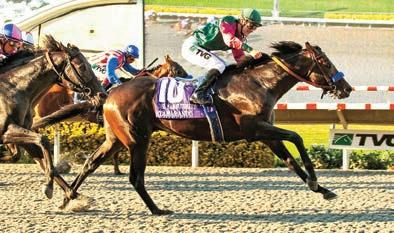
Catholic Boy, a 10-year-old son of More Than Ready—Song of Bernadette, by Bernardini, moved to Harris for the 2025 breeding season. His graded stakes wins included the 2018 Travers Stakes (G1), and he earned $2,134,000.

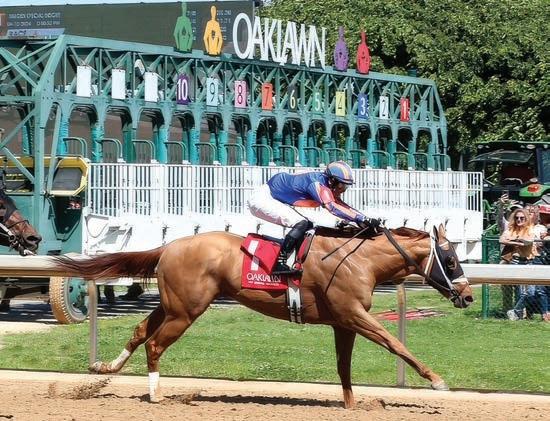
Out of Multiple SW/Twice Graded Stakes Placed Winner of $482,007 – Sister to KATHMANBLU, multiple GSW of $584,327
In conjunction with CTBA incentives offered, CTBA active members can also take advantage of incentives offered by Dehesa Farms to breed to Corporal for the 2026 breeding season.
For the 2026 breeding season, the following offers on approved mares will be extended to owners breeding to Corporal:
• 1st mare will receive $1000 off the stud fee.
• 2nd mare will receive $1500 off the stud fee.
• 3rd mare will receive $2,000 off the stud fee.
Any approved Black Type or Black Type producing mares will receive 50% off the regular stud fee.
Additional discounts offered by Dehesa Farms for mares booked to Corporal in 2026 will be as follows:
• $100 discount on foaling fee
• $2/day reduction off the regular board rate
DEHESA FARMS LLC
(Formerly Easterbrook Livestock Management) at San Miguel, California
Shane Easterbrook | (805) 610-9861 | dehesafarms@gmail.com www.dehesafarms.com
CORPORAL a $1,150,000 Keenland September Yearling raced for Mrs. John Magnier, Michael Tabor and Derrick Smith. Trained by Brad Cox. BY THE LEADING SIRE LIFETIME BY A.E.I. AND HALL OF FAME INDUCTEE GUN RUNNER
2026 FEE: $5,000 LF
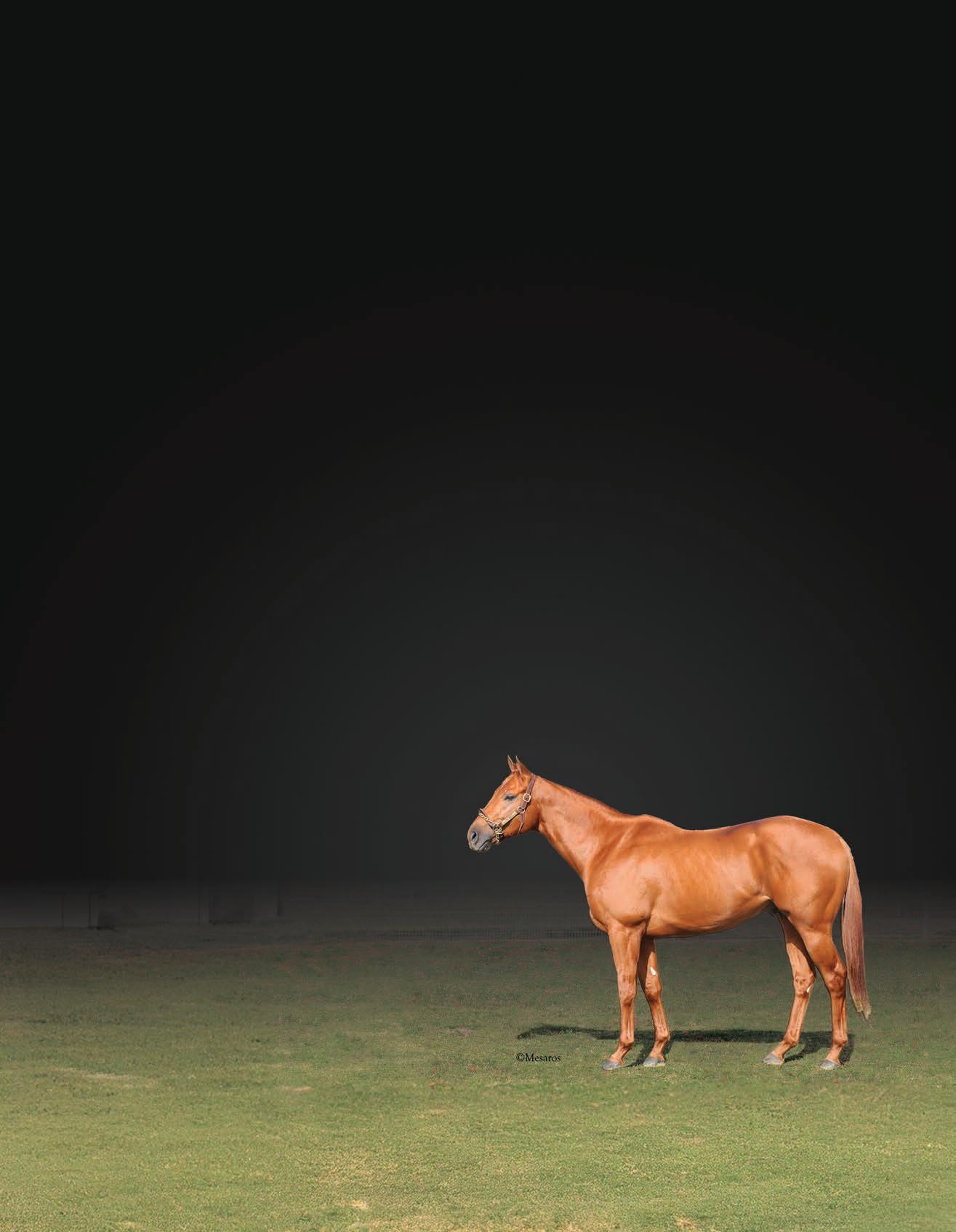
• 2nd dam Abba Gold Stakes Placed Winner of $179,732
• 3rd dam VALIANT JEWEL Stakes Winner of $296,680
• Producers of Producers
BY TRACY GANTZ
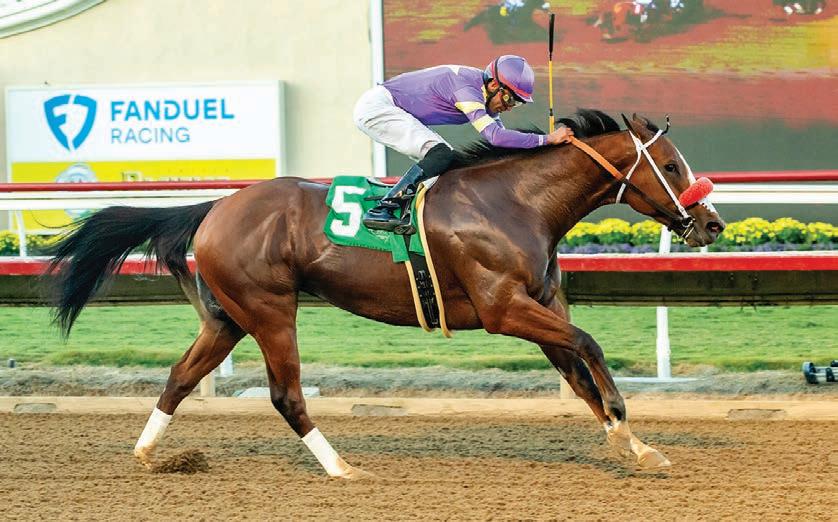
Man O Rose, winner of the $100,500 The Chosen Vron Stakes at Del Mar, has sort of a “six degrees of separation” going on with The Chosen Vron. The two talented California-breds never faced each other in competition, but their careers have similarities.
Each won the E. B. Johnston Stakes at Los Alamitos—The Chosen Vron in 2022 and Man O Rose in 2024-25. The Chosen Vron twice won the race named for him when it was the Cary Grant Stakes. Now Man O Rose has won it once after finishing second in it last year to Big City Lights, whose career would be almost perfect had he never met The Chosen Vron in several races.
Big City Lights headed for the Breeders’ Cup Sprint (G1) instead of The Chosen Vron Stakes, finishing unplaced. Given the roll Man O Rose is on, the outcome would have been interesting had they met in the seven-furlong The Chosen Vron. Without Big City Lights, however, Man O Rose went off as the
4-5 favorite in the field of seven.
Jeff Mullins, the trainer of Man O Rose, noted the absence of The Chosen Vron from the Cal-bred ranks.
“It’s kind of nice to have The Chosen Vron gone,” Mullins said. “I loved that horse, but he was tough to beat.”
The Chosen Vron exceled at winning streaks, and Man O Rose is starting an impressive one of his own. He is undefeated this year in three starts—all stakes—having sandwiched the California Flag Handicap on turf in between the Johnston and The Chosen Vron.
When the gate opened, Man O Rose went to the front, but he was far from alone. At first Drop Um and Stamp My Passport dogged him on either side, and into the turn Clovisconnection edged up along the rail to take a slim lead.
In only a couple of strides, though, Man O Rose took over, clocking the halfmile fraction in :44.63. He had plenty in
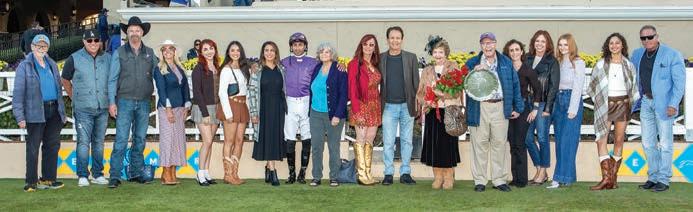
reserve for regular rider Edwin Maldonado, who didn’t have to urge him much into the stretch. Man O Rose won by 11⁄2 lengths, but only because Maldonado wasn’t asking the gelding for everything. They stopped the timer in 1:21.66, with Drop Um second and Shea Brennan third.
“I just wanted to make it to the top of the stretch—that was the goal, to not press the button too soon,” Maldonado said. “I was very confident. I knew I had a lot of horse coming down the stretch.”
Both Maldonado and Mullins emphasized Man O Rose’s one peculiarity: He very much prefers being on the outside.
“If he’s inside, he gets a little weird,” Mullins said. “Edwin knows him well. If there’s a lot of pace or somebody rushing him, he just moves to the middle of the racetrack and brings him home.”
Bruce Zietz bred and owns Man O Rose in the name of B & B Zietz Stables Inc. Zietz has bred several generations of the bottom line. Man O Rose is a 5-yearold son of Stanford out of the Good Journey mare Kathleen Rose.
Zietz has much affection for the lineage. He still owns the 24-year-old stallion Roi Charmant, who was multiple graded stakes-placed for Zietz. Roi Charmant is out of Cantina, the third dam of Man O Rose.

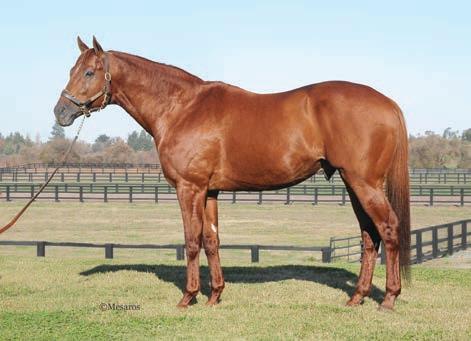
2026 Fee: $5000
CANDY RIDE (ARG) – SEEKING RESULTS, BY SEEKING THE GOLD
TOP SIX ACTIVE CALIFORNIA SIRE BY % STAKES HORSES
Over $15M in Progeny Earnings
Top Ten California Sire by Earnings 2020, 2021, 2022, 2023, 2024, 2025
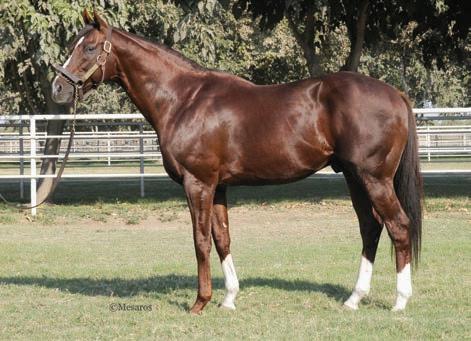
MUNNINGS – RARE CAT, BY TABASCO CAT
TOP TEN ACTIVE CALIFORNIA SIRE – $1.7M 2025 EARNINGS 2025 Grade 3 Torrey Pines S. winner GUNNNY ($145,295), her 5th consecutive victory; Santa Anita Miss2NHY, Evening Jewel S., Melair S., Del Mar’s Best Treat S. and Torrey Pines G3
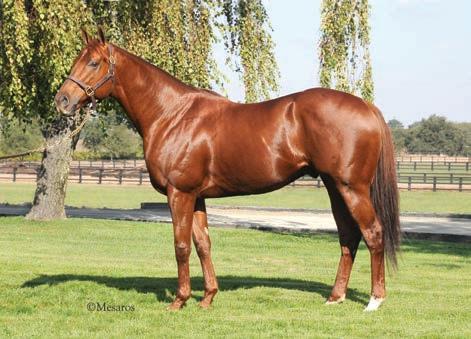
2026 Fee: $5000
AMERICAN PHAROAH – JUST LOUISE, BY FIVE STAR DAY CALIFORNIA’S RICHEST SON BY TRIPLE CROWN WINNER AMERICAN PHAROAH
Multiple Graded Stakes Winner of $683,660

Phone: (209) 759-3315 Fax: (209) 759-3428 Email: info@legacyranchinc.com WWW.LEGACYRANCHINC.COM Om 2026 Fee: $5000
2026 Fee: $2500
BERTRANDO – TAMARACK BAY, BY DEHERE G1 WINNER AND A LEADING CALIFORNIA SIRE Leads All Sixth Crop Sires in the State By Cumulative Stakes Winners • Percentage of Stakes Winners • Percentage of Stakes Horses
LEGACY RANCH
Inquiries to Terry Knight, Legacy Ranch Manager, (510) 928-4980
Ranch physical address: 21455 N. Clements Rd., Clements, CA 95227
Ranch mailing address: P.O. Box 538, Clements, CA 95227
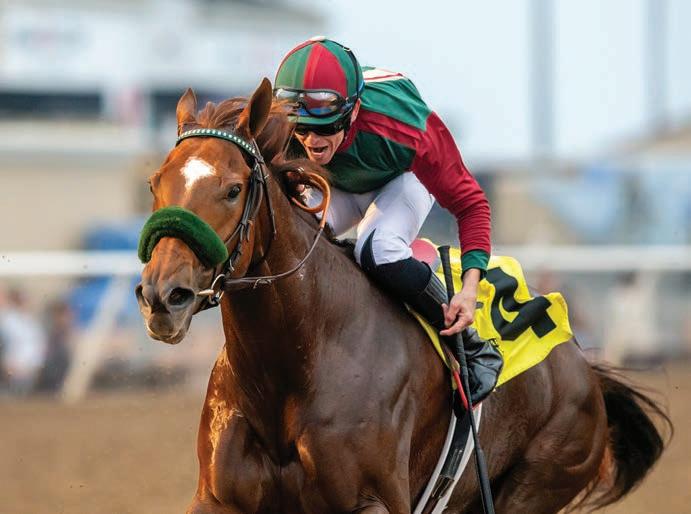
CONSISTENT GRAND SLAM SMILE WINS STAKES NUMBER SEVEN
BY TRACY GANTZ
ATMs have nothing on Grand Slam Smile. Put her in a race and she comes back with cash. In 16 lifetime starts, the 4-yearold California-bred filly has never finished worse than third, and she collected a seventh stakes trophy in the $100,500 Betty Grable Stakes at Del Mar.
“This filly is just so game,” said trainer Sean McCarthy. McCarthy inherited Grand Slam Smile when Steve Specht retired. Both have trained the filly for owner-breeders Larry and Marianne Williams. Under Specht’s tutelage, Grand Slam Smile won the Fasig-Tipton Debutante Stakes and Golden State Juvenile Fillies Stakes at 2 and the Leigh Ann Howard
California Cup Oaks, Melair Stakes, and California Distaff Handicap at 3. She won Cal-bred championships both seasons, as the 2-year-old female in 2023 and 3-yearold female in 2024.
If not for her one graded stakes attempt, in the 2024 Torrey Pines Stakes (G3), Grand Slam Smile would have a record with only wins and seconds. She finished third that day at Del Mar, a track that has been more elusive for her than others.
Surprisingly, Grand Slam Smile lost her first four races at Del Mar, all while putting together wins at Golden Gate Fields,
Los Alamitos, and Santa Anita. But her last two races there—both victories— have demonstrated that she is quite capable on any racetrack.
For the seven-furlong Betty Grable, bettors preferred Grand Slam Smile, sending her off as the 7-10 favorite, over Sneaker at 4-1. Those two had traded victories in the Aug. 17 Solana Beach Stakes and Oct. 12 California Distaff Handicap.
When the gate opened, Sneaker and Tina Turner veered toward each other and bumped slightly. Issa Court went to the front, touring the first quarter-mile in :22.45, while jockey William Antongeorgi III had Grand Slam Smile in second.
Sneaker raced in fourth outside of Grand Slam Smile, looking like she would be in good position for another stretch showdown. But she lost some ground around the turn, ended up five wide, and finished last.
Meanwhile, Issa Court continued to lead through a half-mile in :45.41, and she floated off the rail wide enough for No Cap to try to get through on the rail. But the race was between Issa Court and Grand Slam Smile, who battled to the sixteenth pole before Grand Slam Smile pulled away for a 11⁄4-length victory in 1:22.34. Issa Court was easily second, by 43⁄4 lengths over No Cap.
Grand Slam Smile has a feisty history, being so notoriously tough in her early lessons that Dan Kiser, who manages the Williamses’ ranch, told Specht that she might not make it to the races.
“She bottles that energy up, and when the gates open up, she gives it all,” Antongeorgi said. “She is pretty push button— you just got to contain it and wait for the right move, whether that’s on the lead or right off it.”
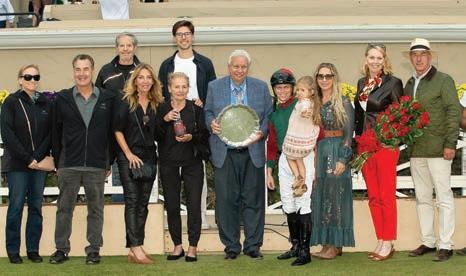
The Williamses bred the Grand Slam mare Royal Grand Slam to California sire Smiling Tiger to get Grand Slam Smile. A homebred who only started five times with two wins, Royal Grand Slam has been a much better broodmare. All eight of her starters have won, and they include stakes winners Luck’s Royal Flush and Royal ’n Rando and stakes-placed Grand Yodeler and Late ’n Left.

ATTRACTIVE & DURABLE son of two-time Breeders’ Cup Classic (G1) winner TIZNOW offers CLASSIC DISTANCE capabilities and PROVEN BLOODLINES:
• WON / PLACED in 9 GRADED STAKES, including the $1 MILLION PACIFIC CLASSIC (G1)
• SPEED & STAMINA: Won from 8-12 FURLONGS while racing on or near the lead, earning $741,851 from ages 2-5
• 1st / 2nd / 3rd / 4th / 5th Dams: All BLACK-TYPE PERFORMERS or BLACK-TYPE PRODUCERS
“He’s a good-looking horse that had good speed and could carry it over a long distance. I think he’s a good influence for California.”
Racing Hall of Fame Trainer RICHARD MANDELLA
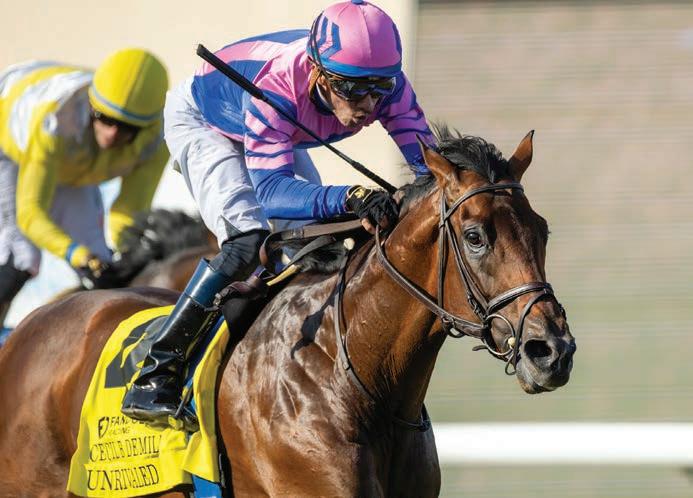
UNRIVALED TIME SUCCESSFULLY JUMPS UP IN CLASS
BY JACK SHINAR
Having romped to victory from off the pace in his previous race against California-bred maidens, 2-year-old Unrivaled Time faced a simple question. Could he fare as well making a huge jump into graded stakes company in the $101,000 Cecil B. DeMille Stakes (G3T)?
The answer, of course, was an emphatic yes.
The bay California-bred son of Kentucky stallion Not This Time spurted away from the field in the final strides to take the one-mile turf event in a mild upset at Del Mar Nov. 30. The Alfred A. “Sonny” Pais homebred overcame a stewards’ inquiry in the process of registering his triumph in a time of 1:36.42.
Unrivaled Time, under left-handed urging from jockey Diego Herrera, drifted out slightly into the path of the odds-on favorite Hey Nay Nay nearing the finish line. Stewards took a long look at the incident before ruling in a split decision that the infraction did not warrant disqualification.
The decision preserved Unrivaled Time’s second win in three lifetime starts for trainer Leonard Powell. Unrivaled Time is owned in a partnership between Pais, who bred him in California from his mare Margot Machance, and Innergy Racing Corp.
Sent off at odds of 11-2 in the field of seven juveniles, Unrivaled Time stalked the front-runner Proton, who set a
measured pace, while racing between horses in third position. The favorite, Irish-bred Hey Nay Nay, raced a couple of lengths behind Unrivaled Time as Proton, on the inside, and Track Tiger vied on the front end.
Proton lost the lead leaving the backstretch following a :47.52 half-mile, but regained command past the quarter pole when switched to the outside of Track Tiger by jockey Juan Hernandez. Proton led to midstretch as Track Tiger gave way, but Unrivaled Time, between horses, and Hey Nay Nay on the outside, challenged.
Unrivaled Time put his head in front in deep stretch and drew away quickly approaching the wire under urging from Herrera. He won by three-quarters of length while bothering Hey Nay Nay, who drifted in slightly, in the process. Late-running Iriseach came flying late on the far outside to notch second by a neck over Hey Nay Nay. Proton was fourth.
“I was very happy with our position early on and very happy with how the race unfolded.” Powell said afterward. “He let a couple of speed horses go for it and settled, then came with one run like he did when he broke his maiden.”
Unrivaled Time’s maiden win came Oct. 19 at Santa Anita, also at a mile on turf. He settled well that day as well as the 2-1 favorite in an 11-horse field, rallying from seventh under Herrera to win going away by 4 1 2 lengths in a time of 1:35.05. He had finished fifth in his debut over the Del Mar turf in August. The colt has now earned $97,600.
The winner is a half brother to Cal-bred Margot’s Boy, a seven-time winner on turf with earnings of $395,626. Margot’s Boy ran second in the 2020 Del Mar Derby (G2T). Their dam, 14-yearold British-bred Margot Machance, is by Irish-bred Creachadoir. She was imported from France by Pais and earned $137,246 over a 23-race career.

Not This Time stands at Taylor Made Stallions in Nicholasville, Ky. He sired the filly Cy Fair, winner of the Breeders’ Cup Juvenile Turf Sprint (G1T) Oct. 31 at Del Mar.
War Front - Starformer, by Dynaformer
Winning son of leading sire Warfront Winner of over $850k and 2nd in the Grade 2 Seabiscuit Handicap Track record set at Kentucky Downs in the Tourist Mile Stakes
Black Type Winner at Saratoga, Kentucky Dows and Leopardstown (IRE) Out of Grade 2 Winner Starformer, by Dynaformer
Beyer Scores of 105 and 103 with 18 of 28 career starts with an Equibase figure of 100+
“When at his best, I was confident to run Flavius in any of the best races in his division. I certainly was not surprised by his track record at a mile (1:32:1) in the $750,000 Tourist Mile Stakes.”
– Four Time Eclipse Award Winning Trainer Chad Brown

Contact Julia or Justin Oldfield
joldfield@daehlingfarms.com
WWW.DAEHLINGFARMS.COM
STUDENT BREEDS
MULTIPLE STAKES
WINNER
MAN O ROSE
BY JACK SHINAR
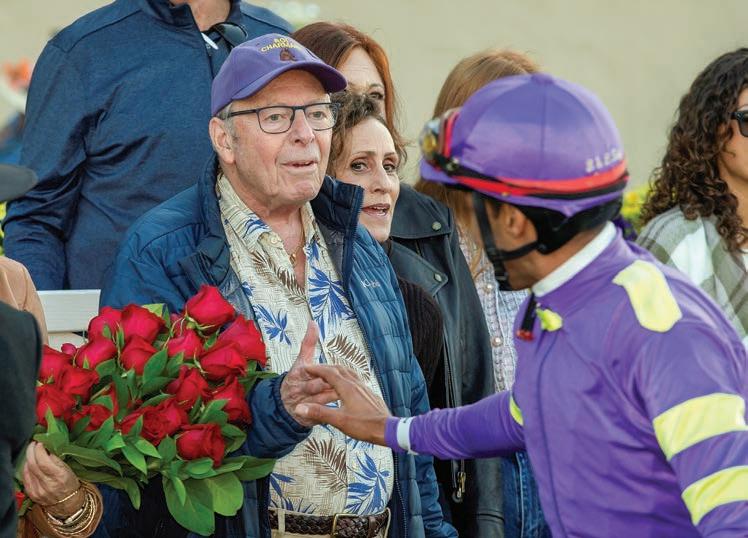
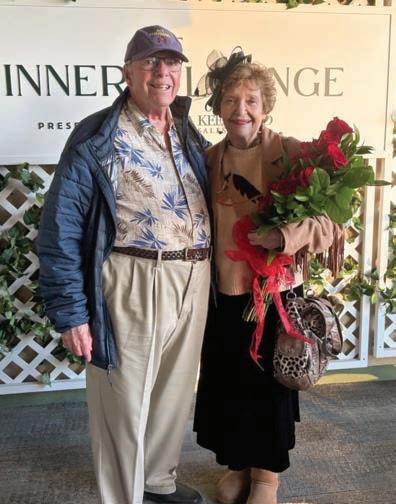
Dr. Bruce Zietz has ardently studied the art of horse breeding for decades, and in Man O Rose, the retired physician believes he finally has his masterpiece.
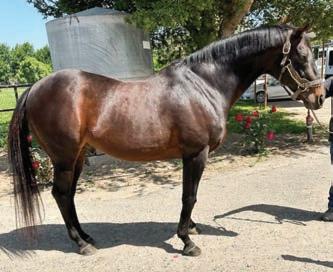
His 5-year-old California-bred gelding has won three consecutive stakes since mid-September, all in impressive style for trainer Jeff Mullins. The bay son of Stanford headed into December with 10 wins from 17 lifetime starts and earnings of nearly $500,000.
Zietz knows that any horse that wins close to 60% of his races over a span of three years is something special. He says he and Mullins have taken their time developing Man O Rose, consistently keeping him in state-bred or restricted company in order to extend his longevity.
“He’s my creation,” said the 86-year-old Zietz, who bred his first horse—multiple stakes winner Patrick McFig—in 1979. “I was not a great artist. I never wrote music. I was a history major. Everybody wants to leave a legacy of some kind, and maybe this horse can do some things that people will remember for a long time. I’ve been carefully honing this for 30 years at least.”
Zietz, who lives in the San Fernando Valley community of West Hills, made his mark in the field of cancer treatment. After receiving his medical degree from the University of California at Berkeley in 1965, he became the first oncologist-hematologist in the San Fernando Valley, he said. At its height, his practice treated up to 25 people daily at hospitals such as Cedars-Sinai Medical Cen-
ter and UCLA, plus another 40 patients at his office. His wife, Beverly, died about 21⁄2 years ago. Since her death, Zietz reconnected with his former high school sweetheart, Rhoda Rosen.
When he stepped aside and sold his flourishing practice after 38 years, Zietz had more time to devote to breeding horses. While never owning more than a few broodmares at any one time, he was heavily influenced by the works of the brilliant Italian breeder Federico Tesio and, perhaps more importantly, Marianna Haun.
“Tesio trained his horses and he bred them to weed out their flaws,” Zietz said. Tesio’s work introduced Zietz to the idea of line breeding, simply defined as the presence of a top ancestor twice or more in a horse’s pedigree with at least one strain present from each parent.
“He bred for soundness,” Zietz said. “He also believed that great racing mares are not great producers. But their daughters can be.”
Following the death of Secretariat in 1989, the horse’s autopsy revealed that the 1973 Triple Crown champion had a 23-pound heart, much larger than the average Thoroughbred, Zietz notes. Haun’s research for a genetic connection between the size of a horse’s heart and exceptional performance resulted in the 1997 book “The X Factor, Solving the Mystery of Secretariat’s Heart.”
In it, as well as in subsequent books, Haun argued that the gene responsible for the large heart is linked to the X chromosome traceable
back to Eclipse and detailed how to find it. She identified four classic stallions that carry the “Big X”— War Admiral, Princequillo, Blue Larkspur, and Mahmoud. Mating breeding prospects that carry the pedigrees of those stallions on both sides greatly enhanced the likelihood that a foal can possess the “big heart.”
Zietz’s study also led him to appreciate the importance of the female’s breeding line over the stallion line. He says he rejects “dogma” in the horse industry in much the same way he rejected it in the field of cancer treatment.
With its reliance on hot stallions to boost sales prices, he believes the U.S. breeding industry is “usually simplistic and often wrong. They are breeding on the basis of selling horses, not racing them.”
Man O Rose’s story began with his third dam, Cantina, acquired by Zietz and a partner in foal to Evansville Slew at a Kentucky breeding stock sale in 2001 for $5,500. That mating produced Roi Charmant, a resilient front-running sprinter who banked $337,678 for Zietz. Now 24, Roi Charmant stood in California for many years and is now pensioned at Kingfisher Farms.
“Cantina had been injured, but her trainer, Rodney Rash, the former assistant to Charlie Whittingham, told me she could really run,” Zietz said. “She was a blocky mare, a little toed out, and her first few foals were crooked. The thing about her was she was a daughter of Seattle Dancer, a half brother to (1977 Triple Crown winner) Seattle Slew that sold for $13.1 million as a yearling.”
Through Seattle Dancer’s dam, My Charmer, Zietz had a broodmare whose pedigree dated all the way back to around 1900, when August Belmont brought Fairy Gold to America from England. Cantina carried the blood of all four stallions identified by Haun in her pedigree analysis.
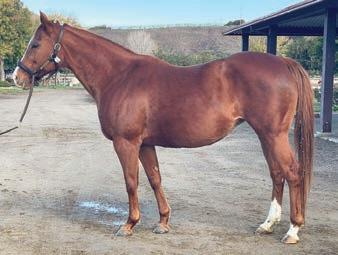
Cantina produced Cantina’s Rose, a Cal-bred by Decarchy. Zietz notes that Decarchy carries the War Admiral, Blue Larkspur, and Mahmoud blood in his pedigree. Cantina’s Rose produced Kathleen Rose, whose sire, Good Jour-
ney, has War Admiral, Mahmoud, and Princequillo in his bloodline. Kathleen Rose, Man O Rose’s Cal-bred dam, was graded stakesplaced while earning $342,238 over an 18-race career. Zietz was forced to retire her due to a bronchial infection. But he is convinced that she would have raced much longer otherwise, noting that her full brother, Getoffmyback, made 63 starts with 17 wins.
Everybody wants to leave a legacy of some kind, and maybe this horse can do some things that people will remember for a long time.”
—Dr. Bruce Zietz
“You’ve got to be pretty lucky to get a mare like Kathleen Rose,” Zietz said.
Zietz says Man O Rose’s sire, Stanford, a son of Malibu Moon, “is very well bred, a Kentucky-style stallion” who earned more than $1.3 million on the track. “He’s not a pretty horse, but he has a good, strong shoulder.”
The 15-year-old Kathleen Rose is now the only broodmare that Zietz owns. He sold a yearling she delivered by Oscar Performance at Keeneland in September for $65,000 while retaining a 20% share. Kathleen Rose was bred to the multiple graded stakes-winning stallion Fulsome this season.
Though his side career as a breeder may be winding down, Zietz says he’s learned some things along the way.
“For every three dollars you put up, you’ll get back two. The thing you have to do is you have to expect to lose. And then you have to learn from your mistakes.”
“I
BY JON WHITE
REPRINTED FROM MAY 1982
Silky Sullivan was such a popular individual that, had he decided to run for governor in California, he just might have won. One can picture the scenario.
Early returns on election night would show Silky Sullivan trailing by a huge margin. His opponent would be confidently rehearsing his acceptance speech. But then, suddenly, when the hour was late, Silky Sullivan would amaze everyone by pulling the election out at the end, just in the nick of time.
Governor Sullivan. Sort of has a nice ring to it.
Of course, Silky Sullivan never ran for governor. He confined his running to races at Santa Anita, Golden Gate Fields, Hollywood Park, and a few other tracks. And though, by all standards, he was not a top Thoroughbred—like a Tim Tam or a Round Table or a Swaps—he certainly became famous.
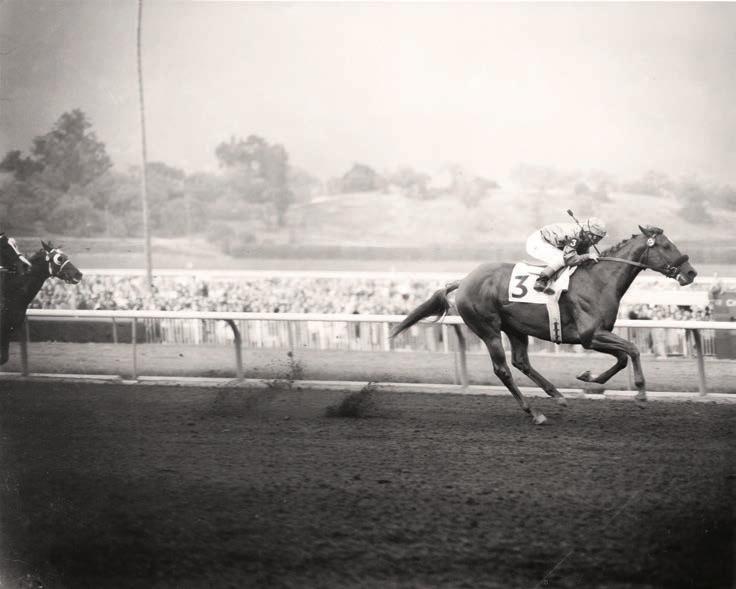
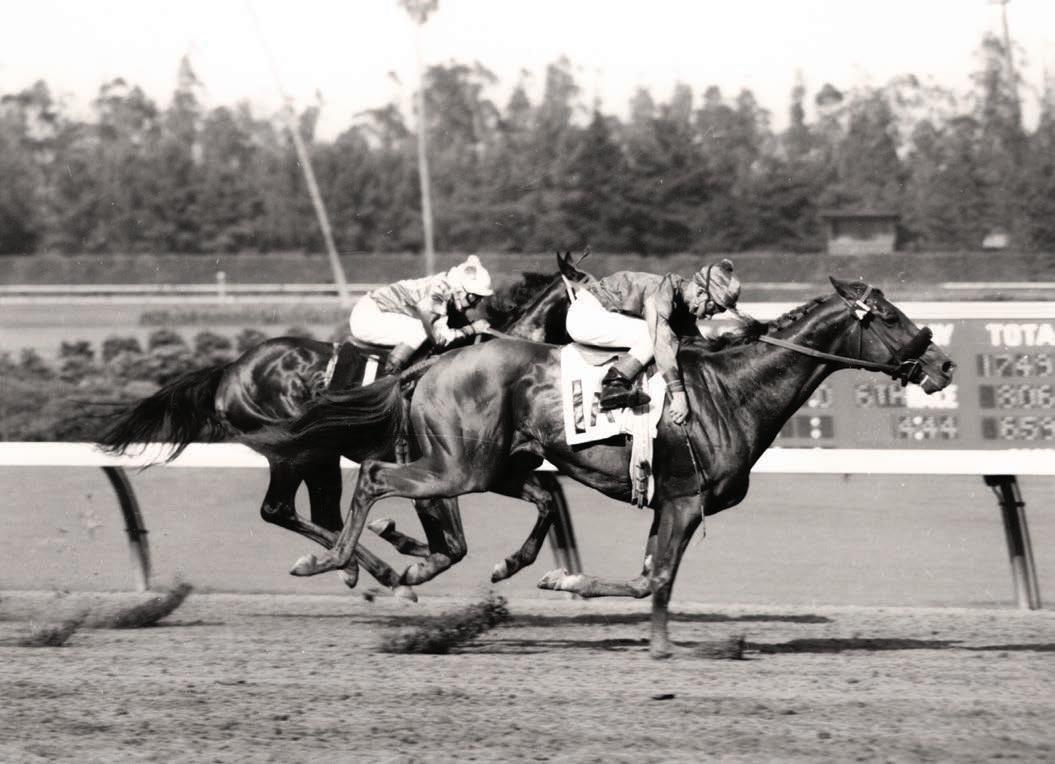
Why did Silky Sullivan attract so much attention? For one thing, he possessed that intangible quality known as charisma. There just was something about him. He also happened to be striking in appearance; he was a beautiful chestnut animal. But above all, it was his running style that set him apart from the masses. Silky Sullivan was more dramatic than the finest Alfred Hitchcock film.
As they say, you had to see him to believe him. And even if you did see him with your very own eyes, you probably hesitated to believe he could do what he so often did. Come from 41 lengths behind to win by a halflength going 6½ furlongs? Surely, that is impossible. Surely, no horse could do that.
But Silky did.
The Silky Sullivan story really began at Ann Peppers’ Merryman Farm in Moreno, Calif., on Feb. 28, 1955, the day Silky was foaled. He was by the European import Sullivan out of the Ambrose Light mare Lady n Silk.
Before Silky Sullivan was born, Lady n Silk nearly was destroyed. In a workout at Santa Anita in 1951, she injured herself badly and had to be taken off the track in the horse ambulance. An X-ray showed a front pastern had been split up and down as if it had been hit by an ax. Lady n Silk was not insured, and one veterinarian recommended
she be destroyed.
Fortunately, Lady n Silk was not put down. She was saved by another veterinarian, who subsequently turned her over to Dr. Riley H. Roberts and his wife, Nell. They then bred the mare.
Lady n Silk’s first foal, by Basileus II, was the stakes-placed filly Doc Upton (named after the veterinarian who had saved Lady n Silk from being destroyed). Her second, by Radiotherapy, was the winning filly Lady Selene. Then her third was Silky Sullivan.
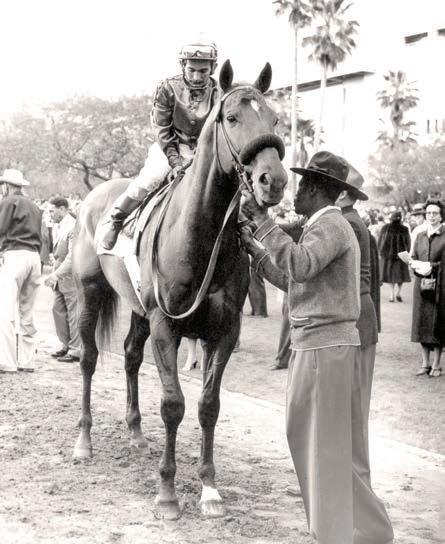
Consigned to the 1956 Del Mar summer yearling sale by Dr. and Mrs. Roberts, Silky Sullivan was purchased by Thomas Ross (a lumberman from Oregon) and Phillip Klipstein (a cattleman from Bakersfield, Calif.) for $10,700. Klipstein particularly wanted to buy Silky Sullivan after having enjoyed success with two other sons of Sullivan: Sullivan Jr. and Mr. Sullivan. Ross and Klipstein (sounds like a vaudeville act) turned their yearling over to the late Reggie Cornell for training. Cornell had thought Silky Sullivan was the best-looking youngster at the sale, along with Old Pueblo.
“Silky Sullivan is well muscled, with a good head and good, clean legs,” Cornell was quoted as saying at the time. “He’s got a good color and a wonderful conformation, of the Quarter Horse type.”
Cornell knew a good horse when he saw one. He had been with them since the age of seven, when he hung around a training stable for harness horses in Oakville, Ontario, Canada. He started working with Thoroughbreds in his early teens as a groom and hot walker, eventually becoming one of the youngest ever to be issued a trainer’s license in Canada He also was granted a license in New York when only 19, then saddled Don Juan II to win Pimlico’s Exterminator Handicap at the age of 20.
When Silky Sullivan became a
2-year-old, Cornell knew he had something good on his hands. At least that is what his nephew and assistant, Ron McAnally, kept telling him.
“I had Silky Sullivan at Hollywood Park when he was a 2-year-old,” McAnally remembered. “That was before he had started. Reggie was up running horses at Golden Gate or Bay Meadows at the time. I was always talking to Reggie on the phone, and I kept telling him we had a colt who was outworking everybody else. So Reggie suggested we break him off about five lengths behind the others to give him something to run at. To this day, I think that is why he developed his come-from-behind style of running.”
Reggie suggested we break him off about five lengths behind the others to give him something to run at. To this day, I think that is why he developed his come-from-behind style of running.”
—Ron McAnally
Since the days of Silky Sullivan, of course, McAnally has become a respected trainer in his own right—known primarily as the conditioner of 1981 Horse of the Year John Henry. Back then, however, not only was he Cornell’s nephew and trusty assistant, McAnally was his constant chauffeur, back and forth from home to the tracks because Cornell did not drive.
(Editor’s note: John Henry would go on to be named Horse of the Year again in 1984, and in 1990 both he and McAnally were inducted into the National Museum of Racing Hall of Fame.)
McAnally is of the opinion that Silky Sullivan developed his running style in workouts as a juvenile. Through the years, though, there have been several other theories.
One is that Silky had a respiratory problem. After a few furlongs, his respiration would clear up, and he would then run in
a normal manner.
Another theory is that he learned to come from behind early in his career when competing in races out of the chute; at six, 61 2, or seven furlongs. Silky would run with the field, then start dropping back about where the chute crosses the main track’s turn to enter the backstretch. Since there was a rise in the track at that point, the thought was that Silky was a little unsure of his footing. Then, when certain of his footing again, he would speed up.
Lou Rowan has yet another explanation. Rowan, a longtime California owner and breeder, had some horses being trained by Cornell during Silky Sullivan’s salad days.
“Reggie told me it was Silky’s tongue that was responsible for his style,” said Rowan. “As I remember, Silky injured his tongue when he was young. Later, it interfered with his circulation, which is why he came from behind. That’s what Reggie told me, anyway.”
Cornell also once was quoted as saying Silky was so intelligent he must have figured out he could win by simply running a big final quarter, so he took the easiest way. Whatever the reason, Silky Sullivan certainly had an unorthodox running style.
Making it even more difficult to explain Silky’s style was the fact he many times showed speed in his morning works. For instance, in one workout at Santa Anita as a 3-year-old, he drilled seven furlongs in 1:234⁄5, with fractions of :24, :353⁄5, :473⁄5, :59, and 1:113 5. More than once, he worked five panels in :58 and change. One time at Hollywood Park, he worked 51⁄2 furlongs in 1:04.
But right from the very first race of his career, on May 17, 1957, at Hollywood Park, Silky Sullivan was coming from far off the pace. In his debut, he made up four lengths in the stretch to win by a nose at 51⁄2 furlongs under jockey George Taniguchi.
“I’ll never forget that race,” said Taniguchi, now a racing official. “He broke all right but then lagged behind. I just sat and sat and sat. Reggie had told me that Silky could run. But when he was so far behind, I thought, ‘This colt can’t run a lick.’ Then, all of a sudden, about the three-eighths pole, he just took off. I think I was more surprised than anyone when he got up to win.”
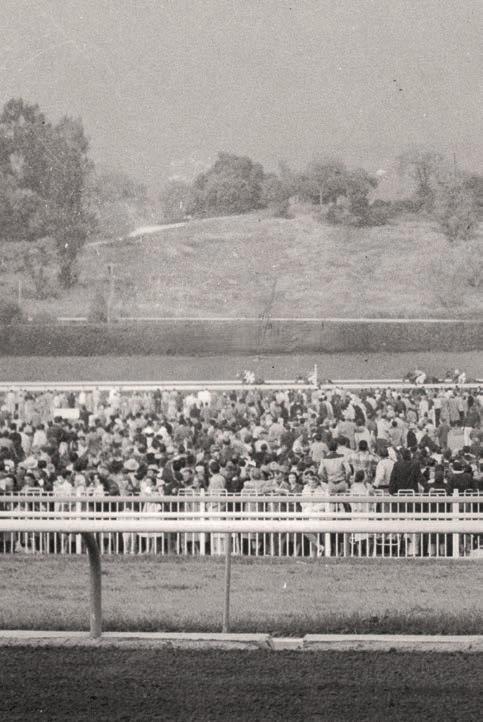
Down the backside of the Santa Anita Derby, arrows indicated the pacesetter—and Silky
Next time out, on May 29 at Hollywood Park, Silky Sullivan finished fifth by nine lengths while bucking his shins. Cornell blistered his charge’s ankles, shins, and knees.
After spending several weeks at Del Mar, mainly to go into the ocean, Silky Sullivan was shipped north to Tanforan, where he resumed training. He then returned to the racing wars for his third start on Nov. 11 at Golden Gate, winning a six-furlong race in 1:093⁄5.
In Silky’s first stakes appearance, he ran third to Strong Bay in a division of the six-furlong Berkeley Handicap at Golden Gate, making up 10 lengths in the stretch. He next won an allowance race, drawing away after being 17 lengths off the pace early. Silky completed his juvenile campaign by coming from 27 lengths back to take the Golden Gate Futurity at a mile. That effort attracted widespread attention. But Silky Sullivan was only beginning to make his mark.
Cornell chose the California Breeders’ Champion Stakes for Silky’s first race as a 3-year-old. Ironically, the 11 16-mile fixture also lured Old Pueblo, the other colt Cornell had been impressed with at the 1956 Del Mar sale. Old Pueblo was going into the Cal Breeders’ Stakes unbeaten in
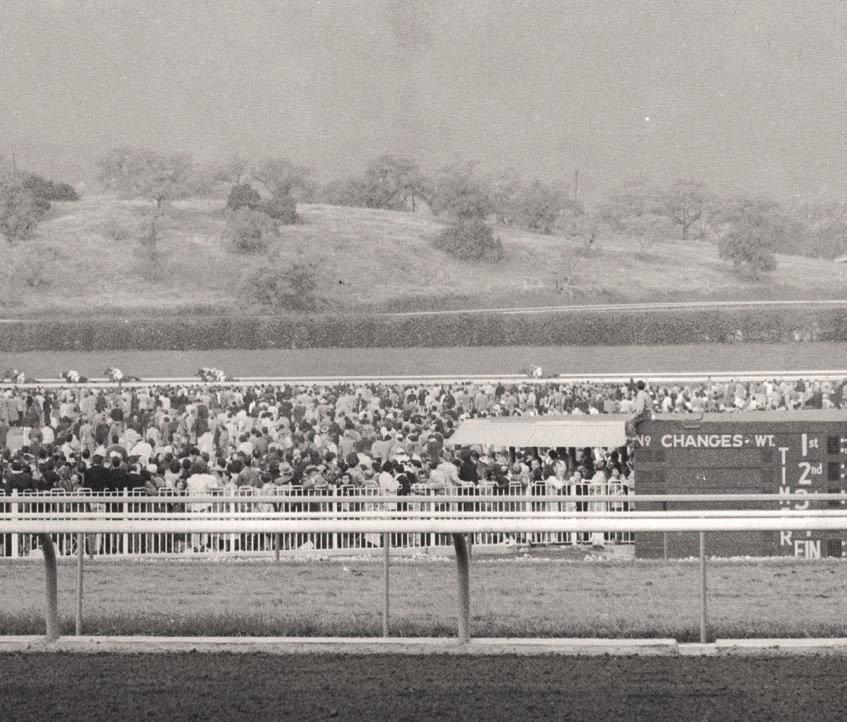
seven starts.
The race was presented on a heavy track at Santa Anita on Wednesday, Feb. 5, 1958. The morning of the race, the track’s switchboard was flooded with calls from people complaining that such a good race had been scheduled for a Wednesday instead of a Saturday.
For those who had to work and missed seeing the Cal Breeders’ Stakes in person, many were able to catch the film of it on that evening’s news. Filming the race was Joe Burnham.
“Yes, I remember that race,” said Burnham, who has won an Eclipse Award for his talent with a camera. “That was the first tune I had seen Silky. Bill Harmatz rode him that day. Silky had been running up north, so I don’t think the people (at Santa Anita) really believed in him.
“Anyway, I was filming the Cal Breeders’ for the TV stations. I had a man— Frank Tours, who worked in publicity— stand next to me during the race to tell me what Silky Sullivan was doing. I couldn’t take the camera way back to try and find Silky because it would’ve been too risky. If he didn’t fire, I’d look like a fool. And, by the time l would’ve probably found him with the camera, I would’ve missed too much of what was happening with the rest of the field. That’s why I had Frank stand next to me.
“Well, as I began shooting the race, with the camera on the field, I said to Frank, ‘What’s Silky Sullivan doing?’ And he said, ‘You can forget about him. He’s broken down.’ So I just forgot about him.
“Through the camera, I could see Old Pueblo was by himself in the lead entering the stretch. It looked like he was going to win easy. Then, suddenly, inside the eighth pole, (Eddie) Arcaro started whipping like a madman and looking over his shoulder. At that point, Frank yelled to me, ‘You gotta see this! You gotta see this!’ But he didn’t tell me what.
“Well, Silky Sullivan was closing like a wild horse. He only shows up in the last three frames of film. He was just a blur. Old Pueblo held on to win by a neck. Silky Sullivan got beat, but he closed so much ground—40 lengths—I couldn’t believe it.”
The 28,000 fans who witnessed the Cal Breeders’ Stakes went crazy. Their cheers for Silky Sullivan rebounded off the nearby San Gabriel mountains. Few horses have received such a thunderous ovation in victory, let alone defeat There were even a few boos for Old Pueblo, the 2-5 favorite, whose only crime in extending his winning streak to eight was that he outran Silky.
Old Pueblo’s pilot was the skillful Eddie Arcaro, who said he was surprised that Silky had gotten so close to winning after
being so far back early. Arcaro said he had looked over his shoulder halfway down the stretch and that Silky was nowhere in sight.
One wag then replied, “Yeah, but you shoulda looked over your left shoulder instead of your right because Silky was still back on the far turn!”
For the Cal Breeders’ Stakes, as for many of the colt’s races, the Daily Racing Form assigned one of its clockers to do nothing but time Silky Sullivan. Hal Duncan, who had the assignment for the Cal Breeders,’ caught Silky in :23 flat for the final quarter, incredible on a heavy track. Old Pueblo’s time for the 11⁄16 miles was 1:453⁄5
The man who saddled Old Pueblo that day was Bob Wheeler, who has been ·a successful trainer in California for many years.
“Yep, I sure remember the day we beat ole Silky going a mile and a sixteenth in the mud,” Wheeler said. “I’ll tell you, Old Pueblo was a runner. That race was his first around two turns, and it was on a muddy track, too. But he won anyway.”
After edging Silky Sullivan in the Cal Breeders’ Stakes, Old Pueblo started in a 11⁄16-mile allowance race at Santa Anita on Feb. 27. Backed down to 1-5 favoritism, the Windy City II colt suffered the first loss of his career, finishing sixth by 22 lengths to The Shoe.
“I’ll tell you what happened that time,” said Wheeler. “The owners (Jelks and McBean) and the rider (Arcaro) got together and decided to try and rate the colt. Well, that was a big mistake. I had tried to rate him in the mornings, with no luck at all He just could not be rated. But he would rate himself on the lead.
“I preached to them for two days not to rate the colt. I told them, ‘This colt has done everything ever asked of him. Why would you want to go experimenting with him now?’ But they didn’t listen They went ahead and did it. What could I do? The colt not only lost that race, he was never the same after that.”
Approximately 48 hours before Old Pueblo’s first defeat, Silky Sullivan had electrified Southern Californians by turning in one of the most amazing performances in the history of the sport. It all happened in a 61 2-furlong allowance race at Santa Anita.
For the first time, Silky was teamed with jockey Bill Shoemaker.
“I was sitting with Reggie in his box that day,” remembered Harry Silbert, who was Shoemaker’s agent. “Reggie had told Bill that it was very important not to rush the colt.
“Well, Silky Sullivan dropped so far behind early you couldn’t believe it. I’m telling you, he was a sixteenth of a mile behind the next-to-last horse. I didn’t think he had a prayer, so I put my binoculars down. Reggie looked over at me and said, ‘I told him not to rush the colt, but this is ridiculous!’
“Just then, I picked up my binoculars again, and Silky started his move. And he won! For him to win from that far back was...well...unbelievable. I’ve even seen the film of that race several times since, and each time I still can’t believe he makes up that much ground.”
Silky Sullivan came charging down the stretch that day to win by a halflength after lagging 41 lengths behind in the early going. Shoemaker has ridden thousands of winners since, but he will never forget that first victory aboard Silky.
“Going down the backstretch, I didn’t think he had a chance to even finish in the money,” Shoe recalled. “I must’ve been 25 lengths behind the next-to-last horse. I honestly didn’t think he would beat a horse that day, but then, really, it was kind of a mediocre field. Anyway, he won. Even I was surprised.
“Silky sure was an unusual horse, the way he’d come from so far behind. He’d just lope along, then kind of take a big breath and take off. You know, the funny part of it was that he had some speed as a 2-year-old. I think he got in the habit of coming from so far out of it after having a wind problem.”
News of Silky’s astonishing 61⁄2-furlong allowance win traveled fast. Just a few days later, owners Ross and Klipstein were entertaining offers from the partnership of Wilbur Clark and Bill Radkovich to sell Silky. It was reported that the final offer rejected by Ross and Klipstein was $350,000, a hefty sum, particularly in the late 1950s.
A little more than a week after the
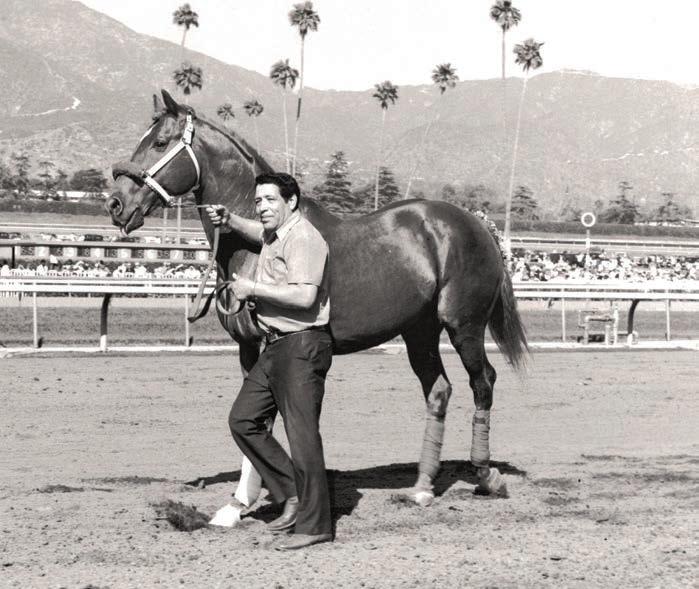
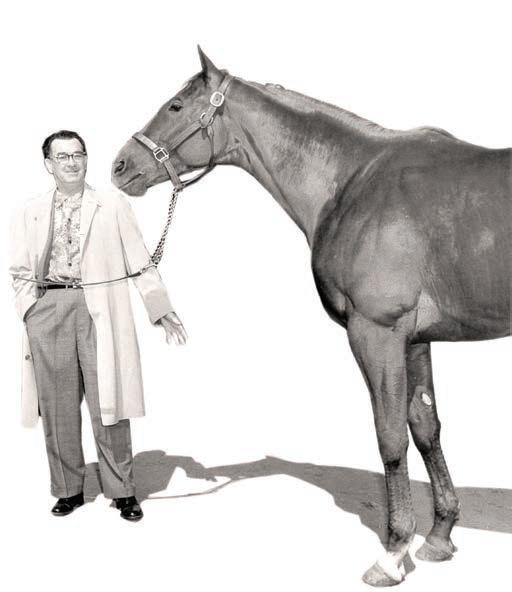
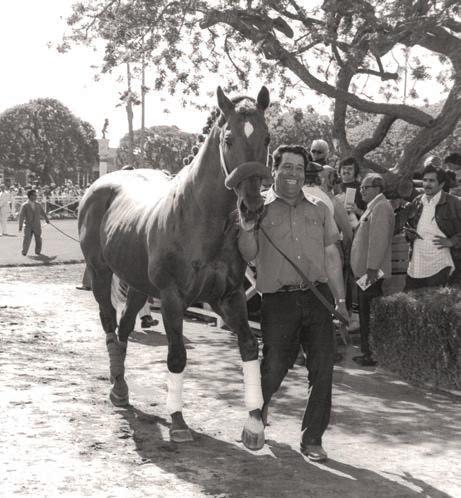
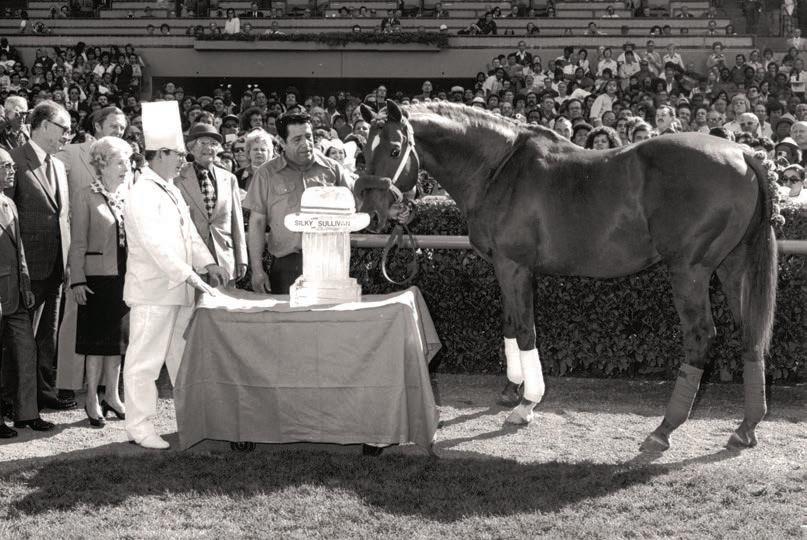
In retirement, Silky Sullivan was still popular, parading at Santa Anita in 1977
filling up on too much hay.
Silky sure was an unusual horse, the way he’d come from so far behind. He’d just lope along, then kind of take a big breath and take off.”
—Bill Shoemaker
race, Silky Sullivan went postward in the Santa Anita Derby. He had nine opponents in the 11⁄8-mile event. Expected to offer Silky his stiffest challenge was his familiar rival, Old Pueblo.
Ordinarily, Cornell would not draw his horses, but Silky was such a voracious doer (with a weakness for carrots) that he was an exception to the rule. Before a race or work, Cornell would muzzle Silky around midnight. The horse consumed from 12 to 15 quarts of grain a day, plus all the hay he wanted—except on work or race days. For three days prior to the Santa Anita Derby, Silky had been muzzled between regular feedings to prevent him from
The track for the Santa Anita Derby was fast, but earlier on the card it had been labeled slow. For the Derby, the track might best have been described as “dead.”
Despite threatening weather and the fact the race was shown on television, a throng of 61,123 motored to scenic Santa Anita to see if Silky Sullivan could once again perform his magic. Even co-owner Tom Ross, forbidden by his doctor from watching Silky’s races because of a heart condition, could not resist watching the Santa Anita Derby.
Silky did not let his faithful supporters down. Not as far back early as in some of his races, he rocketed to the front just inside the eighth pole, then drew magnificently away to prevail by 31⁄2 lengths. His stablemate Harcall (owned by Tom Ross’ wife, Elsie) ended up second.
Finishing fourth, five lengths behind Silky, was Old Pueblo. Wheeler was bitterly disappointed.
“Old Pueblo should never have been beaten by Silky Sullivan in the Derby,” Wheeler has stated repeatedly over the years. “But the owners and the rider
had really screwed the horse up when they had tried rating him. Silky Sullivan would never make his move until the five-sixteenths pole. Then the rider would just wheel him to the middle of the racetrack, and he’d come a-flyin’. But he never could catch a really fast horse like Old Pueblo, at least when Old Pueblo had not been screwed up.
“I will say one thing about Silky: The people loved him. Of course, they always love a comefrom-behind horse like him for some reason. Speed horses, like Old Pueblo, just don’t seem to get as much recognition.”
Interestingly, Silky Sullivan’s Santa Anita Derby caused some controversy.
Santa Anita management, by timing him separately at every pole and allowing a length for each fifth of a second between his time and the pacesetter, estimated that the greatest distance Silky ever was back of the leader was 19 lengths at the five-eighths pole.
Derby, John Alessio listed Silky as a 2-1 favorite in the Caliente future book for the Churchill Downs classic.
At that moment, Silky Sullivan and his connections, including groom James Goins and exercise rider Pete Kozar, were sitting on top of the world. Thoughts of roses
believing in Silky Sullivan.
To illustrate how Silky had captured the fans’ imagination, more $2 tickets were sold on him than on any other horse in the history of the Kentucky Derby at that time. He was the co-second favorite in the betting at $2.10 to $1, with the entry of Jewel’s Reward and Ebony Pearl favored at 2-1.
Al Willig, the trackman or chart caller for Daily Racing Form, did not agree. In his calls, he estimated that Silky had been 281⁄2 lengths off the pace. Willig explained the discrepancy by saying Santa Anita’s system was not accurate because the allowance of a length for each fifth of a second was for a horse in full stride, whereas Silky always traveled slowly through the early stages of a race.
The following table compares Silky Sullivan’s time in the Santa Anita Derby with that of the pacesetter:
Furlongs
danced through their heads.
Silky Sullivan was shipped north to Golden Gate to compete in a mile allowance race on April 11. He was an overwhelming 1-3 favorite in the Tote. He caught a lightly raced roan colt called Gone Fishin’, however, who was in the capable hands of a trainer named Charles Whittingham. Gone Fishin’ romped home a 51 2-length winner, with Silky closing from 22 lengths behind to finish third.
The Silky Leader Sullivan
In any event, Silky Sullivan’s sensational score in the Santa Anita Derby propelled him into the limelight for the Kentucky Derby. Immediately after the Santa Anita
As Silky Sullivan left the track after that race, he was soundly booed.
Undaunted by the setback at Golden Gate, Silky’s connections decided to send him to Louisville. Gone Fishin’ also headed for bluegrass country.
Silky Sullivan and Gone Fishin’ both used the same seven-panel allowance race at Churchill Downs as their final start before the Kentucky Derby, but neither colt won. Gone Fishin’ lost by a nose, while Silky came flying from 32 lengths behind to lose by 21⁄4 lengths. After that race, even some of the skeptical Kentuckians started
“I was there that day to film the Derby,” Burnham recalled. “Of course, Silky got more publicity and attention than any of the other Derby horses. There was so much interest in that particular Derby because of Silky that I remember there being good crowd at Churchill early that morning. I’ve also got film of Silky working three-eighths that morning around eight o’clock. For a horse to work the day of a race like that is pretty unusual. Anyway, Silky caught an off track (officially termed muddy) for the Derby. He made a little move on the backstretch, but that was it.”
At the end of the Kentucky Derby, Silky Sullivan was a distant 12th behind Calumet Farm’s Tim Tam. Then in the ensuing Preakness Stakes, Silky Sullivan finished a badly beaten eighth to Tim Tam, who later was thwarted in his Triple Crown bid when he went lame in the Belmont Stakes.
“He (Silky Sullivan) wasn’t any match today,” Cornell was quoted as saying after the Preakness. “He made a pretty good run from the three-eighths pole to the three-sixteenths pole, but he didn’t run like he did in California or in that prep race in Kentucky. His run is good for three-eighths of a mile, but he hasn’t given it in his last two races. He’s eating good and doing everything else just like he did in California, except running. Guess he’s hooking better horses here. We’re going back to California.”
Silky Sullivan returned to California with a tarnished reputation. His image was not bolstered by a dismal ninth-place showing in a six-furlong allowance race at Hollywood Park on June 20, his first start after the Preakness. It was beginning to look like Silky was all washed up.
But Silky Sullivan was not through. In a seven-furlong allowance contest at Hollywood Park on July 1, he showed he had not forgotten how to win. Racing unusually close early (he was just three lengths behind at the first quarter), he took the lead on the far turn and drew out to prove best by two lengths under Shoemaker. Immediately thereafter, however, the bright chestnut colt—marked only by a white spot the size of a silver dollar on his forehead and a white ankle on his left front leg—had his left leg fired for splint trouble.
Silky made it back to the races some five months later at Tanforan, coming from 11 lengths behind to win a six-furlong allow-
Silky Sullivan spent the next few months recuperating at Sea Horse Ranch, located on the oceanfront, 11⁄2 miles north of the California community of Half Moon Bay. Responding to the solicitous handling of Cornell, Silky was ready to race again at Hollywood Park on May 8, the opening day of the track’s 1959 meeting.
An unusually large crowd for a Friday, 32,420, showed up that afternoon. They applauded Silky warmly as he paraded to the post. Then, when Silky rallied from 13 lengths out of it to win the six-furlong Roy Campanella Purse (named for the Dodgers’ paralyzed former catcher), the place was bedlam.
ance race by a half-length. But right after that victory, he again had to be fired.
Making his next start at Santa Anita on Jan. 1, 1959, he turned in a drab effort against a moderate field of allowance runners. Then, after working a half-mile in :481⁄5, he had trouble with his right leg, which filled because he had apparently been putting extra weight on that leg while trying to favor the other one.
One account at that time said it was unlikely that Silky Sullivan would ever come back and race again. But the colt—who for some reason ran in steel, not aluminum plates—was not done yet.
When Campanella, in his wheelchair, congratulated Silky Sullivan in the winner’s circle, it was one of the most touching moments ever seen at a racetrack. On that occasion, Don Pierce was the rider.
“Whenever you rode Silky Sullivan, you got a lot of publicity,” Pierce recalled. “He was an exciting horse to watch—and an exciting horse to ride. He’d just go along, and then when he made his run, he’d really take off. When you asked him, he’d really go.
“Going into the far turn, he might be as far back as 25 lengths, but I still thought I could win on him because I knew his style. I knew that once I asked him, he’d run.
“I remember that he was a beautiful horse, too. He had a bright red coat. When he ran, the people would go crazy.”
Pierce again was on Silky Sullivan for his next race, the $12,000 Claremore Purse, at Hollywood Park on Memorial Day. Old Pueblo was among Silky’s adversaries. Making his first start in a year, Old Pueblo was seeking revenge for his loss to Silky a year earlier in the Santa Anita Derby.
After regular rider Ralph Neves was seriously injured in a spill early that afternoon, Taniguchi was chosen to ride Old Pueblo in the six-furlong event.
Old Pueblo went to the front at the drop of the flag and held on to win by a half-length in 1:09. Silky Sullivan, 15 lengths behind early, came charging in the stretch, but simply ran out of real estate. He finished fourth, just 13 4 lengths behind Old Pueblo.
Later in 1959, after finishing third in Del Mar’s Bing Crosby Handicap, Silky Sullivan was retired from racing. He was sent to Three Rings Ranch near Beaumont, Calif., for stud duty. Ironically, Silky’s longtime rival, Old Pueblo, also went to Three Rings when his racing days were over.
In 1960, there was an attempt to bring Silky back to the races one more time. He was in training again during the Del Mar meeting, but returned to stud at Three Rings when he developed a splint on his right leg.
Silky Sullivan had almost been gelded before he ever started because co-owner Klipstein usually gelded all his horses. Klipstein wanted Silky to be gelded, but Cornell talked him out of it. As it turned out, it would have been no great loss, for Silky Sullivan was not too successful a sire, getting only four stakes winners, although he is the maternal grandsire of stakes winner Silky’s Nurse, who may have inherited her running style from him.
But as a runner, Silky was very successful, and the crowds remembered him year after year when he was paraded at California racetracks both north and south. He became one of the most popular individuals in California history, even if he never did become governor.
NOVEMBER 3, 2025 – NOVEMBER 30, 2025
Gato Del Oro—Heart of the Nile: Devil D' Oro (17-7), f, 4 yo, Arapahoe Park, ALW, 11/8, 6f, 1:12.79, $9,720.
Grazen—Your Cheatin Heart: Isabel Ludlow (114-56), m, 5 yo, Mountaineer Casino Racetrack & Resort, ALW, 11/3, 5 1/2f, 1:05.54, $10,440.
Grazen—Wind N Waves: Titanic Thompson (114-56), c, 3 yo, Del Mar, AOC, 11/7, 5f (T), 57.02, $36,600.
Grazen—That's the Idea: Young Love (114-56), f, 3 yo, Del Mar, AOC, 11/23, 5f (T), 58.21, $47,580.
Grazen—Jet Blue Girl: Jetovator (114-56), g, 9 yo, Del Mar, AOC, 11/28, 5f (T), 57.12, $36,600.
Om—Patriot C H: Winning Patriot (62-31), g, 4 yo, Del Mar, AOC, 11/8, 1mi (T), 1:35.28, $36,600.
Om—First Class Flyer: Flyover (62-31), c, 4 yo, Del Mar, AOC, 11/28, 5f (T), 56.95, $49,140.
Practical Joke—Caymanbird: Berlin Wall (329-168), c, 3 yo, Del Mar, AOC, 11/16, 6 1/2f, 1:16.78, $36,600.
Smiling Tiger—Sheaparoux: Hey Demps (148-62), m, 5 yo, Del Mar, AOC, 11/8, 1mi (T), 1:37.26, $36,600.
Smiling Tiger—Royal Grand Slam: Grand Slam Smile (148-62), f, 4 yo, Del Mar, STK, Betty Grable S., 11/9, 7f, 1:22.34, $57,000.
Smiling Tiger—Hotazel: Mr. Disrespectful (148-62), g, 5 yo, Del Mar, AOC, 11/30, 1 1/16mi (T), 1:43.88, $36,600.
Stanford—Kathleen Rose: Man O Rose (105-62), g, 5 yo, Del Mar, STK, The Chosen Vron S., 11/8, 7f, 1:21.66, $57,000.
Stanford—Wife Approved: Good Lovin (105-62), g, 4 yo, Turf Paradise, STR, 11/10, 5 1/2f, 1:03.04, $7,080.
Stanford—Wicked Factor: Captivated Drama (105-62), g, 5 yo, Mountaineer Casino Racetrack & Resort, ALW, 11/23, 6f, 1:10.37, $11,600.
Tamarando—Only You Babe: Herecomegeorgieboy (24-10), g, 5 yo, Turf Paradise, SOC, 11/28, 1mi (T), 1:37.24, $6,490.
Tough Sunday—Queenofhercastle: Speedy Wilson (10-6), c, 3 yo, Del Mar, AOC, 11/29, 7f, 1:22.49, $47,580.
Unified—Dream of Mine: Unified A. P. (161-85), f, 4 yo, Turf Paradise, STR, 11/15, 5 1/2f, 1:05.61, $7,320.
Violence—Tryst: Christel Clean (201-93), f, 3 yo, Del Mar, AOC, 11/22, 6 1/2f, 1:17.04, $36,600.
3-YEAR-OLDS & UP
Bodexpress—Sensationalize: Express Kid (40-17), c, 2 yo, Remington Park, ALW, 11/6, 7 1/2f (T), 1:31.37, $23,202.
Cairo Prince—Shortbread Scotty: Cal's Goal (214-105), g, 2 yo, Del Mar, AOC, 11/23, 5f (T), 58.47, $36,600.
n The accompanying list includes runners that are both California-foaled and California-sired winners in 2024 of all recent North American races, except straight claiming races.
n Abbreviations used for the class of race are similar to those used by Equibase: Alw–allowance; Hcp–overnight handicap; names of stakes race are spelled out, with the grade of the race, when applicable, in parentheses.
Gato Del Oro—Vegas Strong Baby: My Kat (17-7), f, 2 yo, Del Mar, SOC, 11/23, 5 1/2f, 1:04.67, $24,480. Gato Del Oro—Vegas Strong Baby: My Kat (17-7), f, 2 yo, Del Mar, AOC, 11/30, 6f, 1:11.62, $36,600. Not This Time—Margot Machance (GB): Unrivaled Time (269-145), c, 2 yo, Del Mar, STK, Cecil B. DeMille S. (gr. IIIT ), 11/30, 1mi (T), 1:36.42, $60,000.
Astern (AUS)—Montpelier: Dramaticattraction (88-35), f, 3 yo, Del Mar, MCL, 11/14, 1mi (T), 1:37.92, $19,800.
Brave Victory—Roianna: Una Brava (2-2), m, 5 yo, Los Alamitos, MCL, 11/29, 4 1/2f, 52.82, $4,035. Clubhouse Ride—Wonderful Lie: Warm Sun and Brew (105-51), g, 3 yo, Del Mar, MSW, 11/9, 1mi (T), 1:36.52, $36,000.
Clubhouse Ride—A Kiss for Maria: Soli (105-51), g, 3 yo, Los Alamitos, MCL, 11/22, 4 1/2f, 51.41, $4,260.
Dads Caps—Class With a K: Cancun Native (60-35), g, 3 yo, Turf Paradise, MOC, 11/10, 7 1/2f (T), 1:30.99, $10,540.
Dads Caps—Tynagh Spirit: Moonshiner (60-35), g, 2 yo, Del Mar, MSW, 11/29, 5 1/2f, 1:04.93, $36,000.
Danzing Candy—Myfourchix: Jolie Candy (72-23), f, 3 yo, Zia Park, MCL, 11/4, 5f, 56.62, $12,000.
Danzing Candy—Love Recipe: Lady K Westfall (72-23), f, 2 yo, Del Mar, MCL, 11/7, 5 1/2f, 1:05.36, $12,000.
Dialed In—Cynthiana: Libel Proof (180-101), f, 2 yo, Del Mar, MSW, 11/7, 5f (T), 58.10, $36,000. Echo Town—Here Comes Chloe: Amelia's Echo (66-40), f, 3 yo, Del Mar, MCL, 11/22, 5 1/2f, 1:04.90, $9,600.
GATO DEL ORO
BG Thoroughbred Farm (951) 654 9100 www.bgthoroughbreds.com
Gato Del Oro—Princess Rahy: Donttellmewhattodo (17-7), f, 2 yo, Del Mar, MSW, 11/9, 5f (T), 58.75, $36,000.
Gig Harbor—She's Cookin: Blacksod Bay (24-6), g, 3 yo, Zia Park, MCL, 11/17, 6f, 1:09.84, $12,000.
Grazen—Andean Moon: Barbara's Moon (114-56), f, 2 yo, Turf Paradise, MOC, 11/10, 5f, 58.17, $10,030.
He Be Fire N Ice—Ridge Kitten: Fire Mountain (10-2), g, 4 yo, Del Mar, MCL, 11/16, 6f, 1:11.63, $19,800.
Idiot Proof—Shake a Wickedfoot: Unshakeable Proof (26-4), g, 3 yo, Delta Downs, MCL, 11/12, 6 1/2f, 1:22.50, $6,000.
I'll Have Another—Smoove It: Smoovin Saturday (36-19), c, 2 yo, Del Mar, MSW, 11/16, 1mi, 1:39.12, $36,000.
Lord Nelson—Hot in the City: Sexy Blue (126-69), f, 3 yo, Del Mar, MSW, 11/28, 5 1/2f, 1:04.21, $36,000.
Majestic Harbor—Team Decision: Team Player (23-12), g, 3 yo, Del Mar, MSW, 11/30, 5 1/2f, 1:03.57, $36,000.
Mr. Big—Hot n' Dusty: Highplainsdrifter (60-25), g, 5 yo, Del Mar, MCL, 11/7, 1mi (T), 1:36.53, $19,800.
OSCAR NOMINATED
BG Thoroughbred Farm (951) 654 9100 www.bgthoroughbreds.com
Oscar Nominated—Fractorzation: Thunder Whisper (10-2), f, 2 yo, Camarero Race Track, MCL, 11/7, 6 1/2f, 1:18.78, $3,944.
Pavel—La Premiere Etoile: Pavel's Etoile (34-11), f, 3 yo, Del Mar, MSW, 11/7, 5f (T), 58.11, $36,000.
Ransom the Moon—Ox Flower: Tough as an Ox (52-25), g, 3 yo, Turf Paradise, MCL, 11/15, 5f, 59.16, $5,100.
Sir Prancealot (IRE)—Lady Katfish: Uecker (109-38), g, 2 yo, Del Mar, MSW, 11/24, 5f (T), 59.36, $36,000.
Smiling Tiger—Temper: Tiger by the Tail (148-62), g, 4 yo, Turf Paradise, MCL, 11/15, 5 1/2f, 1:05.95, $6,000.
Stanford—Take a Time Out: My Boy Stan (105-62), g, 2 yo, Gulfstream Park, MCL, 11/14, 6f, 1:12.78, $21,000.
Stanford—A Walk in the Park: Cecilia Street (105-62), f, 2 yo, Del Mar, MSW, 11/14, 1mi (T), 1:38.47, $36,000.
Stay Thirsty—Meghan: Flashy Fritz (189-86), c, 2 yo, Del Mar, MCL, 11/7, 1mi, 1:38.74, $14,400.
Stay Thirsty—Ms. Hale: Mr. Thirsty (189-86), g, 3 yo, Arapahoe Park, MSW, 11/15, 5 1/2f, 1:07.74, $6,984.
Stay Thirsty—Hawk's Journey: Final Table Lady (189-86), f, 2 yo, Del Mar, MCL, 11/16, 5 1/2f, 1:04.67, $19,800.
Straight Fire—Duranga: Dottie Hinson (12-2), f, 2 yo, Del Mar, MSW, 11/29, 6f, 1:11.17, $36,000.
Tamarando—Coastal Holiday: Tamarando Beach (24-10), g, 2 yo, Del Mar, MCL, 11/8, 5 1/2f, 1:04.67, $19,800.
Unusual Heatwave—Jade With Envy: Wave With Envy (8-3), g, 2 yo, Del Mar, MCL, 11/28, 6f, 1:11.20, $12,000.


UC DAVIS IS MAKING STRIDES TO COMBAT THE DISEASE
BY HEATHER SMITH THOMAS
Equine degenerative myeloencephalopathy is a devastating degenerative disease that renders a horse unsuitable for an athletic career or for breeding, since there are
some genetic factors involved with this debilitating condition. Horse owners (and even many veterinarians) have questions about EDM, and researchers are still looking into aspects of this disease that continue to elude us.
Dr. Carrie J. Finno at the University of California, Davis is a faculty member in genetics, a clinician with the Equine Medicine Service, and director of the Center for Equine Health. She has been doing re-
search projects looking into neurological diseases of horses, including EDM.
“EDM is an advanced form of equine neuroaxonal dystrophy (eNAD), resulting from abnormalities of specific neurons in the brainstem and spinal cord,” Finno said. “Affected horses can be uncoordinated, display gait abnormalities, and are unsure where to place their feet when they are moving, turning, etc. Horses can be genetically predisposed to eNAD/EDM, but an environmental trigger in the form of insufficient vitamin E in the diet is re-
quired for the onset of clinical signs.”
EDM is different from equine motor neuron disease (EMND), which typically occurs in older horses.
“Peak risk for EMND is about 16 years of age, and the affected horses are usually individuals that have been deficient in dietary vitamin E for more than 18 months,” Finno said. “This disease affects a different set of neurons than eNAD/EDM. The lower motor neurons supply the direct neurological input into all muscles. When these inputs are compromised, the associated muscles atrophy, resulting in the clinical signs of weakness and weight loss characteristic of EMND. These are distinctly different clinical signs from those observed in horses with eNAD/EDM, but in rare cases, eNAD/ EDM and EMND have been diagnosed concurrently.
“Clinically, eNAD and EDM are indistinguishable from one another. Clinical signs vary among horses, ranging from mild performance issues to severe debilitation, and often arise at a young age (6 to 24 months). In some cases, however, signs do not appear until middle age (510 years).”
Clinical signs include mild to severe gait abnormalities on both sides of the body, with horses consequently appearing uncoordinated and not knowing where to place their feet (proprioceptive defects).
“They may have an abnormal stance
Affected horses are usually individuals that have been deficient in dietary vitamin E for more than 18 months.”
—Dr. Carrie J. Finno
at rest, with their legs too close or too far apart from one another,” said Finno. “They may have difficulty stepping up on curbs or climbing hills and lack coordination in tight turns while walking.
“These clinical signs are the same as those observed in horses affected with other neurological diseases, such as equine protozoal myeloencephalitis (EPM), West Nile virus (WNV), cervical vertebral compressive myelopathy (CVCM, wobblers), and equine herpesvirus-1 meloencephalopathy (EHM), as well as injuries that affect the brain and/or spinal cord.”
Some horses may have EDM but show no clinical signs.
“These horses can be genetically predisposed to develop eNAD/EDM,” said Finno. “But if they receive adequate vitamin E in their diet, especially early in life, they may never exhibit clinical signs. Clinical signs in horses with eNAD/EDM
can also vary from mild to severe. Mild clinical signs may not be recognized or investigated.”
People often wonder if there are any specific underlying causes of EDM, and research is starting to sort these out.
“Both genetics and environmental factors (access to dietary vitamin E) have important roles in EDM,” said Finno. “A genetic susceptibility for eNAD/EDM is likely, but to date the genetic basis is unknown. Studies in various breeds have indicated an autosomal dominant mode of inheritance with incomplete penetrance. The disease has been reported in a number of breeds, and the underlying genetic cause could be different across breeds.
“The disease has been reported around the world, so it is not confined to specific regions. But more cases are reported in areas where access to pasture is limited. Since the only way to definitively diagnose eNAD/EDM is with postmortem evaluation, and many neurologic horses are euthanized without a necropsy, it is currently impossible to know the true prevalence of eNAD/EDM.
“However, we recently completed a study demonstrating that in horses that were euthanized for neurologic disease at UC-Davis, eNAD/EDM was the second-most common diagnosis at postmortem examination. Additionally, Quarter Horses were more likely to have eNAD/ EDM if they presented to UC-Davis for neurologic disease and were euthanized, whereas Thoroughbreds were more likely to have CVCM (wobbler’s disease). Warmbloods were diagnosed with either eNAD/EDM or CVCM at postmortem evaluation.”
Some people wonder if EDM can be prevented before signs emerge, and this question has also been investigated.
“If genetically susceptible foals are raised on pasture grass (a horse’s natural source of vitamin E), they are less likely to demonstrate clinical signs of eNAD/ EDM,” said Finno. “Once clinical signs appear, progression of the disease can be halted, but not improved, with vitamin E supplementation. Clinical signs typically progress until a horse reaches two years of age and then might stabilize at that level for the remainder of their life.
“The best management practice to pre-
vent eNAD/EDM is to maintain pregnant mares, foals, weanlings, yearlings, and 2-year-old horses on green pastures to ensure adequate consumption of vitamin E. If pasture access is not available, foals should have neurologic exams at 1 and 6 months of age, and every 6 months after until they reach 4-5 years of age. Vitamin E levels in the serum should be assessed within the first 4 months of life. This is the only time window in which a difference exists between foals that develop eNAD/EDM and those that maintain normal neurologic function.
“Serum vitamin E levels should ideally be evaluated during the first week of life, as this is the time when the largest difference can be detected between affected and unaffected individuals. Serum vitamin E levels in the dam can also be used to indicate the need for supplementation during pregnancy and lactation. If neurologic examinations lead to suspected eNAD/ EDM in the foal, both the dam and offspring should be supplemented.
“Currently, the only way to definitively diagnose eNAD/EDM is by postmortem identification of lesions in the brainstem and spinal cord under a microscope. However, a suspected diagnosis of eNAD/ EDM in a living horse can be made by ruling out other possible causes for the neurological deficits through blood tests,

imaging, a thorough patient history, and other methods.”
A biomarker test was developed at UC Davis to aid in diagnosis in the living horse.
“The equine phosphorylated neurofilament (pNF-H) test measures a biomarker of neurological damage in serum and/or cerebrospinal fluid (CSF),” said Finno. “This test has higher sensitivity in horses under 5 years of age as compared
to older horses. This test can be used to determine that a diagnosis of eNAD/ EDM is more likely but is not a direct test for eNAD/EDM. Test results may only be interpreted if a horse with clinical neurologic signs has tested negative for all infectious diseases and trauma has been excluded.”
Some treatment options are available for horses that are suspected to have EDM, to help halt progression of this disease.
“Once clinical signs of eNAD/EDM are observed, the progression of the neurological deficits can be slowed or halted through dietary vitamin E supplementation, but they cannot be reversed,” Finno said. “Clinical signs of the disease typically stabilize on their own at approximately 2 years of age in most horses.
“An ataxic horse is not suitable for riding, however, and since eNAD/EDM has a genetic basis, affected individuals are also not suitable for breeding. Affected horses with mild clinical signs may be kept as pasture pets, but those with severe clinical signs are often euthanized. Stress associated with increased performance demands may make clinical signs of eNAD/ EDM more noticeable.”
Some horsemen wonder if EDM can be prevented through selective breeding practices or if there might someday be a way to test for genetic predisposition to EDM. At this point, since eNAD/EDM likely has a genetic basis, the recommendation is that affected horses should not be bred and horses that have produced affected offspring should not be bred again.
“Research into the genetic cause(s) of eNAD/EDM are ongoing, with the ultimate goal of developing genetic tests that could be used to inform breeding practices and avoid producing affected foals,” said Finno.
“Currently, breeders and owners can adopt management practices that ensure adequate dietary vitamin E through access to green pastures and/or supplementation and follow the recommended neurologic examination schedule for foals. Research studies on eNAD/EDM at UC-Davis are ongoing. We continue to investigate the underlying genetic cause of eNAD/EDM across breeds, while also working to identify additional biomarkers to support ante-mortem diagnosis.”
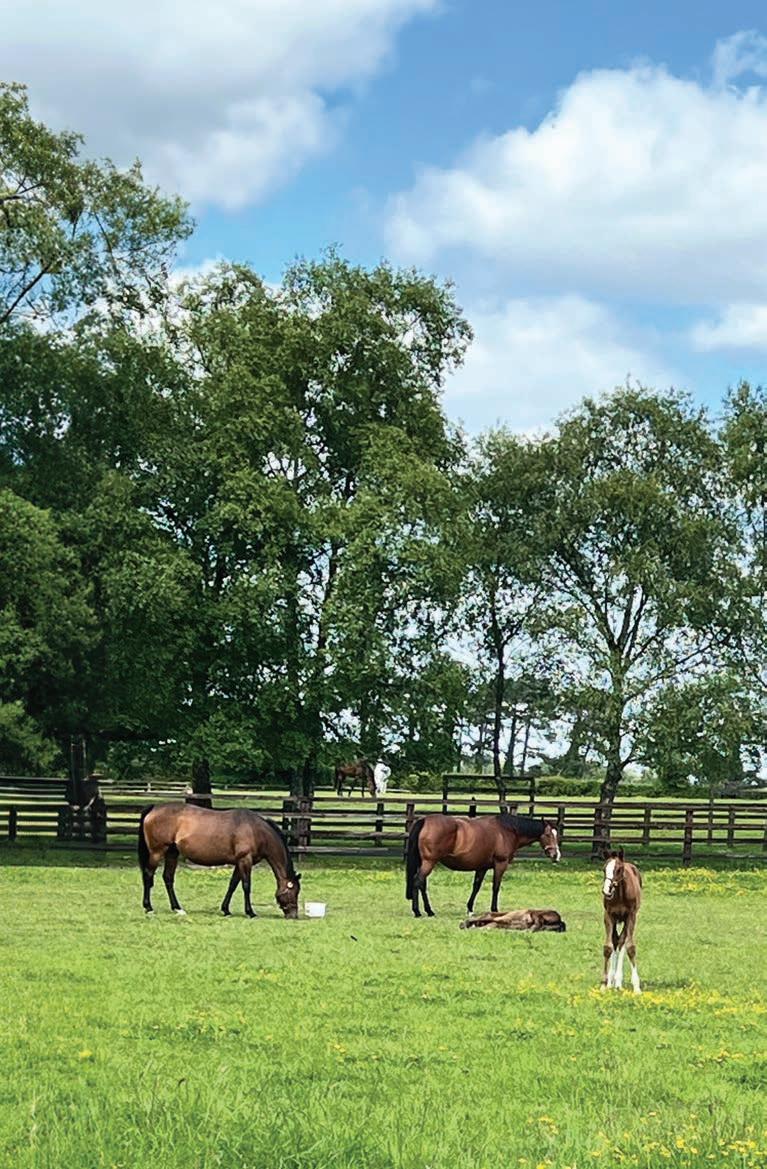

California Thoroughbred Breeders Association
Breeding Stock • Two-Year Olds Horses of Racing Age • Yearlings
Contact: Loretta Veiga Phone (626) 445 7800 ext 227
Email: Loretta@ctba.com OR Debbie@ctba.com ONLINE BIDDING AVAILABLE 1/20 2026 TUESDAY 12:00 NOON, FAIRPLEX - POMONA, CA
California Thoroughbred Breeders Association 201 Colorado Pl, Arcadia CA 91007
WW.CTBA.COM
1 Tough Sunday, 2012, by Grazen
2 Majestic Harbor, 2008, by Rockport Harbor
3 Collected, 2013, by City
4 Empire Way, 2009, by Empire Maker
5 Grazen, 2006, by Benchmark
6 Mrazek, 2013, by Square Eddie
7 I’ll Have Another, 2009, by Flower Alley
8 Om, 2012, by Munnings
9 Curlin to Mischief, 2011, by Curlin
10 Jersey Town, 2006, by Speightstown
11 Clubhouse Ride, 2008, by Candy Ride (ARG)
12 Jack Milton, 2010, by War Front
13 Stanford, 2012, by Malibu Moon
14 Pavel, 2014, by Creative Cause
15
16
17
18
19
1 Collected, 2013, by City Zip
2 Grazen, 2006, by Benchmark
3 Sir Prancealot (IRE), 2010, by Tamayuz (GB)
4 I’ll Have Another, 2009, by Flower Alley
5 Clubhouse Ride, 2008, by Candy Ride (ARG)
6 Om, 2012, by Munnings
7 Smiling Tiger, 2007, by Hold That Tiger
8 Catholic Boy, 2015, by More Than Ready
9 Midnight Storm, 2011, by Pioneerof the
10 Stay Thirsty, 2008, by Bernardini
11 Stanford, 2012, by Malibu Moon
12
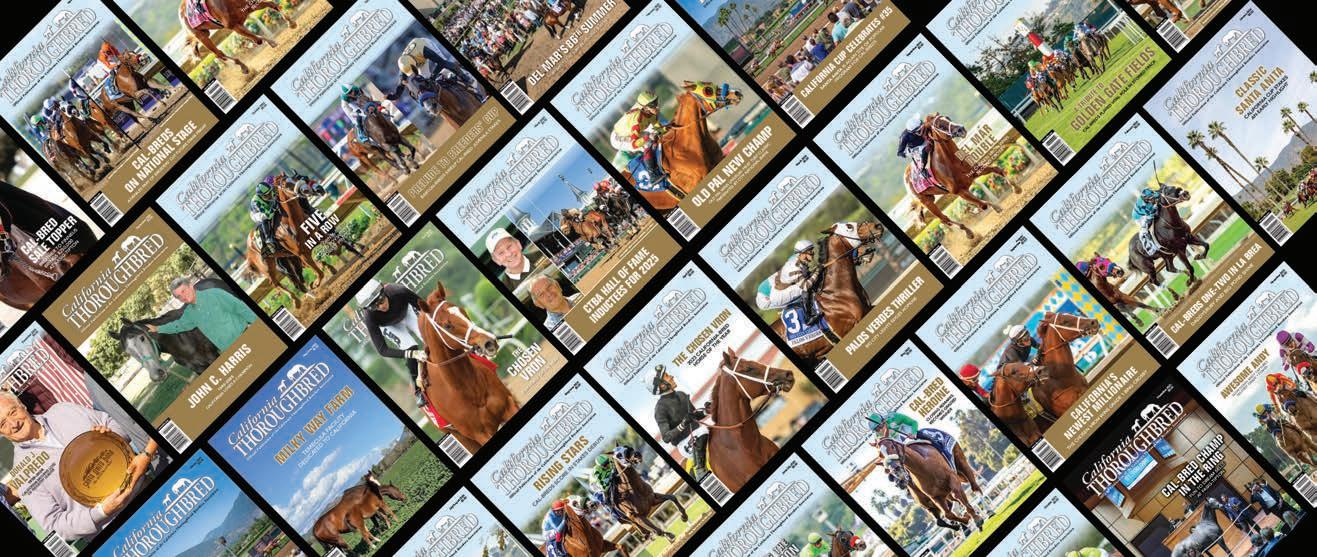
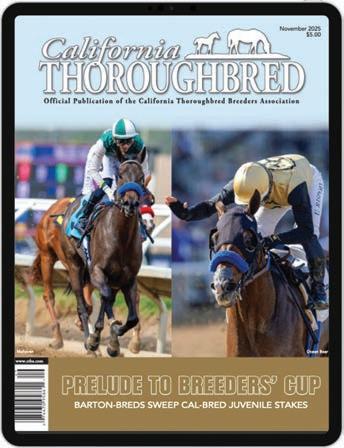


2 SPECIAL PRINTED EDITIONS California-Bred Champion & California Thoroughbred Breeding Farms
CURRENT CTBA MEMBERS ALSO RECEIVE:
• Complimentary printed Stallion Directory and Industry Directory
• Two Club House passes for admission to participating racetracks during live race meets
• Elimination of the $100 foal registration fee for members in good standing beginning for foals born in 2025 and registered as Cal-Breds in 2026. The same $100 savings will be applied for foals born in 2026 and 2027. Cal-Bred application is still required.
• Legislative Updates
• Advertising Discounts
Contact Debbie Winick at: Email: debbie@ctba.com or phone: (626) 445-7800 ext 243 201 Colorado Place, Arcadia, CA 91007 www.ctba.com
1 Empire Way, 2009, by Empire Maker 13 17
2 Mrazek, 2013, by Square Eddie 15
3 Grazen, 2006, by Benchmark
4 Desert Code, 2004, by E Dubai
5 Tough Sunday, 2012, by Grazen
6 Clubhouse Ride, 2008, by Candy Ride (ARG) 105
7 Majestic Harbor, 2008, by Rockport Harbor 23 17 $934,652 $14,211
8 Rousing Sermon, 2009, by Lucky Pulpit
9 Midnight Storm, 2011, by Pioneerof the Nile
10 Collected, 2013, by City Zip
11 Stanford, 2012, by Malibu Moon
12 Dads Caps, 2010, by Discreet Cat 62
13 Curlin to Mischief, 2011, by Curlin 44 39 $1,092,465 $11,895
14 I’ll Have Another, 2009, by
15 Conquest Farenheit, 2014, by Scat Daddy
16 Cat Burglar, 2010, by Unbridled’s Song
17 Jersey Town, 2006, by Speightstown
18 Ministers Wild Cat, 2000, by Deputy Minister
19 Slew’s Tiznow, 2005, by Tiznow
20
1 Grazen, 2006, by Benchmark
2 Majestic Harbor, 2008, by Rockport Harbor
3 Om, 2012, by Munnings
4 Pavel, 2014, by Creative Cause
5 Collected, 2013, by City Zip 188 1170
6 Curlin to Mischief, 2011, by Curlin
7 Clubhouse Ride, 2008, by Candy Ride (ARG) 105 570 $2,275,945 $3,993
8 Sir Prancealot (IRE), 2010, by Tamayuz (GB) 130 585 $2,317,559 $3,962
9 Tamarando, 2011, by Bertrando 24 127 $479,044 $3,772
10 Stanford, 2012, by Malibu Moon
11 Jack Milton, 2010, by War Front
12 Acclamation, 2006, by Unusual Heat
13 Mr. Big, 2003,
14
6 Clubhouse Ride, 2008, by Candy Ride (ARG)
I’ll Have Another, 2009, by Flower Alley
$4 MILLION - GOLDEN STATE STAKES PROGRAM
A Restricted Stakes Schedule for Registered California-Bred or California-Sired Horses
MAIDEN BONUS PROGRAM
A $12,500 bonus will be made available for owners of registered California-Bred or California-Sired maidens in Maiden Special Weight races at Santa Anita Classic Meet and a $15,000 bonus at Del Mar Summer Meet, 2026. Only races at 4 1/2 furlongs or longer will qualify. In the event of a dead heat, the bonus will be split amongst the winners.
1
2
3 I’ll Have
4 Sir Prancealot (IRE),
5
6
7
8
9 Halladay,
10
11
12
1
2 Gato Del Oro,
3 Cat Burglar, 2010, by Unbridled’s
4
5
6 Pavel, 2014, by Creative Cause
7 Sir Prancealot (IRE), 2010, by Tamayuz (GB)
8 Om, 2012, by Munnings
9 Stay Thirsty, 2008, by Bernardini
10 Grazen, 2006, by Benchmark
11 Halladay, 2016, by War Front
12 Stanford, 2012, by Malibu Moon
13
15 Smiling Tiger, 2007,
Grazen, 2006, by Benchmark
Cat Burglar, 2010, by Unbridled’s Song
Gato Del Oro, 2014, by Medaglia d’Oro
One Bad Boy, 2016, by Twirling Candy
Midnight Storm, 2011, by Pioneerof the Nile
Om, 2012, by Munnings
Cistron, 2014, by The Factor
Tap Back, 2017, by Einstein (BRZ)
Smiling Tiger, 2007, by Hold That Tiger
Dads Caps, 2010, by Discreet Cat
Unusual Heatwave, 2009, by Unusual Heat
Oscar Nominated, 2013, by Kitten’s Joy
Govenor Charlie, 2010, by Midnight Lute
Point Piper, 2010, by Giant’s Causeway
Dosificado (CHI), 2012, by Scat Daddy
Stallion (Foreign Foaled), Year, Sire
1 Grazen, 2006, by Benchmark
2 Bluegrass Cat, 2003, by Storm Cat
Collected, 2013, by City Zip
4 Mr. Big, 2003, by Dynaformer
5 Clubhouse Ride, 2008, by Candy Ride (ARG)
6
7 Stay Thirsty, 2008, by Bernardini
8 I’ll Have Another, 2009, by Flower Alley
Sir Prancealot (IRE), 2010, by Tamayuz (GB)
10 Southern Image, 2000, by Halo’s Image
12 Jersey Town, 2006, by Speightstown
13 Straight Fire, 2014, by Dominus
18 Smiling Tiger, 2007, by Hold That Tiger
21 James Street, 2007, by El Prado (IRE)
Passion for Gold, 2007, by Medaglia d’Oro
23 Desert Code, 2004, by E Dubai 13 15
Slew’s Tiznow, 2005, by Tiznow
25 Richard’s Kid, 2005, by Lemon Drop Kid
Tamarando, 2011, by Bertrando
27 Om, 2012, by Munnings
44
48
These statistics are for active California-based sires with a minimum of 50 foals of racing age, ranked here by their lifetime Average Earnings Index (AEI.) The statistics shown here are compiled by The Jockey Club Information Systems (TJCIS). While every effort is made to prevent errors and omissions, California Thoroughbred cannot guarantee their complete and total accuracy. Sires that are dead, pensioned, or no longer standing in California remain on these lists until their last Cal-bred crop turns 3 years old. Statistics are from all available Northern Hemisphere racing with earnings adjusted for Hong Kong and Japan. Stakes winners and wins follow TJCIS stakes rules. Percentages are based upon number of named foals of racing age.

Los Alamitos Race Course, Los Alamitos Dec. 5-14
Santa Anita Park, Arcadia Dec. 26, 2025-June 16, 2026
Los Angeles County Fair at Los Alamitos, Los Alamitos June 19-July 5
Del Mar Thoroughbred Club, Del Mar July 8-Sept. 8
Los Alamitos Race Course, Los Alamitos Sept. 9-22
Santa Anita Park, Arcadia Sept. 23-Nov. 3
Del Mar Thoroughbred Club, Del Mar Nov. 4-Dec. 1
Los Alamitos Race Course, Los Alamitos Dec. 2-15
JANUARY 20
CTBA WINTER MIXED SALE Pomona, Calif. (ENTRIES CLOSED NOV. 12)
SUNDAY, DEC. 7
$100,000 Soviet Problem Stakes 2-Year-Old Fillies 1 mile
SUNDAY, DEC. 14
$100,000 King Glorious Stakes 2-Year-Olds 1 mile

SATURDAY, JAN. 17
$175,000 Unusual Heat Turf Classic presented by City National Bank Four-Year-Olds & Up 11⁄8 miles (Turf)
$175,000 California Chrome Cal Cup Derby ree-Year-Olds 11⁄16 miles
$175,000 Leigh Ann Howard California Cup Oaks ree-Year-Old Fillies 1 mile (Turf)


$125,000 Don Valpredo California Cup Sprint Four-Year-Olds & Up 6 furlongs
$125,000 Sunshine Millions F/M Turf Sprint Four-Year-Olds & Up, Fillies & Mares about 6 furlongs (Turf)
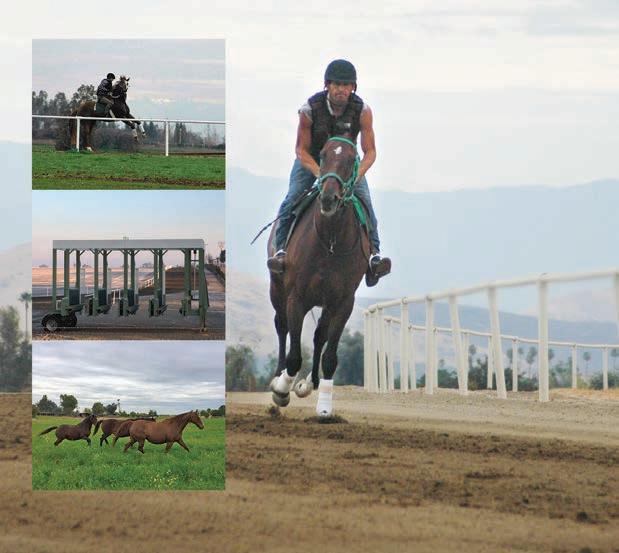










$2,975,500-EARNER
Eclipse Award Finalist
$1 MILLION
PACIFIC CLASSIC (G1) WINNER Over Arrogate
$6 MILLION BREEDERS’ CUP CLASSIC (G1)
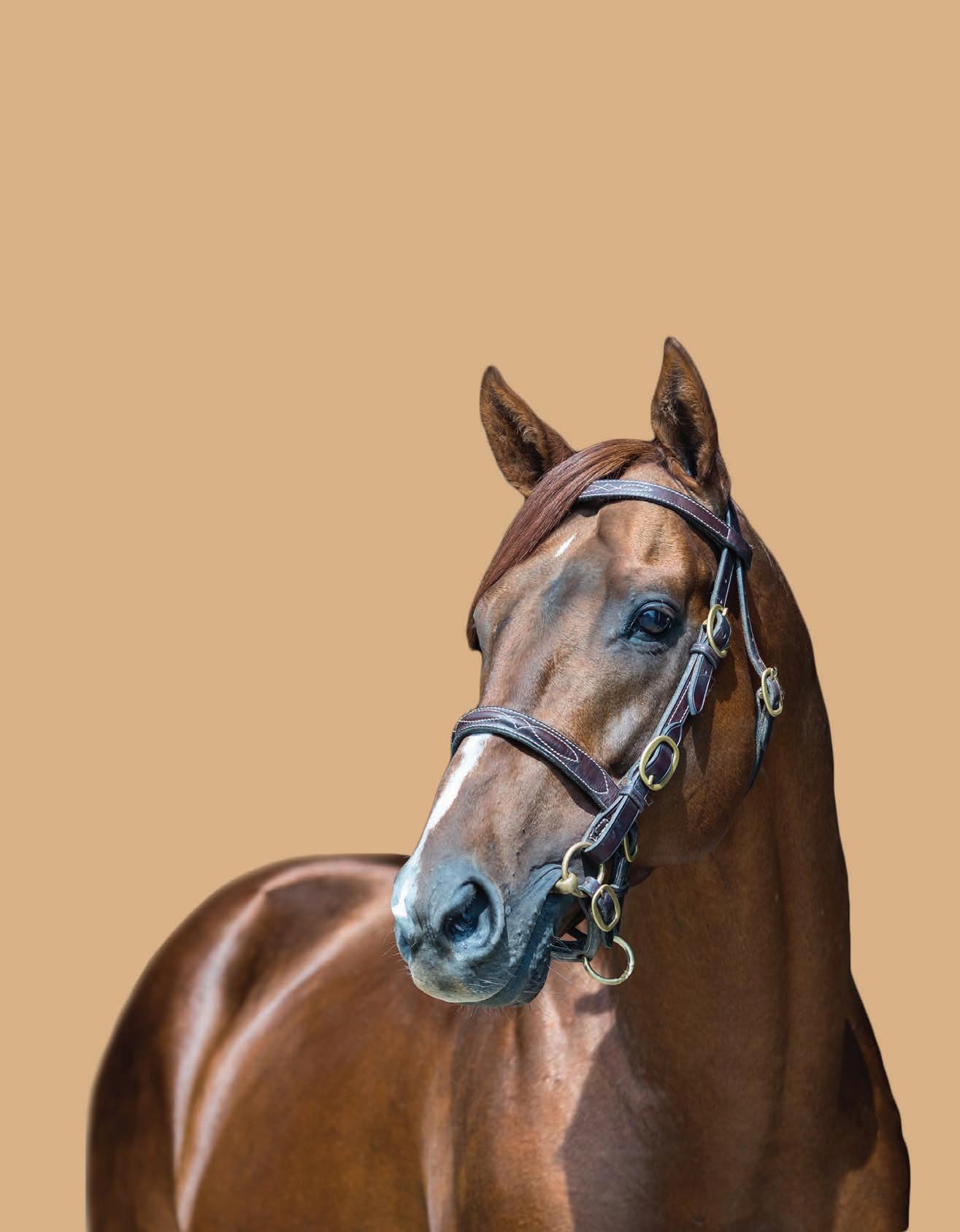
7 Graded Stakes
$18

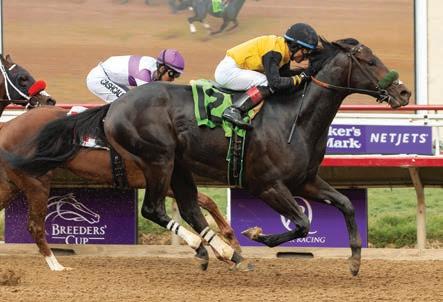

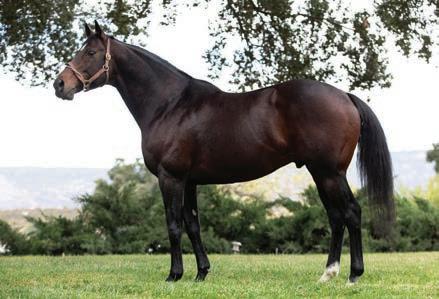
BY SIX TIME LEADING CALIFORNIA SIRE AND MULTIPLE G1SW STAY THIRSTY. TWO-YEAR-OLD CALIFORNIA CHAMPION OF 2022.
Stakes Winning 2-Year-Old and Winner of $328,216. Out of a GHOSTZAPPER California Broodmare of the Year MY FIONA and California Champion Filly. 1st Golden State Juvenile S. (def. SLO DOWN ANDY). 2nd Del Mar Futurity (G1) (to PINEHURST, def. PAPPACAP); Best Pal S. (G2) (to PAPPACAP); King Glorious S.; Turf Paradise Derby. 3rd California Cup Derby.
CHAMPION BLOODLINES PROVEN PERFORMANCE GRADED STAKES WINNER OF $379,700
By QUALITY ROAD – Sire Of Multiple Grade 1 Winners. Out Of The Multiple Stakes Winner, Graded Stakes Producing Mare HOT SPELL (By SALT LAKE) – A Fast, Durable Mare From A Proven Family Of Sprinters And Middle-Distance Horses.
Brilliant racing career that demonstrates his natural talent, durability, and competitive Spirit, Speed, Stamina & Versatility.
CALIFORNIA’S LEADING SIRE. 6 OF LAST 8 YEARS BY EARNINGS. LEADING CA SIRE BY EARNINGS & WINNERS IN 2024. SIRE OF 61 STAKES HORSES INCL. G1 CIGAR MILE WINNER MIND CONTROL ($2,071,834).
Defeated 2023 Breeders’ Cup Classic winner WHITE ABARRIO and Blue Grass S. (G1) winner ZANDON.
8 blacktype stakes horses in 2024 and leading CA 2-year-old sire of 2024, 5 SHs, incl. 5 ¼-length CTBA S. winner IN THE AIR TONIGHT ($120,400), runner-up Thirsty Mama and 3rd THIRSTY IN VEGAS. California’s leading active lifetime sire.